HOMERTONIAN
Homerton College Alumni Magazine
Number 22 | Summer 2018
IN THIS ISSUE
Homerton 250 Events Round Up
Success for Homerton rowers in the Boat Races John Conder, Found

Homerton College Alumni Magazine
Number 22 | Summer 2018
Homerton 250 Events Round Up
Success for Homerton rowers in the Boat Races John Conder, Found
After a decade which has seen Homerton’s identity shift and expand in exciting new directions, our big birthday has inspired us to celebrate what the College stands for in 2018. Through a varied programme of concerts, lectures, and events, all of them open to alumni and many to the general public, we are mid-way through a 250th anniversary year which marks our past, present and future as a place of progressive, free-thinking education.
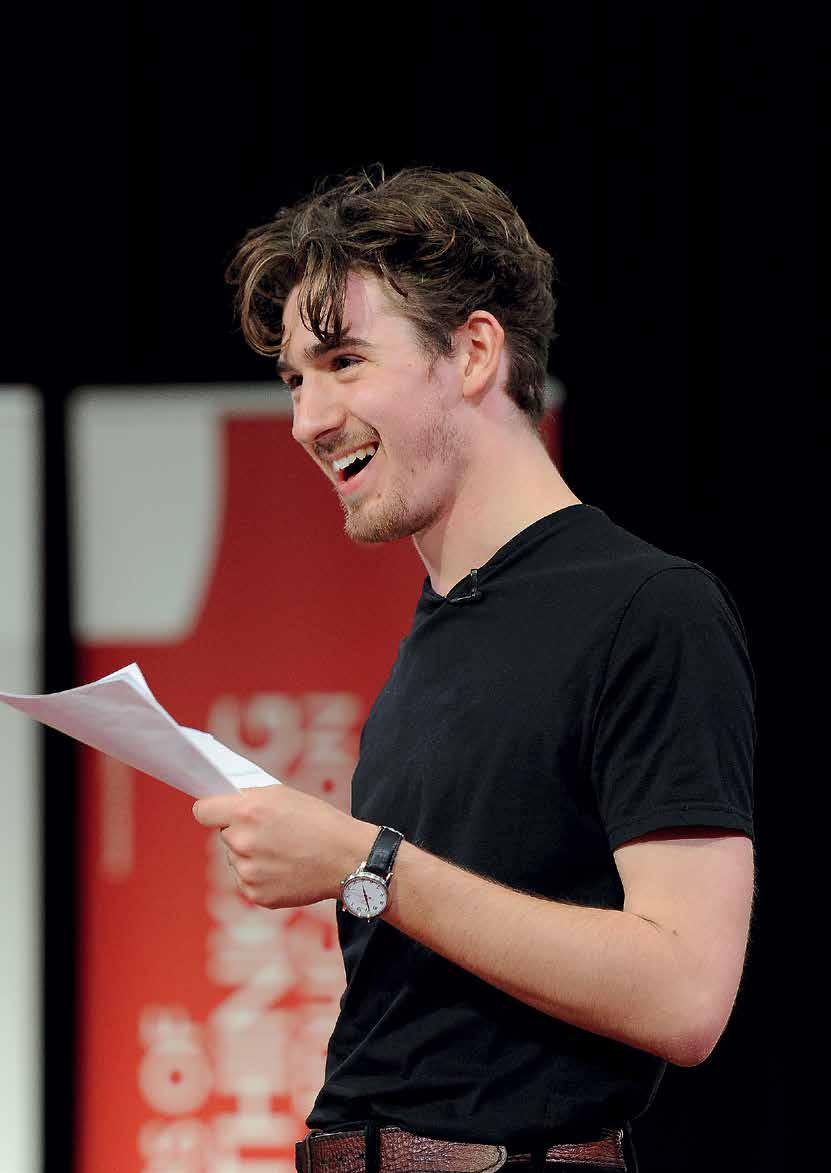
Our cover reflects a particularly dynamic contribution - an afternoon of Shakespeare in Performance, reflecting the longstanding strength of theatre at Homerton (described in full on page 17). Joe Sefton (3rd Year, Education with English and Drama), who features on the cover, was one of five current students to participate in a masterclass with Simon Russell Beale, delivering a soliloquy from Hamlet
The autumn will see the anniversary year reach a crescendo, with the Homerton 250 Festival on Saturday 27 October. With activities and performances ranging from the chance to explore our sculpture and rare book collections to a steel pans workshop from Absolute Pandemonium; Messy Chemistry experiments to fire the curiosity of our younger visitors; and an opportunity to make music with Honorary Fellow and world-renowned percussionist Dame Evelyn Glennie, it promises to be a day to remember. We hope to see you there. For this and our other activities, visit homerton250.org.
Matthew Moss Director of External Relations and Development
The Homertonian is Homerton College’s alumni magazine. It is published once a year. Contact us in the Development Office on Telephone 01223 747066 or Email alumni@homerton.cam.ac.uk with feedback, news or letters. All our publications are available to read online on the Homerton College website: www.homerton.cam.ac.uk/alumni/publications.
Thank you to all of our contributors and to those who supplied images. The views expressed in this publication do not necessarily represent the views of Homerton College, Cambridge. Cover photograph: Stephen Bond. Design and print management: H2 Associates, Cambridge.
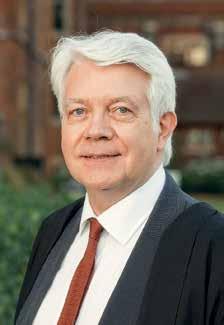
AsI sit typing this on a warm and windless day in June, I do so with unaccustomed slowness, not just because of the heat but because my fingers are crossed. It looks as if this is going to be an exceptional year for Finals results – perhaps the best ever. But whether the tally does or doesn’t reach unprecedented heights, it is clear that the steady rise in student achievement over recent years is no blip. Eight years since the granting of the Royal Charter, we are on an equal footing with the other Cambridge Colleges – and surpassing some.
Our dual identity as the newest Cambridge College, with our origins in East London, means of course that this year we are not only eight years old, but 250. It was a quarter of a millennium ago that our founding Principal John Conder took possession of a home for the Academy in Homerton High Street. I am pleased to say that this year the College acquired the only two known portraits of Conder and his wife Susan (see page 22). Once returned from the conservators, these splendid portraits will soon be gracing our walls. However, in this special year, there has been and will be a lot more to see.
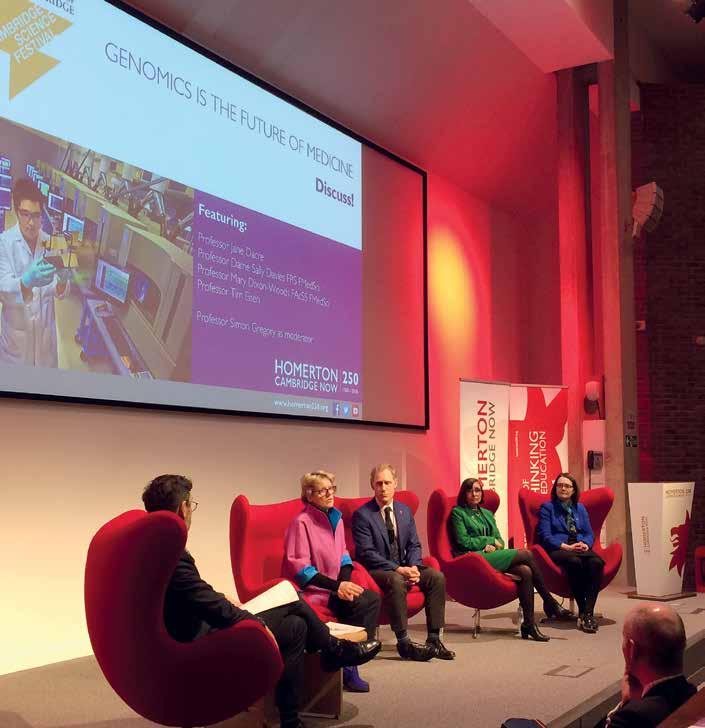
In order to harness the present talent of our Fellowship to explore the past and ponder the future, we have asked, throughout our anniversary year, three ‘Burning Questions’, and invited the public in to hear some of our answers. An early event explored What is the Future of Healthcare?, filling a 400 seat lecture theatre as part of the Cambridge Science Festival. A stellar panel included Professor Mary Dixon-
Woods, Director of a new research institute with the explicit mission of enhancing NHS effectiveness; oncologist Professor Tim Eisen, medical educationalist Professor Simon Gregory, and Honorary Fellow Professor Dame Sally Davies, Chief Medical Officer for England. They spoke eloquently to the rapidly-changing field of genomics as a pathway to improved and indeed personalised medicine.
Our next question, What does it Mean to be Human?, was asked exactly 200 years ago by Mary Shelley in her allegory of scientific over-reaching, Frankenstein. As a critic of the Gothic, I joined a conversation with our newest Fellow, Dr Beth Singler, whose work on Artificial Intelligence taps into present-day fears about a future shaped by humanity’s creations. We are lucky in the numbers but also the calibre of those wishing to join us.
The most recent Homerton 250 event will remain forever etched in the memories of those in attendance. Acclaimed actor Simon Russell Beale delivered a Masterclass to drama students in the College, partly to celebrate the publication of a new actors’ edition of Shakespeare co-edited by Simon, Professor Michael Dobson of the Shakespeare Institute, and Dr Abigail Rokison-Woodall, an Associate Fellow. This fabulous workshop was followed by three alumni, Sarah Gordon (Young Shakespeare Company), Sam Yates (theatre director) and Max Barton (director and writer), marshalled by Steve Waters (playwright, Associate Fellow). All testified to the influence of Drama at Homerton on their work and lives.
Sitting in the same space were Peter Raby and others who taught them. It requires courage to take the risk of becoming a writer of plays or an actor for a living, further courage to take that work into prisons or other difficult arenas – and a special courage for students to deliver Hamlet’s soliloquies while being publicly critiqued by one of our greatest living actors. There is more to come. In a few months’ time a Homerton 250 Concert will feature ‘Elevation’, a composition by our Composer in Residence John Hopkins, based on the College’s skyline. A one-day Festival will include a Masterclass by our Honorary Fellow Dame Evelyn Glennie. Other events are in planning and can be found at www.homerton250.org. We have shown that the wider public do want to see into the life of a Cambridge College, and want to hear our take on the issues affecting all of us. In this year that commemorates the gaining of voting rights by some British women, our third burning question has been How Do We Drive Change?. I believe that the changes the College has gone through in recent years are in keeping with those our Founders wanted. In the mid-nineteenth century the College ceased to train ministers and started training teachers, declaring this a ‘kindred vocation’ in keeping with Homerton’s aim to serve society’s needs. As the kindred vocations evolve and become career pathways for our graduands, there will be a key place for us in Cambridge and the wider world for at least another 250 years.
Professor Geoff Ward Principal
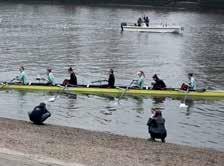
The College was well represented in this year’s Boat Races between Oxford and Cambridge.
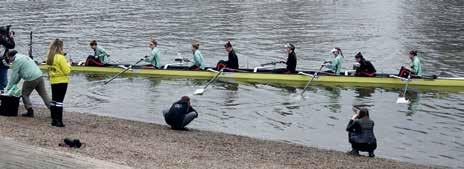
OnSaturday, 24 March, four students from Homerton College participated in the 2018 Cancer Research Boat Race.
Kelsey Barolak (MPhil in Psychology & Education), Olivia Coffey (Master of Business Administration), and Alice White (PhD in Clinical Neurosciences) raced in the Women’s Blue Boat, whilst Dave Bell (MPhil in Mathematics Education) rowed in the third seat of the Men’s Reserve Boat. After winning the coin toss, the Women’s Blue Boat started off strong on the Surrey side of the river. The Oxford crew were unable to catch up as the Cambridge women forged forwards by a
three-length lead in the first ten minutes. The Light Blues won their race in a time of 19m 10s, a significant comeback after the 2016 race when they took on too much water and nearly sank! The women’s reserve crew ‘Blondie’ also added to this success with a clear win. Next up, the Men’s Reserve Boat ‘Goldie’ won against Oxford’s ‘Isis’ adding to the Cambridge men’s reserves record of 30 wins over Oxford’s 23. The day was rounded off nicely with a win from the Cambridge Men’s Blue Boat who set off straight away in a powerful rhythm and secured a clean sweep for the Light Blues.
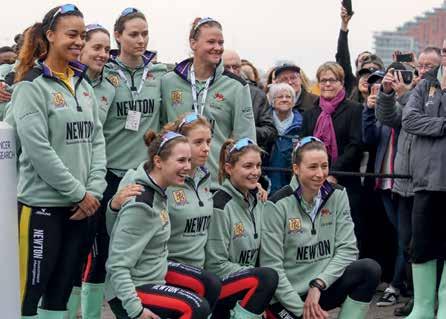
Alice White, who has previously competed in the Under 23 World Rowing Championships, said:
“This year’s boat race season was a challenge. I went into the year knowing exactly what to expect: early mornings, rushed experiments in the lab, monotonous erg sessions, 4000+ calories daily, and very few days off for seven months. The excitement of the previous year had waned, but I couldn’t have anticipated the huge support I’d receive from the wider CUWBC community, friends and staff at Homerton, and my colleagues in the Department of Clinical Neuroscience.
Small gestures, such as a “well done” from the Principal, to a “how was training?” from fellow Homertonian students made all the difference this year. The victories from all Cambridge crews and the celebrations broadcast by the BBC don’t do justice to the small efforts of many. Next year I look forward to being one of the attention givers, rather than one of the attention getters, and to another dominant performance by Homerton rowers and the Cambridge University Boat Clubs.”
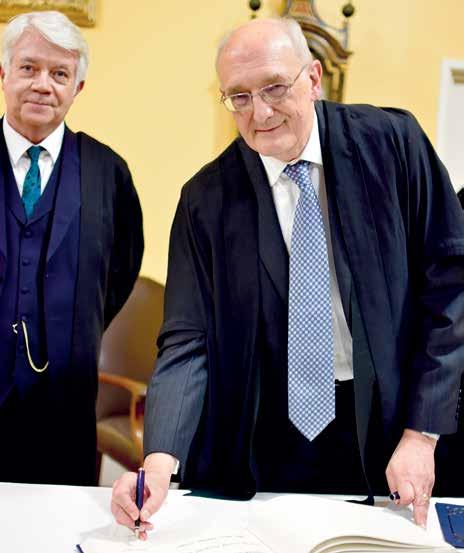
On Tuesday, 18 February, the former Vice-Chancellor of the University of Cambridge, Professor Sir Leszek Borysiewicz FRS, was sworn in as an Honorary Fellow at Homerton College.
Following a distinguished academic and clinical research career, and prior to his appointment as the 345th Vice-Chancellor of the University of Cambridge in 2010, Sir Leszek’s roles included Chief Executive of the Medical Research Council and Deputy Rector of Imperial College, London. He was also a founding Fellow of the Academy of Medical Sciences. His work in vaccines included Europe’s first trial of a vaccine for human papillomavirus to treat cervical cancer, research which was conducted at the University of Cardiff and funded by Cancer Research UK.
He was knighted in 2001 for his pioneering work in vaccines. Most recently, he was appointed as a Trustee to Cancer Research UK in July 2016 and as Chairman of the charity in November 2016.
‘There is no comparable University in the world to the University of Cambridge, it’s exceptional. The place matters, but the people matter more’.
Professor Sir Leszek Borysiewicz FRS
‘We’re delighted to welcome him and his wife Gwen to our community’.
Professor Geoff Ward, Principal
On Monday, 30 April, Homerton College Fellow, Dr Veronika Fikfak, and Associate Fellow, Dr Hayley J. Hooper, launched their new book: Parliament’s Secret War.
The invasion of Iraq in 2003, and the Coalition Government’s failure to win parliamentary approval for armed intervention in Syria in 2013, marked a period of increased scrutiny of the process by which the UK engages in armed conflict. For much of the media and civil society there now exists a constitutional convention which mandates that the Government must consult Parliament before commencing hostilities. This is celebrated as representing a redistribution of power from the executive towards a more legitimate, democratic institution, but as was evident when PM Theresa May authorised air strikes on Syria in April 2018, its application is highly contested.
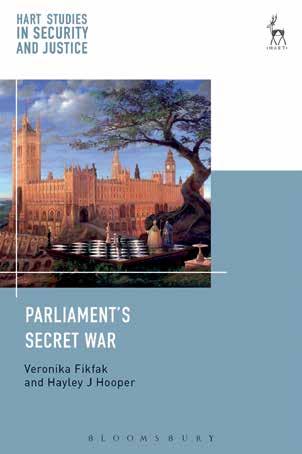
Dr Fikfak and Dr Hooper’s new book, Parliament’s Secret War offers a critical inquiry into Parliament’s role in the war prerogative since the beginning of the twentieth century, evaluating whether the UK’s decisions to engage in conflict meet the recognised standards of good governance: accountability, transparency, and participation. The analysis reveals a number of persistent problems in the decision-making process, including Parliament’s lack of access to relevant information, government ‘legalisation’ of parliamentary debates which frustrates broader discussions of political legitimacy, and the skewing of debates via the partial public disclosure of information based upon secret intelligence. The book offers solutions to these problems to reinvigorate parliamentary discourse and to address government withholding of classified information. It covers war powers, the relationship between international law and domestic politics, and the role of the Westminster Parliament in questions of national security.
Dr Veronika Fikfak is Fellow and Lecturer in Law at Homerton College, and an ESRC Future Research Leader. She holds a Magister Juris and a D.Phil from the University of Oxford. Dr Hayley J. Hooper was a Junior Research Fellow at Homerton and is now an Associate Fellow. She is the Pennington’s Student (Fellow) in Law at Christ Church, University of Oxford. She holds an LL.B from the University of Glasgow, and a Bachelor of Civil Law (B.C.L.), M.Phil in Law, and a D.Phil in Counterterrorism and Administrative Law from Balliol College, University of Oxford.
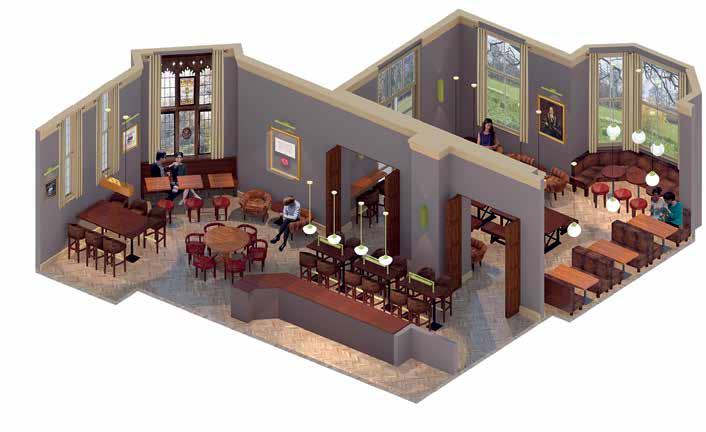
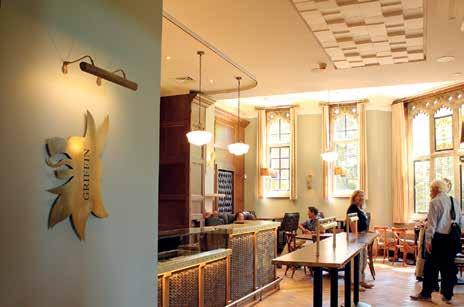
TThe first building project of our 250th anniversary year was the reconstruction of the old Cavendish Bar, which will inherit the name of ‘The Griffin’.
he bar space adjoining the Great Hall has undergone a full renovation and re-design. The Cavendish Bar, originally built as a Senior Common Room, has been out of use for many years as it was too small for the large College that Homerton has become. This new project expands the bar – ‘The Griffin’ – to provide a space for students, staff, and visitors, allowing the Buttery to become a more dedicated JCR. This building work has also enhanced the external symmetry
of the College, as the west wing is built up to reflect the east, fulfilling the original architectural plan.
Deborah Griffin, the College Bursar, said ‘we will be working hard to ensure that these new spaces fit cohesively into the College’. The interior design consultants for this project are Loci, a multi-disciplinary design practice based in central Cambridge, who have taken inspiration from the heritage of the College as well as its progressive nature.
The new design for the re-instated Griffin bar is led by its pre-existing features. It highlights the scallop edged, stained glass windows, and mirrors the original dark wood panelling of the Hall. The space remains traditional, but now has a polished, contemporary twist as well as plugs and WiFi access to enable students to work.
Construction for this project has just been completed, with the bar open for the first time at General Admission. We look forward to The Griffin being in more regular use from the beginning of term. This is the first step of many in the coming years towards enhancing the College estate, the largest of which will be the building of the new dining hall.
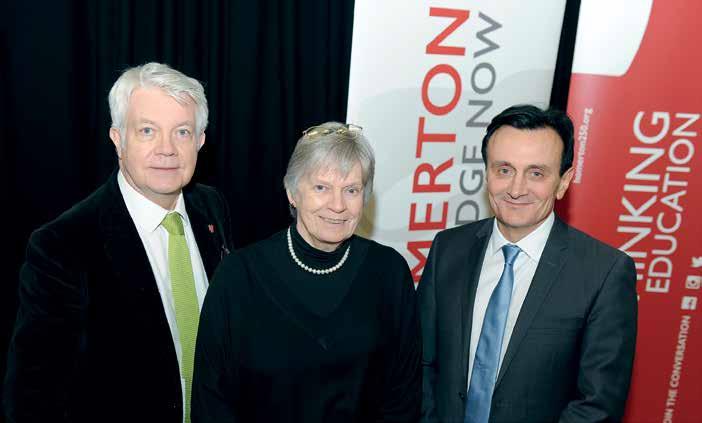
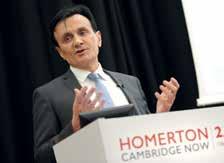
On Thursday, 8 March, Pascal Soriot, CEO of AstraZeneca, delivered the second Annual Kate Pretty Lecture entitled ‘What Science Can Do’ at Homerton College.
The Kate Pretty Lecture Series honours Dr Kate Pretty CBE, Principal of Homerton College (1991-2013) and Pro-Vice-Chancellor of the University of Cambridge (2004–2010), who was responsible for international strategy, outreach, lifelong learning, and museums and libraries. An archaeologist, Dr Pretty served as President of the Council for British Archaeology from 2008-2013. Dr Pretty’s time as Principal saw the College mark 100 years in Cambridge, widen its expertise across subject disciplines, and eventually become a full College of the University of Cambridge.
The second lecture in this new series was entitled ‘What Science Can Do: The Cambridge life science cluster at a pivot point’, and was delivered by the CEO of AstraZeneca, Pascal Soriot, in his first public lecture in Cambridge. This was received by an audience of 200 guests from the College, the wider University, and the general public. AstraZeneca’s
new £500 million global research and development centre is under construction on the Cambridge Biomedical Campus, and the College counts senior AstraZeneca researchers Professor Tim Eisen and Professor Steve Rennard among the Fellowship.
‘I’d like to start by congratulating Homerton on its 250th anniversary, marking a milestone and celebrating a remarkable legacy. As you point out, this year also happens to be the 500th anniversary of the Royal College of Physicians, and the year the New Royal Papworth Hospital opens in Cambridge – a significant year for science and healthcare!’
Pascal Soriot
The full lecture is available online at www.homerton250.org in both written and audio formats.
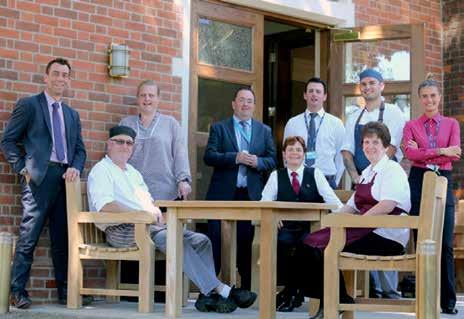
Paul joined Homerton in 2015 as Conference and Catering Manager. Here, he takes us through a ‘typical day’.
7am
I clock on early, before breakfast service begins. First thing, I catch up with the morning supervisor, Rob Gamble (Food and Beverage Manager), and Caroline ‘Bobbie’ Bobb-Semple (Conference Sales and Marketing Manager) about the previous evening and day ahead. I then have a chance to check my emails, which can be extremely varied. You never know what each day will bring!
9am
I attend a planning meeting with the architects for the new Dining Hall. With the new bar, The Griffin, now finished, and the Hall on its way, it’s a really exciting time for our Department. Our meetings at this stage can cover all sorts of topics – from how the building will be used for students and events, to more basic issues like how deliveries will come in and how rubbish will go out.
10am
Every morning, the Catering team meets for five minutes to go over the day ahead. This can include the menu, the first aiders, and always ends with a ‘quote of the day’. With such a large team and so many different things happening, this meeting is invaluable and makes sure the day runs smoothly.
11am
Bobbie and I meet a conference client – we’re proud to be one of the leading Conference Centres in Cambridge. Revenue from conferences is really important for the smooth running of the College, and helps to keep student room rates as low as possible.
12pm
I meet with the Environment Committee. Sustainability is hugely important to the College, and over the last few years we’ve introduced Keep Cups and compostable
takeaway packaging, and constantly work to reduce waste. We also source food locally wherever possible, and buy British or Fairtrade if not. All of our tea and coffee is triple certified – Fairtrade, ethically sourced, and Rainforest Alliance Certified. I’m really proud that we’ve recently achieved a Silver Award from Cambridge Sustainable Food and a Gold Impact Award for Sustainability.
1.15pm
Lunch in the Great Hall is a great chance to catch up with colleagues across the College, and also lets me see what the food looks like and how the counter service runs day-to-day. It’s really important to keep our service consistent and bear the guest experience in mind.
2pm
Most of the afternoon is spent setting up for Formal Hall, which takes place every Tuesday in term time. We make sure that we have all the necessary numbers, and that the Hall is looking its best. We also set up for the counter dinner service, which is always offered for those not attending Formal Hall.
I like to say I’m the ‘College Feeder’ – my main job is making sure the students are fed well and are happy and healthy.
4pm
I meet with College staff about General Admission, which is one of my favourite days to work. I get to know some of the students really well over the years, and it’s great to see all their hard work pay off. Most of the graduates this year joined Homerton just after me, so are the first cohort I’ve seen (and fed!) all the way through their degree. It’s also really nice to welcome their families to Homerton, and to create a really special day for them.
7pm
I run the drinks reception for Fellows and their guests in the Combination Room before Formal Hall, and ring the gong for dinner at 7.30pm. This is also when I brief the Principal for the evening, about any special guests, or whether the Charter Choir will be singing Grace. Once I’ve made sure everyone is seated and that dinner has begun, I leave the rest to my brilliant team and head home for the evening.
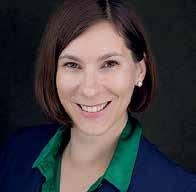

Dr Veronika Fikfak joined the Fellowship at Homerton in 2012. We caught up with her to discuss how her cutting edge research, as seen in her new book with Dr Hayley J. Hooper (page 6), really brings her subject alive in supervisions.
What is your favourite thing about supervising students at Homerton?
Homerton students are incredibly enthusiastic and inquisitive. I teach constitutional and international law, and we look a lot at what is happening in the news. In the past few years, we have discussed Brexit and how it will affect the UK constitution, and in international law, we talk about the air strikes and the use of drones in Syria. The students are fascinated by how the law applies to these situations and how we can hold those in power to account. They are very creative in terms of thinking of new ways that law could apply to areas in which there is a loophole. So, coming into a supervision, I never know what type of questions we will be answering.
How did you end up at the College?
Before coming to Cambridge, I was finishing my doctorate in Oxford and was hesitating over whether to stay in academia or go into practice. For a while,
I worked at the United Nations in Paris, at the European Court of Human Rights in Strasbourg, and at the International Court of Justice in The Hague. All these experiences gave me different insights into how human rights and international law are relevant to people on the ground. In The Hague, for example, I worked on a big case in which judges had to decide whether the declaration of independence by Kosovo was legal under international law. When I finished this posting, I thought long and hard about whether I wanted to practise or return to academia. Eventually, I chose to come back to the UK and got a job at Homerton.
What projects are you involved in at the moment?
Currently I am working on a big project - looking at how international courts determine damages for human rights violations. For example, when a state
tortures you or takes away your house, they have to pay you compensation and if they fail, then international courts can rule and award you compensation. So I am trying to understand how courts calculate that compensation and why, for example, torture in the UK costs more than torture in Turkey. Together with a team of statisticians, I am analysing 12,000 judgments and the aim is to help lawyers when they litigate these cases.
What would you like to achieve in the next five years?
I would like to build on our achievements during the past five years. We’ve got a very strong law cohort, with students each year surpassing the achievements of the previous year. It has been incredible to see how students are becoming more
confident, motivated, and determined to do well. They help one another, and this has really shone through in the results they have achieved.
In the next five years, I am very keen to tap into our alumni network, to bring back those who have done so well in practice and to create mentoring opportunities for new students coming in, so that they can see what to look forward to after they leave Cambridge. We will also be focusing on admissions: for us, attracting students from a variety of different backgrounds is key. Our Fellows have travelled all around the UK to attract the best students, and we are of course keen to attract the best students from outside the UK too.

What is your favourite thing about Homerton?
I love how positive everyone is in College and how informal the culture is. I don’t mean just how approachable everyone is – from staff to Fellows to students, but really how there is an overall ‘can-do’ attitude. One of the things that can get very frustrating in Cambridge is that things change slowly and tend to be done in a certain way because they have always been done that way. But at Homerton, because we are a relatively young College, there is a lot of flexibility and the attitude that nothing is impossible.
Matthew Moss Director of External Relations and Development
Our alumni continue to support current students generously through the annual telephone fundraising campaign, which raised a tremendous £110,000 this year. These donations help talented students to come to Homerton, and to thrive and make the best of their time here – both academically and through all the activities in sport, drama, and music that are the drivers of personal growth. All students come to Cambridge to get a qualification –but none of them come only for that.
One of the ‘Burning Questions’ we are exploring in our anniversary year is How do we Drive Change?. As a College we have been asking ourselves some fundamental questions about how a Cambridge College can best prepare our students for graduation: to be grounded, principled agents of positive change. This objective responds to the new challenges of the world around us, and it also draws on
our heritage of preparing our students to educate students of their own. Teachers are perhaps the greatest ‘agents of positive change’. The skills a well-trained teacher learns, of self-management and resilience and classroom leadership and translating ideas into action, are skills that could benefit all our students regardless of subject. Those are the characteristics that Clare Hanbury (BEd, 1979) attributes to the remarkable Trish Maude in her article on page 26.
So our fundraising efforts will begin to focus on creating a structured and intentional programme of skills development for all Homerton students, drawing on the astonishing ecosystem of employers around Cambridge, from NGOs to tech companies, and engaging our alumni as never before.
Having mentioned Trish Maude – retired only in the strictest technical sense – I am
pleased that recent events also give me an excuse to mention Philip Stephenson, recently retired as Senior Treasurer of Homerton College Boat Club. At its recent 40th anniversary dinner, Philip’s successor Dr Francesca Moore announced the creation of a fund to support the Boat Club, intended to encourage regular monthly or annual donations to help with the purchase and maintenance of equipment, and to meet the training needs of rowers at every level. A generous and wonderful lead gift from Siobhan (PGCE, 1994) and Adrian Cassidy gave the fund the best possible start. As Dr Moore said in the announcement, it is Philip’s gift to us that we are able to call it the Stephenson Fund. To make a donation, go to https://www.homerton. cam.ac.uk/alumni/supportinghomerton/ waysofgiving and direct your gift to the Stephenson Fund.
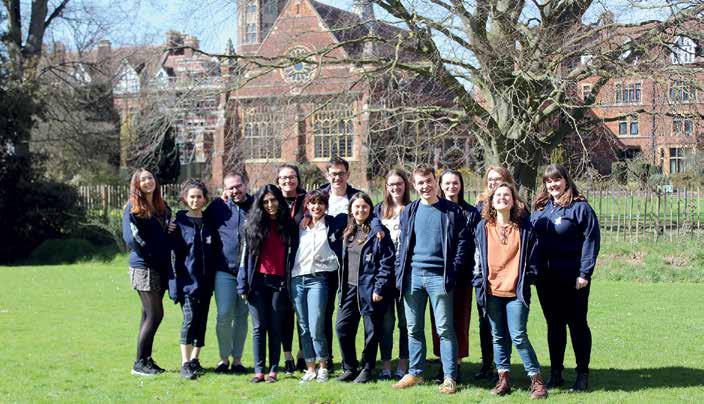
We’re halfway through our anniversary year, and from events, to lanyards, to sports kits – even to the wall of the Mary Allan Building – Homerton 250 is fully and visibly integrated into College life. Our events programme is focused around our three Burning Questions – issues that matter as much today as they did 250 years ago, and which resonate with other anniversaries this year. So far, we’ve been exploring: What is the Future of Healthcare? and What does it Mean to be Human?. Here’s what we’ve been up to.
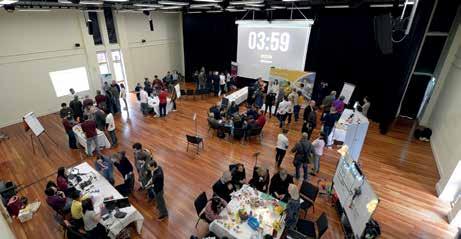
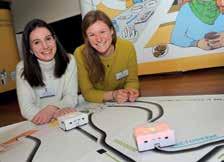
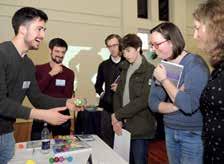
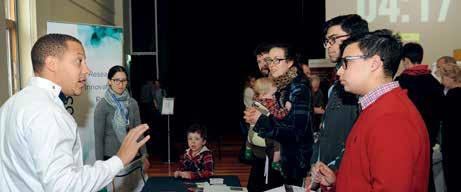
Our first public event of the year invited attendees to find out more about the many different forms of healthcare research done by Homertonians. From those topics that immediately spring to mind, such as genomics, stem cells, and molecular biology, to those less obvious, such as wellbeing through creativity, and the way in which we train doctors or run the NHS, nine different stations brought the laboratories to life. Attendees had the opportunity to try activities such as 3D printing, to guide robots in the same way as stem cells, and to watch dramatic realisations of the NHS and doctor-patient interactions.
Each station was led by a member of Homerton’s research community, with graduate students also getting an opportunity to develop their outreach and presentation skills. As well as the need to demystify complicated research to a varied audience of all ages and knowledge levels, the researchers had the extra challenge of very limited time. Each group of attendees only had a few minutes at each station before moving on, getting a snapshot of all the different types of research and a unique perspective on how different elements might work together. Following this ‘speed-dating science’, the attendees and researchers were able to discuss topics in more detail over refreshments in the Great Hall.
WEDNESDAY, 21 MARCH
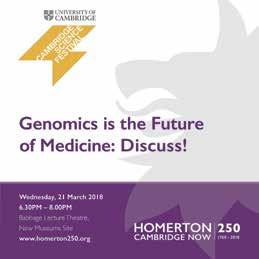
Following on from Action Stations and the Kate Pretty Lecture (page 8), we continued thinking about the future of healthcare. In March we teamed up with the Cambridge Science Festival and, for one night only, Homerton relocated to the Babbage Lecture Theatre in the centre of town.
We were thrilled to present a panel discussion exploring the role of genomics in healthcare, with an all-star group of contributors. Honorary Fellow of Homerton College and Chief Medical Officer for England, Professor Dame Sally Davies, joined Fellows Professor Mary Dixon-Woods, Director of The Healthcare Improvement Studies Institute, and Professor Tim Eisen, Professor of Medical Oncology at the University of Cambridge, plus special guest Professor Dame Jane Dacre, President of the Royal College of Physicians (which celebrates its own 500th anniversary in 2018). The panel was moderated by another Homerton Fellow, Professor Simon Gregory, Health Education England lead for General Practice.
As well as an excellent discussion, there were some challenging questions from the audience covering big data, artificial intelligence, and how best to train doctors as genomics becomes more important to everyday healthcare.
SATURDAY, 14 APRIL
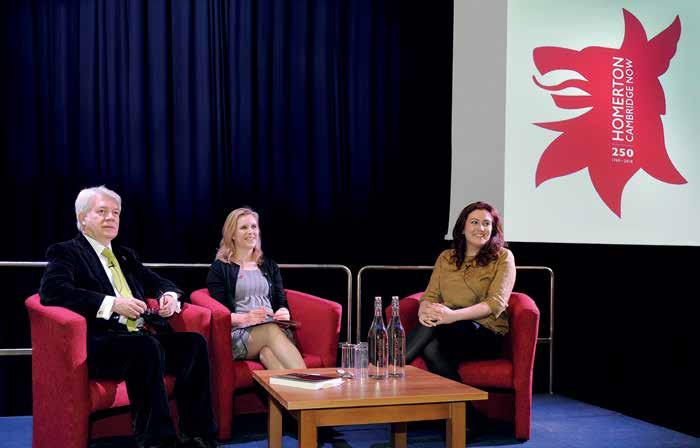
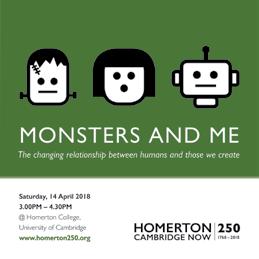
In April we moved on to our second Burning Question – What does it Mean to be Human?. With Frankenstein’s monster celebrating 200 years since publication, we wanted to know how our opinion of creations such as the monster and today’s equivalent – artificial intelligence – has changed since Mary Shelley’s groundbreaking novel. To do this, Dr Louise Joy (Fellow and Director of Studies in English) chaired a discussion between the Principal and Dr Beth Singler. Professor Geoff Ward, as a literary critic, has always been fascinated by gothic horror and fantasy novels –something particularly demonstrated in his own novel You’re Not Dead (Garn Press,
2016). Beth is a digital anthropologist who, in her own words, ‘thinks about what you think about machines that think’. She will be joining the Fellowship in October as a Junior Research Fellow.
Geoff and Beth led a fascinating conversation exploring the differences and similarities between the Frankenstein story and modern developments in artificial intelligence. Together they explored the difference between life and understanding, the definition of personhood, the origins of gothic tropes, and people going too far – both ethically and literally. Questions from the audience also added ethical responsibilities, human redemption, and Doctor Who to the vast range of topics.
We’ve been thrilled with the success of our anniversary programme so far, and we’re looking forward to keeping the momentum up in Michaelmas Term. We will be exploring our final Burning Question: How do we Drive Change? More information will be added to the Homerton 250 website nearer the time, so do sign up for updates. The Homerton 250 website is also the home of any audio or video content taken from these events. Visit the Stories page to explore.
WEDNESDAY, 20 AND THURSDAY, 21 JUNE
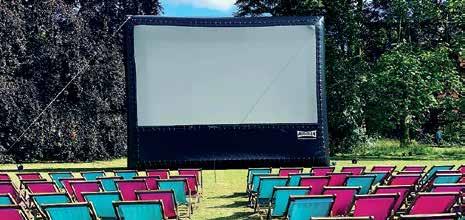
In our final events of Easter Term, the Cavendish Lawn in front of the Great Hall was transformed into an open air cinema. Films on show were The Shape of Water (2017) for the current College community and The Great Gatsby (2013) for a wider audience of neighbours and friends. We were pleased to be able to offer members of the public a chance to experience the College in a totally different way.
SUNDAY, 13 MAY
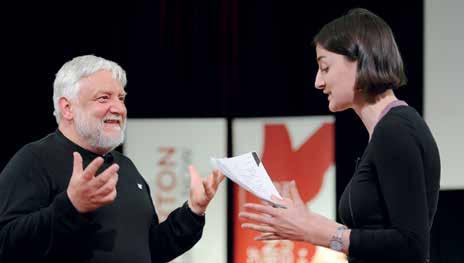
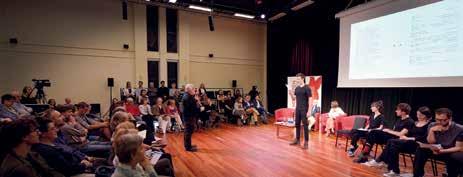
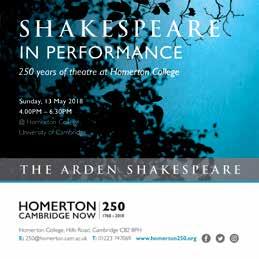
Our second ‘Human’ event saw an exploration into Shakespeare, and a celebration of the strong tradition of theatre at Homerton. Fellows, Associate Fellows, alumni, and current students all took part, and we were also joined by celebrated actor Simon Russell Beale CBE.
The event began with a launch of the new Arden Shakespeare Performance Editions, which have been edited by Associate Fellow Dr Abigail RokisonWoodall, Professor Michael Dobson, and Simon Russell Beale. Abigail and Michael gave a talk about the editions, explaining some of the editorial decisions which make the scripts more accessible to directors and performers. Following this, Simon Russell Beale led a masterclass with current undergraduates Joe Sefton, Xanthe Burdett, Juliet Martin, Alex Lemery, and Alfred Leigh, looking at one of Hamlet’s monologues using the Arden Performance Editions.
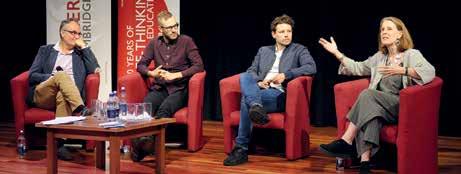
For the second half of the event, Associate Fellow Steve Waters chaired a panel discussion with alumni Sarah Gordon (B.Ed Drama, 1982), Sam Yates (BA Education and English, 2002), and Max Barton (BA Education with English and Drama, 2008). The panel discussed how theatre at Homerton has changed over the years, and gave fantastic insights into working in the theatre industry today.
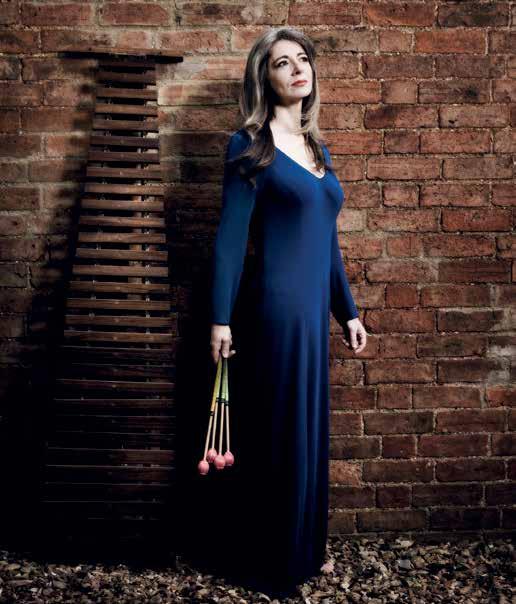
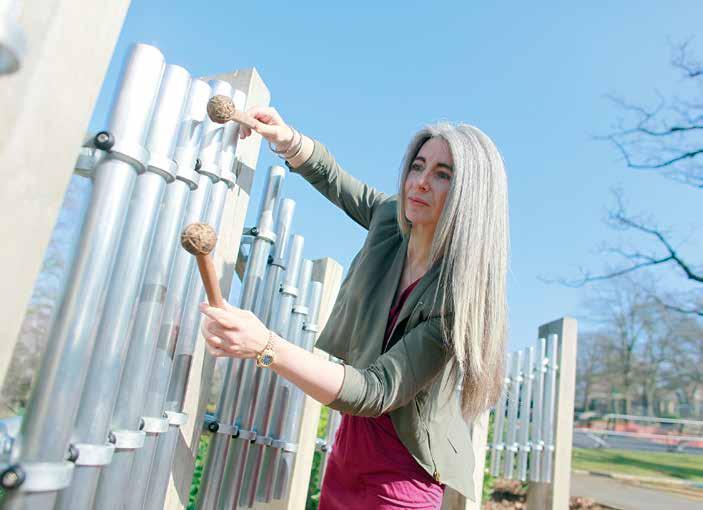
Evelyn Glennie –profoundly deaf since the age of 12 – is the world’s premier solo percussionist and has been an Honorary Fellow of Homerton since 2016. Here, she is interviewed by Natalie Jobbins (2nd year, Music).
What attracts you most about music? And why percussion as the instrument of choice?
I started playing piano at the age of eight and loved reading music as well as improvising. Scottish traditional music was played at social family gatherings and at school. However, at the age of 12 I was introduced to the school orchestra – that was my first time seeing percussion and I was enthralled. So, I asked to have lessons through the school system and eventually got my turn to try. I have never looked back.
You are almost always described as a percussionist, without specific reference to a “classical”, “contemporary” or “improvisational” genre. Has it ever been part of your aim to transcend – or even problematise – commercial categorisations of music?
I have always seen myself as a sound creator first and foremost, then musician, then percussionist. It is the industry that puts labels on in order to fit in to one project or another. I have had no interest in labelling myself. I feel completely at ease working with the myriad of people and scenarios without a label and long may it continue.
Is music pedagogy in the UK stuck in the past? Would you change how we learn to make and experience music?
Nothing is ever stuck. Technology has meant that more people are listening to music and indeed participating in media writing and sound design even though they may not play an actual instrument. Concert promoters are now less inclined to label music and we are seeing real experimentation happening in programming and recordings. The most important thing is to make sure youngsters, from the get-go, experience and participate in sound discovery and music and for us to acknowledge that there are many avenues to music that can and should be addressed with equal interest.
You were part of the 2012 Olympic Games opening ceremony, coordinating a thousand volunteer drummers. How did you manage that?
Everything was so well organised from the outset. A core team of professional percussionists/drummers/senior students was allocated to take care of groups of people in order to teach the rhythm and to work as an ensemble. Gradually we would bring the groups together in order to
coordinate everything. A massive car park in Dagenham was used as one location. I recorded my part at Maida Vale studio as the core drum part. It was very much a team effort starting from the vision of Danny Boyle.
What was it like working with Björk?
Very good. Björk is a tour de force, hugely creative and forever evolving as an artist. We were completely free to do what we wanted and that’s what we did. It was an exhilarating experience.
How do you feel about the trends in the music industry towards free (or cripplingly cheap) digitallydistributed music? Does it encourage live performance or deter the musician? Is the prognosis positive? Creativity needs to be recognised and rewarded. There should always be some kind of remuneration towards the creators. It is their livelihood and business. That applies to live performances too. It’s not good enough to say that you will receive PR if you give your goods free of charge. Being a musician or composer is a creative
endeavour and there is nothing to fire that creativity if what you do is more often than not taken for granted. Proper acknowledgement is crucial.
How does hearing differ from listening, do you think? Are both necessarily active experiences?
Hearing is a medical situation that can be measured whereas listening is an actual action that we choose to participate in or not. A deaf person is perfectly capable of listening.
The TED talk you gave in 2003 demonstrated how sound is multisensory – not just something we experience using our ears. Do you think that conceptions of deafness are thus as much cultural as biological?
This is such a complicated subject. Yes and yes to your question. With the advancement of cochlear implants and the discovery of deafness whilst a baby is still in the womb, science has completely changed our conception of what deafness is. There still remains a malfunction in the ear to create deafness but technology has found a way
to allow people to hear well enough to communicate aurally and to interact in the world of sound around them, thus giving them options to hear through the ear or not, to speak using the voice or communicate via sign language.
Your mission statement is to teach the world to listen. How is this mission coming along?
We have an opportunity each day to spread the word about the power of listening and connection. It is an action which is also an attitude. The word listening is used in all of life’s scenarios but the challenge is that our attention span is diminishing. Asking people to listen to themselves is about respecting each individual and how we can all then interact with each other through the patience and presence of listening.
Dame Evelyn Glennie will be taking part in the College’s anniversary Festival on Saturday, 27 October. You can book tickets on the Homerton 250 website: www.homerton250.org
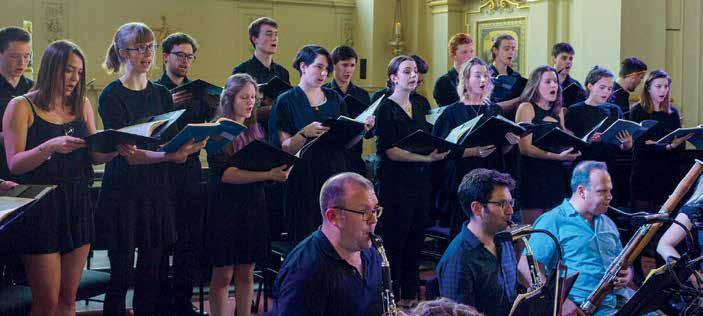
Dr Daniel Trocmé-Latter Director of Music
Two UNESCO World Heritage Sites isn’t bad going for one six-day tour. This year, among Prague’s 6.4 million international visitors were members of the Charter Choir, singing their way through their summer tour at the end of July. Prague’s vast array of churches meant that we chose to stay put in the city for all except our final two concerts, when we visited the Baroque town of Olomouc and then Kutná Hora, famous for its ossuary and other ancient buildings including Sedlec Cathedral. Other highlights included Prague performances in the cathedral of
the Old Catholics as well that of the Roman Catholics, and a river cruise (no singing!) along the Vltava River.
Summer tours are always great opportunities for the Charter Choir to bond as a group, with an intensive programme of music-making as well as spending leisure time – more so than usual – with one other. They are also opportunities to test out repertoire for the coming year, and that’s what we did in preparation for Homerton’s 250th anniversary concert in November, when we’ll be performing movements from Handel’s Messiah as well as the 2018 Homerton Composing Competition winning piece by Benjamin Graves, an MPhil student at Darwin College. (The concert will also include a new orchestral piece by John Hopkins, Composer in
Saturday, 22 September, 4pm: Alumni Reunion Weekend Concert
Saturday, 24 November, 7.30pm: 250th Anniversary Concert (featuring Charter Choir alumni)
Sunday, 25 November, 6pm: Advent Carol Service
Tuesday, 27 November, 6.30pm: Homerton Carol Service
Residence.) But on this tour we also performed some of our favourite music from the past year, including I saw the Lord by John Stainer and – at a Choral Evensong hosted by St Clement’s Anglican Church in Prague – Herbert Brewer’s ridiculously fun Evening Service in D. Thanks are due to Rachel Sweet whose administrative support helped make this such a successful tour.
As always, by now we have also said farewell to a number of recent choir graduates (many of whom I presented for their degrees in the Senate House a few weeks ago, literally wearing my Praelector hat). Not all will disappear, however: Max Goodall, one of our basses who has just graduated in Music, will be joining the Development Office team this autumn.
All alumni are always welcome at Charter Choir services and concerts. The Charter Choir website (www.homerton. cam.ac.uk/charterchoir) contains full details of sung services as well as clips of the choir performing. The website also contains biographies, and details of tours and recordings. Alumni can also follow the Charter Choir on their Facebook page, at www.facebook.com/homcharterchoir

Dr Peter Warner is an Emeritus Fellow of the College and formerly Senior Tutor. He is Keeper of the Roll and Chair of the Retired Senior Members Association.
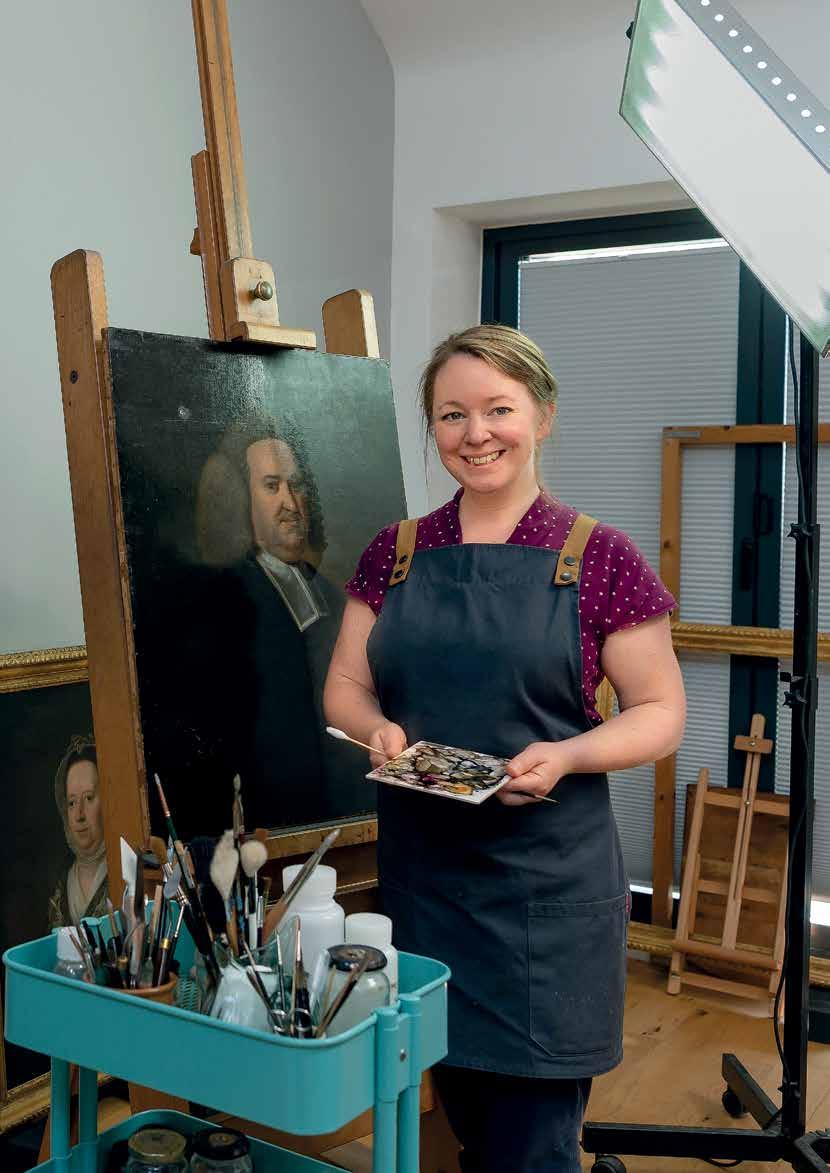
Finding John Conder, an article in the Homertonian issue 21 (pages 20–21), stimulated considerable interest. Some asked where he had got his Doctorate of Divinity – it was awarded by Aberdeen University in 1762 for his published work. His portrait, as it appeared in that article, was a contemporary print from the National Portrait Gallery website. This caught the eye of Rex Watson, retired Maths Lecturer at Homerton, who did a search on the Ancestry website where he discovered portraits of John Conder and his wife Susan. Although these images were small and indistinct, the portrait of John Conder looked very similar to the one from the National Portrait Gallery. Rex has many contacts in the world of family history, and before long he emailed a member of the Conder family who had posted on the site. He learnt that ‘the two portraits hung in the Great Hall at Homerton’ and then asked me if the College had them. Clearly this was not the case and the whole exchange seemed very strange indeed.
After some time and some very carefully worded letters, I made contact with Helen Griffith, one of the three daughters of William M. Conder, via solicitors who had drawn up his Will. Helen was enormously helpful and invited me to go to her house in Ipswich to see the collection of family portraits and other documents including a privately published family history written by her father in 2000. The Conder family were distinguished Congregational leather merchants in Ipswich, over many generations, and their history is inextricably intertwined with that of nonconformity in a town with a famous puritan tradition. It seemed that it was always the intention of William Conder that the large portraits of John Conder and his wife should go to Homerton College, but this was never expressed in his Will.
Here, in remarkably good condition considering their age, were a pair of large portraits directly connected with the early history of Homerton, both in their original frames. John Conder DD was our first Principal and his wife Susan was our first governess in charge of the house in Homerton High Street purchased in 1768. Hers is the better portrait of the two, with wonderful fabric and lace details in her dress. We know she was a strong controlling character, not always liked by the students. Wouldn’t it be wonderful if we could acquire them both: not only would they be our earliest portraits, but also John Conder would return to the College that he had helped to create 250 years ago? To have husband and wife would be particularly appropriate because of our nonconformist origins; portraits of divines of this period found in other Cambridge Colleges are always single men. The two portraits had already been valued by a distinguished local expert and, although not signed, were believed to be from the circle of Mason Chamberlain (London 1727–1787); the dates seemed to fit. Helen and I were happily able to agree a purchase price. The portraits are quite large and so we agreed as part of our ‘deal’ that the College should provide two smaller copies to be returned to the family. I also purchased a copy of their printed family history, and a photocopy of an earlier hand-written family history for our College Archives. You can imagine my joy, about a month later, with our agreement having been endorsed by the Principal and Art Collections Committee, when I brought both portraits from Ipswich to Homerton in the back of my car!
The portraits are currently being restored in Cambridge by Polly Saltmarsh, who works part-time for the
National Portrait Gallery and is a wellknown expert in her field. The print in the National Portrait Gallery is, as I suggested in Finding John Conder, a copy of an oil painting, ascribed by the National Portrait Gallery to Jonathan Spilsbury (1737–1812), a prolific London portrait painter and engraver (over 52 portrait prints are ascribed to him). The engraving in this case is by James Watson. The Dr Williams’s Library, London, has another portrait of him, and among the Conder family collection there is another print of a portrait of John Conder in profile. I think there is every chance that we will be able to ascribe both Conder portraits to Spilsbury.
The Conder family archive has added significantly to our knowledge about John Conder and the early years of the old Homerton Academy in London – his early history as a preacher in Cambridge, and his publications that came to the notice of the King’s Head Society and the Congregational Fund Board. How he transformed the admissions process and, as a great teacher and preacher, established the benchmark for Divinity lectures in orthodox dissent for the next 50 years. Also how he was held up by a highwayman on his way back to Cambridge one day, who stole his watch, only to have it returned to him after he had converted the robber and made him see the error of his ways!
John Conder was a truly remarkable man and we are immensely grateful to his family for allowing us to be reunited with his portrait. We can be proud of John Conder as our first Principal, and we welcome back his image to smile benignly down on the current student population and remind them of our distinguished dissenting origins.
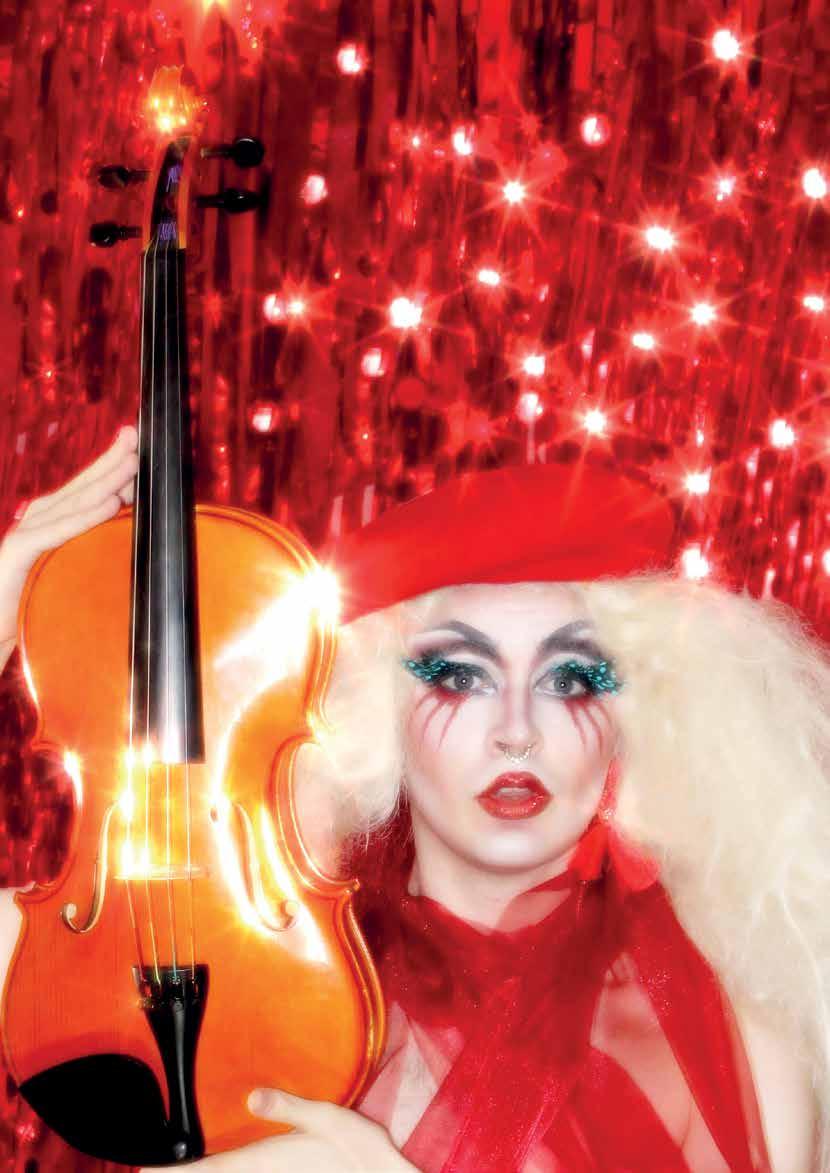
Ben Hetherington is a final year Modern and Medieval Languages student. He spoke to us about his time at Homerton, demystifying academia, and drag performance.
The best thing about Homerton is that when you leave the library or the faculty for the day and come home, you really do feel like you can just let go and relax. Most of the papers I’ve done this year involved choosing my own texts, so it’s been really fun getting to spend time working on things I genuinely love. I’ve completed two dissertations; one was on trashy 80s slasher movies and the other was on the drag scene in Berlin. It’s been really fun looking at things that rarely get touched by academia, and it’s so rewarding because it feels like what you’re writing is new and worthwhile. I’ve realised that there’s no reason to focus only on ‘high culture’ and that things that seem trashy or lowbrow are just as influential and important to talk about. I think it’s really important to demystify academia and learn that you can write a paper about a television programme that’s just as valid and worthwhile as something on Baudelaire.
I’ve been doing a lot of work in drag this year. I’m part of the University drag troupe Dragtime who perform in cabaret nights at the ADC theatre. Anyone can take part regardless of their gender or what kind of performance they do, and it’s city-wide so we have performers from Anglia Ruskin University as well. Really what we want is to establish a community and a platform for LGBT+ performers in Cambridge because just giving ourselves a voice is so important today. Right now we’re getting ready for our show at the Edinburgh Fringe Festival in August. Aside from that I’ve been performing at Glitterbomb, the LGBT+ club night in Cambridge, and I’ve been part of a few student-run club nights, working on the door or DJing.
The name I use when I’m doing drag is ‘Sneeze’. I wouldn’t say it’s an alter-ego, if anything it’s me at my most authentic despite all the artifice. I started doing drag a couple of months into my year abroad in Berlin. I heard about a weekly show so I started going, then started going in drag and eventually I just asked to perform.
Even just by standing in a room in drag, you’re starting a conversation about sexuality, about gender, about bodies. It’s inherently political, and it only gets more interesting when you’re performing. It can just be silly, irreverent entertainment, but even so you’re making a statement by being visible and by saying “Look at me, I exist”. Even when you’re putting on a character, you get to talk honestly about things you’d never normally be able to, or that you’d never be able to put into words.
I’m inspired by anyone who can realise their creative ideas and just do it. When anyone I know does something creative and puts it out there, whether it’s drag or not, that’s such an exciting thing. A real epiphany for me was when I was telling another drag queen about an idea I had for a performance and she interrupted me and said, “I don’t care about what you’re planning on doing, I just want to see it.” I think it’s true that we end up spending so much time thinking about what we want to do that we forget to actually do it, and getting things done is really not that hard if you have the right mind-set.
I’d say to anyone interested in getting involved with drag: start immediately and ignore what you think you should be doing. You’re not going to start out being
able to do amazing makeup, but you can do effective makeup. My makeup’s far from flawless, but it’s all about bold colours and exaggerated shapes, so whether or not what I’ve done is technically good, I’m really fun to look at. More is always more. And never be afraid to reach out. Dragtime and Glitterbomb are always looking to meet more performers, and the more events you go to, the more people you meet who can help you along the way.
Drag has never come in the way of my work, and it’s nice to have something going on outside of your degree. I think everyone here had the experience of excelling at school, and when you get here you realise that and you can end up thinking “OK, who am I?”. That’s why it’s good to do things outside of academia, so you don’t end up feeling lost.
I’d say Homerton is a good space for creating and being creative. I started experimenting more with makeup in second year, especially at Bops, and the fact that everyone was so helpful and supportive encouraged me to do it more and more. When you’re out there and so visibly queer, whether you’re in full drag or just wearing eyeshadow, the world can be really hostile and it’s difficult to feel safe when you’re expressing yourself. Homerton gave me the sense of security and community I needed to do this kind of thing without being terrified.
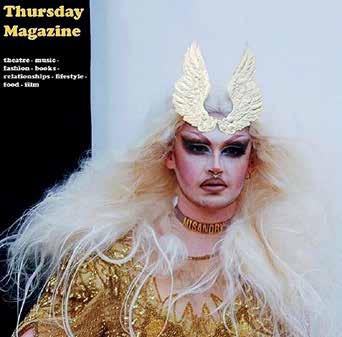
Ben featured on the cover of The Thursday Magazine, the Culture section of The Cambridge Student newspaper, in January 2018.
caption
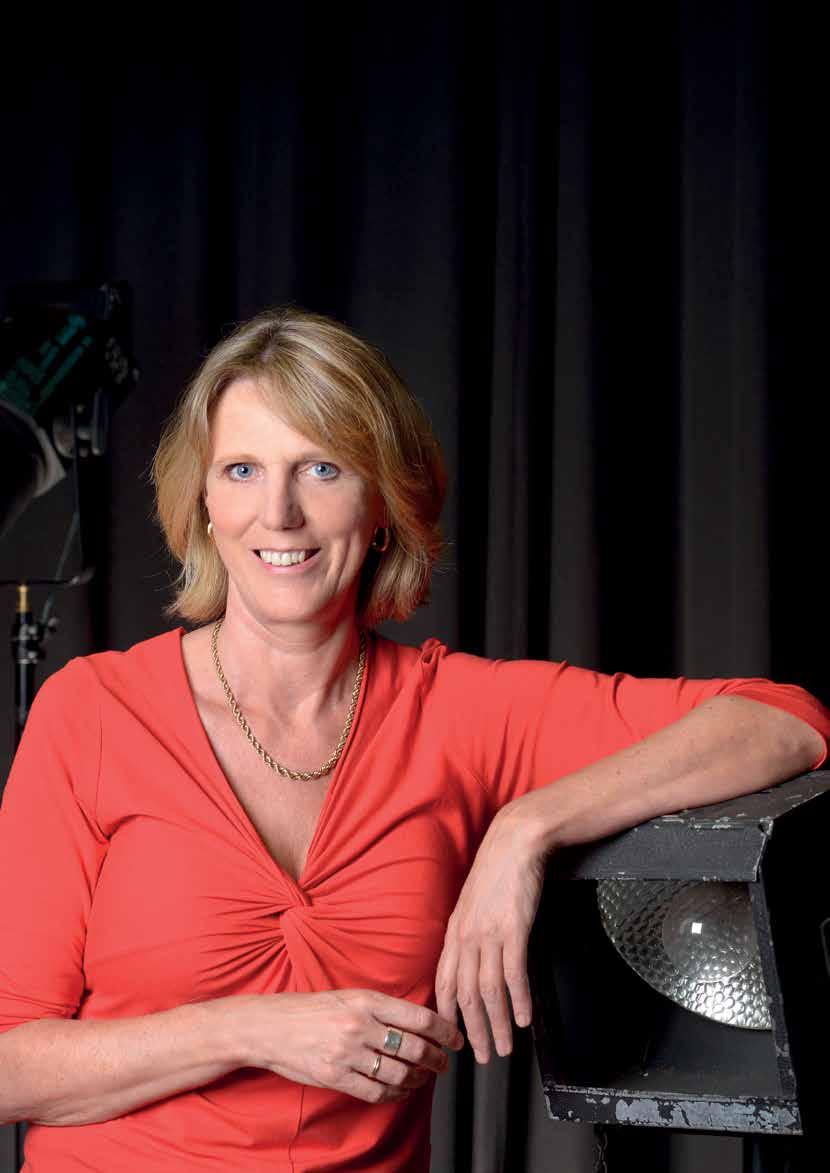
1979–1983)
Your work has taken you around the world – how did this begin?
After Homerton, my first job was at an international school on a Kenyan pineapple plantation. I had met with the Principal, Ms Shrubsole, to ask if I should go to Kenya or do my probationary year in the UK first. “Do your probationary year”, she said, but I ignored her advice! I taught general subjects, drama, and music to children aged 9–13. Using drama in situations allows children to learn how to problem solve, which is completely different to traditional acting. Drama can transcend language ability and age. I then taught in an international school in Hong Kong. In my free time I worked with Vietnamese refugees, volunteering on a language programme helping the refugees to read English. I became quite political during this time and wrote about the experience of refugees for the local media. I even appeared on BBC Radio 4’s Today programme to discuss the issue.
Do you have a favourite lasting memory from Homerton?
The lecturers at Homerton, such as in the outstanding drama department, were fantastic, and Trish Maude in particular was a huge influence on my teaching style. I remember sitting in the old gym in the Ibberson Building (now the Combination Room) with 60 children raring to climb on the PE apparatus. Trish was so engaging that not a single student messed about, shouted, or put a foot wrong. Trish completely commanded the room. She demonstrated the precise craft of teacher training at Homerton, its mix of artistry and technical skill, like the most perfect choreography. My time at Homerton taught me to plan and focus but also to be creative. It gave me confidence in my own ability and in others’ ability to follow me. The whole experience left me feeling completely invincible.
How did you get involved with the charity sector?
After four years working in international schools in Kenya and Hong Kong, I returned to the UK for an MA in Education in Developing Countries. I was studying at the University of London’s Institute of Education, and became involved with
The Child to Child Trust which was based there. The Trust pioneered children’s participation in health – we trained the world’s leading agencies to equip children with the skills to stay safe, stay healthy, and achieve their potential. During this time I met two of my greatest mentors, and founders of the charity, Dr Hugh Hawes and Professor David Morley, who helped develop my understanding of peer development and the importance of children teaching children in Africa. Drama, singing, and role play are key to the methods we used. We worked together to help embed the ideas of children’s participation in health into government and non-government child health and education programmes in numerous countries.
Can you tell us about your own charity, Children for Health?
Children for Health is a charity dedicated to the promotion of health education in developing countries. It focuses on developing children as agents of change and communicators of essential health messages, both to their families and their communities. I founded the charity after a conversation with the wonderful Anna Joy, then Director at the Cambridge-based Humanitarian Centre. The Centre was set up as an innovative think tank, allowing academic minds and development practitioners to sit together and talk about healthcare by running seminars and talks based around current issues. I came up with an idea called ‘The 100’ – to give children 10 health messages across 10 topics which they can learn and share with their community. The idea was similar to what the Centre was already promoting amongst academics – take a theme and spread the message.
The Centre also helped me to obtain seed funding for the charity by putting me in touch with the multinational software design company ARM. ARM offered funding but insisted that it had to be as part of a charity. They gave me until 5.30pm to create a Board and open a charity bank account – this was at 1pm! Thankfully, I succeeded, and we launched Children for Health formally at the National Theatre, London, in July 2013. Our core ‘100 messages’ project has been a great success and the messages are
being developed into posters, translated into many languages and distributed in many formats. Each time a child shares a message it helps to influence the family and community. A simple message such as: “To wash hands properly, use water and a little soap. Rub for 10 seconds, rinse, and air dry or dry with a clean cloth/paper, not on dirty clothes.” can become a doorway to a discussion on how to make real change so that this message can be turned into action.
What is your favourite part of your work?
Without a doubt, it’s being in the field with teachers, health workers, and children. I have worked on Children for Health projects in Mozambique, Nigeria, and India, and love developing materials and conducting teacher training on location. In Mozambique, I work on a nutrition education project among a community of rural farmers, where 38% of under-five year olds had chronic malnutrition. Although food grows well in this area, people do not eat a balanced diet. Teaching the younger generation here is vital too as the older children look after younger children while the parents are working in the fields. These children can quickly become catalysts for change in their communities. They love the messages and activities. When we reviewed the programme we noticed that the children who took part in the project seemed different from their peers. They stood tall, proud, as though they felt able and empowered to make change. The relationship with their teachers has also changed, children enjoy learning and there is a mutual respect. It is fantastic to see the practical, lasting impact on this community and this work is being scaled up.
I often reflect on how great my time and training was at Homerton and how the many elements of that special BEd Hons degree gave me the courage and skills to do the work I do today.
For more information on Clare or her work, please get in touch at clare@childrenforhealth.org or visit www.childrenforhealth.org to find out more and access free health education materials.
The Principal, Fellows, students and staff of Homerton College wish to thank alumni and friends who have generously made donations to the College over the last year. Every effort has been made to ensure this list is accurate; do contact us if you believe we have made an omission.
Key: (d)* = deceased
Alumni
1942
Miss Eileen Pearsall
1943
Mrs Kathleen Hayward
1946
Mrs Zoe Coombe
1947
Ms Christine Andrews
Lady (Dorothy) Franklin
1948
Mrs Janet Farley
Mrs Mollie Gray
Miss Elizabeth Rainsbury
1949
Mrs Mary Dowse
Mrs Coral Harrow
Mrs Molly Payne
1950
Mrs Mavis Blow
Mrs Cathleen Butler
Mrs Joyce Laban
1951
Mrs Sheila Duncan
Mrs Jennifer Griffith
Mrs Patricia Stockdale
1952
Mrs Shirley Haslam
Mrs Ann Newman
Mrs Evelyn Parker
1953
Miss Brenda Liddiard
Dr Alison Littlefair
Mrs Margaret Trow
Mrs Elizabeth Tunnicliffe
1954
Mrs Catherine Allardice
Mrs Pauline Curtis
Mrs Carol Hammerton
Mrs Sheila Mackenzie
1955
Mrs Ellen Ackroyd
Mrs Maureen Champion
Mrs Wendy Darr
Mrs Christine Grainge
Mrs Gillian Hewin
Mrs Doreen Hobbs
Miss Gwendoline Lancaster
Mrs Rachel Lewington
Mrs Jane Matthews
Mrs Wendy Oakley
Mrs Elizabeth Tomlinson
Mrs Maralyn Westwood
1956
Mrs Marguerite Donkin
Mrs Mary King
Mrs Alice Severs
Mrs Jennifer Varley
1957
Mrs Julia Davis
Mrs Gillian Figures
Mrs Chistine Lincoln
Mrs Elisabeth McOwan
Mrs Valerie Read
Mrs Gillian Reitsma
Mrs Josephine Sutton
Mrs Rosemary Viner
1958
Mrs Ann Banner
Mrs Freda Crispin
Mrs Gillian Ganner
Mrs Wendy Garforth
Mrs Jane Grant
Mrs Jill Hicks
Mrs Angela Hulme
Mrs Vivien Ivell
Mrs Beryl Izzard
Mrs Wanda Kielbinska
Mrs Rachel Macdonald
Mrs Judy Manson
Mrs Patricia Stott
Mrs Dorothy Waite
1959
Mrs Dora Beeteson (in memory of Fran Essen)
Mrs Pamela Dawson
Miss Esme Partridge
Mrs Gwendolyn Williams
1963
Mrs Jean Addison-Fitch
Mrs Andrea Caish
Dr Anthea Cannell
Mrs Christine Macpherson
Mrs Erica Rigg
Mrs Catherine Ryder
1964
Mrs Carolyn Adams
Mrs Veronica Clark
Ms Sylvia Dibble
Mrs Celia Jones
Mrs Patricia Lewis
Mrs Margaret Meredith
Mrs Pamela and Dr Anthony Metcalfe
Ms Christine Purkis
Mrs Susan Rescorla
Ms Marjorie Thorley
Mrs Janet Woodford
Mrs Christine Frost
Mrs Diana Hadaway
Mrs Marilyn Horobin
Mrs Ruth Jerram
Mrs Diana Lucas
Mrs Annmarie Mackay
Miss Doreen Rogers
1960
Mrs Rosemary Allan
Mrs Sylvia Avgherinos MBE
Lady (Gillian) Baker
Ms Jacqueline and Dr Norman Bardsley
Mrs Patsy and Mr John Blythe
Mrs Jean Clarke
Mrs Susan Dickinson
Mrs Jenifer Freeman
Mrs Jill Fuller
Mrs Susan Greenwood
Mrs Rosemary Hill
Mrs Jean Jeffery
Mrs Valerie Johnson
Mrs Christine Kershaw
Mrs Cynthia Loudon
Mrs Jennifer McKay
Mrs Rosemary Rees
Mrs Jacqueline Swegen
Mrs Janet Valentine
Mrs Hillary Young
1961
Mrs Janet Campbell
Mrs Frances Clare
Dr Olivia Craig
Mrs Anne Hulse
Mrs Joy Kohn
Mrs Susan Lovett
Mrs Susan McFarland
Mrs Jillian Niblett
Mrs Caroline Sykes
Mrs Heather Taylor
Mrs Jean Thorman
1962
Mrs Carol Bowen
Mrs Diana Dalton
Mrs Lynn Dowson
Mrs Marion Foley
Mrs Carole Girdler
Mrs Carole Nolan
Mrs Heather Powrie
Mrs Penelope SpencerChapman
Mrs Marilyn Stansfield
Mrs Alison Syner
Mrs Eithne Webster
1969
Mrs Eileen Coombes
Mrs Elizabeth Cutter
Ms Susan Durston
Dr Victoria McNeile
Ms Anne Reyersbach
Mrs Gillian Sallis
Ms Hilary Stokes
Mrs Sarah Taylor
1970
Mrs Patrica Bradley
Ms Fiona Cook
The Rev Sheila Crowther
Mrs Cynthia Garvey
Ms Claire Heald
Dr Rosslyn Sendorek
Mrs Denise Shakespeare
1965
Miss Sue Bates
Mrs Lorna Cordell-Smith
Dr Patricia Cusack
Mrs Wendy Dunnett
Mrs Annie Illingworth
Mrs Dorothy Nicholls
Mrs Anne Perrin
Mrs Susan Pinner
Ms Gillian Robertson
Mrs Rosemary Taylor
Mrs Ruth Watkin
Mrs Janet Webb
1966
Mrs Linda and Mr David Birtwhistle
Mrs Muriel Brewster
Mrs Jean Carnall
Mrs Susan Carter
Mrs Wendy Farmer
Lady (Marilyn) Fersht
Mrs Margaret Funnell
Mrs Judith MartinJenkins
Mrs Judith Queripel
Mrs Sheila Stephens
Mrs Susan StrakerSmith
Mrs Cheryl Trafford
Miss Joyce Welch
Mrs Linda West
Mrs Janet Wilkinson
1967
Mrs Marjorie Caie
Mrs Miriam France
Mrs Diana Gallop
Mrs Avril Growcott
Mrs Marion Pogson
Mrs Patricia Saxton
Mrs Annette Smallbone
1968
Mrs Erica Crouch
Ms Mary Cruickshank
Mrs Kathleen Down
Mrs Valerie Hart
Mrs Constance Marriott
Mrs Robyn Mitchell
Mrs Lynne Parsons
Mrs Helen Wood
Mrs Mary Wyatt
Mr Michael and Mrs Fiona Karlin
1971
Mrs Patricia Darke
Mrs Denise Few
Ms Alison Kelly
Mrs Marilyn Reid
Ms Helen Sandle-Baker
Mrs Vera Sklaar
Ms Anne Sparrowhawk
1972
Ms Catherine Beavis
Mrs Sarah Flynn
Mrs Margaret Howell
Ms Anne Kennedy
Ms Jane Lewin Smith
Mrs Helen and Mr James Malcolm
Mrs Caroline Melrose
Mrs Valerie Mills
Mrs Anne and Mr Timothy Ryder
Mrs Angela Swindell
Mrs Marilyn Thomas
Mrs Maureen and Mr Neil Weston
1973
Miss Stephanie Beardsworth
Dr Janet Casson
Mrs Jill Fish
Mrs Jill Ingham
Ms Ruth LudewigWelch
Mrs Sheila Martin
Mrs Elizabeth McLean
Mrs Anne Mellor
Mrs Susanna Mole
Mrs Dilys Murch
Mrs Denise Prosser
Mrs Susan Rodford
Mrs Susan Strassheim
Mrs Heather Wilkinson
1974
Mrs Elizabeth Rose
1975
Mrs Alyson Baker
Mrs Judith Davidson
Mrs Helen McRoberts
Mrs Ruth Saunders
Mrs Nicole Scott
1976
Mrs Teresa Bottomley
Mrs Judith Clarke
Mrs Joan Gibson
Ms Jill Grimshaw
Mrs Fiona Holmes
Miss Amanda James
Mrs Ann Kirkby
Mr Tony and Mrs Jennifer Little
Mrs Ann Muston
Mrs Joanna Newman
Mrs Alison Roberts
Mrs Zena Tinsley
1977
Miss Sheila Berry
Miss Jane Brind
Mrs Helen Draper
Ms Jane Edwards
Mrs Elizabeth Harding
Mrs Ann Jackman
Mrs Helen Mitchell
Mrs Louise Mursell
Mrs Clare Myers
Mrs Jane Pearson
1978
Mrs Victoria Addey
Mrs Marianne Billitt
Mrs Ruth Briant
Mrs Sandra Burmicz
Mrs Annette Cameron
Mrs Clare Danielian
Mrs Mary Powles
Mrs Elizabeth Thomas
Mrs Victoria Thornton
1979
Mrs Jane Bishop
Mrs Leonie Hyde
Mrs Alison Knights
Ms Karen Ready
Mrs Amanda Renwick
Mrs Elizabeth Scanlon Thomas
Mrs Brenda Thompson
1980
Mrs Elizabeth Bond
Ms Victoria Brahm Schild
Mrs Joanna Broughton
Mrs Jacqueline Butler
Mrs Pamela Hall
Mrs Catherine Hicks
Mrs Sarah Holmes
Mrs Rachel Linfield
Mrs Ruth Pavey
1981
Miss Anna Chapple
Mrs Amanda Edwards
Miss Alessandra Ferretti
Mrs Sally Lomax
Mrs Cordelia Myers
Mrs Annabel Nnochiri (d)*
Mrs Sarah Palmer
1982
Ms Sophie Birdwood
Mr Mark Hanley-Browne
Ms Gek L Lee
Mrs Carolyn Whyte
1983
Mrs Sarah Anderton
Mr Charles Dod
Mrs Karen Miranthis
Miss Emma Rawson
Mrs Rebecca Smith
Mrs Frances Surridge
1984
Mrs Catherine Burgess
Ms Alison Mesher
1985
Dr Kirsty Byrne
Mrs Lorraine Carlton
Mrs Karen Coombs
Mrs Helen Entwistle
Mrs Rosemary Gwinnett
Mrs Julia Harker
Ms Sally Jaspars
Mrs Susan Stirrup
Mr Peter J Ventrella
Mrs Anna Williams
1986
Mrs Keren Cooke
Ms Nansi Ellis
Mrs Virginia Eves
Miss Samantha Taylor
1987
Mrs Alison Allen
Mrs Kim Chaplin
Mrs Michaela Khatib
Mrs Elizabeth McCaul
Mrs Kerry Merriam
Mr James Thomson
1988
Mrs Tamsin Austoni
Mr Phil Coldicott
Mrs Hayley Hobbs
Mrs Katherine Mayne
Mr Andrew McNeil
Mrs Sarah McWhinnie
Ms Phillipa Rushby
Ms Adrienne Saldaña
Mr Giles Storch
Ms Jennifer Svrcek
1989
Mr Tarquin Bennett-Coles
Dr John Dodsworth
Mrs Helen Duffy
Mr Carl Howarth
Mrs Charlotte and Mr Matthew Irving
Mrs Penelope Smith
The Revd Wendy Wale
1990
Mrs Naomi Baynes
Mrs Nicky and Mr Jonathan Birns
Mrs Nicole and
Mr David L Cohen
Mrs Karen George
Mrs Fiona Gruneberg
Mrs Sharon Holloway
Mrs Sophie Morley
Dr Susanna Pinkus
1991
Mrs Joy Bensley
Mr David Chapman
Miss Helen Diggle
Mr Dennis Gilbey
Mrs Helen Hough
Mr Gerard McGrath
Mrs Elizabeth Sartain
Miss Lisa Tiplady
1992
Mrs Claire Brooks
Mr Simon Camby
Mr Ian Derwent
Mrs Hannah GrossmithDwek
Mrs Sarah Haines
Miss Caroline Mander
Mrs Diane Rawlins
1993
Dr Steven Chapman
Miss Manjit Hayre
Mrs Maureen James
Mrs Helen Morgan
Mrs Diane Owen
Mrs Margaret Prince
Mrs Jane Riordan
1994
Mrs Siobhan and Mr Adrian Cassidy
Mrs Lucy Partridge
Mrs Victoria TrueBhattacharyya
Mrs Emma Vyvyan
1995
Mrs Carol Carlsson Browne
Miss Cornelia Swain
Dr Jane Ward-Booth
1996
Mr Ian Bettison
Mrs Patsy and Mr John Hinchliffe
Dr Andrew Holder
Mrs Jacqueline Lester
Mr Christopher Shephard
1997
Councillor Parvez Akhtar
Ms Caroline Bell
Mr Matthew Buck
Mrs Helen Curry
Mrs Elizabeth Fryer
Mrs Rosemary Jenkin
Mrs Amy McDonnell
1998
Mrs Elisabeth Hackett
Miss Jeanetta Shaw
1999
Ms Erin Bond
Dr Neil Hennessy
Mr Paul Jones
Mrs Hannah and Mr Bondi MacFarlane
Mrs Laura Penrose
Miss Hayley Romain
Mrs Louisa Shipp
Mrs Zoe Yeomans
2000
Mrs Susan Aldred
Mrs Ellice Ashdown
Mrs Karen Booth
Mrs Abigail Deeks
Mr William Essilfie
Miss Katharine James
Dr Thomas Kitchen
Mrs Cheryl Smith
Ms Amy Stuttle
Mr Andrew Wells
2001
Mr Laurence Ball
Miss Miriam Calero-Stoiber
Mrs Lesley-Anne and Mr Gareth Crooks
Miss Lidia Fesshazion
Mrs Amy Fleming
Dr Robert Fulford
Mr David Lawrence
Mr Jonathan Rist
Mrs Sandra Stapleton
2002
Dr Antonios Atlasis
Mr Sam Farmer
Mr Sutherland Forsyth
Mrs Ursula France
Mrs Carys Gladdish
Miss Katy Johnson
Mr Christopher Kellaway
Miss Sian Mawditt
Mr Remi Moynihan
Miss Krista Pullan
Ms Alison Richman
Mr Thomas Savill
Mr Timothy Scott
Dr Lisa Sessions
Mrs Angela Woodruffe
Mrs Katie Wright
Mrs Rhiannon Wynne-Lord
2003
Mrs Rachel Bardon
Miss Katherine Bluck
Mr Raymond Cilia
Mrs Miranda Harries
Mr Gregoire Hodder
Mrs Anne Howell
Mr Riaz Khan
Mr Jonathan Levine
Mr Can Liang
Dr Feilong Liu
Mr Daniel Roberts
Dr Tovah Shaw
Mr Tristan Stone
Ms Susan Tharp
Miss Stephanie Tillotson
Mrs Emma Tudhope
Mr John White
2004
Miss Natasha Gray
Mr Richard Hopkins
Miss Emily Ikelle
Mrs Liisa Metsaranta
Mr Ravi Raichura
Mrs Nina Sever
Miss Jennifer Sneyd
Mr Steven Taylor
2005
Dr Enyinnaya Anosike
Mr Nicholas Clark
Mr Pratik Dalmia
Mrs Janice Frankham
Mrs Lisa and Mr Fabio Galantini
Miss Casta Jones and Mr Mark Littlewood
Mr Abhishek Mandawewala
Mr Daniel Martin
Mrs Rebekah Perry
Mr Jonathan Poland
Mrs Holly Ranger
Mrs Elizabeth Sharp
Mrs Jessica Shingfield
Ms Nadia Syed
Miss Wen Teoh
Mrs Emma Turner
Mrs Di Wu
2006
Miss Aniko Adam
Dr Theresa Adenaike
Mr Andrew Blackburn
Mrs Eliza de Uphaugh
Mr Thomas Dix
Mr Luke Shepherd and Miss Hannah Drew
Mr Vladimir Hanzlik
Dr Zhaoru Lin
Mrs Dawn Pavey
Mr Daniel Roberts
Miss Rosamund Shimell
2007
Mrs Claire Byrne
Mrs Tracey Harjatanaya
Mr Thomas Horn
Mr Thomas Koe
Mr Daniel Lawrence
Miss Xiajuan Li
Mr Duncan Loweth
Mr Michael Lynch
Miss Gillian Nesbitt
Miss Nicola Pollard
Mr Joseph Randall-Carrick
Dr Matilda Stickley
Mr Matthew Thomas
Mr George van der Blom
Dr Susan Wishart
Mrs Chikako Woodgate
2008
Mr Justin Bynum
Miss Maria Canellas
Mr Luke Clarke
Mr James Jones
Mrs Carolyn Laight
Mr Matthew Linsell
Mr James Lugton
Ms Elaine Mo
Miss Amy Munro-Faure
Mr Ikenna Obiekwe
Mr Gershwinder Rai
Mr David Z Rosenberg
Miss Gemma Shrubbs
Mr Ryan Stevens
Mrs Dominique Turnham
Mr Kenichi Udagawa
Miss Rebecca Williams
Mr Roger Willis
Mr Arun Wilson
2009
Mr Adarsh Bala
Mr Daniel Beresford
Mr Bhavin Bhatt
Miss Shruti Chaudhri and Mr Iain Cameron
Mr Jonathan Edge
Miss Alice Esuola
Mr Jack Euesden
Miss Christine James
Mr Christopher Morgan
Mr William Quinn
Mr Jonathan Rackham
Mr Michael Thorp
Ms Rhiannon Williams
Mrs Sarah Wylie
2010
Mr Henrique Barbone
Miss Emma Bowell
Mr Nahum Clements
Mr Gabrielius Glemza
Mr James Henderson
Mr Paul James
Miss Sian Jones
Miss Rosie Keep
Mr Oskar Kelliher
Dr Dirk Mersch
Mrs Helen O’Hara
Mr William Ouldridge
Mr Richard Peach
Mrs Antonia Pollington
Mr Emmanouil Rodousakis
Miss Alexandra Thur
Miss Megan Trimble
Dr Ruoqi Xu
2011
Mr Thomas Brouwer
Mr James Chicken
Miss Naomi Clothier
Ms Suzanna Hinson
Mr Jack Hooper
Miss Cordelia Jackson
Miss Helen Lyttle
Mr Laurence Pritchard
Mrs Maura Rutter
Mr Thorben Schaefer
Miss Abigail ThurgoodBuss
Mr Miles Walker
Mr Rune Webb
Ms Yijun Zhou
2012
Mr Joshua Cozens
Miss Louise Holyoak
Mr Tim Hubener
Ms Samantha Kellow
2013
Mr Mark Boother
Mr Marc-Jullian Hensel
Mrs Dorothy Lennie
Mr Hachimi Maiga
Miss Fatima Rahman
Mr Edmond Tam
Ms Sarah Tiffin
2014
Mrs Alexandra Annett
Mr Sean Ballester
Miss Nina Elvin
Mrs Andrea Saunders
Mr Alexander Schubert
Miss Yiran Zhao
Mr Tom Zille
2015
Mr Hamid Abbasov
Mr Vincenzo Coppola
Mr Vincent English
Miss Zihuan Wang
Dr Zamir Zulkefli
2016
Miss Mille Fjelldal
Mr Mitchell Hayden-Cook
Ms Beka Kimberley
Friends of Homerton
Dr Roger Ali
Mrs Lucy Barlow
Mrs Frances Barrett
Mrs Rachael Beale
Dr Constance Counts
Mrs Annette Edge
Mr David and Mrs Mandy Fletcher
Mrs Philippa Francis
Mr Gordon Gaddes (in memory of Pamela Gaddes)
Mr Roger Green
Miss Elizabeth Hamilton (d)*
Dr Lesley Hendy
Mr Brian Howarth
Ms Diana Hutchison
Ms Celia James
Ms Ruth Keys
Ms Leslie Lemonick
Dr David Male
Mr Matthew Moss MVO
Mr Richard Price
Dr Peter Raby
Miss Amy Reeve
Mrs Elaine Smith
Dr Peter Warner
Mr Victor Watson
Mrs Judy Watson
Miss Dongni Wei
Dr Stephen E Weis
Dr David Whitebread
Dr Margaret Whitehead
Corporations
Santander UK plc
Trusts
The Plowright Charitable Trust
The Roger and Miriam Pilkington Trust
1768 Society
The 1768 Society recognises alumni and friends of Homerton who are regular donors to the College, making a gift of at least £17.68 a month.
Mrs Victoria Addey
Mrs Rosemary Allan
Dr Enyinnaya Anosike
Ms Catherine Beavis
Miss Sheila Berry
Mr Ian Bettison
Mr Andrew Blackburn
Mr Matthew Buck
Mrs Sandra Burmicz
Dr Kirsty Byrne
Mrs Marjorie Caie
Mr Simon Camby
Miss Shruti Chaudhri and Mr Iain Cameron
Mrs Janet Campbell
Mrs Kim Chaplin
Dr Steven Chapman
Mr Nicholas Clark
Mrs Nicole and Mr David L Cohen
Mr Phil Coldicott
Miss Patricia Cooper
Mr Richard Craven
Mrs Pauline Curtis
Mrs Diana Dalton
Mrs Clare Danielian
Mr Ian Derwent
Mr Charles Dod
Mr Luke Shepherd and Miss Hannah Drew
Mrs Sheila Duncan
Mr Jonathan Edge
Mr Vincent English
Miss Mille Fjelldal
Mr Sutherland Forsyth
Mrs Miriam France
Mrs Gillian Ganner
Mrs Karen George
Mrs Carole Girdler
Mrs Christine Grainge
Miss Natasha Gray
Mr Roger Green
Mrs Fiona Gruneberg
Mr Mark Hanley-Browne
Mrs Elizabeth Harding
Mrs Julia Harker
Dr Neil Hennessy
Mrs Jill Hicks
Mr Gregoire Hodder
Mr Ian Hodgson
Miss Louise Holyoak
Mr Richard Hopkins
Mr Thomas Horn
Mr Carl Howarth
Mr Brian Howarth
Mrs Anne Howell
Mr Tim Hubener
Mr Paul James
Mrs Celia Jones
Mr David Lawrence
Mr Jonathan Levine
Ms Jane Lewin Smith
Mr Can Liang
Mr Matthew Linsell
Mr Tony and Mrs Jennifer Little
Mrs Susan Lovett
Mrs Diana Lucas
Mr Michael Lynch
Mrs Christine Macpherson
Mr Hachimi Maiga
Mrs Constance Marriott
Mrs Jane Matthews
Mr Andrew McNeil
Mrs Helen McRoberts
Mrs Sarah McWhinnie
Mrs Margaret Meredith
Mrs Liisa Metsaranta
Mrs Karen Miranthis
Ms Elaine Mo
Mr Matthew Moss MVO
Mr Remi Moynihan
Mrs Ann Muston
Mr Ikenna Obiekwe
Mr Ravi Raichura
Mrs Diane Rawlins
Miss Emma Rawson
Mrs Rosemary Rees
Mrs Susan Rodford
Miss Doreen Rogers
Mrs Elizabeth Rose
Mrs Catherine Ryder
Mrs Andrea Saunders
Mr Thomas Savill
Mrs Elizabeth Scanlon
Thomas
Mrs Annette Smallbone
Mrs Cheryl Smith
Mr Tristan Stone
Mrs Brenda Thompson
Mr James Thomson
Mr Michael Thorp
Mrs Laura Bassett
Miss Alexandra Courage
Mr Richard Craven
Mr Alan Buckle
Miss Patricia Cooper
Mrs Marguerite Donkin
Mrs Lynn Dowson
Ms Alexandra Thur
Mr Rune Webb
Mr John White
Dr David Whitebread
Ms Rhiannon Williams
Mr Roger Willis
Dr Susan Wishart
Mrs Helen Wood
Mrs Katie Wright
Cavendish Circle
The Cavendish Circle recognises alumni and friends of Homerton who make an annual gift of £1000 or more to the College.
Lady (Gillian) Baker
Ms Jacqueline and Dr Norman Bardsley
Mr Tarquin Bennett-Coles
Ms Victoria Brahm Schild
Dr Constance Counts
Mrs Pamela Dawson
Mrs Annie Illingworth
Mrs Sophie Morley
The Plowright Charitable Trust (Sally and David Gibbons)
Morley Circle
The Morley Circle recognises alumni and friends of Homerton who make gifts of £100,000 upwards.
Mr Jan and Erika Hummel
Macaulay Circle
We are grateful to those who have indicated they intend to leave a gift to Homerton in their Will.
Mr John Ball
Mrs Heather Bracewell
Mrs Joanna Carlton
Miss Patricia Cooper
Ms Sylvia Dibble
Mrs Sue Dunkerley
Mr Paul Fannon
Dr Kathryn Hartwell-Faria and Mr David Faria
Mr Gordon Gaddes (in memory of Pamela Gaddes)
Mrs Joan Gray
Ms Deborah Griffin OBE
Mrs Coral Harrow
Mrs Judith Haslam-Jones
Dr Susan Hilliam
Miss Julie Hogg
Mrs Susan Holland
Miss Gwendoline Lancaster
As a lifelong member of Homerton and the University of Cambridge you are entitled to a number of benefits. You are very welcome to visit Homerton and use the College Library, Buttery and Bar, and to dine at Formal Hall. Subject to availability, you can also book overnight accommodation at preferential rates and book function rooms for private dinners and events. For more information email alumni@homerton.cam.ac.uk
Mrs Elaine Maunder
Mrs Karen Miranthis
Mrs Sidella Morten
Mrs Gilliane O’Keeffe
Mrs Merilyn Parker Armitage
Mrs Moira Pitchford
Mrs Maggie Prue
Mr Simon Ray
Mrs Victoria Richardson
Miss Jean Robinson
Mrs Catherine Ryder
Dr Anne Sinkinson
Mrs Kenzie Thompson
Mrs Alison Venn
Dr Peter Warner
Dr Bobbie Wells
Mrs Dilys West
Mrs Karen Whitaker
We are also very grateful to those friends and supporters who give up their valuable time in support of the College, those who have made gifts of artworks and books, and 75 donors who wish to remain anonymous.
Groups of Homertonians meet in local branches throughout the country and around the world. All alumni are welcome to attend their events. If you would like to get involved, please contact the branch leaders below. You can find the University of Cambridge Worldwide Branch Directory at www.alumni.cam.ac.uk/getinvolved/ find-an-alumni-group if there isn’t a Homerton Branch in your area.
You can take advantage of great deals at a number of Cambridge hotels, bars, restaurants and retailers by using your CAMCard (issued by the University). You will also receive automatic membership to the University Centre and free entrance into most of the Cambridge Colleges.
For further information about alumni benefits, visit www.homerton.cam.ac.uk/alumni/alumnibenefits
www.homerton.cam.ac.uk/alumni
Visit the College website for full details of our alumni events, local branches and alumni benefits. You can read College publications online and update your contact details when you move house or job. You can also read about the College’s current fundraising priorities and make a donation to Homerton online.
Have you been receiving our email newsletter? If you haven’t seen an eNewsletter recently, send us an email at alumni@homerton.cam.ac.uk to make sure we have your current contact details.


‘Like’ Homerton College on Facebook to keep up to date with what’s going on. Visit www.facebook.com/HomertonCollegeCambridge
Follow us for the latest news and updates @HomertonCollege
We are on Instagram. Check us out @homertoncollege
You can also connect with Homerton on LinkedIn. Simply search for ‘Homerton College’
London (‘The London Rollers’) Stephanie Beardsworth (1973–1977) stephanie.beardsworth@btinternet.com
Newcastle upon Tyne and Durham
Elise Wylie (1958–1960) elise.wylie@gmail.com
Oxford
Lucy Barnett (1961–1964) glebecottage@gmail.com
Southern California
Angela Clark (Das) (2000–2003) ad301@cantab.net
Wessex
Coral Harrow (1949–1951) coralharrow@icloud.com
Homerton Careers Connections aims to give students a helping hand in embarking on their chosen career by putting them in touch with Homerton alumni who have experience in relevant fields. It is a great opportunity for alumni to help today’s students with their real-world knowledge, experience and insight. For more information and to register, visit www. homerton.cam.ac.uk/alumni/careers
Friday, 21 September
18.30 – 19.30 Donor Reception Drinks and canapés by invitation
19.30 for 20.00 Dinner in the Great Hall
Saturday, 22 September
09.30 – 10.30 Registration
10.30 – 11.00 Welcome address
11.15 – 12.15 Anniversary Group meetings Tour of the College Archive
12.30 Lunch in the Great Hall
14.30 – 15.30 RSMA AGM
Academic talk from a Homerton Fellow Tour of the College Buildings Tour of the College Gardens
16.00 – 17.00 Charter Choir performance Tour of the College Buildings Tour of the College Gardens
17.00 – 18.00 Afternoon Tea
19.00 for 19.30 Dinner in the Great Hall
Sunday, 23 September
10.30 – 11.30 Brunch
12.00 Tour of the Fitzwilliam Museum led by Philip Stephenson, Fellow

The Library will be open during Saturday, 22 September displaying a selection of artefacts and photographs of Homerton from the archives
This year, bookings will close on Monday, 3 September. Please do ensure that we receive your booking and payment by this date. The best way of booking for the Reunion Weekend is via our Alumni Events page on the College website. Alternatively, please get in touch with Laura Kenworthy, Alumni Relations Manager, at alumni@homerton.cam.ac.uk, or by phone on 01223 747066.
We look forward to welcoming you back to the College in September!
Join us for informal Alumni Drinks in London on Thursday, 25 October 2018. Booking details will be available on the College website.
Homerton College was founded on 27 October, 1768. As part of our Anniversary Year we’ll be celebrating our birthday in style with an afternoon packed full of activities, talks, performances, and more. Everyone is welcome for this one-off Festival on Saturday, 27 October 2018. There will be something to interest guests of any age, including a masterclass and interview with Dame Evelyn Glennie, the world’s premier solo percussionist. More information can be found at www.homerton250.org, and booking will open nearer the time. We look forward to seeing you there!
Saturday, 27 October 2018