This is a letter to anyone who has been feeling a little stuck lately- like you’re not quite in the chapter of life you hoped you’d be in, or doing the same routine every day- or maybe just wondering how you can enjoy the simple things with so much going on? Maybe you’re like me, wanting to meet and create a supportive circle of chosen family?
The secret is to rediscover your hometown.
Since I’m from Moscow, I’ve long felt that I’ve seen and done it all in the quad cities. I’ve lived overseas and in other states, but sometimes there’s an all-too-familiar vibe that comes with knowing so much history about your little city. Then there’s the same restaurants, shops and even streets you drive down. No wonder things can feel a little stale sometimes! If you’ve been trying to meet new people or freshen things up, here’s a little bit of what I’ve been doing every day that’s been slowly helping me see things in a new perspective. First, it genuinely makes me laugh that there are a TON of restaurants I’ve never been to. Tony and I always giggle about how this is even possible since we go out to eat all the time. We have a list of all the “exotic” restaurants we have yet to try and when we can’t decide where to go, we’ll select one of these places and pair it with a new store and a new way of getting there. So far we’ve discovered so many new places that right now are making my mouth water just thinking about them!
The second thing I’ve been doing is saying YES… to social invites! Remember Dwight Renz, one of the People of the Palouse that Gayle Anderson featured a few years ago? Him and his wonderful wife Susan have been so kind to take us under their wing and be an extension of family- not to mention they are just truly incredible humans. I’ve also said yes to book clubs, potlucks, birthdays, trivia, open mic nights and coffee dates. For awhile I was tired and busy from so many little excursions during the week- which is truly something to celebrate as the woman who used to be too anxious to attend things! I’ve found that by saying yes I’ve gotten to laugh so much more and actually feel like a part of the community.
We’ve also been going to all the surrounding states and small towns on the weekend- with our most recent trip to Walla Walla. It has been my favorite trip yet! Sometimes you really do need to have an iced coffee and thrift store stop on a new town to feel fresh again, am I right?!?! And I really don’t want to give any spoilers to what you’re about to read in this issue, but every article has an idea of how you can focus on yourself to help others, give your time, or try something new to help you feel all your feels in a good way again!
I wanted to encourage anyone trying to rebuild, redirect or get out of a lonely rut to remember that sometimes life does not look the way that you thought it would. That’s been something I’ve really been struggling with lately. I feel like as soon as I shift my focus from what is to what is possible, I feel so much better. Sometimes I feel like we all, especially as we get older, can shut down over the loss of family, friends, and the weight of time passed. It doesn’t have to be that way. I can guarantee you there are many people out there that can’t wait to meet you, and maybe they feel just as intimidated to try something new as you feel! We’re all so much more alike than you think. I know it feels safe and also scary to stay in a rut. When the holidays come, they just don’t feel the same without the familiar faces of yesterday. But what if the best is yet to come? What if you go to the softball game and volunteer to be catcher (I did that). What if you can’t find a band so you sing to backing tracks (I’m doing that). What if you dread the holidays because they aren’t the same? Donate cookies! Volunteer your time! (I WILL be doing this closer to the holidays this year). Listen, you can do this. I know sometimes it looks like everyone has it all figured out and you know what- they don’t! That’s why I always try to be real with my struggles.
I hope to see you out and about- trying new things, meeting yourself again while exploring our familiar towns with fresh eyes. I just know you’re going to discover something wonderful in the meantime- starting with that beautiful smile of yours!
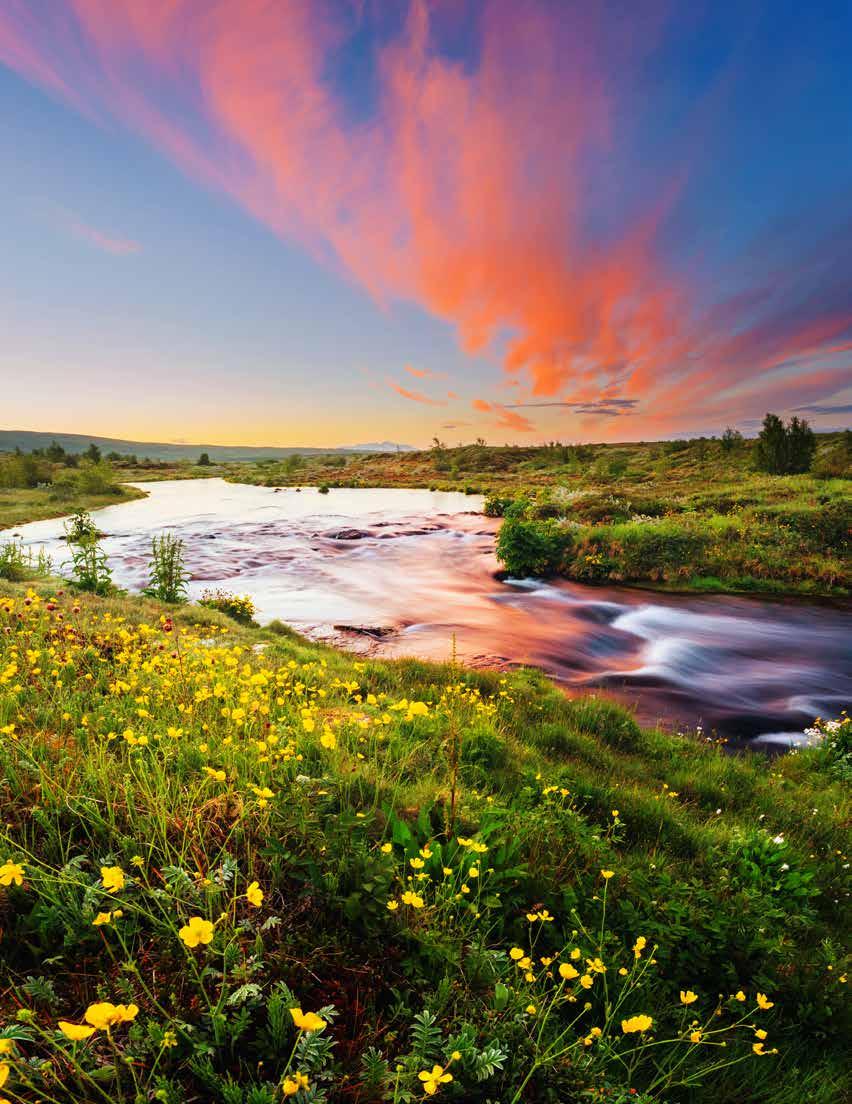
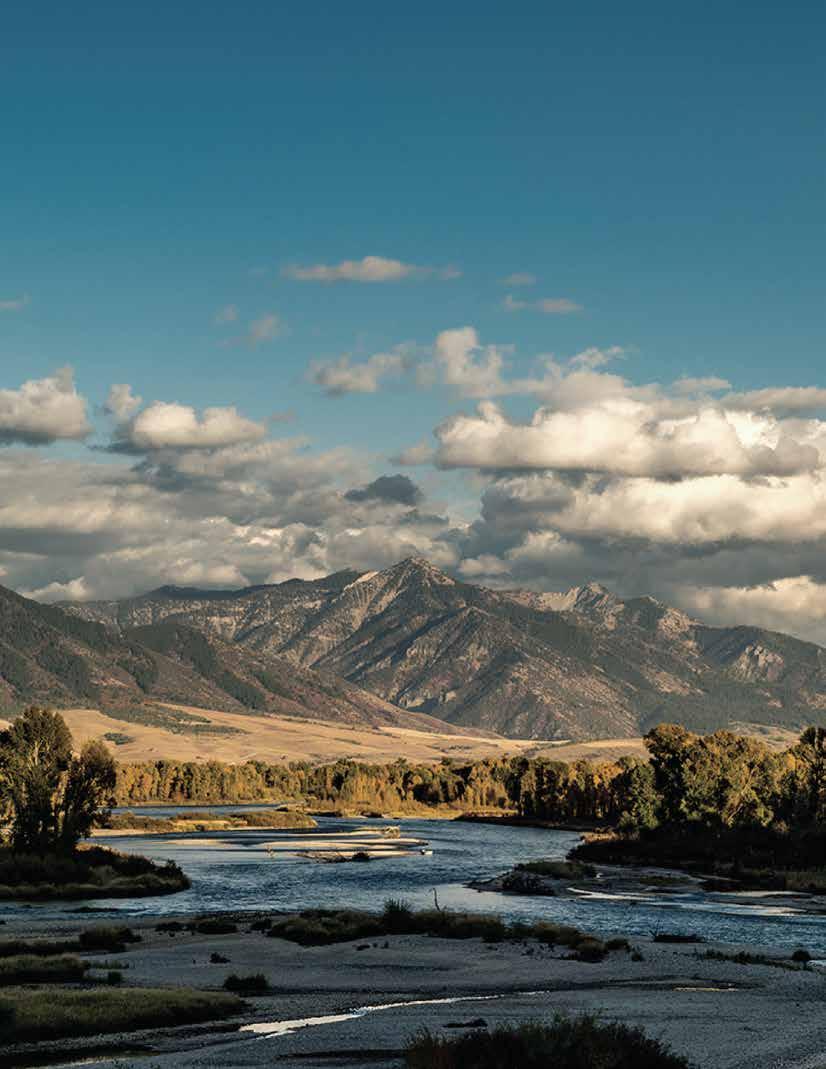
II sit on my deck, listening to a sudden spring rain pounding happily on the corrugated metal roofing. The raindrops are parachuting down like they’re on a mission from the dark-rimmed clouds. The rush of water forms a streaked, translucent veil that reaches from the heavens to the newly-green grass of our pasture. It’s really coming down. There’s something delicious about the sound, and I savor it until the squall passes. Now my view is restored. Bluish mountains form a border to both my right and my left, cutting a rolling edge against the sky. A shy sun highlights the tops of puffy clouds. It’s hiding out there, somewhere, only showing a piece of itself. Thunder’s voice rumbles deeply, saying, “Hear me roar!”
Straight in front of me is a patchwork of fields, carved out in rough rectangles. One has stripes in its rich soil that run vertically, next to one with stripes that run horizontally: one dark line alternating with a lighter path. The field above those is a dark green—winter wheat, I’m guessing. Up the side of the canyon is a lighter green. This one has cattle munching contentedly on tender shoots of timothy, fueled by the nitrates brought by spring showers. To the north and east are pieces of land roughly shaped like the state of Oklahoma, and these are a vibrant yellow, glowing with canola blossoms. Nestled between these pieces are farmhouses, silos, and rustic barns. I sigh contentedly as I appreciate the jigsaw puzzle pieces and how they fit together perfectly to create a pastoral scene.
I’ve been contemplating lately how life is a jigsaw puzzle—the pieces representing their own meaning yet fitting together to create the whole of our lives. As with a literal jigsaw puzzle, the pieces are shaped in various ways but interlock tightly, reconstituting a picture, seen as one whole, and solving the puzzle of who we are. This led me down the path of wondering about not only the origins of the jigsaw puzzle, but what could be included in the various pieces of our lives. Instead of thinking along the lines of our looks, personalities, hobbies, etc. I mentally listed dealing with change, seeking relevancy, practicing mindfulness, staying sane in a busy world, and finding joy in the simple things. These are all components with different edges and knobs, and we seek to fit them all together, leaving no gaps or forced junctions—a difficult endeavor.
I digress to what my inquiring mind first wanted to know. After some Googling, I discovered that in 1762, a guy named John Spilsbury had a map engraving business in London. He wanted to help schoolchildren learn their countries, so he glued his map to a piece of wood and hand cut around the borders of each country. Wow! That’s commitment. It must’ve taken some time, especially with the tools available at a time before America was an official country. When another man named Albert Kaufman, inspired by his wife’s sewing machine and an engineer to boot, created a tool for cutting intricate curves, it was a game changer. The tool was named a Jig Saw and made creating puzzle pieces more accurate and expedient. Thus—you see the connection—these mind-challenging games became known as jigsaw puzzles.
Puzzle Piece #1: Dealing with Change
Sometimes you may feel like you’re just getting things figured out in life and your path is finally smoothed out. You’d appreciate the opportunity to be on auto pilot for a few months…or days…or hours. Then, bam! Change bursts through the front door like a kid eager to tell of his accomplishment in making the team, or like a toddler suddenly hungry for a snack charging into the room and yelling, “Mom! Dad!”
Change is here. Change is back. Change will come again.
The first thing to consider is, What is controllable? Trying to deal with something you have no say in or control over just leads to frustration and unnecessary expenditure of energy. Teachers often deal with this when subject and class assignments are handed out. Even though you lobbied to teach Creative Writing, you are slotted to instruct a speech class. Maybe your company moves you to a different state or even goes under. These are things outside the realm of our control, so first, define the problem and list the aspects of it that you can control. Next, try to set your emotional reaction on a shelf for a time and look at it objectively as a problem to solve. If we use critical thinking, it is easier to accept the change because we’re taking action on those things we are able to.
I’ve found that telling myself to “let it go” is a good first step in dealing with change. Hard stuff. (Maybe sing the song to get yourself pumped up.) The experts call this self-talk. Psychologists encourage people to ask, “What do I need right now?” and “Is ____ even still important to me?” The answers can help steer your decisions. It’s also important to avoid catastrophizing. This is negative thinking that does not help in moving forward with changes, or in making a plan to deal with new situations. Positivity and reframing how you view the change is a more helpful approach.
Puzzle Piece #2: Seeking Relevancy
Maslow long ago established that people have a deep need to belong, to matter, to be relevant. People want their lives to offer a unique value to their relationships, communities, and beyond. I’d say the spike in the number of “influencers” in the past five years lends this credence. One article defined this concept. “Seeking relevance comes from seeing your purpose in life and pursuing it.” It doesn’t have to be something fancy or extreme. Purpose is encouraging friends, loving your children and raising them to be exceptional people, spending time with grandchildren, teaching others from your well of wisdom, serving others through various means, being a light in someone’s darkness, or making the world a better place by sharing your musical talent. I feel like, as people age and retire, they may feel less relevant. Their job and career was part of their purpose, and now what? Some cultures don’t necessarily revere their elders, so the seniors may feel discarded and irrelevant. Please hear me. You were created with a purpose. Everyone, young or old, has purpose and relevance.
Puzzle Piece #3: Mindfulness
Mindfulness is a popular buzzword in today’s society. The notification on my Apple watch reminds me every morning to take a minute to be mindful. The problem is that it comes after I’ve been up, walked two and a half miles with my husband before dawn breaks, gone down to the barn to do chores, gotten ready to head to work, and I’m off. Too late for mindfulness! No time. Actually, there are things to do throughout your day to stop and actively bring attention to the present moment, to stop and smell the roses, as the old adage wisely advises. Busy, busy, busy. Our lives are so packed full and fast-paced, it is more important than ever to take some time to relax, pay attention to our thoughts and even to how our bodies feel. That walk in the morning? It can be a walking meditation. Often, Trent and I talk, listen to music, or stream a devotional. Thinking about positive and helpful messages first thing can set one up for a more uplifting day. I got to thinking, since we have a few walking routes we repeat, we could even emulate the fitness trails and have set points where we either stop to consider something along the lines of a specific topic or just think of that pre-determined subject until we reach the next “checkpoint.” That might be fun.
How about single-tasking instead of the ever-present multi-tasking! That would allow for more focus and productivity. There are all sorts of apps for breathing exercises, or meditations, or muscle relaxation techniques. Find something that works for you. Take time to read, write, do a craft, be creative. It will not be time wasted. I’m preaching to the choir here, but try your best to not feel guilty for taking some time to be mindful.
Puzzle Piece #4: Staying Sane in a Busy World Mindfulness is a perfect segue into the next puzzle piece. The-
-Focus Course lays out some key bullet points on how to stay sane in the busyness of life. 1. Prioritize self-care. Take a few moments for that mindfulness activity. Recognize when you’re getting overwhelmed or are running on empty. 2. Set boundaries and protect your time. Disconnecting from work is important. As a teacher, this is especially difficult since I often have to bring work home. Maybe you work from home. They suggest creating a wind-down routine for yourself. Find some calm space without technology, social media, or unnecessary noise. 3. Embrace imperfection. This is difficult to do for some of us, myself included, accepting that you don’t have to be Superman or Wonder Woman and do it all. You can’t do it all. 4. Physical movement. Regular exercise is so important and the benefits are many. It’s a great stress reducer. Find something you enjoy. I would add: get out in nature. There are so many benefits from sunshine and the calm, restoring properties of our beautiful world. 5. Establish routines. Structuring your day can help keep you sane. One small but helpful routine is to open the window shades early in your day. If it is light out, infuse the start of your day with uplifting and energizing sunshine. 6. Keep perspective. Try your best to look at situations and issues with humor instead of anger, considering the perspective of others, realizing what is truly important and what is not. 7. Know when to turn off the news. ‘Nuf said. 8. Have a different spot for work and relaxation. This one could be tricky, depending upon the space available to you, however, your relaxation spot could even be a special chair in a corner with a pillow and a comfy throw where you snuggle in to read. Save this space for the fun stuff. Resist the temptation to use it to sit and check work emails.
Puzzle Piece #5: Finding Joy in the Simple Things
Sometimes we are in such a rush, we whoosh right by small things. What if, instead, we held out our hands and catptured the delicate beauty of the thing, like holding a colorful butterfly. We could pause to be still and just watch. Just watch the beauty of its delicate wings as they fold and open. How can this not cause us to smile, to feel a drop of warmth begin to saturate our souls?
As I finish this article, it’s another day from when I began writing, and I’m back to enjoying the beauty of the contrast on the hills. I’m also appreciating our backyard. I’m watching the chickens meandering among newly-sprouted dandelions in the pasture where the bees from Trent’s hives are happily gathering pollen. Our rooster, Sir Orpington, guards his girls and lets out an occasional crow. I realize I love that sound and something would be off-kilter without it. I’m sitting in my comfy wicker chair, egg-shaped and plump with cushions. My Remarkable tablet is on my lap. The sun was out earlier when Trent and I rode our bikes to church. We then stopped to have a picnic on the way home, taking time to be together, out in the sunshine by the river. Now I’m seeing the sky darken, and I hear the plop of a few raindrops on the metal roof of our deck, the advanced guard.
I’m making a goal that in the next few months, I will be intentional in fitting in some of those missing jigsaw puzzle pieces. I want the picture of my life to present as a whole, complete image. I want to fit in every piece, carefully snapping it into place, leaving no holes or gaps to create a beautiful picture. I challenge you to do the same.
It’s that time of year. As much as I love the seasons that allow us ample outdoor fun, I admit that I groan as my daughter tracks mud all throughout the house, having forgotten to take off her shoes at the bottom of the stairs in the entryway. I’m handing her paper towels in exasperation, hoping my tone is gentle as I remind her why we take our shoes off before we come upstairs. Mostly, she complies and puts her shoes back, cleaning up easily. Other times I am less fortunate and a power struggle ensues until the shoes are unceremoniously tossed in the vague direction of the shoe rack with all the drama of a catapult.
Either way, I take a deep breath and remind myself that this is the perfect time to encourage her, catapulted shoes notwithstanding. She’s obsessed with the outdoors and it’s unfair of me to do anything to disempower her deep and abiding desire to be outside, dirt and all. She loves to wear her dresses while she plays in the dirt (another thing that can irk me), like she’s the princess of mud pies. As far back as Ancient Near Eastern cultures in 10,000 BCE, we have had a relationship with the earth. Undoubtedly we had such a relationship even earlier, but that is when the written records really begin. Many different Ancient Near Eastern creation myths, including faith practices that are precursors to modern religions we know today, describe the relationship between humans and the earth. Several make the suggestions or assertions that we actually made out of the earth. Indigenous cultures have long seen the earth and the land on which we live as “kin” to us. From our earliest origins up to now, we have always had some sort of relationship with the ground upon which we stand, move, and live. We’re in a bit of a strange place with that relationship these days. Unlike our ancestors, we can (and do) go days without any physical connection to the land around us. We are disconnected from our first home, and there are a variety of reasons for that, many of which are good. The invention of roads and other infrastructure is one of the primary factors of disconnection from a physical sense of our earth. And I believe in infrastructure! I think it is a good thing that improves our lives and makes society possible. We are able to travel further, meet our loved ones, and feel secure because of advances in society. I have this habit of defending the gray area or the idea of nuance, if you will. You’ll never catch me thinking in black and white. Tension is an inherent part of living in this world, and I think in this discussion it’s vital to name the tension between these two things: modernity makes our lives fuller in many ways, and yet it brings its own set of challenges. In particular, this disconnection from our earth home can keep us tethered to our phones, our computers, and all our other technology. The frenetic pace that technology often demands of us perpetuates this disconnection, because to stop and put our toes in the dirt of the grass is such an unproductive waste of time! Or so we might think.
The good news is that there is much to be done about this! It’s far from hopeless. We may be by and large disconnected from our sense of the earth, but it doesn’t take much to reconnect. I want to introduce you to the concept of “grounding.” This is not to be mistaken with the therapeutic tactic of managing anxiety or panic. This sort of grounding has much more to do with the literal, physical ground. I think we would all be better off if we spent a little more time connected to the earth. And I don’t mean “connected” in an abstract, thinking-nice-thoughts-about-it sort of way. I mean literally, physically connected to the earth. In grounding, you literally remove the barriers between yourself and the ground. This means taking your shoes off, going outside, abandoning the comfort of our carpet and linoleum and exchanging it for the much more messy and exciting feelings of dirt and grass between our toes.
When I first encountered this concept, I’ll admit I was a bit skeptical. But the more time I have spent thinking about it, the more I have to admit that it’s true. What I love about the idea of grounding is that you don’t have to do anything to settle into this connection between yourself and the earth. You can lay on the grass at the park watching the clouds go by like you did when you were a child. There is a sort of reclaimed innocence that can come with regaining our connection to the earth, like a long-lost sibling returning to our doorstep. Or perhaps we are the long-lost ones, and it is we who are returning. It may surprise you that sticking your toes in the dirt can provide something so profound, but I’ve experienced it for myself.
I only learned this concept recently, but I can think of times in my life that I’ve practiced such a thing and how much calmer it makes me feel. As a runner, when I had the opportunity to run on sand, I would often remove my shoes and run barefoot at the shoreline near the ocean. As a child, my feet grew tough callouses because I would walk over the rocks in the stream near our house. The Little Spokane river I grew up near was bitterly cold, and my mother even to this day talks about how much more I loved to be in the ice cold water than my brothers. I remember very little of the water and much more the balancing act on the rocks. Both exist within my memory, but that connection point between my feet and the earth, those smooth, sometimes mossy rocks, that was where I found a strange kind of freedom.
I’ve taken up ceramics recently. I’m a multidisciplinary writer and artist, so it was sort of bound to happen eventually. One thing I’m learning as I begin my journey with clay is that it can be shaped and formed, of course, right? But in order to do that shaping and forming, you have to have a relationship with the clay in your hands. If you want it to cooperate, you need to understand it and what it needs. I’m finding out that what it usually needs is more water, which is fascinating, because that’s what I so often need when I’m spiraling, spinning out, or feeling out of whack. Sometimes all it takes is a little water.
I’m intrigued by this idea, though. To shape the earth, we must tend to it. We must feed it. We must have a relationship with it. We aren’t meant to be displaced from it. In so many ways and often without our consent, we’re exiled from our place of origin. Which is why grounding is such a beautiful and delightful practice for us to engage in, even just once in a while (although the more the better in my opinion!). I was writing this article from my office, which is situated in the middle of the building I work in and thus lacks any windows or natural light. Utterly convicted by my own subject matter, I took to the outside of the building and decided to finish writing at the picnic benches outside our building.
While that particular ground was not conducive to removing my shoes and wiggling my toes around (bark is a little hazardous for that particular part of the practice), the simple change of scenery completely transformed not just my experience of writing, but my day altogether. It’s really remarkable what a small change can do. As we are heading into those warmer months, I am reminded not to take what gifts we’ve been given by the outdoors for granted. Not too long ago I found myself at the ocean on a writers’ retreat, which included writers (mostly poets) from all around the country, and even a Canadian or two. I was watching some of my cohort-mates squeal as they put their feet in the ocean. For more than one person, it was their first experience witnessing the Pacific Ocean. The facilitator and one of my mentors, Des, turned to me as we watched the delight of our friends, and said,-
“To shape the earth, we must tend to it”
-“I often forget the privilege of living here.” As much as we may joke “west coast best coast” to the people around us, there is something unmistakably special about the world around us here in the Northwest.
I want to do everything I can to put myself in a space to get to experience that specialness to the utmost of my abilities. I forget to do so all too often, but I know that it is something I long for. I mentioned this briefly already, but one of the things I love about grounding is how absolutely unproductive it is. We live in a fastpaced culture that is always demanding more and more from us. The things that supposedly make our lives easier have somehow been twisted into utilitarian productivity measures and many of us feel our free time eaten up by event after event, yet somehow we still feel disconnected from ourselves, our fellow humans, and our world.
I want to suggest that grounding, and other practices like it, can break this cycle of chasing some unreachable productivity. Instead of worrying about our output, we can stop to breathe, to take in what’s actually happening around us, to remind ourselves of who we are and where our home is. I really encourage you to give it a try! It might feel strange or silly, but the closer you can get to the earth, the more of yourself I think you will uncover. This isn’t one-size-fits-all, of course. Nuance, remember? Multitudes and all that. No matter what expression our reconnection takes, the important thing about it is that we do it with the intention of rebuilding our relationship with our world. I mentioned the freedom I felt as a child while I waded in the stream. I think that our endlessness is what we really uncover when we relate to the ground beneath our feet. We are finite creatures, it’s true, but there is an element of eternity even in our finitude, and I think it’s felt most often (at least for me) in our relationship to our planet. When I stand on that shoreline and dig my toes into the sand, measuring myself against the giant ocean, somehow I am just as endless as she is. It doesn’t matter how small I might be: in that moment, I contain the universe. It’s such a delightful feeling to uncover, even in its weight and its gravity. Because I do believe it is something weighty, something to be held responsibly, yet not without levity and lightness, too. You can harness this connection in many different ways. Grounding is just one practice among many that can forge a reconnection. Maybe it’s looking up at the stars while you’re camping, away from light pollution and illuminated by them in a new way. Perhaps you learn this best through some intense adventure, like white-water rafting or rock climbing. I’m not here to be prescriptive. Only you know what will work for you. What I am here to do is give you a little push out the door, a reminder that it will be worthwhile to get out there, grounding yourself in the earth’s solidity, however you choose to do it.
Admittedly, sometimes I’m even more horrified that the dirt coats my daughter’s bare feet than her shoes, which is a little silly for a variety of reasons. For one, skin is infinitely easier to wash than light-up tennis shoes. More than that, though, the dirt between her toes reminds me that she naturally desires to do what all of us ought to: connect with our home. As we grow up and out of childhood, we forget the necessity of being delighted by the world around us. Mostly through no fault of our own, we become consumed with our paychecks, 9-5s, chores and errands, and so many other things. We forget to look up. Or perhaps more accurately, we forget to look down.
We may look down at our phones, flipping through our email one more time, when really what we need is to keep going, keep those eyes turning down, down, down until they meet the ground. Chances are, when you do that, you’ll find concrete beneath your feet, but maybe, just maybe, it can be a reminder to seek out a little patch of grass or a little oasis of dirt.
I’m no expert in the practice of grounding, but I want to offer that there can be micro-steps on the way towards this concept of reconnection. Maybe, like me, you can’t abandon the machinery completely, but you decide to tote your computer or tablet out into a garden, an outdoor seating area, or any other place where you can find a little bit of nature. One of the greatest gifts of that silly little experiment was that although I was still writing on my computer, I was disconnected from the internet, and had no choice but to focus on what was in front of me. Or, if I needed a break, what was around me.
When I did that, here are some things I saw: dandelions, a weathered but well-loved play structure, overgrown hedges, blooms on the tree above me, and so much more. Even the play structure, though it may represent humanity’s foray into the natural world, felt appropriate. The weathered wood, the sunbaked toys, and the way weeds were growing up around it made it somehow a bit wild, just like the children I know who like to play on it.
And maybe that’s what I’m asking you to do. Maybe I’m encouraging you to reconnect to the wild frontier that has always been within you. It may seem like just a weird mythological thing to say that we are made of the dirt, but it’s scientifically true that we are made of stardust. The poets (myself included) have always had a field day with that little bit of information, but what is stardust but a bit of dirt that managed to sparkle? So when we connect with our earth, we connect with ourselves. We grow the flowers of compassion and love within us just a little bit taller. I hope you find a way, even just a small one, to do it. Whether you drag your yoga mat out on the grass or go on a nature walk with your toddler, I hope there is something in you that can celebrate the inaugural days of summer by connecting with our home. This place is full of beauty and grace, and I dare say it wants to connect with us, too. It’s never a waste of time to slow down. I know, I know, we have emails to answer and school registration papers to fill out and groceries to buy and doctors to call and the list goes on and on. But what if it could all wait, even for just twenty minutes? What if it could all be set down?
In this season of my life, I’m deeply yearning for the opportunity to set things down, one small picnic table session at a time. I hope you can find the truth that you have always belonged here written into the dirt or the grass that you discover while you find your grounding. Dear reader, I am not always good at this. My calendar is over-full, my inbox needs constant tending to, and urgency seems to run the show most days. I am trying with all my might to learn another way. To embrace the endlessness of the earth, which miraculously continues to turn for us without us doing a single thing in return. I want to honor the ground’s commitment to me by making time to be with it. It’s literally going on the to-do list. “Go to the picnic benches at least once today,” is what the note is going to stay.
It’s not everything. It’s not a hike at Kamiak Butte, it’s not sharing mud pies with my daughter. But it’s a small, slow, and sacred start. And that’s all it takes. I hope you can find a little bit of a start towards home, too.
Grafting, another work of Art diane conroy By
Our last article in Home&Harvest included the story of John Lorang and his Chair Journal. This 102 year old journal described the historical origin of each and every piece of inlaid and other wood in a high chair that John had made for the first grandchild in 1914.
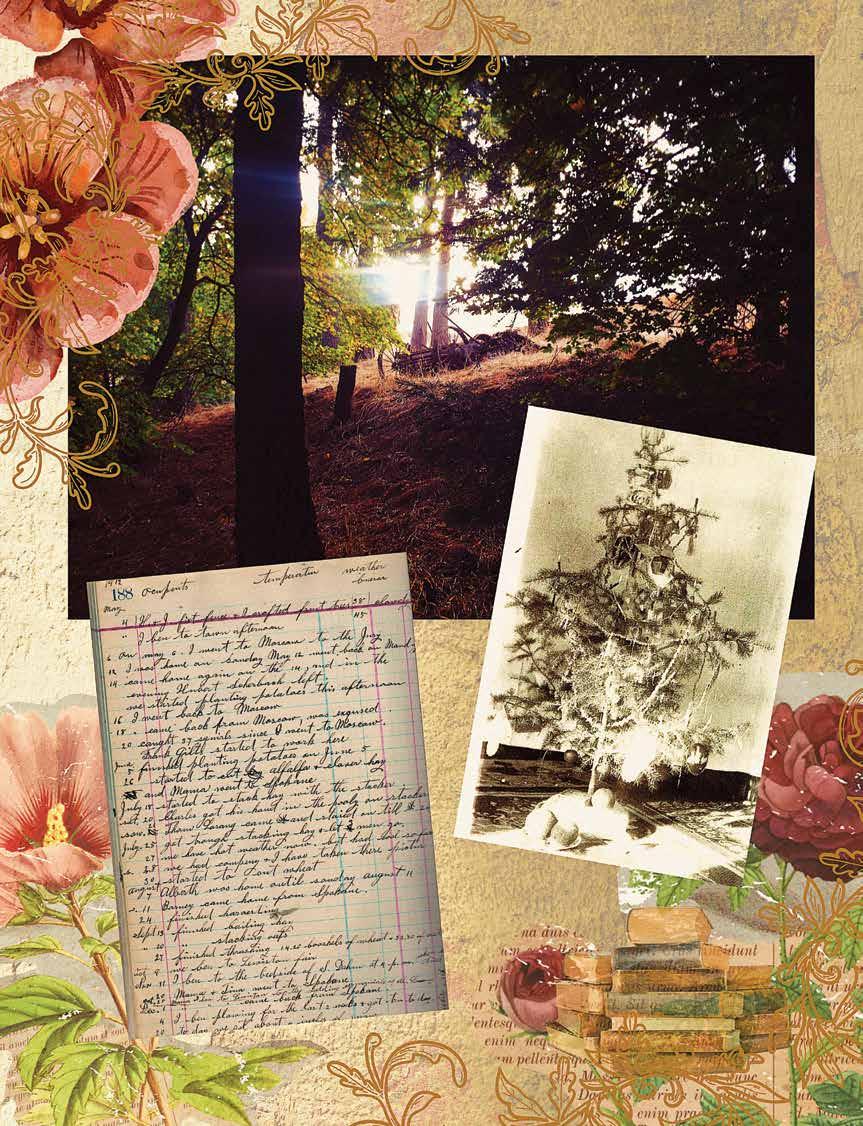
There is another incredible story of a visit to the White Spring Ranch over 100 years ago. A visitor to the family or to John Lorang’s Curio Museum could walk into the woods and find saplings that had been bent in all shapes and sizes to create wooden letters, arms and legs for chairs, for all types of canes and even saplings grafted with John’s desire to create an organic wooden wheel.
He began by planting apple trees on July 2, 1893 during a family reunion and later created a 5 ½ acre orchard of apples. Peaches were also planted and when those were in, John began grafting better varieties onto trunks.
“1912, Page 188, May 4. Temperature, Weather Bureau Henry & Theo. I fixt fence and I grafted fruit trees. 38-45 cloudy”
He developed an apple that was so big you needed two hands to hold it and used one to decorate the base of his Christmas tree. He then continued grafting and planting. When John died in 1926, just 68 years old, this is what the Genesee News had to say about him.
“FUNERAL OF JOHN LORANG, Feb. 26, 1926, Genesee News. HELD MONDAY MORNING
The funeral of John Lorang, whose sudden death was chronicled last week, was held from St. Mary’s Catholic Church on Monday, February 22, at 10 o’clock, with the solemn requiem high mass conducted by Rev. Father Godschalx, assisted by Rev. Father Gordon of Clarkston, Wash., and Rev Father Wurtzberger of Moscow, with interment in the family plot in St. Mary’s cemetery. The day of his being placed in the final resting place was his birthday anniversary, at which time he would have been 68 years of age, had he survived.
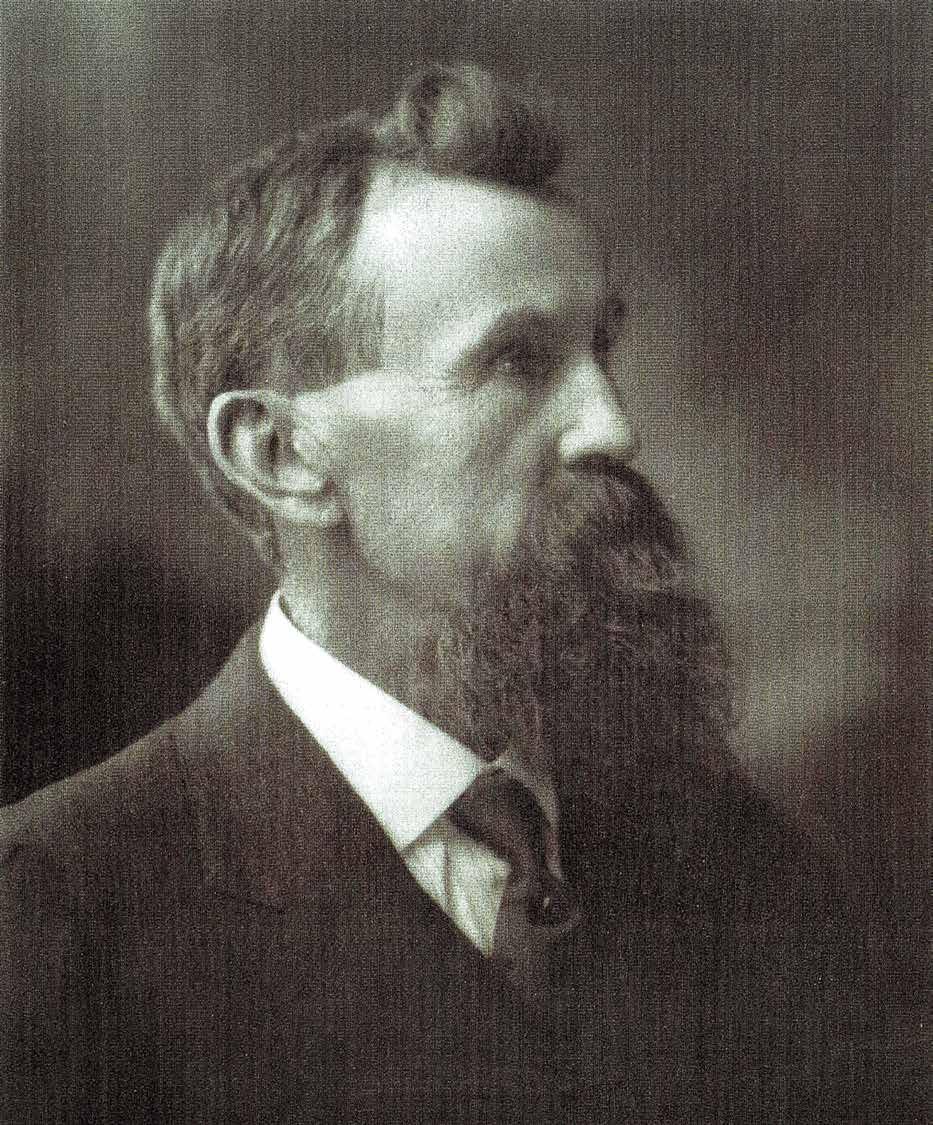
John Lorang was born on a farm near Johnsburg, Wisconsin, February 22, 1858, where he spent his early childhood. At the age of about 17 he went to the lumber woods in Wisconsin and Michigan. Through hard manual labor and thrift, he succeeded in accumulating, during the following few years, what was considered at that time a small fortune—a few hundred dollars. On February 19, 1884, he married Mary Anna Gesellchen, and two weeks later Mr. and Mrs. Lorang started on their journey west on one of the fist immigrant trains across the Rocky mountains to the state of Washington. Upon arrival at Riparia, Washington their trip was continued by boat to Lewiston, Idaho, and from there by wagon to Colton, Washington, where they arrived on March 21 of the same year. At this point Mr. Lorang rented a farm and remained there until December, 1885, at which time he moved to and located on the place known as the Dillingham/ Jameson farm—the present Lorang home—which he purchased (1886) shortly prior to the survey of the railroad into Genesee. This farm has long been known as White Spring Ranch.
During the years that followed, he succeeded in developing the prairie land into one of the most productive and modernly improved farms in the entire Palouse country.
During 1910 Mr. and Mrs. Lorang toured through European countries—England, Switzerland, Germany, Spain, Turkey, Egypt and Italy—it being their sumpreme (sic) pleasure to have witnessed the Passion Play at Oberammergau, Germany, and to have had a personal interview with Pope Pious X, as well as seing (sic) all the holy places in Palestine.
Not many years subsequent to his return from Europe he retired from his activities as a farmer and devoted the remainder of his life to his favored hobby, that of taxidermist, naturalist, and collector of natural history specimens.
At all times during his life in Idaho he took an active interest in community and public affairs, even to within a few days prior to his untimely death, which occurred on February 16, 1926. He was a devoted member of the Catholic church and was ready at all times to do whatever he could to further the interests of his chosen church and his friends, who were number by his large number of acquaintances.
Mr. Lorang leaves to mourn their loss besides his devoted wife, ten children—P.J. Lorang, New York City; B. T. Lorang, Wall Walla, Wash., H.M. Lorang, Genesee; A. P. Lorang, Pueblo, Colo.; Christine, Martha, Viola and Charles, Spokane, Wash., Mrs. C.P. Whalen and Mrs. Ray Kennedy, Genesee, and one brother Theodore Lorang, Spokane.
The funeral was largely attended and the floral offering were numerous and very beautiful.
The pallbearers were his five sons, Peter J., Barney T., Henry M., Albert P., Chas. Lorang and C.P. Whalen, son-in-law.
The Lorang farm is one of the show places of the Palouse country. Mr. Lorang not only took a great delight in his home life, but he was ever seeking some new rare tree or shrub to plant in his “park” which surrounds the home, and which contains many different varieties of shrubs and trees from many parts of the United States and many from foreign countries.
Not only was he interested in procuring all kinds of growing woods, but he procured all kids of animals, both alive and dead. The former he placed with his collection of animals and the latter he stuffed, for he was no mean taxidermist.
As is well known all over the country, Mr. Lorang had one of the finest private collection of curios and museums in the Northwest, of which T. O. Greene, traveling representative of the Lewiston Tribune, who was a friend of Mr. Lorang, has the following to say: Mr. Lorang’s hobby was the collecting and placing on display specimens of birds, plants and animals—first those found in his own beloved state, Idaho; but later, after he had acquired a competence for himself and family, the scope of his collection of curios was greatly widened, and is, perhaps, the most valuable collection of its kind in the state of Idaho, and possibly in the entire Northwest. Several years ago the writer of this sketch suggested to Mr. Lorang that if he wished to leave an unperishable monument to his memory, as well as to leave something of a most educational value to present and future generations of the youth of our state, it would be a fine idea if he would leave, by will, his entire collection of curios to the State University of Idaho at Moscow. He said he had been giving much consideration to that suggestion, already, but whether this was carried out the writer does not know. (Yes, in 1953, then items moved to the Conner Museum, WSU campus.)
There are so many stories; they will go on forever.
Among the larger division of Mr. Lorang’s collection, mention may be made of the eggs of numerous birds from the ostrich to and including the humming bird. The egg of the mammoth ostrich and that of the smallest member of the feather creatures were to be seen side by side, for better contrast. Not only land birds’ eggs, but many of the rivers and seas were represented—and many of the birds themselves were there, as well as their nests.
In the display of coins, hundreds of rare and unique kinds, such as would be sure to stir covetousness of any numismatist in the land, were he to see the collection, were most interesting. (Many were stolen in a Genesee Bank deposit box break in in 1968)
Sea shells of vast numbers and varieties, with their delicate colorings; the shells of the coral insets as well as many other articles of intense interest to the favored visitor whose privilege it was to inspect them, but too numerous to list here, constituted objects of interest such as would cause to become an enthusiast even a man of very dull comprehension.
In Mr. Lorang’s garden, or park, he had gathered and preserved for the pleasure of his friends and visitors—and all his visitors at once became his friends—several varieties of oak, hickory, ash, sycamore, bass wood or linden, elms, nut trees, haws, persimmons, sassafras, and scores of other varieties such as grace the forests, which are rarely to be met with in this country.
Nearly every wild shrub and flowering plant to be found within the state—I mean the unusual or rare ones only, of course—were to be seen and admired.
Mr. Lorang had made collections for and exchanged with the Smithsonian Institute many rare specimens of animals and birds. In fact, the United States government had issues special authority to Mr. Lorang to take any animal or bird anywhere at any time or in any place—well knowing that he would never abuse the privilege.”
There are so many stories; they will go on forever. This truly was a typical Palouse area farm. The only difference is the incredible documentation that we found here. We are open by appt. and will have more open hours starting in June.
Home Range on the
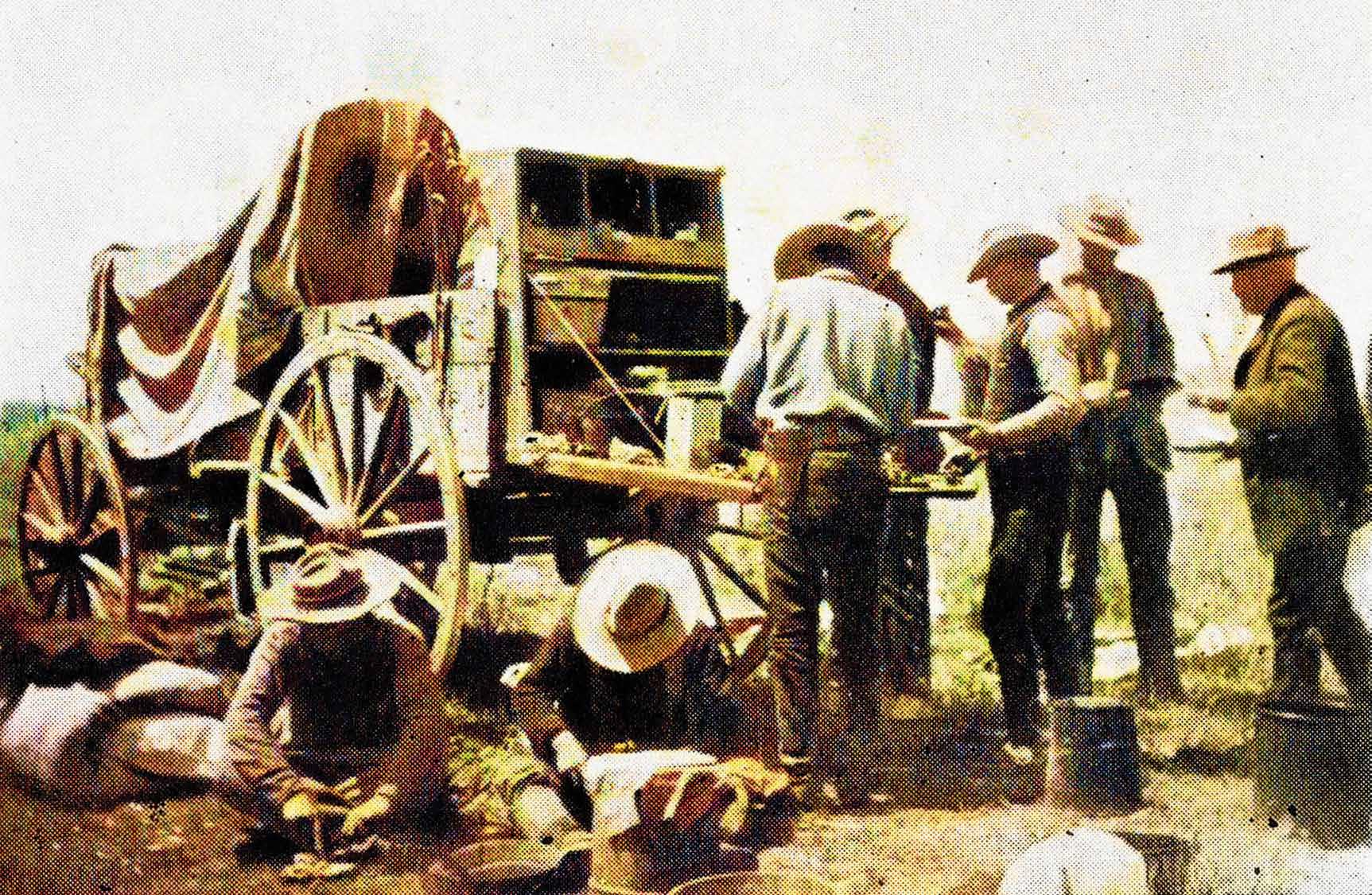
Somewhere between the sophisticated luxury of a fully stocked walk-in pantry on a palatial RV, and a humble hotdog on the end of a whittled stick lies the robust and practical chuck-box. A staple of campers, explorers, and overland hunting parties, these well provisioned mobile workstations take outdoor food prep to the next level. But the organization and thoughtful provisioning are not what really makes a cookout seem like something that would be enjoyed off the back of a chuck wagon on a long cattle drive. Instead, it’s the simple, flavorful, and authentic dishes that quickly harken back those simpler times. And so whether you are already stocked up for outdoor adventures, or still just starting to shake of the winter doldrums, starting your summer under the stars while enjoying some cowboy cooking is just the thing to put a smile across your face.
As I’ve said in grilling articles before, I like to approach cooking outdoors with the classic sailing mentality of “go light, go simple, go now.” The drive to find perfection in your camp setup or backyard recipes should never get in the way of just getting outside and doing the thing – right now. Through repetition and enjoyment will come the ultimate development of technique and sophistication of flavor profiles. Get the grill lit, sideline the perfectionism or overcomplicated ambition, and get cooking before you have too much time to think about it. Burn a few burgers, under cook a veggie or two, and remember to serve your early attempts with plenty of beer and laughter. Grills and campfires are not complicated cooking devices, and neither should be the price of admission to this passion. If you have been meaning to start cooking outside, or delaying getting back into the habit, been discussing it for the last (few) summers, always finding yourself running out of warm days and motivation faster than your fridge runs out of ketchup and mustard, or just hoping for the perfect moment to create a memory – here it is. Novice or experienced cooks can easily heat something that was already prepared to safe temperature. But adding a little flair – either though your own flavors or just a great game of make-believe is what will make this meal magical. Picture yourself out on the open range, mountains far off along the horizon, tumbleweeds a blowing, and the wagons just starting to circle for the night. Mosey over to the fire and settle in for some rustic vitals with your closest kin. It’s time a feast that would make any chuck wagon cook proud to call their own.
Let’s start with the sides. Both of these are incredibly easy and can be done on the outer edge of a simple grill, or directly over coals on a campfire. Regardless of the protein you choose, these simple and classic chuck wagon staples will really set the theme – baked beans and corn on the cob. The key is going to be starting early, having patience, and stirring or rotating to prevent burning. They are both very forgiving and can be kept warm with little maintenance – and that is one of the most beginner friendly characteristics of any entry-level menu. By giving yourself a large window of time to get the protein ready to serve, you take away all the stress of trying to time multiple items that all require varying durations and temperatures for their cook. A trusty cast iron pan or Dutch Oven will do wonders to coax out all the flavor of the beans, but going simply might just mean a disposable aluminum cooking pan your first few times out.
My favorite method for corn is gently peeling back the husk, removing all silk, and then spreading on a questionable amount butter before replacing the husk as a protective outer barrier. The butter will boil in between the kernels adding a sweet flavor, but as it seems to have disappeared by the time you serve, it feels perfectly acceptable to again add a “little” butter. But cooking inside the husk does add a little challenge, requiring you to time the perfect temperature without being able to actually see the corn. I use char on the husk, relative time/temperature duration, years of practice, and smidge pure luck to end up with fully cooked kernels that are not burnt. But keeping it a little streamlined for this exercise, I am going to recommend fully husking the corn, cutting each ear in half to create two shorter barrels, and then cooking directly on the grates or in a foil pan if you are going to cook over coals.
This gives you visibility from start to finish, and ability to see if they need to be pulled a little early, and the smaller lengths allow more variation in cooking times for each piece as well as a charming and rustic appearance for service. Sure, most people are going to want to grab more than one, but the little half-ear appearance looks adorable on a camp plate next to a generous scoop of those beans.
I’m going to recommend two different proteins here – and for any advanced grillers, I’m going to suggest that you do both. Grilled chicken breast- that we will be topping with some tangy barbeque sauce is the more difficult choice – a precooked andouille sausage that only needs to be brought up to heat is going to be the simpler path. Together with our perfect choice of outdoor-comfort-food sides, either of these will quickly transport your guests to the imaginary trailside stop and feel like a real chuck wagon experience out on the open range, even if you are just sitting in your own backyard. But if you manage to combine both of them, it just elevates the plate to feel like a feast. Or, in the spirit of going simple and going now, anyone a little unsure of their ability to hit a safe temperature on chicken over an open fire at a remote campsite might just opt for roasting in the oven at home, cooling and refrigerating in a Ziplock bag and then using the fire to heat them while adding a little bit of the smoky char that makes open air dining so magical. As always, I’m going to recommend that barbeque sauce go on just a few minutes before serving. The high sugar content wants to shoot past caramelization quickly, and it easily becomes an acrid charcoal outer layer that ruins the flavor of the protein underneath. It may take you a few dozen attempts, lower temperature execution, and constant basting before you finally master cooking with a sugary sauce from start to finish, and even then the diminishing returns of flavor hardly make the effort necessary. A good barbeque sauce starts with all the aroma and spice needed, and the light char on your protein will enhance the smoky flavor – with this in mind, you can ditch the quest to keep it cooking for long durations and simply apply liberally about 3-5 minutes before removing the chicken from the grill. That is plenty of time to warm it up without risking the sugars burning. For the precooked sausages all we need to do is get them hot while adding just a touch of grilled flavor to that piquant spice that defines andouille. Cutting them into smaller lengths compliments the vibe of our corn and rounds out a perfect plate. While I would serve them on the side, you might find these little wonders just a happy swimming in the baked beans, or covered in the barbeque sauce.
Looking for simple way to elevate without elaboration? Try just a little hardwood soaked in water for at least thirty minutes and then place of the heat. If using charcoal or on a grill, you can just add the wood chips directly, spreading them out amongst the lit coals. When cooking on gas, crimp the edges of a sheet of foil to make a little pouch and place it under the gates, just above the flames. For those cooking over an actual campfire this will of course not be necessary, but at home it adds to the ambience of sweet wood smoke and helps to set the stage. Our shorter duration cook will not allow enough time for the smoke flavor to permeate the proteins, but the smell is magical and will be the final step in transporting everyone in attendance out to the open range. Pass me a heaping plate and cold bottle of sarsaparilla. You can’t get out there camping every week, but you sure can bring that feeling to the backyard with just a little effort and some imagination. I hope you find a little fun in serving up a rustic cookout this summer, and I know you will enjoy it just as much as we always do. Happy cooking friends, until we meet again.
galette
CITRUSY SUMMER APPLE
kitchen Shay Driver
INGREDIENTS
Flakey pie dough:
1 1/4 all-purpose flour
1/4 tsp salt
2 tsp sugar
7 Tbl cold unsalted butter, cut into pieces
5 Tbl cold water, plus more if needed
2 lbs of sweet apples (I used Fuji), sliced 1/4 Cup raw sugar, plus more for sprinkling
1 Tbl of each of lemon, orange, lime juice
Zest of lemon, orange, and lime
3 Tbl corn starch or flour
Pinch of kosher salt
Neutral oil or spray
STEPS
Pour flour, sugar, and salt into a food processor pulsing until combined. Add cold butter in two batches pulsing until small pea size shapes. Add cold water until dough is moistened and holds together when pressed with fingers. It may look “sandy” which is why pressing dough together is an essential step. Pour into a large bowl to make into ball shape. If there is flour at the bottom of the bowl that appears dry, sprinkle water with your fingers on this to moisten and add to dough ball. Flatten into a disk with plastic wrap or zip-top bag and refrigerate for at least one hour before using. Preheat oven to 425 degrees. In large bowl, add sliced apples, sugar, pinch of kosher salt, corn starch, lemon, orange, and lime juices and zests. Mix together and set aside. On lightly floured surface, roll out dough into 12 inches and about 1/8 inch thick. Transfer rolled dough onto sheet pan. Evenly distribute the apples into the center of the pie dough (keep the juice at the bottom) leaving two inches of dough around the edge. Once the apples are evenly distributed, fold edge up on top of the filling forming pleats (a bench scraper can be helpful during this step). Once this has been completed, pour reserved juice evenly over the top of the apples. Brush or spray the dough with oil and generously sprinkle sugar over the crust and apples. Bake on center rack for 30 minutes or until golden brown and crust is crisp. Wait until galette has thoroughly cooled before cutting. Serve with ice cream of choice and enjoy!
Tips: Using a silicone mat can save time, flour, and clean up. During the roll out stage, you can do the rest of the steps then lift galette directly into the pan to bake. If any juices leak out during the baking process, the mat will make clean up easy.
corn and tomato salad
GRILLED
kitchen alyssa lyman
INGREDIENTS
Juice of 2 limes
2 Tbl extra virgin olive oil
Salt & pepper to taste
½ tsp red pepper flake
1 Tbl granulated sugar
1 clove of crushed garlic
4 ears of fresh corn
3 medium tomatoes
Small bunch of cilantro Cotija cheese to taste
STEPS
Prepare the vinaigrette by whisking together the lime juice, olive oil, salt & pepper, red pepper flake, sugar, and crushed garlic; set aside. Shuck the corn and brush with additional olive oil. Grill the ears of corn over charcoal for 4 to 5 minutes, turning frequently. When cooled, cut the corn off the cob and place into a large bowl.
Cut the tomatoes into wedges and add them to the corn. Chop the cilantro and add to the mixture. Pour in the vinaigrette and stir until everything is evenly coated. Sprinkle the salad with cotija cheese to taste.
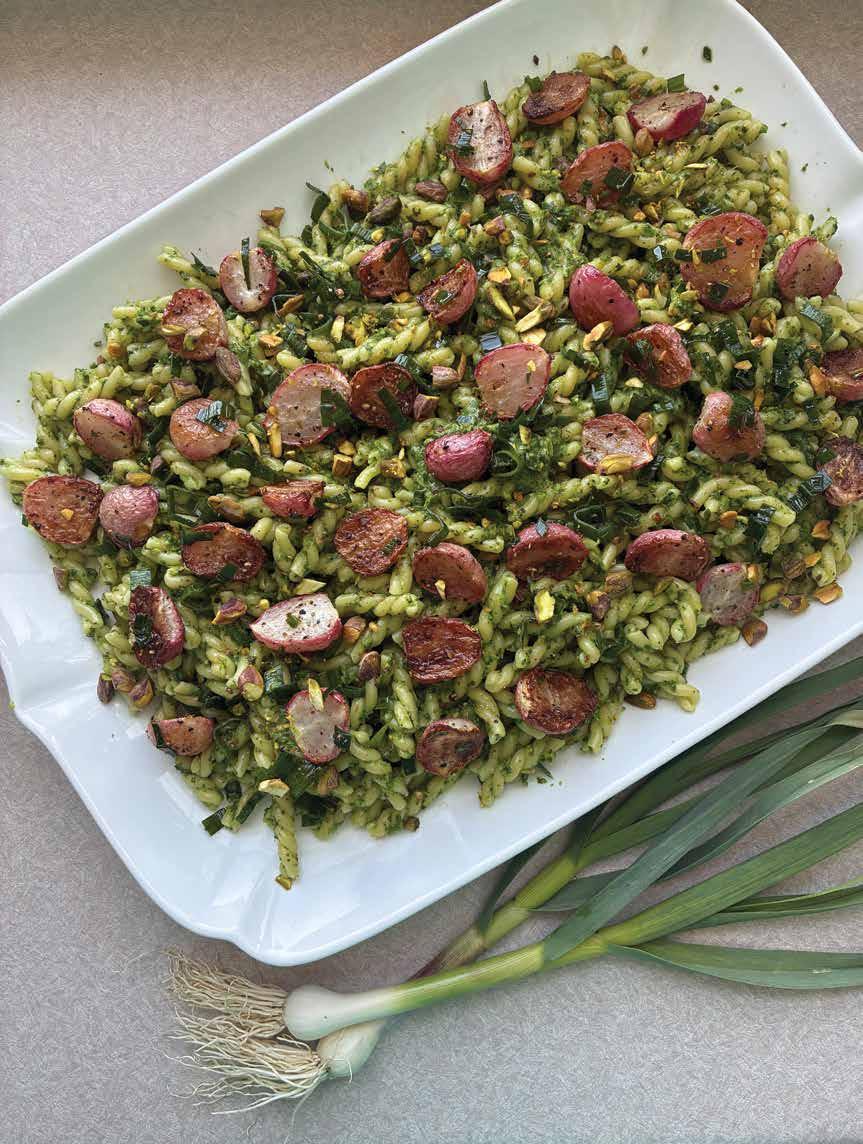
radish
+radish green pesto pasta
kitchen Shay Driver
INGREDIENTS || radish + pesto + pasta
Roasted radishes:
2 bunches of radishes, washed and cut in half (Stems and leaves cleaned and set aside for pesto)
2-4 Tbl of olive oil
Salt and pepper
2 Tbl young green garlic leaves, sliced (white parts for pesto)
Extra for garnish:
Chopped pistachios or young garlic leaves
Pesto:
2 bunches radish greens and stems, approximately 8 cups packed
2 young green garlic shoots, white parts only (rest of green parts used for garnish)
1/3 Cup roasted pistachios
1/4 Cup olive oil (more if necessary)
1/2 Cup Romano cheese
Salt and pepper to taste
1 lb pasta, cooked to package instructions
STEPS
Preheat oven to 400 degrees and start boiling pot of water for pasta. Start by cleaning two bunches of radishes, stems and leaves thoroughly washed and set aside to drain (appx 8 cups packed) and radishes cleaned and cut in half. Place radishes on lined sheet pan coating with olive oil, salt and pepper. Bake for 20 minutes until golden. While radishes bake, place radishes greens and white parts of young garlic in food processor and pulse a few times until reduced enough to add pistachios, Romano cheese, olive oil, salt and pepper. Process until smooth. Slice the green leaves of the young garlic and adding two tablespoons to roasted radishes pulled from the oven. Set aside. Cook pasta to instructions removing pasta from pot with a slotted spoon into large bowl—the starchy water will help with the next step. Add half the pesto to the pasta and the rest of the young garlic leaves mixing well. Add more pesto as needed. To serve, top with roasted radishes and chopped pistachios. Extra pesto keeps up to one week in fridge. If young green garlic shoots cannot be found, substitute garlic cloves or garlic scapes. The greens for the pesto can also be substituted for other greens that may be in season including arugula, spinach, beet greens, etc.
CHOCOLATE CHIP COOKIE SANDWICHES
ICE CREAM
kitchen alyssa lyman
INGREDIENTS
2 ½ cups all-purpose flour
1 tsp baking soda
1 Tbl cornstarch
1 tsp salt
2 sticks unsalted butter, softened
¾ cup brown sugar
¾ cup granulated sugar
1 Tbl vanilla extract
2 eggs
1 ½ cups chocolate chips
Good vanilla ice cream
STEPS
Pre-heat oven to 375°
Sift flour, baking soda, cornstarch, and salt into a large mixing bowl; set aside. In a separate large mixing bowl combine the softened butter and the sugars. Mix with a whisk or hand mixer for 3 to 5 minutes or until the mixture is fluffy. Mix in the eggs and vanilla–stir until thoroughly combined. Add the flour mixture to the butter mixture gradually until just incorporated. Stir in the chocolate chips.
Roll the dough into one inch balls and place on a parchment lined baking sheet. Bake for 8-10 minutes or until the edges are slightly brown. Cool cookies completely. Take a scoop of your favorite vanilla ice cream and place between two of the cookies; roll in toppings to taste.
Women Doing History
Kaitlynn Anderson by
If you have read any of the publications or social media postings from the Latah County Historical Society for the past year or so, you probably have heard about America 250. The purpose of America 250, also known as the Semiquincentennial, is to commemorate the signing of the Declaration of Independence in 1776, while showcasing the different stages of growth in the United States of America. The discussion of the evolution of our country and the current standing of America provide the opportunity for individuals to express their thoughts and feelings around this important 250-year history.
At every level of government, many commemoration activities are occurring and scheduled. In Moscow and Latah County, the Latah County Historical Society and several community organizations created the Moscow America 250 Commission to plan local commemoration efforts. While most of the commemoration activities will happen in 2026, our local commemoration began in 2025 and will continue throughout 2027. Events, such as the Smithsonian Voices and Votes exhibit, Moscow League of Women Voters Speaker Series, and the Renfrew Colloquium at the University of Idaho, are a few examples of what has already occurred. In the upcoming future, the America 250 Commission will be tabling at the Moscow Farmer’s Market on the first Saturday of the month, partnering with local organizations for exhibits and musical productions, and scheduling volunteer days with nonprofits in the community for the public to participate. These types of commemorative events speak of the importance of the local community and how it connects to the greater narrative of America.
The last commemoration took place in 1976 for the Bicentennial. For many, the Bicentennial holds fond memories of events that took place. Communities held parades, students created birthday cards for America, wagon pilgrimages, and much more. Another popular effort, primarily stewarded by historical institutions, was the collecting of oral history interviews. The goal of these interviews was for communities to collect stories of local individuals with firsthand accounts of ‘American life’ in order to provide more understanding of America’s history. Oral history interviews that were collected during the Bicentennial have been utilized by scholars, researchers, and institutions as a way to personalize history, and serves as a primary source. During this time, LCHS also participated in the push of collecting hundreds of oral history interviews centering life in Latah County. Currently, there are roughly 350 interviews within the LCHS collection, with many of them conducted during the Bicentennial. LCHS has continued to expand its oral history collection in the years since 1976.
As one of our current commemoration efforts and to provide a nod to the Bicentennial, LCHS has been focusing on conducting oral history interviews in 2026 with various groups throughout Latah County. Some of the groups include teachers who were involved in the Moscow teacher strike during the 1980s, the Grassroot Grannies who helped fundraise for Nirk Therapy Pool, and military veterans. While determining specific groups to interview, I thought about how LCHS and other institutions typically discuss individuals in the past who have ‘made’ history or were doing past historical work to document our community histories. I noticed that many of the people doing history now were women. I thought that interviewing women throughout Latah County that are/were documenting or creating history in some way would be a great way to add their voices to the commemoration. There were not any specific parameters for which women to interview, except that we wanted women with diverse backgrounds, careers, and intersections with history in some way. The reasoning behind this was to demonstrate how individuals interact with history on a daily basis, whether they know it or not. Additionally, women were the primary focus of this project, highlighting the dominance of women in the humanities. According to the most recent field data, women make up the majority of workers in museums, libraries, archives, and teaching professions. Historically, similar to other fields, the history field has been dominated by men, especially within academia and in institutional administration. Through this imbalance, there has been difficulty for women breaking down the cultural stereotypes, as well as receiving fair compensation. Examining one step further, there is an immense imbalance of racial and ethnic diversity within the field. As provided by the American Association for State and Local History, their 2025 survey showcased that 89% of history practitioners are white, whereas 11% are BIPOC individuals. This data is supported by the number of BIPOC people interviewed for this project. Of the 13 interviewees, only two of them were BIPOC individuals. History practitioners who identify as people of color, especially if they are also women, are more likely to encounter discrimination despite similar educational backgrounds within the field.
Other trends have emerged as LCHS has conducted this oral history project. One of the major commonalities between all participants has been the focus of community. Several interviewees discussed how one of their favorite aspects of the work they do is being able to work with the local community through programming, education, or collaboration. It is important for the interviewees that their communities understand the work they do and how it impacts not only residents now, but in the future. These personal narratives of helping preserve history and providing a service for others belonging and sense of place for the interviewees. Connecting communities to the humanities is a powerful thing and the interviewees felt grateful to be part of that.
Another area of commonality between the women interviewed included their hobbies and interests growing up. While some individuals noted that they were very active and enjoyed the outdoors, the majority discussed how they were heavily interested in books and academia. Some might say that these are characteristics of an introvert and people pleasers, while others may say that they are high achievers and deep thinkers. In any case, it highlights the love of knowledge and learning at a-
-very young age, that was often encouraged by family members. These characteristics and hobbies tend to fall in line with the individuals who work in the humanities field.
Although the interviewees mostly seem to follow the same path in terms of schooling and what makes their work meaningful to them, there was also a slight difference between them. One of the questions that the interviewees answered was if they had any mentors, and if so, who. Most of the interviewees discussed mentors who were also women, either in the humanities field or from their personal lives. However, there were a couple of interviewees who mentioned males as their mentors. What piques my interest about this difference is that the women who mentioned male mentors were older women. This speaks to a time in the field dominated by men, when these women were beginning their careers.
What will you do to make history?
Another topic that came up related to the inclusion of artificial intelligence in the humanities. The danger of artificial intelligence usage in the history field, and the humanities field in general, has become a vast concern. The work that interviewees complete cannot be replicated or completed by artificial intelligence. Human beings are the only ones that can complete it. History is personal and causes thoughts, feelings, and emotions – all of which artificial intelligence cannot perform or convey. This reasoning drives home the reality that the humanities should be valued in every form, including visibility, financially, and academically. Without individuals interested in pursuing the humanities, aspects of understanding, critical thinking, and humanity start to disappear.
After reading about some of the women who have been interviewed for our oral history initiative, ask yourself the following questions. What are some examples of how you interact with history on a daily basis? What will you do to make history? How will you preserve it for future generations? Consider these questions as you move through the world and think about how you can serve your community and future generations. We are incredibly lucky to live in a community that values history and the humanities so much. We are also grateful to those who make it their career to examine the human condition and preserve our treasured history, while making that information accessible to all. Access to information is one of the most important aspects we can offer and steward for future generations. Our community is incredibly fortunate to have these amazing women completing this vital work.
A generous thank you goes to the following women who have been interviewed for the project thus far: Zoe Baum, Dulce Kersting-Lark, Hayley Noble, Kylee Britzman, Priscilla Wegars, KT Turner, Lysa Salsbury, April Hernandez, Paige Mangini, Rebecca Hastings, Aly Kreikemeier, Jantzen Bates, and Sharon Harris. This is an ongoing project that has the potential to grow larger in the future.
More information regarding America 250 can be found on the Latah County Historical Society’s website. Also, if you or someone you know would be interested in participating in an oral history interview, please contact LCHS.
Schweitzer Engineering Laboratories is proud to support Washington State University Cougars and University of Idaho Vandals. Headquartered in Pullman, WA, SEL has a long history of hiring current students and graduates from both WSU and U of I from a diverse range of academic programs, including Engineering, Business, and Communications.
To learn how you can support a mission that truly matters and create a career that maximizes your full potential, visit www.selinc.com/careers.
Volunteerism
The art of wellbeing in life & community
BY
Gayle Anderson
Most often the hardest moments we experience are the ones that morph into a valuable life lesson. It’s a “slop you lop-sided moment” yep…you read that right. So first let me explain before I launch in the heart of the article. My former husband’s family has this hilarious yet to-the-point warning they would say to one another if you were acting like a jerk. If I remember the family story origins correctly, an exasperated mom was lecturing one of the naughty kids and what she had meant to say was “do that again and I will slap you sideways” however what came out was, “I’ll slop you lop-sided” and the saying stuck as a semi-serious warning to shape up and act right. And of course, this pearl of wisdom phrase was passed down generation to generation.
As a teen, I had a very valuable but hard life lesson that helped me refocus from a self-serving mindset into finding the beauty of helping others. It was my senior year in high school, I was insecure, self-absorbed and miserable. And one day a girl friend straight up told me that my critical attitude of everyone and everything was the end of our friendship. And not long after that my dad had left me a note one day, saying “honey attracts bees better than vinegar. It works on brothers too.” And I took it to heart and did a lot of self-reflection and reading self-help books. I made up my mind to change. What I found was when I stepped outside myself and began practicing kindness and acts of service to help others, that it made me happy. Really happy. As I matured and went from being an awkward teenager to an adult, I packed that life lesson with me as a cornerstone of well-being. I later read the 5 Love Languages book, and my love language is… yep you guessed it, “Acts of Service”. It not only feeds my soul to serve others, but when someone wants to show they care, that their acts of service to me are more valuable than anything else.
As volunteerism resonates with me, I was thrilled when the writing assignment was given. It was simple, write about volunteering and how it impacts people and our environment. Today I will take you on an “up close and personal view” on some of the beauty that is happening right here. The snippets of real-life stories will tug on your heartstrings.
So first let me start by sharing that research today confirms the mental and physical benefits of volunteering and how it produces a higher satisfaction of life for those who do than those who do not volunteer. In one of the studies that I read, I found that the social investment of volunteering benefits more than the recipient, that it also has a positive impact on the community in general. So, if my mind is grasping the research completely, it’s like the pebble in the pond ripple effect. You get the idea.
Time is a valuable commodity…between working, family responsibilities and leading busy lives it’s hard to squeeze anything else out of the day. I get it and I think I can honestly say we have all been there. But here’s the thing, so stay with me on this-in no way am I volunteer shaming you. Volunteering can be viewed in many ways and often doesn’t need to be thought of as being involved in an organization. Nope, it can be all different kinds of “acts of service” whether is it for a group or just an individual.
When you do something for someone else such as make a meal, run errands, fix something that’s broken or help out in any way –that is volunteering your time and talent. You are doing an act of service to help someone else. And it makes you feel good, doesn’t it? You are paying goodness forward and that in and of itself is a beautiful thing. And just those small simple things may take root and resonate with you where you start feeling the need to do a bit more to make your little corner of the world just a little nicer. And maybe you feel the need to find a group of like-minded people whose mission aligns with you.
And for this article I decided to do my own personal research in our community to share with you a few very worthwhile local non-profit organizations and the faces behind them. Mainly because I wanted to hear what motivates others to volunteer and what I found are stories of love, courage and hope.
Habitat for Humanity – I chatted with ReStore Manager, Josh Paparazzo and Construction Manager, Maja Jovanovich to get a brief overview of their duties as well as talk to a few of the volunteers on both sides.
ReStore: Josh has been in this position for 2 years and he oversees operation of the retail store, it’s volunteers and paid staff. And to help keep operations running smoothly, he relies on Brice, the assistant manager who oversees facility management. Together they focus on ways to better grow the store, manage inventory among normal day-to-day duties.
Josh shared that his 20-year career has been in the world of non-profits and that this is one of the most authentic and committed crew of unpaid as well as paid staff that he has ever worked with. Their commitment to the mission is reflected in every single person and they walk the talk. The mission statement says it all: “Putting God’s love into action by bringing people together to build homes, communities and hope in the world where everyone has a decent place to live.”
I spoke to two volunteers about their “why” . The first was a woman named Joy, and her name was very fitting. Joy has a heart for service as she puts it and has been assisting in the furniture section of the store since 2013. Her philosophy is simple, “if there is a need, then step up and fill it”. She says it’s like the saying,” it takes a village to raise a child”, and the same applies not only to the organization, but to the world and everyone needs to do their part to help make it a better place. She went onto to share that besides loving her job here, she wasn’t looking for true love, but that all changed when she happened to meet another volunteer who was on the construction side. And before they knew it both divorcees enjoyed a beautiful romance for twelve years until the time of his death.
The second volunteer was Mike, a retired fire chief from the City of Pullman. Mike said as fire chief that he was invited to many civic events and that Habitat for Humanity was his favorite because of the mission to help people own homes. He went onto tell me that he knew Josh when they were both involved with the Boy Scouts. And when an opening for the ReStore Manager came open, Mike alerted Josh and encouraged him to apply. Long story short, Josh was hired and when Mike would stop in at the ReStore to shop and say hi, that Josh recruited him as a volunteer to oversee the donations even though Mike wasn’t looking to volunteer after retirement. In hindsight, Mike says being in this role definitely fills a desire to make a difference. He also credits Josh with his servant leadership style. And Mike agrees that the people who show up to volunteer are definitely mission driven like no other place he has ever served at.
Construction crew: I met up with Maya at the Palouse, Washington home that is under construction. Maya shared that she grew up in a construction family and worked in the family business until she felt it was time to move on and was hired as the Construction Manager. She has been in this position for a little over a year and loves the scope of the job as well as the mission of Habitat and her favorite is working with the homeowners. Maya oversees the business side of all ongoing projects, which means contracts, sub-contractors, design & permits. And besides the new construction, she also oversees the home repair section, aptly named “Ramps & Rails”, which is designed to keep people in their homes. And there is a true sense of appreciation for her commitment when you see this 30’s something ball of fire young woman orchestrating all the parts and pieces for a flawless end result. Maya introduced me to her right-hand man, Brendan who is her “boots on the ground” manager and oversees the volunteers. Hanging out for the hour or so doing interviews, there was a true sense of connection between everyone. And it was clear to see what Maya said, that these people are a close-knit group of people and think of each other as family. I had stopped in at lunch time and was able to quickly interview a couple of guys taking a short break. Doug, a recently retired software engineer was drawn to Habitat to learn new skills as well as doing something with his hands. He loves the like-minded people who show up to work. He went on to say working together for the betterment of the community helps people realize despite our differences be it political or religion, that in the end we find more common ground than differences as we work towards the goal of helping others. The other man, Dan told me this was the-
-8th house he has worked on. And he finds the comradery of the crew as rewarding as the work itself. When I asked him why he chose this particular organization, he said after retiring he wanted to do something meaningful. And for the last 9 years he has found that with working with the homeowners and other volunteers. Both Dan and Doug both work 2 days a week for 6 hours. Everyone I spoke to said, “You have to go find Brent, he’s the glue and the star of the crew”. So off I went to have a chat with Brent.
Brent, the granddaddy of the group has been one of the mainstays on the construction side for years. From the way everyone talked about him, he is revered among the crew and when you got to chat with him, you could understand why. If there was a need on the site no matter where, he steps in. Brent retired from the Navy 20 years ago and when pondering how to spend his time, he wanted a way to help others be able to own their own home. And by volunteering with Habitat it filled that need. Brent went on to say, being on the job site with “some of the best people I know” keeps him showing up and working on houses. He says besides the benefit of comradery and friendships, this gives him the best workout and is better than the gym. Brent also mentioned his wife shares the passion of volunteering and works in the ReStore and is known as the “Fung Shui” lady. With a twinkle in his eye, he said her specialty is getting to boss the young guys around to arrange the furniture. How you can help: ReStore, donate, shop and/or volunteer. Construction site: Volunteer! All skill levels accepted. (Side note: several years ago, I volunteered for the first Habitat home in Genesee and said to the foreman, I can’t hammer but I’m-
-deadly with a staple gun (lol) and I was put to work with stapling the sheeting on the outside of the house. And today, when I drive by that house, I smile because I know I had a tiny part in helping make someone a home. Seriously there is no better feeling, but don’t accept my word for it, go try it yourself)
Family Promise of the Palouse- Family Promise of the Palouse is a nonprofit organization whose mission is to empower families experiencing homelessness to achieve sustainable independence for a more promising future.
I learned about this amazing organization through our church a couple years ago and regularly take a meal during the week that we host families. It’s very sobering when you think about it. These are moms, dads and kids in the program because they don’t have a place of their own to rest their head. And each week they spend their nights in a church and eat the food that volunteers provide. Then early the next morning they leave to head out to the day center or go to work. No real place to call home for them and their kids, but these moms and dads are working very hard with the committed staff in Family Promise program to make a change for the better.
I was able to get a quick visit with Autumn Shafer, Executive Director while attending a volunteer appreciation event in April. Autumn was on the Board of Directors for 7 years before being hired as the Executive Director in March of 2022. Her overall role is overseeing the business side of the operations which is supervision of the staff, grant writing, people management and working with the Board of Directors. In chatting with Amber, her dedication to making sure families were reaching their goals to have a place to call home was evident.
Amber introduced me to Brooke whose role is Community Engagement Coordinator. I learned that Brooke had firsthand experience being in the program herself as a homeless mom of 4 daughters. Brooke said that she entered the program the day after Thanksgiving in 2023. She didn’t have custody of the kids and was only able to see them every other weekend. While in the program, Brooke was working 3 different jobs and doing everything she needed and could do to ending homelessness. Her work ethic, commitment to betterment and positive outlook made her the prime candidate for being hired by Family Promise in her role as Community Engagement Coordinator. She can convey and relate to incoming families that she has empathy and understanding in their situation. And Brooke shared in 2 ½ years she went from manual labor to a desk position helping others and from being homeless to being able to buy her first home with her partner! She also shared she now has 50/50 custody of her daughters. Talk about a feel-good real-life success story! Doesn’t that make your heart burst with admiration for true grit?
And lastly while I was standing in line at the appreciation event, I met Susan and asked what was her motivation to volunteer?
Susan explained that as a young child her home life was not stable. Although she had a roof over her head, she experienced hunger. And she went onto share that one year, she knew there was not going to be a Christmas at her house…. and she will never forget opening the door and seeing people (neighbors & teachers) standing on her front steps with food and presents. Those same people kept her fed until she went to live with her aunt & uncle in Pullman. As an adult Susan was driven to help other children have an adult in their lives who provided food and a sense of security and has been doing this for 12 years. As she puts it, “ I am not rich by any means, but I am bountifully blessed by God and I am committed to helping others.”
How you can help: If your church sponsors Family Promise, sign up! If you aren’t involved that way, contact Family Promise of the Palouse ( info@familypromisepalouse.org, 208-882-0615) as there are so many opportunities to help such as volunteer in their day center, read a story to the kids, help a parent write a resume, or just offer up compassion and support. Donate your time/talent and monetary donations are appreciated. Exciting update- Family Promise has a new permanent home in Moscow across from the recycling center that will undergo some remodeling and they hope to move in towards the end of this year!
Moscow Food Bank, located in the alley next to the Moscow St. Mary’s Church, 110 North Polk, Moscow. Hours 2-4pm Tuesday-Friday for all Latah residents.
I spoke to Judy about the organization and it was noted that although St. Mary’s church owns the building, it is a community food bank. And run entirely by volunteers mostly from their congregation, but she noted that there are others who assist who are not members of the church. Judy, who is a member, had decided to volunteer after retiring and the opportunity for service came about after filling out the “time and talent” sheet at church. She felt that this activity was a good fit and has been the food bank desk person once a week for the last 8 years. It was a way to help serve the community and keep her engaged with others after retirement.
I dropped in at the food bank to get a quick chat with Bruce in hopes to get his ”why on volunteering”. Bruce isn’t a member of the church and said that he stepped in to continue his late wife’s commitment to helping the food bank.
“the key to a good life is people helping people in small or big ways”
It was his way of honoring her memory as well as a way to give back to the community after he retired. And for the last 3 years, once a week Bruce does the grocery store run where he picks up food donated by the stores, helps stock and fill orders for customers.
How you can help: Non-perishable food donations are needed (for all local food banks). For the Moscow location, you can drop off items during their open hours or at the parish office. Monetary donations are also appreciated and can be mailed to PO Box 9106, Moscow ID 83843. Check your local listings for ways to help your community food banks.
Be the change you wish to see in the world ~ Mahatma Gandhi
In short, what I have found as the “key to a good life” is people helping people in small or big ways that make our corner of the world just a little bit better. Volunteering is so beneficial at any stage of life, and I admit it is a bit more challenging when you work full time, but the benefits are a great stress reliever outlet unlike any other. And for us baby boomers, this is a call to action! If you aren’t volunteering, please consider it. Remember we were the generation that helped build the modern American middle class through economic, technological and social framework of the world we live in today. If we did that as a generation, just think what we can do as volunteers. So, forget the research articles and go see and experience for yourself the positive impacts of stepping out and lending a helping hand.
THANKFUL By annie gebel
I know it’s not gratitude season, but still I woke up this morning feeling like I often do in November: thankful. From every raindrop on my window and the life it gives the plants and flowers in the yard to the flavor of my coffee and the mug I drank it from to memories of my children when they were small and the true awe I feel for the incredible adults they’ve become: thankful. So, yes, it’s true (if not slightly trendy) to acknowledge gratitude daily or at least often, and I try to do that. Some days, though, it just hits different. Whether it’s a good night’s sleep or the placement of some star in my birth chart I don’t know - and honestly, I don’t question it too hard. It feels magical when these days come. I feel an ease and contentment with simply being that is often not present on most other days, even when I’m listing things I’m grateful for in my journal like a good girl. On these days when thankfulness exudes from someplace deep within me, I don’t care if I’m being a good girl or not. I don’t care who judges me or for what. I don’t judge myself even. I know, right?! They’re a big deal. And I am incredibly grateful for them, whether they come as daily reminders to a month during autumn that reminds us all to be thankful for the bounty in our lives or on a random spring morning.
Thankful.
What do I do with the overflowing appreciation for life on a day like today? I document it. I share it. I bask in it. I notice it.
I don’t hold it too tightly or try to make it last because I don’t want to waste energy on that when I can simply be in the glow of contented gratitude. I also don’t look at the news or check social media because I don’t need a reason to feel anything other than the bliss these days provide. I might write in my journal, write myself a love letter, or send a note to a friend reminding her that she’s special. I might sit with my feet up, holding my mug with both hands and delight in the simple joy of perfectly warm coffee. I might spend an extra few minutes petting the cats or feeling the water of the shower wash over me.
I savor little, everyday experiences without feeling silly about it. I pay attention to the shapes of the clouds. I let innocence, wonder, and curiosity guide me through the day’s decisions. Sometimes I just let the decisions go unmade until another day.
I dust the shelf with my favorite pictures. I take each frame in hand and think about that person, our relationship, the highs and lows. I carefully move a rag over the glass and let tears fall or smiles grow. I allow emotions and feelings and regrets and hopes to flutter through my mind with each picture.
I try to savor every task, every memory, everything that catches my attention for a moment. I give myself incredible grace and react to others with incredible patience - neither of these are my default settings. And that’s okay. Not everyday is meant to be so steeped in gratitude. In fact, it’s the days that are normal, everyday, basic that make up most of life. Sprinkled in there are some really horrendous times and some equally as amazing moments. The day-to-day, though, is fairly ho-hum, and on days like today, I’m even appreciative of that. I’m grateful that I have a floor to sweep and laundry to do and dishes to wash and cats to feed. I’m thankful that all the mundane activities of everyday life are present to remind me that I have a home, choices about what to wear, food to eat, and pets that love cuddles.
On days like today I’m thankful that there are days like today, when my heart bursts with love. I’m grateful that I’m lucky enough to feel loved by others and especially that I recognize and love myself. I can embrace my faults and flaws with appreciation and honestly admire the things about me I might normally be humble about. Not only that – embracing myself fully, which is an incredible gift – I also notice that other illusions are broken on an especially grateful day like today.
You know I like imagery and metaphor, and this illusion thing is no different. Sometimes it’s like fog fading and a slow sunrise on a truth I hadn’t considered before, or at least not fully, or at the very least not on my own or for myself. Have you been there?
When you slowly notice that you don’t really like pancakes. The labor involved in mixing up the batter, digging under the counter for the griddle, making countless batches so the whole family can eat, and cleaning up everything afterward. All of that and I ended up with pancakes too cooled to melt butter and dried batter to scrape off the bowl when washing dishes - every weekend. Every weekend I did this ritual, telling myself it was out of love for my family (and it probably was to begin with) but slowly I started realizing I didn’t even like pancakes. I also didn’t like all the effort. I also didn’t like the bitterness I began to feel. And then, as the fog faded, the realization brought a sunrise reminder. None of this was necessary. How refreshing and empowering. Other times the spell of illusion bursts like a bubble that has kept me from seeing my own beliefs and reciting those of others as my own. POP! This can be a jarring experience because of the suddenness and rawness you’ll feel in the aftermath. It’s like a little rebirth. Imagine all the images you’ve seen (or your personal experiences of birthing) when a baby is expelled from the relative comfort and coziness they’ve been living in. The shock of outside air, so much space for arms and legs to wriggle, cries that keep going and aren’t absorbed by the body they’ve been held in. Same, baby, same. And there’s no going back for either of us.
Once that spell is broken, you have to adapt. Period.
And still, other times illusion has staying power. It may thin some and you can sense that there’s a realization on the horizon, but you can’t – quite – figure – it – out. It’s just out of reach, still fuzzy behind a screen of learned behavior and the life you’ve built upon it. Or maybe when you realize the foundation you’re standing isn’t as solid as you thought, you just ignore it, and hope you can live in this dream world as long as possible. Sometimes, there’s something exciting about knowing there’s a freedom that will come once you can see through the illusion.
Other times it’s frightening knowing that you won’t be able to unknow what you’ll fully realize and admit that your beliefs aren’t the ones you’ve been living by and clinging to.
All this comes, at least for me, more and more readily when I practice gratitude. When I focus on the little joys, connect to the minute details and appreciate them for what they are, and notice what’s good in my life then the things that need to change become more clear in contrast. It’s part of the deal, not always an easy or welcome part, but part of it.
I know what it’s like to realize that a person you thought you’d be connected to forever isn’t actually all that and a bag of chips and that you may love them, but don’t really like them, and that even though you’re beating around the bush and trying not to see ityou now your life will be better without them in it.
I know what it’s like to have the rug pulled out from underneath you and find yourself fighting for survival. I know what it’s like to know there’s no going back because there’s nothing to go back to. I know what it’s like to feel like you’ll never stop crying and might even drown in your own pain and to wonder if that might even be okay.
I know that recognizing something, or everything about your life, has to change is exhausting. I know that rebuilding can be terrifying. I know that this side of the coin can feel too heavy, too much, too hard.
I also know that one breath at a time, you can keep going. I also know that baby steps are still steps. I also know that support is all around. I also know that rest is essential to healing. I also know that all of this is possible.
I know because I’ve been there and found my way from there to here. One of the ways I did that was to growl and groan under my breath when my therapist told me to start listing one thing a day I was grateful for. And then three things. And then five. I started with the smallest things and the biggest things and along the way couldn’t even tell you which was which anymore. Raindrops seemed like small things, but then again, they’re so incredible in the way they glisten in the light, important in how they feed the flowers, and pretty cool in how they’re said to be recycled dinosaur tears or something. (I don’t know if that last one is at all true, but I heard it once and refuse to look it up because I think it’s so cool…so don’t tell me otherwise!)
I realized when I hit that point, that I had come a long way. When I started being grateful for random facts that may or may not hold water (pun intended), I knew something was changed in me. Gratitude had taken hold in a way that made me strong. That doesn’t mean that I feel thankful all the time, but certainly I do more often than when I was in the throws of having to survive a burst illusion bubble.
Where I’m at now, the ‘here’ I came to from ‘there,’ allows me to recognize thankfulness and breaking illusions as a team. They work together, if you let them. When my reality, which was nothing more than the dream I lived in - my illusion - shattered, the way back from that experience was slow and steady gratitude. Now that I find myself more thankful more often, I see that I have the ability to process and get through the breakdown of other illusions. And, that, is a beautiful thing!
It’s tempting to want to hold on to what we know, even if we know deep down it’s not good for us, but we’ve all got a lot to unlearn, relearn, forgive, and move on from. All of those things are spells we’re under and even if it’s tempting to stay in the dream as long as we can, it’s also a glorious opportunity to build a new dream.
As I create my new reality, I sink deep into these days that feel so full of awe and beauty. I let them be the mile markers of my life, because in the end, this life is one I’m incredibly thankful for.
Letters From War THE VICTORY GARDEN
TRENT MORGAN by
To Mrs. Dave R. Morgan Route 5 Moscow, Idaho. April 25th, 1944: from Australia, routed from location unknown in the South Pacific Islands
“Dear Folks, I was sure glad to hear that I got some tobacco coming! Maybe I can finally get some here, and hello to everyone. I hope you are OK; I am fine. We sure eat good and there is a good size stream running close-by so I can wash with water all the time. When it rains these little streams rise and run swift with muddy water; it sure can rain too. I bet the kids are glad school is about out for a while. I sure would like to see folks and smell fresh plowed ground. Maybe I will before long. How did the hog hold out for the winter? Is grain still pretty high (expensive) there? How are the cows giving milk now? Does Richard do any milking yet? I’ll never complain again about having to milk or pump water again. I’ve been drawing out plans for a farm up on Grams just like the one that used to be there. How is gramma Morgan? I better stop. Tell everyone Hello. Your son. Bud.”
In my open palm, I cradle the aged V-Mail (Victory Mail) letter loaned to me by my cousin Bob. He’s graciously shared with me our Uncle Bud’s war letters; artifacts originating somewhere in the Pacific Islands, written in our uncle’s hand during a time of war. April of 1944 was a frantic time in the Pacific when U.S. forces hopped from island to island, fighting for every beach and hilltop, so all letters were routed through Australia. Bud offers so few words, but much detail to his thoughts of home. There is also much he does not reveal. From where did he write? What was he going through?
The letter is a copy of the original; glossy and about 3 x 4 inches in size. I find it amazing that Bud’s cursive writing was so excellent that I can still read the words; penned by him, in who-knowswhat conditions, photographed and shrunk down to microfilm. Thousands of these microfilm letters were packed tightly and flown across the Pacific in a C-87 Liberator, to be reprinted in San Francisco about a third of the original size and then sent by the U.S. Postal Service in small, tan envelopes to anxious families at home, including a humble home on Orchard Avenue in Moscow, Idaho, with a barn, pasture, and hope. That letter’s journey is a tale in itself in our era of instant digital communication. The fact that my uncle dropped out of Moscow High School at age sixteen to join the Army yet still possessed the power of such cursive writing acumen blows my mind. Educators, take note (you might try teaching cursive). So much in this small piece of aged paper boggles the mind.
I think our problems today are kind of miniscule in comparison to what our grandparents, aunts and uncles experienced in the distant past. Bud’s letter hints at hardship for everyone at home as well. He wonders if the farm is sustaining them, if they are still eating pork, and relates the earthy smell of fresh-tilled Idaho soil to planting and a harvest to come, sustaining the humble family for another season. Perhaps with the end of the war, Bud could start his own farm; he dreams of tilling the soil and planting… The first victory gardens in the United States originated during World War I to bolster food supplies at home and boost morale while millions of young men went off to fight in the trenches of France and Belgium. Originally called war gardens, sometimes referred to as liberty gardens, the term victory gardens was deemed more positive. In World War II, the title aligned with the slogan “V for victory.” Of course, most Americans were well-versed in growing their own food at the onset of the 20th century. By the 1930’s and the Great Depression, those who could plant and grow could survive, and many did so with “thrift gardens” and subsistence farming using drought-resistant, nutrient-dense vegetables that thrived in poor soil. Also importantly, growing varieties that could be stored, preserved, shared and reseeded. Most people of this time were familiar with the grit and dirt of living and growing to eat. They started everything from seed, often had to enrich their own soil, and did not have modern pesticides to rout pests. This was well before humans started thinking we should modify plants, so every plant that had a harvest had seeds to save for the following season. Seeds at that time were scarce, so the skill of seed-saving was important as well.
Some of the vegetables grown in the victory gardens of the 40’s are not staples of our diets today. I vividly remember my father refusing to plant turnips in our home garden. He told me, “I ate turnips every week one winter as a child and vowed I would never eat one again if I didn’t have to.” During these hard times, many used community gardens or vacant land with community-supplied seeds and planted garden annuals like rutabagas, parsnips, carrots, potatoes, kale, beans, and… turnips. It is amazing how these vegetables can last in proper conditions. This culture was dense in my upbringing, and I learned to plant very young like my father and grandfathers.
While my dad, along with Uncle Bud’s other younger siblings were at home in Moscow that April of 1944 learning to milk the cow and waiting for the garden to be ready to till, the country was united in supporting sons and brothers like Bud and his schoolmate, “Howie.” Howard Gustavason from Viola was on the other side of the globe, scrapping with the Third Reich. Bud’s letters often ask if the folks had heard news about his friend and that Bud had been writing to him but had heard nothing in months.
Imagine the uncertainty everyone was having. But, there was something to be done, and it was all hands-on deck in every town, urban and rural—all encouraged along with promotional posters, “how-to” pamphlets, free seeds when available, and propaganda movies. Schools planted gardens tended by students who learned principles of good gardening. Walt Disney, of some local fame, put out a film called Food Will Win the War. Watch it if you dare to be transported back to a different time. For another trip into the past, take a few minutes to watch The Gardens of War, sponsored by Better Homes and Gardens Magazine and approved by the Office of Civil Defense. You will hear phrases like, “Food is a weapon of war,” “Grow food for the warrior abroad and the worker at home.” Some of the goals of The Victory Garden Program as stated in the 1942 printing of the Guide for Planning the Local Victory Garden Program were:
1. Increase the production and consumption of fresh vegetables and fruits… and better home, school, and community gardens, to the end that we become a stronger and healthier Nation. 2. Encourage the proper storage and preservation of the surplus from such gardens for distribution and use by families producing it, local school lunches, welfare agencies, and for local emergency food needs.
“As we know more than ever, sunlight and movement promote
favorable
brain activity that relieves anxiety and calms the mind”
3. Enable families and institutions to save on the cost of vegetables and apply this saving to other necessary foods which must be purchased.
4. Provide, through the medium of community gardens, an opportunity for gardening by urban dwellers and others who lack suitable home garden facilities.
5. Maintain and improve the morale and spiritual well-being of the individual, family, and Nation. The beautification of the home and community by gardening provides healthful physical exercise, recreation, definite release from war’s stress and strain. Feeding the world, and counteracting “the famine of war” are themes of the videos produced. Other admonishments include urging citizens “to free the nation’s harvest for the men at the front and our allies across the seas.” The narrator continues to offer a “challenge to every loyal American… So long as this war lasts, to plant and keep a garden, acknowledging the work required… It requires a knowledge of how to plant and tend it and the willingness to work it.” For many, it was all they could do and there were reports of actual food surpluses.
As I take a stroll back in time and watch old black and white reels and read victory garden publications from the Office of Civil Defense, I feel sense of foreboding and intensity which releases into a wave of gratitude. It was under this cloud that my father learned to plant. The only time I felt this type of national anxiety was during Covid. As I remember back only six years ago, I recall that the last time I researched victory gardens was the Spring of 2020. I had a group of Boy Scouts with whom I had planned to do the Gardening Merit badge. We cancelled the in-person group meeting and were not able to go over the badge requirements and do some planting. Rather than leaving our scouts idle all spring, I realized I could post a video on Facebook, going over the requirements and encouraging them to start home gardens. Not a V garden, but a “C” garden! And so, I recorded four short how-to’s over the next couple of months and the scouts gardened from home.
Then or now, it is never a wrong time to plant a victory garden. Beyond the food aspect, the mental health benefits continue to reap reward. As we know more than ever, sunlight and movement promote favorable brain activity that relieves anxiety and calms the mind.
Do you need a jump start or a unique motivation for planting?
Try a victory garden theme. The Farmer’s Almanac has repurposed some plans from the small beginner garden to more complex ones. The plans “range from small, raised beds to full-sized, multi-bed setups.” The plans are only few clicks away and are designed for home-grown, sustainable food production, focusing on easy-to-grow, high-yield crops like tomatoes, beans, root vegetables, and leafy greens. These plans have options for beginners, small spaces, and shady spots, all available through the Almanac Garden Planning Tool. Or, you can contact your local University Extension and they will have some plans, seeds, advice, and good follow-up throughout the growing season. I am going to try something I saw on social media this year, a “cucumber teepee.” I harvested long sucker branches from my hazelnut bushes last fall, tied them together so they would dry straight and will make a teepee frame for climbing cucumbers. I am betting my grandchildren will have great time playing under the green, leafy canopy as the cucurbits climb and fruits dangle down like ornaments.
I know in his aging years, between cutting hay and feeding cows on his small ranch near Harvard, Idaho, Bud got his wish of a farm. He was a gentle man who never married. Affected by war, he loved the simple sights and smells of a rural Idaho farming life. I guess you could say his letter came true. The plans he sketched out somewhere on a Pacific island played out; he made it home. Maybe we also can plan for a better time and place; for a garden to help. As I re-read the 84-year-old goals set for planting a victory garden, I think they all remain excellent reasons to garden today. So, Dear Reader, I will leave you with words from the movie reel Gardens of War by Periscope Films. Cue grainy audio and flickering black and white footage: “Fresh food, good food; food to keep you healthy, strong and fit. Food from our own backyards… It’s not only easy to make a victory garden, it is a great way to have fun and get plenty of healthful exercise. (Gardeners) are discovering that the closer they get to the good earth, and the more they drink in fresh air and sunshine, the more courage and strength they have to face today’s wartime problems and meet them like true Americans.”
Jessica Wall BY
If there is one thing I have learned over time, it is that the artistic journey is often a non-linear, tangible lesson in learning to trust the process. In this way, it has become a metaphor for living in a way that does not rush results but rather embraces the unforeseen. Regardless of my own personal end goals (or even anticipated goals) when I start any project, it is the process itself- full of unexpected results and the anticipation of the unknown- that I have truly learned to lean into and love.
Throughout the years as I have done different types of art and DIY projects, I have become good at very specific things. I have learned that when I do something repeatedly (through practice and patience) it typically yields better results as I become more comfortable- and gain an achievable level of mastery within whatever medium I am creating in. This common-sense approach explains how most, if not all artists become better at their craft. After all, most people don’t wake up one day with the automatic know-how required to create an artistic masterpiece; skills are homed in on, and through time and effort, become what we typically view as talent. I have taken countless painting, pottery, printmaking, writing, and other classes in my life, and I have learned through trial and error, various ways to garner specific results. I have learned that through enough practice, I can create specific objects to my liking.
Thus, it is fascinating that one of my greatest artistic adventures recently unfolded through the process of learning how to make cyanotype prints—a centuries-old photographic technique that harnesses the power of sunlight, simple chemicals, and found objects to create vibrant images against a dark background. The simple process of creating cyanotypes has exposed me not only to the world of alternative photography but also my own curiosity, creativity, and even a deeper sense of self. With each print, I have rediscovered the joys of experimentation with various mediums, the excitement of an unknown anticipation, and even a fresh look at who I am as a creative human being. Further, I am reminded that much like this medium, it is often in the moments of waiting that the true magic happens!
I first learned about cyanotype printing one day after walking the nearby beach. I had gathered some shells, sea kelp, driftwood, and sand, knowing that I wanted to create something unique with my finds. Looking online for inspiration, I came upon some photographs of different types of indigo-drenched silhouettes and was immediately curious and excited! The cyanotype process seemed almost magical: treat the paper (or other substrate) with a light-sensitive solution, arrange objects on its surface, expose it to the sun, and then watch as the light etches shadows into deep, Prussian-blue hues. Sounded easy enough, right?! I jumped right in (as I often do when I discover new methods of artistic expression), and as soon as I finished my first print, I was undeniably hooked! What once began as a deep sense of curiosity quickly turned into an obsession of mine—a pull toward a process that promised an alchemy of art and nature, science and serendipity. What actually drew me in most to this art form was its simplicity paired with endless potential. Unlike other mediums that I have explored and learned, cyanotype doesn’t demand technical mastery or expensive materials. It invites everyone, regardless of experience, to become an explorer- a seeker of forms, shapes, and stories found in the everyday. I realized that within this process was something I had been craving: an invitation to slow down, to see the world with new eyes, and to embrace the unpredictable. If you are not familiar with cyanotype, it is a process that was created in 1842 by Englishmen Sir John F.W. Herschel (1792-1871) and was originally intended for the reproduction of mathematical tables (also later finding popularity in the blueprint industry). The process itself is simple; it uses light sensitive iron salts (potassium ferricyanide and ferric ammonium citrate) rather than light-sensitive silver salts (the chemical compound of traditional photography). The salts are sensitive to ultraviolet light and must be applied in the dark (or a room with very low ultraviolet content) for optimum results. Simply put, cyanotype is a chemical process that produces a very vivid blue color when exposed to the sun (or artificial light). By laying objects on top of your treated substrate (e.g. paper or fabric), the sunlight is blocked in those areas, creating a perfect picture of the objects you chose. Thus, the artistry of cyanotype printing revolves around your chosen materials and the way you arrange them to create one-of-a-kind pieces!
One of the greatest joys (for me, at least) of learning cyanotype printing lies in the gathering of everyday objects as material for artistic expression. My walks suddenly became treasure hunts as I would find myself looking for unique items- leaves falling from trees in the autumn season, beach glass, pinecones and flowers, you name it- I picked it up! Each new object, no matter how ordinary, became fair game! This search was more than just practical—it was profoundly mindful. I learned to notice the curves of leaves, the intricate patterns in sea kelp, the textures of feathers and sticks- I learned to seek out the subtle beauty hiding in plain sight. The act of searching became a way to connect with my surroundings and, in a sense, with myself; a reminder that creativity often flourishes when we approach the world with newfound intrigue, curiosity, and fresh eyes. With my collection of foraged objects in hand, the next phase was playing with collage and mixing textures. Layering different types of objects in various patterns and thicknesses (paying attention to how broadly the light would come in through each layer) afforded me the creativity to explore and manipulate the materials in a way that offered something unique and different than most other materials I had worked with previously. The real gift in creating cyanotype though, is in the processing time-
-the part of the evolution where everything is laid out to your liking, and now you just sit and observe the way the sun overtakes and creates for you. Between shadows and darkness, light and hues, your art becomes the tangible result of patience and trusting the unknown- If you process it too quickly, the colors do not come out correct- if you use artificial light and don’t leave it out long enough, you may not get the contrast you are seeking between background and object. While there are many ways to manipulate the end product, the reality is that you aren’t going to fully know what the result is until you finish the entire process. There is no cheating here- this is left to chance, and often, a little bit of luck. Just by sheer nature, this medium is so much different than other types of art that I do (e.g. painting, candle-making, etc.) because those types of projects allow for control and perfection- while this one absolutely does not.
I think that for me, it is exactly this beauty in waiting that I am so drawn to. The letting go and surrendering speaks to me directly, as this is something that I often struggle with in multiple aspects of my life. Like so many people, I often have a vision of how things should go in my day-to-day life, and I (far too often to admit) get frustrated when my expected result either a). does not come to fruition, or b). takes too long to achieve. Cyanotype printing has a gentle way of reminding me to let go of perfection and embrace the things that are truly out of my control. In cyanotype, all of the variables (sunlight, timing, placement) guarantee one specific thing: that each print is tinged with unpredictability- a trait that, rather than being frustrating, has become nothing short of exhilarating.
So how can you create cyanotype prints? The process can be accomplished with a few basic materials and a step-by-step approach. To begin, it’s easiest to purchase a cyanotype kit containing the required chemicals—ferric ammonium citrate and potassium ferricyanide— which are commonly available at craft stores or online. The kit usually includes two bottles that are mixed together with water to form the cyanotype solution.
The next step is to select your substrate for printing; watercolor paper and cotton fabric are popular choices, but you can also experiment with wood, shells, or any material you have on hand. Experimentation is the key here- the only limits are the ones you place upon yourself! Gather brushes or containers for mixing and applying the chemicals, as well as natural objects like leaves, flowers, feathers, or stones to create unique patterns! While you are out in nature collecting items for your art, truly take the time to breathe in your surroundings. Listen to the animals that are present all around. Connect with the earth below your feet, with the sky above you- Feel the sunlight on your face and feel the items in your hands. This time is just as grounding as making the art itself, and you should treat it as sacred.
After you prepare your substrate with the chemical mixture, you’ll need a glass or acrylic sheet to hold your objects flat against the surface during exposure. Once you have allowed the light to process your print, remove the physical objects and rinse it thoroughly in water to reveal the distinctive blue-and-white image!
While you need to follow these basic instructions in order to achieve the distinctive contrast, the real excitement is experimenting with different substrates and textures. Layering objects for more complex designs, using colored papers or tinting the final print for added effect, or combining cyanotype prints with other art forms like collage, embroidery, or other mixed media are all incredible ways of creating! For inspiration, there are countless photos and video tutorials online which feature different ways of making cyanotype prints!
Most of all though, have the most amazing time playing around with this medium! Remember that the excitement lies in the unknown, and that the biggest reward lies in the creative process! Trust in yourself, and you will create something magical every time!
Cyanotype printing has a gentle way of reminding me to let go of perfection and embrace the things that are truly out of my control.
” “
to Collapsable Coolers...
by
...Innovation upon the Trail tony niccoli
I once heard the great camping advice of being ready to go on a moment’s notice. It really changed the way I looked at a weekend out in the woods. This practical kernel of wisdom was imparted to us as Heather and I were working on restoring our 1967 Airstream, and very focused on maximizing the usable kitchen space without completely overrunning the combined living/dining zone. Forget about curating a perfect pantry, and stocking for every possible provisional need, they told us. Just stop at the store on the way home Friday evening to grab some premade sandwiches, a large bag of chips and some hotdogs and buns. Maybe order a pizza to go on your drive out to the woods for short trips, and save most of your cooler space for cold water and beer. It was, I must admit, antithetical to my way of thinking up to that point.
To imagine the audacity of pulling into a great camp site without enough food to feed a small army, and having almost no attention to curating a thoughtful and balanced sequence of menus had me clutching my pearls. Wouldn’t the pizza be cold? Is that hotdogs for more than one meal? Was this really camping?
I had to ask why they would go to the effort of having a camper with an amazing kitchen, and then intentionally forgo ever using it? At the time, it ran counter to everything that I felt we were working towards. You see, for me this was going to be my first experience of camping in a trailer. Previously, I had always used tents – and elaborate food preparation while cooking over fire had grown to be one of my absolute favorite parts of camping. There had been a logical progression for me, with my camp cookery becoming ever more elaborate. Brats had eventually graduated to quiche in cast iron and caveman steaks seared directly on the coals. And I had been managing all of this with just a cooler and a well-organized Rubbermaid tote (along with heaps of planning and meticulous shopping lists of course). Now, months into a major restoration, and with the mold-ridden 1960’s kitchen already torn out of our project camper, I was dreaming full-time of pulling off an entire Thanksgiving worthy spread beneath the canopy of trees, while possibly earning a culinary award and international fame for the remote recipes I would concoct fortnightly.
And the stinging answer came – how often did I camp now using a tent, and how often did I imagine I would camp once I was toting along nearly 30 feet of baggage which we were attempting to reverse into a tight space. Well… I hadn’t considered that part. If we were heading to the woods to unwind and escape the stress of modern life and if one of the most overwhelming parts of camping was in fact the consumerist drive to control every detail down to the napkin pattern and specific type of stone ground mustard, was I actually avoiding something I loved on a regular basis because I didn’t want to undertake the planning and subsequent cleanup that accompanied elaborate camping? In the end, we built the dream kitchen. It closely matched the 1967 factory layout and adapted just a little to our personal needs. But I’m happy to report that it gets used only about half as often as the Airstream itself. We have found the balance of loving a half-full fridge, and on some trips we now just focus on getting that ball-hitch lined up and latched closed before we have time to overthink the whole process. Once the truck is gear, and the wheels are exiting our driveway, I’m always just a little happier and definitely less stressed that I had been in the proceeding hours. I still cherish high-end cuisine on some of our camping trips, but there is now more room for quick, simple, and basic. In this sense the question comes down in part to why you are going out. In its simplest terms, if the trip is just to escape and get into the woods, perhaps to hear a stream and disconnect from the modern world for just a little while, then going without any additional elaboration or complication can be both freeing and expedient. But on some occasions, it may be that what you are seeking is a different type of experience, a memory tied into the ritual of campfire cooking, the sharing of a remarkable meal, and the comfort that comes with certain nostalgic recipes. In those cases it can be the added love and preparation that create so much of the meaning behind the memory.
A few weeks ago, when the Palouse had not yet decided if we were still deeply imbedded in winter, or ready to bypass spring altogether for scorching heat, Heather and I started to plan out our first camping weekend of the year. But as the day neared, the mercury dropped precipitously and rains once again threatened. We decided to call off our camping plans and instead find a way to stay outside whenever the sky was clear. And so I took the opportunity to drop the additional mental and physical weight of all of our gear and just focus on the perfect campfire recipes for a day that would either require shorts or winter coat. We ended up at a deserted camping area in McCrosky Park, and as I unpacked the truck what had seemed to be a quick drive out to the woods for a little hike was revealed to be dinner with a view. That afternoon we chased away the chill air with grilled cheese and tomato soup, because if you come prepared anything is possible over an open flame.
But we certainly are not the first to light a fire on ridgeline and enjoy the western vistas while cooking over a fire. And at its core, this elaborate camp cooking is really just a mirror of earlier travel cooking. From explorers and tappers to wagon trains of settlers, this time-honored tradition of using a great meal as way to lift spirits when out in the wild and remote reaches of nature may just be as old as travel itself. It got me thinking a bit about what the experience might have been to cross the country by wagon looking for a new home; living off of only the food that you could safely carry with you. An entire prairie schooner was just about 40 square feet. In a roughly 4x10 layout, it represented just a little less space than our relatively modern camper’s kitchen.
And that was for the sum total of a pioneer family’s possessions –everything they could carry with them, and anything they could require in order to clear rough land, produce food, and make a living in their new frontier home. It seemed to me that for an arduous journey lasting months (and as my generation certainly knows, almost always seemed to result in dysentery) there should be no way for a family to manage to carry enough food in 40 square feet and still fit a few tools or winter clothing. I decided to look for details of their packing lists and regular dietary needs. Hey, maybe they had just hitched the trailer without thinking about it too much, tossing a pizza on the back seat next to the cooler full of beer – but more likely, best practices had been shared in Independence, Missouri with wagon trains reviewing packing lists to eliminate as many liabilities as possible. Knowing that the dangerous and remote portions of the journey would take up to 6 months, and constrained by the volume and weight that could make it into the wagons, most turned to primary staples and meals became as simple as possible. A family might roll out with a massive stockpile that included few hundred pounds each of flour and bacon, along with plenty of coffee, sugar, salt, lard, cornmeal and crackers, but it still resulted in simple meals that were far less than many would expect to be eating at home. And even things that seemed as luxurious as coffee were practical – as water found along the trail was safest when boiled to kill bacteria.
Well before the sun went down, they would be stopping to circle the wagons as a corral for the livestock and buffalo chip cookfires would be lit whenever possible. Collecting those droppings by hand gave the children something to do when sagebrush or trees were not available while out on the open plains. Dinner and breakfast would be their big meals, with only a shorter stop at midday to rest and allow the animals to graze. With breakfast eaten quickly as wagons were reloaded and preparations made for the day’s travel, it was the dinner together that gave the best opportunity to connect and relax. Most meals could be made in a single cast-iron skillet set directly on the fire. The same food, every day, carefully planned and apportioned, without room for flair or embellishment. You knew on day one what you would be having on day 150, and every other night along the way. And it had better be carefully packed to ensure that it made it that far with you.
By the time that wagons were rolling along the Oregon Trail, with planned destinations in western territories, they were traveling a known road with specific seasonal timing and for many of the later adventurers there was also the priceless knowledge passed on by those who had survived the trek in prior years. And yet, even armed with maps, planned packing lists, and sage advice, there was an incredible mortality rate, and those who did survive were arriving in the frontier malnourished and far weaker than when they began. It would seem that for any who could afford it, a far greater pantry would have done wonders, but the logistics of travel by wagon prohibited it in all but the wealthiest of cases. Adding just a little more could quickly outpace the capacity of a wagon and team of oxen to pull it. And adding a second wagon was not just a question of finances, but of management as well. Who would drive that second wagon, and if a hired-hand was required how much of the additional weight would need to be their provisions and tools for living after completing what was for most a one-way trip? This pressure against additional cargo and personnel limited most of the families to a single wagon and at maximum one ton of supplies.
Additionally, those constraints of weight forced most to walk the entire way, trudging alongside the oxen and wagon for an average of 15 miles a day. This extreme exertion in turn compounded the issue of caloric balance. An average adult would be lucky to consume around 2,600 calories a day and yet they were estimated to exert between 3,500 – 4,500 in effort. The balancing factor was just a drive to make it across the vast continent alive, with little concern for comforts or culinary delight. As oxen died, many would resort to consolidating food into packs and that could be strapped to a single animal. This allowed them to ditch the wagons, but depending on the stage in their travels, could force even more austere rationing for the remaining stages of the trip. The immediate drive for survival would outweigh the future concern of showing up in unbroken wilderness malnourished and now lacking some of the essential tools which had been counted upon for their homesteading plans.
In these earliest examples, getting to a destination had been the focus, its result clearly being a simplicity of menu choice and a reliance upon strict apportionment. It reminded me just a little of that modern idea of determining the purpose of camping and adapting accordingly – even if we were dramatic to pretend that living on diet of hotdogs, chips, and wrapped sandwiches somehow approximated the trauma they faced. But certainly, many of those early travelers must have done their best to make mealtime special. What little spice or seasoning they may have snuck in for special occasions would certainly make the celebration of special milestones and accomplishments feel all the more dear against such a difficult journey.
But our modern fixation with creating a delightful menu out on the trail was much more akin with the next major development in overland travel cooking. And that came in the form of a spark of genius and the clever adaptation of an old army surplus wagon. Today, we still use the term to describe our camp boxes and any hearty or robust setup for cooking out under the stars. So who was Chuck anyway – that fellow that gave us the eponymous wagons and boxes that we still hold so dear? It turns out that old Charles was just trying to keep the cowboys happy the same way we are every time a cook fire gets ignited at a modern campsite. And he knew that one of the surest ways to build morale during an extended expedition was to provide great food and just a few of the comforts of home.
In 1866, Charles Goodnight took a civil war surplus Studebaker wagon and built a few boxes onto the frame. He stuck a water barrel next to it, and hinged the box lids to allow them to fold out and double as a prep-station. Those he provisioned with all manner of spices and ingredients to elevate the simple fare that was being served to cowboys on the demanding route of moving cattle from their ranches in Fort Belknap, Texas all the way up to U.S. Army forts and nearly established mining towns in Wyoming and beyond. Before railroads, which wouldn’t reach many of these areas until a few decades later, these long distance cattle drives were the only way to get meat out to some of the more remote markets that had not yet established sufficient ranching to support themselves.
The drive from the Fort Worth area in Texas all the way out to Fort Sumner in New Mexico, through Denver, Colorado, and eventually up to Cheyenne would last months, and these iconic cattle men, sleeping and cooking under the stars with the cowboys that helped move their herds left an indelible imprint out America and shaped our idea of the west for generations to come.
A simple tin plate of beans, maybe a little bacon and some hot coffee while the sun set over the mountains, the faint sound of harmonica, and silence for miles around set the stage of any classic movie or book about these cowboys- but you couldn’t keep them on the trail if you couldn’t keep them well fed. So Chuck tinkered on that old second-hand Studebaker and the result was a proper chuckwagon. Canvas covered the central cache of supplies, and a later addition of a simple tarp could be extended form the edge to offer a little shade when preparing meals. With these clever alterations, the mobile kitchen could easily accompany the cattle drives, keeping the workers in high spirits come meal time, and always willing to sign on again the following season.
I didn’t really consider it before, but that humble plastic tote that had accompanied me on so many outings was really just a play on the classic chuck box. It kept the cooking supplies handy and organized, ready to be deployed as soon as a fire was lit. At the same time, it was my introduction to going quickly and with a simplified kit. Many of the items lived in the tote permanently and what was transferred back to kitchen shelves after camping was included in a little list that was tapped to the lid. In some ways, I always had been well versed in the art of going quickly, and it became a trivial matter to have it ready for camping in just a few minutes. It was only my ingredient lists and meticulous planning that had really been the cause of great effort before every outing. The preparation and cooking might take a tremendous amount of work, but at least my trust box was always at the ready. I hadn’t ever given it much thought, but I was carrying around a classic Chuck Box on those trips, even using the plastic lid as a make-shift prep surface or additional table a times. Just like they were on those dusty trails so long ago. And my efforts to use food to brighten the mood and instantly build community was in perfect alignment with the original Chuckwagon design, or the family dinners had next to a Conestoga Wagon that had spent the day battling the harsh environment along the Oregon Trail.
A few of our shelves in the Airstream have now taken on this important responsibility, becoming the Chuck Box when camp with the trailer. They hold wonderful spices, and the perfect cooking utensils for almost any recipe. But after our most recent outing, with five types of cheese melted on fresh-baked focaccia that we dunked into a thick and spicy home-made tomato soup, I think the cupboards might just stay closed on the next trip. Brats, smores and cold beer – maybe even a pizza for the first night out. We can still pretend to be pioneers or cowboys, and I’ll have quite a few less dishes when we get home. It will not be a sacrifice necessarily, just a realization of purpose. As brave adventurers looking to get out into nature just a little more often this year, we are looking forward to a few trips that are simple when it comes to logistics and planning, with the goal being there and nothing more. And I know, at least a few times this season, I’ll be toting along a wagon-load of groceries to challenge myself and see just how creative I can get using open flame, and glowing coals. I hope you try it as well, and as you sit quietly staring into the fire after your feast, think back on all the people who have done the same before you, and why they were out there in the first place. Happy trails.
Shenanigans The Oh, Otis!
Temple Kinyon
Episode 34: The Road Trip By
The glow of taillights cast a red hue on Otis’s face as he slowly directed Grandpa Ed to keep backing into the shop. When the bumper was about five feet away from the work bench, Otis indicated stop with his hand and shouted, “You’re good!” Ed threw the vehicle into park, shut off the engine, and jumped out. He quickly rubbed his hands together in excitement. “We haven’t had the ol’ girl out in a long time, but she started on the second try. That’s a good sign!”
The turquoise and white 1961 Volkswagen Microbus had been part of the Swan family transportation line-up since 1962, when Ed and Helen purchased it. Ed’s desire to road trip with family all in the same vehicle—and the fact Marvel and Mavis had three children at that point—had prompted the acquisition. When Marvel and Mavis had their sixth child, Chuck, that sent the seating situation over the limit for the microbus, so family outings there on out had involved two vehicles. Mavis had used the microbus to chauffer the kids when they were young, but when Otho, then Deanie, then Doris got their driver’s licenses, the microbus went to live in Ed and Helen’s shed. No one had driven it in over a year.
But here it sat, in Ed’s shop, getting ready for an adventure. Ed and Marvel had located a new farm truck at a dealer three hundred miles away and scheduled the pick-up for this particular June weekend—before haying started so they could stack it high with bales before using it as a grain truck for harvest. Since Otho, Doris, and Deanie were living on their own, the number of Swans involved once again equaled the number of seats in the van … nine.
Ed could hardly contain his excitement when he presented his idea to the family. “It’ll be the rebirth of the microbus and the good ol’ Swan family road trip!”
Otis and Ed meticulously checked all systems and cleaned the interior, including wiping down the three turquoise bench seats and the windows—all twenty-three of them. They then drove it out onto the patch of grass next to the shop for a wash and wax.
When they’d finished, the bus gleamed in the sun. Ed let out a low whistle. “She’s a beaut, huh, Otis?”
“Yeah,” Otis breathed.
“We’ve had a lot of good times and miles with her,” Ed said wistfully. “And now we’re going to have more!”
“I can’t wait!” Otis said, excitement bubbling out of him. He was the youngest Swan, so he’d never known what it was like to have a family road trip using just one vehicle. Surely, that meant something amazing was about to happen.
Ed and Helen arrived at Marvel and Mavis’s in the shiny microbus early the next morning. Marvel hauled out a ladder and set it next to the bus. He climbed up high enough to be able to take the suitcases that Chuck, Cletis, and Otis handed him, put them in the rack on the roof, and secure them with several bungee cords. Mavis and Helen organized a cooler and a few bags of snacks in the back of the bus.
Once Marvel double-checked the bungees and put the ladder away, he hoisted himself into the passenger seat. Ed sat in the driver’s seat, and Gladys sat in the middle. Helen, Doris, and Mavis filled the second bench, and in the back, Otis sat sandwiched between Cletis and Chuck.
Typically sitting between his brothers was not Otis’s favorite position, whether it was a vehicle, restaurant, the couch, or just about anywhere. It always ended badly for him because he got both sides of any shenanigans. But right now, he didn’t care. He was willing to tolerate just about anything to be going on a trip involving a hotel. He just knew that would be the highlight of the weekend. Maybe the whole summer! Marvel had rented four hotel rooms for the night: one for he and Mavis, one for Ed and Helen, one for the boys, and one for the girls.
“First stop, road snacks,” Ed hollered. “And some fuel.”
They rolled out of the driveway, and within thirty minutes, hit the gas station closest to the main highway. Ed slowly maneuvered the microbus next to a pump, and an attendant raced out. Ed instructed “fill ‘er up, good man,” and they all entered the convenience store to load up on the delights only allowed during car trips.
Mavis gave each kid five dollars to spend. “Get whatever garbage you want, but it better not smell funny or give anyone gastric issues.”
“I’ll grab two packs of licorice—one red, one black—if you grab the nacho cheese corn chips,” Otis said to Cletis.
“Got it,” Cletis said. “I’ll get donut holes and candy cigarettes, too, if you get the sodas, Chuck.”
“Roger that, good buddy,” Chuck said, and he raced off to the cooler to grab as many cans of soda pop as he could carry.
“I’ve got three bags of popcorn and a big bag of mini chocolate bars,” Doris said.
“I’ll grab the beef jerky, peperoni sticks, and …,” Gladys scanned the shelves crammed full of snack foods until her eyes landed. “…spray cheese!”
“YESSS!” the boys and Doris cheered. There was nothing better than cheese that oozed out of a plastic tip attached to a pressurized can. It would go nicely with the crackers Helen and Mavis had already packed from home.
After exactly ten minutes of the siblings racing around to get the best snacks for their money, Ed voiced above the din, “Okay, troops! Pay for your garbage, and let’s get going!
For the first ten miles, everyone sat in comfortable silence, enjoying the newness of the trip and snacking on foods not well-suited for a morning meal. Eventually, Helen broke the quiet by suggesting a game of 50 State License Plate.
A collective “yeah!” filled the microbus. Doris reached into the glove compartment for the notepad and pen she’d stashed in there before they’d left the house, knowing most road trip games required them. “You all know the rules,” said stated loudly.
“When you see a license plate, shout out the state and your name, and I’ll keep track. Those of us in the front seat will serve as judges and be the eyes to confirm all sightings. The one with the most different states wins a milkshake for lunch, compliments of Dad.”
Marvel’s head whipped to look at his daughter. “I didn’t know I was in charge of prizes.”
“Ready, go!” Gladys yelled, sending all eyes but Ed’s scanning license plates of on-coming cars.
“Washington, Otis!”
“Colorado, Helen!”
“Texas, Doris!”
The excitement of competition crackled in the air for about fifteen miles, and then started to fizzle. For two miles, no one had spotted a plate they hadn’t already called out.
“Why don’t we play another game at the same time to spice things up?” Otis suggested.
“Good idea,” Helen said as she turned in her seat to look at Otis.
“What did you have in mind?”
“SLUG BUG!” Otis shouted with glee.
“Yeah!” Cletis yelled.
“Yesss!!” Chuck shouted.
“Okay, okay,” Mavis said. “But please do not punch so hard that someone ends up crying. That goes especially if you’re hitting me.” She turned and gave her three sons The Look.
“Yes, Mom,” Cletis mumbled, and his two brothers agreed.
“Okay, we’re still playing license plates, but now we’re also looking for SLUG BUGS!” Doris yelled. “Like that one! SLUG BUG BLUE!” She socked Marvel in the arm.
“You’re in for it now,” Marvel said with a twinkle in his eye.
“Oklahoma, Mavis!”
“Montana, Otis!”
“Idaho, Cletis!”
“SLUG BUG RED!” Chuck shouted and lambasted Otis in the shoulder.
“Owwww!” Otis yelped. “Mom said not to hit too hard!” He rubbed at the smarting sting.
“Oh, I’m sorry,” Chuck said, voice dripping with fake sympathy. Otis glared at him.Mavis whirled around, yelled, “SLUG BUG YELLOW!” and leaned over the back of the seat and clocked Cletis in the right shoulder, followed by an innocent smile.
She
turned and
gave
her three sons The Look
“Wow, Mom,” Cletis said as he rubbed his arm. “You’re stronger than you look.”
She glared at him. “Oh, I’ll show you how tough I am.”
“SLUG BUG WHITE!” Helen shouted and smacked Ed in the back of the head.
“Woman! The driver is off limits!” He heartily laughed and flipped on the blinker to exit and stop for gas and lunch.
Welcome to the largest souvenir shop in the state! The claim sizzled in pink neon lights atop the roof of a long, stretched out building that resembled a giant log cabin. Several smaller neon lights showcased the shop’s offerings: Cocktail Room, Restrooms, Restaurant, Gifts.
Ed found a place to park, and when he turned off the ignition, Marvel instructed, “Restrooms first, then meet up in the restaurant. I’ll get us a table. We’ll hit the souvenirs last, so we don’t have to pack around our purchases. Let’s keep it to an hour and a half so we can hit our hotel in enough time to have a swim.”
Shouts of excitement emitted from the siblings as they piled out of the microbus and scampered across the parking lot.
Swan family tradition stated that you always, no matter what, swam at a hotel the moment you got there and could unpack your suit.
The restrooms were busy, so by the time Otis washed his hands, Cletis and Chuck had already left. Otis moseyed out of the restroom and waited at the edge of the souvenir shop where his sisters would have to pass by to walk toward the restaurant. His eyes scanned the vast selection of tchotchkes and landed on playing cards on a counter next to dozens of wrapped decks of cards for sale. The backs of the cards bore the souvenir shop’s logo. He walked over and started shuffling the loose cards.
“Hey, kid,” someone said from behind him.
Otis jumped a little and turned around. “Uh, yes?”
“Show me how you shuffle those cards.” A distinguished man with salt and pepper hair wearing aviator sunglasses walked up to Otis. “I always fling them across the room when I shuffle. Show me your technique.”
Otis smiled. His dad had taught him years ago how to shuffle, and he was good at it. He started out with the basic moves, then showed off his bridge.
“Impressive,” the man said. “You know how to play twenty-one?”
“Yep, my Grandpa Ed and I play it all the time in the shop,” Otis said.
“Let’s go a few rounds,” the man said.
“Okay,” Otis said. “For play or for reals?”
“You got anything to bet?”
“Five dollars,” Otis boasted. It was supposed to go for souvenirs, but this was way more fun.
“I can match that,” the older man said. “Lay ‘em out, dealer.” Otis laid out the cards and beat the man the first three rounds.
Then the man beat Otis the next two.
“So, what do you do for a living?” the man asked.
“I’m a kid, mister. I go to school,” Otis answered with a giggle.
“But I live on a farm, so I guess I’m a farmer like my dad and grandpa.”
“Interesting,” the man said.
“What do you do?” Otis asked.
“I’m in publishing,” the man replied.
“Cool,” Otis said absently as he focused on the cards.
The two played several more rounds when Otis saw Gladys and Doris emerge from the hallway and start to walk toward the restaurant, not noticing their little brother.
“Hey, mister, I need to go have lunch with my family,” Otis said.
“What do I owe you?”
“Pretty sure I owe you,” he laughed and reached for his wallet.
“Nah,” Otis said. “You don’t owe me. It was fun. Thanks!”
“What’s your name, kid?” the gentleman asked.
“Otis,” he replied and stuck out his hand.
The man shook it. “Firm grip. That handshake will get you far in life, Otis. My name is Hugh. Pleased to make your acquittance.”
“Pleased to make yours,” Otis replied. “Gotta go!” He smiled and waved at the man as he trotted off to the restaurant. He spied his family seated at a big table in the back and joined them.
“Where ya been?” Marvel asked.
“Playing twenty-one with a guy while I was waiting for Doris and Gladys,” Otis said.
“Only you could run into a total stranger and start playing cards with him,” Mavis said and winked at her son.
After gorging themselves on burgers and fries—Cletis had a caramel milkshake as the license plate winner—Mavis handed out ten-dollar bills to each child. “Go shop. Don’t buy anything that you couldn’t show and tell at school. And don’t act like banshees!”
“Yes, Mom,” the five Swan siblings said in unison as they took off for the souvenir shop.
The siblings walked into a sea of t-shirts, ashtrays, coffee mugs, key chains, hats, and so much more, all emblazoned with the shop’s logo.
Cletis and Chuck darted off in different directions, and Otis followed behind Doris and Gladys. The sisters stopped at a selection of diaries, journals, and pens.
“I like this diary with flowers on the cover and a lock and a key,” Doris said.
“I like this one with the birds on it,” Gladys said.
“Otis, do you want a journal or diary?” Doris asked.
“What the Sam Hill would I do with one of those?” Otis asked. “Only girls have diaries.”
“Not so,” Gladys said. “Since the beginning of time man has written down his stories. Here’s a beautiful navy suede one with its own pen.” She took it off the shelf and handed it to her brother. “Keeping a journal is all about preserving memories, Otis.
Maybe you could write down things from our trip.”
Otis ran his hand back and forth over the soft cover, liking the way it felt. He used the tip of his finger to spell out his name in the suede. “Okay, I’ll give journaling a try.”
“Hey, I think you should get one of these, too, Otis!” Gladys stood at the jewelry counter and removed a copper bracelet from a display. “All the guys are wearing them. You’d be totally in style.”
Otis took the bracelet from his sister and inspected it. He cuffed it on his wrist. “I like it,” he said.
“That’s pretty cool,” Cletis said as he sidled up next to Otis. “Hey, Glads, pick out one for me.”
Gladys looked through the dozens of copper bracelets and selected one. She handed it to her brother.
Cletis put on the bracelet. “Very nice choice, Sis. You care if I get one, too, Otis?”
“Heck no,” Otis smiled. He definitely liked that his brother would have a copper bracelet, too.
“Dudes, don’t leave me out!” Chuck said.
Gladys grabbed another bracelet. “Here.”
Chuck put it on his wrist and showed off with a flourish of his wrist. “Is it me?”
“Perfect!” Gladys said.
“Love it!” Doris added.
“Now let’s get you guys one,” Otis said to Gladys and Doris. Chuck and Cletis joined him at the display, and they spent the next five minutes choosing just the right bracelet for each sister.
Both girls squealed with delight.
All five siblings held their wrists up to inspect how they looked in a large mirror next to the jewelry counter. Five faces plastered with smiles looked back at them.
“Looks like you guys are bonding nicely,” Marvel said as he, Mavis, Ed, and Helen walked up to the children. “I shall remember this moment as one without any of you bickering, picking, slugging, or crying.”
The siblings rolled their eyes and started toward the cashier stands to complete their purchases. The girls, Helen, and Mavis jetted ahead so they could also use the restroom. This left Otis and his brothers slowly shuffling with Ed and Marvel. Otis looked up and spied Hugh standing by two beautiful women and two big burly guys in suits about ten yards away. Hugh happened to look up and see Otis looking at him. He waved.
“Hello, Hugh!” Otis shouted and waved back. Otis’s brothers, dad, and grandpa looked at Otis, then looked at the man. Otis watched them all do a double take of the man. They looked back at Otis and then looked again at the man.
Cletis nudged Chuck in the ribs and hissed, “Do you see who that is?!?”
“Dude, I see!” Chuck hissed back. “Dad, do you see who that is?!”
“I definitely see who it is,” Marvel murmured. “Just keep your cool.”
Ed led out a low, slow whistle. “Well, I’ll be …”
Otis looked back and forth at them. They stood silent, just looking at the man and then back at Otis.
“Is somebody going to tell me what you’re talking about?” Otis said.
“Otis, how do you know that man?” Marvel whispered. “He’s the twenty-one guy.”
“Do you know who he is?” Ed asked quietly.
“His name is Hugh,” Otis said. He looked over at the man, who again took notice of him. Otis waved. Hugh waved back. The beautiful women with Hugh also smiled and waved.
“No. Way.” Cletis squeaked. “He’s coming over here!”
“Act natural, boys,” Marvel whispered.
“What the Sam Hill is the big deal?” Otis had no idea why his brothers, dad, and grandpa would be acting so weird about Hugh.
The man walked up to them and smiled. “Hello, Otis. This must be your family.”
“Yep!” Otis said proudly. “Well, the men. The women are …” he looked over at the checkout stand. “They went to the ladies room.”
“Thank the good Lord above for that,” Ed muttered under his breath.
Marvel stuck out his hand, and the man gripped it in a firm handshake. “Marvel Swan. It’s certainly a pleasure to meet you. I’m Otis’s father.”
Ed stuck out his hand. “I’m Otis’s grandpa, Ed Swan. Big fan of your work.”
The man shook Ed’s hand. “Thank you. I always enjoy meeting people who appreciate my art.”
“You’re an artist?” Otis said. “I thought you were a publisher.” Cletis and Chuck both elbowed Otis to shut up.
“You two must be Otis’s brothers,” the man said to Cletis and Chuck and shook their hands.
“Yes, s-s-s-sir. I’m Ch-ch-ch-uck” Chuck stuttered. A blush starting at the base of his neck and crept up into his cheeks.
“I’m Cletis, sir. It’s awesome to meet you and shake your hand.”
About that time the two beautiful women walked over to Hugh. “Gentlemen, these are my friends Barb and Sue. Barb, Sue, this is the family of the young man I was telling you about.”
The two women shook the hands of the Swan men and then flocked all over Otis. Cletis and Chuck stared at their little brother in awe for the first time in their lives.
“Mr. Swan, Otis is a delightful young man,” Hugh said to Marvel.
“I believe that’s a reflection of good upbringing. He’s also pretty good at cards. I’m happy I met him. He gives me faith in the younger generation.”
It was Marvel’s turn to gawk at Otis in awe. “Thank you, sir. That’s quite a compliment, especially coming from you. About Otis.”
The man pulled a business card out of his jacket pocket and handed it to Marvel. “If you and Ed are ever in Chicago, please call me. I’d love to host you at my club sometime.” He added with a wink, “And you, too, Otis, Cletis, and Chuck … when you’re old enough. That is an open, lifelong invitation. And Otis, if you ever need a job when you’re out on your own, you let me know.”
He patted Otis on the shoulder, and that’s when Otis noticed he was wearing a copper bracelet.
“Thank you, Hugh,” Otis said. “I’m not sure if publishing is what I want to do for a living. I might be a farmer.”
“Oh, Otis,” Hugh said with a chuckle. “I respect that. If you change your mind, give me a call. Gentlemen, I need to get going. It was a pleasure to meet you.”
With that, the dashing man, Barb and Sue, and the two large gentlemen in suits walked out of the souvenir shop. Words tumbled out of Cletis and Chuck’s mouths, incoherent and full of excitement.
“He…!”
“I can’t believe …”
“So who is he really?” Otis asked.
Marvel chuckled softly. “Calm down, boys.”
“We’ll debrief in my shop after we get home tomorrow, Otis,” Ed said. “And fellas, let’s not mention any of this to the women.”
After arriving at the hotel, going for a swim, and eating at the hotel café, the Swan family settled into their respective rooms for the night. Cletis and Chuck each had their own queen bed and had immediately zonked out after brushing their teeth. Otis snuggled up on the roll-away in the corner next to a floor lamp emitting a low glow. His new journal rested on his lap. He’d fluffed his pillow behind his back so he could write and now removed the sleek new pen from the loop on the journal cover. He clicked it on and off a few times and then opened the cover to reveal the blank lined pages.
Friday Night, June 5, 1981
Dear Journal,
I bought this journal on our way to get the new farm truck. Glads and Doris said I could write about the trip, so I am. I also got a copper bracelet today and so did C, C, G, and D. We match. Cool! I cannonballed Cletis real good at the hotel pool. Haha! I can’t wait to see the new truck tomorrow. I met a really cool man named Hugh at the souvenir shop today. We played twenty-one, and he had two pretty girls with him and two big guys that Cletis told me later had to be body guards. The man offered me a job in publishing, whatever that means. Dad, Grandpa, Cletis, and Chuck all met him, too, but they recognized who he was. I guess he’s famous? Dad and Grandpa told us not to talk about it at all to Mom, Grandma, Doris, and Glads. Ed said he would explain everything when we get home. After Hugh left, Dad told me I might want to seriously pursue a career working in publishing for that guy. He also told me that the guy’s last name. It’s Heffner.
Our Summer Lineup MAY - SEPTEMBER • VARIOUS VENUES
POST MALONE & JELLY ROLL • THE CHICKS THE LUMINEERS • WIDESPREAD PANIC TURNPIKE TROUBADOURS • LORD HURON • MODEST MOUSE RAINBOW KITTEN SURPRISE • JESSE WELLES • MAREN MORRIS THE HEAD AND THE HEART • THE AVETT BROTHERS MT. JOY • YOUNG THE GIANT • TEDESCHI TRUCKS BAND • CAAMP MELISSA ETHERIDGE • WYNONNA JUDD • TREY ANASTASIO TRAMPLED BY TURTLES • ZIGGY MARLEY • BONNIE RAITT • ANDY GRAMMER
ALISON KRAUSS & UNION STATION • THE DEAD SOUTH • GOOSE • BIG THIEF WATCHHOUSE • THE CALIFORNIA HONEYDROPS • UNCLE LUCIUS. • O.A.R. • JORDAN DAVIS • OSEES
JOSIAH QUEEN • TAPE B X LEVITY • CHRISTOPHER CROSSE • UNKNOWN MORTAL ORCHESTRA • NEEDTOBREATHE
MORE TO BE ANNOUNCED AT MISSOULA.LIVE
THERE’S THIS PLACE WHERE THE DESTINATION IS THE REAL ENCORE
Located in the heart of Western Montana, there is a place where life moves with the rhythm of the wilderness but offers an electrifying summer concert series full of must-see artists and exceptional venues. Dance under the stars at one of two outdoor amphitheaters, soak up the vibrant atmosphere of our world-class theaters and create unforgettable memories to last a lifetime. Explore Missoula’s summer concert lineup.
Start planning your stay—book your stay, pack your bags and discover your summer soundtrack. Call 1.800.526.3465 or visit destinationmissoula.org for more information.
When having summer fun, accidents can happen.
When you or a loved one needs medical attention, it’s important to know where to go for care. At TriState Health, we care about ensuring you know how to make the right choice.
TriState Minor Care
Urgent, but not serious? Save time and money and get the care you need at TriState Minor Care.
TriState Emergency
Urgent and serious! Even if you are unsure of how serious your symptoms are, visit TriState Emergency.
Open 7 days a week, Monday – Friday, 7:00 am – 7:00 pm Saturday – Sunday, 8:00 am – 4:00 pm
Open 24 hours a day, 7 days a week, 365 days a year
TriState Emergency is meant for life threatening or serious illness and injury. If you think you are having a heart attack, stroke, or other life-threatening emergency, always call 9-1-1.