
Academy of the Holy Names
The Rose Project MissionAry Journal Vol. 3

Academy of the Holy Names
The Rose Project MissionAry Journal Vol. 3
Academy of the Holy Names
The Rose Project MissionAry Journal Vol. 3
Created for:
Academy of the Holy Names, Tampa
Editing & Layout
Sister Lisa Perkowski, IHM, Academy of the Holy Names, Tampa
Acknowledgements
The Sisters of the Holy Names of Jesus & Mary whose reflections are featured: Kay Burton, Cynthia Canning, Marylyn Gibney, Linda Haydock, Mary Ellen Robinson, and Kathleen Ross
The editors and staff of ACHONA who interviewed these sisters and edited their interviews for viewing on achonaonline.com and holynamestpa.org/high-school/ campus-ministry/rose-project: Adriana James-Rodil and Emara Saez, Isabel Bequer, Kimberly Egoavil, and Winsome Storm
“God’s Providence is ever watching over us and His heart is ever demanding our love and generosity.”
- Blessed Marie-Rose
“H
e took the child by the hand and said to her, ‘Talitha koum,’ which means, ‘Little girl, I say to you, arise!’”(Mark 5:41)
Just as Jesus calls and prescribes a response from those he healed, among whom were women and children, we can find parallels in how the Sisters of the Holy Names live out their charism and core values, in naming those in need because of their Godgiven dignity, and in responding by empowering them to reach their fullest potential.
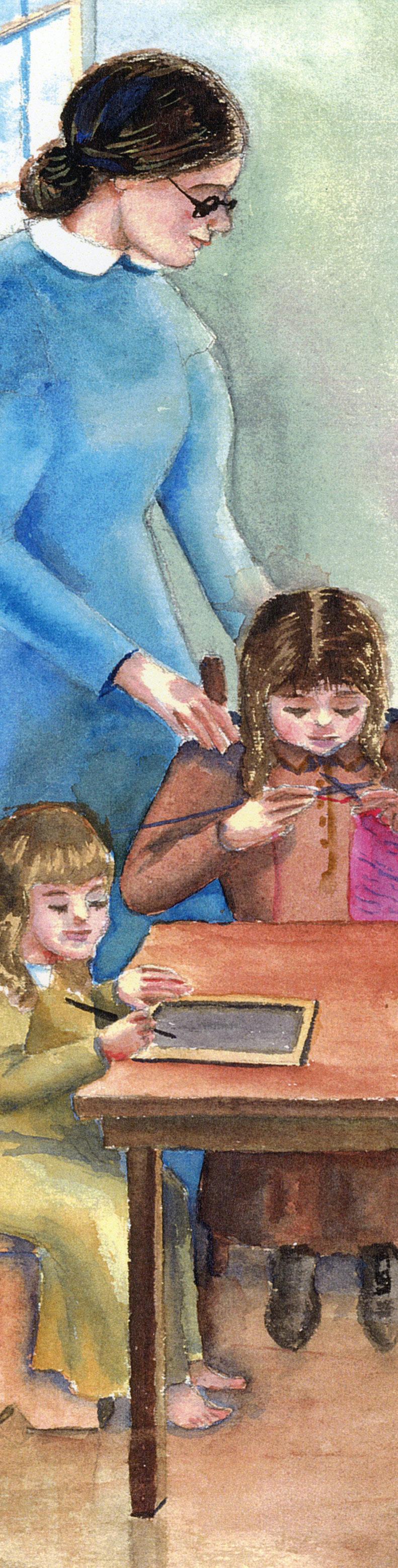
Blessed Marie Rose Durocher lived out her own name by which she was called, “Eulalie”, by seeing, understanding, and responding to the needs of others, particularly women and children. As she understood the needs of the young women who joined her sodality in her brother’s parish in Beloeil, her conviction for the importance of education in the faith for women became stronger. She knew that by educating young women, in her time, they would go on to model good values to their families which in turn would better society. However, education achievement cannot happen without relationship: “Eulalie also seemed to innately know that women needed to have support systems to grow into a sense of their own identities and to reach their full potential” (Sister Mary Ellen Holohan, SNJM, quoted in A Pilgrimage of the Heart).
Blessed Marie Rose and her companions, Henriette Céré and Mélodie Dufresne, provided needed access to education to young people and focused on developing all the aspects of each person. For Blessed Marie Rose, children were “God’s children, children of parents who placed high hopes in the sisters” (Sister Germaine Duval, SNJM, From Vision to Mission). While their first students came from a variety of social classes, she loved all of these children.
Under this inspiration, the Congregation since 1843 has worked for the education of girls and young women, especially those living in rural areas, with the concern of meeting the needs of people from every background. In spite of very modest beginnings, the Congregation quickly founded other schools and boarding schools in Beloeil (1846), Saint-Timothée (1848) and Saint-Lin (1848). It extended its reach beyond the borders of Quebec to reach the United States (Oregon, California, Florida, etc.), Ontario, Manitoba, Lesotho, Japan, Haiti, Peru and Brazil. SNJMs are still working on three continents today.
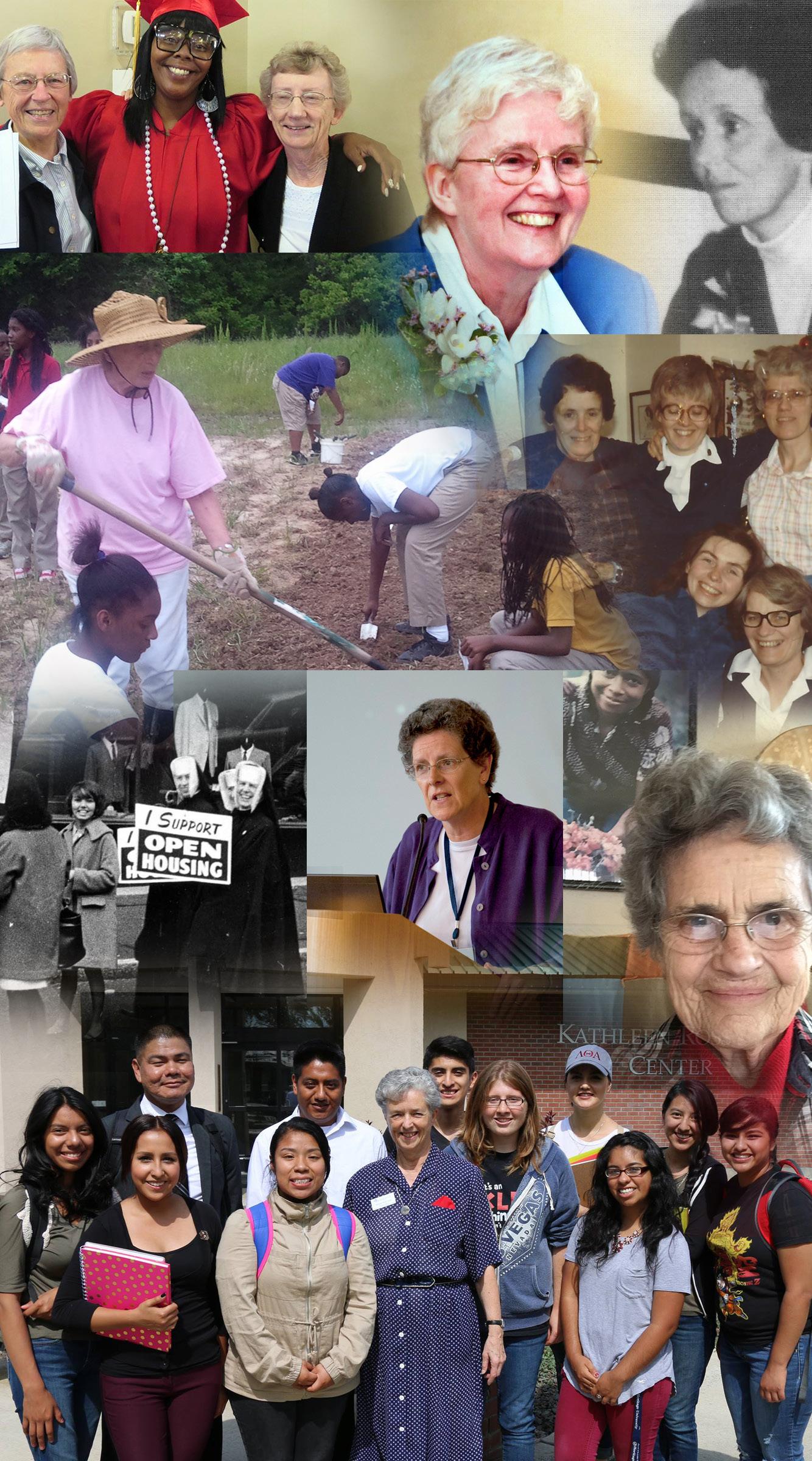
The SNJM Sisters whose reflections are featured in this journal sought to notice and respond to the needs of people outside the doors of their Holy Names schools, reigniting the charism in new communities over the last fifty years. Moved by a Spirit fueled by compassion, intellectual awareness, and prayer, these sisters tell about their call to these mission experiences and how they responded. Their stories validate the importance of relationships, one of the big ideas in the SNJM curriculum. Some overarching questions their stories and reflections address are:
• What is the story of the community of people in need or experiencing injustice?
• How have Sisters pursued justice and responded to needs through relationship-building?
• How does relationship-building contribute to the empowerment of a group of people?
Arise! May you continue to carry out the Sisters’ mission by seeing, understanding and responding to the needs of others, and may their example be a guide to you. e
“We heard the call to stand consciously with and to give direct service to economically poor and disadvantaged persons, to learn from them, to provide justice education, to confront our complicity in injustice, and to work toward systemic change of structures which oppress.” (1986)
“Education in the faith demands us active involvement in the promotion of justice.”
- SNJM Constitutions, 13
And people were bringing children to him that he might touch them, but the disciples rebuked them. When Jesus saw this he became indignant and said to them, “Let the children come to me; do not prevent them, for the kingdom of God belongs to such as these. Amen, I say to you, whoever does not accept the kingdom of God like a child will not enter it.”
Then he embraced them and blessed them, placing his hands on them. - Mark 10:13-16
The verbs seeing, understanding and responding that are used to describe the SNJM Core Value Dedication to Women and Children can be likened to the steps in the Pastoral circle, a method people of faith use to understand the links between faith and justice.
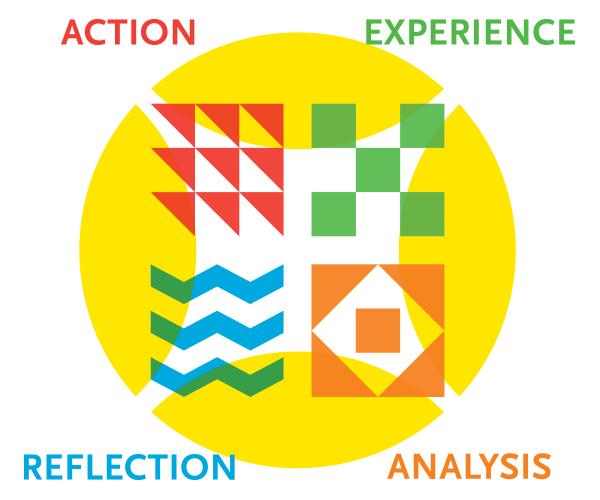
In the fall of 1980, Joe Holland and Peter Henriot, S.J. wrote Social Analysis: Linking Faith and Justice, about how to create social change through the four steps they call the Pastoral Circle, a foundation for Christian and other faith traditions to respond to the challenges of our communities, nations, and the world. The Pastoral Circle is a guiding structure for living our Christian commitment to community and in doing our Rose Projects. Relationship mattered to Jesus and to Blessed Marie-Rose and her Sisters. Their responses to the poor and marginalized or to women and children arose from relating to those in need, relating their needs to others, and relating to God— as illustrated in the parable of Jesus with the children. By applying the Pastoral Circle to our own service experiences now and in the future, we can we transform our mindset from ‘us helping them’ to one of ‘kinship’ and ‘solidarity’, so that we are compelled to ask the ‘why’ questions and act for justice.
e - Source: Education for Justice. For more on the Pastoral Circle, view: https://www.youtube.com/watch?v=9hSWVBYr3qs or with a presentation on the core value, view: https://www.youtube.com/watch?v=lZA8Q9gFbYE
Reflect & Share: Over the course of the week, apply Pastoral Circle questions to one of your Rose Project experiences.
1. What should we, or I, do about it?
2. What groups can we support that already work on this issue?
3. What are different ways I can respond through charity, education, or faith-based advocacy?
1. What is happening? What were the needs of the people?
2. What social injustice is the root of the problem(s) you witnessed?
3. Who were the people I met and interacted with? What is their story?
1. What are my own biases towards this injustice?
2. What does my faith have to say about this injustice?
3. What Gospel and SNJM core values are upheld or denied?
1. Why is the injustice happening? Why does it persist?
2. What is the history of the injustice?
3. What are the social, political, and economic perspectives on this injustice?
We encouraged women to exercise leadership in key positions where decisions are made and to dialog with clergy and laity To recover the equality that is women’s right in the Church.” (1986)
“Today, leaders must do more than make a difference; our leadership must be part of creating change in our world.”
- Linda Haydock, SNJM
Afterward he journeyed from one town and village to another, preaching and proclaiming the good news of the kingdom of God. Accompanying him were the Twelve and some women who had been cured of evil spirits and infirmities, Mary, called Magdalene, from whom seven demons had gone out, Joanna, the wife of Herod’s steward Chuza, Susanna, and many others who provided for them out of their resources. - Luke 8:1-3
“Gospel women in solidarity for liberating action!” This is more than an SNJM motto; it is the impetus for us to lead in a radical way, for the full development of every person and all of creation. Today, leaders must do more than make a difference; our leadership must be part of creating change in our world. Marie-Rose knew this truth about education for girls when she founded the Sisters of the Holy Names of Jesus and Mary.
Today the AHN Rose Project takes place during Covid 19, no ordinary time. It is a time for young women to rise up and be the extraordinary leaders needed in our community and world. To be extraordinary in your leadership, “Listen with the ears of tolerance. See through the eyes of compassion. Speak with the language of love.” Says Rumi. This was the Marie-Rose way.
It was 40 years ago I first learned how to step into leadership when I was on a mission experience. I lived with Sister Maura Clarke in Nicaragua. She was one of four churchwomen, martyred five months later in El Salvador because she accompanied those who were poor. This mission experience and relationship changed my life.
How will your mission of service change you? What change will your school experience because of your leadership? What new relationships will you form with those who seek justice? How will you be part of bringing about change in systems of oppression or injustice?
At the completion of your service, I invite you to write me and inspire my leadership with the Sisters of the Holy Names by telling your story of becoming a leader through service. I
look forward to sharing your stories about being a changemaker with our community in Africa, Brazil, Canada, Peru, and the United States. I am eager to shine a light on your leadership as a young woman at AHN!
e - Sr. Linda Haydock, SNJM, Portland, Oregon
Congregational Leader
lhaydock@snjm.org
1. As you prepare to work with your Rose Project team, what is God asking of you?
2. In what ways can you be a leader by “listening”, “seeing” and “speaking”?
3. How will you be part of bringing about change in systems of oppression or injustice?
Closing Prayer (see appendix)
“We are challenged by the Gospel and by the needs of society to unite our efforts with those around us to attain for all conditions of life more equitable and more worth of human dignity.”
(Constitutions, 14)
“Is there some new need today that we, as educators, should be responding to?”
- Cynthia Canning, SNJM
They came bringing to [Jesus] a paralytic carried by four men. Unable to get near Jesus because of the crowd, they opened up the roof above him. After they had broken through, they let down the mat on which the paralytic was lying. When Jesus saw their faith, he said to the paralytic, “Child, your sins are forgiven.” - Mark 2:1-5
It was 1993–125 years after the arrival of the first Sisters of the Holy Names in Oakland, California. A large group of us gathered at Villa Del Mar Retreat Center in Santa Cruz. We reflected on our work as educators over these many decades. We had founded three educational institutions in California: Holy Names High School and Holy Names University in Oakland, and Ramona Convent Secondary School in Alhambra. Additionally, we had served in numerous Catholic elementary and secondary schools in both northern and southern California.
We asked ourselves: Is there some new need today that we, as educators, should be responding to? I was with a group of Sisters who were serving in Oakland, California. One of us, Sister Rosemary Delaney, was a community organizer in the Oakland “flatlands”, one of the poorest and most underserved areas of Oakland. She worked with neighborhood people to solve quality of life issues. She also knew that many of the people she served wished they had more education.
The result of our conversation was that three of us, Sister Rosemary, Sister Margaret Kennedy, and I, co-founded Next Step Learning Center in 1994. Its mission is to strengthen Oakland families and communities through intensive, personalized tutoring and other programs in basic literacy, GED preparation, and transition to college and the workforce. The older youth and adults served by Next Step are mostly persons of color who have surmounted enormous obstacles in their lives. They are courageous and determined. Next Step’s culture is one of welcome, respect, and forgiveness.
Since 1994, over 8,000 low income students have been served; more than 850 have earned their GED or High School
Diploma. Hundreds of East Bay residents have served as volunteer tutors, building bridges of respect between our students and individuals who want to help them build a better future.
e- Sister Cynthia Canning, SNJM, Oakland, California
1. What do you think Jesus saw in the paralytic and the men who helped?
2. To what needs did the Sisters see and respond?
3. What unmet needs or inequalities in education continue to exist for women and children? (If you are unaware of any, research some)
4. What unmet needs or injustices are you hoping to respond to during The Rose Project?
Pray for all the missionaries, that they may be open to seeing the needs in the world.
Prayer
“As women of the new millennium, we have continued to carry the fire of Mother Marie Rose amid the cares and questions of our times.” (2001)
“The mission inspired us to persevere because it focused on the ‘dignity and worth of each individual —[to] fulfill their truly human, God-given destinies.”
[The Pharisees] watched him closely to see if he would cure him on the sabbath so that they might accuse him. [Jesus] said to the man with the withered hand, “Come up here before us.”
Then he said to them, “Is it lawful to do good on the sabbath rather than to do evil, to save life rather than to destroy it?” But they remained silent.
Looking around at them with anger and grieved at their hardness of heart, he said to the man, “Stretch out your hand.” He stretched it out and his hand was restored. - Mark 3:1-6
In 1975, I was the Academic Vice President at Fort Wright College of the Holy Names (FWC) in Spokane, Washington, and my life changed suddenly one day. Two Native American women, Martha and Violet, showed up in my office. They had driven four hours from the remote Yakama Indian Reservation to ask if our college would start an outreach program to prepare teachers in their rural area. It seemed like an impossible request, but research revealed how much need was in their area. The poverty rate was three times the rate in Seattle and no four-year degree programs were offered within commuting distance of almost 100,000 people!
Asking ourselves, “What would Blessed Marie Rose do?” we began designing courses to offer on Fridays in the town of Toppenish. (No internet or on-line courses existed then!)
As I oversaw the faculty who drove there every week, I got to know many taking the classes. Most were Yakama Nation members or Mexican immigrants from farm-worker families. I saw so much undeveloped talent that had been neglected! Our degree program in teacher education began to make a difference, and after five years, local Native Americans and Mexican immigrants were becoming teachers in schools and professionals in service agencies.
- Kathleen Ross, SNJM
Things changed suddenly when the financial problems of FWC caused those in charge to announce that FWC would have to close. I was devastated, thinking of all the folks at the outreach site who would be cut off from their only four-year degree opportunity. With a heavy heart, I went to Toppenish to tell Martha and Violet. Violet said, “We don’t have any
other options! Spokane has other colleges, but we don’t!” Martha shocked me by saying, “Well, Sister Kathleen, let’s start our own college!” My immediate answer was, “You’re crazy!” Martha responded, “Tell us one thing we can’t do!”
And that’s where it all started. First, I told them they wouldn’t be able to find leaders for a new Board of Directors, but they did and at their first meeting, the Board chose the name, Heritage College. So I found a local nurse and a school administrator who agreed to quietly survey more than 75 locals on what majors were wanted – Business, Education, and General Studies. Then after consulting accreditation officials, I moved to Toppenish— the smallest town I had ever lived in—with two other sisters, and worked ‘round-the-clock to find faculty, launch Heritage College, and earn accreditation.
Thankfully, the local School District offered us an old 1926 Elementary School building for $100/month. In 1981, we launched a transition year for 120 commuter students, 65% women and 75% Native American and Latinx, and in 1982, we became Heritage College with 150 students. Many challenges occurred over the next 38 years, but the encouragement of Martha and Violet and the mission of Heritage College inspired us to persevere because it focused on the “dignity and worth of each individual. . . [to] fulfill their truly human, God-given destinies.” Even though poverty was all around us, we began to see the difference our students were making, as they became professionals serving their own communities. By 2020, Heritage University awarded more than 9,000 baccalaureate and master degrees and currently enrolls over 1,000 students on a 125-acre campus with nine beautiful buildings. In BMR’s tradition, we are proof that the injustice around us can be reversed!
e- Sister Kathleen Ross, SNJM, Toppenish, Washington
1. How does Jesus’ interpretation of the law challenge you/us to ‘do good’ even when the circumstance is not customary?
2. In your point of view, who was the voice of Jesus in Sister Kathleen’s Reflection? Why?
3. How did Sister Kathleen and her collaborators learn and analyze the situation in the Yakima Valley before responding?
4. Do you think it’s important to analyze a situation before responding through charity or justice? Why or why not?
5. Name an insight or learning that is influencing your response to your Rose Project?
Pray for all the missionaries, that they may grow in understanding the needs in the world.
“Contemplation inspires action; action reflects contemplation. They are two aspects of a single love.”
(Constitutions, 58)
“Prayer keeps me in touch with this giant heartbeat of the Risen Christ living in all of us, thekeepingChurch moving forward in love and mercy...”
- Mary Ellen Robinson, SNJM
Rising very early before dawn, he left and went off to a deserted place, where he prayed. Simon and those who were with him pursued him and on finding him said, “Everyone is looking for you.”
He told them, “Let us go on to the nearby villages that I may preach there also. For this purpose have I come.” - Mark 1:35-39
Contemplation and action…are two aspects of a single love. Prayer draws us into the heart of Jesus if we desire that, a heart full of tenderness and compassion, especially toward those with the greatest need. That prayer drew me to the Yakima Valley when I was 29, to participate in an intercommunity house of Sisters seeking to respond to the needs of Mexican immigrant farmworkers and their families in Washington State.
Prayer kept leading us. We instinctively responded to the needs of neighboring children, many from immigrant families crowded into pieces of a family home divided into four or five apartments. Some children could speak English. The Sisters offered after-school tutoring, times for games and puzzles for the littlest ones, and a two-week summer vacation program that drew volunteers, including students from Holy Names High Schools, who would stay with the Sisters for a week or two.
Intense and constant prayer, and the generosity of many donors and volunteers, keep the ministers and their ministries going. Contemplating the words of faith leaders help fuel the action. From the Documents of Vatican II, Medellin’s (Latin American Bishops’ Conference, 1968 in Medellin, Colombia) commitment to “a preferential option for the poor”, and the U.S. Bishop’s Conference affirmation that “justice is a constitutive element of the Gospel” to Pope Francis now calling all Christians to deepen their prayer in union with the heart of Jesus; for the sake of the poor and our very Mother Earth herself, the Holy Spirit has been guiding us, you and me, I believe, to advocacy and action with people who are poor and on their behalf.
Everything was built on relationships. Foremost, the relationship with God in prayer, which sustained the community of Sisters and volunteers, and nourished the relationships between neighbors and donors, with parishioners who could offer a meal—or the use of a van or a swimming pool or even a movie theatre.
Prayer keeps me in touch with this giant heartbeat of the Risen Christ living in all of us, keeping the Church moving forward in love and mercy, and keeping me in Wapato, on the land of the Yakama Nation First People, who have been here since time immemorial. Here, in a neighborhood filled with immigrants from Mexico and the Philippines, we are being the Body of Christ together, even though most of the people may not know that’s who we are.
e- Sister Mary Ellen Robinson, Wapato, Washington
1. Describe how you see Jesus live out these “two aspects of a single love”.
2. How do you think Sister Mary Ellen’s prayer shapes how she treats the people in her Yakima Valley community?
3. Recall a situation in which you prayed deeply or really spent time reflecting before making a decision or acting. How do you think the time contemplating beforehand made your response different?
4. What resources might you want to read or bring to your prayer to fuel your own “love into action”?
5. What prayer or reflection could fuel and inform your Rose Project?
Pray for all the missionaries, that God may open their hearts with his living Word.
Closing Prayer
“We therefore pledge
ourselves to seek and participate in collaborative structures, relationships and actions that will liberate life….” (2016)
“For the first time, someone believed in them. They were to become the backbone and heart of Rossbrook... ‘No child who does not want to be alone ever has to be.’”
The rose Project Day Four Action - Responding
In those days when there again was a great crowd without anything to eat, he summoned the disciples and said, “My heart is moved with pity for the crowd, because they have been with me now for three days and have nothing to eat. If I send them away hungry to their homes, they will collapse on the way, and some of them have come a great distance.”
His disciples answered him, “Where can anyone get enough bread to satisfy them here in this deserted place?”
Still he asked them, “How many loaves do you have?” “Seven,” they replied.
He ordered the crowd to sit down on the ground. Then, taking the seven loaves he gave thanks, broke them, and gave them to his disciples to distribute, and they distributed them to the crowd. They also had a few fish. He said the blessing over them and ordered them distributed also. They ate and were satisfied. They picked up the fragments left over—seven baskets. There were about four thousand people. - Mark 8:1-9
In the summer of 1973, equipped with enthusiasm and a pool table, several Sisters and I moved into the poorest area of Winnipeg where many Indigenous people lived. We learned that most families had experienced suicides, incarcerations, and violent deaths. Too many youth had dropped out of school.
By October, some teenagers came to ‘check us out.’ They began dropping in four to five nights a week. They enjoyed our company, the pool table and games in the basement. Soon we were overrun. The following year, Sister Gerry quit her job as a Legal Aid lawyer to devote full time to the youth. She approached city hall about the possibilities of a building where teenagers could congregate away from the destructive elements of the streets. An abandoned church on our street was available. It was an answer to prayer.
- Marylyn Gibney, SNJM
The older youth were happy to have their own place. The younger ones, or ‘cellar dwellers’, as we fondly called them, remained in the basement with the St. Mary’s girls and myself.
Rossbrook House, a neighbourhood centre—an alternative to the street—opened January 20, 1976. These ‘juvenile delinquents’ became Sister Gerry’s advisors and staff. For the first time, someone believed in them. They were to become the backbone and heart of Rossbrook, where they continue to provide a safe place. “No child who does not want to be alone ever has to be.”
Then in collaboration with the Winnipeg School Division, we started three alternative schools for those who didn’t fit into the regular stream. Sisters Lesley, Johanna and others encouraged their students to finish school and pursue a career. Later, Meegwetch House, a home for sexually abused girls ages 12 to 16, was established. With the loving care of Sister Carol and volunteers, the girls became whole again.
Rossbrook House has been a gift, not only to the Indigenous youth, but to society as a whole. The people there are dear to my heart.
e- Sister Marylyn Gibney, Winnigpeg, Manitoba
1. What parallels can you draw between the Gospel passage and Sisters Marylyn’s story?
2. What elements of the Pastoral Circle take place in both stories?
3. Just as Jesus collaborated with the disciples and the Sisters collaborated with others in the Winnipeg community, we can “liberate” and empower others through shared input and work toward a common goal. What collaboration have you seen during The Rose Project? What would you like to see happen or improve before the end of the week?
Pray for all the missionaries, that they may respond lovingly through their service.
“While the quality of life on the planet is deteriorating, women and children suffer the most. ...we look at Earth through the eyes of women and commit to change our attitudes and behaviors as consumers, to sensitize and educate to the reality of eco-feminism, to take a stand especially against violence toward women, children and the earth, and to be in solidarity with groups that work for human rights and the life of the planet.” (1996)
He said, “This is how it is with the kingdom of God; it is as if a man were to scatter seed on the land and would sleep and rise night and day and the seed would sprout and grow, he knows not how. Of its own accord the land yields fruit, first the blade, then the ear, then the full grain in the ear. And when the grain is ripe, he wields the sickle at once, for the harvest has come.” - Mark 4:26-29
I came to Jonestown because from 1978-1980, I taught in Clarksdale, Mississippi at Immaculate Conception High School. I had an 11th grade homeroom and taught a variety of subjects and was an academic counselor. Two of my homeroom students, both young women, came in from Jonestown every day and unlike the rest of the students, were very undereducated. During the course of those two years, I visited their families in Jonestown and learned how the discriminatory practices were so devastating. At that time and until 1984 there was no mandatory education for children in Mississippi. (In 1984, the six-year-olds were required to attend first grade—that is how it started).
“We all need to help one another without counting the cost to ourselves .”
- Kay Burton, SNJM
I thought, back in 1979 that if we SNJMs, who are trained teachers, could help educate, we should. So we began. As Provincial Director of the [former] SNJM Washington Province, with the members of our Council, in August, 1984, we sent four Sisters to live and work in Jonestown (Sisters Rose Monica, Mildred Hein, Anne Skok and Teresa Shields). In 1989 SNJMs started the Durocher Volunteer Service Program geared to encourage service on the part of the youth, focusing on education, especially during the Durocher Summer School sessions.
The Sisters also contributed to founding Jonestown Family Center (JFC) in 1992, with a mission to improve educational and health opportunities through its programs. As other people brought their gifts over the years, its preschool learning center has now evolved into a Montessori school led by women who are education professionals.
I continue [to minister in Jonestown] because my faith, my heart and whatever else there is says so. A little effort does a lot of good and makes a huge difference. I focus on volunteer
service because we all need to help one another without counting the cost to ourselves (I believe); and now, after over 30 years, I am reaping the rewards of having those whom I helped long ago, help others.
Having volunteers come to Jonestown from other places is beneficial, in my mind, to everyone! Included in the Durocher Program is offering hospitality to student and adult volunteers who, with local persons, are able to meet some housing and educational needs. A sense of community can be developed as learning experiences abound.
e- Sister Kay Burton, Jonestown, Mississippi
1. What seeds were planted in you during this week?
2. What seeds did you plant through your Rose Project?
3. In what ways do you hope these seeds might grow for the sake of God’s kingdom?
4. Just as the work of the Sisters is a sign of the land that yields fruit, we too are called to be laborers in the vineyard of God growing seed: How might you “cast fire” further here in Tampa Bay? In Florida? In our country? Our World?
Pray for all the missionaries, that they may find gratitude in their learning experiences.
Prayer
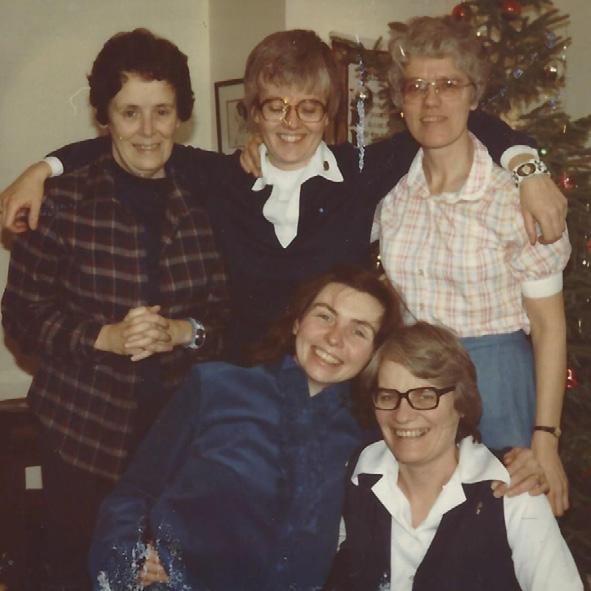
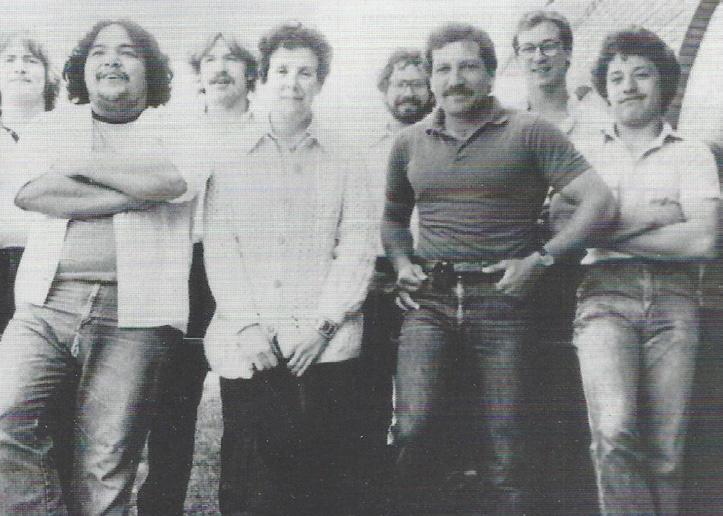
(below) Sister Marylyn’s community in Winnipeg: top left to right: Sisters Geraldine MacNamara, Marylyn Gibney, Carol Peloquin; bottom left to right: Lesley Sacouman and Johanna Jonker. (below right) Sister Gerry with the first ‘Rossbrookers’.
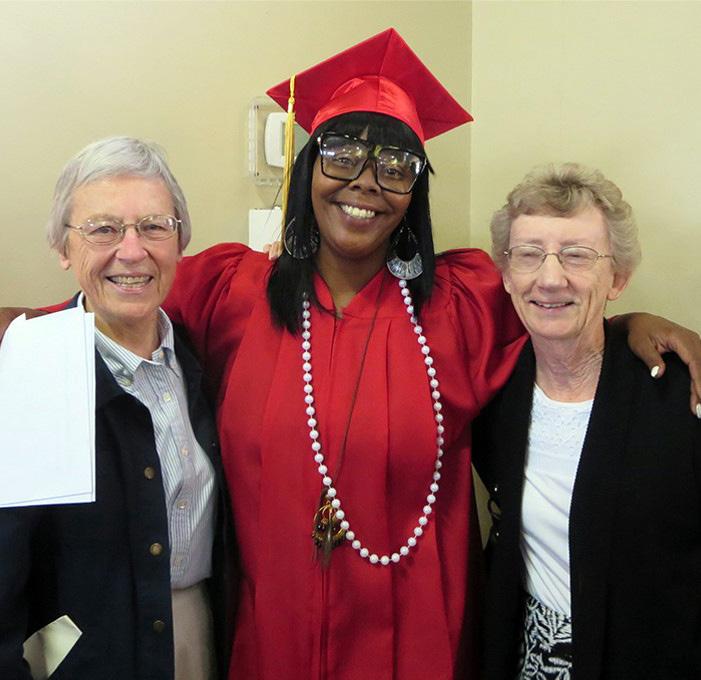
Sister Rosemary (left) and Sister Cynthia Canning (right) with ChaShonn (center), one of their students from Next Step, who since has graduated from San Francisco State University.
Pictured
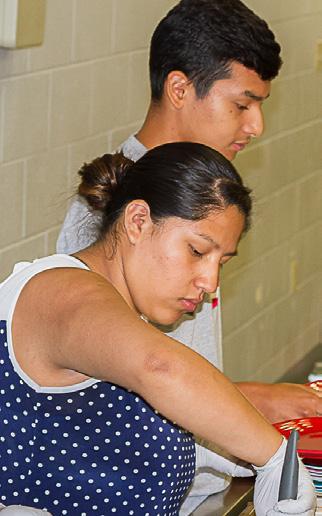
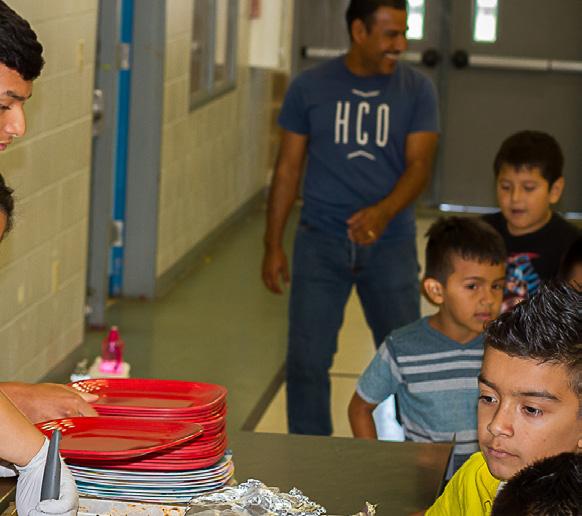
(above right) Teen volunteers serve lunch to children in “Mexico en Wapato” a summer program of language and cultural immersion led by teachers from Mexico.

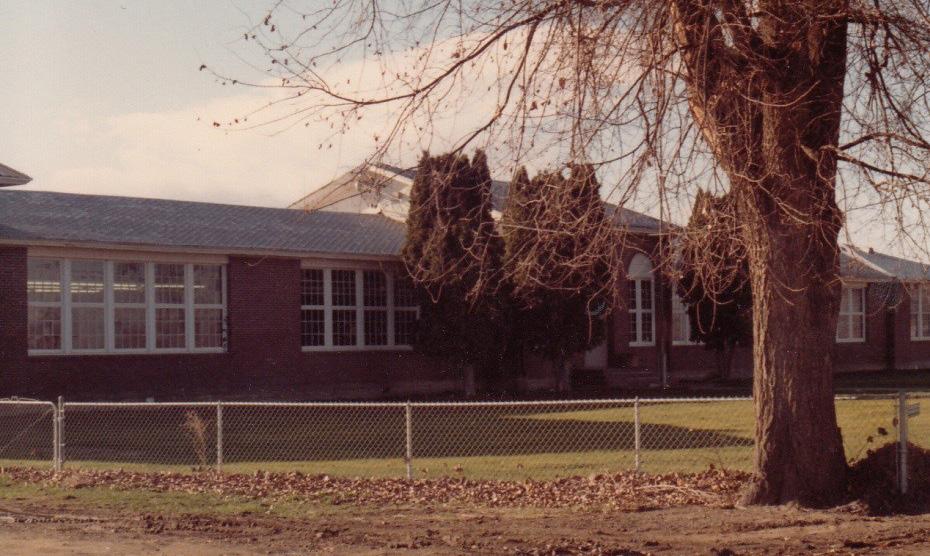


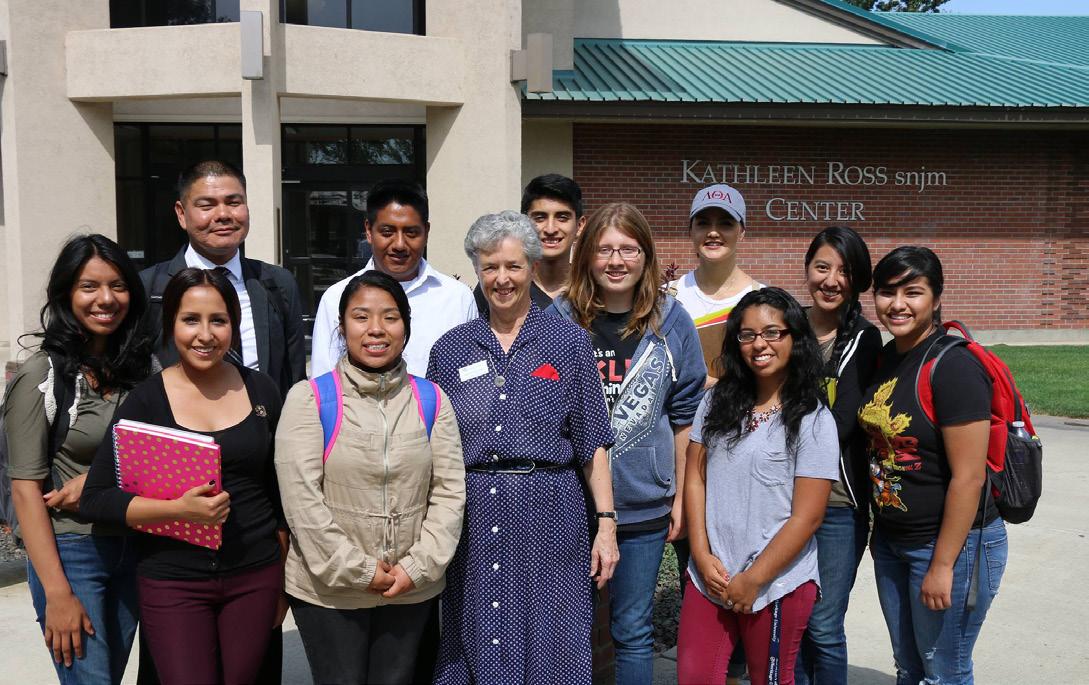
The first locations for Heritage College were a cottage and sycamore tree (far left), the site of the very first classes in fall 1981, followed by an old 1926 elementary school building (left), used until 1993. (below) Sister Kathleen and Heritage College students celebrate the opening of a new campus facility.
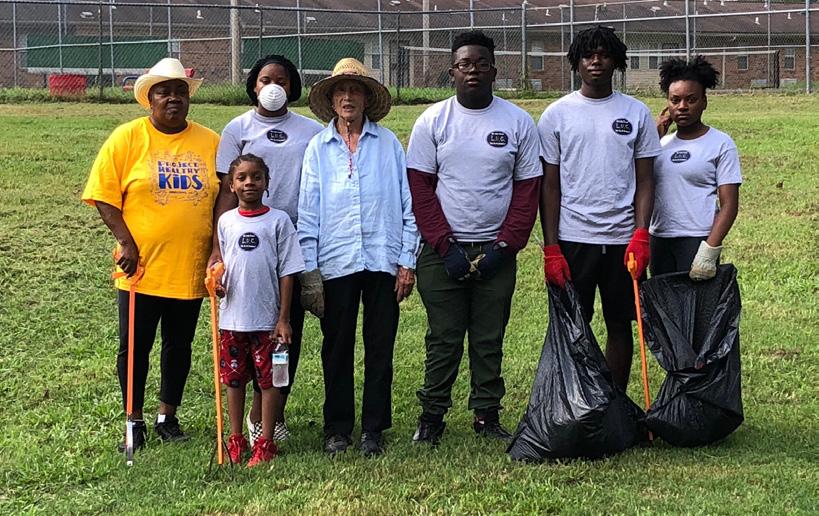
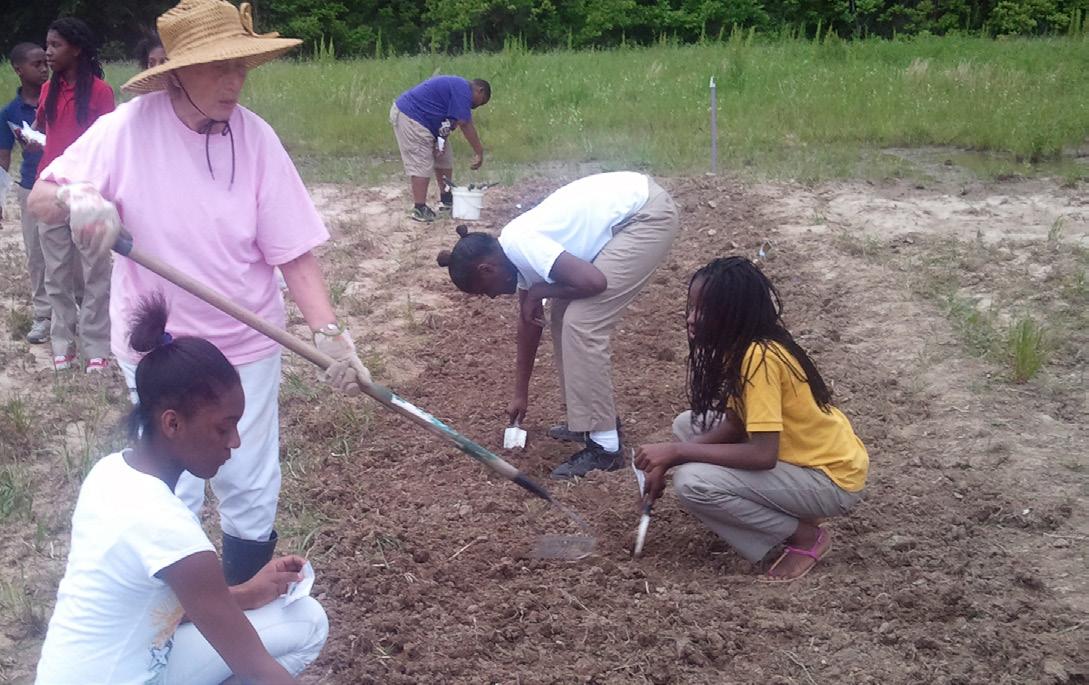
honor of Mother Marie

“Never forget to meet God in prayer.”
-
Blessed Marie-Rose
Blessed Marie-Rose, obtain for us today
The audacity of Faith
The simplicity of Hope
The power of Love.
That we may actualize the words of Jesus: I have come to cast fire upon the earth, and would that it were already kindled. We ask this in your name and in the names of Jesus and Mary. Amen.
Mother Marie-Rose, woman of fire, woman of love, As we look deep within our hearts, As we look at the world around us, Give us the desire to pay attention to the needs of humanity and of creation, So that we might spread God’s reign of love and justice to all of life. Amen.
Ever loving God, Give us eyes to see ears to listen words to speak hands to help Fill our hearts with love especially for your poor and marginalized. Amen.
Spark of God, Spirit of Life!
We remember and celebrate your dwelling within Blessed Marie-Rose and within the hearts of each person gathered here.
Divine Fire, never waver in your faithful presence with us as you were present to Blessed Marie-Rose. Amid the seasons of life, be our inner illumination. Ever present Light, may the spark of your inspiration be always with us; in every movement of our lives, lead and guide us as you did Blessed Marie-Rose. Spirit of God, may your fiery presence give us passion for what is vital and deserving of our enthusiasm. Blazing Love, may the radiant glow of your compassion fill us
as it did Blessed Marie-Rose, with awareness, kindness and understanding.
We praise you, Shining Spark of Life, for the vision and mission of Blessed Marie-Rose. We ask you for the grace to carry her fire amid the cares and questions of our times. Amen.
God, source of all light, we are surrounded by the darkness of the injustices experienced by your people, the poor who are hungry and who search for shelter, the sick who seek relief, and the downtrodden who seek help in their hopelessness. Surround us and fill us with your Spirit who is Light. Lead us in your way to be light to your people. Help us, [insert group name] to be salt for our community as we share your love with those caught in the struggles of life.
We desire to be your presence to the least among us and to know your presence in them as we work through you to bring justice and peace to this world in desperate need. We ask this through our Lord Jesus Christ, your son, who lives and reigns with you and the Holy Spirit, one God, for ever and ever. Amen.
Source: Communities of Salt and Light Parish Resource Manual
Blessed is she whose poverty freed her to risk much before insurmountable obstacles, for now she is proclaimed a Gospel Woman.
Blessed is she whose gentleness was empowered by vision, for she birthed a great community as inheritance.
Blessed is she who mourned the plight of the poor and the injustices of her society, for her followers rejoice in her spirit.
Blessed is she who hungered and thirsted for the liberation of women through education, for she believed in their potential to transform family life.
Blessed is she whose solidarity with the needy was merciful and kind, for mercy was her legacy.
Blessed is she who was pure of heart, for she was able to discern God’s will for her nascent community.
Blessed is she whose sense of peace flowed from her universal love, for she inspired unity in the Congregation.
Blessed is she who suffered persecution from the Church and society, for her reward is great in heaven.
-Maureen Hussey, SNJM, Antoinette Janisse, SNJM

Self check-in: To what need do I desire to respond?

I believe in making changes that I’m passionate about.
Right now, I’m passionate about ______________________________.
(a cause you’re passionate about)
When I think about the injustice of or needs of _________________________, I feel _____________________.
(an injustice you want to change) (emotion) (emotion)
When I think about service, education, or advocacy and how I can make a difference, I feel ______________________. No matter what these feelings are, I can use them to guide me towards making a positive impact, but I know I can’t do this alone. I can follow in the footsteps of ________________________, who inspires me with their ______________________________________________.
(an influential figure or community you resonate with)
(your favorite qualities or values about this figure or community)
I know I can’t do everything, but know I can do something.
I will use my __________________ and _________________ to help spread God’s reign of LOVE and JUSTICE in the world, a world where ____________________________________________________.
(your gifts, qualities or unique voice)
(a short description of your vision)
RELAT 1: What does it mean to build relationships and community?
RELAT 2: How do the SNJMs build relationships and community?
SNJM 3: How does our SNJM history continue to guide you today? How have sisters pursued justice and addressed new needs in more recent decades through relationship-building—seeing, understanding and responding?
How does relationship-building contribute to the empowerment of a group of people?
JUST 1: What is justice?
JUST 1c: Draw conclusions about the nature of justice by considering the two feet of justice: social justice and charitable works.
JUST 2: How did the struggle for justice impact the history of the SNJMs?
JUST 2a: Explain the historical struggles for justice of the SNJMs in their founding and throughout their history.
JUST 2b: Explain why the Sisters place a special emphasis on service to people who are poor and marginalized as one of their core values.
JUST 3a: Identify areas of injustice at all levels of community and what is or is not being addressed in those areas.
SPIRIT 3: How does God call you to “cast fire upon the earth”?
SPIRIT 3.B. Explore and reflect on ‘call’ as an invitation to respond to God’s love.
SPIRIT 3.C. Evaluate your personal skills, gifts, and interests in relation to specific works in the service of God.

Blessed Marie Rose, Obtain for us today the audacity of faith the simplicity of hope the power of love that we may actualize the words of Jesus; I have come to cast fire upon the earth, and would that it were already kindled. We ask this in your name and in the names of Jesus and Mary. Amen.

this book belongs to: