



Copyright © 2026 by Marissa Eller
Cover illustration copyright © 2026 by Stephanie Singleton
All rights reserved. No part of this book may be reproduced, transmi ed, or stored in an information retrieval system in any form or by any means, graphic, electronic, or mechanical, including photocopying, taping, and recording, without prior wri en permission from the publisher. Additionally, no part of this book may be used or reproduced in any manner for the purpose of training arti cial intelligence technologies or systems, nor for text and data mining.
HOLIDAY HOUSE is registered in the U.S. Patent andTrademark O ce. Printed and bound in June 2026 at Sheridan, Chelsea, MI, USA. www.holidayhouse.com
First Edition
ISBN: 978-0-8234-6056-4 | 1 3 5 7 9 10 8 6 4 2 (hardcover) ISBN: 978-0-8234-6597-2 | 1 3 5 7 9 10 8 6 4 2 (paperback)
Library of Congress Cataloging-in-Publication Data
Names: Eller, Marissa author Title: Le on read / by Marissa Eller. Description: First edition. | [New York] : Holiday House, 2026. | Audience term: Teenagers | Audience: Ages 14up | Audience: Grades 10–12 Summary: “An overachiever early college student must keep her eyes on her own paper, and off her cute-yet-infuriating academic rival, when they’re paired up for a project on student mental health”— Provided by publisher. Identi ers: LCCN 2025045711 | ISBN 9780823460564 hardcover Subjects: CYAC: Love-hate relationships—Fiction | Universities and colleges—Fiction | High schools—Fiction | Schools—Fiction | Romance stories | LCGFT: Romance ction | Novels Classi cation: LCC PZ7.1.E441235 Le 2026 LC record available at h ps:///lccn.loc.gov/ov/2025045711
EU Authorized Representative: Hacke Flynn Ltd, 36 Cloch Choirneal, Balrothery, Co. Dublin, K32 C942, Ireland. EU@walkerpublishinggroup.com
For Jamie and Ashley, who have always made sure I never loved alone.
O cialEndeavourHigh: Welcome back, Eagles!
Iwish we had senior parking spaces. As I squeeze my li le white Hondaintothelastavailablespotonthe rstleveloftheparking garage,IaddthattothelistofTraditionalHighSchool ingsI’ve missed out on because of this place.
I list them in my head: sports; electives that are even remotely fun; a campus full of teenagers and not adults; and now, senior parking spaces. Not that I’m mad or anything. I love my early college program with all of my academic heart, and I’ve been dying to get back here. I’m just kind of pe y.
Across the parking lot, I see Esha’s blue Jeep, already parked. (We’d agreed to arrive at the same time, but she drives like she has no fear of death or speeding tickets.) Her parents bought it for her when she got her license. ey thought it would be the safest option, but it literally doesn’t even have a hard top. And it’s super impractical for the postage-stamp-size parking places on this university campus.
I lock up my car, exit, and take o toward the stairs.
My burgundy plaid skirt swishes in the scorching Southern
wind. I slip my mass market paperback copy of e Abridged Works of Edgar Allan Poe under my arm and tuck a strand of hair back into place. My ponytail sits high on my head, like always, but those messy yaways right at my ears never behave in the humidity. Below, the chunky-heeled black loafers that match my ed black tee hit the pavement so hard that gravel ies.
I chuckle, thinking of a similar walk up these very stairs, on my rst day at this school. I was fourteen and starting college, which not even my parents had been to.
Sort-of college, anyway. An early college program is hosted on a university campus, and you take a mix of high school and college courses, graduating with an AA. ese programs are supposed to be for the best students—or at least the students most willing to grind themselves to death. We pack six years of education into four and try to survive, basically.
Anyway. I had to stop halfway up the stairs because I thought I was going to puke my guts out. My mom drove away while I was frozen there. I remember that. And I remember that I had to bend over, pretending to x a shoelace that was never untied, until I nally got my nerves under control. I doubt those shoes even had laces.
Today, I drove myself.
Today, I reach the top of the stairs without ever stopping, my head held high.
Today,I’mo ciallyasenior,andeverythingIcanseefromthe top of this hill is mine.
at can I see? Hickory, North Carolina, for one, and Hickory’s state university campus for the other. Hickory’s not really a small town, but it’s not a city, either—just comfortably midsize. It’s got a stereotypically North Carolina kind of name, and it used to be known for furniture and tobacco. Now it’s known for the college and the airport (which they turned into an aviation museum).
e college has a few thousand students, a couple hundred of which belong to Endeavour High, its early college program.
ere are people everywhere on campus, many of them ling through the familiar double doors I’m heading toward at the end of the crosswalk. ese are the Endeavor doors. I fall in line with the tra c. Everyone is very loud, and very tall. Even with my platform shoes, I’m very not.
Gently, and carefully, because I don’t want to damage myself, I push my way inside through the throng. Inside—to the place I’ve pre y much called home for the past three years. Shortcomings, sacri ces, stress, and all, this place is mine. I wonder again, for, like,the twel h timetoday,howIeversurvivedanotherwhole summer without school.
Everyone but me goes le , toward the o ce and the auditorium and the cafeteria. Everything they’re here for is that way. I go right, toward my spot. I round the corner, and there it is: an uncomfortable wooden bench in front of oor-to-ceiling windows that look out at the highway. I missed it so much I feel the strangest urge to cry. I live in a world of constant chaos and in a state of perpetual overwhelm. is spot is the closest thing I have
to peace. Unlike my crowded house, it is still and quiet; unlike the classroom, it is without pressure; unlike the mall, there’s no stimulation. It just is. It’s my safe space. No one ever sits here but me.
I sit, take a deep breath, and relax, crossing my legs underneath me. (Not a ladylike way to sit in a skirt, but I’m wearing bike shorts underneath. It’s not my rst rodeo with the dress code.)
One more breath, and I feel it. en that peace falls over me, it’s not gentle, like a spring rain or an ocean wave. It’s sudden and heavy, an impact like a one-two punch. It doesn’t wash over me. It slams into me.
at’s how tense I usually am. Relaxation has to force its way into me.
For a second, or a minute, or who knows how long, I stare out the window. I don’t sit still very o en, but here, I do. I can. I watch the cars go by, and I let my mind wander.
“I thought I might nd you here,” Esha says, sneaking up on me. (She might not have been actually sneaking up; I may have just lly s turned o the senses that were feeling overwhelmed, which was all of them. Something about this forgo en, out-of-the-way bench makes me able to do that.)
“Hey!” I stand, throwing my arms around her. I just saw her last week when we went shopping for school stu , my favorite thing to do in the whole world. We’ve talked every day in between too. But still, this is a big deal. It’s orientation day for senior year, the start of a whole new world, and this moment deserves a hug. (I cut the assembly; I’m just here for the books and schedules.) She’s
warm and smells like too-strong perfume, probably because she’s trying to cover up the fresh-cat-li er smell that always follows her home from the animal shelter where she spends so much of her time.
“Are there more freshman this year?” I ask, thinking about all the people I had to ght my way through.
“I don’t know, maybe? y?” she asks. A dark brown eyebrow quirks up. “How can you tell they’re freshmen?”
“ eir spirits didn’t seem broken yet.”
Esha rolls her doe eyes. “Let’s go get our books,” she says, changing the subject and my entire train of thought. “ e assembly must be about over.”
I’m so excited about the books.
Esha steps back, and I see she didn’t dress up for the occasion thewayIdid.She’swearingcroppedjeanshortsandagrayEndeavour High T-shirt, her shiny brown hair thrown up in a messy bun. Does this mean I’m accidentally Too Much again, like always?
“Let’s go,” Esha says, pushing me toward the o ce. Her worn sneakers somehow still squeak. How did I not hear her squeak up on me? “You haven’t shut up about this class for years. You’re about to get it, and now you’re dragging your feet.”
Oh, yeah. at, I care about.
English 231: American Literature.
It’s my rst shot at a real college literature class, one focused on eal some of my favorite writers—Poe, Hawthorne, oreau—and othersI’vebeendyingtoread,likeCooperandAlco .Mypurposeinlife
is to be an English professor. I’ve known I wanted to teach literature since...forever. at’s why I’m here, at Endeavor, busting my bu to get the best education and the best grades possible, and this is the nextstep.It’samajor,majordealtome.I’vepassedallthehighschool college English prereqs. I just need the administrative scheduling to haveworkedout,andI’llbeonmywaytoeverythingI’veeverwanted. is is my passion. I want to excel in this class. I need to excel in this class. It’s the beginning of the rest of my life.
In the o ce, I’m prepared to ra le o the standard “Nova Car- d N ter” punctuated with a smile, but I don’t even have to say my name at the table where we pick up our schedules. e two teachers si ing behinditbarelystoptalking,theyjustsi throughafewfoldersuntil they ndmine.Perksofbeingasenioratatinyschool,Iguess.
“Open it, open it!” Esha says, as she leads us to a quiet corner of the Nest (so called because we’re the Endeavour High Eagles. It’s our cafeteria, rec room, and gym all in one, and it’s one of the only placesonthiscampusthat’sentirelyours.Upperclassmencanroam free, but freshman and sophomores have to spend all their free time in here so they don’t get kidnapped or run across the highway to McDonald’s. I don’t like being in the Nest; it feels too much like freshmanyear.IttakesawayfreedomIworkedtoohardtoearn.
“I...um...”I’mnervously,unproductivelyshu ingaroundthe papersinthemanilafolder,noteventryingto ndmyschedule.
“Let me do it,” Esha nally says, swa ing at me until I release my death-grip on the folder.
She nds my schedule...and her face falls.
Oh, no. She has super-expressive eyes.
I didn’t get into the course.
Icanseeitinhergaze.She’stryingtodecidehowtotellme. e rest of her face stays frozen, completely neutral. You’d have to know her to see it, but I do know her, so I do see it. My mind races: what was I given instead of the class I wanted? e class I needed? Something awful, probably. Like a history class that’s entirely about so rock.Maybeanextramathcredit.Somecasualphysics,justforfun.
“You got it,” she says quietly.
I barely hear her over the multitude of conversations happening around us. Her face is the same, still, eyes downcast and everything.
“ at?” I lean into her space and rip the paper from her hands. t?” Oops. Probably shouldn’t have done that. e corner tore o , but that’s not important. “Let me see!” ere it is.
ENG 231-101: American Literature.
MWF 8:00 a.m.
I barely resist the urge to jump up and down in the middle of everything. at would be extremely out of character, but not uncalled for.
“But wait,” I ask, calming down. “Something’s actually wrong. You weren’t just messing with me.” I’m not great with emotions— others’ or my own—but Esha’s, I understand.
“Yeah.Yougotit,butIdidn’t.”Hereyesrollup,pastherbangs, and she throws her head back like she wants to scream. She didn’t even really want the class, but she wanted to take it with me. “It gets worse. Your classes are all in the morning. Mine are all in the a ernoon. We don’t have a single one together.”
“So we’ll never see each other,” I whisper.
She nods.
Okay. is is ne. It’s totally okay that I’m starting my senior year alone. It’s totally okay that I got the class I wanted but had to sacri ce my other half for it. It means next to nothing if I’m doing it alf f all alone. Nothing I need is worth that.
Maybe I can change my schedule. I know I begged for this class, bothering our college liaison in her o ce for weeks so she wouldn’tforgetthatIdesperatelywantedit,butmaybeshe’dletme switch.Maybeshe’dletmeshi somethingaround,soIhavesome time with Esha.
“No,” Esha says. Her eyes aren’t downturned anymore— they’re extremely determined and a li le pissed o . “I can see what you’re thinking, and no, absolutely not.”
Esha is a person who always gets her way. I don’t really know what that’s like. I do know I won’t win in an argument.
She pulls on my arm again, guiding me toward the tiny closet where they keep the books. ere’s a short line, and she plants us at the end and turns to face me. “I know this sucks. No, I know it does. But we have to spread our wings eventually, right?” She points to the oor we’re standing on, where the horrible eagle
logo is painted on the hardwood. She chuckles, but my heart falls somewhere near my feet. She’s not wrong. is was bound to happen. Esha pursuing her own interests, me pursuing mine. I wasn’t goingtofollowherintoheradvancedanatomylaboranything.But I’d hoped we’d at least have this together...and maybe, like, gym.
“Hi, Mrs. Hefner!” I hear Esha say, in her overly cheery talking-to-adults voice. She’s very diplomatic with them.
“Hi girls! Ready for your books?”
We nally step into the tiny closet. Even though it feels like I’m dying, there’s that delicious old-book smell—the smell of dozens and dozens of well-loved Dover Classics and beaten-up textbooks—and that’s something. Esha hands over her schedule, ing. E and Mrs. Hefner, the school’s completely overworked secretary, roams around to nd her books among the stacks.
“Very ambitious schedule, with both chemistry and advanced calc,” she mu ers as she hands Esha book a er heavy book. “Are youinterestedinmedicine,dear? isschedulescreamspre-med.”
“Yes,” Esha says with a smile as she’s loaded down with an armful of textbooks. She doesn’t elaborate. A vet is what she wants to be, not a human doctor.
Mrs. Hefner looks at me expectantly, and I realize this is the part where I’m supposed to hand her my schedule. I’m actively holding up her line by standing here staring into the void. (God forbid the new freshmen don’t get their keyboarding workbooks on time.)
I surrender it. Mrs. Hefner takes the paper and goes back to
her roaming, returning with fewer books, all thinner than even one of Esha’s science-y books.
But there it is, right on top. One of those perfect, purple Norton anthologies I’ve been salivating over for years. at one’s mine. It seems as old as paper itself, worn and torn and nearly destroyed. e edges are basically brown. It’s undoubtedly covered in highlights and doodles, and someone’s probably drawn a dick in the margins. I don’t care. I’m going to read it cover to cover. Last year, I volunteered to help Mrs. Hefner hand out books in this stu y, windowless room just to look at the Nortons. Just to hold one and to thumb through it so I could see what I was in for next year. To see what I’m in for now. I mean, these anthologies are what lit majors read, right? I’ve basically made it.
“You’re good to go, dear,” Mrs. Hefner says, covering the purple cover with my schedule.
Oh,right. ereareotherthingstodotoday.Ican’tstayinthis closet forever. Today wasn’t about this one book, anyway. I mean, it was, but it wasn’t.
We leave. Esha’s cha ing away: about where her classes are, about buildings on campus she’s never been in before, about how she’s excited for the white coat she gets to wear in chem lab. She’s talking about goggles and formaldehyde and squid, for some reason, as we walk toward the parking lot. ere are still people everywhere, hanging out in the parking lot and lingering in the crosswalks like that’s not dangerous.
We reach my car door, and Esha nudges her shoulder against
mine, because she can’t reach out to hug me without toppling her book tower. “I’ll see you tomorrow,” she says, walking away with a genuine smile.
“Okay. See you tomorrow,” I tell her retreating back. But will I, though?
Maybe. We still have Beta Club (a national club for anyone who has an A-average equivalent GPA), so that’s something.
Ise lemybooksontothepassengerseatofmycar.Myarmsare exhausted, so they just sort of pour down onto the torn, tan leather. I’mhalf-temptedtobucklethemin,butthatseemsexcessive. en I hear a familiar voice behind me.
“Hey, Novella.” at nickname. Because I’m too short to be a whole novel. Absolutely not. Not today. Not him. But against my be er judgment, I turn around.
Hayes Collins stands right there, Endeavour High lanyard hanging out of the pocket of his jeans. He’s wearing forest-green Crocs. at a dork. His dirty-blond curls are overgrown and his white T-shirt is rumpled, which is strange, because Hayes Collins is never anything but perfect. Even his face is perfect, the lines of hisfeaturessharpandimmaculate. atangularnose. atstrong jaw. So annoyingly awless. He literally wears dress shirts to school. So the messiness is...new.
So new and so disarming that I can’t help but make an ass out of myself.
“ y do you look like that?” I ask, nose scrunched.
“I just woke up. I forgot this was happening today.” He scratches the back of his neck, and the wrinkled neckline of his shirt gets even more wrinkled, and I really need to get out of this lly n conversation, because this bizarro version of him is challenging my view of reality. is is a glitch in the matrix.
“You forgot that orientation was happening today? en it’s always the day before the rst day of school?” I feel my brows scrunch up, because this is so weird. “You don’t forget things, Hayes.”
I’m standing in front of an alternate-universe version of Hayes Collins, one who’s never ba led me in a student-government race. One who’s never beaten me in a student-government race. One who I’mnotactivelytryingtodefeatintheracefortheBetaClubpresidency.ely I know that guy. I hate that guy. is is not him.
“I’m a human being, you know,” he says archly.
“Allegedly.” I cross my arms, leaning against my closed driverside door. “Good to see you, or whatever, but please go away. I don’t trust you around my car.”
“Oh, come on.” He extends a conciliatory hand in my direction, his eyes suddenly brightening. “ at was one time. You’re still mad about that?”
My hands fall to my sides for a brief second. en annoyance takes over, and I start waving them around in front of my face like we’re in the middle of a Real Housewives ght.
“ eyhadtocomegetmeinthe middle of a presentation because you set o my car alarm. Intentionally. Because you were trying to paper my windshield with your own campaign posters!”
My blood starts to burn. I had to leave my bio presentation un nished and walk across campus with the principal toward the pal t sound of my blaring alarm. at one loud, hazard-light- ashing, nal-grade-destroying moment took him from my competitor to my sworn enemy.
“I apologized,” he mu ered, nudging a rock with the toe of his awful, nasty, uncool shoe.
“You did not,” I re exively spit out. “Well, you did. But only because they made you.”
It was the one time I can ever remember Hayes Collins ge ing in trouble. ey called his doctor parents and everything.
I wouldn’t let it go. I still haven’t. In the days a er that asco, I folded every single one of those campaign yers he put on my car into paper airplanes and sent them ying in his direction from strategic vantage points whenever I saw him. I was only trying to get on his nerves, but he started throwing them back, and they banned us both from using the school printers for campaign stu .
And a er all that, he still won.
He won the campaign, and he nished the year with a be er GPA. He’ll be valedictorian instead of me, if I’m not careful.
“Yeah.Anyway”—hestartswalkingpastme,towardthestairs and the school—“I’ll see you tomorrow.”
I can feel my face aming, and my skin is suddenly too tight.
Oh, no. I will not look at his stupidly handsome face unless absolutely necessary. Not today, and not tomorrow.
O cialEndeavourHigh: It’s a great day to be an Endeavour student!
Some would say that 8:00 a.m. college classes are evil.
I am not one of those people. I le the house at 7:15 a.m., even though I’m less than ten minutes away from school, with my faux-leather black backpack stu ed to the brim. (My dad picked it up and told me to unpack most of it because I’d break my back carrying it around. I didn’t touch a thing. I need all of those notebooks, pens, pencils, highlighters, sticky notes, and, and, and...)
So that’s how I got to school twenty minutes early. Campus hadn’t come to life yet. e parking lots were half empty, and the buildings barely unlocked, waiting for the rst-day chaos of no one knowing where to go. I walk right on into the English building and nd the right classroom. e lights aren’t on yet. I love being the one to turn the lights on. at’s such a teacher’s-pet thing, but that’s ultimately what I am—a seventeen-year-old teacher’s pet. I ip the switch and take a second to appreciate the empty, now-illuminated classroom.
Except, um...it’s not empty?
ere’s a boy, with his head down, si ing at one of the tables in the back corner.
“Ugh, why’d you have to turn the lights on?” he grumbles, picking his head up enough to talk—and enough for me to recognize the face. e sharp intelligence in the eyes. e high angles of the cheekbones. e competitive nature of the gaze. Hayes.
My eyes roll of their own volition, and I stomp into the room, my sneakers not making the same satisfying impact my loafers would’ve. ese match my low-waisted black shorts and baby tee be er, though.
“ at’sthe ma er withyou? yareyousleepinginarandom er w classroom? Sleep in your car, like everyone else!” I snap as I sit in the front row. My favorite vantage point. I set my Norton anthology on the table in front of me, centering it in my eld of view, just so I’m not looking at Hayes. It doesn’t work. I turn around in my chair to glare at him, just because I must yell at him for this. “And what are you even doing in my—”
I stop. I realize what it means that he’s si ing here. In this room. With a Norton anthology in front of him. Just like mine.
Oh, no. Absolutely not.
He smiles, wicked and demonic and full of arrogance. at’s the Hayes Collins I know and hate. For a second, I just sit there and bounce one foot against the ground, thinking.
“You can’t ruin this for me, Collins,” I whisper. It’s barely
audible, but he hears me anyway, because we’re si ing alone in a very silent room.
And all at once, I need to cry. I press the heels of my hands againstmyeyesashardasIcan,untilIseenothingbutblackspots. Okay, this is ne. is happens. I stand up, not looking at him, or anyone else in the hallway as I rush out of the room. I le all my stu behind, everything except my phone. My le shoe is coming untied. I’ll x that too.
I’ve never had to cry in the bathroom on the rst day of school before, not even on my actual rst day of freshman year, when I ual walked into the wrong classroom and everyone stared at me. But that’s ne. is is ne. is happens.
Mercifully, there’s a stall open in the bathroom at the end of the hall. As soon as I lock the stall door, I lean against the wall and let the tears fall. Instantly, everything feels be er. I’m a crier for a reason. Once the tsunami of emotion passes, I can clearly see inside my own mind.
So, okay, my entry into my lit major is not turning out how I wanteditto.Insteadofmybestfriend,Igotmybiggestcompetition.
I’ll just avoid him. I don’t care.
Actually, he should avoid me. He’s on my turf. We’re not in a lab. is isn’t the science building. Future Doctor Collins isn’t going to top this class. I am.
With that thought, I wipe the last of the tears from my eyes
and make sure I don’t have snot dribbling out of my nose. By the time I make it back to the classroom, other students have led in. No one I recognize. All actual college students. Some barely older than me, some old enough to be my mom. (I like those people; they’re usually the nicest.) is is ne. is is still the moment I’ve been waiting for. e day I’ve been waiting for.
I wait for it all to wash over me, for a sense of rightness to set in. ere are plenty of feelings washing over me in intense, all-consuming waves, but I don’t think any of them are close to rightness. at, at least, I’m used to. Most of the students aren’t even aware of the early college program on campus. at I’m not used to is the gnawing ache of watching the clock tick. Two minutes past. Five minutes past. Eight minutes past...
Before I have time to stew further, Professor Lowry steps through the door, nearly a full ten minutes late. To her own class.
On the rst day.
I knew what she looks like because I’ve literally wanted to take her class for years, but seeing her in person versus her bu oned-up photo on the English department website is...di erent. Her glasses are on top of her head, lying on a riot of messy and possibly irreparably tangled curls. ey’re light brown with some salt and pepper strands mixed in. Bags under her eyes, minimal makeup aside from a strange amount of blush. She looks like someone who spent all night in the library.
She’s...a bit of a mess. I hope it’s in a “disheveled genius” kind of way, but I’m not sure. Her white cardigan is stained with something that might be co ee, and I don’t really understand why she’s even wearing it because it’s ho er than Dante’s inferno today. (Damn. I wish I could’ve made that joke out loud. She might have loved it.) Underneath, she’s wearing some crepey yellow blouse that doesn’t t, and a blue-and-red pa erned skirt that doesn’t match. Looks like the primary section of the color wheel melted all over her.
It’s, um, a lot. I was always told to dress for the job you want, and right now, it doesn’t look like the professor in front of me wants her job. Another wave of emotion crashes onto me again. But it’s more identi able this time.
Anxiety.
She’s the head of the English department, and she’s supposed to be my ticket to a promising college career as an English major. en a PhD in literature and a professorship. Starting with this class. Starting with this very moment, where she’s digging through her briefcase, I think in an a empt to look for the glasses that are on her head.
“Alright,” she says, her voice brisk. “I’m going to call roll, and as I do, you will all move to your assigned seats in alphabetical order...”
Seriously? Assigned seats? We don’t even have assigned seats in our high school classes. at’s middle school stu . She starts calling names, not even looking up from the roster in her hands.
ere are two A’s, so they sit at the rst table in the le , front corner. en two B’s.
With any luck, there will be someone between me and him.
“Carter,” Dr. Lowry drones.
I move to my seat, right in the front row, center of the room. Right in front of her.
“Collins,” she calls, and for a split second, I hope there’s another Collins in the room. A di erent Collins. My eyes shi as a presence takes up my peripheral vision.
It’s Hayes, si ing down in his assigned seat, right next to me. ere is no other Collins in the room, and there is no luck, at least not for me.
“Hey, Novella,” Hayes whispers. His voice isn’t teasing or chidingorevenannoyingintheslightest,andI ndthatextremely suspicious. “Listen,” he says, but I won’t, and I’m not gonna, and he can’t make me, except he’s si ing right next to me, basically whispering in my ear. I sort of have to. “I didn’t mean to make you... ee, or whatever. Earlier. Did you cry...?”
I sco , but it’s kind of wet and gross. I meant it to be snappy and unapologetic and una ected. Joke’s on me. I couldn’t be unaffected if I tried. I’m always trying. Never not trying.
“Don’t a er yourself,” I tell him. “ at wasn’t about you, trust me.” It was, but I can’t let him think that. Can’t let him know that. “ is has just been...” My le hand li s into the air and sort of swivels around the room, like I’m presenting this disaster to him.
“Weird? It’s looking that way.”
Just then, Dr. Lowry appears in front of my table, dropping a giant stack of stapled pages in between my elbows. She doesn’t tell me to take one and pass them along, I just do. ey’re syllabi, of course. I was excited for this part. I can still be excited about this part.
Instead of staying in my seat and le ing everyone else pass them around, like a normal person, I stand up and hand out each syllabus myself. I hoped my initiative would impress her, but as I sit back down, Dr. Lowry is scrolling through her phone with her head down.
“Read through your syllabus,” she mu ers, waving one hand in our general direction. She still doesn’t look up. “ at’s what the rst session is for.”
Minutes pass, pages turning in relative silence.
It takes me about half a page of reading before I realize this is basically the default English department American Lit 1 syllabus. I’ve read it all before. It’s on the school’s website, and it has been for years. ere’s nothing in it about her beyond the bio that’s also on the website. No contact information beyond her o ce number. e volume rises around me as people start cha ing. I expect her to stand up, to say something, to quiet the volume. To introduceherself,askushowweare,orverballycon rmthatwe’reactually in the right class. Honestly, I wish I were in the wrong class.
A er een minutes she puts her phone down.
“Well, this has been fun,” she says, pushing herself up with her
palms at on the desk. “I’ll see you all Wednesday. We’re starting with Jane Austen.”
I let the paper fall from my ngers. My hands come to rest againstmyface.Aroundme,peoplestartleavingtheroom,including Dr. Lowry. I don’t see her, but I hear her heels clicking against the oor.
“Wait...,” Hayes starts. I move my hands. We’re the only two people in the room again. “Was Jane Austen even American?”
“No, Mr. Collins, she wasn’t.”
O cialEndeavourHigh: Beta Club: Please be nice to the freshmen today.—Mrs. J.
“
Jane Austen, Esha, can you even believe—” I whisper, as much bite in my tone as I can convey at a low volume. is room is stu ed with people, and it’s nearly impossible to have a private conversation.
Esharollshereyes.Her rst-day-of-schoollookismoredaring than usual: the owy ivory dress goes past her knees, as required, but the straps might be thin enough to get her dress-coded. “You love Jane Austen.”
“Yes, but—” Someone bumps my shoulder as they walk by, and they mumble an apology. I don’t respond. ey couldn’t hear me in this frenetic room, anyway. It’s our rst Beta Club meeting of the year, and I swear half of the school is here. I get it, we’re all high-achieving students or whatever, but I would really appreciate less of a meat grinder. “Yes, I love Jane Austen,” I start again, pressing my palms together to keep them still, because thinking about this makesmefeellikeI’mcrawlingoutofmyskin.“Butshe’sBritish.AmericanLitandBritishLitaredi erent. erewasawholewaraboutit.”
“ e revolution was about a bit more than that, but okay.”
I wave my anthology. “ is is what we’re supposed to do. Read through this book, and—” I’m interrupted when someone bumps into me again. From somewhere deep in my chest, a growl emerges that truly sounds feral.
Because Hayes bumped into me.
Of course he did.
Hayes’s eyes widen, and it would be comical if he weren’t so close to me. y is everyone so close to me? My skin starts to crawl because my body naturally revolts when people are in my space.
“It’s okay, Novella.” He smiles, or smirks, or something. I’m not great with faces. (All I know is that his is objectively handsome,something I hateadmi ing,eventomyself.)“I’mnotgonna hurt your emotional-support book.”
“Funny.” I squint at him.
“Are you okay?” He squints back at me, like I’m some specimen he’s looking at through his beloved microscope. But I’m not a worm or a plant cell or a piece of a squid. He just sort of makes me feel microscopic, sometimes. Small, brainless, and completely m dissected.
“I’m ne. y?” I don’t even know the reason he’s asking.
“Your face is all pu y.”
“Oh.” My eyes drop to my feet, which are dgeting. Some part ofmeisalways dgeting.“Well,yourfaceisall...square.”Hisface is kind of square, but not in a bad way. In a beautiful way. Comeback of the century right there.
“Good one.” He rolls his eyes. “But I was asking because you very clearly ran out of class to go cry in the bathroom this morning.”
I straighten my posture, certain he’s mocking what he sees as fragility. So I cry a lot. o gives a shit? “Yeah,” I say de antly. “I do that.”
“She does do that,” Esha says, speaking for the rst time in this strange conversation. She, unlike me, is entirely unbumped. She has this innate power to carve out space for herself anywhere, even in a crowded room.
“Oh. So that’s just like...part of your life?” Hayes starts. “I thought it was my fault.”
“Just give me a minute,” I tell him, tapping my pointer nger against my chin. “I’ll come up with something else to blame you for.”
“I’m sure you will. Climate change, maybe.” He rolls his eyes again.
“Works for me. I heard you don’t recycle.”
I’mnot nishedyet,andI’mabouttoblamehimforsomething else, like taking the last bag of Doritos out of the vending machine in the canteen, but then someone slams into my back. e book ies from my hands, and all sense of balance leaves me. I’m going down. It’s possible I’ve just been hit by a bulldozer, and this is the moment before all my bones are a ened.
A hand wraps around my shoulder, and instead of hi ing the groundinabone-crunchingheap,Iampulleduprightand...held.
“For God’s sake, Luke, who raised you?” Hayes hu s, and that’s when I realize he’s got me, because I hear his words through his breath on my ear.
I think I would’ve rather been a ened by the bulldozer.
“Your mom,” Luke practically yells. He’s so loud. I didn’t know people still made your mom jokes. I thought that was just a thing that happened in early 2000s TV. I turn around and look at him. He apparently doesn’t feel like apologizing for running me over. He has extremely shiny, long brown hair that covers his eyes when it’s not tucked behind his ears. He likes to ip it around all the time. It’s so incredibly annoying. I’ve known him since kindergarten, and I swear he hasn’t matured at all.
Hayes rolls his eyes, and his hand moves from my shoulder. Oh, yeah. at was his hand on my shoulder. at’s odd.
Hayes picks up my anthology from the oor, pressing the bent cover down and dusting debris o the pages. He hands it back to me gently, like he knows this really is my emotional-support book.
at’s interesting. I thought that was a joke. At my expense. I always assume everything is.
“Yeah, right,” he murmurs before I can even thank him. “She barely even raised me.”
Myeyebrowsraise,becausethatwasunexpected.Idon’tknow if I’ve ever heard Hayes talk about his family like that. He doesn’t talk about them much at all, really, except for his older brother who’s in med school at Duke.
“Is the ghting starting already?” Luke asks, se ling in too
closetomeandrestinghischininhishands,hiselbowsplantedon the lab tabletop beside Hayes.
“ ey’re not ghting, really,” Esha says, crossing her arms. “Just bickering.”
“Well, that sucks.” Luke sighs. “I was sure they were going to have one of their blowouts today. I want a refund.”
Hayes gives him a side-eye look, but Luke is just saying what everyone’s thinking. ey’re all watching us now, even the sophomores who’ve been Beta Club members for, like, three seconds. ey’re all wide-eyed in anticipation, and despite the crowd, it’s dangerously quiet in the room. Someone should sell popcorn or something.
is is our year to ght.
e year the war ends and a victor emerges. We’ve been ghting since the moment we walked through the doors as freshman. School is our arena. We’re two seniors at the top of our class, battling for accolades. Valedictorian, National Honor Society, Beta Club president.
e race for student government came to the ringing crescendo of my car alarm last year, but this ba le means so much more, because it’s the last time our classmates get to choose between us.
For a second, I look around at everyone in the room. Meet each set of eyes, even as much as it physically pains me. I can feel the pressure on my shoulders, the expectation of the ght they’re all waiting for. As my eyes track around the room, conversations
quiet. Some people smile, others send only blank stares, probably because they’re confused by the intense eye contact.
“Alright,” Hayes says, standing up straighter next to me, addressing the crowd. “Nothing to see here, people. Just a conversation between friends.”
At that, those simple words spoken in his quiet, even-keeled voice, the whole room shi s. Conversation resumes at its previous full volume. All that eye contact goes away. Wait, iends? Are we friends? We’re not friends.
I almost want to thank him until I realize what he’s just done.
Hedidwhathealwaysdoes.Heledeveryoneintheroomwithout even trying, probably securing enough votes to beat me without a second thought. E ortless, uncomplicated, no sweat. I look at him, and no one else, because it’s at this exact moment that I realize he’s everything I’m not.
Hands clap near the doors, and I inch.
Mrs. Jacobs is here. She’s extremely loud, but she’s here. She’s been my homeroom teacher for all of my years here, and my English teacher for a couple. She looks out of place among the beakers and Bunsen burners in the only classroom big enough to hold us all, the lab. I’m so grateful to see a teacher, someone I know and love and trust, someone who isn’t constantly judging me, that my eyes ll with tears. Typical.
Shut up, I almost whisper under my breath. at’s what I do when I have too many feelings.
Hayes looks my way, and I realize I may have actually told lly myself to shut up.
I don’t care. It’s either that or cry, and he already thinks I’m an unhinged emotional basket case, so I will not cry in front of him again. Not today, at least.
“Sorry I’m late, kids.” Mrs. Jacobs sighs hard enough to blow stray, frizzed curls o of her face. “Long story, but there was a scooter incident I had to deal with.”
I love that about her, that she’s always calling us “kids.” Like we still are. In a world where we’re trained in professionalism and sit next to forty-year-olds in class and think about nothing but books and math and chemistry, or whatever, it’s nice to still be a kid somewhere.
Also, I don’t know what a scooter incident is.
“Anyway”—she leans on her desk, a giant lab counter twice the size of any other in the room, and she rests all her weight on her forearms—“Welcome back to Beta Club.”
Allaroundme,peoplecheer.Iwince,becausethenoiseiskindof too much for my body to deal with right now. Mrs. Jacobs’s eyes look aroundtheroom,eventuallyfallingonme.Shenods.Inodback.
We keep our homeroom teachers all four years in this place, and I’m so glad she’s mine. I’ll never forget the rst overwhelmedcrying-in-the-bathroom moment I had at this school. I was a freshman, and it couldn’t have been more than a few weeks into the semester. I’d stepped out into the courtyard o the cafeteria to call my mom, because I was full-on panicking about something,
but she didn’t answer, so I made a beeline to the girls’ room. On the way, I ran into Mrs. Jacobs. She was blocking my path to the bathroom. e path to emotional safety.
“Are you okay?” she’d asked.
“No,” I managed to say, choking back a sob.
“Will you be?” she asked again.
“Yes,” I whispered.
She moved out of my way.
Now, three years later, she doesn’t have to ask. All she does is nod. All I do is nod back. If I need anything, if I need to talk, all I have to do is come into her room.
“...and we’ll be going to the North Carolina State Beta Club convention this year,” she’s saying. “Well, next year. Technically. But this school year. So, start thinking about what events you’d like ool y to compete in and things like that.” at sounds like so far away, next year and graduation and moving on from this place, but it’s closer than I’d like to admit. Much closer than I’m ready for.
“Of course, we’ll also need a new president before then.” Her eyes nd mine, and then dri over to Hayes, who’s still standing too close to me. She keeps talking, about vice president and treasurer and the other o cers who also ma er, I guess, but I can’t think about anything other than that president role. at it could mean for me. My future. It’s one more shiny accolade for college applications, not to mention the world of scholarship opportunities it opens up.
“But.” Mrs. Jacobs’s voice is sharp, making the word a full sentence of its own. “I don’t want anyone thinking or worrying about that now. Elections won’t be until the end of this semester, so no campaigning yet, okay? is election goes by holiday-decoration rules: nothing before anksgiving.”
She stares down Hayes and me as she says that.
She ends the meeting and dismisses everyone, smiling at each person as they le out of the room.
I heard the words she didn’t say. Did you hear me? No worrying.
But worrying is what I do.
O cialEndeavourHigh: If whoever stole the tra c cones from the upper-level parking lot could please return them, there’ll be no questions asked.
Isit down cross-legged on a concrete oor, and Esha hands me a ki en. My hands gently wrap around the wriggling mass of u , and I hold him out in front of my face. He looks like a sentient cotton ball.
“ at one’s Tuba,” she says as she picks up another two ki ens in each hand. “We named the li er a er brass instruments. ese two are Cornet and Euphonium.”
Tuba squeaks in a way that suggests he’s not a fan of me, and I let him down onto my lap. All around me, similar noises echo, the ki ens communicating with one another and us. Esha seems to understand their language, even if I don’t.
“How can you even tell?” I ask her. e room at the shelter is over owing with pure white ki ens just like him. I scratch between Tuba’s ears with one nger, and he digs his tiny claws into the knee of my jeans over and over.
“His personality. He’s chaotic.” She lets her ki ens go, and they start chasing one another around her legs.
“Ithoughttheorangeoneswerethechaoticcats,”Ijoke.Ilean back on my palms as Tuba continues his exploration of my lap.
“Tuba’s spiritually orange.” As if to illustrate her point, Tuba lly o launches himself o my knee, a empting to swat at a li le calico who’s just passing by, minding her own business. He misses her entirely and lands on his feet. His ears are back, his tail pu s up. He does a complete 360 spin in confusion, like he doesn’t know how he ended up on the oor. en he looks at me, as if I have some explanation.
I don’t know either, dude.
“You’re upset,” Esha says, picking up Tuba and smoothing out the fur he’d frazzled. “I thought Tuba could help.”
“I’mnotupset,”Itellher,lookingaroundatthetinyroomstu ed fullofki ens.“Idon’tknowwhatIam,butIdon’tthinkupsetisit.”
Tuba squawks at her and kicks his tiny arms and legs. Esha puts him down and reaches around her back to grab a gray ki en climbing up her hair. e li le calico girl Tuba was trying to jump onamblesherwayovertome.Shehasapoof-balltoyinhermouth, like one you’d nd on the end of a Santa hat. She drops it right at my hand, and then she just stands there, waiting for praise.
“ o’s this?” I ask as I reach for the calico. She bu s her head against my ngers, and I pick her up.
“ at’s July. Di erent li er. We named them all a er months of the year.”
“ ere were twelve of them?” I hold July to my chest, and despite being nearly microscopic, she has a strong voice. Her grumbly purr echoes through my ribs.
“No. We skipped a few months.” Esha stands up with Tuba, taking him toward the li le, round hammock part of the cat tree in the corner where a few other ki ens are si ing in a cuddle puddle. Esha calls those soup bowls. Practically every day, I get a text with a picture of a cat or two curled up in one of those, and all it ever says is: Look, they’re being soup.
“Is this for me?” I try to hand July back her beloved toy. “ at’s so nice of you.” I scratch under her chin with my thumb.
“Tell July what’s wrong.” Esha’s behind me now, spreading out blankets that’ve been crumpled by play and picking up stray toys.
I take a deep breath. July hums a rumbling purr.
“You know how you were just minding your own business, and then that mean boy tried to jump on you?” I ask her. “Tuba thinks he can because he’s bigger than you. And that makes everything easier for him. He can jump on you and steal your toy, and you’re just supposed to take it.”
“O-kay,” Esha says, si ing back down on the oor in front of me. “I think she’s maybe too young for this metaphor.”
I hug July to my chest one last time and then let her go, placing her gently back down on the oor.
“ y does he bother you so much?” Esha asks.
I take a second, trying to put it into words. My natural instinct
is to just lie back on the concrete and let the ki en army overtake me, because that’s easier than talking about this.
“Everything’s easier for him. I work twice as hard just to come in second—and then he rubs it in my face, when he’s not actively sabotagingme.Noma erwhereIgo,he’sgoingtogettherefaster, because he had a head start.”
Esha nods. My parents didn’t go to college, but Hayes’s parents are doctors. He could a ord tuition to anywhere, while I’m competing for every accolade I can leverage into scholarship money. It was always assumed that he’d go to college. For me, it’s a path I forged entirely on my own.
He’s always going to be miles ahead.
“Listen.” Esha sighs. “I know that you want to beat him, and I get why, because what he did to you absolutely sucked. But I think it might be time to stop seeing him as an obstacle.”
I feel my brows wrinkle up. My knees pull to my chest. It’s a protective stance, I know. “ at do you mean?”
“Look at her.” She points at July, now curled up on a huge bed in the corner by herself. Her poof-ball toy is tucked between her front paws. “She’s ne. Doing her own thing. She doesn’t give a shit that some boy tried to mess with her. He’s not annoying her because she’s not le ing him.”
I look over at Tuba. He’s asleep too, in his soup bowl cuddle puddle. He almost looks innocent like that.
ova, why is this the “wrong” P&P movie?



Of all the things Hayes Collins has ever done to me, this just might be the worst:
He’s started trying to make me laugh.
It started in the middle of the Jane Austen movie week. (I say “movieweek”becauseeveryclasssessionhasbeenascreening,not aseminar.I’mtryingtounderstandit,butit’sreally,reallyweird.)I was, admi edly, engrossed in the lm, my chin resting on my hands sed i like a li le girl watching a princess movie, so I didn’t even see him slip the note to me. I didn’t even see him write it. It was so dark in the room, I don’t know how he did. Once Lowry turned the lights back on and the spots in my vision cleared, he was already gone. ankfully, he didn’t see me laugh at his jab at Lizzie’s hair. (It’s not why I prefer the 2005 version over the 1995, but I don’t disagree. ose curls are...crispy.)
en, he did it again. I was less swept up in the pageantry of the movie this time, because my teeth were starting to grind at
the thought of how much precious class time we were wasting on lms. So, I saw him scribbling. He wasn’t as smooth on the deliverythattime.Icaughthiswristbeforeheslippedthenotebetween the tissue-thin pages of my anthology. ( ich I was still dutifully bringing to class every week, despite Austen very much NOT being in it.)
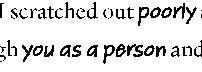
He’d drawn the outline of ve li le stars and lled in one and a half. I n


That movie was so bad I think it actually reflects poorly on
I could’ve responded verbally, I guess. e movie was over, and so was the class period. Instead, I clicked my favorite red pen, which I always have on me, and responded the best way I know how: in writing.

I lled in one more star and the rest of the half. I didn’t write my own sentence, I just wrote over his. I added t in front of so , and then a period a er. I s and replaced it we , then marked throug and added in C in C in Fir .
He laughed then.
I think it was the rst time he’d ever laughed in my presence without it being at my expense.
And he just kept going. Not with the laughing, but with the
notes. ich brings us to now. Today. We’re supposed to be in a group discussion about this week’s reading, which was our rst foray into actual American Literature, and our rst ual A actual use of the anthology.
We’d read excerpts from the Federalist Papers—essays on government wri en by Alexander Hamilton, John Jay, and James Madison. Or, some of us did. e two college girls in our fourperson discussion group are clearly bullshi ing. I don’t even remember if the one who is currently talking started on topic, or if m the beginning.
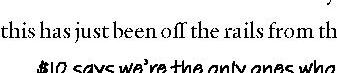
$10 says 10
ays we’re the only ones who read.
A yellow sticky note, blue ink. Stuck to the side of the table right in front of my open book. Presumably so no one else sees. I laugh. Damn him.
My hand ies to my face, trying to pass it o as a cough or a sneeze or something. I can’t be laughing. e girl in front of me might think I’m laughing at her, and I’d rather die than make someone feel like that.
“Sorry.” I fake cough again. “Excuse me.”
Her face, which had turned suspicious, so ens, and she keeps talking. I narrow my eyes and shoot Hayes a look that I hope screams Go to hell. He grins, of course.
Get
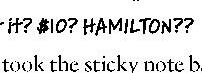
He took the sticky note back just to write that. at was risky. I’ve never really passed notes in class before. Texted, sure. But
actually physically passing a sticky note back and forth is di erent. Not that Professor Lowry is paying the slightest bit of a ention. I dare to write back to him in red ink.
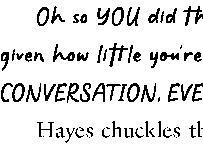

VER.
s then. He doesn’t even try to pass it o as a cough or anything. Both the girls across from us smile at him. Of course he timed his chortle exactly right to seem as if he was laughing at a joke they just made.
Well, if defense isn’t working, I guess it’s time to play some o ense. I reach over him to grab another sticky note from the pad, and I furiously scrawl with my trusty red pen. e words even look angry.
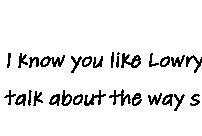
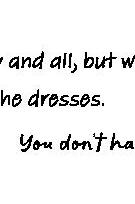
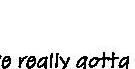
Y d H ilt
ve a l in c m , actu ly. L d. Cocky. d. Cock
we really gotta ally ve e ugh i .
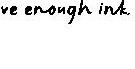
Wri en on a handout of Nature by Ralph Waldo Emerson
“
Whyareyouerasingeverything?”Momasks,leaningagainst the kitchen counter. She’s gazing down at me with that mom eyebrow, the overly slanted one that suggests I’m doing something wrong. “At some point, shouldn’t you just start over?”
I look so much like her. Round face, tiny nose, eyes that are arguably too big. Brown hair that’s usually kept in a ponytail because it’s otherwise unmanageable. Sometimes it feels like I’m staring into my future.
She does this. Talks to me even when I have my earbuds in. ere’s, like, one rule when people have earbuds in. Don’t talk to them. And yet.
Withadeep,wearysighworthyofaVictoriangirlapproaching eighteen without a marriage proposal, I peer down at my planner
page, which has been decimated by angry eraser lines. e shavings form a sad pile in the corner.
“ is is a planner. One can’t start over in a planner.” I shove ner. it away from me like I hate it, even though I would sleep with it clutched to my chest at night if possible. Planning prevents chaos, which, ideally, prevents su ering. My September spread should be exciting, but I have nothing exciting to ll it with. Well, I have homework and projects from my other classes to ll it with, but her c nothing from the class I actually give a shit about.
Mom nods, not because she understands my neuroses, but because she doesn’t have the time to listen to me elaborate on them, and I don’t really have the words to explain them anyway. We tried both when I was growing up, and the nodding just seems to work best.
“So what’s the problem, then?” She leans back, se les in. Her hair’s darker than mine; that’s the only noticeable di erence. Her bangs are ge ing too long, the only part of her near-black hair turning gray. She’s constantly sweeping them o the tops of her glasses.
I sigh again, because this is another thing I don’t have the words for. I try anyway.
“Have you ever wanted something really bad, and when you get it, it’s...not great?” at’s so not even what I’m trying to say, but it’s all I’ve got.
“Like how when you’re a kid, all you want is to grow up, but thenwhenyougrowup,lifeisjustalotofworkandbillsandtaxes?”
My body sort of de ates, my crisscrossed legs sliding out from under me on the dining room chair and slipping toward the oor. Once more than half of me is under the dining room table, mom sits down across from me.
“ at do you do?” I ask. “ en life is all work and bills and taxes and not what you wanted when you were a kid?”
Mom smiles—or maybe it’s more of a grimace.
“You live anyway.” She extends a hand and pulls me back toward the light. “I wasn’t even being that serious, Nova. y are you in such a down mood?”
“ isclass,”Imu er, ippingthroughmyplanneragain.“I’ve been looking forward to it, and to learning from this professor, and...”
“It’s harder than you thought it would be?” She assumes, probably because of how o en I cry. But no.
“No,” I say, rmly, because that’s de nitely not it. “Actually, it’s just bad? Like...the professor is barely teaching it? Like she quiet quit, or something?”
“Oh.” Mom leans back a bit, so ens some. Her glasses fall just the slightest bit down her tiny nose. at’s why I wear contacts. Our noses aren’t sturdy enough for glasses. “Well, there will be other classes. Other professors. Not everyone is good at their job, I’m afraid.”
“ at’s true, I guess.” It’s just so hard to accept this. I’ve been thinking about college applications and scholarships and majors and student loans since I was twelve.
“Youknow,honey...”Momsmilesinawaythat’salmostawince. I recognize that as the breaking-bad-news smile. It’s supposed to be gentle,butthesightofitsetsmyteethonedge.“Youscareme.”
I chuckle, taken aback. She covers my hands with hers over my planner.
“No,Imeanit.”Shesqueezesmywrist.“Somanypeoplethink your brothers were di cult to raise. And they were, they are, but I could handle the cuts and bruises from football and falling o of skateboards. I can handle the ghts and the pranks. But it’s always been harder to help you, because everything you have going on is in that brain of yours, and it’s way beyond my expertise.”
I get what she’s saying. at no one can help me because I makeupallofmyownproblems.IinternalizethemsomuchthatI end up being all of my own problems. ing a
“You know how your brothers always talk about how their teachers would compare them to you? How they were always Nova’s li le brothers?”
I nod. at’s what I wanted for them. at’s half of why I’m workingsohard,sotheyhavefootstepstofollowiniftheywantto. So they have some of the head start I didn’t.
“And they hate it, I know,” I mumble.
“ eydo,butthat’snotthepoint.”Momreachesuptosqueeze my shoulder. “I want you to be more like them, for once.”
“ at?” I sco , because I can literally hear them slamming shit around in their room right now. It sounds like one of them is going to y through the wall behind me at any moment.
“You work so hard, and you push yourself so far. I know that you’re worried about how we’re going to pay for college, and I know that’s why you keep reaching for every win you can get. But let us worry about that, okay? Just keep being a kid for as long as you can. We’ll handle the rest.”
She smiles hopefully, and I nod. I won’t promise anything, becauseIdon’tthinkIcan.Ididn’tknowsherealizedhowworried I was about the money. I didn’t know they knew that’s why I am the way I am.
Parents, huh. I guess they see more than I thought.
Mom stands up, takes one step away. She opens a tin of cat food, and Raven comes running. Her tiny jet-black body is a blur as she speeds to her li le corner by the fridge. She was in my closet si ing on top of a pile of dirty laundry half an hour ago, but her hearing is HIGHLY a uned to these pop tops.
“Oh,” Mom says, once Raven’s slurping up her gross chunks. “Can you help Gage with his homework? I have to take Dash to football practice, and you know ge ing him to do anything is like pulling teeth. He’s not like you...”
He’s not as smart as you, she means. She won’t say it, but that’s whatshemeans.It’snotthetruth.Hejustdoesn’tcareasmuchasI do. No one cares as much as I do.
“Sure, Mom,” I say, even though I do this every night.
“ anks.” She smiles, and then both boys crash into the kitchenwithsuchforce,it’sawonderthewallsdon’tshake.Notfor the rst time, I consider why my parents didn’t try to space us out
further in age. We should not all be allowed to be in high school at the same time. ey should not be allowed to be in high school at ey the same time. It’s just not safe.
Dash and Mom leave, which lowers the volume signi cantly. Gage throws his backpack down on the dining room table on top ofmyspreadofschoolsupplies,andmybloodpressureratchetsup.
“Mom says you have to help me with my homework.” He sits and crosses his arms.
“I’m aware,” I say, because again, we do this almost every night.
“We could just tell her we did it, and I could go take a nap.” He h leans in, steepling his ngers on the table. is is the bargaining stage. Brown hair falls over his face, and he makes no e ort to push it back.
“No,” I say, crossing my own arms now. It’s like he doesn’t even know who he’s talking to.
“It was worth a try.” He shrugs. “Should’ve known Principal Supernova wouldn’t lie to Mom.”
His blue eyes roll, just like Dad’s. My green ones do the same, just like Mom’s.
“ at’s Professor Supernova to you, and I would sor S too lie to Mom, just not about homework. Now what do you need help with?”
He rolls his eyes yet again and unzips his backpack.
As he starts to unpack, some of his crumpled papers get mixed with my pristine ones. Trying to sort them out, he picks up Lowry’s syllabus by accident.
“College seems like it sucks,” he mu ers. “ is looks so... boring.”
My instinct is to ght that comment. But he’s actually right, and I hate it. My class does indeed suck.
But it doesn’t have to, I realize, suddenly.
Maybe I can make it be er. ey don’t call me Professor Supernova for nothing. k “Um. Hello?”
I hear Hayes’s voice through the white noise playing on my AirPods. e world feels so much be er with the sound dampened a li le. I take them out and put them primly in their case.
“ at’s with all this?” he asks, continuing to talk. To me.
I really can’t believe the audacity. Except this is Hayes, and he’s made entirely of audacity.
“Oh, very sorry,” I mumble, not sorry at all. I have papers strewn all over my desk and half of his, and I guess that’s sort of rude.
He sits down next to me, pulling his arms close to his chest to avoid touching any of my stu . Probably because he thinks I’ll go feral if a single sheet of paper hits the oor. at’s not completely inaccurate.
“You don’t have to apologize, I’m just...surprised.” His face wrinkles up as his eyes si through the pages in front of him. “I didn’t think you were going to be like this.”
“Like what?” I press, annoyed.
“ is. It’s all very you—the papers everywhere, the highlighting, the intense prep literally no one asked for—but I didn’t think you’d do it for a class you hated.”
I’m about to interrupt and tell him I don’t hate this class, and n’t h I never will because I’m ver w hell-bent on loving it. It doesn’t ma er if ent o Lowry is bad at her job. is is a class for English majors, and it is my rst step toward becoming one. I LOVE IT.
“But I’m glad actually.” He speaks before I can say anything. “It’snicetoseeyoupu ingyourusualamountofterrifying,amazing, single-minded e ort in. I was ge ing kind of sad watching you phone it in.”
Suddenly, I need more space.
He notices all the work I do at school? I can’t let him...perceive m...p me like that. How could he notice? He’s never given any indication he knows a thing about me, like, as a person. How could he...?
“Even though Lowry is completely awful, you keep working. And I respect that.”
e rest of the class, which loiters right outside the door until a minute before class starts, begins heading to their seats. I don’t know why they bother. She hasn’t started class on time once yet. Might as well loiter until ten past, guys.
“Come on.” I laugh, a bi er, broken chuckle that sounds very fake, even to my own ears. “She’s... ne. e class is... ne.”
Ten minutes later, Dr. Lowry steps into the room and closes the door behind her. Without a word in greeting, she pulls down
the projector screen and pulls up yet another movie that will probably take a week’s worth of class time to watch.
As she stomps on her heels toward the other side of the room to turn o the lights, I realize that the prep I spent all weekend on—designed to support seminar work—is not going to get used. I sadly gather it all up. Without being asked, Hayes helps, delicately stacking papers and handing them over to me.
In the windowless room, the only light comes from the projector. I know it’s an exercise in futility, but I pull out my notebook and begin taking notes anyway, because I have to do something.ing Around me, everyone else is relaxing: se ling back in their seats, folding hoodies into pillows, sneaking phones under tables.
“Are you sure this class isn’t a huge disappointment?” Hayes whispers, speaking too low and too close.
“No N ,” I respond, under my breath.
I’m not sure if I meant, No, this isn’t a problem, or No, I’m not sure.
Nova: are y’all coming tonight?
Mom: no, the boys are grounded, but you have fun!
Nova: sorry, forgot about that
Nova: though I should’ve just assumed at least one of them was grounded
“
Did you bring quarters?” Esha asks as she holds open the door to our neighborhood’s dinky li le arcade. e smell in here is familiar, almost nostalgic, in a not-so-great way. Like stale co on candy. It somehow even smells sticky. I used to love this place. It was our middle school hangout. And when I got my license last year, I’d bring my brothers here because it was close enough that I didn’t have to drive on the highway. “No, I didn’t bring quarters,” I sco . “I barely ever have cash, let alone change. ey have a machine for that!” e place is packed. As soon as I step through the doorway, I have to pivot to avoid colliding with a kid in motion. Another kid is chasing him.
“ oa,” Esha says, her head on a slow swivel gazing around theroom. ere’s alady inthecornerblowingupballoons,andthe squeakasshemakesakidahatsetsmyteethonedge.Musicblares from speakers on either side of the door, and I feel the crunch of dropped popcorn under my shoes.
“I know,” I echo. “I’ve never seen this place like this.”
It’s kind of heartwarming, actually. e community showing up like this. e arcade is donating a portion of tonight’s proceeds to the animal shelter, and Esha would’ve been devastated if we’d walked into a ghost town. e arcade’s owner, Mr. Adams, is even le ing people pay ve bucks to throw a pie at his face.
“I tried to get the shelter to let me bring some of the cats, but I guess I can see why they shut that down,” Esha says.
“Yeah, that’s just what this circus needs.” We clear out of the doorway so other people can step through, and we kind of end up shoved in the back near a few abandoned tables and the change machine.
“So, what do you want to do rst?” Esha asks, li ing up on her tiptoes to see over the sprawling crowd.
“ atever I can do to support the cause without actually playing games. Can I just buy a T-shirt, or something?” I pull a chair awayfromoneofthetablesandslideitupagainstawall.I’mtrying to create a nice, calm li le nook for myself back here. It’s not very e ective.
“No,” Esha says. “But that would’ve been a great idea.” She









—Anna Sortino, award-winning author of Give Me a Sign ”Joined
—Lillie


Pre-order

Pre-order


award-winning