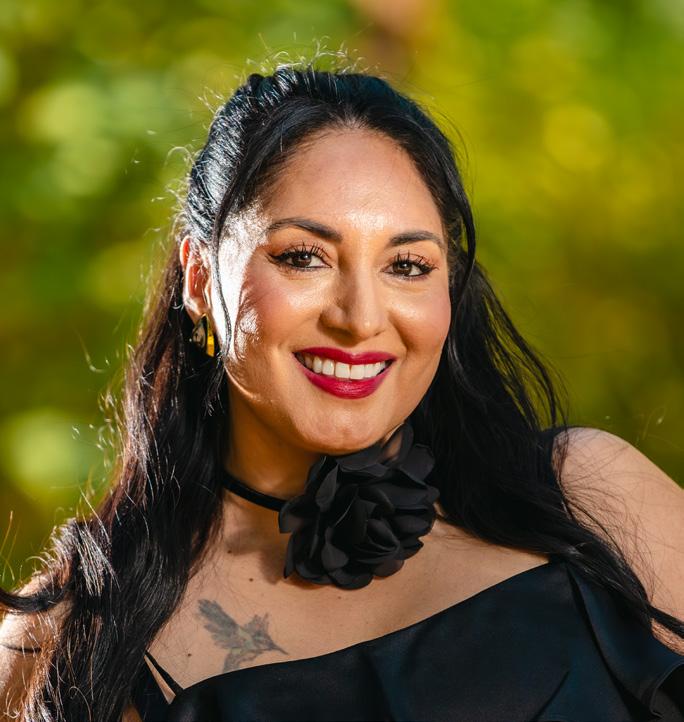
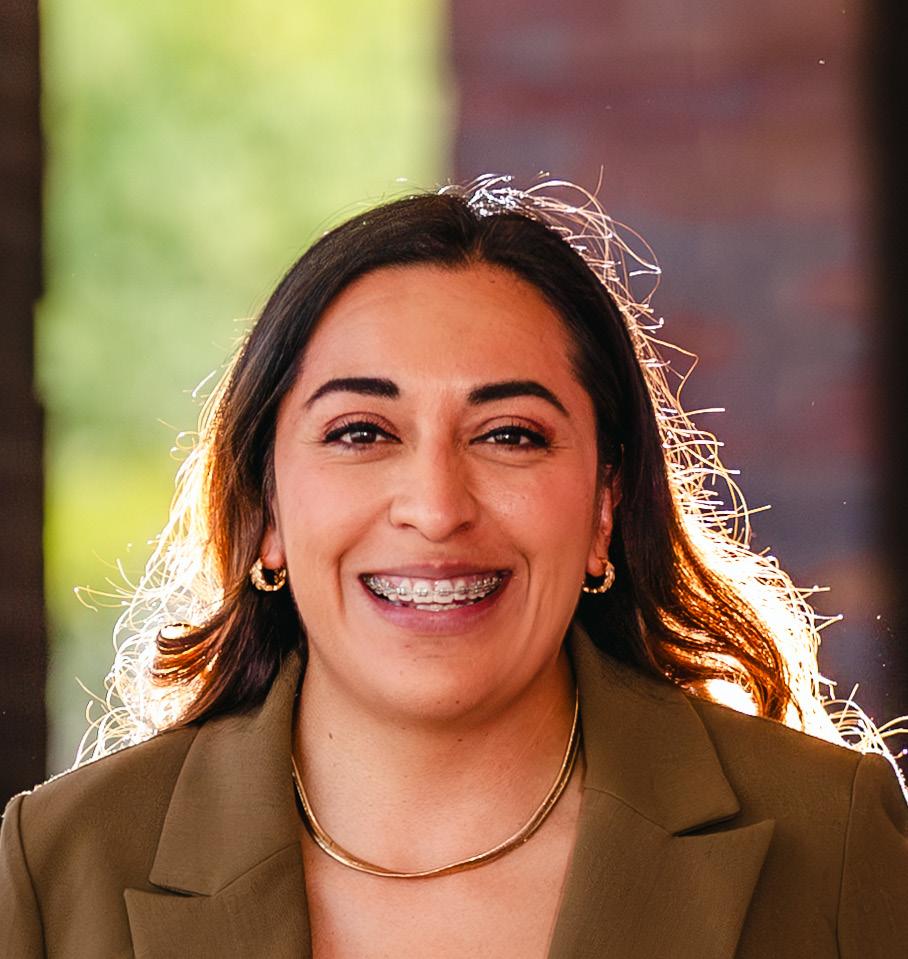
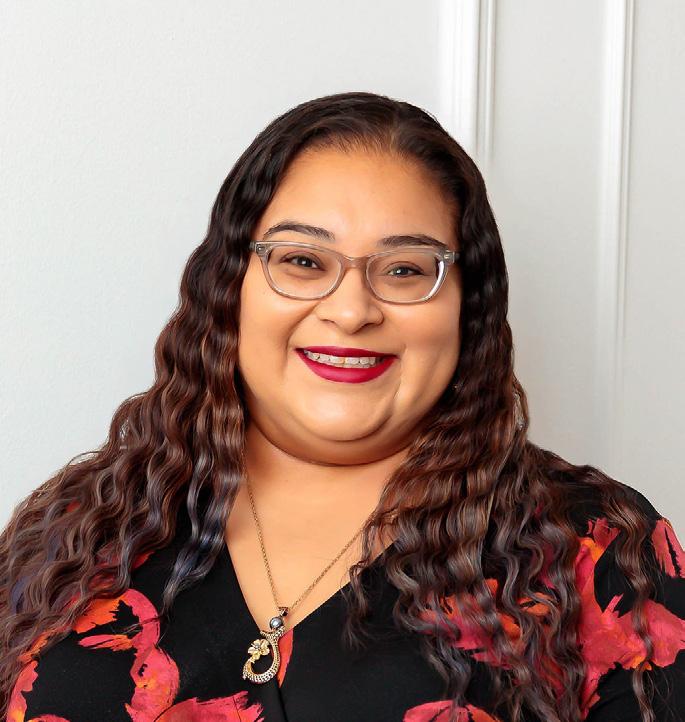
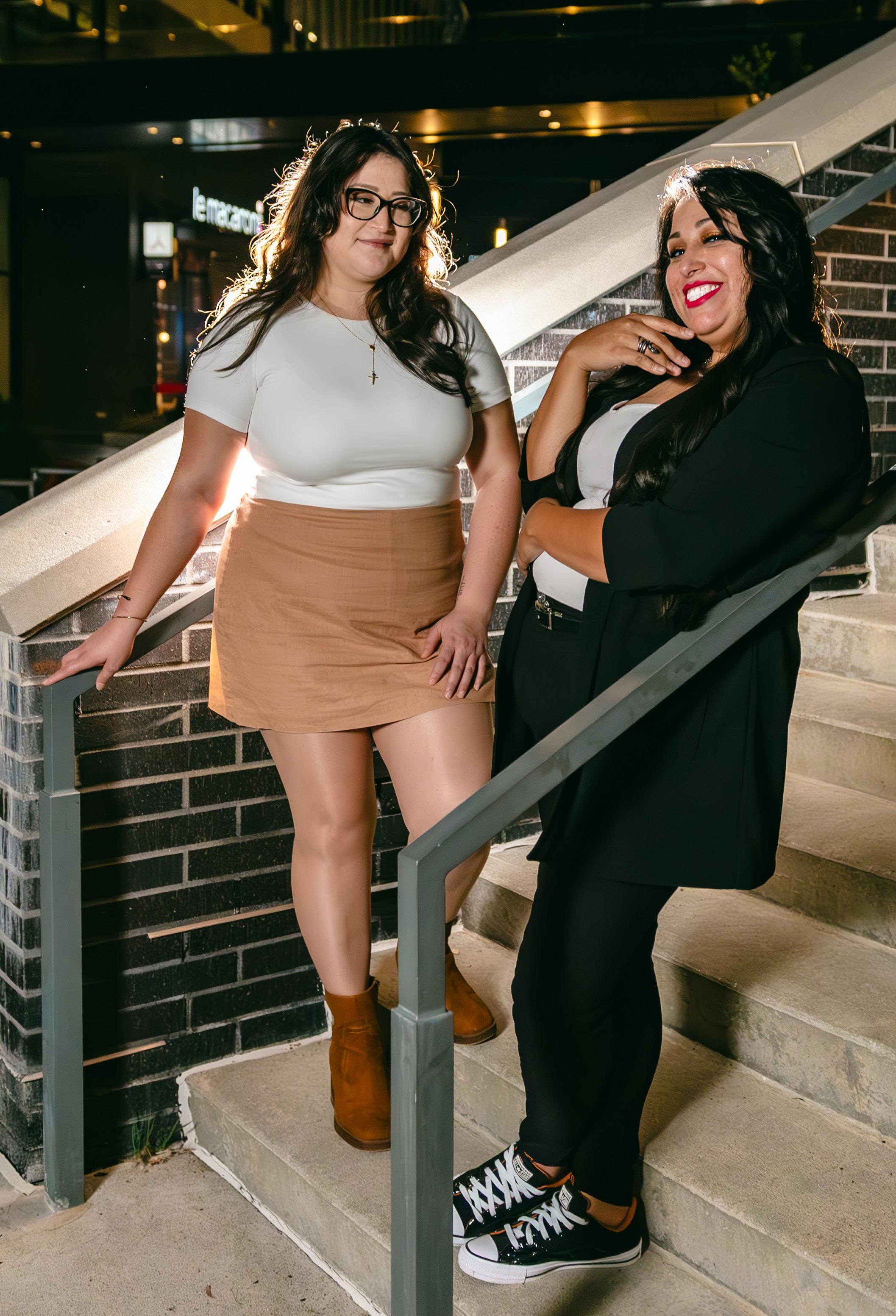
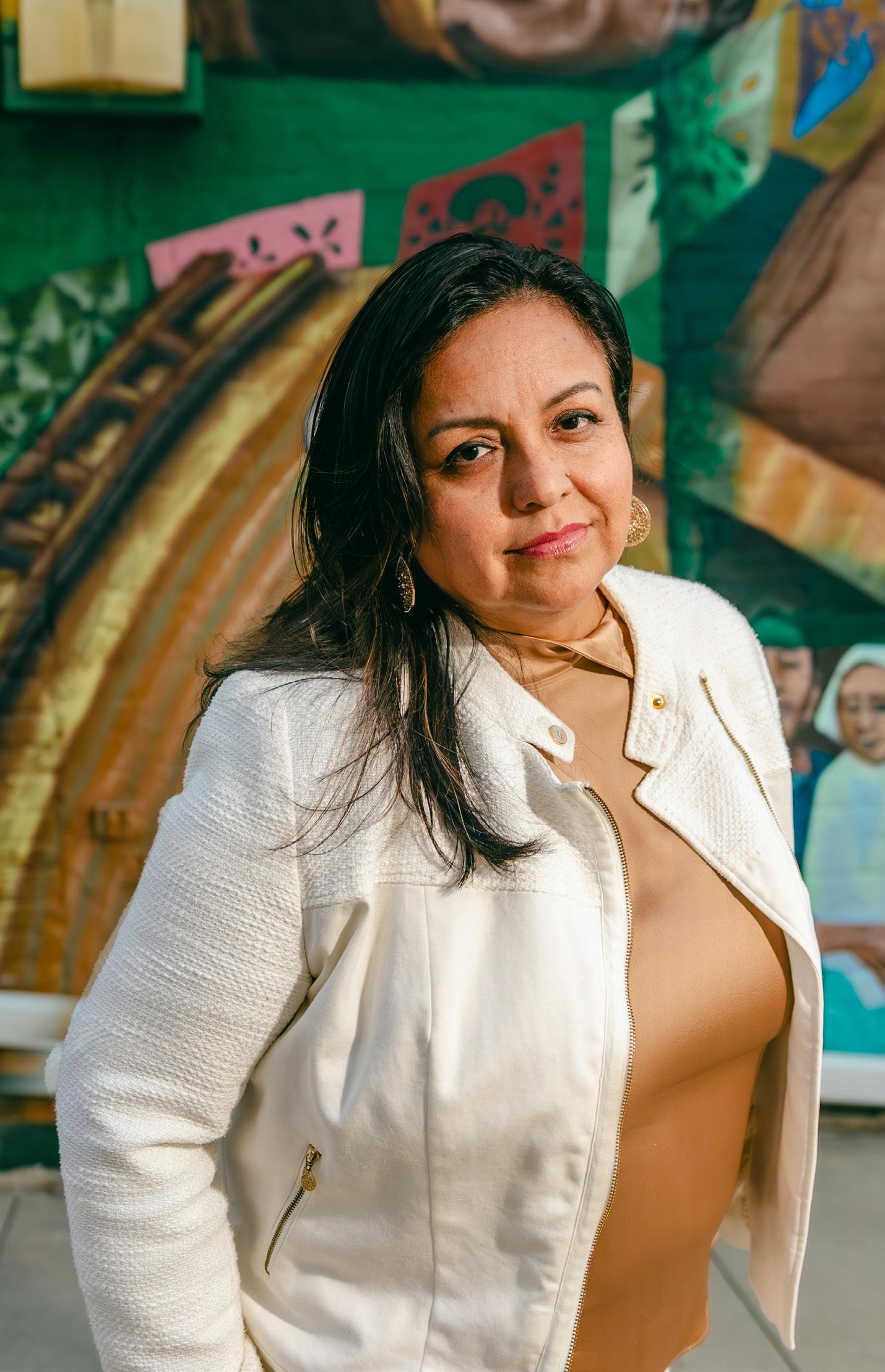
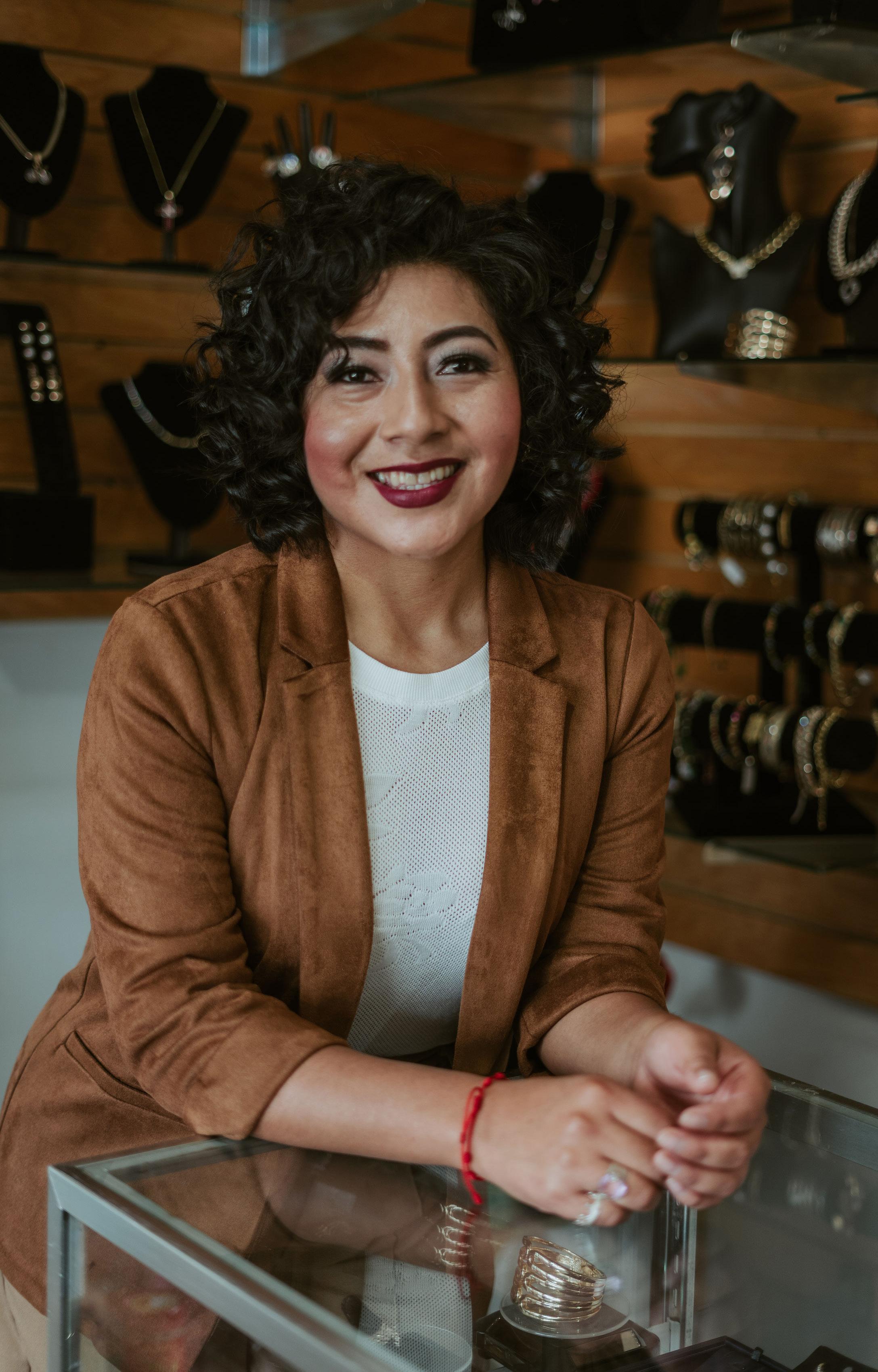
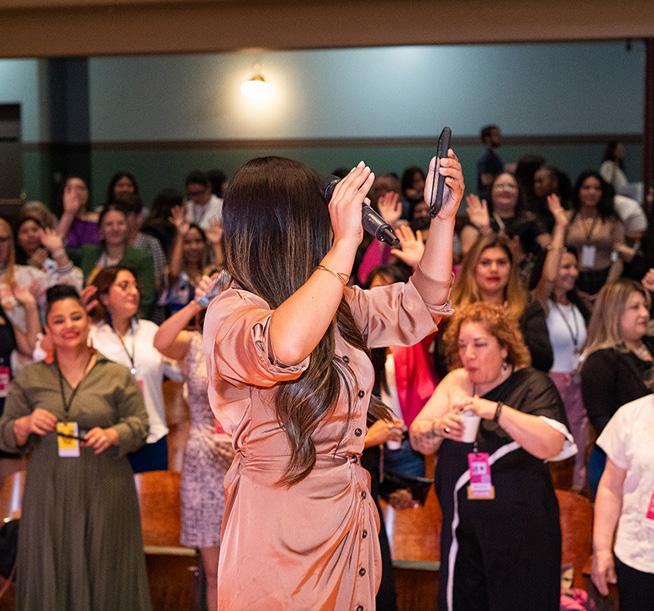
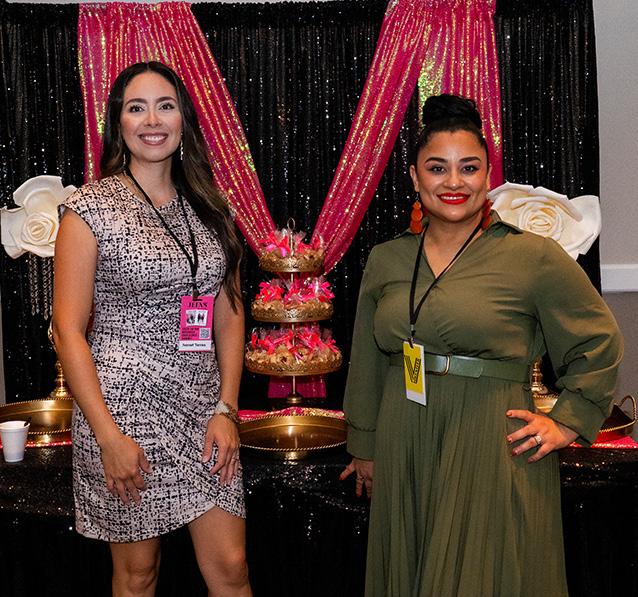
With record growth in entries nationwide, these wins are a signal that Latino Media is essential, and that Latina entrepreneurs deserve coverage that’s as bold as the work they’re doing.
IF YOU’RE BUILDING SOMETHING, DREAMING BIGGER, OR LEADING IN YOUR COMMUNITY, THIS ISSUE IS FOR YOU.
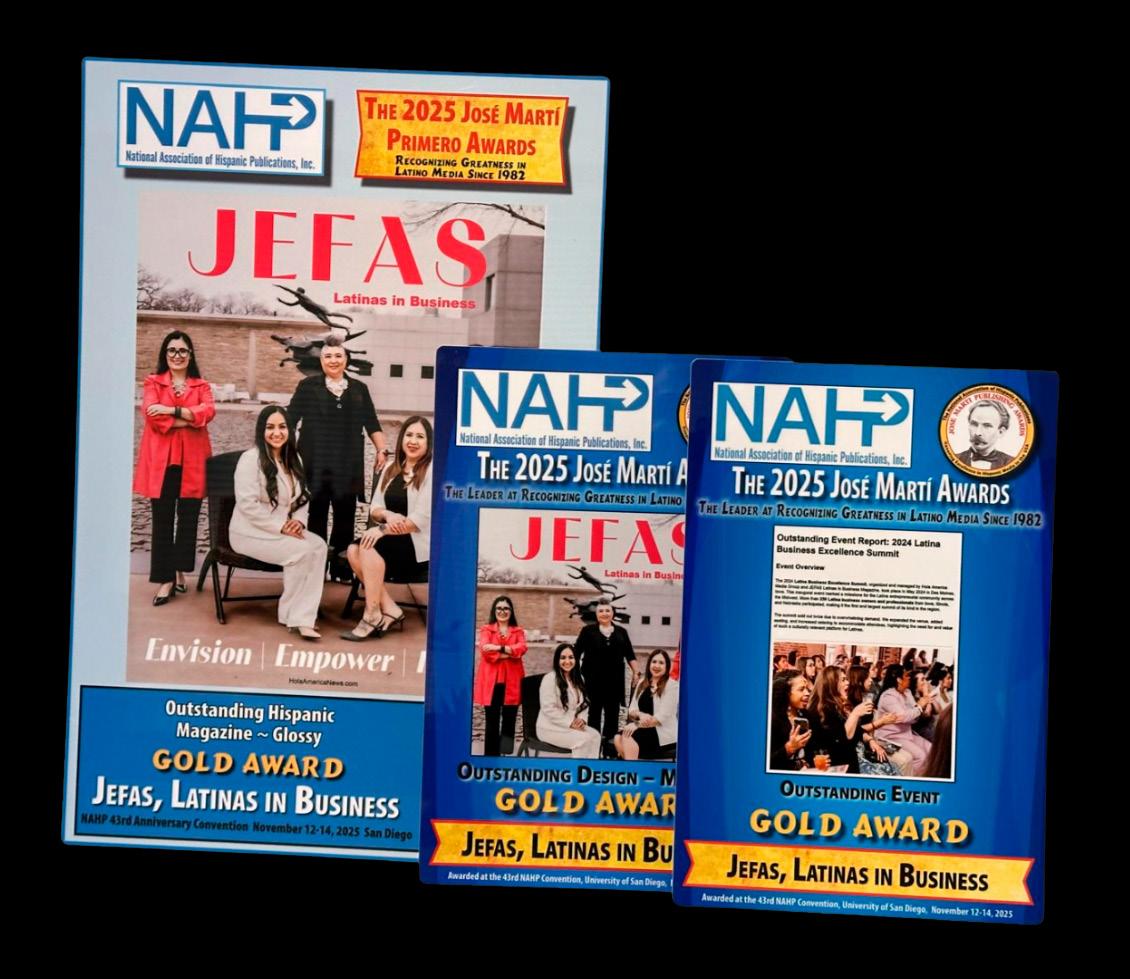
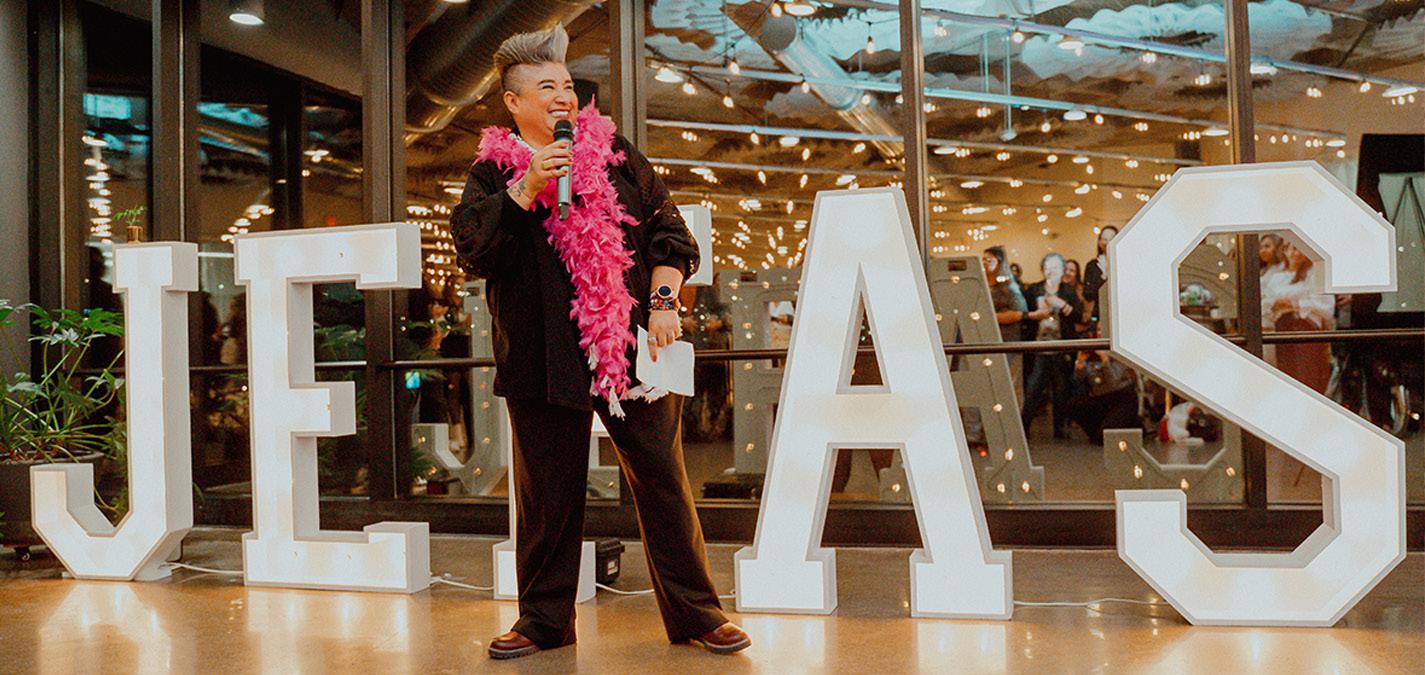
JEFAS Magazine just won three gold José Martí Awards (NAHP), including magazine of the year, and we’re bringing that same energy to our newest issue. READ
JEFAS Magazine isn’t for everyone— and that is the point!
It’s for those who understand the influence, growth, and economic power of Latinas building businesses today. We are intentionally niche. We serve brands, leaders, and organizations that recognize the power of the fastestgrowing entrepreneurial demographic in the United States—Latinas—and want to engage with them in a meaningful, authentic way.
Because JEFAS isn’t just a magazine. JEFAS is a community. JEFAS is a movement.
-ERIKA MACIAS President, Publisher and Founder JEFAS Latinas in Business Magazine
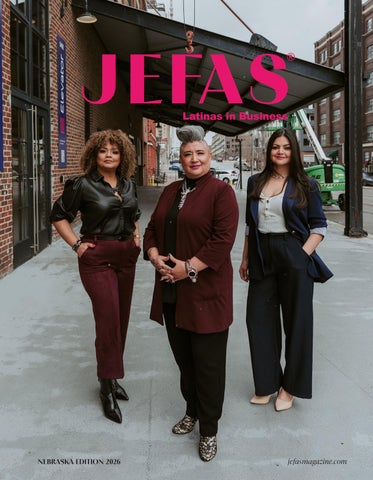
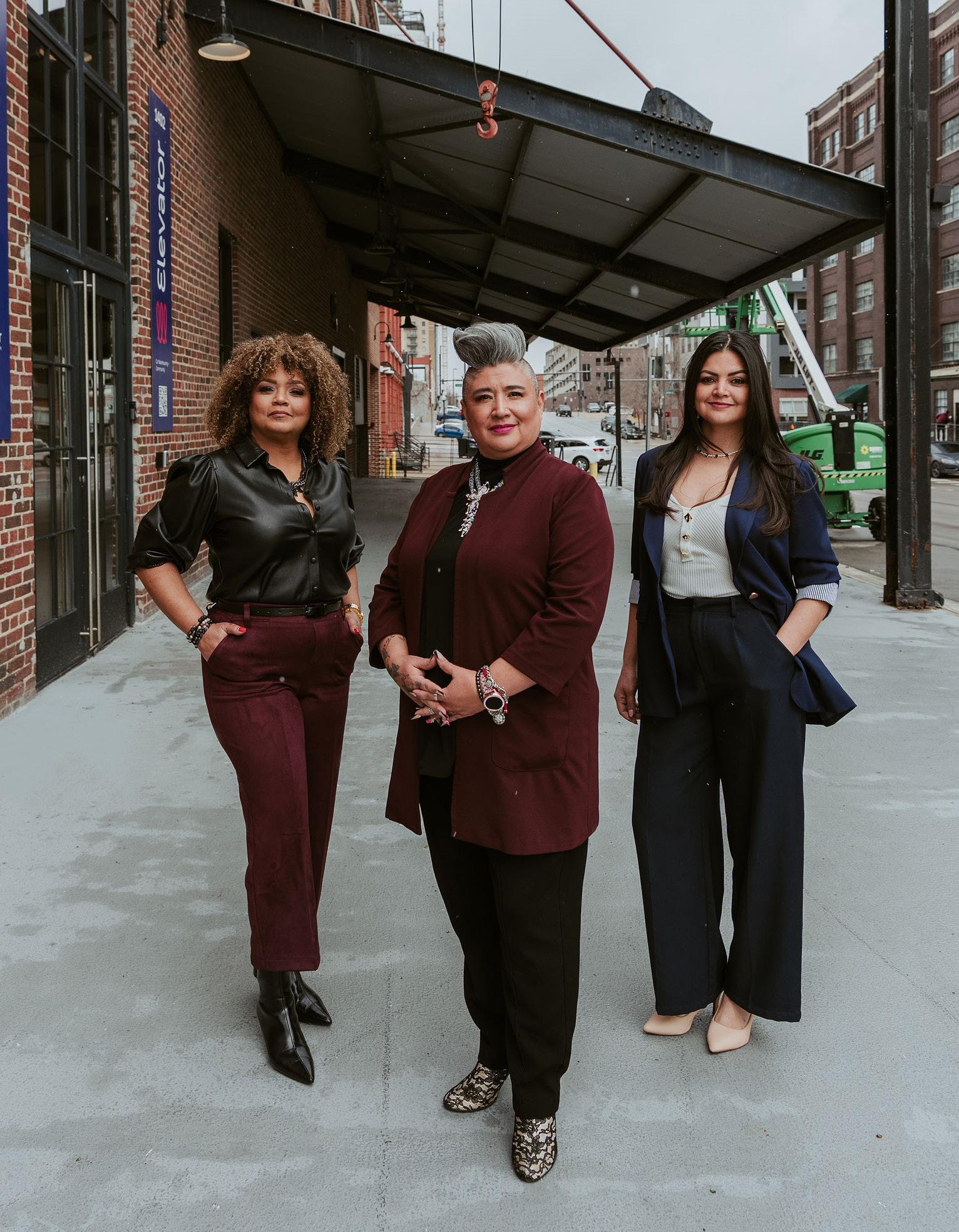
JOIN US IN CELEBRATING LATINA-OWNED BUSINESSES IN NEBRASKA
We invite you to celebrate and support the vibrant and growing community of Latina-owned businesses in Nebraska through the launch of the first Nebraska edition of JEFAS® Latinas in Business Magazine—a national, award-winning publication dedicated to elevating Latina entrepreneurs across the state.
Our Mission
JEFAS® Latinas in Business Magazine exists to empower Latina entrepreneurs by expanding access to opportunity, representation, and resources. Through storytelling, visibility, and connection, we aim to help Latina business owners reach their full potential while inspiring future generations of women leaders to pursue entrepreneurship with confidence.
About the Magazine
Produced by Hola America Media Group, JEFAS® Latinas in Business Magazine showcases profiles of Latina-owned businesses in Nebraska, expert insights from industry leaders, and practical resources designed to support business growth. First launched in Iowa in 2024, JEFAS® celebrates fearless Latinas who are breaking barriers, building thriving businesses, and leading with purpose. Each edition centers community, excellence, and empowerment—amplifying voices that deserve to be seen and heard.
An Award-Winning Publication
JEFAS® Latinas in Business Magazine is a nationally recognized publication, earning three Gold (First Place) José Martí Awards at the National Association of Hispanic Publications’ 43rd Annual Convention in San Diego in November 2025. These honors—among the most prestigious in Latino media—recognize excellence in journalism, design, and community impact.
Awards include:
• Outstanding Hispanic Magazine
• Outstanding Magazine Design
• Outstanding Event for the 2024 Latina Business Excellence Summit
Together, we are proud to bring this award-winning JEFAS® platform to Nebraska—celebrating Latina leadership, entrepreneurship, and the powerful impact these businesses have on our communities.
Hola America Media Group publishes JEFAS Latinas in Business
True leaders never stop learning. Instead, they continually discover, create, disrupt and transform their workplaces, businesses and industries.
Congratulations on your launch, JEFAS! We can’t wait to see what you and the Latina entrepreneurs you celebrate learn – and make happen next.
And if you’ve ever dreamed of earning your advanced degree, we’d love to help you achieve your next goal.
learn more at bellevue.edu
LEA TODAS ESTAS HISTORIAS
EN ESPA Ñ OL AQU Í :
Scan QR code to read more
10-25 26-35
10 Susi Franco, Omaha
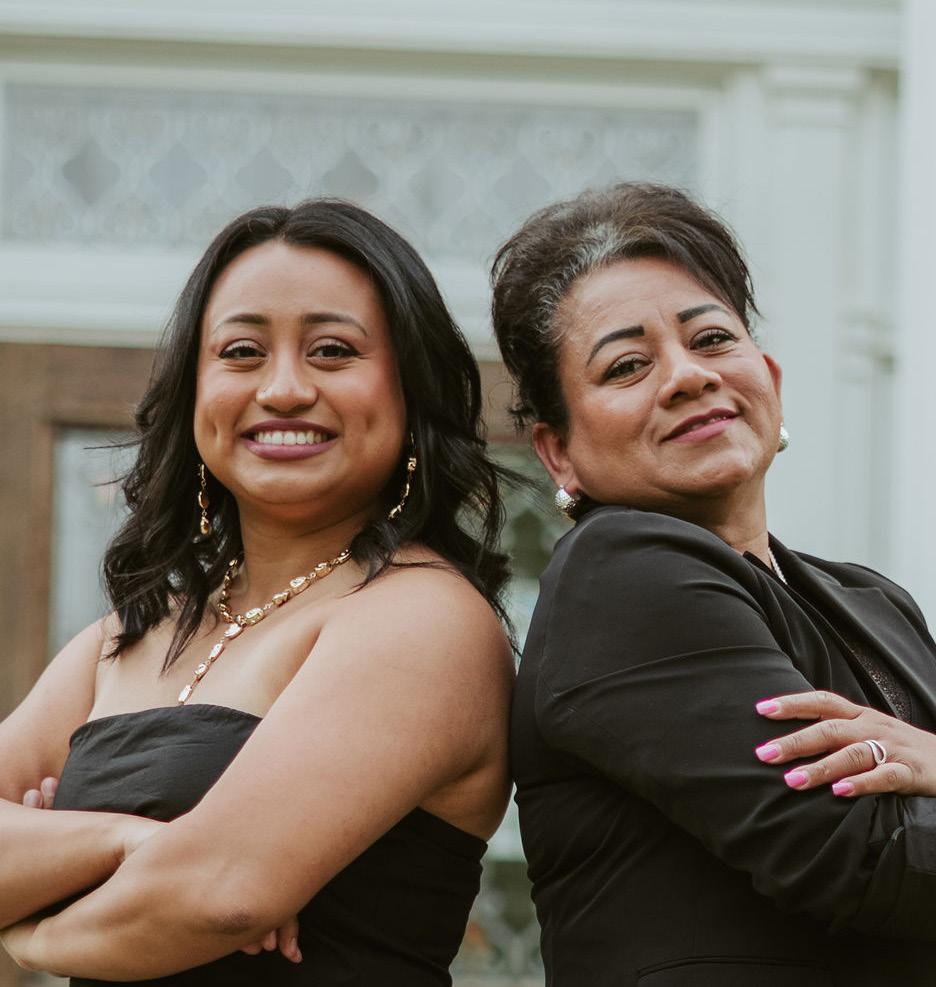
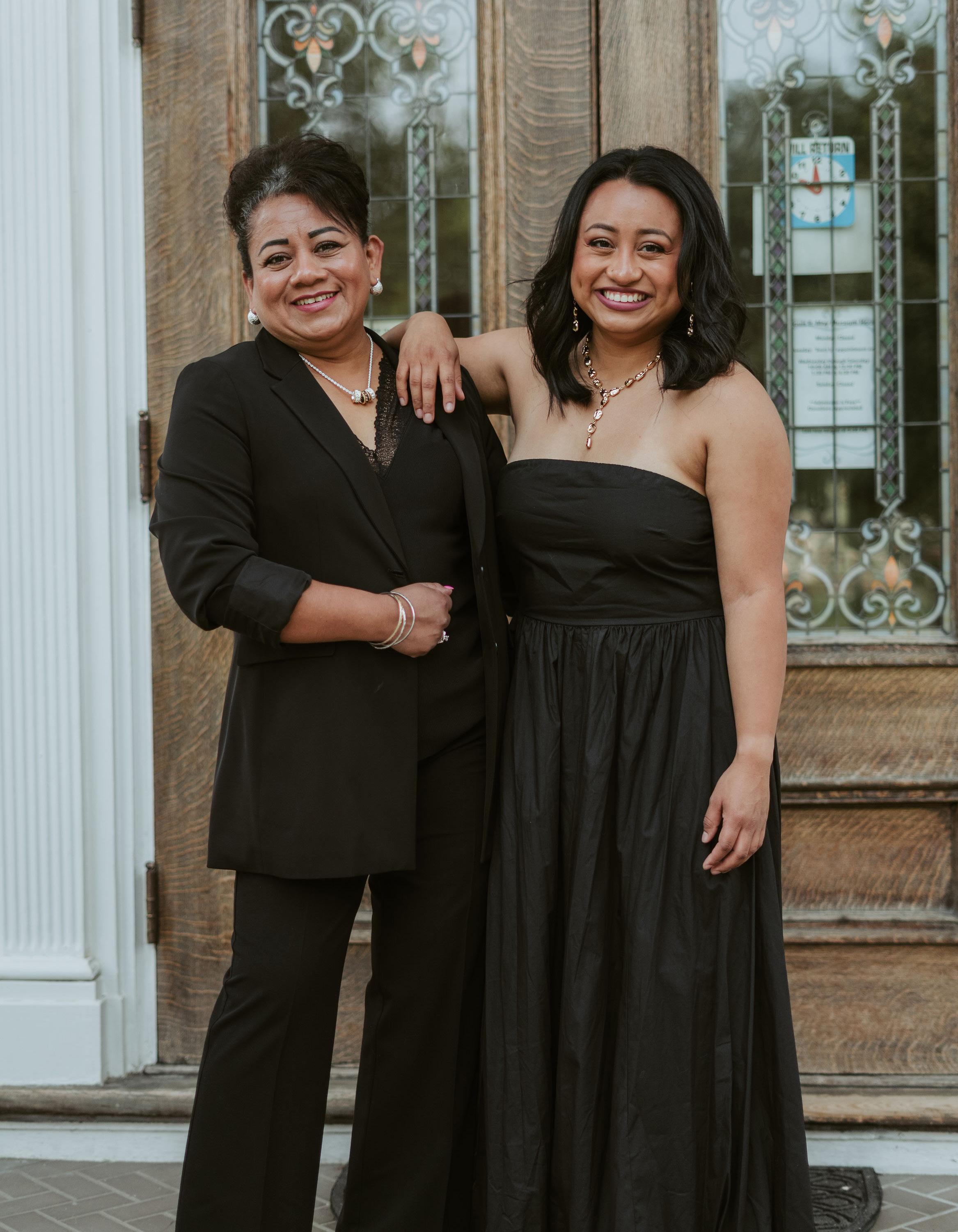
14 Erika Delasancha and Daughter Maria, Fremont
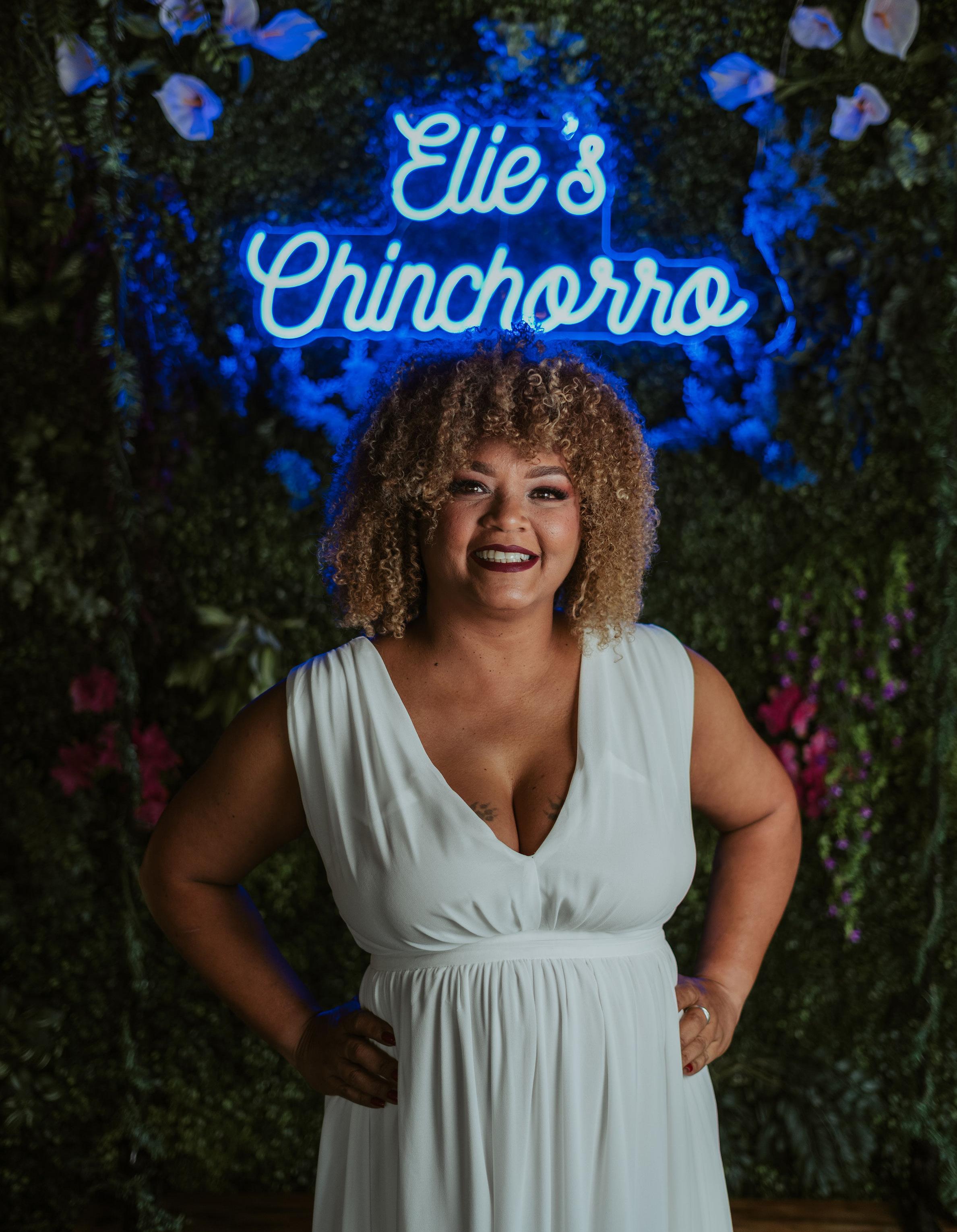
18 Elie Berchal, Omaha
22 Adriana Cisneros Basulto, Omaha
24 Building a Brand That Connects and Lasts
26 Liza Mendoza-House, Lincoln
30 Karina Struble, Omaha
34 Yoshie Itami, Omaha
FROM WAR ZONES TO EXECUTIVE PORTRAITS: A PHOTOGRAPHER’S JOURNEY
SUSI FRANCO
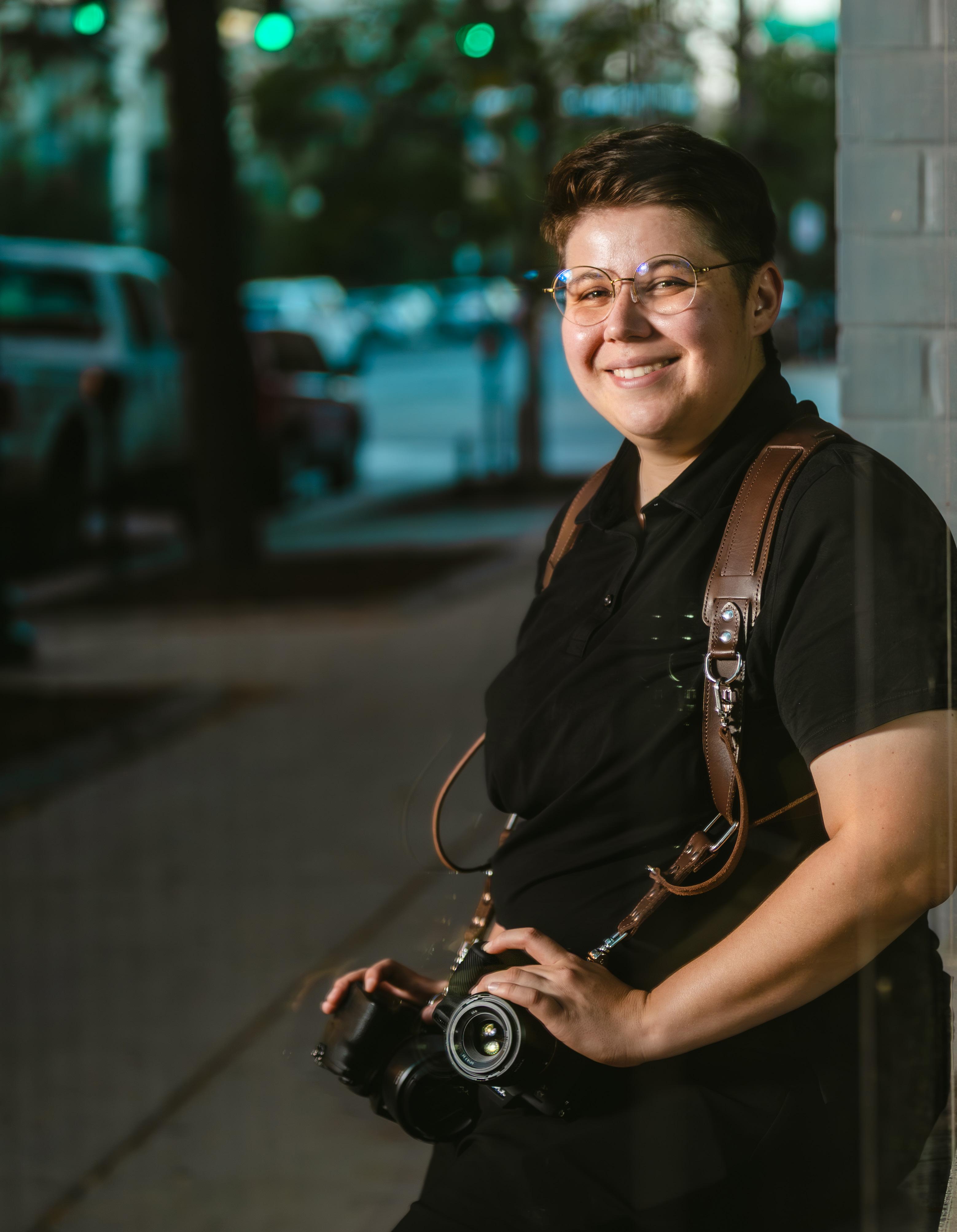
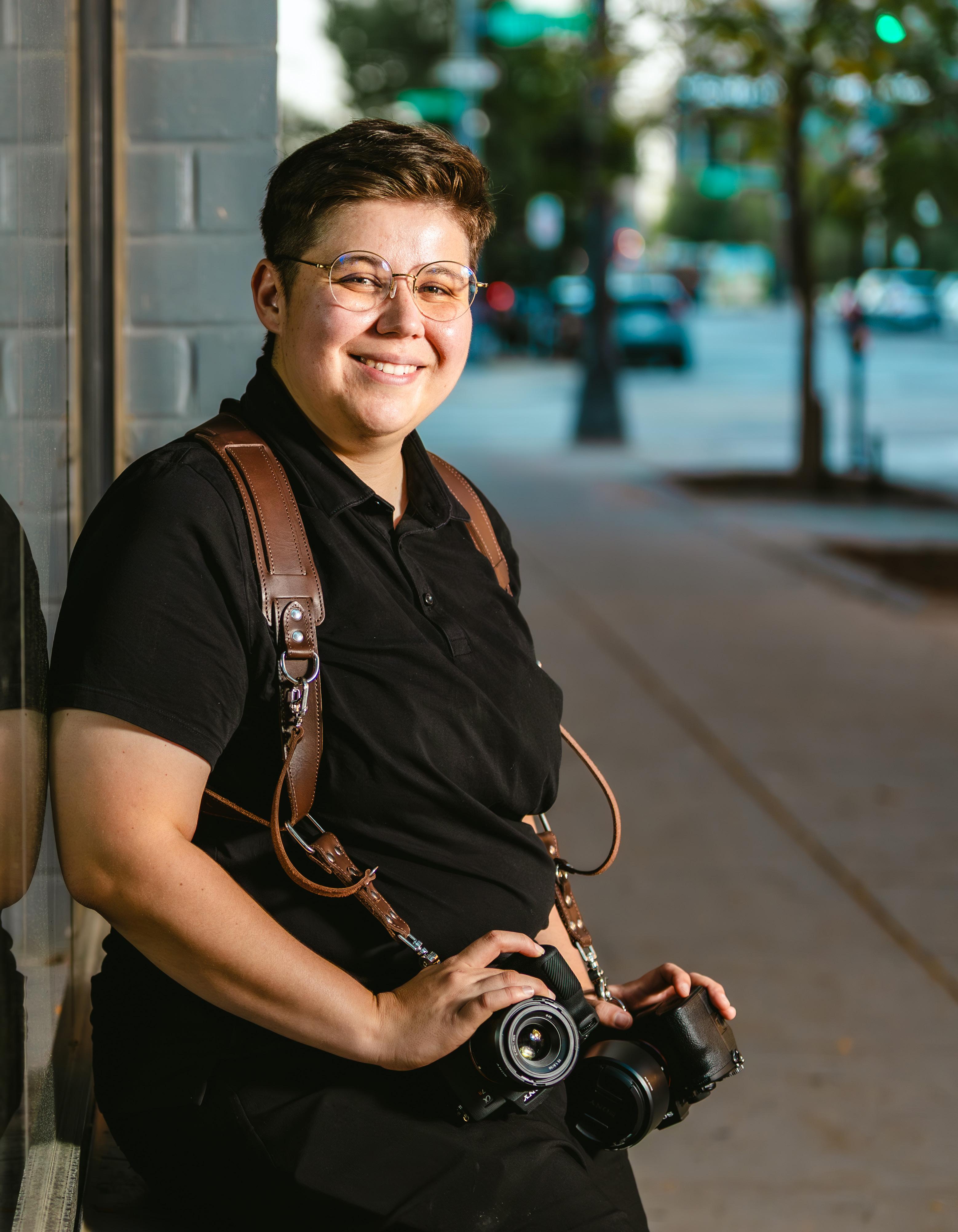
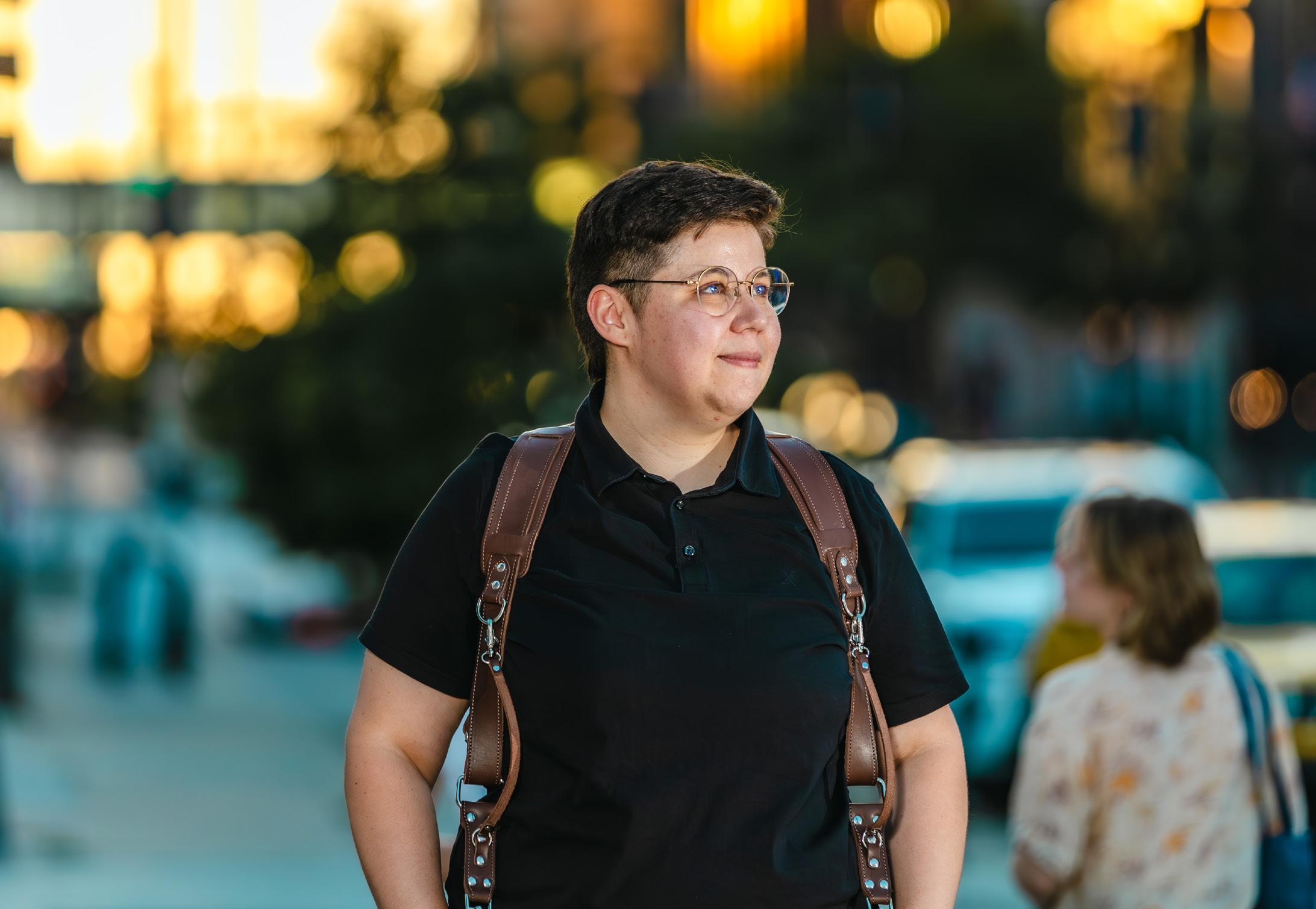
By handing cameras to former child soldiers in Colombian reintegration camps, photographer Susi Franco didn’t just teach technical skills— she gave participants the power to rewrite their own narratives. Franco channels that same empowerment philosophy into helping Latino business owners compete in an increasingly digital marketplace. Their video and photography marketing studio, Chispa Creative, shows how immigrant perspectives can identify market gaps others miss, and that social-impact experience translates directly into business success.
Franco’s perspective developed as their family moved from Colombia to the United States to lead churches across Arkansas, Alabama, and Massachusetts. In college, Franco initially pursued classical music but was intrigued by communications students carrying cameras and interviewing classmates. “I switched majors, and after one photography and a videography class, I was completely in love with it.” That academic pivot led to something deeper.
Looking back, Franco realized their creative pull had been present since childhood. She remembers
climbing among huge boulders in Medellín at age seven, envisioning whole worlds where insects lived a larger-than-life existence as astronauts and inventors exploring the galaxy. Those hours spent on the rocks became the foundation for their career as a photographer who narrates life through a camera. “I’ve always been drawn to stories,” says Franco. Photography became the perfect medium to capture them.
That passion led Franco back to their native country to document the impact of the 2016 peace accord between the Revolutionary Armed Forces of Colombia (FARC) and the
government. They worked within encampments on the outskirts of Medellín, where much of the violence had occurred. Franco’s goal was to start a dialogue between Christian churches in positions of power and youth who had fought in the war and ended up in reintegration camps.
“I went back with 10 cameras and taught something called Photovoice,” says Franco, describing the photography method used to train participants to document images that collectively told the story of their reality. Franco taught them how lighting, framing, angle, lens choice, and composition could illustrate how war had shaped their lives. “We created a gallery and brought it to stakeholder churches across the city so there would be a narrative countering what news reports said about what actually happened at the reintegration camps,” says Franco. The gallery remains exhibited in Colombia.
Upon returning to the United States, Franco and their wife moved from Boston to Nebraska to be closer to her family, who had settled in Omaha. As they made it their new home, Franco faced a difficult decision: find a job that offered financial stability or pursue her passion for photography, storytelling, and showcasing the human experience. “The biggest barrier I had to overcome was my own state of mind,” they said of
those early doubts. “That little voice asking, ‘Can you actually eat and be an artist?’ was very present.” However, their pull toward what they love most was stronger than the impostor syndrome.
In October 2024, Franco used social media to secure a client. By 2025, Franco was fully committed to using their expertise in photography and entrepreneurship to help Spanish-speaking business owners turn social media followers into paying clients through Chispa Creative, a photo/video marketing studio.
The leap from humanitarian photography to business marketing might seem dramatic, but Franco sees clear connections. “I’ve been working closely with small businesses and realized how much I’ve learned from growing my own. I noticed that many of my American counterparts had strong systems in place, including ads, social media, and high-quality content, to grow quickly. Many Spanish-speaking and other underrepresented business owners were missing out on these tools. That gap means they’re also missing out on revenue.” Chispa Creative’s Spanish-language services build visibility and attract leads, illustrating Franco’s most powerful tool: seeing communities through the eyes of someone who’s always lived between worlds.
As an immigrant, pastor’s daughter, and queer creative with a master’s degree in theological studies and conflict transformation, Franco honors all their identities while building the business. Their approach, which utilizes visual storytelling to prioritize empowerment, extends beyond reels. Whether pointing a lens at a steaming cup of coffee in a new panadería or capturing a candid moment of laughter between an entrepreneur and happy customer, the work creates connection while crafting narratives.
Franco’s decision to bet on herself wasn’t just about career fulfillment. It honored a storytelling instinct developed in childhood, shaped by war, and refined through navigation between Colombian and American cultures. Franco is building bridges while creating a profitable business based on authentic connections, where their multifaceted identity is not just an asset, it’s a competitive advantage.
By Christina Fernández-Morrow
Photos by Marco Flores
“ The biggest barrier I had to overcome was my
own state of mind, that little voice asking, ‘Can you actually eat and be an artist?’ was very present.
ERIKA & MARIA DELASANCHA TRANSFORMING SPACES WITH THE HIGHEST CLEANLINESS STANDARDS
From communicating in sign language with her first employer to running one of Fremont’s most trusted cleaning companies, Erika Delasancha has built her business on a simple philosophy: an organized, clean space helps people grow harmoniously and productively, something this Mexican entrepreneur knows well. “Many people live with high stress,” Delasancha says, “but through our work, we add our small grain of sand so they can feel more comfortable.
At a time when immigrant-owned small businesses face unique challenges, Delasancha’s Spotless Cleaning provides high-quality residential and commercial services tailored to each client’s needs. Her story shows how determination and quality service can overcome language barriers and open lasting opportunities.
Born in Acapulco, Guerrero, Delasancha moved to New York in 1997 with her husband, Pedro Bernal. “We had one purpose,” she recalls. “To work tirelessly to secure a better future for our family.”
Her journey began with a simple but powerful dream. “I wanted
to be independent and help with household expenses,” Delasancha says. After the birth of her eldest daughter, María, in 1999, she contacted a placement agency and landed her first job cleaning the home of a Jewish woman.
“She spoke Hebrew, so we communicated with hand gestures,” Delasancha says. She quickly learned to meet the household’s standards and earned her employer’s trust and appreciation.
In 2004, when her husband’s contract ended, the family moved to Las Vegas. There, Delasancha worked first in a taqueria and later in a flower shop, until her brotherin-law encouraged her to start her own cleaning business.
Delasancha kept cleaning and training others, but it wasn’t until 2007, after a serious car accident on the way to Nebraska in which the couple lost all their belongings, that she formally returned to cleaning services.
In Fremont, Delasancha not only established her business but grew it into a local success. She started under the name Absolutely Spotless Cleaning. In 2023, the company
became an LLC proudly bearing her surname.
With support from her daughter, María, Delasancha’s Spotless Cleaning has become one of the community’s most reliable businesses, thanks largely to the detailed attention Delasancha and her technicians dedicate to each job.
“I always do the initial cleaning myself,” Delasancha says. She never delegates that crucial first step, ensuring nothing is overlooked. After finishing a job, what she enjoys most is seeing her clients’ happiness with her service. “A client’s smile, their gratitude, and peace of mind are priceless. Our mission is to elevate every space to its highest expression of cleanliness.”
True success, however, is measured by more than numbers. By transforming spaces and contributing to people’s well-being, Delasancha stands out for her positive mindset and resilient spirit. Her guiding principles include faith in God, hard work, and trust in her team. As a business owner, her greatest satisfaction is hiring people with no prior industry experience and sharing everything she has learned.
“ I wanted to be independent and help with
household expenses.
Her legacy extends beyond business and is reflected in her family. “When I think about everything my mother has been through, I realize there’s no excuse not to move forward,” says María, a psychology graduate from the University of Nebraska-Lincoln. “I’m very proud of her. She’s still working to get certified in other areas and keeps learning. I want to be like her.” Delasancha is also an example for her other children: Angie, Jeremy, and Joseph.
For Delasancha, every surface she cleans represents something deeper: the dreams of immigrants
who not only survive but thrive. “My work doesn’t just clean spaces; it shows that every effort, no matter how small, can help transform the world,” she says. That philosophy has helped turn a hardworking mother into one of Fremont’s most respected entrepreneurs, thanks to values like family support, staff training, and customer satisfaction.
By Marina Rosado
Photo by Susi Franco
Puerto Rico
ELIE BERCHAL
SOFRITO AND SACRIFICE: BUILDING
NEBRASKA’S ONLY AUTHENTIC
PUERTO RICAN RESTAURANT
At 5 a.m., while most of Omaha sleeps, Elie Berchal is in her kitchen blending garlic, cilantro, onions, and two kinds of sweet peppers to create the fragrant sofrito that will flavor plates of authentic Puerto Rican food — something rare in Nebraska. For Berchal, who began her culinary career selling plates from her kitchen, Elie’s Chinchorro Caribbean Bistro represents more than a place to make memories while eating delicious food; it symbolizes family and culture, values she takes pride in sharing with her customers. Her journey reflects a growing movement of Latina entrepreneurs filling gaps in unexpected places while preserving cultural traditions through successful businesses far from their ancestral homes.
When choosing a name for her business, Berchal chose a word that takes her back to her roots. Chinchorro, pronounced cheenCHOH-roh, has several meanings, but whatever it brings to mind, the word elicits smiles and happy memories. In Puerto Rican culture, it means a casual spot to grab traditional street foods, a gathering place filled with laughter, music,
dancing, and fun times among friends and family. For this reason, it was the perfect name for Berchal’s restaurant, where she takes pride in recreating dishes that were passed down from her grandmother and aunt.
Authenticity drives Berchal. “I’m proud of myself because my goal has always been to share my culture. Not many people know about Puerto Rico in Nebraska. I’ve been asked how many hours it takes to drive there,” she says with a laugh. She takes it all in stride, welcoming opportunities to talk about her island, an approach that serves a twofold purpose: she can share what she loves most about her culture while teaching her children about their heritage.
“It’s a family business,” Berchal explains. “At some points, I wasn’t sure how I was going to make it.” As a single mother of three daughters and a son, she wanted to show them that they could do anything. That’s why she involves them in the business.
From her mother to her granddaughters, everyone has influenced the restaurant’s success.
Her son loves to cook; her daughters played a huge role in the layout and aesthetics of the restaurant’s interior and patio, while analyzing metrics and offering solutions. Even the youngest of the next generation rolls up their sleeves and helps, often washing dishes or encouraging their grandmother to sell piña coladas at events. Visitors on karaoke nights may even hear her oldest daughter belting out classic salsa songs!
What makes this place special is that it was built with the idea that families would feel at home trying the dishes that shaped Berchal’s childhood. “I love seeing people’s faces light up when they try my food. It’s something different, but they also see that we use ingredients they’ve tried in other cuisines,” she says of the rice and roast pork dishes that are most popular, and the ones that are distinctly Puerto Rican, like mofongo and alcapurrias, a fried plantain stuffed with seasoned ground beef.
“I serve my mofongo in a pilón (mortar) like they do in Mayagüez, where I grew up. It can be dry, so it comes with a savory broth,” Berchal says of how she remembers eating the dish when her dad would take
“ I’m proud of myself because my goal has
always been to share my culture. Not many people know about Puerto Rico in Nebraska.
her to their favorite hometown restaurant. While she carefully fills alcapurrias and places them atop a banana leaf, she loves sharing the story of learning how to make them just right, a favorite snack within her family.
Alongside the food and music, she is most proud of is creating something built by four generations — a true labor of love.
“They are my everything,” Berchal gushes. “They sacrificed too, to help me launch this and make it possible every day.” She knew her entire family was invested when she had to leave the business to care for her brother after surgery. “They
took over and did everything without me,” she says of her children. The siblings worked together to ensure customers were satisfied so their mother could focus on their uncle.
“I love for them to feel like they’re a part of this, and I trust their decisions for the business,” she says.
Their Omaha location is just the beginning. After years of building a clientele and introducing Caribbean flavors to eastern Nebraska, Berchal wants to help her children launch locations in other parts of the state. She’s also considering a Kansas location where her son lives and has already started selling pinchos (Puerto Rican kabobs) at summer events. “Every day I feel thankful for
what I have achieved and for what cooking has brought me and my family,” Berchal says.
From giving away plates of food made in her home kitchen, to attracting customers who drive from out of state to try dishes her menu has introduced to the Midwest, Elie Berchal demonstrates how dedication to one’s culture and family can nurture a dream that transcends generations.
By Christina Fernández-Morrow
Photos by Susi Franco
ADRIANA CISNEROS BASULTO THE WORK-LIFE CONUNDRUM HAS A NEW SOLUTION, AND IT’S FROM A LATINA IN NEBRASKA
When Adriana Cisneros Basulto’s startup, Maxwell, won first place at a national pitch competition, she showed that Nebraska tech entrepreneurs can compete on any stage. But her path to that win began in an unlikely place: a human resources role she was reluctant to embrace. Little did she know it would spark an idea that helps businesses nurture their most important asset: their people.
During her years in human resources management, Cisneros Basulto saw both the potential and the pitfalls of employee benefits. “I saw how powerful it can be when an employer provides what employees need, and how that makes them more productive and loyal, creating a more effective workplace,” she says. But she also learned firsthand how difficult it is to meet diverse workforce needs.
Her solution? Maxwell: a software platform and app that simplifies benefits administration and boosts morale with instant rewards and personalized work-life solutions, putting benefits and rewards at employees’ fingertips. It addresses a critical gap in how companies support their people.
Maxwell helps companies deliver custom employee benefits and rewards. It serves as a marketplace
of pre-vetted vendors and functions as a debit card. It removes barriers, allowing employers to meet needs they may not realize exist among their employees. The app offers 24-hour services to employees across industries, markets and other dimensions of diversity.
“Maxwell is a play on words,” Cisneros Basulto explains. It nods to maximizing ROI on people, recognizing employee well-being holistically while using a short, gender-neutral name for its AI assistant. But building the company required more than a clever name and a good idea.
While the vision came from Cisneros Basulto, she knew it would take more than one person to reach its full potential. “I’m a big believer that when you have different backgrounds, experiences, and skill sets, you’re that much stronger,” she says. That’s why she brought on co-founder Stephen Enke to help elevate her vision. He reached out to her on LinkedIn after hearing her speak at a virtual event for startups and innovators.
The partnership paid off quickly. Together, they pitched Maxwell to Techstars in 2023 and became only the third Nebraska company selected. Techstars is a global network of startup founders, funders, mentors, and corporate
partners that supports early-stage entrepreneurs, with an acceptance rate of only 1% to 2%. The program not only heightened Maxwell’s visibility among tech leaders but also provided an intensive 13-week curriculum that helped the company hone its vision and create clear pathways to its potential.
Techstars set the stage for bigger wins. Two months after the program, Maxwell won first place in the SHRMLabs Better Workplaces Challenge Cup, a Society for Human Resource Management pitch competition for workplace-tech startups.
For Cisneros Basulto, the win validated insights rooted in personal experience. Raised in a family of health care workers in Mexico, she understood the sacrifices workers often make. As a working mother, she recognizes the importance of balance and believes a company’s commitment to employee well-being is key to a fulfilling work life.
She learned this through years of addressing diverse employee needs, finding that employees across generations and backgrounds crave flexibility and feel undervalued when work-life balance is out of reach. Through Maxwell, she provides employers with a solution that meets people where they are and addresses unique needs from big
“
I feel
proud as a woman, immigrant,
and Latina.
purchases to daily essentials, such as gas and groceries. She believes companies that prioritize workforce well-being ultimately retain top talent and build more positive workplaces.
Cisneros Basulto’s success is more than another startup story. With insight from personal and professional experience, and a willingness to embrace tech-forward solutions, she’s helping reshape Nebraska’s startup landscape.
“I feel proud as a woman, immigrant, and Latina,” she said after winning one of several awards for innovation and entrepreneurial leadership. Her journey from reluctant HR professional to award-winning tech entrepreneur shows that the best solutions often come from understanding problems firsthand. As Maxwell grows, Cisneros Basulto shows how diverse perspectives can reshape entire industries.
By Christina Fernández-Morrow
by Marco Flores
Photo
BEYOND THE FEED: BUILDING A BRAND THAT CONNECTS AND LASTS
Social media gave small business owners a stage, and many of us ran with it.
But somewhere along the way, we started relying on social media a little too much.
We let algorithms decide who sees us. We confuse likes with loyalty. And when views drop, we panic, instead of remembering that our real business power lives off the feed.
If your goal is to build a brand that lasts, your mission starts with creating direct communication channels. That means finding ways to talk to your customers that don’t depend on a third-party platform and that keep them coming back because they want to, not because an algorithm allows it.
Build Your Direct Line
Think of your brand as a home.
Social media is the porch; it’s where people discover you.
Your email list, text club, and loyalty programs? That’s your living room. That’s where real relationships are built.
Start simple. Collect emails from your regulars. Send updates, tips, or early access to your next offer.
Reward them for being part of your story. A simple loyalty or referral program can turn one-time buyers into your biggest promoters.
Embrace Local and Crosspollinate
Are you a photographer? Partner with a local music academy and capture their first recital.
Own a restaurant? Collaborate with a real estate agent to create a “Welcome Home” dinner series for new homeowners.
Run a cleaning business? Team up with a property manager to offer move-in specials.
When you cross-pollinate, you’re not just promoting; you’re building community. You’re showing up for others, and that energy multiplies.
Understand Habits and Motivations
Referrals remain the No. 1 source of leads for small businesses. That’s not a coincidence; people trust people.
The better you understand what motivates your audience, the easier it becomes to earn that trust.
If you’re in real estate, connect with accountants who work with new buyers. If you own a beauty salon, collaborate with a photographer for professional headshots.
Your next customer is only one introduction away.
Boost Your Discoverability
Visibility today starts with search. Make sure your business is where people are looking: Google, ChatGPT, local directories, social media, and your own website.
Add clear contact information, fresh photos, and updated hours to all your touchpoints.
Think of it as digital housekeeping with details that make you easy to find and hard to forget.
The future belongs to the women who start building relationships.
Your brand isn’t your feed; it’s your voice, your story, and your promise to keep showing up. So, if you’ve been relying on social media too much, consider this your sign: it’s time to own your audience and build direct communication channels that last.
By Carolina Villarreal, Founder & CEO, Voz Growth
About the Author
Carolina Villarreal is a business strategist and founder of Voz Growth, where she helps small business owners scale through branding, sales, and smart growth strategies. With more than 25 years of experience at companies like General Mills and Chiquita, she brings big-brand expertise to the small business world. Carolina is passionate about equipping entrepreneurs, especially women and immigrants, with the tools and confidence to thrive. Learn more at https://vozgrowth.com.
Company Blurb
Voz Growth is a strategy and marketing firm dedicated to helping small and midsize businesses scale with clarity and confidence. We specialize in brand building, sales development, and go-to-market strategies tailored to real-world challenges. Founded by Carolina Villarreal, Voz Growth blends bigbrand expertise with hands-on support to empower entrepreneurs for lasting growth.
FROM BREATHLESS TO BETTING ON HERSELF
LIZA MENDOZAHOUSE
“ I teach macronutrients: clean eating with
protein, carbs, fats, and veggies. I love it because people think you have to eat less, but it’s not true. My goal is to educate our families and culture.
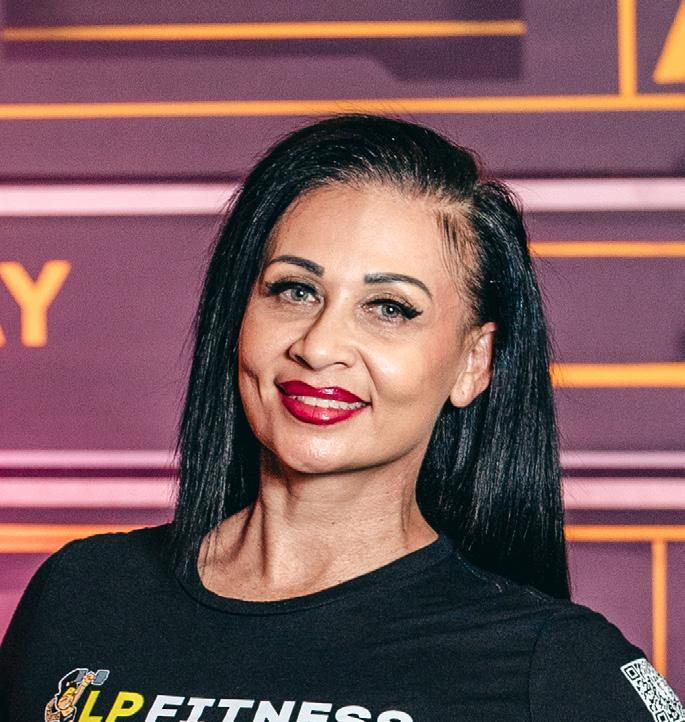
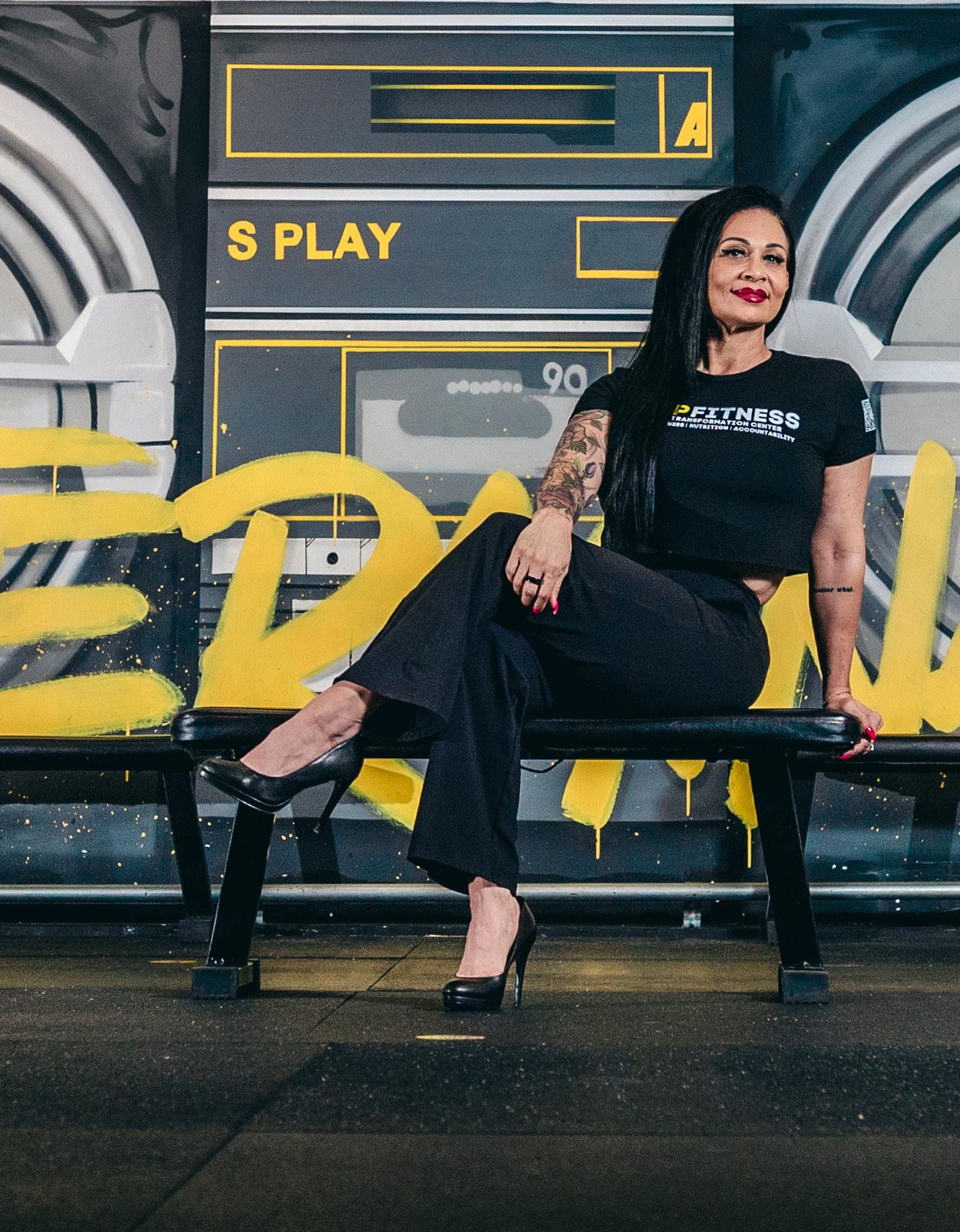
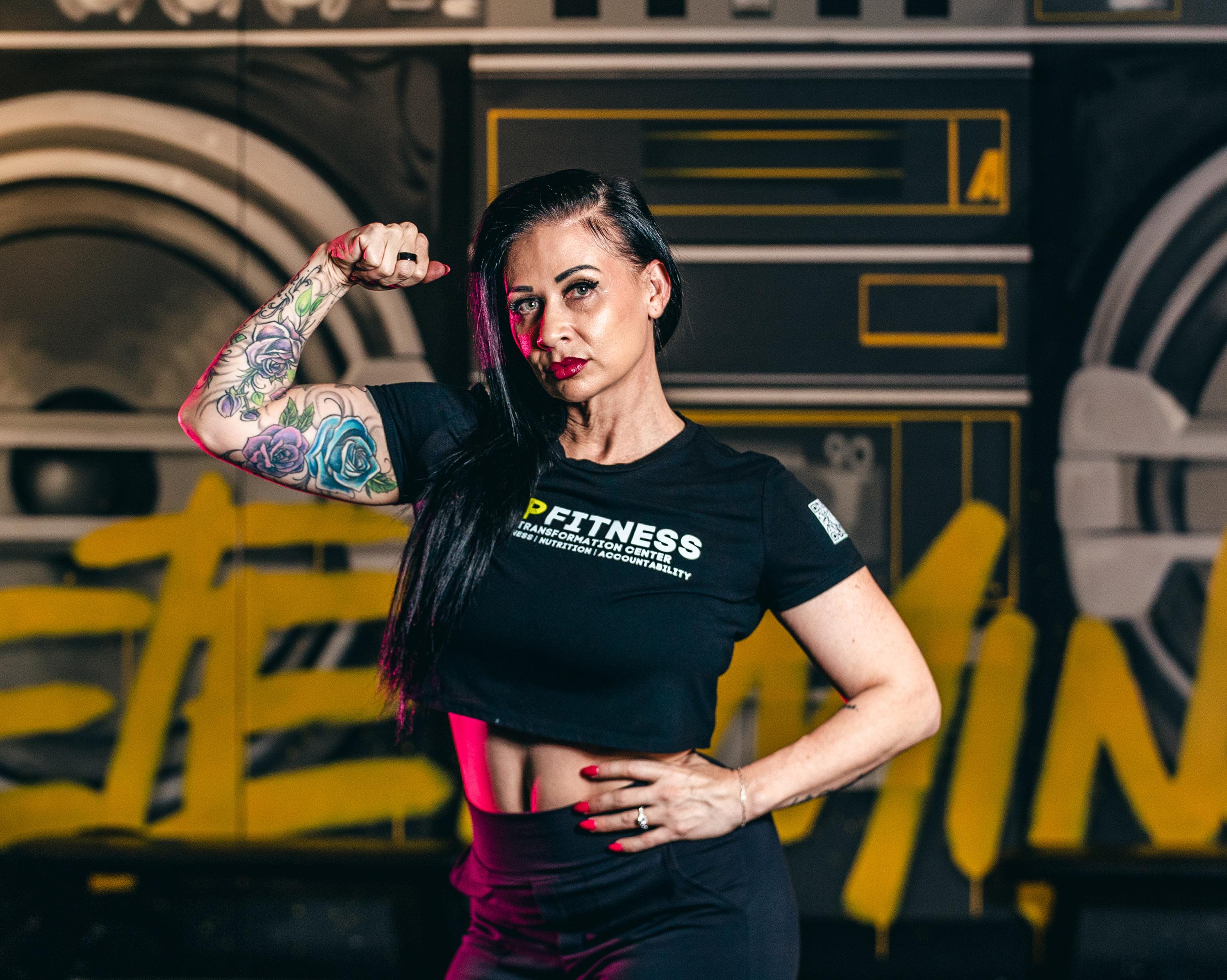
Liza Mendoza-House’s path to LP Fitness began with a wakeup call: she bent to tie her shoe, couldn’t reach her foot, and ended up breathless. At that moment, she knew something had to change.
Sixteen years later, she’s half her former size, twice as healthy, and the owner of a thriving transformation center in Lincoln, Nebraska—with 37 staff members and a wall of awards, including Best Gym three years running. She has kept off 70 pounds and built what didn’t exist when she needed it most: a place where fitness and nutrition meet real-life accountability with no judgment, just results.
Mendoza-House’s impact extends beyond the scale. She left a secure job, with a generous retirement plan, steady paycheck, and a 17year career, to build a business in a male-dominated industry. She used skepticism as fuel, opening her first gym in a building so run-down that when it rained outside, it rained inside.
Getting healthy wasn’t easy. Intimidated by gyms, MendozaHouse started by walking. Like many, she faced limited resources, low confidence, and minimal guidance. Cultural expectations around food and body image added layers of complexity. She tried Weight Watchers, learned to count points, and realized she could still choose junk, something she wanted to avoid. So, she turned to online advice and the few people she knew who’d made significant lifestyle changes.
Block by block, she moved more and found a community that led her to a bootcamp-style class. “I ended up falling in love with bootcamp workouts because someone was there to help me and tell me what to do,” Mendoza-House recalls. Even as she learned to push herself, she encouraged others. Her enthusiasm caught the coach’s attention. She went from participant to coach, and discovered she loved helping people hit their goals and push past their insecurities.
With encouragement from peers, she launched her own bootcamp in a local park. When the weather turned, she rented boutique gyms across Lincoln. Her following grew with her determination, and when she spotted an empty storefront, the idea for LP Fitness took root. But something nagged at her: she couldn’t realize her vision while working full-time. So, she made a bold choice. After nearly 20 years at State Farm, she made a big move: “I left for lunch and never went back. The story still gives me chills. That was the scariest thing I’ve ever done,” Mendoza-House says.
With a loan from her aunt, she hired a business coach and refined the brand. “I built the exact formula I needed when I was trying to lose weight,” she says. The gamble paid off. Her practice of personally checking in with members who missed a week signaled genuine care and built a strong community. She learned business fundamentals like sales, client retention, and processbuilding from scratch—despite
having no prior entrepreneurial background, and her roster of clients and employees grew. Since then, LP Fitness has been recognized as a top place to work out and has earned a Best Place to Work award.
Inspired by what she learned about nutrition, Mendoza-House launched LP Protein Packs in 2025. “I teach macronutrients, clean eating with protein, carbs, fats, and veggies. People think you have to eat less, but that’s not true. My goal is to educate our families and our culture: eat clean food, and make it taste good,” she says of the venture’s guiding principles. The packs are cooked, low in sodium, vacuum-sealed, and ready to heat and eat. They’re sold
at two locations in Lincoln, including her gym.
Mendoza-House’s business is more than a gym. It centers holistic wellness, where mental health, personalized support, and personal growth matter as much as physical transformation. Her leadership shows not only in awards, but also in her emphasis on self-education, persistence, and investing in personal development. Her success proves that when one person thrives, others believe they can, too.
Now a business coach herself, Mendoza-House is committed to helping new entrepreneurs who feel unprepared or overwhelmed.
She hopes to inspire Latinas to own their stories and take bold, imperfect steps toward their dreams. Her story shows that the best entrepreneurs fill a need, face challenges headon, and bet on themselves—and her message is clear: you don’t have to have it all figured out to begin. Your journey, with all its twists and turns, is your superpower.
By Christina Fernández-Morrow
by Marco Flores
Photos
KARINA STRUBLE
ACTS OF COURAGE LEAD TO BUSINESS SUCCESS
The women who raised Karina Struble in Talca, Chile — her single mother, grandmother, and aunts — taught her that courage isn’t the absence of fear; it’s moving forward in spite of it. Their influence propelled her from fry cook to owner of Omaha’s only Latina-led commercial and residential painting companies.
Born during a brutal dictatorship, Struble learned to overcome fear at an early age. With limited access to higher education, she became an expert in survival. From hitchhiking her way to the beach for a moment of peace to teaching herself how to play instruments, she found lessons in circumstance. “I was not one for school,” she says. “But I’m always learning.” That drive now fuels Shaver Painting and Decorating and Straight Line Painting in Omaha.
Struble developed business skills through real-world experience, a foundation she continues to build on in her life and businesses. Arriving in the U.S. with $80 and a guitar, she found work cleaning homes within three days. She used that money to buy a bike to get to work in the Florida heat, and ate frozen pizzas so she could send money home to her mom and siblings. But cleaning is a solitary job. She wasn’t meeting people or learning English, both essential to thrive in the U.S.
Inspired by motherhood, Struble took an overnight job at a burger chain. When her shift ended at 5
a.m., she had just enough time to shower and snuggle her infant son before heading to the local community college for English classes from 9 a.m. to 2 p.m. “My arms were covered in burns from the grease. I memorized the English menu and the prices so I could move into a different position taking orders,” she recalls. It was the first of many brave, strategic moves that changed her life. Fifteen years later, she was supervising six restaurants, more than 200 employees, and earned awards for her managerial skills.
The confidence Struble gained speaking up at the burger chain and the on-the-job training motivated her to persuade her husband to leave his job after their move to Omaha. They emptied their 401(k) and invested their savings into purchasing a painting business. “I no longer wanted a corporate job where the values did not align with mine,” she says. “I wanted to own my time, create my income, and spend time on things I enjoy like mentoring, training, and self-development.” Wanting more, Struble enrolled in
entrepreneur classes at La Fuente Business Center, where she made connections in the home improvement industry.
After months of painting commercial walls alongside her crew, Struble felt something was missing. Her grandmother’s voice echoed: “Home is where the people you love spend the most time.” Commercial painting was profitable, but it wasn’t feeding her soul the way creating cozy family spaces could, so she shifted her focus, and thus, Straight Line Painting was born, transforming houses into welcoming homes like the women in her family created for her.
Struble envisions her future filled with mountain hikes and ocean sunsets, living her grandmother’s wisdom in ways the older woman never could have imagined. By helping subcontractors — especially women and those navigating language barriers — establish their own LLCs and avoid profit-draining middlemen, she’s creating a network of empowered entrepreneurs.
Struble leads with a grateful heart, knowing how difficult it is battling the doubts that keep a lot of Latinas from pursuing their dreams.
The women who raised her in Chile planted seeds of bravery. “Overcoming fear is a challenge. I decided not to listen to that childhood voice that said, ‘Without a degree you are no one.’ I turned my fear into courage, knowing what I am capable of,” she says.
As a token of her achievement, when Struble became a U.S. citizen she bought herself a new guitar. Every note she plays is a reminder of how far she’s come: from a young woman in Chile with little more than courage, to a business leader creating homes, opportunities, and hope. Her story is proof that acts of bravery, no matter how small, can paint a future filled with limitless possibilities.
By Christina Fernández-Morrow
“ Overcoming fear is a challenge. I decided not to listen to that childhood voice that said, ‘Without a degree you are no one.’ I turned my fear into courage, knowing what I am capable of.
Photo by Marco Flores
JEFAS QUOTES
“ Women create life, of course we can create enterprises and lead as JEFAS.”
Olga Guevara | Owner, CEO Casa Azteca
Identity | Artistry
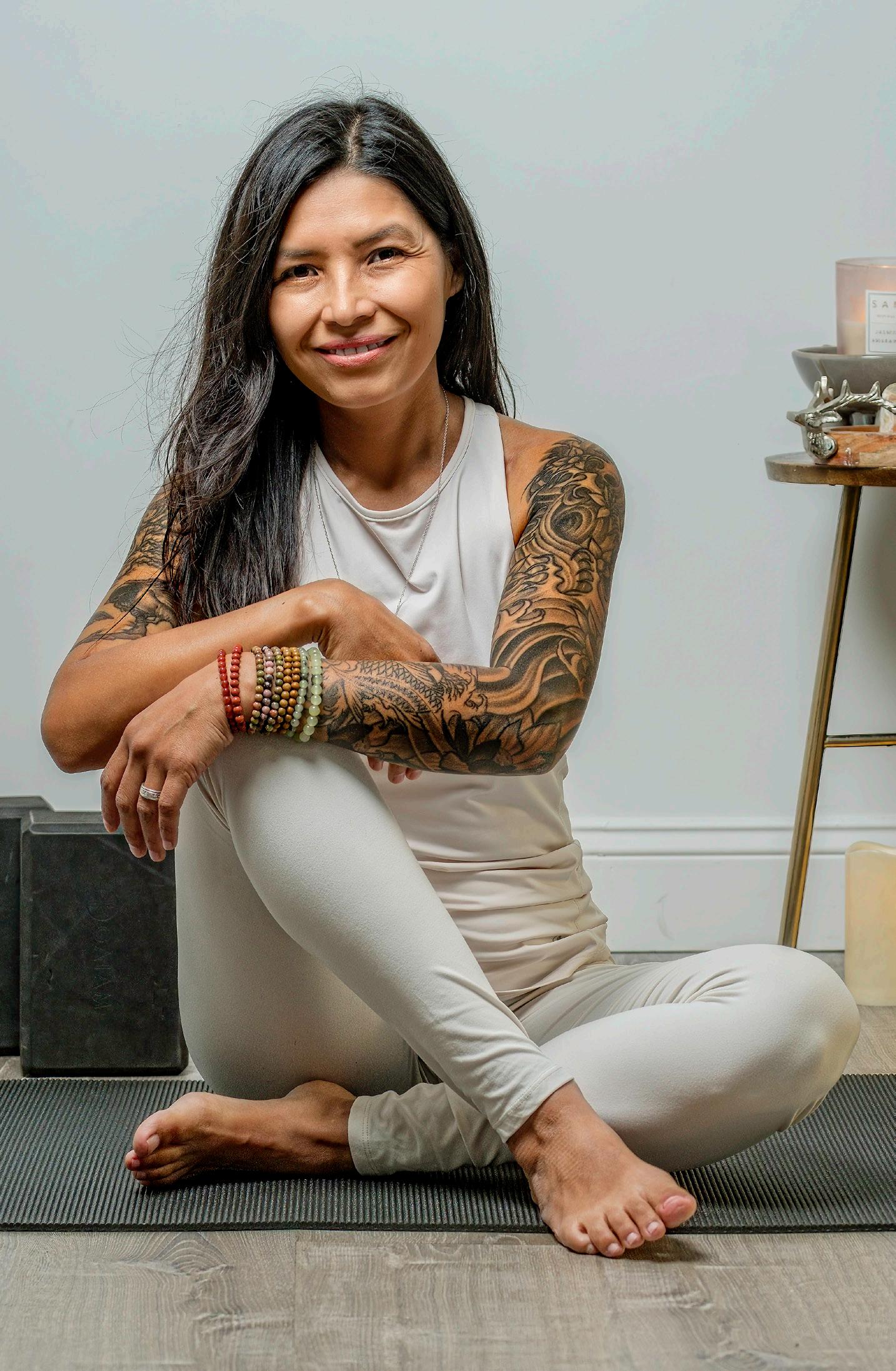
YOSHIE ITAMI CAPTURES LIFE’S STORIES THROUGH A LEGACY LENS
México/ Japan
Motherhood | Purpose
Photography Seeds Planted
“I come from a family of photographers, so I grew up watching images come to life in the darkroom. It taught me to appreciate the art and emotion behind every photo.”
A Pivotal Moment
“It wasn’t until I had my first daughter and was on maternity leave that I truly picked up the camera for myself.”
Passion to Profits
“Capturing those fleeting moments with her sparked something deeper, and I realized I wanted to help others preserve their own stories too. That’s when my passion became a business.”
A Legacy Continues
“I’m watching my daughter grab a camera and capture her own view through a lens.”
Services
• Weddings
• Portraits
• Corporate Events
• Real Estate
Heart & Hustle
“Growing up in a Latino household, I learned to hustle with heart. I connect with people and tell stories that feel authentic.”
Dreamer Philosophy
“Sí se puede — Don’t wait to feel ‘ready.’ Start with what you have and grow as you go.”
More than a Business: A Mission and Legacy
“My business was born out of love, legacy, and a desire to preserve the moments that matter most. As a Latina, a mother, and an artist, I bring my full self into every session and hope to inspire other women that can relate to me to not give up on their dreams, whatever they are.”
https://www.instagram.com/ yoshieitamiphoto/
WENDY URQUIDEZ
THE FOOD TRUCK THAT CHALLENGED
NEBRASKA’S
PALATE
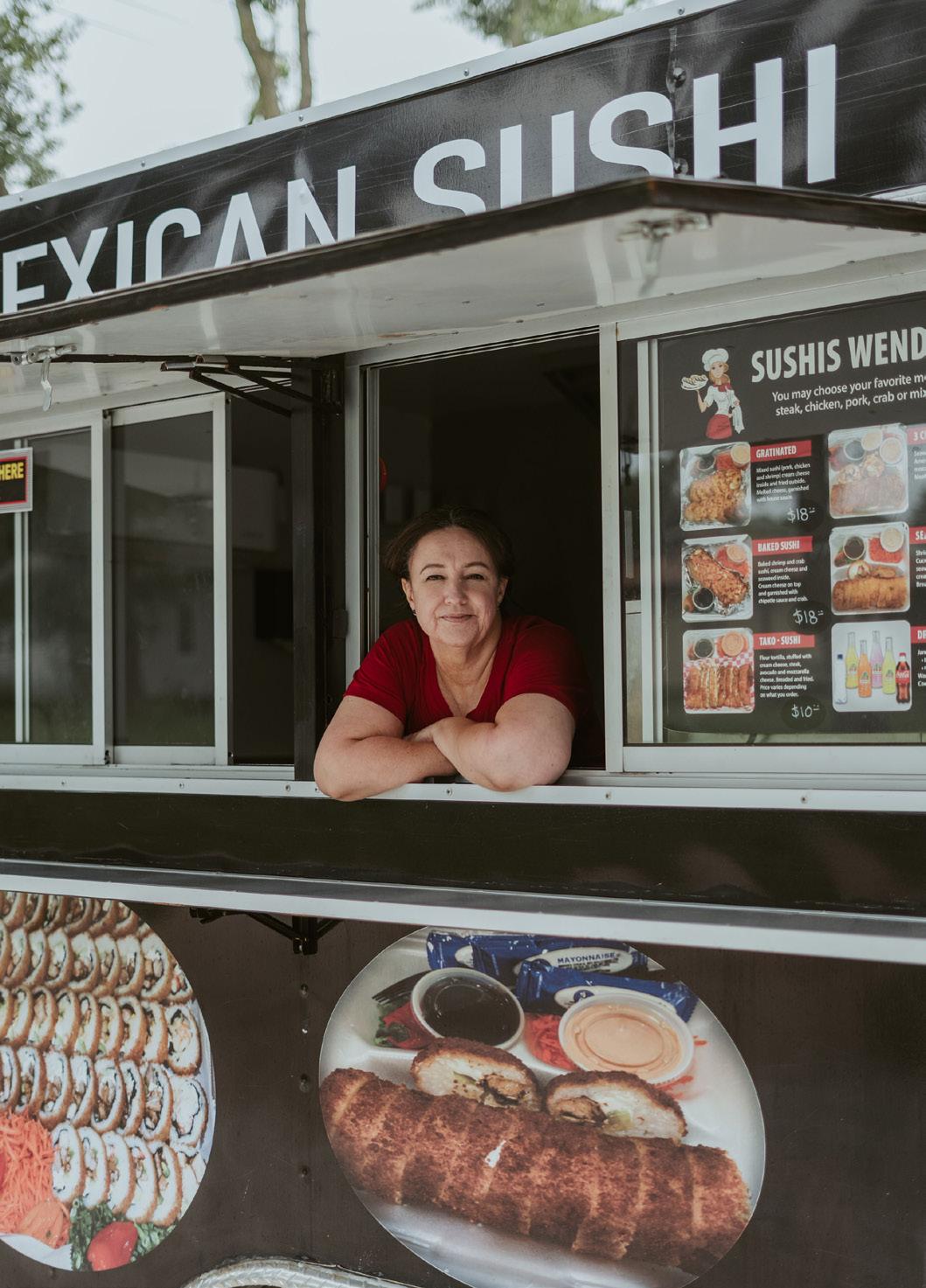
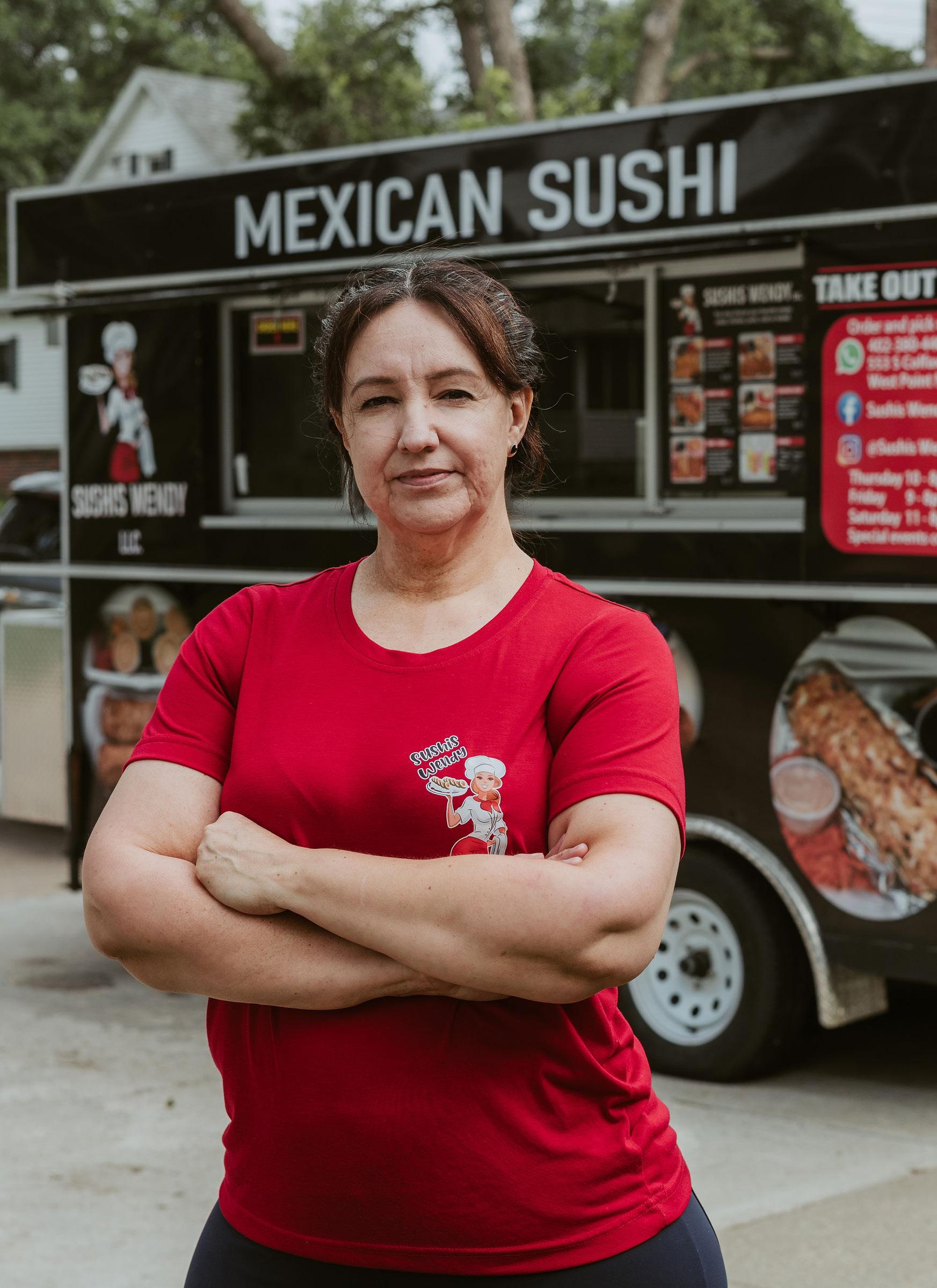
Curious foodies and locals are drawn to the bright green lights around the “MEXICAN SUSHI” sign on Wendy Urquidez’s food truck at the West Point Farmers Market. Inside, Urquidez shapes locally grown cucumbers, avocados, and select cuts of prime Nebraska beef into perfectly formed rolls fried golden brown or baked to perfection. It’s not the sushi most Nebraskans expect, but it has quickly gained a loyal following.
Urquidez has brought the street food of her native Sinaloa to her new home in Nebraska, transforming a commercially licensed kitchen built in her garage into ground zero for what might be the state’s most unexpected culinary combination. Sushis Wendy serves up rolls that could fit right in on the Pacific coast of Mexico, where sushi is served with red or green salsa made with tiny chiltepín chiles or blackened with soy sauce at just about every street cart and eatery. This fusion has become a thriving business that brings together her two worlds and challenges the palate with this blend of Mexican and Japanese flavors.
When she began making samples for family and friends in 2015, she received praise and encouragement to share more widely. Two years later, she opened a restaurant but admits the timing wasn’t right and she had a lot to learn about the business side of hospitality.
“It was too big, and we didn’t have enough help. We didn’t really know
how to run that kind of operation. We closed after five months,” shares Urquidez. Closing the restaurant wasn’t the end. She focused on catering and selling at events in West Point and neighboring towns and found her niche. Whether it’s a platter of panko-fried sushi rolls drizzled with her special house sauce for corporate gatherings, or colorful shrimp ceviche at weddings, Urquidez stays busy. “It’s very different from what Nebraskans are used to,” she says. “But people are curious, and they like that it’s cooked and that I have options with chicken and beef if they don’t like seafood.”
While Urquidez leads the way, Sushis Wendy is a family business where her teenage son and husband often pitch in to buy and prep ingredients, take orders, and package food for takeout. “I don’t have employees, it’s mostly me and I like meeting people and seeing them enjoy my food,” explains Urquidez. Although she doesn’t speak much English, it hasn’t slowed her down.
“Most of my customers know I don’t speak English well, so they use translation apps to send me messages or contact me via Facebook to order. It can be a little difficult at times,” she admits.
Through social media messaging and help from her bilingual children to interpret when needed, she has created a customer base that posts five-star reviews, regularly sends referrals, and invites her to events where her truck is a welcome
addition. Looking to the future, Urquidez dreams big.
She is hopeful that with the experience she’s gained with her food truck and takeout business, she will one day open small, welcoming restaurants that give her friends and neighbors a taste of life in Sinaloa.
“I am proud that I started something that I didn’t imagine would grow so much from a dish that wasn’t known in this area and now I have so many customers who look for my food,” says Urquidez. “I am far from my homeland, but so many people have come to know a little bit of something that is such a part of living there.”
Through perseverance and adaptation, Urquidez has found something valuable: a community that embraces her vision and her flavors. She’s no longer the outsider selling strange food, she’s a neighbor sharing a piece of home and the impact on Nebraska’s culinary landscape appears permanent. From her garage kitchen to the county fair, she’s already accomplished something remarkable: realizing a dream that bridges two worlds, making the unfamiliar a new local favorite.
By Christina Fernández-Morrow
by Susi Franco
Photo
LUCERO GARCIA
AN ENTREPRENEUR COMMITTED TO SERVICE AND MUSIC
From interpreting in jails to managing six businesses across four states, Lucero García has built an empire rooted in one simple principle: transforming language and immigration barriers into bridges to entrepreneurial success.
García’s journey began when her father moved the family from Sinaloa, Mexico, to Nevada in 1994 and two years later to Council Bluffs, Iowa. Eventually, Omaha, Nebraska, became both her home and the headquarters of the consulting firm she founded in 2016: Garcia’s and Associates, a business that, as she explains, “is dedicated to boosting entrepreneurship and providing business administration services.”
The transition represented not only a geographic change but also an opportunity to redefine her professional and community direction.
Her trajectory as a community leader began when her sister invited her to work in a law office. “Since then, I have been passionate about helping others, especially those arriving in this country for the first time and don’t know the laws, their rights or their obligations,” says García. That first exposure to the legal field became the foundation of a calling: to share knowledge and walk alongside her community in legal and administrative processes.
Whether in criminal law, immigration, labor law or personal injury, García continuously finds ways to share
“ The freedom to help others without someone limiting me or boxing me into a single role or job is like having wings and being able to fly.
her knowledge with people limited by language barriers or immigration status. She leads free workshops on topics ranging from insurance coverage and medical negligence to workers’ compensation and business development. She also volunteers as an interpreter in correctional facilities.
This passion for education soon translated into concrete business opportunities. Today, with the support of fellow community leader Bernardo Montoya, García considers one of her greatest achievements to be “the creation and management of the State Auto Accident Program, where we inform and connect our community with doctors, lawyers and other professionals, working in partnership with the police and fire departments.” This program has become a vital bridge between the community and health and justice services.
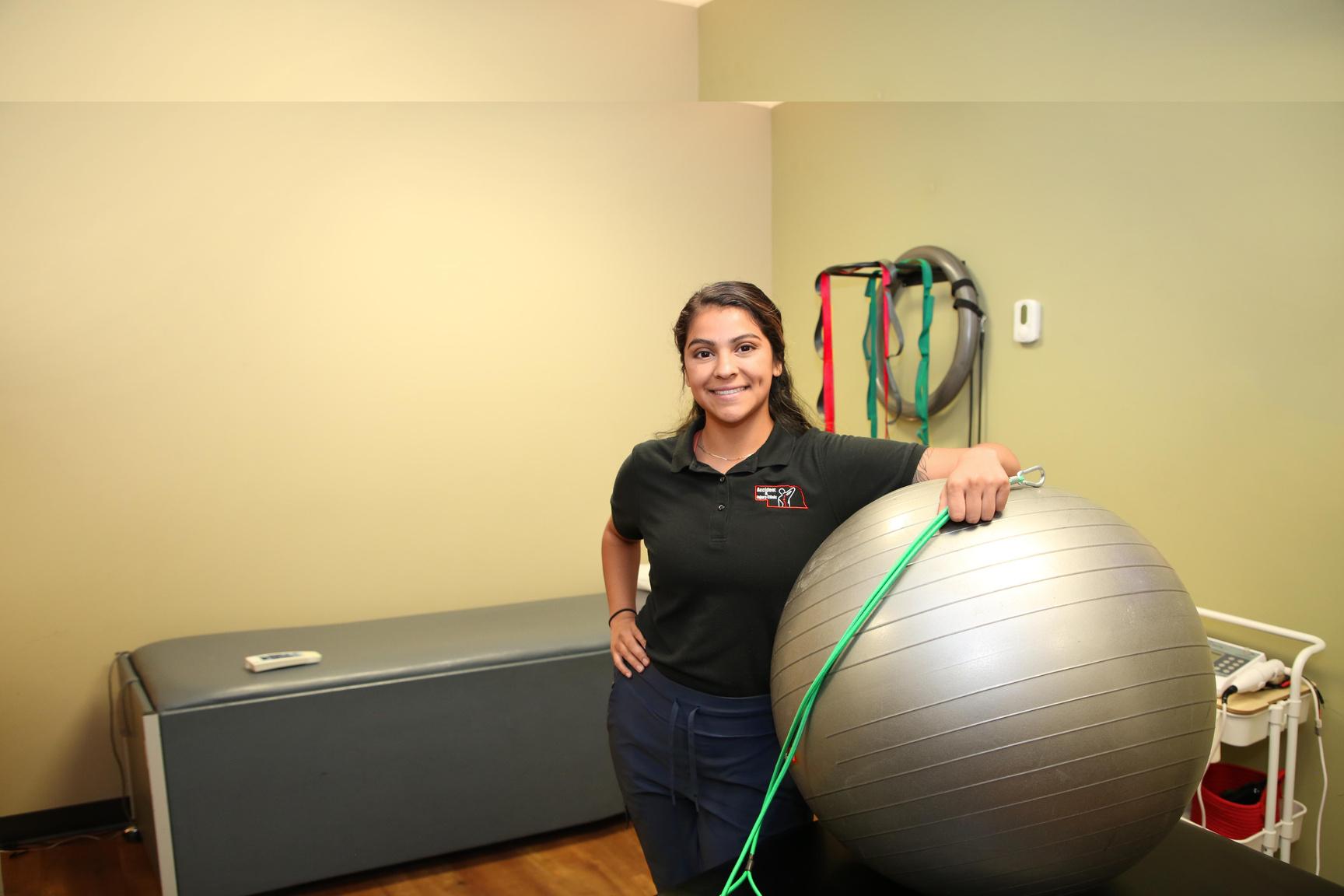
Today, García oversees six businesses: “We operate the chiropractic clinic Accident Care and Treatment Center, recording studio JR Records, the physical therapy clinic Nebraska Injury, auto repair and sales shop, Metro Collision Center, and the music talent agency Hay Talento,” she explains. Additionally, García’s and Associates provides administrative services, specializing in law offices and medical service providers. Her broader strategy reflects a single goal: creating resources that strengthen the local economy.
With her siblings as partners and a small team of two employees in Mexico and two more in the United States, García takes pride in sharing, “We cover the states of Nebraska, Iowa, Kansas, Oklahoma and practically anywhere in the U.S. market.”
However, for García, business growth goes hand in hand with solid values. “I want to keep growing,” García says, “but every business needs a good team. If you don’t have people by your side who truly care about others, it is very difficult to move forward.”
Despite the challenges of running a business in constant evolution and the obstacles of a new administration, García would not trade her independence for anything. “The freedom to help others without someone limiting me or boxing me into a single role or job is like having wings and being able to fly — without relying on an employer who would restrict my flight.”
For García, that flight is always accompanied by music, especially the chords of her guitar. She is passionate about music and as she says, “If it’s norteña, even better!” In recent years she has built a strong collaboration with the members of Los Juniors, to provide local artists like them greater visibility.
“I have many projects,” García says with excitement. “I want to keep growing with music and our
recordings and bring programs into public schools. We work with nonprofit organizations, and we want to continue promoting international art and culture. Also, I really love to sing, and I’d be thrilled to help others with musical talent record their own songs.”
García’s success stems from her understanding her community’s deepest needs, based on her own roots. Growing up in a Latino household gave her “sensitivity and empathy for working with other Latinos,” she says, which became “a key pillar in everything I’ve done professionally.”
That foundation allows her to expand her vision of service “without distinction of language, age, social position, religion, politics or legal status.” For García, every person has a story worth hearing and talents waiting to be discovered.
“I work for them, and it is a true honor to listen, inspire and build alongside the people of my community,” she says. It’s a philosophy that has transformed a young immigrant from Sinaloa into one of the most influential businesswomen in Nebraska’s Latino community.
By Marina Rosado
Photo by Marco Flores
A B O U T U S
“ Tu camino a la recuperaci ´ øn empieza con nosotros. Llámanos...”
C u i d a m o s d e t u b i e n e s t a r We specialize in injury care in Nebraska
SOMOS UNA ORGANIZACIÓN COMUNITARIA QUE APOYA A PERSONAS DESPUES DE HABER SUFRIDO ACCIDENTES DE AUTO O LABORALES A TRAVÉS DE PROGRAMAS, EVENTOS EDUC ATIVOS Y NUESTRA LÍNEA DE AYUDA, EXPLIC AMOS QUÉ HACER DESPUÉS DE UN ACCIDENTE, OFRECEMOS RECURSOS PARA LA RECUPERACIÓN Y CONECTAMOS CON DOCTORES ESPECIALIZADOS Y ABOGADOS EXPERIMENTADOSNUESTROS SERVICIOS SON GRATUITOS, ENFOC ADOS EN PREVENCIÓN, EDUC ACIÓN Y BIENESTAR, PARA APOYAR EN EL PROCESO DE RECUPERACIÓN NO SOMOS ABOGADOS NI DOCTORES
¿Qué es?
Este programa del Community Accident and Recovery Center es nuestra herramienta para ayudar a la comunidad a conocer sus derechos y obligaciones tras un accidente de auto o laboral Ofrecemos presentaciones públicas con expertos, con el Departamento de Policía y Bomberos Todos pueden participar, sin importar estatus migratorio Grupos pueden solicitar entrenamiento
This program from the Community Accident and Recovery Center is our tool to help the community understand their rights and responsibilities after a car or work accident We offer public presentations with experts, with Police and Fire Departments Anyone can participate, regardless of immigration status Groups can request training W hat it is?
W e C a r e A b o u t Y o u
WE ARE A COMMUNITY ORGANIZATION THAT SUPPORTS PEOPLE AFTER C AR OR WORK-RELATED ACCIDENTS THROUGH PROGRAMS, EDUC ATIONAL EVENTS, AND OUR HELP LINE, WE EXPLAIN WHAT TO DO AFTER AN ACCIDENT, PROVIDE RECOVERY RESOURCES, AND CONNECT PEOPLE WITH SPECIALIZED DOCTORS AND EXPERIENCED AT TORNEYS OUR SERVICES ARE FREE AND FOCUSED ON PREVENTION AND WELLBEING, SUPPORTING RECOVERY WE ARE NOT LAWYERS OR DOCTORS
833 838 0066
p a i n i m p r o v e t h e i r q u a l i t y o f l i f e W e p r o v i d e p e r s o n a l i z e d t r e a t m e n t s a n
s t
s p e a k s E n g l i s h a n d S p a n i s h a n d g u i d e s y o
V i v i r s i n d o l o r e s p o s i b l e S o l o l l á m a n o s ! ! ! M a n e
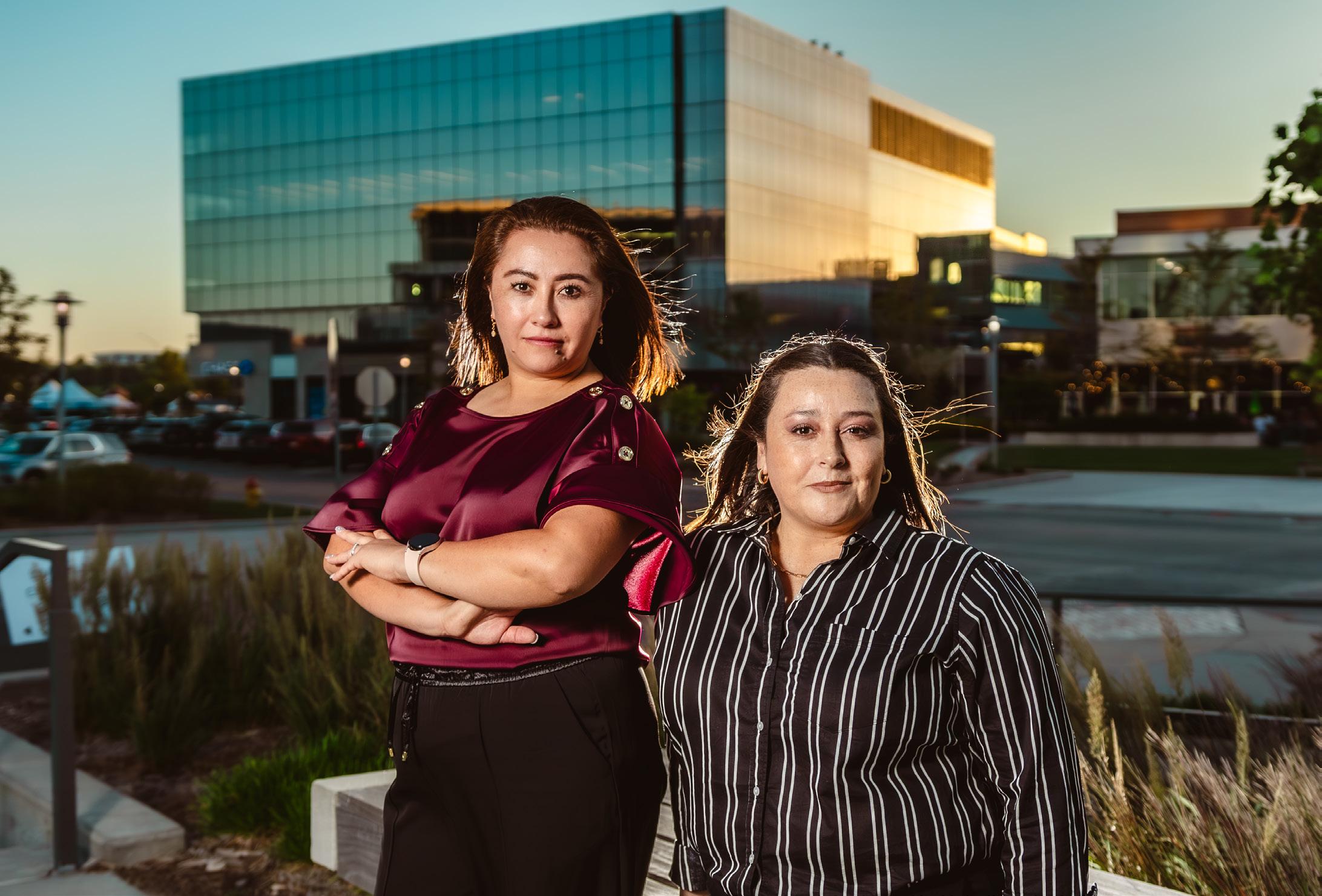
DEBORA SAAVEDRA AND ZARINA BOARDMAN
FROM SACRIFICE TO SUCCESS: HOW LAS CHILENAS CAFÉ BRINGS CHILE TO NEBRASKA
For three years, sisters Debora Saavedra and Zarina Boardman hauled pots, pans, and ingredients from fair to fair, bringing the flavors of Chile to Nebraska. Today, they finally have a permanent home for their dream.
Las Chilenas Café opened its doors in 2025, but it represents years of sacrifice and determination. Their business LLC was born in February 2022, after Saavedra and Boardman came together with the purpose of bringing Chilean flavors to Nebraska. Their story reflects the growing entrepreneurial spirit among Latinas in Nebraska who are transforming the local gastronomic landscape while facing the unique challenges of being mothers, immigrants and business owners in a competitive market.
“I started Las Chilenas Café with the desire to share the flavors of my homeland and create a space that represents our Latino identity with pride,” Boardman said. But the road to success wasn’t easy.
From the beginning, Saavedra and Boardman worked hard to make their product known. They spent a
lot of time at fairs, churches and offices doing pop-ups. They had to pay for commercial kitchen space and different licenses to do catering. All of that was very expensive, but necessary for the well-being of their business. During that time, they never stopped working. Since they had parallel jobs, sometimes they didn’t spend much time at home.
“It was crazy, but family has been fundamental,” Boardman said. She is grateful to have a husband who supports her and never discouraged her, even when she got pregnant just as she decided to open a brick-and-mortar location. She already had two children, ages 15 and 10. Similarly, Saavedra is thankful for her family’s support, especially her husband, who took care of her son, who is autistic and was only 6 years old when they started the business. It took years of sacrifice before their efforts began to bear fruit.
Today, Saavedra and Boardman have an established location. They no longer have to carry their supplies from one place to another. Their customers know where to find them and they are finally beginning
to build their identity. “Over time, our challenges have changed in a gratifying way. Working hard to make our culture known has transformed into joy seeing our customers explore and fall in love with Chilean flavors,” Saavedra said. She is proud of the homey atmosphere she has built with her sister. “We didn’t want something very ostentatious, very fancy,” Saavedra said. When you enter Las Chilenas Café, there are black armchairs, the walls are painted in green tones, and there’s art by local artists. It feels like a home. Beyond commercial success, the partners see the café as a deeper achievement.
In addition to honoring their beloved Chile, Boardman and Saavedra created a space where they can succeed using their talents. Saavedra takes care of the kitchen and creating high-quality products, while Boardman handles all the administrative work, marketing, and human resources. They exchange ideas with each other, but each one focuses on her area of expertise. For these partners, it’s important to succeed in an environment where there are other female
“ I started Las Chilenas Café with the desire to
share the flavors of my homeland and create a space that represents our Latino identity with pride.
entrepreneurs. “Instead of putting each other down as women, supporting each other is fundamental,” Boardman said.
In their free time, Saavedra and Boardman love trying other foods and even visit businesses that sell similar dishes. They also like to invite their neighbors from the surrounding establishments to try their food. They exchange recipes and advice. “It’s an act of humility to share with other people. I have a friend who also sells empanadas.
I’m not afraid that maybe hers might taste better than mine. When one stays in their comfort zone, everything stays the same, but when you have healthy competition, it drives you to be better and more creative,” Saavedra said.
For Saavedra and Boardman, who are sisters first and business partners second, success is measured not only in profits but in the legacy they are building for their children. As Boardman said: “You have to unlearn in order to
re-learn entrepreneurship; you have to study and let yourself be guided by others, so you don’t make the same mistakes. You have to be resilient and support each other.”
By Antonia Rivera
Photo by Marco Flores
Chile
SHOULD YOUR MISSION-DRIVEN VENTURE
BE A NONPROFIT OR SMALL BUSINESS? A GUIDE
TO CHOOSING THE RIGHT PATH
When Alexis EspinozaArrubla launched Fern Vibes in 2022, she knew exactly what she wanted to create: mindfulness-based regulation programs using trauma-informed yoga, relaxation techniques, sound therapy, and creative activities. What she didn’t know was that two years later, she would be running two separate entities.
In 2024, she established Fern Foundation, a nonprofit offering free services to children and families, but she kept Fern Vibes operating as a for-profit business.
The shift brought unexpected challenges. Espinoza-Arrubla quickly discovered that finding and writing grants can be a full-time job on its own.
Her experience raises a question that mission-driven entrepreneurs increasingly face: Should you structure your venture as a 501(c) (3) nonprofit, operate as a traditional small business, or manage both?
Six Critical Differences
1 Structure and Governance
Small business: You control decisions. Espinoza-Arrubla runs Fern Vibes with complete autonomy, adjusting programs and pricing based on market and community demand in Omaha.
Nonprofit: A board of directors provides oversight and must approve major decisions. Espinoza-Arrubla’s board members also lead operations and fundraising, opening doors and making connections she couldn’t access alone.
Bottom line: Nonprofits trade speed for accountability but gain strategic partners in board members, often local leaders who know the community.
2 Revenue
Small business: Sell goods and services at rates designed to generate profit for owners. Espinoza-Arrubla charges market rates for Fern Vibes programs, from workshops to private sessions.
Nonprofit: Can charge for services, but all revenue must support the mission rather than enrich individuals. Fern Foundation relies on fundraising events, grants, and donations to cover the cost of offering free services.
Bottom line: Both can generate revenue, but only businesses can distribute profits to owners.
3 Taxes
Small business: Pay taxes on profits.
Nonprofit: Exempt from federal income tax and often state and local taxes. More significantly, donations to Fern Foundation are tax deductible for donors, which can strengthen fundraising appeals in a giving community like Omaha.
Bottom line: Tax deductible donations are a nonprofit’s superpower, but qualifying requires meeting specific IRS criteria and
maintaining ongoing compliance, which can cost money.
4 Funding Options
Small business: Espinoza-Arrubla can reinvest Fern Vibes’ profits as she chooses, take out business loans, or bring in investors willing to accept equity stakes.
Nonprofit: These options do not exist. Instead, Fern Foundation pursues grants, corporate sponsorships, individual donations, and fundraising events.
Many funding sources will only support registered nonprofits, and accessing funds requires substantial work. Espinoza-Arrubla spent hours searching online for local grants before finding the Futuro Latino grant awarded by the Omaha Foundation. She then spent four months gathering statistics to prove her programs achieved desired outcomes, followed by a full week writing the application. She asked for $50,000 and was awarded $10,000.
“There are search engines that can find grants, but those are pricey,” Espinoza-Arrubla said. She used AI to find potential sources, then verified that the grants were legitimate. She built a calendar of due dates to plan around applications, a practical habit to stay on track.
The work does not end when grants are awarded. Espinoza-Arrubla must carefully track results to write required grant reports and ensure eligibility for renewal.
Bottom line: Nonprofits access charitable funding that can be unreliable; businesses access investment capital. Grant funding requires skills, systems, and
significant time investment. It also involves rejection, receiving less than anticipated, and opportunities may not be renewable year after year.
5 Operational Flexibility
Small business: Espinoza-Arrubla can test new Fern Vibes offerings, adjust pricing weekly if needed, and shift her entire business model without external approval, which is useful when responding to Omaha families’ changing schedules and distinct needs.
Nonprofit: Adding a new program area, vendor, or employee requires board discussion and approval. Changing how funds are allocated also requires documentation and sometimes permission from the funding source.
Bottom line: Businesses can pivot when necessary; nonprofits move by processes that take time and depend on various decision-makers.
6 Reporting Requirements
Small business: Espinoza-Arrubla can use basic accounting, tax returns, and whatever reporting she chooses for her own management purposes.
Nonprofit: Beyond standard bookkeeping, Fern Foundation must file annual Form 990 returns with the IRS (public record), track restricted grants separately from general donations, maintain detailed program expense records, and produce reports for multiple stakeholders.
Bottom line: Nonprofit transparency requirements are substantial, can be costly, and are ongoing.
Which Path Is Right for
You?
Can your target audience afford to pay market rates? If yes, a business structure offers maximum flexibility with minimum bureaucracy. If not, you’ll need charitable funding that typically requires nonprofit status.
Does your mission fall within IRSrecognized charitable purposes? These commonly include the relief of poverty, advancement of education or religion, promotion of health, government support, or other community benefits. Outside these categories, nonprofit status may not be available.
Can you dedicate time to grant work? “Grant writing is different than almost anything you do in business,” Espinoza-Arrubla said. She took a
course to learn. It takes time away from operations. Hiring grant writers is an option, but it is usually costly and is usually not covered by other grants, so it requires a reserve of unrestricted funds. Aside from searching for and writing grants, you’ll need protocols that generate required data, tracking systems, and ongoing reporting capabilities.
How quickly do you need to make decisions? Startups and ventures in rapidly changing fields often find nonprofit governance constraining. Board oversight slows decisionmaking but provides strategic support.
Can you manage nonprofit compliance? Espinoza-Arrubla spent months and several thousand dollars establishing Fern Foundation. She now manages two sets of financial records, holds regular board meetings, and ensures neither entity violates any rules.
Are you serving two distinct populations? Espinoza-Arrubla kept both structures because she wanted representation in mindfulness and wellness spaces. “Paying it forward while bridging cultural and generational gaps is close to my heart and central to my mission,” she explained.
The Bottom Line
Structure follows strategy. Before choosing between nonprofit and forprofit status, clarify your mission, identify your funding sources, and honestly assess your capacity.
The question isn’t which structure is better. It’s which structure, or combination of structures, best serves the impact you’re trying to create and the reality of how you’ll fund that work.
By Christina Fernández-Morrow
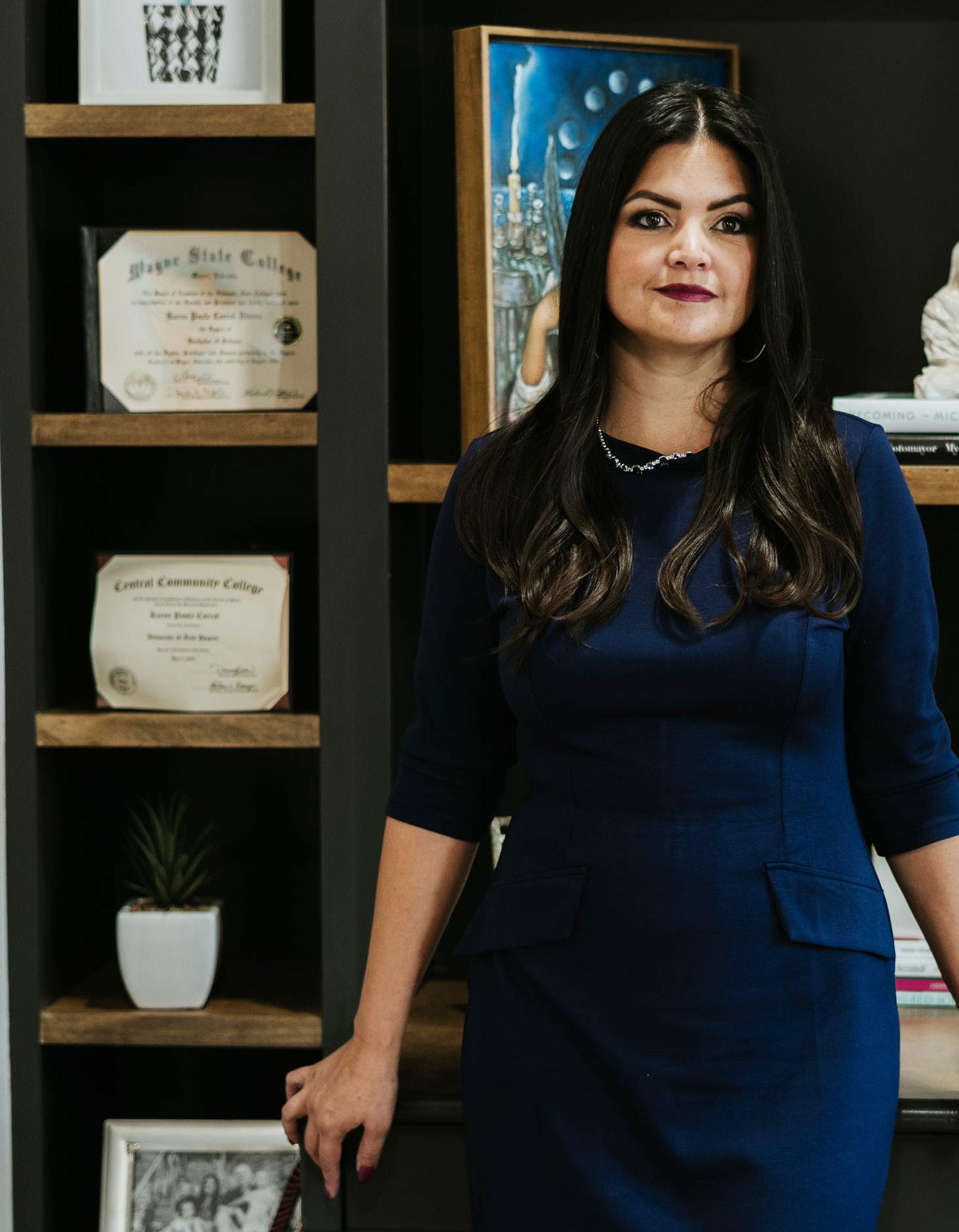
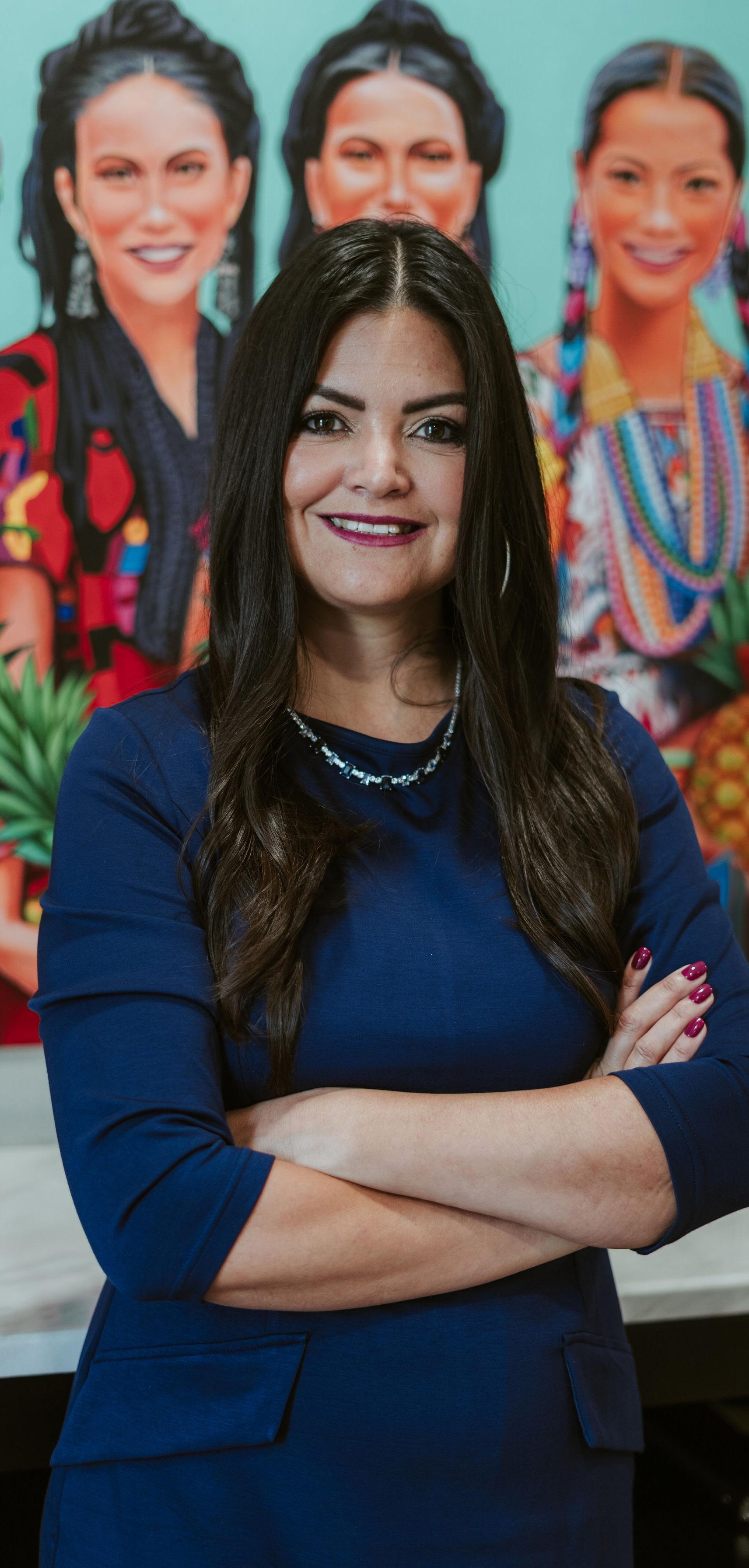
KAREN CORRAL DE PESEK
Karen Corral de Pesek keeps her parents’ first store calendar from 1998 hanging in her office, a relic that serves as a reminder of what someone can accomplish with grit and perseverance. It is the inspiration for creating a legacy that fosters immigrant success regardless of headlines or political climate.
At a time when federal scholarship programs face mounting pressure, Corral de Pesek’s True Potential Scholarship, established in 2013, has become a rare success story. Every young scholar she mentors is, in some ways, a reflection of the girl she once was, eager for a role model to validate her dreams. With nearly 300 scholars to date, the program has become a lifeline for immigrant students.
Her philanthropy stems from what Corral de Pesek learned growing up about those who carry a “fire in their belly,” like her immigrant parents, owners of La Popular, one of Nebraska’s first grocery stores dedicated to Mexican staples.
She recently celebrated the 12th annual True Potential Scholarship Dinner alongside her law firm colleagues, husband Ross, and their children. The 2025 dinner reflected the heart, resilience, and aspirations of the community it serves. With the debut of a new mission video spotlighting the real-world impact of the scholarship through the eyes of three recipients, the timing “felt
almost divine. Our community needed this moment to come together, celebrate, and uplift a hopeful narrative about what it means to be an immigrant and an ally,” Corral de Pesek says.
Support from community partners, business sponsors, and longtime advocates helped True Potential raise more than $50,000–enough to renew support for 25 students and add some new scholars.
The event was full of moving speeches, including one by featured speaker Itzel Lopez, whose story of determination and courage sparked heartfelt connection across the room.
The scholars themselves are the soul of the program and meeting them always moves Corral de Pesek. This year, Yosbert, an aspiring accountant originally from Venezuela, stood out. He and his aunt brought her a handmade bookmark, a note, and a puzzle piece inscribed with gratitude: “Thank you for being a piece of my educational journey.” These moments, rich with pride, hope, and appreciation, keep her pushing forward, even when fundraising is a struggle.
This sense of camaraderie and empathy is what Corral de Pesek treasures most. After a particularly difficult week in the news, she found special meaning in creating a safe, celebratory space for immigrant students and families, though some were too afraid to attend. “It broke
my heart, but it reminded me why this work matters,” she says.
What sets Corral de Pesek apart is her sustainability mindset. “With scholarship programs under federal pressure, I think we’ll become one of the few that survive. We’re privately funded, and that was intentional,” Corral de Pesek says. “I want the True Potential Scholarship to keep growing, reach more colleges and offer deeper support like mentorship and emergency aid.”
Her ultimate vision? To build something “that outlives me and continues opening doors for immigrant students, no matter what.”
That 1998 calendar in her office isn’t just nostalgia; it’s proof of concept. Her parents built something that lasted decades and made a lasting impact in Columbus, Nebraska. Now, Karen Corral de Pesek is constructing something even more ambitious: a network of professionals, mentorship programs, and educational pathways designed as a blueprint for building hope that endures beyond her days leading the effort.
By Christina Fernández-Morrow
Photos by Susi Franco
“ Our
community needed this moment to come together, celebrate, and uplift a hopeful narrative about what it means to be an immigrant and an ally.
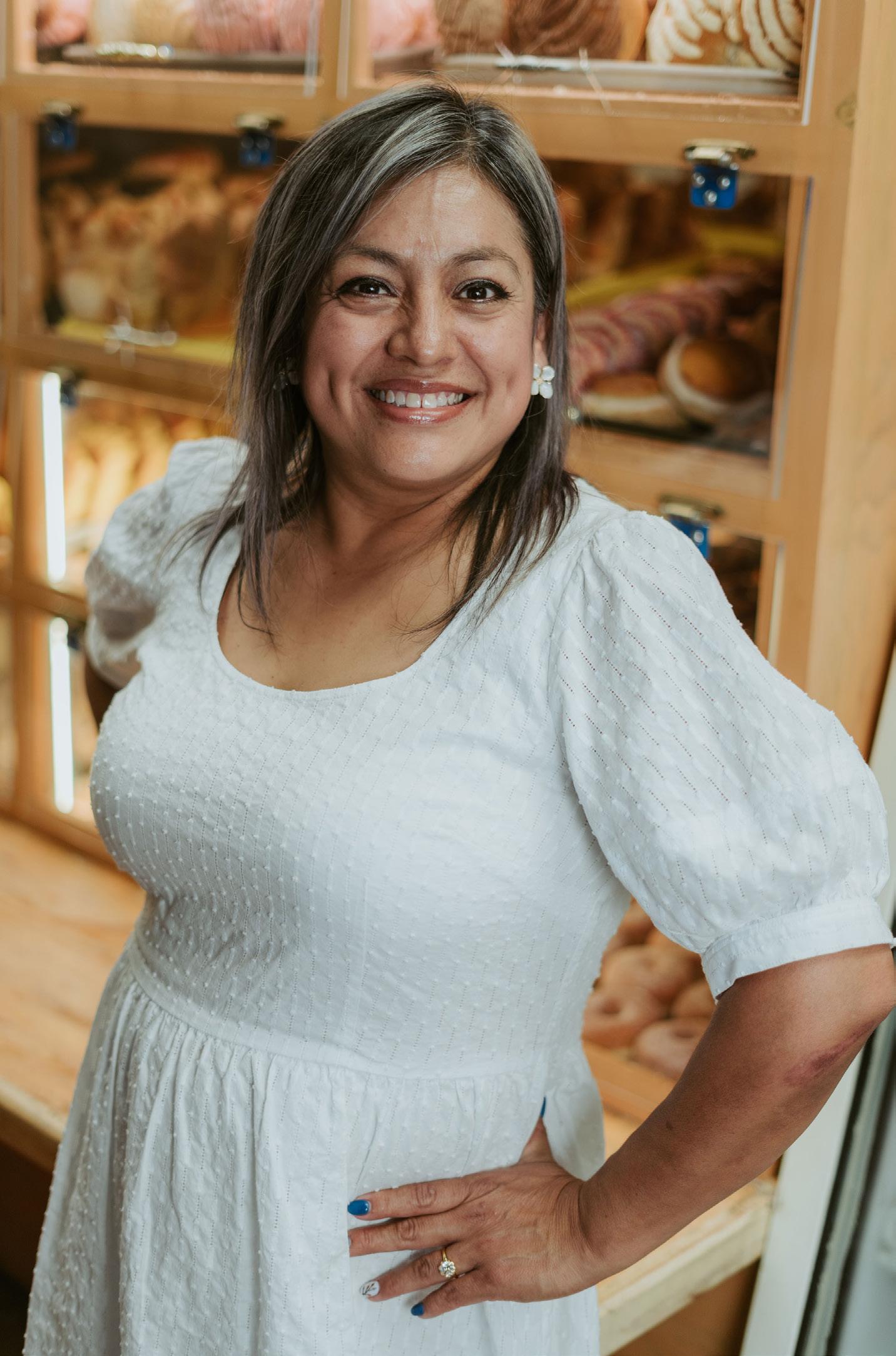
EDNA SUÁREZ
THE WOMAN WHO BAKED A DREAM
At 7 a.m., the aroma of fresh-baked bread drifts through the streets and draws neighbors toward Artesan Bread Inc., located at 215 North Main St. in Fremont, Nebraska. The woman behind this daily ritual is Edna Suárez, originally from Puebla, Mexico, who decided to turn her passion into a business.
For many, this bakery is the starting point of the day. Whether it’s with coffee in hand or a ham-and-cheese filled croissant, the workday doesn’t officially begin until customers stop by this Latina-owned bakery which has become a community landmark. While sweet treats like traditional conchas and the famous tres leches cake are the most popular, savory breakfasts have been part of the secret to a success that has remained strong since 2015.
Suárez recalls that as a child, she knew the kitchen was her calling: she sold her first cake at just 9 years old. Years later, she would meet Raúl Moreno, a professional baker and, more importantly, the man who became her partner in both life and business. What began as a shared dream materialized when
they decided to take the leap and open Artesan Bread Inc.
The initial investment came from a friend, a loan, and a lot of trust. “We worked day and night, with just one full-time employee and two part-time workers. There was no other option: Either it worked, or it worked,” Suárez recalls with a smile that reveals more pride than exhaustion.
If opening a bakery is challenging, doing it while raising six children is almost an Olympic sport. Suárez admits that with the first three it was tough because the business demanded every minute of her time. However, she learned to find balance. Today, alongside her husband, she runs a nearly military-like family logistics system: one stays at the bakery while the other goes to soccer games, karate or school activities.
“We take turns. If I miss a game, he goes; if he’s tired, I go. In the end, the kids always have one of us in the stands,” she explains.
Artesan Bread’s success isn’t just about the quality of their baked goods, but also Suárez’s eye for
beauty. “The secret is in the team and the colorful display case,” she shares.
She manages schedules and payroll, takes care of employees and ensures the display case always looks attractive. “There are breads that aren’t very popular, but we like to have them. They look beautiful and keep the display case colorful,” she says.
That attention to detail also keeps her employees around for years, though she acknowledges with humor that some still struggle taking orders from a woman. “With my husband there’s no problem but with me, that’s when the machismo comes out. They still work well but sometimes they have trouble obeying me. I don’t let them get away with it, of course,” she says with a laugh.
After years of 16-hour days while caring for her family, Suárez realized she needed time for herself. Now she indulges in small pleasures: going to the beauty salon, having coffee with friends, or shopping trips. “It doesn’t always happen, but when it does, it feels glorious,” she says.
“ Never stop fighting for what you want. Sometimes it takes longer, but it’s always worth it.
Her husband even encourages her. “Go ahead,” he says. “I’ll take care of the kids.”
These days, as Suárez watches familiar faces file in for their daily treat, she reflects on the journey that brought her here. She is proof that dreams aren’t baked overnight. They require patience, hard work, and perseverance. Her advice is clear: “Never stop fighting for what you want. Sometimes it takes longer, but it’s always worth it.”
As she lives this philosophy, the bakery continues to fill with loyal customers drawn by the magic of her fresh baked bread and the persistence of a woman who turned sacrifice into success, transforming her oven into a warmth shared across Fremont.
By Karlha Velásquez
Photo by Susi Franco
WENDY BLOTCKY
CHANGING LIVES THROUGH EDUCATION AND OPPORTUNITY
Wendy Blotcky, a Peruvian immigrant and entrepreneur, finds inspiration in others. From cleaning houses to empowering hundreds through education, her journey from humble beginnings to community leader shows how perseverance and purpose can transform lives.
“I grew up poor, doing odd jobs like selling cosmetics and food to make ends meet,” recalled Blotcky. In 2007, she made the bold decision to emigrate to California with her 12-year-old daughter. She cleaned homes and factories, working long hours to support her family. Her husband encouraged her to apply for a banker position, which was less physically demanding. Although she had the necessary customer service skills, her limited English held her back. Undeterred, Blotcky enrolled in English as a Second Language (ESL) classes for six months before reapplying. Her persistence paid off when she was hired, marking a turning point in her life.
Working in banking exposed her to people from various industries, inspiring her to take online classes to expand her career options. She earned a certification in preparing immigration petitions and did that for years while raising her daughter. In 2022, after her daughter married and moved to Omaha, Blotcky and her husband sold their California home and relocated to Nebraska. That’s when her entrepreneurial ambitions took off.
In March 2023, Blotcky launched Immigration Forms Specialist LLC in Omaha. Understanding the limitations of her role, she established strategic partnerships with legal professionals. “I work closely with two local attorneys and a New York immigration attorney, since immigration laws are federal,” she said. “I am not a lawyer, so I cannot give legal advice. I made connections that could help.”
While assisting clients with immigration forms, Blotcky noticed a need for Spanish-language citizenship classes. “In the beginning, I customized each class for each student and taught the lessons myself,” she said. Today, the class boasts an impressive 100% pass rate, including successful advocacy for accommodations and waivers for qualified applicants with disabilities.
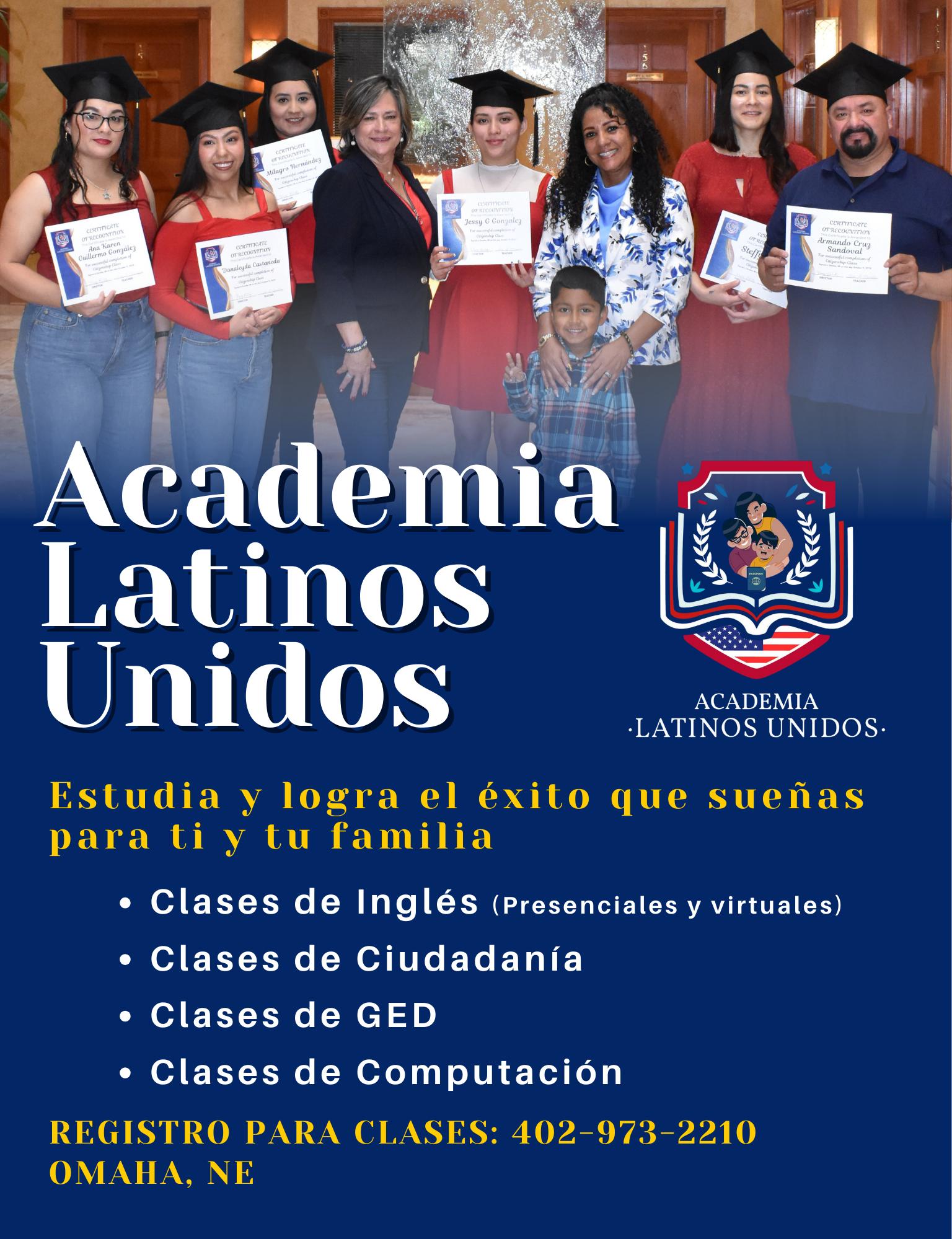
Blotcky regularly promotes ESL classes, citing how they had changed her life. Students often asked her where they could enroll in similar courses. As interest grew, she started an English class in 2024 with eight students. Today, her business, Academia Latinos Unidos, has taught English to more than 600 students and offers classes seven days a week with a dedicated ESL instructor.
“I’m happy that with a lot of sacrifice and hard work, I have grown. I can help families not only with classes, but also by opening doors for people to find better jobs and get reliable legal help,” Blotcky said.
Her vision to empower the community continues to grow. The academy offers GED and emotional intelligence courses, both critical to Blotcky’s personal and professional development. In spring 2025, she became certified to teach a Spanish-language driver’s education course.
Creating opportunities for her community is at the core of Blotcky’s personal mission, which led her to media. For years she hosted a Spanish radio show on La Nueva Radio 99.5 FM, inviting various professionals to share valuable information and delivered motivational messages to her community. She also used her radio platform to promote her newest initiative: Making More Money, a three-month mentorship program for business owners, where she shares her expertise to help them avoid costly mistakes and overcome obstacles commonly faced by Spanish-speaking entrepreneurs.
Blotcky tailors her mentorship, drawing from experience, training,
and education to meet each participant’s needs. The curriculum covers topics such as creating business plans, leveraging artificial intelligence, and using social media for marketing and growth. “When I got to Nebraska, my first year as a business owner was difficult. There wasn’t much help in Spanish for entrepreneurs. I invested a lot of money creating my business, and now I see that there are resources that could have helped. That’s why I created this program.”
Despite the long hours she invests in her work, Blotcky finds the greatest reward in her students’ achievements. “I cry with my students when they succeed because it once seemed impossible, but they achieved their goal,” she said proudly.
From cleaning homes in California to building an adult educational enterprise in Omaha, Wendy Blotcky has transformed her life while creating opportunities for hundreds of Latinos to improve theirs. Her story demonstrates how determination, continuous learning, and a commitment to giving back can create ripples of positive change throughout an entire community.
By Christina Fernández-Morrow
by Susi Franco
“ I’m happy that with a lot of sacrifice and hard work, I have grown. I can help families not only with classes but also by opening doors for people to find better jobs and get reliable legal help.
Photo
LISA GUERRA
TURNING A SECRET LANGUAGE TO A SUPERPOWER
Lisa Guerra never spoke Spanish as a child; her parents made sure of it. Today, the South Sioux City real estate agent has a career built on what her parents once hid: her Latina heritage. She does business in both English and Spanish, turning what her family once saw as a liability into her greatest professional asset.
After 15 years in financial services, the COVID-19 pandemic prompted Guerra to reconsider her career path. “I realized I wanted more control over my time and to be more present for my children. That led me to real estate. It felt like a natural next step,” Guerra recalls. Years as a banker while raising her two oldest daughters left her with little control over her schedule. She missed milestones and wanted to be there for her two younger children.
Her career shift marked a longer journey to reclaim the heritage her parents once hid. By embracing her bilingualism, Guerra built a thriving business while honoring her father’s values.
The path to success, however, began with loss and discrimination. Guerra’s grandparents were Spanish-speaking immigrants, and her U.S.-born parents were bilingual. They moved to the small town of Onawa, Iowa, in the 1970s, where Guerra was born and raised and where her father became a police officer.
Being American-born wasn’t enough to shield her family from racism. “People weren’t happy that a ‘Mexican’ was arresting people,” Guerra recalls. “He ended up losing his job.” In a predominantly white community, people often made comments about her family for being different.
In response, Guerra’s parents chose assimilation. “Spanish became a secret language,” Guerra says. “My parents never spoke to me in Spanish. Many people felt they had to speak English to avoid being looked down on. It was my parents’ way of protecting us.”
Though Guerra didn’t speak Spanish growing up, she felt a deep connection to it. She sang Selena after looking up translations. In high school, her best friend’s mom insisted she speak only Spanish at their house. Guerra didn’t realize she’d become bilingual until a relative of her best friend asked a question. As she answered, he exclaimed, “Lisa, ¡ya hablas español!’ (you speak Spanish now!).
After a year and a half of immersion, it hit her: she’d learned Spanish. What once felt like a family impediment would become her superpower.
Guerra didn’t stop at learning Spanish. She vowed to cherish her culture and live by the Chicano values her father taught her: help those in need, and don’t let injustices
slide. She watched him protect and serve his family and community without a police officer’s badge. Although he didn’t speak Spanish at home, he became a translator for Woodbury County and was on his way to becoming a lawyer when he died in his early 40s.
Following in her father’s footsteps, Guerra looks out for her community. As a real estate agent, that means ensuring clients aren’t taken advantage of or sold products they don’t need. Other times, it means striving for authenticity through trust, advocacy, and cultural pride.
Today, Guerra is a licensed Realtor in Iowa, Nebraska, and South Dakota, serving a primarily Spanish-speaking clientele. She plans her work around her children’s schedules, pushes her comfort zone, and guides clients toward homeownership. “Being bilingual lets me connect deeply with my Spanish-speaking clients. I’m proud to be a resource and help people navigate one of the biggest decisions of their lives; making sure they feel seen, heard, and supported throughout the process,” she says.
Guerra’s journey is more than a career change—it’s a tribute to her father and a testament to cultural pride. “Instead of forcing what didn’t feel authentic, I chose to focus on what I could control: providing exceptional service,” Guerra says. “If there’s one thing I’ve learned, it’s that
“ Spanish became a secret language, my parents never spoke to me in Spanish. A lot of people felt like they had to speak English to avoid being looked down upon. It was my parents’ way of protecting us.
our stories, our roots, and our drive are powerful. We’re building legacies. Surround yourself with people who uplift you, and remember: you belong in every room you walk into. Your culture, your perspective, and your passion are your superpowers.”
By Antonia Rivera
by Jasmin Adriana González
Photo
JEFAS QUOTES
“ Ser organizadora comunitaria es caminar con
personas que cargan historias invisibles. Es escuchar el dolor que nadie quiere oír, sostener la esperanza cuando ya no queda fuerza y creer en la dignidad humana incluso cuando el sistema intenta arrebatársela. No organizo porque sea fácil; organizó porque la injusticia no se enfrenta sola y porque la comunidad, unida, siempre encuentra la manera de sanar.”
Shirley Del Cid Robertson Community Organizer
Heartland Workers Center Omaha, Nebraska
JENNIFER AGUAYO
SHE COULDN’T PRACTICE DENTISTRY IN THE U.S., SO SHE BUILT NEBRASKA’S
FIRST SPANISH DENTAL ASSISTANT SCHOOL W
hen asked how she manages her time, Jennifer Aguayo smiles and answers without hesitation: “I’ve learned to divide my life into three parts: mom, wife, and entrepreneur.” That three-part role drives a story that began 12 years ago, when she left home to seek new opportunities in the United States.
She couldn’t practice dentistry when she arrived from Mexico in 2013, so Aguayo built the next best thing: Nebraska’s first Spanish-language dental-assistant training school. Since launching Goldent in 2024, the program has trained 50 students, filling a gap in Omaha’s health care workforce, where Latinos make up about 15% of the population yet remain underrepresented among medical professionals. It also addresses a shortage of Spanishspeaking dental professionals, where language barriers often keep Latino residents from accessing quality care.
Like many immigrants arriving in Omaha, Aguayo faced familiar hurdles: language and a lack of professional opportunities in her field.
With a dentistry degree in hand, she arrived in midwinter, newly married and with “less than basic” English. Her husband found work as a horse trainer in Bennington, Nebraska, but she couldn’t practice without a U.S. license.
“Omaha felt dark and isolated—it was mid-December. We lasted only through March,” she recalls. In April, they moved to Texas, hoping for better opportunities. There, Aguayo completed a Spanish-language dental assistant course. The job search proved difficult, and because of the high cost of living, the couple shared one phone. They decided to return to Omaha.
Back in Nebraska, Aguayo used public library computers to search for jobs and eventually secured a position as a dental assistant. “Dental vocabulary is often similar in Spanish and English,” she notes. She learned the more complex terms with support from colleagues.
By 2018, after working in dental offices across Omaha, Aguayo noticed a troubling pattern: the city’s growing Latino population had almost no access to Spanishlanguage dental assistant training. A conversation with a colleague pushed her to start Goldent, Omaha’s only dental assistant school with a Spanish curriculum.
Aguayo knew she had the experience to train others. Within months, she secured a location, equipment, and students. When her business partner withdrew from the partnership, Aguayo faced a choice: give up or continue on her own.
With her husband’s emotional and financial support, she moved
forward. She soon discovered that opening a school required more than enthusiasm; she needed permits, licenses, insurance, and compliance with a long list of regulations. “I had no idea how expensive it would be to run classes,” Aguayo admits. After months of hurdles, she earned official approval to teach and issue certificates in December 2023.
“Being a business owner means working triple. It’s not 8 a.m. to 5 p.m.; it’s being available 24/7,” she says.
To enroll, applicants complete several steps: an interview, an application, payment, an agreement, and proof of a GED or high school diploma. Ensuring applicants meet those standards, while managing her household, requires the kind of discipline Aguayo says she inherited from her parents.
“If I’ve reached a goal, I ask myself: ‘What’s next?’ I work better under pressure,” she says. She also makes time to have an impact beyond her career.
In addition to running the school, Aguayo is part of NetaConnecta, a WhatsApp group that hosts meetups to strengthen Omaha’s Hispanic business network and share useful information. She also serves on boards including the Metropolitan Omaha Tobacco Action Coalition and the South Omaha Community Care Council, where she promotes
health and community participation. Online, she founded the podcast “Dentalmente Hablando” (“Speaking Dentally”), available on YouTube, where she covers oral-health topics in clear language. “I like to share practical information. People don’t always connect things like the impact of pregnancy on dental health. When they learn about it, they’re surprised,” she says.
Aguayo’s life is a daily puzzle. Between classes, meetings, and student interviews, there are school pickups for her two children and family time on weekends when her husband returns from driving trucks cross-country. “It’s a structured routine, but flexible,” she says. One of her personal escapes is the gym. “I love to exercise. It’s my space, my routine, a moment I enjoy.” Even with a full schedule, she works to keep that habit as a reminder of balance.
As she plans Goldent’s second location, Aguayo keeps dividing her life into three parts: mom, wife, and entrepreneur. Those roles increasingly converge around a single mission: weaving a support network for Omaha’s Latino community that didn’t exist when she arrived 12 years ago.
By Karlha Velásquez
“ I’ve learned to divide my life
into three parts: mom, wife, and entrepreneur.
Photo by Marco Flores
JEFAS QUOTES
“ A woman who continues
to grow is a woman
who leads. By investing in our personal growth and lifelong learning, Latinas become agents of change, leading with service and commitment to strengthen our families and our communities.”
Socorro Carrera Global Relationships Specialist Bellevue University
BY DAY SHE SELLS HOMES, BY NIGHT SHE BRINGS LATINO
IVONET TORRES
Nearly all of Ivonet Torres’s real estate clients are Spanish-speaking first-time homebuyers, many of whom are navigating a system that often feels designed to keep them out. For families without Social Security numbers, the path to homeownership can feel impossible. Torres understands this feeling personally and has made it her mission to change it.
As a bilingual realtor serving both Iowa and Nebraska, Torres has built a thriving business helping immigrant families achieve homeownership. Her work goes beyond simply closing deals. She has created specialized resources including her “Buyer 101” program, which guides buyers through the process of purchasing homes with Individual Tax Identification Numbers (ITINs), making the American dream accessible for those the system often overlooks.
Torres’ commitment to serving immigrant families is inspired by her own journey. She was just five years old when she and her mother moved to Nebraska, where she faced the challenges of a new culture and language as her mother worked
long hours at a meat packing plant. The path to a real estate career was not straightforward. As an undocumented student, Torres had limited options after high school. Despite being bright and motivated, she graduated before Deferred Action for Childhood Arrivals (DACA) existed and could not qualify for financial aid. When she was nineteen, her mother lost her job. Torres supported them by working three different jobs: at a gas station and two local restaurants. While she felt as though all she did was work to survive, Torres was actually learning valuable skills that would define her career.
After years of this aggressive schedule, marriage, and the birth of two children, Torres finally enrolled in the hospitality management program at Western Iowa Tech Community College in Sioux City, Iowa. Having worked her way up to restaurant manager, she used her degree to pivot to director of sales and marketing for the city’s convention center. While she enjoyed hospitality, the 2020 shutdown made her pause.
Torres turned to her mentor for advice. “We brainstormed, and
customer service was always important to me,” she recalls. What came to mind was the feeling of accomplishment and pride she felt when she and her husband bought their first home. That memory sparked a new direction.
After months of online courses and exams, she became licensed in Iowa and Nebraska and launched her real estate career. Torres vividly remembers how collaboration with her brokerage helped her get her first clients into their home. “I had a supportive brokerage team who assisted me throughout the process,” she says. “It was a very emotional day because I knew I was making a real difference in someone’s life. It is so much more than just a house.”
Life as a bilingual realtor serving two states is demanding. As Torres puts it, “No days off.” Yet, she has no plans to slow down. “I love getting calls or texts from referrals saying ‘Hey, you helped my friend and she said she had a great experience, tell me more’,” she says. Almost 95% of her business comes from referrals from her Spanish-speaking clients. Recognizing that most of her clients are first-time homebuyers, she created Buyer 101, which she
“ It’s way more than just selling a house when you really care about what you’re doing. That ultimately makes the difference, not only for your own family, but for the people you impact in your community.
personalized with an outline of key points, including the steps to purchase a home using an ITIN. “I tailor the experience because it’s not one-size-fits-all,” Torres says. Buyer 101 provides a personalized path for each client.
Over her four years in real estate, Torres credits a community of supportive women with motivating her. “I’m part of a really supportive group called Property Pros Group,” she says. This group has not only been a helpful source of insider tips, but also taught Torres a lot from their collective experience. They built so much trust within the group that they sometimes help each other serve their clients, which led to recognition in top Iowa sales. This support also allows her time for things she values, like volunteering with El Proyecto Dramático, Sioux City’s first bilingual theater program, which she cofounded in 2022.
“Our productions are about our Latino culture. The first production was called El Sueño Americano about a family that crosses the border – a single mom raising two kids. She works at a meat packing plant. We split the stage with kids on the right at school, on the left, mom working when ICE detains her. The next scene had a fence we made with barbed wire. That scene really hit home,” she says. “What people had seen on the news played out with kids from our community. That was eye-opening because it could be any of our kids.” Torres plans to continue bringing thoughtprovoking productions that highlight Latino leaders and tell stories that uplift the community.
Today, as Torres balances her growing real estate business, bilingual theater productions, and raising three children with her husband, she sees her mother’s legacy of hard work in everything
she does. But there’s one crucial difference: Torres is showing her children that hard work can create opportunities, not just survival.
“It’s way more than just selling a house when you really care about what you’re doing,” Torres says. “That ultimately makes the difference, not only for your own family, but for the people you impact in your community.”
For Torres, every ITIN loan she helps secure, every family she guides to closing, and every story she brings to the stage is proof that the little girl who arrived at five speaking no English has done more than achieve the American dream. She’s helping rewrite it for others.
By Christina Fernández-Morrow
by Jasmin Adriana González
Photos
ALEJANDRA VALDEZ
VIVA FIT KITCHEN, REAL FOOD FOR BUSY LIVES
The day Alejandra Valdez noticed her feet were still swollen two days after a walk at the zoo, she knew something wasn’t right. In her early 20s and working long hours in an office, she ate whatever was available and felt tired all the time. That moment became a turning point that not only changed her health, but also her professional path.
Now 32, the California native with roots in Michoacán, Mexico, runs Viva Fit Kitchen, a business that prepares and delivers healthy meals in Omaha, Nebraska, and Council Bluffs, Iowa. Her mission goes beyond convenience. She’s transforming how busy professionals fuel their bodies with balanced meals, serving people with little time to cook, just like she once was.
Her journey began with a health scare. “I used to eat nothing but junk food. I wasn’t drinking water, I was always exhausted. I was diagnosed with prediabetes. I didn’t exercise, and even though I knew I had to change, I didn’t know where to start,” she recalls.
The path forward came through support and gradual changes. With the encouragement of her thenboyfriend, she joined a gym. She
started working with a coach and followed a nutrition plan. Little by little, she felt the difference: more energy, better mood, less inflammation. But time was still a problem. Between her job at Werner Enterprises, the gym, house chores, and a weekend bartending job, preparing healthy meals daily was nearly impossible. Soon after, she was promoted to truck manager. As her interest in healthy eating grew, so did her exhaustion from long workdays.
That’s when her entrepreneurial instinct took over.
Having studied Business Administration and Marketing at the University of Nebraska at Omaha, Valdez understood market opportunities.
Her business training kicked in. Between 2017 and 2020, she researched companies that offered prepared meals but couldn’t find anything that truly reflected her values and cultural background. She thought, “What if I do it myself?” She talked to friends and her mother— an expert in Mexican cuisine—and found immediate support.
They started together. Her mom cooked while she promoted the meals on Facebook. “Cooking wasn’t my strong suit, but I knew
exactly what I wanted to offer: real, fresh food with great flavor and balanced nutrition.” Sales grew quickly, but profits did not. “I had to l earn about costs, margins and pricing. My business education helped with marketing, but finances were my weak spot at first,” she admits.
Success demanded structure. In 2019, she officially registered Viva Fit Kitchen while still working parttime at Werner. In 2023, she took the leap and left her corporate job to focus fully on her business.
Now the company has a five-person team handling marketing, cooking, finances, and donation management. Along the way, Valdez studied nutrition.
Her advice centers on macronutrients, organic ingredients, fewer carbohydrates, more vegetables, protein, and fiber. “We Hispanics often eat in a disorganized way—too much bread, too many tortillas, and not enough protein,” she says. “My idea is to change that without losing flavor.”
Her customer base reflects her original challenge. Most are construction workers, professionals with tight schedules, and people looking to improve their health.
“ I just wanted to feel better. I discovered that
by taking care of myself, I could also take care of others, today, with every meal we deliver, I feel like we’re serving hope.
Thanks to her online presence, EatFitGo contacted her to carry her meals in their stores.
Success hasn’t meant forgetting about her community. Viva Fit Kitchen donates part of its profits to local organizations. In 2024, they supported the Simple Foundation, and in 2025, they began collaborating with the Soccer Team Club of Omaha.
Valdez isn’t slowing down. She dreams of having her own storefront, offering scholarships for Hispanic youth interested in health and nutrition, and becoming an exemplary mother.
Her transformation from prediabetic office worker to health-focused entrepreneur illustrates how personal challenges can become professional purpose. “I just wanted to feel better. I discovered that by taking care of myself, I could also take care of others,” she says. “Today, with every meal we deliver, I feel like we’re serving hope.” From swollen feet at the zoo to building a business that nourishes her community, Valdez proves that the best solutions often start with solving your own problems first.
By Karlha Velásquez
Photo by Susi Franco
Community | Culture | Music
JACKIE CHAVEZ BRIDGES
CULTURE & COMMUNITY THROUGH BEATS
México / USA
Pride | Connection |Vibe
The Mission
“I started VibraSonika in Nebraska because I felt like there was space for something different—something more intentional, creative and community-driven. I didn’t want people to feel like they had to leave the Midwest to find culture, good music or inspiring experiences. So I built it here.”
What is VibraSonika?
VibraSonika produces curated music-driven events — from pop-up parties to wellness gatherings — designed to spark connection and creativity through a Latinx lens.
Trailblazing
Rather than migrating to a bigger city, Jackie represents a growing movement of Midwest entrepreneurs building vibrant cultural scenes in their home communities.
Leading with Heart and Culture
“As a Latina business owner, I bring a perspective that’s often underrepresented in the creative and event world. My culture drives me to lead with heart, celebrate community and create experiences that reflect the richness and diversity I grew up with.”
Entrepreneurial philosophy
“If it doesn’t feel a little scary, you’re not dreaming big enough. Start anyway. You don’t have to have it all figured out—just trust that your vision is worth building and take the first step. You’ll grow into it.”
The VibraSonika Impact
By building locally, Jackie creates opportunities for her community and proves that meaningful career connections can happen whereever there’s heart and hustle.
www.vibrasonika.com
JULIA CARRILLO AND FABI LOMELI
TWO MOMS, ONE DREAM, 6,000 CHINGONAS
More than 6,000 people packed the 2024 Midwest Chingona Fest in Omaha, Nebraska, now the country’s largest celebration of Latina strength and perseverance, but the woman behind that grand vision once sat in her basement workshop overwhelmed by anxiety, questioning everything and feeling like a fraud selling empowerment she didn’t feel.
Julia Carrillo, surrounded by colorful mugs, tote bags, and pins ready to be emblazoned with empowering messages about being a chingona, was recently divorced and facing the challenges of raising an autistic son on her own. She wanted to better embody the strength and power represented in her online brand, Soy Chingona.
With little time for self-pity, Carrillo pushed forward, moving her products from screens to shelves at local events and shops around Omaha. That’s how she met Fabiola Lomeli, a boutique owner who was also facing some tough life choices. Their conversation veered from Carrillo’s products to her dream of a chingona festival.
“I wanted a festival to celebrate chingonas in the community and awards to honor badass women and raise money for scholarships, but I didn’t know how to go about it,” recalls Carrillo. “Let’s do it,” encouraged Lomeli.
“ Our ultimate goal is to empower women to show them what they’re capable of, whether that’s through business or their personal lives.
That conversation launched Las Chingonas Entertainment, which now hosts events like the Midwest Chingona Fest, celebrating Latino culture across the Omaha metro area. What started as two women’s shared vision has become the largest festival of its kind in the country, creating space for the community to celebrate resilience in the face of mounting challenges.
While that might sound like it happened overnight, the success of this festival and the corresponding business was a labor of love that took nearly a decade.
Carrillo had been thinking about it since 2013 and met Lomeli in 2021. The women planned the 2022 festival while working full-time jobs and raising families. Lomeli has five children and works in accounting. Carrillo works from home, selling her products online to have time for appointments and care for her special-needs son. Together, they embody some of the most inspiring elements of being a chingona: perseverance and action in the face of fear.
“I don’t have it all together; I don’t have a lot of money. I’m a mom who is trying to make it. It’s hard to concentrate right now with all the breaking news,” says Carrillo. “That’s why I don’t agree when people say a chingona is fearless. We’re all afraid of something. Many of us are trauma survivors, but we get up and try every day. That’s what makes a chingona.” This definition of strength resonates
with her partner. Lomeli, who had to close her boutique to focus on her family and career, has grown to embrace Carrillo’s definition. “It used to mean strong, badass, amazing, successful,” she says. “The more I work with different people, I see that chingona represents all of us who have faced struggles and persevered. Even if we have thrown in the towel a few times, we’ve picked it right back up and kept going, trying to be a good person.”
That resilience is the backbone of their signature event, the Midwest Chingona Fest, where Chingona Awards honor moms, grandmothers, teachers, and everyone in between, including men (chingones) who demonstrate these traits. What makes these awards unique is that the categories are broad to ensure all have a chance to be nominated. They are not limited to Nebraskans or Latinos. “We require them to live in the Midwest, that’s pretty much it,” says Lomeli. From there, dedicated volunteers who launched Las Chingonas Network, cast their votes to choose the winners. Lomeli and Carrillo are not involved in the selection process.
This network, which began with women who heard about the festival and wanted to help, is described by Lomeli as “a tight-knit group of women who show up for each other.” The network has inspired her and Carrillo to expand their mission. They envision more opportunities to bring women together. “We have so many women looking for something
to do and a way to give back to the community,” says Carrillo.
With the largest chingona festival in the country, and a growing Tacos and Tequila Festival that had its largest gathering in 2025, Las Chingonas Entertainment is on the precipice of explosive success. But current events have forced difficult decisions.
For now, the focus is on rebuilding in a political climate heavy with fear, a community hurt by immigration raids, and talk of massive detention centers in Nebraska. They postponed the 2025 Midwest Chingona Fest to keep the community safe and are planning for 2026.
Looking to the future, Carrillo and Lomeli take it one day at a time. “We’re always learning and growing,” says Lomeli. “Our ultimate goal is to empower women to show them what they’re capable of, whether that’s through business or their personal lives.”
Guided by the lessons learned from past events, they remain focused on bringing communities together and creating space to celebrate their accomplishments, no matter the setbacks. After all, as both women have learned, a chingona always gets back up and tries again.
By Christina Fernández-Morrow
Photo by Marco Flores
ROSA LA PUENTE
THE LAYOFF THAT CHANGED EVERYTHING
Rosa La Puente thought her world had ended when Union Pacific Railroad laid her off after nearly 20 years. She cycled through jobs that didn’t stick—until an unexpected lifeline appeared: helping a friend facing deportation raise money for legal fees. What began as a favor became a revelation.
As immigration enforcement intensified in Nebraska and nationwide, La Puente turned a personal crisis into a thriving business helping Latino immigrants navigate complex legal and administrative challenges, from divorce proceedings and traffic violations to tax documentation and notary services. Her journey from corporate finance to community activism shows how career disruption can reveal hidden callings and how immigrant experiences can become professional assets.
Her path began decades ago, in her homeland.
At 15, La Puente left Peru to spend time in Treynor, Iowa, as a foreign exchange student. She embraced American teen life in the early 1990s before returning home. Back in Peru, terrorism plagued the country: her father’s business was bombed, and she watched a teacher arrested on television for terrorist acts. That’s when her father knew it was time for her to study abroad again.
At 17, she enrolled at Graceland University in Lamoni, Iowa,
earning a bachelor’s degree in business economics with a minor in accounting. She then attended Creighton University for two master’s degrees—information technology management and business administration. After graduating, La Puente accepted a finance position at Union Pacific Railroad, cementing Nebraska as her new home.
Noticing there was no Latino employee resource group, she worked with colleagues to establish Union Pacific’s first Latino Employee Network (LEN). As LEN’s president, La Puente hosted its first conference, where roughly 100 Latino employees from several states explored personal and professional growth. She led the group for years, growing membership and strengthening bonds across the company.
After nearly 20 years of success, La Puente faced what she calls her “greatest breakup.” She was laid off. Devastated, she tried other jobs, but none worked out.
During that time, La Puente organized a fundraising plan for a friend facing deportation to help cover legal fees and collect letters of support. The friend’s attorney was so impressed that he offered her an administrative role to help other clients. The job paid far less than Union Pacific, but she figured it would keep her busy while she searched for something more lucrative. She was in for a surprise.
“I fell in love with assisting people directly,” La Puente says of that
unexpected discovery. The law office closed soon after, and she again found herself without a clear path. She assumed it would take years to find the same fulfillment—but life had other plans.
Word spread quickly that she was a go-to resource—“la que todo lo sabe y, si no lo sabe, lo averigua (the one who knows everything and, if she doesn’t know it, she finds out).” Instead of taking time to travel, rest, and explore options, La Puente began connecting people to resources, handling administrative tasks, and translating. She became so busy offering these services, often for free, that she had no time to job-hunt.
In 2023, during a chance meeting with Marta Sonia, an Omaha business leader known for championing Latino entrepreneurship. La Puente described her volunteer work, and Sonia was impressed. She invited La Puente to promote her services at an upcoming conference. With that encouragement, La Puente launched America 911 & Associates, LLC within four days.
Since then, La Puente has blended her work with a newfound passion for activism, building a successful business. Amid a hostile political climate, she has provided services for a local immigrant rights group, organized protests, met with government and law-enforcement officials, and mobilized her community to stop the deportation of a local man.
“ My father always encouraged me to help
others. I wouldn’t say that I was always the role model for that, but my immigrant history and being Latina are what make me relatable to my clients.
“My father always encouraged me to help others. I wouldn’t say I was always the best example of that,” La Puente says. “But my immigrant story and being Latina make me relatable to my clients.”
Looking back, La Puente has mixed feelings about the timing. “I wish I’d found my calling earlier, but it’s here now, and I’m enjoying every moment of it,” she says. “When I retire, I’ll dedicate all my time to the community.”
For anyone wondering how to make a living and feel deeply fulfilled, La Puente offers this advice: “Love what you do so you can work Monday or Saturday with the same passion and enthusiasm.” In her case, loving it meant working during her free time. Eventually, it blossomed into the most rewarding career of her life.
By Antonia Rivera
Photo by Marco Flores
“ My goal is
for each student to feel seen and supported, whether they’re preparing for auditions or simply finding confidence in themselves.
ESLY GRACIELA OVANDO-QUIÑONEZ
PITCH PERFECT IN NEBRASKA
South Sioux City, Nebraska, has its own rising music star, and she didn’t emerge from a reality show or television contest.
Her name is Esly Graciela OvandoQuiñónez, a Guatemalan-born vocal coach, multi-instrumentalist, mother, doctoral student and professional singer. And — as if that weren’t enough — she possesses a gift that only 4% of the world’s population share: perfect pitch. In other words, if someone sings Bad Bunny’s “Me Porto Bonito” in the shower, she only needs to hear it once and, within seconds, she can play it on piano, violin or guitar. Yes, even if that person sang off-key.
At just 4 years old, she played an entire church hymn on the piano from memory because the regular pianist was sick. From that day on, her grandmother, a maternal figure and accomplice to her talent, confirmed what everyone suspected: This girl has a gift from God. And she was right.
Since 2021, Ovando-Quiñónez has accumulated more occupations than a delivery app: She’s choral director for South Sioux City Community Schools, performs at events like the Midwest Chingona Fest and Cinco de Mayo in Omaha, and runs her own music academy, Melodías Privadas con Ashley. The result? More than 40 students in voice, piano, guitar and violin lessons, and a calendar that doesn’t know the word rest.
Beyond a busy schedule, her purpose is clear. Ovando-Quiñónez wants to be a role model for young people, especially within the Latino community, showing them that their voices, culture and creativity have a place in music. As she says, “My goal is for each student to feel seen and supported, whether they’re preparing for auditions or simply finding confidence in themselves.”
Inspired by artists like Selena Quintanilla and Whitney Houston, women who conquered the world with their voices and charisma, Ovando-Quiñónez says she’s open to all musical genres and finds melody and positivity in all of them. She’s even drawn to music outside English and Spanish, like Japanese melodies. For her, that sonic variety is a reminder that music is infinite and has no borders.
Beyond teaching, this young woman shines as a performer. She can sing everything from opera to reggaeton. In August 2025, she performed at Omaha’s Michelada Fest, proving that the stage is her second home.
Though always busy, the question arises: How does she balance it all? With lots of discipline and some humor. Sundays are sacred: no classes, no cellphones, just family time. Her monthly therapy appointments are nonnegotiable.
“If I’m not mentally well, I can’t do everything else,” she says. It’s a philosophy that perfectly combines her love of music and the patience of
a mother with daughters involved in school sports.
With no plans to slow down, she’s finishing a doctorate in music education to train future university teachers and expand her legacy. Though already a role model in her community, her true dream is for her name to become synonymous with inspiration, especially for the Hispanic community.
Ovando-Quiñónez doesn’t just teach music; she teaches confidence, discipline and perseverance. With each melody, she proves that perfect pitch isn’t just a myth.
From that 4-year-old who amazed her grandmother at the church piano to an adult inspiring dozens of students, Ovando-Quiñónez shows that perfect pitch isn’t just about hitting the right notes, but finding your voice and helping others discover theirs.
By Karlha Velásquez
by Jasmin Adriana González
Photo
CORNELIA VELAZQUEZ
CATALINA’S SHOPPING AND THE FLOWERS OF FORTUNE
Every obstacle became an opportunity for Carolina Velásquez. Didn’t speak English? Translation apps solved that. Expensive flowers? She found Ecuadorian suppliers. An ultimatum from her partner? That became her divine sign to expand. Velásquez’s story illustrates a simple principle: when faith meets action, obstacles become opportunities. She has applied that lesson, from immigration challenges to entrepreneurship, to build two thriving businesses in Nebraska.
Velásquez, 31, is from Quiché, Guatemala. From a young age, Velásquez showed the same drive and determination as her mother, Catalina, an indigenous K’iche’ speaker who traveled widely selling nutrition products despite not speaking Spanish fluently or holding a college degree. “For her, language isn’t a barrier. Even through gestures, she reaches her goals,” Velásquez says with admiration. That strength inspired the name Catalina’s Shopping, in honor of her mother.
A strong work ethic shaped Velásquez from the start. She recalls her mother urging her to work when she was very young, yet she felt she didn’t fit a system built on working for others. When her mother suggested moving to the capital for a job, Velásquez refused: she didn’t want to be separated from her mother,
and she didn’t want a life that didn’t feel like her own. So, she made a decision that changed everything: she would migrate to the United States on her own.
Her mother sacrificed to gather the money for the trip. In 2011, Velásquez reached the border, stayed with cousins, and began working in Maryland. She didn’t stay long. The Central American community established there reminded her too much of Guatemala. Her goal was clear: no looking back.
She moved to Fremont in 2013 and took a job at a meat-packing plant. Over time, she tapped into her entrepreneurial streak, selling perfumes and catalog products at work. Sales grew and boxes filled her living room. But her partner at the time wasn’t supportive. He threatened to toss her products and yelled, “Get yourself a store!” Velásquez didn’t give up. She took it as a sign to dream bigger. She prayed for a store she could afford. Less than 15 days later, she found one.
Without speaking English, she used translators and apps to negotiate the lease. The space had sat vacant for three years, but as soon as she signed at the end of 2021, other interested parties surfaced. She opened her shop in January, her birthday month.
Today, she has two locations. One, quite spacious, houses a boutique with women’s clothing and jewelry. The other, opened four years ago, features a successful line of floral arrangements.
Her floral line began unexpectedly. Someone gave her birthday flowers, and she set them out as décor in the shop. A customer asked if they were for sale. They weren’t, but she saw another opportunity.
As Valentine’s Day approached, she bought supermarket flowers and began creating her own arrangements. At first they were simple; gradually, they became more elaborate. She incorporated chocolates, rings, and jewelry, always adding a personal touch. To her surprise, the margin reached about 60%. “I couldn’t believe it,” she says.
Because supermarket flowers were expensive, she looked for suppliers in Ecuador. “I handled all the logistics. A good friend helped me identify the right partners. Now I pay three taxes plus the cost of the flowers, and I still make a profit,” she explains.
Velásquez has become an expert. She studied quality, stems, varieties, and strict customs processes. Despite early challenges, she has built a profitable business with sales peaking on Valentine’s Day, Mother’s
“ Now I pay three taxes plus the cost of the flowers, but I still make a profit.
Day, and Christmas, as well as florist-promoted dates like the “21 Yellow Flowers” day in March.
On that day, tradition calls for gifting 21 flowers as a sign of fidelity. “When customers come in for their girlfriends, I tell them, half-joking, that the superstition about 21 flowers is real. Poor things, the women who don’t receive them,” she adds with a laugh.
Velásquez describes herself as a woman of strong character: resilient, warm, and firm, a legacy from her mother. She believes in action over words. For her, problems have solutions, and limits are starting points. Although she hasn’t taken business courses, her entrepreneurial instinct and determination have taken her far.
Today, she works with her brother, now her business partner. He handles accounting, technology, and the personalized ribbons that accompany the arrangements. Together, they operate Catalina’s Shopping Monday through Saturday. Sundays are reserved for worship, with the same faith that carried her from a teen who refused to work for others to an entrepreneur who creates jobs and brings beauty to her community through flowers and fashion.