NOTICIAS DE LA COMUNIDAD LATINA EN INGLÉS Y ESPAÑOL
JEFAS MAGAZINE CELEBRA DOS AÑOS p10
OCUPAMOS EL PUESTO #2 EN TASAS GENERALES DE CÁNCER—Y EL #1 EN NUEVOS DIAGNÓSTICOS DE CÁNCER: Solo 6 estados en el país tienen tasas de cáncer en aumento, e Iowa los lidera.1
ESTAMOS PERDIENDO MÉDICOS EN TODO EL ESTADO: Ahora ocupamos el puesto 44 en el país en médicos per cápita—y el último lugar en obstetras y ginecólogos per cápita.2
NUESTRA ECONOMÍA ESTÁ ESTANCADA: Ahora ocupamos el puesto 50 en el país en crecimiento económico, el 49 en crecimiento de empleo, y somos los últimos entre todos los estados del Medio Oeste en salarios.3
NUESTRO SISTEMA EDUCATIVO YA NO ES LO QUE ERA: Las escuelas de Iowa han caído 15 lugares—de los primeros 5 a la mitad del grupo.4
1. Des Moines Register, 10/7/2025.; 2. Waterloo-Cedar Falls Courier, 11/14/2025; KFF Health News, 11/5/2025.; 3. Federal Reserve Bank of Philadelphia report; U.S. Bureau of Economic Analysis; U.S. Bureau of Labor Statistics, accessed 2/3/2026.; 4. U.S. News & World Report, 5/6/2025.
y
Evento gratuito de educación para compradores de casa por primera vez
Jueves 13 de agosto de 2026
Los Agaves Mexican Grill 5304 Avenue of Cities. Moline, IL 61265 Paid for by Fund for States.
Obtén más información y confirma tu asistencia en ascentra.org/events
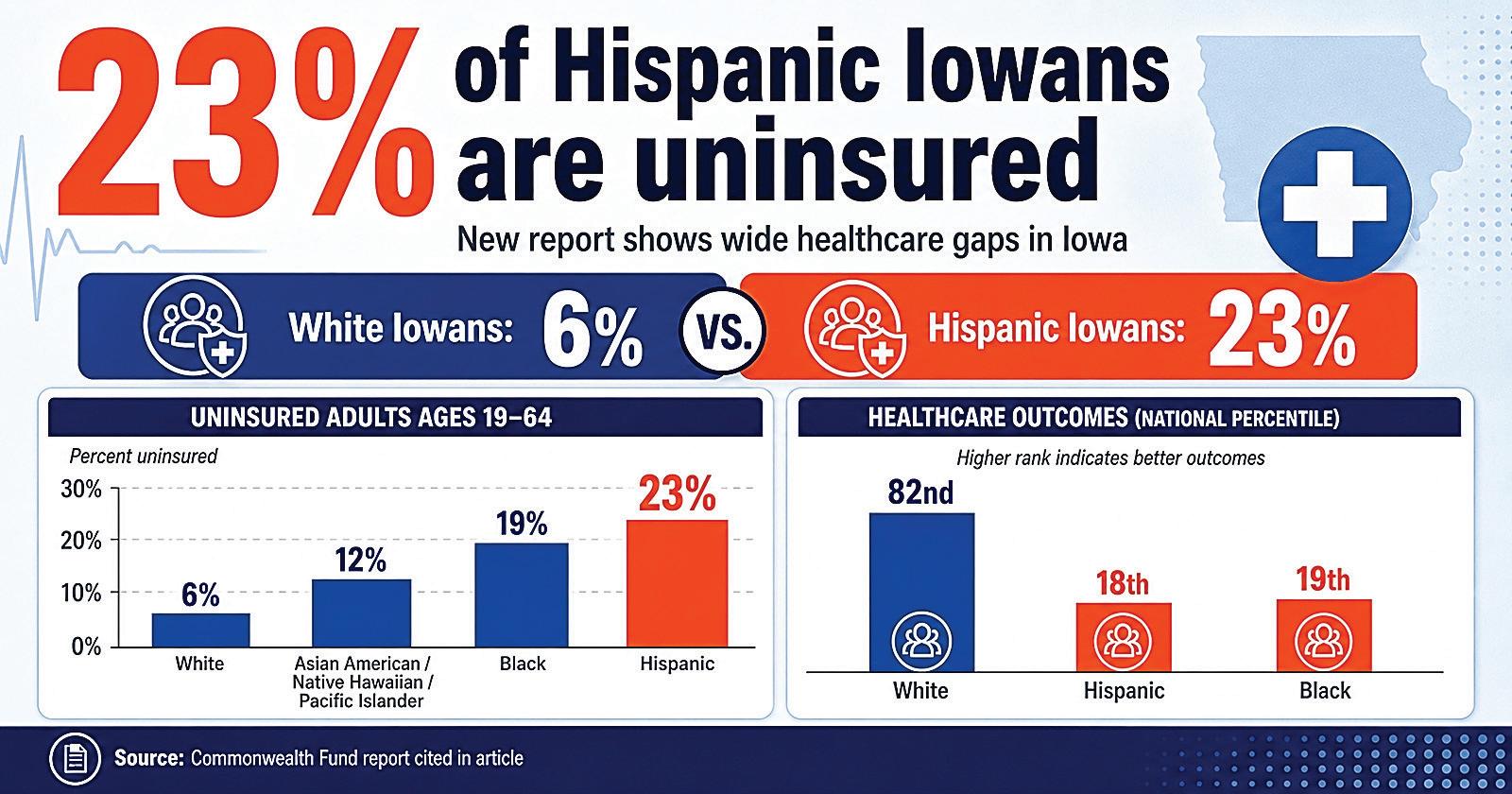
Informe nacional coloca a hispanos de Iowa entre los más afectados en salud
Por Natalie Krebs, Iowa Public Radio
Las disparidades raciales y étnicas persisten en el sistema de salud de Iowa, según un nuevo informe.
La tercera edición del State Health Disparities Report, elaborado por la organización sin fines de lucro Commonwealth Fund, analizó datos estatales de salud y encontró diferencias por raza en la calidad, el acceso y los resultados de la atención médica en todos los estados.
Aunque el informe encontró que las disparidades raciales y étnicas eran menos severas en Iowa que en estados vecinos, concluyó que los residentes blancos de Iowa se ubicaron en el percentil 82 a nivel nacional en resultados de salud, frente al percentil 18 de los residentes hispanos y el percentil 19 de los residentes afroamericanos del estado. Desglosar los datos por raza ayuda a identificar quiénes se están quedando atrás en materia de atención médica, dijo Jess Maksut, directora de investigación sobre equidad en salud en Commonwealth Fund.
“Analizamos si las personas tienen buen acceso a la atención médica, si reciben la atención adecuada en el momento adecuado y si el sistema de salud las ayuda a vivir vidas largas y saludables”, dijo. “Pero los promedios estatales pueden ocultar las disparidades que existen entre distintos grupos de personas”.
Los investigadores analizaron los datos más recientes de 2023 y 2024 en 24 indicadores para cinco grupos raciales y étnicos: blancos; afroamericanos; hispanos; asiático-estadounidenses, nativos hawaianos e isleños del Pacífico; y nativos americanos y nativos de Alaska.
Los datos muestran grandes diferencias en Iowa en algunas categorías, como las tasas de personas sin seguro médico. El informe encontró que el 6% de los residentes blancos de Iowa de 19 a 64 años no tiene seguro, frente al 12% de los residentes asiático-estadounidenses, nativos hawaianos e isleños del Pacífico, el 19% de los residentes afroamericanos y el 23% de los residentes hispanos. El informe no incluyó información sobre residentes nativos americanos y nativos de Alaska en Iowa porque el tamaño de la muestra estatal era demasiado pequeño.
Se espera que cambios recientes en políticas federales, como las reducciones en el gasto de Medicaid y el vencimiento de los créditos fiscales de la Affordable Care Act, aumenten las brechas raciales en la atención médica, dijo Maksut.
“La reducción de cobertura tras la revisión de Medicaid, los cambios en los mercados de seguros de la ACA y las nuevas restricciones que afectan a inmigrantes y asilados ya están debilitando el acceso, con impactos desproporcionados para las comunidades nativas americanas, nativas de Alaska, afroamericanas e hispanas”, dijo.
Se espera que el número de personas sin seguro en comunidades afroamericanas, hispanas, nativas americanas y nativas de Alaska aumente considerablemente durante la próxima década si no se realizan cambios de política, dijo Laurie Zephyrin, vicepresidenta sénior para el logro
de resultados equitativos en Commonwealth Fund.
“Las prioridades incluyen extender los créditos fiscales mejorados de la ACA, simplificar los procesos de inscripción y renovación de Medicaid y de los mercados de seguros, y ampliar Medicaid o cerrar la brecha de cobertura”, dijo.
Otras prioridades recomendadas por los investigadores incluyen aumentar el número de trabajadores comunitarios de salud, fortalecer las vías para crear una fuerza laboral diversa y reforzar programas de apoyo social como créditos fiscales, cuidado infantil y el Supplemental Nutrition Assistance Program.
“Los responsables de políticas públicas y los líderes del sistema pueden mejorar el acceso a una atención médica asequible y de alta calidad. Hay cosas que se pueden hacer aquí”, dijo Zephyrin.
The translation for this article is on page 22
May 7, 2026
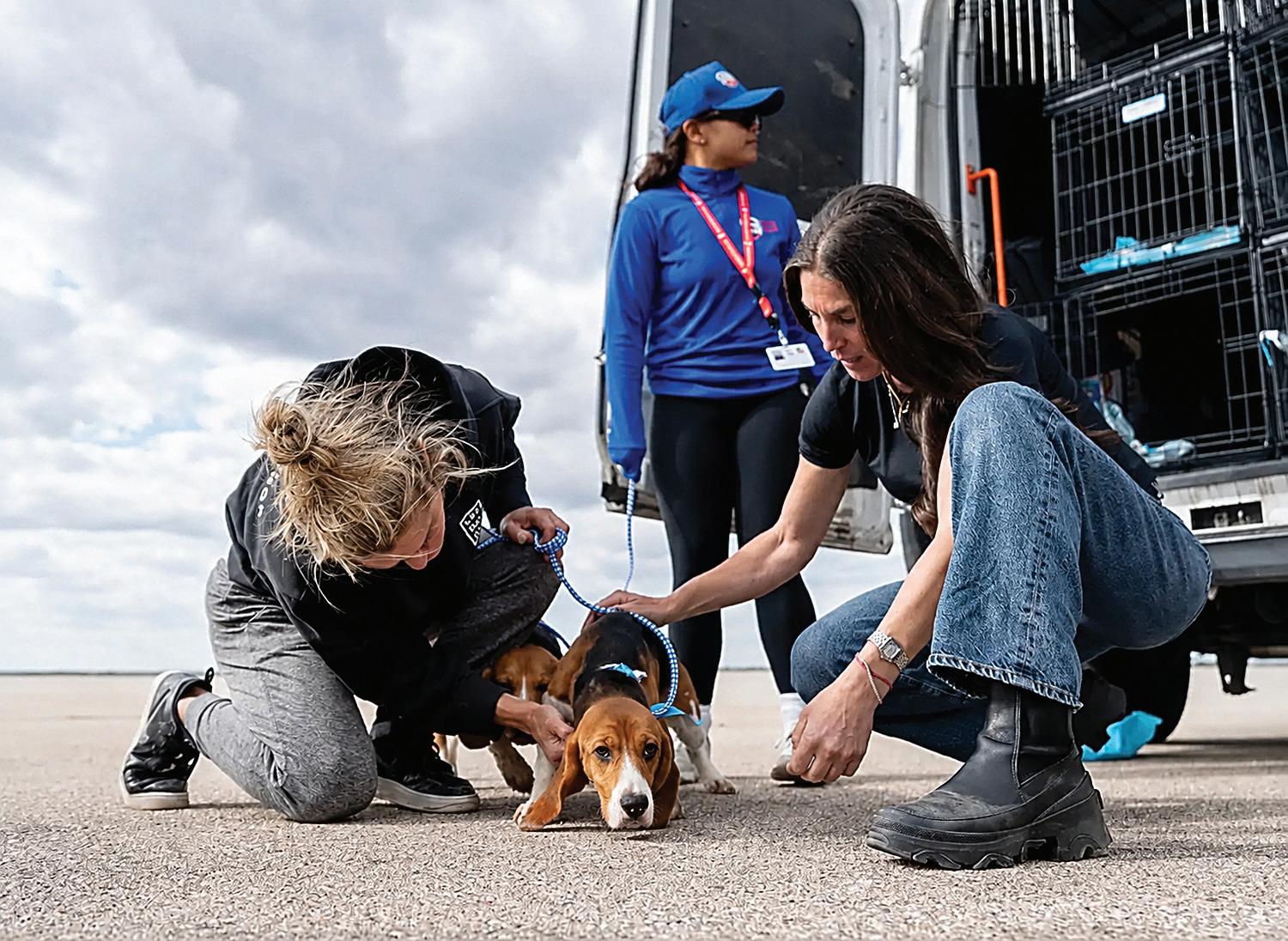
Refugio de Iowa recibirá 40 beagles rescatados de Ridglan Farms
Por Cooper Worth, Des Moines Register
Un refugio de animales de Iowa recibirá decenas de cachorros como parte de un rescate multiestatal de un controvertido criadero de beagles en Wisconsin.
Semanas después de que activistas por los derechos de los animales intentaran irrumpir en sus instalaciones cerca de Blue Mounds, Wisconsin, Ridglan Farms anunció el 29 de abril que había aceptado vender 1,500 beagles a organizaciones de rescate. Ridglan Farms ha estado señalada durante años por acusaciones de maltrato animal, que niega, pero aceptó entregar su licencia estatal de criadero antes del 1 de julio para evitar un proceso penal.
El acuerdo se alcanzó con Big Dog Ranch Rescue, con sede en Florida, y el Center for a Humane Economy, con sede en Washington, D.C. Los perros comenzaron a salir de las instalaciones el 1 de mayo, y se espera que los traslados duren alrededor de una semana y media, según USA TODAY.
Según el acuerdo, que no incluye a todos los perros de las instalaciones, 500 perros per-
manecerán en Wisconsin, 300 serán enviados a sedes de Big Dog Ranch Rescue en Florida y Alabama, y el resto será colocado con organizaciones asociadas en todo el país, de acuerdo con el Milwaukee Journal Sentinel.
Una de esas organizaciones es la Animal Rescue League of Iowa, que anunció en una publicación de Facebook del 1 de mayo que recibirá beagles del traslado de Ridglan Farms. Esto es lo que debe saber.
Por qué la ARL se sumó al rescate de beagles de Ridglan Farms
El Center for a Humane Economy contactó directamente a la ARL por su trayectoria en el manejo de rescates complejos y de perros con necesidades médicas y de comportamiento, dijo el director ejecutivo Tom Colvin. “Sabíamos que esos beagles necesitaban estar en otro lugar. Necesitaban salir de su situación actual y, con suerte, llegar a hogares”, dijo. “Así que cuando nos llamaron y nos pidieron ayuda, dijimos que sí de inmediato”. La ARL recibirá 40 beagles. Colvin dijo que Big Dog
Ranch Rescue coordina los esfuerzos de rescate en el lugar y se asegura de que los perros cuenten con los certificados de salud necesarios para trasladarlos entre estados. Los veterinarios de la ARL se harán cargo de la esterilización, la castración y otros cuidados médicos una vez que los perros lleguen a Iowa, dijo.
“También contamos con un equipo de comportamiento porque anticipamos, y nos han dicho que anticipemos, que los perros probablemente necesitarán bastante apoyo antes de adaptarse a una nueva vida en un hogar”, dijo.
¿Cuándo estarán disponibles para adopción los beagles de Ridglan Farms?
Colvin dijo que espera que la ARL tenga a los beagles bajo su cuidado para mediados de mayo. Agregó que el personal no sabrá cuándo estarán disponibles para adopción hasta después de tener tiempo para evaluarlos y trabajar con ellos.
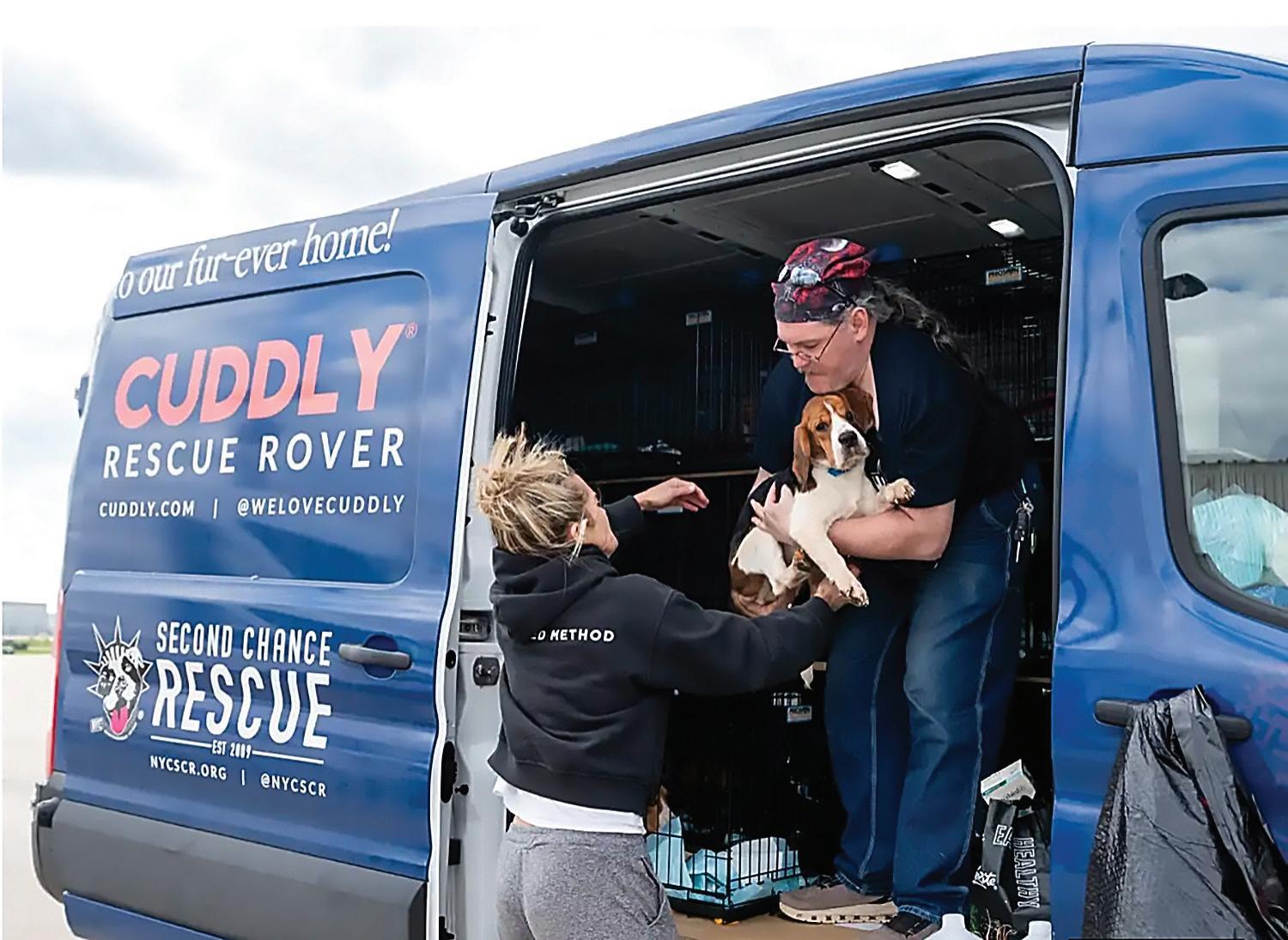
Second Chance Rescue, el sábado 2 de mayo de 2026, en Janesville, Wisconsin. Los perros serán ubicados en refugios y organizaciones de rescate, donde recibirán cuidados y serán emparejados con familias adoptivas.
“Aunque será maravilloso cuando estén durmiendo en el sofá de alguien en lugar de vivir en una jaula, no queremos apresurar ese proceso y causarles más dificultades a los perros”, dijo. “Al mismo tiempo, no queremos mantenerlos aquí más tiempo del necesario. Así que necesitamos verlos, trabajar con ellos y avanzar a partir de ahí”.
Cómo donar a la Animal Rescue League of Iowa
Colvin dijo que la ARL está preparada para manejar la llegada de los perros gracias a su instalación de rescate a gran escala recientemente completada. Aun así, dijo que la organización necesita apoyo público continuo y donaciones para sostener el esfuerzo.
Colvin alienta a los miembros de la comunidad que quieran contribuir a la campaña Transforming the Future of Animal Rescue de la ARL, que busca recaudar $6 millones para ampliar y renovar las instalaciones de rescate de la organización. Para obtener más información, visite ARL-Iowa.org/Transform.
Hispanic Iowans face wide healthcare gaps, new report finds
By Natalie Krebs, Iowa Public Radio
A report by the nonprofit Commonwealth Fund found disparities persist across racial and ethnic group in Iowa. Racial and ethnic group disparities persist across Iowa’s healthcare system, according to a new report.
The third edition of the State Health Disparities Report by the nonprofit Commonwealth Fund looked at health data at the state level and found differences in quality, access and outcomes in care along racial lines across all states.
Though the report found racial and ethnic disparities were less severe in Iowa as compared to neighboring states, it concluded that white Iowans ranked in the 82nd percentile nationally for healthcare outcomes compared to the 18th percentile for Hispanic Iowans and 19th percentile for Black Iowans.
Breaking down the data along racial lines helps to find who is left behind when it comes to healthcare, said Jess Maksut, director of health equity research at the Commonwealth Fund.
“We explore whether people have good access to healthcare, are getting the right care at the right time, and if the health system is helping people to live long and healthy lives,” she said. “But state level averages can mask the disparities that exist between different groups of people.”
Researchers looked at the most recent data from 2023 and 2024 for 24 indicators across five racial and ethnic groups: white; Black; Hispanic; Asian American, Native Hawaiian and Pacific Islander; and American Indian and Alaska Native.
The data show vast differences in Iowa data in some categories such as the rates of people who are uninsured. The report found 6% of white Iowans ages 19 to 64 are uninsured as compared to 12% of Asian American, Native Hawaiian and Pacific Islander Iowans, 19% of Black Iowans and 23% of Hispanic Iowans. The report did not include information on Iowans who are American Indian and Alas-
ka Native because the state’s sample size is too small. Recent federal policy changes, such as Medicaid spending reductions and the expiration of Affordable Care Act tax credits are expected to increase racial gaps in healthcare, Maksut said.
“Medicaid unwinding, [ACA] marketplace changes and new restrictions affecting immigrants and asylees are now eroding access with disproportionate impacts to American Indian, Alaska Native, Black and Hispanic communities,” she said.
The number of Black, Hispanic and American Indian and Alaska Native communities who are uninsured is expected to greatly increase in the next decade unless policy changes are made, said Laurie Zephyrin, the senior vice
president for achieving equitable outcomes at the Commonwealth Fund.
“Priorities include extended enhanced ACA tax credits, simplifying Medicaid and marketplace enrollment and renewal processes and expanding Medicaid or closing the coverage gap,” she said.
Other priorities recommended by researchers include increasing community health workers, strengthening pipelines to create a diverse workforce and strengthening social support programs like tax credits, childcare and the Supplemental Nutrition Assistance Program.
“Policy makers and system leaders can improve access to affordable, high quality care. There are things that can be done here,” Zephyrin said.
Socorro Martinez: crear espacios, construir hermandad e impulsar el liderazgo latino
Por Victoria Reyna-Rodriguez, Hola Iowa
Para Socorro Martinez, directora de Latina Leadership Initiative of GreaterDesMoines,elliderazgonoes solo un título: es un llamado de vida arraigado en el servicio, la identidad y lacomunidad.
Apenas cinco meses después de asumir el cargo, Martinez ya está dando forma a una visión clara: que las latinas sean vistas, acompañadas y empoderadas para crecer sin pedir permisonidisculpas.
De traductora a defensora
La historia de Martinez comienza en una familia marcada por el sacrificio y la esperanza. Nacida cerca de Chicago, de padres mexicanos, y criada en Norwalk, creció entre dos mundos: uno lleno de cultura dentro de casa y otro donde esa misma cultura muchas veces la hacía sentirse distinta.
“Definitivamente crecí en una burbuja”, recuerda.
Como muchas latinas de primera generación, Martinez asumió responsabilidades desde muy joven. Mucho antes de que se convirtiera en su profesión, fue intérprete
para sus padres: en citas médicas, restaurantes y situaciones de la vida diaria. Esa experiencia no solo formó sus habilidades; también definió su propósito.
Hoy, con más de 20 años como intérprete profesional, Martinez sigue amplificando voces, pero ahora lo hace a una escala mucho mayor.
“Lo que empezó como ayudar a mi familia se convirtió en algo mucho más profundo”, dice. “Se trata de conexión, dignidad y de asegurar que nuestra comunidad sea escuchada”.
Una hermandad que te encuentra
Martinez suele decir que ella no encontró a Latina Leadership Initiative; la organización la encontró a ella.
En 2023, respondió a una convocatoria en redes sociales y se unió al programa.
Lo que encontró fue más que mentoría: fue transformación.
Inspirada por la ambición y la resiliencia de su mentee, Martinez vio de cerca lo que ocurre cuando las latinas tienen espacio para crecer.
“Pienso en el valor que se necesita simplemente para entrar a un espacio como este”, dice. “Ese primer paso importa, y merece celebrarse”.
Fundada en 2013 por un grupo visionario de líderes latinas, LLI se ha convertido en una red sólida de más de 100 exalumnas, cada una con una historia de crecimiento, redescubrimiento y liderazgo.
En el fondo, dice Martinez, el programa se trata de una sola cosa: hermandad.
“Es cálido. Es real. Es un lugar donde no tienes que explicar quién eres; ya te entienden”.
Ocupar espacio sin pedir permiso
En un mundo donde la representación todavía no refleja la realidad, Martinez
tiene clara su misión: las latinas merecen ocupar espacio, no algún día, sino ahora.
“Hay muchas cosas pasando a nuestro alrededor que pueden generar miedo e incertidumbre”, dice. “Pero espacios como LLI nos recuerdan que no estamos solas”.
Aunque los latinos suelen ser reconocidos como una de las poblaciones de mayor crecimiento en el país, Martinez señala que la visibilidad, especialmente en espacios profesionales, todavía se queda corta. Ella sabe lo que se siente ser la única latina en la sala. Pero está comprometida a que la próxima generación no tenga que cargar con ese mismo peso. Y su mensaje es poderoso por su sencillez:
No tienes que ser CEO para importar. No tienes que encajar en un molde para pertenecer.
Lo que traes ya es suficiente.
Una invitación a crecer
A través de su programa anual de liderazgo, que se realiza cada año de enero a mayo, LLI sigue abriendo puertas para latinas listas para invertir en su crecimiento personal y profesional.
Aunque la cohorte de 2026 ya está en marcha, las oportunidades para conectar siguen abiertas a través de eventos comunitarios, mentoría y roles de liderazgo.
Para Martinez, la invitación es sencilla, pero significativa:
“Da el paso. Aplica. Preséntate. Y, sobre todo, sigue ocupando tu espacio”.
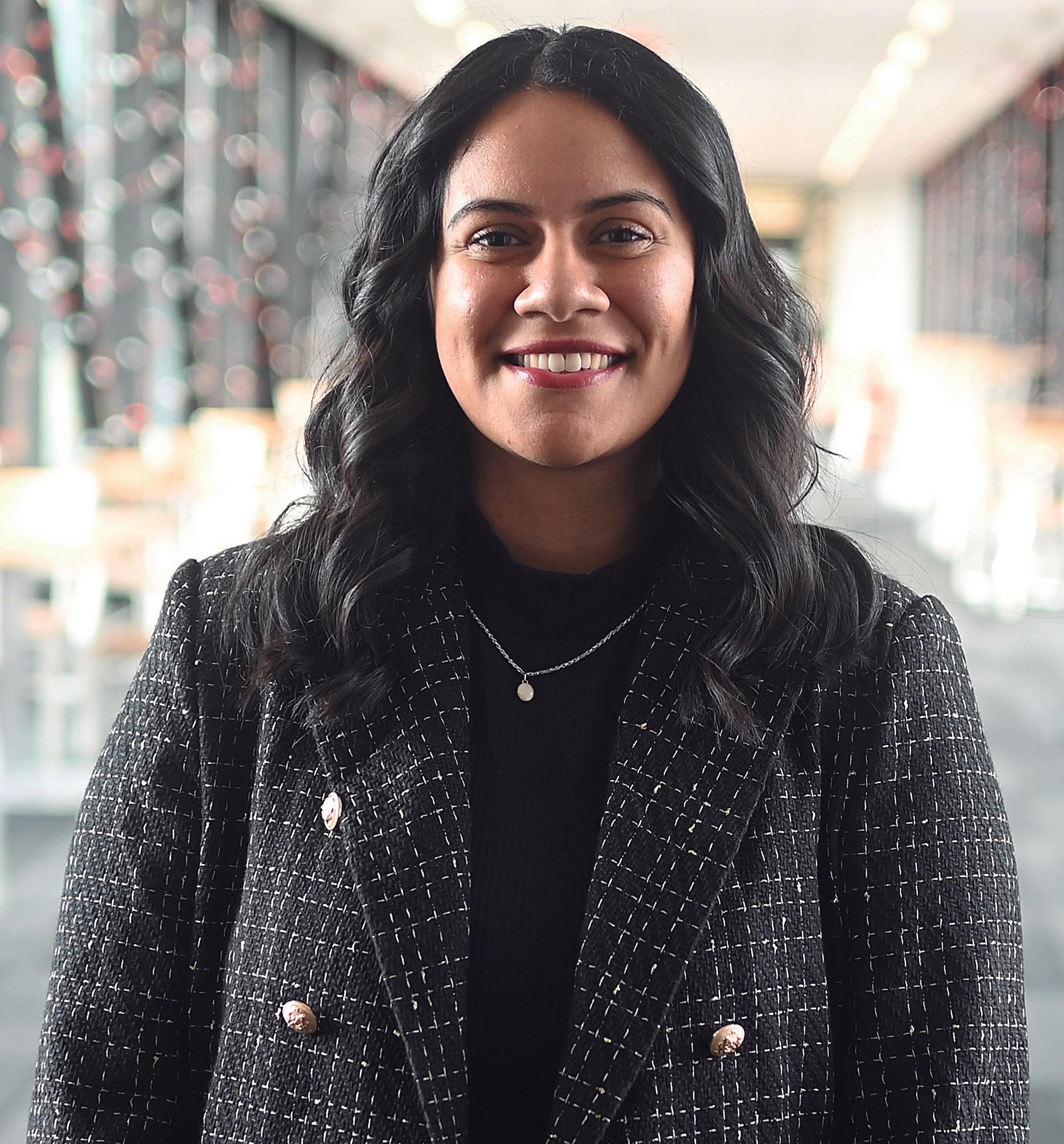
Socorro Martínez es la directora ejecutiva de la Iniciativa de Liderazgo Latino
Editora de QC y Corridor Business Journals Impulsa la Diversidad
Por Jonathan Turner, Hola America
Alexandra Olsen ya ha vivido mucho en sus 31 años: en la última década pasó de ser pasante en un periódico a dirigir dos publicaciones, Corridor Business Journal y Quad Cities Business Journal.
Nacida en el estado más austral de Brasil, Olsen se mudó a Bettendorf, Iowa, cuando tenía 8 años, junto con sus dos hermanos menores. Su padre murió en un accidente automovilístico cuando ella tenía un mes de nacida, y su madre volvió a casarse con un estadounidense que trabajaba como ingeniero para John Deere en Brasil y continuó con Deere en Estados Unidos.
Olsen se graduó de Pleasant Valley High en 2013, después de participar en 20 producciones teatrales y escribir para el periódico escolar. Su familia regresaba con frecuencia a Brasil para visitar a sus parientes, y su abuela, quien trabajaba como repostera, preparó dulces especiales para su boda en octubre de 2014. “Cuando trabajaba, hacía dulces para bodas y cumpleaños. Y en Brasil, eso tiene mucho peso cultural”, dijo Olsen recientemente, al señalar que su abuela se especializaba en brigadeiros, unas bolitas de chocolate tipo fudge.
“Fue increíble tenerlos a todos aquí. Mis tías, mis abuelos, todos en la cocina de mi mamá, como en la casa de mi infancia, preparando esos dulces para mi boda”, recordó. “Fue un momento de cierre de círculo”.
Olsen y su esposo, Cody, tienen una hija de cinco años. Obtuvo su associate degree en Black Hawk College, en Moline, donde tomó sus primeras clases de periodismo y se graduó magna cum laude, antes de completar su licenciatura en Columbia College Chicago.
“Realmente empecé a enamorarme de la escritura. Y escribir siempre fue mi materia más fuerte”, dijo Olsen sobre Black Hawk. “Inglés y escritura, lo cual es curioso porque el inglés es mi segundo idioma. Las áreas más artísticas siempre fueron mi punto fuerte”. Le encantaban tanto el teatro como el periodismo por el poder de contar las historias de otras personas.
“Para mí, el periodismo y el teatro son muy similares porque te permiten probar distintas vidas y ver las
Continúa en la página 9
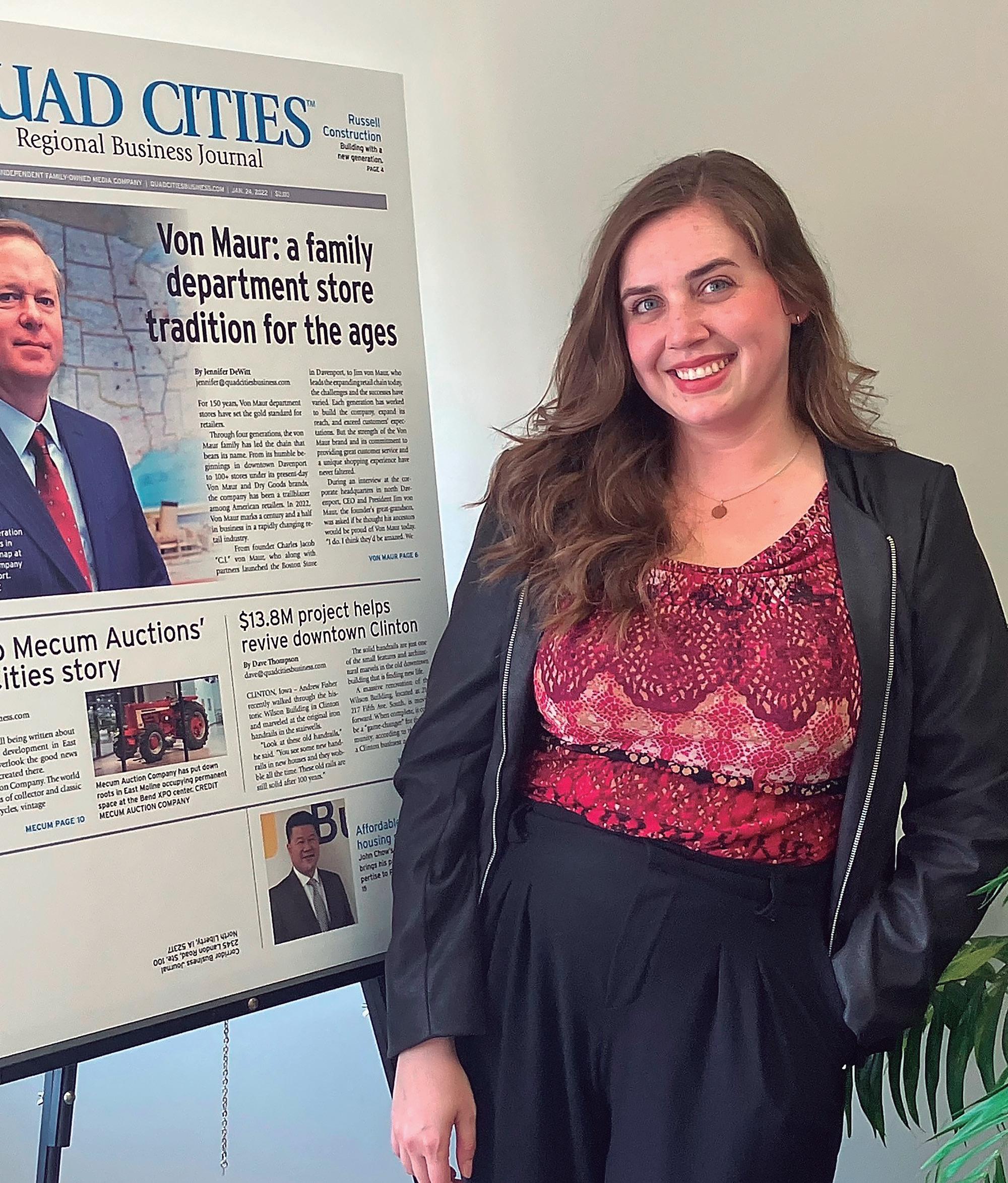
Alexandra Olsen, editora ejecutiva del Corridor Business Journal y QC Business Journal, en la oficina de Quad Cities en Bettendorf, Iowa, el 16 de abril de 2026. Foto de Jonathan Turner / Hola America.
Continúa de la página anterior
cosas desde diferentes perspectivas, a través de los ojos de otras personas”, dijo. “En el periodismo, puedes asomarte a esos personajes, esos personajes de la vida real, y contar esas historias. También es otra forma de narrar. Y contar historias siempre ha sido una parte enorme de mí”.
Olsen hizo una pasantía en el Moline Dispatch en el verano de 2016 y luego en el Chicago Sun-Times ese otoño, coincidiendo con la victoria de los Cubs en la Serie Mundial, cuando el periódico envió a todos sus reporteros a recoger las reacciones del público durante un desfile multitudinario.
“El río Chicago estaba teñido de azul Cubbie. Había millones de personas en la ciudad”, dijo. “Y había gente por todas partes; no te podías mover”.
“Trabajar en el Sun-Times fue muy bueno, y pude aprender de periodistas en activo y de editores realmente increíbles. Ese equipo fue inspirador”, dijo Olsen. Otro momento destacado de su carrera fue acompañar al equipo del Sun-Times a cubrir la toma de posesión presidencial de 2017 en Washington, D.C., así como la Women’s March del día siguiente, el 21 de enero, a la que asistieron 470,000 mujeres.
“Era una clase multimedia, así que realmente se trataba de recopilar ese contenido”, dijo. “Fue una experiencia increíble. Una lección sobre civismo estadounidense, y ni siquiera puedo poner en palabras lo que fue ver a tantas personas marchando y ejerciendo sus derechos. Es algo que me ha marcado para toda la vida”.
Antes de llegar al Corridor Business Journal, Olsen trabajó dos años como editora digital para Cedar Rapids Gazette y dos años y medio como directora de marketing de NewBo City Market en Cedar Rapids. Tuvo a su hija en marzo de 2021 y valoró unirse en abril de 2022 al pequeño equipo del CBJ, con enfoque familiar, como editora digital.
Olsen ascendió rápidamente dentro del equipo editorial: fue promovida a editora gerente en diciembre de 2022, luego a editora en diciembre de 2023 y, esta primavera, asumió también como editora del QC Journal.
“Ha sido un torbellino, pero ha sido fantástico”, dijo. “Ahora dirijo ambas redacciones, no solo una”. El CBJ y el QCBJ tienen cada uno dos reporteros de tiempo completo y publican sus ediciones impresas en semanas alternas, mientras actualizan sus sitios web a diario con varias historias nuevas. También cuentan con un equipo de ventas publicitarias y un equipo de corrección y diseño que trabajan para ambas publicaciones.
“Alexandra ha sido una líder extraordinaria para nuestra organización. Comenzó su camino
como editora digital y ascendió con una visión, determinación y propósito notables, y no ha mirado atrás desde entonces”, publicó en LinkedIn John F. Lohman, CEO de Corridor Media.
“Somos increíblemente afortunados de tenerla al frente de ambas redacciones mientras navegamos un panorama mediático en constante evolución”, dijo. Lohman fundó el CBJ en 2004 y la publicación hermana QCBJ en 2021.
“Realmente nos enfocamos en mantenernos dentro de nuestra cobertura de negocios. No cubrimos política. No cubrimos tribunales ni crimen, a menos que tenga algo que ver con negocios o sea de interés para la comunidad empresarial”, dijo Olsen, al señalar que el propósito de las publicaciones es “poner el reflector sobre los emprendedores y líderes empresariales que están marcando una diferencia en nuestras comunidades y que están creando comunidades que son excelentes lugares para vivir y trabajar”.
“Ha sido una experiencia increíble poder ver el crecimiento no solo del Corridor, sino también de las Quad Cities a través de esa mirada”, dijo Olsen. “Obviamente hay muchas maneras distintas en que una comunidad puede crecer, pero creo que la mirada empresarial es muy visceral. Es una forma muy tangible de ver el crecimiento”.
Las publicaciones también observan Eastern Iowa y Western Illinois como una sola región. “Hay muchas historias que contamos que funcionan no solo para el CBJ, sino también para el QCBJ y viceversa. Hay muchas compañías con sede aquí que también operan allá, y nos gusta verlo desde una perspectiva regional aún más amplia”, dijo. Este año lanzaron ediciones trimestrales combinadas de ambos periódicos, que comenzaron el 30 de marzo.
Cada edición tendrá un tema; la primera fue construcción y desarrollo, con Russell como historia de portada.
Los journals también funcionan como una oportunidad de networking para empleadores y empleados, dijo Olsen. “Úsenlos como una forma de informarse sobre oportunidades. Y no solo los líderes que emplean a personas, sino también los empleados. Piensen en lo inspirado que uno puede sentirse al leer la historia de un emprendedor”, dijo.
La compañía también organiza presentaciones, paneles y premios con regularidad, como Women of Influence, que el CBJ inició en 2004, y Leaders Under 40.
Crear conciencia sobre las mujeres y la diversidad ha sido durante mucho tiempo una de las señas de identidad del CBJ, y ahora también del QCBJ, dijo
Olsen. Su origen bicultural influye profundamente en su compromiso con una narrativa inclusiva y con impulsar voces diversas dentro del periodismo de negocios.
Bajo la dirección editorial de Olsen, el CBJ ha recibido reconocimiento de la Alliance of Area Business Publishers. En 2023 recibió el premio Most Improved Publication, con jueces que destacaron las mejoras en diseño y calidad editorial. En 2024, el CBJ obtuvo premios de bronce en las categorías Best Newspaper y Best Overall Design, y en 2025 recibió oro por Best Feature Single Story y bronce por su podcast “Real Success with Nate Kaeding”, entre otros reconocimientos.
A los 30 años, Olsen fue nombrada homenajeada Forty Under 40 en 2024, en reconocimiento a su impacto como joven líder profesional en la región Corridor de Iowa.
“Destacar ese camino de las mujeres en los negocios es muy importante”, dijo. “También tenemos líderes sin fines de lucro que reciben ese reconocimiento. Cubrimos principalmente negocios. También cubrimos el sector sin fines de lucro porque creemos que es una pieza muy importante del rompecabezas del desarrollo económico”.
“Las mujeres en los negocios son increíbles. Enfrentan desafíos que queremos conocer”, dijo Olsen. “Forty Under 40 ha sido un programa enorme para nosotros. Yo fui una 40 Under 40 del CBJ, y no tengo absolutamente nada que ver con la selección de los 40 Under 40”.
“Queremos destacar historias empresariales inspiradoras sin importar de quién se trate”, dijo. “Es muy bonito ver a estas mujeres y a los 40 Under 40, o a quien sea que premiemos. Las estamos destacando, pero en realidad es como el primer escalón para ver hacia dónde va su carrera”.
La amplia comunidad latina de las Quad Cities aporta cultura, estilo y empleo, señaló. “John Deere trae a muchos brasileños al área de Quad Cities. Tenemos nuestras propias fiestas y actividades, y ver cómo las comunidades inmigrantes pueden traer vida y color a nuestro mundo es increíble”.
“Crecí en las Quad Cities, así que obviamente eso fue una parte importante de por qué este nuevo puesto significó tanto para mí. Pero también pienso en ese componente cultural, en cómo las Quad Cities son diferentes del Corridor, y me gustan las distintas maneras en que nuestras comunidades están abrazando esas culturas”, dijo Olsen.
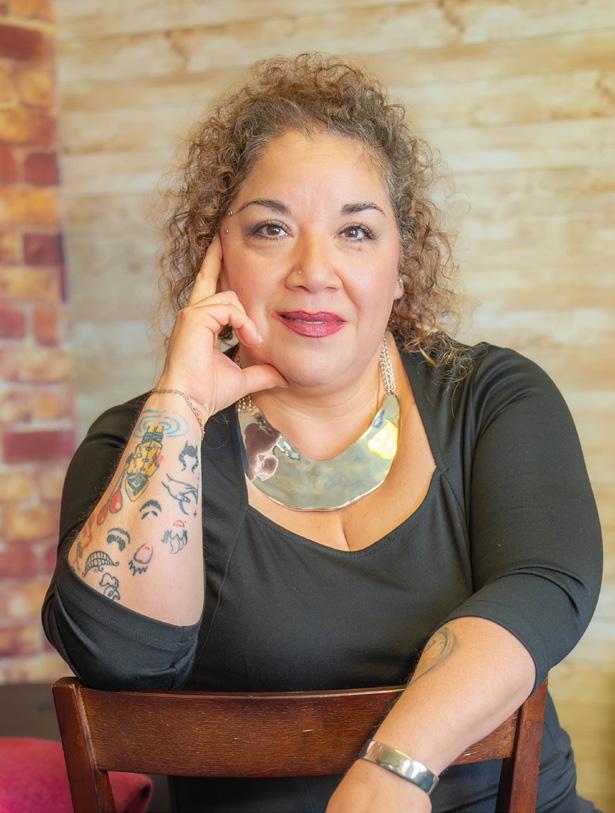
JEFAS Magazine cumple dos años contando historias de latinas emprendedoras en Iowa y Nebraska
Por Carolina Martinez, Hola Iowa
Desde su lanzamiento el 9 de mayo de 2024, JEFAS ha publicado cuatro ediciones, organizado eventos comunitarios y ayudado a conectar a latinas emprendedoras de Iowa y Nebraska.
Antes de que existiera JEFAS Magazine, las latinas emprendedoras del Medio Oeste ya estaban creando negocios y apoyando a sus comunidades. Dirigían restaurantes, salones, estudios, tiendas y empresas de servicios mientras equilibraban responsabilidades familiares, largas jornadas de trabajo y la incertidumbre que muchas veces acompaña al emprendimiento.
Ya eran líderes. JEFAS simplemente ayudó a dar más visibilidad a su trabajo.
Cuando se lanzó la primera edición, la misión era clara: contar las historias de latinas emprendedoras no solo como figuras inspiradoras, sino también como dueñas de negocios, fundadoras y profesionales. Su trabajo pertenecía a la cobertura empresarial y a la historia más amplia de las comunidades que ayudan a construir todos los días. Hasta ahora, JEFAS ha publicado tres ediciones en Iowa y una en Nebraska, ha ampliado su presencia en ambos estados, ha organizado eventos de networking y ha lanzado esfuerzos de recaudación para sostener el crecimiento de la publicación. En el camino, la revista se ha convertido en algo más que un producto impreso. También se ha convertido en un espacio donde nacen conexiones.
Alguien reconoce a una dueña de negocio por una historia. Una lectora envía un mensaje después de ver un perfil. Mujeres se encuentran en eventos y descubren que han vivido experiencias similares. Una historia se convierte en conversación, y una conversación a veces se convierte en colaboración.
El objetivo de JEFAS
JEFAS Magazine fue fundada por Erika Macias, presidenta y editora de JEFAS y Hola America Media Group, junto con su esposo, Tar Macias, CEO de Hola America Media Group. Desde el principio, la publicación fue creada para amplificar las voces de latinas en el Medio Oeste y preservar sus historias para futuras generaciones. Para Erika Macias, la misión es personal. Ella ha vinculado muchas veces este trabajo con su propia historia, después de llegar a Estados Unidos desde Michoacán, México, en 1992, sin hablar inglés. Como muchas de las mujeres que aparecen en la revista, entiende lo que significa adaptarse, aprender rápido y seguir avanzando
sin tener siempre un camino claro.
“Amplificar las historias de otras latinas tiene un significado profundo para mí”, dice Macias. “La representación importa, y creo en crear plataformas donde nuestras voces, logros y liderazgo sean visibles y celebrados. Ver a otras latinas prosperar y ser reconocidas es inspirador y también un recordatorio del poder de la comunidad”.
“Necesitamos abrir las puertas de oportunidad para las latinas, y ese es el propósito de JEFAS Magazine. ¡Somos más que una revista o un sitio web, somos una comunidad!”.
Esa idea de comunidad se ha mantenido en el centro de la publicación desde el comienzo.
Muchos perfiles de JEFAS empiezan con un negocio, pero rara vez se quedan ahí. Detrás de un restaurante puede haber años de sacrificio familiar y largas jornadas. Detrás de un estudio creativo puede haber preguntas de identidad, migración o reconstrucción de la confianza después de momentos difíciles. Detrás de un servicio profesional puede haber deuda, riesgo y años de trabajo antes de que el éxito sea visible.
A menudo, las historias de éxito se acortan cuando se vuelven públicas. La gente ve el lanzamiento del negocio, la página en redes sociales o el crecimiento. Lo que no siempre ve son las dificultades: las facturas atrasadas, los horarios familiares, la curva de aprendizaje o los años que pasaron antes de que el negocio se sintiera estable.
JEFAS ha intentado documentar esas realidades con honestidad, sin dejar de celebrar los logros que nacen de la perseverancia.
De Iowa a Nebraska
Después del lanzamiento de la primera edición en Iowa en mayo de 2024, llegaron nuevas ediciones durante 2025. En febrero de 2026, JEFAS se expandió más allá de Iowa con su primera edición de Nebraska, extendiendo el alcance de la revista a otra comunidad latina de negocios en crecimiento dentro del Medio Oeste.
El impulso alrededor de la publicación creció rápidamente.
En noviembre pasado, JEFAS Magazine recibió tres premios José Martí de Oro durante la convención de la National Association of Hispanic Publications en San Diego. La publicación obtuvo primeros lugares en las categorías Outstanding Hispanic Magazine, Outstanding Magazine Design y Outstanding Event por el Latina Business Excellence Summit 2024.
El reconocimiento colocó a JEFAS entre algunas de las
publicaciones latinas más respetadas del país y reforzó el creciente impacto de la revista más allá de Iowa y Nebraska.
“El éxito de la revista se lo debemos a un talentoso equipo de editores, escritores, fotógrafos y diseñadores, todos de la comunidad latina”, dijo Macias. “De verdad es un esfuerzo de equipo. Juntos somos más fuertes. Together we are stronger”.
Hoy, JEFAS se publica en formato impreso y en línea a través de JEFASMagazine.com, con una distribución enfocada en negocios propiedad de latinas y espacios comunitarios en Iowa y Nebraska.
El proyecto nunca tuvo la intención de enfocarse en una sola ciudad ni en un solo tipo de emprendedora. Las historias vienen de Des Moines, Omaha, West Des Moines, Waukee, Ames, Bondurant y comunidades rurales más pequeñas, donde las latinas emprendedoras muchas veces dependen de redes personales, recomendaciones y el boca a boca para hacer crecer sus negocios.
Las mujeres se recomiendan entre sí, comparten oportunidades, intercambian contactos y se apoyan de formas
Continúa en la página 11
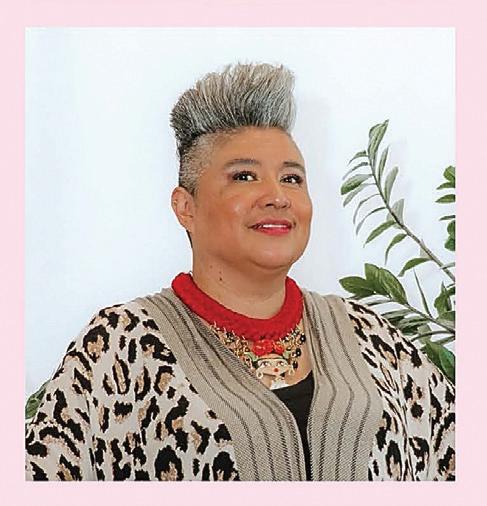
Erika Macias, presidenta de JEFAS Magazine y Hola America Media Group Foto por Tar Macias / Hola Iowa
que no siempre son visibles públicamente, pero que son esenciales para el éxito de muchos pequeños negocios.
JEFAS ha intentado capturar no solo los negocios, sino también las relaciones y los sistemas de apoyo comunitario que hay detrás de ellos.
Cuando todas se encuentran en el mismo lugar
A medida que la revista creció, también crecieron sus eventos y esfuerzos de networking.
El Latina Business Excellence Summit se convirtió en uno de los ejemplos más claros de lo que ocurre cuando latinas emprendedoras de distintos orígenes e industrias se reúnen en un mismo espacio.
En el summit de 2025, realizado en Drake University, mujeres de Iowa, Nebraska, Illinois, Miami y México participaron en talleres, paneles, networking y conversaciones sobre emprendimiento, liderazgo y crecimiento personal.
Algunas asistentes llegaron como dueñas de negocios ya establecidos. Otras apenas comenzaban a explorar la idea de crear algo propio.
Los comentarios después del evento reflejaron el ambiente que los organizadores esperaban crear. Las asistentes destacaron el entorno acogedor, las conversaciones de cafecito, las sesiones, la música y la oportunidad de conocer a mujeres con experiencias similares.
Una asistente describió el summit como “un impulso de energía y empoderamiento femenino”. Otra dijo que lo más valioso del evento fue la autenticidad y vulnerabilidad compartidas durante el día.
También hubo resultados concretos.
Una participante dijo que conoció a cuatro posibles clientas durante el summit y que ya tenía reuniones de seguimiento programadas después del evento. Para las dueñas de pequeños negocios, ese tipo de conexiones importa.
Una conversación puede convertirse en una alianza, una recomendación o trabajo futuro.
Las asistentes también compartieron ideas para próximos eventos, incluido más tiempo para networking, sesiones adicionales y más oportunidades para conversaciones bilingües y presentaciones guiadas para quienes asisten por primera vez.
El liderazgo de JEFAS ya prepara el tercer Latina Business Excellence Summit, que se realizará a finales del verano de 2026.
“Hay espacio para ti aquí”
Un ejemplo de las relaciones construidas a través de JEFAS llegó por medio de la emprendedora creativa de Omaha Susi Franco, de Chispa Creative.
Franco dijo que se conectó por primera vez con el equipo de JEFAS en un evento de networking y que de inmediato se identificó con la misión de la publicación de apoyar a latinas emprendedoras en Omaha y en zonas rurales de Nebraska.
Antes de colaborar con la revista, Franco compartió que es una persona queer y de género expansivo, y preguntó si había espacio para ella dentro de una plataforma centrada en mujeres.
“La respuesta fue simple: hay espacio para ti aquí”, dijo Franco.
Esa respuesta se quedó con ella porque fue inmediata y sincera.
Más adelante, Franco fotografió más de 15 perfiles de JEFAS y describió la experiencia como una de las colaboraciones más significativas de su carrera. Dijo que la publicación hace más que destacar negocios: invierte en las personas y en la forma en que se cuentan sus historias.
Su propio perfil en JEFAS también amplió su red. Otras emprendedoras se acercaron después de leer su historia,
creando relaciones y oportunidades que quizá no habrían ocurrido de otra manera.
No todo impacto se puede medir en números. A veces se ve como una recomendación meses después, un mensaje de otra emprendedora o alguien que se reconoce por primera vez en una historia.
Dos años después
Dos años después de su lanzamiento, JEFAS Magazine sigue documentando historias que ya se estaban desarrollando en Iowa y Nebraska mucho antes de que existiera la publicación.
Historias de mujeres que construyeron negocios mientras criaban hijos. Mujeres que aprendieron a moverse entre idiomas y culturas. Mujeres que cocinaron, limpiaron, diseñaron, contrataron, vendieron, organizaron, cuidaron a otros y siguieron construyendo incluso cuando los recursos eran limitados.
El trabajo ya estaba ahí. JEFAS ayudó a poner más de ese trabajo en la página, con fotografías, nombres y una plataforma donde latinas emprendedoras del Medio Oeste pueden conectarse y verse reflejadas.
Al entrar en su tercer año, la misión de la publicación sigue arraigada en la visibilidad, la comunidad y el impacto a largo plazo.
“Mirando hacia el futuro, quiero ver a JEFAS seguir creciendo como una plataforma poderosa que eleva, conecta y apoya a latinas en distintas industrias”, dice Macias. “Nuestra visión es ampliar su alcance, profundizar su impacto y crear aún más oportunidades de visibilidad, colaboración y éxito a largo plazo”.
“También quiero que sea un catalizador para mujeres que desean iniciar su propio camino, para que sepan que no están solas y que pueden ser parte de nuestro círculo interno”.
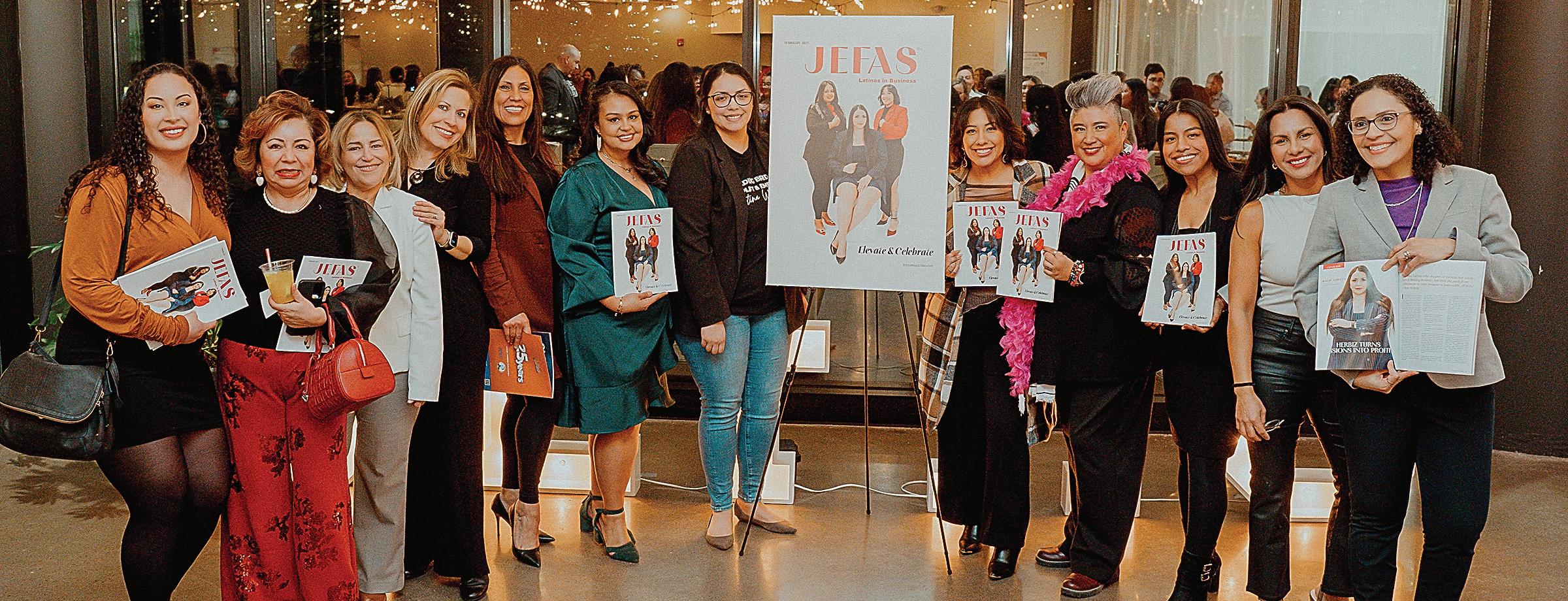
Lanzamiento del segundo número de JEFAS Magazine en febrero de 2025.
Foto por Tatiana Peña / JEFAS Magazine
El abogado Isaac Medina, de Iowa City, construye un despacho de inmigración con propósito
Medina, que ahora tiene 30 años, está casado, tiene dos hijos (de 2 años y cinco meses) y fundó su propio bufete de abogados de inmigración en Iowa City en marzo de 2026.
Por Jonathan Turner, Hola Iowa
A solo cinco años de iniciar su carrera, Isaac Medina trabaja en un campo de alta demanda. Es abogado de inmigración con sede en Iowa City, y su camino hacia el derecho estuvo marcado por algo profundamente personal: crecer en un hogar inmigrante en el centro de Iowa. Hijo de inmigrantes mexicanos, el egresado de la University of Iowa ha dedicado su carrera legal a servir a comunidades que necesitan representación bilingüe. Después de cuatro años de experiencia legal, Medina recurrió al espíritu emprendedor de su familia para establecer Medina Law en marzo pasado. Ofrece orientación y representación en una amplia variedad de asuntos migratorios, incluidas peticiones familiares y DACA.
Después de trabajar para una firma de West Liberty especializada en inmigración, abrió su propio despacho en Iowa City, principalmente por la libertad de manejar su propio horario. Graduado en 2021 de la University of Cincinnati College of Law, ahora tiene 30 años, está casado y tiene dos hijos, de 2 años y cinco meses. Su esposa, Gabriela, es trabajadora social del distrito escolar de Iowa City.
“Soy dueño de mi tiempo, como mi propio jefe”, dijo. “Si un niño se enferma y necesito llevarlo a una cita médica, recogerlo de la guardería, etc., tengo esa flexibilidad, dentro de lo razonable. Muchos pequeños negocios, y negocios en general, no están estructurados de esa manera, lo cual es lamentable”.
“En un momento en que estamos hablando de aplicación de la ley migratoria y política migratoria bajo una administración como la actual, se vuelve difícil”, dijo, al señalar que la necesidad es grande y los ingresos de los inmigrantes son limitados. “Los salarios no han seguido el ritmo de la inflación ni del costo de las cosas. Entonces hay un equilibrio delicado”.
“Solo con el salario de mi esposa no podemos cubrir los gastos que tenemos. Así que tengo la esperanza de que, poco a poco, mi nombre se vaya conociendo”, dijo Medina. “Mi interés es darte asesoría legal ética, transparente y honesta sobre tu situación y luego presentarte opciones. Porque, lamentablemente, en tiempos en que la gente está asustada y teme un aumento en la aplicación de la ley migratoria, y eso se combina con las maravillas del internet y la interconexión de todo, hay personas que se aprovechan del miedo de la gente y defraudan a otros quitándoles su dinero”.
“Y si puedo lograr que alguien se calme, explicarle su situación y bajar la tensión para que al menos sepa cuáles son sus próximos pasos, entonces hice mi trabajo”, dijo. “Así que obviamente espero que eso se traduzca en negocio”.
En el último año y medio ha habido una aplicación mucho más estricta de las leyes migratorias, lo que ha aumentado el trabajo para Medina.
“Lo que estamos viendo ahora es más personas detenidas, más personas sin opciones”, dijo. “La posibilidad de ser deportado es casi segura por la falta de discreción, por los cambios drásticos en la composición de la corte
de inmigración y sus jueces, y simplemente por todo el aparato de financiamiento destinado a ICE”.
“Lo más difícil es que se necesitará acción del Congreso para cambiar realmente estas cosas”, dijo Medina. “Hemos visto cómo la situación económica empeora cuando se trata de los recursos que tienen los clientes, o la falta de ellos. Así que si yo estoy apretado ahora, todos lo estamos. Sé que mis clientes también”.
A veces colabora con organizaciones legales en Iowa que ofrecen consultas gratuitas.
“Incluso los abogados privados no están estructurados para responder a esa demanda. Incluso si los clientes pudieran pagar, es una tormenta perfecta”, dijo Medina. “Y lamentablemente, los inmigrantes están quedando atrapados en medio de todo”.
Su práctica trabaja mucho con peticiones familiares, en las que ayuda al cónyuge indocumentado de un ciudadano estadounidense.
“Algunas personas no quieren iniciar su proceso migratorio porque piensan que algo les puede pasar, que podrían ser detenidas, bajo esta administración”, dijo Medina. “La parte frustrante es cuánto más va a tardar, porque para empezar ya existen tiempos de espera excesivos”.
Ayudar a las personas a obtener la ciudadanía o la residencia permanente es gratificante, pero “la parte triste también es que, en el ambiente migratorio actual, en el ambiente actual de política migratoria y aplicación de la ley, el número de personas a las que puedes ayudar sin contratiempos es muy reducido ahora”, dijo.
De México a Estados Unidos
El padre de Medina llegó de Jalisco, México, siendo adolescente, al sur de California, sin autorización, para trabajar en el campo, pero se benefició de una ley federal de amnistía de 1986 firmada por el presidente Reagan.
“Si eran personas de buen carácter moral o sin antecedentes penales, se les abrió una vía que no habría existido antes”, dijo Medina sobre la ciudadanía. “Así que les dio a millones de personas como mi padre, si se mantenían por el buen camino, la posibilidad de cambiar por completo el árbol genealógico de su familia, una vía hacia la ciudadanía. Se hicieron ciudadanos en 2000 como dueños de negocios latinos, restauranteros y emprendedores. Incluso tuvieron la oportunidad de conocer a George W. Bush cuando estaba haciendo campaña”.
Los padres de Medina se casaron en 1989 y tuvieron a su primer hijo en 1990, en Roanoke, Virginia. Su padre se convirtió en propietario de restaurantes mexicanos, incluido La Carreta, que aún existe en Marshalltown y Boone, Iowa. Isaac nació en Davenport en 1995, donde su familia vivió durante dos años. Tiene cuatro hermanos. Se mudaron a Marshalltown en 1999, donde él asistió a la secundaria, y sus padres están semirretirados.
“La historia migratoria de mi familia realmente me impulsó a ejercer el derecho, específicamente el derecho migratorio”, dijo Medina. “Al crecer, entendí qué tipo de barreras enfrentaron. Hice mucha traducción y comunicación cuando era niño. Todos lo hicimos. Pero
además, mi familia extendida también eran inmigrantes porque, con estos negocios, en aquel entonces, existía la posibilidad de patrocinar trabajadores y familiares con base en los ingresos y el trabajo de estos restaurantes. Así que una gran parte de mi familia extendida, de ambos lados, ahora está aquí en Estados Unidos con estatus legal”. Desde 1995, el número de inmigrantes no autorizados en Estados Unidos se ha más que duplicado, de 5.7 millones a estimaciones de entre 11 y 13.7 millones en 2023, según el Migration Policy Institute.
“Ejercer en un lugar como Iowa, hay una necesidad, hay una comunidad que necesita ese tipo de representación, en el idioma que entiende”, dijo Medina. “No hay muchas personas que puedan hacer eso. Y poco a poco eso está cambiando porque hay muchos profesionales jóvenes bilingües que se están quedando o están adquiriendo las habilidades que necesitan en cualquier tipo de campo”. “Eso es lo que me ha mantenido aquí, en inmigración, y ver la historia de mis padres y la posibilidad de ayudar a los inmigrantes a alcanzar todo su potencial, a alcanzar su sueño americano”, dijo. “Creo que eso es más que gratificante, porque sé lo difíciles que son algunas de las situaciones que enfrentan estos clientes o de dónde vienen, de sus países de origen, sus esperanzas, y realmente llegas a entender lo que estar aquí significa para ellos y a ver lo duro que están dispuestos a luchar a través del proceso legal para que simplemente se les dé una oportunidad y un trato justo bajo las leyes migratorias”.
En la University of Iowa, Medina obtuvo una licenciatura en ciencias políticas e historia, y se graduó un semestre antes, en diciembre de 2017. Después de la escuela de derecho, quería trabajar en Iowa por sus raíces familiares. “Aunque el número de profesionales jóvenes bilingües está creciendo en el estado, definitivamente no es suficiente en ninguna profesión”, dijo Medina. “Ni siquiera me planteé irme a otro estado. Iowa siempre ha sido mi hogar. Me gusta esa sensación de pueblo pequeño”.
“También sabía que había comunidades en todo el estado, algunas que conozco muy bien, que necesitaban a alguien como yo”, agregó. “Que necesitaban a alguien bilingüe para explicar el proceso legal en un idioma que entendieran. Así que simplemente tenía sentido para mí regresar”.
Como hijo de inmigrantes, a Medina le duele ver estereotipos antiinmigrantes.
“Me rompe el corazón por mi origen. Y estaba pensando: imaginen lo grande que podría ser nuestro país si les diéramos a todos, sin importar su estatus migratorio, una oportunidad justa”, dijo. “Es su oportunidad de alcanzar su propio sueño americano”.
“Me rompe el corazón que una vez más los inmigrantes se conviertan en chivos expiatorios cuando tenemos más problemas”, dijo Medina. “También creo que se necesita una reforma migratoria integral con un camino hacia la ciudadanía. Como la que benefició a mi papá. Porque todos merecen dignidad y cuando vives en las sombras y sujeto al miedo, eso no ayuda a nuestras comunidades en general”.
Socorro Martinez is helping Latinas take up space in Des Moines
By Victoria Reyna-Rodriguez, Hola Iowa
Socorro Martinez learned early what it means to speak for someone else.
Before she became director of Latina Leadership Initiative of Greater Des Moines, before interpreting became her profession, she was the daughter helping her parents move through appointments, restaurants and everyday moments where language could decide how a person was treated.
That kind of responsibility stays with you. For Martinez, it became part of the way she understands leadership.
Five months into her role with LLI, she is now helping build the kind of space many Latinas spend years looking for: one where they can be seen, supported and allowed to grow without explaining every part of who they are.
From translating for family to advocating for community
Martinez was born near Chicago to Mexican parents and raised in Norwalk. At home, she was surrounded by culture. Outside of it, that same culture often
made her feel different.
“I definitely grew up in a bubble,” she recalls.
Like many first-generation Latinas, she took on adult responsibilities young. She interpreted for her parents long before she had a title for that work. Doctor’s appointments. Restaurants. Ordinary errands. The kind of moments that can seem small until a family needs someone to help them be understood.
Over time, that work became a profession. Martinez has now spent more than 20 years as a professional interpreter, but the center of it has stayed the same.
“What started as helping my family became something much deeper,” she says. “It’s about connection, dignity, and making sure our community is heard.”
The sisterhood that found her
Martinez says she did not find Latina Leadership Initiative. Latina Leadership Initiative found her.
In 2023, she saw a call for applications on social media and joined the program. She expected mentorship. What she found went deeper than that.
Working with her mentee, and watching her ambition and resilience up close, Martinez saw what
happens when Latinas are given room to grow with other women who understand the pressure, the doubt and the courage it takes to show up.
“I think about the courage it takes just to walk into a room like this,” she says. “That first step matters— and it deserves to be celebrated.”
Founded in 2013 by a group of Latina leaders, LLI has grown into a network of more than 100 alumni. Each woman comes in with her own story. Many leave with a different sense of what leadership can look like.
For Martinez, the heart of the program is simple: sisterhood.
“It’s warm. It’s real. It’s a place where you don’t have to explain who you are—you’re already understood.”
Claiming space without waiting for permission
Martinez does not talk about leadership as something reserved for a certain job title or a certain kind of room.
Latinas deserve space now, she says. Not later. Not after they become someone else’s idea of ready.
“There’s a lot happening around us that can create fear and uncertainty,” she says. “But spaces like LLI remind us that we are not alone.”
Latinos are often described as one of the fastestgrowing populations in the country. Still, Martinez sees how far visibility can lag behind, especially in professional spaces.
She knows what it feels like to be the only Latina in the room. She also knows that the next generation should not have to carry that feeling by itself.
Her message is direct:
You don’t have to be a CEO to matter. You don’t have to fit a mold to belong. What you bring is already enough.
An invitation to take the first step
LLI’s annual leadership program runs from January through May and is designed for Latinas ready to invest in their personal and professional growth. The 2026 cohort is already underway, but there are still ways to connect through community events, mentorship and leadership roles.
For Martinez, it comes back to the first step. “Take the step. Apply. Show up. And most importantly—keep claiming your space.”
That is the work she is doing now: making the room easier to enter, and harder to feel alone in once you get there.
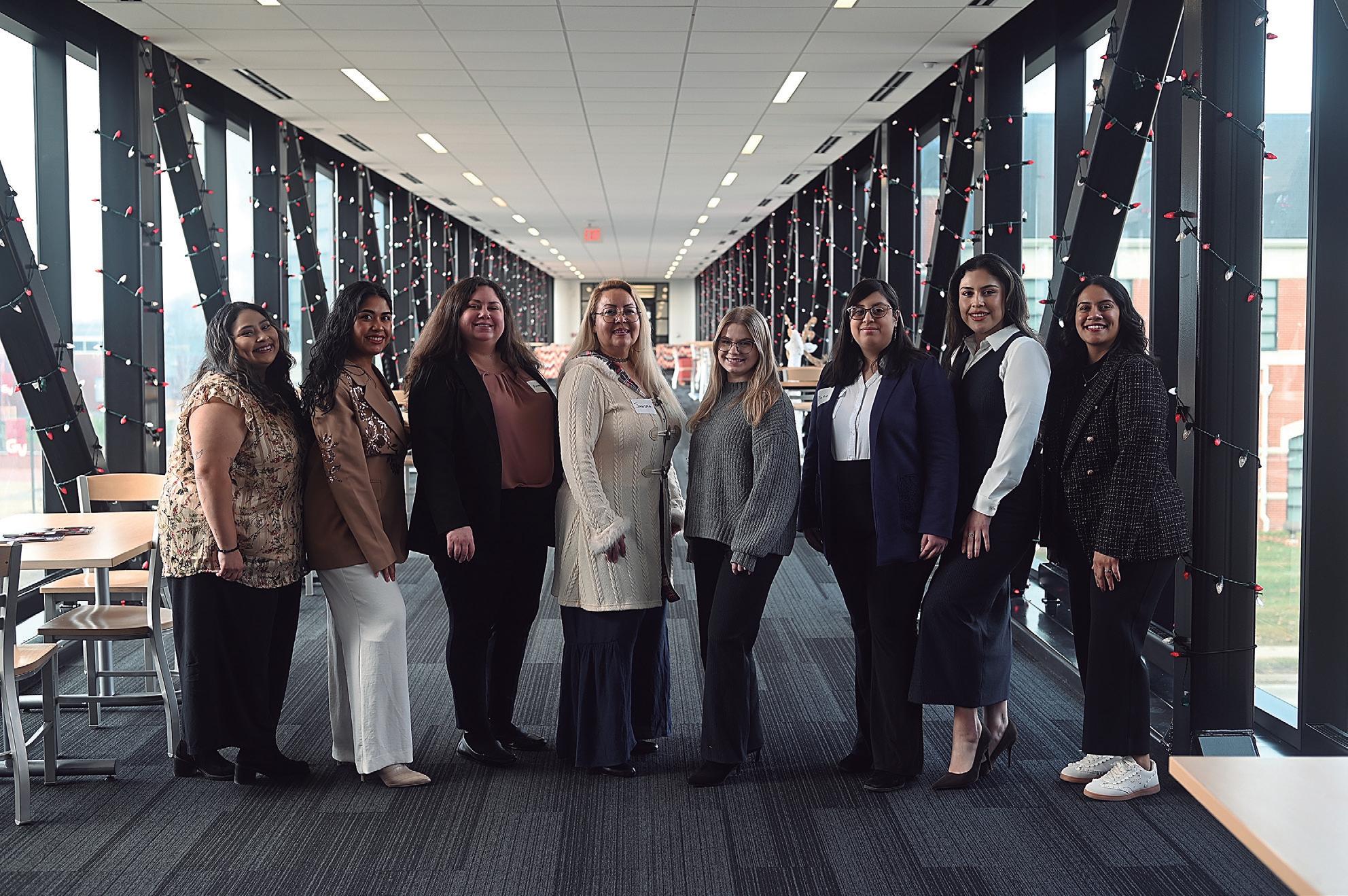
Socorro Martinez, far right, executive director of the Latina Leadership Initiative, is pictured here with the new cohort.
HORARIO EXTENDIDO TEMPORADA 2026
ENERO 15, 2026 - ABRIL 15, 2026
LUNES-SABADO: 9:00AM – 9:00PM
DOMINGOS: 9:00AM – 9:00PM
TE OFRECEMOS LOS SIGUIENTES SERVICIOS DE IMPUESTOS
• Preparar su declaración de impuestos de este año y de años anteriores.
• En la formación de su nuevo negocio o empresa.
• Contabilidad, nómina de pago y pago de impuestos de su negocio.
• Renovar o aplicar para su número ITIN y el de sus familiares en México.
• Resolver asuntos con el IRS y el gobierno estatal.
• Revisar y corregir declaraciones impuestos de años anteriores.
ROBERTO AYALA PRESIDENT & CEO
• Te ofrecemos Servicios de Reducción de Deudas con IRS.
ACEPTAMOS EFECTIVO Y TARJETAS DE CREDITO www.electrotaxes.com
Al lado de la oficina principal de correo Abiertos de Lunes a Jueves 9 am a 5:30 pm Viernes de 8 am a 5:30 pm Horario del Drive-Up L-V 7:30 am - 6
Alexandra Olsen, executive editor of the Corridor Business Journal and QC Business Journa
Editor for QC and Corridor Business Journals Champions Diversity
By Jonathan Turner, Hola America
Alexandra Olsen already has packed a lot into her 31 years, zooming from a newspaper intern to top editor of two publications (Corridor Business Journal and Quad Cities Business Journal) in the past decade.
Born in the southernmost state in Brazil, Olsen (with two younger brothers) moved to Bettendorf, Iowa when she was 8. Her father died in a car accident when she was a month old, and her mom remarried an American, who worked for John Deere as an engineer in Brazil, and continued with Deere in the U.S.
Olsen graduated from Pleasant Valley High in 2013, after being in 20 stage productions and writing for the school paper. Her family often returned to Brazil to visit relatives and her grandmother (who worked as a confectioner) made special treats for her October 2014 wedding. “When she was working, she would make treats for weddings and birthdays. And in Brazil, that’s a big cultural thing,” Olsen said recently, noting she specialized in brigadeiros (fudge balls).
“It was so incredible to have all of them up here. My aunts, my grandparents, everybody in my mom’s kitchen, like my childhood home, making these confectionaries for my wedding,” she recalled. “That was such a full circle moment.”
Olsen and her husband Cody have a five-year-old daughter. She earned her associate’s degree at Black Hawk College, Moline, where she took her first journalism classes and graduated magna cum laude, before finishing her bachelor’s at Columbia College Chicago.
“I really started to fall in love with writing. And writing was always my strongest subject,” Olsen said of Black Hawk. “English and writing, which is funny because English is my second language. The more artistic pursuits were always my strongest suit.” She loved theater and journalism both for the power of telling other people’s stories.
“Journalism and theater to me are very similar in the way that you can try some different lives on, and you can see things from different perspectives through other people’s eyes,” she said. “In journalism, you’re getting to see a glimpse into those characters, those real-life characters, and tell those stories. And it’s another way of storytelling, too. And storytelling has always been a huge part of me.”
Olsen interned at the Moline Dispatch in summer 2016, then at the Chicago Sun-Times that fall, which coincided with the Cubs winning the World Series, sending all its reporters out to get the public’s thoughts amidst a massive parade.
“The Chicago River was dyed Cubbie blue. Millions of people were in that city,” she said. “And there were people all around me and you couldn’t move.”
“Working at the Sun-Times was really cool and I got to learn from working journalists and some really awesome editors and that team was inspiring,” Olsen said. Another career highlight was going with Sun-Times staff to cover
the 2017 presidential inauguration in Washington, D.C. as well as the Women’s March the day after, Jan. 21, attended by 470,000 women.
“It was a multimedia class, so it was really about gathering that content,” she said. “It was such an incredible experience. Just a lesson in like, American civility and I can’t even put into words to see that many people, marching and really exercising their rights was something that has shaped me the remainder of my life.”
Before starting at Corridor Business Journal, Olsen worked two years as digital editor for Cedar Rapids Gazette, and two and a half years as marketing director for NewBo City Market in Cedar Rapids. She had her daughter in March 2021, and appreciated joining the small, familyfocused CBJ team in April 2022 as digital editor.
Olsen moved up the editing ladder quickly -- promoted to managing editor by December 2022, then editor by December 2023 and this spring, editor for the QC journal as well.
“It’s been a whirlwind, but it’s been fantastic,” she said. “Now I manage both newsrooms, not just one.” The CBJ and QCBJ each have two full-time reporters, and publish in print alternating weeks, updating their websites daily with several new stories. They have an ad sales team, and copy/design team that work for both.
“Alexandra has been an extraordinary leader for our organization. Beginning her journey as Digital Editor, she rose through the ranks with remarkable vision, determination, and purpose — and hasn’t looked back since,” John F. Lohman, Corridor Media CEO, posted on LinkedIn.
“We are incredibly fortunate to have her at the helm of both newsrooms as we navigate an ever-evolving media landscape,” he said. Lohman founded the CBJ in 2004, and the sister publication QCBJ in 2021.
“We really focus on sticking to our business coverage. We don’t cover politics. We don’t cover like courts or crime unless that has something to do with business or is of interest to the business community,” Olsen said, noting their purpose is “to shine a spotlight on the entrepreneurs and the business leaders that are making a difference in our communities and that are creating these communities that are great places to live and work.
“It’s been an incredible experience to get to see the growth of not only the Corridor, but the Quad Cities also through that lens,” Olsen said. “Obviously there are a lot of different ways that a community can grow, but I think the business lens is so visceral. It’s such a tangible way to see growth.”
The publications also look at Eastern Iowa and Western Illinois as a whole region. “There are so many stories that we tell that not only work for the CBJ, but also work for the QCBJ and vice versa. There’s so many companies that have headquarters here that also work there that, we like to see that as even a wider regional lens,” she said. This year, they launched quarterly combined issues of both papers, which began March 30.
Each will have a theme – the first was construction and development, with Russell as the cover story.
The journals serve as a networking opportunity for employers and employees, Olsen said. “Use it as a way to inform themselves about opportunities. And not just like the leaders who are employing people, but also the employees. Think about how inspired you could be from reading a story about an entrepreneur,” she said.
The company also hosts regular presentations, panels, and awards, such as Women of Influence (which CBJ started in 2004) and Leaders Under 40.
Raising awareness of women and diversity have long been hallmarks for the CBJ, and now QCBJ, Olsen said. Her bicultural background deeply informs her commitment to inclusive storytelling and championing diverse voices in business journalism.
Under Olsen’s editorial direction, the CBJ has earned recognition from the Alliance of Area Business Publishers. It received the Most Improved Publication award in 2023, with judges praising improvements in design and editorial quality. The CBJ has earned bronze awards for Best Newspaper and Best Overall Design in 2024, and in 2025 received gold for Best Feature Single Story and bronze for its podcast “Real Success with Nate Kaeding,” among other awards.
At 30, Olsen was named a 2024 Forty Under 40 honoree, recognizing her impact as a young professional leader in Iowa’s Corridor region.
“Just highlighting that journey for women in business is so important,” she said. “We also have nonprofit leaders that are awarded that. We cover mostly business. We also cover the nonprofit sector because we do believe that that is such an important piece to the economic development puzzle.”
“Women in business, they’re all so incredible. They’re facing these challenges that we want to know about,” Olsen said. “Forty Under 40 has been a huge program for us. I was a 40 Under 40 for the CBJ, which I have nothing to do with choosing the 40 Under 40.”
“We want to highlight inspirational business stories regardless of who it is,” she said. “It’s really cool to see these women and the 40 under 40, whoever it is that we award. We are highlighting them, but it’s really just like the first stepping stone to see where their career goes.”
The large Latino community in the QC brings culture, style and employment, she noted. “John Deere brings so many Brazilians to the Quad Cities area. We have our own parties and things and just looking at the way that immigrant communities can bring life and color into our world is so incredible.
“I grew up in the Quad Cities, so obviously that was a big piece of why having this new position meant so much to me. But also thinking about that cultural piece of like how different the Quad Cities is from the Corridor and I like the different ways that our communities are embracing those cultures,” Olsen said.
Iowa City Attorney Isaac Medina Builds Immigration Law Practice with Purpose
By Jonathan Turner, Hola Iowa
Just five years into his career, Isaac Medina is in a high-demand field. He’s an immigration attorney based in Iowa City, whose path to law was shaped by something deeply personal, growing up in an immigrant household in central Iowa.
The son of Mexican immigrants, the University of Iowa alum has dedicated his legal career to serving communities that need bilingual representation. After four years of legal experience, Medina tapped into his family’s entrepreneurial spirit to establish Medina Law this past March. He provides guidance and representation in a broad range of immigration matters, including family-based petitions and DACA.
After working for a West Liberty firm specializing in immigration, he set up his own shop in Iowa City (mainly for the freedom in setting his own schedule). A 2021 graduate of the University of Cincinnati College of Law, he’s now 30, married, with two children, ages 2 and five months (his wife, Gabriela, is a social worker for the Iowa City school district).
“I fully own my time as my own, as my own boss,” he said. “If a kid is sick and I need to take him to a doctor’s appointment, get him from daycare, etc. I have that flexibility within reason. A lot of small businesses and just businesses in general are not set up that way, which is unfortunate.”
“At a time when we’re talking about immigration enforcement and policy under an administration like this one, it makes it difficult,” he said, noting the need is great and immigrants’ incomes are limited. “Wages have not kept up with inflation and the cost of things. So there’s a fine balance.”
“Just my wife and her salary alone can’t cover the expenses that we have. And so I’m hopeful that little by little, my name will get out there,” Medina said. “My interest is to give you ethical, transparent, and honest legal advice as to your situation and then present you with options.
Continues next page
The son of Mexican immigrants, Isaac Medina grew up in Marshalltown, Iowa, graduated from the University of Iowa, and earned his law degree from the University of Cincinnati College of Law in 2021.
Continues from last page
Because unfortunately, during times where people are scared and fearful of a heightened immigration enforcement, and you combine that with the wonders of the Internet and interconnectedness of everything, individuals are preying on people’s fears and defrauding individuals of their money.”
“And if I can get somebody to calm them down, explain their situation to them and lower the temperature to at least they know their next steps, then I’ve done my job,” he said. “So obviously hopeful that it translates to business.”
In the past year and a half, there’s been much stricter immigration enforcement, which has increased work for Medina.
“What we’re seeing now is more people being detained, more people not having options,” he said. “The possibility of being deported is almost assured because of the lack of discretion, because of the way the immigration court has been dramatically changed in its members and immigration judges and because of just the apparatus of funding to ICE.”
“The hardest thing is that it will take congressional action to really change these things,” Medina said. “We’ve seen the economic situation worsen when it comes to resources that clients have or the lack thereof. So individuals right now, if I’m strapped right now, we all are. I know my clients are too.”
He sometimes partners with legal organizations in Iowa that offer free consultations.
“Even private attorneys are not set up to meet that demand. Even if clients had to pay, it’s a perfect storm,” Medina said. “And unfortunately, the immigrants are getting caught in the crosshairs.” His practice does a lot of family petitions, where he helps an undocumented spouse of a U.S. citizen.
“Some people don’t want to start their immigration process because they think that something might happen to them, that they might be detained, in this administration,” Medina said. “It’s the frustrating part of how much longer is it going to take because there’s already excessive wait times to begin with.”
It is rewarding to help people to citizenship or permanent residency, but the “sad part, too, is that today’s immigration environment, immigration policy and enforcement environment, the number of people that you can help without a glitch is very narrow now,” he said.
From Mexico, across the U.S.
Medina’s father came from Jalisco, Mexico, as a teen to southern California, without authorization, to work in the fields, but benefited from a 1986 federal amnesty law signed by President Reagan.
“If they were people of good moral character or no criminal history, they were put on this path that wouldn’t have existed beforehand,” Medina said of citizenship. “So it gave millions of individuals like my father, if they stayed on the straight and narrow, it allowed them to completely change their family tree, a pathway to citizenship. They became citizens in 2000 as a Latino business owner and, restaurateurs, and entrepreneurs. They even got the opportunity to meet George W. Bush when he was running for office.”
Medina’s parents were married in 1989, and had their first child in 1990, in Roanoke, Va. His father became owner of Mexican restaurants, including La Carreta, which still exists in Marshalltown and Boone, Iowa. Isaac was born in Davenport in 1995, where his family lived for two years (he has four siblings). They moved to Marshalltown in 1999 (where he went to high school), and his parents are semi-retired.
“My family’s immigrant story really drove me to practice law, specifically immigration law,” Medina said. “As I grew up, I figured out what type of barriers they faced. I did plenty of translation communicating as a child. We all did. But then also my extended family were all immigrants because with these businesses, back in the day, it afforded the ability to sponsor workers, to sponsor family members against the income and work through these restaurants. So a large portion of my extended family on both sides are now here in the U.S. with legal status.”
Since 1995, the number of unauthorized immigrants in America has more than doubled, from 5.7 million to estimates of 11 to 13.7 million in 2023, according to the Migration Policy Institute.
“Practicing somewhere like Iowa, there’s a need, there’s a community that needs that type of representation, in the language that they understand,” Medina said. “There’s not a lot of people that are able to do that. And little by little that’s changing because there’s a lot of young professionals that are bilingual that are staying or either getting equipped with the skills that
they need in any type of field.”
“That’s what has kept me here in immigration and just seeing my parents’ story and the ability to help immigrants reach their full potential, reach their American dream,” he said. “I think that’s beyond rewarding, just because I know how difficult some of these clients, the difficult situations that these clients are facing or have come from, from their country of origin, their hopes, and really get to know what being here actually means to them and seeing how hard they’re willing to fight through the legal process to be able to just be given a shot and be given a fair shake by the immigration laws.”
At the University of Iowa, Medina earned a bachelor’s in political science and history, and graduated a semester early in December 2017. After law school, he wanted to work in Iowa because of his family roots.
“While the young bilingual professionals, their numbers are growing in the state, it’s certainly not enough in any profession,” Medina said. “It wasn’t even a question that I was going to go out somewhere else to another state. Iowa has always been home to me. I like the small-town feel.”
“I also knew there were communities throughout the state, some that I know very well, that needed someone like me,” he added. “That needed someone bilingual to explain the legal process in a language they understood. So it just made sense for me to come back.”
As a child of immigrants, Medina hates to see anti-immigrant stereotypes.
“It breaks my heart given my background. And I was just thinking back, imagine just how great our country can be if we gave everyone, regardless of immigration status a fair shake?” he said. “It’s their opportunity at their own American dream.”
“It breaks my heart that once again immigrants become the scapegoats when we’ve got more problems,” Medina said. “I also think there needs to be comprehensive immigration reform with a pathway to citizenship. Like the one that my dad benefited from. Because everybody deserves dignity and when you live in the shadows and you’re subject to fear, it just doesn’t help our communities at large.”
JEFAS Magazine marks two years of telling Latina entrepreneurs’ stories in Iowa and Nebraska
By Carolina Martinez, Hola Iowa
Since launching on May 9, 2024, JEFAS has published four editions, hosted community events, and helped Latina entrepreneurs across Iowa and Nebraska connect with one another.
Before JEFAS Magazine existed, Latina entrepreneurs across the Midwest were already building businesses and supporting their communities. They were running restaurants, salons, studios, shops, and service companies while balancing family responsibilities, long workdays, and the uncertainty that often comes with entrepreneurship. They were already leaders. JEFAS simply helped bring more visibility to their work.
When the first issue launched, the mission was straightforward: to tell the stories of Latina entrepreneurs as inspirational figures —not only as business owners, founders, and professionals. Their work belonged in business coverage and in the broader story of the communities they help shape every day.
So far, JEFAS has published three Iowa editions and one Nebraska edition, expanded its presence across both states, hosted networking events, and launched fundraising efforts to sustain the publication’s growth. Along the way, the magazine has become more than a print product. It has become a place where connections happen. Someone recognizes a business owner from a story. A reader sends a message after seeing a feature. Women meet at events and realize they have similar experiences. A story becomes a conversation, and a conversation sometimes becomes a collaboration.
The goal of JEFAS
JEFAS Magazine was founded by Erika Macias, president and publisher of JEFAS and Hola America Media Group, alongside her husband, Tar Macias, CEO of Hola America Media Group. From the beginning, the publication was created to amplify Latina voices in the Midwest and preserve their stories for future generations.
For Erika Macias, the mission is personal.
She has often connected the work to her own journey after arriving in the United States from Michoacán, Mexico, in 1992 without speaking English. Like many women featured in the magazine, she understands what it means to adapt, learn quickly, and continue moving forward without always having a clear roadmap.
“Amplifying the stories of other Latinas is deeply meaningful to me,” Macias says. “Representation matters, and I believe in creating platforms where our voices, achievements, and leadership are visible and celebrated. Seeing other Latinas thrive and be recognized is both inspiring and a reminder of the power of community.”
“We need to open the doors of opportunity for Latinas, and that is the purpose of JEFAS Magazine. We are more than a magazine or a website, we are a community!”
That idea of community has remained central to the publication from the beginning.
Many JEFAS profiles start with a business, but they rarely stop there. Behind a restaurant may be years of family sacrifice and long hours. Behind a creative studio may be questions of identity, migration, or rebuilding confidence after setbacks. Behind a professional service may be debt, risk, and years of work before success becomes visible.
Often, success stories get shortened once they become public. People see the business launch, the social media page, or the growth. What they do not always see are the struggles: the late invoices, the family schedules, the learning curve, or the years before the business felt stable.
JEFAS has tried to document those realities honestly while also celebrating the accomplishments that come from perseverance.
From Iowa to Nebraska
After the inaugural issue launched in Iowa in May 2024, additional editions followed through 2025. In February 2026, JEFAS expanded beyond Iowa with its first Nebraska edition, extending the magazine’s reach into another growing Latino business community in the Midwest.
The momentum surrounding the publication grew quickly.
Last November, JEFAS Magazine earned three Gold José Martí Awards during the National Association of Hispanic Publications convention in San Diego. The publication received first-place honors for Outstanding Hispanic Magazine, Outstanding Magazine Design, and Outstanding Event for the 2024 Latina Business Excellence Summit. The recognition placed JEFAS among some of the most
respected Latino publications in the country and reinforced the publication’s growing impact beyond Iowa and Nebraska.
“We owe the success of the magazine to a talented team of editors, writers, photographers, and designers, all from the Latino community,” Macias said. “It truly is a team effort. Juntos somos más fuertes. Together we are stronger.”
Today, JEFAS is published in print and online through JEFASMagazine.com, with distribution focused on Latina-owned businesses and community gathering spaces throughout Iowa and Nebraska.
The project was never intended to focus on only one city or one type of entrepreneur. The stories come from Des Moines, Omaha, West Des Moines, Waukee, Ames, Bondurant, and smaller rural communities where Latina entrepreneurs often rely on personal networks, referrals, and word of mouth to grow their businesses.
Women recommend one another, share opportunities, exchange contacts, and support each other in ways that are not always visible publicly but are essential to the success of many small businesses.
JEFAS has tried to capture not only the businesses themselves, but also the relationships and community support systems behind them.
When everyone gets in the same room
As the magazine grew, so did its events and networking efforts.
The Latina Business Excellence Summit became one of the clearest examples of what happens when Latina entrepreneurs from different backgrounds and industries gather in the same room.
At the 2025 summit hosted at Drake University, women from Iowa, Nebraska, Illinois, Miami, and Mexico gathered for workshops, panel discussions, networking, and conversations about entrepreneurship, leadership, and personal growth.
Some attendees came as established business owners. Others were just beginning to explore the idea of starting something on their own.
The feedback after the event reflected the “vibe” that organizers hoped to create. Attendees highlighted the welcoming environment, the cafecito conversations, the breakout sessions, the music, and the opportunity to meet women with similar experiences.
One attendee described the summit as “a boost of energy
Continues next page
and women empowerment.” Another said the most valuable part of the event was the authenticity and vulnerability shared throughout the day.
There were practical outcomes too.
One participant said she met four potential clients during the summit and already had follow-up meetings scheduled afterward. For small business owners, those kinds of connections matter. A conversation can turn into a partnership, a referral, or future work.
Attendees also shared ideas for future events, including more networking time, additional breakout sessions, and more opportunities for bilingual conversations and guided introductions for first-time attendees.
JEFAS leadership is now preparing for the third Latina Business Excellence Summit, which will take place in late summer 2026.
“There is space for you here”
One example of the relationships built through JEFAS came through Omaha creative entrepreneur Susi Franco of Chispa Creative.
Franco said she first connected with the JEFAS team at a networking event and immediately identified with the publication’s mission of supporting Latina entrepreneurs in Omaha and rural Nebraska.
Before collaborating with the magazine, Franco shared that she is gender-expansive and queer and asked whether there was space for her within a platform centered around women.
“The answer was simple: there is space for you here,” Franco said.
That response stayed with her because it was immediate and sincere.
Franco later photographed more than 15 JEFAS features and described the experience as one of the most meaningful collaborations of her career. She said the publication does more than highlight businesses—it invests in people and in the way their stories are told.
Her own JEFAS feature also expanded her network. Other entrepreneurs reached out after reading her story, creating relationships and opportunities that might not have happened otherwise.
Not every impact can be measured in numbers. Sometimes it looks like a referral months later, a message from another entrepreneur, or someone recognizing herself in a story for the first time.
Two years later
Two years after its launch, JEFAS Magazine continues documenting stories that were already unfolding across Iowa and Nebraska long before the publication existed.
Stories of women who built businesses while raising children. Women who learned to move between languages and cultures. Women who cooked, cleaned, designed, hired, sold, organized, cared for others, and kept building even when resources were limited.
The work was already there. JEFAS helped place more of it on the page—with photographs, names, and a platform where Latina entrepreneurs across the Midwest can connect and see themselves reflected.
As the publication enters its third year, the mission remains rooted in visibility, community, and long-term impact.
“Looking ahead, I want to see JEFAS continue to grow as a powerful platform that elevates, connects, and supports Latinas across industries,” Macias says. “Our vision is to expand its reach, deepen its impact, and create even more opportunities for visibility, collaboration, and long-term success.”
“I also want it to be a catalyst for women who want to start their own journey, ensuring they know they are not alone and that they can be part of our inner circle.”
Iowa shelter to take in 40 beagles from Ridglan Farms rescue
By Cooper Worth, Des Moines Register
An Iowa animal shelter is taking in dozens of puppies as part of a multistate rescue from a controversial Wisconsin beagle breeding facility.
Weeks after animal rights activists attempted to raid its facility near Blue Mounds, Wisconsin, Ridglan Farms announced April 29 that it had agreed to sell 1,500 beagles to rescue organizations. Ridglan Farms has been embroiled in years of accusations of animal mistreatment, which it denies, but agreed to surrender its state breeding license by July 1 to avoid criminal prosecution.
The agreement was reached with Florida-based Big Dog Ranch Rescue and the Washington, D.C.–based Center for a Humane Economy. Dogs began leaving the facility on May 1, with transfers expected to last about a week and a half, according to USA TODAY.
Previously: ‘I was willing to be arrested,’ said Iowan at Ridglan Farms protest
Under the agreement — which does not cover all the dogs at the facility — 500 dogs will remain in Wisconsin,
300 will be sent to Big Dog Ranch Rescue locations in Florida and Alabama, and the rest will be placed with partner organizations nationwide, according to the Milwaukee Journal Sentinel.
One of those organizations is the Animal Rescue League of Iowa, which announced in a May 1 Facebook post that it will take in beagles from the Ridglan Farms transfer. Here’s what to know.
Why the ARL joined the Ridglan Farm beagle rescue
The ARL was contacted directly by the Center for a Humane Economy because of its track record of handling complex rescue cases and dogs with medical and behavioral needs, said CEO Tom Colvin.
“We knew that those beagles needed to be elsewhere. They needed to be out of their current situation and hopefully into homes,” he said. “So when we were called upon and asked to help, we immediately said yes.”
The ARL will receive 40 beagles. Colvin said Big Dog Ranch Rescue is the one coordinating the on-the-ground rescue efforts, ensuring the dogs have the health certificates required to move the beagles across state lines. ARL’s veterinarians will take over spaying and neutering and other medical care once the dogs arrive in Iowa, he said.
“We also have a behavior team on staff because we anticipate, and are told to anticipate, that the dogs are going to need probably quite a bit of work before entering a different life in someone’s home,” he said.
When will the Ridglan Farm beagles be up for
adoption?
Colvin said he expects the ARL to be in possession of the beagles by mid-May. He said staff won’t know when the dogs will be up for adoption until after they’ve had time to assess and work with them.
“Even though it’s going to be great when they’re sleeping on somebody’s couch instead of living in a cage, we don’t want to rush that process and cause more difficulty for the dogs,” he said. “At the same time, we don’t want to keep them here any longer than necessary. So we need to see them, work with them and then go from there.”
How to donate to the Animal Rescue League of Iowa
He said the ARL is positioned to handle the influx of dogs thanks to its recently completed large-scale rescue facility. Still, Colvin said the organization needs ongoing public support and donations to sustain the effort.
He encourages community members who want to contribute to the ARL’s Transforming the Future of Animal Rescue campaign, which aims to raise $6 million to expand and renovate ARL’s rescue facilities. To learn more, visit ARL-Iowa.org/Transform.
Second Chance Rescue on Saturday May 2, 2026 in Janesville, Wisconsin. The dogs will be placed with shelters and rescues where they will be cared for and matched with adoptive families.
SOCIAL SATURDAY
Enjoy a community animation showcase, live music throughout the museum, art making for all ages, musical story time, a guided tour, and more!
Generous support provided by
Visit desmoinesartcenter.org for more info.
Dra. Lidia Gomez
Dra. Quiropráctica
La Dra. habla español y ayuda con:
• Dolores de espalda
• Torceduras
• Dolores de cabeza
La Quiropráctica también puede ayudar con problemas y dolores del emberazado, al igual que con problemas en niños y bebés.
La Dra. Lidia Gómez solo ve pacientes con cita previa pero en casos de emergencia les pide que llamen antes de ir a su oficina.
We also cater for bigger events Call us to for date availability!
También atendemos eventos grandes. Llámanos para disponibilidad de fechas
Call (515) 221-7981 For your office party or for your friends and family let El Fogon do the cooking!