Evento gratuito de educación para compradores de casa por primera vez
Jueves 13 de agosto de 2026
Los Agaves Mexican Grill 5304 Avenue of Cities. Moline, IL 61265
Obtén más información y confirma tu asistencia en ascentra.org/events
OCUPAMOS EL PUESTO #2 EN TASAS GENERALES DE CÁNCER—Y EL #1 EN NUEVOS DIAGNÓSTICOS DE CÁNCER: Solo 6 estados en el país tienen tasas de cáncer en aumento, e Iowa los lidera.1
ESTAMOS PERDIENDO MÉDICOS EN TODO EL ESTADO: Ahora ocupamos el puesto 44 en el país en médicos per cápita—y el último lugar en obstetras y ginecólogos per cápita.2
NUESTRA ECONOMÍA ESTÁ ESTANCADA: Ahora ocupamos el puesto 50 en el país en crecimiento económico, el 49 en crecimiento de empleo, y somos los últimos entre todos los estados del Medio Oeste en salarios.3
NUESTRO SISTEMA EDUCATIVO YA NO ES LO QUE ERA: Las escuelas de Iowa han caído 15 lugares—de los primeros 5 a la mitad del grupo.4
Consulado Móvil de México regresa a Moline el mes de mayo
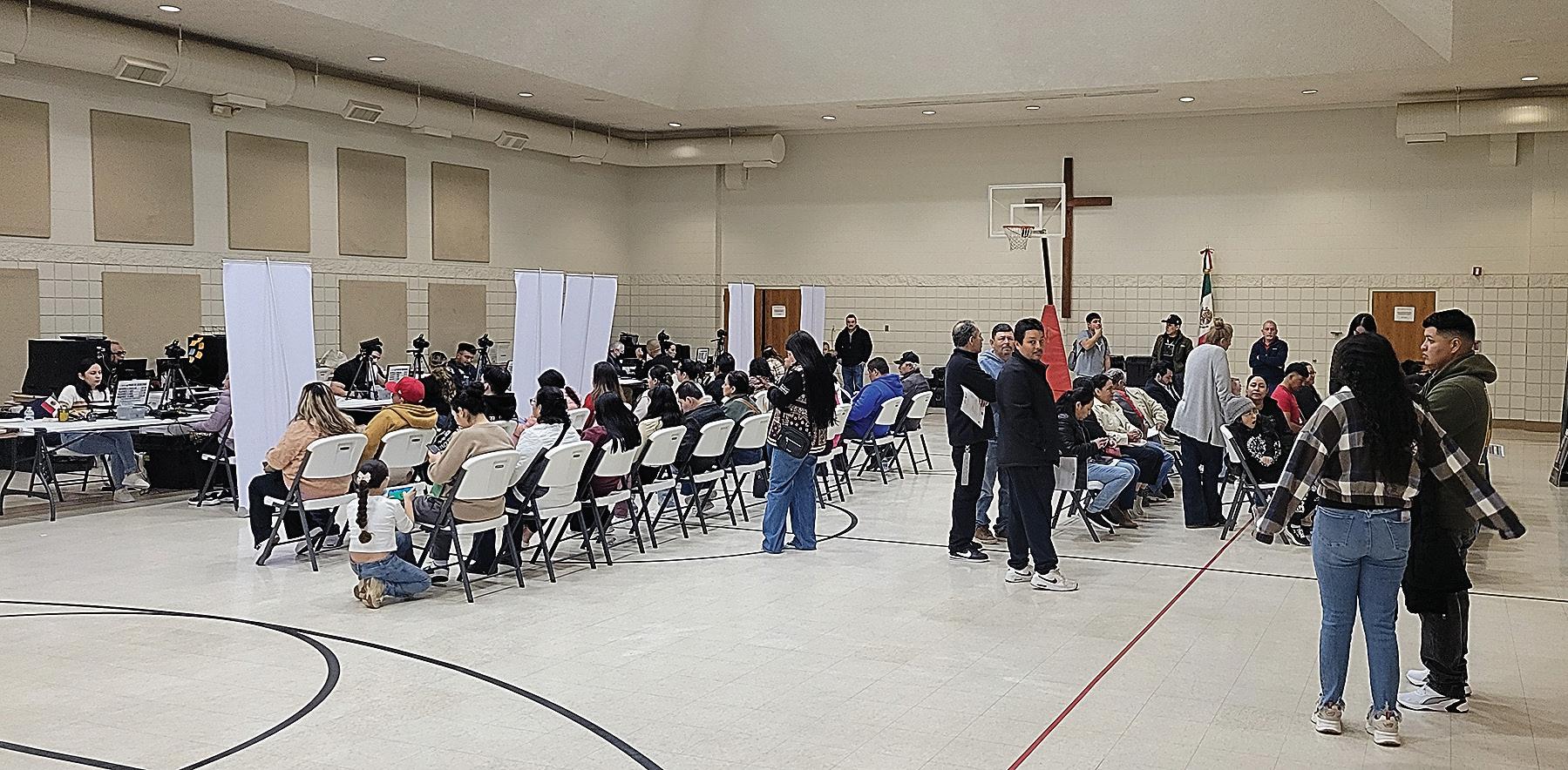
Moline, Ill.- Una vez más Hola America se complace en ser el anfitrión de la visita del Consulado Móvil de México a la ciudad de Moline del 26 al 30 de mayo de 2026. La visita será, como de costumbre, en el centro de actividades de la Iglesia Bethel Wesley United Methodist Church localizado en el 1201 de la calle 13 en Moline, IL.
ATENCIÓN: Las citas del Consulado Sobre Ruedas se abren el jueves anterior a la visita de cada locación, a las 2 p.m.
Que para la visita de Moline será este jueves 21 de mayo a las 2 p.m. cuando se abran las citas.
¡TOME NOTA!:
La Secretaría de Relaciones Exteriores cuenta con un nuevo servicio de atención telefónica para hacer citas en los consulados de México en Estados Unidos y Canadá. Uno debe marcar al 1(424)-309-0009 desde cualquier parte de Estados Unidos y Canadá o acceder al sitio web https://citas.sre.gob.mx/
ALGO NUEVO: YA LOS RESIDENTES DE IOWA Y OTROS ESTADOS PUEDEN TRAMITAR SU MATRÍCULA EN ESTAS VISITAS
Citas por Internet:
El trámite de expedición de pasaportes y matrículas consulares de alta seguridad en Consulados Móviles se brinda solo con cita. Usted podrá obtener información y orientación sobre los requisitos para el trámite de pasaporte mexicano en el Consulado Móvil y programar su cita gratuitamente visitando el sitio https://citas.sre.gob.mx/ Para la visita de Moline sera el jueves 21 de mayo a las 2 p.m. cuando se abran las citas.
El evento se llevará a cabo en el centro de actividades de la Iglesia Bethel Wesley United Methodist Church localizado en el 1201 de la calle 13 en Moline, IL.
Al igual que cada año se facilitará el trámite de pasaportes, matrículas consulares y credenciales de elector a los ciudadanos mexicanos. Ya no es necesario traer su fotografías y fotocopias ya que todo se hará digitalmente solo tendrá que traer sus papeles originales.
Para más información de esta visita, los invitamos a que hagan “Like” a la página de Facebook de Hola America News ya que ahí estaremos actualizando la información al día.
Hola America se enorgullece en facilitar las visitas del Consulado Móvil de México en Chicago por los últimos 26 años donde miles de personas de los Quad Cities y sus alrededores han podido tramitar sus pasaportes y matrículas.
Le agradecemos al Consulado Móvil de Chicago, Ascentra Credit Union, la Iglesia Bethel Wesley UMC, y a KALA en Español por colaborar con Hola América cada año para hacer esta visita posible.
Visita del Consulado Móvil:
Visita del Consulado Móvil de México a la ciudad de Moline el pasado noviembre del 2025. Foto por Tar Macias / Hola America
Artista Originaria de Sterling, Illinois, Llega al Festival de Artes Más Grande del Mundo
Por Jonathan Turner, Hola America
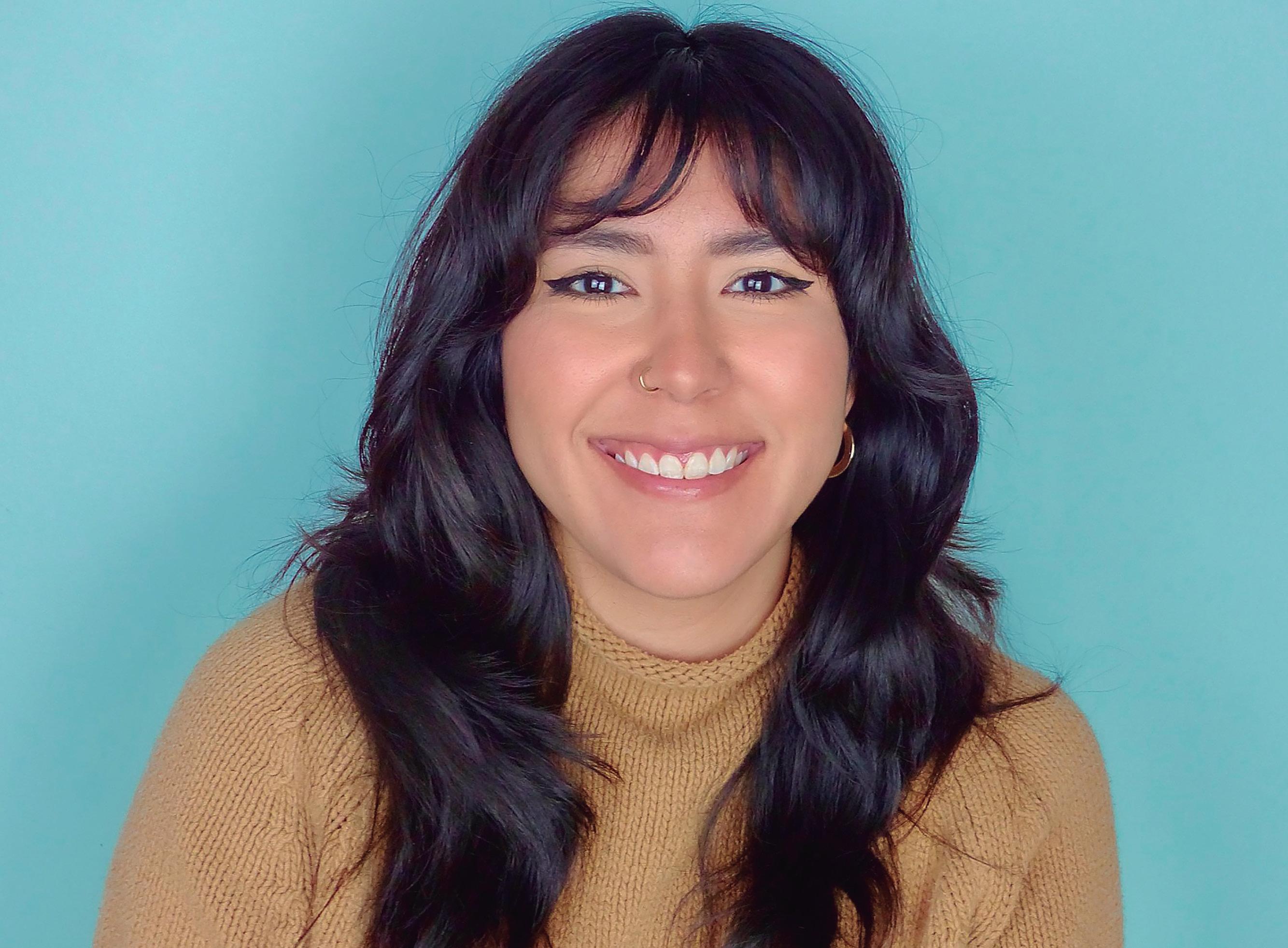
Erica Salas, originaria de Sterling, Illinois, tiene 32 años, vive en Chicago desde hace más de 10 años y está recaudando fondos para llevar su obra y su elenco al Edinburgh Fringe Festival, en Escocia, este agosto.
Hija de padre mexicano y madre indígena, Salas fue aceptada en el festival, que se realizará en agosto, y tiene una campaña en GoFundMe para reunir los fondos necesarios para que su elenco de 13 personas viaje y permanezca allí durante 10 días. Hasta el 26 de abril, había recaudado $2,715. Salas es la escritora, directora y productora de “Never Not Murder”, una comedia al estilo del cine noir de la década de 1940, con inspiración en el estilo cinematográfico y narrativo de Wes Anderson.
“La oportunidad de participar en el Edinburgh Fringe Festival es increíble para cualquier artista. Realmente puede convertirse en una plataforma de lanzamiento profesional. (¡por ejemplo, Fleabag y
Baby Reindeer!)”, escribió Salas en su GoFundMe.
“Así que estoy decidida a hacer realidad este sueño para mí y para mi elenco”.
“Tener éxito profesional sería algo increíble”, dijo recientemente sobre la posibilidad de ir a Edimburgo.
“Sé que esta es una oportunidad increíble por muchas razones, y la exposición es una de ellas. La experiencia de poder incluirlo en un currículum y decir que presentamos allá una obra que yo escribí, además de fomentar una comunidad internacional.
“Creo que tenemos una comunidad de comedia muy buena en Chicago, y quiero llevar esa energía, compartirla con otras personas, despertar curiosidad y ver también cómo es el sentido del humor en otros países, qué podemos aprender y a quiénes podemos conocer”, dijo. “También tenemos la oportunidad de que periodistas vengan a reseñar el espectáculo y cosas así. Editores pueden venir a ver la obra”.
Salas, de 32 años, originaria de Sterling, Illinois, y residente de Chicago desde hace más de 10 años,
lleva apenas unos cuatro años involucrada en el teatro y la improvisación.
“Después de la pandemia, tenía una ansiedad social bastante fuerte y estaba tratando de salir de eso. De hecho, mi terapeuta me recomendó tomar clases de improvisación”, dijo recientemente. “Así empezó todo”.
“Seguí adelante. Conocí a personas creativas realmente increíbles y encontré un lugar donde siento que pertenezco. A partir de ahí, todo ha ido creciendo”, dijo Salas.
“Siento que todo lo que he aprendido a través de la comedia, la improvisación, la escritura y la expresión personal son herramientas que, de otras maneras, tal vez me habría costado encontrar”, dijo. “Definitivamente ha sido algo que me mantiene con los pies en la tierra mientras atravieso lo que sea que esté viviendo en ese momento”.
Aunque ha trabajado principalmente en préstamos comerciales e hipotecas, Salas también trabajó brevemente para la agencia de detectives Pinkerton en Chicago, una experiencia que inspiró en parte su obra. “Definitivamente sentí que era algo de lo que quizá podía partir”, dijo, al señalar que también le encantó una parodia de cine noir en la serie “It’s Always Sunny in Philadelphia”.
“Me pareció muy divertida y muy creativa, y pensé que era un género entretenido para escribir”, dijo. “Empezó con algunas escenas sueltas, más como un sketch. Luego me fui metiendo cada vez más y seguí escribiendo sobre este mundo que había construido”. Salas admira a sus amigos con experiencia en improvisación.
“Las personas que hacen eso con frecuencia me impresionan muchísimo. Me encanta ver a mis compañeros hacerlo”, dijo. “Lo que realmente activa una parte de mi mente que disfruto mucho es escribir, escribir sketches y esta obra, porque eso libera esa necesidad creativa que tengo. Creo que escribir sketches es, más que nada, donde está mi corazón”. En 2024, escribió “Never Not Murder” y tuvo la fortuna de llevarla al escenario de The Annoyance Theatre en Chicago. Allí tomó por primera vez clases de improvisación y escritura, y también presentó su primera improvisación en la primavera de 2023.
La historia está ambientada en la Nueva York de 1944 y sigue al detective Frankie King, el único policía recto e incorruptible de la ciudad. “La historia lo sigue mientras se enamora, atraviesa traiciones, triángulos amorosos y, al final, trata de impedir que un pez gordo corrupto de la ciudad de Nueva
Continúa en la página 5
Erica Salas, de 32 años y originaria de Sterling, Illinois, quien ha vivido en Chicago durante más de 10 años, está recaudando fondos para llevar su obra de teatro y su elenco al Festival Fringe de Edimburgo en Escocia este agosto.
York gane la campaña para alcalde”, dijo Salas. “Hay muchos personajes excéntricos que vamos encontrando en el camino. Y hay una muerte en el espectáculo, así que estamos tratando de descubrir cómo Frankie logra resolverla”.
“Nosotros, como público, lo sabemos, y usamos al narrador para que nos guíe por ese camino. Así que el narrador rompe la cuarta pared y habla con el público”, dijo. También hay un personaje de femme fatale, Lucy, involucrado en el asesinato.
El título de la obra es un guiño humorístico al caos de Nueva York, explicó Salas. “Básicamente, descubrimos que pasan muchas cosas en la ciudad de Nueva York. Y una de esas cosas es que nunca deja
de haber asesinato”.
En Chicago, la obra se presentó durante tres meses, con dos elencos distintos de 13 personas cada uno, bajo la dirección de Salas.
Ir al Edinburgh Fringe siempre ha sido uno de sus sueños, dijo.
“Definitivamente creo que, para artistas de cualquier tipo, representa una meta enorme y una oportunidad increíble”, dijo Salas. “Todo surgió un poco de repente… envié la obra a varios espacios y recibí respuesta de tres de ellos. Al final elegí un espacio muy bueno. Así que tendremos la oportunidad de presentarnos durante una semana, todos los días, lo cual es realmente emocionante”.
Ella nunca ha viajado al extranjero, aunque algunos integrantes de su elenco sí han asistido al Edinburgh Fringe.
“Es un evento enorme”, dijo, al señalar que atrae a cerca de 3 millones de asistentes durante agosto. “Tienen alrededor de 50,000 artistas cada año y miles de espacios para elegir. Cada espacio llena todo su día con espectáculos. Es uno de los eventos globales más grandes del mundo”.
El costo total para que su elenco cubra todos los gastos es de $36,000, y planean ir sin importar cuánto logren recaudar. Para más información sobre la obra, visita nevernotmurder.carrd.co
Continúa de la página anterior
Una escena de la producción de Chicago de 2024 de “Never Not Murder”, de Erica Salas.
Coya’s Café en Moline Celebra su Nuevo Local Remodelado
Por Jonathan Turner, Hola America
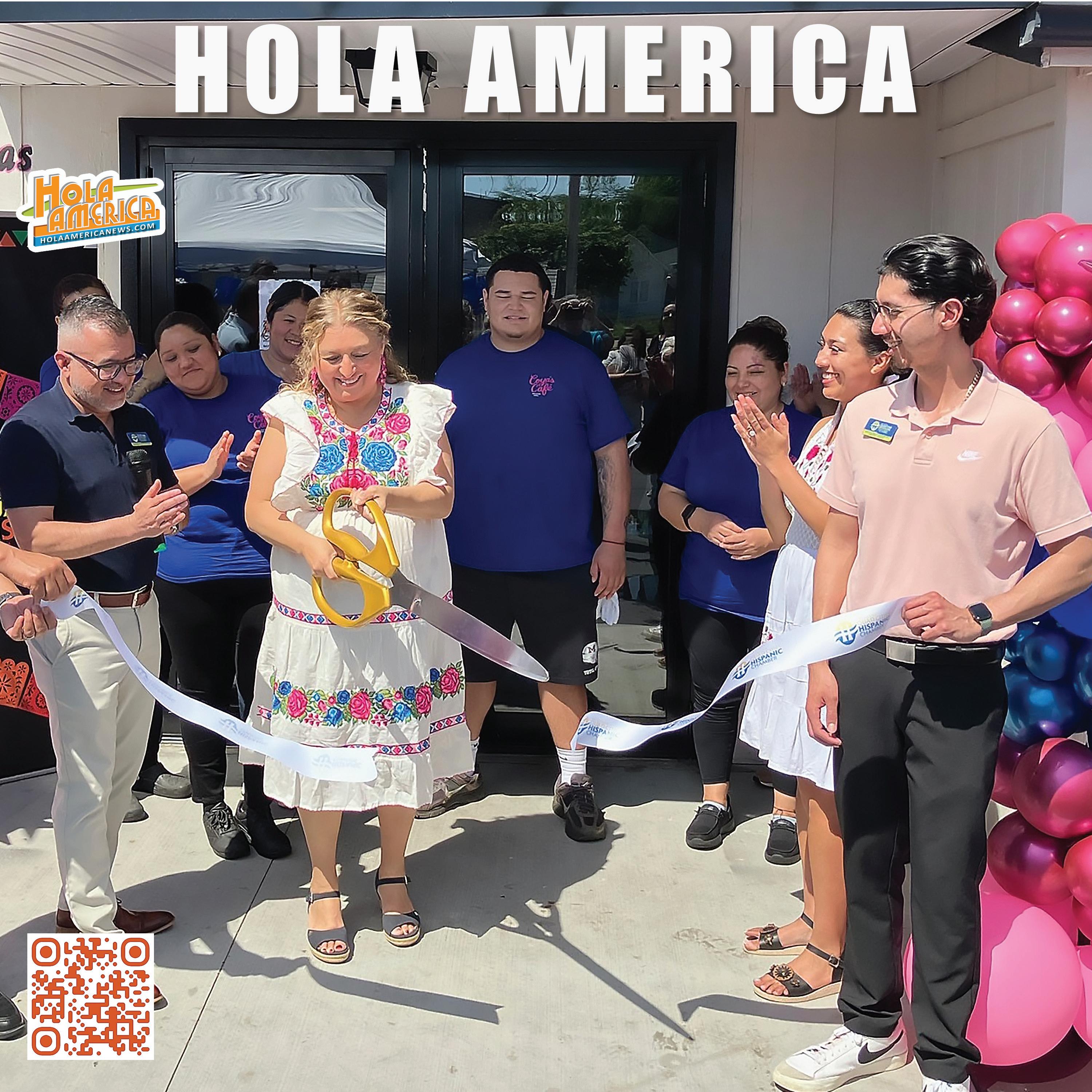
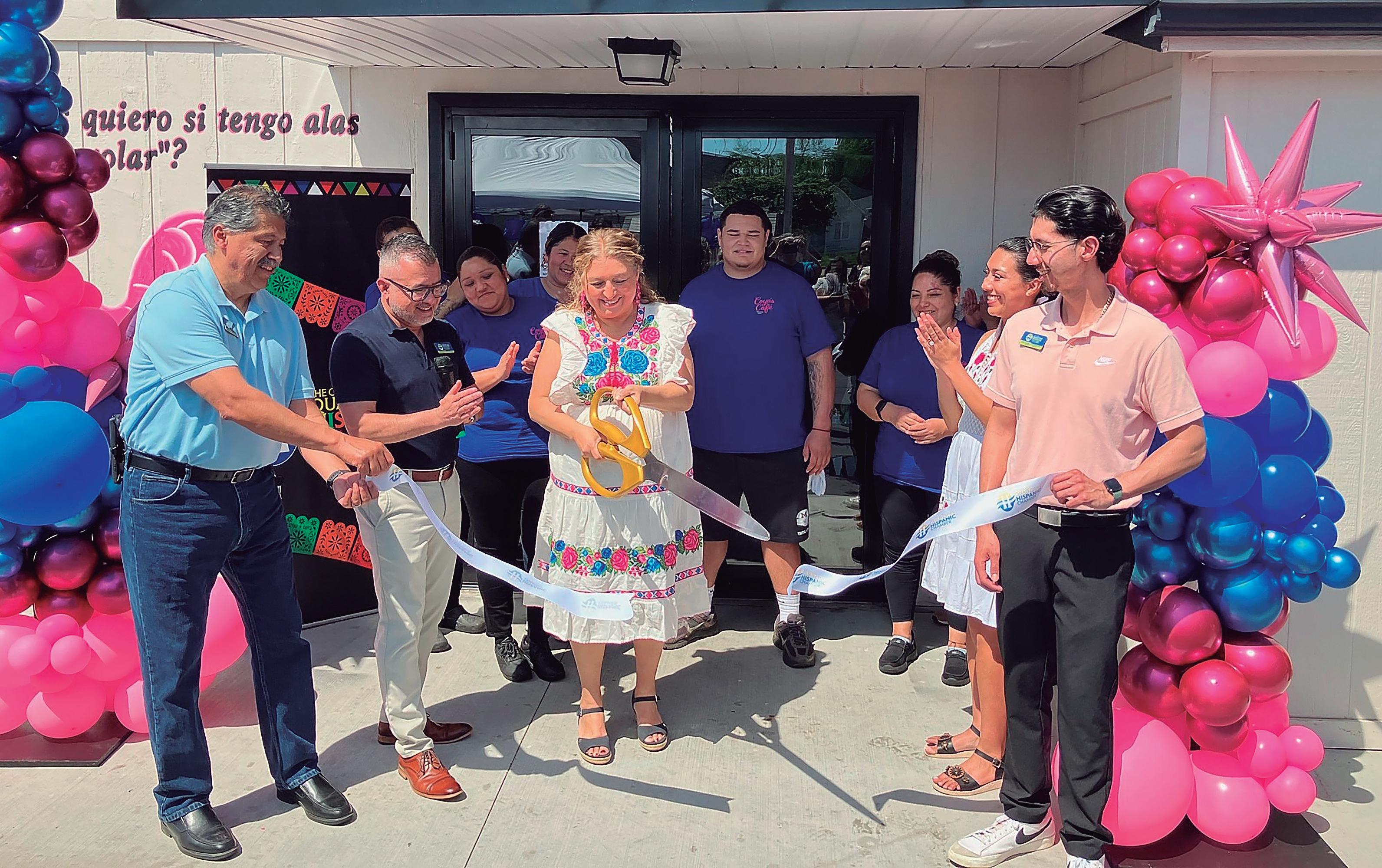
Coya’s Café Mexican Grill ya abrió en su nueva ubicación en 2903 Avenue of the Cities, en Moline. El restaurante celebró su corte de listón y gran apertura el sábado 16 de mayo.
Ahora en un edificio completamente restaurado que antes albergó Adolph’s Mexican Foods, Coya’s había funcionado desde 2018 en un restaurante más pequeño en 4320 4th Avenue, en Moline, donde la madre de la propietaria Blanca Moran operó el antiguo Jalapenos desde 1993
junto con su primo, Angel Moran. La abuela de Blanca abrió su primer restaurante en Veracruz, México, en la década de 1950. Sus padres se mudaron a Quad Cities cuando ella tenía 3 años, a finales de los años 70, cuando su padre trabajaba para la fundición de John Deere en East Moline.
Blanca se graduó de United Township High School y después estudió en Black Hawk College y Augustana College. Su madre, Cordelia “Coya” Limon, administró brevemente el restaurante mexicano Veracruz a mediados de los años 90 en el centro de Rock Island, y Blanca trabajó
varios años para South Moline Township, hasta que dejó ese empleo después de la muerte de su madre en 2016.
“Yo realmente no quería abrir un restaurante. Lo que pasó fue que el dueño de ese local fue quien me dijo: Blanca, necesito que tú me lo rentes”, recordó sobre el primer Coya’s Café, al señalar que la renta era la misma que su madre había pagado 20 años antes.
“Fue como una señal de Dios”, dijo Blanca. “En ese momento había demasiados restaurantes mexicanos y yo pensaba: no puedo competir con
restaurantes mexicanos a ese nivel. Entonces dije: hagamos algo diferente, algo único. Fue cuando empecé a hacer comida estilo callejero, comida casera, antojitos, bebidas, algo único y diferente. Y lo hice para honrar a mi madre”.
“Estaba pasando por la pérdida de ella y recordando todo, y ella me enseñó la cocina, que venía de mi abuela”, dijo, al señalar que su esposo, Alvaro, encabezó la remodelación del antiguo local en Moline y también la del nuevo, mucho más grande. “Gracias a Dios y a todo Quad Cities, se volvió muy exitoso y tuve que dejar mi trabajo de tiempo completo”.
Al principio, Coya’s solo abría de 7 a.m. a 3 p.m., pero después amplió su horario hasta las 9 p.m. y, hace un año, hasta la 1 a.m. los viernes y sábados. En la nueva ubicación, los horarios de cierre se mantienen igual, pero el restaurante abrirá seis días a la semana a las 9 a.m., cerrará a las 9 p.m. de lunes a jueves y permanecerá cerrado todo el domingo.
Querían mudarse por muchas razones, incluida la falta de espacio.
“Ya nos había quedado chico. El estacionamiento era una locura”, dijo Blanca. “La gente no encontraba dónde estacionarse. Solo cabían cinco mesas ahí. La mayoría de nuestros pedidos eran para llevar o para entregas. Entonces ya era momento de expandirnos. Y seguí buscando. Quería quedarme del lado de Illinois. Prefería quedarme en Moline. Pero estaba buscando lugares. Y entonces Dios me mandó otro ángel, otro amigo, y él empezó a hablar”.
Chris Ontiveros compró el antiguo Adolph’s y lo dejó completamente vacío, listo para una remodelación total que tomó un año. Ahora, el lugar tiene capacidad para unas 80 personas. “Pusimos plomería nueva, electricidad nueva, calefacción nueva, cocina nueva, baños nuevos, paredes nuevas. Todo aquí es nuevo”, dijo. Su hijo Pablo trabaja en el restaurante, al igual que su sobrina Cynthia. La hija de Blanca, Daisy, ahora Ramirez, es directora ejecutiva del Center for Nonprofit Excellence de QC Community Foundation.
Continúa en la página 7
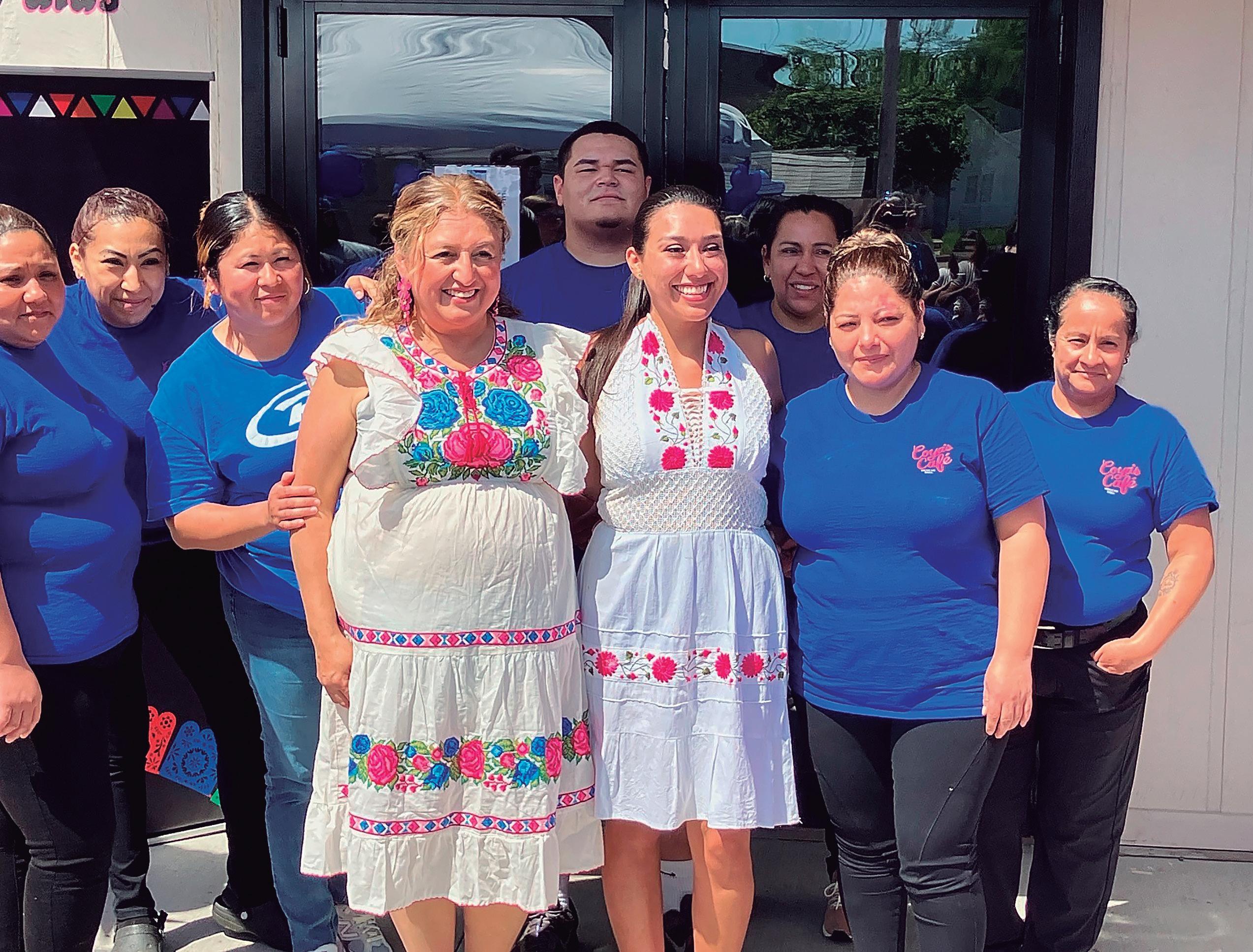
Blance Moran, propietaria de Coya’s Cafe, posa con su hija Daisy Moran Ramirez y algunos empleados del restaurante en la gran inauguración del nuevo local el 16 de mayo de 2026. Foto por Jonathan Turner / Hola America
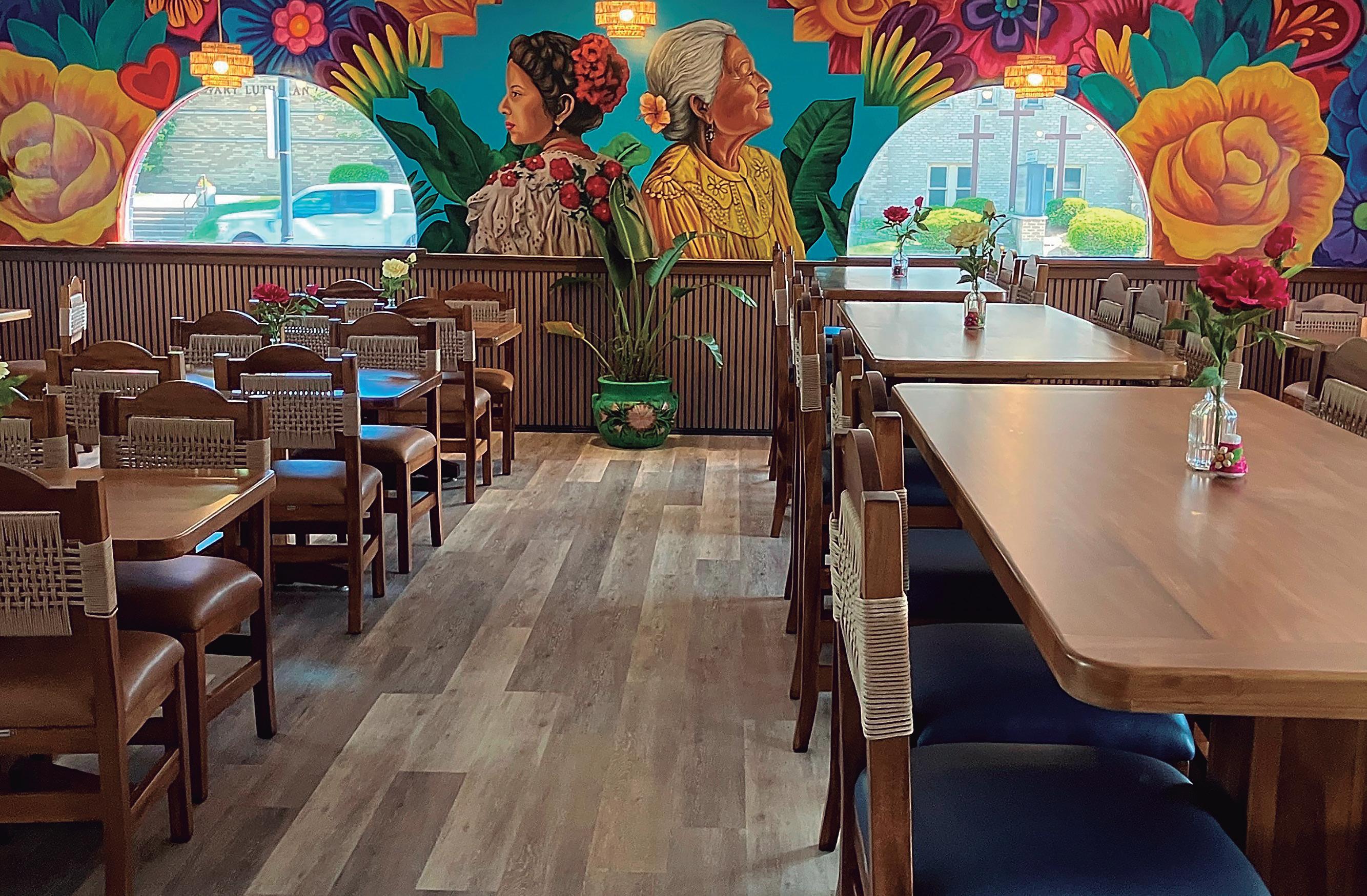
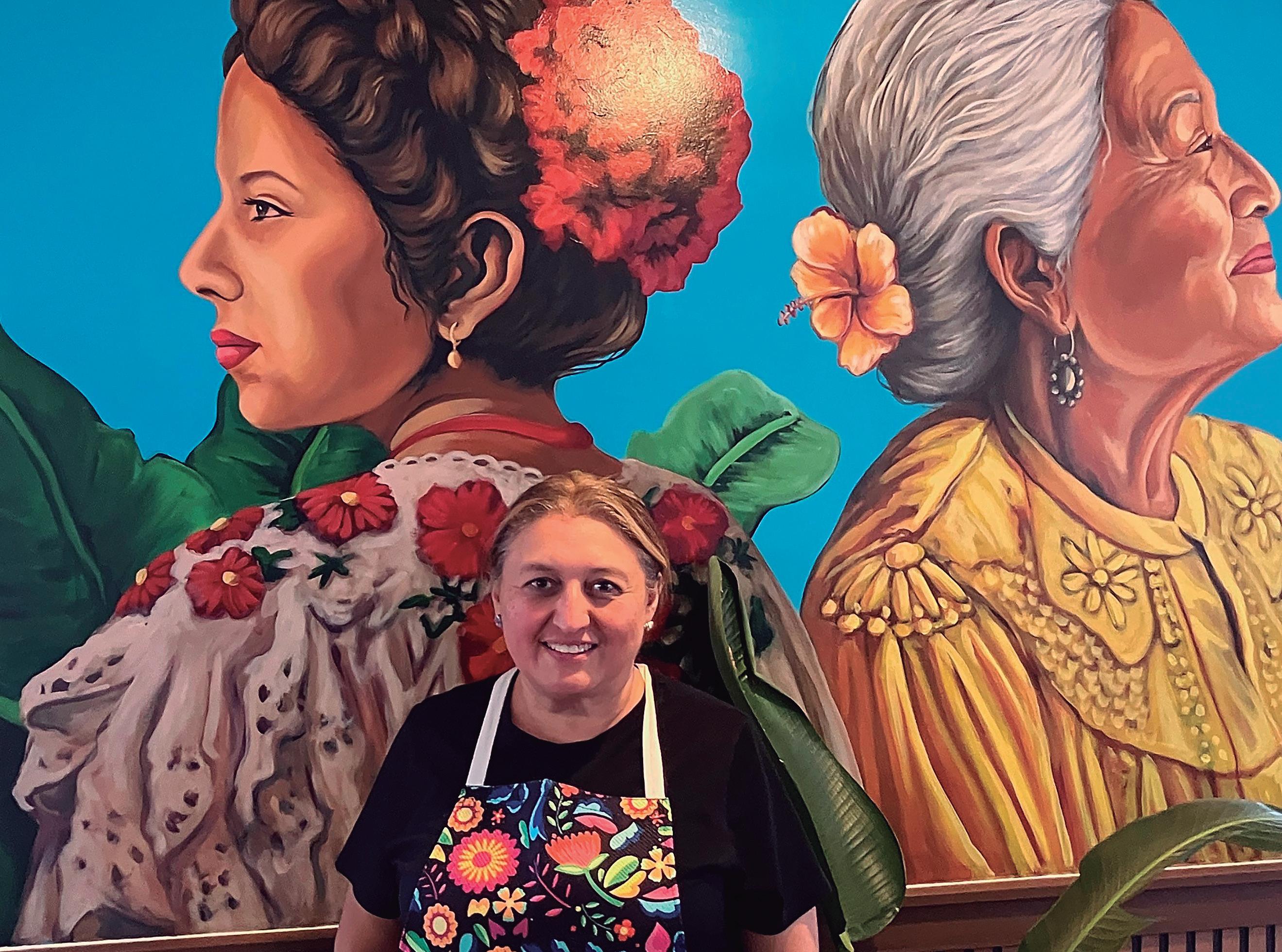
La reconocida muralista de Quad Cities Atlanta Dawn realizó la pintura interior de Coya’s, incluida una pared posterior con retratos grandes y coloridos de Coya cuando tenía 15 años y cuando tenía 79, la edad que tenía al morir. En la pared opuesta hay muchas cruces y fotografías familiares. La religión cristiana es muy importante para la familia Moran.
“Por eso no abrimos los domingos. Para mí, primero Dios, luego la familia y después el trabajo”, dijo Blanca. “Estoy agradecida con Dios por todas las bendiciones y protección. Y dije: está bien. Hay muchos otros restaurantes a los que pueden ir”.
La filosofía de Coya’s Café es “Cooking Con Amor”, o cocinar con amor. El menú está lleno de recetas de su madre. “Porque ella decía: si vas a hacer algo, hazlo con amor. Si no, entonces hazlo y hazlo bien”, dijo Blanca. En junio, incorporará aún más comida casera, “porque veo que mucha gente siempre anda corriendo, corriendo, corriendo. No tienen tiempo para cocinar. Están ocupados”, dijo. “Entonces quiero crear algo para que, si sales del trabajo, tengas un paquete de comida casera para la familia”.
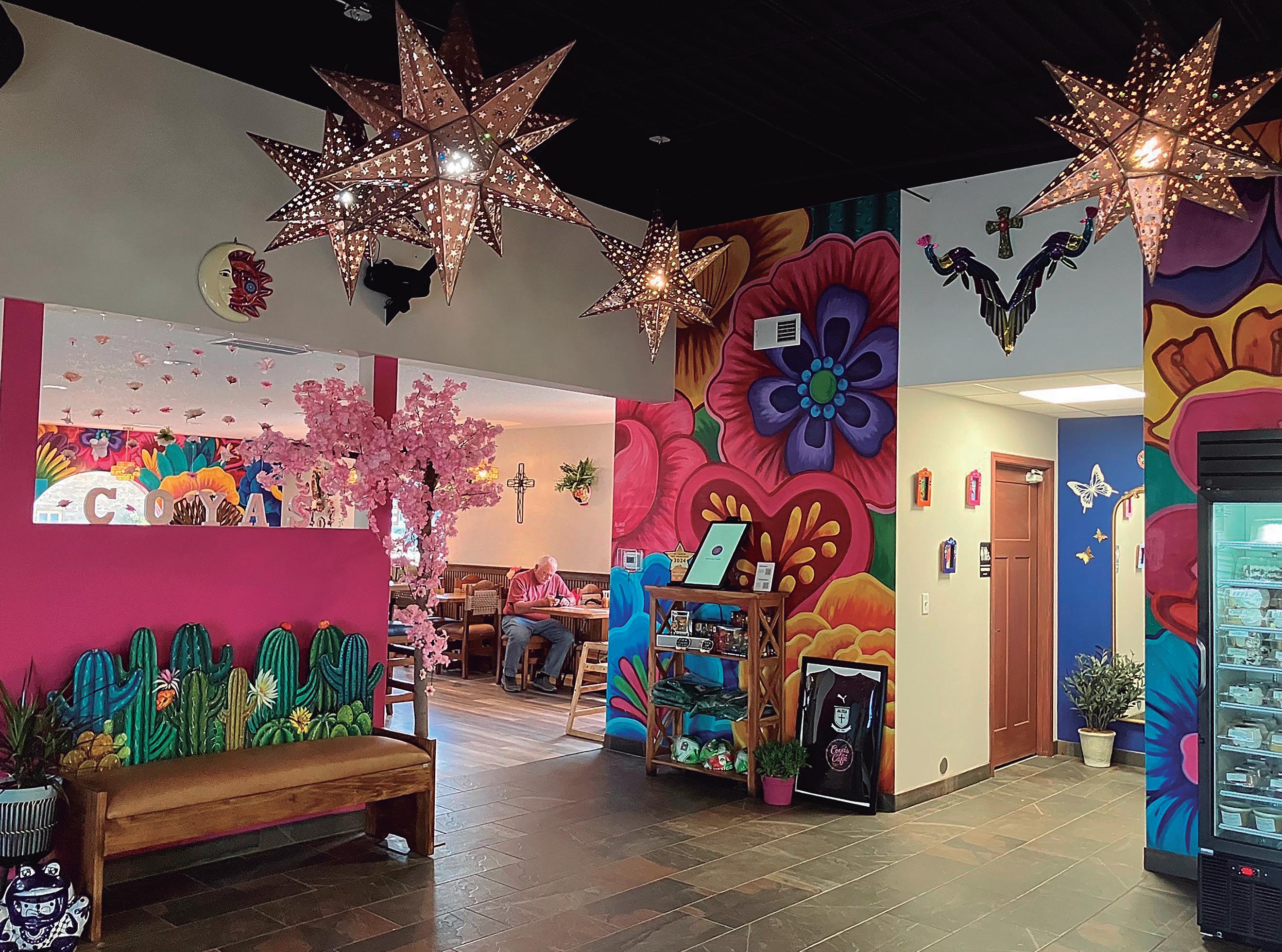
El exterior del restaurante tiene una frase en español de la artista favorita de Blanca, Frida Kahlo: “¿Por qué necesito pies si tengo alas para volar?”. En el interior también hay muchas flores, que eran las favoritas de su madre.
“A mi mamá le encantaban las flores. A mí me encantan las flores”, dijo. “Mi color favorito es el rosa. El color favorito de mi mamá era el amarillo. Mi esposo es azul. Por eso hay mucho azul, rosa y amarillo aquí. Ponemos corazones porque cocinamos con amor y cruces porque creemos en Dios”.
Coya’s tendrá un especial diferente de $11 durante todo el día cada día entre semana, y los sábados ofrecerá tacos de birria, preparados con carne cocinada lentamente durante más de seis horas en un caldo de chile especiado hasta quedar suave y jugosa. “Es carne deshebrada con cebolla y cilantro, y trae un caldo donde la puedes sumergir”, dijo Blanca.
Ser un negocio familiar es muy importante.
“Si no fuera por su ayuda, su apoyo y por ser mi columna vertebral, esto no habría sucedido”, dijo. “Y todos mis trabajadores son como mi segunda familia. Si no fuera por ellos, tampoco podría manejar este lugar. Así que los trato como familia y tengo detalles especiales con ellos”. Para competir en un campo tan concurrido como el de Quad Cities, Blanca se enfoca en lo único y diferente.
“Primero, el servicio al cliente. Debe ser excepcional. Lo que los clientes quieren”, dijo. “Segundo, la calidad de nuestra comida, nuestra presentación”.
“Siempre le digo a la gente que este es uno de esos negocios en los que tienes que amar el negocio. Consume muchísimo tiempo”, dijo Blanca. “No tienes vida, no tienes fines de semana. A veces ni siquiera tienes a tu familia porque tus hijos te quieren, pero no puedes porque tienes que estar aquí. Así que digo que tienes que amar la comida y el negocio, porque si lo haces por dinero, este no es el negocio en este momento”.
Coya’s también ofrece servicio de catering para eventos especiales, como bodas y quinceañeras. Para más información, pueden llamar al 309-749-7626.
Continúa de la página anterior
Vista del comedor principal de Coya’s Cafe, con la pared del fondo pintada por la muralista de Quebec, Atlanta Dawn. Foto por Jonathan Turner / Hola America
Blanca Moran, dueña del Café Coya, frente a los retratos de su madre, Cordelia “Coya” Limón (a los 15 y 79 años), pintados por Atlanta Dawn, el 14 de mayo de 2026. Foto por Jonathan Turner / Hola America
May 21, 2026
Del puente al presente: 20 años después de la Marcha del Día de la Unidad
Por Hola America
El 1 de mayo de 2026 se cumplieron veinte años de la Marcha del Día de la Unidad, uno de los momentos públicos más importantes para la comunidad latina de las Quad Cities.
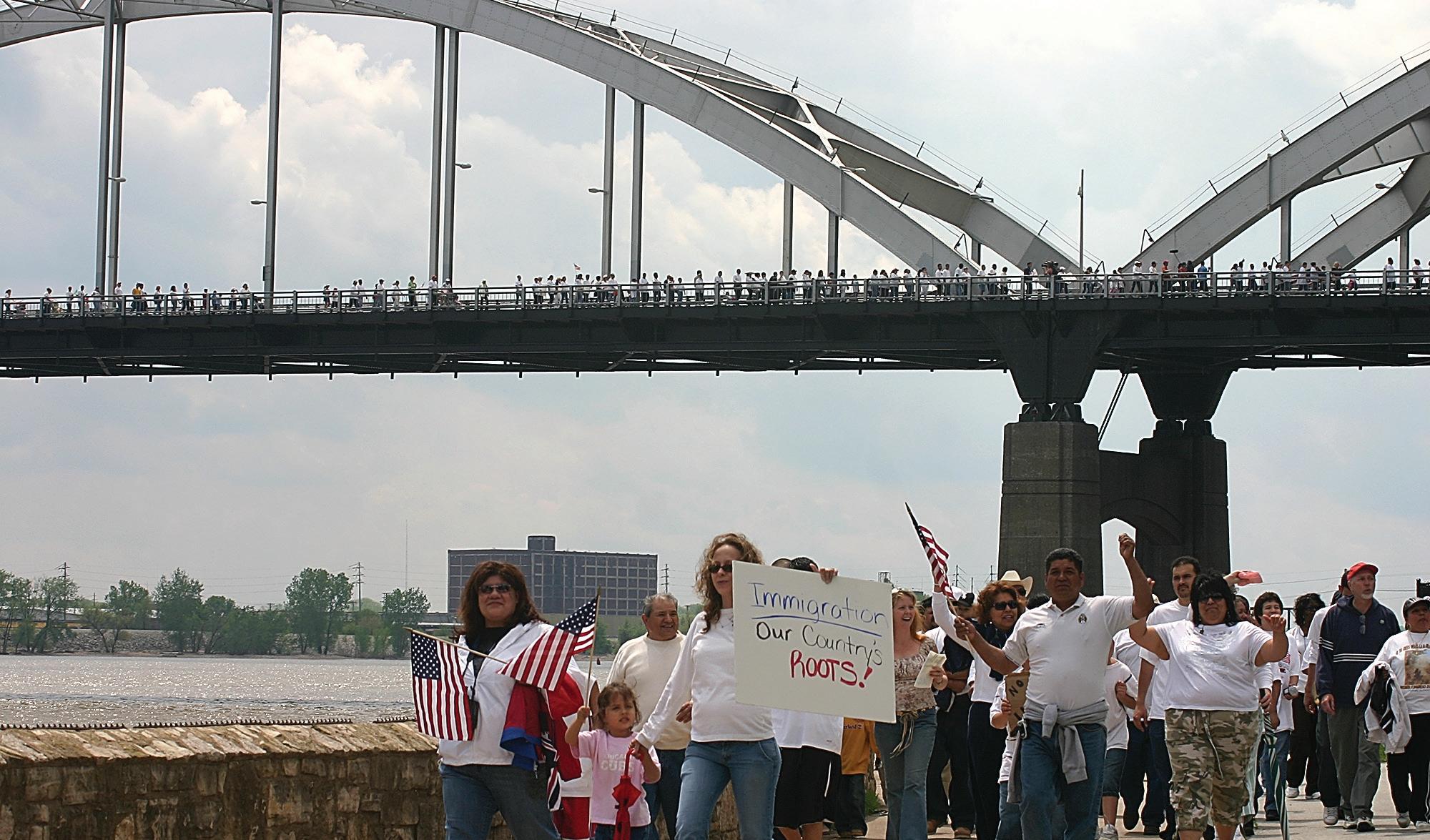
El 1 de mayo de 2006, cerca de 3,000 personas se reunieron vestidas en su mayoría de blanco, muchas de ellas con banderas estadounidenses. Cruzaron el Centennial Bridge con un mensaje claro: querían ser vistas, escuchadas y reconocidas como parte de la comunidad que ayudaban a construir.
Marchaban contra la H.R. 4437, un proyecto de ley federal que habría tratado a los inmigrantes indocumentados como delincuentes. Para las familias que ya vivían con miedo e incertidumbre, la propuesta era más que una política pública. Era algo personal.
La marcha no nació como algo grande ni
perfectamente organizado. Comenzó con un pequeño grupo de personas reunidas alrededor de una mesa de comedor, tratando de decidir qué podían hacer. Los jóvenes formaron parte del esfuerzo desde el inicio. Algunos aún estaban en la secundaria. No tenían años de experiencia organizando movimientos. Tenían urgencia. Tenían enojo. Tenían esperanza.
“Éramos un grupo pequeño. Nos reuníamos en el comedor de mi casa, ahí era donde nos juntábamos mientras intentábamos organizar la marcha. Parte del grupo eran solo estudiantes de secundaria, pero aunque les faltaba experiencia, mostraban mucha pasión”, dijo Tar Macias, editor de Hola América.
Esa pasión llevó la marcha más lejos de lo que muchos esperaban.
Lo que empezó como un esfuerzo comunitario creció con el apoyo de organizaciones locales, familias y medios en español. Para cuando la gente cruzó el puente, ya
se había convertido en una declaración pública de una comunidad a la que muchas veces se le pedía guardar silencio. Para muchos de quienes estuvieron allí, fue la primera vez que sintieron ese tipo de poder. No una fuerza privada. No la supervivencia detrás de puertas cerradas. Poder público. El que nace de mirar alrededor y entender que uno no está solo.
Al final, la H.R. 4437 no se convirtió en ley. El proyecto fue aprobado por la Cámara de Representantes de Estados Unidos, pero quedó estancado en el Senado y nunca llegó al escritorio del presidente. Para muchos de quienes marcharon, eso se sintió como una victoria. Fue una prueba, o algo muy parecido, de que levantar la voz podía hacer una diferencia.
Pero los años siguientes también dejaron algo claro: derrotar un proyecto de ley no era lo mismo que alcanzar justicia.
La lucha continuó.
En 2012, el gobierno federal creó la Ac-
ción Diferida para los Llegados en la Infancia, conocida como DACA. El programa ofreció protección temporal contra la deportación a ciertos inmigrantes indocumentados que habían llegado a Estados Unidos cuando eran niños. También les permitió solicitar permisos de trabajo, continuar sus estudios y construir carreras en el país que desde hacía tiempo llamaban hogar.
Para muchos Dreamers, DACA cambió la vida diaria. Abrió puertas a aulas universitarias, licencias profesionales, empleos, viviendas y futuros que antes parecían fuera de alcance. En todo el país, beneficiarios de DACA se convirtieron en maestros, trabajadores de la salud, dueños de negocios, defensores comunitarios y líderes. Ese avance fue real.
También fue incompleto.
DACA fue creado mediante acción ejecu-
Continúa en la página siguiente
El 1 de mayo de 2026, cerca de 3,000 personas, vestidas en su mayoría de blanco y con banderas estadounidenses, cruzaron el Centennial Bridge de Rock Island, Illinois, a Davenport, Iowa, durante la Marcha del Día de la Unidad en apoyo a una reforma migratoria.
Fotos por Tar Macias / Hola America Archives
tiva, no por una ley aprobada en el Congreso. Eso dejó al programa en una posición vulnerable desde el principio. En 2017, se intentó ponerle fin, lo que desató años de batallas legales. Muchos beneficiarios actuales han podido renovar su estatus, pero el Servicio de Ciudadanía e Inmigración de Estados Unidos no está procesando solicitudes nuevas. Inmigrantes más jóvenes que pudieron haber calificado siguen esperando.
Hoy, DACA sigue vigente, pero su futuro continúa sin resolverse. Está en los tribunales, en el Congreso y en la vida de personas que han tenido que planear su futuro en periodos de dos años.
Para millones de personas más, DACA nunca estuvo disponible.
Padres, trabajadores esenciales y residentes de muchos años, incluidos muchos de quienes marcharon en 2006, no calificaron por límites de edad u otros requisitos. Siguieron trabajando, criando familias, pagando impuestos, construyendo vecindarios y presentándose por sus comunidades, todavía sin un camino hacia un estatus legal.
Esa parte no se puede suavizar demasiado. Veinte años después, la reforma migratoria amplia que muchos esperaban no ha ocurrido.
El país ha cambiado desde 2006, pero no siempre de formas que hayan facilitado la vida de las familias inmigrantes.
La conversación nacional sobre inmigración se ha vuelto más estridente, más dividida y, con frecuencia, menos honesta. La política y la desinformación han hecho más difícil hablar de las personas como personas.
Para muchas familias, los temores siguen siendo conocidos: separación, oportunidades limitadas, incertidumbre legal y la presión de vivir con cuidado en un lugar que también es hogar.
Y aun así, la comunidad ha avanzado.
Los estudiantes que ayudaron a organizar la marcha, caminaron en ella o vieron a sus padres cruzar ese puente son
adultos ahora. Muchos se han convertido en profesionales, defensores, padres y líderes comunitarios. Las comunidades latinas del Medio Oeste son más visibles que hace veinte años. Están más organizadas, más involucradas y son más difíciles de ignorar.
Medios como Hola América también han ayudado a preservar esa historia. Han documentado momentos que, de otro modo, podrían ser tratados como pequeños, locales o temporales, aun cuando cargan el peso de toda una generación. Hoy también existe un reconocimiento más amplio de cuánto moldean las comunidades inmigrantes a este país. Moldean su economía, sus escuelas, sus pequeños negocios, su comida, su música, sus iglesias, sus vecindarios y su futuro. No todos lo dicen en voz alta. No todos están de acuerdo. Pero la evidencia está en todas partes.
La Marcha del Día de la Unidad pertenece a esa historia. Fue una marcha, sí. Pero también fue un antes y un después para muchas personas en las Quad Cities. Mostró lo que podía pasar cuando familias, estudiantes, trabajadores, organizadores y medios locales caminaban en la misma dirección. Mostró a una comunidad descubriendo su propia voz en público.
El puente importó porque la gente lo cruzó unida. Veinte años después, esa imagen permanece: camisas blancas, banderas, familias, jóvenes, adultos mayores, miedo, orgullo y una exigencia de ser tratados con dignidad.
En 2006, el mensaje era simple: Ayer marchamos. Yesterday we marched.
Hoy, el mensaje no es exactamente el mismo. No puede serlo. Ha pasado demasiado tiempo. Demasiadas familias han esperado. Demasiadas promesas se han retrasado o se han roto.
Pero la urgencia permanece.
La marcha ya forma parte del pasado, pero la necesidad de una solución duradera no. El puente se cruzó hace veinte años. El trabajo continúa de este lado.
ALREDEDOR DE LOS QUAD CITIES
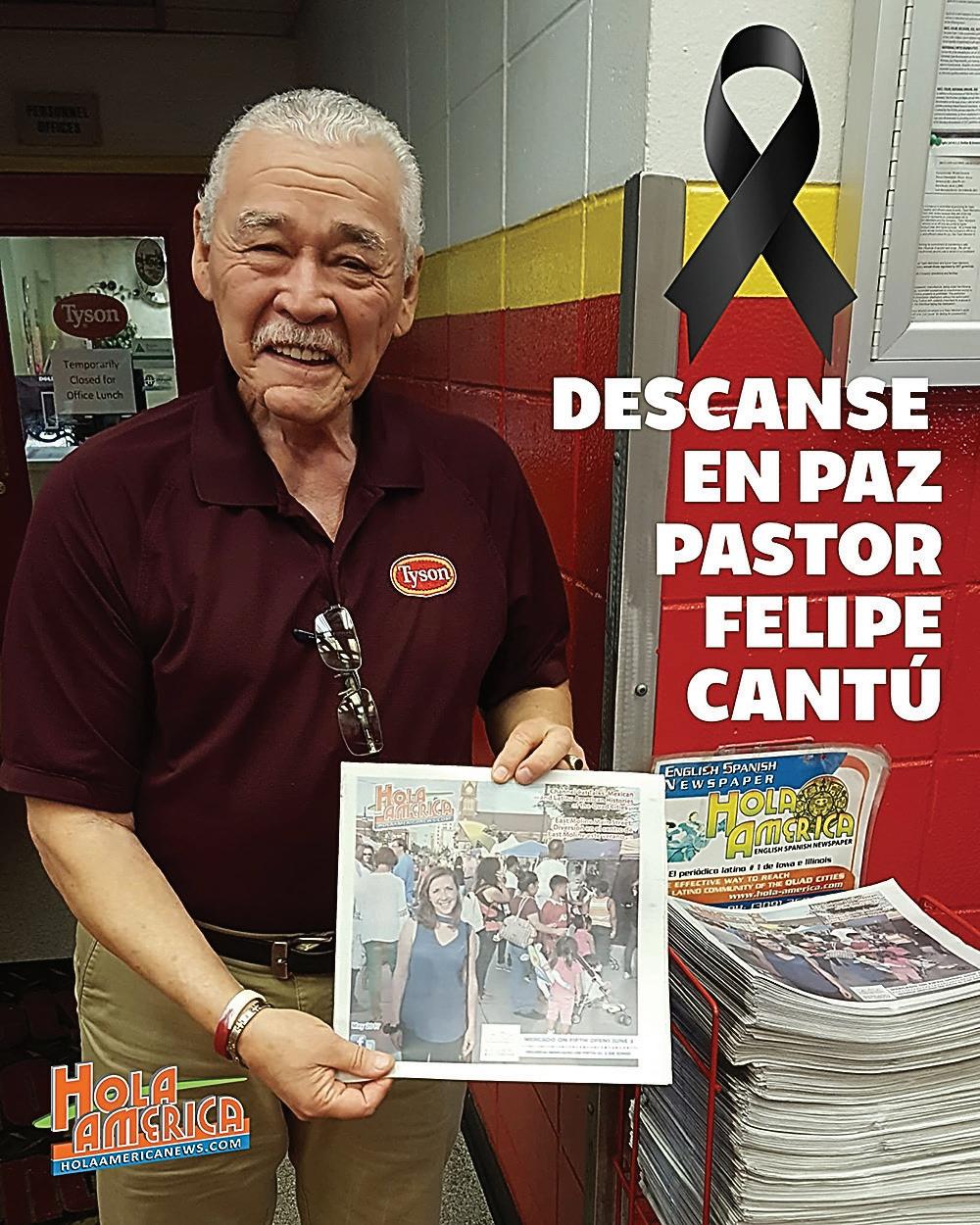
Felipe De Jesus Cantú Jasso, pastor y capellán que sirvió durante décadas a la comunidad de Moline y Rock Island, falleció a los 78 años el 5 de mayo. 2026. Su legado de fe, servicio y amor por su familia será recordado por quienes lo conocieron.
Nuestro más sentido pésame a la familia Cantú.
Felipe De Jesus Cantú Jasso, a pastor and chaplain who served the communities of Moline and Rock Island for decades, passed away at the age of 78 on May 5, 2026. His legacy of faith, service, and love for his family will be remembered by all who knew him.
Our deepest condolences to the Cantú family.
Foto por Tar Macias / Hola America
Continúa de la página anterior
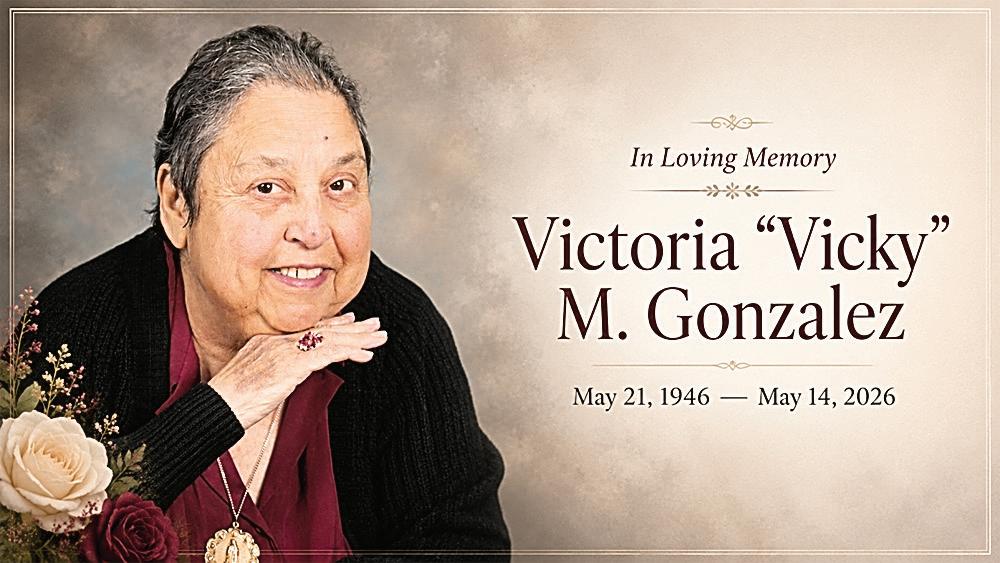
Descanse en paz señora Vicky. Guardamos muchos gratos recuerdos de usted y Don Dario. Que Dios los tenga en Su Santa Gloria.
Rest in peace señora Vicky. We hold many fond memories of you and Don Dario. May God keep you both in His Holy Glory.
Sterling, Illinois Native Earns Spot at World’s Largest Arts Festival
By Jonathan Turner, Hola America
Erica Salas had her first play performed two years ago in Chicago and now plans to take it to the largest arts festival in the world -- the Edinburgh Fringe Festival in Scotland.
The daughter of a Mexican father and Indigenous mother, she’s been accepted to the massive fest in August, and has a GoFundMe campaign to help raise funds needed for her 13-member cast to go and stay there 10 days. As of April 26, she’s raised $2,715. Salas is the writer, director, and producer of “Never Not Murder,” a comedy in the style of 1940s film noir, combined with the inspiration of Wes Anderson’s film and narration style.
“The chance to participate in the Edinburgh Fringe Festival is an incredible opportunity for any artist. It truly has the potential to be a career launchpad. (i.e., Fleabag & Baby Reindeer!),” Salas wrote for her Go
FundMe. “So, I’m determined to make this dream a reality for myself and my cast.”
“Having success career-wise, it would be an amazing thing to happen,” she said recently of going to Edinburgh. “I know this is an incredible opportunity for a lot of reasons, exposure being one of them. The experience just to have that on a resume and be able to say that that’s something that we performed at a play that I wrote, to run there and then ultimately, fostering an international community.
“I think we have a really great comedy community in Chicago, and I want to be able to bring that energy and bring that kind of energy and have other people experience it and be curious and see also kind of what other countries, their senses of humor might be and see what we can learn and who we can meet,” she said. “We do have the opportunity to have journalists come and review the show and that kind of thing.
Publishers come and watch the show.”
A 32-year-old native of Sterling, Ill., who’s lived in Chicago over 10 years, Salas has only been involved in theater and improv about four years.
“After the pandemic, I had some pretty bad social anxiety, and I was trying to get out of that. And my therapist actually recommended improv classes,” she said recently. “That kind of started everything.”
“I stuck with it. I met some really, really cool creative people and I just kind of found where I feel like I belong and going from there, really,” Salas said. “I feel like all the things that I’ve learned through comedy and improv and writing and expressing myself are things that maybe in other ways I would have struggled to kind of navigate,” she said. “And that’s definitely been something that’s kept me grounded while I work through whatever it is at the time.”
While she’s mainly worked in commercial lending and mortgages, Salas briefly worked for the Pinkerton detective agency in Chicago, which partly inspired her play. “It definitely felt like something I could maybe draw from,” she said, noting she also loved a film noir parody on the series “It’s Always Sunny in Philadelphia.”
“I thought it was so funny and so creative and I thought that that was just a fun genre to kind of write about,” she said. “It started out with just writing a few scenes here and there, more as a sketch. And then I kind of just got sucked into it and just kept writing about this world that I’ve built.”
Salas admires her improv veteran friends.
“People that do that often, I’m so like in awe of them. I love watching my peers doing that,” she said. “The thing that really like scratches a part of my brain that I really enjoy is writing, and writing sketch and this play and that kind of like gets out that creative urge that I have. And I think really writing sketches is kind of where my heart is more than anything.”
In 2024, she penned “Never Not Murder” and was fortunate to put it on stage at The Annoyance Theatre in Chicago. She first took improv and writing classes there, and performed her first improv there in spring 2023.
The story is set in 1944 New York, following the detective Frankie King, who’s the only straight-
Continues next page
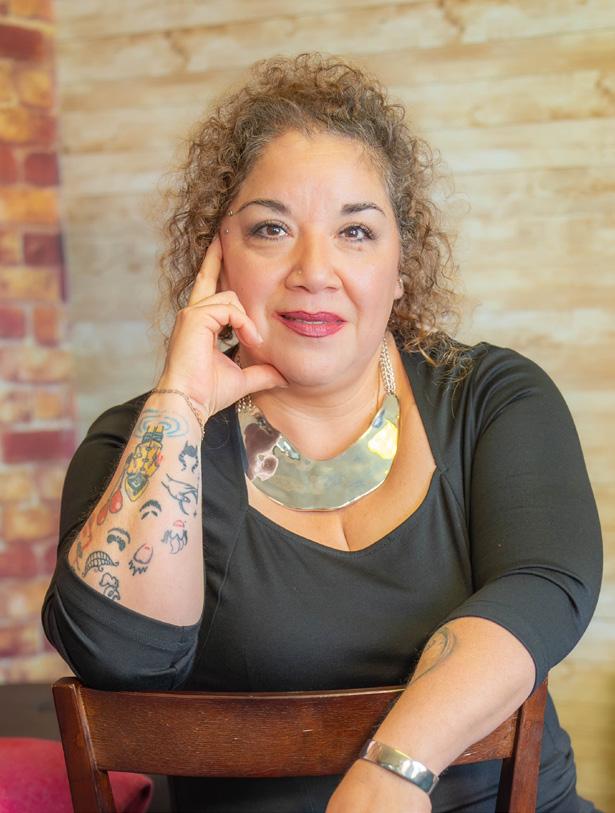
Erica Salas, a 32-year-old native of Sterling, Ill., who’s lived in Chicago over 10 years, is raising money to take her play and its cast to the Edinburgh Fringe Festival in Scotland this August.
Continues from last page
laced, clean cop in the city. “The story kind of follows him falling in love, navigating betrayal, love triangles, and then ultimately kind of trying to keep a corrupt big wig in the city of New York from winning the mayoral campaign,” Salas said. “There’s a lot of kooky characters that we pick up along the way. And there’s one death in the show, and we’re kind of trying to figure out how Frankie figures it out.”
“We know as the audience, and we use the narrator to help us, take us on that path. So the narrator will break the fourth wall, talk to the audience,” she said. There’s a femme fatale character, Lucy, who’s involved in the murder.
The play title is a funny nod to the chaotic nature of
New York, Salas said. “It’s mostly like we find out that there’s a lot of things going on in New York City. And one of those things, it’s never not murder.”
In Chicago, the play ran for three months, with two different casts of 13 each, and Salas directed.
Going to Edinburgh Fringe has always been a dream, she said.
“It’s definitely, I think, something for artists of any kind. That’s like a huge goal and amazing opportunity,” Salas said. “It really kind of came spur of the moment…I submitted the show to a few venues and I heard back from three of them, and ultimately I chose one really great venue. So we get an opportunity to perform for a week every day,
which is really, really exciting.”
She’s never been abroad, though a few of her cast have attended Edinburgh Fringe.
“It’s a huge event,” she said, noting it attracts about 3 million attendees during the month of August. “They’ve got around like 50,000 performers each year, and there’s thousands of venues to choose from. And each venue will fill their entire day with shows. It’s one of the largest global events in the world.”
The total costs for her cast for everything is $36,000, and they plan to go regardless of how much they raise. For more information on her play, go to nevernotmurder.carrd.co
A scene from the 2024 Chicago production of “Never Not Murder,” by Erica Salas.
Coya’s Café in Moline Celebrates New, Remodeled Location
By Jonathan Turner, Hola America
Coya’s Café Mexican Grill is open at a new location at 2903 Avenue of the Cities, Moline. They held a ribbon-cutting and grand opening Saturday, May 16. Now in a totally restored building that formerly housed Adolph’s Mexican Foods, Coya’s had been at a smaller restaurant (since 2018) at 4320 4th Avenue, Moline, where owner Blanca Moran’s mother operated the old Jalapenos (since 1993) with her cousin, Angel Moran. Blanca’s grandmother opened her first restaurant in Veracruz, Mexico in the 1950s. Her parents moved to the Quad Cities when she was 3, in the late ‘70s, when her dad worked for the John Deere foundry in East Moline, and Blanca graduated from United Township High School, going on to Black Hawk and Augustana colleges. Her mom (Cordelia “Coya” Limon) briefly ran the Veracruz
Mexican restaurant in the mid-‘90s in downtown Rock Island, and Blanca worked several years for South Moline Township, leaving after her mom passed away in 2016.
“I didn’t really want to open a restaurant. What happened is the owner of that location, he’s the one that told me, Blanca, you need to rent it out for me,” she recalled of the first Coya’s Café, noting the rent was the same that her mom paid 20 years earlier.
“It was kind of like a sign from God,” Blanca said. “There was too many Mexican restaurants at that point that I was like, I can’t compete with Mexican restaurants at that level. So let’s do something different, something unique. So that’s when I started doing like street-style food, homestyle cooking, snacks, drinks, something unique and different. And I did it to honor my mother.”
“I was going through losing her and then
remembering everything and then she taught me -the cooking and it came from my grandmother,” she said, noting her husband Alvaro led the remodeling of the old Moline location and the much larger new one. “Thank God to all the Quad Cities, it became very successful and I had to quit my full-time job.” Coya’s at first was just open 7 a.m. to 3 p.m., but then expanded to 9 p.m., and a year ago to 1 a.m. Fridays and Saturdays. At the new location, those closing times are the same, but opening six days a week at 9 a.m., closing at 9 p.m. Monday to Thursday; and closed all day Sundays.
They wanted to move for many reasons, including limited space.
“We kind of outgrew it. The parking lot was a craziness,” Blanca said. “People couldn’t find parking. Only five tables would fit in there. Most of our orders were to go where deliveries are. So it’s time to expand. And I kept looking. I want to stay in the Illinois side. I prefer to stay in Moline. But I was looking for places. And then God sent me another angel, another friend, and he started talking.”
Chris Ontiveros bought the old Adolph’s and completely gutted it, ready for total remodel, which took a year and the seating capacity is now about 80. “We put in new plumbing, electricity, new furnace, new kitchen, new bathrooms, new walls. Everything is new in here,” she said.
Her son Pablo works in the restaurant, as does her niece Cynthia. Blanca’s daughter Daisy (now Ramirez) is executive director for the QC Community Foundation’s Center for Nonprofit Excellence.
Popular QC muralist Atlanta Dawn did the interior painting at Coya’s, including a rear wall that has large, colorful portraits of Coya when she was 15 and 79 (her age when she died). An opposite wall includes many crosses and family photos. Their Christian religion is very important to the Moran family.
“That’s why we don’t open on Sundays. For me, God first, family and then work,” Blanca said. “I’m thankful to God for all the blessings and protection. And I said, it’s okay. There’s a lot of other restaurants you can go.”
The philosophy of Coya’s Café is “Cooking Con Amor,” or cooking with love. The menu is filled with her mom’s recipes. “Because she would say, if you’re going to make something, do it out of love. If not,
Continues next page
The entrance area at the new Coya’s Cafe, 2903 Avenue of the Cities, Moline.
Photo by Jonathan Turner / Hola America
Continues from last page
then do it and do it the right way,” Blanca said. In June, she will bring in even more homestyle cooking, “because I see a lot of people are always running, running, running. They don’t have time to cook. They’re busy,” she said. “So I want to create something that if you’re coming out of work, here’s a package for a family of homestyle cooking.”
The outside of the restaurant has a Spanish quote from Blanca’s favorite artist, Frida Kahlo, saying: “Why do I need feet if I have wings to fly?” The inside also features lots of flowers, which were her mom’s favorite.
“My mom loved flowers. I love flowers,” she said. “My favorite color is pink. My mom’s favorite color was yellow. My husband is blue. So that’s why there’s a lot of blue, pink, and yellow in here. We do hearts because we cook with love and crosses because we
believe in God.”
Coya’s will have a different $11 special all day every weekday, and Saturdays will feature Tacos de Birria, which are made with slow-cooking meat (over six hours) in a spiced chile broth until tender and juicy.
“It’s shredded beef with onion and cilantro and it has a broth where you dip it in,” Blanca said.
Being a family business is very important.
“If it wasn’t for their help and their support and my backbone, then this wouldn’t happen,” she said. “And then all my workers, they’re like my second family. If it wasn’t for them, I couldn’t run this place either. So I treat them like family and I do some special things with them.”
To compete in a crowded QC field, Blanca focuses on what’s unique and different.
“First, customer service. They be like exceptional.
What the customers want,” she said. “Second, the quality of our food, our presentation.”
“I always tell people, this is one of the businesses that you have to love the business. It’s very timeconsuming,” Blanca said. “You don’t have a life, you don’t have weekends. Sometimes you don’t even have your family because your kids want you. But you can’t because you have to be here. So I said, you have to have the love for the food and the business because if you’re doing it for the money, this is not the business right now.”
Coya’s also does catering for special events, like weddings and quinceañeras. For more information, call them at 309-749-7626.
Blanca Moran, owner of Coya’s Cafe Mexican Grill, cuts the ribbon for the restaurant’s new location, on May 16, 2026
Photo by Jonathan Turner / Hola America
From the Bridge to Today: 20 Years After the Day of Unity March
By Hola America
May 1, 2026, marked twenty years since the Day of Unity March, one of the most important public moments for the Latino community in the Quad Cities.
On May 1, 2006, nearly 3,000 people came together dressed mostly in white, many carrying American flags. They crossed the Centennial Bridge with a clear message: they wanted to be seen, heard and recognized as part of the community they helped build.
They were marching against H.R. 4437, a proposed federal bill that would have treat-
ed undocumented immigrants as felons. For families who were already living with fear and uncertainty, the bill felt like something more than policy. It felt personal.
The march did not begin as something large or polished. It started with a small group of people meeting around a dining room table, trying to figure out what they could do. Young people were part of it from the beginning. Some were still in high school. They did not have years of organizing experience. They had urgency. They had anger. They had hope.
“We were a small group. We would gather in the dining room of my house—that’s
where we met while trying to organize the march. Part of the group were just high school students, but even though they lacked experience, they showed a lot of passion,” said Tar Macias, editor of Hola América.
That passion carried the march farther than many expected.
What began as a grassroots effort grew with the support of local organizations, families and Spanish-language media. By the time people walked across the bridge, it had become a public statement from a community that was often asked to stay quiet.
For many who were there, it was the first time they felt that kind of power. Not private strength. Not survival behind closed doors. Public power. The kind that comes from looking around and realizing you are not alone.
H.R. 4437 ultimately did not become law. The bill passed the U.S. House of Representatives but stalled in the Senate and never reached the president’s desk. For many who marched, that felt like a victory. It was proof, or at least something close to proof, that raising your voice could matter.
Continues next page
On May 1, 2006, nearly 3,000 people, dressed in mostly white and carrying American flags, crossed the Centennial Bridge from Rock Island, Illinois, to Davenport, Iowa, for the Day of Unity March in support of Immigration Reform.
Photo by Tar Macias / Hola America Photo Archives
Continues from last page
But the years that followed also made something else clear: one defeated bill was not the same as justice.
The fight continued.
In 2012, the federal government created Deferred Action for Childhood Arrivals, known as DACA. The program offered temporary protection from deportation to certain undocumented immigrants who had arrived in the United States as children. It allowed recipients to apply for work permits, continue their education and build careers in the country they had long called home.
For many Dreamers, DACA changed the shape of daily life. It opened doors to college classrooms, professional licenses, jobs, homes and futures that had once felt out of reach. Across the country, DACA recipients became teachers, healthcare workers, business owners, advocates and leaders.
That progress was real. It was also incomplete.
DACA was created through executive action, not through Congress. That meant the program was always vulnerable. In 2017, it was targeted for termination, setting off years of legal battles. Many current recipients have been able to renew their status, but new applications are not being processed by U.S. Citizenship and Immigration Services. Younger immigrants who might have qualified are still left waiting. Today, DACA remains in place, but its future is unsettled. It sits in the courts, in Congress, and in the lives of people who have had to plan their futures in two-year increments.
For millions of others, DACA was never available at all.
Parents, essential workers and longtime residents, including many who marched in 2006, did not qualify because of age limits or other requirements. They kept working, raising families, paying taxes, building neighborhoods and showing up for their communities, still without a path to legal status.
That is the part that cannot be softened too much. Twenty years later, the broader immigration reform many hoped for has not happened.
The country has changed since 2006, but not always in ways that made life easier for immigrant families. The national conversation around immigration has become louder, more divided and often less honest. Politics and misinformation have made it
harder to talk about people as people. For many families, the fears are familiar: separation, limited opportunities, legal un certainty and the pressure of living care fully in a place that is also home. And still, the community has moved for ward.
The students who helped organize, marched or watched their parents cross that bridge are adults now. Many have become professionals, advocates, parents and community leaders. Latino communi ties across the Midwest are more visible than they were twenty years ago. They are more organized, more engaged and harder to ignore.
Media platforms like Hola América have also helped preserve that history. They have documented the moments that might otherwise be treated as small, local or tem porary, even when they carry the weight of a whole generation.
There is also a broader recognition now of how deeply immigrant communities shape this country. They shape its economy, its schools, its small businesses, its food, its music, its churches, its neighborhoods and its future. Not everyone says that out loud. Not everyone agrees. But the evidence is everywhere.
The Day of Unity March belongs to that history.
It was a march, yes. But it was also a before-and-after moment for many people in the Quad Cities. It showed what could happen when families, students, workers, organizers and local media moved togeth er. It showed a community discovering its own voice in public.
The bridge mattered because people crossed it together.
Twenty years later, that image still holds: white shirts, flags, families, young people, elders, fear, pride, and a demand to be treated with dignity.
In 2006, the message was simple: Ayer marchamos. Yesterday we marched. Today, the message is not exactly the same. It cannot be. Too much time has passed. Too many families have waited. Too many promises have been delayed or broken.
But the urgency remains.
The march is now part of the past, but the need for a lasting solution is not. The bridge was crossed twenty years ago. The work continues on this side of it.
• Torceduras
• Dolores de cabeza
La Quiropráctica también puede ayudar con problemas y dolores del emberazado, al igual que con problemas en niños y bebés.
La Dra. Lidia Gómez solo ve pacientes con cita previa pero en casos de emergencia les pide que llamen antes de ir a su oficina.