

Dear Prospective Graduate Student,
Thank you for your interest in the LL.M. program in American Legal Studies at the Maurice A. Deane School of Law at Hofstra University.
As an LL.M. student at Hofstra Law, you will gain an in-depth understanding of American law in a global context. We have created an LL.M. program specifically designed to prepare lawyers from around the world to learn how to navigate transactions and serve clients when the laws of multiple nations are involved.
Our distinguished faculty and challenging curriculum will test your intellect, while our pioneering skills programs will equip you with the tools needed for real-world practice. Our international focus will expose you to the impact of U.S. law on global transactions and legal developments, while our supportive faculty, administrators and students will welcome you into a unique new community. With many of the world’s leading law firms, international corporations and media headquarters as well as one of the largest court systems on the East Coast only a 40-minute train ride away, LL.M. students are provided a close-up view of the U.S. legal and business world from the comfort of a secure suburban home base.
Above all, Hofstra Law will prepare, challenge and inspire you to do more than merely study law. Our graduates make an impact in the world.
The Hofstra Law experience will prepare, challenge and inspire you to make an impact both in your LL.M. studies and in the practice of law. This brochure provides some of the information you will need to know about our vibrant school, passionate professors and collaborative students. In the heart of Long Island, at the edge of New York City, Hofstra is a special place to study law.
I hope you are inspired to learn more.

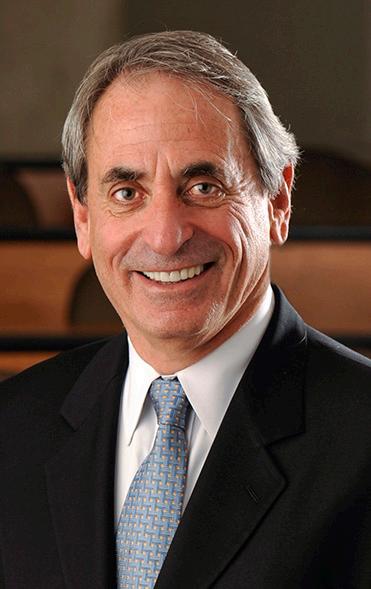
Eric Lane Dean and Eric J. Schmertz Distinguished Professor of Public Law and Public Service
The Maurice A. Deane School of Law at Hofstra University has designed the LL.M. program in American Legal Studies for graduates who received their law degrees outside the United States and seek to gain a profound understanding of and exposure to U.S. law and its practice. This program provides important knowledge and valuable credentials that allow you to accelerate your career path, whether you are returning to your home country or entering the U.S. legal field.
Hofstra Law LL.M. candidates benefit from being fully integrated members of the Law School student body, because you take classes with American and international students who are pursuing a U.S. Juris Doctor (J.D.) degree. Hofstra Law takes care to match you with an academic advisor to recommend a customized course of
study that best suits your professional needs.
Hofstra Law LL.M. students, who have come from more than 40 countries, are well-equipped to manage and navigate the field of law across many nations. By successfully completing the LL.M. program, you also gain the skills needed to help you qualify to take and pass the New York State Bar Examination.
Hofstra Law LL.M. students gain an in-depth understanding of the American legal system in a global context. During the academic year, you are exposed firsthand to the practice of law through visits with attorneys, local courts and other legal institutions. These visits allow you to better comprehend the U.S. legal system and interact with highly experienced attorneys and other legal professionals.

From Across the Globe
Students in this program have included law graduates from more than 40 countries, including:
• Afghanistan
• Albania
• Argentina
• Azerbaijan
• Bangladesh
• Brazil
• Canada
• China
• Colombia
• Czech Republic
• Dominican Republic
• Ecuador
• France
• Haiti
• India
• Indonesia
• Israel
• Italy
• Japan
• Korea
What’s great about the Hofstra Law LL.M. program is the sheer diversity of jurisdictions represented by our students — the Middle East, Asia and Latin America. They bring a wealth of experience that enriches the classroom for both professors and students.
— Professor Julian Ku ” “
• New Zealand
• Nigeria
• Norway
• Pakistan
• Philippines
• Poland
• Romania
• Russia
• Saudi Arabia
• Togo
• United Kingdom
• Uzbekistan
• Zambia
• Zimbabwe
As one of only a few U.S. law schools to require Transnational Law as a first-year course, the Maurice A. Deane School of Law is at the forefront of the changing realities of legal practice. This innovative course allows you to put your studies into a broader context by exploring the relationship between international law, foreign legal systems and the American legal system. With more than 200 upper-level course offerings, you can explore practically any area of law, and you can craft an individualized course of study.
Hofstra Law’s advanced curriculum helps to develop well-trained and highly employable professionals. In fact, a survey of law firms in New York, New Jersey and Connecticut conducted by the Hanover Research Council revealed that compared with graduates from other law schools, Hofstra Law graduates received an overall higher rating in a majority of competencies, including business knowledge, communication skills, advocacy skills and general workplace skills.
Hofstra Law’s full-time faculty consists of nationally and internationally recognized scholars who represent diverse fields. Faculty members have clerked for U.S. Supreme Court justices, chaired major American Bar Association and law reform committees,
received awards for scholarship and leadership in legal education as well as community leadership, and been politically active in their communities. They are recognized
Student Programs to provide you assistance and support during your time at Hofstra. The office offers help with visas and health insurance, as well as access to a large
Teaching lawyers whose native language is not English and whose native legal system is neither adversarial nor precedentbased is a highly exciting and rewarding experience. — Professor Juli Campagna” “
leaders in clinical and skills training. Their publications reflect a wide range of interests and expertise, ongoing participation in important scholarly debates of the day and significant contributions to the study and teaching of law. The faculty’s open-door policy fosters an accessible and collegial environment and reflects professors’ engagement with their students.
As an LL.M. candidate, you are a full member of the Hofstra Law community and have access to a range of services and opportunities to help you achieve success in several ways, from academic success during law school and passing the bar exam to pursuing a rewarding professional career.
The Law School also partners with Hofstra University’s Office of Multicultural and International
community of international students from more than 65 countries.
You take classes in a state-of-theart building that includes a trial courtroom-classroom where you can view and critique your trial practice through the use of advanced audiovisual equipment. The Law Library contains more than 534,000 print and microform volumes and is equipped with two computer labs and workstations throughout. A wireless network exists throughout the Law School, which allows laptop access to the network (Internet, email, LexisNexis and Westlaw) from anywhere in the building. Many lectures and speaker events are available via iTunes U, YouTube and webcast.
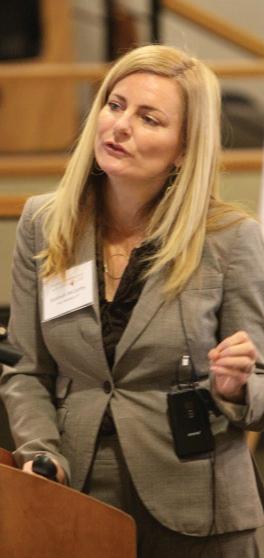

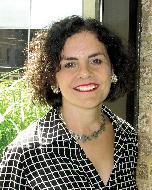
Juli Campagna | Associate Professor of Legal Writing and Assistant Faculty Director of International Programs | B.A., Mundelein College (now Loyola University); M.A., University of Illinois; J.D., Chicago-Kent College of Law; LL.M., The John Marshall Law School
Professor Campagna has worked internationally for 30 years. Before attending law school, she was a translator and taught English as a Second/Foreign Language in business and academic settings around the world. Her legal practice focused on cross-border transactions. She has taught in law schools, law firms and judicial training centers in Europe, Asia and Latin America. She is an active member of the Legal Education Committee of the International Law Section of the American Bar Association. She also has served on the planning and programming committees for the annual meeting of the ABA’s International Law Section, and will do so again for the meeting in April 2014. The Class of 2013 selected her to receive the Teacher of the Year award.
Julian Ku | Professor of Law and Faculty Director of International Programs | B.A., J.D., Yale University
Professor Ku teaches courses in international, constitutional and corporate law. His main research interest is the intersection of international and domestic law. He has recently published articles on the constitutional aspects of foreign relations in the Yale Law Journal, the Supreme Court Review and Constitutional Commentary, and the book Taming Globalization: International Law, the U.S. Constitution, and the New World Order (with John Yoo). He also is a co-founder of the renowned international law blog Opinio Juris. Professor Ku was awarded a grant to serve as a Fulbright Distinguished Lecturer in Law at the East China University of Political Science and Law during the spring 2011 semester. Before joining the Hofstra Law faculty in 2002, he clerked for Judge Jerry Smith of the U.S. Court of Appeals for the Fifth Circuit, and was an Olin Fellow and Lecturer in Law at the University of Virginia Law School. He also practiced as an associate at the New York law firm of Debevoise & Plimpton, specializing in litigation and arbitration arising out of international disputes.

Steven C. Richman
Associate Director of Global Initiatives
B.A., J.D., Hofstra University Room 221 | 516-463-4547 internationalprograms@hofstra.edu
Mr. Richman works to advance the Maurice A. Deane School of Law’s goals in the international programs area. His office oversees study abroad programs, faculty and student exchange opportunities, the LL.M. program in American Legal Studies and, generally, the globalization of the Law School environment.
The Office of Global Initiatives was created to nurture and cultivate globalization as an institutional value and educational priority at the Maurice A. Deane School of Law. The office oversees all current international programs at Hofstra Law, including study abroad, student exchange and the LL.M. program in American Legal Studies. The office is responsible for establishing international centers abroad, new models for faculty and student exchange relationships, and affiliations with international organizations; developing international rule of law programs; and cultivating international internship opportunities.
The Maurice A. Deane School of Law is fully accredited by the Council of the Section of Legal Education and Admissions to the Bar of the American Bar Association, and a member of the Association of American Law Schools. For more than 40 years, Hofstra Law has provided its graduates an education rich in the theory and skills needed to become outstanding lawyers, business executives and community leaders. Hofstra Law seeks to attract motivated students and outstanding faculty scholars who uphold its philosophy, described by two simple phrases: “Be excellent in the classroom” and “Make a mark in the field of law.”
Hofstra Law’s community is made up of about 850 students, more than 50 full-time faculty members and approximately 35 adjunct professors, and more than 10,600 alumni who work together to create an atmosphere of intellectual excitement, personal support and cooperative learning.
“
Be excellent in the classroom, and make a mark in the field of law.
”
The Office of Career Services (OCS) provides a wide range of services to facilitate your career and professional development, including helping you find employment in the private and public sectors. OCS provides individual career and professional-development counseling, educational programming, mock interviews, an extensive online employer database and comprehensive on-campus interviewing. OCS’s experienced career counselors are available to assist you with all phases of the job search. OCS also presents panels and programs that offer valuable career insight and foster networking opportunities with practicing attorneys and Hofstra Law alumni. OCS has helped Hofstra Law LL.M. students obtain positions with private law firms, government agencies, public interest organizations, and federal and state judges.
Hofstra Law takes pride in having a diverse and vibrant student body, active both in and outside the classroom. LL.M. students at Hofstra Law participate in organizations ranging from professional and affinity groups to intramural sports. With more than 40 student organizations to choose from, including the AsianPacific American Law Students Association, International Law Society, International Moot Arbitration Team, Latino/a American Law Students Association and South Asian Law Student Association, you can pursue your extracurricular passions through leadership and engagement at Hofstra Law and in the broader community. Organizations plan guest speakers, panels, charity fundraisers and community-building events. The International Moot Arbitration Team has won several awards in the Willem C. Vis moot competitions that are held annually
in Vienna and Hong Kong. Student participants and leaders find Hofstra Law’s organizations to be a wonderful resource for social and professional networking.
Centers and institutes allow us to focus attention on legal issues of importance to the Hofstra Law community, the legal profession and society. These nationally and internationally recognized centers of excellence foster research, education and action on critical issues; attract thought leaders to the campus for research, debate and the exchange of knowledge; and immerse students in collaborative research that impacts scholarship and helps translate legal theory into practice. You can work closely with leading scholars, as well as take advantage of the centers’ and institutes’ academic resources to not only deepen your legal knowledge but also distinguish yourself in a competitive professional landscape.
• Center for Applied Legal Reasoning
• Center for Children, Families and the Law
• Center for Legal Advocacy
• Gitenstein Institute for Health Law and Policy
• Institute for the Study of Conflict Transformation
• Institute for the Study of Gender, Law and Public Policy
• Institute for the Study of Legal Ethics
• Perry Weitz Institute for the Study of Mass Torts
• Research Laboratory for Law, Logic and Technology
Country of Origin: Poland
Before Hofstra Law: LL.B., Krakow Academy Faculty of Law
Work Experience: Internships at Kaplan & Alexandrovskaya, LLC and Berd & Klauss PLLC
Future Goal:
To become a practicing immigration attorney
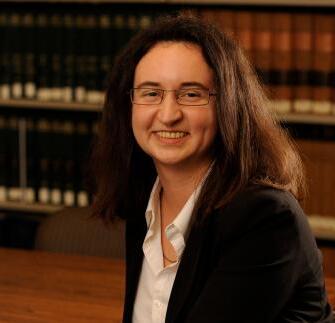
Anative of Poland, Monika Wsolek has had little problem extending her legal career in the United States. Wsolek knew she would pursue medicine or law eventually — her mother and brother work in medicine, while her father, sister and grandfather (a World War II judge) served in the legal field — but her inclination for research and writing ultimately guided her to a legal career. “People think law is about court and rhetoric, but writing is just as important,” she explains. “People get lost in the legal jargon, and I help them understand it.”
While Wsolek was getting her LL.B. degree at the Krakow Academy Faculty of Law in Poland, she learned that her father’s application for her U.S. green card had been approved. To meet the program’s requirements, Wsolek traveled and worked each summer in the U.S. and eventually learned of the Maurice A. Deane School of Law’s
LL.M. program through the legal community.
When Wsolek started classes in August 2010, she was initially “shocked” by the Socratic method of teaching that so many American law schools follow. “In Europe, you sit and listen in class,” she says, “but here, you must listen and then explain legal issues to the entire class. It’s very stressful, but much more meaningful.”
But her transition did not take long, and Wsolek felt part of the Hofstra Law community. She also audited classes beyond her required courses to get more from her experience. She believes that Hofstra Law’s faculty added to that experience: “Professors are very approachable. In Poland, the teachers are not lawyers; they are academics who impart knowledge, but they don’t interact with students. At Hofstra Law, professors are always available to talk.”
The LL.M. program in American Legal Studies requires completion of 24 credits, which may be taken full time in one academic year or part time in two academic years. Full-time students must finish their LL.M. degree in two semesters and take 12 to 15 credits each semester. Parttime students must finish their LL.M. degree in four semesters at most, taking two to three courses each semester.
LL.M. candidates are required to take a 2-credit course on the U.S. legal system before fall classes start. There is no fee for this course. They are also required to take a graded Legal Writing and Research course, which gives them an important understanding of the structure of U.S. legal documents and teaches them how to communicate effectively in the professional language used by American lawyers.
LL.M. candidates must achieve a minimum cumulative gradepoint average of 2.2 out of a possible 4.0 to receive the LL.M. degree.
Students seeking to take the New York State Bar Examination must also complete a 2-credit course in professional responsibility and at least 6 credits of coursework in subjects tested on the Multistate Bar Examination.
The LL.M. in American Legal Studies at the Maurice A. Deane School of Law affords you the flexibility to design a curriculum that meets your professional needs. Many LL.M. students choose to focus their study in a specialized area of law — corporate, biomedical and health, securities and financial services regulation, international and comparative, and intellectual property, among others. Hofstra Law’s proximity to New York City and our active alumni network, which includes distinguished practitioners, means that classes are taught by recognized experts and active leaders in their respective areas of the law.
The more than 200 upper-level courses at Hofstra Law allow you to plan, in concert with an academic advisor, a program of study that will equip you with the skills you need to take your career to a new level. With five journals and several annual conferences at Hofstra Law, opportunities to immerse yourself in specialized study are plentiful.
Hofstra Law offers a wide and diverse range of courses. The courses listed below are arranged by general topics. Many courses apply to two or more focus areas. Not every course is offered each semester.
Advocacy/Litigation/ Alternative Dispute Resolution
• Administrative Law
• Advanced Appellate Advocacy
• Advanced Appellate Skills
• Advanced Civil Litigation
• Advanced Competition Skills
• Advanced Legal Research
• Advanced Mediation Seminar
• Advanced Trial Practice: Civil
• Advanced Trial Practice: Criminal
• Advanced Trial Practice: The Jury
• Advanced Trial Techniques: Use of Expert Witnesses
• Alternatives to Litigation
• Applied Evidence: Evidentiary Oral Argument in Trial Courts
• Asylum Clinic
• Civil Procedure I
• Civil Procedure II
• Clinic Practicum
• Clinical Prosecution Practicum
• Collaborative Law Seminar
• Complex Insurance Litigation
• Computer Technology in Legal Practice
• Conflict of Laws
• Criminal Justice Clinic
• Developing a Theory of the Case
• Discovery Skills I: Written Discovery
• Discovery Skills II: Depositions
• Domestic Commercial Arbitration
• Domestic Violence Seminar with Skills
• E-Discovery Practice
• Evidence
• Expert Witness
• Externship Program, Civil Law
• Externship Program, Criminal Law
• Externship Program, Judicial Law
• Externship Program, Matrimonial Law
• Fact Investigation
• Federal Courts
• Hofstra Law in D.C. Externship Program
• Immigration Clinic Practicum
• Insurance Litigation and Corporate Practice Externship
• Intensive Trial Techniques Program
• International Commercial Arbitration
• Introduction to Administrative Law
• Juvenile Justice Clinic Practicum
• Law Reform Advocacy Clinic
• Legal Analysis, Writing and Research I
• Legal Analysis, Writing and Research II
• Legal Interviewing, Counseling and Negotiation
• Litigation and Drafting Skills
• Matrimonial Skills
• Mediation Clinic
• Mediation Principles and Practice
• Modern Divorce Advocacy
• Motion to Suppress
• Negotiation Seminar: Theory, Research and Practice
• Negotiation Skills
• Patent Litigation
• Patent Prosecution Externship
• Practical LGBT Lawyering
• Practice-Ready Research Skills
• Pretrial Skills
• Real Time Lawyering: The Temporary Restraining Order
• Remedies
• Scientific Evidence
• Selected Problems in New York Civil Practice
• Trial Techniques — Comprehensive Litigation Skills
• Youth Advocacy Clinic
Commercial and Corporate Law
• Accounting for Lawyers
• Advanced Bankruptcy
• Antitrust
• Banking Law Seminar
• Bankruptcy
• Business Drafting Seminar
• Business of Lawyering
• Business Organizations
• Commercial Transactions Survey
• Community and Economic Development Clinic
• Consumer Transactions
• Contracts I
• Contracts II
• Controversies in Corporate Law
• Corporate Finance
• Corporate Government Seminar
• Derivatives Law
• Domestic Commercial Arbitration
• ERISA and Pension Rights Seminar
• Export Laws and Export Controls
• Global Compliance in the Digital Age
• Insurance Law
• Insurance Litigation and Corporate Practice Externship
• International Business Transactions
• International Commercial Arbitration
• International Sales Law
• Mergers and Acquisitions
• Nonprofit Corporations
• Privacy in the Digital Age
• Private Equity:
Fund Formation and Transactional Issues
• Real Time Lawyering: Negotiating the Complex Deal
• Secured Transactions
• Securities Arbitration Clinic
• Securities Regulation
• Sustainability and Business Law
• Telecommunications Law and Policy
• Transactional Lawyering: Translating Deals into Contracts
Constitutional Law
• Administrative Law
• Antidiscrimination Law
• Conflicts of Law
• Constitutional Issues in Health Law
• Constitutional Law I
• Constitutional Law II
• Constitutional Theory
• Current Problems in Constitutional Law
• Death Penalty
• Federal Courts
• Federalism Seminar
• First Amendment: Speech, Association and the Religion Clauses
• Foreign Affairs and the Constitution
• Immigration Law
• Introduction to Administrative Law
• Introduction to the American Legal System
• Legal Issues in Public Education
• Mass Media and the First Amendment
• National Security and the Law
• Privacy in the Digital Age
• Religion and the Constitution
• Voting Rights and Election Law
Criminal Law
• Advanced Trial Advocacy
— Criminal
• Advanced Trial Practice: The Jury
• Clinical Prosecution Practicum
• Comparative Criminal Law
• Criminal Justice Clinic
• Criminal Law
• Criminal Law in the Workplace
• Criminal Procedure I: Fourth, Fifth, and Sixth Amendments
• Criminal Procedure II: Adjudication
• Death Penalty
• DNA Unraveled: Demystifying Forensic DNA Evidence
• Domestic Violence Seminar
• Expert Witness — Homicide
• Externship Program, Criminal Law
• Federal Criminal Law
• Immigration Enforcement at the Border
• Immigration Law
• International Criminal Law
• Juvenile Justice Clinic Practicum
• Mental Health Issues in the Criminal Justice System
• On the Waterfront: Organized Crime and the Response of Government
• Prosecutor’s Role
• Race, Gender and Crime
• Sentencing Reform Seminar
• Wrongful Convictions
• Youth Court Externship
Environmental and Natural Resources Law
• Administrative Law
• Animal Law
• Disaster Recovery Clinic
• Ecuador Field Study: Special Issues in International Environmental Law
• Energy Law and Policy
• Energy, the Environment and the Global Economy
• Environmental Law
• Environmental Law in Commercial and Real Estate Transactions
• Global Climate Change and U.S. Law
• Historic Preservation and the Environmental Impact Review Process
• International Environmental Law
• Introduction to Administrative Law
• Land Use Regulation
• Law of the Sea
• Property
• Sustainability and Business Law


Barbara S. Barron
Professor of Skills, Director of the Trial Techniques Program and Director of Student Advocacy Programs
B.A., State University of New York at Albany
M.A., Columbia University
J.D., Hofstra University
Professor Barron, who has an M.A. in Russian, has worked as a linguist with the Defense Department and as a criminal and civil litigator in the private and public sectors. She has integrated her two career paths as a professor of skills. Besides her work in the U.S., where she has taught skills extensively, she has created and implemented innovative linguistically and legally relevant skills courses in Eastern Europe and beyond, from Russia to Kazakhstan. She also was one of four American lawyers who introduced U.S. trial skills to hundreds of Japanese defense attorneys in preparation for Japan’s adoption of the mixed jury trial system.
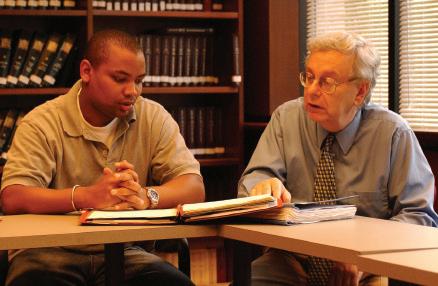

Your professional needs might best be met through a program of study that provides a traditionally broad overview of American law, offering the opportunity for intense preparation in advance of the New York State Bar Examination, for which LL.M. degree recipients with a foreign J.D. are eligible to sit. Below is a list of courses representing subject matter covered on the New York State Bar Examination, from which you can, with an academic advisor, put together a curriculum that builds on your legal training and enhances your career objectives.
• Business Organizations
• Commercial Transactions
• Constitutional Law I & II
• Contracts I & II
• Criminal Law
• Criminal Procedure I & II
• Evidence
• Family Law
• Lawyers’ Ethics
• Property
• Real Estate Transactions
• Remedies
• Secured Transactions
• Selected Problems in New York Civil Practice
• Torts
• Wills, Trusts and Estates
Estate Planning
• Elder Law
• Estate Planning
• Federal Estate and Gift Tax
• Wills, Trusts and Estates
Family Law
• Advanced Topics in Family Law
• Child Abuse and Neglect
• Children and the Law: Legal Relationships among Children, Families and the State
• Collaborative Law Seminar
• Domestic Violence Seminar
• Externship, Matrimonial Law
• Family Court Review Seminar
• Family Law LL.M.: Thesis I & II
• Family Law Policy Seminar
• Family Law With Skills
• International Family Law
• Introduction to Child and Family Advocacy
• Juvenile Justice Clinic Practicum
• Juvenile Justice Seminar
• Legal Decision Making for Children and Incompetent Adults
• Matrimonial Skills
• Mediation Clinic
• Modern Divorce Advocacy
• Sexuality and the Law
• Youth Advocacy Clinic
• Youth Court Externship
Governmental Law and the Legislative Process
• Administrative Law
• Admiralty Law
• Antitrust
• Asylum Clinic
• Hofstra Law in D.C. Externship Program
• Environmental Law
• Federal Tax Policy Seminar
• Federalism Seminar
• Immigration Enforcement at the Border
• Immigration Law
• Immigration Clinic Practicum
• Introduction to Administrative Law
• Introduction to Statutory and Regulatory Interpretation
• Land Use Regulation
• Legal Issues in Public Education
• Legislative Process
• Researching Administrative Law
• Securities Regulation
• Selected Problems in Immigration Law
• Seminar on Law and Policymaking in Washington, D.C.
• Special Education Law
• State and Local Government Law
• Telecommunications Law and Policy
• Voting Rights and Election Law
Health Law
• Bioethics and the Law
• Biotechnology: Law, Business, and Regulation
• Constitutional Issues in Health Law
• Elder Law
• Health Law
• Law and Medicine: Cooperative Professionalism
• Law and Psychiatry
• Law of Medical Product Discovery, Development and Commercialization
• Law’s Response to Reproductive Technology
• Legal Decision Making for Children and Incompetent Adults
• Managed Care and the Evolution of the DoctorPatient Relationship
• Medicare and Medicaid Law
• Special Education Law
Intellectual Property Law
• Advanced Patent Law
• Antitrust
• Art Law Seminar
• Comparative Cyberlaw
• Computer Technology in Legal Practice
• Copyright
• Entertainment Law
• Global Compliance in the Digital Age
• Intellectual Property Survey
• Law in Cyberspace
• Patent Law
• Patent Prosecution Externship
• Patent Litigation
• Privacy in the Digital Age
• Sports Law
• Trademarks
International Law
• Advanced Immigration Law and Citizenship
• Ecuador Field Study: Special Issues in International Environmental Law
• Energy, the Environment, and the Global Economy
• Foreign Affairs and the Constitution
• Global Climate Change and U.S. Law
• Global Compliance in the Digital Age
• Immigration Clinic Practicum
• Immigration Law
• International Business Transactions
• International Commercial Arbitration
• International Criminal Law
• International Environmental Law
• International Family Law
• International Human Rights Law Seminar
• International Institutions
• International Law
• International Sales Law
• International Transactions: Commercial Paper in a Paperless Age
• Law of International Trade
• Law of the Sea
• Transnational Law
• Use of Force in International Law: From Peacekeeping to Terrorism Labor and Employment Law
• Collective Bargaining
• Criminal Law in the Workplace
• Employment Discrimination
• Employment Law
• ERISA and Pension Rights Seminar
• Labor Law
• On the Waterfront: Organized Crime and the Response of Government
• Sex-Based Discrimination
• Sports Law
• Strikes, Boycotts, Picketing and Injunctions
Legal History and Social Science
• Colloquium on Contemporary Issues in Gender, Law and Public Policy
• Jurisprudence
• Law and Literature
• Law and the Popular Culture
• Legal History
• Practical LGBT Lawyering
• Race and the Law
• Sexuality and the Law
• Spanish for Lawyers
Legal Writing and Research
• Advanced Advocacy Skills
• Advanced Competition Skills
• Advanced Legal Research
• Business Drafting Seminar
• Legal Analysis, Writing and Research I
• Legal Analysis, Writing and Research II
• Legal Methods
• Litigation and Drafting Skills
• Moot Court Seminar
• Perspectives on Legal Analysis and Writing
• Practice-Ready Research Skills
• Researching Administrative Law
• Transactional Lawyering: Translating Deals into Contracts
• U.S. Legal Research and Writing for International Students
Professional Responsibility and Ethics
• The Business of Lawyering
• Computer Technology in Legal Practice
• Ethical Problems in Federal Tax Practice
• Ethics and Economics of Law Practice
• Jurisprudence
• Lawyer Malpractice
• Lawyers’ Ethics
• Legal Ethics and Malpractice
• Special Problems in the Law of Lawyering
Real Estate and Property Law
• Commercial Leasing
• Condemnation for Redevelopment
• Cooperatives, Condominiums and Homeowner Associations
• Eminent Domain
• Environmental Law in Commercial and Real Estate Transactions
• Historic Preservation and the Environmental Impact Review Process
• Land Use Regulation
• Property
• Real Estate Negotiation Techniques
• Real Estate Transactions
Taxation
• Ethical Problems in Federal Tax Practice
• Federal Income Taxation of Corporations
• Federal Income Taxation of Individuals
• Federal Tax Policy Seminar
• Federal Tax Procedure
Torts
• Advanced Tort Practice & Problems
• Complex Insurance Litigation
• Insurance Law
• Insurance Litigation and Corporate Practice Externship
• Lawyer Malpractice
• Legal Ethics and Malpractice
• Medical Malpractice
• Products Liability
• Remedies
• Torts

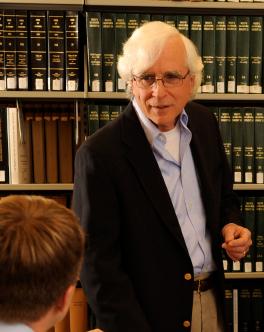
Vern R. Walker
Professor of Law and Director of the Research Laboratory for Law, Logic and Technology
B.A., University of Detroit
M.A., Ph.D., University of Notre Dame
J.D., Yale University
Professor Walker teaches courses in scientific evidence, torts, administrative law and European Union law. He has been a consultant to private and governmental institutions in both the U.S. and Europe. As director of the Maurice A. Deane School of Law’s Research Laboratory for Law, Logic and Technology, he and his team of researchers — in collaboration with peers at the Scuola Superiore Sant’Anna in Pisa — are using advanced software and Internet-based technologies to explore logical analysis of the underlying patterns of reasoning in legal decisions, and especially the fact-finding portions of those decisions.

Country of Origin: Afghanistan
Before Hofstra Law: LL.B., Herat University
Faculty of Law and Political Science
Work Experience: Legal advisor/trainer and translator/interpreter for the Afghanistan Justice Sector Support Program
Future Goal:
To work for human rights, especially women rights, and become professor of international human rights law and comparative law
Hamid Durani was inspired to study law by the effects of civil war and violence of the Taliban regime, particularly their toll on human rights, in his home country. “I am using my degree,” he explains, “to establish a better framework and rule of law to secure human rights, especially for women.”
In 2007, Durani became a private criminal defense lawyer in a society where most accused persons are not aware of their right to an attorney. “There is a general lack of lawyers all over the country, and the role of a defense attorney is largely unknown in Afghanistan,” he says. “It was a big challenge for me.” Durani next served in a series of roles for the Afghanistan Justice Sector Support Program.
In September 2011, he (and two other Afghans) arrived at Hofstra
University through the Maurice A. School of Law’s participation in the Public-Private Partnership for Justice Reform in Afghanistan. At the heart of this student exchange program is the commitment that alumni will return to Afghanistan and apply their new skills and knowledge to foster a stronger legal system.
Reflecting on his experience living in the U.S. for the first time and studying at Hofstra Law, Durani says, “There is such social freedom and peace in the U.S., which I did not have in Afghanistan. I appreciated that there were LL.M. students from different countries, which gave me greater perspective and the opportunity to learn about other legal systems. Taking classes with so many American J.D. students also gave me the chance to learn more about U.S. culture.”
Applications for admission must be submitted using the Maurice A. Deane School of Law’s official application, available online at law.hofstra.edu/ LLMAdmissions, through the Law School Admissions Council (lsac.org) or by contacting the Office of Enrollment Management at 516-463-5916. The $75 application fee is waived for those who submit their application online, which is strongly encouraged. To apply online to the LL.M. program in American Legal Studies, sign up with the LSAC LL.M. Credential Assembly Service (llm.lsac.org). For application procedures, details on program options, deadlines and other requirements, visit law.hofstra.edu/LLMAdmissions.
The Admissions Committee takes an integrated approach when reviewing applications. The committee considers the rigor of each candidate’s undergraduate education, law school credentials, demonstrated commitment to public service, work and leadership experience, and any other pertinent information. International applicants to the LL.M. program in American Legal Studies are required to submit a TOEFL score of least 600 on the paper-based test or 100 on the Internet-based test. Foreign-educated applicants must also send their official law school transcripts with certified English translations. Certified translation services may be arranged through World Educational Services, the American Association of Collegiate Registrars and Admissions Officers, or the LSAC LL.M. Credential Assembly Service.
Students enrolling at the Maurice A. Deane School of Law who are neither U.S. citizens nor permanent residents, and who are therefore ineligible for federal aid programs, are expected to cover the cost of their legal education on their own. Private loans may be available for international students from some lenders, although they usually require U.S. co-signers. All international students who hold U.S. citizenship or a green card are fully eligible to receive federal financial aid.
Each year Hofstra Law offers a number of merit scholarships of varying amounts to highly accomplished international LL.M. students. Additionally, Hofstra Law’s Office of Financial Aid has an extensive list of external scholarship programs that you can review when considering how best to fund your LL.M. program.
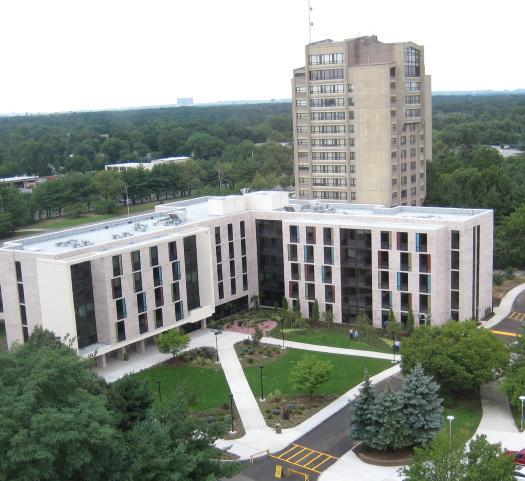
While some students choose to live off campus, on-campus housing is available. The Graduate Residence Hall, which opened in 2008, houses graduate students from various schools at Hofstra, including many law students. The living units are organized as suites with separate bedrooms surrounding a common room and small kitchenette.

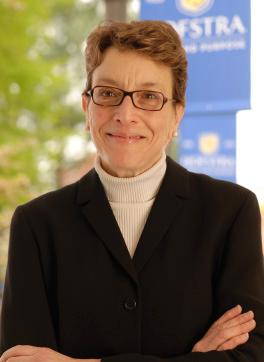
Barbara Stark Professor of Law
B.A., Cornell University
J.D., New York University LL.M., Columbia University
Professor Stark teaches courses in international family law, international law, and transnational law. She has made more than 65 invited presentations at law schools and professional meetings throughout the world. She has served on the executive council of the American Society of International Law and on the executive committee of the AALS Section on International Law and Section on Family and Juvenile Law; she is also a former chair of the Section on Family Law. She currently chairs the International Family Law Committee of the International Law Association.




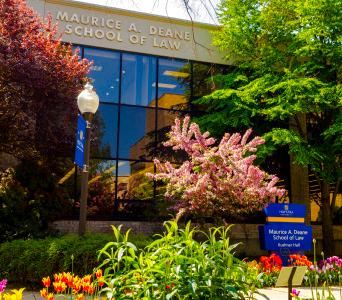
The Maurice A. Deane School of Law is on the 240-acre Hofstra University campus in Hempstead, New York. The University, founded in 1935, is a private institution dedicated to providing a strong foundation in the liberal arts and sciences. Hofstra University offers approximately 140 undergraduate and 150 graduate programs in liberal arts and sciences, business, communication, education, health sciences and human services, engineering and applied science, and honors studies, as well as law. Total University enrollment, including undergraduate and graduate students, is approximately 11,100 students. The recently established and accredited Hofstra North Shore-LIJ School of Medicin at Hofstra University enrolled its initial class of 40 students in summer 2011.
As part of Hofstra University, the Law School is able to provide students with a wealth of resources and opportunities offered to the entire Hofstra community. Hofstra Law students have access to the state-of-the-art gym facilities and pool, libraries, sporting events, concerts, theatrical performances, festivals and lectures on campus.
The Office of Multicultural and International Student Programs provides educational programs for the Hofstra University community on a variety of cultural, global and social justice issues in an effort to support the academic mission of the University and to explore and appreciate the full range of diversity within the Hofstra community. The office also offers assistance with obtaining an I-20 form and a student visa.
Long Island is home to miles of pristine beachfronts, more than 30 awardwinning wineries and dozens of unique cultural and entertainment attractions. Off-campus destinations might include a nearby New York Islanders ice hockey game or a waterfront picnic at Jones Beach State Park. Other excursions have included group tours of the North Fork wineries and chartered fishing trips from beach destinations, such as Montauk.
You are encouraged to take a tour and meet Hofstra Law students and faculty to help you better understand the Hofstra Law environment. Because students host the tours, you have access to their unique perspective and experience. If you are unable to come to campus, we suggest that you contact the Office of Enrollment Management at 516-463-5916 or llmadmissions@hofstra.edu so that we can address your questions.
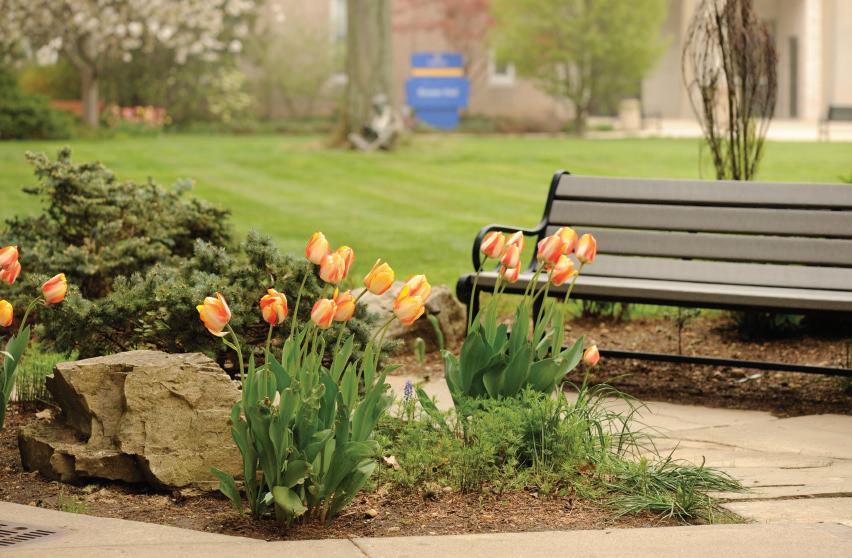
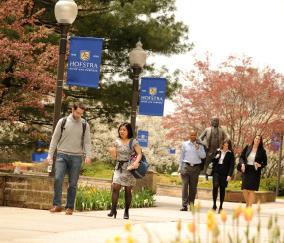
University, which is registered as an official arboretum, is in the heart of Long Island’s thriving business community. The campus is a mere 25 miles (40 kilometers) east of New York City, which allows students to enjoy the benefits of its internationally recognized legal, business and cultural centers. Students have easy access to New York City through the Long Island Rail Road, which stops less than two miles from campus. Hofstra University operates a free shuttle bus to the local train stations. In addition, both John F. Kennedy and LaGuardia international airports are located within 30 minutes of campus.


In compliance with the federal Jeanne Clery Disclosure of Campus Security Policy and Campus Crime Statistics Act and other federal law, an annual campus safety report which contains detailed information on campus security and fire safety, including statistics, is available by accessing the Hofstra website at hofstra.edu/ campussafetyreport or by contacting the Advisory Committee on Campus Safety. Crime statistics are also available at the U.S. Department of Education website at http://ope.ed.gov/security. The Advisory Committee on Campus Safety will provide upon request all campus crime and fire safety statistics as reported to the U.S. Department of Education. For additional information or a paper copy of the report, please call the Department of Public Safety at 516-463-6606.