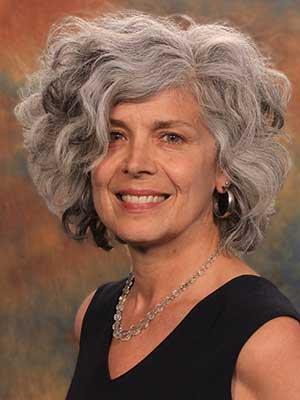
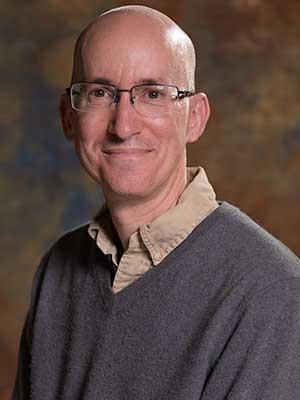
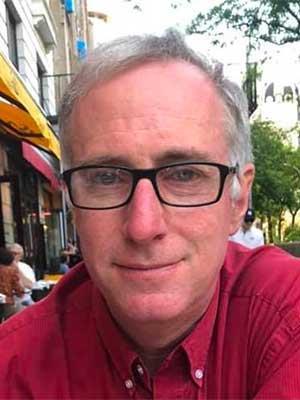
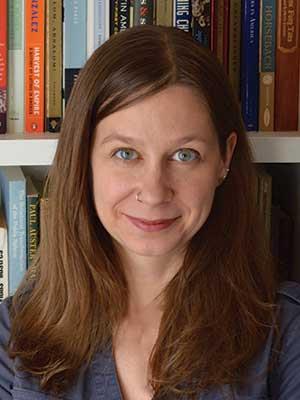
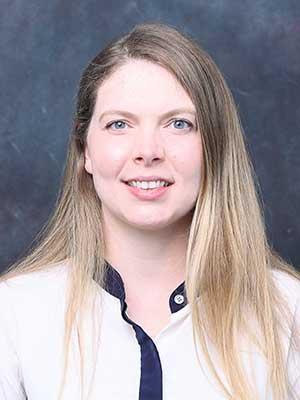
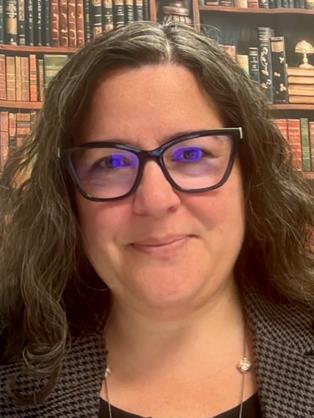
E. Christa Farmer (Professor of Geology, Environment & Sustainability)
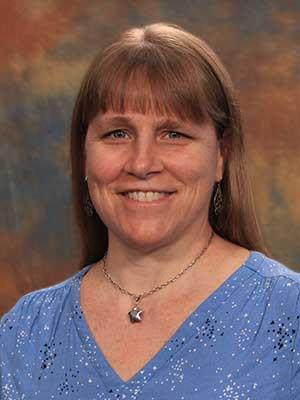
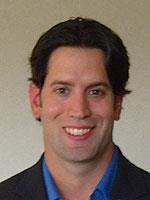
John Krapp (Associate Professor, Chair of Comparative Lit., Lang, & Ling.)
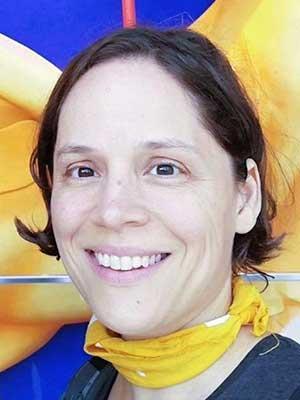
Ruth Trumble (Assistant Professor of Global Studies & Geography)
Honors College
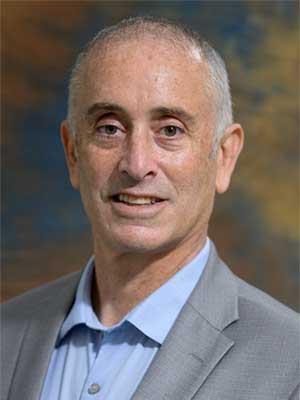
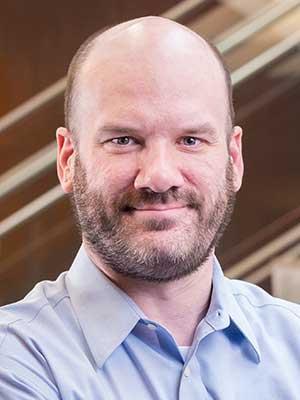
Bret Bennington (Professor, Chair of Geology, Environment & Sustainability)
School of Nursing & PA Studies
Bob Gluck (Associate Professor of Graduate Nursing)
School of Education
Craig Rustici
Dr. Mervin Livingston Schloss Distinguished Professor for the Study of Disabilities Professor of English
Matt Smylie
Associate Professor of Physics & Astronomy
Herbert School of Communication
Rodney Hill (Professor of Radio, Television, Film)
Marilyn DePietto (Assistant Professor of Teaching, Learning & Technology)
School of Health Sciences
Jenny Roberts (Professor of Speech, Language, Hearing Sciences)
Zarb School of Business
Glen Vogel (Associate Professor of Marketing, International Business, & Legal Studies)
DeMatteis
School of Engineering
Gretchen Ostheimer (Professor of Computer Science)
Library
Bill Caniano (Associate Professor of Library Services)
Literacy
Tagline (student,
parent facing)
Developing literacies with texts, data, media, arts, and technology
Inquiry
Activating intellectual and creative literacies to investigate, innovate, and create solutions
Expression
Engagement
Communicating to inquire, inspire, persuade, lead, and build community
Learning goals (faculty facing)
Graduates will demonstrate fundamental knowledge and skills in the liberal arts and sciences needed to understand, navigate, and investigate the world.
Participating across communities to make the world a better place for everyone
Graduates will be able to solve complex problems by applying quantitative, qualitative, and discipline -specific methods to think critically and gather and evaluate evidence. They will integrate diverse disciplines and perspectives and generate evidence -based solutions to advance knowledge, innovation, and effective decisionmaking across academic, professional, and personal contexts.
Graduates will communicate effectively and imaginatively using diverse methods and media, articulating ideas with clarity, evidence, and elegance. They will express themselves in ways that foster understanding and collaboration in professional and civic contexts, and across languages and cultures.
Graduates will demonstrate informed, responsible engagement in their local, national, and global communities. They will have a commitment to civil discourse, empathy, and sustainability in an interconnected world.
Agility
Learning to engage new ideas and to be ready to adapt to the changes and challenges of life
Graduates will demonstrate the ability to work across disciplines and to explore new ideas, technologies, and skills to foster agility and lifelong intellectual growth.
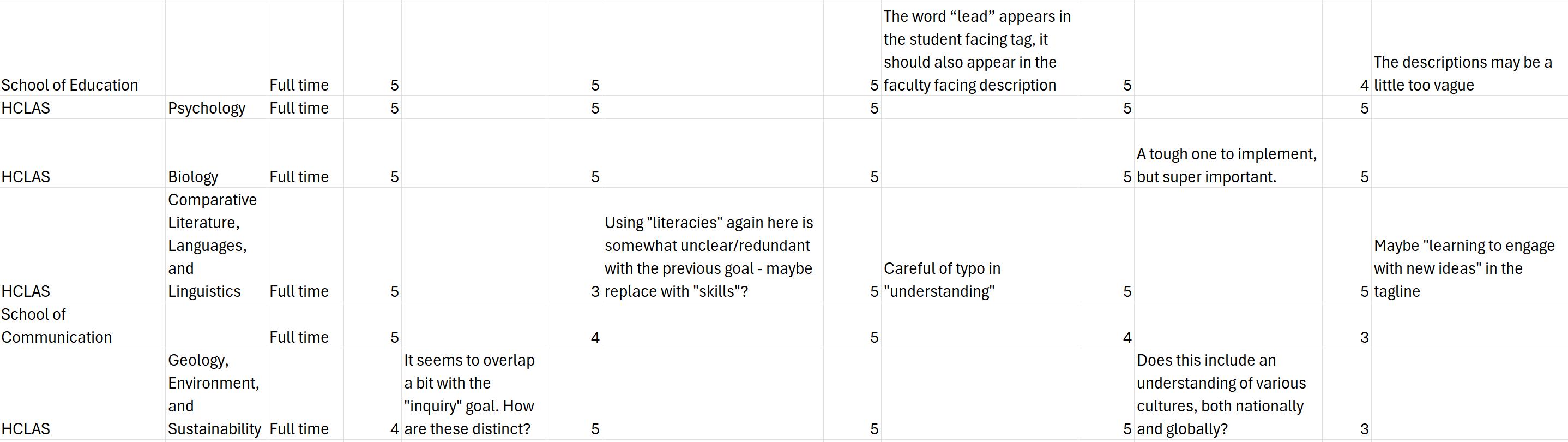
In December 2025, we asked the faculty for survey responses on our learning goals.
Results indicate strong support.
Spring 2026 GETF 100 process
- Analyzed survey data and compiled consultations
- Participated in Teaching & Learning Conference
- Hosted ongoing T/W listening sessions in McEwen 215
- Held ongoing consultations with Task Force members’ academic units
- Created subcommittees to consult with specific programs/departments, research national trends, and examine Hofstra data in key areas
- Met with cross -university task forces on First Year Experience and Community-Engaged Learning
- Held consultations with advising, student groups, RHC, chairs, other admins
- Coordinated with CELTA to recruit two outside Gen Ed speakers
Looking ahead: process for Summer 2026 → Fall 2026
- Adjust models and scenarios presented at the April 22 nd Town Hall based on faculty feedback
- Ask faculty colleagues to complete a survey concerning models and scenarios by end of Spring 2026 semester
- Analyze Spring 2026 survey results
- GETF will meet monthly during summer to continue discussions
- GETF will draft a single model to present at a Town Hall in early Fall 2026
- Based on Fall Town Hall survey/input, GETF will develop a general education curriculum proposal
- GETF will seek broad input about their general education curriculum proposal
Spring 2026 research results
Broader General Education Structures
Disciplinary based
Competency based
Integrated approaches
Spring 2026 research results
Broader General Education Structures
Disciplinary based
Competency based
Integrated approaches
Requirements that impact all structures
The First Year Experience
Writing
Languages Other Than English
Experiential & Community -Engaged Learning
Broader General Education Structures
Disciplinary based
Requirements organized primarily around academic disciplines.
Examples: Mathematics, Natural Sciences, Social Sciences, Humanities, Interdisciplinary Studies
Competency based
Requirements organized primarily around transferrable skills for work and life.
Groups of thematically linked courses can create a more coherent and purposeful General Education experience.
Requirements that impact all structures
The First Year Experience
Hofstra has a variety of signature first year experience courses, but no broad common experience. ~20% of students do not participate.
Several of our courses are capped at more to well more than 25 students per section.
Examples of First Year Experience Courses at Hofstra
Hofstra First-Year Connections Seminars and Clusters
BBA 100 Business and Society: Foundations for Professional Development
DRAM 004 Freshman Theater Laboratory
ENGG 015/016 Designing the Human -Made World/Comprehensive Engineering Design
ENTR 115 Entrepreneurial Mindset
HUHC 011/013 Culture and Expression
MUSB 150A Special Topics in Music Business
LIBR 001 Introduction to Library and Information Technology
NOAH 002 American English Writing Skills I
NOAH 006 NOAH Freshman Orientation I
NUR 011 Professional Nursing Seminar I
UNIV 101 University 101
WSC 001 Writing Studies and Composition I
Requirements that impact all structures
The First Year Experience
National data and research by FYE Task Force strongly support the need for a First Year Experience incorporating small class sizes to improve student satisfaction, retention, & development.
Enhanced FY Clusters
Linked courses taken in the first year
Small 1 -credit Seminar
Focused on managing the university experience & navigating campus resources
Off-campus field trip
Taught by wide range of FT faculty
3-credit Seminar
Loosely organized common syllabus
Taught by wide range of FT faculty
Off-campus field trip
Focused more on learning goals & transitions than disciplinary knowledge
1-credit version for transfer students
*Specifics of curricula still to be determined, in consultation with University -wide First Year Experience Task Force
Link to Spring 2026 FYE Task Force report
Requirements that impact all structures
Writing
Many faculty expressed interest in updating the writing requirement.
1st year: WSC 001 WSC 002
2nd & 3rd years: 2 Writing Intensive (WI) courses WI not necessarily in WSC, required for BA students only Common training for WI instructors
1st year: One 3 credit, firstyear writing class
2nd & 3rd years:
One upper-level WSC course focused on students’ disciplinary or professional interests (possibly developed or cross-listed with other departments)
1st year: One 3 credit, first -year writing class
2nd & 3rd years: One upper-level writing class not necessarily offered or cross-listed in WSC
One Expression Intensive (EI) course addressing (e.g.) oral or visual expression PLUS:
Required for BA and BS students
Requirements that impact all structures
Language Other Than English
Many faculty expressed interest in assessing the Language
Other Than English requirements.
Completion of Level 3
Students may place into levels 1, 2, 3, or place out.
Alternate Language Option:
Two languages at Level 2
2 Semesters of Language
Students cannot test out: a student who places into Level 3 must complete Levels 3 and 4
Incorporation into other disciplinary or competency requirements
No Alternate Language Option
credits Lit in Translation or Linguistics or
One language at Level 2, another at Level 1, plus 3
Language fills things like Intercultural Literacy, Expressive Skill, or other categories
No Alternate Language Option
Requirements that impact all structures
Experiential Learning (including Community Engagement)
Community Engagement and Experiential Learning opportunities are valued by students and their families.
Field trip(s) incorporated into FYE course
Field trip(s) incorporated into FYE course
PLUS 3 credits of Experiential Learning in Years 2, 3, or 4
Field trip(s) incorporated into FYE course
PLUS 3 credits of CommunityEngaged Project spread across Years 3 and 4
*As Hofstra’s experience and capabilities develop, we could adopt this more ambitious option.
From the Hofstra Strategic Plan:
“Hofstra must play a key role in contributing to the region’s dynamism and ensuring that all communities are served and empow ered.”
What would any of this look like?
Let’s look at 3 different 4 -year structures
Disciplinary Scenario A:
First Year Seminar (3 credits)
WSC 001 (3 credits)
Language Other than English (6 credits)
Humanities, Natural Sciences, Social Sciences (9 credits each)
6 credits in revamped CC/IS courses
Upper Level Writing Course not necessarily in WSC (3 credits)
Experiential Learning (3 credits)
Competency Scenario B:
First Year Seminar (1 credits)
WSC 001 & WSC 002 (6 credits)
Nine classes to satisfy potential Competencies based on learning goals (27 credits)
Quantitative Inquiry
Expressive Skill
Creative Thinking
Qualitative Inquiry
Intercultural Literacy
Interdisciplinary Agility
Scientific Inquiry
Responsible Decision-making
Collaborative Engagement
where students can only satisfy 3 of the 9 competencies with classes in -major or in the HCLAS school their major is in
2 Writing Intensive (WI) courses (up to 6 credits, possibly counting towards those 27 credits)
Disciplinary with Integration Scenario C:
First Year Seminar (3 credits)
WSC 001 (3 credits)
Language Other than English: Level 3 (0 -9 credits)
Humanities, Natural Sciences, Social Sciences (9 credits each)
One Integrative Grouping (9 credits)
6 credits in revamped CC/IS courses
6 credits in NS plus 3 credits each in Humanities and Social Sciences
Upper Level Writing Course (3 credits)
Community-Engaged Project(3 credits)
Possible Integrative Groupings
Disciplinary
Imagining Artificial Intelligence
Competency
Natural Science / Mathematics
“Overview of Computer Science and Artificial Intelligence”
Humanities, Cross-cultural, Interdisciplinary Social Science, Cross-cultural, Interdisciplinary
“Robot Dreams: Artificial and Human Identities in Literature and Popular Culture”
“Writing, AI, and the Disciplines”
“Introduction to Cognitive Science”
“Artificial Intelligence in Society: New Challenges, Ethical Futures”
Scientific Inquiry
Qualitative Inquiry
Intercultural Literacy
“Urban Habitats”
The City
“Introduction to Digital Mapping”
“Urban Politics and Governance”
“Urban Places and Policy”
“Urbanization in the Developing World”
“Latinx Communities of New York”
Feedback!
Disciplinary Competency or
We will build our survey around these slides. How can we refine this? Are there alternatives we haven’t thought about?
Forthcoming survey responses will guide our work this summer.