Fred DeMatteis School of Engineering and Applied Science
Engineering the Future of Human Intelligence

DEAN’S MESSAGE
The Fred DeMatteis School of Engineering and Applied Science continues to grow in both scale and ambition at a moment when engineering and computing are being reshaped by unprecedented technological change, most notably the rapid and disruptive rise of artificial intelligence.
As AI transforms not only how work is done but also what skills are most valuable, we are committed to preparing students not just with strong technical foundations, but with the adaptable, transferable communication and problem-solving skills needed to thrive in an evolving landscape. Across our programs in Computer Science and Engineering, students learn to think critically, collaborate across disciplines, and communicate complex ideas clearly, capabilities that will distinguish them in a future where human insight and technical fluency must go hand in hand.
Equally important are our strong connections to industry. Through our Co-op Program, W-SPiCE partnerships, and initiatives such as Hofstra in Silicon Valley, students gain direct exposure to leading technology companies, real-world engineering challenges, and professional networks. These experiences help students translate classroom learning into practice and prepare them for success in a rapidly evolving, AI-driven economy.
Today, our facilities support the full breadth of these programs, reflecting our teaching-centered mission that places student learning, mentorship, and academic excellence at the heart of everything we do.
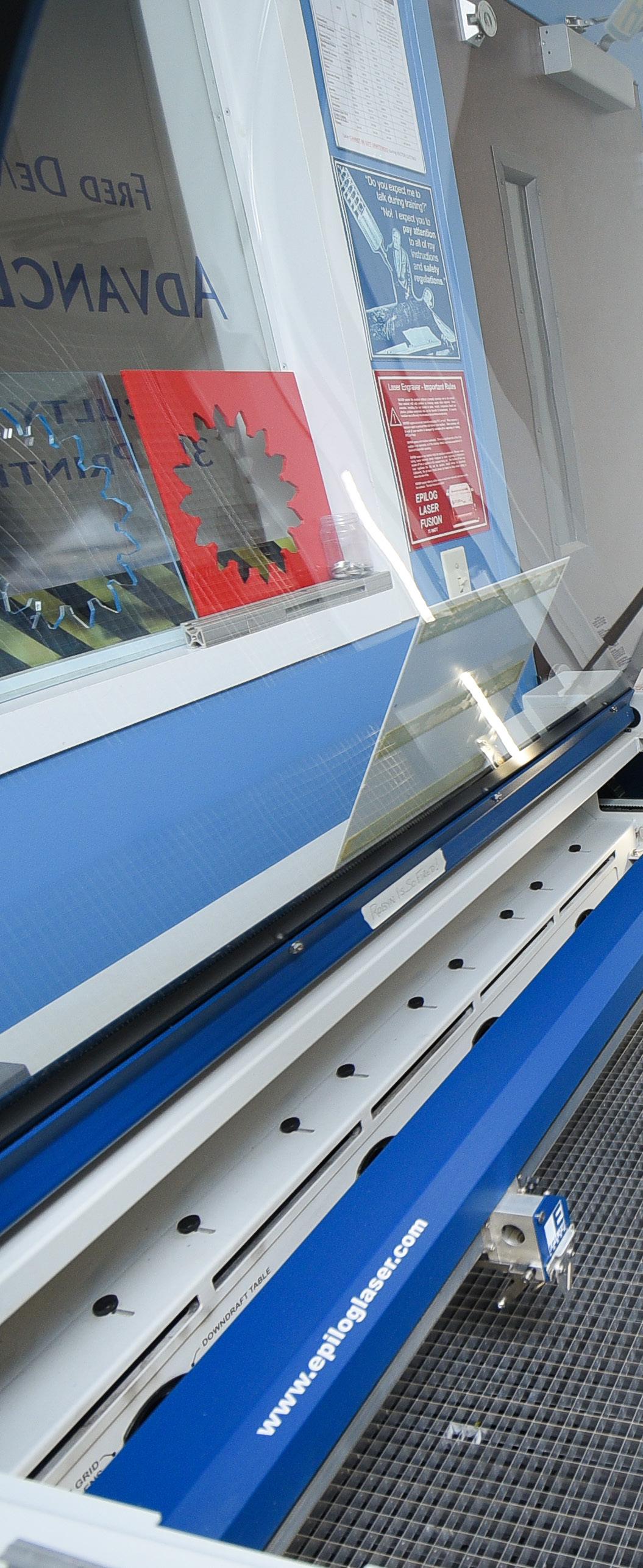
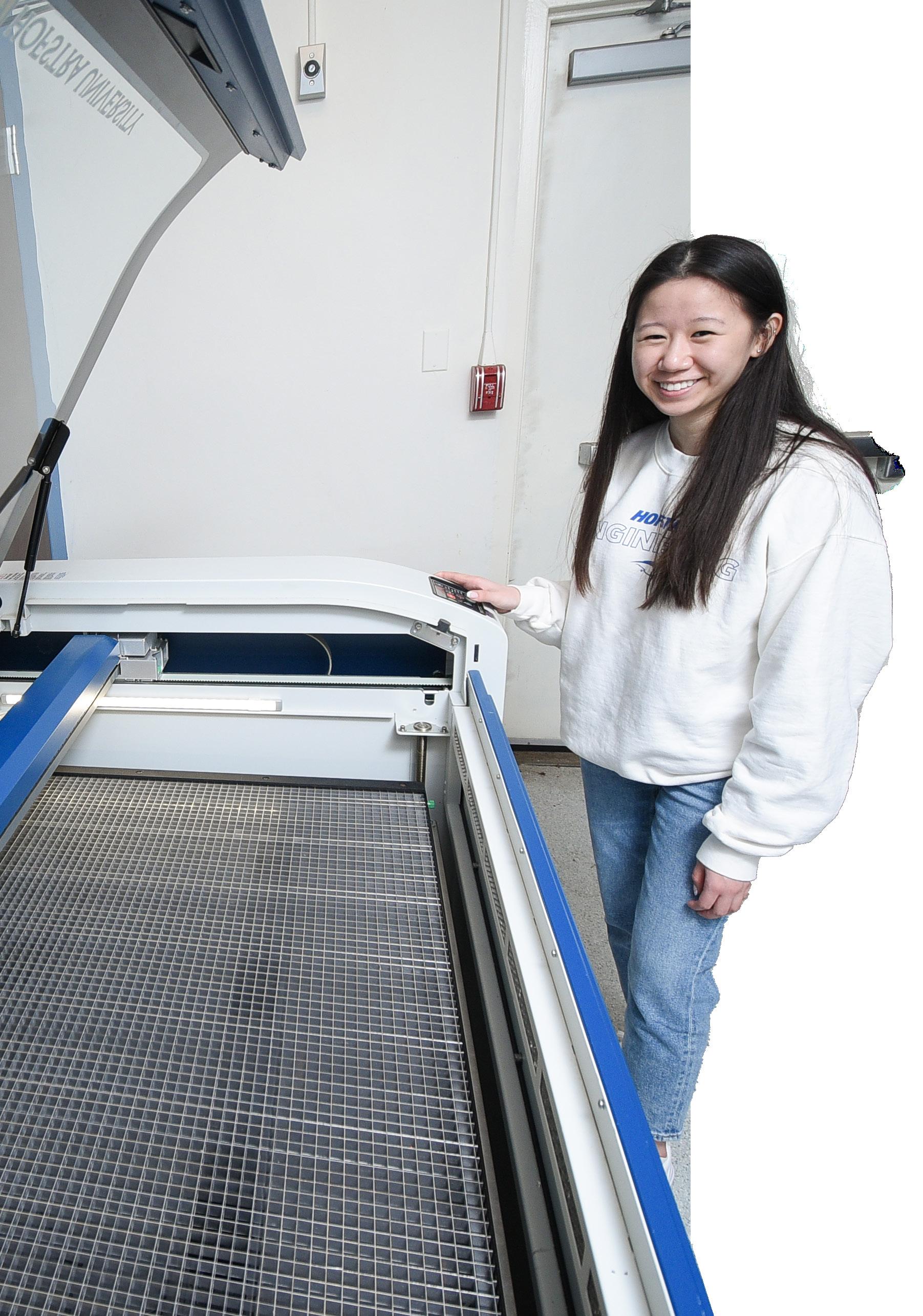
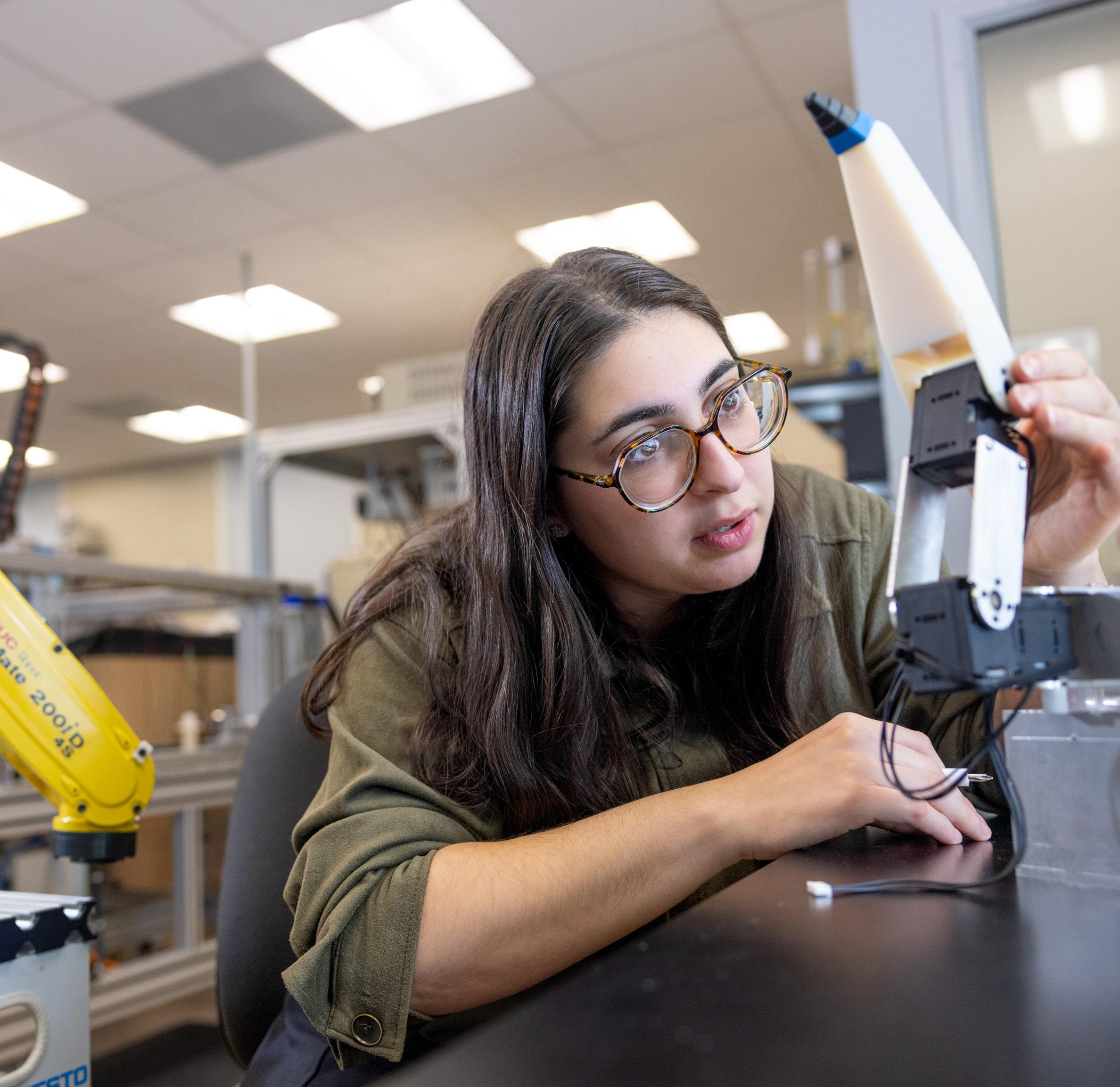
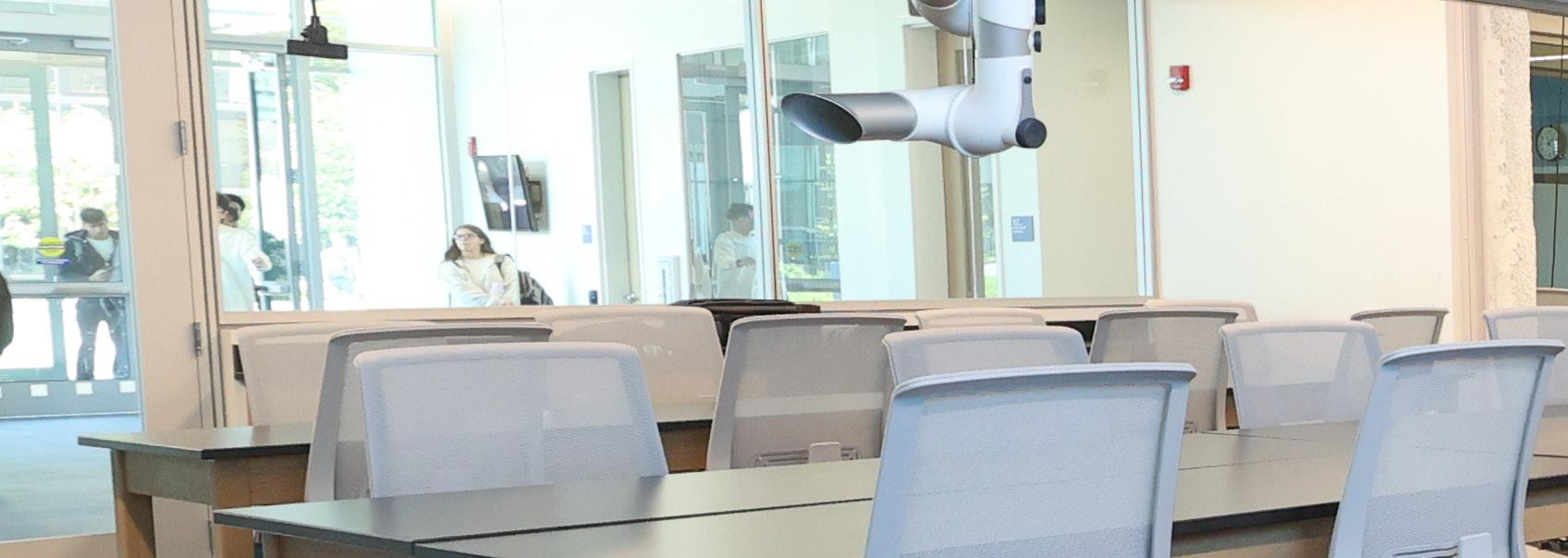
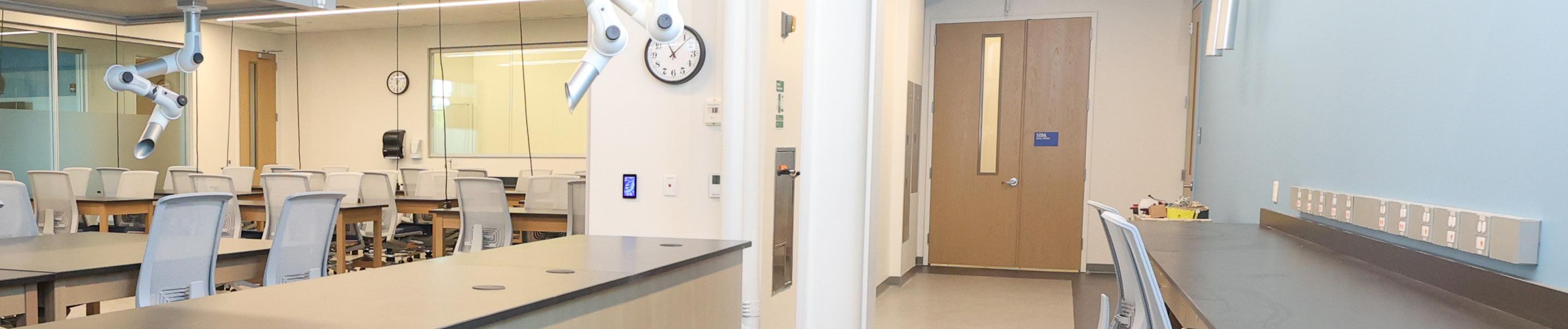
As you explore this viewbook, you will see how our laboratory environment translates directly into enriched learning and discovery. Students have access to a wide range of advanced, specialized laboratories spanning areas such as AI, data science, robotics, cybersecurity, bioengineering, and applied engineering. These spaces are equipped with cutting-edge technologies, including a high-performance computing cluster for data-intensive research, robotics and autonomous systems platforms, a dedicated cell and tissue engineering lab, immersive virtual and augmented reality environments, and advanced fabrication tools such as large-scale 3D printers. Importantly, these resources are fully accessible to undergraduates, ensuring that students engage directly with the technologies shaping their fields from their very first year.
For students who wish to go further, we offer meaningful opportunities beyond the classroom. Through faculty-mentored research, including our Advanced Summer Program in Research (ASPiRe), undergraduates may spend 10 weeks working closely with faculty on focused, meaningful projects, while earning a competitive stipend. These experiences allow students to explore emerging fields, develop problem-solving skills, and contribute to innovation early in their academic journey.
We are proud of the continued progress of the DeMatteis School, including national recognition that reflects the strength of our academic programs, faculty scholarship, and student outcomes. Our graduates leave well-prepared not only for careers in industry, but also for graduate study, entrepreneurship, and a wide range of professional pathways in an increasingly technology-driven world.
I invite you to learn more about our community and envision yourself as part of the DeMatteis School. We look forward to welcoming the next generation of engineers, computer scientists, and innovators.
Wishing you every success,

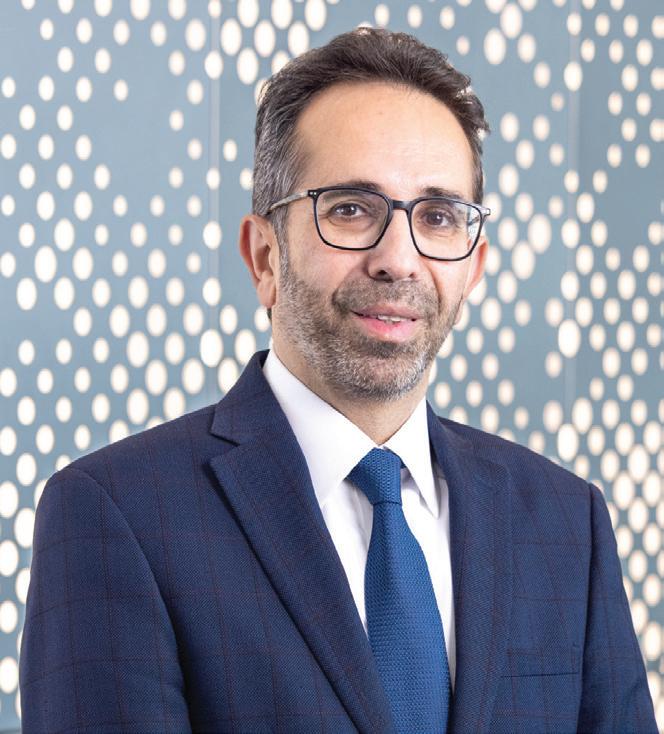
Sina Rabbany Dean, Fred DeMatteis School of Engineering and Applied Science
Jean Nerken Distinguished Professor of Engineering Founding Director of the Bioengineering Program
Fred DeMatteis School of Engineering and Applied Science Highlights
Inspired and inspiring teaching:
• Classes are conducted by talented and professionally active faculty (not teaching assistants).
Diving deep into AI:
• Hofstra offers an interdisciplinary certificate, AI Foundations, Ethics & Applications, open to students in all undergraduate majors, including engineering and computing. Students gain hands-on introductions to machine learning and AI applications, preparing them to understand and work with AI systems across a wide range of disciplines.
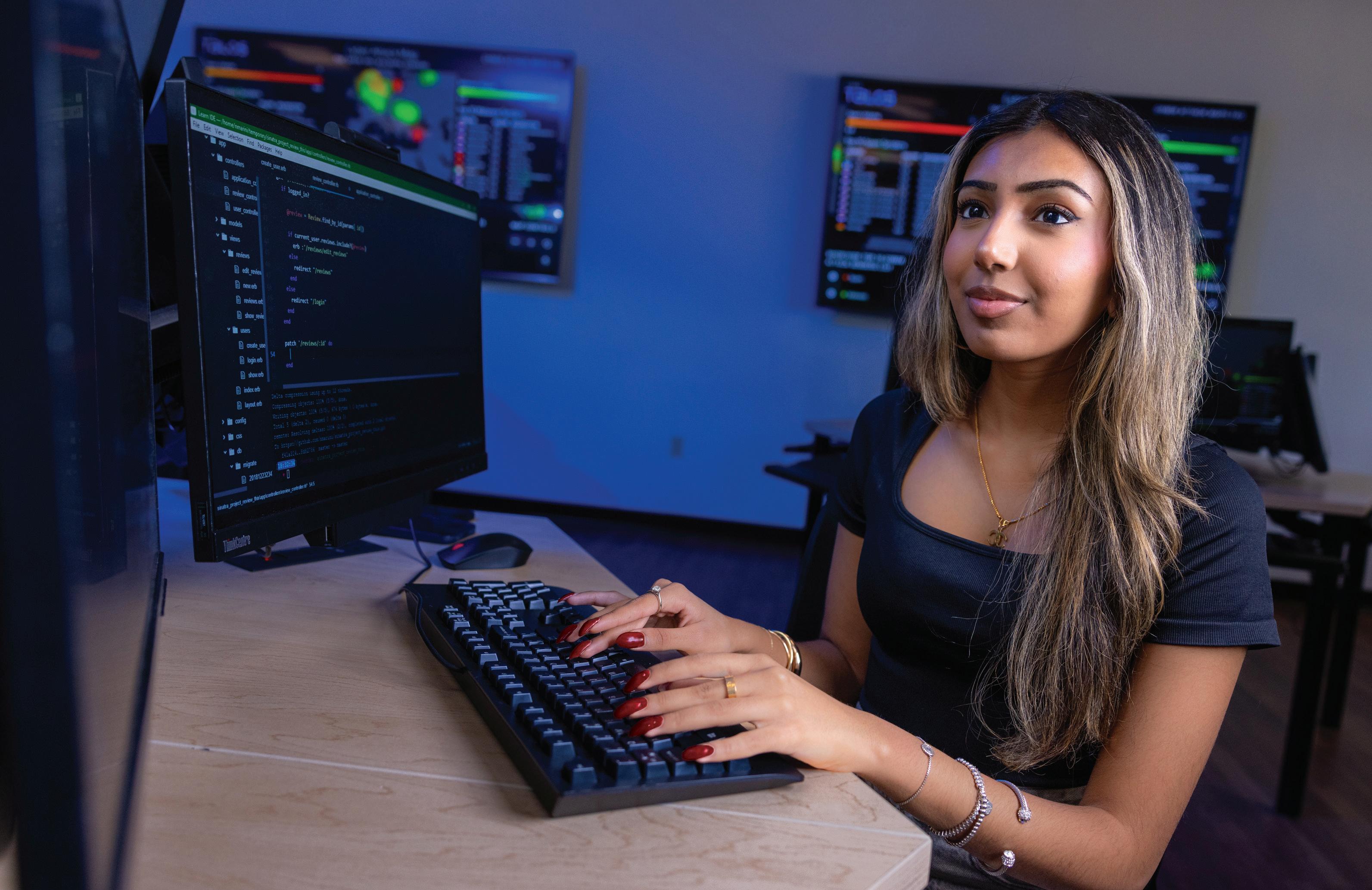
• The Computer Science Department offers courses and programs that allow students to gain deep understanding of AI, machine learning, and data science, and to benefit from hands-on experience with GenAI – a thread running throughout the curriculum.
Undergraduate research opportunities:
• Faculty mentors supervise and support student researchers.
• Students are encouraged to present their work at scientific conferences and/or publish in scholarly journals.
State-of-the-art facilities:
• Students and faculty have access to cutting-edge research environments, including high-performance computing resources for data-intensive and AI-driven research; robotics and autonomous systems platforms; bioengineering laboratories; immersive virtual and augmented reality environments; and advanced fabrication tools, including large-scale 3D printing and prototyping technologies.
Professional experience:
• Exclusive Co-op Program, with more than 240 corporate partners, matches students with full-time salaried positions for six to eight months and often leads to full-time employment after graduation.
• W-SPiCE (Women’s Summer Program in Computing/ Engineering) provides mentoring, professional development workshops, networking events, and a supportive community for women.
• Hofstra in Silicon Valley gives computer science students behind-the-scenes access at top-tier West Coast tech firms for a week in January.
Dean’s Innovation Scholars Program:
• The DeMatteis Dean’s Innovation Scholars Program supports exceptional students who demonstrate creativity, leadership, and a passion for innovation in engineering, computing, and applied science.
Successful alumni:
• About 88% of recent undergraduate degree recipients* report being employed or planning to start graduate school within six months of graduation.
• Average starting salary for recent undergraduate degree recipients is $84K.
• We have over 5,100 alumni, the majority of whom work in industry, government, and academia.
Forward-thinking feedback and support:
• Industry leaders on three DeMatteis advisory boards work with Hofstra faculty and administrators to develop dynamic courses, programs, and networking opportunities for students.
* Based on data collected between December 2023 and May 2025 for 2023-2024 undergraduate degree recipients six months postgraduation from the Alumni Outcomes survey, LinkedIn, National Student Clearinghouse, and Hofstra enrollment.
16 Academic Programs
Undergraduate Degrees
• Bioengineering, BS (Options: Bioelectricity, Biomechanics, or Pre-Medicine)
• Civil Engineering, BS
• Computer Engineering, BS
• Computer Science, BA, BS
• Computer Science and Mathematics, BS
• Cybersecurity, BS
• Data Science and Machine Learning, BS
• Electrical Engineering, BS (Option: Computer)
• Engineering Science, BE (Options: Chemistry, Environmental, or Physics)
• Human Factors and Usability Studies, BA, BS
• Industrial Engineering, BS
• Mechanical Engineering, BS (Option: Aerospace)
Graduate Degrees
• Computer Science, MS
• Cybersecurity, MS
• Data Science, MS
• Engineering Management, MS
Dual-Degree Programs
• Computer Science, BS/MS
• 4+4 Program: BS-BA/MD (with the Zucker School of Medicine at Hofstra/Northwell )




DeMatteis Faculty Earn Honors for Breakthrough Research and Teaching Excellence
From antennas that power modern wireless systems to classrooms where future engineers learn to think, build, and lead, two recent faculty achievements are spotlighting the depth of expertise within the DeMatteis School.
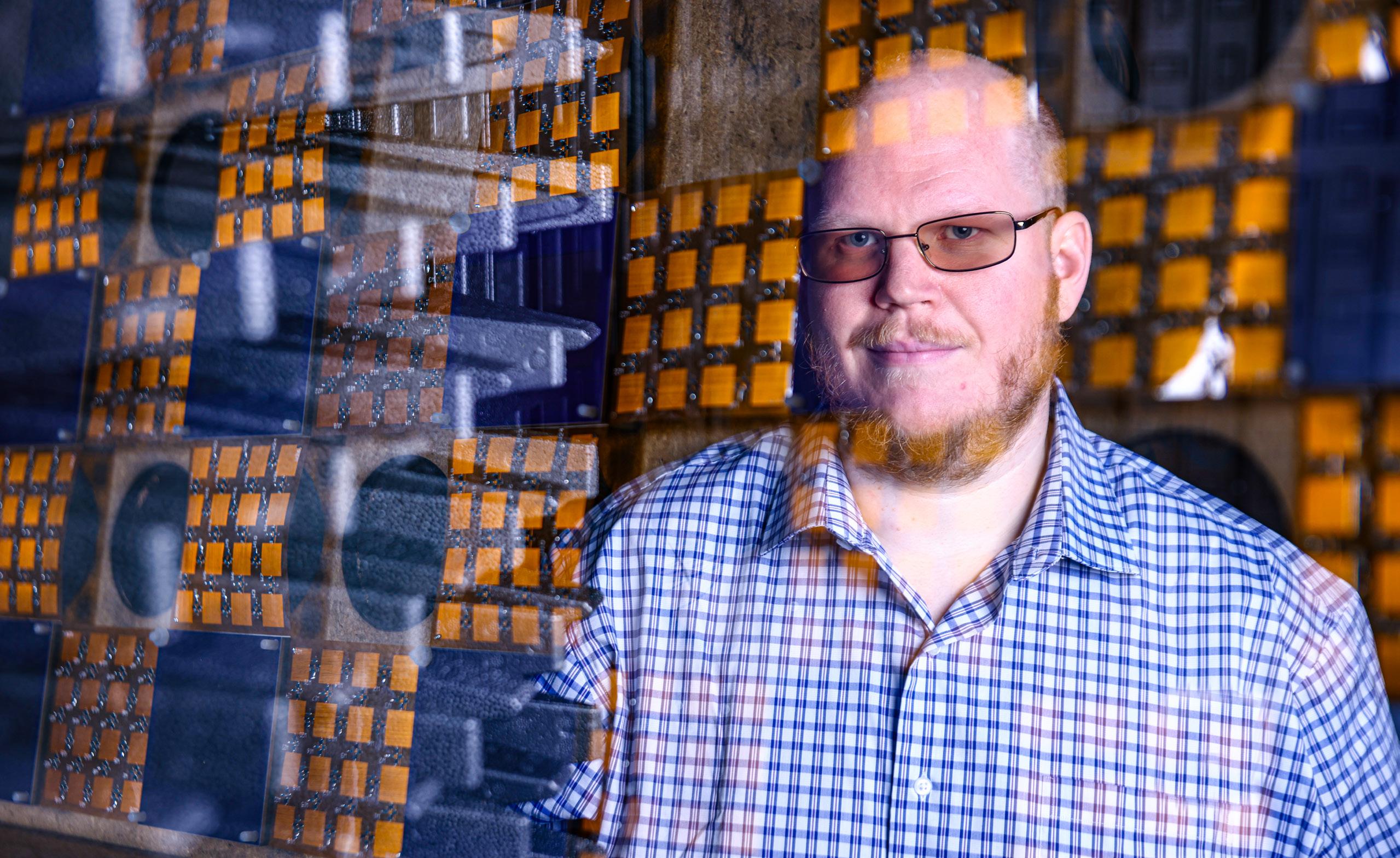
Earlier this year, D. Elliott Williamstyer, assistant professor of engineering, secured a competitive grant from the National Science Foundation to advance applied research in next-generation antenna technology. His $199,109 award supports a project exploring how programmable metamaterials and machine learning can improve antenna performance across systems used in cellular networks, radar, satellite communications, and astronomy.
Williamstyer’s work focuses on accelerating what has traditionally been a time-intensive design process. By leveraging artificial intelligence to rapidly identify optimal configurations, the research aims to create antennas capable of dynamically adapting to changing performance demands. The grant also expands opportunities for Hofstra students to participate in hands-on, high-level research — strengthening
their preparation for graduate study and careers in engineering innovation.
In other news, Edward Segal, associate professor of engineering, was named 2025 Educator of the Year by the Long Island Branch of the American Society of Civil Engineers. The annual honor recognizes outstanding contributions to civil engineering education and service to the profession.
“I love teaching, so to be recognized for what I love doing is a real honor,” Segal said. His approach mirrors professional practice, encouraging students to embrace the process of refinement and lifelong learning that defines successful engineers.
Dean Sina Rabbany said the recognitions reflect the caliber of faculty at the school. “DeMatteis faculty are advancing knowledge, earning distinction from leading professional organizations, and, most importantly, preparing our students to lead in the field,” Rabbany shared.
Hofstra Student Earns Top National Undergraduate Research Award
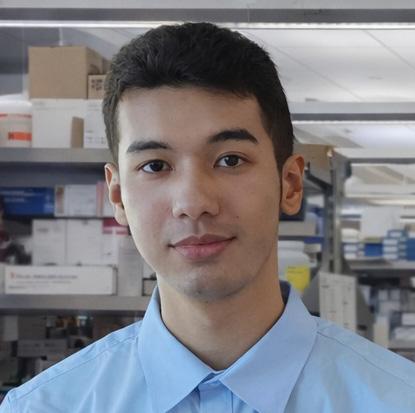
Linden Faye ’27 has earned one of the nation’s most prestigious undergraduate awards for STEM research, the Barry Goldwater Scholarship, a recognition that underscores both his academic excellence and the University’s commitment to student success.
Faye, a computer science and mathematics major from Port Washington, New York, is the third Hofstra student to receive the highly competitive scholarship, which supports students pursuing research careers in science, engineering, and mathematics.
Drawn to the intersection of technology and medicine, Faye’s research focuses on using computational methods to analyze biomedical imaging data. His work explores how the structure of neurons and blood vessels relates to disease and aims to improve the speed and accuracy of cancer detection through machine learning.
“Many challenges in the biomedical sciences can be explored through an interdisciplinary approach that combines computer science, mathematics, physics, and biology,” Faye said. “I hope to develop tools that transform complex imaging data into meaningful insights, leading to a more precise understanding of disease and advancing human health.”
His interest in the field is deeply personal. As a child, Faye experienced severe sensory dysfunction, spending years in therapy, an experience that sparked his appreciation for medicine and inspired his pursuit of research.
At Hofstra, Faye has taken advantage of interdisciplinary opportunities that reflect the University’s R2 research environment. As a participant in the Fred DeMatteis School of Engineering and Applied Science’s Advanced Summer Program in Research (ASPiRe), he spent 10 weeks conducting full-time research at the Feinstein Institutes for Medical Research, where he developed an automated computational pipeline for neurite analysis and created a user-friendly interface for broader scientific use.
The experience, he noted, was transformative.
“This life-changing experience exposed me to cutting-edge bioelectronic medicine and gave me insight into how research develops into impactful technologies,” Faye said.


He credits Hofstra’s collaborative environment and accessible faculty with helping him grow as both a researcher and a student.
“What makes Hofstra so special to me is its team of supportive educators, staff, and leaders who are deeply invested in student growth and talent recognition,” he said. Dean Sina Rabbany, who mentors Faye in his lab, emphasized both his intellectual curiosity and dedication.
“Linden is an exceptional student whose curiosity and determination set him apart,” Rabbany said. “Working with him in my lab, I’ve seen firsthand his ability to connect ideas across disciplines and pursue research with both rigor and creativity. He represents the very best of what our students can achieve.”
Receiving the Goldwater Scholarship, Faye said, is both a milestone and a launching point.
“It is a reflection of the opportunities and support that Hofstra provided me, and it sets the foundation for the next chapter of my career in scientific research,” Faye added.
Faye plans to pursue a PhD in Biomedical Engineering, with a focus on medical physics and medical computer vision.
Hofstra Engineering Students Find Inspiration and Opportunity at National Conference
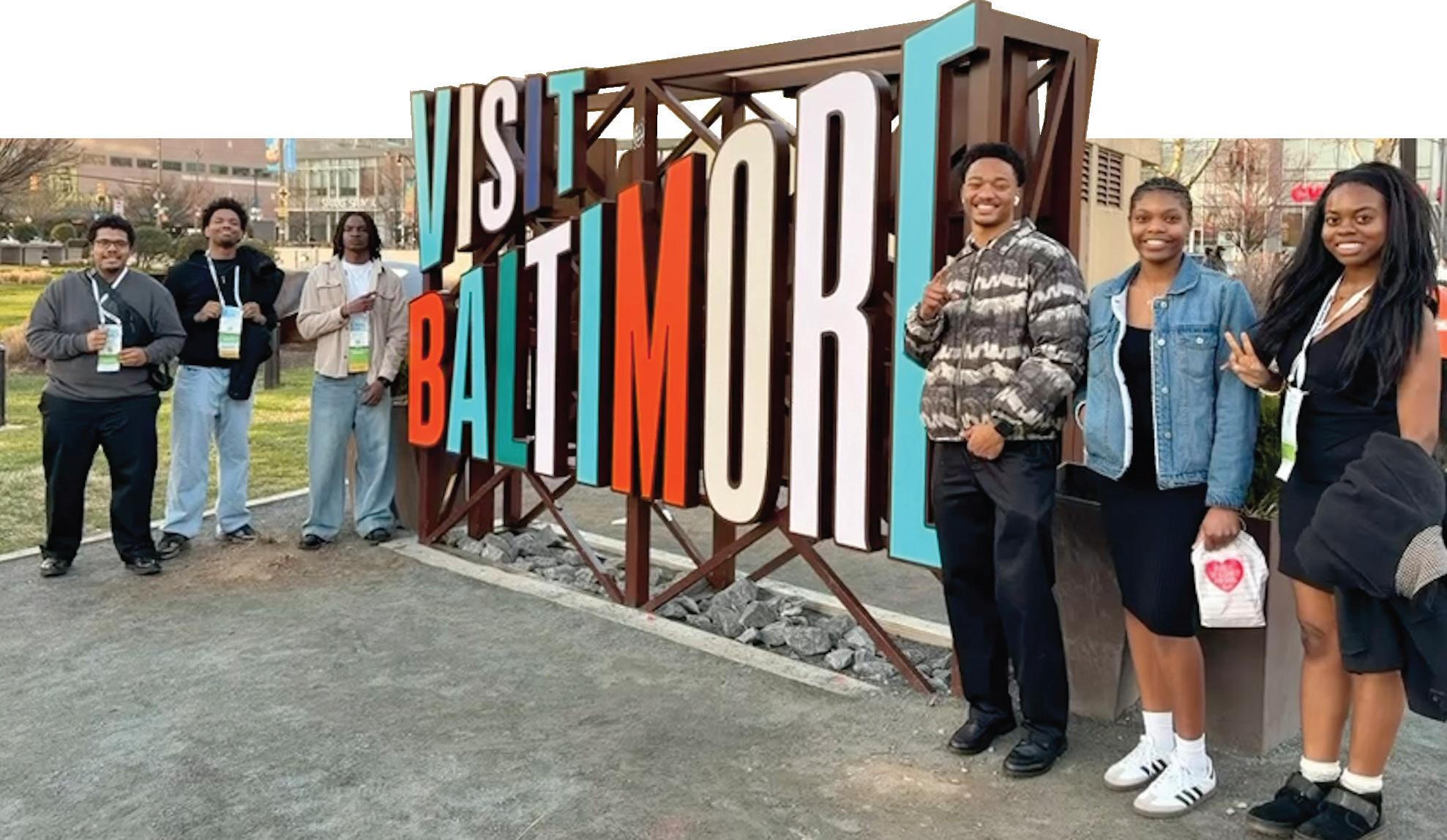
They arrived in Baltimore eager to learn. They returned to Hofstra with new confidence, expanded networks, and a clearer vision of their future in engineering.
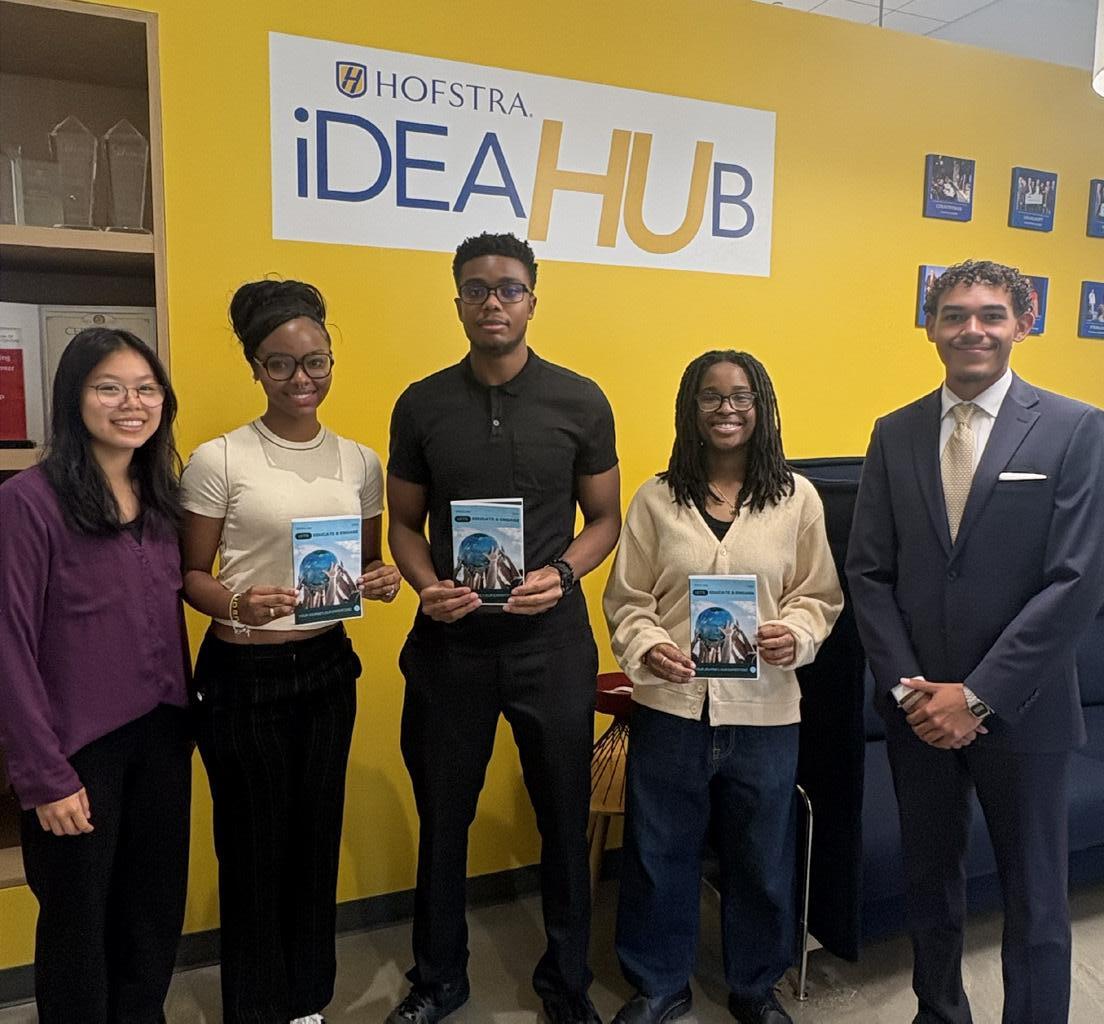
Five students from the Fred DeMatteis School of Engineering and Applied Science attended the March 2026 National Society of Black Engineers (NSBE) Convention, one of the largest gatherings of Black engineering students and professionals in the country. Through workshops, networking sessions, and career opportunities, the experience offered both immediate connections and long-term inspiration.
For Ameera Olokodano ’28, an industrial engineering major from Rosedale, New York, and president of Hofstra’s NSBE chapter, the conference expanded her understanding of what engineering and community can be.
“One of the most impactful opportunities I had at NSBE was attending workshops that were specifically designed to uplift and support people like me,” she said. “These experiences opened doors I didn’t think I had access to yet.”
Olokodano said she was especially struck by the sense of belonging she felt among fellow attendees.
“What stood out to me the most was seeing so many Black women in engineering,” she said. “Being in a space full of people who looked like me and were succeeding in the same field I’m pursuing was really inspiring and made me feel like I truly belong here.”
Students also had the opportunity to engage directly with recruiters and industry professionals, participate in on-thespot interviews, and explore potential career paths.
For Jason Crawford ’26, a mechanical engineering student from Springfield Gardens, New York, and secretary of Hofstra’s NSBE chapter, the conference reaffirmed his commitment to the field.
“It was refreshing to speak to other driven Black engineering students and learn about what projects they’re working on, what internships they’re going for,” he said.
Crawford described the experience as a turning point. “Going to the conference rekindled the passion that I have for engineering,” he said. “I think of it as seeing the light at the end of the tunnel in terms of what is possible on the other side of that degree.”
Building Futures Over Winter Break
For students at Hofstra University’s Fred DeMatteis School of Engineering and Applied Science, winter break is anything but downtime. Instead, it has become an opportunity to step outside the classroom and into environments where theory meets practice and career paths come into focus.
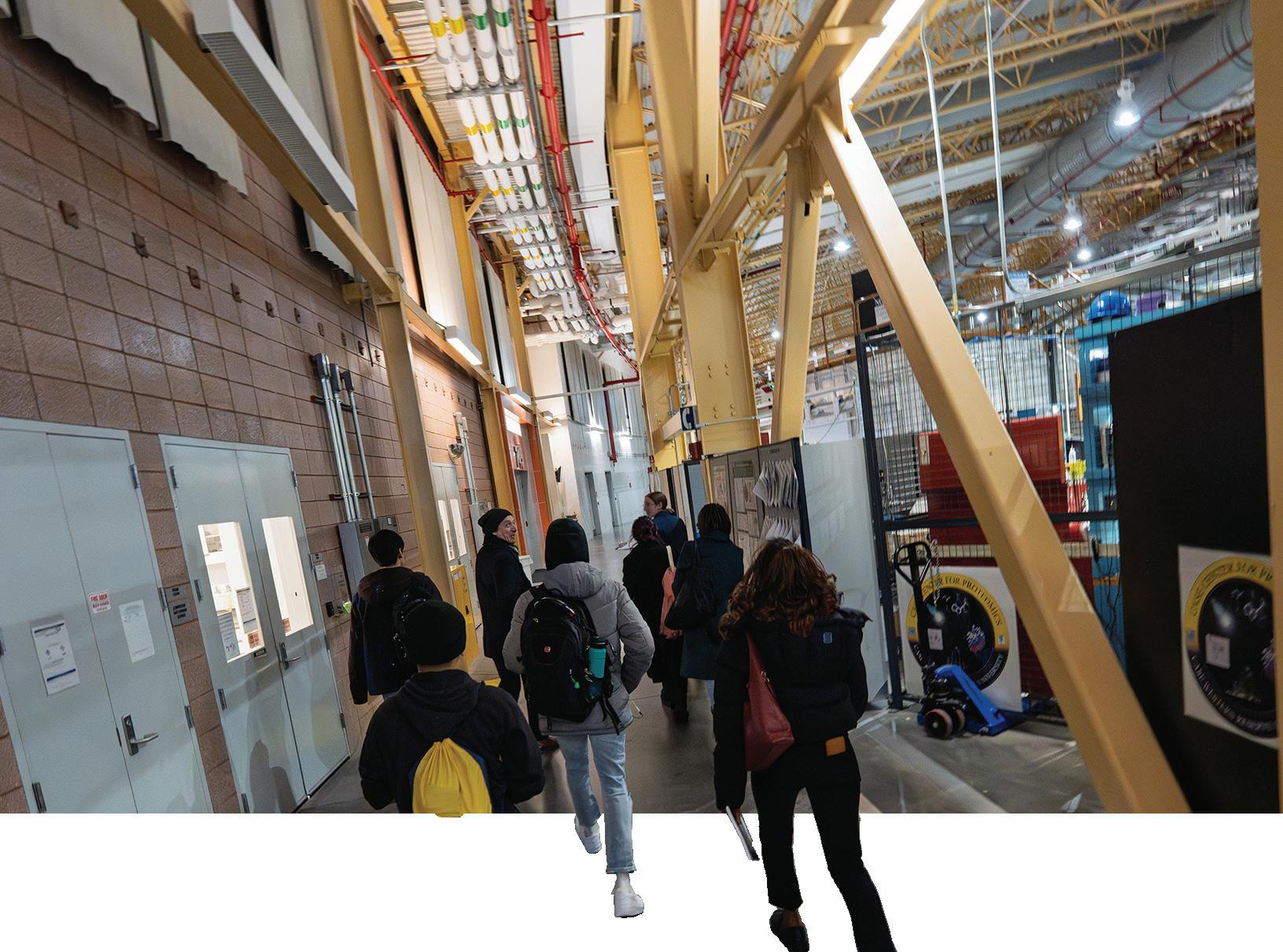
Through immersive programs like the winter session of the Women’s Summer Program in Computing/Engineering (W-SPiCE) and the Brookhaven National Laboratory MiniSemester, students are gaining firsthand exposure to the industries, research environments, and computer science opportunities that will shape their futures.
During the W-SPiCE winter session, a group of engineering and computer science students visited leading companies across a range of sectors, including Medtronic, IMEG, and the United States Patent and Trademark Office. The experience provided students with direct access to professionals, workplace environments, and the day-to-day realities of engineering careers.
For many, the session offered both clarity and confidence. Elizabeth Eger ‘29, a mechanical engineering major
from Arnold, Maryland, said the visits helped her better understand the differences between engineering disciplines and what to expect in a professional setting. Others, like electrical engineering major Aamna Raja ‘29 from Valley Stream, New York, found inspiration in seeing women thriving in STEM roles, reinforcing their sense of belonging in the field.
While some students explored industry, others dove into research. Mechanical engineering majors Daniel Kowal ’27 from East Meadow, New York, and Audrey Day ’26 from Windham, Maine, spent their winter break at Brookhaven National Laboratory, participating in a competitive MiniSemester program focused on scientific computing, electronics, and control systems.
Through hands-on projects and interdisciplinary collaboration, students gained technical skills while working alongside peers from across engineering and computer science disciplines. Kowal highlighted the value of applying programming and electronics to real-world challenges, while Day emphasized the importance of teamwork in understanding how different fields intersect in practice.
Preparing Students for Careers at the Junction of Technology and Human Needs
Hofstra University’s Fred DeMatteis School of Engineering and Applied Science has launched two new undergraduate academic programs designed to prepare students for high-demand careers in technologydriven fields: Human Factors and Usability Studies and Data Science and Machine Learning. Both programs combine rigorous technical training with interdisciplinary learning and hands-on experience.
The new offerings reflect the DeMatteis School’s continued focus on innovation and experiential learning, and its commitment to preparing students to address real-world challenges across sectors ranging from healthcare and business to engineering and digital design.
“These programs were developed with a clear focus on where industry is headed,” Dean Sina Rabbany said. “Whether students are designing technology that puts people first or using data to drive smarter decisions, they will graduate with the skills, adaptability, and perspective needed to succeed in rapidly evolving fields.”

Human Factors and Usability Studies
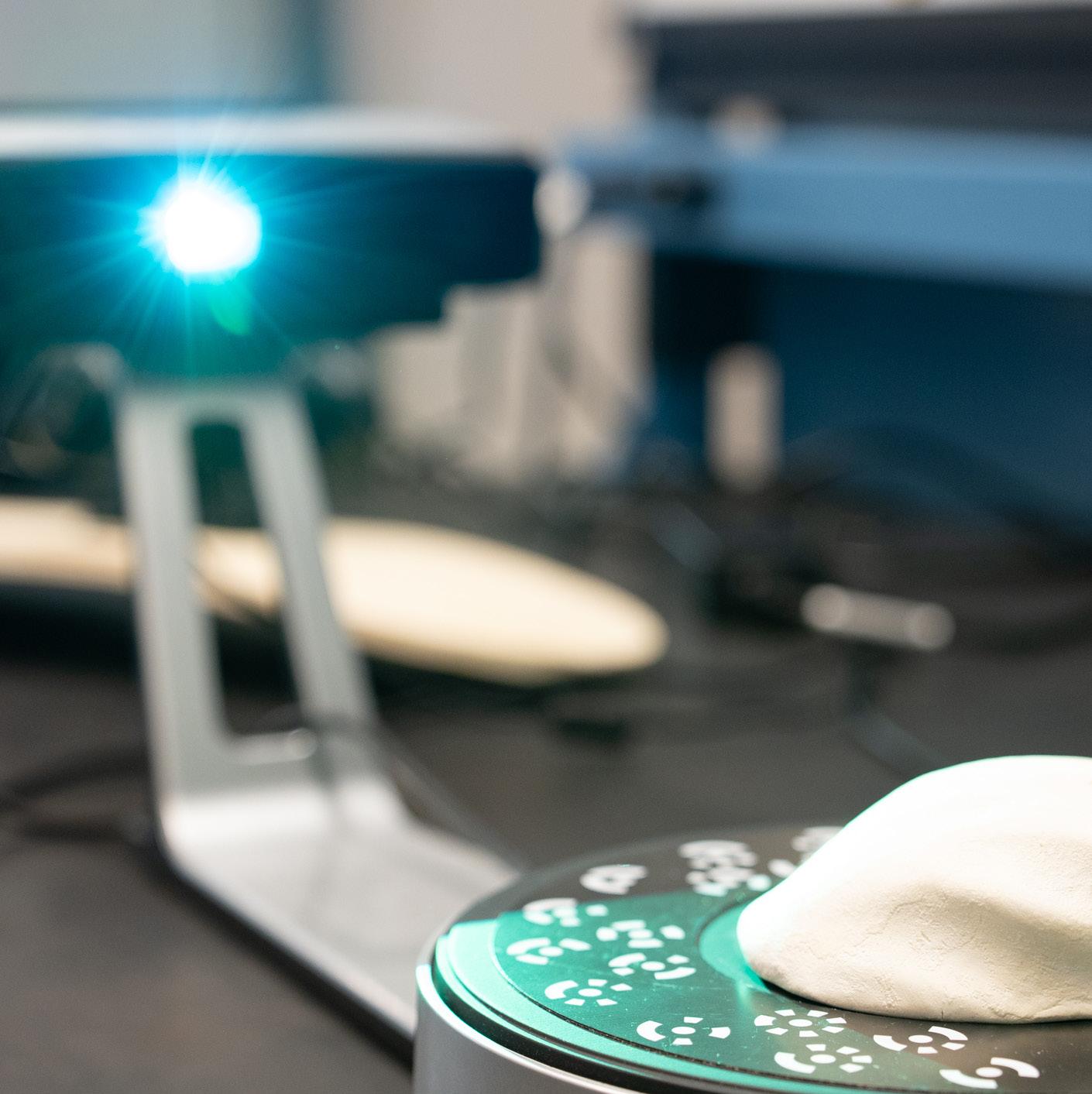
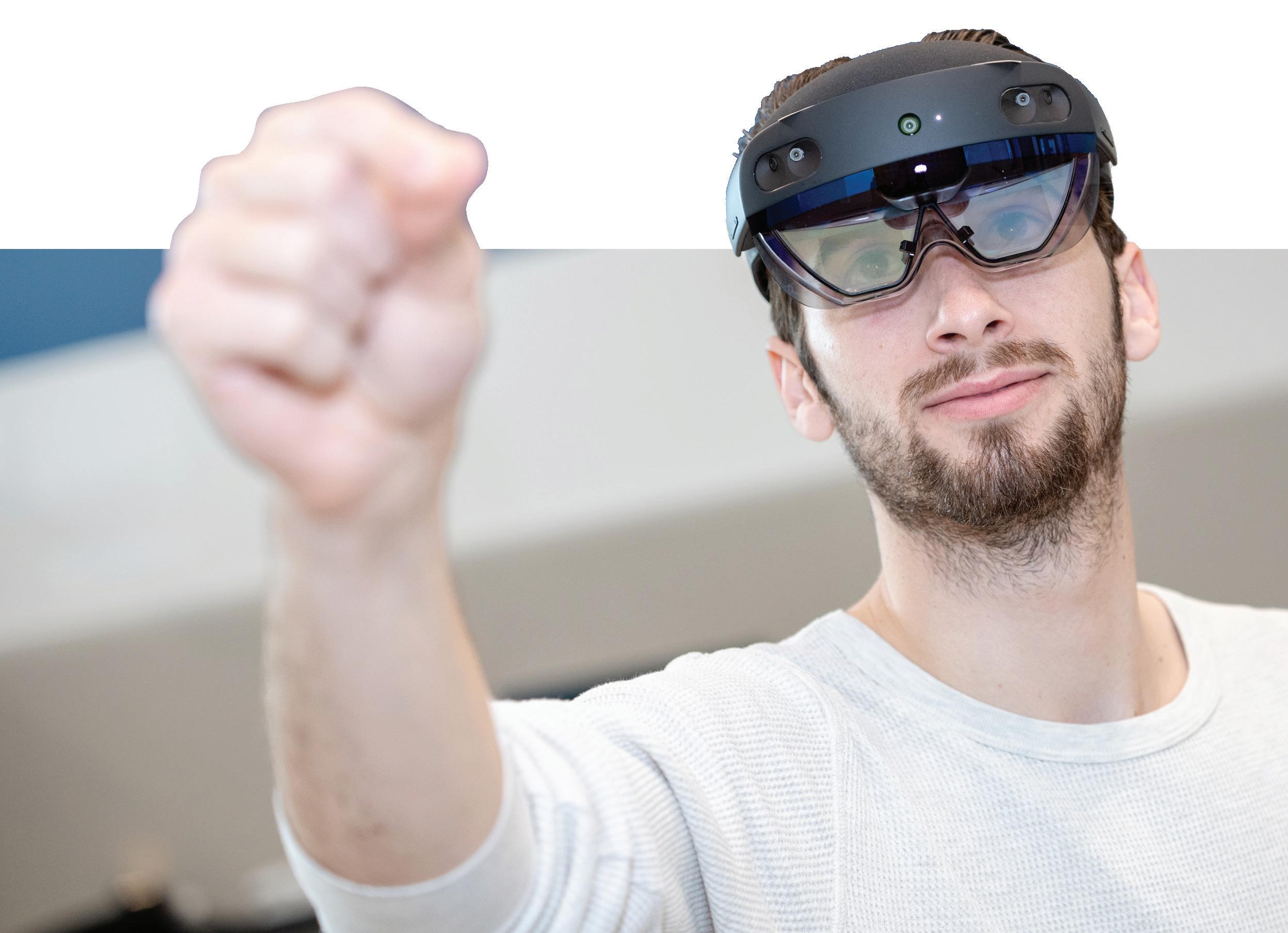
The Human Factors and Usability Studies (HFUS) programs prepare students to design, evaluate, and improve the technologies people use every day. Grounded in humancentered design principles, the programs emphasize usability, accessibility, safety, and effectiveness across a wide range of systems – from mobile applications and wearable technology to healthcare tools and enterprise platforms.
Students complete a set of core courses before tailoring their studies through electives in areas such as computer science, psychology, engineering, writing, disability studies, and graphic design. This interdisciplinary approach allows students to align the program with their interests while gaining a strong foundation in user experience, human-computer interaction, and usability testing.
“Technology is only successful if it works for the people using it,” said Salvador Rojas-Murillo, program director and associate professor of engineering. “This program gives students the tools to design solutions that are not only innovative but also intuitive, inclusive, and impactful.”
Data Science and Machine Learning
The Bachelor of Science in Data Science and Machine Learning program prepares students for careers in one of today’s fastest-growing fields. The curriculum combines mathematics, statistics, computing, and artificial intelligence to help students extract meaningful insights from complex datasets and apply them across industries.
Students build a strong foundation in data structures, algorithms, software development, and statistical methods before advancing to topics such as machine learning, deep learning, neural networks, data warehousing, and AI. The program is intentionally interdisciplinary, enabling students to apply data science tools to fields such as healthcare, finance, engineering, business, and the sciences.
“Data is driving decision-making in nearly every field,” said Gerda Kamberova, professor and chair of the Computer Science Department. “This program equips students with both the technical expertise and the critical thinking skills to turn data into insight and innovation.”
AI Foundations, Ethics & Applications Certificate
Hofstra University’s new AI Foundations, Ethics & Applications Certificate positions students at the forefront of one of today’s most transformative technologies. Recently approved by the New York State Education Department, the 9-credit interdisciplinary program is designed to make AI literacy accessible to students across all academic disciplines — not just computer science majors.
The certificate combines foundational coursework in computer science and artificial intelligence with ethical inquiry and real-world application. Students complete two core courses — Overview of Computer Science and Artificial Intelligence (CSC 005) and Artificial Intelligence in Society: New Challenges, Ethical Futures (PHI 040) — before selecting a discipline-specific capstone course. The program blends technical knowledge, ethical reasoning, and practical application.
Developed by an AI Literacy Task Force composed of faculty from engineering, computer science, philosophy, communications, psychology, and writing studies, the certificate responds to growing employer demand for graduates who can understand AI technologies and evaluate their societal impact. Industry advisors from the Computer Science Advisory Board emphasized the need for AI competency across professions, including business, media, public policy, and the humanities.
The certificate supports Hofstra’s mission to prepare students to succeed in a rapidly changing global society by equipping them with the knowledge and adaptability needed in an AI-driven world.
Together,
these new programs underscore the DeMatteis School’s commitment to preparing students for careers at the forefront of technology, while offering the flexibility, faculty mentorship, and experiential focus that define a Hofstra education.
DeMatteis by the Numbers
TOP 13%
in the nation among 292 non-PhD-granting engineering schools
(U.S. News & World Report, Best Colleges rankings, 2026)
100% of full-time professors hold the highest degrees in their field
240+ co-op partners
26% female students

99 graduate students
866 undergraduate students
5,100+ alumni
965 total students
16 academic programs
7 ABET-accredited* undergraduate degree programs

The Impact of Engineering: DeMatteis School
Advances the Hofstra 100 Strategic Plan
At the Fred DeMatteis School of Engineering and Applied Science, innovation does not happen in isolation. It happens through interdisciplinary collaboration, experiential learning, and global service opportunities, all cornerstones of Hofstra 100, the strategic plan that will guide the University into its centennial year in 2035.
From presenting research on international stages to building lifechanging infrastructure abroad, DeMatteis students apply theory to practice in ways that shape careers, communities, and futures.
Student Success: Research, Professional Growth, and National Recognition
At DeMatteis, student success is defined by opportunity, and students are seizing it.
That commitment is evident in experiences like the Society of Women Engineers (SWE) National Conference, where Hofstra students gain direct access to industry leaders, professional development workshops, and one of the largest engineering career fairs in the country. At the 2025 conference, several students completed interviews on-site, resulting in full-time job offers and internship opportunities that stemmed from connections made through SWE networking.
High-impact research is another pathway to success. Computer engineering student Samson Matthew ’27 presented original research at the Institute of Electrical and Electronics Engineers (IEEE) International Conference on Data Mining, examining the reliability of compact artificial intelligence models in autonomous driving systems. Conducted through Hofstra’s Advanced Summer Program in Research (ASPiRe), his work contributed to ongoing conversations about AI safety while building skills in research design, analysis, and scientific communication.
Biomedical and mechanical engineering students are also gaining national recognition. A DeMatteis team earned an honorable mention in the National Institutes of Health (NIH)-sponsored Biomedical Design Challenge, competing against more than 120 teams worldwide. Their capstone project combined biological insights and mechanical precision to address real clinical needs, demonstrating how early research exposure and interdisciplinary mentorship prepare students for advanced study and meaningful careers.
Experiences outside the classroom reflect a culture where students learn by doing, build their professional skills, and prepare for the lives and careers of their dreams.
Community Engagement: Engineering With Purpose
Community engagement at the DeMatteis School extends well beyond campus boundaries, giving students opportunities to apply engineering expertise in ways that create meaningful, realworld impact.
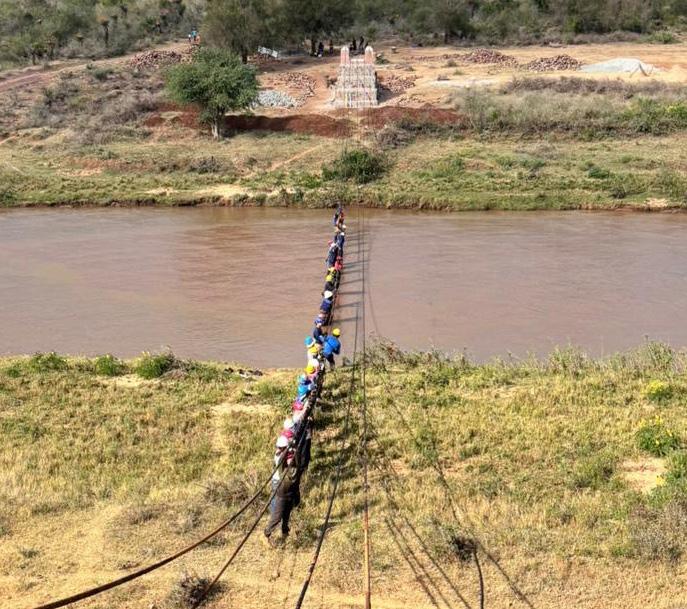
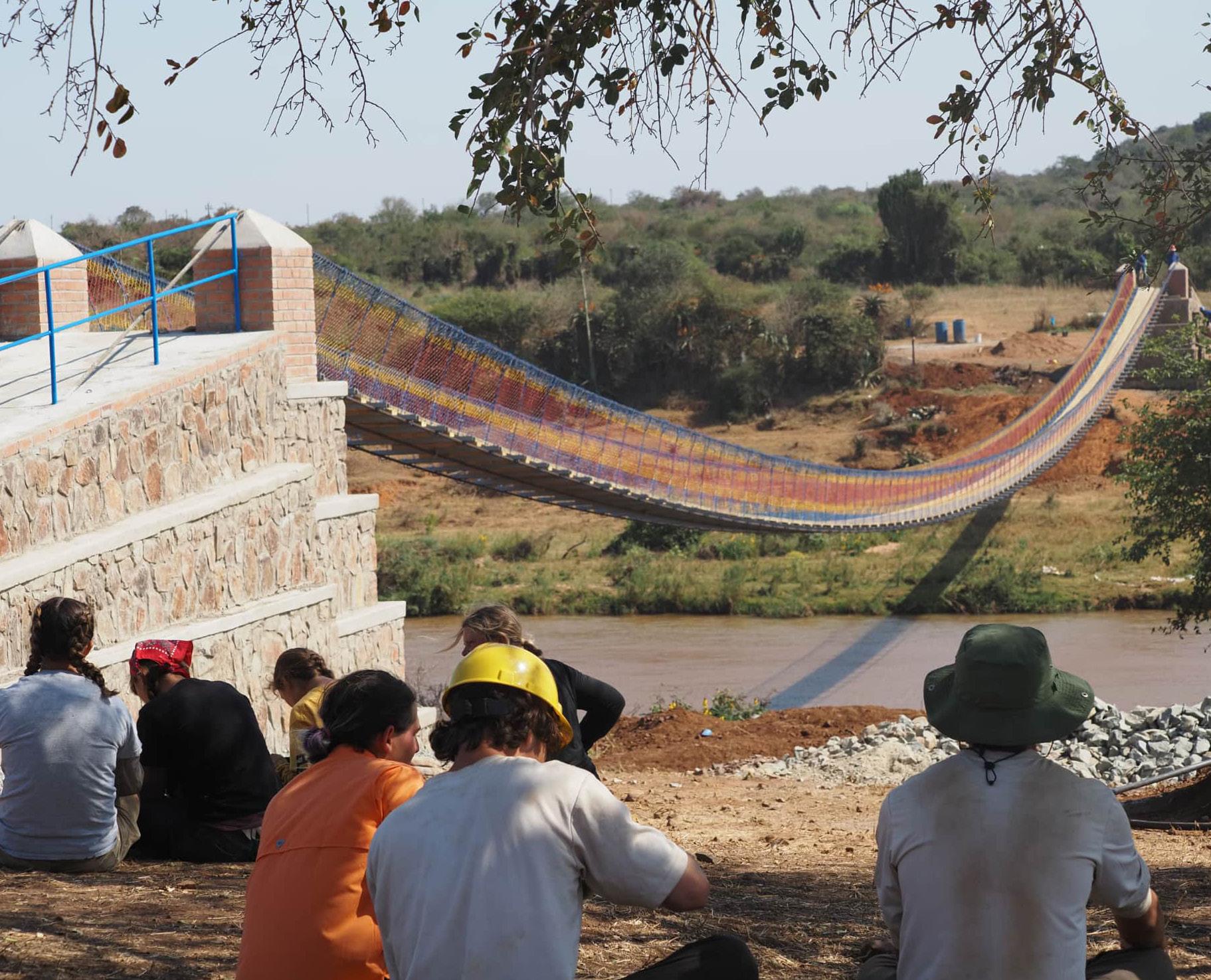
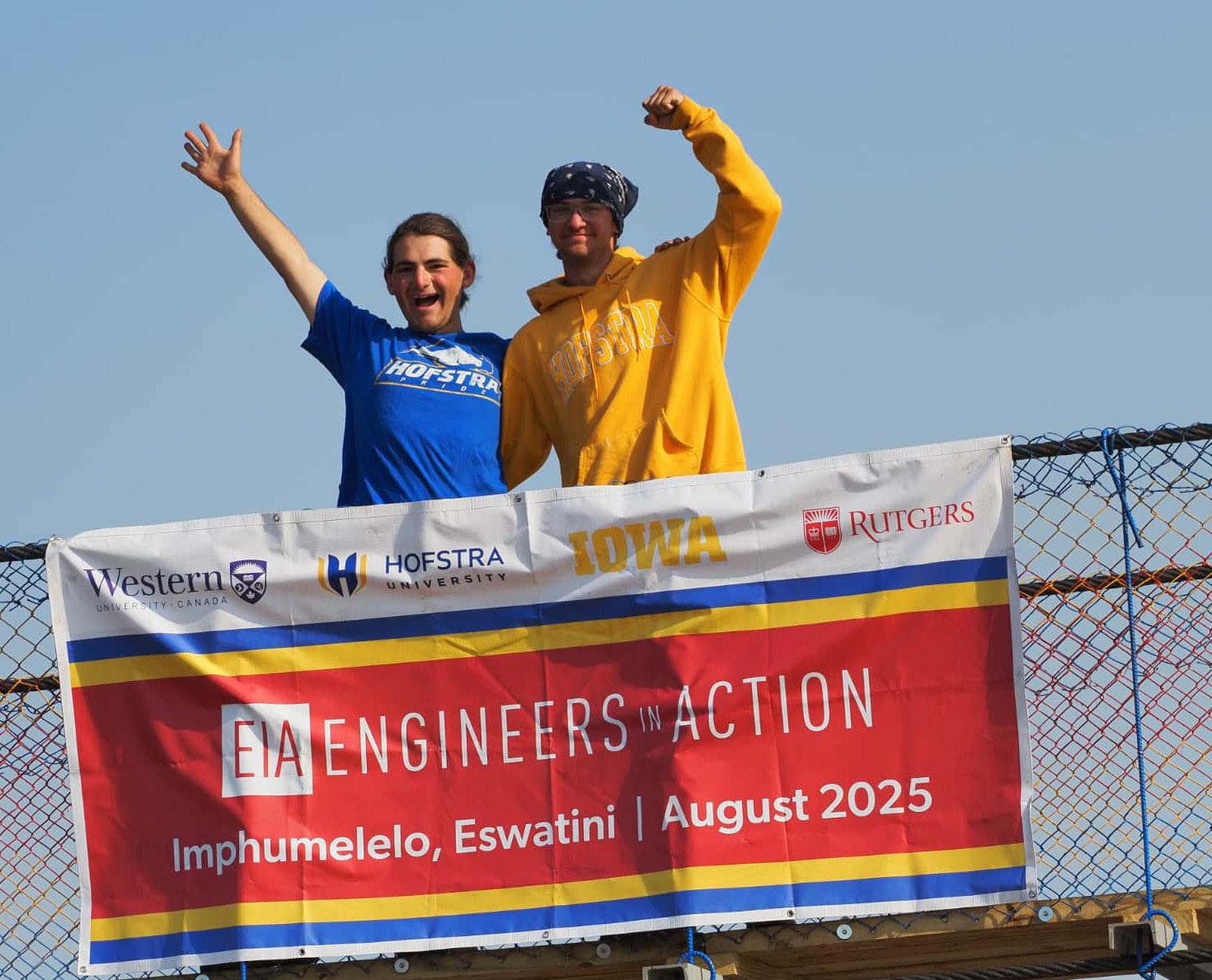
Through the Engineers in Action program and Hofstra’s OverSEAS initiative, civil engineering students Patrick Havers ’28 and Eevie Silvia ’28 traveled to Eswatini, a small land-locked country in southern Africa, to help design and build a pedestrian bridge alongside local community members, professional engineers, and masons. Students assumed leadership roles in design management and quality control, translating classroom knowledge into practical solutions in a resource-limited environment.
The impact was immediate and deeply human. On launch day, community members crossed the bridge for the first time, a moment both Havers and Silvia described as transformative. The experience reinforced not only technical skills but also empathy, cultural awareness, and a global understanding of engineering’s capacity to improve lives.
Innovation at the Intersection of Disciplines
Complex challenges require collaborative solutions, and DeMatteis students are learning to lead across disciplines.
Hofstra’s Interdisciplinary Research Competition brought together students and faculty from engineering, business, sustainability studies, and health sciences to address environmental challenges facing Long Island. Teams partnered with local organizations, developed research-driven solutions, and presented their work before panels of faculty and community leaders.
Winning projects blended technical expertise with business strategy, environmental science, and community outreach, reinforcing the value of learning across academic boundaries. For students, the competition offered hands-on research, mentorship beyond their major, and experience working in diverse teams — skills that increasingly define modern engineering careers.
Accelerating the Path to Advanced Engineering Careers
The Fred DeMatteis School of Engineering and Applied Science offers a robust portfolio of graduate programs and accelerated 4+1 pathways, allowing students to earn both a bachelor’s and master’s degree in an accelerated timeframe.
Designed for high-achieving undergraduates, these programs provide a streamlined, cost-effective route to graduate study. Students begin graduate-level coursework during their senior year, building depth in their discipline while maintaining momentum toward professional or research careers.
“These accelerated programs are about meeting students where they are — curious, motivated, and ready to take the next step, ” Dean Sina Rabbany said. “By integrating undergraduate and graduate study, we’re helping students gain advanced skills faster while staying closely connected to faculty mentors and applied learning experiences.”
Graduate programs span high-demand disciplines such as computer science, data science, and engineering management, emphasizing experiential learning, interdisciplinary collaboration, and practical problemsolving. Eligible undergraduates can apply graduate credits toward both degrees, reducing time to completion without sacrificing rigor.
With flexible pathways and strong advising, the DeMatteis School empowers students to tailor their academic journeys, whether advancing into the workforce, continuing to doctoral study, or launching innovative solutions to real-world challenges.
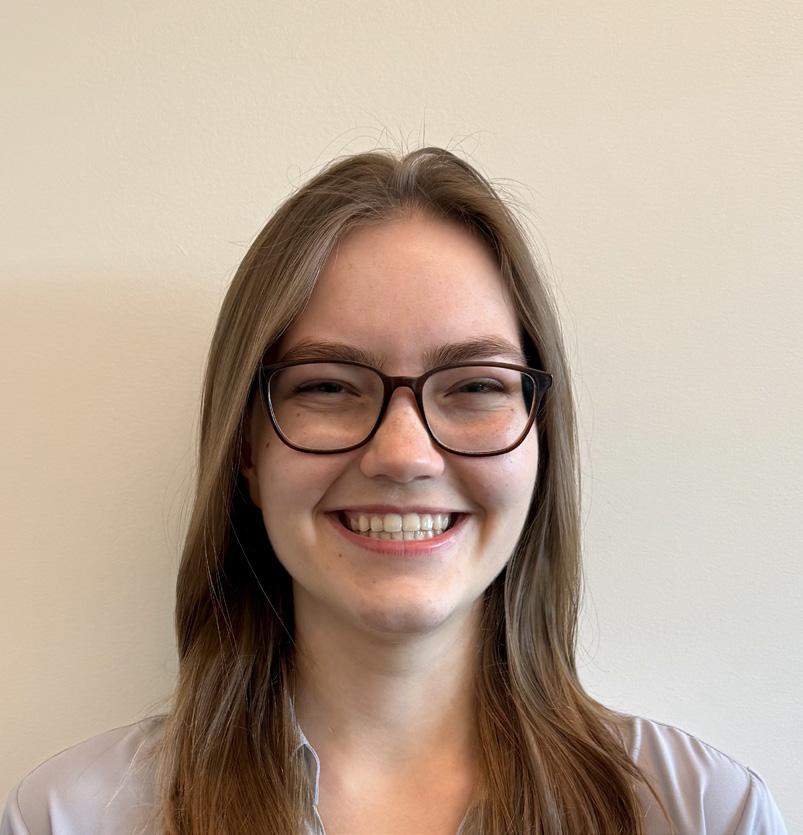
EMILIA SZYNWALD, MS, ‘27
Computer Science, 4+1 Program
For Emilia Szynwald, the 4+1 program offered both an accelerated means to earn a graduate degree and an opportunity to go deeper.
“I wanted to challenge myself with graduatelevel material, deepen my foundations, and build a more complete toolkit for the problems I want to work on,” Szynwald said.
Through the program, Szynwald has engaged in advanced coursework in artificial intelligence, machine learning, and data-driven systems, strengthening both her technical skills and analytical thinking.
The rigorous curriculum, paired with strong faculty mentorship, has enabled her to pursue research opportunities beyond campus, including fellowships focused on recommendation systems and climate modeling.
A defining moment came through interdisciplinary research that combined physics and computer science. That experience clarified her passion for using AI and computational tools to model complex systems and solve real-world challenges.
“The 4+1 program gives you the space to grow, experiment, and explore what excites you,” she said.
Now, Szynwald is focused on building a future in technology where continuous learning and innovation are central — a path made possible by the depth and opportunity she found at DeMatteis.
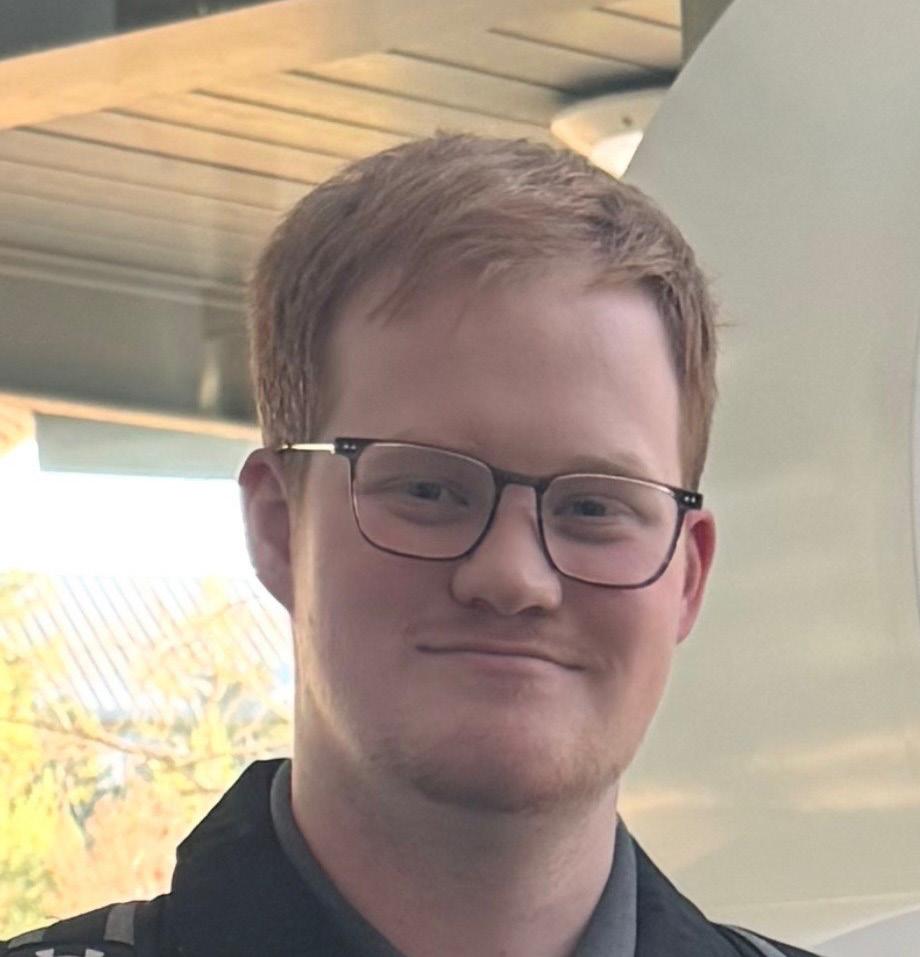
KEVIN BARRY, MS, ’27
Computer Science, 4+1 Program
Kevin Barry didn’t plan to pursue the DeMatteis School’s accelerated 4+1 program until he realized he was on track to graduate early.
“Earning both my bachelor’s and master’s by spring 2027 has opened doors for me to consider PhD programs and career paths that require advanced degrees,” he said.
At DeMatteis, Barry has built a strong technical foundation through coursework in programming, systems, and mobile development, while gaining hands-on experience through senior design projects and research. Under the mentorship of faculty, including opportunities to conduct research and participate in Hofstra Law School’s LegalTech Fellowship program, he has explored both development and applied research.
Two experiences helped shape his future: collaborating on faculty-led research and participating in the Hofstra in Silicon Valley trip, which exposed him to innovation at the highest levels. Together, they solidified his interest in pursuing research-driven work.
For Barry, the 4+1 program is as practical as it is transformative.
“It saves both time and money while giving you a head start on graduate-level work,” he said. “Even if you’re unsure, it’s worth exploring.”
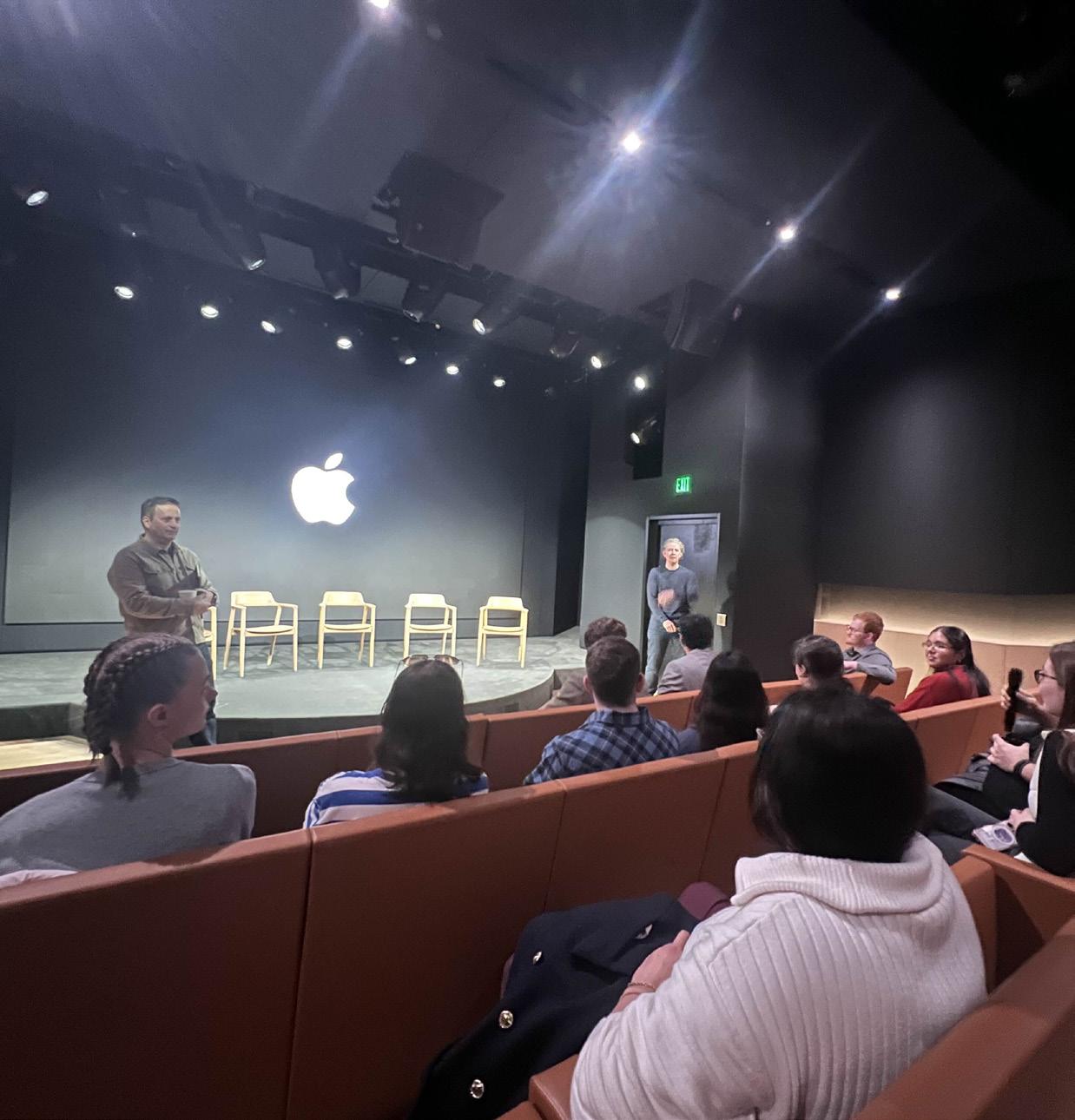
“The trip turned my career goals into a clear plan.”
– Kevin Barry, MS, ‘27
While Hofstra in Silicon Valley introduces students to industry at the highest level, ASPiRe offers undergraduates the opportunity to engage in intensive, faculty-mentored research, an experience often reserved for graduate students. Each summer, ASPiRe students conduct original research across disciplines, including bioengineering, computer science, mechanical engineering, and artificial intelligence, culminating in a formal symposium.
“Hofstra in Silicon Valley showed me what my future could possibly look like in the tech world.”
– Dhruv Kamleshbhai Patel ’27
Experiential learning can be transformational — especially when it is fueled by philanthropy. At the Fred DeMatteis School of Engineering and Applied Science, donor-supported programs such as Hofstra in Silicon Valley and the Advanced Summer Program in Research (ASPiRe) give students access to experiences that shape their academic paths, help clarify their career goals, and boost their confidence.
Through Hofstra in Silicon Valley, students spend winter break immersed in the global technology ecosystem, meeting with professionals and alumni at leading companies, including Google, Meta, Apple, Oracle, and CrowdStrike. The program blends site visits, networking, and candid conversations that connect classroom learning to real innovation.
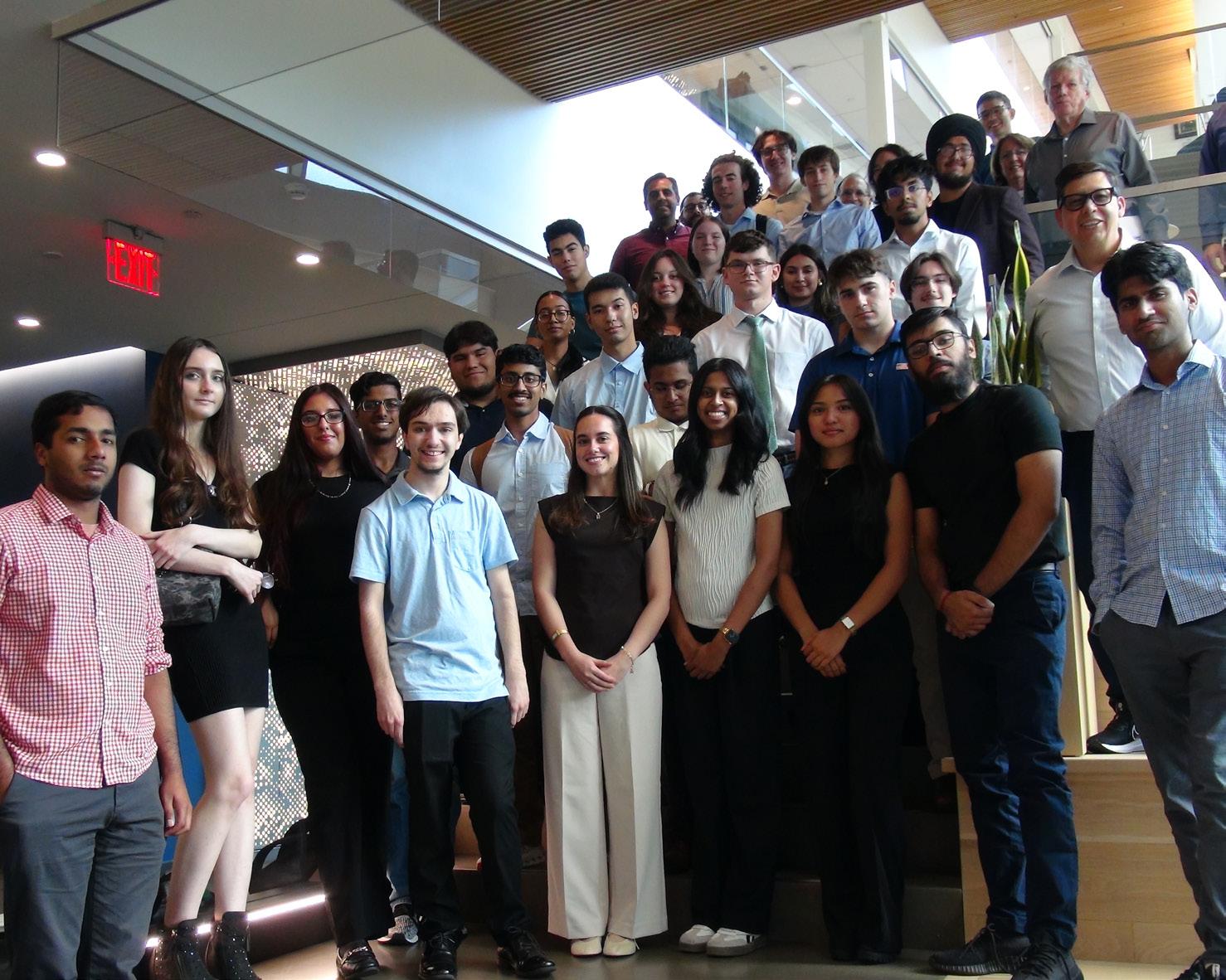
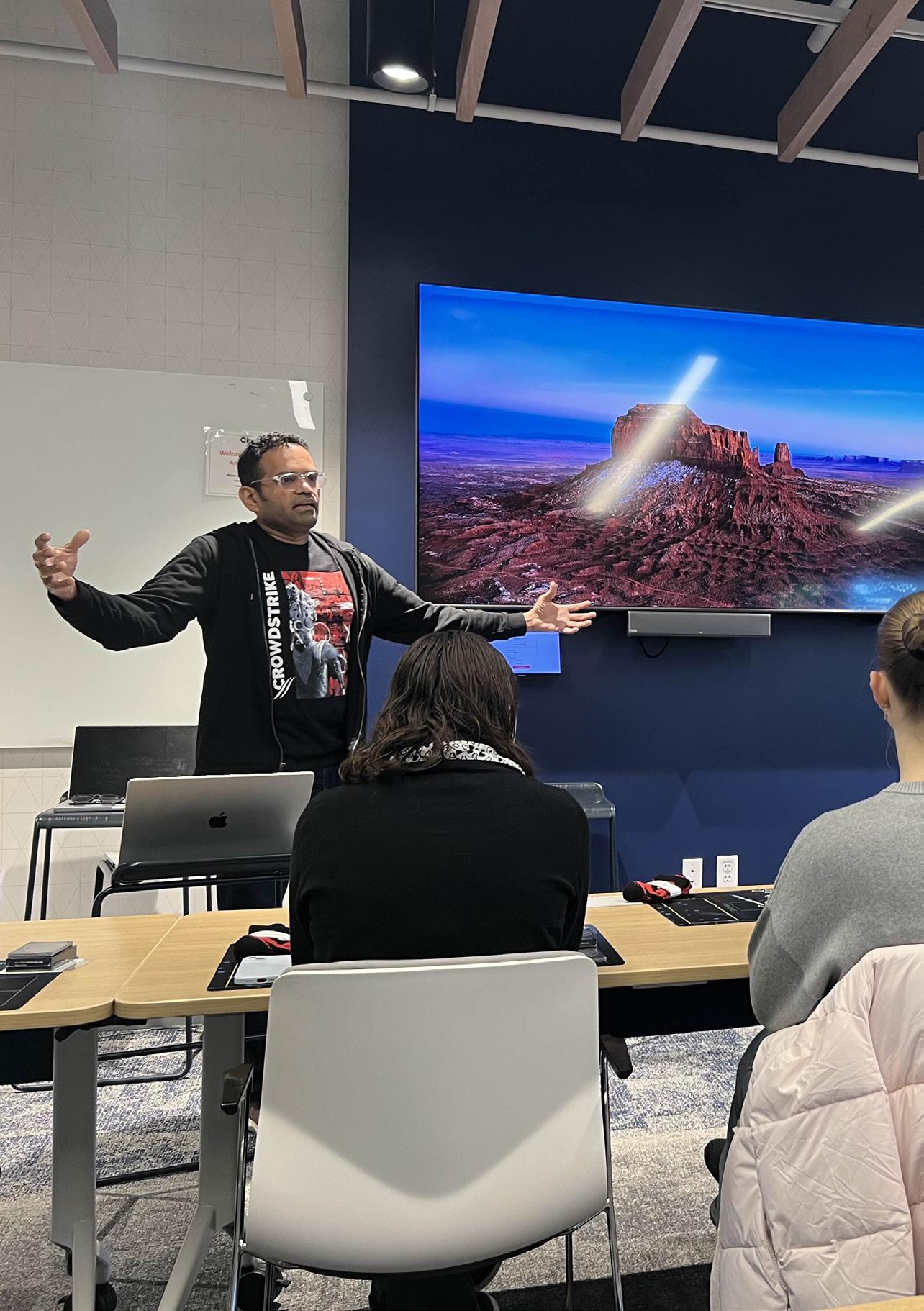
Donor support makes these high-impact experiences possible and ensures that students continue to grow. Investments in programs like Hofstra in Silicon Valley and ASPiRe expand access to immersive learning, undergraduate research, and professional networks that shape students’ futures. By supporting these initiatives, donors play a direct role in preparing the next generation of engineers, innovators, and problem solvers to lead in an increasingly complex world.
“The ASPiRe program gave me confidence as a researcher.”
– Esther Thomas ’26
“Participating in the ASPiRe program, I learned pretty quickly that research isn’t linear.”
– James Bacheller ’27
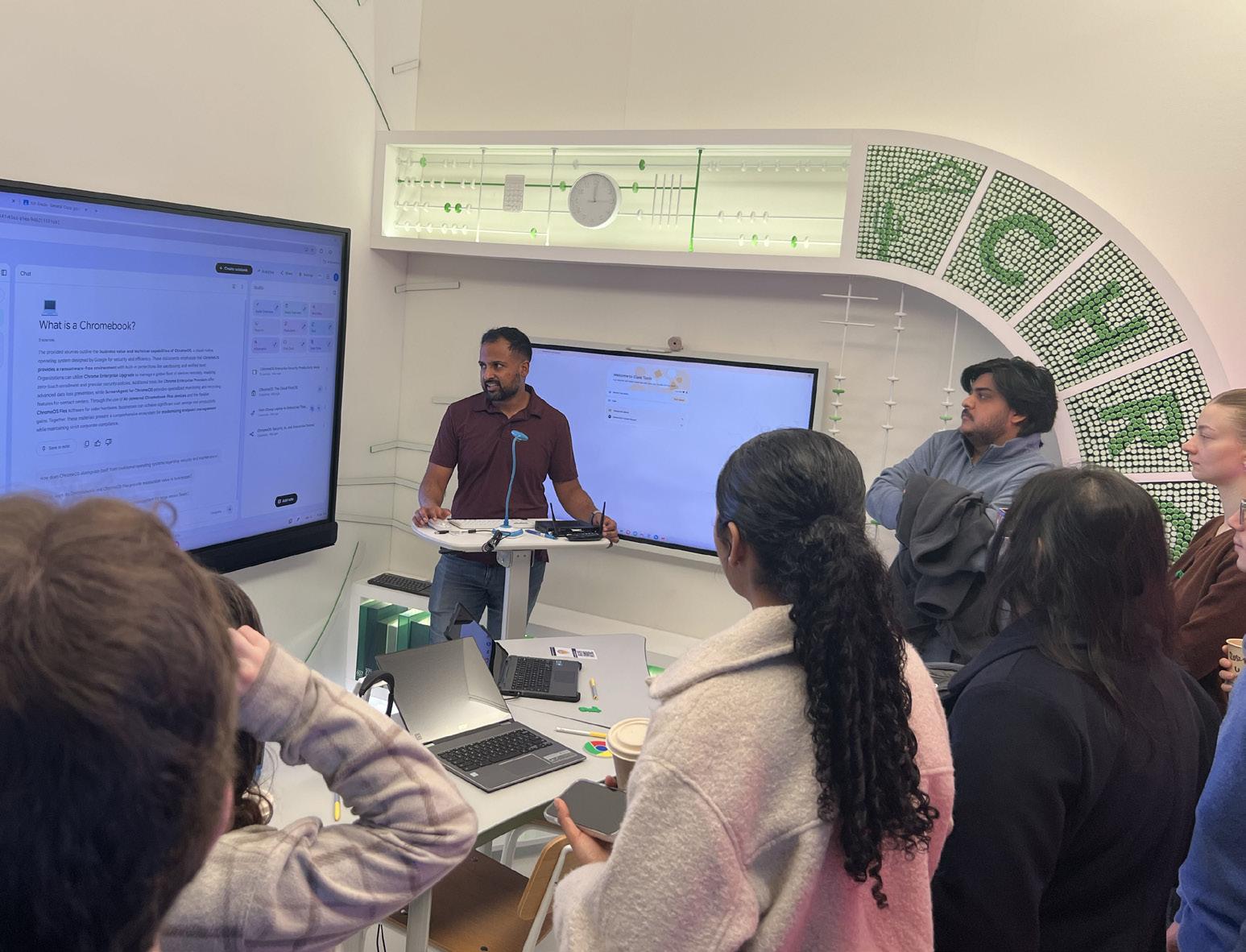
DeMatteis Alumni Earn International Honors
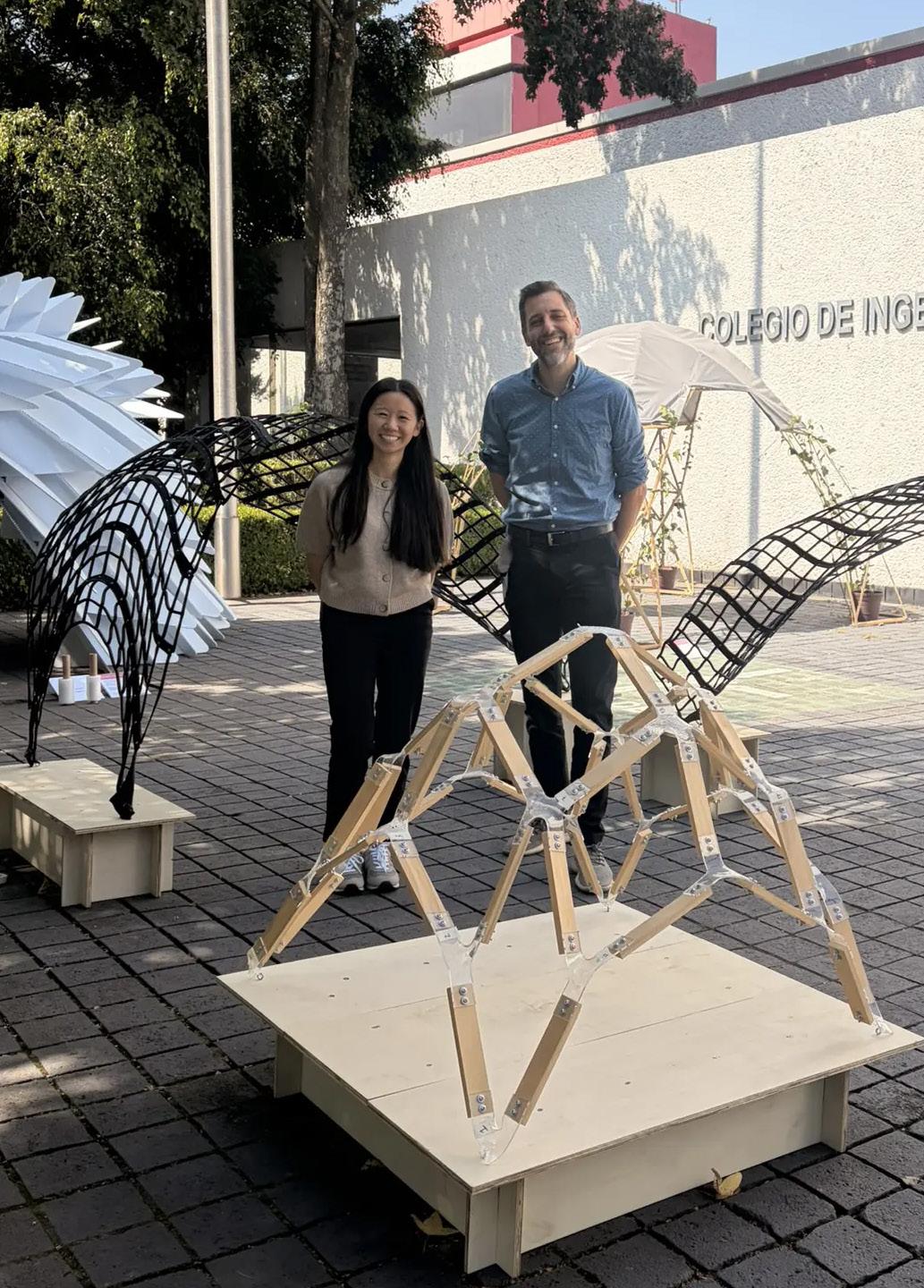
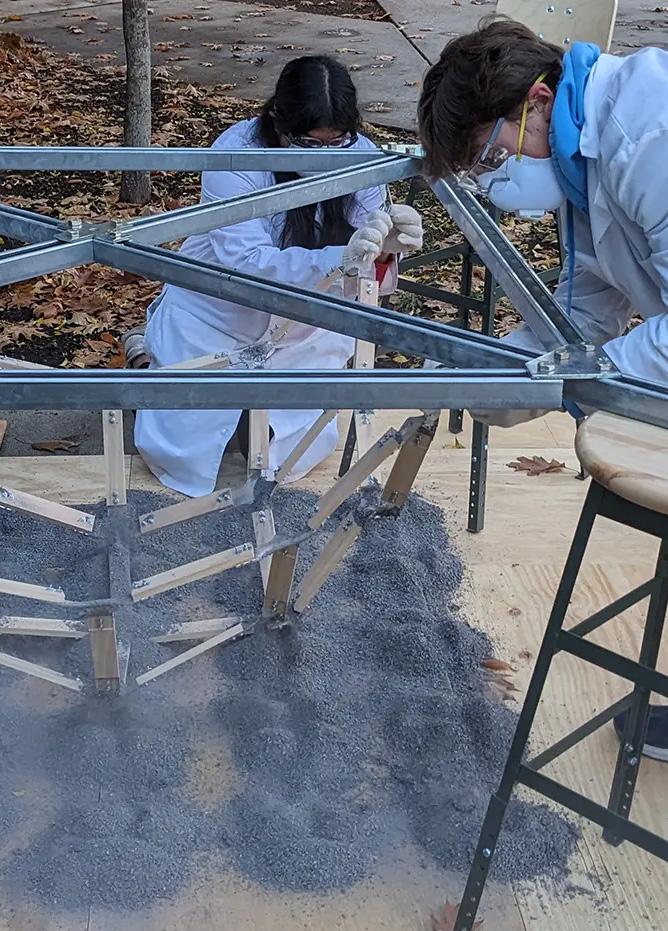
A pavilion conceived at Hofstra University and realized through bold experimentation earned international recognition and showcased the lasting impact of a DeMatteis education.
Designed by DeMatteis School of Engineering and Applied Science alumni Esther Zhang ’22 and John D’Amato ’25, the pavilion won first place at the 2025 IASS (International Association for Shell and Spatial Structures) Symposium in Mexico City. The annual symposium brings together leading architects, engineers, designers, and researchers from around the world.
The award-winning structure grew out of the pair’s senior thesis work at Hofstra, where both students pushed the boundaries of traditional engineering through experimental fabrication and design research. Exhibited by the DeMatteis alumni and their former faculty advisor, Edward Segal, Hofstra associate professor of engineering, the pavilion was recognized for its innovative production techniques and structural exploration.
Zhang, now a structural engineer at TYLin, said the experience affirmed the value of taking creative risks early in her career.
“It was really meaningful and humbling to be among people doing incredible work from around the world and to be able to share ideas,” she said. “It opened my eyes to the range of possibilities within architecture and engineering.”
Zhang credits her Hofstra thesis experience with giving her the confidence to pursue ambitious ideas. “I came to Professor Segal with an idea I thought might be impossible,” she said. “Instead, he encouraged me to go for it, and that mindset carried all the way to this moment.”
D’Amato, now pursuing a graduate degree at Georgia Institute of Technology, said the project’s hands-on nature made the recognition especially rewarding.
“The research was experimental, so we didn’t know how the structure would behave until we actually built it,” he said. “Seeing it take shape was incredibly exciting and something I’ll carry with me into my future work.”
Both alumni served as first authors on conference papers associated with the pavilion, further reinforcing the depth of research and scholarship behind the design.
“At the DeMatteis School, learning extends far beyond the classroom,” Dean Sina Rabbany said. “Our alumni carry with them the confidence to innovate, collaborate, and lead wherever their careers take them.”
Dean’s Innovation Scholars Program Inspires Creative Problem-Solving
The Dean’s Innovation Scholars Program at the Fred DeMatteis School of Engineering and Applied Science is a selective, cohortbased initiative designed to support high-achieving students with a strong interest in innovation, leadership, and emerging technologies. The program recognizes motivated first-year students who demonstrate academic excellence, creativity, and a commitment to shaping the future of engineering and applied science.
Innovation Scholars benefit from early access to faculty mentorship and hands-on research opportunities that extend learning beyond the classroom. Through collaborative projects, exposure to cutting-edge technologies, and engagement with societal challenges, students gain valuable experience that prepares them for internships, research roles, and future careers.
The program fosters a strong sense of community through guest speakers, exclusive networking events, and inclusion in the Dean’s Innovation Scholars Resume Database. To remain in the program, students must maintain a strong academic record and actively participate in student organizations or project teams.
Upon completion of the program, scholars are recognized with a certificate of achievement, marking their commitment to innovation and excellence throughout their Hofstra journey.


FULL-TIME FACULTY
M. David Burghardt (PhD, University of Connecticut) Mechanical Engineering
Mauro J. Caputi (PhD, Virginia Tech) Electrical Engineering
Kevin C. Craig (PhD, Columbia University) Mechanical Engineering
Edward H. Currie (PhD, University of Miami) Electrical Engineering
Roche C. de Guzman (PhD, Wayne State University) Bioengineering
Simona Doboli (PhD, University of Cincinnati) Computer Engineering
Xiang Fu (PhD, University of California, Santa Barbara) Computer Science
Sleiman R. Ghorayeb (PhD, Iowa State University) Electrical Engineering
Saryn R. Goldberg (PhD, Stanford University) Mechanical Engineering
Zonghua Gu (PhD, University of Michigan) Computer Science
Margaret A. Hunter (PhD, Rice University) Civil Engineering
Gerda L. Kamberova (PhD, University of Pennsylvania) Computer Science
Wing C. Kwong (PhD, Princeton University) Electrical Engineering
Chuck C. Liang (PhD, University of Pennsylvania) Computer Science
Nicholas J. Merna (PhD, University of California, Irvine) Bioengineering
Manuel J. Miranda (PhD, Columbia University) Civil Engineering
Gretchen Ostheimer (PhD, Rutgers University) Computer Science
Krishnan Pillaipakkamnatt (PhD, Vanderbilt University) Computer Science
Richard J. Puerzer (PhD, University of Pittsburgh) Industrial Engineering
Sina Y. Rabbany (PhD, University of Pennsylvania) Dean
Salvador Rojas-Murillo (PhD, University of Iowa) Industrial Engineering
Marco Romanelli (PhD, Ecole Polytechnique, Paris) Computer Science
David M. Rooney (PhD, North Carolina State University) Mechanical Engineering
Edward M. Segal (PhD, Princeton University) Civil Engineering
Oren Segal (PhD, University of Massachusetts, Lowell) Computer Engineering
Jianchen Shan (PhD, New Jersey Institute of Technology) Computer Science
Xiangmin (Sherwin) Shen (PhD, Northwestern University) Computer Science
Minjeong Suh (PhD, Yale University) Engineering Science
Gozde Ustuner (PhD, Stony Brook University) Mechanical Engineering
John C. Vaccaro (PhD, Rensselaer Polytechnic Institute) Mechanical Engineering
S. Stavros Valenti (PhD, University of Connecticut) Vice Dean
D. Elliott Williamstyer (PhD, California Institute of Technology) Electrical Engineering

DEAN’S ADVISORY BOARD
(Degrees earned at Hofstra are indicated by year.)
Dennis Ashby, BS, ’96 Former VP, Functionize Inc.
Kathy Azeez-Narain, BS, ’04 SVP, Hoag Hospital
Doreen Bartoldus, MBA Senior Director, Brown and Caldwell
Denise Chardavoyne, BA, ’99 Executive VP, Valley Bank
William C. Dawes Jr., BS, ’94 CEO, Breathe BioMedical Inc.
Michael P. Delaney, BE, ’85; MBA SVP, The Boeing Company (retired)
James K. Donaghy, BBA, ’89 Executive Chairman, Structure Tone Organization
Edwin Grivins, BS, ’80; MS Northrop Grumman Corporation (retired)
Joseph M. Heaney III, ME, PE Owner, Walden Environmental Engineering
Daphne Hornbuckle, BS, ’86 IT Manager, North Texas Region, Spectrum
Robert Ioanna, BS, PE Executive Principal, Syska Hennessy Group
Christos Karanicolas, BS SVP, Clever Devices
Ralph Lambert, BBA, ’84 President & CEO, Axis Construction Corporation
William J. Lane, BES, ’98; MD; PhD; A(ACHI)
Associate Professor, Harvard Medical School
Donna Linke-Klein, MBA
Senior Product Line Director, BAE Systems
Philip Luongo, BA, ’93 CEO, Apple Value Services, LLC, Apple
Christian McIntire, MBA Senior Director, Break Through Tech at Cornell Tech
James J. Nolan, MBA, ’06 Executive VP & Founder, InterDigital Inc. (retired)
Michael Petosa, MS VP, IT, American National Standards Institute (retired)
Ronald T. Piervincenzi, BE, ’93; PhD CEO, United States Pharmacopeia
Pragash Pillai, MASc CTO, Hotwire Communications Ltd.
Danyel Racenet, BS, ’97; MS R&D Leader, Medtronic
Shahriar Rafimayeri, BS, ’88 CIO, GLG Insights
Sajed Sahni, BS, ’01; MBA Solutions Specialist Manager, Global, Google
Paul R. Saueracker, MBA, ’78 Chairman & CEO, Minerals Technologies (retired)
Shila Shah-Gavnoudias, MS, PE VP, Business Development, AECOM
Anne Shybunko-Moore, MPT CEO & Owner, GSE Dynamics Inc.
Stephanie Siteman, BA Director, Security Management Program, Chan Zuckerberg Initiative
Chris Wacker, BA, ’76 Chairman of the Board, Laserfiche
Richard Zapolski Jr., MS, PE Principal, IMEG
FRED D E MATTEIS SCHOOL OF ENGINEERING AND APPLIED SCIENCE
Visit Hofstra
Visit our campus and discover all that Hofstra has to offer.
Go to hofstra.edu/visit to explore and register for in-person and virtual visit opportunities that are customized to your needs.
If you have any questions about arranging a visit, contact the Office of Admission at admission@ hofstra.edu or 516-463-6700. For more information about the Fred DeMatteis School of Engineering and Applied Science, email DeMatteisSchool@hofstra.edu or call 516-463-6301