INSIDE STORY


… to our sizzling summer issue!
With Beano’s Dennis the Menace and Gnasher gracing our cover, you can tell immediately that this Inside Story is not short on fun (page 48). We have plenty more grown-up treats as part of our exciting Members’ Week, celebrating 20 years of your incredible support (page 12). Enjoy double discounts, half price entry for friends and family, exclusive events, o!ers and prizes as we say ‘thank you’ – we couldn’t do it without you.
If your summer thoughts are turning to tennis, come and experience the ‘Real’ thing in a taster session with the experts, on the historic real tennis court at Hampton Court (page 20). Fancy something more leisurely? Explore nature and the wildlife of Home and Bushy parks (page 36) or book a magical twilight bat walk (page 39). Discover the exotic animals, real and imaginary, that once lived at the Tower (page 14). O! on your holidays soon? Imagine how it felt to paddle in a crinoline, while reading about our monarchs who did so love to be beside the sea (page 30). Interesting in volunteering with us? You’ll find inspiration on page 24. Have a super summer!
Angie Faires Head of Marketing and Membership
Published by Historic Royal Palaces, Hampton Court Palace, Surrey, KT8 9AU.
In-house editor: Clare Murphy
External editor: Sarah Kilby
© Historic Royal Palaces 2026. All rights reserved. No part of this publication may be reproduced or transmitted in any form or by any means, electronic or mechanical, including
Historic Royal Palaces is an independent charity, and we rely on your support to continue to preserve the magnificent palaces and gardens in our care.
You can make your membership donation go 25% further at no extra cost to you by opting in to Gift Aid. If you’re a UK tax payer, please email us at members@hrp.org.uk, and we can claim an extra 25p per £1 of your membership fee from the government. Opt-in today to help us transform tomorrow.
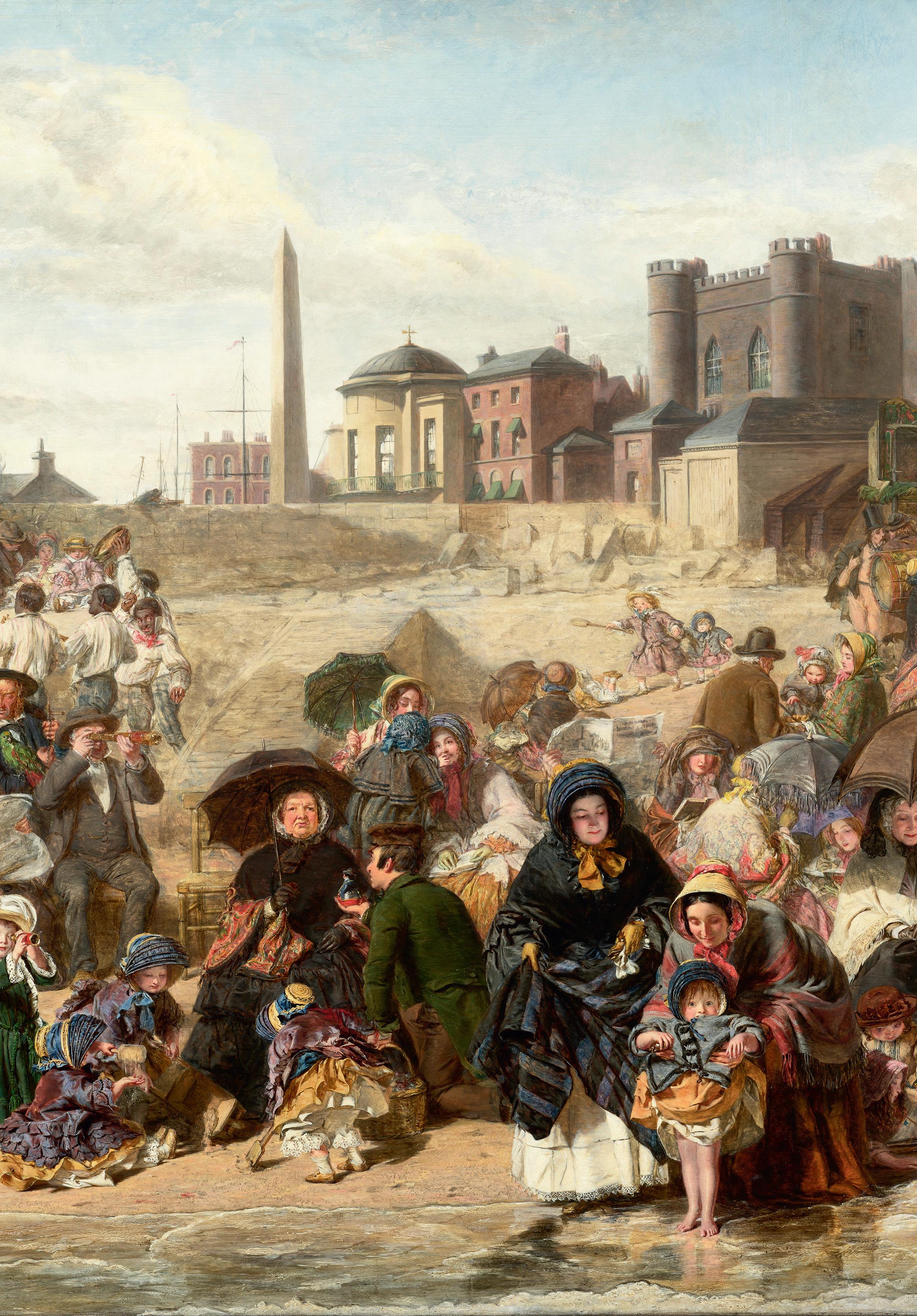
LEFT: Discover the favourite seaside destinations of some of our kings and queens on page 30.
photocopying, recording or any information storage or retrieval system, without permission in writing from the publisher.
Unless otherwise stated, all images are © Historic Royal Palaces. Historic Royal Palaces is a registered charity (No 1068852) Contact us: insidestory@hrp.org.uk




Tips to help you enjoy your membership, at our palaces and gardens, and at home
As a member, you can enjoy free, unlimited entry to some of the UK’s most iconic palaces: Tower of London, Hampton Court Palace, Kensington Palace and Hillsborough Castle and Gardens, as many times as you like.
You only need to pre-book free tickets on select event days; at all other times, simply show your membership card. Visit hrp.org.uk and search What’s On for opening hours and booking requirements.
If you need help planning your visit or booking member tickets online, you’ll find answers to common questions in our membership FAQs at hrp.org.uk.
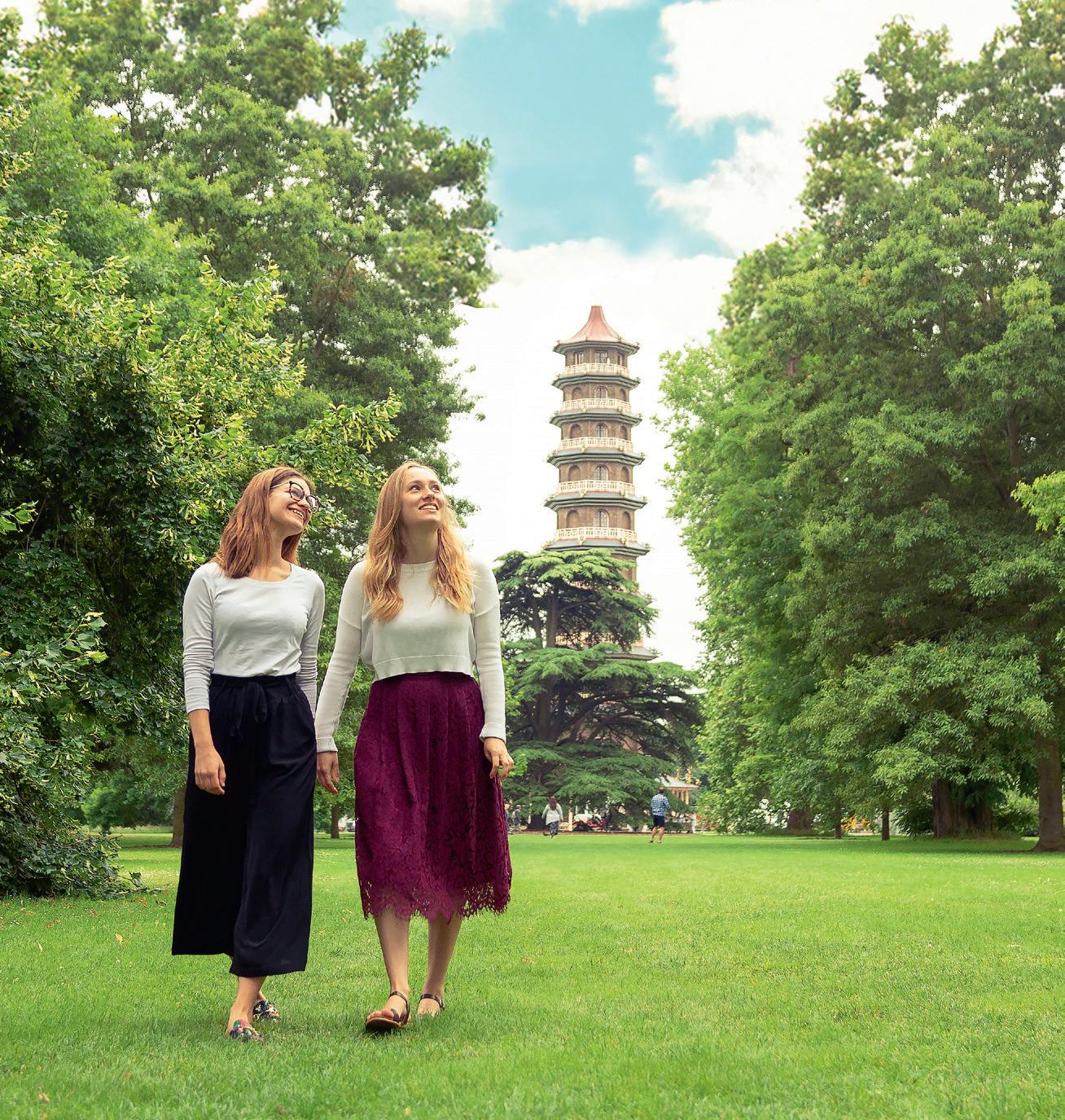
Explore four Historic Royal Palaces sites at Kew Gardens – Kew Palace, the Royal Kitchens, Queen Charlo e’s Co age, and the Great Pagoda; seasonal opening until 27 September 2026. Use code HRP10 for 10% o! Kew Gardens tickets at kew.org or show your membership card at the ticket desk. Members go free, including daily tours and
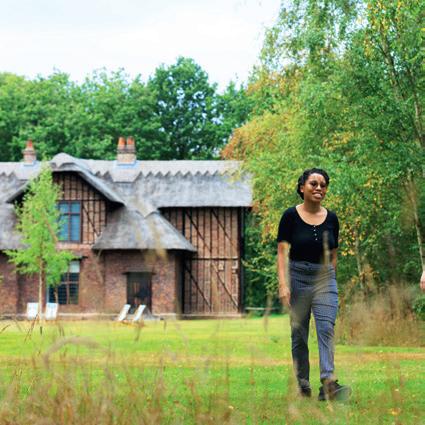
Great Pagoda climbs (separate ticket required).
On 29 July and 30 August, visit Kew Palace for Quiet Sessions designed for visitors with sensory needs, families and carers. Enjoy Georgian Kitchen demonstrations on select weekends over the summer and follow real recipes from the reign of King George III.
As a member, you benefit from free or discounted entry to a wide range of events including special exhibitions, festivals and fayres. Plus, an exclusive programme of members-only tours, talks, and behind-thescenes experiences throughout the year.
Visit hrp.org.uk/whatson-all-the-palaces to see what’s on and whether you need to pre-book.

Bring your membership card on every visit to enjoy 10% o! * in our shops and cafés, plus 10% o! * in our online shop with code MEMBER26. Pick up a Member Royal Reward Card in one of our on-site cafés to collect stamps and get your 6th hot drink free! *Exclusions may apply.


Unlock behind-the-scenes digital content, curated especially for members, on your digital hub. Get closer to the palaces and our history through expert interviews, thought-provoking podcasts, videos and fun family activities.
We’ll let you know about the latest member exclusives, events, early ticket releases and discounts in regular member email newsletters.
Email: members@hrp.org.uk to update your details or contact preferences, or to ask us a question
Visit: hrp.org.uk for …
• Opening days and times
• Access information
• Things to see and do
• More about our buildings and collections
Use: your Member login to ...
• Manage your account and password
• Upgrade or renew your membership
• Book tickets
Follow: Historic Royal Palaces on Instagram, Facebook and X
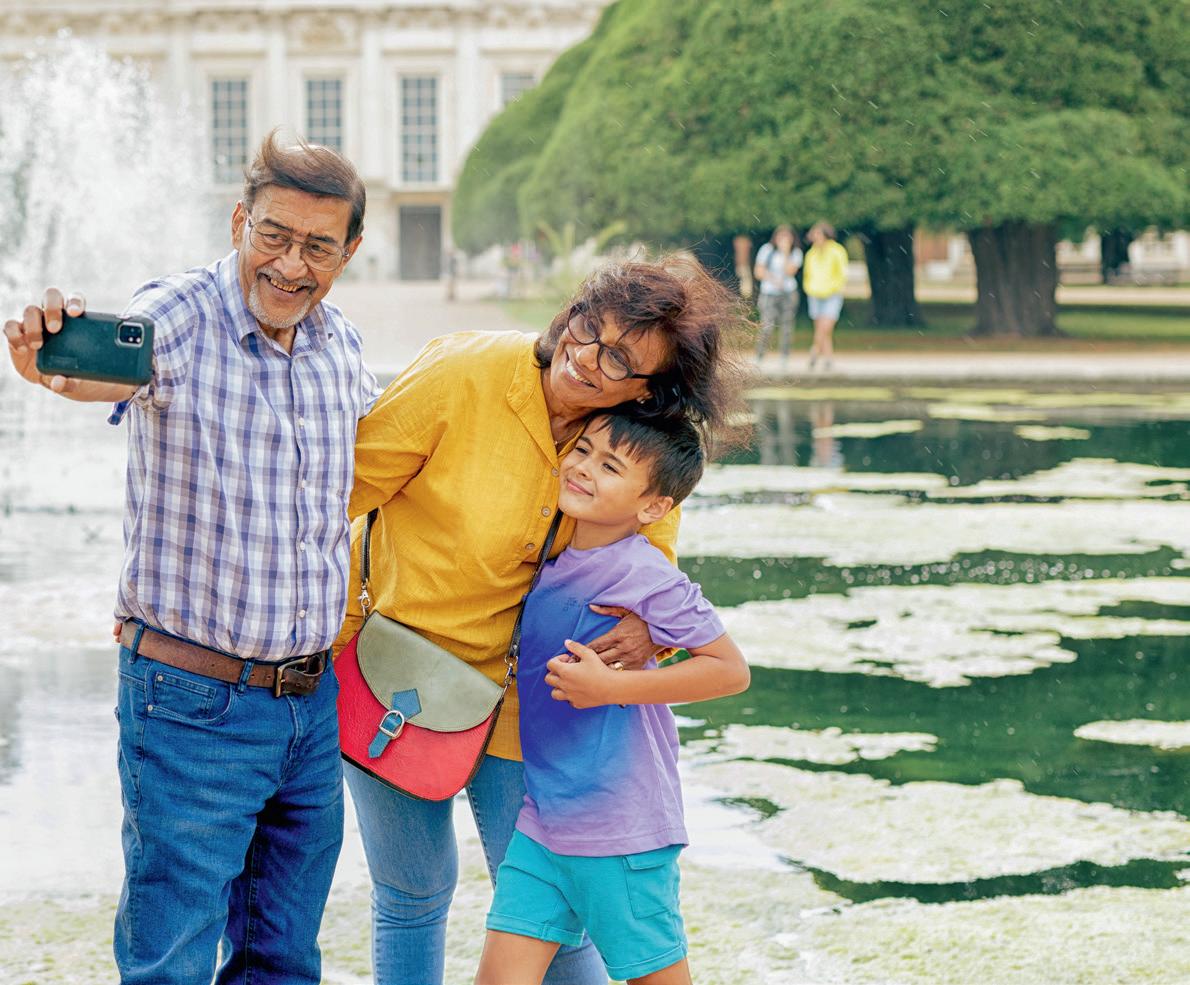
We’d love to see how you’re making the most of your membership! Post your photos with #PalacePhoto
Join us for Members’ Week – our way of saying ‘thank you’ for your incredible support. We celebrate 20 years of the Membership scheme with exclusive events and prizes, double discounts, competitions and more!

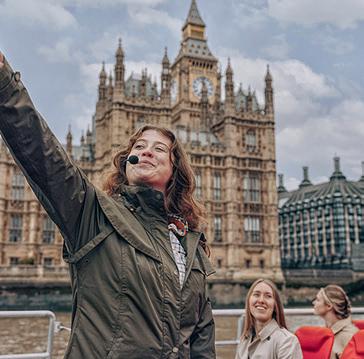
Embark on a voyage aboard the o cial Tower of London River Tour and experience London’s iconic landmarks through live storytelling. Members enjoy 10% o! using code HRPMEMBERS10. Book online at hrp.org.uk. Exclusions apply.
Make it a day out to remember at Henry VIII’s Joust returning for two weekends, 11-12 and 18-19 July. Enjoy breathtaking falconry displays alongside the excitement of the tournament. Join us for a ‘blamtastic’ adventure in Beano Havoc at Hampton Court Palace, 25 July-23 August. Can you help the Beano buddies fix their busted time machine? Plus, costumed performers will be roaming inside the palace throughout the day. Meet hundreds of artisan producers, savour street food and pop-up bars, and enjoy live music at the Food Festival, 29-31 August. Plus, live cooking demonstrations and children’s activities.
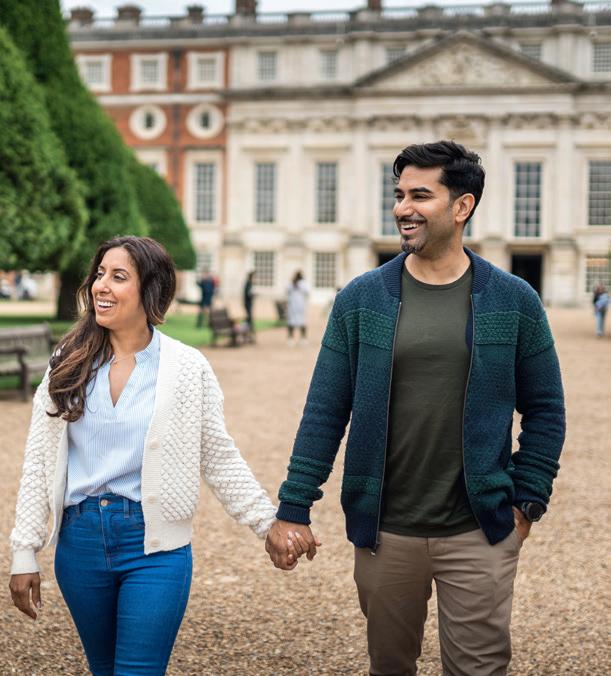
Round o! the summer at the Concours of Elegance and see 80 of the world’s rarest cars, 04-06 September. Use code HRP26 or HRP26FAMILY to receive 50% o!. Named members only, exclusions apply.
• Members’ Bring Your Own Picnic Evening at Hampton Court Palace; 31 July and 14 August
• Members-Only Days at Banqueting House; 27 September
• Members’ Tudor Queens Talk at Hampton Court Palace; 12 October
Between 19 and 31 August (excluding 25 August), encounter extraordinary creatures through puppetry, music and movement at the Tower of London. Inspired by the animals that once lived in the fortress, ‘Imagining Animals’ unfolds daily as playful performances across the site, where imagination and animals roam free. Be part of an ancient tradition with a members-only opportunity to witness the Ceremony of the Keys, held nightly for over 700 years (separate ticket, pre-booking required).
Pre-booking via your Member login is required during select events; look out for the ticket icon. Many events are included in palace admission; some require separate event tickets. See hrp.org.uk and check What’s On for details.
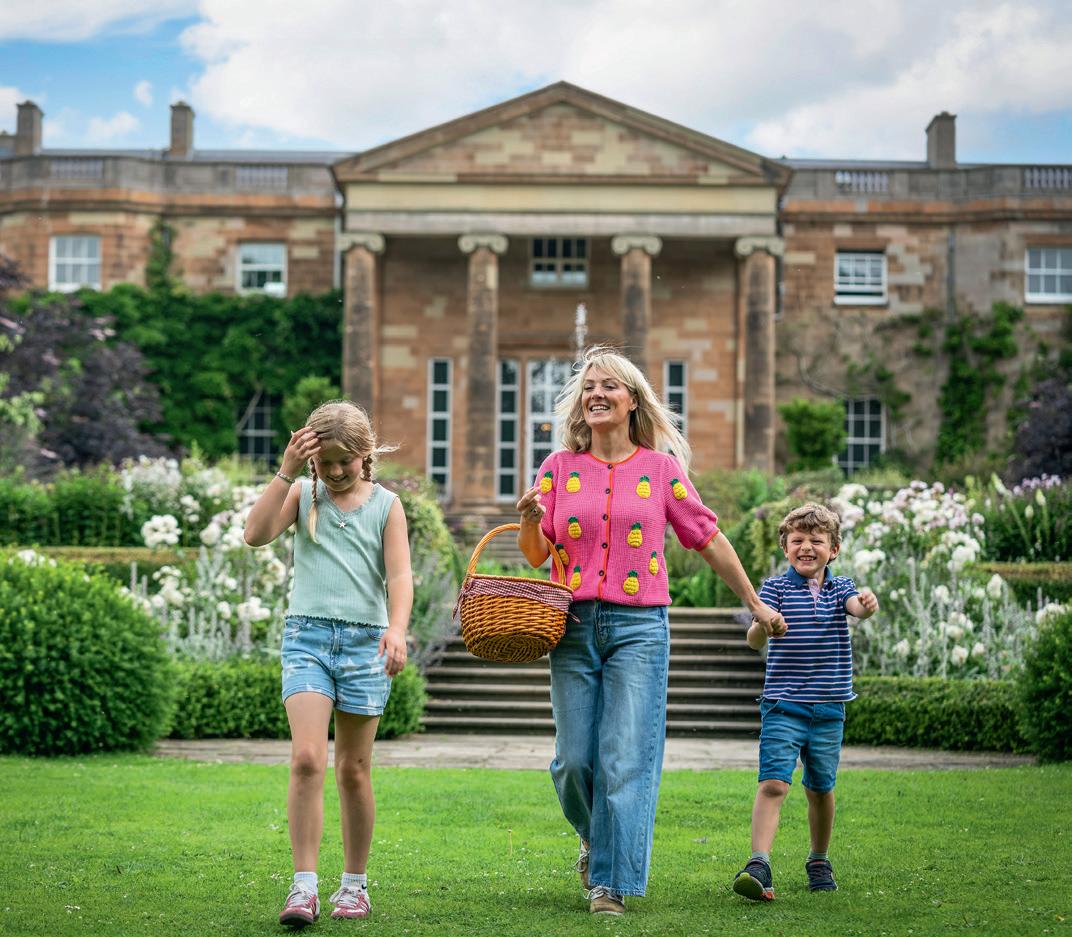
• Running Festival 26 July
• Beano Hijinks at Hillsborough Castle Until 31 August
• Halloween 24 October – 01 November
• The Scarecrow Parade 10 October – 08 November
• ‘Royal Style in the Making’ Until 03 January 2027

Until 31 August, experience 100 acres of fun and games in Beano Hijinks at Hillsborough Castle and Gardens. Dennis and his Beanotown pals are in trouble! eir bonkers go-kart time machine has gone haywire and it’s up to YOU to help. Find the pieces sca ered around the grounds in time for a ‘blamtastic’ photo finish.
‘Royal Style in the Making’ is open in the Stable Yard Gallery. Explore the intimate relationship between fashion designer and royal client and discover original sketches, unseen photographs and more.
Visit ‘!e Last Princesses of Punjab’ exhibition at Kensington Palace to discover the story of the Punjabi princess and su! rage e icon, Sophia Duleep Singh and five women who shaped her extraordinary life.
Henry VIII’s Joust at Hampton Court Palace 11-12 and 18-19 July
• A Tudor To-Do live programme at the Tower of London Until 14 August (daily performances, weather permitting)
• Beano Havoc at Hampton Court Palace 25 July – 23 August
• ‘Imagining Animals’ at the Tower of London 19-31 August (excluding 25 August)
Hampton Court Palace Food Festival 29-31 August
Concours of Elegance 04-06 September
• Members’ Week 19-27 September
• Kew Palace open Until 27 September
• Halloween at Hampton Court Palace
24 October – 01 November
• Halloween at the Tower of London 24 October – 01 November
• ‘The Last Princesses of Punjab’ at Kensington Palace Until 08 November
Hilary !eaker, the Vine Keeper at Hampton Court Palace, recently undertook a botanical mission to the South Atlantic to advise on one of the southernmost vines in the world. She was invited by the Falkland Islands Government to survey their historic Black Hamburg vine (the same variety as the one at Hampton Court), which has been growing in the conservatory at Government House on Stanley, East Falkland, for the last 60 years. Hilary advised them on the vine’s maintenance and protection. During her visit she also gave a talk to the Falkland Horticultural Society about the Kitchen Garden at Hampton Court (and how local gardeners could grow their own). She visited gardening clubs at local schools, completed a Park Run in Cape Pembroke and flew on an & F Air Tanker. What an adventure!
Explore the history and cultivation of the Great Vine at Hampton Court Palace in ‘The world’s largest grape vine’ at artsandculture.google.com
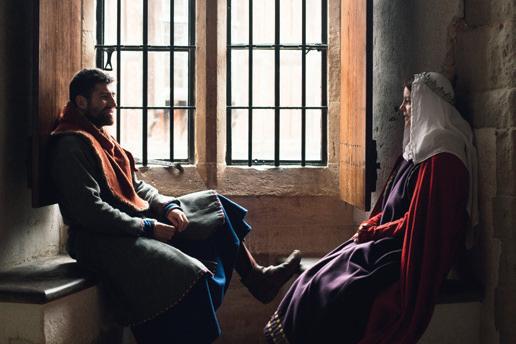


Working at the palaces looks very di!erent today than it did in centuries past. Discover which roles were most – and least – desirable in our video ‘Medieval Employment | The Best and Worst Jobs at the Tower in the 1200s’ on the Historic Royal Palaces YouTube channel.
Historic Royal Palaces has been named Apprentice Employer of the Year 2026 at the Westminster Adult Education Service annual Celebration of Apprenticeships and Awards. Coming just 18 months after the launch of our scheme, and with fierce competition from some prestigious, long-established apprenticeship programmes, this is a huge achievement. It reflects the passion of our apprentices, the dedication of our mentors, and the belief across our organisation that apprenticeships are a powerful way to open doors into the heritage sector. From conservation and cultural learning to legal, retail, gardens, marketing and across most departments, our apprentices bring fresh perspectives, passion and dedication to everything they do. We are incredibly proud of every one of them, as well as the mentors and teams who support their development every step of the way.
See Inside Story issue 56 (Summer 2025) for a feature about the scheme. You can find this in your digital archive hrp.org.uk/inside-storyarchive. Apprentice roles are advertised on our website hrp.org.uk/about-us/ work-for-us.
We are excited to announce the launch of our new kids’ video series ‘Wren and Raven Investigate’, which features the legendary (and slightly ghostly) Sir Christopher Wren and his sharp-wi as they explore historical sites. e series has been created to encourage primary-aged pupils to look more closely at the buildings around them and help them understand that buildings can be used as evidence to learn about the past.
Share your palace moments with us! Remember to send any favourite snaps of your palace visits for a chance to be featured in the next

to be relevant to children everywhere. Each episode will feature other historic buildings across the country, alongside our palaces, and focuses on architectural features that can be seen almost anywhere. ‘Building Spo er’ sheets are available for children to download and take along with them when they explore buildings in the real world.

e four episodes in the series look at Norman, Tudor, Stuart and Georgian buildings and you can find them on our website hrp.org.uk/schools/ learning-resources.
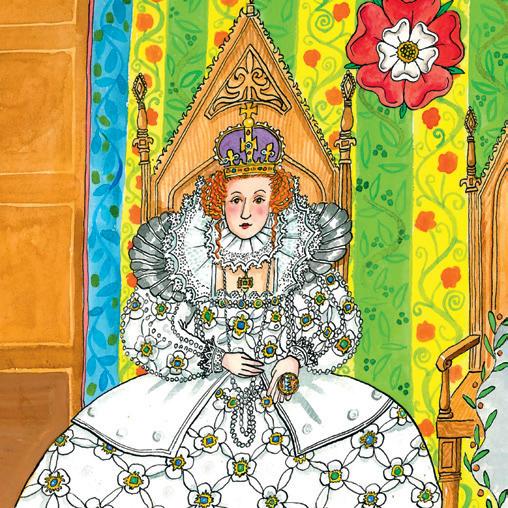
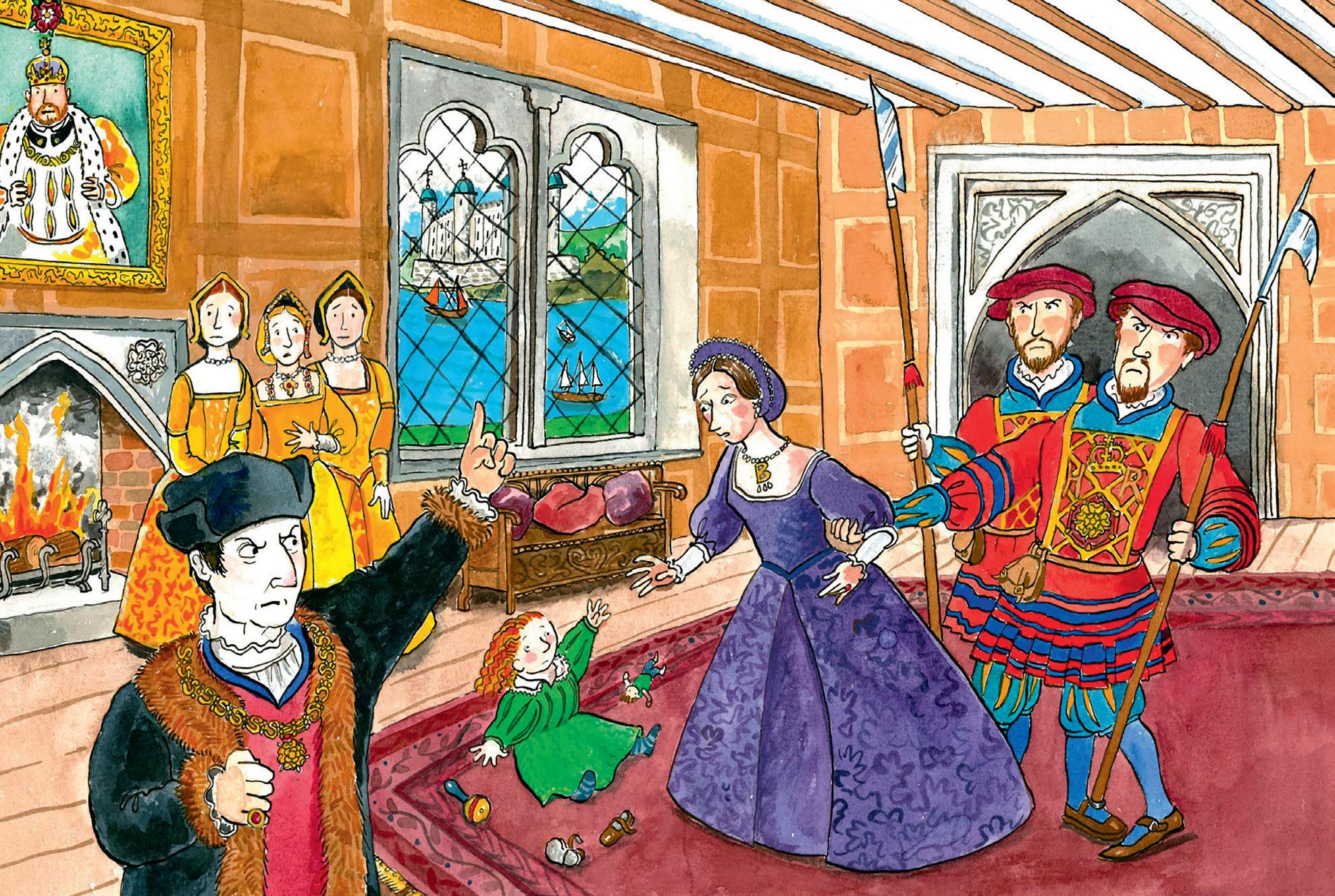
Earlier this year, we launched a new initiative to help those who find wri en text challenging to engage with British history. ‘Wordless Stories’ are told entirely through images, with no wri en text or numbers, and are designed to support reluctant readers, students with learning disabilities and anyone for whom traditional textbased history presents a barrier to understanding. Made possible through support from e Lord Leonard and Lady Estelle Wolfson Foundation, the project marks the UK’s first ever series of fully illustrated wordless stories about iconic characters from Britain’s past. Inspired by the brilliant work of the
charity Books Beyond Words, each story features the childhood or early life of its subject, o!ering young people the opportunity to reflect on universal themes such as fear, resilience, intolerance, connection, belonging and standing up for one’s beliefs. e first story, illustrated by Charlo e Firmin, focuses on the early life of Elizabeth Tudor and will be followed by Princess Victoria (illustrated by Danica da Silva Pereira). Each story has been co-created with teachers and students, from initial concept to final illustrations. ey are freely available on hrp.org.uk/schools/ learning-resources.
ABOVE:
Our ‘Wordless Stories’, launched earlier this year, are completely textfree, illustrated narratives that have the unique power to unlock and fire up young people’s interest in history.
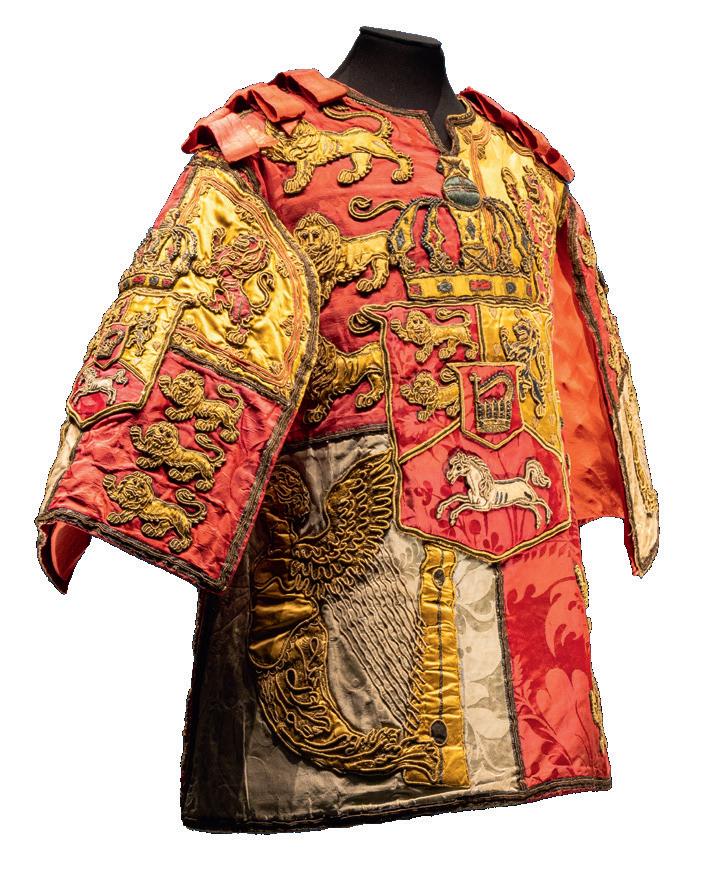
ree items from the Royal Ceremonial Dress Collection have gone on display in the Jewel House at the Tower of London, including the dress worn by Princess Alice, Duchess of Gloucester to the coronation of her niece, Queen Elizabeth II, in 1953. is beautiful ivory coloured satin dress, on loan from eir Royal Highnesses e Duke and Duchess of Gloucester, is displayed alongside a striking Herald’s Tabard from 1816-37. Having been well used, this tabard required 250 hours of conservation before it could be safely displayed. e third item is the uniform of former Deputy Governor, Commander Debra
Whi ingham, the first female senior o cer to serve at the Tower of London, which she wore in procession before the coronation of eir Majesties King Charles III and Queen Camilla in 2023.
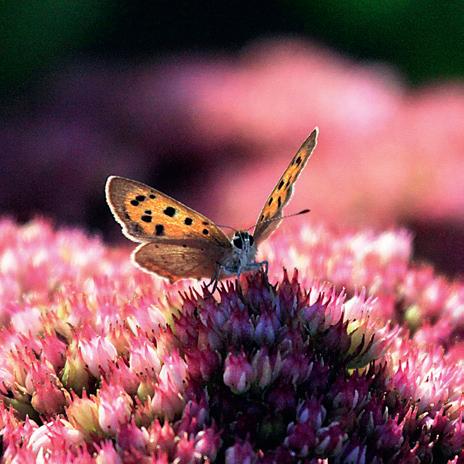
In order to better understand and protect biodiversity across our sites we conduct regular surveys to track the health of the species on our estates. This summer we will be counting butterflies using the method set out by the UK Butterfly Monitoring Scheme (UKBMS), one of the longest running insect monitoring schemes in the world. Butterflies are highly sensitive to climate change and habitat disruption, so they are uniquely placed among British terrestrial insect and other invertebrate groups to act as indicators of the overall state of an environment.
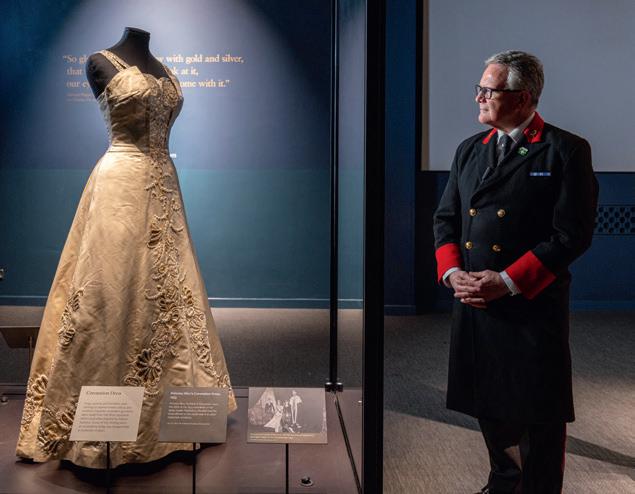
LEFT: Herald’s Tabard.
ABOVE: Princess Alice’s Coronation Dress. On loan from Royal Collection Trust and with the kind permission of The Duke and Duchess of Gloucester.
See these remarkable garments up close on your next visit to the Tower of London; no pre-booking required
Once a week for 26 weeks, a group of volunteers and sta! members will survey the estate at Hampton Court Palace on a set walking path, recording any butterflies seen. This data will be compared to last year’s survey to see if the improvements we are making to our estate are benefitting wildlife. The data is also shared with the UKBMS and used to inform national trends in butterfly numbers. Last year’s survey at Hampton Court recorded 2,813 butterflies of 21 di!erent species. Hopefully, we will see these numbers continue to grow. Find out more about the scheme at ukbms.org.
Congratulations to the winners of our Life Membership draw. Not lucky this time? Why not put the price of your current membership towards a Life Membership? Join online at hrp.org.uk or at our palace Ticket O!ices.
19 - 27
SEPTEMBER 2026
!is year, we’ve marked a major milestone: 20 years of the Historic Royal Palaces membership scheme. To celebrate two decades of incredible support, Members’ Week is our way of saying thank you for helping us to care for these amazing palaces and protect them for future generations. We couldn’t do it without you!
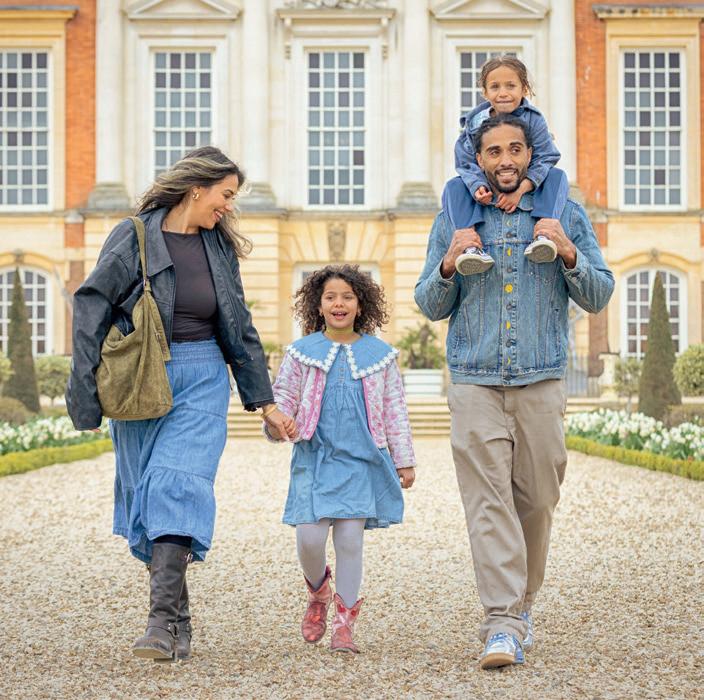
Friends and family enjoy half price entry
Visit the Tower of London, Hampton Court Palace, Kensington Palace or Hillsborough Castle and Gardens during Members’ Week and bring two friends or family members (per adult member) for half price. Redeem at our Ticket O
Exclusive events
Look forward to a week of member-only events, including roo op tours and evening access to ‘ e Last Princesses of Punjab’ at Kensington Palace. Book via your member login
Double discounts
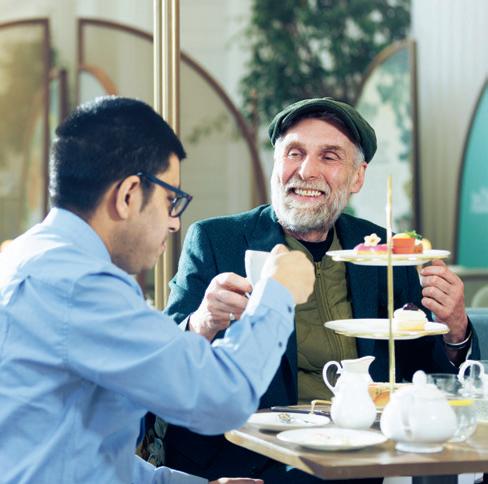
All week long, members will enjoy 20% o! in our palace shops and cafés, including a ernoon tea at e Orangery. Show your membership card or use code MEMBER26 online

Hampton Court (show your membership card). Look out for email updates.
Visit to win exclusive prizes
All members visiting during this special week will be automatically entered into a prize draw. You could win:
A private tour of your favourite palace with a guide, for up to six people
A private Hampton Court roo op tour, for up to six
• Children’s books, clothes and toys from our range, worth £100
• An Orangery a ernoon tea for two
• Tower of London River Tour tickets for two
A stay at the Mitre Hotel, Hampton Court for two
• Two tickets to SIX the Musical.
Visit to be in with a chance of winning!
Save on unforge ! able experiences
Enjoy 20% o! at Kew Gardens (use code HRP10 or show your membership card), 20% o! the Tower of London River Tour (use code HRPMEM20), and 10% o! at the Mitre Hotel,
e lucky winners will be notified by email by 09 October 2026.
Please see hrp.org.uk/members-week for more details and full terms and conditions of each benefit and prize.
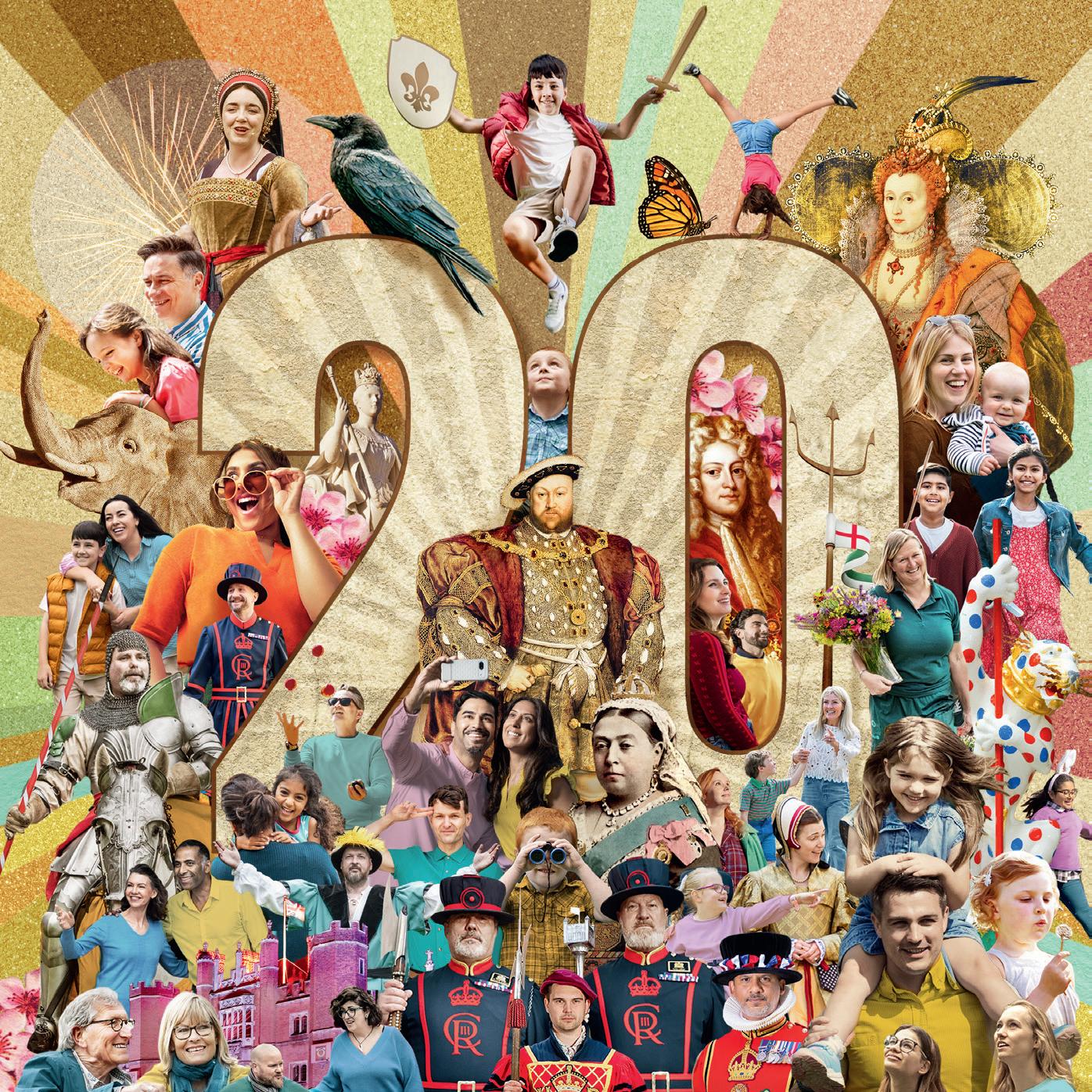
Y E A R S

THANK YOU FOR 20 INCREDIBLE YEARS
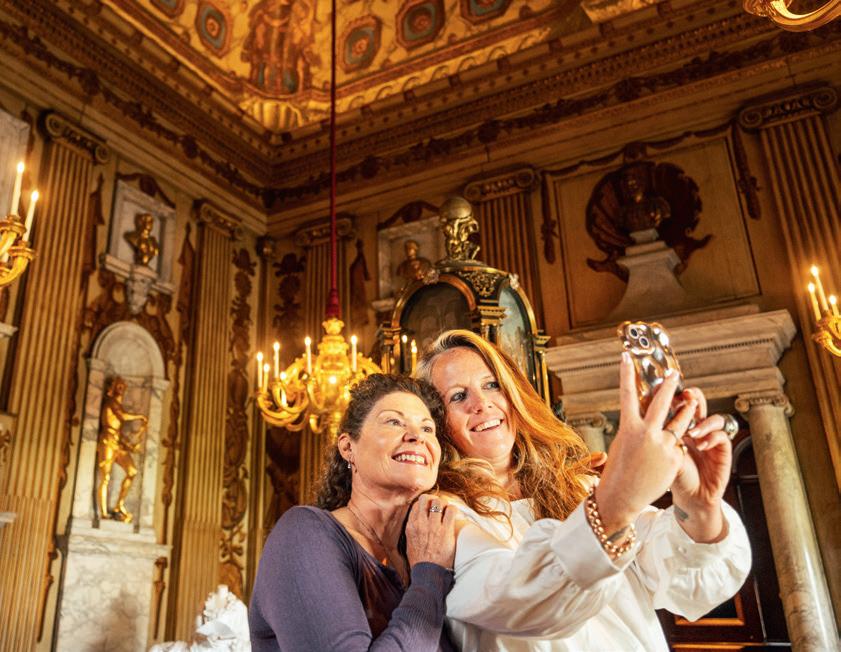
Your membership has provided vital support for conservation, learning, groundbreaking research and the sharing of stories that bring our palaces to life. Members’ Week is our way of celebrating everything we’ve achieved together, while giving you even more reasons to enjoy your benefits. We can’t wait to welcome you for this special anniversary celebration.

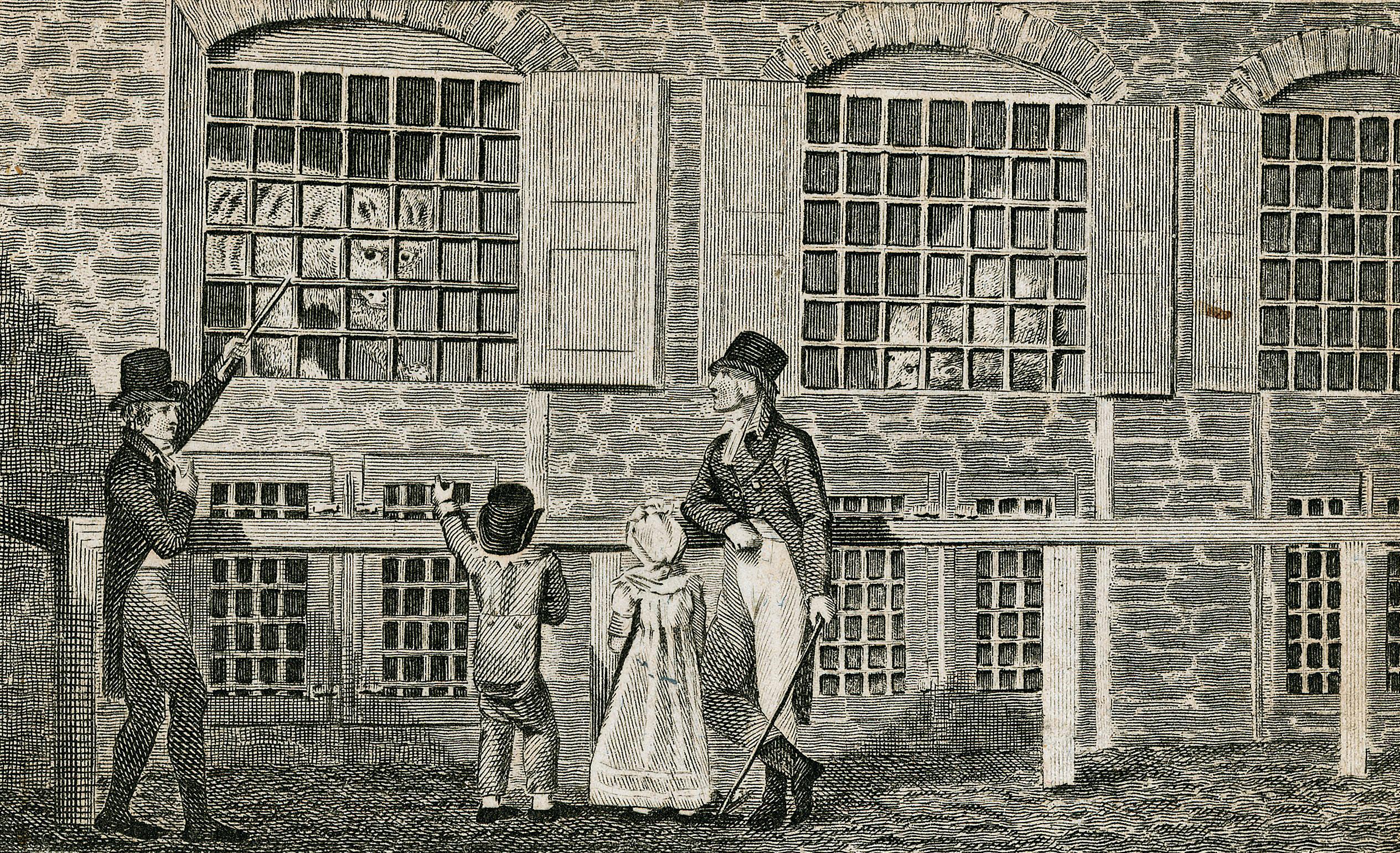

More popular than the Crown Jewels, the Tower of London menagerie became the main draw for visitors. Project Curator Emma Shepley traces its history from royal status symbol to tick-the-box tourist a raction
The Tower’s menagerie of exotic animals was a place of wonder for visitors for over six centuries. Surviving revolts and regime change, the menagerie was allegedly ‘more popular than the Crown Jewels’ and always ‘the first thing a stranger goes to see’ on arrival in London.
e role of zoos today is a world away from the medieval menagerie where animals were royal power made flesh – shipped between countries as diplomatic envoys on an international stage. Rare beasts are first documented at the Tower in 1235 when Holy Roman Emperor Frederick II sent three leopards to Henry III, following his marriage to Henry’s sister. A white bear followed from King Haakon of Norway to cement a trading treaty, and when the first elephant arrived in London in 1255, a gi from Louis IX of France, chronicler Ma hew Paris noted, ‘the people flocked to see the novel sight’.
‘Animals were royal power made flesh, shipped between countries’
A line that could have been wri en at any point in the menagerie’s history. It is hard now to imagine the impact of early historical encounters with non-European fierce or enormous animals – the strangeness, awe or fear. e number of exotic animals living at the Tower over the centuries ranged from just a handful to a peak in 1830 when the guidebook lists 58 species.
e Times lapped it up: ‘Birds, beasts, reptiles, in endless variety, press on the spectator’s view and lead him through the labyrinth of wonderment’.
Some animal encounters were dramatic. In 1805, Yale Professor Benjamin Silliman described ‘a white polar bear of astonishing size and untameable ferocity … he flew at the bars with incredible fierceness and threw open such a mouth as made me shudder’. ey were also loud: In 1829, Edward Turner Benne wrote that lions ‘uniformly commence roaring about dawn ... the chorus is sometimes repeated a er feeding, and also when they have been le alone for any length of time’.
For much of the menagerie’s history, exotic animals were vanishingly rare in England. But by the 1700s, as Britain’s trading and military reach expanded globally, menageries became visible


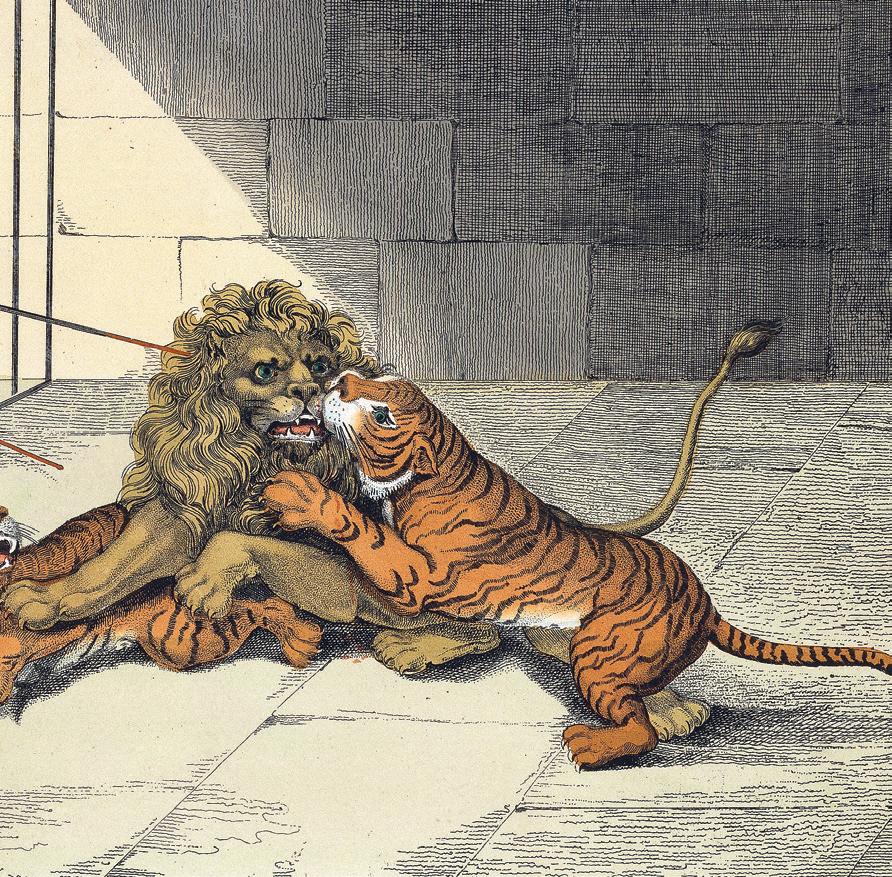
ABOVE: A contemporary illustration of The Terrific Combat between the Lion, Tiger and Tigress in the Tower of London in 1830. (© Royal Armouries)
LEFT: A Cheetah and a Stag with Two Indian Attendants by George Stubbs, c1764. (© Manchester Art Gallery / Bridgeman Images)
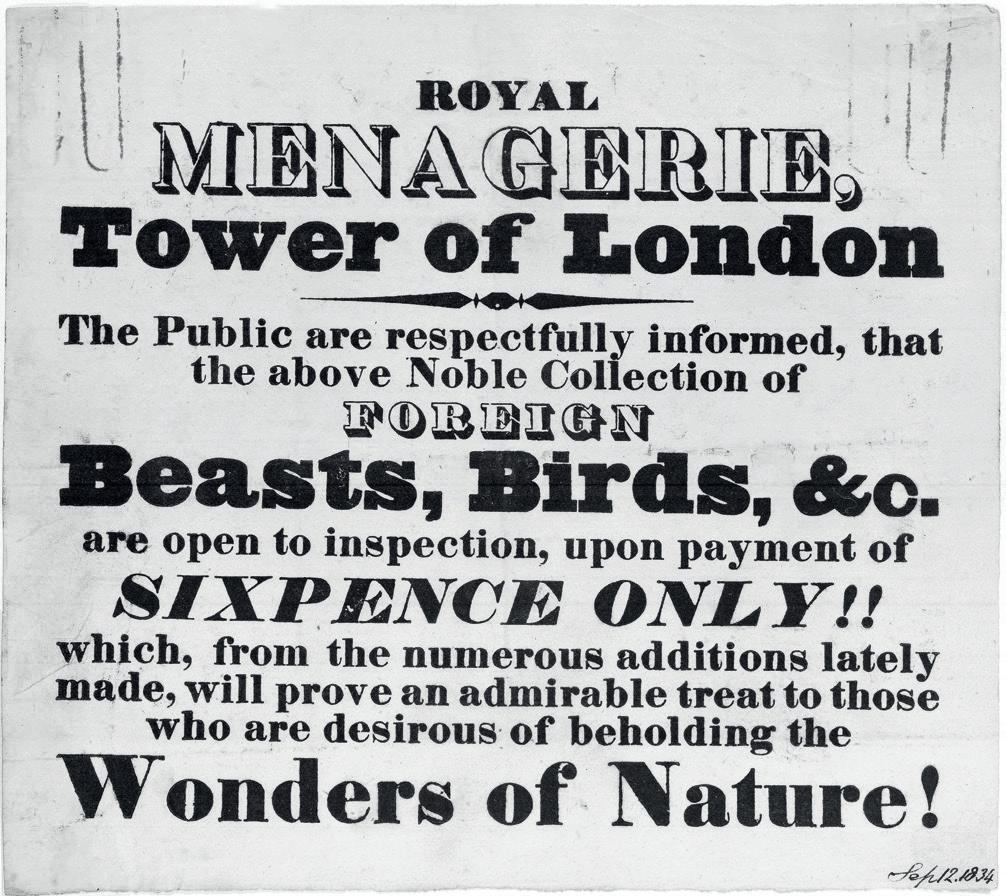
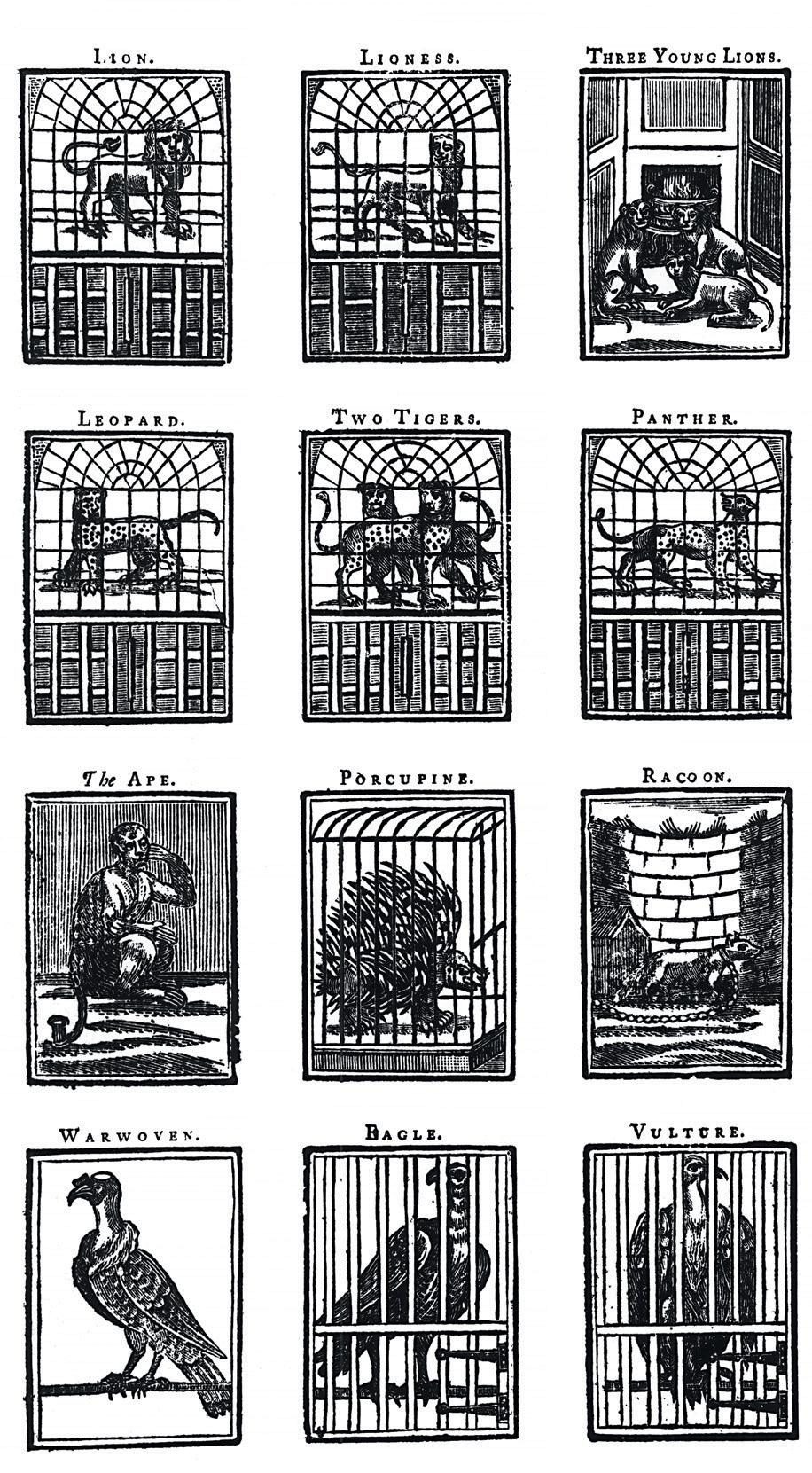
RIGHT: A poster for the Tower Menagerie from 1834 and illustrations of some of the animals housed there from the Children's Guide to the Tower of 1741. (© Royal Armouries Museum/ Bridgeman Images)
expressions of an expanding empire and the exploitation and violence underpinning that history. Visitors saw ‘not simply the wonders of nature, but more importantly and quite explicitly the spoils of Empire’.
Big cats were still the stars of the show. In 1823, Colonel Sir James Watson, Commander in Chief of India shot dead a Bengal lion and lioness, leaving two orphaned cubs who were despatched on the four-month voyage from Bengal to Gravesend, a er which they were so tame Tower visitors could play with them. Guidebooks described how for sixpence the public could enter a crescent of dens to meet Marco the lion: ‘very savage and untameable’; or Nero and Nancy ‘gentle as lambs’.
Miss Jenny, an Indian cheetah arrived in England in 1764, one of a pair belonging to George Pigot, President of the East India Company and Governor of Madras. An enormous portrait of Jenny’s fellow cheetah and two unnamed Indian keepers by George Stubbs hangs in Manchester Art Gallery. It is only thanks to a random act of pe y thievery that one of Jenny’s keepers returns from art historical anonymity. He was the victim of a the – shoe buckles, stockings, purses and one rupee. Appearing at the Old

Bailey to give evidence, his name is anglicised as John Morgan, and he swears his oath on a Koran. ‘I was born at Bengal ... I came over with a tyger for Sir George Pigot...’.
Visit the Tower today and the menagerie is still there – just not breathing. Artist Kendra Haste’s life-size sculptures ensure Bengal lions, a troop of monkeys, a pacing polar bear, and an African elephant still watch over the crowds, this time silently, cra ed from wire which catches the light, evoking muscle and fur. e ‘Royal Beasts’ display reminds us how tactile visitors expected their experience to be. Cubs pe ed. Lions prodded. Zebras ridden. Strangers were warned take care around one leopard because of her passion for ‘stealing umbrellas, mu!s and hats’. e Monkey House where visitors mingled freely with uncaged monkeys was closed a er a boy’s leg was torn ‘in a dangerous fashion’.
Accidents and injuries regularly punctuated the menagerie story. In 1826, a boa constrictor a ack on Keeper Alfred Cops was reported in the Press. e snake ‘seized the keeper by the thumb and was coiled around his arm and neck in a moment ... two other keepers ... broke the teeth of the serpent, and ... relieved Mr Cops.’ Of course, the animals never were tame
curiosities: they were powerful bodies, confined in cramped spaces, responding through instinct or stress with force.
By the 1820s the menagerie was still drawing crowds, but the public mood was changing. Critics of caged cruelty grew louder: when kangaroos arrived in London, naturalist James Rennie poured scorn on the idea of viewing them in a cage, ‘… in a paddock its remarkable bound fixes our a ention and curiosity ... to put such an animal in a den is torture to him’.
Meanwhile, the Zoological Society of London (later London Zoo) had opened spacious new gardens in Regent’s Park and as incidents continued at the Tower, the remaining animals from the Royal Menagerie were finally dispatched and presented to the society. e wagons transporting the last royal beasts through London’s wintery streets le in late December 1831. Centuries of wonder, danger and captivity were finally over.
Visit our ‘Royal Beasts’ exhibition to explore the surprising stories of the animals that once lived at the Tower of London; no pre-booking required.
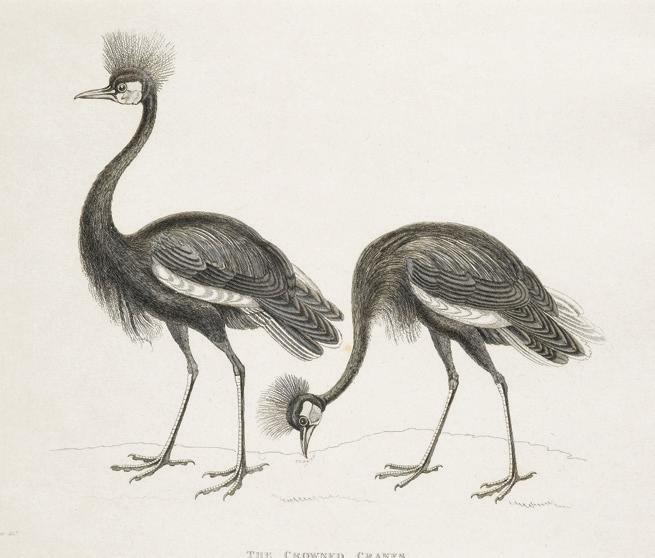
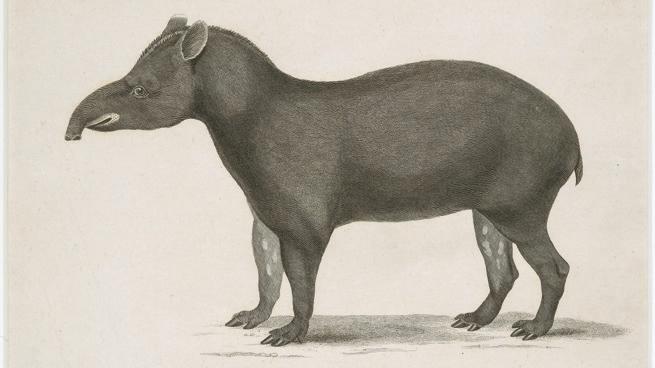
ABOVE: Emus and a tapir from the menagerie, 1828 (© Royal Armouries Museum/ Bridgeman Images) and Kendra Haste’s sculpture of the Tower’s polar bear.

Watch out! There are animals on the loose at the Tower of London this summer – and we don’t mean ravens! Creative Producer Zinta Jaunitis describes an extraordinary series of live performances for all ages: ‘Imagining Animals’
This summer, the Tower of London comes alive with animals – though not quite as you’d expect. Over two weeks of extraordinary live performances in August, you can discover moments of wonder, joy and reflection unfolding across the Tower. Perhaps you will encounter a roaming bear, a sudden flock of flamingos or a fleeting burst of animal sound and movement across the site ...
Conceived by award-winning artists Mervyn Millar and Suzy Willson, ‘Imagining Animals’ will transform the Tower through puppetry, music and movement into a playful, unexpected world, inspired by the creatures that once lived in the Tower Menagerie. Once, the spectacle of the captive animals inspired awe, even terror, and sometimes pity. Now ‘Imagining Animals’ invites visitors to experience something di!erent, as a team of world-class puppeteers, dancers and musicians bring
BELOW: Young Innovators testing movement at the Tower of London; and Mervyn Millar and puppeteer in the workshop with the serpent head.
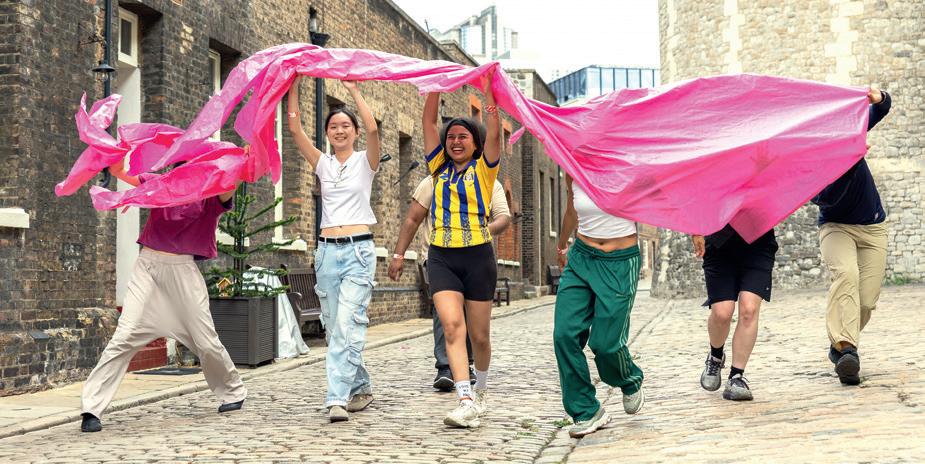
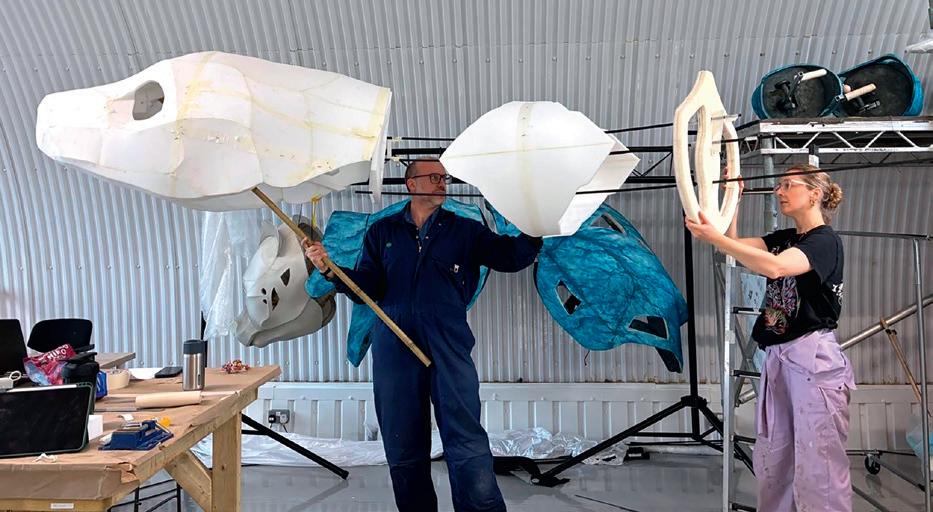

a host of charming, surreal animals to life. Encounters with these imagined animals will bring moments of surprise, energy and fun, alongside joy, curiosity and connection. Together, they will encourage visitors to pause and consider our relationship with animals and the wider natural world.
Our community partners in Tower Hamlets have contributed to this project, and we’re grateful for their support. The community programme is also developing the next generation of ‘cultural hosts’; residents who will act as stewards during the August performances. We are also working with ten local women, who are o!ered paid training equipping them with skills in arts’ engagement, heritage interpretation and inclusive practice. Meanwhile, graduates from Historic Royal Palaces’ Young Innovators Creative Training Programme (launched in July 2025) are contributing to the project, taking up paid opportunities and bringing fresh perspectives into the design process.
‘Imagining Animals’ will be supported by a public programme of talks, workshops and events. Together, these activities and the August performances will create a distinctive and joyful summer experience – inspired by the Tower’s history, shaped by its communities and alive with imagination.
Supported by Cockayne Grants for the Arts, a Donor Advised Fund, held at The Prism Charitable Trust.
Live performances of ‘Imagining Animals’ will take place around the Tower of London 19–31 August (excluding 25 August); no pre-booking required.
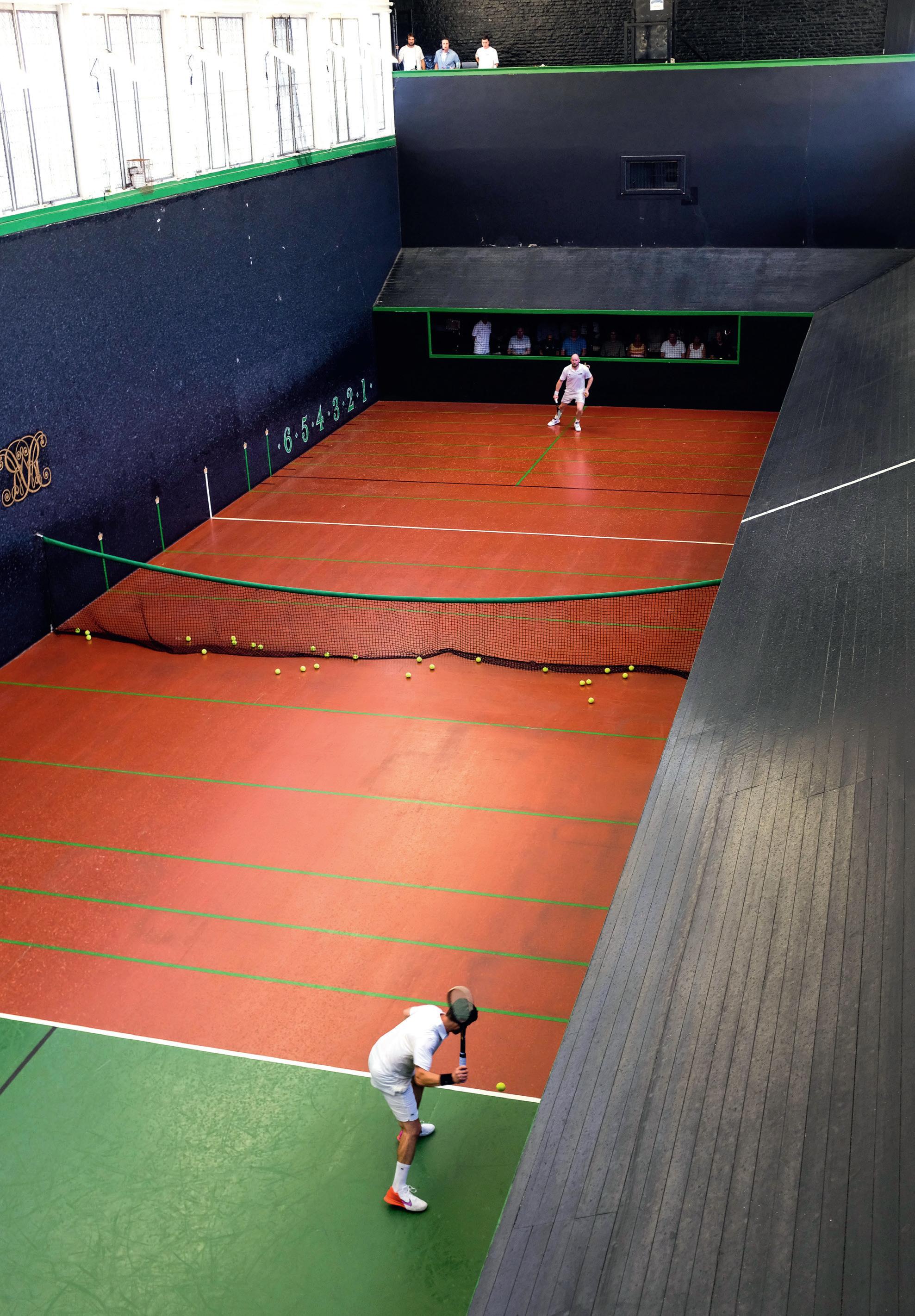

For many of us, summer and the Wimbledon Lawn Tennis Championships go together like strawberries and cream. But did you know that lawn tennis is a relative newcomer, while real tennis is centuries old? Nick Wood, Head Professional of the Royal Tennis Court at Hampton Court Palace, explains why it’s such a great game for all ages, and how you and your family can try it

For a game that began in grubby medieval alleyways, real tennis has really come up in the world!
Over the centuries this basic ballgame, played by hand, became a highly competitive, sophisticated racket sport enjoyed by kings (and many others), with complex rules and elaborate, custom-built courts, such as the one at Hampton Court.

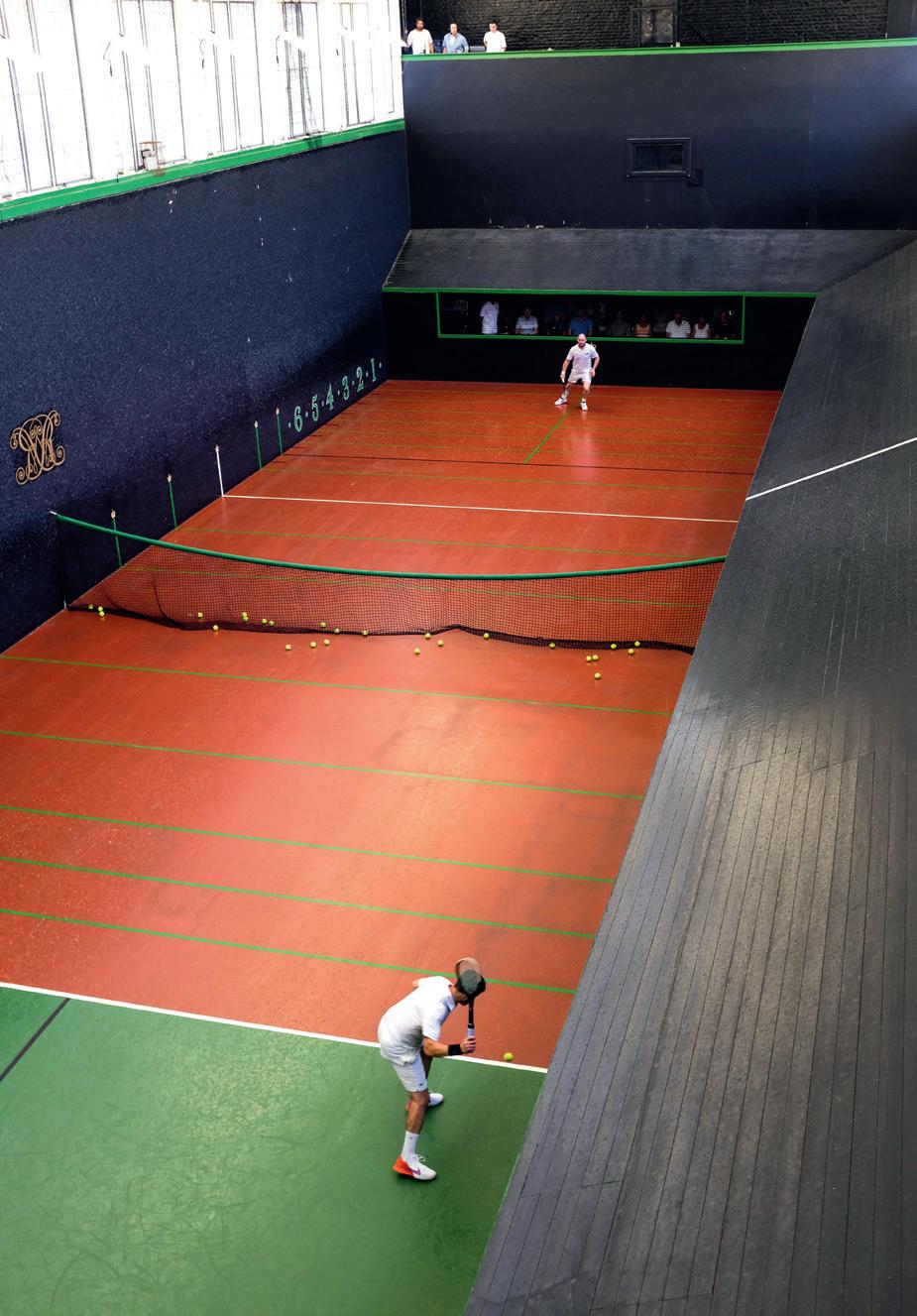
You might have been into the Royal Tennis Court at Hampton Court, and if you were lucky, you will have witnessed club players enjoying a game, playing to rules that Henry VIII
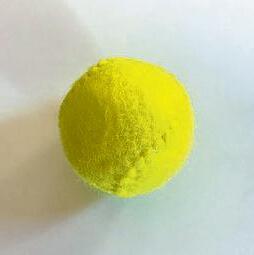
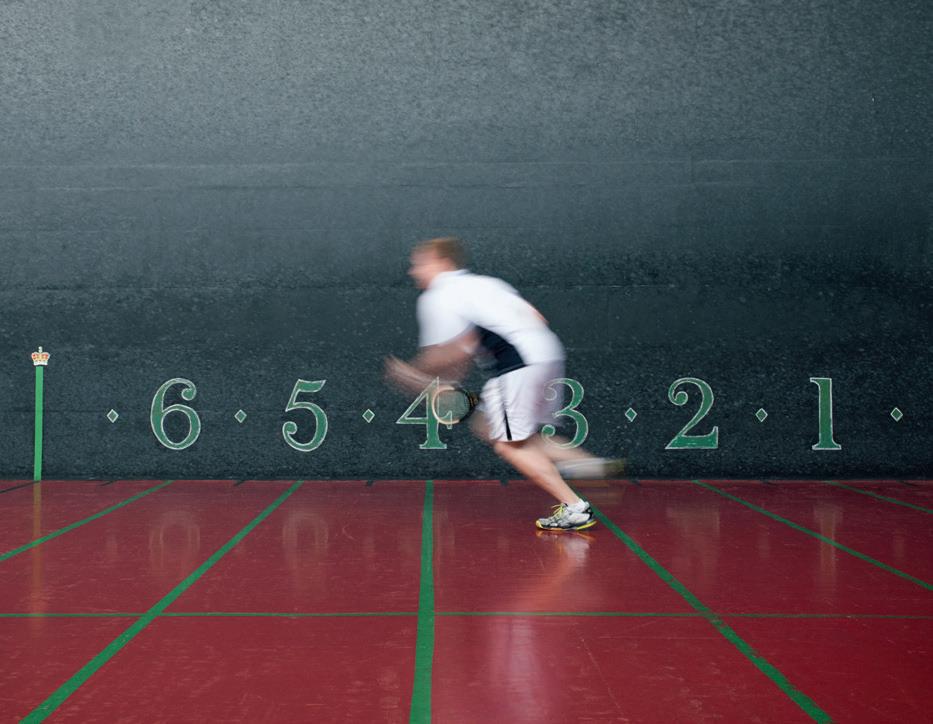
would have recognised. To the uninitiated, real tennis appears to be a peculiar combination of lawn tennis, squash and padel, played with asymmetric, rigid rackets (based on the shape of a hand) and a hard, feltcovered ball.
e origins of the medieval street game can still be seen in the physical features of the enclosed court today, with its overhanging ledges and wooden balconies. Medieval players would once have bounced a ball o! sloping roofs or the bu resses of castle walls, or even cloisters! ( e game was, surprisingly, very popular with monks). It became quite a craze and was once banned in Italy as the game was thought to be encouraging gambling and distracting too many people from their daily work!
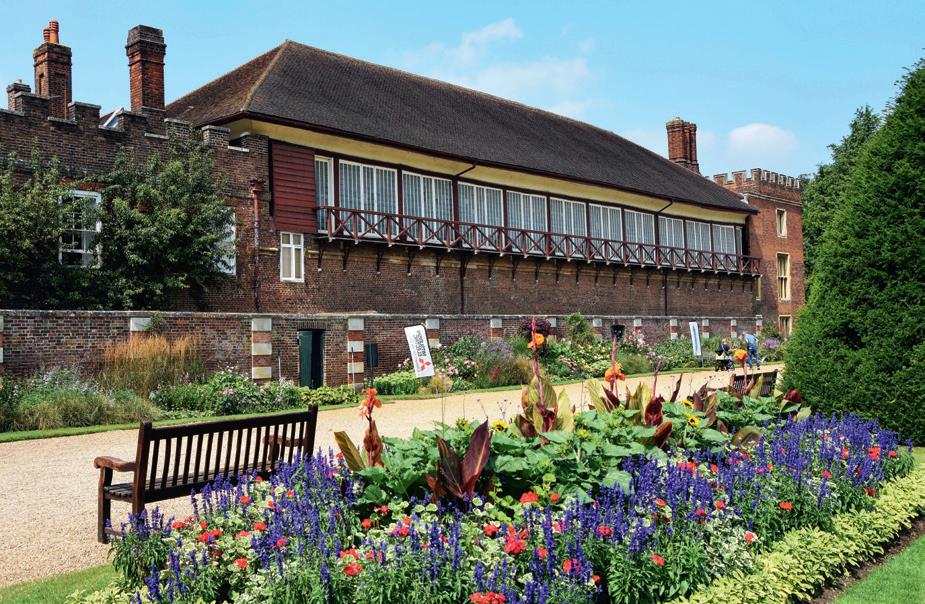
Nick Wood has been the Head Professional at Hampton Court since 2008. He and two other full-time, and one part-time, pros live on site and run the private members’ club known as the Royal Tennis Court. e building is maintained by Historic Royal Palaces, and the club pays a licence fee to the charity. ‘It’s a successful partnership’, says Nick. ‘We are incredibly fortunate that as real tennis nuts, we can use this fabulous court. We keep it in use for the purpose it was built, and palace visitors can watch and learn as we bring history to life.’
‘Real tennis takes a mixture of strength, athleticism and speed, but the handicap system (like golf) means that all ages can play, and we can get players of varying abilities on


Join us for a real tennis taster session – no previous experience needed
The Royal Tennis Court, in partnership with Historic Royal Palaces’ membership team has a special o!er for families this summer. Discover the game that captivated Tudor monarchs, explore its fascinating history and step on to the very court built for King Charles I.
We welcome families with children aged 12 and above on to the court.
Younger members are of course welcome to come along and soak up the atmosphere, though please note that the rackets are heavy and the balls travel fast, so court time is best suited to older children. No special equipment needed, but dress for sport and you’ll need non-marking trainers or tennis shoes.
Dates, times and prices
• Saturday 18 July* 11:30-12:30
• Sunday 09 August 15:30-16:30
• £5 pp (minimum of three people per booking)
To book or find out more, email info@royaltenniscourt.com
*Something extra special on 18 July! Join us during the Champions Trophy 2026 – experience the game, step on court and get the chance to meet the best real tennis players in the world!
We’re giving two families free tickets to our real tennis session on Sunday 09 August (15:30–16:30). To enter, email inside.story@hrp.org.uk by 22 July with the answer to this question: What material covers the ball used in real tennis? Winners will be selected at random and notified by 24 July. For terms and conditions: hrp.org.uk/members-win-tennis.
court together for a good game.’
Real tennis is sometimes misunderstood as being primarily a sport for the older generation, but it’s a very physical game. However, as Nick explains, the complex scoring system means that the hardest hit doesn’t always win the point. ‘Even if you are less mobile, there is a whole second chance scoring system known as the ‘chase’, so that even if your opponent wins the point, you can have another go at it.’
Nick and his team are keen to promote real tennis to a wider public. ‘Why not book a taster session with a coach? We’ve got rackets you can borrow. is summer we’ve got a special o!er on sessions for members and their families. See you on court!’
The first tennis court at Hampton Court Palace was constructed some time before 1530, probably for Cardinal Wolsey, Henry VIII’s chief minister. Henry himself was a keen and talented player who spent hours on court. In 1519, the Venetian Ambassador wrote: ‘it was the prettiest thing in the world to see him play; his fair skin glowing through a shirt of the finest texture’. At Hampton Court, Henry built a new tennis play (the Tudor word for court) during 1531-3, where he reportedly lost vast sums gambling on his own matches and those of his courtiers.
By the reign of Charles I, the game had evolved and the original Tudor court was nearly a hundred years old. The King, an enthusiastic player,



commissioned the current court in 1625. His devotion to the sport was so great that his courtiers often complained they could not reach him because he was perpetually on court. Following the Restoration in 1660, his son, Charles II – who had spent much of his exile perfecting his game –returned to England and ordered a substantial refurbishment of the tennis court.
Though George I briefly converted the court into an assembly room, it was returned to its original purpose in the 19th century and used by George IV (as Prince Regent), Prince Albert and Edward VII. Today, the royal link remains strong and Prince Edward, Duke of Edinburgh is a regular player.
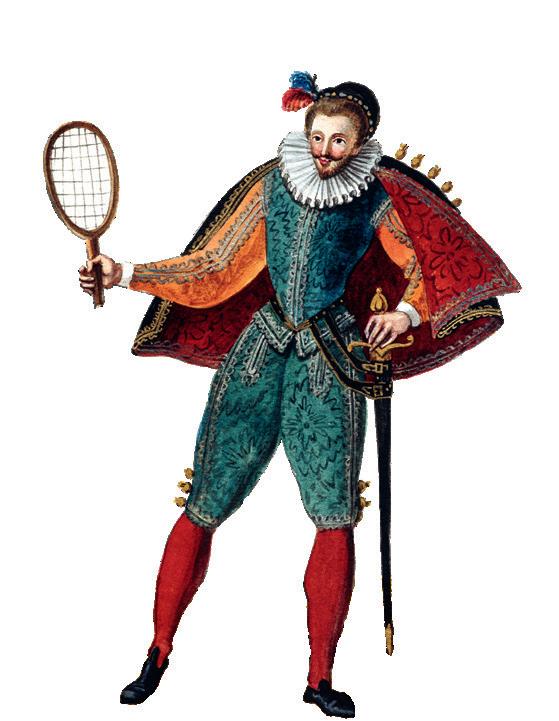
BELOW: A gentleman playing real tennis in 1586 (© NPL - DeA Picture Library/M. Seemuller / Bridgeman Images) and Real tennis and the construction of racquets, c1770. (The Stapleton Collection/ Bridgeman Images)
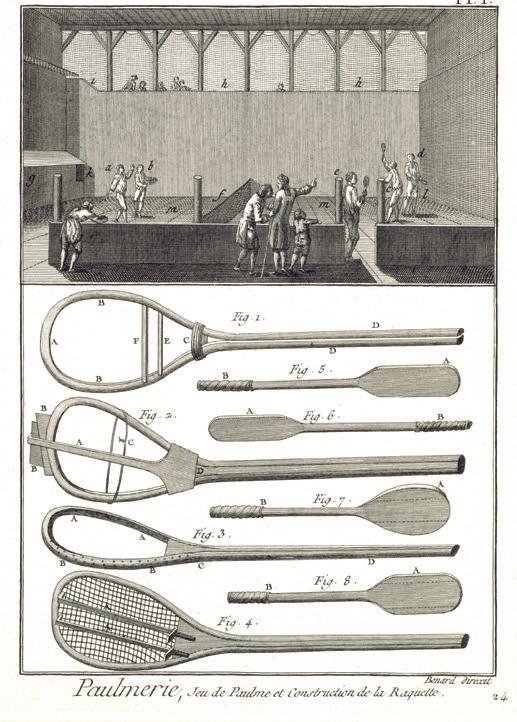
Want to see the game in action? Visit the Royal Tennis Court at Hampton Court Palace, where real tennis is still played today and you can watch from the viewing gallery. Find out more at hrp.org.uk.
As our Volunteer Scheme celebrates over 20 successful years, we asked Volunteering Manager Paul Stephenson about the mutual benefits of the scheme, and the ambition to develop its scope and diversity. Overleaf, meet a few of our fabulous volunteers
As you might expect, indulging a love of historic buildings and gardens is the overwhelming motive quoted by those who volunteer with us. In a 2025 survey, most participants mentioned this (‘I enjoy volunteering because it feels like stepping into history with a purpose,’ wrote one). Volunteers also expressed a wish to contribute to their community, to further our charitable aims and to meet new people. But the sheer strength of their enthusiasm comes as a pleasant surprise. Participants spoke of ‘loving the interaction’ and of Historic Royal Palaces as being ‘an amazing place to volunteer’. Improving health and wellbeing was key, with one respondent describing volunteering as their ‘safe and happy place’.
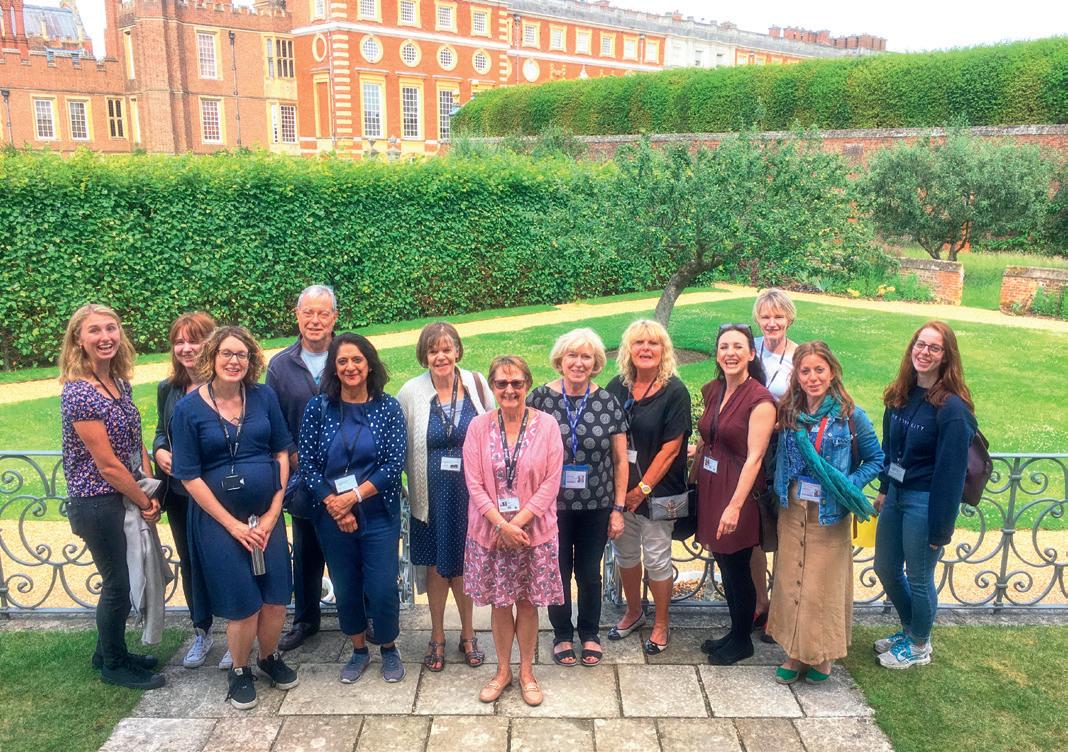
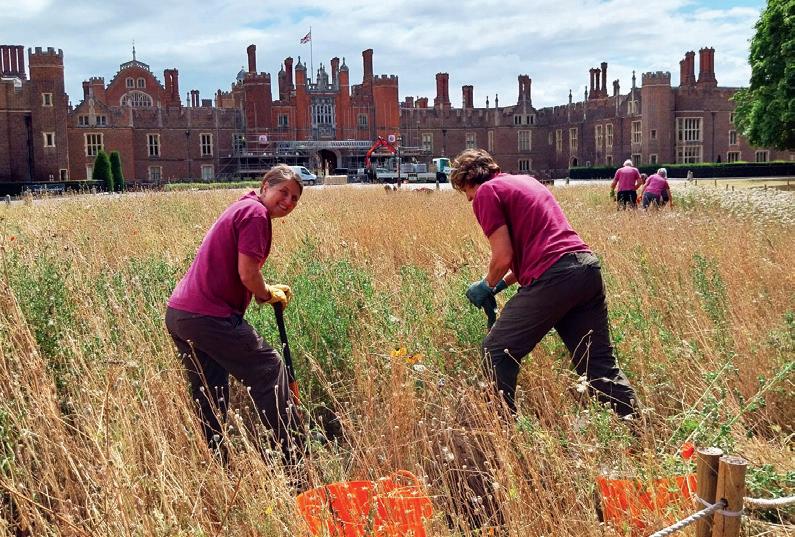
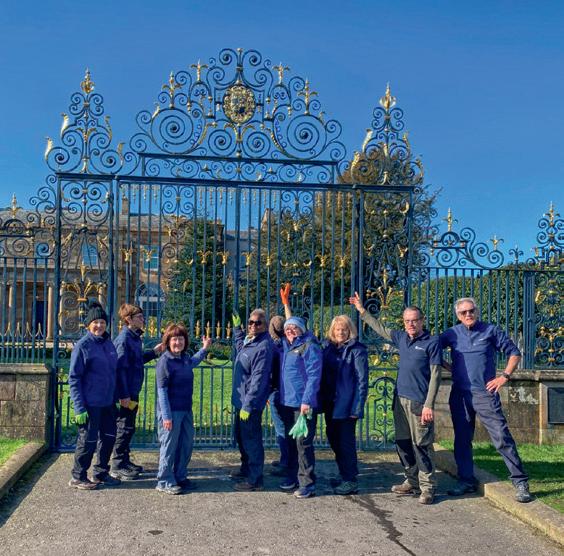
We currently have 800 volunteers working across the palaces, helping us fulfil our charitable purpose.
As Volunteering Manager Paul Stephenson, points out, the benefits are mutual.
‘Volunteers help us fulfil our charitable purpose; they enable us to involve local communities in our work and bring increasingly diverse groups of people into our palaces. We now have over 800 volunteers who provide invaluable support to sta! and visitors in a variety of roles, the majority in visitor support or assisting the gardens and estates teams. And in return, we pledge to enhance the lives, wellbeing and ambitions of our volunteers.’
Volunteers come from a mix of backgrounds, says Paul. ‘Some have retired from high-powered careers and want to share special skills; others are still working at senior levels and want to do something lower key, and many come from local communities to o!er their help and support. However, in five years’ time I’d like to see a more diverse volunteer base, and I’m exploring ways to achieve this.’ For example, Paul has revamped the volunteers’ web pages to encourage a more diverse range of applicants, and he intends to target community level recruitment, through volunteer centres and community groups.
‘I also wanted to open pathways into volunteering from colleges and universities. We have done a small trial with Hillsborough Castle and Gardens, working with Belfast colleges and universities and I’d like to do this in London this year.
But to a ract people from di!erent demographics we need to o!er more flexibility in roles and commitment. It’s a big challenge, but perhaps over time we can introduce more short-term volunteering, for example, in term time only for parents, or just at weekends for young working
people, or just for specific events only. I’d like to o!er training this year on how volunteers can support palace visitors with particular needs. I also want to bring in volunteers with specific, industry-level skills to help develop our teams as they support more diverse audiences.’
We asked a few of our 800-strong team about their experiences working at Historic Royal Palaces
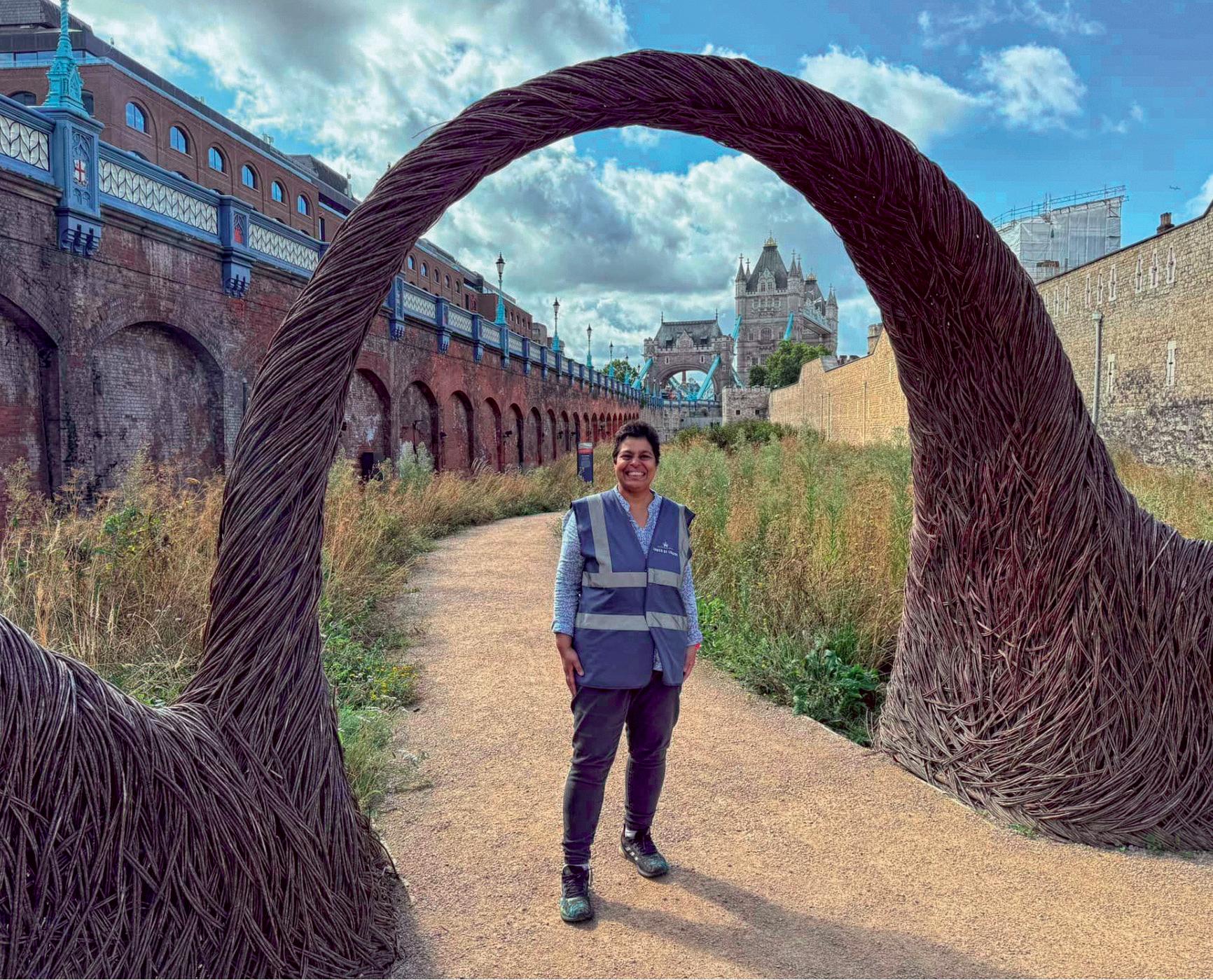
MALA GANGHI AND LARISSA WILSON
Tower Gra!iti Project
● ‘I think I’ve o cially caught the “gra ti bug”’ says Mala, ‘wherever I go, I’m always looking for new markings. It’s such an honour to help to preserve those incredible traces of history. It’s not easy – I’ve had to crawl into some incredibly tight spaces to take photographs of markings hidden away in nooks and crannies. I o en come out covered in dust and cobwebs, but every moment has been worth it.’
Larissa agrees. ‘To be able to scour one of my favourite places has given me a new appreciation for this fantastic historic location. It’s like discovering secrets about someone you thought you knew well!’
Jamie Ingram, Historic Royal Palaces’ Postdoctoral Associate on the Tower Gra ti Project says the volunteer teams’ contribution has been invaluable. ‘We really couldn’t begin to get this enormous project underway without this vital work of understanding what we have at the Tower.’
LISA SYNE Visitor Support, Tower of London
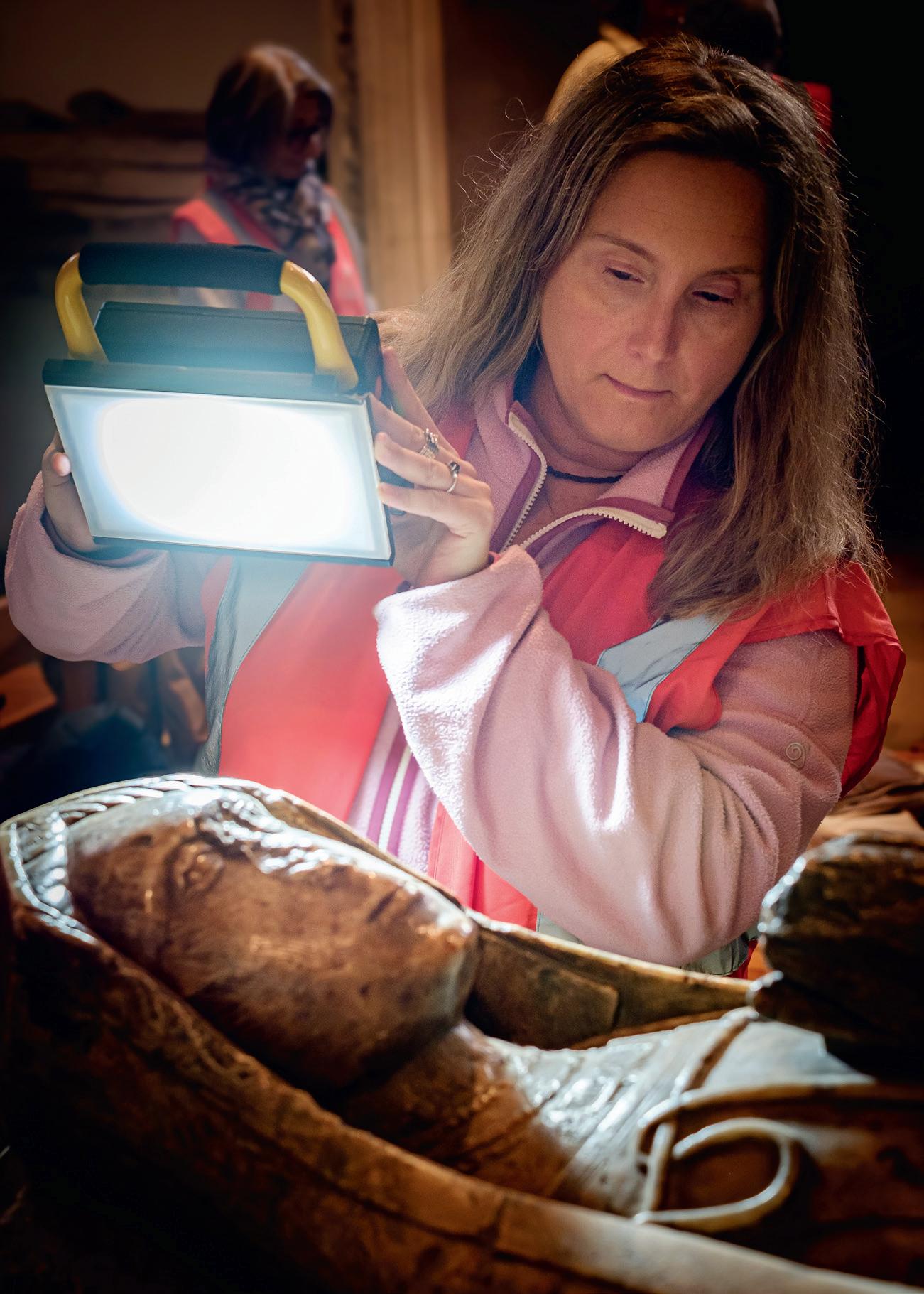
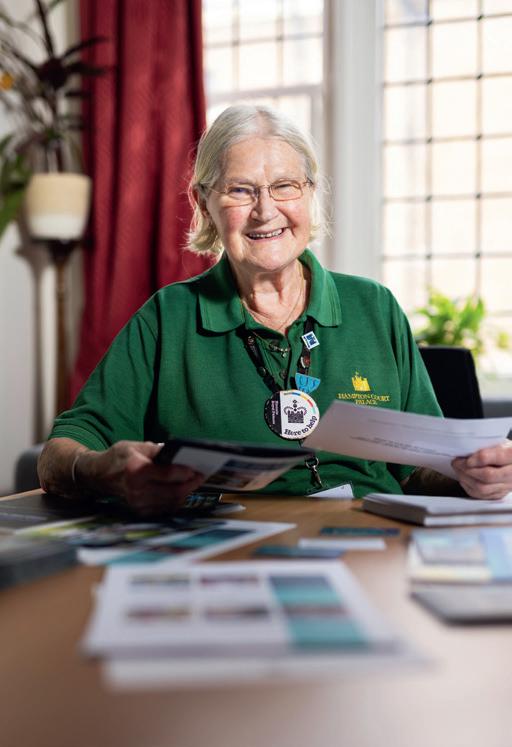
● ‘I’ve been a volunteer here since 2019. I started by doing visitor evaluation surveys, then became more involved. I’ve made a lot of friends in the volunteer community. I work in the pharmaceutical industry as a commercial manager, supplying medicines to hospitals, but I also fit in other voluntary roles. I love the theatre, so I also volunteer at Shakespeare’s Globe and with the London Mavericks netball
PAUL MASON Visitor Support, Tower of London
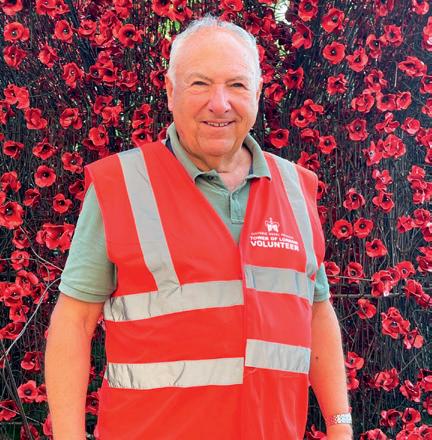
team as a match day support volunteer, checking tickets and guiding spectators.
‘I was proud to get a volunteer role at the Tower, and to contribute to the charity. It’s always rewarding helping our visitors. I have answered many more questions about the Crown Jewels since King Charles’s coronation, as people have seen the jewels in use and want to take a closer look at them.’
DANA HODSHON
● ‘Every day is di!erent at the Tower – there is always something exciting taking place. Walking around the historic site is such a privilege, interacting with the public giving historical snippets, talking with the Yeoman Warders, seeing the mischievous ravens … you never stop learning! I flew for a major airline for 40 years, so I value the meaning of teamwork. Everyone working at the Tower plays a vital role in creating the overall experience for visitors. I gain great satisfaction in listening to the public’s (very varied) questions, answering, and developing a rapport, so that they walk away satisfied and happy. Volunteering even a few times a month allows you to use established work skills, meet the public, make new friends, and still have fun!’
Membership and Gardens, Hampton Court Palace
● ‘I’ve volunteered for over 20 years – I was originally a ‘Friend’ of Hampton Court before the charity was founded in 1998 – and I continue to do so every week. I’ve been able to develop my interest in gardening and garden history, becoming a Garden History Guide, and I also work in the Membership Team once a week, supporting the team with archiving and filing. As I’m retired, volunteering gives me a reason to get out of bed in the morning! ere are so many ‘stand out moments’ for me: I met the King (while he was Prince Charles) when he came to visit the palace. On another occasion I was asked to hide behind the Maze as a young man proposed to his girlfriend, ready to jump out with a bunch of flowers if she said yes. Luckily, she did!’

● ‘ e Memories Project was meant to last six months but the four us – me, Tessa Westlake, Karen Moss and Ian Buxton – are still going strong 20 years later!
We record and preserve memories of the palace and have accumulated over 400 accounts from a wide range
of people who lived or worked at the palace. It has been fascinating to discover and explore this layer of palace history. ere are some lovely stories: the chimneysweep who got lost, former pupils recalling their schooldays, choirboys and their antics, grace-and-favour residents
and their various pets, the memories of Grandfather Abne , the palace lamplighter ere are just too many to have favourites.’
We are always on the lookout for new stories – please get in touch to share your palace memories: memories @hrp.org.uk.
Gardens and Visitor Support, Hillsborough Castle and Gardens
● Keith has just celebrated ten years as a garden volunteer at Hillsborough Castle and Gardens. He retired from the Ministry of Defence in 2015 and moved to Northern Ireland, where, as he puts it, he ‘knocked on the door’ and introduced himself at the castle’s gatehouse. He was warmly welcomed; in the early days a er Historic Royal Palaces opened the represented castle there were very few volunteers. Keith
was on site providing much needed help for several days a week. In his first month as a volunteer he undertook a survey of all the hardwood trees across the 100-acre site and we have kept him busy ever since! When not in the gardens, Keith works in visitor support and has helped at a huge variety of events held at the castle, including royal and VIP visits, garden parties, investitures, concerts, vintage car meets and weddings, as well as assisting on school visits.
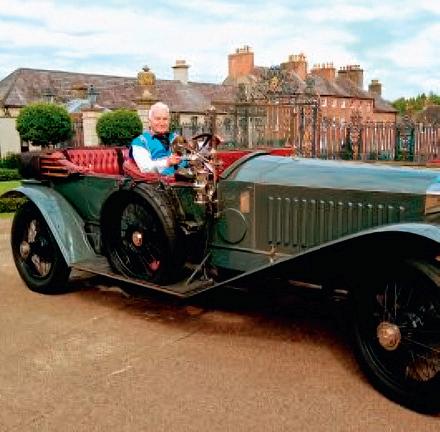
‘I have a lifelong interest in world history and politics and people, having served in 37 countries’, he says.
‘Volunteering keeps my mind and body active. And, as I’m always telling the schoolchildren who visit, you never stop learning from other people.’
Gardens Volunteer, Hillsborough Castle and Gardens
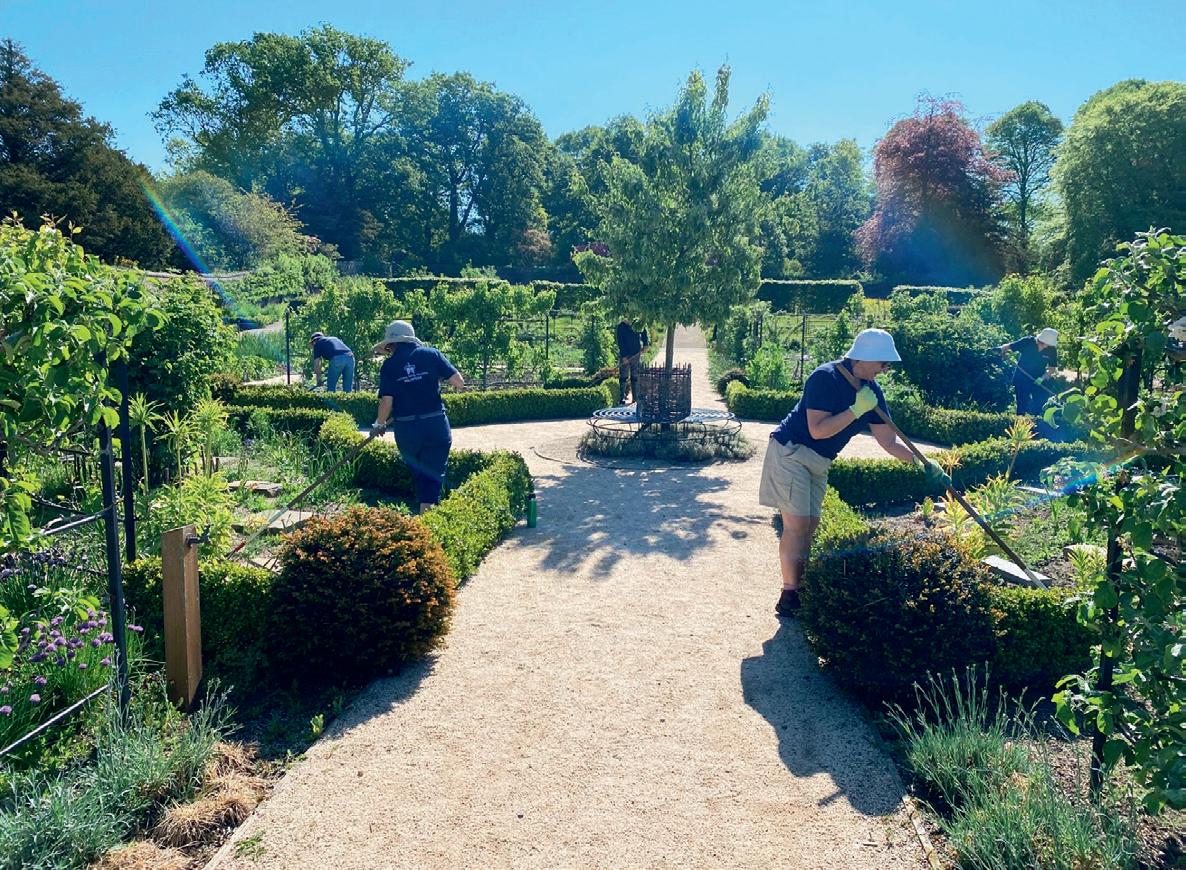
● I joined the team at Hillsborough in March 2025 a er I came across the ‘Young Adults Volunteering Scheme’ in the Hillsborough Gardens. It was a great fit for me as I love being outdoors. I work as a civil engineer Monday to ursday, and volunteer in the gardens on a Friday. Every week I get to do something di!erent: over the past year I have pruned, dead headed flowers, planted bulbs, watered plants and helped in dead hedge building (maintaining a dead hedge by adding new woody cu ings
and branches). I have learnt so much from the gardening team and have met loads of great people!
Congratulations to the Hillsborough Castle and Gardens volunteer teams for ge ing to the final of the prestigious ‘Live Here, Love Here’ community awards, presented in Belfast earlier this year. e teams were honoured for their work in helping to maintain 98 acres of grounds and protecting wildlife and biodiversity, among other accomplishments.

Visitor support volunteers help us to provide a warm welcome and a great experience for all our visitors. They help with wayfinding, general information, history and stories, and much more.
• Estate volunteers help the team in the general management of the grounds, including tree care, repairs and litter picking.
• Garden volunteers assist with the upkeep of the palace gardens, looking after flowers, trees, shrubs and general maintenance.
• Nursery volunteers support the work of the nursery, including preparing pots and trays, and splitting and potting plants.
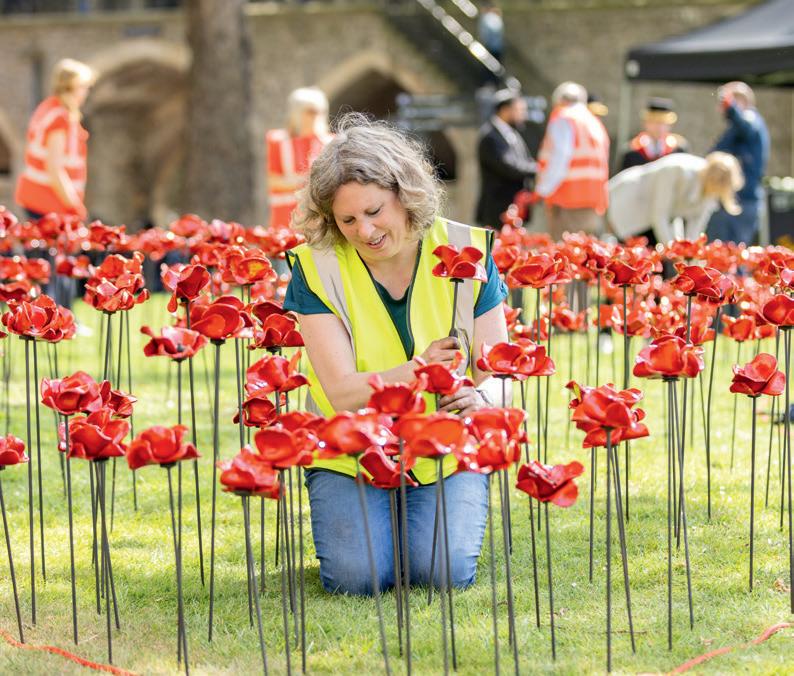
• Kitchen Garden volunteers work at several palaces to plant, maintain and harvest garden produce.
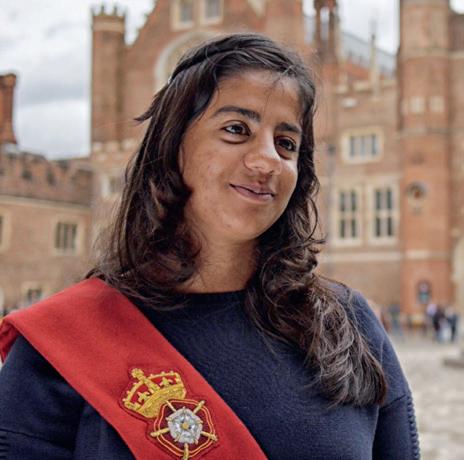
• Rangers welcome visitors and share wildlife and safety information, including the ecology and protection of our outdoor spaces, and help maintain outdoor structures.
• Schools volunteers support the day-to-day meet and greet of school visitors at our learning centres, help with guidance, and provide administrative support.
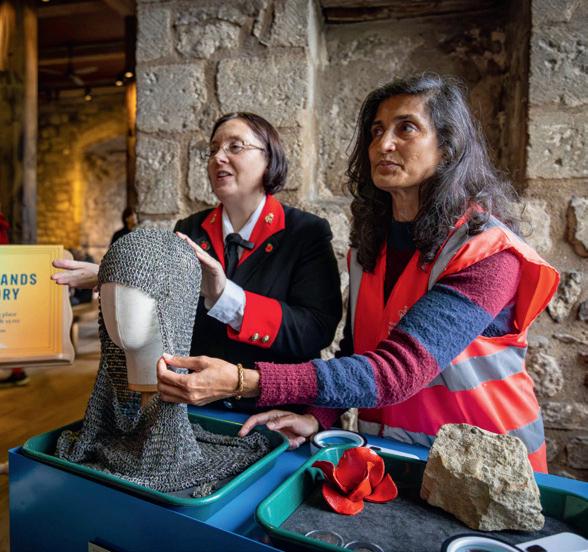
• Community volunteers also support learning teams with a variety of special events and Public Engagement programmes, including school and community festivals. Object handling volunteers speak with palace visitors about the history and stories of the palaces through handling historic and replica objects.
• Other roles include membership volunteers, gra!iti volunteers who help photograph and catalogue the gra!iti in our palaces, curatorial assistant volunteers, Chapel volunteers and administrative volunteers.
To find out more about volunteering with Historic Royal Palaces, visit hrp.org.uk/ support-us/volunteer.
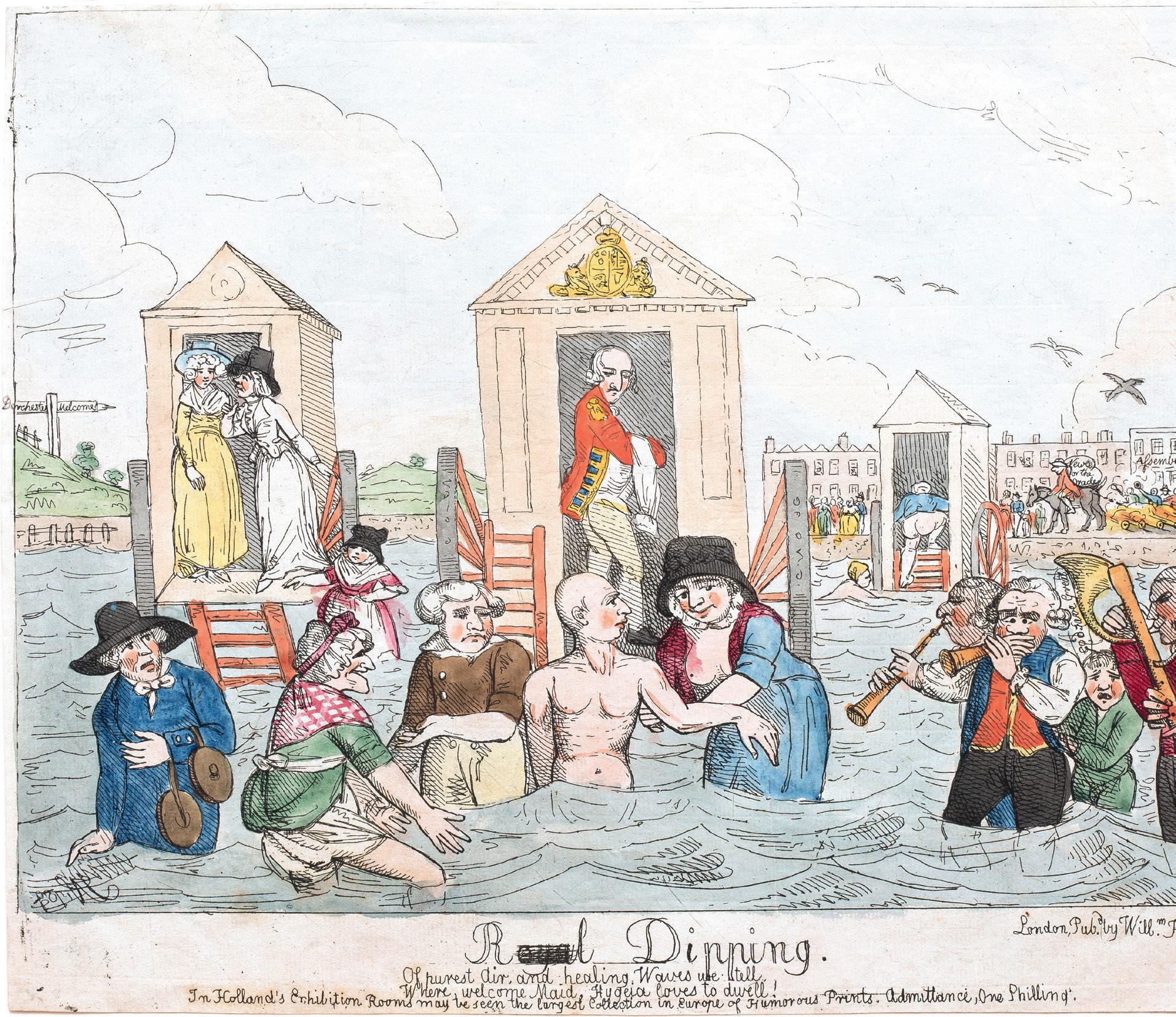

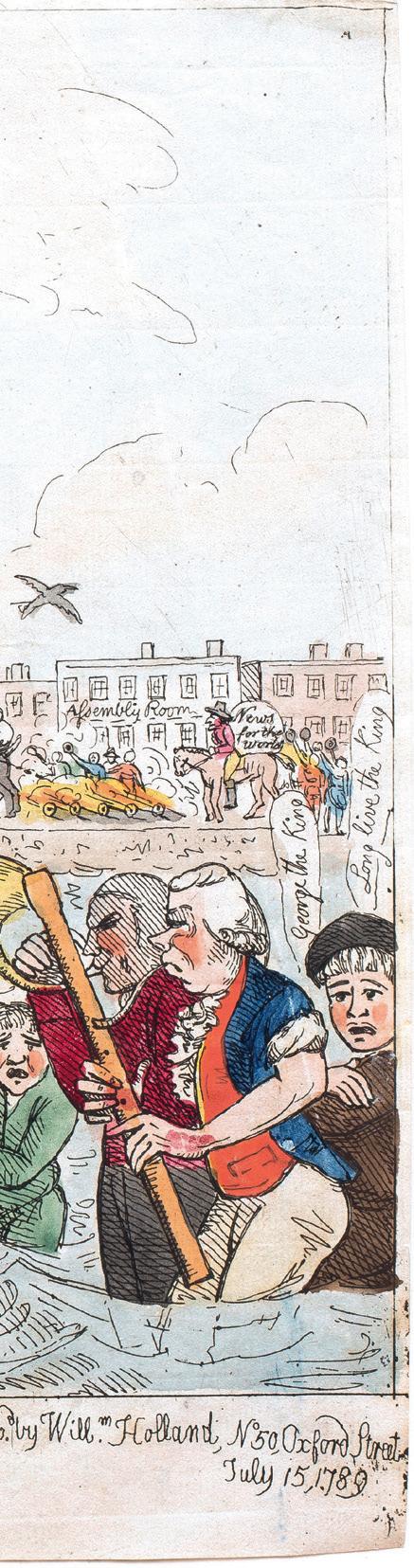


Sand between the royal toes, posh ices on the prom … Since trailblazer George III, our kings and queens have enjoyed splashing out at the great British seaside. Assistant Curator Myles Campbell dives into the history
In his 60 years on the throne, King George III (1760-1820) never once ventured beyond England’s borders and unlike his predecessors, George I and George II, he never visited the family’s ancestral home in Hanover, Germany. He was quite the homebody, rarely travelling further than his beloved Weymouth in Dorset. e King is credited with popularising the British seaside holiday through his frequent visits to the south coast. He first visited Weymouth in June 1789, shortly a er his initial bout of illness, to experience the reputed therapeutic benefits of bathing in and drinking sea water. King George, Queen Charlo e and their three eldest daughters were warmly welcomed. e

ABOVE: ‘Royal Dipping’ by John Nixon, 1789. King George III takes the waters at Weymouth, serenaded by a band.
town was bedecked with banners proclaiming, ‘God Save the King’ wrote the courtier Fanny Burney: ‘all the shops have it over the doors; all the children wear it in their caps, all the labourers in their hats, and all the sailors in their voices…’. e National Anthem was played wherever the King went – including into the sea! e King bathed in the sea, using a bathing machine to help him enter the water in privacy. He a ended the theatre, took walks along the esplanade or on the sands, visited country houses and nearby ruins and took trips on the bay. When this first holiday was over, the Queen told Prince Augustus that his father was ‘much be er and stronger for the sea bathing’.
George III became a regular visitor
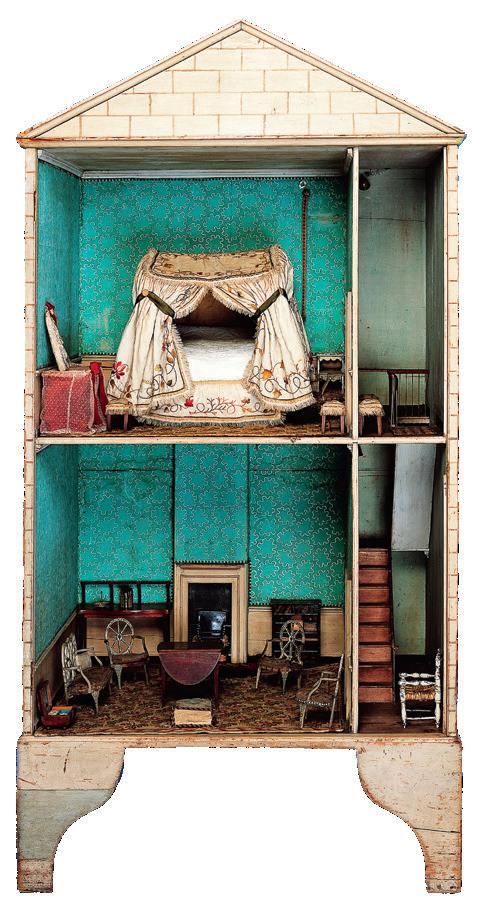
While the King’s daughters may have found the Weymouth seaside ‘dull and stupid’ (page 32), they entertained themselves by creating this marvellous miniature palace while they were there. The exterior of the house was made in around 1780 by the carpenter on the Royal Yacht, and the princesses, probably Mary, Augusta and Sophia, spent many hours decorating and furnishing it. A paper label inside the door reads: ‘This dolls house was made by the children of George III then staying at Weymouth and given by them to the children of Sir George Grey … Flag Captain on the King’s ship.’ Captain Grey lived in Weymouth and the house remained in the same family until it was purchased by Historic Royal Palaces in 2005. Remarkably, most of its original features and furnishings remain intact. The house is now on display at Kew Palace.
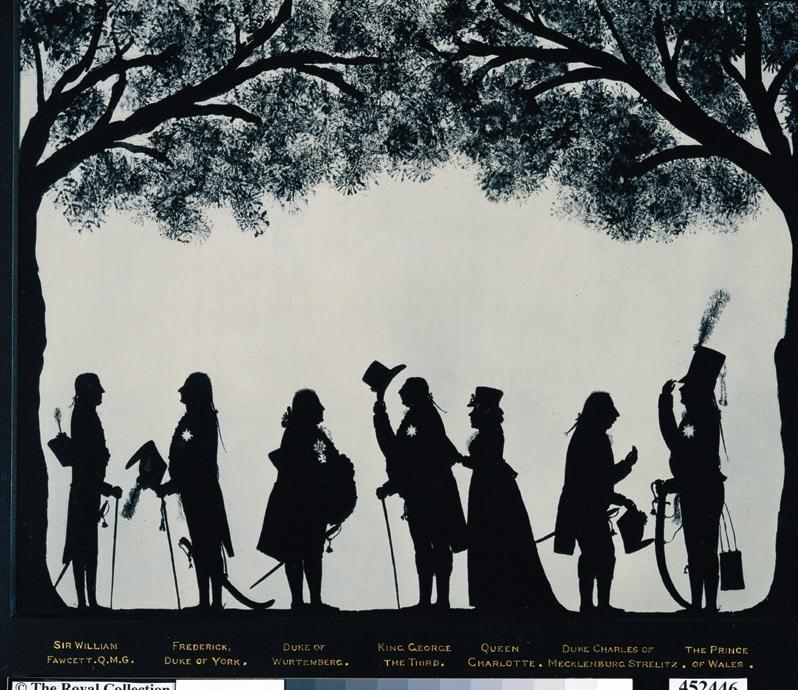
to Weymouth between 1791 and 1805, enjoying the quiet seaside life, but his children found these annual retreats torturous. While the King loved the simple routine, it was a ‘humdrum’ ordeal for his family, with Princess Mary describing it as ‘dull and stupid’. Despite his family’s boredom, the King found exactly what he needed in the salty air and his presence transformed Weymouth into a popular seaside resort.
Brighton rocks!
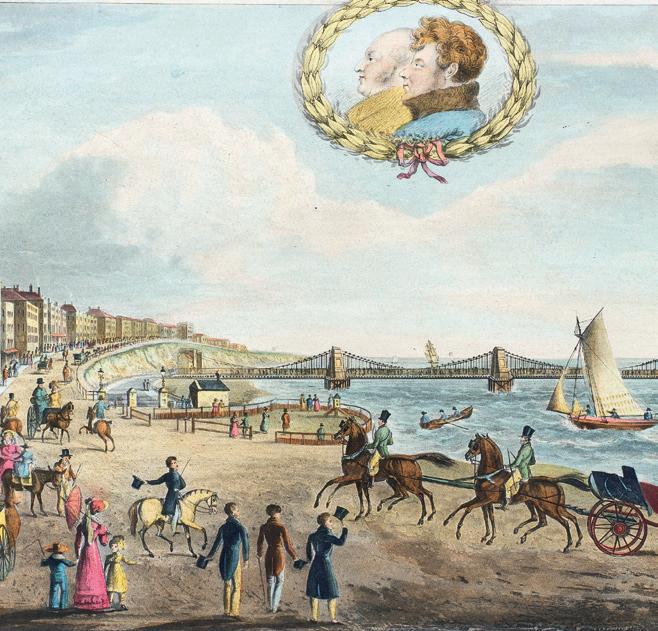
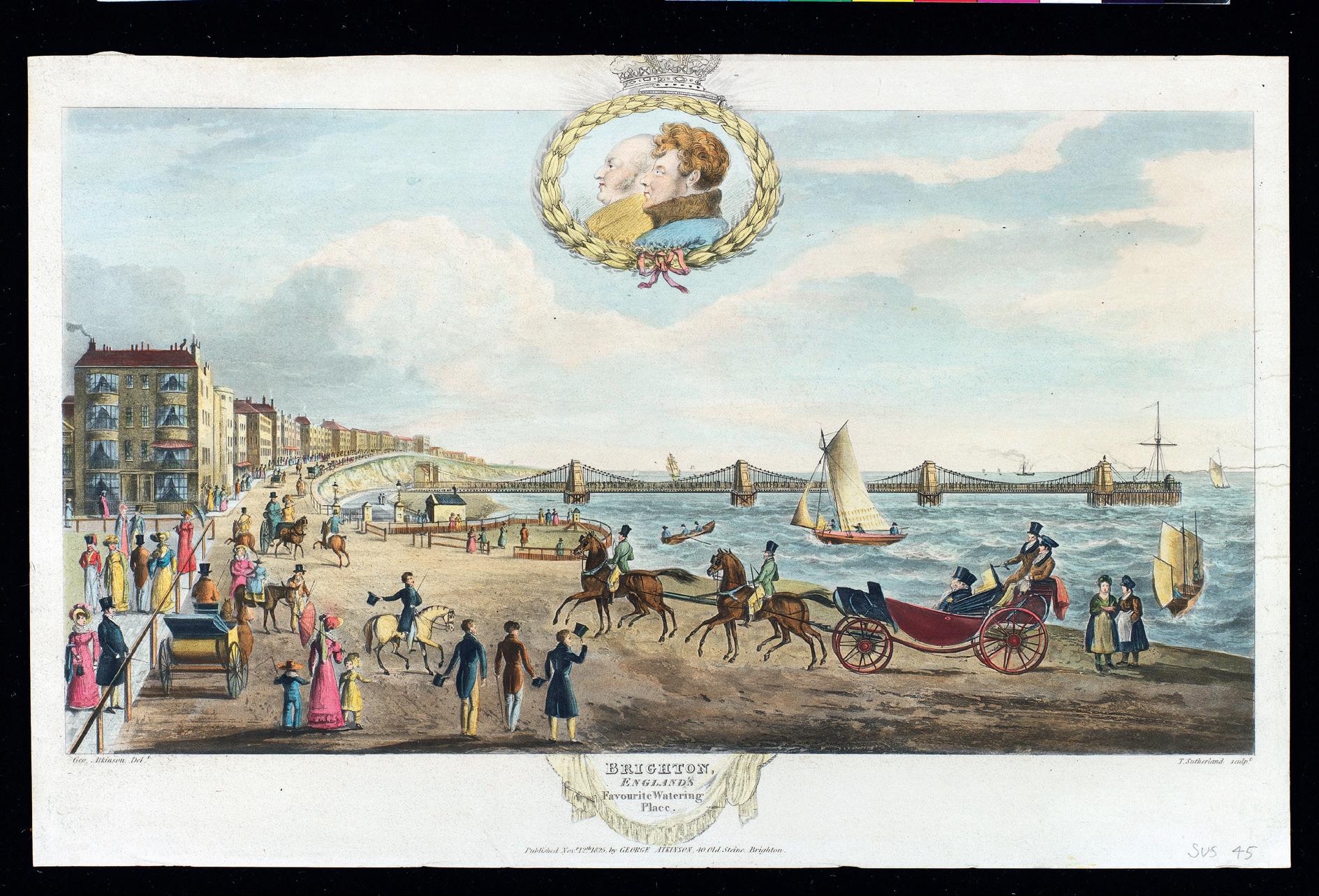
George III and his eldest son, George, Prince of Wales, later George IV (1820-30) had a di cult relationship marked by mutual contempt and a clash of values. So, when the Prince, then aged 21, was himself advised to seek out the health properties of sea water for an a ack of swollen glands (no doubt brought on by his extravagant lifestyle), he chose the seaside town of Brighton rather than his father’s favourite Weymouth. e Prince found much to enjoy in Brighton, besides the sea air. Horse racing, gambling, dining and dancing were all on o!er and far away from the disapproving eyes of his father. In 1786, he purchased a seaside lodging house and the surrounding land, where the architect Henry Holland was employed to convert the house into a modest villa, which became known as the Marine Pavilion. e previous year, the Prince had secretly married a young Catholic widow, Maria Fitzherbert and
LEFT: George III, Queen Charlotte and other members of the royal family enjoying a promenade on the esplanade at Weymouth. (© Royal Collection Enterprises Ltd 2026 | Royal Collection Trust)
BELOW: Brighton, England’s favourite watering place – and the Prince Regent’s playground, after George Mounsey Wheatley Atkinson, 1825. (© Royal Collection Enterprises Ltd 2026 | Royal Collection Trust

she was installed in her own house just around the corner.
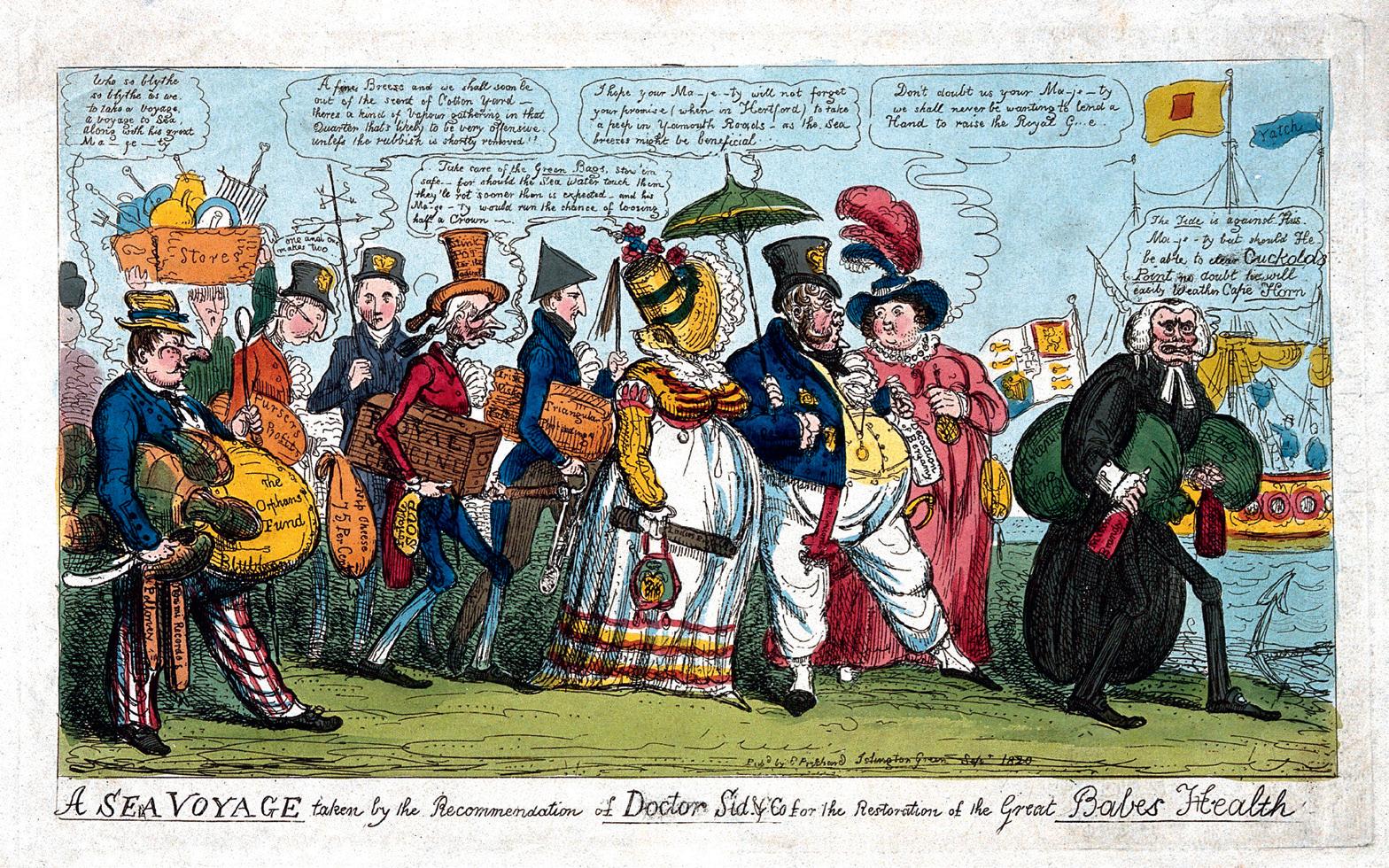
In 1811, when George became Prince Regent, due to his father’s ill health, the Marine Pavilion was deemed too small for the large social events and entertainments that George intended to host. Between 1815 and 1822, the house was transformed into the magnificent ‘oriental’ palace, Brighton Pavilion that still stands today. e architect John Nash superimposed a cast iron frame on to Holland’s earlier construction to support a magnificent array of minarets, domes and pinnacles on the exterior. No expense was spared on the interiors either, with rooms, galleries and corridors being carefully decorated with Chinese export furniture, hand-painted wallpapers and opulent ornaments.
George visited Brighton frequently for nearly 40 years and his presence brought great prosperity to the town, transforming it into a fashionable and prosperous seaside resort, o en referred to as ‘London by the Sea’. However, a er he became king in 1820, increased responsibilities and ill health meant that he only made two further visits to Brighton for the rest of his reign. Following his death in 1830, his successors William IV (1830-7) and
‘THE PRINCE FOUND MUCH TO ENJOY IN BRIGHTON, BESIDES THE SEA AIR’
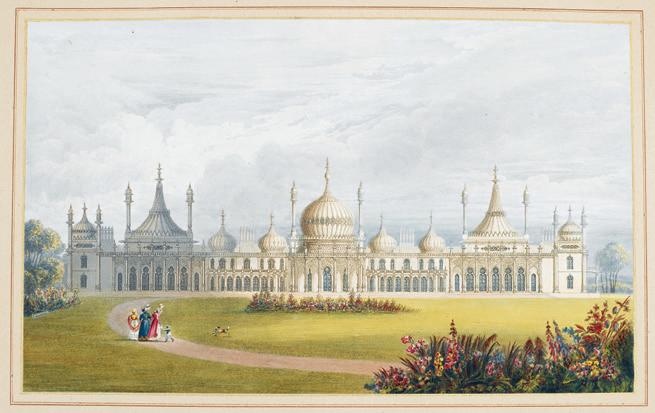
Queen Victoria (1837-1901) continued to use the pavilion, but in a much more modest way. e pavilion was not to Victoria’s taste, as she records in her diary: ‘Talked of Brighton, & it’s [sic] not being a pleasant place, the impossibility of ge ing any sailing there, — the burden the Pavilion was, & whatever could be done with it’.
In 1850 she sold the property to the town commissioners and turned her a ention to her new seaside retreat at Osborne House on the Isle of Wight, which provided the privacy and space she desired for her growing family.
LEFT: George IV’s onion-domed pavilion in Brighthelmston (or Brighton as it became known in the early 19th century). (© Royal Collection Enterprises Ltd 2026 | Royal Collection Trust)
ABOVE: King George IV and his entourage about to embark from Brighton in the Royal Yacht, by Isaac Robert Cruikshank, 1820. (Wellcome Collection)

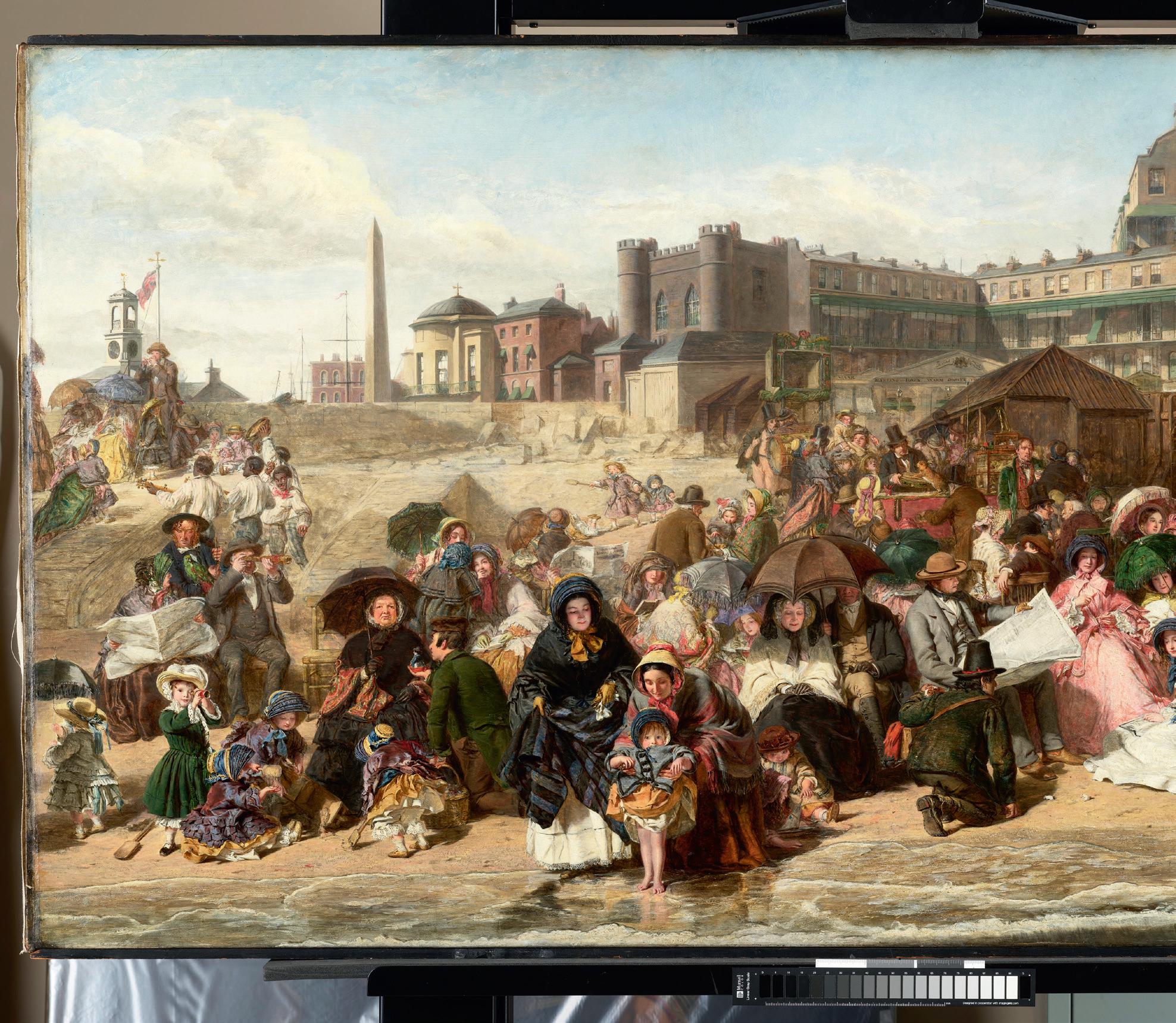
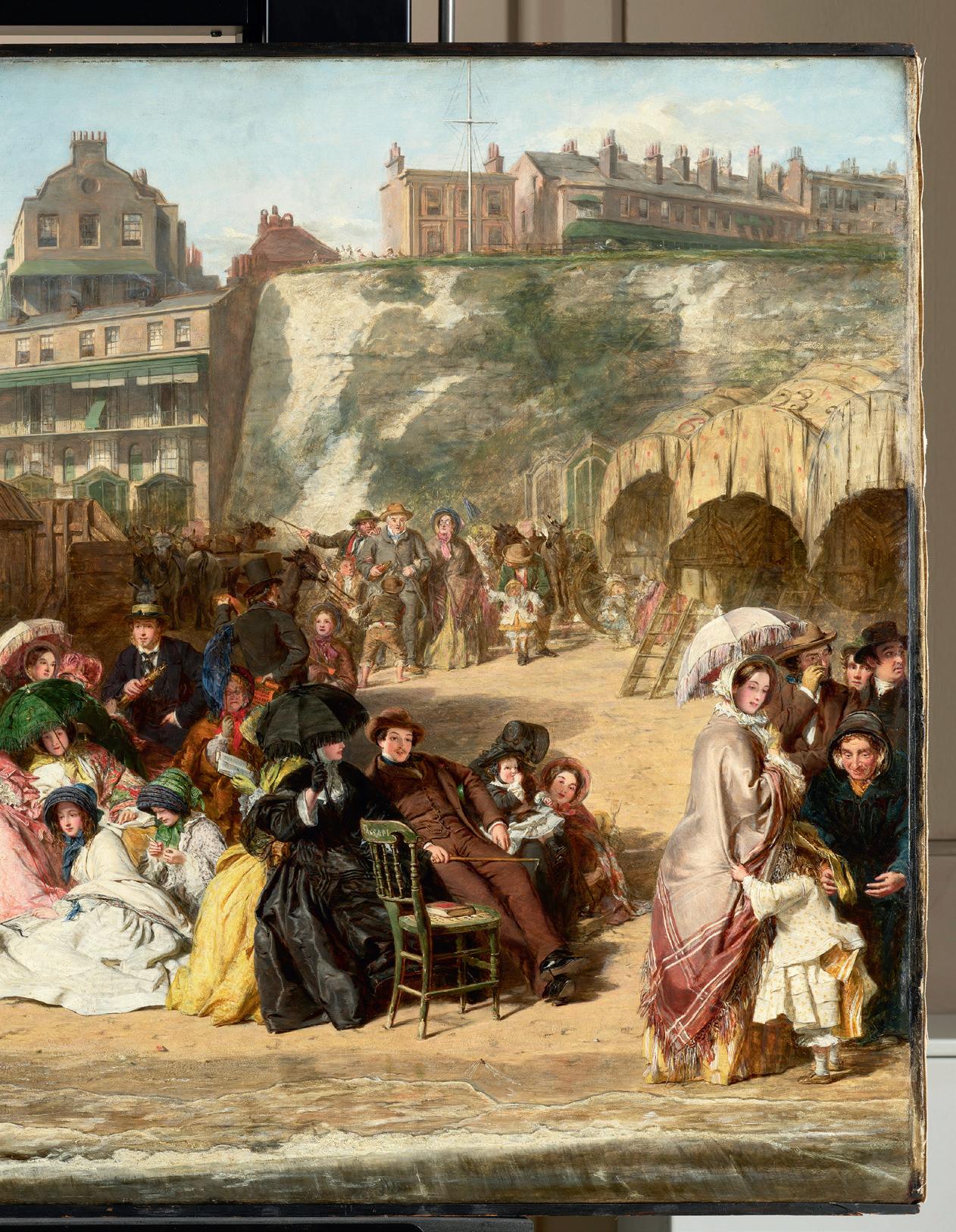
e paddling Princess Friday 28 April 1854 was a bi erly cold day in London. But for Queen Victoria, it was filled with memories of sun, sea and sand. On a visit to the Royal Academy, she was ‘delighted’ to discover William Powell Frith’s evocative painting Ramsgate Sands. Teeming with images of children on the beach, it depicted her favourite childhood holiday resort – Ramsgate, in Kent.
Victoria was just 3 when she le Kensington Palace for her first holiday in Ramsgate. On 14 August 1822, she boarded the Hero steam packet at the Tower of London with her mother. On deck, the family sat down to wine, a ‘handsome dessert’ and that most fashionable of fruits, pineapple. A er 9 hours at sea, they disembarked

ABOVE: William Powell Frith’s painting of Ramsgate Sands, 1851-4 brought back many happy holiday memories for Queen Victoria. (© Royal Collection Enterprises Ltd 2026 | Royal Collection Trust)
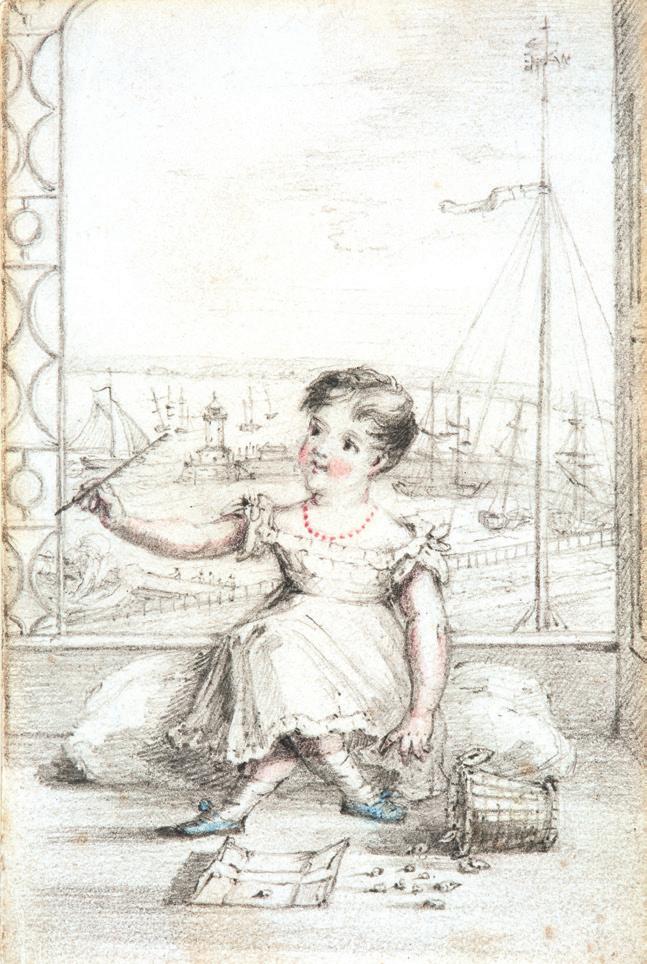
Princess Victoria on holiday in Ramsgate; drawn by Lady Elizabeth Keith Heathcote in 1822-3.
at Ramsgate and made their way under specially installed boughs of oak and laurel to their seaside home from home, Townley House.
On fine days, li le Victoria spent the morning riding her donkey on Ramsgate sands.
In the a ernoon, she returned to dig on the shore, toss stones into the water and, sometimes, wade into the sea right up to her ankles! While running fast on the beach, she once took a tumble and had to be helped to her feet by a passerby. Blithely dismissing his concerns, she declared: ‘Oh no! I am not hurt, but mamma will say the Princess of England should not be so giddy.’
To one Ramsgate observer, li le

Victoria was ‘charming … very high spirited … much indulged’ and very determined to have her own way! e image conjured up in this pen portrait is matched in a series of sketches made towards the end of the holiday by a family friend. ese rare and charming vigne es show the rosy-cheeked Princess playing peek-a-boo, riding her donkey and sorting seashells – the spoils of carefree a ernoons on the beach.
For teenage Victoria, the open sea at Ramsgate continued to o!er freedom. In 1835, she captured the feeling of space and liberty in her journal: ‘ e open, free, boundless (to the eye), ocean looked very refreshing. ere is nothing between us and France but the sea, here.’
Despite falling ill with a serious fever during her stay in 1835, Victoria relished daily walks on the pier and encounters with sailors and fishermen from France, Spain and Portugal. ‘Upon the whole I like poor Ramsgate’, she reflected, ‘… the walks on the pier amused me very much. I liked looking at the foreign ships & the li le French boys & fishermen so much …’
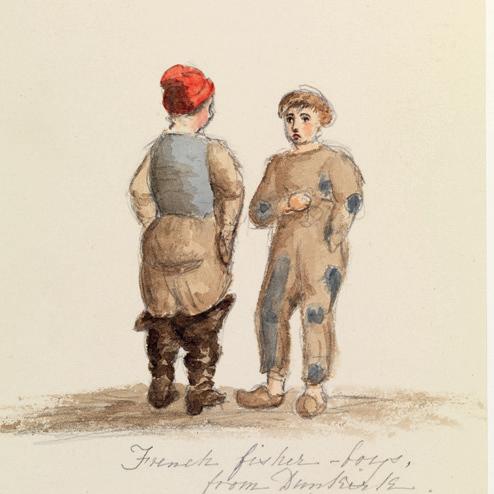
Princess Victoria drew these French fisher-boys after meeting them on the pier in Ramsgate in 1835. (© Royal Collection Enterprises Ltd 2026 | Royal Collection Trust)

Not only was it was freeing, but also eye-opening, giving the privileged princess a glimpse of unfamiliar cultures and the hard work of those who made their living at sea.
e woman who gazed at Frith’s painting of Ramsgate at the Royal Academy in 1854 had long since grown up and become a queen.
But on hearing that Frith’s painting had been sold, she proved to be every bit as wilful as the li le princess of 30 years earlier.
Managing to buy the painting against the odds, she showed the same determined streak seen all those years before in Ramsgate.



Summer is a wonderful time to explore the wild-life rich green spaces of Home and Bushy Parks by day, or in the magical twilight, when the bats emerge to feed and fly. Park
Ranger Eleanor Eve s and Biodiversity and Sustainability Manager Rebekah Baker highlight what you might (safely) see
Spo ing wildlife is all about understanding where, when and how to look – and doing so in a way that respects animals and their habitats.
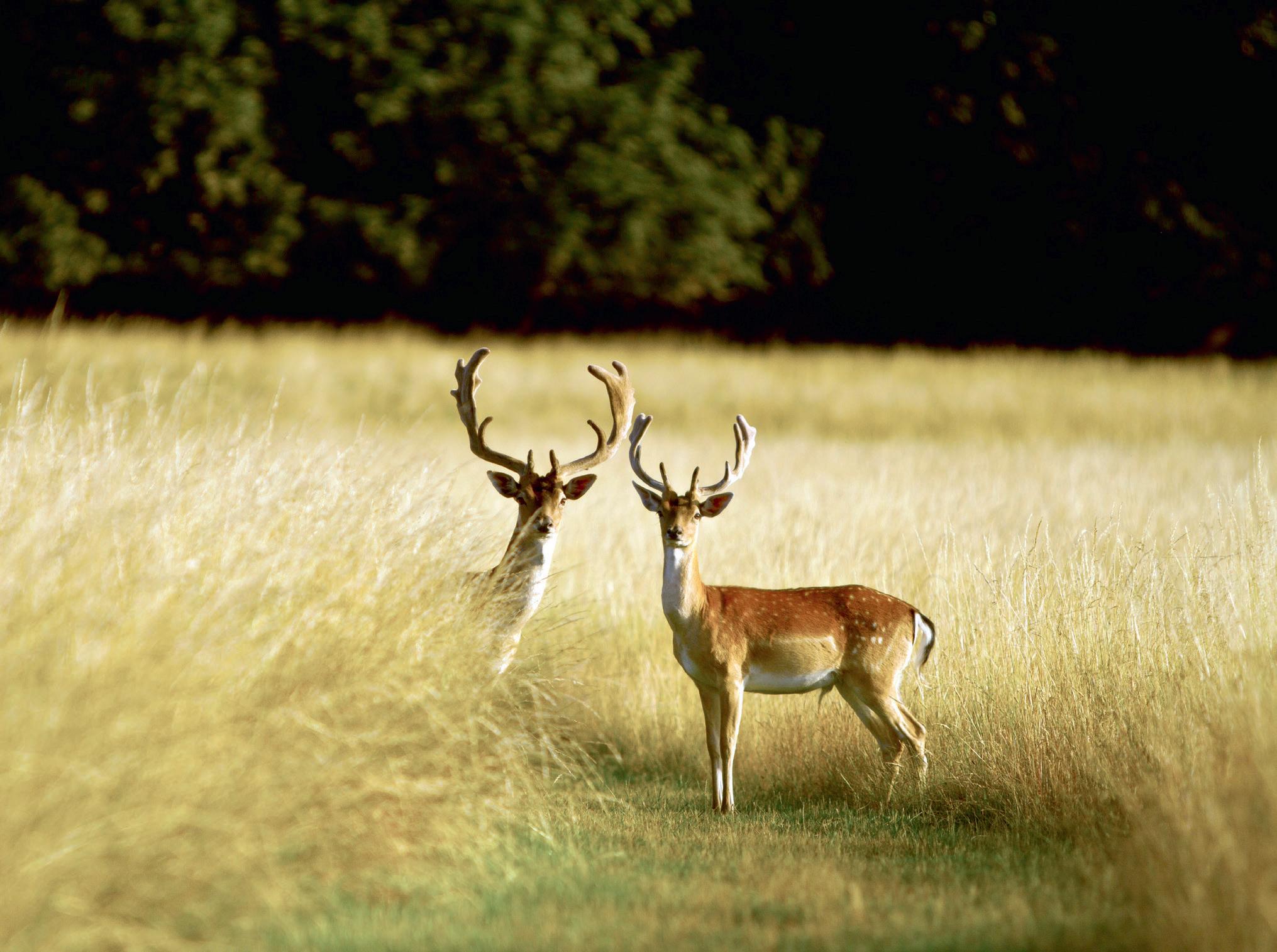
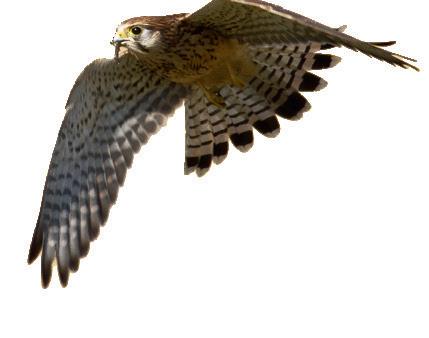
If you enjoy listening to birdsong, the best times are dawn and dusk, when birds are most active. A quiet early morning or evening walk through local parks can reward you with a wealth of activity and to add an extra layer, use a smartphone app to learn bird calls. In our parklands, you may hear the upli ing song of the skylark, famous for its soaring display flights. Look out for the distinctive, undulating flight of a green woodpecker, o en found in open grassland and scan the sky for kestrels, which hover in place as they
search for prey. Because birds and their nests are legally protected, always keep your distance if you suspect a nest is nearby.
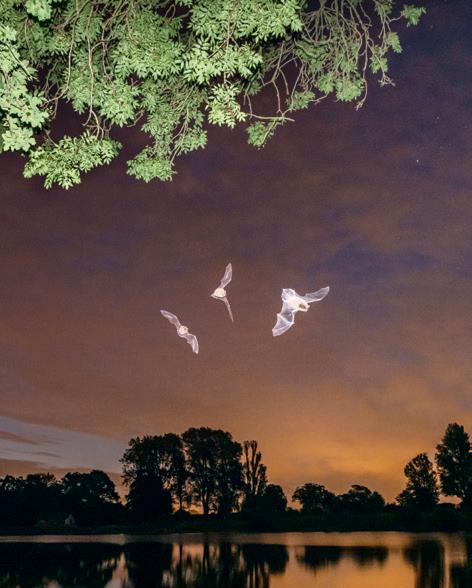
Around dusk, especially near water, tussocky grassland, or woodland edges, look up for the quick, zigzagging flight of bats as they hunt insects. eir rapid wingbeats and sharp changes of direction make them easy to distinguish from birds (see over page). If you see bats leaving or returning to a roost, admire them from afar – bat roosts are legally protected, and disturbing them is an o!ence. Make sure you always take a torch with you if you are out around sunset looking for bats but remember to never shine a torch directly at any wildlife.

When enjoying nature, stick to marked paths and avoid trampling through long grass. is helps protect you from uneven terrain while also safeguarding wildlife. e edges of paths are excellent places to spot reptiles such as grass snakes or slow worms. And if visiting parks with deer, give them plenty of space – especially in May and June, when young deer are at their most vulnerable.
Historic Royal Palaces has a warm, reciprocal relationship with the Friends of Bushy and Home Parks (FBHP), a voluntary organisation that runs the visitor centre in Bushy Park and o!ers guided nature walks in both parks.
eir ‘Introductory Walks’, which last about 90 minutes, are pitched at general interest level and are very popular.
Bushy Park is managed and run by e Royal Parks, and Home Park is managed by Historic Royal Palaces. FBHP works to educate visitors about the wildlife and nature, and to raise funds through membership fees, donations and legacies to help conserve both parks. Many projects in Home Park are funded by FBHP. ‘ e projects we can support are relatively small’, explains FBHP chair Colin Muid, ‘they are “nice to have” rather than essential, but they are making a di!erence both to visitors and to endangered species of plants and wildlife in both parks’. For example, recently FBHP Trustees made
a large donation to plant a new mixed variety hedge at Surbiton Passage, one of the Home Park gateways, as a memorial to the late Terry Gough, Head of Gardens & Estates at Historic Royal Palaces for 32 years. is will support pollinators and provide habitats for voles and other small creatures and, in time, provide foraging and nesting opportunities for birds.


THANK YOU
Your membership helps us care for Home Park, protecting this space for both people and wildlife. You can also support these parks by joining the Friends of Bushy and Home Parks (membership: £10 for an individual, £15 for a couple or family). For more information visit fbhp.org.uk/membership.

e parks o!er great habitats for bats, providing many types of insects that breed in the grasslands and water. ere are also many places for them to roost including trees, old buildings in roof spaces, under tiles and in wall cavities.
For the past couple of years, I’ve led a series of twilight bat walks in both Bushy and Home Park, which have been extremely popular.
Although bats o en get bad press as a nuisance, people get very excited by these amazing creatures when they actually see them fly and learn about the importance of this precious habitat to their survival.
In late summer, the park bats take centre stage. ey mate in September, so there’s lots of activity, the youngsters are stretching their wings and they’re feeding more before hibernation. Late
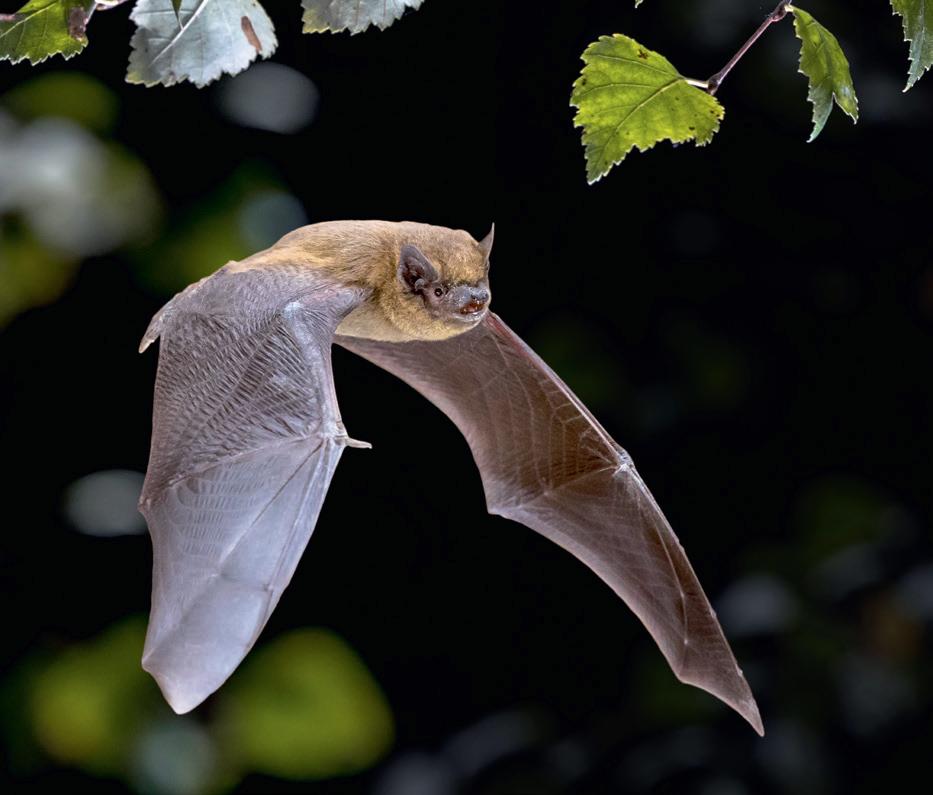
summer twilight is a great time to see them. Di!erent species feed in di!erent areas, to avoid competing for prey. In the parks, you’re most likely to spot the pipistrelles low down, hunting midges. It’s one of the UK’s smallest bats, weighing about the same as a 20p coin. ey are the size of half your thumb, with a wingspan of 25cm. But while small, they have huge appetites. A single pipistrelle needs to eat over 3,000 midges per night.
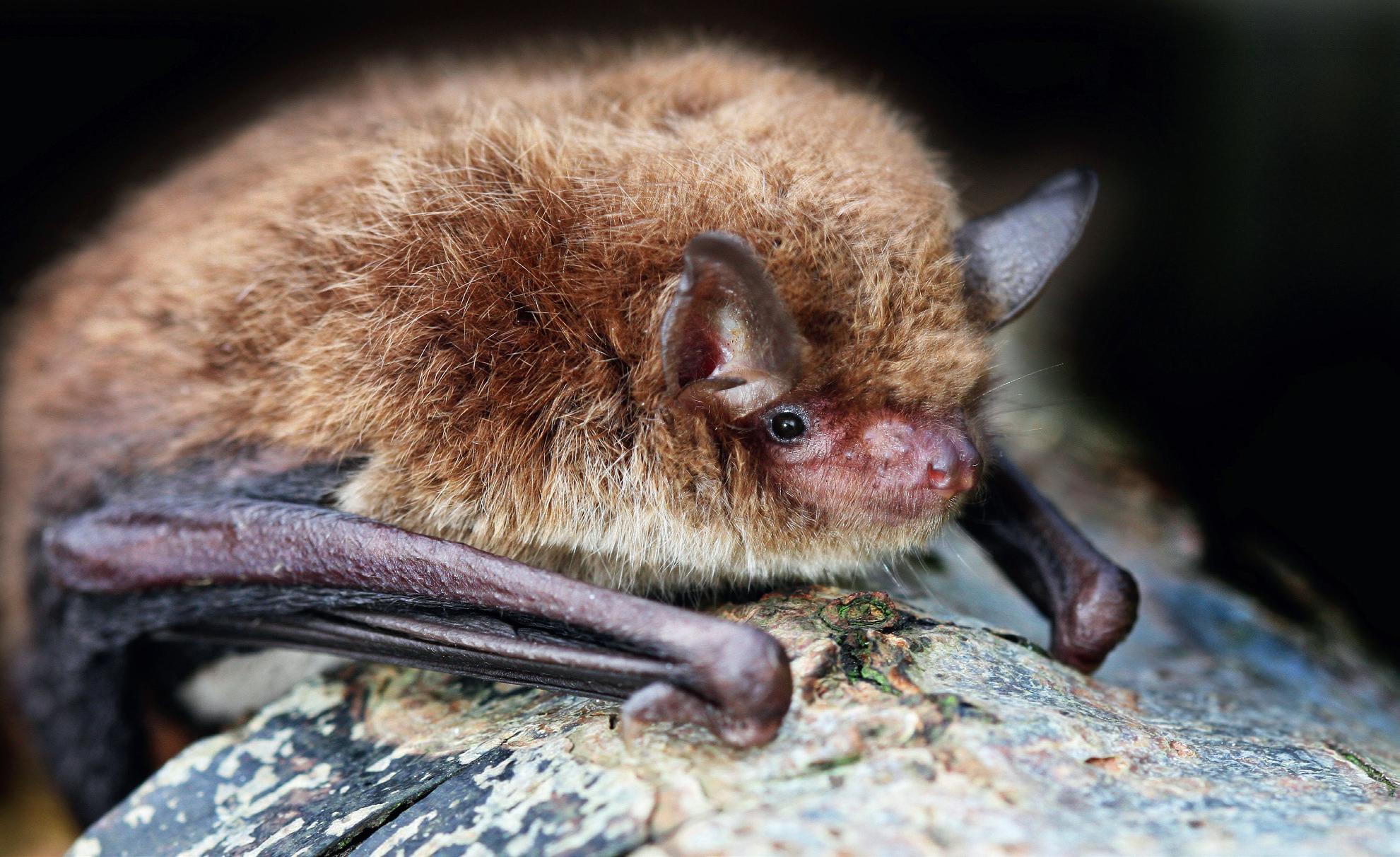
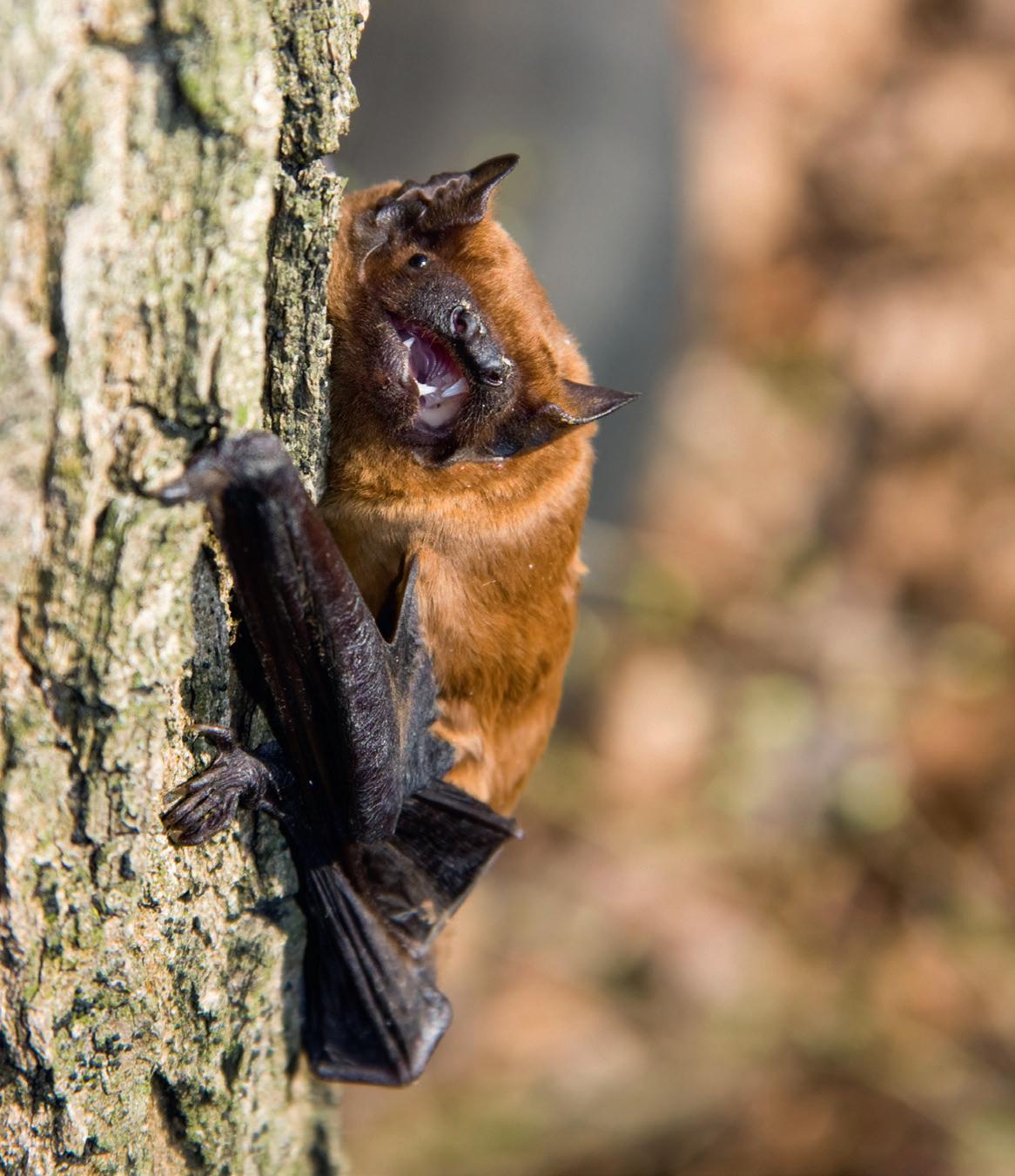
If you look out over water, a bat skimming the surface is o en a Daubenton’s bat, which specialises in catching insects with its feet just above the water. It’s a beautiful sight to view them over the stillness of the Long Water at twilight. More rarely, you might catch sight of the largest bat, the noctule. ese fly at tree top level, hunting larger insets such as moths.
CLOCKWISE FROM THE TOP:
A noctule bat; Daubenton’s skimming the surface for a midnight snack; the diminutive pipistrelle and up close with Myotis daubentonii (Daubenton’s bat). (Getty Images/iStock: belizar 73; Paul Colley; CreativeNature_ nl; Fenlanddavid)

‘People get very excited by these amazing creatures when they see them fly’
• We have 18 bat species in the UK: 11 of these are in London and at least nine of them are in Bushy Park and Home Park.
• Bats are the only mammals with powered flight.
• They mate in autumn, and the females then store the sperm in their bodies. When it gets warmer, the fertilised eggs implant and the babies begin to grow. In this way, they don’t have to wait until conditions are right before finding a mate.
• It’s a myth that bats are blind – they have better night visions than humans!
• Bats use echolocation to zone in on small things like prey, and roost entrances. They send out high frequency, short wave sounds, then listen to how these bounce o! an object so they can accurately target their insect dinners.
Explore Hampton Court Palace on a guided bat walk, where you’ll have the chance to encounter native bat species and hear their calls using special detectors. September and October.
Price: £15. Pre-booking required; limited availability.
Join a guided walk exploring the nature and history of Bushy Park with the Friends of Bushy and Home Parks. Find out more and book at fbhp.org.uk.
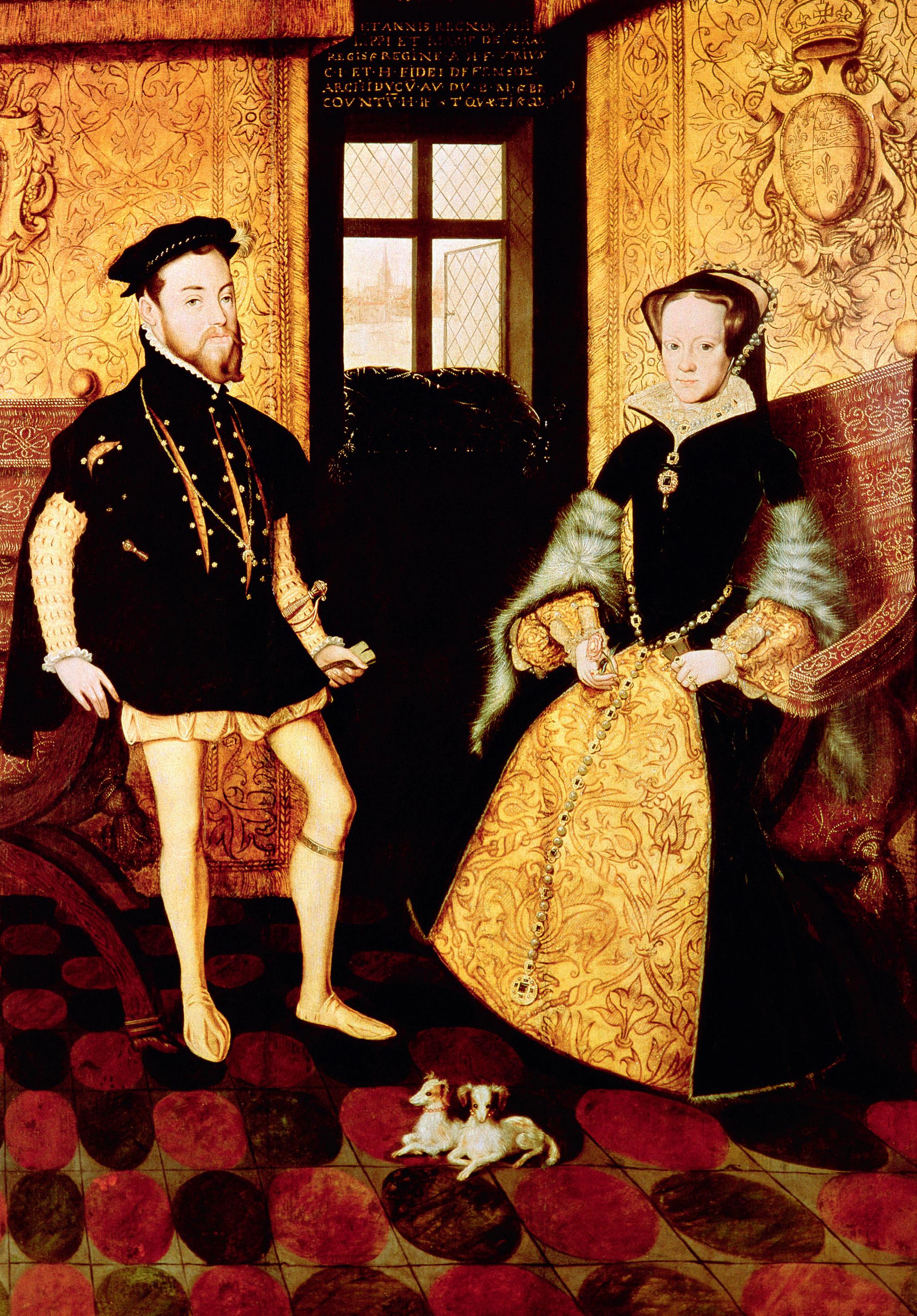
● Henry VIII’s eldest daughter, Mary, came to throne in July 1553 determined to marry as soon as possible. She was deeply conventional in her views on the role of women and admi ed that she ‘knew not how to make herself safe and arrange her a! airs’ without a husband. e new Queen was also desperate for a child and painfully aware that, at the age of 37, time was running out.
Mary quickly declared her intention to marry 26-year-old Philip of Spain (son of Charles V); her choice being heavily influenced by her mother’s homeland. On seeing his portrait, Mary fell madly in love and refused to listen to the opposition from her council, who feared that England would become a mere satellite of the mighty Spanish empire. e match was also deeply unpopular with her subjects and sparked a rebellion led by Sir omas Wya in 1554, but the rebels were quickly suppressed, and Mary and Philip were married on 25 July in Winchester.
In August, the newlyweds moved to Hampton Court and within weeks Mary believed she had fallen pregnant. But the expected date of birth came and went, and Mary’s bloated stomach subsided, her false pregnancy probably the result of menstrual problems. Towards the end of her reign, Mary su!ered another phantom pregnancy. is time, few people other than the Queen herself believed she was with child. e swelling in Mary’s stomach, which is evident in her funeral e gy that still survives at Westminster Abbey, was possibly caused by cancer.
Mary’s deep love for her husband was not reciprocated, and he spent long periods of their marriage abroad. She died in November 1558, at the age of 42, abandoned by her husband, who had refused to return to his dying wife’s side. Philip expressed ‘reasonable regret’ when told of her passing – but almost immediately made a proposal of marriage to her sister, Queen Elizabeth I.
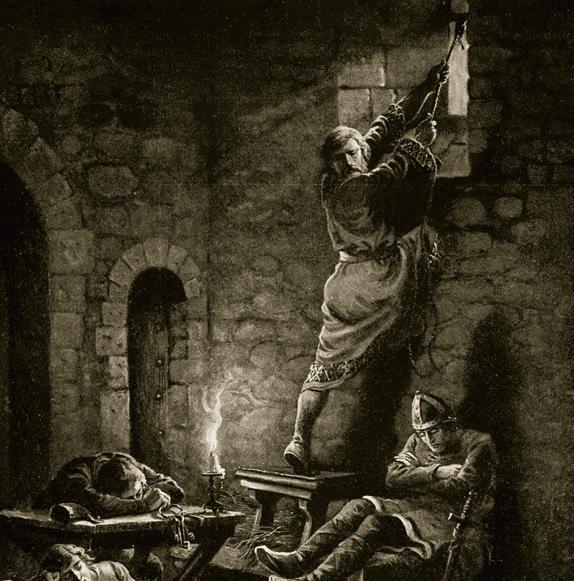
The Tower of London ‘welcomes’ its first state prisoner
● Ranulf Flambard, Bishop of Durham was an ambitious clerk and courtier in the reign of King William II (1087-1100). Surnamed Flambard, the ‘fire-raiser’, his voracity as the King’s chief tax collector was matched only by his personal greed. Entrusted with raising revenue from church lands held illegally by the King, he ensured his own elevation to the powerful position of Bishop of Durham. When Henry I (1100-35) succeeded to the throne, he immediately imprisoned the much-hated tax gatherer, who was led in chains to the Tower of London. However, the Tower’s first prisoner became its first escapee. On the feast of Candlemas, 2 February 1101, the ‘generous’ bishop laid on a great banquet for his guards, plying them with food and drink. When they were completely drunk and snoring soundly, Flambard escaped out of his prison in the White Tower, using a rope smuggled to him in a barrel of wine. Remarkably, Flambard eventually regained King Henry’s favour, returning to his post as Bishop of Durham for the remainder of his days.
Step inside the Beauchamp Tower and discover our permanent exhibition ‘Imprisonment at the Tower’, where centuriesold gra!iti reveals the lives of former prisoners; no pre-booking required.
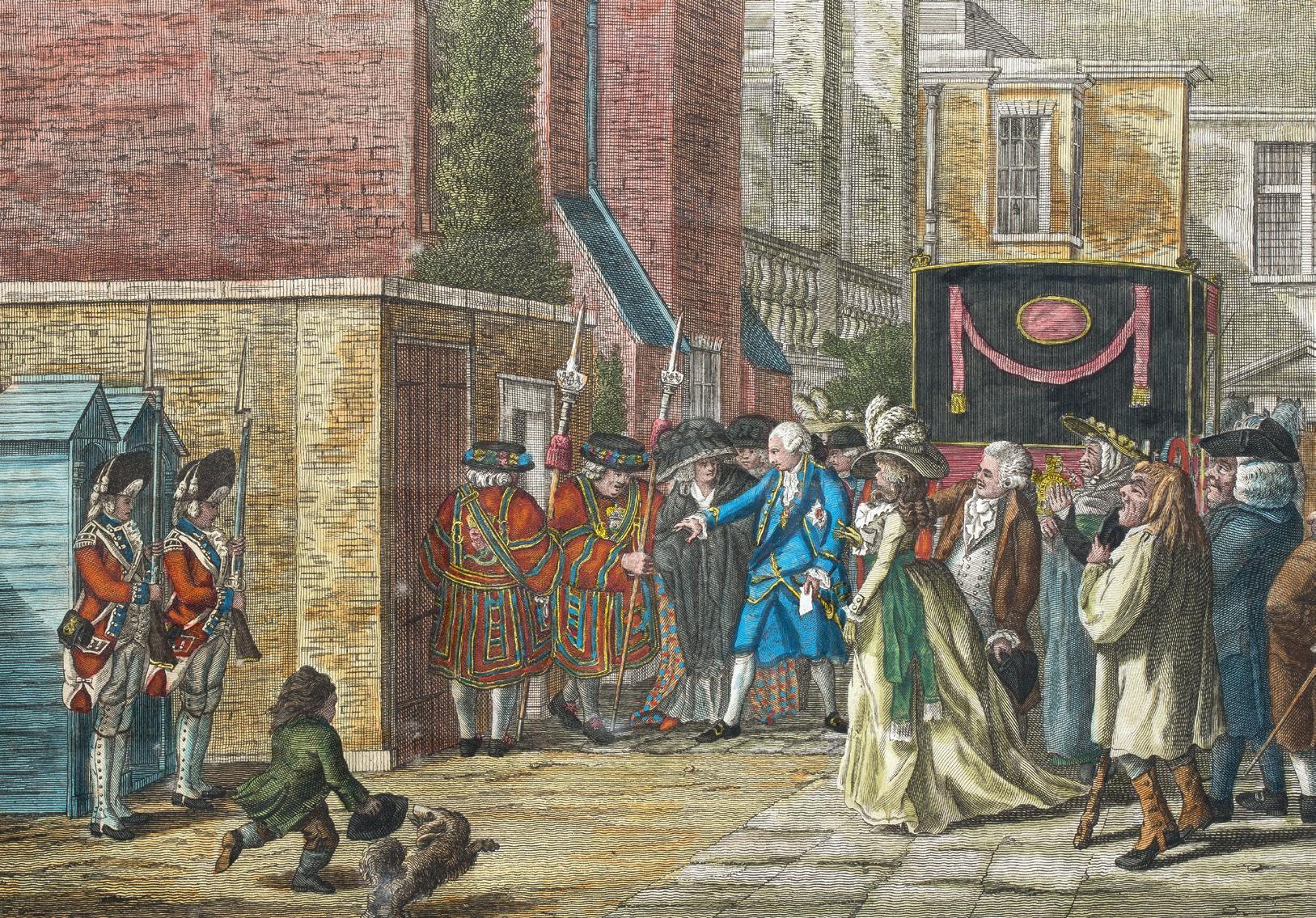
King George III survives an assassination attempt
● King George III reigned for over 60 years, making him our longest reigning male monarch a fact even more remarkable considering the number of assassination a empts he survived – including two in one day!
On 2 August 1786, while the King was stepping out of his carriage at St James’s Palace, domestic servant Margaret Nicholson approached him under the guise of presenting a petition. As the King reached for the paper, she lunged at him with an ivory-handled dessert knife. Fortunately, the knife was blunt, and the King was unharmed. He remained remarkably calm, telling his guards ‘ e poor creature is mad. Do not harm her. She has not hurt me.’
Some years later, at the eatre Royal, Drury Lane, in May 1800, a former soldier, James Hadfield fired
two shots at the King who was standing in the royal box while the national anthem was being played. A er missing his target, Hadfield is reported to have said to the King: ‘God bless your royal highness; I like you very well; you are a good fellow.’
e unflappable King ordered the performance to continue.
Earlier that day, at a review of the 1st Foot Guards in Hyde Park, a shot was fired which narrowly missed the King but struck a clerk in the Navy O ce who was standing close by. And in 1803, Colonel Edward Despard and his accomplices were executed for a plot to seize the Tower of London, overthrow the government and assassinate the King.
Ultimately, these a empts did li le more than highlight the King’s remarkable stoicism to simply ‘keep calm and carry on’.
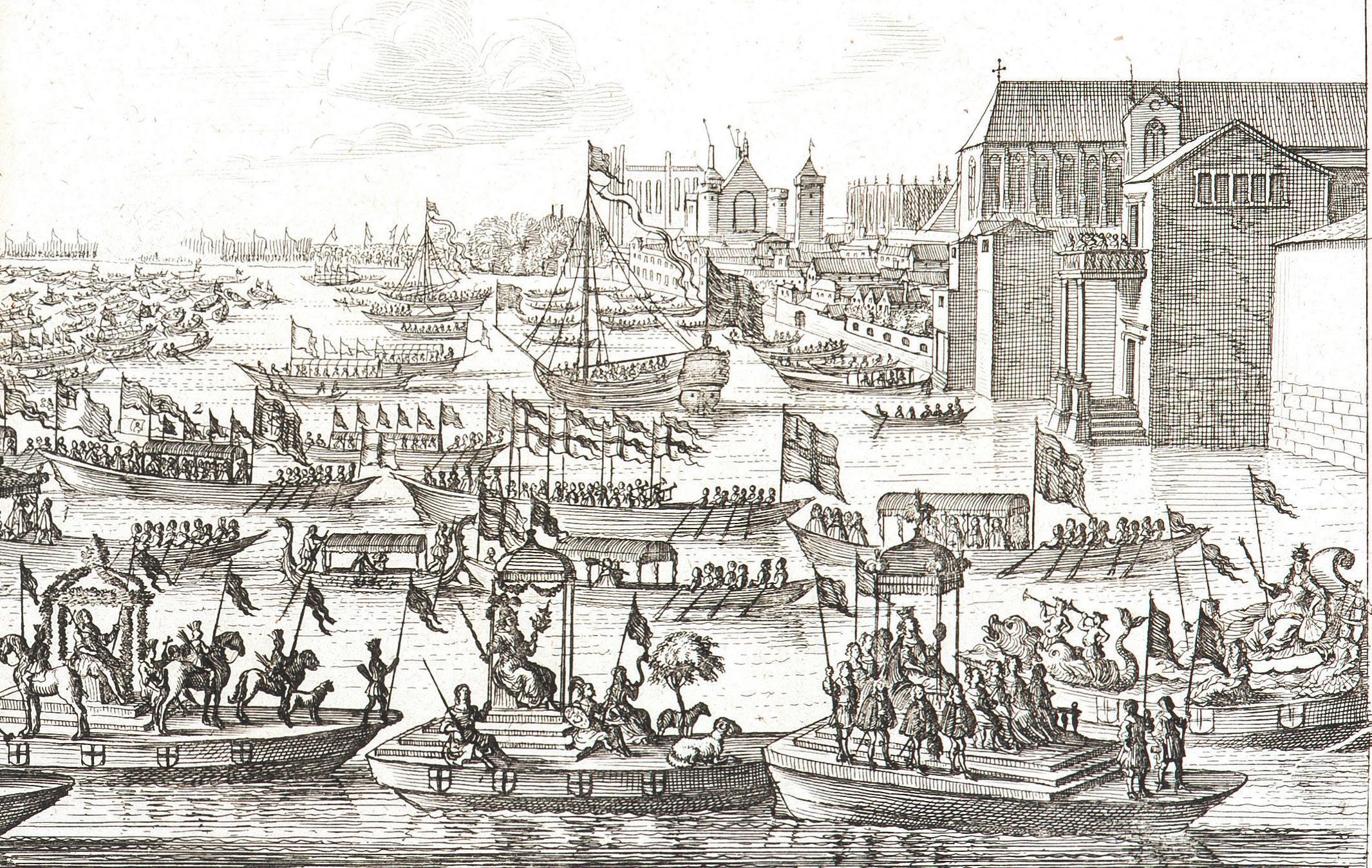
Catherine of Braganza’s ‘Aqua Triumphalis’, a monumental pageant held on the Thames between Hampton Court and Whitehall on 23 August 1662.
BELOW: The attempted assassination of George III as depicted by Robert Dighton, 1786.
23 AUGUST 1662
Triumph on the Thames
● Charles II and his new Portuguese wife Catherine of Braganza spent their honeymoon at Hampton Court Palace in May 1662. e event was marked by grand preparations including the creation of the Long Water canal, the refurbishment of the Queen’s lodgings and the provision of a great green velvet bed topped with plumes. However, the celebrations were overshadowed by one of the King’s many mistresses, Barbara Villiers, Countess of Castlemaine, who arrived at the palace to give birth to her second child by him. e Queen was so shocked at being introduced to her husband’s mistress that she fainted!
A er a three-month stay at the palace, Charles and Catherine le Hampton Court and travelled in a great river procession to London where the new Queen was welcomed by the Lord Mayor and citizens of London. e ‘Aqua Triumphalis’ as it was called, was described as ‘the most
magnificent triumph that ever floated on the ames’, with over 10,000 boats and barges ‘dress’d and adorn’d with all imaginable pomp’.
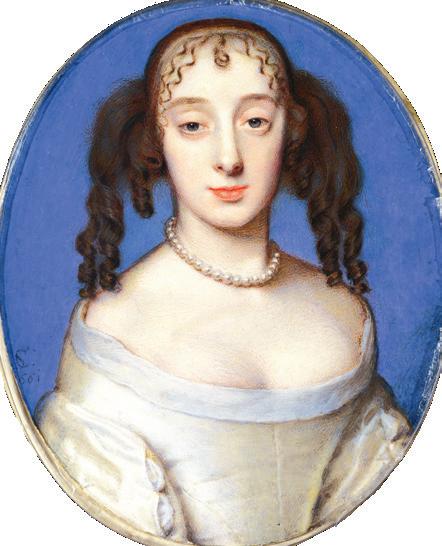
e diarist, Samuel Pepys watched the spectacle from the top of the Banqueting House at Whitehall, but the real focus of his a ention appears to have been the King’s mistress, Lady Castlemaine, who once again stole the show. Pepys recorded ‘that which pleased me best was, that my Lady Castlemaine stood over against us upon a piece of White Hall, where I glu ed myself with looking on her’.
ABOVE: Barbara Villiers, Charles II’s notorious and much-admired mistress, by Samuel Cooper, 1661. (© Royal Collection Enterprises Ltd 2026 | Royal Collection Trust)
Trace the journeys of royalty along the River Thames aboard the o!icial Tower of London River Tour, where creative storytelling brings historic landmarks to life. Members enjoy 10% o!. Book at hrp.org.uk/tower-river-tour. Exclusions apply.

TAlexandra Stevenson, Curator of Archaeology and Historic Buildings chooses some of her favourites
he Archaeology and Architectural Collections at Historic Royal Palaces comprise more than 181,000 individual objects from our London sites, from sherds of Roman po ery, medieval floor tiles and 18th-century shoes to sections of 16th-century lead pipes, Jacobean fire backs, doors, hinges and decorative wood carvings. e two collections are closely linked to one another, o!ering a tangible connection to the people who worked at the palaces as well as being a fantastic tool for learning about both the existing and lost palace buildings. ey are the fastest growing of all our collections, as both are frequently added to following archaeological
investigations, maintenance, conservation and renovation projects.
e Architectural Collection includes fixtures and fi ings, with some elements still in situ and others removed as part of repair, for example.
e collection also includes historic gra ti, ceiling paintings, murals and sculptural decoration among other things. e Archaeology Collection, by comparison, is made up predominantly of unwanted, discarded rubbish and demolition material from the palace buildings, as well as items dropped, and le behind by the people who lived, worked and passed though the palaces over time. Many of the objects in both collections are of national and international importance and many are
associated with renowned architects, artists and cra speople.
e Archaeology Collection is held at Hampton Court Palace, with a large proportion of the Architectural Collection held there too. One of the stores is in what’s known as the Old Silver Stick Gallery. Filled with shelves containing hidden secrets and surprises, the space itself is rather magical too, with the fragrant scent of fresh wood, and hints of its grace-and-favour past, from old fireplaces, traces of floral wallpapers to sections of timber panelling leaning against exposed brick walls. With such a rich collection, it is always di cult to pick out favourites, but I have selected 15 highlights that I hope you will enjoy.

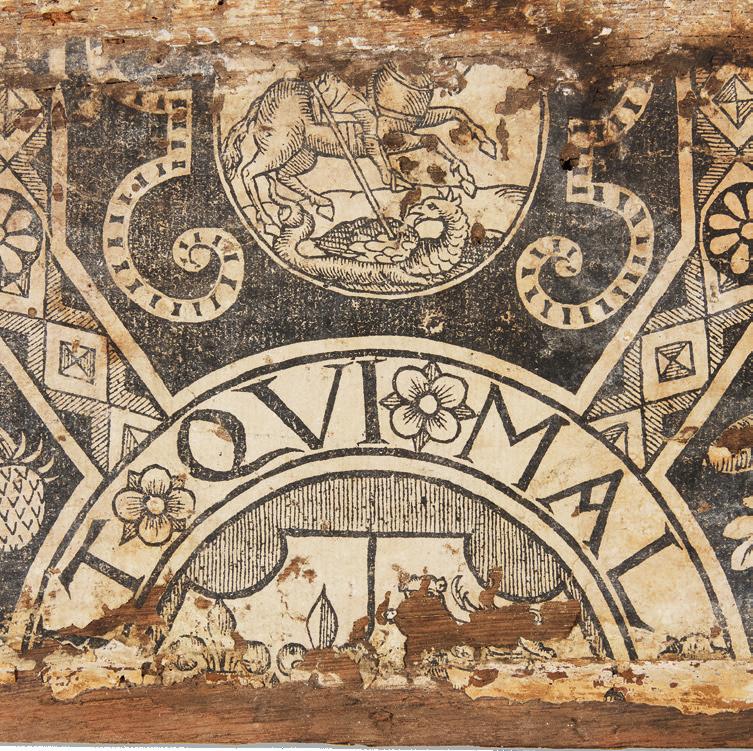
It is extremely rare to find 16th-century wallpaper, but this piece was found in situ at Hampton Court Palace during renovation works. It dates to 1550-75, making it one of the oldest examples of wallpaper in England. It is block printed with a series of repeating panels containing the royal coat of arms, Tudor roses, vases of flowers and St George slaying a dragon.
A er the 1986 fire at Hampton Court, fragments of carved wood too damaged to repair were saved and added to the collection. is piece of carved limewood from the Cartoon Gallery is the work of celebrated Anglo-Dutch woodcarver, Grinling Gibbons, who was appointed Master Carver to the King in 1693.
Tudor architectural terraco a was a popular material for the external decoration of buildings in England between 1510 and 1530. Literally meaning ‘cooked earth’, terraco a is made from moulded clay. is fragment from Hampton Court once formed part of a window transom (a horizontal bar separating windows) perhaps originating from Cardinal Wolsey’s Long Gallery.
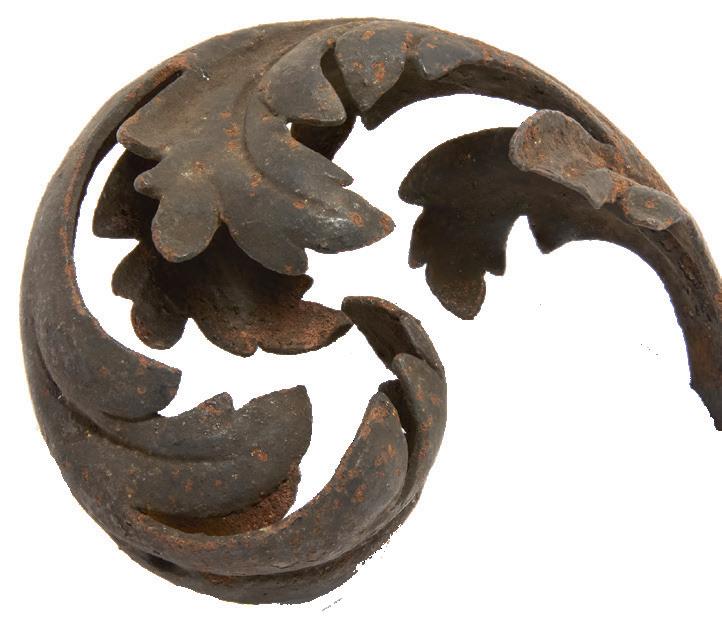
is wrought-iron cupped acanthus leaf originates from the decorative Tijou Screen in the Privy Garden at Hampton Court and is likely the original work of the accomplished French ornamental ironworker, Jean Tijou. Produced in the late 17th century, the screen was originally designed for the Great Fountain Garden but was later moved to its current position separating the Privy Garden from the ames.
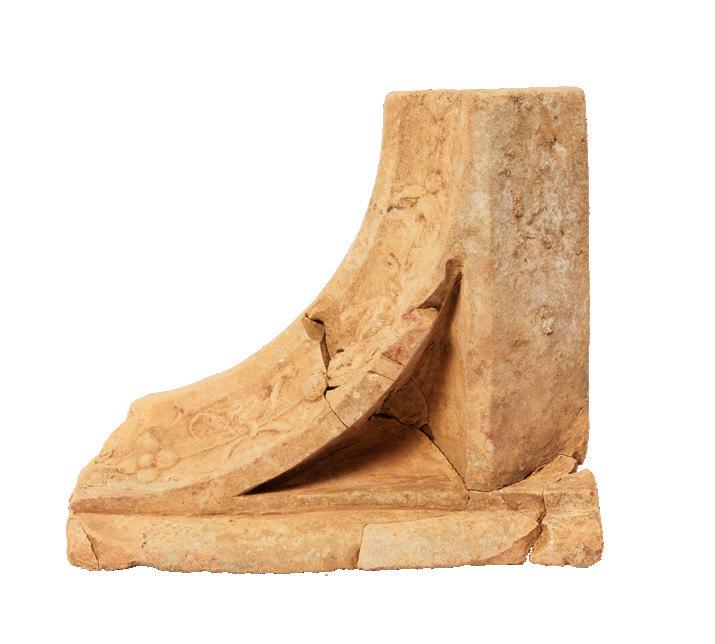
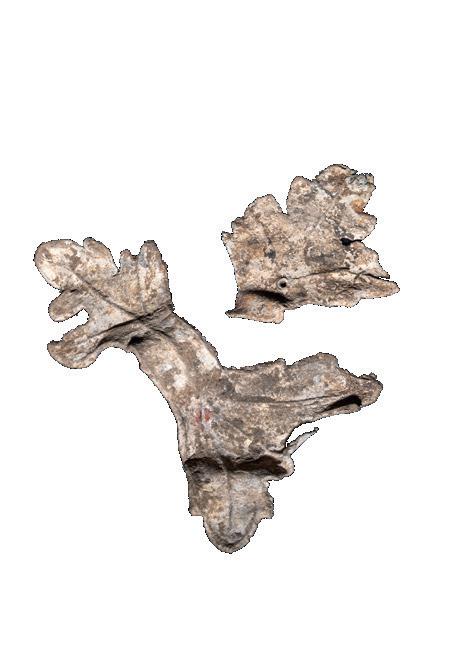
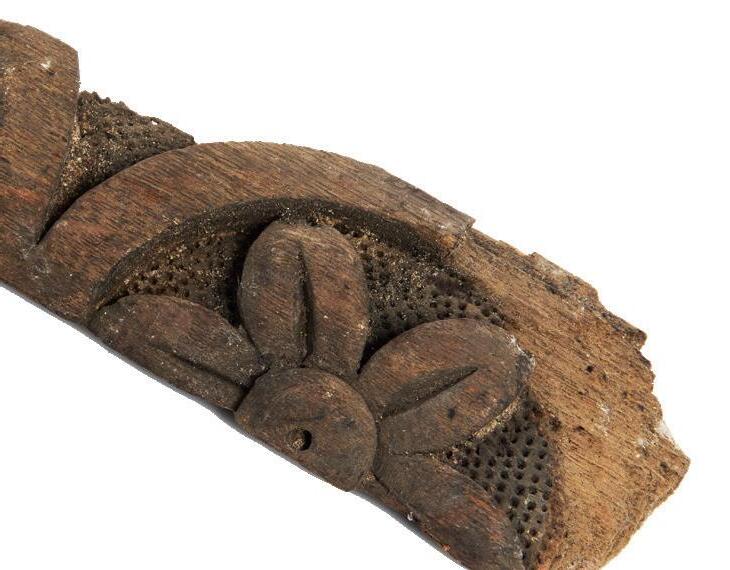
ese gilt lead oak or vine leaves were found during the excavation of one of the lost Tiltyard Towers at Hampton Court. ey formed part of a fretwork ceiling decoration – a type of ceiling ornament popular in the 16th century, comprised of a series of timber ba ens to form a variety of rectilinear pa erns. Next time you visit the ‘Tudor World’ or the Wolsey Closet at Hampton Court, look up at the ceiling and see if you can spot similar leaves.
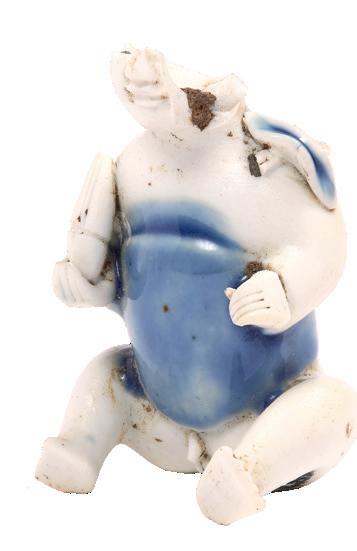
is c18th-century porcelain figurine was found in the moat at the Tower of London. It may be one of a pair of ‘He-He Er Xian twins’ representing harmony and union, imported from a ceramic factory in Jingdezhen, South-East China. Figures such as this one were popular as part of large porcelain displays in royal residences or wealthy homes.
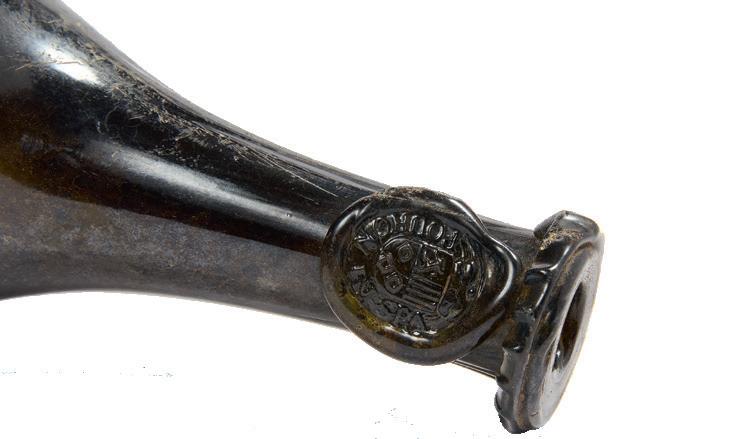
is early 19th-century glass water bo le imported from Belgium was found during excavations next to Kew Palace on the site of a lost wing, where King George III was kept in close confinement during periods of illness. e top of the neck is decorated with a seal embossed with ’POUHON IN SPA’ around an armorial shield.
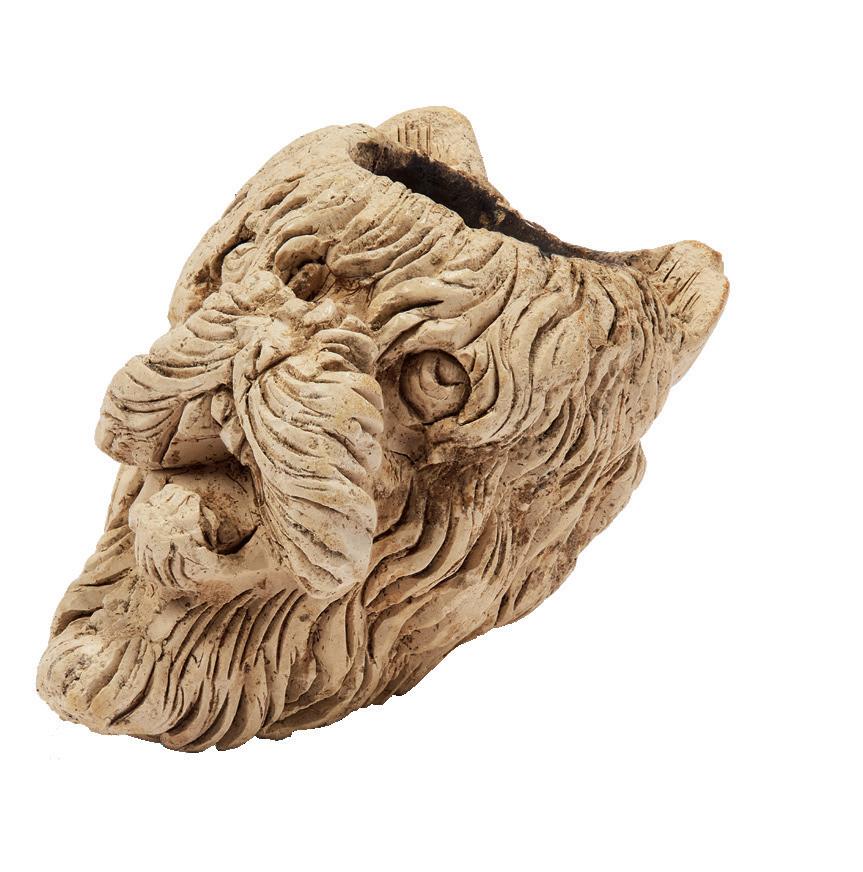
An extremely rare find, this hand-carved tobacco pipe bowl is made from the mineral known as meerschaum, which is found in Asiatic Turkey, Tanzania, Greece and Bohemia. is example was possibly imported from Vienna in the first half of the 19th century. It was found during excavation of the New
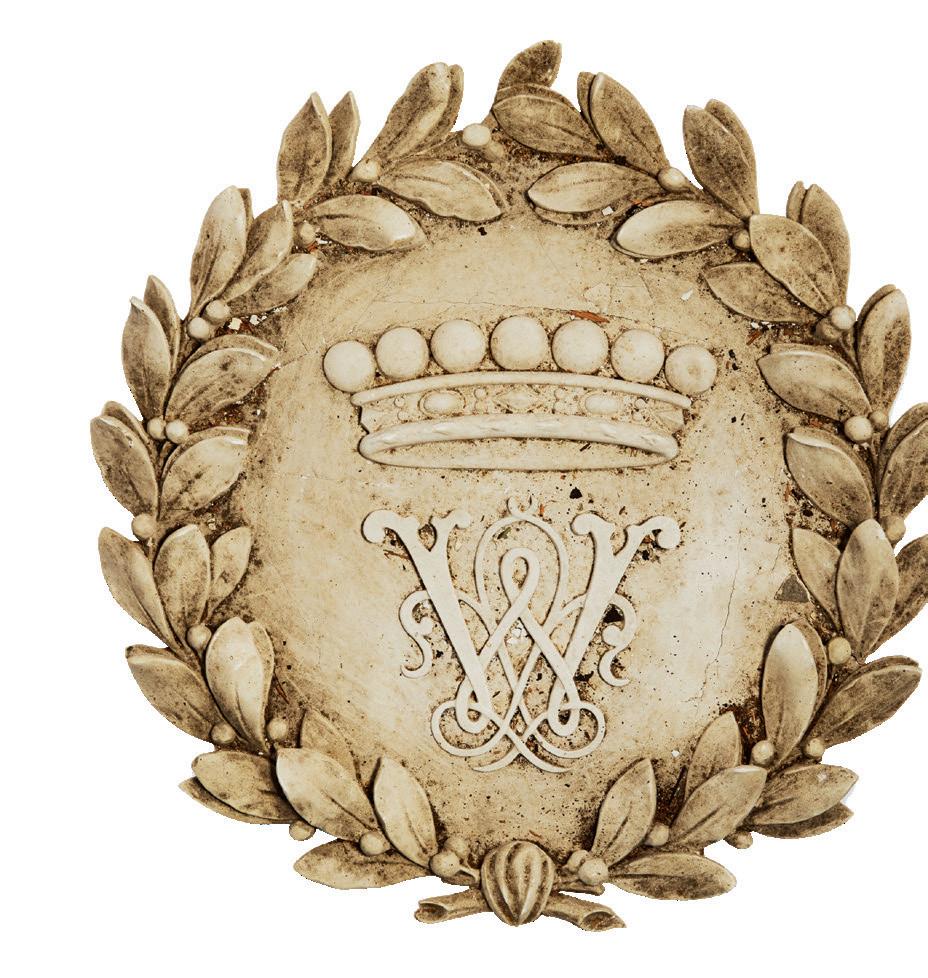
is plaster roundel comes from Viscount and Lady Wolseley’s grace-and-favour apartment in the south-west wing of Hampton Court Palace. When Viscount Wolseley died in 1913, Lady Wolseley went to great lengths to transform their apartment into a memorial to her husband. In one upstairs room there was an ornate plaster ceiling with decorative roundels like this one depicting Wolseley’s cypher.
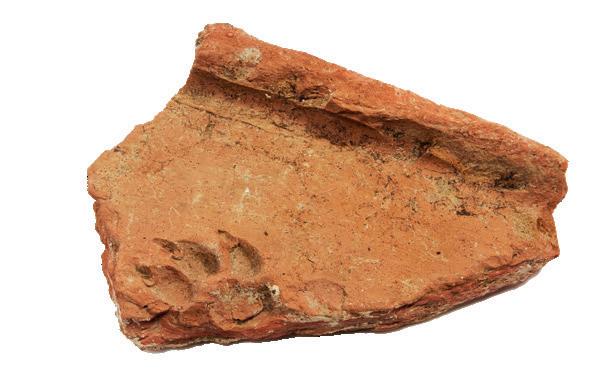
is fragment of a Roman ceramic roof tile with the impression of a dog paw print was found in the Inmost Ward at the Tower of London. e tile was formed by se ing wet clay into a mould, which was to dry before being baked in a kiln. It is quite common to find impressions of animal or even human footprints, made when the tiles were le out to dry.
DISCOVER MORE
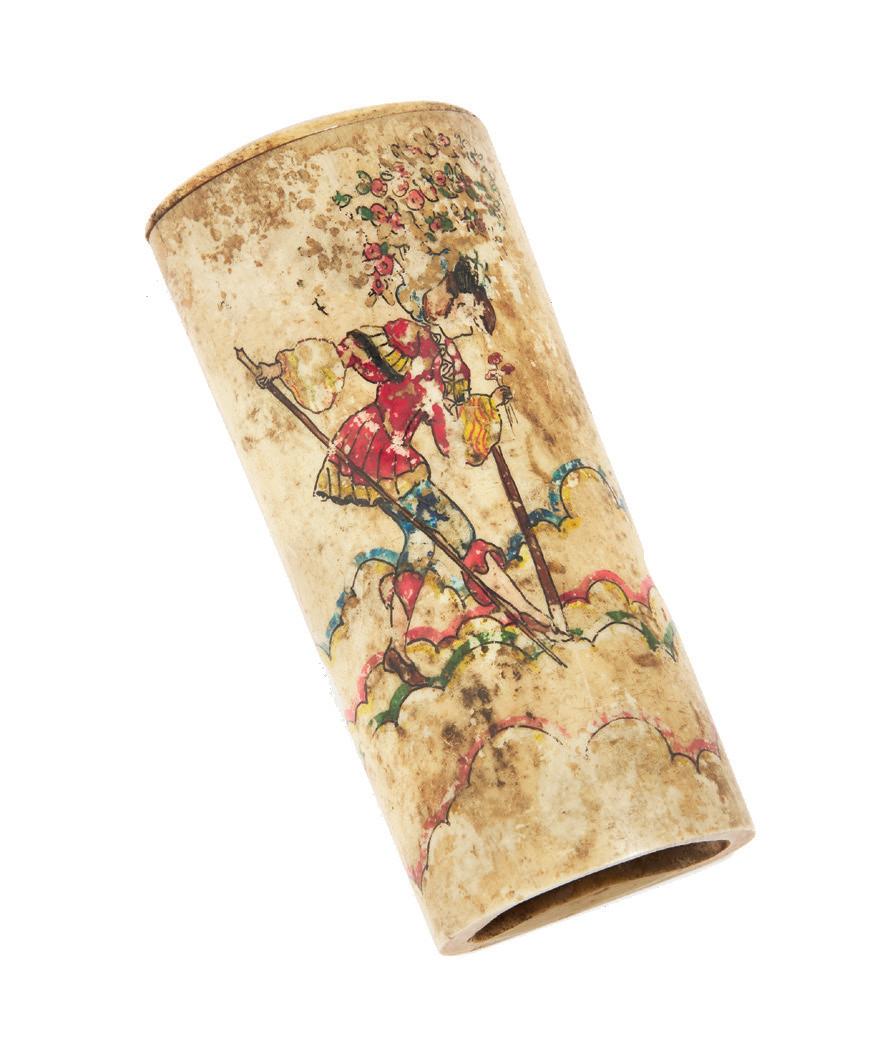
Possibly a brush pot, this intriguing object is simply made from a hollowed-out ca le femur bone and is decorated with Japanesestyle paintwork depicting a man walking on stilts in the clouds. It was found
Archaeology can tell us much about Hampton Court’s early history. Explore ‘Hampton Court before Henry VIII’ at hrp.org.uk/blog
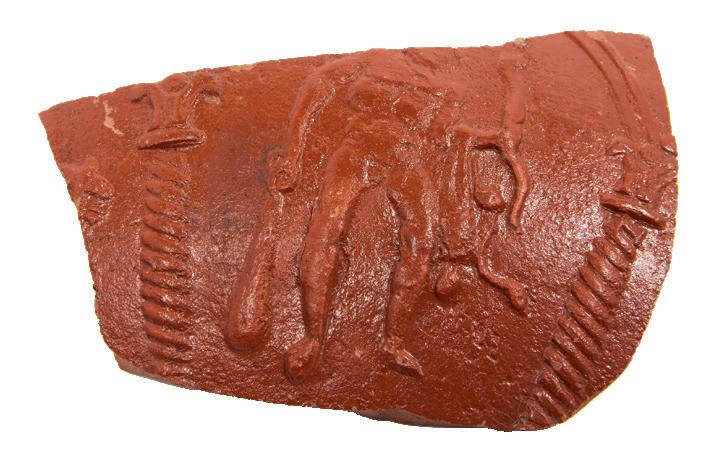
Widespread in the Western Roman Empire between the 1st century () and 3rd century *d, Samian ware was a fine po ery known for its red-gloss finish. It was moulded o en in highly decorative forms like this sherd found during excavations at the Tower of London. Hercules, the Greek hero is depicted holding a club, a lion’s skin and a snake.
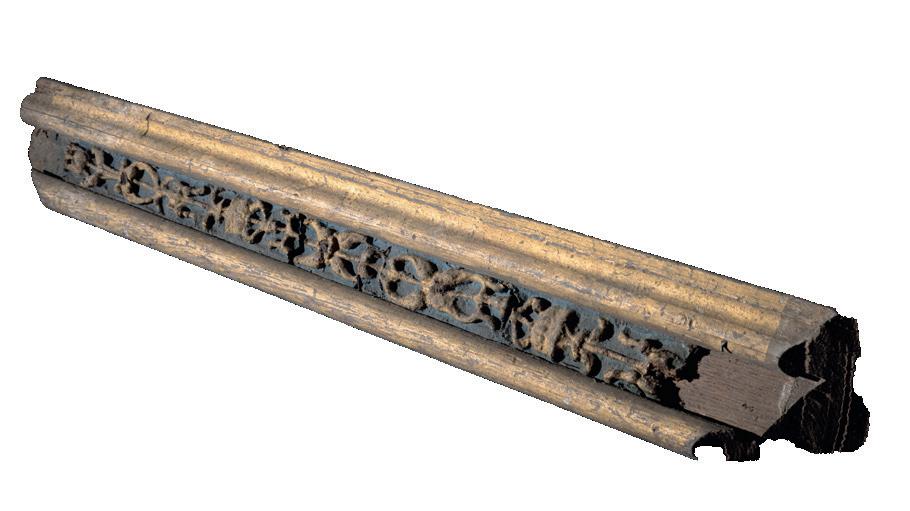
is 16th-century gilded oak rib or ba en was removed in sections from the ceiling of omas Wolsey’s old lodgings at Hampton Court during restoration work in the 1960s. e rib has paste-work inserts (moulded decorative elements made from sawdust, brick/chalk dust and animal glue), decorated with gilt on blue/green paint.
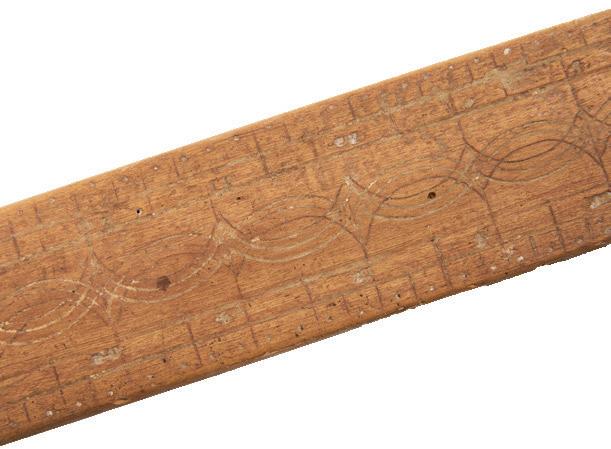
is rather unassuming 2-foot-long wooden stick is a c17th-18th century workman’s measuring rule from Hampton Court Palace. It is carved with inch notches and has a geometric pa ern along the centre. is type of everyday object provides a tangible link with the cra speople who once worked at the palaces.
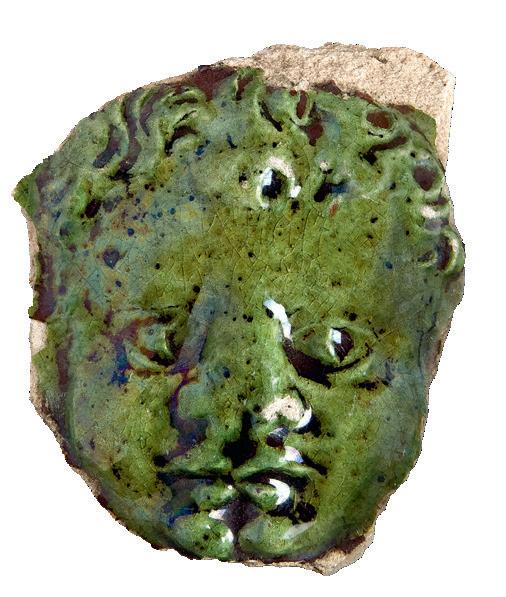
During the excavation of Whitehall Palace in 1939, 65 fragments of green-glazed stove tiles were found in a drain close to the footprint of Henry VIII’s bathroom. Every tile fragment is moulded in relief either with elements of the Tudor arms or typical Italianate-style grotesque work. Stoves became fashionable in the 16th century for heating rooms, mostly in royal and ecclesiastical se ings, their technology introduced from the Rhineland, Germany and the Low Countries.
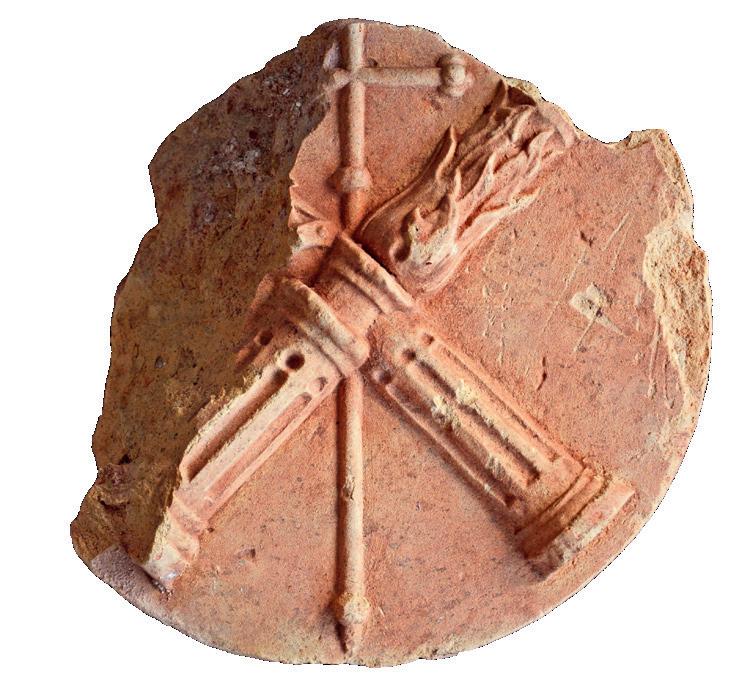
Excavation of some test trenches on the South Front at Hampton Court has just unearthed this tantalising fragment of 16th-century terracotta decorated with one of Cardinal Wolsey’s badges depicting crossed pillars with flaming torches and a sta! headed by a cross. This beautiful piece will be added to our collections, and we can’t wait to see what other secrets this area has yet to reveal when it is excavated further later this year.
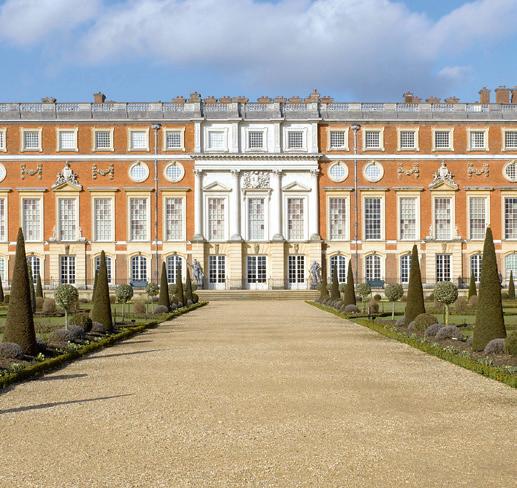
As a member, you help us care for these extraordinary fragments of history and share their stories with generations to come.
Dennis and his Beanotown pals get caught up in time travel trouble at Hampton Court Palace and Hillsborough Castle and Gardens this summer
Dennis has turned his go-kart into a time machine – but ‘WHOOPS’! It has gone haywire sca ering pieces across the royal palaces and gardens. Now history’s in a muddle – and the Beano pals need YOU to fix it! is special feature, just for members, is packed with puzzles and comic-style challenges to get your young mischief-makers ready for a blamtastic summer adventure at the palaces.
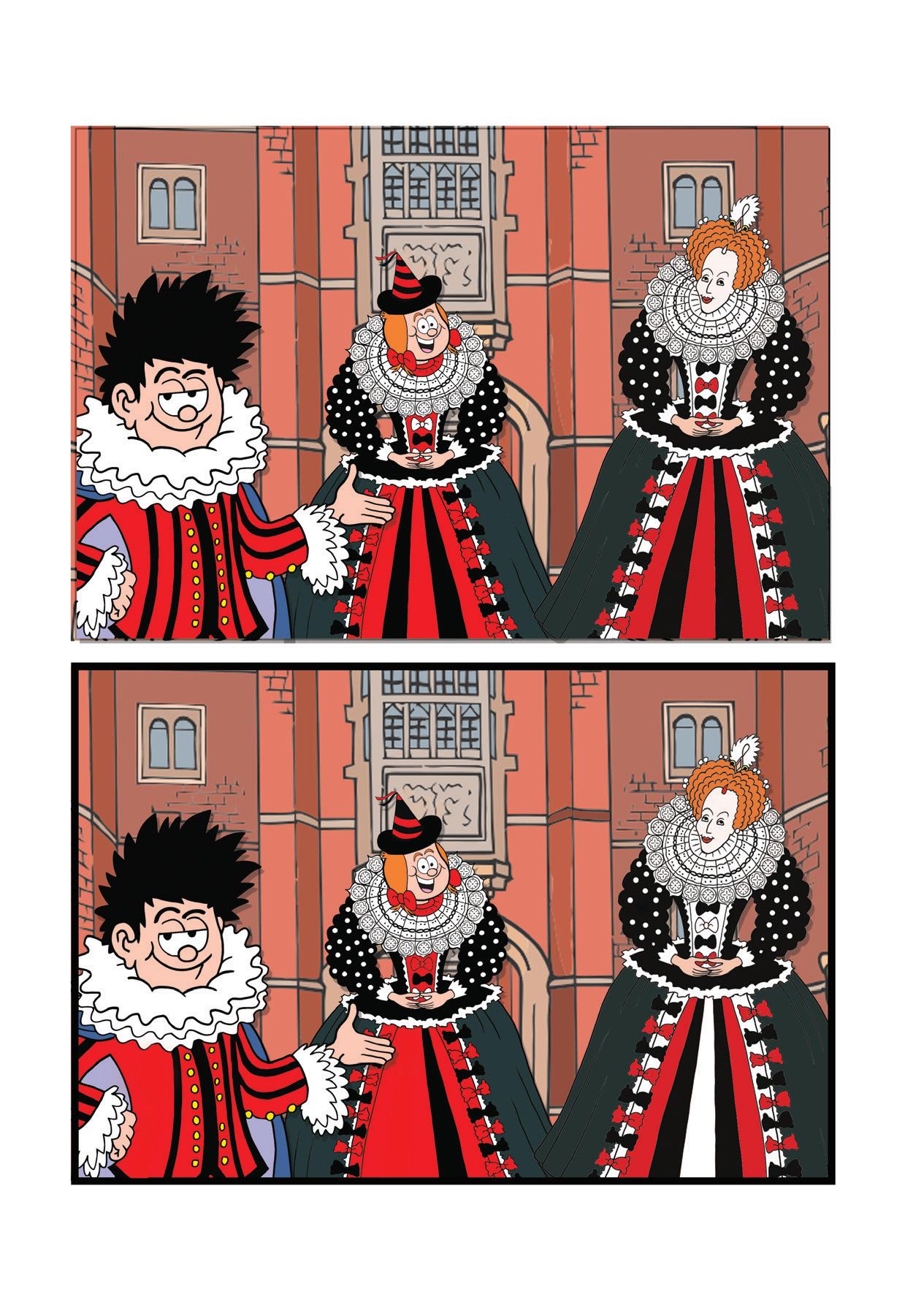
ings are looking blam-tastically muddled in this royal moment. Can you find all 10 sneaky swaps?
Why is early history called the Dark Ages?
Because there were so many knights!
SAVE MORE
Take a little mischief home with you. Discover exclusive Beano goodies in our palace shops and online – from pocket-money treats to limited-edition pieces. Members enjoy 10% o! with a membership card.

Find the following words in the puzzle. Words are hidden and and

Created using the Word Search Generator on Super Teacher Worksheets (www.superteacherworksheets.com)
first five issues delivered in the UK. Visit beanoshop.com/ laughter or scan to claim this blamtastic o!er.
Why did Henry VIII cross the road?
To get to the other bride!
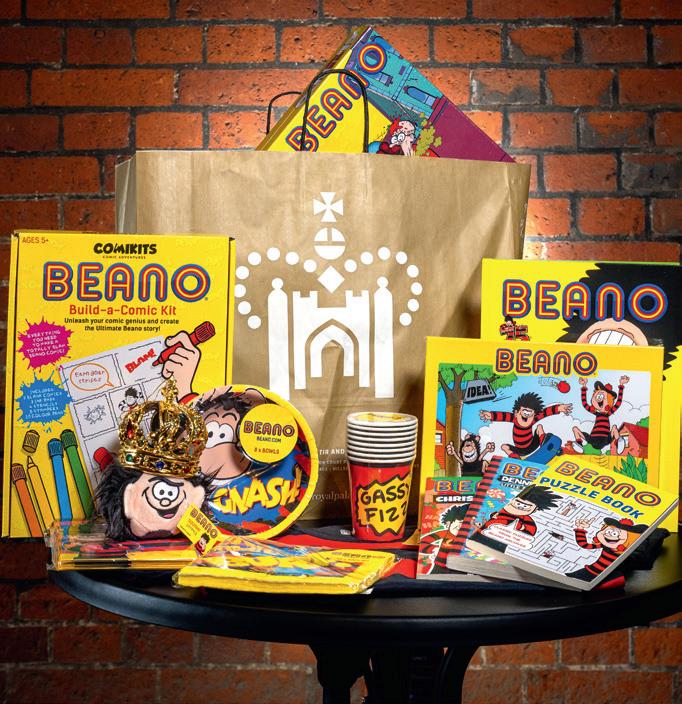
Remember – the Gnasher on the cover doesn’t count. Enter and terms and conditions at hrp.org.uk/Beano-giveaway
Play our blamtastic Beano-inspired quiz at royalhistoryquiz.hrp.org.uk and test your troublemaker know-how!
SEE FOR FREE
• Beano Hijinks at Hillsborough Castle and Gardens
Until 31 August; no pre-booking required.
• Beano Havoc at Hampton Court Palace
25 July – 23 August; no pre-booking required. It’s up to YOU to help the Beano friends fix their busted time machine. Pick up a special comic strip story on arrival and, at Hampton Court Palace, keep your eyes peeled for real-life palace history-makers who’ve been ‘court up’ in the chaos! BLAM! Snack time – head to our palace cafés between adventures. Members enjoy 10% o!.
11-12 and 18-19 July Hampton Court Palace
Look out for the winners of our young members’ competition - they’ll have a special role to play!
Henry VIII’s Joust Watch fearless knights on horseback clash in a thrilling test of skill and courage.
Until 14 August
Tower of London
A Tudor To-Do
Summer is here, and the palaces are buzzing with excitement! From historic performances to time travel trouble, there’s plenty for families to explore. Check hrp.org.uk for details, members go free (unless otherwise stated)
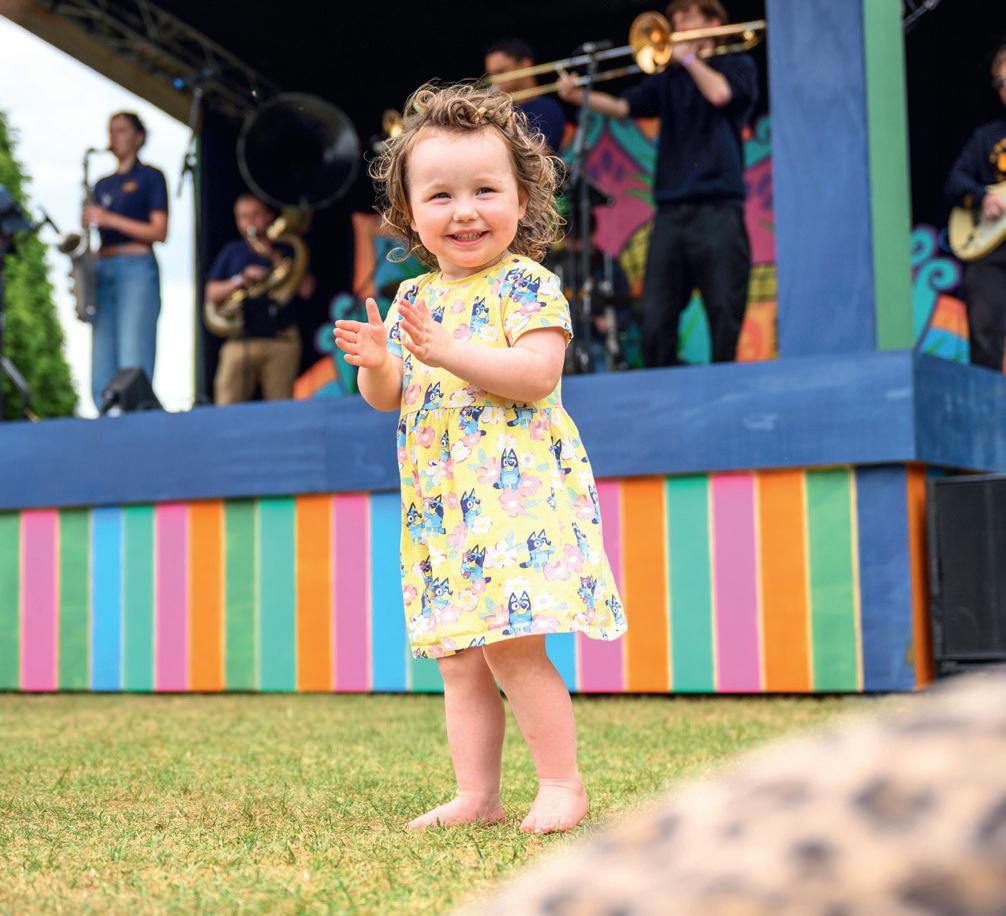
In the lead up to Anne Boleyn’s coronation, the workers have an endless to-do list – will they be ready ahead of an imminent inspection? Daily live performances (weather permi ing).
Until 31 August
New! Beano Hijinks at Hillsborough Castle and Gardens
Dennis and his Beanotown pals are in trouble! eir bonkers go-kart time machine has gone haywire and it’s up to YOU to help. Stumble across larger-than-life characters from Hillsborough’s history – from daring pranksters to music makers and world-famous inventors.
Open
Tower of London
The Crown Jewels Tower treasure hunters - be dazzled by over 23,578 gemstones.
25 July - 23 August
New! Beano Havoc at Hampton Court Palace
e Beano friends have crash-landed and Henry VIII is not amused. Can YOU help find the missing pieces of their time machine? Don’t miss daily live performances from costumed characters caught up in the mayhem!
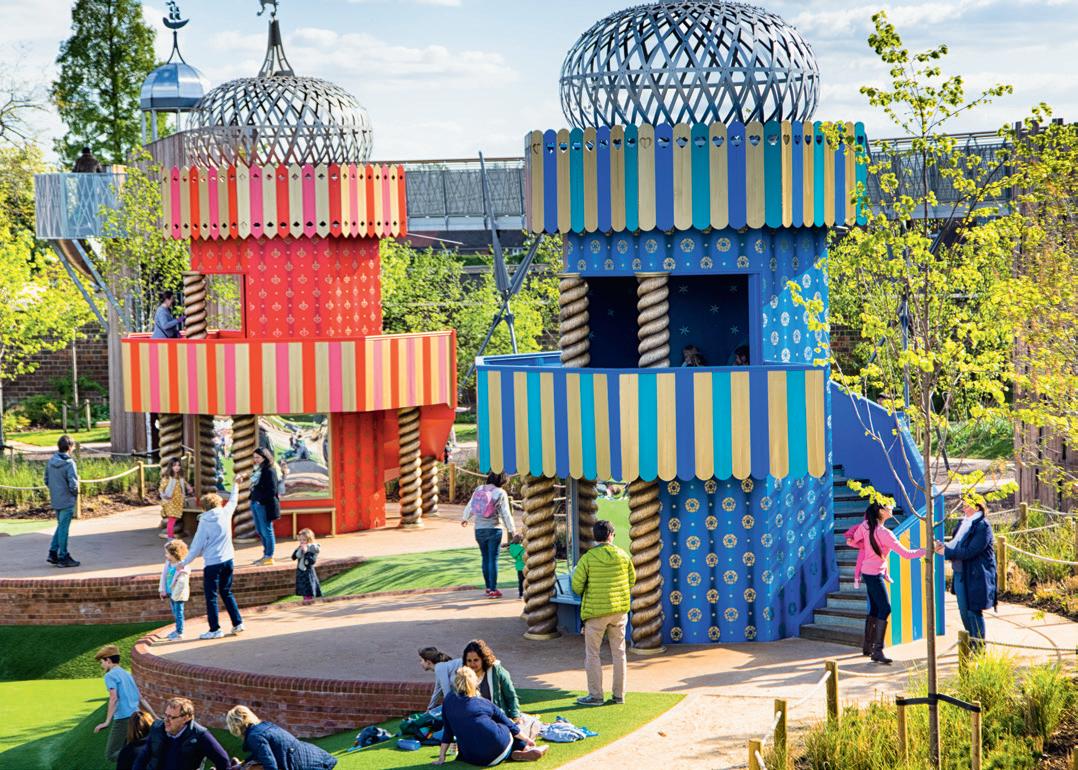
19-31 August (excluding 25 August)
Tower of London
‘Imagining Animals’
Inspired by the animals that once lived at the Tower, encounter extraordinary creatures through puppetry, music and movement.
29-31 August
Hampton Court Palace
Food Festival
Tuck into tasty street food, get creative with arts and cra s, take on classic fete games, and watch cooking demonstrations.
Open
Hillsborough Castle and Gardens
Imaginary Menagerie
Explore an interactive garden trail celebrating the wildlife that calls Hillsborough home.
Open Hampton Court Palace
Magic Garden
School’s out for summer - face mythical beasts and storm the ba lements in our magical playground.
Visit your digital hub – The Vault for Henry VIII’s Joust and Beano Mischief printable colouring sheets to enjoy at home!
24 October - 01 November
Hampton Court Palace
Halloween at Hampton Court Palace
Explore Henry VIII ‘s notoriously haunted palace this October half term.
24 October - 01 November
Hillsborough Castle and Gardens
Halloween at Hillsborough Castle and Gardens
Get closer to nature this Halloween with family workshops, storytelling walks and the twisty maze.
10 October – 08 November
Hillsborough Castle and Gardens
Scarecrow Parade
See the Walled Garden vividly brought to life with spectacular scarecrows.
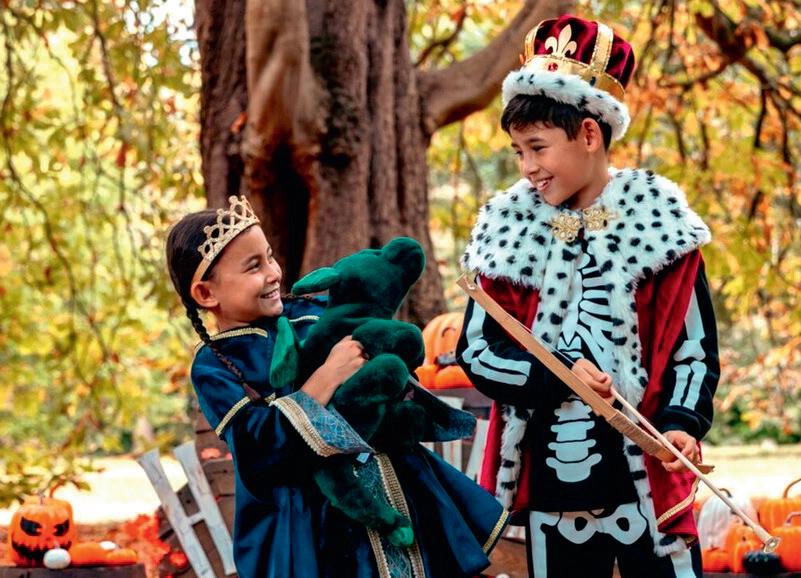
Find our full programme of events. Scan the code opposite for details.


Pre-booking via your Member login is required during select events; look out for the ticket icon. Many events are included in palace admission; some require a separate event ticket. For details, check What’s On at hrp.org.uk.
PATRON, HISTORIC ROYAL PALACES
We speak to a long-time member and volunteer who enjoyed himself so much that he became a Patron!
John Harding, a former military historian for the Ministry of Defence, also worked for some years at the National Army Museum in London where he met his late wife Marion, also a curator. ey enjoyed visiting historic sites, including the Tower of London and Hampton Court Palace. A er his early retirement, and Marion’s death, John joined Historic Royal Palaces as a member. In 2016 he became a Patron. John, who lives in Wimbledon, also volunteers regularly at Hampton Court and the Tower.
Why did you become a Patron?
It’s an immensely satisfying and fulfilling experience, particularly for someone like me with a passion for history. Membership brings you very close, but being a Patron takes you right into the heart of the palaces. Patrons get ‘up close and personal’ behind the scenes at all the palaces, with many opportunities to stand alongside curators, conservators and other experts as they share their insights and expertise, plus there are many interesting social events, exclusive previews, and reciprocal visits behind the scenes to meet curators at other historic sites. e scheme o!ers a flexible range of commitment, which I can’t praise highly enough.
What do you enjoy most?
ere are many wonderful benefits o!ered by the scheme, but I gain even greater satisfaction by ge ing involved and giving something back. I’ve donated funds for various small projects. For example, I’ve funded the Tower gra ti project for two years, photographing and recording the hundreds of inscriptions carved by past
inhabitants. I was also o!ered the chance to help as one of the volunteers there, too, which is fascinating work.
How else are you involved as a volunteer?
Once a week I help catalogue uniforms in the Royal Ceremonial Dress Collection at Hampton Court. A er a uniform has been formally logged on to the database by the curators, my job is to examine the item closely to see if I can add some personal ‘colour’ or social context. For example, when I looked at the former Duke of Gloucester’s wartime o cer’s ‘Ba ledress’ uniform, I noticed from the label that, rather than being an expensive and more comfortable o cer’s private purchase item, the Duke had used a standard ‘Other Ranks’ set; the blouse having been made by the War O ce contractor, the thri y ‘50-shilling’ tailor firm! I also assist the curators with military research if needed and help the Visitor Support Team at the Tower. I really enjoy being involved in so many ways.
For more information about becoming a Historic Royal Palaces Patron, and other ways you can support us, visit hrp.org.uk/support-us/ become-a-patron.
THANK YOU
From our earliest members to those who have joined more recently, your continued support enables us to care for the palaces and share their stories with everyone.
Join us for Members’ Week!
Enjoy exclusive access, special savings and exciting prizes across our palaces.
e ‘must-see’ menagerie
Discover the animals, stories and spectacle that drew crowds for centuries - and continue to intrigue today.
Oh, one does like to be beside the seaside!
Dive into the history of royal holidays at the Great British seaside.
HRP.ORG.UK
Registered Charity No. 1068852