
… to our super spring issue!
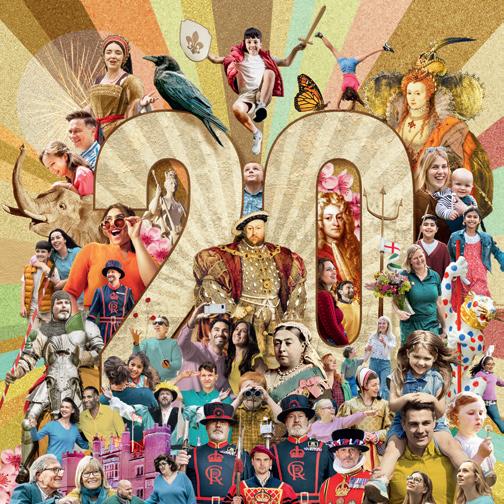
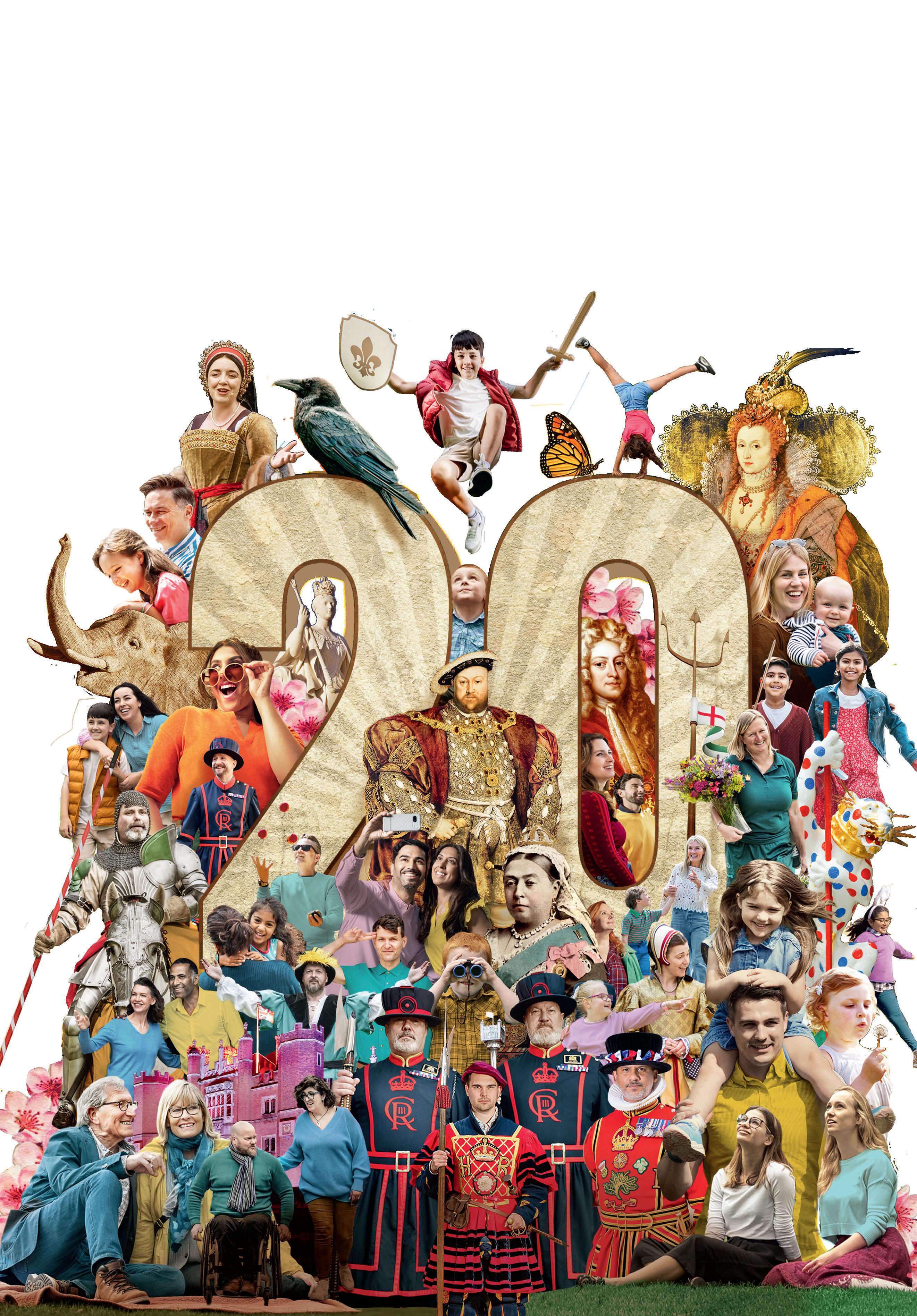
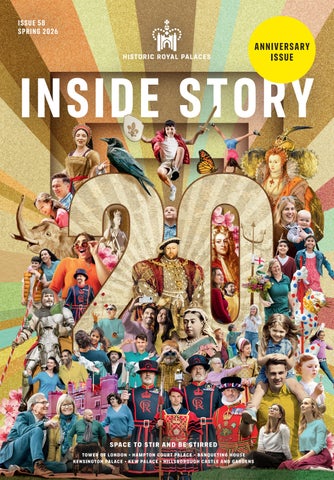
Our wonderful cover design celebrates the 20-year anniversary of the launch of the Membership Scheme. Since 2006, members have been at the heart of our organisation. Your support powers everything we do and we are truly grateful. Prepare to be amazed by the facts and figures in pages 12 to 17 – these astonishing numbers give a brief glimpse of the reach and range of our work, and all that you’ve helped us to achieve over the past 20 years. We hope this might inspire some of you to join us for life, with all the benefits and remarkable value that a lifetime’s membership offers. As a thank you, we’re giving away three FREE Life Memberships – see how to enter the prize draw on page 17.
On page 18 we feature the new exhibition, ‘The Last Princesses of Punjab’ opening on 26 March at Kensington Palace, which explores the life of Sophia Duleep Singh and the women who shaped her. With rarely shown Indian artefacts and intriguing personal stories, don’t miss it! Book a special members’ preview (page 22).
And because it’s spring, romance is in the air and in our pages too. However, What’s love got to do with it? (page 32) will raise a few wry smiles when you read how some royal matchmakers got it horribly wrong! Chief Historian Tracy Borman also has some surprising new research to share about Anne Boleyn and her unfulfilled yearnings, in Love Hurts (page 42).
We discover what’s going on behind that dramatic scaffold wrap on the West Front at Hampton Court Palace (page 36) while Echoes from the Archives (page 46) looks at the work of some of our predecessors, with present day colleagues charting the changes (the outfits, for one!). Enjoy!
Angie Faires Head of Marketing and Membership
Published by Historic Royal Palaces, Hampton Court Palace, Surrey, KT8 9AU.
In-house editor: Clare Murphy
External editor: Sarah Kilby
© Historic Royal Palaces 2026. All rights reserved. No part of this publication may be reproduced or transmitted in any form or by any means, electronic or mechanical, including
Historic Royal Palaces is an independent charity, and we rely on your support to continue to preserve the magnificent palaces and gardens in our care.
If you’re a UK tax payer and have not yet opted-in to Gift Aid, please email us at members@hrp.org.uk, and we can claim an extra 25p per £1 of your membership fee from the government, at no extra cost to you
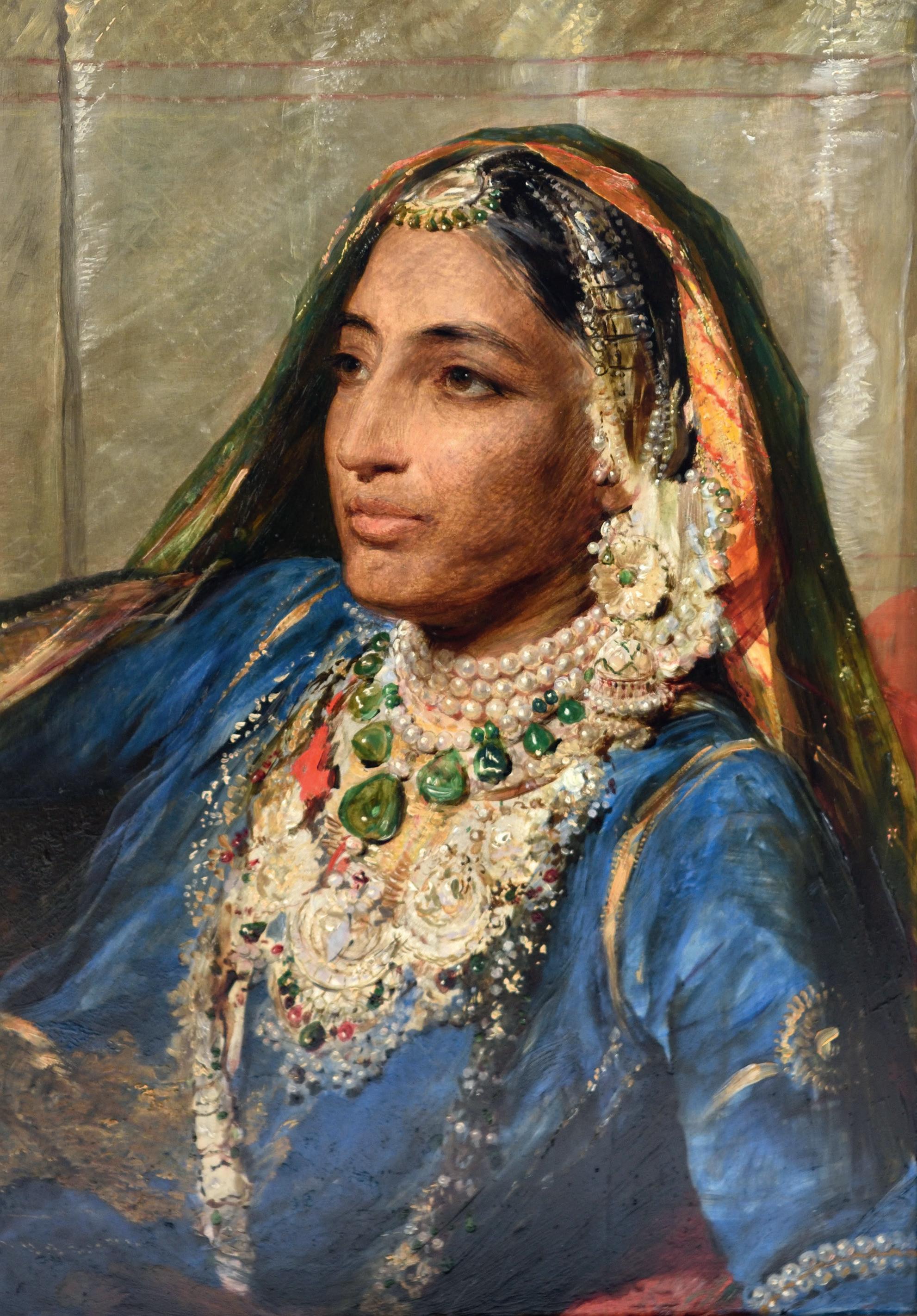
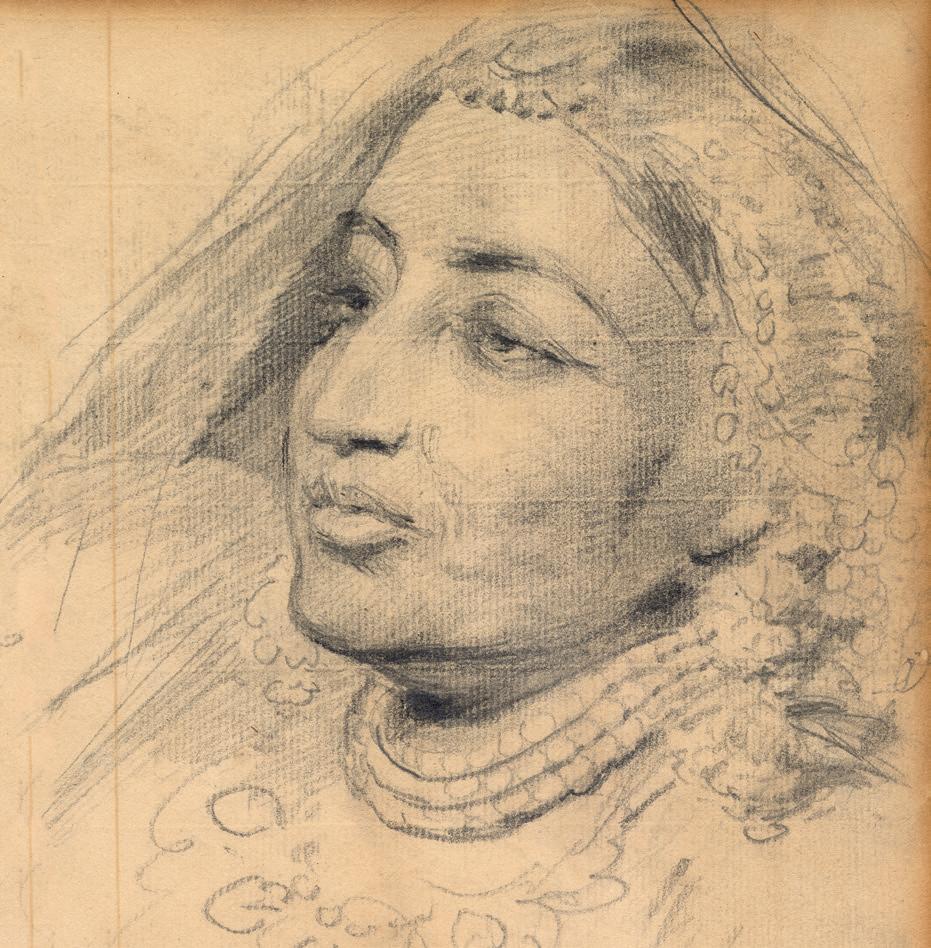
LEFT: Portrait of Jind Kaur by George Richmond, c1863, from the new exhibition ‘The Last Princesses of Punjab’ (see page 18). (Courtesy of the Kapany Collection, The Sikh Foundation)
photocopying, recording or any information storage or retrieval system, without permission in writing from the publisher.
Unless otherwise stated, all images are © Historic Royal Palaces. Historic Royal Palaces is a registered charity (No 1068852) Contact us: insidestory@hrp.org.uk



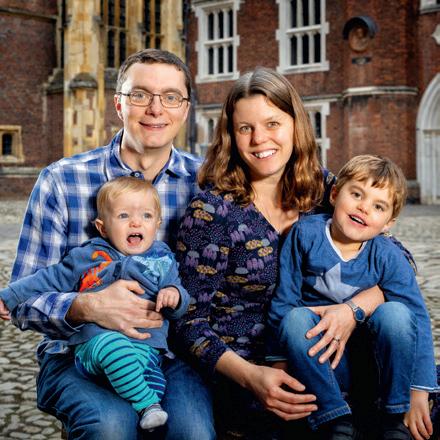
Tips to help you enjoy your membership, at our palaces and gardens, and at home
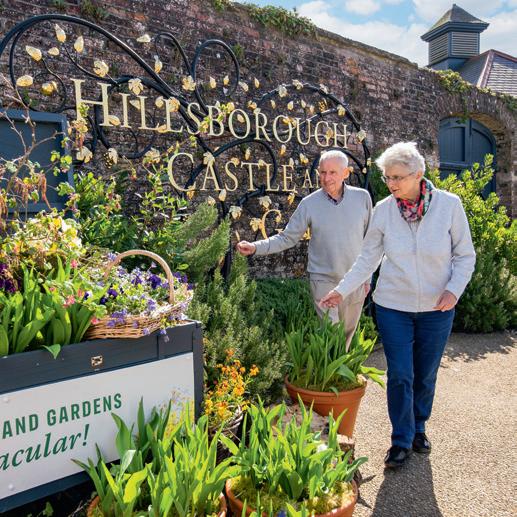
As a member, you can enjoy free, unlimited entry to some of the UK’s most iconic palaces: Tower of London, Hampton Court Palace, Kensington Palace and Hillsborough Castle and Gardens, as many times as you like.
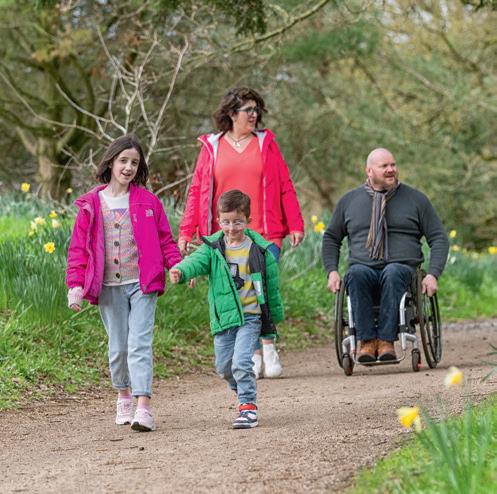
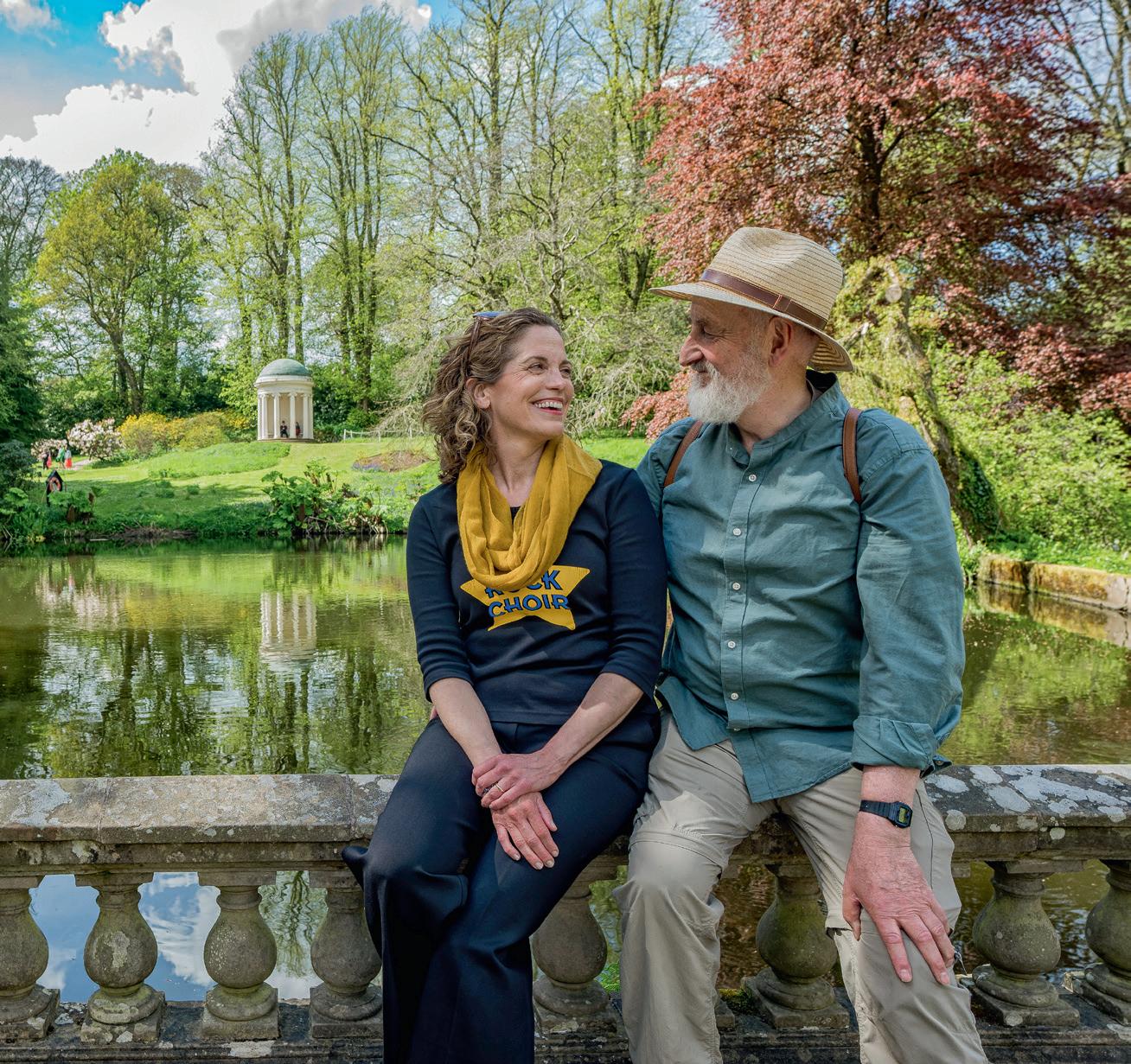
You only need to pre-book free tickets on select event days; at all other times, simply show your membership card. Visit hrp.org.uk and search What’s On for opening hours and booking requirements.
If you need help planning your visit or booking member tickets online, you’ll find answers to common questions in our membership FAQs at hrp.org.uk.
Did you know that we care for four sites within Kew Gardens: Kew Palace, the Royal Kitchens, Queen Charlotte’s Cottage and the Great Pagoda? Use code HRP10 to get 10% off Kew Gardens tickets and visit during seasonal opening (28 March – 27 September). Book online at kew.org or show your membership card at Kew Gardens ticket desks.
Once inside, enjoy daily tours with costumed hosts from 20 April, including
Hidden Spaces tours; members go free. Or climb the 253 steps of the Great Pagoda for panoramic views across London (separate ticket, members go free).
Don’t miss: the Historic Kitchens Team from Hampton Court, returning during the open season with talks and demonstrations in the Royal Kitchens. Included with entry to Kew Gardens on selected dates from May to August. See hrp.org.uk for details.
DISCOVER MORE
As a member, you benefit from free or discounted entry to a wide range of events including special exhibitions, festivals and fayres. Plus, an exclusive programme of members-only tours, talks, and behind-the-scenes experiences throughout the year.

Visit hrp.org.uk/ whats-on-all-the-palaces to see what’s on and whether you need to pre-book.
Bring your membership card on every visit to enjoy 10%* off in our shops and cafés, plus 10%* off in our online shop with code MEMBER26
Between 03-06 April, get 20% off our online shop as an extra treat.
Pick up a Member Royal Reward Card in one of our on-site cafés to collect stamps and get your 6th hot drink free! *Exclusions may apply
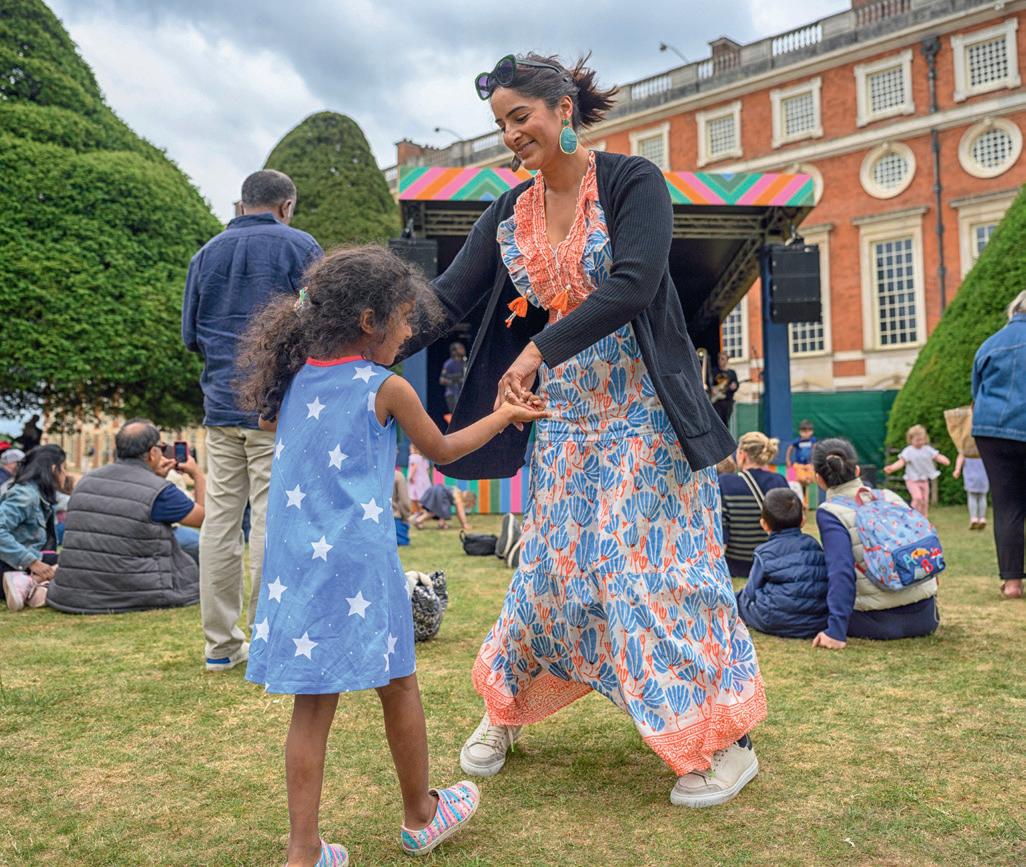

Unlock behind-the-scenes digital content, curated especially for members, on your digital hub. Get closer to the palaces and our history through expert interviews, thought-provoking podcasts, videos and fun family activities.
We’ll let you know about the latest member exclusives, events, early ticket releases and discounts in regular member email newsletters.
Email: members@hrp.org.uk to update your details or contact preferences, or to ask us a question
Visit: hrp.org.uk for …
• Opening days and times
• Access information
• Things to see and do
• More about our buildings and collections
Log in: to your Member login to ...
• Manage your account and password
• Upgrade or renew your membership
• Book tickets
Follow: Historic Royal Palaces on Instagram, Facebook and X
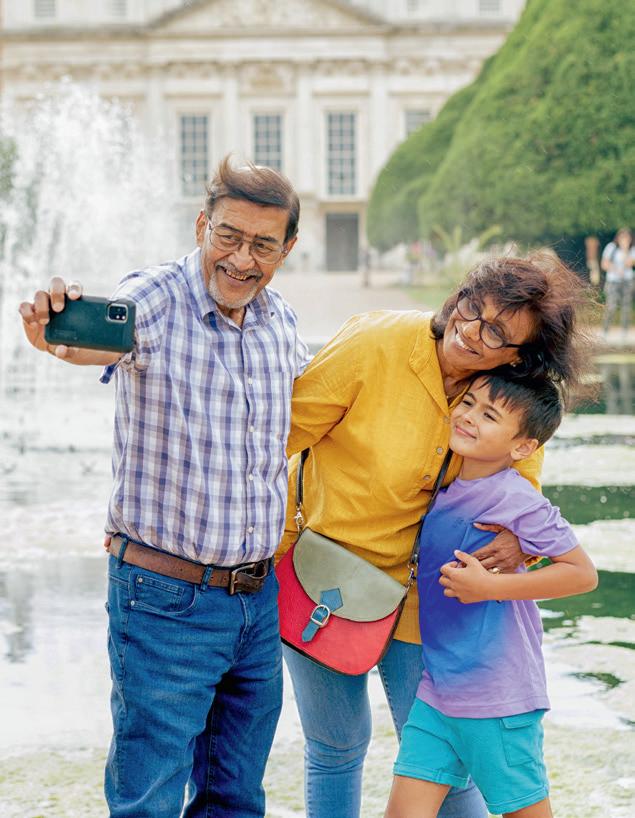
We’d love to see how you’re making the most of your membership! Post your photos with #PalacePhoto
Head to the Wilderness to witness the famous daffodil display, where over a million bulbs create a vibrant spring carpet.
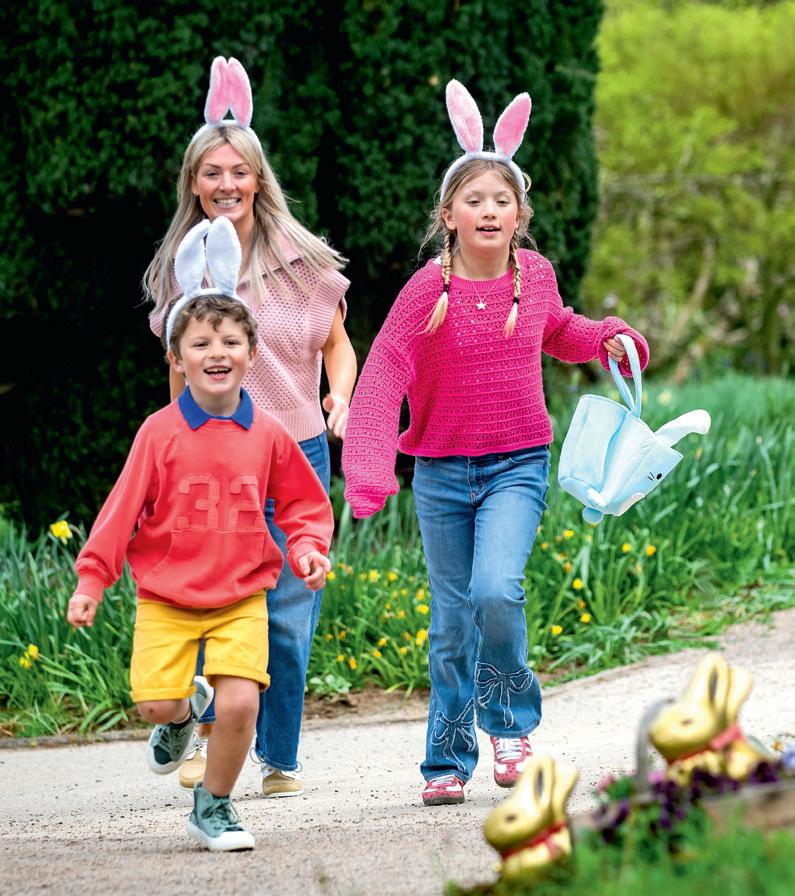
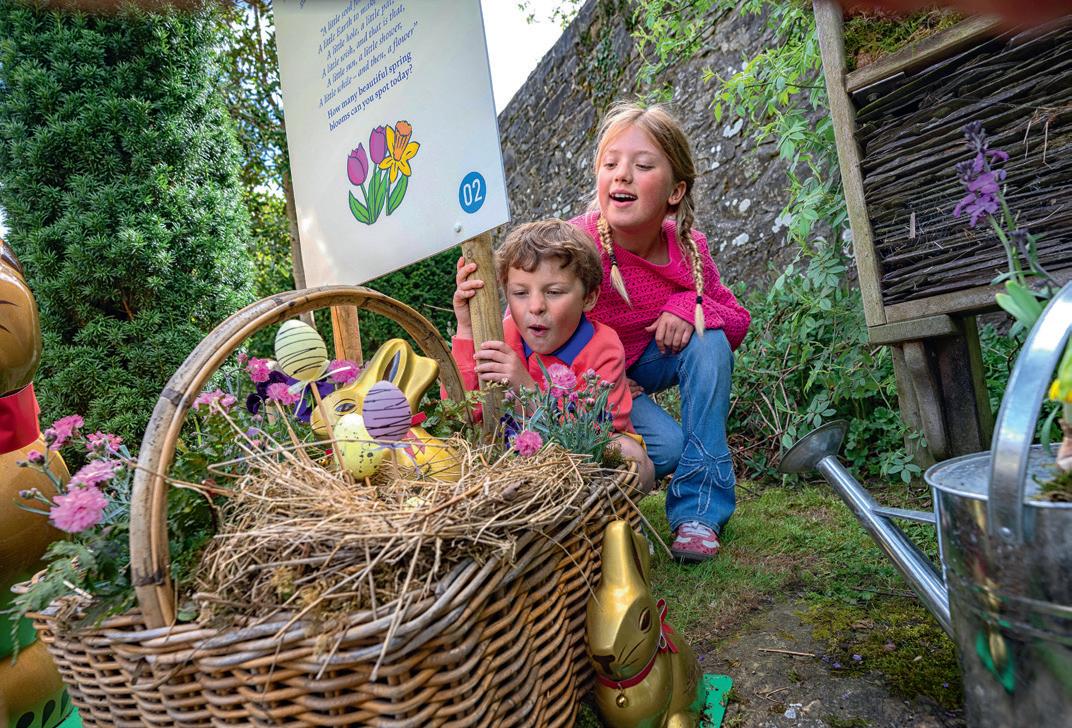
This Easter, bring the family to find Lindt GOLD BUNNY statues in the gardens and collect a 10g chocolate reward (non-chocolate alternative available on request). From midApril, enjoy the Tulip Festival, with historic varieties, pop-up displays and stories of this beloved perennial.
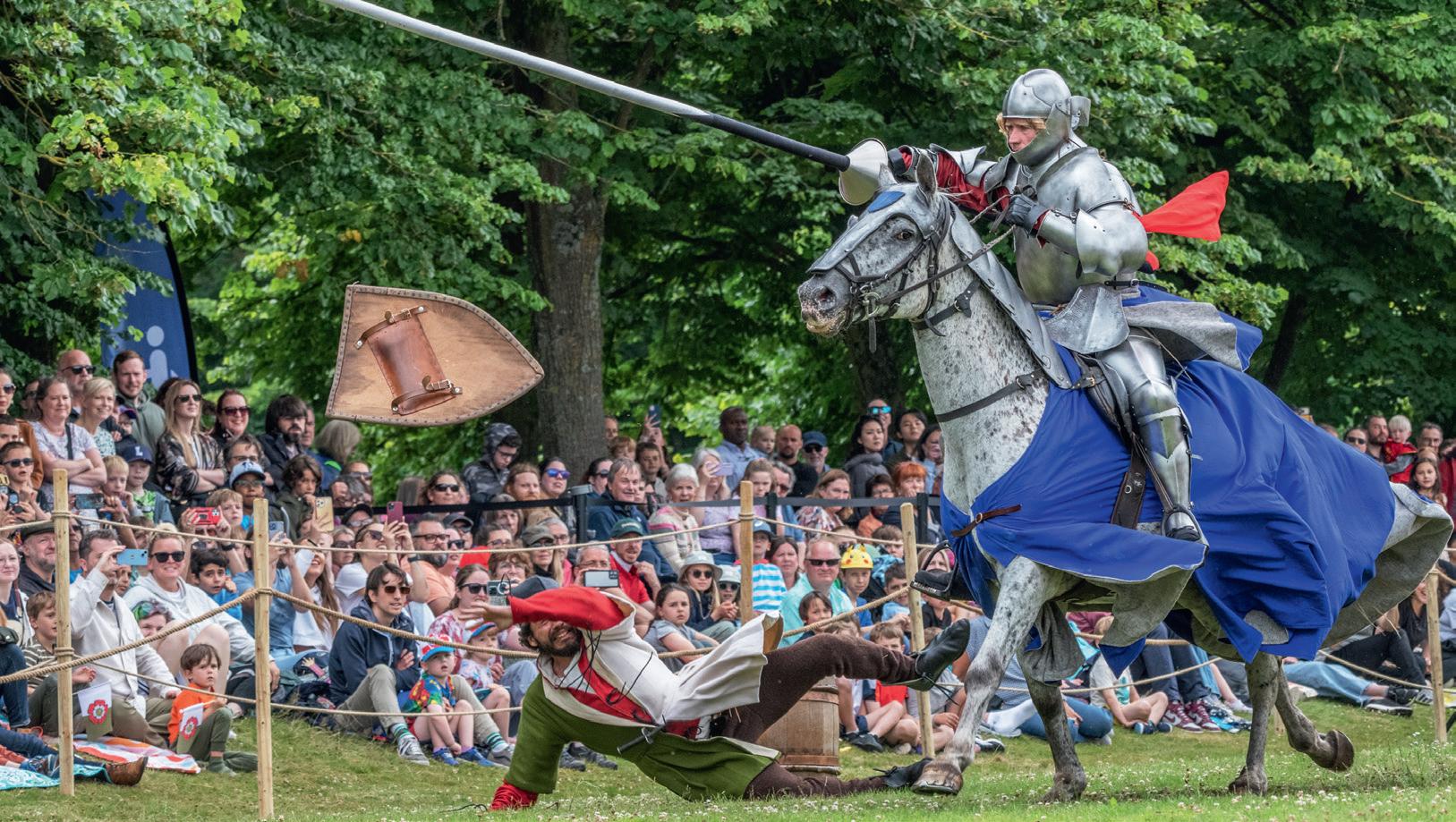
Back by popular demand, The Big Bahooey returns over the late May bank holiday with family fun, music and circus, alongside the triumphant return of Henry VIII’s Joust in July.
NEW this summer holiday, join us for a ‘blamtastic’ time in Beano Havoc at Hampton Court Palace, 25 July – 23 August.
Round off the summer with street food, pop-up bars and live music at the Hampton Court Palace Food Festival, 29-31 August, followed by the Concours of Elegance to see 80 of the world’s rarest cars, 04-06 September. Enjoy 50% off using codes HRP26 or HRP26FAMILY. Named members only, exclusions apply.
• Members’ Tulip Festival Early Gardens Access at Hampton Court Palace; 12 and 19 April
• Members-Only Gardens Tours at Hillsborough Castle; 18 April, 09 May, 13 June, 19 September
• The House of Boleyn: Members’ Book Talk with Tracy Borman at Hampton Court Palace; 26 May
Between 19-31 August (excluding 25 August), encounter extraordinary creatures brought to life through puppetry, dance, and music. Inspired by the real animals that once inhabited the Tower’s Royal Menagerie, Imagining Animals unfolds as roaming performances across the Tower.
Be part of an ancient tradition with a membersonly opportunity to witness the Ceremony of the Keys, held nightly for over 700 years (separate ticket, pre-booking required).
Embark on a voyage aboard the official Tower of London River Tour and experience London’s iconic landmarks through creative storytelling. Members enjoy 10% off using code HRPMEMBERS10. Book online at hrp.org.uk. Exclusions apply.
Pre-booking via your member login is required for select events; look out for the ticket icon. Many events are included in palace admission; some require separate event tickets. See hrp.org.uk and check What’s On for details.
See the royal grounds burst into life with Bulbs and Blooms. Enjoy a joyful riot of spring colour, as waves of different plants take their turn to appear throughout the season.
Back by popular demand, the Lindt GOLD BUNNY Hunt returns this Easter. Join the self-led trail to discover the GOLD BUNNY statues and enjoy a delicious 10g chocolate treat (non-chocolate alternative available on request).
a glance
• ‘Royal Style in the Making’ Until 03 January 2027
• Bulbs and Blooms 14 March – 04 May (subject to weather)
• St Patrick’s Day music and storytelling sessions 15 March
• Lindt GOLD BUNNY Hunt at Hillsborough Castle and Gardens
28 March – 12 April
• Beano Hijinks at Hillsborough Castle
27 June – 31 August

• ‘The Last Princesses of Punjab’ at Kensington Palace 26 March – 08 November (Members’ Preview 25 March)
• Kew Palace reopens 28 March, separate ticket required
• Lindt GOLD BUNNY Hunt at Hampton Court Palace 21 March – 12 April
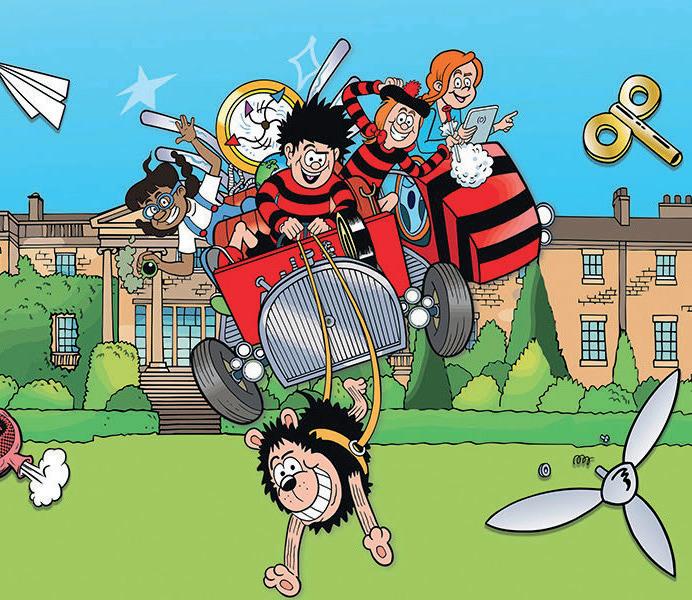
NEW this summer, 27 June – 31 August, experience 100 acres of fun in Beano Hijinks at Hillsborough Castle and Gardens. Dennis and his Beanotown pals are in trouble! Their bonkers go-kart time machine has gone haywire and it’s up to YOU to help. Solve the clues and find the pieces of the time machine in time for a ‘blamtastic’ photo finish.
NEW! ‘The Last Princesses of Punjab’ exhibition opens on 26 March; Member Preview Day 25 March (pre-booking required for preview day). Discover the story of Punjabi princess and suffragette icon, Sophia Duleep Singh and five women who shaped her extraordinary life.
• The Case of Steel, Gold & Chocolate Live Programme at Hampton Court Palace 28 March - 12 April
• Duke and Disorderly Live Programme at the Tower of London
30 March – 30 May (daily performances; 11:00 – 16:00)
• Tulip Festival at Hampton Court Palace From 11 April (weather dependent)
The Big Bahooey at Hampton Court Palace 23-25 May
The Rest is History Festival at Hampton Court Palace 04-05 July
Henry VIII’s Joust at Hampton Court Palace 11-12 and 18-19 July
• Beano Havoc at Hampton Court Palace 25 July – 23 August
• Imagining Animals at the Tower of London 19-31 August (excl 25 August)
Hampton Court Palace Food Festival 29-31 August
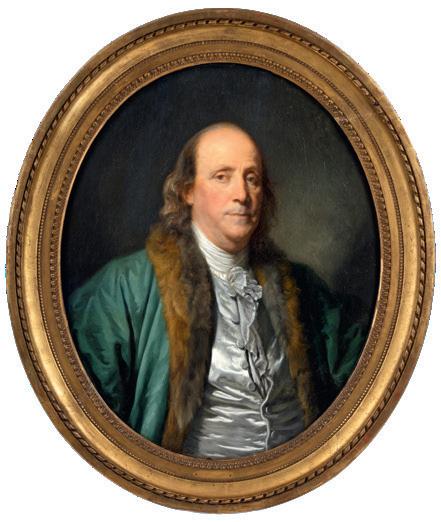
To mark the 250th anniversary of the Declaration of Independence, we will be exploring our connection to one of the most well-known founding fathers – Benjamin Franklin – with a display of objects at Hillsborough Castle.
In October 1771, Franklin made a visit to Hillsborough Castle, where he was hosted by Wills Hill, Earl of Hillsborough. At that time, Lord Hillsborough was at the peak of his political career, serving as Secretary of State for the American Colonies and Franklin had emerged as the leading spokesperson for American affairs in London.
Hillsborough and Franklin’s feelings on America were so completely opposed that by the time of Franklin’s visit to Ireland in 1771, the two men had become notorious political foes. However, to Franklin’s surprise, Lord Hillsborough was most insistent that the American should visit him there. An incredulous Franklin was treated to Lord Hillsborough’s famous hospitality; he wrote to his son that for six days he was ‘detain’d by a 1000 civilities’ at the castle. His host was attentive to ‘every circumstance of accommodation and entertainment’ and even put his own fur cloak about Franklin’s shoulders to keep him from the cold. Even more astonishing; the two men had very positive conversations about America, finding many matters to agree on. The pair
Every issue, we bring you the latest developments from across the palaces
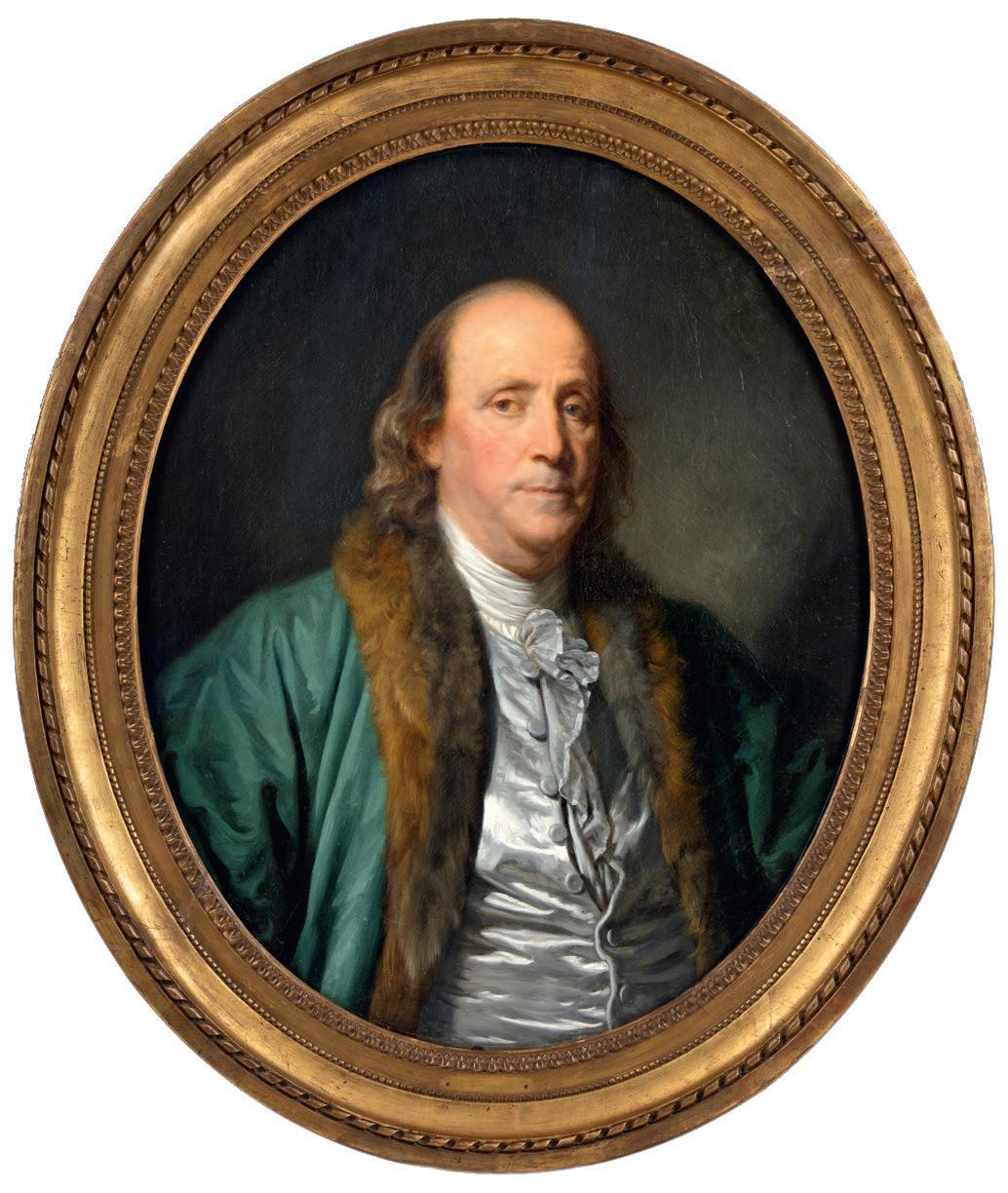
parted on good terms but when they returned to London, their former political animosity resurfaced, and they resumed exchanging insults. The following year, Lord Hillsborough resigned, blaming Franklin for his downfall.
From February 2026, several objects belonging to Franklin, including letters, his travel chess set and a portrait will be on display in the State Dining Room at Hillsborough Castle, on loan from the American Philosophical Society.
Discover these remarkable objects and explore Franklin’s link to Hillsborough Castle; no pre-booking required.
ABOVE: Benjamin Franklin by JeanBaptiste Greuze, c1777. (American Philosophical Society)
RIGHT: Discover more about Richard III and the Princes in the Tower in our new mini biographies on our website.
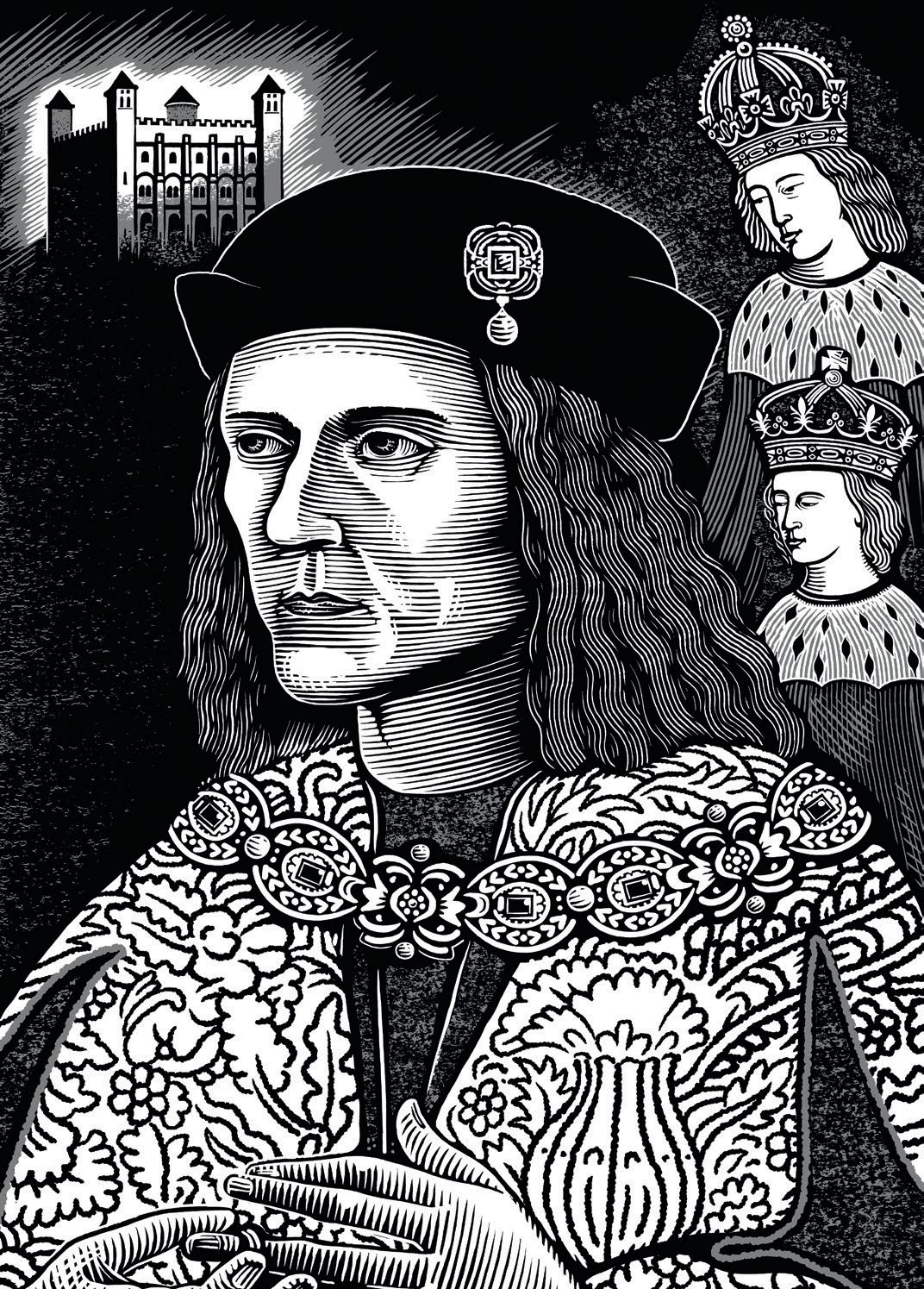
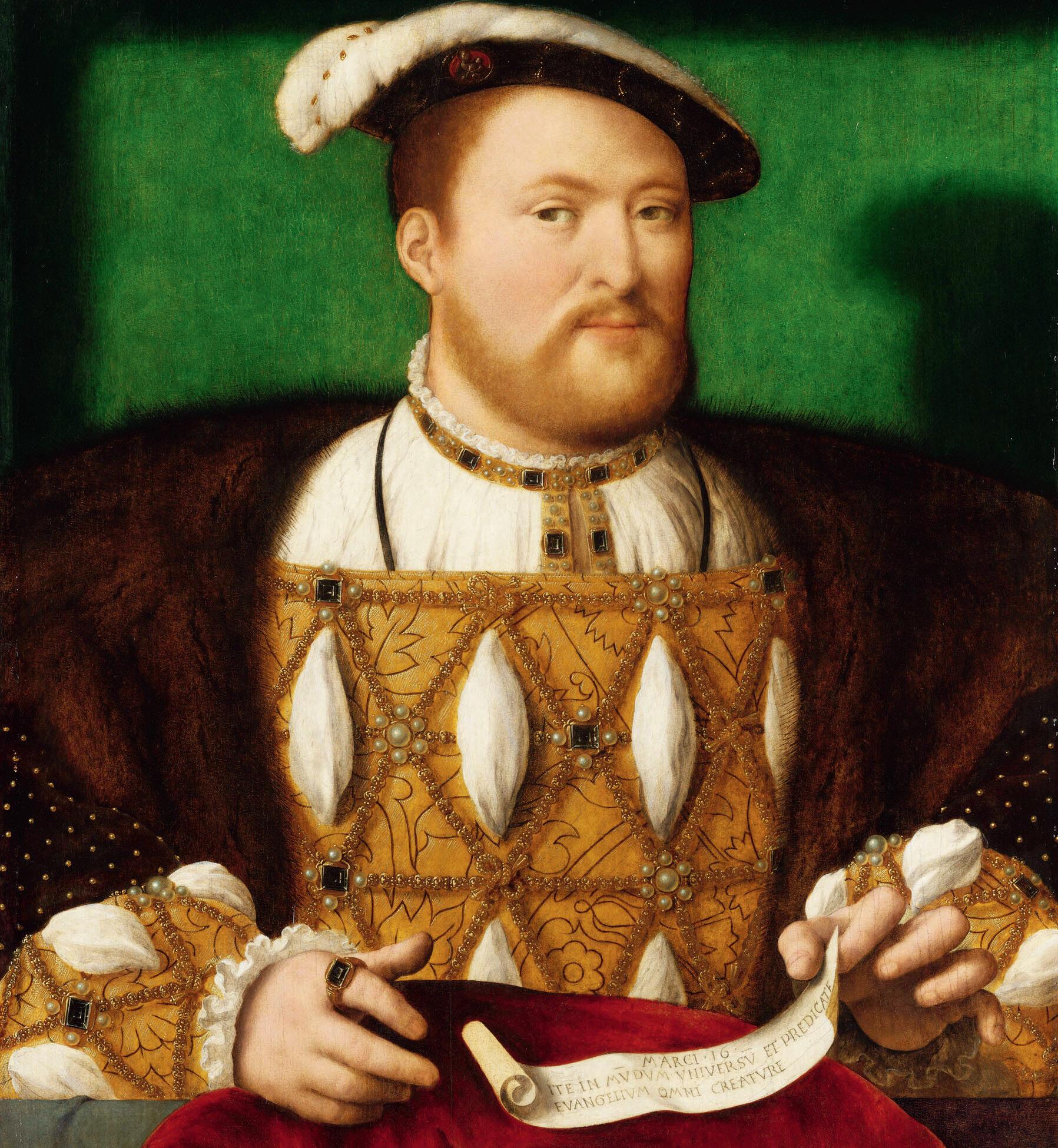
Our palaces are steeped in royal history and every monarch since 1066 has left their mark on these remarkable buildings – from William the Conqueror, who built the White Tower, to Henry VIII, who decorated Hampton Court’s Great Hall in honour of Anne Boleyn.
Now you can discover the full, fascinating story of the past thousand years of kings and queens in a series of mini biographies on our website.
Written by Chief Historian Tracy Borman, these pages feature at a glance facts with opportunities to delve deeper into the lives of the monarchs who shaped the nation, from the Normans up to the present day. Tracy told Inside Story, ‘It’s been a dazzling cast of characters to research – but for me Elizabeth I outshines them all!’
Find your favourite at hrp.org.uk/kings-and-queensof-england-and-britain
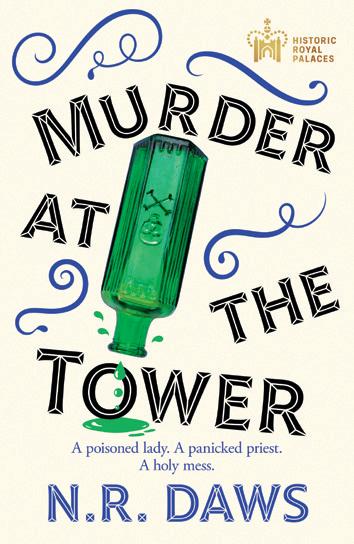
No need to panic – this one is pure fiction!
In this witty sequel to Murder at the Palace, we join amateur sleuth Mrs Bramble at the Tower of London as she tries to get her good friend, Reverend Weaver, out of hot water! The excitable, clumsy Reverend is leading a service at the fortress. But when one of the congregation drops dead, the Reverend finds himself under arrest. Can Mrs Bramble discover the real killer or will her friend have to pay for a crime he didn’t commit?
Murder at the Tower by N R Daws will be published by Orion in association with Historic Royal Palaces on 12 March 2026. Receive 10% discount in store with your membership card or use code MEMBER26 online. Don’t miss an exclusive evening talk at the Tower of London with the author on 16 March (tickets £15; pre-booking required).
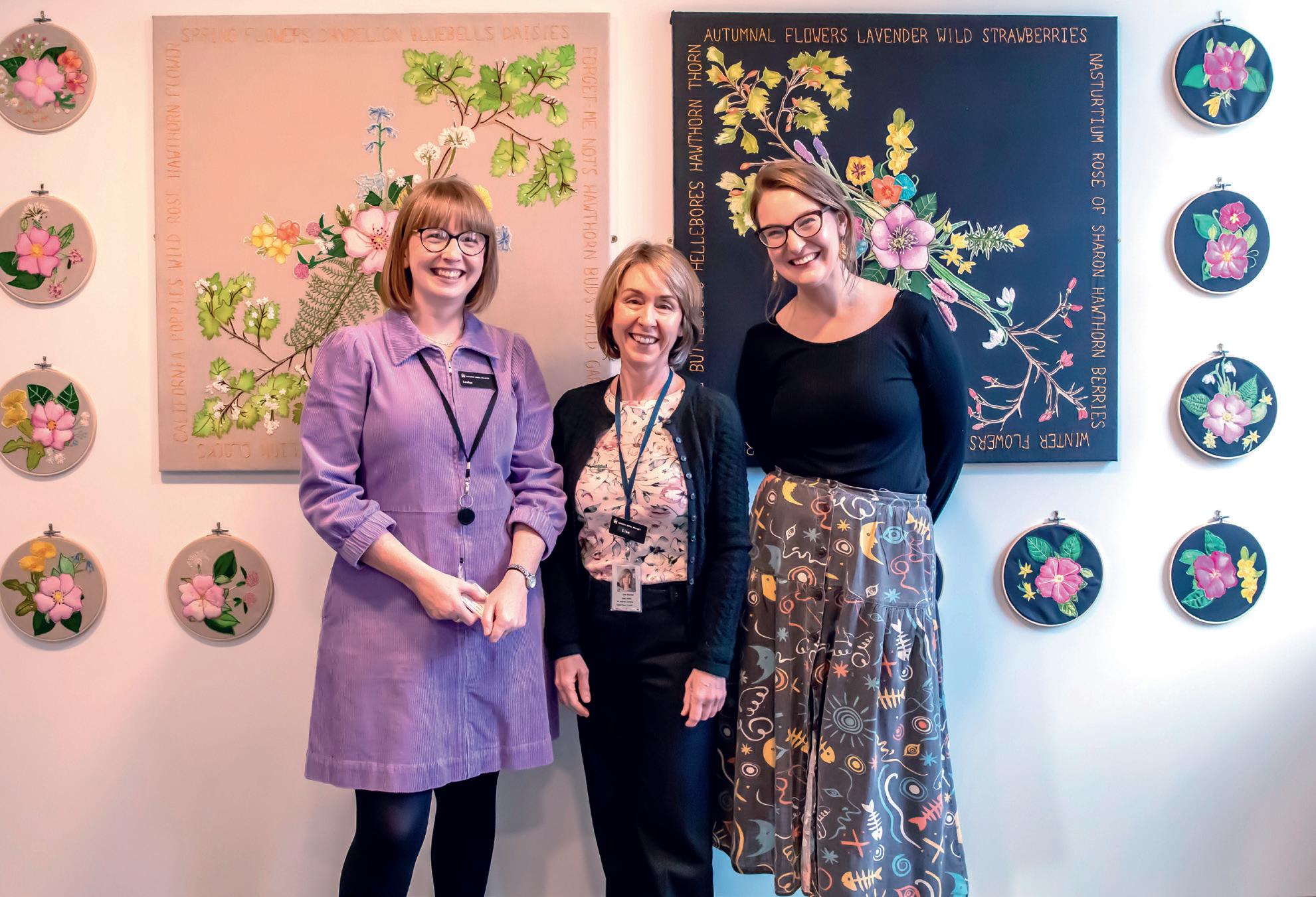
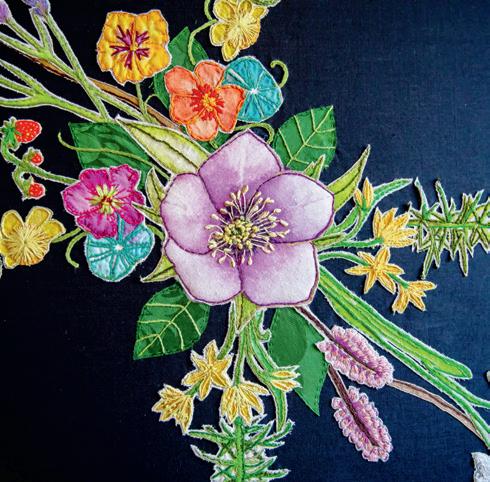
The Upper Visitor Centre at Hillsborough Castle is currently home to a vibrant display of textile artwork created through our Community Access Scheme (CAS).
‘Floral Threads: A Year in Bloom’, brings together the talents of two CAS partner groups (Choice Housing and Priesthill Methodist Tuesday Club) working with the textile artist, Úna Hickey.
Over six weeks, participants learned a range of techniques including appliqué, silk painting and embroidery. Drawing inspiration from the floral embroidery featured in the ‘Royal Style in the Making’ exhibition,
they also explored the history and symbolism of native Irish wildflowers. Each person created their own small, hooped piece, while also collaborating on a larger collective artwork. Eagle-eyed visitors may spot the hidden detail that some of the dark green leaves in the pieces were made from offcuts of the silk that lines the walls of Hillsborough Castle’s Throne Room.
‘Floral Threads’ will be on display until the end of October; members go free, no pre-booking required. Read more about our Community Access Scheme on page 28.
ABOVE: Louise
and
from Hillsborough Castle’s Community Partnerships team with artist/ facilitator Úna
at the new textile exhibition
‘Floral Threads: A Year in Bloom’.
Queen Victoria’s adolescent years are the focus of some revealing new displays coming to Kensington Palace.
At the age of 11, Victoria embarked on her first ever public tour, visiting Birmingham and Worcester. The new displays will explore how she toured factories, met workers and came away with beautiful souvenirs, including a miniature tea service made for the occasion and a perfume named in her honour.
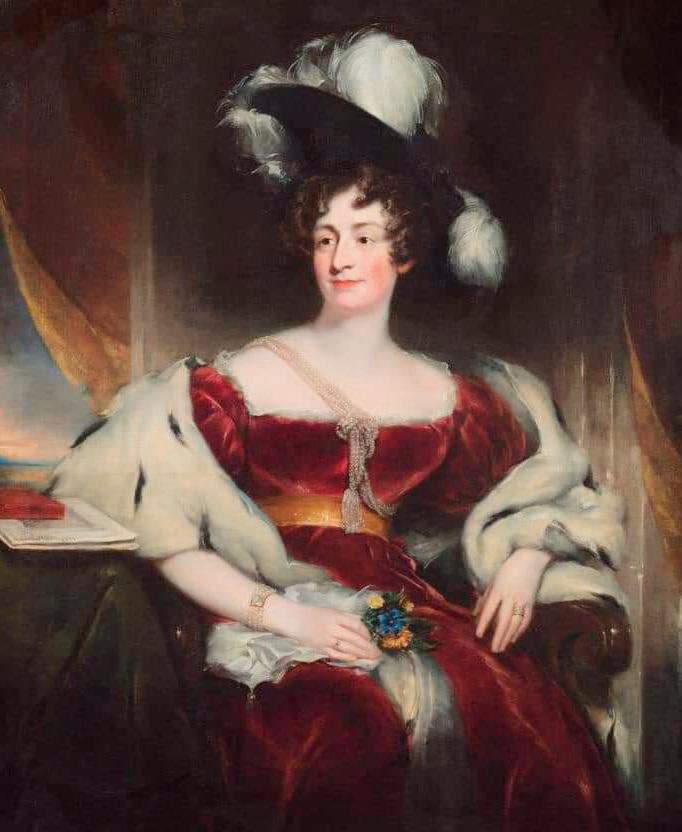
Other highlights will include a grand portrait of Victoria’s governess Charlotte Florentia Percy, Duchess of Northumberland – a significant but largely forgotten figure in the
Princess’s story. On loan from the collection of the Duke of Northumberland, it captures Charlotte’s commanding presence and passion for art, reflecting her important influence on the Princess’s cultural education.
The displays are the fruit of new research by our curators
During our work, we occasionally stumble across time capsules or mementos left for us by our predecessors, whether it’s a Georgian shilling placed within a wall or the names of craftspeople carved in brick and stone.
These glimpses into the lives of the previous custodians of the palaces always give us pause for thought and remind us that every brick laid, every service dug, and stone carved becomes part of the palaces’ ongoing story, and so too the people who undertake that work. Even more occasionally, we leave part of ourselves for
the future – and most recently we have done this during our excavations outside the Chapel of St Peter ad Vincula at the Tower of London and as part of the Great Gatehouse conservation project at Hampton Court (see page 36). Our hidden time capsules contain a range of objects chosen by the curators and surveyors, including a ceramic poppy for the Tower as well as a trowel used by one of the archaeologists, along with newspapers, photographs of the project team, documents explaining the work done, letters (the contents of some remaining a mystery!) – and, most
into the women who shaped the mind of the teenage Princess. From her governess’s often conservative outlook to her mother’s progressive interest in modern industry, minority communities and workers, they offer fresh insights into the competing influences on the mind of the future queen.
The new objects will be on view from the end of April 2026 as part of our permanent exhibition ‘Victoria: A Royal Childhood’; members go free, no pre-booking required
importantly, a recent issue of Inside Story! Who knows when these objects will be found, but we hope that when they are discovered they offer an insight into the history of the palaces and remind future custodians that they too are part of the history of these wonderful places.
Curious about what lies beneath the Chapel of St Peter ad Vincula? Our podcast ‘The Tower’s Medieval Past through Archaeology’ reveals new insights. To listen, visit hrp.org.uk
Live interpreters at Henry VIII’s Joust:
© Rob Jones/Outlaw Entertainment; Past Pleasures character from Henry VIII’s Kitchens: © Historic Royal Palaces/SWNS; Model in orange jumper:
© Historic Royal Palaces/Todd Anthony; Elizabeth I: Bridgeman Images (Hatfield House, Hertfordshire, UK); Henry VIII: Bridgeman Images; Queen Victoria: Collection Gregoire/Bridgeman Images.

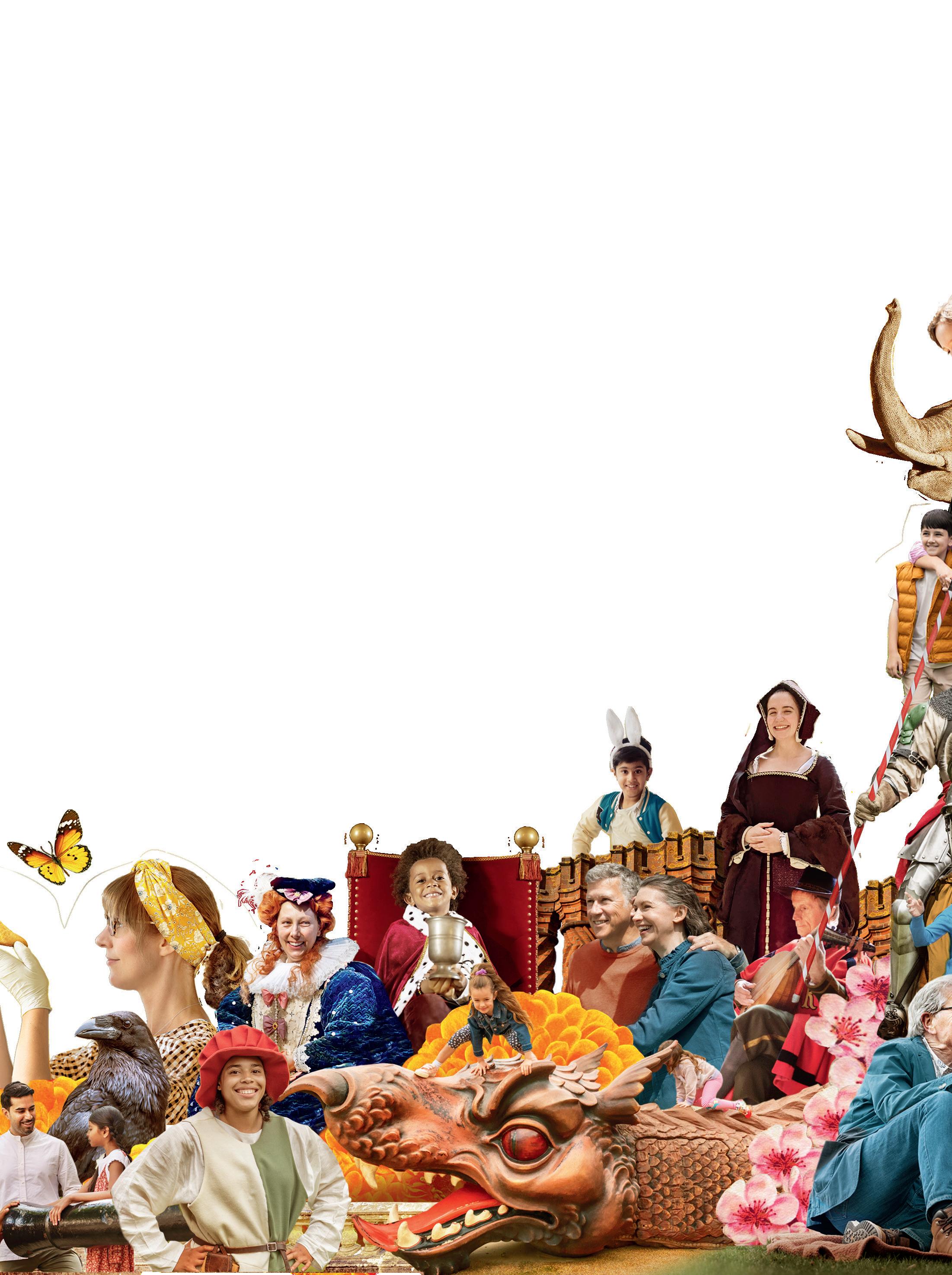

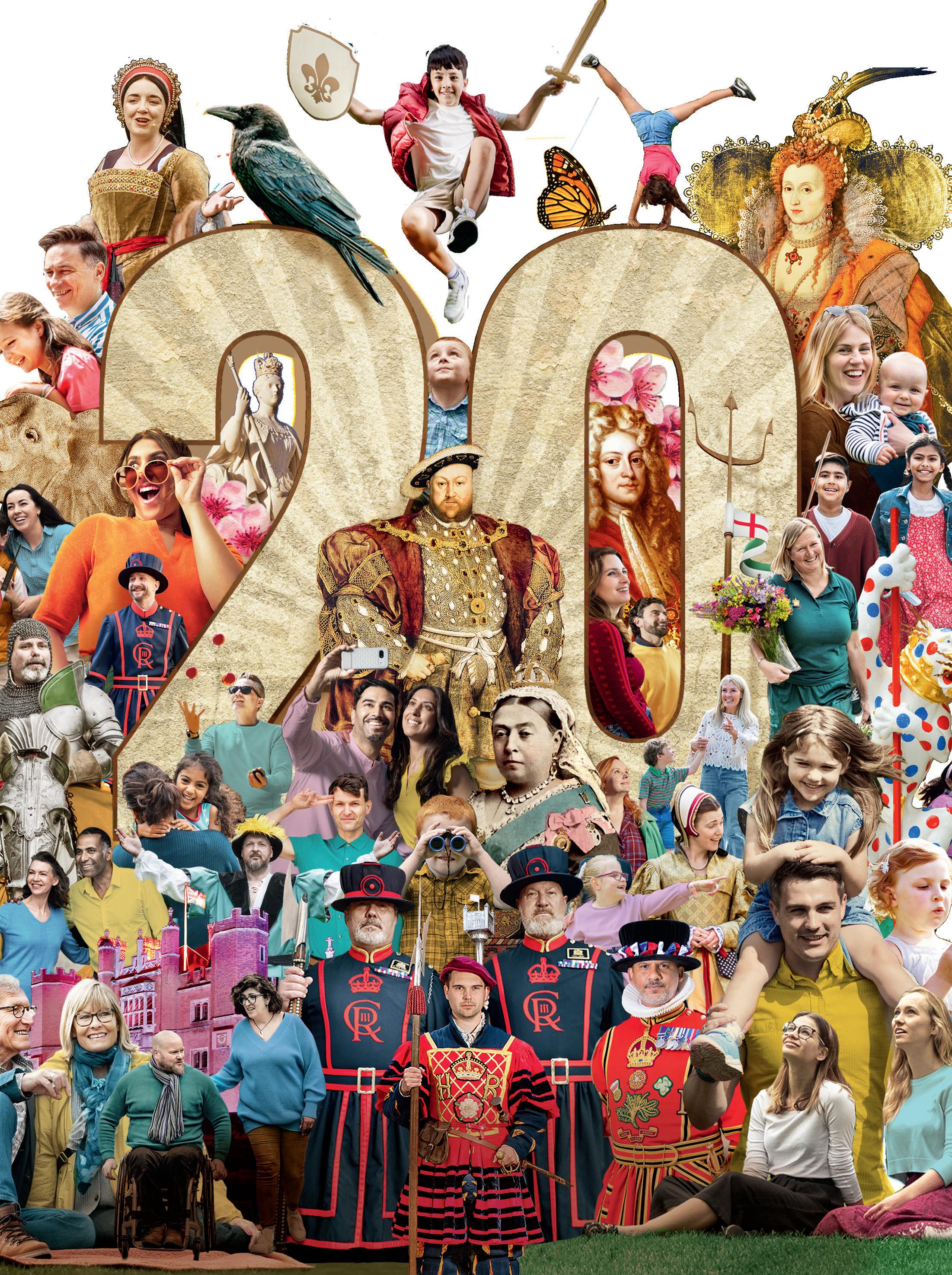

To mark our double decade, we’ve picked 20 fun, fascinating and frankly astonishing figures* to illustrate the reach and range of our work and responsibilities in the palaces we love and care for. It’s just a brief glimpse of how much our members, patrons and supporters have helped us achieve over the years. Thanks to you all, we can continue to open these palaces to everyone, creating experiences that resound and sharing stories for generations to come.
28,365
25 spectators cheered on Henry VIII’s summer jousts at Hampton Court
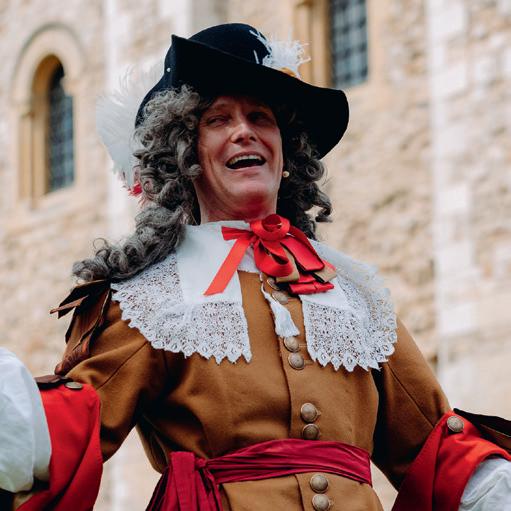
days of live performances were delivered, with 1,792 shifts, shirts and stockings washed!
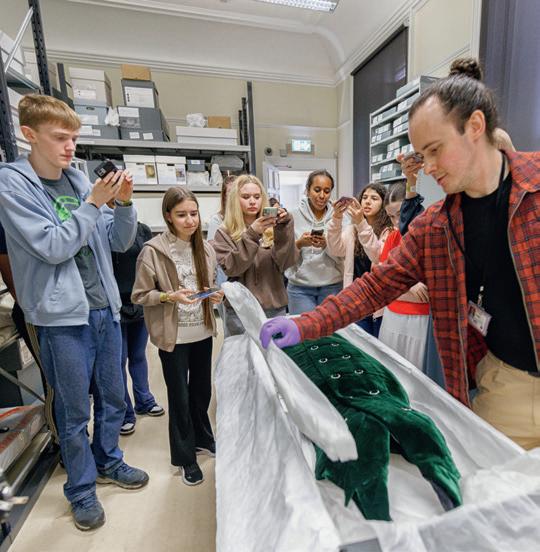
aged 14–17 from local youth groups, helped shape our ‘Dress Codes’ exhibition and almost 500 members enjoyed the preview
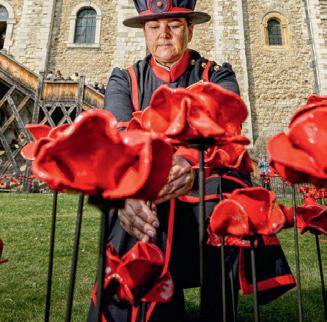
ceramic poppies were displayed for ‘The Tower Remembers’ installation
250
hours of ‘Warm & Welcome’ space drop-in sessions at Kensington Palace were provided for local people, in association with community partners Turning Point
9,000 27, 217
45,000
delicious teas were sold at Kensington Palace, raising £34k for our community programmes through a voluntary £1 donation


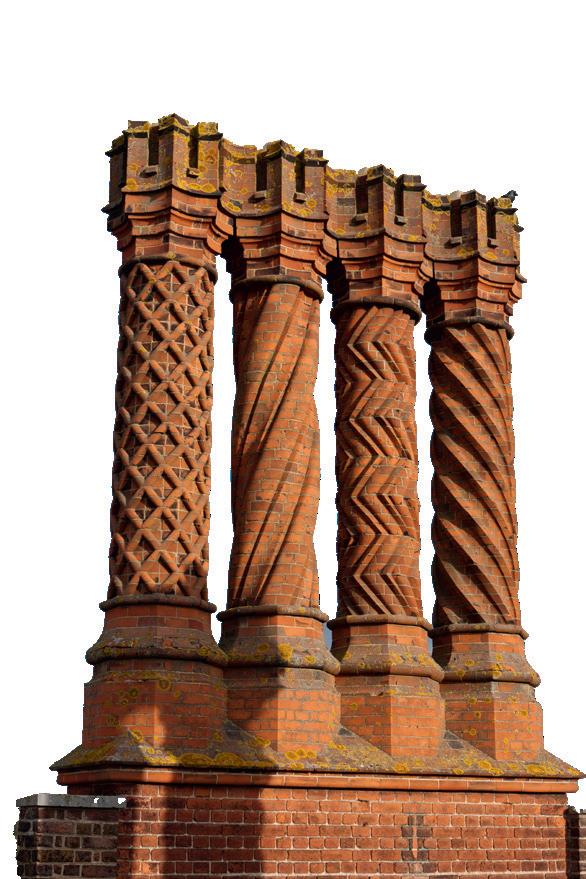
The number of handmade bricks used to restore seven of Hampton Court’s 241 decorative chimneys – keeping alive centuries-old craft skills
60
new acquisitions were made, and 168 loans.
Plus, over 2,000 objects moved behind-the-scenes for research and care

200 items from the Royal Ceremonial Dress Collection were digitised, made possible by a generous legacy from the late Michael Stennett, and showcased worldwide with Google Arts & Culture
855 neurodivergent and learning-disabled children attended a new, quieter ‘Relaxed Hour at the Tower’
Become a Life Member and enjoy unlimited access to our palaces for life, share visits with free guests, and help protect these historic places for future generations.
INDIVIDUAL: £1,800
JOINT: £2,760
Put the price of your current membership towards a Life Membership and save. Join online at hrp.org.uk or at our palace Ticket Offices.
39
early-career apprentices stepped into heritage roles under our new scheme, launched in September 2024
2,985,032
podcasts downloaded since their launch in 2019 (the most popular being the first episode of our ‘Six Tudor Queens’ series)
The number of education visitors (adults and children) who have experienced Hampton Court Palace, the Tower of London and Kensington Palace since 2006, including 88,500 through our Access Fund (started 2017). 10,465 have now visited Hillsborough Castle and Gardens, up from 618 in 2019, the first year of the programme there

409,000
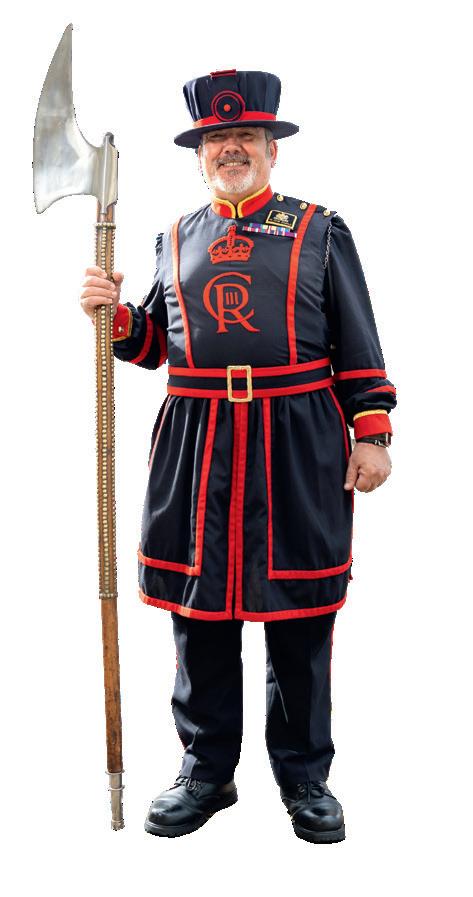
the average number of words memorised by 47 trainee Yeoman Warders learning their Tower history stories
3,230,046
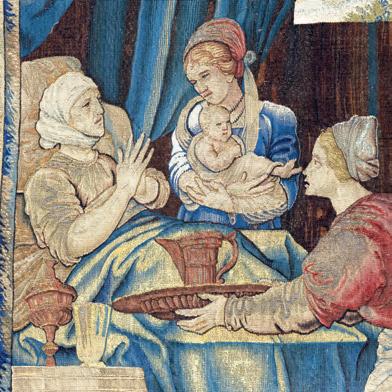
As members, patrons and supporters, you help us make the palaces a living resource for everyone hours spent at the loom by one textile conservator stitching the Abraham tapestry ‘The Circumcision of Isaac’, since July 2024
1,070
rounded and accurate at the time of writing
24%
the amount we’ve reduced our energy consumption by since 2019
WIN THREE LIFE MEMBERSHIPS!
To celebrate our 20-year anniversary, and to thank all current members for their support, we have THREE INDIVIDUAL LIFE MEMBERSHIPS TO GIVE AWAY!
All active members will be automatically entered into a random prize draw, which will take place in mid-May 2026. We will contact the lucky winners directly. Terms and conditions: hrp.org.uk/ life-membership-draw.
500 OVER
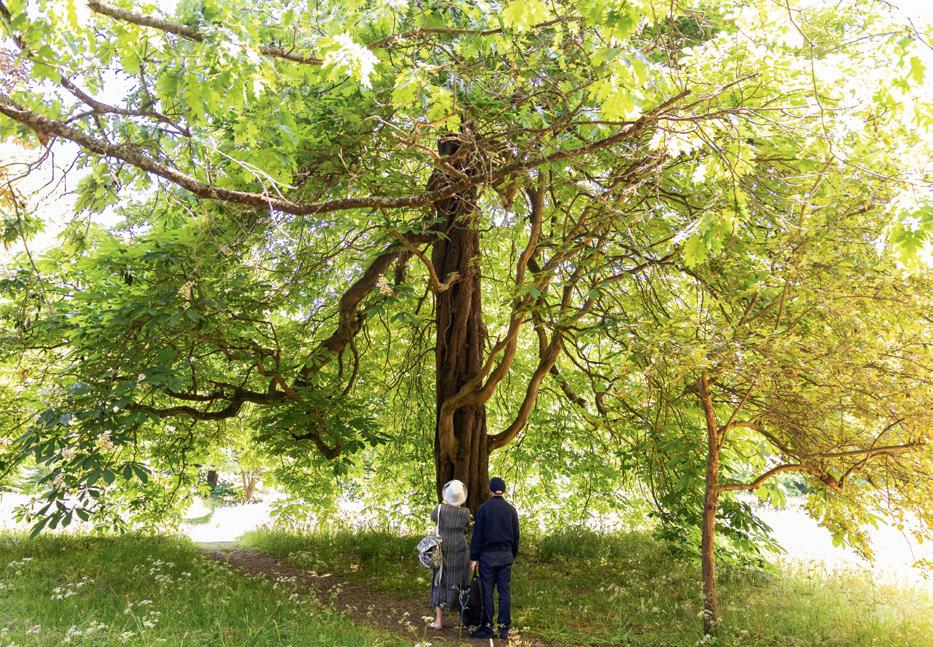
trees have been planted at the palaces with over 32,000 plants set out during the redevelopment of the gardens at Hillsborough in 2016-19
340 individual palace memories of local people, former pupils of the palace school, residents and staff have been recorded by the Hampton Court Memories Project volunteers
160,000
2 MILLION TULIPS have bloomed over 20 years of the Hampton Court Palace Tulip Festival members made more than 300,000 palace visits last year. That’s 370 times as many members as in 2006!
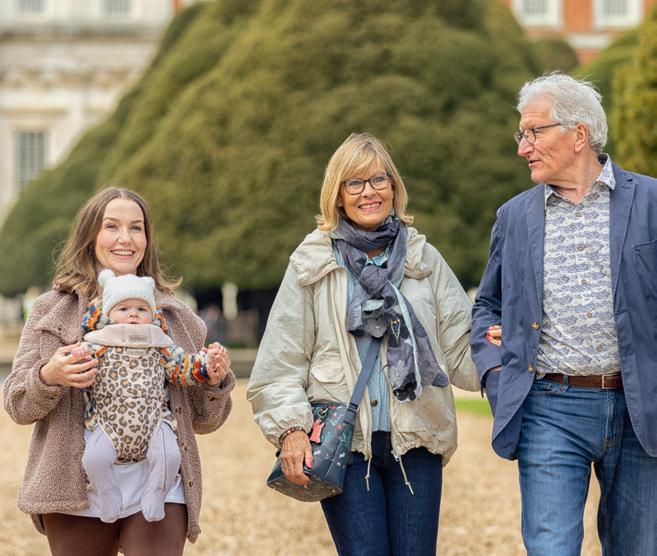
SEND US YOUR PICTURES!
Over so many visits, you all must have taken some wonderful pictures from happy times at the palaces. Got a couple you are particularly proud of? Send them to us at insidestory@hrp.org.uk, and we will publish some of our favourites later this year.

DISCOVER MORE
Want to learn more about our strategy and the impact you’re part of. See hrp.org.uk/about-us
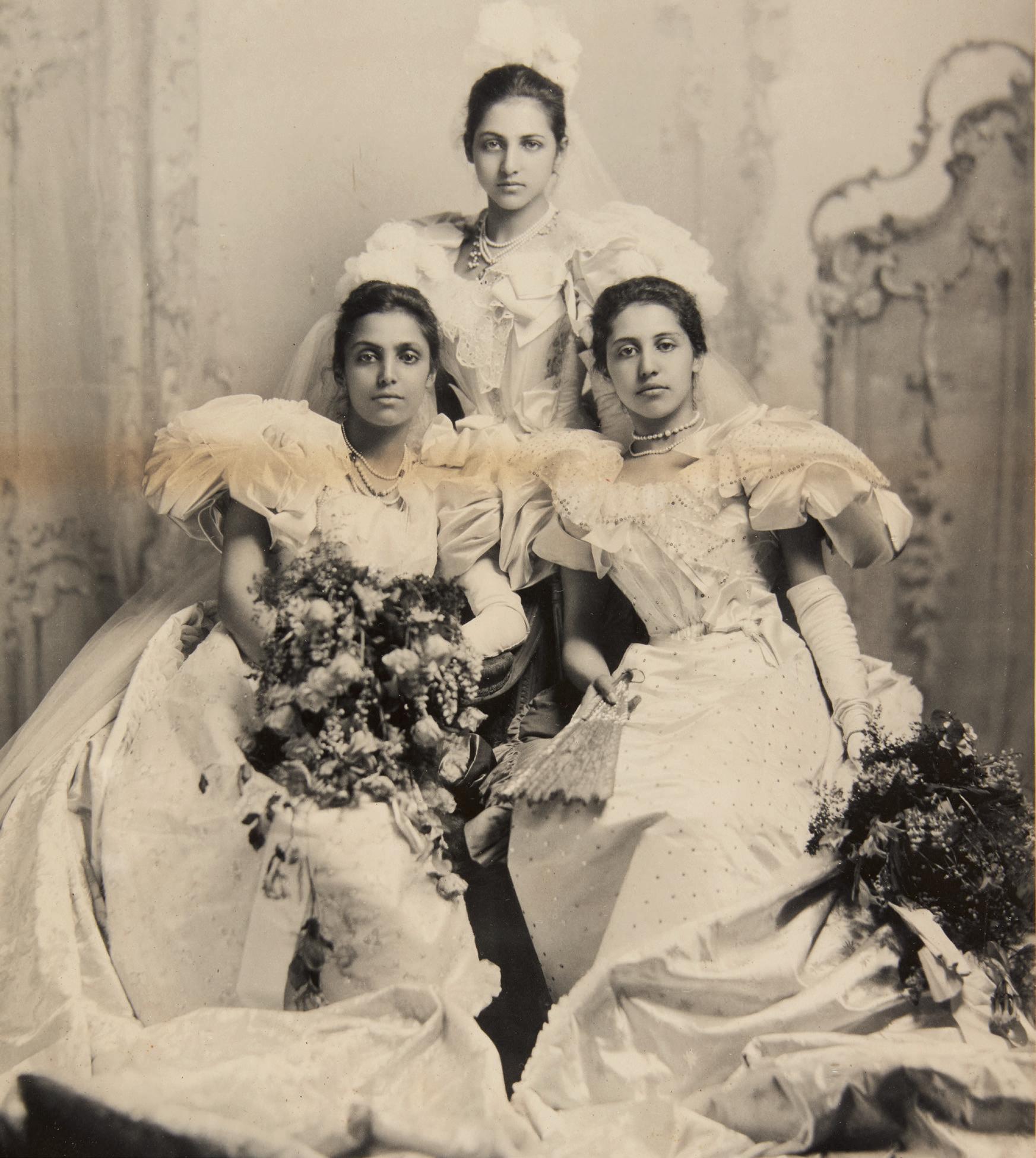
A fascinating new exhibition, celebrating the life of Princess Sophia Duleep Singh, god-daughter to Queen Victoria, opens on 26 March 2026 at Kensington Palace

‘The Last Princesses of Punjab’ explores the lives of Princess Sophia and the women who shaped her, including her sisters, Catherine and Bamba, her mother Bamba Müller, her grandmother Jind Kaur and her godmother, Queen Victoria. The displays explore how these six royal women each expressed personality, power and royalty in different ways, brought to life through exquisite South Asian works of art, textiles and jewellery, alongside intimate personal artefacts, letters and living memories. Collections Curator Polly Putnam describes an extraordinary voyage of discovery.
One of the great privileges of my job is looking after the grace-and-favour collections at Hampton Court Palace. When a researcher asked me about former resident Princess Sophia Duleep Singh, I realised that 2026 would be the 150th anniversary of her birth. Her astonishing life and achievements were surely something to celebrate. Our Curator of Inclusive History, Dr Mishka Sinha and I delved deeper, and discovered that Sophia’s life was shaped and influenced by women, not least by Queen Victoria. The link to Victoria makes Kensington Palace, her childhood home, the perfect place to tell Sophia’s story.
A royal godmother
Queen Victoria’s fondness for Sophia’s father, the exiled Maharaja Duleep Singh and his family enabled Sophia to have a grand home, income and status, which she eventually used to further
her activism in support of women’s suffrage. Queen Victoria became godmother to two of Duleep Singh’s children; yet while he enjoyed a warm, if occasionally fractious, relationship with the Queen, it was fundamentally unequal. Under Queen Victoria’s rule Duleep Singh lost not only his kingdom but was never fully recompensed for the riches confiscated by the British, which impacted hugely on his family.
A rebellious grandmother Sophia’s charismatic grandmother Jind Kaur (1817-63) was the youngest wife of Maharaja Ranjit Singh, a mighty king whose territories spanned over 200,000 square miles across today’s India, Tibet, Afghanistan and Kashmir, all ruled from the heartland of Lahore, now in Pakistan. Jind Kaur acted as regent of the Sikh Empire on behalf of her young son, Duleep Singh. During the Second Anglo-Sikh War of 1848-9, defiant Jind, described as
‘the rallying point of rebellion’ by the British Foreign Secretary, was exiled to Benares and was imprisoned there when her armies were defeated in 1849. Yet she managed to escape and trekked over 1,000 miles to seek sanctuary in Kathmandu, Nepal. Meanwhile, her dispossessed son Duleep Singh was removed to Fatehgarh (in the modernday state of Utter Pradesh in India). He went to visit England but the 1857 Indian Rebellion forced him to remain there. Mother and son were reunited in Calcutta after 11 years apart, and Jind was finally allowed to join Duleep and his family in England in 1861.
Bamba Müller, missionary and mother
Sophia’s mother Bamba, the daughter of German banker Ludwig Müller and Sophia, an enslaved Ethiopian woman, was born in 1848 in Egypt. She grew up in the care of Christian missionaries at the American Presbyterian missionary school in Cairo, where she spoke Arabic. She met Duleep Singh when he visited the school, and he was drawn to her gentle and helpful nature, while Bamba possibly saw marrying the wealthy Maharaja as a way to extend her missionary work. She moved with him to England and had three daughters and four sons.

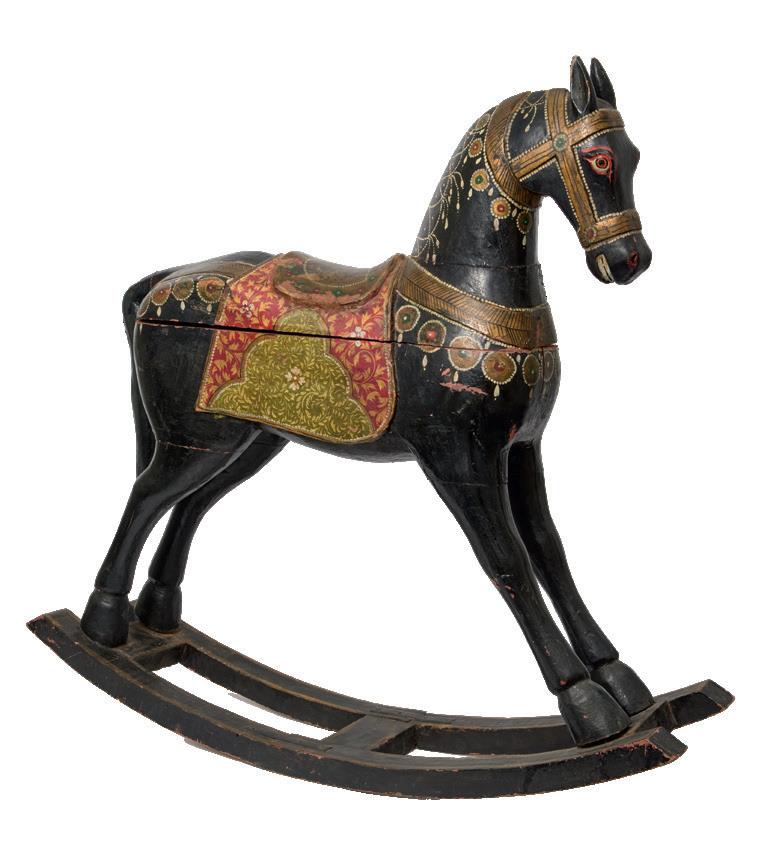
An entitled childhood Duleep Singh’s pension from the British government (given in return for his ‘obedience’), enabled him to buy Elveden Hall in Suffolk for his growing family. The grand mansion was enlarged and lavishly decorated in the Indian style, and the children enjoyed an indulged childhood with exotic pets, toys and fancy-dress parties.
However, by 1886, the fortunes of the family had declined, mainly because of Duleep Singh’s lavish lifestyle, exacerbated by the India Office failing to fully recompense him for his seized wealth in Lahore. The grand house had to be sold. In desperation, Duleep Singh tried to leave for India to reclaim his lands, but he was exiled to the continent. He left his family in England. Feeling utterly betrayed, and now penniless, Maharani Bamba sank into despair. She died in 1887 at Princess Sophia’s bedside, while nursing her daughter through typhoid.
The direct intervention of the India Office, at Queen Victoria’s request, ensured that the remaining children had an education and income. Arthur Oliphant and his family were appointed by the India Office to look after the younger members of the family. Eventually, Sophia and her sisters came to live with them in Brighton, which brought them some stability.
DISCOVER MORE
Look out for a special episode of our podcast exploring the stories behind the exhibition. Find it on your digital hub at hrp.org.uk/ the-vault
We asked a group of our community partners to respond creatively to some of the themes of identity, expression and resistance, and they have produced four videos and two audio pieces for the exhibition. The intergenerational group of British South Asian people were led and facilitated by Sharan Dhaliwal. They come from all different walks of life: from business owners, lawyers, artists and retired professionals to creative artists and youth workers. Some of the group have previously worked with us whilst others come from new partnerships, including Middlesex Pride, an LGBTQ+ South Asian focused group.
‘The children enjoyed an indulged childhood with exotic pets, toys and fancydress parties’
Catherine’s courage
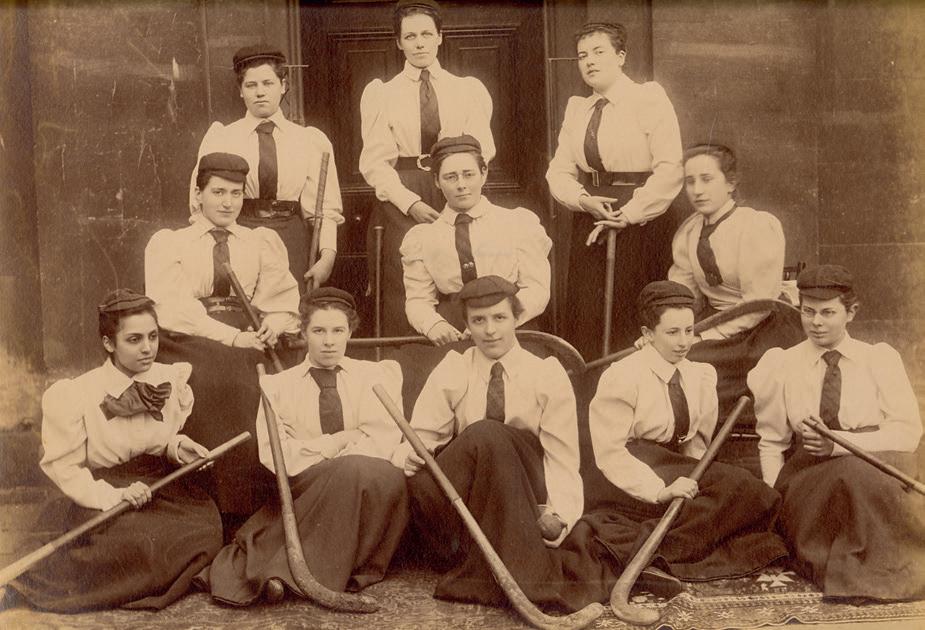
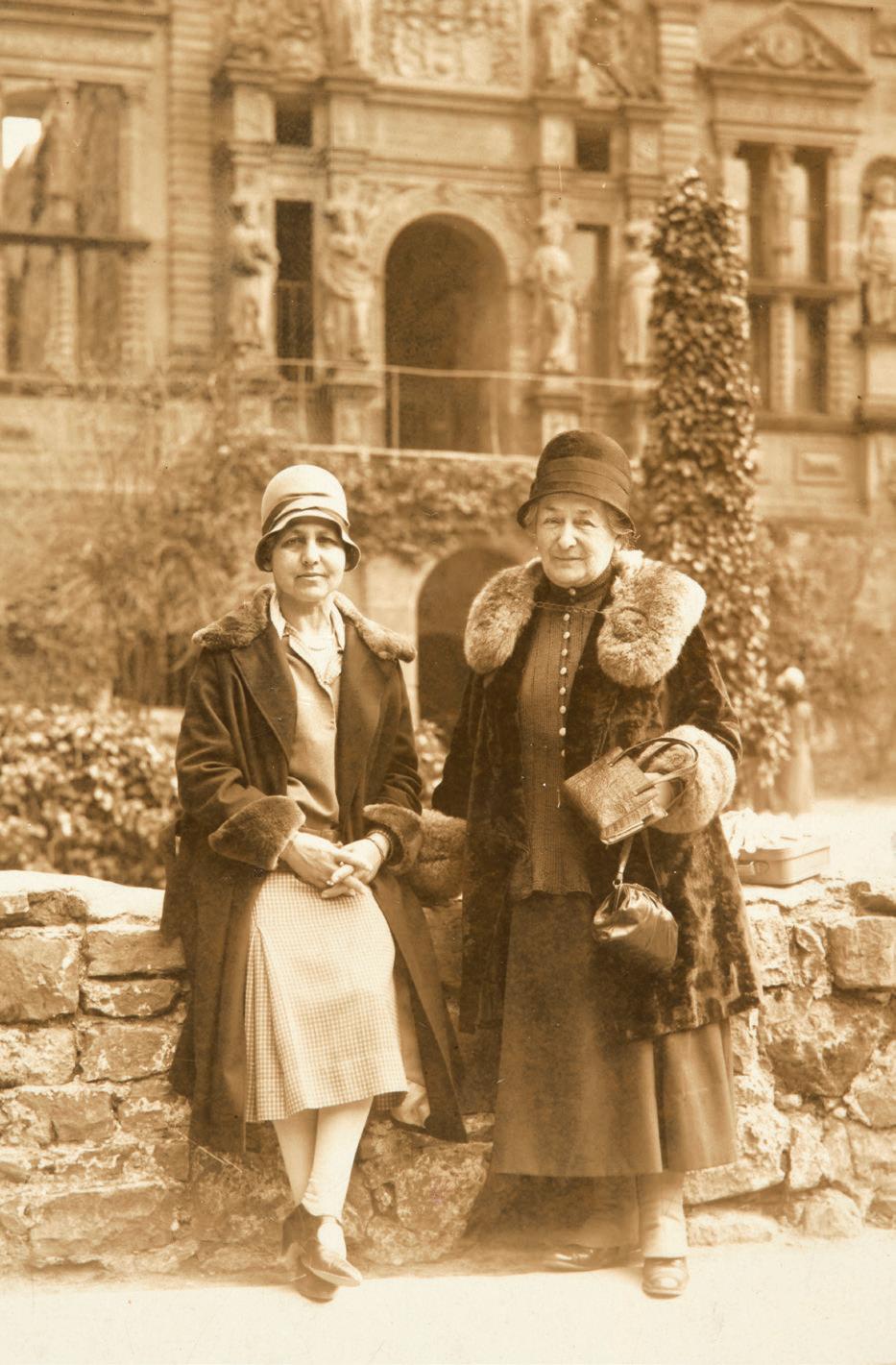
Sophia’s elder sisters Catherine and Bamba attended Somerville College in Oxford (one of the first to open to women) between 1890 and 1894. They were accompanied by a German governess, Lina Schäfer. Catherine and Lina fell in love, and they spent the rest of Lina’s life together in Germany. When Lina died in 1937, Catherine was advised to leave, but before doing so she helped numerous Jewish refugees seek sanctuary in Britain, offering them accommodation and employment in her Buckinghamshire home.
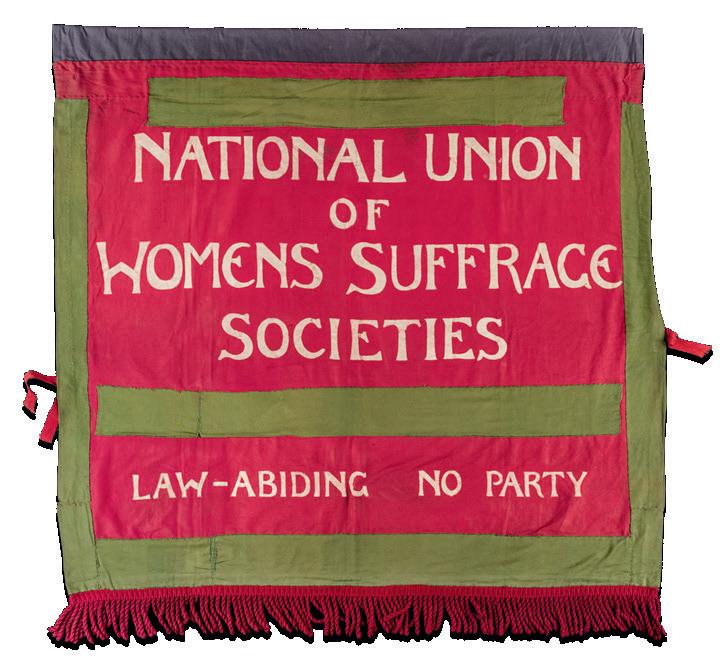
Despite their privileged upbringing, both Catherine and Sophia developed a strong political awareness and desire to help improve society. Catherine was a prominent member of the National Union of Women’s Suffrage Societies (NUWSS), which campaigned peacefully for women’s right to vote. Although significant, their role is less well known than that of the more militant Women’s Social and Political Union (WSPU) of which Sophia was an active member. Sophia’s work and protests under their slogan ‘Deeds Not Words’, are what she is probably best known for.
Sophia the suffragette
The exhibition spotlights Sophia’s involvement in a dramatic episode in 1910, on what became known as Black Friday, when she saved a fellow protester from serious injury at the hands of a police officer.
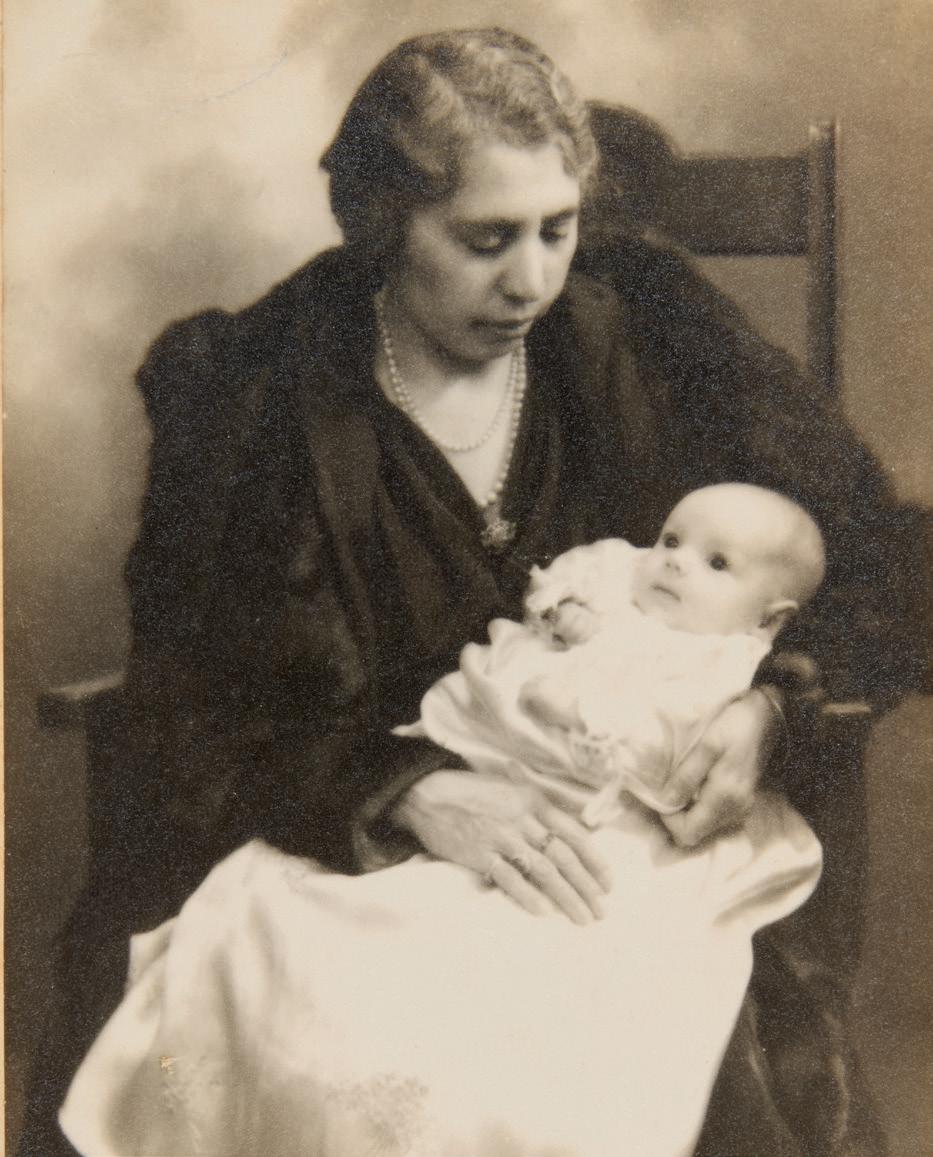
Sophia Duleep Singh, with her god-daughter Drovna Oxley, c1938. (Peter Bance Collection)
ABOVE: Princess Bamba (bottom left) playing for Somerville College, 1893. (Principal and Fellows of Somerville College, Oxford)
RIGHT: Childhood rocking horse from Elveden, 1870s. (Peter Bance Collection)
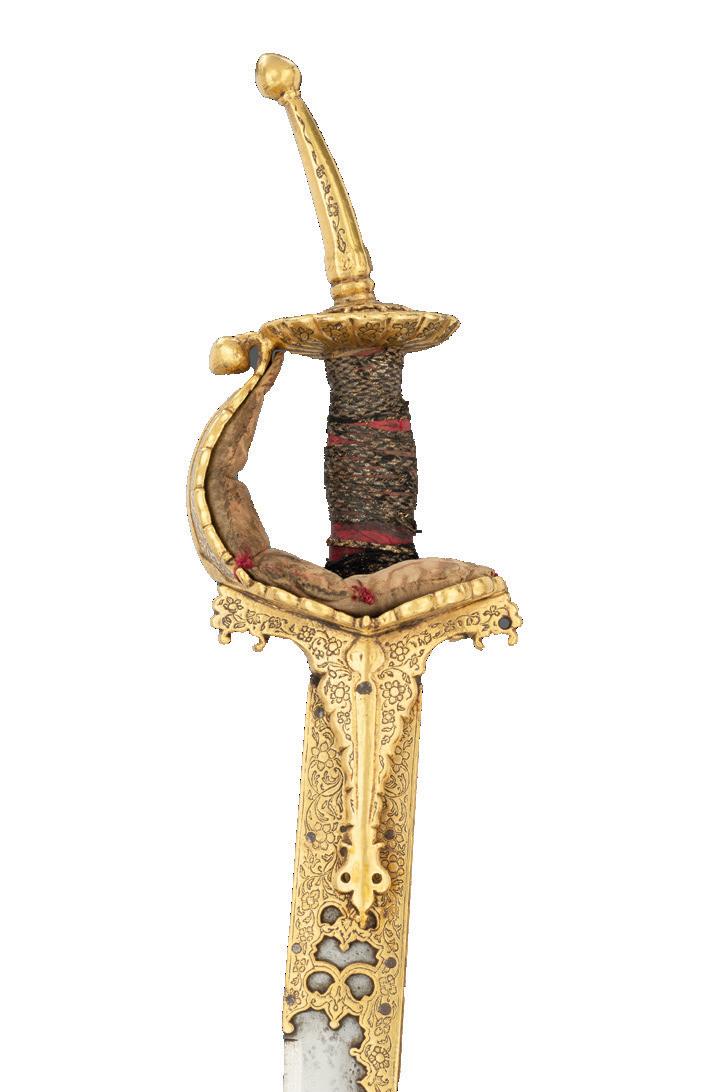
OPPOSITE: Khanda or double-edged broadsword once belonging to Jind Kaur’s brother), c1840. (Toor Collection)
‘Catherine and Lina fell in love, and they spent the rest of Lina’s life together in Germany’
On 2 November, furious members of the WSPU gathered outside Westminster as Prime Minister Asquith dissolved parliament, denying ratification of a bill that could have allowed women the vote. Although Home Secretary Winston Churchill ordered the police to minimise arrests, the police lost control and resorted to shocking violence, in which two protesters died. Churchill denied responsibility, describing the WSPU ‘as a fountain of mendacity’. In contrast, we show a letter from Princess Sophia, reporting the ‘unnecessary roughness of officer V 700’ that she had witnessed.
The passionate princess
The eldest sister Princess Bamba was the most passionate about her stolen royal heritage. From 1907 she spent most of her time in Lahore, trying to restore her family’s fortunes, without success. In 1915, aged 46, Bamba married Colonel David Waters Sutherland. She generously supported
many charities, especially girls’ schools. She also made connections with several members of the Indian liberation movement.
The exhibition includes filmed interviews with people who remember the princesses including Drovna Oxley, whose mother, Janet, was Sophia’s maid and who lived with the Princess in her grace-and-favour residence Faraday House at Hampton Court. In another, Bruce Reeves, who as a boy ran errands for Princess Bamba when she lived in Norfolk, remembers a ‘tiny woman’ in a sari who insisted on being addressed as ‘Your Highness’.
‘The Last Princesses of Punjab’ opens 26 March; no booking required.
DISCOVER MORE
Members-only Preview Day, 25 March; pre-booking required
TOP: Princess Catherine and Lina Schäfer in Heidelberg in 1930. (Peter Bance Collection)
LEFT: NUWSS banner, c1908. (The Women’s Library at the London School of Economics)
The exhibition features over a hundred objects, many generously loaned from personal collections of Indian art, arms and armour, jewellery, personal artefacts and memorabilia. Inside Story asked two of our lenders about their abiding passion.

DAVINDER
TOOR is a leading figure among a new generation of Indian and Islamic art collectors and dealers. He has acted as a consultant to many private collectors, auction houses and institutions including the British Museum and the Victoria & Albert Museum, and his astonishing collection continues to grow.
‘I need to see a therapist’, he jokes. ‘It’s an affliction.’ Over 28 years of collecting, starting with the teenage purchase of a small Indian dagger, Davinder has amassed ‘somewhere in the

PETER BANCE, a renowned Sikh historian and independent researcher is an authority on the life of Maharaja Duleep Singh and owns a huge collection of memorabilia relating to him and his family, Peter’s collection has been exhibited worldwide.
‘I started collecting almost by accident in 1997, as a student, when I detoured from a study trip to Norfolk to visit Duleep Singh’s grave at Elveden Church in Suffolk. An elderly lady tending a nearby grave told me there was a museum in the town dedicated to him and his family. I had no idea he had a family, or had lived there, and I wanted to find out more!’ Peter placed an appeal in the local newspaper and he
region of’ 1,500 to 2,000 objects, which he is still in the process of cataloguing. ‘Collecting is the culmination of my love of history and art coming together. There’s no better way to understand our shared history and to bring the past to life than with tangible objects.’
He is continually refining the collection, searching for finer, rarer examples. ‘I’m constantly learning, finding surprising new things that challenge my perception and understanding. It’s a fluid process – there’s no completing a collection.’
Davinder has generously lent several fabulous objects to the exhibition, illustrating the
was contacted by over three hundred people!
‘When I went to visit them, they brought out all sorts of personal memorabilia and items such as letter and diaries, and small gifts from the princesses, which they were delighted to donate or sell to me, happy that these objects would be in safe hands.’
‘It’s been an amazing journey; I feel so blessed that I started collecting at the right time and got to know so many people who knew the family personally. But I wish I’d been more assertive and worked harder at the beginning to meet everyone who got in touch … but I was a student, too busy studying and going out clubbing!’
Now Peter has a vast and varied collection. He is still in touch with people who knew
princesses’ Sikh heritage, including clothing, textiles, paintings, jewellery and some arms and armour. ‘My favourite is the beautiful, sensitive portrait of the last Queen of the Sikhs, Duleep Singh’s mother Maharani Jind Kaur, just a few months before she died in August 1863.’
‘I love lending – for me, the joy of collecting is being able to share the works I’ve found or acquired, whether that’s by including them in my books, or working with passionate curators such as the ones at Historic Royal Palaces. It’s a pleasure to collaborate and to see these works in context, telling an important story.’
Sophia, and while many of their items have sentimental rather than intrinsic value, this is changing.
‘Now the story of the Duleep Singhs is better known, partly though my books and films, there is a lot more interest. I now see items that I used to get for free going for five-figure sums! But this is why I lend; I want to show these items off and let them tell the story. I have many items now in permanent displays in the British Museum, and I’m proud to say the Ancient House Museum in Thetford now has a dedicated rotating Peter Bance display.’
Peter’s latest book, The Last Royals of Lahore, with over 500 illustrations from his collection, will be published by Coronet House in 2026.
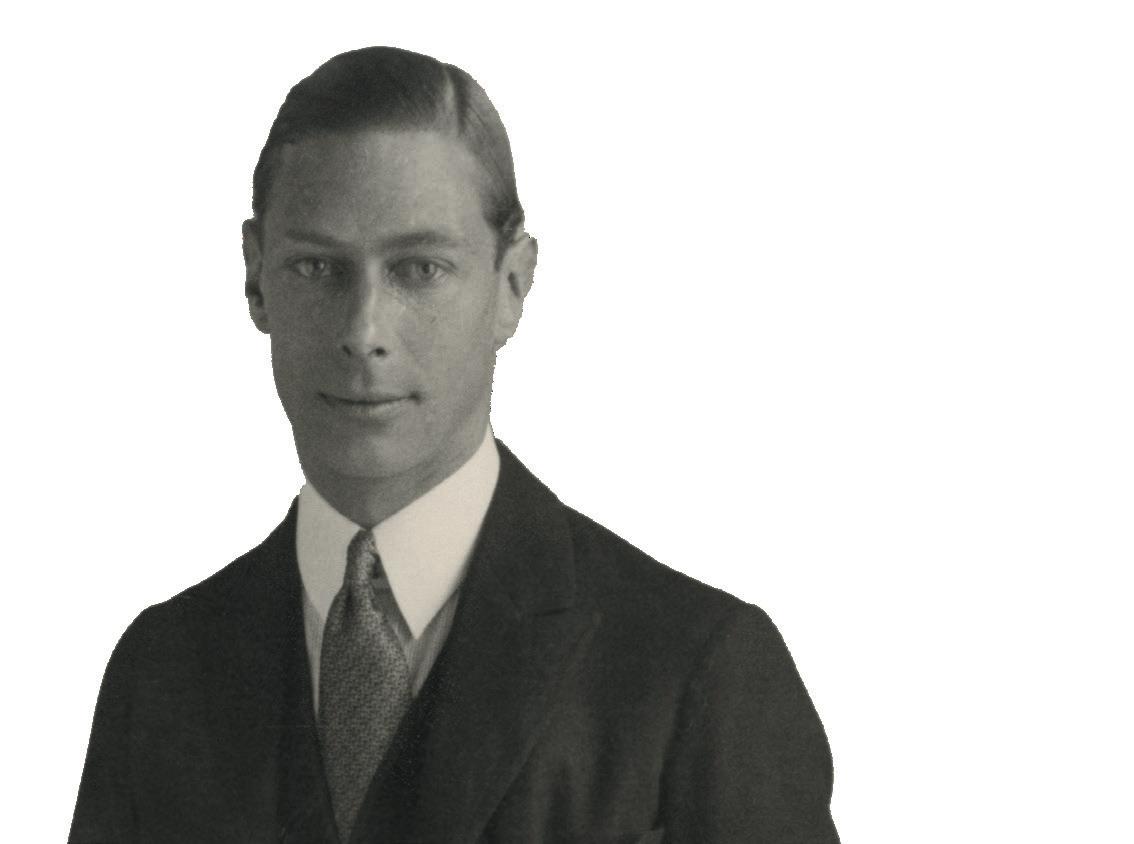
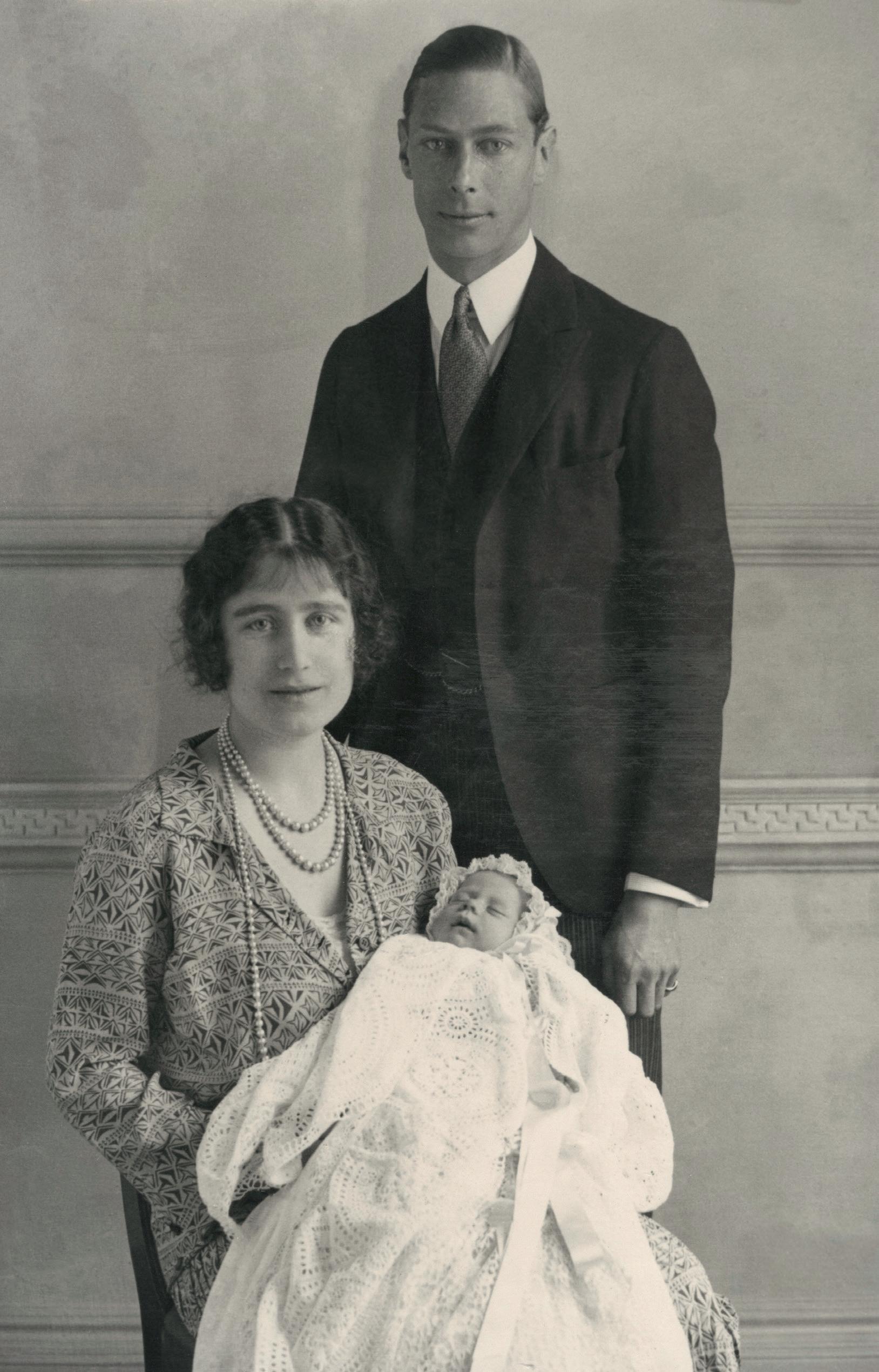
Princess Elizabeth (Queen Elizabeth II) is born
● Princess Elizabeth Alexandra Mary, known in her family as ‘Lilibet’, was born by caesarean section at the home of her maternal grandparents, the Earl and Countess of Strathmore in Bruton Street, in London’s fashionable Mayfair. She was the first child of the Duke and Duchess of York, who later became King George VI and Queen Elizabeth.
Named after her mother, her grandmother and her great-grandmother, the new baby was described by Queen Mary (her grandmother) as ‘a little darling with a lovely complexion and fair hair’. At the time, Elizabeth stood third in the line of succession to the throne after her uncle Edward, Prince of Wales (later King Edward VIII), and her father, and she was never expected to become queen. But everything changed in December 1936 when King Edward VIII abdicated, making her father king, and Elizabeth next in line to the throne. Following the death of King George VI in 1952, Princess Elizabeth became Queen Elizabeth II aged just 25. She reigned for 70 years –a first in British history.
LEFT:
Fire destroys the King’s Apartments at Hampton Court Palace
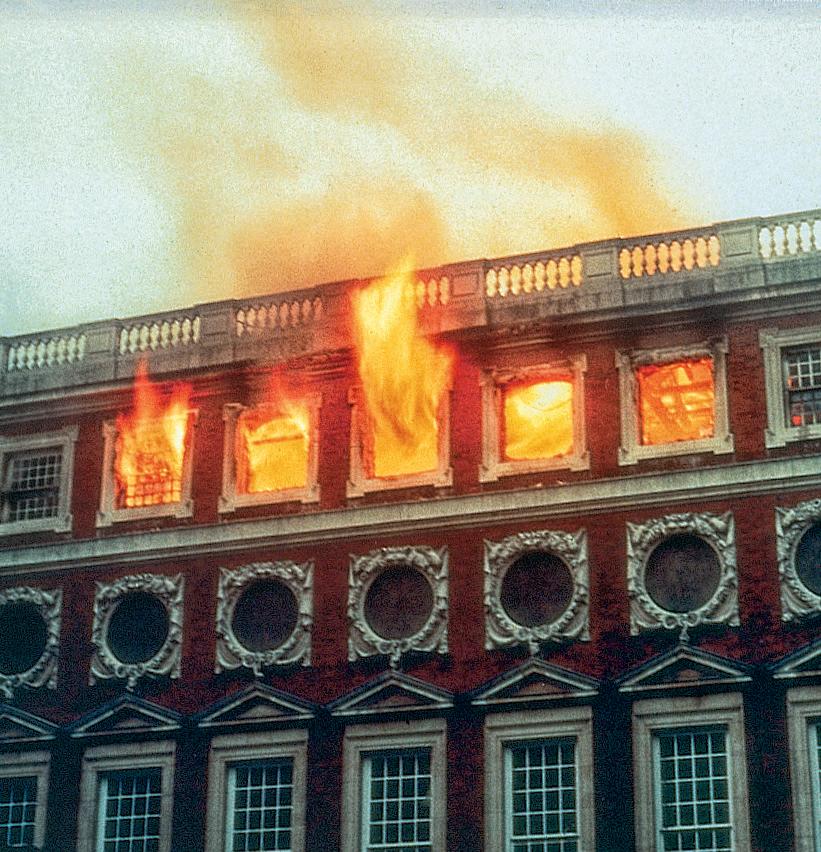
● In the early hours of Easter Monday, 31 March 1986, fire broke out in a grace-and-favour residence above the King’s Apartments. By 9am, the entire third floor was ablaze and over 20 fire tenders, and more than a hundred firemen, were tackling the burning building. As the fire raged around them in the darkness, the palace’s volunteer salvage squad safely removed most of the works of art on display, including 84 paintings, 50 pieces of furniture, 70 items of ceramics, as well as tapestries, carpets and chandeliers.
When the fire was finally extinguished, the scene was one of utter desolation. Much of the 200ft-long roof had collapsed, sending timbers and molten lead crashing through ceilings into the State Apartments below. The building was extensively fire-damaged, drenched in water and open to the elements. Over the course of the next six years (it took three years for the interiors to dry out), the State Apartments were faithfully and painstakingly restored to look as they did when Christopher Wren completed them for William III and Mary II in 1689, using as far as possible Wren’s materials and methods, while incorporating greatly enhanced fire protection.
This tragic event was, however, the catalyst for the creation of Historic Royal Palaces (formed as an agency in 1989, becoming a charity in 1998). At the time of the fire, responsibility for the palace was split between four government bodies and management failings were partly blamed for the disaster. So, the Historic Royal Palaces Agency was formed to look after the unoccupied royal residences of Hampton Court Palace, the Tower of London, Kensington Palace, Banqueting House and Kew Palace. Hillsborough Castle and Gardens were added in 2014.
official photographs published to celebrate the occasion.
Scorch marks from the fire remain on some of the panelling in the King’s Apartments. Look out for it on your next visit or ask a palace host to point it out to you.
ABOVE: The 1986 fire at Hampton Court Palace caused significant damage to the King’s State Apartments. (London Fire Brigade)
The Banqueting House welcomes the restored king
● After the execution of Charles I outside the Banqueting House in 1649, his son and heir, Charles II, lived in exile until 1660 when Parliament proclaimed him as king. Then, on 29 May 1660, his 30th birthday, Charles II returned to Whitehall in triumph. London turned out en masse to welcome home their rightful king and the streets were lined with cheering crowds as he made his way through the city in great procession. After several hours, the procession arrived at the Banqueting House where a grandstand had been erected to allow courtiers to get a glimpse of the King. Inside, Charles was greeted by representatives from the two Houses of Parliament who professed their loyalty to
Enjoy exclusive access to the Banqueting House on members-only days; 10 April, 02 May, 28 May, 27 June 2026; pre-booking required
him. The peers and MPs present then queued to kiss the King’s hand.
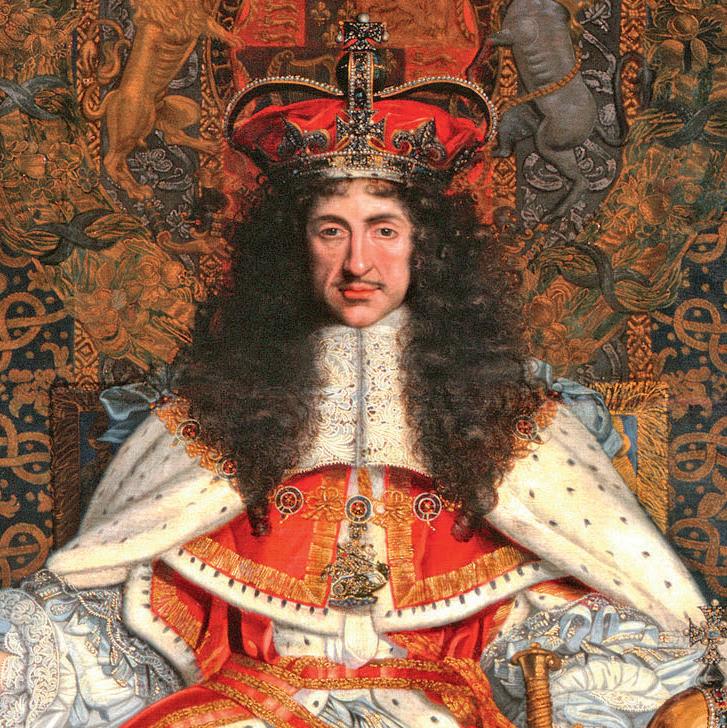
One of the largest embassies to congratulate Charles II on his restoration to the throne, took place in the Banqueting House in September 1660, that of the Prince de Ligne, Ambassador Extraordinary to the King of Spain. The Prince arrived in London in September 1660 with an entourage of hundreds, including 70 elegant pages in Parisian livery of finest pink, yellow and silver satins and silks. However, precisely at the moment of his arrival, Charles II’s younger brother, Henry, Duke of Gloucester died and the audience had to be postponed. When the audience with the King finally took place a couple of days later, the royal family were all dressed in black; in sharp contrast to the brightly dressed visitors.
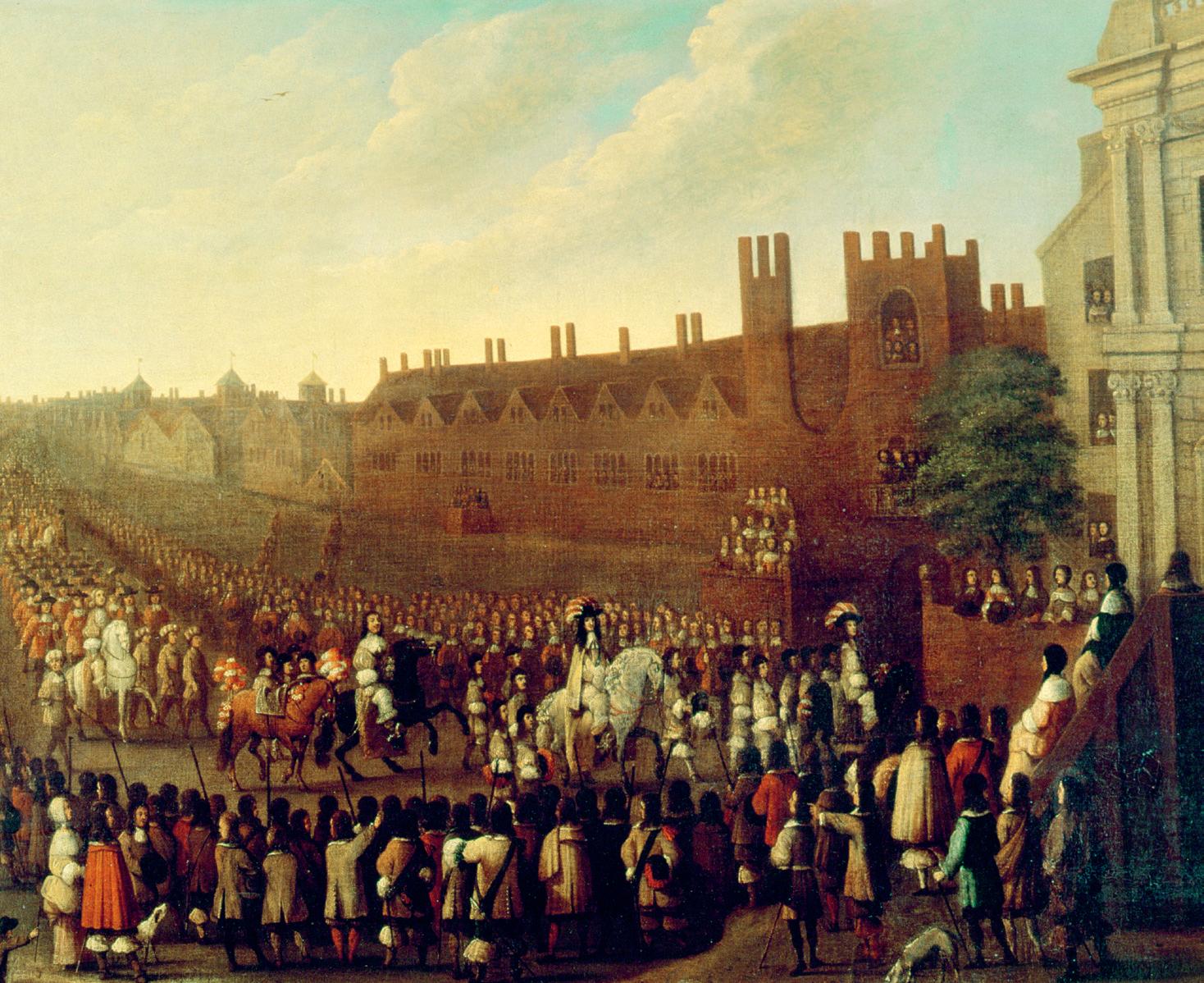
ABOVE: Charles II (detail) by John Michael Wright, c1661. (© Royal Collection Enterprises Ltd 2026 | Royal Collection Trust)
LEFT: The arrival of Charles II at Whitehall in 1660 (detail), attributed to Isaac Fuller, c1660. (Bridgeman Images/Private Collection)
Prince Augustus, Duke of Sussex dies at Kensington Palace
● When George III’s sixth son died at Kensington on 21 April 1843, crowds flocked to the palace in their thousands to pay their respects to this popular, easy-going man.
Prince Augustus (17731843) was the only one of George III’s sons not to join the army or navy due to his severe asthma. Between the ages of 17 and 33, he spent most of his time abroad, where he illegally married Lady Augusta Murray (illegal as they married without the King’s permission, contravening the Royal Marriages Act of 1772). In 1806, however, the relationship ended, his health improved and the Prince returned to England. He was created Duke of Sussex and was given apartments at Kensington Palace where he lived until his death. In 1831, he married Lady Cecilia Buggin, widowed daughter of the Earl of Arran.
The Duke assembled a large library at the palace containing over 50,000 books and including about 1,000 editions of the Bible, and many ancient manuscripts, which were housed in several rooms. He was present at the birth of his niece, Princess Victoria (later Queen) at the palace in 1819 and became a favourite uncle as she grew up in the adjacent apartment. He gave her away at her wedding to Prince Albert in 1840. When the Duke died in 1843, The Times commented that
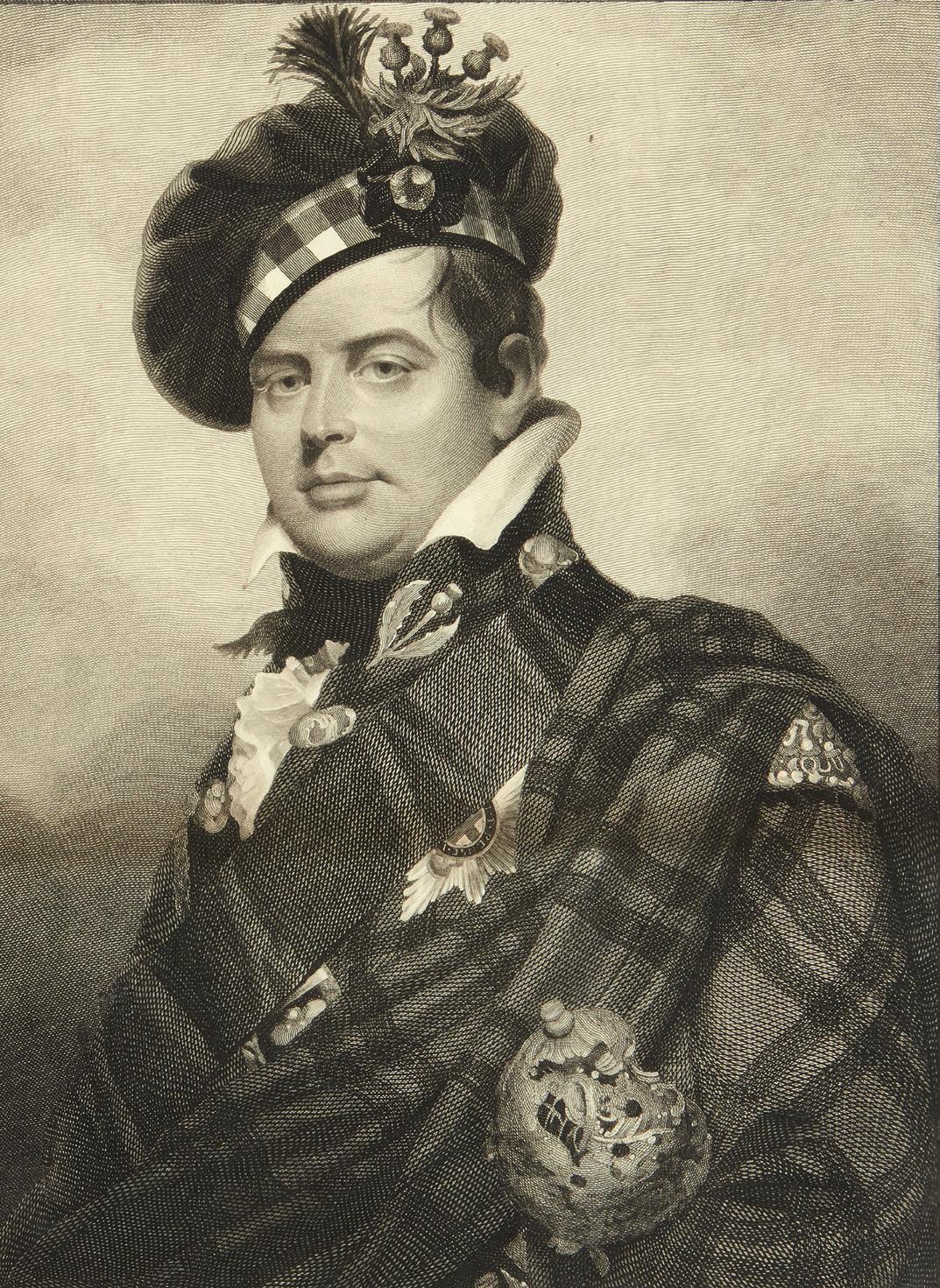
Explore the room where Princess Victoria was born and learn more about her childhood in the rooms where she grew up at Kensington Palace; no pre-booking required
‘No death in the royal family short of the actual demise of a monarch could have occasioned a stronger feeling of deprivation’. The palace was opened to mourners and over 25,000 people visited to pay their respects in a single day. A special wooden staircase was built from a second-floor window in the King’s Gallery range to ease the flow of visitors.
On the day of his funeral,
over two thousand policemen lined the streets to control the crowds; shops were closed in Kensington and mourning bunting hung along the processional route. The Duke was buried in daylight; the first time for a member of the royal family – and not in a royal vault but in the newly built Kensal Green Cemetery; a special request from the Duke so that his non-royal wife could be buried next to him.

Kim Klug, Community Partnerships Manager, describes the inspiring work of the team, while Community Gardener, Bethan Rochford, looks back over the first year of her role that supports the programme at Hampton Court Palace
At Historic Royal Palaces, the Community Partnerships team aims for our palaces to be vibrant hubs at the heart of local communities. We believe that the stories held within these historic walls have the power to bring people together – fostering stronger, more resilient, inclusive and happier groups.
For over a decade, we’ve partnered with organisations local to our palaces to deliver the Community Access Scheme (CAS). This programme is designed to remove barriers and create access for local people, using heritage as a bridge between past and present, generations and cultures. We especially support those who are

underrepresented in our visitor profile and face multiple barriers to access –whether financial, geographical, cultural, physical or related to health and wellbeing.
The scheme offers free entry and tailored support for community groups to explore our palaces in meaningful and relevant ways. We train group leaders to design and lead visits that reflect their groups’ interests and needs – making each experience personal, empowering and inspiring.
Since its launch at Kensington Palace in 2012, the scheme has grown to actively engage local people across London and Northern Ireland. Our sustainable approach to community engagement balances support with
independence and gives group leaders and individuals the confidence to thrive.
Today, we’re proud to work with 708 CAS group leaders from 344 organisations, and in 2024/25 alone, we welcomed over 29,000 people through the scheme.
We’ve built strong local relationships that shape our wider Community Partnerships programmes – from our weekly Warm & Welcome Space, which provides a safe and supportive space for anyone in need of warmth and community, to our annual Community Celebration. We continue to learn from our partners, discovering how the past can inspire and connect people in the present. For example:
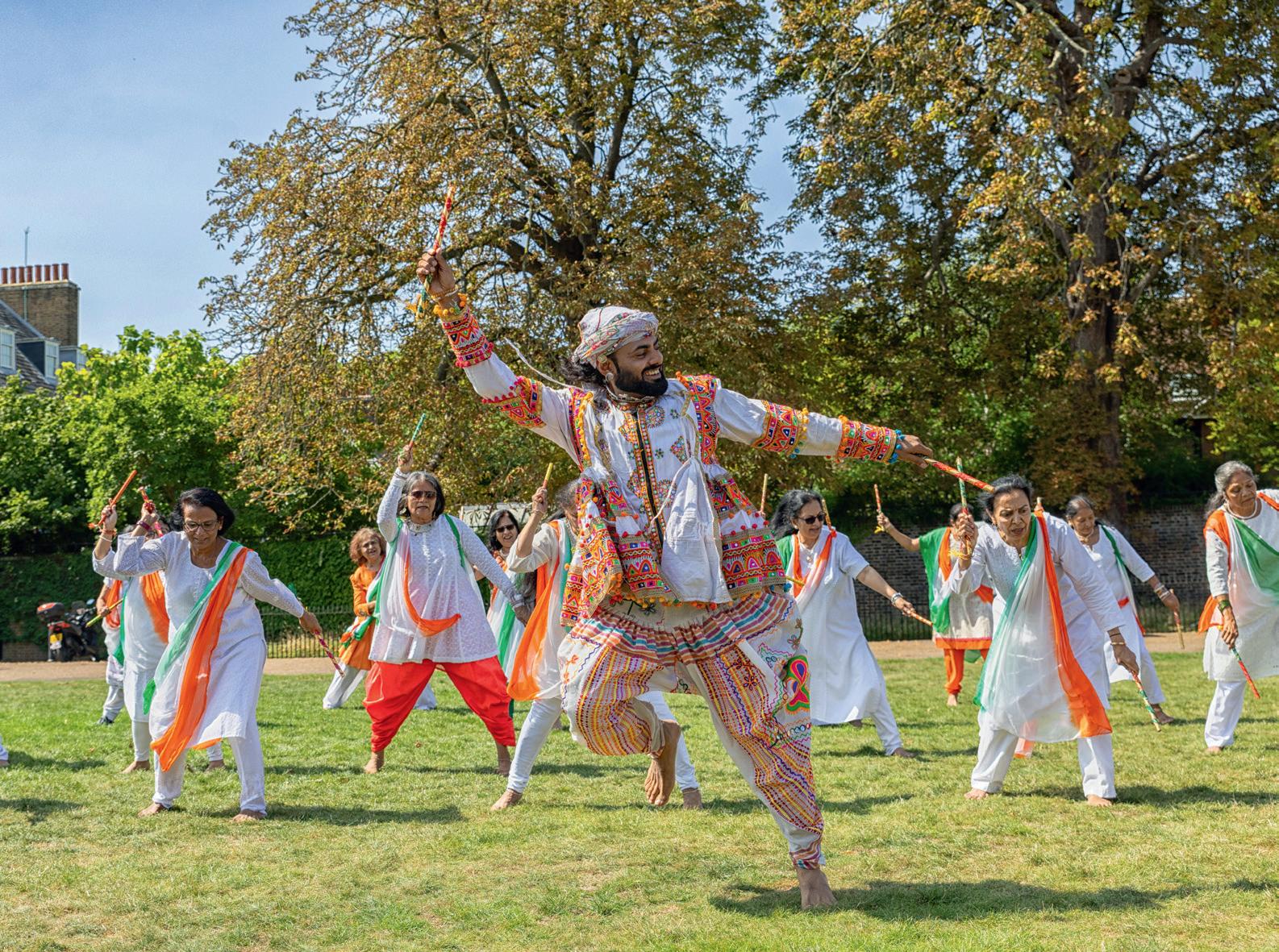
• Women’s empowerment courses explore the lives of powerful queens, princesses and mistresses who once walked our palace halls.
• English language learners relate to George I’s journey – arriving in England in his mid-50s to begin a new ‘career’ as king.
• Mental health groups find peace and reflection in our State Apartments and gardens.
The Community Access Scheme continues to grow through the trust and collaboration we share with our partners. Every visit is a reminder that heritage can be a welcoming space – one that reflects and celebrates the diversity of the communities around us – showing us that Historic Royal Palaces is a charity for everyone.
There’s lots happening this year, including our ‘Tower Transformation’. In autumn 2026, we should have our first
ever dedicated community space at the Tower of London available for our CAS groups to use. This will open up a whole host of opportunities for onsite engagement with local communities.
It’s a real pleasure and privilege to collaborate creatively with community partners, too. For our new exhibition at Kensington Palace, ‘The Last Princesses of Punjab’, we worked with an intergenerational group of British South Asian people. You can read more about this on page 20.
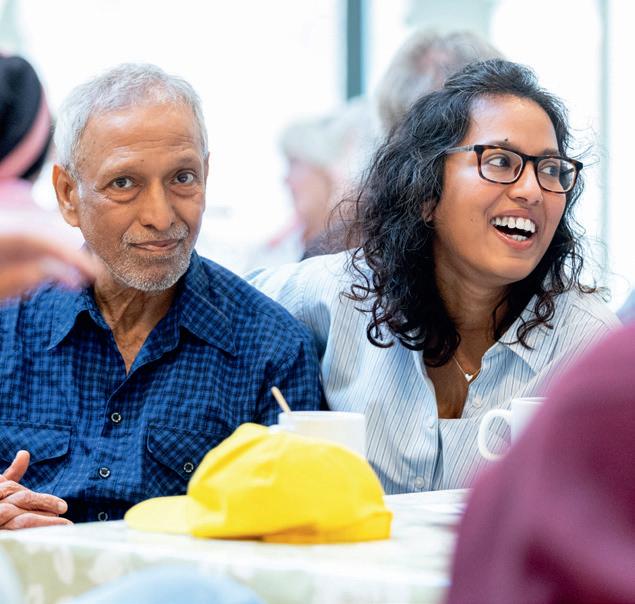

THANK YOU
Your membership makes programmes like our Community Access Scheme possible. If your community group is based near the Tower of London, Hampton Court Palace, Kensington Palace, or Hillsborough Castle & Gardens and you think the Community Access Scheme could be a good fit, we’d love to hear from you. Feel free to get in touch at communities@hrp.org.uk
When the newly created role of Communities Gardener was introduced to expand the access programme at Hampton Court Palace in early 2025, Bethan Rochford knew it was the perfect opportunity to combine her two passions: people and plants.
Bethan’s journey began as a volunteer in the palace gardens, but her career path had previously focused on employee wellbeing. During the COVID-19 pandemic, she retrained in horticulture with the RHS and started community gardening projects in her local area. This unique blend of experience made her an ideal fit for a role that connects nature with wellbeing.
Working closely with colleagues in Community

Bethan Rochford reflects on her role as Communities Gardener at Hampton Court Palace
Partnerships and Gardens & Estates, Bethan has spent the past year highlighting the wellbeing benefits of gardens and nature. Through initiatives like Garden Discovery Days and surveys with Community Access
Scheme (CAS) partners, Bethan and the team learned:
• More about how community groups use the expansive gardens at Hampton Court Palace when visiting through the Community Access Scheme.
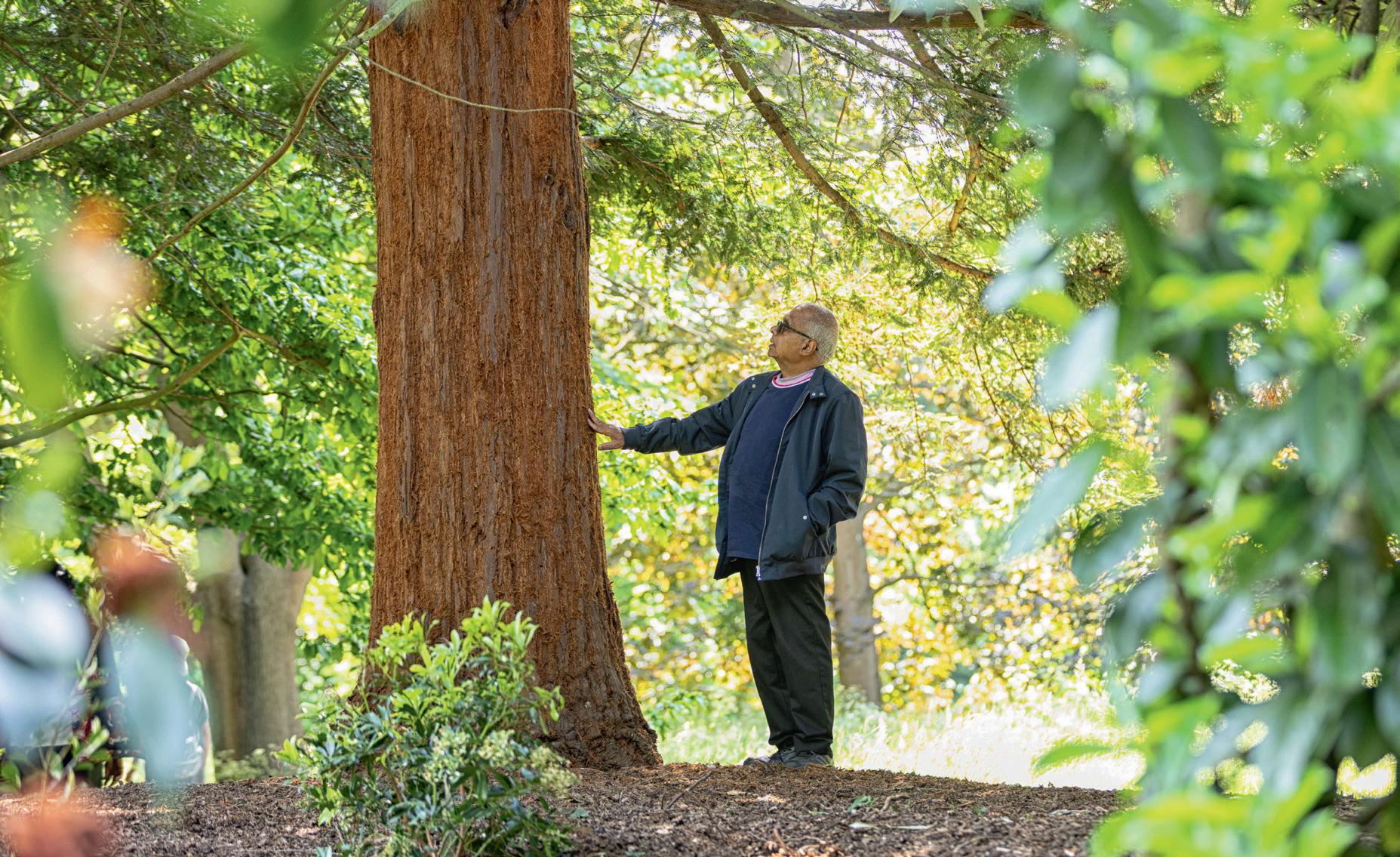
‘Nature is a powerful medicine’
• Some local communities have barriers to accessing quality green spaces on a regular basis.
• CAS groups recognise the wellbeing benefits of gardens and nature.
• CAS groups want more opportunities to take part in hands-on activities and gain gardening skills.
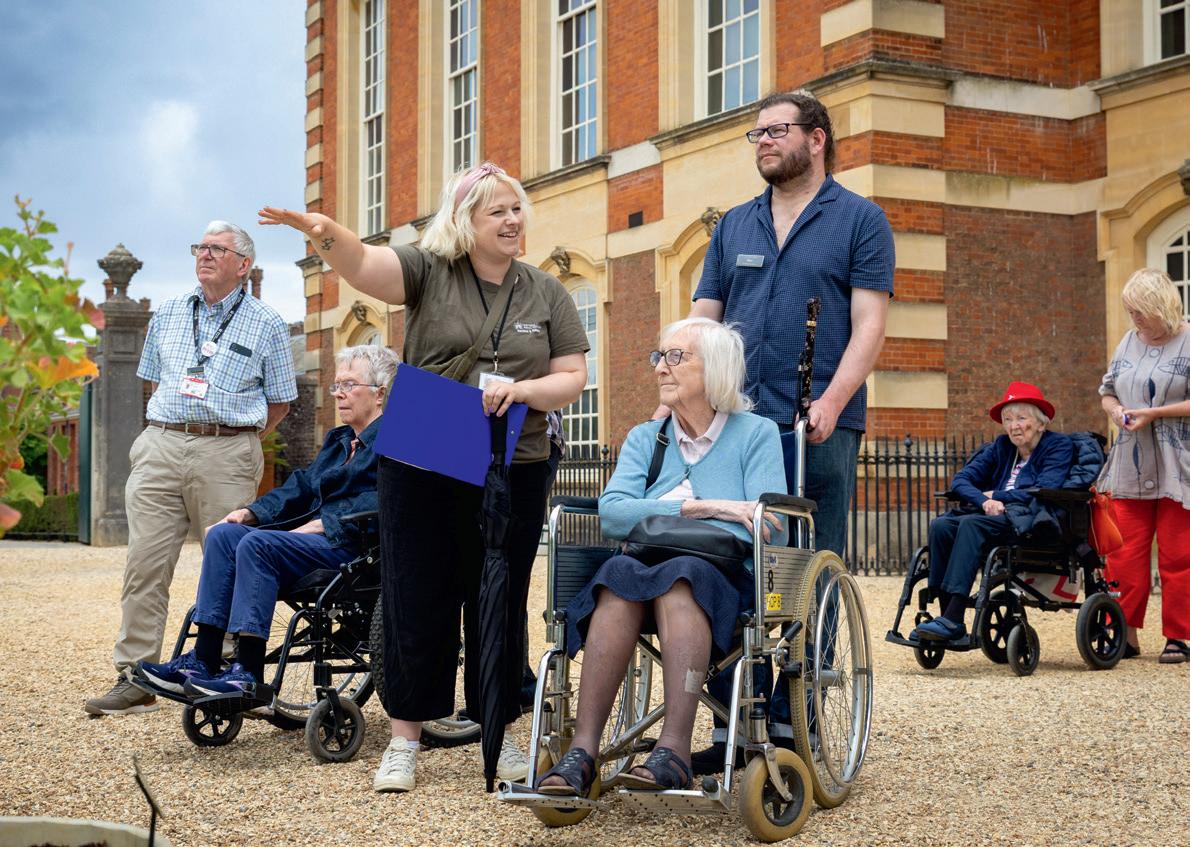
These insights shaped new activities delivered through Community Partnerships programmes, including the annual CAS Network Wellbeing Event, dementiafriendly session and children and family activities over the summer.
Bethan is passionate about helping people actively connect with nature –because, as she reflects, the benefits for wellbeing are profound. It is this passion that guides her work with Community Partnerships, creating access to our gardens.
Why nature is good for all of us
• Mindful time in nature can help lower cortisol levels, reduce blood pressure and steady the heart rate, making it a powerful way to relieve stress and support a balanced lifestyle.
• Try slowly walking through a garden. Slowing your pace sends a signal to the brain that you’re safe and helps reduce stress.
• Soil contains a natural microbe (Mycobacterium vaccae) that boosts serotonin levels. Simply breathing in while walking, gardening or sitting outdoors can lift your mood. Nature is a powerful medicine.
• Trees release phytoncides, a natural compound that
ABOVE: Bethan supporting a Dementia Friendly session at Hampton Court.
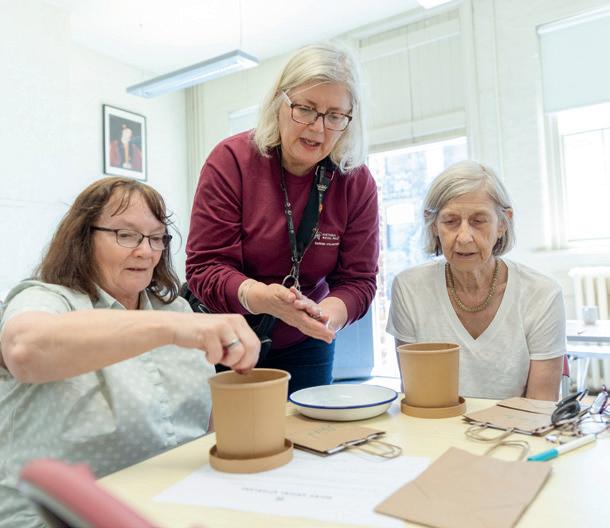
LEFT: Seed planting at a Wellbeing Event.
supports your immune system. Breathing in while among trees can boost your wellbeing.
• Natural settings offer ‘soft fascination’ –effortless attention that restores clarity, concentration, and mental energy.
Find restoration in our palaces – and at home – with our wellbeing resources, including slow videos for mindfulness and relaxation hrp.org.uk/wellbeing
Escape into nature with ‘A walk in the gardens of Hillsborough Castle’, our calming podcast combining an immersive soundscape with insights from Head Gardener Claire Woods. Find it on the Historic Royal Palaces Podcast.
Diplomacy, power and territory are usually what motivated royal matchmakers. While some got it politically and romantically right, others got it horribly, horribly wrong …
● In the winter of 1759, 22-year-old George, Prince of Wales (soon to become King George III) wrote to his mentor, John Stuart 3rd Earl of Bute in distress: ‘You have often accused me of becoming grave and thoughtful; it is entirely owing to a daily increasing admiration of the fair sex which I am attempting with all the philosophy and resolution I am capable of to keep under, I should be ashamed after having so long resisted the charms of those divine creatures now to
become their prey.’ In response, Bute sent Baron Gerlach Adolph von Münchhausen, the Prime Minister of Hanover to scour Germany for a suitable wife for a king in waiting.
The bride needed to be Protestant; not too young, nor too old; not ugly, likely to be a good breeder and someone who wouldn’t be too ‘philosophical’ or meddle in political affairs. There were five potential candidates. At only 14, Princess Elizabeth of Brunswick-Wolfenbüttel was
ruled out for being too young. Caroline of Hesse-Darmstadt was rejected for her sizeable figure and her father’s worrying attempts to communicate with the spirit-world. Phillipa of Brandenberg-Schwedt was considered too ‘spirited’ and George’s cousin, Frederica of Saxe-Gotha was rejected because her face was marked by chickenpox scars.
This left 17-year-old Princess Charlotte of MecklenburgStrelitz, so Bute’s friend Colonel David Graeme was
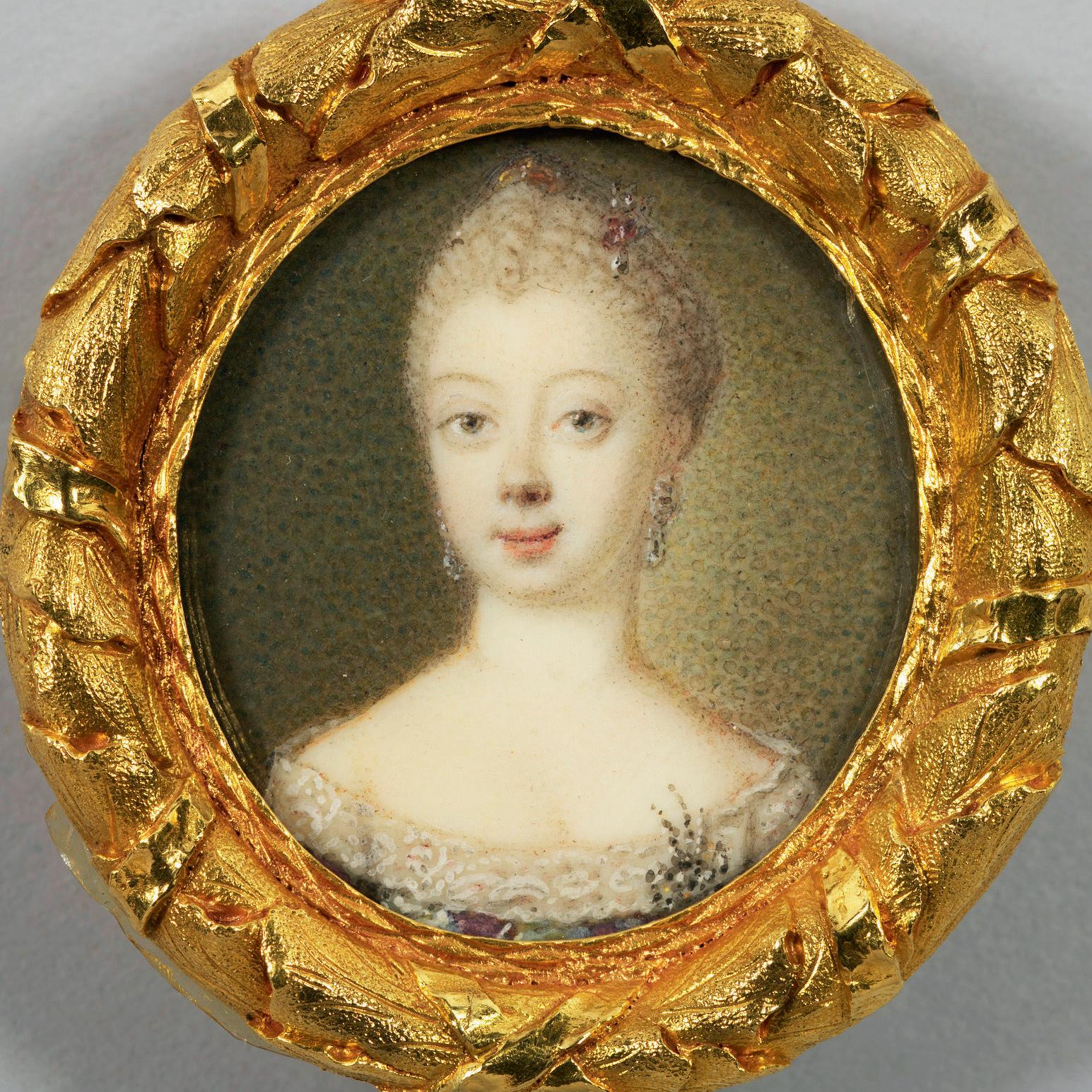
sent out to meet her in the flesh. He reported back that she had an acceptable face and teeth, and a ‘bosom full enough for her age’. However, what clinched it for the royal matchmakers was that the Princess was considered ‘amiable’ and ‘capable of taking any impression and being moulded into any form’. Queen Charlotte, as she later became, was far wiser than this description suggested. She had studied Latin, spoke French and Italian and shared many interests with the King, including art, science and astronomy. Their marriage was a great success and Charlotte enjoyed a happy life with her husband who loved her dearly. Polly Putnam, Collections Curator
‘I LIKE HER NOT!’
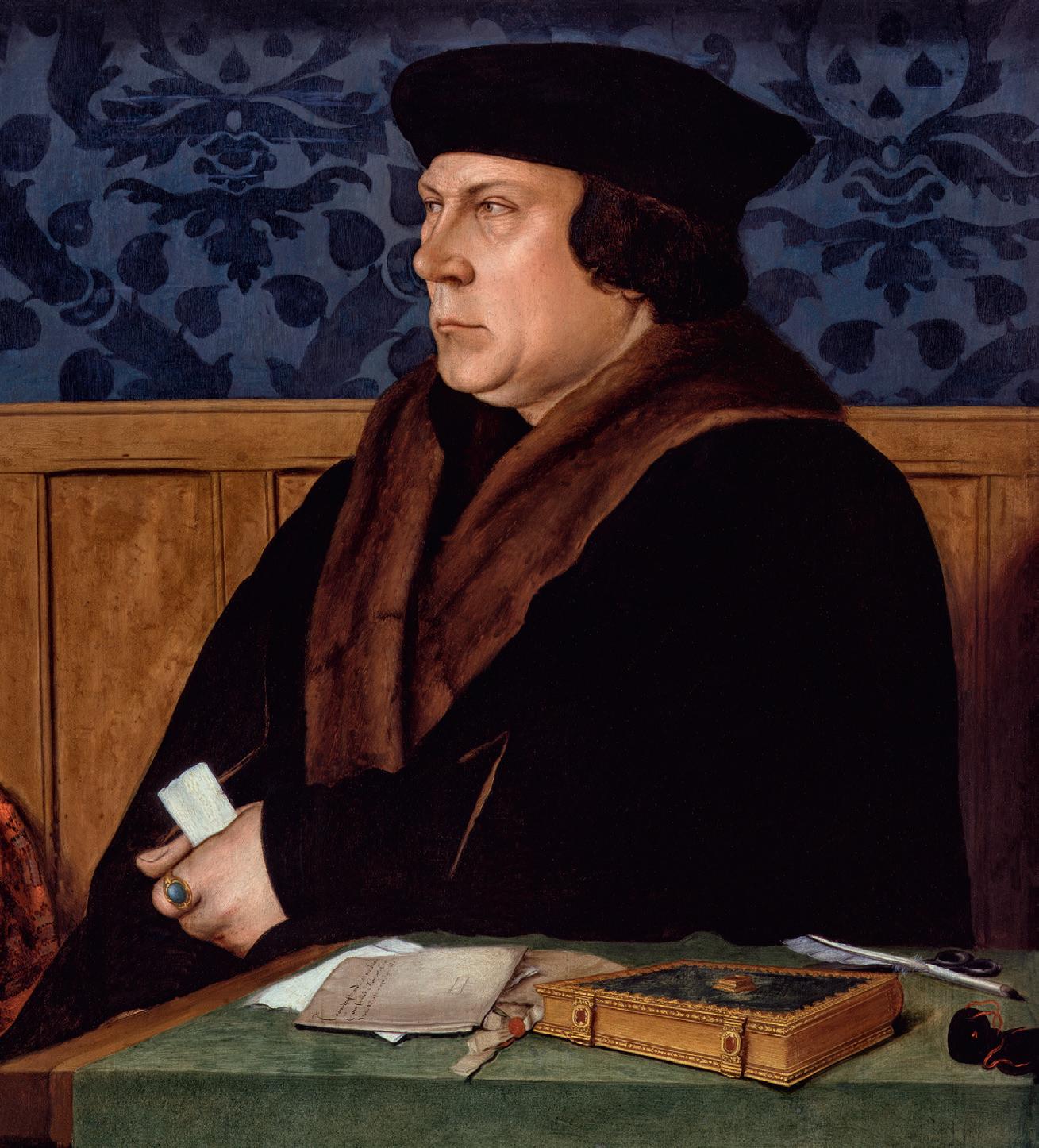
● Henry VIII’s joy at the arrival of his longed-for male heir, Edward, at Hampton Court Palace in October 1537 turned to grief when his third wife Jane Seymour died a few days after giving birth. Almost immediately, the hunt was on for wife number four: in this age of high infant mortality one son was not enough to secure a dynasty. Step forward Thomas Cromwell: chief minister, reformer and royal matchmaker extraordinaire. Anxious to secure a muchneeded European ally, he proposed a marriage alliance with the Duchy of Cleves which, like England, had rejected papal authority. For the first time in his eventful
marital history, the King faced the prospect of taking a wife he’d never met. Cromwell was quick to assure him: ‘Every man praises the beauty of the same lady as well for the face as for the whole body.’ But Henry was taking no chances. He dispatched the renowned artist Hans Holbein to Cleves to paint the Tudor equivalent of a profile picture. The resulting portrait showed a pretty young woman with fair hair, a doll-like face, delicate eyes, mouth and chin, and a demure, maidenly expression. Enraptured, Henry steamed ahead with the negotiations and a treaty was signed on 4 October 1539. A few weeks later, Anne made her way to
England. On New Year’s Eve, she arrived at a stormy, wind-swept Rochester Castle in Kent. The next day, in true chivalric fashion, Henry hastened to greet her in disguise. The theory was that a woman would instantly recognise her true love, but unfortunately, Anne hadn’t read the script. When this stranger strode up to her and kissed her full on the mouth, she was visibly appalled. It was a disastrous first encounter from which Henry never recovered. ‘I like her not! I like her not!’ he raged at a beleaguered Cromwell. The royal matchmaker was now ordered to turn matchbreaker and find a way out of the marriage, sharpish.
Tracy Borman, Chief Historian
‘NOW,
● The 17th-century poet John Oldham wrote that there was no ‘higher Blessing in the Gift of Fate’ than by the marriage between first cousins William III and Mary II in 1677. However, it wasn’t fate Mary had to thank for finding her a husband, but her uncle Charles II. The canny King wished to secure an alliance with the Protestant Low Countries to help the ongoing power struggle with Catholic France, and presented his match-making plans to parliament in 1674.
Mary’s dowry was to be an enticing £40,000 sterling, given in jewels.
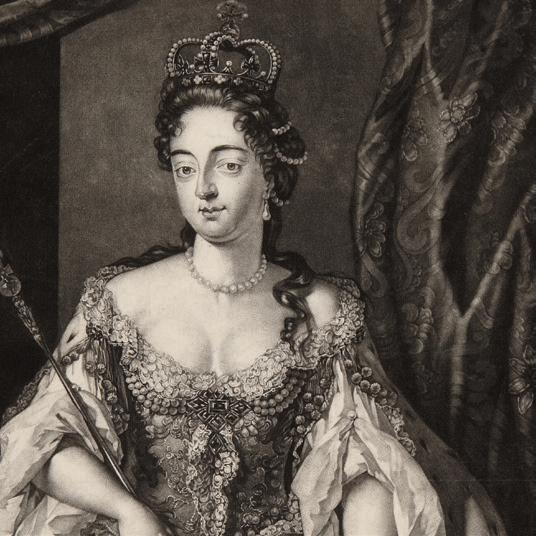
Mary’s father, the future James II broke the news to her, after which Mary’s chaplain recorded that ‘her highness wept all that afternoon and the following day’. Dutch William was not favoured by English courtiers, who commented on his age (he was 12 years older than 15-year-old Mary), short stature, grumpy disposition and chronic asthma.
When the wedding day
came, Mary’s chaplain recorded that ‘at nine o’clock the marriage was solemnized in her highness’ bedchamber’. The wedding was followed by the bedding ceremony at eleven o’clock, for which King Charles drew the curtains around the pair, allegedly shouting, ‘Now, nephew, to your worke! Hey! St. George for England’.
Despite all the tears (and this excruciatingly embarrassing start to married life) the pair did come to love each other deeply and ruled as joint monarchs of England from 1689. When Mary died in 1694, William was inconsolable.
Holly Marsden, Assistant Research Curator
● George Villiers is best known as the handsome favourite of James I & VI. However, in 1623 the thenMarquiss of Buckingham also became matchmaker and ‘wingman’ to James’s son, the future Charles I.
Buckingham supported the ‘Spanish Match’ – a plan to ally Protestant England with Catholic Spain by marrying Charles to Infanta Maria Anna. Discussions began in 1614; however, the plan was deeply unpopular on both sides. By 1622, Charles had grown impatient. Emboldened by promising terms from Spain, he and Buckingham hatched an outrageous plan to woo the Infanta himself.
The Prince and the favourite
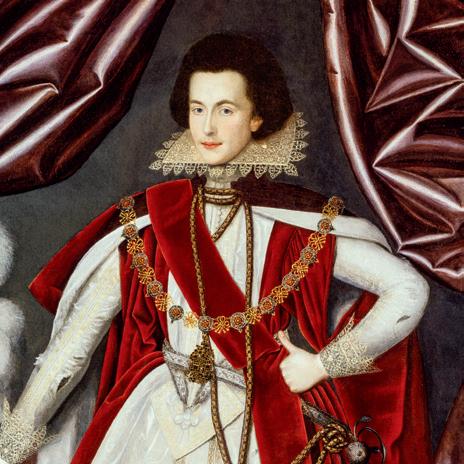
left England in February 1623. Donning false names and beards, the pair snuck through France and much of Spain unrecognised. Arriving in Madrid in March, Charles and Buckingham threw off their disguises and took the Spanish court completely by surprise. However, the Spanish assumed that as Charles had made such an effort he was willing to convert to Catholicism to make the marriage happen. When he disabused them of this, the Spanish demanded England repeal its laws against Catholics – something parliament would never allow. Worse still, Charles had hardly seen the unenthusiastic
● ‘Pretty face – not expressive of softness – her figure not graceful … tolerable teeth, but going …’. This unflattering and superficial portrait is hardly the stuff of which fairytale royal matches are made. It was written by James Harris, Earl of Malmesbury after his first encounter with Princess Caroline of Brunswick, and proved to be an early omen for Caroline’s doomed royal marriage.
On the orders of King George III, Malmesbury had been despatched to Brunswick in November 1794 to secure Princess Caroline’s hand in marriage for George, Prince of Wales, and on 3 December he succeeded.
But Malmesbury was uneasy.
He disapproved of Caroline’s wish to be ‘loved by the people’ and fretted that she was too outspoken. His fears were confirmed when the Prince and Princess met just three days before their wedding at St James’s Palace in April 1795. George’s infamous remark to Malmesbury upon greeting his bride has echoed down the centuries: ‘Harris, I am not well; pray get me a glass of brandy.’ Meanwhile Caroline retorted: ‘I find him very fat, and nothing like as handsome as his portrait.’ But the wedding had to go ahead. Caroline commanded enormous public support. Her informal and playful manners
Infanta, so he finally accepted defeat. He agreed to the Spanish terms, but called off the proxy marriage once he and Buckingham were safely on the road. However, the wily pair soon spun the story in their favour and effected a triumphant return to England. Buckingham cast Charles as a Protestant hero who refused the eager Infanta in defence of his faith! For good measure, they convinced the King to declare war on Spain in 1624. Minette Butler, Assistant Curator
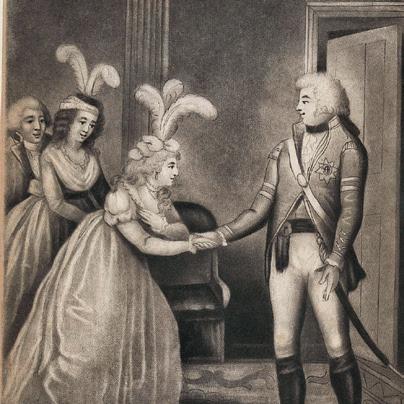
were a breath of fresh air. Although unhappy in marriage, Caroline challenged expectations of what a princess – and a woman – could be.
Myles Campbell, Assistant Curator
The first meeting of George IV and Caroline of Brunswick in 1795 (detail). (Royal Collection Enterprises Ltd 2026 | Royal Collection Trust).
Think you know your royal romances? Put your knowledge to the test online. Play the Royal Romance quiz at royalhistoryquiz.hrp.org.uk

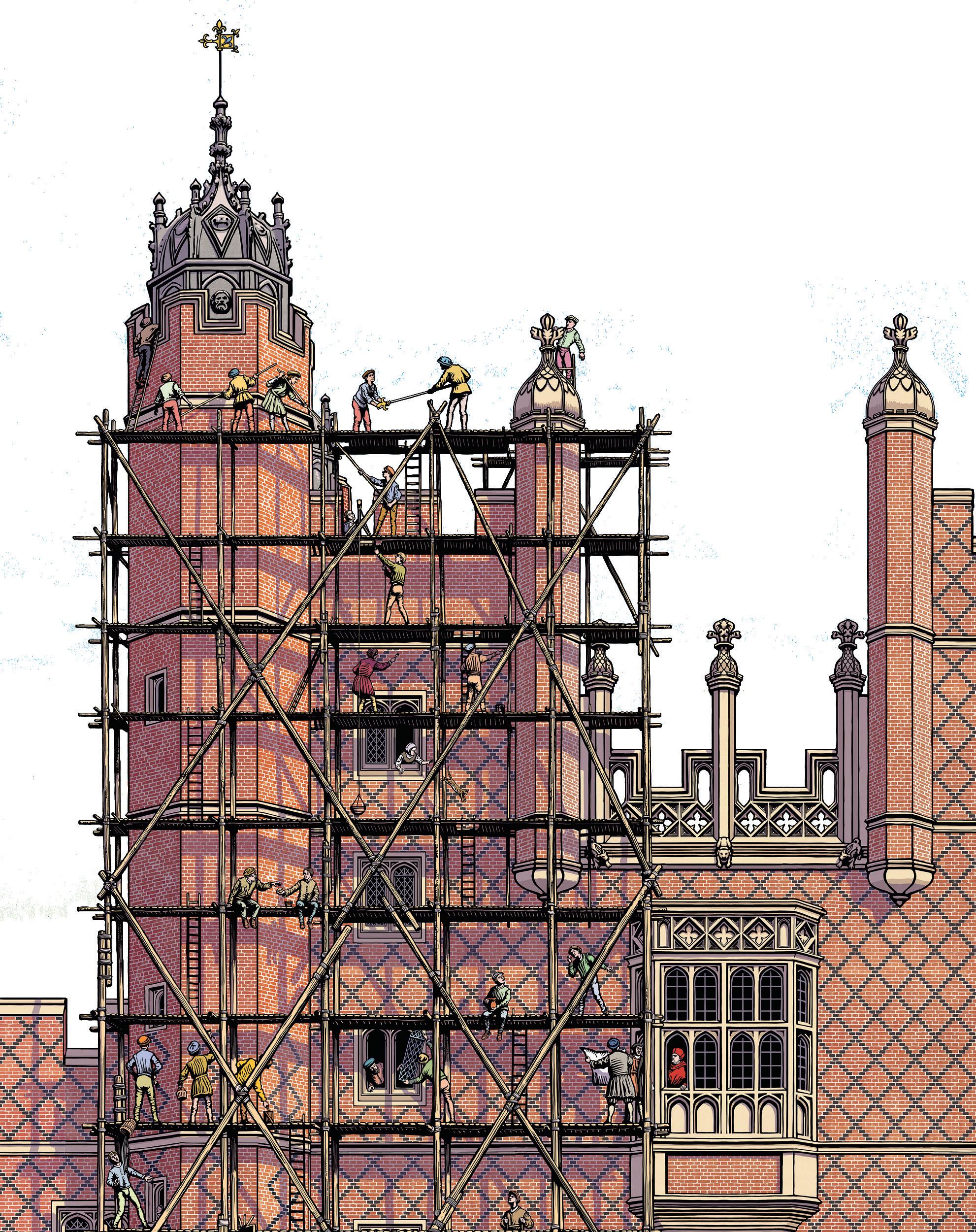

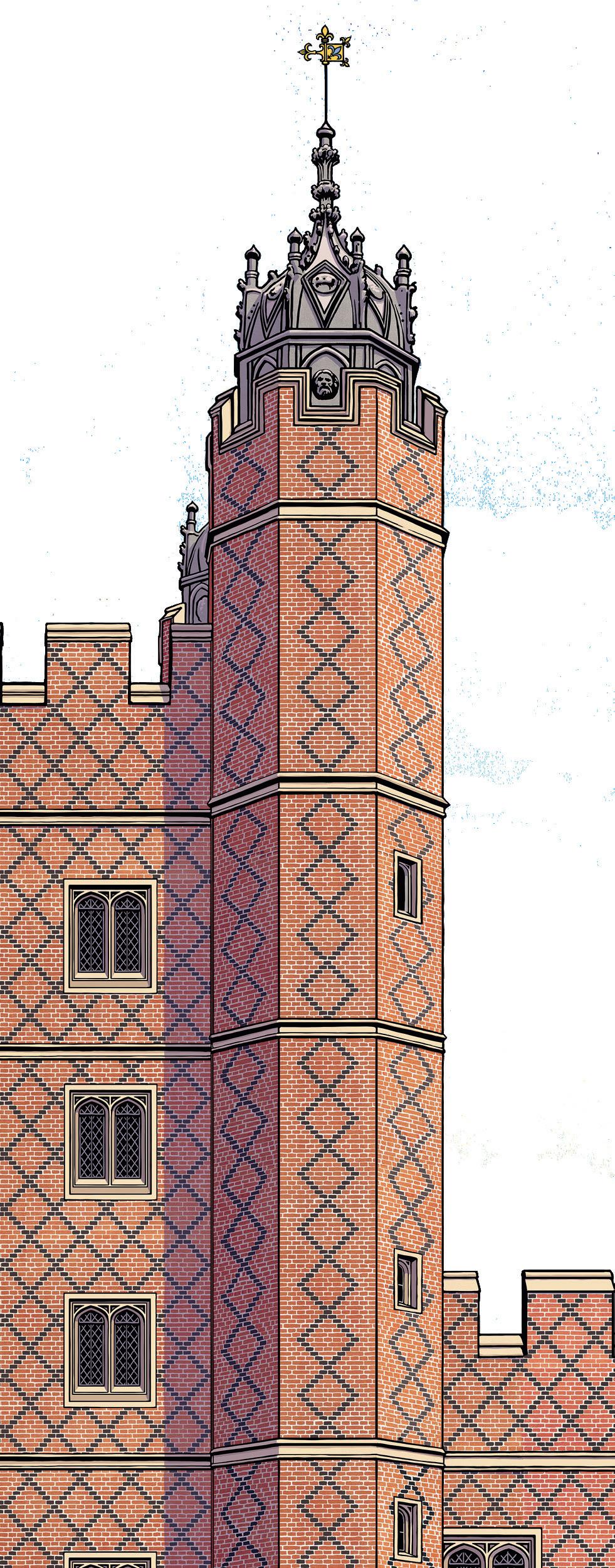


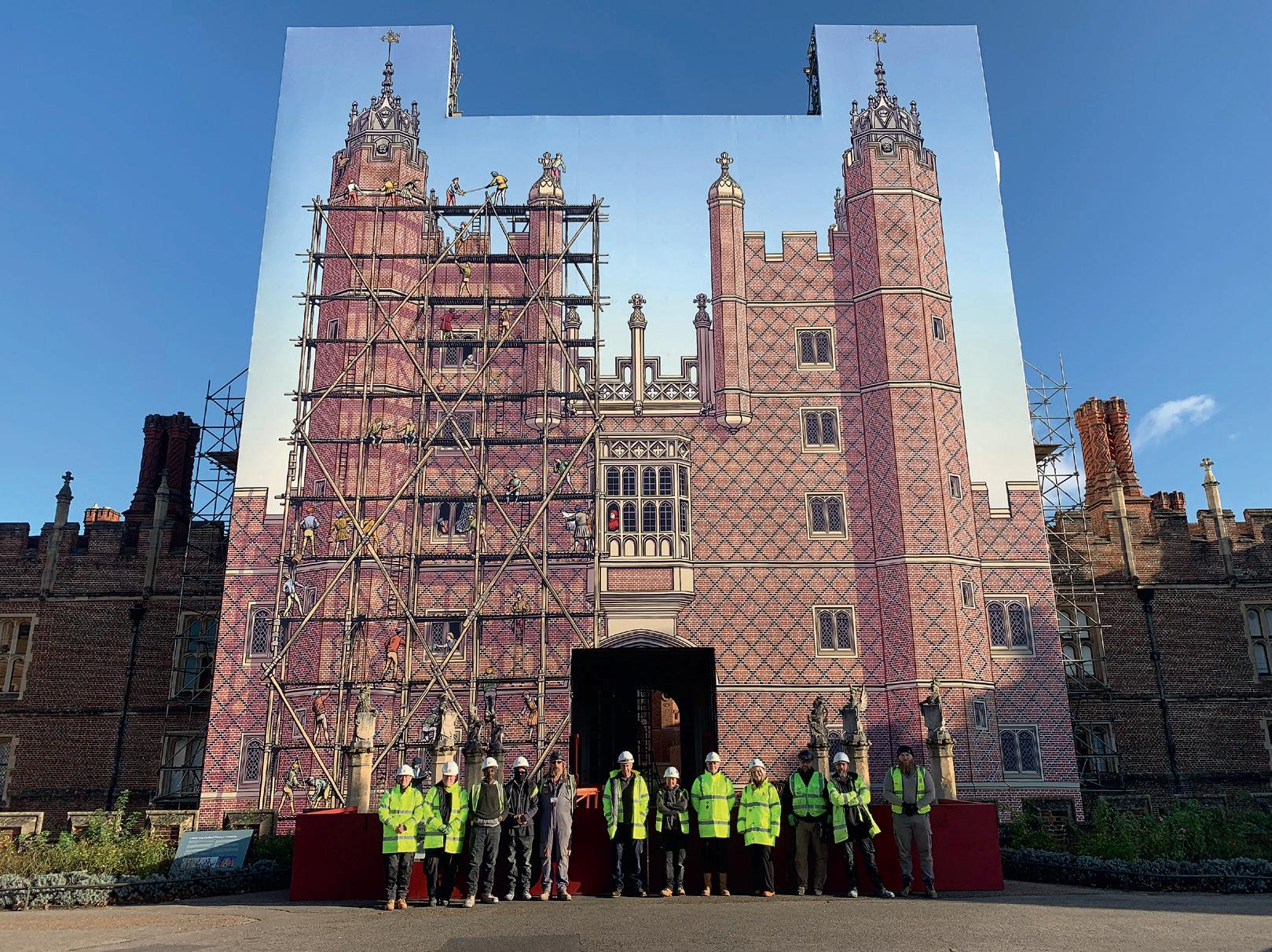
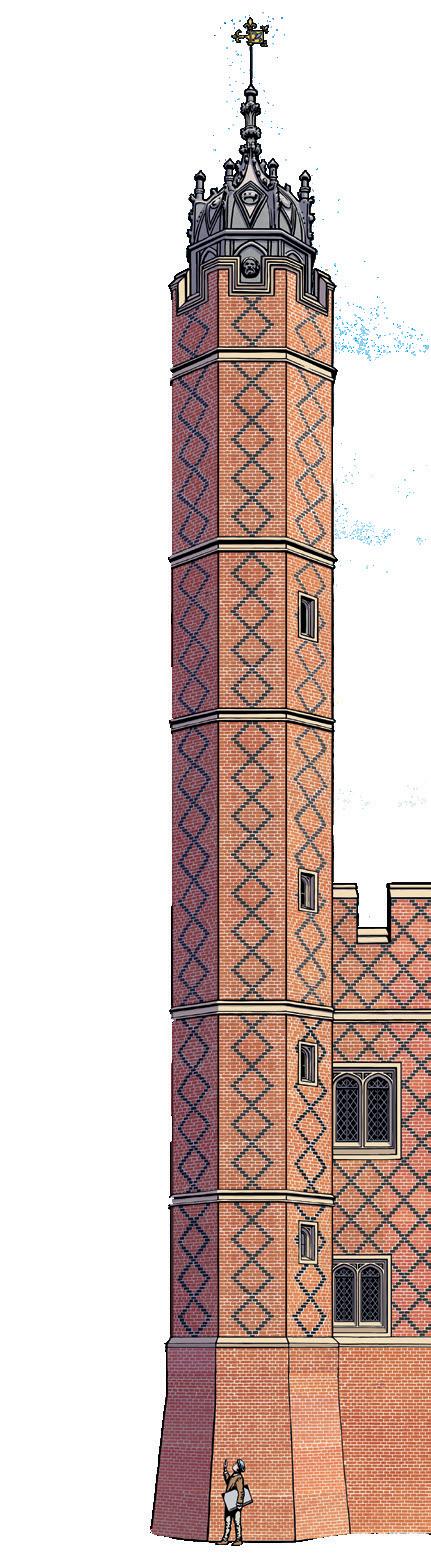
The towering magnificence of the West Front has been re-created for the first time with an immense, and historically accurate, artist’s impression. Karey Draper, Curator of Historic Buildings, explains how and why the wrap was created, and shares some intriguing discoveries made behind the scenes.
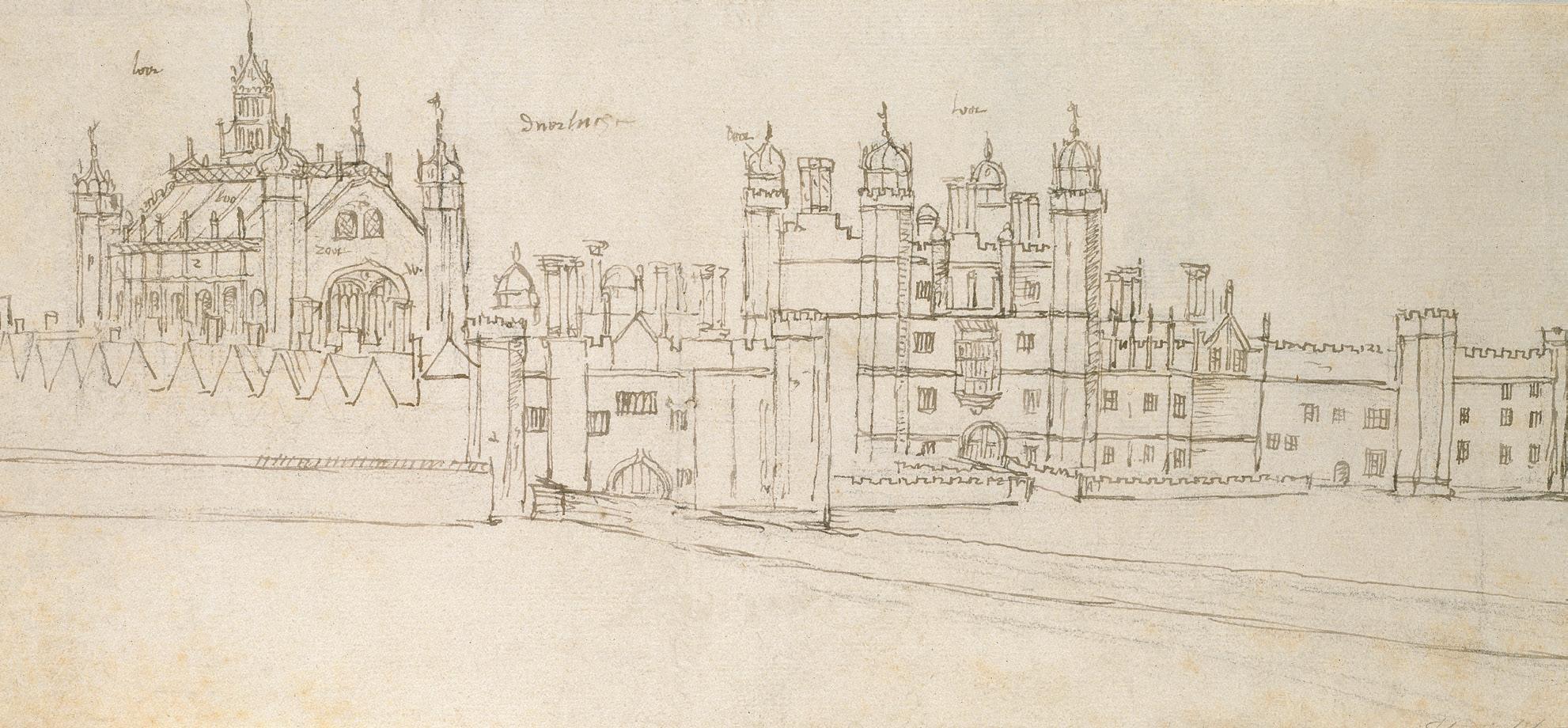
The iconic, 16th-century Great Gatehouse is currently under wraps while it undergoes an exciting, once-in-a-lifetime programme of planned repairs and conservation. Built between 1515 and 1522 for Cardinal Thomas Wolsey, Henry VIII’s chief adviser, the 500-year-old gatehouse is the main entrance into the palace and, as one might expect, has required periodic conservation over the centuries.
The last substantial programme of work took place in the 1880s when two octagonal buttresses were added, the chimneys were replaced with more ornate, decorative stacks, and the vaulted ceiling was inserted above the entrance gateway. Most surprising,
the original oak gates with their exquisite linenfold panelling (which had disappeared a century earlier), were discovered on the floor of a carpenter’s workshop in the palace and were re-installed.
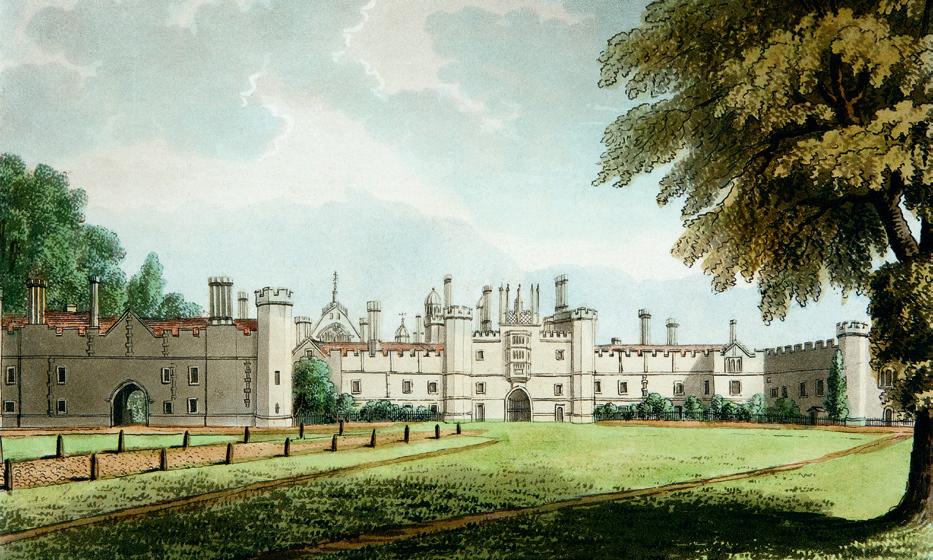
The most dramatic work on the gatehouse was carried out in 1770-72, when structural instability led to the decision to lower it from five storeys to three. The work would change the appearance of Hampton Court Palace forever.
Until now, we’ve only been able to imagine just how magnificent and imposing the gatehouse would have appeared in the surrounding landscape at its full height. However, this project has given us the opportunity to re-create its original majestic stature by combining modern wrap technology and historic research with the artistic talents of illustrator Chris Wormell.
We asked Chris to help us bring the gatehouse’s original construction site
to life with a vivid, pictorial scene to encase the modern scaffold. Chris worked closely with our curatorial, interpretation and surveyor teams, to ensure historic details, perspective and measurements were just right. Research was done into 16th-century scaffolds, the type of clothing the Tudor builders would have worn, and generally how the site may have appeared under Wolsey’s watchful eye.
For reference, the artist was provided with historic images of the gatehouse, as well as contemporary depictions of how it looked when first built, which helped him prepare
‘The most dramatic work on the gatehouse was carried out in 1770-72.’
an initial sketch of the building. Chris also studied the Tudor painting The Field of Cloth of Gold, the historic meeting between Henry VIII and Francois I of France in 1520, which provided inspiration for the interactions between the builders. Details were honed as the scene developed to be as historically accurate as possible. We wanted a snapshot that was full of life and activity to give visitors a glimpse into the past. So, Chris added workers sharing lunch and painting the diamond diaperwork patterns on brickwork; builders studying drawings and windows being fitted. If you look closely, you will also see a few humorous touches including a bucket of paint spilling on to a man below, and a cat jumping out of a window. Even Wolsey makes an appearance, surveying the scene from an upstairs window.
While work on the illustration was underway, a specially designed scaffold was constructed, built to the approximate dimensions of the Great Gatehouse’s former five-storey height. Watching the scaffolders pass each metal pole swiftly upwards from the ground to the top level revealed an astonishingly graceful display of
teamwork, almost like a dance, as the structure was carefully raised. Once complete, Chris’ illustration was printed on to an enormous wrap, which was then attached to the scaffold. There were quite a few nail-biting moments as we watched it going up, hoping the measurements were correct!
Now, instead of an essential, but not terribly attractive scaffold, visitors can enjoy a temporary glimpse back over 500 years to see what the Great Gatehouse would have looked like when it was under construction. An unexpected bonus is being able to comprehend just how imposing the building once was at five storeys high. It is now once again visible from
BELOW: The gatehouse shortly after the removal of the top two storeys in 1770-72.
BOTTOM: The Great Gatehouse as first built, drawn by Anthonis van den Wijngaerde, 1558-61. (© Ashmolean Museum, University of Oxford. Presented by Mrs A H Sutherland, 1837)

East Molesey and to all those walking across Hampton Court Bridge.
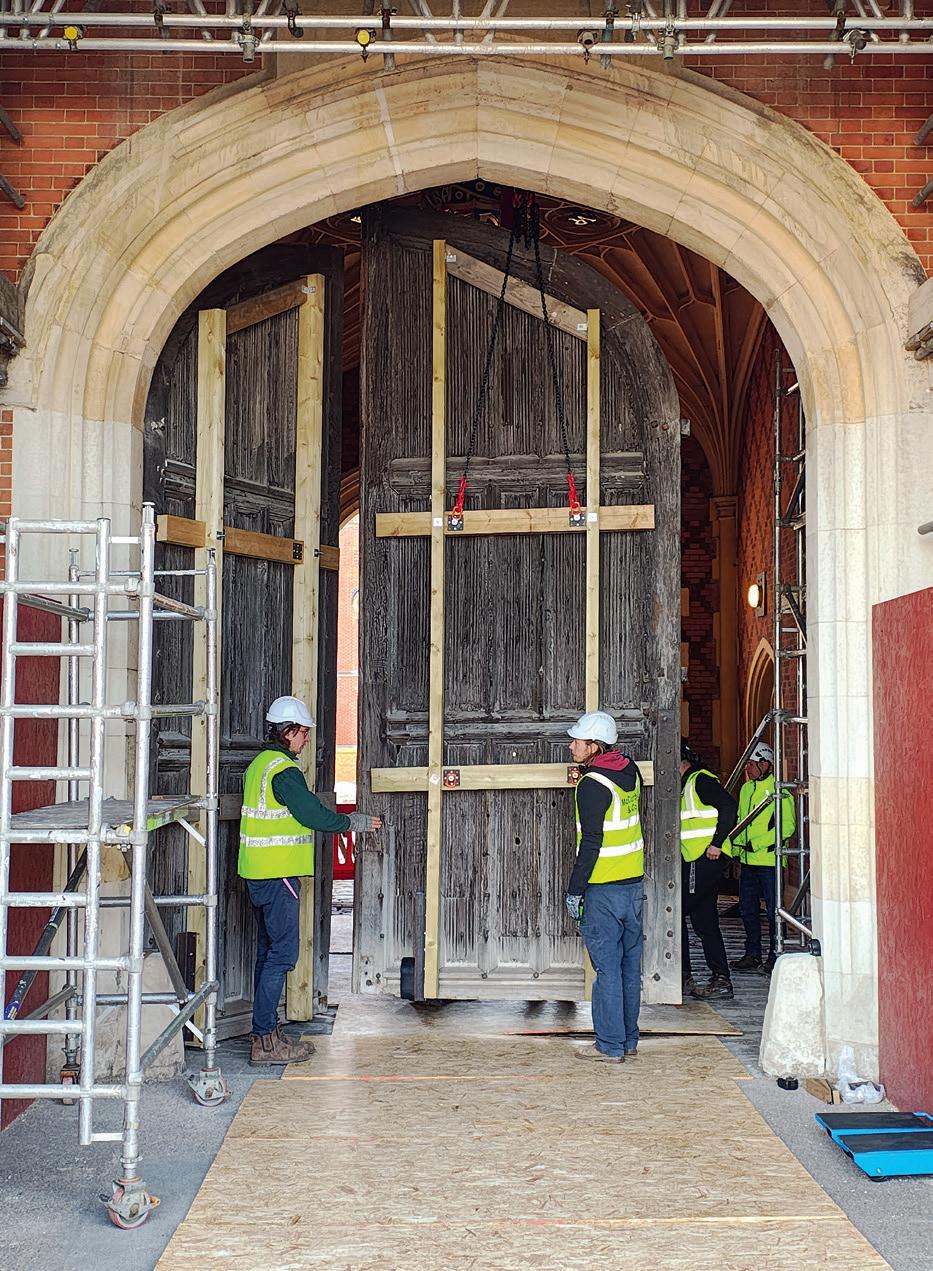
The current programme of work, carried out by Daedalus Conservation, involves replacing the failing lead roof, dismantling and reconstructing the stone oriel window, undertaking brick and stone repairs, repointing, and glazing repairs to the windows. The magnificent oak gates are also receiving specialist conservation attention, which will hopefully help them survive for another 500 years.
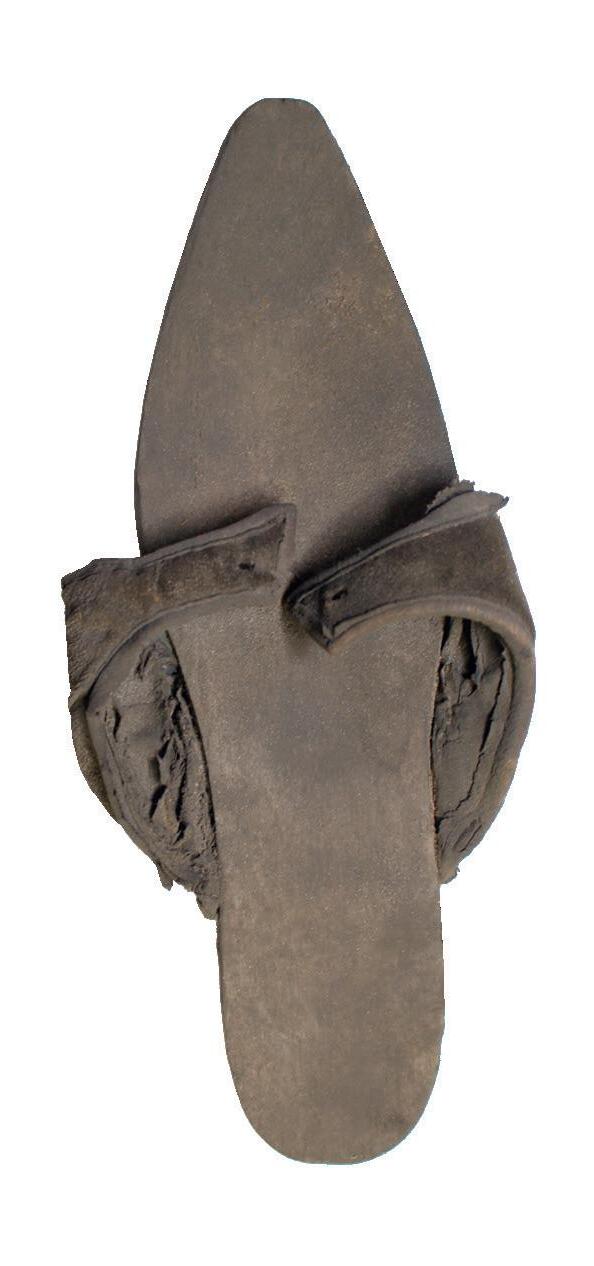
Since work began in September, we’ve made some exciting discoveries! After the old lead roof was lifted, we discovered three shoes, all different, hidden under the roofing boards above the second-floor rooms. This is an interesting location, because we thought it could relate to the works of 1770-72, when the upper two storeys were dismantled. This meant these shoes could have been placed under what was once the third-storey floor.
The shoes were carefully packaged by our Conservation team so that I could take them to Northamptonshire, the location of England’s historic boot and shoe industry, for some expert advice. I arranged to meet Rebecca Shawcross, Curator at the Northampton Museum and Art Gallery, and an expert not just in historic shoes, but also hidden shoes. She has published widely on the subject, and oversees a database dedicated to recording every hidden shoe discovered within historic houses.
Rebecca explained that shoes were typically hidden for several reasons. They were used for spiritual protection and placed near chimneys, doorways and windows where it was believed
they could trap, within their humble confines, evil spirits or witches trying to enter the building. Or they could be placed for good fortune by workers during a construction project, to bring them luck on their next job. Less excitingly, a shoe could simply have been old and worn, tossed away and
Rebecca examined all three of our shoes and dated them to between 1790 and 1800. The first was determined to be the remnant of a woman’s leather shoe, although only part of it has survived. It appears the upper half of leather was purposely cut away, likely to be used elsewhere.
The other shoes are a type of overshoe called a patten. While men had boots to protect them,
LEFT: One of the 18th-century overshoes, or ‘pattens’, discovered during the project.
BELOW: Removing the original oak gates for conservation.
RIGHT: The current programme of work includes repointing the brickwork.
women used pattens to give their leather shoes some protection from the damp and cold when going outdoors. They were attached to the shoe using fasteners, called latchets.
Our pattens have latchets made of brown velvet, which could possibly have been re-purposed from an old dress or cloak. The soles are made of wood – usually from a willow or elm tree – and they would have been custom-made by a patten carver, who specialised in this type of footwear. Pattens were usually kept by the door, ready to slip on before going outside – almost like the modern-day garden clog or welly. Interestingly, although our pattens share the same design and use of brown velvet, they are two different sizes so belonged to two different women.
Given the location of the shoes, tucked away above the second-floor ceiling, and their simple, practical style, they likely belonged to female servants living in the Great Gatehouse. We think all three were probably hidden as ‘witches traps’, as this was a common superstitious practice for the period.
There are still a few questions that we hope to answer. For instance, if these shoes were placed after the 1770s renovations, how exactly did they end up there? It would have been difficult to hide them through the ceiling below, so it seems likely they would have been put there from above during a later phase of roof repairs. Where are the matching shoes? Were they hidden elsewhere in the palace?
Under the same roofing boards near the shoes, we also found what appears to be an 18th-century coal sack, printed with the name ‘R Galley’ on one side, and ‘Kingston’ on the other. We have also had further revelations about the extent of the 1770s dismantling and reconstruction of the gatehouse, including the exciting discovery of the partial survival of a few Tudor doorways. They are all that remain of the turret staircases that
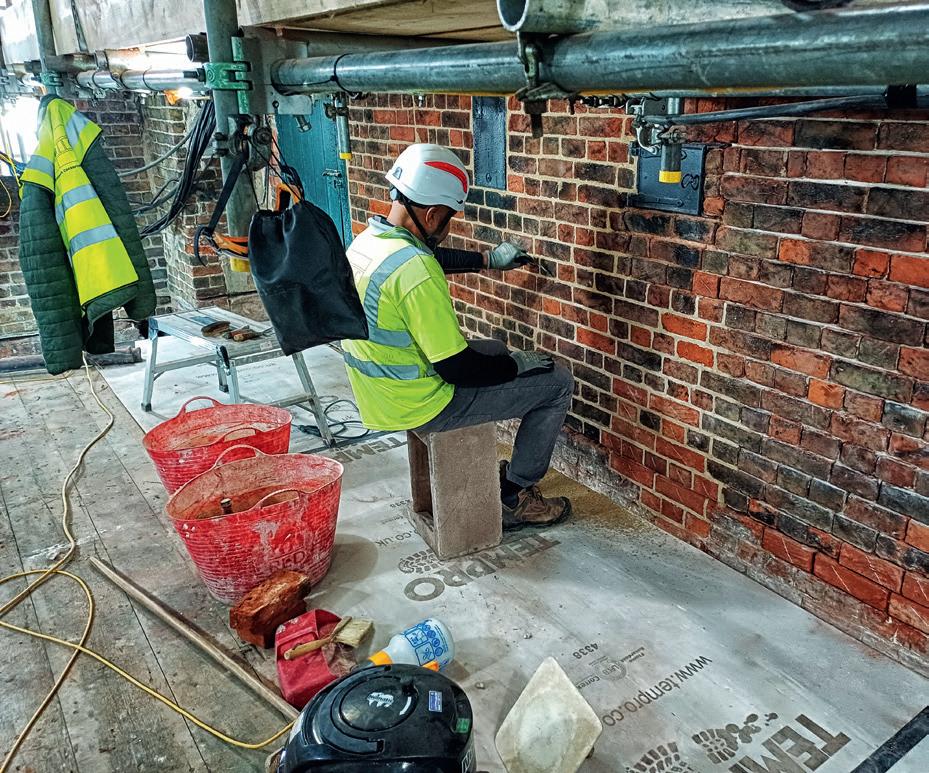
‘Since work began in September, we’ve made some exciting discoveries!’
once went much further up.
The project continues to spark fascinating conversations – with architects, surveyors, curators, engineers and craftsmen all playing their part to ensure the building is preserved for future generations. But none of this work would be possible without the support of our visitors –and you, our members. Your involvement is crucial to ongoing conservation projects, and your support is truly appreciated.
The Great Gatehouse Conservation Project is scheduled to be completed by late spring 2026, just in time for the annual Music Festival. Make sure you don’t miss the opportunity to see the wrap and experience the gatehouse at its original height. Can you spot the wily Wolsey?
Step on to the scaffold and see the details up close in a behind-thescenes members’ video with Assistant Curator, James Shemmonds on your digital hub at hrp.org.uk/the-vault
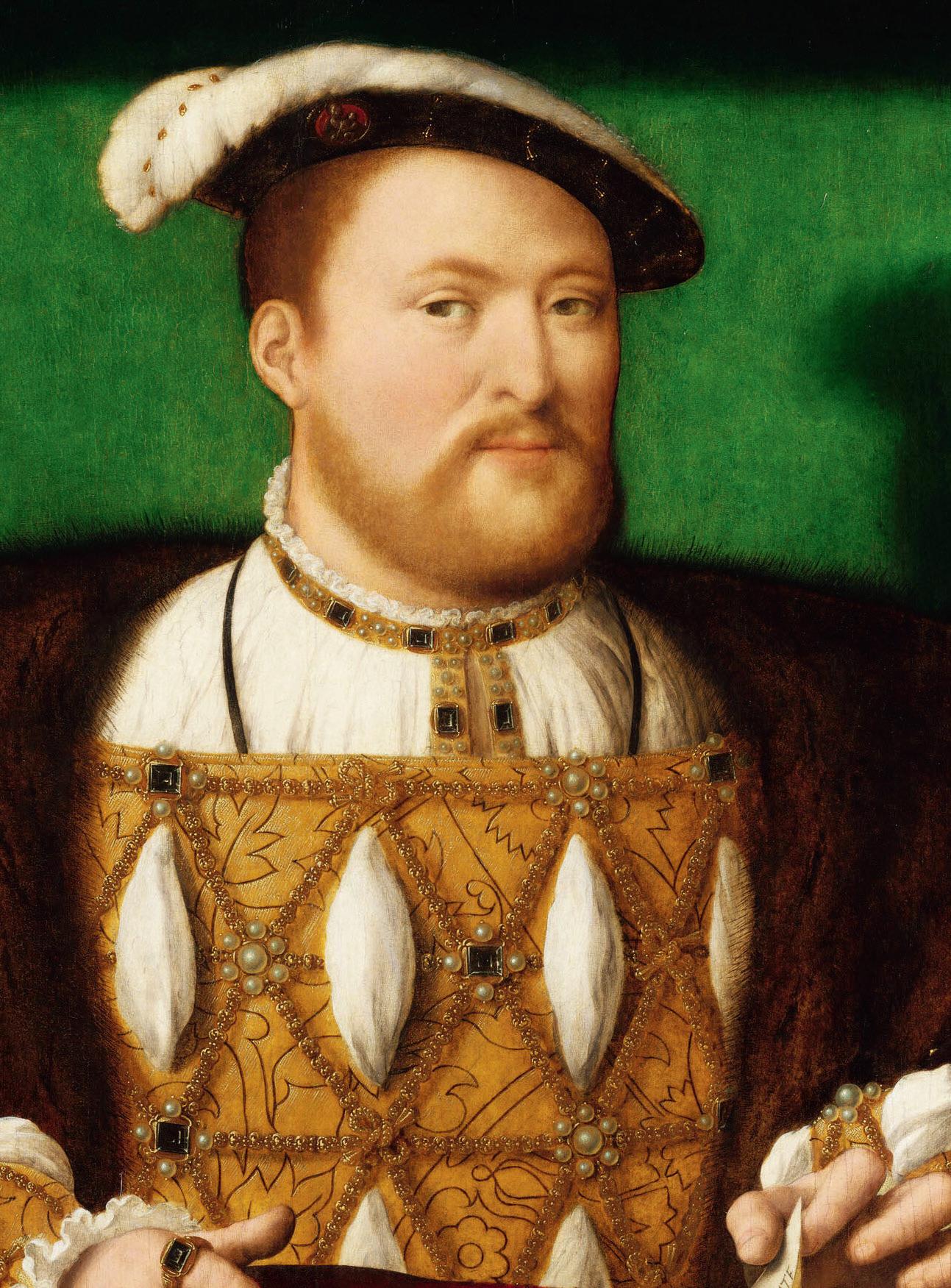
This year is the 500th anniversary of the illstarred romance between King Henry VIII and Anne Boleyn that changed the course of English history; but was theirs really a passionate, allconsuming love? Chief Historian Tracy Borman suggests that the relationship was not all it appeared to be …
On Shrove Tuesday (7 February) 1526, Henry VIII rode into the tiltyard at Greenwich Palace clad in cloth of gold and silver, to the rapturous applause of his courtiers. But there was something in particular that caught their attention. The sharp-eyed chronicler Edward Hall noted that embroidered on the King’s magnificent
jousting apparel was ‘a man’s heart … with flames about it’ and the slogan ‘Declare je nos’ (‘Declare I dare not’). The message was clear: Henry was in love – and not with his wife.
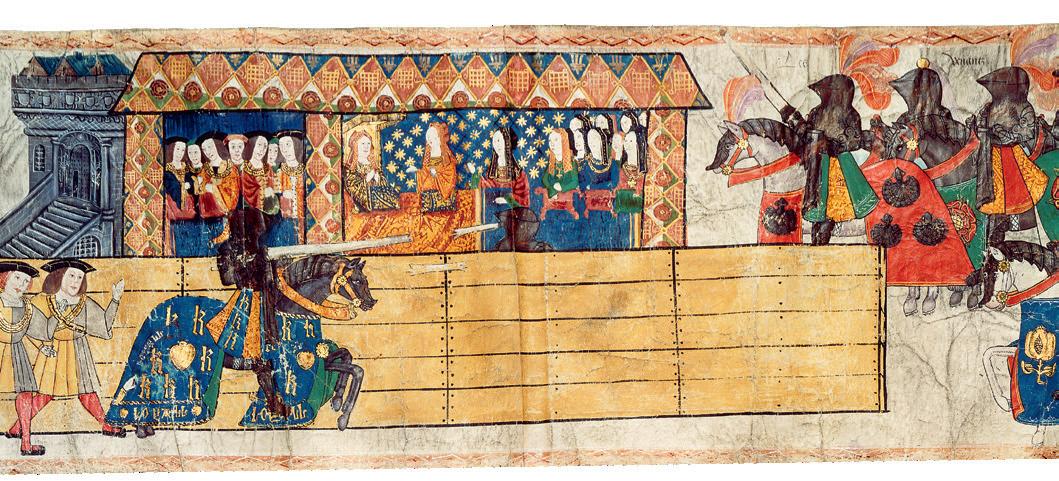
Fifteen years earlier, Henry had ridden out in another joust to celebrate the birth of his son. His loving consort Catherine of Aragon had looked on as he appeared dressed in head to toe in
her colours, taking the guise of ‘Sir Loyal Heart’. Tragically, just a few weeks later their newborn son died –and with him, it seemed, Henry’s love for his wife. In the years that followed, Catherine suffered a series of miscarriages and stillbirths. The only surviving child from their marriage was a daughter, Mary. But in an age when women were not considered fit to rule, it was a male heir that Henry desperately needed.
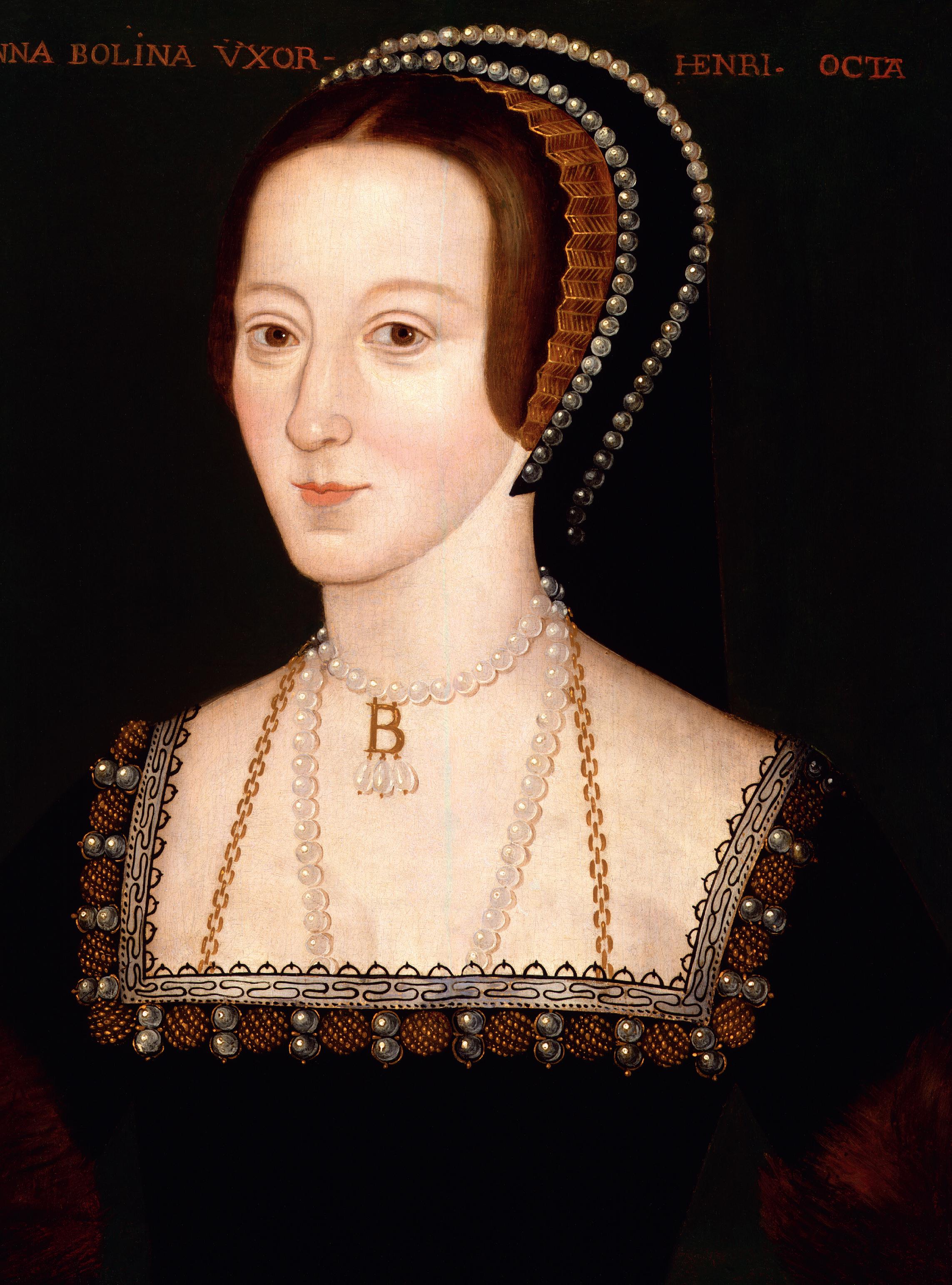
And then he met Anne Boleyn. The beguiling and enigmatic daughter of Thomas Boleyn, one of Henry’s most trusted advisers, she first appeared at court in 1522, playing the part of ‘Perseverance’ in a pageant – fitting, given her long courtship with the King. She was not a conventional beauty – her complexion was ‘swarthy’ rather than pale, her hair was raven-black and her ‘bosom not much raised’. But her dark eyes ‘invited conversation’, she danced and sang exquisitely and the years she had spent at the French court gave her a
‘No sooner had he married Anne in January 1533, than his ardour began to cool.’
je ne sais quoi that made her stand out among the other ladies of the English court. It wasn’t long before she had a long line of adoring suitors.
CLOCKWISE
FROM TOP:
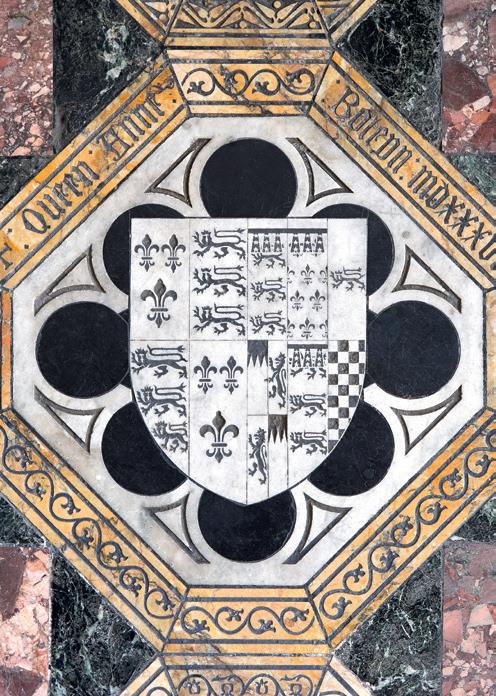
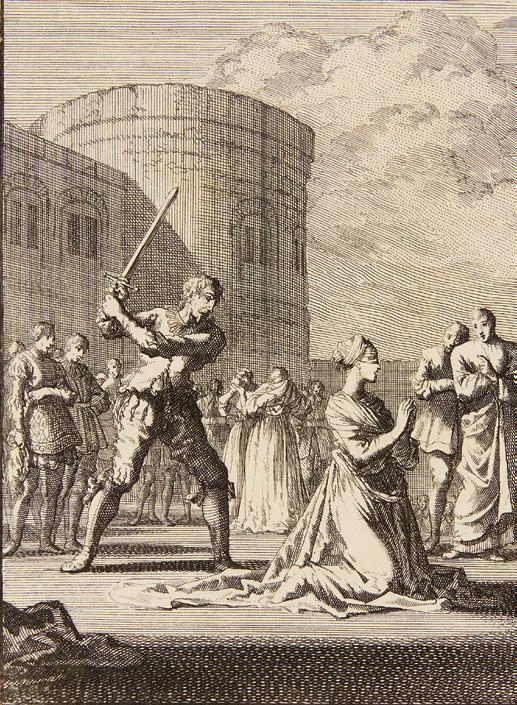
A scene from the Westminster Tournament Roll of 1511 showing Henry VIII jousting in front of Catherine of Aragon; an early 18th-century depiction of the execution of Anne Boleyn and the memorial stone in the Chapel of St Peter ad Vincula at the Tower of London, where her body was hastily buried.
But Henry wasn’t one of them – at least not initially. It took him four years to notice Anne. Once he had, he made up for lost time, showering her with letters and gifts and following her around like a lovesick puppy. By the time of that Shrovetide joust in 1526, everyone knew that Anne was the King’s latest inamorata. But this was very different to Henry’s previous infidelities, for Anne proved to be the most unyielding of mistresses. Perhaps having learned from the example of her sister Mary, who had been quickly discarded after her royal suitor had grown bored, Anne refused to sleep with him. Perhaps, too, she had her eyes on the far greater prize of being queen.
Anne played her hand perfectly. The stridently self-confident King was not used to rejection and there was a growing sense of insecurity in his letters. He lamented that he was ‘not yet sure whether I shall fail or find a place in your affection’, and begged Anne to ‘give yourself, body and heart, to me’. He even promised that if she assented, he would make her his ‘sole mistress’, a privilege that he had granted no other woman before. But Anne was determined to hold out for more and roundly told him: ‘I would rather lose my life than my honesty … Your mistress I will not be.’
Soon, Henry began to think the unthinkable: ending his marriage to Catherine so that he could make Anne his wife. In 1527, he petitioned the Pope for an annulment. Seven long years of fruitless negotiations with Rome followed. Eventually, Henry’s patience snapped and he made the momentous
decision to separate England from Roman Catholic Europe. He took the first, fateful step from Hampton Court Palace in 1530, when he wrote to threaten the Pope with breaking his obedience to Rome. When this failed, he went ahead and did it, setting up his own church, over which he was Supreme Head – and could therefore grant his own annulment. This set in train a seismic reformation of England’s religious life, which in turn led to the destruction of the monasteries and simmering resentment that soon boiled over into all-out rebellion. And it had all been for love.
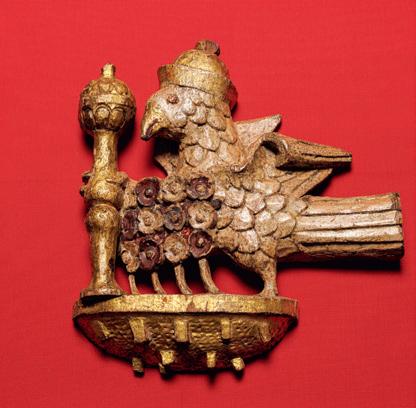
Or had it? In fact, no sooner had he married Anne in January 1533 (by which time she was already pregnant) than his ardour began to cool. As the new Queen’s pregnancy progressed, so her royal husband’s eye began to wander. While in public he fêted her, decorating the Great Hall at Hampton Court with her falcon badge and adding the famous onion domes to the White Tower ahead of her lavish coronation, in private the doubts crept in. The qualities that had made Anne so alluring as a mistress – her ‘wilful’, passionate nature, her obstinacy and outspokenness – were irksome in a wife. Rumours of a secret liaison between the King and a ‘very beautiful’ woman began to spread throughout the court. Anne’s enemies noted with satisfaction that she was ‘very jealous … and not without legitimate cause’. But when she confronted Henry about it, he bluntly told her she must ‘shut her eyes and endure’.
Watch Tracy explore Anne Boleyn’s downfall in our minidocumentary on your digital hub – The Vault, and join her for The House of Boleyn: Members’ Book Talk on 26 May.
Tickets £20; pre-booking required
then cancelled the celebratory jousts. Boys did not follow. Poor Anne suffered a series of miscarriages, the last of which – in January 1536 – sealed her fate. ‘Tired to satiety’ with the woman who had held him in thrall just a few short years earlier, Henry instructed his faithful minister Thomas Cromwell to get him out of the marriage. Cromwell did so with characteristically brutal efficiency, concocting a case of adultery against the Queen involving five men – her own brother included. Anne was taken to the Tower on 2 May and executed there just 17 days later.
Henry and Anne’s courtship, which began exactly 500 years ago, has traditionally been portrayed as one of the greatest – albeit ill-fated – love stories in history. But the speed with which the King’s obsession turned to regret, and then terrible vengeance suggests that love played little part in it. But what of Anne? Did she love the King or simply spy an opportunity? Ironically, despite being by far the most famous of Henry’s six queens, we know little about her personal hopes and desires. Neither do we have any of her replies to Henry’s love letters. But in researching my new novel, The House of Boleyn, I uncovered tantalising evidence that it wasn’t Henry but one of his courtiers who was the love of her life. Anne’s fate may have been the King’s to command, but her heart was very much her own.
‘The seventh day of September the Queen was delivered of a fair lady’, reported Edward Hall. After all the turmoil Henry had put his country through to marry her, it was a humiliating disappointment. Only a son would secure the Tudor dynasty and silence his critics. When he first visited his wife and newborn daughter, he tactlessly remarked ‘Boys will follow’
ABOVE: Anne Boleyn’s falcon badge (© Historic Royal Palaces/Paul Fitzsimmons)
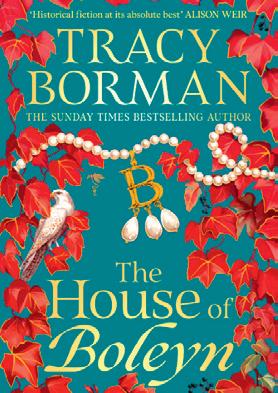
Tracy’s new historical novel The House of Boleyn (Hodder & Stoughton) will be published on 23 April 2026.
Look out for The House of Boleyn in our shops and receive 10% off when you purchase instore with your membership card or use code MEMBER26 online.
KATE ORFEUR, Textile Treatment Conservation Supervisor
● I love this photograph of my predecessors, taken in 1940. These tapestry restorers are shown working on one of the Abraham tapestries on a loom set up in the Queen’s Guard Chamber at Hampton Court Palace.
In the foreground is Marie Milbourn, who, as forewoman, gave her life’s work to the restoration and maintenance of Hampton Court’s tapestries – 64 years to be precise! Next to Mrs Milbourn is her sister-in-law Muriel Coe, and next to her is Betty Creasey who was only 14 years old when she came to Hampton Court in around 1914 and was the last tapestry restorer to retire in the late 1970s.
The wooden looms they are working on are now safely stored away but we do still use the same bobbins for our silks and wools, with their old dye recipes written on the ends.
We have recently been researching the tapestry restorers, uncovering fascinating stories about these remarkable ladies. Please do get in touch if you knew anyone who carried out this invaluable work – we’d love to find out more! textile.
conservation@hrp.org.uk
Find out how today’s conservators are caring for the Abraham tapestries at hrp.org.uk/blog
We showed these historic images, many from our collection, to our current conservation and curatorial colleagues and asked them what, if anything, had changed!*
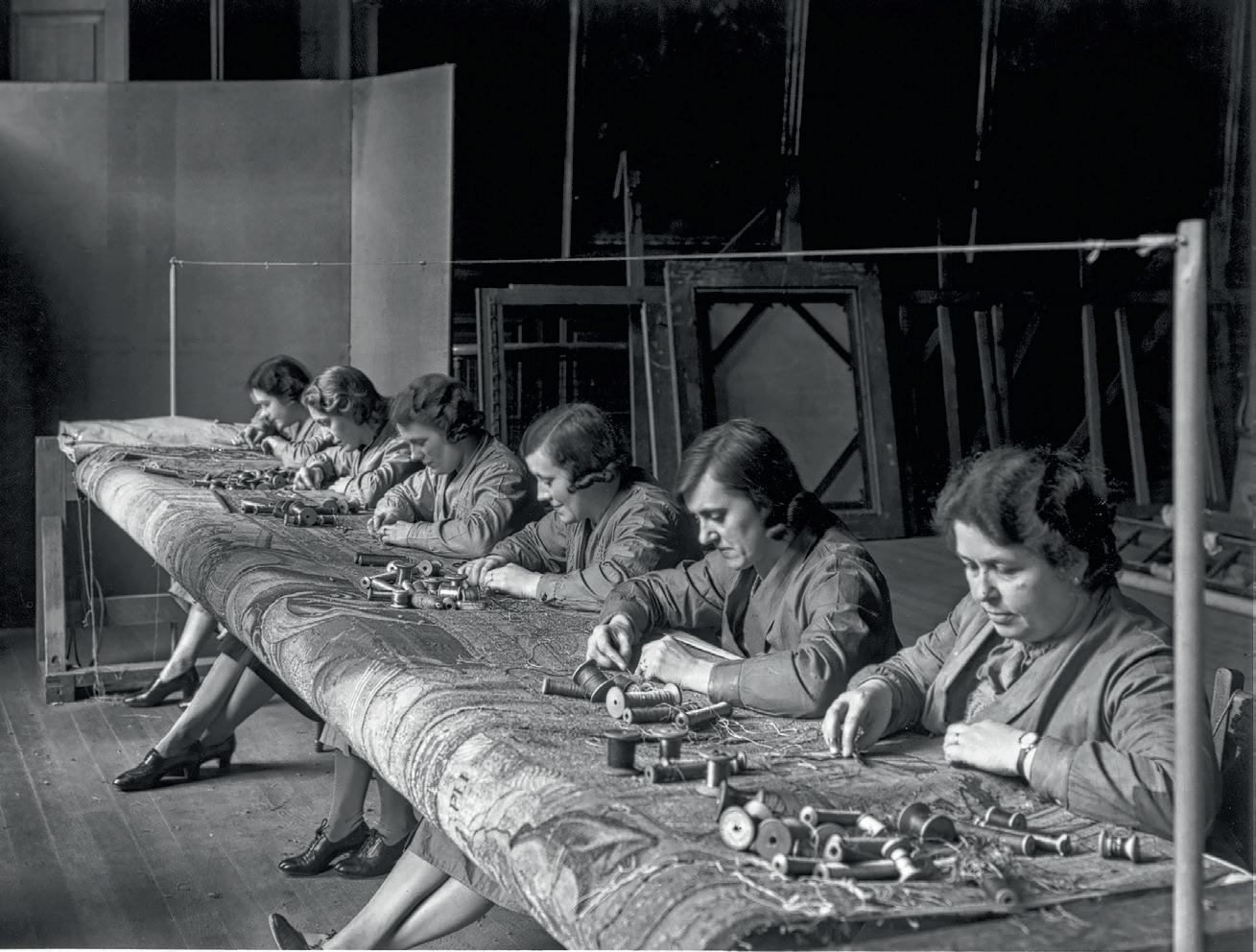
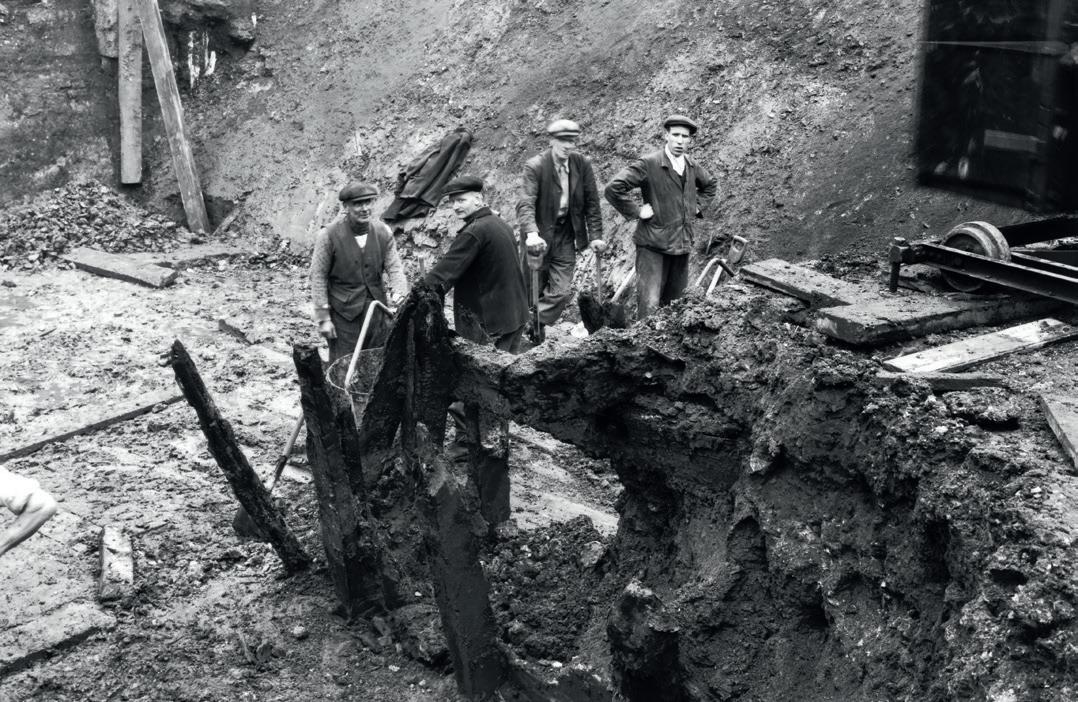
ALFRED HAWKINS, Curator of Historic Buildings
● This fascinating photograph shows the excavations that revealed the Lion Gate causeway at the western entrance to the Tower of London in 1937. This causeway once formed part of an elaborate system of defences built by Edward I in 1280, which helped to make the Tower of London one of the most advanced castles in the country.
There are elements of this picture that may be familiar to modern archaeologists – mud, shovels, trowels and buckets having not evolved too much in this time, but there have been a few changes. The most important ones are around safety. There are parts of this dig that show signs of imminent collapse and, unfortunately, the days when a cap and waistcoat were acceptable site clothes are now gone, replaced today with hard hats and hi-vis. However, this was a landmark excavation, uncovering important medieval elements of the Tower, alongside amazing medieval jugs, and the skulls of two medieval Barbery lions once held in the menagerie – painting an incredible picture of the Tower’s past.
Recent excavations at the Tower of London have resulted in some remarkable discoveries. Find out more at hrp.org.uk/ blog DISCOVER MORE
EMMA SIMPSON, Director, Simpson Brickwork Conservation Ltd
Emma Simpson, a highly skilled heritage bricklayer who has worked on building projects at the palaces for over 20 years, can see familiar aspects in this photograph from 1951.
● This bricklayer is working on one of Hampton Court’s famous decorative chimneys, cutting each new brick to the precise dimensions and shapes required for the design. He is in the brick cutting workshop at Hampton Court, probably at the bench that we still use today! Behind him, you can see the dry-laid chimney crown he is working on – this is the section of the chimney at the very top – so intricate and complex. He is cutting a brick with a wire bow saw – or rather he is pretending to cut it for the photographer, because the brick itself would normally be in a shaped box to produce the decorative moulding. This is exactly the way that we are still doing this work today. The equipment and surroundings are practically identical. The only difference now is that we don’t wear collars and ties! Instead, we wear safety gear to protect us from the brick dust.
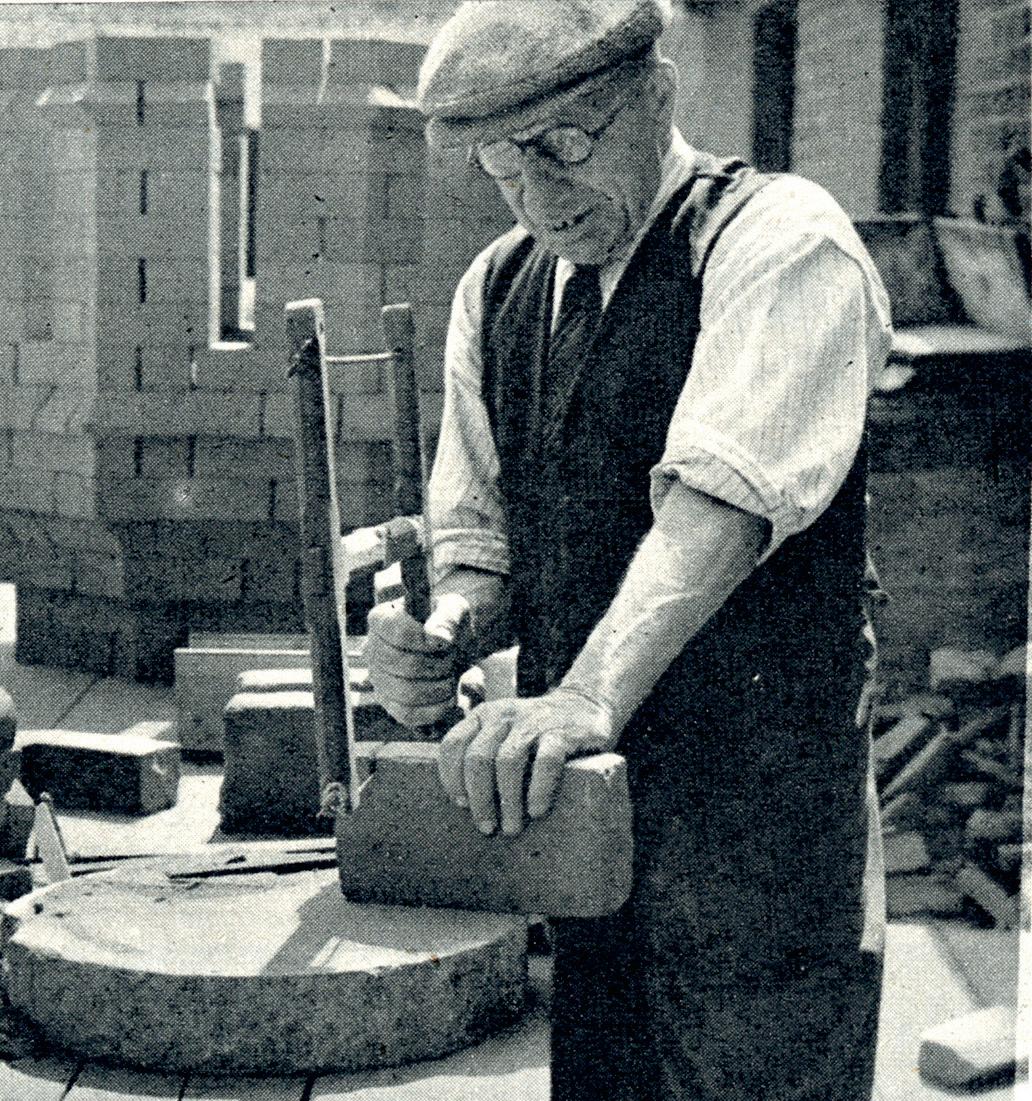
ANDREW HARRIS, Senior Conservation Architect
● Here we see Mr Minns ‘repairing’ the Tijou Screen in 1947 with acanthus leaf and hammer in hand. This staged photograph (inset) is one of a number probably taken for a news story.
The decorative wrought iron screen, which now forms the riverside boundary of the Privy Garden at Hampton Court, was designed for King William III in 1690. Over the years, the decorative elements of the screen have decayed and have been subjected to many intensive restorations and repairs.
Despite the severe privations and shortages of the Second World War, work continued on restoring the Tijou Screen using highly skilled metalworkers, specialist techniques and materials (including cadmium electroplating) at a time of unprecedented national need. This is a very clear indication of the level of significance attributed to the screen.
Mr Minns’ role was probably to repair the frame and fix the newly made leafwork, just as we are doing today with Paul Allen, Motcombe Forge, making the repoussé details, and George James Blacksmiths undertaking the repairs and detail fixing.
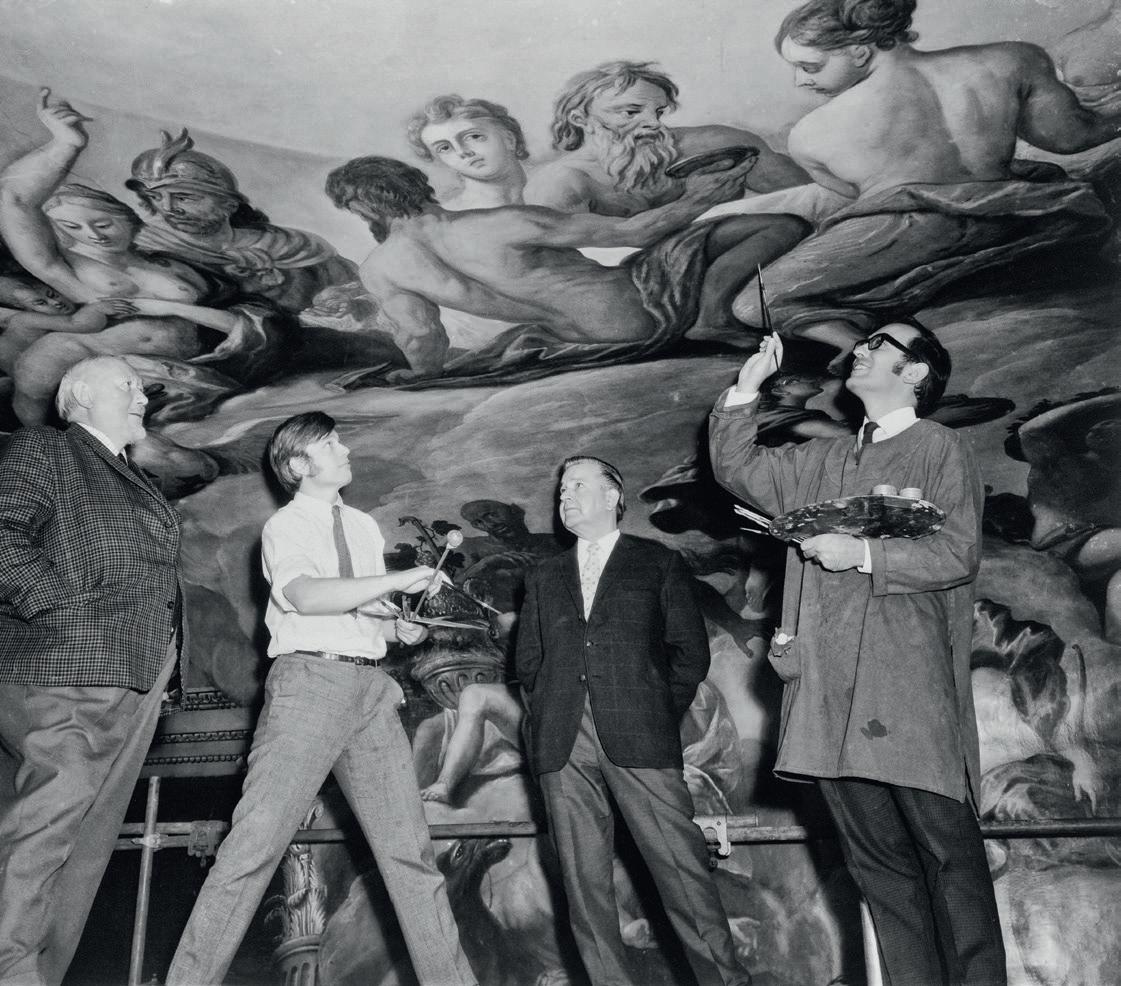
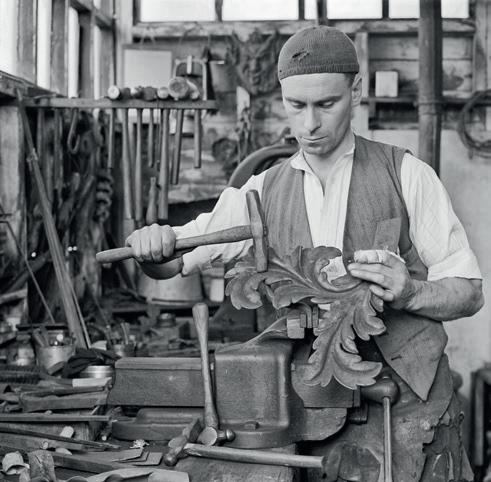
● This photograph, taken below Antonio Verrio’s 1702 ceiling and wall paintings on the King’s Staircase at Hampton Court Palace, shows Ministry of Works restorers (from left: A N Stewart, Jan Keevil, Maurice Keevil and David Waterhouse) during the restoration of the murals in 1968. At this time, the whole painted scheme was comprehensively cleaned and restored, which involved the removal of discoloured varnishes, retouching the paintings and the application of a new varnish coating.
The mask just visible in the background confirms Mr Minns is working on Panel 10, one of the two fleur-de-lys panels, the partner to Panel 1 currently being repaired and re-presented.
Visit hrp.org.uk/blog to explore the remarkable story of Jean Tijou’s screen – its mysterious maker, its intricate craftsmanship and its long history of repairs.
Apart from the formal clothing, what strikes me most in this image is the fact that they are standing on a high scaffolding with what is by today’s safety standards, a noticeably low handrail! In terms of the equipment, the pompom-tipped mahlstick – a painter’s tool – held by Jan Keevil is still commonly used in wall painting conservation to steady the brush for precise work, especially when working overhead from slightly shifting platforms. But our work today is aided by technology not available in the 1960s, and in addition to the artist’s traditional tools, no longer balanced on a palette but organised on trolleys or stands, you might expect to see laptops, cameras, and portable scientific devices such as X-ray fluorescence spectrometers (used to analyse original and restoration paint layers). And certainly, conservation teams today are more diverse than the all-male group pictured!
GRAHAM DILLAMORE, Head Gardener
● When I first arrived at Hampton Court Palace in the 1990s, this rather perilous method of clipping the yew trees on the East Front was still in use!
In the early 20th century, the yew trees, which had been left to grow into their natural forms since ‘Capability’ Brown’s day, were re-formed into the original topiaried pyramids, ‘an ordered company not an undisciplined mob’ as a well-known gardener of the time, Avray Tipping commented. However, whereas the original topiary had been a neat 2.5m tall, these trees now reached heights approaching 12m and pruning them was a dangerous job, as you can see in this 1930s photo, despite the sturdy boots, thick gloves and head protection used by these surprisingly smartly-dressed gardeners. Today, the larger trees on the avenues get trimmed every third year and I’m relieved to say that the ladders have been replaced by sturdy cherry pickers.
*What definitely has changed, as you will have noticed by now, is our colleagues’ admirable (and oft-mentioned) commitment to modern health and safety standards!
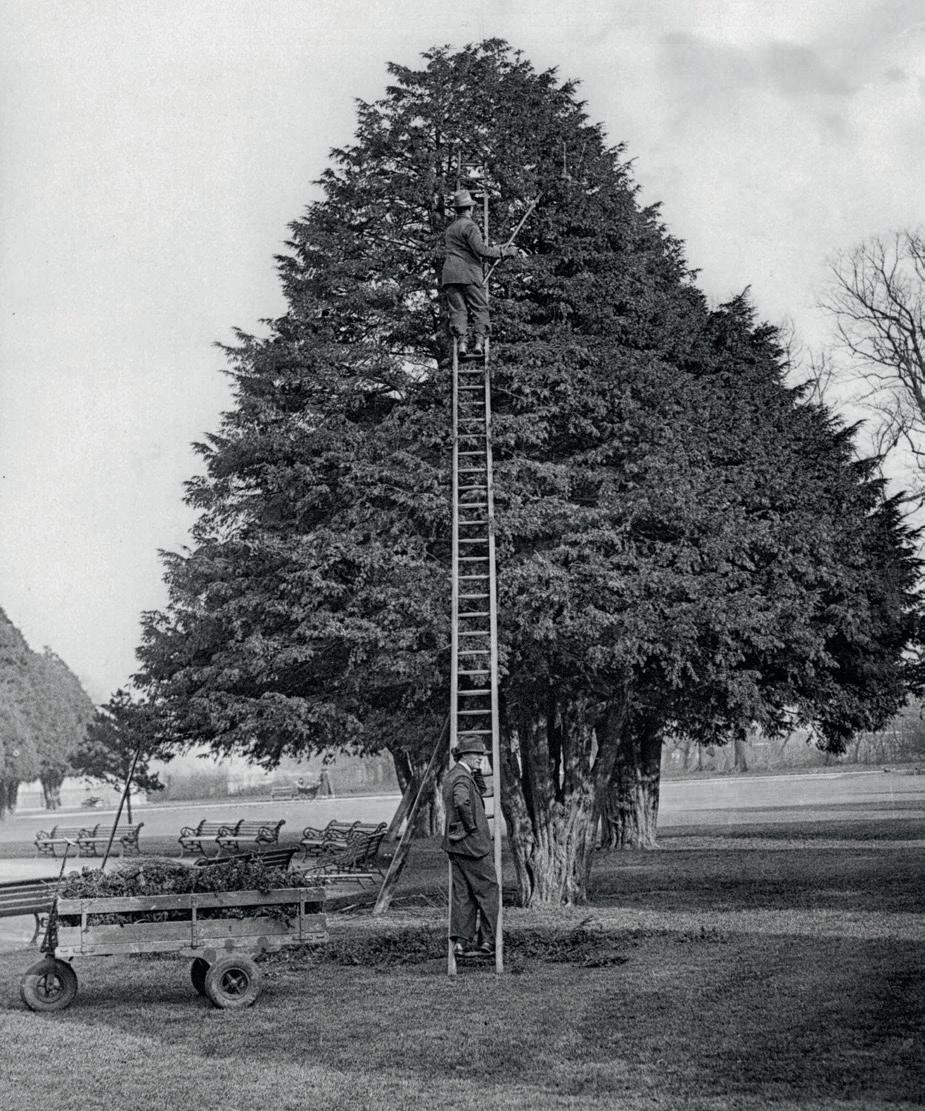
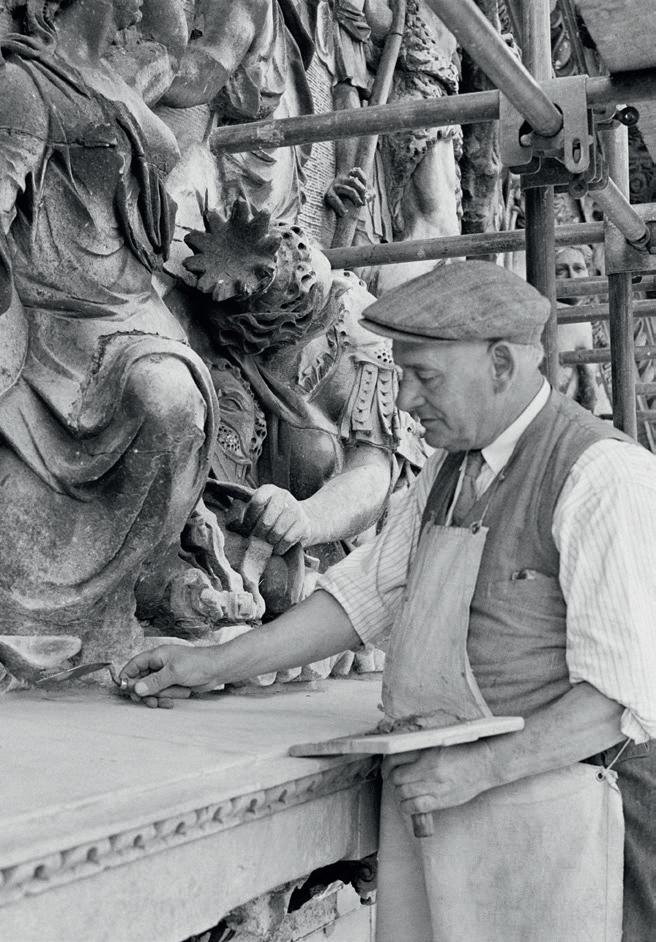
DANIEL JACKSON, Head of Historic Buildings
● This image shows a craftsman carefully repairing the sculpted pediment on the East Front of Hampton Court Palace in 1947. Despite the 79-year gap, what he is doing – using a small trowel to apply a mortar repair to the damaged stonework – would be familiar to a modern conservator. This technique, and the tools he is using, can still be seen on conservation projects across our sites. However, some things would look very different if we were to re-create this image today. The smart dress is now, usually, replaced with more functional clothing which, whilst perhaps not as stylish, offers the wearer more protection. One thing that hasn’t changed is the expertise, care and attention our craftspeople bring to their work on these wonderful buildings.
THANK YOU
Your membership helps support the specialist conservation work that protects our palaces for generations to come.

14 March - 04 May (subject to weather)
Hillsborough Castle and Gardens
Bulbs and Blooms
From blooming days out to Easter bunny hunts, we’ve got a host of incredible adventures lined up for you. Explore our top picks for exciting events to keep the whole family smiling from spring through to summer. Check hrp.org.uk for more details. Members go free (unless otherwise stated).
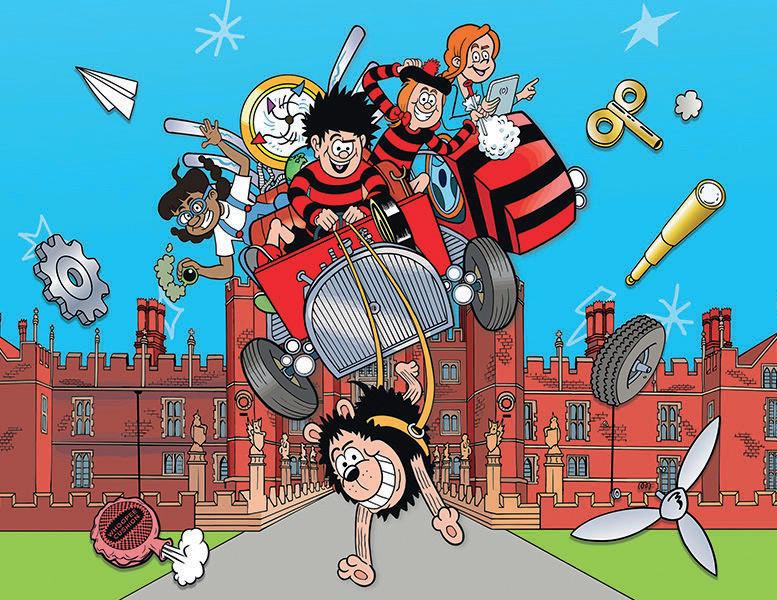
Our gardeners have planted thousands of bulbs. Why not start a nature diary and keep track of all the plants you’ve seen?
15 March
Hillsborough Castle and Gardens
St Patrick’s Day
Celebrate with traditional Irish tales and music that will make your toes tap!
21 March - 12 April
Hampton Court Palace
Lindt GOLD BUNNY Hunt
Find statues hiding in the gardens and claim a Lindt GOLD BUNNY 10g chocolate reward!*
*Non-chocolate alternatives available on request.
30 March
Hampton Court Palace
Members’ Minibeast Hunt
(Members only; £5 ticket)
Pick up a worksheet and a magnifying glass to search for minibeasts in the Kitchen Garden.
Visit your members’ digital hub at hrp.org.uk/the-vault for printable marvellous minibeasts and Beano colouring pages to enjoy at home.
28 March - 12 April
Hampton Court Palace
The Case of Steel, Gold & Chocolate
Help our costumed characters as they try to solve the mystery of the missing statues. Daily live performances.
28 March - 12 April
Hillsborough Castle and Gardens
Lindt GOLD BUNNY Hunt
Search for every adorable GOLD BUNNY statue and claim a Lindt GOLD BUNNY 10g chocolate treat!*
Opens 28 March
Kew Palace
Kew Palace family activity cards
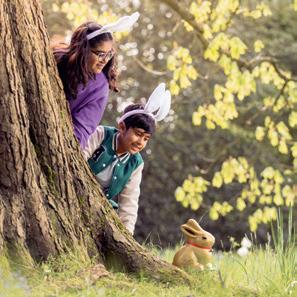
(Get 10% off Kew Gardens entry at kew.org)
Explore Kew Palace with our brand-new family activity cards, designed to help young visitors discover the site. Included with Kew Palace entry; Kew Gardens ticket required.
23-25 May
Hampton Court Palace
The Big Bahooey
Expect family fun, music, circus, surprises and much more!
Open Tower of London
The Crown Jewels

Tower treasure hunters, be dazzled by this world-famous collection of 23,578 gemstones.
30 March - 30 May
Tower of London
Duke and Disorderly
It's 1826, the Duke of Wellington has just been made Constable of the Tower, and he’s got some big plans! Daily live performances.
27 June - 31 August
Hillsborough Castle and Gardens
NEW! Beano Hijinks at Hillsborough Castle and Gardens

Dennis and his Beanotown pals are in trouble! Their bonkers go-kart time machine has gone haywire and it’s up to YOU to help.
11-12 & 18-19 July
Hampton Court Palace
Henry VIII’s Joust
July is for jousting! Cheer along with the crowd for your favourite knight.
25 July - 23 August
Hampton Court Palace
NEW! Beano Havoc at Hampton Court Palace
The Beano friends have crash-landed at the palace and Henry VIII is not amused. Can YOU help find all the missing pieces of their time machine to get them safely home?
01 - 30 August

Kensington Palace
Summer Performances at Kensington Palace
Meet the people who lived and worked at Kensington Palace and find out about life at the palace. Daily live performances.
19-31 August (excluding 25 August) Tower of London
NEW! Imagining Animals
Encounter extraordinary creatures brought to life through dance, puppetry, and music. Inspired by animals that once inhabited the Tower’s Royal Menagerie.

Pre-booking required for select events. Visit hrp.org.uk and see our What’s on pages for our full programme of events and to find out if you should pre-book.
To celebrate the scheme’s 20th anniversary, we put some questions to one of our earliest members
Katy, who grew up in Surrey, first came to Hampton Court Palace with her parents as a little girl. She joined the newly launched membership scheme aged 18. A former primary school teacher, Katy now works as a Special Educational Needs Co-ordinator in south London. She and her husband Giles, a civil servant, are keen real tennis players (becoming hooked after a members’ taster evening!) and belong to the Royal Tennis Court. They now live in Chertsey with sons Kieran and Casper and recently decided to become Life Members.
What is your earliest memory of Hampton Court Palace?
I can vividly remember running down the corridor outside the Royal Tennis Court and being fascinated by the game going on – I can recall thinking ‘that looks fun’! We had so many lovely family days out – picnics in the Wilderness and getting lost in the Maze. I think I loved the gardens the most, but I can also remember being astonished by the sheer scale of the palace – the high ceilings, the huge paintings. And I loved Tudor history. After we came on a primary school trip, I wrote a diary (which I still have!) imagining I was a maid in Henry VIII’s kitchen.
What’s your favourite place? The Chapel at Hampton Court has a special place in my heart. As members of the tennis club, we attend a carol service with my parents every year, and now with the children too. The young soloist singing ‘Once in Royal David’s City’ never fails to bring tears to my eyes.
What do your children love best?
In summer, Kieran heads straight for the Magic Garden. The playground helps make learning
about history more engaging, I can say ‘This is what a castle looks like, and this is the drawbridge…’, just even using that vocabulary becomes part of their play. Kieran absolutely loved the Big Bahooey last year. The show about cardboard sculptures inspired him to create a homemade cardboard robot he calls Henry VIII!
What does membership mean to you?
It’s wonderful to be able to create memories for my own children, and to be able to visit regularly. I always want to delve deeper into history and go ‘behind the scenes’ – I’m the person who sees a locked door and wants to know what’s behind it. Membership has opened many doors for us; it was our way into tennis, which is now a huge part of our lives, and we’ve seen and done things that we never would as non-members. For example, during conservation work one year we entered the ‘crawl’ space between the Chapel ceiling and the roof with a curator, which was fascinating! We’ve seen the attics and the basements at Kew Palace after-hours, when they are usually closed to visitors, and I’ve enjoyed playing a part in unique events, like planting the ceramic poppies in the Tower of London Moat in 2014. There’s so much to look forward to as Life Members, so we will be making many more memories with our family in the future.
THANK YOU
From our earliest members to those who joined more recently, your continued support enables us to care for the palaces and share their stories with everyone.
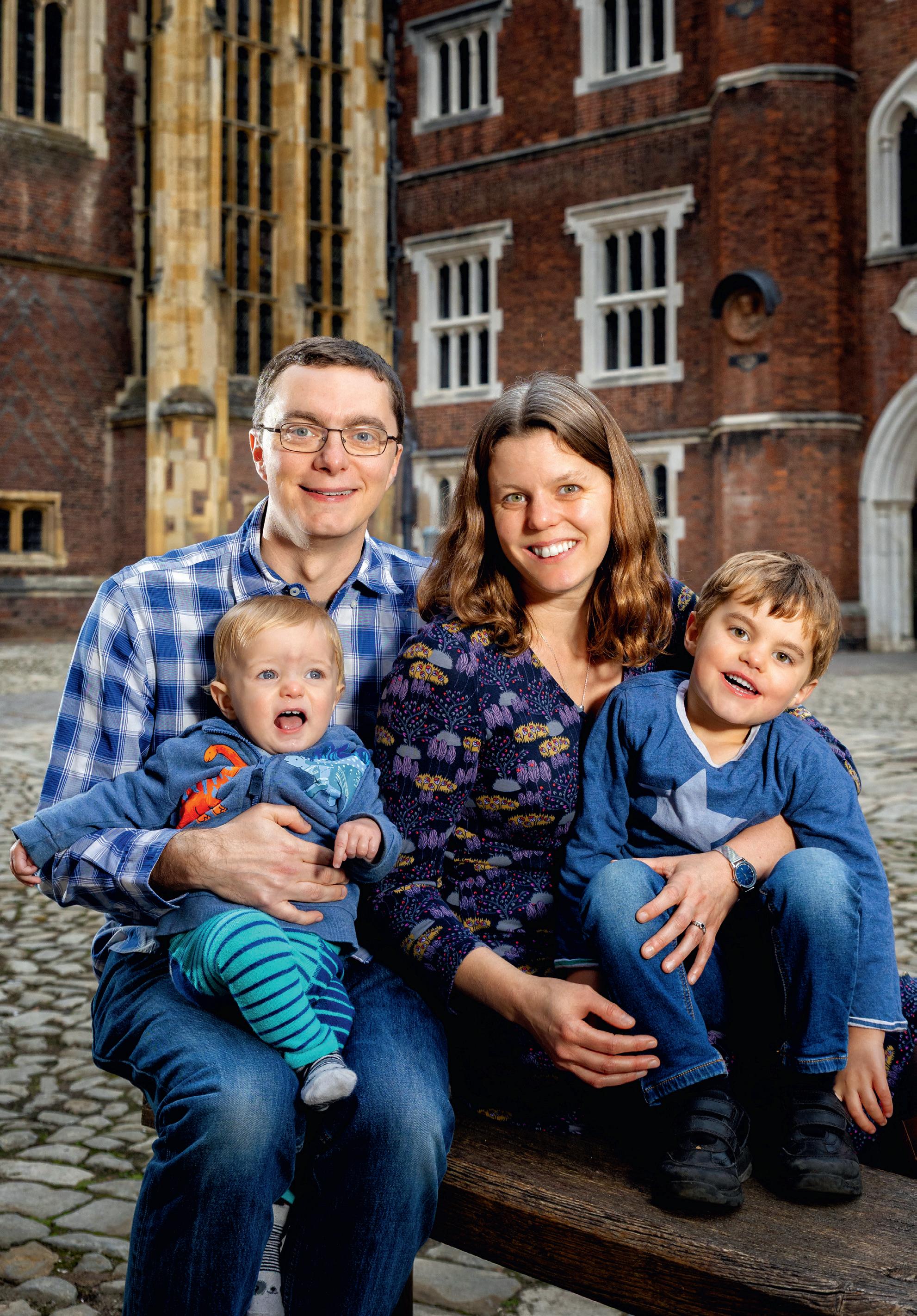
NEXT ISSUE
Inside Story asks Patron and volunteer John Harding to reflect on his favourite memories across our palaces, events and exhibitions – and what Historic Royal Palaces means to him.

‘Thanks to your support, we’re able to research more stories, and share them with more people across the world, than ever before. So, a heartfelt thank you.’
Tracy
Borman,
Chief Historian,
Historic Royal Palaces