Issuance date: 08.06.2020
Validity date: 08.06.2025


Issuance date: 08.06.2020
Validity date: 08.06.2025
This declaration is the type III Environmental Product Declaration (EPD) based on ISO 14040 and verified according to ISO 14025 by an external auditor. It contains the information on the impacts of the declared product on the environment. Their aspects were verified by the independent body according to ISO 14025.
Life cycle analysis (LCA):
A1-A3, C2-C4 and D modules in accordance with ISO 14040 (Cradle to Gate with options)
The year of preparing the EPD: 2020
Product standard: EN 16139
Service Life:
5 years for standard product with possibility of 10 years
PCR:
ITB-PCR A
Declared unit:
1 frame chair
Reasons for performing LCA: B2B
Representativeness: Polish product
ITB is the verified member of The European Platform for EPD program operators and LCA practitioner www.eco-platform.org
Owner of the EPD:
Nowy Styl Sp. z o.o.
Address: Pużaka 49, 38-400 Krosno, Poland
Website: https://pl.nowystylgroup.com/pl/ Contact: info@nowystylgroup.com
Tel.: +48 13 43 76 100, +48 13 43 62 732
EPD Program Operator:
Instytut Techniki Budowlanej (ITB)
Address: Filtrowa 1, 00-611 Warsaw, Poland
Website: www.itb.pl
Contact: Justyna Tomaszewska j.tomaszewska@itb.pl energia@itb.pl
We are a European manufacturer of furniture solutions for office and public spaces. Our unique business model allows us to provide clients with a comprehensive interior furnishing service, based on an in-depth analysis of the specificity and needs of the client, work efficiency and work organization, ergonomics and acoustics. Thanks to the company’s experience as well as technological and production facilities, each offer is made to measure.
An understanding of customers’ needs, innovation and an organisational culture open to change has led us to the position of a company in Europe, with sales revenues of over 380 million euro per year. We have our own international distribution network including local sales structure in 16 countries on all major European markets and the Middle East. Hiring local managers and employees, we reach clients adjusting our offer and providing professional service.
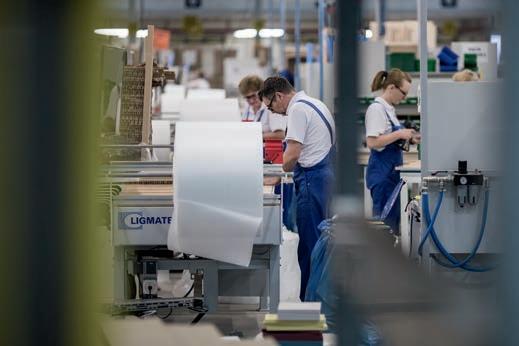
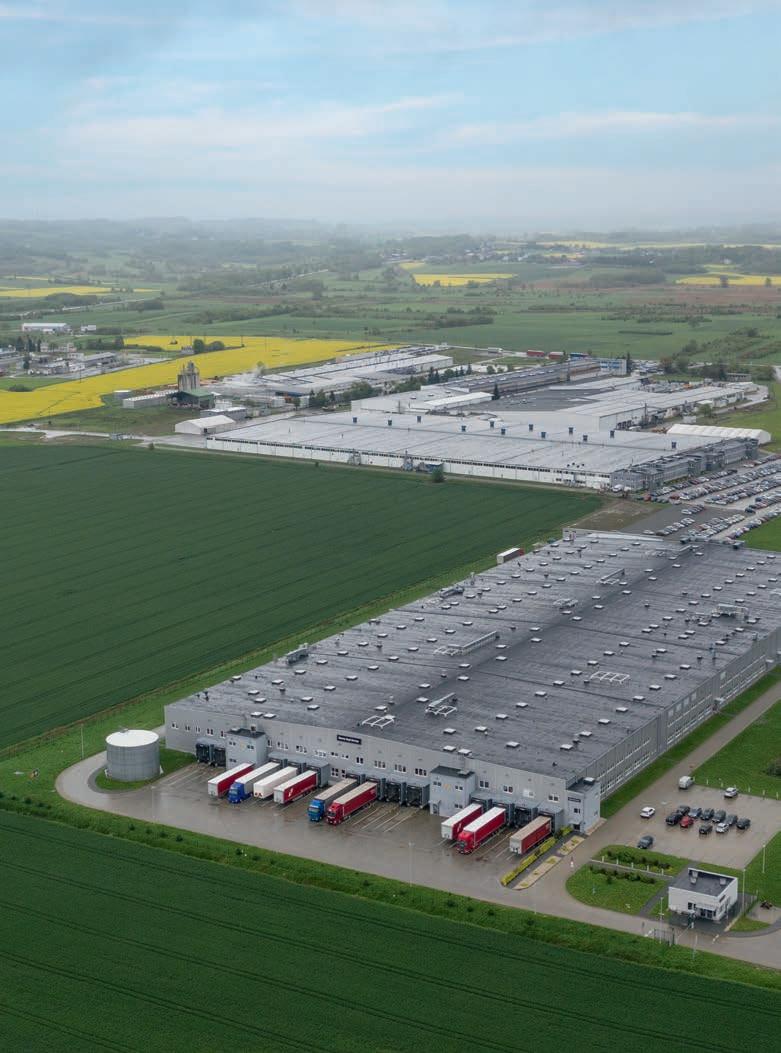
This assessment applies to those located in Poland, in the region of Podkarpacie (4 plants) in Jasło and 1 in Rzepedź, with a floor area of nearly 100,000 m2, including a fully automated office furniture factory opened in 2014). In Jasło, the company has its own Research and Development Centre where it tests and develops innovative production technologies and product solutions.
We provide furniture for new office buildings, conference centres, cinemas, stadiums, music, sports and multi-functional facilities every day. Our list of references includes multinational corporations such as DS Smith, Honeywell, Deloitte and ABB, cultural institutions such as Polish National Radio Symphony Orchestra in Katowice and the Opera in Munich, as well as the stadiums in Poland and France in which European Football Champions hips were held in 2012 and 2016. Fans of the Football World Cup in Qatar in six out of seven stadiums now under construction for the event will also sit in our seats.
We offer a wide product portfolio adjusted to the needs and expectations of our clients. Our furniture solutions and our know-how in arranging modern offices are exhibited in the Office Inspiration Centre in Kraków, where we meet with clients, provide training and share inspiration. We also have 31 showrooms i.a. in Warsaw, London, Paris, Düsseldorf, Munich, Prague, Bratislava and Dubai.
We make our products in more than a dozen manufacturing plants equipped with cutting-edge technologies, located in Poland, Germany, France, Switzerland, Ukraine, Russia and Turkey.
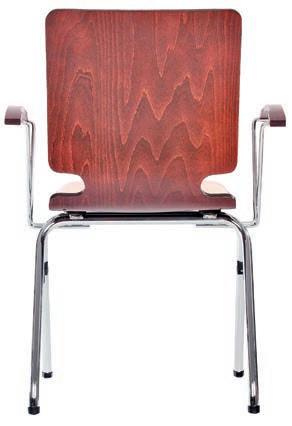
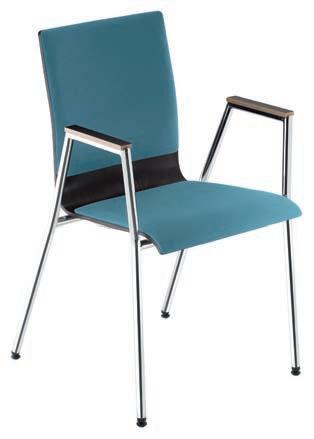
FRAME VERSIONS:
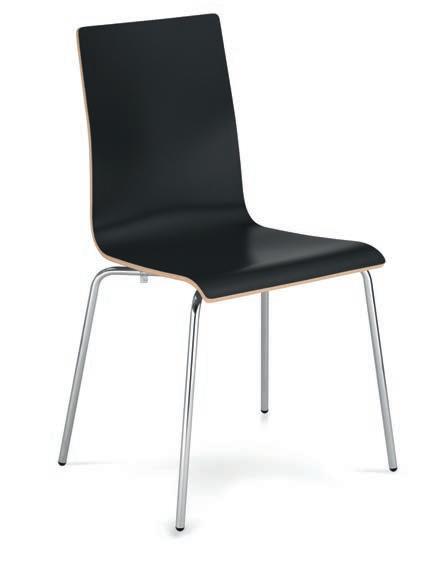
4-leg, steel tube epoxy coated or chromium plated
GLIDES:
plastic or self-leveling, for hard or soft surfaces
ARMRESTS (OPTIONAL):
steel rod, plywood pad
WRITING TABLET (OPTIONAL):
beech plywood - stained, laminated or veneered
SEAT AND BACKREST TYPES:
Wooden shell - beech plywood shell
Laminated shell – beech plywood shell, covered with laminate
Veneered shell - beech plywood shell, covered with veneer
Seat pad – beech plywood shell, with polyurethane foam seat pad
Seat and backrest pad - beech plywood shell, with polyurethane foam seat pad and backrest pad
GS mark for selected configurations
Conference rooms, meeting rooms, public areas and as visitor chair in workplaces
Frame versions:
4-leg, chromium plated
Glides:
plastic or self-leveling or acoustic, for hard or soft surfaces
Armrests (optional): integrated with the frame, beech plywood pad
Writing tablet (optional): beech plywood - stained, laminated
Seat and backrest types:
Wooden shell - beech plywood shell
Laminated shell – beech plywood shell, covered with laminate
Seat pad – beech plywood shell, with polyurethane foam
seat pad
Seat and backrest pad - beech plywood shell, with polyurethane foam seat pad and backrest pad
Upholstered front - beech plywood upholstered with polyurethane foam on front side
Fully upholstered - beech plywood upholstered with polyurethane foam on both sides
GS mark
APPLICATIONS
Conference rooms, meeting rooms, public areas and as visitor chair in workplaces
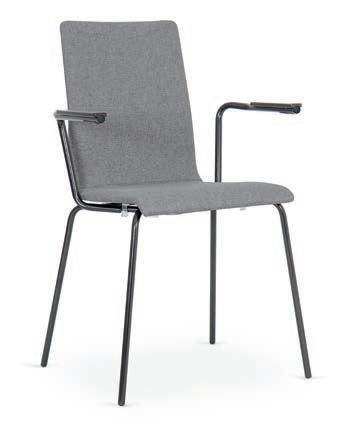
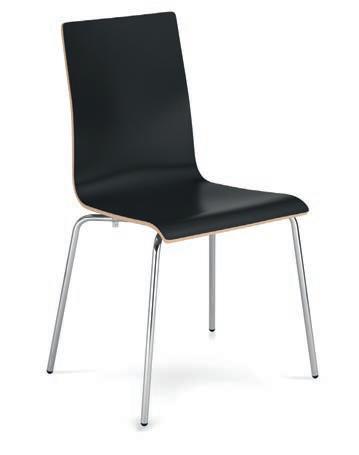
FRAME CHAIRS CAFE
Frame versions:
4-leg, sled – steel tube, chromium plated or epoxy coated
LGW – solid wood
Glides:
plastic, for hard or soft surfaces
Armrests (optional):
integrated with the frame, beech plywood pad
Seat and backrest types:
Wooden shell - beech plywood shell
Laminated shell – beech plywood shell, covered with laminate
Seat pad – beech plywood shell, with polyurethane foam seat pad
Seat and backrest pad - beech plywood shell, with polyurethane foam seat pad and backrest pad
Upholstered front - beech plywood upholstered with polyurethane foam on front side
Fully upholstered - beech plywood upholstered with polyurethane foam on both sides
CERTIFICATES
conformity with EN 16139
APPLICATIONS
Conference rooms, meeting rooms, public areas and as visitor chair in workplaces
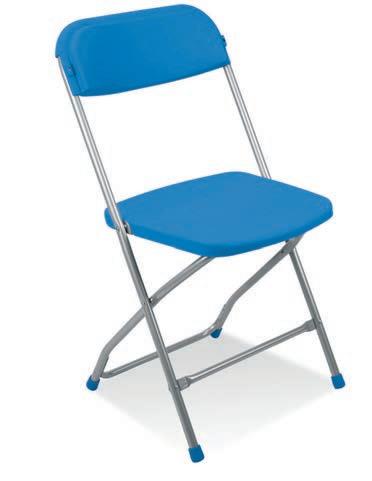
CHAIRS POLYFOLD
FRAME VERSIONS:
4-leg – steel tube, chromium plated or epoxy coated
Glides – plastic
SEAT TYPES:
plastic construction
PLUS – plastic construction with polyurethane seat pad
BACKREST TYPES:
plastic construction
PLUS – plastic construction with polyurethane backrest pad
CERTIFICATES
conformity with EN 16139
APPLICATIONS
Conference rooms, meeting rooms, public areas and as visitor chair in workplaces
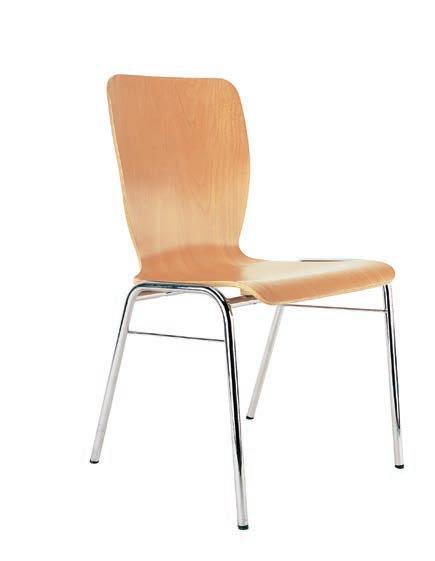
FRAME CHAIRS WING II
FRAME VERSIONS:
4-leg, sled, cantilever – steel tube, chromium plated or epoxy coated
GLIDES: plastic, for hard or soft surfaces
ARMRESTS (OPTIONAL): integrated with the frame, beech plywood pad
WRITING TABLET (OPTIONAL): beech plywood –stained or laminated
SEAT AND BACKREST TYPES:
Wooden shell – beech plywood shell
Laminated shell – beech plywood shell, covered with laminate
Seat pad – beech plywood shell, with polyurethane foam seat pad
Seat and backrest pad – beech plywood shell, with polyurethane foam seat pad and backrest pad
CERTIFICATES
GS mark
APPLICATIONS
Conference and meeting rooms
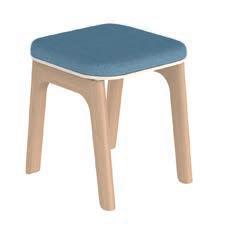
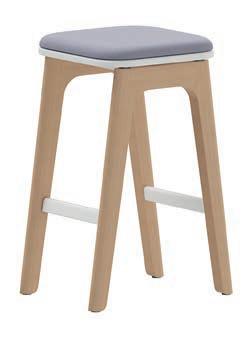
LEVITATE STOOL:
BASE VERSIONS:
“A-shape” solid wood legs
FRAME:
steel profile, epoxy coated
GLIDES:
plastic, for hard or soft surfaces
SEAT:
- Upholstered – melamine faced chipboard with seat cushion
- Seat cushion – beech plywood upholstered with polyurethane foam seat cushion
LEVITATE HOCKER
BASE VERSIONS:
“A-shape” solid wood legs
FRAME and FOOT BARS:
steel profile, epoxy coated
GLIDES:
plastic, for hard or soft surfaces
SEAT:
- Upholstered – melamine faced chipboard with seat cushion
- Seat cushion – beech plywood upholstered with polyurethane foam seat cushion
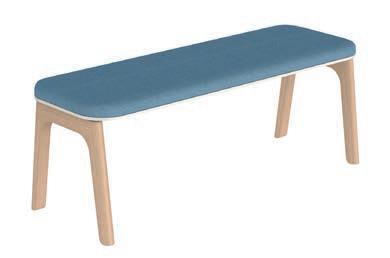
LEVITATE BENCH
BASE VERSIONS:
“A-shape” solid wood legs
FRAME:
steel profile, epoxy coated
GLIDES:
plastic, for hard or soft surfaces
SEAT:
- Upholstered – melamine faced chipboard with seat cushion
- Seat cushion – beech plywood upholstered with polyurethane foam seat cushion
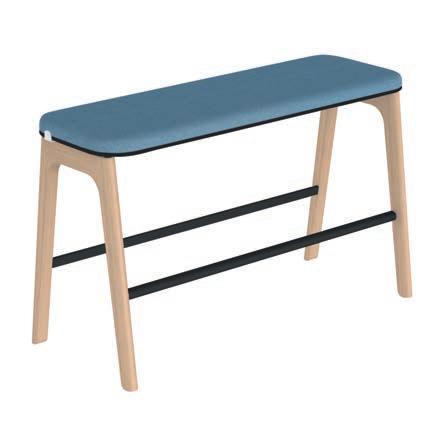
LEVITATE HIGH BENCH
BASE VERSIONS:
“A-shape” solid wood legs
FRAME and FOOT BARS: steel profile, epoxy coated GLIDES:
plastic, for hard or soft surfaces
SEAT:
- Upholstered – melamine faced chipboard with seat cushion
- Seat cushion – beech plywood upholstered with polyurethane foam
CERTIFICATES
GS mark for selected configurations
APPLICATIONS
Conference rooms, meeting rooms, public areas and as visitor chair in workplaces
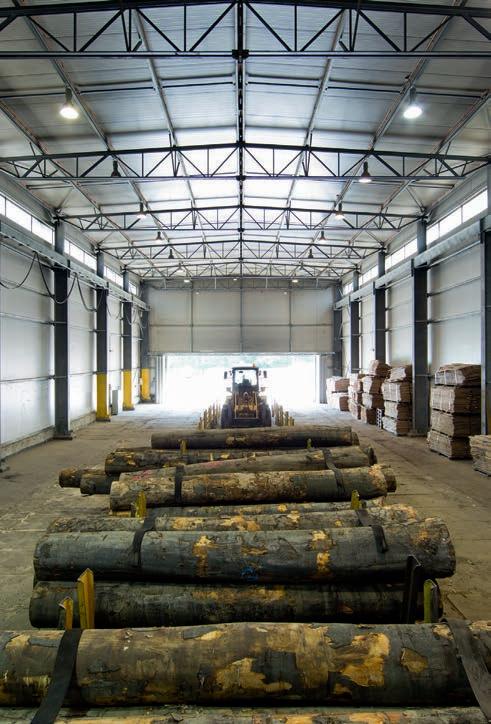
As shown in the scheme of manufacturing on page 9 Nowy Styl Sp. z o.o. manufactures products in five factories in Poland. Three of them process purchased materials such as metal, plastic and wood into components. Then, the furniture and chair factories use those components, as well as purchased components to assemble products, which are then ready for distribution. Some of the components made in the wood factory are also sold as finished products.
The allocation rules used for this EPD are based on general ITB PCR A. Production of the frame chairs AXO, CADEIRA, CAFE, LEVITATE POLYFOLD, WING II is a line process carried out in five factories of Nowy Styl Sp. z o.o. located in Krosno and Rzepedź (Poland). Allocation was done on product mass basis. All impacts from raw materials extraction are allocated in A1 module of the LCA. 100% of impacts from the line production of Nowy Styl Sp. z o.o. were inventoried and were allocated to the frame chairs production as follows: AXO, CADEIRA, CAFE, LEVITATE POLYFOLD, WING II. Utilization of packaging material was taken into consideration. Module A2 includes transport of raw materials such as wood, polymers (PE, PA, PU, PET), steel elements, papers, additives, ancillary materials and packaging materials from their suppliers to Nowy Styl Sp. z o.o. in Krosno and in Rzepedź. Municipal wastes of factory were allocated to module A3. Energy supply was inventoried for whole factory and was allocated to the frame chairs AXO, CADEIRA, CAFE, LEVITATE POLYFOLD, WING II production. Emissions in the factory are measured and were allocated to module A3.
The life cycle analysis of the declared products covers “Product Stage”, A1-A3, C2, C3, C4 and D modules (Cradle to Gate with options) accordance with ISO 14040 and ITB PCR A. The details of systems limits are provided in product technical report. All materials and energy consumption inventoried in factories and were included in calculation. In the assessment, all significant parameters from gathered production data are considered, i.e. all material used per formulation, utilized thermal energy, internal fuel and electric power consumption, direct production waste, and all available emission measurements. It can be assumed that the total sum of omitted processes does not exceed 5% of all impact categories. Machines and facilities (capital goods) required for and during production are excluded, as is transportation of employees.
Wood, polymers ((i.a. PE, PA, PU, PET, PVC, PP, PES), aluminium, steel elements, papers, additives, ancillary materials and packaging materials come from Polish and foreign suppliers. Data on transport of the different products to the manufacturing plants is collected and modelled for factory by assessor. Means of transport include trucks. For calculation purposes Polish and European fuel averages are applied.
PURCHASED COMPONENTS
LEGEND:
STEEL EPOXY COATINGS CHROME VI COMPONENTS INJECTED FOAM COMPONENTS PU FOAM BLOCKS OTHER
DESK AND TABLE BASES SWIVEL AND CONFERENCE CHAIR BASES SEAT, BACKREST, HEADREST, ARMREST PADDINGS METAL FACTORY JASŁO
REGRANULATE OTHER WOOD LOGS ADHESIVES STAINS ENAMELS LAMINATES VENEERS OTHER
PLASTIC FACTORY JASŁO
PLASTIC COMPONENTS: CHAIR BASES, ARMRESTS, CHAIR INNER CONSTRUCTIONS, ARMREST PADS, OTHER
FURNITURE FACTORY JASŁO
MDFCHIPBOARD VENEERS LAMINATES ABS EDGES ADHESIVES OTHER
WOOD FACTORY RZEPEDŹ
INNER CONSTRUCTIONS SEATS BACKRESTS WOODEN LEGS ARMREST PADS OTHER
CHAIR FACTORY JASŁO
CHAIR BASES
MECHANISMS ARMRESTS GAS LIFTS SOFA INNER CONSTRUCTIONS
PLASTIC COMPONENTS, FABRICS
PURCHASED COMPONENTS
DESKS
TABLESCABINETS
CONTAINERS PANELS
CONFERENCE CHAIRS
SWIVEL CHAIRS WOODEN COMPONENTS SOFAS
PURCHASED COMPONENTS SOLD PRODUCTS
PRODUCED COMPONENTS
END OF LIFE SCENARIOS
It is assumed that at the end of life stage, the transport distance for waste to waste processing (C3) is 50 km on > 10t loaded lorry with 50% capacity utilization and fuel consumption of 15 L per 100 km. The declared product is dismantled manually. Selectively recovered materials undergo recycling, energy recovery or landfilling according to Polish treatment practice of industrial waste while residual materials are forwarded to landfill in the form of mixed wastes. The reuse, energy recovery and recycling stage is considered beyond the system boundaries (D).
Table 1 End of life scenarios for the materials
DATA COLLECTION PERIOD
The data for manufacture of the declared products refer to period between 01.01.2018 – 31.12.2018 (1 year). The life cycle assessments were prepared for Poland as reference area.
DATA QUALITY
The values determined to calculate the LCA originate from verified Nowy Styl Sp. z o.o. inventory data.
ASSUMPTIONS AND ESTIMATES
The impacts of the representative the frame chairs AXO, CADEIRA, CAFE, POLYFOLD, WING II were aggregated using weighted average. Impacts were inventoried and calculated for all products of the frame chairs AXO, CADEIRA, CAFE, LEVITATE POLYFOLD, WING II.
CALCULATION RULES
LCA was done in accordance with ITB PCR A document.
DATA BASES
The data for the processes come from the following databases: Ecoinvent v.3.5, specific EPDs, ELCD, ÖKOBAUDAT, Ullmann’s, ITB-Data. Specific data quality analysis was a part of external ISO 14001 audit.
The declaration refers to declared unit (DU) –1 frame chair: AXO, CADEIRA, CAFE, LEVITATE POLYFOLD, WING II produced by Nowy Styl Sp. z o.o.
Table 2. System boundaries for the environmental characteristic of frame chairs: AXO, CADEIRA, CAFE, LEVITATE POLYFOLD, WING II produced by Nowy Styl Sp. z o.o.
A1A2A3A4A5B1B2B3B4B5B6B7C1C2C3C4D
Environmental assessment information (MNA – Module not assessed, MD – Module Declared, INA – Indicator Not Assessed)
Environmental impacts: (DU) 1 frame chair (weight: 27,2 kg*) IMPACT CATEGORIES
Global warming potential [kg CO2 eq.]
Depletion potential of the stratospheric ozone layer [kg CFC 11 eq.]8.62E-07
Acidification potential of soil and water [kg SO2 eq.]
Formation potential of tropospheric ozone [kg Ethene eq.]3.09E-02
Eutrophication potential [kg (PO4)3- eq.]2.37E-02
Abiotic depletion potential (ADP-elements) for non-fossil resources [kg Sb eq.]
Abiotic depletion potential (ADP-fossil fuels) for fossil resources [MJ]
Use of renewable primary energy excluding renewable primary energy resources used as raw materials [MJ]
Total use of renewable primary energy resources (primary energy and primary energy resources used as raw material) [MJ]
Use of non-renewable primary energy excluding nonrenewable
Use of non-renewable primary energy resources used as raw materials [MJ]
Total use of non renewable primary energy resources (primary energy and primary energy resources used as raw material) [MJ]
Use of secondary material [kg]
Use of non-renewable secondary fuels [MJ]
Environmental impacts: (DU) 1 frame chair (weight: 27,2 kg*)
Materials for energy recovery [kg] [kg]
Exported energy MJ per energy carrier [MJ
Environmental impacts: (DU) 1 frame chair (weight: 27,2 kg*) IMPACT CATEGORIES
Global warming potential [kg CO2 eq.]
Depletion potential of the stratospheric ozone layer [kg CFC 11 eq.]0.00E+00
Acidification potential of soil and water [kg SO2 eq.]
Formation potential of tropospheric ozone [kg Ethene eq.]2.48E-05 3.38E-04
Eutrophication potential [kg (PO4)3- eq.]6.80E-05
Abiotic depletion potential (ADP-elements) for non-fossil resources [kg Sb eq.]
Abiotic depletion potential (ADP-fossil fuels) for fossil resources [MJ]
Environmental impacts: (DU) 1 frame chair (weight: 27,2 kg*)
Use of renewable primary energy excluding renewable primary energy resources used as raw materials [MJ]
of
Total use of renewable primary energy resources (primary energy and primary energy resources used as raw material) [MJ]
Use of non-renewable primary energy resources used as raw materials [MJ]
Total use of non renewable primary energy resources (primary energy and primary energy resources used as raw material) [MJ]
of secondary material [kg]
Use of non-renewable secondary fuels [MJ]
Environmental impacts: (DU) 1 frame chair (weight: 27,2 kg*)
Materials for energy recovery [kg] [kg] 0.00E+00
energy MJ
Environmental Product Declaration Type III ITB No. 115/2020
Environmental impacts: (DU) 1 frame chair (weight: 21,2 kg*) IMPACT CATEGORIES
Global warming potential [kg CO2 eq.]
Depletion potential of the stratospheric ozone layer [kg CFC 11 eq.]1.16E-06
Acidification potential of soil and water [kg SO2 eq.]
Formation potential of tropospheric ozone [kg Ethene eq.]8.24E-03
Eutrophication potential [kg (PO4)3- eq.]1.85E-02
Abiotic depletion potential (ADP-elements) for non-fossil resources [kg Sb eq.]
Abiotic depletion potential (ADP-fossil fuels) for fossil resources [MJ]
of renewable primary energy excluding renewable primary energy resources used as raw materials [MJ]
Total use of renewable primary energy resources (primary energy and primary energy resources used as raw material) [MJ]
Use of non-renewable primary energy excluding nonrenewable primary energy resources used as raw materials [MJ]
Use of non-renewable primary energy resources used as raw materials [MJ]
Total use of non renewable primary energy resources (primary energy and primary energy resources used as raw material) [MJ]
Use of secondary material [kg]
Use of non-renewable secondary fuels [MJ]
Environmental impacts: (DU) 1 frame chair (weight: 21,2 kg*)
Materials for energy recovery [kg] [kg]
Environmental Product Declaration Type III ITB No. 115/2020
Environmental impacts: (DU) 1 frame chair (weight: 21,2 kg*)
IMPACT CATEGORIES
Global warming potential [kg CO2 eq.]
Depletion potential of the stratospheric ozone layer [kg CFC 11 eq.]0.00E+00
Acidification potential of soil and water [kg SO2 eq.]
Formation potential of tropospheric ozone [kg Ethene eq.]1.94E-05
Abiotic depletion potential (ADP-elements) for non-fossil resources [kg Sb eq.]
Abiotic depletion potential (ADP-fossil fuels) for fossil resources [MJ]
Environmental impacts: (DU) 1 frame chair (weight: 21,2 kg*)
Use of renewable primary energy excluding renewable primary energy resources used as raw materials [MJ]
Use of renewable primary energy resources used as raw materials [MJ]
Total use of renewable primary energy resources (primary energy and primary energy resources used as raw material) [MJ]
Use of non-renewable primary energy resources used as raw materials [MJ]
Total use of non renewable primary energy resources (primary energy and primary energy resources used as raw material) [MJ]
Environmental impacts: (DU) 1 frame chair (weight: 21,2 kg*)
Materials for energy recovery [kg] [kg] 0.00E+00
Environmental impacts: (DU) 1 frame chair (weight: 17.8 kg*)
CATEGORIES
Global warming potential [kg CO2 eq.]
Depletion potential of the stratospheric ozone layer [kg CFC 11 eq.]4.66E-07
Acidification potential of soil and water [kg SO2 eq.]
Formation potential of tropospheric ozone [kg Ethene eq.]7.30E-02
Eutrophication potential [kg (PO4)3- eq.]1.55E-02
Abiotic depletion potential (ADP-elements) for non-fossil resources [kg Sb eq.]
Abiotic depletion potential (ADP-fossil fuels) for fossil resources [MJ]
Environmental
of renewable primary energy excluding renewable primary energy resources used as raw materials [MJ]
Total use of renewable primary energy resources (primary energy and primary energy resources used as raw material) [MJ]
Use of non-renewable primary energy resources used as raw materials [MJ]
Total use of non renewable primary energy resources (primary energy and primary energy resources used as raw material) [MJ]
Use of secondary material [kg]
Use of non-renewable secondary fuels [MJ]
Environmental impacts: (DU) 1 frame chair (weight: 17.8 kg*)
Materials for energy recovery [kg] [kg]
Exported energy MJ per energy carrier
Environmental impacts: (DU) 1 frame chair (weight: 17,8 kg*) IMPACT CATEGORIES
Global warming potential [kg CO2 eq.]
Depletion potential of the stratospheric ozone layer [kg CFC 11 eq.]0.00E+00
Acidification potential of soil and water [kg SO2 eq.]
Formation potential of tropospheric ozone [kg Ethene eq.]1.63E-05
Eutrophication potential [kg (PO4)3- eq.]4.47E-05
Abiotic depletion potential (ADP-elements) for non-fossil resources [kg Sb eq.]
Abiotic depletion potential (ADP-fossil fuels) for fossil resources [MJ]
Environmental impacts: (DU) 1 frame chair (weight: 17,8 kg*)
Use of renewable primary energy excluding renewable primary energy resources used as raw materials [MJ]
Total use of renewable primary energy resources (primary energy and primary energy resources used as raw material) [MJ]
Use of non-renewable primary energy resources used as raw materials [MJ]
Total use of non renewable primary energy resources (primary energy and primary energy resources used as raw material) [MJ]
of secondary material [kg]
Use of non-renewable secondary fuels [MJ]
Environmental impacts: (DU) 1 frame chair (weight: 17,8 kg*)
Materials for energy recovery [kg] [kg] 0.00E+00
Exported energy MJ per energy carrier [MJ
Environmental impacts: (DU) 1 frame chair (weight: 20,2 kg*) IMPACT CATEGORIES
Global warming potential [kg CO2 eq.]
Depletion potential of the stratospheric ozone layer [kg CFC 11 eq.]2.59E-06
Acidification potential of soil and water [kg SO2 eq.]
Formation potential of tropospheric ozone [kg Ethene eq.]6.80E-02
Abiotic depletion potential (ADP-elements) for non-fossil resources [kg Sb eq.]
Abiotic depletion potential (ADP-fossil fuels) for fossil resources [MJ]
Use of renewable primary energy excluding renewable primary energy resources used as raw materials [MJ]
Total use of renewable primary energy resources (primary energy and primary energy resources used as raw material) [MJ]
Use of non-renewable primary energy resources used as raw materials [MJ]
Total use of non renewable primary energy resources (primary energy and primary energy resources used as raw material) [MJ]
Use of secondary material [kg]
Use of non-renewable secondary fuels [MJ]
Environmental impacts: (DU) 1 frame chair (weight: 20,2 kg*)
Materials for energy recovery [kg] [kg]
Exported energy MJ per energy carrier [MJ
Environmental impacts: (DU) 1 frame chair (weight: 20,2 kg*) IMPACT CATEGORIES
Global warming potential [kg CO2 eq.]
Depletion potential of the stratospheric ozone layer [kg CFC 11 eq.]0.00E+00
Acidification potential of soil and water [kg SO2 eq.]
Formation potential of tropospheric ozone [kg Ethene eq.]2.29E-05
Abiotic depletion potential (ADP-elements) for non-fossil resources [kg Sb eq.]
Abiotic depletion potential (ADP-fossil fuels) for fossil resources [MJ]
Total use of renewable primary energy resources (primary energy and primary energy resources used as raw material) [MJ]
Use of non-renewable primary energy resources used as raw materials [MJ]
Total use of non renewable primary energy resources (primary energy and primary energy resources used as raw material) [MJ]
Use of secondary material [kg]
Use of non-renewable secondary fuels [MJ]
Environmental impacts: (DU) 1 frame chair (weight: 20,2 kg*)
Materials for energy recovery [kg] [kg] 0.00E+00
Exported energy MJ per energy carrier [MJ per energy
weight includes: material, packaging waste and all packaging materials
Environmental impacts: (DU) 1 frame chair (weight: 4,6 kg*)
CATEGORIES
Global warming potential [kg CO2 eq.]
Depletion potential of the stratospheric ozone layer [kg CFC 11 eq.]1.68E-07
Acidification potential of soil and water [kg SO2 eq.]
Formation potential of tropospheric ozone [kg Ethene eq.]3.15E-03
Abiotic depletion potential (ADP-elements) for non-fossil resources [kg Sb eq.]
Abiotic depletion potential (ADP-fossil fuels) for fossil resources [MJ]
Use of renewable primary energy excluding renewable primary energy resources used as raw materials [MJ]
Total use of renewable primary energy resources (primary energy and primary energy resources used as raw material) [MJ]
Use of non-renewable primary energy resources used as raw materials [MJ]
Total use of non renewable primary energy resources (primary energy and primary energy resources used as raw material) [MJ]
Use of secondary material [kg]
Use of non-renewable secondary fuels [MJ]
Environmental impacts: (DU) 1 frame chair (weight: 4,6 kg*)
energy
Environmental impacts: (DU) 1 frame chair (weight: 4,6 kg*)
CATEGORIES
Global warming potential [kg CO2 eq.]
Depletion potential of the stratospheric ozone layer [kg CFC 11 eq.]0.00E+00
Acidification potential of soil and water [kg SO2 eq.]
Formation potential of tropospheric ozone [kg Ethene eq.]4.17E-06
Eutrophication potential [kg (PO4)3- eq.]1.14E-05
Abiotic depletion potential (ADP-elements) for non-fossil resources [kg Sb eq.]
Abiotic depletion potential (ADP-fossil fuels) for fossil resources [MJ]
of renewable primary energy excluding renewable primary energy resources used as raw materials [MJ]
Total use of renewable primary energy resources (primary energy and primary energy resources used as raw material) [MJ]
Use of non-renewable primary energy excluding nonrenewable primary energy resources used as raw materials [MJ]
Use of non-renewable primary energy resources used as raw materials [MJ]
Total use of non renewable primary energy resources (primary energy and primary energy resources used as raw material) [MJ]
Use of secondary material [kg]
Use of renewable secondary fuels [MJ]
Use of non-renewable secondary fuels [MJ]
Environmental impacts: (DU) 1 frame chair (weight: 4,6 kg*)
Materials for energy recovery [kg] [kg]
Exported energy MJ per energy carrier [MJ per energy
weight includes: material, packaging waste and all packaging materials
Environmental impacts: (DU) 1 frame chair (weight: 20,2 kg*) IMPACT CATEGORIES
Global warming potential [kg CO2 eq.]
Depletion potential of the stratospheric ozone layer [kg CFC 11 eq.]7.25E-07
Acidification potential of soil and water [kg SO2 eq.]
Formation potential of tropospheric ozone [kg Ethene eq.]6.13E-03
Eutrophication potential [kg (PO4)3- eq.]1.30E-02
Abiotic depletion potential (ADP-elements) for non-fossil resources [kg Sb eq.]
Abiotic depletion potential (ADP-fossil fuels) for fossil resources [MJ]
Environmental
Use of renewable primary energy excluding renewable primary energy resources used as raw materials [MJ]
Total use of renewable primary energy resources (primary energy and primary energy resources used as raw material) [MJ]
Use of non-renewable primary energy resources used as raw materials [MJ]
Total use of non renewable primary energy resources (primary energy and primary energy resources used as raw material) [MJ]
Use of secondary material [kg]
Use of non-renewable secondary fuels [MJ]
Environmental impacts: (DU) 1 frame chair (weight: 20,2 kg*)
Exported energy MJ per energy carrier [MJ per energy
Environmental impacts: (DU) 1 frame chair (weight: 20.2 kg*)
CATEGORIES
Global warming potential [kg CO2 eq.]
Depletion potential of the stratospheric ozone layer [kg CFC 11 eq.]0.00E+00
Acidification potential of soil and water [kg SO2 eq.]
Formation potential of tropospheric ozone [kg Ethene eq.]1.85E-05
Eutrophication potential [kg (PO4)3- eq.]5.06E-05
Abiotic depletion potential (ADP-elements) for non-fossil resources [kg Sb eq.]
Abiotic depletion potential (ADP-fossil fuels) for fossil resources [MJ]
Total use of renewable primary energy resources (primary energy and primary energy resources used as raw material) [MJ]
Use of non-renewable primary energy resources used as raw materials [MJ]
Total use of non renewable primary energy resources (primary energy and primary energy resources used as raw material) [MJ]
Use of secondary material [kg]
Use of non-renewable secondary fuels [MJ]
Environmental impacts: (DU) 1 frame chair (weight: 20.2 kg*)
Materials for energy recovery [kg] [kg]
Exported energy MJ per energy carrier [MJ per energy carrier]
weight includes: material, packaging waste and all packaging materials
The process of verification of this EPD is in accordance with ISO 14025. After verification, this EPD is valid for a 5-year-period. EPD does not have to be recalculated after 5 years, if the underlying data have not changed significantly.
The basis for LCA analysis was ISO 14040 and ITB PCR A Independent verification corresponding to ISO 14025 (subclause 8.1.3.)
external X internal
External verification of EPD: Ph.D. Eng. Halina Prejzner
LCA, LCI audit and input data verification: Ph.D. Eng. Justyna Tomaszewska, j.tomaszewska@itb.pl
Verification of LCA:
Ph.D. Eng. Michał Piasecki, m.piasecki@itb.pl
>> ITB PCR A General Product Category Rules for Construction Products
>> ISO 14025:2006, Environmental labels and declarations – Type III environmental declarations – Principles and procedures
>> ISO 14040:2006 Environmental management – Life cycle assessment –Principles and framework
>> ISO 14044:2006 Environmental management – Life cycle assessment –Requirements and guidelines
>> EN 15804:2012+A2:2019 Sustainability of construction works. Environmental product declarations. Core rules for the product category of construction products
>> PN-EN 15942:2012 Sustainability of construction works – Environmental product declarations – Communication format business-to-business
>> KOBiZE Wskaźniki emisyjności CO2, SO2, NOx, CO i pyłu całkowitego dla energii elektrycznej, grudzień 2017