TALENT REIMAGINED:
A PRACTICAL GUIDE TO SKILLS-BASED HIRING

Apracticalguideforemployersreadytomovefrom awarenesstoaction,translatingskills‑basedhiring intoascalableapproachforrecruitingandretaining military‑connectedtalent

Apracticalguideforemployersreadytomovefrom awarenesstoaction,translatingskills‑basedhiring intoascalableapproachforrecruitingandretaining military‑connectedtalent

In a labor market increasingly transformed by technology, automation, and shifting workforce expectations, employers are rethinking how they identify, assess, develop, and retain talent. The traditional reliance on college degrees and static credentials as proxies for competence is giving way to a more dynamic and evidence-based approach: skills-based hiring.
Skills-based hiring is an adaptive talent strategy that seeks to match people to work based on validated skills rather than education and degrees, using innovative credentials. It treats skills as the common currency across occupations, helping employers stay resilient in a rapidly changing economy by efficiently connecting them to talent that meets their needs. Evidence-based and anchored in transparent evaluation, skills-based hiring fosters workforce agility, accelerates upskilling, and builds strategic hiring pipelines. This playbook uses military-connected talent as a primary lens because it represents the most structured, skillsexplicit workforce pipeline already in operation.
Workforce Agility Accelerates Upskilling Builds Hiring Pipelines
This playbook is designed to help employers move from awareness to action. It translates skillsbased hiring from concept to operating model, offering practical guidance for leaders seeking to pilot, scale, and sustain these practices. Specifically, it equips employers to:
Build internal alignment and buy-in across leadership and business units
Define, validate, and assess job-relevant skills using transparent and defensible methods
Launch and scale pilot programs with measurable outcomes
Track ROI and build accountability for performance and retention outcomes
Hire and advance transitioning service members, veterans, military spouses, and Guard/Reserve talent using skills-based systems
Skills-based hiring does not require new technology platforms or dedicated teams. Many small and mid-sized employers begin with simple tools such as shared spreadsheets, structured interview guides, and a small pilot role before scaling practices over time.


The evolution of the workforce and economy has undermined the usefulness of traditional signals of employability, like degrees. Job roles and required capabilities are evolving faster than ever before. As of 2025, 32% of the skills required for the average job differed from those in 2022, and one in four jobs had 75% of their skills change.1 AI fluency has emerged as the fastest-growing skill in U.S. job postings, with demand increasing sevenfold over two years. The trend is evident across sectors and points to more significant shifts ahead.2 Yet the majority of hiring systems still filter talent through outdated degree requirements that fail to predict performance. This disconnect is more than a fairness issue; it is a business risk.
Research shows that skills-based recruitment is up to five times more predictive of job performance than degree-based hiring.3 Companies that adopt skills-based practices report measurable gains: reduced time-to-fill, higher retention, and improved adaptability. Skillsbased organizations are more likely to place talent effectively, more likely to retain high performers, and more likely to anticipate and adapt to change.4 In a marketplace defined by disruption, these are not incremental advantages; they are strategic imperatives.
5X
Skills-based recruitment outperforms degree-based hiring in predicting job performance
Time window to execute a meaningful pilot within a single business unit
Have pursued or plan to pursue training in new skills to align with evolving workforce demands Day Quick Start Military Spouses 60-90 80%
Employers do not need to redesign their entire talent system to begin adopting skills-based hiring. Most organizations start with one role, one pilot, and clear measurement. The following sequence is designed for execution within a single business unit over a 60–90-day window.
Choose a role that is:
• Hard to fill or high volume
• Clearly task-defined
• Operationally important but manageable in scope
For the selected role:
• Identify five to eight essential tasks
• Translate tasks into observable skills
• Distinguish required skills from developable skills
• Validate definitions with high-performing incumbents and supervisors
Update the job description to:
• Remove degree requirements
• Identify acceptable evidence of skill, including military experience, alternative credentials, apprenticeships, or verified training
• Align skill definitions to public frameworks where feasible
For all candidates:
• Apply the same structured interview questions
• Use scoring guides tied directly to defined skills
• Incorporate work samples where feasible
• Document how decisions map to job-related competencies
Track a limited set of indicators:
• Time-to-fill
• Hiring manager confidence
• Early performance or proficiency attainment
• Retention at 6–12 months
Document this in a simple rubric with defined proficiency levels.
Ensure recruiters and hiring managers understand the revised criteria. Consistency strengthens both performance outcomes and defensibility.
Review outcomes after the first hiring cycle. Refine skills definitions and assessments before scaling.
At the conclusion of the pilot:
• Did skills-based evaluation improve clarity and confidence?
• Did it expand access without reducing standards?
• Are outcomes strong enough to replicate in another role family? If yes, extend to a second role or business unit. If mixed, refine and retest before expanding.

Eliminating degree requirements from job descriptions is a necessary first step, but it is not sufficient. Effective skills-based hiring requires clear definitions of job-relevant skills, consistent methods for validating them, and accountability for fair, data-driven decisionmaking 5 Leading employers are embedding skills frameworks across the talent lifecycle, from job design and hiring to development and mobility. These frameworks provide a shared language for evaluating talent and help ensure consistency across roles, teams, and business units. Just as important, skills-based hiring requires organizational alignment.
Decision: Are we treating skills-based hiring as a one-time policy change, or as an operating model that affects job design, hiring, and mobility?
Skills-based hiring is most effective when employers are supported by a broader ecosystem of partners, including industry associations, employer councils, workforce intermediaries, and public programs. This playbook reflects insights from a cross-sector working group of employers and organizations focused on advancing skills-based hiring for military-connected talent. We thank the employers and partners who contributed to this effort and recognize the Walmart Foundation for its support in enabling this collaboration.
Securing internal buy-in for skills-based hiring requires framing the approach in terms that resonate with executive and operational leaders: performance, productivity, risk management, and talent access. A clear link to workforce strategy strengthens the case. When roles are defined by competencies rather than credentials alone, organizations often see greater role clarity, shorter time to fill, broader candidate pools, and stronger retention driven by better alignment between job requirements and actual work. Positioned this way, skills-based hiring becomes a practical, performance-focused refinement of current standards and a measurable strategy to improve workforce outcomes.

“At Amazon, we always work backwards from big ideas to unlock big opportunities for our employees, customers, and communities. With skills-based hiring, we saw a chance to drive real business outcomes while at the same time improving military hiring, retention, and promotion velocity. Removing degree requirements for certain roles wasn’t a values exercise — it was about matching eligibility to the skills that predict performance. We backed that with structured assessments and clear experience pathways, and positioned it as a retention and performance strategy, especially for military talent at key leadership levels. For anyone building internal momentum: start at the business need, track performance outcomes, and let the data make the case for scaling.”
— Ian McDuffie, Senior Manager, Amazon

A skills-based hiring (SBH) approach is uniquely well-suited to unlocking the potential of military-connected talent. Veterans bring validated technical preparation, rigorous training, and demonstrated leadership, yet numerous workforce-ready veterans are filtered out of civilian opportunities because many do not hold a four-year degree,6 despite often possessing equal or greater role competency than degree-holding peers. Additionally, 80% of military spouses have pursued or plan to pursue training in new skills to align with evolving workforce demands.7 Treating skills as the “common currency” of work allows organizations to better recognize and deploy the value veterans and military spouses possess.
Veteran skills crosswalks provide a structured mechanism for translating military experience into civilian-relevant competencies. Resources such as DoW Credentialing Opportunities OnLine (COOL) and O*NET’s Military Occupational Crosswalk connect Military Occupational Specialties (MOS) to civilian roles, tasks, and certifications.
Used effectively, crosswalks help employers:
• Define required skills more precisely during job design
• Treat MOS codes, certifications, and military training as admissible evidence of competence
• Shift evaluation away from proxies toward demonstrated capabilities
Embedding aligned MOS codes, certifications, and skill statements into job descriptions, recruiter guidance, and applicant tracking systems expands candidate pools while improving assessment accuracy. Practices such as training recruiters to interpret military learning records or providing military skills crosswalks for hiring managers help operationalize skills-based hiring within everyday workflows. Research on veteran performance further underscores the value of this approach: veterans regularly outperform peers in areas such as reliability and discipline, 8 behavioral skills closely associated with success in SBH-aligned organizations. A majority of hiring managers agree that veterans demonstrate better work ethics, teamwork abilities, and leadership skills than their civilian peers.9
Decision: Will we allow military training, MOS codes, and documented service experience to substitute for a bachelor’s degree in defined role families? Will we intentionally design role families to recognize military spouse experience, even when that experience was developed outside traditional employment pathways?

While crosswalks create visibility into veteran capabilities, apprenticeship programs translate that visibility into structured pathways for civilian employment and advancement. Programs such as DoW SkillBridge, Skilled Trades Academy, and U.S. Department of Labor Registered Apprenticeships align military transition with clearly defined skill outcomes and real work experience.
Well-designed veteran apprenticeships:
• Map roles using task–skill–proficiency models
• Assess progress based on demonstrated mastery rather than time in training
• Align assessments with federal requirements such as the Uniform Guidelines on Employee Selection Procedures (UGESP)
Hiring Our Heroes fellowships are DoW SkillBridge programs connecting transitioning service members to civilian internships. These nationwide opportunities are available to service members within 180 days of transition and traditionally operate as 12-week fellowships, but the program is flexible to adapt to branch- and rank-specific SkillBridge policies. With over 17,000 fellowships completed and a job offer rate of over 85%, Hiring Our Heroes fellowships are an extremely effective, proven talent pipeline for employers from all industries.
The Skilled Trades Academy is a six-week, in-person training program that equips transitioning service members, veterans, and military and veteran spouses with foundational skills and certifications in the skilled trades.
Capturing verified skills through Learning and Employment Records (LERs) or digital badges makes these credentials portable and transparent. Wraparound supports such as veteran mentors and coordination with transition offices further improve performance, retention, and program completion.
Veteran skills crosswalks and apprenticeship programs demonstrate how skills-based hiring moves from concept to practice. By translating military experience into recognized skills, structuring development around demonstrated proficiency, and measuring outcomes with rigor, employers can both expand opportunity for veterans and military spouses and strengthen workforce performance.

Employer adoption of skills-based hiring (SBH) does not occur all at once. Organizations often move through stages of adoption as they build confidence, infrastructure, and internal alignment 10 Each stage delivers different returns and requires different next steps.
Many users of this playbook will currently fall between low and moderate adoption. For that reason, this playbook focuses primarily on practical, achievable actions to help organizations move from low to moderate adoption.
WHAT THIS STAGE LOOKS LIKE
TYPICAL PRACTICES
WHAT THIS DELIVERS
IMPLEMENTABLE NEXT STEPS
Employers at this stage are beginning to move away from credential-centric hiring, often in response to tight labor markets, veteran hiring goals, or workforce access goals. Skills-based practices are typically limited to recruiting and compliance teams and are not yet embedded across the talent lifecycle.
• Degree requirements removed for selected roles, often frontline or operational
• Use of skills crosswalks to translate military or alternative experience
• Basic recruiter training on identifying skill evidence
• Expanded candidate pools, especially veterans
• Faster time-to-fill in targeted roles
• Limited impact on quality-of-hire without structured assessment
• Select 1–2 roles with clear tasks and persistent hiring needs
• Remove degree requirements for those roles
• Add a basic skills rubric tied to job-relevant tasks
• Train recruiters and hiring managers on how to use the rubric consistently
Salesforce is an example of an employer removing degree barriers, recognizing military earned skills, and opening pathways for talent like Rachel and Ryan Dishman. As Tom House shared:
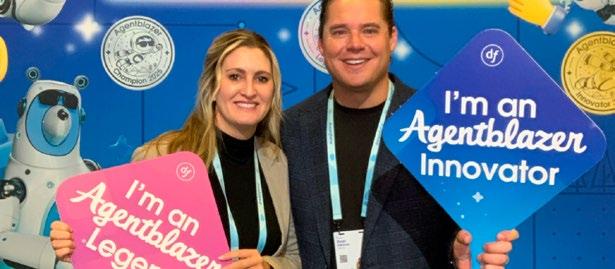
“At Salesforce, our military spouses don’t just show up — they lead the way. Rachel and Ryan’s story is one of 6,000+ veterans and military spouses who bring something special to our teams. Whether it’s sales, engineering, compliance, or operations, they make us better at what we do.”
— Tom House, Salesforce
Scan code to see Rachel and Ryan’s story
WHAT THIS STAGE LOOKS LIKE
TYPICAL PRACTICES
WHAT THIS DELIVERS
IMPLEMENTABLE NEXT STEPS
Moderate adopters move beyond access to intentional skill validation and development. Skills are treated as both a hiring lever and a workforce development tool, often through pilots designed to demonstrate ROI and manage risk.
• Apprenticeships or work-based learning pathways (e.g., SkillBridge, Skilled Trades Academy, Registered Apprenticeships)
• Recognition of alternative credentials and validated training programs
• Use of structured interviews and work samples aligned to defined skills
• Alignment between hiring and learning and development
• Higher retention and faster time-to-productivity for participants
• Stronger quality-of-hire signals through observable skill validation
• Improved fairness, consistency, and compliance defensibility
• Stand up one pilot apprenticeship or SkillBridge pathway for a high-volume or hard-to-fill role
• Define clear task–skill–proficiency expectations for that role
• Use structured interviews or work samples to assess skills consistently
• Track outcomes (retention, performance, time-to-productivity) for pilot participants
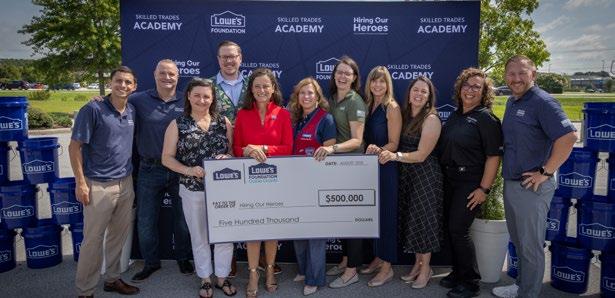
“For too long, the skilled trades have been overlooked as a premier career pathway. Together with Hiring Our Heroes, the Skilled Trades Academy powered by the Lowe’s Foundation is helping lead an industry reset by expanding access, accelerating training, and connecting military talent to high-demand, highopportunity careers that keep our communities running.”
— Mike Piper, Lowe’s Companies, Inc.
“Using skills as the organizing principle of talent strategy can bring impact that extends far beyond hiring. Development and advancement decisions become more transparent and more aligned to actual capability. Instead of relying on tenure or credentials as proxies, organizations can identify the specific skills that drive success and create clearer pathways for employees to grow into new roles. Our research at SHRM shows strong interest in skills-first practices, but the real advantage emerges when verified skills data informs internal mobility, workforce planning, and leadership pipelines.”
—
Isaac Agbeshie-Noye, SHRM Foundation Widening Pathways to Work Program

WHAT THIS STAGE LOOKS LIKE
TYPICAL PRACTICES
WHAT THIS DELIVERS
IMPLEMENTABLE NEXT STEPS
High adopters use skills as the organizing principle of their talent strategy. Skills data informs hiring, development, deployment, and advancement decisions across the organization.
• Enterprise-wide skills frameworks aligned to public standards (e.g., O*NET, NIST NICE)
• Internal talent marketplaces matching employees to roles or projects based on verified skills
• Use of Learning and Employment Records (LERs) (start here: T3 Innovation Hub) or digital credentials
• Formal governance overseeing skills definitions, validation, and fairness
• Superior talent placement and workforce agility
• Higher retention of high performers11
• Reduced reliance on external hiring through internal mobility
• Faster response to market and technology shifts
• Integrate LER or verified skills data into internal mobility decisions for at least one business unit
• Use skills evidence, not tenure or credentials alone, to inform redeployment or advancement
• Establish governance to review skills definitions, assessment quality, and fairness outcomes
Skills-based hiring is not an all-or-nothing proposition. Employers can and should progress deliberately, building confidence and capability at each stage. Veteran and military spouse hiring initiatives often provide an effective entry point, but the strongest returns accrue to organizations that move beyond access and embed skills into how talent decisions are made.



This roadmap outlines the core steps employers take to adopt skills-based hiring for militaryconnected talent, from defining skills to measuring impact. The visual below provides a high-level view, with detailed guidance and implementation considerations on the following pages.
02 01 03 04 05
Deconstruct roles into 5–8 observable tasks. Define required vs. developable skills. Validate with high performers and supervisors. Align to O*NET/COOL crosswalks and convert into a rubric used in interviews and work samples.
Accept industry certifications, registered apprenticeship certificates, military training records, digital badges, and employer-issued credentials. Learning and Employment Records (LERs) provide skills-explicit, verifiable, portable evidence that integrates with talent systems.
Use work samples, skills tests, scenario-based exercises, and structured evidence review. Apply the same validated rubric to all candidates. Ensure all assessments are job-related, standardized, transparent, and aligned with UGESP.
Reframe SBH as an operating model transformation. Secure executive sponsorship. Engage hiring managers, recruiters, legal, and business leaders. Run focused pilots with explicit learning objectives before scaling.
Track access and process metrics, quality and performance metrics, and fairness and compliance metrics. Assign clear ownership. Build continuous improvement into the system through regular review cadences.
Skills mapping is the foundation of skills-based hiring. It replaces vague credential proxies with clear, observable evidence of job readiness. Without disciplined skills mapping, degree removal and alternative credentials cannot scale or deliver consistent results.
At its core, skills mapping answers one question: What does someone need to be able to do to succeed in this role?
Decision: For our hardest-to-fill roles, what evidence qualifies a candidate for interview: degrees, or demonstrated skills (including military experience)?
Effective skills mapping begins with understanding the work itself, not the credentials historically associated with it. Employers should deconstruct roles into tasks and outcomes, then identify the skills required to perform those tasks successfully.
Recommended approach:
01
Identify top 5–8 tasks
02
04
Validate with 2-3 high performers + supervisors
05
Define skills as observable behaviors Align to O*NET/COOL crosswalk
03
Separate required vs. developable skills
06
Convert into a rubric used in interviews/work samples
You do not need a formal skills taxonomy. Many small employers start by keeping a simple list of skills for their top 5–10 roles in a spreadsheet, reviewed annually with hiring managers.
Once identified, skills must be standardized to scale. Skills taxonomies and crosswalks provide a shared language that enables consistency across hiring, learning, and workforce systems.
WHY TAXONOMIES MATTER:
• Enable consistency across job families and business units
• Support compliance by reducing subjectivity in evaluation
• Allow translation across military, civilian, and alternative learning pathways
BEST PRACTICES:
• Align internal skills to public frameworks such as O*NET, NIST NICE, or DoW COOL
• Use crosswalks to map:
• Military occupational specialties to civilian roles
• Certifications and credentials to specific skill evidence
• Internal roles to external labor market skill definitions
COMMON PITFALLS TO AVOID:
• Creating overly granular or proprietary skill lists that cannot scale
• Treating skills as static rather than periodically updating them
• Failing to distinguish between required, preferred, and developable skills
Employers that align to shared frameworks report faster implementation, easier system integration, and greater defensibility in hiring and promotion decisions,12 especially when working with veteran and nontraditional talent pipelines.


Defining skills is necessary but insufficient on its own. Skills-based hiring requires structured, transparent evaluation methods that assess whether candidates actually possess those skills.
EFFECTIVE RUBRICS INCLUDE:
• Clear proficiency levels (e.g., basic, proficient, advanced)
• Behavioral or work-output examples for each level
• Guidance on acceptable forms of evidence (work samples, simulations, certifications, experience)
EVALUATION METHODS:
• Structured interviews aligned to skill indicators
• Work samples or simulations tied to real job tasks
• Review of verified credentials or training records
• Consistent scoring criteria across evaluators
GOVERNANCE & CONSISTENCY:
• Train recruiters and hiring managers on rubric use and calibration
• Monitor results across raters to reduce bias and inconsistency
• Document validation and adverse impact analyses for compliance
Evidence shows that structured, rubric-based skill evaluation is significantly more predictive of job performance than unstructured interviews or credential screening alone, while also improving fairness and transparency in hiring decisions.
Decision: Are we willing to evaluate all candidates for this role using the same skills rubric, rather than relying on individual manager judgment?

As employers advance in skills-based hiring, to scale fair, evidence-based decisions, employers need verifiable and portable records of skills. Learning and Employment Records (LERs) and well-designed alternative credentials provide that infrastructure.
Alternative credentials are non-degree signals tied to specific skills rather than time spent in a program. Common examples include:
• Industry-recognized certifications
• Registered Apprenticeship certificates
• Military training and occupational certifications
• Digital badges tied to validated assessments
• Employer-issued credentials aligned to job tasks
What matters is not the credential itself, but what it proves. Credentials vary widely in rigor and relevance. Employers extract value only when credentials are explicitly mapped to jobrelevant skills and proficiency levels.
Decision: Which alternative credentials (e.g., military training, SkillBridge outcomes, certifications) will we accept as evidence of skills, and how will we validate them?
Learning and Employment Records are digital records that securely store and verify evidence of skills gained through work, training, education, or military service. Unlike resumes, LERs are:
• Skills-explicit: tied to defined competencies
• Verifiable: issued by trusted entities
• Portable: controlled by the individual
• Interoperable: designed to integrate with talent systems
In practice, LERs may include verified apprenticeship outcomes, military training mapped to civilian skills, or employer-validated work samples.

FOR MORE INFORMATION about LERs and how to use them, visit the T3 Innovation Network resources
Employers further along the adoption curve are integrating LERs at specific, high-value points:
EARLY SCREENING:
Surfacing verified skills without relying on degree filters or keyword resumes
ASSESSMENT ALIGNMENT:
Informing structured interviews and work samples with documented skill evidence
HIGH DEFENSIBILITY:
Supporting documentation aligned with federal standards and reducing subjectivity
INTERNAL MOBILITY:
Tracking skill acquisition and matching employees to roles or projects

Skills-based hiring ultimately depends on whether employers can credibly validate skills at the point of decision. Once skills are defined and credentials are mapped, employers must determine whether candidates can actually perform the work. Competency validation is the set of structured, job-related methods used to evaluate skill proficiency fairly, consistently, and defensibly.
Removing degree requirements without strengthening validation delivers limited returns and introduces risk. In contrast, employers that pair skills mapping with disciplined validation see stronger quality-of-hire, higher retention, and greater confidence among hiring managers and legal stakeholders.13
Competency validation assesses whether a candidate can perform job-relevant tasks to a defined standard. It focuses on observable performance and evidence, not inferred potential or proxy signals.
Effective validation methods share four characteristics:
• Job-related: Directly tied to skills required for the role
• Standardized: Applied consistently across candidates
• Transparent: Clear criteria and scoring rubrics
• Defensible: Aligned with the Uniform Guidelines on Employee Selection Procedures (UGESP)
Structured assessments are the backbone of competency validation. When aligned to jobrelevant skills, they are more predictive of performance than degree screens or unstructured interviews.
Common validation methods:
• Work samples or simulations: Candidates complete tasks that mirror real job activities
• Skills tests: Standardized evaluations of specific technical or cognitive skills
• Scenario-based exercises: Assessment of judgment and decision-making in realistic contexts
• Structured evidence review: Evaluation of verified work products or training outcomes (often supported by LERs)
What employers should do:
• Prioritize work samples and simulations where feasible
• Limit assessments to essential skills only to reduce burden and risk
• Document how each assessment maps to job-required skills
When assessments are clearly job-related and consistently applied, they improve accuracy while reducing reliance on subjective judgment. If AI-enabled tools support screening or scoring, ensure they are job-related, explainable, and auditable. Treat automation as decision support, not replacement, and monitor outcomes for consistency.
Decision: Are we prepared to require hiring managers to use the same questions and scoring criteria for all candidates in this role?
Traditional interviews are among the least predictive hiring tools when unstructured. However, structured interviews, aligned to defined competencies and scored using rubrics, play an important role in validating skills that are difficult to assess through tests alone.
Elements of effective structured interviews:
• Pre-defined questions mapped to specific skills
• Behavioral or situational prompts anchored in real work scenarios
• Clear scoring guides describing what proficiency looks like
• Interviewer calibration to ensure consistency
Instead of asking whether a candidate is a “strong leader,” interviewers assess leadership through scenarios involving prioritization, delegation, or decision-making under constraints.
Used alongside other assessments, structured interviews significantly improve predictive validity and reduce bias 14
You don’t need formal validation studies. Using the same questions, the same scoring guide, and taking brief notes for each candidate is often enough to improve fairness and defensibility.
Skills-based hiring represents a fundamental shift in how organizations define talent, make decisions, and manage risk. Evidence consistently shows that change readiness, not technology, is the primary determinant of successful adoption.15
Organizations that treat skills-based hiring as a narrow recruiting initiative often stall after removing degree requirements. Those that invest in disciplined change management with clear strategy, stakeholder alignment, pilots, and reinforcement are far more likely to sustain adoption and realize business returns.
Effective change management begins with reframing SBH as an operating model transformation, not a compliance exercise.
What employers should put in place:
• Clear problem statement: Articulate the business risk of credential-based hiring (vacancies, misaligned talent, slow redeployment)
• Defined scope: Specify which roles, job families, or pipelines will transition first
• Success criteria: Establish what “good” looks like (e.g., reduced time-to-fill, improved retention, higher quality-of-hire)
• Executive sponsorship: Ensure visible, cross-functional leadership backing, not just HR ownership
Governance can be lightweight. Many organizations simply name one senior leader and one HR owner to review skills-based hiring outcomes once or twice per year.

Skills-based hiring challenges deeply embedded beliefs about merit, signal credibility, and risk. Change efforts can fail when these assumptions are left unaddressed.
Key stakeholders and concerns:
• Hiring managers: Performance risk and accountability
• Recruiters: New expectations around assessment and evidence
• Legal and compliance: Defensibility, consistency, adverse impact
• Business leaders: ROI and operational continuity
What works:
• Translate skills-based hiring into role-specific value (e.g., faster fills for managers, stronger documentation for legal)
• Use data and pilot results to counter assumptions about degrees
• Focus training on practical application, not abstract principles
Organizations with higher adoption rates actively retrain decision-makers rather than assuming mindset shifts will follow policy changes.16
Decision: Which role or military-connected pipeline (e.g., SkillBridge, Skilled Trades Academy) will we use to pilot skills-based hiring first?
Pilots are the most reliable mechanism for advancing skills-based hiring. They allow organizations to test, learn, and refine before scaling.
Effective pilots are:
• Focused on a specific role family with measurable outcomes
• Built on existing workflows where possible
• Supported by clear governance and documentation
• Designed with explicit learning objectives
What to pilot:
• Skills-based job descriptions and rubrics
• Structured assessments or work samples
• Recognition of alternative credentials or LERs
• Interviewer calibration and scoring processes
Pilots create credible internal evidence for managers, executives, and legal teams. 17
Organizations that scale SBH establish lightweight but explicit governance to reinforce new norms.
What employers put in place:
• Cross-functional SBH steering groups (HR, legal, DEI, business units)
• Clear ownership of skills frameworks and assessment standards
• Regular review of pilot outcomes and adverse impact data
How change is reinforced:
• Share early wins and lessons learned
• Update training based on real-world challenges
• Align performance expectations for recruiters and managers with SBH goals

“Our experience with HOH fellows has been overwhelmingly successful due largely to their ability to be selfless and collaborate with the team. We are honored to have them as part of our team and stand behind our program endorsements for Hiring Our Heroes.”
—
Jim Hutcherson, Vice President, Low-Code/No-Code COE OCTO, an IBM Company
Skills-based hiring cannot scale or earn lasting trust without measurement. Organizations that treat SBH as a measurable business system are far more likely to sustain adoption and realize returns in performance, retention, and workforce agility.18
Measurement in skills-based hiring serves three purposes:
Demonstrating that skillsbased practices improve outcomes relative to credential-based approaches
PROTECTION
Ensuring fairness, consistency, and legal defensibility
PROGRESS
Creating feedback loops that enable continuous refinement
Decision: Which outcomes will determine whether we scale skills-based hiring: speed, performance, retention, and/or manager confidence?
Early SBH efforts often focus on activity metrics, such as the number of job descriptions without degree requirements. Degree removal is an activity, not an outcome. Effective measurement tracks whether hiring behavior and results are actually changing 19
Effective SBH measurement balances three KPI categories:
Are skills-based practices being used?
These indicators confirm whether SBH is affecting the candidate funnel.
What to track:
• Share of roles using skills-based job descriptions
• Percentage of candidates screened using skill evidence rather than degree filters
• Applicant-to-interview and interview-to-offer rates for veterans and STARs
• Time-to-fill for skills-based roles compared to baseline
Are skills-based practices improving outcomes?
These KPIs form the core business case for SBH.
What to track:
• Early performance or proficiency attainment
• Time-to-productivity
• First-year retention and turnover
• Hiring manager satisfaction with new hires
Are decisions consistent, defensible, and trusted?
Measurement here is essential for risk management and credibility.
What to track:
• Adverse impact at key selection stages
• Rater reliability across interviewers and assessors
• Candidate experience indicators (clarity, perceived fairness)
• Accessibility and accommodation utilization
CANNOT SCALE OR EARN LASTING TRUST WITHOUT MEASUREMENT
Focus on 3–5 metrics you already track (time-to-fill, manager satisfaction, retention at 6–12 months). Measurement should inform decisions, not create new reporting burden.

Measurement only drives improvement when accountability is explicit. A common failure point is tracking metrics without assigning ownership.20
What effective accountability looks like:
• Executive ownership: A senior leader accountable for outcomes, not just policy adoption
• Operational owners: Clear responsibility within HR for skills frameworks, assessments, and data integrity
• Business unit accountability: Hiring leaders responsible for using SBH tools and achieving
Leading organizations link SBH metrics directly to manager expectations, recruiter evaluation, and workforce planning discussions, signaling that SBH is a core operating priority.
Skills-based hiring operates in a dynamic environment. Roles evolve, skills change, and assessments require refinement. Continuous improvement is essential.
What employers do:
• Establish a regular review cadence (quarterly or biannual)
• Gather feedback from hiring managers, recruiters, and candidates
• Refine rubrics, assessments, and interview guides based on outcomes
• Update skills definitions as job requirements shift
Evidence favors iterative “learning cycles,” where pilots are reviewed, adjusted, and scaled over time.
Measurement also accelerates adoption when results are shared responsibly.
What works:
• Compare SBH hires to traditional hires on performance and retention
• Highlight early wins from pilots, even if small in scale
• Transparently acknowledge where outcomes are mixed or still emerging
Organizations that communicate results credibly without overselling impact build trust with hiring managers, legal teams, and external partners.

Healthcare employers operate within strict licensure, documentation, and patient safety requirements. Many roles are regulated at the state level and require clear supervision structures. At the same time, persistent vacancies in clinical support, technical, and operations roles increase overtime costs, reliance on contract labor, and burnout risk. Skills-based hiring allows healthcare organizations to widen access for non-licensed and technical roles while maintaining documented, job-related competency validation.
Employers in early stages of adoption can:
• Remove degree requirements for non-licensed roles such as patient access specialist, care coordinator, revenue cycle analyst, or health IT support.
• Accept relevant military medical, logistics, or administrative occupational codes as evidence of defined skills.
• Deconstruct high-volume roles into 5 to 8 observable tasks and define required versus developable skills.
• Use structured interviews tied to documentation accuracy, coordination, and execution under regulatory constraints.
• Train hiring managers to apply consistent scoring criteria.
Moderate adopters can strengthen quality and retention by:
• Launching SkillBridge placements for biomedical equipment technicians, health IT analysts, or operations support roles.
• Using task–skill–proficiency models to define technical and administrative career pathways.
• Incorporating work samples that simulate documentation review, workflow analysis, or systems troubleshooting.
• Engaging compliance teams early to review assessment alignment with regulatory standards.
• Increased supervisory burden on licensed clinicians.
• Misalignment between assessments and scope-of-practice requirements.
• Perception that removing degree screens lowers standards.
These risks are mitigated through clear skill definitions, documented validation, and consistent governance.
In addition to core SBH indicators, healthcare employers may track:
• Time-to-fill for clinical support and technical roles.
• Reduction in agency staffing or overtime costs.
• Retention rates.
• Time-to-competency under supervision.
• Hiring manager confidence in documented skill validation.


Advanced manufacturing environments require technical precision, safety compliance, and consistent execution under production constraints. Automation and evolving production systems are increasing the demand for applied technical skills, while retirements and regional labor shortages are tightening supply. Skills-based hiring allows manufacturers to align hiring standards directly to machine operation, maintenance, quality control, and process optimization requirements.
Employers in foundational stages can:
• Remove degree requirements for technician, maintenance, and production supervisor roles where competencies are demonstrable.
• Recognize military experience in mechanical, electrical, logistics, and maintenance areas as admissible evidence of skill.
• Identify core production tasks and define required technical and safety skills explicitly.
• Use structured interviews and basic technical assessments aligned to real equipment or process scenarios.
• Train supervisors to evaluate candidates using standardized rubrics.
Structured adoption may include:
• Registered Apprenticeships for maintenance technicians, CNC operators, or industrial electricians.
• SkillBridge placements aligned to plant operations or quality assurance.
• Work samples or simulations tied to troubleshooting, diagnostics, or process improvement.
• Alignment of internal skill definitions to O*NET or industry-recognized frameworks.
• Safety exposure if skill validation is weak or inconsistent.
• Overly narrow skill lists that fail to adapt as technology evolves.
• Inconsistent supervisor application of assessment standards.
These risks are mitigated through disciplined skills mapping, documented assessments, and ongoing review of performance outcomes.
Manufacturing employers may track:
• Time-to-fill for skilled technician roles.
• First-year retention of apprenticeship or pilot participants.
• Reduction in rework or quality incidents linked to role readiness.
• Time-to-productivity on new equipment or systems.
• Supervisor-rated proficiency attainment.

Retail and supply chain organizations operate in high-volume, customer-facing, and timesensitive environments. Workforce needs fluctuate with demand cycles, and advancement pathways often begin in frontline roles. Skills-based hiring helps employers identify candidates with demonstrated customer service, inventory management, logistics coordination, and supervisory capabilities without relying on formal credentials that may not predict performance.
Employers beginning adoption can:
• Remove degree requirements for frontline supervisors, inventory coordinators, and logistics planners where feasible.
• Recognize military experience in supply chain, transportation, and operations as skill evidence.
• Define key tasks such as inventory accuracy, team coordination, and customer issue resolution.
• Implement structured interviews tied to measurable behaviors including reliability, execution under pressure, and communication.
• Track consistency in how rubrics are applied across locations.
Moderate adopters may:
• Pilot skills-based pathways for distribution center leads or store managers.
• Use work samples or scenario-based exercises simulating peak-demand operations.
• Align internal advancement criteria to documented skill attainment.
• Integrate verified credentials or training records into promotion decisions.
• High manager turnover affecting consistency in evaluation.
• Reversion to informal hiring practices during peak demand.
• Limited documentation of skill progression across locations.
These risks can be reduced through standardized tools, lightweight governance, and clear accountability.
Retail and supply chain employers may monitor:
• Time-to-fill in high-volume roles.
• Promotion rates from frontline to supervisory roles.
• Retention rates.
• Peak-season performance outcomes.
• Manager adherence to structured evaluation processes.
Skills-based hiring can mitigate blind spots, expand access, and improve performance, but only when implemented within a disciplined legal and compliance framework.21 Skillsbased hiring is not exempt from employment law. In fact, because it often introduces new assessment methods and technologies, it can increase scrutiny if not governed carefully.
All hiring practices, skills-based or otherwise, must comply with federal, state, and local employment laws. Skills-based hiring changes how compliance is demonstrated.
At a high level, employers should ensure alignment with:
• Title VII of the Civil Rights Act: Prohibits discrimination and unjustified disparate impact across all selection methods
• Uniform Guidelines on Employee Selection Procedures (UGESP): Require hiring tools to be job-related and consistent with business necessity
• Americans with Disabilities Act (ADA): Requires accessibility and reasonable accommodations in hiring and assessments
• State and local regulations: Increasingly address automated decision-making, transparency, and data privacy
Validation is the core legal safeguard in skills-based hiring. At a high level, employers should be able to show:
• A clear linkage between job requirements and assessed skills
• Evidence that assessments measure what they claim to measure
• Consistent administration and scoring
• Ongoing monitoring for adverse impact
Across the skills-based hiring lifecycle, employers should ensure that any technology used:
• Is tied to job-relevant skills and documented criteria
• Can be explained and audited if decisions are questioned
• Is monitored for consistency and unintended impact
• Augments human judgment rather than replacing it
Regulators and courts continue to emphasize that employers, not vendors, remain accountable for outcomes. Successful organizations integrate AI considerations into existing validation, documentation, and governance processes rather than treating AI as a separate compliance domain.
INCONSISTENT APPLICATION
Risk: Hiring managers revert to degree-based proxies under pressure.
Mitigation: Standardized rubrics, interviewer training, and governance oversight.
UNVALIDATED ASSESSMENTS
Risk: Use of tests or tools without job-related justification.
Mitigation: Documented job analysis, skills mapping, and validation summaries.
DISPARATE IMPACT
Risk: New assessments unintentionally disadvantage protected groups.
Mitigation: Regular adverse impact analysis and iterative refinement.
DATA PRIVACY & MISUSE
Risk: Improper handling of LERs, credentials, or assessment data.
Mitigation: Clear data governance, consent protocols, and access controls.
VENDOR OVER-RELIANCE
Risk: Assuming third-party tools are “compliance-ready.”
Mitigation: Independent review, contractual safeguards, and internal accountability.
Legal, compliance, and risk considerations should shape skills-based hiring, not slow it. Employers that embed validation, documentation, and governance into design reduce risk while strengthening credibility with regulators, courts, and candidates.
1. https://lightcast.io/resources/research/speed-of-skill-change
2. https://www.mckinsey.com/mgi/our-research/agents-robots-and-us-skill-partnerships-in-the-age-of-ai
3. https://www.bcg.com/publications/2023/rise-of-skills-based-hiring
4. https://www.deloitte.com/content/dam/assets-shared/legacy/docs/Deloitte-Skills-Based-Organization.pdf
5. https://www.shrm.org/foundation/skills-first/toolkit
6. https://www.mckinsey.com/capabilities/people-and-organizational-performance/our-insights/from-the-military-tothe-workforce-how-to-leverage-veterans-skills
7. https://www.milspouseroadmap.org/research/#read-report
8. https://www.mckinsey.com/capabilities/people-and-organizational-performance/our-insights/from-the-military-tothe-workforce-how-to-leverage-veterans-skills
9. https://shrm-res.cloudinary.com/image/upload/v1728927785/Foundation/Research_SHRM_Research_Report_ on_Recruiting_and_Hiring_Veterans.pdf
10. https://www.bcg.com/publications/2023/rise-of-skills-based-hiring
11. https://www.shrm.org/topics-tools/news/talent-acquisition/shrm-2024-talent-acquisition-trends-genai-skillsbased-hiring
12. https://www.bcg.com/publications/2023/rise-of-skills-based-hiring
13. https://www.brookings.edu/articles/theres-more-to-skills-based-hiring-than-just-removing-degree-requirements/
14. https://www.hbs.edu/faculty/Pages/item.aspx?num=62030
15. https://cdn.builder.io/o/assets%2F679146658e6d45af922aa9d9409fb683%2F0997e342ce384729a 56d30cd9764246a?alt=media&token=fcd8c669-c391-4cf3-8a79-9d07b4de1e8d&apiKey=679146658e6d45af922aa9d9409fb683
16. https://www.apprenticeship.gov/sites/default/files/Skills-Based%20Hiring%20Starter%20Kit.pdf
17. https://cdn.builder.io/o/assets%2F679146658e6d45af922aa9d9409fb683%2F0997e342ce384729a 56d30cd9764246a?alt=media&token=fcd8c669-c391-4cf3-8a79-9d07b4de1e8d&apiKey=679146658e6d45af922aa9d9409fb683
18. https://cdn.builder.io/o/assets%2F679146658e6d45af922aa9d9409fb683%2F0997e342ce384729a 56d30cd9764246a?alt=media&token=fcd8c669-c391-4cf3-8a79-9d07b4de1e8d&apiKey=679146658e6d45af922aa9d9409fb683
19. https://www.deloitte.com/content/dam/assets-shared/legacy/docs/Deloitte-Skills-Based-Organization.pdf
20. https://www.hbs.edu/faculty/Pages/item.aspx?num=62030
21. https://www.eeoc.gov/laws/guidance/employment-tests-and-selection-procedures
Today, skills-based hiring is an essential competitive strategy. In a labor market defined by rapid skill change and persistent vacancies, organizations that perform best are those that can identify skills clearly, validate them consistently, and deploy talent quickly without relying on degrees as a stand-in for role competency.
The evidence is clear, but an execution gap remains. Many employers stop at degree removal, gaining access but not durability. Lasting value comes only when skills-based hiring is treated as an operating model, supported by the capabilities that make skills usable at scale: task-based skills mapping, shared frameworks, structured rubrics, validated assessments, and continuous measurement.
Military-connected talent shows what this model looks like in practice. Transitioning service members, veterans, military spouses, and Guard/Reserve talent operate within systems that already define skills, assess performance, and document readiness. Military crosswalks, SkillBridge and apprenticeship pathways, and competency-based evaluation demonstrate how proven experience can translate directly into civilian roles, improving hiring quality while reducing risk.
For employers, skills-based hiring is about making standards explicit and building the infrastructure to apply them consistently. Organizations that do so will not only expand access to military-connected talent; they will build workforce systems that are faster, more resilient, and better aligned to the demands of a changing economy.

We would like to express our gratitude to the members of our Skills-Based Hiring Community of Practice working group whose discussions and expertise informed the development of this handbook.
Assessment & Problem Definition
Data Analysis & Decision Support
Process Improvement & Systems Thinking
Stakeholder Communication & Coordination
Ability to gather, document, and translate operational needs into clear plans
Ability to analyze data and use findings to inform decisions
Ability to evaluate workflows and recommend improvements
Ability to communicate technical or analytical findings clearly
Execution Under Constraints
Ability to deliver accurate work under time, resource, or regulatory constraints
Documents plans with guidance
Uses existing reports or dashboards
Identifies inefficiencies with support
Communicates status and basic findings
Meets deadlines with clear direction
Independently translates business or operational needs into structured plans
Analyzes datasets and identifies trends or risks
Proposes practical process or system improvements
Translates technical insights for nontechnical audiences
Anticipates downstream impacts; refines plans across stakeholders
Designs analysis approaches and communicates implications to leaders
Leads crossfunctional process redesign
Facilitates alignment across teams and leadership
Adjusts priorities and delivers under pressure
Leads execution in complex or high-stakes environments
• Military planning documents
• SkillBridge or apprenticeship artifacts
• Civilian data analysis projects
• Military logistics, intelligence, or operations analysis
• Process maps
• Military experience improving operational workflows
• Supervisor evaluations
• Military briefings to command or cross-unit coordination
• Performance reviews
• Military operational experience
Credential Type
Military Training/ Experience
SkillBridge WorkBased Learning
Industry Certification
Registered Apprenticeship Certificate
Employer-Issued Credential/Badge
Education-Linked Microcredential
MOS/AFSC with operational planning, logistics, intelligence, or systems focus
DoW SkillBridge placement in IT, analytics, operations, or program support
CBAP, PMI-PBA, ITIL Foundation, CompTIA Data+
Registered Apprenticeship in Business Analysis, IT Operations, or Data Analytics
Internal analytics, systems, or operations badge tied to validated assessment
University or community college microcredential in data analysis, systems analysis, or operations
• Requirements analysis
• Data interpretation
• Process execution under constraints
• Stakeholder coordination
• Business process analysis
• Data analysis
• Systems documentation
Proficient
• Execution in civilian environments Proficient–Advanced
• Requirements documentation
• Process analysis
• Data literacy
• Systems thinking Basic–Proficient
• Task-based problem solving
• Applied analysis
• Stakeholder communication
• Tool proficiency
• Process improvement
• Decision support
• Analytical methods
• Technical documentation
• Data-driven decision support
Proficient
Basic–Advanced (varies by assessment)
Basic–Proficient
Total time: 45–60 minutes
Probe for what the candidate did, how they did it, and what the outcome was. Do not score based on role titles, degrees, or years of experience.
Ability to translate ambiguous operational needs into clear, structured plans
“Describe a time when you were given a loosely defined problem or objective and had to translate it into clear requirements or next steps. What information did you gather, and how did you validate that you were solving the right problem?”
Ability to use data to inform decisions, identify risks, or improve outcomes.
Ability to assess workflows and recommend improvements within system constraints.
Ability to communicate technical or analytical information clearly across roles and functions.
Ability to deliver accurate work under pressure, competing priorities, or regulatory constraints.
“Tell me about a situation where you used data or analysis to inform a decision or recommendation. What data did you use, and how did it influence the outcome?”
“Describe a process or system you helped improve. What problem were you trying to solve, and what changed as a result?”
“Tell me about a time you had to explain a technical or complex issue to stakeholders with different levels of expertise. How did you ensure alignment?”
“Describe a situation where you had to deliver results under tight deadlines, limited resources, or changing priorities. How did you manage the work?”
• How did you clarify priorities or constraints?
• Who did you consult, and why?
• How did you document or communicate the requirements?
Scoring
Basic: Describes task execution with limited clarification or structure
Proficient: Clearly explains how requirements were identified, validated, and documented
Advanced: Anticipates downstream impacts, manages trade-offs, and aligns multiple stakeholders
• How did you ensure the data was reliable?
• What trade-offs or limitations did you consider?
• How did you communicate findings to others?
• How did you identify root causes?
• What constraints (time, policy, technology) shaped your solution?
• How did you measure success?
• How did you adapt your message for different audiences?
• How did you handle disagreement or pushback?
• What was the outcome?
• How did you prioritize tasks?
• What trade-offs did you make?
• What would you do differently?
Basic: Uses existing reports without interpretation
Proficient: Analyzes data to identify trends or issues and explains implications
Advanced: Designs analysis approaches and translates findings into actionable recommendations
Basic: Identifies issues but has limited influence on outcomes
Proficient: Proposes and implements practical improvements
Advanced: Leads cross-functional redesign with measurable impact
Basic: Communicates status updates with limited tailoring
Proficient: Adjusts communication to audience needs and builds alignment
Advanced: Facilitates decisions across teams and leadership
Basic: Completes tasks with close guidance
Proficient: Adjusts priorities and delivers consistently under pressure
Advanced: Leads execution in complex or high-stakes environments
Purpose of the Pilot:
Test and de-risk skills-based hiring practices for a technical, white-collar role by using the DoW SkillBridge program to evaluate job-relevant skills through structured work, assessments, and documentation before scaling changes to permanent hiring processes.
Pilot Scope & Structure
Skills in Scope (What is Being Tested)
Role: Technical Operations Analyst
Pilot Duration: 90–180 days (aligned to SkillBridge placement window)
Pilot Cohort Size: 2–5 transitioning service members
Business Unit: Operations
Core skills validated during the pilot
• Requirements analysis and problem definition
• Data analysis and decision support
• Process improvement and systems thinking
• Stakeholder communication and coordination
• Execution under time, resource, or regulatory constraints Each skill is mapped to
• Defined proficiency levels
• Observable indicators
• Acceptable evidence sources (including military experience)
Work Assignments & Evidence Generation
Assessment & Validation Methods
Sample pilot assignments
• Document and analyze an existing business or operational process
• Develop a requirements brief for a system enhancement or workflow change
• Produce a data-driven analysis supporting a business decision
• Coordinate across stakeholders to implement or test an improvement
Evidence collected
• Work products (requirements documents, analyses, process maps)
• Supervisor feedback tied to skills rubric
• Structured check-ins documenting skill progression
Validation tools used
• Skills-based rubric (applied at midpoint and end of pilot)
• Structured technical interview aligned to defined competencies
• Work-sample review scored using standardized criteria
What is not used
• Degree requirements
• Unstructured interviews
• Informal “culture fit” judgments
Change Management Objectives Key change questions
• Can hiring managers reliably evaluate skills using rubrics?
• Do structured assessments reduce reliance on degree proxies?
• How confident are managers and legal teams in the documentation?
• What training or guidance do recruiters and interviewers need?
Success Metrics
Primary pilot metrics
• Skill proficiency attainment by end of placement
• Hiring manager confidence in skills-based evaluation
• Time-to-productivity compared to baseline hires
• Retention intent or conversion to full-time employment
Secondary metrics
• Recruiter and interviewer adoption of rubrics
• Quality and completeness of validation documentation
• Legal/compliance review outcomes
Pilot Scope & Structure
Governance & Oversight
Scale & Decision
Next Steps
Role: Technical Operations Analyst
Pilot Duration: 90–180 days (aligned to SkillBridge placement window)
Pilot Cohort Size: 2–5 transitioning service members
Business Unit: Operations
Pilot governance team
• HR / Talent Acquisition
• Hiring manager
• Legal or compliance representative
• Workforce development or veteran programs lead
Governance responsibilities
• Approve skills definitions and assessments
• Review pilot outcomes and adverse impact indicators
• Decide whether and how to scale practices
Possible scale paths
• Extend skills-based hiring to permanent analyst roles
• Replicate the pilot for additional technical or analytical roles
• Integrate SkillBridge evidence into internal mobility decisions
• Transition from pilot to Registered Apprenticeship or internal credential pathway
KPI Category
Access & Process
Quality & Performance
% of pilot roles using skillsbased job descriptions
% of SkillBridge candidates screened using skill evidence (vs. degree filters)
Data Source
Job postings, pilot documentation
ATS notes, screening checklists
Time-to-fill (pilot vs. baseline) ATS
Conversion rate: SkillBridge → interview → offer
Skill proficiency attainment at end of placement
Time-to-productivity
Hiring manager confidence score
Offer acceptance or conversion intent
Completion rate of structured assessments
Fairness & Compliance
Change Management & Adoption
Pilot tracking
Skills rubric scores
Manager assessment
Post-pilot survey
Candidate feedback
Interview records
Rater reliability (rubric scoring) Rubric comparison
Documentation completeness (validation records)
Candidate experience (clarity and fairness)
% of managers trained on skills rubrics
Manager willingness to hire without degree requirements
Legal/compliance sign-off confidence
Decision to scale or replicate pilot
Pilot files
Candidate survey
Training logs
Post-pilot survey
Legal review notes
Executive review
Owner
HR/Talent Acquisition
Recruiter
HR/ Business Unit
TA Lead
Hiring Manager
Business Unit
HR
Talent Acquisition
Talent Acquisition
HR/Legal
HR/Legal
HR
HR
Business Unit
Lead
Legal
Executive Sponsor