



ELECT AN SNP GOVERNMENT THAT WANTS THE BEST FOR SCOTLAND, AND CHOOSE AN INDEPENDENT FUTURE FOR OUR NATION.

ELECT AN SNP GOVERNMENT THAT WANTS THE BEST FOR SCOTLAND, AND CHOOSE AN INDEPENDENT FUTURE FOR OUR NATION.
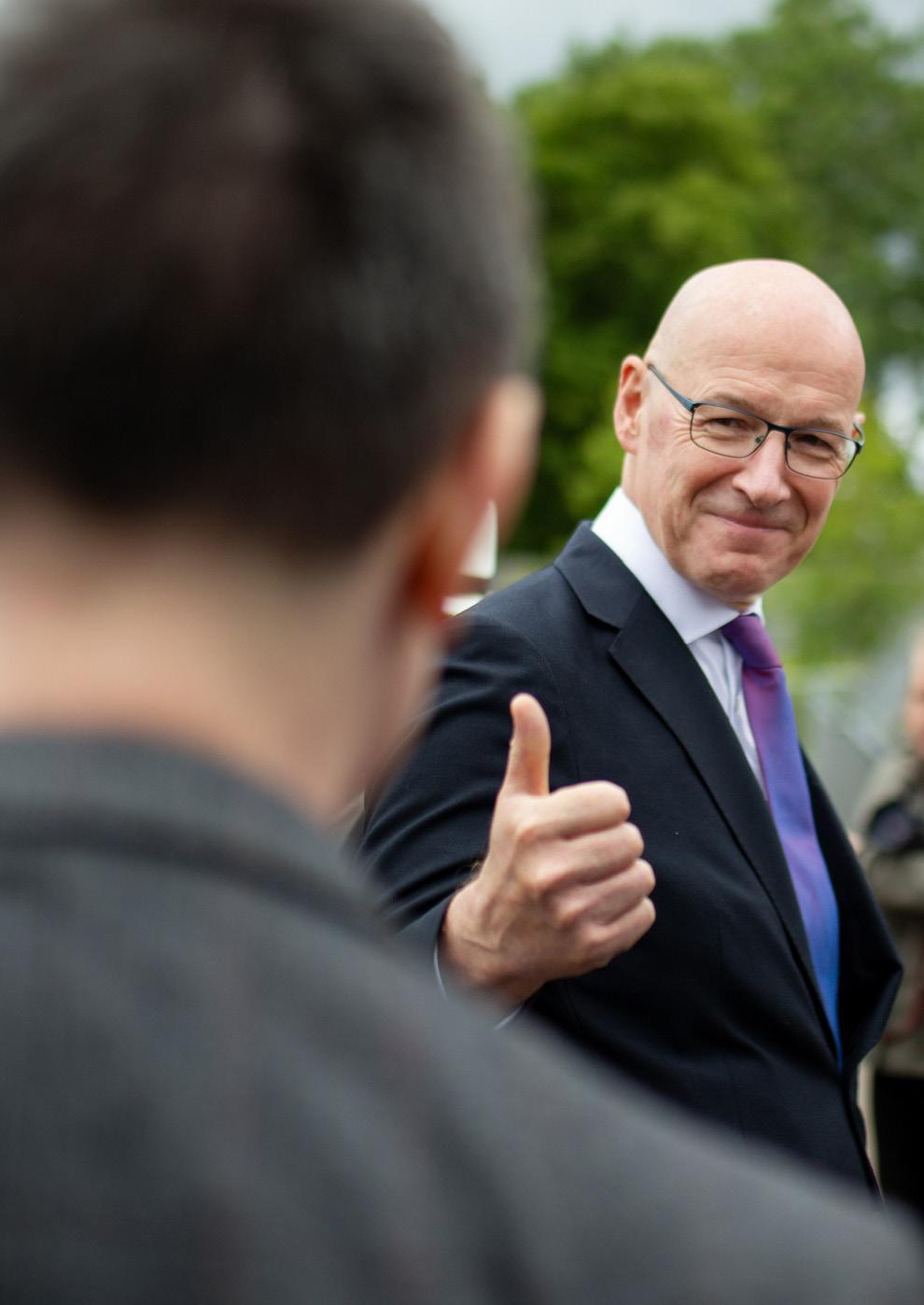
“ A vote for the SNP is a vote for a referendum on independence. Based on the 2011 precedent, an SNP majority at this election is a mandate for the transfer of powers to the Scottish Parliament to enable an independence referendum to be held.”
I am optimistic, ambitious and full of hope for Scotland’s future. I am equally all too aware about the daily challenges that too many of our citizens face.
I want to grow our economy, eradicate child poverty, improve our public services, and protect our environment.
In my two years as leader of the SNP and as First Minister I have changed my party and I am changing our government.
Both are firmly focused on what matters most to the people of Scotland - tackling the cost of living crisis, improving the performance of our NHS and taking our enormous energy wealth into our own hands.
On the 7th of May, you can elect an SNP government that wants the best for Scotland, and you can choose a different future for our nation.
Your first vote is for an SNP government that will deliver more cost-of-living support, a stronger NHS, and a stronger economy, as set out in this manifesto.
But it is by trusting us also with your second vote that the SNP can win a majority, a majority that will secure a referendum to deliver independence, the fresh start that Scotland needs.
The more SNP votes and seats, the more we can achieve. That includes a stronger health service with:
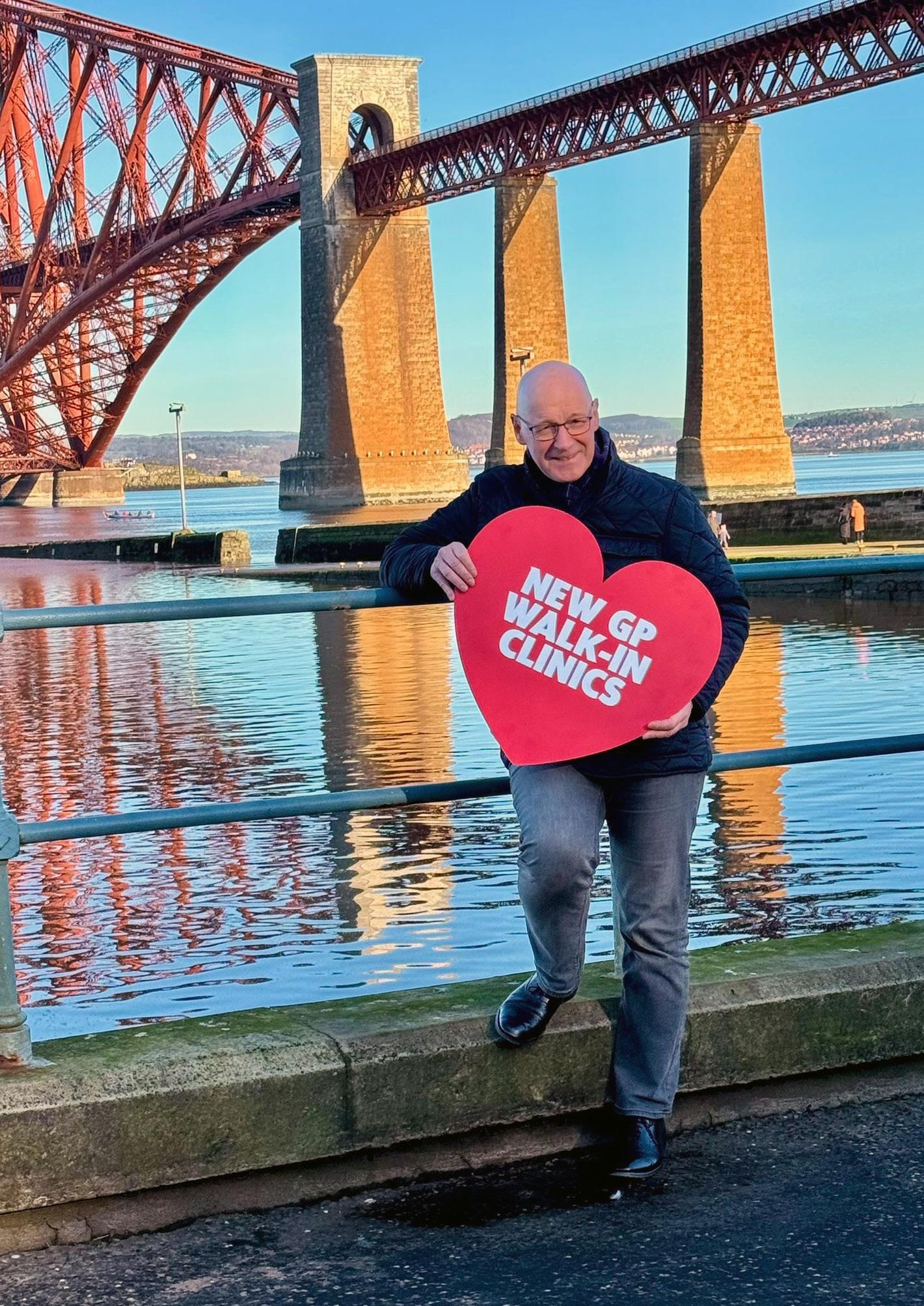
● More GP walk-in clinics, to make it easier for you to see your GP.
● Shorter waiting times and more appointments and operations.
● More diagnostics in the community, closer to home.
Even more help to bring costs down - for you, your friends, your family - building on the best cost-of-living support anywhere in the UK:
● A transformational national expansion of childcare, from 9 months to the end of primary school, 52 weeks a year, making life easier for families.
● Our £2 bus fare cap extended nationwide.
● New action to make sure big supermarkets keep prices low for dozens of food essentials.
● Extra support, worth up to £10,000, so more young people can afford to buy their first home.
The SNP cares about Scotland, and we are working hard to make Scotland better. Using the current powers of the Scottish Parliament, we can achieve a lot. However, to protect Scotland from Westminster’s wrong choices, and bring an end to a broken Westminster system that favours one part of the country and
the very wealthiest in society, then Scotland needs real change.
For Westminster, Scotland will always be an afterthought. But with independence, the people who care most about Scotland - the people who live here - will be in charge. With Scotland’s future in Scotland’s hands, we can build a Scotland that is fairer and more prosperous, a Scotland that speaks to who we are, that reflects our own priorities and values.
Take energy. We produce a vast amount of low-cost renewable electricity, but right now Scottish households and businesses don’t get the full benefit. Our energy wealth should be cutting your costs and giving Scottish companies a competitive edge. Instead, we face
the prospect of even higher bills, because Scotland’s energy is not in Scotland’s hands. But that can change, and must change, and it starts with both votes SNP on May 7th.
On May 7th choose a Scottish Government that works for Scotland. Choose an SNP government that, day in and day out, is always on Scotland’s side.
John Swinney Leader, Scottish National Party

“ Economic growth per person is higher than the UK and business investment is at a 20 year high.”
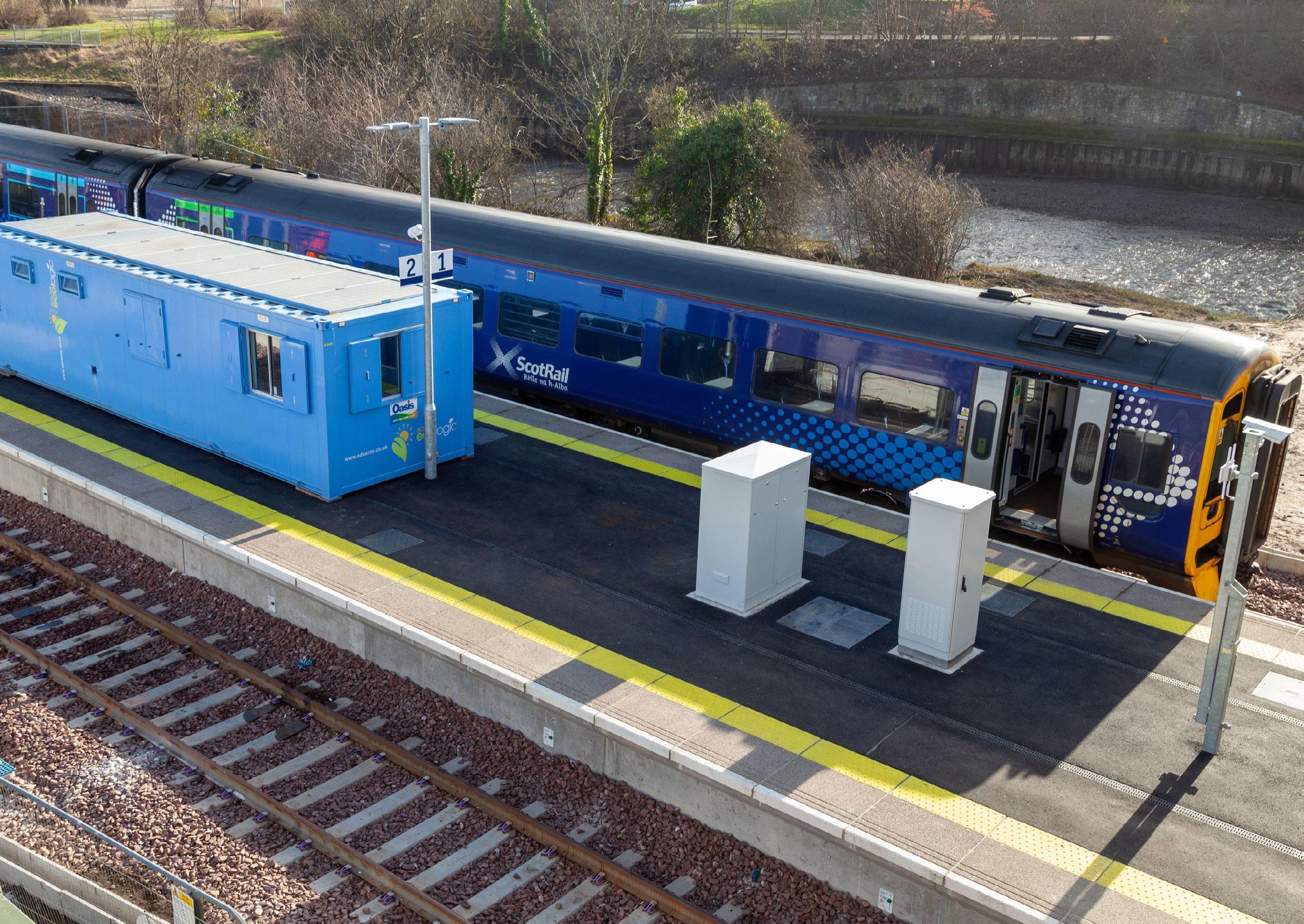
Reopened to passengers in 2024, backed by £116 million SNP government investment.
Since the SNP came into government, every household in Scotland has benefitted in ways big and small from our policies. The SNP always stands up for Scotland.
From free university tuition, to record health funding and the Scottish Child Payment, we have taken bold steps to build a fairer and more equal Scotland.
Since John Swinney became First Minister:
● Long waits in the NHS are down – for nine months in a row – and outpatient waits are down too.
● The number of NHS operations is up , with record numbers of knee and hip ops.
● GP walk-in centres have opened across Scotland – open 7 days a week – and GP numbers are up.
● Peak rail fares have been abolished for good and ticket prices frozen.
● Unemployment is low with thousands of new jobs created.
● Economic growth is higher than the rest of the UK and business investment is at a 20 year high.
● Child poverty is falling and lower than the rest of the UK with a new £40 Child Payment for newborns.
● And, literacy and numeracy is at a record high in our schools.
Since the SNP came into office:
● Over 31,300 more staff in Scotland’s NHS – more nurses, midwives and doctors.
● Free prescriptions
● Free university tuition .
● Schools buildings conditions improved and over 1,100 school projects completed
● The highest level of spending per pupil in the UK and the lowest pupil-teacher ratio in the UK.
● Free school lunches for over 360,000 pupils, saving families around £450 per child each year.
● The Baby Box .
● Greenhouse gas emissions have almost halved .
● The Scottish Child Payment introduced, and keeping tens of thousands of children out of poverty.
● Free bus travel for the youngest and oldest Scots.
● Free eye tests and free dental check-ups .
● Queensferry crossing and Aberdeen Western Peripheral Route built and the M8 extended.
● Crime at historically low levels with proportionately more police than anywhere else in the UK .
● Borders Railway, Airdrie–Bathgate railway, Levenmouth Railway, Scotrail and Caledonian Sleeper taken into public ownership and 24 new railway stations opened.
WAITING TIMES
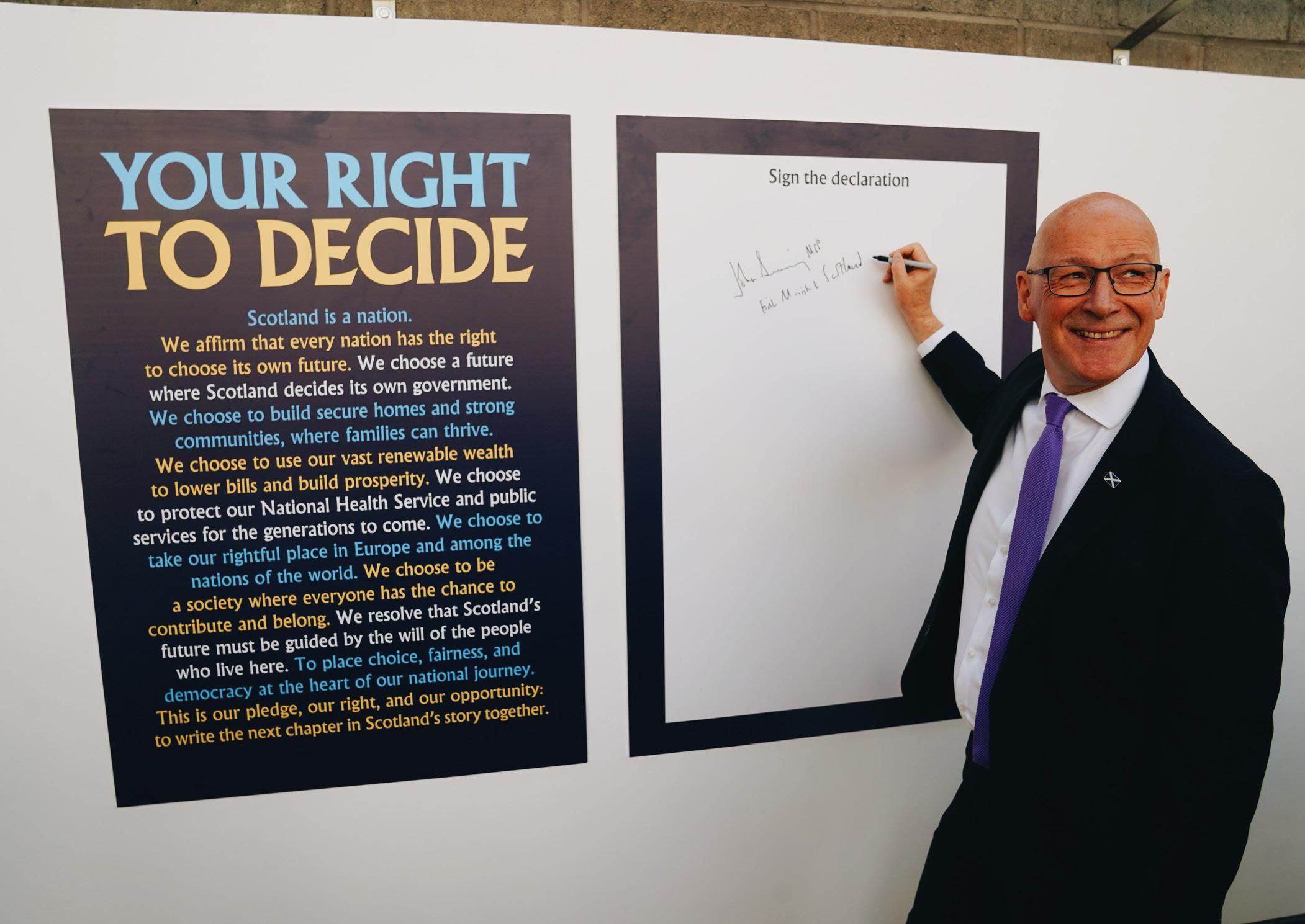
“ A vote for the SNP on May 7th is a vote to put Scotland's future in Scotland's hands. And let Scotland decide.”
Whatever our views on Scotland's future, all of us should agree that it should be a decision for the people living here - no one else.
Indeed, this longstanding principle has been accepted by people and parties across the political spectrum.
Successive Prime Ministers over recent decades have all stressed the voluntary nature of the United Kingdom.
And in the run-up to the independence referendum in 2014, the leaders of the Labour, Conservative and Liberal Democrat parties in Scotland signed a joint statement affirming that:
“Power lies with the Scottish people and we believe it is for the Scottish people to decide how we are governed.”
But agreeing something in principle is very different from agreeing it in practice.
Time and time again, Westminster has ignored votes in Scotland’s Parliament to give the people a choice on their future.
It’s not good enough for democracy to stop at the border.
This is not some academic debate. Just look at what happens when our future is chosen for us by others.
For much of the last few decades, Scotland has lived under Tory governments who in some cases had only a single MP elected north of the border – with consequences felt to this day.
Iconic industries privatised and communities abandoned.
Hundreds of billions of pounds of Scottish energy wealth flowing to Treasury coffers – yet people are still paying sky-high energy bills.
Years of austerity imposed on our public services.
And of course, Brexit - which has wiped billions off the value of the UK economy, left all of us poorer and continues to impact the amount of money available to fund our NHS.
The people of Scotland have the right to decide their own future.
The SNP believes that in a rapidly changing world, our power is in our independence.
The power to shape our future the way we want. To ensure that people living in Scotland benefit from our vast energy resources. To restore our membership of the EU as the best way to ensure our economic prosperity and long-term security.
But to unlock that power, we must come together in this election and demand that Scotland’s right to decide is respected.
The only time Westminster has ever respected Scotland’s right to decide was when, at the 2011 election, the people of Scotland delivered a majority of SNP MSPs.
A vote for the SNP is a vote for a referendum on independence. Based on the 2011 precedent, an SNP majority at this election is a mandate for the transfer of powers to the Scottish Parliament to enable an independence referendum to be held.
Your first SNP vote at this election will deliver an SNP Government.
It delivers a better NHS, GP walk-in clinics, help with the cost of living, the first-time buyers’ deposit, a growing economy, and a massive increase in childcare that leaves no one behind.
Your second SNP vote delivers independence.
It secures a majority that will lay the path to a referendum. A referendum that we will win.
A vote for the SNP on May 7th is a vote to put Scotland's future in Scotland's hands. And let Scotland decide.
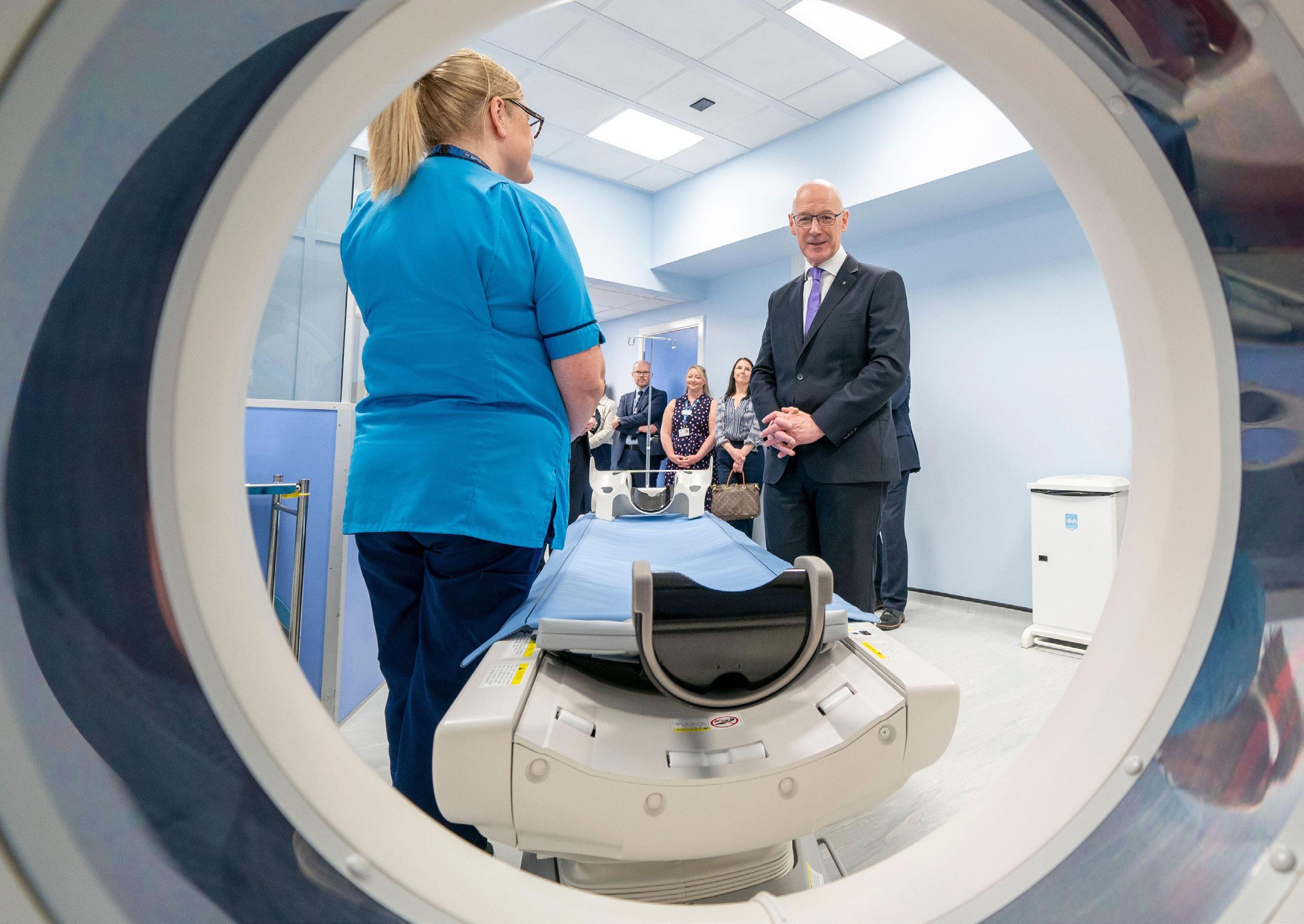
INVESTMENT IN OUR NHS TO GIVE IT THE RESOURCES IT NEEDS
“ Scotland’s NHS is our most precious public service.”
Scotland’s NHS is our most precious public service.
We want to make sure it has what it needs to continue making progress and delivering the world- class care our doctors, nurses and staff are dedicated to.
Our plan for the Health Service has three parts:
Investment in our NHS to give it the resources it needs.
Protection of the key principles of the NHS and the benefits Scotland alone provides.
Renewal of how the NHS and social care system works, putting people at the heart of their own care.
We will pass on every penny of NHS budget resource consequentials to health and care services.
We will invest at least £10 billion in capital spending – funding new and renewed buildings and equipment – over the next ten years, including building new Community Health and Care hubs across the country.
We will empower our NHS and social care staff, investing in recruitment of specialists, training places and addressing workforce issues in rural and island communities.
We will tackle waiting times by investing at least £200 million each year dedicated to growing elective capacity, which will mean more operations.
We will invest over £530 million in a historic deal with GPs, focused on recruiting more family doctors.

Under the SNP, the Health Service will always remain publicly owned, publicly delivered and free at the point of need. We will never carve up our NHS or sell patient data to global billionaires.
Prescriptions will remain free.
Eye and dental checks will remain free.
Personal and nursing care will remain free.
We will end the 8am rush for GP appointments by delivering a new way for people to access a GP, with the further roll out of GP walk-in clinics across the country.
We will address the pressures facing A&E departments and the ambulance service through the implementation of a national plan for hospital flowdriving down delayed discharge from hospital from day one.
We will shift the balance of care in favour of community activity, and prioritise early intervention and prevention, taking steps to expand Hospital at Home services to ensure more people are cared for in their communities.
We will keep people healthier by introducing new ‘one stop shops’ in villages, pharmacies, sports clubs and workplaces across the country for lung and heart health ‘MOTs’.
We will put the management of care into your own hands, launching Scotland’s new health and social
care app MyCare.scot and delivering a national online booking system for appointments.
We will expand 24/7 mental health support, rolling out Mental Health Triage Cars across the country to reduce pressures on police and we’ll support the delivery of five new drop-in mental health hubs through SAMH’s Nook network.
We will treat drug and alcohol harms as a public health mission, delivering more community recovery support, rolling out naloxone kits to bars and clubs, trialling the use of new hospital Alcohol Care Teams and providing 1000 residential rehab beds.
We will prioritise Women’s Health, delivering a national review of maternity services, improving support offered to new mums, funding new research into menstrual health and urgently reviewing IVF.
“ Our cost of living plan has three parts: help with bills and income, more jobs and growth, and fair taxation.”
We believe Scotland has a bright future. That ambitious, optimistic, hope-filled view of the opportunities for our nation shapes our thinking.
We know that for too many people, that is not the way the world seems. Fuel prices going up. Food prices going up. Electricity prices going up. The cost of living crisis seems never ending.
Many people are struggling to put food on the table or worried about
putting the heating on. And looking to the future, too many parents are understandably worried their kids will never be able to afford the life they enjoyed.
We understand why people feel angry. And we will take fresh action to help.
The Westminster parties want you to believe that this is as good as it gets. We believe a brighter future for Scotland is ours to build. Ultimately, only independence can free us from
the UK dragging Scotland into ever more economic crises, but we will do everything we can with the powers we do have.
Our cost of living plan has three parts:
More help with bills and income means parents can put food on the table, pensioners can keep the heating on, and we can all keep our heads above water.
Jobs and economic growth are the best way to increase living standards and lift people out of the cost of living crisis and out of poverty. Economic growth also provides the resources to fund our vital public services.
Fair Taxation because it is right that the better off pay a little bit more while people struggling pay less.
We will make work more affordable by expanding childcare. All children
from nine-months to the end of primary school will be entitled to help with childcare, before school, after school and all-year round.
Having abolished peak rail fares and frozen train ticket prices this year, we will build on the pilot now underway in the Highlands and help people who travel by bus with a £2 nationwide cap of all single bus journeys. This will help people get to work, school and leisure, help reduce fuel bills and help the climate.
We will provide a £40 Child Payment to the least well off parents of newborns for their crucial first year of life to help keep children out of poverty.
To help with the cost of the weekly shop, we will establish legal price ceilings on a basket of essential food items such as bread, milk and eggs, ensuring that basic necessities for a balanced diet are affordable.
To help with heating bills we will provide winter heating payments to
pensioners, families with disabled children and the households struggling the most.
And we will protect free university tuition, prescriptions, dental and eye checks, avoiding bills that hammer families elsewhere in the UK.
We will boost jobs by making Scotland the best place in Europe to start and scale a business with ambitious plans for scores of new large Scottish headquartered firms. We will establish a ‘High Growth Unit' to identify fast growth businesses that have the potential to grow to Unicorn scale and provide wraparound support to accelerate their growth, including facilitating access to investment and international market opportunities.
We will further simplify regulation and reform the planning system, speeding up decision making, including reforming Compulsory
Purchase Orders and exploring Compulsory Sales orders.
We will maintain the Small Business Bonus, supporting more than 100,000 small businesses.
We will make work fairer by supporting strong trade unions for the benefit of workers and our economy.
And we will increase the number of apprenticeships to 150,000 over the Parliament. This will include expanding the number of graduate apprenticeships to over 8,000 over the course of the Parliament and the introduction of an Apprenticeship Accelerator Grant for business, backed by the Apprenticeship Levy.
We will secure further investment through Scotland’s new Major Projects Office, expanding the Techscaler programme into sectors where we have distinctive strengths, and targeting the creation of new Scotland House consulates in
strategic locations for attracting investment, including Silicon Valley.
We will unlock the potential of local economies by ensuring that regional economic partnerships have the opportunity to expand their strategic competencies and role. We will also implement the measures in our world leading Community Wealth Building Act to ensure that wealth created in local communities stays in those communities.
Scotland’s income tax system is the fairest and the most progressive in the UK. We will keep it that way and ensure that the majority of income taxpayers continue to pay less tax than if they lived in the rest of the UK.
In a time of economic volatility our income tax policy will be founded in stability, accepting that all governments require flexibility to respond to material changes in
circumstances in public finances or the global economy.
We will not increase the number of bands or their rates over the lifetime of the next parliament. We will aim to make our system simpler by the end of the parliament, and ensure that any changes that become necessary are made in an orderly fashion that puts low and middle income earners at their heart.
“ We will invest in new technology to support improved, lower cost, public services.”
Scotland’s public services are there to support us all through life’s good times and bad. They keep us safe, educate our children, support us when trouble strikes, help knit society together and are the foundation upon which our economy is built.
We want to see services that are fit for the challenges of Scotland’s future, ready to take advantage of the changing technology all around us, able to meet the needs of an ageing population and free to change to meet the expectations of all our citizens.
We will support and invest in our public services, modernise their delivery, and reform the bureaucracy of the state to make sure Scotland is meeting the needs of everyone.
Support and invest in public services so that they have the resources and the people they need to deliver to the best possible service.
Modernise how we deliver public services, so they are more accessible and person-centred.
Reform services ensuring they are joined-up, efficient and focused on what is important to people.
We will ensure Scotland has the most teachers, police, firefighters, doctors and nurses per head of the population of anywhere in the UK.
From 2028, we will levy a mansion tax, raising additional funds for local services by adding two bands to the top of the council tax system for
properties valued at over £1 million and £2 million.
We will at least maintain the teacherpupil ratio – the best in the UK –back our police with the funding and equipment they need, and invest in our transport network including the A9, A96 and a new “Better Surfaces” fund of £350 million to tackle potholes.
We will build more homes, create a new housing agency, provide up to £10,000 deposit support for First Time Buyers, unlock £20 billion of pension fund investment and create a new £50 million homelessness fund. This will help get more people into the homes they need while growing the economy.
We will build on the exciting developments already taking place within the NHS to accelerate the use of technology to support diagnosis and expand capacity within our healthcare system.
We will roll out new technology to support the delivery of improved, more joined-up, more effective and lower cost, public services.
We will reduce the number of public bodies, better integrating services and reducing cost.
We will invest in new technology to support improved, lower cost, public services.
We will devolve power to people and communities by, for example, empowering headteachers to have a greater say in the education that their schools provides.
“ Scotland will play its full part in tackling the climate and nature emergencies.”
Scotland will play its full part in tackling the climate and nature emergencies.
Our Climate Change Plan sets out actions from now until 2040 to reduce emissions, seize the opportunities of net zero for new jobs and economic growth, improve our infrastructure and, improve our energy security.
It will deliver warmer homes, cleaner air and a more resilient energy system.
At its heart are two principles. The transition to net zero through new, sustainable, green policies must be fair – it must be a Just Transition –and it must make Scotland more energy secure.
A Just Transition means we will support people into new jobs and industries as the world changes, and we will work with communities,
trade unions and businesses to deliver this.
A more energy secure Scotland will see us build the renewable energy generation that will lower bills, protect us from international shocks and secure good jobs for those currently employed in our offshore energy sector.
We will end Scotland’s contribution to climate change by 2045 in a just and fair way which protects jobs and livleihoods.
We will deliver on the £500 million Just Transition Fund to support workers and businesses making the change to a sustainable future.
We will match funding from the Wood Foundation to support opportunities and the transition in the North East.
We will support the creation of 500 additional jobs in the Grangemouth industrial cluster – bring the total to 1,100 new jobs – and invest £9 million in support for workers at Mossmorran and the community.
We will expand the Community and Renewable Energy Scheme (CARES) to £15 million supporting community ownership of renewable energy projects.
We will ensure that future generations will benefit from the windfall of renewables wealth by establishing a ScotWind Wealth Fund, providing energy and financial security for future generations.
We will accelerate investment in offshore wind, solar, pumped storage and emerging technologies.
For as long as Scotland requires fossil fuels, we will continue to call on the UK Government to approach decisions for North Sea oil and gas projects on a rigorously evidenceled, case-by-case, basis – with climate compatibility and energy security as key considerations.
We will continue to call for Labour’s tax on Scotland’s energy, the Energy Profits Levy, to be replaced by a fair system that taxes excess profits,
but protects jobs, energy security and investment in our energy sector.
We will support the Acorn project in the North East and the further use of Carbon Capture technology where it can demonstrate decarbonisation at pace.
Ahead of independence, we will formally request the transfer of energy powers from Westminster to Holyrood and we will use those powers to end the practice of gas setting the price for an energy system dominated by renewable energy to lower bills.


The Scotland we seek is independent, fair, prosperous, healthy, skilled, sustainable, and secure. Our job in government is to demonstrate that we can live in the early days of a better nation.
The SNP is on Scotland’s side. Over these next five years, we will be working hard, to improve Scotland. Our approach will mean an even sharper focus on those things that make the most difference to people’s lives. Where there are particular challenges, we will bring the weight of government to bear to offer solutions. And where there are big opportunities for our nation, we will focus our efforts on making the most of them.
All of this is rooted in Scotland's values, and strengths, and will help build a Scotland that is truly fair, prosperous, healthy, skilled, sustainable, and secure.
A vote for the SNP is a vote for a referendum on independence. Based on the 2011 precedent, an SNP majority at this election is a mandate for the transfer of powers to the Scottish Parliament to enable an independence referendum to be held.
01 has a fair and progressive system of taxation. 02 recognises and responds to the cost-of-living pressures people feel. 03 takes a compassionate approach to social security. 04 recognises the pressures on family budgets and offers a helping hand. 05 keeps The Promise. 06 is a country where people can be sure of a warm, affordable home. 07 has a fundamental commitment to human rights, respect and inclusion. 08 has a flourishing Third Sector.
is a good global citizen.
01 where businesses are enabled and encouraged to grow. 02 means prosperous Scots. 03 has strong and flourishing communities – urban and rural. 04 makes the most of its opportunities. 05 engages with the world. 06 makes it easier to invest.
07 has governance that works for Scotland.
01 has a strong NHS. 02 provides the right healthcare throughout life. 03 ensures the voices of patients are heard. 04 invests in prevention. 05 delivers early interventions. 06 treats mental health on a par with physical health. 07 works to address the harm from substance misuse.
values our caring workforce.
01 enables our children to learn and to flourish.
02 values our education workforce.
03 supports our world-class universities and colleges. 04 is well-placed to meet the challenges of the future.
05 provides opportunities for well-paid, rewarding work.
01 provides the challenge of climate change.
02 gets more benefits from our renewables revolution.
03 is delivering a just transition.
04 values and protects our natural environment. 05 supports sustainable travel.
01 means our kids are kept safe. 02 means safe and welcoming communities.
03 addresses violence against women and girls.
supports victims of crime. 05 delivers effective punishment and rehabilitation. 06 ensures access to justice. 07 means safer roads.
“ A fair Scotland recognises and responds to the cost-of-living pressures people feel.”
A fair Scotland has a fair and progressive system of taxation.
We are committed to progressive taxation that asks the wealthiest to pay their share while helping the less well-off make ends meet. Without the powers of independence our scope for wealth taxation is severely limited, but we will continue to explore what is feasible within the limitations of devolution, like our devolved mansion tax, and with the freedom that being an independent nation would give.
Scotland’s income tax system is the fairest and the most progressive in the UK. We will keep it that way and ensure that the majority of income taxpayers continue to pay less tax than if they lived in the rest of the UK.
In a time of economic volatility our income tax policy will be founded in stability, accepting that all governments require flexibility to respond to material changes in
circumstances in public finances or the global economy.
We will not increase the number of bands or their rates over the lifetime of the next parliament. We will aim to make our system simpler by the end of the parliament, and ensure that any changes that become necessary are made in an orderly fashion that puts low and middle income earners at their heart.
We have taken steps to make the application of council tax, as the tax for local service provision, fairer and more progressive than the system we inherited. The future of local tax reform is one that requires consensus, and we will set a high priority for the next parliament of seeking early cross-party agreement on reform.
One change we will be implementing from 2028 is a Mansion tax, adding two bands to the top of the Council tax system for properties valued at over £1 million and £2 million, with
all of the funds raised going directly to local areas to support service delivery. This will further improve the fairness of taxation for local services in the interim.
Scotland has both the lowest business rates poundage in the UK and the most generous relief schemes. We will ensure that our non-domestic rates system aligns with Scotland’s economic ambitions, while protecting the Small Business Bonus, which supports more than 100,000 small businesses. We will rebalance the system to make it fairer and more accountable, and to ensure that online giants like Amazon pay their fair share and contribute to their local communities.
We will put in place a Private Jet tax to ensure that those who choose to travel by private jet in Scotland will pay a fairer share. We will carry out work to explore the possibility of taxing ‘ghost’ flights from private jets and seek the devolution of the powers to do so if necessary.
A fair Scotland recognises and responds to the cost-of-living pressures people feel.
Standards of living in the UK have barely improved in over 15 years due to decisions taken by Westminster, like the imposition of austerity and the disastrous decision to leave the European Union.
We are committed to progressive taxation that asks the wealthiest to pay their share while helping the less well-off make ends meet. Without the powers of independence our scope for wealth taxation is severely limited, but we will continue to explore what is feasible within the limitations of devolution, like our devolved mansion tax, and with the freedom that being an independent nation would give.
Scotland’s income tax system is the fairest and the most progressive in the UK. We will keep it that way and ensure that the majority of income taxpayers continue to pay less tax than if they lived in the rest of the UK.
In a time of economic volatility our income tax policy will be founded in stability, accepting that all governments require flexibility to respond to material changes in
circumstances in public finances or the global economy.
We will not increase the number of bands or their rates over the lifetime of the next parliament. We will aim to make our system simpler by the end of the parliament, and ensure that any changes that become necessary are made in an orderly fashion that puts low and middle income earners at their heart.
We have taken steps to make the application of council tax, as the tax for local service provision, fairer and more progressive than the system we inherited. The future of local tax reform is one that requires consensus, and we will set a high priority for the next parliament of seeking early cross-party agreement on reform.
One change we will be implementing from 2028 is a Mansion tax, adding two bands to the top of the Council tax system for properties valued at over £1 million and £2 million, with
all of the funds raised going directly to local areas to support service delivery. This will further improve the fairness of taxation for local services in the interim.
Scotland has both the lowest business rates poundage in the UK and the most generous relief schemes. We will ensure that our non-domestic rates system aligns with Scotland’s economic ambitions, while protecting the Small Business Bonus, which supports more than 100,000 small businesses. We will rebalance the system to make it fairer and more accountable, and to ensure that online giants like Amazon pay their fair share and contribute to their local communities.
We will put in place a Private Jet tax to ensure that those who choose to travel by private jet in Scotland will pay a fairer share. We will carry out work to explore the possibility of taxing ‘ghost’ flights from private jets and seek the
devolution of the powers to do so if necessary.
A fair Scotland recognises and responds to the cost-of-living pressures people feel.
Standards of living in the UK have barely improved in over 15 years due to decisions taken by Westminster, like the imposition of austerity and the disastrous decision to leave the European Union.
Self-government gives us some ability to act. Over the years, we have taken steps to help people with costs, delivering what is now by far the best cost-of-living support package in the UK. One that also supports economic growth by reducing poor health and supporting people into work. That includes:
● Free prescriptions – a saving of £9.90 per item compared to England
● Free eye examinations – a saving of £25 compared to England
● Average Council Tax bills
hundreds of pounds lower than in England and Wales
● Peak-rail fares abolished and rail fares frozen.
● Young Scots protected from a debt-burden approaching £30,000 because tuition fees in Scotland are free.
● The baby box – containing items worth £400 – a gift to every new baby born in our land
● Free school meals for thousands in our schools, including all pupils from P1 to P5
● Free bus travel for all young Scots under 22 – and all older Scots over the age of 60
● 1,140 hours of free, high-quality early learning and childcare, worth around six thousand pounds.
A fair Scotland takes a compassionate approach to social security.
The escalating cost of living crisis, particularly the sharp rise in food prices, requires targeted intervention
to protect people’s ability to afford essentials. This is vital to ensure that everyone can get a balanced diet that meets nutritional needs.
That’s why we will take a public health intervention to establish statutory price ceilings on a basket of 20 to 50 essential food items at large supermarkets, such as bread, milk and eggs to provide tangible relief to families struggling with grocery bills, ensuring that necessities for a balanced diet remain affordable.
The system would require large supermarkets to make one example line of the listed essential food items available at the capped price and would not require them to make every variation of that type of food they stock available at that price. As with Minimum Unit Pricing, we would introduce a sunset clause through the legislation to ensure that it was effective in order to continue.
As a public health measure similar to the minimum unit price of alcohol, we are calling on the UK
Governmentnot to block this action through their flawed Internal Market Act.
Crucially, this will be implemented alongside a robust support framework designed to shield Scottish producers with support mechanisms and monitoring to ensure that this will not be allowed to impact on farmers and food producers and we will work with them to ensure Supermarkets make the change.
A fair Scotland takes a compassionate approach to social security.
As a central part of our defining mission to eradicate child poverty in Scotland, we want to ensure that families can receive help when they need it, not when they have reached a crisis. To do this, we will deliver a comprehensive offer of ‘Whole Family Support’ to tackle child poverty and provide every family with early access to the emotional, practical and financial support they need. That includes delivering multi-year funding
to underpin practical help, including protecting the Scottish Welfare Fund, and working with Children First to introduce a National Front Door, offering accessible support at any time by phone and online.
We have made eradicating child poverty our central mission. One key component of achieving this mission is through the Scottish Child Payment, a £28.20 weekly payment provided to low-income families. We will extend the Scottish Child Payment to £40 per week for all babies under one.
A fair Scotland recognises the pressures on family budgets and offers a helping hand.
Breakfast clubs are a perfect example of how we can give families the option of extra support. Children can get a healthy start to their day as they eat breakfast and play with their friends, while parents and carers are better able to get to work, or to take up training or study,
knowing their children are being well looked after. We will invest £44 million each year to deliver Bright Start Breakfast clubs across all primary and special schools from August 2027,
Our free school meals programme is saving families who take up the offer around £450 per eligible child per year. We will complete the delivery of our programme across every primary school in Scotland. Currently, over 360,000 children in Scotland are entitled to free school meals, saving families around £450 per eligible child per year. This includes every child in P1 to 5; every child in S1 to S3 where the family qualifies for benefits or the Scottish child payment; and most recently, a further 5,500 children where families receive pension credit, potentially helping more kinship care families.
In the next Parliament, we will expand entitlement further so every child at primary school can benefit from a free, healthy, nutritious school meal.
We will also wipe out school meal debt for good. So far, our School Meal Debt Fund has cleared historic debt for over 70,000 families, with a total investment of nearly £2.9 million. As we transition to all primary children having access to free school meals and all secondary school kids having a school meal voucher, we will ensure no family is facing historic school meal debt.
We know that school uniforms can be one of the most significant school costs for families. Under the SNP, families can receive up to £150 for a school clothing grant and we will uprate this in line with inflation in the next parliament.
We will Keep the Promise to our children, young people and families by 2030.
We passed a new law for The Promise which will deliver aftercare support for 16-to-26 year olds who were in care on their 16th
birthday to those who had left care before that point – including help with accommodation, education, employment and wellbeing. It will also drive reforms to the Children’s Hearing System, including remunerated Panel chairs to help reduce delays and increase capacity, to ensure the system better meet the needs of children and families.
We will also deliver the £2,000 Care Leaver Payment to help young people transitioning from care into independent living. We will also expand more support to young people who have lived in kinship care.
A fair Scotland is a country where people can be sure of a warm, affordable home.
Everyone in Scotland should have access to a safe, high-quality home. Our plan is backed by record investment of £4.9 billion in affordable house building over the next four years, aimed at accelerating delivery. This funding boost will support the delivery of 110,000 affordable homes by 2032,
with at least 10% of these in rural areas and islands, and 70% of these for social rent - making a difference to communities while protecting jobs, skills and local economic growth across every part of Scotland.
We will establish a new Scottish housing agency that will be squarely focused on bringing simplicity, scale and speed to the delivery of homes. Our More Homes Scotland agency will boost new homes more quickly, more affordably, in more liveable, climate friendly communities.
We will also work to further enhance the planning system to ensure that new housebuilding can take place that meets the needs of the people of Scotland.
We know that there is an estimated £20 billion or more of investible pension fund assets in Scotland, including within local authority pension schemes, and that a proportion of these funds can
be utilised to support a largescale programme of high-quality, affordable, and social housing, in line with our existing commitments to increasing the supply of homes for social rent and tackling the housing emergency.
We will work in partnership with local authorities, registered social landlords, and pension fund investors to develop and progress funding models that:
● safeguard the fiduciary duties and long-term interests of pension scheme members;
● provide secure, inflation-linked returns appropriate to pension fund investment;
● accelerate the delivery of social and affordable homes across Scotland.
We will support first-time buyers struggling to get on the housing ladder by part-funding their mortgage deposit with a joint equity contribution of up to £10,000.
The ‘First Homes Fund’, which will run every year, will have a budget of £100 million and is expected to see around 50,000 households benefit over the parliament – around 10,000 per year. It will be open to all people buying homes up to £300,000 who have not previously owned their own home. This will support people to break out of the rent trap and support them with the dream of buying their first home.
We are aware of the challenges that private renters face in saving up for their first home and how that can be particularly challenging when their landlord decides to sell their property. To tackle this, we will introduce new legislation to give private rental tenants a period of first refusal to purchase the property they rent at a fair market price when the owner chooses to put it up for sale.
We know that our rural and island communities face unique housing
challenges, from limited affordable supply and high build costs, to pressure from second homes and the migration of younger people. Our £75 million Rural and Island Housing Fund will help address this by supporting the construction of more affordable homes of all tenures in rural Scotland.
This includes £25 million Rural Affordable Housing for Key Workers for local authorities to identify affordable homes for key workers in rural areas and support the retention and attraction of key workers in these areas and £20 million through the Rural and Island House grant scheme to support more families to live in rural areas.
We will also invest in our crofting communities, through measures such as the Croft House Grant Scheme that has delivered £24.5 million of investment under the SNP.
We will commission an update of the design guidance for accessible
homes, and to reflect this update to the ‘Housing for Varying Needs’ in appropriate buildings standards regulations.
We recognise the challenges facing young people who wish to build their own home, particularly in rural and island communities. To help overcome the financial barriers, we will introduce a package of measures to help young people build a home and make it easier to remain in their communities. We will remove land transfer fees for people under the age of 30 for the purpose of building a single domestic housing unit.
We will provide targeted support of £10,000 for households to construct a single unit, specifically for a primary resident - not for rental. This will initially be concentrated on our highland and island communities but will remain open to other areas.
The best way to end homelessness is to prevent it from happening in the first place. Prevention will be
at the heart of our approach: from expanding early intervention support in communities to ensuring that our public services are empowered to act when housing is at risk, not after it is lost.
Our new Homelessness Prevention Fund of £50 million over 10 years will ensure people receive support before reaching crisis and that essential services are available at key moments such as leaving prison, hospital discharge or, leaving care.
We will end the use of unsafe and harmful temporary accommodation for children.
We know that tenement properties with multiple owners often struggle to organise and finance shared repairs, maintenance and enhancement works.
We are committed to reforming the Tenement (Scotland) Act 2004 and Property Factors (Scotland) Act 2011 by the end of the next parliament, to better meet the needs
of relevant owners and tenants to enable repairs, maintenance and enhancement of such properties, and improve delivery of services by factoring organisations, including considering costs, where they manage properties.
We have shown clear leadership in the heat in buildings sector, demonstrated not least by our grant and loan schemes. We will take forward our Heat in Building Bill to support homeowners, landlords and tenants to transition to clean heating in a fair and affordable way.
A fair Scotland has a fundamental commitment to human rights, respect and inclusion.
The advancement of human rights in Scotland is central to our missions of eradicating child poverty, growing the economy, building better public services, and tackling the climate emergency.
We will introduce the Human Rights Bill in the next parliament and incorporate a range of conventions into Scots Law. Our aim will be to build on earlier rights incorporation efforts in Scotland. However, the experience of the last parliament demonstrates how restricted Scotland is to incorporate human rights under the strictures of devolution. With independence we will move forward swiftly if we have been stymied in the interim by Westminster control.
There is a strong link between digital exclusion and poverty. People on lower incomes are more likely to face barriers in accessing digital tools and skills, which can further limit their opportunities and the vital services they need and reinforce existing inequalities. By addressing digital exclusion, we can help break the cycle of poverty and unlock a more inclusive society where everyone has the chance to thrive.
That’s why we will deliver a Digital inclusion Action Plan and call on the UK Government to introduce affordable broadband social tariffs.
We will deliver multi-year funding settlements for Disabled People’s Organisations and work with them to improve mental health support tailored to disabled people, and expand access to advice and support services.
We will establish a Transition to Adulthood Guarantee for all disabled young people offering them the support they need to plan and achieve their goals. As part of that guarantee, we will support the growth of Spina Bifida Hydrocephalus Scotland’s Transitions Clinics across the country.
We will carry out regular reviews on the cost of disability and the effectiveness interventions and support for disabled people. This will inform action at every level of the
public sector to improve the support in a targeted way.
We will deliver multi-year funding settlements for Disabled People’s Organisations and maintain momentum and investment in the Disability Equality Plan, backed by £2.5m of additional investment, which will help improve mental health support tailored to disabled people and expand access to advice and support services. This will including working with Disabled People’s Organisations to establishing accountability and governance mechanisms for the plan.
We introduced the Changing Places Toilet Scotland Fund, backed by £10 million, to install new fully accessible toilets for people with disabilities in villages, towns and communities across the country. We have already supported the installation of up to 150 new facilities with specialised equipment like height-adjustable benches and ceiling hoists. We will
expand this fund throughout the lifetime of the next Parliament.
At a time when marginalised communities are under attack, the SNP will always defend all human rights. We will seek to maximise the rights of LGBTQI+ people by ensuring equal access to, and support from, our public services - including improving access to inclusive healthcare.
We are proud of Scotland’s record in advancing equality, dignity and human rights for LGBTQI+ people, and we will go further.
We are committed to upholding and protecting the human rights of trans people as far as possible within our powers and we will do all we can to ensure that trans people’s identities are recognised and respected. Scotland is the first country in the world to proudly incorporate LGBTQI+ education in our schools.
We believe that everyone should be able to live openly, safely and authentically, free from discrimination, prejudice or fear.
Conversion practices are harmful, abhorrent, and abusive actions intended to change or suppress an individual’s sexual orientation or gender identity. These discriminatory practices inflict severe damage on the mental health and well-being of LGBTQI+ people and have no place in Scotland.
Should the UK government fail to bring forward legislation to ban conversion practices, we are committed to legislating against the harms of conversion practices and will introduce legislation within the first year of the new parliament to permanently end these practices. This will establish legal safeguards to protect people from the harm of conversion practices and ensure a response when such acts occur.
Beyond the necessary legislation to prohibit conversion practices, we will implement measures to support victims and survivors, including mental health services, and promoting education and awareness.
A fair Scotland has a flourishing Third Sector.
Scotland’s third sector is essential to the wellbeing of our communities. From local charities supporting vulnerable families to national organisations tackling poverty and inequality, they reach people and places that government cannot reach alone. We will develop an agreement with the third sector to strengthen its voice and improve lives, which will include delivering funding on a multiyear basis to allow better planning of service provision.
A fair Scotland is a good global citizen.
Issues of human rights, climate justice, and gender equality are central to our international approach.
We will continue to build strong international partnerships with our neighbours in Europe, and stand up for peace, democracy, and the rule of law in an increasingly uncertain world.
Scotland is a proud European nation, and we believe that membership of the European Union is vital for the sake of our security and prosperity. An independent Scotland would rejoin the EU swiftly to guarantee free trade with the world’s biggest single market, higher economic growth, greater security and increased exchange opportunities for young Scots.
Brexit has been a disaster for Scotland, costing jobs, raising prices, and harming our economy. Brexit has been estimated as costing the UK up to £90 billion in tax revenues, funding that could have gone to improving public services. Scotland rejoining the EU would help fix that mess, but we need independence to make that choice. By rejoining we will create
more jobs and regain full access to the European Single Market. The people of Scotland voted decisively to remain within the EU and we firmly believe that membership is the best option for Scotland’s future.
We value our commitments to the world’s most vulnerable nations. We will increase the £15 million International Development Fund by at least 25% by the end of the next Parliament. This will be in addition to the continuation and growth of our Climate Justice Fund and the creation of an ‘aid match’ scheme with SCIAF. We will look to build on this model and explore whether other partners would also support aid matching.
We will look to build on this model and explore whether other partners would also support aid matching. We support finding a fair, long-term solution to the global debt crisis. Our commitment to fostering a new global approach to Loss & Damage continues to shape the case we
make internationally for an ethical approach to foreign policy.
We will continue support for tackling global emergencies through the Humanitarian Emergency Fund, and give particular focus on supporting the efforts related to United Nations Security Council Resolution1325, which recognises the disproportionate impact of conflict on women and girls.
Scotland stands firmly behind the people of Ukraine against Russia’s illegal invasion. We support a peaceful future for Ukraine as an independent, sovereign nation, and we will continue to provide support and sanctuary for Ukrainian people displaced by Russian aggression.
We believe in a two-state solution with an independent, sovereign Palestinian State, as the way to ensure that the Palestinian people and Israeli people can live side-by-side in peace, security and prosperity.
In an increasingly uncertain and dangerous world, the SNP believes in creating a strong defence for Scotland which is centred on conventional defence forces. Conventional defence spending would provide more Scottish jobs and boost the local economy, as well as equipping our armed forces with the infrastructure and skills needed to keep us safe.
Scotland is home to a world class defence sector but with the UK isolated from EU defence funding it is being badly let down. We believe that the UK must secure access to the £150 billion ‘SAFE’ fund which would allow Scottish and UK defence companies the ability to bid for contracts supported by EU-backed loans and would also have allowed common procurement, boosting jobs and supply chains.
We maintain our firm and unequivocal opposition to nuclear weapons - both in principle and to their location in Scotland. This includes opposition to the
replacement of the Trident nuclear missile system and to the UK Government’s commitment to increase the number of nuclear warheads to the tune of £15 billion.
Scotland needs an immigration policy suited to our specific circumstances and needs. We need people who want to work here, in our businesses, our universities and in our public services. The inhumane Westminster model fails Scotland and harms our communities and future prosperity. We need a Scottish approach that works for Scotland, which is why we call on the UK Government to deliver a Scottish Visa scheme in the short term, in advance of a bespoke Scottish system being put in place with independence.
In recent years we have seen a net flow of taxpayers from elsewhere in the UK moving to Scotland, demonstrating that people recognise the benefits of living and working in Scotland. We will initiate a programme
to encourage more people to move to Scotland, initially focused on key target business growth sectors.
The SNP stands firmly in solidarity with refugee communities and the organisations that support them, and all those seeking humanitarian protection in Scotland. Refugees and those seeking protection are not only welcome here – refugees belong where they have successfully made a home in the most challenging and distressing of circumstances and where they help to enrich societies and cultures. Scotland is a place where refugees and asylum seekers are welcome.
“ A prosperous Scotland has strong and flourishing communities –urban and rural.”
A prosperous Scotland is one where businesses are enabled, encouraged and supported to grow.
We will build on the work of our New Deal for Business which focused on working in partnership with business to improve strategic economic outcomes. To make progress, we will cut down on business bureaucracy, and we will ensure that regulation is designed with business and seeks to protect workers and enable economic growth. We will create a National Council for Economic Growth in the first 100 days of an SNP Government, which includes membership from across Scotland’s economy.
We will strengthen Scotland’s position as the most attractive place in the UK for inward investment outside London. Building on our
progress of securing investment and thousands of jobs in areas like Dumfries, the Highlands, and Ayrshire, we will host another major Scottish Investment Summit. We will create Scotland’s Major Projects Office, to coordinate, package, and accelerate investment into nationally significant projects ‒serving as a single point of contact to identify projects that are in the national interest and assist with ensuring these projects are built faster.
We will also establish a ‘HighGrowth Unit’ to identify fast growth businesses that have the potential to grow to Unicorn scale and provide wraparound support to accelerate their growth, including facilitating access to investment and international market opportunities.
Our hospitality sector employs 290,000 people – making it the third largest employer in Scotland and responsible for 10% of jobs. Recognising the ongoing concerns raised by the licensed hospitality sector on the valuation methodology applied to non-domestic property in this sector, we will commission an independent review to report by the end of 2026 and consider any recommendations in advance of the 2029 revaluation cycle.
Scotland’s towns and cities have a great deal to offer for nightlife, but we believe that this can be built upon. One key aspect to successfully growing the nighttime economy is to take steps to ensure that everyone can feel safe. Among the steps we will take are to create a ‘Safer Nights Design Champion’ to
help improve how areas can have improved lighting, enhanced passive surveillance, and safe spaces –particularly near transport hubs.
We will accelerate the rollout of full fibre broadband in Scotland by supporting providers to reach more rural/remote areas. We will establish a digital skills development initiative, to empower digitally excluded people to gain the skills necessary to access digital services and employment opportunities.
We will also commission a feasibility study to explore potential options for a subsea cable between Shetland and mainland Scotland which would provide high-speed internet and telecommunications for businesses and communities across the island.
Our ambition is to harness AI responsibly, for the benefit of everyone, whilst ensuring that Scotland remains competitive in an ever evolving global landscape. We will take forward the interventions in Scotland’s AI Strategy which builds on Scotland’s established commitment to the responsible use of AI and shows how we will keep pace with, and prosper as a result of, rapidly changing global technologies and markets. This will include piloting an AI Scaleup Accelerator connecting high growth companies with experienced entrepreneurs and investment networks.
We will further simplify regulation and reform the planning system, speeding up decision making, including reforming Compulsory Purchase Orders and exploring Compulsory Sales orders. We will also take steps to reverse the decline in professional planners working in public authorities,
including appointing, developing and training new future planners in the Scottish Government.
We will take forward the actions outlined in the Community Wealth Building Bill, to keep wealth circulating locally, regionally and nationally, and ensuring that economic benefits are broadly shared rather than concentrated. We will increase the number of employee-owned businesses operating in Scotland to 500 by 2030.
Every child in Scotland deserves the best start in life, which is why we are committed to eradicating child poverty and giving families the support they need. We have always recognised that a child’s earliest years are the most crucial for their development and future success.
That’s why we will extend childcare support to every child in our country from 9 months old to the end of primary school by the end of the next parliament. This new system will be designed to fit around families - rather than expecting families to fit around the system. The new system will give support 52 weeks a year and mean families benefit from between £1,400 up to over £11,000 dependent on need. Helping both with the cost of living and helping parents take up employment opportunities that also grow our economy.
Our vision for transport is rooted in affordability, accessibility and sustainability. We have made real progress towards this with free bus travel for under 22s and over 60s. But we want to go further. That’s why by the end of the parliament we will take forward legislation to put in place a £2 bus fare cap across Scotland, building on our pilot in the Highlands, Orkney, and Shetland.
This step of providing more affordable bus travel will help with modal shift and reduce household costs. Our action will benefit families, the economy, and the environment.
A prosperous Scotland has strong and flourishing communities – urban and rural.
We will empower strategic regional economic partnerships to boost productivity and innovation by linking research, universities and businesses. That will include developing a GlasgowEdinburgh Arc and an East Coast Arc between Aberdeen, Dundee and St Andrews. This approach will support the clustering of innovation and investment in key emerging industries. They will also recognise the role of the creative sector not only as a cultural treasure but as a powerful force for enterprise, social renewal, and crosssector innovation.
We will continue to take a strategic approach to delivering our regeneration ambitions, including revitalising town centres and encouraging town centre living, addressing the blight of vacant and derelict land and supporting community ownership.
We will invest further in our Business Improvement Districts as a driver of town centre regeneration.
This will include £10 million for the recovery from the fire on Union Street in Glasgow. We will also take steps towards the establishment of an Urban Development Company for Glasgow to act as a strategic driver of growth in our largest city.
We will increase regeneration funding to Union Street in Aberdeen to a total of £1 million building on the £400,000 previously committed in 2023. We will award the money to the “Our Union Street” campaign.
The SNP cares passionately about rural Scotland – rural and island communities are at the very heart of our identity and our economy.
Our rural industries are ripe with potential for new growth and new opportunities. Rural and island communities are home to Scotland’s world-class food and drink producers, fishing and aquaculture sectors, pioneering businesses and renewable energy potential.
That’s why over the course of the next parliament we will consult on, and bring forward, a new Rural Renewal Bill. As we develop the Bill we will explore:
● Rural planning reform, improving permitted development rights, such as for small-scale renewable energy production, business diversification and opportunities to streamline processes.
● Review industry levy bodies across the rural and marine sectors.
● Create new small land holdings to support rural repopulation.
● Review and revitalise support and opportunities for crofting for new entrants.
● Action to protect unique Scottish landscapes such as the machair, including on options on species management.
● The bill will continue our land reform journey and consider a range of strategic proposals. It will also include steps to make land ownership transparent, implementing robust anti-avoidance measures, supporting existing tenants and providing new longterm opportunities for progressing farmers, and enhancing opportunities and support for community right to buy and ownership.
We have delivered the most generous package of direct farming and crofting support in the UK, investing over £660 million in support to agriculture. We are
committed to supporting active farming and food production with direct payments - to provide certainty to the industry in stark contrast to policies in other parts of these islands. Farmers and food producers are vital contributors to our economy and to rural Scotland.
We will ensure support is better targeted towards active farmers and crofters, including new approaches to advice to build on whole farm plans to develop individual farm action plans which support actions for nature and climate and sustainable food production.
We will help farmers and crofters deliver for nature by ensuring appropriately targeted support through the new 4 tier framework - this will include increasing the level of support provided to Tier 2, 3 and 4. This will directly support nature and climate-friendly farming, ensuring agriculture remains resilient in the face of climate change impacts and protects our natural landscapes.
Small producers and crofters have an important place in our food systems, which is why we have continued funding the small producers fund with funding tripled to £1.5 million in this year.
We are committed to ensuring that public procurement is improved to better support local and sustainable producers. As part of this we will establish a public sector food procurement taskforce - working with stakeholders at pace to review key barriers to local procurement and make recommendations to strengthen local procurement which supports local economies and reduces food miles.
We will work with stakeholders to develop proposals to ensure community benefit works better for areas impacted by renewable energy projects building on our work to support this on public land. Green capital projects must work for rural communities.
The provision of high-quality and sustainable public services is a fundamental commitment of the SNP in government, especially in our rural and island communities. That’s why we will expand the direct delivery of health care by delivering more mobile health services, with a specific focus on our rural and island communities, bringing services closer to patients. These services will include expanded screening, stroke support, ophthalmology clinics and mental health support.
This will include implementing a new mobile community dental service for the Western Isles, backed by £750,000 of investment. For the Western Isles we will also improve the incentives on offer to attract dentists to work and live on the islands.
We will also continue to provide financial support to rural organisations which tackle key issues including mental health and youth loneliness, such as RSABI and Farmstrong. To support rural
communities we will establish a Last Provider Fund to help keep open shops and pubs who are the last remaining providers in rural and island communities, after the UK Government closed the Community Ownership Fund.
Our fishing and aquaculture sectors are the backbone of many rural and coastal communities providing crucial employment and investment across Scotland. Our focus is on supporting the sector to ensure it has a sustainable and prosperous future.
We are committed to improving fish welfare and streamlining consenting processes to support innovation and investment which is crucial to the future of the aquaculture sector. Central to this will be the Sustainable aquaculture innovation centre which we will continue to support.
Our iconic wild salmon populations are under pressure – we are determined to take actions to support wild salmon and the
businesses which depend upon them. We will continue to implement the range of measures identified through our plan for 2023-28 working with key stakeholders and businesses.
Our fishing sector and the associated supply chain companies including our processing sector are the lifeblood of coastal communities across the nation, that is why we will always champion balanced policy which both enables the sector to flourish whilst supporting improvements in the protection of our marine environment. We have supported the sector with £16 million of investment this year, and we will continue to work to support smaller fishing businesses, not least in the processing sector.
The recent decision by the UK Government to allocate only 7.78% of the Fisheries and Coastal Growth Fund to Scotland was an insult to the Scottish fishing industry – we will continue to work with fishing stakeholders to reverse that decision
and ensure investment flows to Scotland.
A prosperous Scotland makes the most of its opportunities.
Techscaler is already one of the most sophisticated state-backed start-up institutions in Europe. That’s why will expand Techscaler into sectoral powerhouses in areas where Scotland has distinctive strength and global opportunity — games and immersive arts, creative industries, food and drink, energy transition and climate/ag tech, advanced manufacturing and space technology.
We will establish a national network of Pre-Start Centres — local hubs that help people move from idea to viable business in a focused, structured environment. Through intensive 12-week programmes, founders would test demand, validate markets and refine their offer before progressing to Techscaler.
A Journey Fund will be introduced to provide additional grant support to women, minority-ethnic founders and founders from disadvantaged backgrounds whose start-ups develop beyond the Concept Fund stage. The fund would make grants of up to £50,000 available to under-represented founders whose businesses are beginning to move beyond the early stage of start-up development, by giving these new business a longer runway in which to bring their start-ups to viability.
We will invest in the First Minister’s Start-up Challenge — a bold initiative to support young people from disadvantaged or under-represented backgrounds to start and scale innovative businesses, through tailored ideation support, mentorship and grant funding.
Scotland is a leader in 21st century tourism, which delivers the very best for our visitors, our businesses, our
people, our communities and our environment.
In the next parliament, we will invest further in the Rural Tourism Infrastructure Fund (RTIF) –which aims to improve the visitor experience in rural parts of Scotland that are experiencing visitor management issues.
Scotland already benefits from film and TV tourism sparked by productions like Harry Potter and Outlander. We will work with partners including streaming stakeholders like Amazon Prime and Netflix to build formal programmes which include official filming location trails. We will promote designated routes to spread visitors beyond Edinburgh and Glasgow, and culinary experiences emphasising local food and artisan products.
We continue to support the development of the Eden Project in Dundee, helping to solidify Dundee’s status as a truly world-class destination.
Scotland is a global leader in hosting world-class major events. Our strong supply chain, world class venues and partnership approach to delivery have ensured we have successfully delivered some of the most iconic international sporting events: from the 2014 Ryder Cup to the 2023 UCI Cycling World Championships – a world first.
We will invest over £110 million in a pipeline of events up to 2030, including the 2026 Commonwealth Games, 2027 Tour De France Grand Depart, UEFA EURO 2028, major golf tournaments and the World Rally Championship.
We will support any viable bids for major events in the coming years, including a bid to bring the Ryder Cup to Scotland in 2035 and future Island Games.
Against a backdrop of increasing economic competition, we will continue to promote Scotland as
a highly desirable country in which to live, work, study, visit, trade and invest. We will expand the number of ‘Scotland House’ consulates around the world to over 40 by consolidating Scottish Government and Scottish Development International offices into a single network. This will expand our reach and help open doors for Scottish businesses, securing inward investment. We will target the creation of new Scotland House consulates in strategic locations for attracting investment including Silicon Valley.
A prosperous Scotland has a flourishing arts and creative sector.
Wealth is about more than money in our pockets. We want a Scotland where creativity is encouraged and supported.
Culture and creativity are central to Scotland’s identity, and our thriving creative sector has a reputation for excellence. We value the many vibrant contributions they make to
Scotland’s life, economy, and to our international reputation.
By the end of the next parliament, we will consult to develop a Culture and Arts Bill, learning lessons from other European countries with similar legislation.
We will continue to deliver a longterm funding settlement for the arts of an additional £100 million annually for culture by 2028-29. In addition, we will ensure that at least a further £50 million is delivered for culture investment by the end of the next parliament.
We believe pursuing a career in the arts and culture should be open to all, but we know that often comes at a considerable cost for equipment and the impact of unpredictable work. That’s why we will pilot a Scottish Artists Minimum Income, learning from the experience in Ireland, to give targeted support to a number of practising artists and creative workers to give them the
space to develop their craft, thrive professionally, and contribute to Scotland’s cultural life.
Learning from Italy, France and Spain, we will continue to support our domestic creative sector by introducing a Youth Culture Pass by the end of the next parliament. Everyone who turns 18 will receive a ‘culture pass’ worth £200 that can be used for cultural pursuits. This will bring benefits both to the young people involved, but also to the creative industries.
We will continue to support Sistema’s Big Noise programme and the Youth Music Initiative, ensuring that children and young people from disadvantaged backgrounds can continue to participate in high-quality music lessons and fulfil their creative potential.
Scotland’s screen sector is a vibrant industry, punching well above its
weight on the global stage. We want to build on this success to make Scotland the go-to destination for production. That’s why we will take Screen Scotland out of Creative Scotland and establish it as a distinct organisation, directly funded by the Scottish Government. Screen Scotland will receive increased funding to support homegrown talent and to attract more and bigger projects to Scotland.
Screen Scotland will also be tasked with advising on our plans to create a dedicated Film and TV School at a Scottish university. Giving more young people the chance to develop their skills in screen production. This will complement the roll out of the new Film and TV SQA qualification in Scottish schools, widening access to ensure that anyone who wishes to pursue their dream of working in the screen sector is supported to do so.
We will expand the Festival EXPO Fund to £2 million by the end of the parliament to support more works at the Edinburgh Festival through the creation of the ‘Festival of Scotland’ programme across all Scottish festivals. This will provide more Scottish artists and productions with greater opportunities by being showcased at the biggest arts festivals in the world, right here at home.
Scotland is world renowned for our traditional music, and it continues to grow in popularity each year. Connecting our past with our present and we want to ensure Traditional music is cultivated and protected for generations to come. We will help establish a new National Performing Company for Traditional Music to ensure that the artform receives the same platform that is afforded to the other National Performing Companies.
Through our public sector reform programme we will review the structures of Historic Environment Scotland and take any necessary steps to ensure that the recent work of the new Chair is supported and can be embedded for the future. We will also explore bringing together the Register of Scotland and the National Records of Scotland so that Scotland’s heritage of archives, registers and records can have a single structure.
We will also provide support to the city of Glasgow to complete the refurbishment of the People’s Palace and Winter Gardens and see it reopened for the public.
Given the importance of highquality architecture to the creation of quality homes in Scotland we will embed Architecture and Design Scotland within the new More Homes Scotland agency.
A prosperous Scotland has governance that works for Scotland.
With budgets tight, we will make sure that government spending and activity in Scotland is more clearly focused on frontline delivery. As a starting point, we will deliver a reformed National Performance Framework, with a clear set of longterm, strategic national outcomes. These strategic outcomes will then shape government, our spending decisions and policy priorities.
We will reform and simplify the public sector landscape at all levels in order to protect service delivery. That means working with communities, engaging with the workforce and trade unions, to deliver modern and more efficient public services, while substantially reducing the number of public bodies.
In the first year of the new parliament, we will bring forward
a Public Service Renewal Bill as a first phase, to further reduce the number of public bodies in Scotland. This will follow the direction of travel we have already set out through our Medium Term Financial Strategy, our Public Service Reform Strategy, the Population Health Framework, and the Service Renewal Framework. We will also heed the Scottish Parliament’s Finance and Public Administration Committee’s report on Scotland’s Commissioner landscape, and as a result we will seek to amalgamate a number of commissioners and put in place non-executive oversight for all commissioners and their offices.
We will also rationalise the number of government strategies, frameworks and mandated reporting requirements, including for third sector bodies, so that more resource is focused on delivery.
To learn from the impact of serious issues or events, inquiries can play a key role in making recommendations and delivering answers. However, as a recent committee investigation has found there are concerns about the length of time and cost that some inquiries can take.
That’s why we propose to reform the Inquiries Act to diversify the types of inquiries that can be commissioned. Creating a variety of levels of inquiry which would allow for some to have fixed costs timescales, while leaving open the option for the highest level of inquiry where the circumstances demand that this is necessary.
“ A healthy Scotland means the right healthcare right through life.”
Under the SNP, Scotland’s NHS will always remain publicly owned, publicly delivered and free at the point of need. Despite sustained Westminster austerity, rising costs and unprecedented pressures, we have consistently prioritised investment in NHS and care services. In the next parliament we will continue to do so and ensure that all resource health consequentials are passed on to health and care services.
Our approach to our NHS is that of investment, protection and renewal. In line with our public sector reform plans we will take for our ‘once for Scotland’ approach to reducing duplication of corporate activity, ensure acute services are supported in the most efficient manner possible for patient care, and see resources freed up for service delivery. This will see service delivery improved while the number of corporate
health bodies are substantially consolidated.
We want to build on the significant progress we have made to reduce NHS waiting times. We have invested to drive down waiting times in the past year we will ensure that dedicated funding of at least £200 million – up £90 millionfor improving waiting times is in place for each year of the coming parliament.
Through investment and NHS renewal we will ensure no patient waits longer than 26 weeks for treatment by the end of the parliament. We will also publish a national hospital flow plan, focusing specifically on tackling A&E pressures and delayed discharge.
Renewal and innovation is also the driving force behind our plans to increase the Hospital at Home service, by delivering at least 2,000 of these beds by the end of this year.
By taking a national strategic approach to increasing capacity to reduce waits we will increase the amount of planned care that is delivered at Gartnavel Hospital, Inverclyde Hospital, Queen Margaret Hospital in Fife, and Stracathro in Angus.
We will invest in Scotland’s NHS estate and in state-of-the-art equipment like MRI scanners, CT scanners and imaging equipment. We will also increase the number of mobile MRI and CT scanners in Scotland to mitigate the impact of people having to travel long distances for the scans they need.
Work is already well underway on major capital projects including replacements for University Hospital Monklands, the Princess Alexandra Eye Pavilion, Belford Hospital and Barra’s St Brendan’s Hospital. We will also start work on a new programme of Community Health and Care centres across the country,
with the first tranche focused in Port Glasgow, East Calder and East Livingston, plus Cowdenbeath and Lochgelly.
We will use those projects to deliver a standardised model for further centres in Cumbernauld, Edinburgh, Ayr, Hamilton, Kincardine, Inverness, East Dunbartonshire and Langside, Glasgow.
We will also continue our programme of refurbishment within the NHS estate, including our commitment to refurbishment in the Royal Alexandra Hospital, Ninewells Hospital, Caithness General Hospital, the Vale of Leven Hospital, the Gilbert Bain Hospital, and the Borders General.
We are wholly committed to ensuring that everyone has timely access to quality care close to their home. To do this, we are taking forward new ideas, including a network of new walk-in GP clinics, open 7 days a week, no appointment needed and
without the 8am rush. We will start by piloting 30 sites before rolling out to the rest of the country.
Backed by £36 million of investment, we have committed to an initial 16 sites across Scotland in Shetland, Hawick, Wester Hailes, Aberdeenshire, Cardonald, East Ayrshire, Clydesdale, Benbecula, Stranraer, Dundee, Fife, Moray, Aberdeen, Invergordon, Dunoon and Sauchie, Alloa. Several of these sites are now up and running.
We know people are keen to see more of these walk-in clinics, so we will commit to expanding to at least a further 14 sites. We will scope options with health boards to deliver these services in communities including in Angus, Dumbarton, Livingston, Paisley, Inverness, North Edinburgh, Shotts, Falkirk, East Kilbride, Tweed Valley, East Renfrewshire, North Ayrshire and in communities in the North-west and Southside of Glasgow.
The SNP abolished prescription charges in 2013 and we will always protect free prescriptions. Prescription charges are nothing more than a tax on illness. Our policy has meant families across Scotland are collectively saving millions of pounds a year, and around £209 per person per year on average.
We will continue to deliver the Pharmacy First service and will work with the NHS to enable better access to appropriate patient information to prevent delays in treatment and support.
Scotland is the only country in the UK to offer free regular dental examinations for everyone, ensuring that cost is not a barrier to accessing care. We’re going further and will increase the NHS dental workforce and develop an innovative new training package to support international dentists in joining the NHS Scotland workforce.
Through our reform programme we will expand the range of dental services delivered by dentists on the NHS, delivering new enhanced primary-secondary care services pathways.
Good dental and oral health starts at an early age so we will continue to fund the Childsmile programme which has supported a significant improvement in child oral health.
It should be easy to get an appointment when you need it. Building on our network of GP walk-in centres, we will also deliver a new National Booking System for the NHS. This will form part of Scotland’s new MyCare.scot app, allowing patients to better manage and control their care.
We are delivering Scotland’s new online app that will make it easier for people to access their health and social care information in one place, meaning you won’t have to wait for
hospital letters to arrive, you’ll be able to access your health records and find services you need.
We will replace the need for paper prescriptions with a digital solution for patients, meaning a new end-toend system for prescribing from GPs or hospital services to community pharmacy dispensing. This will make access to medicines much simpler and more efficient for patients.
We want to see as much healthcare as possible provided in local communities and closer to people’s own homes.
We are committed to investing both in core primary care services and in new innovations like walkin GP clinics. We will honour the historic deal made with the BMA to invest £531 million over the next three years in primary care. We will build on this by delivering a comprehensive GP workforce plan, enhancing GP training placements, expanding the number of GP
specialists, and working with GPs to reform the GP contract.
The use of life saving equipment at home and not having to either visit or stay in hospital, should not leave anyone out of pocket.
That’s why we will work to support the cost of electricity for the use of life saving equipment that has been prescribed for use within their home. As part of our efforts to improve palliative care we will also ensure that this electricity support is applied to the energy bills of terminally ill patients, to relieve this worry from their final days.
We will shift the diagnosis and treatment of uncomplicated agerelated hearing loss into communitybased care. This will free up capacity for hospitals to treat complex cases and reduce waiting times for patients. This will include rolling out ‘RNID Near You’ nationally, extending hearing aid provision and providing wrap-around
care in existing community assets where alternative arrangements are not already in place.
We will also adopt a national commissioning model for deafblind services.
While eye tests are free in Scotland under the SNP, families in England are having to pay up to £60 per person. We will invest £144 million this year in community eyecare, freeing up hospital capacity.
We will Embed Community Glaucoma Services across the country to discharge lower risk glaucoma patients from hospitals, enabling them to receive care from accredited providers in the community. We expect to support an estimated 20,000 patients once the service is established across Scotland.
We will also rollout a new Community Low Vision Service across Scotland which will allow patients with visual impairment that cannot be managed
through glasses, lenses or surgery, to be supported by community optometrists instead of in hospitals.
We will increase the number of cataract procedures performed through our National Treatment Centres across Scotland, building on the success of the NHS Golden Jubilee Eye Centre which has performed nearly 55,000 procedures since its opening in November 2020.
The number of patients able to access thrombectomy treatment from NHS Scotland has almost doubled in recent years and we have invested almost £51 million to date to develop a service which will ensure everyone has access to thrombectomy services as quickly as possible.
We will build on this investment with a further £25 million to deliver a 24/7 thrombectomy service with national coverage, so that thrombectomies are available regardless of geography.
We will ensure implementation of recommendations made by Prof Sir Lewis Ritchie for Portree Hospital and its out-of-hours care services, including keeping a 24/7 urgent care model, preserving in-patient bed provision and working with the NHS to bring forward more options for flexible contracts and rotating placements to ensure staff can maintain their skills and knowledge.
We will support Chest Heart & Stroke Scotland with its rollout of new stroke rehabilitation gyms, based on the successful Sir Jules Thorn Co-Creation Centre for Rehabilitation Technology, which has already helped hundreds of stroke survivors with their rehabilitation. We will invest up to £1 million initially to support the expansion of this programme to other communities.
A healthy Scotland provides the right healthcare throughout life.
We want everyone planning for a family in Scotland to feel supported and confident they will have a positive and safe experience of maternity care. We are committed to improving maternity services and will deliver a national review to support this. We will also seek to expand perinatal mental health services.
We will commission a rapid review of IVF provision in Scotland, with a particular focus on widening access to single women, same sex couples, and couples where one partner has children from a previous relationship.
To improve the provision of miscarriage care we will ensure that all maternity hospitals have discreet, dedicated spaces for women and families in the event of pregnancy complications. We will also ensure access to progesterone prescriptions for women who suffer a miscarriage, and deliver a graded model of
miscarriage care backed by a Patient Charter for Miscarriage by 2027, developed jointly with baby loss charities.
We will commission an Independent report into maternal mortality faced by Scotland’s Black and Asian communities to investigate any possible systemic biases and barriers to treatment contributing to the increased risk of maternal mortality faced by them.
In 2025 the SNP introduced changes to make Scotland the first country in the UK to begin national screening for Spinal Muscular Atrophy (SMA), a rare condition which causes progressive muscle wastage, and which affects movement, breathing and swallowing.
We will commit to continue funding this programme to ensure parents are offered SMA screening for their newborn babies through the existing blood spot test at five days old.
We will work with people with lived experience, charities and clinicians to develop a Long Term Conditions Framework for adults, and begin work on a Paediatric Long Term Conditions Framework.
We will allocate £4.5 million annually for new specialist support for Long COVID, Myalgic Encephalomyelitis (ME)/Chronic Fatigue Syndrome (CFS).
No one wants to think they may not be able to make decisions about their welfare or finances but planning for a power of attorney can make things a lot simpler if that happens. A PoA is a legal document that needs to be registered with the Office of the Public Guardian (OPG) with a fee to do so.
We will introduce a strengthened Power of Attorney system, ensuring a trusted friend or relative can be nominated to look after your affairs. Importantly for one year we will cut
the costs to register a PoA by half to encourage people to register a PoA. This will help families be prepared, cut their costs, and in longer term reduce delays in discharge for those who need a PoA in place due to incapacity.
Anyone who needs palliative care should have access to the best quality support. We will work with all interested parties to make sure that appropriate palliative care is available for all those who need it, where and when they need it.
We will continue to deliver our Palliative Care Matters for All Strategy and build on the investment made in our hospices to introduce NHS pay parity for hospice staff and increase funding to £9.4 million this year. We will guarantee that pay parity is maintained throughout this parliament.
Going forward we will co-develop a new funding model for Hospices with the sector to ensure annual public
funding keeps pace with need. That will include exploring if the most appropriate model is direct funding for hospices in recognition of the key role they play in the provision of palliative care. We will work with the NHS and specialist charities to explore ways to expand the palliative care workforce, and provide more consistent palliative care for those who need it.
We will also deliver a new Paediatric Palliative Care Suite for Scotland - or ‘Molly’s Suite’ - building on the incredible work done by young cancer patient Molly Cuddihy to ensure children and young people at the end of their life are properly supported and treated with dignity. This will complement the exceptional work done by CHAS to support children, young people and their families in Robin House and Rachel House.
A healthy Scotland where the voices of patients are heard.
We have begun testing Martha’s Rule, or Call 4 Concern (C4C),
at some hospital sites such as Hairmyres. The Rule allows patients and families to seek a second opinion directly from a senior hospital clinician if they believe their condition, or the condition of a loved one, is deteriorating and their concerns are not being listened to. We will rollout Martha’s Rule across Scotland, ensuring patients and families have a dedicated 24/7 number to call when something feels wrong, no matter how small it seems.
No family should have to experience delays or the misdiagnosis of cancer. We have listened closely to the experience of young people like Isla Sneddon, who tragically lost her life as a teenager following a diagnosis of breast cancer. In recognition of the legacy left by Isla, we will deliver ‘Isla’s Principles’ for children in Scotland. This will mean a child must be examined by a clinical professional if there is a concern about cancer, even if they look well.
A healthy Scotland invests in prevention.
We will trial and pilot new innovations to keep people healthier and to identify indicators of poor health as early as possible. This includes introducing ‘health MOTs’ for over 40s, learning from countries like Japan on how these can be most effectively done using cutting-edge technology and using community healthcare settings like pharmacies.
By integrating new and emerging digital technologies we will help medics detect disease earlier, expanding on successful initiatives like the use of computer assisted triage in NHS Grampian to detect lung cancer earlier.
We will trial new ‘one-stop shops’ or community diagnostics for people to access tests and checks aimed at identifying and diagnosing a range of conditions including cancers, heart and lung disease. This will allow us to bring preventative
care to local community sites like shopping centres, football stadiums and workplaces to encourage uptake of screening, scopes and testing.
We will continue to trial new athome care initiatives, such as selfsampling kits for cervical screening for women and expanding the successful pilot of paramedics carrying out home visits in place of GPs, which is already underway in Dumfries & Galloway and Edinburgh.
We will deliver on the commitment to rollout opt-out HIV testing in A&Es across Scotland, enable PrEP access at suitable locations outwith of sexual health clinics, and invest in re-engaging the growing number of people currently not participating in HIV care.
Smoking is a huge burden on our NHS and social care services and contributes significantly to health inequalities. Research also suggests
that almost one in five young people have tried vaping and the colourful packaging and flavours used by retailers act as an enticement to children and young people.
As a result, we will introduce a Vape Display Ban, treating the display of vapes in the same way as tobacco products, including banning the advertising, promotion and retail visibility of vapes and nicotine pouches.
Obesity is a key public health concern for Scotland, and we want to do more to tackle the causes and strengthen prevention so that people have better access to cheaper, healthier food, and so that people can live longer, healthier and more active lives.
A healthy Scotland that prioritises sport.
This summer, Scotland men’s national football team will compete
at the FIFA World Cup finals for the first time in 28 years, before the city of Glasgow will again proudly host the Commonwealth Games.
We are embarking on an exciting summer of sport, backed by £40 million of new investment and we want everyone in Scotland, no matter their background, to be able to participate.
We know that these events will inspire many so we want to ensure that all our young people can participate.
We will get more children and young people interested in sport through a new Sports Taster Fund, backed by £5 million of investment. This will ensure children across the country can try a new sport. The fund will initially focus on supporting tasters in shinty, women’s rugby, golf, cricket, basketball and athletics. We will also work with Scottish Disability Sport to ensure more young people have the opportunity to try out boccia.
We will roll out free swimming lessons for every primary school child, and we will prioritise the protection of pools, introducing a statutory consultation process with sportscotland and Scottish Swimming for every pool under threat of closure to protect pools as community assets.
First Minister’s World Cup Fund
Ahead of the World Cup in June, we will launch a new call to recruit more ambitious young footballers in Scotland through the SFA’s Club Academy Scotland. Providing funding to the Club Academy of £500,000 this year to celebrate the Scotland men’s team in the FIFA 2026 World Cup. This funding for girls and boys will support the development of Scotland’s next generation of World Cup hopefuls and provide stability for the SFA’s scheme for youth football.
We know fans care deeply about their club and the SNP’s Fan Bank scheme has already provided loan
support for community ownership of Falkirk FC. We will expand the football Fan Bank to 2031 to support more communities to acquire a share or control of their local sports club.
We are committed delivering the second phase of our Women’s Health plan, including increasing the uptake of screening for cervical cancer, launching a national campaign and piloting the use of self-sampling kits to use at home.
We do not support the restriction of existing abortion legislation as abortion is a legal right, and we will protect that right. We will take forward a consultation on the recommendations of the Abortion Law review chaired by Prof Anna Glasier, including on decriminalisation within the specified term limits.
We will implement the National Plan for Gynaecology, backed by £13 million of investment to reduce waits.
We will also recognise endometriosis as a chronic, long-term condition to ensure women get the support they need as early as possible.
Christina McKelvie was a much respected parliamentarian and a passionate advocate for women and marginalised communities.
Christina spoke candidly about the stories she heard from women across Scotland, and she was open and honest about her own experiences, including undergoing treatment for secondary breast cancer. To ensure women in Scotland feel valued, supported and are aware of the important health information they need to live longer and healthier lives, we will
send Christina’s Card to every woman resident in Scotland shortly after their 50th birthday. The card will be a heartfelt message reflecting Christina’s love for life which will share vital information we want women across Scotland to know about checking for lumps and bumps, accessing menopause support and their eligibility for various screening and testing programmes.
We will significantly invest in the detection and management of risk factors impacting heart disease, including by using new technologybased interventions. We will target high-risk communities and deliver 1,250 more defibrillators by 2029 to improve community capacity to respond to cardiac arrests. We will work with Save A Life For Scotland to deliver new Cardiac Arrest Rescue (CARe) Zones. This will provide
increased CPR training in schools and communities, creating a first responder network that can respond to emergencies quickly.
Our focus on catching cancers earlier, delivering effective treatments, and tackling the inequalities facing people with cancer has meant the risk of dying from cancer in Scotland is now at the lowest rate on record.
In the next parliament we will improve cancer care further by increasing the number of radiographers, expanding Rapid Cancer Diagnostic services, and rolling out a national lung screening programme in 2027.
One of our first acts in the new parliament will be to submit a proposal to the UK National Screening Committee on reviewing the age ranges for bowel cancer screening. If they do not agree, we will establish a pilot to trial bowel cancer screening in younger people.
To try and develop new, lower cost diagnostic tests for the most common cancers, including prostate cancer, we will work with industry to explore solutions and innovations.
To ensure that there is a bespoke care pathway that is determined by the type and nature of cancer that is detected, we will implement the updated Scottish Referral Guidelines for suspected cancer and review the standards in place for cancer waiting times.
Our aim is to devise a long term plan to cluster in funding for research and development in rare, neuro-progressive conditions like MND. We will also seek to enable fast tracking of care packages for people who are diagnosed with MND.
We will advance our triple helix approach of bringing together the NHS, academia, and the life sciences industry to bring more
clinical trials to Scotland. This will benefit patients by giving access to new medicines, but also generate economic growth through the creation and maintenance of high value jobs.
Disability,
We will also work with partners across Scotland to adopt the Royal College of Psychiatrists’ 4-tiered national pathway for neurodevelopmental conditions to ensure anyone with or without a formal neurodevelopmental diagnosis can access the support they need when and where they need it. We will integrate this work with a new National Staged Intervention approach for Additional Support Needs in education.
We will design a new pilot for providing EpiPens in eateries in Scotland. We will evaluate this pilot and if successful we will look to a national rollout.
A healthy Scotland treats mental health on a par with physical health.
Health, Adult Services
We established Scotland’s NHS 24 Mental Health Hub, which is providing round-the-clock urgent mental health support to around 10,000 people each month when they call 111. We will expand this hub to include Psychological Therapies and invest an additional £3.5 million this year to make it easier for people to get the help they need, reducing pressure on A&E and other emergency services like Police Scotland.
We have piloted Mental Health
Triage Cars (MHC) with the Scottish Ambulance Service, initially based in Glasgow, Dundee and Inverness. These cars give a rapid way of responding to people in mental health distress in need of immediate medical support. Our aim is to now work with the Scottish Ambulance Service to expand this scheme to every region in Scotland.
We have a range of extraordinary charities delivering mental health support across Scotland and we are committed to supporting innovative services, like ‘The Nook’, SAMH’s new drop-in mental health hub in Glasgow. We will support the delivery of five of these new drop-in hubs in Scotland with up to £10 million over the next three years. Building on initiatives we are already supporting to ensure people in crisis get the help they need, regardless of age, such as at The Lighthouse in Perth.
We are committed to working in partnership through the Suicide Prevention Scotland collective to ensure any child, young person or adult who has thoughts of taking their own life, or are affected by suicide, receive safe compassionate support that is free of stigma. We will focus on delivering this strategy with the principles of time, space and compassion at the heart of what we do and we will make
sure our work is relevant for urban, rural and island communities.
We know that the best form of support often comes directly from communities themselves, so we will continue to support the important work of organisations including the Scottish Men’s Sheds Association, Samaritans Scotland, Mind Your Head’s Grubby Huts, Change Mental Health and SAMH who are delivering impactful programmes on the ground.
For all children who receive a diagnosis of a chronic or lifethreatening condition, CAMHS support will be offered to help them process and manage their lifechanging condition.
We know CAMHS isn’t always the right place for children and young people to access support, so we will continue to invest up to £20 million a year to ensure pupils in every
school in Scotland have access to school counselling. We will also expand support for more 1:1 counselling.
Our new Crisis Framework for Children and Young People, and Crisis Intervention Fund, backed by an initial £1 million, will also develop emergency mental health responses.
A healthy Scotland works to address the harm from substance misuse.
We have recently introduced a new Alcohol & Drugs Strategic Plan which reaffirms our support for the use of drugs and alcohol to be treated as a public health issue. This means we support a harm reduction approach in order to get people into the services and support they need.
Recovery can look very different for everyone, and the SNP is committed to deploying a human rights approach. There are a range of interventions we back, including retaining our commitment to ensure
that at least 1,000 people each year are publicly funded to go to residential rehabilitation.
We will pilot the use of new Alcohol Care Teams in Scottish hospitals with specialist nurses, giving specialised support and treatment for people admitted to hospital with alcohol related issues, including early interventions such as medically assisted withdrawal, counselling support, and referrals to community alcohol services for ongoing care
A healthy Scotland values our caring workforce.
Our NHS staffing is at historically high levels and, thanks to our investment, are the best paid in the UK.
We want to help secure more people trained in Scotland’s NHS, to work in Scotland’s NHS.
To do this, we will launch an NHS Job Guarantee to all graduates for medicine, dentistry, nursing and
other NHS professions in Scotland with a guaranteed position for a minimum 3-year contract, so they can put their training into practice.
We will also build on our ScotGEM scheme, which already ensures anyone who receives a bursary for their medical studies is obliged to work as a doctor within NHS Scotland following graduation, to ensure doctors who train in Scotland’s NHS stay and work in our NHS.
We will improve and expand pathways into the nursing profession, particularly for people looking to enter the profession later in their career. We will also improve pathways to progression from band 5 to band 6 for nurses and develop more community-based placements for nurses.
We will also provide a cost-of-living increase to the paramedic bursary and student nurse and midwife bursary by at least inflation in each remaining year of the parliament to
reflect increasing costs faced by these specialist students.
We will respond directly to the concerns of rural and island communities to ensure workforce planning accounts for the unique challenges, including revising the ‘Golden Hellos’ initiatives to attract more GPs, consultants and dentists to rural and island communities.
We will also continue the expansion of NHS Near Me, a programme supporting the roll-out of technology and training to enable web-based video consultations and access to specialist services without the need to travel.
Every person in Scotland deserves dignity, independence and highquality support when they or their loved ones need it most. Social care plays a central role in enabling people to live fulfilling lives. We have far exceeded our
commitment to increase funding for social care and we are determined to go further, not least for the most complex cases. We know there are people with significant and complex needs who often end up staying for longer in hospital than they need to because they don’t have a package or the right home adaptations that work for them. We will address this and implement a new, recurring Complex Care Investment for Scotland, beginning with £20 million. This will be delivered through Scotland’s Independent Living Fund direct to individuals and will free up around 400 beds in Scotland’s hospitals.
In the face of discriminatory Westminster immigration changes that have been catastrophic for Scotland’s social care sector, the SNP in Government introduced a Displaced Workers Scheme to welcome international social care workers to settle in our country. We will go further to increase the support provided to this scheme to
£750,000, which we anticipate will deliver 45,000 extra hours of care a month.
Across Scotland thousands of unpaid carers are delivering essential love and care to family, partners, friends and neighbours. We will legislate to enshrine a legal right to breaks for unpaid carers, and commission NHS Boards to develop a new programme of annual health checks for unpaid carers.
“ A skilled Scotland is well-placed to meet the challenges of the future.”
A skilled Scotland enables our children to learn and to flourish.
Our plan for education is working, with record levels of literacy and numeracy in our schools, more young people going on to college, work or university when they leave school. To build on this we will take forward the reform necessary to empower headteachers to have a greater say in the education that their schools provide.
We will review the provision of modern languages in schools and look to expand the opportunities for our young people to learn a new language to ensure Scotland can remain connected with our European neighbours and re-join the top table of Europe with independence.
Over the lifetime of this parliament, we will take the steps necessary to at least maintain pupil teacher ratios – which are the best anywhere
in the UK. We will also protect free music tuition and the scrapping of core curriculum charges to ensure no child misses out on the opportunities their classmates have.
We have introduced a new pilot for extra tutoring support in classrooms with Queen Margaret University and Glasgow University in 2025. This is already supporting 500 pupils with their studies and improving their attainment. We will build on this pilot and ensure more young people can access bespoke support to raise their grades and attainment.
We want to support ambitious schools which lift children and young people to realise their potential. Working to raise school standards through our ABC approach – attendance, attainment, improving behaviour, and reforming the curriculum.
Our commitment to providing every child in Scotland with the best start in life is unwavering.
Inspired by our baby box, our new Welcome to School Bag, will provide all Primary 1 pupils attending a local primary school with a starter pack, filled with essential items such as, stationery, a water bottle, books, resources to help families encourage literacy and numeracy practice at home, so they are fully equipped with the essentials they need and are excited to take their first step into school.
We will legislate to ensure that there is a national mobile phone ban in all of Scotland’s classrooms. Headteachers are currently empowered to create their own policies and decide whether to implement a full ban – with several schools across the country already taking steps to do so. We will put this guidance on a statutory footing to ensure Scotland's classrooms are phone-free, but continue to provide the flexibility young people
might need to be able to use their phone when travelling to and from school, for example.
We will partner with the Dollywood Foundation to deliver a nationwide Imagination Library programme, to ensure that every child can grow up with books at home. We will also continue to support the Scottish Book Trust’s Bookbug programme
We will ensure any child with additional support needs, regardless of where they go to school in Scotland, will be supported through specialised ASN provision in their school. To do this we will take forward recommendations from the McManus Review and introduce a new Scottish National Staged Intervention Model to better identify, plan for, and support pupils with ASN.
We will provide access for every school in Scotland to behaviour specialist teachers, supporting schools to develop positive learning environments, promoting positive behaviour and positive relationships.
We will also support the development teacher training that is specifically designed for teaching in special schools.
We will legislate to make reporting of harm to children, including child sexual abuse, mandatory by adults tasked with safeguarding young people. We will strengthen current guidance to make it a legal requirement for key professionals to report concerns about a child’s welfare - in order to secure greater protection for children and young people, and ensure that the statutory responsbiltites of public bodies are adhered to at all times.
Under the SNP, over 1,100 schools have been built or upgradedproviding more accessible and more inclusive environments for pupils and staff. Our aim is to ensure the proportion of schools in good or satisfactory condition reaches 100% within the next ten years.
In the next parliament we will deliver the next phase of the Learning Estate Investment Programme. Initial projects earmarked for support include the replacement of Glenwood and Glenrothes High Schools in Fife, rebuilding of St Kentigern’s Academy in West Lothian, a new Buckie High School in Moray and our continued commitment to delivering a new Mull Campus, following effective community consultation.
We will always be committed to safeguarding LGBTQI+ Inclusive Education. That’s why we are committed to protecting and continuing the national approach to LGBTQI+ Inclusive Education across all primary and secondary schools, ensuring age-appropriate integration within the curriculum and continued national professional learning for teachers.
We will expand the provision of BSL training for teachers, and we will ensure a pool of specialist deafblind teachers to support those children who are blind, partially sighted, deaf or deafblind.
The expansion of Gaelic Medium Education (GME) has helped bring Gaelic to new generations. We will support the further expansion of dedicated Gaelic Medium schools and units, including encouraging Edinburgh to take forward a second GME primary school.
Our commitment will be underpinned by protecting the Gaelic capital fund and working to find new ways to encourage more GME teachers.
We are proud that we have passed the Scottish Languages Act to support Gaelic and Scots, and we will ensure that its provisions are taken forward.
The creation of e-Sgoil has been an excellent resource supporting interactive, online learning. We will continue to support e-Sgoil to offer its wide-ranging offer to pupils to helping educational outcomes.
A skilled Scotland values our education workforce.
Our teachers are already the best paid in the UK, and we want to deliver the reforms necessary to provide a Teacher Jobs Guarantee for a minimum of 3 years for newly qualified teachers, including retraining into new roles in the
profession for qualified primary school teachers who do not have a job.
Pupil Support Assistants (PSAs) have an essential role to play in our classrooms, so we will create new pathways for career progress for PSAs and we will work with colleges to create a new accreditation scheme, so that PSAs are properly recognised and supported for the important work they do. We will also explore potential reforms to help ensure that PSAs can move from short-term contracts on to a permanent footing.
A skilled Scotland is well-placed to meet the challenges of the future.
We will deliver a single national skills plan for Scotland, aligned to economic need and designed to drive productivity and support the green and digital transitions.
Scotland’s colleges and universities are anchors of economic and social progress and vital partners in our mission to create a robust, resilient wellbeing economy. We will deliver the two reviews we have promised with the sector on the Shape of Future Funding Framework for universities and the College Sector of the Future Programme.
The 10-year infrastructure development plan for colleges is in development, and will include support for Dundee and Angus College once the best option for renewal has been determined.
We will continue to support Scottish students, and we will uprate the bursaries offered in key areas, including for paramedic and nursing students.
We will increase the number of apprenticeships to deliver 150,000 over the Parliament.
We will introduce an Apprenticeship Accelerator Grant, backed by the Apprenticeship Levy, as a targeted intervention which will ensure that young people, who will make up our future workforce, have the opportunity through apprenticeships to build their confidence, gain industry insight and develop valuable skills that employers require.
We will create a bespoke scheme with employers in the public sector to support more disabled young people to enter apprenticeships and employment. This will align with the commitments set out in our Transitions Strategy for Disabled Young People.
The SNP is resolute in its protection to free university tuition, and we believe going to university should
never depend on your ability to pay, but instead on your ability to learn. We will continue to expand access to Scotland’s colleges and universities, working with Scotland’s Fair Access Commissioner and expanding our focus to include widening access for part-time students.
To support widening access for learner on our islands, we will introduce a new £300,000 Islands Scholarship to encourage learners from Scotland’s islands to pursue a postgraduate degree.
We have reduced unemployment in Scotland to the lowest levels in the UK. We want to go further to help people into work. As well as our national expansion of childcare and support with travel costs, we will carry out a comprehensive review of Employability Support to focus
on breaking down the barriers to work, and ensure everyone hashave the support they need to enter and sustain employment. This will help ensure the £90 million we invest in employability services can help get more people the support they need to move into work.
Fair Work is central to Scotland’s economic model and strong trade unions benefit Scotland’s workers and our economy. We will expand collective bargaining into social care, and empower employers and trade unions to build good relations and drive sector-specific progress. Our Fair Work First policy has delivered real progress and we will expect more public bodies to adopt all five pillars of fair work and expand the policy’s reach so that contracts and outsourcing undertaken by public bodies in receipt of public funding have to meet the criteria. We will also explore how to reward small businesses for adopting fair work practices and support trade union-led efforts to future-proof workplaces.
We continue to call on Westminster to fully devolve Employment Law to strengthen workers rights, and tackle poor and insecure employment practices. This will ensure that Scotland’s workers are not at the mercy of Tory or Reform governments who will seek to erode their rights.
“ A sustainable Scotland meets the challenge of climate change.”
A sustainable Scotland meets the challenge of climate change.
We will take the necessary action to achieve net zero by 2045. In doing so we will seize the opportunities of net zero - creating new jobs and economic growth, better infrastructure and energy security, cleaner heating, cleaner air and improved public services, fairly distributed across all of Scotland as part of a just transition.
Scotland is now more than halfway to net zero and we continue to be ahead of the UK as a whole in delivering long term emissions reductions. We have harnessed our vast natural resources to develop a leading global renewable energy sector. This has resulted in the regular generation of clean energy that surpasses domestic consumption, supporting tens of thousands of skilled jobs in cutting-edge renewable technology industries.
Climate adaption
Climate change is leading to increased extreme weather events impacting food production, leading to food price inflation and contributing directly to the cost of living crisis.
Adapting to the impacts of climate change is at the heart of our mission to improve the wellbeing of people living in Scotland, now and in the future. Climate change means that Scotland will be wetter in winters, drier in summers, sea level rise will continue, and our weather will become more variable and unpredictable.
We will allocate additional investment of £15 million in flood mitigation and prevention, with resources targeted in areas most impacted by flooding.
We will progress our plans for forestry and peatlands, with an aim of restoring more than 400,000 ha of peatland by 2040, investing
£28 million this year to deliver 10,000 ha of peatland restoration.
A sustainable Scotland gets more benefits from our renewables revolution.
Scotland’s energy future lies in clean, affordable and secure power. To harness its full potential, we will accelerate investment in offshore wind, solar, pumped storage and emerging technologies - supported by grid modernisation and meaningful community benefit.
We will reform the energy consents process to ensure it delivers timely results and takes a pragmatic approach.
We will ensure that future generations will benefit from the windfall of renewables wealth by establishing a ScotWind Wealth Fund, providing energy and financial security for future generations.
We will explore potential options to expand solar panels in underused spaces. We will also support the uptake of plug-in solar panels for domestic use.
Our Community and Renewable Energy Scheme (CARES) support communities to engage with, participate in and benefit from the energy transition to net zero emissions. To keep up with rising demand and accelerate local projects, we will increase CARES funding to £15 million annually, bolstering resources to recruit more community energy officers.
We will prioritise the community use of public land by issuing updated guidance, so that all relevant public bodies prioritise community bids for renewable leases. This will play a vital role in achieving our mission to tackle fuel poverty while cutting emissions.
Heat networks will play a crucial role in achieving our climate change targets by offering a cost efficient
It’s Our Energy and our bills can and should be lower
A vast amount of low-cost renewable electricity is produced here in Scotland. But Westminster decides how prices and charges are worked out, so we end up with some of the highest household bills in Europe. It doesn’t make sense.
Our renewable energy wealth can and should be used to lower household bills and give real benefits to communities across the land - and it will with independence.
Independence means our electricity bills will be lower. Lower energy costs will make Scotland’s economy more competitive, allowing businesses to grow and drawing in new investment, creating new, wellpaid jobs.
With independence, we can:
● Cut household electricity bills by over a third
● Enshrine communities with the right to own up to 20% of onshore wind projects
● Create energy savings for businesses of at least one-third
We are at the beginning of a second energy transformation. This time let’s make sure the benefit of our energy wealth is felt directly here in Scotland.
WE HAVE THE ENERGY, WE JUST NEED THE POWER.
and environmentally friendly way to heat homes and businesses. We will take the necessary actions to ensure that the benefits and opportunities of the Just Transition are felt across every community in Scotland.
If re-elected, we will not give the green light to any new nuclear power stations in Scotland. Nuclear energy takes decades to become operational at an extremely high cost, alongside significant public and environmental safety concerns. Instead, we will continue to focus on the development and operation of renewable power generation, which is faster, cheaper and safer than that of nuclear power.
A sustainable Scotland is delivering a just transition.
For as long as Scotland requires fossil fuels, we will continue to call on the UK Government to approach decisions for North Sea oil and gas projects on a rigorously evidence-led, case-by-case,
basis – with climate compatibility and energy security as key considerations.
We will continue to call for Labour’s tax on Scotland’s energy, the Energy Profits Levy, to be replaced by a fair system that taxes excess profits, but protects jobs, energy security and investment in our energy sector.
We will support the Acorn project in the North East and we will support the further use of Carbon Capture technology where it can demonstrate decarbonisation at pace.
We will match fund £40 million from the Wood Foundation to support opportunities and the transition in the North East over the parliament.
We will explore whether there are other partners who would also engage in match funding initiatives to secure a just transition.
Ahead of independence, we will formally request the transfer of energy powers from Westminster to Holyrood and
we will use those powers to end the practice of gas setting the price for an energy system dominated by renewable energy to lower bills.
By the end of the Parliamentary term, we will have supported the creation of 500 additional jobs in the Grangemouth industrial clusterto a total of 1,100 jobs.
We are also investing £9 million over the next 3 years in and around Mossmoran to help the workforce, communities, and to secure a longterm future for the site. and secure a long-term future for the site.
A sustainable Scotland values and protects our natural environment.
We will expand Scotland’s native woodlands through funding 18,000 ha of woodland creation annually by 2029, with at least 40% of new native woodland by 2045. To protect our native woodlands from threats
we will support firm deer control incentives, implement a national deer management and venison. We will also complete the National Register of Ancient Woodland, and strengthen biosecurity among other actions.
We will set an ambitious target of 23% canopy cover in urban areas to drive action to increase planting and build on our existing work to encourage an increase in tree canopy cover in urban areas.
The experience of privatised water services in England demonstrates the value of Scotland’s vital water resources being in public hands. That’s why we are committed to Scottish Water remaining in public hands and will resist any attempts to privatise it.
Urban waterways are used across Europe for recreation. We will seek to learn from the examples of projects like the Copenhagen Harbour Baths
and river pools to bring our urban waterways into better use. We will commission feasibility studies on the viability and cost of bringing urban waterways like the Govan Graving Docks in Glasgow, and Wardie Bay and sections of the Water of Leith in Edinburgh into safe usage.
We will make the necessary reforms to the planning process to make it easier for the installation of public EV changers to support the ongoing move to electric vehicles
We know that cost can be a barrier to many people getting repairs that would make their bike useful as a regular method of transport. That is why, we’ll establish a £2.5 million bike repair scheme to enable over 33,000 people to get supported with repair costs up to £75.
We will work with the Scottish Outdoor Recreation Alliance and others to develop a Scottish Paths Fund, and produce new guidance for access authorities on how to fulfil their responsibilities. We will formally request that the Ordinance Survey marks Scotland’s 27,000km of core paths in their maps.
We support efforts in Edinburgh to retain the Roseburn corridor as a route for pedestrians and cyclists and believe that any tram proposals brought forward and funded by the city council should use an alternative route. We will also support efforts to bring the former Powderhall railway line into use as a new walking and cycling route in the capital.
Tram-Trains have been established in a number of European cities, and most recently in Cardiff. We will commission a full feasibility study for the use of Tram-Trains on the South Suburban line in Edinburgh
and support the next stages of the feasability work of the Clyde Metro proposals, to determine if they are an efficient investment of public money to improve the public transport offering in our two biggest cities and help foster economic growth.
Since our introduction of the Road Equivalent Tariff in 2008, islanders, businesses and visitors have benefitted from lower-cost ferry fares. We will retain this as the basis for future fares structure for islanders and non-islanders alike.
We are supporting the people and economy of the Northern Isles by removing seasonal ferry fares for islanders. The removal of mid and peak season ferry fares for eligible residents of Orkney and Shetland will help even more islanders sustainably access work, connect with family and friends, and benefit from education and training opportunities.
We have invested heavily in port infrastructure and undertaken a significant ferry replacement programme for major and small vessels, with 9 new vessels delivered since 2007 and 12 more currently under construction.
We recognise that governance structures for Scotland’s west coast ferries need streamlining and responsibilities made clearer. We will build on the work done in Project Neptune to take forward structural reform to improve accountability, transparency and efficiency for our lifeline ferry services.
We will support the necessary developments in Rosyth, backed by £3 million investment to deliver a modern Ro-Ro Ferry service from Scotland to Europe, establishing Scotland’s position as a gateway for sustainable travel and trade to and from Europe.
We recognise the transformative role that fixed links - tunnels, bridges and causeways - can play in improving island connectivity. By removing the constraints of weather, increasing capacity, and reducing travel times, fixed links can deliver lasting benefits for communities, businesses, and visitors alike. We will support Shetland Island’s Council’s exploration of financing models and promote investment opportunities in fixed links projects.
Peak rail fares will not be reintroduced as long as there is an SNP government. We are proud to have delivered a publicly owned, modernised rail service with improved reliability, accessibility and long-term investment.
We want to see improvements across the country, so we will continue to work with campaigners to advance consideration of the provision of a
railway to Peterhead, Fraserburgh and Ellon, as well as exploration of a link from the Borders Railway to Carlise. We will also deliver a new railway station at Winchburgh.
As many people look for options to reduce their use of air travel, we will commission a feasibility study to examine potential options for a Caledonian Sleeper service from Scotland to the continent via the Euro Tunnel. Such as service was envisaged in the original proposals for the Channel Tunnel and are worthy of consideration still.
As part of wider public sector reforms to remove duplication of functions, Transport Scotland will be brought back into the Scottish Government, along with the other national transport bodies.
We will explore the best configuration of nationally publicly owned transport companies and services
to support integration of services and efficiency of public investment. In addition, we will support the use of franchising to guarantee socially necessary routes in underserved areas through franchising while creating greater alignment of investment with our net-zero goals.
“ A secure Scotland means safe and welcoming communities.”
A secure Scotland means our kids are kept safe.
Protecting our children and young people from online harm is a priority, and we acknowledge that further action is necessary. Many of the powers on this are currently reserved and it is clear that Westminster needs to do more to protect children, including potentially banning social media for under 16s. Ofcom needs to use its powers to hold tech companies and social media providers to account.
Central to this would be to tackle this issue as a public health matter. This recognises that there is a spectrum of harm that can be caused from the absorption of hateful and harmful content, through to self-harm and grooming.
That’s why we will fund a public health campaign to make young people and their parents aware of how to use social media, screen time, and online time in both a safe
and healthy manner and be aware of the harmful consequences and risks of both to mental health and sleep, body image, and the benefits of spending time with friends and family in real life. That will include supporting efforts to combat the rise of online actors who seek to influence men and boys with material filled with hatred, misogyny and violence.
With the powers of independence we would deliver a Social Media Levy, charging platforms that operate in Scotland a fee and invest those proceeds in programmes to support safer online engagement for young people, improving mental health and supporting education.
In the new Parliament we will also fund a new marketing campaign based on Ireland’s ‘Pause Before You Post’ to make parents aware of the potential harms of ‘sharenting’ – sharing images and details of their children on social media, that can be pieced together and inadvertently create a digital footprint for young people.
And we will support the implementation and expansion of the Time for Inclusive Education (TIE) and the Institute for Strategic Dialogue’s (ISD) Digital Discourse Initiative programme in Scotland.
We will continue to deliver the Bairns’ Hoose model, sustained by long-term national investment to scale up child-centred justice and recovery services. We will ensure that every child who needs it can access Bairns’ Hoose within five years and we will embed trauma recovery and advocacy across all services.
A secure Scotland means safe and welcoming communities.
Scotland continues to be a safe place to live, with recorded crime falling by half since 1991, homicides at a record low and violence such as serious assault and attempted murder is down by more than half.
We have invested in community safety, strengthened policing and reformed the justice system. We know that there is more to be done to meet modern challenges. That means supporting our police, improving access to justice for victims and survivors, and ensuring our prisons and courts operate effectively. We will always support our justice and frontline emergency services which is why in 2026-27 we will invest a record £4.6 billion in the justice portfolio.
One of our top priorities is to ensure safe, protected, and resilient communities. To achieve this, we are supporting our police with a record £1.7 billion this year to ensure Police Scotland can train officers and provide the best pay, with the highest numbers per head of population in the UK.
Through further reforms we will reduce the hours police officers need to spend in courts and hospitals
including through the expansion of mental health triage cars to reduce the pressure on police when people are reported as being in mental health distress and ensure they are in our communities more. We will work with the police and the NHS to determine measurable outcomes of progress for both the people requiring care and for the impact on police time.
Following the roll out of body worn cameras to police officers and the HM Inspectorate of Constabulary in Scotland’s recent uniform review, we will work with Police Scotland to assess the equipment police officers have to ensure our frontline emergency staff have the uniform and kit they need to face today’s operational challenges.
We will continue to combat anti-social behaviour by increasing the powers the police have to confiscate and retain e-bikes and e-scooters that are being used anti-socially or criminally.
We know that crime overall has substantially reduced whilst the SNP has been in power, but some areas have increased including retail crime. We will provide £10 million over the next three years to tackle retail crime through Police Scotland’s Retail Crime Taskforce.
Since Lisa Petrie’s son John McNab was fatally injured, she has distributed “Bleed Kits - to treat severe bleeding from injuries such as stabbings, falls or car accidents – to local settings around Edinburgh. We will back this campaign by rolling out kits to community settings and public areas including high schools, supermarkets, community centres and parks.
There is a big cost to the public purse for policing football matches if disorder is expected, and the behaviour of a small minority of fans intent on being violent or abusive,
using banned pyrotechnics, or conducting anti-social behaviour or vandalism puts the public at risk of harm and spoils match days for the majority of fans.
There is a clear need to increase the use of Football Banning Orders so that they can be used in a targeted way to tackle dangerous and abusive behaviour so Scotland’s national game can be safe for the vast majority. Legislation will be taken forward to do this informed by a current consultation on the issue.
Many local and national organisations and investors want to invest in our people and communities and seek to address social issues through community programmes. This can be done through social impact investment, where Social Impact Partners (SIPs) bring investment partners and
delivery partners together and when positive outcomes are achieved the government or local authority involved repay the investment.
This is a new concept for Scotland so we will begin by providing a £200,000 fund this year to allow SIPs to bring forward ideas for preventative and early intervention programmes in justice focusing on reducing reoffending and providing safe spaces for young people to divert them from anti-social behaviour and crime. If successful, we will establish a new £10 million Social Impact Investment Fund during the parliamentary term for these programmes and widen to focus on prevention programmes for young people.
Scotland has seen a significant reduction in domestic fires, however there are other risks we have seen
increase, in part due to climate change. Wildfire and flooding incidents are on the rise, so we need to ensure the SFRS is ready for emerging challenges. That is why we have provided a record £434 million this year and published a wildfire strategy.
We will now go further and our aim is to work with partners, such as the Fire Brigades Union, to expand firefighter’s role to support the Scottish Ambulance Service with life threatening emergency incidents and mass casualty events, backed by funding of £30 million per annum by the end of the parliament. This will support our NHS response, join up frontline services, and bring new skills to our firefighters. In addition, we will update fire safety guides produced to areas such as care homes and high rises.
Our emergency services and retail staff have specific protections in law against assault and abuse. We will extend this to public transport workers, as we are aware that they can have an enforcement element to their job in relation to keeping passengers safe and this will help act as an additional deterrent.
We have taken significant steps to protect victims and introduce new domestic abuse and coercive control offences, however there is no doubt that violence against women and girls remains a societal issue which must be tackled.
We need to ensure that our laws keep up with new abuses, so women are protected. That is why we will ban using technology to create and possess deepfake intimate images and also ensure pregnancy is an aggravating factor in domestic abuse cases.
We know there has been an increase in material available online regarding crime such as committing sex offences against women and children. Whilst the publication and distribution of such material is illegal, we will also ban its possession.
We recognise women face abuse in their everyday lives and need increased protection against this. That’s why we will bring forward Misogyny Bill legislate to ensure harassment and abuse based on misogyny is outlawed in Scotland.
We view prostitution as violence against women and believe that the purchasing of sex should be criminalised. We have established an independent Commission to consider how this can be done whilst ensuring that women are protected and concerns that women could be at higher risk of violence are addressed.
We will improve the interaction between the civil and criminal courts in domestic abuse cases especially in child contact cases and make change necessary to existing legislation to implement Domestic Abuse Protection Orders.
We will continue to support women experiencing domestic abuse to buy essentials when leaving an abusive partner, recognising that domestic abuse remains a leading cause of women’s homelessness. We will
make our £2 million Fund to Leave scheme permanent and universal, extending to those with no recourse to public funds, guaranteeing support for women and children to leave an abusive partner.
A secure Scotland supports victims of crime.
We will appoint Scotland’s first Victims and Witnesses Commissioner, who will develop a Victims Charter.
We are committed to reforming the Victim Notification Scheme into one scheme and introducing a new system where victims will get personalised support based on their needs and preferences. We will also extend the rights of victims to make statements in court on the impact crimes have had on them and consider how we can expand further.
We will establish a specialist sexual offences court, to support complainants and ensure all involved in the court are trauma informed. In addition, we will provide the right to lifelong anonymity for sex offence victims.
We will also reform and modernise current homicide law to make it stronger by removing its gendered basis allowing the so-called “crime of passion” defence of provocation and replacing outdated terms with modern terminology such as clear intent to kill.
A secure Scotland delivers effective punishment and rehabilitation.
Prison will always be needed for those who have committed crimes against people and society and those who pose risk. However, it is clear that despite crime reducing over the past twenty years,
sentence length has increased and Scotland has one of the highest prison population rates in western Europe. The evidence is clear that reoffending rates are lower for those who serve community justice sentences rather than short term prison sentences.
We do not want prison to be an expensive way of making things worse because it cannot concentrate on the rehabilitation of prisoners ahead of release. We will therefore fund two new prisons to open in the next parliamentary term which will increase the capacity of the current prison estate to ensure we can house and focus on rehabilitation and reducing reoffending.
We will consider how we can improve how long-term prisoners are released with supervision, again with a focus on preventing reoffending. We will invest in community sentencing as
an alternative to prison ensuring it is resourced and robust, improve early intervention measures, increase bail support, and begin to use GPS technology for home detention.
We will work with prison officers to review uniforms and technology, such as body worn cameras, to improve safety and security in prisons.
Our investment in legal aid is one of the highest in Europe due to its demand-led approach to ensuring access to justice for people to defend their rights and resolve disputes. We want the legal aid system to be responsive, efficient and effective, whilst achieving good value to the public purse.
As well as reviewing legal aid fees, increasing early resolution programmes and increasing traineeship places we will also introduce further reforms through a Legal Aid Reform Bill in our first year to ensure we have a responsive legal assistance framework that ensures fair access to justice for all those who need it.
We will change the law to give cohabitants better financial rights and extend the simplified divorce procedure to cases with children where couples are amicable and there are no disputes over the children.
Strategic Lawsuits Against Public Participation, commonly known as SLAPPs, threaten freedom of speech expression and participation in public life, including for journalists
and campaigners, as they can be used to legally try to silence or threaten people financially due to high costs of litigation even before court is reached. We want this to stop so we will introduce anti-SLAPP legislation so our legal system cannot be abused in this way, and we uphold human rights and allow legitimate expression.
We were the first Government to commit to dualling the A9 and we will complete this by 2035. The A9 is a lifeline for Highland communities and Scotland’s economy. We are driving forward the dualling of the A9 between Perth and Inverness and key sections of the A96 between Aberdeen and Inverness, backed by almost £200 million investment.
As we have set out in our Infrastructure Investment Pipeline, we will explore improvements to a number of roads, including to the A75 and A77 road infrastructure given their links to Cairnryan port, and a long-term solution for the A83 Rest and Be Thankful.
To deliver better roads we will establish the ‘Better Surfaces’ fund to support local government capital expenditure in fixing potholes, carrying out resurfacing, and improving drainage from roads across the country. This could deliver up to £350 million of supported investment over the next parliament.
We invest substantially to maintain the road network and strategic assets that are vital to the safe operation of major roads. That’s why we will offer to take on responsibility for the maintenance of the Clyde Tunnel, freeing around £1 million of
cost to the local authority meaning there should be no need for the council to implement congestion changes to fund maintenance.