Our Spring 2026 Strategic Plan Update highlights a vibrant community where students from 18 months to 18 years take the lead in their own personalized learning pathways. By transforming our 50-acre campus into a living laboratory for sustainability and wellbeing, we are empowering our students to solve real-world problems with confidence and integrity. Together, we are bridging the gap between classroom theory and authentic impact, ensuring every member of the HSC community feels a profound sense of belonging and purpose.
Marc Ayotte, Head of College
PERSONALIZED LEARNING
Enhanced student engagement through authentic and experiential opportunities.
PERSONALIZED LEARNING
PURPOSEFUL AND SUSTAINABLE LEARNING ENVIRONMENTS
All of our learning environments enhance the College experience in purposeful and sustainable ways.
STRATEGIC GOAL: ENHANCE THE LEARNING EXPERIENCE
RESILIENCE AND WELLBEING
The development and nourishment of the whole child with attention to the wellbeing of our entire community will be our daily focus.
A WHOLE COLLEGE–INCLUSIVE AND CONNECTED
A locally and globally connected community offering a seamless educational experience from 18 months to 18 years that fosters a sense of belonging.
A WHOLE COLLEGE–INCLUSIVE AND CONNECTED
JOYFUL ENGAGED INCLUSIVE COMMUNITY
STRATEGIC GOAL: DIVERSE, INCLUSIVE, EQUITABLE LIFELONG COMMUNITY
PURPOSEFUL AND SUSTAINABLE LEARNING ENVIRONMENTS
STRATEGIC GOAL: REIMAGINING TIME AND SPACE
RESILIENCE AND WELLBEING
Highlights:
THEME ONE: PERSONALIZED LEARNING
Enhanced student engagement through authentic and experiential opportunities.
A key aspect of our Strategic Plan is to give our students opportunities to find, engage and seek solutions for real-world problems and engage in authentic and experiential learning opportunities. In addition, this Strategic Plan aims to develop, deliver and support interdisciplinary and crossgrade collaboration and learning. Ultimately, we aim to empower each student to have input into their personalized learning pathway, allow them to engage in learning opportunities that will follow their interests and passions, and give them the confidence to take appropriate risks and try new things.
» DELF French Certifications: Over 30 students (Grades 7–12) earned official French diplomas, including a 100% pass rate at the A1 level, reinforcing HSC’s unique standing as a DELF partner.
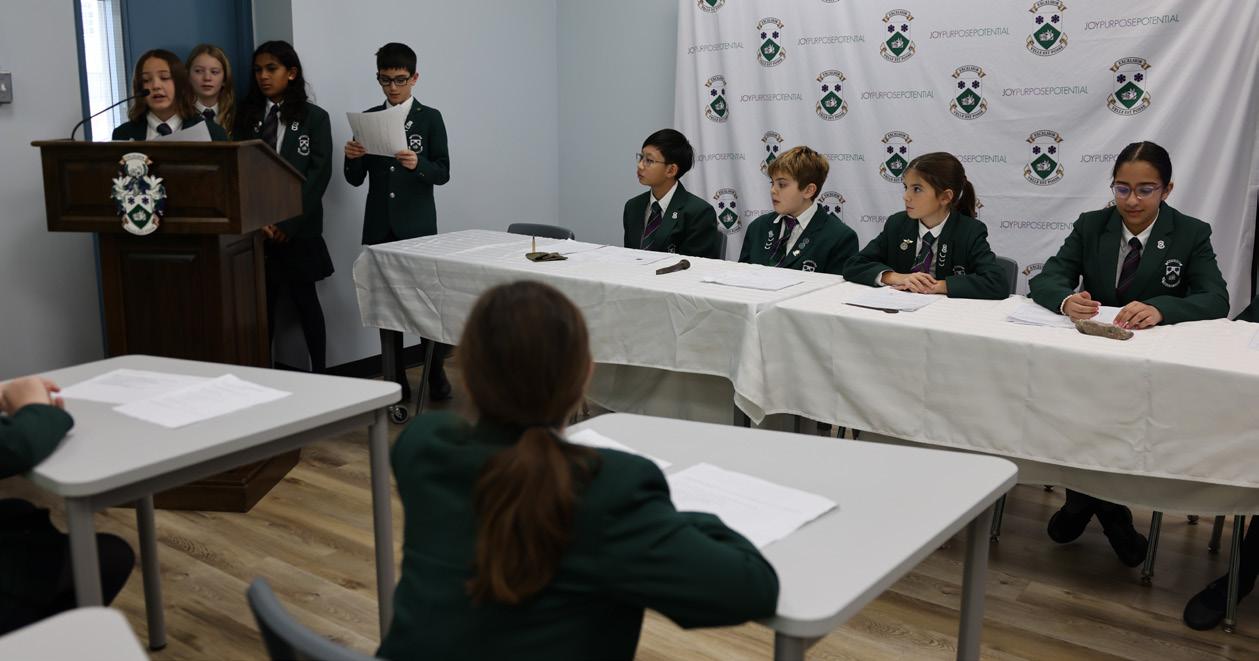
» Grade 6 Archeological Dig: Students explored Indigenous and settler histories via a simulated dig, presenting their findings in a museum-style press conference to build communication skills.
» 125th Anniversary Logo: Grade 12 students pitched professional logo designs to College leadership, gaining real-world experience working within strict brand guidelines.
» Acadience Math Pilot: The Junior School is piloting new math screening tools to provide data-driven, personalized numeracy support for every student.
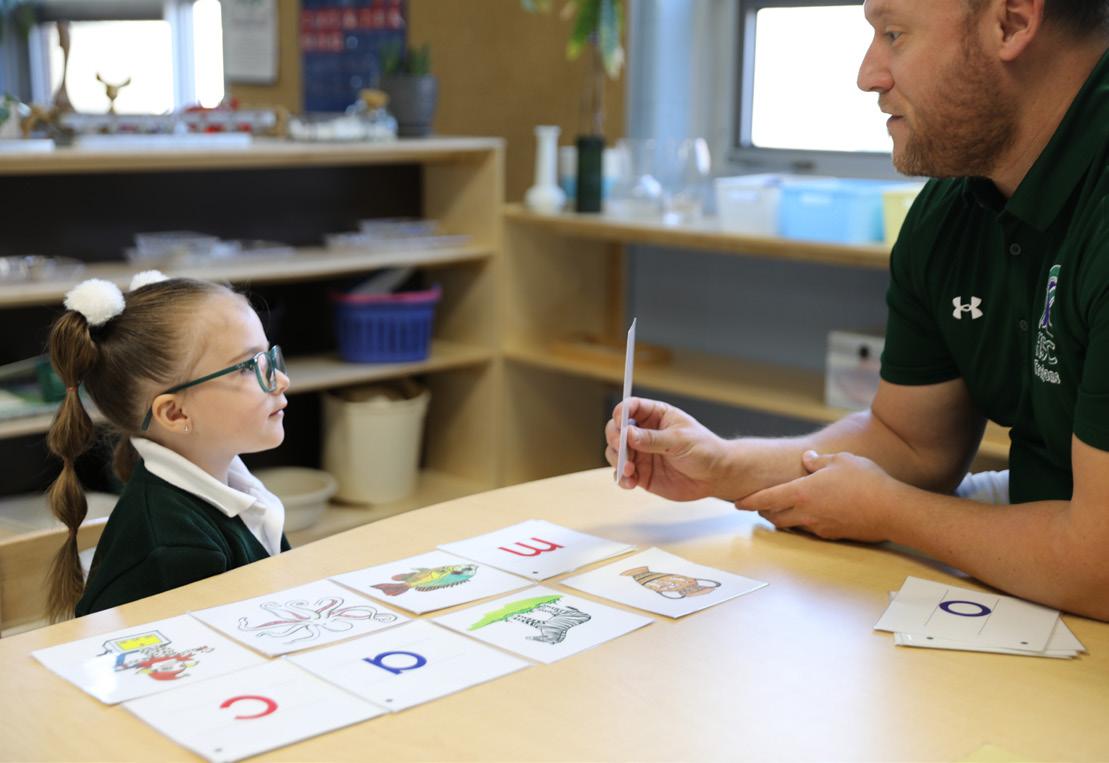
» Montessori Literacy: Faculty are enhancing Montessori language programs by integrating UFLI and Reading Mastery tools to further personalize student literacy.
» Middle School Unit Plans: Leaders are implementing inquiry-driven frameworks to create interdisciplinary “roadmaps” that better tailor the curriculum to student needs.
Montessori Literacy
DELF French Certifications
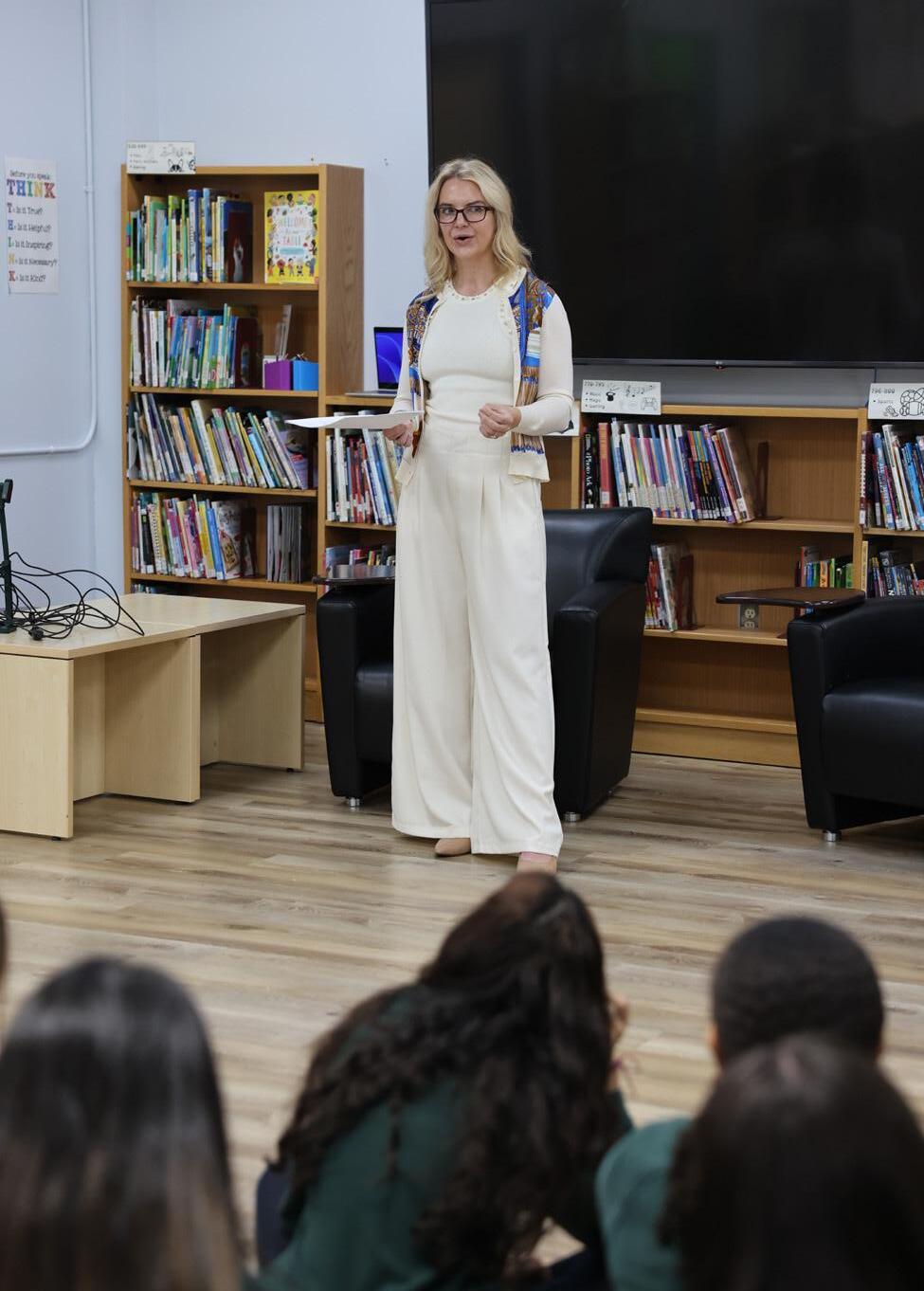
Grade 6 Archeological Dig & Press Conference
125 logo design by Grade 12 student, Sadie A.
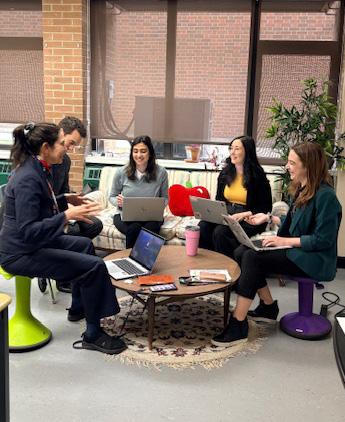
Middle School French Department Unit Planning
Highlights:
THEME TWO: PURPOSEFUL AND SUSTAINABLE LEARNING ENVIRONMENTS
All of our learning environments enhance the College experience in purposeful and sustainable ways.
We are grateful to have a large campus with many resources to support student learning. We continue to enhance our indoor and outdoor learning spaces to support and deliver authentic teaching and learning for every grade. We know that the spaces we use and design support empowered learning and must be flexible, dynamic and adaptable to student needs. We also recognize the critical importance of our environment and the existential challenges of the global climate crisis. We are committed to making HSC a leader in Canadian education with respect to practicing, learning and teaching environmental sustainability.
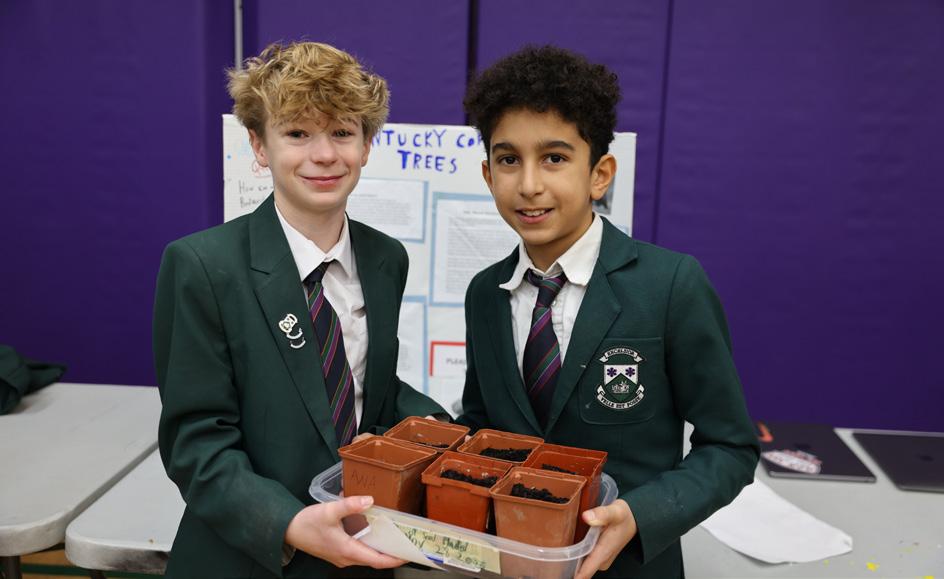
» Grade 6 Biodiversity Expo: Students shared fieldwork and lab research regarding the vital roles of trees and Indigenous species. By transforming the campus into a “living lab,” students demonstrated their findings and advocated for local biodiversity to the wider community.
» Montessori Forest Fridays: Montessori students engage in regular seasonal immersion on campus to build resilience and environmental stewardship. Through hands-on exploration and shelter-building, they develop a deep respect for the natural world.
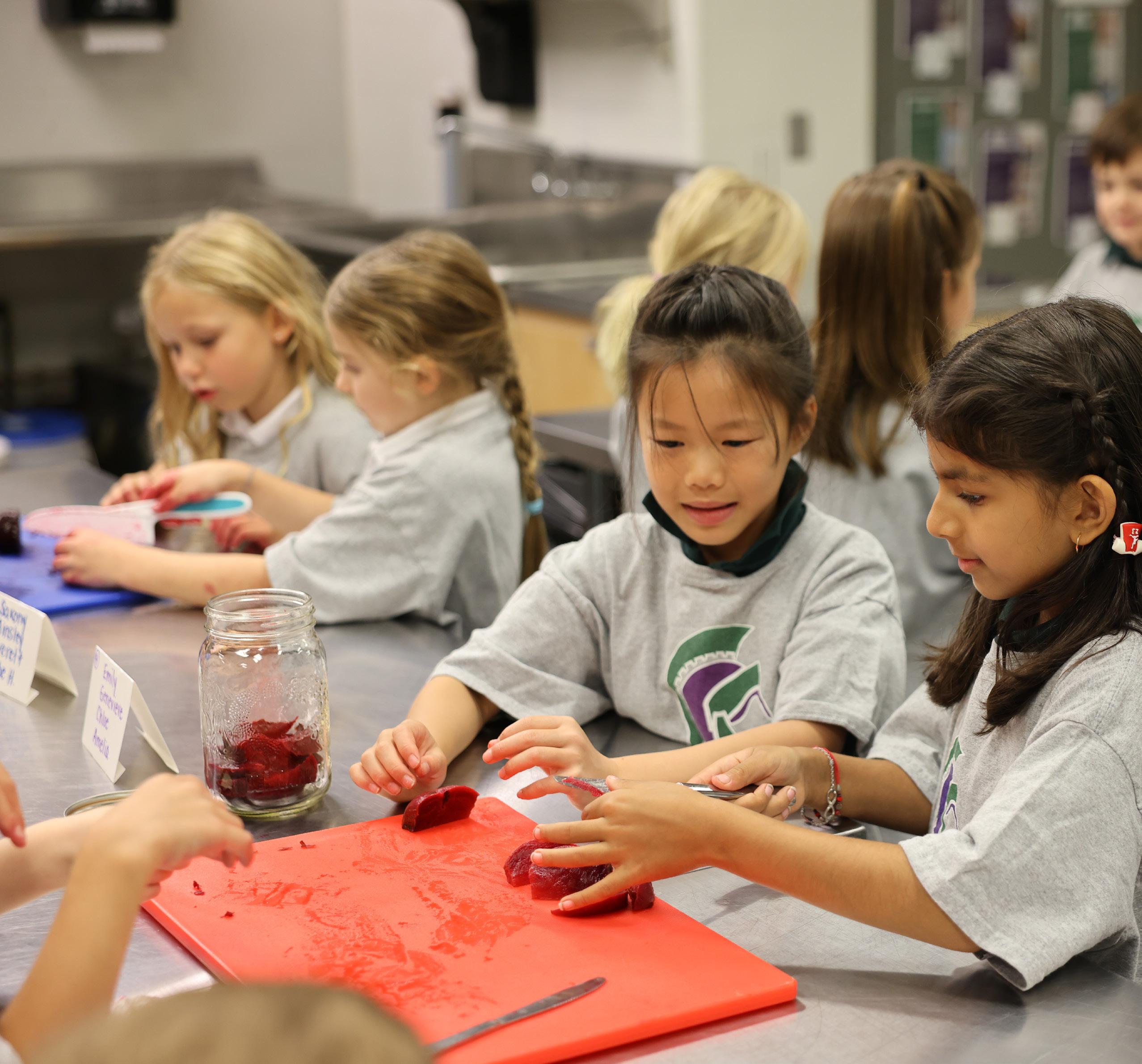
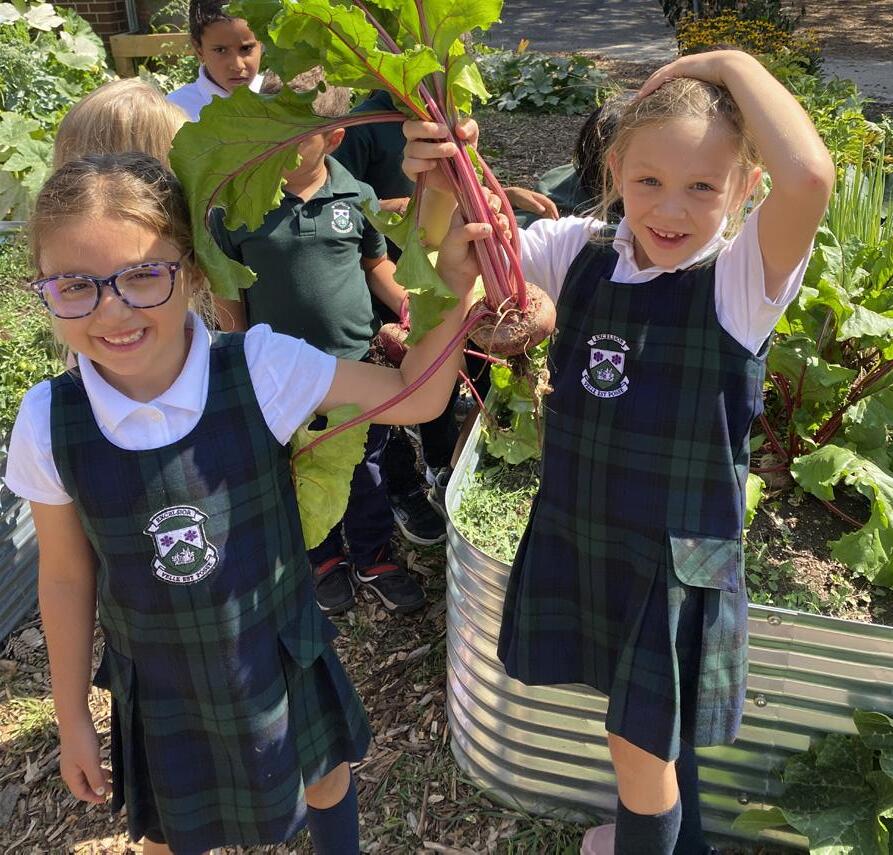
» Grade 2 “Farm-to-Table”: Connecting scientific inquiry with practical life skills, students harvested beets from the Junior School garden and learned the pickling process in the Senior School culinary kitchen to see the tangible results of sustainable gardening.
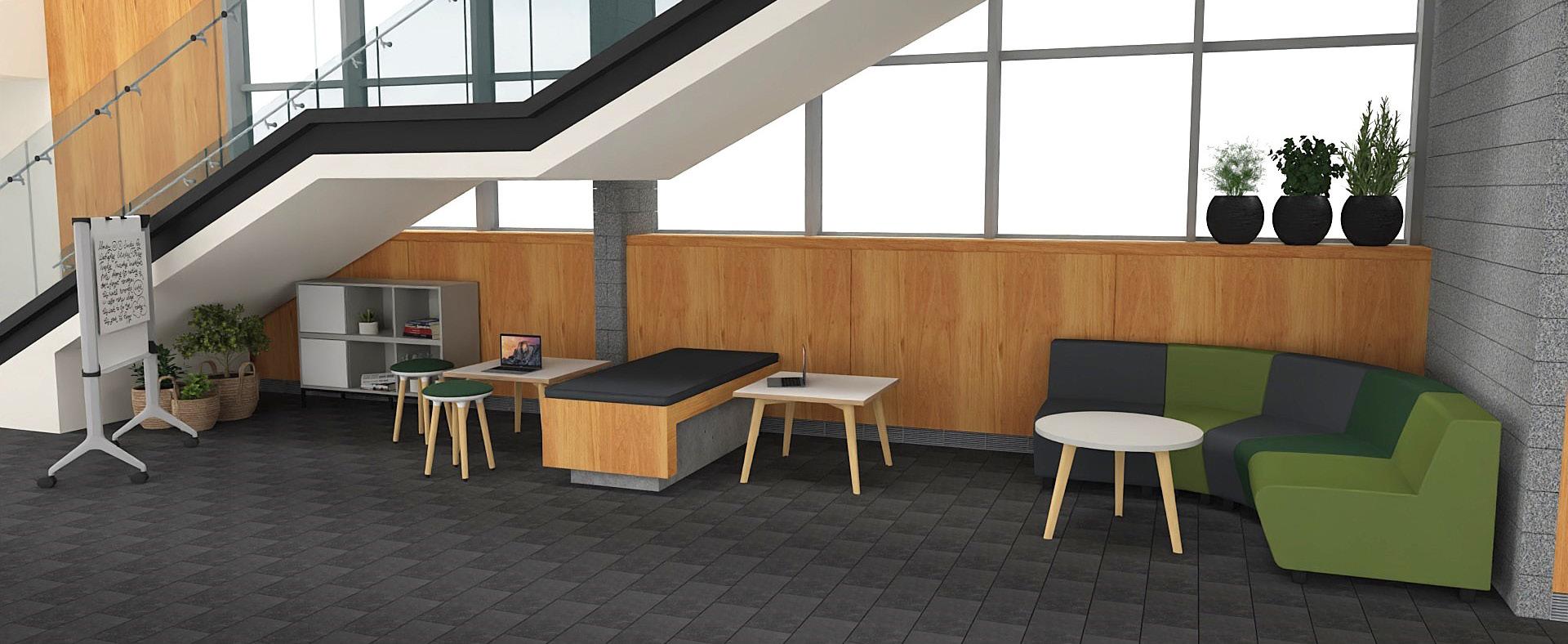
» Green Team Eco Nook: Senior School Green Team members are planning a dedicated space to display and discuss sustainability initiatives. This “Eco Nook” will include a creative wall to highlight student work supporting the UN’s Sustainable Development Goals.
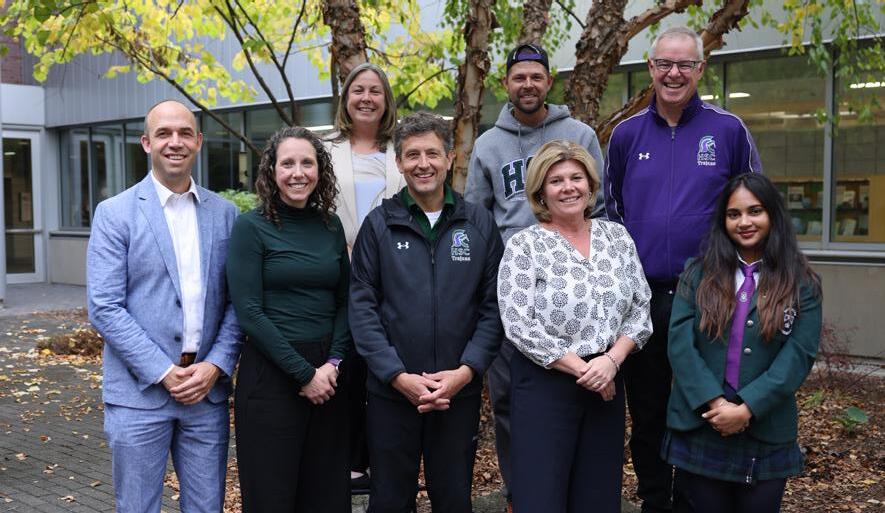
» Faculty & Staff Sustainability Committee: John Bulger and Jackie Birch spearheaded a cross-College working group that meets monthly to advance HSC’s eco initiatives and share ideas and resources for making meaningful advances in our sustainability, biodiversity and outdoor education.
Sustainability Committee & Prefect
Grade 2 “Farm-to-Table”
Grade 6 Biodiversity Expo
Montessori Forest Fridays
Green Team Eco Nook (Artist Rendering)
THEME THREE: RESILIENCE AND WELLBEING
The development and nourishment of the whole child with attention to the wellbeing of our entire community will be our daily focus.
Highlights:
» GLOW (Gathering Lessons on Wellbeing): Throughout January, students led mindfulness activities like guided meditation and nature walks. Student-made videos added to homeform schedules addressed vital topics like sleep, routines, and social connection.
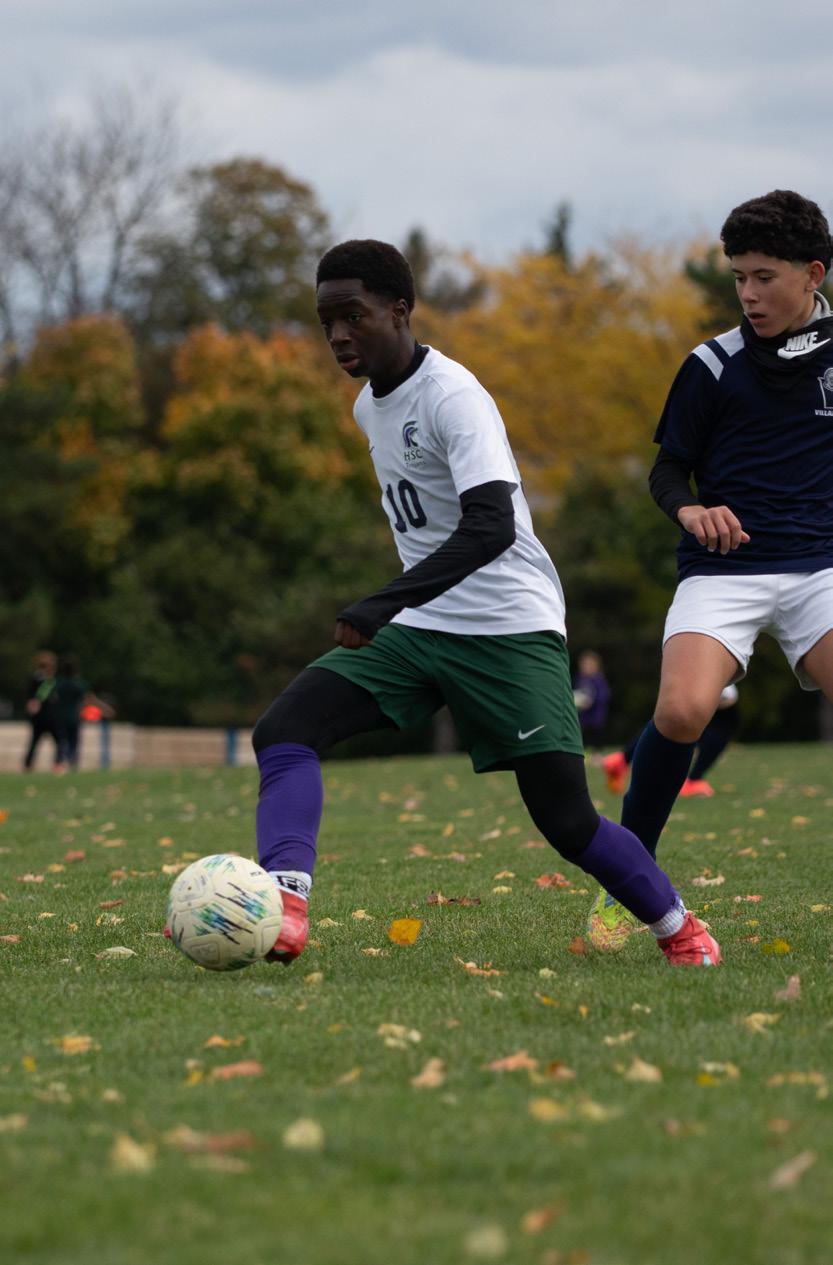
» Expanded Athletics: To meet rising interest, the Senior School fielded double teams in Junior Boys’ Soccer, with growth planned for volleyball and basketball. Record turnout in wrestling highlights the growing athletic confidence fostered by our curriculum.
We are developing practices to amplify wellbeing and embed it into our school structures and daily routines. We strive to develop a community where students are physically active daily, demonstrate gratitude, are engaged in learning, are mindful and present, and are actively open to caring for others and themselves. Our focus on the HSC ideals enables students to grow into well-rounded leaders who can act with the best interests of themselves and others in mind. In addition, researching and implementing research-based programs and practices that focus on students’, faculty’s, and staff’s physical, mental, emotional and spiritual wellbeing continues to be a priority.
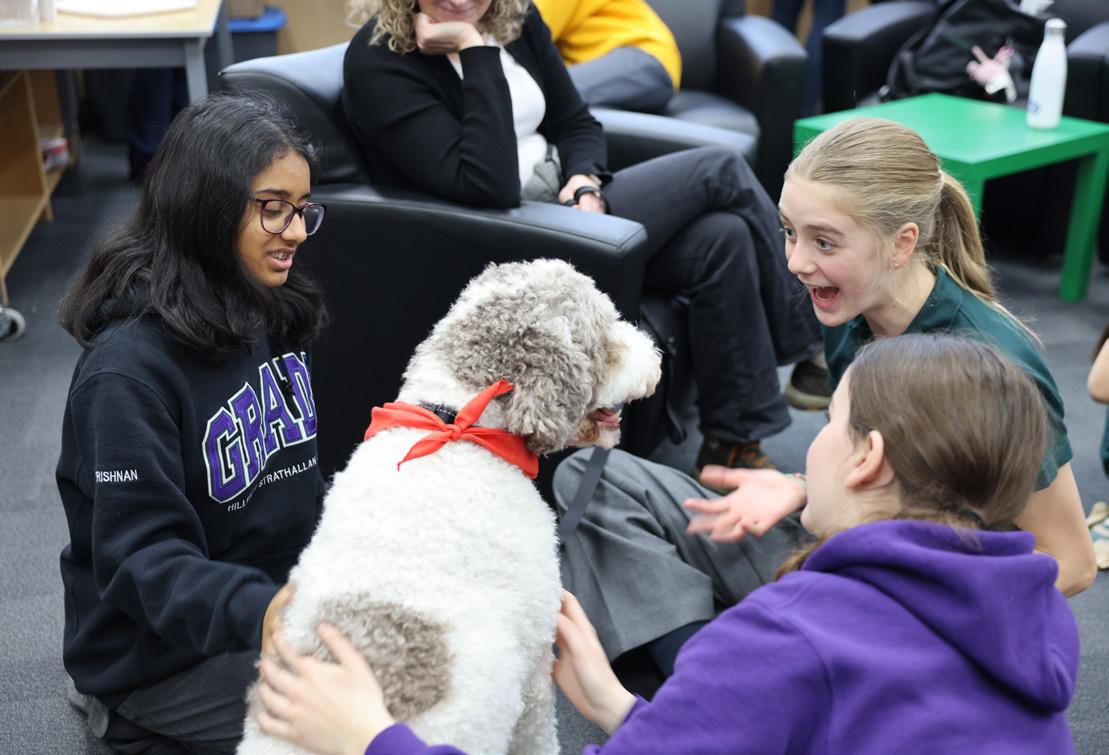
» Exam Stress Relief: The Student Success Centre hosted therapy dogs and Lawson Hall provided breakfast service during Senior School exams. These initiatives provided proactive emotional and nutritional support during high-stakes weeks.
» Digital Wellbeing: HSC partnered with Jake Ernst and StraightUp Health for an info series on digital safety. The program helped students, faculty, and parents navigate complex social and digital landscapes with improved interpersonal skills.
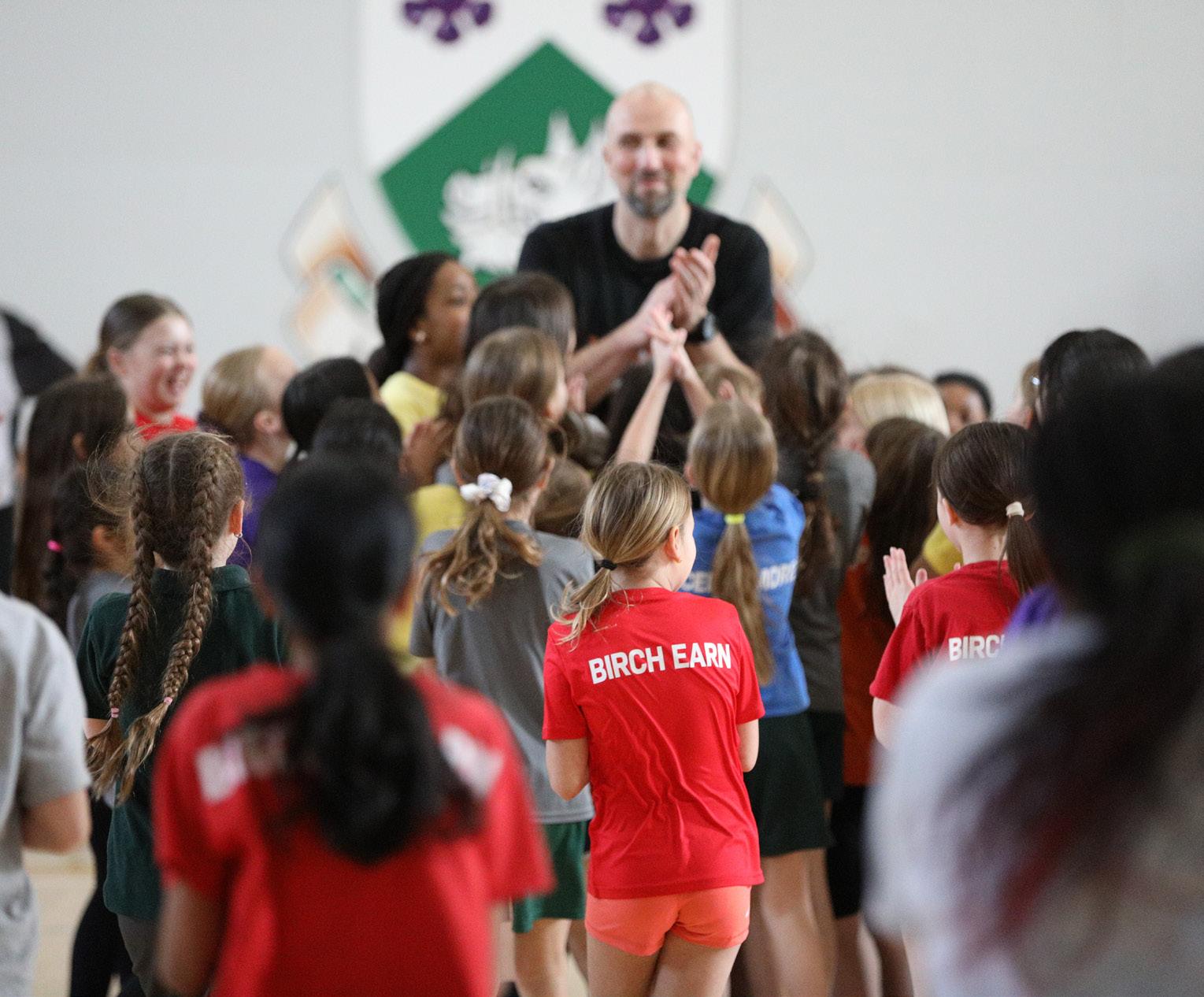
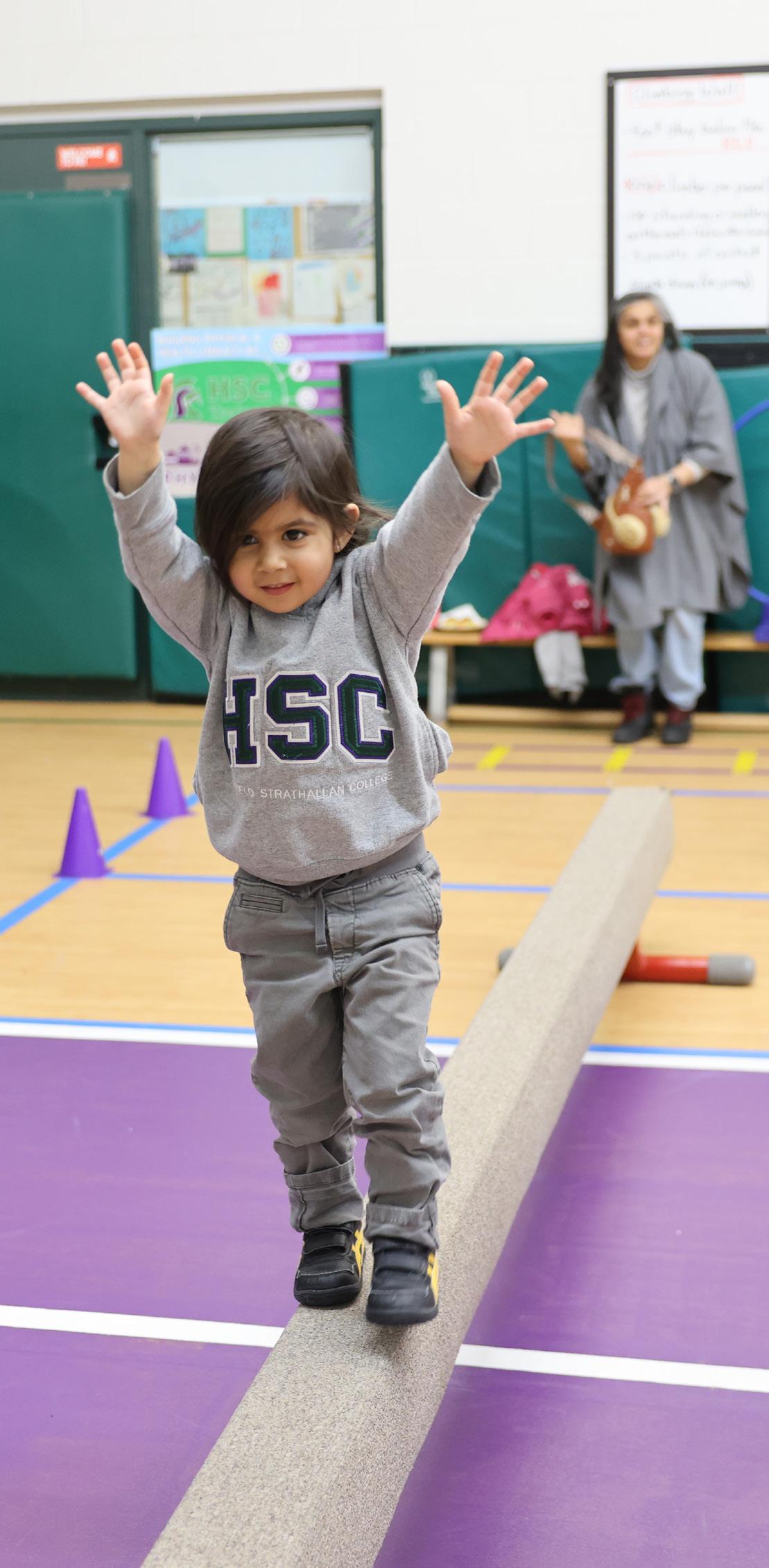
» Purple Power Day: HSC hosted the top-ranked Mohawk College women’s basketball team for a workshop with Montessori, Junior, and Middle School students, providing girls with access to elite athletic role models.
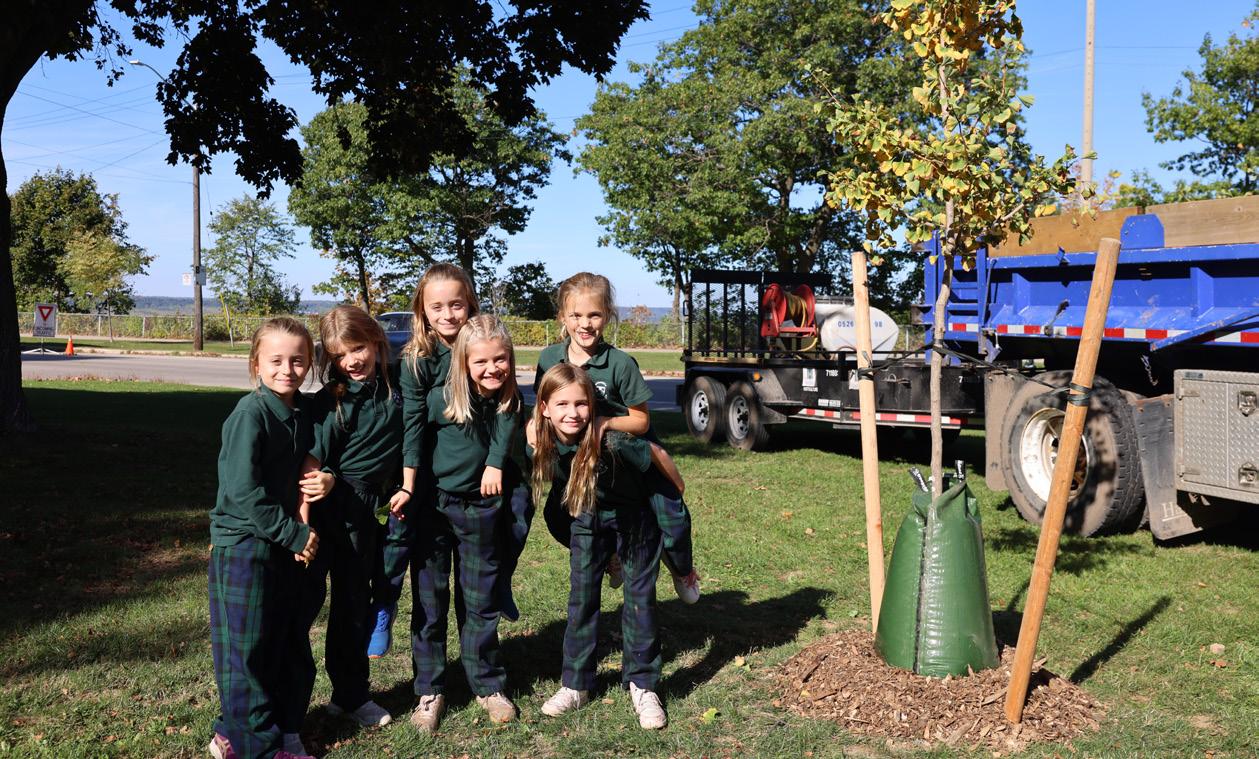
» Ginkgo Tree Planting: A multi-year student campaign culminated in a community planting with Councillor Mike Spadafora. The project demonstrated how active citizenship and advocacy build leadership and resilience.
Therapy Dogs for Exam Stress Relief
Doubling Up on Junior Boys’ Soccer
Ginkgo Tree Planting
Purple Power Day with Mohawk Mountaineers Women’s Basketball Team
THEME FOUR: A WHOLE COLLEGE –INCLUSIVE AND CONNECTED
A locally and globally connected community offering a seamless educational experience from 18 months to 18 years that fosters a sense of belonging.
We endeavour for all stakeholders to have a sense of belonging to the HSC community, where all members are accepted and celebrated, not only for what brings them together but also for what makes them unique. We are actively focused on becoming a more pluralistic community through recruiting and admitting students and hiring staff who represent the broader community. This also includes ensuring that all members of our community feel safe and welcome. In addition, HSC offers a seamless educational experience for students from 18 months to 18 years. We are uniquely positioned to thoughtfully develop a curriculum continuum that ensures continuity across grade level and division boundaries. Finally, we are committed to fostering a sense of belonging among our entire community, including students, staff, faculty, parents and alumni.
Highlights:
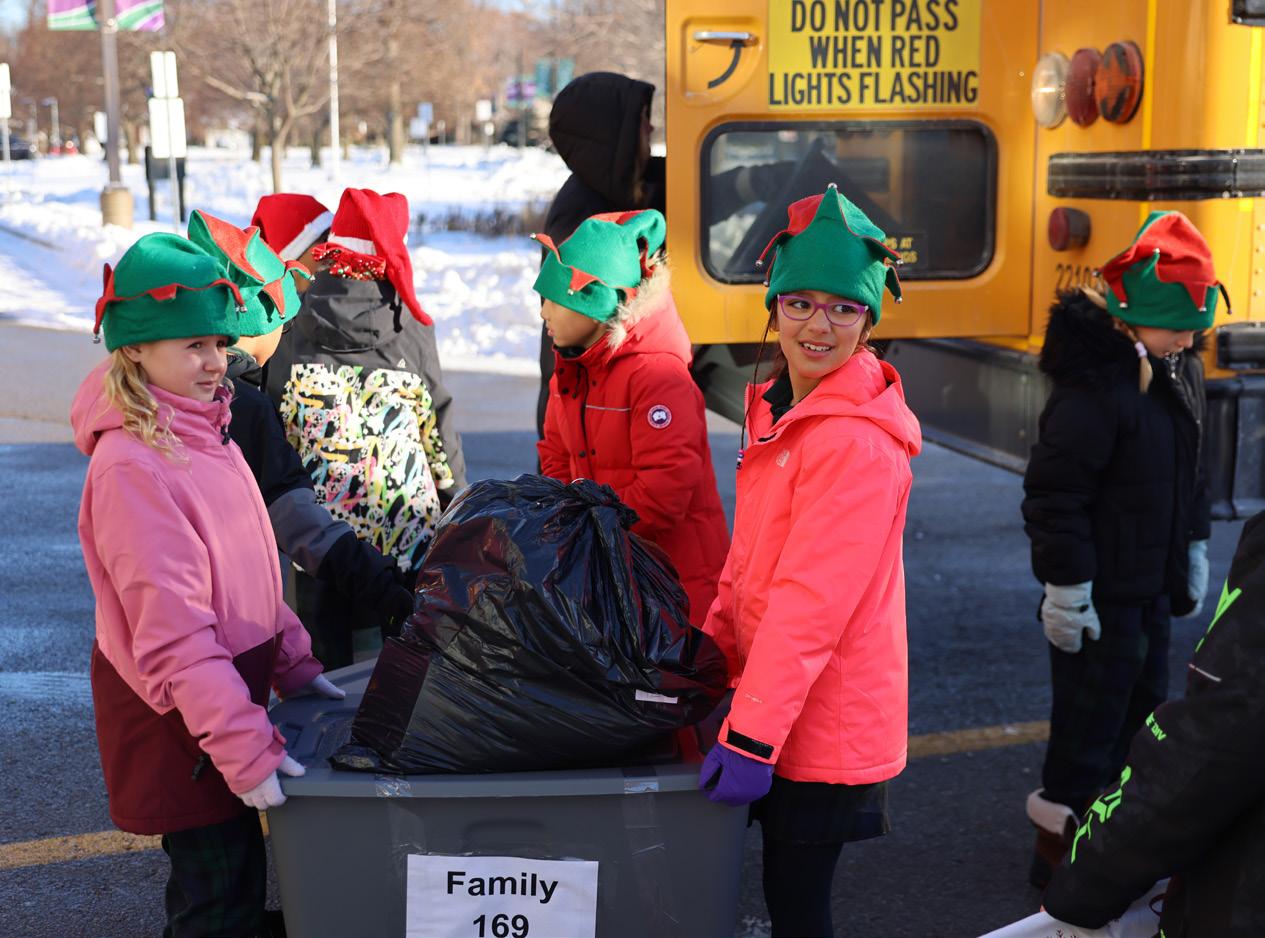
» Holiday Hampers: House captains, Prefects and student representatives packed up and delivered donations from HSC families for this annual holiday hope fundraiser in support of St. Matthew’s House. Thanks to the generosity and support of our community, families in need were able to celebrate the season.
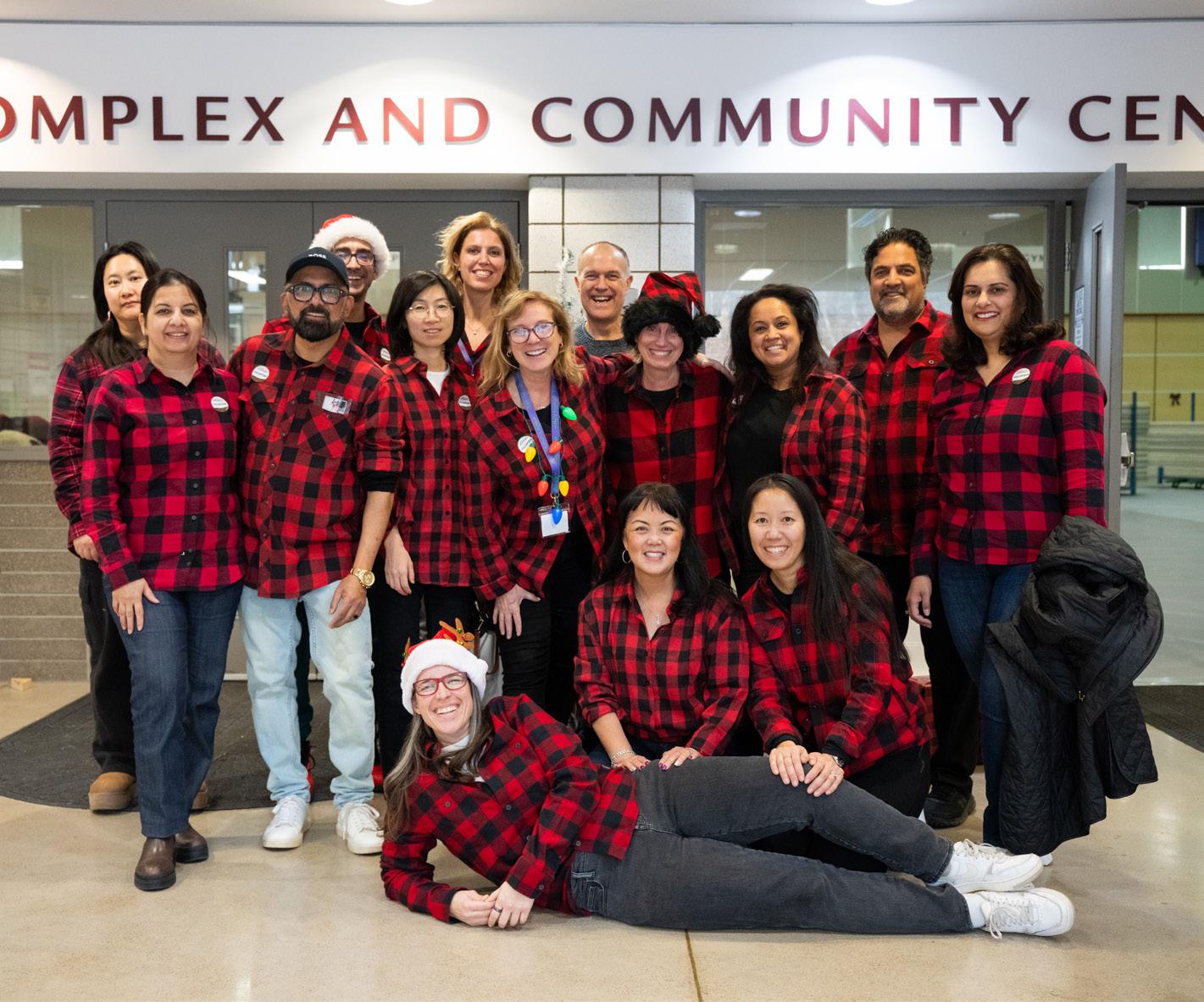
» Winterfest: HSC’s Parents’ Guild mobilized our community with this festive celebration that saw students, faculty and staff volunteer to bring another joyful community event together. Proceeds from ticket sales as well as the silent auction are invested back into more events and activities that support our vibrant and welcoming learning environment.
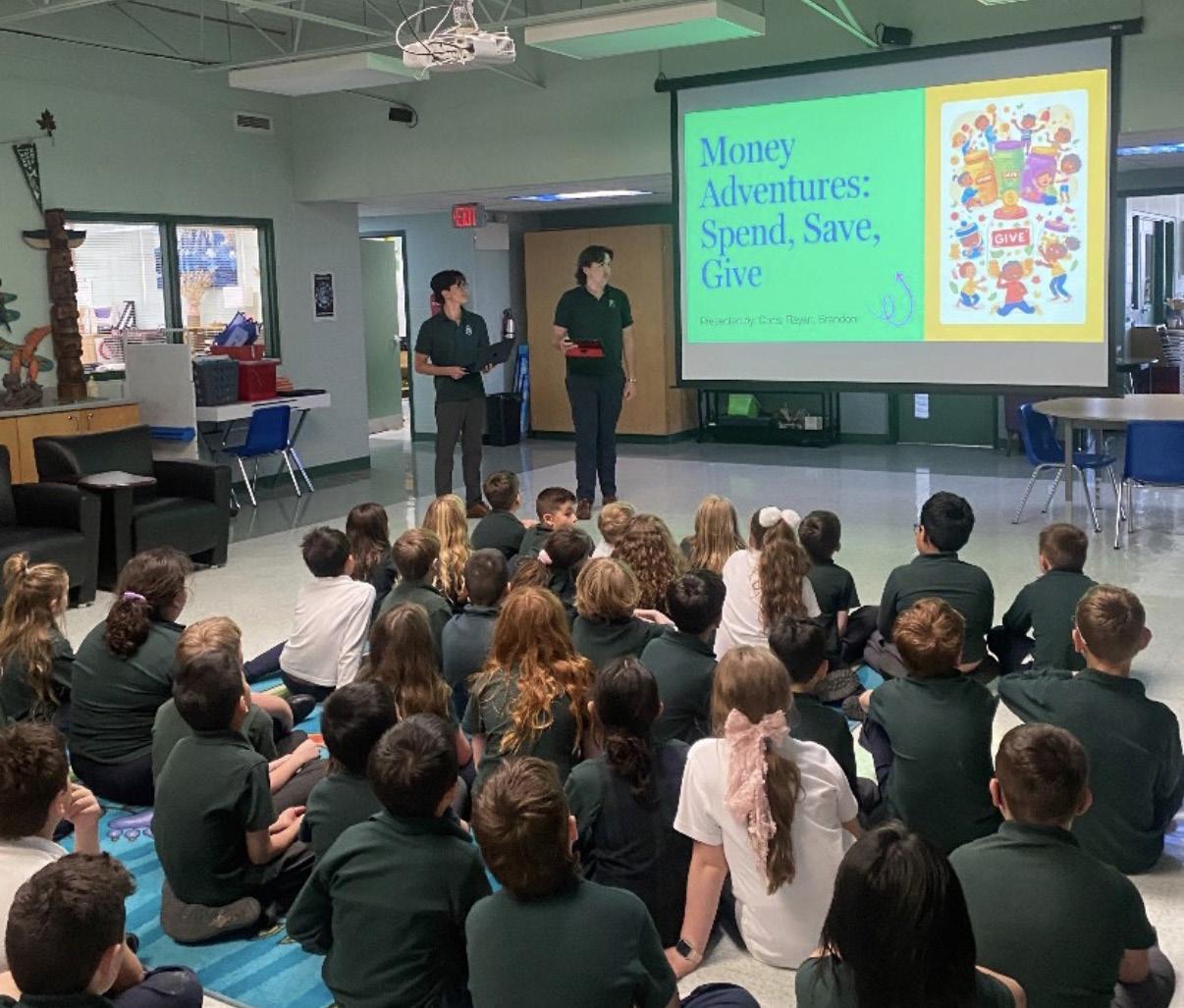
» Student-led Financial Workshops: Three Senior School students designed and facilitated financial literacy workshops for Middle Schoolers. This mentorship allowed student leaders to share their expertise, strengthening the academic continuum and building meaningful connections across HSC.
» Pluralism PD: HSC has collaborated with various specialized partner organizations to provide comprehensive anti-discrimination professional development. These initiatives equip educators across all schools with ageappropriate strategies to foster empathy and civic responsibility within the classroom.
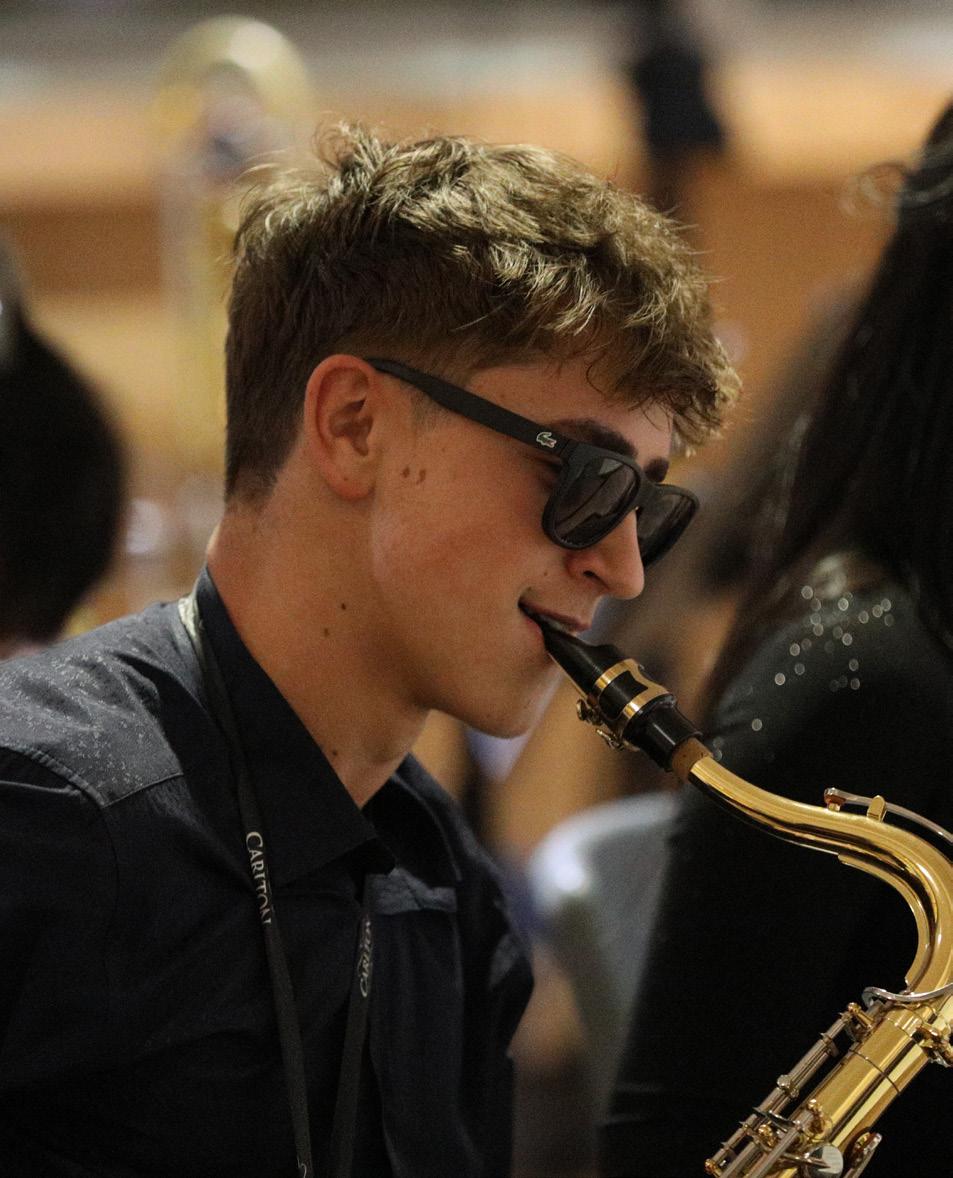
» Hot Jazz on a Cold Night: Student musicians united for a collaborative showcase featuring the professional Heavyweight Brass Band, an experience allowing students to build the creative confidence essential to a connected and inclusive College.
Hot Jazz on a Cold Night
Parents’ Guild Winterfest Committee
St. Matthew’s House Holiday Hamper Donations & Delivery Student-led Financial Workshops
GOAL ONE: ENHANCE THE LEARNING EXPERIENCE
We will empower each student to have input into their personalized learning pathway. Voice and choice will extend to student assessment and evaluation. HSC will incorporate a focus on wellbeing throughout all we do and will be at the forefront of all decisions – striking a balance between academic rigour and wellbeing. We will support and empower our faculty to grow as a community of professional educators. Experiential learning opportunities will be a key aspect of our programs. To support this, we will establish a robust network of local, regional, and global partners to provide learning opportunities for our students and teachers and create opportunities for our stakeholders to become more active leaders in our region.
Highlights
» Future City Competition: Senior School students developed digital “farm-to-table” prototypes and received professional feedback from city planning experts.
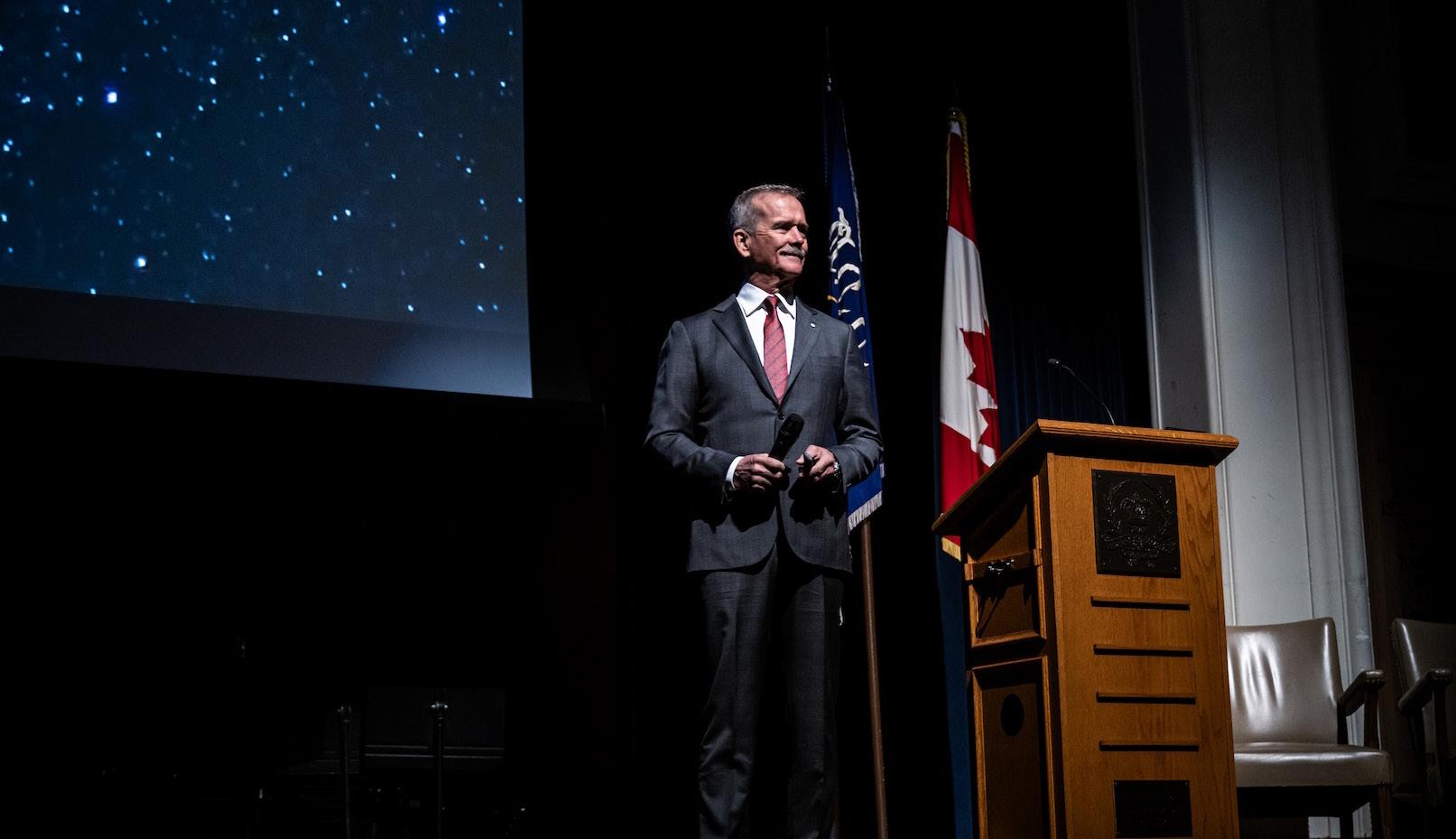
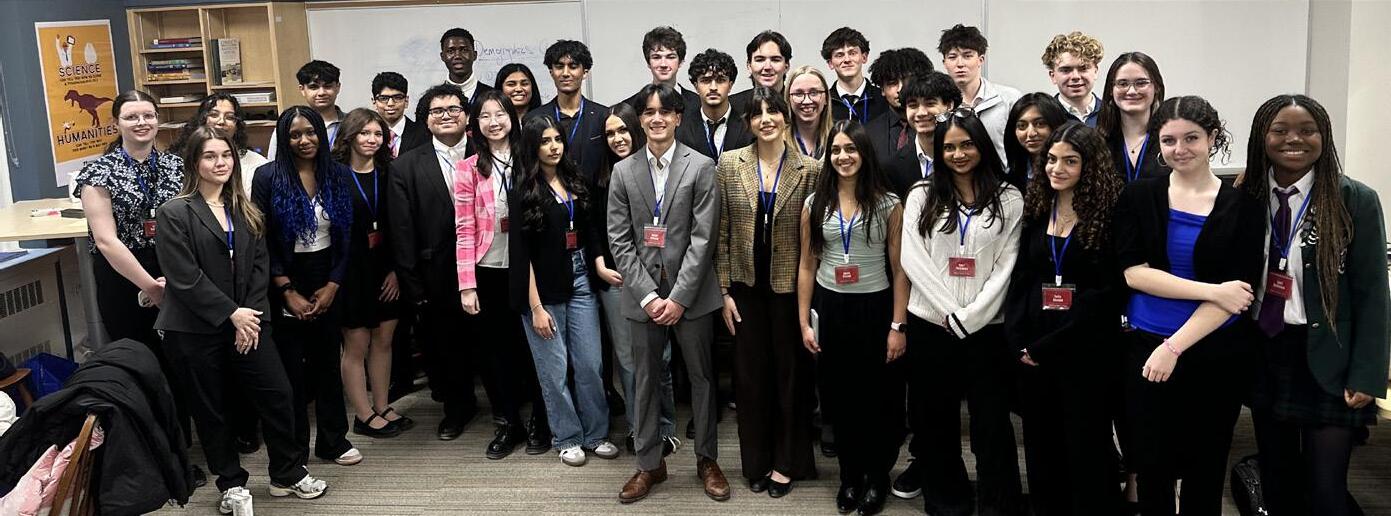
» World Affairs Conference: Students from Grades 9–12 joined 2,000 peers to explore global perspectives and current affairs through interactive sessions and a keynote by astronaut Chris Hadfield.
» Conference Leadership: Eight Grade 11 House Captains attended the CIS Thrive conference at Ridley College to network and gain practical leadership skills.
» Women in Business Conferences: Female Senior School students engaged in mentorship and networking with leaders from RBC and Fidelity to explore diverse, non-linear career pathways in finance.
» Student-led Speaker Series: Accounting and business students hosted industry experts—including parents and alumni—to gain real-world insights into the financial and professional aspects of the business world.
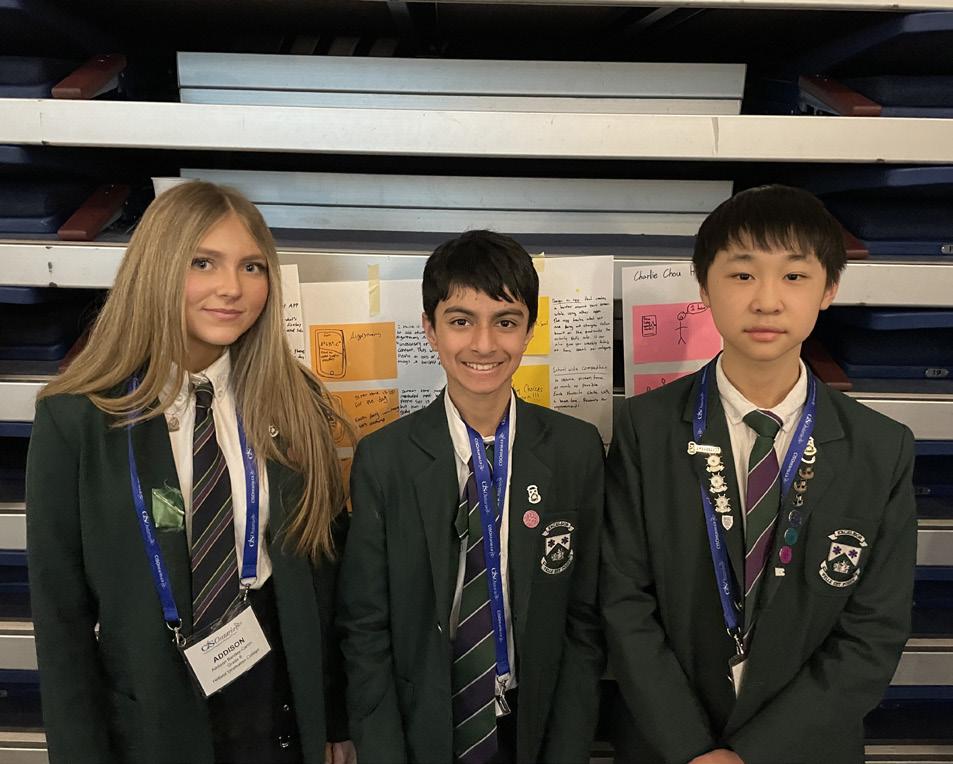
» CIS Future Prize Challenge: Three Grade 8 students pitched a data-driven innovation to address the impact of short-form media on student concentration.
Keynote speaker, Chris Hadfield at the World Affairs Conference
Future City Team
Grade 8s at CIS Future Prize Challenge
Student-led Speaker Series
Senior Students at World Affairs Conference
GOAL TWO: REIMAGINING TIME AND SPACE
We will reimagine our schedule to empower student learning and enable coordination across schools. Our spaces will also support empowered learning, and we will examine the use of our current spaces and the design of our future spaces to reflect student needs and best practices to promote flexibility and collaboration. We will exemplify environmental sustainability in our decision-making and make HSC a leader in Canadian education with respect to practicing, learning, and teaching environmental sustainability. We will also strive to become one of the most biodiverse campuses in Canada and leverage the learning potential of our outdoor spaces to support authentic teaching and learning.
Highlights
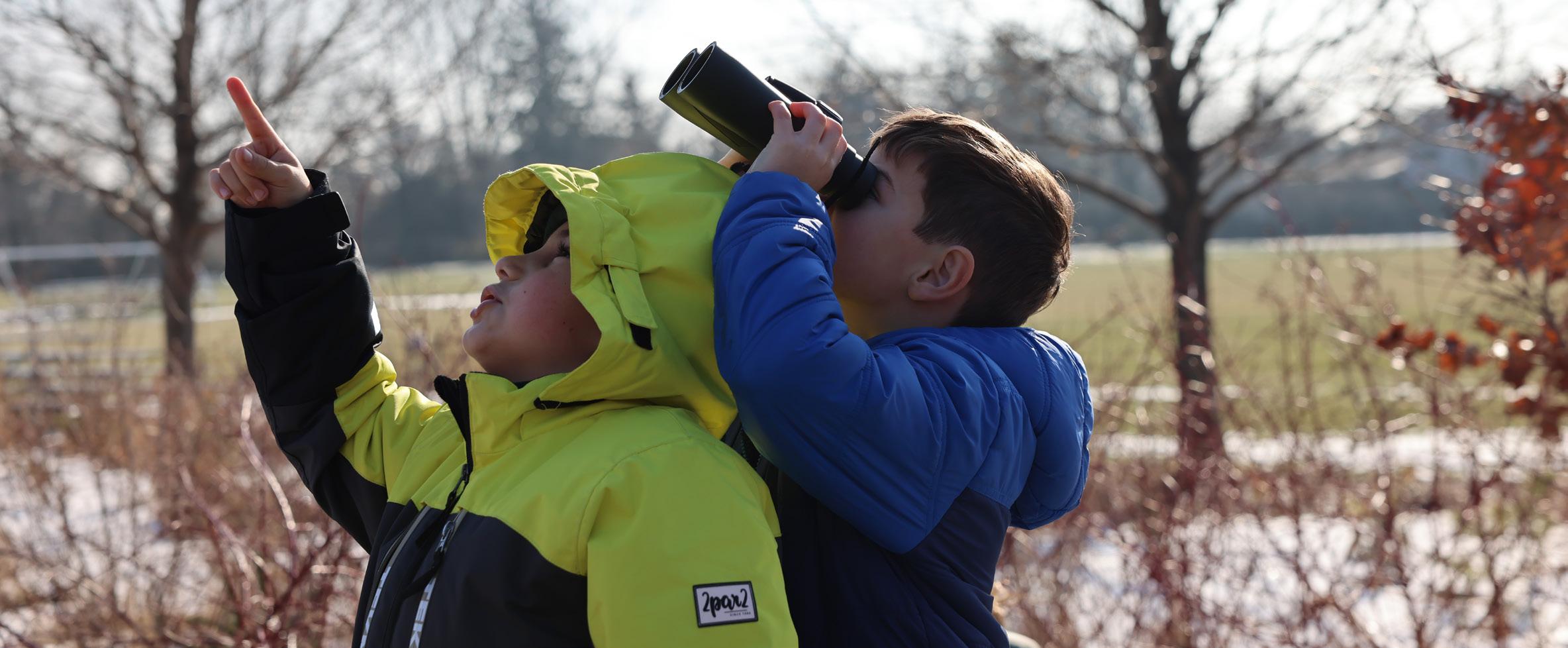
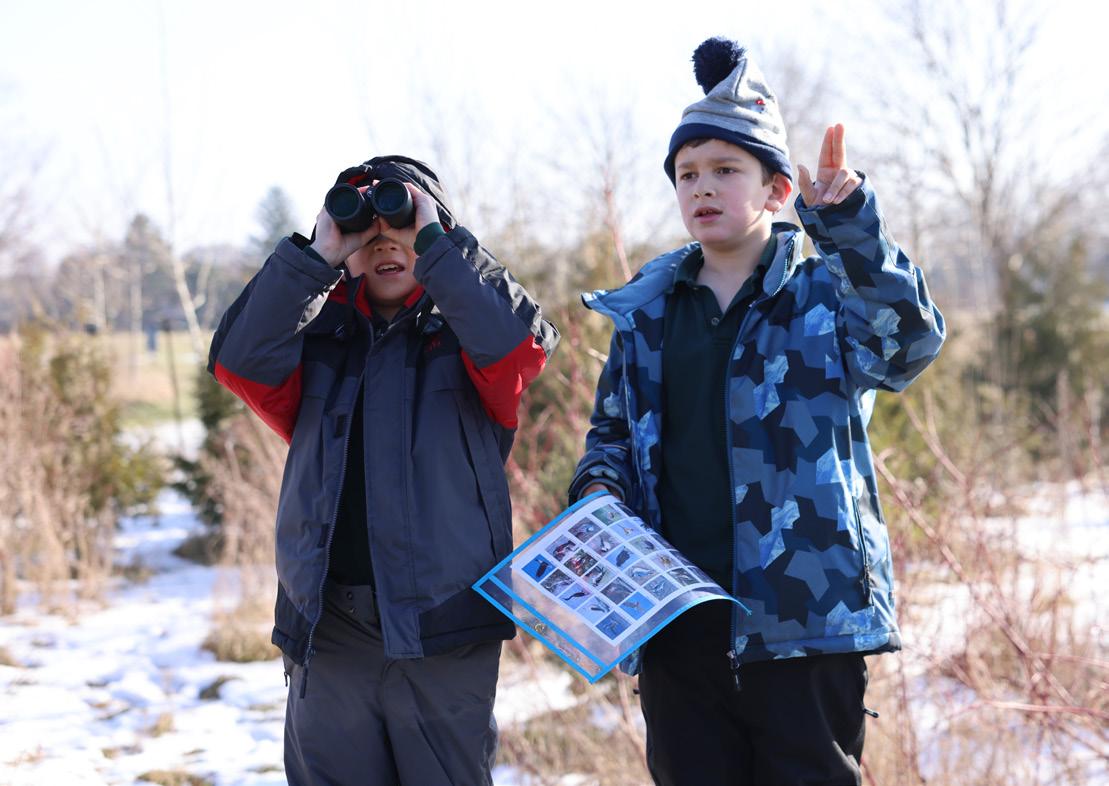
» Winter Bird Count: Grades 1–4 students transformed Willow Landing into a living lab by partnering with Bird Friendly Hamilton and Burlington to contribute real-world species data to the national Project Feederwatch survey.
» Campus Snowshoeing: Montessori students leveraged winter weather on our expansive campus for snowshoeing during outdoor education, utilizing our natural landscape to promote physical literacy and authentic learning in an immersive environment.
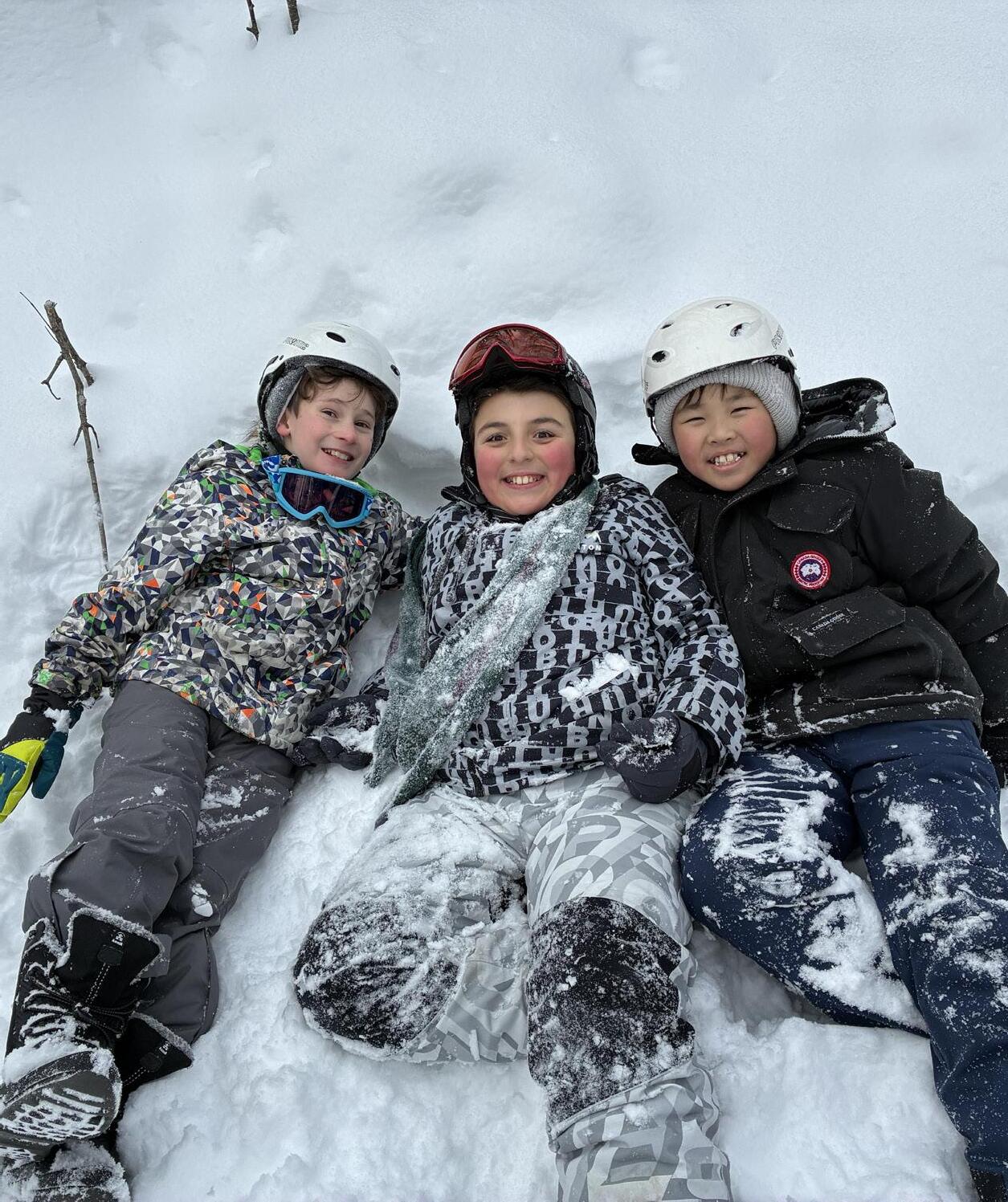
» Winter Camp Adventure: In partnership with ALIVE Outdoors, Grade 5 students engaged in a three-day wilderness immersion at Camp Wanakita, mastering winter survival skills—from cross-country skiing and snowshoeing to fire building—within an authentic outdoor learning environment.
» Experiential Education Conference: Six HSC faculty members attended the 21st Annual ISEEN Winter Institute in Baltimore to explore best practices in experiential learning specifically as it relates to the theme of Justice for People and the Planet through Community Action.
Junior School Winter Bird Count
Grade 5 Students at Camp Wanakita Winter Experience
21st Annual ISEEN Winter Institute
Montessori Snowshoeing
GOAL THREE: DIVERSE, INCLUSIVE, EQUITABLE, LIFELONG COMMUNITY
We recognize, celebrate and honour the diversity in our HSC community and we will actively focus on becoming a more pluralistic community. In our curriculum and learning experiences, we will prioritize the inclusion of widely diverse voices. We will develop a curriculum scaffold that ensures continuity across grade level and division boundaries and will support interdisciplinary and cross-grade collaboration and learning for both students and faculty. We will continue to build lifelong connections with our alumni as integral members of our community. Finally, our parents are key partners in the learning experience for their children and we will deliver a robust parent education program that helps parents partner effectively in support of the shared goals and values of the HSC community.
Highlights
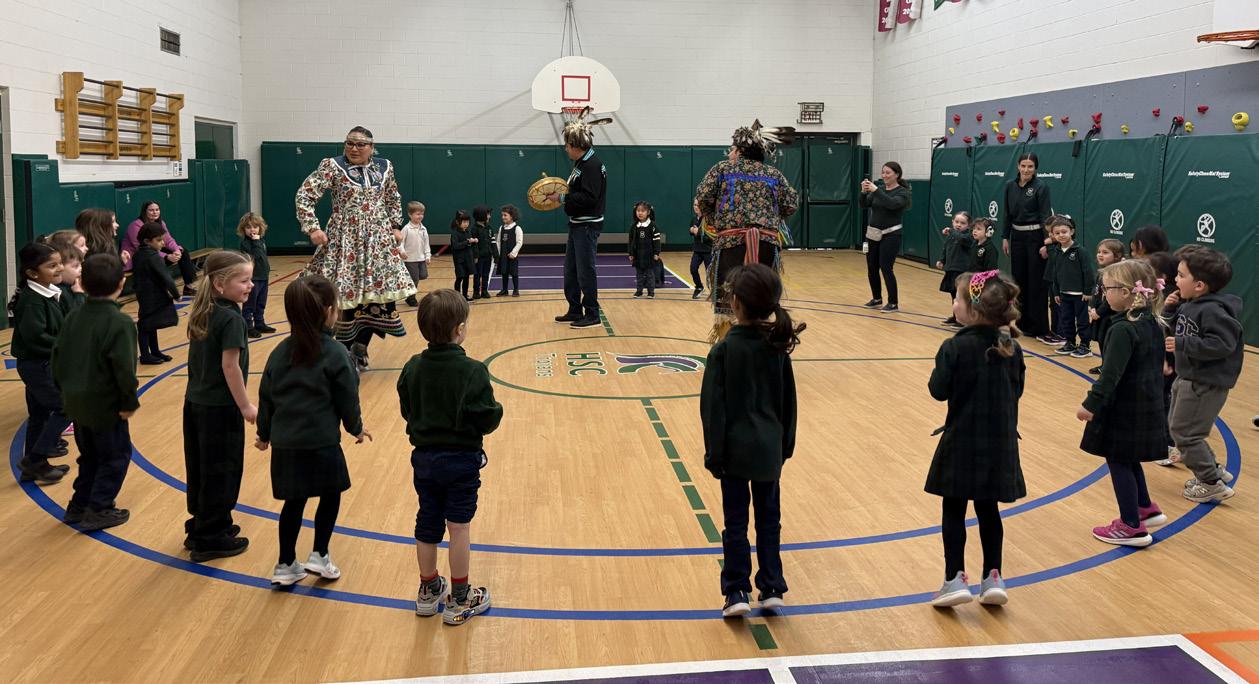
» Haudenosaunee Dance: Students from JK/M4 to Grade 8 celebrated Indigenous culture and physical literacy through immersive workshops with Six Nations performers.
» HSC Ideals: Senior School leadership recognizes students who embody our core values to celebrate the diverse character of our community.
» Big Data Competition: Guided by alumni, 26 students analyzed food insecurity and presented data-driven solutions to a panel of experts.
» Montessori Family Night: Families joined their children for an Olympic-themed evening focused on wellness and strengthening the home-school connection.
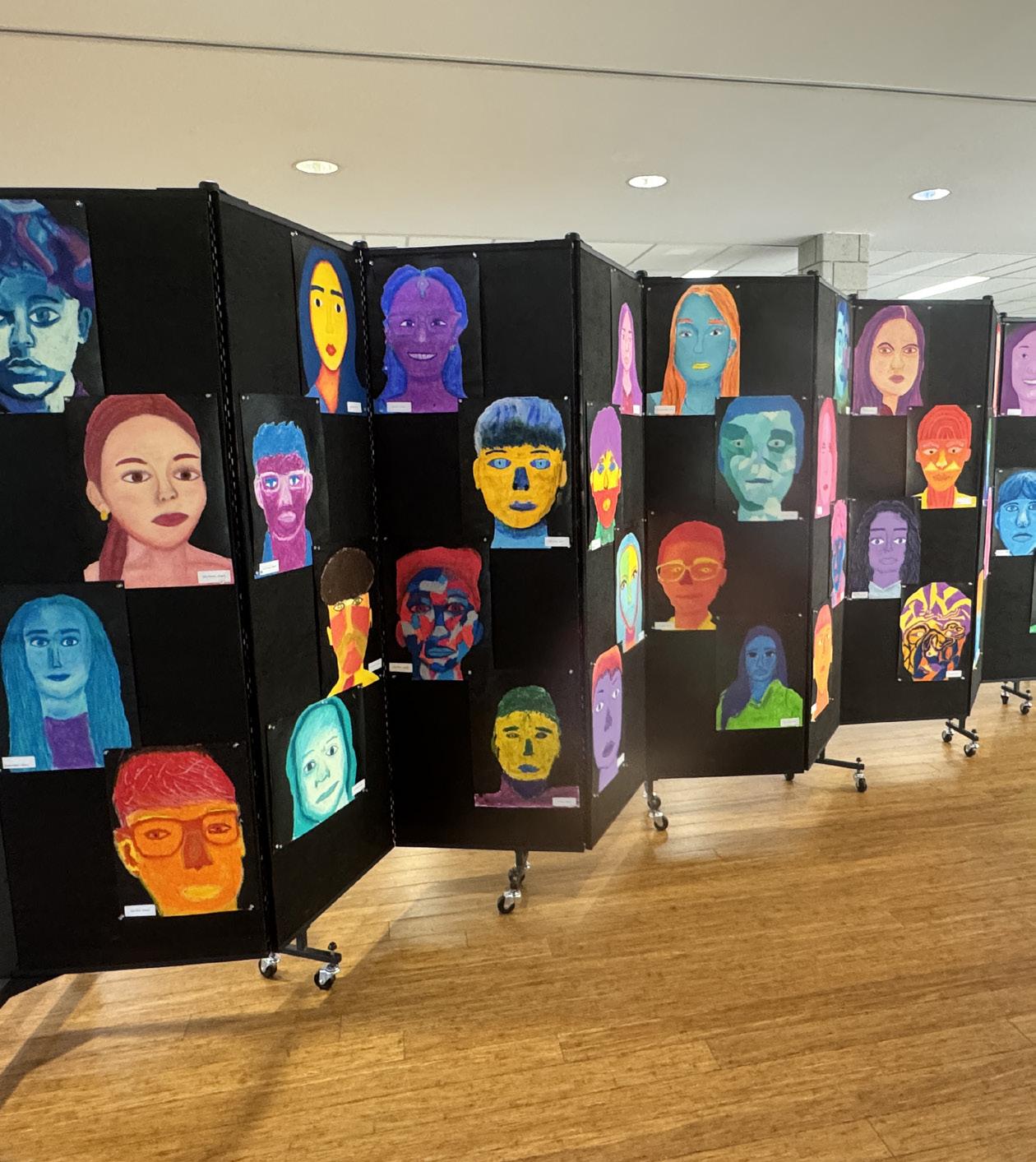
» Rolling Art Displays: New mobile displays funded by the Parents’ Guild now showcase student artwork and create flexible learning spaces campus-wide.
» Pluralism and Belonging Leadership: A delegation of Senior School students and faculty advisors participated in St. Clement’s School’s “Grounded in Reality” conference, engaging with peers from across the province and gaining the tools necessary to nurture an equitable and inclusive school environment.
Pluralism
Montessori Physical Literacy Family Night
Haudenosaunee Dance Workshops
PG-funded Rolling Arts Displays
STRATEGY IN ACTION
STORIES AND HIGHLIGHTS OF OUR STRATEGIC INITIATIVES AT WORK.
BUILDING THINKING CLASSROOMS
Theme 1: Personalized Learning
Theme 2: Purposeful and Sustainable Learning Environments
Goal 1: Enhance the Learning Experience
Goal 2: Reimagining Time and Space
A research-backed framework to improve student comprehension in mathematics is shifting teaching styles across the Junior School, deepening student engagement across all disciplines and building resilience and collaboration skills.
The journey began three years ago as an organic, teacherled movement, starting with small professional goals and a handful of curious teachers who picked up Dr. Peter Liljedahl’s Building Thinking Classrooms in Mathematics. “His approach employs this concept of mobility of knowledge,” explains Grade 2 teacher Jackie Birch, who was among the earlier adopters of Liljedahl’s teaching practices. “Instead of the teacher being the holder of the knowledge, students learn from one another—reinforcing the idea that learning from others isn’t cheating.”
To support growing interest in Liljedahl’s method, six Junior School faculty members participated in an intensive external professional development program. Today, internal L2L sessions offer a tiered mentorship model in which teachers like Ron Petraroia and Barb Tries can share what they learned in PD and how they’re applying it in lessons in the classroom.
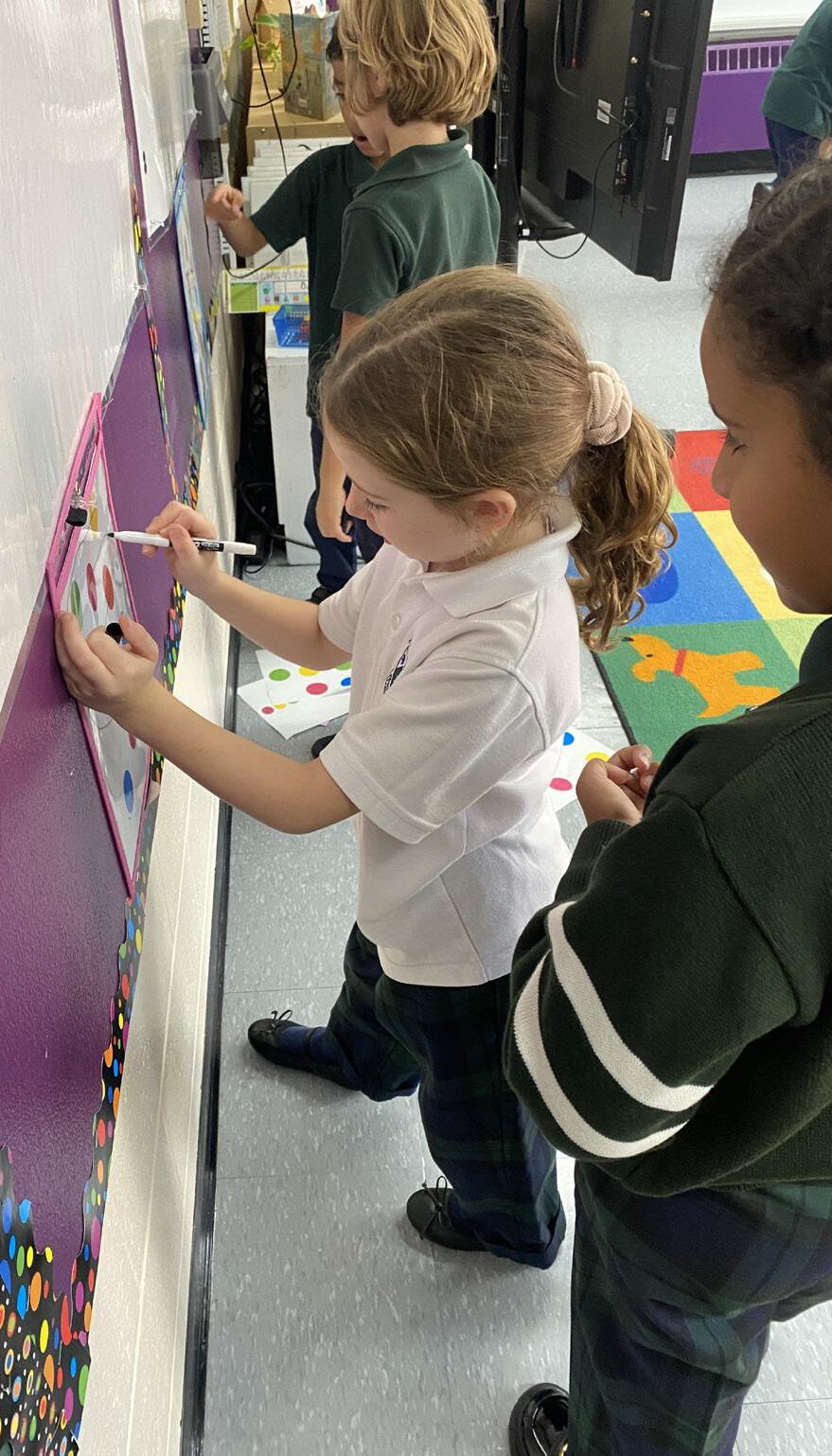
In rolling out the building thinking classrooms (BTC) strategies, learning spaces have been updated with whiteboard-style vertical writing surfaces where students
can stand together and work through problems collaboratively. This move also decentralized the front of the room, allowing teachers to circulate as facilitators while students led the inquiry. The freedom to move around, combined with the temporary workspaces, has led to positive results. “Students are more engaged when they’re not confined to sitting at their desk and more confident to try out an answer because, even if it’s not right, they know it can be erased,” Jackie notes.
Another cornerstone of the BTC approach is the use of frequent, random groupings. By shuffling partners daily, faculty can dismantle social barriers and the ‘tell me how to do it’ mindset that often limits independent problem-solving. As Principal Shailau Spivak notes, these strategies intentionally put students in safe, uncomfortable situations that foster true independence. “We’ve seen students who would normally dominate a conversation learn to listen, giving an opportunity for the quieter students to find their voice.”
Ultimately, the BTC approach reinforces HSC’s commitment to meet students where they are. By prioritizing active inquiry over passive memorization, the Junior School provides a personalized learning environment where success isn’t about getting the right answer; it’s about building a foundation where “smart” means having the resilience to work through a problem collaboratively.
THE POPPY PROJECT
Theme 4: A Whole College – Inclusive and Connected Goal 3: Diverse, Inclusive, Equitable, Lifelong Community
Last summer, during a visit to Europe, Montessori School Principal Danielle Hourigan ’82 was struck by the imagery of the poppy, and inspired by the Tower Remembers display in London. This sea of ceramic poppies transformed the iconic landmark into a place of reflection to mark the 80th anniversary of the end of WWII. Danielle returned to campus with a vision to create a student-led tribute specifically for the 55 HSC Old Boys who lost their lives in service.
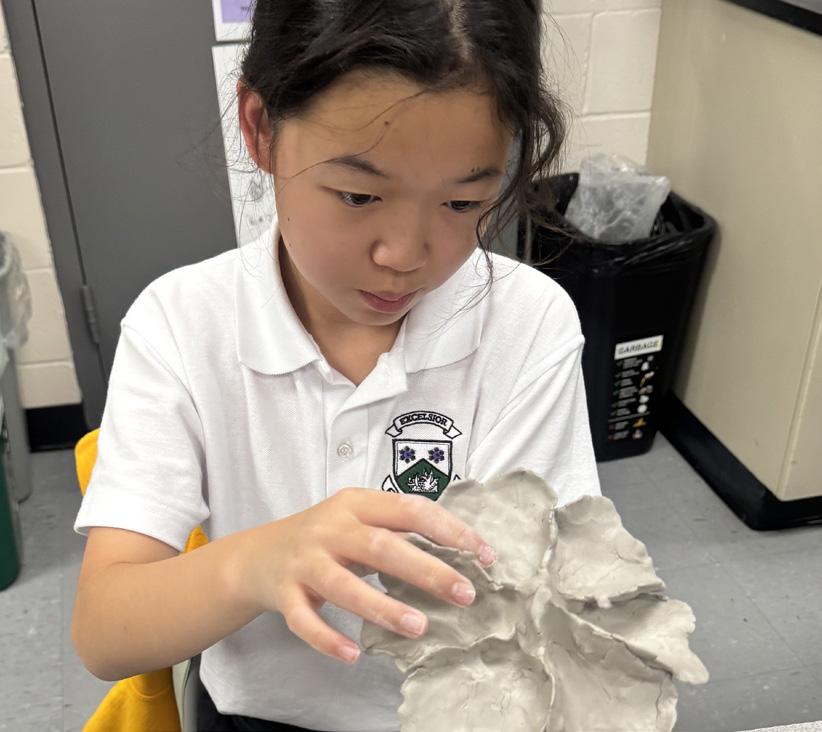
What followed was an inspiring community collaboration that bridges art, history and campus operations. With guidance from Middle School arts teachers Denise Cober and Taryn Fleming, 30 Middle School art club students set to work designing and hand-carving individual ceramic poppies. Each flower was meticulously hand-painted and fired in the HSC
kiln, serving as a tactile lesson in both sculpture and the weight of remembrance.
The project became a true Whole College experience when the maintenance team joined in, working with Danielle and Denise to attach each delicate flower to a custom steel post along with a ribbon bearing the name of a fallen boy from HSC past. Installed at the base of the flagpole memorial just outside the Holton entrance, this crossdepartmental project was ready for HSC’s Remembrance Day service and will be reinstalled for many more to come.
By connecting current Middle School artists with the legacy of those who came before them, this tribute exemplifies our commitment to being an inclusive and connected campus, where the past is honoured through the shared hands of the present.
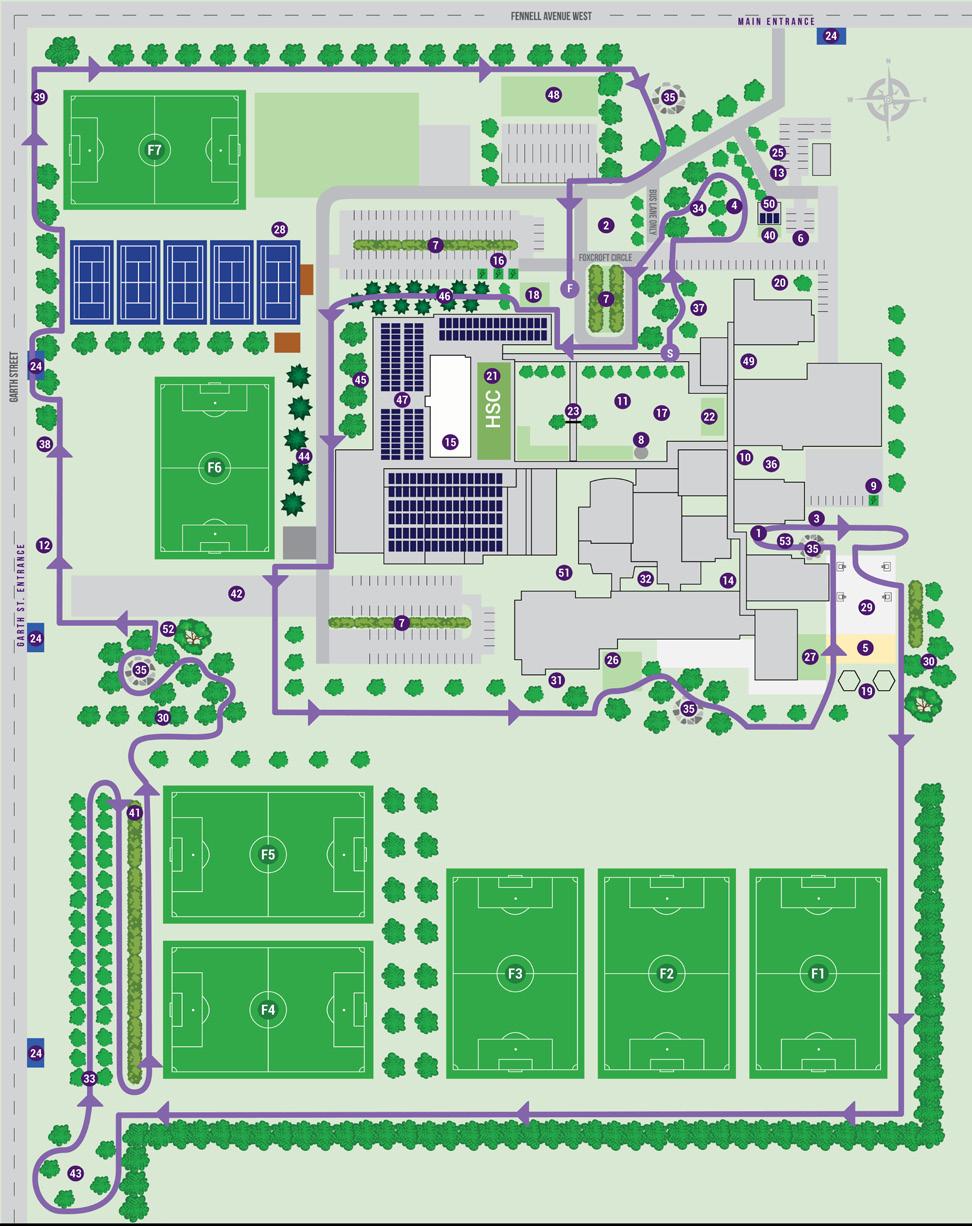
HSC’S BIODIVERSITY TRAIL MAP
Theme 2: Purposeful and Sustainable Learning Environments
Theme
Goal
4: A Whole College – Inclusive and Connected
2: Reimagining Time and Space
Our campus is so much more than a backdrop for athletics and play. HSC’s grounds have been evolving over the last 25 years into a meticulously designed living laboratory.
To capture the full scale of this transformation, HSC’s sustainability leaders John Bulger and Jackie Birch have developed a comprehensive Biodiversity Trail Map. This topographic guide, which serves as a vital tool for both teachers and visitors, is a testament to reimagining time and space, showcasing the transformation of our 50-acre campus into a classroom without walls.
“We are deliberately building and enhancing campus ecosystems to support an accessible range of habitats for engagement, wellbeing and learning,” says John Bulger.
“This map provides us with a full scope view of all those efforts.” From the endangered Tallgrass Prairie Seed Orchard—an ecological rarity with only one per cent of its original habitat remaining in Canada—to the Miyawaki Forest, a dense mini-forest that sequesters carbon and manages stormwater, the campus has become a national biodiversity hotspot.
A central philosophy of this initiative is Etuaptmumk, or “Two-Eyed Seeing.” This guiding principle, shared by Mi’kmaw Elder Albert Marshall, encourages the community
to view the land through both Indigenous ways of knowing and Western scientific strengths.
The momentum continues this May as faculty members Bryan Simmons and Laura Malar will attend the Take Me Outside Outdoor Learning Conference. The theme, “Place and Pedagogy,” aligns perfectly with HSC’s focus on purposeful and sustainable learning environments. By documenting our “corridor effects”— the network of habitats that link our campus to the Niagara Escarpment Biosphere and the Chedoke Creek watershed—HSC is ensuring that our green spaces are recognized as essential infrastructure for student health and inquiry.
STUDENT CAMPAIGN CREW
← Scan or click here to read about our bold actions for a better planet.
Theme 4: A Whole College – Inclusive and Connected
Goal 3: Diverse, Inclusive, Equitable, Lifelong Community
Bound by their shared experience as former Middle School students, Jack Clifford, Kai MacLeod, Andrew Yang and Anivit Sah requested a meeting with Marc
Ayotte in the fall of 2025. The group of Grade 11 students arrived at the meeting with a meticulously thought-out proposal to help raise funds for the Middle School Campaign. While impressed by their initial pitch, Marc offered them a challenge: to “raise their gaze” and transition from grassroots fundraising to strategic leadership.
What followed was a series of strategy sessions with Dave Fitzpatrick, Executive Director of Advancement and Communications, and Ben Chapdelaine, Director, Advancement and Communications.
From these discussions, the “Campaign Crew” was born. More than just a student committee, the crew now serves as a vital organ of the College’s advancement strategy, positioned as the authentic student voice of our community. “In giving students a seat at the table, we can ensure that the vision for HSC’s future remains grounded in the lived experience of the learners who will benefit most from any enhancements,” Dave says of the team.
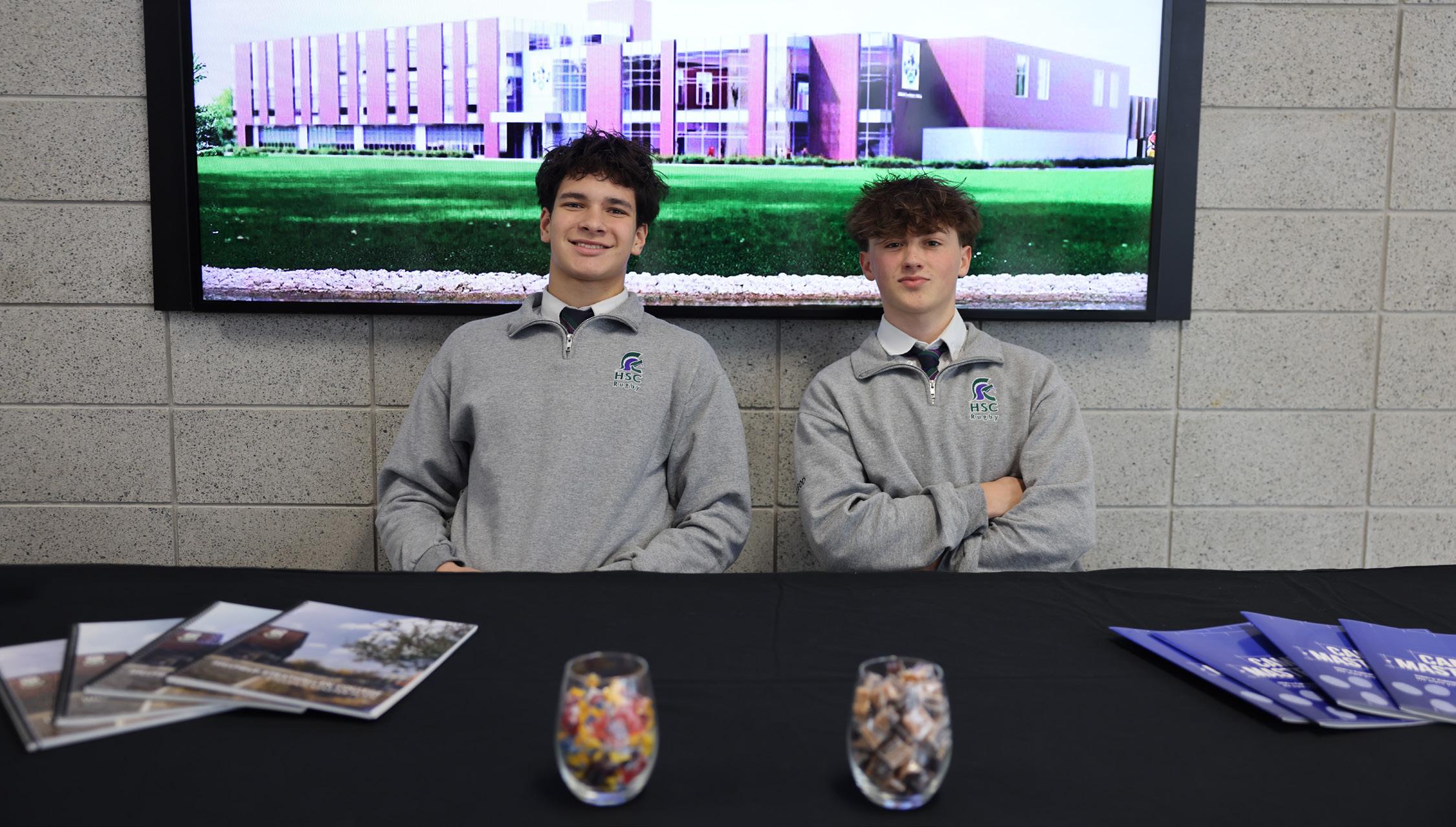
Beyond the boardroom, the Campaign Crew has quickly become a visible force around campus. At Winterfest, they served as key ambassadors, staffing an information table to share initial concepts for the pending Campaign with families
and alumni. They have also taken a role in sharing gratitude, personally calling donors to thank them for their philanthropic support. It’s a gesture that strengthens the bonds of our lifelong community, reinforcing the connections between current students and the network of supporters helping enhance their learning environment.
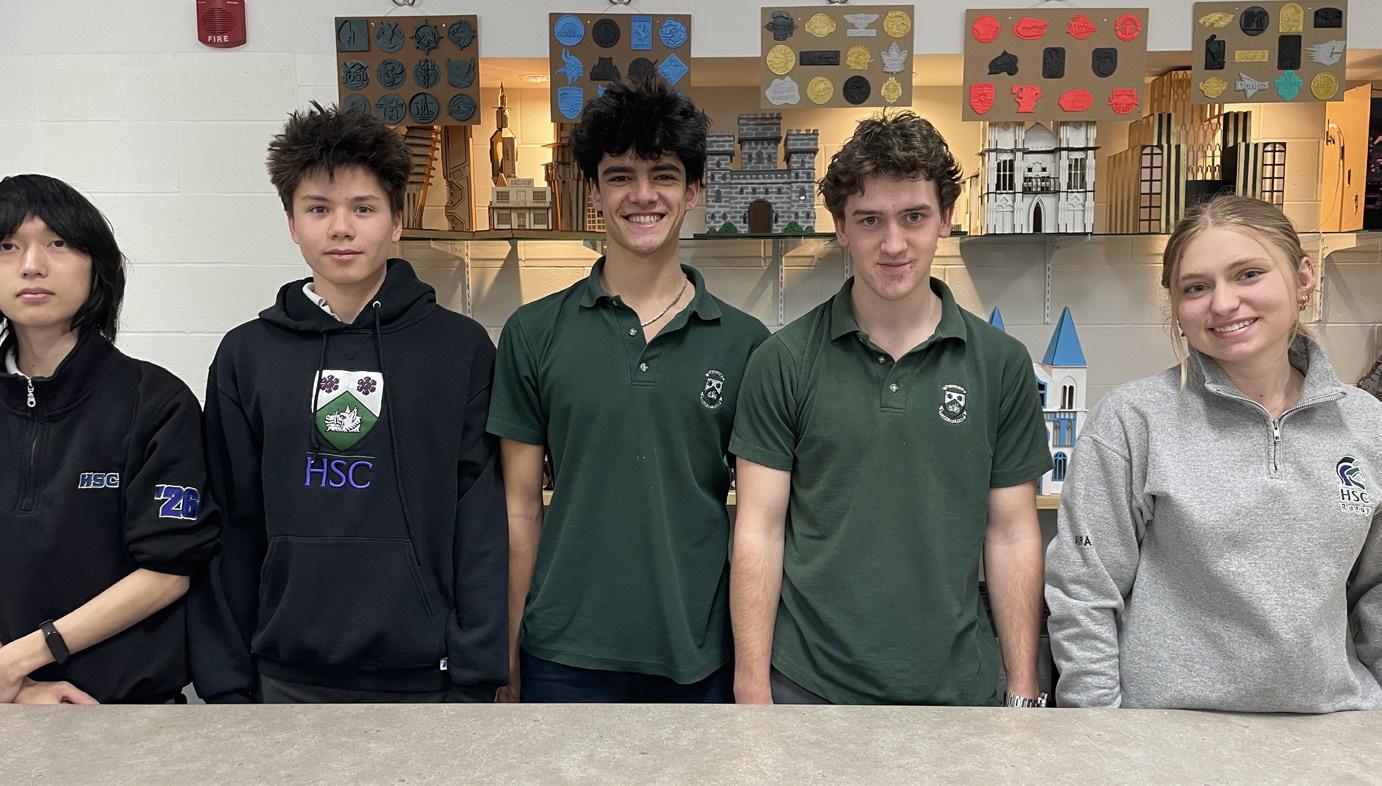
In the months ahead, the Campaign Crew will continue to serve as active representatives, aiming to inspire others to contribute their time and resources to this transformative project. Their journey proves that at HSC, being inclusive and connected means empowering students to be the architects of the very future they are preparing to lead.
MCMASTER LEADERSHIP DEVELOPMENT PROGRAM
Theme 1: Personalized Learning
Theme 4: A Whole College – Inclusive and Connected
Goal 1: Enhance the Learning Experience
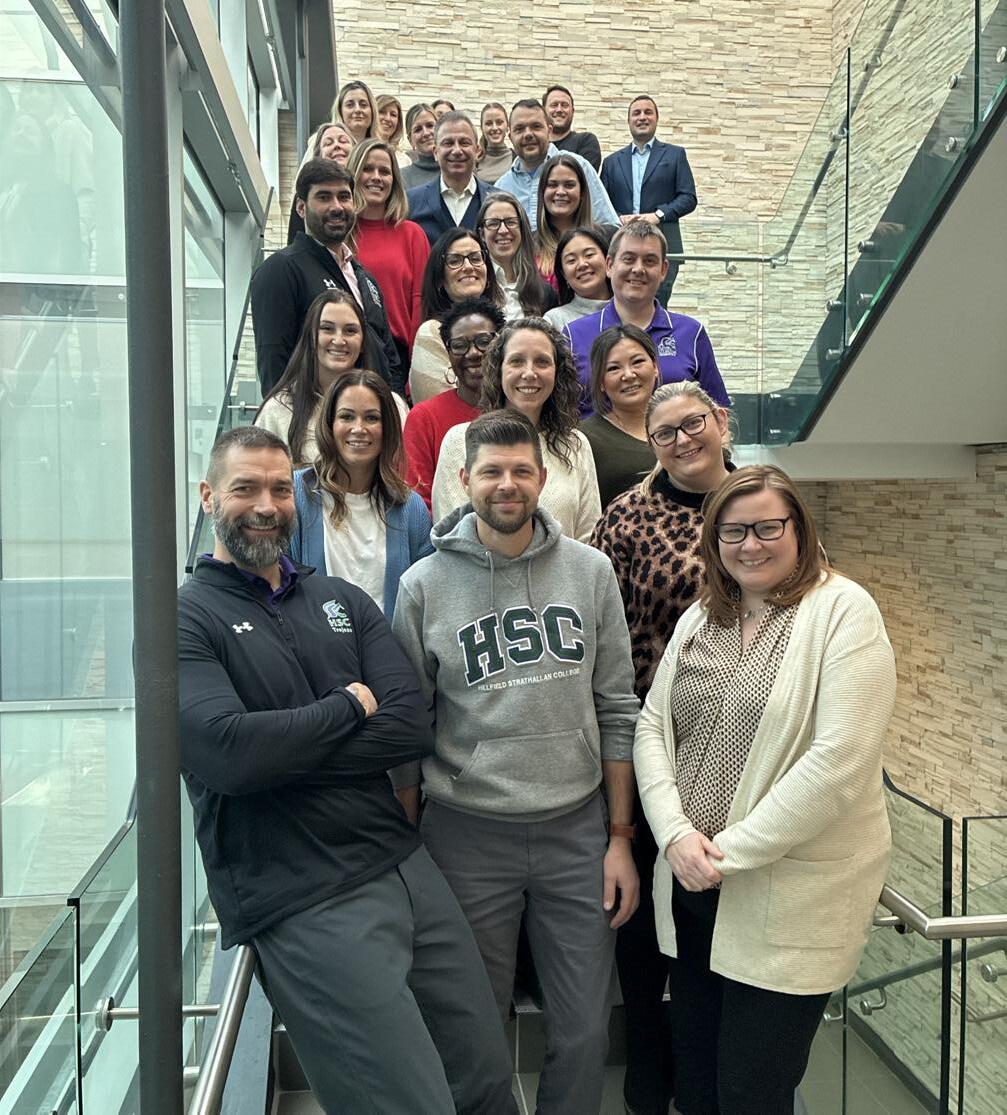
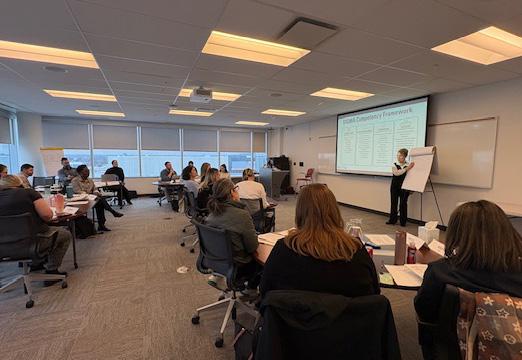
HSC launched a landmark leadership development program this year in partnership with McMaster University’s DeGroote School of Business Executive Education. Titled Leading with Purpose, this customized series signals a significant investment in HSC’s people and culture and marks the first time HSC has embarked on a leadership initiative of this scope, aimed at building a shared language of excellence across all divisions of the College.
The diverse cohort of 22 participants include representatives from all four schools, as well as the business office, communications, grounds, and maintenance. The program kicked off with a powerful session led by Dr. Nick Bontis, a globally recognized thought leader and proud HSC alumni parent. Dr. Bontis challenged the cohort to explore their “inimitability”—the unique, irreplaceable strengths each individual brings to the College. This focus on personalized learning allows participants to move beyond generic management theory to discover their own potential through self-assessment and reflection.
Spanning six facilitated modules, the program covers everything from strategic thinking to transformational leadership. Upon completion, participants don’t just
walk away with new skills; they become part of the DeGroote Executive Education alumni network and earn a formal digital credential from McMaster University. As Junior School Principal Shailau Spivak noted, the program’s strength lies in its tailoring: “The professors were selected specifically for their expertise as it relates to HSC. It’s an incredibly valuable course—one I wish I could have taken when I was first starting as a leader.”
By investing in the growth of its staff, HSC is ensuring long-term institutional sustainability and resilience. This program builds on the College’s established Leadership Competency Framework, proving that when we grow our leaders, we enhance the learning experience for the entire community. As our faculty and staff refine their ability to lead with purpose, they model the very values of confidence and integrity we seek to instill in our students.
GRADE 7 ART OF MATH INSTALLATION IN YOUNG
Theme 1: Personalized Learning
Theme 4: A Whole College – Inclusive and Connected Goal 3: Diverse, Inclusive, Equitable, Lifelong Community
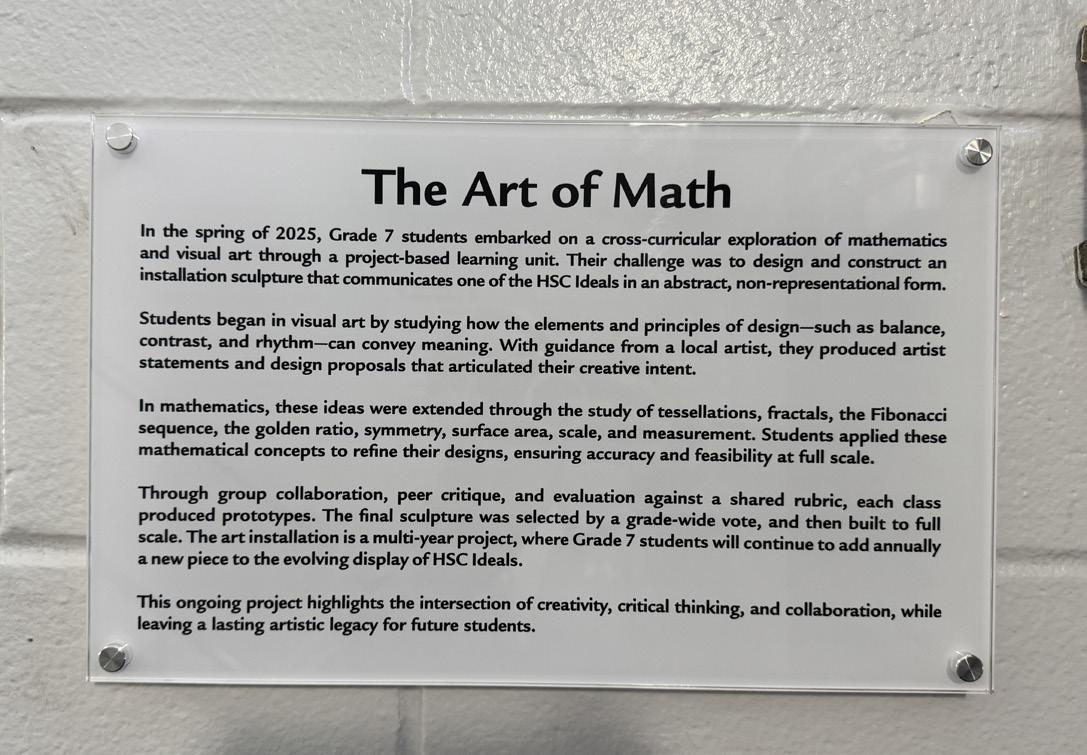
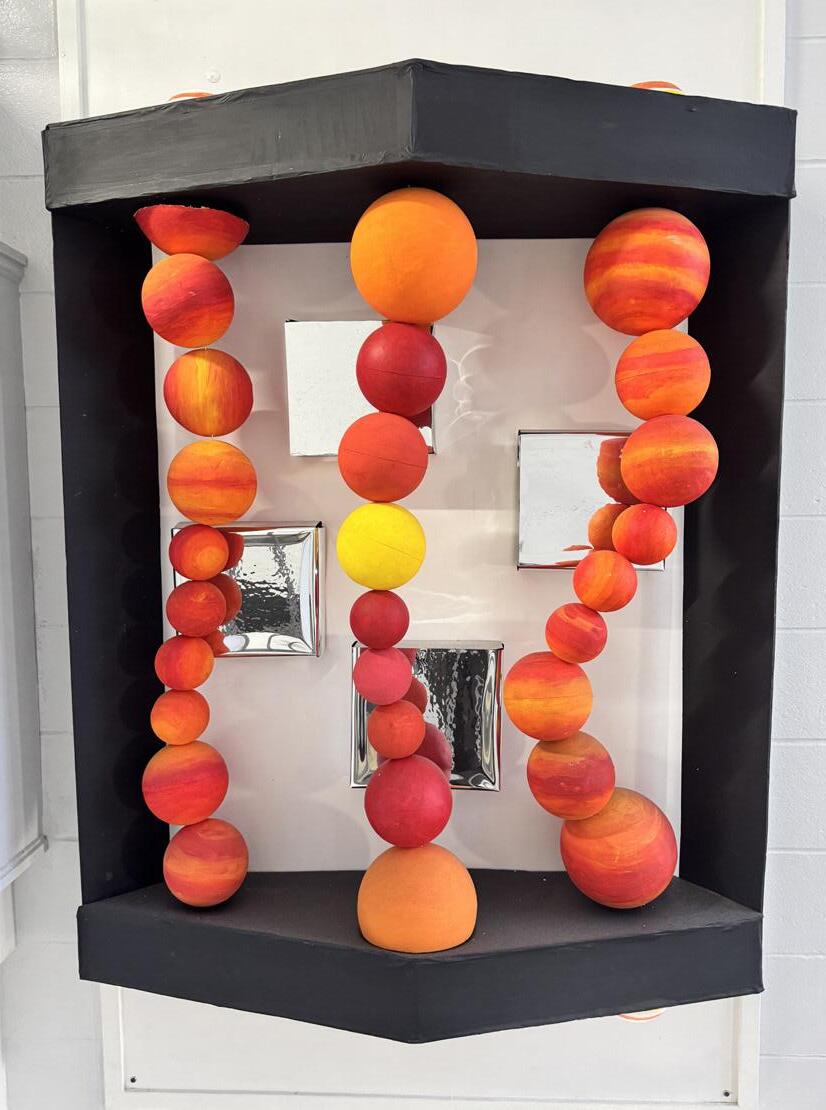
In the Middle School, the walls are beginning to tell a story that is as much about geometry as it is about identity. In the spring of 2025, Grade 7 students launched a multi-year, cross-curricular Project-Based Learning (PBL) initiative: The Art of Math. This installation transforms the abstract concepts of mathematics and the core values of the College into a permanent, evolving work of sculpture that celebrates our diverse, equitable, and lifelong community.
The project challenged students to communicate the HSC Ideals through non-representational art. For the inaugural piece, the grade chose to focus on Community. In visual art, students studied how balance, rhythm, and contrast convey meaning, working under the mentorship of a local artist to draft professional design proposals. Simultaneously, in mathematics, those designs were grounded in technical precision. Students applied concepts of tessellations, fractals, the Fibonacci sequence,
and the golden ratio to ensure their artistic visions were mathematically sound and feasible at scale.
This initiative serves as a model for the Learning Continuum, requiring intense collaboration and peer critique. Each class produced prototypes and defended their creative intent before a grade-wide vote determined the final design to be built to full scale. The result is a stunning installation in the Young building that serves as a physical manifestation of student voice and collective decision-making.
As a multi-year project, the Art of Math will continue to grow, with each subsequent Grade 7 cohort adding a new piece to represent a different HSC Ideal. Looking ahead to the next academic year, the installation will take on even greater significance as it incorporates a tribute to the College’s 125th anniversary. By intersecting creativity with critical thinking, the Art of Math ensures that our campus environment remains a learning space that reflects the brilliance and values of our students.
SENIOR SCHOOL CO-OP AND POST-SECONDARY OPPORTUNITIES
Theme 1: Personalized Learning
Goal 1: Enhance the Learning Experience
Personalized learning means recognizing that for many HSC students, the most profound lessons happen when classroom theory
meets real-world application. Established in 2019, HSC’s Cooperative Education Program has become a highlight of the Senior School experience, allowing students to engage with fields they are passionate about—from medicine and law to international business and engineering.
The program’s success is best seen through the lens of student growth. George Schneider took his interests global with a summer business marketing placement at The Faction Collective, a Swiss ski equipment design company. This
international exposure not only sharpened his professional skills but paved a direct path to his post-secondary journey at IE University in Spain. Closer to home, Charley Qin secured a competitive summer spot at HATCH, where he was one of the only high school students in a program typically reserved for university and grad students. This immersion provided him with firsthand insight into the rigours of engineering and a head start on his professional network. Similarly, Madeline Latinovich bridged the gap to the medical field through a research-intensive co-op in a University of Toronto program, gaining invaluable experience in the world of clinical inquiry.
These placements are made possible through a strategic, year-long partnership model led by Co-op Advisor Michele Sacchetti. Beginning each March, the process is highly curated, involving
student interviews, site visits, and supervisor coordination to ensure a “win-win” for both the student and the host organization. For our partners, hosting an HSC student offers a fresh perspective and a talent pipeline of motivated, eager-to-learn individuals who contribute meaningfully to their operations.
When HSC co-op students graduate, they have done more than just earn a credit, they have tested their skills in high-stakes environments, met field experts, and expanded their worldview.
As we continue to enhance the learning experience, the Co-op Program remains a vital tool in preparing students to navigate their future careers with confidence, resilience, and a deep understanding of their chosen path.
HSC’S MODEL UN CONFERENCE
Theme 1: Personalized Learning
Goal 1: Enhance the Learning Experience
Goal 3: Diverse, Inclusive, Equitable, Lifelong Community
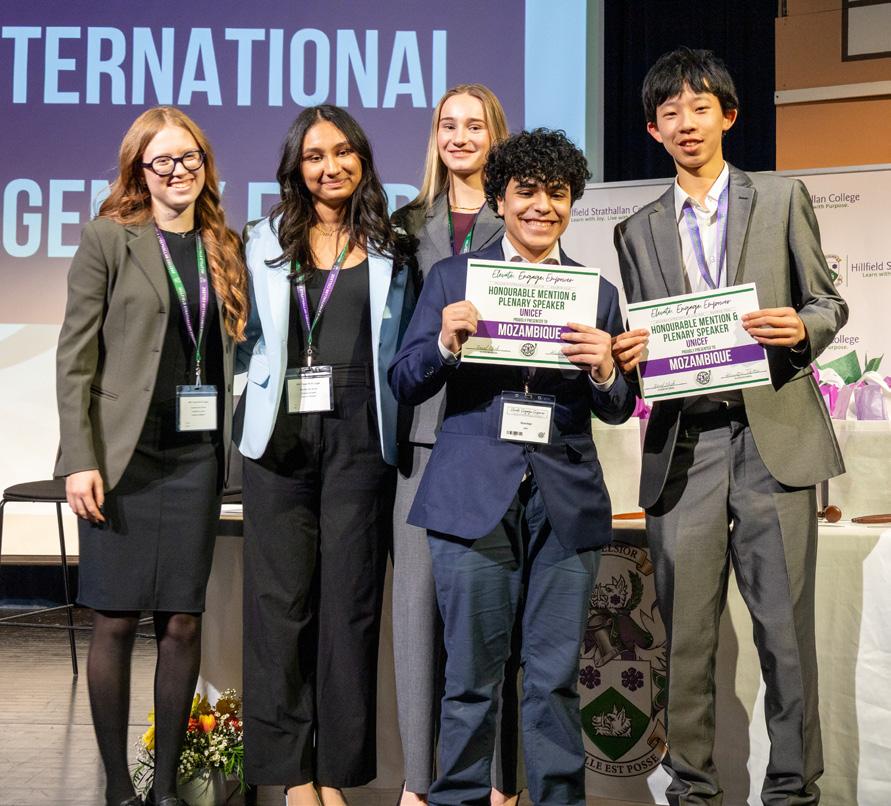
In February, the halls of HSC were transformed into a global stage as the College hosted its second annual Model United Nations conference. Guided by the theme “Elevate, Engage, Empower,” the event served as a masterclass in personalized learning, challenging students to step into the shoes of international diplomats, corporate strategists, and historical figures to solve some of the world’s most pressing issues.
The conference was powered by a unique partnership between current students and a dedicated group of alumni.
Grade 12 Co-Secretary Generals Pearl Naik and Kerrington Johnston led the charge, seeking to facilitate the same enthusiasm for diplomacy that has shaped their own HSC journeys. While students like Pearl and Kerrington managed the greater secretariat, alumni such as Kevin Zhang ’24, Ava Zanetti ’24, and Adelina Tsai ’23—many with experience at prestigious conferences like SSUNS and NHSMUN— returned to serve as Committee Directors.
This collaborative spirit was further enriched by opening remarks from Anne Givens, President and Co-CEO of Château des Charmes winery, and Leo Nupolu Johnson of Empowerment Squared, who provided firsthand insights into innovation, leadership, and the responsibility of global citizenship.
The committee offerings were designed to meet every student at their specific experience level, weaving together
a complex tapestry of global challenges. A unique highlight of HSCMUN II was the Board of Directors simulation, which moved from the floor of the General Assembly to the corporate boardroom. In a creative twist on traditional diplomacy, delegates sat as the Board for Château des Charmes, grappling with real-world strategic challenges ranging from soil content analysis to long-term financial diversification.
By providing this platform for handson, experiential learning, HSCMUN II empowered our students to find their voices and refine their negotiation skills. The weekend proved that when we engage student voices on global issues, we aren’t just simulating the future—we are preparing them to lead it.
AI AT HSC
Theme 1: Personalized Learning
Goal 1: Enhance the Learning Experience
Linda Watson, HSC’s Director of Technology Integration & Innovation, can remember the College’s methodical approach to first welcoming the internet on campus. “It reminds me of what we are doing now with artificial intelligence,” she explains. For Linda and the College’s AI Committee, this technology is nothing to fear. “AI is a powerful tool, and our job as educators is to make sure students know how to use it safely and effectively.”
At the heart of our goal to enhance the learning experience is the commitment to empowering each student with a personalized learning pathway. AI serves as a critical piece of this. Now in its second year, the AI Committee has transitioned from foundational policy-building to active curriculum integration. A key pillar of this rollout is Flint AI, a platform that Linda describes as a “walled garden”. “Like any software used at the College,” she explains. “We rigorously vetted Flint to ensure it provided safety and privacy protections for our students.”
In the classroom, Flint is being used to enhance–not replace–student ingenuity. In Senior School French, Michael Dean ’01 used AI to spark creative language use with a murder mystery activity while business students in
Maria Anthanasiou’s classes are challenged to run their industry analysis through Flint to understand the gaps in generative thinking. Across the College, faculty are redesigning assessments to emphasize process over final product, ensuring that AI remains a tool for brainstorming and differentiation rather than a crutch. This ensures students aren’t just using AI—they are learning to use it smartly.
HSC’s confidence in this space is backed by industry collaboration. Through CAIS’ AI Maturity Model, the College was assessed at the “Managing” phase of adoption, marking us among the leaders in Canadian independent schools. Our faculty are also leading by example: multiple staff members are pursuing CIS Microcredentials in AI, while four others recently attended the CIS Unconference, themed “Reclaiming the Human Future of Learning in an AI-Shaped World.”
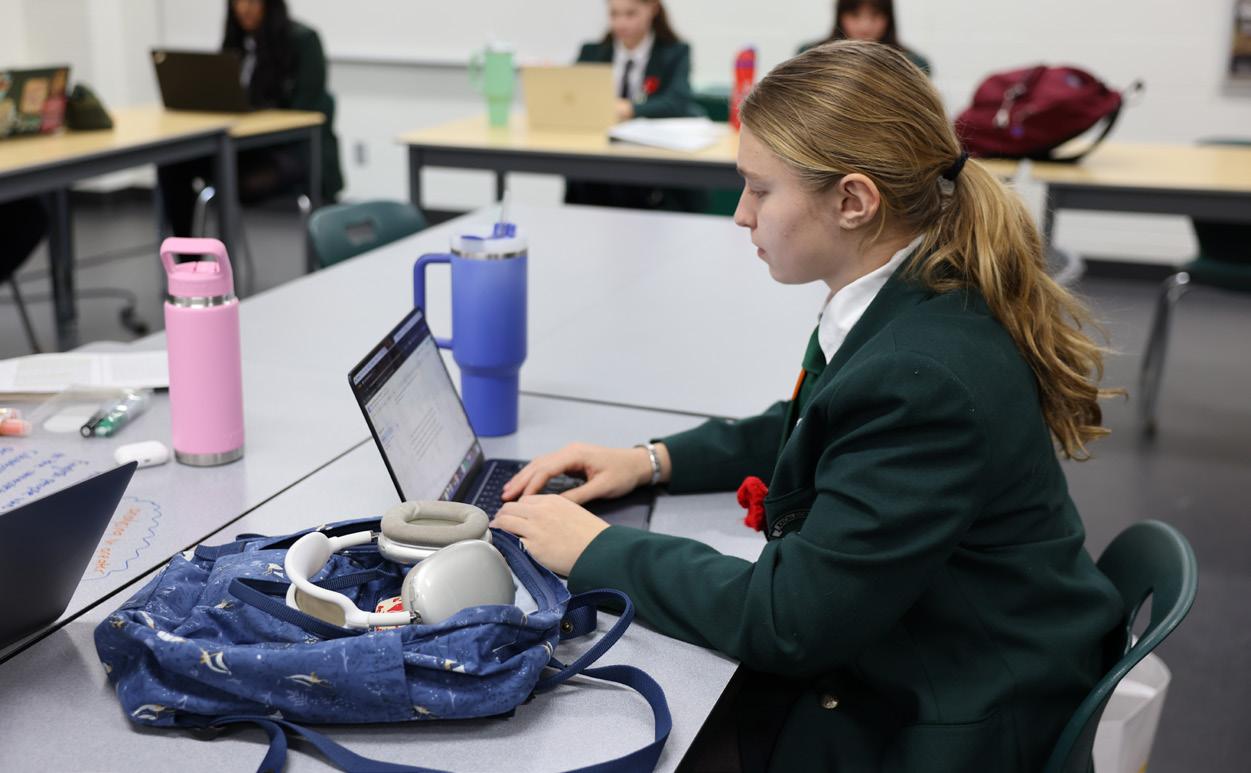
By leveraging AI to support personalized learning, we are not just teaching new software; we are providing vital opportunities for students to sharpen their critical thinking, problemsolving, and digital literacy. In this way, HSC ensures that while the tools of the classroom continue to evolve, the focus remains squarely on empowering students to navigate their world with confidence, integrity, and a clear sense of purpose.
THE RISE OF WRESTLING
Theme 3: Resilience and Wellbeing
Goal 3: Diverse, Inclusive, Equitable, Lifelong Community
Over the past several years, HSC’s wrestling program in the Senior School has seen remarkable growth under the dedicated leadership of teacher and coach Melissa Mancini. By creating a space that prioritizes both mental toughness and physical literacy, the program offers a place where students of all sizes and abilities are invited to build their confidence in a supportive, inclusive environment. The program’s commitment to excellence is exemplified by graduating student Nathan Nash, whose record-breaking Senior School career has captured national attention. A four-time OFSAA gold
medalist, Nathan made history by winning his first provincial championship as a Grade 9 student—an almost unheard-of feat in a sport where he was up against wrestlers 4 years his senior. “No one can touch him,” Melissa told a journalist with The Hamilton Spectator. With his sights now firmly set on representing Canada at the 2028 Los Angeles Olympics, Nathan stands as a premier example of HSC’s dedication to supporting student passions.
The program’s success is further fuelled by its community connections. This year, the coaching staff was bolstered by the return of Shareen Gulacha ’24, who is currently wrestling for McMaster University. By bringing her collegiate experience back to campus, Shareen provides current students with a direct link to the next level of the sport, embodying the mentorship that defines the HSC experience.
This spirit of connection went even further during the Hammerdown Wrestling tournament, hosted on campus. This highenergy event welcomed student-athletes from across the public and Catholic school boards and saw the triple gyms come to life with support from students, parents and faculty.
Melissa noted that as the matches began, one of the first comments heard from one of her female students was, “I want to wrestle next year!” It is this spark of inspiration—seeing our community come together to celebrate the courage of those on the mat—that ensures the next generation of Trojans is ready to find their own strength next season.
STRATEGIC PLAN
COMMITTEE
Marc Ayotte Head of College
Jason Caruana Deputy Head of College
Kathleen Collins Chair, Academic Strategy
Liz Davidson Director of Finance
Danielle Hourigan '82 Principal, Montessori School
Eleonor Kerr Director of HR and Operations
Linda Watson Director of Technology, Innovation and Integration
JOYFUL ENGAGED INCLUSIVE COMMUNITY
Hillfield
905-389-1367
strategy@hsc.on.ca
Our core mission is to develop joyful and engaged students who live life with purpose.
The best learning happens when students are happy to come to school, have opportunities to follow their passions, and participate in deep learning experiences that challenge them.
Joyful, engaged students develop strong relationships with their peers and with the caring adults who spark and support their learning both inside the classroom and beyond.
Their journey at HSC prepares students to live with purpose—to understand their world, inspire, lead, act, and make a difference in their own unique ways.