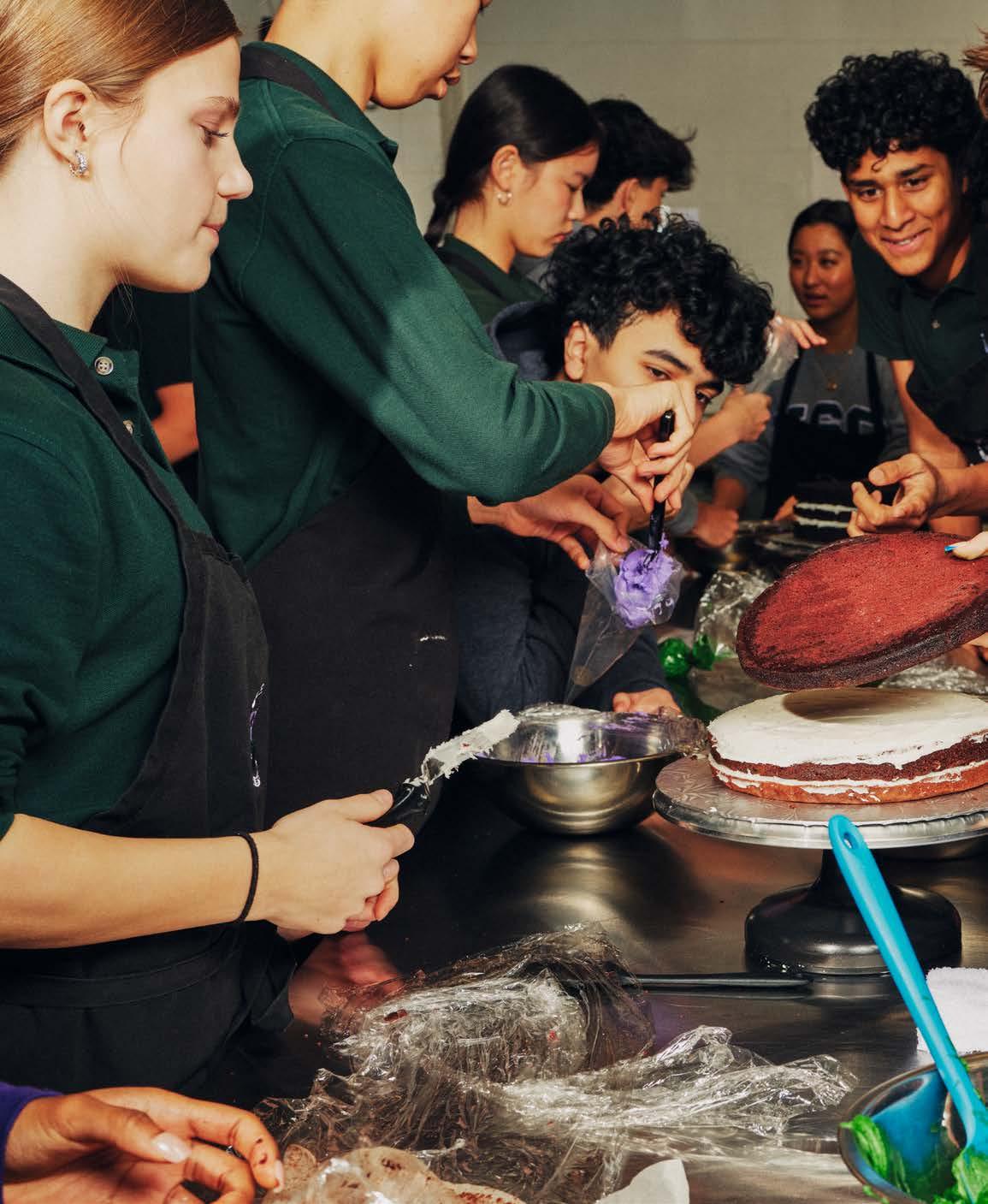
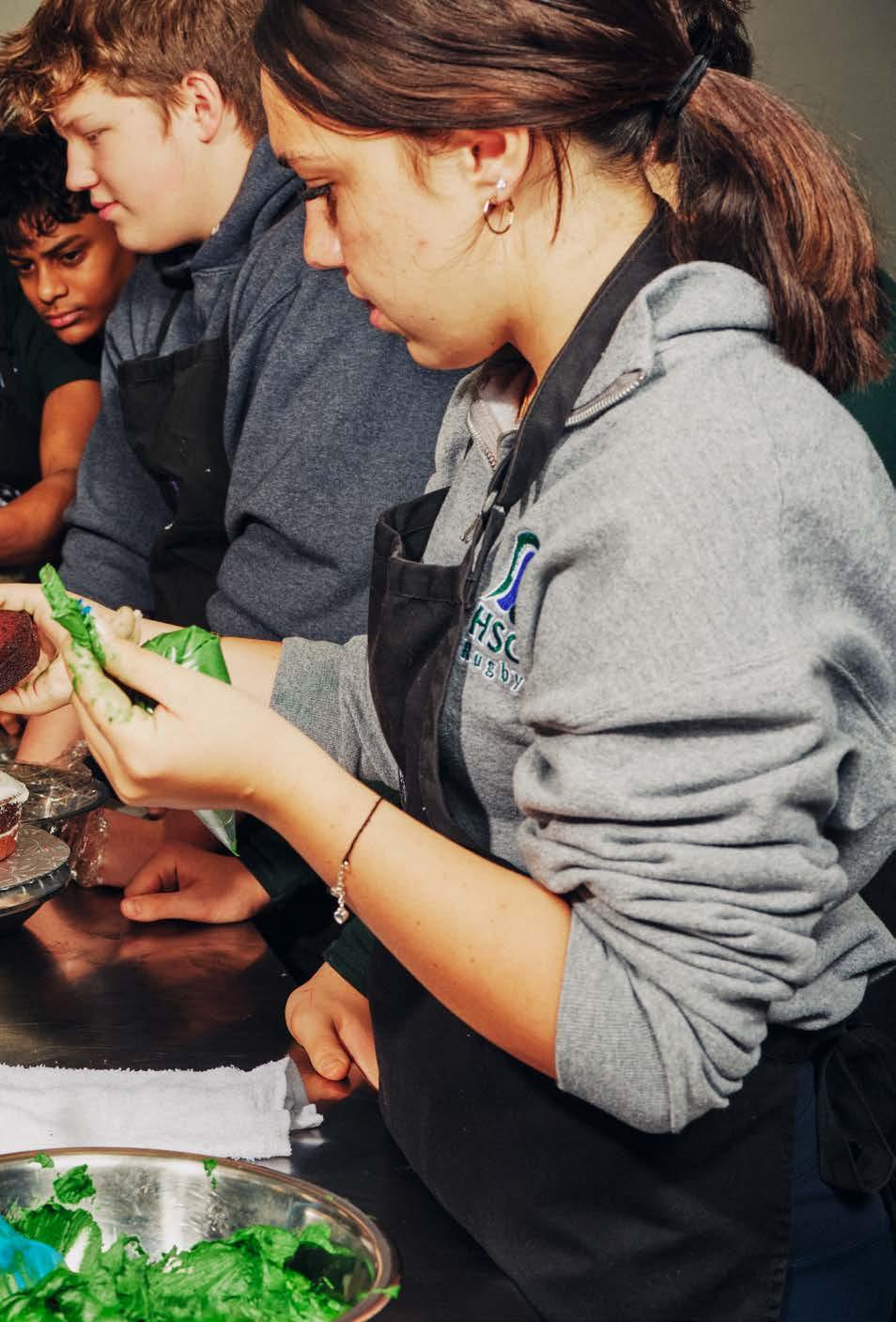
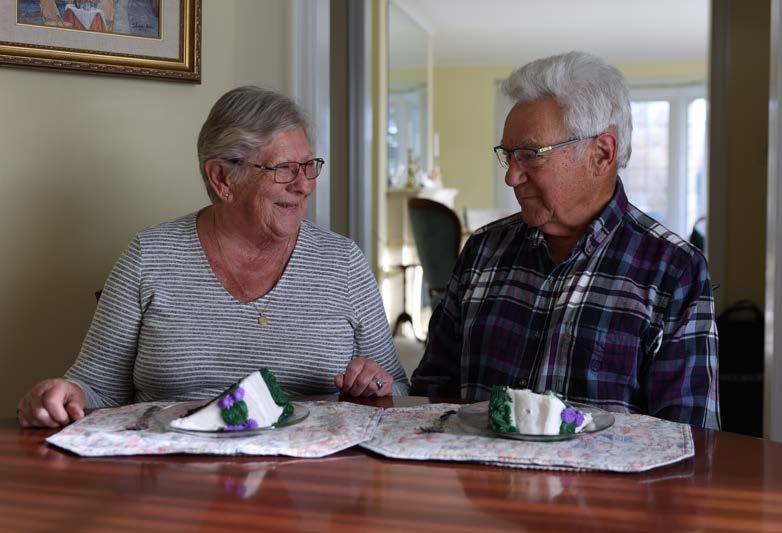
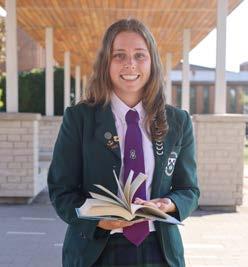
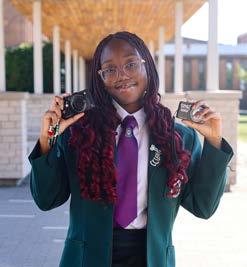
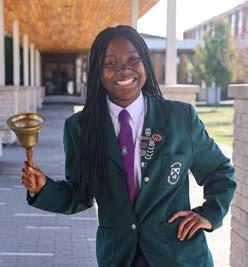
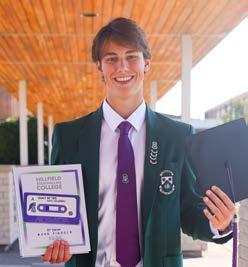
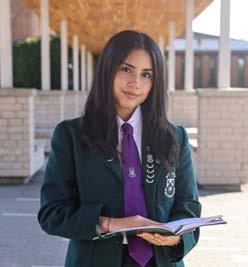
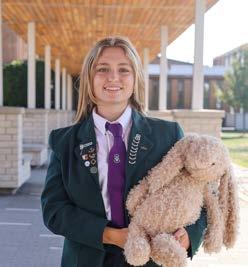
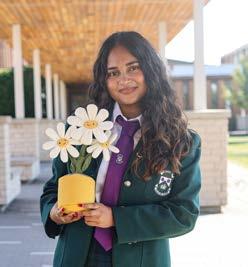
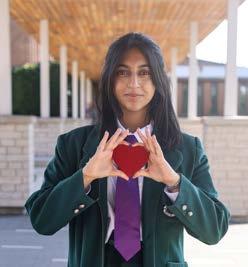
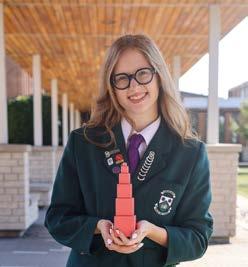
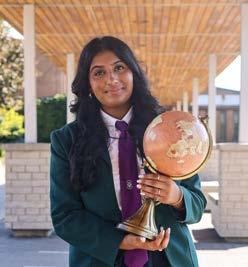
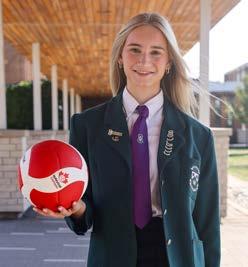
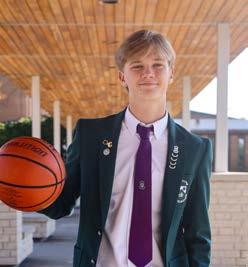
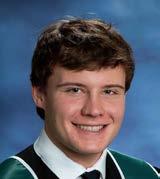
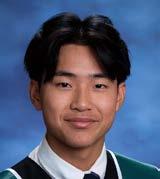
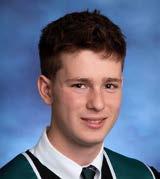
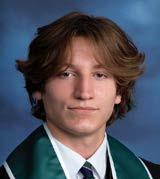
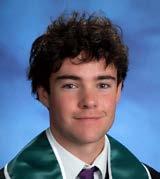
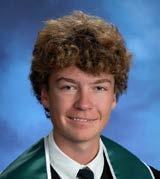
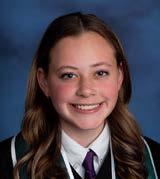
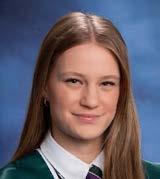
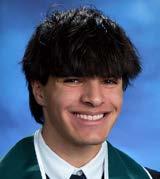
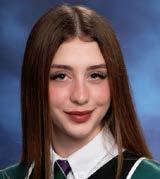
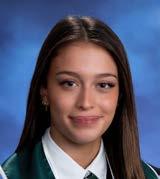
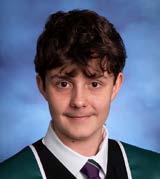
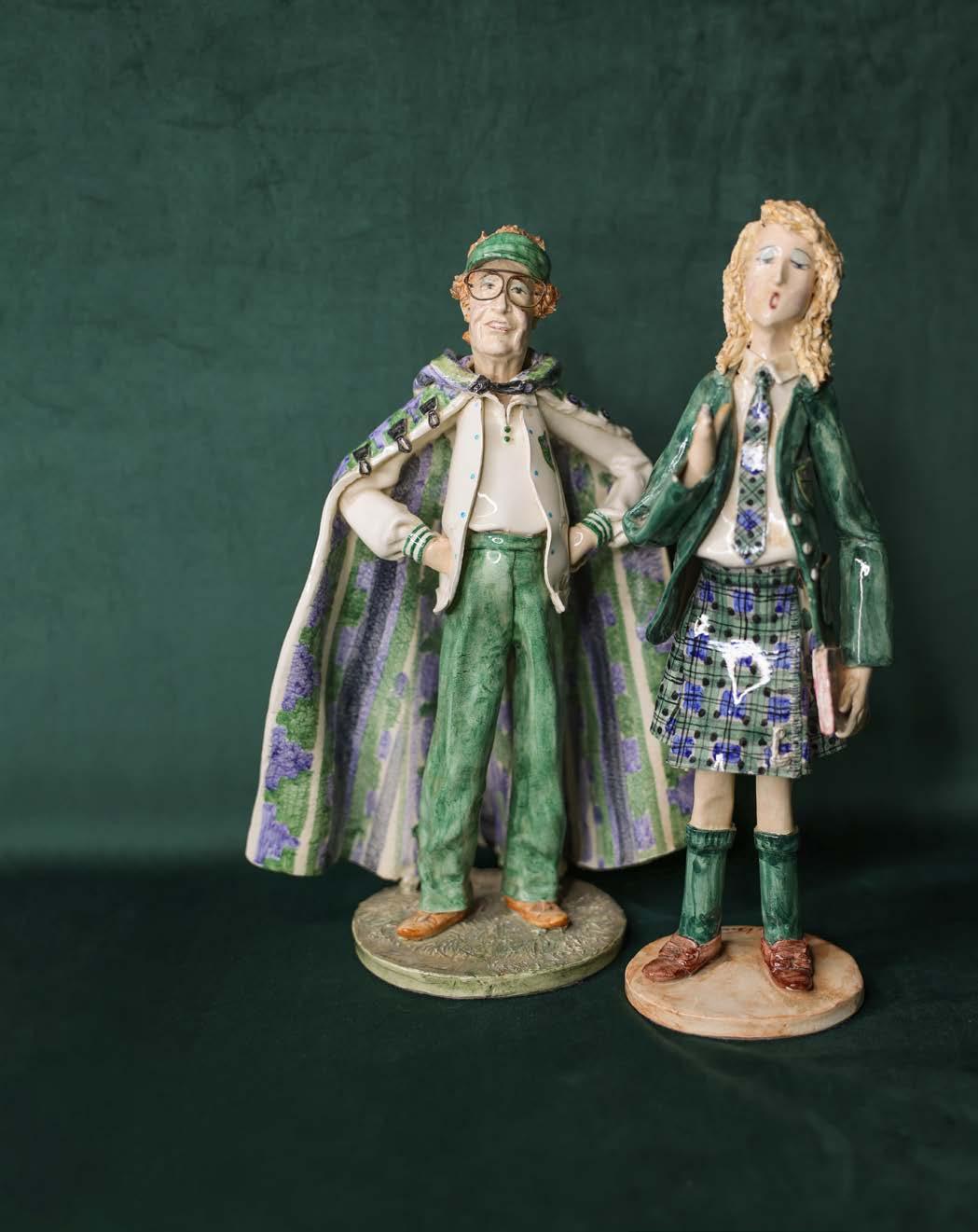
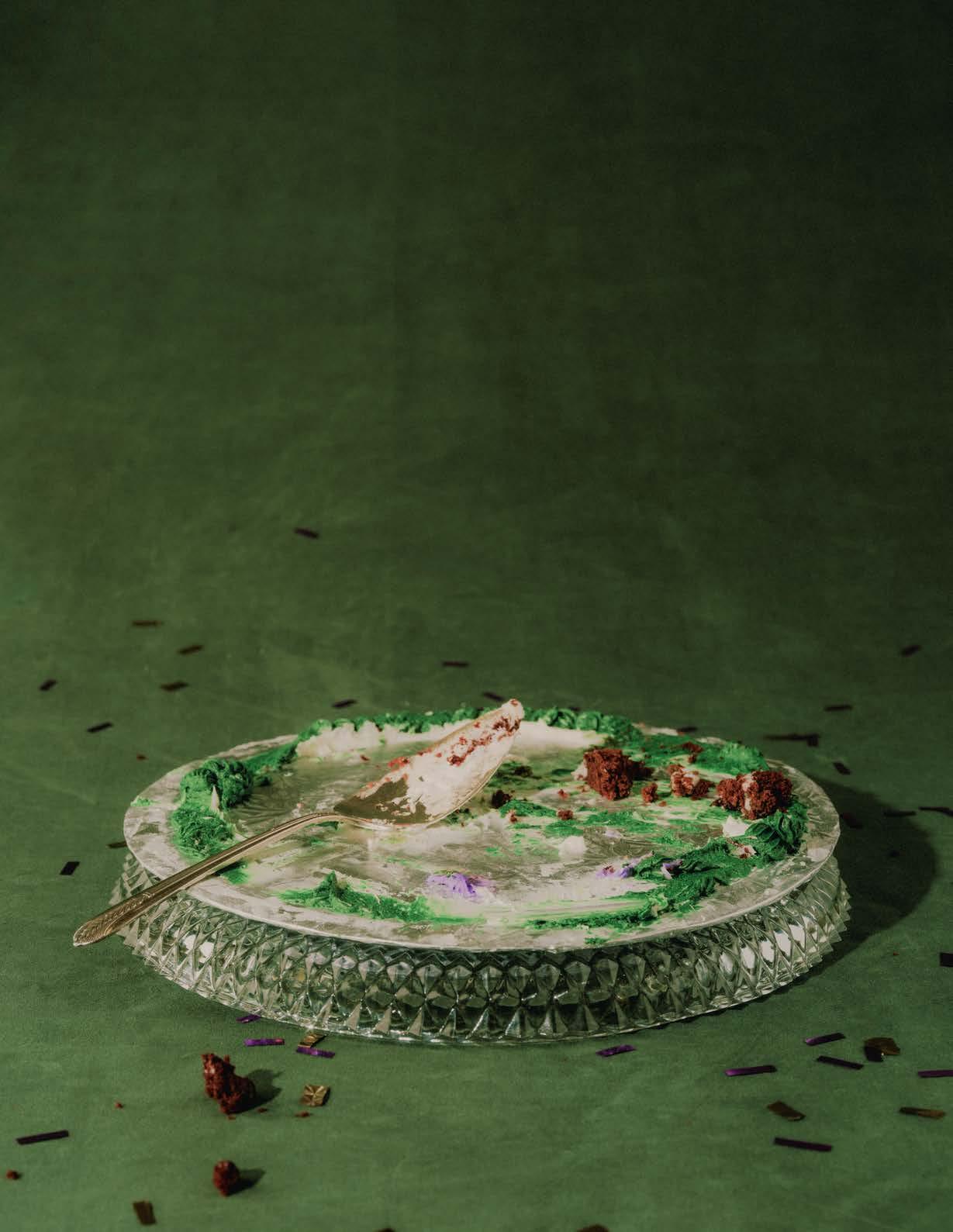
Our Senior School culinary arts class bakes the Cockeyed Cake recipe featured below.
Cockeyed Cake
Delicious and sinfully simple.
The recipe for this Depression-era cake was pulled from a collection of recipes compiled by the graduating class of 1992. Dig in!
Put into a sifter and sift right into a 9x9x2" greased pan:
1 1/2 cups sifted flour
3 tbsp cocoa
1 tsp soda
1 cup sugar
1/2 tsp salt
Make 3 grooves and put into the grooves: 5 tbsp cooking oil
1 tsp vanilla
1 tbsp vinegar
Pour 1 cup cold water over all. BEAT with spoon until nearly smooth and you can't see flour. Don't overmix.
BAKE at 350°F for 1/2 hour and top with favourite icing or just sift icing sugar over when cooled.
-Mrs. Mitterling
Photo Ashley van der Laan
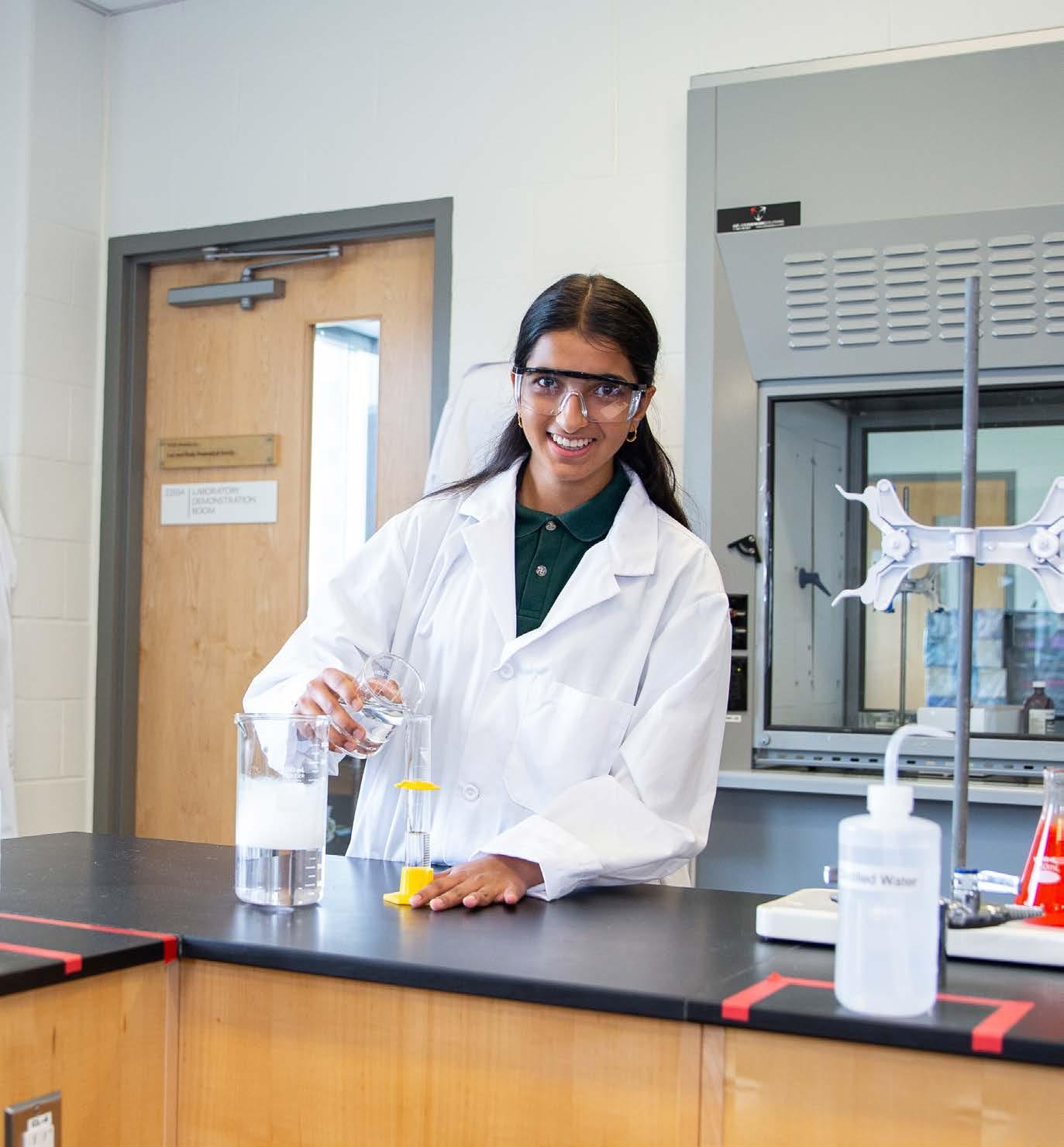
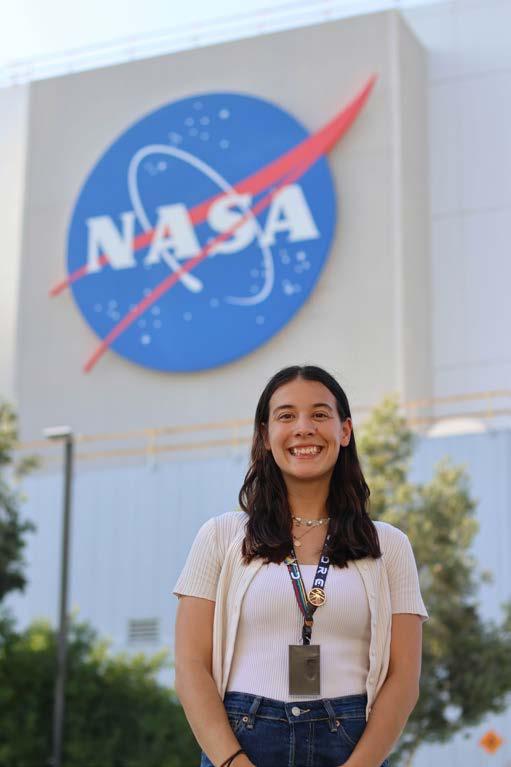
“Learning at HSC goes beyond the classroom. The experiential approach helped me build essential problem-solving skills, fuelling my passion for science and guiding my future ambitions.”
- Chaya’25
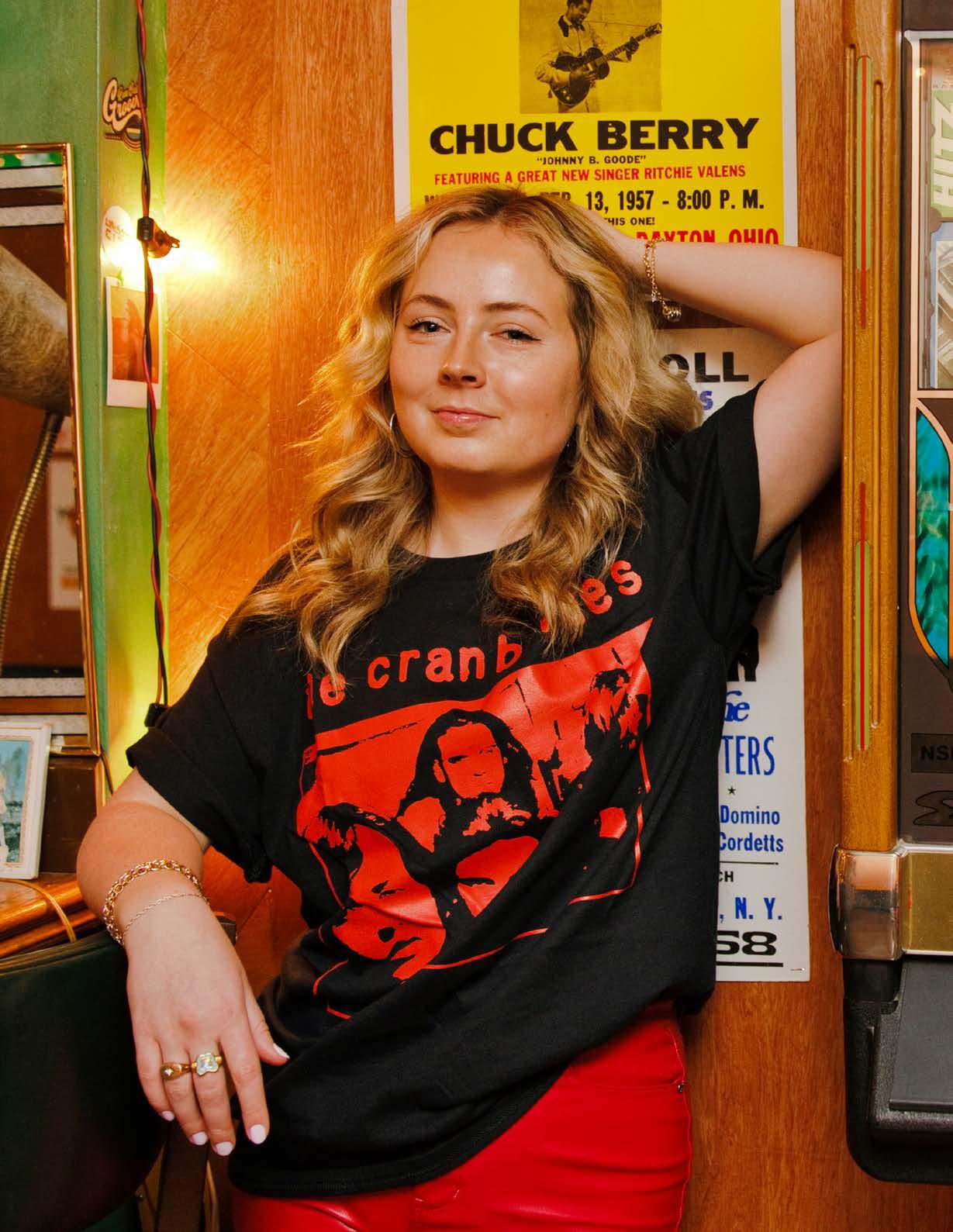
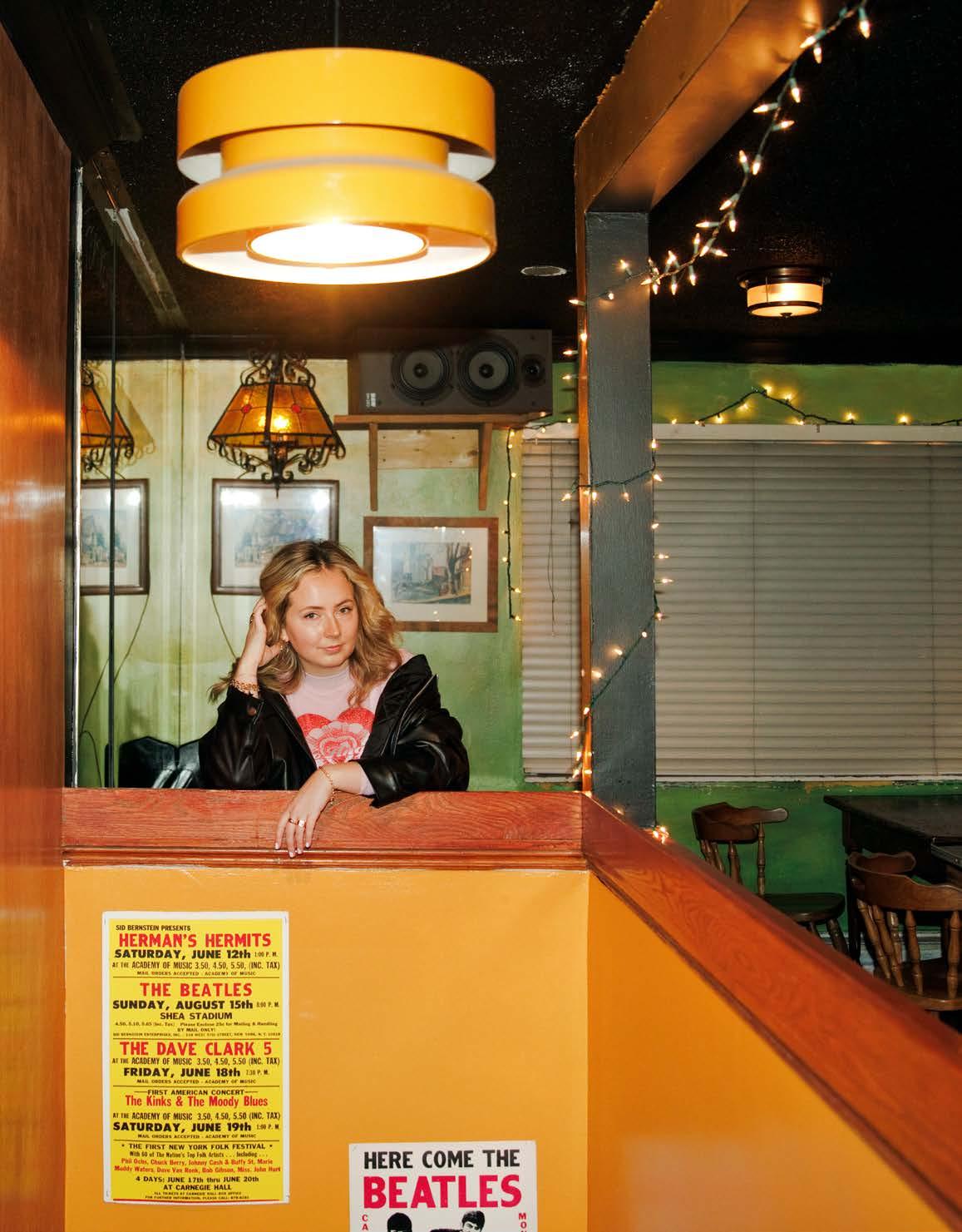
Zoë McMillan ’16 discovered
Editor-in-Chief
Katelyn Galer
Executive Editor
Alex Berry
Design and Production Hambly & Woolley Inc. www.hamblywoolley.com
Text and Photography
Alex Berry, Carmen Cheung, Bryan Derballa, Julia Drake, Jason Gordon, Vanessa Heins, Sarah Liss, Jennifer Little, Emily Malcolm, Vanessa Milne, Kelsey Rolfe, Ashley van der Laan
Cover By Ashley van der Laan
Printing
Barney Printing
Copyright 2026 Hillfield Strathallan College
HSC REVIEW is published by the Advancement and Communications Office of Hillfield Strathallan College. We welcome your comments and suggestions. Please contact communications@hsc.on.ca
Visit our website at hsc.on.ca
MASTHEAD
From blueprint to belonging.
The Future of HSC now loading
We are creating a purpose-built learning environment where every square inch is designed to help Middle School students find their voice and their footing. Your fingerprints are the final, essential layer of this vision.
Join us as we kick off the campaign with a night of inspiration, community and a first look at what’s next.
Tuesday, September 29, 2026
Steadfast and Storied
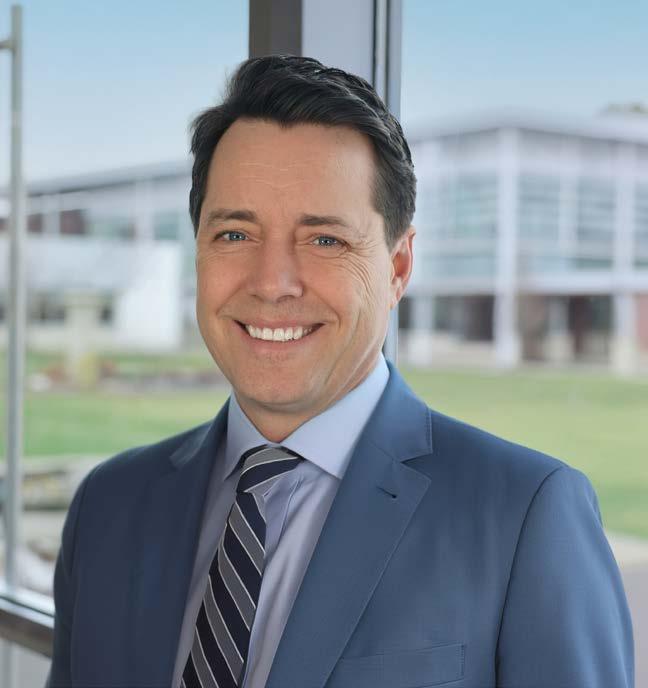
By Marc Ayotte Head of College
THE 2026–2027 school year approaches not just as a date on a calendar, but as a vantage point. It will be a year marked by celebrations of our 125th anniversary where reflections on our storied history will inspire plans for an exciting future. Like any institution of our age, HSC has never been defined by standing still. Our journey has been one of constant evolution—a refusal to rest on past achievements in favour of imagining what will best serve our students in the years and decades ahead.
This year, we are embarking on a defining phase of our Campus Master Plan: the creation of a new entrance off Garth Street. Much like the Centennial Gate on Fennell Avenue marked our 100th year and ushered in the Michael G. DeGroote Senior School, this new gateway signals the beginning of another transformative chapter. It reflects a bold vision for how future generations of students and families will experience HSC. We are also advancing plans to build the next
HSC has never been defined by standing still. Our journey has been one of constant evolution—a refusal to rest on past achievements in favour of imagining what will best serve our students in the years and decades ahead.
defining space in our history—a new, state-of-the-art Middle School. Through extensive community consultation, it became clear that this is our most pressing priority. HSC’s learning landscapes must keep pace with the evolving way students learn, and this new facility will not only meet the needs of learners at a critical stage in their development, but will also allow our program to grow and flourish.
Achieving our vision requires the same spirit of self-sufficiency that defines HSC’s history. When we seek to improve our College, we do so together. This fall, we will launch the most ambitious capital campaign since the Transformation HSC initiative, inviting our community to once again build on a legacy that unlocks potential for generations.
Encouraged by the success of our last campaign—and by the profound impact those spaces have had over the past 15 years—we are confident in our community’s ability to come together once again in support of our students and our future.
That commitment to continuous improvement is evident throughout the pages of this issue. From the curiosity of our Junior School students to the leadership of our alumni, the strength of HSC lies in its people. Their potential is a currency that never diminishes. I invite you to explore these stories, which serve as a living testament to the vibrant and enduring community we are proud to build together.
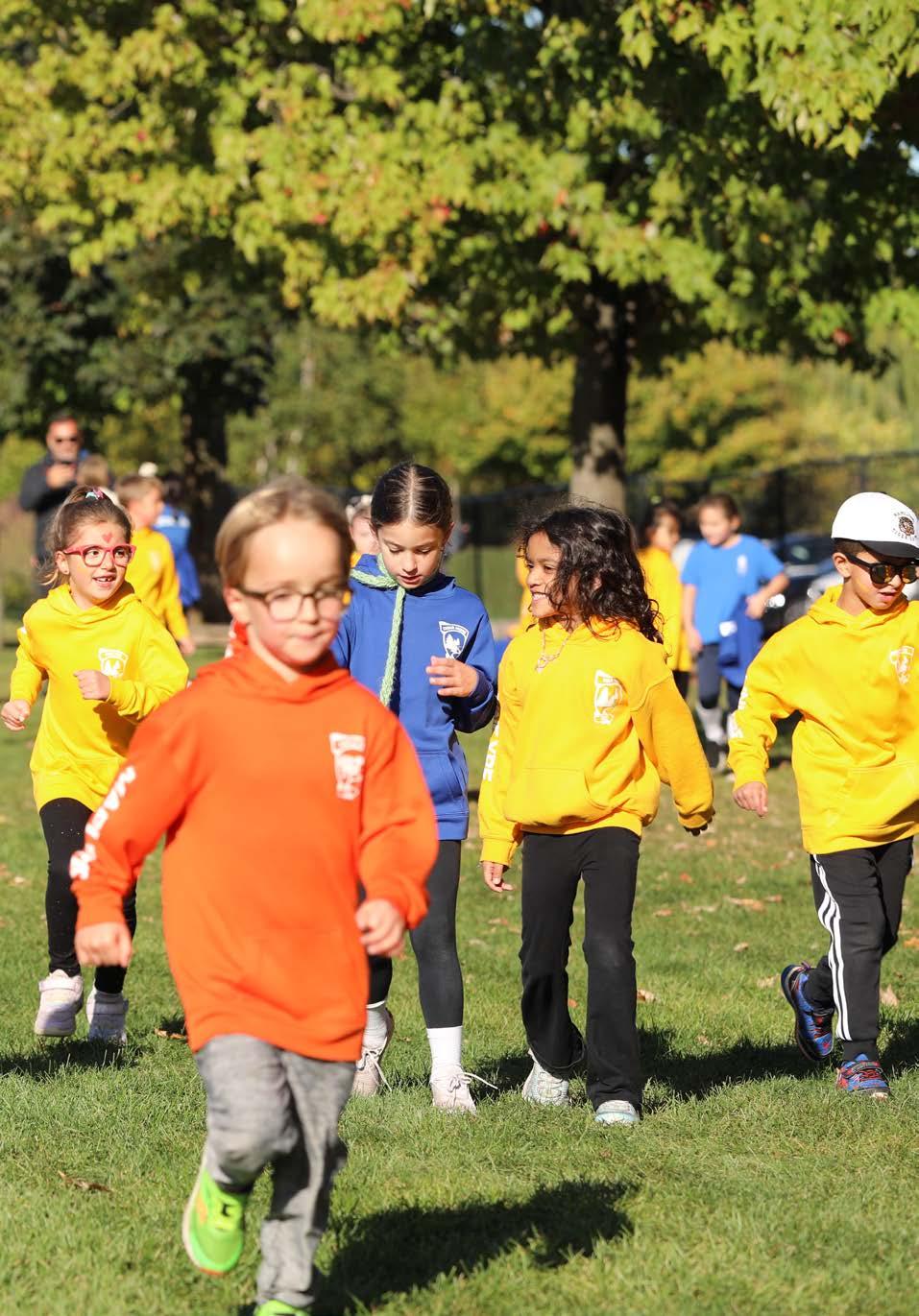
House spirit shines during the annual Turkey Trot race where funds raised go to support McMaster Childrenʼs Hospital.
4 Schools, 1 College, Endless Joy
Step into our world. At HSC, joy isnʼt just a feeling, it’s the foundation for students to build the relationships and purpose they need to lead, inspire and make a difference. These stories capture our students following their passions and diving into the deep learning that defines the HSC experience. Together, we are four schools, one College and a lifetime of impact. All
Photo by Emily Malcolm
More
than a
Name
When taken into students’ hands, Chapel becomes so much more than an assembly.
Stories by Alex Berry
Everyone has memories of gathering for a school assembly. Maybe you were seated cross-legged on the floor of a gymnasium, or if you were lucky, snagged a spot on one of those hard plastic chairs with heavy metal legs. For many in our community, those memories take place in HSC’s Page Gym, under the banner of Chapel.
“When I was a student here, Chapel was three days a week,” recalls Nora Hammond ’98, director of arts and the current faculty advisor for Chapel. “It was only 15 minutes long but it followed
a rigid structure, with the Head of the College setting the script.”
Today, the gathering looks, and sounds, very different. Set in the Senior School's King, Siggi and Spallacci triple gym, the weekly event remains a cornerstone of College life. It has evolved from a topdown recitation into a vibrant, studentdriven celebration. This evolution raises a question often asked: In a pluralistic, non-denominational school, why do we still call it Chapel?
Though HSC has never been formally attached to any religious denomination, it was Helen Collinson, the wife of founder John H. Collinson, who carried the cultural traditions of English boarding schools to Highfield. Raised by a Church of England minister, Mrs. Collinson viewed religious instruction as inseparable from character development. This perspective broadened significantly during HSC’s amalgamation in the 1960s.
Whole College
Photos by Emily Malcolm
As the College modernized, the administration moved to decouple character education from doctrine, reimagining the gathering as a time for collective reflection rather than religious instruction. Colonel John Page, in his early tenure as Head of College, famously noted that Chapel’s intent was “to help foster a spirit of reverence and remembrance, and to give the school that spiritual centre to its life which is so important.”
Decades later, that sentiment remains an anchor of the event. The name stays not as a religious declaration, but as a signal of intent. “There’s a lot of weight in the name,” Nora recognizes. “It reflects the gravitas of bringing four schools together, and for many, the name is sacrosanct.” While the content has evolved to reflect HSC’s diverse reality, the name serves as a handshake between the alumni of yesterday and the students of today. It signals a time, place and space that is unique from a standard assembly and offers a moment of pause that is reflective rather than worshipful, and inspirational rather than religious.
What was once a quiet recitation is now a joyful gathering described by Nora using “collective effervescence.” Coined by sociologist Émile Durkheim, the term describes the distinct energy when a community gathers for a shared purpose. “It’s the feeling of being part of something way bigger than yourself,” Nora explains. “It’s what gives our students that spark of feeling like they belong.”
Achieving that feeling requires ownership. Today, students have taken the reins, with Chapel Prefect Tami Ayibiowu at the helm. “I can remember when I first came to HSC in Grade 9, sitting in Chapel thinking, ‘One day I’m going to be up there leading this,’” Tami says.
A natural in front of a crowd, Tami views the weekly gathering as a canvas for student talent. “I love getting to collaborate with students across all schools on topics that are important to them.” The result is a weekly agenda that acts as a mirror
Fast Facts
The 2015-2016 school year saw the first designated Chapel Prefect. Prior to that year, only the Head Prefects had designated titles. The Chapel Prefect has been at the helm of the assembly for 10 years.
to the HSC student experience. On any given Friday morning, the Triple Gyms might vibrate with the boisterous cheers of House captains sharing news from the week or applause for a recent athletic championship. Moments later, students might settle into a hush while they watch an arts performance, ranging from classical piano and choral singing to contemporary dance.
Crucially, Chapel allows students to serve as educators for their peers. The program often features student-led presentations on their own traditions, days of significance or cultural celebrations, moving beyond textbooks to bring festivals such as Diwali or Lunar New Year to life through personal storytelling and performance.
From the Media Arts Prefect projecting the slides and student photographers capturing performances to tech classes running the audio system, the production behind every Chapel is equally studentdriven. “The ultimate example of the community we want to see is kids taking ownership,” says Nora. “It’s not a teacher standing in front of them. It’s kids seeing other kids and going, ‘Oh, this is their thing, and I can share mine, too.’”
For Tami, the true metric of Chapel’s success isn’t found in the Triple Gyms, but in the hallways. “I’m always so excited when I walk by a little kid and they know my name,” she laughs. “I’m making connections I otherwise wouldn’t have made.” It’s in those interactions between a graduating senior and a preschooler that the true definition of HSC’s Chapel can be found. Chapel is a space where the noise of the week fades, and for thirty minutes, four schools become one community.
Top: A team of volunteer students perform a dragon dance during Chapel in celebration of Lunar New Year. Bottom: Prefect Tami Ayibiowu brings energy and excitement to each weekʼs Chapel.
Growing Up Graceful
The Montessori curriculum of respect and community creates the foundation for academic success and future citizenship.
WALK INTO A MONTESSORI CLASSROOM and you will hear a distinct hum. It isn’t the silence of a library, nor is it the chaos of a playground. It is the sound of a community at work. On the floor of one Casa class, a student is building words with the Moveable Alphabet, carefully spelling out “C-R-US-T.” Another student walks by, noticing the sprawling work on the mat, and carefully navigates around it rather than stepping through it.
To an outsider, this moment looks like simple politeness. Principal Danielle Hourigan ’82 knows it’s more than that. “Each classroom is its own community,” Danielle explains. “And just like a town or a country, there are guidelines for how we coexist.” In HSC’s
Montessori School, those guidelines are informed by the Grace and Courtesy curriculum.
Within the Montessori method, social mechanics are taught with the same explicit instruction as math or language. Teachers give lessons on how to tuck in a chair, how to interrupt politely, and how to greet guests. But the why is the most important part.
If a student fails to return the Golden Beads correctly, another child’s learning is impacted. “That is the crux of it for me,” classroom teacher Claire Craig explains. “It’s the act of doing it for the next person. It’s not for the next time you get to do it.” The students learn early on that their personal growth is inextricably linked to the wellbeing of the group.
HSCʼs Montessori School Promise is grounded in the Seven Grandfather teachings of the Indigenous community.
I promise...
To always speak from the heart;
To build new knowledge so I can understand more;
To speak the truth to myself and others;
To be respectful of everyone, ourselves, nature, animals;
To be considerate of our differences and treat everyone as equals;
To have the courage to do what is right;
To think of the feelings of others and think before I speak;
To bring peace to all.
This social curriculum is not separate from the academic one; it is the prerequisite for it. By design, classroom materials are limited, helping the curriculum move from abstract theory to daily practice. When a child wants the polishing cloth and another student is using it, they must navigate that social interaction, receiving explicit lessons on how to handle the wait. They must practice patience, negotiation and respect for their peer’s concentration.
While Grace and Courtesy is as old as the Montessori method itself, HSC’s faculty has bridged its traditional practice with the modern educational framework of CASEL (Collaborative for Academic, Social and Emotional Learning). By integrating the five core competencies—self-awareness, self-management, social awareness, relationship skills and responsible decision-making—the school is giving students the technical language to describe what they are practicing.
“Now, we are giving them the language so that when they move to Middle School, they understand that ‘waiting your turn’ is actually ‘‘self-regulation,’” Danielle says. But vocabulary is only half the equation. The other half is observation.
In true Montessori form, the adults in the room are the primary lesson. “How they speak to the children is exactly how they expect the children to speak to each other,” Danielle emphasizes. “It is a twoway street for respect.”
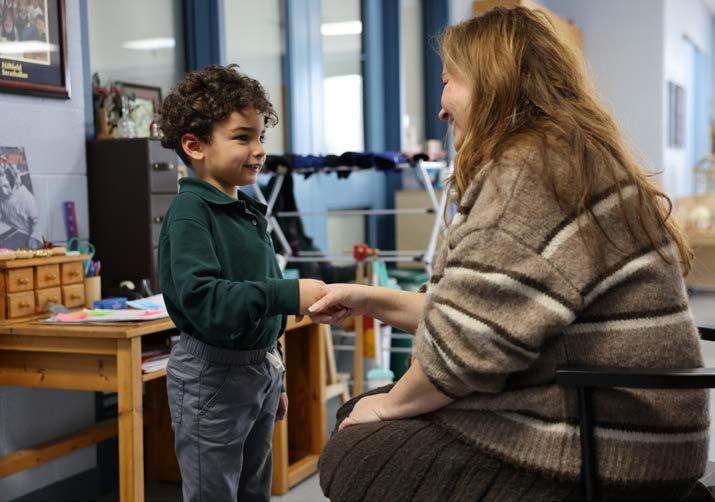
This modeling happens in moments big and small. It happens at the door every morning, where teachers shake the hand of every student. It happens when a five-year-old puts on an apron, brews tea with mint from the garden, and offers it to teachers and guests. And it happens during community celebrations. Whether it’s Lunar New Year, Ramadan, Christmas, or the much-loved Caravan, the goal is to expose children to the diversity of their neighbours.
In an era increasingly defined by screen time, algorithmic polarization, and remote interaction, the ability to read a room, negotiate a conflict face-to-face, and empathize with a peer is becoming a rare and premium asset. “Technology will come and go,” Danielle says. “but human beings need to feel a sense of belonging and connection to a community.”
By the time students graduate, they carry these skills into university labs and corporate boardrooms. They know how to collaborate, how to disagree respectfully, and how to work independently without disrupting the whole. “We are building future global citizens,” Danielle explains, “but we start in the microcosm.”
by Alex Berry
Each morning, students greet the day and their teachers with morning handshakes and meaningful connection.
Montessori School
Photos
Learning to Think
A new teaching strategy in Junior School is empowering a generation of problem solvers who aren’t afraid to get stuck.
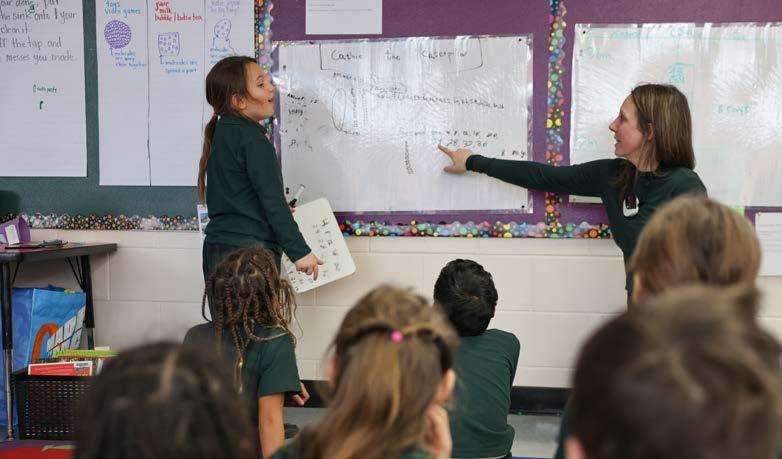
BY PAIRING ITS FLEXIBLE learning spaces with a research-backed framework for resilience, the Junior School has deepened its culture of active inquiry. Students are scattered across the classroom, standing at whiteboards and huddled in groups, debating, scribbling and erasing. They aren’t being taught, they are learning to think.
It is a subtle shift inspired by the Building Thinking Classrooms (BTC) research of Dr. Peter Liljedahl. “When I read his book, I saw how these strategies had been tested over 15 years,” says Jackie Birch, Grade 2 teacher and learning landscapes coordinator. “BTC offers a framework for developing the types of skills these kids are going to need for future jobs.”
The philosophy is simple: Education shouldn’t be about students memorizing the teacher’s lesson. It should be about creating a space where students are empowered to grapple with problems, learn from each other and build their own understanding. “This approach offers mobility of knowledge,” Jackie explains. “I shouldn’t be the only person that has the answer. The students should be the ones finding their way to it.”
The Grade 3 class of Kavit Puri ’96 has felt the benefits. “My partner shared their way of doing a math problem,” explained Ayla Ghosh. “And once I saw that, it actually helped me a lot.” Ayla’s enthusiasm is by design. Among the pillars of the framework is the use of random groups. Whether it’s drawing playing cards or grouping by Taylor Swift albums, students find themselves working with new partners daily. It is a strategy that does more than just shuffle the seating chart, it eliminates social barriers.
“It takes away the social stress for students of ‘Who’s going to pick me?’” notes Kavit during a faculty meeting. Once grouped, students disperse around the classroom and set up at one of the various nonpermanent writing surfaces to work on their problem. Whether it’s a whiteboard, window or wipeable desk, the fact that the surfaces are easily erasable lowers the stakes. “Students feel more confident to try out an answer because, even if it’s not right, they know it can be
6Six Junior School faculty members participated in Peter Liljedahl's five-session workshop through Rocket PD, helping to bring the 14 Building Thinking Classrooms practices to life in Junior School.
erased,” adds Jackie. Research also shows that students learn better when they can move around.
What started as a book club read has gained momentum among Junior School faculty, with more classrooms adopting the BTC method in daily lessons. Veterans of the methodology, like Jackie, have helped refine the practice, supporting training and professional development for newcomers eager to apply the model after seeing its success.
“Coming out of COVID, we noticed a trend in learning where students had a ‘tell me how to’ mindset,” recalls Junior School Principal Shailau Spivak. “BTC provides strategies that dismantle dependency.” By assigning roles, like the ‘scribe’ who can only write what their partners say, students are put in safe, sometimes uncomfortable situations. “We’ve seen students who would normally dominate the conversation learn to listen,” adds Shailau. “This gives an opportunity for the quieter students to find their voice.”
And the students understand the bigger picture. “Working with new people is important,” says Grade 3 student Ori Rabinovich. “When you become an adult, you’re going to have to communicate with so many different people.”
And while the strategies initially apply to mathematics, the Junior School faculty are seeing the benefits ripple across the curriculum. It’s become a culture where getting stuck isn’t a failure, rather it’s just part of the process. “Students’ ability to explain their thinking has come a long way,” Jackie reflects. “Before BTC, they’d just write down the answer, but now they can explain how they got to it.”
In prioritizing thinking over passive listening, the Junior School is defending students against learned helplessness. They are building a foundation where collaboration is the default, and where “smart” doesn’t just mean having the right answer—it means knowing how to work together to find it.
In Jackie Birchʼs Grade 2 class, students delight in solving problems collaboratively.
Junior School
Mr. B’s Final Lesson
How the retiring vice-principal of student success helped transform his passion for connection into an SEL system built to last.
TUCKED INTO THE COLLINSON, Heaven and Young wings of HSC’s campus, something special has been happening. It is a quiet revolution, built on the legacy of Martin Birthelmer, the Middle School’s vice-principal of student success. After more than 20 years at HSC, Martin has helped transform the Middle School’s student support into a system that can outlast him.
“Really, the credit goes to Kim in terms of intentional, strategic action,” Martin says of Principal Kim Kniaz’s work to formalize a Social-Emotional Learning (SEL) curriculum. Arriving at HSC in 2022, Kim recognized that the Middle School was ripe for an explicit approach to SEL. “The pandemic created a lot of gaps in student development when it came to relationship management and emotional regulation,” she says. “Lucky for me, SEL was already happening here in the way teachers interacted with students; they just didn’t have a shared approach or explicit curriculum yet.”
To bridge that gap, the leadership team implemented Second Step, a research-based program designed to improve students’ socialemotional skills, such as emotion management, impulse control and empathy. Implementation began in June 2023 with a “symbiotic” approach of offering an adult SEL program alongside the studentfacing curriculum. It was a recognition that to build a resilient student body, you need a resilient faculty.
In practice, the curriculum proactively guides students through five distinct pillars, ranging from developing a growth mindset to navigating social conflict. Kim’s weekly newsletters ensure parents are equipped with the same language and strategies, creating a consistent ecosystem of support at home.
For Martin, this curriculum is a formalization of an instinct he has followed for 22 years. Known affectionately as “Mr. B,” his journey at HSC began in 2004 in what was then the Primary School, and since that time, he has worn nearly every hat available, from Grade 2 teacher and numeracy coordinator to assistant director of athletics.
Marty B’s Bucket List
• Mow a field with the grounds crew
• Prep and serve lunch in Lawson Hall
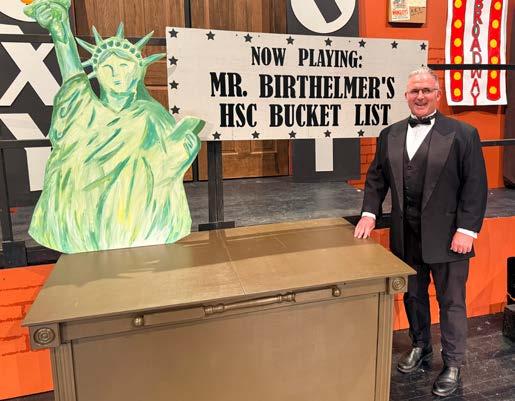
• Be in the Middle School musical
• DJ Grade 8 Grad Dance
• Play the Friday song with the Treble Makers at Chapel
• Dinner with the OG School Life Crew
• Run a tournament with Paul Masotti
• Run late bus with the megaphone
• Get some of my rugby players from 2011-2017 for a reunion
• Lead a lesson with students in my original Grade 2 classroom
• Go all out at Jungle Bands with horns and back up singers
• Play with the Carol Service band
• Traverse the living roof on top of Senior School
• Dress as Macho Man for Halloween
• Attend Young Alumni Reunion
• Have Bart perform “Don't Stop Believing” as intro to Spring Awards
Martin’s career has been defined by a single through-line: a deep, unwavering commitment to relationships. “My passion has always been building relationships and my subject is life,” he says as his eyes well up. “I’m going to really miss the conversations with the kids. When I leave, I want the work we are all doing in coaching to continue because, I believe, relationship building is as important as academic learning.”
Martin’s reputation among students is synonymous with one word: respect. Whether respecting oneself, peers or colleagues, it is the standard he holds everyone to. This “firm but fair” approach positions discipline not as punishment, but as coaching–a distinction that turns behavioural corrections into teachable moments. “If a kid came into gym class and they could barely dribble a ball, are you going to get upset with them? No, we’re going to teach them how to dribble,” Martin explains.
He applies that same logic to character, coaching students to respect themselves enough to own mistakes. When a student missteps, his refrain avoids shame in favour of growth: “Don’t say sorry to me. Let’s discuss how you can do better next time.”
Today, that philosophy is mirrored in the specific, actionable lessons of the Second Step curriculum. Grade 5 students learn to manage "Strong Emotions" by anticipating personal triggers. By Grade 6, the focus shifts to maintaining momentum through the creation of "Success Playlists" for motivation. In Grade 7, students transition into proactive strategy by designing "If-Then Plans" to navigate potential obstacles, finally culminating in Grade 8 with a focus on the grit and persistence required to "Adjust and Achieve." These lessons formalize the Mr. B philosophy, ensuring that every student has the tools to build the resilience Martin has championed for two decades.
As he prepares to sing the Friday song for the final time, it is clear that Martin’s legacy is not measured in curriculum documents, but in a generation of students who learned that they are worthy of support. “One of the things I’ll take away after 25 years of teaching is you’re never too old to be nurtured,” Martin says.
Looking back at the community he helped cultivate, Martin remains humble. “You just try to make your backyard a little bit better.” He pauses, knowing the work of growing up is never truly finished. “And sure, there will always be tending to do . . . but someone else can take over now.” And thanks to Mr. B, this community has every tool they need to keep the garden growing.
Middle School
Mr. B checks off a bucket list item, playing President Roosevelt in the Middle School production of Annie Jr.
Photos by Alex Berry
Fit for Purpose
Under new leadership, HSC’s Senior School Student Success Centre is prioritizing student wellbeing alongside academic ambition.
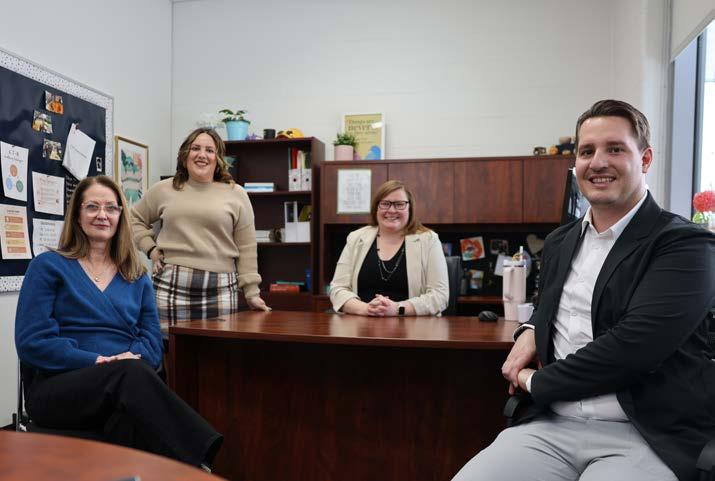
“WE’RE HERE TO MAKE SURE students don’t sacrifice being well for doing well,” says Yvonne Testa, director of the Senior School’s Student Success Centre (SSC). Inside the bustling, open-door space, Yvonne and her team— counsellors Jordan Frost, Colleen Petch and Barbara Pernar—offer students so much more than just academic support. “Ultimately, our job is to help them achieve their academic goals while setting them up to navigate the social and emotional challenges of being a human,” says Yvonne.
That mission plays out through a variety of activities and resources. Whether it’s a post-secondary interview prep session, a one-on-one course selection appointment, or simply a quiet space to process feelings, the SSC is far more dynamic than a traditional guidance office. It is not merely a processing centre for university applications; it is a sanctuary, a strategy room, and a community living room all in one. As counsellor Jordan notes, “We are at the centre of all aspects of student life.”
The team supports the entire Senior School ecosystem, not just the graduating class. A typical afternoon might see Grade 9 students drift in, initially enticed by hot chocolate and cookies, now comfortable enough to ask for help with course selection. Nearby, a Grade 10 student might be working through a difficult concept with a teaching assistant or a peer tutor, while another student seeks out the College counsellor, whose services are accessible through the centre.
This integration of academic and emotional support is intentional. The counsellors understand that you cannot offer individualized guidance if you don’t truly know the individual. By inviting Grade 9’s in for snacks or helping Grade 10s with study habits, they build a foundation of rapport that pays dividends years later. As Colleen describes it, “We become another trusted adult in the student’s life, a neutral third party who isn’t a parent or a grading teacher.”
As the pressure of post-secondary mounts, that bedrock of trust gives the guidance team insight into the kinds of specialized programming from which students would benefit. They go beyond brochures to offer immersive workshops such as an alumni-led suturing session or mock interviews for UK schools. Sessions that gave Grade 12 student Jia Khera confidence in her direct-entry medical school applications. “I had my first interview for university this morning,” she says. “It went well. Ms Petch has supported me all the way through.”
And yet, as Yvonne explains, there are still misnomers about the pathway to success. “Students often believe their journey must be a straight line from Point A to Point B, with no mistakes in between.”
For many high-achieving students, the guidance office is where they process the first major rejection of their lives. A slipped grade, a missed leadership position, or a declined application. The counsellors are there to reframe these moments not as failures, but as essential lessons in resilience. This is where the conversation about “fit” becomes vital.
The Student Success Centre hosts more than 20 postsecondary information events each year and 100 per cent of HSC graduates receive a postsecondary offer.
The counsellors work tirelessly to dismantle the “best school” myth, the idea that a brand-name university is the only valid outcome. “We encourage students and families to look beyond the rankings,” says Yvonne. “The goal is to find an environment where the student will really thrive.” Success, in the eyes of the SSC, is a student who leaves HSC with the self-awareness to choose a path that is sustainable and rewarding.
It is a collaborative effort. While each counsellor is assigned to students by house, they often work as a team to ensure every angle of the journey to postsecondary is covered. “No two days are the same for us,” says counsellor Barbara. “I might be helping one of Jordan’s students with their university prep while he runs a workshop, or I could be sharing insights about a campus I’ve visited overseas with Colleen—our strength is in our collective.”
It's as much about strong life skills as it is about good grades. Teaching them how to make a phone call, how to advocate for themselves, and how to handle a ‘no’. It is about the happy dance in the hallway when a student finds their place, and the quiet satisfaction of knowing they are ready for it. For Yvonne and the team, the goal remains the same: ensuring that when an HSC graduate walks out the door, they aren’t just doing well, they are living well.
HSCʼs Student Success team from left to right: Colleen Petch, Barbara Pernar, Yvonne Testa and Jordan Frost.
Senior School
CHARACTER BAKED IN
Beyond HSC’s curriculum lies a legacy of unbreakable bonds. We look back at 125 years of people, places and programs to see how character is—and always has been—an essential ingredient at the College.
by Alex Berry
by Ashley van der Laan
photography
From the start, Hillfield Strathallan College has been a place dedicated to character building. In Highfield School’s very first admissions booklet, “Character” is listed as a section header, “regarded as a matter of the greatest importance and responsibility, and receives very careful attention.”
Letters written about Highfield School by Gordon Collinson ’18, son of the first headmaster, noted the intentions of his parents when they opened the first school at 362 Bay Street South in 1901. “Neither Mr. nor Mrs. Collinson were overly impressed with the making of money as a hallmark of success,” Gordon wrote, and emphasized his father’s “fervent dedication to the character building of his pupils.”
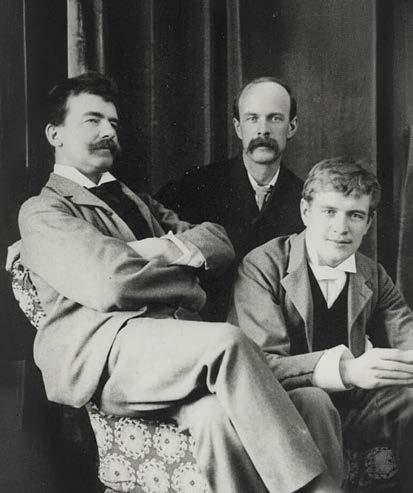
History also suggests that for Highfield’s headmaster John H. Collinson—affectionately known as ‘Collie’—true character was not without humour. This was best exemplified by his lifelong bond with the legendary Canadian humourist Stephen Leacock, whom he met while both were young teachers at Upper Canada College.
As Gordon’s letters recount, Stephen found in John a perfect “outlet for his humour.” This was perhaps most famously displayed during a train journey to Montreal, when Stephen relentlessly pranked his friend by ringing the porter’s bell beside John’s berth. Feigning innocence each time the porter appeared, Stephen eventually managed to have John put off the train while he rolled on in delight.
By most accounts, they were an unlikely match. John was a recipient of the Mathematical Tripos, an achievement considered the highest honour from Cambridge. Stephen became one of the most popular comic authors of his time. And yet, their “deep and lasting friendship” served as a blueprint for the HSC community we know today. As Gordon wrote, “The common bond between these scholarly gentlemen seems to have been their intense interest in human nature.” Or what some might define as character.
At HSC, lifelong friendships are not merely social accidents, but the intended result of a system designed to bake character into the very soul of students.
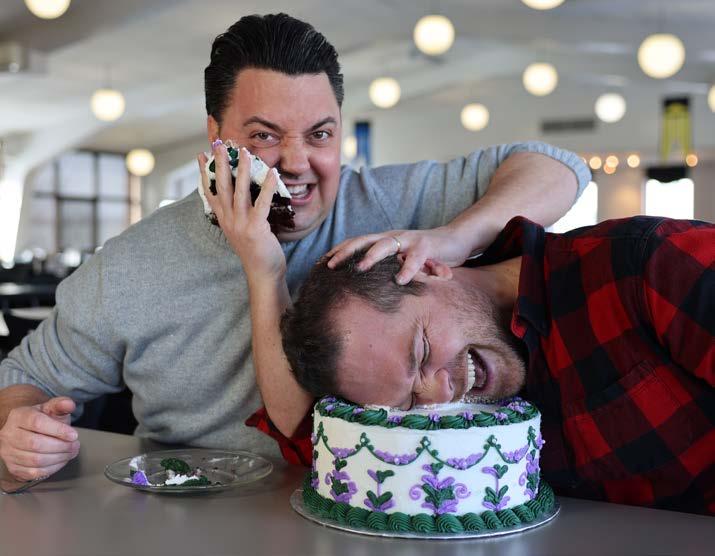
Above: Pranksters Matt Holton ’ 04 and Scott Metherell ’ 04 dive into the cake in Lawson Hall.
Below: Taken in 1894, this photo from the archives shows Highfield founder John H. Collinson (left) with UCC colleagues Robert Holmes (middle) and Stephen B. Leacock (right).
Our collective spirit—a blend of high standards and humiltiy—is exactly what has allowed HSC to endure, evolve and thrive for over a century.
Today, the spirited high jinks of John and Stephen find its modern heirs in Matt Holton ’04 and Scott Metherell ’04, who, for more than 20 years, have played April Fool’s pranks on one another. “We see each other pretty much every April 1,” Scott says. “It’s a great tradition.”
Their friendship was founded in 2000 in Brett Dalton’s Grade 9 history class. Scott, then new to HSC, sat next to Matt, an HSC lifer. “We quickly discovered that we both loved to ski,” recalls Matt. “As we headed into the winter months that first semester, we decided we should ski together.”
Much like John and Stephen, Matt and Scott seemed an unlikely duo. “I was Head Boy,” says Scott. “And Matt was probably on every teacher’s hit list.”
Regardless of their academic styles, both have built successful careers. Scott owns and operates BigRedWorks Inc., a full service cottage maintenance and barging company in Honey Harbour, Ontario. Matt is a managing director at Anomaly, the Manhattan-based creative agency regarded by AdAge as one of the best agencies of 2025.
“Matt comes up with these great creative ideas that really, you know, drive the likes online,” explains Scott of their unique prank styles.
“I’m a boots-on-the-ground, physical prank guy.”
While the April Fool’s tradition
“If it is true that one’s character is shaped by one’s surroundings, none are more fortunate than the students of Hillfield and Strathallan schools.”
officially began the year after they graduated from HSC, Matt and Scott’s friendly mischief dates back to their time on campus.
“We snuck ourselves into the tunnels under the school,” Scott remembers, describing how they used the underground network of heating and plumbing as the set for a film project. At that time, HSC’s Senior School operated out of the Strathallan building, which was initially home to the girls school before the board approved amalgamation in 1968.
From Matt publishing a best-selling romance novel featuring Scott, to Scott creating an e-commerce site selling towels emblazoned with Matt’s face, the two have turned their “long game” into a testament (and test) of loyalty.
“There have been bad pranks, and there have been good pranks,” Matt laughs, recalling the time he tricked Scott into a month-long audition for a non-existent Mike Holmes TV show. “Half the fun is making him think I have a really great idea.” They operate under a specific HSC-style “Golden Rule:” no matter how elaborate the prank, both must still be able to run for prime minister afterward.
Behind fake billboards and bogus Kijiji ads, lies a bond that Scott describes as “corny but true.” “Matt is like a brother,” he reflects. “We’ve been there for each other in some really tough times. We’d do anything for one another.”
Though special, their connection is not unique in our community. Fueled by the intimacy of small class sizes and an expansive co-curricular program, the College offers an environment where camaraderie thrives. At HSC, students are not merely enrolled; they’re immersed in a setting designed to turn peers into fixtures of one’s own identity.
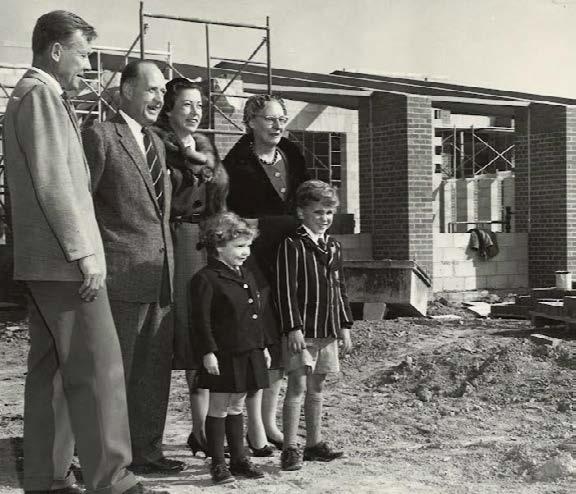
From left to right: Bill Holton, John Page, Mary Warren, Hilda Pearce with students Ann Bailey and Colin Gibson in 1961 at the construction site of the new campus on Fennell Avenue.
This belief in the power of place and connection is a foundational one. It can be traced back to a 1923 dedication for the fallen “old boys” of Highfield, when then headmaster John H. Collinson turned to the poetry of Alfred Lord Tennyson to articulate the school’s grief and its pride.
In quoting In Memoriam, John revealed a mathematical mind that also found truth in the Victorian poet’s reflections on the enduring nature of human bonds. It is easy to deduce that Collie would have shared the sentiment found in another of Tennyson’s masterworks, Ulysses: “I am a part of all that I have met.”
This sentiment was echoed decades later on April 23, 1962, during the official opening of the Fennell Avenue campus. Addressing the gathered community, the Lieutenant-Governor of Ontario, Colonel J. Keiller Mackay, observed that “if it is true that one’s character is shaped by one’s surroundings, none are more fortunate than the students of Hillfield and Strathallan schools.”
The College has always understood that buildings are more than brick and mortar, and, in seeking to expand, this philosophy moved from the podium to the drafting table. When the time came to design a new Senior School, the architects built in unstructured spaces—corners of the campus where students are not directed by a bell or a syllabus, but are simply allowed to be.
It was in such a space that Sabren Aldawi ’14 and Brittany Barton ’14 forged their own unbreakable bond. “It was an unlikely friendship,” admits Brittany. “We never actually had a class together.”
Sabren, who moved to Canada at the start of Grade 9 from the United Arab Emirates, can remember the transition being easier than anticipated. “It never felt weird joining the school, it was very welcoming.”
Brittany and Sabren met as locker buddies that first year of Senior School and quickly bonded over their shared taste in music. “Sabren was low-key Tumblr famous,” Brittany says with a laugh. “She had nearly 500,000 followers.”
In the fall of 2012, a move into the newly built Michael G. DeGroote Senior School for their Grade 11 year offered Brittany and Sabren a
space to explore their shared interests. “We’d sit in the Senior Learning Commons during spares, scrolling on Tumblr and talking for hours,” describes Brittany. “It was our own little world.” This provided the quiet foundation for a bond that Sabren labels “platonic soulmates.”
When Sabren recently faced a serious health diagnosis, her Grade 9 locker buddy became her fiercest advocate. “Britt was the person I took to my appointments,” Sabren says. “I didn’t want to take my parents; I wanted her.”
In the sterile rooms of doctor’s offices, Brittany became the one to ask the questions that Sabren was too overwhelmed to think of. Even today, Brittany sets scheduled messages to remind Sabren to take her medications. In return, Sabren is the voice that quietens Brittany’s professional doubts. “I wouldn’t have started my business if I didn’t have Sabren to tell me, ‘It’s not that hard. Send the message.’”
Brittany runs her own social media agency, Hazelwood Creative, and a popular Hamilton book club. Sabren works as a senior operations manager at Amazon, managing fulfillment centres across North America. Despite busy schedules, they see each other multiple times a week and, since the pandemic ended, have committed to taking a trip together every year. “You don’t always know how much time you have with a person,” Brittany says, sharing the impact that Sabren’s diagnosis had on their relationship.
While Brittany and Sabren’s bond is defined by the fierce prioritization of the present, Jim ’56 and Myrna ’55 Evel’s partnership is a masterclass in longevity. Their marriage has spanned 65 years, a legacy that accounts for more than half of the
Sabren Aldawi ’ 14 and Brittany Barton ’ 14 return to the place where their friendship was formed: the Senior School Learning Commons.
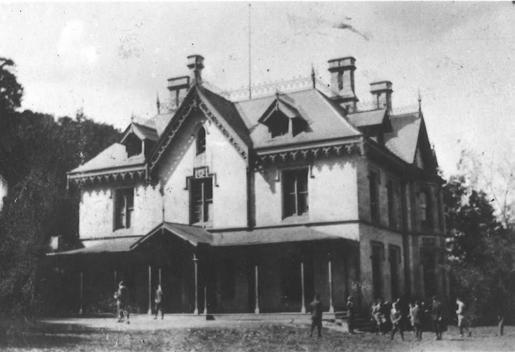
Highfieldʼs first school house, located at the foot of the Mountain, between Bay St. South and Ravenscliffe Avenue.
College’s entire 125-year history.
“I Googled it once to see how common it was to make it to 65 years,” Jim says with a smile. The answer is not many. “We feel very, very blessed and very fortunate that we have been with each other all these years as a result of the schools.”
To hear them tell it, Jim and Myrna’s story starts with a Hollywood-style meet cute. “I remember holding hands and skating around and around and around a million times,” Jim recalls. “We had fallen in love in those days.”
Those days were the late-1940s, when Hillfield College and Strathallan School were separate worlds. They shared a few precious, common traditions. One of which was ice time at the Thistle Club. “Arrangements were made for the kids to use the curling surface to skate twice a week,” recounts Jim.
By design, HSC has always offered students robust curricular programming.
A former HSC boxer, Jim was inducted into the HSC Athletic Hall of Fame for his achievements as a Hillfield athlete. “I wasn’t too bad at being an athlete myself,” Myrna adds with a laugh. As Strathallan Sports Captain, Myrna was a constant fixture on the sidelines, cheering Jim on. “My parents had to drive me to watch his games, and my mother fell in love with Jim,” recounts Myrna, describing her family’s fierce support of the budding romance. “She thought he was wonderful until the day she died.”
Looking back, Myrna views their story not just as a fortunate meeting, but as the result of profound parental commitment. Her parents,
along with Jim’s, recognized that the College offered more than a top-tier curriculum. “They sacrificed an awful lot financially,” Myrna recalls, “because they wanted us to be in a place where we would learn to behave in society and grow up with the values they cherished.”
Those values were put to the test almost immediately after graduation. When Myrna moved to Montreal for her first year at McGill University and Jim was at the University of Waterloo playing varsity football, the distance was expected to be a hurdle. Instead, it served only to prove the strength of their connection. “I simply didn’t want to be away from him,” Myrna says. Within a year, she transferred to McMaster University to be closer to Jim.
In 1960, the couple wed at Central Presbyterian Church in downtown Hamilton, beginning a shared life that would eventually welcome three daughters, six grandchildren and three great grandchildren. And, their devotion to each other has always been mirrored by their devotion to the schools that brought them together.
Class representatives and former presidents of their respective alumni associations, Myrna and Jim have spent decades as voluntary pillars of the HSC community, lending their voices to boards and committees with the same dedication they give to their own family. Even now, in their late 80s, the couple makes a point to attend HSC’s cherished Remembrance Day gathering and Carol Service.
In 1961, Errol Boyd ’10 reflected on the school’s earliest days in The Hamilton Spectator, noting how “Collie . . . sought to shape character” and inculcate “duty, truth, courage and perseverance.” He called them “watchwords,” but today they are a way of life. They are the pulse behind every HSC story— the duty to honour the traditions of a friendship, the courage to show up in a time of need, and the perseverance to cultivate a 65-year marriage. These aren’t just historical values, they are the thrum of a heartbeat that has connected every “old boy” and “old girl” for 125 years.
We celebrate this milestone knowing that John H. Collinson’s founding mission remains steadfast. He understood that if you nurture the character, the community will build itself. At HSC, kinship is not merely a byproduct of education—it is the education itself. A century and a quarter later, that is the one ingredient that remains unchanged.
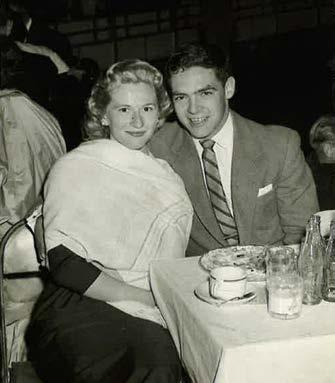
The young couple dine together in the early 1960s.
Myrna ’ 55 and Jim ’ 56 Evel at their home in Burlington.
Photo by Alex Berry
SHE , S GOT THE
BEAT
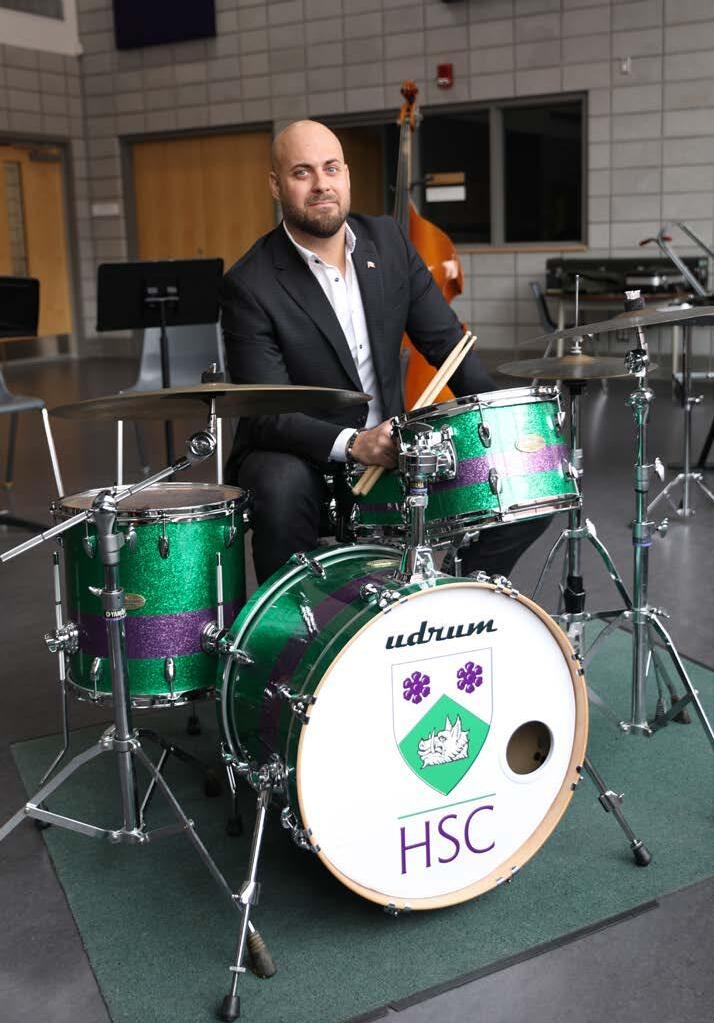
Zo ë McMillan ’16 discovered a passion for percussion at HSC. She followed that calling to become a professional drummer—with an entrepreneurial side hustle.
by
Sarah Liss photography by Vanessa Heins
To
borrow a truism from Shakespeare’s Twelfth Night, some are born great, some achieve greatness, and some have greatness thrust upon them. All three of those things could be said of Zoë McMillan ’16—with one caveat: It was a pair of drumsticks thrust into her hands during a Grade 6 music class at HSC that unlocked her full potential.
Today, Zoë’s percussion prowess is in high demand. She’s performed on stages around the world as a drummer for acclaimed pop, rock and country acts; most recently, she opened for Katy Perry on last fall’s European Lifetimes Tour as part of Nova Scotia-raised Goldie Boutilier’s band.
Zoë’s drummed at the Junos, the Calgary Stampede and the Ottawa Bluesfest. And in the brief stretches when she’s not sitting behind a kit, she runs her own business—drum-related, naturally. Zoë is a rare, magical case of someone who’s managed to parlay her creative calling into a brilliant career. And the wildest part, as she tells it, is that she owes the whole thing to a false start and a savvy teacher.
“In Grade 6, when we had to choose instruments, I picked alto sax because one of my brothers had played it,” she says. “But I was so bad at it that my music teacher, Mr. Gaumond, said ‘There are no percussionists in this grade . . . how would you feel about giving that a try?’ Which I think was his nice way of saying, ‘Please stop—no reeds for you.’”
Allan Gaumond, himself a talented jazz saxophonist who performs in various Hamilton-area ensembles, doesn’t contest Zoë’s recollection, although he notes that in every Grade 6 class, he would conduct a percussion assessment partway through the year, “after I got to know the kids a bit and could see who might be a good fit and whom I could trust
to be in a section with literally tens of thousands of dollars of equipment.”
The process may have been a matter of course, but Zoë was exceptional, says Allan, who is now vice-principal of school life in the Senior School. “Every once in a while, you come across someone where it’s so obvious that that’s what they should be doing,” he says. “She was so intuitive with the way she picked up the sticks, the way she held herself, the coordination.”
For Zoë, whose three older brothers are also HSC alumni, it marked a turning point—at school and in life. During Friday morning Chapel assemblies, she says, there would often be a musical performance by a student or students. Zoë’s first attempt was in Grade 2, on the piano. “I ran out crying afterward because people were clapping, and I was embarrassed and scared,” she says.
Once she picked up those drumsticks, however, it was a different story. Within a year of the initial assessment, Zoë was behind a full kit. That led to private lessons with in-house instructor (and Canadian jazz stalwart) Joel Haynes, stints in various Middle-School ensembles and, as soon as she hit Grade 9, auditioning for the Senior Jazz Band. “She was one of the least experienced ones in the class,” Allan says, “but she got the spot, and it became clear that she was one of the hardest-working students I’ve ever encountered.”
To be sure, Zoë’s tenacity and work ethic extend across disciplines; she won awards on the girls’ ice hockey and rowing teams and served as the Arts Prefect in her graduating year. But music became her driving focus. She joined an extracurricular orchestra and became so enamoured of the marimba that she petitioned the College to purchase its own instrument. It cost more than $5000, but it was worth it: Zoë spent all her free time—lunch hours, evenings, weekends— hiding out in the music room practicing marimba. By that point, she was a fixture at Friday assemblies. “I remember feeling like a celebrity. Because, everybody knew who I was from these performances.”
The summer after Grade 11, Zoë auditioned for Juilliard’s Summer Percussion Seminar and was one of only 16 high-school students from around the world who got to attend the two-week intensive at the school’s Lincoln Center campus in New York City. “It was crazy,” she says. “We learned different pieces on all these instruments I’d never seen before!”
Zoë spent her final year of Senior School prepping to audition for post-secondary music programs and accepted an offer to join the jazz stream at the University of Toronto. But a couple weeks before school started, “I totally freaked out,” she says. Zoë opted for the performance stream at Queen’s University instead; a year in, sensing that the program was more suited to aspiring music instructors, she made a major switch to civil engineering. “I think I picked it because I’ve always liked Lego,” she says. Zoë hadn’t taken any math or science courses in Grade 12, but, true to form, she made up the credits and graduated with a BASc. in 2021.
Although her formal musical training was on the backburner during her time at Queen’s, Zoë kept drumming. She was playing gigs at the Brooklyn, a now-shuttered bar near campus, while she was still underage; in third year, her band opened for Sam Roberts during homecoming. And then came the pandemic, which marked another turning point.
As Zoë recalls, her summer job fell through, lockdowns were in place, and she was stuck at home without many other options, so she decided to start uploading drum covers of pop and rock tunes, posting a clip every week or so throughout the summer. “Whenever I’ve learned a new song, I’ve always watched videos of other people playing it,” she
Zoë playing with the band The Anti-Queens during a show in Hamilton.
Photos provided by Zoë McMillan
says. “I’d been watching other drummers on YouTube for years at this point, and some of them had gone on to be in real bands, so I thought, you know, if you just do this for long enough and you’re good, it’ll happen.”
It did, but not overnight. That fall, Zoë returned to Queen’s. She kept posting videos. And one morning, she woke up to discover that her cover of Rush’s “Subdivisions” had generated 100,000 views out of the blue. That clip was a catalyst. Zoë’s skill as a drummer was evident, and as more people discovered her videos, opportunities emerged. When she started her master’s in applied science at Queen’s in the fall of 2021, she told her professor that she was contemplating a career as a full-time drummer. He told her to make a decision by the end of the semester. “I sat on it for a little bit, and then Christmas came around, and I was like, ‘Yeah, I’m out!’” Zoë says.
Momentum started to build. A mutual friend connected her with Anti-Queens, a Toronto all-girl punk band in need of a drummer, and she started playing with them. Through the same friend, Zoë snagged a brand partnership at Mapex, a drum manufacturer. She reached out to Devon Cole, a singer-songwriter who’d also attended Queen’s, and the two started working together. “From there, it just became word of mouth,” Zoë says.
One of the challenges of being a gig performer, obviously, is that there’s no guarantee where your next paycheque will come from or when it will arrive. As her career was ramping up, Zoë was still taking odd jobs to cover rent. It was that sense of precarity that inadvertently led her to start her own side business making custom, hand-printed covers for bass drums. She and her mom developed a prototype, and Zoë had hopes that they could sell a couple dozen over the next year. “But we sold 100 really quickly,” she says, “and it’s taken off from there.” Despite not making it past the open call on Dragon’s Den, DrumSknz counts big names like the Guess Who, Walk off the Earth, and the Alan Parsons Project among its clients.
In 2023, Zoë performed with Devon Cole at the Junos, which is where she crossed paths with Dan Kanter, Justin Bieber’s longtime guitarist. Dan’s become both a good friend and a major player in her career. When Dan was asked to put together a band for rising pop star Goldie Boutilier, Zoë was one of the first people he called.
“I would recommend her to Taylor Swift if she asked me for a great drummer,” Dan says. “She’s super sweet, which is 50 per cent of what I’m looking for when I want to hire someone. She’s a great player, and she’s interested in all sorts of music, from pop to progressive rock.
“I’ve studied music at a master’s level, but I’ll still say, like, ‘Why don’t you try a Smashing Pumpkins thing there?’ She understands that vocabulary and she’s got a lot of parts to pull from. And she also loves live music, so I think she’s got a good feel for how to take a studio song and embellish it live—where to add and where to stay true to the album.”
It’s a description that captures something about Zoë’s essence: her talent and determination are drivers, but it’s her keen sense of how and when to stay true to herself that has shaped her professional success.
Above: Zoë drums for Spencer Burns at the Boots and Hearts Festival emerging artist showcase in 2024.
Left: Zoë poses at the O2 Arena in London preshow while on tour with Goldie Boutilier.
CAPITAL GAINS
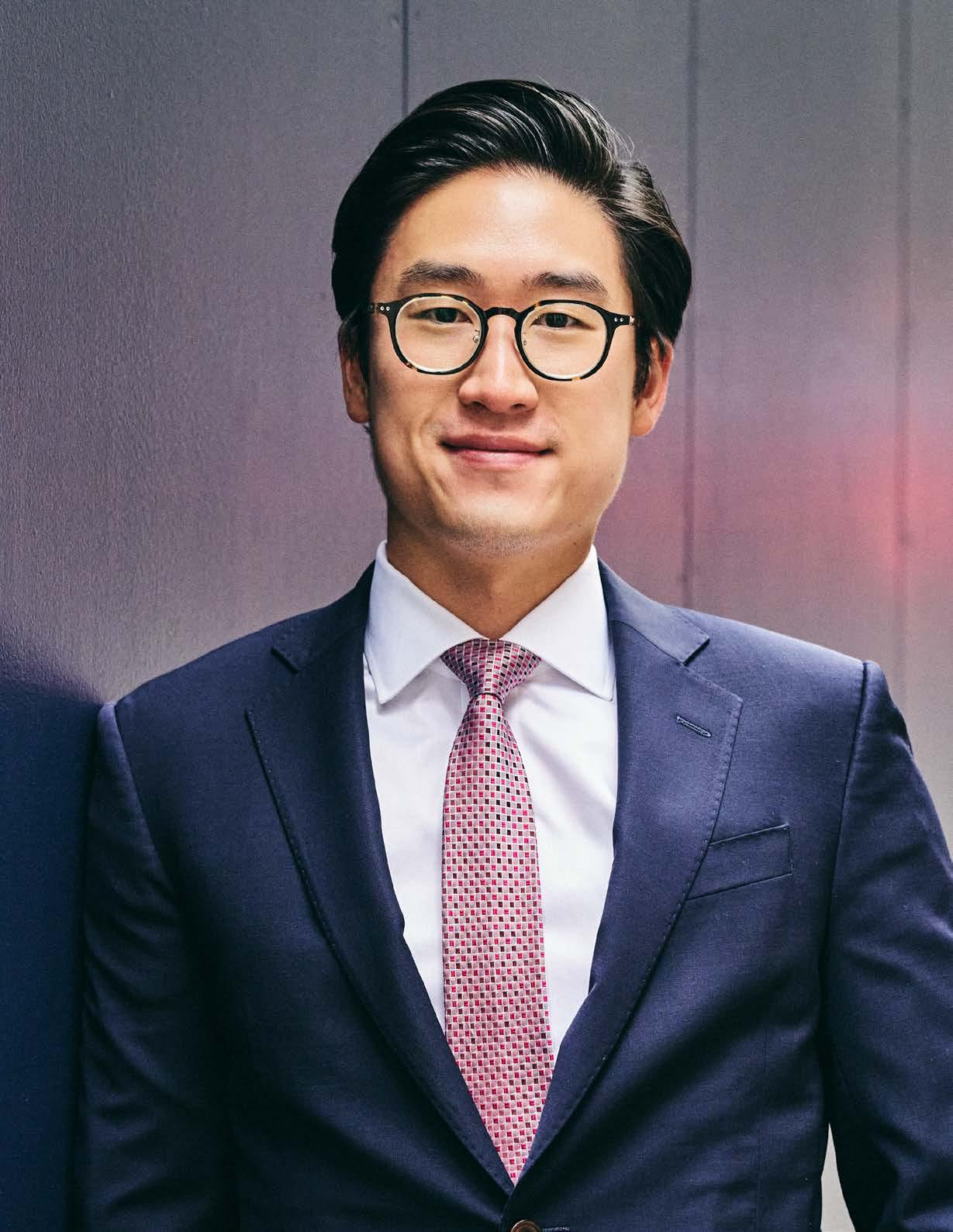
From founding the HSC Investment Club to managing sovereign wealth from NYC, Jonathan Wong ’14 has always focused on helping others grow.
by Kelsey Rolfe photography by Bryan Derballa
Each time Jonathan Wong ’14 travels to Singapore, he gets to see the tangible impact of his work in the city-state’s glittering towers, bustling night markets and manicured parks. As an assistant vice-president at the sovereign wealth fund GIC Private Ltd., Jonathan is investing on behalf of the residents of the small Southeast Asian country.
Since becoming an independent country in the mid1960s, the Republic of Singapore went through a period of rapid industrialization from a port city to one of the four developed economies in Asia. Today, the country is a major financial centre and is highly ranked in important social indicators, from education to home-ownership rates to healthcare. GIC, established in 1981, and the country’s two other sovereign wealth funds have been significant contributors to its success.
“It’s definitely a great experience to go there and see what your work is doing for a country,” says Jonathan, looking relaxed in a white Oxford shirt and black vest while speaking over Zoom from GIC’s Park Avenue office in New York City, where he works on the integrated strategies team. The team handles a mix of public and private market investments. “A lot of emerging countries do try to model their economic policy and their country’s growth on Singapore; it’s a pretty good case study for a lot of emerging countries to focus on.”
Just seven years into his working life, Jonathan has quickly carved out a successful career for himself in investing on behalf of the public, at GIC and the Ontario Teachers Pension Plan (OTPP) before it.
It’s a focus that was foreshadowed by his time at HSC, where he launched the Senior School’s investment club in his Grade 12 year, to teach fellow students how the stock market worked and how to build their wealth. In weekly meetings, he’d lead discussions with students of all ages about what happened in the market that week and guide them through buying and selling securities on a trading simulator platform.
“He was aware that most people in high school . . . never had exposure to investing, so he wanted them to have it,” recalls Andrew Johnson ’14, an HSC classmate, investment club participant and one of Jonathan’s closest friends. “I think it goes to show who he is as a person [and] . . . how determined he was about helping others.”
Jonathan went on to participate in the investment club at Western University, teaching a whopping 800 student members.
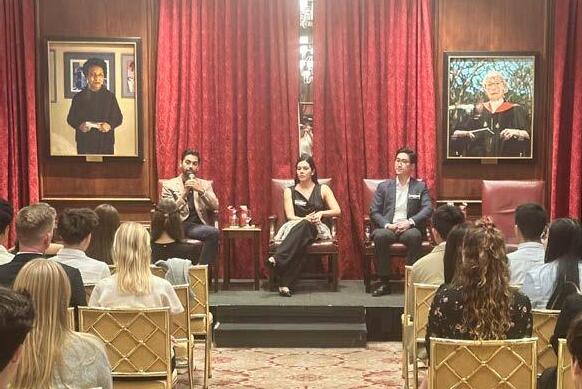
“That’s been an important component in my life, of giving back, helping out, mentoring students and teaching,” says Jonathan, who was among the panel of HSC alumni that spoke to Senior School students during this year’s E-Week trip in NYC.
It almost didn’t shake out this way. Until Grade 11 at HSC, Jonathan was gunning for a career in medicine, encouraged by his parents, a dentist and a realtor turned stay-at-home-mom who later worked as an assistant in his father’s practice. “Most of my family is in dental and medical professions,” he says. “Growing up there was not a pressure but an influence from them” to pursue a career in medicine.
But in the summer before Grade 12, a trip with MEI Academy changed his thinking. Through the program he studied international markets and trade in some of the most important financial hubs of the world: New York, Paris, Hong Kong and Beijing.
“It was a big catalyst in my career trajectory,” he says. “I came back super-influenced to go into business. I went into the career development program and switched all my courses for Grade 12. I didn’t have pre-requisites for some; I had to take Grade 11 accounting in Grade 12.”
After getting his degree from Western’s Ivey Business School, Jonathan spent a year-long stint as an analyst in RBC Capital Markets’ investment banking division, acting as an advisor to clients such as Canadian private equity firms looking to buy and sell companies. A jump to the OTPP, which invests the retirement savings of Ontario’s teachers, gave Jonathan the chance to pair his previous interest in healthcare with his passion for investing. On the private equity team, he specialized in deals involving mid-sized American healthcare services companies.
Private equity deals involve investing in companies not listed on stock markets. The aim for investors is typically to take a longerterm view of the company—giving it a cash injection to expand into a new market, invest in its products, acquire competitors or in some cases to overhaul its business model. Jonathan’s focus on the asset class has been somewhat accidental, but it suits him. He says he likes diving deep into a potential deal, learning the ins and outs of a business, its strategy and financial outlook.
Jonathan also likes the relationship-building. Investment banking was a quicker pace: he never really got to know the companies his team was involved with, because “we were trying to sell them so fast.” But in private equity, “you have longevity with the relationships,” he says.
“From the start of meeting a company for the first time to cultivating the investment to help them grow, we have very deep relationships
Jonathan (right) speaks to Senior School students during an alumni panel at the Harvard Club in NYC.
with the teams there. And a lot of people come from different walks of life, you learn so much.”
After a few years, Jonathan wanted to broaden his experience—and his horizons. “It was always a goal of mine in the land of finance. You always hear about opportunities in New York,” he says. Add to that a personal note: his then girlfriend, now wife, was working in New York City, and the two were flying back and forth to see each other. While she returned to Toronto during the pandemic, the couple had aspirations to get back to the Big Apple. In 2022, they took the leap.
GIC’s integrated strategies team is a unique entity, backing both publicly traded and privately owned companies—and even some more novel investments such as music royalties and aircraft leasing. Sovereign wealth funds tend to be more conservative investment managers, as they’re managing part or all of a country’s reserves. But integrated strategies take on a little risk. “[We’re] not going to be chasing all these hype cycles like some other more aggressive firms,” Jonathan says, “but we're quite open quite open-minded when evaluating opportunities.”
For Jonathan , it’s been a welcome stretch of his knowledge base. While he’s still pulled into healthcare-focused deals, he’s also been building
expertise in the oil and gas and natural resources sectors. Jonathan’s early career success hasn’t come as a surprise to his friends or family, who uniformly describe him as highly driven. “Of everyone I know, he seemed the most dead-set and the most confident about his career path,” Andrew says.
His younger sister, Samantha Wong ’16, says when her brother wants something “he works really hard toward achieving that. We’d be on vacation with our family, either in high school or university, and there would be days when we were at an all-inclusive down south and he’d be in the lobby of the resort on his laptop doing [work].”
Jonathan says he always has a short- and long-term goal in mind to work towards, and was constantly asking himself what he wanted to be doing in two years. When he landed at GIC in a three-year program for early-career professionals, his plan was to land a coveted conversion to a full-time position. No surprise, he got it.
Having found his groove in New York, cemented his position and recently tied the knot, Jonathan says he’s slowly changing his mindset.
“It can be an exhausting circle of just chasing the next thing over and over,” he says. “A lot of people I’ve met who are older and successful have reiterated to me that you should enjoy the journey instead of just continuously contributing to a goal. I’ve tried to shift my mindset into that ideology. I think it makes it a bit more enjoyable.”
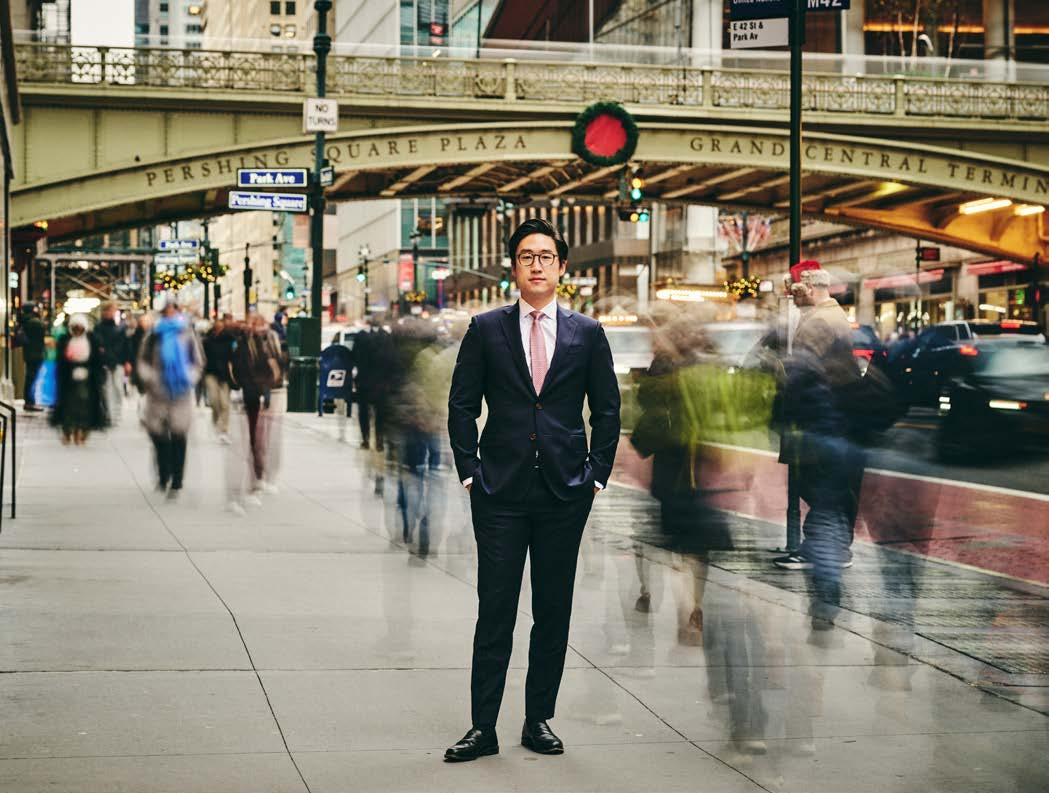
Jonathan Wong ʼ 14 stands a few blocks from his Midtown Manhattan office at GIC.
The Science of Hope
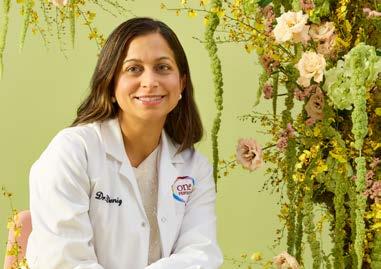
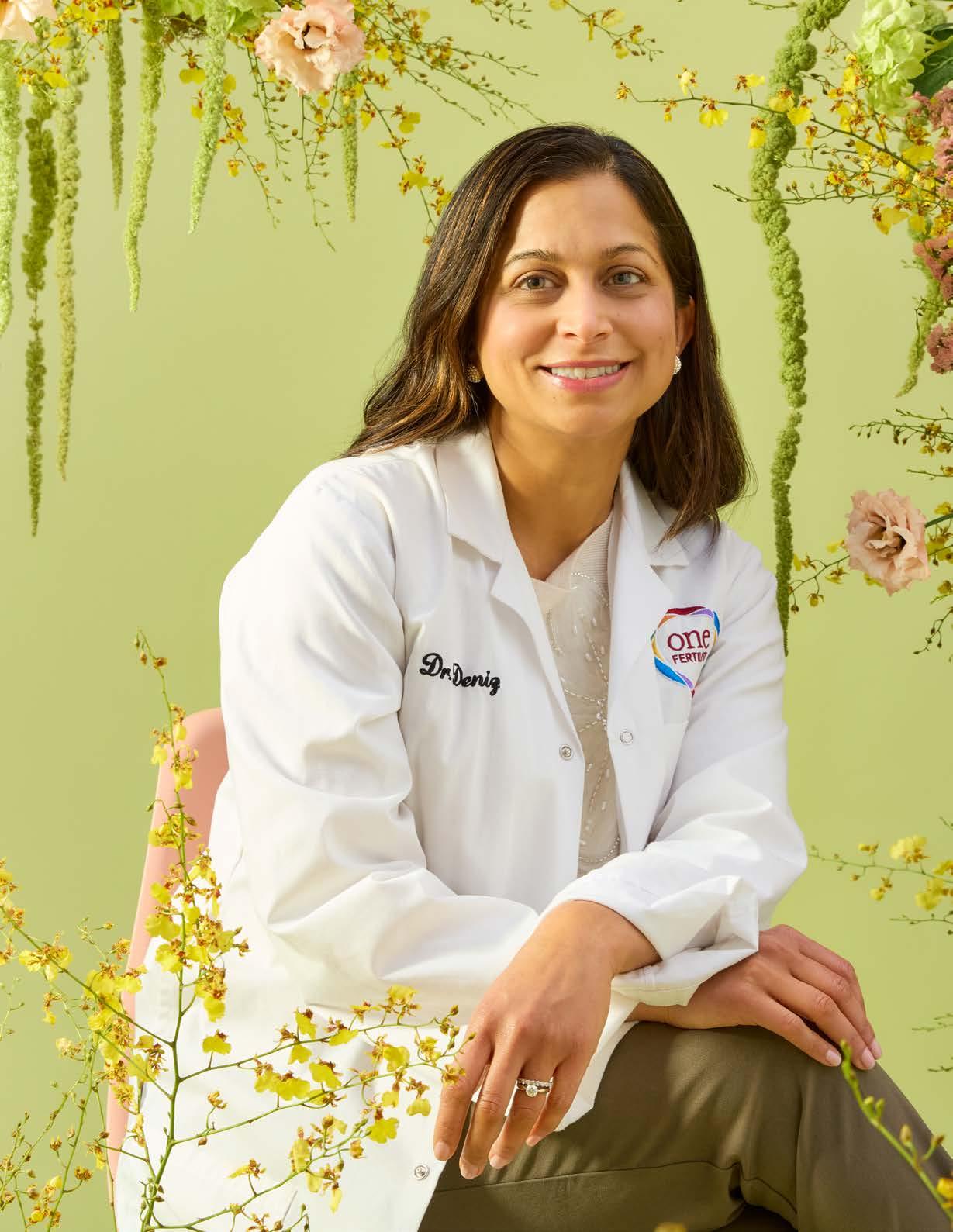
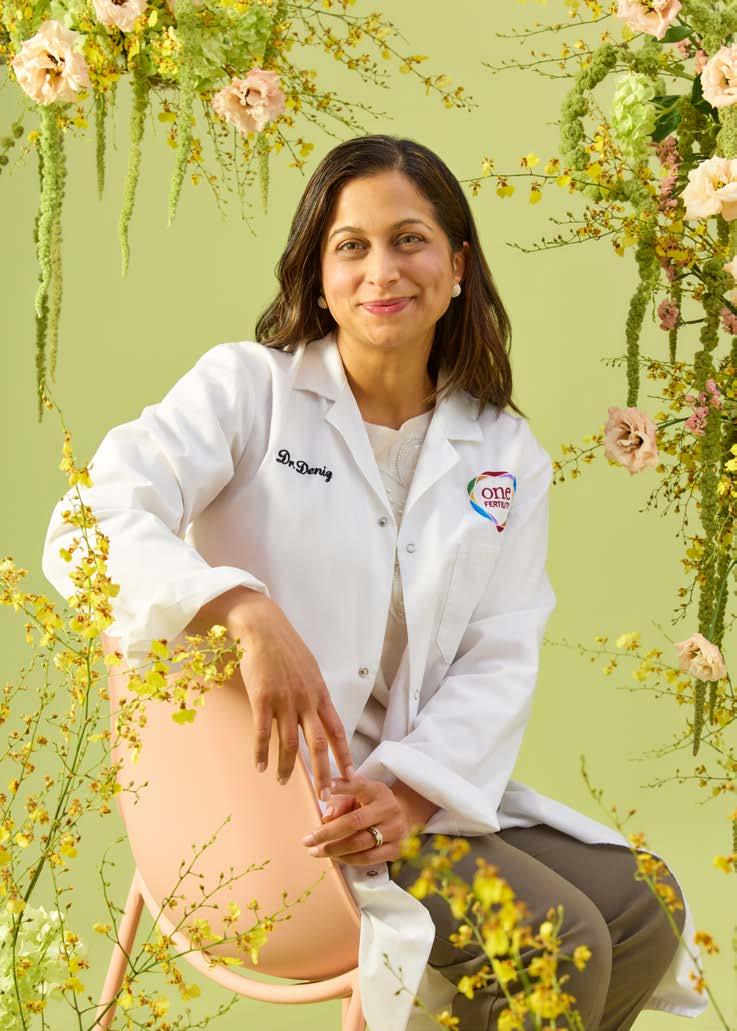
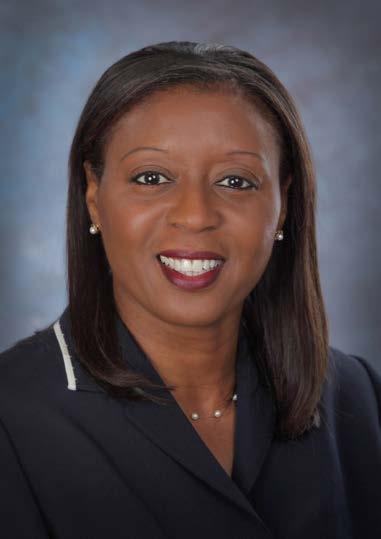
In the delicate field of fertility, Dr. Stacy Deniz ’00 combines scientific precision with the art of patient connection to help families grow.
by Vanessa Milne photography by Carmen Cheung
DR. MEHRNOOSH FAGHIH KNEW Dr. Stacy Deniz ’00 was special the first day she met her.
At that time, Stacy was a junior resident—one of many doctors in their first year of training under the supervision of Mehrnoosh, who was then the chief resident. The junior learners would arrive at around 5:30 a.m. to follow the chief resident on patient rounds before continuing on to watch surgeries and help treat inpatients.
Mehrnoosh notes that most junior residents just observe quietly at the start of training. That’s why she was surprised when, at the end of that long, complex day, Stacy pulled out a list she had made of all the tasks they needed to complete and started rhyming off the ones they hadn’t finished.
“She said, ‘you didn’t do this, you forgot to do this,’” Mehrnoosh says, laughing. “I thought, this is such a valuable asset for our team. From day one, I realized how exceptional she is and I appreciated her so much.”
More than a decade later, Mehrnoosh still tells this story to residents as an example of taking initiative and being part of the team. The two are now colleagues at ONE Fertility, where Stacy is a specialist in reproductive endocrinology and infertility, in addition to being an associate clinical professor in the Department of Obstetrics and Gynecology at McMaster University.
As a doctor at ONE Fertility, Stacy works directly with patients who have fertility needs for a wide range of reasons, from LGBTQ+ and transgender people to those with hormonal issues such as polycystic ovarian syndrome to people freezing their eggs before undergoing chemotherapy. She also leads research on how metabolic disease affects embryo quality and social and medical barriers to caring for the LGBTQ+ community.
In a full-circle moment, Stacy now teaches upcoming doctors herself. Mehrnoosh notes that Stacy is as talented a teacher as she once was a learner. “Every year, our residents rank the teachers, and she is consistently at the top,” Mehrnoosh says.
Stacy’s career appears to be a string of uninterrupted successes, but she says she wasn’t always a star student. In fact, she didn’t really like elementary school. “I found it very boring,” she says. That changed when she arrived at HSC in Grade 9. She remembers the confidence the school had in her abilities and their willingness to push her—including her Grade 9 English teacher, Mrs. KearnsPadgett, who regularly stayed late with her after class to help her improve.
During her Senior School years, Stacy pushed herself and took advantage of every opportunity HSC provided. “I felt like I came into my own over the five years I was there,” she says. “Having a wide variety of opportunities to learn and explore gives you the confidence to approach different situations, and to know that you can do your best in that setting, and thrive. I think that’s really powerful, and it’s a very important lesson that I carried through with me to university and beyond.”
chances of fertilizing and implanting?”
Leaving HSC, Stacy knew she wanted to do something that helped people, and she loved science. Pairing those interests together, Stacy earned a Bachelor of Health Sciences at McMaster, becoming an OBGYN, and, eventually, specializing in fertility.
Stacy says this role is the perfect fit for her because it presents a multifaceted challenge, combining attention to detail and scientific rigour with broader concerns, compassion, and empathy. “When I’m working with a couple, I’m thinking, what is their ideal family? How are they managing this on a bigger scale? Is it impacting their relationship? And then on the other end, I have to narrow down and think, how are the egg and sperm interacting? How are they working at a receptor level to increase the
Watching her work is “inspiring,” says Lara Des Roches, a gynecologic reproductive endocrinology and infertility fellow at McMaster University. Lara notes that it’s a challenge to speak to patients who are going through completely different things, from complications to pregnancy losses to pregnancies that are working. “You have to be 100 per cent focused and centred in each room, and Stacy always gives everyone the time and space they deserve. She never appears rushed with patients, even if she is power-walking behind the scenes.”
Dr. Megan Karnis, medical director at ONE fertility, says Stacy’s bedside manner is exceptional, as is her ability to make complex medical decisions in the midst of evolving science. Sometimes, Megan notes, this involves telling patients what they don’t want to hear—such as explaining why a “flashy” new intervention is ineffective or risky.
No matter the message, Stacy makes time to explain her reasoning and recommendations in detail with patients, helping them through
“I felt like the whole time I was her patient, not only was she doing everything that was scientifically possible to help me, she was also doing everything she possibly could to support me.”
the emotions surrounding difficult decisions or setbacks in their fertility journey. “She’s a great listener, and a very comforting, reassuring and competent physician for her patients,” Megan says.
Leanne Gosse was one of those patients. Her journey to have a second child was a gruelling two-year process that was much longer and more difficult than she had anticipated.
“It was one of the hardest things I’ve gone through,” says Leanne. “And I’ve done hard things. I have a PhD, and I’ve done an Ironman, but this was hard.”
Leanne recalls that Stacy was one of the best doctors she’s ever had. “I felt like the whole time I was her patient, not only was she doing everything that was scientifically possible to help me, she was also doing everything she possibly could to support me,” she says.
After one unsuccessful pregnancy, rather than trying to move past it or placate her, Stacy made her feel seen and
understood. “She said, ‘I’m really sorry. This is what we know about fertility, and there’s a lot we don’t know.’ That humility helped a lot.”
When a miscarriage landed Leanne in the hospital under the care of a different on-call physician, Stacy called her personally to check in and make sure that she was getting the care she needed.
After many failed attempts, Leanne felt deflated and began to lose hope. The night before a scheduled embryo transfer, she called the clinic to cancel. Stacy picked up the phone and spoke with her for 45 minutes about her concerns. “It was the end of her day—she could have gone home,” says Leanne. Instead, Stacy talked through Leanne’s anxieties and the science behind each decision they had made together.
“She said, ‘The evidence suggests you’re just getting older, and you don’t have as many good eggs left, and we’re waiting for that one. And what we know is, if you stick with this, it could happen.”
Leanne says she appreciated Stacy’s ability to ground the conversation in both optimism and evidence. It reassured her without making false promises. In the end, Leanne decided not to cancel the appointment and to go ahead with the embryo transfer.
As it turned out, she did have one good egg left. The attempt was successful. “I don’t know that I would have continued if not for Stacy and that conversation,” says Leanne. “Every year on my child’s birthday, I think of her. She is the reason that my second child exists, and I am so grateful for that.”
THE WHISPERER
BEE WHISPERER
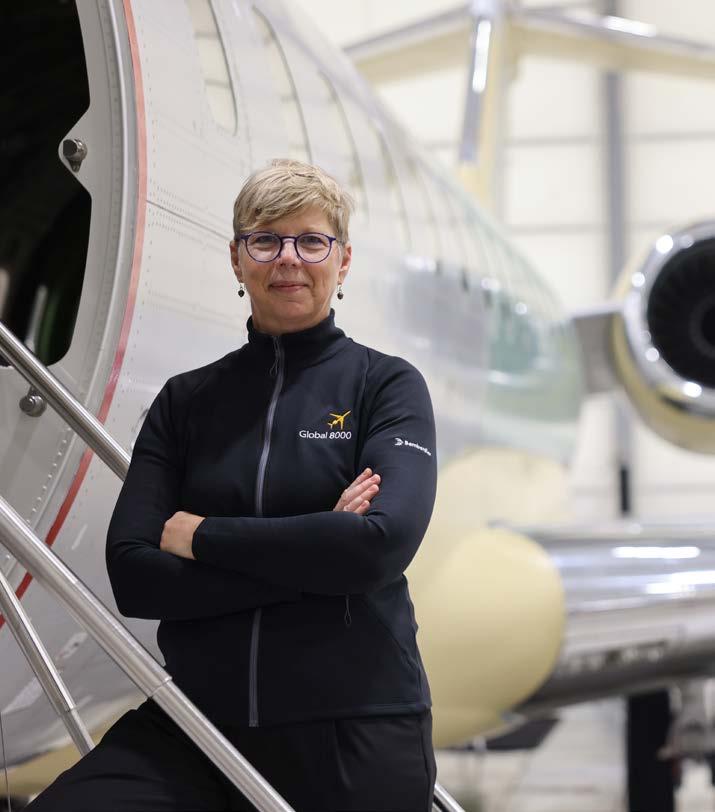
Terri Faloney ’09 traded the dream of being the next Steve Irwin for the fascinating, complex world of professional beekeeping.
by Julia Drake photography by Jason Gordon
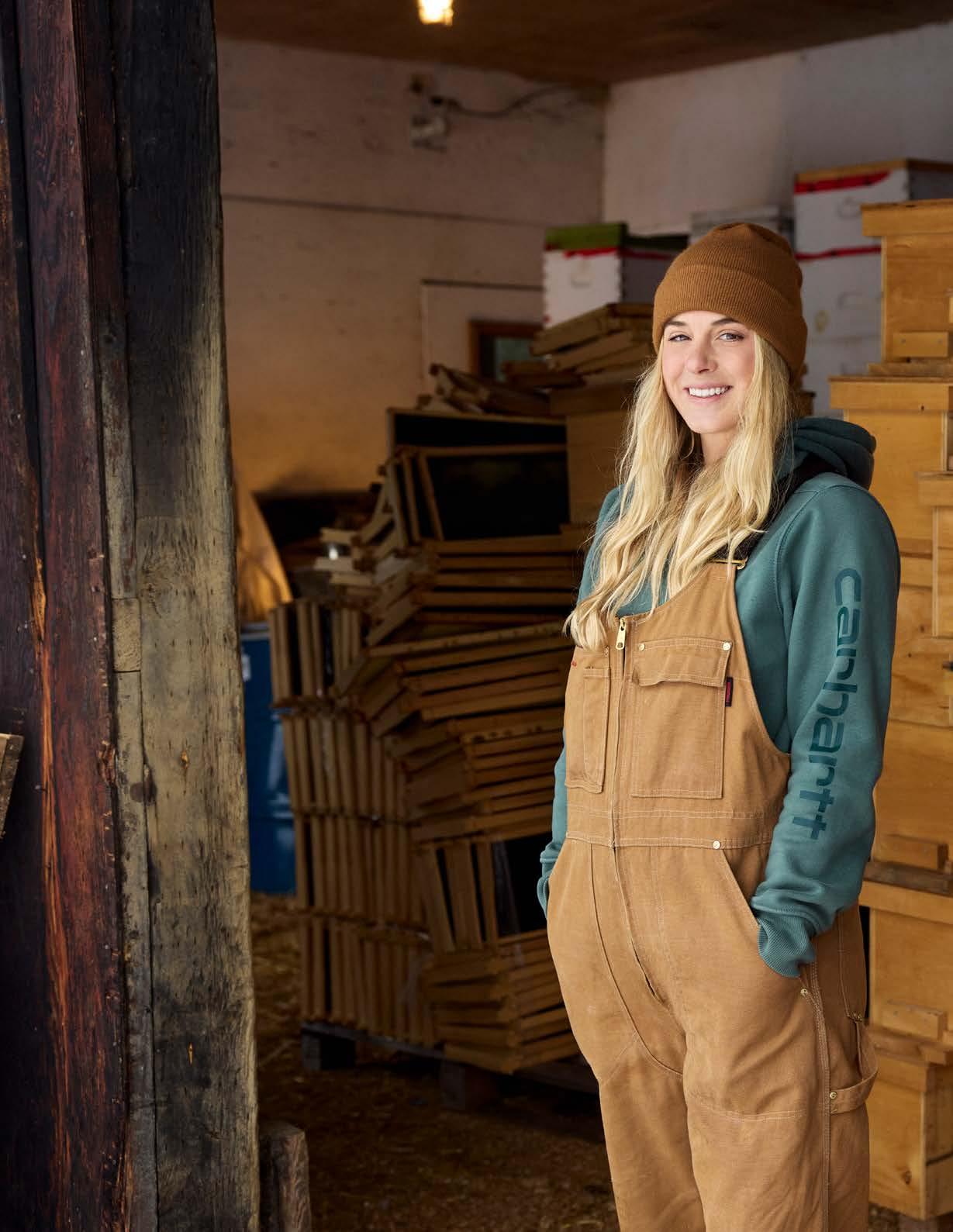
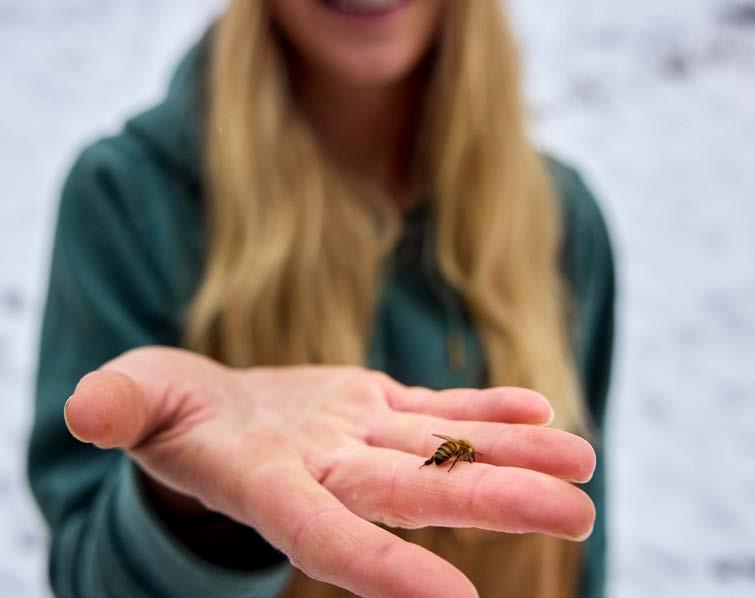
Since she was a young Montessori student, Terri Faloney ’09 has been fascinated by all creatures great and small—especially the small ones.
In fact, by Grade 6, Terri had her sights set on becoming an entomologist. “I essentially wanted to be like Steve Irwin and travel the world discovering new bugs,” she recalls.
But by Grade 10 physics, Terri wondered if science was her path. The pull of magnets and the hum of tuning forks just didn’t resonate with her—and Terri remembers receiving one of her lowest marks in that class. It was then, Terri says with a chuckle, that she realized she was “very biology based.”
Fast forward a decade, and a different kind of hum pulled Terri back towards her original dream. In 2017, she became a professional apiarist and launched Hammer Hives, a small Hamilton-area business that’s now thriving. Her apiary currently includes 120 hives and her bees produce about 10,000 pounds of honey each year.
One of Terri’s good friends from her HSC days, Devon Hayes ’09, isn’t surprised by Terri’s success. The two became “fast friends” in Grade 8—when Terri’s love of nature and the outdoors was apparent, recalls Devon. “From a young age, she was exposed to the outdoors, whether on her grandparents’—later her father’s—property, exploring the forest, helping to take care of the horses, or saving every bug from harm.”
In her early 20s, Terri called Devon to say she’d decided to become a beekeeper. “From that point on, I had never seen Terri so determined to learn every little thing she could about the life cycle, habits and care of honeybees, and the threats to their existence, both at a macro and micro level,” recalls her friend.
As Terri mapped out her business strategy, she brainstormed with Devon and mutual friend James Namburi ’09 on marketing ideas, including branding, website content, and even the company’s name. “But nothing was cooler than being in the zone with Terri, as she ran through the process of extracting the honey—from hive to home—and showed me what every element of the process meant,” says Devon.
Today, Hammer Hives products, including honey, are distributed through a variety of Hamilton-area businesses, such as Ancaster Cheese and Fine Foods, Dundas Chocolate Shop and The Apple Orchard Inc. Meanwhile, Terri’s own online business (hammerhives.com) sells raw
honey, beeswax candles, bee-inspired gifts and, for those interested in raising bees, “nuc colonies.”
A nucleus or starter colony includes a laying queen bee, worker bees, larvae and eggs—almost everything someone would need to begin producing honey. For those needing external expertise, Terri provides beekeeping lessons, and she maintains the hives of about 30 clients.
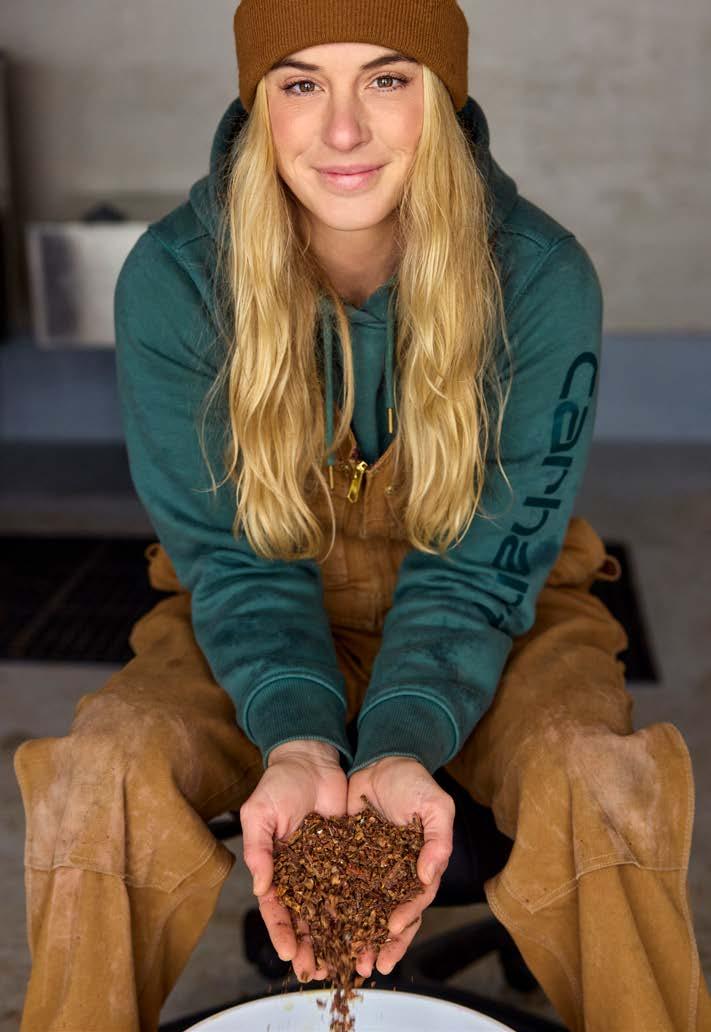
In addition, one of Terri’s specialties is raising queen bees, a cornerstone of sustainable beekeeping. It’s meticulous work that requires irregular hours to monitor the developing bees and their environment. She starts by building a queenless “nursing colony” that’s full of capped brood and nurse bees. Then she picks her “favourite queen” and takes a frame of open young brood bees to her shop. There, she uses a grafting tool to select one- to two-day-old larvae and transfer them into “queen cups.” Terri then places the grafting frame into the nursing colony for five days. When the cups become capped queen cells—meaning that potential queens are developing inside—Terri transfers the cells into test tubes with some shavings and a tiny ball of “queen candy.” As the cells incubate for several more days, Terri checks on them every few hours, around the clock, to ensure the developing queens don’t escape and perish.
“Once they emerge, I put them into queen cages and give them attendants, which are young bees from a queenless hive. They’ll groom her, hydrate her and protect her,” she explains. Then, each pampered queen is introduced to a queenless colony gradually, because “not every colony accepts a new queen so easily.”
The year before the launch of Hammer Hives was marked by
profound loss for Terri. She faced the sudden death of her beloved father, Wally Faloney ’78, and then the loss of the last two horses on the family farm.
“There were so many big changes, and I just gravitated towards the bees,” Terri says. She found the hive’s steady hum calming and the routine of caring for the bees a welcome respite from her grief. “They totally helped with my trauma.”
“I just think they’re the most incredible, efficient, curious, fascinating and complex, tiny little creatures out there.”
Terri admits that her first two hives failed to thrive. “I had them in the most ridiculous location on the farm, in the shade,” she says. “I just didn’t know what I was doing.”
But things quickly turned around for Terri—and for her bees. She joined the Golden Horseshoe Beekeepers Group and studied voraciously. She connected with two mentors who helped shape her growth. She even volunteered with one for an entire year, gaining invaluable hands-on experience.
“At that point, I thought, I’m going to invest my entire life into this—I’m obsessed,” she recalls. Eight years on, her love for bees has only deepened.
“I just think they’re the most incredible, efficient, curious, fascinating and complex, tiny little creatures out there,” she says.
Just as the bees supported Terri through a difficult time, she’s committed to supporting them in return.
She educates others about the vital role honey bees and apiaries play in maintaining a healthy ecosystem, and she’s encouraged by the growing number of citizens interested in cultivating bees. For example, Terri was thrilled to learn of the addition of a beehive on the HSC campus, and she praises the College’s entire sustainability initiative.
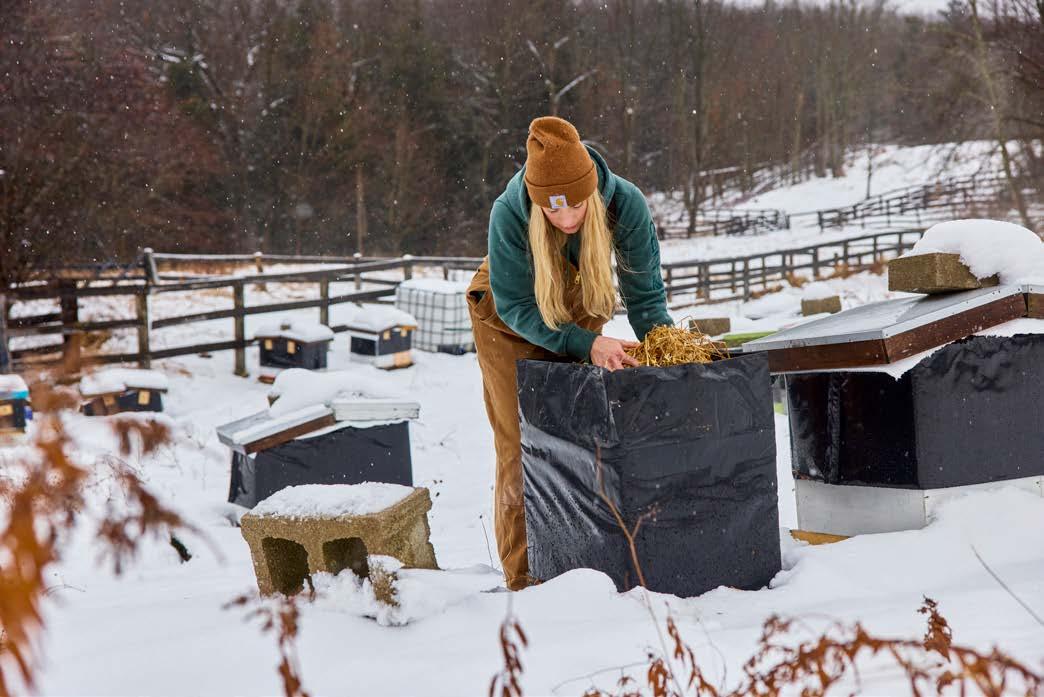
Terri Faloney ʼ09 checks on the hives at her farm in Dundas, placing hay on top to absorb moisture and provide insulation.
Without bees, Terri warns, “bad things will happen.” A dwindling bee population “would definitely pose a serious issue for food abundance for the entire planet and every creature living on it,” she explains. “Without honey bees—or apis mellifera, which is what I’m working with—our ability to produce the amount of food that we’re producing right now goes completely out the window.”
She uses blueberries to illustrate her point: “Without being able to bring bees to pollinate large blueberry fields, you’re not going to get the same yield of blueberries and you’re not going to get the same quality of blueberries. And that’s a problem for humanity, or at least how we’ve structured our society.”
Currently, Terri harvests honey just once a year, in the fall, taking only 3,500 of the 10,000 pounds that her bees produce, and leaving the rest for the colonies. Some commercial beekeepers have urged her to “take more honey,” while feeding her colonies more sugar syrup. But Terri resists.
“Financially it makes sense, but I think ethically my focus is on the bees. I want to focus on rearing queens and teaching people about the bees, and I don’t need to rob them of all their honey,” she says.
“Terri operates her business with a forever connection to nature—every jar of honey is filled up with intention and a respect towards her bees,” says her friend Devon. “Terri was, is, and always will be passionate about the future of bees and, more importantly, their place in our world.”
Meanwhile, the bees continue to surprise as well as engage Terri. “Every year, they stump me,” she admits. “I think I know what I’m doing and then the hives do something completely bonkers.” This past summer, she had a hive swarm away from her—which means that a substantial number of the bees might have left, with their queen, for a new location. But then they flew back. The queen was still in the hive, busy laying eggs, when the swarm returned.
Terri’s network of apiarists
was as baffled as she was by what happened. “Sometimes bees just do things and there’s no explaining.”
Do such mysterious reappearances qualify her as a bee whisperer? At that suggestion, Terri laughs. “There have been some interesting bee moments on the farm where I do just have a posse of bees hanging out with me, and there’s no reason. I’m not covered in sugar syrup or honey—I’m just walking around the farm and all of a sudden the bees come and fly with me,” she says. “I do feel connected with them.”
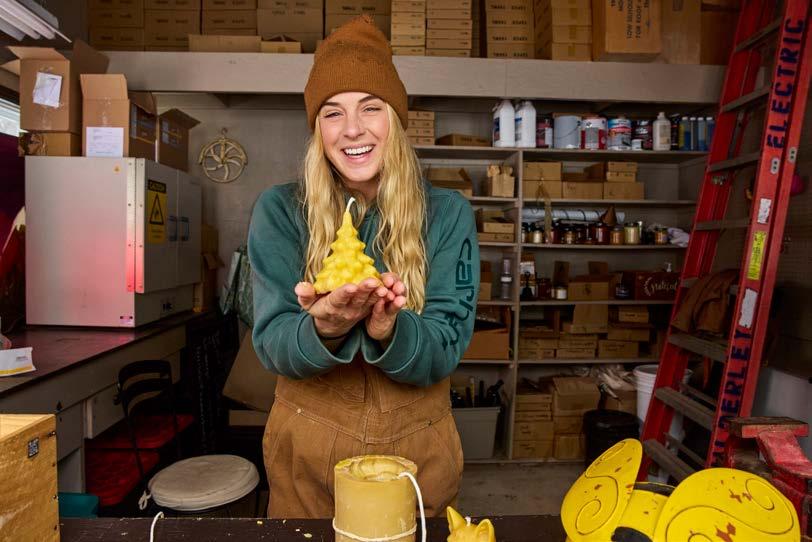
In addition to raw honey, Terri sells beeswax candles, soaps and gifts through her online store.
“Everybody should understand that you can go from getting 50 per cent in Grade 10 science and think it’s the end of the world, and then here I am grafting larvae, educating, while continuously studying and learning about these incredible beings.”
Terri currently maintains “yards” in Burford, Burlington, Flamborough, and on her farm on the border of Dundas and Ancaster. In the year ahead, she plans to expand her number of hives and find additional locations where hives can thrive.
In the coming months, she also hopes to add a couple of German Shepherd puppies to the farm, which is already home to two cats, six ducks and 38 chickens. And, during an upcoming Canadian winter, she’d like to visit fellow beekeepers in Australia and New Zealand to learn more about their practices.
Reflecting on her Grade 6 dream of becoming an entomologist, Terri is pleased with where she has landed.
“I get to hang out with bugs every day, and it’s not just bees. There are all sorts of critters that work in this ecosystem around the bees,” including spiders and, one of her favourites, the praying mantis. She’s also becoming an expert on creatures that threaten bees, such as Varroa mites and wax moths.
Not bad for someone who once questioned her aptitude for science.
“Everybody should understand that you can go from getting 50 per cent in Grade 10 science and think it’s the end of the world, and then here I am grafting larvae, educating, while continuously studying and learning about these incredible beings.”
Top Honours
Everything has been building to this moment. Graduation at HSC is a bustling, energetic and emotional day when students take the leap towards a life led with purpose.
The Places
We’ll Go
The path to a remarkable life starts here.
The journey doesn't end at the gates. At HSC, the purpose our students build becomes the legacy our alumni carry into the world. These stories celebrate next steps and the distinguished award winners who continue to lead and inspire. Discover for yourself how a foundation of joy leads to a lifetime of remarkable purpose.
The Captain of Design
A last-minute pivot from engineering was the first of many for Fehin Awobodu ’21 on his path to UX design.
Stories by Alex Berry
FEHIN AWOBODU ’21 spent his HSC Senior School years on a dedicated STEM track, loading up on AP physics, calculus and chemistry. The goal was set: Waterloo Engineering. But in a twist of fate, a hyper-competitive, COVID-era admissions cycle meant his original program offers didn’t pan out, despite having committed to the Waterloo volleyball team. Forced to pivot, he landed in the Honours Science and Business program, adding a computing minor to keep his tech skills sharp. It was a move that, as Fehin sees it, “worked out for the best.”
The new path allowed Fehin to explore a long-standing interest he’d developed at HSC. “I loved the design tech classes and took them as many times as I could,” he says. “I landed my first co-op thanks to the portfolio of work I’d done at HSC.” Fehin quickly discovered a passion for user experience (UX) and user interface (UI) design, which,
Photos courtesy of Fehin Awobodu
from his perspective, offers “bigger picture thinking and a more social environment” than pure coding.
Each co-op presented a new puzzle: one term, Fehin was designing human-machine interface screens for a packaging-sorting robot at Multiplayer; the next, he was leading the end-to-end design of an asset-tracking tool for the WSIB Innovation Lab. Most recently at the biotech company Revvity, he designed over 100 UI components for a medical design system. The work taught him to design for vastly different users—from internal managers to highly specialized lab technicians. “A huge part of the work is just understanding the user,” he explains. “I like to think my capacity for empathy makes me a good designer.”
Outside of co-ops, Fehin’s time at Waterloo has been defined by leadership. As the three-time captain of the Varsity Men’s Volleyball team and an Academic AllCanadian, he balances a demanding athletic schedule with a deep commitment to community. He led a full rebrand for the University of Waterloo Black Association for Student Expression (UWBASE), designs software for non-profits with UW Blueprint, and speaks to young students about his experiences as a Black man in STEM for Team-Up, a school
Fehin received the prestigious 2025-2026 Ontario University Athletics (OUA) Dale Iwanoczko Award of Merit, recognizing outstanding achievements in volleyball, academics and community involvement. He was also recognized as an OUA All-Star for his exceptional play, which included ranking 2nd with a .366 hitting percentage and 1st in block assists with 51.
outreach program in Waterloo. As he prepares to graduate in 2026, Fehin has his sights set on a dream job at Nike, a place that offers the perfect intersection of his athletic life and his passion for purposeful design. That dream was almost realized last summer when he secured a coveted internship in Oregon, only to have it rescinded due to upheavals in the American visa system. But for Fehin, it was just another reroute. Now, with a uXperience Design Jam win and a portfolio of high-level co-ops, he’s proven he has the skills and resilience to forge a new path, and he’s excited to see where it leads.
Above: Fehin Awobodu ’ 21 shows his vertical prowess in a game against York University.
Left: Fehin alongside other winners of the 2025 uXperience Design Jam.
Mastering the Art of Robotics
From national gymnast to NASA roboticist, Patty Meza ’20 is designing a future that’s anything but linear.
ARRIVING AT CORNELL for her undergraduate degree in mechanical engineering, Patty Meza ’20 felt an immediate sense of vertigo. “I definitely suffered from imposter syndrome,” she admitted. “My first year was tough. My grades went from the high 90s to a 3.0.” It wasn’t until her coursework grew more specialized that she found her footing, eventually earning a spot on the Cornell Cup Robotics team in her third semester. It was there that her love for robotics and the computer-aided design (CAD) skills she’d picked up at HSC gave her “a huge leg up.”
The fusion of the technical and the creative is where Patty thrives. The way she views it, engineering is an inherently creative pursuit. She credits her HSC classes in art and communications technology with giving her an edge, a skill set she still uses to design figures for academic papers. For proof of her artistic side, look no further than Patty’s Customs, a side business she started in 2020 where she hand-paints original designs on shoes—a one-person operation that has fulfilled over 40 unique commissions.
Since she was 11, Patty knew she wanted to work at NASA.
Her dream came to fruition in her third year of undergrad studies when she landed a robotics co-op at NASA’s Jet Propulsion Laboratory. “I was thrilled when I learned that aerospace engineering wasn’t the only way to work at NASA,” she says. “I’ve come to discover that I like robots more than I like space, and I got to work on these rovers that were going to the moon.”
More recently, Patty spent four months in Switzerland working as a robotics intern for CERN, the European Organization for Nuclear Research and one of the world’s largest and most respected centres for scientific research.
The discipline required for such a demanding field was forged years earlier. While at HSC, Patty was a nationallevel competitive gymnast, training 15 hours a week and representing Canada at a World Cup in Spain. The schedule was gruelling. “I’d get home at, like, 11 p.m., and I’d be doing homework in the car,” she recalled. “I learned how to function without a lot of sleep.”
That grind now fuels her graduate studies in robotics at Northeastern University, where her research involves developing
While at NASA, Patty worked on CADRE, a trio of autonomous rovers designed to explore the Moon as a self-leading collective. These suitcase-sized explorers coordinate via a mesh network to “see” beneath the lunar surface in 3D, paving the way for the future of multi-robot space missions.
innovative, bio-inspired aerial drones. As she finishes her master’s degree, however, Patty finds herself in unfamiliar territory. “It’s the first time in my life where I don’t know what I want to do,” she reflects. After years of chasing a singular goal, the path ahead is wide open. But uncertainty has been replaced by a quiet confidence. “I feel super prepared,” she says. “When I’m on the job search, there’s so many job descriptions that I’m like, ‘I could do that, that looks so fun.’” With a world of possibilities in front of her, she’s not narrowing her options. “The world is my oyster. I will apply to every job that looks cool, anywhere in the world. I’m not scared of going anywhere.”
Patty Meza '20 outside NASA's California Institute of Technology where she worked as a mechanical engineer intern in the summer of 2025.
Photo provided by Patty Meza
Curating a Career
For Sofia Beraldo ’18, the most rewarding path has been one she’s designed herself—full of side quests and a fearless desire to learn.
WHEN IT CAME TIME to apply for university, Sofia Beraldo ’18 felt adrift. “I was the Media Prefect and loved my communications technology classes but didn’t know how to make a career out of it,” she recalls. With help from HSC’s guidance team, Sofia committed herself to Western University for its communications and media studies program. Choosing a path that honoured both her academic and personal passions set a precedent for Sofia, whose career has been
a masterclass in following curiosity wherever it leads.
Sofia found herself bucking conventional pathways again after graduation. “Like many of the program’s grads, I took on marketing jobs, but it wasn’t feeding me.” Instead, Sofia pursued her interest in fashion history and its influence on culture by enrolling in Toronto Metropolitan University’s Master of Arts in Fashion program. This academic pivot wasn’t just theoretical; Sofia leveraged her student status
Sofia recently curated Staging Celia Franca, an archival exhibition at The Image Centre in Toronto that examined the private style and public persona of the National Ballet of Canada’s founder during the companyʼs formative years (1951–1959).
'18 at the
to land an internship at the National Ballet of Canada’s archives, a proactive step that laid the groundwork for her future. Her research on the wardrobe of founder Celia Franca culminated in an exhibition at The Image Centre in January 2026. Sofia learned to create her own opportunities, a skill that would prove essential in a field she never knew existed as a student.
Tapped to curate the first permanent exhibition for the Grimsby Museum in 2024, Sofia was handed a project and the trust to see it through. The role required designing displays, consulting with community historians, and even learning to drywall. A self-described background person who once shied away from the spotlight in school musicals, Sofia thrives as the unseen architect. “Maybe that’s a piece of my personality that lends well to this career path,” she says.
That determination was honed on the cross-country course. After Western’s coach said she wasn’t fast enough for the varsity team, she joined a local club, trained for a year, and earned her spot. This resilience is a cornerstone of her philosophy. Now, she is exploring another “side quest”—a Pilates instructor certification.
Today, Sofia is with the Art Gallery of Hamilton. Her role with the marketing team allows her to assist across various functions. For someone who once felt lost without a clear destination, embracing the journey itself has become the goal. “I’m not afraid to fail anymore,” she reflects. “I kind of consider myself a lifelong learner. I just love learning; it doesn’t matter what it is. I’m the first one there, ready to learn.”
Sofia Beraldo
exhibition she co-curated in 2023 titled Ballet Through the Lens at The Eaton Centre.
Ones to Watch
Once a Trojan, Always a Trojan
The HSC bond is enduring, but it’s strongest when you’re here. Rediscover our community by joining us for signature networking events, athletic games and beloved traditions.
Help shape the future by sharing your expertise as a mentor, on an alumni panel or through student placements. And don’t forget to help us celebrate our best and brightest— nominate a fellow graduate for an Alumni Award today.
Connect with us. Email alumni@hsc.on.ca to update your contact information, sign up for a mentorship role, or submit an award nomination.
Alumni Awards
Step into the story of our greatest ambassadors. We celebrate our Alumni Award of Distinction recipients—global citizens who have lived our aspirations to better the world— and our Hall of Excellence inductees, who embody and promote the College’s highest ideals. These leaders turn their distinguished legacies into the inspiration our students need to go, lead, and make their own difference in the world.
A League of Her Own
Jill Pilgrim ’77 didn’t just join the world of sports law; she helped build it from the ground up, fuelled by a competitive spirit born at HSC.
Stories by Alex Berry
“I’M ALWAYS MULTITASKING,” Jill Pilgrim ’77 admits with a laugh. As one of North America’s premier sports lawyers, Jill’s relentless drive found its first spark on the fields of HSC while dreaming of outrunning her older sister, Desiree ’76.
An accomplished athlete, Jill recalls the excitement of Games Day, HSC’s intramural track and field event. At that time, the College didn’t have a track and field program for girls, so Jill took her talents to the Hamilton Olympic Club, which propelled her to a Junior National Championship. It also set a pattern for her life: if the lane doesn’t exist, carve it out yourself.
While Jill was carving her own path on the track, she and Desiree navigated the social landscape of being the only two Black students in the Senior School. Yet, Jill’s memories are anchored not by a sense of isolation, but by the profound kindness of many of her peers. “It informed my viewpoint of Canadians being very lovely, accepting, nice people,” Jill recalls. Those formative years in Hamilton left a lasting impression on her worldview. “No doubt I was an oddity with my dark skin and British accent as well, but the kids were incredibly nice. They treated us like anyone else.”
Navigating her time as an ‘oddity’ at HSC instilled in Jill an internal compass that never wavered. She carried that ability to thrive in unfamiliar environments to Princeton, where she excelled both in the classroom and as a standout on the varsity track team. After earning a degree in politics and African studies, Jill deferred her admission to Columbia Law School to move to Paris with the dual goals of securing a spot on the British Olympic team and becoming fluent in French.
“I was born in London, so I have British citizenship,” Jill explains. “I took that gap year to see how far I could get without academic pressures,” she recalls. While the isolation of training away from her elite New York club proved difficult, the experience was transformative.
Jill returned to the America, completed law school and began working as a tax lawyer in a big New York City firm. It was around this time that her former track teammates were on their path to becoming Olympians and started turning to her for legal advice. “They needed legal representation but lacked the funds to pay for it,” Jill recalls.
Seeing an opportunity to bridge the gap, Jill pivoted to corporate and entertainment law, and found work with a firm that allowed her to bring in clients and take a percentage of the revenue. “I saw that
I could get business not just in sports, but other areas,” she recalls. “It was revolutionary back in the late 1980s.”
Jill’s entrepreneurial spirit launched a career that reads like a history of modern sports governance. She served as General Counsel for USA Track & Field, helped build the Ladies Professional Golf Association’s first drug-testing program, and now serves as an arbitrator for the National Football League and is a member of the Knight Commission on Intercollegiate Athletics.
Today Jill operates as a “neutral”—a private “judge” and mediator— who relies on objectivity to resolve disputes that range from doping allegations to multimillion-dollar contracts. It is a role that requires an unshakeable reputation, something she emphasizes to law students who seek out her advice. “If you do not have a reputation for integrity and hard work,” she advises, “your connections won’t matter. You have to be the person people trust to get it done.”
Despite a resume that would allow for a comfortable retirement, Jill has no intention of slowing down. She is currently preparing for board meetings in Spain and Toronto, fueled by a lifelong curiosity that she claims makes retirement impossible. For Jill, the finish line keeps moving, and she is perfectly happy to keep chasing it.
“My peers are all asking when I’m going to retire,” she laughs. “I tell them, ‘Why would I? I’m having the time of my life.’”
Alumni Award of Distinction
A sprinter on Princeton's track and field team, Jill won two team Ivy League championships as a Tiger, and was named team captain for the 1980 season.
The Test Pilot
From studying the stars to navigating the skies, Karen Deme ’90 finds her greatest “rush” in the precision of a maiden voyage.
THE MOST REWARDING PART of being a pilot for Karen Deme ’90 happens on the ground, just after the engines have cooled. It is the moment she opens a crisp, new aircraft log book to record its very first hours in the sky.
“I still get a kick out of that,” Karen admits. “It sounds like a small detail, but it’s the culmination of thousands of hours of design, engineering, and manufacturing finally coming together.”
As a production test pilot for Bombardier, Karen is responsible for taking the world’s most advanced business jets, including the Global 8000, on their maiden voyages. While the aircraft’s systems are tested relentlessly on the ground long before a wheel ever turns on the tarmac, Karen says there is still a distinct “rush” that comes with being at the controls for a plane’s first takeoff.
Working with a lean, specialized crew of two pilots and a flight test engineer, Karen follows a 70-page document to put the aircraft through its paces. These rigorous checks include mid-flight engine relights to ensure every backup system is mission-ready. “We don’t take risks; we manage them,” she explains. “There are three backup systems for everything. Our job is to verify that the machine is as flawless as the engineering behind it.”
That level of composure has defined Karen’s career, though her path to the cockpit wasn’t a straight line. If you had asked an 18-year-old Karen what her future held as she walked the halls of HSC, she wouldn’t have said flying. From the age of 12, Karen was determined to be an astronomer.
“Everything I did was focused on that,” she says. “That’s why I chose to study astrophysics at Queen’s.” Midway through her degree however, Karen realized that looking to the skies wasn’t enough. She wanted to traverse them.
While her passion for flight crystallized later, the seeds were sown early. Karen’s family lived in Australia and England before they moved back to Canada during her Grade 8 year at HSC. She remembers flying often to visit family and finding the environment of an airport electric. Yet, despite loving an introductory flying lesson at age 16, she initially dismissed it as a career. “Becoming a pilot didn’t seem like a realistic path to me at that point.”
Karen decided to trade the telescope for the stick after completing her astrophysics degree, and enrolled in Seneca College’s School of Aviation. After obtaining her commercial pilot license and a multi-IFR (instrument flight rules) rating, she worked as an instructor at Seneca before discovering Bombardier’s internship program.
“I figured I’d go on to fly for Air Canada,” Karen says, remembering the typical career path of her fellow flight school grads. “But after a few years at Bombardier, I realized it was the place for me.” Today, Karen’s job is a blend of elite piloting and rigorous engineering: ensuring every machine is flawless before it reaches a customer.
Her career has also taken her far beyond the Bombardier hangars. During the production of the Dash 8, Karen accepted “entry into service” assignments, embedding herself with international airlines for months at a time to train local pilots. This global perspective has taken her everywhere from Rwanda and South Korea to India and Japan.
For the girl who once wanted to study the universe, Karen has found a way to see a great deal of it—one test flight at a time.
by Alex Berry
Hall of Excellence
Photos
Karen Deme '90 walks aboard a jet at Bombardier’s Pearson assembly plant.
No Reservations
From the halls of HSC to the helm of Pearle Hospitality, James ’90, Aaron ’95 and Leanne ’01 Ciancone have turned a family tradition into provincial landmarks.
IF YOU VISITED THE ANCASTER MILL in the late 1980s, you may have seen James ’90 serving events, Aaron ’95 washing dishes and Leanne ’01 checking coats. “We learned about the hospitality industry from the ground up,” Aaron says, reflecting on a lifelong apprenticeship in the family business.
Hospitality isn’t just a career for the Ciancone siblings, it’s a shared language. Aaron, now the CEO of Pearle Hospitality, distills their collective philosophy into a single, non-negotiable standard: “You need to lead with the intent of creating a positive human connection.” This dedication to the “human element” blends the grit they learned in the family “dish pit” and the values of respect and community nurtured during their years at HSC.
Aaron recalls how simple expectations at the College—holding doors, addressing teachers with respect, and the discipline of the Number 1 dress—taught them a level of professionalism that remains a hallmark of every Pearle establishment. It was a culture where the “little things” mattered, mirroring the meticulous attention to detail required to run a world-class hotel or restaurant.
For Leanne, an HSC Lifer, the College provided her freedom to take “safe risks,” a mindset she believes is vital to their business. She fondly remembers the outdoors club as a training ground for resilience, where flipping a kayak was simply part of the learning curve. That
fearless motivation was further championed by her Grade 6 teacher, Cecilia Carter-Smith. “Her energy was infectious,” Leanne says, crediting Cecilia with instilling the belief that she could achieve anything. The bond endures; when the family opened Spencer’s at the Waterfront, Cecilia was there. “I could see tears in her eyes,” Leanne recalls.
“We aren’t a risk-averse family,” Leanne adds, reflecting on the company’s ambitious expansion. “Our willingness to take big leaps is exactly why Pearle has grown into what it is today.”
This resolve was tested in 2021 when the siblings opened The Pearle Hotel & Spa during one of the most challenging times for the service industry. “You’ve got to have grit,” Aaron says of their commitment. “If you’re the person counting the hours you work, don’t go into the business.”
The Ciancone perseverance is proven. Today, Pearle Hospitality employs over 1,400 team members and is embarking on its most ambitious “dream project” yet. Working with the Niagara Parks Commission, the team is set to transform the Toronto Power Generating Station into a world-class tourism destination. The massive undertaking will restore the historic limestone generator hall for public use as a museum and art gallery while adding a five-star boutique hotel, luxury spa and signature dining.
To manage an expansion of this scale, each sibling brings a distinct strength to the mission: Aaron provides steady, operational leadership; Leanne serves as brand ambassador and partner; and James functions as the creative visionary. When asked about retirement, the siblings just laugh. For them, there is no stop button. “It’s not in our blood,” Aaron says. “Just as we ramped up into it from a young age, we will likely ramp down as we get older, but we do this because we love it. Why would we stop?”
Aaron '95 and Leanne '01, at Pearle Hotel & Spa, in front of a display that pays homage to its namesake and their grandmother, Pearle Ciancone.
Singular Students
The Alumni Association Leadership Scholarship is given to selected Grade 9 students who embody the College’s Mission, Vision and Values, especially through outstanding leadership potential.
Fola
Volunteering in the nursery at his church, Fola Olumide has learned that connecting with others requires adapting to their needs. “You have to learn about the kids, know what they like, and figure out how to make it a good experience,” he explains. It is this service-oriented mindset that has Fola already setting his sights on becoming an Academic Prefect in his graduating year, a role he admires for its ability to “make a positive change in people’s lives.”
Though new to HSC, Fola is enjoying all the College has to offer. A true polymath, he plays an impressive seven instruments including piano, guitar, drums, trumpet and saxophone, and balances his artistic side with a strong aptitude for math and science. He credits his teachers and the bus ride from Milton for helping him stay organized and settled. “The teachers are really great,” he notes. “I haven’t felt out of place.”
Outside the classroom, Fola’s primary passion is on the pitch. He plays competitive soccer almost every day of the week, viewing the sport as his ultimate outlet. “It helps me feel free,” he says. “It gives me a space to be creative.” His commitment to the game is relentless; he often spends his lunch breaks training in the HSC fitness studio to ensure he stays match-ready. With a dream of playing professionally, Fola approaches his busy schedule with discipline and joy, finding a rhythm that allows him to excel as an athlete, an artist and a leader.
Joshua
For Joshua Fowler, effective leadership doesn’t require being the loudest voice in the room. Instead, he prefers to lead by example, a quiet but impactful approach he honed during his time in Middle School as a member of the Principal’s Council. Now an HSC Student Ambassador, Joshua uses his calm demeanor to help visiting students feel welcome and comfortable touring the campus. He believes that the pillars of a positive school culture are simple: listen to others and create an environment where everyone feels they belong.
Now finding his footing in Senior School, Joshua is embracing the transition with an open mind. He cites math as a favourite subject and is even looking forward to the challenge of his first formal exam period. He credits his experience in the Model UN club for teaching him the value of listening. “It’s interesting to see other people’s perspectives,” he notes. “Even if you don’t agree, you have to be able to argue it.”
Joshua’s schedule is a balance of highenergy athletics and the arts. He is a captain for his regional soccer team, a certified referee, and a shooting guard for his rep basketball team. He balances this intensity with weekly piano lessons. Looking ahead, Joshua has his sights set on becoming a Prefect, but for now, he is enjoying the variety HSC offers. “There’s a place for everyone here,” he says. “I like doing lots of different activities, so being able to have a part in each of those is really cool.”
Elizabeth
Having been at HSC since Grade 1, Elizabeth Lerner is approaching the new freedom of Grade 9 with intention. While she was a driving force in Middle School—serving as a House Captain and helping spearhead a solar panel initiative—she is now focused on prioritizing “meaningful impact” over simply doing it all. Earlier this year, she channeled her creative energy into the arts as a cast member of High School Musical, while continuing to support campus sustainability initiatives as part of the Green Team.
Elizabeth’s adaptability is also evident on her resume. On weekends, she assists older clientele at a local boutique, while her summers are spent volunteering as a camp counsellor for young children. These diverse interactions are a living example of the “emotional intelligence” she championed in her scholarship essay. For Elizabeth, a leader’s primary job is to foster an environment of empathy where everyone feels heard. “Collaboration improves,” she wrote, “because understanding how others feel makes resolving conflicts easier.”
This focus on human connection drives her future ambitions. Inspired by her mother, Elizabeth hopes to eventually combine her love for science and care by pursuing a career in paediatrics. “Little kids just make me want to be around them,” she says. “It is really awesome to make those connections.”
Photos by Alex Berry
Katie
“If your actions inspire others to dream more, learn more, do more, and become more, you are a leader.” This quote by John Quincy Adams, cited in her scholarship essay, captures the philosophy that drives Grade 9 student Katie Stubbs. Whether she is tackling a grueling 20-kilometre portage on a summer canoe trip or navigating the halls of the Senior School, Katie believes leadership is about consistent effort in big moments and small.
On campus, Katie has hit the ground running. She earned a spot on the Varsity Senior Girls’ soccer team as a freshman, a testament to her skill and determination. She balances this intensity on the field with a love for science and a commitment to service, currently volunteering with Reading Buddies in the Junior School. She is enjoying the new independence of Senior School, noting, “The workload is definitely more, but I really like it. As long as you’re in class on time, you have the freedom to manage your own time.”
Outside of HSC, Katie loves the outdoors and spends her summers at a tripping camp in Northern Ontario. This resilience fuels her pursuit of the Duke of Edinburgh Gold Award, a goal inspired by her parents. With sights set on eventually becoming an OBGYN, Katie is approaching her Senior School years with a clear plan: to involve herself in everything, from rugby to HOSA, and make a lasting, positive impact.
Great Grads
HSC's Award of Distinction Graduate Scholarship is given to one or more departing students who epitomize the nature of service and leading by example.
Hacking the Status Quo
Zooming in from his dorm room at the University of Waterloo, Zachary Yu ’25 was admittedly run down. He had just pulled three all-nighters for Go On Hacks, a hackathon he organized with the tagline: weird problems need solutions too.
Despite his fatigue, Zachary was beaming. “I’m sick from it, but I wouldn’t have it any other way.” The event raised $15,000 in sponsorship from big names like Shopify and Polarity Labs, bringing more than 200 hackers together to tackle awkward ideas. Bored by hackathons aimed at building corporate software, Zachary’s event encouraged pure creativity, or as he puts it, the drive to build “the strangest projects possible.”
At the time, Zachary was a first-year Computer Science student. While the program was rigorous, the former Arts Prefect thrived on “side quests,” spending his post-graduation summer traveling to hackathons. “I’ve always been a guy who just likes to build things at heart,” Zachary says.
In November, his co-founded startup, Traverse, received $500,000 from Y Combinator, the accelerator that launched Airbnb and Dropbox. Zachary has since moved to San Francisco, taking leave from Waterloo to serve as co-founder.
This leap reflects Zachary’s belief that education extends far beyond the lecture hall. Even in Silicon Valley, he finds balance through jazz piano, a hobby that helped him de-stress during his days at HSC.
Looking back at his transition from HSC, Zachary offers candid advice for current students stressing over university applications: “Focus on finding a place where you will be happy, rather than chasing some coveted institution.”
For now, Zachary is embracing the hustle, recognizing the hurdles of the startup world. “You don’t build something great the first time. Maybe you only get to 10 per cent this time, then the next thing you build, you’ll go to 20, then to 30, and then eventually get to 100,” he laughs. “It’s a long shot, but you have to keep your conviction.” With that mentality, Zachary is sure to hack it in any of his pursuits.
Purposeful Prefects
From school life to dream dinner companions, this year's student leaders share a glimpse into their world and the interests that propel them forward.
•Chicken Burgers
•House Cross Country
•Gym
•Respect
•��
•Granola Bars
•Ruth Bader Ginsburg
•The Harry Potter series
•A star on Dancing With the Stars
•Carol Service confetti toss
•Spaghetti
•Homecoming
•Chemistry
•Community
•��↕
•Sleep
•Jesus Christ
•All That Really Matters by Nicole Deese
•Anaesthesiologist
•E-Week
•Butter Chicken or Goulash
•Chapel
•Drama
•Integrity
•��
•My family
•Jesus
•Dork Diaries by Rachel Renee Russell
•Hollywood Movie Star!!! Co-Starring with Sonia
•Jingle Bands
•Butter Chicken
•Staff vs Students Events
•Food Nutrition
•Determination
•��
•Apple Pay
•Jimmy Fallon
•Born a Crime by Trevor Noah
•Cardiologist
•Random Morning Hot Chocolate
•Chicken Shawarma
•The Costume Contest!!
•English or Science
•Determination
•��
•My cat Jaz (also the rest of my family) and music
•Fiona Apple
•A Little Princess by Frances Hodgson Burnett
•Orthopaedic Surgeon
•Jingle Bands :'( Chocolate
•Meat Pies
•Monster Mash
•Technology Design
•Individuality
•��
•My Bed
•Seth Macfarlane
•The Adventures of Beekle: The Unimaginary Friend by Dan Santat
•Disney Imagineer or Universal Creative
•Carol Service confetti toss
•Cherry Cheesecake
•Spring Fair
•Business/Economics
•Determination
•��
•Coke Zero
•Ed and Lorraine Warren
•Any Stephen King novel
•A job that allows me to travel the world
•E-Week
Luke Miller Senior School & Head Prefect
Jade Asindi Media Arts & P.R. Prefect
Jumana Al-Beer Academic Prefect
Sadie Avram Junior School Prefect
Isuri Fernando Environmental Prefect
Tami Ayibiowu Chapel Prefect
Maeve Treleaven Middle School & Head Prefect
•Buffalo chicken wraps
•Ram the Rink
•Law and History
•Determination
•☹
•Music
•Agatha Christie
•Animal Farm by George Orwell
•Lawyer
•Chapel
•Breaded cauliflower bites!
•Theatre productions
•English/Law/History
•Determination
•��
•Playing cards
•William Joyce — Writer and Filmmaker
•Harry Potter and The Philosopher's Stone by J.K. Rowling
•Corporate Lawyer
•Singing Velle est Posse
•Cheesy Pinwheels
•Jingle Bands
•Yearbook
•Determination
•��
•Ice Capps
•Gracie Abrams
•Saving 6 by Chloe Walsh
•Internal Medicine Physician
•Ripping the program at Carol Service confetti toss
•Chicken Shawarma
•Ram the Rink/Student Buyouts
•English
•Determination
•��
•A water bottle with a straw
•Princess Diana
•Meet Me At The Lake by Carley Fortune
•Corporate Lawyer
•Spending spares in the SLC
•Chicken Souvlaki
•Buyout Games!
•Business Leadership/Team Games
•Respect
•��
•Food
•Gradey Dick
•Death of a Salesman by Arthur Miller
•Business Consultant
•Chapel
•Nashville Chicken Burgers
•Jingle Bands
•Spanish and Chemistry
•Individuality
•��
•My noise cancellation headphones
•Madam CJ Walker
•I hope this doesn't find you by Ann Liang
•Dermatologist
•E-Week
•Chicken Fajitas
•Tug of War
•Accounting or Economics
•Integrity
•��
•Music
•John F. Kennedy
•Harry Potter and the Prisoner of Azkaban by J.K. Rowling
•GM of Toronto Maple Leafs
•The mile run
•Spaghetti
•Senior School Musical
•English
•Community
•��
•Music
•Tom Holland
•If We Were Villains by M.L. Rio
•Hollywood Movie Star!! Co-Starring with Tami
•Jingle Bands and Carol Service
Sonia Trivedi Arts Prefect
Jacob Morris Spirit Prefect
Kerrington Johnston Montessori School Prefect
Meera Ghelani Service Prefect
Anum Manzoor Pluralism & Belonging Prefect
Abdul Kamara Wellbeing Prefect
Avery Rutledge Athletic Prefect
Everett Hamel Athletic Prefect
HSC Lifers 2025
Every year as we celebrate the graduating class at HSC, we say goodbye to a group of students we know as “Lifers.”
These students joined the College at the start of their education and have been part of the HSC community throughout their school years.
Where the Grads Are
The Class of 2025 has gone on to study at top institutions in North America and the world
Canada
25-McMaster University 13-Western University 12-Queen's University 11-University of Toronto 10-Huron University College 6-McGill University 10-University of Waterloo 9-Guelph University 6-Wilfrid Laurier University
2-Dalhousie University 2-Toronto Metropolitan University 2-University of British Columbia 2-Sheridan College 1-Fanshawe College
1-HEC Montreal 1-Nova Scotia College of Art and Design University 1-Trent University 1-University of Ottawa 1-University of Toronto - Mississauga
United States
1-Adrian College 1-Carnegie Mellon University 1-Case Western Reserve University
1-University of Michigan 1-Rochester Institue of Technology
Nathan Ciancone
Jack Collins
Oliver de Boer
Sophia Cober
Nico Fraser
Claire Green Kopeck
Kieran Harlock
Jacey Goldberg
Zachary Chong
Nilauxshan Balayogendiran
Neyk Amin
William Armstrong
1-University of Birmingham
1-Loughborough University
1-University of Debrecen Hungary 1-University College Dublin
2-University of Galway
1-Hong Kong University of Science and Technology
1-University of St. Andrews 1-University of Sussex
Majors
James Hutchinson Evaluna Larrazabal
Abigail Hayes Vickers
Evie Holmes
Kaiet Ruiz Reyes
Ella van Adel
Jayas Prinza
Sophia Sahlas
Alex Ruiz Reyes
Brayden Scott
Eleni Sahlas
Jesse Visentini
Carter MacLeod
Flynn Pavlovsky
Lives Lived
Alumni
NANCY MORISON ’39, honorary member of the HSC Corporation and McMaster graduate who served as a lieutenant and basic training officer in the Canadian Women’s Army Corps during the Second World War; an independent spirit whose storied career included mapping Canada’s north via aerial survey to working for MGM Studios in London; an intrepid traveller who moved to France for a year at age 47 to master the language and trekked to Antarctica in her 80s; predeceased by siblings Joan Gale ’38, John ’39, Brian ’41, and Barney ’48; aunt and great-aunt to many alumni. On May 7, 2024, at 102.
EDWIN M. “TED” MILLS ’45, past member of the HSC Corporation and distinguished public servant; a graduate of Royal Military College and Western University (MBA ’59), he became the chief organizer for the Alberta Progressive Conservative party under Peter Lougheed and subsequently served as the clerk of the executive council during a pivotal era in Canadian politics; a lifelong athlete and mountaineer who remained a devoted member of the Alpine Club of Canada for decades; husband of Judy for nearly 70 years; father, grandfather and greatgrandfather. On November 25, 2024, at 94.
KATHLEEN J. MARSHALL (NÉE BRIGGS) ’48, devoted cornerstone of her family and 26-year volunteer at Joseph Brant Hospital; a gracious and savvy hostess who supported the legal career of her husband of 71 years, Alan; a woman of deep faith who led women’s Bible studies and taught Sunday School for many years; remained a steady, prayerful presence for her family even through her journey with Alzheimer’s; wife, mother, grandmother and great-grandmother. On February 2, 2025 at 94.
CHARLES WALLACE “WALLY” JACQUES ’48, dedicated HSC Builder and Governor (1969–1974) who helped shape the College’s future through his work on the Fundraising and Public Relations committees; a loyal Class Representative who co-organized the landmark 2009 Old Boys’ Reunion at the Tamahaac Club; a proud Rotarian and long-standing member of Central Presbyterian Church who embraced life with vigour; father of the late Douglas ’76, Robert ’74, and Nancy ’81; husband, father, grandfather and greatgrandfather. On November 8, 2025, at 93.
KENNETH JULIAN SMITH ’55, lifelong Hamiltonian and skilled machinist who served a three-year apprenticeship at Bertram’s Machine Shop in Dundas before a dedicated 32-year tenure through the company’s many iterations; an avid sports fan and “armchair quarterback” who, alongside his late son Craig, was a fixture at Tiger-Cats games in their distinctive matching tiger-striped outfits; husband, father, grandfather. On February 19, 2025, at 87.
PETER WILLIAM UNSWORTH ’66, former Navy sailor aboard the HMCS St. Laurent and longtime Canadian Pacific Rail staffer whose career led him on countless adventures through the wilds of British Columbia; remembered as a generous and gentle bachelor; was known to give anyone the shirt off his back; brother and uncle. On August 29, 2025, at 81.
JENNIFER ANNE BEATTY ’76, University of Guelph graduate with a dedicated career in horticultural therapy and garden nurseries; a certified riding instructor whose lifelong passion for horses was matched by her adventurous heart, leading her to work on a moshav in Israel and join international development missions to Antigua, Jamaica and Honduras; sister of Lorna Beatty ’77, Allison Groten ’80, Geoff Beatty ’81, Sheila Gorlitz ’82; sister, aunt and greataunt. On December 27, 2025, at 67.
LAURA LEE BENNETTO ’79, entrepreneur who brought her eye for design to Hamilton’s King Street with her own boutique; advisor to the HSC Alumni Association (2013–2015) who cherished memories of her student years; deeply devoted to her father, Bob, with whom she shared a laughter-filled bond; remembered as a witty and unassuming “clothes horse” who loved horse racing, oil paintings, and playing Scrabble at Lake Boshkung; sister of Robert John Bennetto ’82, cousin of Judith Suggett ’65, Murray Weaver ’66 and Margaret Corrigan; niece of Morley and Gertrude Weaver. On January 7, 2026, at 65.
PHILIP MICHAEL SCOTT JONES ’70, representative for the class of 1970 and McMaster graduate; a self-taught bass player who performed with various local bands and a devoted photographer; passionate traveller who became fluent in German; remembered as an active hiker and cyclist; brother, uncle and greatuncle. On March 26, 2025, at 72.
Friends and Family
PATRICIA JEAN DAKIN (NÉE DROPE), energetic athlete and legendary golfer; a six-time club champion at Hamilton Golf and Country Club and 1994 Ladies Captain at The Toronto Golf Club; a modest competitor who notched five holes-in-one and balanced her love of the links with swimming, tennis and yoga; a long-time supporter of The Scott Mission; mother of Patty Simpson ’74 and Warren Dakin ’78; wife and grandmother. On April 9, 2025, at 99.
GEORGE Y. P. LAU, distinguished paediatric surgeon and former chief of pediatric surgery at St. Joseph’s Hospital; recipient of the Golden Scalpel Award for his outstanding contributions to surgical education and the Dr. Meyer Carr award for pediatric service; a man of deep faith and a lifelong learner who enjoyed painting and classical music; husband of 49 years; father of Jonathan ’98 and Michelle ’99; grandfather. On April 10, 2025, at 95.
SUMITHRA ARIYAWATI PEERIS, dedicated physician, philanthropist, and Builder of HSC who served as a College Governor for nearly a decade (1988–1992 and 1993–1997); a vital voice on the Education and Public Relations committees, she continued to serve the College as a consultant long after her formal retirement from the Board; remembered as a “mother to all” who balanced her medical practice with a deep commitment to community service, including her support for Rotary International and local food banks; mother of Jacintha ’83, Samantha ’85, and Vishni ’89; grandmother. On November 14, 2025, at 91.
DOUGLAS ROY LEGGAT, former HSC Governor (1976–1979) and influential member of the Property Committee who helped steward the College’s physical growth; a visionary entrepreneur and mentor who expanded the Leggat Auto Group and served as Chair of the Canadian Automobile Dealers Association (CADA); a dedicated philanthropist, he was the inaugural Chair of the Burlington Foundation and leader of the Joseph Brant Hospital Capital Campaign; an elite athlete in his youth, he remained a keen competitor in golf and tennis; husband of Maryella for nearly 70 years; father of Sue Kidd ’77, Brian Leggat ’81, and Leighan Basadur ’83; grandfather of Portia ’20, Mason ’22, Ella ’23 and six others; great-grandfather. On December 30, 2025, at 91.
Faculty and Staff
ROBERT EDWARD HEFFERNAN, former HSC bus driver who joined the College in his retirement following a long career at Owens Corning; a passionate boater with a “bigger-than-life” personality; a devoted family man; husband, father, grandfather. On January 11, 2026, at 88.
A note about Lives Lived:
If you learn of any alumni, faculty or staff who have passed away during the course of the coming year, you are welcome to send a note to communications@hsc.on.ca so HSC Review can properly remember them on this page. If you have confirmed details, including age and date of death, please include them, as well as an appreciation of the person if you wish. A copy of, or link to, a published obituary is especially helpful.
Award ceremonies always bring joyful learning to the forefront. No greater example is during the Middle School Awards, where commendations for academics, athletics, House spirit and character shine a spotlight on the uniquely gifted students at HSC.
Built on Brilliance
Investing in the spaces where our students find their spark.
For 125 years, the spirit of HSC has been built on more than just brick and mortar; it has been shaped by a community that believes in the brilliance of its children. As we look toward the horizon and envision new spaces where our Middle Schoolers will find their spark, we recognize that every great leap forward begins with a foundation laid together.
Donations to HSC don't just build walls, they generate the "aha!" moments of future researchers, the first sketches of tomorrow's artists, and the bold questions of our next world leaders. Your generosity is the bridge between our storied past and the next 125 years of wonder.
Setting the Tempo for Smart Giving
Greg Forsythe ’05 on why you don’t need millions to secure the next 125 years of HSC.
WHAT DOES IT
TAKE
FOR A SCHOOL to reach its 125th birthday? The answer isn’t just great teachers, top-tier facilities or proven educational excellence. The answer, according to HSC trustee and current parent Greg Forsythe '05, is found in the true believers of the College. “Our strength is our culture and the people in it who understand that we are part of a place where kids feel safe, connected and empowered.”
Through a strategic approach to giving, Greg demonstrates that for HSC’s next 125 years, time, not fortune, is the ultimate philanthropic currency.
An HSC Lifer, Greg’s passion for the College is deeply personal, rooted in the enduring care he experienced from Montessori through Senior School. A selfdescribed “non-traditional” student whose interests leaned more toward drumming in rock bands than dusting off textbooks, Greg found a safe haven at HSC that allowed him to explore his own path. “At the time, I probably didn’t appreciate it as much as I should have,” Greg reflects. “But I always felt supported here.”
He recalls the pivotal influence of music teacher John McGuirk, who fostered his budding passion for loud, grunge music. Instead of shutting down Greg’s amp-blowing rock band, John organized a pizza party for their first performance—a gesture of support that resonated long after graduation.
From there, Greg applied his musical talents to his undergraduate studies at Acadia University, minoring in percussion before transferring to Wilfrid Laurier University to complete a degree in psychology. His music career took flight in his twenties, a period spent touring and navigating the industry’s highs and lows. He was even asked to join the band Walk off the Earth for Warped Tour, but the timing wasn’t right.
by Emily Malcolm
Photos
“I was feeling burnt out and not interested in living in a van for months,” Greg admits. It was 2009, and with the recession hitting hard, he made the decision to join the family business. Today, as the director of Forsythe Lubrication, the true value of Greg’s HSC experience has crystallized. For him, business is fundamentally about managing relationships and understanding people, a skill set that aligns perfectly with the values he absorbed at HSC. His management philosophy champions determination, integrity and respect, creating a workplace culture that mirrors the energy of the College.
Greg’s retrospective appreciation is exactly what drives him to pay it forward today. He isn’t waiting until retirement to build a multi-million-dollar legacy for HSC, rather, he’s employing the strategic use of the blended gift model to make an incremental investment that will empower generations to come.
The blended gift model operates on two fronts. First, a small, time-bound contribution is deployed for the College’s current needs. Second, a portion of that cash is used to pay the premiums on a life insurance policy, naming HSC as the beneficiary. Over decades, this policy matures into a multi-million-dollar gift, securing the endowment for future generations.
“We like to call it ‘Smart Giving,’” says Greg. By reframing philanthropy from a “one-day” goal into a manageable monthly habit, the barrier to entry is virtually eliminated. Instead of waiting for a windfall that may never come, Smart Giving allows younger community members to harness the one asset they have in abundance: time.
More than just a financial strategy, this approach offers a trajectory-changing moment for HSC. “In our 125-year history, the College has never leveraged this kind of scalable potential,” says Greg, with excitement in his eyes.
Smart Giving is focused on the long game. It’s “an act of faith and a promise to the community,” as Greg puts it. The barrier to entry is low, but the potential impact is limitless. By combining a modest current cash pledge with a life insurance policy, alumni in their 30s and 40s can use the power of compounding time to build a transformative future gift. The math is staggering and makes legacy accessible to everyone. “You don’t need millions,” Greg explains. “It is truly incredible to see what $500 can become.”
Greg’s ultimate message to alumni, especially those in the early stages of their careers, is that they have already benefited from the generosity of past legends, now it’s their turn to ensure that the same foundation exists for the next 125 years.
Greg Forsythe '05 sits behind the HSC branded drum kit, a gift he made to share his passion for the instrument.
The Mystery in Porcelain
A hidden history, captured in clay.
by Alex Berry
TUCKED AWAY IN THE HSC archives are these 12-inch figures with a story to tell. Rumour has it, these are two pieces of a larger series created for independent schools by Pino Verde, a “witty caricaturist” and master of lightning-fast porcelain sculptures.
One depicts a nameless Strathallan student, while the other offers a tribute to the legendary field hockey coach and teacher Pauline Jones.
HSC held a celebration of life for Pauline after her death in 2014. This memory, shared by Nicola (Gillyatt) Malcolm ’88 was one of many collected at the event.
“My easiest memories to recollect of Mrs. Jones are of her running up and down the field hockey pitch in her green track suit. Hair impeccable. Cape on. Like a crusader, focused on the win.”
Is there a Verde original collecting dust in your attic? Or perhaps some other piece of HSC history you care to share? Bring us your lost and found items. Contact archives@hsc.on.ca
by Alex Berry
Photo
JUNE 22 –AUGUST 28
Full-day camp programs
Extended care available Variety of programming: recreational, specialty, sports and leadership camps Lunch and snacks provided