




BY
PHOTO
FINN WILLIAMS

BY
by Sophie Rebbeck
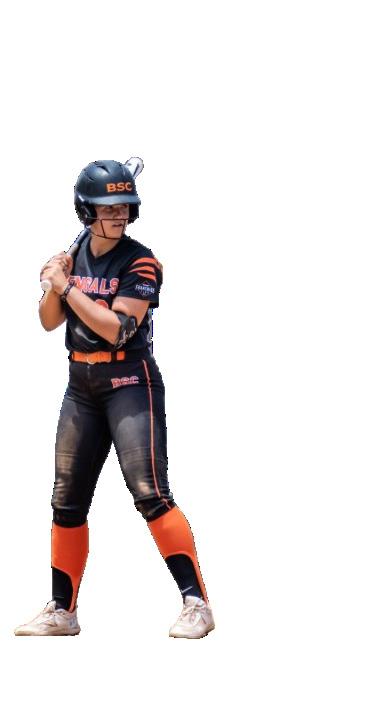
For Abby Luis, softball is more than a sport. What began as a childhood hobby trans formed into a community built on teammates, grit and hard work, and would eventually lead her to continue playing at the University of Connecticut.
Luis first began playing the sport in elementary school, along with soccer, basketball and football, but as the level of competition within the games increased, she turned her focus completely to softball.
“Coming into middle school, my mom [said], ‘it's getting a little bit rough with three sports.’ So I was like, ‘Okay, I'm gonna choose softball,’ because I was the best at it and I had the most fun,” Luis said.
At first, Luis had not planned on continuing her softball career after high school, but her perspective shifted after her freshman year.
“I didn't really know if I wanted to play in college until my fresh
an ACL
by Mishka Shibata
man year of high school. I realized that I was good enough to play, and I think the culture of everyone in the sport just made me love it even more, and I think that the main reason why I continue to play is because of the people around
tinued to grow throughout high
pete at the higher level. During herent options for colleges that would fulfill her dream of going to play at
mately deciding on the University
nitely the coaching staff and thecoming when I went on my visit,ly the best people I've ever met,” Luis said. “When I went into the recruiting process, me and my family wrote down the pros and cons of what I want in a school. One of the [pros] was having my coaching staff act like my parents or especially like my mom. When I went
there, my coach really acted like a person that would be there for me like a mother figure.”
After finding a program that felt like the right fit both athletically and personally, Luis has already begun setting goals for what she hopes to accomplish at the collegiate level.
“One of my goals is to play freshman year because it's a really big accomplishment. Not all freshmen play,” Luis said. “I haven't decided [if I want to go pro]. I don't think I want to play pro and it's really hard to. But definitely just playing freshman year is a big goal of mine.”
freshman Danica Buchanan said. “Whenever we're losing in one game the [seniors] just tell all of us to step up and really focus on the game and check in.”
Luis’ impact on her team and growth throughout the season has not only defined her own journey, but also inspired those
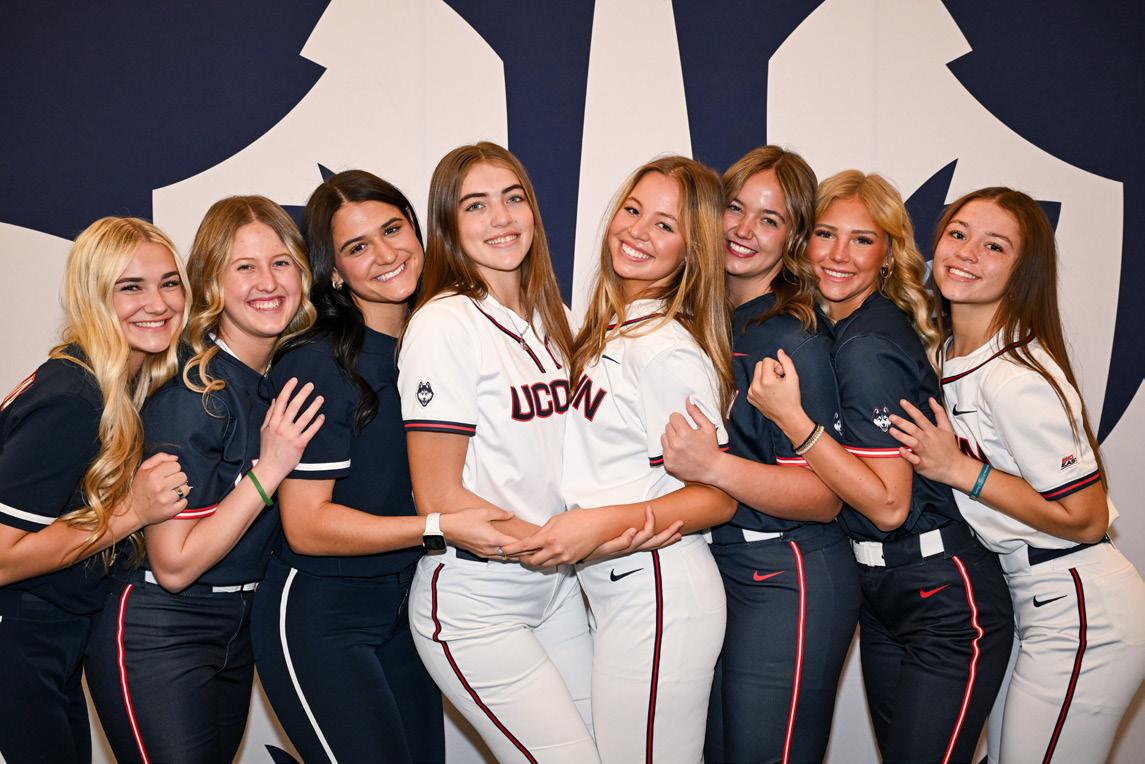
Along with honing her skills to play within the collegiate field, Luis has also helped cultivate a positive culture within the softball team.
“Everyone's really comfortable around each other, and I would say it's really fun,”
around her.
“Seeing her improve throughout the year and get to the next level is really inspiring,” Buchanan said. “It definitely makes me want to push myself more and play better.”
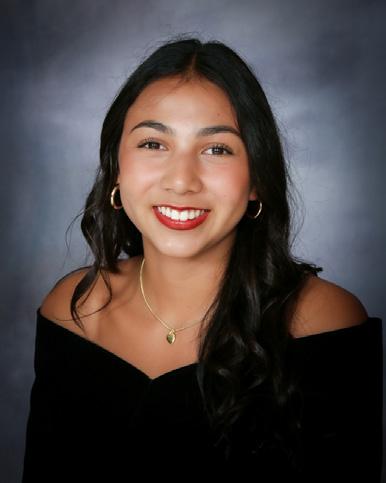
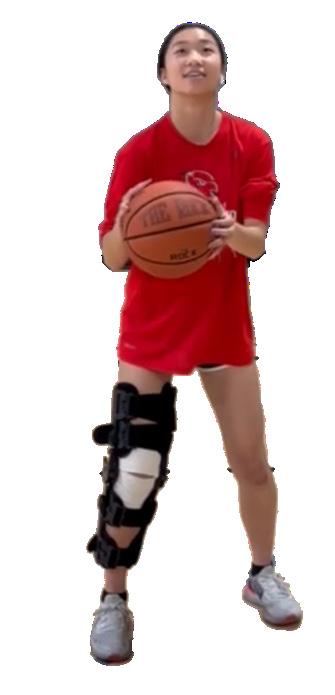
“It was like a crack that went down my leg. I couldn't feel anything in my leg. It was just a giant shock to my body [and] I couldn't do anything about it.” Chloe Choy tore her ACL and recovered to come back to basketball and is now committed to San Diego State University to major in kinesiology.
“I'm going to college to do physical therapy because I tore my ACL sophomore year and I was inspired by the therapists around me and how they were doing all this good work to help patients recover,” Choy said.
Starting physical therapy after being injured, Choy found it to be difficult having to do things she knew how to do before. Despite this, she found motivation to keep doing physical therapy (PT) so she could return to the sport.
“Most of the time, it kind of felt like I was alone during recovery, and it was really hard sometimes to motivate myself, but as I continued gradually relearning how to do certain actions, not only normal day to day tasks, like walking, but also basketball stuff like cutting. I think that motivated me more to keep doing good work,” Choy said. Choosing a career path can be challeng-
ing for most as many are unsure what they want to do. However, after a memorable experience, others, similar to Choy, may find inspi ration as to what they want to do later on.
“Doing physical therapy was definitely a big part in me choosing PT [for my ma jor], because I honestly had no idea what my major was gonna be before I tore my ACL. After nine months of physical thera py, I found something that I was passionate about and wanted to continue doing for the rest of my life,” Choy said.
Despite being temporarily unable to play with the team on the court, Choy was still present and a part of the team even while on the sidelines.
“I would do all the team activities like going to prac tices and showing up to games. Still actively cheer ing on the team helped me to feel connected with my teammates during the inju
ry. They supported me. They gave me positive energy and words of encouragement that I can keep going, keep doing it,” Choy said.
As a parent, it is natural to be worried or anxious when a previously hurt child goes back to the sport they were injured by. Based on her past, her father, Mike Choy, did not want his daughter to experience the injury again.
“We really wanted to make sure that she didn't have the re-injury process, because that statistically was part of the information we got when she recovered, and she returned to sports. But she did a very good job protecting herself and understanding how she was injured, going through the surgery and the recovery process,” Mike Choy said.
Following the recovery of his daughter, Mike Choy reflected on her successful comeback and was
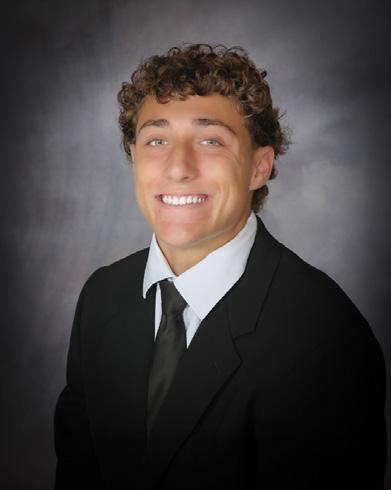
very proud of her senior season.
“It was almost like she had never been injured because she went through that senior season as a captain, leading her team, playing hard, coming out that first game and being one of the leading scorers. That's when I saw the full circle moment,” Mike Choy said.
Going to college for physical therapy after tearing her ACL, Choy knows what the experience is like of the injury and recovery process. Yet, her experience is one of many and allows her to be able to relate to others.
“Stay positive and stay focused on the goal, just because it's a lot. You feel it's like a roller coaster of emotions when you're doing rehab because some things aren't gonna go your way that you want them to,” Choy said. “Remind yourself, it's gonna take time, and that you're doing good.”
by Kate Lanzdorf
“Redondo on me, Redondo on three.
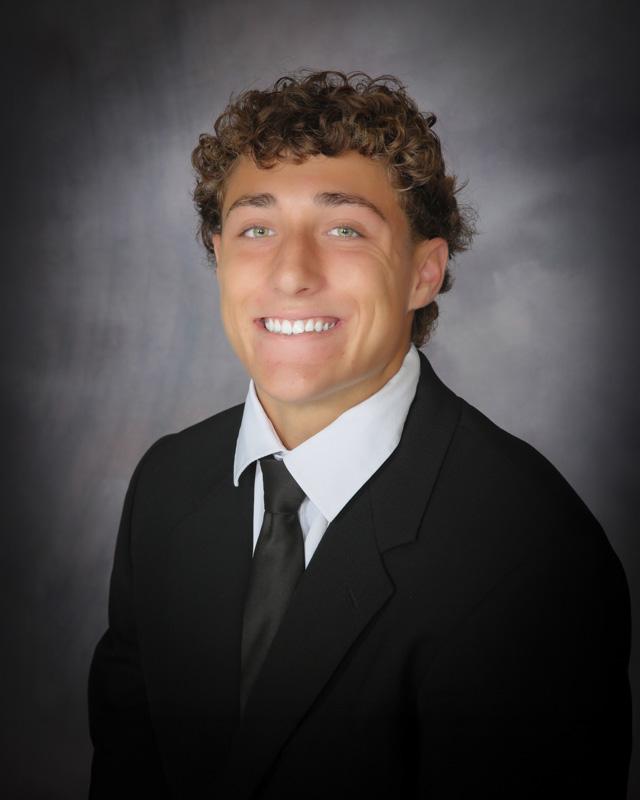
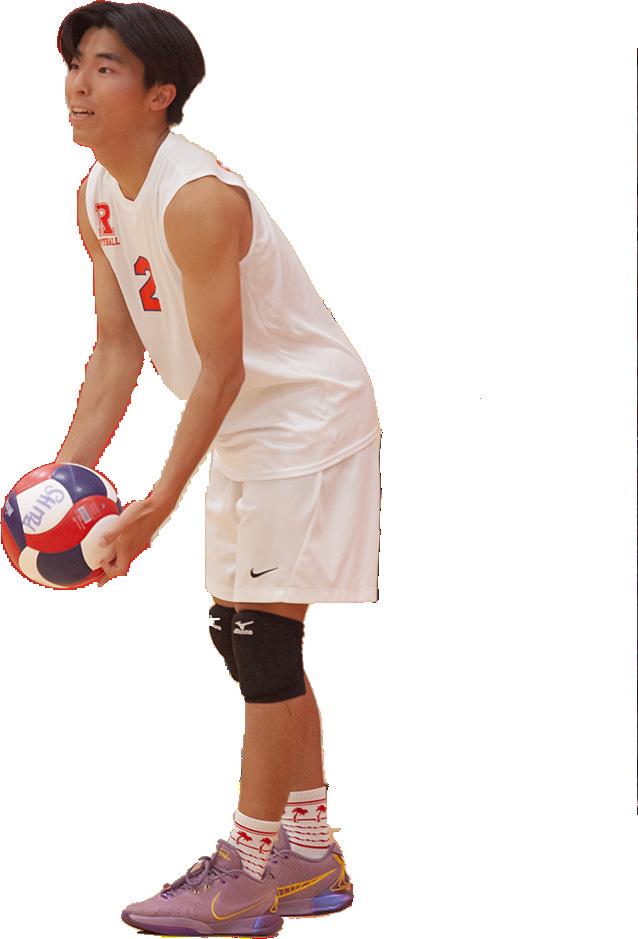
One, two, three, Redondo!” while playing in the last volleyball game of the season, Yuto Kuroda looks around. While most of his teammates would struggle to understand his experience as an international student, their support has helped him both learn English and become more comfortable in America.
by Kaitlyn Chang
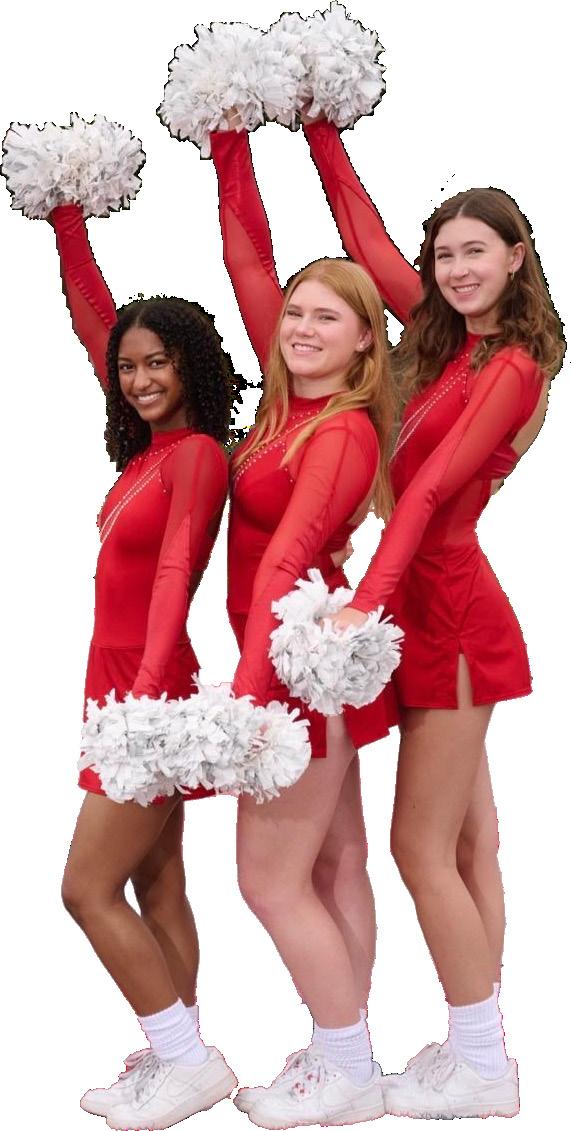
From being under the Friday night lights at football games, to per forming close up on bas ketball courts and even dancing on Candy Cane Lane, Brielle Brown, Courtney Harrison and Lucy Ouimette have showcased their talent in various ways on many different stages.
All three girls have been on the dance team for at least two years and have built strong relationships with dance and with their other teammates through the performances they have shared with one another.
“[Being on the Dance Team this year] was a lot of fun, [especially] football season,” Ouimette said. “I love all the girls on the dance team. I feel especially this year, me and the seniors got really close.”
This season, the dance team had success, but also
Kuroda moved to the United States from Japan in September of his freshman year, knowing almost no English.
“The first six months [of living in America] were really hard for me since I couldn’t speak English, and neither could my parents or siblings,” Kuroda said. “That time was stressful for me because it became my responsibility to talk to my younger siblings’ teachers, and I couldn’t understand what they were saying.”
Kuroda also learned through the English Learners program, graduating from the program in only three years instead of the usual four. According to Gregory Frank, the English Learners teacher, Kuroda faced similar difficulties adjusting to American culture as many other international students.
“Going to your classes on time and keeping up with the work can be a challenge,” Frank said. “[Kuroda] is very studious, but it was hard for him to learn at first how competitive it is here.”
According to Frank, he treats the English Learners class as a family, allowing many students who share similar experiences to become close. While the English Learners community is close-knit, Frank has seen firsthand Kuroda’s experience branching out throughout high school.
“[Kuroda] definitely seems the most comfortable and confident as a senior,”
had to deal with challenging changes. They had a coaching change in the middle of the year, which changed the team’s normalcy as the team had to rely more on each other.
“I've had the role of counting [making sure everyone is synchronized and in rhythm] in the team during performances, and also cleaning a lot of our dances to make sure we all look the same when we do it [...] Me and the other [girls] had to step up a lot this year, specifically,” Brown said. “We had to choreograph more because our past coach would choreograph for us, and also a lot more decisions were given to [us].
The dance team was not a program at Redondo until the seniors’ sophomore years. Since then, the team has grown, and Dance has
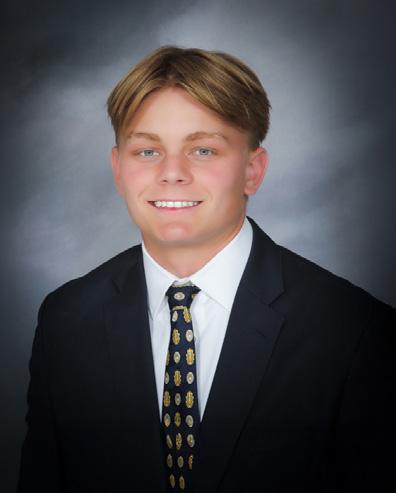
Frank said. “He comes to me often for things such as letters of recommendation, getting his state seal of biliteracy, and applying for scholarships. I’m noticing that he is being very proactive and confident in coming to me for help with things for college.”
Kuroda started playing volleyball in Japan in seventh grade. After
teammates and make new friends.”
Although they have had very different experiences, Kuroda and his teammates connected over their love for the sport. Kuroda loves to support his teammates, mirroring the support his teammates have given him.
“If I could give advice to another student moving to the U.S. from another country, I would [encourage] them to make conversations with other students,” Kuroda said. “Otherwise, you might feel alone and sad. It’s good to talk to others, even if you can’t speak perfect English.”
Kuroda attributes most of his success in high school to the help and selflessness others have shown him. Through this, he has become a much more confident person.
“If my younger self could see my life now, I would feel really happy,” Kuroda said. “I would be proud that I can talk to someone I don’t know because I never used to do that. I used to be so scared to talk to new people.”
become an official sport at RUHS. As the oldest ones on the team, the seniors have not only been there to guide the younger members around them over the years, but they have also learned things alongside them, as well.
“I love being able to grow as a family. We were all improving at the same time and everybody's at a different level than each other, but we're all improving at the same rate,” Harrison said. “I'm graduating this year and there will be new people coming. They're all going to improve, and so the team's just going to get better as time goes on with new people and new improvements.”
Even though she is a junior, Ayaka Baerga was a captain for the first time this year, and through the seniors, she has learned a lot.
“[The three] kind of shaped how I view being a leader and captain. At first, when I thought about captain roles, I thought it would be a little bit scary,” Baerga said. “We still have a lot of responsibility, but they showed that you could still have fun with your teammates as well. They showed the most human side of [being a leader].”
As the seniors move forward into the
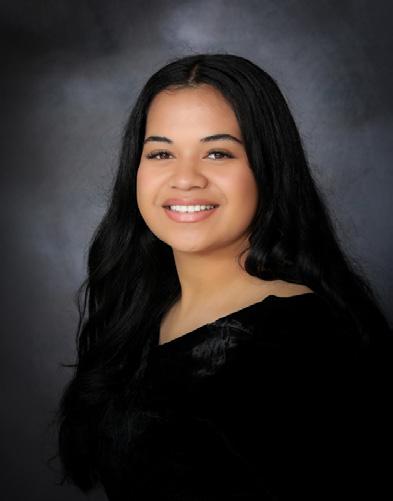
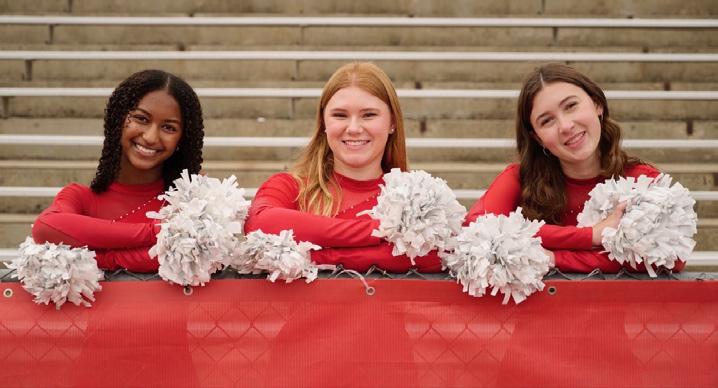
next stages of their lives, each one hopes that they have made an impact on their teammates in one way or another and that they themselves have learned many lessons through the dance team, as well.
“[Dance] is a different experience for everybody, and everyone's levels of love for dance is different, but because you're on the team, you have to still put in that effort because it's not just you, it's everyone together,” Brown said. “I really try to have [my teammates] remember that dance is fun. So I hope when they perform, they're thinking about that [...] As long as you just have fun on the stage or on the field, you'll put on a good performance.”
Kyle Smith, Allcove Youth Advisory Group volunteer, heads to University of California, Santa Barbara to eventually become a pediatrician
by Martina Parra Malandrino
For Kyle Smith, the joy of volunteering does not just come from personal satisfaction, but the connections and memories made through it. Smith, who is committed to University of California, Santa Barbara (UCSB), plans on studying psychological and brain sciences with the goal of becoming a pediatrician. In order to reach his goal, Smith has taken part in the Biomedical Sciences pathway (Biomed). According to Smith, he was set on taking the Biomed pathway when he first found out about it.
“[The class] exposed me to a lot of the stuff that I could and might see in college, and solidified that I want to be a pediatrician,” Smith said.
Smith’s interest in pediatrics came from his love for working with kids, which he gained experience in volunteering for the De Barra Academy of Irish Dance and the Redondo Beach Public library. Smith has also volunteered at the Allcove center in Redondo Beach at the Beach Cities Health District (BCHD), where he was a part of the Beach Cities Youth Advisory Group. Currently, Smith continues to volunteer at BCHD, where he works at the information desk as a campus greeter.
“[The Youth Advisory Group] is really great because you get to personalize outreach events, go to a bunch of meetings and work with a lot of your peers about something that you're passionate about.
For me, I've always been super passionate about psychology and mental health,” Smith said. “There's a lot of random events that we help design and make. There's destressor events, goal setting and a bunch of workshops.”
Senior Alina Rashidfarokhi, a fellow member of the Allcove volunteer group, worked alongside Smith as a campus greeter throughout their sophomore and junior years. In her junior year, Rashidfarokhi started the Allcove club, when she introduced Smith to the opportunity to join the Youth Advisory group. The Youth Advisory Group helps out with leading a variety of events, such as customizing the Allcove space, service implementation and much more.
were able to spend a lot of time getting to know each other and forming new connections with those at the Allcove center. Whether it was in his time as part of the Youth Advisory or working at the front desk, Smith has formed bonds with fellow students and community members.
In addition to gaining connections from his time volunteering, Smith has taken away personal lessons from his experience.
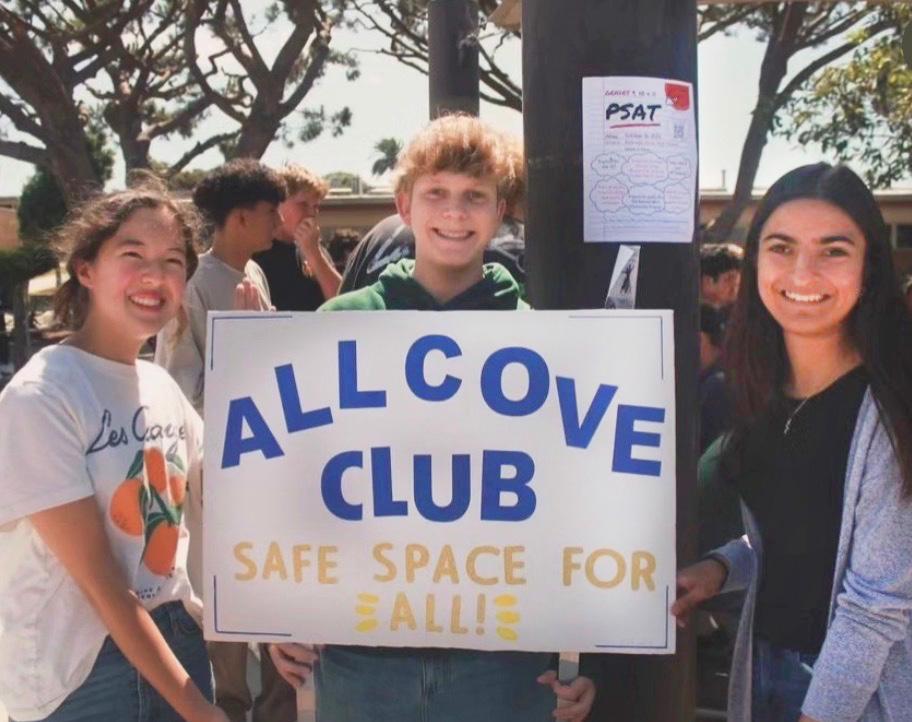
“I really liked how much of a community we were. It was all student led. A lot of people find their community there,” Smith said. “My favorite part of every volunteering thing that I've ever done is just the people that I'm with when I'm doing it.”
“Allcove has really just taught me that everyone struggles with their own things, and everyone's struggles are different. People struggle in different ways and the level of struggle is different for everyone. Two people that are tasked with the same thing are going to struggle differently. Everyone takes information in a different way,” Smith said.
As he prepares for the transition into college, Smith has been getting to know the UCSB campus and getting himself excitedpreparing himself for opportunities he will encounter. Though he aims to go to medical school, Smith does not feel pressure to do so, and is open to whatever path he may decide to take once he goes off to college.
“Our goal is to be that [motto], 'By youth, for youth' voice of Allcove,” Rashidfarokhi said. “We're involved in a lot of outreach and advocacy because they always want to have a young person there to show the impact of what we're doing.”
Members of the Youth Advisory Group
In his time as a campus greeter, Smith has connected with many different people visiting the BCHD building, interacting with those who would come in whether it was to go to the allcove center or something else.
“Whenever someone would walk in, [Smith] was always super sweet and always would say hi. In the Youth Advisory Group, he's always super energetic. It's cool to be in that environment,” Rashidfarokhi said.
“I think college is going to help me figure out what I want to do a lot more because I'll have a lot of research opportunities. I know at UCSB, they have a ton of research stuff, so that'll help me get a feel for what I actually want to do,” Smith said. “I want to keep in touch with as many people as possible because then it'll feel more like here. I'm super excited to go to college in general, but it's going to be a big change.”
Signed to DT Model Management, Ben Sy balances his rising career in modeling with his commitments to the basketball team
by Declan Williams
Right after lunch, Ben Sy drives all the way to Beverly Hills for a photo shoot. Ben Sy is a model for DT


balance in the beginning, as he was playing on the very competitive boys’ basketball team, as well as having a full class schedule. On some days, he would have to go to long practices, do all of his school work, and then have modeling commitments piled on
“In the beginning, it might have been difficult, but because I've been playing basketball at Redondo for four years now, I was able to adjust really quickly,” Ben Sy
Ben Sy is, however, very grateful for his unique career path as well as the unique opportunities that come with it.
“A big pro is the people you meet. I really expanded my network; there are so many people I would have never connected with unless I got this job, and it's just been rewarding to build all these new connections and do a bunch of things I never thought I would do in my life,” Ben Sy said.
His family had mixed reactions when they found out about his new job. His sister, Ava Sy, says that she was shocked when she found out he was going to be a model, but his parents were not.
“[Sometimes] I tease him with some photos, but I support his journey,” Ava Sy
Ben Sy has also had to change his life-
Attend Rice University and prepare for medical school to study orthopedic sports medicine
“My greatest achievement has been committing to play Division I soccer at Rice University. The process required years of dedication, discipline and balancing academics with athletics, so it’s something I’m very proud of.”
style to match his job, putting more effort into his style and taking care of himself.
“I think he's definitely more strict [and] he's more disciplined. He's very devoted to going to the gym, his diet, going on walks, and communicating with different companies for different photo shoots,” Ava Sy said.
With modeling, the next paycheck is not guaranteed; it comes from whenever you can work with companies to do ads and photo shoots. Despite the inconsistencies in payment that come with modeling, Ben Sy does not let the stress get to him.
“[He doesn’t get stressed.] With modeling, whatever comes to him just happens— if he gets a job, he gets a job, if he doesn't, he doesn't. It's a very inconsistent thing,” Ava Sy said.
According to his sister, Ben Sy garners attention both at school and online with his Instagram presence. Even with this, he manages to stay humble and grounded.
“I would say I'm still the same as all my friends, as all the kids that go to Redondo,” Ben Sy said. “I also have this job that I'm lucky to have, that I also put a lot of work into.”
Ben Sy is going to continue his education at El Camino Community College, where he hopes to transfer to another col
“My
Ben Sy for DT Model
BY NATE JENSEN
Ben Sy prepares to shoot
COURTESY OF BEN SY
year.
pursue modeling in my next years when I'm in col lege, and hopeful ly try to get some more jobs,” Ben Sy said.
“I'm not sure long term, but for right now, I'm going to go to col lege and model at the same time.”
freshmen would be to never say no too quickly. Some of my most memorable moments came from showing up, even when I wasn’t totally sure what to expect. It’s also important to talk to people you wouldn’t normally talk to because that can lead to some of the best friendships."
by Amelie Kircher
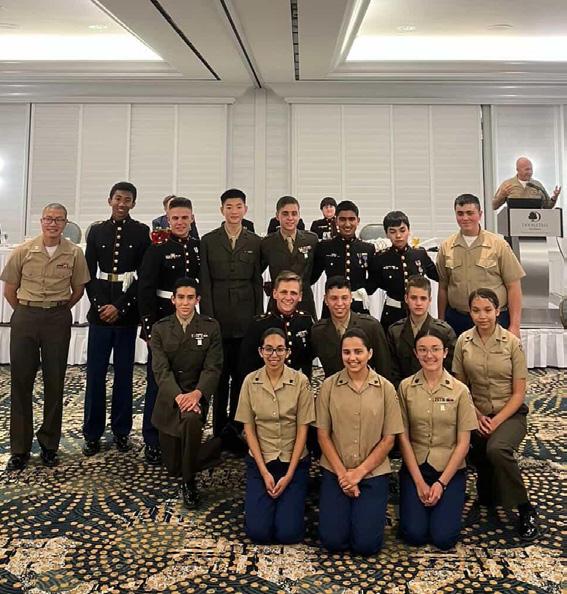
For many, freshman year is a pivotal point in their teenage years, giving teenagers the chance to start something new and pave a fresh path to self-discovery and passions. For Wes Canada-Thai, this was exactly his case. Canada-Thai joined the Marine Corps Junior Reserve Officers' Training Corps (MCJROTC) program in his first year of high school, giving him a supportive community to thrive in that eventually shaped his decision to become a firefighter.
“I initially started MCJROTC because of a friend of mine. I thought it'd be fun to hang out with them while being in high school. Originally, I was there just for that person, but as I was in the program, I gained many friends and mentors in that program,” Canada-Thai said. “I stayed so that I could teach other people what I experienced when I was a freshman.”
Throughout his four years in MCJROTC, Canada-Thai was exposed to new experiences that allowed him to excel physically, mentally and socially. After becoming an upperclassman, Canada-Thai used his experience to guide new members of JROTC and improve his leadership skills with-
Wes Canada-Thai, driven to make an impact, wants to become a firefighter as a way to serve his community
in the program as well as outside of it-a quality that is crucial when aspiring to be a firefighter and essential for what the job demands of a person.
“Over the years, commanding officers have all had their own different ways of teaching how to lead and be there for others. It slowly influenced me into a pathway of teaching and also protecting others. I was taught how to lead people when times are the gravest, but also how to make friends even if you don't feel as comfortable talking to people,” Canada-Thai said.
In the next chapter of his life, Canada-Thai plans to attend El Camino College and major in Fire Science, a major that teaches students essential principles of fire dynamics, hazard prevention and emergency operations, making their applications more preferable and prevalent for aspiring firefighters to partake in. His decision to stay local will allow him to continue his growing relationship with local fire departments, do simultaneous training and attain the required certifications to begin his career.
“[Becoming a firefighter] was a train of thought in my head, but it [was] solidified more from junior to senior year,” Canada-Thai said. “I originally wanted to go into the military. I think the military and firefighting were two paths going the same direction. It was just [a question of], ‘where do you want to serve: your country or the community?’ Now that I've had time to think about it, I want to just serve the community because I feel like [I’m] going to make a bigger impact there.”
Canada-Thai's personal growth within MCJROTC, combined with his hands-on experience working with local fire departments, has cemented his heartfelt desire to make a meaningful impact in his community.
“I want to be a firefighter because I enjoy helping people. During people's worst times, I want to be there to protect and to serve the community that I’ve grown up in,” Canada-Thai said.
During his time in JROTC, Canada-Thai’s social bubble grew, and he was given the opportunity to build reliable connections. One of his recently made friendships was in his junior year, where he met junior Nathaniel Coltin. Coltin recognizes the hard work that Canada-Thai puts into his chosen career path and the everlasting desire to serve his community.
“He does want to prove himself a lot; he
[always] tries really hard during physical training specifically. He definitely wants to be perceived as a very strong person. That's not just how he wants to be seen; I know that he is,” Coltin said.
Canada-Thai’s devotion to helping others has been part of his character all his life, but his spontaneous sign-up to MCJROTC was what opened the doors to an environment that shaped his passion into life decisions--ones that he is proud of.
“When I was a kid, I was an extrovert, but I had a lot of problems with thinking that I wasn't good enough. I think ROTC was when people started relying on me more, and I broke out of the [idea that] ‘I'm not good enough,'” Canada-Thai said. “I started expanding on the [idea that] I can be there for others.”

by Kayli Mai
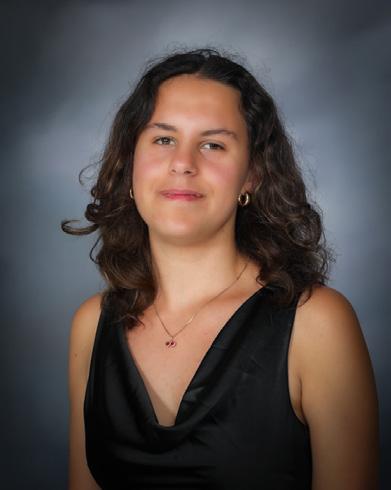
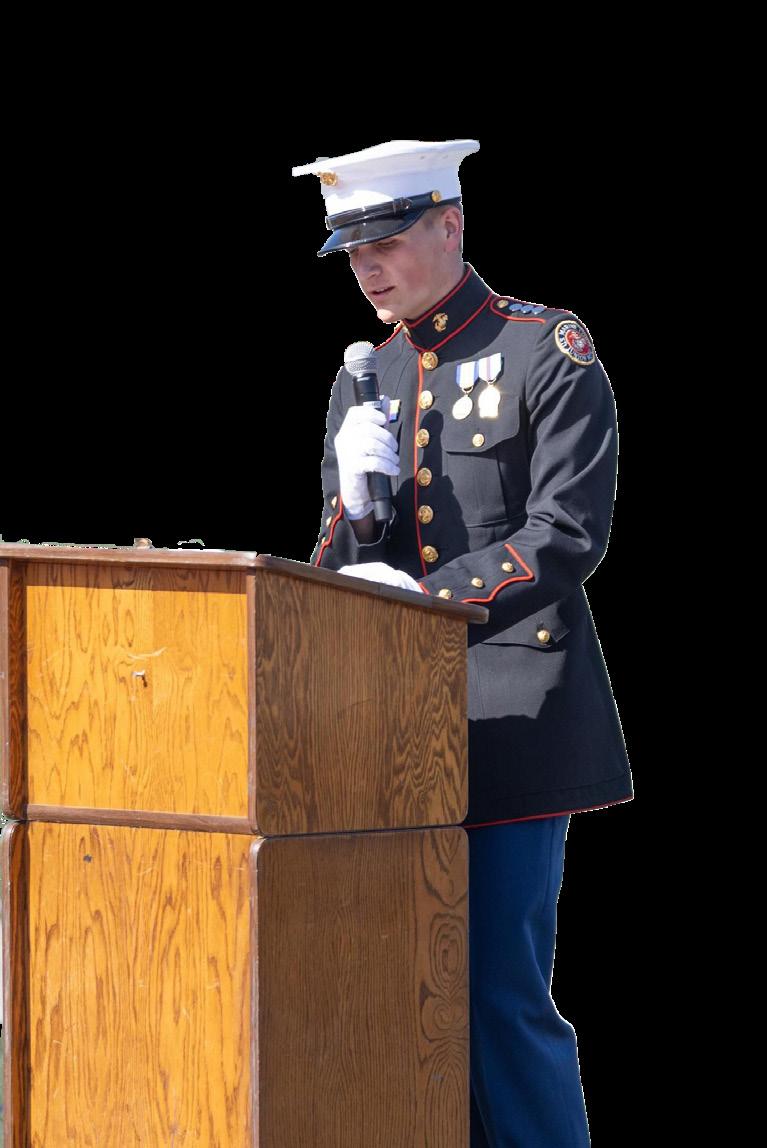
What seemed like a small decision to join Marine Corps Junior Reserve Officers' Training Corps (MCJROTC) in the eighth grade ultimately shaped the course of Brady Hancock’s high school and college career. Inspired by the accepting community MCJROTC created during Field Day, he decided to join MCJROTC’s leadership education program. As Hancock advanced through the ranks and mastered general military knowledge, he dedicated himself to mentoring underclassmen. Yet the responsibility he’s gained from the students he’s mentored is the tip of the iceberg of what this program has brought Hancock.
“I've always been very quiet. I used to have one or two friends. [In] MCJROTC, they teach you to be loud. They teach you to be confident. They give you opportunities to prove your skill and how fast you learn, helping me understand I don't have to be this quiet, reserved person,” Hancock said.
MCJROTC pushed Hancock into all kinds of leadership positions, and as the class encompasses all grades, he built relationships with peers in a more inclusive environment. One of the biggest reasons Hancock believes people stay in MCJROTC
is that its environment differs greatly from other classes.
“It's not a class where you're forced to be quiet and face the teacher the entire time. You're laughing, you're joking [and] you're getting to understand who these people you’re working with are,” Hancock said.
One of Hancock's peers, junior Avery Gordon, noted he was already a kind and dedicated person and felt that JROTC was absolutely the right environment for him. Although peer pressure initially drew Gordon to join the program, the environment it offered her and the friends she’s made ultimately led her to stay in the program, mirroring Hancock’s own experience.
”Personally, I find ROTC is an amazing opportunity for people who are natural leaders to cultivate their skills and grow even more through leadership experience, as well as being a great opportunity for those with a lower level of confidence to build it and expand their social and leadership skills,” Gordon said.
Due to his appreciation for the military and plans to serve, Hancock decided to apply for the NROTC scholarship. Hancock drove to downtown Los Angeles City Hall for his interview, showed up at their main
regional office and answered a series of questions.
“I didn’t know who else out there was applying, so I was nervous. You assume that someone’s going to have a higher GPA, a higher SAT score. I’ve been looking at this scholarship for the past two years, so I was extremely relieved and thrilled [when I got the interview],” Hancock said.
On a Saturday morning, Hancock received a call saying that he had gotten the scholarship. This victory furthered his plan to pursue mechanical engineering at the University of Southern California (USC).
“My dreams always felt like a reach, so to get into the school my parents went to, that I grew up cheering for, I was ecstatic. It wasn't until I got the scholarship that I realized that maybe it could happen, that I could go to such a prestigious school,” Hancock said.
Hancock is a third-generation Trojan, with both his parents and grandparents being proud alumni. With numerous cousins and family friends also holding degrees from the university, Hancock grew up deeply immersed in the culture, attending all the football games since childhood, which, combined with his acceptance, solidified his future college career.
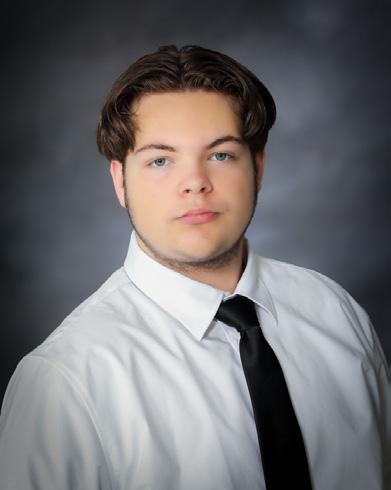
“I’m definitely excited but a little nervous. New school, new people, more opportunities to find people similar to myself, but also a lot of people to sift through, to try to meet,” Hancock said. “It feels scary looking at a haystack knowing that somewhere in there is a perfect group for me, but also having a heck of a search to start.”
by Carly Jacecko
he bright hallways of RUHS are constantly buzzing with activity, but behind much of the school's spirit, events and daily organization is a single, driving force. Kelli Asano, the Associated Student Body (ASB) President, has spent her final year of high school redefining what it means to be a student leader. Asano has left an indisputable mark on Sea Hawk culture through her dedication and a natural ability to bring everyone together.
“Sophomore year, I interviewed for ASB and got in as school relations commissioner, which really just does homecoming, halftime parade and the blood drives, but it’s a senior position, so while I was lost in the beginning, I think it really helped me in the long run to get involved. Junior year I was homecoming commissioner and that was homecoming, winter formal and all those types of things and I got really involved with social media for ASB. Senior year I ran for senior class president because I really liked organizing activities in previous years and I like being busy, I didn’t just want to sit around,” Asano said.
Taking on the role of ASB President was challenging for Asano and required her to spend hours of planning and maintaining a constant connection with the student body. The new responsibilities were “a lot” for
Asano in the beginning, but as she gained more experience as a leader, she began to lead ASB “fluidly.” Throughout her four years at RUHS, her peers and teachers, like senior Keely Gould, a fellow ASB member, have also noticed her unique ability to lead with passion and determination.
“Kelli is super outgoing and a great lead-
events so that we get attendance,” Gould said.
Asano can regularly be found going above and beyond to ensure all the effort and work she does in support of her passions and peers is the best it can possibly be. This level of dedication has earned her the respect of staff and her peers, including senior Dulce Rosales, another ASB member working alongside Asano, transforming her roles from standard extracurricular activities into a true high school experience and legacy that will live on forever.
er. She's super smiley so she always brightens the mood and she's also super easy to talk to since she's so outgoing. She's run the senior class and been good with using the money that we've been fundraising over the past three years in good ways that have made us have a good senior year. She’s been really good with publicizing [ASB]
“[Asano and I] met in middle school through a friend of a friend, and we’ve definitely gotten closer since then and much closer when we started working together in ASB, but it’s honestly easy for anyone to get close to her because she is such a welcoming personality. Kelli is such an efficient and constantly hardworking person,” Rosales said. “In ASB, you'll always see her working. There's always going to be students coming up to her and asking her for help and she always knows what's going on. Something that stands out to me about Kelli is that she's always nice about everything, but she's also stern enough that
people respect her and do the work that she asks them to do.”
As graduation quickly approaches and Asano heads off to DePaul University in Chicago majoring in sociology on the prelaw track, the legacy she leaves behind at RUHS is one of compassion, organization and unified leadership. Her time on campus has set an exceptionally high standard for future ASB Presidents and student leaders who want to balance on-campus involvement with real-world community volunteering.
“I’m really excited to graduate and move on, but it's definitely scary. You have to have a good mindset going in. If I were to advise freshmen or anyone in high school, I would say that it’s fine to not have everything figured out at the moment you graduate, but try your best to do absolutely everything you can to explore your passions,” Asano said. “I didn't limit myself, which I think is important. I am really excited to graduate, and while going out into the world by myself for the first time is going to be a big change, I feel like my time at RUHS really prepared me for everything and I’m glad I took those risks during high school.”
by Gala DeSanto
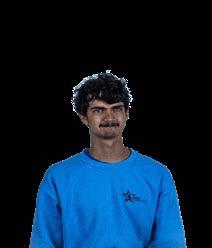
As the school year comes to an end, Associated Student Body (ASB) Vice President Shiva Ploplys is sure to have learned a lot from his role on campus contributing to school events. Due to his title as vice president, he’s been an active part of the school community. He is not only in charge of running some of the senior events, but also working on posters for rallies, football games and helping run Friday Night Lights football games. Compared to last year’s events on the agenda, a lot has changed since the new senior class representatives have come into place.
“These upcoming senior events are going to absolutely blow the seniors’ minds. They’re hopefully going to be massive upgrades from prior years. Especially Grad Nite, which [now] is both parks and starts earlier in the day,” Ploplys said. “Instead of the buses leaving at 13:15, which last year they were delayed all the way to 14:00, this time the buses are projected to leave at 11 in the morning, which means that seniors will miss all of third period, and they’ll even miss part of first period for an early snack.”
Senior year is typically the most chaotic, due to the fact that there are many senior excursions and events going on up until graduation. It takes a lot of planning and coordinating to organize these events,
which is why it is important for our senior class to have their own representatives, so that each event is overlooked carefully before important information such as the date and details are released. When Ploplys was originally elected vice president, he came in determined with a plan of his own to better certain aspects of the senior’s last year before graduation.
“I decided to run for vice presi dent for senior year because I had a lot of ideas [about] how senior year could be even better than the previous years,” Ploplys said. “As I saw the pre vious three senior classes, their events were quite similar to each other, [de spite] changes here and there, and I felt like we could make it even better.”
According to Geoffrey Watts, the assistant princi pal and former social sci ence teacher of Ploplys, Ploplys has always been seeking out for more information about what is happening on campus and making it a goal of his to keep himself updated about the school and its events.
“Shiva was in my zero period two years in a row. He was always in the class, right
at 7 o’clock when the gates opened. We always had great conversations in the morning,” Watts said. “Shiva was always asking questions about what’s going on in the district. He loved to know about the district calendar, when the school year would start and all that because I was part of the RBTA (Redondo Beach Teachers Association), the teachers union, and I was in charge of setting that stuff up the last couple of years so he was always wanting more information about stuff that was going on
Due to Ploplys’ role amongst the senior class, he has certainly grown to become more social with others and expand outside of his typical comfort zone.
“I have learned a lot of hands-on experience being in ASB, and I’ve learned to work with different people who I would normally have trouble working with before," Ploplys said. “It has expanded my social circle a lot.”
According to Watts, Ploplys had always been an active member in his classroom by
showing up on time, making conversations with others and overall being a sociable person.
“He loved always being in the classroom. He loved talking about history, he loved talking about the world. He loved talking about everything that you could possibly think of. And that’s what I really miss,” Watts said. “I miss having him around and asking questions and cracking funny jokes. Everybody from the district office all the way down to everybody here knows who Shiva is. He is so great.”
Watts has had many conversations with Ploplys over the past years, and has learned a lot about him and all of his goals.
“He has great intentions with the things that he’s trying to achieve. He’s always looking out for his fellow students. He’s looking out for his younger brother, who he would always talk to me about as well. He’s always looking out for what he feels is best,” Watts said. “That’s where you know people have true intentions is when it’s not always just about them and what helps or benefits them, but what benefits the whole, and that’s really what Shiva was all about to me.”
by Coco Yamane
Naomi and Simone Wiluan's sum mer plans include a flight to Singapore for vacation, which means another eighteen hours on a plane. They have lived most of their lives going back and forth from Singapore to Califor nia. Before moving back to Redondo for their last three years of high school, both girls attended a private school in Singa pore.
“[Private school] is different because my parents didn't want me to go to a local school because they’re very intense and high-rigor and they wanted me to grow up in a more relaxed environment,” Naomi Wiluan said.
The private school they attended was also an international school that commonly educates students from “extremely wealthy families,” according to Naomi Wiluan.
“The great thing about America, and es pecially here in the South Bay, is that it's so diverse. You have people from all over the world, all different walks of life, and I think that's really great,” Naomi Wiluan said.
The acceptance and easy-going com munity was beneficial for Naomi because it allowed her to develop in a more “relaxed environment.” In American high schools, it’s also more common to keep parts of social lives, like dating, at the center of the high school experience, rather than “intense academics.” Simone made her fa-

Twins Naomi and Simone Wiluan grew up in both Singapore and California and are now stepping into college life together
but afterwards, [she] aims to live in Asia or Europe.” Simone also plans to attend BYUI along with Naomi Wiluan, where she hopes to become a perfusionist, which is a specialist who operates the heart-lung machine during open-heart surgery. Simone and Naomi Wiluan’s father, Mike Wiluan, expresses his pride and excitement about his daughters’ achievement.
“It's a really big milestone. I'm very proud of my kids for reaching this stage and graduating. It's going to be a new chapter in their life moving ahead as they go to college, and as a parent, this is a moment that marks a passage of time,” Mike Wiluan said.
Although the daughters are twins, Mike Wiluan expresses how different they are and that they each have developed their own personality during a significant period of growth.
“There's more definition in what they each want in life. They’ve each made their own path in life, and they’ve had support from their family and friends along the way,” Mike Wiluan said. “This is a great stage to really define what they want to do in life."
by Landen Gould
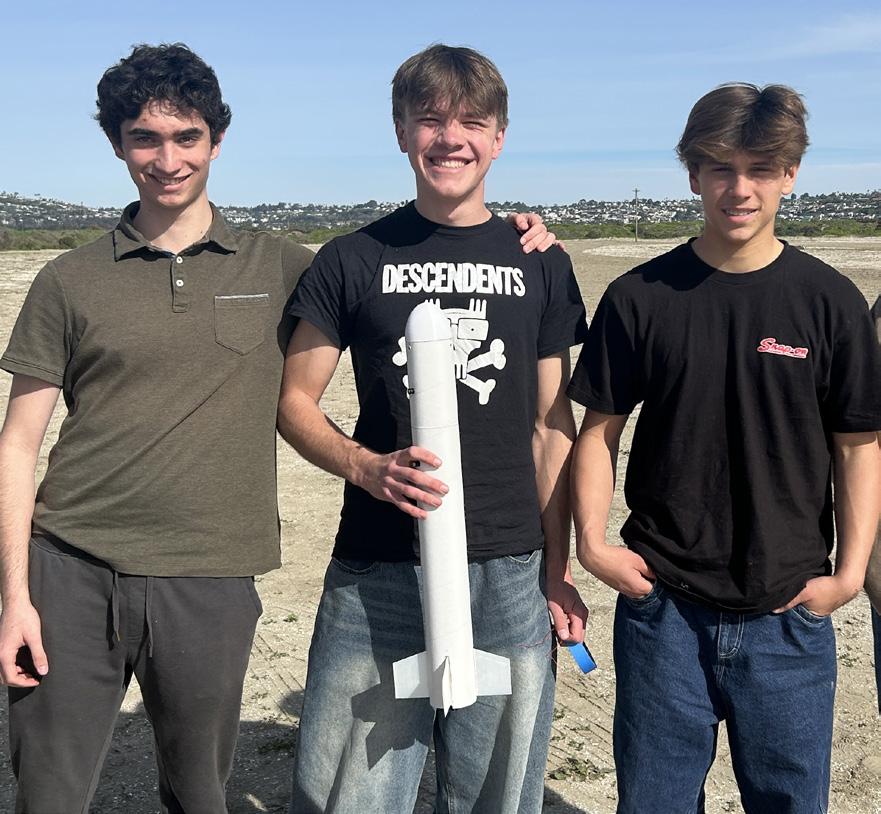
From the moment NASA launches caught his attention as a kid, Felix Lerch knew space was more than just a fascination. Now, after years of balancing advanced physics classes, leading the Rocketry Club and spending weekends launching rockets across Southern California, Lerch is preparing to study aerospace engineering at Georgia Institute of Technology.
“I was always interested in whatever rocket launches were going on,” Lerch said. “Especially with the recent Artemis missions. When I was young, I wanted to be part of that and contribute to space exploration.”
Rather than discovering aerospace engineering through a single defining moment, Lurch said his interest in space exploration grew steadily throughout his childhood.
“I would do research online and learn more, and it always interested me," Lerch said. "I wanted to help contribute to learning more about space and exploring more space.”
After researching colleges, Lerch was drawn to Georgia Tech not only for its academic reputation but also for the opportunity to return to a region where he had previously lived and to remain closer to family.
“I think Georgia Tech stood out because it’s really good for aerospace engineering,” Lerch said. “I also used to live in the South, so being able to go back
the
There's
there and be close to family sounded really nice.”
Lerch joined the Rocketry Club during his sophomore year, and much of his high school experience afterwards was centered around it. He then became president the following year. As president, Lerch coordinated club meetings, organized launches, and helped oversee projects. He said the position strengthened his leadership skills while teaching him how to manage a team working
“Even though it’s a small club, rockets are complicated,” Lerch said. “There’s a lot of thought, calculation and preparation that has to go into it.”
The club regularly traveled to launch sites in San Diego and the Santa Fe Dam because of fire regulations and competition requirements. For Lerch, those trips became some of his most significant memories from high school.
“We'd usually go down to San Diego and get to watch the rockets launch and compete,” Lerch said. “Being able to watch a launch and be part of that experience is probably my favorite memory.”
According to Advanced Placement (AP) Physics teacher Matt Keye, Lerch’s passion for physics and engineering stood out al-
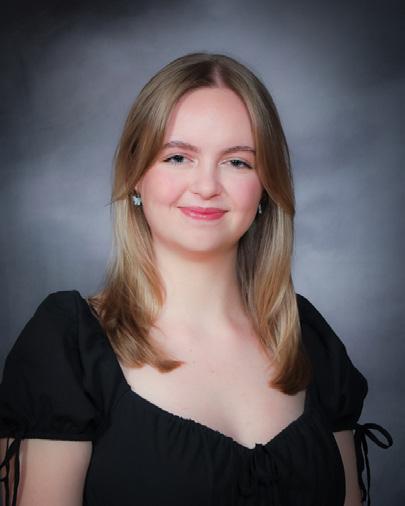
most immediately in class.
“There was definitely a genuine interest in the subject. [Lerch] was always asking excellent questions and showing a lot of enthusiasm for physics. He was very good at going back to those core first principles,” Keye said. “He was very active in guiding the group, and with the rocketry club, he really took initiative, setting up meetings and organizing launches.”
Keye believes those same qualities will help Lerch succeed beyond high school.
“His curiosity and enthusiasm are a huge driving force,” Keye said. “Physics and engineering constantly throw impossible-looking problems at you, and you need that excitement and persistence to keep pushing through them.”
Looking ahead, Lerch is “excited” for the rigor of Georgia Tech’s aerospace engineering program and hopes to continue participating in rocketry clubs during college. While many aerospace careers focus on defense, Lerch's goals center more around space exploration and satellite technology, with hopes of one day working for NASA.
“I’ve always looked up at space and wondered what else is out there,” Lerch said. “Now I finally get the chance to help explore it.”
From fleeing the Russian and Ukrainian war to forging a new path, Maksym Kadyrov reflects resilience and adaptation
by Francesca Masoni
Waking up to the sound of bombs around his village, Makysm Kadyrov and his family knew they had to leave. Maksym Kadyrov moved from Ukraine to California shortly before his freshman year, due to the geopolitical conflict occurring between Russia and Ukraine.
“It was a Thursday. I woke up at five a.m because Russia started to bomb around my city, around my village. At twelve, we went to my aunt's parent’s [house], because it was a pretty safe [village] at the time,” Kadyrov said.
He traveled from his grandparents house to Poland for two months, and finally to Canada where his family applied for a visa and ended up in California. Shortly after coming to America, Kadyrov had to enroll for school at Redondo Union High school. According to Kadyrov, when he moved, he did not have a hard time making friends and adapting to his classes, but rather with the language barrier and missing home.
“I would say that the hardest part for me was leaving everything behind, and entering basically a new world. I'm a person who can just sneak into society. I’m pretty adaptable, so it wasn't as hard as I expected it to be,” Kadyrov said.
Kadyrov decided to take a Media Arts class the summer before freshman year,
partially to meet new people, and also to begin his education in America. In this Media Arts class, he met his now best friend Miroslav Chernyshov, who had moved to California from Russia not long before.
“I went to ninth grade at Redondo Union, and I was walking around, trying to figure out where the [digital media] classroom was, and I heard [Maksym] asking the teacher how to find a classroom as well. When I heard the familiar accent, I went up to him and we ended up being in the same class,” Chernyshov said.
Chernyshov went to school with Kadyrov for a year, and then transitioned to homeschooling. Kadyrov explains that some people view the dynamic between them as strange, as they come from “opposing sides of the war," but he admits they have never had any trouble getting along and are very close.
“Maksym is ready to jump at any idea. If I present ideas like hunting, fishing or backpacking, he always says, ‘Let's do it.’ Not only does he say that, he starts doing things, like research and buying gear; he always tries to do something helpful,” Chernyshov said.
Once he graduates, Kadyrov is going to El Camino Community College. In Ukraine, he enjoyed fixing electronics and welding, so when he discovered how many opportunities were available to him in California,
he took advantage of them.
“In tenth grade, I took SCROC classes (career focused classes that help prepare students for the future), welding one and welding two. This year I decided to enroll
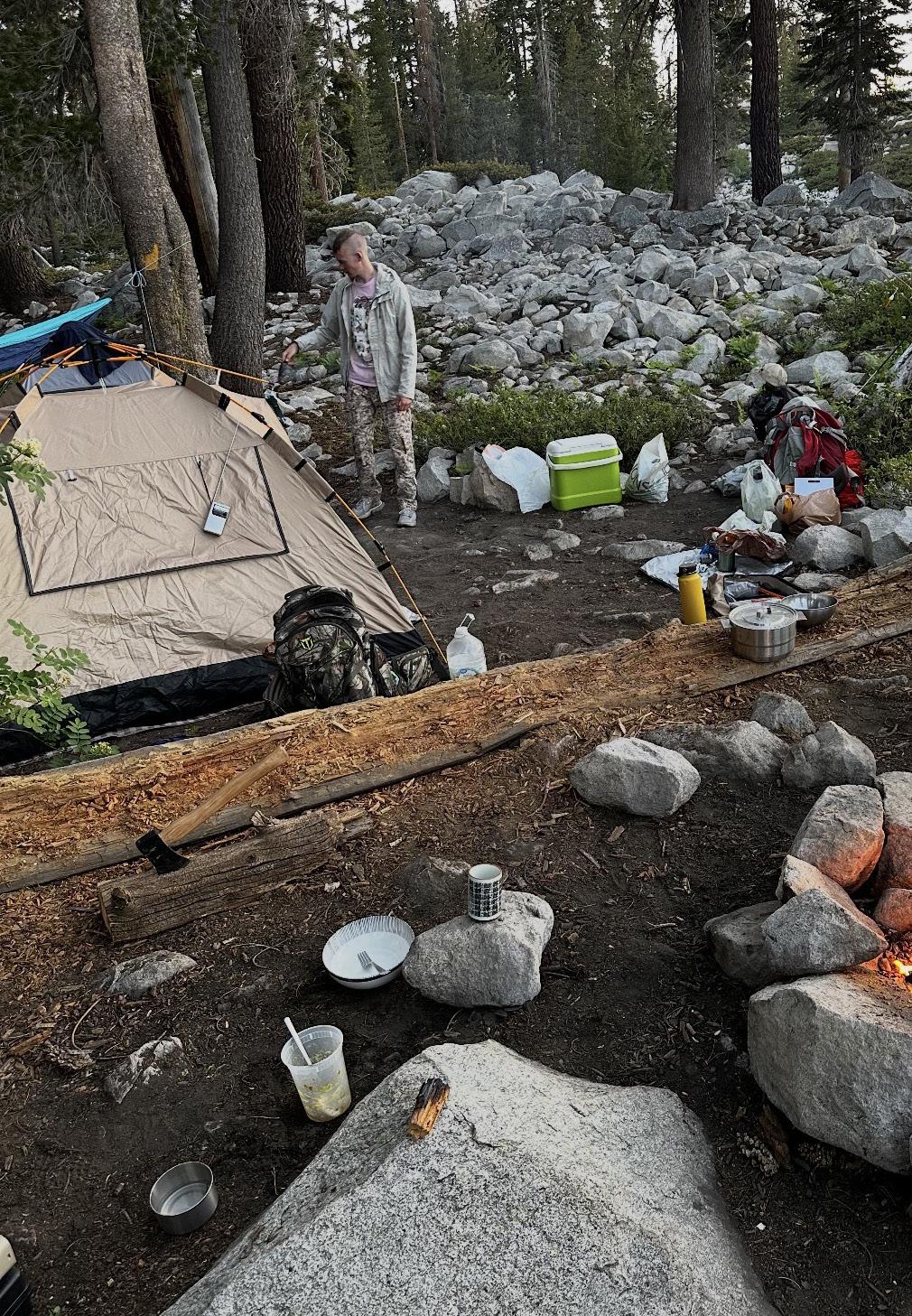
in those classes again because I understand that I need to find work in the future, and so I'm planning to be a welder after high school while enrolled in El Camino,” Kadyrov said.
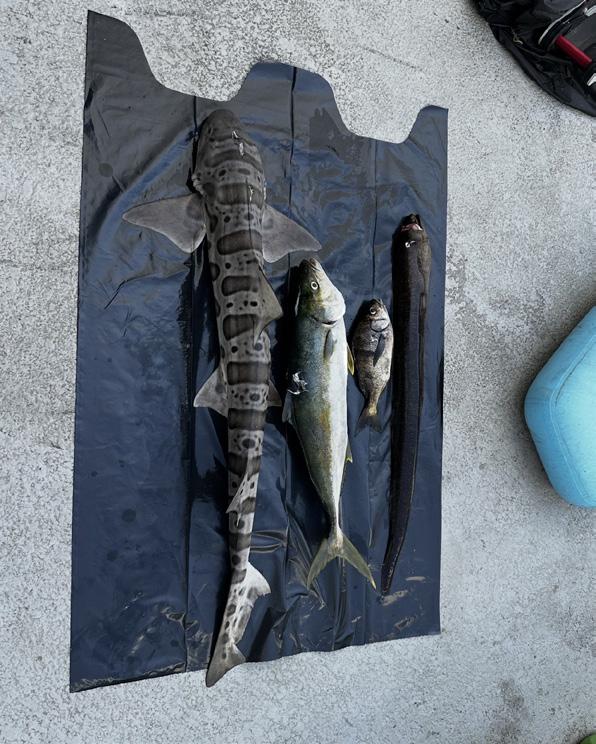
Chernyshov introduced Kadyrov to spear fishing soon after they first met, and it has become one of their favorite hobbies.
“Once we became friends, he started to tell me some things about spear fishing, and at the time I’d been watching some Ukrainian guy also spearfish, so I fired up at the idea that it was possible for me to do this stuff,” Kadyrov said. “The first month of ninth grade, I got some gear and we went for the first time on Rat Beach. It was super nice to start this journey of spearfishing, and I have realized that coming here [California] was a good thing for me, which I didn’t expect.”
by Safi Hamilton-Torres
“Exhausting, fun and meaningful:" those three words best describe Jessany Velasquez’s senior year. Between becoming the primary caregiver for her family, adjusting to an unexpected hearing loss in her left ear and discovering an ambition to enter the business world, she's learned how to balance responsibility with her goals.
“While simultaneously holding things down for my family, it's a lot. It mentally and physically weighs down on me daily, but I would do anything for my family. I adore them and love them so much, and I've just been blessed to have the family I have behind me at all times,” Velasquez said.
For Velasquez, that ambition to care for her family and juggle school is deeply tied to her household.
"I put myself more into permanent things than temporary things," Velasquez said. "My permanent thing is my family. I don't want to do a business just for myself, but for my family and for the generations to come, so I can help them financially."
“Building my own future in business means a lot of hard work. There are so many things that I need to do, and college is going to prepare me for that. My dad al-
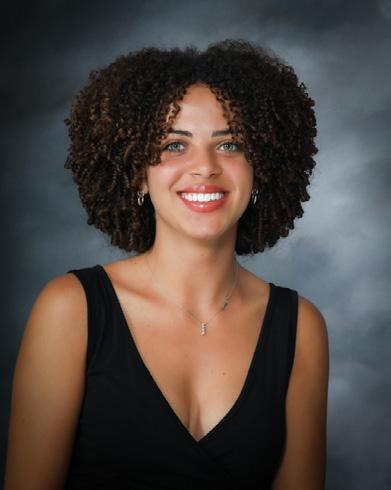
ready owns his own business, so he's going to help me out a little bit.
That sense of responsibility stems from a daily life that often requires her to step into adult roles. She bases her schedule around the immediate needs of her family, whether that means helping her parents out or staying home to look after her younger sisters.
"There are times that my dad and my mom have to go to work at the same time for my dad's business, so I will have to go home or sign myself out earlier to go and take care of my sisters real quick," Velas quez said.
Her close friend, senior Alice Jiang, has witnessed this demanding schedule first hand and notes how Velasquez’s drive was evident from the beginning.
"When we first started hanging out, most people were talking about weekend plans, but Jessany was already talking about how she wanted to build some thing real to help her parents,” Jiang said.
Jiang believes that it is this “selflessness” that will make Velasquez an "unstoppable" force in the corporate world.
"She isn't just grinding
for a GPA or a fancy title; she's doing it because she loves her family so much. That kind of motivation means she’s never going to give up,” Jiang said.
Dana Mangieri, a specialist in deaf and hard-of-hearing services, has a close relationship with Velasquez. He sees what
unilateral hearing loss, Velasquez manages her “profound listening argument” daily.
“Jessany must put in a lot more effort into listening than the students with typical hearing. People don’t ‘see’ how exhausting and challenging that can be,” Mangieri said.

That determination translated into academic success earlier this year when Valsquez's business class project was vetoed by her peers as one of the top designs in her class. When leader dynamics shifted, Velasquez advocated for herself to earn a role as a co-leader, ensuring her voice is fully recognized.
"Jessany seems to manage everything seamlessly, with confidence, pride and determination," Mangieri said. "She is truly a role model for her siblings, and I feel that she wants to show them that you really can have it all, even when things in life seem like a lot."
by Ryan Chamides
For as long as she can remember, Sierra Sanchez has known that she wants to spend part of her life in New York. Committed to The New School’s Parsons School of Design, located in Greenwich Village in New York City, she has made that dream a reality.
“I did a summer program in Parsons two years ago. I really liked staying in the dorm and being in the city,” Sanchez said. “I felt that there were a lot of opportunities, and I fell in love with it.”
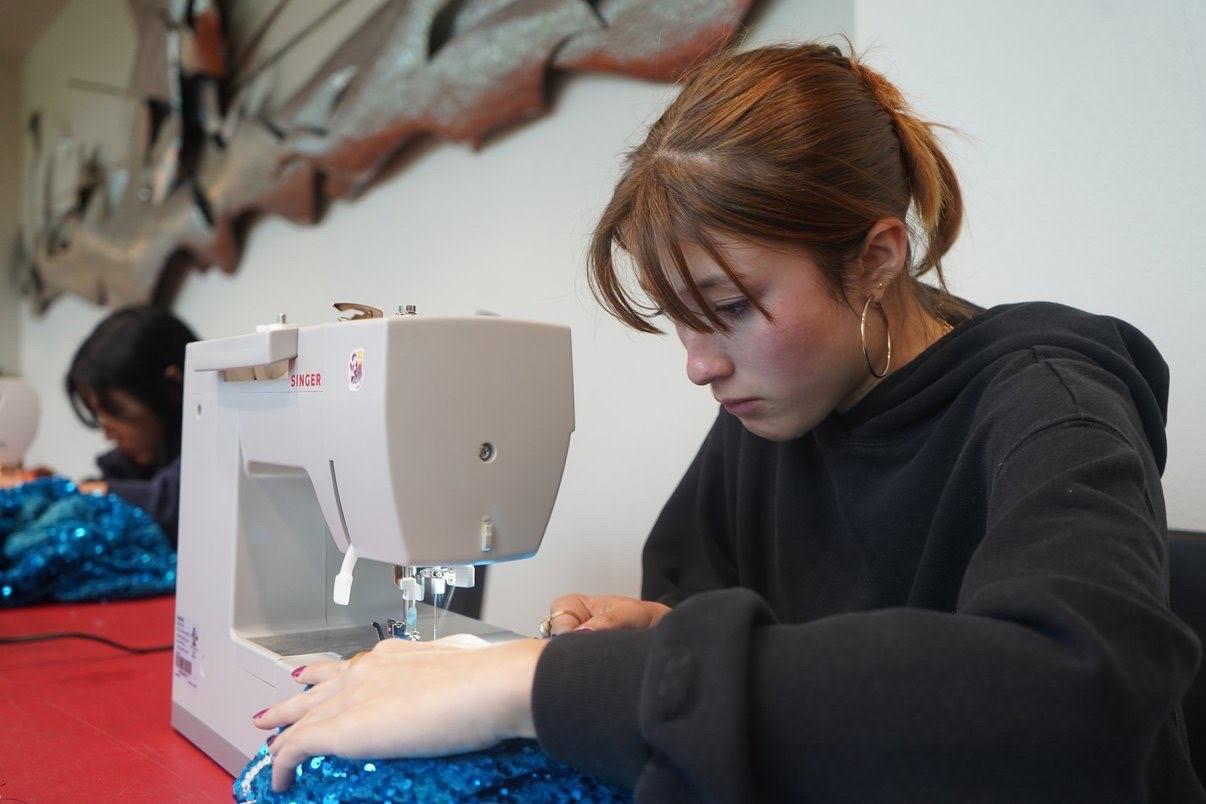
Looking to channel her foundational interest in fashion into technical expertise, Sanchez expanded her design skills through a summer construction and design
program at the Parsons School of Design, where she learned the full process of creating garments, from concept to final product. The program helped drive Sanchez to her chosen major of strategic design and management.
“I did a construction and design class [where] we worked with a professor. We came up with designs based on things we liked, created mood boards and then we would learn about different garment construction techniques,” Sanchez said.
“[From there] we learned how to drape and construct our own dresses and tote bags, and then we got to model them and learn how to take photos.”
Inspired by the current political climate in the United States, Sanchez channeled her design skills into shirts that reflected her beliefs, and the money raised was donated back to those causes.
“I was influenced by [current politics] and how girls and women are being treated. [With my designs,] I'm focusing on feminine things, stereotypes of what women like, and then
using that to create the bigger message [of the importance of women’s rights],” Sanchez said. “But I also incorporated a lot of stuff that I liked; a bunch of pink, the dif-

ferent styles of shoes that I put in there and more [for this specific shirt].”
Sanchez has also maintained a strong creative presence by contributing to the theater department’s costume crew; furthermore, she captained the girls’ tennis team and designed their uniforms, incorporating her personal style and vision into the design. Her projects often extended be-
yond the classroom, allowing her to merge her artistic talents with her passion for social causes.
“Sierra is really bright and energetic. I feel like she gravitates towards colors that reflect that. They're always really fun and full of whimsy, but also kind of capturing current trends,” Kyle Sanchez, Sierra’s mother, said. “She doesn't go too far off in some unique area that is hard to understand. It's all very digestible, but [still] very much her own.”
Sanchez’s interest in fashion began at home, where she learned to sew from her mother at a young age, quickly turning clothing into her primary form of self-expression.
“In middle school, she definitely was interested in fashion, like creating her own outfits. She did cheer in middle school, so she would customize [the uniform] to make it her own. And so then when she entered high school, she already knew she wanted to pursue [fashion],” Kyle Sanchez said.
Beyond her time at Parsons, Sanchez wants to combine her love for sports with her desire to work in the clothing industry.
“Anything fashion, specifically the business side of [the industry]. I want to work with sports brands, too, and connect tennis and fashion,” Sanchez said. “ [I would take] anything I possibly could anywhere in the business.”
by Mahro Siddiqi
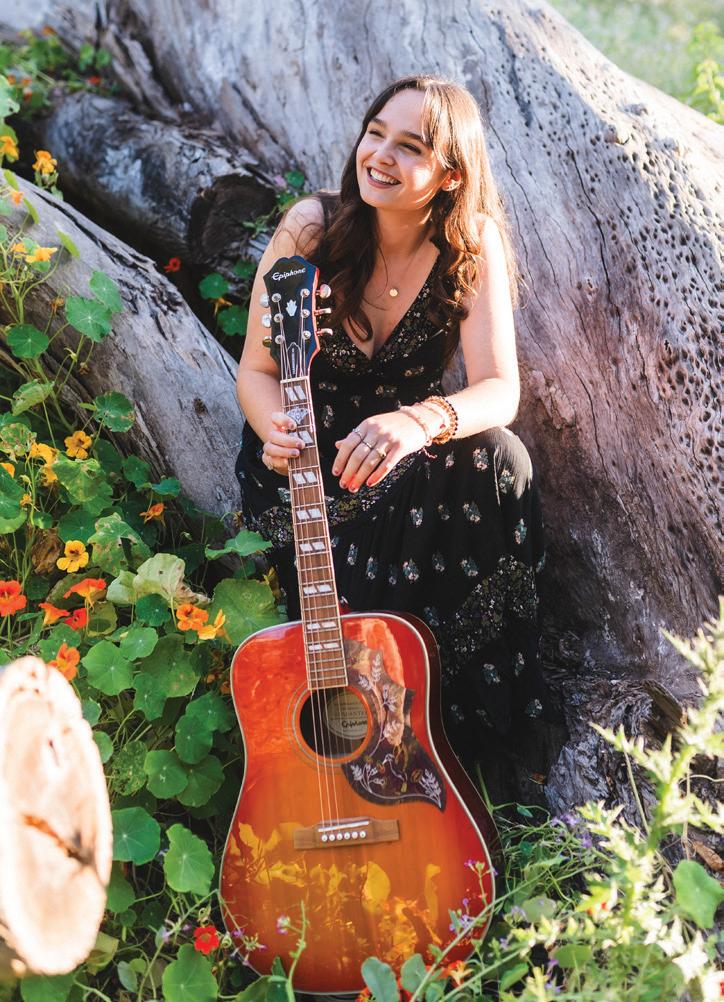
National anthem performer and singer-songwriter Madeline Steen is continuing her passion for music and the arts after being accepted into Dodge College of Film and Media Arts at Chapman University, the fourth ranked film school in the country. Steen plans to major in entertainment marketing and public relations for the arts.
“What excites me most is getting the chance to figure out what aspect of [music] I want to go into in the future,” Steen said. “I think being able to see everybody there, meet all these new people and make these new connections, will really inspire me to know where I want to go after I graduate.”
While her major isn’t music, Steen considered the benefits of the networking she will be able to take part in at Chapman University. With the goal of promoting her music she wants to ultimately have the opportunity to turn her passion into something practical in the real world.
“I'll be in the art/film music scene without actually having to be the one on stage, of course in the future, I would want to [perform onstage] but I think it will be cool to get a bit of experience in the background first,” Steen said.
Steen sees herself staying in the music
“There's
industry, as she hopes this primarily a film school will help her see different facets of
the end of the day, acting, music, singing and performing all goes together,” Steen said.

the entertainment industry and decide from there where she would like to go into.
“I've always had an interest in film.
That's one of the reasons I wanted to go to [Chapman University], but in my heart I'll always be a music girl, and I'll always prefer that side of the stage rather than acting or producing. I think it'll be really cool to see the inner workings of it all, because at
According to Steen, she has a desire to explore the inner workings of the musical industry. She was taught to play guitar as early as fifth grade and started learning piano even earlier than that.
“I have a cool keyboard that I got when I was younger, where you can make all these different sounds blend together, [and] you can make cool songs out of it,” Steen said.
Steen has a TikTok account dedicated to singing cover songs accompanied by her guitar and piano acoustics. This outlet for her creativity allowed her to explore the different aspects of music she would be
PHOTO BY TREASURED MO-
most interested in pursuing in the future.
“I am definitely more a singer-songwriter than a cover artist. My favorite aspect of music is writing my own songs. It’s fun to explore all different types of genres, even though I mostly lean towards pop, sad or more relatable [types of music],” Steen said.
Steen’s mom, Robin Haney, has been a “large source of support” for Steen. She said she is flooded with emotion because of Steen’s set accomplishment of signing the national anthem at graduation.
“[Steen] stood on our stairs, and she practiced [the national anthem] for me, and it completely brought me to tears,” Haney said. “That's another thing I appreciate about Madeline because she is artistic, but she brings humanity to everything she touches. She was singing from the heart, and that's what she does with the songs she writes and the music she plays.”
program. It’s taught me a lot about connecting to research. I was able to understand how the research process works and how there are many different steps in order to get practical and ethical research, which I find to be very motivating.”

California State University Maritime
California State University, Chico
California State University, Dominguez





Tuskegee University
Darrick Collins
University of Alabama
Abigail Bierwiler
Emma Donohue
Jackson Lesnever
Molly Nelson
Abi Santiago
Madelyn Williams

Florida International University
Maria Ortega
Florida State University
Addison Junk
Avery Junk
University of Miami
Brooke McCauley

Arizona State University - Tempe
Alexander Decker
Lily Perez
Nina Allan
Luca Artiga
Le Bron Godoy
Grand Canyon University
Hayley Washlake
Northern Arizona Univerisity
Nicole Brecker
Univeristy of Arizona
Maya Cozza

Vidar Zuckerbraun-Truglio
Georgia Institute of Technology
Felix Lerch
Savannah College of Art and Design
Olivia Loubert
Sofia Pena

Hawaii Pacific University
Sierra Ruiz
University of Hawaii at Manoa
Patricia Amaya-Jackson
Dominic Amici
Ryann Ashenfelter
Michael D'Angelo
Gianna DeVoldre
Jessi Martin
Colorado School of Mines
Elizabeth Kuntz
Colorado State University
Morgan Downing
Jola Phelan
Fort Lewis College
Lincoln Esparza
University of Colorado Boulder
Mackenzie Baird
London Carbone
Ryan Davis
Payton Earnhart
Haley Eder
Kasey Hansen
Juliette Jacob
Rhea Khindri
Parisa Millott
Alexa Morgan
Kota Nguyen
Arianna Oceguera

Fairfield University
Lucy Ouimette
University of Connecticut
Abby Luis
Wesleyan University
Savannah Hyon

Howard University
Olivia Atterberry
Kobe Navarro
Reese Spalding
Dannalee Stauffer

Boise State University
Dalilah Almeida
Jasmine Bocatija
Brigham Young University - Idaho
Naomi Wiluan
Simone Wiluan








Luca Barone
Robert Christensen
Megan Csabai
Rowan DeVore
Zander Diehl
Kennedy Hastey
Maria Parliarou
Erin Pepper
Reeve Phelan
Reagan Pittman
Jessie Yudko
Purdue University
Logan Frank
University of Notre Dame
Matthew Henry

University of Kansas
Slater Herringa

Louisiana State University
Lucas De La Torre
Emilia Wessel
Louisiana State University
Eunice

Columbia College Chicago
Samantha Bonn
DePaul University
Sophia Giusti
Sofia Jansen
Jordan Lees
Sophia Rivera
Kira Tseng
University of Chicago
Jonathan Yook
University of Illinois at Urbana-Champaign
Jason Walters
Indiana University - Bloomington
Lucas Alvear

Michigan State University
Courtney Harrison
Andre Madeira Simoes
Sheridan Reha
Colby Sagadevan
Raphael Tangalos
University of Michigan

University of Minnesota, Twin Cities Campus
Kaeley Wales


Kennedy Calloway
Bentley University
Daniel Azouz
Boston University
Alana Geary
Alina Rashidfarokhi
Massachusetts Institute of Technology
Vaughan Flaherty
Carter Mirabal
Thomas Spalding
Worcester Polytechnic Institute
Robert Holland II

Mount St. Mary's University
America Mendoza
AJ Waldfogel
Lindenwood University
Cash Essert
University of Missouri
Emma Johnson
Washington University in St. Louis
Chloe Donovan
Webster University
Kendra Mura

University of Mississippi
Skylar Murray

Montana State University
Brody Abel
Mateo Figueroa
Images of U.S. map and life ring found VIA Freepik Anchor illustrations by Emery Min













Elon University
Gavin Hasson















Drexel University
Dorian Artiga
Penn State University Park
Lena Garabedian
Sydney Szuchan
Swarthmore College
Zander DiLallo
Villanova University
Charlotte Edwards

The University of Utah
Hamilton Spjute
Utah State University
Quinn Adolph
Utah Tech University
Virginia Tech
Matteo Beretta
Matthew Edelstein
University of Washington
Cianna Esmail
Greta Fritock
Audrey George
Western Washington University
Kara Voisey
Pace University
Celestino Pace
Pratt Institute
Slyvie Hamilton
Purchase College,
State University of New York
University of Tennessee
North Carolina State University
Faith Law
University of North Carolina
School of the Arts
Sabrina Caldwell

Fairleigh Dickinson University
Devin Wright
Seton Hall University
Clay Wilson

University of Nevada, Reno
Sean Madison II

Bard College
Ava Barnum
Binghamton University, State University of New York
Andrew Frederick
Paloma Sullivan
Columbia University
Priya Ramcharan
Cornell University
Samantha Kim
Fordham University
Hanna Diette
Olive Rowe
Jeremy Gaske
Syracuse University
Zehaan Ahluwalia
Charlotte Watts
Vassar College
Madeleine Harmon
Naomi Kaplan
Case Western Reserve University
Ian Brown
Ohio University
John Biggs
Claudia Turner
University of Dayton
Yuna Sato
Oregon State University
Parker Blevins
Adriana Corral
Kaitlyn Hartrum
Sofia Hernandez
Spencer Shea
Pacific University
Kamila Gomez
McKenzie Jamrog
University of Oregon
Peyton Chvotkin
Christopher Flores
Traneya Johnson
Charles Kokes
Thor Nelson
Lily Olinger
Colin Strazzeri
Marymount Manhattan College
Elisabeth Sluk
New York University
Joshua Mow
Benjamin Spangler
University of Portland
Oliver Balaban
Western Oregon University
Elizabeth Polanco Uribe
Evelyn Hlatky

Anjenette Runquist

University of Wisconsin-Madison
Bennett Compratt
Lula Fung
Sabrina Kolas
Eliza Lewis
Lauren Moskowitz
Patrick O'Sullivan
University of Wisconsin-Whitewater
Baylor University
Elise Ernst
Prairie View A & M University
Sydney Daniels
Rice University
Brianna Bogar
Southern Methodist
University
Cole Leinart
Texas Christian University
Bella Lombardo
Camryn Stiveson
Lauren Bizub
Bethany College, West Virginia
Sam Schwartz

by Baran Taghvaei
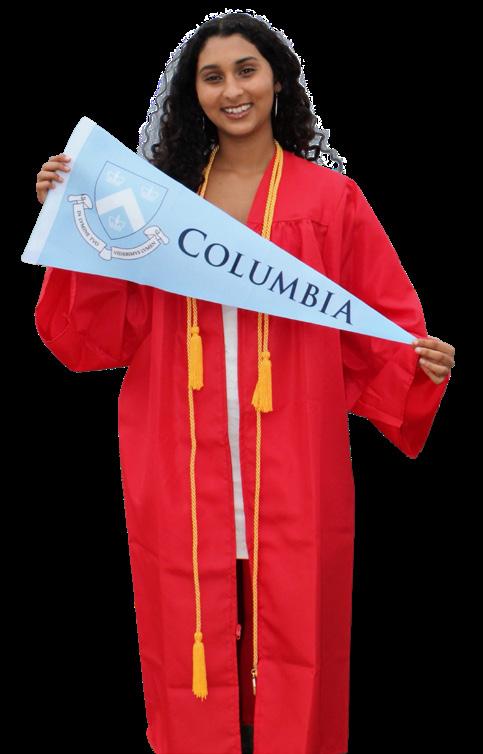
Priya Ramcharan knew who she was from a very young age. In sixth grade Ramcharan started volunteering for the California Democratic Party and has continued her advocacy in local government, courtrooms and newspapers since then. Her rigorous passion has driven her in high school and beyond as she is headed to New York to attend Columbia University in the fall. Ramcharan has always dreamt of living in New York since she visited Columbia’s campus at 8 years old.
“When I've ridden the subways to visit Columbia, [I saw] every type of person there. There's so much diversity, it's full of immigrants, but also people who've lived there for generations and it's really interesting,” Ramcharan said.
Ramcharan will be going to New York for her undergraduate studies in English, and plans to attend law school afterwards. Ramcharan’s passion for law stemmed from her upbringing and grew as she joined the mock trial program at her middle
school, where she learned how to formulate complex arguments and present herself in court.
“I grew up in a family that talked about politics at the din ner table a lot, and that made me super passionate about political issues and how they affected me. My parents treated me like an adult in those conversations even when I was a kid, and that gave me the confidence to speak on complex topics and made me feel like I could have a role in making change," Ramcharan said.
Having already decided on her future path at a young age, Ramcharan created her school’s newspaper, a long-lasting student-run program that is still around to this day, demonstrating her unique skills, according to senior Katelyn Kang, one of Ramcharan’s closest friends.
“She has a ton of motivation, and she has always taken initiative, whether that's leadership roles in class or outside of school. Even in middle school, she started
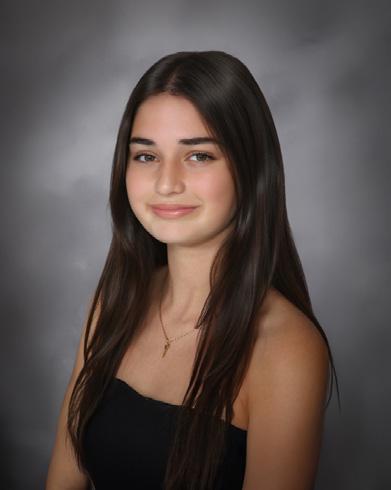
When Valentina Masoni steps onto the University of California San Diego campus next fall, it will not be her first time attending school in an unfamiliar place. Masoni was born in Bergamo, Italy, and lived in London, England for five years before moving to Redondo Beach in first grade.
“I remember crying when my parents told me we were moving to America,” Masoni said. “I was bummed, but I think that moving around a lot has given me a great perspective. I have a network of people around the world and being exposed to two places that have their similarities and differences has made me very open-minded to all the different lifestyles and types of people that there are in the world.”
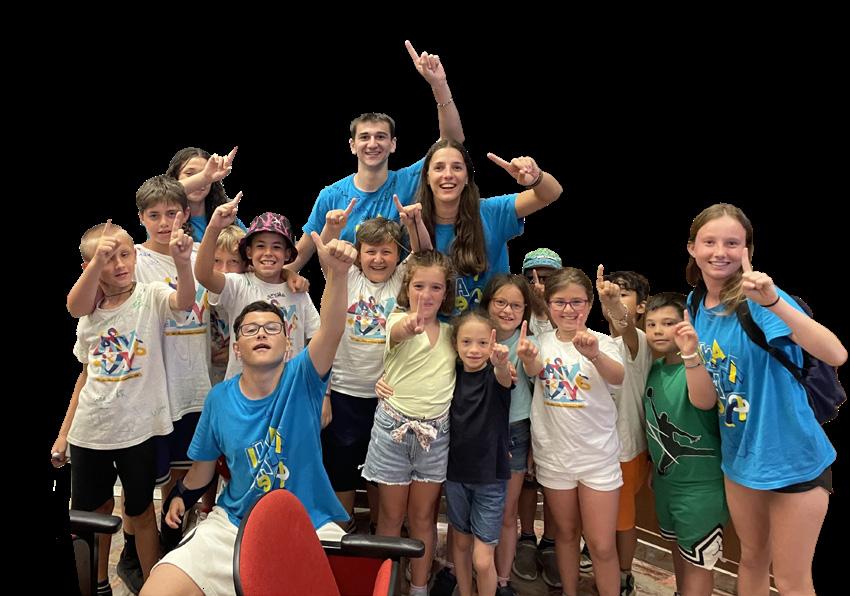
When Masoni was in sixth grade, her grandmother passed away. To “keep her busy” that summer, her mother sent her to a local Centro Ricreativo Estivo (CRE), a common type of summer day camp in Italy.
“I don't think I talked about how my grandma had just died when I first got there, but I do think I leaned on the people that I met during that time extra hard and that's why I am still so connected to them today and why I love that place so much and always go back,” Masoni said. “They unknowingly helped me through what I didn't even realize at the time was one of the hardest things in my life. The friendships that I made in those couple of weeks were deeper than just friendships to me.”
As is tradition at the CRE, Masoni graduated from camper to counselor in her freshman year. She will work as a counselor for the fourth time this summer. Enter taining the camp ers requires “cre ativity,” especially since Masoni is re sponsible for first to third graders.
“It's taught me a
by Kate Brucia
lot about conflict resolution and, not only working with kids, but working with people my age,” Masoni said. “In certain situations, there are kids that I know for a fact don't have the easiest family life, so I like to think that even just in the couple of weeks of summer, we can be a positive force and they can have a teenager in their life that they feel like listens to them and cares about them. As much as I want the kids to learn from me, I've also learned a lot from them about just life in general.”
Masoni's observations of children’s behavior as a camp counselor, coupled with her experience taking Advanced Placement (AP) Psychology, directly contributed to her decision to major in Cognitive and Behavioral Neuroscience. Masoni’s friend senior Haley Eder has taken classes with her since elementary school.
“She's a really smart person, and she's always trying to learn new things,” Eder said. “I've seen her develop as she was figuring out what she wants to do with her major in college. It was interesting to watch her grow from freshman year when we had Honors Biology together and we were just struggling through that to now that she’s just finished AP Biology and she wants to do neuroscience.”
As Masoni concludes high school and attends university in the United States, she maintains a plan to move back to Italy eventually.
“I don't know who I would be without that aspect of my life,” Masoni said. “I think that the way my Italian and American identities coalesce is just so beautiful. It's so important to me that get to feel the influence of such great people over there, the influence of such great people over here and how these two places have molded me into who I am today.”
the school paper called the Parras Roar,” Kang said. Classes such as the Advanced Placement (AP) Capstone program, AP European History and AP United States History have strengthened her analytical and critical thinking skills by encouraging her to examine connections between historical events, literature and broader societal themes. Developing college-level thinking processes that are important for lawyers to have.
“There was one moment in my sophomore year where we were learning about fascism in [AP European History], and we were also learning about ‘1984’ in English. Seeing how they overlapped and mirrored each other was really interesting,” Ramcharan said.
The AP classes she took alongside her passion for English and writing helped her to decide what she wanted to major in for her undergraduate studies.
“I have really tried to read books about
anything and everything and learn as much as I can. With the advent of artificial intelligence and phones as a distraction and an easy way out, people are sometimes too scared of ‘hard things’ like taking the time to read a book and think," Ramcharan said. Her biggest takeaway from the college application process was learning to value herself and what she has to offer more, rather than limiting herself by certain colleges because of their competition levels.
“Push yourself. Go a little bit higher than you think you're capable of. Don’t settle for anything because if something is difficult that probably means it’s important and going to be worth it,’” Ramcharan said. “Use this opportunity to go as high as you can, because you won't get the opportunity again, and you don't want to regret it.”
Cheerleading has played a large role in high school culture for generations, bringing together athletics, leadership and performance. For the past four years, Ava Anzivino has committed her time to cheerleading, which is reflected in multiple facets of her life. She was on the team when they won nationals in Florida and served as captain in her junior and senior years.
“Cheerleading has been the most influential of my extracurriculars, because it's shaped me into a leader and someone who's willing to speak up,” Anzivino said.
Through cheer, Anzivino developed leadership skills that helped in her role as captain, impacting younger students such as junior Adriana Fernandez.
by Julia Bradin
over to who I was as a person. It made me less conscious of how people see me and allowed me to branch out and try things out of my comfort zone and be a more extroverted person,” Anzivino said.
The performance and leadership skills Anzivino learned through cheer allowed her to break common stereotypes, applying those new attributes to other academic extracurriculars.
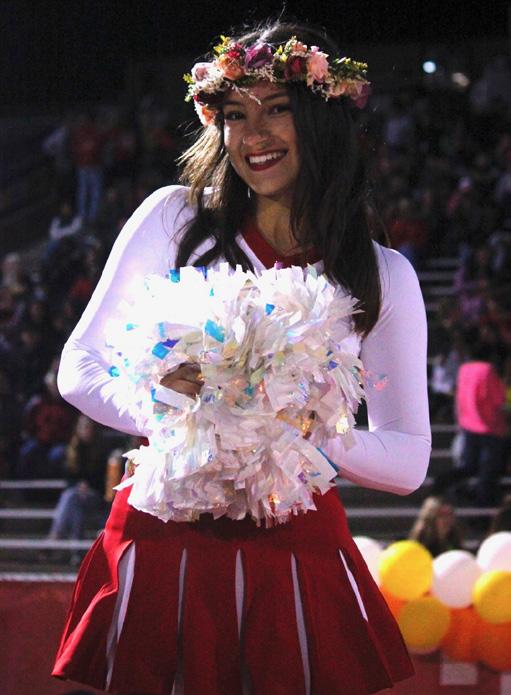
“[Anzivino] had the role of a leader on three separate teams that we've had through our program. [Anzivino] is obviously one of the sweetest girls anyone will ever meet. So, for me, she was like a big sister, but everyone else also saw her as a role model. I aspire to be like her because she knows what she's doing,” Fernandez said.
Along with leadership, Anzivino has developed many different skills from her time as a cheerleader that she has carried with her beyond competing. Cheer demands more than athleticism–stage presence, collectedness under pressure and other various skills are developed and enhanced over time.
“The performance qualities that you learn in cheer, learning to smile in front of an audience and not being super nervous to perform at a football game, translated
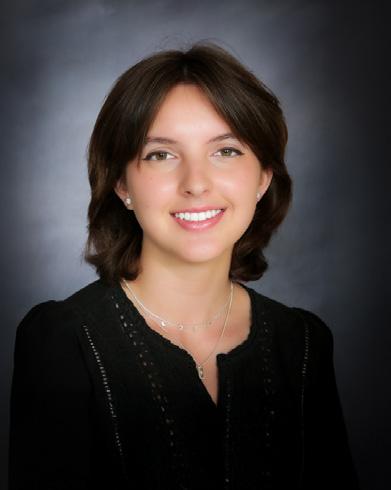
“I think there are a lot of stereotypes about cheerleading. They kind of try to fit you into that mean girl stereotype, and it's really hurtful. What I wanted to do in high school was be the person who deviates from that stereotype or perception of cheerleaders, because it is really harmful and extremely misogynistic,” Anzivino said, “I wanted to be someone who explored many aspects of my community through cheer and through journalism. I also work for the literary magazine in the library as one of the lead editors. I wanted to make sure that I challenged that stereotype.”
Throughout her high school years, Anzivino’s drive to be known for more than simply being a cheerleader helped push her academically. During her time at RUHS, Anzivino hoped to become an inspiration for what someone can accomplish in high school through sports, extracurriculars and academics. According to Fernandez, she will be a notable absence for many next year, especially on the cheer team.
“Everyone on cheer is different, and they all have their own personalities, but I feel like Ava is one of the girls who really left the biggest impact. I love all the other seniors, but Ava took the lead, and I think a lot of the other girls felt the same,” Fernandez said, “When it comes to the dances and advice, [she] was everything. Next year, it's going to be hard to find someone to fill her shoes and be that person for everyone else like she was for us.”
Gross pursues her passion for the arts, majoring in English and minoring in music at University of California, Los Angeles
by Katelyn Min
Daniella Gross started off her music career playing piano, until she was fired by her piano teacher for not being able to concentrate. Gross has been pursuing music since she was 4 years old, starting off with vocal lessons and then progressing to instruments, including the piano, cello, acoustic guitar, banjo, drums and trombone. Throughout her four years of high school, she participated in marching band and pit orchestra, and she was the first freshman to ever be allowed to join Jazz A.
“I really like improvisation in jazz, which I’m able to explore on trombone. I also really like performing with trombone because it's loud and it looks cool, but it isn't necessarily good for when you want to unwind. That's why I like the guitar. When I'm in my room and it's late at night and I need a way to decompress, I pick up my acoustic guitar,” Gross said.
Gross began expanding to different genres through pit orchestra. Initially motivated by her desire to learn a classical string instrument, Gross played the cello for the productions of “Les Misérables,” and “Beauty and the Beast."
“When I joined ‘Les Misérables,’ I'd only been playing cello for a few months,
and the score was professional level. I was really worried because I didn't even know where the notes on my instrument were during the first practice, but by the end, I felt a lot more confident in my abilities and it definitely helped me grow,” Gross said.
Through the Pit Orchestra, Gross met Matthew Visk, her instructor. Over the following years, Visk recognized Gross’ talents as a musician and invited her to play professionally over the summer through his nonprofit, South Bay Pit Orchestra. According to Gross, he was very impactful on her and helped her become more confident after she struggled with burnout from marching band and stage fright during concerts.
“Daniella told me that she had lost her passion for music, but because I worked with her and the other musicians, she regained her love for it. That was very special because as I reflected and more time had passed, I realized that I rediscovered my love for teaching music because of her. She reminded me that I started teaching music to allow students to find themselves and find their creativity,” Visk said.
Along with playing professionally, Gross has pursued music outside of school in many ways. She began composing music
for student short films during her sophomore year and plans to continue with the endeavor in the future.
“I thought it was so cool that somebody could sit down and score music for a film. [Film soundtracks] are so explosive, orchestral and submerge the listener in a completely different world. I was like, ‘This would be a dream career. I wish I could do that.’ Then my dad told me, ‘You know you can, right? That's not just some dream. We can work towards that,’” Gross said.
Gross’ experience with music has not always been easy though, and “many people automatically [wanted] to dissuade” her from going into a creative major because of lower income or the risk of an artificial intelligence takeover. Despite these challenges, Gross is determined to continue.
“I pursue music because I think it’s really healing. My brother has a rare genetic disorder, and he also has a lot of autistic qualities, so during his neurostorms, his nervous system basically shuts down. I can't use words to communicate with my brother because he doesn't really understand or respond, but music can connect us, and that's what I really love about it,” Gross said. “Music has been part of my life for so long, and I would hate to not pursue
something in it, whether it be helping kids like my brother with music or just influencing one person through my music in any way possible.”
by Oliver Cody
Since the High Tide’s creation, the journalism class has been a place where many students find their crew and make friends that last through all of high school. However, for Claudia Turner, journalism not only allowed her to find her place, but she plans to use the skills gained from her time writing for High Tide to major in journalism in the Honors Tutorial Program at Ohio University.
“[At Ohio University], if you want to learn about war journalism for a semester, you tell them that and then you work with them to create the curriculum. I think that fits what I like to do a lot better than general classes,” Turner said. “As a learner, I feel like I’m very independent. I know what I want to do.”
Turner started journalism in sixth grade at Parras Middle School in the class offered through an elective program there. According to Turner, she initially forgot about the journalism elective but reconsidered the idea of writing for the High Tide after getting a recommendation letter in eighth grade.
“[When] I got the letter, I didn’t really have any plans for what I wanted my elective to be,” Turner said. “I didn’t have a concrete ‘thing,’ so I [thought that] maybe journalism could be my thing.”
After working her way up to an editor position for High Tide, Turner said she be-
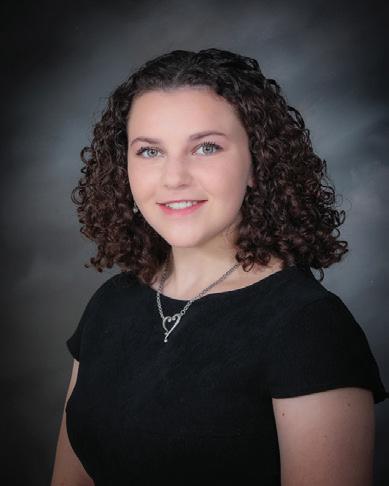
gan to notice issues with the current state of the newspaper’s organization, inspiring her to apply to be an Editor-in-Chief (EIC) for her senior year.
“[When] I got an editor position, I got to see how the High Tide worked from the inside. It’s different when you’re at work night, seeing everybody scramble to get things done,” Turner said. “You re alize that [the paper] doesn't run as smoothly as it might appear as a staff writer. I re alized that I love the High Tide and I wanted to be in it, but I also realized that there might have been some prob lems with the way we were organizing things.”
Now, Turner plans to pursue a career in the journalism field. Turner’s father, Derek Turner, who works as a policy researcher for the nonprof
it Free Press, admits he was “skeptical” at first about her career choice.
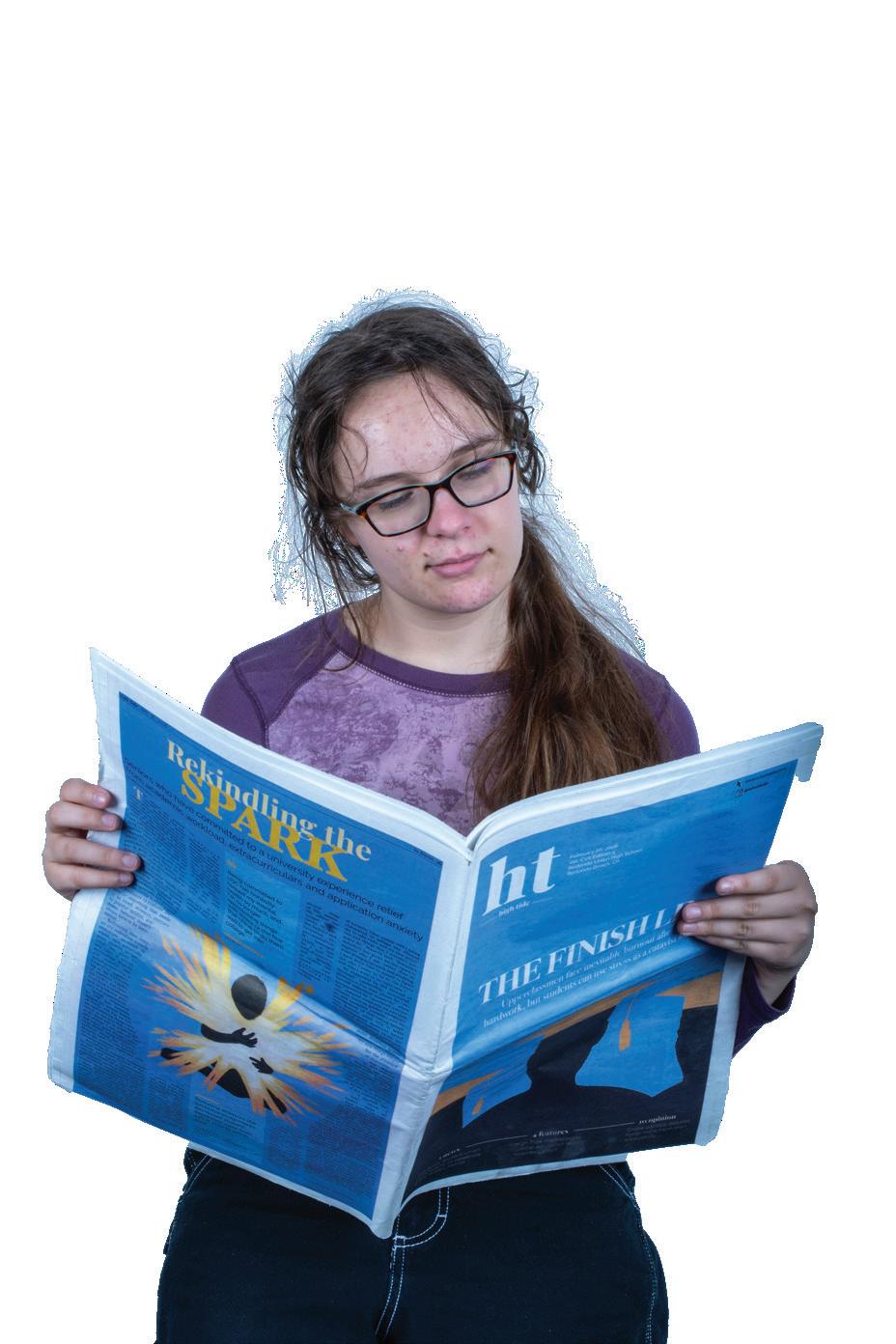
“Part of what I do for a living involves dealing with the fallout of the decline of the traditional media business. Today, it’s much more difficult for traditional journalists to make money, and I’ve worked with dozens of former journalists who worked as very successful journalists, but just couldn’t make a living on it,” Derek Turner said. “But I got over [the skepticism] somewhat quickly once I realized that what matters in life is being fulfilled with your life and your career.”
Turner states that her elevated role as an EIC brought many new responsibilities throughout the duration of the school year, compared to a regular writer or editor position, even though EICs do not write stories themselves.
“When you’re an editor, you have two stories on your page, and those are the only two writers you’re in contact with. Most of the time, they won’t come to you [for help] because they don’t think you’ll have the answer. They’ll come to an EIC,”
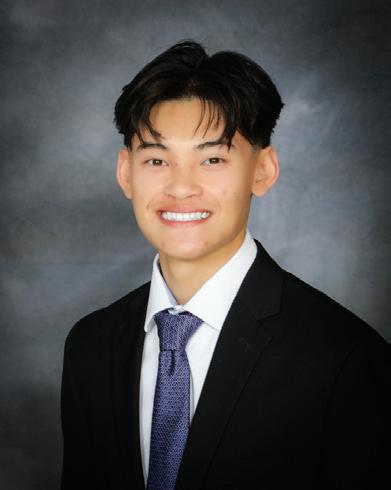
Turner said. “Because I’ve built a good relationship with a lot of the younger writers, they’re extra reliant on me.”
Derek Turner sees the High Tide as an opportunity for young writers to learn valuable skills, such as skills that can potentially be used for future careers.
“You learn to get past your hesitation to pick up the phone and call someone you’ve never talked to before. You learn to respect other people’s opinions, to use logic and critical thinking. You learn to set your own biases and feelings aside in order to do your job,” Derek Turner said. “There’s just so many good skills that you learn by performing journalism at the high school level.”
Overall, Derek Turner believes that Turner’s time on the High Tide has prepared her for the road ahead and wishes her luck, encouraging her to pursue her dreams.
“You’re very immature when you come out of middle school. High school is big and intimidating, especially at Redondo,” Derek Turner said. “You don’t know if you’re going to find your people, you don’t know if you’re going to find your passion, and pretty quickly, journalism became [Claudia’s] people and her passion.”
by Andrew Diette
On her first day at Santa Barbara Community College (SBCC), Solana Montano will continue to do the same thing she has done in Redondo Beach: befriend new people and make lasting memories. Montano has been involved in yearbook staff since seventh grade, working as an Editor-in-Chief (EIC) of the yearbook her junior and senior years. She is starting a new path in Biology at SBCC, and advance into pre-med. While six years of involvement in the yearbook program has taught her to be “receiving of constructive criticism,” she wants students to acknowledge the hard work that makes creating the yearbook possible.
“There's a lot of criticism that comes with our job, and a really important thing for people to remember is that we're not robots. We make mistakes, and we worked really hard on this book all year. We're just as excited, and we know it's very anticipated. Sometimes, [people should] leave the judgment and the criticism on the side because it can be very draining. I just want people to love it,” Montano said.
Montano is excited for the student body to see the pages titled “Interrupters,” which break the conventions and formatting of other pages in the book and allow editors to better express themselves creatively through their page designs. The yearbook’s design follows a strict style and color guide, as well as an overarching theme, which changes each year and is decided by the
EICs.
“Our theme is ‘More than a moment.’ High school is a very pivotal point in your life, so we wanted to focus on all those collections of moments as a whole. The good, the bad, the boring — how that shapes our
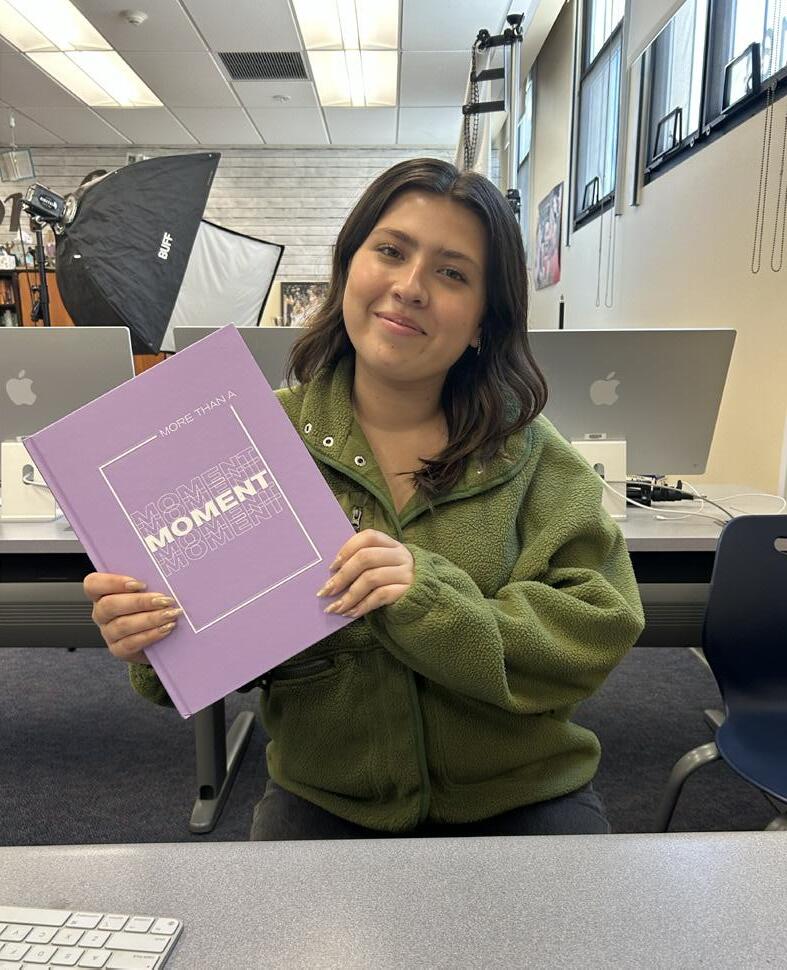
experience and leads us into the world as people,” Montano said.
Montano has frequently cited past EICs as inspiration for her leadership traits and decision-making skills.
“The past staff has influenced how I act as an EIC a lot. The EICS my freshman year were awesome, they had very strong personalities and their maturity was so apparent. [It’s crazy to think that I’m] the same age that they were when I was a freshman because they seemed so much older to me than they actually were. It can be so hard to interact with upperclassmen because you're intimidated, but I never felt like that with them. I think that's why their attitudes shaped me to become the EIC that I am today and the way I act,” Montano said.
The people Montano curated the yearbook with this year also influence her leadership qualities. She works alongside EICs Hanna Diette, Cayenne (CJ) Lawrence and Emily Forino, some of her long-standing close friends.
“I've known them since middle school or freshman year. [Having my close friends as EICs] impacts our communication skills and how we're able to be completely open and honest with one another. That would be harder if I had to work with people that I didn't know as well. Being good friends with them makes the process so much more fun. We're here a lot, we're in close quarters together, so being able to joke around and make memories is what makes it more enjoyable,” Montano said.
As her journey in the yearbook staff concludes, Montano is approaching her Biology major with ambitious feelings. According to Montano, the “high risk, high re-
ward” nature of her major, both interesting and difficult, will open up opportunities for her in the medical field. One of her former and favorite teachers, Megan Gould, who teaches Advanced Placement (AP) Psychology, wrote Montano’s college letter of recommendation and lauded her work habits.
“Solana is amazing, both academically and personally. My favorite part about Solana is that she makes everybody feel comfortable around her. She is a good listener, and both teachers and students love to be around her because she asks good questions, and she genuinely cares about the answer. She was not just asking it to do better on the test, but just out of curiosity and to grow as a person,” Gould said.
The friendships Montano has built in classes like AP Psychology and across high school are a part of how she wants people to remember her once she graduates.
“I want to be remembered as someone who is always supportive of their friends and their ambitions. I try to portray myself as someone who is empathetic and caring as much as possible,” Montano said. “I love my friends so much, so I hope they remember me as somebody who's been a crutch or a support during a time in their life where they needed it.”
by Issey Kubota
As Cayenne Lawrence walks into the clinic, smiles form on the faces of the elderly who have been waiting for her. Lawrence was inspired to be a psychiatrist for the elderly and created a club where she uses the skills she learned at the clinic to pursue her dream.
Lawrence’s interest began when she was a sophomore. After her father passed away, her grandma’s geriatric clinic had a huge gap in the technology part of the clinic where her father helped out. As she started assisting at the clinic, she grew closer with the patients and realized that she wanted to help students here connect to them, which led to her forming the Bayani Club.
“I decided to take [my dad's] place and help out with the technology and also clean up the place and learn about the patients themselves. I think I got the inspiration from helping out my grandma the most who needed help in her clinic,” Lawrence said. “Also when I first came there to clean up, all the patients there and the community were all really nice people, and I thought it would be fun to connect my peers to the
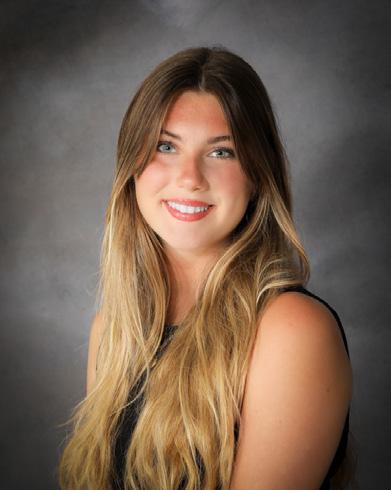
clinic so then we could all help them.”
During the club, she organizes activities where they help and entertain the elderly. Senior Skye Duong who attends the club enjoys these activities where everyone in the club gets involved with the elderly people and learns valuable lessons from people who are older than them.
“Attending the senior events like visiting the USS Iowa and leading food drive initiatives were among the most memorable moments and the club gave me a view into a whole other world of healthcare [with senior patients] and medicine that I feel goes overlooked,” Duong said. “Every single senior I met at the Bayani Center was so sweet, kind and funny and sharing that experience with other students made me feel more well-rounded.”
At Lawrence's club, she makes the people in the club feel comfortable. She always tries to set a schedule where everyone can join and has helped students grow in ways that are not taught in school.
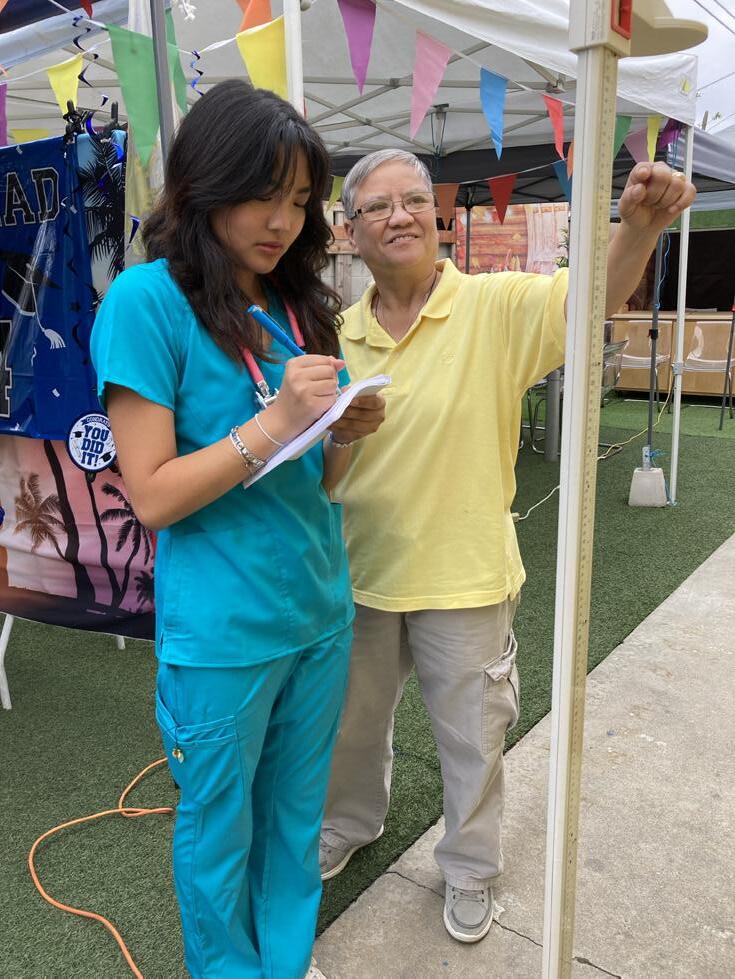
“She is super dedicated and passionate about everything she puts her mind to; she’s able to make anyone smile, and if you talk to her you immediately want to know
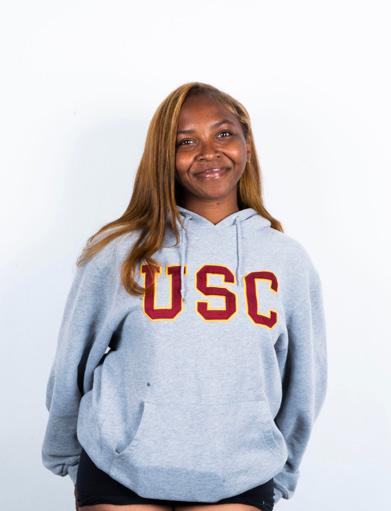
more about her. The club 110% helped me grow as a person, not only through collaborating with other students, but also learning about the amazingly diverse lives of all the seniors at the Bayani Center and how it has shaped their view of healthcare and taking care of themselves. It has left an everlasting mark on my interpersonal skills and ability to put genuine effort into helping those who are different from me,” Duong said.
Lawrence will be pursuing her dream at the University of California, Davis to study cognitive science where she will learn how to assist seniors with research-backed activities.
“I look up to my grandma since she’s been working really hard as a doctor despite her age, and that is really inspiring to see her so close to me. I want to replicate it,” said Lawrence. “My final goal is to make sure healthcare is easily accessible for the elderly, so it could reach all or even the minority populations."
by Isabella Nguyen
The curtains fall on Hanna Diette’s last and favorite ballet performance, “La Sylphide,” signifying the end of her competitive dancing career and the beginning of her new life at Fordham University. Although Diette is known for being an Editor-in-Chief (EIC) for Yearbook, outside of school, she performs on the stage for her dance studio, School of Dance and Music.
“It was really sad to say goodbye to everyone, but I’m also really excited to watch the younger dancers step into those bigger roles,” Diette said. “We have rehearsals [every] Saturday, sometimes for six hours, so we slowly put [the performance] together, and watching it all come together was just so nice.”
Diette’s dancing journey began at the age of 5, although she progressed to competitive dancing in eighth grade. As a member of School of Dance and Music, Diette worked together with her dance team to produce several shows, such as “Le Corsaire,” and has built a close-knit community of friends among her fellow dancers. As college approaches, Diette admits she will “miss” her dance team, most of whom are sophomores and juniors at RUHS.
“We’re all very close. It’s kind of a small group of people honestly, compared to some other dance studios,” Diette said. “Competitions are very easy to bond over
Hanna Diette dances competitively for School of Dance and Music and takes on the role of a mentor for the underclassmen at her studio
because sometimes they can be really stressful, so we’re all there for each other, to support each other. We’ve known each other since we were young, so we’ve grown up together.”
Similarly to how the dancers before Di ette served as inspirations for her, she now guides the underclassmen through dance, according to senior Zara Kumar, a close friend Diette made on the dance team.
“Diette’s role is definitely [that of a] mentor, especially in a ballet company where it’s a lot of little kids of the productions,” Kumar said. “She also does some student teaching, so she re ally has a close relationship with some of the dancers in the younger competition teams, and also the younger dancers in the ballet compa ny.”
Diette’s leadership skills as a senior dancer translate to her position as an EIC for Yearbook, where she leads in editing page de sign and organization. Ever since her freshman year, she aspired to become a Yearbook EIC with her friends.
“I love watching the whole [yearbook] come together. It’s a long process for us. I also really like working with the under classmen and watching them go through
their own creative styles,” Diette said. Ultimately, Diette has chosen the path of Pre-Law at Fordham University, and
about my studio [is that] I have such great teachers, and I [know I can] put my trust in them. We always talk about how it’s not

by Kacie Brincat
After four years of dedication and hard work towards the yearbook, The Pilot, Emily Forino has helped the publication grow and become the program it is today. However, four years ago she never would have thought she would be joining the RUHS Yearbook staff.
“My sister really inspired me because she also took yearbook all four years, and she became an Editor-in-Chief (EIC) in her senior year, and when I was filling out my classes for freshman year, she told me ‘You
should join yearbook,’ and I said, ‘Okay, sure.’ When she was an EIC her senior year, I started my first year [in the program]. I'm very glad I [joined]. It taught me a lot about deadlines, organization and how to manage your time. Also leading a group of people in general, seeing how people work. I feel like in school we don't get a lot of opportunities like that. So it's cool to see how real world jobs run,” Forino said.
Along with learning skills that she hopes to bring everywhere in life, she also met a lot of people, including her best friend, senior Solana Montano. Montano was in a similar situation as Forino and they became friends fast.
“We actually met in [Physical Education] freshman year, and obviously, it's a stack day the first day of school. So as we went through all of our classes, we found out that we also [had] English together, and then we ended the day in Yearbook together. So we just kept seeing each other all
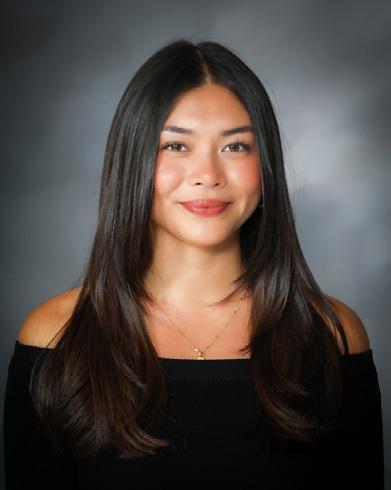
day, and it was funny [because] we realized that we had a lot of our classes together, so we became friends,” Montano said.
Yearbook has helped them work out some differences in their personalities as well as making each other grow and bounce back off of each other's energy.
“I think that we pair well together because we're both very honest with one another. Being friends helps our relationship and our dynamic as EICs together because we respect each other's opinion and feedback as friends and as coworkers. Honesty with one another helps us [not] beat around the bush and we're able to get things done quicker because we provide constructive feedback to one another and have great communication,” Montano said.
In addition to the friendships and life skills Forino learned from the yearbook, she has learned other things by working as a gymnastics gym coach. Forino is going to California Polytechnic State University to major in economics. She hopes that the skills that she has learned as an EIC will enable her to be successful in college and life.
“I'm planning on majoring in economics, which I feel like is entirely different [from the yearbook path], but I think it
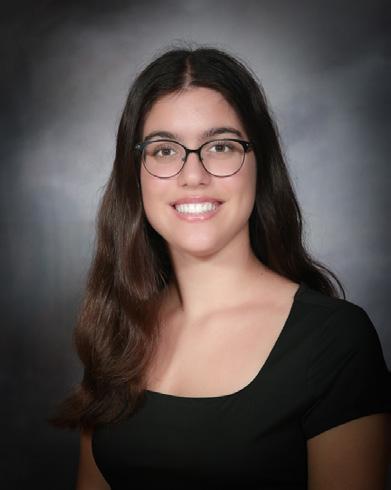
taught me a little bit more about leadership and it interested me being in a position where I am a leader, whether that's a boss of some sort or a Chief Financial Officer,” Forino said. “[I’m excited to form] my own independence in my adult life.”
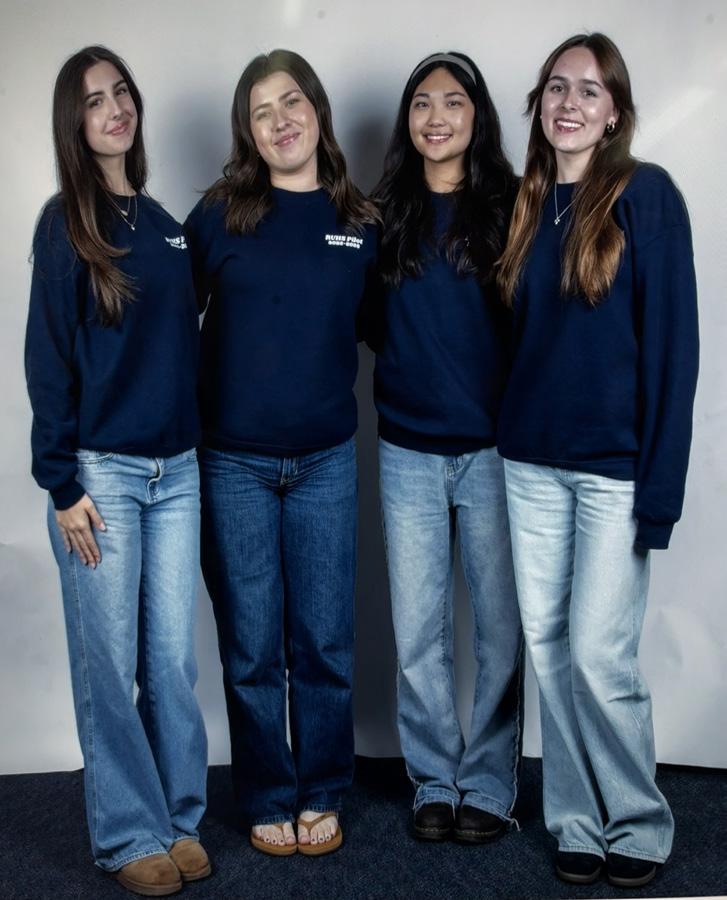
by Brooklyn Hesse
Over the course of her four years at RUHS, Drama President and High Tide Online Features Editor Allison Sutton has grown and changed from an unsure underclass man to a goal-driven senior. Having a father in the military, she moved around frequently before her atten dance at RUHS.
“One of my main challeng es was adjusting to change,” Sutton said. “I had to learn how to adapt to new en ronments, new people, new new curricula and throughout that, I think I've grown a lot as a person, but it also has tested my limits and inspired me to seek opportunities in whatever environment I'm in.”

Facing a lack of opportunities and frequent changes due to the constant moving, she had to learn to find opportunities and open doors for herself. This led her to her go-getting mindset, especially in her goals to be a publisher in New York City. According to Sutton, she’s learned that “doors won’t open for you unless you turn the handle.” Within her time at RUHS, she has found her passions, one of which is musical theatre.
“My freshman year, I didn't think I was going to join the drama department. I tried out
for volleyball and didn't make it, [...], but I joined drama class to satisfy my performing arts credit. I up loving the people and the place, and obviously the activities. [...] throughout my time here, I realized that technical theater is also a creative outlet and something that I'm passionate about,” Sutton said. “In joining the department, I've been able to explore new facets of creativity, but I've also been able to test my limits as a leader, as a friend, and as a team member because our department is so interconnected.”
Melissa Staab, the drama teacher and director, has known Sutton well over her high school career. As the drama president, Sutton has worked closely with Staab and created a strong relationship.
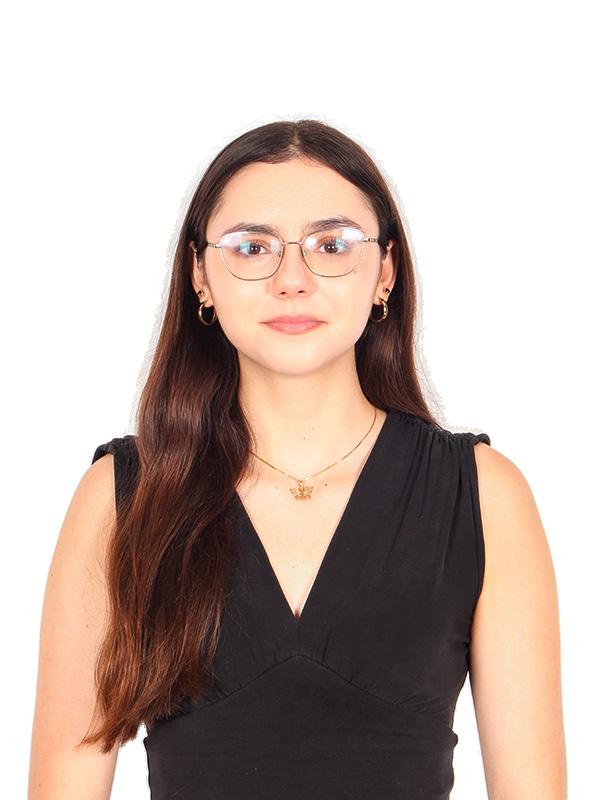
by Emery Min
Deeksha Prasad is rarely at a loss for words. According to Advanced Placement Literature and Composition teacher Kitaro Takesue, after every essay, Prasad briefs him with a “waterfall of information,” and shares her thoughts on various topics in a way that "makes [him] care about them." Throughout high school, Prasad has used this tendency of hers to enact change in her community on the Principal’s Advisory Council.
“The Principal’s Advisory Council was a really fun experience because I got to work on a lot of the different issues that people were seeing within the school, and it was really fun to work collaboratively with Mr. Brown while addressing these issues and seeing what things we could actually do by ourselves and take control over,” Prasad said. “It was a really eye-opening experience on democracy and representative government.”
“I’ve watched [Sutton] go from someone in the ensemble to performing leading roles. She's also open to trying new things. She's been on Tech Crew, she's been a director, [and] she's written original songs that have been put into our productions. [...] Allison is very smart, intelligent and has always put 100% into everything she does. She's a really strong student,” Staab said.
After graduation, Sutton will attend University of California, Berkeley to get her degree in English. After college, she aspires to become a book publisher, aiming to connect authors and readers. According to Sutton, as an underclassman, she felt lost about who she was and hoped to be in the future.
“If I could give my younger self some advice, I would tell her not to be afraid of authenticity. I was very obsessed with becoming what I thought people wanted to see,” Sutton said, “Now I've realized being true to myself is the best way to make myself happy and form real relationships with others.”
of as the conventional experience with social media, and a lot of them felt that they found a safe space to interact with,” Prasad said. “So we ended up developing a project that was meant to simulate the feeling of support and community that you get on social media but in real life.”

Another issue Prasad has continengage with concerns the mental health crisis among teens. Through the UC|CSU Collaborative, a joint project or ganized by staff from the University of California and California State University systems, Prasad worked on a project with other high schoolers from across Califor nia to help improve the mental health of their peers and created bulletin boards for students to share their thoughts in a public space.
“We conducted a lot of interviews with neurodivergent teens, and their experience was a bit different from what we think
by Payton Rothluebbers
Atanical Gardens for more than just the ability to see a Gutenberg Bible in-person, her excitement when discussing certain historical pieces could fool anyone. Through her time teaching children about history and plants through arts and crafts at The Huntington, Leyla Evenson fostered her passion for his tory, manifesting in her commitment to the Univer sity of Cal ifornia, San Diego (UCSD), majoring in history and pre-law.

who is very knowledgeable about what she’s looking at and why it’s important to her,” Jennie Evenson said.
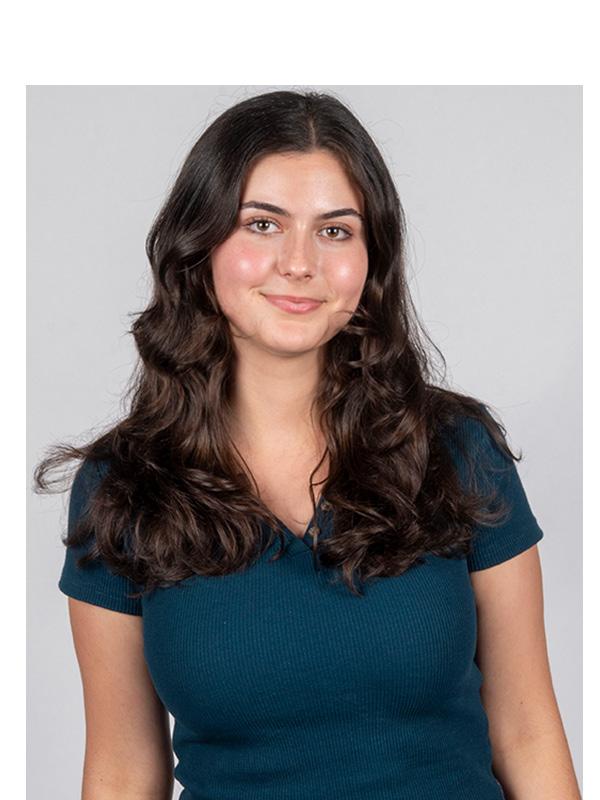
Leyla Evenson’s mother, Jen nie Evenson, watched her daughter transform as her passion for history truly developed.
“[Leyla] has always loved going to museums, ever since she was very young. Whenever we travel now, she’s a wonderful tour guide. What I’ve noticed, now, is how much she knows about each one of the items she’s looking at. When she was young, I think what really enjoyed was the experience of going to the muse ums, the quiet envi ronment and look the pictures of art. Now, a lot to say about whatever she’s at in the museums. She’s become someone
by Kate Lanzdorf
RIn the fall, Prasad intends to study at the University of Southern California to major in English and hopes to become a professor. She expects that her experience advocating for issues in her community will aid her in mentoring students in the future, as teachers such as Takesue have had a “profound impact” on her.
“I appreciate her rational exuberance. She’s so animated and passionate about life; it’s infectious. When I feel jaded or run down, I can count on Deeksha to remind me how wonderful and exciting life can be,”
Takesue said. “I really appreciate that about her and all of my students. That's why I teach in high school. She’s the perfect encapsulation of what youthful and compassionate engagement with life
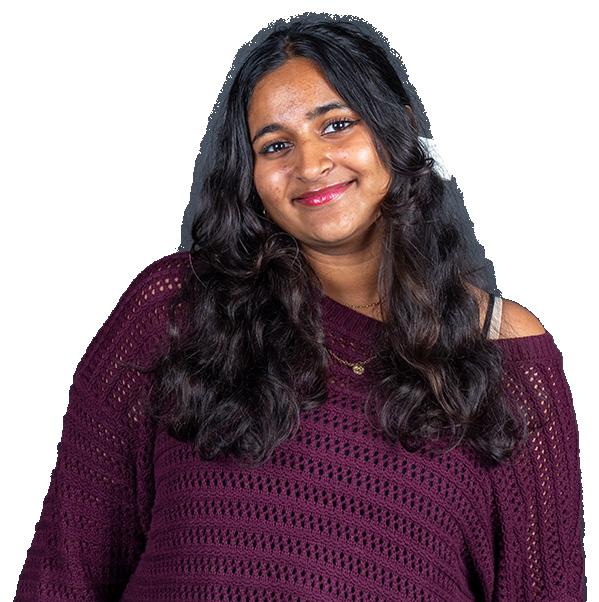
Volunteering at The Huntington was more than just gaining experience in teaching historical facts and working with kids for Leyla Evenson. Being in a richly historical environment every day lengthened her own knowledge on a wider variety of topics.
“It’s very important to me to spend time in those kinds of areas. I was able to go through the gardens, and I also got free admission, so I’d be able to go through and look at the European Museum and experience the art. Having that experience was honestly just fun. It taught me to appreciate and enjoy life more,” Leyla Evenson said.
With Leyla Evenson’s work behind her and a secured commitment to UCSD, she now has years of experience ahead of her where she can apply the skills she has learned.
“[Leyla] is very driven. When she decides she wants to do something, she does it. It’s incredibly impressive and she doesn’t mind working hard,” Jennie Evenson said. “I am really excited to see what she’s going to do with her life because she’s got such promise.”
Ultimately, Leyla Evenson’s dedication to history is a testament to her own beliefs regarding history’s societal impacts.

eading one of their fellow classmate’s stories, Fi Borgese smiles; it is gen uinely passionate. According to Borgese, true interest in the media is what makes the best stories.
Borgese learned this ideal through their experience as an entertainment editor for High Tide, and carries it into their other activities, such as the ater, volunteering with kids and making pieces of art. Ac cording to Borgese, their inter est in politics influences almost all of these hobbies.
“I have always been very politi cally active. I like sharing my many opinions with people, and I have never been one to shy away from a serious conversation. I got interested in journalism through investigative journalism, and I would do deep dives on journalists who really care about the world and politics. They research and let everybody know what is going on in the world. I thought that was really cool and brave for people to do. I wanted to do that, too,” Borgese said. Borgese began their theater journey working in “house,” meaning they worked with guests throughout the show. That required a lot of communication, as does volunteering with children. However, according to Borgese, working with kids is much easier.
“History is everything. You can explain the history of anything. Because of that, it’s an intersection between all subjects of study and every facet of life,” Leyla Even-
“Sometimes, people think that history doesn’t have to be taught or talked about, but it’s really intrinsic all of our lives. Things start to make a lot of sense when you’re able to recognize patterns, and history is the study of patterns and how one event is related to
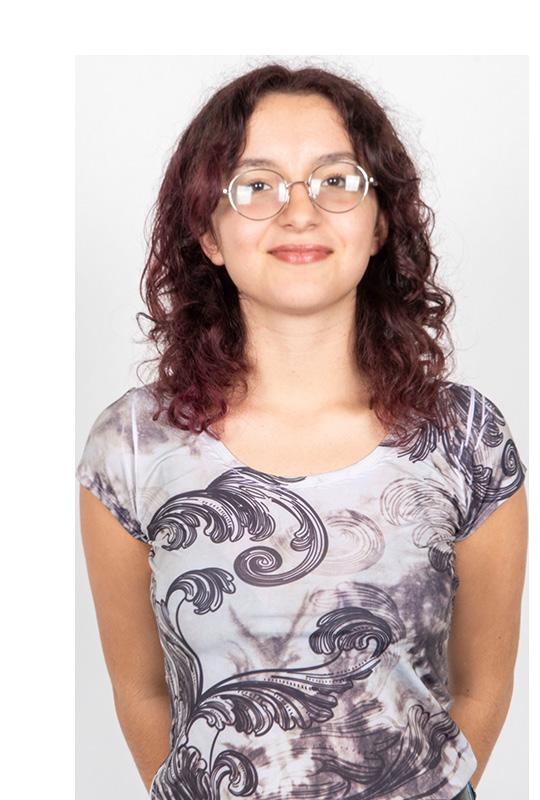
straightfor ward,” Mitchell said.
responsibilities are difficult because they heavily involve “pleasing other people,” and it is difficult to “find a balance between customer service and personal respect.” Borgese’s best friend and former RUHS student, Cayley Mitchell, has seen this firsthand.
“[Borgese] is

“Their thinking is very stream lined, and they are always quick on their feet. They can very quickly think of what to do in a situation and put those thoughts into action. We did theater together, and whenever I was too quiet to say something and get people’s attention, theywould help me out.”
“It is very refreshing to be around little kids because you’re not trying to constantly keep a mask up the same way you are in high school,” Borgese said. “With these kids, it doesn’t matter what I do. They’re just going to think I’m cool no matter what. It’s nice to talk with someone who doesn't think that hard about societal expectations.”
Borgese plans to study criminology and forensics in the future, as their main goal is to find truth and justice for those who can’t. According to Borgese, there are many hobbies that have one thing in common: to speak about their opinions and interests.
“My art says a lot about me,” Borgese said. “If you can see my work, then you can see how passionate I am about a lot of things, and how passionate I am to make them.”

high tide june 5, 2026
by Emery Min
Standing at over six feet tall with broad shoulders, Francisco Villegas looks like a football player—and for the past four years, Villegas has played as an offensive lineman on the RUHS boys football team. Despite the “massive impact” football has had on Villegas’ high school experience, going into freshman year, he never expected that he would end up on the team.
"Growing up, I did Little League baseball and a year of soccer, and then in fifth grade I did basketball. But I was never a sports fan at all compared to my brother. I genuinely wasn’t interested as much, and I was bored [on the field]. [Sports] were never my thing, I was more into superheroes,” Villegas said.
Villegas was first drawn to football in the second semester of his freshman year when his friend Bryson Garcia encouraged him to join the team. Although he initially worried that he would have to “manipulate [himself] into someone” to fit in with the guys on the team, Villegas eventually “found a love for football” and developed “a brotherhood” with his teammates.
I couldn’t have told anything. I came into meetings and I didn’t understand the terms they were using. My coach prepped me for that, that I wasn’t going to know any
thing. It was just a learning experience. But eventually you fall in love with it,” Villegas said. “It’s fun seeing the guys you spend so much time with succeed.”
In addition to football, Villegas has also been a member of journalism since his sophomore year, and has contributed to the program as an online sports editor for the past two years. He views journalism as an important field that “really brings value to society.” His fellow sports editor, Sam Schwartz, became one of Vil - legas’ first and closest friends in the program after they first met.
“I’ve ed- ited a few of [Villegas’] sto- ries, and he has a really good grasp on how to write sports stories. To be honest with you, he’s written some of the best stories I’ve ever seen. He finds the perfect balance of everything,” Schwartz said. “There was a lot of creativity in the graphics that he made, the knowledge he had on how to use words to encapsulate an image or a specific moment of a
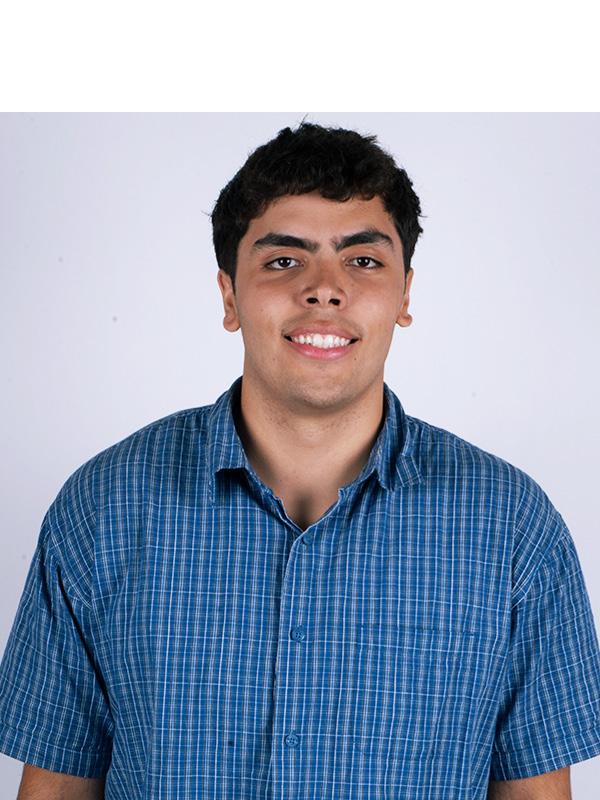
by Sanaya Bhatt
Along with her recent commitment to the University of California, Davis for environmental engineering, Hayden McMahon has been a leader in RUHS’s sustainability communi ty since her junior year. McMahon is cur rently president of the AP Environmental Science tutoring club and a volunteer for the Madrona Marsh Advanced Restoration Crew, but has been developing her passion for the environment for several years.
“In seventh grade, I took an Energy and Sustainability class. It was my second choice at first, but I honestly ended up falling in love with it. I found the material so interesting, and taking that class helped me realize that en vironmental science was really some thing I was interested in,” McMahon said.
In the future, Villegas intends to continue to explore sports journalism in the future and take the skills he has learned through both football and journalism with him beyond high school.
“Football-wise, I’ve found an end where I think I went everywhere I really wanted to go with the program. I got everything I wanted to do out of football. I loved the brotherhood and learning and pushing myself in something that I had no experience in and learning that I can do that, entering a new field,” Villegas said. “And I think going forward, even though that’s not my focus, it’s a type of effort and mentality, that ‘I’m gonna keep going’ [mindset] that I can use for whatever I do in the future.”
offers that align with both her major and what she is looking for in a college campus.
“One of the biggest subjects at Davis is agriculture, and they’re in a really nice area where they’re able to be super sustainable and put emphasis on that,” McMahon said.

McMahon’s APES teacher, Gillian Moberg, has watched McMahon’s involvement in environmental science grow, from having McMahon as a student to watch ing her tutor and support her peers as president of the APES Tutoring Club her senior year.
“What I like about Hayden is that she is patient and positive. When she is helping others, she’s not condescending because she enjoys the process. She’s a genu inely generous person,” Moberg said. “As a student, she applied the same philos ophy to herself, in that she was very generous and patient with her self. She worked hard, and was never afraid to try again when she made a mistake.”
McMahon is also looking forward to the multitude of op portunities UC Davis
“I visited the campus, and on every corner, there is some sort of device or system that is enforcing sustainability; it’s amazing. They’re also ranked in the top 10 for vironmental engineer ing in the country.”
In addition to the sci entific aspect of it, McMahon’s pas for environmental issues also comes from an understanding of what humans gain from mit igating them. In college, she is looking forward to fostering this under standing and sharing it with others.
“I understand people not be ing as invested in the environment as I am,” McMahon said. “But even if you don’t see a tree and want to go up and hug it, you certainly want fresh food to eat and clean water to drink. So, even if you don’t have complete adoration for the planet, at least respect it.”
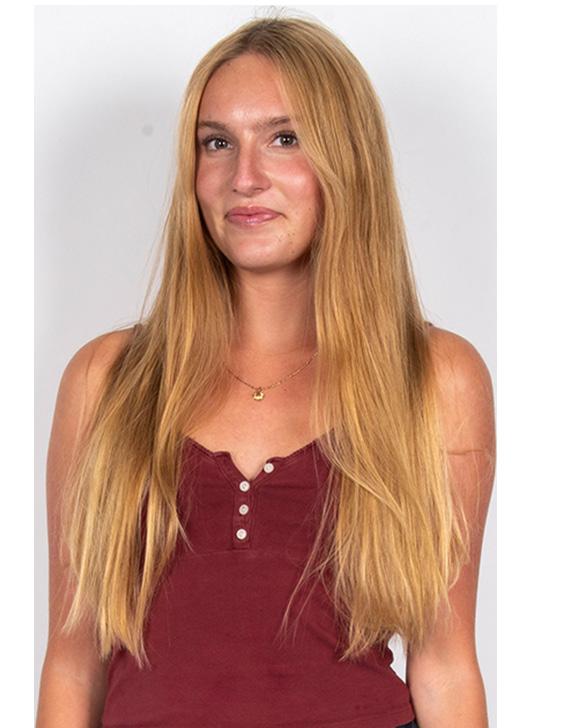
by Sophie Riddle
Many people believe that hard work is the key to success. For Sam Schwartz, that ide al became true after one of the hardest moments of his life. After playing baseball since he was three years old, not making the high school team as a freshman was “devastating.”
“[Not making the team] really sucked, and hurt a lot,” Schwartz said. “It taught me not to expect things to be given to you. You have to work for things no matter what the case is, whether it’s sports or academics. That was an important lesson baseball gave me.”
According to Schwartz, this experience created a mindset to work harder, which eventually led to him becoming a starting player on Junior Varsity.
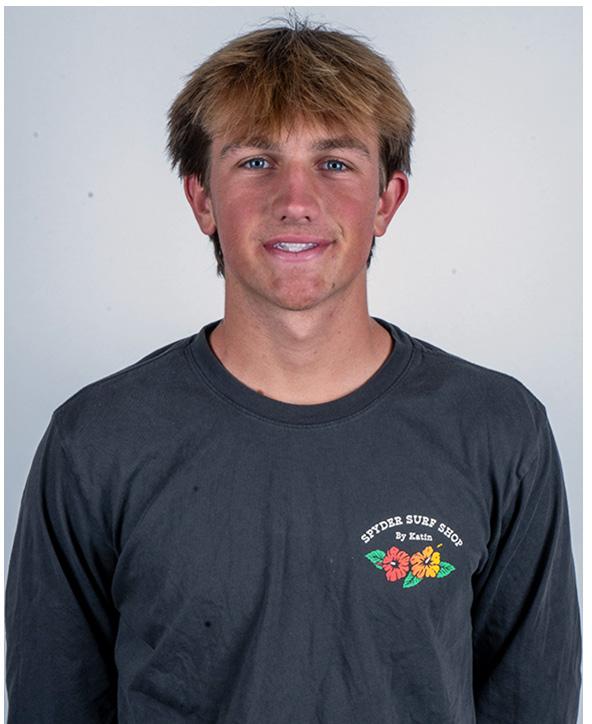
“Mentally, I definitely went through a rough patch,” Schwartz said. “I felt like I always needed to improve. Even after mak ing the team, people still told me I’d proba bly just be a backup. I went 100% everyday in practice trying to improve myself, and it was exhausting.”
Schwartz's close friend Keijiro Ha tori witnessed his shift in mindset after freshman year. According to Hatori, hav ing known Schwartz since kindergarten allowed him to see the change Schwartz made in his rela tionship with baseball al together.
“Even before [Schwartz didn’t make the team], he was working so hard,” Hatori said. would see it in practice every single day,
by Eliza Prangnell
Ano matter the conditions. But there was just a flick of something in him that suddenly said ‘I need to prove every-
According to Hatori, Schwartz also became a person the team often relied on. Hatori noticed more maturity and leadership in his friend as they got older. “He cares for every single one of us, and he’s there for us whenever we need him,” Hatori said. “He's able to think about other people and support everyone else, even when he's going through a lot of things. He's always checking up on us and supporting us in the ways we need him.” Schwartz is continuing his baseball career at Bethany College, carrying the lessons learned from his setbacks and his periences. According to Schwartz, the difficulties in his freshman year pushed him harder and changed the way he views challenges.

“You’re going to face rejection no matter what,” Sam said. “You just have to a way to rebound
how her teachers approached the course-

to me spraining my ankle five times in six months, and that almost led to me tearing a tendon in my ankle, so it was time to call it," Kim said.
Kim felt “aimless” at the begin ning of high school, until she took Advanced Placement (AP) European History with Richard Barclay. Se nior Joshua Mow took AP Euro pean History with Kim and no ticed her interest in the class.
“We'd met in Biology our freshman year, so I knew her originally, but in [AP Europe an History], I got to see her develop a love for history,” Mow said. “I'd say [Kim] was very much a driven person. Her work ethic was definitely beyond what anyone else in the class was. She always gave 110%.”
“[Bein] was really good at presenting things in an objective way so we could form our own opinions about it. She wasn't telling us what to think, she was giving us the facts and allowing us to do our own thinking. [Her teaching style] sparked a lot of academic discussion among my friends which I hadn't really experienced before because people don't want to go outside of class and talk about school, but she made it so interactive and I found it especially interesting because it's so human-centered," Kim said.
Kim credits Barclay and Bein for inspiring her to want to become a teacher herself. According to Kim, their classes helped her understand how diverse people's personal ideologies and beliefs are.
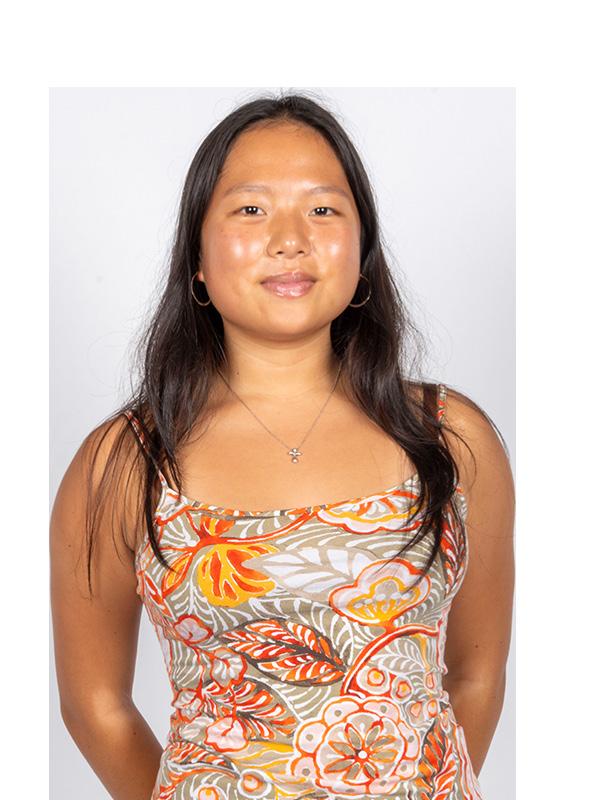
After AP European History peaked her interest in the humanities, she decided to take AP United States History taught by Barbara Bein. One of the reasons she found history engaging was because of
“It helps me on a daily basis to remember that no one should be quick to judge because we don't always know the full story. I want to be a teacher to help people ask questions like ‘Why is the world this way? Why is this system in place?’ I hope we can reach a point where we make things better one day," Kim said. According to Mow, history helped Kim realize that college is a place where she can specialize in her own field of study and he is very proud of all the work she has done. Kim is attending Cornell University next year and plans to study history.
“I'm a happier person now that I know that there's so much I can do with my life,” Kim said, “I now know that when some-
happens it's not the end of the world;
always something ahead.”
by Stella Sato
Over the last four years, Jack Pierse has learned to balance his “heavy” academic lifestyle with the creative arts as a way to express himself. Pierse is a president of the Salsa Club and has also done two theatre shows as part of the build crew.
Originally from the Hermosa Beach School District, Pierse came to RUHS at the beginning of his freshman year. Wanting to meet new people, he joined the Salsa Club and met Anaiah Fowlkes, the current vice president of the Salsa Club. She has seen Pierse overcome several challenges with positivity.
"We've had a lot of barriers with choreo,” Fowlkes said. “It's usually just me and Jack doing choreo, and that's honestly really stressful for a person. There were people to help, but everybody always had their own thing going on.”
According to Fowlkes, Pierse "powered through every challenge and loyally stuck to the club." He has been part of the Salsa team for four years and became President of the Salsa club through his dedication.
“The club has changed from year to year, but there’s something that always kept me attracted to it: the people, how everyone is connected, and when things are bad, we suffer together, when things are great, we rejoice together [...] I enjoy the opportunity to teach people my way of
Alina
doing things.” Pierse said.
Having participated in Salsa Club to gether for four years, Fowlkes got to know Pierse well.
“Jack didn't try to [fix challenges] by himself,” Fowlkes said. "He came to me when he needed advice. He went to one of our old salsa presidents when he need ed advice [...]. It was good to see that he took it. He didn't freak out. He didn't shut down, he didn't break down. He actually had people around him.”
In the future, Pierse hopes to be a mechanical engineer and noticed how salsa and theatre both helped him out this far on his path.
"I do a lot of stem heavy courses and a lot of math heavy courses. It's great to balance that out with theater and salsa as well, I'll hopefully continue doing this in the future with finding new clubs and maintaining that balance that got me through high school [...]. I would have gone insane if I didn't have the creative outlet,” Pierse said.
Pierse firmly believes that without the arts, he
could not have navigated the "rigorous
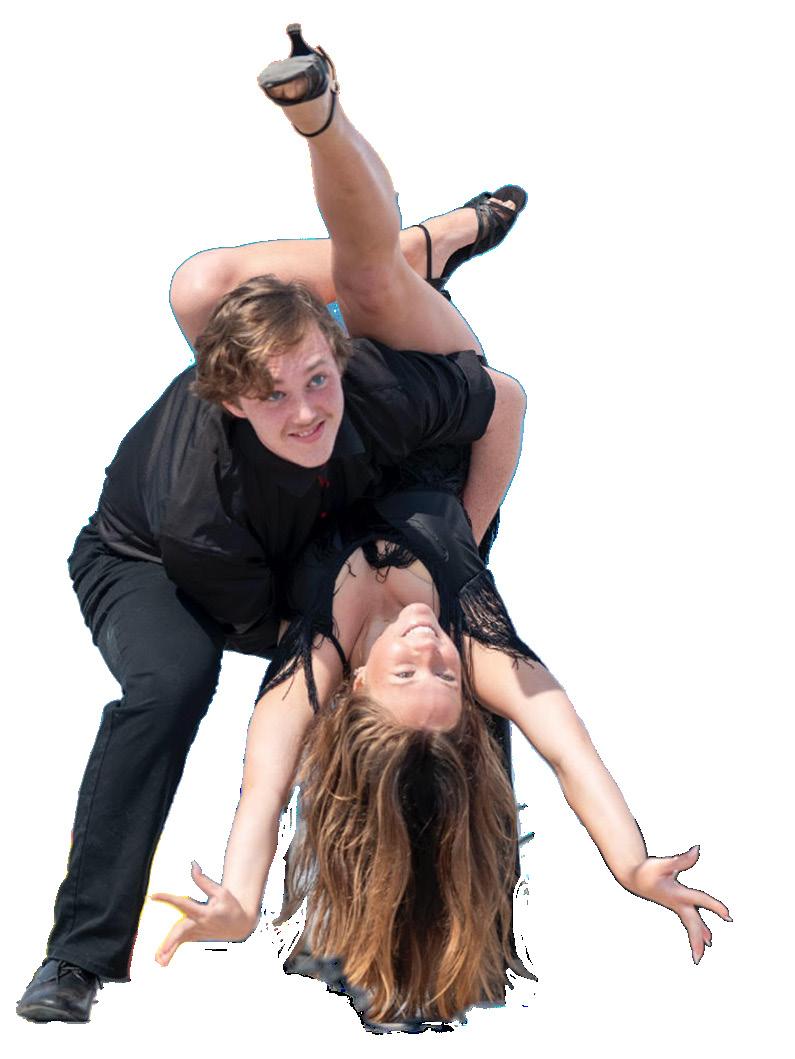
Salsa Club this year in the future to maybe social dance more with more people, meet new people, and maybe be involved in a new environment.”
Consistently, Pierse made it a priority to ensure that everybody in Salsa Club got to perform and learn.
"It's hard to get everybody in the same place at the same time, but we overcome that with commitment and working with people,” Pierse said. “My motto is that if someone is passionate enough about something, then we will always find the time and place for them to learn, thrive and be able to succeed among the rest of us.”
advocacy in medical and mental health programs has created options for a career in the educational or medical fields
by Marlena Lipan
Through her intensive work ethic, academic participation and mental health advocacy, Alina Rashidfarokhi has paved her way to a successful future in the medicine or education field, overcoming barriers along the way. Through the Biomedical pathway and various volunteering endeavors, Rashidfarokhi has demonstrated continuous interest in the medical field. Her freshman year, Rashidfarokhi began volunteering at Beach Cities Health District (BCHD) and worked at the front desk of their main campus location throughout her sophomore and junior year.
“I had my own mental health challenges. I was always the type of person to struggle in silence, and knew I wasn't the only one. That was a big part of why I joined the Youth Advisory Group (YAG). A lot of people will do stuff like this for the sake of college apps, but I think it was something so much bigger for me,” Rashidfarokhi said.
Rashidfarokhi became a BCHD ambassador and joined the volunteer advisory council to organize community service projects that benefit the South Bay. She later joined the Center Youth Collective (CYC), run by the Stanford Center for
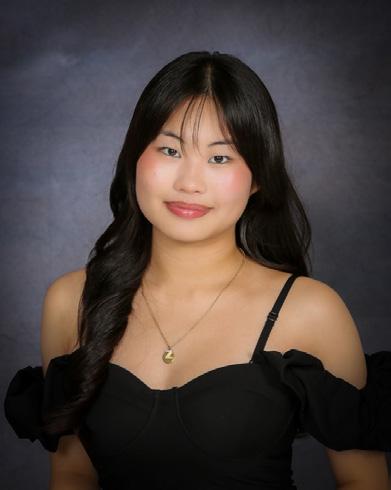
Youth Mental Health, which works with Allcove.
“I never saw someone like myself represented in these areas, whether it be in leadership positions, advocacy or in mental health services. You'll see sometimes other minorities starting to get included, but I've never often seen people with disabilities included,” Rashidfarokhi said.
Her participation in the CYC and the BCHD District Youth Advisory Council will continue throughout her college experience, and allows her to engage her career ambitions of educating others, as well as providing health services, two career paths she is deciding between. Junior Arielle Steinberg is also on the District Youth Advisory Council and has witnessed Rashidfarokhi’s work ethic.
“[Rashidfarokhi] is incredibly hardworking and dedicated, especially when it comes to advocating for youth mental health, substance abuse awareness and promoting Allcove. Most recently, at an event celebrating the opening of the new Allcove building, I watched her give a speech about the importance of mental health support and why Allcove matters to the community. It was clear how passionate and committed
she is to the work she does, and I’m sure this extends to all aspects of her life beyond the YAG,” Steinberg said.
Her mental health volunteerism and interest in the health field is partially motivated by her experience being legally blind since birth, which has given her extensive firsthand immersion in the American healthcare system. The combination of cultural norms and systemic issues within the healthcare system created a prominent obstacle for Rashidfarokhi, although it allowed her to gain independence and self advocacy.
“With my vision, I've seen more specialists over time and I have still had my fair share of health issues. I have seen the impact of medicine and what being inside the healthcare system is like,” Rashidfarokhi said.
Additionally, her experience caring for her sick Pakistani grandfather during COVID-19 accelerated her interest in the health field. Gaining greater self-advocacy inspired Rashidfarokhi to advocate for others and helped her discover her future career paths. In the coming fall, Rashidfarokhi will pursue her career interests by studying neuroscience at Boston University
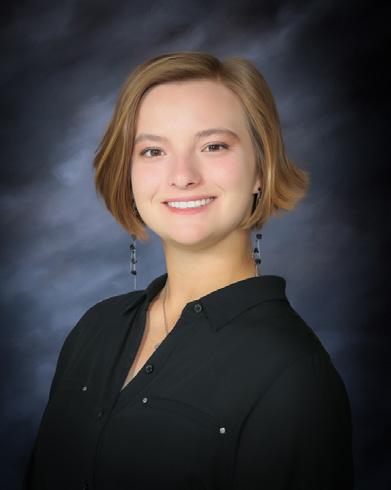
in Massachusetts.
“Science and research will always be a part of my career, even if I don't go down the route of medicine,” Rashidfarokhi said. “I could see myself teaching high school science or psychology. Regardless of what I do, I want to do something that is helping people.”
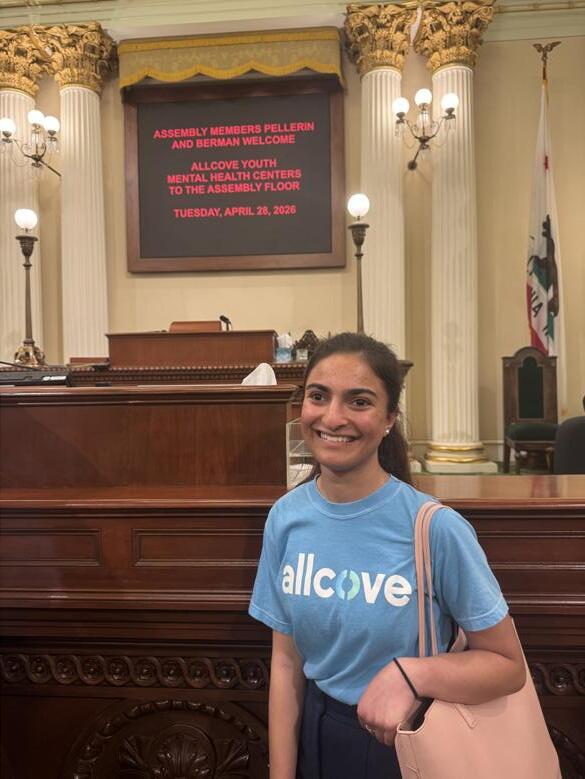
by Adelyne Cai
For America Mendoza, travel informed her course selection through high school beause she knew to fully participate in any culture, conversation is crucial. Mendoza decided to take all the language courses that RUHS currently offers, along with Japanese on her own time.
“I wanted to be able to speak to people because English is a pretty popular language, but not everyone knows it. Sometimes people come [to California], and we go to other places. I feel like you lose out on different experiences when you can’t talk to people,” Mendoza said.
Having completed the Advanced Placement (AP) Spanish course, Mendoza values her proficiency in that language, as it helps her better understand and connect with her relatives in Mexico.
“Whenever I go to Mexico, I'm better able to connect with family members. Since I'm from America, the little kids especially, are so fascinated. They want to talk, and I feel like I'm able to talk to them more often, and more easily,” Mendoza said.
Currently, Mendoza has taken and completed the Spanish courses all the way to AP, Chinese one, is currently enrolled in French one and is also studying Japanese on her own time. However, keeping track of so many different languages can be challenging, particularly languages such as Spanish and French, which have similar latin derivatives.
“I end up mixing languages up, especially Spanish and French because sometimes I want to think of something in Spanish, but the French word or pronunciation just keeps popping into my mind,” Mendoza said.
According to Sara Gonzalez, Mendo za’s AP Spanish teacher in her ju nior year, challenges nev er last long due to her steady integrity when learning.
“Something that was a challenge never seemed like it was a challenge to America be cause she's always very positive. She al ways found a way to handle it or to take care of it,” Gonzalez said.
America Mendoza speaks four languages, facilitating communication with others
sic. For each language I'm learning at the moment. I have a dedicated playlist with French songs, Chinese songs and Japanese songs. I also try to watch shows I've already watched, but in whatever language I’m learning at the moment to hear native speakers, and learn how they're speaking
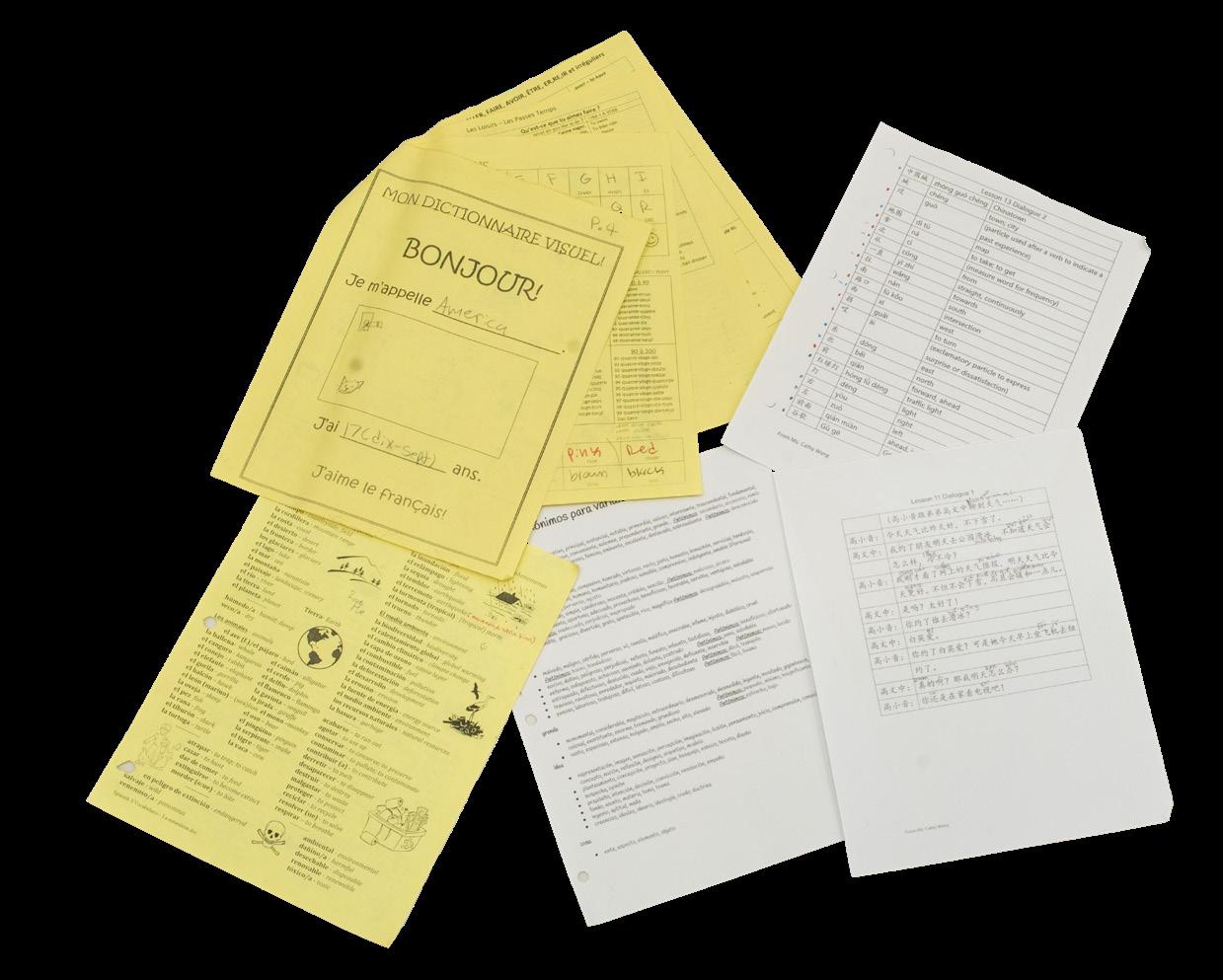
As for studying, going over two languages at a time can seem daunting, but Mendoza's strategy allows her to sharpen her skills simply by listening.
“I like to listen to mu
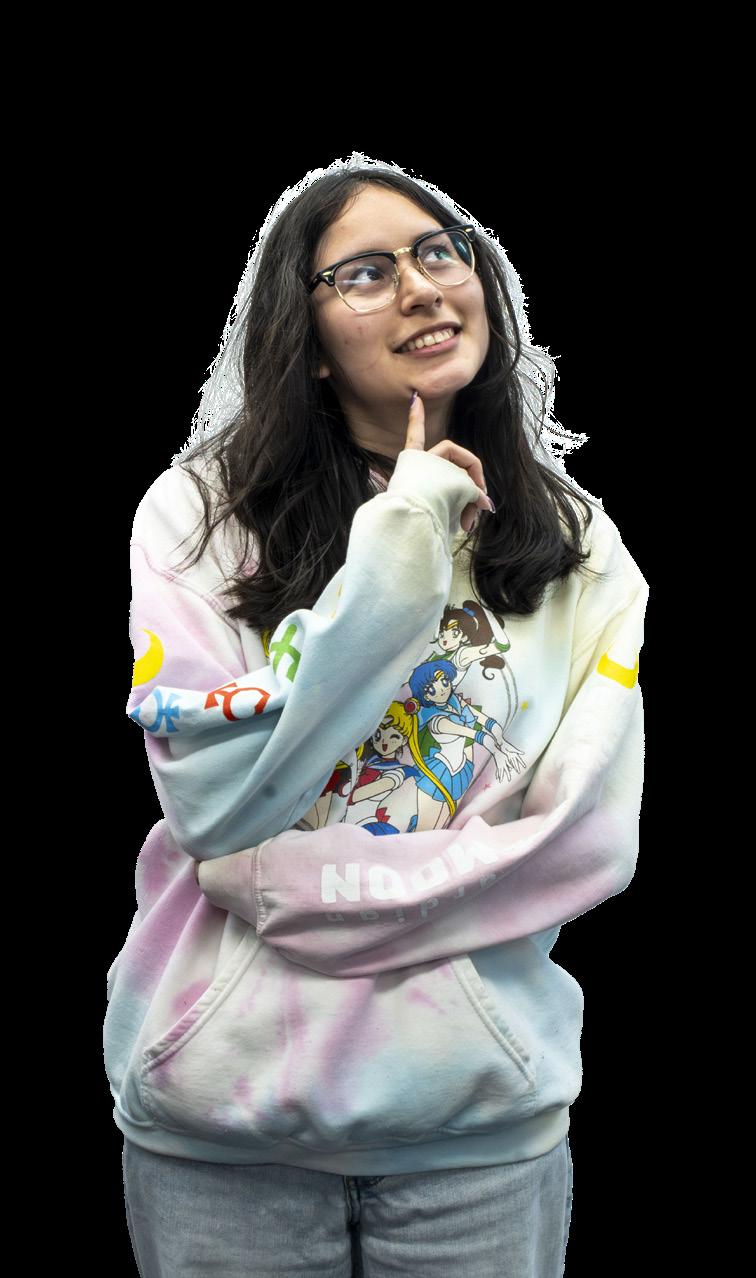
With her passion to connect with others, she plans to earn a major in sociology and a minor in linguistics at Mount Saint Mary’s University
(MSMU), while continuing to develop her knowledge of French. Gonzalez shares no doubt that Mendoza will continue to meet new people and connect with her surroundings.
“[Mendoza] has always
worked well with whatever group she was in. She played the role of a leader and also a great team member. She's always listening and sharing, but also being very open to other people's ideas,” Gonzalez said.
Gonzalez believes that as Mendoza begins a new chapter in MSMU, her empathetic attitude and virtue of considering others will foster her growth. Her final piece of advice is to find her support network and continue to connect with others.
“I would tell her to take advantage of the resources at her university, meet her professors, visit them at office hours, get involved on campus with any club organizations,” Gonzalez said, “because if you have your support network, then there isn't a challenge that you're not gonna overcome.”
In the future, Mendoza plans to utilize her knack for languages, as she wishes to make her way to several different destinations all around the world, her current aspiration being China.
“[Other than China,] I really want to go to Japan and a lot of Latin American countries," Mendoza said, "[such as] Costa Rica and Peru, [and connect with them through shared language]."
by Connor Brodeur
Amidst the uncertain world of future studies and careers, Jacob Acosta has dedicated his focus to the craft of welding. The common path that students pursue is centered around attending a college to earn a degree for a graduate job, however, the study of trades provides an alternative pathway for the future.
Acosta has spent his last year studying welding at the Southern California Regional Occupation Center (SCROC), a Career Technical Education institution established in 1967 as an accessible way to learn advanced technical skills. SCROC offers numerous courses on the study of “trade” professions such as construction, residential wiring, sculpting and fashion design. Acosta learned of SCROC last year from his friends who encouraged him to explore one of the courses.
“Some work is too hard for me, but not welding. Once I tried it out, I had so much fun, and if you love what you do, then you won't work a day in your life,” Acosta said.
Initially, Acosta worried about the danger of the field, stating a
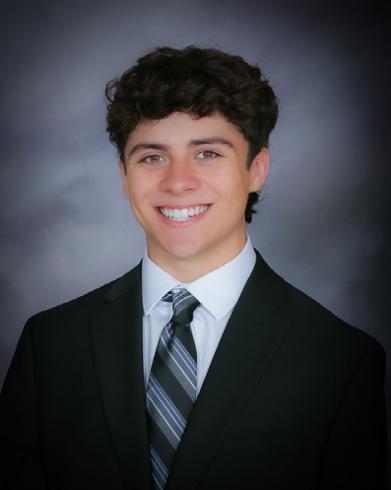
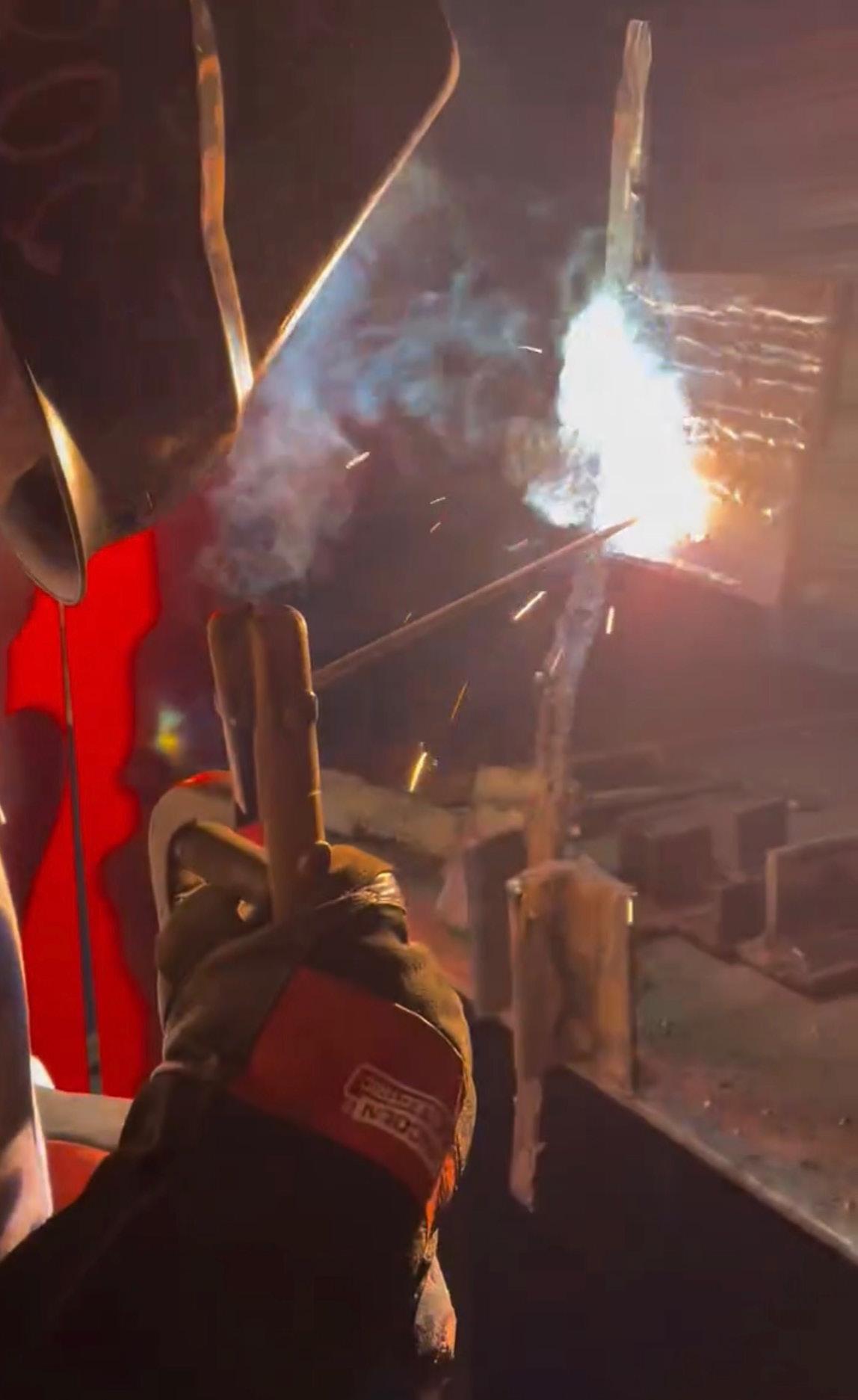
fear of the intense sparks and heat. Despite this, he continued to pursue his path and overcame his worries, successfully learning to find the joy of welding and growing to appreciate the trade. According to Acosta, the hands-on engagement with industry professionals was an integral factor in learning the trade.
“[With SCROC] I get to learn from other members of the field, which is different from learning from a book or manual because the books show you how to do it, but don't help you by welding with you,” Acosta said. “I just don't want to sit down all day and do work, I like to be actively moving.”
Acosta acts as the teacher’s assistant for Christina Stuve’s Advanced Photography class. Acosta helps new students operate the cameras and dabbles in his own photography skills.
“He treats the cameras with a lot of respect,” Stuve said. “It seems that [the welding instructors] ingrained a very delicate care with all the welding supplies that transfers over to the cameras and everything else.”
As a result of his involvement with SCROC, Acosta developed an interest in the technological aspect of photog-
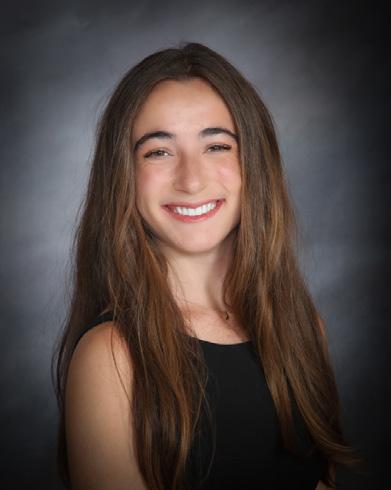
raphy.
“To an extent, [Acosta] likes to do street style photography. He used to not want to do that, but now he does it without my input," Stuve said. “He enjoys taking surprise pictures of people, but it seems like welding is his main career choice. He's very creative, so I hope he pursues that."
With artificial intelligence (AI) looming upon the horizon, numerous jobs across many fields are at risk of being replaced, especially ones in the administrative fields. Acosta believes that the usage of AI, a “disgusting waste of water”, is an important factor to consider when choosing what career path to pursue. It is because of this that Acosta has chosen to pursue welding “until retirement.”
“You're always gonna have the trade if you learn it, so you always have a backbone to rely on if you lose your job,” Acosta said. “If [someone’s] job gets taken by AI, they could always work a trade [because] trades won't be replaced by AI for a long time to come.”
by Issey Kubota
The sound of the bat echoes throughout the field as Keijiro Hattori runs around the bases with a smile on his face. Hattori has been in the game for almost his whole life because of his fathers interest, but when he officially picked up the game at 7 years old, he knew that this was going to be his life. His love for the game kept growing as he learned the joy of the game.
“I think it's the reward that I get after I get a good basehit or make a good play. It just makes me really happy being out there playing with my friends and it's just a rewarding experience that you can’t get anywhere else,” Hattori said.
Hattori has made a lot of friends
throughout his baseball journey, but one of his best friends is senior Sam Schwartz, one of his teammates on the baseball team. Schwartz has learned many things from Hattori throughout his years with him and looks up to him in many aspects.
“I really look up to his work ethic, and I feel, if he’s not happy with something, he’s going to try his hardest to make it perfect all the time,” Schwartz said. “Whenever he makes a mistake in something, whether that is in hitting or fielding, you will always see him the next day at the field with his mom or dad, working on the skill and I really respect that.”
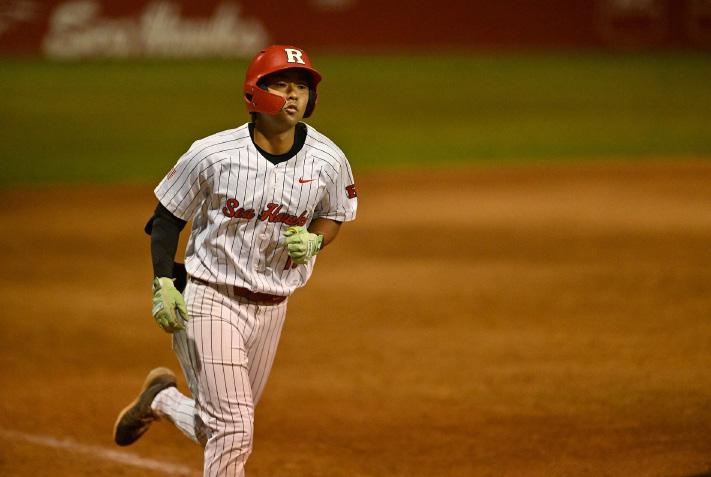
Even though he joined the high school team and joined varsity when he was just a sophomore, he faced challenges early on. Being one of the only sophomores on varsity, he struggled to get playing time. That led to his confidence dropping dramatically, but Hattori believes that this experience helped him grow in baseball and his overall mental strength.
“I felt like there were a lot of chances for me, but the coach wasn’t giving it to me and I couldn’t fig-
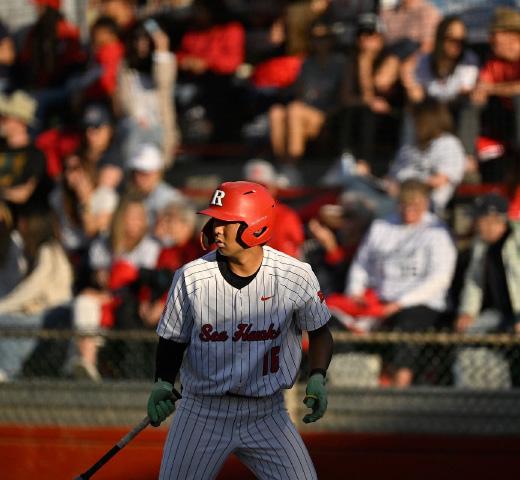
ure out what I was doing wrong. It made me feel down and I lost a lot of confidence,” Hattori said. “My success started to drop a lot but I feel like that was a switch and when you go through a lot [where] you don’t understand what’s kind of wrong, it forces you to find more things to work on for yourself. That makes you stronger and makes you more confident overall moving forward.”
When he was struggling during his sophomore year, Hattori was dropped down to junior varsity in the last three weeks of the season, where he got 3 hits almost every
game. After having the weight off of his shoulders for a short time and having fun with his closest friends, his performance started improving in his junior and senior year.
“You could tell he was mad when he was moved down, but he started to lift off and we saw his true potential,” Schwartz said. “Playing with my best friend and a ton of my friends that were close to him was something very special and fun,” Schwartz said.
Going into California Polytechnic State University, San Luis Obispo to continue his baseball career, Hattori dreams of becoming the best baseball player he can and being someone that everyone knows in the future.
“I feel like if I keep going and never give up, I'm gonna get to a really high place,” Hattori said. “I am excited about how far I can go and achieve my goals and hopefully one day become one of the superstars we see on TV today.”
1. Hattori runs bases.
2. Hattori
by Eliza Prangnell
As Haley Eder’s third grade science teacher flipped the switch, the signal traveled through the circuit Eder helped create and the lightbulb sprang to life. That tiny light sparked Eder’s interest and at that moment, Eder knew that she wanted to be an engineer. Now in her last year of high school, Eder is one of twelve students in the Aerospace Engineering class, a new project-based class that focuses on the flight physics.
“It's really fun to do projects and be hands on. [In one of the projects,] we made a little plane with balsa wood. We used
software to design it and account for different variables. We were trying to make it fly the farthest and I won,” Eder said.
According to Jeremy Chung, the Aerospace Engineering teacher, the projects teach students to combine science with trial and error in order to learn and evolve their original design.
“What I like most about [Eder] as a student is that she takes her time to understand concepts. She’s able to reflect on what she knows and what she doesn't know, and then utilize that in order for her to grow. [The projects we do] are mainly focused on how to make iterations of what they learned from their first attempt, and how to improve it. She’s really good at doing that,” Chung said.
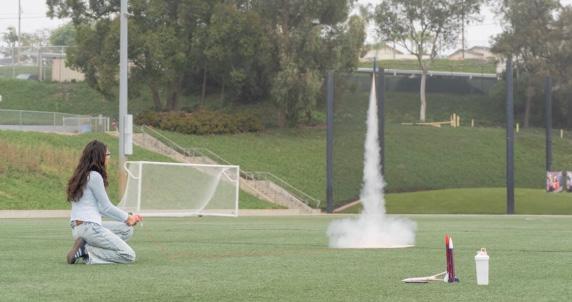
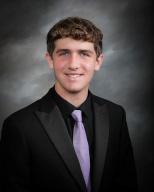
While the class is teaching Eder many important technical skills, Chung knows that it will take more
than that to be successful in this field. He has seen Eder exhibit “excellent collaboration” and time management and seize opportunities to stand out from the crowd.
“When we were doing rocket launches, the mayor came and observed because he did aerospace engineering during his time. One of the biggest things for this career is networking, getting contacts and communicating with others is how you will get a job. Immediately, I saw [Eder] realize [that if you] have the mayor here or someone from Northrop Grumman then you should be able to set yourself apart from others and go talk to them. And she did, so based on that, I can see that she can be really successful,” Chung said.
Another place where Eder has gained valuable skills is Robotics. For the past two and a half years, she has spent 10 hours a week there.
“In the first year, I learned how to use all the machines in our machine shop, I powder coated, I learned about electrical currents and I learned how to solder. Now I mainly work on the business aspect, so when we go to competitions, I’m the one who talks to judges. We can get awards based on our designs and our imagery,
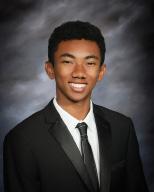
which is something I handle along with finances," Eder said.
Since that first spark, Eder has connected her love of learning and STEM to her passion for all things creative. Eder has always been very creative and finding out that she can apply the skills she learned from Do It Yourself projects and engineering to each other only makes her love the subject more.
“I want to do everything, I want to expand my knowledge in the best way possible. I’ve taught myself so many skills that will be useful in my life. I can do my own nails, I sew and alter my own clothes, I crochet, knit, make lip gloss, I do my own makeup. I've taught myself everything from watching YouTube or learning from failure. One day I woke up and I was like, ‘You know what? I'm interested in theater, so I auditioned,’” Eder said. “[Even though I realized] that it wasn’t my thing, I’m glad I tried out because I don't want to have any regrets. Don't be afraid to step out of your comfort zone and follow all of your pas
sions.”
by Safi Hamilton-Torres
By any traditional metric, Athena Kong’s daily schedule looks like a pressure cooker. She is an engineering-track student, the Vice President of Model United Nations (MUN), a chair in Science Olympiad, a math tutor, a varsity golfer and a working boba barista, all within her senior year. In the hyper-competitive environment of high school, a resume like this usually comes with a familiar stereotype: a chronically exhausted, caffeine-fueled senior running on fumes and stress. However, this is not the case for Kong.
To be able to visualize how Kong controls so many contrasting roles of her extracurricular activities, and hear her reasoning behind it. Golf is a quiet, focused game, a stark contrast to the high-stakes public diplomacy required in MUN. She utilizes the similarities between these two extracurriculars to synthesize the skills she needs to apply to the rest of her day.
“Golf has taught me not to think too much and to focus more on my instincts and what I believe is correct," Kong said. "Whenever I would perform badly in golf, it was because I was getting too mad at the things I was doing wrong and wouldn’t let it go [...] Same with all the other extracurriculars, like Model UN. If you get too much in your head, you’ll do worse. Go in with a sense of confidence.”
Chloe Donovan, MUN President, has
by Julia Bradin
An outside of the box thinker, such as Adrian Berger, might want to take a look at Minerva University when applying for colleges. Minerva University, founded in 2012 by entrepreneur Ben Nelson, emphasizes problem-solving and global leadership over specialized skills for a specific career. Minerva focuses on small classes, with the average graduating class being 235 students and global connection opportunities.
watched Kong's unique crossover in real time from extracurricular to extracurricular. She tells how Kong's structured background makes her an incredibly formidable debater.
"At BruinMUN, one of our first conferences together, I got to see how Athena [addressed] every solution by looking at it from multiple angles. From the logistics of implementing the solution to financing and enforcement, Athena always uses a well-rounded approach to problem-solving," Donovan said.
This multi-angled approach does not just stop at MUN conferences. Behind the scenes, Kong applies the same tactics of discipline and focus to the time management skills of her clubs.
"[Kong] does a lot of work to make sure our club stays productive and meets all our deadlines. Whether it’s making conference sign-up sheets or facilitating communication within the board,
she’s always making sure tasks get done, and everyone is doing their part," Donovan said.
Some students would view a part-time job after the school day is over as a breaking point of an already packed schedule, but Kong treats it as her break from all the academics.
“My job is just pretty on the fly. A job is a lot of mindless work, in my opinion, but I think that's the enjoyable part about it. You can turn your brain off and do something fun,” Kong said.
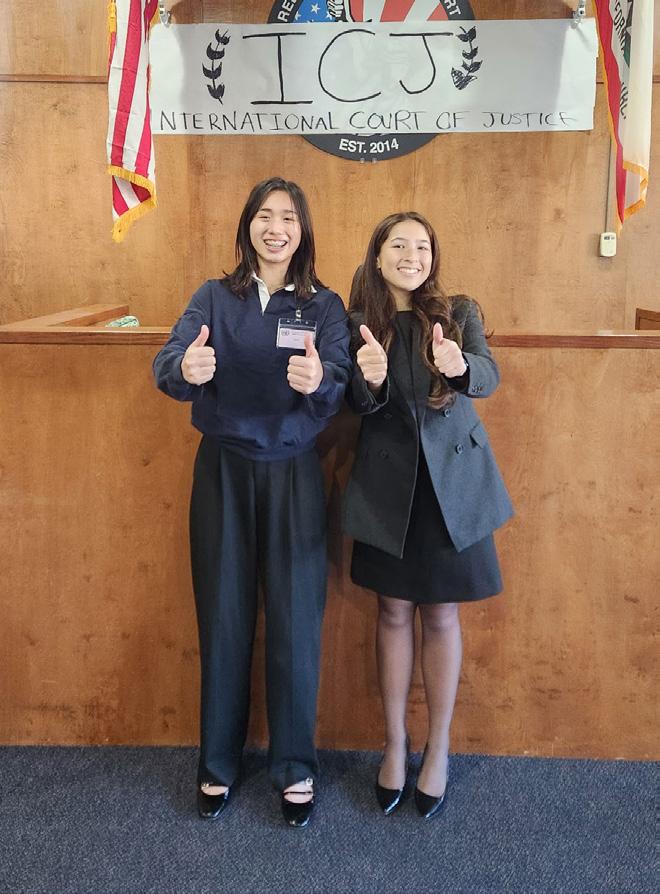
countries, including the United States. Over the four years to get relations in other countries, you get different countries' perspectives and ways they do things,” Berger said.
However, her “mindless work” is not a lack of effort. To her coworker, Obed Diaz, Kong's version of winding down looks like an enviable level of productivity. He notes that while Kong is actually far from drained by her days, she brings an intense focus to every shift.
"She locks in whenever it gets busy. She’s always on task, or she’s always looking for something to do when it’s busy or
not busy. She’s never really running on empty. She always has energy, and she’s always talking, always working,” Diaz said. According to Kong, she genuinely enjoys the demands of her life and completely rejects the idea that she has to sacrifice her teenage years to be successful. She simply relies on a deeply practical, internal “checkbox” that helps her stay organized and manage time.
"Honestly, I don't really feel like I sacrificed that much when I joined these clubs and jobs because I wanted to do it. I just made time for it. In my head, I feel like you always have time for something that you really want to do. I only keep everything that I like, and so in that aspect, I don't think I have sacrificed anything,” Kong said.
As Kong prepares to graduate and take her talents to the world of engineering, her success has little to do with achievement topics.
"I think being comfortable with having a low position, or maybe not having the highest title, and just being happy with where you’re at is a good thing too,” Kong said. “You don't need everything. Focus on what you want for yourself."
“A good onethird of your classes are online. You're at their dorms, but that's where your traditional lectures are, and then twothirds of them are working in person. If you're a pre-med major, I assume you're basically working as a medical scribe or in a Chief Compliant clinic, physically in person, and it's like a big internship. And instead of sticking you in one place for all your four years, you go and study in four different

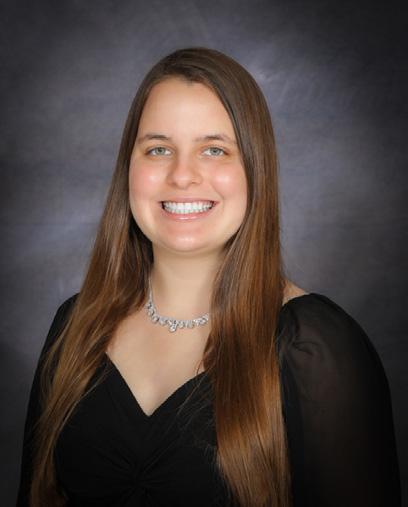
Having an international learning opportunity in college is a unique experience that only a small percentage get to experience, but learning in four different countries is even rarer. For his major in global enterprise, which boils down to a business major, just on a global scale, these international academic endeavors will provide Berger with a wider range of skills.
“My major is global enterprise, and then I'm minoring in scalable growth. Global Enterprise is kind of like Business Administration or a traditional business major, but it's about learning to operate on a global scale. When I asked my dad about it, he basically just said it was about learning how to be a CEO. Lots of things
are based in the U.S. but made in China, but that doesn't make them a global company. But a company like Nvidia ships its chips everywhere, and every computer in the world has them. You're just operating a company on a global scale. So, you're going to have to know the regulations for each country individually because one company can have different regulations in Europe and in the United States,” Berger said.
Berger first discovered Minerva by chance with junior Straton Smith, almost skipping their tent at the fair. The school’s educational approach matched what he was seeking.
“At the college fair, [Berger] and I went around to a couple of different colleges, and the guy at Minerva seemed really interested in [Berger] because he was really enthusiastic about the idea of being able to travel to different places and learn. That definitely interested him because he could travel to all these different places each year and still get a good education. And the guy seemed really interested in the extracurriculars and hard work that [Berger] was involved in. I remember the guy who asked for his phone number, and they kept in contact because it had a pretty low acceptance rate, but he was confident that he could make it in because of all of his extracurriculars,” Smith
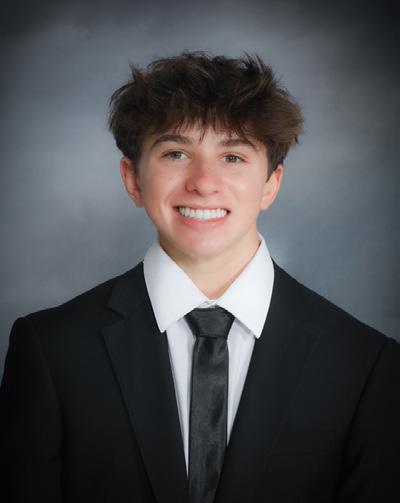
said.
Of course, no matter how well-suited the school seems to the person, trying something new and not ‘mainstream’ is difficult and scary. Going to a school like Minerva will not be for everyone, but it can be a very unique experience that benefits specific people.
“It's very scary because I'm pretty sure there's only 60 kids in the freshman class. It’s a very tightly-knit community. It's going to be really different, and I mean, college is a big change. I'm nervous about that, let alone going to college, and it being such a change from how my classes are here. And just being away from home,” Berger said.
Even with the big changes happening, Minerva is a unique education model that has been beneficial to many.
“[Berger is] always kind, and he cares about other people. He's always there to help me out, drive me around or whatever. He'll actually listen to you in conversations, so I feel like you could also tell that he really enjoys exploring. He plays water polo, did some swimming for a little bit, and he loves to go snorkeling,” Smith said. “I think [his interest in exploration] also fits where he's going to college, because he is in a different location each year.”
For Kathleen Pham, being named co-valedictorian was never simply about grades or class rankings. Behind the achievement was years of quiet determination, long nights of studying, community involvement and a growing confidence that transformed her throughout high school.
When Pham first learned she ranked near the top of her graduating class, she described the news as unexpected, she knew she was a smart student but never imagined being a contender for valedictorian.
“It was kind of surprising to me,” Pham said. “A lot of people in my class are very driven and take a lot of AP classes. The most surprising part was that Katelyn and I both had the same GPA even though we didn’t have the exact same schedules. It was just a cool and defining moment in both our friendship and high school careers that we were able to accomplish it together.”
Much of Phams academic motivation came from her parents, who immigrated to the United States from Vietnam and emphasized the importance of education from an early age.
“When I was little, my parents always talked about the importance of education. As I got older, they became more hands-off because they saw that I was self-driven,” Pham said. “I always wanted to put my best effort forward. I didn’t want to look back and think, ‘I wish I studied more’ or ‘I wish I put in more effort.’”
While academics played a major role in her high school career, one of the most impactful experiences Pham had came from working as a teacher’s assistant and tutor. Last year, she served as a teacher’s assistant (TA) for teacher Casey Waddell’s Algebra 1 class, helping students understand difficult math concepts.
“When she [Pham] asked if she could be a TA in my class, I was almost giddy about it because she was such a great student,” Waddell said. “Having her in the classroom felt like having a partner or co-teacher.”
Outside the classroom, Pham dedicated much of her time to tutoring and working with the Surfrider Foundation, where she currently serves as vice president and assistant lab director. Through the organization, she helps conduct water quality testing at local beaches while also teaching younger volunteers science and laboratory
by Landen Gould by Aashka Bhuptani by Adelyne Cai
Earning the title of Salutatorian is no mean feat, and Balakumar Muttulingam’s participation in rigorous AP classes and an esteemed in-
skills.
“We publish results for local governments to see if beaches are contaminated with bacteria,” Pham said. “Meeting so many different people through Surfrider and tutoring helped me realize how important community is."
Next year, Pham will attend University of California, Los Angeles, where she plans to major in bioengineering. She hopes to combine her interests in math, science and healthcare by designing medical devices and exploring ways engineering can improve people’s lives while using the lessons she learned over her aca-
There was no specific moment when Katelyn Kang decided that she wanted the distinction of valedictorian. Her high school years were shaped by persistence and curiosity. However, when she was surprised by the title of Mantlebearer in her junior year, she realized that graduating at the top of her class was more possible than she had originally thought.
“Mantlebearer gets awarded to the junior with the highest GPA. Last year, when I was a junior, I participated in the graduation for the class of 2025. I accepted the mantle from the previous year's mantlebearer: Tristan Lu,” Kang said.

“Being mantlebearer is more of a symbolic thing about academic achievement, but that’s when [the prospect of graduating as
valedictorian] really became real for me.”
According to Kang, she was already passionate about science before she entered high school. However, that evolved in her sophomore year, when she took both Advanced Placement (AP) European History and AP Art History.
“Those two classes in conjunction with each other just completely changed the way I think. They helped me understand that art and history, along with the context of what came before it, shape people across eras and societies. Going into junior year, I was not only equipped with skills in science and math, but also the humanities that I was beginning to take a larger interest in,” Kang said.
As president of the AP European History tutoring club, Kang still dedicates significant time to the subject. She was able to utilize her interest in AP European History throughout the rest of high school.
“My approach to my classes was learning as much as I could. I knew that I was always going to worry about the tests, the assignments, and all the things that contribute to my grade. But when I took a step back and looked at the bigger picture of what I was studying, I realized that something was interesting in almost everything,” Kang said.
Barbara Bein, who teaches AP U.S. History, describes Kang’s presence in the classroom as extremely rewarding. According to Bein, despite her early academic success in the class, Kang has shown herself to be compassionate, gracious, reliable and overall outstanding.
“She has an appreciation for nuance and complexity. She always just wanted to learn more from other people, and she didn’t act as if she already knew all the information on a certain topic,” Bein said.
Bein was impressed by Kang’s choice to major in gerontology, the study of aging. According to Bein, not only is it unique, but it is also extremely necessary, and Kang will be able to use the skills she gained throughout her high school career to advance herself within the field.
“The academic exploration I went through during my sophomore year helped me solidify what I wanted to do in the future,” Kang said. “I’m going into gerontology to not only learn about the biological aspects of aging, but also learn about the social and anthropological aspects of it.”
school, while his academic integrity fueled his drive to earn high grades and extra credit.
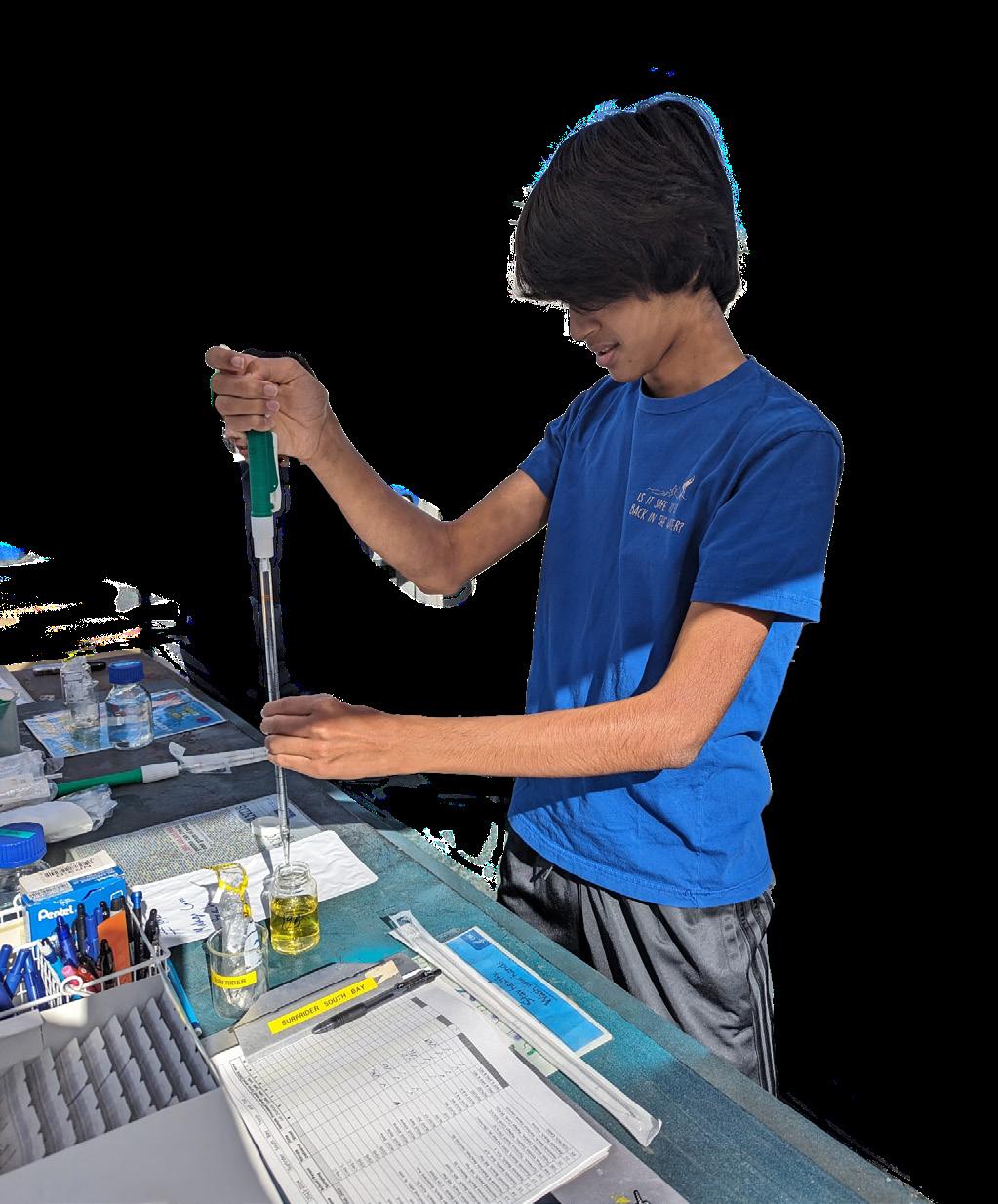
“He would push himself to do as much as possible, as well as possible, even when it was not completely necessary,” Muttulingam's mom, Amanda Muttulingam, said. “I was telling him, if you get a 90, a 92%, or a 93%, it's still an A. You don't actually have to get a 99 or 100 or extra credit, it's still the same A on your report card. And he said, ‘I understand that, but if I can do better, I want to do better.’”
This motivation to earn high grades grew very early in his high school career, when he took the Advanced Placement (AP) Computer Science Principles elective in his freshman year. His early experience with AP classes set up his mentality for balance and efficient studying for his classes.
“I always enjoy taking more difficult classes if I could, so I took as many APs as I could, taking AP Computer Science Principles freshman year, and starting off early always helped me get in that mindset for a schedule of AP’s and balancing everything,” Muttulingam
said.
During his high school years, the sophomore course AP European History (AP Euro) has been Muttulingam’s most demanding, yet memorable class. From dressing up for a French mock trial, to studying at 3 a.m., the class has left Muttulingam with many memories.
“I met a ton of friends in AP Euro, and [even though] I'm going into engineering, it was still really fun learning about history and social studies. And that's partially why I also took AP Art History this year. Just to kind of continue with that because art in Europe is really cool to learn about. And Mr. Sklarenko was such a supportive and nice teacher, [and he was] able to keep everyone on schedule to learn all the information,” Muttulingam said.
One major milestone in Muttulingam’s journey occurred last summer, when he earned an internship at Boeing. which he and his mom both consider a key achievement in his progression to become an engineer, a career he has been interested in ever since he was a little kid amazed by rockets.
“My dad's a mechanical engineer, and when I was growing up, he worked at SpaceX. So he was able to bring me into his work, and being exposed to that at a young age definitely grew my interest. And last
summer I did a Boeing internship. It was really cool, I was able to go in there and actually see what the engineers are doing,” Muttulingam said.
As Muttulingam turns the page, he will begin a new academic chapter at the University of California Los Angeles, and earn a major in electrical engineering.“I think [his choice] was a culmination of everything that he's been working towards, from when he was little, playing with Legos and then going to SpaceX, and then doing all of these AP courses and being able to get the Boeing internship kind of sealed the deal,” Amanda Muttulingam said.
Muttulingam’s family is incredibly proud of his hard work and continuous effort paying off with the honor of salutatorian to end high school.
“For him to work as hard as he has, and then to have that little bit of recognition, is really sweet for him,” Amanda Muttulingam said. “I think it's nice that he gets to have that for himself, and it's like a little hug, you know, a little pat on the back, and I'm really excited that he gets to share that with [valedictorians] Katelyn and Kathleen.”