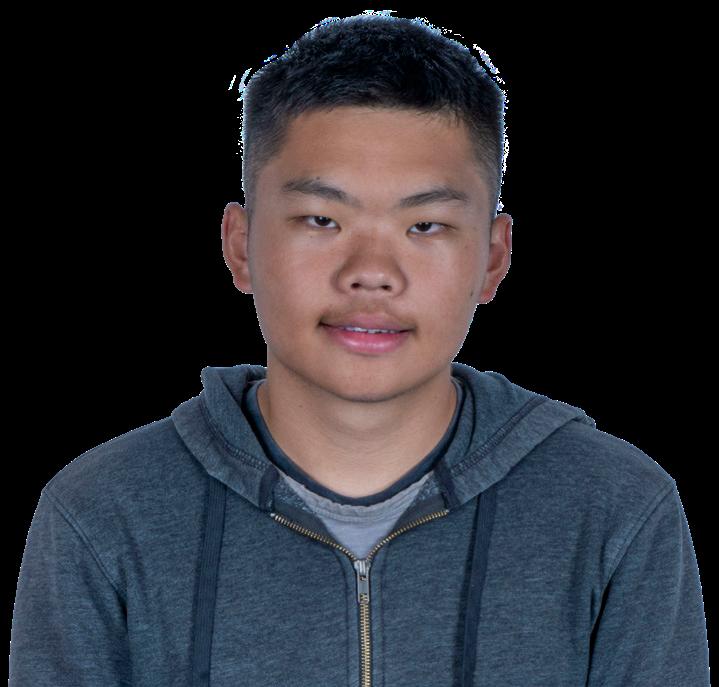
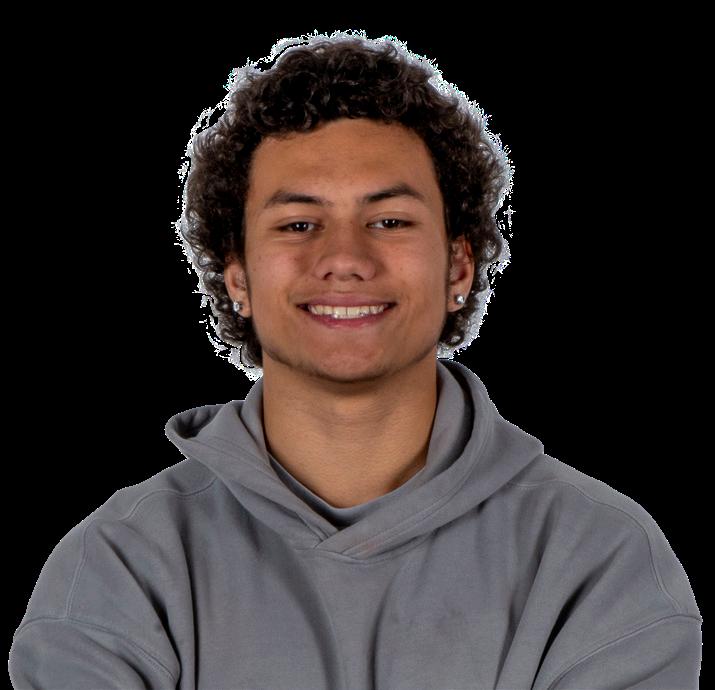
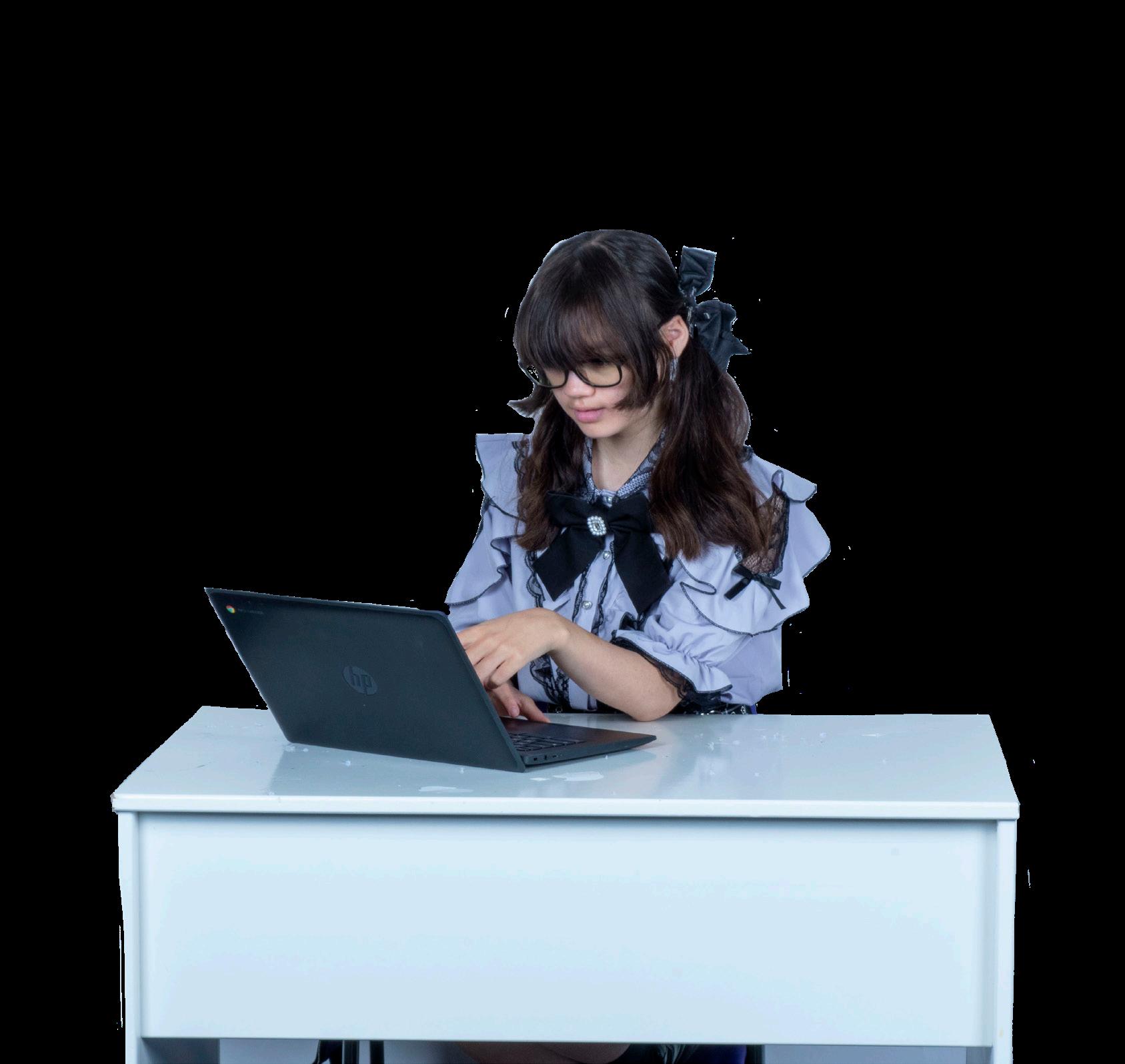
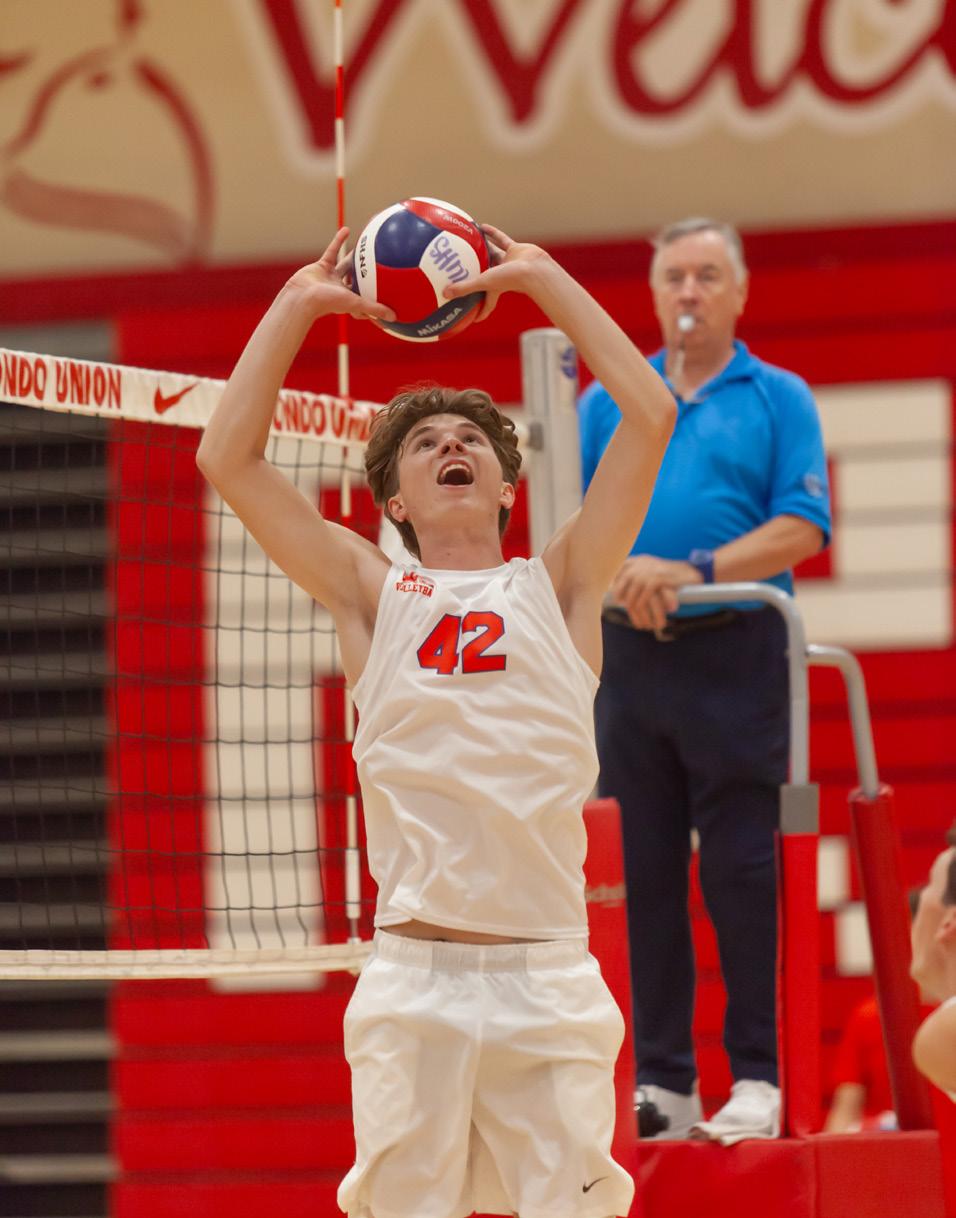
Benjamin Arfin runs a barbering business, cutting hair for competitive prices and gaining experience in the field
Despite stellar performances, cinematography and styling, "The Drama" dissappoints in its lack of depth 13 entertainment
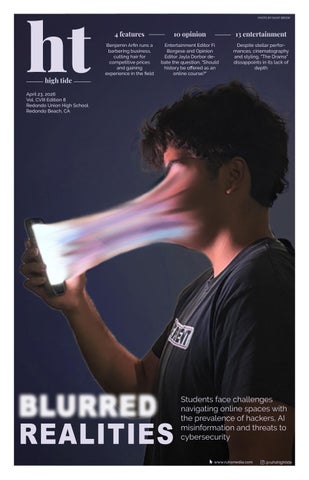
Students face challenges navigating online spaces with the prevalence of hackers, AI misinformation and threats to cybersecurity Entertainment Editor Fi Borgese and Opinion Editor Jayla Dorbor debate the question, "Should history be offered as an online course?"
news 2
Seasonal send-off
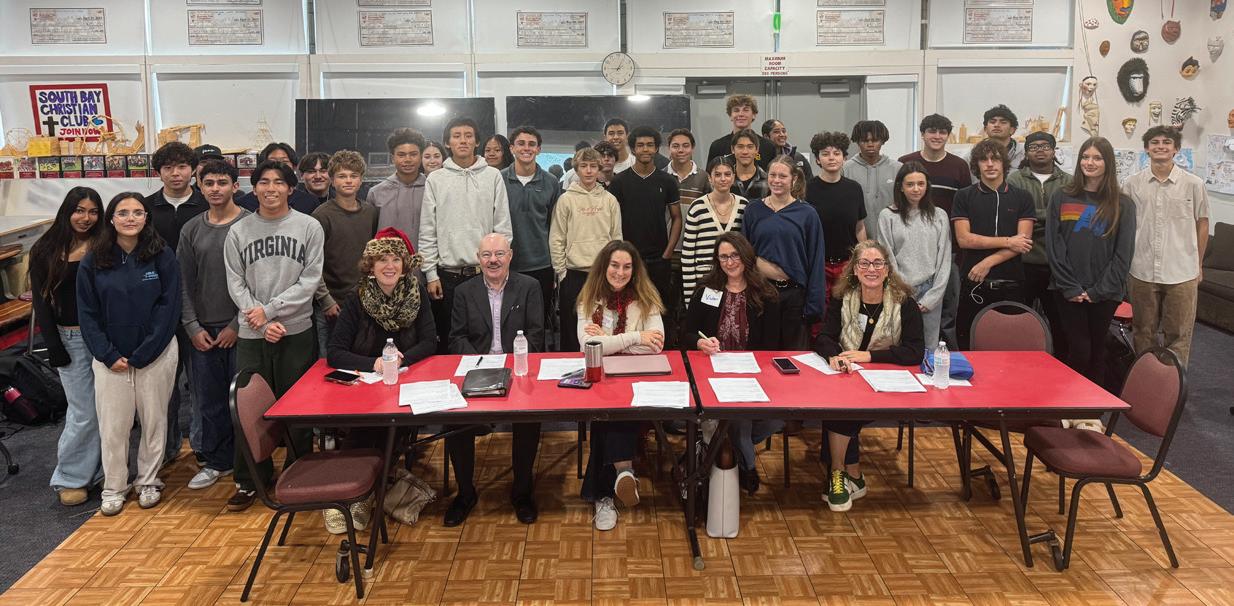
The 44th annual Springfest brought the community together with events, activities and performances
by Connor Brodeur
This past weekend, the North Redondo Beach Business Association (NRBBA) put on the 44th annual Springfest at the Redondo Beach Performing Arts Center. Every year since 1982, the NRBBA has put on this signature event featuring live performances, carnival rides, games and several local businesses from the South Bay.
“It started from a group of citizens who wanted to do something great for the business community,” NRBBA Vice President Robin Garfield said. “They started Springfest shortly after as a way to celebrate [that] community.”
Since its inception, Springfest has featured carnival rides and some performances, but the focus on community-based attractions began recently. Within the last three years Springfest has begun to offer more events that integrate community members, such as the inclusion of local vendors and teenage performers, according to Garfield.
“This year, for the first time, I involved
the [RUHS] Business and Entrepreneurship class, which was really, really exciting to do,” Garfield said. “I think that the high school students are the future of our community, and [getting] them involved in learning about business is really exciting.”
During the first semester of the school year, students brainstormed ideas relating to how they could promote the event with a focus on a general increase in attendance and revenue.
“In the past Thursday night was what we call the soft launch of the event,” Garfield said. “[Thursday nights] aren’t really publicized well.”
At the beginning of the second semester, NRBBA judges selected 18 marketing ideas for the class to put into effect. Following this, business students organized into multiple groups to work on their respective advertisement methods such as hanging up posters and raffling tickets.
“We [have] kids planting seeds for Earth Day.” Garfield said. “A lot of the things that [the business class] implemented aren't necessarily money makers, they make the event more interesting and attractive to people, and the more fun people have, the more they'll come
back.”
The opportunity to work on a real-world marketing project was a “great help” in understanding the business world, according to freshman Marios Richmond, who was assigned to recruit RUHS clubs to attend Springfest with their own booths.
“You need to really know how to get yourself out there and know how to talk to a lot more people,” Richmond said. “You really gotta be the one to step up and actually go out [...] because most of [the clubs] don't actually respond back after you [ask] the first time.”
According to Richmond, clubs had the opportunity to earn money by selling club products at the event, as well as individual club members receiving volunteer hours for attending. Freshman Marine Schott, another business student, expressed a changed understanding of how specific demographics are targeted in marketing.
“It depends on what you're doing,” Schott said. “Beach Life is a concert for people who like music, so probably teens, and [people] like that. If you're working on [the] beer and wine garden, you're probably focusing more on 21 and above, the people that can drink.”
Garfield has said the investment in the RUHS business class has been fruitful for NRBBA, but it has also been important for students like Richmond in advancing their business careers.
“Springfest has definitely shown that I want to help out more, Richmond said. "[Specifically] marketing for a business more than anything else."
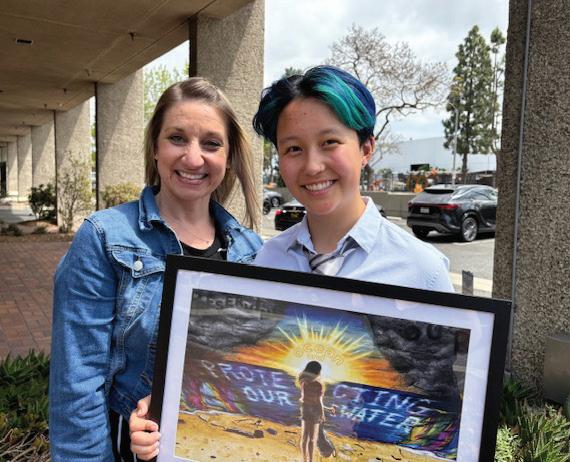
The Pageant of the Arts provided students with a creative, competitive outlet
by Oliver Cody
Every year, Redondo students are given the opportunity to do just that through the Pageant of the Arts, an annual arts competition in which students submit art across five categories, ranging from visual arts such as paintings and drawings to vocal and instrumental music. The winner of the contest is awarded $500, with second and third place winning $250 and $125, respectively. The winner of last year’s visual art category, junior Eli Kano, returned this year and placed second out of 10 submissions.
“I have really enjoyed art since I could first draw,” Kano said. “[The contest] seemed like a really good opportunity to look good for colleges, and the money is a really nice bonus. If I were to win, it would make me feel good to have my art recognized.”
The Rotary District organized this year's contest, and the theme each year is ‘Doing Good in the World,' the guiding principle of the Rotary Club. Beyond adhering to the general ethos of this statement, students are free to interpret the theme in any way they want, according to art teacher Michelle Andrade, who is in charge of encouraging students to submit art and then later sending the finished pieces, whether in the form of physical drawings or videos, to the Rotary Club.
for us.”
While not many students submit art to the contest, Kano praises the contest’s atmosphere and the shared support and sportsmanship between students who compete.
“Everybody that enters is always very gracious,” Kano said. “Even if you don’t win and somebody else does, everybody’s very happy for them.”
According to Andrade, even winning the
against anybody else,” Andrade said. “The first place winners [from each contest] then go on to the district contest, where they can win up to $1,000.”
Andrade encourages students passionate about art to submit to the contest, whether simply for the chance to win some money or as a means of expressing themselves through their work and sharing it with the world.
“If you don’t submit, you have no chance of winning, but if you submit, you do have a chance, and it looks good on resumes and college applications, especially if you’re a winner,” Andrade said.
“I matte [the art], label it, [and] get the written forms filled out by the students,” Andrade said. “I am in contact with the person in charge of the Rotary Club, [so] then they collect it for us and bring it back
RUHS competition is not the end of some students’ time participating in the Pageant of the Arts. After the schoolwide contest is over, winning students are additionally rewarded with opportunities to win even more money in larger competitions.
“There’s two different categories for winning. The first category is art students from just RUHS, and we don’t compete
high tide staff
editors-in-chief
Daniella Gross
Claudia Turner
Ava Anzivino
Priya Ramcharan
digital director
Valentina Masoni
news editors
Leyla Evenson
Carly Jacecko
features editors
Aashka Bhuptani
Sanaya Bhatt
opinion editors
Payton Rothluebbers
Jayla Dorbor
entertainment editors
Fi Borgese
Emery Min
sports editors
Sophie Rebbeck
Sam Schwartz
writing & copy editors
Emery Min
Deeksha Prasad
Samantha Kim
online editors
Hayden McMahon
Isabella Nguyen
Kayli Mai
Kate Lanzdorf
Allison Sutton
Francisco Villegas
Marlena Lipan
Kate Brucia
Kaitlyn Chang
adviser
Kerri Eastham
staff writers
Violette Alshin
Declan Williams
Coco Yamane
Willamena Hod-
son
Amelie Kircher
Ryan Chamides
Martina Parra-
Malandrino
Mahro Siddiqi
Reya Conte
Landen Gould
Madelyn Bain
Brooklyn Hesse
Katelyn Min
Adelyne Cai
Stella Sato
Gala DeSanto
While Kano admits that they mainly entered last year’s contest for a chance at the cash prize, they advise others to try using the Pageant of the Arts as a way of showing their work to others, no matter the outcome of the contest.
“Even if you don’t win, the experience is really good, and being able to submit is a really good step to put your art out there. It can be super nerve-wracking to have the confidence to think [that] maybe you can enter this contest and even have a shot at winning,” Kano said. “Having the bravery to even enter in the first place is a huge step in itself.”
Oliver Cody
Rowyn Salazar
Andrew Diette
Sophie Farias
Mishka Shibata
Connor Brodeur
Issey Kubota
Kacie Brincat
Ayla Rodgers
Safi Hamilton-Torres
Haruto Kuroda
Eliza Prangnell
Julia Bradin
Baran Taghvaei
Francesca Ma-
soni
Sophia Riddle
photographers
Robert Packard
Grace Tayag
Kevin Phung
Finn Williams
Amanda Harrison
Lorelai Land
Ignacio Perez
Martina Parra- Malandrino
Sayat Brook
illustrators
Claudia Turner 1.
Collecting for a cause
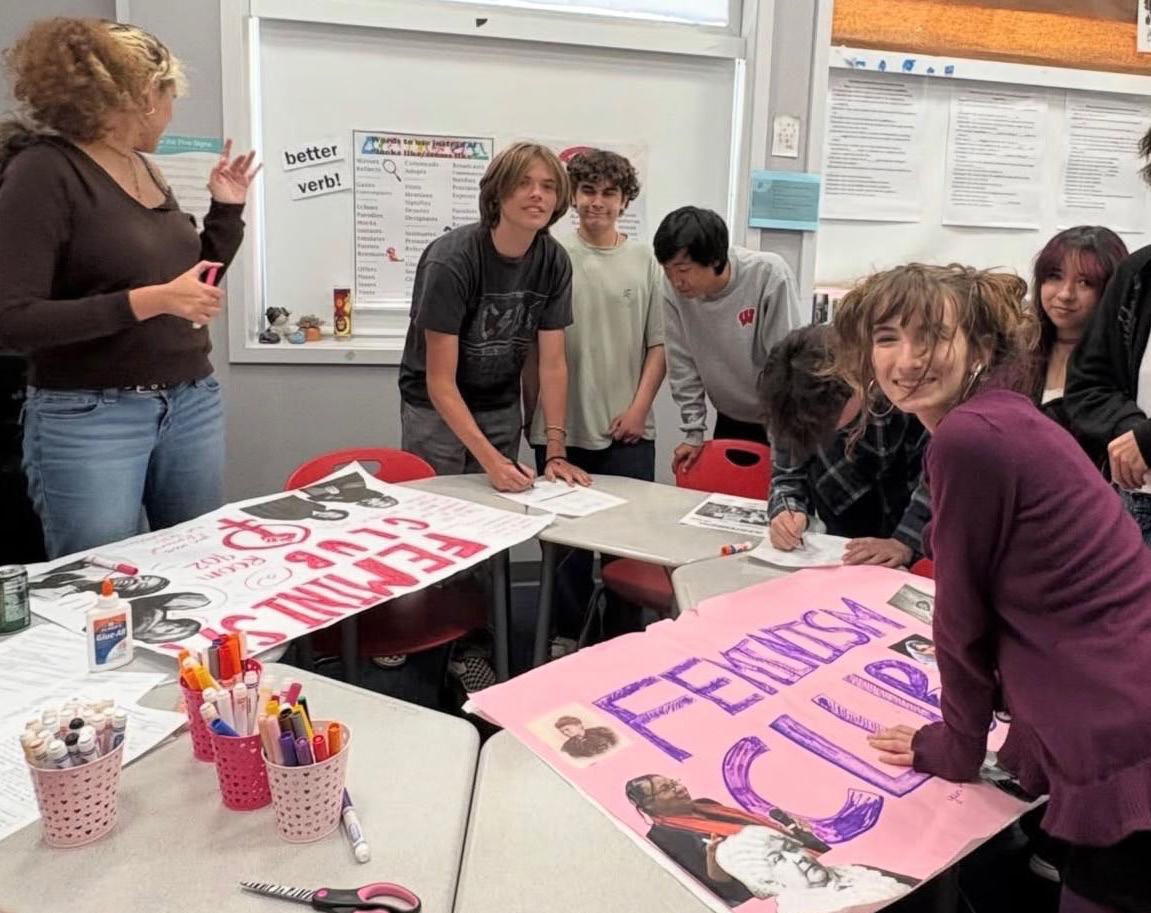
Feminism Club helped facilitate a feminine hygiene product drive
by Mahro Siddiqi
“One in three adults in the United States struggles to afford menstrual products,” according to a 2019 UN Women study, with “64% of low-income women reporting they could not afford menstrual products at least once in the past year." The increased cost of feminine hygiene products raises many ethical issues for people, including the members of the Feminism Club. During International Women’s Week, the club wanted to combat this problem and took initiative to help provide and support women in need. Vice President Ella Rasser and Public Relations Coordinator Sophia Perez helped organize and run a feminine products drive to aid
those in need.
“I reached out to a collection of different clubs, Latino and Spanish Heritage Club, Sociedad Honoraria Hispánica Club, Filipino Culture Club, and then the Feminism Club,” Perez said.
Clubs and classrooms helped advertise the drive and the club by handing out flyers and making posters during the upcoming and continuous "Women's Week” in order to recognize Women’s history month. The club also used promotion methods to engage students in their club during the week.
“Women's week is [about] recognizing Women's History Month since we are the Feminism Club. We discussed a bunch
of different important women, all of them focusing on their jobs and careers,” Perez said.
The informational presentation included discussions about women including but not limited to Mary Wollstonecraft, Malala Yousafzai, Ida B. Wells, Sonia Sotomayor and Ruby Bridges.
“[The underlying theme is to] celebrate women [during this week] and advertise the club as well. Informing people that these were very impactful women, and still we have many very impactful women today. Overall, just maybe even empowering women to want to have a voice and share with others,” Rasser said.
As of time of publication, the hygiene drive is still collecting donations of tampons and pads, with all donations being given to the Women Living With a Purpose Foundation.
“The organization helps women in need that are displaced. Any way to help those that can't afford or have access to those feminine products; because, it's very important to have them” Rasser said.
In order to continue to commemorate women during this month, the club has decided to bring in Congresswoman Nanette Barragan, a U.S. House of Representative and the first Latina ever to represent California’s 44th Congressional district.
“We're just looking forward to doing more things like the drive. We're trying to arrange a date for her to come and speak, which we will open up to anyone that would want to come with the projected date for her to come talk, April 24,” Perez said.
In addition to supporting women’s week, promotion of the club, offering cookies to people stopping by their table and encouraging collaboration with oth-
“
Lack of access to menstrual hygiene products meant that 36 percent of the surveyed women who reported being employed part or fulltime had missed one or more days of work per month due to their periods.
SAINT LOUIS UNIVERSITY
er clubs on campus, the Feminism Club’s efforts connected with other clubs such as the Sociedad Honoraria Hispánica Club on recognizing farm workers within the school board. While the Feminism Club organized the drive, it also aligned with other student led clubs focused on social justice and awareness.
“It’s independent from the Feminism Club, but since this was a collaborative effort, we included it as part of Women’s Week,” Rasser said. The Feminism Club has had a series of events combining advocacy and education into women’s history. From donation drives to combined campus appeals, the club’s efforts highlight a continued commitment in raising awareness and supporting women in need beyond a simple single week of recognition.
“At the end of the day, women worldwide are always going to experience adversity, since they’re often viewed as second class citizens,” Rasser explains. “This club will work as an outlet to explain the issues that women are placed under, and we will continue to work on outreach, events, and informational meetings to do what we can.”
Around Redondo
Students discuss privacy and protecting themselves online
by Reya Conte
“When it comes to relationships with friends, parents, a partner or something, I'm more private, especially when it comes to things like classes or family events. But if it's what I'm doing day-to-day, like maybe what I'm eating or if I'm working out, where I am, I feel like I'll share that a lot more. If I'm visiting somewhere, I'll only post pictures maybe a couple days later, once I'm already away.”
-Leah Sutton, freshman
“Generally, I try to avoid actually interacting with people [online] because sometimes interacting with these people can lead to threats, and so I generally limit myself to just observing conversations rather than actually engaging in them. I also avoid using my real name, or my address, or birthday to avoid things like blackmail, and just in case security breaches happen."
-Yusuke Hikihara, sophomore
"I like to be pretty private. I don't love the idea of a college potentially seeing things that I post, and other people from my school knowing things about me when I might not like them, or might not know them myself. I keep my account private on most social media accounts, and I don't reach out to people that look suspicious. I don't accept suspicious messages."
-Tinsley Arizmendez, junior
“I protect myself by not interacting with people I don't know because it's just safer that way. I don't really keep my account private, but if people follow me, I'll check their account to see if I have mutuals with them. If I don't have any mutuals, then I probably won't talk to them, but if I have mutuals, then maybe I'll talk to them if they talk to me."
-Aden Falanai, senior
PHOTO COURTESY OF KAYLI MAI
features 4
SNIP, SNIP, SNIP
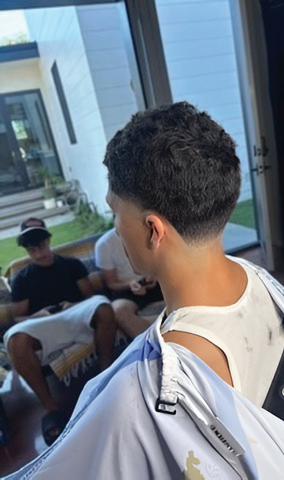
Benjamin Arfin runs a barber business, cutting hair for lower prices and gaining experience in the field that he may pursue professionally
by Madelyn Bain
The familiar, comforting hum of electric clippers buzzes in junior Benjamin Arfin’s ears as he cuts the hair of one of his clients. Ever since he began his journey to master the art of barbering around three years ago, his goal has been to create an accessible, community-focused business to hone his skills and serve his peers.
“I have a little setup in my garage, and [my clients] come to me, but I am looking into being able to go to people and cut them,” Arfin said. “I got all my tools through Amazon or local barber suppliers, and I’m fortunate enough that my parents allowed me to use a section of the garage.”
From this garage setup, Arfin is building a business one haircut at a time. His social media handle, @bablendz, features some of his most recent cuts and offers a behind-the-scenes look at his daily life as a 17-year-old barber. He began with very few supplies and zero experience, but was able to work towards kickstarting his business by creating a workspace for him to practice, experiment and seat clients while he worked on their hair.
“A couple of years ago, I was on TikTok, and I saw a few tutorial videos. It interested me,” Arfin said. “I went to my barber at the time, and I basically asked him, ‘How would I go about getting started?’ I watched a bunch of tutorials, and then I started cutting my friends.”
At first, he cut his friends’ hair for free to develop his skills and gain more experience before creating a real business. After six months, Arfin started charging $5 per cut,
and then increased his base rate in increments of $5-$10 as months passed and his skills advanced.
Junior Bailey Hand, a friend and one of Arfin’s first clients, emphasized the accessibility of the haircuts.
“The results are amazing every time I go to him,” Hand said. “Also, the price is pretty low. Twenty bucks is the same or a little cheaper than traditional haircut places. So that's good for high school students."
In addition to its affordability, Hand valued the personalized touch of a barber who was building his business on trust, consistency and making sure his clients are comfortable at all times.
“His environment surprised me because it wasn't a traditional barbershop where it's a lot of chairs and you sometimes don't
get [the same] person; the environment is very welcoming,” Hand said. “I like it a lot more because I feel like I have a connection to my barber [more] than traditional barbershops.”
Even if a business finds success, many entrepreneurs face hurdles, and Arfin was no stranger to this — he had to overcome several personal and financial challenges to advance his business and grow as both a barber and an individual.
“I learned how to be smarter with my money because anytime I got any payment, I would go straight to spending it. But throughout the process, I've learned where to put my money and how to use it,” Arfin said. “[How much I charge] is dependent on my skill and how many clients I have. If I don't
have as many, I might lower my prices just because I want to cut more.”
Balancing school with a growing client base, Arfin plans to continue his business and potentially transform it into a sustainable career after high school by mastering his craft and investing in more high-quality tools.
“It's both a hobby and my job, but I'm planning on doing it at least until college. I feel like until I have to get a full-time career, I should [continue] it, unless it really takes off, and then I would try to take the next step,” Arfin said. “Currently, I would like to keep getting better and keep building connections with more people, to be able to do it more.”
Arfin reiterates that starting a business from scratch takes a lot of work, but building one’s network rigorously and following through are essential to success. By practicing for months, he was able to get his business off the ground and create a reliable platform to cut hair consistently, while seeing significant improvement in his skills.
“It's gonna be extremely difficult at the start, and it might not be very profitable, but for me, at least through my experience, each day, each week, if I just keep working at it, I see improvement. I see more money,” Arfin said. “I see the overall business have a better name.”
Mateo Salazar participates in high-stakes racing competitions
by Francesca Masoni
Pushing his car down the track, junior Mateo Salazar speeds at over 60 miles an hour. He’s never felt so alive. Salazar does motorsports, more specifically, competitive advanced go-karting. He participates in about three races each month and recently had one on Mar. 16. Salazar’s results can vary between every race, but because of his experience in the sport, he usually gets on the podiums, which are the top three finishers.
“Right now, I race at places where they provide the cars, so it's a cheap way to start [racing]. A lot of people get their starts there in rental carting, and from there, you build your skills and speed, move on to eventually get your own car and compete in higher competitions,” Salazar said.
Salazar does not yet have his own car as he races at rental facilities, such as K1 speed and K1 circuit. At rental facilities, there is a variety in the quality of carts, which can impact racing and results. The athletes do not get to choose what cart they receive but make do with what they get, according to Salazar. Rental carting is a starting point for many racers and helps with learning fundamentals.
“The nature of rental carting usually has some problems. In the qualifying that chooses where you start for the race, I got a bad cart, so I started really low. I just had to recover as best I could. I finished fourth out of twelve,” Salazar said.
Even though he is a junior now, and has begun racing more seriously, cars have fascinated him since early childhood. Because of his interest, he decided to pursue competitive carting about two years ago, after wanting to do it for a long time.
“When I was a kid is when I really started being into cars, and I started to watch some grids. Especially as of recently I've been
watching and racing, more and more, and I really like it. Overall, I’ve always loved cars and racing. Racing has always been like a fun sport to me, and it’s also just something people could gain real skills in,” Salazar said.
While Salazar trains hard and dedicates time into his sport, he has a flexible schedule, which allows him to have free time outside of racing while still getting better at it. Because he does rental carting, he can go to thetrack whenever he has free time, as there are no harsh or required practice times.
“I mostly just go when I'm available. I have races normally twice or maybe three times in a month so usually I practice the weekend of the race, the weekend before, or even the day before,” Salazar said. “Essentially, I go whenever I'm available, and at practice I just run a lot of laps to try and see where I could go faster." While being competitive and striving to win, Salazar
maintains many friendships at the racing circuit and is always there for others. His fellow racer and friend, sophomore Kero
Habib describes Salazar as a kind, helpful person and shares that he is glad he has a friendship with Salazar, who is there for him both outside and inside of the sport.
“My friendship with him is not the traditional, spilling secrets kind, but it is still a great one. We don’t know everything about each other, but we still get along great. It’s the type of friendship where we can help
each other overcome challenges, especially when racing,” Habib said.
Mateo’s next step after rental carting will be to reach the World Endurance Championship, which is a series of races done all over the world. To reach this championship, he has to finish top three in many races, in order to then get scouted by an official team. Many of his friends, such as Habib, who know him well, believe that he will achieve his goal soon because of his speed and skill.
“He has a lot of potential because he's really fast. We use rentals, so you don't know what cart you're getting, but he always manages to make it work. I've seen him with the best cart, and I've seen him with the worst cart, and he does better than most people either way,” Habib said.
Salazar is committed to fulfilling his goal of making it to the World Endurance Championship, and he works hard to do the things he wishes to do. Salazar mentions that because he wants to reach this event, he practices more often and more intensely, striving to get his talent to its maximum potential.
“I just keep trying, keep pushing and keep getting better every race, just to build more skills,” Salazar said. “It's an expensive sport, but I’m going to find ways to make it work and do my best to move up. That's how I will achieve my goals and get to higher levels faster.”
1. Haircut done by Arfin.
English opportunities
Ziva Chabot teaches English to students living in rural Taiwan
by Amelie Kircher
Every Sunday, sophomore Ziva Chabot spends her evenings teaching English from her computer, with a handful of eager Taiwanese students on the other end of their own screens, thousands of miles away. With the help of Chabot and other tutors in her program, these Chinese speaking elementary school students have the opportunity to refine their English skills and have fun while doing so.
“We do a mix of phonics, grammar, and vocabulary of different words,” Chabot said. “We practice their reading, writing, and listening and talking.”
evenings Chabot now spends teaching gives these children the opportunity to learn English with someone who has grown up in the United States and understands natural English dialogue.
learn English with someone who can see learning curves from both a Chinese and immersion,” Chabot said. That sense of fulfillment also shapes
AMBER LEE “
Chabot has been teaching through MGO, or “My Giraffe Organization” since her freshman year of high school. MGO is a non-profit organization created to provide educational resources to underprivileged students, while also offering volunteering opportunities to young adults like Chabot. The students she teaches are from a rural area of Taiwan where educational resources are limited. Chabot’s cousin, Amber Lee, offered her a spot in the program, which Chabot "happily accepted." The Sunday
“[Amber] told me about it. I thought, ‘that's actually really interesting. I want to teach English, that sounds fun," Chabot said.
After the first lesson, Ziva was really excited to teach. She has built a connection with her students, and they get along well and have improved a lot. It brings her joy to see them suceed."
After creating a resume and sending it to MGO founder Yale Huang, Chabot was accepted into the pro gram and began teaching alongside her cousin in their online video calls. After only a couple of classes, Chabot was able to begin teach ing on her own. With each Sunday class that went by, Chabot also became more familiar with the group of students, as well as the stu dent she teaches individual ly. Lee, who watched Chabot during her first weeks, can see how much she enjoys teaching.
“After the first lesson, Ziva was really excited to teach. She has built a connection with her students, and they get along well and have improved a lot. It brings her joy to see them suceed." Lee said.
Lee and Chabot are both native Chinese speakers, so Lee has noticed that her cous in’s bilinguality gives her students the best chance at a well-rounded opportunity to
Hannah Cachola participated in the musical "In the Heights" as part of Musical
Theatre West
by Stella Sato
In seventh grade, junior Hannah Cachola was exposed to the world of dancing for the first time. Since then, when she moved from the Bay Area to Southern California, she has been closely involved with theater and performing.
“When I moved, there was a larger culture of performing arts, and it seemed like something fun. I tried a little bit of it when I was younger, but then I really got into it more heavily when I moved here,” Cachola said
Cachola describes herself as always having been a “very active person who is always up and moving.” Because of this, dancing was a perfect activity for her to spend time doing. In school, Cachola often participates in the shows or musicals, and currently, her involvement in theatre extends outside of school with “Broadway level production company,” Musical Theatre West’s production of “In the Heights,” according to Cachola. Cachola and her close friend sophomore Noah Peralta met in the
summer after her eighth grade while performing the musical “Chicago” with the Encore South Bay Theatre Group and worked
the decision to either stay and live there or start a new life,” Peralta said. “[Hannah and I] became really close, and ever since
In addition to her connection with Peralta, Cachola has connected with others in the production who have given her advice and direction.
together on “In the Heights,” as well.
“The premise [of the show] is that it takes place in Washington Heights, New York. There's the main character Usnabi, who runs a bodega in the town, and he has
we've been trying to perform in every show as much as possible. She's a truly talented dancer and performer, and I hope to proceed to do more shows with her,” Peralta said.
“The main guy, his name's Reuben, and [he] plays Usnavi in the show,” Cachola said. “He has been on Broadway and he has a very notable career in musical theater, so it's very nice to get to know people who are in the more professional aspect of theater, being someone who wants to go into that in the future,” Cachola said.
Cachola is in the Studio Ensemble, which represents teenagers in Washington Heights. Despite its large time commitment, the show provided Cachola with experience and professional connections.
“I found a love for dancing because I was able to communicate feelings physically instead of just talking about them,” Cachola said. “I am able to tell stories through my body and through my actions as opposed to speaking and singing.”
1. Chabot video chats one of her tutoring students
PHOTO BY SAYAT BROOK
2. The Musical Theatre West "In the Heights" cast PHOTO COURTESY OF HANNAH CACHOLA
features 6 Making futures BRIGHT
The Bright Future Mentors Club works with Washington Elementary School to provide phone-free, fun activities for younger students
by Mishka Shibata
With kids averaging screentime over 21 hours weekly, according to Ann & Robert H. Lurie Children's Hospital of Chicago, screen use has become a more prevalent problem among youth. To combat this at a local level, sophomore Jolene Nguyen founded the Bright Future Mentors club with the intention of helping younger students at Washington Elementary School in screen-free activities.
“Our goal at the club is to give them the opportunity to participate in crafts and games that we did when we were younger. We realized that this generation is very focused on material objects and the internet more. So we're trying to find crafts that they can use that are similar to how we grew up and steer them away from materialistic things like iPhones,” Nguyen said.
Going to an elementary school, Nguyen works with a variety of ages ranging from kindergarten to third grade. Working with younger students can be challenging because everyone learns differently, but Nguyen is able to adjust the curriculum when needed.
“We have five year olds, six year olds who are barely learning how to read and write and aren't really as cognitive, skill-level wise. Then we have almost eight to nine year olds also participating, and they're also separated in different classrooms,” Nguyen said. “We really try to tell mentors who are with older kids to add a different element to the crafts. If they're playing a game, we ask them a question or make an aspect of the game harder for them to help them learn more. If we're working with younger kids, we adapt to their level so the games make it easier for them to understand.”
Along with having to adapt to the levels
of the kids' way of thinking, due to being the president of the club, Nguyen also had to learn to go out of her comfort zone and speak up.
“You always have to be louder and take authority more, which is something that I'm not used to that much, because whenever we're in club meetings, it's a really big room of people. I can establish that kind of trust with the members in my club and then with kids, it's pretty much the same thing,” Nguyen said.
In addition to learning how to speak louder in more crowded settings and change the plans for kids so they’re all able to learn, Nguyen is rewarded by seeing the kids’ responses to the tasks they create.
“I really enjoy seeing how the kids react to the activities we do. I love seeing their enthusiasm about something that we've worked really hard to put together. When parents come to pick them up, it's really fulfilling to see them want to show their parents or talk to their parents about how our program helps them or how our program has made them happier as well. It really boosts morale,” Nguyen said.
Alongside Nguyen, sophomore Ariya Mallya is the co-president of the club. The club goes to elementary schools once a week, for an hour long and does different crafts with the kids.
“We build relationships with the little kids. We do different games, like heads up, seven up and red light, green light. We made name tags, and the week before, because of St. Patrick's Day, we made St. Patrick's Day little pictures with rainbows and stickers,” Mallya said.
While doing projects like drawing pictures and decorating it with stickers, it is not always easy when it comes to games as they are often taken competitively, or when
Crossword No.3: Byte-sized puzzles
by Marlena Lipan
60.
the game does not go one way, it can seem unfair and become overwhelming.
“We were playing four corners, and everyone was yelling at me. They're like, ‘Can I be the person? Can I be the person? I want to be the person. You just told me I was going to be that person.’ So we did it till everyone got a turn because that was the only way to resolve it, and then they calmed down,” Mallya said.
Being surrounded by peers at schools and being surrounded by kids has taught Mallya how to be more understanding and listen to people. In addition, it also honed her problem solving skills and her collaboration skills which allows her to talk to a range of different ages.
“We have to talk to younger kids and older kids. To recruit members, it's a lot of rejection, but you have to put yourself out there if you want people to join the club.”
With the goal of getting kids off screens, both Nguyen’s and Mallya’s vision for the club is to expand it.
“We want to impact many kids. This is something that I really enjoy doing, and I know a lot of people in our club do too,” Nguyen said. “Hopefully, if we get more people in the school on board with it, we can expand to more elementary schools and create more and give more students the chance to be mentored by others.”
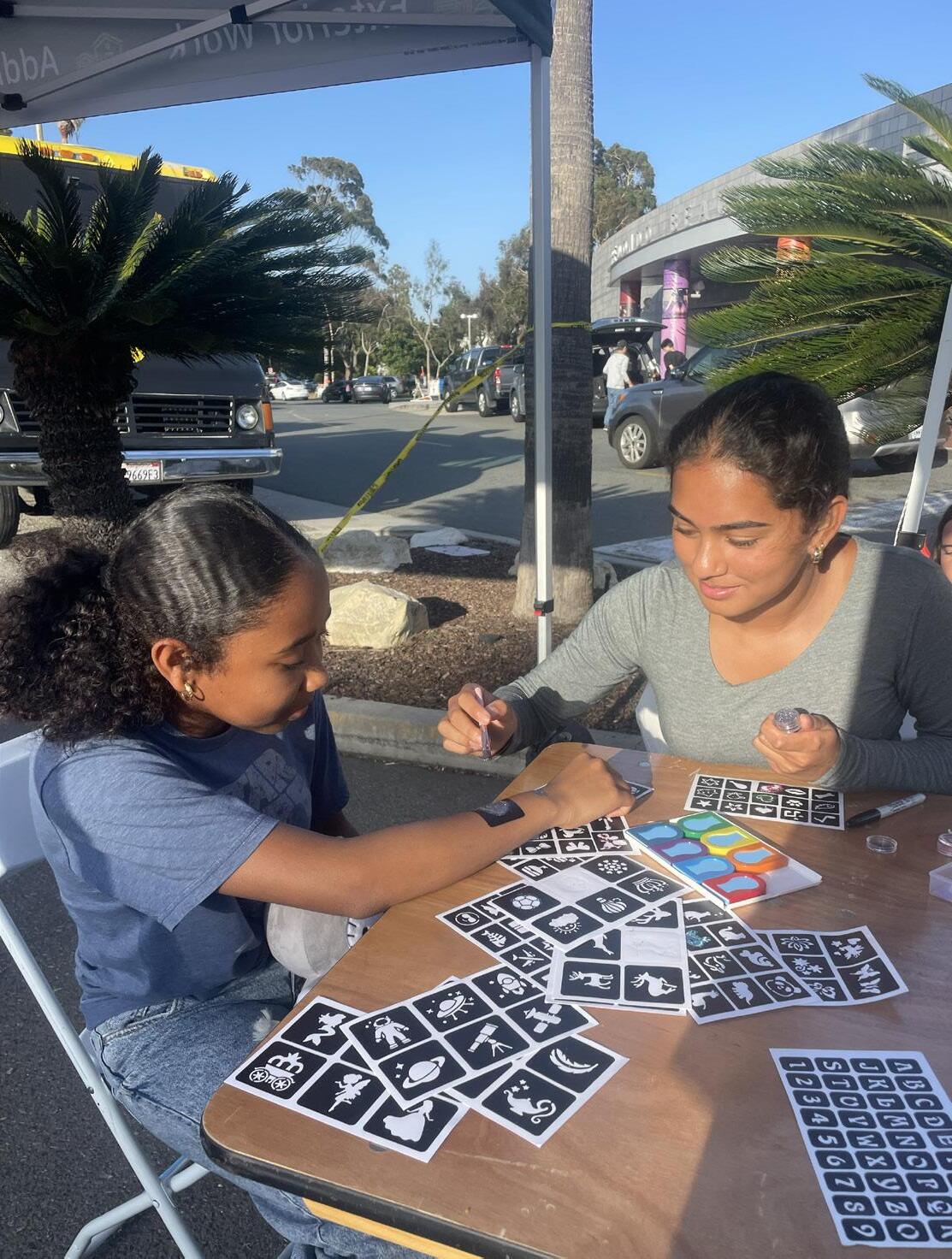
Mallya gives a temporary tattoo to a Washington Elementary Student PHOTO BY MISHKA SHIBATA
CYBER INSECURITY
Teens
risk long-term consequences by exposing their lives to strangers online
Anotification buzzes at 12:00 a.m.: A new follower request from an account with no profile picture or mutual friends. For many teenagers, the instinct is to hit "Accept,” letting a stranger into their online world. On the hunt for more followers, likes and shares, teens leave digital doors wide open for whoever and whatever happens to stumble across their social media pages. According to recent polling of 51 females at RUHS, over 60% of these students have experienced feeling unsafe on apps like TikTok and Instagram, due to online exploiters and unknown followers. While the sudden increase in online connectivity that teens across the world have experienced has allowed for online friendships and other opportunities to sprout, social media has serious downsides. This drastic change in teens’ use of apps, apps that are not designed for their developing minds, has clashed with personal safety and maintaining a healthy balance with the online world.
Attorney Peng Shao at R23 Law specializes in consumer protection and handles large-scale lawsuits to ensure his clients are treated fairly. Although Shao does not specialize in protecting his clients from social media corporations specifically, he advises all social media users to be cautious about what they post online to avoid online predators.
by Carly Jacecko
social media apps, a large gap still stands between knowing the risks and actually vetting every follower. The line between being active online while staying safe and protecting a private life has become increasingly blurred as teen social media use has heightened. Sophomore Miller Ginsburgh manages her social media accounts safely and responsibly while also connecting with her peers online, but she said it took some time to reach online stability.
“When I first started using social media, I had TikTok on my iPad in fourth grade, and then I really got the app when I got a phone when I was going into sixth grade. At first, I just watched TikToks and used the app for entertainment, but then a lot of my friends started getting it, too, so we all started connecting online and posting videos for each other to see. None of us really knew the risks of social media to mental health and well-being, let alone the privacy risks that come with posting publicly, which we were all doing. Now that I’m older, I have a better understanding of the risks of posting for strangers to see, but I think there are always steps that can be taken to be safer on TikTok and social media,” Ginsburgh said.
PENG SHAO CONSUMER PROTECTION ATTORNEY “
The social media platforms are not liable for what individual users post on them, so it really comes down to the individual user and what they post.
“Social media is a public forum, or in legal terms, a quasi-public forum; it’s not the same as just being out on the street. The social media platforms are not liable for what individual users post on them, so it really comes down to the individual user and what they post,” Peng said. “For an individual, say for instance yourself or me, we post something out of our own choice on social media, and it's the same way if we walk around and give people our social security number on the street. It’s very, very important for the individual to make sure to not post public information, and if they do, to be prepared.”
While a high follower count can sometimes boost confidence, when teens let online strangers into their digital lives, they grant people they don’t know unrestricted access to their personal lives, trading their safety for validation amongst their peers. A study from Common Sense Media revealed that while 79% of teens have begun to take steps to limit what they share with the world by changing privacy settings within
The public settings on apps like Instagram and TikTok do more than just share a teen's post and pictures. When a teen, or anyone for that matter, decides to give strangers access to their online identity, they are unknowingly providing unwanted opportunities for an online predator. Although online presence has many downsides, social media stress does not end with the safety concerns it introduces. Not having enough followers on social media can also cause social discomfort, as it diminishes the self-esteem and confidence of its users whose profiles aren’t as popular as their peers. Marriage and family therapist Jackie Saldana at South Bay Attention Learning and Developmental Services focuses more on how follower counts are detrimental to mental health, while also acknowledging the privacy risks that come with having too many followers on social media. Through her practice, she helps teens navigate the waters of social media with the end goal of enjoying social media while staying mentally and physically healthy. According to Saldana, the consequences of a public profile go far beyond just random likes and
reposts. Digital footprints are permanent, and no matter how hard social media users try to erase their online personas, the persona created at 16, with the mind and mental development of a teenager, can and do follow a student into college, job applications and even future careers.
“Sometimes photos or other posts get shared about people who don’t want things on social media, but then they get shared anyway, and it’s kind of there forever, and everybody sees it. It’s just a risk that comes with not being able to control everything that happens online. So if there is a privacy breach in information or even in a login or account information, that could lead to other issues down the line,” Saldana said. “We see clients all the time that have posted things about themselves, their opinions, or things about their peers that they do later end up regretting in the future. A lot of times this happens around bullying because teens will post things that at the time don’t seem offensive or problematic, but then they later realize how it negatively affected someone, and they regret posting.”
Although managing social media accounts safely and responsibly can seem daunting, there are roads that can be taken to move toward a safer, healthier life. The solution isn't necessarily to delete these apps, but instead to begin using the "Follow" button only after having teens decide whether the account looks safe or not. Many teens have begun to create "Close Friends" accounts or even "Finstas," which are places to post and share more personal content with those who are trusted and deserve this intimate window into the student’s life.
“Some things that have helped my friends, family and clients have been limiting the content that they are exposed to, such as age-appropriate limits, and then also just limiting the time that they spend on social media. Just having that conversation about what [teens] are comfortable posting for a large audience to see, and then making the ultimate decision to have a private account or start to limit the posting,” Saldana said.
Ultimately, the power of safety lies in the settings of these apps. Choosing a private account or simply deciding to only let close friends follow social media accounts prioritizes safety. While this option might lower the following and likes count, it increases the security of the teen behind the screen. Staying protected, safe and maintaining overall peace online is less about numbers and more about who teens choose to let into their online circle.
A lack of content regulations online impacts teen mental health
by Kayli Mai
As Chromebooks replace notebooks, iPads are handed to toddlers, and virtually everyone has access to the internet, students today are more connected than ever. We now have access to anything and everything someone could ever want to know. We store our personal information on our phones, but that means hackers could access it too. In fact, this security issue has also affected national politics, as Pentagon officials are increasingly worried that hackers are using social media such as Facebook to break into the Defense Department's computer networks (US Cyber Security). Given this information, a new question arises: how do teenagers ensure their own mental and technical safety while browsing online? How do we make sure we aren’t giving our information away to some strange man, or ensure online friends are actually our age? As tactile information once stored in personal accounting notebooks becomes accessible on their personal devices, this makes teenagers vulnerable to hackers, potentially posing harm. When up to 95% of teenagers in America, according to the National Institute of Health, from ages 13-17, report using at least one social media platform, how do you ensure safe browsing?
Audrey Hunt, a sophomore, explains that although she did download social media platforms such as TikTok and Instagram, having TikTok since COVID and Instagram for about a year, she doesn’t use them for long periods of time, due to personal reasons.
“
content one will see within 5 minutes of scrolling. Any time she opens a social media app, the amount of information she receives is “overwhelming,” and although she agrees that connection is an amazing social advancement, every narrative is consumed, and social media, at the end of the day, is parasocial.
“We are what we consume. You watch a really sad movie, it makes you cry, and even though you are physically not going through these things, you experience them second hand. People use social media as a form of venting and validation; however, when people consume negative content, they almost feel what the person feels. I would have never developed an eating disorder if my feed and surroundings weren't a ton of sick people,” Hattingh elaborates.
Monica Chernoff, a licensed marriage and family therapist specializing in working with youth, uses her experience to guide her clients through navigating their adolescence while explaining ways to protect themselves online when content regarding mental health becomes draining.
People use social media as a form of venting and validation; however, when people consume negative content, they almost feel what that person feels.
NOVA HATTINGH JUNIOR
“I think [my parents] limit my screentime partly as a safety measure.” Hunt explains, “I have to have a private account, and I have to know all the people who follow me.”
Hunt has screentime that her dad controls on her phone. She can use Instagram for a total of 10 minutes a day because her dad “doesn’t like” her having unlimited access to social media. Although she thinks she would like to have a little more daily screen time for creative purposes, she understands that it works to promote healthier habits.
“If I had unlimited time, I would probably be scrolling for a while. Instead, I do healthier things that take up the same amount of time, like reading, watching shows, or movies. I think it’s probably a very good thing that I’m not spending all my time online and doing things that enrich my life,” Hunt elaborated.
Even with these restrictions set for Hunt, she believes social media is “fine when there’s regulation,” and young kids [shouldn’t have phones[ until they reach a certain maturity level, where their phone is still limited into teen years. She emphasizes the importance of setting limits on social media, as when people are constantly on their phone, it becomes a “problem because you’re unbalanced, unaware, and wasting all your time,” which has negative mental side effects.
Online content, although regulated, still poses content risks that include “seeing material that’s upsetting, disgusting or otherwise uncomfortable,” and also requires a need for teens to be able to “identify acceptable and unacceptable online content independently.” This is all according to Raising Children Network, which offers multiple ways to help teenagers learn how to navigate a relatively new domain of technology. Things such as open conversations, boundaries, a balance between screens and activities that are enriching help to minimize any mental damage that social media can pose to students.
For teenagers, mood can also adversely affect how protected they are online. When you are upset or angry, you also may lose complete control of yourself and experience an absence of personal inhibition, which is when you shouldn’t be on social media, according to Nemours Teens Health. Junior Nova Hattingh views social media content as “incredibly
“There’s so much content out there about mental health, self-harm and relationship issues that can get really overwhelming and consuming for adults and teenagers alike. Everything is accessible online now, so it’s extremely easy to find someone, especially since whatever you post online is permanent,” Chernoff says.
Due to her work teenagers as a therapist, Chernoff emphasizes the importance of internet safety and caution. She uses an analogy that you shouldn’t text anything you would want published in a newspaper, which was a useful piece of advice that has stuck with her and that she restates to clients. But internet safety about strangers isn’t the only risk social media poses.
“I've been a therapist for a couple of years now, and one major trend that I'm seeing is that many kids have been engaging in self-harm and cutting. The numbers have been increasing like never before. It's happening at younger and younger ages [due to] technology,” Chernoff explained.
Science Direct supports Chernoff’s observations, as viewing self-harm images does mentally trigger tendencies to self-injure, especially for adolescents who are struggling with their mental health. In addition, social media connects people going through the same struggles; it can create an “immersive atmosphere” that normalizes and promotes self-harm and suicidal ideation.
“There are TikTokers and YouTubers talking about how to self-harm and ways to do it,” Chernoff said. “It's really sad because it is a really, really dangerous coping mechanism that may sound appealing to teens, but causes multiple long-term detrimental impacts for a kid’s mental health.”
Not only this, but due to the information we may unconsciously post, such as full names, schools attended, and place of residence, teens, especially those already struggling with these mental health issues, are at increased risk of sexual extortion, harassment and falling victim to online exploitation. Through calculated efforts such as systematic isolation, praise, and normalizing inappropriate content, a predator will work to groom an already mentally unwell teen, often through Snapchat, Instagram, and Discord, by using these strategies dubbed “deceptive trust," according to Our Direct.
“Social media can put teens and children in a dark place mentally and relationally. Lots of kids and teens are given access without education and clear limits from parents,” Chernoff said. “Unfortunately, when dangerous situations happen, it breaks families apart, resulting in shame and separation. It’s important for minors and parents to have a strong relationship and clear limits.”
In the room where it happens
by Jayla Dorbor
AShould history be offered as an online course?
NO, YES,
s college admissions become more and more competitive, high school students are taking more online classes, whether it be to satisfy their curiosity for subjects not taught at their school, or to free up room in their schedule. According to the Community College Research Center, dual enrollment increased 12.7 percent from the 2022-23 school year to the 202324 school year. Oftentimes it’s the latter, and the subject chosen to take the boot is history. This could be because history is sometimes deemed an easy subject that doesn’t require a lot of effort, or because students simply find it boring and don’t want to sit in a two hour block period of lecture on the 7 year’s war. Yet, neither of those reasons justify the educational loss that comes from taking an online history course.
Unlike other subjects, one of the most important parts of a history class is the discussions that occur. Analyzing history can be very subjective, unlike math or science where there is one right answer. Since it is subjective, it is very im portant that discussions about topics like government policy and the legacy of colonization occur in real-time, so students can see how those with different backgrounds or perspectives see and under stand topics differently.
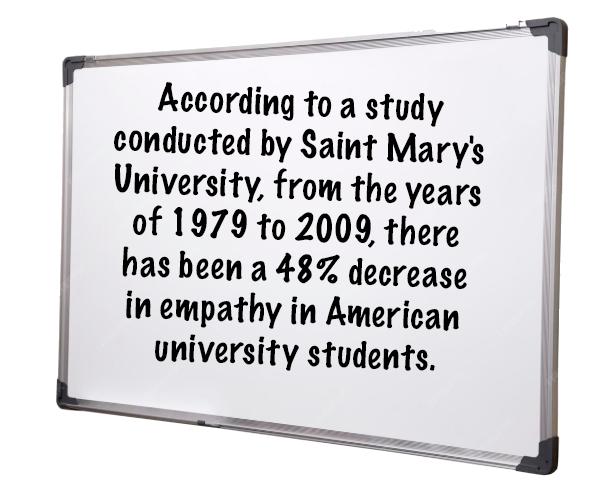
This is the baseline for de veloping empathy in our youth, which has been on the decline in recent years. Without in-person discussions about history, stu dents don’t get the opportunity to hear and consider others’ per spectives, which is not only an important part of learning history but an essential life skill in gen eral.
Not only do students not gain the benefits of in-person discussions, but multiple studies have shown that students do not learn as thoroughly through online learning. A recent study published in the Journal of Educational Technology and Online Learning states that in-person learning engages students at a much higher rate than online learning. So even if you think history is the most boring subject ever, at least taking it in person can help you stay engaged and actually learn the material.
and use that knowledge to vote responsibly.
I can admit that I am biased, since history is my favorite subject, but even if you think history is boring, the skills learnt in the class are undeniably very helpful and applicable to other subjects. The main purpose of history is to analyze things like cause and effect and perspective, which requires immense critical thinking skills. While other subjects like English or Math can work on those same skills, it’s not the core skill or purpose of the class. Using the critical thinking skills developed in history could even be utilized within other subjects, especially STEM classes. Taking a class is what you make of it, so if you decide to stay engaged and try to learn something, you may either find something you like, or a skill you could use in another class.
by Fi Borgese
“We the People.”
Most conversations surrounding a history class I hear consist of how bored people are in the class. My fellow classmates have fallen asleep in the middle of class, and since some teachers lecture for nearly two whole hours, it’s easy to see why. Online classes don’t require as much dependence on teachers and lectures, and if you’re tired, your schedule is more flexible and you can take breaks whenever you feel the need to.
There are many advantages to taking online classes, the most commonly considered one being how it frees up time in your schedule. When I first entered high school, I was super excited to take every class I saw. Then, my schedule was taken up by my core classes, and I couldn’t take anything I wanted to. As a senior, though I’ve taken many different classes and loved nearly every single one of them, I still sometimes wish I could have taken electives like ceramics or culinary, which didn’t end up fitting into my schedule.
Not only are there so many classes I’ve wanted to take, but my free periods have also been the saviors of my high school career. Without my free fifth this year, I think I would have dropped out after the first day. Even though it’s just an extra two hours a day, nothing brings me more joy than being able to leave school at 1:00 rather than 3:30. Free periods are so refreshing, and being able to free up a class or two is life changing for a burnt out senior like me.
Back when COVID was at its peak and we were still doing online school, I was thriving all things considered. My mental state was better than it had ever been because I got to space out my work and tailor it to my personal learning style — sometimes I wish I could go back to having school completely online. At that time I was very introverted and that likely played a role in my love for online school.
Taking a single class like history online isn’t on the same level as full online school, but it still allows students to feel independent for a part of their education. Procrastination is an issue I and many others struggle with, and depending on the person, an online, autonomous class helps with that by taking some of the pressure off the student’s back and giving them more time to complete assignments.
When history is taken online, especially for students who already don’t enjoy it, it is very likely that almost none of the information is retained. Many of my friends who have taken history online have admitted to me they learned nothing from the course. While I know that knowing every single U.S. president and the state they were born in is not essential, many other topics we learn in history are essential for becoming an engaged citizen.
In fact, the actual memorization of the topics is not the reason why history class is essential: if it was, I would have no problem with people taking it online. But real learning comes from the in-class discussions analyzing these facts and how they’ve brought us to the world we exist in today. In a time where misinformation is constantly being spread online, it is increasingly important that we learn about this country's past mistakes and successes
letters to the editor
The High Tide encourages greater input of per spectives from both students and staff. If you have an opinion about one of the articles, letters can be sent to the editor at hightideonline@gmail.com
We reserve the right to edit for content, gram mar and space constraints. Letters must be signed and are not guaranteed to be printed. Please keep letters to a maximum of 250 words. Longer guest opinions are also accepted.
In a world where AP Af rican American Studies or critical race theory classes are being banned in states like Florida, it is pertinent that we as students take the opportunities we are granted to be fully immersed in our history education. It is the best way to ensure that we truly learn and understand the country and world we live in so we can continue being educated mem
A lot of my personal problems with schoolwork stem from the fact that there’s so much to do with such strict deadlines (yes, I know that’s how a job works too), yet I also can’t get ahead if I wanted to because lessons aren’t posted in advance.
It’s understandable for advanced placement (AP) classes to be taught in person since they require a lot of information to be taught in a little bit of time and physical help is extremely beneficial (I don’t know if I could have survived AP Euro without my teacher), but if somebody isn’t as interested and just wants to take a college preparatory history, there’s no reason why they shouldn’t be able to get through that credit using an online program.
The fact that my learning isn’t on my timing takes away so much of my already nonexistent motivation. I finish in-class work quickly, and I get bored in a lot of classes because they move so slowly. I do tend to fall behind on schoolwork sometimes, but there are some days that I catch up with everything and I know I could get several weeks ahead if I just had all the work I could do imme-
I agree that there are disadvantages to taking online classes, especially for history, and I can acknowledge that. There are definitely many students who don’t have the discipline to stay on track with self-paced classes, and history is a sensitive subject that I think is very helpful to be taught by an empathetic, living person. But, if a student feels comfortable with online self-pacing, and they have no interest in history and just want to get that credit out of the way, there’s no good reason why they can’t simply take an adequate, school-approved online course over the summer. For me personally, the pros outweigh the cons by a lot, and while I like being in classes with my friends in person, I do think online classes are more helpful for introverts who enjoy self pacing, and for people looking to free up their schedule for something they’d enjoy more than a year-long world history course.
1. White board representing in-person classes.
2. Computer representing online classes. PHOTOS VIA FREEPIK
Pressure project
Instead of founding passionless nonprofits, students should focus on other passion projects
by Aashka Bhuptani
Somewhere between freshman year and now, I started keeping a mental list of things I was supposed to have done before college. A nonprofit sat near the top for a while, though I never actually made one, and I don’t plan to. But I’ve watched so many people list and check off “founder,” students who I know haven’t actually put time and effort into their nonprofits.
College admissions influencers often coach teenagers on the precise formula for acceptance into the most competitive schools: grades, extracurriculars and something extra that they call a passion project. Students succumb easily to this and the result is a generation of 501(c)(3)s (a nonprofit that is exempt from federal income tax because it operates exclusively for charity) with mission statements that vow to “empower underserved communities through sustainable, intersectional initiatives" without specifying who they serve, where or how, and impact reports that measure success in the amount of Instagram followers the platform has.
A nonprofit should be more than an impressive addition to an application. It’s a full-time institution that deserves time, money, and connections
likely to hold leadership roles, like “Founder/CEO,” in extracurriculars than those in low-income groups. If colleges reward nonprofit founding as a marker of distinction between applicants, they’re mistaking privilege for merit. Not everyone has the funds or parental support to found a 501(c)(3). I’ve noticed that most people who’ve founded nonprofits before they turn 18 have only been able to do so because their parents agree to pay for a majority of it: the website domain, the premium editing subscription, and the paid Canva plan that makes the logo look professional. Normally, the IRS alone charges a $275-$600 application fee for 501(c)(3) formal status, and total startup costs for a nonprofit—once you factor in incorporation fees (the state cost to legally create a corporation), legal paperwork, and basic operations—range from $1,000 to $5,000 or more.
The purpose of a nonprofit is to work towards a collective, public or social benefit, rather than to generate profit. So therefore, if the organization disappears the week after decisions come out, what does that say about who it was actually built for?
The students who motivate the most change rarely do it by founding their own nonprofit or platform—they do it by embedding themselves in movements that already exist. They’re showing up every weekend to organizations that have been working for 30 years and learning from educated professionals who’ve dedicated their careers to understanding one specific community’s needs. According to Niche, 58% of U.S. admission officers said that community service organizations, like Surfrider, have a more positive impact on admissions. Niche also states that about 68% of admitted students at top schools report community service involvement.
The whole point of a college application is to demonstrate your passions, interests, and commitments. All three of these factors should merge to-
gether into one common theme that describes who you are as an individual. Though I do agree that it’s important to stand out in applications, doing so in a performative way ruins the integrity of the application. Every effort that you make up to your senior year of high school should be a true and honest representation of that theme, not a last-minute attempt at being better than your peers. If you haven’t made a real impact in your targeted community, it’ll look rushed and might actually hurt your application.
The nonprofit, at its best, is one of the most powerful structures humans have built for collective good. It deserves better than being a poor attempt at making your resume more impressive. It should be rooted in dedication, passion, and drive. And from what I’ve seen, most nonprofits founded in high school don’t meet these parameters.
However, I do understand that there are exceptions to this. Not every single nonprofit founded in high school is meant to be performative. Some students truly want to strengthen their experience in a certain field, and they believe that the way to do that is through a passion project; one that they will dedicate multiple years to, hoping to grow into something recognizable that makes a real impact. Therefore, if you’re going to create a nonprofit, make it about something that you’re interested in, don’t start it just to get into college. You’re going to enjoy it much more if you’re actually passionate about what you’re working on.
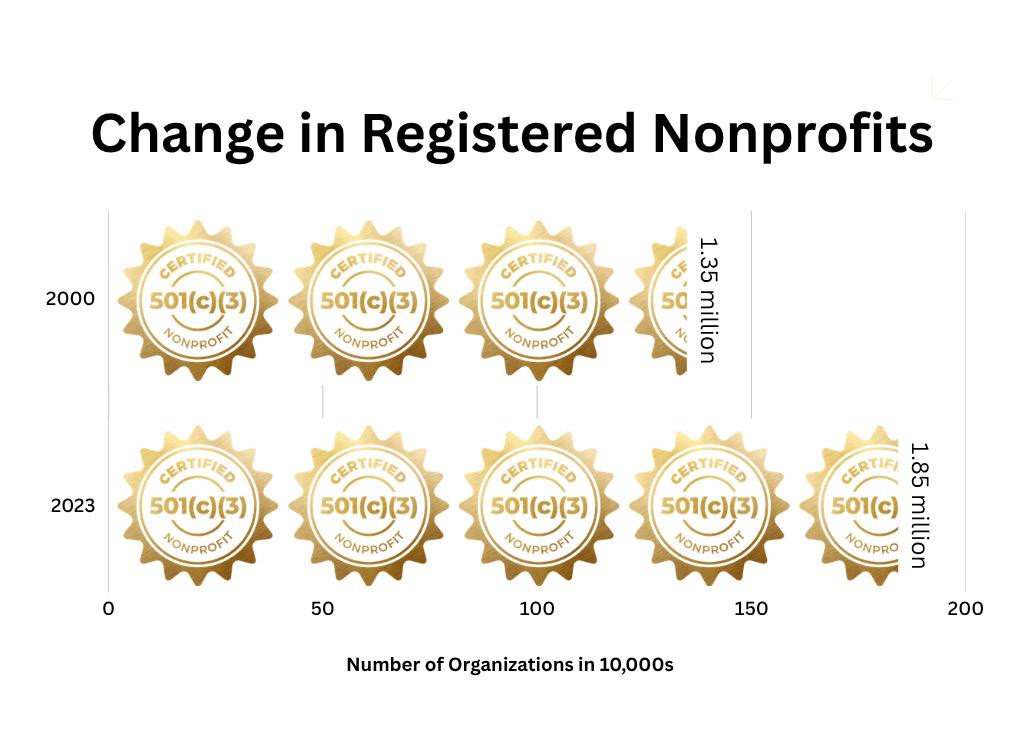
Much of that surge tracks directly with the rise of competitive college admission processes and stressed students who feel like they have to do more to keep up with it. The purpose of founding an organization should be leaving something behind when you’re gone. Therefore, a nonprofit founded in junior year and dissolved within the next year is not an impactful passion project that truly helps a targeted audience. The communities that these students claim to serve deserve more than to be someone’s extracurricular activity.
editorial: media literacy
By: High Tide Editorial Staff
In the modern era, social media has revolutionized the way we consume information, offering what is often described as "instant news" and a "great wealth of information" at our fingertips. However, this accessibility is a double-edged sword. As the Sheridan Libraries at Johns Hopkins University highlight, the digital landscape is heavily populated with propaganda, misinformation, and disinformation. For students and researchers alike, the ability to distinguish between a verified report and a viral fabrication is no longer just an academic skill—it is a necessity for navigating the modern world.
The challenge begins with how our biology interacts with the digital interface. Research into "Fake News and Your Brain" suggests that false information is often specifically designed to "trick" the brain. These posts often bypass our critical thinking faculties by appealing to strong emotions or pre-existing biases. Because social media platforms prioritize engagement, sensationalized but inaccurate content can spread faster than the truth,
making it crucial to verify and determine the accuracy of every post before we accept it as fact.
To combat this, sources suggest a rigorous accuracy checklist for evaluating social media content. The first step in this process involves investigating the source's physical and digital footprint. People should ask: what is the location of the poster? If someone is reporting on a live event but their profile suggests they are in a different country, the post’s authenticity should be scrutinized.
Furthermore, examining the network of the account— who follows them and who they interact with—can provide clues about their legitimacy. A genuine source usually exists within a recognizable community, whereas suspicious accounts may have networks composed entirely of bots or recently created profiles.
The age of the account is a significant red flag; people should always be wary of accounts created only days or weeks before a major event. Beyond the account's history, the content itself requires scrutiny. A fundamental rule of information literacy is corroboration. Can the informa-
tion be found in other reliable news sources? If a "breaking" story exists only on one person's social media feed, it is likely unreliable. Additionally, readers should look for contextual updates. Reliable sources often provide follow-up posts that fill in details and offer more depth over time. If a poster's history reveals they do not usually tweet or post on a specific topic, their sudden "expertise" should be questioned.
Ultimately, the goal of evaluating information—from social media to scholarly articles—is to ensure our worldviews are built on a foundation of truth. For those who find this process overwhelming, librarians remain a vital resource.
Whether you need help determining the reliability of a source or need to know how to properly cite a blog, tweet, or social media post, professional guidance is available to help you maintain academic integrity. By applying a systematic evaluation process, we can protect our brains from being "tricked" and ensure we remain informed participants in the digital age.
1. Road representing high school journey with admission to college as the finish line. The flag represents founding a nonprofit which is deemed as a necessary step in the process.
PHOTOS VIA FREEPIK
2. Graph showing increase in registered nonprofit organizations. Images of 501(c)(3) certifications are used to represent the data.
entertainment 12 XO, Cringey
"XO, Kitty" season three is lackluster compared to its predecessors
by Baran Taghvaei
Idon’t know what was worse: Kitty’s dress glowing as “romantic” music started playing when she and Min-ho kissed in slow motion, or Minho’s dad’s tour being called the “Sugar Daddy Tour.” “XO Kitty,” the Netflix spinoff series to Jenny Han’s “To All The Boys I’ve Loved Before,” follows main character Kitty Song-Covey (Anna Cathcart), who is the younger sister of the previous series’ main character, Lara Jean (Lana Condor), as she decides to enroll at KISS Academy in Seoul, Korea. Season three starts as Kitty enters her senior year. In this season, Kitty grapples with the pressure of school and college applications, relationship drama, and her senior sunset list of everything she wants to experience before she graduates. Season three of “XO Kitty” was enjoyable on a surface level, but a letdown compared to the past two seasons, which had consistent plotlines and coherent character development — something this season struggled to maintain.
The number of times I had to pause the show, get up, and take a lap around my room because I knew I was about to get second-hand embarrassment was uncountable. I thought I survived the worst in season two when Kitty’s openly gay friend Quincy, or “Q” (Anthony Keyvan) kept throwing around dated pop-culture references such as “queen” and “slay,” but this season was undoubtedly worse. Kitty’s clumsiness crossed the line from cute to flat-out embarrassing. The slow motion, replay moments, and mushy romance music that the writers applied to every Min-ho (Sang Heon Lee) and Kitty scene left me wanting to just skip forward.
Something else that really disappointed me this season was the soundtrack. This season’s soundtrack was disappointing
compared to all of the amazing songs we got in seasons one and two, which featured more mainstream K-pop artists. Season three’s problem wasn’t the unremarkable songs, but rather their placement. The songs felt very random, having an inconsistent tone throughout the entire season. The use of over-the-top romantic tracks and music cues didn’t feel romantic; they felt cheesy.
Besides how cringey this season felt, the level of unrealism was on a whole new level.
At one point, Lara Jean comes to visit Kitty at KISS and learns that NYU’s early admissions application is due that night, and Kitty has not even started writing her common application essay. Kitty then spends the rest of the day showing Lara Jean the city, comes home at night, and writes her entire essay in one sitting. Now, one would think Kitty surely didn’t get in, right? Wrong. Not only was this insanely unrealistic considering the fact that Kitty was failing her classes last semester and still doesn’t have all of her credits, but the fact that her ex-boyfriend Dae (Choi Min-yeong), who is top of their class, didn’t get into his dream college. Dae’s college had a 20% acceptance rate, while NYU only has a 7% acceptance rate, and you're telling me Kitty could get in with her half-done credits and Dae, number one in his class, couldn’t?
I was actually really excited to see where Kitty and Min-ho’s relationship would go after season two. Their enemies-to-lovers plotline was very promising, and they had so many cute moments due to the actors' great on-screen chemistry. Unfortunately, the writing this season did not serve them justice. What made their relationship so underwhelming was the amount of miscommunication these two had going on. Every single time they faced any conflict
within their relationship, their resolution was one of them yelling at the other and the other staring there, confused, and then storming off.
The characters experienced a lot of regression from past character arcs that had already been played out. I know people say entering a relationship makes people change how they believe, but I didn’t expect Min-ho to lose all of his personality from the past seasons. Kitty and Min-ho’s relationship is rooted in honesty, balanced with their ability to tease one another and make each other laugh. However, this season, Min-ho traded his sharp, confident edge for a more passive role, losing his wittiness and openness. Not only that, but he lied to Kitty on several different accounts.
The worst character regression of this season had to be Q’s character. Q’s previous character arc of becoming loyal to his partner and not letting his insecurities get the better of him, which was previously explored in seasons one and two, was effectively dismantled this season.
Despite all of this, some parts of the season were enjoyable to watch. I’ve learned to think about this season on a surface level, thinking about the experience and not necessarily the quality. In general, I love all of the characters. They are all teenagers who make teenage mistakes, which is relatable to their target audience. And in doing so, watching their group scenes, such as the amusement
park trip and Kitty’s surprise birthday party, was really cute and entertaining. The group together provides a balance of one another's characters, making me wish that they included more of those kinds of scenes instead of acting out unnecessary side plots that didn’t add anything to the plot or, quite frankly, make sense.
“XO Kitty” was entertaining on the surface-level and semi-enjoyable—if you ignored all the cringiness and the bad writing— but the moment a viewer starts to pay attention to the actual writing quality, they’ll be in for a rude awakening.
Though "Forbidden Fruits" is a fun watch, it's unfit to be labeled a "horror" film
by Martina Parra Malandrino
Never did I think there would be people just two rows down from me at the movie theatre laughing at the gore in a horror movie. After watching “Forbidden Fruits,” I understand why.
“Forbidden Fruits,” directed by Meredith Alloway, takes place in a mall in Dallas, Texas, in a store called Free Eden. Employees Apple (Lili Reinhart), Cherry (Victoria Pedretti) and Fig (Alexandria Shipp) are seen as “mall royalty” by day, but by night,
run a witchy cult in the basement of Free Eden. After they are approached by Pumpkin (Lola Tung), the girls are intrigued by the fact that she is also named after a fruit, and they eventually welcome her into their coven and hire her. Pumpkin is forced to drink a concoction of blood and juice out of a rhinestone cowboy boot on her first night with the girls, and she learns about the odd rules that the girls must follow. Unbeknownst to the witches, Pumpkin is spying on them, particularly Apple, in order to find out more about who she really is. After catching Cherry and Fig breaking Apple’s rules behind her back, Pumpkin starts to get closer to them to discover the truth behind their coven.
The fruit based theme for the girls' names seems to be a nod to the biblical story of the forbidden fruit. Though it is never specified what this forbidden fruit really is, the apple tends to be the most common interpretation. This fact didn’t really click to me until much later, but the symbolism of Apple being the character who tempts the girls to do evil is a really interesting touch.
The movie’s plot was based on the play “Of the woman came the beginning of sin, and through her we all die” by Lily Houghton, who also took part in writing the screenplay for “Forbidden Fruits” alongside Alloway. The movie follows
a nearly identical storyline to the play, but adds a more violent, horror movie twist. The name of the play is also a direct quote from the bible in reference to the action of Eve eating the “forbidden fruit,” and I found it added a whole new layer of symbolism throughout the story.
To be honest, my expectations for this movie were pretty low. I hadn’t seen a single advertisement on it, and researching the movie, I noticed the reviews were pretty low. Regardless, I still gave it a chance to impress me.
“Forbidden Fruits” is one of those horror movies that is so ironic, playful, and unrealistic, that the actual “scary” scenes lose their ability to evoke fear in the audience. There were definitely some really gory, disturbing parts, but overall, the story was so silly and bizarre that the movie wasn’t really a “horror” movie, more so a dark comedy.
The film honestly surprised me in terms of how interesting it was. Although the plot was fairly predictable, the movie itself was fun and the acting was decent. I noticed a “Mean Girls”-esque trope being used throughout the movie. Apple reminded me a lot of Regina George with her controlling attitude and her status as the “queen bee” of Free Eden. Cherry had a bimbo type vibe, much like Karen Smith, and she aimlessly lets Apple control her life. Fig was similar to Gretchen Wieners, wanting to be accepted by Apple, but still being more open and kindhearted than her. Finally, Pumpkin was like the Cady Heron of the group, suddenly being accepted as one of the girls and slowly resembling Apple's characteristics while trying to sabotage her.
There were a lot of very fun elements in the story that made it a lot more enjoyable for me, as someone who isn’t a big fan
of horror films. For example, during their coven sessions, the girls confess their sins inside a dressing room to the ghost of Marilyn Monroe through the mirror. When recounting the story of Pickle (Emma Chamberlein), a former employee and member of the witch cult, the girls said she showed signs of rebellion by wearing mini Ugg boots. Some parts of the story were just so ridiculous that it had me wondering whether the movie was supposed to be a satire all along.
The cinematography wasn’t anything out of this world. Regardless, I felt that this movie shined when it came to design choices and details. The outfits worn by the girls throughout the movie put an emphasis on their importance in each scene. The whole movie takes place in an ordinary mall, so the girls look a little out of place with their outfits. I personally think this made the film even cooler, since it shows how the girls aren’t the typical mall workers they seem to be. Overall, I found “Forbidden Fruits” to be a fairly decent, enjoyable film. While many of the plot twists were quite predictable from the beginning, it was still a fun watch. I will say though that in typical horror movie fashion, all the important plot points are rushed in the last 15 minutes of the movie, which doesn’t really give the viewers time to proces. Although I wouldn’t typically go out of my way to watch a movie like this, I still think it was a great experience and I appreciate the creativity behind the story. Now I'm wondering whether there are secret femme witch cults held after hours at my local mall.
SPOILERS AHEAD
Despite stellar performances, cinematography and styling,
"The Drama" disappoints in its discussion of deeper topics
by Payton Rothluebbers
What’s the worst thing you’ve ever done? Mine is probably walking into a theater with the intention of watching “The Drama.” Don’t ruin my wedding for saying that.
Having received generally low ratings from critics, with the Associated Press rating it a devastating one out of five even before its theater debut, I walked into the theater expecting an underdeveloped, surface-level love story with a few bad jokes.
Indeed, I didn’t laugh a single time throughout the entire film, but it wasn’t for the reason I initially expected.
Written and directed by Kristoffer Borgli, “The Drama” details the approaching wedding of couple Charlie Thompson (Robert Pattinson) and Emma Harwood (Zendaya) as it quickly crashes and burns, triggered firstly by Emma drunkenly revealing her long-kept secret, the worst thing she’d ever done: as a teen, she planned and nearly followed through with a school shooting. The discovery of this secret shatters trust not only between the couple, but also within their friendships, sparking a series of disastrous events. As a seemingly happy and healthy relationship takes a brutal nosedive, questions persist: how far should two people go for love?
The acting and character design is phenomenal. Zendaya’s acting choices were perfectly subtle and guilty, garnering sympathy from the audience. Her innocent demeanor and cute, simplistic styling — bright blush shades rounding out her face and earthy, simple and flowy clothing choices — contrasted the audience’s perception of the villainous young Emma (Jordyn Curet), who is depicted with wide and smokily eerie eyes, ill-fitting and dark baggy clothing and
a never-ending pout. I loved Pattinson’s portrayal of Charlie, an awkwardly odd guy with creepy undertones, his messy hair and careless style signaling an overactive mind. The most outstanding performance was by Alana Haim, who plays Rachel, Emma’s bitterly insecure best friend whose victim complex flourishes. Her snarky and egotistical behavior seemed truly authentic and was perfectly easy to hate.
On top of the successful acting and character design, the cinematography was beautiful. The film really did feel like an art piece. At the beginning of the movie, before the audience is even aware of Emma’s secret or the eventual state of Emma and Charlie’s relationships, the camera work foreshadows the approaching mess.
The film circles through anxiety-inducing close-up shots in quick succession before the audience can even focus, creating confusion. Rather than including multiple characters in one shot, the camera typically chooses to focus solely on one character, symbolizing their moral differences and pushing the audience into the room with the characters rather than feeling like they’re watching from their seats. The coloring starts off bright and airy, slowly fading with the relationship. Artistically, there is so much to analyze and appreciate.
My biggest — and honestly only — issue with this film is that it attempts to act as if it is making some sort of sophisticated social commentary, yet in reality, it is not. Those interesting questions posed throughout the movie? Unanswered. Interpretive analysis of the movie’s ultimate message by people on TikTok was more insightful than the movie itself, and anybody who tells me, “It was supposed to be that way! That’s an
artistic choice!” is no better than a Swiftie making excuses for Taylor Swift’s nothing-burger lyrics.
Satire is incredibly hard to pull off, especially when discussing such serious topics. It is simultaneously funny and important. It sends a message to the audience, and it makes at least a little bit of social commentary.
But this movie was not satire; it plainly made fun of serious topics with immature and underdeveloped jokes. For example, after Charlie had discovered Emma’s secret and was actively questioning his trust in her and fearing what she was capable of, trying his hardest to irrationally rationalize her actions, they went to an appointment with their wedding photographer, who detailed how she was going to “shoot” the wedding guests.
What is this joke supposed to say about gun violence? To me, it only makes it seem unserious in front of an audience who has most likely feared for their safety at least once due to the prevalence of gun violence in America.
This movie didn’t have to be a comedy. Who in their right mind witnesses countless traumatic moments and mourning families plastered on the news and decides that it’s a perfect opportunity to make a joke out of the situation? Borgli had it all: the budget, the artistic vision, the talent, the actors. He had the potential, and he threw it all out the window to paint an edgy picture.
If you’re looking for a movie that will interest you in a confusing and almost disgusting way, “The Drama” is a good pick. However, if you’re not a fan of underdeveloped writing, don’t waste your time.
Season three of "Euphoria" ditches its iconic style and is missing key elements of the show's identity
by Andrew Diette
After over four years of anticipation, After over four years of anticipation, the long-awaited third season of “Euphoria” has arrived. And somehow, it feels anything but euphoric.
Since the series’ lauded debut in 2019, “Euphoria” has forged a clear identity for itself in just two seasons as both a glittery, dazed portrayal of the high school experience and the feelings of using drugs, as well as depicting the realities and hardship of social and romantic life. The story follows 17-year-old Rue Bennett (Zendaya), living with her mom and sister Gia (Storm Reid), navigating through her drug addiction and meeting her close friend Jules (Hunter Schafer) in the process.
The third season takes a new approach and departs from its usual style. Instead, we’re shown the continuation of the characters’ lives about five years out of high school. In the midst of the second season, Rue is fronted a monumental amount of drugs, temporarily free from payment, by the former teacher turned deadpan drug-dealer Laurie (Martha Kelly).
Now, Rue is told she owes Laurie more than 43 million dollars. She doesn’t have to actually pay such an absurd amount, as Laurie settles for 100k— it's still 10 times what she initially owed, however, and Rue has therefore become a drug mule for Laurie.
The first truly shocking plotline of the series occurs when Rue and her friend Faye (Chloe Cherry) have to swallow enormous balls of fentanyl, hold them in their stomach, and smuggle them across the U.S.- Mexico border. On her way back to California, Rue stops to see Lexi Howard
(Maude Apatow) where she’s now working at a film studio and working her way up to become a writer and director. Maddy Perez (Alexa Demie) is working in a similar space, managing influencers and actors whilst also hoping to advance in her designated workspace. Nate Jacobs and Cassie Howard are engaged; an absurd jump from the state of their toxic relationship at the end of the second season and makes almost zero sense. How’d we even get here?
While this opening was at the very least entertaining, the show seems to be having an identity crisis. I didn't feel like I was watching a continuation of Euphoria, but rather a spinoff of the series focused on Rue’s life. Euphoria has been previously praised for its realistic depictions of teenage depravity through a dreamy, visceral and extremely neon-like artistic direction, and that aesthetic is completely absent in the season three pilot. The continuation of a show ABOUT high school taking place years after doesn’t make much sense to me. Though exploring what happens after the characters graduate makes sense in theory, the time jump is several years long as opposed to the few weeks between seasons one and two, which makes season three feel even more disconnected from the ongoing storyline that never quite received a fleshed-out ending.
Another part of “Euphoria's” failure stems from outside circumstances leading up to its production and rollout. The absence of Barbie Ferreira, the actress of Kat, is glaring. Press interviews claim she felt her character’s arc was “complete” and therefore she didn’t need to return, and yet the continuation of the story without her
character present feels unusual given that everyone else gets a new chapter. Along with Ferreira, Angus Cloud — who plays Fez, Rue’s drug dealer and friend — passed away in July of 2023 and his character has essentially been sidelined. He’s barely addressed in the first episode and was supposedly sent to prison. While this makes theoretical sense given the climactic ending of season two, it still feels unusual not to see his face despite the real world circumstances.
These outside aspects of discontinuity extend into the score and musical composition of “Euphoria,” that had previously been the work of the recording artist Labrinth. He made the soundtrack used for the first two seasons, and it was another central and distinctive component of the series.
Wherever you saw a video or trailer or teaser about “Euphoria,” Labrinth’s music more than likely accompanied the visual. His omission from the new season’s soundtrack is greatly noticed and contributes to Euphoria’s lack of the personality it once had.
There’s no doubt that the return of Euphoria Sundays will re-stir public excitement for the series, and those who tuned in before will tune in again. You really can’t start the season watching an adult Rue Bennett nearly get killed and not be drawn back to Euphoria, or watch Cassie Howard try to “grow her TikTok following” and see just how far down the rabbit hole she’ll go in the next seven episodes. But "Euphoria" is having an identity crisis, and for longtime fans, season three definitely won't be feeling like a homecoming.
1.-2 Zendaya and Robert Pattinson as Emma and Charlie in "The Drama." PHOTOS VIA A24 3 Martha Kelly and James Landry Hebert as Laurie and Harley.
sports 14
Senior SWEEP
Boys volleyball handles South, earning a 3-0 victory on Senior Night
by Declan Williams
Asenior-only squad had no trouble with the Spartans, winning in three sets, empahasizing the strength of their nine man graduating class. Boys volleyball played South Torrance on Tuesday, April 14, for their Senior Night game, and took down the Spartans with ease. The Sea Hawks continued their win streak, bringing their league record to 7-0 and securing their spot at the top of the Bay League leaderboards.
The boys won set one with a score of 25-15, setting the tone for the rest of the game. Despite making changes to the line-up, the Sea Hawks remained coordinated, with seniors Charlie Hagemeister and Gabe Krikelas Simon coming off the bench and adding to the team’s cohesion.
“Charlie and Gabe [had a good game]. I [fed] them the ball, because they don't get too many touches throughout the year, and they really stepped up, hitting probably at 500 for both of them. [They] did a great job,” senior Tommy Spalding said.
The second and third sets were more of the same, with
the line-up changing even more. The boys had players in different positions than usual, and they still trounced the Spartans, 25-18 and 25-20.
“We were switching in and out front [and] back row. And then the second set got a little weird er, where Carter played [opposite], and then eventually switched to setter, and then I switched to [opposite]. We had Charlie outside. And then in the third set, Cash played middle, which he really doesn't normally. Vaughan played [opposite]. And, we got [in] guys who normally don't play,” Spalding said.
The game ended with a strong swing from senior Vaughan Flaherty, which was part of a trick play that Redondo was employing during the game.
“My favorite thing we did was running plays. We ran a couple of two balls, and finished the game with a nice lob,” Spalding said.
The team seems to have a laid-back approach to the game. They seem to live by the phrase “work hard, play hard.” This was evident due to their unorthodox pre-game ritual.
“We were down at 2nd Street [Hermosa Beach], catching some rays, going in the water, just trying to stay loose and relax before a match. I think that's pretty important,” Spalding said.
This game was particularly important for this year’s seniors, as they reflected on their years in the boys volleyball program under head coach Kevin Norman.
“The volleyball program has been great to me. It’s been the best couple of years of my life. I started playing with my friends when I was in eighth grade, and I don't re-
gret a thing. It’s been awesome,” senior Charlie Hagemeister said. The seniors were not just leading this game, but throughout the whole season. They have made up most of the starting lineup this year, and they also lead the team through experience, with decades of volleyball under their
“The seniors contribute a lot with leadership. I think we have a lot of older guys who hold the team together, and without them, a lot of the stuff that you don't see won't happen. A lot of the effort we bring in practice, [bringing] the nets up and down fast, so we can get more time in practice. I think all that is really reliant on the upperclassmen, especially seniors, as well as leading the rest of the team,” Spalding said.
The Sea Hawks have a very hopeful season ahead, as they rank at the top of the national leaderboards. They are currently undefeated in their league, and the boys play Mira Costa again on Monday after beating
“I feel great. I'm really stoked. It's a great group, and I think not only are we skillful, but I think we have a lot of guys who want to try their best and show off every single time. I think this year, more than ever, I think we have a chance at winning CIF State Division 1,” Spalding said. “We’re ranked third in the nation right now, but I can see us going higher. We have another matchup against Costa on Monday, which I'm looking forward to.”
Softball beats Peninsula in five innings, winning 24-0
by Allison Sutton
Coming back from spring break focused and ready for a win, girls softball took to the field at Palos Verdes Peninsula High School on April 15, ready to defeat the team they had lost to last year. Their determination resulted in a dominant win for Redondo, 24-0.
During the first inning of the game, Redondo was immediately able to secure a strong lead against the rivaling team. After hitting two home runs, Redon do came out of the first inning already victori ous, surpassing Penn by nine runs. Hitting the ground running, literally, offered the girls a “cushion” throughout the game, according to senior Abby Luis.
“We came out [of the first inning] very strong. We scored nine runs, and I feel like that really brought the momentum into the whole entire game. Just knowing that we had a lead the whole time, it really made our confi dence go up, and we knew that we were going to win,” Luis said.
Throughout the second inning, the girls continued to perform well, despite no chang es in the scoreboard. Although they main tained their lead, the girls remained locked in defensively, allowing no runs.
“Defensively, since we had such a big lead, we knew that all we had to do was control the controllables, so making the plays that are easy and, if we made an error, not making more errors after that one,” Luis said.
Senior McKenzie Jamrog also describes how essential focus was to the team’s performance, especially going into the third inning when a new pitcher was
introduced on the opposing team.
“Especially for the second pitcher, we had to learn to wait on the ball. Swing at strikes only and be disciplined in the box,” Jamrog said. “Sometimes you can make a mistake, and it leads to more mistakes. If we just limit the mistakes, then we will play cleanly.”
Scoping out the opposing team allowed the girls to adjust their hitting tactics accordingly in order to maintain their lead, simultaneous ly preventing Penn from scoring any runs. They ended the third in ning with an even larger lead, 18-0, after scoring nine more runs on nine hits.
“We were good offensively. We had great approaches. The [opposing] pitch er was throwing slower than we were expecting, so we had to make sure that everyone knew what we had to do to win the game; we knew [that] since she was throwing slower, we had to stay back on the ball and go towards right field and not pull the ball and go to left field,” Luis said. The fourth inning proved to be uneventful in terms of scoring for both teams, but camaraderie and team spirit remained high. Encourag-
ing words and shouts of support could be heard from Redondo’s dugout as the girls continued to pitch and hit.
“We usually communicate [well] as a team. On the field, when you're pitching and hearing your teammates cheer for you, it's always nice,” Jamrog said. “All of us on our team have a pretty good connection, especially when you're cheering for other people, and you feel supported by your teammates. All together on one team, we have each other's backs.”
The game ended early after the fifth inning, Redondo run-ruling Penn and concluded the afternoon on a high note. During the fifth, Redondo scored six more runs on six hits, with Luis doubling and scoring two of them and Jamrog singling and scoring another.
“Moving forward, [we] just need to keep a positive attitude and to continue winning,” Luis said. “[We’re] making sure that we don't let the pedal go down on the gas, and every single league game is our full effort.”
1. Senior Tommy Spalding sets ball. PHOTO BY FINN WILLIAMS
2. Senior Cash Essert spikes ball. PHOTO BY LORELAI LAND
3. Senior Abby Luis waits for ball. 4. Luis aims ball towards infield.
Beyond the scoreboard
Boys lacrosse goes to overtime against Mira Costa in tight game, losing 10-9
by Francisco Villegas
After eclipsing their win total for all of last season with the first 6-0 start to a year in program history, a 1-2 skid at the start of league play served as a test of Redondo’s resolve. Still, boys lacrosse traveled across town with renewed vigor to face Mira Costa in what became an overtime thriller, as the boys came up short in a 10-9 loss.
“
Entering the game against the highly ranked Mustangs, the memory of both of last year’s nine point losses hung in the team’s mind, but the boys maintained some confidence due to their success so far in the season, as well as the Mustang’s recent loss to Palos Verdes, showing they're beatable.
The Sea Hawks faced major losses going into this game as multiple starting players, including lead-scorer senior Dominic Amici, were out. Senior Nathan Inn was one of the players who had to step up in light of these losses.
poles, so our coach had to have a talk with me. He told me that I had to pick up a pole and play defense, and I had to just go with it.”
With 30 seconds left, I had the ball, and we kept on passing it around, and I kept looking for Jake Leone at the bottom. Eventually the look was there. I threw it through the entire defense, and he caught it and put it perfectly to tie the game.
Even with multiple core pieces out, the Sea Hawks were able to keep pace throughout the game, with strong team play on both sides of the ball to compensate for the individual losses, aided by senior Jacob Sanchez’s focus on communication defensively and strong play from junior August Haynes offensively. After Costa got out to a 2-0 lead, despite limited warmups on their senior night, the boys responded and showed sustained resilience, and always kept right behind the Mustangs as the game dragged on.
AUGUST HAYNES JUNIOR
“Our starting pole, [senior] Joseph Ventura, had dislocated a shoulder against Newport Harbor about a month earlier, so then one of our backup poles had to go in until he ended up breaking his arm against Palos Verdes two games before this Costa matchup,” Inn said. “I don't really play defense, but after that we had no more long
“We were missing two very good defensive players, as well as Dominic on attack, who was a hard role to fill. It was hard on both sides because we had to put in a sophomore who's not very familiar with playing on attack, and if a new person isn't on the same page as the rest of the defense, it messes the entire thing up. Thankfully we adapted very well,” Sanchez said. “Our coach definitely dialed up a game plan for us to succeed, which was just playing within the hashes
in order to let Costa take bad shots and let Lucas make saves and letting our guys beat their defenders one on one on a dodge.”
Five minutes were left when Costa scored what seemed like a dagger, bringing the lead up to three, until Redondo once again battled back in the clutch with strong flow offensively.
“With 30 seconds left [down one,] I had the ball, and we kept on pass ing it around, and I kept on looking for [Freshman] Jake Leone at the bottom. Eventually the look was there. I threw it through the entire defense and he caught it and put it perfect ly to tie the game,” Haynes said. “We've been doing the same man up play the whole year, but then liter ally the day before Coach Jewett drew up that new play and we just executed it perfectly.”
In overtime, the Sea Hawks won the faceoff and called a timeout. Coming out of that, the Costa defense trapped the Redondo ball carrier and forced a turnover before going on to score and win.
“Coach Jewett really thought that we had what it took to win that game, and I think he kept in mind that we were go ing into spring break, so in our postgame huddle he made clear there's no moral vic tories. He's done with that,” Haynes said. “He wants us to be the best program we could possibly be and to have that passion to win. It just sucked for him that we lost, and sucked for the team as a whole, but he knew we’re going to play Costa again, so he gave [a nice speech] to boost our mentality
Girls lacrosse dominates against Peninsula,
by Kacie Brincat
As
undefeated in the Bay League series with three wins and zero losses.
The girls started the game off strong with junior Erabella Eastwood scoring the first goal of the game followed by juniors Sora Robison and Grace Walker scoring the most goals of the game. The Sea Hawks kept ahead of the score the whole game and never let Peninsula get ahead, working together to defend and score points while also playing with a lot of their non varsity starters.
“Miller Ginsburgh always gets the draw for us, so she does the ball, and then she scores for us. She had like a little trick shot goal [in the game],” Eastwood said.“I'd say Sora is also a key player. She takes the draw for us, and she also got a behind the back goal in that game and she had four goals that game. She was
coming into the next few games.”
with a score of 19-1
pretty dominant. Honestly, everyone was involved. I would say those two people are really the key people because they were playing dominant, but everyone went in the game.”
Since the beginning of the Bay League season, our girls have been in control of the field and playing hard. They have been using the momentum from their first few games to dominate on Friday against Peninsula and are hoping to keep it up for their upcoming game against Mira Costa in their effort to win the 2026 Bay League Champions title. They've been following certain game plans and have been specifically training hard for these games for a long time.
“Our coach actually told us a clear play that we should run, and that was working as well, during the week, practice during the week and everything we do in practice definitely shows. We always do dodging and shuffles and those show, so our preparation is always good. Our coach does a really good job of doing that,” Eastwood said
ing, the game really tested what the team is capable of and allowed some of the girls to demonstrate really good plays. It gave everybody an opportunity to play and get a taste of a big game.
[This] game revealed the depth of our team. Some people that don't normally start were able to keep up with everyone who normally starts and they were able to put up just as amazing a game as out starters.
LILY OLINGER SENIOR
The girls were able to pull off a lot of plays without some of their key varsity starters. According to senior Lily Olinger, even though some of these girls were
“One thing that I think it revealed the depth of our team [and that it's really good.] Some people that don't normally start were able to keep up with everyone who normally starts and they were able to put up just as an amazing game as our starters. Leah doesn't normally start, but she played defense for most of the game and she did amazing. She's one of our sophomores on the team. So she's very new, but nobody scored on her. So she had an amazing game,” Olinger said. Throughout the game the sidelines and stands were hyped with people cheering with excitement. So many people were making outstanding plays and some of them helped win the game.
“As the game progressed, we just kept getting more and more hyped, especially for all those players who don't normally play. I feel like just the momentum just kept increasing the entire game and the energy was great,” Olinger said. “Grace Walker had a lot of goals in that game and a lot of assists. One of our defenders, Abby, normally doesn't get to score, but she was put on attack in this game and her goal was very impressive.”
miss-
they faced their cross town rivals peninsula, girls varsity lacrosse crushed the Panthers with a final score of 19-1. This year the team is
Sophomore Mayella Kumprey jumps to get the bll during 3/31 game against Peninsula. PHOTO BY AMANDA HARRISON
Junior August Haynes looks down the field for a pass during game on 3/25 against SAMO. PHOTO BY
Digital Deception
With the rise of AI generated content, many social media users, including teens, risk falling for misinformation
by Kate Lanzdorf
“ Wait, is this even real?” For the second time this week, my friend asked me to check if a video she came across online was artificial intelligence (AI) or not. As entertaining and convenient AI has become for social media users, it is also starting to damage young teens’ ability to differentiate reality from generated content for those who do not fact-check the media that they consume online.
A study done at the University of Leiden stated that teenagers often rely on intuition and familiarity when deciphering if something is real or fake on social media. Young people will feel especially disinclined to factcheck something if a peer they deem trustworthy as a friend sends it to them.
“When I see something surprising or shocking online, my first instinct is to check the reliability of the source,” sophomore Kian Tsao said. “I want to make sure that if I send it to my friends that it is not fake. But if a close friend sends me something, I’m more likely to believe it without checking if it is reliable. I would assume that they would have checked it before sending it to me.”
When I see something surprising or shocking online, my first instinct is to check the reliability of the source. But if a close friend sends me something, I’m more likely to believe it without checking if it is reliable."
ernment teacher who covers media literacy in her class, Victoria Vasquez notes that a common mistake that her students make when finding information is to take the AI Overview answer that immediately is revealed upon a Google search at face value. Though most students know it’s encouraged to look deeper in one’s research to get a better understanding of a topic, paywalls and time consumption hold a lot of students back from furthering their research. But while the AI Overview answers that are easier to access, they are also often less reliable.
KIAN TSAO SOPHOMORE “
Finding credible information is an important aspect to many high school courses. As an Advanced Placement (AP) Gov-
than word of mouth or traditional news.
Using a person’s preexisting beliefs, social media promotes opinions that have already been established and does not allow for other beliefs to be widely seen.
“Social media content is not designed for acquisition of truth and information,” AP Government teacher Michael Henges said. “It is designed to be addictive or to be sticky in some way to keep users on the platforms.”
While media literacy is already covered in many intro high school courses, some teachers think it should continue to be covered throughout a student’s academic career.
“Getting information off of social media makes knowing if information is real or fake a lot harder. A lot of situations are blown out of proportion to get better views,” freshman Scarlett Williams said.
A study done by Massachusetts Institute of Technology found that misinformation spreads much faster through social media
“The idea of media literacy and battling misinformation is emphasized as a skill to build,” Henges said. “I think a lot of it has to do with learning knowledge and understanding history, and understanding political science and how things actually work. A lot of misinformation can be mitigated by having factual information.”
According to junior Noah Kisiler, many students use AI and social media to access information due to its convenience. He thinks that though most teens are aware of the risks of AI, they choose to use it anyway
because of the perceived benefits of saving time.
“It takes time to do research,” Vasquez said. “It takes effort, and sometimes people don’t want to put in the effort, and it’s much easier to just say, ‘I believe in most of what this person believes.’”
The normalization of AI and shortened attention allows for faster spreading of misinformation. With the help of teachers and the acknowledgement of the growing issue, students can learn how to check reliability on their own.
“Lacking media literacy is an ongoing issue that we’re going to see in the future as AI continues to be a source of information for people to blindly trust,” Vasquez said. “While a lot of sources are easily accessible, [such as] social media, that does not mean it is accurate. That’s very problematic. We’re going to continue to see it and teachers are going to have to find ways to challenge their students.”
Can you spot the real image?
Senior Fi Borgese takes in information from a AI creature labeled with the ChatGPT logo
PHOTO BY ROBERT PACKARD ILLUSTRATION BY CLAUDIA TURNER