
EXPERIENTIAL EDUCATION
Student Manual
Office of Experiential Education




Lisa F. Brennan, PharmD, BCPS
Associate Professor and Assistant Dean of Experiential Education One University Parkway, High Point, NC 27268
Office: 336-841-9553 | Dept: Experiential Fred Wilson School of Pharmacy | Choose to be extraordinary! ®
Brian M. Pacanowski, PharmD
Assistant Professor and Director of Experiential Education One University Parkway, High Point, NC 27268
Office: 336-841-9651 | Dept: Experiential Fred Wilson School of Pharmacy | Choose to be extraordinary! ®
Gail Strickland | Coordinator for Experiential Education One University Parkway, High Point, NC 27268 Office: 336-841-9489|Dept: Experiential Fred Wilson School of Pharmacy | Choose to be extraordinary! ®
Website: www.highpoint.edu/pharmacy
The Experiential Program at the FWSOP
Experiential Education Overview
Summer after P1 Year
Summer after P2 Year
P3 Year
• Community IPPE rotation - 4 weeks
• Hospital IPPE rotation - 4 weeks
• Fall Zone Fair and rotation scheduling
• Spring APPE Prep course
P4 Year*
• Nine 1-month APPE rotations
*During the P4 year, students also complete a Board Preparatory Course which includes a mandatory month-long exam review in April on campus.
IPPE (Introductory Pharmacy Practice Experience)
Introductory Pharmacy Practice Experiences (IPPE) are designed to provide pharmacy students with what is often their first experience in a pharmacy setting and are an important first step in a student’s journey to becoming a licensed pharmacist. Students are given a “hands-on” opportunity to see how a pharmacy operates and to explore their potential role as a pharmacist in years to come. Participating in IPPE rotations provides students with direct patient care encounters under the guidance of an experienced Preceptor.
According to the 2025 ACPE requirements, IPPE expectations are as follows:
3.1.a IPPE expectations – IPPEs involve students in common contemporary U.S. practice models, including interprofessional practice involving shared patient care decision-making, professional ethics and expected behaviors, and direct patient care activities. IPPEs are structured and sequenced to intentionally develop in students a clear understanding of what constitutes exemplary pharmacy practice in the U.S. prior to beginning APPE.
IPPE exemptions – Using established criteria that encompass the depth and breadth of the practice, a college or school may exempt applicable students from the requirements of certain IPPE types provided that the college or school has documented that the student has achieved the desired outcomes of that experience through previous experience. Replacement IPPEs will then be used to advance students’ understanding of practice and their preparation for success in APPE.
3.1.b IPPE duration – IPPE totals no less than 300 clock hours of experience and is purposely integrated into the didactic curriculum. A minimum of 75 IPPE hours of patient care must be completed in each community and institutional health-system settings. The remaining 150 hours may be in a variety of pharmacy practice settings that expose students to patient care. Although simulation can provide an excellent learning modality in didactic education, simulated practice experiences cannot be counted toward the 300 IPPE hours.
At the FWSOP, pharmacy students are required to complete two IPPE rotations of 160 hours each; one in the community pharmacy setting in the summer after the P1 year, and one in the hospital setting in the summer after the P2 year.
APPE (Advanced Pharmacy Practice Experience)
APPE is structured to provide students with opportunities to think and act independently as pharmacy practitioners.
According to the 2025 ACPE requirements, APPE expectations are as follows:
3.2.a APPE expectations – Collectively, APPEs emphasize continuity of care and incorporate acute, chronic, and wellness-promoting patient-care services in outpatient (community/ambulatory care) and inpatient (hospital/health system) settings. In the aggregate, APPEs expose students to diverse patient populations as related to age, gender, race/ethnicity, socioeconomic factors (e.g., rural/urban, poverty/affluence), and disease states. APPEs follow IPPEs, which are designed to progressively develop the professional insights and skills necessary to advance into responsibilities in APPEs.
3.2.b APPE duration – The curriculum includes no less than 36 weeks (1440 hours) of APPEs, and each APPE is at minimum 160 hours. The majority of the APPE curriculum is focused on direct patient care. No more than 480 hours of the 1440 APPE hours can occur outside the United States or its territories or possessions.
3.2.c Timing – APPEs follow successful completion of all IPPE and required didactic curricular content. Required capstone courses or activities that provide opportunity for additional professional growth and insight are allowed during or after completion of APPEs. These activities do not compromise the quality of or decrease the time spent on the APPEs, nor count toward the required 1440 APPE hours.
3.2.d Required APPE – Required APPEs are completed in the United States or its territories or possessions and occur in four practice settings: (1) community pharmacy; (2) ambulatory care (must involve interprofessional communication and collaboration); (3) hospital/health system pharmacy; and (4) inpatient adult patient care. Nontraditional PharmD (NTPD) programs need to demonstrate that all students have completed or met the 4 required APPEs using a formalized faculty assessment that documents achievement of the outcomes of the 4 required APPEs. All aspects of any program offering an NTPD pathway will be assessed in the self-study process and reviewed by onsite evaluation team members during the program’s comprehensive evaluation.
3.2.e Elective APPE – Elective APPEs are structured to give students the opportunity to: (1) mature professionally, (2) secure the breadth and depth of experiences needed to achieve the educational outcomes articulated in Standards 2.1.a-n, and (3) explore various sectors of practice. A maximum of 320 hours of non-direct patient care APPEs are allowed.
At the FWSOP, APPEs consist of nine monthlong rotations of four credits each beginning in May after the completion of the third professional year and concluding in March of the fourth professional year. During the APPE courses, students spend a minimum of 160 hours per rotation in a variety of pharmacy practice settings. Students are exposed to the roles and responsibilities of the pharmacist in each practice setting with an emphasis on direct patient care, systems management, administrative functions, and medication distribution with an interprofessional team-based approach. Students work under the supervision of a FWSOP-approved Preceptor at all times during APPEs.
Students must complete the following four core APPE rotations:
• Advanced Hospital Practice
• Advanced Community Practice
• Inpatient (Internal) Medicine Practice
• Ambulatory Care
The remaining five APPE rotations are elective rotations. Elective rotations allow students to explore additional areas of professional interest. Elective rotations also enable students to expand their understanding of professional opportunities in the field of pharmacy. At FWSOP, students can complete rotations in various areas. These areas may include, but are not necessarily limited to:
• Management
• Academia
• Home infusion
• Nuclear pharmacy
• Pediatric pharmacy
• Geriatric pharmacy
• Specialized community pharmacy
• Infectious Disease
• Compounding pharmacy
• Critical care pharmacy
• Oncology pharmacy
• Transitions of Care
• Entrepreneurship
• Medication Therapy Management
• Cardiology
• Rural Health
• Veterinary pharmacy
• Long Term Care
• Industry
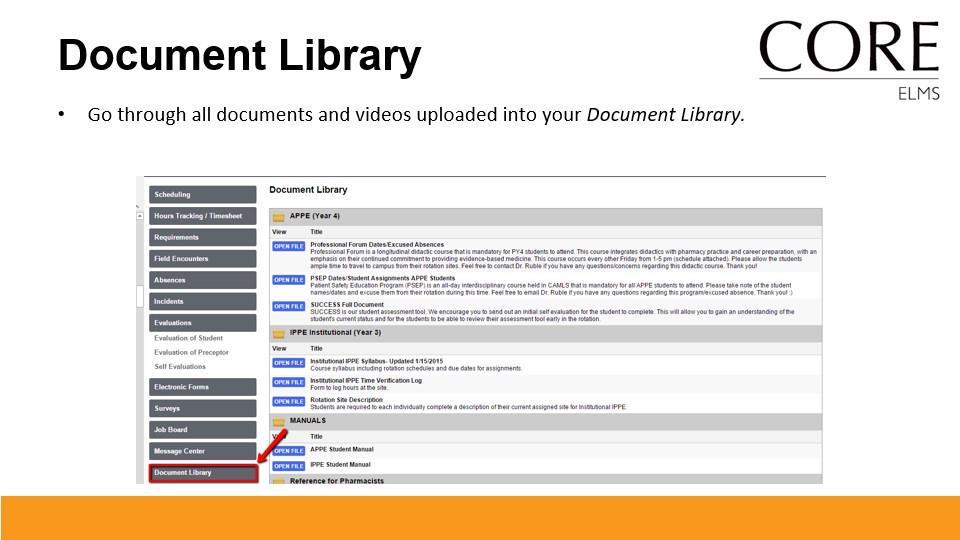
The FWSOP syllabi for all rotations can be found in CORE ELMS in the Document Library under Messaging/Support or by clicking this link: https://rxpreceptor.com/command_center/schools/document_library.php
Pharmacist Patient Care Process (PPCP)
APPE students utilize the Pharmacist Patient Care Process (PPCP) during their required rotations. Students are educated on the PPCP during their didactic coursework. During the APPE Preparatory Course, students review how to implement the PPCP during their APPE rotations. Students are evaluated by their preceptor on how they utilize the PPCP during APPEs.
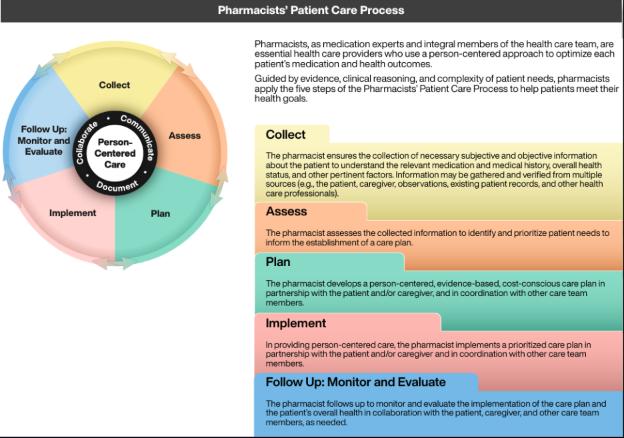
https://jcpp.net/wp-content/uploads/2018/10/Pharmacists-Patient-Care-ProcessDocument-2025.pdf
Policies
Students must adhere to all FWSOP policies during their experiential education. Policies can be found in the Student Handbook which is available on Blackboard or on the FWSOP website.
Should you have any questions or concerns about any policies, please reach out to a member of the Experiential Education Team.
Attendance
Students should review the Student Attendance and Participation Policy in the Student Handbook. This contains important information about types of excused and unexcused absences, requirements for requesting absences, and consequences of those absences.
Students are responsible for understanding and adhering to the schedule established by their preceptor. Schedule expectations, including work hours, meetings, projects, presentations, and any evening, weekend, or off-site responsibilities, should be discussed at the beginning of the rotation. Students are expected to attend all scheduled rotation activities and should not assume time away from the site is permitted unless specifically approved by the preceptor.
Please note:
• It is the student’s responsibility to understand the expectations
• All students must complete a minimum of 160 hours on each rotation
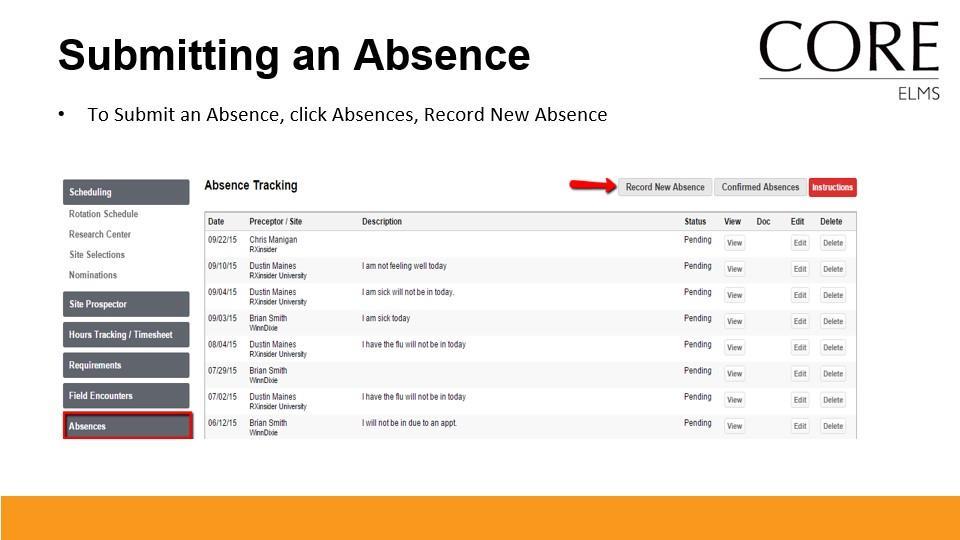
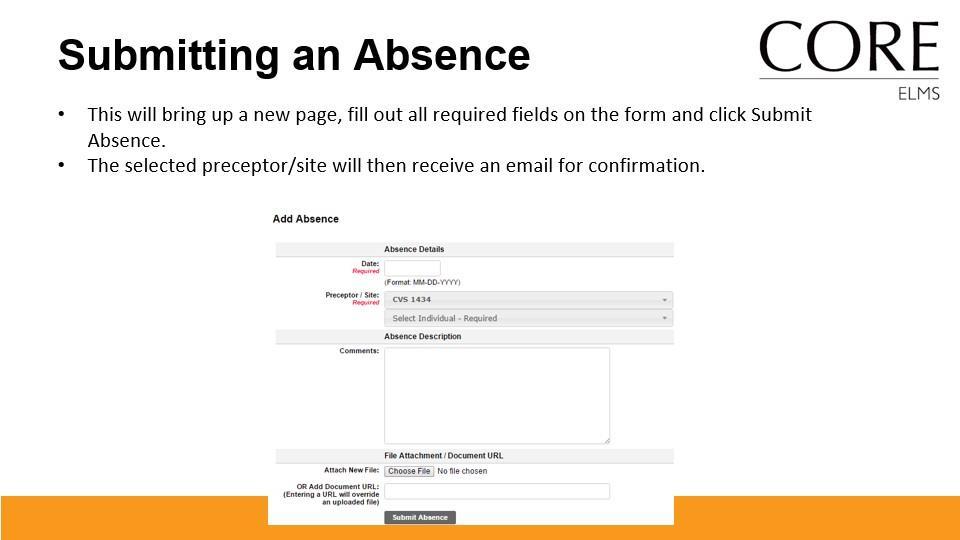
• All absences MUST be recorded in CORE which notifies the Office of Experiential Education.
• Absence notification must also be sent to your preceptor.
• Students are not permitted to make up hours missed as a result of an unexcused absence. Unexcused missed hours may prevent completion of rotation requirements and could result in a failing grade for the rotation.
• Limited Professional Leave is available during APPE rotations for residency/job interviews.
Contact the course coordinator (Dr. Brennan for APPE and Dr. Pacanowski for IPPE) if you have any questions pertaining to absences.
Professional Conduct
Students are expected to behave in a professional manner consistent with the FWSOP Code of Conduct while completing their pharmacy rotations, and to treat everyone at experiential sites with the highest level of respect and dignity.
It is expected that students will demonstrate the following:
• A Professional Attitude
• A Proactive Demeanor
• A Commitment to Excellence
• Respect for Others
• Compassion for Others
• Integrity, Fairness and Trustworthiness
• A Commitment to the Confidentiality of Patients
• A Commitment to Effective Team Collaboration
• Clear and Effective Communication
• A Commitment to Life-long Learning
• Acceptance of Personal Responsibility
• A Service-Minded Attitude
• Punctuality
• Dedication to Responsibilities as required by the Preceptor (students should not request to leave their rotation sites before their shift ends)
Students are expected to dress professionally wearing a white coat and name badge. The Dress Code Policy states that practice sites may have different expectations of professional dress based on the environment, and these expectations must be met.
Preceptors will evaluate students on their professionalism. A grade of F for professionalism may result in a failing grade (F) for the course, regardless of the grade in other sections. Any behavior that violates FWSOP policy, site policy, patient safety expectations, confidentiality requirements, or professional standards may impact the student’s grade and, upon review by the Assistant/Associate Dean of Experiential Education, may result in dismissal from the rotation and/or referral to the APCC.
Academic Dishonesty
Students are expected to uphold the FWSOP Honor Code while on experiential rotations. Dishonesty of any sort will not be tolerated. Academic dishonesty includes cheating, lying, retaliation, collusion, and plagiarism. The penalty for academic dishonesty is a failing (F) rotation grade. If you suspect academic dishonesty at the rotation site, please contact the ADEE
Confidentiality and Privacy of Patient Information
As a student of the Fred Wilson High Point University School of Pharmacy, you have an ethical and legal duty to keep patient information confidential. Federal law known
as the Health Insurance Portability and Accountability Act of 1996 (HIPAA) forbids healthcare providers from disclosing patients’ protected healthcare information, except upon written authorization by the patient or as others permitted by law.
Under the HIPAA Security and Privacy Regulations, hospitals and other healthcare providers are required to have the capacity to determine who is accessing their patients’ protected healthcare information and to protect the privacy of that information. Failure to maintain patient confidentiality, accessing patient information without a need to do so for your work, or any other violation of policy, may result in disciplinary action against you, the student.
General guidelines are as follows:
• Access patient information only if you need that information to do your work.
• Share or discuss patient information only if it is necessary to do your work and only in appropriate locations.
• If there are electronic health records, never share your identification number or password, and log off computer sessions when you are away from a workstation.
• Follow the health care system and provider’s policies on confidentiality and privacy.
• Ensure confidentiality when you handle all protected healthcare information.
National Practitioner Identifier Registration
Students enrolled in the Doctor of Pharmacy program should NOT apply or register for a National Provider Identifier (NPI) number prior to graduation, unless specifically directed in writing by the Office of Experiential Education to fulfill a verified health system site requirement.
Because our current clinical rotation practice locations do not require student-level NPIs for EHR access or supervised documentation, maintaining an active NPI during pharmacy school presents unnecessary public privacy risks and potential credentialing misinterpretation. NPI numbers are national healthcare provider identifiers reserved for administrative billing and practice tracking; holding or publicly displaying an NPI does not confer independent practitioner status.
Students who are granted an exception for a specific rotation site must use the school’s administrative address and select the required "Student in an Organized Health Care Education/Training Program" taxonomy code (390200000X). Student NPI numbers must never be displayed on resumes, email signatures, or professional social media profiles.
Employment at Experiential Sites
Students are not allowed to be paid by their sites (no remuneration). Students cannot be placed in a specific practice area within a pharmacy practice site where they currently or have previously worked. Rotations are also strongly discouraged in chain sites where students have previously worked to provide a broader pharmacy experience
Housing
The FWSOP offers IPPE and APPE rotation experiences in a variety of regions of North Carolina and additional locations outside the state. Keep in mind that it is the student’s responsibility to secure and pay for housing while completing IPPE and APPE rotations. Student housing during IPPE and APPE rotations is not provided by the School of Pharmacy. Students should plan, in advance, where they will live and how they will secure housing during these off-campus experiences.
Transportation
Students will be assigned to complete rotations in a variety of areas depending on student preferences and Preceptor availability. When possible, students will be placed in an area based on their preferences. It is reasonable for a student to travel up to an hour (and sometimes longer) to a pharmacy practice site to complete a rotation. Transportation to and from pharmacy practice sites is the responsibility of the student. Students must plan, in advance, their mode of transportation to and from their assigned pharmacy practice site.
IPPE/APPE Parking
Some pharmacy practice sites, especially larger hospitals and facilities, have limited parking available for students. Often, students are required to obtain a parking pass prior to arriving at the practice site. Students should contact their Preceptor at least two weeks before the start of the rotation to inquire about student parking passes and parking areas.
Some pharmacy practice sites require payment for parking. Parking fees are the student’s responsibility. It is important that students comply with all parking rules at their assigned rotation sites. Students should always park in the designated parking area. Not doing so may result in a professionalism violation and grade reduction. Often, parking areas are a good distance away from the pharmacy. Please keep this in mind and allow for extra time to park and walk to your assigned area.
International Travel
It is recommended that once clearance and onboarding procedures are completed for Advanced Pharmacy Practice Experiences (APPEs), student pharmacists should not travel abroad except for High Point University-sponsored international travel cleared through the HPU Office of Global Education (i.e.: mission trips, international electives, etc.). This office will also assist with necessary requirements for international APPE rotations.
Depending on the travel program, students may be required to purchase travel insurance through the HPU Office of Global Education. It is incumbent upon the student to become familiar with what insurance is required and compliant with those requirements prior to their departure for their international APPE rotation.
Whether travelling internationally on High Point University’s (HPU) behalf or for personal reasons, the Office of Experiential Education recommends that students familiarize themselves with the political, health, crime, and other safety-related conditions of their travel destination and follow the Center for Disease Control’s recommendations for vaccinations.
Rotation Assignments
IPPE Community and Hospital Rotation Assignment Process
Preceptor Availabilities
Preceptors submit their availabilities for all rotations to the Office of Experiential Education during the fall semester. Pharmacy practice sites and preceptor availabilities vary from year to year. The Office of Experiential Education actively recruits and maintains sites and preceptors to afford students an abundance of selections for pharmacy rotations. The Office of Experiential Education places great value on the relationships it fosters with pharmacy practice sites and preceptors.
Rotation Assignment Process
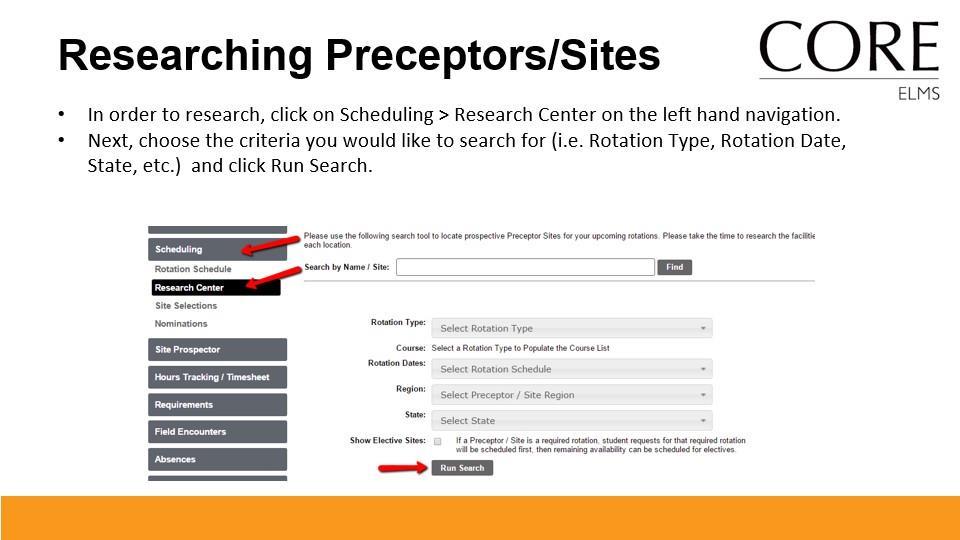
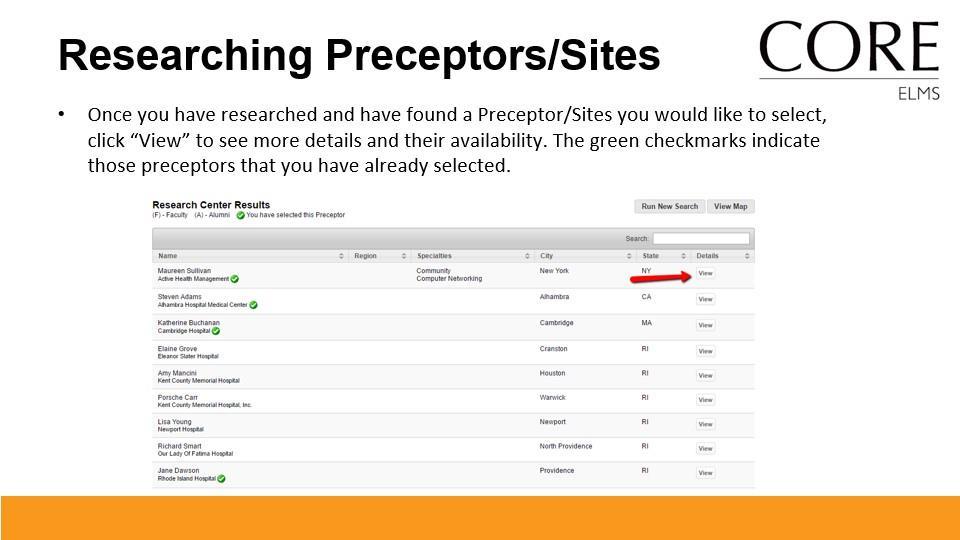
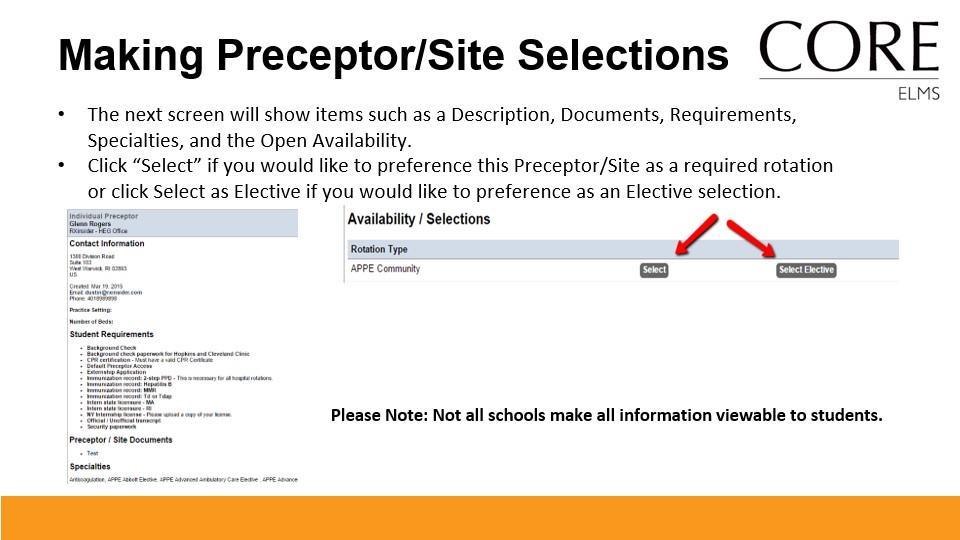
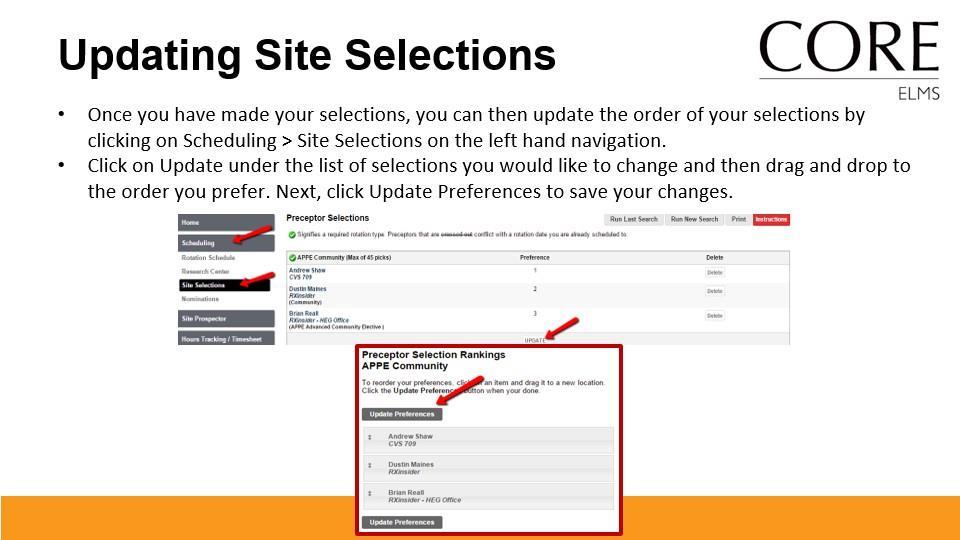
Each year, the Director of Experiential Education meets with P1 and P2 students to discuss and review the IPPE Community and Hospital rotation assignment process, usually in January. During this session, students receive a demonstration of the rotation assignment system, including how to select and rank preferred practice sites, preceptors, and rotation blocks within CORE. A question-and-answer session is provided, and a deadline for completing selections and rankings is established. Following the meeting, students are responsible for logging into CORE and submitting their selections and rankings during the designated assignment period. Students are encouraged to contact the Director of Experiential Education with any questions prior to the established deadline.
The Office of Experiential Education uses the SmartMatch Lottery in CORE to assign students to their IPPE Community and Hospital preceptor, site, and one of three 4week rotation blocks. This process is completed early in the spring semester, at which time the students are allowed to log into CORE to view their preceptor, site, and rotation block for the upcoming summer.
IPPE Hospital Rotation Swap Request
The Office of Experiential Education allows IPPE students to swap a rotation block at the same site with another student if both students are agreeable to the swap The students must complete and sign the IPPE Rotation Block Swap Request Form located in the CORE ELMS Document Library and return it to the IPPE course coordinator (Director of Experiential Education) during the time allotted by the OEE.
APPE Zones and Rotation Assignment Process
APPE Zones
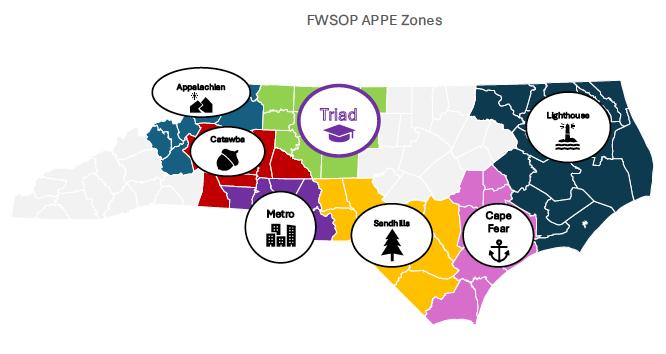
Students complete APPE rotations within one of the seven APPE zones within the state of North Carolina. Each APPE Zone provides a variety of hospital systems (small and large, rural and city). Students are exposed to a variety of disease states due to site selection based on pharmacy location, prescription/order volume, and regional culture. The majority of APPE rotations are delivered in the greater Piedmont Triad area.
Below are the seven APPE Zones across the state of North Carolina:
The Triad Zone
High Point, Winston Salem, Greensboro
The Metro Zone
Charlotte, Concord, Gastonia
The Catawba Valley Zone
Hickory, Morganton, Lincolnton, Shelby
The Appalachian Zone
Boone, North Wilkesboro, Jefferson
The Cape Fear Zone
Wilmington, Burgaw
The Sandhills Zone
Pinehurst, Fayetteville
The Lighthouse Zone
Jacksonville, Morehead City
APPE Rotations
Core Rotations (required)
• Advanced Hospital Practice
• Advanced Community Practice
• Inpatient (Internal) Medicine Practice
• Ambulatory Care
Zone Rotations
Students are assigned to a minimum of four rotations in their zone:
• Advanced Hospital Practice
• Inpatient (Internal) Medicine Practice
• Ambulatory Care
• Hospital-based Elective
Due to the generous availability of Advanced Community sites, this rotation may be completed in any APPE Zone.
APPE Electives
Once students are assigned to their APPE Zones, they have an opportunity to request five elective APPE rotations from an approved list. Students rank their preferences and are assigned based on availability and feasibility. Providing a variety of diverse elective opportunities for students ensures they will meet the expectations for experiential learning set forth by ACPE and the School of Pharmacy. Elective rotations have a focus
on helping the student mature professionally and to provide a breadth of experiences that achieve educational outcomes.
To ensure students are exposed to a variety of experiences, they may select no more than two rotations per elective category. APPE elective rotations are categorized as:
APPE-C = Community based elective rotation: Examples include Advanced Community Pharmacy, Community Pharmacy Management, Medication Therapy Management, Compounding, Ambulatory Care, and Public Health.
APPE-H = Hospital based elective rotation: Examples include Additional Inpatient Medicine, Cardiology, Emergency Medicine, Geriatrics, Institutional Pharmacy Management, Infectious Disease, Neonatology, Nuclear Pharmacy, Oncology, Pediatrics, and VA Medical Centers.
APPE-S = Specialty based elective rotation: Examples include Academia, Drug Information, Hospice Care, International Rotation, Medical Missions, Research, Pharmacy Administration, Veterinary Medicine, Nuclear Pharmacy, and other specialty sites.
ACPE Standards for Experiential Education state that a student may complete no more than 320 hours, or 2 FWSOP rotations, that are non-patient care elective APPEs. Additionally, students may complete no more than 2 virtual electives.
Abroad Electives
One elective APPE rotation abroad will be allowed pending prior approval by the Office of Experiential Education. Students must express interest in these opportunities early in the APPE selection process by email notification to a member of the OEE. These experiences are intended to provide unique opportunities to broaden the student’s understanding of practice worldwide. FWSOP currently offers an academic rotation at The University of East Anglia (UEA) in Norwich, England. Students are required to maintain a GPA of 3.0, have no record of academic or professional disciplinary action, and be in good standing with the Office of Experiential Education in order to be eligible for this experience. Students are responsible for payment of all personal expenses (travel, lodging, food, etc.) but will not pay additional tuition fees to participate in these rotations.
Out of State Rotations
The FWSOP has affiliation agreements in place regarding a limited number of out-ofstate rotation opportunities within the US. Students currently have the opportunity to complete a rotation in New York or Alaska. Students must express initial interest in
the fall semester of the P3 year and must be in good standing with the Office of Experiential Education.
In addition, some rotation sites used within the School's established experiential education zones are located in southern Virginia and northern South Carolina. These sites are considered part of the School's regular rotation network and are assigned in the same manner as in-state sites. Virginia sites are included within the Triad Zone, and South Carolina sites are included within the Metro and Cape Fear Zones.
APPE students are allowed to submit a request to complete one “At Home” community elective rotation outside North Carolina but within the US, at a chain community pharmacy with whom FWSOP has a current affiliation. This opportunity is available to enable students who are not from North Carolina with the ability to go to their hometown to complete a rotation. Students may not complete an “At Home” hospital rotation out of state. Students must complete the required request form and meet all deadlines in order to be considered for this opportunity. This opportunity must be approved by the ADEE.
Please note: If a student is scheduled for a rotation that is out of the state of North Carolina, the responsibility for obtaining their out-of-state pharmacy intern license falls on the student.
Rotation Assignments
The Assistant Dean of Experiential Education meets with all P3 students during the fall semester to review the process of rotation selection. Any P3 student who wishes to meet with the Assistant Dean or Director of Experiential Education individually to review their schedule and explore rotation opportunities is encouraged to do so.
Preceptor Availabilities
Preceptors submit their availabilities for all rotations to the Office of Experiential Education in the fall semester. Pharmacy practice sites and preceptor availabilities vary from year to year. The Office of Experiential Education actively recruits and maintains sites and preceptors to afford students an abundance of selections for pharmacy rotations. The Office of Experiential Education places immense value on the relationships it fosters with pharmacy practice sites and preceptors.
APPE Zone Fair
Each year, the Office of Experiential Education hosts an APPE Zone Fair event. This event is hosted to allow P3 students an opportunity to meet with preceptors from our seven APPE Zones. The APPE Zone Fair typically takes place in late August to early
September of the P3 year. Students have the opportunity to ask questions about rotation opportunities within each zone. Many preceptors from various pharmacy practice areas attend and share with P3 students about their unique practice site.
APPE Scholars Opportunities
The FWSOP has affiliation agreements with three experiential partners who offer an APPE Scholars program. Students have the opportunity to apply to any of the programs during the fall semester of their P3 year. Students are chosen out of a pool of applications for these rigorous Advanced Pharmacy Practice Experience programs. Students compete with P3 students from other Schools of Pharmacy from across the country for a place in these APPE Scholars programs. Students must apply by the deadlines given, providing all required documents. Application requirements are specific to each pharmacy practice site. A selection committee at each site reviews all applications and selects students for acceptance into their APPE Scholars Program.
Currently, the three Scholars opportunities for the FWSOP are:
Atrium Health Wake Forest Baptist in Winston Salem, NC
Atrium Health Cabarrus in Concord, NC
CaroMont Health in Gastonia, NC
Students who are accepted into one of the Scholars programs will automatically be placed into the APPE Zone that corresponds to the Scholars Program facility’s location.
APPE Zone Assignment
After the APPE Zone Fair and Scholars selection, P3 students submit their APPE Zone preferences. The Office of Experiential Education uses the SmartMatch feature of CORE to assign students to their APPE Zone via lottery, although the class will have the opportunity to reach consensus on Zone assignments prior to the lottery. Special circumstances are not a part of the Smart Match algorithm designed by CORE, nor are student GPAs and are not considered in Zone assignment.
Rotation Scheduling
The Assistant Dean of Experiential Education works closely with APPE Site Coordinators and preceptors to schedule student rotations. Rotations are scheduled based on preceptor availability, student requests (month off, elective preferences) and contractual agreements between HPU and the rotation sites. It is the goal of the Office of Experiential Education to have all APPE rotations scheduled by March of the P3 year.
Evaluations/Grading
Preceptor Evaluation of Student Grading
IPPE and APPE experiential rotations are graded on a Pass/Fail basis based on a total of 100 possible points. Students must earn 70 points to pass. Students receive both a formative verbal midpoint evaluation as well as a summative final evaluation from each preceptor.
Assessment Categories
Preceptors evaluate students in the following categories on the final evaluation:
• Skills and Abilities
• Knowledge
• Communication and Professionalism
• Interprofessional Education/Team Readiness
Grading Rubric
4 Outstanding 3 Competent 2 Needs Improvement 1 Unacceptable
The student consistently performs above expectations and requires minimal guidance and supervision from the preceptor.
The student frequently performs within expectations and requires minimal guidance and supervision from the preceptor.
The student sometimes performs within expectations and requires regular guidance and supervision.
The student rarely performs within expectations and requires constant guidance and supervision.
Students must complete a required workbook on their IPPE rotations that is graded by their preceptor. The workbook contains activities that ensure the core competencies of the program are met. There is no workbook for APPE rotations, but there are required activities listed in each course syllabus. The workbooks and syllabi are available in the CORE ELMS Document Library. Students also complete a project on each rotation which contributes to their overall final evaluation grade.
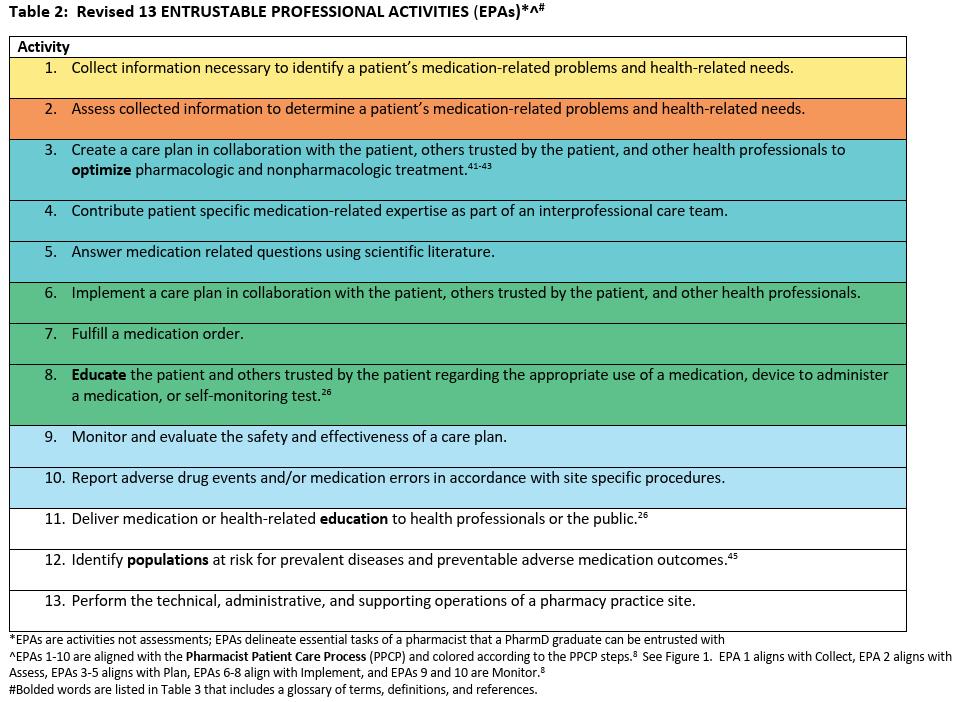
Entrustable Professional Activities (EPAs)
Students are also assessed in the core rotations by their preceptor on their ability to complete the 2022 AACP Entrustable Professional Activities (EPAs) adopted by the FWSOP
“The EPAs describe the work of pharmacists as workplace tasks and responsibilities that all students are entrusted to do in the experiential setting with direct or distant supervision.”
- AACP Curriculum Outcomes and Entrustable Professional Activities (COEPA) 2022
While the assessment of these activities does not contribute to the rotation grade, they are important indicators of student progression towards professional competency. There are 13 EPAs, although not every EPA is assessed on every rotation:
Entrustment Scale for Entrustable Professional Activities
Level Description
Observe only Learner is permitted to observe only. Even with direct supervision, learner is not entrusted to perform the activity or task.
Direct Supervision Learner is entrusted to perform the activity or task with direct and proactive supervision. Learner must be observed performing task in order to provide immediate feedback.
Reactive Supervision
Intermittent Supervision
General Direction
Learner is entrusted to perform the activity or task with indirect and reactive supervision. Learner can perform task without direct supervision but may request assistance. Supervising pharmacist is quickly available on site. Feedback is provided immediately after completion of activity or task.
Learner is entrusted to perform the activity or task with supervision at a distance. Learner can independently perform task. Learner meets with supervising pharmacist at periodic intervals. Feedback is provided regarding overall performance based on sample of work.
Learner is entrusted to independently decide what activities and tasks need to be performed. Learner entrusted to direct and supervise activities of others. Learner meets with supervising pharmacist at periodic intervals. Feedback is provided regarding overall performance based on broad professional expectations and organizational goals.
Students are expected to attain “Observe only” or “Direct Supervision” in their IPPE rotations, and “Reactive Supervision” in their APPE rotations.
Student Evaluation of Preceptor
As part of the experiential education program, all students are required to complete the Student Evaluation of Preceptor/Site in CORE at the conclusion of each IPPE and APPE rotation. These evaluations serve as an essential component of the program’s quality assurance process, supporting the ongoing assessment and enhancement of preceptor performance and practice site quality.
To preserve student confidentiality, preceptors will only have access to their evaluations once a minimum of three submissions have been received. Furthermore, preceptors never receive the individual free-response comments. These comments are used by the OEE to assess the effectiveness of a preceptor, rotation, and site.
Student Progression Concerns
When a student receives a mid-point evaluation indicating the student is at risk for failing the rotation, the ADEE or the Director of Experiential Education raises a Starfish EARLY ALERT™ flag. A Starfish EARLY ALERT™ flag can also be raised when a Preceptor alerts the Office of Experiential Education regarding a student who is at risk for not passing the rotation or if there are professionalism concerns. This flag alerts the Associate Dean for Academic Affairs and the Office of Financial Aid that the student is at risk of failure. The following steps are then taken to assist the student and Preceptor:
• The ADEE or Director of Experiential Education contacts the Preceptor and/or Site Coordinator either by phone or visits in person to discuss the issue and how or if the student can successfully complete the rotation.
• The ADEE or Director of Experiential Education contacts the student to discuss the issue. The student has the opportunity to provide additional information regarding the situation. These issues and concerns are documented.
• When necessary, the Preceptor, Site Coordinator, ADEE and/or Director of Experiential Education and student meet in person, by phone or via electronic meeting to decide if the student can successfully complete the rotation with a plan set for completion, or if the student should be dismissed from that rotation.
If the student successfully completes the rotation, the Starfish EARLY ALERT™ flag is lowered which notifies the Associate Dean for Academic Affairs and the Office of Financial Aid that the student will progress.
If the student fails the rotation, the student will follow the FWSOP Progressions Policy as outlined in the FWSOP Student Handbook
Preceptors can contact the Office of Experiential Education at any time during the rotation when there are concerns regarding a student on rotation. This same policy applies to any student at any time during their rotation who is at risk of failing a rotation.
Appendix
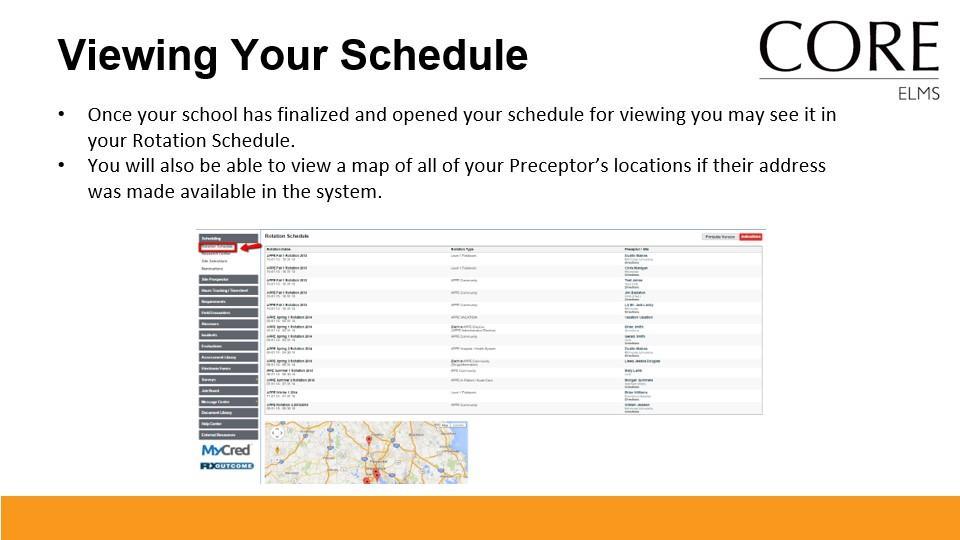
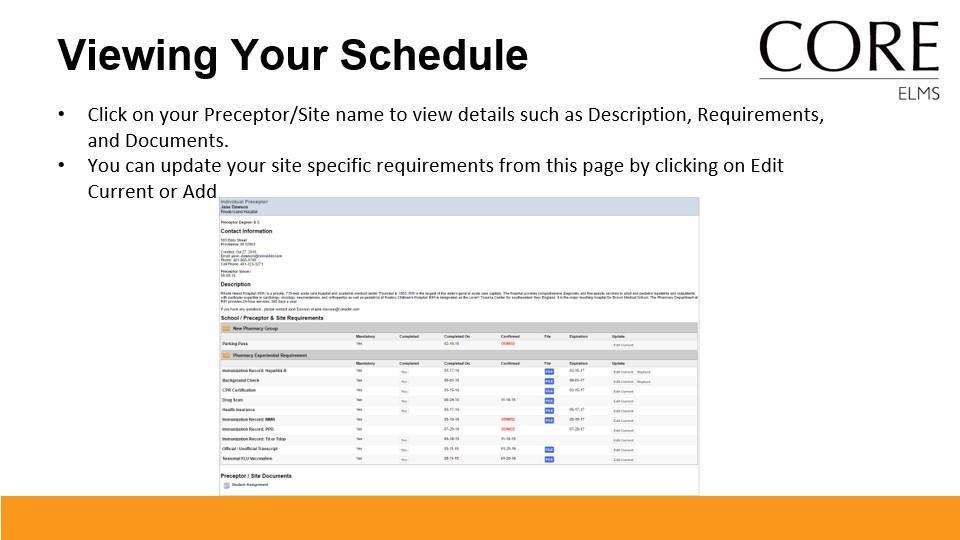
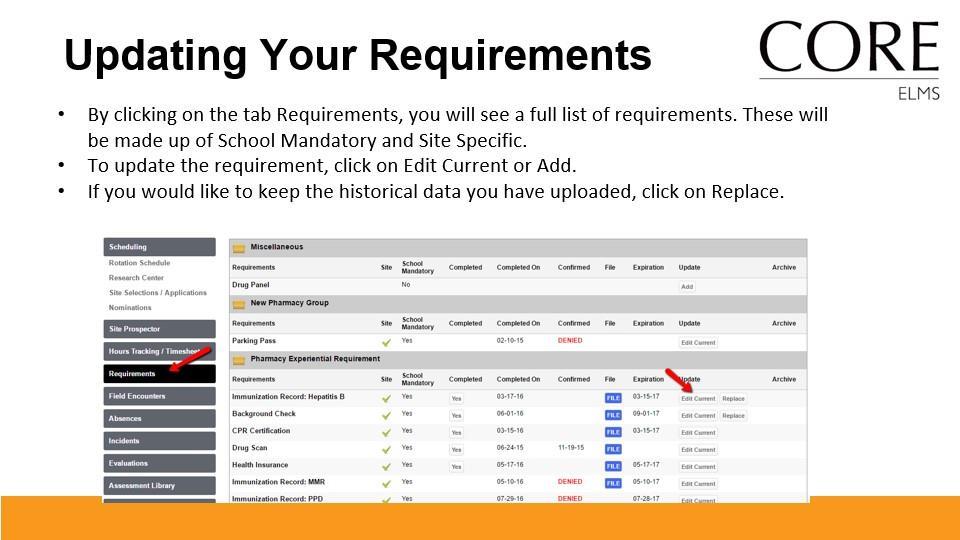
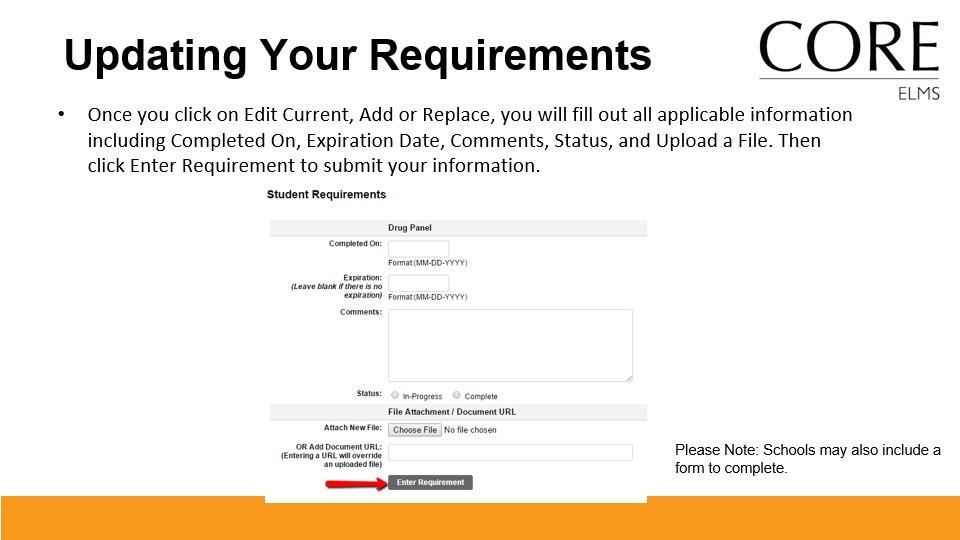
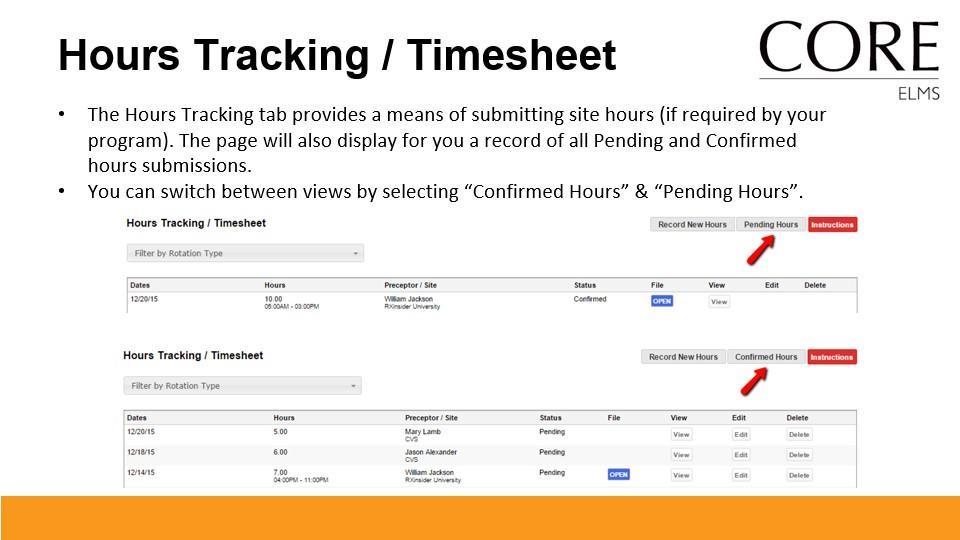
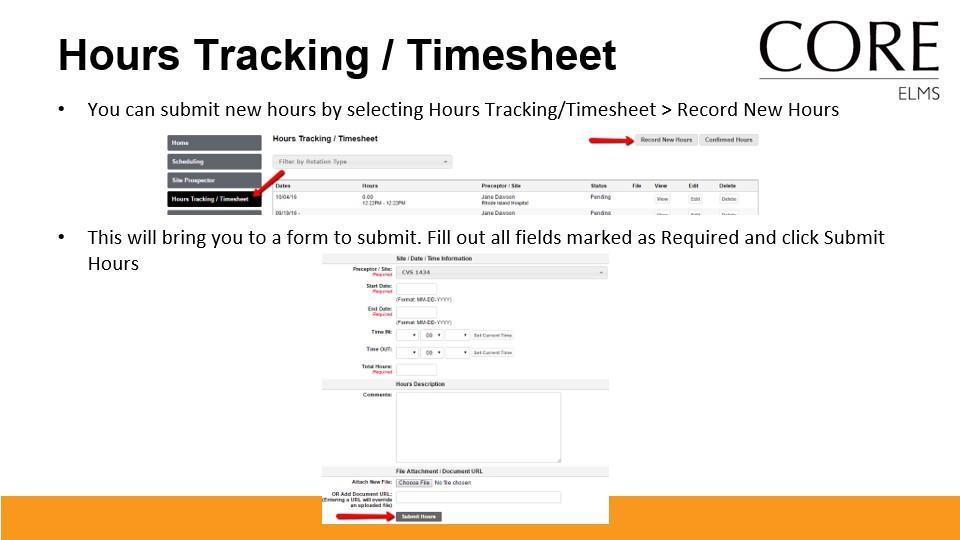
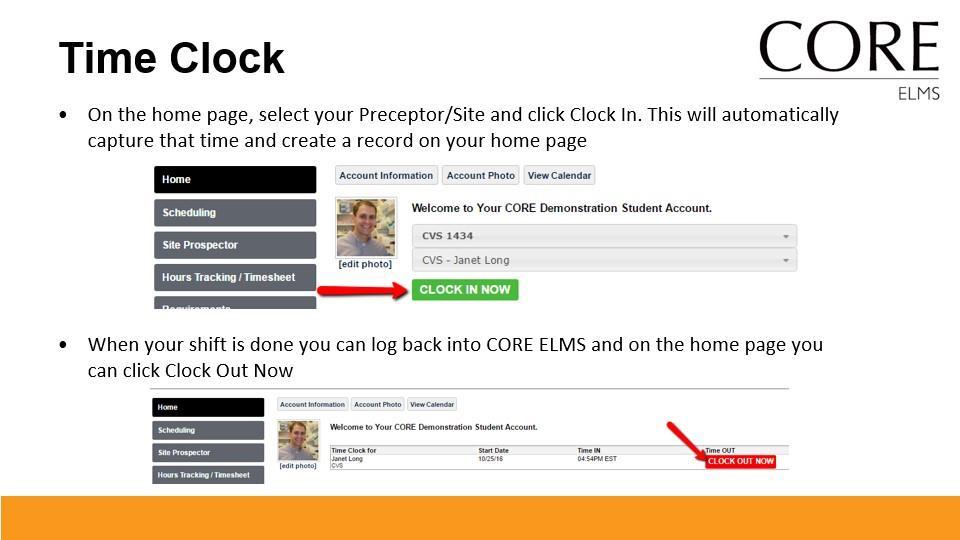
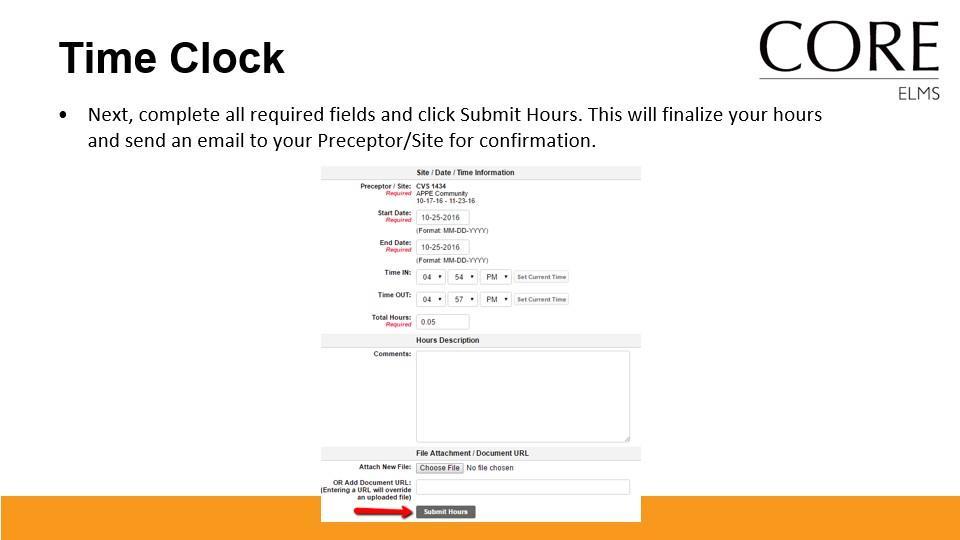
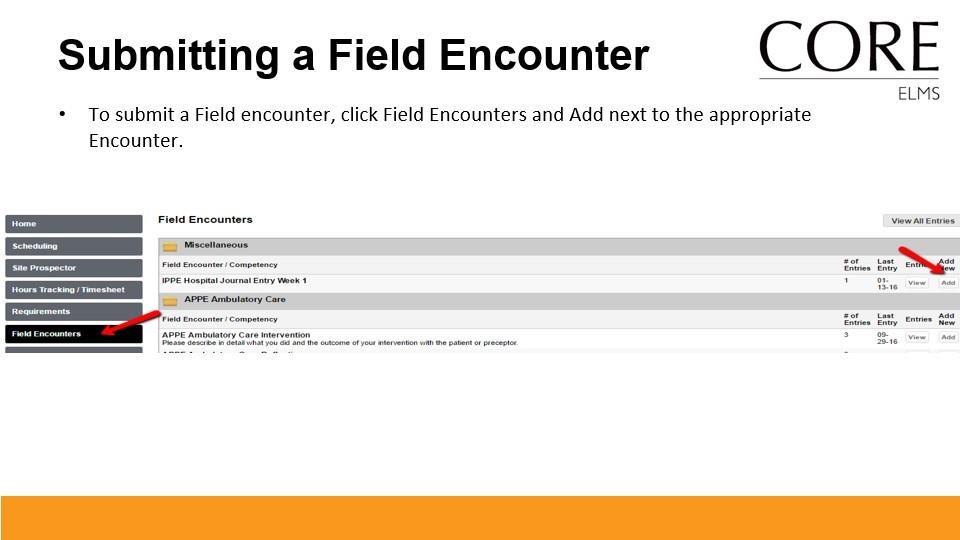
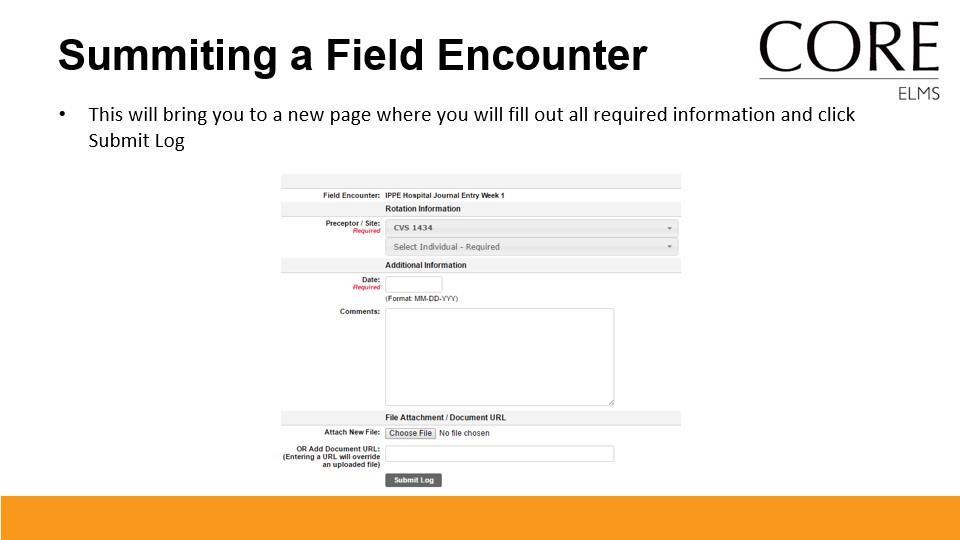
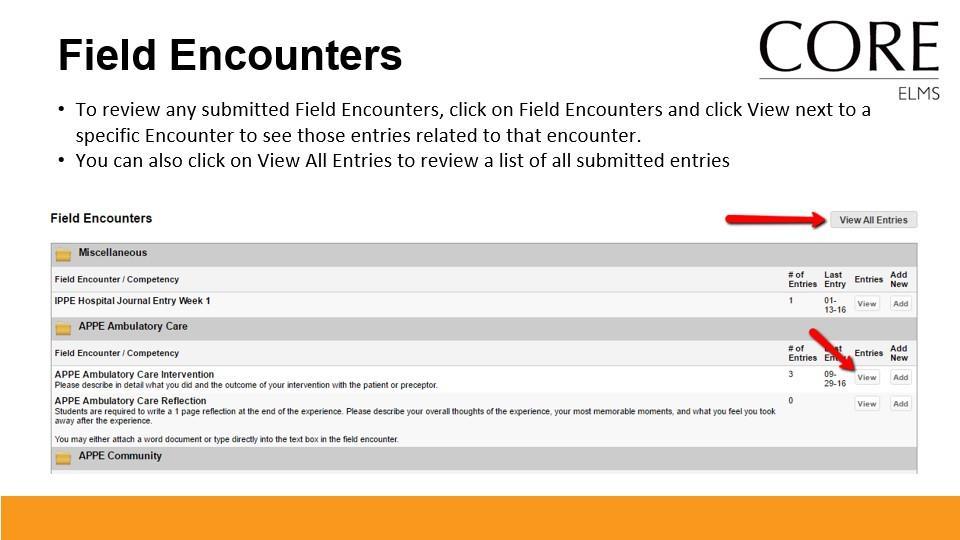
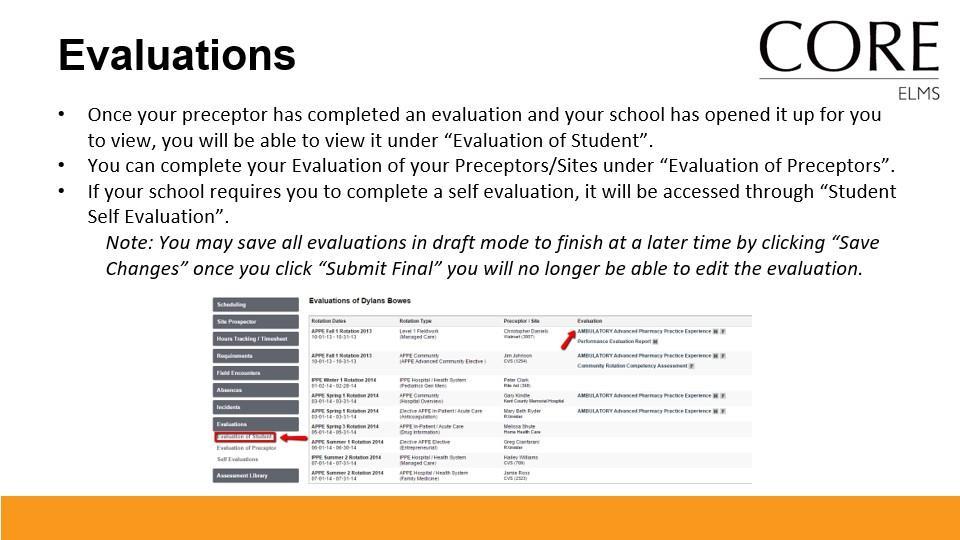
CORE ELMS Users Guide