
EXPERIENTIAL EDUCATION
Preceptor Manual
We are so pleased to welcome you to the important work of precepting pharmacy students at the Fred Wilson School of Pharmacy at High Point University (FWSOP)! Thank you for your service to our profession and to our school. You were selected to be a preceptor because of your knowledge, skills, and values as a healthcare professional. We are delighted to have you on our team and look forward to working with you in the years to come!
Website: www.highpoint.edu/pharmacy
Office of Experiential Education




Lisa F. Brennan, PharmD, BCPS
Associate Professor and Assistant Dean of Experiential Education
One University Parkway, High Point, NC 27268
Office: 336-841-9553 | Dept: Experiential
Fred Wilson School of Pharmacy | Choose to be extraordinary! ®
Brian M. Pacanowski, PharmD
Assistant Professor and Director of Experiential Education
One University Parkway, High Point, NC 27268 Office: 336-841-9651 | Dept: Experiential
Fred Wilson School of Pharmacy | Choose to be extraordinary! ®
Gail Strickland | Coordinator for Experiential Education
One University Parkway, High Point, NC 27268 Office: 336-841-9489|Dept: Experiential
Fred Wilson School of Pharmacy | Choose to be extraordinary! ®
Experiential Education at FWSOP
Summer after P1 Year
Summer after P2 Year
P3 Year
• Community IPPE rotation - 4 weeks
• Hospital IPPE rotation - 4 weeks
• Fall Zone Fair and rotation scheduling
• Spring APPE Prep course
P4 Year*
• Nine 1-month APPE rotations
*During the P4 year, students also complete a Board Preparatory Course which includes a mandatory monthlong exam review in April on campus.
IPPE (Introductory Pharmacy Practice Experience)
Introductory Pharmacy Practice Experiences (IPPE) are designed to provide pharmacy students with what is often their first experience in a pharmacy setting and are an important first step in a student’s journey to becoming a licensed pharmacist. Students are given a “hands-on” opportunity to see how a pharmacy operates and to explore their potential role as a pharmacist in years to come.
Participating in IPPE rotations provides students with direct patient care encounters under the guidance of an experienced preceptor.
According to the 2025 ACPE requirements, IPPE expectations are as follows:
3.1.a IPPE expectations – IPPEs involve students in common contemporary U.S. practice models, including interprofessional practice involving shared patient care decision-making, professional ethics and expected behaviors, and direct patient care activities. IPPEs are structured and sequenced to intentionally develop in students a clear understanding of what constitutes exemplary pharmacy practice in the U.S. prior to beginning APPE.
IPPE exemptions – Using established criteria that encompass the depth and breadth of the practice, a college or school may exempt applicable students from the requirements of certain IPPE types provided that the college or school has documented that the student has achieved the desired outcomes of that experience through previous experience. Replacement IPPEs will then be used to advance students’ understanding of practice and their preparation for success in APPE.
3.1.b IPPE duration – IPPE totals no less than 300 clock hours of experience and is purposely integrated into the didactic curriculum. A minimum of 75 IPPE hours of patient care must be completed in each community and institutional health-system settings. The remaining 150 hours may be in a variety of pharmacy practice settings that expose students to patient care. Although simulation can provide an excellent learning modality in didactic education, simulated practice experiences cannot be counted toward the 300 IPPE hours.
At the High Point University Fred Wilson School of Pharmacy (FWSOP), pharmacy students are required to complete two IPPE rotations of 4 weeks (160 hours) each; one in the community pharmacy setting in the summer after the P1 year, and one in the hospital setting in the summer after the P2 year.
APPE (Advanced Pharmacy Practice Experience)
APPE is structured to provide students with opportunities to think and act independently as pharmacy practitioners.
According to the 2025 ACPE requirements, APPE expectations are as follows:
3.2.a APPE expectations – Collectively, APPEs emphasize continuity of care and incorporate acute, chronic, and wellness-promoting patient-care services in outpatient (community/ambulatory care) and inpatient (hospital/health system) settings. In the aggregate, APPEs expose students to diverse patient populations as related to age, gender, race/ethnicity, socioeconomic factors (e.g., rural/urban, poverty/affluence), and disease states. APPEs follow IPPEs, which are designed to progressively develop the professional insights and skills necessary to advance into responsibilities in APPEs.
3.2.b APPE duration – The curriculum includes no less than 36 weeks (1440 hours) of APPEs, and each APPE is at minimum 160 hours. The majority of the APPE curriculum is focused on direct patient care. No more than 480 hours of the 1440 APPE hours can occur outside the United States or its territories or possessions.
3.2.c Timing – APPEs follow successful completion of all IPPE and required didactic curricular content. Required capstone courses or activities that provide opportunity for additional professional growth and insight are allowed during or after completion of APPEs. These activities do not compromise the quality of or decrease the time spent on the APPEs, nor count toward the required 1440 APPE hours.
3.2.d Required APPE – Required APPEs are completed in the United States or its territories or possessions and occur in four practice settings: (1) community pharmacy; (2) ambulatory care (must involve interprofessional communication and collaboration); (3) hospital/health system pharmacy; and (4) inpatient adult patient care. Nontraditional PharmD (NTPD) programs need to demonstrate that all students have completed or met the 4 required APPEs using a formalized faculty assessment that documents achievement of the outcomes of the 4 required APPEs. All aspects of any program offering an NTPD pathway will be assessed in the self-study process and reviewed by onsite evaluation team members during the program’s comprehensive evaluation.
3.2.e Elective APPE – Elective APPEs are structured to give students the opportunity to: (1) mature professionally, (2) secure the breadth and depth of experiences needed to achieve the educational outcomes articulated in Standards 2.1.a-n, and (3) explore various sectors of practice. A maximum of 320 hours of non-direct patient care APPEs are allowed.
At the FWSOP, APPEs consist of nine monthlong rotations of four credits each beginning in May after the completion of the third professional year and concluding in March of the fourth professional year. During the APPE courses, students spend a minimum of 160 hours per rotation in a variety of pharmacy practice settings. Students are exposed to the roles and responsibilities of the pharmacist in each practice setting with an emphasis on direct patient care, systems management, administrative functions, and medication distribution with an interprofessional team-based approach. Students work under the supervision of a FWSOP-approved preceptor at all times during APPEs.
Students must complete the following four required APPE rotations:
• Advanced Hospital Practice
• Advanced Community Practice
• Inpatient (Internal) Medicine Practice
• Ambulatory Care
The remaining five APPE rotations are elective rotations. Elective rotations allow students to explore additional areas of professional interest. Elective rotations also enable students to expand their understanding of professional opportunities in the field of pharmacy. At FWSOP, students can complete rotations in various areas. These areas may include, but are not necessarily limited to:
• Management
• Academia
• Home infusion
• Nuclear pharmacy
• Pediatric pharmacy
• Geriatric pharmacy
• Specialized community pharmacy
• Infectious Disease
• Compounding pharmacy
• Critical care pharmacy
• Oncology pharmacy
• Transitions of Care
• Entrepreneurship
• Medication Therapy Management
• Cardiology
• International pharmacy
• Rural Health
• Veterinary pharmacy
• Long Term Care
• Industry
The FWSOP syllabi for all rotations can be found in CORE ELMS in the Document Library under Messaging/Support or by clicking this link: https://rxpreceptor.com/command_center/schools/document_library.php
Precepting
This section is designed to help FWSOP preceptors understand the purpose of experiential education, the learning framework used to prepare student pharmacists, and the practical expectations for designing and facilitating high-quality IPPE and APPE rotations. Preceptors will find information about FWSOP educational outcomes, the Pharmacists’ Patient Care Process, Entrustable Professional Activities, orientation expectations, rotation planning, feedback, evaluation, and when to contact the Office of Experiential Education.
Your Responsibilities as a FWSOP Preceptor
As a FWSOP preceptor, you play an essential role in developing future pharmacists. Core expectations include:
✓ Provide a safe, supportive, and patient-centered learning environment
✓ Orient students to the site, workflow, policies, and expectations
✓ Engage students in meaningful learning activities appropriate to their level of training
✓ Provide regular coaching, feedback, and opportunities for reflection
✓ Model professionalism, ethical practice, and effective communication
✓ Complete midpoint and final evaluations in CORE by established deadlines
✓ Communicate student performance concerns promptly to the Office of Experiential Education
✓ Support student development toward practice readiness through progressive responsibility and supervision
For additional guidance, review the sections that follow regarding rotation design, evaluation, and student progression.
Why Experiential Education?
Experiential education is where student pharmacists begin to connect classroom and laboratory learning with the realities of pharmacy practice. Experiential education represents a substantial portion of the curriculum and provides students with opportunities to participate in patient care, pharmacy operations, interprofessional collaboration, communication, problem solving, and professional identity formation in authentic practice settings.
Preceptors play a central role in this process. Through observation, coaching, feedback, and assessment, preceptors help students understand not only what pharmacists do, but why pharmacists make specific clinical, ethical, operational, and professional decisions. Early experiences in IPPE rotations help students understand pharmacy practice and prepare for APPE responsibilities, while APPE rotations allow students to demonstrate increasing independence and readiness for practice.
During rotations, students should have opportunities to apply classroom and laboratory learning, develop professional values, improve communication and patient counseling skills, participate in clinical decision-making, interact with diverse patients and health care professionals, contribute as members of the interprofessional team, and explore the diverse roles pharmacists serve in patient care, healthcare systems, public health, research, industry, and leadership
Educational Outcomes
FWSOP educational outcomes describe the knowledge, skills, attitudes, and professional behaviors students are expected to develop throughout the PharmD curriculum. These outcomes guide course objectives, rotation activities, student assignments, and assessment tools used in IPPE and APPE rotations.
Preceptors are not expected to teach or assess every educational outcome independently during a single rotation. Instead, preceptors support student progress by designing meaningful learning activities, observing student performance, asking students to explain their reasoning, providing regular feedback, and completing required evaluations in CORE.
The full FWSOP Educational Outcomes table is provided as a reference to show how experiential activities connect to the broader curriculum. Preceptors should refer to the course syllabus and activity requirements in CORE for rotation-specific objectives and expectations.
Pharmacist Patient Care Process (PPCP)
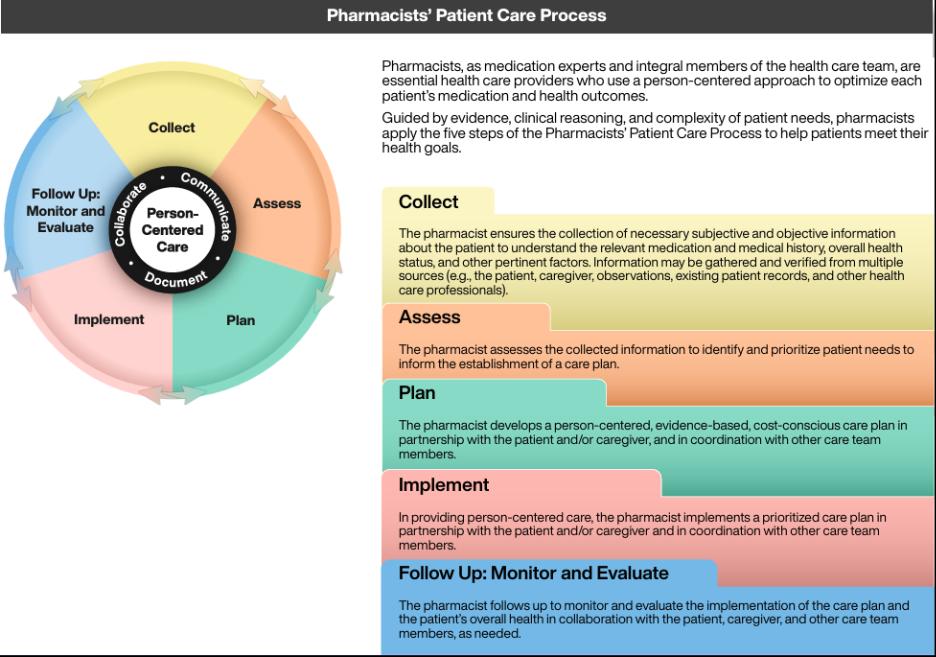
The Pharmacists’ Patient Care Process, or PPCP, provides a consistent framework for patient-centered pharmacy practice. APPE students are introduced to the PPCP during didactic coursework and review how to apply it during the APPE Preparatory Course. During APPE rotations, preceptors evaluate how students use the PPCP when approaching patient care responsibilities.
On rotation, preceptors can reinforce the PPCP by asking students to collect relevant patient information, assess medication-related needs, develop or contribute to a care plan, implement recommendations or interventions when appropriate, and follow up to monitor safety and effectiveness. These steps may be applied during patient workups, medication reconciliation, patient counseling, documentation, drug information questions, topic discussions, and interprofessional communication.
Preceptors may refer to the Joint Commission of Pharmacy Practitioners PPCP Document for additional examples of activities that align with the PPCP.
https://jcpp.net/wp-content/uploads/2018/10/Pharmacists-Patient-Care-Process-Document2025.pdf
Entrustable Professional Activities (EPAs)
FWSOP incorporates Entrustable Professional Activities, or EPAs, into IPPE and core APPE rotations. EPAs describe essential pharmacist activities that are observable in practice and can be performed with varying levels of supervision.
EPAs are not additional assignments or separate course requirements. Rather, they provide a shared language for describing how much supervision a student needs while performing authentic professional tasks. They are longitudinally assessed over the student’s academic career. For example, a student may initially observe an activity, then perform it with direct supervision, and later even on another rotation perform similar activities with more independence as competence develops.
In FWSOP rotations, preceptors assess students’ EPA performance as part of the final evaluation process. EPA ratings do not contribute directly to the rotation grade, but they provide important information about student progression toward professional competency and readiness for practice.
Detailed EPA descriptions, entrustment levels and evaluation expectations may be found in the Evaluations/Grading section.
Becoming a Preceptor for FWSOP
FWSOP establishes minimum eligibility requirements for both preceptors and experiential sites to ensure students receive high-quality educational experiences. These criteria are used when reviewing and approving preceptors and practice sites and may be helpful to site coordinators who are identifying potential future preceptors.
Preceptor Eligibility Requirements
To serve as a preceptor for FWSOP, individuals must:
• Hold an active professional license and remain in good standing with applicable regulatory agencies.
• Have at least 12 months of licensure and three months of employment at the practice site.
• Possess the training, experience, and expertise necessary to support student learning.
• Complete required FWSOP orientation and training.
• Provide regular supervision, mentorship, and evaluation of student performance.
• Avoid conflicts of interest that could compromise objective student assessment.
• Comply with applicable nondiscrimination laws and institutional policies.
• Provide direct supervision for at least 50% of the time a student is assigned to the preceptor.
Characteristics of Successful FWSOP Preceptors
Successful FWSOP preceptors:
• Demonstrate professionalism, ethical behavior, and patient-centered care.
• Enjoy teaching and mentoring students.
• Foster a supportive and engaging learning environment.
• Collaborate effectively with other healthcare professionals.
• Apply current evidence and scientific literature to patient care decisions.
• Advocate for patients, the pharmacy profession, and continuous improvement in practice.
• Demonstrate compassion, respect, and a commitment to lifelong learning.
Site Eligibility Requirements
To serve as an experiential education site for FWSOP, practice sites must:
• Comply with all applicable state and federal regulations, including HIPAA requirements.
• Maintain good standing with applicable regulatory and accrediting bodies.
• Provide a safe, professional, patient-centered environment that supports student learning and development.
• Maintain adequate staffing, resources, and patient volume to achieve the educational objectives of the rotation.
• Provide students access to appropriate technology, health records, drug information resources, and other tools necessary for contemporary pharmacy practice.
• Ensure students are supervised by an approved FWSOP preceptor and receive regular coaching, feedback, and performance assessment.
• Integrate students into meaningful pharmacy practice activities that promote critical thinking, professional growth, and progressive responsibility.
• Provide opportunities for interaction with pharmacists, patients, and other members of the healthcare team.
• Support evidence-based practice, patient safety, health promotion, and quality improvement activities.
• Demonstrate a commitment to disease prevention, wellness, and public health through the services provided to patients and communities (e.g., health screenings, immunizations, tobacco cessation services, and other patient care initiatives).
Preceptor Resources
Preceptor Orientation
The Office of Experiential Education reviews and evaluates all new pharmacy practice sites and preceptors prior to students completing a rotation. When a site is within a reasonable driving distance, the Assistant/Associate Dean for Experiential Education (ADEE) or the Director of Experiential Education (DEE) will visit the site in person. If this is not possible, the site is evaluated via telephone or videoconference prior to the student completing the rotation. Preceptors are informed via e-mail of their status in the preceptor application process.
Once the necessary criteria are established and a person is selected to be a preceptor for FWSOP, they are required to complete orientation prior to hosting a student at their site.
Orientation includes the following:
• A thorough overview of the Experiential program at FWSOP
• A review of preceptor expectations
• IPPE/APPE course objectives
• Value of teaching and learning at the practice site
• Tips for objective evaluations of students
• Demonstration/Overview of CORE
FWSOP preceptor orientation will take place a variety of ways, according to the needs of the preceptors, the pharmacy practice site and the Office of Experiential Education.
One-On-One Orientation
Preceptors may receive FWSOP specific orientation one-on-one at their practice site. The Assistant/Associate Dean for Experiential Education will make an appointment with preceptors desiring this type of orientation.
On Campus Orientation
Each year or as needed, the Office of Experiential Education will offer preceptor orientation on the campus of High Point University and/or online.
Developing an Extraordinary Rotation
Students are usually excited about completing their IPPE and APPE rotations. This is a time in their training for them to apply concepts and techniques they have learned in the classroom and to develop attitudes, values and their own individual approach to patient care.
Students appreciate an enthusiastic preceptor who has developed an organized rotation for them. Students typically respond well to a preceptor who encourages them to think critically, solve problems and allow them to serve as a part of the health care team.
Students will respond best to a preceptor who is engaging, provides active learning opportunities at the practice site and encourages them to express opinions and share their knowledge or experiences.
Before Rotation During Rotation Midpoint
Prepare schedule Active learning Formal feedback
End of Rotation
Final evaluation
Review syllabus Topic discussions Identify concerns Student feedback Plan projects Daily coaching Growth plan Submit evaluations
Below are some things to consider when developing your extraordinary rotation:
• Implement a proper orientation and review policies and procedures
• Provide a syllabus and rotation activities calendar
• Design meaningful activities, including active learning opportunities (patient encounters, projects and presentations)
• Set aside time, each day, to meet with your student to discuss the day
• Provide topic and disease state discussions (including interprofessional opportunities)
• Teach students in a way that motivates them to excel
• Provide prompt and thoughtful feedback and discussions
• Design and implement projects to meet course objectives and criteria
• Provide and review (in detail) with the student mid-point and final evaluations
• Openly receive feedback from your student(s)
You can find a wealth of information regarding precepting on a variety of websites. Check out the following links for additional tools on precepting:
http://www.ashp.org/Preceptorskills (members only)
https://www.pharmacist.com/Practice/Practice-Resources/Preceptors (some free, some members only)
Off to a Great S.T.A.R.T.
The FWSOP requests that all pharmacy preceptors provide an orientation session with the student the first day of the rotation. For a student to be successful on rotation, they need to understand what expectations the preceptor has set forth. We ask that you invest the necessary time for a structured orientation to help create a positive learning environment for your student.
It is important that students feel welcomed when they complete a rotation at your pharmacy practice site. Below are some tips for getting off to a great S.T.A.R.T with your student.
S.T.A.R.T. Step
Say Hello
Tell Logistics
Allow Participation
Review Expectations
Time With You
Recommended Orientation
Discussion
Introduce student to staff and environment
Parking, hours, communication, expectations
Student responsibilities and opportunities
Objectives, assignments, evaluation
Daily or scheduled feedback/check-in
Additional suggestions for implementing the S.T.A.R.T. framework include:
Say hello!
Introduce yourself and your staff to your student. Students often feel nervous and insecure on the first day of their rotation. Welcoming your student with a friendly smile and introduction can set your student’s mind at ease.
Tell your students the logistics.
• How should they contact you after hours with questions or if there is an issue for their arrival to the site?
• Where should they park?
• Where can they store their belongings?
• Are there site-specific guidelines they need to know such as dress code, or “is it ok for a student to park in a visitor parking space?”
Allow your student to be a part of your team.
Students are excited and ready for challenges and new learning experiences. Give them reasonable responsibilities to learn and grow. Students can be pharmacy extenders at your site. Treat them as a beneficial part of your team.
Review your expectations
Students will often meet whatever expectation you set. Design your rotation’s goal and objectives to align with those set forth in the FWSOP curriculum. At the beginning of each rotation, review those goals and objectives with your student.
Establish and communicate a clear schedule for the rotation, including expected work hours, recurring activities, meetings, and any evening, weekend, or off-site responsibilities. Be sure to explain the calendar of assignments and discuss the activities you have planned. Students are expected to attend all scheduled rotation activities and should not assume time away from the site is permitted unless specifically approved by the preceptor.
Time spent with you
As a preceptor, you are a teacher, mentor and an expert in the field of pharmacy. Having a professional one-to-one relationship with your student is the most effective mechanism for experiential learning. Make time each day to sit down with your student and discuss the day’s challenges and successes. Tell your student what they did well and how they can improve.
Preceptor Advisory Board
The purpose of the High Point University Fred Wilson School of Pharmacy Preceptor Advisory Board (PAB) is to assist the FWSOP in fulfilling its vision and mission as it relates to experiential education. It is the desire of the FWSOP to be an extraordinary School of Pharmacy that meets and exceeds the expectations of our governing bodies (including ACPE, the CAPE outcomes, and the NC Board of Pharmacy). It is our desire to train extraordinary student pharmacists who are eager and skilled to effectively care for patients and who desire to push the profession of pharmacy forward. We want to partner with pharmacists and other health care providers locally, regionally and across the country. The PAB is a collection of expert professionals who bring a unique knowledge and skill set from the pharmacy community to enhance the FWSOP experiential program.
The PAB will provide insight to the Office of Experiential Education on key issues involving the experiential programs, including, but not limited to the following:
• Provide insight on current trends in pharmacy practice and healthcare
• Develop strategies to facilitate student learning at the rotation site
• Provide expertise on strengthening and enhancing rotations for students
• Assist the Office of Experiential Education with planning for sufficient rotation sites for students
• Participate in IPPE and APPE opportunities
• When applicable, serve as a preceptor for the FWSOP
• Assist the FWSOP in developing and promoting continuing education programs
• When applicable, participate in teaching, serving, and mentoring FWSOP students
Advisory Board Members will represent the broad spectrum of pharmacy practice areas including (but not limited to) community practice, hospital practice, research, academia, ambulatory care, management, pediatrics, and geriatrics.
HPU Advisory Board members will fulfill the following requirements:
• Meet and consistently comply with all requirements of being a preceptor for the FWSOP
• Actively participate as a community supporter of the FWSOP
• Serve as a preceptor for FWSOP or oversee preceptors at the practice site
• Consistently attend the PAB meetings to review pending issues related to experiential education
Assessment, Feedback, and Student Support
Learning on rotation occurs through experience, reflection, feedback, and progressive responsibility.As a preceptor, your observations, coaching, and evaluations provide some of the most valuable learning experiences students will receive during the PharmD program. Thoughtful feedback helps students recognize their strengths, identify areas for growth, and develop the confidence and competence needed for practice.
This section describes the tools and processes used to assess student performance, document progression, and provide support when concerns arise. It also outlines the role of EPAs, midpoint and final evaluations, student feedback, and the resources available through the Office of Experiential Education to assist both students and preceptors throughout the rotation experience.
Preceptor Assessment of Students
IPPE and APPE experiential rotations are graded on a Pass/Fail basis based on a total of 100 possible points. Each rotation has course competencies and expected activities to be assessed listed in the syllabus for the course. The syllabus can be accessed in CORE by choosing Messaging/Support, Document Library, Syllabi, and then the specific syllabus or by clicking the link below to access the Document Library. https://www.rxpreceptor.com/command_center/schools/document_library.php
Evaluations
Preceptors should complete both a formative midpoint evaluation as well as a summative final evaluation for each student. Both of these are submitted through CORE and reviewed by the OEE.
Midpoint
On the midpoint evaluation, preceptors use a three-tier scale to indicate progression in the rotation: Outstanding, Meeting Expectations, or Not Meeting Expectations. The preceptor should discuss the student’s performance with them verbally and if needed, provide guidance on areas for improvement. The OEE will contact the preceptor to discuss students not meeting expectations to determine any support needed. Further information on this support process can be found in the Student Progression Concerns section of this Manual.
Final
Preceptors assess students on the final evaluation on several indicators in the following categories:
• Skills and Abilities
• Knowledge
• Communication and Professionalism
• Interprofessional Education/Team Readiness
The preceptor will use the following rubric to assess a student’s performance:
The student consistently performs above
The student frequently performs within
The student sometimes performs within
The student rarely performs within expectations and requires constant
expectations and requires minimal guidance and supervision from the preceptor.
expectations and requires minimal guidance and supervision from the preceptor.
Additional Requirements
expectations and requires regular guidance and supervision.
guidance and supervision.
For IPPE rotations, students will complete a workbook that contains assignments intended to ensure students complete and reflect upon essential pharmacist duties and responsibilities. The preceptor will grade this workbook and record this on the final evaluation. These workbooks can be accessed in CORE by choosing Messaging/Support, Document Library, IPPE Workbooks, and the specific workbook or by clicking the link below to access the Document Library. https://www.rxpreceptor.com/command_center/schools/document_library.php
All students on IPPE and APPE rotations are graded on one other rotation requirement, this differs depending on rotation type. For IPPE Community rotations this is a Patient Counseling session, while for IPPE Hospital and APPE rotations this could be a project or presentation. More information can be found in the course syllabus for the rotation which can be found in the CORE Document Library.
Entrustable Professional Activities
Preceptors also assess students on their ability to complete the 2022 AACP Entrustable Professional Activities (EPAs) adopted by the FWSOP.
While the assessment of these activities does not contribute to the rotation grade, they are important indicators of student progression towards professional competency. Preceptors should carefully assess their student’s ability to complete these tasks on the final evaluation. There are 13 EPAs, although not every EPA is assessed on every rotation:
2022 AACP Entrustable Professional Activities (EPAs)*
Activity^
1. Collect information necessary to identify a patient’s medication-related problems and health-related needs.
2. Assess collected information to determine a patient’s medication-related problems and health-related needs.
3. 3. Create a care plan in collaboration with the patient, others trusted by the patient, and other health professionals to optimize pharmacologic and nonpharmacologic treatment.
4. Contribute patient specific medication-related expertise as part of an interprofessional care team.
5. Answer medication related questions using scientific literature.
6. Implement a care plan in collaboration with the patient, others trusted by the patient, and other health professionals
7. Fulfill a medication order.
8. 8. Educate the patient and others trusted by the patient regarding the appropriate use of a medication, device to administer a medication, or self-monitoring test.
9. Monitor and evaluate the safety and effectiveness of a care plan.
10. Report adverse drug events and/or medication errors in accordance with site specific procedures.
11. Deliver medication or health-related education to health professionals or the public.
12. Identify populations at risk for prevalent diseases and preventable adverse medication outcomes.
13. Perform the technical, administrative, and supporting operations of a pharmacy practice site.
*EPAs are activities not assessments; EPAs delineate essential tasks of a pharmacist that a PharmD graduate can be entrusted with
^EPAs 1-10 are aligned with the Pharmacist Patient Care Process (PPCP) and colored according to the PPCP steps. See Figure 1. EPA 1 aligns with Collect, EPA 2 aligns with Assess, EPAs 3-5 align with Plan, EPAs 6-8 align with Implement, and EPAs 9 and 10 are Monitor.
Entrustment Scale for Entrustable Professional Activities
Level
Observe only
Direct Supervision
Reactive Supervision
Description
Learner is permitted to observe only. Even with direct supervision, learner is not entrusted to perform the activity or task.
Learner is entrusted to perform the activity or task with direct and proactive supervision. Learner must be observed performing task in order to provide immediate feedback.
Learner is entrusted to perform the activity or task with indirect and reactive supervision. Learner can perform task without direct supervision by may request assistance. Supervising pharmacist is quickly available on site. Feedback is provided immediately after completion of activity or task.
Intermittent Supervision Learner is entrusted to perform the activity or task with supervision at a distance. Learner can independently perform task. Learner meets with supervising pharmacist at periodic intervals.
Feedback is provided regarding overall performance based on sample of work.
Students are expected to attain “Observe only” or “Direct Supervision” in their IPPE rotations, and “Reactive Supervision” in their APPE rotations by graduation
Preceptor Evaluation Forms
Preceptors and students can access sample Preceptor Evaluation of Student Forms in CORE by choosing Messaging/Support, Document Library, Evaluations, and then the specific evaluation or by clicking the link below to access the Document Library.
https://www.rxpreceptor.com/command_center/schools/document_library.php
Student Evaluation of Site/Preceptor
At the conclusion of each IPPE and APPE rotation, students are required to complete the Student Evaluation of Site/Preceptor in CORE. Student feedback is an important component of FWSOP's continuous quality improvement process and helps the Office of Experiential Education identify opportunities to strengthen the learning experience for future students. Feedback is used to assess the effectiveness of preceptors, rotation design, and practice sites, and to guide ongoing program development.
To maintain student confidentiality, evaluation results are only shared with preceptors after a minimum of three evaluations have been submitted. Written comments from freeresponse questions are not shared directly with preceptors and are reviewed by the Office of Experiential Education as part of the program's quality assurance process.
Sample APPE and IPPE Student Evaluation of Site/Preceptor forms can be accessed in CORE by selecting Messaging/Support → Document Library → Evaluations → Student Evaluation of (IPPE or APPE) Site/Preceptor or by using the Document Library link below.
https://www.rxpreceptor.com/command_center/schools/document_library.php
Student Progression Concerns
The FWSOP uses the Starfish EARLY ALERT™ system to monitor and alert students at risk for failure or poor performance. These alerts can be used for academic concerns, professionalism issues, or other indicators of poor performance.
The OEE will raise a Starfish EARLY ALERT™ flag if
• A student earns an EPA entrustment rating below Reactive Supervision in any APPE rotation course in which the EPA is evaluated or below the target entrustment level for an EPA in any IPPE;
• A student earns a score of < 3 on any item in the IPPE or APPE evaluation rubric
• A student receives a mid-point evaluation indicating the student is at risk for failing the rotation
• A preceptor raises professionalism or other concerns about a student with the OEE
If a Starfish EARLY ALERT™ flag indicates the student is in danger of failing, this alerts the Assistant/Associate Dean of Academic Affairs (ADAA) and the Office of Financial Aid that the student is at risk of failure. The following steps are then taken to assist the student and preceptor:
• The ADEE or Director of Experiential Education contacts the preceptor and/or site coordinator to discuss the issue. There is discussion on how or if the student can successfully complete the rotation. These discussions are documented and reported back to the ADAA.
• The ADEE or Director of Experiential Education contacts or meets with the student to discuss the issue. The student has the opportunity to provide additional information regarding the situation. These discussions and concerns are documented.
• When necessary, the preceptor, site coordinator, ADEE, or Director of Experiential Education and student meet in person, by phone or via electronic meeting to discuss a plan on how the student can successfully complete the rotation or if the student should be dismissed from that rotation.
If the student successfully completes the rotation, the Starfish EARLY ALERT™ flag is lowered alerting the ADAA and the Office of Financial Aid that the student will progress.
If the student fails the rotation, the student will follow the Progressions Policy as outlined in the HPU FWSOP Student Handbook.
Preceptors can contact the Office of Experiential Education at any time during the rotation when there are concerns regarding a student on rotation. This same policy applies to any student at any time during their rotation who is at risk of failing a rotation.
Policies
Policies for the Fred Wilson School of Pharmacy at High Point University can be found in the Student Handbook. You may view a copy of the Student Handbook in the CORE Document Library or on the FWSOP website Should you have any questions or concerns about any policies at the Fred Wilson School of Pharmacy, please reach out to a member of the Experiential Education Team.
Code of Conduct
Students who complete Experiential Education rotations are expected to maintain the highest level of professionalism. As they embark upon their rotations, they pledge to live a life of integrity, exhibit ethical behavior and honor.
Code of Ethics for Pharmacists
Pharmacists are health professionals who assist individuals in making the best use of medications. This Code, prepared and supported by pharmacists, is intended to state publicly the principles that form the fundamental basis of the roles and responsibilities of pharmacists. These principles, based on moral obligations and virtues, are established to guide pharmacists in relationships with patients, health professionals, and society.
I. A pharmacist respects the covenantal relationship between the patient and pharmacist.
Considering the patient-pharmacist relationship as a covenant means that a pharmacist has moral obligations in response to the gift of trust received from society. In return for this gift, a pharmacist promises to help individuals achieve optimum benefit from their medications, to be committed to their welfare, and to maintain their trust.
II. A pharmacist promotes the good of every patient in a caring, compassionate, and confidential manner.
A pharmacist places concern for the well-being of the patient at the center of professional practice. In doing so, a pharmacist considers needs stated by the patient as well as those defined by health science. A pharmacist is dedicated to protecting the dignity of the patient. With a caring attitude and a compassionate spirit, a pharmacist focuses on serving the patient in a private and confidential manner.
III. A pharmacist respects the autonomy and dignity of each patient.
A pharmacist promotes the right of self-determination and recognizes individual selfworth by encouraging patients to participate in decisions about their health. A pharmacist communicates with patients in terms that are understandable. In all cases, a pharmacist respects personal and cultural differences among patients.
IV. A pharmacist acts with honesty and integrity in professional relationships.
A pharmacist has a duty to tell the truth and to act with conviction of conscience. A pharmacist avoids discriminatory practices, behavior or work conditions that impair professional judgment, and actions that compromise dedication to the best interests of patients.
V. A pharmacist maintains professional competence.
A pharmacist has a duty to maintain knowledge and abilities as new medications, devices, and technologies become available and as health information advances.
VI. A pharmacist respects the values and abilities of colleagues and other health professionals.
When appropriate, a pharmacist asks for the consultation of colleagues or other health professionals or refers the patient. A pharmacist acknowledges that colleagues and other health professionals may differ in the beliefs and values they apply to the care of the patient.
VII. A pharmacist serves individual, community, and societal needs.
The primary obligation of a pharmacist is to individual patients. However, the obligations of a pharmacist may at times extend beyond the individual to the community and society. In these situations, the pharmacist recognizes the responsibilities that accompany these obligations and acts accordingly.
VII. A pharmacist seeks justice in the distribution of health resources. When health resources are allocated, a pharmacist is fair and equitable, balancing the needs of patients and society.
* Adopted by the membership of the American Pharmacists Association October 27, 1994.
Oath of a Pharmacist
All FWSOP students must follow elements outlined in the Oath below and will formally make this pledge to the profession upon graduation.
"I promise to devote myself to a lifetime of service to others through the profession of pharmacy. In fulfilling this vow:
• I will consider the welfare of humanity and relief of suffering my primary concerns.
• I will promote inclusion and belonging, respect differences in all individuals, and
• address health disparities to advance health equity for all people.
• I will apply my knowledge, experience, and skills to the best of my ability to assure
• optimal outcomes for all patients.
• I will respect and protect all personal and health information entrusted to me.
• I will accept the responsibility to improve my professional knowledge, expertise, and
• self-awareness.
• I will hold myself and my colleagues to the highest principles of our profession’s moral, ethical and legal conduct.
• I will embrace and advocate changes that improve patient care.
• I will utilize my knowledge, skills, experiences, and values to prepare the next
• generation of pharmacists.
I take these vows voluntarily with the full realization of the responsibility with which I am entrusted by the public.”
*Adopted by the American Association of Colleges of Pharmacy (AACP) Board of Directors and the APhA Board of Trustees, August 2025.
Pledge of Professionalism
The FWSOP Pledge of Professionalism states:
As a student at the High Point University School of Pharmacy, I believe there is a need to build and reinforce a professional identity founded on integrity, ethical behavior, and honor. This development, a vital process in my education, will help ensure that I am true to the professional relationship I establish between society and myself as I become a member of the pharmacy community. Integrity must be an essential part of my everyday life and I must practice pharmacy with honesty and commitment to service. To accomplish this goal of professional development, I as a student of pharmacy should:
DEVELOP a sense of loyalty and duty to the profession of pharmacy by being a builder of community, one able and willing to contribute to the well-being of others and one who enthusiastically accepts the responsibility and accountability for membership in the profession.
FOSTER professional competency through lifelong learning. I must strive for high ideals, teamwork and unity within the profession in order to provide optimal patient care.
SUPPORT my colleagues by actively encouraging personal commitment to the Oath of Maimonides and a Code of Ethics as set forth by the profession.
INCORPORATE into my life and practice, dedication to excellence. This will require an ongoing reassessment of personal and professional values.
MAINTAIN the highest ideals and professional attributes to ensure and facilitate the covenantal relationship required of the pharmaceutical caregiver.
The profession of pharmacy is one that demands adherence to a set of rigid ethical standards. These high ideals are necessary to ensure the quality of care extended to the patients I serve. As a student of pharmacy, I believe this does not start with graduation; rather, it begins with my membership in this professional college community. Therefore, I must strive to uphold these standards as I advance toward full membership in the profession of pharmacy.
Adopted from the American Pharmaceutical Association Academy of Students of Pharmacy/American Association of Colleges of Pharmacy Council of Deans (APhA-ASP/AACP-COD} Task Force on Professionalism; June 26, 1994.
Academic Dishonesty
Professionalism is of the utmost importance at the FWSOP. In order to ensure that professionalism is maintained at the highest level, dishonesty of any sort will not be tolerated. Academic dishonesty includes lying, cheating, collusion and plagiarism. The penalty for academic dishonesty is a failing (F} rotation grade.
Professional Conduct
Students are expected to behave in a professional manner while completing their pharmacy rotations. Students are expected to treat everyone at the site with the highest level of respect and dignity. It is expected that students demonstrate the following:
• A Professional Attitude
• A Proactive Demeanor
• A Commitment to Excellence
• Respect for Others
• Compassion for Others
• Integrity, Fairness and Trustworthiness
• Commitment to the Confidentiality of Patients
• Commitment to Effective Team Collaboration
• Clear and Effective Communication
• A Commitment to Lifelong Learning
• Acceptance of Personal Responsibility
• A Service-Minded Attitude
• Punctuality
• Dedication to Responsibilities as required by the preceptor (students should not request to leave their rotation sites before their shift ends)
Any behavior deemed inappropriate will impact the student's grade and may result in dismissal from the rotation. Preceptors will evaluate students on their professionalism. A grade of F for professionalism may result in letter grade reductions or a failing grade (F) for the course, regardless of the grade in other sections.
Misconduct can be reported to the OEE directly, or by submitting the FWSOP Academic and Professionalism Misconduct Allegation Form. All allegations of misconduct will be thoroughly investigated and dealt with as outlined in the FWSOP Process for Reporting and Reviewing Alleged Violations of the FWSOP Code of Conduct available in the FWSOP Student Handbook or from the OEE.
Attendance
The FWSOP Student Attendance and Participation Policy in the Student Handbook governs student absences, including reporting requirements, acceptable reasons for absence, and associated consequences. Experiential rotations are full-time professional experiences. Students are expected to be present for the entire rotation, including all scheduled activities, meetings, and professional responsibilities. IPPE rotations are four-week experiences and APPE rotations are month-long experiences.
Schedule expectations should be discussed with students at the beginning of a rotation. Students are expected to adhere to the schedule established by the preceptor. Depending on the practice setting, students may be required to work evenings, weekends, holidays, or other shifts commonly worked by pharmacists. There is no guarantee that rotation hours will occur during a traditional first-shift schedule.
The Office of Experiential Education (OEE) determines whether an absence is excused or unexcused in accordance with the Student Attendance and Participation Policy. However, preceptors may deny absence requests based on rotation requirements and determine when approved missed time will be made up.
Please note:
• All absences must be reported in CORE, which automatically notifies the OEE.
• Students must notify their preceptor of an absence, tardiness, or emergency no later than the start of the scheduled rotation day (unless incapacitated).
• Preceptors should notify the OEE promptly regarding any unexplained or unexcused absence.
• All IPPE and APPE rotations require a minimum of 160 hours and completion of required rotation activities.
• Hours missed due to an excused absence must be made up unless otherwise approved by the preceptor and OEE.
• Hours missed due to an unexcused absence may not be made up
• Limited Professional Leave is available during APPE rotations for residency or employment interviews and professional conference attendance (up to three days per rotation with approval from both the preceptor and OEE).
Failure to complete required rotation hours or meet rotation requirements may result in failure of the rotation. In addition, absences of any type may limit a student's ability to achieve rotation objectives and may affect evaluation of the student's performance.
Please contact the OEE with any questions or concerns regarding attendance or absences.
Student Dress Code
As future healthcare professionals, students in the pharmacy program are expected to uphold a standard of professional appearance that reflects the values and responsibilities of the field. What is considered professional dress may vary depending on the setting. Preceptors and practice sites may have additional policies and/or guidance on dress code, and students are expected to follow these when at a practice site.
We encourage choices that support a respectful, safe, and professional learning and clinical environment. General guidance provided to students for professional dress is outlined below.
• Students should be clean, modest and well-groomed.
• Personal grooming and hygiene are required. Hair, nails and facial hair must be tidy and not interfere with patient care or learning
• Clothing should be correctly sized, in good repair and adequately cover the body.
• Strongly odorous perfumes/colognes are discouraged.
• Student pharmacists should not have the odor of smoke on their clothing.
• Clothing and accessories bearing political slogans or statements are not aligned with the profession’s code of ethics and should not be worn.
• Clothing, accessories, jewelry, and shoes should not interfere with the duties of a pharmacist (e.g., dispensing prescriptions, compounding in a lab, performing physical assessments, and making IVs).
• Scrubs are expected to be clean, appropriately fitting, and in good condition.
• Students may be asked to cover visible tattoos or remove piercings in educational or professional environments to reflect the image and expectations of the pharmacy profession.
• White coats are expected to be clean and neat.
• Any medical, religious or other considerations that impact the ability for a student to adhere to these provisions should be discussed with and approved by FWSOP.
Students who are in violation of the Student Dress Code Policy or a practice site’s policy and/or guidance may be asked to leave a clinical rotation site. If a student is asked to leave, this may result in implications defined in the Attendance and Participation policy in the Student Handbook and/or reported to the Academic and Professional Conduct Committee. Preceptors should notify the OEE immediately if a student is dressed unprofessionally or asked to leave a rotation site.
HIPAA Confidentiality and Privacy
Students of the Fred Wilson High Point University School of Pharmacy have an ethical and legal duty to keep patient information confidential. Federal law known as the Health Insurance Portability and Accountability Act of 1996 (HIPAA) forbids healthcare providers from disclosing patients’ protected healthcare information, except upon written authorization by the patient of as others permitted by law.
Under the HIPAA Security and Privacy Regulations, hospitals and other healthcare providers are required to have the capacity to determine who is accessing their patients’ protected healthcare information and to protect the privacy of that information. Failure to maintain patient confidentiality, accessing patient information without a need to do so for work, or any other violation of policy, may result in disciplinary action against the student.
General student guidelines are as follows:
• Access patient information only if needed for work.
• Share or discuss patient information only if it is necessary for work and only in appropriate locations.
• If there are electronic health records, never share login credentials or information, and log off computer sessions when stepping away from a workstation.
• Follow the health care system and provider’s policies on confidentiality and privacy.
• Ensure confidentiality when handling all protected healthcare information.
Student Drug Screening
All students at the FWSOP are subject to annual random drug screening. Student drug screen results will be distributed as appropriate on a need-to-know basis to clinical partners/sites.
Student Background Check
All students at the FWSOP are subject to annual criminal background and sex offender (CBSO) checks. CBSO results will be distributed as appropriate on a need-to-know basis to clinical partners/sites.
Student Educational Records (FERPA)
Student educational records are protected by the Family Educational Rights and Privacy Act (FERPA). Information regarding student performance, evaluations, grades, and other educational records should only be shared with individuals who have a legitimate educational interest and a need to know.
Preceptors should maintain the confidentiality of student educational information and should not disclose student performance information to individuals outside of the educational process. Questions regarding student records, requests for information, or concerns related to FERPA should be directed to the Office of Experiential Education.
The Office of Experiential Education may share information relevant to a student's academic progress, performance, or placement when necessary to support the educational experience and in accordance with applicable FERPA regulations.
Diversity, Inclusion, and Belonging at FWSOP
The Fred Wilson School of Pharmacy is committed to fostering an inclusive learning environment and supporting diversity, equity, inclusion, accessibility, belonging, and respect for all individuals. FWSOP values the unique backgrounds, experiences, and perspectives of students, preceptors, faculty, staff, patients, and community members and is committed to preparing pharmacists who provide equitable, patient-centered care.
Preceptors and students are expected to contribute to a professional learning environment free from discrimination, harassment, retaliation, and bias. All individuals should be treated with dignity, respect, and professionalism.
High Point University prohibits discrimination on the basis of race, color, national origin, religion, sex, disability, age, veteran status, gender identity or expression, sexual orientation, genetic information, or other protected characteristics as defined by applicable law.
Concerns involving discrimination, harassment, bias, sexual misconduct, or Title IX should be reported promptly to the Office of Experiential Education and/or Meghan Miles, HPU Director of Title IX and 504 Coordinator. Information regarding University reporting processes and resources can be found through High Point University's Title IX website
Outcome Number
DOMAIN
1.01
1.02
1.03
1.04
1.05
1.06
1.07
1.08
1.09
Appendix A
FWSOP Educational Outcomes
Outcome Description
1: FOUNDATIONAL KNOWLEDGE
Explain and apply the scientific, technical, and legal concepts required to prepare and dispense medications
Evaluate prescriptions for appropriateness in terms of indication, drug selection, dose, route of administration, safety and drug interactions and formulate an action plan to resolve concerns
Explain and apply the scientific, intellectual, safety, and legal principles needed to compound nonsterile extemporaneous products
Explain and apply the scientific, intellectual, safety, and legal principles needed to prepare sterile and cytotoxic agents
Explain the regulatory and organizational procedures required to assure the safe manufacture, storage, and distribution of drug products
Explain and apply policies, procedures, and technology that health systems, pharmacies, and payers use to assure safe and cost-effective approaches to drug storage, acquisition, distribution, and administration
Explain and apply the principles of pharmaceutics, biopharmaceutics, pharmacokinetics and pharmacodynamics in pharmacy practice
Explain and apply the principles of basic and clinical pharmacology in pharmacy practice
Explain and apply the principles of medicinal chemistry in pharmacy practice
1.10 Explain and apply the principles of clinical chemistry in pharmacy practice
1.11
1.12
1.13
Explain and apply basic principles of biochemistry and molecular biology in pharmacy practice
Explain and apply fundamental knowledge of anatomy, physiology, and pathophysiology in pharmacy practice
Explain and apply basic principles of immunology in pharmacy practice
1.14 Explain and apply knowledge of genetics and genomics in pharmacy practice
1.15 Explain and apply knowledge of microbiology in pharmacy practice
1.16
1.17
1.18
1.19
Explain, interpret and apply basic statistical principles in scientific and clinical applications
Explain and execute the necessary steps required to receive, interpret, and appropriately respond to drug information requests from patients and other health care providers and to effectively and efficiently retrieve information from appropriate sources
Develop expertise in the interpretation, analysis and critique of primary, secondary and tertiary literature sources
Develop a working knowledge of local, state, and federal laws regulating the practice of pharmacy
1.20
1.21
Develop a working knowledge of how to develop and implement basic, clinical and practice-based research including the creation of innovative practice models
Accurately perform calculations which are essential to pharmacy practice including: product preparation, drug dosing, and physiologic markers needed for patient care
1.22 Develop an ability to recognize, analyze, and resolve ethical dilemmas
DOMAIN 2: INDIVIDUALIZED PATIENT CARE BASED ON POPULATION-DRIVEN DATA
2.01
2.02
2.03
2.04
2.05
2.06
Provide patient-centered care as the medication expert
Collect, interpret, prioritize and apply essential patient information using an organized and comprehensive approach
Explain and apply the knowledge and skills necessary to individualize therapeutic (pharmacologic and nonpharmacologic) interventions
Recommend appropriate therapeutic interventions for targeted medical emergencies, urgencies, or poisonings
Incorporate patient culture and values into clinical decision making in order to ensure the best patient outcomes and patient-pharmacist relationship
Design strategies for prevention, intervention and education for individuals and communities to manage chronic disease and improve health and wellness.
2.07 Be conversant on major public health issues within the scope of pharmacy practice
2.08
2.09
Explain and demonstrate the ability to use population-based data to provide optimal individual care and minimize health-related risks while improving quality of life
Recognize social determinants of health to diminish disparities and inequities in access to quality care.
DOMAIN 3: COMMUNICATION AND INTERPROFESSIONAL COLLABORATION
3.01
3.02
3.03
3.04
3.05
Recognize and use appropriate communication strategies, instructional aids and motivation techniques.
Document actions and information in an effective, accurate, and appropriate manner and assure that patients’ best interests are represented (advocacy)
Communicate appropriately and effectively with faculty, preceptors, pharmacy students, and interprofessional practitioners and students
Understand the roles of other healthcare professionals and optimal approaches to participate in an inter-professional team
Adapt instruction to audience needs and assess target audience comprehension of the information
DOMAIN 4: HEALTHCARE MODELS AND POLICIES, ENTREPRENEURSHIP, ECONOMIC, BUSINESS, AND ADMINISTRATIVE PRINCIPLES
4.01
4.02
4.03
4.04
4.05
4.06
Understand health care delivery and payment models and demonstrate ability to provide pharmaceutical services within those frameworks
Explain the range and diversity of pharmacy roles throughout the health care system and describe the role of the pharmacist in medication use management
Describe and apply administrative processes and techniques for management of drug selection, supply, and costs
Manage patient healthcare needs using human, financial, technological and physical resources to optimize the safety and efficacy of medication use systems.
Describe quality assurance techniques, including implementation, monitoring, and assessment, and perform activities related to quality assurance in selected circumstances
Understand, assess, and apply business, management, and entrepreneurial principles necessary for pharmacy practice
DOMAIN 5: PERSONAL AND PROFESSIONAL DEVELOPMENT
5.01
5.02
5.03
5.04
5.05
5.06
5.07
Respect other perspectives and needs and demonstrate professional behaviors and actions in all personal, professional, and ethical situations including differences in cultures, values, and opinions
Explain and design a plan for lifelong learning and maintaining professional competence while maintaining an appropriate work-life balance
Practice pharmacy in compliance with local, state, and federal laws while exhibiting ethical and professional behavior
Examine and reflect on personal knowledge, skills, abilities, beliefs, biases, motivation and emotions that could enhance or limit personal and professional growth (self awareness)
Demonstrate responsibility for creating and achieving shared goals, regardless of position (leadership)
Engage in innovative activities by using creative thinking to envision better ways of accomplishing professional goals.
Understand the history of pharmacy and its evolution to a patient-focused profession.