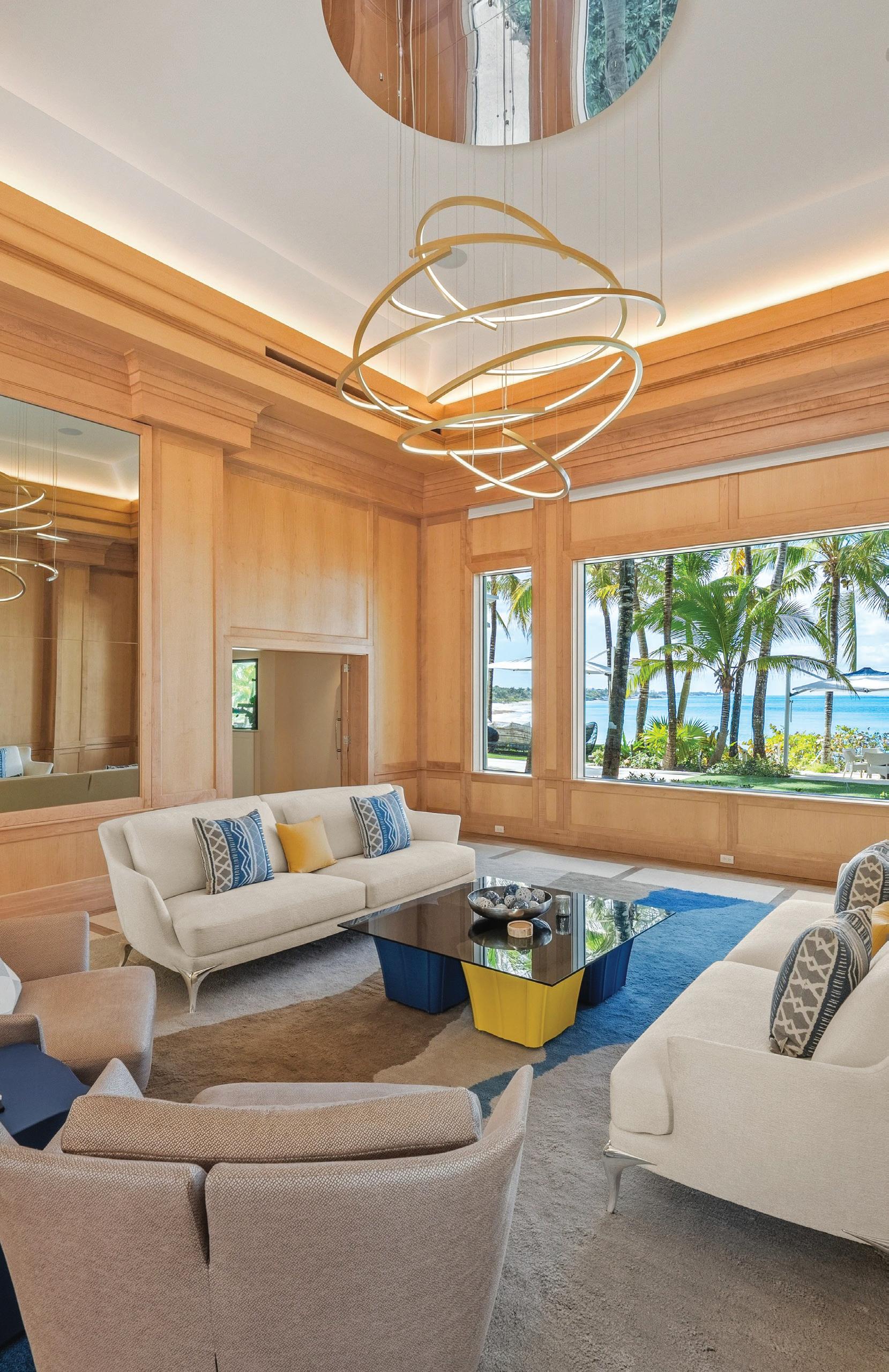
Few offshore tourism and investment hubs can match The Bahamas for its friendliness, natural beauty and top five draws of location – just 60 miles off the coast of South Florida - New York timezone, year-round temperature ranging from 70s F in winter to 90s F in summer; nearly 300 years of stable democracy, and more than 150,000 square miles of the clearest, bluest waters on Earth. It is no wonder The Bahamas has been such a magnet for international visitors, investors and second-home buyers since 1922, when visionary and trailblazer, Sir Harold G. Christie, first opened up the islands of The Bahamas sand established H.G. Christie Ltd. (HGC), now the oldest, largest and most respected real estate firm in the country.
Along with his brother Frank Holmes Christie, CBE, Sir Harold developed some of The Bahamas’ most celebrated high-end real estate communities, including Lyford Cay in New Providence, Windermere Island in Eleuthera, Great Harbour Cay in the Berry Islands as well as Hawk’s Nest Cay and Pigeon Cay in Cat Island.
In 1936 Sir Harold facilitated travel and communication between The Bahamas and the rest of the world along with American investor Sir Harry Oakes by building the country’s first landing strip at Oakes Field and founding Bahamas Airways.
Sir Harry also played a key role in a range of other important Bahamian institutions including being Chairman of the Telecommunications Board, a founding member of the Development Board, and acting as President of the Bahamas Historical Society. Such accomplishments and accolades earned him a CBE in 1949 and a Knighthood in 1964.
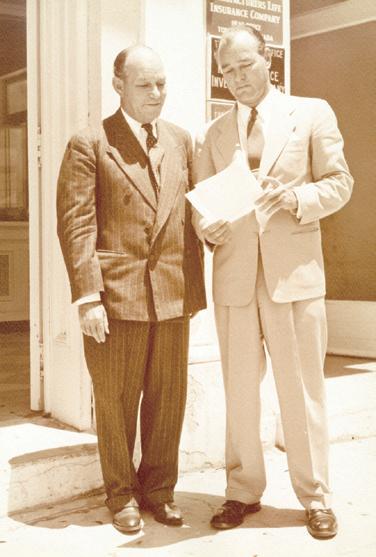
In 1978 William McP. (Peter) Christie, nephew and principal real estate attorney L-R: Sir Harold & Frank Christie
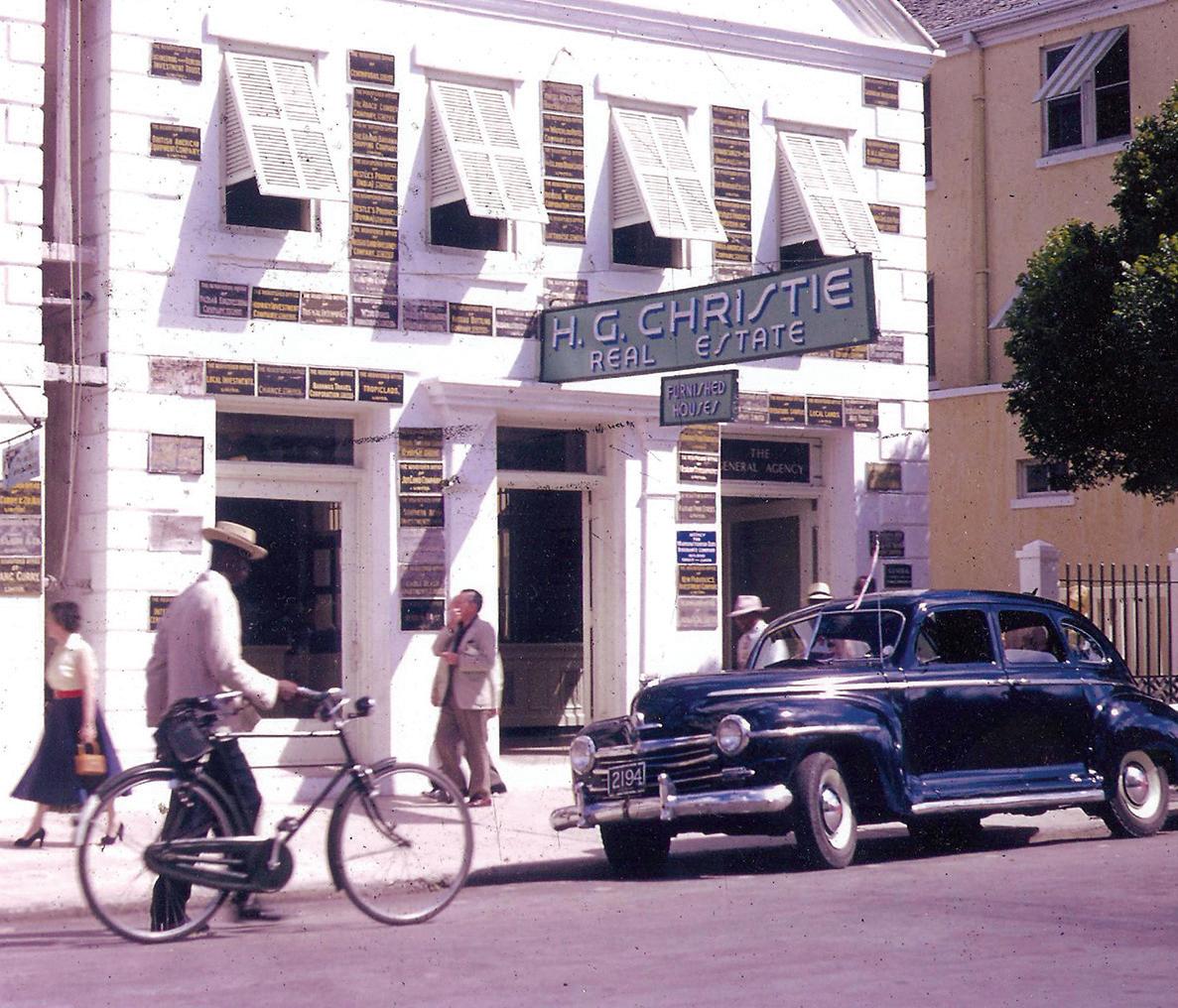
HG Christie’s Head Office - 309 Bay Street, Nassau (1940s)
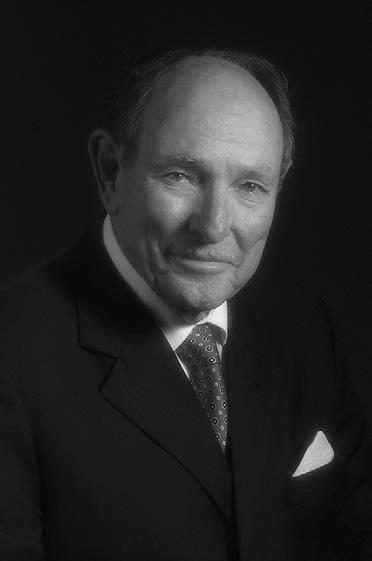
Sir Harold Christie, K.T., C.B.E. - Founder
for Sir Harold, took the helm of HGC as President and was active in the company until his passing in February, 2018 at the age of 88.
Peter’s son, John Christie, a talented musician and songwriter, who gave up life on the road in 1993, now leads the company as President. John has earned a reputation as the country’s premier realtor for private islands and luxury real estate.
In 1997, Peter’s daughter, Cara Christie, also joined the company and plays a vital role as Vice President and specialist in the rental market. John has expanded the company from just one office, three agents and two staff members in 1993, to ten offices, 60+ agents and approximately 20 staff members today.
HGC now boasts offices in Lucaya, Grand Bahama, Elbow Cay and Marsh Harbour in Abaco; Governor’s Harbour and Harbour Island in Eleuthera; George Town, Exuma, Hamilton’s, Long Island, as well as its flagship office in downtown Nassau, along with offices at Old Fort Bay Town Centre on Windsor Field Road and in the Lyford Cay Shopping Plaza on Western Road, New Providence.
Under John’s leadership, the company has won a range of accolades and awards, including
Best Real Estate Website in The Bahamas, Best Real Estate Agency in the Americas, and Best International Real Estate Agency.
2026 finds HGC soon after its 100 year celebrations, continuing to be The Bahamas’ exclusive affiliate of Christie’s International Real Estate which it has held for nearly 30 years. As HGC enjoys the fruits of its success, it looks forward to its next century in real estate and continues to embrace interactive and social media platforms; in-house video production, virtual tours and professional photography services; sales team and service expansion, awards for The Bahamas and the Caribbean, and being the realtor of choice for leading firms and investors from around the world.
Yet it is not just business flair that keeps celebrities, high net worth and discerning clients returning. It is a genuine care for the people being served, a company-wide enthusiasm entrenched in local knowledge and an honest love of The Bahamas, which drives Sir Harold’s legacy forward.
With these admirable core values and commitments in place, it is no wonder that HG Christie has become “The Trusted Authority in Bahamas Real Estate” for over 100 years.
Cara Christie John Christie
Peter Christie
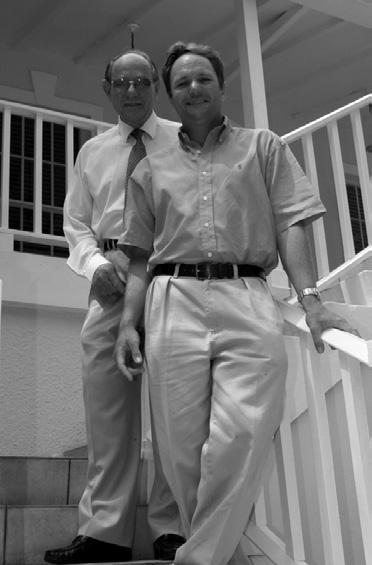
Peter & John Christie
THE BAHAMAS
The Bahamas is truly a paradise for investors. A skilled professional workforce, stable government and economy, sound legal framework, modern infrastructure, proximity to key markets and investment incentive policies combine to create a fertile investment climate.
LOCATION
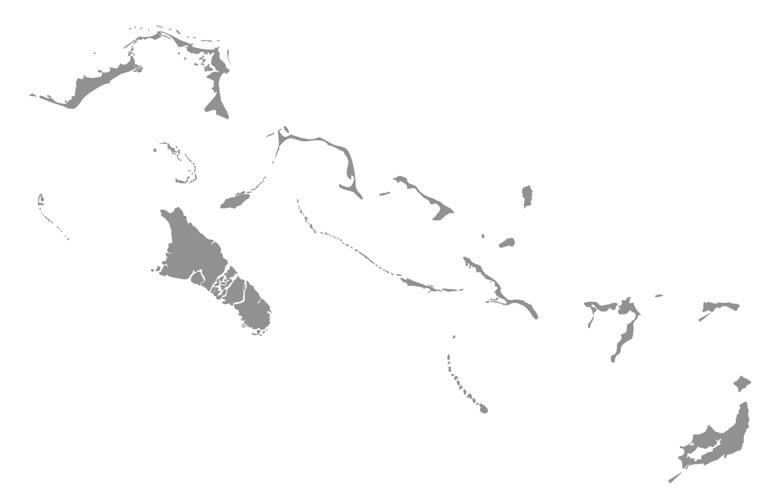
Located within a 150,000 square mile archipelago of more than 700 islands and 200 cays, The Bahamas begins just 60 miles off South Florida’s east coast.
ECONOMIC ENVIRONMENT
The Bahamas offers a variety of unique characteristics, including a low tax environment that make it an ideal jurisdiction for business investment, growth and evolution. While tourism and financial services provide a strong economic backbone, new investment opportunities are now unfolding in several areas such as e-business, manufacturing, light industry, land development and transshipment.
GOVERNMENT
With a democratic tradition spanning nearly 300 years, The Bahamas takes pride in its political and social stability. Since gaining independence in 1973, The Bahamas has maintained the fundamentals of its political heritage.
STABLE CURRENCY
The Bahamian Dollar, which is on par with the U.S. Dollar, is recognized for its steady performance and unwavering value.
GREEN INITIATIVES
Import duties have been substantially reduced or eliminated on many green products, including energy-saving appliances and fixtures, solar equipment, and electric and hybrid cars.
INVESTMENT ENVIRONMENT
The Government of The Bahamas is committed to developing a fair, investment-friendly climate focused on providing:
grand bahama abaco
bimini
Investment Proposal
International investors seeking to do business in The Bahamas are encouraged to submit a project proposal to the Bahamas Investment Authority (BIA) containing:
•Details of proposal
•Principals
•Proposed location
•Land Requirements
•Proposed Start-up date
•Management/Personnel Requirements*
•Capital Investment
•Employment Projection
•Financial Arrangements
•Environmental Impact
•Economic Impact and Business Plan
*Necessary work permits for key personnel will be granted. Businesses requiring permit for persons other than key personnel are encouraged to consult BIA in advance.
Investment Incentives
A series of investment incentives provide relief from taxes and customs duties on approved raw materials, equipment and building supplies, as well as allowing exemptions from real property taxes for up to 20 years.
Relevant legislation includes:
• The Export Manufacturing Industries (Encouragement Act)
• The Industries Encouragement Act
• The Agricultural Manufactories Act
• The Tariff Act
• The Free Trade Zone Act
• The City of Nassau Revitalization Act
• The Hotels Encouragement Act
• The Family Island Development (Encouragement Act)
• The Spirits and Beer Manufacturer Act
• The Bahamas Vacation Plan and Time Sharing Act
• The Hawksbill Creek Agreement Act (Freeport City)
Areas Targeted For Foreign Investment
(required investment of $500,000 and above)
•Touristic Resorts
•Upscale Condominium, Timeshare and Second Home Development
•Information and Data Processing Services
•Assembly Industries
•High-tech Services
•Ship Repair and other services
•Light Manufacturing for export
•Agro-Industries
•Food Processing
•Mariculture
•Banking and other Financial Services
•Captive Insurance
•Aircraft Services
•Pharmaceutical Manufacture
•Offshore Medical Centres
Areas Reserved For Bahamians
•Wholesale* and Retail Operations
•Commission agencies engaged in the import/export trade
•Real estate and domestic property management agencies
•Domestic newspapers and magazines
•Domestic advertising and public relations firms
•Security services
•Domestic distribution of building supplies
•Construction companies, except for special structures for which international expertise is required
•Personal cosmetic/beauty establishments
•Commercial fishing within the exclusive economic zone of The Bahamas
•Auto and appliance service operations
•Public transportation inclusive of locally solicited charter boat tours
•Landscaping
*International investors may engage in the wholesale distribution of any product they produce locally.
INVESTMENT INCENTIVES
PROPERTY TRANSACTIONS
Real estate brokers attract a 10% commission on the sale of undeveloped property; 6% on developed property - residential or commercial.
Mortgages & Conveyances
Government tax on mortgages is payable at a rate of 1% on the amount borrowed. The Bahamas Bar Association follows a minimum scale fee for conveyances and mortgage transactions at 3.5% for registered land and 5% for unregistered land of the sale price plus out-of-pocket expenses.
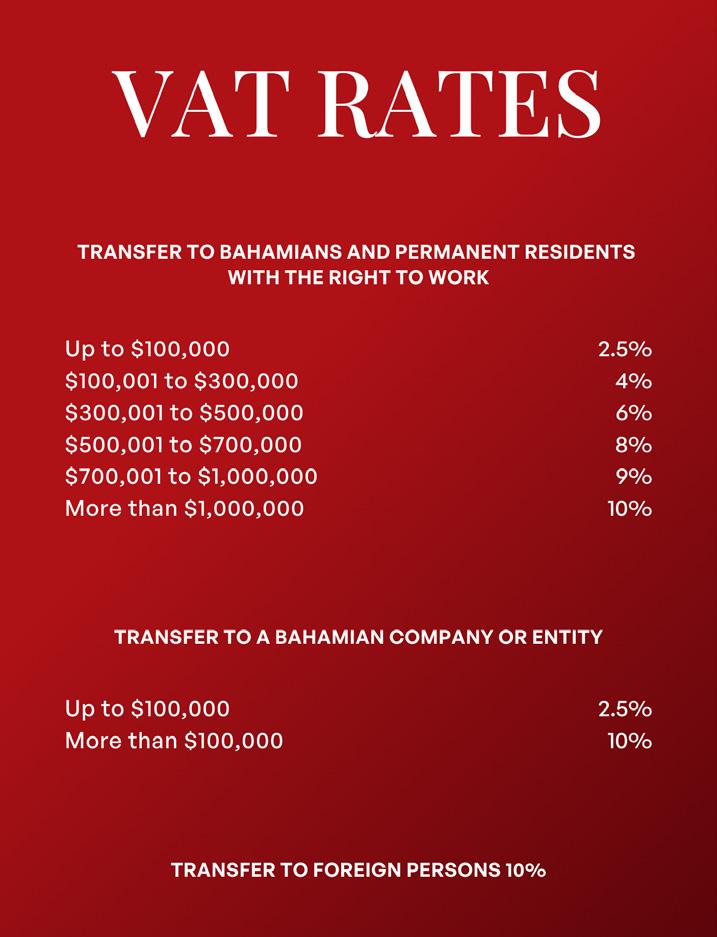
Value Added Tax (VAT)
VAT is charged on all property transactions and is shared between the Vendor and Purchaser. 10% VAT is charged on commissions, legal fees, and appraisals, as well as rentals and Common Area Maintenance (CAM).
Transfer Tax
Effective July 1, 2023, VAT on real property is as follows:
First-Time Homeowners
Bahamians who are acquiring their first home can apply for full VAT exemption or a reduction in VAT otherwise payable on the Conveyance and/or Mortgage instruments related to their acquisition. This applies to single-family homes, condominium units, and the owneroccupied units of duplexes or triplexes valued up to $600,000.
Also, first-time homeowners are entitled to a five-year real property tax waiver. This applies to first homes valued up to $600,000.
INT’L. PERSONS LANDHOLDING ACT, 1993
The International Persons Landholding Act, 1993 encourages foreigners to purchase a second home in The Bahamas.
This provides for non-Bahamians who acquire a condominium or property for use as an owner occupied property to register the acquisition with the Bahamas Investment Authority and obtain homeowner status.
•A permanent resident who acquires land, as well as a non-Bahamian who acquires land under a devise or by inheritance must register the acquisition with the Bahamas Investment Authority.
•A non-Bahamian who intends to acquire, whether freehold or leasehold, land for use other than a condominium, single dwelling or where it comprises two acres or more, must obtain a permit from the Bahamas Investment Authority to make the acquisition.
•A non-Bahamian who owns and maintains a home in The Bahamas valued at $250,000 or more may apply to the Director of Immigration for an annual homeowner’s card that entitles the owner and immediate family to enter and remain in The Bahamas for the duration of the validity of the card. A homeowner’s card is $1,000 per year and $300 for a spouse and each dependant.
Standard application forms and fees are required.
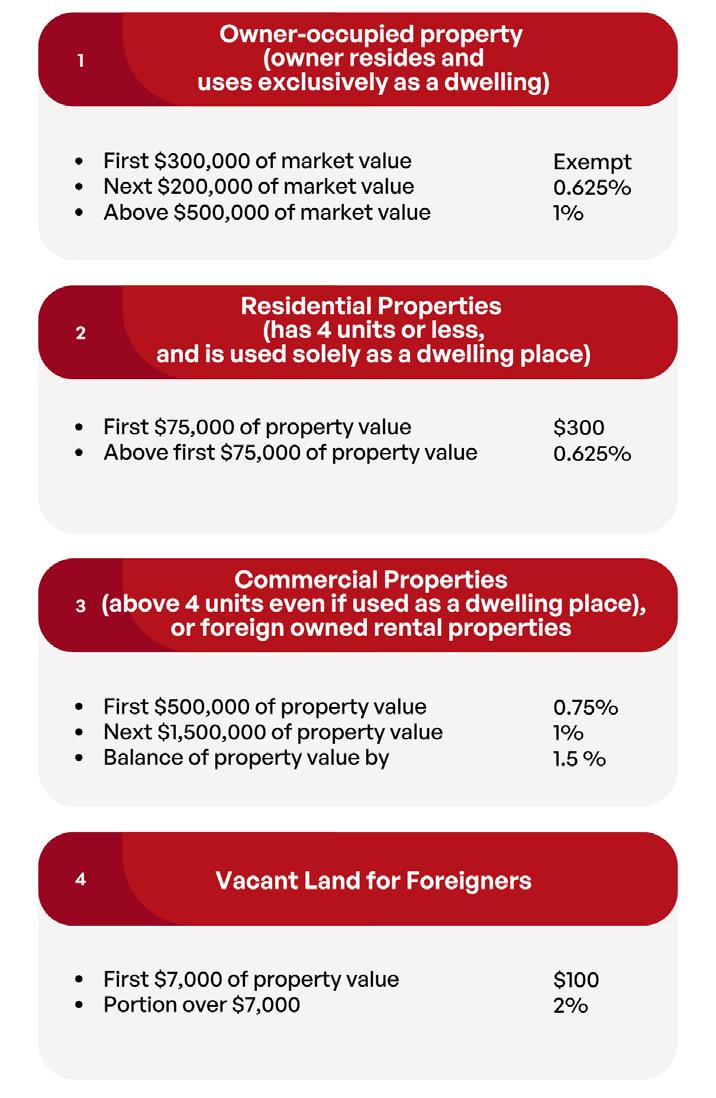
REAL PROPERTY TAX
The payment of Real Property Tax is required by law in The Bahamas. The bill is due and payable to The Department of Inland Revenue by March 31 each year. If paid in full by the due date, owners receive a 10% discount on the current tax year. Exemptions are not automatic and must be applied for.
Property Tax Rates
First-time homeowners in New Providence that are entitled to Vat Exemption as First Time Home Owners may also qualify for a 5-year exemption from Real Property Taxes.
Property owners, or their attorney, can initiate an assessment, by completing and submitting
PROPERTY TRANSACTIONS
the following forms to the Real Property Tax Valuation Unit :
•Property Tax Application Assessment form
•A Declaration of Real Property Tax form
•Affirmation form for owner occupied properties
Supporting documents for reassessment include:
•Deed of ownership
•Property Conveyance or Current Appraisal
At the time of closing a sale transaction, the attorney for the new owner of the real property registers the purchase with the Department of Inland Revenue. A current appraisal is often requested and presented along with the registration.
Your HGC Appraisal Team can provide services to address property tax assessment concerns.
Condo-Hotel Tax
All condo-hotels and properties within a hotel rental pool will incur a condo-hotel tax at 75% of the residential property rate (0.46875%) up to a maximum amount of $150,000.
Outstanding Property Taxes
The Treasurer has the power to sell any property, other than Bahamian owner-occupied property, where real property taxes are in arrears and unpaid for at least 6 months after the expiration of 30 days from becoming due. A 5% surcharge is applied to outstanding property taxes.
Title Insurance
Prospective purchasers are encouraged to secure title insurance to insure against the risk of hidden defects that may be discovered on the title, in addition to the security of a legal opinion. The title policy is valid for as long as the insured holds the title. The premium is a onetime payment with no renewal fees. In the case of vacant land, it is recommended to increase the insurance coverage when improvements are carried out. If a defect is discovered,
the title insurer will step in to assist with rectifying, and bear the associated costs on the purchaser’s behalf. Once any open issues have been satisfactorily addressed, the attorney issues the legal opinion to the title insurer and the transaction moves to completion. The title insurance policy is issued when the title deed is recorded in the Registry of Records and the premium is paid.
PLANNING & SUBDIVISION ACT, 2010
As of 1st January, 2011, homeowners occupying single-family homes must obtain proper business licenses and home renovation permits to alter their homes for commercial purposes. Land to be used for commercial purposes must dedicate a portion of the parcel for a park, recreation and open space.
Approval Authority
No development of land can be commenced or carried on unless the developer obtains (i) Land Use Plan Approval (ii) Zoning By-law Approval (iii) Site Plan Approval (iv) Zoning Compliance (v) Architectural Design Approval (vi) Subdivision Approval and (vii) Severance Approval.
Subdivision Approval
No lots can be sold, agreed to be sold, or conveyed in a subdivision that has not received prior approval. In order to obtain approval the following must be in place: (i) every road must be in accordance with the Land Use Plan; (ii) all lots must conform to the Zoning By-Law; (iii) submitted plans must indicate grading and contours of the land and the provision for the adequate disposal of surface and waste water, installing of all utilities, location of sidewalks and street lighting; and (iv) every lot must be surveyed with all markers in place on the ground.
All subdivision roads other than private roads must be completed and conveyed to the Government within one (1) year from the date of approval. All approved roads must be constructed to the satisfaction of the Minister who may also enter into agreements with
respect to the construction, maintenance and operation of private roads including private water and sewerage works or other private road services. Property owners are permitted to divide a suitable parcel of land up to four times without requiring subdivision and land use plan approval by making application for severance to the Town Planning Dept.
RESIDENCY & EMPLOYMENT
The government’s immigration policy is aimed at ensuring the reasonable security, well-being and economic progress of The Bahamas and its people. The government considers annual and permanent residency, as well as work permits for non-Bahamians.
Obtaining An Annual Residence Permit
Non-Bahamian nationals who are desirous of living for any purpose other than working in The Bahamas, must seek authorization from the Department of Immigration. This comes in the form of a Permit to Reside, also commonly known as an Annual Permit. An Annual Permit to Reside in The Bahamas allows non-Bahamians to live in the country for up to one year without the right to work. The headof-household permit fee is $3,000, with a $200 application fee.
Homeowners, however, can apply for a Home Owner’s Card for $1,000 annually.
Key Application Requirements
To apply with The Bahamas Department of Immigration, the following is required:
•Letter of Request: Addressed to the Director of Immigration, stating the reasons for wanting to reside in the country and accepting financial responsibility.
•Application Form: A notarized First Schedule Form 1 with a $10 Bahamian postage stamp affixed.
•Police Certificate: Issued within the last 6 months, covering the applicant’s residence for the past 5 years (required for ages 14 and older).
•Medical Certificate: Original certificate dated no more than 30 days prior to submission.
•Financial Proof: Statements from your financial institution showing sufficient funds to support yourself.
•Identification: Two recent 2”x2” passportsized photographs and a valid, signed passport (with at least 2 months of remaining validity).
•Additional Documents: Marriage certificate or proof of dependents, if applicable.
•Permit Fee: $3,000 annually for the head of a household; $300 for each dependent.
•Home Owner’s Card: $1,000 annually for property owners, on which spouse and dependents can be endorsed.
•Turn-around time: Typically takes 3 to 4 weeks after accurately submitting all documents. Specialized service providers are recommended to prepare, submit and process applications. HGC has this service in-house.
Procedures For Obtaining a Work Permit
Non-Bahamian nationals wishing to work in The Bahamas for a period longer than 90 days must first acquire a long-term work permit. Employers must:
•Advertise the position vacancy in nationally circulated newspaper advertisements
•Obtain a Labour Certificate with Notification of Vacancy from the Department of Labour
•Apply to the Immigration Department to employ the non-Bahamian national.
The completed application form(s) and supporting documents must be submitted to the Department of Immigration. An application will not be entertained if the prospective employee is already in The Bahamas, having entered as a visitor. Fees of varying amounts are charged for the permit depending on the category.
The Bahamas Immigration Bahamianization Policy, which is critical to the granting of work permits, provides that:
•Whenever there is a position that a Bahamian
is qualified to fill, he should be given the position in preference to anyone else.
•The Bahamian must be given that job on the same terms and conditions as any expatriate counterpart.
•Where the company has a career structure, whether here or abroad, the Bahamian employee must be given the same opportunities for advancement as would be afforded other employees.
•The Bahamian must be helped whenever possible to broaden skills in the individual’s chosen field of endeavour by constant exposure to further training at home and abroad.
Necessary work permits for key personnel of businesses will be granted. Businesses requiring permits for persons other than key personnel are encouraged to discuss these requests with the Bahamas Investment Authority in advance.
Where work permits have been granted, each employer will be required to identify a suitable Bahamian to understudy the expatriate so that the Bahamian trainee may become qualified to fill the expatriate’s position within a reasonable time. Genuine investors usually have little difficulty in complying with these requirements. Employers may obtain permits for longer periods than the standard one-year period in respect to certain key personnel on contract. Such contracts should indicate their renewal will be subject to obtaining the necessary immigration permission, and they may be endorsed to the effect that the employee is expected to train or be replaced by a suitable Bahamian within a stipulated period.
Each permit issued by the Immigration Department relates to a specific post. Permits are not altered by the Director of Immigration Board to reflect change of employment or residence. However, a person holding a work permit may make application for a new one (his new employer having been unsuccessful in recruiting a qualified Bahamian to fill the post)
RESIDENCY & EMPLOYMENT
without having to leave The Bahamas, providing the current work permit is still valid. The renewal of a permit on expiration is not automatic. Generally, no expatriate may be continually employed in the country in any capacity for more than five years. However, there are likely to be cases where hardship will be caused by rigid implementation of this policy. According to government, this factor will be kept in mind in applying the regulations.
Annual Traveling Sales Representative Permit
Historically traveling sales representatives planning to do business in The Bahamas have had to obtain work permits from the Department of Immigration, as well as a licence from the Licensing Authority. However, as of July 1, 2026, this is no longer required subject to certain conditions for visits up to 3 days.
Permanent Residence
Non-Bahamians wishing to reside in The Bahamas may apply for permanent residence under the following categories:
•Spouse of a Bahamian after 5 years of marriage (before the 5th year of marriage a Spousal Permit is issued), and whose marriage is subsisting and the couple cohabiting as husband and wife.
•Persons born legitimately outside of The Bahamas to a married woman who is a citizen of The Bahamas, and whose husband is not a citizen of The Bahamas.
•Financially independent individuals or investors who are legitimate owners of a residence valued at $1,000,000 or higher in The Bahamas – please note that persons purchasing a residence for BSD $1,500,000 or more will get expedited consideration.
•Police and Prison Officers employed in the Government Service for a minimum of 10 years.
•Teachers employed in the Government Service or by charitable or religious institutions for a minimum of 10 years.
•Nurses employed in the Government Service or with private hospitals and healthcare facilities for a minimum of 10 years.
•Ministers of Religion / Priests after having been employed for a minimum of 20 years.
•Doctors / Medical professionals after having been employed for a minimum of 20 years
•Persons who have held legal work permit status for more than twenty (20) consecutive years.
•Persons who have resided in the country for at least 10 and less than 20 years and who held a work permit in any of the Immigration scales 5 to 8.
•Individuals who qualify for Economic Permanent Residence that either own a residence, or have made investment in Central Bank of The Bahamas Zero Coupon Bonds, valued in excess of $1,000,000.
Business Licence
All persons conducting business in or from within The Bahamas must obtain a business licence in accordance with the requirements of the Business Licence Act, 2023. Applications are completed and submitted online at vat.revenue. gov.bs. Filings and submissions of renewal applications are due on or before January 31 and payable by March 31 annually.
A non-Bahamian applying to conduct business in The Bahamas requires approval from the Bahamian Investment Authority.
A Business Licence for a new business is exempt from taxes within the first year of operation. Taxes for existing businesses vary based on the type of business currently operating and the business turnover figures.
Temporary Business Licence
These licences are granted to foreign individuals/companies for a job in respect of a specific contract for a specified period of not more than three years, (e.g. contract workers on special projects).
Business ventures that require a temporary business licence include:
•Non Bahamian Company
•Bahamian company with non-Bahamian partnership
•The Fee for a Temporary licence is 1.5% of the value of the contract.
PASSPORTS & VISAS
Occasional Business Licence
These licences are granted to an applicant to carry on a business activity at an event or another short term purpose. They may be granted for a period not exceeding seven (7) days and may be applied for up to four times per year. An Occasional Business Licence is required for the following activities:
1) To carry on a sales business at a regatta, farmer’s market or other national or community event; 2) To act as a traveling salesman (nonresident individual); (subject to new exemption provisions)
3) To stage a trade show or expo; 4) To stage a business event at any place or premises of public dancing, singing, music or other like public entertainment. *
Non-profit organisations/entities are also considered businesses.
The tax for an Occasional Licence is $25.
*The tax for Occasional Licences in this category is $750
BAHAMAS ENTRY REQUIREMENTS
The Bahamas is a major tourist destination and every effort is made to keep visitors’ Immigration formalities to a minimum. If in doubt, travellers should enquire at the nearest Bahamian Embassy or Consulate Office as entry requirements vary from country to country.
All visitors must have a return or onward ticket upon departure and a valid travel document (such as a passport and visa) to allow entry into another country as applicable. Visitors may also be asked to produce evidence of sufficient funds to allow them to be self-sustaining while in The Bahamas.
Visitors may remain for a maximum of 8 months, however it is now customary to be granted entry for 30 days with the need to extend for additional periods with the Immigration Department at a cost of $250 per extension, provided the visitor
can show means of financial support for this period. Visitors are not allowed to engage in any form of gainful occupation while in The Bahamas solely as a visitor.
Passports
Passports are required by all persons entering The Bahamas.
Visas
All persons entering The Bahamas require a Bahamian visa except the following persons:
United States citizens entering as a bona fide visitor for a stay not exceeding 8 months. Alien residents of the United States who, upon arrival, are in possession of a United States Alien Registration Card for visits not exceeding 30 days.
Canadian citizens
Landed immigrants in possession of Canadian Immigration Record Form 1000 may enter without a visa for visits not exceeding 30 days. These persons should have a national passport.
•United Kingdom citizens.
•Citizens of Western Europe.
British Commonwealth citizens with the exception of the following countries:
•Pakistan
•Mozambique
•Nigeria
•Cameroon
•India
•Ghana
Citizens of South American countries, however the nationals of the following countries can visit for periods not exceeding 3 months: