1 minute read
Pushrod Adjustment

Later model POWERPLUS™ 100 engines are now equipped with adjustable pushrods. These pushrods are not color coded for position as previous pushrods. The adjustable end of these pushrods is positioned at the lower end and seated in the lifter block. To verify the engine is equipped with adjustable pushrods, remove the pushrod tube clip and slide the lower pushrod tube up. The adjustable end of the pushrod will be visible.
The pushrods should be checked and adjusted whenever engine service, such as replacement or removal of rocker arms, rocker shaft assembly, rocker base, cylinder head, lifter block or camshaft has been performed. Incorrectly adjusted pushrods can cause engine misfires, non-firing and lowered engine compression due to incorrect valve closure.
Advertisement
Tools required:
3/8" open end wrenches (3) 7/16" open end wrenches (3) Small flatblade screwdriver
Motorcycle lift
Blue threadlock
Front and Rear Cylinder Pushrod Adjustment
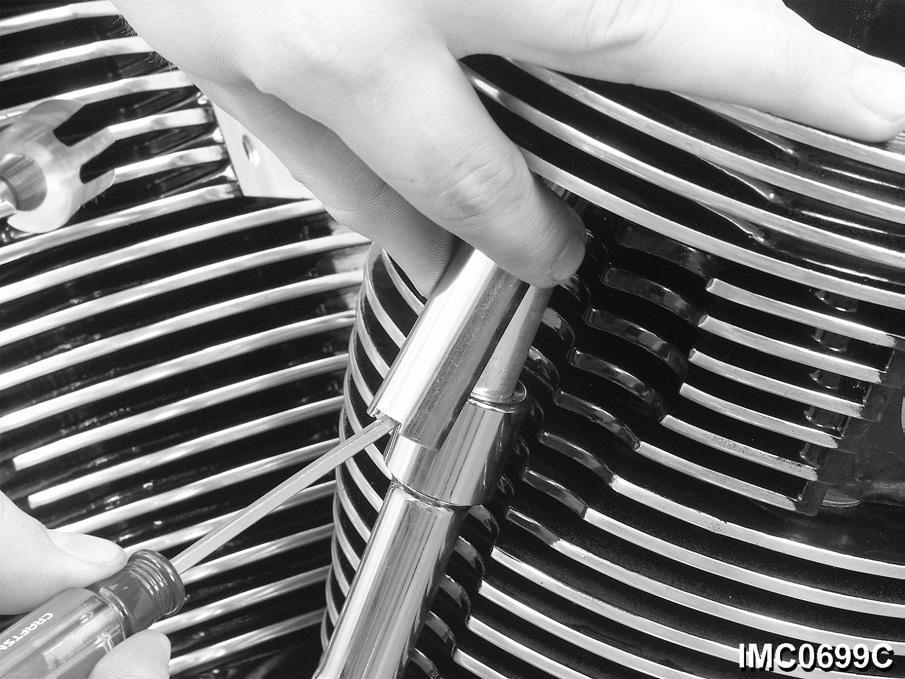
Place a motorcycle lift under the transmission area of the frame and raise the motorcycle so that the rear wheel is off the ground. Remove the pushrod tube clip of each pushrod tube, using a small flatblade screwdriver at the base of the clip. Pry the clip up and out (all pushrods).
Figure 281 — Removing pushrod tube clip With spring pressure released, slide the lower pushrod tubes upward to reveal the pushrods. Use elastic bands and clips to hold the lower tubes up and out of the way for adjustment.
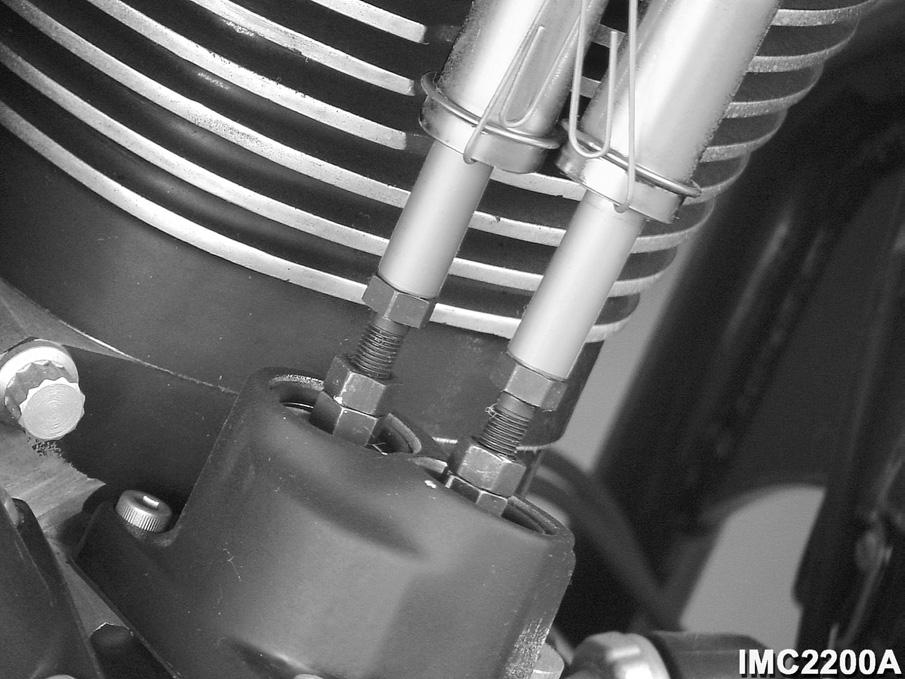
Figure 282 — Supporting lower pushrod tubes Place the transmission into fifth gear and rotate the rear wheel until both front cylinder valve lifters are at the lowest point (end of compression stroke).
Let the lifters bleed down for approximately 10 minutes before rotating the engine. Rotating the engine with unbled lifters can bend valves or pushrods.
Lift the pushrod so that the ball end (top) comes into contact with the socket in the rocker arm. If the pushrod has no play, loosen the pushrod adjustment, using either two 3/8” wrenches or two 7/16” wrenches, depending on type of pushrod. The following picture shows the pushrod hex (1), the middle locknut hex (2) and the ball end adjuster hex (3).
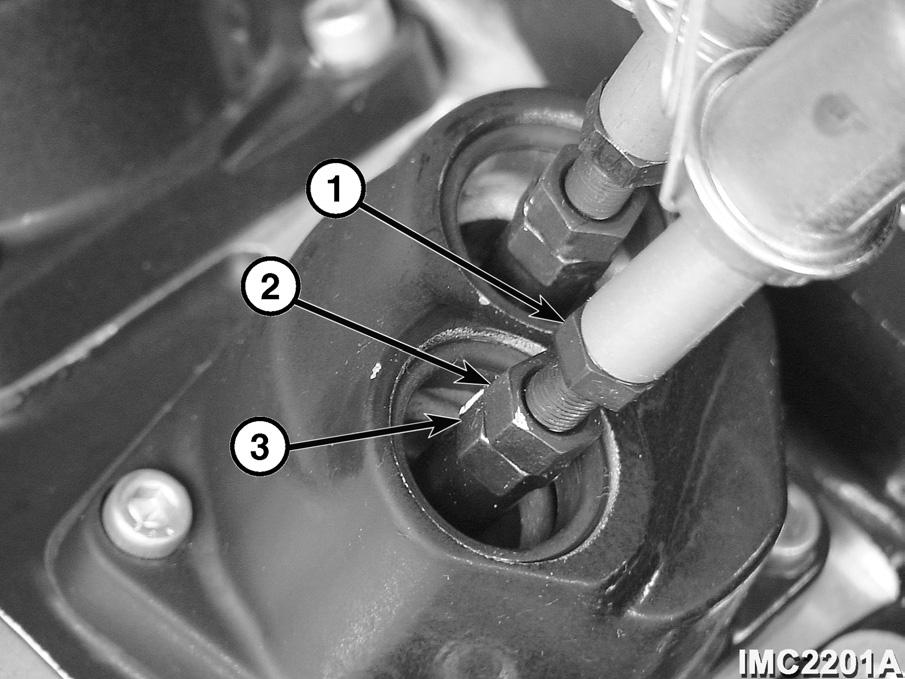
Figure 283 — Adjustment end of pushrod
