At Theodore Medical Centre, the MOPP model connects general practice and hospital medicine into one continuous patient journey.
Rather than care being divided between separate, disconnected teams, clinicians remain involved from initial assessment through to recovery.
The Connected Journey
GP Assessment 5. Follow-up 3. Hospital Care
Discharge
2. Admission
1. Comprehensive consultation and care planning begins at the local clinic.
2. Direct, hassle-free hospital admission handled by your own doctor if acute care is required.
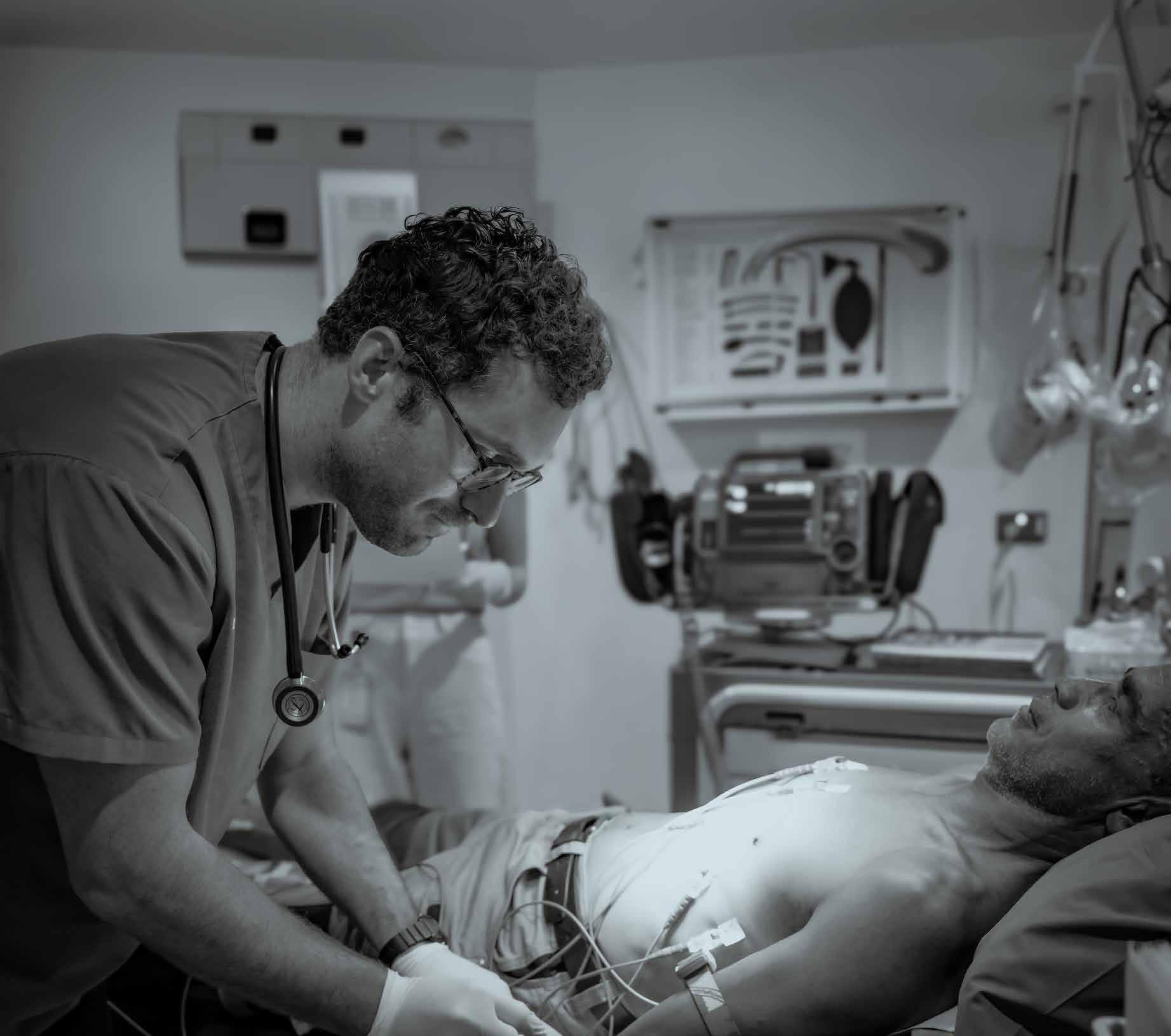
3. The doctor personally manages your inpatient treatments and medical decisions on the ward.
4. A coordinated, safe transition back home with a clear recovery plan.
5. Monitored recovery continues back at the clinic with the doctor who knows your full history.
General Practice Benefits: Why choose between hospital medicine and community practice? The Best of Both Worlds
Deep, long-term patient relationships
Total clinical autonomy & flexible scheduling
Longitudinal chronic disease management
Community leadership opportunities
The Best of Both Worlds
Queensland Health Benefits:
Acute & inpatient medicine exposure
Emergency & procedural work
Generous PDL, study leave & rural incentives
Structured multidisciplinary team
A Practical Model for Integrated Rural
Medicine
For Practitioners: A broader, deeply rewarding scope of practice that maintains both your acute hospital confidence and longitudinal GP skills. For Patients: Exceptional continuity of care with zero communication gaps and significantly safer transitions between settings.
For Registrars: Invaluable exposure to the full, unbroken patient journey to rapidly accelerate your clinical judgment.
We had an elderly gentleman who had several cardiac comorbidities (including atrial brillation and coronary artery disease, for medical management) who was having recurrent episodes of what sounded like pre-syncope. He was seen at the practice by several of our doctors; he also had a signi cant orthostatic drop. his medications were rationalised, particularly his antihypertensives. A holder monitor was arranged (which can be performed by the practice; attached by our practice nurses).
Unfortunately he didn’t meet the criteria for a pacemaker and no high grade blocks were noted during a 48hour period of recording. He was also seen by the visiting cardiology truck and had a repeat echocardiogram which was normal. We also arranged carotid dopplers and neuroimaging to ensure no other factors were contributing to his presentation.
One
After a particularly severe episode, he presented back to the general practice, where again a 12 lead ECG, CXR (performed at the practice) was normal. He was then admitted to the co-located Theodore hospital for telemetry. We were unable to capture any events on telemetry, but due to the severity of his orthostatic hypotension, and his unsafe mobilisation he was not suitable for discharge home. Due the limitations of the sub-specialised imaging we are able to provide locally, it was decided to see if his cardiologist was happy to accept him down in Brisbane as an acute inpatient for acute workup.
This was going to be only the 2nd time this patient had ever travelled to Brisbane in his 80+ years (‘and I still hate the place’) and he had never been on an aeroplane before. He was prepared for transfer with RSQ and did well. Interestingly whilst down in Brisbane he had a run of non sustained VT and was placed on rate control agents. After about a week down in Brisbane he was discharged home, but he represented to our local hospital within 3 days complaining of feeling pre-syncopal still. This time around we were able to capture some signi cant sinus pauses on our telemetry/cardiac monitoring, and he was soon on his way back to Brisbane for a pacemaker.
I personally nd these patient stories to be quite satisfying; you can see them routinely in the general practice, admit them when necessary, and it is always nice to see them when they return back to town.