Message from Jim Long, Owner Heritage Hotels & Resorts
FEATURES
HIDDEN IN PLAIN SIGHT
Photo-worthy places where you least expect them.
CHEF’S TABLE
Meet the chefs shaping today’s menus. By Lanee Lee
THE NEW HAPPY HOUR
A more thoughtful approach to drinking with Lucas Swallows. By Lanee Lee
REVOLT RISING
A new hot-air balloon shares Pueblo history. By Steve Larese
NEW MEXICO ACROSS THE CENTURIES
Life unfolding across generations. By Steve Larese
NEW MEXICO WOMEN HAVE A REPUTATION
Explore the New Mexico Historic Women Marker Program.
SET IN NEW MEXICO
A century of film and television shaped by place. By Steve Larese
PULSE OF TAOS
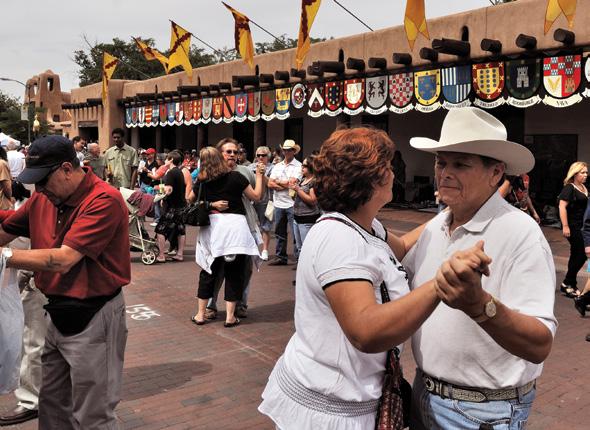
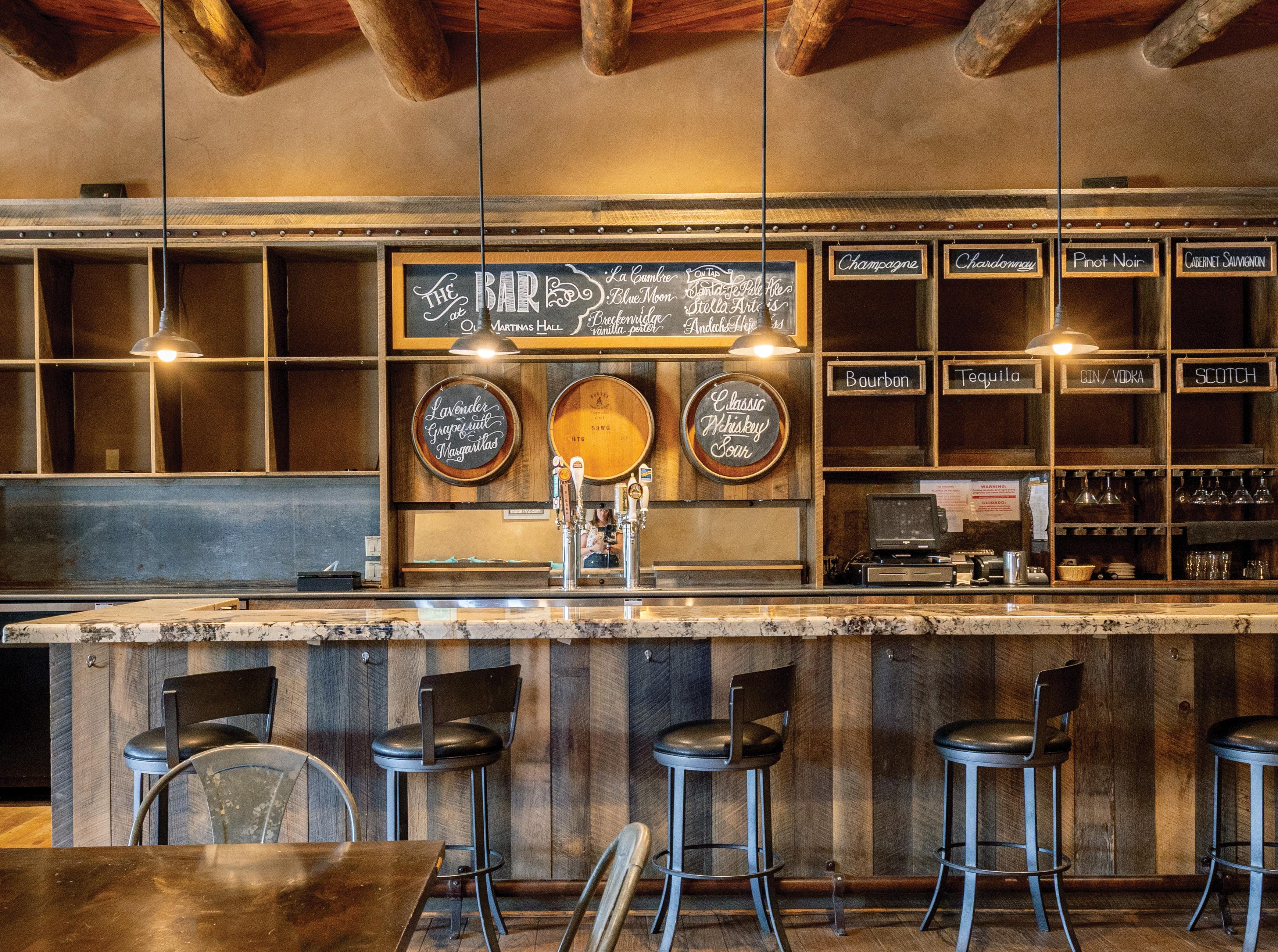
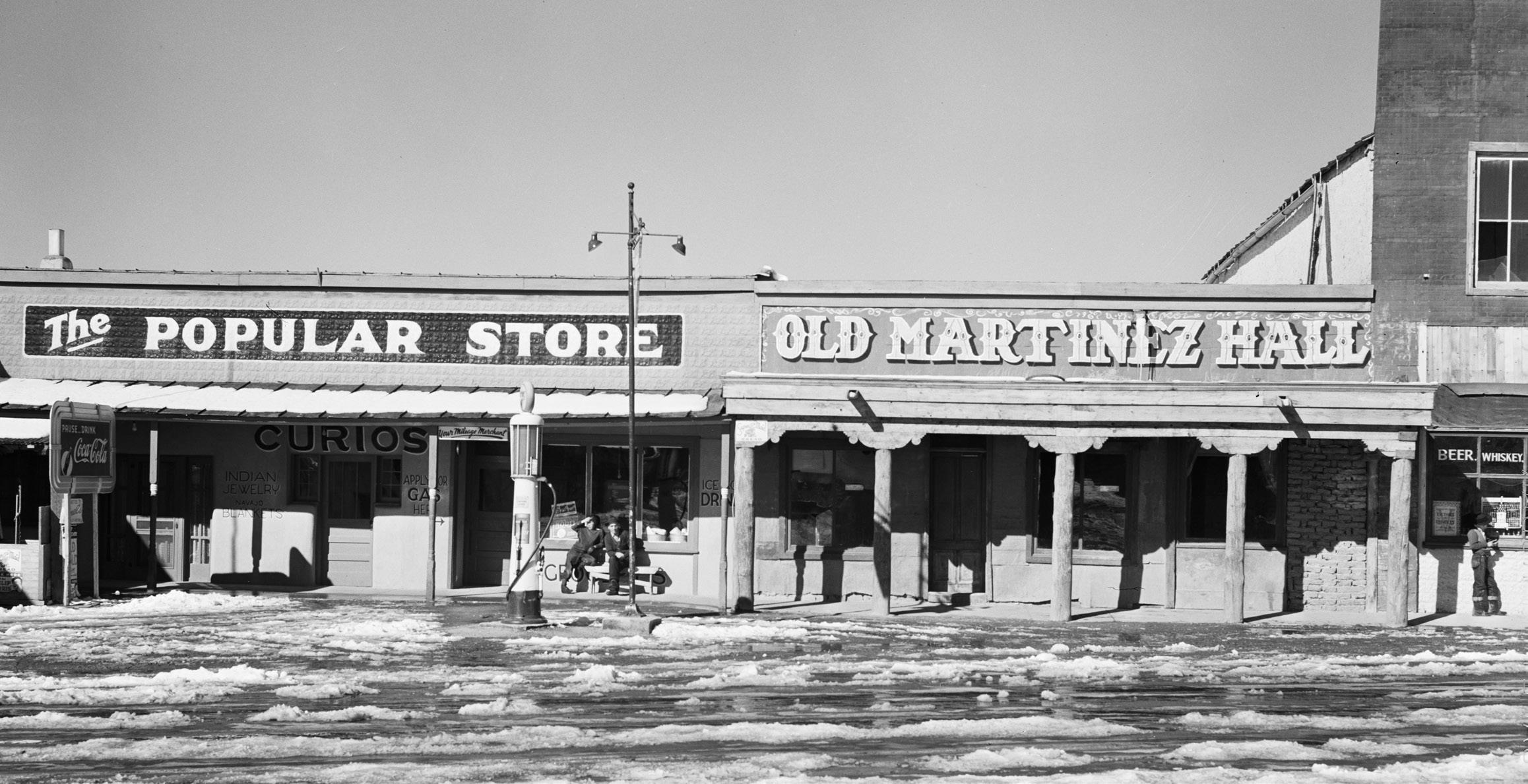
Music and flavor return to Old Martinez Hall. By Jennifer C. Olson
GUIDES
New Mexico Hotels & Resorts
Dining Experiences
Storied Wedding Locations
Spas & Poolside Retreats
HERITAGE HOTELS & RESORTS MAGAZINE VOLUME 11
Published by Heritage Hotels & Resorts, Inc.
201 Third St NW, Ste. 1140
Albuquerque, NM 87102
Phone: (505) 314-5152
Media@HHandrR.com
HeritageHotels.com
PUBLISHER/CEO
Jim Long
HERITAGE HOTELS
PUBLICATION EDITOR
Molly Ryckman
PUBLICATION
ART DIRECTORS
Alexis Hilty
Andy Plymale
CONTRIBUTING
WRITERS
Steve Larese
Lanee Lee
Jennifer C. Olson
CONTRIBUTING
PHOTOGRAPHERS
Jake Holschuh
Emma Hotz
Steve Larese
Douglas Merriam
Nick Merrick
Emily Okamoto
Laurence Parent
Dear Guest:
At Heritage Hotels & Resorts, every season brings a new story—rooted in history, shaped by creativity, and alive with possibility. In this issue, we celebrate the people, places, and ideas that continue to define the spirit of New Mexico and the evolving world of Heritage.
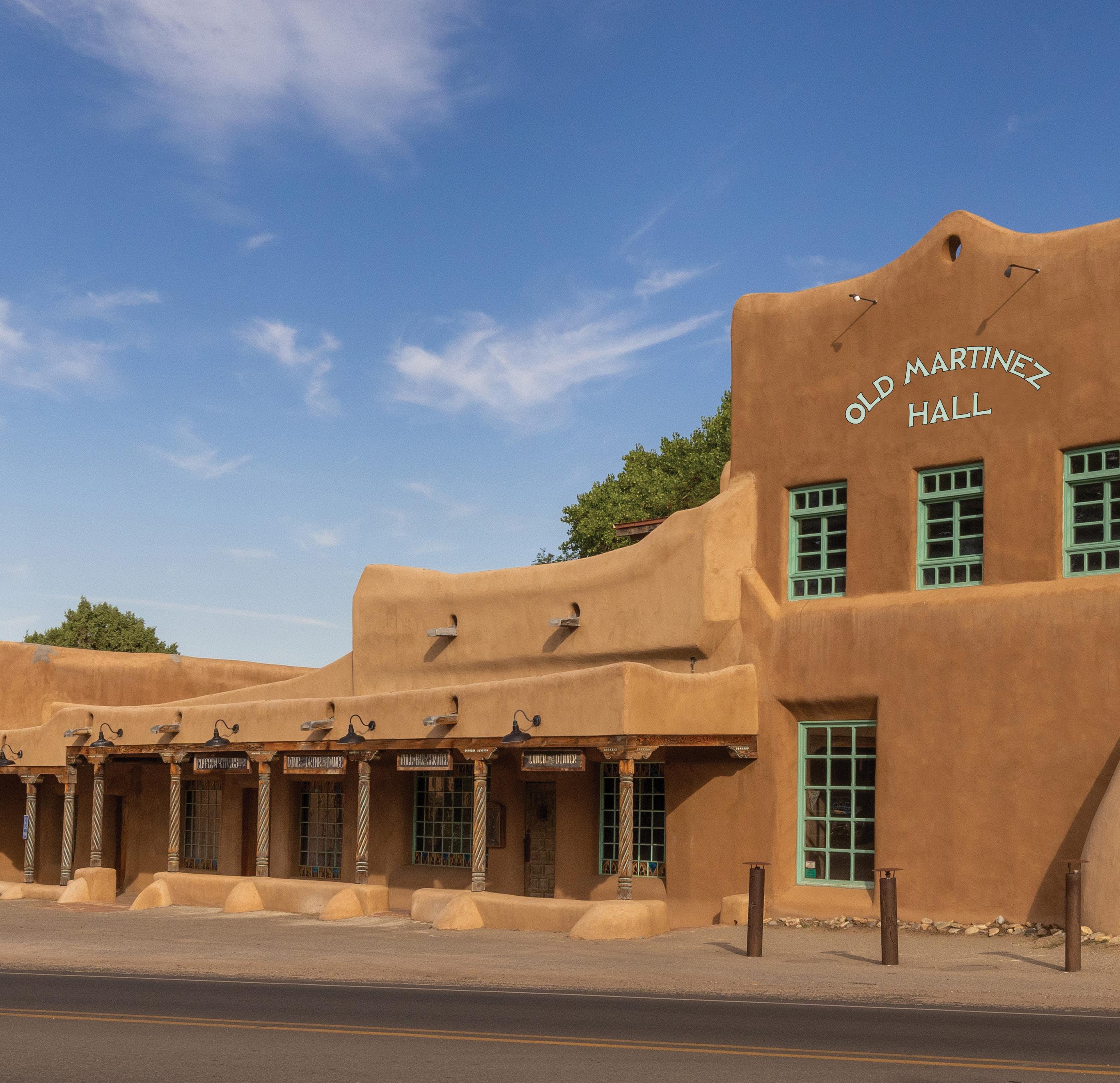
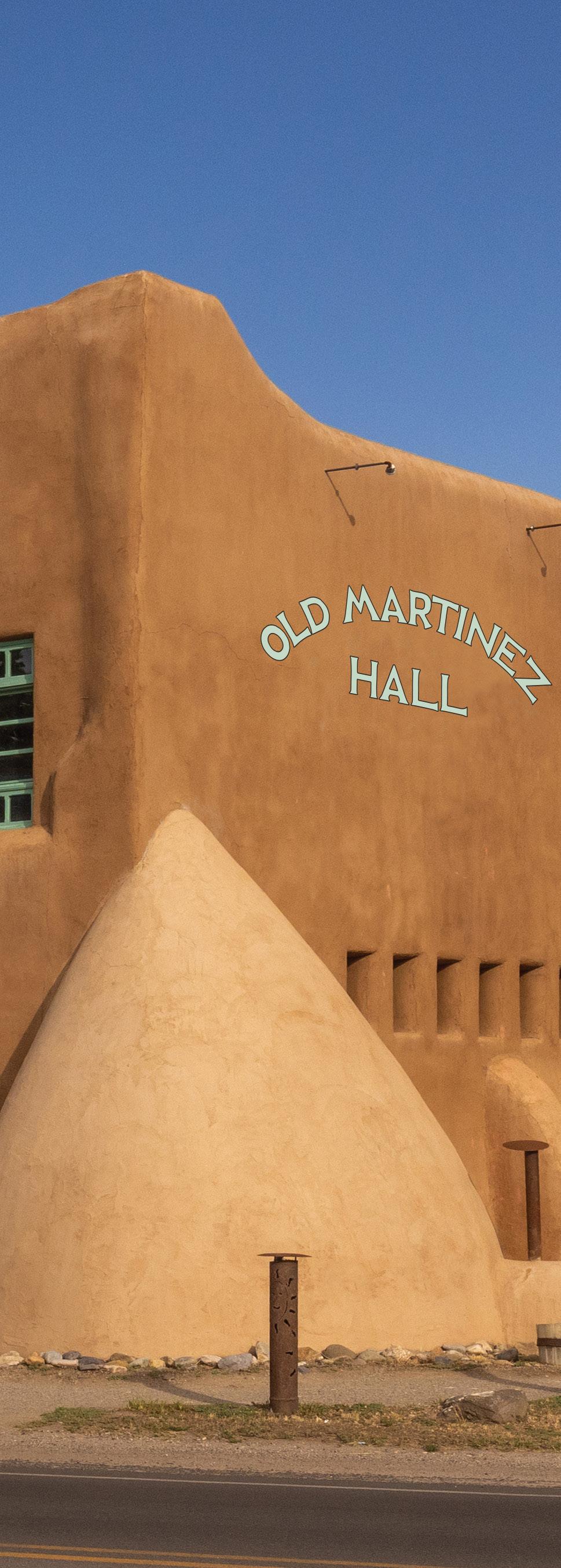
We begin with a powerful expression of art and identity as acclaimed Cochiti Pueblo artist Virgil Ortiz unveils a striking new balloon Revolt Rising—an airborne statement of culture, futurism, and fearless imagination. From the sky to the ground, we turn to Old Martinez Hall in Taos, a storied landmark reopening its doors as a revitalized gathering place, reconnecting community, history, and celebration in one of New Mexico’s most inspiring settings.
New Mexico’s cinematic legacy also takes center stage, as we highlight extraordinary film locations across the state—dramatic landscapes and timeless architecture that continue to draw filmmakers from around the world. Closer to home, we showcase the wedding venues across Heritage Hotels, where historic charm, distinctive design, and unforgettable settings create the backdrop for life’s most meaningful moments.
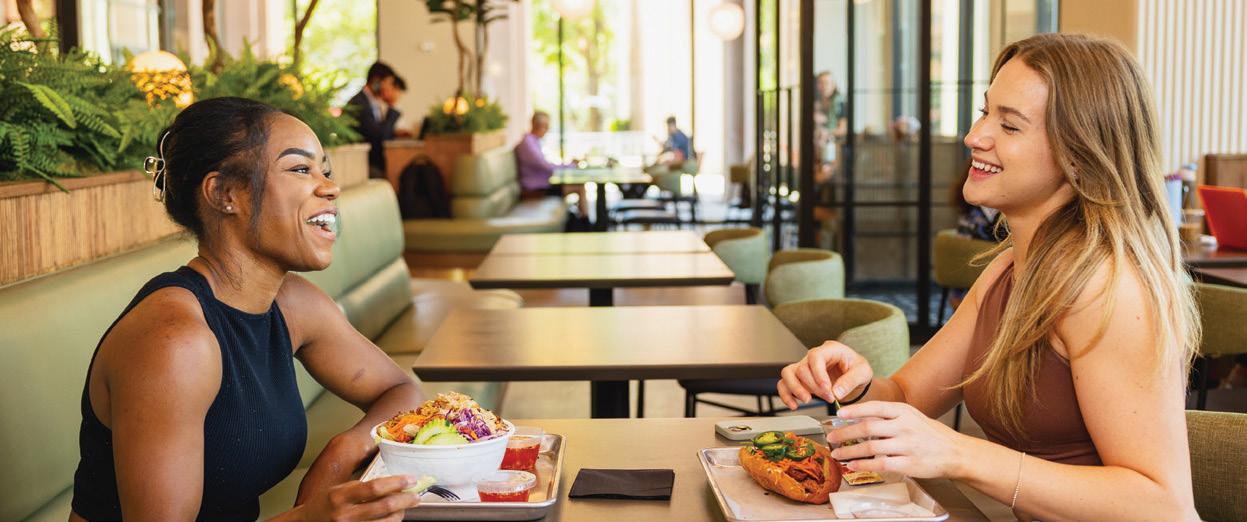
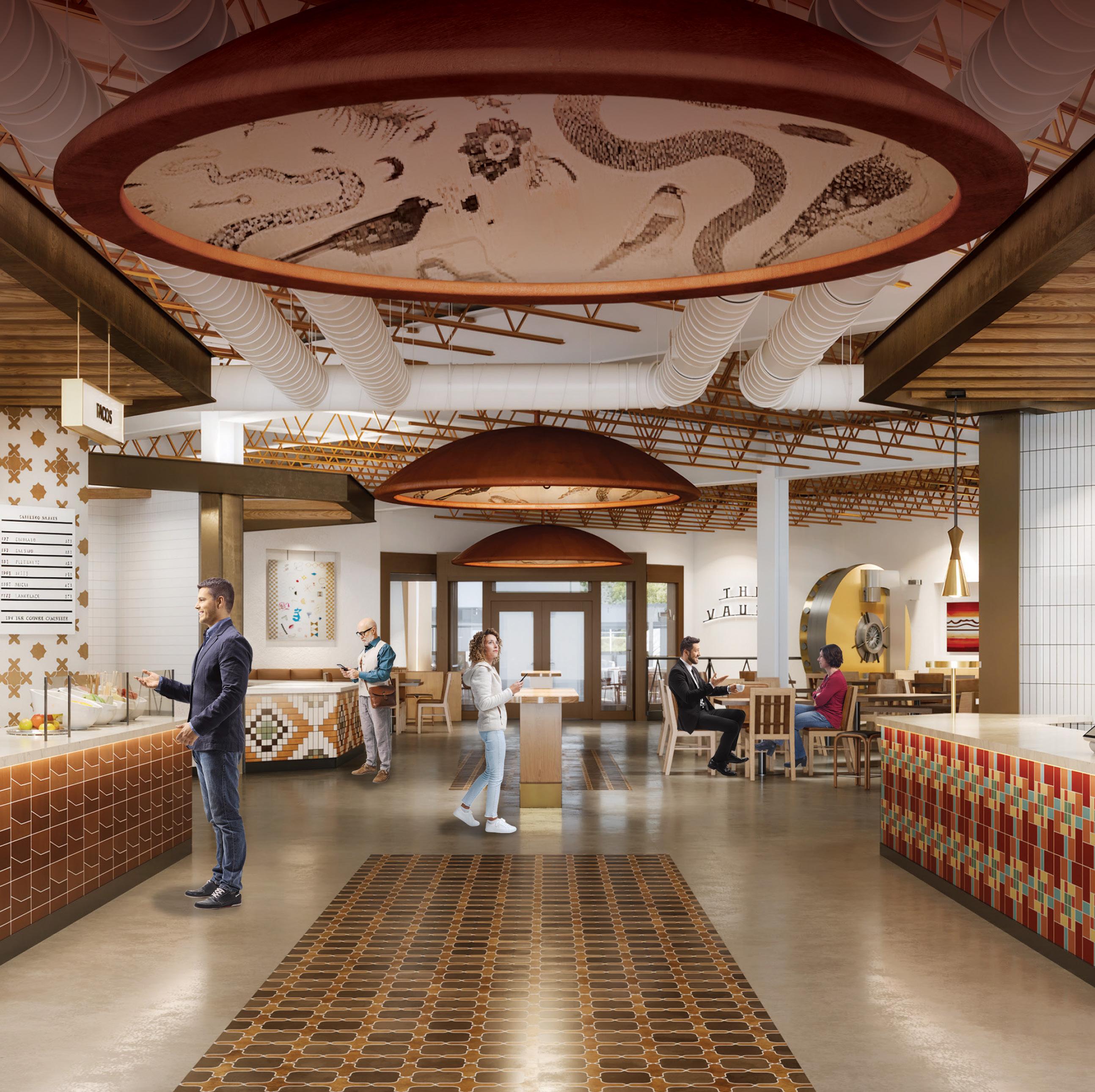
Food and hospitality remain at the heart of the Heritage experience. This issue spotlights the top chefs within our collection, whose creativity and dedication elevate every table, introduces an exciting new chapter with the innovative Santa Fe Food Market, and looks ahead to a vibrant cocktail renaissance across Heritage hotel bars, where regional ingredients and thoughtful craftsmanship are redefining the art of the drink.
Together, these stories reflect what Heritage does best: honoring the past while creating what comes next. Welcome to this season’s journey.
BIENVENIDOS/WELCOME
Jim Long Founder/CEO
Heritage Hotels & Resorts, Inc.
In the surrounding canyons, centuriesold cliff dwellings quietly shape this storied landscape.
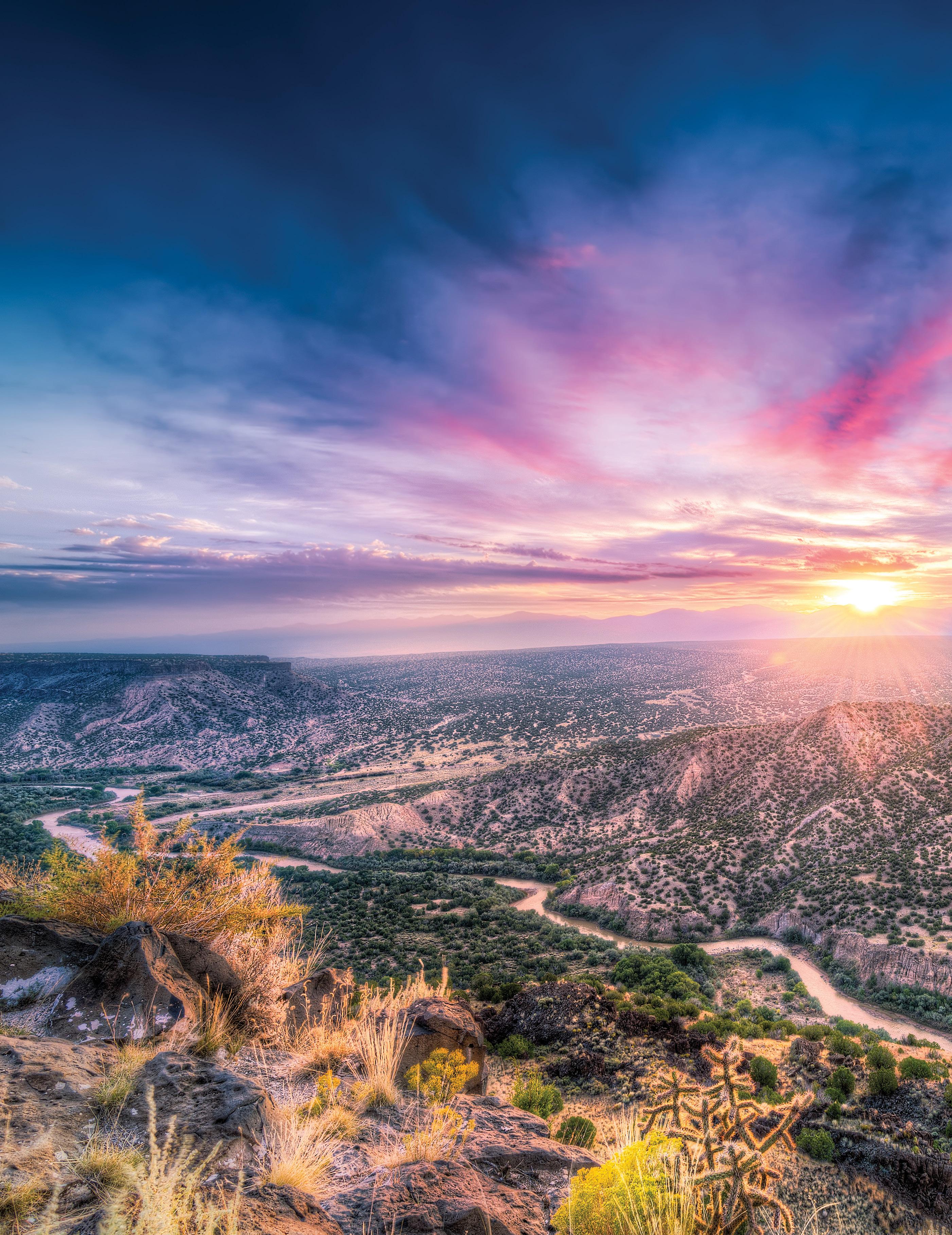
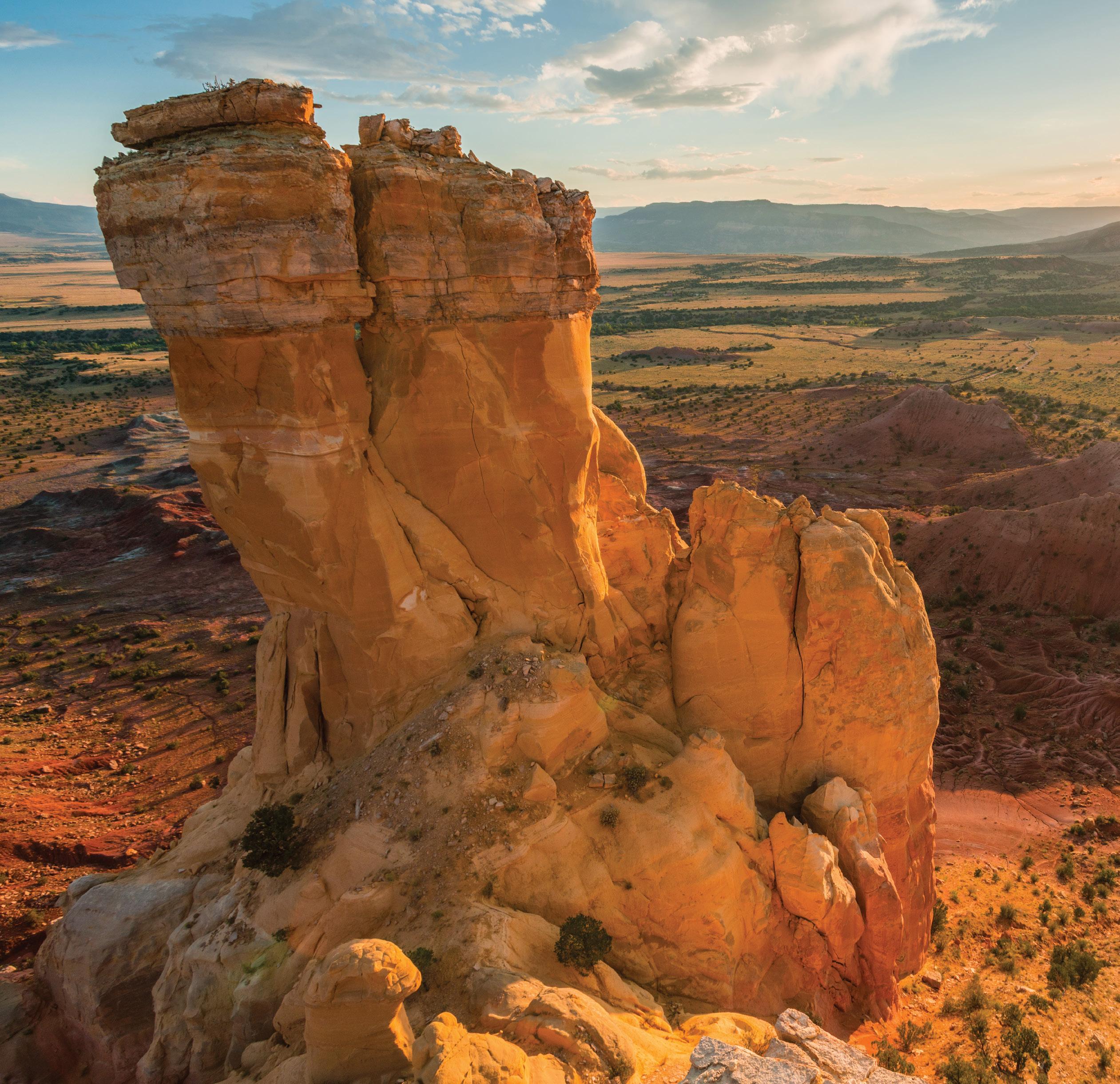
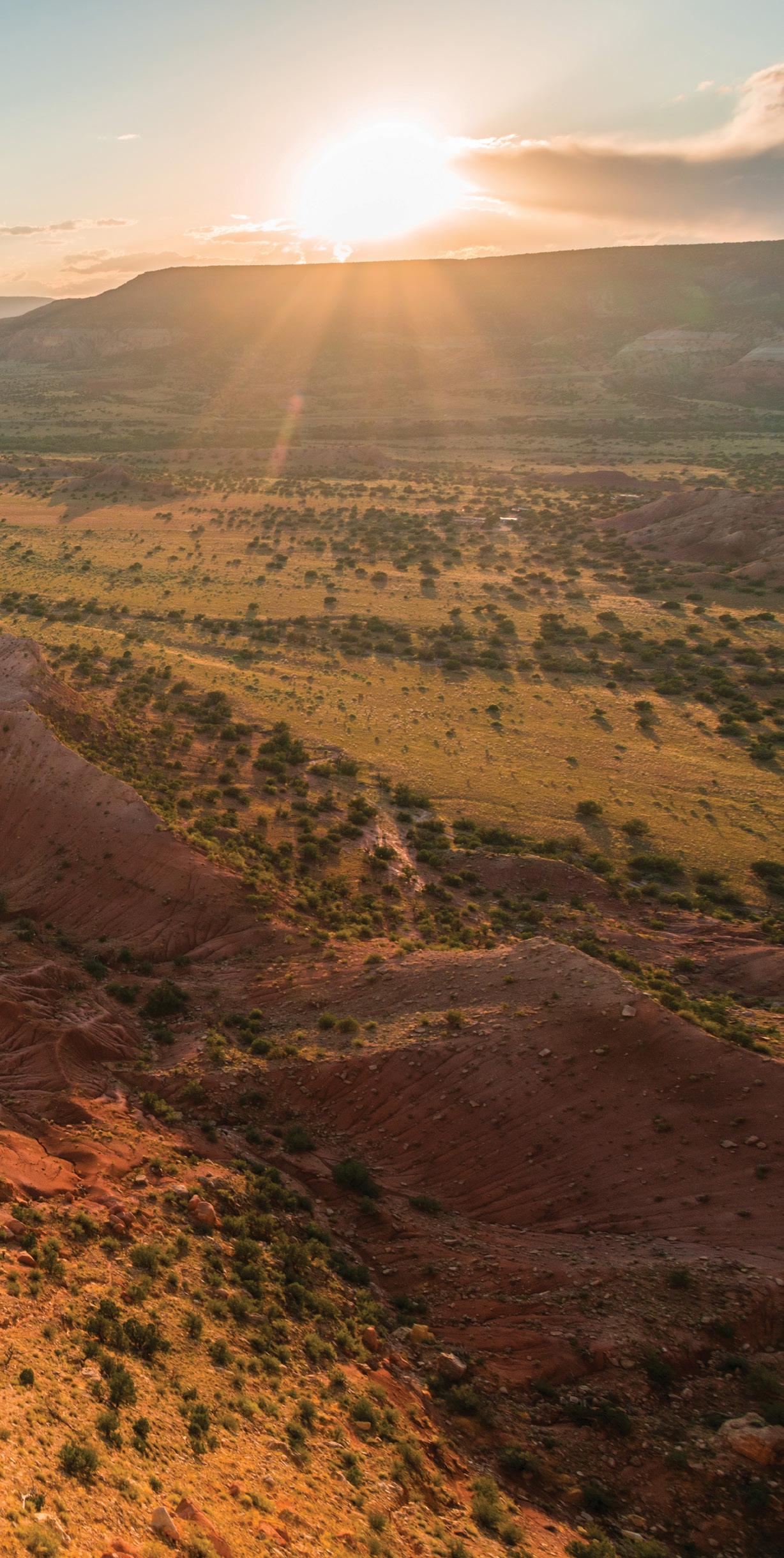
Dawn breaks over Overlook Point near Bandelier National Monument, illuminating the Rio Grande far below.
HIDDEN IN PLAIN SIGHT
New Mexico’s Picture-Perfect Spots, Simply Waiting to Be Discovered
New Mexico reveals itself slowly. Its most unforgettable moments rarely announce themselves with signs or crowds—they appear in quiet alleys, unmarked trails, forgotten courtyards, and landscapes just beyond where most people turn back. For travelers willing to wander with intention, the state offers a visual richness that feels personal, cinematic, and rare.
Across Taos, Santa Fe, Albuquerque, and Las Cruces, these hidden and lesser-known places offer a different way to see New Mexico—one frame at a time.
SILENCE, SCALE, AND SACRED SPACE
Taos is often described as dramatic, but its most powerful moments are quiet.
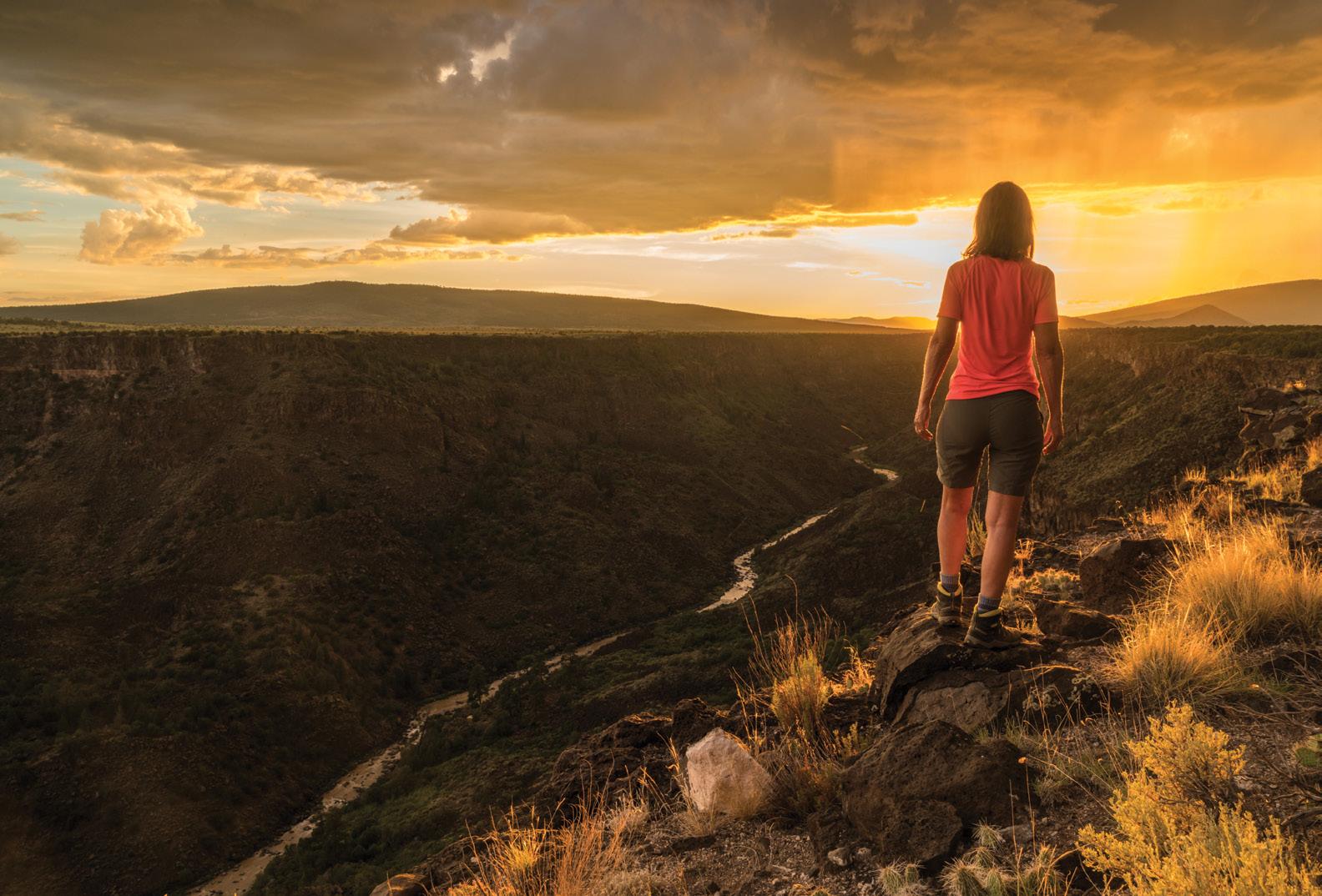
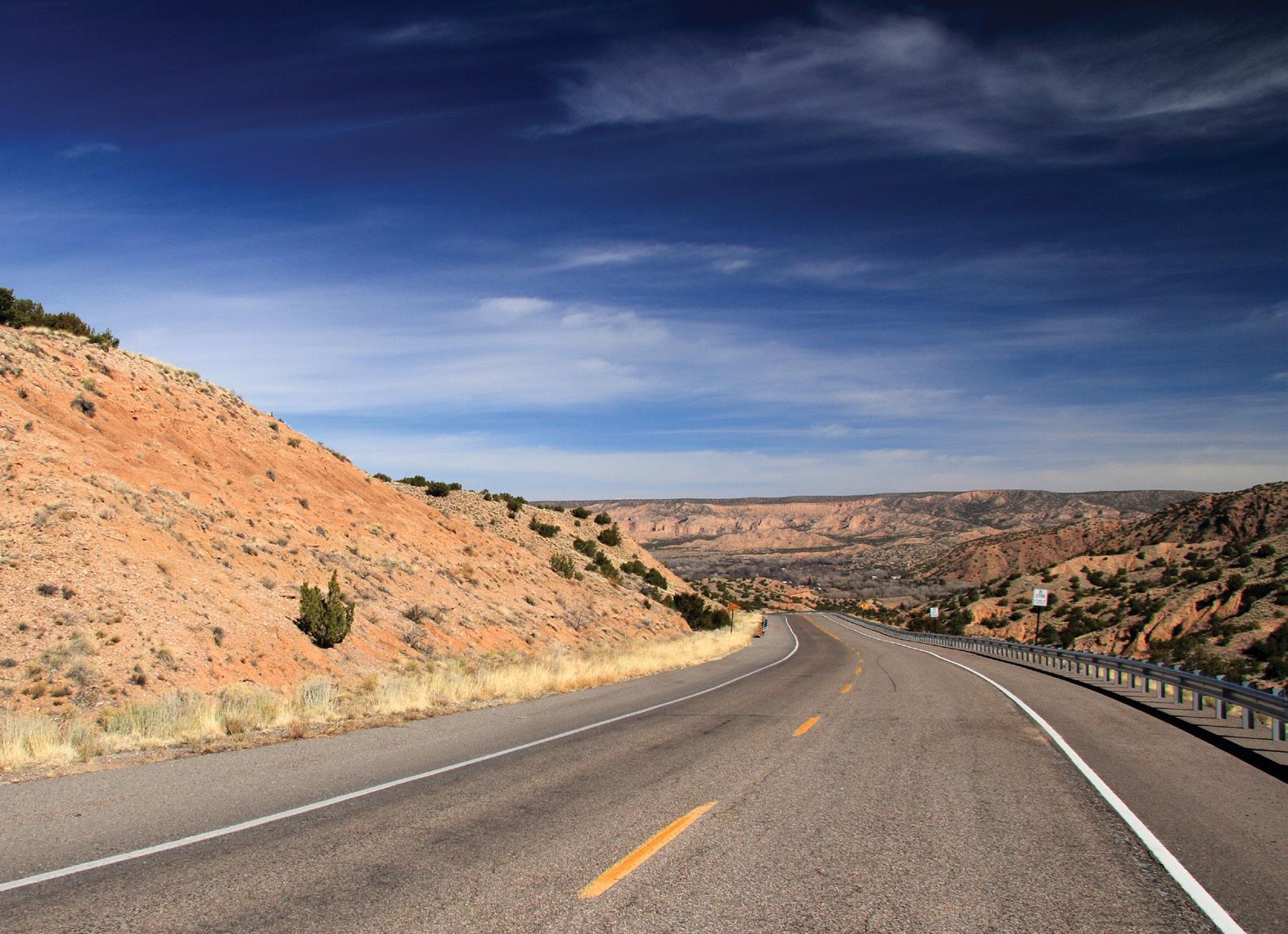
Far from the bridge crowds, the west rim footpaths of the Rio Grande Gorge offer uninterrupted views where the canyon stretches endlessly and sound seems to disappear. These locations feel less like overlooks and more like invitations to pause.
In town, seek out the older adobe structures tucked into residential areas, where peeling plaster and sun-faded wood tell stories without explanation. These scenes feel lived-in, authentic, and deeply rooted.
Outside town, the Taos Plateau’s open mesa roads—especially after a storm—offer surreal compositions of sky, land, and light. Clouds cast massive shadows, and the horizon feels both endless and intimate.
TAOS
TAOS HIDDEN TREASURE : The moment when wind moves across the plateau and the landscape feels alive, vast, and completely yours.
SANTA FE
ALBUQUERQUE HIDDEN TREASURE :
A quiet moment at the river just after sunrise, soft light settling over the bosque as the city feels miles away.
WHISPERED ELEGANCE AND SUBTLE DETAIL
Santa Fe’s beauty often lives in its details, not its landmarks. Tucked behind major streets are unmarked courtyards and passageways, especially near the Barrio de Analco neighborhood. Here, chipped paint, antique doors, and trailing vines create scenes that feel deeply personal and unmistakably Santa Fe.
Just north of downtown, the quiet edges of the Acequia Madre trail offer moments of reflection—water flowing beside adobe walls, wooden gates leading nowhere, and unexpected bursts of greenery. It’s a softer, more intimate Santa Fe than most visitors encounter.
Another overlooked gem is the historic cemeteries and small chapels near the Santa Fe River, where time seems suspended. The interplay of stone, shadow, and sky creates images that feel contemplative and rare.
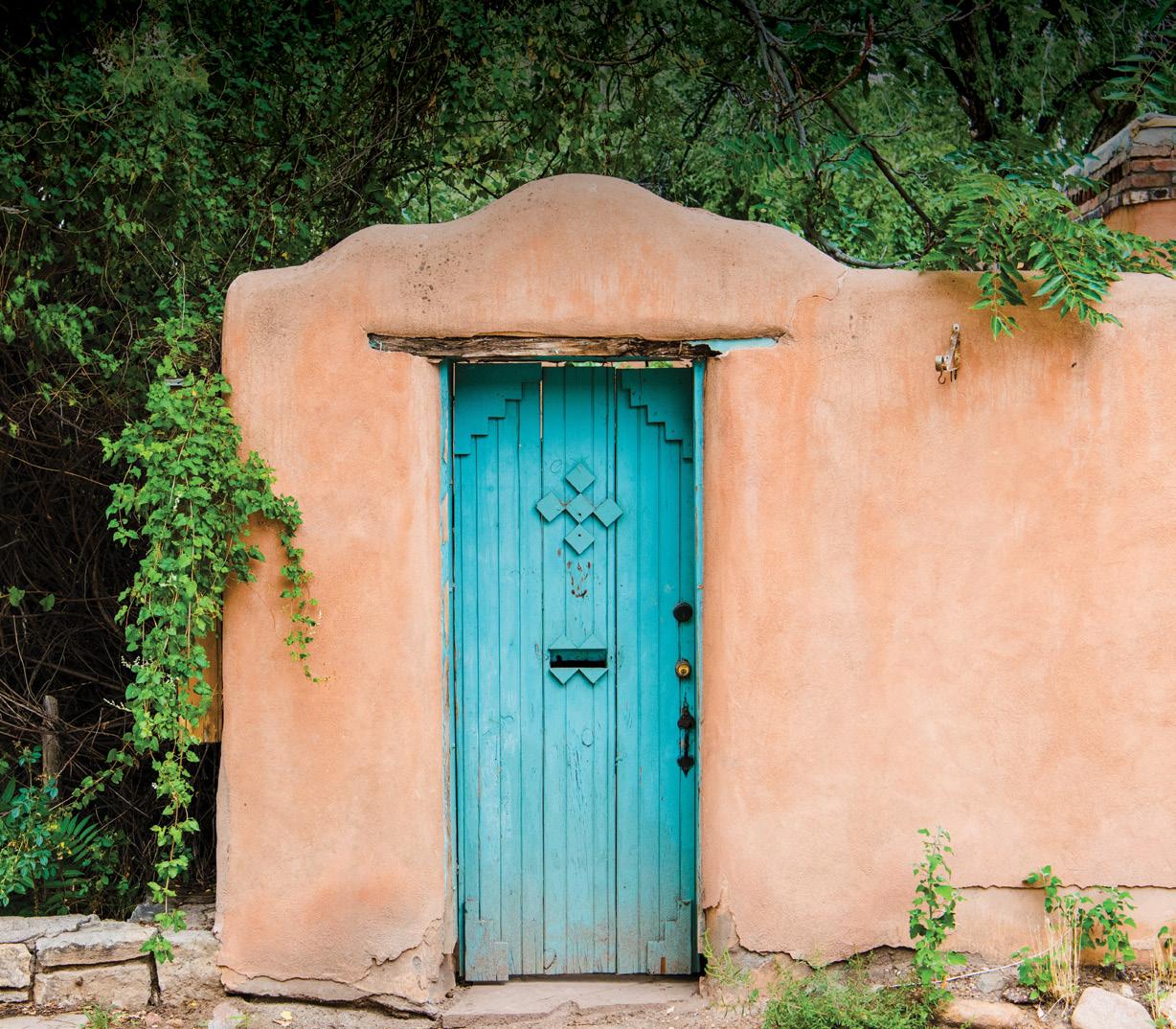
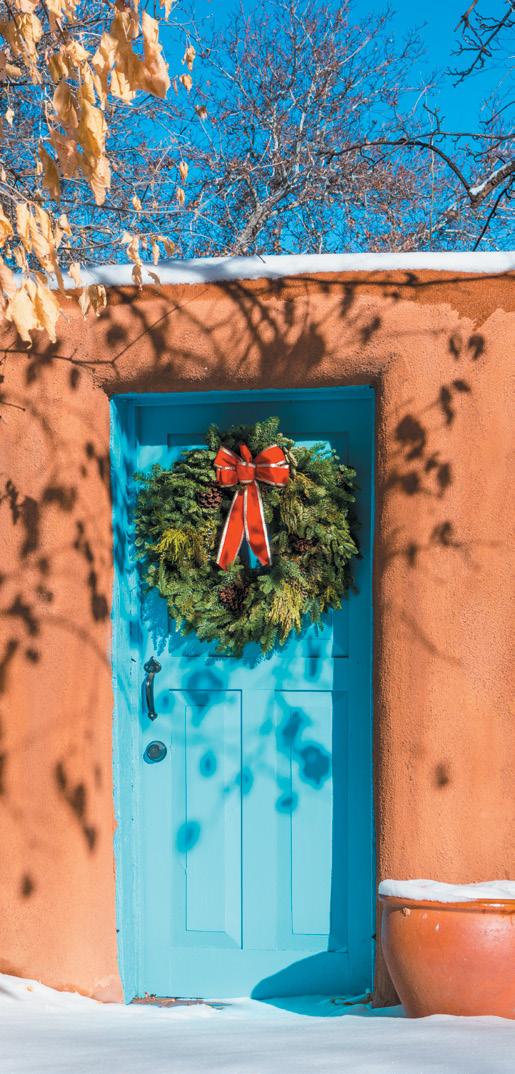
SANTA FE HIDDEN TREASURE : A single turquoise door at the end of an unnamed lane, glowing in late afternoon light.
by
Photo
Laurence Parent.
QUIET GEOMETRY AND WILD EDGES
Albuquerque’s most compelling vistas often exist where intention meets accident—spaces shaped by history, utility, and nature rather than design.
In the Barelas neighborhood, south of downtown, narrow streets reveal faded murals, railroad-era buildings, and long adobe walls interrupted by hand-painted doors. Early morning light stretches across these surfaces, creating striking lines and color contrasts that feel deeply authentic and rarely photographed.
Along the Rio Grande, the lesstraveled bosque access points near Montaño Road lead to secluded stretches of trail where cottonwood groves open unexpectedly to river bends. In winter, bare branches frame the water in graphic silhouettes; in spring, fresh green leaves soften the scene into something almost cinematic.
LAS CRUCES
High above the city, the uppermost pull-offs on the back side of the Sandia Crest access road—not the lookout areas—offer quiet moments where the city fades from view. Here, layers of rock, scrub, and sky create minimalist compositions, especially as clouds roll in over the mountains.
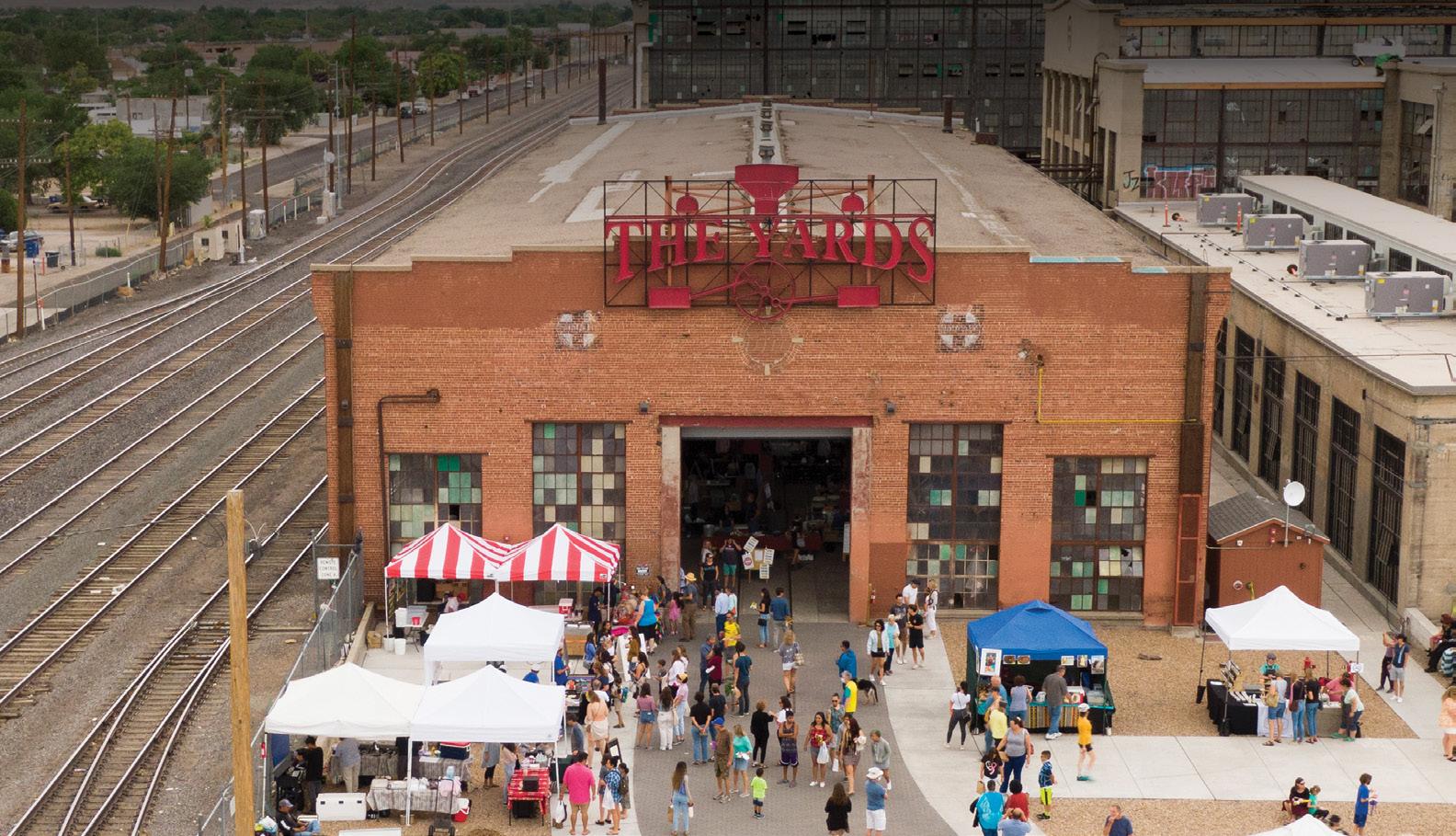
Perhaps the most unexpected perspective comes from the abandoned rail spurs and industrial edges of the old rail yard zones, where rusted metal, and distant mountain lines intersect. These forgotten spaces reveal a raw, textured Albuquerque that feels entirely uncurated and unmistakably real.
ALBUQUERQUE
DESERT STILLNESS AND FORGOTTEN STORIES
Las Cruces is a place of vast horizons and quiet beauty, where some of the most compelling scenes feel almost accidental.
Just east of Las Cruces, La Cueva Rock Shelter sits at the base of the Organ Mountains, their granite spires rising abruptly from the desert floor. A short path leads to the shelter, where wind, stone, and silence preserve traces of lives lived here long before the city.
Within Mesilla, step beyond the historic plaza and explore the residential adobe lanes west of the village core. Here, weathered walls, hand-built fences, and unmarked gardens offer an intimacy that feels untouched by tourism. These streets reward slow walking and late-afternoon light.
For a truly unexpected scene, the Old Rio Grande riverbanks south of town reveal quiet stretches where cottonwoods, sand, and sky meet. Reflections after a summer rain create rare, painterly moments in a region known more for dryness than water.
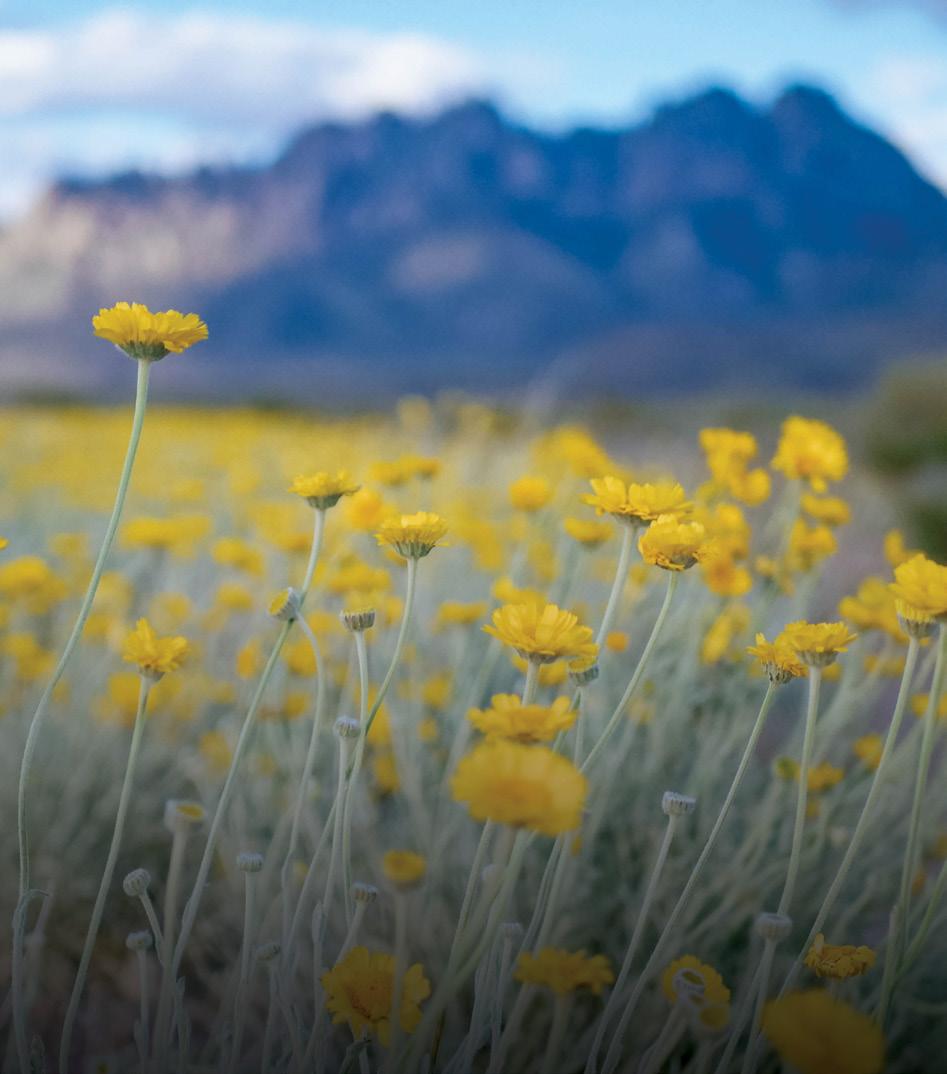
LAS CRUCES HIDDEN TREASURE : The unmarked paths near the river where footprints disappear into sand and the desert feels momentarily infinite.
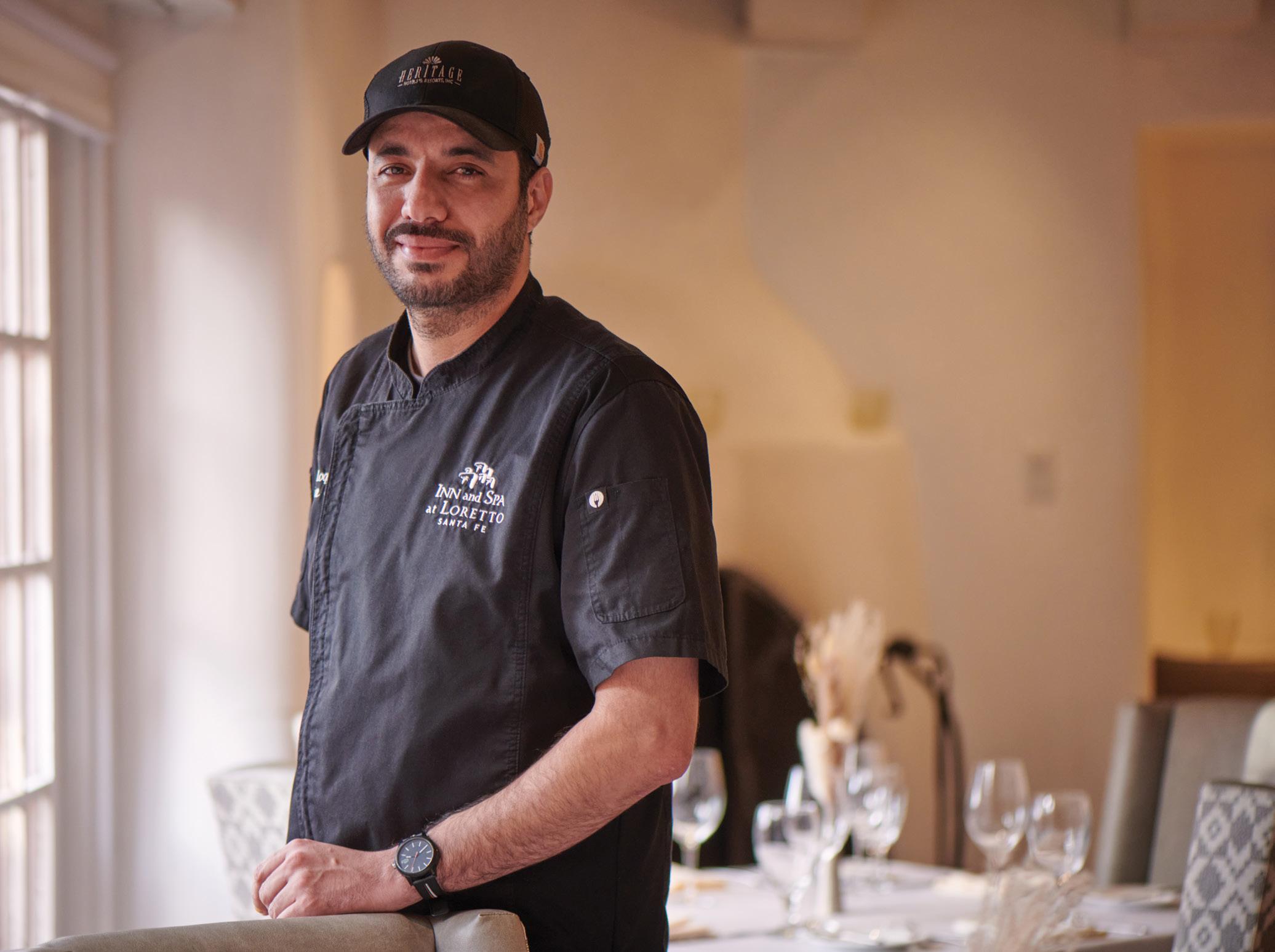
Chef Mounir Loqmane tells a different story with every plate at Luminaria. Photo by Douglas Merriam.
New Mexico’s most exciting meals right now might just be hiding in its hotels
CHEF’S
TABLE
BY LANEE LEE
In 2025, the world caught up to what locals already knew: New Mexico is the place to be.
Travel + Leisure named Santa Fe the number one city in the U.S. (and #19 in the world) and crowned Taos the “Best Small Shopping Town,” while Condé Nast Traveller UK put Santa Fe among the “Best Cities in the World.” AFAR and Sunset Magazine, meanwhile, pointed travelers straight to Albuquerque for its food, culture, and wide-open skies.
And one of the best reasons to travel to New Mexico right now?
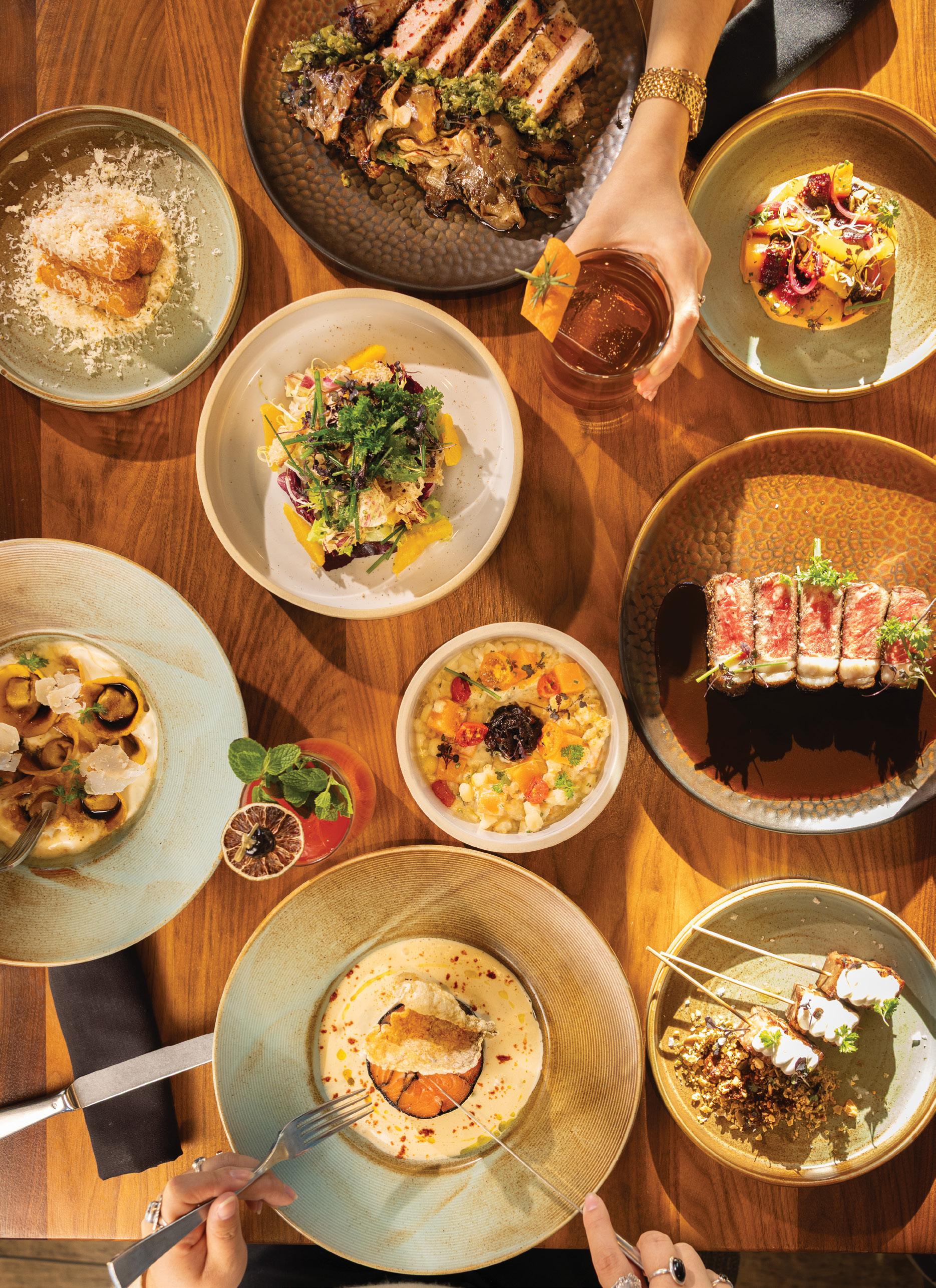
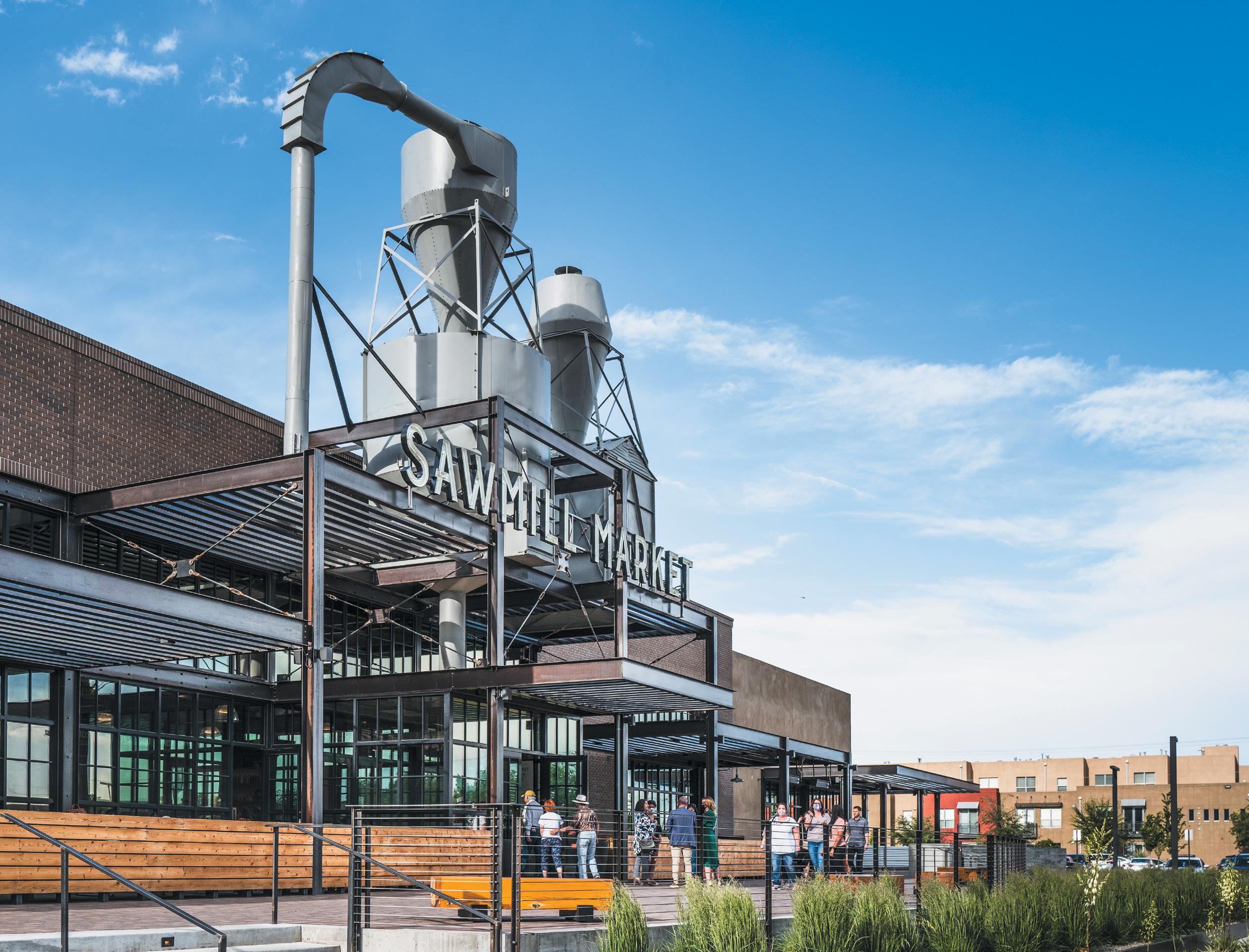
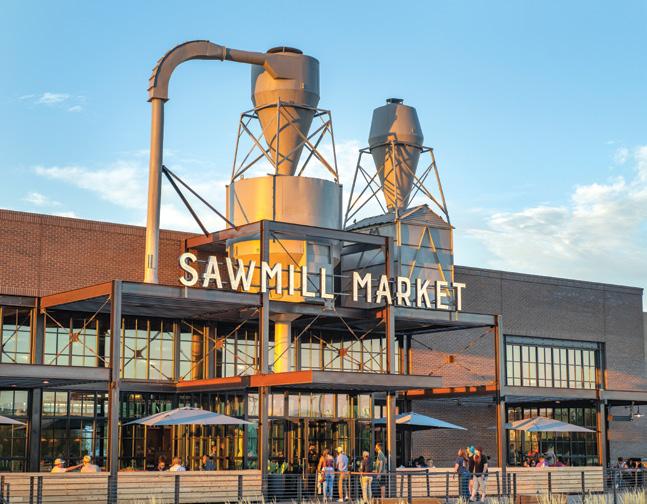
What’s on the plate at Heritage Hotels & Resorts. Across Taos, Santa Fe, Albuquerque, and Las Cruces—the group has become one of the state’s sharpest talent scouts, luring chefs with serious credentials and giving them room to cook big, place-driven food. From Cristina Martinez’s fine-dining polish in Taos to Gilbert Aragon’s live-fire, hunter-style in Santa Fe, to James Beard–recognized chef Sean Sinclair bringing detail-obsessed precision to burgers and fish and chips at Sawmill Market, Heritage is helping reinvent New Mexico’s food scene from north to south.
Here’s where—and what—to eat right now, from Taos to Las Cruces, and the passionate culinary artists who make the magic happen:
In the kitchen at Wolf and Roadrunner, Chef Gil channels the spirit of the high desert, crafting dishes shaped by fire, wild flavors, and the season’s harvest.
The kind of meal you don’t
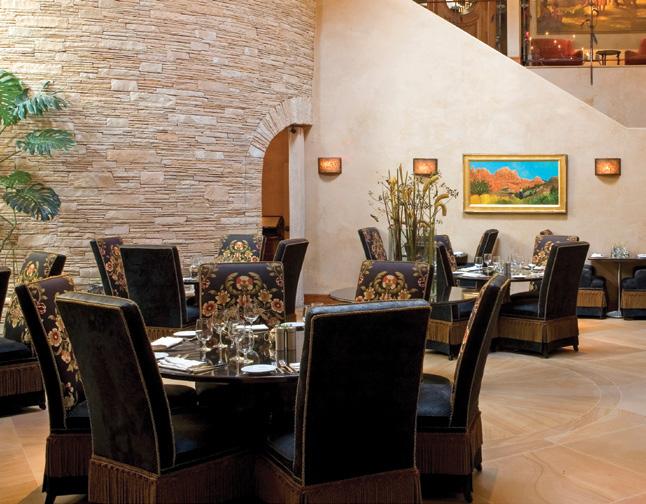
rush. Chef Goran’s dishes at Level 5 invite sharing, savoring, and another round of cocktails. Photo by Emily Okamoto.
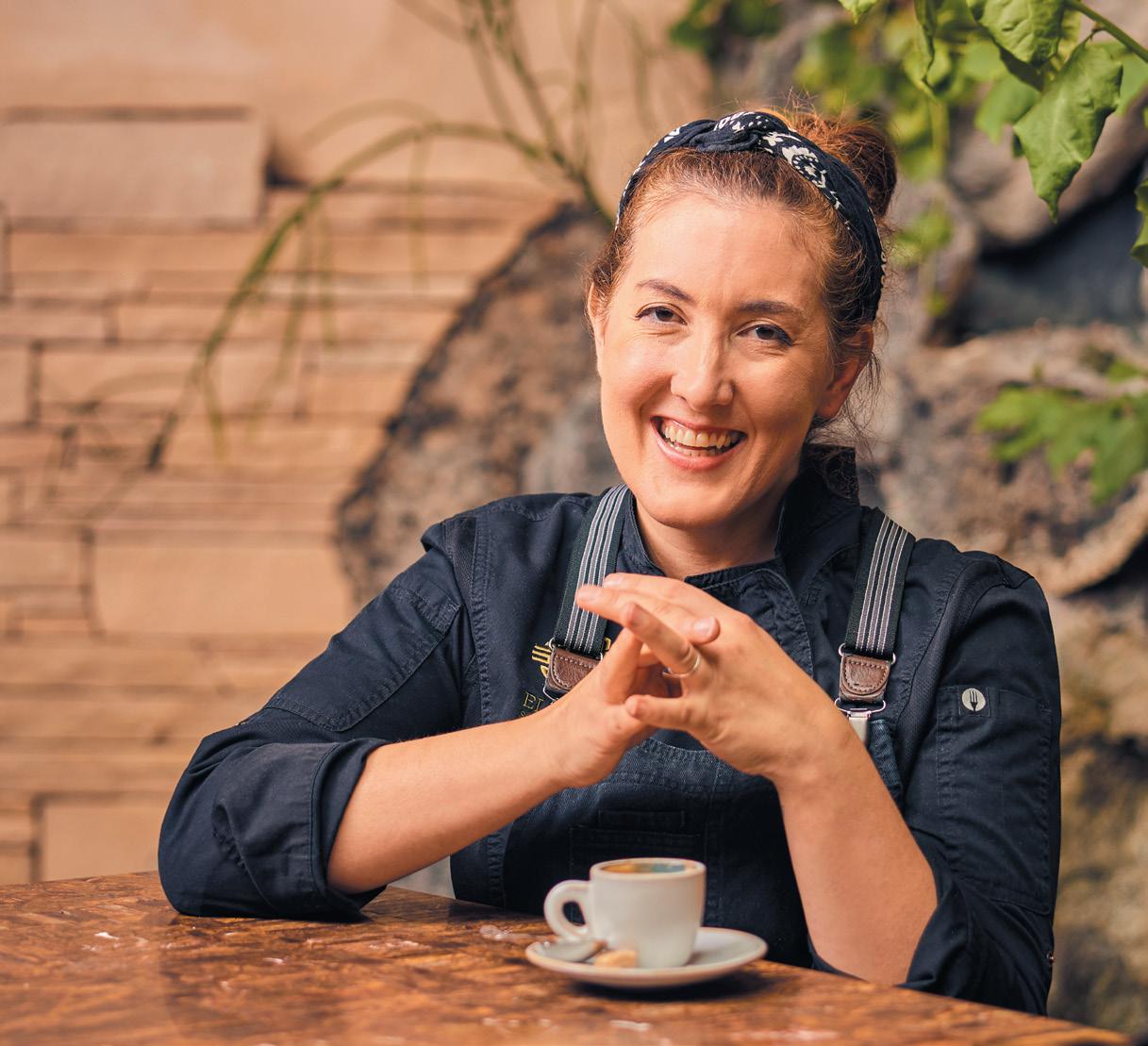
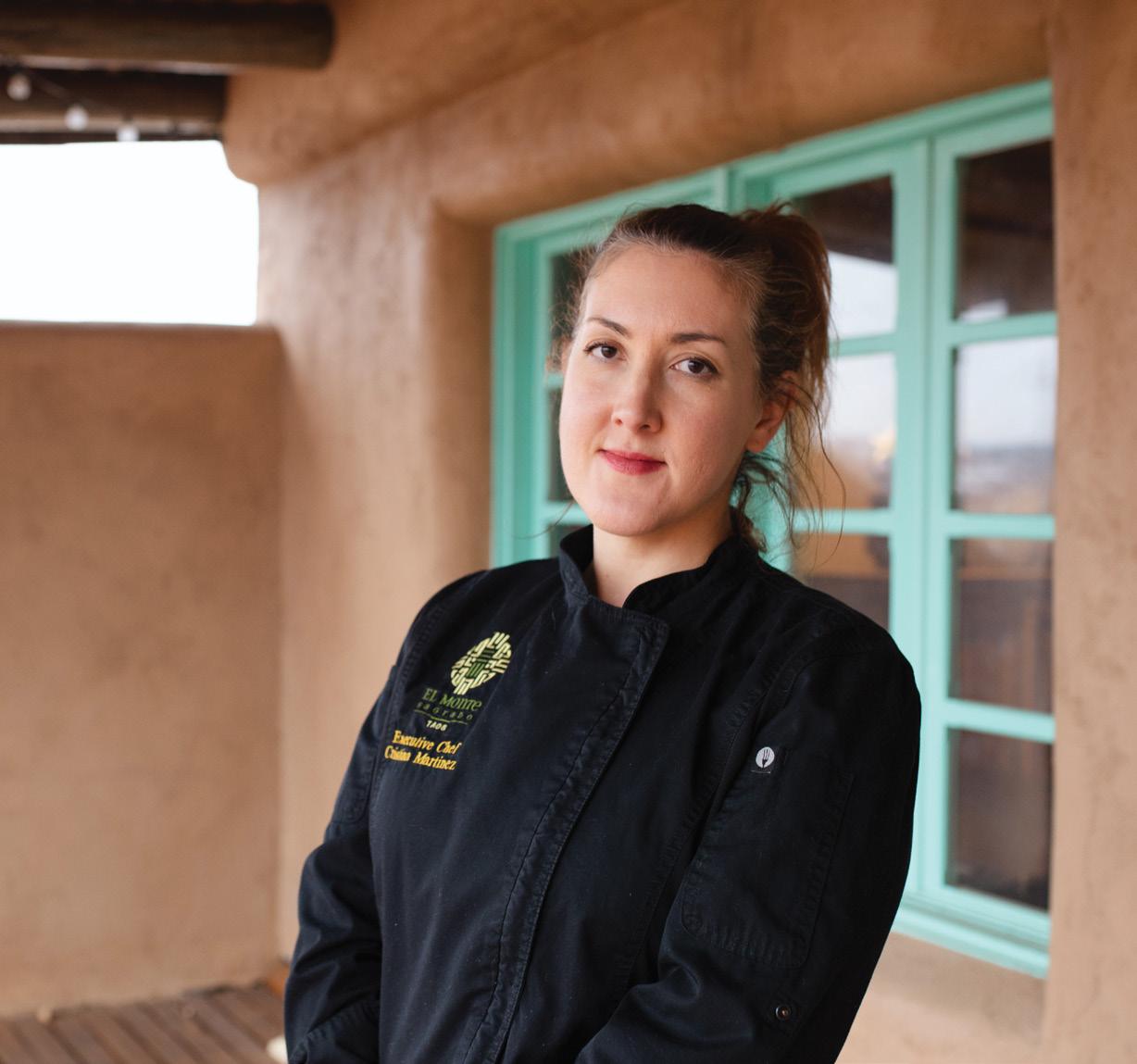
CHEF CRISTINA MARTINEZ, DE LA TIERRA, EL MONTE SAGRADO, OLD MARTINEZ HALL, TAOS
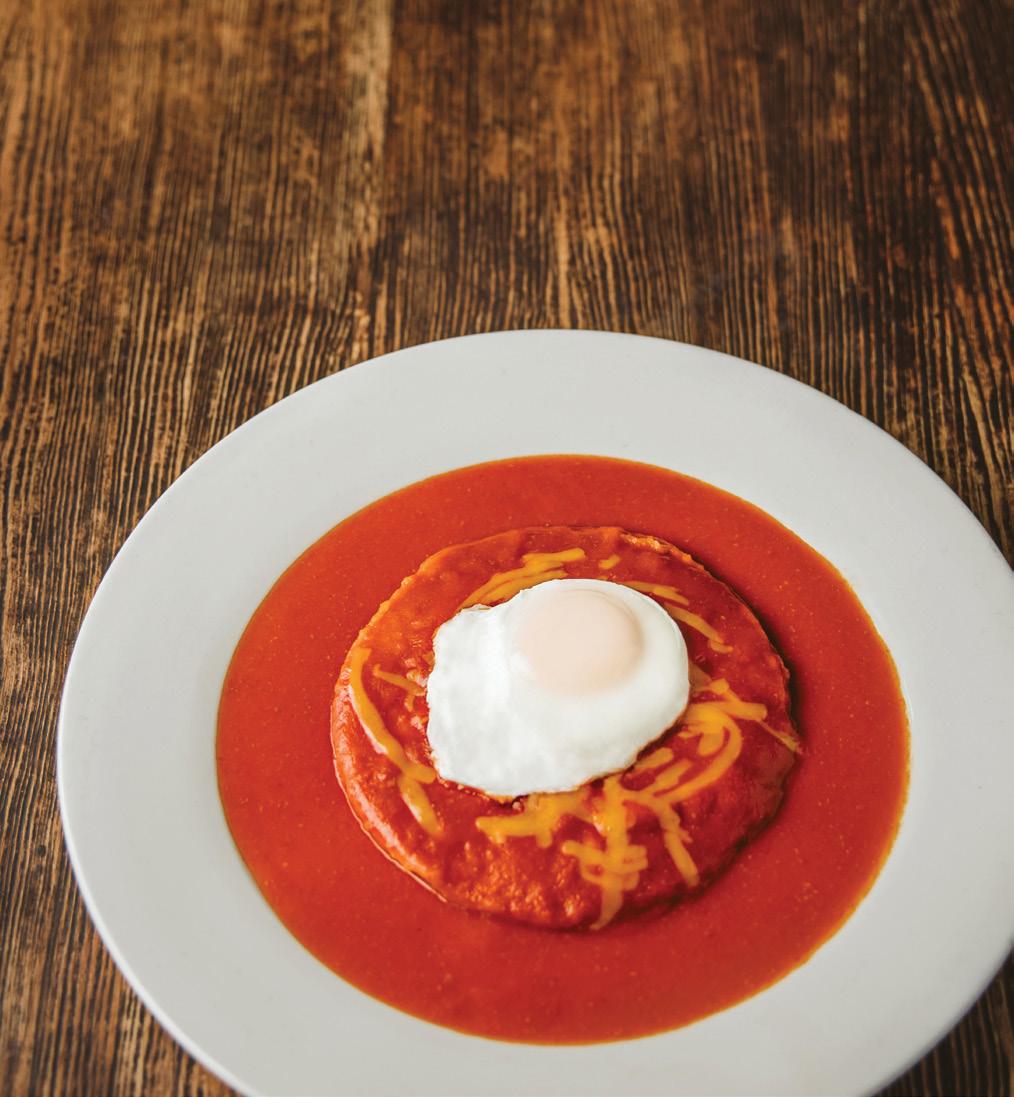
At De La Tierra, the signature restaurant inside El Monte Sagrado hotel in Taos, Chef Cristina Martinez is redefining hotel dining in northern New Mexico. The dining room feels like a peaceful escape, with firelight, fresh mountain air, and the rustle of aspens outside. The food is vibrant and full of life.
Martinez grew up obsessed with fine cuisine, then sharpened that curiosity at Le Cordon Bleu in California, graduating with honors before returning home to New Mexico. Stints at Hotel Albuquerque, The Lodge at Santa Fe, Pueblo Harvest Café, and as executive chef at Albuquerque’s Artichoke Café gave her a broad canvas. Taos, she says, gives her focus. “The setting here influences me to keep things pure, allowing the quality of New Mexico’s ingredients to truly shine.”
We make nearly everything from scratch
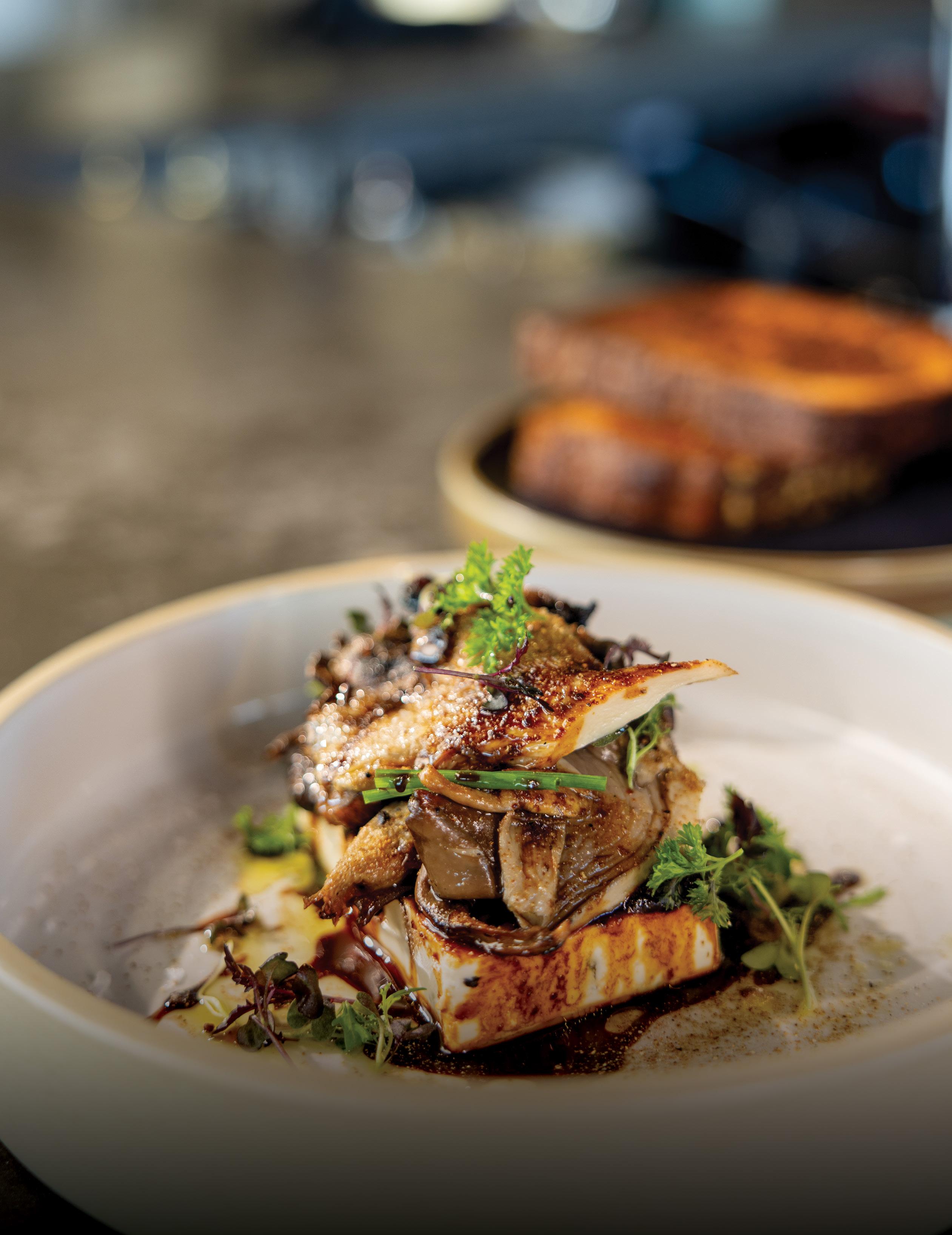
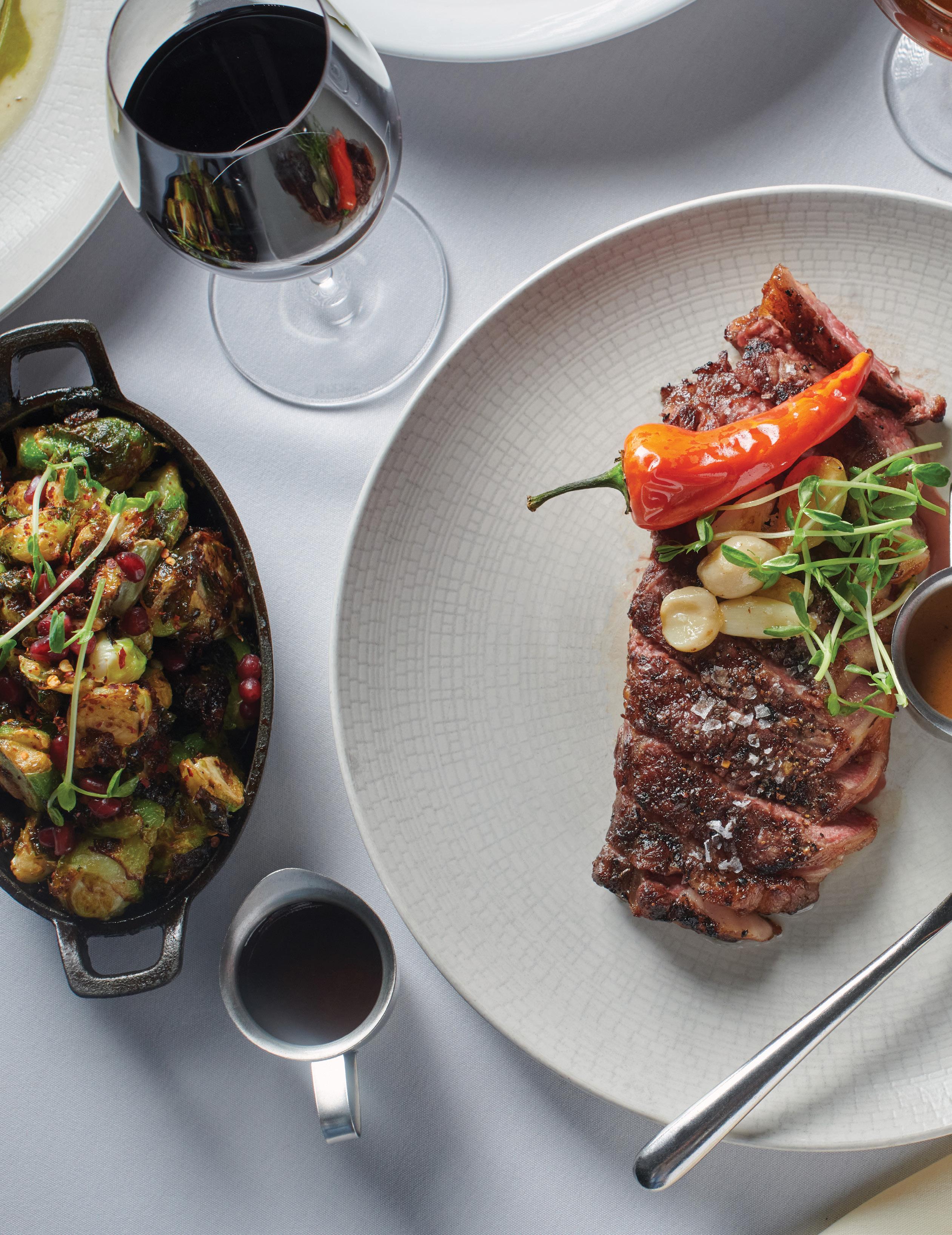
You can taste that purity in dishes that mix French and Asian techniques with bold local flavors. For example, the red chileroasted Meyers Ranch beef tenderloin comes with whipped crème fraîche potatoes, grilled asparagus, roasted corn pico, red chile-brown butter hollandaise, merlot demi-glace, and blue corn onion strings. It’s a fine-dining tribute to New Mexico. The blackened, prickly-pear-glazed salmon feels more global, served over fried, cumin-scented forbidden rice with hot scallion salsa, marinated cucumbers, and a blood-orange ancho-chile beurre blanc that is reminiscent of a Taos sunset.
“My culinary ethos is rooted in the belief that teaching and passing down knowledge and experience about cooking is essential,” Martinez says. You can see this in her dedication to making things by hand, like house-made kimchi, cultured butter, various pickles, beet-cured salmon, and even pastrami. “Since we make
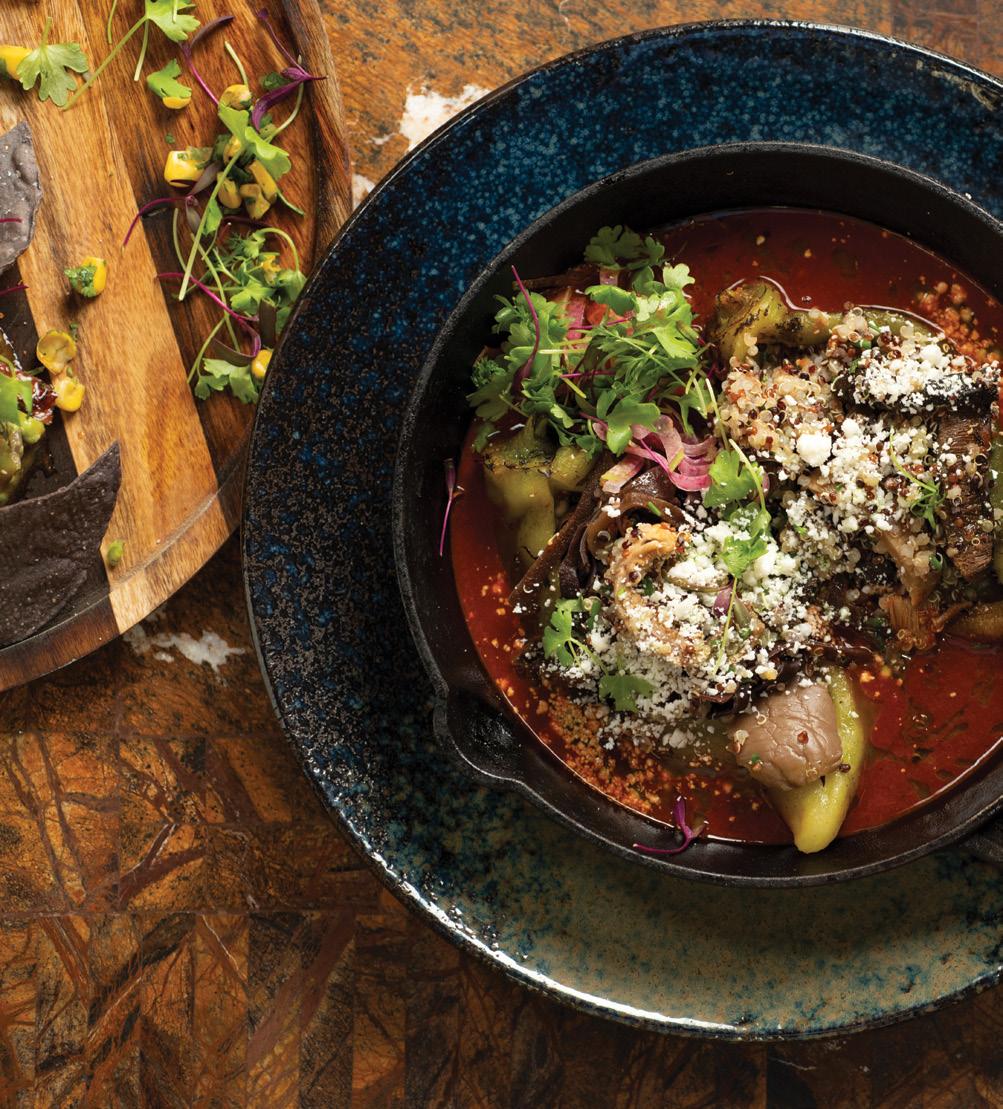
Chef Cristina Martinez at De La Tierra, the signature restaurant inside El Monte Sagrado, brings global technique to the flavors of northern New Mexico including Vegetable Rellenos. Photos by Douglas Merriam (left) and Jake Holschuh (right).
nearly everything from scratch, my team gains significant experience and knowledge through these practices.”
If one dish captures her style, it’s the lobster risotto. It’s comforting, with French and Asian influences woven in. For dessert, the lavender–Earl Grey crème brûlée with fresh berries and a macaron blends European flair with a touch of the high desert.
“New Mexico’s flavors heavily influence everything we do,” she says. “We value balance and pureness, as well as the history passed down from my family.” In Taos, De La Tierra aims to offer something classic with an international touch, reaching for a level of quality and luxury that’s hard to find today. It’s a place for travelers and locals who want to experience the region’s flavors and see where Martinez is going next.
CHEF GILBERT ARAGON, WOLF AND ROADRUNNER,
HOTEL ST. FRANCIS, SANTA FE
Chef Gilbert Aragon has been feeding New Mexico for years—most recently cooking and catering in Albuquerque’s Heritage Hotels orbit —but Wolf and Roadrunner is the first time he’s
doing it fully on his own terms: wild, foraged ingredients, and unapologetically “hunter style”.
Inside Hotel St. Francis in Santa Fe, it’s the city’s only restaurant built around a hunter-gatherer theme—think predator/prey romance, New Mexico heritage, and a live-fire heart.
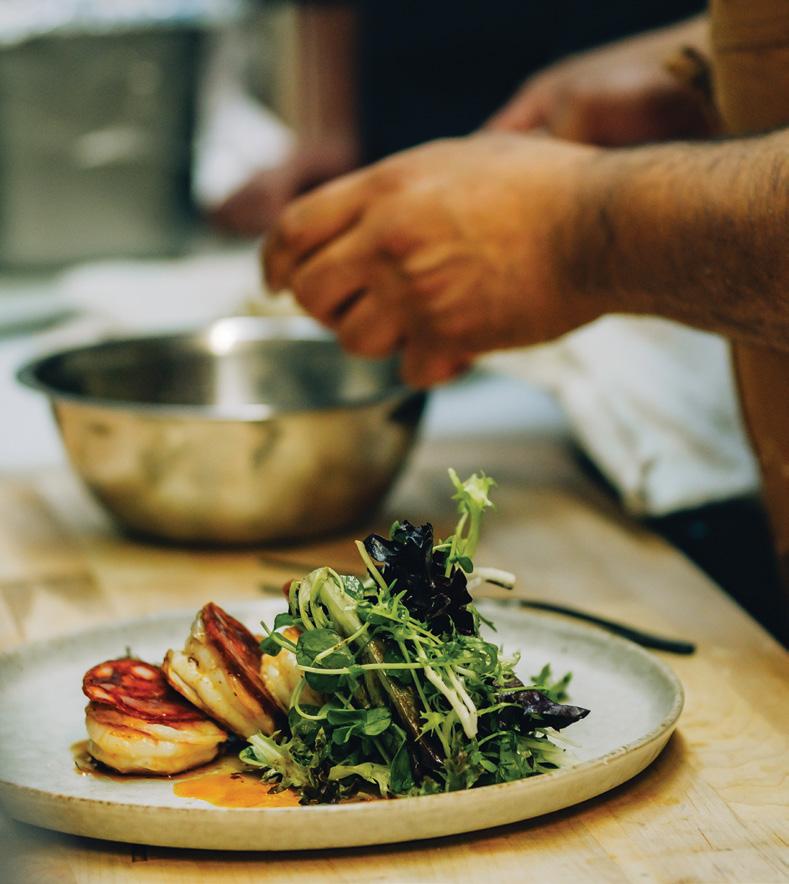
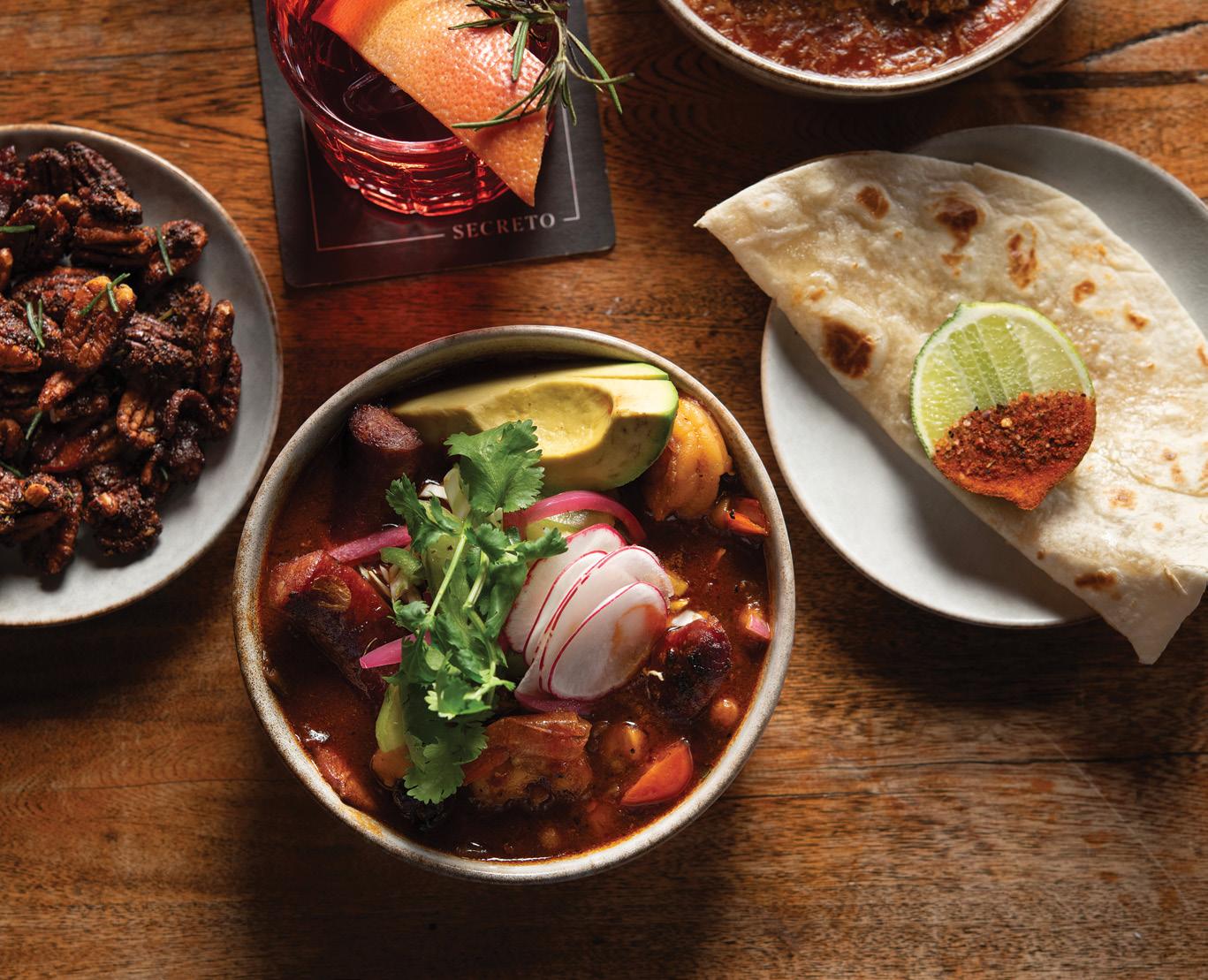
Aragon’s cooking is all depth and terrain: bison, venison, wild boar sausage—“the raw and richness of the land,” as he puts it. Start with the dry-aged bison strip, smoky from pecan wood and finished with a coffee rub, then go straight for his signature shrimp dish with wild boar sausage, swimming in house-made chili morita broth and Hatch red chile purée—“it kind of just speaks New Mexico…it speaks tradition and my style of cooking,” Aragon says.
Lauren Aragon—wife, sous chef, and front-ofhouse glue—has one simple tip for first-timers: “The tasting menu or the hunter menu… it really showcases New Mexico flavors, the seasonality, and what chef can really do.”
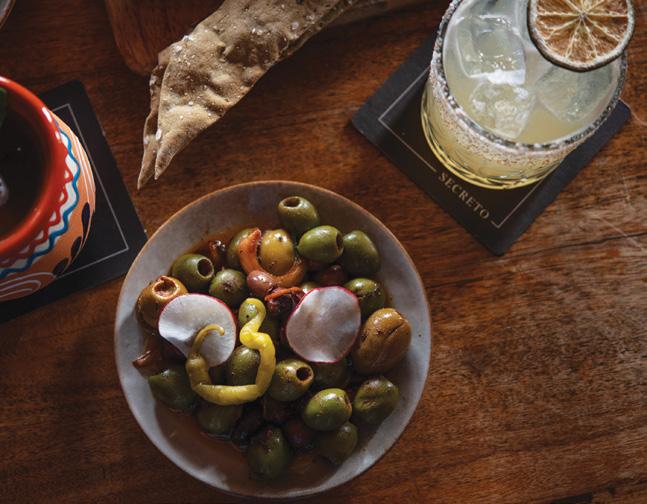
And it doesn’t stop at the dining room. The couple also runs the menus at Secreto Lounge, the Hotel St. Francis bar, plus the adjacent Gruet Winery tasting room, so you can make a whole night of it without leaving the property. Start Hunter style. No apologies.
Chef Gilbert Aragon turns wild-foraged ingredients into bold, fire-kissed dishes that capture the spirit and flavors of New Mexico. Photos by Douglas Merriam.
Classic flavors, Santa Fe style.
at Secreto with something game-forward like the bison taquitos, then order the Smoked Sage Margarita—one of the most popular pours on Santa Fe’s Margarita Trail—before settling in at Wolf and Roadrunner for the main event.
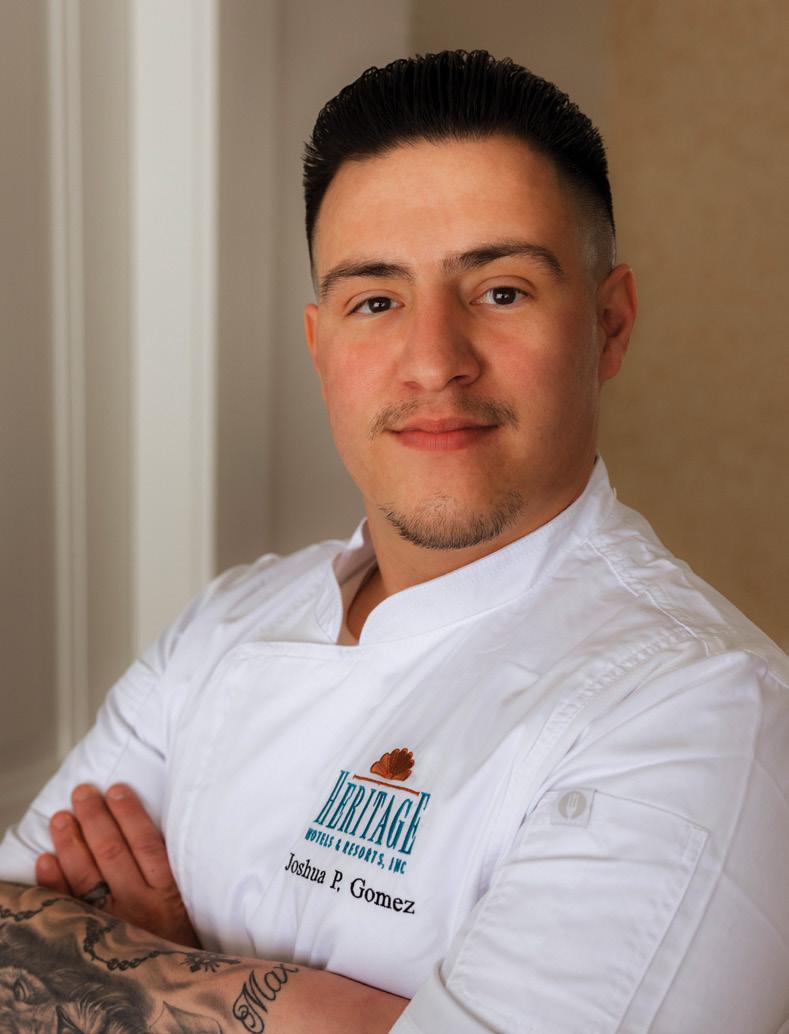
CHEF JOSHUA GOMEZ, AGAVE, ELDORADO HOTEL & SPA, SANTA FE
Born in Velarde, New Mexico, a tiny town about an hour north of Santa Fe, Chef Joshua Gomez learned to cook in his grandparents’ kitchen, rolling tortillas and baking apple and cherry pies—foundational experiences that continue to inspire his approach at Agave Restaurant & Lounge in Santa Fe’s Eldorado Hotel & Spa.
Now overseeing Agave and all hotel culinary operations, Gomez focuses on comforting, shareable food that feels local and celebratory. The menu reads like a modern love letter to Northern New Mexico: green chile cheeseburgers and pork chops alongside sweet chili–garlic shrimp with chorizo, prosciutto flatbread,
and salmon that regulars rave about. Just steps from the Plaza, Agave is also known for one of the best happy hours in town. Hot tip: Don’t miss the green chile aquachile appetizer.
It’s thoughtful cooking without being pretentious, rooted in the flavors he grew up with…thanks to his abuelos.
CHEF MOUNIR LOQMANE, LUMINARIA, INN AND SPA AT LORETTO, SANTA FE
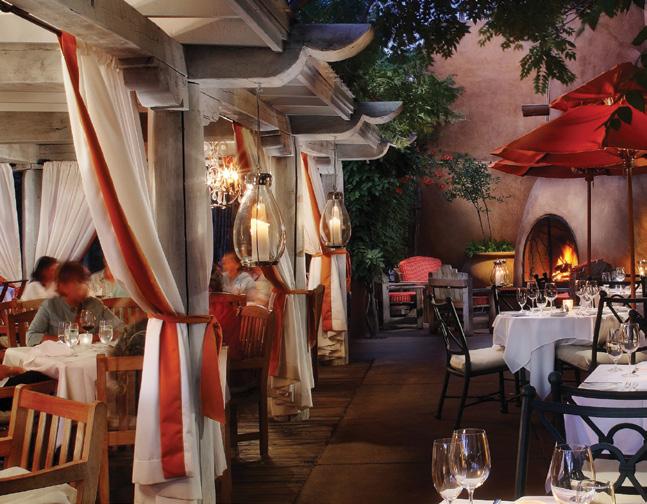
What happens when a Moroccan-born chef, driven by the belief that "cuisine has no limits," steps into the kitchen of one of Santa Fe’s most iconic hotels? At Luminaria, the serene restaurant and patio at the Inn and Spa at Loretto, executive chef Mounir Loqmane is answering that question...one globally inspired, Santa Fe–rooted dish at a time.
Raised in Morocco, Loqmane honed his craft in leading kitchens in Naples and Miami before moving inland. Yet his journey to New Mexico was personal rather than professional. “I came to Santa Fe to be near my daughter and spend more time with her,” Loqmane explains. “Heritage Hotels & Resorts felt like the right fit, and I was fortunate to become executive chef at what I consider the jewel of all Heritage properties.”
In practice, his philosophy is simple: no borders in the kitchen. “Chefs have been using ingredients from all over the planet since the birth of modern cuisine,” he says. “I get to mix what is nostalgic to me and explore new ingredients that work together, and if it tastes
From his grandparents’ kitchen in Velarde to the heart of Santa Fe, Chef Joshua Gomez crafts food that feels like home.
Photo by Emily Okamoto.
good, it’s going on the menu.” That philosophy manifests itself in a globe-trotting menu. Expect inventive Southwestern fare, such as green chile mashed potatoes, layered with French, Italian, Japanese, Moroccan, Mediterranean, and modern American influences.
If you’re trying to understand his style in a single bite, he points to the grouper. “It’s a true statement to ‘no limits,’” he says. The dish starts with Gulf fish from the coast (where he spent the last 15 years), set over a truffle-and-roasted-corn risotto cake. He finishes it with a tomato relish built on “true mother sauce technique” with local Chimayó chile, a champagne beurre blanc, and
crispy leeks—a nod to his early days as a French culinary student.
“We are pushing the boundaries of cuisine a little further, but we want to respect the legacy of Luminaria,” Loqmane says. “We love our die-hard customer base; they get to join the ride with us to discover a new face of Luminaria’s future.” Long after guests leave the romantic patio adjacent to Loretto Chapel, he hopes they remember “the exotic mixture of spices and ingredients we bring into the Santa Fe scene”—and the sense that Santa Fe’s next culinary chapter is being written, in part, from his kitchen.
No borders in the kitchen.
Executive Chef Mounir Loqmane brings a borderless culinary perspective to Luminaria. Photo by Douglas Merriam.
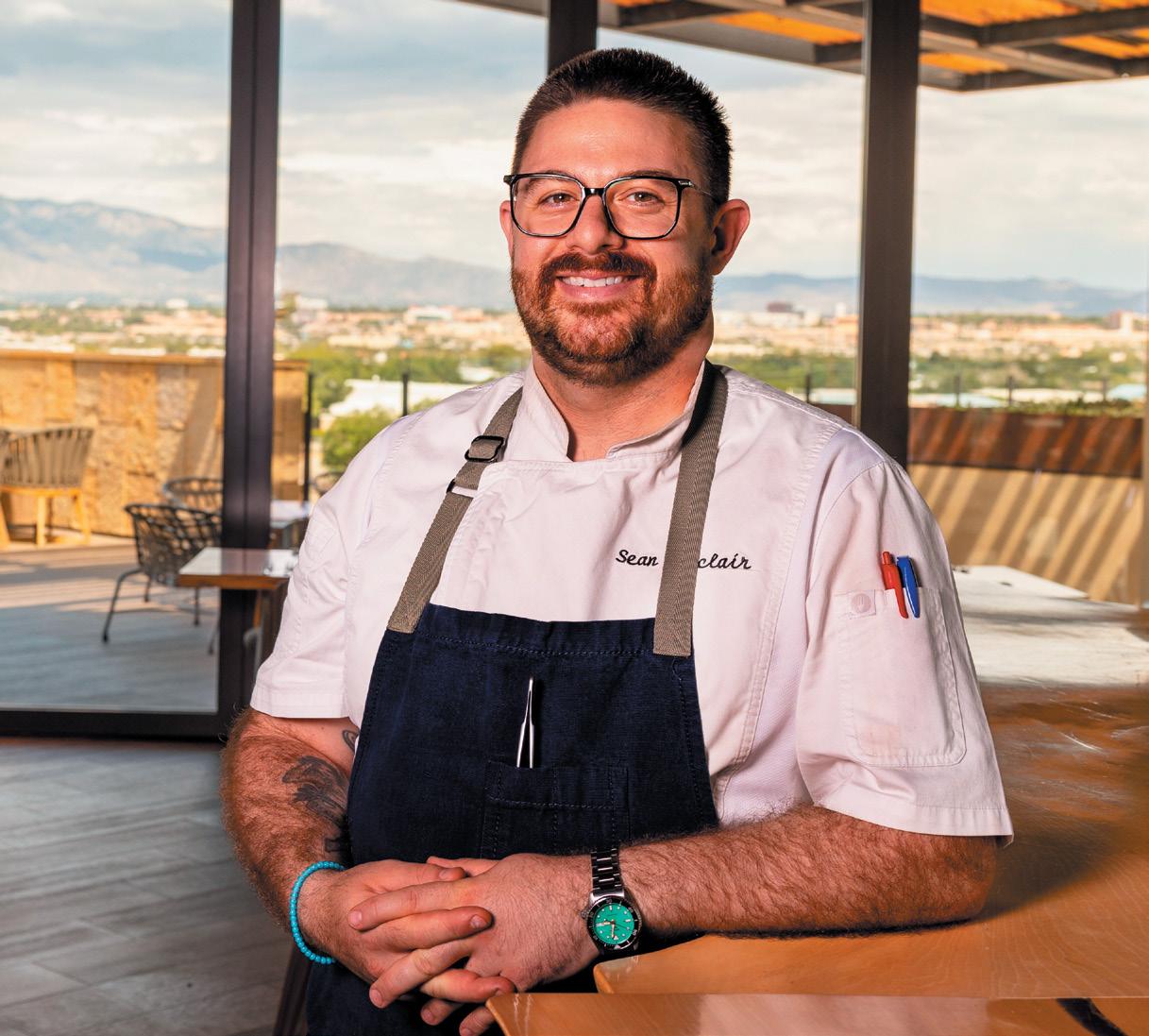
CHEF SEAN SINCLAIR, PATTY MAN AND HOOK IT UP, ALBUQUERQUE AND SANTA FE
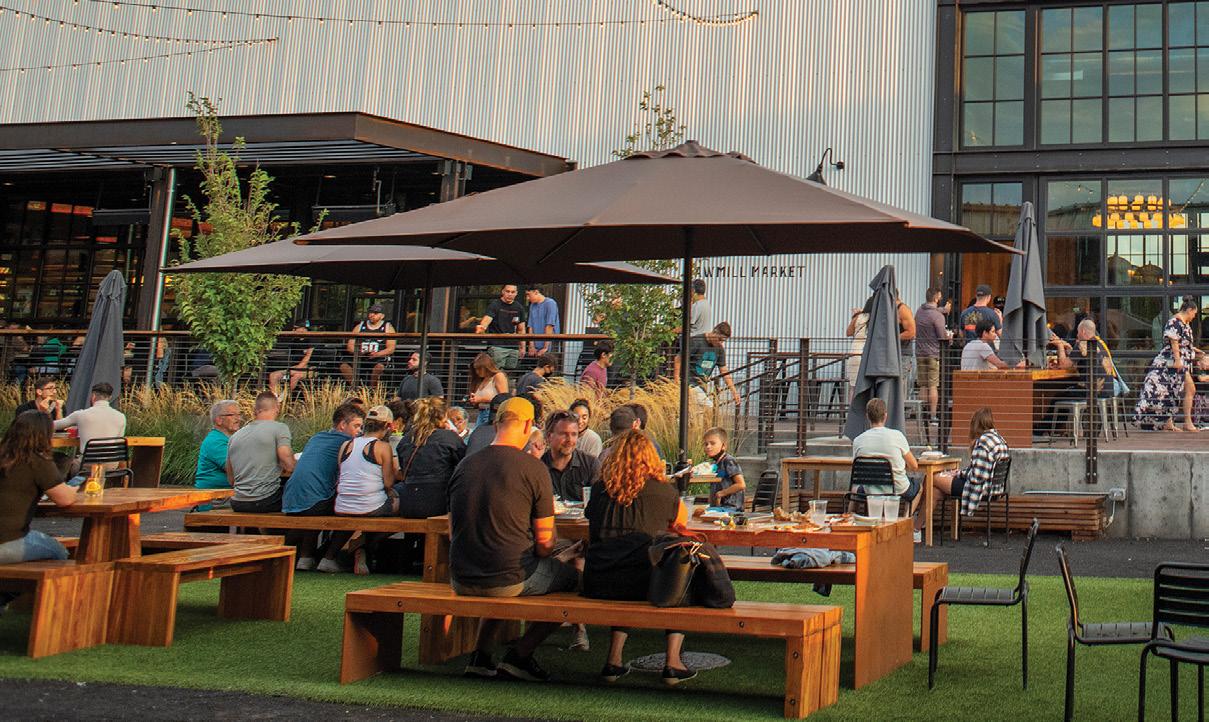
Sawmill Market has always felt like Albuquerque’s choose-your-own-adventure dinner party—but Chef Sean Sinclair is quietly turning it into his personal playground. A Tijeras native and Le Cordon Bleu graduate, Sinclair spent years in white-tablecloth mode before landing a 2025 James Beard Awards semifinalist nod for Best Chef: Southwest, earned during his run at Hotel Chaco’s Level 5.
Sinclair, 37, has been cooking since he was 15 —and he calls the semifinalist nod “validation of my pursuit of excellence.”
Now, he’s bringing that fine-dining precision to the food-hall bustle with two concepts that hit different cravings, fast. “My motto is ‘excellence hiding in the details,’ and that’s what I’m about at both Hook It Up and Patty Man,” he says. At Hook It Up, the details start with the fish: Icelandic wild-caught haddock, dipped in a house-made batter built on a tight trinity
Fine-dining precision. Food-hall energy.
of flour, spice, and leavening, engineered for a light, crisp, almost tempura-like shell. The result is classic Nova Scotia-style fish and chips (with shrimp and chicken in the mix), plus house-made sauces like tartar and Anaheim chile and garlic hot sauce that make every bite feel dialed in.
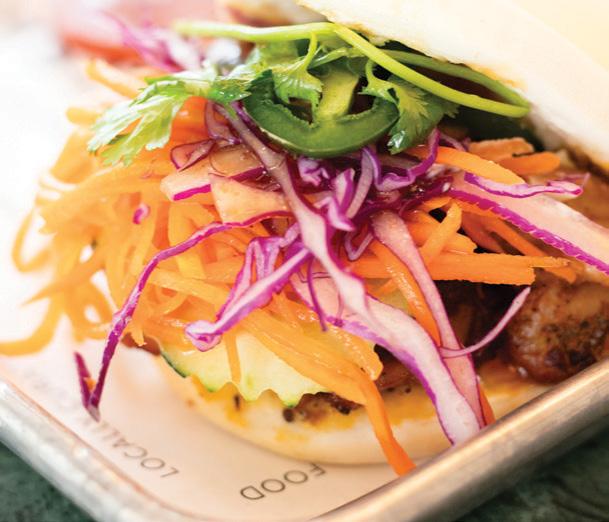
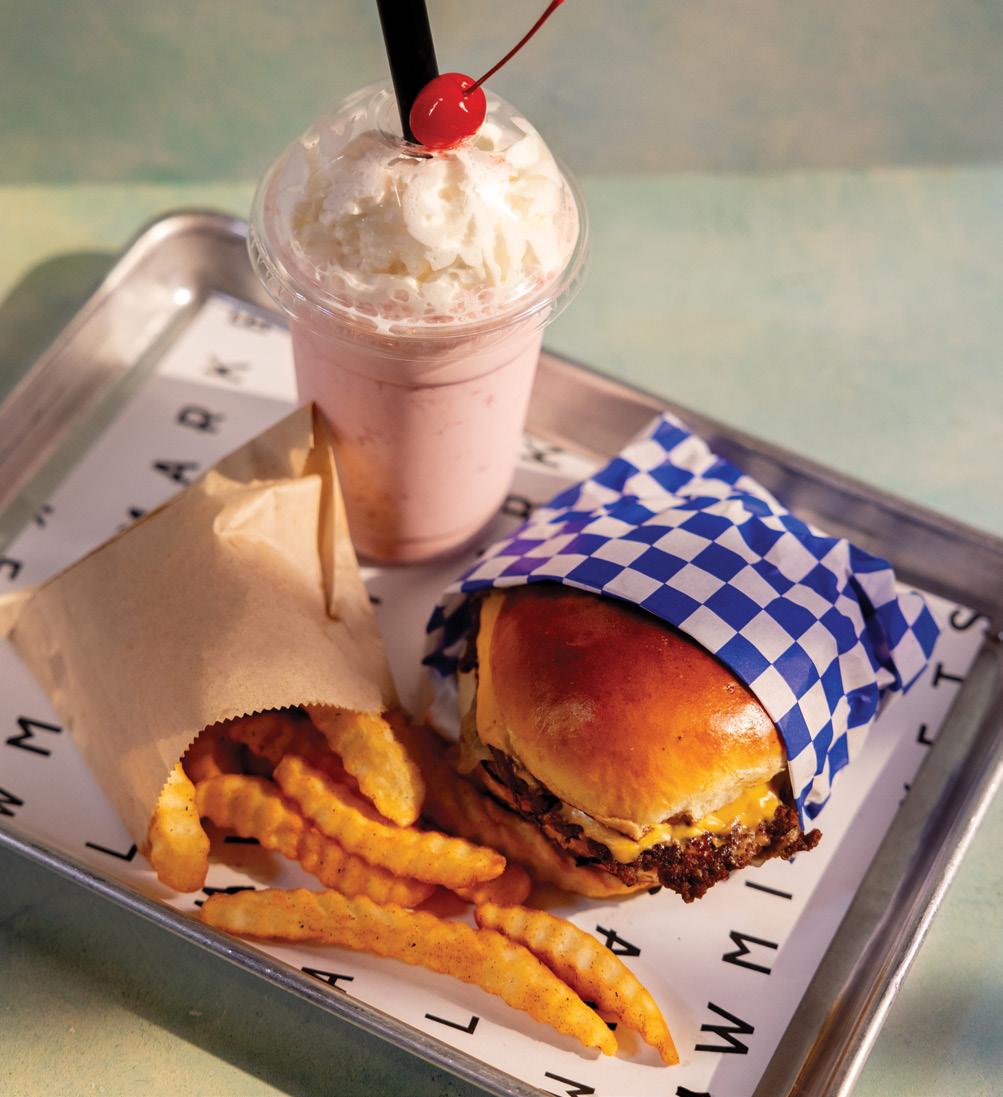
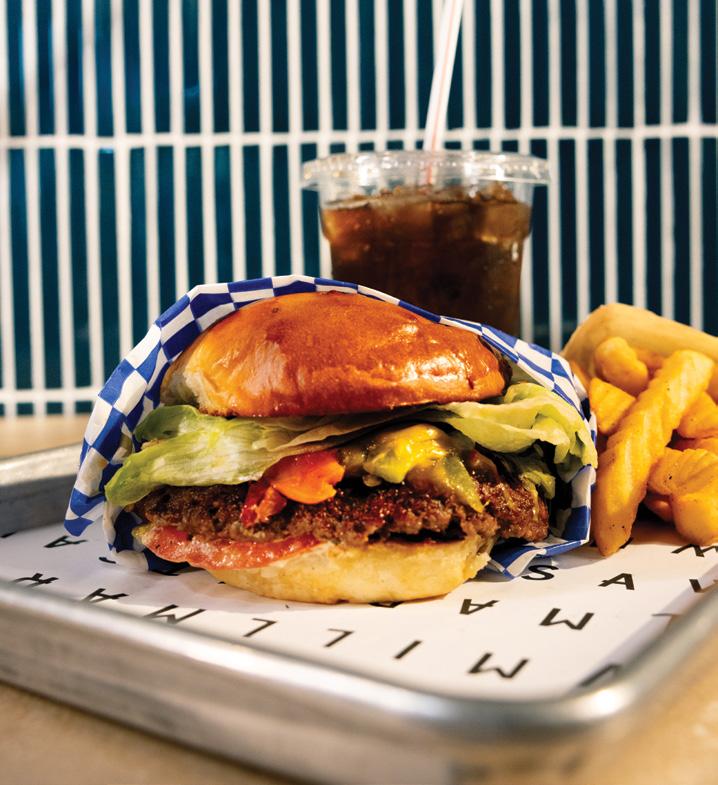
A few steps away, Patty Man is Sinclair’s love letter to the smashburger: 100% Angus, ground in-house, topped with Hatch green chile, Tucumcari cheddar, and a “hush-hush” Special Sauce he calls “the best of all worlds”—mayo, mustard, ketchup, pickles, and spices—on a sesame potato bun.
Sinclair has also opened Patty Man at Park Square Market in Albuquerque. Later this year, he will launch Hook It Up in the Eldorado Plaza and Patty Man in the Santa Fe Food Market. With five food venues, Sinclair is a busy man these days.
“I’m probably never gonna serve someone their first burger,” he says. “But my goal is to serve the most memorable one.”
Chef Sean Sinclair serves house-ground Angus smashburgers with Hatch green chile, Tucumcari cheddar, and his signature Special Sauce at Patty Man. Photos by Emily Okamoto.
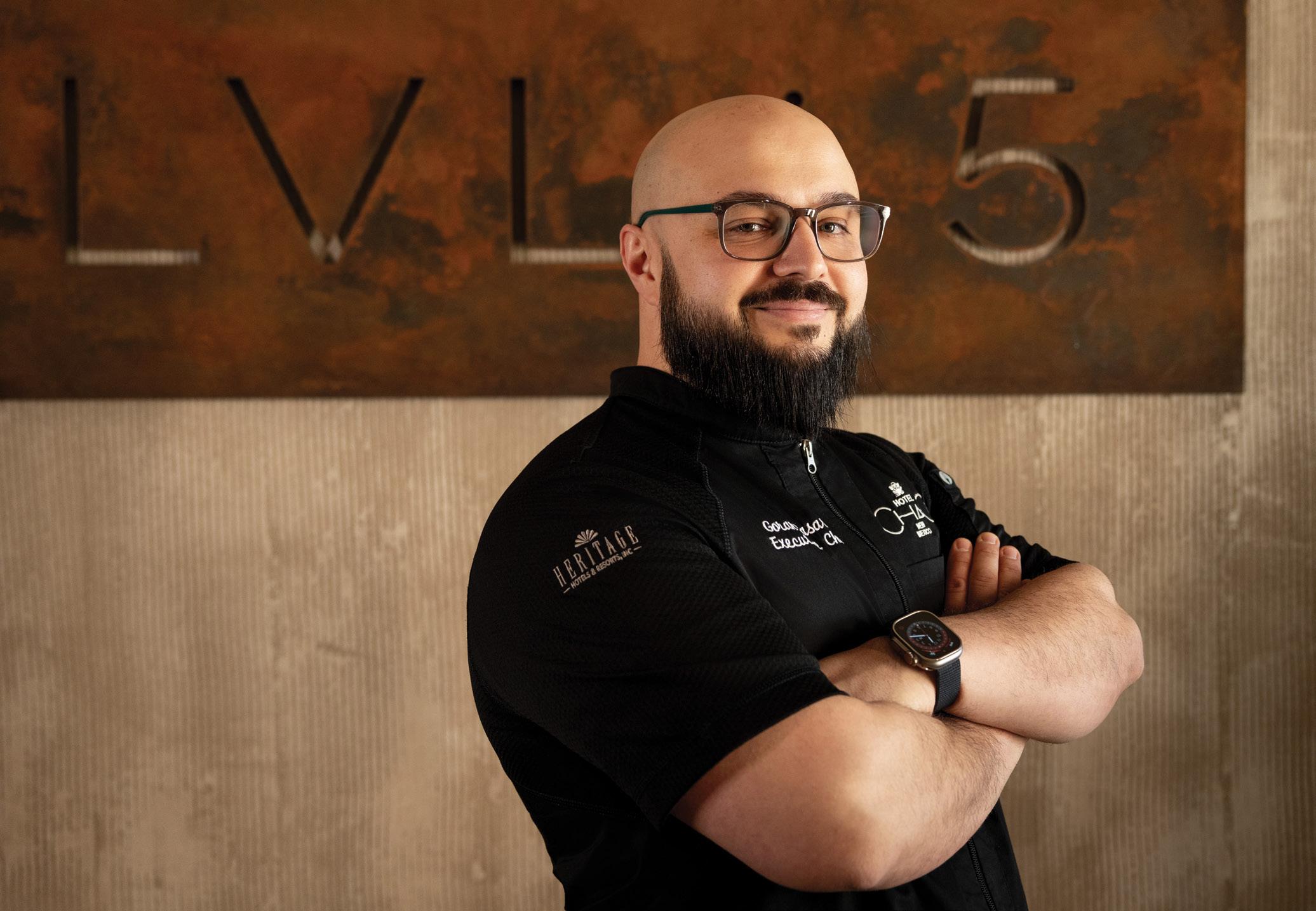
CHEF GORAN BASAROV, LEVEL 5, HOTEL CHACO, ALBUQUERQUE
On the rooftop of Hotel Chaco in Albuquerque, with the Sandia Mountains blushing pink in the distance at sunset, Chef Goran Basarov is busy rewriting what “rooftop dining” means at Level 5. One of the few New Mexico hotel restaurants to snag a James Beard nomination under the direction of former chef Sean Sinclair (now across the street at Sawmill Market with Hook It Up and Patty Man restaurants), it’s now his playground, and he’s not interested in playing it safe.
Growing up in Macedonia, Basarov spent his childhood in a family bakery that has thrived for over 150 years. Yet, he chose a different route. Instead, he studied tourism and hotel management in Los Angeles before teaching
himself the art of fine dining in kitchens spanning the mountains of Colorado, a luxury resort in Carmel Valley, and a Michelin-starred stint at Selby’s in California.
The move to New Mexico came about through his pastry-chef wife, who landed a job at Los Poblanos in Los Ranchos. “We actually tried to come back to New Mexico a while back,” he says. “This time, everything just clicked.”
Heritage President Adrian Perez puts it more bluntly: “He’s fallen in love with New Mexico just as quickly as our team did with his cooking.”
Level 5’s executive chef since October 2025, Basarov’s style is a mash-up of Mediterranean, Latin, and Asian dishes he quietly obsesses over, all channeled through New Mexico ingredients. “I take ideas from everywhere and let the local product decide where we
Ideas from everywhere. Ingredients from here.
Executive Chef Goran Basarov leads the kitchen at Level 5, shaping a bold, ingredient-driven menu that blends Mediterranean, Latin, and Asian techniques with New Mexico flavors. Photo by Emily Okamoto.
Northern New Mexico roots and big-resort chops.
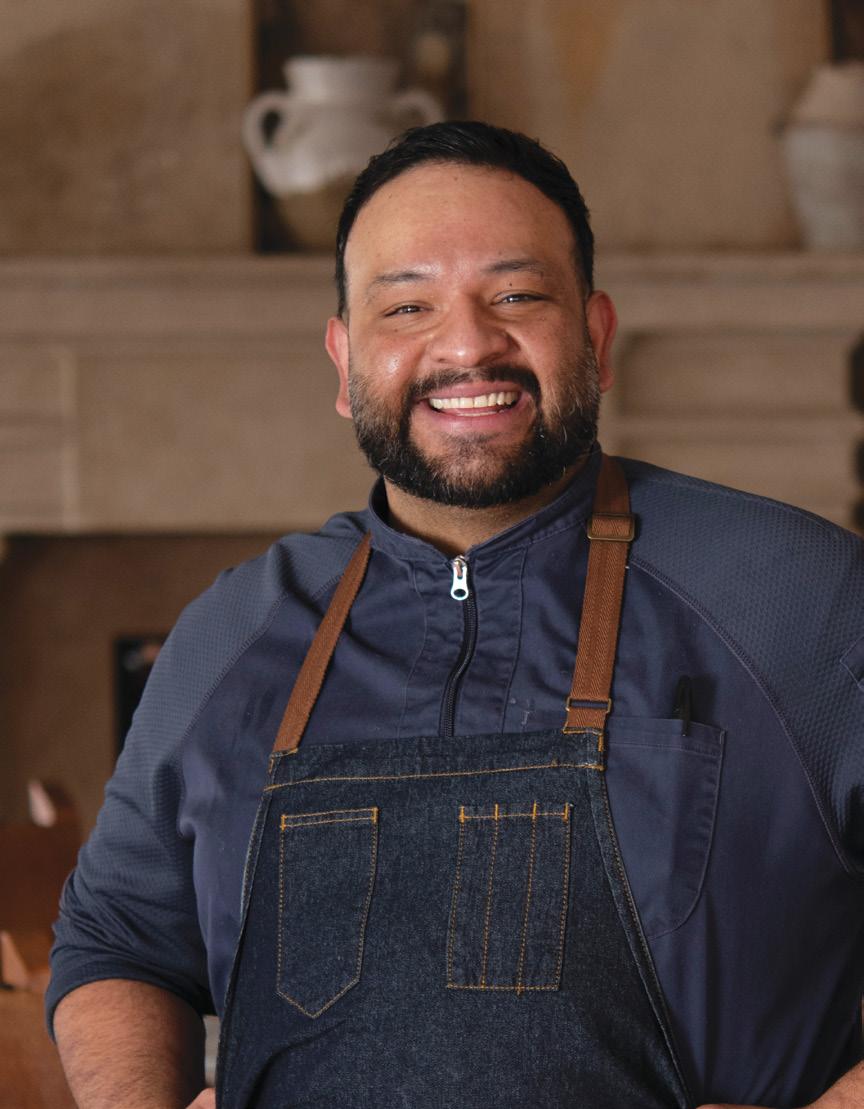
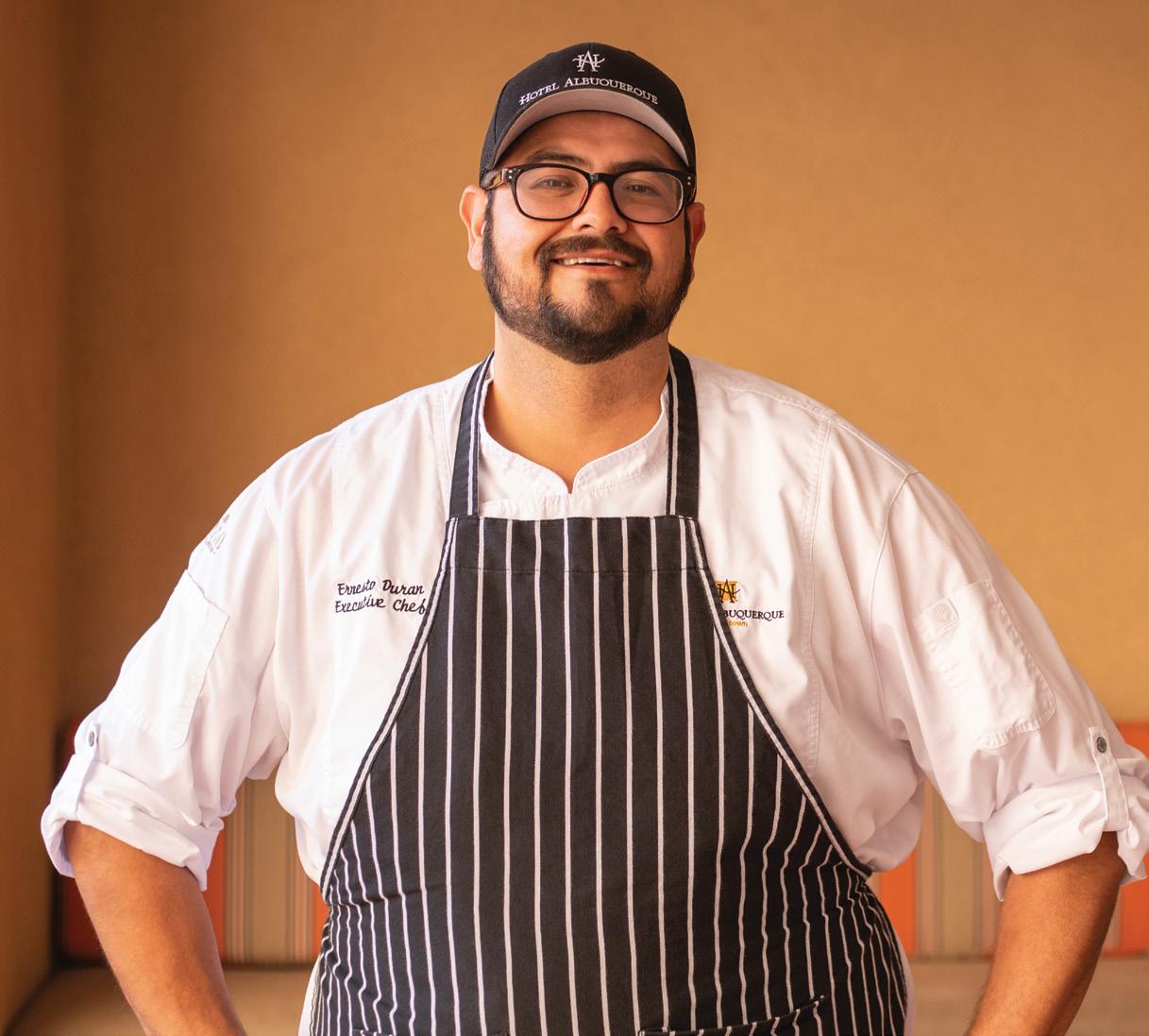
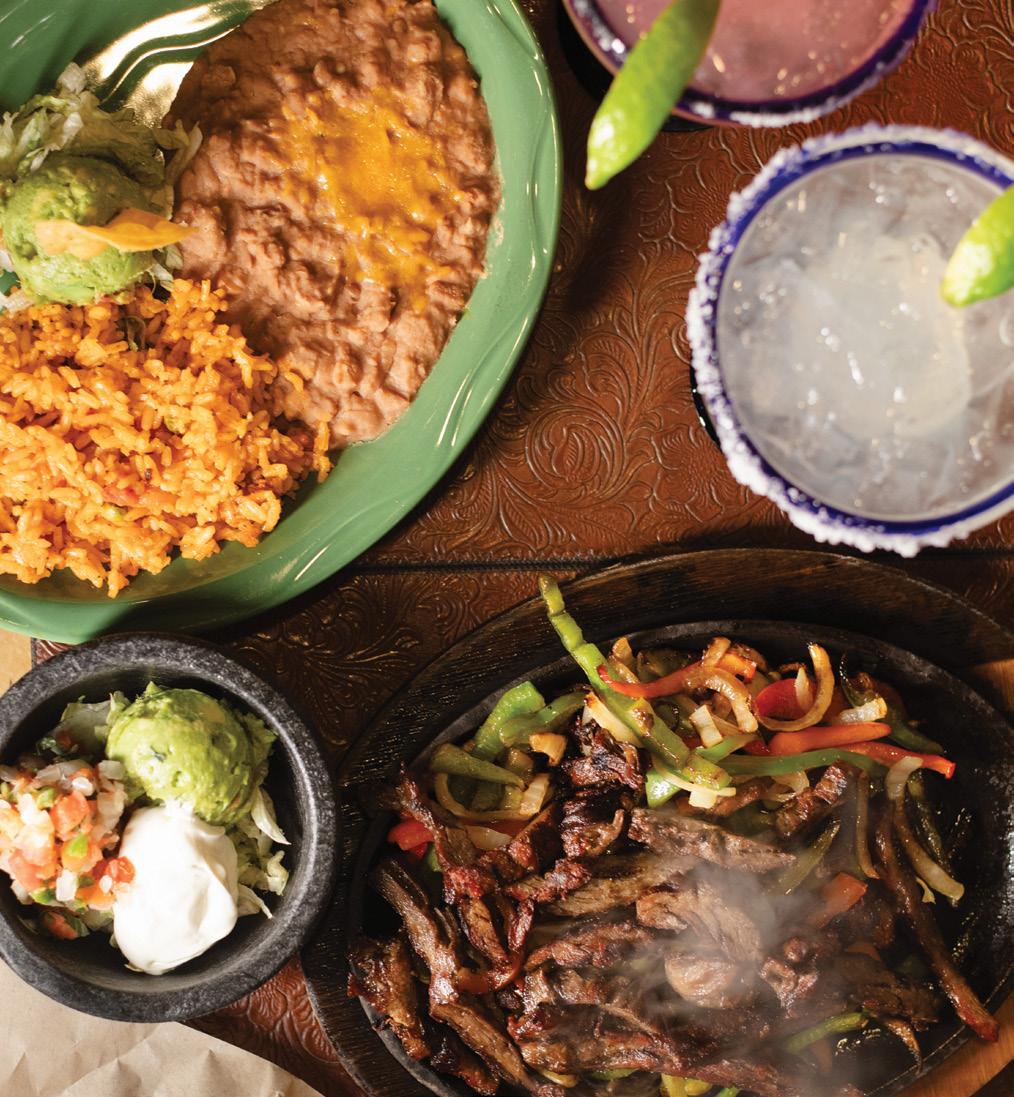
At Garduño's, Chef Ernesto Duran crafts each plate with care. Come for spicy green chile stew, sizzling fajitas, and sopapillas finished with the perfect margarita.
land,” he says. Pork, he admits, is “king.” Think smoked pork belly that nods to the gyros and döner kebab of his childhood, seasoned with Vegeta like his mother used, paired with a modern sour-cream gel, lemon oil, and a romesco-meets-mole sauce. Pineapple skin is turned into a chicharrón and pumpkin seeds into a crumble. “You might read it and think, ‘What?’” he laughs. “But when you eat it, it makes sense.”
He’s plotting whole-animal specials, duck confit croquettes dusted with red chile and local cheese, black molasses–glazed carrots with New Mexico pecans, and “winterized” calabacitas with preserved tomatoes, hominy, cheese mousse, and green chile powder. Out on the patio, he’s planning a proper garden with four big beds and horse troughs brimming with herbs. “Having a restaurant with its own garden has always been a dream,” Basarov says, looking out over the city. “If it grows here, it belongs on the plate.”
CHEF ERNESTO DURAN, GARDUÑO’S, HOTEL ALBUQUERQUE AT OLD TOWN, ALBUQUERQUE
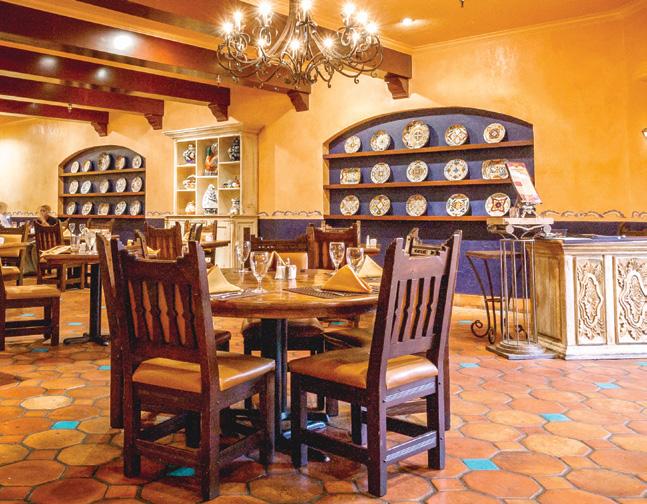
At Garduño’s, inside Hotel Albuquerque at Old Town, you’re not just grabbing a bowl of legendary green chile stew with freshly made tortillas. You’re experiencing a taste of the city’s culinary history. Specializing in New Mexican and Mexican favorites, the first Garduño’s opened in 1981 (in another location) and quickly grew into a hometown chain. Come hungry. The Burrito Magnifico—filled with carne adovada, machaca (shredded beef), cheese, and finished with both Hatch red and green chile—and the sopapillas are the pro move. And no New Mexican meal is complete without a generous margarita—and Garduño’s serves up a serious one. In the kitchen, Chef Ernesto Duran brings deep Northern New Mexico roots and big-resort chops, from Hyatt Regency Tamaya to The Inn and Spa at Loretto.
Photos by Emma Hotz.
I just make food for others and hope the love translates.
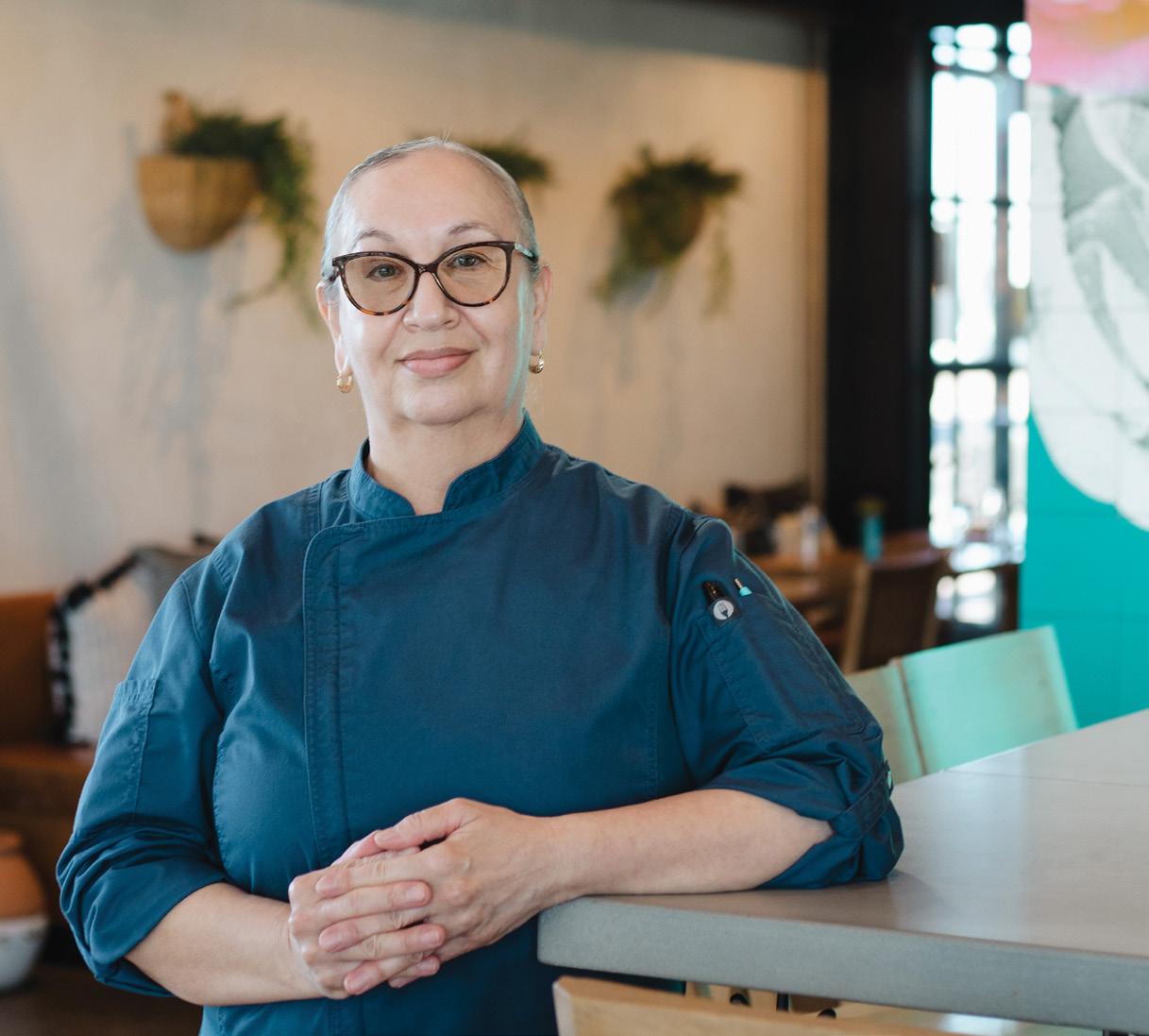
CHEF IRMA REYES, FLORA RESTAURANT, SAWMILL MARKET, ALBUQUERQUE
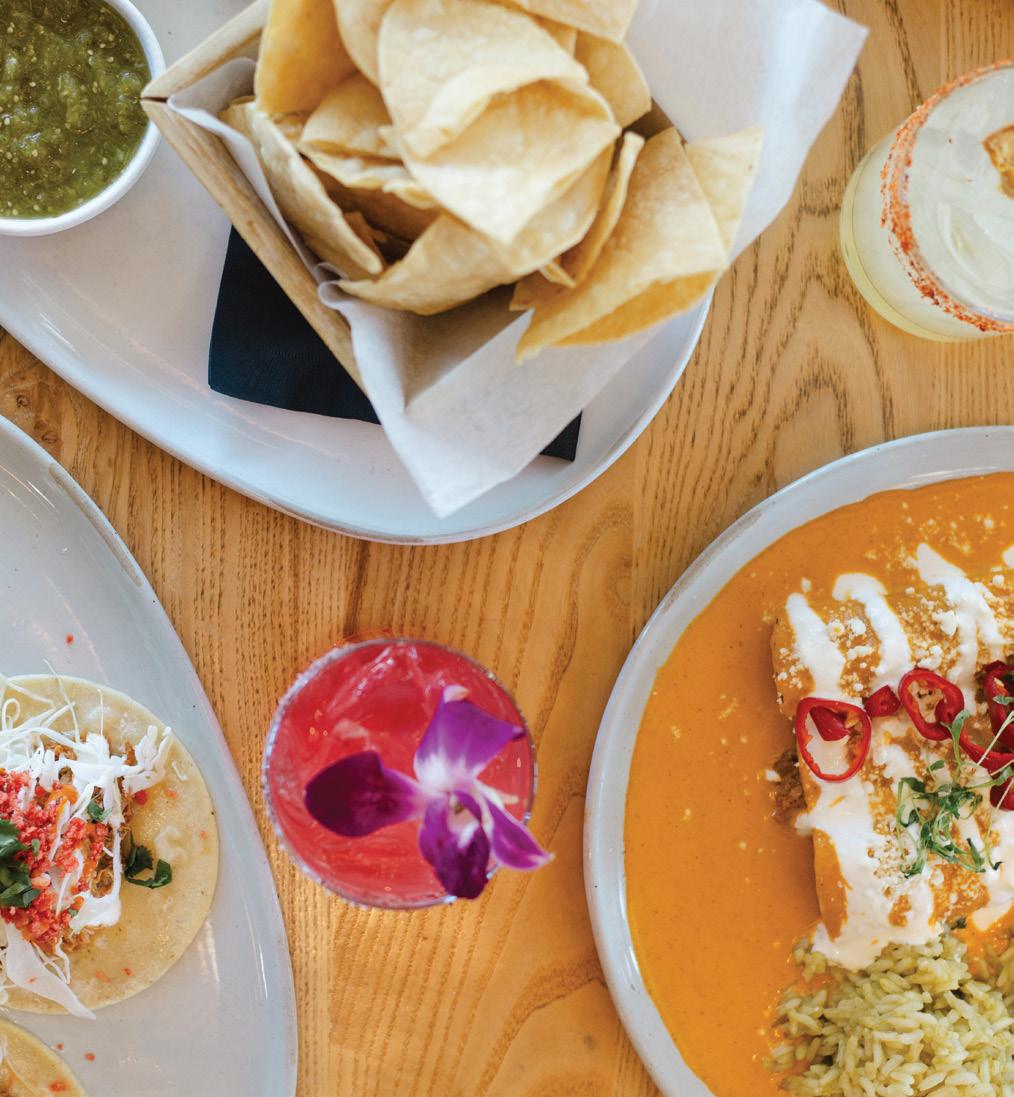
At Sawmill Market, Chef Irma Reyes brings something different to the mix: a lifetime of devotion to Mexican regional cuisine, distilled into the vibrant, colorful plates at Flora. The restaurant is a culinary tour of Mexico’s diverse food culture featuring traditional dishes from across the country that blend authentic ingredients with modern touches, served in a space that feels warm and inviting.
Reyes was born and raised in Chihuahua, Mexico, and moved to the United States at the age of 23. But her passion for cooking started long before that. By the time she was 12, she was already experimenting in the kitchen, often to her mother's dismay because of the messes she left behind. Those early instincts laid the
foundation for the discipline and creativity that define her work today. “My life is the kitchen,” she says simply. “That's where I am happiest. I pour myself into my work.”
Over three decades of culinary experience, Chef Irma has honed her skills in creating classic Mexican dishes including moles, salsas, tacos, and enchiladas.
Now, as Head Chef of Flora, she leads with passion, pride, and a fierce intentionality: maximizing ingredients to reduce waste without ever compromising on quality or flavor. She considers Sawmill Market not just a workplace but a second home. “I don't have a favorite dish to make on our menu,” she says. “I just make food for others and hope the love I pour into it translates to everyone who eats here.”
At Flora, Chef Irma Reyes pours passion and care into every plate, crafting vibrant Mexican regional dishes designed to delight.
Photos by Emma Hotz.
Legendary and local.
the “peferct” enchilada and other locally sourced, regionally
EL RINCÓN CAFÉ, HOTEL
CHIMAYÓ DE SANTA FE
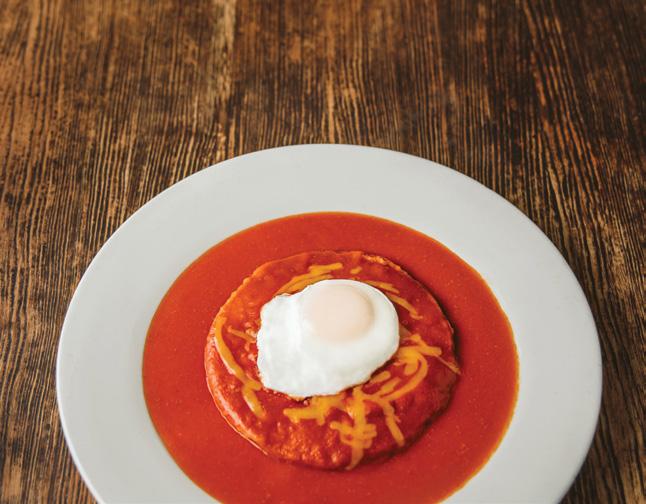
El Rincón Café, inside Hotel Chimayó, carries forward the legacy of the late Chef Estevan Garcia, an early champion of Southwest regional cooking with deep Northern New Mexico roots. The kitchen keeps it local—produce and meats from nearby farms and the Santa Fe Farmers’ Market, with chile grown in Chimayó—so the food represents the
terroir. Order what they’re known for: the unfried, unbreaded chile relleno, a fresh green chile stuffed with mushrooms and finished with a delicate demi-glace chile sauce. And don’t skip the enchiladas. Twelfthgeneration New Mexican and Heritage Hotels founder Jim Long has praised Garcia’s enchiladas as “perfect”. Finish with the goat’s milk flan, calm and quietly unforgettable.
Enjoy
inspired dishes at El Rincón Café located in Hotel Chimayó de Santa Fe.
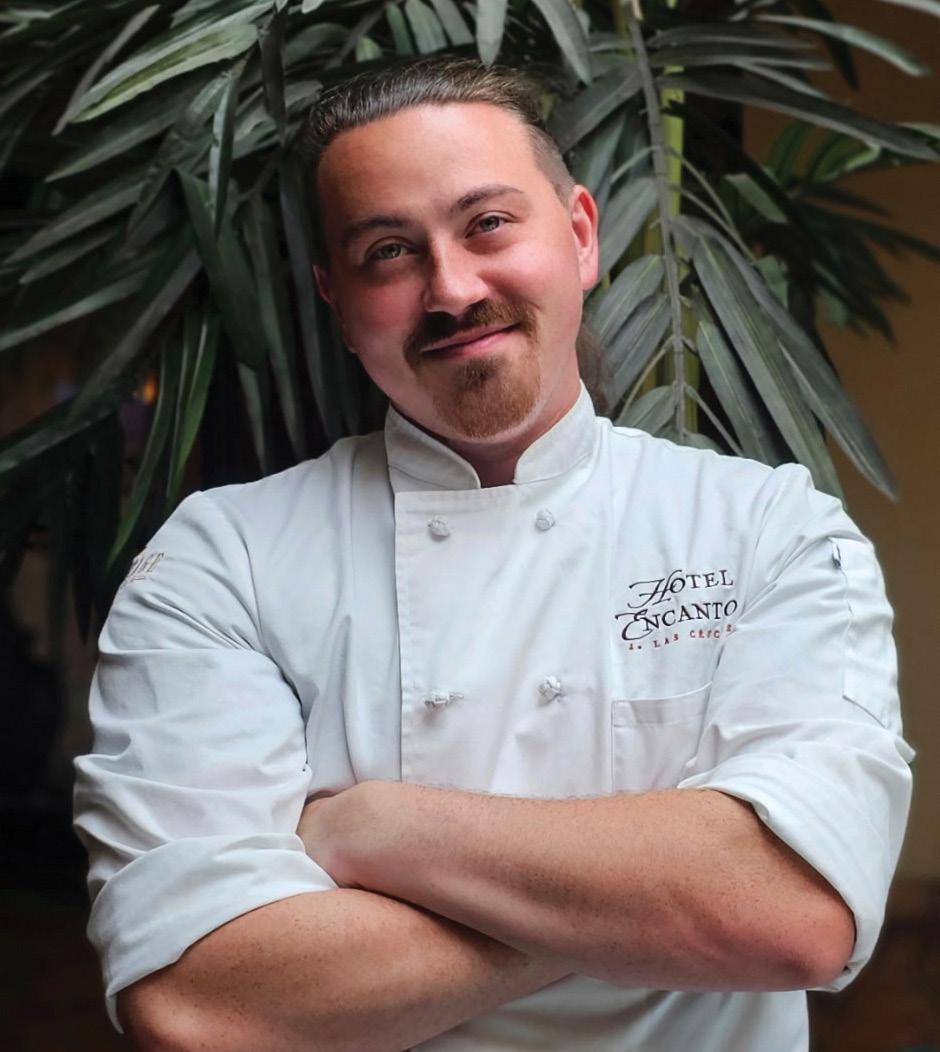
CHEF JOSH LEE, AZUL, HOTEL ENCANTO DE LAS CRUCES
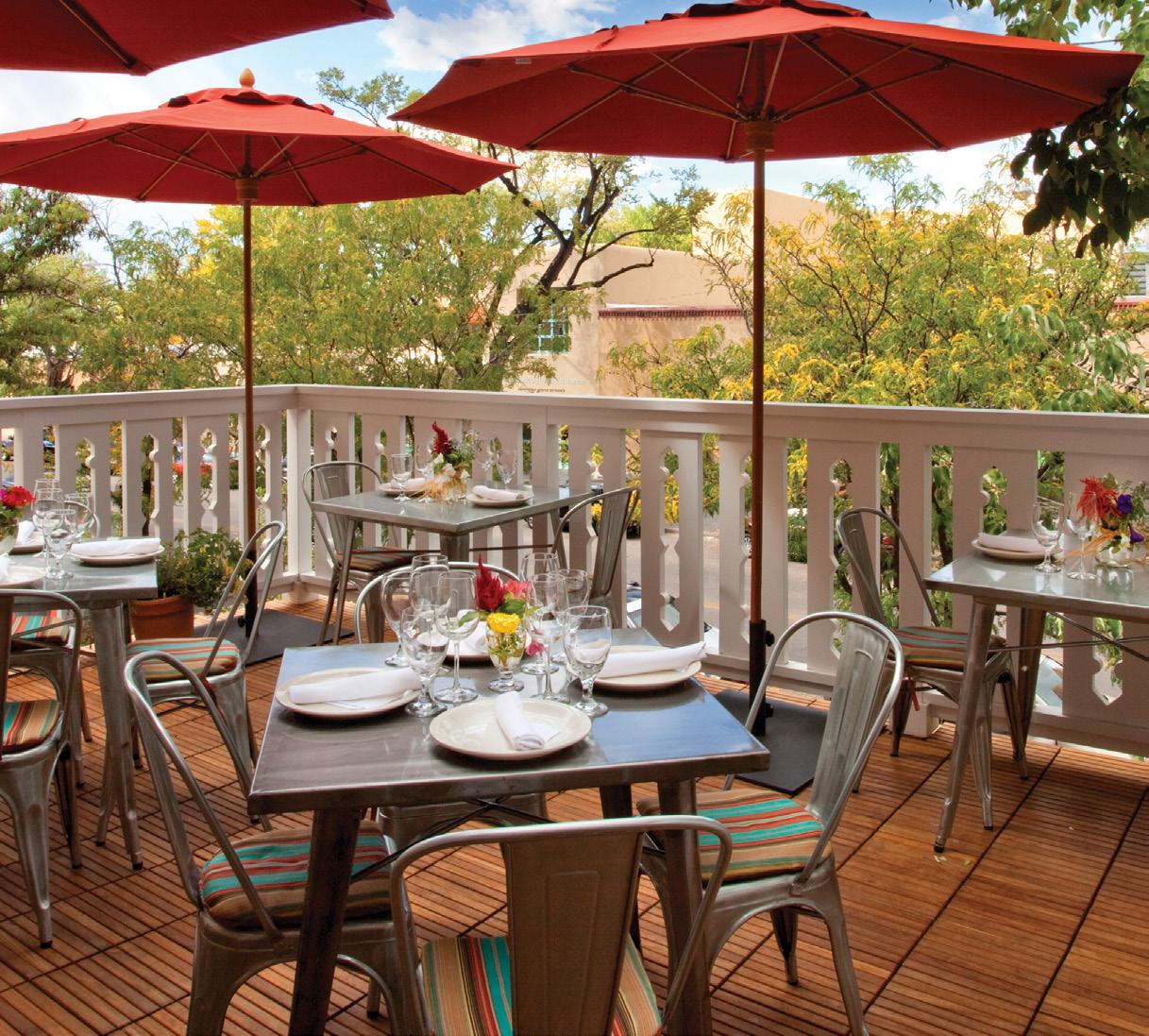
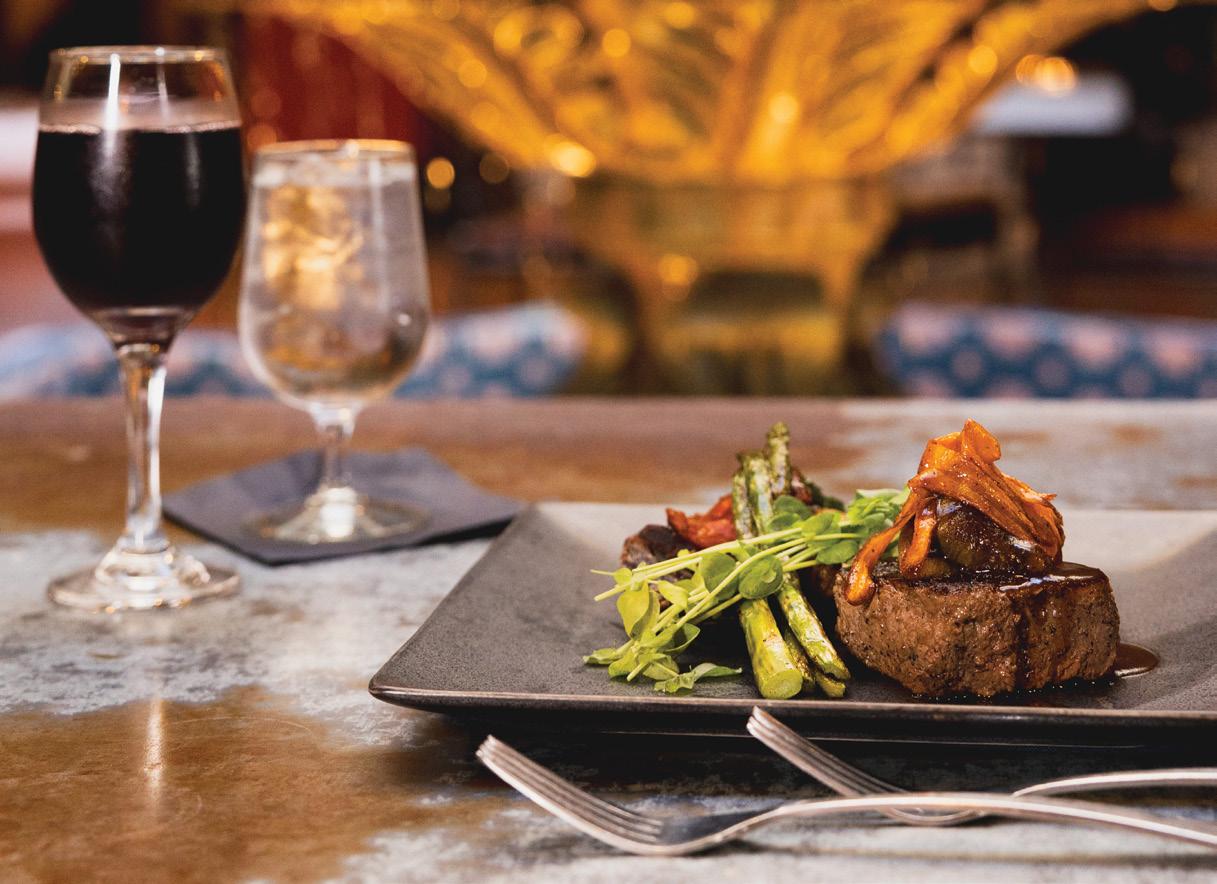
Chef Josh Lee delivers a global “mix” anchored by New Mexico flavor. Think of it as a modern stop along El Camino Real de Tierra Adentro— a 300-year-old, 1600-mile trade route established by the Spanish, connecting Mexico City to New Mexico. Start with queso fundido—chorizo, pico, Hatch green chile—then go big on the chipotle-espresso rubbed filet with Hatch green chile and wild mushroom reduction. Save room for the lemon crème brûlée with biscochito. That blend of influences is no accident. Chef Lee grew up along Florida’s white-sand coast, where he began his culinary career shucking oysters by the hundreds. The experience instilled an early respect for pristine ingredients and the quiet discipline of kitchen work. From there,
I live for that first bite and the smile that follows.
he moved through every station, cooking everything from coastal seafood to international classics and fine dining before his journey eventually brought him west to New Mexico.
Living in a border town proved to be a turning point. "That experience profoundly shaped my culinary perspective," he says, and inspired him to weave his love of international cuisine together with the vibrant flavors of small Mexican communities just across the line.
At Azul, that fusion finds its fullest expression yet. "I live for that first bite and the smile that follows," Lee says—and in Las Cruces, he's found the right place to keep chasing it.
Chef Josh Lee brings global technique and border-town inspiration to Azul, where bold New Mexico flavors inspire inventive twists.
THE NEW HAPPY HOUR
BY LANEE LEE
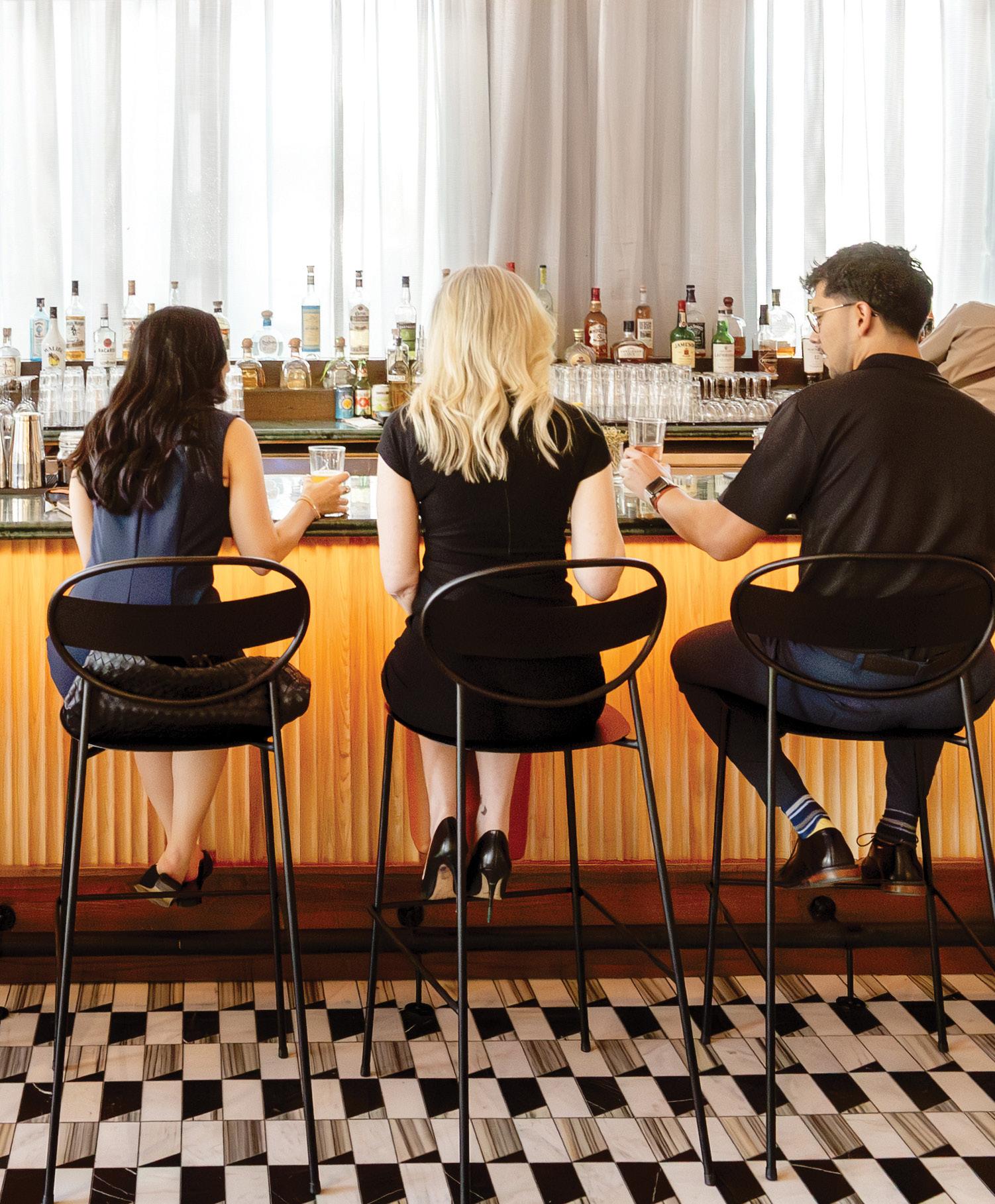
What’s in your glass is about to surprise you. In 2026, cocktail menus are flipping the script—think bold botanicals, globe-trotting flavors, and drinks that actually make you feel good. Forget what you know: the new happy hour is rewriting all the rules.
The real story? Drinks are getting more thoughtful: lower- or no-alcohol, better ingredients, and more attention to how you feel after that second round.
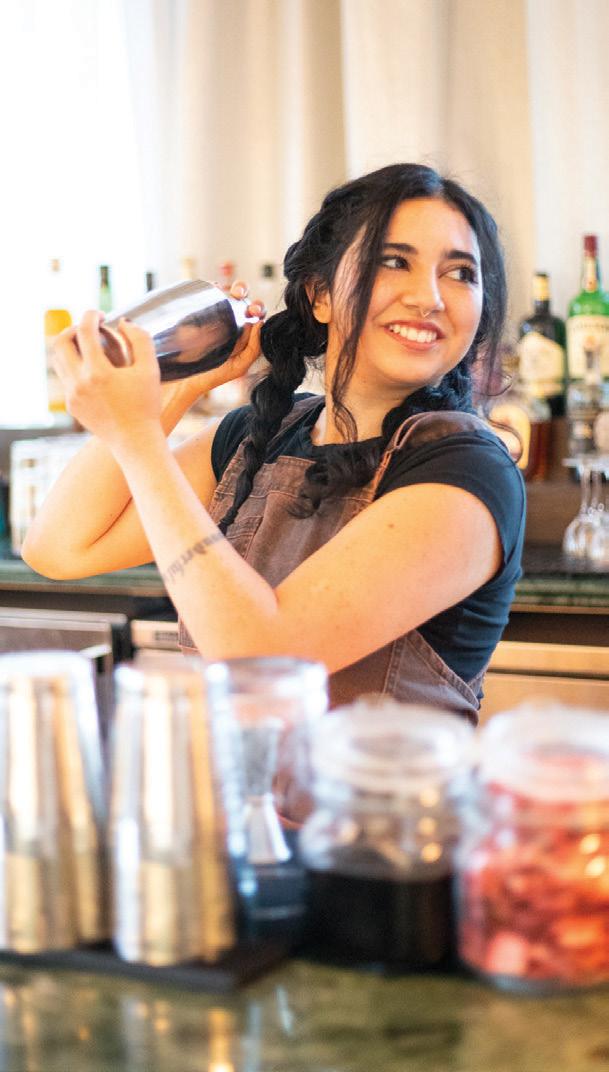
To see where this is all heading, Heritage Hotels Corporate Director of Mixology Lucas Swallows weighs in. A veteran of Momofuku in New York and the Batali & Bastianich Hospitality Group in Las Vegas—and most recently the force behind Phoenix’s award-winning Sottise cocktail program— he’s now shaping Heritage’s bar programs statewide, from its hotel bars to Sawmill. Consider it a preview of what we’ll be sipping this year. Here are five cocktail trends to watch for in 2026.
SOBER CURIOUS:
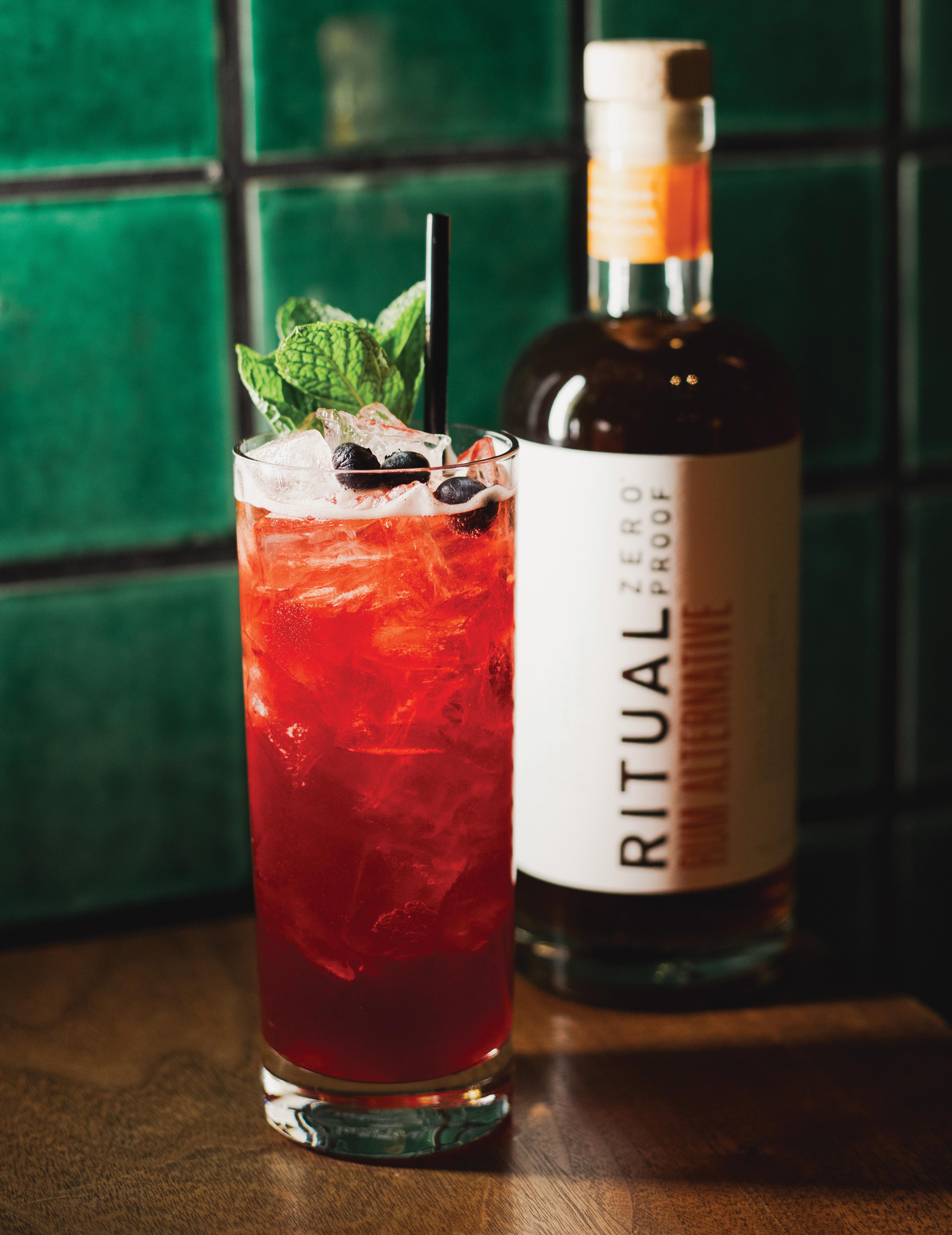
LOW-ABV AND ZERO-PROOF
A lot of people don’t want to drink as much as previous generations—especially Gen Z. Low- and no-alcohol cocktails are booming, and a 2025 Gallup poll shows only 54% of U.S. adults drink alcohol at all—the lowest in nearly 90 years of the poll.
“People still want something crafted and intentional,” Swallows says. “They just don’t always want it loaded with booze.” Instead of a sad sodaplus-juice “mocktail section,” menus are becoming friendlier to lighter, elevated, alcohol-free options.
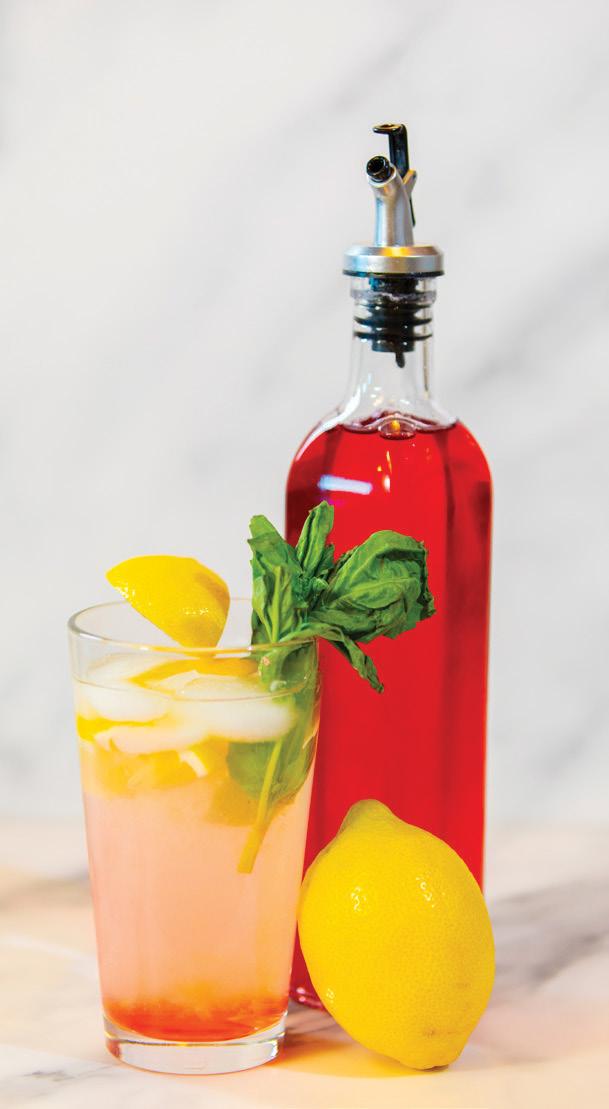
At Sawmill Market, that shows up as bright agua frescas served spirit-free or spiked, lowABV spritzes built on vermouth and sherry, and zero-proof cocktails with real structure—acid, bitterness, texture—rather than juice in disguise.
Sober bars and non-alcoholic bottle shops are opening across the country, too. New York City’s No More Bar, pouring N/A wine, beer, and spirits, recently landed on Lonely Planet’s list of top 20 favorite bars. What’s adding fuel to the zero-booze trend? A wave of dealcoholized products on the market that taste surprisingly close to the real thing, from Aperol-style liqueurs to convincing Pinot Noir alternatives.
PINKIES UP: TEA COCKTAILS
Tea in cocktails isn’t new, but it’s usually a side note. In 2026, tea moves into the spotlight.“Tea gives us structure, tannin, and aroma without kicking up the ABV,” Swallows says. “It’s like getting a second spirit that doesn’t count against you.” At Hotel Chaco, that idea becomes the Sun Dagger, a drink inspired by a sun-marking petroglyph at Chaco Canyon. It leans on local desert tea and Valencia orange juice, then layers in a yellow gentian aperitif and tequila. It looks like a sunset and drinks like a spa day with a spine.
Globally, tea bars are already leading the way. In Taipei, Tei by Obond works like a tea-first cocktail lab. You enter through a tea room where Taiwanese teas are fermented, carbonated, or distilled, then step into a hidden bar where cocktails are built around a tea ceremony format.
Sparkling tea “wine” is another branch of the same tree, like Copenhagen Sparkling Tea. Founded in 2017, the brand was the first to create the sparkling tea wine category, blending Nordic innovation with Asian tea heritage to make hand-crafted, organic bottles in both 0% and low-alcohol versions. It’s now poured in more than 100 Michelin-starred restaurants worldwide.
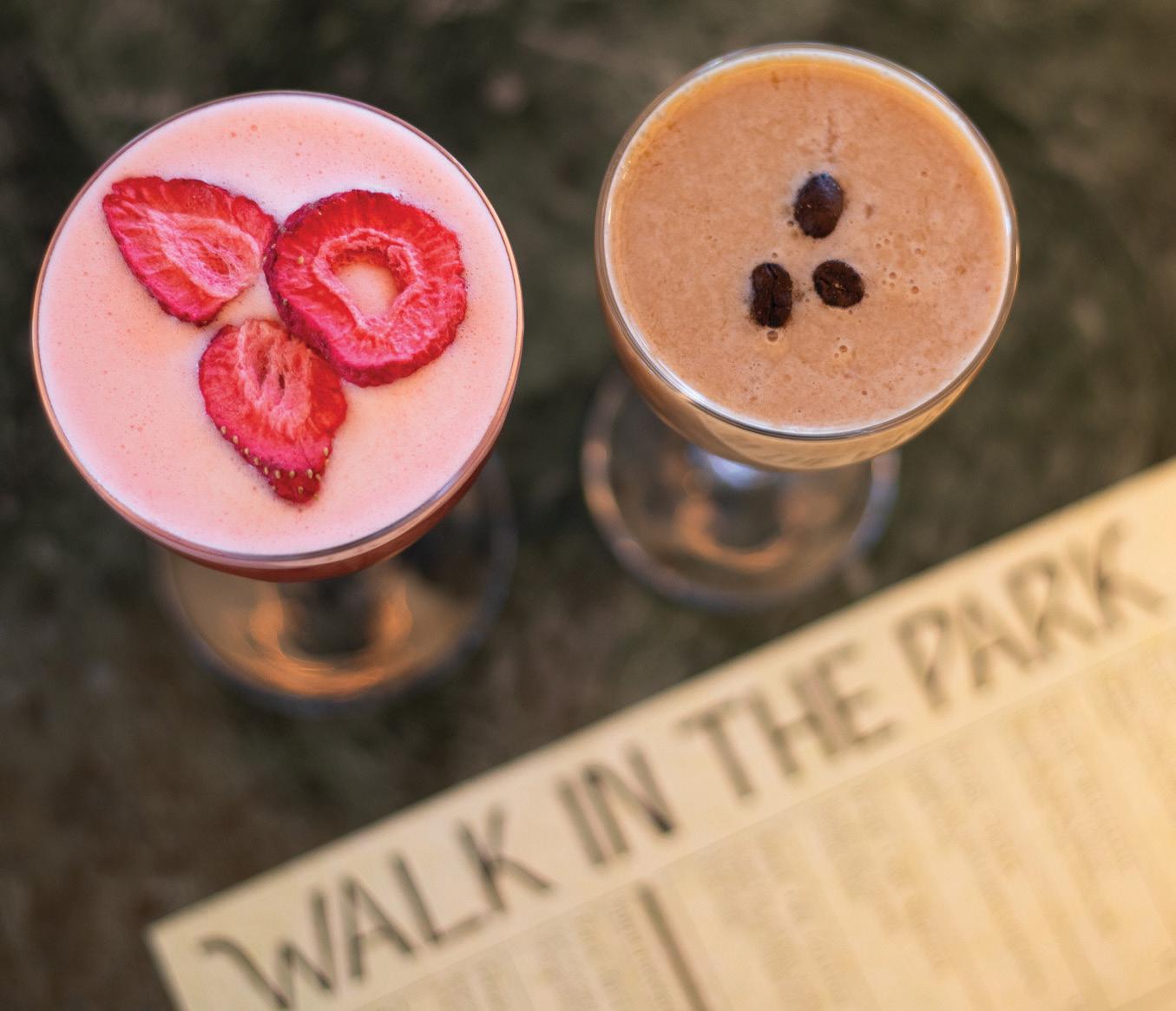
Sober-curious spritzes, tea-based tipples, and garden-fresh pours are redefining what a great cocktail looks (and feels) like.
Tea lets bartenders boost flavor without boosting proof. Expect at least one tea-forward cocktail on every serious menu.
FERMENT FASHION: THE VERY VINEGAR ERA
The bottled sour-mix era is over, and shrubs and ferments are a big part of why.
“Shrubs and fermented ingredients let us get way more interesting than a basic lemon sour,” Swallows says. “You can build depth and brightness at the same time.”
Tea gives us structure, tannin, and aroma without kicking up the ABV.
Whole Foods agrees with Swallow. In its 2026 food and beverage trends report, it flags a “very vinegar” moment ahead, with vinegar moving beyond salad dressings into drinks, sauces, and everyday cooking as people look for bold flavor and simple, functional ingredients.
If you want to see this idea pushed to its limits, look at Penicillin in Hong Kong. It’s the city’s first “closed-loop” bar, aiming to be essentially scrap-less by the end of each night. Everything from citrus peels to kitchen trimmings gets fermented, distilled, or upcycled into something drinkable.
Shrubs and ferments are energizing cocktails—and giving guests what they want: more “feel-good” drinking, with healthier ingredients, less sugar, and real flavor.
TRAVEL TIPPLES: GLOBAL FLAVORS
The kitchen has gone global. The bar is catching up.
Swallows talks about lassi, horchata, and agua fresca as starting points. A lassi-style cocktail might use yogurt, mango, cardamom, and a splash of rum for a tangy sipper that’s surprisingly light on alcohol. A grown-up horchata riff could lean on rice milk, cinnamon, and toasted nuts in a highball that feels like dessert without being cloying. A hint of wasabi or New Mexico green chile in an Old Fashioned can add depth and warmth without turning the drink into a stunt.
The new cocktail program at Santa Fe’s Secreto Bar at Hotel St. Francis goes all in on ingredient storytelling. The menu will trace the route of Franciscan monks and smuggled vines: starting with Spanish flavors, moving through Caribbean ingredients,
ABOVE: Lighter pours and smarter ingredients connect you to place, people, and yourself. Photo by Emily Okamoto.
then landing in New Mexico. Each section reflects that journey in both spirit choice and flavors.
You see similar moves at top bars worldwide. Himkok in Oslo, a regular on the World’s 50 Best Bars list, builds menus around Scandinavian ingredients, using aquavit, local fruit, and even traditional sweets as inspiration for modern cocktails.
Think of this trend as cocktails with a passport—experiencing new places through your palate.
IN-SEASON COCKTAILS: GARDEN TO GLASS
Garden-to-glass is the bar world’s riff on farm-to-table. In-season produce drives juices, syrups, and tinctures, and menus follow the market. Once you try a drink built on just-picked ingredients, it’s hard to go back.
Swallows is committed to this idea enough that he’s installing a rooftop garden at Hotel Chaco’s Level 5 restaurant and bar, so herbs and garnishes can walk straight from the planter to the shaker.
Further north, at Old Martinez Hall in Taos—a historic dance hall reopening as a Heritage concept— garden-to-glass becomes literal. Swallows is planning a seasonal ponche, a warm, boozy fruit punch, that starts with cider made from apples grown at another Heritage property, El Monte Sagrado.
It also cuts waste: bruised or “ugly” fruits and vegetables get new life as syrups or garnishes. Good hospitality and good housekeeping in one. Put it all together and 2026 looks refreshing: lighter pours, smarter ingredients, and cocktails that connect you to place, people, and yourself. That’s a happy hour worth showing up for.
THE VOICE BEHIND A NEW ERA OF COCKTAILS
Lucas Swallows brings over 20 years of experience in the food and beverage industry to his role of Corporate Director of Mixology. He leads the evolution of bar operations across Heritage Hotels & Resorts’ 11 properties throughout New Mexico as well as the independent concepts under Heritage Restaurant Group.
“Lucas brings a wealth of knowledge and creativity to our team,” says Adrian Perez, President of Heritage Restaurant Group. “New Mexico’s reputation as a culinary destination is growing, and we are so fortunate to have a partner of Lucas’ caliber with us to ensure that mixology is also part of that story. His worldly experience also positions him well to ensure New Mexico’s diverse culture is represented through his impressive cocktail creations.”
GLOBAL PERSPECTIVE, REFINED APPROACH
Swallows has launched and managed 18 food and beverage concepts across nine international markets, including time spent as Director of Bar Operations for Momofuku in New York. He also held the roles of Property Mixologist at Marina Bay Sands in Singapore and Group Mixologist for the Batali & Bastianich Hospitality Group in Las Vegas. Most recently, Swallows worked as a Concept Development Consultant and Bar Manager for Sottise in Phoenix, Arizona where he created award-winning beverage programs recognized by the Phoenix New Times and Imbibe Magazine.
“We are incredibly proud to have Lucas join our team,” says Adrian Perez. “With Lucas’ skillset, we’ll be able to elevate the guest experience across our hotels, resorts, restaurants, and bar concepts in a meaningful way.”
A SENSE OF PLACE IN EVERY GLASS
As a New Mexico native, Swallows aims to bring a sense of place through thoughtfully composed cocktail programs that celebrate the Land of Enchantment’s rich history and culture. Guests can look forward to innovative menus rooted in culture and community.
REVOLT RISING
Heritage’s new hot-air balloon shares the history of New Mexico’s Pueblos
BY STEVE LARESE
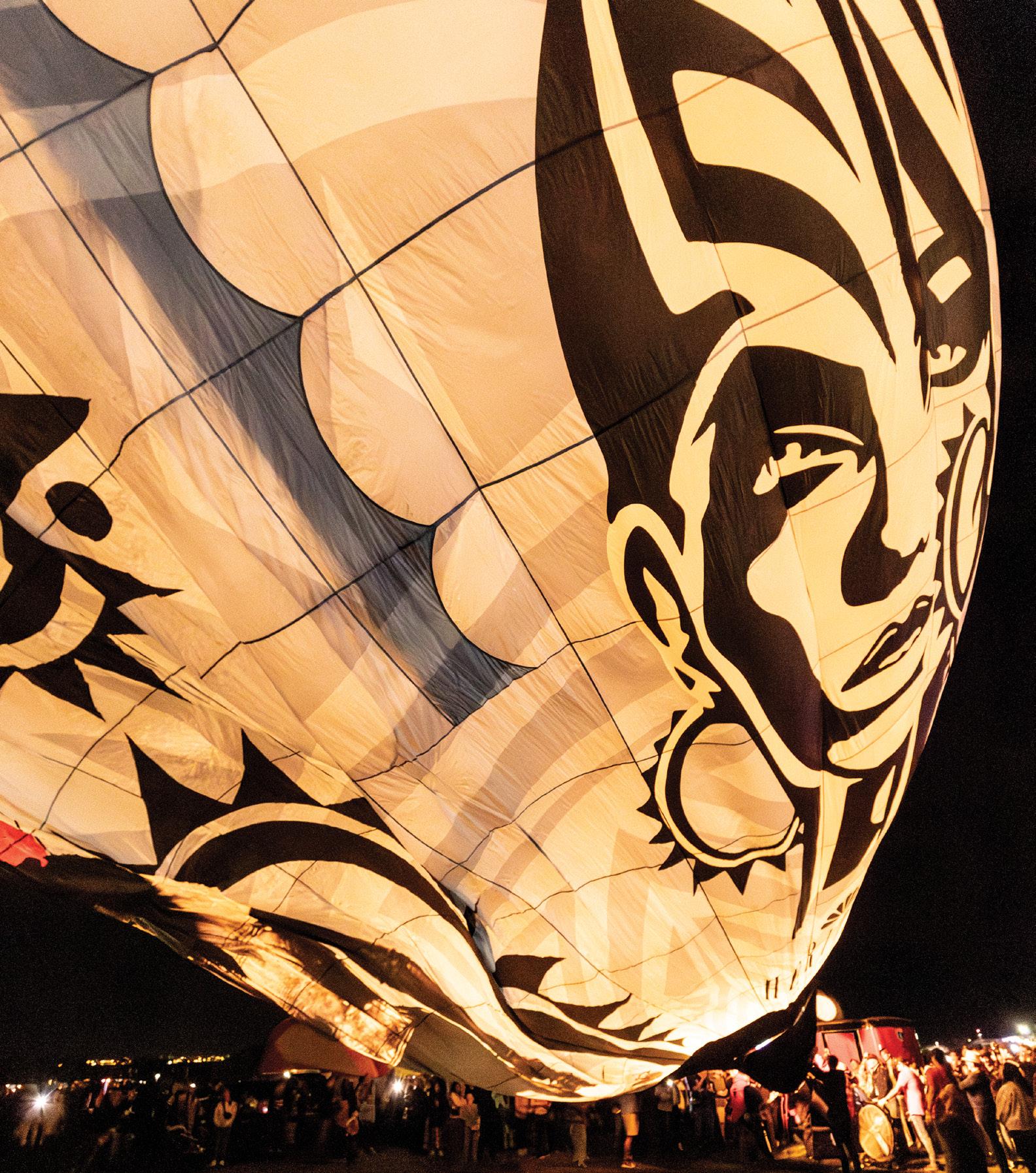
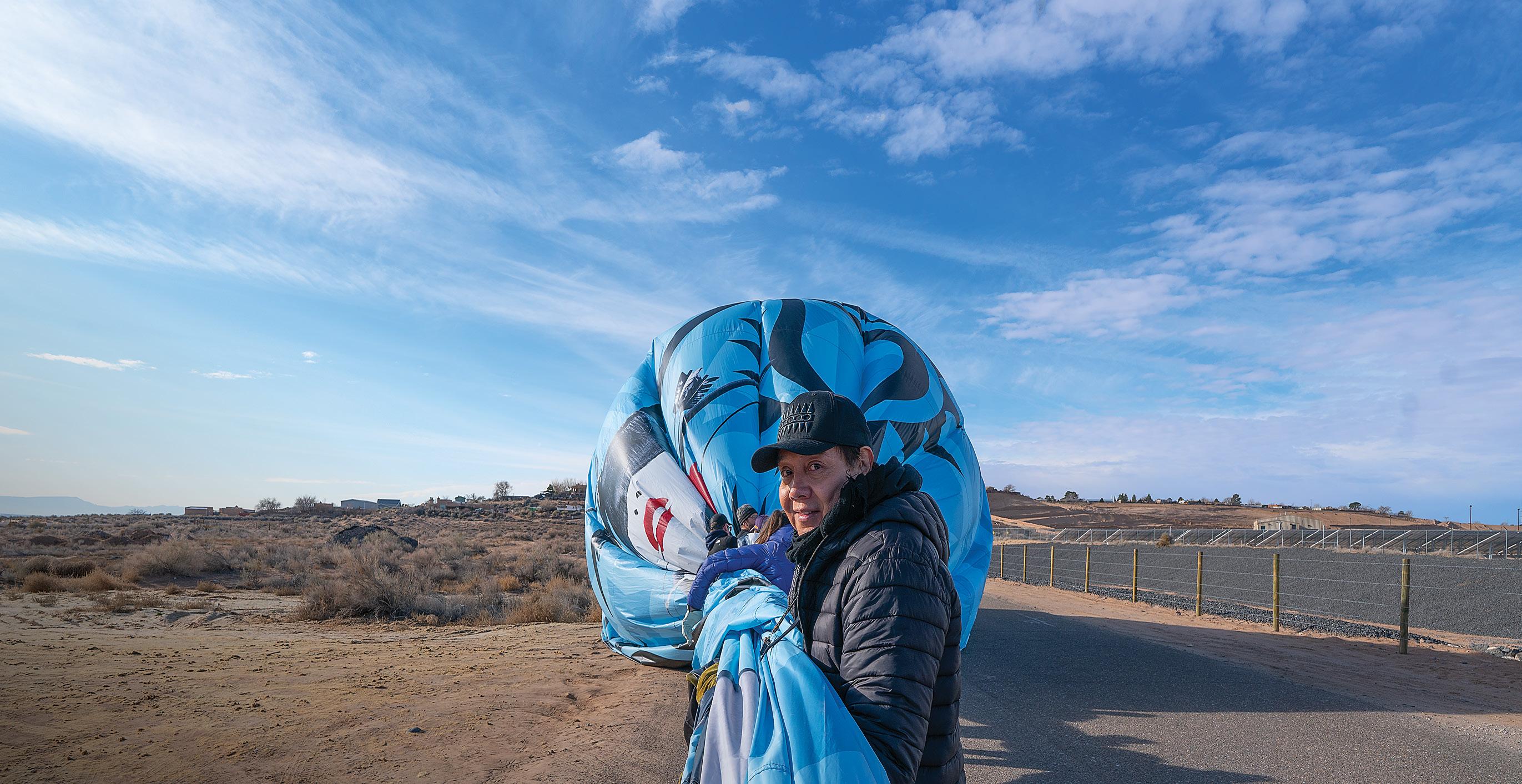
The drone of a fan gives way to the roar of fire from the hot-air balloon’s burner, and the envelope blooms in the salmon-dawn morning. Virgil Ortiz greets the inflating balloon like an old friend. For the past quarter-century Ortiz has created and lived daily with the characters that adorn Heritage Hotels & Resorts’ first hot-air balloon, Revolt Rising. Tahu, leader of the Blind Archers, boldly stares out into the sky even though she wears a blindfold. On the other side of the balloon, Translator, commander of the Spirit World Army, wears Ortiz’s signature black-and-white graphic design and fierce spiked hoop earrings.
Virgil Ortiz is an award-winning potter and fashion designer from Cochiti Pueblo, and Tahu and Translator are key characters in his multimedia project that he’s devoted himself to for the past 25 years, Revolt 1680/2180. His project encompasses pottery, sculpture, printing, screenwriting, fashion, and now hot-air ballooning. It is a mythology that blends the real-world history of the Pueblo Revolt of 1680 with an imagined futuristic superhero edge inspired by Ortiz’s love of science fiction and graphic novels. Ortiz is devoted to telling the story of Pueblo resilience, and is using his art to do so.
“Tahu and Translator are characters I created to educate globally about the Pueblo Revolt of 1680 using art,” Ortiz says. “It’s my life’s work to tell this story. Developing a movie script and art about
the Pueblo Revolt taking place in past, present and future allows me to create a story using time jumping and wormholes. It brings Pueblo People into the future of the year 2180 as I envision it. I am telling the real story of how everybody eventually had to come to live in peace together, but also telling the brutal history of what really happened. Through my art I hope people learn and discuss it.”
Ortiz has won numerous awards during his prolific career, including the 2022 Museum of Indian Arts and Culture Living Treasure Award, the 2023 National Council on Education for the Ceramic Arts Outstanding Achievement Award, and many first-place awards from the Southwest Association for Indian Arts Santa Fe Indian Market. His work is shown internationally, including at the Stedelijk Museum–Hertogenbosch in the Netherlands and Paris’s Fondation Cartier pour I’art Contemporain. He is also shown nationally, including at the Smithsonian’s National Museum of the American Indian in Washington, D.C., and the Denver Art Museum.
Heritage Hotels & Resorts CEO Jim Long, a 12th-generation New Mexican himself, became one of Ortiz’s collectors and invited him to begin contributing art and ideas to his properties, including the Inn and Spa at Loretto in Santa Fe and Albuquerque’s Hotel Chaco, where his work
Featured on Heritage’s hot-air balloon, Tahu and Translator are key figures in Virgil Ortiz’s multimedia project, Revolt 1680/2180
Tahu, leader of the Blind Archers, stares skyward despite wearing a blindfold.
Translator, commander of the Spirit World Army, appears with fierce spiked hoop earrings. Photo by Emily Okamoto.
It’s my life’s work to tell this story.
is displayed at Gallery Hózhó. Long’s mission with Heritage is to celebrate New Mexico’s cultures and history through art and hospitality. Ortiz and Long have collaborated on ideas for Heritage for more than a decade, but Ortiz says Long’s most recent request surprised him.
“Mr. Long asked if I’d like to design a hot-air balloon,” Ortiz says. “He explained that it was Heritage’s 20th Anniversary, and Heritage wanted a hot-air balloon to fly at the Albuquerque International Balloon Fiesta and other special events. I’ve worked in a lot of mediums but never anything like that, and nothing as big as a balloon. I was excited and immediately began thinking of ideas.”
Ortiz gave Long a list of designs, including a “safe” one that would make the balloon look like a 7-story-tall Pueblo pot. He thought it would be a long shot, but Ortiz also included characters from his Pueblo Revolt project.
“To my surprise, he picked the characters,” Ortiz says.
In Ortiz’s storyline, Translator serves as a connection between Pueblo
Translator serves as a connection between Pueblo People past, present and future. Photo by Emily Okamoto.
People past, present and future. Tahu represents overcoming fear and rising to heroic deeds, and is inspired by the many strong women in Ortiz’s life.
Ortiz was taught traditional Cochiti pottery-making by his grandmother, Laurencita Herrera, and mother, Seferina Ortiz, both renowned potters. He won his first ribbon at the prestigious Santa Fe Indian Market at 14, and by the time he was 16, Virgil was traveling the country to art shows. During his travels he would see people with tattoos and body piercings that reminded him of the older figurative pottery he saw growing up. He also remembered stories his elders would tell him of circus performers coming to Cochiti by train, and how exciting and different they were. He began incorporating modern, geometric tattoo designs and jewelry into his increasingly stylistic figurative pottery that began to take the shapes of acrobats and animals, bridging the time gap between 100-year-old Cochiti pottery design and a modern, edgy aesthetic Ortiz was drawn to.
Growing up, Ortiz was also taught about the Pueblo Revolt when in 1680
the Pueblos, organized by Po’Pay of Ohkay Owingeh Pueblo, rose against Spanish colonists in a well-organized action and forced the Spanish out of New Mexico to El Paso. The Pueblo Revolt was in response to religious repression, forced labor and other abuses against the Pueblo People. The Spanish returned 12 years later in 1692, but under terms that granted far better treatment of the Pueblo People. Ortiz was captivated by this story of strength resulting in perseverance and peace, but found that few people knew about this history outside of New Mexico. He also says he wanted to make sure new generations of Pueblo children knew their history.
“I wanted to create superheroes our children could relate to, characters I wish I had growing up to look up to,” Ortiz says.
Like many kids growing up in the 1970s and ‘80s, Ortiz loved Star Wars As he grew older, Ortiz made the connection between the Star Wars’ story of a group of underdog rebels freeing themselves from authoritarian rule under the Empire, and the real story of
his Pueblo ancestors rising up against injustice during the Pueblo Revolt.
“I loved Star Wars, and it eventually dawned on me that it was our story,” Ortiz says. “Avatar is our story. I wanted to tell our story of the Pueblo Revolt in a way I could, through my art.”
Drawing on his love of science fiction and graphic novels, Ortiz blends the real story of the Pueblo Revolt with time travel and superheroes, bridging history with an exciting, imagined future. He has written a movie script from which he draws on for pottery, sculpture and fashion ideas.
“By mixing historic times, the present and the future, I can bring the Native, Indigenous Pueblo People into the future of how I envision it, with a positive outcome telling the real story of how everybody eventually had to come to live in peace together but also telling the brutal history of what really happened. Using the art is my message so people can really discuss it.”
The characters Ortiz chose for Heritage’s balloon represent the strength and continuity of the Pueblo People. Tahu represents the strength
So many times Pueblo People and Native Americans in general are thought of as something in the past.
he saw in his grandmother, mother and all women in Pueblo culture, and Translator acts as a connection between Pueblo People past, present, and future.
“I love science fiction,” Ortiz says of his futuristic characters. “And that's allowed me to create characters that exist in 2180. What will our people look like? I wanted to give our children superheroes they could relate to. Characters that get their attention basically, because we’re all on social media scrolling. I wanted characters like Luke and Leia, or Darth Vader, or the Mandalorian. Characters and a story that capture kids’ attention and make them pay attention to the story. Once you get that attention, then they start reading the captions and learning who these characters are, what they represent and the real history behind the story.”
Being able to now showcase his art and story at the Albuquerque International Balloon Fiesta, the largest annual balloon fiesta in the world, is “an incredible opportunity,” Ortiz
says. Every first full week in October, almost a million people attend the Balloon Fiesta in person, and millions more around the world see photos and videos of this spectacular, surreal event in Albuquerque. Mornings start before dawn as balloons set up and the envelopes are filled with air via a fan, then burners heat the air to bring the balloons aloft and ready for flight.
At night, tethered balloons are set up and glow into the evening as tens of thousands of spectators walk amid the forest of colors and shapes.
J.J. Mancini, Heritage Hotels & Resorts Chief Information Officer, is also the balloon’s pilot. He says Revolt Rising always attracts a crowd when it is displayed before launches.
“The balloon is insanely unique and is so striking from multiple perspectives, people are just drawn to it,” he says.
“It gets photographed a lot. People are curious about the characters, and they ask me and the crew about them. Virgil has given us all information sheets on
the characters and the Pueblo Revolt, and it’s inspirational to be able to use the balloon as a tool to teach so many people from all over the world about this important history through Virgil’s art.”
Ortiz says he’s grateful to see his art on such display and to attract so many people who ask questions about it.
“My work is in galleries and museums around the world, but the balloon reaches so many people who might not otherwise come into contact with my art and the story behind it,” Ortiz says. “So many times Pueblo People and Native Americans in general are thought of as something in the past.
The Pueblos have actual superheroes in our history, and we are still here and will be in the future. I want to share that with the world.”
For more information about Virgil Ortiz and his work, visit virgilortiz.com.
The Albuquerque International Balloon Fiesta (BalloonFiesta.com) is a nine-day event held annually during the first full week of October.
Virgil Ortiz pitches in to help pack away the balloon he designed after completing his first-ever balloon flight.
Photo by Steve Larese.
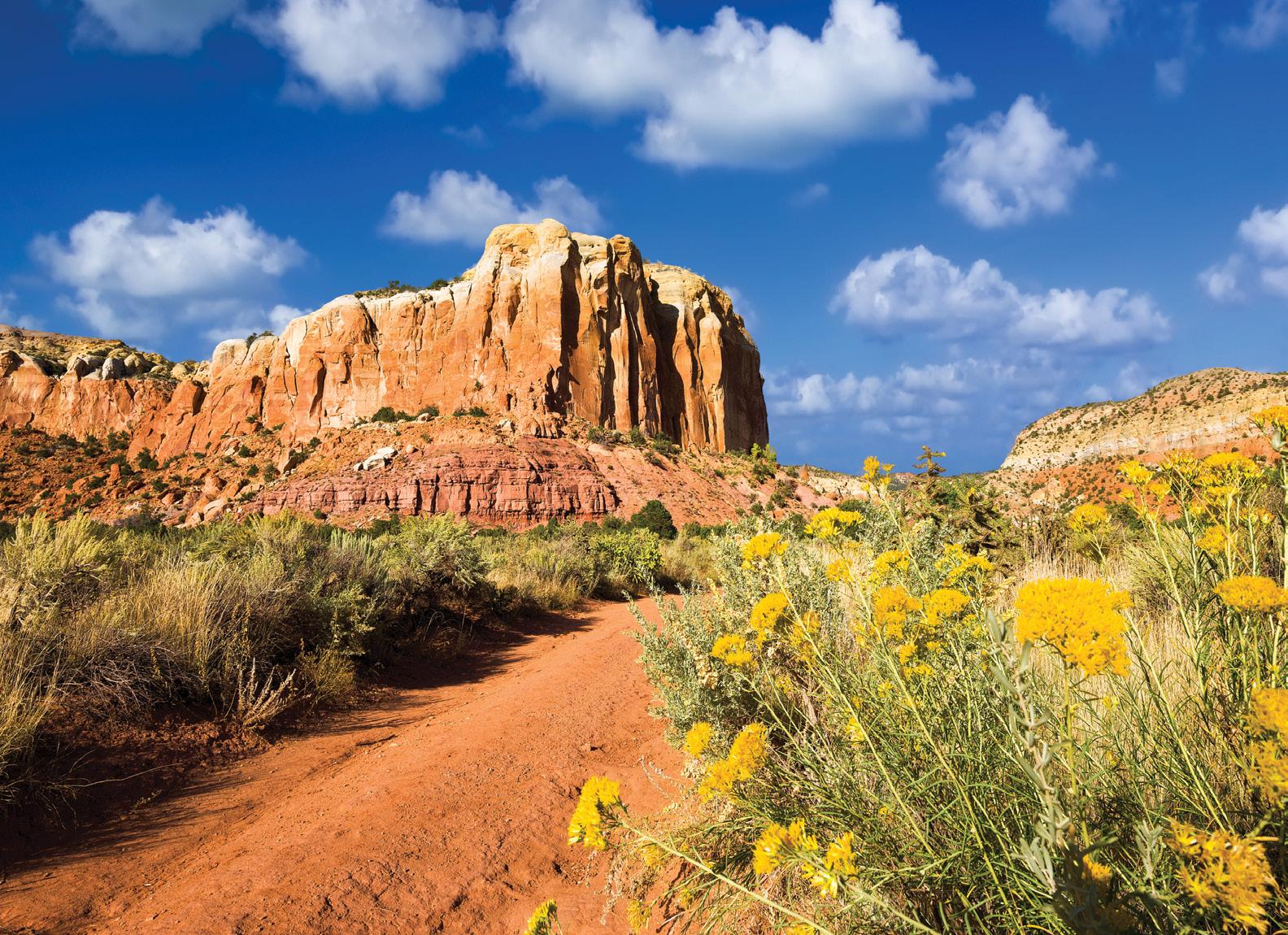
Ghost Ranch, north of Santa Fe, inspired Georgia O’Keeffe to move to Abiquiú full-time in 1949 after 20 years of visiting and painting in her distinct style New Mexico’s landscapes. The O’Keeffe Museum in Santa Fe holds an extensive collection of her work (OKeeffeMuseum.org). Photo by Laurence Parent.
Time in New Mexico is measured in minutes of spectacular sunsets, hours spent with friends on mountain-view patios late into the evening, and in generations of families that stretch back for time immemorial. The thread that travels through the minutes and millennia of New Mexico’s history is heritage, the heritage of each of the diverse groups that have made New Mexico what it is today, and that have blended to make the Land of Enchantment a place like no other.
NEW MEXICO ACROSS THE CENTURIES
BY STEVE LARESE
Evidence of humans living in what is now New Mexico dates to 21,000–23,000 years ago, with the discovery of footprints within White Sands National Park (see White Sands Footprints.) These prints are also the oldest evidence of humans in North America. Ancestral Puebloans, the ancestors of today’s 19 Pueblo nations in New Mexico, lived throughout the Southwest. In New Mexico, ruins such as subterranean pit houses date to B.C.E 6000. Over the centuries, these communities grew and developed in farming, architecture, astronomy and other skills, creating a vast empire with trade routes that expanded far into Mexico and Central America, and to the West Coast, Pacific Northwest, and Great Plains of what is now the United States. Turquoise from New Mexico has been found at Aztec archaeological sites, and shells from the west coast have been found in Ancestral Puebloan sites in New Mexico.
23,000 BCE to 900 CE
WHITE SANDS FOOTPRINTS
A child scampers around their mother, occasionally being picked up and carried before being set back down in the soft mud. Older children stalk a giant sloth as mammoths graze along the lakeshore. In the distance, camels chew their cud as American lions and dire wolves rest in the humid grasslands before their next hunts. This scene, discovered in fossilized footprints within today’s White Sands National Park north of Las Cruces, was carbon-dated in 2021 to 21,000–23,000 years ago, making it the oldest evidence of humans in North America. This area in southern New Mexico’s Tularosa Basin once contained an enormous lake that supported lush grasslands and abundant life. When scientists uncovered these human footprints preserved deep under gypsum sand, it placed humans in North America 10,000 years earlier than previously thought. Visit NPS.gov/whsa for more information.
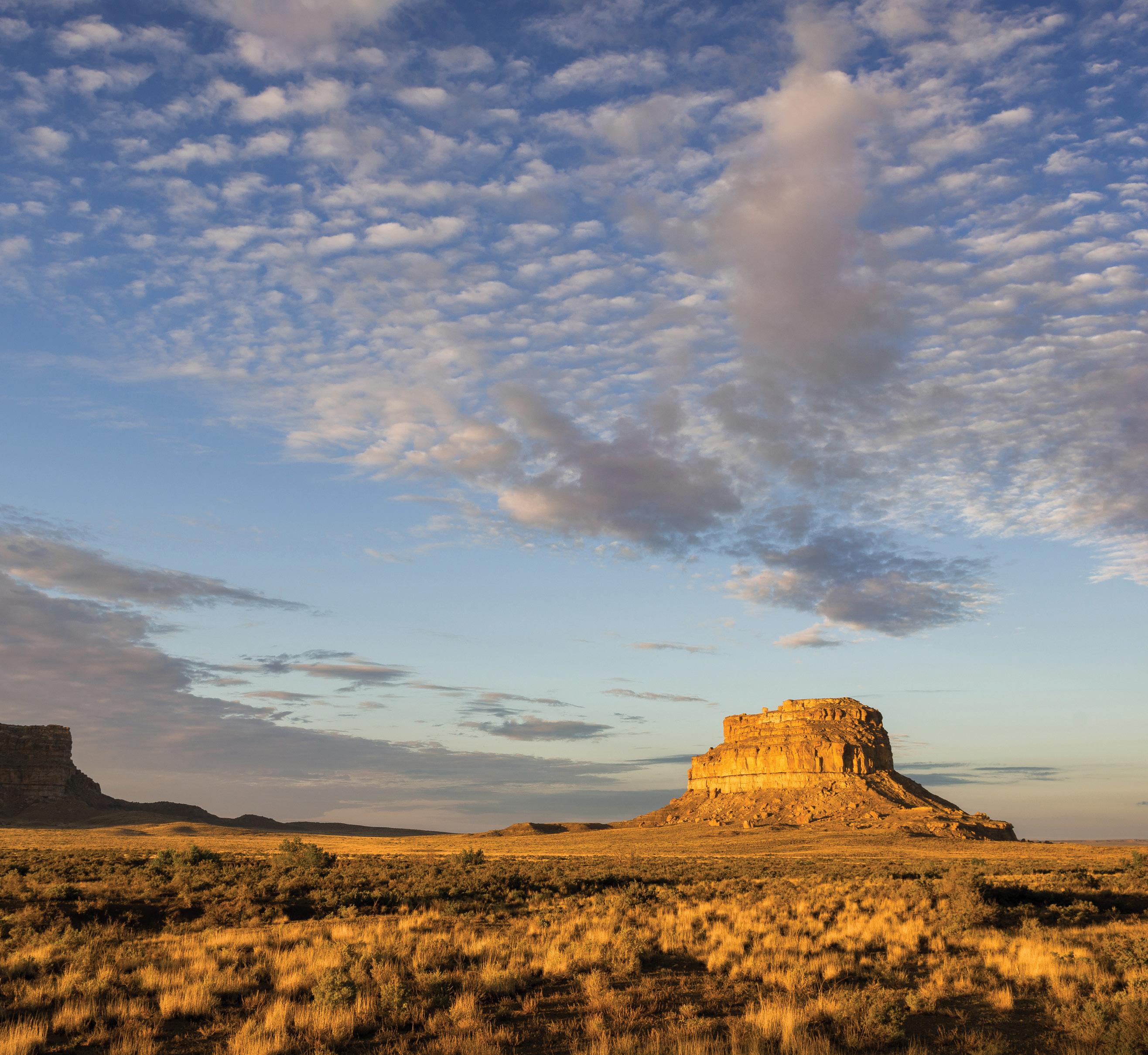
Ancestral Pueblo society reached its most unified zenith between A.D. 900 and 1150 at Chaco Canyon in northwestern New Mexico. Here, massive multi-storied buildings called Great Houses were constructed for what is believed to be religious and governmental purposes. Many of these buildings were built to be perfectly aligned with solstices and equinoxes, marking planting seasons. A sophisticated network of bonfires could quickly relay messages to communities hundreds of miles away. Packed roads radiate for hundreds of miles in all directions from Chaco Canyon. Copper bells, macaw features
and remains, and cacao have been found here, suggesting a vast trade network and denoting Chaco Canyon as a seat of great societal power.
Albuquerque’s Hotel Chaco uses architectural elements found at Chaco Canyon in its design, including its stone work, high ceilings and log beams, and circular lobby. For reasons unknown, the religious and governmental organization at Chaco Canyon began to wane in the late 1100s. Drought and social upheaval are just some of the theories as to why Chaco Canyon collapsed.
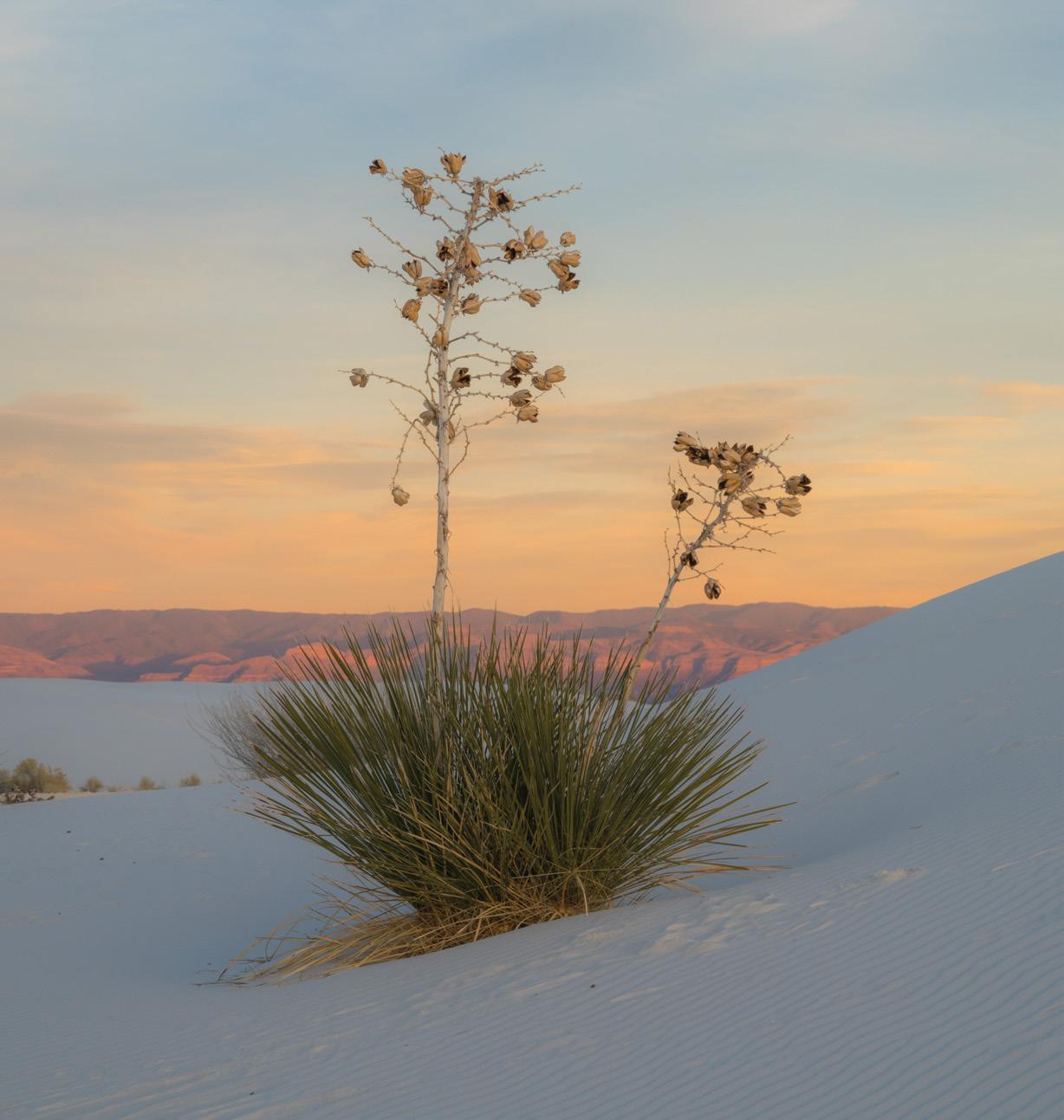
ABOVE: White Sands National Park, 50 miles north of Las Cruces, protects 228 square miles of gypsum sand dunes, creating a surreal landscape and a unique ecosystem. (NPS.gov/whsa).
Photo by Laurence Parent.
RIGHT: La Fajada Butte within Chaco Canyon National Historical Park is the site of a solar calendar that marks the summer solstice. Many of the Great Houses at Chaco Canyon are aligned to seasonal events, displaying Ancestral Puebloan precision in both astronomy and building. (NPS.gov/chcu).
VISITING PUEBLO LANDS
New Mexico’s 19 Pueblos, Navajo Nation, and the Jicarilla and Mescalero Apache tribes are generous in opening their doors to nontribal members and sharing glimpses of their rich cultures. Remember when visiting Native American lands that it’s the same as a guest walking through your neighborhood and entering your places of worship. A must-visit for anyone interested in visiting New Mexico Pueblo nations is the Indian Pueblo Cultural Center in Albuquerque (IndianPueblo.org, 505-843-7270). Here, visitors can check to make sure a particular Pueblo is open to visitors on certain dates, when Feast Days are held, what museums and attractions are available, and other information that is critical before visiting. Heritage Inspirations offers cultural tours of Acoma and Taos Pueblos, both ancient villages that have been continuously inhabited for 1,000 years. HeritageInspirations.com.
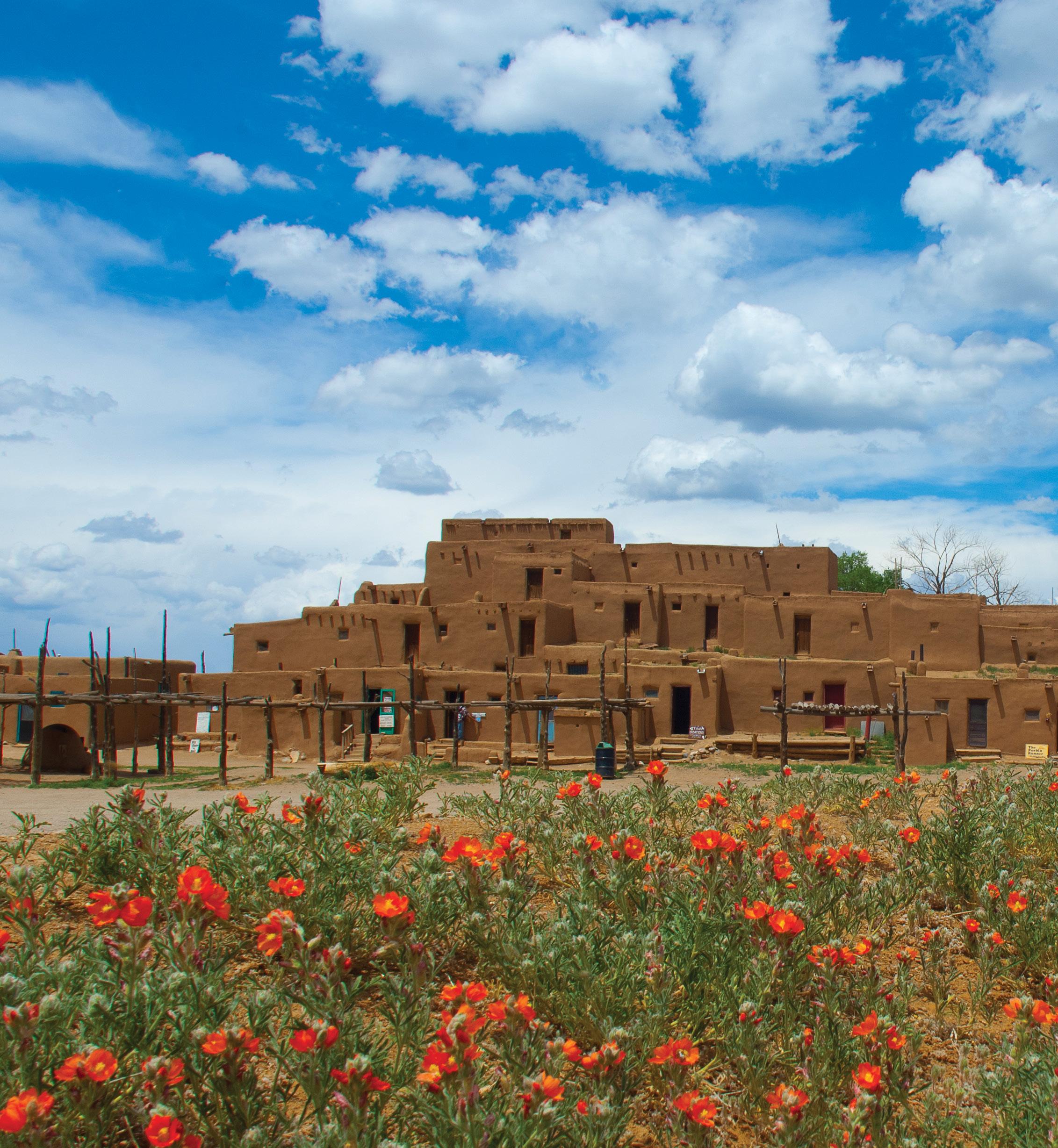
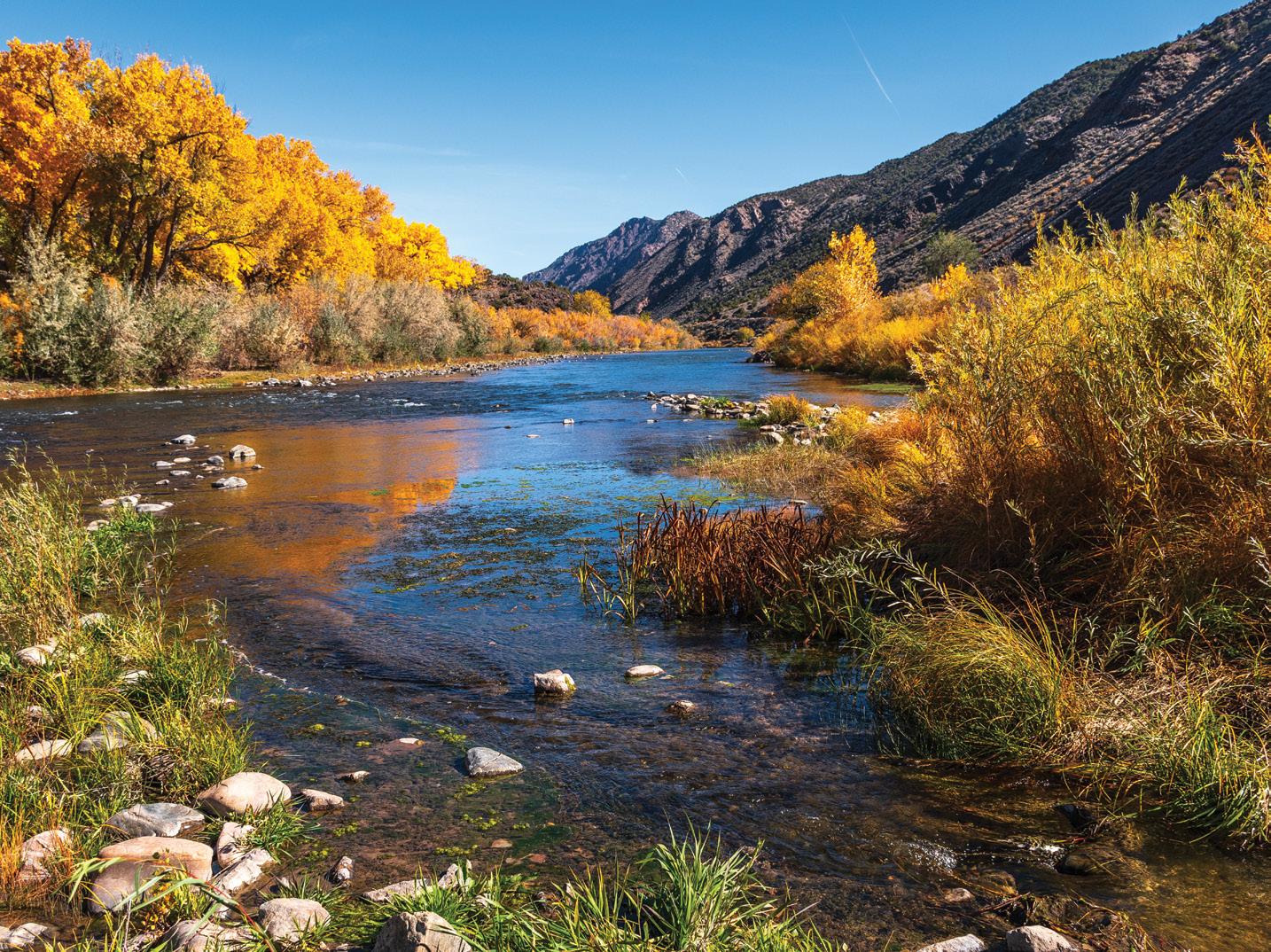
ABOVE: Taos Pueblo is considered to be one of the oldest continuously inhabited communities in the United States, with people first settling here 1,000 years ago. The respectful public may visit Taos Pueblo; before you go check taospueblo. com to verify whether it’s open to the public. Photo by Steve Larese. RIGHT: The Camino Real, the Royal Road, connected Mexico City to Taos, and mostly followed the Rio Grande, pictured here south of Taos.
1200-1300 CE
By 1200 Chaco Canyon was largely abandoned, and groups of people migrated throughout the Southwest, including to what is now Mesa Verde National Park in Colorado and the Bear’s Ears region of Utah. Small communities were built near water sources, and often defensively into the sides of cliffs. Stories from many of today’s Pueblos tell of long migrations for their people before settling in what is today New Mexico along the Rio Grande and other reliable water sources. These communities were built less
defensively and more open, with large plazas for dances and kivas for ceremonial and clan uses.
1400s
The 15th-century marked a time of relative peace and security for the Pueblo people. The culture had survived the upheaval of the past centuries since the fall of Chaco Canyon, and it was still a century before the Spanish entered New Mexico. Many of the Pueblo communities established during this timeframe are still present. By the 1400s, the Diné (also called
Navajo) established themselves in the Southwest. They and the Nde (Apache) are not related to the Puebloans, and are Athabascanspeaking people believed to have originated in what is today Alaska and Canada, having crossed the Bering Strait from Asia. This migration of people divided into two groups, with the ancestors of the Nde traveling to the Plains and the Diné settling in the Southwest. While there are some conflicts with the Diné and Nde, there was also the sharing of farming and other knowledge. Today, the Navajo
Nation, Jicarilla Apache Nation and Mescalero Apache Nation are federally recognized in New Mexico. There are 19 Pueblo nations in New Mexico, as well as the Hopi Nation in Arizona. Ancestral Puebloans (previously called Anasazi, a Diné word meaning “ancient enemy”), didn’t disappear. Their cultures shifted, developed and migrated over the millennia, and continue contributing today to New Mexico while preserving traditions that stretch back thousands of years.
(See Visting Pueblo Lands.)
1500-1700
With the arrival of the Spanish in 1540, the Pueblo people were subjugated under the Spanish Crown (“Pueblo” is Spanish for town). Under Spanish rule the Publeoans were allowed to retain their communities, but their religions and other traditional elements were banned. Santa Fe was established as the capital of New Mexico in 1610, making it the oldest continuous state capital in the United States. Eventually the Puebloans
rebelled against their mistreatment in 1680, and in a carefully organized action most of the Pueblos united to force Spanish colonists out of New Mexico and to El Paso. Called the Pueblo Revolt, this act of defiance and defense of Pueblo life and culture is still revered today. The Spanish eventually returned in 1692, but with a new understanding and respect for Pueblo life and culture (see Santa Fe Fiestas). Puebloans were no longer looked upon as inferior slaves, but as equal neighbors who had much knowledge to offer in the harsh climate of New Mexico. Spanish and Pueblo families intermarried, and many Puebloans converted to Catholicism while still retaining aspects of their traditional religions. Trade, ranching, and farming flourished. Feelings of European superiority gave way to the realization that all people must work together in mutual respect to survive in the harsh climate of New Mexico, and that each culture had much to learn from one another.
SANTA FE FIESTAS
In 1692, Don Diego de Vargas made a promise to the Virgin Mary. If she would help him and his men retake the City of Holy Faith without bloodshed, he would honor her annually. Twelve years prior, the New Mexico Pueblos rose against the Spanish and forced them to retreat to El Paso, citing slave-like working conditions and the banishing of their religion. The Spanish did indeed return to Santa Fe without violence (after a tense standoff).
A fiesta honoring the Virgin Mary was held, and on Sept. 16, 1712, the Santa Fe city council officially proclaimed that there would be an annual fiesta to commemorate the event. Four centuries later, de Vargas’ promise remains kept, making the Fiesta de Santa Fe the oldest such European event in what is now the United States. A second promise was also made by the Spanish upon their return, and that was to treat the Pueblos better and with respect. Every second week of September, the Fiesta de Santa Fe continues to honor the Virgin Mary, La Conquistadora, but it also honors Spanish and Native American heritage that have lived together peacefully since that day. SantaFeFiesta.org.
1700-1800
New Mexico was the remote, northernmost edge of the Spanish Empire in North America. The Camino Real (the Royal Road) stretched more than 1,500 miles from Mexico City to Ohkay Owingeh Pueblo between Santa Fe and Taos, and trade goods flowed to and from New Mexico. However, New Mexicans were left largely alone by the Spanish Crown, and Spanish and Pueblo cultures continued to blend and intermarry, creating a unique heritage that remains today. Imported goods were expensive, and locally traded goods such as Pueblo pottery found their way into Spanish kitchens, as did metal pots into Pueblo homes. The classic beehive ovens, called hornos, were introduced by the Spanish and quickly adopted by the Pueblos, where they are still common today. (The Moors had originally brought the beehive oven concept to Spain). The Spanish had also introduced sheep ranching to the Pueblos, and farming was the main income and barter source for most Spanish and Puebloans. Raids by Navajo, Apache, and Comanche parties forced the Spanish and Pueblos to come together to provide a unified defense, furthering the reliance upon one another and a blending of cultures.
times of Spanish colonial and territorial times.
FAR LEFT: Dancers on the Santa Fe Plaza during the annual Fiestas de Santa Fe. LEFT: Museums such as Los Luceros Historical Site north of Santa Fe (pictured) and Casa San Ysidro, managed by the Albuquerque Museum in Corrales, display the territorialperiod blending of Spanish, Pueblo, and American cultures.
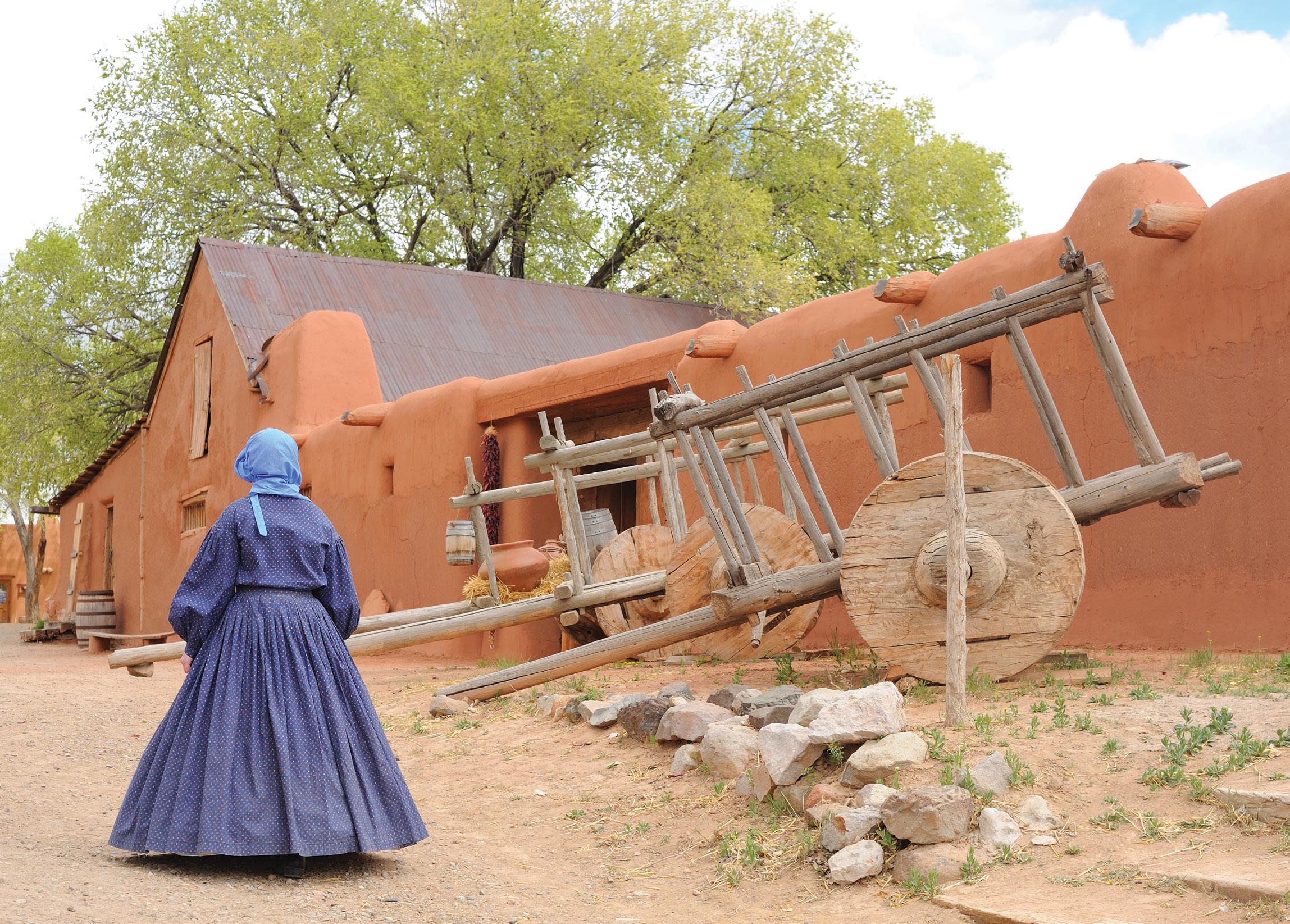
RIGHT: El Rancho de las Golondrinas, Ranch of the Swallows, is a living museum near Santa Fe. Actors depict various
(Golondrinas.org)
Photos by Steve Larese.
1800-1900
In 1821, Mexico became independent of Spain, and New Mexico was now a Mexican territory. Contact with the United States increased, and trade along the Santa Fe Trail that traveled between Franklin, Missouri, and Santa Fe brought U.S. goods to New Mexico, as well as the beginning of U.S. culture. New Mexico exported furs and other trade items to the U.S. In 1846, U.S. troops occupied New Mexico during the Mexican-American War, and in 1848 signed the Treaty of Guadalupe Hidalgo with Mexico that made New Mexico a U.S. territory and promised U.S.
citizenship and land rights to Hispanic residents (Native Americans wouldn’t be recognized nationally as U.S. citizens until 1924). The U.S. military increased its presence and established forts throughout New Mexico, many of which are now state and national monuments. The demand for beef to feed U.S. troops made cattle ranching and rustling lucrative. In Lincoln County, a young William H. Bonney became involved in the Lincoln County War in which his boss, John Henry Tunstall, was murdered by rival ranchers. Bonney became known as Billy the Kid (See From Outlaw to Legend). In 1880 the
railroad reached New Mexico, and with it an influx of goods, businesses, and New Mexico’s first tourists. In 1898, artists Ernest Blumenschein and Bert Geer Phillips were traveling from Denver to Mexico when their wagon broke a wheel. Upon going into Taos to have the wheel repaired, the artists were so enchanted that they changed their plans and stayed there. Today, New Mexico and Taos in particular are known worldwide for their art, and Santa Fe is the third-largest art market in the world behind New York and Los Angeles.
FROM OUTLAW TO LEGEND
Born Henry McCarty and later known as William H. Bonney, Billy arrived in New Mexico Territory as a teenager. At the time, ranchers were competing for lucrative contracts to supply the U.S. Cavalry with beef. Billy went to work for John Tunstall, an English businessman and rancher whose successful businesses put him in conflict with the Santa Fe Ring, a group of powerful politicians and businessmen who controlled much of New Mexico. In 1878 Tunstall was shot and killed by a posse led by Lincoln County Sheriff William Brady. Tunstall ran afoul of the Santa Fe Ring by entering into a business deal with their rival, Alexander A. McSween.
Young cowhand William H. Bonney witnessed the killing of his boss and friend Tunstall. The killing started the Lincoln County War, and Billy joined the “Regulators,” a group seeking revenge for the murder of their employer, John Tunstall. In the following months ambushes, assassinations, and gunfights took place, and by the end, Billy was wanted for multiple killings. He was arrested and sentenced to be hanged at the Lincoln Courthouse but escaped by killing two guards. A bullet hole from a shot fired by Billy can still be seen at the Old Lincoln County Courthouse, which is now a museum. Billy was on the run for two and a half months before being killed in 1881 in Fort Sumner by the new Sheriff of Lincoln County and one of Billy’s old acquaintances, Pat Garrett. Billy was 21 years old.
Billy was much respected by the local Hispanic population in southern New Mexico, who viewed him as a folk hero taking on the corrupt powers in the state. Billy spoke fluent Spanish, and many in the community helped him. His reputation grew to mythic proportions, and in 1911 the first of many films about him was made.
By the 1920s and 1930s, as New Mexico promoted its Old West heritage to tourists, Billy the Kid’s story, both truth and fiction, offered a romantic vision of the Old West that still captures imaginations today. Lincoln today is a New Mexico Historical Site, and key sites of the Lincoln County War can be toured. Visit NMHistoricSites.org/ Lincoln for more information.
ENDURANCE OF A NATION
In 1864, the Diné were forcibly removed by the United States from the Four Corners region to Ft. Sumner in east-central New Mexico. Called the Long Walk, this 450-mile forced journey is still a topic of both trauma and perseverance for the Diné. When offered a choice of relocation to a reservation in Oklahoma, which the United States thought to be the optimal choice due to good farming, or to return to their homeland in the Four Corners, Chief Barboncito said, “I hope to God you will not ask us to go to any country but our own. When the Navajos were first created, four mountains and four rivers were pointed out to us, inside of which we should live, and that was to be Dinetah. Changing Woman gave us this land. Our God created it specifically for us.” Today the Navajo Nation remains on its original homeland in the Four Corners, and is the second-largest Native American tribe with a nation the size of West Virginia.
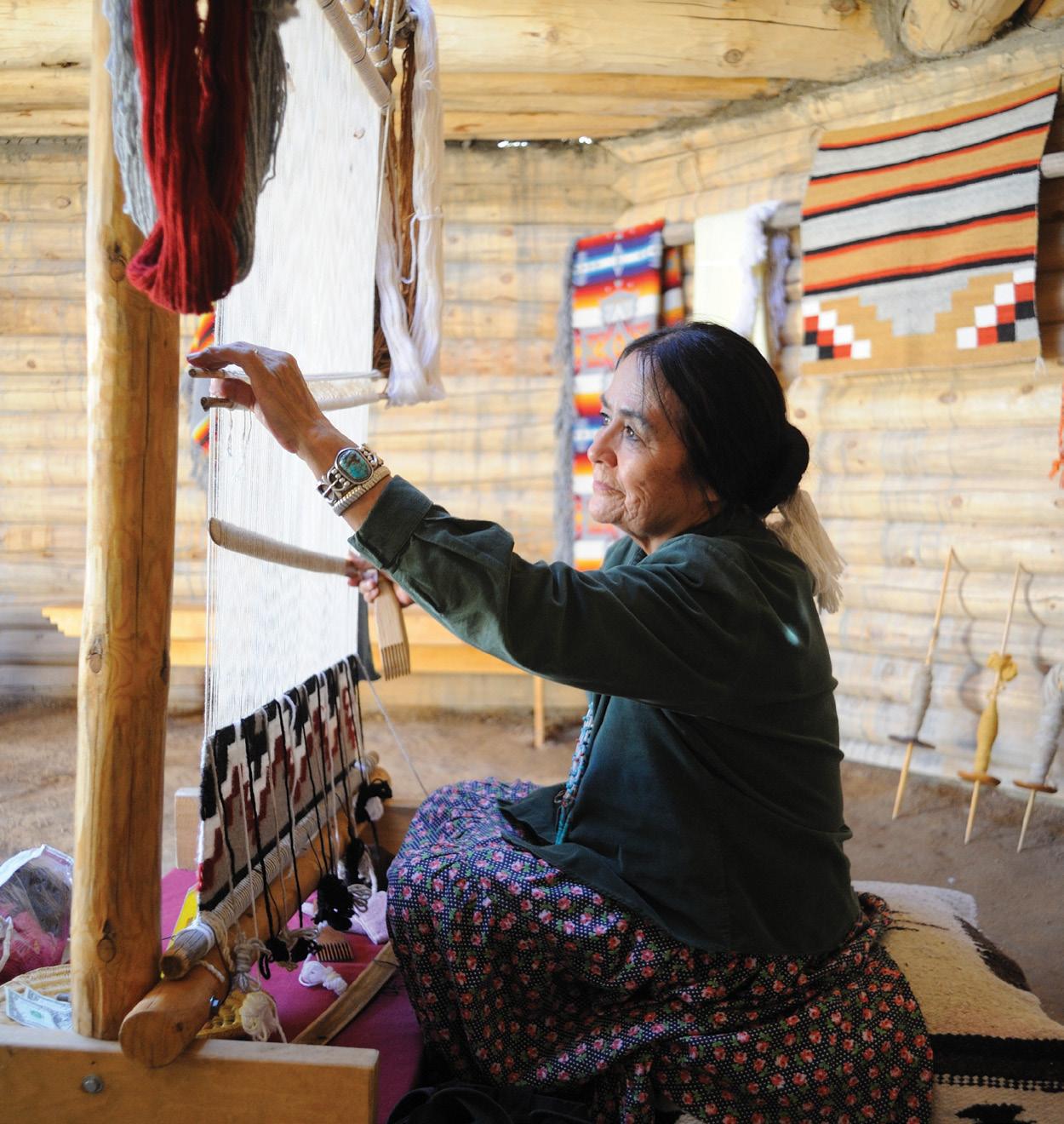
ABOVE: Diné weaver Pearl Sunrise creates a traditional design at her loom. Diné artists are renowned worldwide for their rugs, made with the wool of Navajo Churro sheep and dyed naturally. Photo by Steve Larese.
1900s-1920s
With the expansion of the Atchison, Topeka, and Santa Fe Railway, more and more people from the United States moved into the New Mexico territory for a variety of reasons. Some came to establish businesses and trading posts. Fred Harvey built five of his Harvey Hotels along the rail lines in New Mexico that transported people across the country, establishing a long history of hospitality that celebrates New Mexico’s cultures. New Mexico became the 47th State on January 6, 1912, bringing more people West. Some came to New Mexico’s dry climate as a treatment for tuberculosis, and
decided to stay. Others were artists and bohemians drawn to New Mexico’s beauty and lack of strict social norms.
In 1915 the Taos Society of Artists formed, and Mabel Dodge Luhan moved to Taos in 1917. Her home became a salon for such luminaries as D. H. Lawrence, Ansel Adams, Willa Cather, Georgia O’Keeffe, Nicolai Fechin, Aldous Huxley and many other artists, writers, and thinkers of the time. Dennis Hopper bought the Luhan house in 1968 while filming Easy Rider in Taos. Today, the Mabel Dodge Luhan House is a National Historic Landmark.
In 1916, Mexican revolutionary Pancho Villa raided Columbus, New Mexico,
due to President Woodrow Wilson’s recognizing Villa’s opponent, General Venustiano Carranza, as the Mexican president. Wilson sent U.S. General John J. Pershing and a force of 6,000 troops into Mexico. They didn’t find Villa, but valuable lessons about the lack of preparedness of the U.S. military was vital on the eve of World War I, and Pershing’s expedition lead to the beginning of the modernization of the army. When the U.S. entered the war in 1917, 17,251 New Mexicans would serve. The new state of New Mexico also proved itself with increased farming and mining to support the war effort.
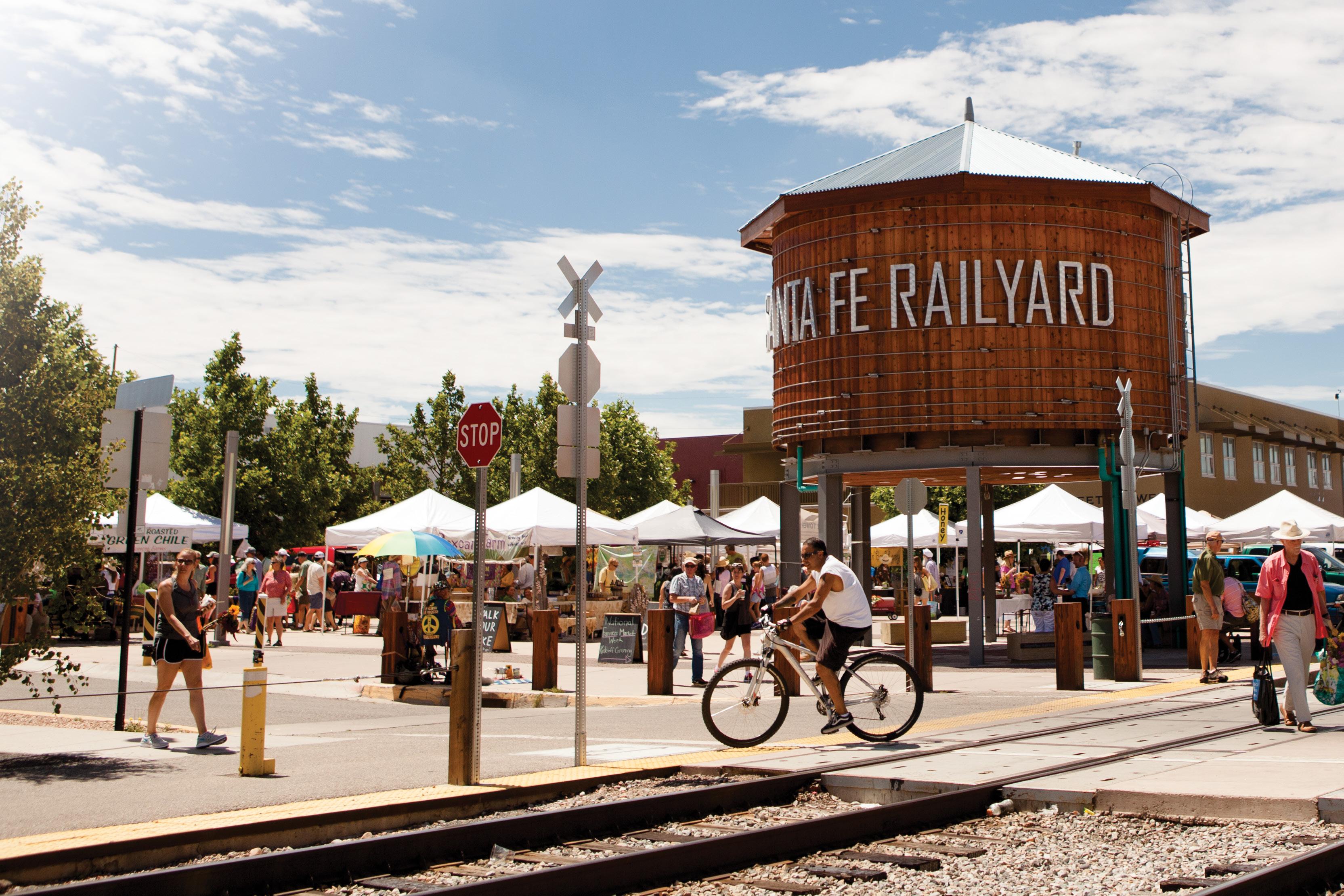
The Santa Fe Railyard is still a hub for railroad traffic and local events such as farmers markets.
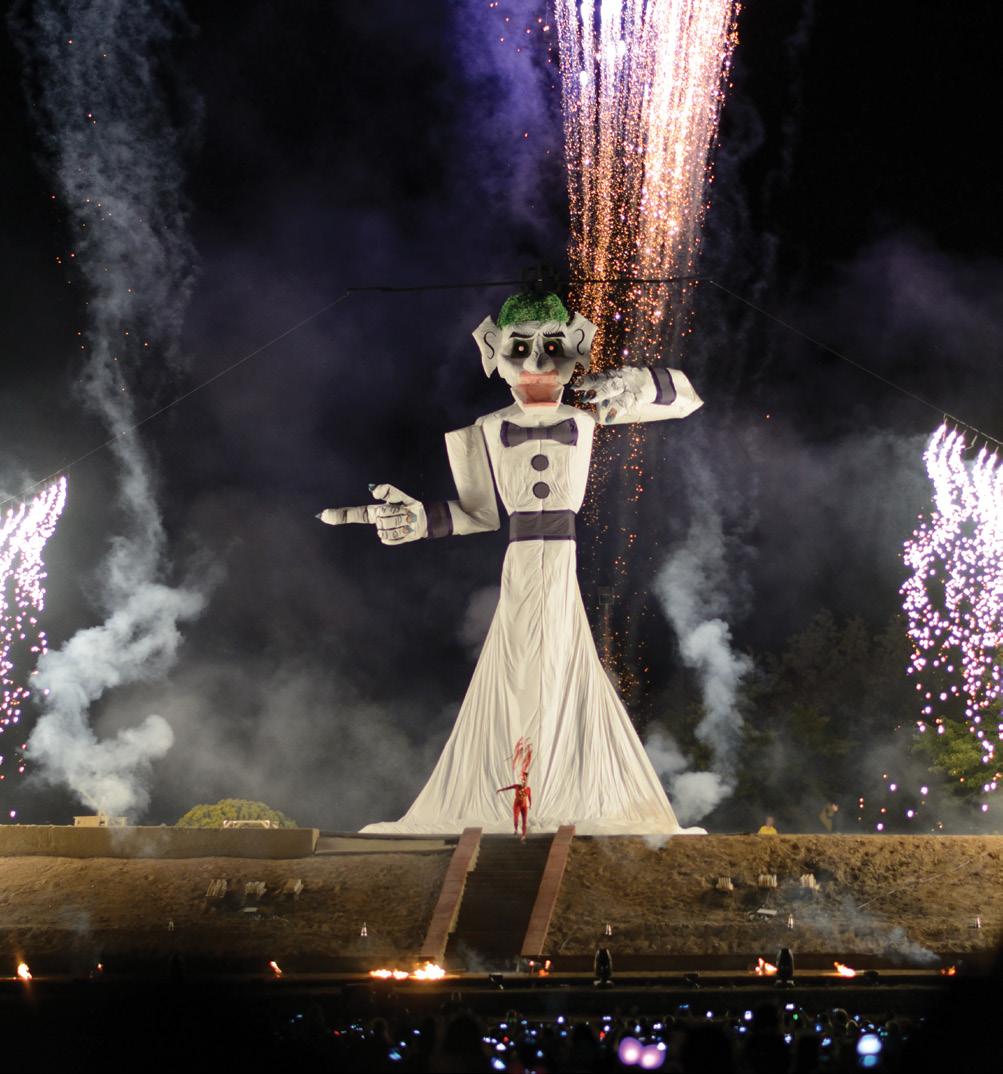
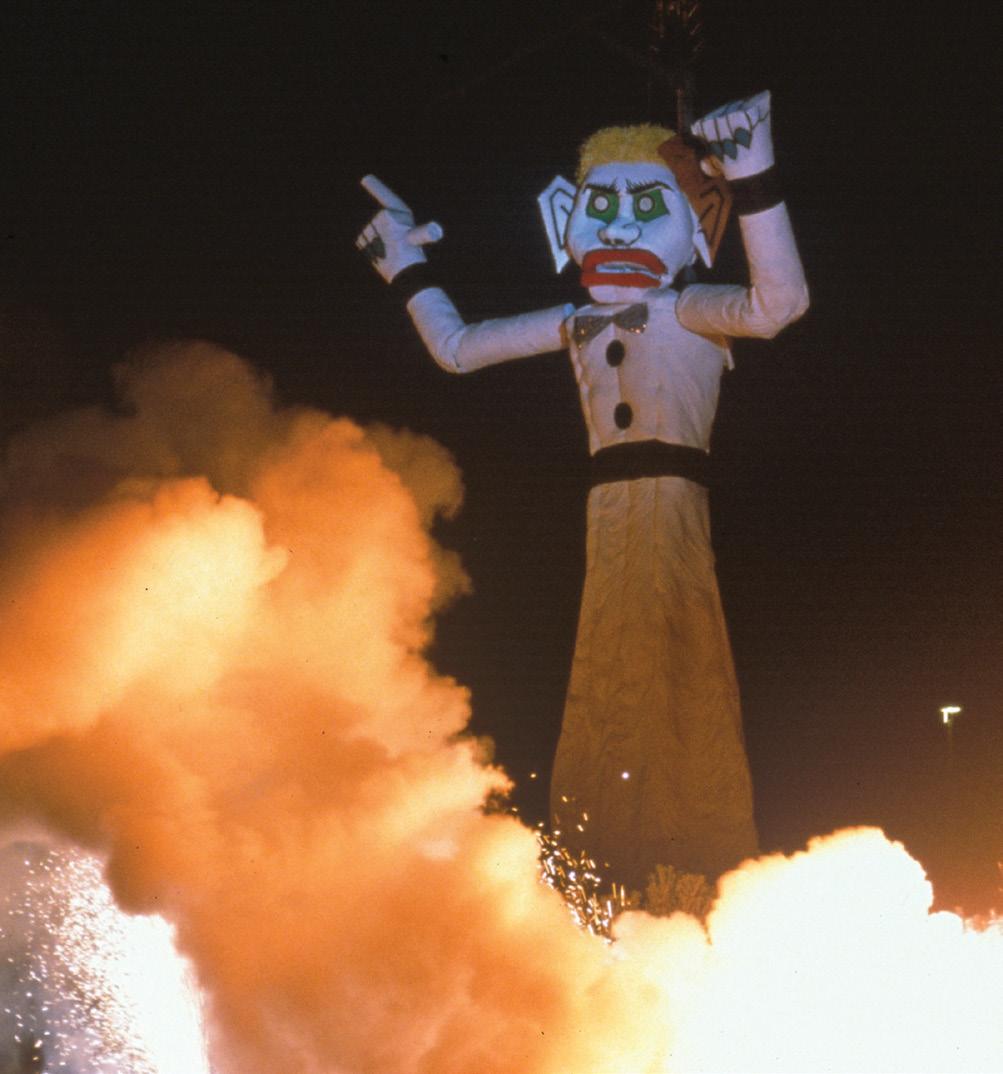
OLD MAN GLOOM
Zozobra isn’t an official part of Fiesta de Santa Fe, but it’s closely associated. In 1924 artist Will Shuster created Old Man Gloom as a way of bringing some levity to the religious solemnity of the Fiesta de Santa Fe. Zozobra means “gloomy one” in Spanish, and was based on a Yaqui Indian tradition Shuster witnessed in Mexico in which an effigy of Judas was paraded through the village on a donkey and then burned. Prior to the burning of Zozobra, you can write down all of your worries and stuff them in a box near Zozobra. These pieces of “gloom” will then be placed inside Zozobra and burned away, along with your troubles. Zozobra stands almost 50-feet tall and takes 3,500 volunteer hours to build in the three weeks leading up to the event.
Shuster's secular celebration soon grew into a Santa Fe institution. Despite his gloomy reputation, Zozobra actually helps Santa Fe by raising money for local scholarships. In 1964 Shuster granted all Zozobra copyrights to the Santa Fe Kiwanis Club to use for fundraising. Zozobra.com.
1920s-1930s
New Mexico continued to thrive as an artist haven in the post-war years. Georgia O’Keeffe first came to New Mexico in 1929, and settled in Abiquiú north of Santa Fe in 1949, creating her striking, mystical desert scenes of flowers and bones that can be seen at the Georgia O’Keeffe Museum in Santa Fe, among other galleries worldwide. Pueblo potters, including Maria Martinez of San Ildefonso, gained appreciation for their work, as did Navajo jewelers. Artist Will Shuster moved to New Mexico in 1920 to treat his tuberculosis he developed after being gassed in World War I. He became part of Los Cinco Pintores (the Five Painters), a collective of modernist painters that furthered New Mexico’s art culture nationwide. Shuster created the 50-foot tall marionette Zozobra in 1924 that is burned prior to the Fiestas de Santa Fe (See Old Man Gloom). Route 66, which celebrates its centennial in 2026, was built through New Mexico in 1926.
1940s
New Mexico played a crucial part in World War II. Many men of the New Mexico National Guard’s 200th and 5115th Coastal Artillery units were captured in 1942 by Japanese troops after fighting gallantly in the Philippines. Many suffered during the infamous Baatan Death March, a 65-mile forced march on which 11,000 Americans died, including many New Mexicans. During World War II, New Mexico saw the highest per capita enlistment in the nation, and it had the highest per capita casualty rate.
The annual Burning of Zozobra. Photo by Steve Larese.
Navajo Code Talkers, members of the Navajo Nation who volunteered for the Marine Corp. saw action throughout the Pacific Theater. Using coded phrases of their language, Diné bizaad, Navajo Code Talkers were able to transmit unbreakable messages quickly, and are credited with saving many lives. The program was so successful that it was classified until 1968. New Mexico served as a training ground for many pilots, including Albuquerque Army Air Field in Albuquerque, that would go on to become Sandia National Laboratories. The Roswell Army Airfield trained B-29 crews and later became a Strategic Air Command base with nuclear-capable bombers. Los Alamos in northern New Mexico was the top-secret site for the development of the atomic bomb. Chosen by Manhattan Project director Robert J. Oppenheimer, who remembered it from a summer camp in his youth, the remote community saw many of the world’s leading nuclear scientists clandestinely develop and build the atomic cores of the world’s first three nuclear weapons that ended World War II. Having successfully tested the first bomb at New Mexico’s Trinity Site south of Socorro, the remaining two were employed in 1945 to end the war. Though best known for nuclear weapons, the national laboratory also pursues peaceful endeavors such as nuclear medicine. Little wonder, then, that Los Alamos has gained the reputation as home to more Ph.D-holders per capita than any other community in the United States. To learn more about New Mexico’s atomic history, visit the National Museum of Nuclear Science & History in Albuquerque (NuclearMuseum.org).
1950s-1960s
In the post-war years, automobiles largely replaced the railroad as America’s main means of transportation, and Route 66 became synonymous with the American Road Trip. More than 460 miles of the Mother Road cut across the middle of New Mexico, roughly following today’s I-40. Though it was decommissioned in 1984, many excellent stretches of the road remain intact and in use. Classic Americana architecture from the 1930s, ’40s, and ’50s is found along the route, and in recent years many buildings and historic neon signs have been restored, making New Mexico’s portion of Route 66 one of the best preserved in the nation. For aficionados of this storied highway, Tucumcari is a must-see visit, as is Albuquerque’s Central Avenue, which travels through Nob Hill and into downtown. Heritage Inspirations offers a Route 66 Albuquerque Architecture and History Tour. For more information, visit HeritageInspirations.com.
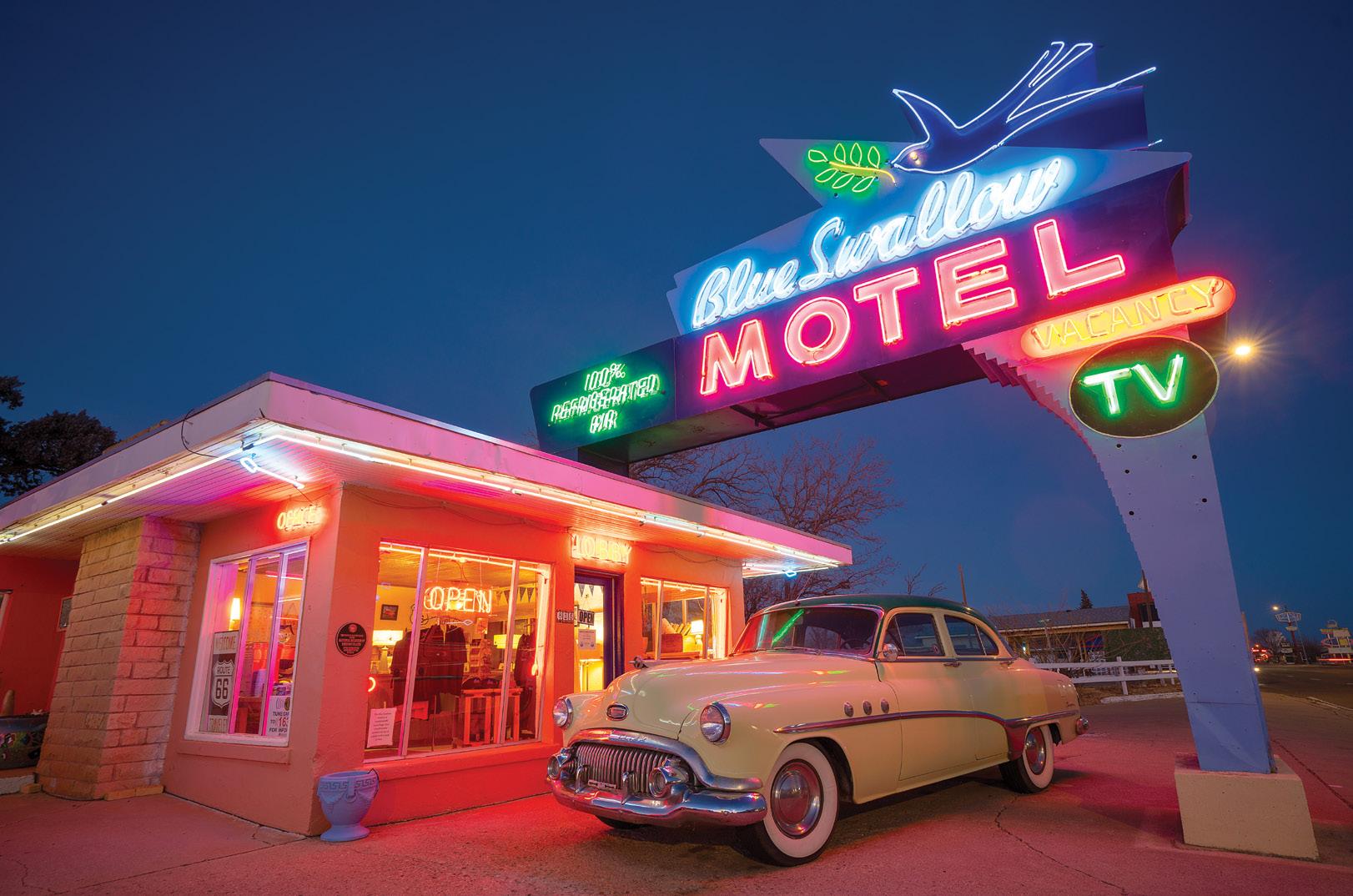
The Blue Swallow Motel in Tucumcari keeps the spirit of Route 66 alive. Photo by Steve Larese.
1970s-1980s
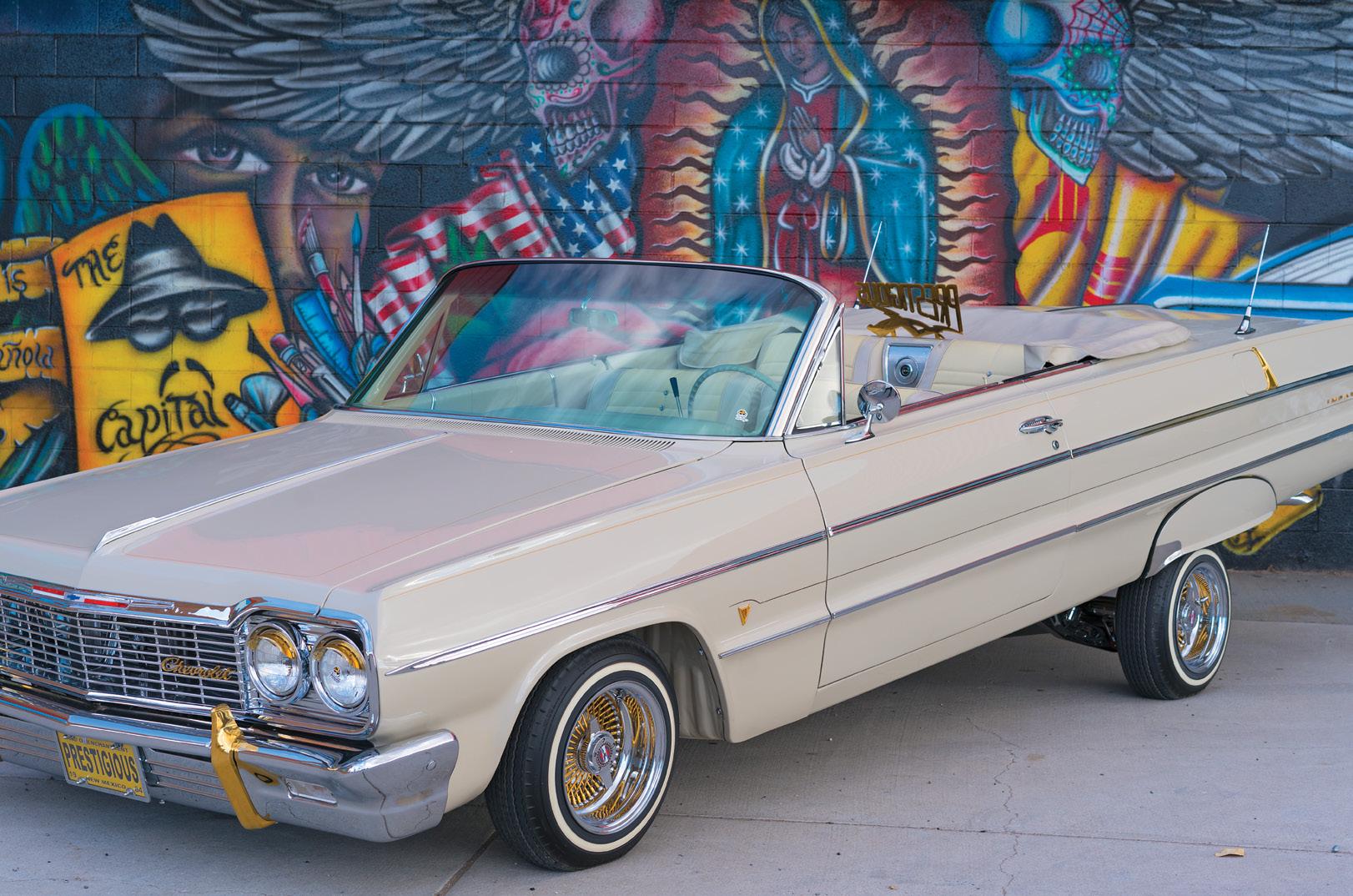
In the 1970s, the counterculture scene fully discovered New Mexico, inspired by Jack Kerouac’s On the Road, the film Easy Rider, and other depictions in film and literature. Taos and Santa Fe were especially popular destinations for those wanting to live a simpler lifestyle. The Hog Farm in Taos was a commune that became a symbol of New Mexico’s 1960s–1970s hippie movement. Founded by Hugh Romney, better known as Wavy Gravy, the Hog Farm promoted communal living, free food, and nonviolence, and gained national attention for helping organize food and security at Woodstock in 1969. The group moved on to California in the early 1970s, where its Black Oak Ranch still exists, but it reaffirmed New Mexico as a place for unconventional thinkers and lifestyles. New Mexico’s Hispanic culture also enjoyed increased recognition, and lowriders became both a hobby and way of life that celebrates Hispanic art
and workmanship. Lowrider culture is celebrated at the Low ‘n Slow bar at Hotel Chimayó in Santa Fe. In the 1980s, New Mexico’s tourism industry started to take off. The counterculture of the ‘70s morphed into pastel colors and Santa Fe Style, probably best symbolized by the popular howling turquoise or pink coyote graphics of the time. New Mexico increasingly became a destination for family and spring break ski trips and other vacations, making tourism New Mexico’s second-largest industry after mining and oil production.
1990s-Today
With the end of the Cold War, New Mexico’s two national laboratories reconfigured their missions and expanded more into energy, medicine and other areas while still maintaining the country’s nuclear arsenal. This continues to bring some of the world’s most talented scientists to New Mexico, who appreciate its outdoor recreation and cultural opportunities as well.
Tony Hillerman’s popular books about Navajo Police Officers Jim Chee and Joe Leaphorn solving crimes which share vivid descriptions of New Mexico landscapes and cultures gained in popularity, further keeping New Mexico in the national consciousness.
The film industry, always a presence in New Mexico, took advantage of New Mexico’s Film Office and tax credits, and increased production, leading to 2008’s Breaking Bad that made Albuquerque known worldwide. New Mexico became recognizable in movies and began playing a part in the story, as well as being a stand in for other locations. Movies such as
A lowrider built by Fred Rael of Española, a city north of Santa Fe called the Lowrider Capital of the World. Photo by Steve Larese.
Transformers (2007), Wild Hogs (2007), Terminator Salvation (2009), The Book of Eli (2010), Hostiles (2017), Only the Brave (2017), Sicario: Day of the Soldado (2018), News of the World (2020), Oppenheimer (2023) and many other film and TV productions have been made in New Mexico.
New Mexico’s fine arts scene continued to grow, and interest in Native American and Spanish art also increased, bringing tens of thousands of people to the SWAIA Indian Market and Spanish Market held annually in Santa Fe.
Outdoor recreation increased in interest, with skiing, mountain biking, rock climbing and backpacking trails,
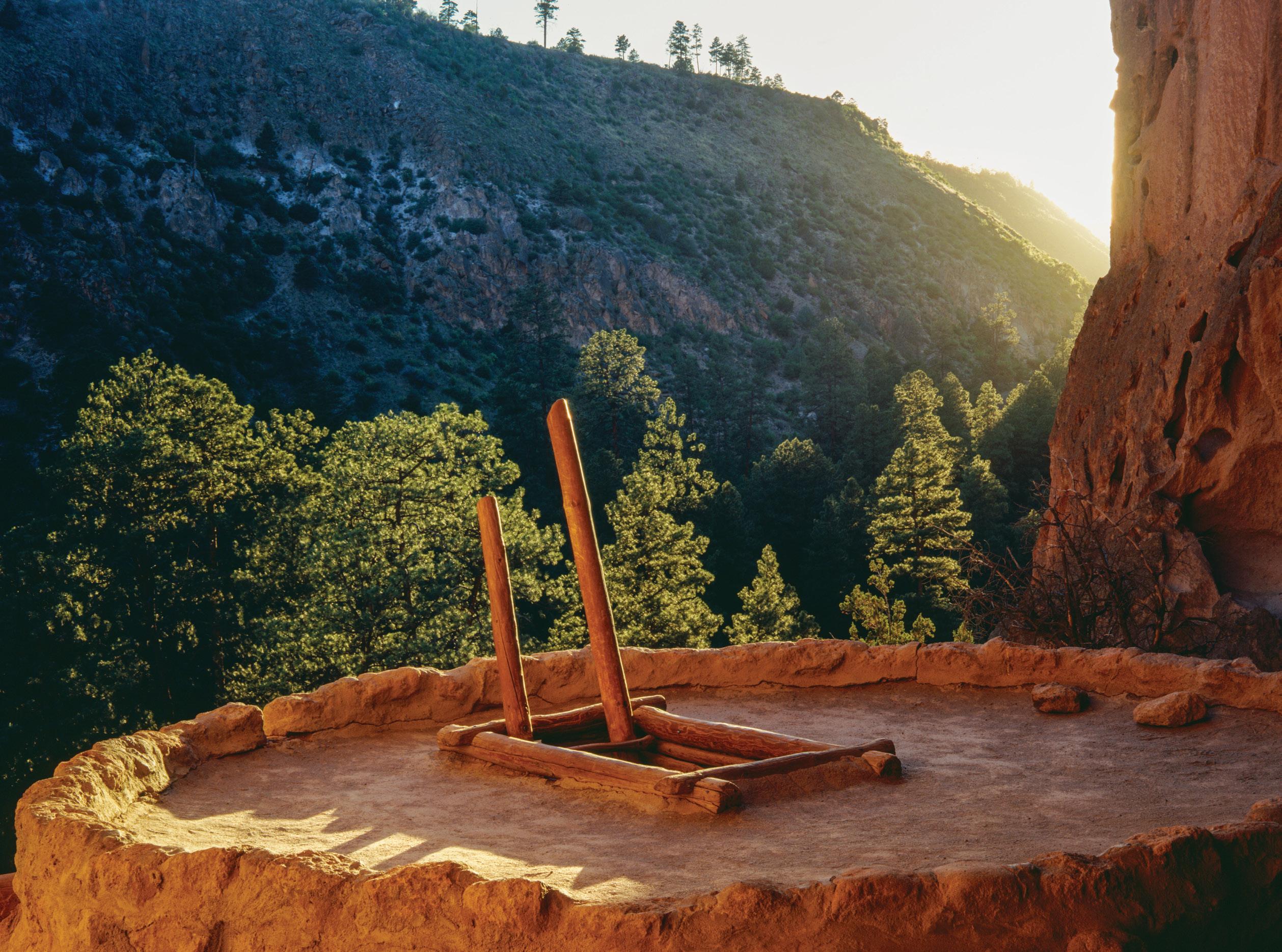
including the Continental Divide Trail, making New Mexico a national destination for outdoor lovers. National park attendance continued to increase as well. New Mexico has many national parks and monuments, including Carlsbad Caverns National Park that protects an enormous limestone cave system, White Sands National Park that contains the world’s largest gypsum dune field, and Bandelier National Monument that preserves Ancestral Pueblo cliff dwellings and ancient petroglyphs in volcanic rock near Los Alamos. New Mexico’s history, cultures and landscapes continue to enchant the world into the 21st Century.
Bandelier National Monument near Los Alamos protects ancient structures built by the ancestors of today’s northern New Mexico Pueblo nations (nps.gov/band). Photo by Laurence Parent.
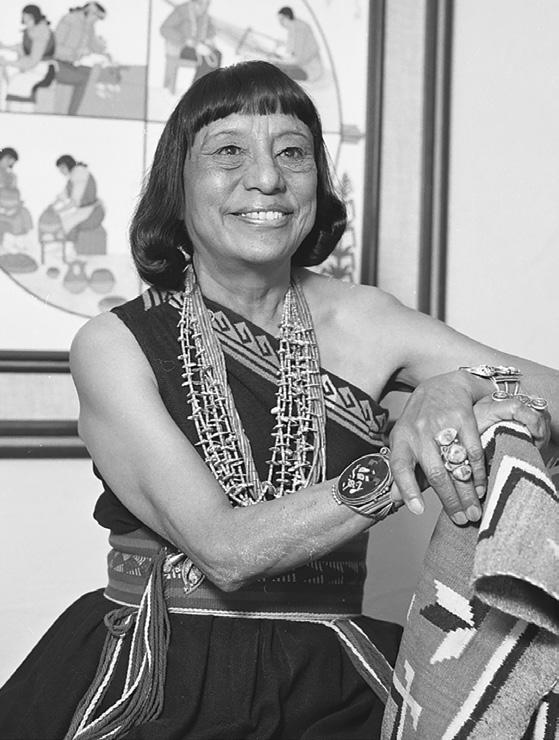
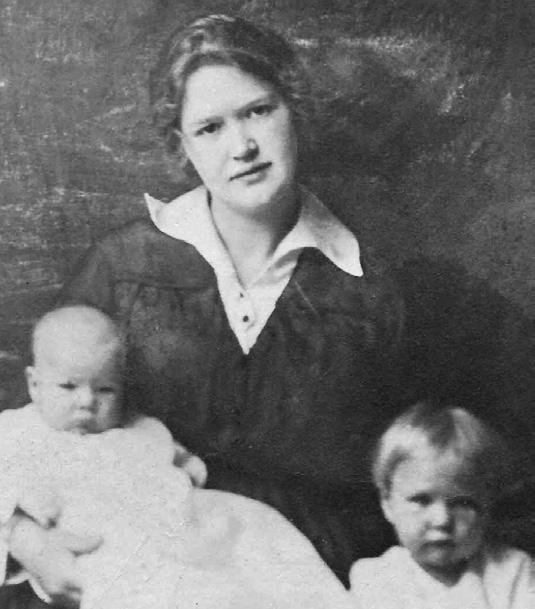
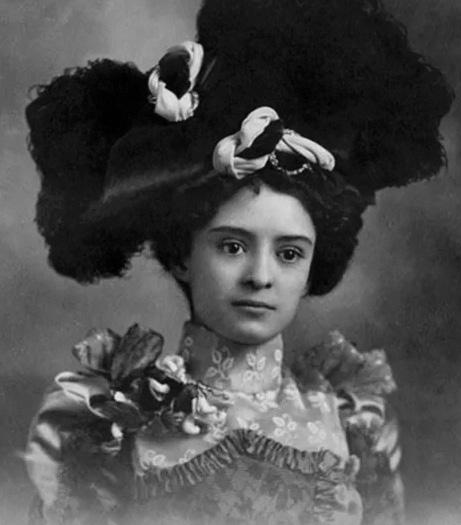
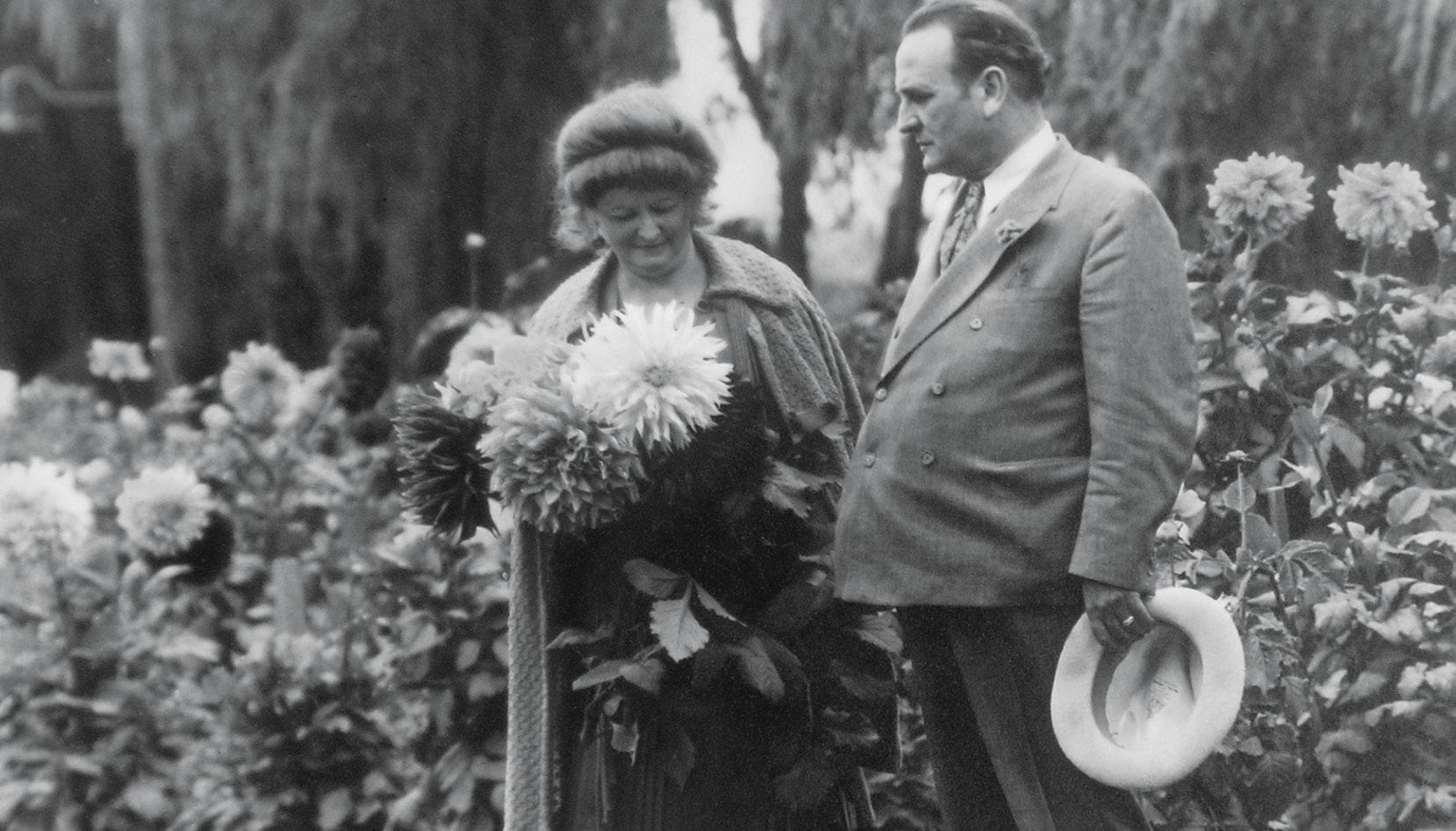
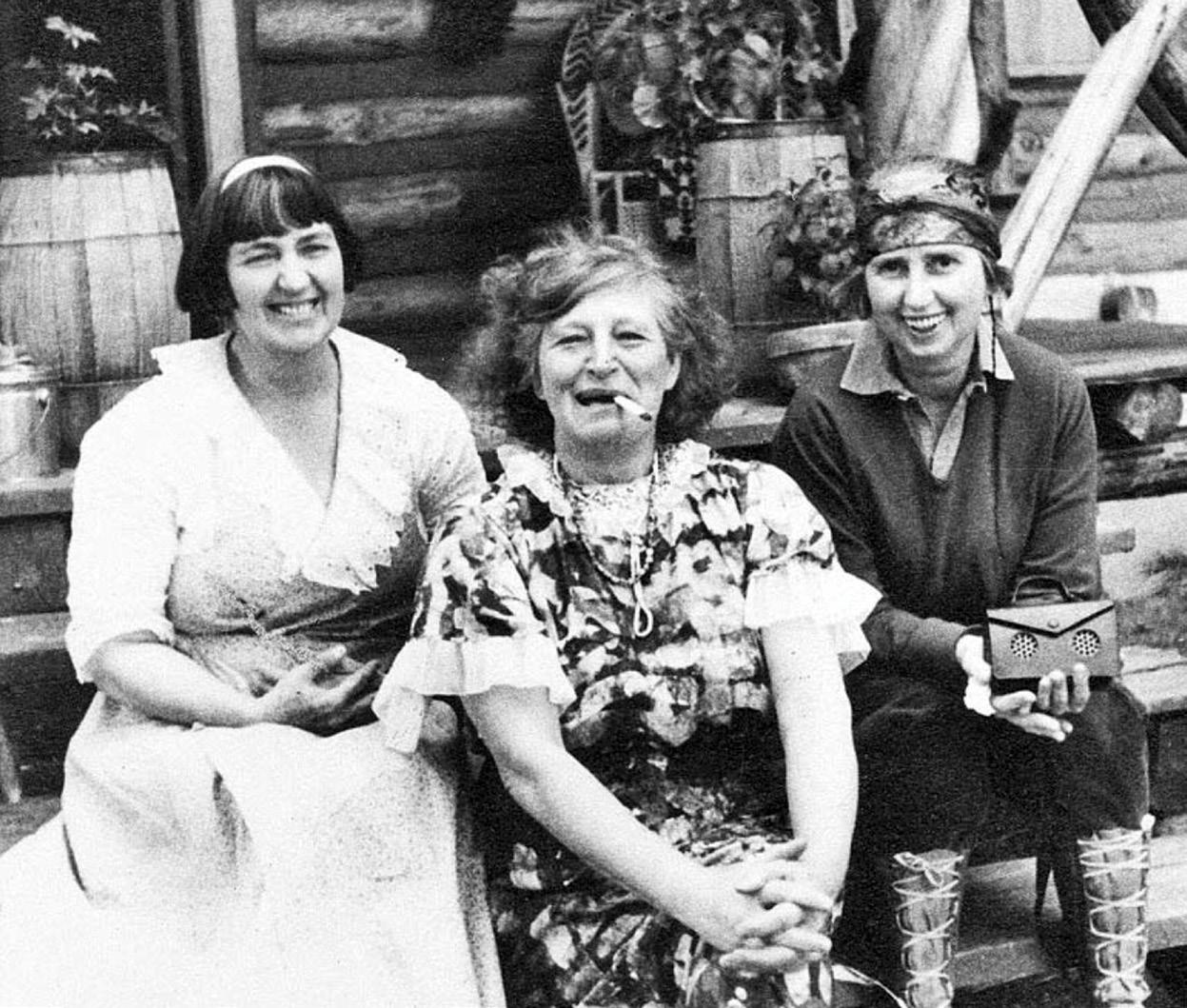
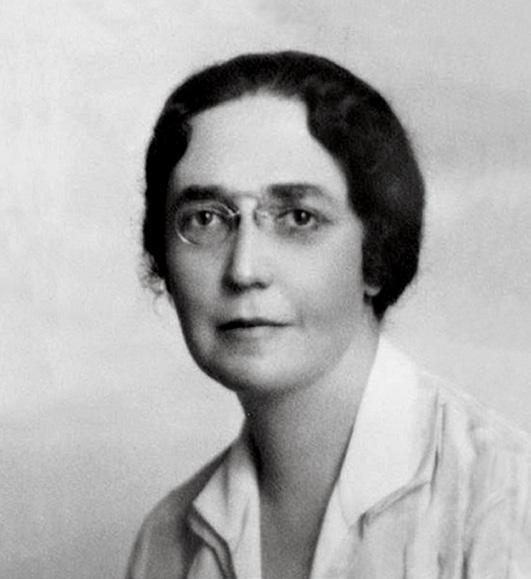
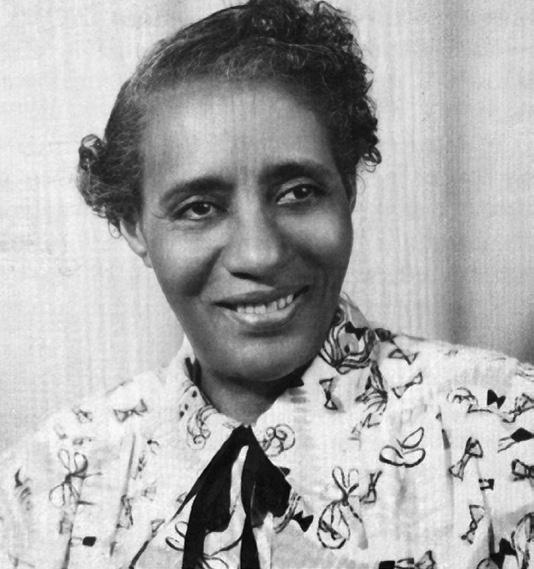
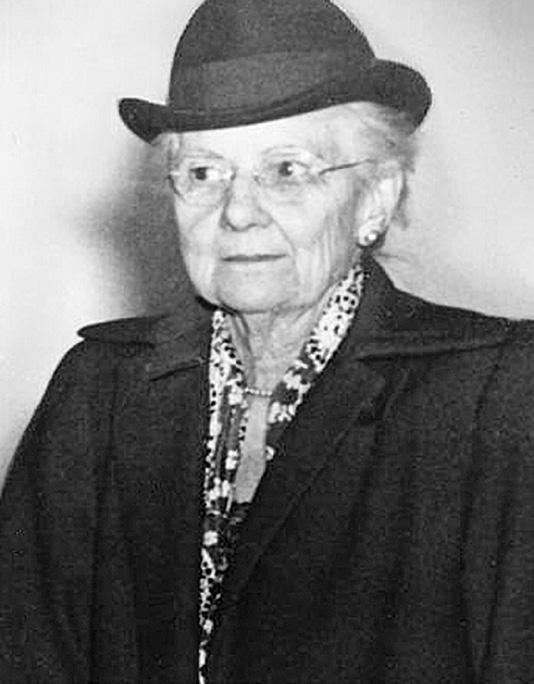
THIS PAGE ABOVE LEFT Top to Bottom: Pablita Velarde, Susan “Susie” Parks, Cleofas Martinez Jaramillo. ABOVE MIDDLE Carrie Wooster Tingley. OPPOSITE PAGE MIDDLE: “The Three Fates:” Mabel Dodge Luhan, Frieda Lawrence, Dorothy Brett. FAR RIGHT TOP TO BOTTOM: Nina Otero-Warren, Ida O. Jackson, Harriet Belle Amsden Sammons.
Whether the land shaped the women or the women shaped the land, New Mexico has been built and defined by their grit and vision. Today, that legacy lives along highways and quiet town roads through the New Mexico Historic Women Marker Program, where stories unfold in the very places they happened.
Across New Mexico, roadside markers honor artists, educators, healers, entrepreneurs, and community leaders whose influence still resonates. Some transformed institutions. Others strengthened families and neighborhoods. All helped shape the cultural and civic fabric of the state.
Established through a statewide collaboration between the International Women's Forum of New Mexico, New Mexico Department of Cultural Affairs, New Mexico Tourism Department, and New Mexico Department of Transportation, the program continues to expand its reach through education, exhibitions, and public engagement. These markers offer more than history. They invite reflection, discovery, and connection. Pause beside one and the landscape feels deeper, more storied. Here, the past is not distant. It stands beside you, quietly enduring, ready to be noticed.
Scan the QR Code to explore the New Mexico Historic Women Marker Program website, view a map of trailblazing women along Route 66, and follow a self-guided tour of seven women’s markers in downtown Santa Fe.
PHOTO CREDITS: THIS PAGE–PABLITA VELARDE, SANTA CLARA PUEBLO, NM: LEE MARMON PICTORIAL COLLECTION, PICT #2000-017-B14-F47-1, CENTER FOR SOUTHWEST RESEARCH, UNIVERSITY OF NEW MEXICO LIBRARIES; SUSAN “SUSIE” PARKS, CLEOFAS MARTINEZ JARAMILLO: COURTESY OF THE NEW MEXICO HISTORIC WOMEN MARKER PROGRAM; GOV. CLYDE TINGLEY AND MRS. TINGLEY AT SANTA FE, NM; NM STATE TOURIST BUREAU PHOTO, PICT #000-742-0147, CENTER FOR SOUTHWEST RESEARCH, UNIVERSITY LIBRARIES, UNIVERSITY OF NEW MEXICO. NEXT PAGE–MABEL DODGE LUHAN WITH FRIEDA LAWRENCE AND DOROTHY BRETT: DOROTHY BRETT PICTORIAL COLLECTION, PICT #000-494-2355, CENTER FOR SOUTHWEST RESEARCH, UNIVERSITY OF NEW MEXICO LIBRARIES; NINA OTERO-WARREN, IDA O. JACKSON, HARRIET BELLE AMSDEN SAMMONS: COURTESY OF THE NEW MEXICO HISTORIC WOMEN MARKER PROGRAM.
NEW MEXICO WOMEN HAVE A REPUTATION
PLAN YOUR ROUTE
Historic Women Markers appear in every county across New Mexico, each telling a story of courage, creativity, and lasting influence. In downtown Santa Fe, for example, seven markers trace a contemplative walk along the Santa Fe River, where travelers can follow the footsteps of Mother Magdalen and the Sisters of Loretto, Dorothy McKibbin,
Myra Ellen Jenkins, and others who shaped the city and state. Begin across from the Inn and Spa at Loretto and move at your own pace, pausing to discover history along the river corridor.
Step beyond Santa Fe to explore markers in every corner of New Mexico. The full guide and interactive map invite you to chart your own journey: NMHistoricWomen.org.
For standing tall in adversity. Overcoming obstacles. Fighting for what’s right. Shattering stereotypes. Sometimes just being outrageous.
The stark expanse of White Sands National Park has drawn filmmakers for decades, serving as a backdrop for David Bowie’s The Man Who Fell to Earth and later Young Guns II.
Over more than a century, New Mexico’s landscapes, culture, and talent have shaped iconic films and television shows.
SET IN NEW MEXICO
BY STEVE LARESE
New Mexico is known worldwide as the setting for AMC’s iconic series Breaking Bad. And with Breaking Bad’s creator Vince Gilligan again using Albuquerque for his hit sci-fi series Pluribus, starring Rhea Seehorn of Breaking Bad’s followup series Better Call Saul for Apple TV+, New Mexico remains center stage. But long before Walter White, Jesse Pinkman, and Saul Goodman became household names for their tragic anti-hero arcs, New Mexico already had an impressive film résumé.
1890s
THE SILENT FRONTIER
(1890 s –1910 s )
Thomas Edison and William Kennedy Dickson are credited with inventing the first practical motion film camera in 1891. Just seven years later they brought their new invention to Isleta Pueblo, where they filmed 50 seconds of Isleta schoolchildren walking in and out of their school. Isleta Day School became the first film ever made in New Mexico (it wasn’t even a state yet), and one of the first in the world. Fascination with the American West and Native Americans (no matter how erroneously portrayed) quickly created
the Western genre. New Mexico’s reliably good weather and bright days were perfect for the light-hungry film of the time. Its landscapes were exotic and real, something a Hollywood movie lot just couldn’t reproduce, and trains reached most of its largest towns. Silent-era cowboy star Tom Mix made dozens of his silent “sagebrush sagas” in Las Vegas, New Mexico, including 1913’s The Rattlesnake. Silent-era darling Mary Pickford starred in A Pueblo Legend in 1912, garbed in a traditional Puebloan manta.
Black Mesa Chapel (La Capilla de la Familia Sagrada) at the foot of sacred Black Mesa, San Ildefonso Pueblo. Photo by Steve Larese.
Westerns and the demand for New Mexico’s landscapes continued into the sound era of film, even as transportation improved and locations expanded throughout the Southwest, especially Arizona’s Monument Valley on the Navajo Reservation. New Mexico was the gateway to the Southwest, and stars traveling cross-country or to sets in the Southwest were frequently seen at hotels and train stations in Gallup, Albuquerque, Santa Fe, and Las Vegas, N.M. They often adopted Western dress and Native jewelry, making it a fashion trend nationwide.
Throughout the ’30s and ’40s, more than 100 Westerns were filmed in New Mexico, including Billy the Kid (1930),
Billy the Kid Returns (1938) starring Roy Rogers, Stagecoach (1939) directed by John Ford, The Grapes of Wrath (1939), and In Old New Mexico (1945).
Westerns remained strong as movies transitioned to color film, and New Mexico stayed in demand throughout the 1950s and ’60s. Classic Westerns including Cowboy starring Glenn Ford and Jack Lemmon (1958), The Hallelujah Trail starring Burt Lancaster (1965), Hang ‘Em High (1968) starring Clint Eastwood, and Butch Cassidy and The Sundance Kid (1969) starring Paul Newman and Robert Redford were partially or fully filmed in New Mexico. The 1940s and 1950s solidified New Mexico’s place as a Hollywood
surrogate for the American frontier. Classic Westerns like Viva Zapata! (1952), starring Marlon Brando and directed by Elia Kazan, and The Man from Laramie (1955), starring James Stewart, filmed among New Mexico’s deserts, canyons, and mesas. The state’s landscape became part mythic stage, part historical record—a place where America’s cinematic imagination felt most tangible.
And New Mexico benefited. Film crews brought income into small communities, and also exported images of New Mexico that contributed to a tourism boom. Just as today, fans wanted to see the exotic landscapes where their stars battled the bad guys.
1920s
AGE OF THE WESTERN (1920 s –1950 s )
New Mexico’s expansive landscapes became Hollywood’s enduring stand-in for the American frontier.
Westerns began to wane with audiences in the 1960s as technology, the Space Race and anxiety about the Cold War began to dominate both writers and the minds of audiences.
New Mexico could just as easily stand in for an alien landscape as the Old West. As science fiction gained cinematic prominence, filmmakers turned to New Mexico’s deserts to stand in for Mars, alien planets, post-apocalyptic Earths, and even metaphors for the societal turbulence of the time.
Director Sam Peckinpah, known for reinventing the Western with dark realism, shot The Wild Bunch (1969) partly in New Mexico, emphasizing moral decay on the frontier. That same year, Dennis Hopper, Peter Fonda, and
1960s
CHANGING TASTES, CHANGING TIMES (1960 s –1980 s )
Terry Southern filmed Easy Rider in-part in Taos. Hopper would later make Taos his home and purchase Mabel Dodge Luhan’s adobe home, continuing Taos’ reputation as a bohemian enclave for artists, musicians, and filmmakers. His local influence in the 1970s helped foster the idea of New Mexico not just as a filming location but also as a creative retreat. His grave in Ranchos de Taos is revered as a counterculture shrine.
David Bowie filmed his 1976 The Man Who Fell to Earth in the stark expanse of today’s White Sands National Park. Steven Spielberg filmed portions of 1977’s Close Encounters of the Third Kind in New Mexico, including the opening scene. Around the same time, the late
1970s saw productions like Convoy (1978) again directed by Peckinpah, as well as crime dramas and thrillers like 1979’s The China Syndrome starring Jane Fonda, Jack Lemmon and Michael Douglas, and 1984’s Red Dawn was filmed in Las Vegas, where a mural of a cowgirl painted for the movie can still be seen on the side of a building. Young Guns, filmed in 1988 and starring Kiefer Sutherland, was filmed in Cerrillos just south of Santa Fe along the Turquoise Trail. A sign from the production thanking the village can still be seen. And Steven Spielberg returned to New Mexico with Harrison Ford for 1989’s Indiana Jones and the Last Crusade, for shots using the Cumbres & Toltec Scenic Railroad near Chama.
High Road to Taos
Films such as Young Guns II (1990), City Slickers (1991), and Wild Wild West (1999) continued to keep New Mexico’s film industry busy throughout the ’90s with large productions. But by the early 1990s, television networks, cable series, and independent filmmakers gained in prominence and sought cheaper locations and unique visuals beyond California. With its low costs, scenic diversity, and skilled local talent and crew, New Mexico was a prime location for smaller productions.
In 2002, the state began offering film production incentives, one of the first states to do so. The New Mexico Film Office, established in the 1980s as a clearing house for filmmakers wanting to work in New Mexico, began
offering tax rebates that made the state deeply competitive with California and Canada. Productions received tax incentives for filming in the state, especially in rural areas, and by hiring local talent and crew.
The strategy worked. Between 2003 and 2010, New Mexico became one of the most filmed states in the country. The state invested in workforce training for set builders, camera operators, and digital post-production staff.
Albuquerque Studios, built in 2007 at a cost of $74 million, provided soundstages, green-screen facilities, and production offices rivaling Los Angeles.
Major films and television shows began to establish residence. The Coen brothers shot No Country for Old Men
1990s
INFRASTRUCTURE, INCENTIVES, AND INDEPENDENCE
(1990 s –2000 s )
(2007) near Las Vegas, New Mexico, capturing desolate highways and motels that lent the film its existential mood. That same year, the Western 3:10 to Yuma remake (2007) filmed near Abiquiú and Galisteo, continuing the region’s century-long connection to the genre that made it famous.
And a showrunner named Vince Gilligan got the green light from AMC to make his show Breaking Bad Originally set in San Diego, production was moved to Albuquerque to take advantage of the tax savings.
“The smartest thing I did was to roll with it,” he said about working in New Mexico. “I love shooting in New Mexico. But also, frankly, as a business person, I love this rebate."
Kitchen Mesa, a prominent landmark at Ghost Ranch in Abiquiu, New Mexico.
2000s
THE BREAKING BAD BOOM
No single production changed
New Mexico’s film identity more than Breaking Bad . Premiering in 2008, Gilligan’s darkly brilliant series turned Albuquerque from a backdrop into a character.
Unlike earlier productions, Breaking Bad wasn’t set elsewhere—it was wholly, proudly New Mexican. The series employed hundreds of local residents, boosted tourism, and cemented Albuquerque’s place in the cultural imagination. Several tour operators offer “Breaking Bad” location
tours, and the Breaking Bad store in Albuquerque’s Old Town is a must-stop for even casual fans.
Following Breaking Bad’s success, Netflix and major studios recognized New Mexico’s potential as a long-term base for television and streaming production. Shows like Better Call Saul, The Night Shift, and later Roswell, New Mexico continued the trend. Netflix purchased Albuquerque Studios in 2018 as its first U.S. production hub. Another key turning point came in 2019, when NBCUniversal opened a major
Vince Gilligan made Albuquerque a character in Breaking Bad, Better Call Saul, and Pluribus. Photo by Steve Larese.
production campus in Albuquerque’s Journal Center, joining Netflix in solidifying the state as a permanent hub for streaming content, cementing Albuquerque and New Mexico locations as a film production epicenter on par with Hollywood and leading many in the industry to call New Mexico “Tamalewood.”
The New Mexico Film Office reported that by the late 2010s, the film and television industry contributed more than $500 million annually to the state’s economy. Beyond direct employment, production work spurred growth in transportation, hospitality, catering, and construction sectors. Today, the New Mexico State Film Office reports that $5.75 billion is spent in New Mexico by film productions, making it the state’s fastest-growing industry behind oil and gas production and tourism.
Netflix has expanded its Albuquerque campus, promising a billion-dollar investment in local production by 2033. Major projects such as Stranger Things Season 4, The Harder They Fall (2021), and Oppenheimer (2023) used the state for filming or post-production. Oppenheimer, notably, featured reallife Los Alamos, the birthplace of the atomic bomb, and used the town’s reconstructed lab sites for authenticity.
These productions reflected not only New Mexico’s film viability but its layered historical resonance. Few states combine visual grandeur with moral complexity in quite the same way. The state’s modern identity as a center for high-tech research, Indigenous sovereignty, and environmental endurance infuses its cinematic allure with deeper meaning for contemporary storytellers.
Beyond Hollywood productions, local filmmakers have continued to rise.
Organizations like the New Mexico Film Foundation and Native Lens initiative champion community-centered storytelling. Film festivals in Santa Fe, Las Cruces, and Gallup spotlight emerging voices from every corner of the state.
The film industry is also creating new careers for New Mexicans. The University of New Mexico, Santa Fe Community College, and New Mexico State University offer film and digital media programs to meet growing industry demand. Local students can now train and immediately find work without leaving the state.
Tourism experienced a parallel boom. Breaking Bad and many other hit productions have made New Mexico destinations a part of global pop culture.
The combination of tax incentives, infrastructure, and talent has transformed New Mexico from an exotic
backdrop into an indispensable node in global production networks. With the wave of artificial intelligence, virtual production, and LED wall technology, Albuquerque Studios and Santa Fe’s smaller stages are experimenting with tools that blur the line between physical and digital cinematography.
But even as technology transforms how films are made, the enduring appeal of filming in New Mexico remains with its light, space, culture, and authenticity. The same sunlight that once illuminated Edison’s hand-cranked cameras in the 1898s now streams through 8K lenses, capturing billion-dollar productions. Film is ever-changing, but the world’s fascination with the Land of Enchantment is timeless.
PULSE OF TAOS
CELEBRATES LOCAL SOUNDS AND FLAVORS —AGAIN
BY JENNIFER C. OLSON
Old Martinez Hall reopens with a renewed focus on community, tradition, and live music. Photo by Emily Okamoto.
For an idea of where Taos’ rich music scene is going, look at its past— particularly the lively days of entertainment at Old Martinez Hall in Ranchos de Taos.
For two centuries, the 15,000-squarefoot Old Martinez Hall served as northern New Mexico’s premier venue for music and dancing.
“When I was growing up, it was the place to see and hear cool, unique music,” says Robert Mirabal of Taos Pueblo who—underage in the 80s— had a habit of climbing onto crates piled behind the building and sneak in through a window in Old Martinez Hall. “I was a wild child when Old Martinez Hall was at its peak. I think there’s almost four generations of people who know about Old Martinez Hall and what it was.”
After a storied career as a world musician, Mirabal is back home, working to connect the major acts coming through New Mexico with local musicians and the culture at the heart of their sounds. “The goal is to regenerate it as a place for people to find the cultural niche of northern New Mexico,” he says.
After a succession of owners over more recent decades and a name change in 2012, Old Martinez Hall had shuttered in 2020. Now, the landmark is taking back its original name and
OLD MARTINEZ HALL
Embracing local flavors on stage and on plates, Old Martinez Hall has traditionally been—and is again— at the center of Taos’s rich music and dining scene.
setting the new trend of connecting Taos’ listeners and performers with the region’s traditions. The historic landmark is also on the forefront of an industry shift toward family-friendly entertainment that’s comfortable, accessible, and fun.
Old Martinez Hall was one of the first buildings in Ranchos de Taos. “You can really feel its energy and history when you’re in there,” says head of operations
Cristina Martinez, who is also the chef at Heritage’s own El Monte Sagrado. “You walk in and see this gorgeous bar and adobe walls. It’s all renovated
but still feels old. When you walk into the theater, you gasp. It’s huge and historical. You have this huge velvet dusty curtain, these gigantic ceilings, this balcony that’s gorgeous…”
Bringing the building back to life through arts and entertainment, Heritage tasked Martinez and Mirabal to laser in on local traditions. To do so, they’ll draw on their own backgrounds and memories as native New Mexicans.
“Coming from the Pueblo, going all the way to Ranchos seemed like a journey,” Mirabal remembers, noting it was one well worth it. “There’s a lot of
Across from San Francisco de Asís Mission Church, Old Martinez Hall has long hosted weddings, dances, and community gatherings in Ranchos de Taos. Photo by Emily Okamoto.
good, positive experiences there. The structure at the time attracted a lot of different bands that were traveling through—everything from The Wailers to people in country music, in rock and roll. Everybody danced. You could feel the floor moving.”
From Albuquerque originally, Chef Martinez feels a connection with the hall’s namesake. “I feel it’s extremely important not only to Heritage Hotels but for my heritage,” she says. “To have it renamed Old Martinez also has a lot of meaning to the community. When people heard it would be renamed Old
Martinez Hall, everyone was so joyful. It’s really celebrating their heritage too.”
Mirabal grew up with Taos Pueblo’s traditional music, dance, language, and storytelling. “Since the language isn’t written, it was always listening,” says the Native American flautist who evolved into a world-class, two-time Grammy Award-winning musician. “Elsewhere in Taos, at any given time, you could hear fandango or some traditional music. Those are more oriented in the communities.”
The live music in Taos was vibrant during Mirabal’s teen years. At least
outside the Pueblo, he says. “There were more clubs. There was live bands. It was interesting. Now you’d call it an underground scene, but that was a scene back then.”
He says that he was young and wanted to experience genres beyond what was available in the backyard. That was where Old Martinez Hall came in. “The easy part was to find the traditional music. Nowadays it’s harder to find that. Back in those days, it was harder to find the edgy rock and roll.”
Due to the swing of the pendulum, Mirabal and his manager Tom Frouge
are working with Jim Long to create a venue that can accommodate big name artists as well as up and coming artists. “The vision is locally oriented based on the Pueblo, based on a certain sense of traditions,” he articulates. “If somebody like Billy Corgan comes in, we’d like to have a drum group from the Pueblo that are playing and singing. Whoever shows up to perform will have a connection to the Pueblo or to the northern New Mexico sound or to the northern New Mexico culture on some level through music, dance, drums.”
Likewise, Martinez feels the honor as well as the responsibility of creating a business that’s such a cultural highlight in Taos and in the scope of Heritage
Being such a historic entity, it’s important to intertwine a lot of the music, art, and food and really highlight the New Mexican culture.
Hotels’ brand too. “Being such a historic entity, it’s important to intertwine a lot of the music, art, and food and really highlight the New Mexican culture, she says. “It’s my job to make sure that everything is going well in that direction.”
For that reason, the menu for Old Martinez Hall showcases the state’s diverse cultural food landscape. “Foodwise, New Mexican food is very culturally connected,” Mirabal says. “You can really only pick a few states where food is as connected with the culture, such as Louisiana and Hawaii. Most of our food stems from the influence of Mexico and Spanish and Native American cultures.”
At Old Martinez Hall, Chef Cristina Martinez brings approachable New Mexican favorites to the table, paired with local brews and signature cocktails that reflect Northern New Mexico’s flavors.
Photo by Emma Hotz.
Don’t expect haute cuisine. “It’s more of a bar—on the casual side,” Martinez says, listing menu highlights like nachos, Frito pie, and carne adovada. “I’m going to be making that a lot because it will be in a lot of different things. Of course, we have a green chile cheeseburger. There’s some ethnic German history in Taos, so we have some sausage sliders and stuff like that.”
Do expect great cocktails. “Heritage’s own mixologist created the drink menu,” Martinez says.
To further showcase the spectrum of cultural diversity, Martinez is working with up-and-coming local artists. “There’s a beautiful room upstairs that is going to be a cool place to have
art openings. We will show art from people who haven’t made it big yet,” she clarifies.
Many of the headliner musicians will be sourced by Mirabal and Frouge. Although Martinez will play a role in hiring musicians too. “On Sundays for instance, we’ll showcase native New Mexican and old Hispanic music. It’s a dying art that’s more celebrated in the daytime historically,” she says. “We’re trying to almost go back in time and have this really cool party on Sundays.”
To that end, she offers a brunch menu—rare in Taos—that will satisfy patrons coming straight from San Francisco de Asís across the street. “It’s a very tight church community,”
Martinez says of the people who worship at the 18th century adobe National Historic Landmark. “It’s important to have that northern New Mexico cowboy/folk/Hispanic feeling that connects with the place. I want it to be kind of something that’s really going to connect us with the community here.”
Wise enough to give their idea time to catch hold, Mirabal feels confident the vision will become reality. “Jim Long is a really good friend of mine for many years. The reason he calls it Heritage is because his heart is in the heritage of New Mexico culture.”
Indeed, the future of Taos’ music scene is informed by the past.
The plaza, Ranchos de Taos. Photo by John Collier LC-USW3-013729, courtesy of the Library of Congress, Prints & Photographs Division, FSA/OWI Collection 1939-1942.
Each of our hotels and resorts in New Mexico celebrates the rich, multicultural heritage of the Southwest, drawing from its unique blend of Native American, Mexican, Spanish, and Western cultural and historical influences. Through architecture, interior design, original artwork, landscaping, entertainment, and cuisine, Heritage Hotels & Resorts provides guests with an authentic cultural experience in Taos, Santa Fe, Albuquerque, and Las Cruces. Turn the page to learn more.
Immerse yourself in a world of serenity and wellness at El Monte Sagrado, the premier luxury resort in Taos. The hotel features the award-winning Living Spa, De la Tierra Restaurant, Anaconda Bar, and exquisite indoor and outdoor event and meeting space.
PALACIO DE MARQUESA
405 Cordoba Lane (575) 758-4777 MarquesaTaos.com
Palacio de Marquesa is conveniently located near the historic Taos Plaza. The design pays tribute to the remarkable women of Taos. This quaint eight-room inn offers visitors a beautiful mountain retreat in northern New Mexico.
Situated in the heart of the historic Old Town and new urban Sawmill District, Hotel Chaco beckons luxury travelers seeking authentic experiences. The Spa at Chaco, Level 5 Rooftop Restaurant, Equinox Café & Bar, boutique shops, and a gallery elevate your experience.
HOTEL ALBUQUERQUE AT OLD TOWN
800 Rio Grande Blvd NW (505) 843-6300 HotelABQ.com
Offering historic grandeur, Hotel Albuquerque at Old Town exemplifies Albuquerque style and features Garduño’s Restaurant, Tablao Flamenco, Q Bar Lounge, an outdoor swimming pool, a romantic wedding chapel, and more than 62,000 sq. ft. of indoor and outdoor meeting and event space.
THE CLYDE HOTEL
330 Tijeras Ave NW (505) 302-6930 ClydeHotel.com
A 20-story landmark hotel in the heart of Albuquerque’s Civic Center, this hotel offers a place of connection and comfort. Features include 1922 Bar & Lounge, Carrie’s Restaurant, Mercantile Cafe, and Little Bear Coffee Shop, swimming pool, and more than 30,000 sq. ft. of meeting and event space.
SANTA FE
LAS CRUCES
INN AND SPA AT LORETTO
211 Old Santa Fe Trail (505) 988-5531 HotelLoretto.com
This iconic hotel is just steps away from the historic Santa Fe Plaza. Discover Luminaria Restaurant & Patio, bars, a recently remodeled outdoor pool with cabanas, an award-winning spa, salon, shops, and Santa Fe’s only penthouse suite. The hotel has 12,000 sq. ft. of indoor and outdoor meeting and event space.
ELDORADO HOTEL & SPA
309 W. San Francisco St (505) 988-4455 EldoradoHotel.com
Conveniently located near the historic Plaza and The Lensic Performing Arts Center, guests will experience luxury amenities including an on-site restaurant and bars, rooftop pool and cabanas, world-class Nidah Spa, and more than 22,000 sq. ft. of indoor and outdoor event space.
HOTEL ST. FRANCIS
210 Don Gaspar Ave (505) 983-5700 HotelStFrancis.com
Listed on the National Register of Historic Places and named for the city’s patron saint, Hotel St. Francis embodies Santa Fe with hand-crafted décor by local artisans. Wolf and Roadrunner Steak and Game, Secreto Lounge, and Gruet Tasting Room can be found onsite, one block from the Santa Fe Plaza.
HOTEL CHIMAYÓ DE SANTA FE
125 Washington Ave (505) 988-4900 HotelChimayo.com
A boutique hotel in the heart of downtown, Hotel Chimayó is conveniently located steps away from the historic Santa Fe Plaza and celebrates the culture of Chimayó, a distinctive northern New Mexico community. Low ‘n Slow Lowrider Bar featuring HAWT Pizza and El Rincón Café are onsite.
HOTEL ENCANTO DE LAS CRUCES
705 S. Telshor Blvd (575) 522-4300 HotelEncanto.com
A unique hotel that reflects New Mexico’s Spanish and Colonial traditions, Hotel Encanto has a beautiful resort pool lined with palm trees, a spa, and 35,000 sq. ft. of meeting and event space. Enjoy two on-site restaurants, Cantina and Azul.
DE LA TIERRA
Enjoy local, seasonal flavors that make De La Tierra Restaurant the most popular restaurant for serving cuttingedge regional cuisine and traditional favorites in Taos.
ANACONDA BAR
Named for the giant snake sculpture winding its way through the venue, this upscale lounge features libations and custom cocktails. The bar offers happy hour and a light dining menu.
EL MONTE SAGRADO
317 Kit Carson Rd, Taos (575) 758-3502
ElMonteSagrado.com
OLD MARTINEZ HALL
A historic Taos landmark serving comforting classics and easy sips, with inviting spaces for everyday dining and private events.
4140 NM-68, Ranchos De Taos OldMartinezHall.com
LUMINARIA RESTAURANT & PATIO
Luminaria Restaurant & Patio is recognized for its tranquil setting and inventive menu. Enjoy breakfast, lunch, dinner, and weekend brunch on the fabulous outdoor patio and discover the flavors of Santa Fe.
THE LIVING ROOM AT LORETTO
A warm and sociable environment, wines, and custom-crafted cocktails are the hallmarks of your experience. Featuring a nightly happy hour.
CRAFTED TASTING ROOM
Enjoy handcrafted coffee and bakery items in the morning. A curated collection of bottled wines and spirits are also available for purchase.
INN AND SPA AT LORETTO
211 Old Santa Fe Trail (505) 988-5531
HotelLoretto.com
WOLF AND ROADRUNNER
Encounter fire in all its forms at Wolf and Roadrunner, where the “parilla” (grill) is the heart of the kitchen. The finest cuts of meat, game, and seafood are cooked over wood the traditional way and dishes continually flow to your table only being served at the moment they reach their peak in the slow-burning fire. Share your plates, savor your moments.
SECRETO LOUNGE
Join us for tantalizing drinks in a warm, relaxing environment. Located within historic Hotel St. Francis, just steps from the Santa Fe Plaza, it’s the perfect spot for enjoying Santa Fe nightlife or people-watching.
GRUET TASTING ROOM
Enjoy delicious sparkling wine in this elegant tasting room.
HOTEL ST. FRANCIS
210 Don Gaspar Ave (505) 983-5700 HotelStFrancis.com
LOW
‘N SLOW
FEATURING HAWT PIZZA CO.
Surround yourself in vibrant lowrider culture while enjoying specialty cocktails made with local spirits, and the best pizza in Santa Fe. HAWT serves up wood-fired Neo-Neapolitan pizzas with fresh mozzarella topped with classic and specialty ingredients.
EL RINCÓN CAFÉ
Enjoy locally-sourced cuisine, inspired by the flavors of northern New Mexico including the “perfect enchilada” and chile rellenos. The eclectic menu also features goat’s milk flan. Produce and meats are sourced from the Santa Fe Farmer’s Market and local New Mexico farms, while the chile is grown in Chimayó, New Mexico.
HOTEL CHIMAYÓ DE SANTA FE
125 Washington Ave
(505) 988-4900
HotelChimayo.com
AGAVE RESTAURANT & LOUNGE
A chic, casual dining destination serving bold flavors, handcrafted margaritas, and premium cocktails. It’s a stylish stop just steps from the Plaza and the Lensic Performing Arts Center.
CAVA SANTA FE
At the heart of the hotel, Eldorado’s lobby bar is a place to gather over cava, cocktails, and wines paired with inspired dishes and shareable plates.
ELDORADO HOTEL & SPA
309 W San Francisco St (505) 988-4455 EldoradoHotel.com
HOOK IT UP
Dive into crispy fish, shrimp, and chicken, paired with golden chips and craveable sauces. Located just steps away.
Eldorado Plaza, 109 N Guadalupe St
YOUR NEW MEXICO DINING GUIDE
Taos & Santa Fe
GARDUÑO’S RESTAURANT
Enjoy authentic regional New Mexican and Mexican cuisine and world-class margaritas at this favorite Old Town Albuquerque restaurant and bar in the inviting hacienda-style interior or the lush outdoor garden patio.
QBAR LOUNGE
Albuquerque’s most sophisticated and upscale lounge offering an extensive wine list and craft cocktails.
TABLAO FLAMENCO ALBUQUERQUE
Hotel Albuquerque is home to the Southwest’s first authentic Flamenco Tablao. Experience the energy of Flamenco with a delicious four-course prix fixe dinner show on Fridays & Saturdays. Also featuring special matinee performances on Sundays.
HOTEL ALBUQUERQUE AT OLD TOWN
800 Rio Grande Blvd NW (505) 843-6300 HotelABQ.com
LEVEL 5 RESTAURANT
Level 5 Rooftop Restaurant and Lounge is proud to serve a seasonally inspired menu highlighting local and regional ingredients.
EQUINOX CAFÉ & BAR
The lobby café and lounge is perfect for casual conversations, quick bites, and evening cocktails. Sip hand-crafted cocktails, premium pours, imported and domestic beers and wines.
Reviving culinary glamour in the heart of downtown Albuquerque, Carrie’s is perfect for breakfast and lunch.
1922 BAR & LOUNGE
Make time to savor wine and craft cocktails designed around the time of Prohibition. Provisions offered.
MERCANTILE CAFÉ EXPRESS
Seasonally driven menu, where quality ingredients are prepared simply. Stop by for coffee, pastries, salads, and paninis.
THE CLYDE PANTRY
Your go-to spot for thoughtfully selected grab-and-go convenience.
LITTLE BEAR COFFEE
Locally-owned specialty coffee shop with options ranging from balanced blends to unique single origin coffees.
THE CLYDE HOTEL
330 Tijeras Ave NW (505) 302-6930 ClydeHotel.com
AZUL
Inspired by the ancient highway, El Camino Real, and the many cultures that traversed along its path throughout history, Azul offers delicious cuisines, resulting in a beautiful blend of multicultural recipes.
CANTINA
Cantina offers traditional breakfast items as well as delicious local New Mexican favorites. In the afternoon enjoy lunch or a light bite and cocktails.
HOTEL ENCANTO DE LAS CRUCES
705 South Telshor Blvd (575) 522-4300 HotelEncanto.com
NEW MEXICO’S PREMIER FOOD HALLS
SAWMILL MARKET
A 25,000 square-foot food market in the Sawmill District with 28 local merchants. At the center is The Yard, an outdoor dining and play space.
1909 Bellamah Ave NW SawmillMarket.com
PARK SQUARE MARKET
An upscale urban food market located in the Uptown area that showcases the best of local culinary talent.
6511 Americas Parkway NE ParkSquareMarket.com
SANTA FE FOOD MARKET
Santa Fe’s newest artisan food hall, opening Summer 2026, is located at the corner of West Marcy St. and Washington Ave, just north of the historic Santa Fe plaza.
150 Washington Ave, Santa Fe SantaFeFoodMarket.com
YOUR NEW MEXICO DINING GUIDE
Albuquerque, Las Cruces & Santa Fe
A picture-perfect start in Santa Fe.
Photo by Maura Jane Photography.
WEDDINGS & ELOPEMENTS
ROOTED IN PLACE
UNFORGETTABLE CELEBRATIONS SET WITHIN NEW MEXICO’S MOST STORIED PLACES.
In New Mexico, weddings are more than a single day. They are shaped by land, light, history, and a deep sense of place. From high desert sunsets to centuries-old adobe walls, the setting becomes part of the story. Heritage Hotels & Resorts offers couples the opportunity to celebrate their union in destinations that feel both meaningful and enduring.
Whether the vision is an intimate elopement or a weekend celebration with family and friends, each Heritage property brings its own distinct character. In Taos, sacred grounds and expansive skies create a sense of reverence and calm. Santa Fe offers historic elegance, artful architecture, and a walkable intimacy that feels steeped in tradition. Albuquerque delivers vibrant energy with sweeping views and modern comforts, while Las Cruces invites couples into the serene beauty of the desert, where simplicity and space take center stage.
What unites these destinations is a shared commitment to authenticity. Weddings at Heritage Hotels & Resorts are designed to reflect not only a couple’s personal style, but also the spirit of New Mexico itself. Earth-toned palettes, natural textures, regional cuisine, and thoughtful details all come together to create celebrations that feel grounded and intentional.
Elopements are embraced with the same care and consideration as larger gatherings. For couples seeking something quietly meaningful, Heritage properties offer beautiful, secluded settings that allow the focus to remain on the moment. A simple ceremony framed by desert light or historic architecture can be just as powerful as a grand affair, and often even more personal.
Behind every celebration is a dedicated team that understands how much the details matter. From venue selection and layout to cuisine, timing, and flow, experienced professionals guide couples through the planning process with ease and confidence. The goal is simple. To allow couples to be fully present, knowing every element has been thoughtfully handled.
Culinary experiences are an essential part of the celebration. Menus highlight regional flavors and seasonal ingredients, offering guests a true taste of New Mexico. Whether it is
an elegant plated dinner, a relaxed outdoor reception, or an intimate post-ceremony toast, each meal is crafted to complement the setting and the occasion.
What makes weddings at Heritage Hotels & Resorts truly distinctive is the sense of continuity. These are places with stories, places that have welcomed generations of travelers, artists, and celebrations. When a couple chooses one of these properties, they’re not just selecting a venue. They’re becoming part of a larger narrative, one rooted in culture, landscape, and lasting beauty.
For couples seeking a wedding or elopement that feels both timeless and deeply personal, New Mexico offers an unforgettable canvas. And within it, Heritage Hotels & Resorts provides the setting, the expertise, and the care to ensure every moment feels exactly as it should. Meaningful, memorable, and unmistakably of this place.
RIGHT: Built around the Sacred Circle, revered by Native Americans for centuries, this serene spot offers a contemplative setting for couples to exchange vows.
Photo by Emily Okamoto. BELOW: San Isidro de Capilla on the grounds of Hotel Albuquerque provides an elegant, non-denominational setting wedding ceremonies.
A Setting for Every Love Story
Taos
EL MONTE SAGRADO
Surrounded by mountains, lush gardens, and flowing water, El Monte Sagrado offers a serene, almost spiritual setting for weddings. Built around the Sacred Circle, revered by Native Americans for centuries, the property provides a contemplative promenade and a sacred spot for couples to exchange vows. Whether beneath the open sky or within adobe-walled event spaces that reflect the region’s heritage, celebrations here feel soulful, intentional, and deeply connected to the landscape.
PALACIO DE MARQUESA
For an intimate, private experience, Palacio de Marquesa can be rented in full. The inn offers eight guestrooms, bright gathering spaces, and beautiful gardens and patios, highlighted by grand fireplaces and a striking viga ceiling. Secluded and stylish, it provides a perfect setting for weddings and other special celebrations.
OLD MARTINEZ HALL
Historic and full of character, Old Martinez Hall is ideal for welcome gatherings, rehearsal dinners, or intimate receptions. Its warm, inviting spaces naturally extend a celebration at El Monte Sagrado, bringing music, food, and Taos culture into every moment.
Santa Fe
INN AND SPA AT LORETTO
This Santa Fe icon blends boutique luxury with contemporary artistry, offering intimate courtyards and refined interiors that feel both personal and polished. Weddings here are elegant and curated, enhanced by thoughtful details, spa experiences, and proximity to Santa Fe’s historic heart.
ELDORADO HOTEL & SPA
Just steps away, Eldorado Hotel & Spa is a Santa Fe landmark, welcoming celebrations that balance grandeur with warmth. Couples can exchange vows in La Capilla de Oro, a light-filled, non-denominational chapel with a gilded altar. Receptions and gatherings can be hosted in versatile event spaces, including the elegant Presidential Patio with 360-degree views of downtown, mountains, and sunsets. With fullservice amenities and a timeless sense of place, Eldorado offers a classic Santa Fe wedding infused with modern comfort.
CASA ESPAÑA
From an engagement celebration to a refined rehearsal dinner, Casa España provides an intimate setting just steps from Eldorado Hotel & Spa. Its Old World charm and close proximity make it an effortless addition to a Santa Fe wedding weekend.
FROM TOP TO BOTTOM:
From the historic Loretto Chapel with its miraculous staircase to the light-filled La Capilla de Oro and the versatile gathering spaces at Palacio de Marquesa, each venue offers a memorable setting for your wedding. Photos by Tony Gambino Photography, Up In The Sycamore, Emma Hotz.
Albuquerque HOTEL ALBUQUERQUE AT OLD TOWN
At Hotel Albuquerque at Old Town, weddings unfold amid the warmth of adobe architecture and the timeless energy of one of the city’s most historic districts. Just steps from the Old Town Plaza, the hotel’s lush courtyard offers a romantic outdoor setting for ceremonies framed by greenery and Southwestern details, while elegant indoor spaces provide flexibility for receptions of all sizes. The result is a celebration rooted in culture, comfort, and connection. It’s perfect for couples drawn to tradition with a contemporary sensibility.
HOTEL CHACO
Across the pavilion, Hotel Chaco presents a striking contrast, where modern design and Indigenous inspiration converge. With its bold architectural lines and refined interiors, weddings at Hotel Chaco feel elevated and intentional. Rooftop and terrace spaces offer sweeping city views, while interior venues reflect a curated aesthetic that blends luxury with meaning. It is a destination for couples who value artistry, design, and a modern approach to celebration.
THE SMOKY NOTE
From your engagement toast to the final dance before “I do,” The Smoky Note offers a sophisticated space for wedding gatherings of every kind. Ideal for bachelor or bachelorette parties, rehearsal dinners, or postwedding brunches, it pairs seamlessly with celebrations at Hotel Chaco or Hotel Albuquerque at Old Town.
CASA ESENCIA
From a welcome soirée to a farewell brunch, Casa Esencia offers a stylish setting located on the grounds of Hotel Albuquerque at Old Town. Its inviting atmosphere and convenience make it a natural extension of the wedding experience for couples and guests alike.
Las Cruces
HOTEL ENCANTO DE LAS CRUCES
Further south, Hotel Encanto de Las Cruces offers a wedding experience defined by dramatic desert beauty. Set against the Organ Mountains, the property captures the romance of wideopen landscapes and glowing sunsets. Outdoor ceremonies take advantage of the natural backdrop, while refined indoor venues allow receptions to flow effortlessly from day into night. Here, the celebration feels expansive and intimate all at once, rooted in the land and elevated by thoughtful hospitality.
FROM TOP TO BOTTOM:
From sweeping city views at Hotel Chaco to the sophisticated charm of The Smoky Note and the dramatic desert backdrop of Hotel Encanto, these venues create unforgettable moments for your wedding celebration. Photos by Emily Okamoto and Trisha Shelley Photography.
For those moments when you need to relax, the Heritage Spa Collection offers you a sanctuary of tranquility and rejuvenation
UNWIND
IN THE LAP OF LUXURY
LET YOUR JOURNEY BEGIN
Centuries ago, Chaco Canyon was a special place where many peoples gathered to share their traditions and knowledge while surrounded by sacred mountains and mesas; the region still has deep spiritual meaning for their descendants.
The Spa at Chaco honors our Indigenous roots by sharing that knowledge and offering thoughtfully curated treatments infused with functional botanicals and minerals inspired by the native herbs and plants of the high desert region. We meld these time-honored traditions with cutting-edge modalities and attentive, gracious service to bring a sophisticated, upscale, results-oriented wellness experience to our guests.
Select from an array of customized facials for both men and women as well as advanced skincare options such as microneedling or dermaplaning to deliver unmatched results.
Our body treatments have been created to reflect local culture while providing extensive benefits ranging from the relief of aches and pains to cleansing and hydrating the body. Discover the healing energy of a holistic wellness journey, each of which incorporates mindfulness, body work, hydrotherapy, and clarifying rituals to address specific concerns.
Experience transformative healing with ancient rituals, organic botanicals, and energy-balancing treatments.
NIDAH SPA
309 W San Francisco St, Santa Fe, NM EldoradoHotel.com (505) 995-4535
Enjoy the best views in the city from Santa Fe’s most exclusive rooftop pool. Poolside dining and drinks are available seasonally.
THE CABANAS AT ELDORADO POOL
Our cabanas offer the perfect oasis of relaxation and comfort. Leave your worries behind as you bask in the serene atmosphere and make unforgettable memories. Cabanas are only available to rent for guests of Eldorado Hotel & Spa and are available seasonally.
THE CABANAS AT LORETTO
Elevate your pool day by renting a cabana by our newly remodeled pool. Let your cares go as you sip and savor by the water with poolside dining. Cabanas are only available to rent for guests of Inn and Spa at Loretto and are available seasonally.
IMAGINE A DAY OF BLISS
Soak in the splendor of Santa Fe with a range of spa offerings including treatments, styles, and ingredients honoring the different traditions of the high desert.
Stop by The Salon at Loretto for a new cut and color.
Head to The Cabanas at Loretto where guests of the Inn and Spa at Loretto can indulge in refreshing cocktails and culinary delights while lounging poolside.
THE SPA AND SALON AT LORETTO
THE SPA AT LORETTO (505) 230-7003
THE SALON AT LORETTO (505) 230-7004
211 Old Santa Fe Trail Santa Fe, NM HotelLoretto.com
AWAKEN YOUR SENSES
BALANCE YOUR SPIRIT
Retreat to a serene setting surrounded by waterfalls, ponds, and towering cottonwood trees.
Immerse yourself in a world of serenity and wellness at El Monte Sagrado’s award-winning spa. Delight in our eco-friendly rejuvenation center at the heart of the resort. Ten perfectly designed treatment rooms, many with added benefits of a sunlit shower and natural waterfall cooling system, await you at our Taos spa.
The Living Spa only uses natural and organic products, such as “Sagrado” by Body Bliss, our own private label.
For post-treatment meditation, The Sacred Circle, a relaxation area revered for hundreds of years by the local Taos Pueblo People, invites guests to unwind among towering willow and cottonwood trees.
After soaking up the warm sun, guests can enjoy the resort’s two hydrotherapy tubs or saltwater pool to further revitalize body and soul.
End your day with cutting-edge regional and seasonal American dishes at De La Tierra.
If relaxation is key to your vacation at El Monte Sagrado, consider a visit to the pool as an official part of your spa regimen. The saltwater pool embodies the healing power of the sea. Rinse away the tensions of the day in a blissful soak surrounded by plants and flowers.
SPLASHES FOR
PAMPERED PETS BOUTIQUE
Treat your furry companions to gourmet treats, stylish apparel, and curated toys. This is your one-stop shop for upscale pet essentials in Santa Fe.
BLUE SKY ART GALLERY
Step into a thoughtfully curated, ever-evolving gallery featuring contemporary works by artists from New Mexico and across the globe.
BINDLESTICK BOOKS
Delight in whimsical handmade books, signed editions, and internationally exhibited ink paintings and sculptures by artist Jeffrey Schweitzer. Each piece makes a charming gift for art lovers of all ages.
HANDWOVEN ORIGINALS
Discover elegant, handcrafted apparel and thoughtfully curated artworks by regional artists. Knowledgeable staff are on hand daily to assist both seasoned collectors and first-time visitors.
TRIBU
Wear what inspires you with distinctive, one-of-a-kind pieces where fashion becomes art.
HERITAGE INSPIRATIONS
Explore the Southwest with curated walking tours, outdoor adventures, and glamping getaways across Taos, Santa Fe, Albuquerque, and Las Cruces. Each experience is designed to connect you with New Mexico’s culture, history, and landscape.
SERAPHYM
Fine handcrafted heirloom rosaries, unique devotional jewelry, and sacred art. Each piece is skillfully crafted to embody the spirit of tradition and inspire a deep, enduring connection.
DAKKYA
Celebrate the spirit of New Mexico with fine jewelry, striking paintings, and artisan wares by local makers. At Dakkya, tradition and luxury come together in unexpected ways.
THE SHOPS
TAOS
El Monte Sagrado
SANTA FE
Eldorado Hotel & Spa
Inn and Spa at Loretto
ALBUQUERQUE
Hotel Albuquerque at Old Town
Hotel Chaco
LAS CRUCES
Hotel Encanto de Las Cruces
THE PERFECT DAY
Weddings are an unforgettable experience. From intimate gatherings to grand galas, you will find the ideal setting for this special day at one of our hotels & resorts.