Figures – Page 3.
t – Page 4.
ction – Page 6.
r One - Embodied Memory – Page 8.
r Two - Embodied Making – Page 18.
r Three - Embodied Metaphor – Page 23.
sion – Page 36.
raphy – Page 28.
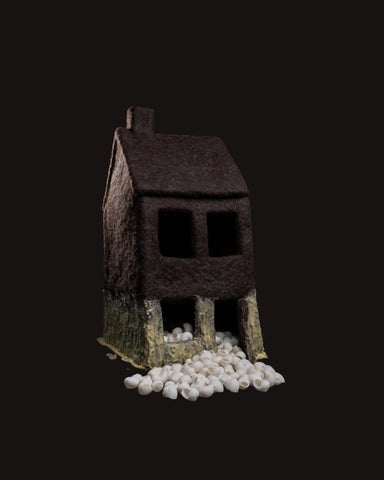
Figure 1. Lizzie Pearce, The Doll’s House, Photography by Oliver Cameron-Swan, 2025 Front Cover Figure 2. Lizzie Pearce, The Doll’s House, Photography by Oliver Cameron-Swan, 2025 Figure 3. Lizzie Pearce, Crinkly Plastic Panes, Photography by Lizzie Pearce, 2025 Figure 4. Lizzie Pearce, Hands Holding Snail Shells. Photography by Lizzie Pearce, 2025 Figure 5. Lizzie Pearce, Snail no. 263 and its Journal Entry. Photography by Lizzie Pearce, 2024 Figure 6. Lizzie Pearce, Snail no. 262 and its Journal Entry. Photography by Lizzie Pearce, 2024 Figure 7. Lizzie Pearce, Two Part Plaster Mould. Photography by Lizzie Pearce, 2024 Figure 8. Lizzie Pearce, Freshly Hatched Snail. Photography by Lizzie Pearce, 2024 Figure 9. Lizzie Pearce, Journal Data Entry, a Significant Life Event.Photography by Lizzie Pearce, 2024 Figure 10. Lizzie Pearce, Gesso, Wool, Wax. Photography by Lizzie Pearce, 2025 Figure 11. Lizzie Pearce, Close-up of the Felt Doll’s House. Photography by Oliver CameronSwan, 2025
oject investigates how memory, material, and bodily engagement intersect in
e practice. Central to the work are hand-cast porcelain snails and a needle-felted
ouse, partially encrusted with gesso and wax. Through repeated making, careful
tion, and journal recording, the project explores how materials carry traces of past
ters, mediate perception, and shape understanding. Drawing on theories of
ed cognition, phenomenology, and sensory ethnography (Lakoff and Johnson,
Merleau-Ponty, 1962; Pink, 2015), the work positions objects as active participants
king and remembering. The accumulation of snails, the textures of wool, the
g of gesso, and the sealing of wax act as both record and metaphor, revealing how
repetitive, and attentive engagement can embody memory and generate meaning.
actice-led exploration demonstrates that making is not merely a technical process
orm of enquiry, where materials, gesture, and attention converge to articulate
nce, fragility, and the ongoing negotiation between past and present.
roject explores how memory, bodily engagement, and material
e shape thought and perception. Objects are active in thinking
membering; they are not just symbols. Repeated making turns
als into both record and medium, as they hold traces of past
nters and create new experiences. Central to the work are hand-
rcelain snails and a life-sized needle-felted doll’s house, partially
ted with gesso and wax.
materials are approached through attentive, embodied gestures:
ng each snail, layering gesso, and applying wax involve rhythm,
re, and sensory negotiation. The process foregrounds how
tanding emerges through touch, movement, and repetition, rather
rough abstract reflection alone. Drawing on theories of embodied
on and phenomenology, the project investigates how the body
es perception, memory, and metaphor. Memory is not simply
ed but enacted through making. Materials provide a conduit for
on, a site of negotiation where past and present coalesce. The
presents a space in which objects, gestures, and attention
ge. This shows how tactile engagement with materials can
ate the persistence, fragility, and complexity of memory.
oject stems from memory, where childhood objects, imagined worlds,
eated making converge to influence both thought and practice. At its
a childhood object, a mock Tudor doll’s house, remembered vividly
ld with a mix of affection and unease. Its small metal-framed
ws, fitted with crinkly plastic panes, alongside its hinged roof and
g front, suggested a typical middle-class home: neat, contained, Yet the memory of it never feels entirely safe or settled.
s miniature domestic space, my sister and I introduced snails we
d from the allotments behind our Georgian terraced flat. In memory,
ls multiplied beyond reason and filled rooms and corridors until their
ed mucus sealed the house from within. The image retains a faint
on, soft bodies leaving crusted traces, an internal pressure building
, yet it is not grotesque. Instead, it acts as a metaphor for a home that
es to contain all it holds. The snails suggest the persistence and
w of memory itself. This remembered proliferation, though
cal, carries echoes of instability and emotional compression that
eneath the surface of the work.
remembered as relentless, becomes an early encounter with an indexical trace; these small forms leave lasting marks. Here, the doll’s house stands as a metaphor for the mind, with its rooms and walls shaped by accumulations and pressures of past experiences. Recreating this play through casting and finishing re-engages with this metaphor; the act of making reflects the process by which memories accumulate and reshape inner space.
use is not a reconstruction of the original structure; it is a material return to it, shaped by
y memory that precedes conscious recall. My hands carry the movements of making long
the mind articulates their significance. In this way, the doll’s house both is and is not a
on of the past. Its scale, softness, and hardened surfaces arise from an embodied
bering, an attempt to re-encounter rather than replicate. The porcelain snails themselves
e from found objects: real empty shells gathered from locations that hold personal
ce. One was found near the Georgian terrace where I grew up, which I discovered during
o Bristol decades later. Others were collected from gardens, paths, and woodland edges
s, where I live now. Each shell carries the quiet residue of its site, soil flecks, weathering,
nt trace of its former inhabitant. These shells are small geographical and emotional
. Casting them in porcelain forms a bridge between these scattered places and the
bered doll’s house. The work becomes a map of lived experience traced through found Each snail is a point of contact between past and present.
ide the physical casting, I began recording the snails in data journals. I numbered, dated,
ed variations in weight, translucency, thickness, and failures. Each snail is inscribed with
e number prior to firing, corresponding to an entry in the journal. This links the physical
o its record. At first, these records simply tracked technical details as a practical response
gile process. After a short time, however, the journals expanded to include reflections on
ughts, sensations, and any significant feelings or life events at the moment of casting and
g each snail. In this way, the act of recording became both a response to the material and
s of situating myself within the work. This created a parallel layer of memory that exists
de the re-enactment of the childhood scene.
the same period, I happened to be reading Susanna Clarke’s Piranesi (2020), a novel set
obsessive attention to subtle shifts in a monumental, imagined environment seems to have permeated my work subconsciously. Only later did I recognise the resonance: the way careful observation becomes a stabilising ritual, framing seemingly trivial details as part of a meditative, immersive practice. Similarly, logging each snail became an act of attention. This transformed an overwhelming proliferation into an organised, contemplative practice. The accumulation of detailed, sometimes banal observations constitutes a ritualised engagement with material, space, and time.
ally in the work, embedded in the porcelain, in the journals, and in the rhythms
ing. What began as documentation now forms part of the work’s conceptual
quiet, persistent attempt to hold onto what shifts.
from bodily experience (Lakoff & Johnson, 1980, p. 57). Early sensory encounters, such as touch, movement, and spatial orientation, are mapped onto abstract ideas, building the foundation of how we think and remember. Within this framework, the snails’ shells serve as layered metaphors: the spiral shape stands for both containment and displacement; their slow motion reflects memory’s gradual, layered unfolding; and the repetitive hand-finishing signifies the ongoing negotiation inherent in remembering. These metaphors collectively underscore that memory emerges through physical gesture, repetition, and attentive touch, rather than as purely mental retrieval. Phenomenological perspectives, particularly those of Maurice Merleau-Ponty, support reading the snails as mediators of embodied experience. His insistence that perception arises through the lived body, rather than abstract cognition, frames the snails’ scale and tactility as crucial to their meaning (Merleau-Ponty, 1945/1962, p. 206). Small enough to be held within one hand, they require intimate touch. Their coolness, weight, and contours communicate information beyond what vision alone can convey. The objects produced carry the trace of this sensory engagement: each snail holds evidence of handling, finishing, drying, and firing, a sequence of embodied gestures embedded in the material.
resemblance (Peirce, Collected Papers 2.299, 2.283). The cast snail shells perform this role: each mould contains the negative form of a real shell, while the porcelain retains evidence of handling and surface response. These forms become material indexes, quiet records of lived encounters with both place and memory. The remembered childhood snails sealed the doll’s house with their own bodily traces; the porcelain snails carry the imprint of mine. The embodied memory extends into the work's spatial logic. Remembering miniature rooms, stairways, and doorways shapes how I think about accumulation, density, and presence. The snails’ arrangement within the felt house echoes the childhood memory of proliferation, yet it is grounded in deliberate, attentive placement. Tension remains: a house once overwhelmed now reorganised through careful touch. The act of arranging becomes a way of negotiating space and time, connecting Clarke’s ritualised recordings with Merleau-Ponty’s sensory knowledge. The result is a space that is partly imagined, partly real, and entirely mediated through bodily engagement.
The doll’s house memory functions as a conceptual anchor, not as a narrative to illustrate but as a site of emotional texture, containment, pressure, quiet sadness, and the sense of something unspoken beneath domestic order. The porcelain snails extend this memory into the present. They act as both record and metaphor, mediating embodied experience through their scale, accumulation, and repeated making. Each snail becomes a small, tactile encounter with the rhythms of memory, repetition, and imagination, a way of holding the past without fully grasping it, of touching what remains unresolved.
ail-making process is slow, repetitive, and intimate. Working with porcelain slip
ds attentiveness that feels almost conversational: the material both offers itself to
cess and resists it. The moulds are small, the size of a garden snail shell, and
ng hollow forms requires precise timing. Excess slip must be poured out before it
s; pouring too early, however, results in a fragile snail when released from the
as the clay is too thin. Once released, the shells must be left to firm until leather-
o long, and they become brittle; too soon, and they slump. Each stage carries
inty, and early failures were frequent.
g these variations in the snail journals transformed mistakes into part of the work,
han errors to be corrected. Over time, I learned to recognise subtle cues in texture,
and weight, slight indications that the material was ready. Though all shells came
nly seven moulds, each emerged with its own quiet difference. Timing, humidity,
ature, and my shifting attention all contributed. The repetition became meditative;
ntion required was not passive, but a continual negotiation among hand, material,
e.
thinking; the hand and mind co-construct knowledge of form, texture, and rhythm, while memory and attention intertwine. The numbered snails, the logged reflections, and the subtle variations in porcelain surfaces are all material evidence of this embodied practice.
The process is deeply informed by George Lakoff and Mark Johnson’s theory of embodied cognition. Our understanding of the world emerges through bodily experience, and the gestures involved in working with porcelain instantiate this principle (Lakoff & Johnson, 1980, p. 3). Each spiral form evokes containment and displacement; each slow, deliberate motion embodies temporality. Memory and meaning are not retrieved intellectually; they emerge through hand, eye, and touch in concert with the material. Phenomenological perspectives, particularly those of Maurice Merleau-Ponty, reinforce this notion of knowing through the body (Merleau-Ponty, 1945/1962, p. 206). The snails’ small size invites intimate interaction, requiring touch to perceive weight, surface variation, and balance. Knowledge emerges not from abstraction but from the lived, sensory encounter. Similarly, working with the felt, gesso, and wax doll’s house demands rhythm, pressure, and spatial awareness. Wool resists and yields in response to repeated needle felting; gesso stiffens and crusts over soft surfaces; wax penetrates, binds, and seals. Each material responds to bodily engagement in unique ways, shaping not only the object but the maker’s perception. In this sense, making is both an act of re-enactment and discovery: memory is revisited, and new embodied experiences are formed.
snail anchors me in the present while referencing memory, creating a dual layer of
ment. The slow accumulation of forms and notes mirrors the childhood proliferation of
n the doll’s house, while simultaneously supporting embodied awareness in the act of
.
ocess also echoes the subtle influence of Clarke’s Piranesi. While the inspiration gained
eading the novel was largely subconscious at that time, its focus on meticulous
tion within an expansive, labyrinthine space resonates with the ritualised attention
d in the studio. Each snail, each data entry, each repetition of felting or gesso application
t of orientation: a way of inhabiting and understanding the material, the imagined space, temporal rhythm of the work. The journals, the numbered snails, and the hands-on
ment with materials together create a network of embodied attention that maps memory,
ion, and making onto the objects themselves.
bination, these processes demonstrate that making is not merely productive, not simply
ation of objects, but generative in a conceptual sense. The snails and the doll’s house are
here memory, attention, and bodily knowledge are materialised. Porcelain, wool, gesso,
ax each shape the kind of gestures they require; waiting, observing, compressing,
ng. These actions are slow, attentive, and intimate, allowing memory and meaning to not as narrative but as sensation: something felt in the hand before it is articulated in
ge. Through this, making becomes a mode of thinking, a practice that simultaneously re-
s with the past, creates new memory, and leaves traces that endure in material form. This
y of bodily action, material response, and emerging significance also sets the stage for
loration of embodied metaphor, where meaning arises through the same gestures that
he work.
This chapter considers the project's materials not simply as carriers of meaning but as active participants in thinking, feeling, and remembering. Wool, gesso, wax, and porcelain are explored as embodied metaphors: their textures, resistances, temperatures, and transformations are encountered through the body, and it is this sensory exchange that gives rise to metaphor. Meaning is not imposed on these materials from outside; it comes into being through physical negotiation, through the repetition of gestures, the slow accrual of marks, and the reciprocal pressures between body and substance. Memory, care, tension, and fragility emerge not as abstract ideas, but as phenomena lived in the hand, the breath, and the attentive body. Sarah Pink’s work on sensory ethnography clarifies why this embodied mode of understanding matters. Pink argues that knowledge arises through sensorial engagement —through the kinaesthetic, affective, and multisensory dimensions of experience that shape how we perceive and make sense of the world (Pink, 2009, pp. 23–24). Alongside Pink, Lakoff and Johnson’s account of embodied metaphor provides a complementary framework: where Pink describes how sensory experience generates understanding, Lakoff and Johnson explain how metaphor itself emerges from bodily encounter. In what follows, both perspectives support an exploration of how the project’s materials function as repositories of sensory knowledge and as generators of metaphorical meaning (Lakoff & Johnson, 1980, pp. 3, 57). Through this lens, the doll’s house and its accompanying porcelain snails become more than sculptural forms. They are repositories of sensory knowledge, accumulations of gestures, frictions, hesitations, pressures, and attentions. Each material retains the trace of how it was approached, resisted, or yielded to. Each becomes a site where past experience meets present encounter, where the body’s memory is activated and reshaped through making. In this way, the project extends the concept of embodied memory into embodied metaphor; meaning arises through the lived, sensory conversation between maker and material, an ongoing dialogue between what the body remembers and what the material reveals.
orms the foundation of the work, a substance both familiar and feral. Needle felting
n part of my practice for many years, and the repetitive motion of the barbed needle
g fibres to bind produces a rhythmic, almost metronomic physicality. The hands
nstinctively, as if the knowledge resides in the joints rather than in conscious
. In making the doll’s house, this well-rehearsed motion draws on years of memory
several stages of life. Needle felting remains a consistent, stable process despite the
tive changes in setting, context, application, and both experiential and assigned
g. This tacit engagement aligns with Pink’s insistence that sensory knowledge is
ather than conceptual: the meaning of wool is learned through its resistance, its
its tendency to shift unpredictably beneath the needle. In this way, each stab of the
that goes into constructing the doll’s house imbues it with years of embodied
y. Tactilely, wool speaks in contradictions. It suggests warmth and domesticity, but it
definitively soft. It can itch, prickle, or fail to meet the skin’s expectations. These
lences become part of the metaphorical field. Wool holds comfort and abrasion
r, a material that can both cradle and irritate. In making the doll’s house, this duality
voidable: the structure emerges through countless small stabs, pressures, and
ssions. The material appears to promise nurture, but it never freely gives it. It must
ed into coherence. In this way, wool embodies a complexity that resonates with the
nal textures of childhood domesticity. It mirrors the juxtaposition between childhood
y and discomfort elicited by the original memory of the snails in the doll’s house.
owever, the metaphor arises through the body’s negotiation with the material itself,
ance of what Lakoff and Johnson describe as meaning emerging from lived
on. The labour of felting, repetitive, intimate, and sometimes uncomfortable,
lises the ambivalence of forming a “home.” The process makes the metaphor felt
han stated.
Over the felted structure, gesso introduces a shift in tone. Made by heating rabbit-skin glue and chalk powder in a makeshift bain-marie, an old tin can balanced on a camping stove, it carries a sense of deep time and uneasy intimacy. Its animal origins echo the tensions already present in the wool: attraction and discomfort, craft and ethics, seduction and repulsion. Applied in layers, gesso hardens into a crust that encases the wool, transforming something soft and responsive into something rigid, shielded, and slightly opaque. Gesso protects, but it also distances. It preserves by covering. What was once tactile becomes enclosed, altered by the very gesture meant to safeguard it. This duality mirrors the operations of memory itself; the desire to preserve what is fragile, and the instinct to coat or harden it so that it becomes bearable. In drying, gesso marks the transition from the living to the inert, from the mutable to the fixed, a metaphor for how recollection congeals into something solid, but changed. As with wool, the metaphor does not arise symbolically but through the bodily encounter with gesso’s tightening, sealing, and distancing, an embodied process consistent with Lakoff and Johnson’s account of how conceptual structures form through touch and manipulation.
ters the work through its intimate relationship with touch and impression. and poured, it recalls a childhood fascination: dipping fingertips into
d candle wax at restaurant tables, feeling the edge of heat, peeling away
oled skin to reveal whorls of a fingerprint embedded within. Wax
bers contact. It takes an impression and holds it. When brushed or dripped
e gessoed felt, molten wax permeates and tightens the fibres, altering the
e from within. Unlike gesso, which coats the surface, wax saturates. It
nd binds, yet simultaneously veils what lies beneath. This duality is wax preserves and obscures in the same gesture. As an embodied
or, wax articulates the selective, layered nature of memory. It stabilises
forms while rendering others inaccessible. Pink’s sensory framework is
arly resonant here; the application of wax involves heat, viscosity, timing,
orption, a sequence of actions in which the senses are not incidental but
ive. In Lakoff and Johnson’s terms, this tactile process becomes metaphor the body’s negotiation of heat, pressure, and fluidity, a material
ent of how memory both reveals and conceals.
The porcelain snails themselves are cast from real shells and finished by hand. Cool to the touch, light in the palm, they invite careful handling bordering on tenderness. Their fragility is real, yet they possess a surprising resilience, a duality that mirrors the emotional terrain from which the work emerges. Porcelain itself is a material with memory. Its structure, ionic charges binding fine platelets, records pressure, timing, moisture, and touch. It remembers the hand that finished it, the mould that held it, the air it dried in, and the heat that transformed it. Each snail holds this layered history, indexical traces suspended within its form. The snails enact the tension between containment and exposure. They carry the past, both in their original shells and in the memory of making, but they also exist in the present as objects newly materialised. They appear to belong to the imagined childhood house and yet feel slightly displaced, like returning to a home that no longer fits. They are not housed by the doll’s house; they are the inhabitants of the memory it evokes. Handled and contemplated, the snails become embodied metaphors in Lakoff and Johnson’s sense: their scale, fragility, and weight ask the body to navigate the conceptual terrain of care, exposure, and return. Through these intertwined materials, wool that structures, gesso that encases, wax that seals, and porcelain that remembers, the work becomes a material articulation of memory. Each substance carries its own logic of preservation and loss; each transforms the others through contact.
or, a site where touch, process, and recollection converge into a form that is both tender
se, held and haunted. In this confluence of gesture and material, the project enacts what
and Johnson describe: metaphor arising not from symbolic substitution but from bodily
nce, a sensory thinking-through that anchors conceptual meaning in touch, movement,
mory.
oject has traced the intertwining of memory, making, and material, showing how
and processes can mediate understanding of the past and the present. The hand-cast
ogether with the felt, gesso, and wax doll’s house, act as sites where bodily
ment, repetition, and attention produce knowledge that is simultaneously sensory,
ual, and affective. Through sustained practice, I have come to understand that
y is not simply retrieved but enacted, extended, and transformed in the act of making.
ng intimately with materials has revealed the ways in which texture, resistance, and carry meaning: wool holds tension and comfort; gesso both shields and distances;
eserves while obscuring; porcelain retains traces of hand and gesture. These
ions demonstrate that metaphor and memory emerge not as abstract constructs but as
mena lived through touch, rhythm, and sustained attention.
oject has also highlighted the generative potential of meticulous recording. The snail
s functioned as both a reflective space and a practical tool, linking observation,
n, and material outcomes, and supporting a practice in which making itself becomes of thinking.
, the work affirms that artistic practice can act as a form of enquiry, a way of
ng past experiences, testing the capacities of materials, and exploring how memory
aning persist in and through the body. The doll’s house and its hand-finished snails
traces of this exploration: enduring, fragile, and constantly in dialogue with the
s of thought, sensation, and imagination.
SON, G. (2007) Thinking Through Craft. London: Berg.
G-SMITH, B. (2019) ‘Connecting with the viewer: Affectivity and Cathexis in
Artwork’, TEXTILE, 17(3), pp. 296–311. Available
s://doi.org/10.1080/14759756.2019.1588687 (Accessed: 4 November 2025).
S. (1999). The Trace and the Body. 1st Liverpool Biennial of International
porary …. [online] Available at:
www.academia.edu/285208/The_Trace_and_the_Body.
ESS, L. (2018). Material repetition - Interalia Magazine. [online] Interalia Magazine.
le at: https://www.interaliamag.org/interviews/lucinda-burgess/ [Accessed 8 Nov.
B. (2004) Art Beyond Representation: The Performative Power of the Image.
: I.B. Tauris.
EY, D. (2021). Sensory ethnography: a creative turn. Journal of Organizational
raphy, 10(3), pp.346–357. doi:https://doi.org/10.1108/joe-10-2021-086.
ER, P. (2004) Material Thinking: The Theory and Practice of Creative Research.
rne: Melbourne University Press.
AUX, CLIVE (2024). Metaphor and the Categorization of the Senses. Taylor &
. [online] doi:https://doi.org/10.1080/hmet20.
AUX, CLIVE (2017). Insights from the metaphorical dimension of making. [online]
108. doi:https://doi.org/10.4324/9781315764610-6.
KE, S. (2020) Piranesi. London: Bloomsbury.
D, T. (2007) ‘Materials Against Materiality’, Archaeological Dialogues, 14(1), pp. 1–
D, T. (2013) Making: Anthropology, Archaeology, Art and Architecture. London:
dge.
FF, G. and JOHNSON, M. (1980) Metaphors We Live By. Chicago: University of
o Press.
FF, G. and JOHNSON, M. (1999) Philosophy in the Flesh:
contemporary-craft [Accessed 3 Nov. 2025]. MAY-HOBBS, M. (2023). What is Embodiment? Maurice Merleau-Ponty’s Philosophy of the Body. [online] TheCollector. Available at: https://www.thecollector.com/embodimentmerleau-ponty-philosophy-of-body/. MERLEAU-PONTY, M. (1962) Phenomenology of Perception. Translated by C. Smith. London: Routledge & Kegan Paul. (Original work published 1945). PEIRCE, C.S. (1931–1958) Collected Papers of Charles Sanders Peirce. Edited by C. Hartshorne and P. Weiss. Cambridge, MA: Harvard University Press. PINK, S. (2009) Doing Sensory Ethnography. 2nd edn. London: Sage.
Pearce is an artist whose practice is fundamentally grounded in
. She holds a First Class Bachelor's degree with Honours in
g and Applied Arts and has worked across a wide range of media,
ng needle felting, upholstery, and stained glass. Over the past
n years, she has cultivated a needle-felting practice characterized
iculous craftsmanship and sustained, close engagement with her
ls.
nd raised in Bristol in the 1970s, she has lived in Mid Wales for the
e years, where she is part of a housing cooperative community. She
ent to Elsie and shares her home with her cat, Laszlo.