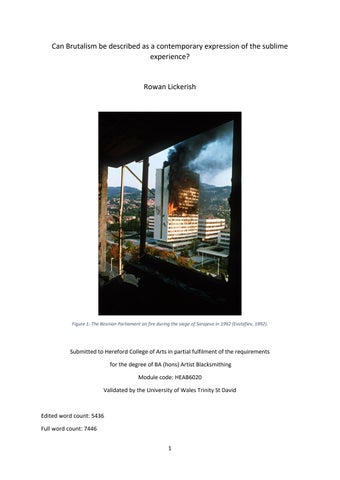
Can Brutalism be described as a contemporary expression of the sublime experience?
Rowan Lickerish
Submitted to Hereford College of Arts in partial fulfilment of the requirements for the degree of BA (hons) Artist Blacksmithing
Module code: HEAB6020
Validated by the University of Wales Trinity St David
Edited word count: 5436
Full word count: 7446
This essay will argue that Brutalism is a contemporary expression of the sublime experience. Works of Brutalist architecture and sculpture will be analysed using the frameworks established by 18th century philosophers such as Edmund Burke and Immanuel Kant, as well as more contemporary sources. Roland Barthes’ theory of myth will also be used to investigate the shifting cultural interpretations of the Brutalist aesthetic and how these contribute to its sublime nature.
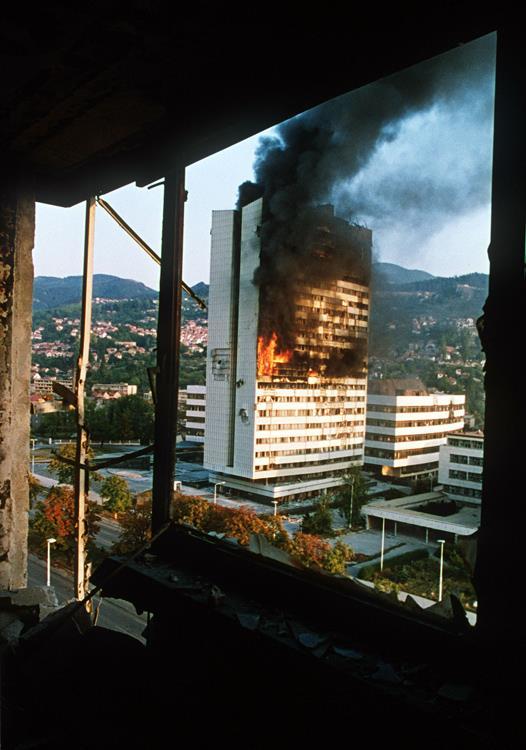
This paper is the intellectual counterpart to my creative practice and is a research document that has helped to inform my artistic choices. I am fascinated by music and how it affects the imagination. Of particular interest are the synthetic sounds found in contemporary electronic music, predominantly but not exclusively drum and bass. These are sounds that have no analogue in the physical world. If one hears the shimmering cascade of a harp for example one can visualize the instrument. The arrangement of notes and the inflections of the player then create a certain image in the mind coupled with an emotional response. A sound that is created digitally through complicated manipulation of waveforms does not originate from a familiar source. This lack of familiarity, combined with the often-aggressive nature of these synthetic noises, creates a feeling of unease and threat in the listener. Artists such as Noisia (fig. 2) and Burr Oak create angular soundscapes which are vast, overwhelming, and often unpleasant, yet which people choose to listen to both despite and because of their confrontational nature. The music causes a reaction which compares to that found in the experience of the sublime, which will be discussed later.
Through making I have been exploring the physical representation of the imagined structures that these alien sounds create in my mind’s eye. To establish an aesthetic that would best represent the music I have looked to the environment that inspired the creation of the music. Drum and bass is urban music, made as a form of escapism from life in socially deprived inner-city areas of London and Bristol, among others. The architectural language of these areas is that of Brutalism and the stark repetition and aggression of Brutalism is reflected in the music. If the characteristics of the Brutalist environment inspire music that has sublime elements, can Brutalism be described as a contemporary expression of the sublime experience?
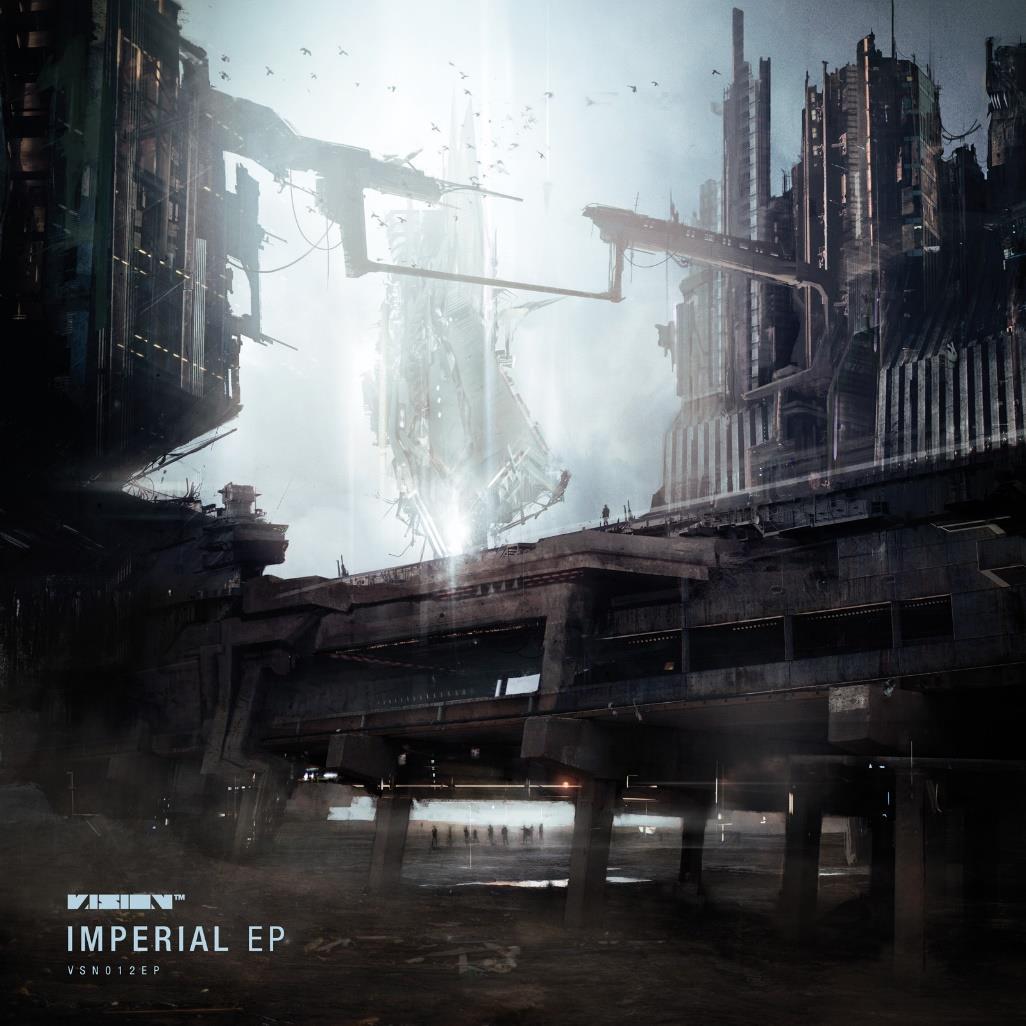
To proceed, some theories need to be defined. Firstly, what is meant by the sublime? There is a difference between the modern usage of the word sublime and the philosophical concept of the sublime. Sublime is commonly used to describe objects or experiences which are “extremely good, beautiful or enjoyable” (Cambridge Dictionary, 2023). A particularly delicious cake might (hyperbolically) be described as sublime, for example. The philosophical sublime deals with extremities of experience which push beyond the human mind’s capacity to properly rationalise them. It is “what takes hold of us when reason falters and certainties begin to crumble” (Morley, 2010, p.12). The sublime experience is not necessarily a positive one. The cake has grown to an incomprehensible size and is bearing down in a roiling wave of cream and sponge as terrifying as it is delicious (fig. 3).
Consideration of the sublime experience began at least as early as the first century AD with the work On the Sublime (Peri Hypsous), attributed to Longinus but perhaps predating even Plato (Clewis et al, 2021, p.3). In the 18th century there came a renewed interest in the subject as philosophers began to pursue an aesthetic theory of beauty. This pursuit used the sublime as a contrasting principle to beauty, an “emotion without which there would be no beauty… but which the concepts of beauty… cannot touch” (Nancy, 1988, in Morley, 2010, p.47). The sublime experience had the capacity to overwhelm as beauty could but was not the same, positive aesthetic principle. The sublime gained its power by threatening the viewer and invoking fear. In his 1759 essay A Philosophical Enquiry into the Origin of our Ideas of the Sublime and Beautiful the Irish philosopher Edmund Burke stated that “(t)he passions belonging to self-preservation are the strongest of all the passions” (Burke, 1759, in Ashfield/ de Bolla, 1996, p.132). Burke’s essay compares beauty with the sublime and highlights their differences. In doing so it provides a set of criteria by which the sublime can be defined; large scale, mass, solidity, roughness, symmetry, power, and obscurity (Burke, 1759, in Ashfield/ de Bolla, 1996, p.140). These definitions will be used along with more contemporary sources in the analysis of Brutalism and elaborated upon as they are discussed.
The work of German philosopher Immanuel Kant expanded on Burke’s ideas of the sublime. Kant divided the sublime in to two categories: the mathematical sublime and the dynamic sublime. The former exhibits an incomprehensible vastness of scale or quantity. The latter exhibits overwhelming power or might against which the viewer is helpless (Goodyear, 2019). Elements of both distinctions will be seen in the discussion of Brutalism.
Kant also proposed that beauty was inherent in objects and existed external to and independent from the human mind. Beauty was a function of form and required that the beautiful object have defined boundaries. The sublime experience however, as beauty’s opposite, occurred entirely internally and exhibited an “unbounded formlessness” (Goodyear, 2019). In his 1790 work Critique of Judgement Kant observed that the experience of the sublime required the projection of the viewers imaginings on to the subject. Nature’s open spaces evoke the sublime experience but are not sublime in themselves. A vast and stormy ocean has a certain aesthetic appearance, but it is in the “mind… already filled with manifold ideas” that the feeling of being overwhelmed is created (Kant, 1964, p.84). In this way the sublime has commonality with Roland Barthes concept of myth. In both systems it is the human interaction that brings meaning. While the physical structures of Brutalism are contained and defined, the sprawling and contradictory myths projected on to them exhibit Kant’s “unbounded formlessness”.
What then is meant by myth? In this discussion myth refers to the mechanism by which ideas about, and interpretations of, objects and images become culturally accepted fact through repetition and consensus. The idea began with the work of Swiss linguist Ferdinand de Saussure. In his 1916 work Course in General Linguistics Saussure outlined a semiotic system of signs with which to communicate ideas through language, the idea being that words on their own have no innate
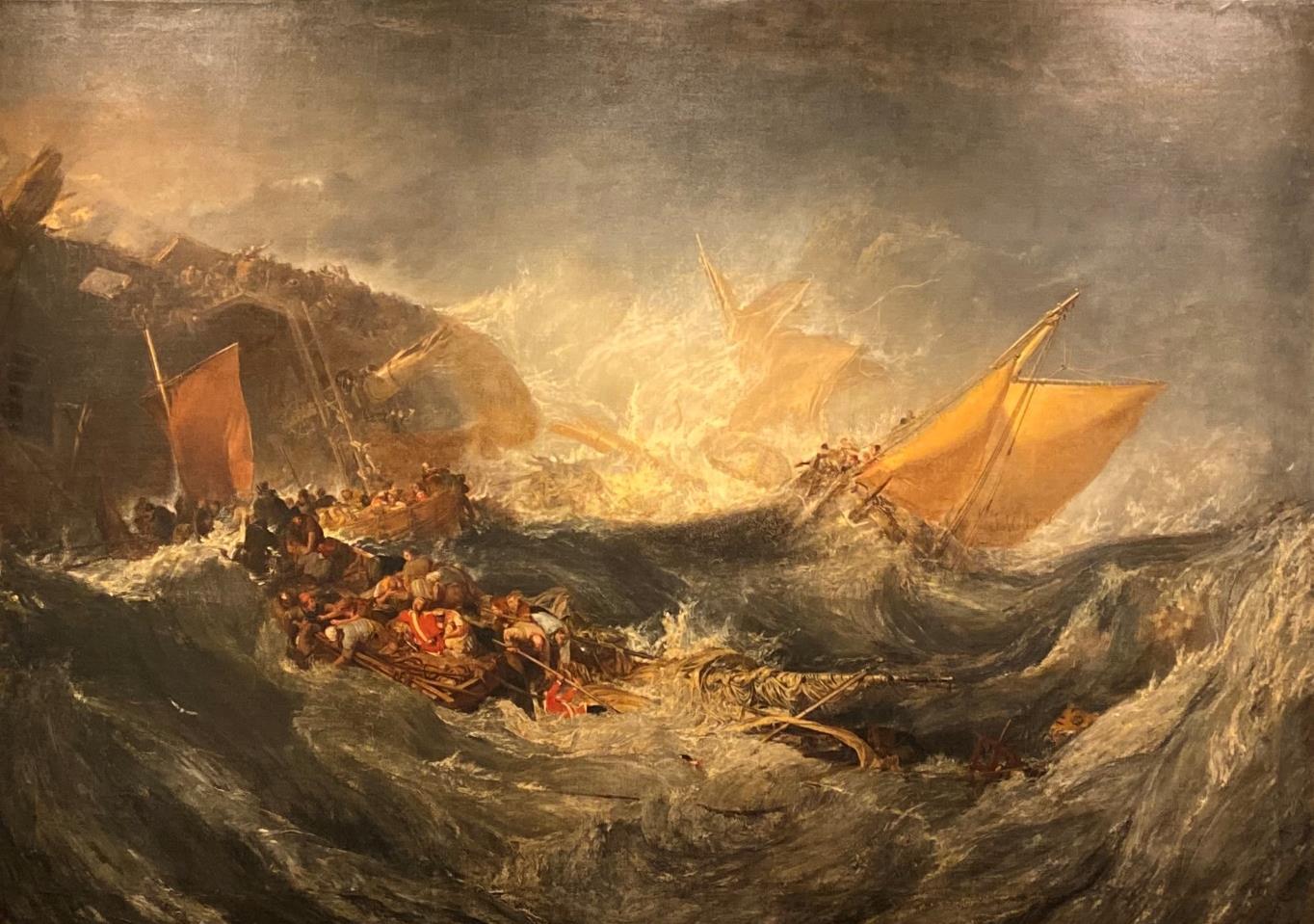
meaning but must be given meaning through association. Through this process words become signs. A sign is a combination of a signifier (a word, an object) and that which is signified (a concept or idea) (Macey, 2000, p342, 352). In Kant’s example above the ocean is the signifier. To a worried observer it could signify the potential for shipwreck. When combined these two aspects form a sign: the stormy ocean as a place of danger (fig. 4). As with the experience of the sublime this process occurs in the mind of the viewer and is subject to the interpretations of the individual. Building on Saussure’s ideas the French philosopher Roland Barthes applied the use of signifier and signified to images as well as words. In his 1957 essay Myth Today Barthes proposed that images, treated as signifiers, can have multiple meanings (signify different things) depending on context. Barthes termed these meanings denoted and connoted. The denoted meaning is the literal, descriptive meaning of the image. Kant’s sea would, to an impartial observer, denote nothing more than a large body of saltwater. The connotative meaning is based on the experiences of the viewer and factors in “all that the image means to them personally and socially” (Sturken/ Cartwright, 2001, p.19).
In Barthes’ system Saussure’s signs become new signifiers in a secondary system of myth. Over time these second order signifiers become naturalised into culture through repetition and majority consensus. The associative meanings of the few become the accepted fact of the many. New ideas are absorbed, old ones abandoned or reappraised, creating a system of beliefs that is in a state of flux. There is “no fixity in mythical concepts” (Barthes, 1993, p.120). They are ever-shifting societal constructs which are altered by changing attitudes and interpretations. The fluctuations in the accepted meaning of a myth are caused by what the academic Stuart Hall calls a dominant
hegemonic reading of signs as cultural images. In this system the dominant or most prevalent reading of a sign is unquestioningly accepted as cultural ‘fact’ (Sturken/ Cartwright, 2001, p.57). At one time the majority connotative reading of the sea might have been as a place to gather food or create trade routes. As society changed it could have come to signify the excitement of unknown adventure or the potential for the expansion of an empire. To the modern observer it might signify humanity’s failure in its stewardship of the environment. All these myths are at the time culturally valid, and all are as fragile over time as the last. They are “less reality than a certain knowledge of reality” (Barthes, 1993, p.119, my emphasis) As one interpretation becomes more accepted, more ‘true’, the cultural response to the ocean shifts accordingly.
In a relatively short period of time the Brutalist aesthetic, prevalent in much of the modern urban environment, has accrued an array of signifiers and become suffused with an often-contradictory mythology. What, though, is Brutalism? The term was first recorded by the architectural journalist and historian Peter Reyner Banham in 1955. Banham used it to describe the works of architects Alison and Peter Smithson, proponents of a form of the modernist design ethos developed by Ludwig Mies Van de Rohe and others at the Bauhaus school in the 1940’s (RIBA, 2022). The word Brutalism encapsulates both the “toughness and primitivism” (Calder, 2016, p.11) of the architectural style and the French ‘béton brut’, meaning raw concrete. This is in reference to the modernist’s celebration of building materials in their unadorned state. (Banham, 1966, p.10).
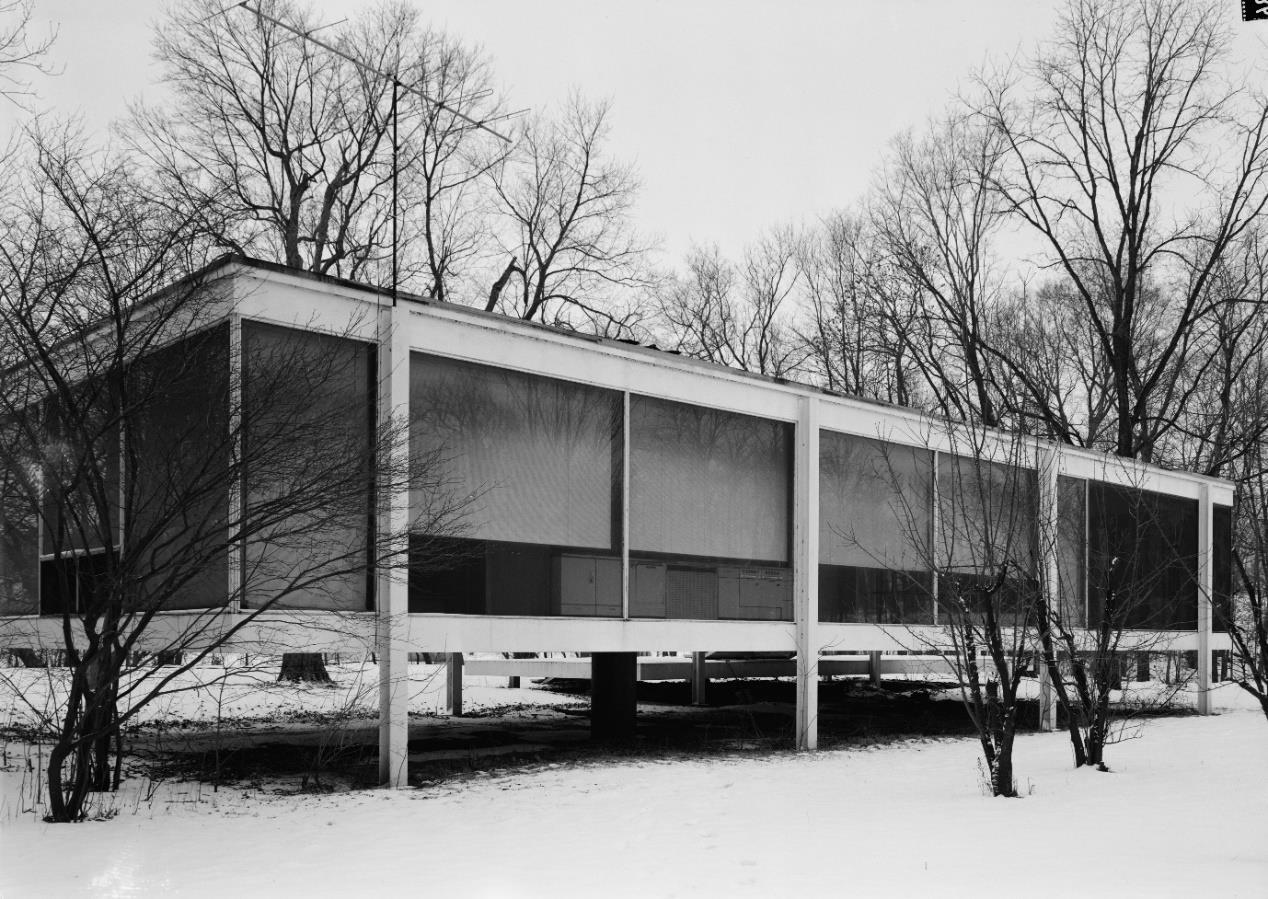
The buildings envisaged by the modernist movement would remove the “meaningless fuss” of the previous age and create an aesthetic in which “severity itself was considered a virtue”. Van de Rohe’s intention was for modernism to become an “International Style” of design, where objects and buildings could, through simplicity and functionality, exist beyond the stylistic definitions of location or period, creating a globally applicable architecture with which to construct a better future. The bold new style was not without its issues. The Farnsworth House in Plano, Illinois, designed by Van de Rohe for Dr Edith Farnsworth and completed in 1951, was upon completion considered “a work of art of supreme integrity, unity and perfection” (fig. 5). This purity of vision and design was rather lost on the owner, however. Not one of the windows that formed the building’s futuristic glass facade could be opened, and Farnsworth sued Van de Rohe “on the grounds that the house was uninhabitable”. (Hale, 1994, p.130).
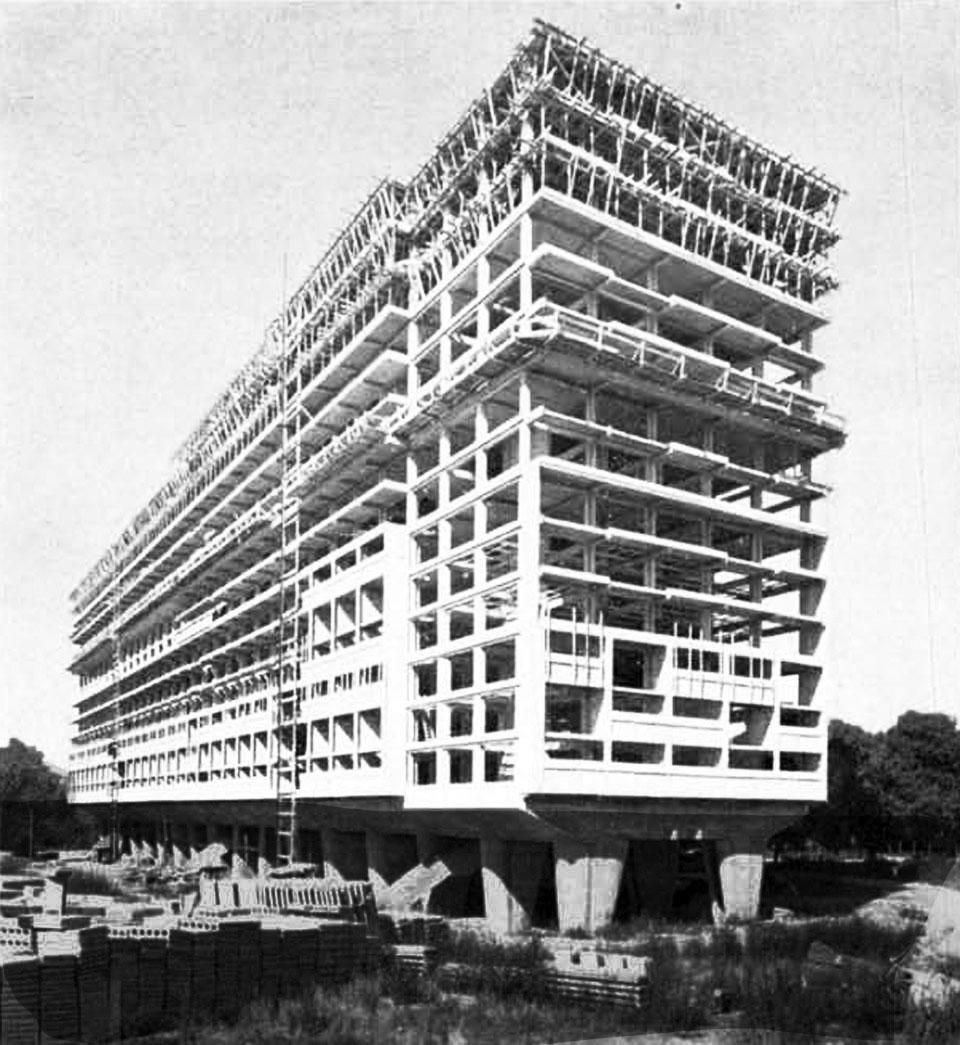
Le Corbusier, another Bauhaus luminary, took the severity, functionality, and material celebration of Van de Rohe’s vision to extremes with his 1945 Unite d’Habitation in Marseille (fig. 6). In doing so he established the template for the amplified, raw version of modernism that Banham titled Brutalism. Le Corbusier’s design has influenced countless other buildings around the world, each a representative of the complicated mythology of Brutalism. One such building can be found closer to home than Marseille, and an analysis of it will help to establish Brutalism’s position as a contemporary sublime experience.
As the east London borough of Poplar coagulates and pixelates upwards out of the post-industrial flatlands of Dagenham and Romney Marsh one building dominates the skyline. Balfron Tower (fig. 7) is considered a classic of Brutalism and is one of Britain’s earliest examples of the style. Constructed from poured concrete slabs and steel reinforcement, the tower is 26 storeys high. Each floor is divided in to six flats. Five run across the width of the building with their balconies and windows alternating in a mirrored pattern. The sixth flats sit at a right angle to these, on the right-hand end of the building. On the opposite side to these is the stairwell and lift tower, separated from the main structure but connected by eight walkways. The separation gives the illusion that the lift tower is free standing despite its height and thinness. This is a statement of the revolutionary nature and strength of the building techniques involved. The narrow windows evoke the arrow slits of a castle and add to the towers already imposing nature. Their seemingly random (although repeated) pattern breaks up the visual monotony of the lift tower, although this monotony is re-established in the main building. The lift tower is balanced visually by the concrete facing of the flats on the opposite side. The streaks of rust and traffic soot that have accumulated over the years give the building a neglected, industrial appearance. This is enhanced by the deliberately emphasised boiler room and heating vents at the top of the lift tower (Calder, 2016, p.65). Viewed from the east or west Balfron is a monolithic lump of a building, but from the north and south it is surprisingly narrow, further emphasising Brutalism’s strength in creating architectural impossibilities.
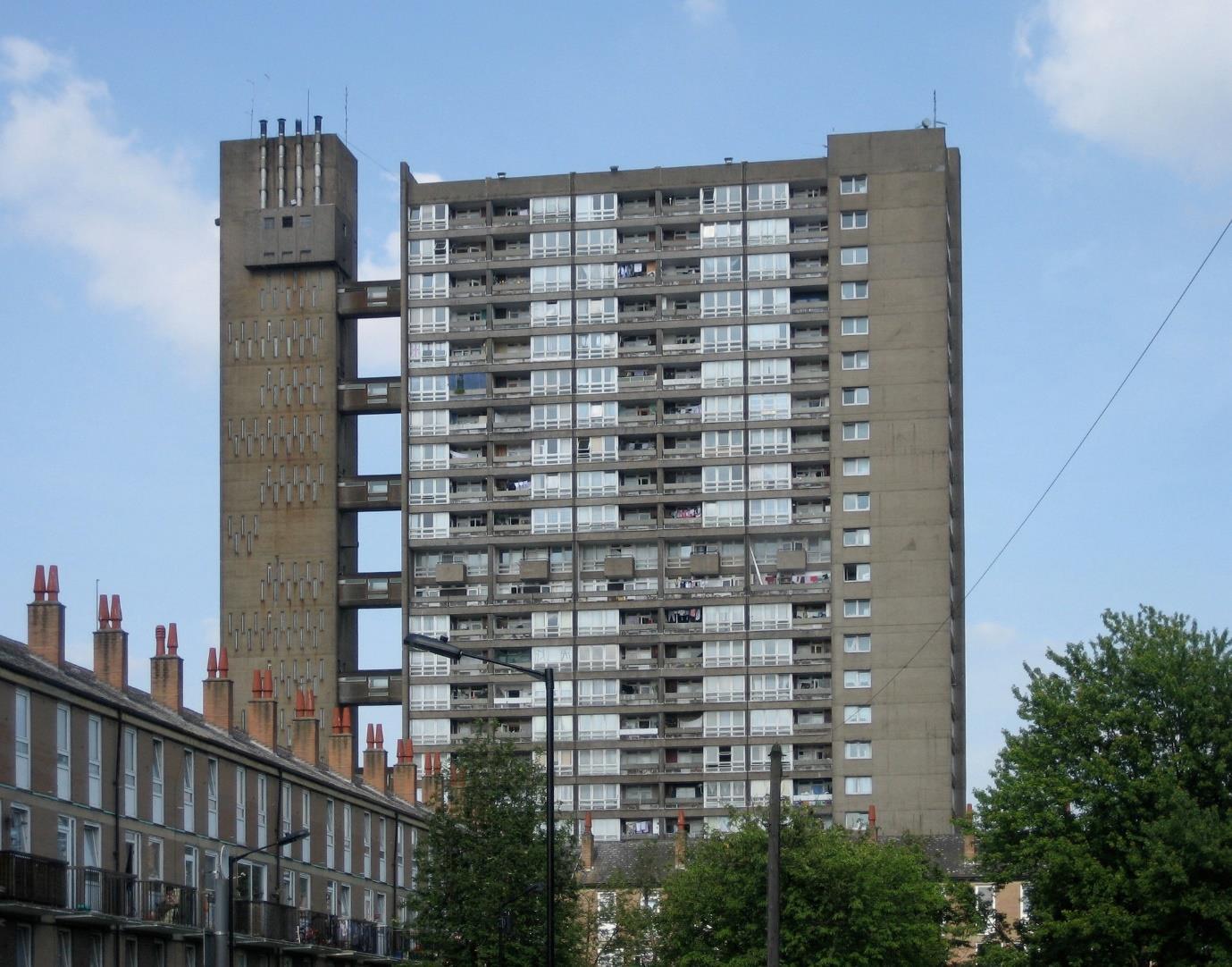
Balfron as a Brutalist archetype adheres with concrete rigidity to Burke’s definitions of the sublime. It is vast, with the blocky geometry and singular building material giving a sense of enormous mass and solidity. Burke writes of the asymmetry of beauty, that it should “shun the right line, yet deviate from it insensibly”. By contrast the sharp angles and repetition of Goldfinger’s design are a celebration of symmetry. Balfron and its ilk “love… [] the right line” (Burke, 1759, in Ashfield/ de Bolla, 1996, p.140) and in doing so abandon beauty in favour of the sublime. Stand beneath Balfron and the repeated elements of the design fill the vision as it looms over the surrounding area. Through repetition and scale an illusion is created in which “the eye not being able to perceive the bounds of many things, they seem to be infinite, and they produce the same effects as if they were really so” (Burke, 1965, p.62). These visual rhythms are hypnotic, and they combine with the repeating audio cues of the inner-city environment to disorient and overwhelm. Balfron’s echoing stairwells and windswept walkways amplify and distort sound into a confusing “roaring, whirring, ringing, whistling (of) “portal” signals leading to altered states” (Dissanayake, 2000, p.162). The influence of these urban soundscapes can be heard in the hypnotic repetition of the electronic music that was the starting point for this essay, music created in Brutalism’s long shadow.
The sublime repetition and scale of Brutalism does not stop with Balfron’s fenestrated bulk. The iterative, compartmental construction techniques that create these repetitive environments are very efficient. This was a reason for their use in the rapid creation of social housing (Calder, 2016, p.65). Brutalism’s celebration of materials also removes work and increases efficiency. There is no faster finishing method for a surface than to not finish it at all. As such, raw concrete and steel are used to build much of the modern world, from factories and office blocks to dams and power plants. Each of these structures simultaneously represents progress and environmental catastrophe, with the cement production involved in concrete manufacture alone outputting 1.25 tonnes of carbon dioxide for every tonne produced (Babor et al, 2009, p.32). Brutalism has become the utilitarian visual language of “the invasive landmarks of a global economy” (Ohlin, 2003, p.23). The scale and homogenised repetition of globalisation, with Brutalism as its dominant aesthetic, present a contemporary version of Kant’s mathematical sublime in which “(t)he limitless once found in nature gives way… (to) one which replaces the idea of nature” (Gilbert-Rolfe, 1999, p.xii). The sublime enormity of globalisation surrounds the individual with and separates them from the natural world, diminishing them both physically and conceptually. The self is overwhelmed and the fundamental struggle for self-preservation identified by Burke as a key factor of the sublime experience becomes all the more desperate
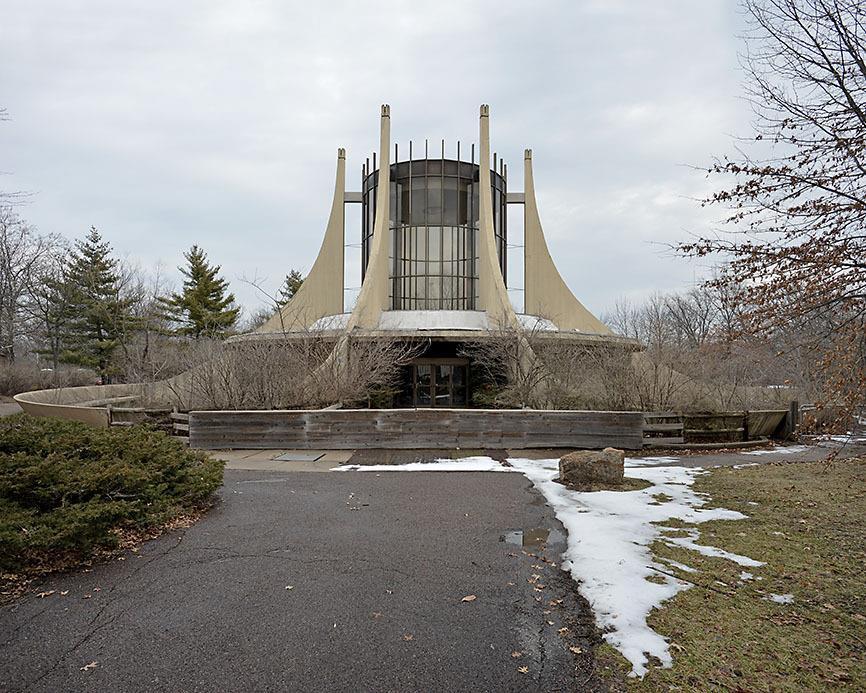
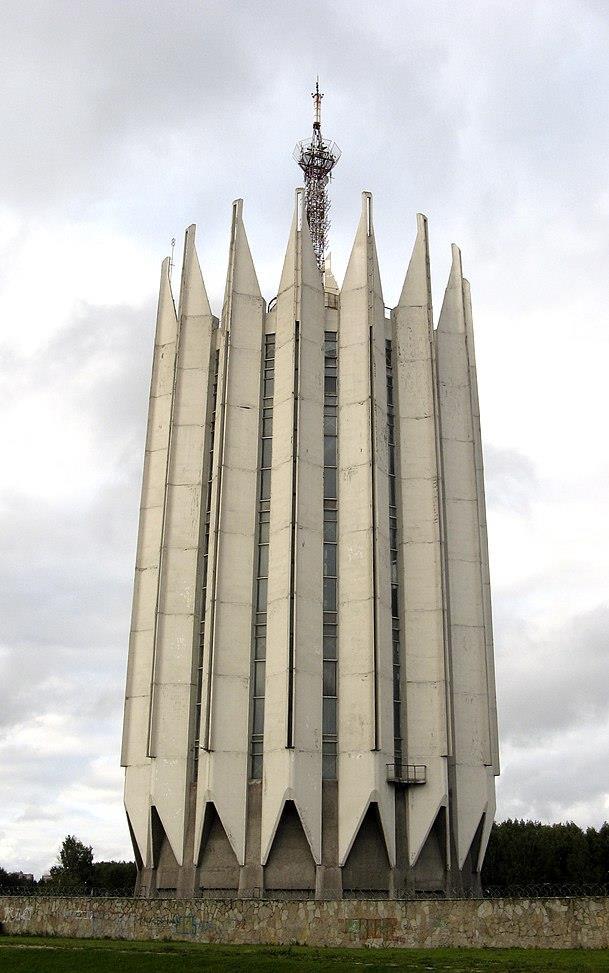
The similarity of materials and design found in much Brutalist architecture also acts to mask the function of the buildings. In his 2022 photographic essay Modern Forms the photographer Nicolas Grospierre arranges structures not by function but by shape. The great ape house at the Kansas City Zoo (fig. 8) and the St. Petersburg Institute of Robotics (fig. 9) are visually interchangeable. Places for living become indistinguishable from bureaucratic centres. The obscurity of purpose found in modernist architecture leaves much to the imagination of the viewer. This gives the buildings a sense of mystery and inscrutability. Burke wrote “It is one thing to make an idea clear, and another to make it affecting to the imagination” (Burke, 1759, in Ashfield/ de Bolla, 1996, p.134). As with Balfron, the ever-shifting myth of many of Brutalism’s buildings has created a cultural uncertainty and obscurity as to their intention or benefit.
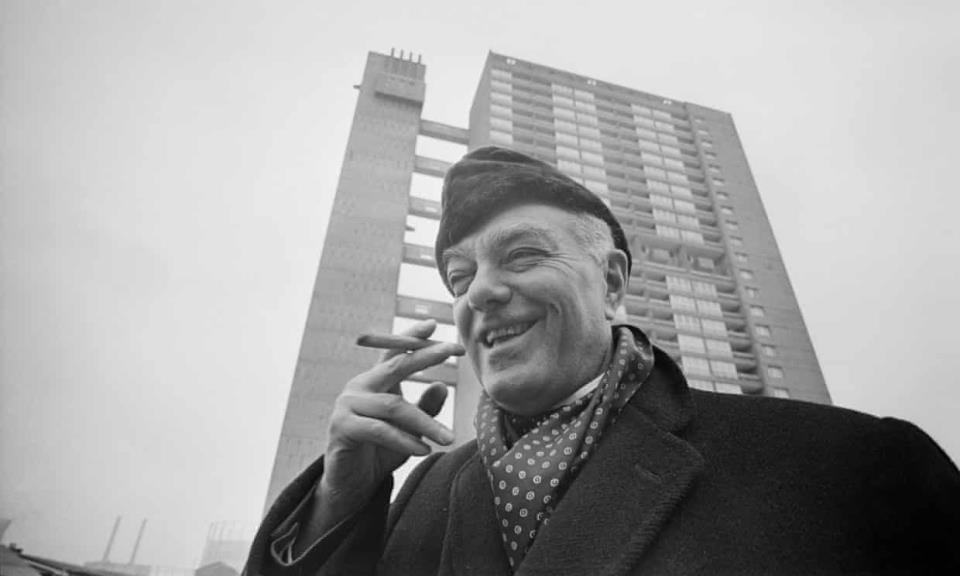
Balfron was designed by Hungarian architect Ernö Goldfinger (fig. 10), whose name is perhaps more familiar through the James Bond books of novelist Ian Fleming and their subsequent film adaptations. Goldfinger’s fiery temperament and reputation as an autocrat led Fleming to appropriate the surname for arch ne’er-do-well Auric Goldfinger in the eponymous Bond adventure. Ernö was understandably infuriated, and the situation was not helped by Fleming offering to change the name to ‘Goldprick’ by way of compromise (Calder, 2016, p.61).
The design of Balfron drew inspiration from Le Corbusier’s Unites d’Habitation in Marseille. Construction of Balfron was completed in 1967. The striking tower and its surrounding Brownfield estate were part of the answer to the social housing problem faced across much of post war Britain. The tower’s facilities and quality of construction were a far cry from the low-income terraced housing that it replaced (Calder, 2016, p.65). At the time of its construction the denoted meaning of Balfron was a positive one. The tower represented a forward-thinking attitude towards both design and the social issues of the day.
This optimistic outlook would be short lived, however. Brutalism’s connoted meaning began to shift almost as soon as Goldfinger’s tower was completed. As the recession of the 1970’s took hold the fortunes of Balfron and other housing projects changed. The proximity of flats within the tower meant that the actions of antisocial tenants were amplified. This put off prospective tenants who could afford to be selective about their living conditions. Tenants without much choice, often those with social problems themselves, would be relocated to vacant flats by the local authorities. This caused a downward spiral which was exacerbated by there being no concierges employed to secure or maintain the buildings. This was a money saving measure by the councils. As such the towers
were accessible to anyone. Prostitution, drug dealing, and assault became serious problems. The lack of maintenance left the corridors dark and the lifts out of order, stranding elderly or vulnerable residents on the tower’s upper floors (Calder, 2016, pp76-78). Had the issues been isolated to one or two estates they could have been seen as anomalous. The problems were widespread however, not just in Britain but across Europe, resulting in “social and economic ghettoes by policy design” (Poggio/ Whitehead, 2017, p.3). The extensive nature of this narrative acted to naturalise the myth of Brutalist estates as places of danger and inequality, structural and social prisons for the poor and vulnerable.
As of July 2022, Balfron’s flats are being sold off by a private development company as luxury accommodation affordable only to the wealthy. Prices start at £375,000 for a one-bedroom flat, plus a £3,300 annual service charge. To block traffic noise and pollution from the nearby A13 the windows cannot be opened (Wainwright, 2022), an unintentional tribute to Van de Rohe’s modernist experiments. In its current mythic state, the tower acts as a monument to the displacement of the working class by the rich.
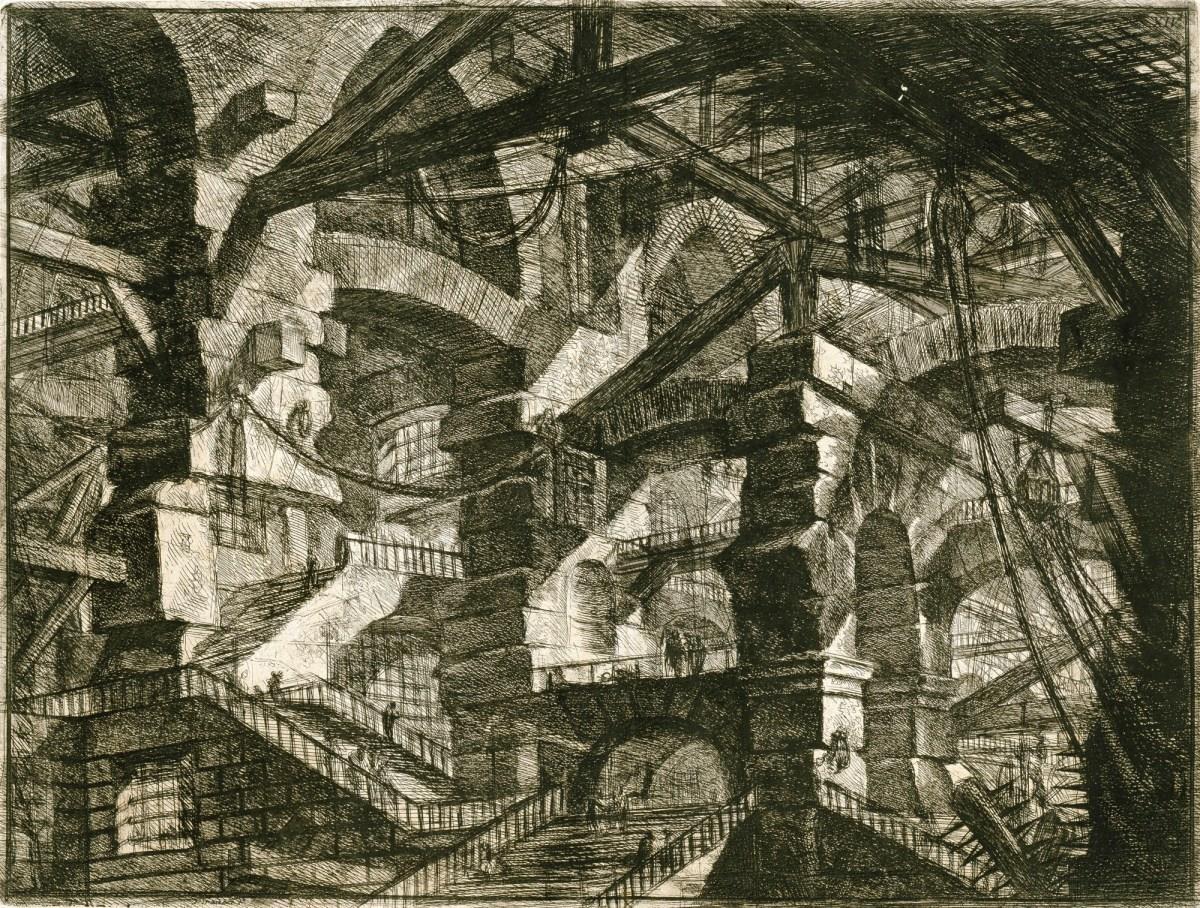
Balfron’s physical appearance “conjures up thoughts of prisons and pillboxes (Bendixson, 1969, in Wainwright, 2022) but on an exaggerated scale. The building’s walkways and interconnected towers, along with the social problems that have occurred within its walls, evoke a modernist vision of Giovanni Battista Piranesi’s Le Carceri d'invenzione (The Imaginary Prisons) (fig. 11). This series of architectural etchings from c.1750 are of vast, inescapable dungeons filled with dark corners and inhabited by shadowy figures who appear to be either experiencing or inflicting pain. They encapsulate “quintessentially… what the 18th century meant by the sublime” (Davey, 2010), serving to “stimulat[e] the beholders imagination… [and] fill him with wonder, a deep sadness and a sense of mystery” (Hofer, 1973, p.xii).
The cultural myth of social failure associated with many Brutalist projects has also become ingrained through their representation in speculative fiction. Balfron inspired J.G Ballard’s dystopian tale of societal collapse Highrise. In Danny Boyle’s 2002 science fiction horror 28 Days Later the tower served as both fortress and prison to a father and daughter attempting to survive a zombie outbreak (Roberts, 2012). Brutalism has become the dominant aesthetic of contemporary science fiction, with films such as Denis Villeneuve’s 2017 film Bladerunner 2049 and his more recent interpretation of Frank Herbert’s Dune (fig. 12) presenting bleak futures suffused with violence and melancholy. Through the mechanisms of myth this melancholy is projected back on to the Brutalist structures of the real world. The scale of these contemporary cinematic visions dwarf the sublime landscapes of the 18th century. Stark concrete stretches beyond the horizon and away into the stars in a futuristic expression of Kant’s mathematical sublime.
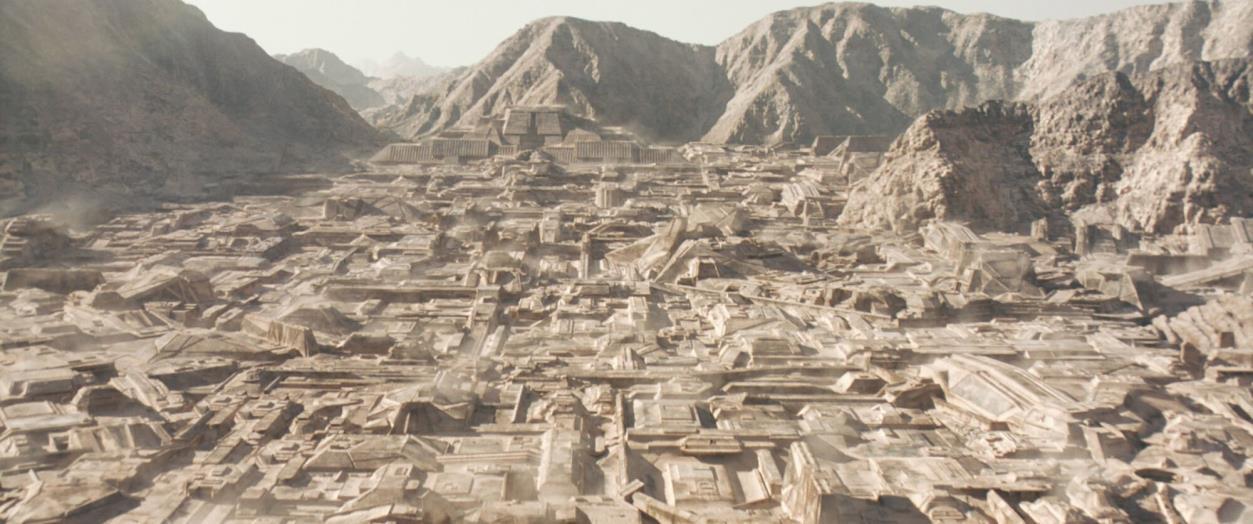
Piranesi’s prisons were physical and psychological, but the projection of the Brutalist aesthetic into the future through entertainment media creates a temporal prison as well. The consequences of the failed modernist experiment are seen as humanity’s present and its likely future. Brutalism becomes a melancholy trap, a prison whose sentence will extend beyond “the year 10192” (Dune, 1984).
Balfron and its Brutalist brethren rise above a patchwork of architectural styles that make up greater London, styles including Tudor, Georgian and Victorian (Jones, 2019). This can make Balfron, Trellick, the Barbican or Alton Estate seem like novelties, their mythical impact diluted as they merge with the anachronistic architecture of the city. There is a place however where Brutalism was the predominant style and whose tragic recent history adds further melancholy to the mythology of Brutalism. Far from London, 700 miles due east of Marseille’s Unites D’Habitation, lie the countries which once constituted Yugoslavia. The country was formed following the region’s liberation at the end of the second world war by the partisan communist Popular Front, led by Josep Broz Tito (United States of America Department of State, n.d.).
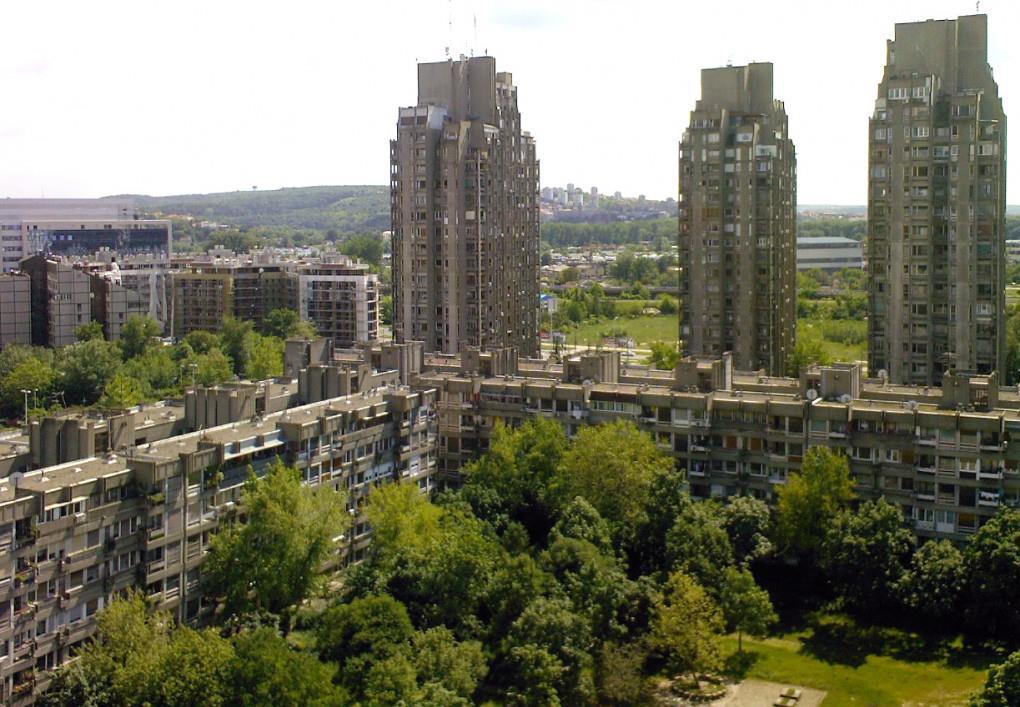
A combination of the destruction of war and the Popular Front’s desire to “(d)estroy the old, build the new!” created a blank canvas upon which Tito’s socialist vision could be realised, and the utilitarian homogeneity of Brutalism suited this vision perfectly (Herscher, 2018, in Stierli et al, 2018, p. 113) The country’s liberal, “Third Way” Socialist stance and position as a bulwark against the spread of Russian communist influence attracted significant Western investment with which to rebuild. In the years between breaking away from Joseph Stalin’s USSR in 1948 and Tito’s death in 1980 Yugoslavia’s rebuilding efforts saw an influx of architects from around the world, putting the country “at the forefront of international architectural discourse” (Stierli, 2018, pp. 7, 11) and kickstarting a golden age of Brutalism Balfron’s denoted meaning of progressive optimism was to be recreated on a national scale (fig. 13)
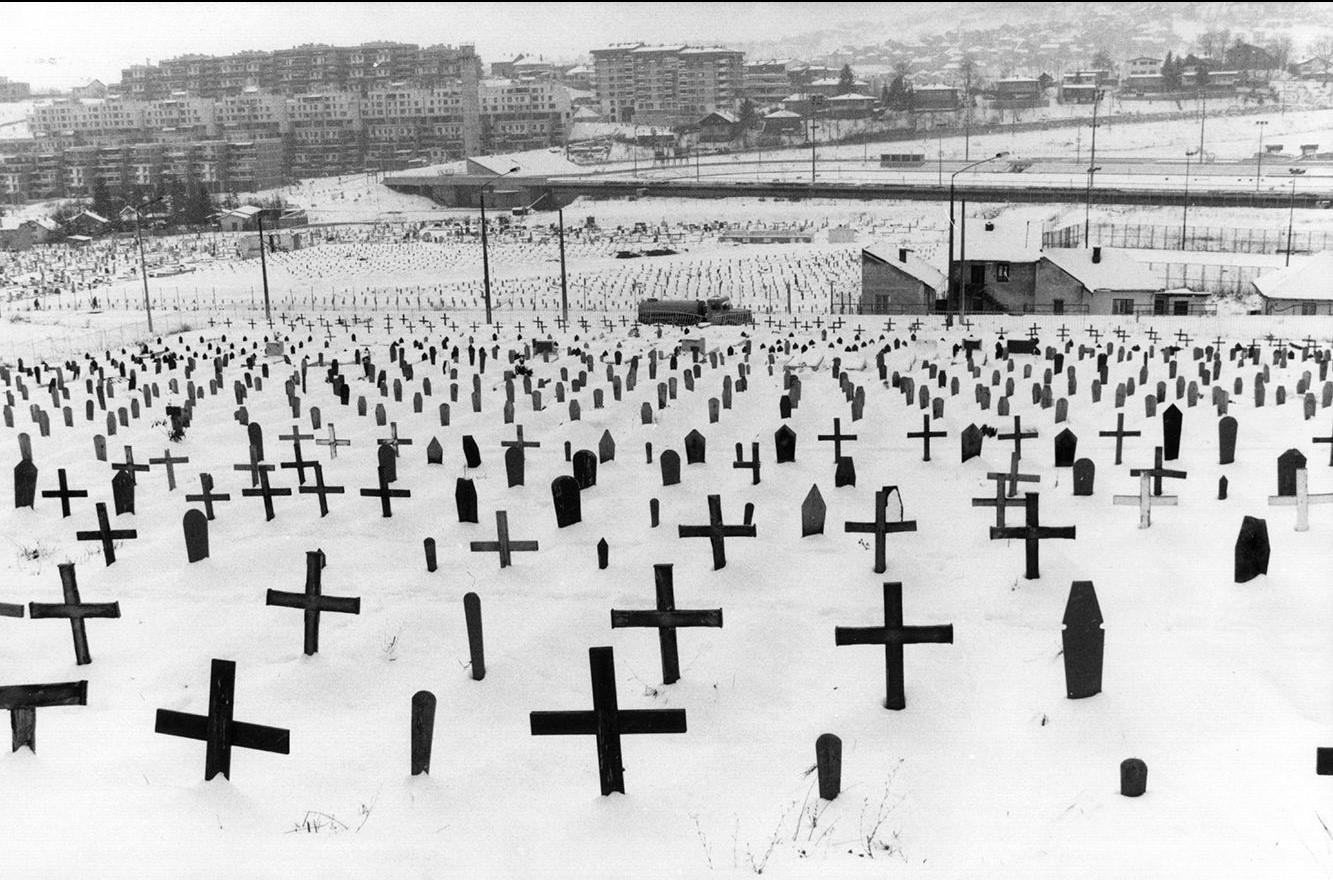
Myth and meaning are not permanent however and following Tito’s death in 1980 the region began to dissolve into a series of bloody civil wars driven by religious and ethnic differences combined with the collapse of communism. The wars in Serbia, Bosnia and Croatia killed thousands throughout the 1990s, and the generation for whom the emerging, Brutalist sound of drum and bass would be a formative musical experience grew up watching the conflict on the news. What had been the architecture of hope was now the backdrop for war (fig.14), and the association between Brutalism and brutality was reiterated nightly at 6pm sharp.
Brutalism’s position as witness to and chronicler of the horrors of war is not limited to the urban areas of the former Yugoslavia. Dotted across the landscape are a series of abstract monuments which commemorate the bravery of the Kingdom of Yugoslavia’s partisan resistance movement under occupation by Axis forces during the second world war. These ‘spomeniks’ (from the SerboCroat ‘spomen’, meaning memory) were designed almost exclusively by Yugoslavian artists and architects and display the country’s unique socialist take on the Brutalist aesthetic (Niebyl, 2018, pp. 4-6). A full assessment of the spomeniks is beyond the scope of this essay, but an examination of one will serve to further support Brutalism’s claim to contemporise the sublime experience.
Tjentiste spomenik (fig. 15) sits in a wooded valley overlooking the hills of Sutjeska national park in Bosnia and Herzegovina. Designed by Yugoslav architects Miodrag Zivkovic and Ranko Radovic, the 15-meter-high, 25-meter-wide poured concrete and rebar structure was completed in 1971 after 7 years of construction work. The spomenik is part of the Battle of Sutjeska Memorial Monument Complex in the Valley of Heroes and sits atop a tomb housing the remains of 3,301 partisan soldiers killed during the Battle of the Sudjeska in the summer of 1943, a battle which claimed over 7,000 partisan lives in total (Niebyl, 2018, p.176).
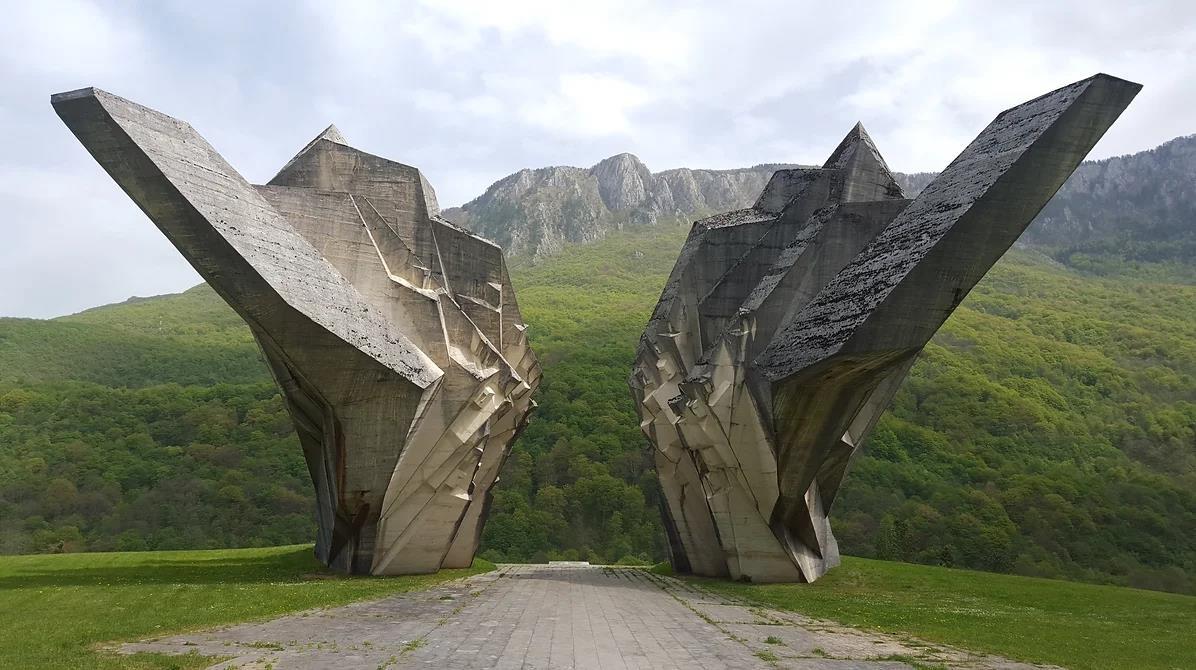
Tjentiste spomenik is situated in a natural setting which is sublime by Kantian definitions. The rolling forests and sharp limestone peaks of the national park are beautiful, but the remnants of war scar the landscape. The area was heavily mined during the second world war and unexploded ordnance makes exploring the area all but impossible unless strict paths are followed (Niebyl, 2018). As with Kant’s stormy ocean the knowledge of danger, hidden from sight yet a part of the environment, transforms the national park in the mind of the viewer from a benign signifier to a sublime one. The monument mirrors the landscape The angular concrete structure and its backdrop of jagged limestone both glow a warm orange in the setting sun and the melancholy memory of war suffuses the entire area. The structure and landscape exhibit physical scale, and both speak of tragedy that is conceptually expansive. Yet Tjentise, like so many of the other spomeniks and like Brutalism itself, defines itself as a contemporary expression of the sublime through its separation from the natural world rather than its existence within it
Unlike some of the more isolated memorials, the site is well maintained and visited regularly by those wishing to pay their respects and experience the atmosphere of the place (Niebyl, 2018, p.177). Tjentiste, like the other spomeniks, is an “embodied memory” (Pallaasma, 2012, p.76), Kant’s “mind… filled with manifold ideas” (Kant, 1964, p.84) given physical form. The spomeniks tell their melancholy stories using the language of Brutalism and in doing so project those stories on to the entire Brutalist environment. The ubiquity of form catalogued by Nicolas Grosspierre, combined with a global media network, is the mechanism by which the myths of Brutalism are spread throughout the modernist world, turning its tower blocks and offices into monuments to the sadness of the age (fig. 16)
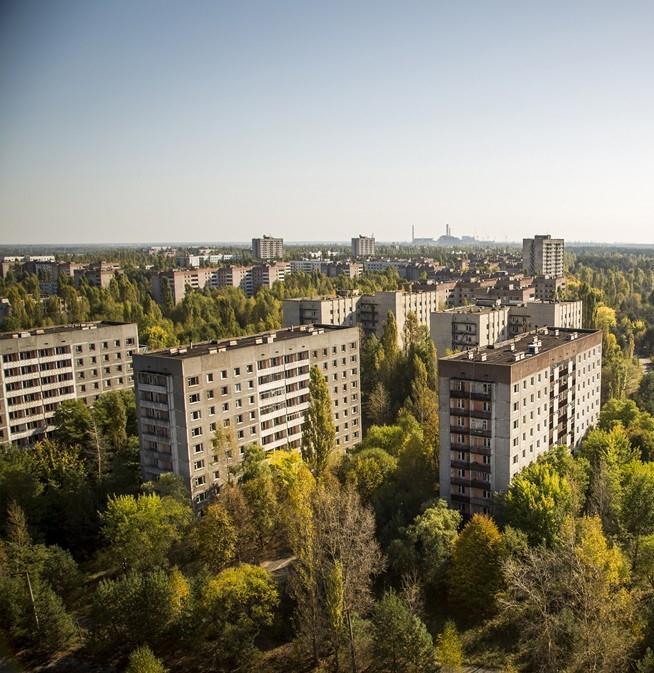
In reflecting on the evidence presented in this essay I have concluded that Brutalism is indeed a contemporary expression of the sublime experience It adheres to the 18th century definitions such as scale and obscurity but it also recontextualises those definitions for the modern age. Burke, Kant, and other 18th century writers found the sublime in the untamed natural world and the enormity of God’s creation, but in the 21st century science has declared much of that creation known and predictable A planet that was once vast and unrevealed can be traversed online in a matter of minutes, every dark corner or savage peak catalogued, photographed, and demystified.
Transportation methods have given contemporary humanity a distorted sense of scale in relation to the world around us. 100 miles by car is a very different experience to 100 miles on foot. Nature's overwhelming and uncontrollable landscapes have been tamed, reduced to theme park facsimiles of themselves, or paved over with urban sprawl. At ground level the far horizon is invisible and at night the infinity of the stars is hidden behind the orange haze of an infinity of streetlamps The inhabitants of the Brutalist environment are dwarfed not by the majesty of the natural world but by an unnatural habitat of their own creation. Scale, mystery, obscurity: all are still present, but are set apart from nature in man-made cities of the contemporary sublime. This homogenised environment does not attend to the needs of the individual. It is a place designed for averages and stereotypes, the scale of which overwhelms in an exaggerated expression of Kant’s dynamic sublime. The individual is rendered powerless by an environment which serves their base needs yet ignores their unique desires and dreams, treating them as one of many identikit units which are the building blocks of an inescapable future.
The examination of Balfron as an archetype of Brutalism has revealed many elements of the complex cultural myth of the genre. It has signified social reform and optimism, but also the failings of the state. Goldfinger’s association with the tower implied that it was the creation of a crazed criminal mastermind, an inner-city equivalent of a hollowed-out volcano doom fortress. It has been a place of hope for the poor and a prison for the same. It is a relic of a failed past and a vision of a failing future. In its current state it is an aspirational trophy for the wealthy, a contradiction of its own connotated meaning. The tower’s narrative and the narrative of Brutalism have shifted and changed but now rest on a foundation of sublime melancholy laid down by war, social failings, and the hubristic follies of the modern age.
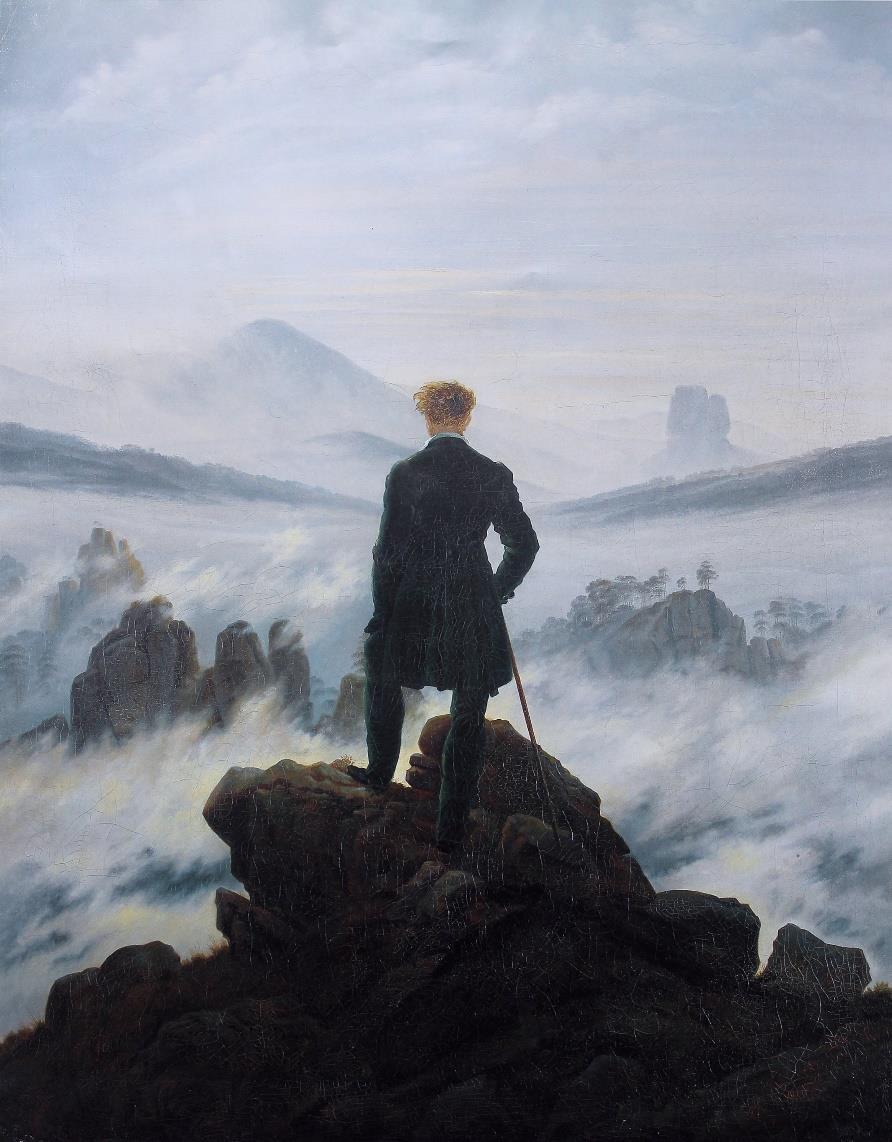
An attempt to resolve Brutalism into one meaning is impossible. As in the music that it inspires and that sparked this investigation, the Brutalist world is in a state of tension, simultaneously repellent and fascinating, harsh yet somehow irresistible. This is at the core of Brutalism as a contemporary experience of the sublime. It is fitting that the monuments of the Brutalist world loom over their surroundings like the Ministry of Truth in George Orwell’s 1984, an “enormous pyramidal structure of glittering white concrete, soaring up, terrace after terrace, 300 metres into the air” (Orwell, 2021, p.2). The tension between hope and horror in the myth of Brutalism requires an impossible Orwellian “doublethink” to resolve. In this irreconcilable tension, and in the homogenised environment that surrounds them, the individual is as Winston Smith, broken down and lost to contradictory feelings, overwhelmed by the mythic enormity of the prison that surrounds them. Caspar David Friedreich's Wanderer can no longer see the distant, fog shrouded peaks (fig. 16). His gaze instead turns to the vast and terrifying plains of humanity’s self-imposed sublime inner landscape.
Figures.
1. Evstafiev, M., (1992) Bosnian Parliament on fire during the Siege of Sarajevo in 1992, commons.wikimedia.org. Available at: https://commons.wikimedia.org/wiki/File:Evstafievsarajevo-building-burns.jpg (Accessed: 27 January 2023).
2. Vision Recordings and Khomatech (2012) Noisia, “Imperial” E.P., visionrecordings.nl. Available at: https://store.visionrecordings.nl/product/vsn012-digital/ (Accessed 19 January 2023).
3. MARTIN, J. and Tate (2007) The Great Day of His Wrath, Wikimedia. Available at: https://commons.wikimedia.org/wiki/File:MARTIN_John_Great_Day_of_His_Wrath.jpg (Accessed 19 January 2023).
4. TURNER, J.M.W. and Paradise Chronicle (2021) Wreck of a Transport Ship, Wikimedia. Available at: https://upload.wikimedia.org/wikipedia/commons/f/f0/William_Turner%E2%80%93Wreck_ of_a_transport_ship.jpg (Accessed 19 January 2023).
5. BOUCHER, J. and Library of Congress (1971) Edith Farnsworth House, Fox River & Milbrook Roads, Plano vicinity, Kendall County, Illinois - north elevation, seen from northeast. Designed by Ludwig Mies van der Rohe, commons.wikimedia.org. Available at: https://commons.wikimedia.org/wiki/File:Mies_van_der_Rohe_photo_Farnsworth_House_ Plano_USA_9.jpg (Accessed 26 January 2023).
6. Domus, 1950. Unité d’Habitation. [image] Available at: https://www.domusweb.it/en/fromthe-archive/2011/02/28/corbusier-s-cite-radieuse.html [Accessed 20 January 2023].
7. ROBINSON, D., (2011) Balfron Tower, archdaily.com. Available at: https://images.adsttc.com/media/images/5038/1b2e/28ba/0d59/9b00/0ede/large_jpg/stri ngio.jpg?1414199307 (Accessed 14 January 2023).
8. GROSSPIERRE, N., (2013) The Ape House, Kansas City Zoo, Missouri, USA, 2013., archivemodernarchitecture.tumblr.com. Available at: https://archivemodernarchitecture.tumblr.com/post/85547274091/the-ape-house-kansascity-zoo-missouri-usa (Accessed 28 January 2023).
9. KRIZHANOVSKY, A., (2008) The laboratory tower of the Central Research Institute of the RTC, wikiwand.com. Available at: https://www.wikiwand.com/en/Russian_State_Scientific_Center_for_Robotics_and_Technic al_Cybernetics#Media/File:CRDI_Robotics_and_Technical_Cybernetics_2008.jpg (Accessed 1 February 2023)
10. CAIRNS, D. and Getty Images (1968) Ernő Goldfinger, with Balfron Tower behind, 1968., theguardian.com. Available at:
https://www.theguardian.com/artanddesign/2022/jul/26/balfron-tower-britain-ugliestbuilding-gentrified. (Accessed: 10 January 2023).
11. The Gothic Arch, from Carceri d’invenzione (Imaginary Prisons) (no date) commons.wikimedia.org. Available at: https://commons.wikimedia.org/wiki/File:The_Gothic_Arch,_from_Carceri_d%27invenzione _%28Imaginary_Prisons%29_MET_DP828196.jpg#filelinks (Accessed: 19 January 2023).
12. Warner Bros. Pictures (2022) Production design from “Dune” of the city of Arrakeen, latimes.com. Available at: https://www.latimes.com/entertainmentarts/awards/story/2022-01-11/dune-design-is-a-vision-come-true-even-if-a-desolate-one. (Accessed: 19 January 2023).
13. DAVIS, J., (n d ) Blok 23, New Belgrade, placesjournal.org/. Available at: https://placesjournal.org/article/history-of-the-present-belgrade/?cn-reloaded=1 (Accessed: 19 January 2023).
14. WEAVER, K. and Getty Images (1994) The graves of Bosnian Muslims, Serbs, and Croats at the Zetra Olympic Hall arena, which was built for the 1984 Winter Olympics in Sarajevo. 1994., meduza.io. Available at: https://meduza.io/en/feature/2020/12/14/the-bosnian-warin-photos. (Accessed: 27 January 2023).
15. NIEBYL, D., (2018) Tjentiste spomenik, spomenikdatabase.org/. Available at: https://www.spomenikdatabase.org/tjentiste (Accessed: 27 January 2023).
16. WRIGHT, R. and Urban Pixels (2012) Pripyat, Ukraine, with the Chernobyl nuclear plant in the distance, urbanpixels.co.uk. Available at: http://www.urbanpixels.co.uk/chernobyl-2012-asummary (Accessed: 5 February 2023).
17. Hamburger Kunsthalle (2018) Caspar David Friedrich: Wanderer above the Sea of Fog, commons.wikimedia.org. Available at: https://commons.wikimedia.org/wiki/File:Caspar_David_Friedrich__Wanderer_above_the_sea_of_fog.jpg (Accessed: 27 January 2023).
References.
Cambridge Dictionary (2023) “sublime definition: 1. extremely good, beautiful, or enjoyable: 2. very great: 3. something that is sublime: . Learn more.” Available at: https://dictionary.cambridge.org/dictionary/english/sublime (Accessed: 10 October 2022)
MORLEY, S., (2010) The Sublime London, UK: Whitechapel Gallery, pp. 12, 47.
CLEWIS, R.R., YADEN, D.B. and CHIRICO, A. (2022) ‘Intersections Between Awe and the Sublime: A Preliminary Empirical Study’, Empirical Studies of the Arts, 40(2), pp. 143–173. doi:10.1177/0276237421994694, p. 3.
ASHFIELD, A. and BOLLA, D.P., (1996) The Sublime: A Reader in British Eighteenth-Century Aesthetic Theory. Cambridge: Cambridge University Press, pp.132, 140, 134.
GOODYEAR, D. (2019) 159. An Overview of the Kantian Sublime – PHILOSOPHICAL EGGS. Available at: https://philosophicaleggs.com/159-an-overview-of-the-kantian-sublime-2/ (Accessed 10 January 2023).
KANT, I., (1964) Critique of Judgement. New York, NY: Hafner Publishing Co, p. 84.
MACEY, D., 2000. The Penguin Dictionary of Critical Theory. New York: Penguin Books, pp. 342, 352.
STURKEN, M. and CARTWRIGHT, L., 2001. Practices of Looking: An Introduction to Visual Culture. Oxford, UK: Oxford University Press, pp. 19, 57.
BARTHES, R., (1993) Mythologies. London, UK: Vintage, pp. 120, 119.
Brutalism (2022) RIBA. RIBA. Available at: https://www.architecture.com/explorearchitecture/brutalism#:~:text=Brutalism%20is%20a%20style%20with,construction%2C%20pr oducing%20highly%20expressive%20forms. (Accessed: December 29, 2022).
CALDER, B., (2016) Raw concrete. London, UK: William Heinemann, pp. 11, 65, 61.
BANHAM, R., (1966) The New Brutalism: Ethic or Aesthetic. London, UK: Architectural Press, p.10.
HALE, J., (1994), The Old Way of Seeing: How Architecture Lost Its Magic and How To Get It Back. Boston, MA: Houghton Mifflin, p. 130.
BURKE, E. (1965) On Taste; On The Sublime And Beautiful; Reflections On The French Revolution; A Letter To A Noble Lord. 56th edn. New York, N.Y.: P.F. Collier and Sons, p.62.
DISSANAYAKE, E., (2000) Art and Intimacy: How the Arts Began. Amsterdam, Netherlands: Amsterdam University Press, p. 162
BABOR, D., PLIAN, D. and JUDELE, L., (2009) “Environmental Impact of Concrete,” The Bulletin of the Polytechnic Institute of Iași, 55(4), pp. 27–35. Available at: https://www.proquest.com/openview/8c34bf1820a6898df081c0063cf61dd1/1 (Accessed 28 January 2023), p. 32
OHLIN, A., (2002) ‘Andreas Gursky and the Contemporary Sublime’, Art Journal, 61(4), pp. 22-35. doi:10.1080/00043249.2002.10792133, p. 23.
GILBERT-ROLFE, J., (1999) Beauty and the Contemporary Sublime. New York, NY: Allworth, p. xii
GROSPIERRE, N. et al., (2022) Modern Forms: An Expanded Subjective Atlas of 20th-Century Architecture London, UK: Prestel.
POGGIO, T and WHITEHEAD, C., (2017) Social housing in Europe: legacies, new trends and the crisis. Critical Housing Analysis, 4 (1). pp. 1-10. DOI: 10.13060/23362839.2017.3.1.319, p. 3.
WAINWRIGHT, O., (2022) “‘The council tenants weren’t going to be allowed back’: how Britain’s ‘ugliest building’ was gentrified,” The Guardian, 26 July. Available at: https://www.theguardian.com/artanddesign/2022/jul/26/balfron-tower-britain-ugliest-buildinggentrified (Accessed: November 8, 2022).
DAVEY, P. (2010) Sublime visions of terror by Piranesi. Available at: https://www.architecturalreview.com/essays/exhibitions/sublime-visions-of-terror-by-piranesi (Accessed: 12 October 2022)
HOFER, P., (1973) Giovanni Battista Piranesi, The Prisons (Le Carceri). New York, N.Y.: Dover Publications, p. xii
ROBERTS, D., (2012) Balfron Tower: a building archive. Available at: https://www.balfrontower.org/document/22/28-days-later/ (Accessed: January 23, 2023).
Dune [Digital] (1984), Dir. LYNCH, D., Dino De Laurentiis Corporation. Available at: https://www.amazon.co.uk/gp/video/detail/amzn1.dv.gti.20bb6b00-8080-bd5f-9bc51c6e33f4d77d?autoplay=0&ref_=atv_cf_strg_wb (Accessed: 10 January 2023).
JONES, W., (2019) London through the ages: architectural insights into the capital’s history. Available at: https://www.lonelyplanet.com/articles/london-through-the-ages-architectural-insights-into-thecapitals-history (Accessed: 2 February 2023).
United States of America Department of State (no date) Milestones: 1989 to 1992 - Office of the Historian. Available at: https://history.state.gov/milestones/1989-1992/breakup-yugoslavia (Accessed: February 2, 2023).
STIERLI, M. et al., (2018) Toward a Concrete Utopia: Architecture in Yugoslavia, 1948–1980. The Museum of Modern Art, New York, pp. 113, 7, 11.
NIEBYL, D., (2018) Spomenik Monument Database. London, UK: FUEL Design and Publishing, pp. 4-6, 9, 176.
NIEBYL, D. (2018a) Spomenik Database | Tips & Tricks for Exploring Yugoslavia’s Spomenik. Available at: https://www.spomenikdatabase.org/travel-tips (Accessed: February 2, 2023).
PALLASMAA, J., (2012) The Eyes of the Skin. Chichester, UK: Wiley, p. 76.
ORWELL, G., (2021) Nineteen Eighty-Four. Oxford, UK: Oxford University Press, p. 2.
Bibliography.
Books.
ASHFIELD, A. and BOLLA, D.P., (1996) The Sublime: A Reader in British Eighteenth-Century Aesthetic Theory. Cambridge, UK: Cambridge University Press.
BANHAM, R., (1966) The New Brutalism: Ethic or Aesthetic. London, UK: Architectural Press.
BARTHES, R., (1977) Image, Music, Text. London, UK: Fontana Press.
BARTHES, R., (1993) Mythologies. London, UK: Vintage.
BIRD, M., (2014) Lynn Chadwick. Farnham, UK: Lund Humphries.
BOGDANOVIĆ, B. et al., (2018) Bogdanovic by Bogdanovic: Yugoslav Memorials through the Eyes of their Architect. The Museum of Modern Art, New York.
BURKE, E. (1965) On Taste; On The Sublime And Beautiful; Reflections On The French Revolution; A Letter To A Noble Lord. 56th edn. New York, N.Y.: P.F. Collier and Sons.
CALDER, B., (2016) Raw concrete. London, UK: William Heinemann.
DILLON, B., (2011) Ruins. London, UK: Whitechapel Gallery.
DISSANAYAKE, E., (2000) Art and Intimacy: How the Arts Began. Amsterdam, Netherlands: Amsterdam University Press.
GILBERT-ROLFE, J., (1999) Beauty and the Contemporary Sublime. New York, NY: Allworth.
GROSPIERRE, N. et al., (2022) Modern Forms: An Expanded Subjective Atlas of 20th-Century Architecture. London, UK: Prestel.
HALE, J., (1994) The Old Way of Seeing: How Architecture Lost Its Magic and How to Get It Back Boston, MA: Houghton Mifflin.
HOFER, P., (1973) Giovanni Battista Piranesi, The Prisons (Le Carceri). New York, N.Y.: Dover Publications.
KANT, I., (1964) Critique of Judgement. New York, NY: Hafner Publishing Co.
MACEY, D., (2000) The Penguin Dictionary of Critical Theory. New York: Penguin Books.
MORLEY, S., (2010) The Sublime. London: Whitechapel Gallery.
NIEBYL, D., (2018) Spomenik Monument Database. London, UK: FUEL Design and Publishing.
ORWELL, G., (2021b) Nineteen Eighty-Four. Oxford, UK: Oxford University Press.
PALLASMAA, J., (2012) The Eyes of the Skin. Chichester, UK: Wiley.
STURKEN, M. and CARTWRIGHT, L., 2001. Practices of Looking: An Introduction to Visual Culture. Oxford, UK: Oxford University Press.
STIERLI, M. et al., (2018) Toward a Concrete Utopia: Architecture in Yugoslavia, 1948–1980. The Museum of Modern Art, New York.
WITTKOWER, R., (1971) Architectural Principles in the Age of Humanism. New York, NY: W.W. Norton & Company.
Articles.
A RESURGENCE OF INTEREST IN BRUTALIST SCULPTURE: As Defined From Its Origins In Mid-Century Brutalist Architecture’ (2019) Antiques & Art Around Florida, 53, pp. 50–53. Available at: https://search.ebscohost.com/login.aspx?direct=true&db=vth&AN=138704466&site=ehostlive (Accessed: 31 October 2022).
BABOR, D., PLIAN, D. and JUDELE, L., (2009) “Environmental Impact of Concrete,” The Bulletin of the Polytechnic Institute of Iași, 55(4), pp. 27–35. Available at: https://www.proquest.com/openview/8c34bf1820a6898df081c0063cf61dd1/1 (Accessed: 28 January 2023)
CLEWIS, R.R., YADEN, D.B. and CHIRICO, A., (2022) ‘Intersections Between Awe and the Sublime: A Preliminary Empirical Study’, Empirical Studies of the Arts, 40(2), pp. 143–173. doi:10.1177/0276237421994694
GATHERCOLE, S., (2018) ‘Misrecognition and Miscegenation: Reading Different Structures of Feeling’, Art History, 41(5), pp. 997–1002. DOI:10.1111/1467-8365.12408.
HARPER, P., (1998) ‘Visceral geometry’, Art in America, 86(9), p. 106. Available at: https://search.ebscohost.com/login.aspx?direct=true&db=vth&AN=1032878&site=ehostlive (Accessed: 10 October 2022).
HIGHMORE, B., (2011) ‘“Image-breaking, God-making”: Paolozzi’s Brutalism’, October, (136), pp. 87–104. DOI:10.1162/OCTO_a_00052.
KITNICK, A., (2011) ‘The Brutalism of Life and Art’, October, (136), pp. 63–86. DOI:10.1162/OCTO_a_00043.
OHLIN, A., (2002) ‘Andreas Gursky and the Contemporary Sublime’, Art Journal, 61(4), pp. 22-35. doi:10.1080/00043249.2002.10792133.
POGGIO, T and WHITEHEAD, C., (2017) Social housing in Europe: legacies, new trends and the crisis. Critical Housing Analysis, 4 (1). pp. 1-10. DOI: 10.13060/23362839.2017.3.1.319
ROBERTS, T., (1987) ‘Visceral/Mechanical’, Art Papers, 11(4), p. 54. Available at: https://search.ebscohost.com/login.aspx?direct=true&db=vth&AN=51310019&site=ehostlive (Accessed: 10 October 2022).
STIERLI, M., (2020) ‘Territories of Conflict: Monuments and Memorial Culture in Socialist Yugoslavia’, Marg: A Magazine of the Arts, 71(4), pp. 46–55. Available at: https://search.ebscohost.com/login.aspx?direct=true&db=vth&AN=144837790&site=ehostlive (Accessed: 31 October 2022).
VIDLER, A., (2011) ‘Another Brick in the Wall’, October, (136), pp. 105–132. DOI:10.1162/OCTO_a_00044.
Online.
Architecture as a Weapon: Hitler’s Speer (1970). Available at: https://www.artforum.com/print/197010/architecture-as-a-weapon-hitler-s-speer-36375 (Accessed 8 December 2022).
British post-war mass housing (2021). Available at: https://www.designingbuildings.co.uk/wiki/British_post-war_mass_housing (Accessed: 2 February 2023).
Cambridge Dictionary (2023) “sublime definition: 1. extremely good, beautiful, or enjoyable: 2. very great: 3. something that is sublime: . Learn more.” Available at: https://dictionary.cambridge.org/dictionary/english/sublime (Accessed: 10 October 2022).
COULTHART, J. and HUXLEY, A., (2009) Aldous Huxley on Piranesi’s Prisons. Available at: http://www.johncoulthart.com/feuilleton/2006/08/25/aldous-huxley-on-piranesis-prisons/ (Accessed 8 December 2022).
DAVEY, P. (2010) Sublime visions of terror by Piranesi. Available at: https://www.architecturalreview.com/essays/exhibitions/sublime-visions-of-terror-by-piranesi (Accessed: 12 October 2022).
GOODYEAR, D. (2019) 159. An Overview of the Kantian Sublime – PHILOSOPHICAL EGGS. Available at: https://philosophicaleggs.com/159-an-overview-of-the-kantian-sublime-2/ (Accessed: 10 January 2023).
JONES, W., (2019) London through the ages: architectural insights into the capital’s history. Available at: https://www.lonelyplanet.com/articles/london-through-the-ages-architectural-insights-into-thecapitals-history (Accessed: 2 February 2023).
LILLYWHITE, C., (2022) Life on Alton Estate Roehampton “plagued by gangs.” Available at: https://www.wandsworthguardian.co.uk/news/20222692.life-alton-estate-roehampton-plaguedgangs/ (Accessed: 6 January 2023).
London Newcastle (2023) History | Balfron Tower. Available at: https://balfrontower.co.uk/history/ (Accessed: 5 January 2023).
MADRIGALE, A., (2020) Sublime Brutalist: The Sculpture of Lynn Chadwick | Doyle Auction House. Available at: https://doyle.com/specialists/angelo-madrigale/stories/sublime-brutalist-sculpturelynn-chadwick (Accessed: 4 November 2022).
Meduza (2020) The Bosnian War, in photos marks the 25th anniversary of the end of Europe’s bloodiest interethnic conflict since World War II. Available at: https://meduza.io/en/feature/2020/12/14/the-bosnian-war-in-photos (Accessed: 27 January 2023).
NIEBYL, D. (2018) Spomenik Database | Tips & Tricks for Exploring Yugoslavia’s Spomenik. Available at: https://www.spomenikdatabase.org/travel-tips (Accessed: 2 February 2023).
Open University (2001) Roehampton, Alton East & Alton West Estates. Available at: https://www.open.edu/openlearn/history-the-arts/history/heritage/roehampton-alton-east-altonwest-estates (Accessed: 5 November 2022).
ROBERTS, D., (2012) Balfron Tower: a building archive. Available at: https://www.balfrontower.org/document/22/28-days-later/ (Accessed: 23 January 2023).
The Demon of Melancholy: Genealogies, Modernities (no date). Available at: https://library.brown.edu/cds/melancholy/spaces.html (Accessed: 8 November 2022).
United States of America Department of State (no date) Milestones: 1989 to 1992 - Office of the Historian. Available at: https://history.state.gov/milestones/1989-1992/breakup-yugoslavia (Accessed: 2 February 2023).
WAINWRIGHT, O., (2022) “‘The council tenants weren’t going to be allowed back’: how Britain’s ‘ugliest building’ was gentrified,” The Guardian, 26 July. Available at: https://www.theguardian.com/artanddesign/2022/jul/26/balfron-tower-britain-ugliest-buildinggentrified (Accessed: 8 November 2022).
Bladerunner 2049 (2017). Alcon Media Group/ Warner Bros. Pictures. Available at: https://www.netflix.com/gb/title/80185760?source=35 (Accessed: 4 January 2023).
Dune [Digital] (1984), Dir. LYNCH, D., Dino De Laurentiis Corporation/ Universal Pictures. Available at: https://www.amazon.co.uk/gp/video/detail/amzn1.dv.gti.20bb6b00-8080-bd5f-9bc51c6e33f4d77d?autoplay=0&ref_=atv_cf_strg_wb (Accessed: 10 January 2023).