Best Stain Removal Services Manchester | Expert Care for Carpets, Upholstery & Rugs
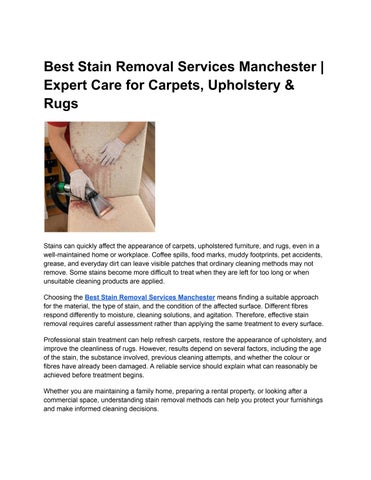
Stains can quickly affect the appearance of carpets, upholstered furniture, and rugs, even in a well-maintained home or workplace. Coffee spills, food marks, muddy footprints, pet accidents, grease, and everyday dirt can leave visible patches that ordinary cleaning methods may not remove. Some stains become more difficult to treat when they are left for too long or when unsuitable cleaning products are applied. Choosing the Best Stain Removal Services Manchester means finding a suitable approach for the material, the type of stain, and the condition of the affected surface. Different fibres respond differently to moisture, cleaning solutions, and agitation. Therefore, effective stain removal requires careful assessment rather than applying the same treatment to every surface. Professional stain treatment can help refresh carpets, restore the appearance of upholstery, and improve the cleanliness of rugs. However, results depend on several factors, including the age of the stain, the substance involved, previous cleaning attempts, and whether the colour or fibres have already been damaged. A reliable service should explain what can reasonably be achieved before treatment begins. Whether you are maintaining a family home, preparing a rental property, or looking after a commercial space, understanding stain removal methods can help you protect your furnishings and make informed cleaning decisions.
Why Professional Stain Removal Matters Everyday cleaning helps maintain a property, but certain stains require more specialised attention. A mark that appears simple on the surface may have penetrated deeper into carpet fibres, upholstery padding, or rug backing.
Treating Stains Without Damaging Fibres Different materials have different cleaning requirements. Wool, cotton, polyester, nylon, silk, and other fibres can react differently to heat, moisture, solvents, and detergents. A treatment suitable for one material may cause colour bleeding, shrinkage, texture changes, or permanent damage to another. Professional cleaners assess the affected material before selecting a method. They may also conduct a colourfastness test in an inconspicuous area to help determine whether the dye is likely to remain stable during treatment. This assessment is especially important for delicate rugs, patterned upholstery, and expensive carpets where preserving the original appearance matters as much as removing the stain.
Removing Residue That Attracts More Dirt Some household cleaning products leave sticky or difficult-to-remove residues when they are overused or improperly rinsed. These residues can attract soil, causing a previously treated area to become dirty again. A suitable cleaning process aims to remove the stain and manage any remaining cleaning solution. Correct extraction, rinsing where appropriate, and adequate drying help reduce the likelihood of residue-related problems.
Improving the Appearance of Frequently Used Spaces Stains are particularly noticeable in high-traffic areas, including hallways, living rooms, reception spaces, and office waiting areas. Even a small mark can make otherwise clean flooring or furniture look neglected. Targeted treatment may improve the overall appearance of these spaces without requiring immediate replacement of the affected item. Nevertheless, permanent dye damage, bleaching, and worn fibres cannot always be corrected through cleaning alone.
Common Carpet Stains and How They Are Treated
Carpets can absorb spills quickly, particularly when the liquid is allowed to remain undisturbed. The correct treatment depends on the substance involved and how deeply it has penetrated the carpet.
Coffee, Tea, and Soft Drink Stains Coffee and tea may leave brown or yellowish marks, while soft drinks can introduce colourants and sugary residues. If these spills are not treated promptly, the affected area may become more difficult to clean. Start by gently blotting the spill with a clean, absorbent cloth. Avoid rubbing because this can spread the liquid and push it deeper into the pile. Once excess moisture has been absorbed, use only a cleaning product that is appropriate for the carpet and follow its instructions. Older stains may require professional treatment, especially if previous products have altered the carpet's colour or left residue.
Food, Grease, and Oil Marks Food stains vary considerably. Some contain water-soluble ingredients, while greasy foods can leave oily residues that attract additional dirt. Remove solid material carefully without scraping aggressively at the fibres. Avoid pouring large amounts of water onto an oily stain, as this may spread contamination or make treatment more complicated. A suitable professional method may involve a compatible spotting agent followed by careful removal of loosened residue. The choice of product should reflect the carpet's fibre type and backing.
Mud and Outdoor Dirt Mud should generally be allowed to dry when practical before loose material is removed. Attempting to scrub wet mud can spread it across a wider area and work fine particles deeper into the pile. Once the material is dry, gently remove loose dirt and vacuum the affected section. Any remaining discolouration can then be treated with an appropriate carpet-cleaning method. Entrance mats and regular vacuuming can help reduce the amount of outdoor dirt that reaches carpets in the first place.
Ink, Paint, and Cosmetic Stains
Ink, nail products, makeup, and paint can be particularly challenging because their ingredients differ considerably. Some products contain pigments, oils, or solvents that may affect carpet dyes and synthetic fibres. Avoid experimenting with strong household chemicals. Certain solvents can damage the backing, spread the mark, or create additional discolouration. Professional assessment is advisable when the stain's composition is uncertain or the carpet is delicate.
Upholstery Stain Removal for Sofas and Chairs Upholstered furniture absorbs everyday contamination from clothing, hands, food, drinks, and pets. Since sofas and chairs often contain several layers of fabric, padding, and backing, cleaning must account for more than the visible surface.
Food and Drink Stains on Sofas Spills on sofas can spread through the fabric and into the padding beneath it. If too much liquid is applied during cleaning, the moisture may remain trapped inside the furniture and contribute to unpleasant odours. Blot fresh spills promptly and check the manufacturer's care label before using any product. Upholstery labels may specify water-based cleaning, solvent-based cleaning, or professional-only treatment. Following these instructions helps reduce the risk of damage.
Removing Marks from Armrests and Headrests Armrests and headrests often develop darkened areas from repeated contact with skin, hair products, and everyday oils. These marks may look like stains but can actually be a mixture of body oils, embedded dirt, and gradual fabric wear. A suitable upholstery-cleaning method can help remove accumulated soil. However, if the fibres have become permanently worn or discoloured, cleaning may improve the appearance without restoring the original shade completely.
Protecting Delicate Upholstery Fabrics Velvet, silk, linen blends, and some specialist fabrics require particular care. Excessive moisture, aggressive brushing, or unsuitable chemicals may change the texture, cause shrinkage, or leave watermarks. Before booking a service, identify the fabric where possible and explain any previous cleaning attempts. A careful provider should assess the material and discuss any limitations before proceeding.
Professional Rug Stain Treatment Rugs can be made from natural fibres, synthetic materials, or combinations of both. Their construction, dyes, backing, and decorative finishes influence the cleaning method that should be used.
Wool and Natural-Fibre Rugs Wool rugs can be durable, but they still require appropriate care. Excessive moisture, unsuitable pH levels, and aggressive agitation may affect the fibres or dyes. Some natural-fibre rugs are particularly sensitive to water and may develop browning, shrinkage, or changes in texture if cleaned incorrectly. Assessment should include the rug's construction, colour stability, and care instructions.
Synthetic Rugs Synthetic rugs made from materials such as polypropylene or polyester may tolerate a wider range of cleaning methods, depending on their construction. However, backing materials, adhesives, dyes, and finishing treatments still require consideration. A professional cleaner should avoid assuming that every synthetic rug can be treated identically. The stain and the rug's specific characteristics determine the appropriate approach.
Oriental, Patterned, and Valuable Rugs Decorative rugs may contain multiple dyes and delicate fibres that react differently during cleaning. Colour bleeding can occur when unstable dyes come into contact with moisture or cleaning agents. For valuable, antique, or particularly delicate rugs, specialist assessment may be more appropriate than routine on-site cleaning. Ask about the provider's experience with similar rugs and whether the item should be treated at a specialist facility.
How Professional Stain Removal Works A structured cleaning process helps reduce avoidable damage and improves the chances of achieving a satisfactory result.
Step One: Inspection and Stain Identification The technician examines the affected area, identifies the likely material, and asks about the substance that caused the stain. They may also check whether the mark has been treated previously.
This information helps establish whether the stain is likely to respond to cleaning or whether it may involve permanent dye damage, fibre wear, or another underlying issue.
Step Two: Testing and Selecting a Treatment Where appropriate, the technician tests the selected product in a discreet location to assess colour stability and material compatibility. The treatment is then chosen according to the stain, the fabric or carpet, and the manufacturer's guidance. No cleaning method can guarantee the removal of every stain. An honest assessment should explain likely outcomes and any risks before work begins.
Step Three: Applying the Cleaning Method Depending on the material, treatment may involve a suitable spotting solution, gentle agitation, controlled moisture, or specialist extraction equipment. The goal is to loosen or dissolve the contamination while protecting the surrounding fibres. The technician should use products according to their instructions and avoid unnecessary chemical mixing or excessive application.
Step Four: Removing Residue and Drying After treatment, loosened soil and cleaning solution should be removed as appropriate for the chosen method. Adequate drying is essential, especially for carpets and upholstery that contain absorbent backing or padding. Ventilation and controlled airflow can support drying. If an item remains unusually damp or develops a persistent odour, the cause should be investigated rather than ignored. Steam pro max is one provider homeowners and businesses may research when comparing specialist cleaning options. Before booking, ask about its stain assessment process, the methods available for your particular material, and the expected limitations of treatment.
Why Quick Action Makes a Difference Fresh stains are often easier to address than older marks because the contaminant may not yet have bonded strongly with the fibres or penetrated deeply into the material.
Blot Rather Than Rub Use a clean, absorbent cloth to lift as much liquid as possible. Press gently and change to a clean section of the cloth as it becomes wet or soiled.
Rubbing can damage delicate fibres, spread the stain, and make the affected area larger. Gentle blotting is generally a safer first response for fresh liquid spills.
Avoid Excessive Water Pouring large amounts of water onto a stain may spread contamination into the carpet backing or furniture padding. Excess moisture can also prolong drying and create conditions that encourage musty odours. Use only the amount of cleaning solution recommended for the material and product. If the stain remains, seek appropriate advice rather than repeatedly soaking the area. Clear aftercare guidance can help protect the results and reduce the risk of the stain returning.
Preventing Future Stains on Carpets, Upholstery, and Rugs Preventive care can reduce the frequency of difficult stains and help furnishings maintain a cleaner appearance between professional treatments.
Use Entrance Mats and Regular Vacuuming Place suitable mats at frequently used entrances to catch some of the dirt and moisture carried indoors. Vacuum carpets regularly, paying particular attention to hallways and other high-traffic areas. Furniture and rugs should also be maintained according to their material and care instructions. Regular maintenance helps remove loose dirt before it becomes embedded.
Establish Practical Household Habits Use coasters for drinks, clean food spills promptly, and consider washable covers in areas where accidental marks are common. In commercial premises, staff can be encouraged to report spills quickly so they can be treated before they spread. These small habits can reduce the need for intensive spot treatment.
Arrange Periodic Professional Cleaning Professional cleaning can help manage accumulated soil that routine maintenance does not fully remove. The appropriate frequency depends on traffic, household activities, pets, material type, and the manufacturer's recommendations.
A tailored maintenance plan is often more practical than waiting until stains and odours become widespread.
Conclusion Stains on carpets, upholstery, and rugs can be difficult to remove without the right approach. Understanding the material, identifying the contaminant, choosing compatible cleaning products, and allowing adequate drying are all important parts of effective treatment. Prompt blotting and regular maintenance can also help prevent small spills from becoming more serious problems. When comparing the Best Stain Removal Services Manchester, look for appropriate experience, transparent quotations, realistic expectations, and clear aftercare advice rather than promises of guaranteed results. Steam pro max can be one of the providers you research as you compare options for maintaining cleaner carpets, fresher upholstery, and well-cared-for rugs in your home or business.