AT HOME PLACES is published five times a year, featuring Winter, Spring, Summer, Autumn and Holiday issues. Complimentary copies are available at area distribution sites. ALL RIGHTS RESERVED BY COPYRIGHT. Prices, specials and descriptions are accurate as of the time of publishing. This magazine or parts thereof may not be reproduced in whole or in part without the express written consent of the editor. Advertising information has been provided by the advertiser. Herald-Mail Media does not make any representations as to the opinions or facts contained herein. All terms and conditions subject to change. The cover, design, format and layout of this publication are trademarks of Herald-Mail Media.
To advertise in the next issue of At Home Places, contact your Herald-Mail Media sales representative, hmadvertisingstaff@localiq.com
Follow @athomeplaces on facebook.com/athomeplaces twitter.com/athomeplaces instagram.com/athomeplaces
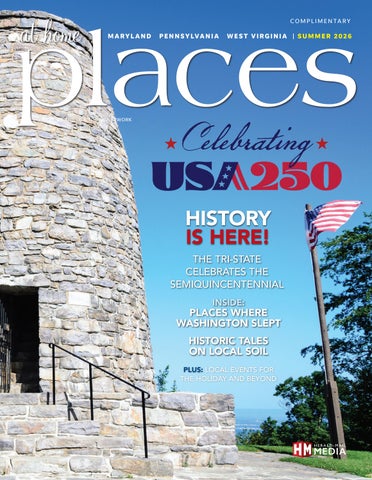
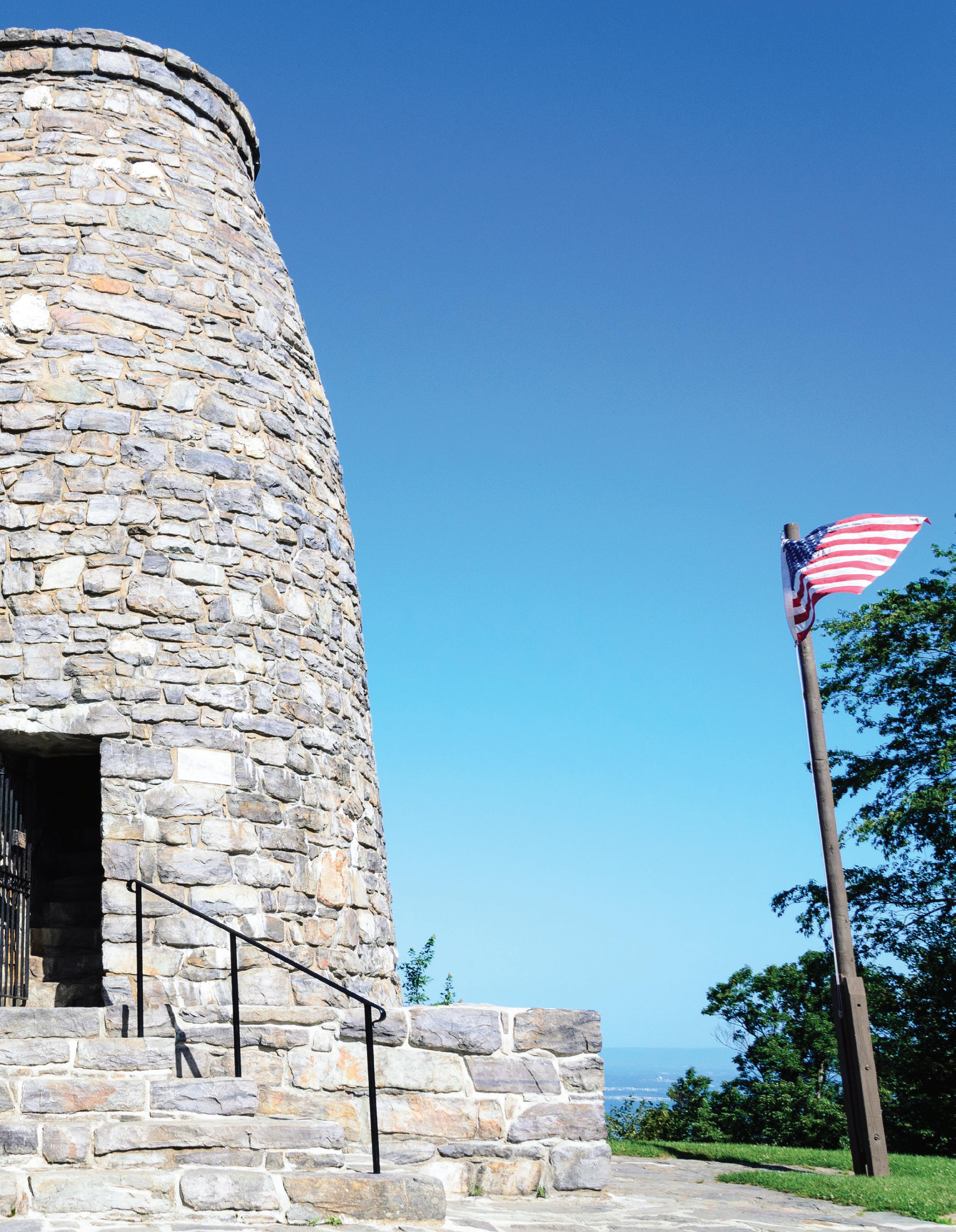
ON THE COVER:
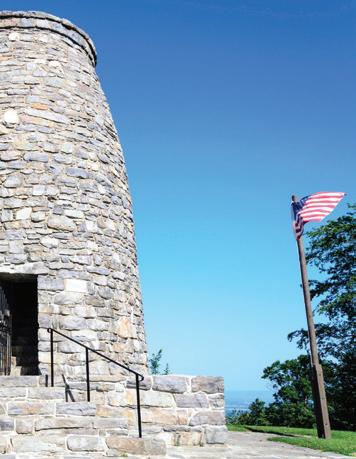
The first monument erected in honor of President George Washington, a rugged stone tower created by the citizens of Boonsboro in 1827, still stands today atop South Mountain in Washington Monument State Park.
PHOTO: GETTY IMAGES
More Than Books: Libraries Are Stewards of America’s 250 Year Story
Written by Lauren Buechmann
As the nation prepares to commemorate America’s 250th, libraries are uniquely positioned to connect communities with the past while helping shape the future.
Libraries often have extensive history and genealogy collections, access to newspapers, historical documents, databases of compiled information, and so many others helpful tools to assist in linking people to the past. The Washington County Free Library (WCFL) has the beautiful John Clinton Frye Western Maryland Room located on the third floor of the Alice Virginia and David W. Fletcher Library in downtown Hagerstown. It was established in 1968 to provide and preserve historical information about our region.
The Western Maryland Room contains approximately 10,000 books and over 400 cubic feet of archival material including maps, newspapers, photographs, ledgers, manuscripts, ephemera, and a limited number of artifacts. The scope of the collection covers the Cumberland and Shenandoah Valleys, all of Western Maryland including Washington, Allegany, and Garrett Counties, as well as Frederick and Carroll Counties in Central Maryland. Some material
is also included for counties adjacent to those five Maryland counties in the three surrounding states of Pennsylvania, Virginia, and West Virginia. The room is named for John Frye, a well-known local historian who retired from WCFL after 50 years of service, to honor his dedication establishing this collection. Use this link for access to WCFL’s wide-ranging online Digital Collections to start your own personal journey through the past: washcolibrary.org/ genealogy.
Libraries also serve as gathering places where communities come together to learn, discuss ideas and engage with one another. Through educational programs, lectures, and partnerships with local organizations, libraries foster the informed and connected communities that are essential to a strong democracy. All through the summer and fall, WCFL will be hosting 250th programming for children, teens, and adults alike. There will be historical lectures at the Boonsboro and Smithsburg libraries, author talks at the Sharpsburg library, storywalks traveling throughout our communities, and live storytelling performances. The theme for this year’s Summer Reading Club is “Unearth a Story,” very fitting for the semiquincentennial. To join, visit washcolibrary.org/src. You don’t even need a library card!
Celebrate our freedom and support the sharing of information by participating at your local library. It is the perfect time to visit the Washington County Free Library, here are a few upcoming programs from our long-standing McCauley Lecture Series:
A Fresh Look at 250 Years of Washington County: 9/14
6:30-7:30 PM
Medical Practice in Washington County in the 1830’s: 10/5
6:30-7:30 PM
Architectural Treasures of Washington County: 11/2 6:30-7:30 PM
Lauren Buechmann is the head of public relations and marketing at the Washington County Free Library.
America at 250
Historic Events, Notables Through the Centuries
Written by Tricia Lynn Strader
They were called Rebels…Yankees… Jonathons…Traitors. Those upstart colonists in the far away Thirteen Colonies of the British Empire were a nuisance who dared to try to separate themselves from the empire on which the sun never set. The British called the revolutionary colonists rebels, obviously, and other names were Yankee, a derogatory slang term for “hicks” or “unrefined rustics” originally used in the New England area where the Revolution was born; Jonathon was a slang referencing Brother Jonathan, a British term used to stereotype New Englanders and later all Americans as “bumpkins.” Sometimes they were called Whigs, a political label used to link American revolutionaries with the British Whig Party who sympathized with colonial grievances. The British troops called American soldiers Continentals, used specifically for enlisted soldiers serving in Washington’s Continental Army.
But break away they did. Men — and women — did their part to create a new nation, a republic with a democratic form of government. The model of our government was used by other countries to gain their independence over the last two centuries, including the French Revolution.
On June 7, 1776, Richard Henry Lee introduced a motion in the Continental Congress to declare independence. On July
4, 1776, men of the Continental Congress in Philadelphia adopted the Declaration of Independence, but it took time to get all the signatures, until August 2. By signing, the founding fathers mutually pledged their lives, fortunes, and sacred honor to the cause. In the eyes of Britain, they were committing treason and could face death.
The first printing of the Declaration of Independence to show signers’ names, to be sent to the Thirteen Colonies, was printed by a woman, Mary Katherine Goddard. She helped print a newspaper but would not usually use her whole name. For the Declaration, she used her full name, in essence putting a target on her back as well.
This year and perhaps the next few years, we’re observing 250th anniversaries of momentous dates in our history.
West Virginia, Morgan County
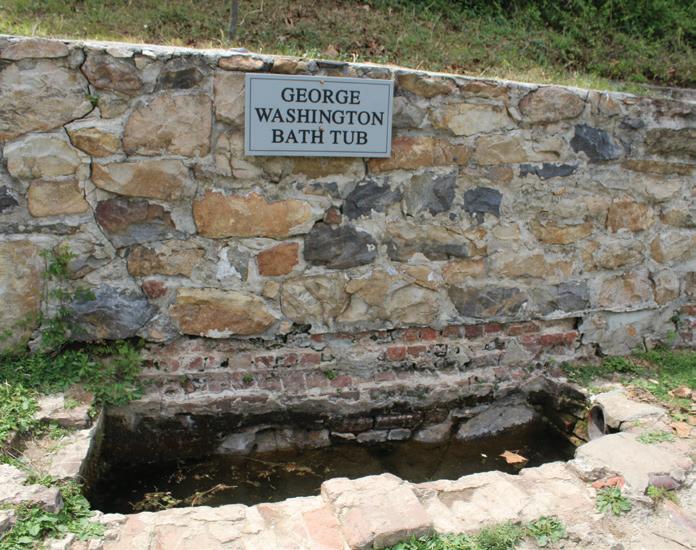
The Town of Bath, also known as Berkeley Springs, West Virginia, also turns 250 years old this year. The town was established as Bath, Virginia, in 1776, plotted on land belonging to Thomas Lord Fairfax by a 16-year-old surveyor George Washington in 1748; the municipal name remains Bath. Washington returned to the area several times and would “take the waters” like the Native Americans before him, in a cutout in the rock at the warm springs, which to this day is called George Washington’s Bath Tub. It sits next to another spot in the rock bubbling up which was Thomas Lord
Our tri-state region is a treasure trove of historic sites that can still be explored related to George Washington as a young surveyor for Thomas Lord Fairfax, the Washington family, and pre-Revolutionary, and postRevolutionary moments
Fairfax’s spring. Washington also planned to build a vacation home in Bath, but that home was never built.
On a similar note related to his planned house, east of Berkeley Springs off the old Warm Springs Road (W.Va. 9) is Spruce Pine Hollow, between Hedgesville and Bath/Berkeley Springs. Edward Rumsey, brother to steamboat inventor James, had a sawmill on the Meadow Branch of Sleepy Creek. In 1784 he was to fill the order of lumber for Washington’s Bath home, but catastrophe struck. His sawmill burned.
The Father of Our Country also visited the area on which now stands Coolfont Resort. Washington liked the view of the valley and Cacapon River from high up on Cacapon Mountain. A similar view can be found easier at the Panorama Overlook. A plaque marks this spot as one of those on the Washington Heritage Trail, which passes through the three counties of the Eastern Panhandle, West Virginia, of Morgan, Berkeley, and Jefferson, from Harpers Ferry to Paw Paw. Visit washingtonheritagetrail.com
Washington remained in contact with this Potomac River region throughout his life. The late John Douglas, editor of the Morgan Messenger, wrote a book in 2002 about Washington in this area, titled George Washington & Us.
In an interview I did with Douglas in 2005 for the book’s second printing, he explained that in the 1980s, a local attorney came
to him with Washington diaries and said Douglas ought to do something with them.
“I printed excerpts,” Douglas said. “Later, it became a more extensive article series for the 250th anniversary of Washington’s first visit to Berkeley Springs. People wanted back issues, even readers from out of state. There was enough interest to put it into book form.”
Douglas had said in 2005, he liked finding the personal side to Washington. It was fascinating finding out how Washington “dealt with the mundane side of life. When he came here, he first made sure he was well stocked with food. He would buy a half a beef. He’d go to a place to have his horses boarded. He kept meticulous account books.”
Personality-wise, he said Washington could be a little indecisive. “During the French & Indian War, there was an uprising in Winchester. He actually executed some deserters and let the others go. He arrested rebellionaires during the Whiskey Rebellion (western Pa.), and gave two stiff sentences while the others were released.”
The local history of the region is intertwined with Washington and others who became notable in the French & Indian War as well as the American Revolution.
Daniel Morgan, Morgan County, Va./W.Va.
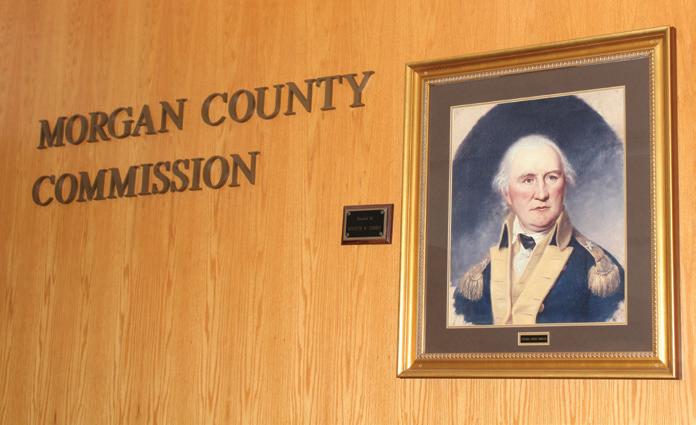
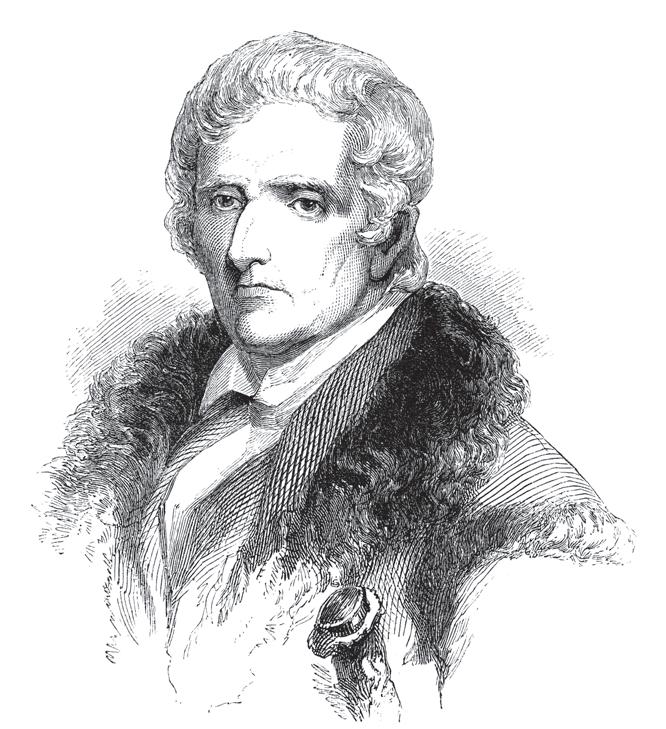
Morgan County, West Virginia, is named after Revolutionary War General Daniel Morgan, born in New Jersey and who died in Winchester in 1802. This frontiersman served as a wagoner for the British during the French & Indian War; as a captain he led a company called “Morgan’s Riflemen” in the Beeline March from Virginia to Boston area in 1775, with 98 men making it in 21 days. He is best remembered for his decisive tactical victory at the 1781 Battle of Cowpens in South Carolina. He is mentioned in Ken Burns’ The American Revolution and even in the Starz TV series Outlander. He was known for his innovative use of combined infantry, militia and cavalry against the best of British forces. He formed and commanded an elite frontier rifle corps known for their deadly accuracy and distinct American hunting shirts. This unit famously harassed British flanks at the Battles of Saratoga and Siege of Boston. Following the Revolutionary War, Morgan
returned to his estate in Winchester. He later led the Virginia Militia to help put down the Whiskey Rebellion in 1794 in western Pa., while Washington was President. Morgan was then promoted to major general. He was later elected to the United States Congress as a Federalist. Morgan died in 1802 at his daughter’s home, and it is located on Amherst St. in Winchester. His former plantation home near Boyce, Va., also called Saratoga, is privately owned.
Berkeley County, Jefferson County
Morgan Morgan arrived from Delaware in 1728. He was the state’s first licensed tavern keeper and builder of its first public road. He built his cabin between 1731 and 1734 on 1,000 acres acquired through a King’s patent. His six sons and several grandsons served in the Revolutionary War. While home on leave, his grandson James was captured by several Tories who tied him to the spring house door, and by candlelight, shot 17 musket balls into him in front of his wife and children. The Morgan Cabin holds various events and can be toured to this day.
The first section of the Snodgrass Tavern was built in 1742, and it sits along Back Creek on present-day W.Va. 9 near Hedgesville. Washington once stayed there. Washington also occasionally worshipped at a small Anglican log meetinghouse known as Hedges Chapel before 1750.
It was at the site of the current brick Mt. Zion Episcopal Church, built in 1818. In 1774, just before the Revolution, George Washington leased 125 acres in Berkeley County, Va., to William Bartlett for planting 100 peach and 100 winter apple trees in Barrens of Bullskin, in the Kabletown area. The area later became Jefferson County when it formed in 1811. The business was regarded as the beginnings of horticultural history of Berkeley County, known for its apple orchards for generations.
News traveled much slower in the 1700s. The “shot heard ’round the world” didn’t make news in Virginia for nearly a month from April to May 1775. On May 10, citizens of Mecklenberg (near Morgan’s Spring at what is called Shepherdstown now) learned of the fights between colonists and British soldiers at Lexington and Concord. On June 14, the Continental Congress in Philadelphia declared that “six companies of expert riflemen, be immediately raised in Pennsylvania, two in Maryland, and two in Virginia.”
In July 1775, the legendary Beeline March of Berkeley County Riflemen to Cambridge, Mass., near Boston included not only Captain Daniel Morgan’s men but Captain Hugh Stephenson’s 100 men who started from Morgan’s Spring. This unit started from what’s now Morgan’s Grove Park, and made the 600-mile trip within 25 days in response to George Washington’s call for soldiers at the start of the Revolution. In 1989, the Secretary of the Army designated Morgan’s Grove as the birthplace of the United States Army.
The oldest home in Martinsburg is Aspen Hall. George Washington once attended a wedding at Aspen Hall. According to published historical accounts, Aspen Hall was built in stages, as were many 18th and 19th-century homes. The first portion of the house was a 20-foot by 20-foot “fortified stone home,” 2½ stories tall, in coursed rubble limestone built in 1745 by Edward Beeson I. The Georgian block of the house was built by Edward Beeson II, a wealthy Quaker and miller. The property includes the blockhouse of Mendenhall’s Fort, built about 1755 by John Mendenhall, brother of Edward Beeson I’s widow. There was a wooden stockade that extended from the blockhouse to surround Mendenhall’s and Beeson’s homes. Mendenhall’s home was
A portrait of Brigadier General Daniel Morgan, painted by Charles Willson Peale around 1794, hangs outside the Morgan County Commission room in Berkeley Springs.
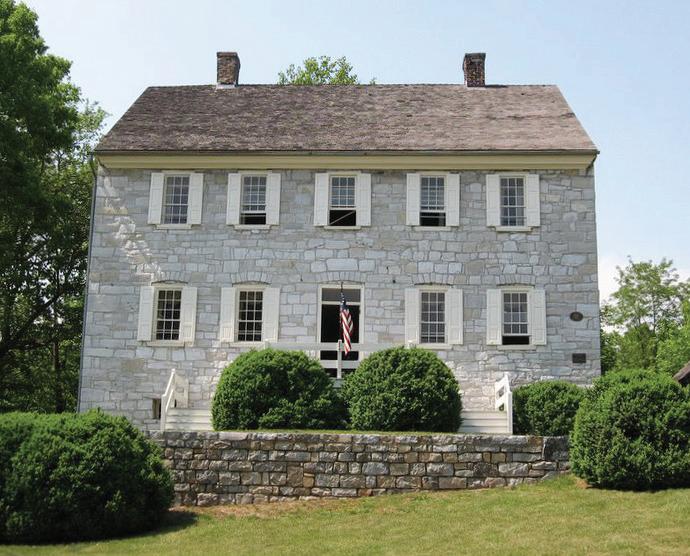
The General Adam Stephen House in Martinsburg
also built in 1755, making it the second oldest house in Martinsburg.
Then-Col. George Washington garrisoned troops at Mendenhall’s several times. When he was a candidate to the House of Burgesses, Washington attended a wedding at “Mendenhall’s Mill” in 1761.
Berkeley County was formed in 1772 from Frederick County, Va. Martinsburg was founded in 1778 during the Revolution by Major General Adam Stephen and became the county seat. The first courthouse was completed in 1779.
Martinsburg founder General Adam Stephen and William Darke were delegates for Berkeley County to the Virginia Convention to vote to ratify the new U.S. Constitution June 25, 1788. The village of Darkesville south of Martinsburg is named for Darke. Stephen fought in the Battles of Brandywine in southeastern Pa. and Trenton, New Jersey. The General Adam Stephen House in Martinsburg is the restored memorial to the town’s founder and is open April through December, holding special events throughout the year.
In 1796, President George Washington signed off on the purchase of land for a federal armory and arsenal in Harpers Ferry, Va., then part of Berkeley County and now in Jefferson County. Washington selected the site on 125 acres bordered by the Potomac and Shenandoah Rivers and purchased from heirs of Robert Harper for $7,016.66.
George Washington Family Connections & Other Notables
Of the notable Washington family homes in present-day Jefferson County, Happy Retreat and Harewood are two. Happy Retreat is the estate built by Charles Washington, founder of Charles Town, and George Washington’s youngest brother. Listed on the National Register of Historic Places, the property comprises an 18thcentury mansion, a stone and brick kitchen/ smokehouse, and an octagonal wooden schoolhouse. Charles Washington and his family moved to Happy Retreat in 1780 and set aside 80 acres to form Charles Town, officially founded in 1786.
Harewood was the home of Samuel Washington, another younger brother of George Washington. The house,
constructed of native gray limestone, is believed to have been designed by colonial architect John Ariss and was completed in 1770. In 1794, Dolley Payne Todd married James Madison at Harewood. She was the sister of Lucy Payne Washington, who was married to Samuel’s son George Steptoe Washington who’d inherited Harewood. The marble mantelpiece in the room was a gift to George Washington from the Marquis de Lafayette.
Other estate homes were built by Washington family members in the 19th century like Claymont Court and Cedar Lawn.
Western Pennsylvania
After the Revolution and the formation of the United States of America, Washington returned to the region during the rebellion of distillers over a whiskey tax. The Whiskey Rebellion happened in nearby in Pennsylvania. Washington’s Whiskey Rebellion headquarters cabin still stands in Cumberland.
Due to debt incurred by the Revolution, Treasury Secretary Alexander Hamilton suggested a whiskey tax. Washington was opposed to Hamilton’s suggestion, and in 1791, Washington journeyed through Virginia and Pennsylvania to speak with citizens about their views. Local officials were enthusiastic, and it was passed by Congress. Protests began popping up and incidents escalated. The residents of western Pennsylvania refused to pay. Washington sent a peace envoy, but the efforts failed. Troops were dispatched in 1794, many of whom were Revolutionary War veterans.
Maryland
Fort Cumberland, built in 1754 at the confluence of Wills Creek and the
Potomac River, was located in what is now Cumberland, but then was called Mount Pleasant. The fort was important in the early years of George Washington, while he was first a land surveyor and later a military man — before the American Revolution.
Washington was an officer in the Virginia Militia and wanted a military career but never received a British officer’s commission. Little did he know where his future would take him.
“Washington moved from fort to fort, but spent a great deal of time in a little cabin in Cumberland,” says Washington historical interpreter John Koopman III. Koopman has been researching Washington for years and began actively reenacting in 2006. He can be seen in a film at Mount Vernon, has worked with the National Park Service, and in 2015, wrote George Washington at War-1776.
“In Washington’s presidency, it’s a little known footnote,” Koopman says. “But he was the only President to put a uniform on and lead troops. Word got back to them that an army of 13,000 and Washington were coming. So, the people decided not to go up against him. He was definitely respected and even loved. But he was also feared.”
After winning the Revolutionary War, George Washington hoped to go home to Mount Vernon and be a farmer again, but his country still needed him. He presided over the Constitutional Convention, and became our first President from 1789 to 1797, setting the precedent of establishing the title of Mr. President. During that time he actively handled the 1794 Whiskey Rebellion, proving the federal government had the power to enforce its laws, took the new nation through a debt crisis due to the war, organized the first presidential cabinet, created a co-equal branch of governmentand set the precedent of a president only serving two terms.
In 1798, amid tension and naval skirmishes with France, President John Adams reluctantly brought Washington back to public life, commissioning him as the commander of the newly formed U.S. Army. Though he never took the field, he was responsible for organizing the military structure.
Koopman’s favorite quote from our first President? “Perseverance and spirit have done wonders in all ages.”
LYNN STRADER
The General Adam Stephen House in Martinsburg
7960 Molly Pitcher Highway, Shippensburg (2 miles south of Shippensburg on US Rt. 11)
Events & Celebrations
Washington County
Compiled by
Tricia Lynn Strader
While many heads will turn to national events held in Washington, D.C., for those wishing to stay closer to home, many activities are planned this summer.
Find events for Washington County at washco-md.net/250-years and at hagerstownmd.org/1882/Hagerstown-250th Many events are planned for June and July.
The BOONSBORO INDEPENDENCE DAY CELEBRATION is a hometown celebration featuring music and a firework show on July 3 in Boonsboro at 5 p.m. with fireworks at 9:30 p.m. mdmountainside.com/maryland-250.
The WASHINGTON COUNTY 250TH & 4TH OF JULY CELEBRATION signature event features live music by the Journey tribute band ESC4P3, a touch-a-truck experience, family fun zones, local food trucks, and a dazzling fireworks finale on July 4 at Washington County Expo, 7313 Sharpsburg Pike, Boonsboro.
The STARS & STRIPES STREET FESTIVAL in Hagerstown has local cultural organizations, family activities, live music, and the unveiling of a time capsule from the nation’s bicentennial on July 9.
West Virginia
West Virginia is celebrating America 250 with a statewide ALMOST HEAVEN CELEBRATION (July 2–5). The West Virginia State Capitol Complex in Charleston is hosting a massive four-day patriotic celebration. It features the world’s tallest portable Ferris wheel (the America 250 Wheel), 3D nightly light projections on the Capitol dome, and living history exhibits.
Town of Bath (Berkeley Springs) plans a big 1776-2026 250TH EVENT on July 4 in the town square at Berkeley Springs State Park. Regina Amacha will perform “The Star Spangled Banner” and the Nighthawks will perform. The town’s Summer Concert Series will have special events. For details, check townofbathwv.gov/volunteer-project/ town-of-bath-ontrac
In Berkeley Springs, locals say even the coffee can be “revolutionary.” Another ongoing activity is THE REVOLUTIONARY COFFEE TRAIL, inviting visitors to explore the charming streets of the Berkeley Springs where even George Washington once came to relax and recharge. The idea is that great coffee starts with great water, and since it’s 98% water, plus Berkeley Springs has great water from the healing warm
springs, this is a great place to explore. Collect stamps, discover new favorites, and enjoy the journey “through a town where history flows as freely as the coffee.” Complete the trail and earn a commemorative mug.
“We will have Bath’s 250th anniversary on December 6,” says Breauna Farris of Berkeley Springs. “We have Bath 250th Anniversary T-Shirts and banners for sale. We also recently had Berkeley Springs water privately labeled and distributed around town. Upcoming events include a scavenger hunt that we are finalizing, our annual RUBBER DUCK RACE at Berkeley Springs State Park on July 4, and sponsorship of the Summer Concert Series. In August, we will host the Renew and Realign – Nourishing a Woman’s Soul Wellness Retreat.”
Another Berkeley Springs community event is planned for the afternoon of July 24 in Berkeley Springs State Park as an honor to veterans, law enforcement and emergency responders, with patriotic and gospel music and inspirational messages. Organizations involved are the Morgan County Republican Club, FFA, Boys & Girls Club with games for children, and other groups.
MARTINSBURG-BERKELEY COUNTY CVB is at travelwv.com. Take a driving tour of the entire area with the Washington Heritage Trail, or a walking tour of Martinsburg with information available from the Visitor Center located in the Belle Boyd House at 126 E. Race St.
THE BERKELEY COUNTY YOUTH FAIR (Aug 1–8): will operate under the patriotic theme “Youth Strong, America Proud” to celebrate the nation’s milestone.
Jefferson County, W.Va. CVB can be found at wherealmostheavenbegins.com and more can found at the America 250th Jefferson County, WV Facebook page. The county has planned a special concert event with the famous Oak Ridge Boys at the Event Center at Hollywood Casino at Charles Town Races. The show kicks off on July 4 at 7 p.m. Tickets and event details can be found on SeatGeek. AMERICA 250 FIREWORKS take place with a bigger display than usual at the AMP at Sam Michaels Park. Gates open at 6 p.m. with the show starting around 9:15 p.m. Admission and parking are free. Look for latest updates on the The AMP at Sam Michaels Park Facebook page.
Cumberland, Maryland and Allegany County
The PASSAGES THROUGH TIMECELEBRATION OF MARYLAND 250 is an allday community festival at Canal Place on July 4. This free event includes historical local train rides on the Western Maryland Scenic Railroad, the dedication of a community time capsule, art displays, and free live entertainment.
The LEVITT AMP CUMBERLAND MUSIC SERIES is a free outdoor summer concert series at the Festival Grounds at Canal Place. Festivities will heavily incorporate the spirit of the nation’s 250th throughout the season.
A HOME OF THE BRAVE CONCERT is a free, family-friendly multi-church musical on July 5 at 3 p.m. at Cornerstone Baptist Church, combining original narration with actual diaries from American history and the Declaration of Independence.
Check out the full community lineup and find event locations at mdmountainside.com/ maryland-250.
Franklin County, Pa.
Shippensburg hosts a YANKEE DOODLE DASH 5K RUN & WALK on July 4 starting at 8 a.m. in Sippensburg Memorial Park. Online registration closes at 8 p.m. on July 3.
Chamberburg’s INDEPENDENCE DAY CELEBRATION kicks off at 3:00 p.m. in Memorial Park with food trucks, bounce houses, games/activities at the Aquatic Center, a fireworks show, and more.
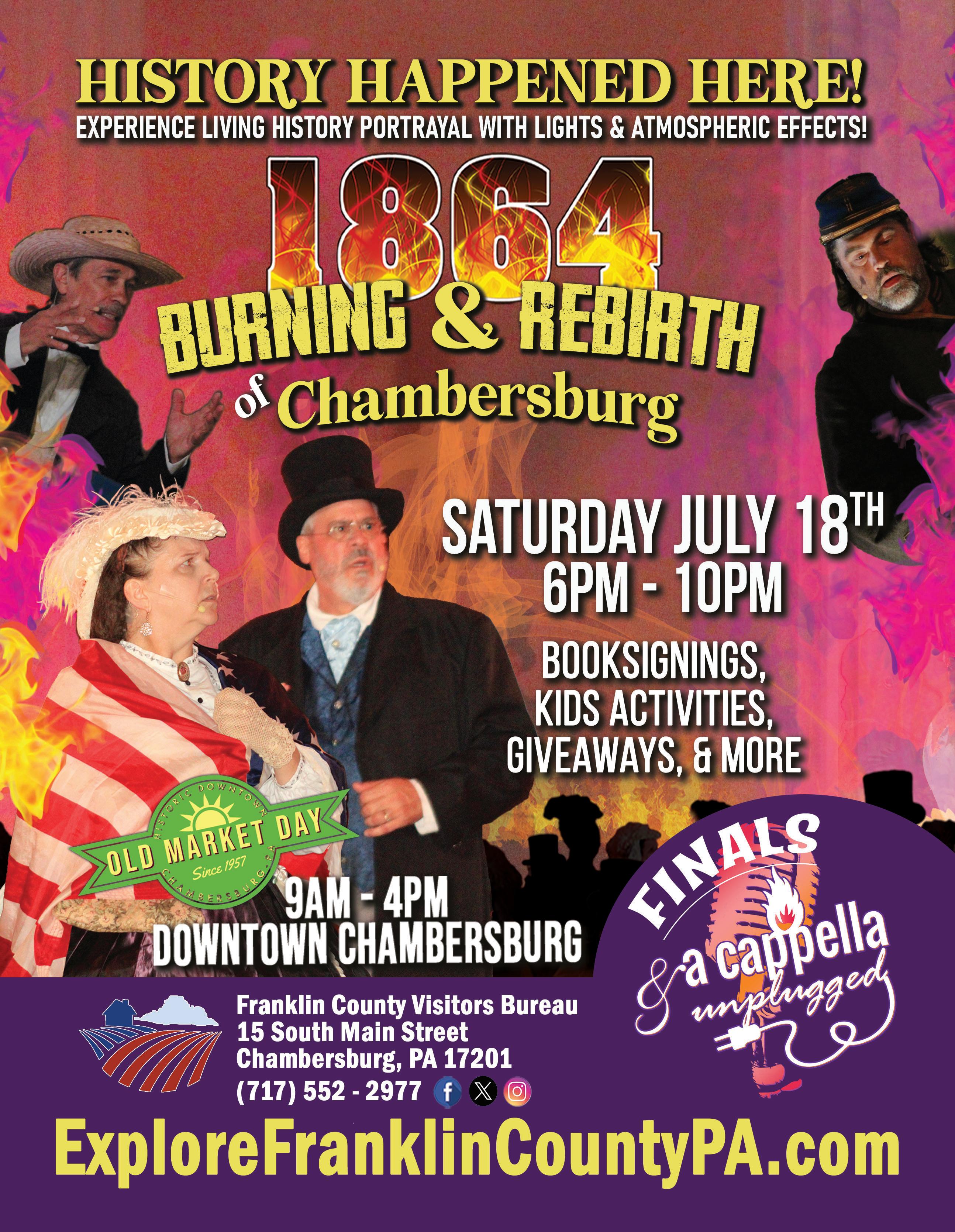
For a Civil War experience, check out 1864: THE BURNING AND REBIRTH OF CHAMBERSBURG on July 18 at 6 p.m. Commemorating the day that Chambersburg was held for ransom and then burned by the Confederate army, it’s a “living history portrayal with lights and atmospheric effects.”
See more at explorefranklincountypa. com/1864-burning
For an extensive calendar of all events, visit explorefranklincountypa.com
Other Locations
The websites freedom250.org and america250.org list national events and info.
From the Herald-Mail Archives
Boonsboro is undoubtedly one or the most picturesque of all towns in Washington County. Though not the oldest by far - nor yet the youngest - it has been endowed with a natural setting without peer. Located near the west base of the South Mountains, it occupies the focal point of topographical transition from rugged mountain steeps to peacefully undulating lowlands.
The choice of this site for a town was not accidental, of course. Two brothers, William and George Boone; had bought up the two tracts of extremely fertile land on which the town is now built, then known as “Beall’s Chance” and “Fellowship.” Tradition has it that the Boone brothers were members of Daniel Boone’s family, and that the Kentucky pioneer himself had originally lived in this section of Washington County, before pressing on to fame and fortune as a frontiersman in the Blue Grass State.
History can neither corroborate nor refute this legendary link with glory, to explain the name of “Boonsboro.” The answer lies sleeping in a weed-grown grave in the old Salem (Trinity Reformed) churchyard, where lie the mortal remains of the town’s founder, William Boone.
Little is known of the Boone family, other than that it was William Boone who formally laid out the town in 1788 and, oddly enough, named it “Margaretsville,” in honor of the wife of his brother, George. Like Elizabeth (Hager’s) Town, though, the undefinitive name soon evolved into “Margarette Boone’s-
Did
Once Live in the Boonsboro Area? Could Be!
And the Story of How Boonsboro Erected the World’s First Monument to George Washington
Ville,” and eventually was shortened to “Boonsboro.”
William Boone was to live out his lifetime in the town he founded, while his brother moved on to Reading, Pa. But even at the time of William Boone’s death, in 1798, Boonsboro boasted only five houses within its limits — his own farmhouse; the Eagle Hotel, operated by Pete Conn; Jacob Craig’s Place; Mrs. Short’s log cabin; and “a house at the spring.” There was little evidence in that day to indicate that in just three short decades Boonsboro would be recognized as an “important trade center for the Middletown and Pleasant Valleys.”
From the earliest days the residents of this village were deeply religious, each holding staunchly to his own beliefs but democratically respecting those of others. And, if it is possible to so characterize a population, the people were from the first, intensely impressed by and given to the physical manifestations of their devoutness. The cemeteries of Boonsboro, both church and public, became known throughout the state for their beauty and the painstaking care with which they were maintained. The people prided themselves in costly and attractive memorials — such as one granite monument in the town cemetery surmounted by an angel in marble, another graced with the figures of the Virgin and children, and many others, glorifying in memory the oldest families of the town. This fetish for monumentalizing that which they revere is pointed out as an explanation for an event which has given Boonsboro a unique distinction in history — being the first community ever to build a monument to the
Father of our country.
Though many more impressive monuments have been built to George Washington since then, it was in 1827 that the citizens of Boonsboro — workman, teacher, physician and schoolboy alike — marched to the summit of South Mountain to build with their bare hands, from the native rock at hand, the first monument to Washington. The feat was accomplished in one day — and that day, naturally, was the Fourth of July.
The original monument was 54 feet in circumference at its base and 15 feet high. The intention was expressed then to later raise the structure to a more commanding height of 30 feet, but it seems that this plan passed with the fervor of the moment. Nevertheless, it was so designed that an internal stairway led to the top, permitting a view of the most majestic landscape conceivable to the citizens of Boonsboro, including parts of three separate counties — one of them the Maryland county named for our nation’s first president.
The first monument to George Washington was destined to crumble into a meaningless jumble of rocks with the passage of years, until a later generation was moved to restore it to its original condition. No reconstruction could ever recapture the sublime joy of Boonsboro residents that July 4, however, when they trooped back to town flushed with the success of their mission. So imbued was every person with the task of the moment, reported a newspaper account, that “not one man returned home intoxicated.” This was phenomenal in, that day, because the Fourth was an annual occasion for alcoholic revelry.
This article originally appeared in a longer form in an August 1962 commemorative edition of the Daily Mail.
Williamsport ‘Might Have Been’ the Capital of the United States
Washington Made a Personal Inspection Tour of Town to Assess Its Advantages
From the Herald-Mail Archives
Williamsport is the town which might have been the site of our nation’s capital. Yet today, long after being formally denied this distinction, Williamsport, smiling demurely down the Potomac at the sprawling ant-hill which is known as the District of Columbia, she seems secure in her victory — the knowledge that she would have made a far more dignified, far more capable hostess for the House of State.
Williamsport was a latecomer in the family of Washington County towns, being founded after the Revolutionary War, but her lack of chronological precedence has been compensated for by an illustrious history.
To begin with, the town was founded by no less a personage than Gen. Otho Holland Williams, a hero of the war which established our nation’s independence from Europe’s apronstrings, and one of the best-known and most colorful figures of his day. Welsh by descent and of the third generation of his family in Maryland, young Otho was born in Prince George’s County in March of 1749 but, before the age of one year, had come to Frederick County (now Washington) when his parents acquired land and settled at the mouth of the Conococheague Creek. At 13, he was serving in the clerk’s office of Frederick County; by the time he was 25, he had entered the mercantile business in “Frederick Town.” One year after that, in answer to Congress’ appeal for volunteers, he was on his way to Boston and a lieutenancy in the Colonial Army.
A few years later, young Williams had worked up to the rank of brigadier-general before his 30th birthday.
Returning to civilian life in the brand new Republic of the United States of America, the youthful veteran settled in Baltimore,
where he was appointed collector of the port — which office he was to hold the remainder of his life. In 1786, however, shortly after his marriage to the daughter of a wealthy Baltimore merchant, he realized a boyhood ambition by purchasing the property formerly owned by his father at the confluence of the “Potowmack River and Conococheague Creek” — the tracts titled “Ross’ Purchase” and “Leeds.” Welding sentiment to practicality, in view of the land’s commanding position on the river, he proceeded to lay out his considerable acreage into a town. The act of incorporation had been easily effected the preceding November, “on the application of many citizens of Washington County” — all eager to see their favorite son return to this area, and equally eager to see a municipality named in his honor.
It was just four years later, in 1791, that the growing pains of the new federal government prompted a search throughout the land for a “suitable, permanent residence for the Congress.” In answer to a petition offering any acreage in this county which might be acceptable, President Washington made a
special trip to Williamsport, in order to personally assess the potential capital.
This visit in itself seems incredible, in view of the fact that Williamsport had been laid out only four years previously — and many prominent and populous cities already had been vieing for the capital distinction. True, the town had grown prodigiously, and was recognized as “bidding fair to be the first town on the river.” But, even with its strategic location on the Potomac and its innocent eagerness to be courted for the honor, it is doubtful if President Washington actually ever considered the town very seriously as a possible nest for the federal eagle. The petition from Washington County had been a sentimental summons, however, since it was the town founded by his good friend and wartime associate, General Otho Holland Williams, and the home of his brother, Col. Elie Williams — also of Revolutionary War fame. And for another reason, too, since the President could recall with pleasure having visited the area once before, nearly 30 years previously, during Braddock’s War, when the only dwelling in the area was the hut of a lone pioneer, Thomas Cresap.
Washington’s visit to Williamsport was nevertheless an auspicious occasion for the townspeople, and all entertained high hopes that it would presage the community’s perpetual identity with our nation’s most intimate history. Even Elie Williams, at whose farm “Springfield” the President stayed overnight on that momentous October 14, gave vent to exuberant predictions on the outcome of the visit. But his brother, in Baltimore at the time, entertained no such optimism for the future of the town he had founded. He filed a letter from Elie, which had included a glowing description of the President’s visit and his own rose-colored speculations, with the cryptic notation: “All a hum!”
The Whiskey Rebellion Left Scars, History on Washington County
From the Herald-Mail Archives
The great economic upheaval that was the Whiskey Rebellion left its scars as well as its colorful history on the face of Washington County.
Seventeen Ninety-One became the year of the hated “Excise Tax,” the controversial source of revenue that placed a tax on whishkey or an alternative one upon the still. Whiskey was a staple of Washington County, and in the surrounding area. It was often used as money ‚Äî a gallon of rye whiskey being equal to a shilling ‚Äì and was widely more acceptable than currency, which was not only scarce, but a trifle unstable as well.
Transport Problem
The freight transport in this period of history was difficult too. The price of transportation for crops was exhorbitant to most farmers, and only through the profits made by whiskey, which was easily transportable, could they see their way clear in conquering the overhead that was eating up their profits while getting their products to market. Consequently, when the government, sorely in need of funds for governmental purposes, decided on this method of taxation, a great howl of protest welled up from the parties concerned.
Feeling that they had been dealt an indignity, the “Whiskey Boys” organized. They held conventions, promoted chaotic demonstrations and contacted influential friends in all parties of Congress and in the legislature of every state.
Reported by T.J.C. Williams, in the
History of Washington County, Maryland, “Governor Mifflin of Pennsylvania appointed commissioners to treat with them, and whilst he and his commissioners were “treating,” the President of the United States issued his proclamation warning the insurgents to disperse and submit to the law and called for twlve thousand volunteers.”
Thus civil turmoil had officially been instituted.
Tied to Trees
Meanwhile, back in Western Pennsylvania, the revenue collectors, who aspired to such high hopes as getting tax money from the angry hordes of “Whiskey Boys,” there, were undergoing severe treatment.
Even those who aided the collectors in any way were tarred and feathered and bound to trees, be they friends or not.
If by chance, someone told of the whereabouts of a certain still, and gave any other information that might help the federal
government curb their demonstrations, his home was burned, and, if lucky, he escaped with his life.
Disconcertingly enough, this rugged campaign found its way into Washington County and reached Hagerstown. Among rabble of the town, the emissaries sent by the Whiskey Boys found easy marks for their tales of woeful misuse.
Newspapers which told the true story of this misunderstood law were seldom unfolded by the unenlightened miscreants, who opposed it with such violence.
Troops Raised
Unwilling to take the situation lying down, the patriots made their move against the whiskey rebels. In the columns of the Washington Spy, the only newspaper published west of the Blue Ridge Mountains, it was announced that Henry Gaither had been appointed by the Governor as commander of the levies raising in the state for service against the western Indians, with Captain Lewis and Price to head two of the companies. And so it was that for four years, Hagerstown was a camp and recruiting station.
These troops were also to be used to fight the government side of the Whiskey Rebellion, for a salary of $8 a month.
Troops Pass Through
Troops from various parts of the country passed through Hagerstown, and thus caught up in the interest of the western campaign the whiskey tax issue was, for a short time, quelled, as the countians participated in such lively revelies as mock battles between “regulars and savages.” And while
This article, written by Sandra Miller, originally appeared in a longer form in a November 1962 commemorative edition of The Morning Herald.
the troops were camped in Hagerstown, there was usually a great deal of fun and games.
But not so for long. The troops returned to find a verbal combat reignited in the letters column of the Spy. “A Lover of Order” had raised inflammatory response to a letter of his, lambasting the rioters in the whiskey issue, and within a short time, a barrage of agreements and curses poured in, prompting the publishing of the President’s message to the rioters.
The following week, Captains Daniel Stull, Robert Douglas, John Geiger, John Lee and Casper Shaffner asked their companies to convene at the court house, and Captain Jaboc Schnebley called for volunteers to form a company of light horse.
There was a great deal more trouble further west in Pennsylvania, to which point a number of men from each of the companies of militia had been drafted into a body to put down the disturbances there.
Riot in City
This draft was the cause of the riot in Hagerstown, which was first assigned as being the rabble of the town, and dismissed, but it became increasingly more evident that the fever was spreading. It finally grew to formidable proportions.
To the cool-headed onlooker was disclosed the fact that the mob was not so prepossessed with the cause at hand as with taking vengeance against any of the private citizens or officials against whome any one of them had a private grudge.
It was a notable fact that there were certain leading citizens who had somehow inspired a considerable mount of animosity.
Before the rioting began, John Thompson Mason had delivered a violent speech to the participants, hoping to instill in them a deeper understanding of the excise tax, and what it meant. He concluded by asking the rebels to lay down their arms, but he met with little sympathy.
So, as was customary among the whiskey boys, they erected liberty poles in imitation of the French Revolutionists.
One pole was painted in the Market House. Colonels Sprigg and Shryock, along
with Major Price, attempted to stop them, by threatening their lives, but to no avail.
The occasion that finally invoked real action was the liberty pole’s disappearance. It was supposed that it was cut down secretly by one of the rioters who had erected it, knowng that the blame would fall on the officials, and thus gave the whiskey boys a dubious “reason” for “doing harm to certain prominent citizens.”
The rioters then put up a handbill in the Market House written in the German language, and ordered that the liberty pole be remounted, at the hazard of the lives of Adam Ott the Sherrif, Henry Shrynek, Rezin Davis, William Lee, Benjamin Clagett, Nathaniel Rochester and Josiah Price, whom the rioters held in detestation because of their part in supporting the government decision, and for personal reasons.
In view of this uproar, the citizenry decided to take things into their own hands. They armed themselves, patrolled the streets, and sent detachments out into the country to arrest rioters. Captains Lee and Captain Schnebley took a prominent part in these proceedings.
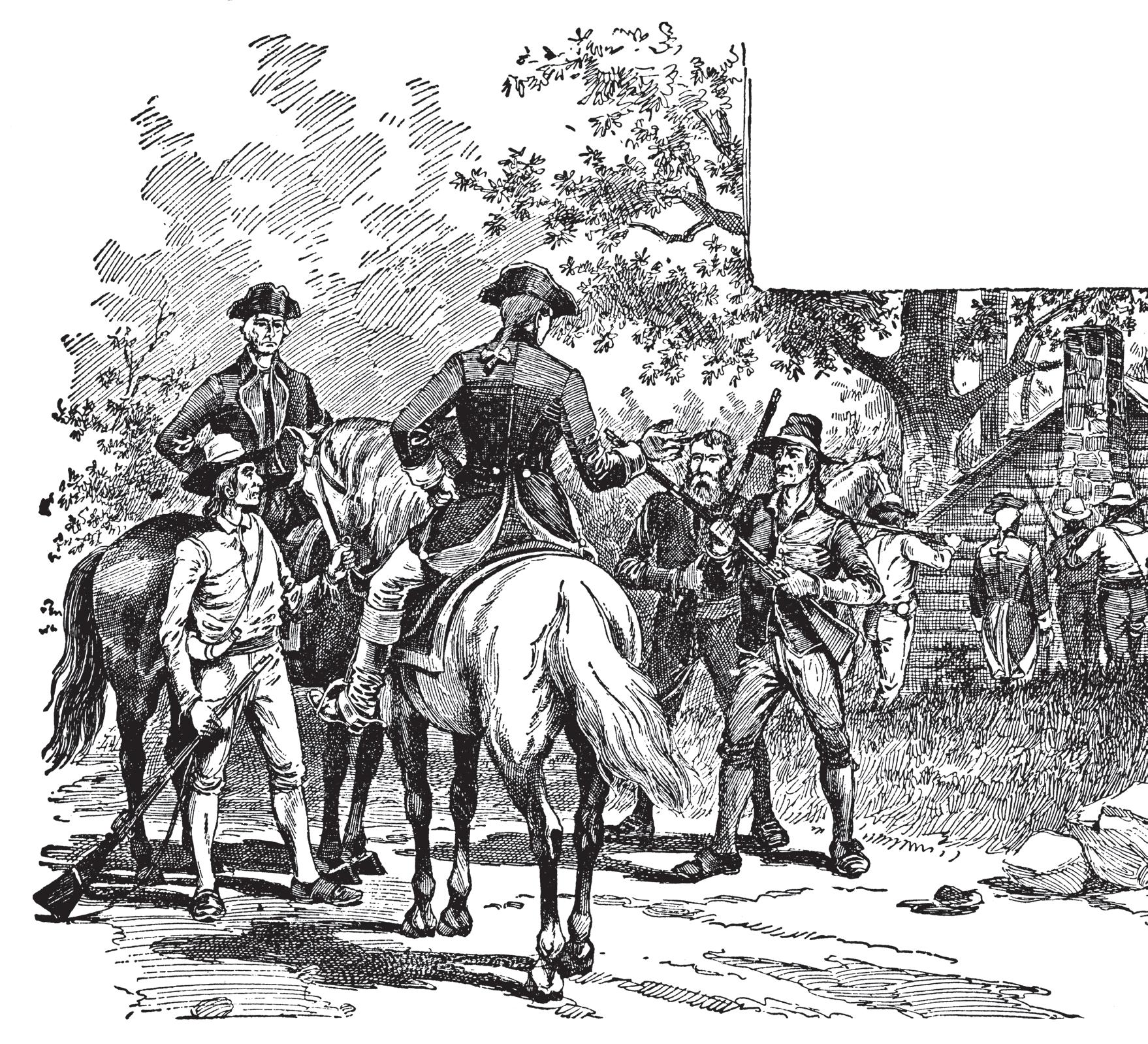
19th-century etching depicting rebels confronting tax collectors during the Whiskey Rebellion in Pennsylvania.
Riot Put Down
Strategically, General Bailey arrived in Hagerstown at the head of 320 troops, 70 of them mounted. They set about the task of squelching the rioters for once and for all, meeting with little opposition from the rebels, whose spirit, according to Williams, “was probably of that ephemeral kind which is inspired by whiskey fresh from the stills.”
The whiskey boys surrendered tamely when called upon, in the face of strong forces. On one occasion, sixteen of them gave themselves up without a struggle to five cavalry men.
Realizing at last the extent of their misdemeanors, they begged for mercy in most instances, pleading ignorance of the principles involved.
Judge Craik investigated them and put many up for bail.
Adam Ott had, in the interim, imprisoned many of those that he had captured within the walls of his own house, at the northeast corner of Franklin and Potomac Streets.
And so, the Whiskey Rebellion ended.
How to manage multiple medications
Metro Creative
Polypharmacy, or the practice of managing multiple medications, is a part of life for a significant percentage of seniors. Many prescription and over-the-counter drugs are essential for maintaining health and managing chronic conditions. However, the chemical complexity of mixing so many drugs can lead to dangerous outcomes if one isn’t careful.
Older adults take more medications than any other age group. A report conducted by Age Wave and The John A. Hartford Foundation found that the average senior takes four medications, but more than 15 percent take eight or more. Some medications can create further conditions or worsen existing conditions. Data from the Agency for Healthcare Research Quality show that 15.9 percent of older adults use inappropriate medication.
Structured medication management is essential for seniors’ safety. Here’s how to safely navigate taking multiple medications at once.
• Conduct a medication audit. Take all of the medications and supplements you use to a primary care physician or pharmacist to discuss potential interactions and if any prescriptions can be canceled. Research from Clarest Health indicates that patients taking five to nine medications have a 50 percent chance of experiencing a significant adverse drug event.
• Talk about deprescribing. Speak with a doctor about the process of tapering off medications that may no longer be necessary or are resulting in more harm than benefit.
• Use one pharmacy. Always fill prescriptions from the same pharmacy. Modern systems are equipped with safeguards to flag certain drug-to-drug interactions automatically. Also, the pharmacist is often an underutilized resource. Ask questions and figure out if he or she can conduct a medication review to ensure a regimen for taking medications is as complication-free as possible.
• Utilize smart systems. Rely on smart pill dispensers that unlock only at the correct time to manage high-risk medications. Other pill organizers and digital apps can set reminders to take medications at the appropriate times. An app like Medisafe will notify family members if a dose is missed.
• Link doses to actions. Make medications
an automatic part of your day by linking them to activities, like morning pills taken with a cup of coffee or evening pills when you eat dinner.
• Use visual cues. Keep pill organizers in a visible spot so you remember to take the medication.
• Ask for help. If managing medications has become a tall order, ask a friend, family member or a visiting nurse or aide to assist with medication management.
• Update your list. Always maintain a current list of the medications and supplements you are taking, and bring it along to every new medical appointment for further review.
Managing medications becomes more complex as seniors typically take multiple drugs and supplements to maintain health.
Did you know?
A significant percentage of American children are being raised by a grandparent. According to data from the U.S. Census Bureau, 2.74 million children in the United States were being raised by a grandparent in 2021. The USCB notes that such children were living with at least one grandparent who was responsible for most of their basic needs. Grandparents also play a notable caregiving role in Canada, where Statistics Canada reports one in five unpaid caregivers in 2022 reported providing roughly 15 hours of care each week to a grandchild or grandchildren over the previous 12 months. Though the figures from the USCB suggest a growing number of grandparents have taken on caregiving roles in recent years, data indicates that such increases are generally applicable only to older grandparent caregivers. Indeed, the USCB reports that the number of grandparent caregivers between the ages of 30 and 59 declined between 2009 and 2021, while the number of grandparent caregivers ages 60 and older increased during that 12-year period.
Innovations That Transformed How We Eat (Since 1776)
WRITTEN BY SHAUNA C. HENLEY, PhD
Happy 250th Birthday, America!
I can’t stop thinking about what Americans in 1776 would think about our food and food system if they were alive today. Could they imagine the power of the internet to influence what we eat? The food production on a mass scale? And the fact that you do not have to grow or hunt for your daily meals?
In honor of our country’s birth year, I want to share some key technologies that transformed America, and invite you to learn more about the foods, technologies, and Maryland’s role in helping feed a growing nation.
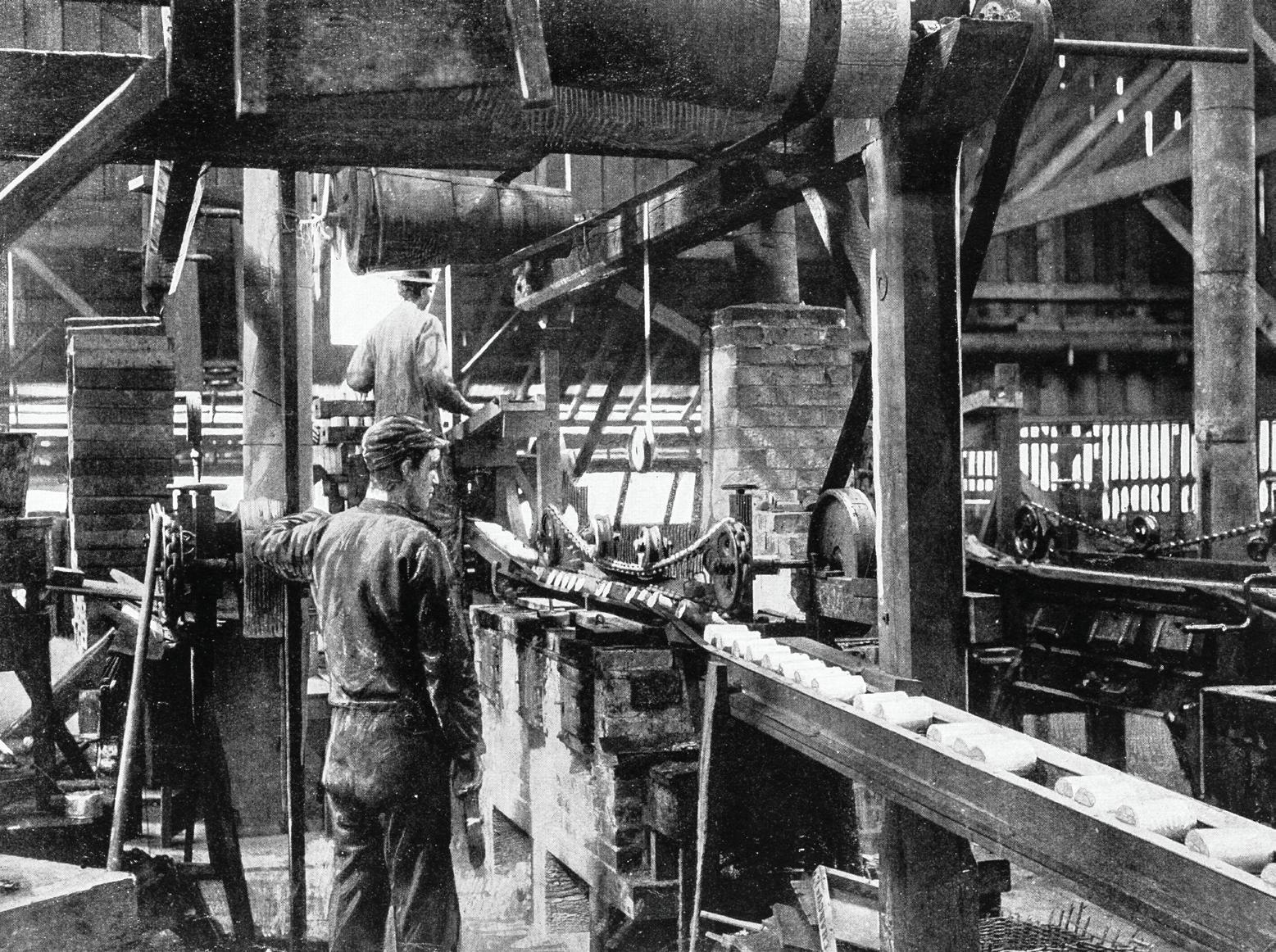
A 19th century salmon cannery in Britain
CANNING
Freezing, dehydration, and even freezedrying have ancient roots, whereas preserving food in jars is a relatively “new” technology, developed around the 1800s. America’s first cannery opened in 1812, but Maryland left a legacy in canning and shipping healthy foods across the country.
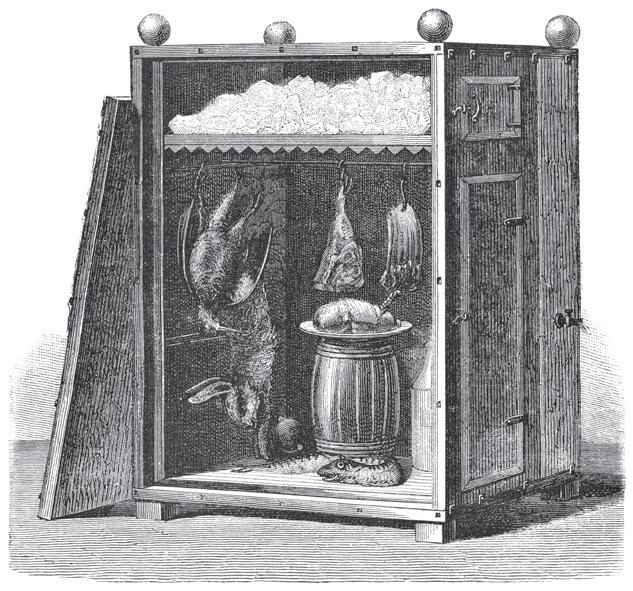
ELECTRICITY LEAD TO REFRIGERATION
To keep food cold would have been a luxury in 1776, and even for some Maryland households up until the 1960s.
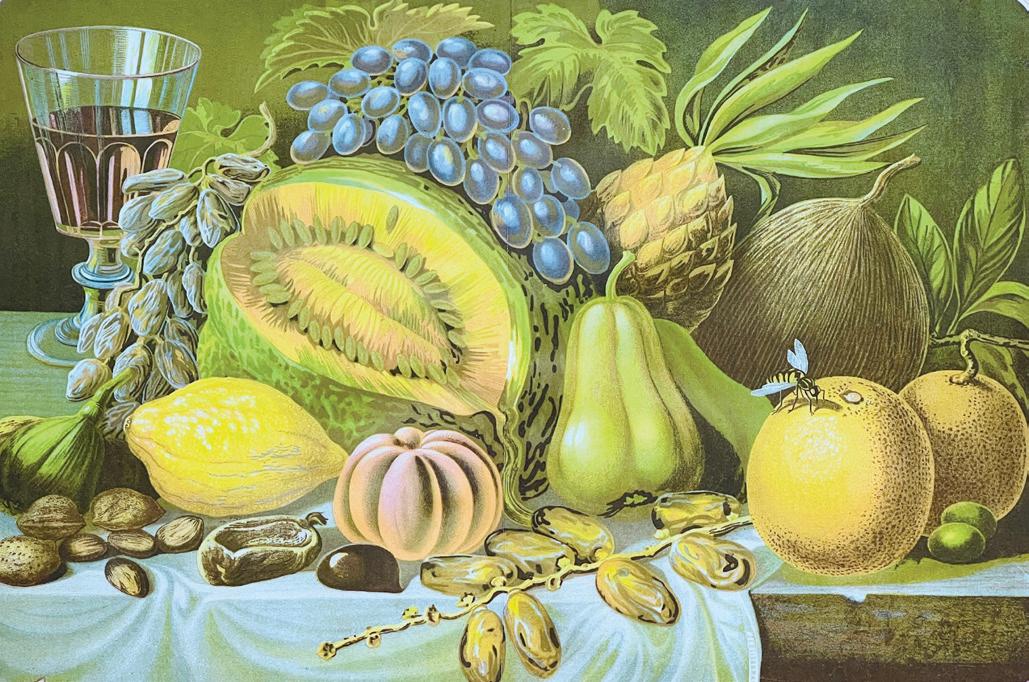
UNDERSTANDING PLANT BREEDING
Have you ever wondered if the seeds and pits in fruits and vegetables were bigger two centuries ago? Or if the skin was thicker than what we have today?
From an art history perspective, take a look at the characteristics of certain fruits in the oil paintings and watercolors from the 1700s and 1800s. Think you can find a seedless watermelon?
LEARN MORE
If you’re interested in these topics, here are some educational references to start your food journey into the past.
Johnson and Wales University: Culinary Arts Museum jwu.edu/culinarymuseum Monticello monticello.org
Smithsonian Museum: Food Transforming the American Table
americanhistory.si.edu/ explore/exhibitions/food
Jon Townsend’s YouTube Channel youtube.com/@townsends
US. Department of Agriculture National Agricultural Library: How Did We Can? nal.usda.gov/exhibits/ipd/ canning/
USDA of Agriculture Pomological Watercolor Collection. Catalog of American Fruits & Nuts. atelier-editions.com/products/an-illustrated-catalogof-american-fruits-nuts
Shauna C. Henley, PhD, is a Family & Consumer Sciences Extension Agent, and Affiliate to the Department of Nutrition & Food Science at the University of Maryland Extension
Leadership Washington County Celebrates 40 Years of Impact
Written by Tara Bockstanz
For nearly 40 years, Leadership Washington County has been bringing people together to learn more about this community we call home, build meaningful connections, and step into leadership in ways that truly make a difference.
As we prepare to celebrate our 40th year during the 2026-2027 program year, we are not just looking back at where LWC has been. We are looking ahead and asking an important question: how do we make an impact for the next 40 years?
Leadership Washington County exists to develop and inspire excellent leaders dedicated to serving the community and shaping its future. Since its beginning in 1987 as Leadership Hagerstown, and later becoming Leadership Washington County, the program has graduated more than 1,000 participants who continue to serve across our community as nonprofit leaders, elected officials, board members, volunteers, business leaders, mentors, and advocates for Washington County.
Our 40th anniversary year will be a celebration of that legacy, but it will also be a year of renewed energy, connection, and investment in what comes next. Throughout the year, LWC will host special events and opportunities for graduates and community members to
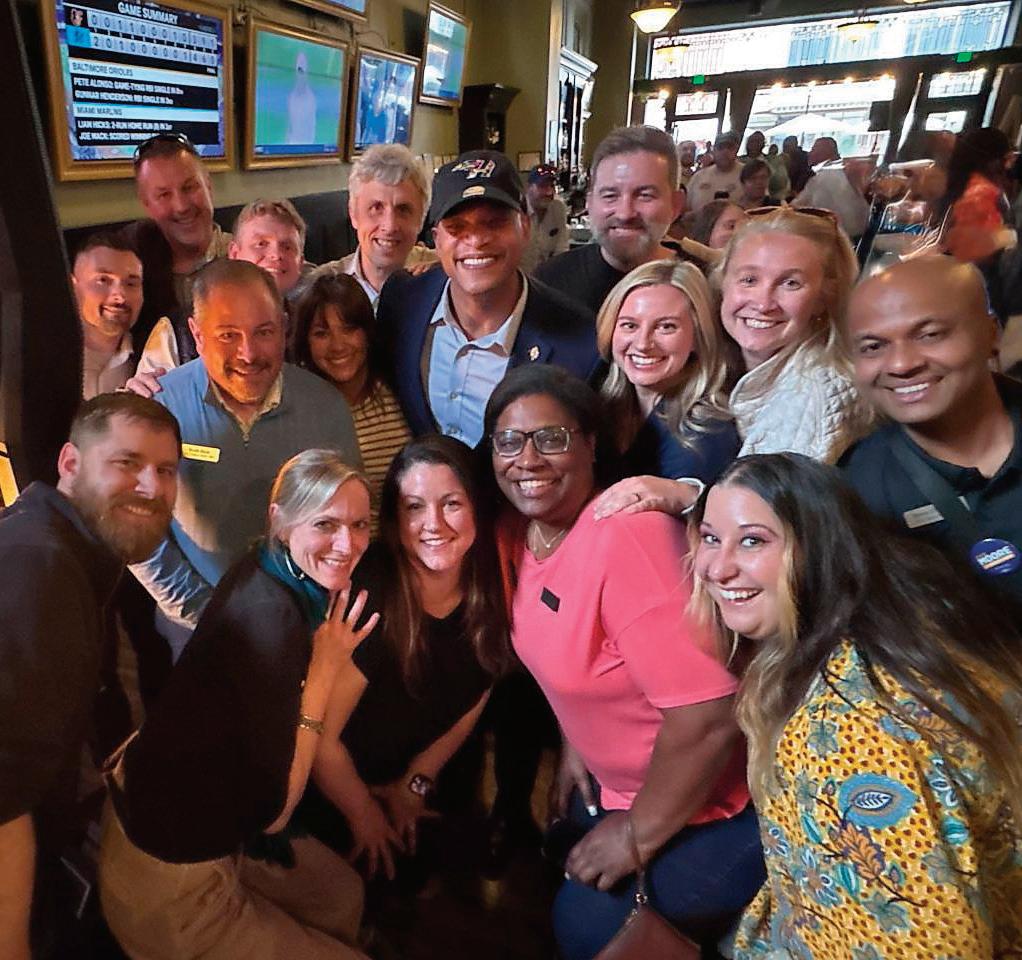
Class #39 meets up with Governor Wes Moore.
reconnect, celebrate, and support the mission. Plans include our 40th Anniversary Kickoff and Class #40 Welcome Reception, our Farm to Table Dinner, Graduate networking mixers, the Holiday Party, Behind the Scenes events, and an end-of-year celebration to bring together graduates from across all four decades of LWC.
This milestone year also comes with exciting momentum from our Graduate Membership program. Each May, LWC invites graduates to renew their connection and support the work of the organization through Graduate Membership. Graduate Members help keep the LWC network strong while supporting scholarships, programming, and opportunities that allow us to continue developing leaders in Washington County. This year, we were especially excited to welcome six Lifetime Legacy Members, graduates who made a meaningful commitment to LWC’s future during this 40th anniversary season. A special thank you thesed leaders who will continue shaping Washington County for years to come, Matt Andrews, Mitesh Kothari, Melissa Noel, Bob Spence, Gaye McGovern and Mary Ellen Waltemire. We are grateful for your lasting support and belief in LWC’s mission.
Graduate Membership is about more than a name on a list. It is about staying connected to the people, places, and issues that shape Washington County. It is about elevating access, expanding networks, and amplifying connection. Most importantly, it is about ensuring that LWC continues to be a place where leaders stay engaged long after graduation.
One of the most important ways we are
looking toward the future is through scholarships. LWC’s scholarship program has grown tremendously over the years. What began with three $1,000 scholarships for the Class of 2012 has grown into a deeper commitment to removing financial barriers for participants from nonprofits, small businesses, self-funded applicants, and others who may not otherwise have the support to participate. LWC’s goal is to make sure the core program remains accessible to those who want to advance the mission and actively participate in every aspect of the program.
As part of our 40th anniversary efforts, LWC is launching a campaign to raise $80,000 in order to receive a $40,000 grant from the Fletcher Foundation. This 2-to-1 match will help grow our dedicated scholarship fund and ensure that future leaders have access to this experience for years to come. The goal is simple but powerful: invest in people now so they can continue investing in
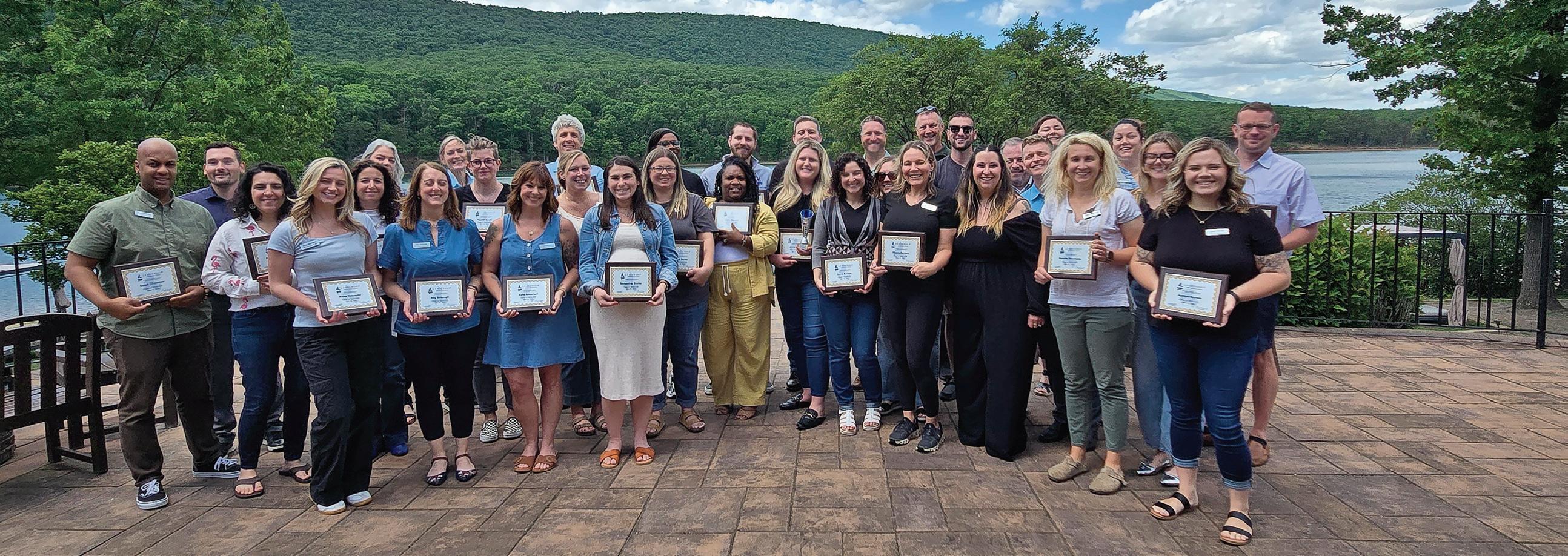
Class
displays their graduation plaques at their Closing Retreat.
Washington County for decades to come.
A community’s greatest asset is its people, and Washington County is full of people who care deeply, serve generously, and lead in ways both big and small. LWC helps connect those people, open their eyes to community needs and opportunities, and inspire them to take action. The program does not teach leadership skills but rather creates a deeper understanding of Washington County and encourages graduates to use their skills, relationships, and influence to serve.
As we celebrate 40 years, we invite graduates, businesses, community partners, and friends of LWC to be part of what comes next. Join as a Graduate Member. Attend an anniversary event. Support the scholarship campaign. Sponsor a program day or graduate event. Reconnect with your class. Encourage someone to apply.
Forty years of Leadership Washington County is something worth celebrating. But the true power of this anniversary is not just in honoring the past. It is in building the future. Together, we can celebrate 40 years of impact and help make sure LWC continues to develop, connect, and inspire leaders for 40 more.
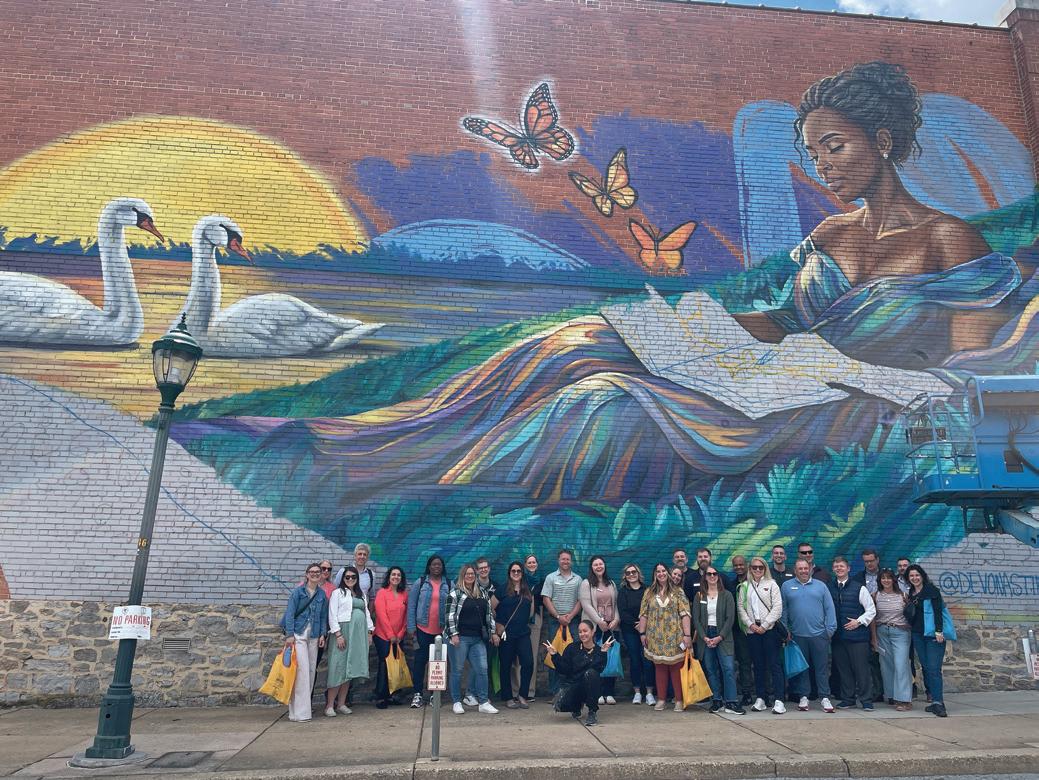
Class #39 on Arts & Culture Day
#39
Tara Bockstanz is the director of graduate engagement at Leadership Washington County.
Revolutionary Summers Experience Daily Life on the Pennsylvania Frontier
Written by Matthew Wedd
As America marks the 250th anniversary of the Revolutionary era, many commemorations naturally focus on battles, declarations, and famous founding figures. Yet for the vast majority of people living in 1775, daily life revolved less around politics in distant cities and more around the rhythms of survival on farms, homesteads, and frontier communities. Meals still needed cooking, gardens still needed tending, animals still required care, and neighbors still gathered to share stories, labor, and precious moments of recreation.
This summer, the Conococheague Institute invites visitors to step directly into that world through our expanded Revolutionary Homestead programming. Thanks to the generous support of the Americana Corner Preserving America Partners program, our regular living
history interpretation now extends across both Saturdays and Sundays from Memorial Day through Labor Day, with free programming and exhibits available from 10 a.m. to 4 p.m. each day.
Nestled among the rolling hills near Mercersburg, Pennsylvania, the Conococheague Institute preserves more than historic buildings. It preserves experiences. Across our 30-acre site, visitors can explore original and reconstructed 18th-century structures, wander nature trails alive with summer blooms, encounter heritage livestock, and discover how ordinary people lived during one of the most transformative periods in American history.
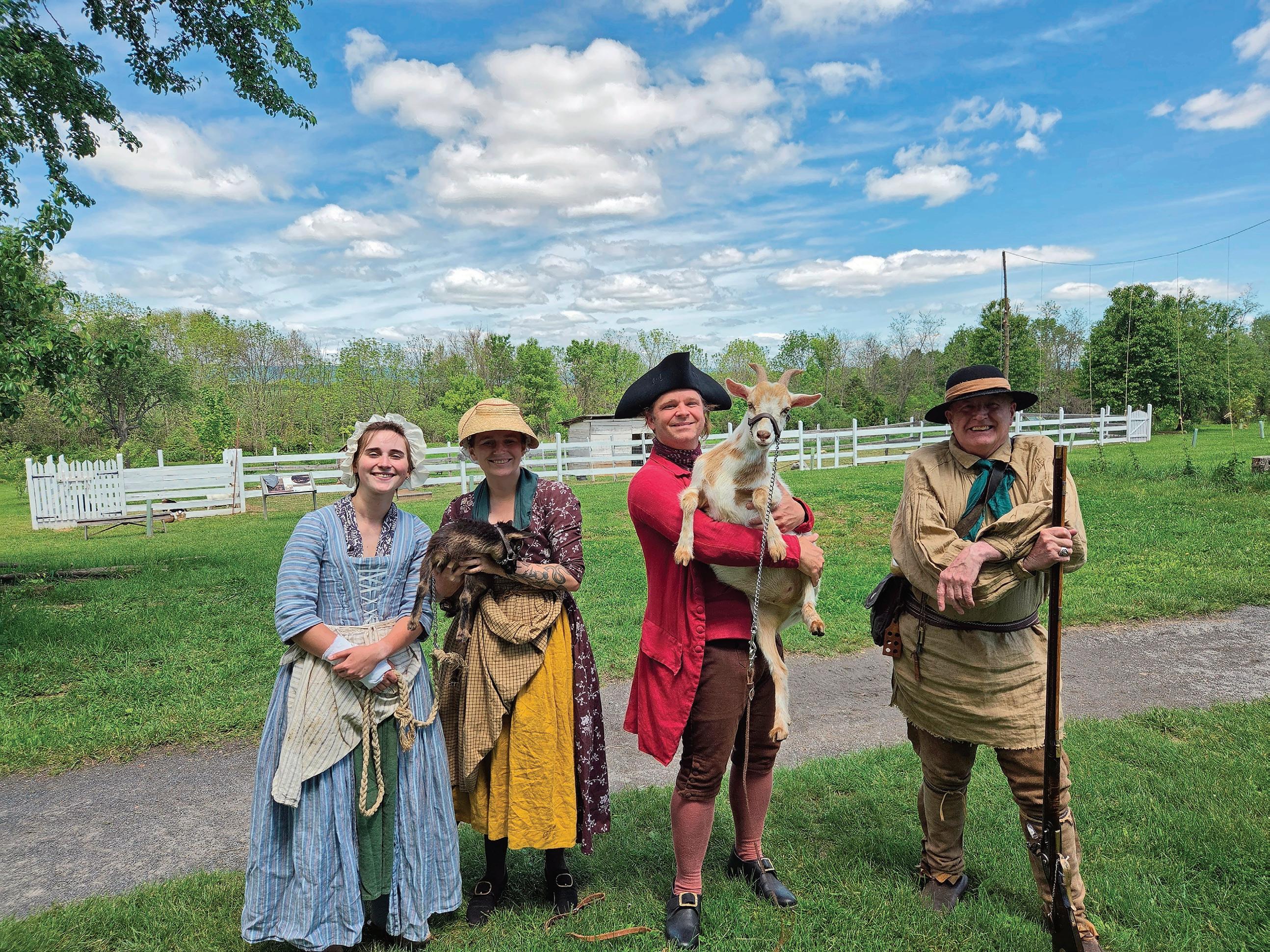
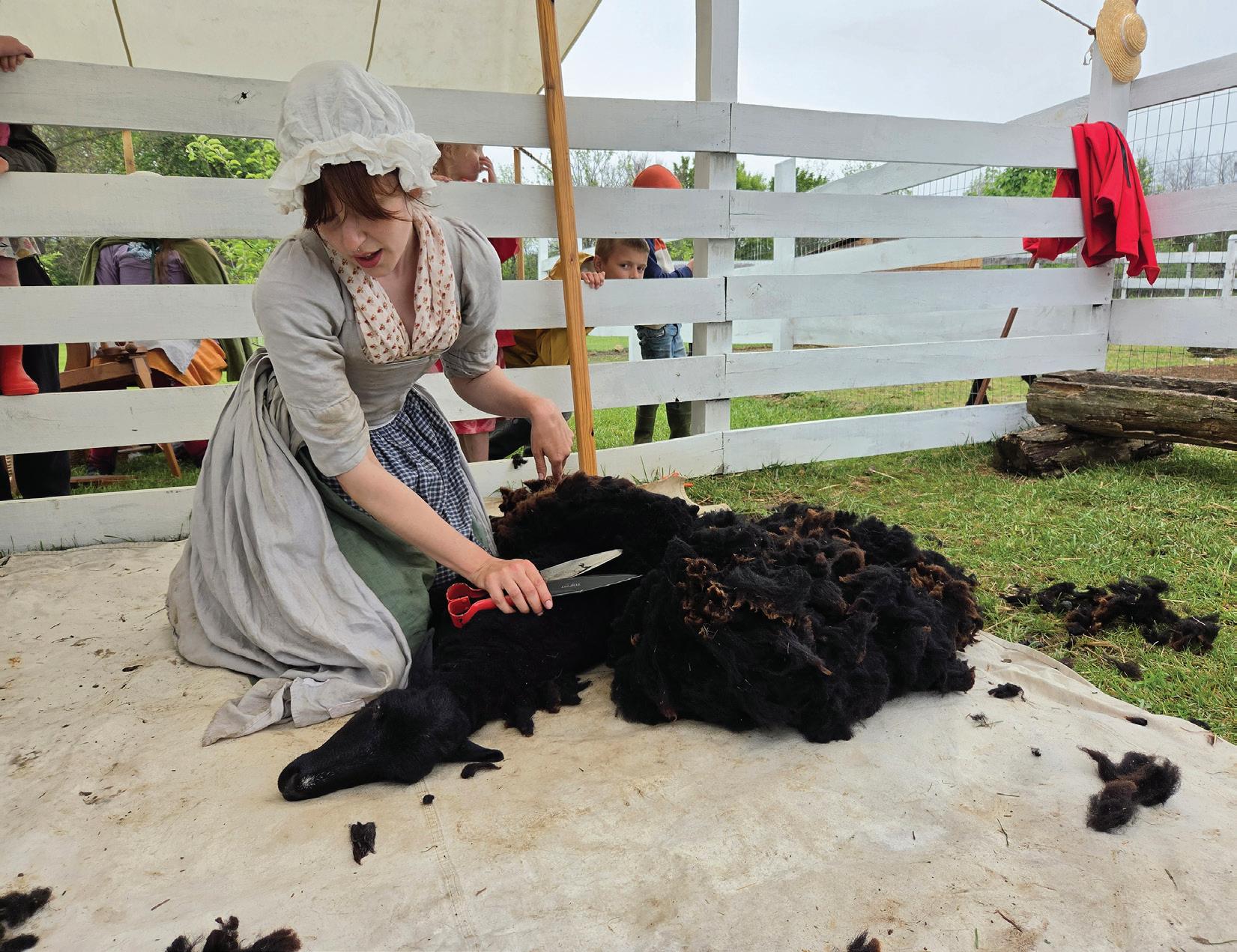
Unlike traditional museums where artifacts remain behind glass, our Revolutionary Homestead programs encourage guests to engage directly with the past. Our interpreters wear period clothing and demonstrate authentic 18th-century skills, but in a welcoming third-person style that invites conversation and
questions rather than scripted performance. Visitors are encouraged to touch, smell, observe, and participate in the daily work of the frontier.
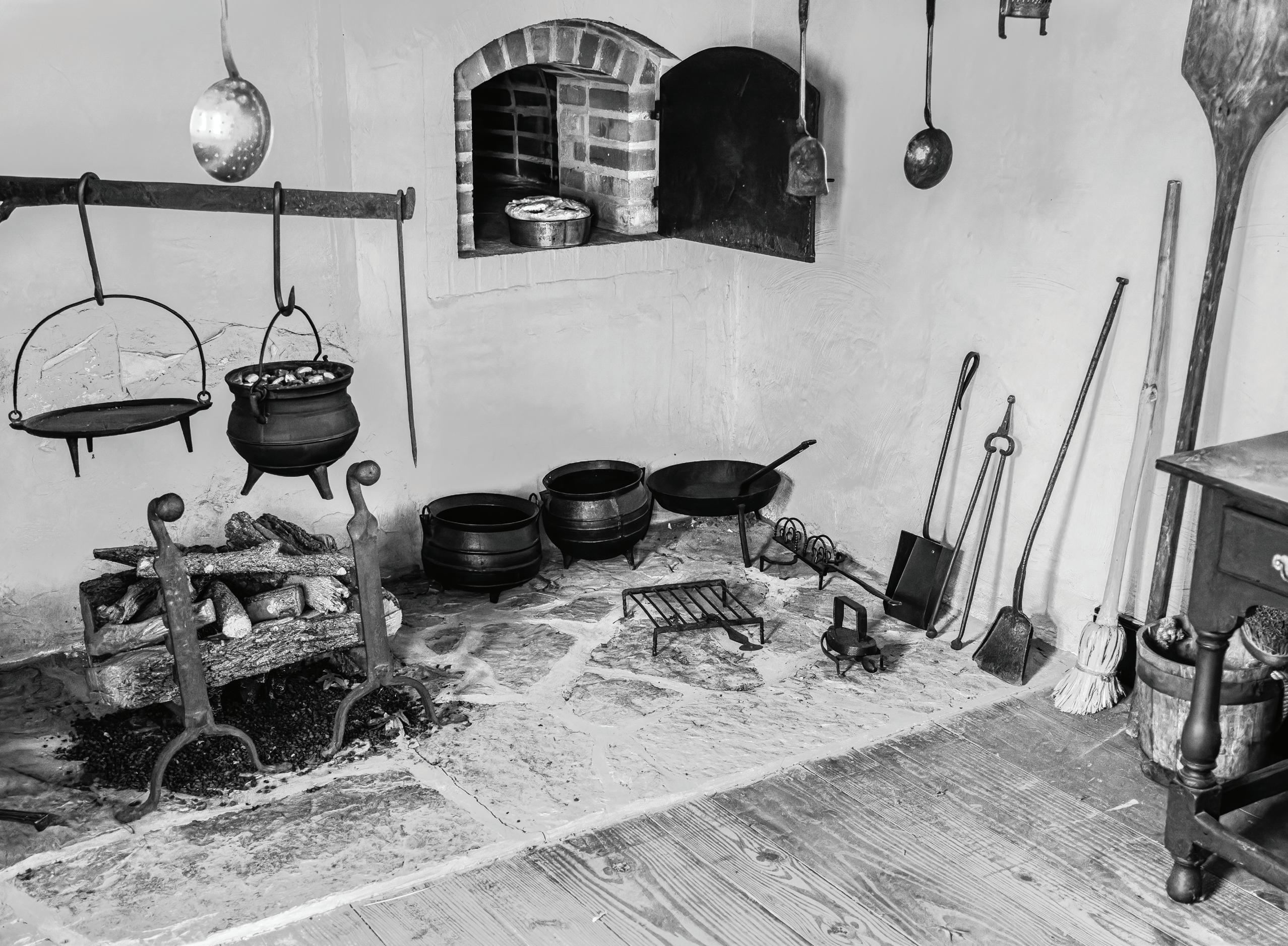
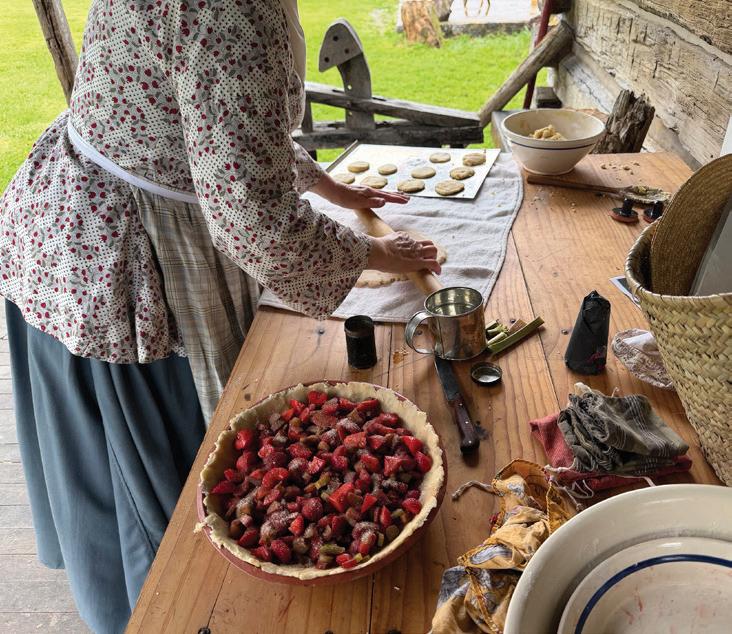
Inside the cabin hearth, the scent of fresh bread and simmering stews often drifts through the air as interpreters demonstrate historic cooking and baking techniques. Long before supermarkets and electric ovens, meals required constant labor and creativity. Open-hearth cooking demanded careful fire management, experience with seasonal ingredients, and an understanding of preservation methods that ensured families could survive difficult winters.
Nearby, visitors may encounter wool processing demonstrations using fiber from our own heritage breed Black Welsh Mountain sheep. To produce cloth, wool had to be cleaned, carded, spun, and woven entirely by hand. These demonstrations reveal the extraordinary labor hidden behind something as ordinary as a blanket or shirt.
Fire starting is another favorite activity among visitors young and old alike. In the 18th century, creating flame with flint and steel was not a novelty but an essential daily skill. Whether preparing breakfast on a cold morning or relighting the hearth after rain, fire represented warmth, protection, and survival. For modern audiences accustomed to the convenience of electricity and gas stoves, the process often becomes a striking reminder of how much work everyday life once required.
Outside the homestead buildings, summer life continues in the gardens, vineyards, and orchards. Frontier families depended heavily on kitchen gardens and carefully maintained fruit trees for food, medicine, and drink. Visitors can explore heirloom plant varieties, learn about historic gardening practices, and see how early settlers adapted European agricultural traditions to the Pennsylvania frontier landscape.
The tavern area offers a different side of Revolutionary life: recreation and community. While frontier existence involved hard work, people still found time for games, music, storytelling, and social gatherings. Historic games and cultural activities help visitors understand that the past was not simply hardship and labor, but also laughter, friendship, and shared traditions.
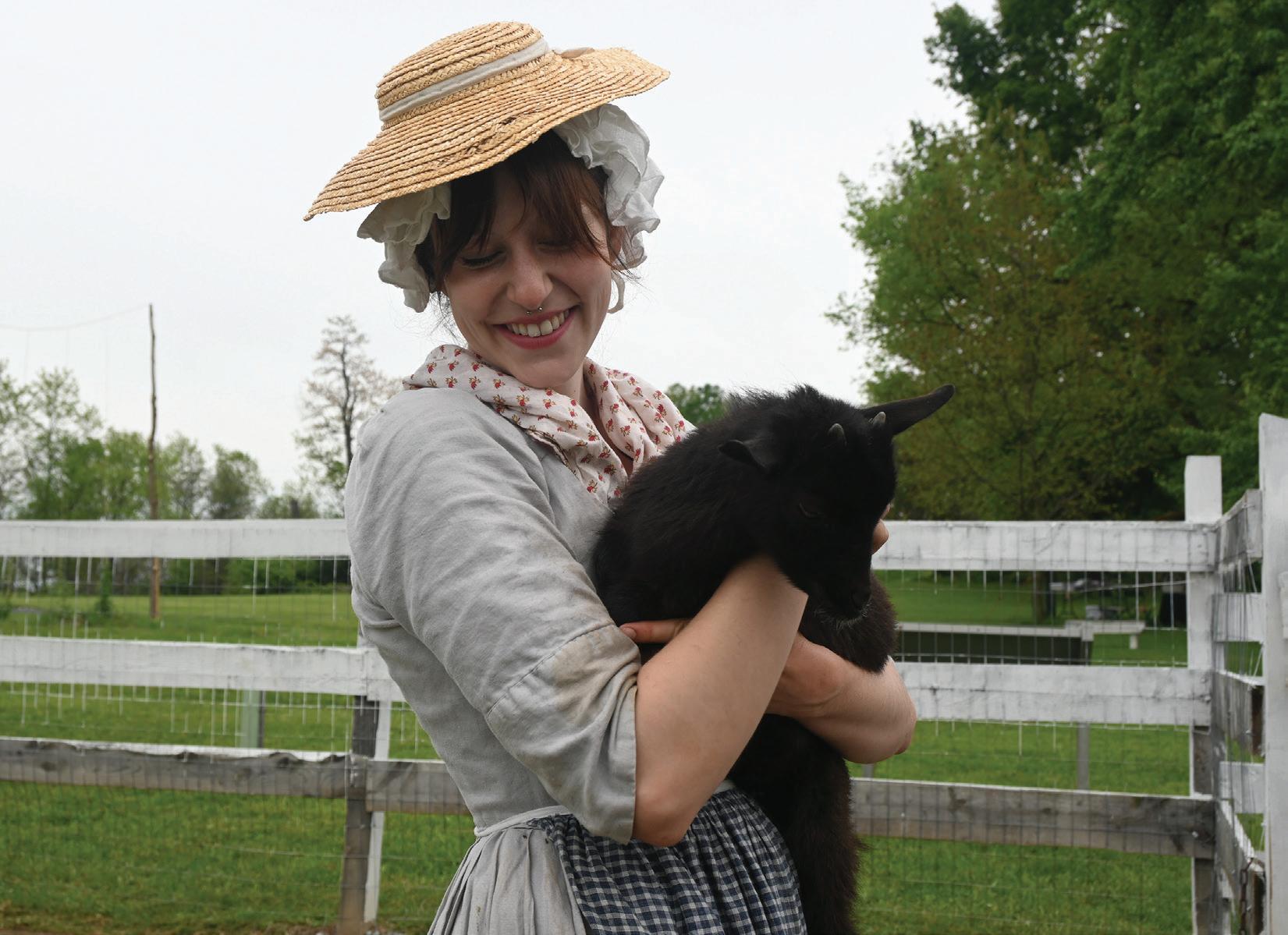
Our youngest visitors are often especially excited to meet the newest members of the Conococheague Institute community: our Nigerian Dwarf goats and Black Welsh
Mountain sheep. Animal encounters have quickly become a favorite part of the summer experience, helping guests connect with the agricultural realities of 18th-century life. On a frontier farm, animals provided milk, wool, meat, labor, and companionship. Their care shaped the routines of every season.
Beyond the historic core, visitors can also enjoy the natural beauty of the site itself. Summer wildflowers bloom along our trails, pollinators fill the meadows, and wetlands provide habitat for birds and other wildlife. In many ways, the landscape surrounding the homestead remains one of the best interpreters of history. The settlers who lived here 250 years ago depended intimately on the forests, streams,
soils, and seasons around them. To walk these trails today is to better understand the environment that shaped frontier life itself.
As interest grows nationwide in the America 250 commemoration, Revolutionary Homestead programming offers something increasingly valuable: an opportunity not just to learn about history, but to experience it. Whether visitors arrive as families seeking meaningful summer activities, history enthusiasts eager to dive deeper into Revolutionary-era life, or nature lovers exploring the beauty of the Pennsylvania frontier, there is something here for everyone.
Perhaps most importantly, these programs remind us that the American Revolution was lived not only in assembly halls and battlefields, but in kitchens, gardens, workshops, and farmyards. The story of America’s founding belongs as much to ordinary people carrying water, tending sheep, baking bread, and building community as it does to generals and statesmen.
This summer, we invite you to slow down, step into the rhythms of the past, and discover the Revolutionary frontier for yourself.
Matthew Wedd is executive director of The Conococheague Institute in Mercersburg. To learn more about The Conococheague Institute and our Revolutionary Homestead programming, upcoming special events, or volunteer opportunities, visit cimlg. org or contact visit@cimlg.org or come see us at 12995 Bain Road, Mercersburg, PA, 17236.
“Le style Mucha” comes to Hagerstown
Written by Sarah Hall
This summer we’re turning up the heat at the museum with Alphonse Mucha: Master of Art Nouveau, a major exhibition planned to bring visitors to Hagerstown from the entire four-state region.
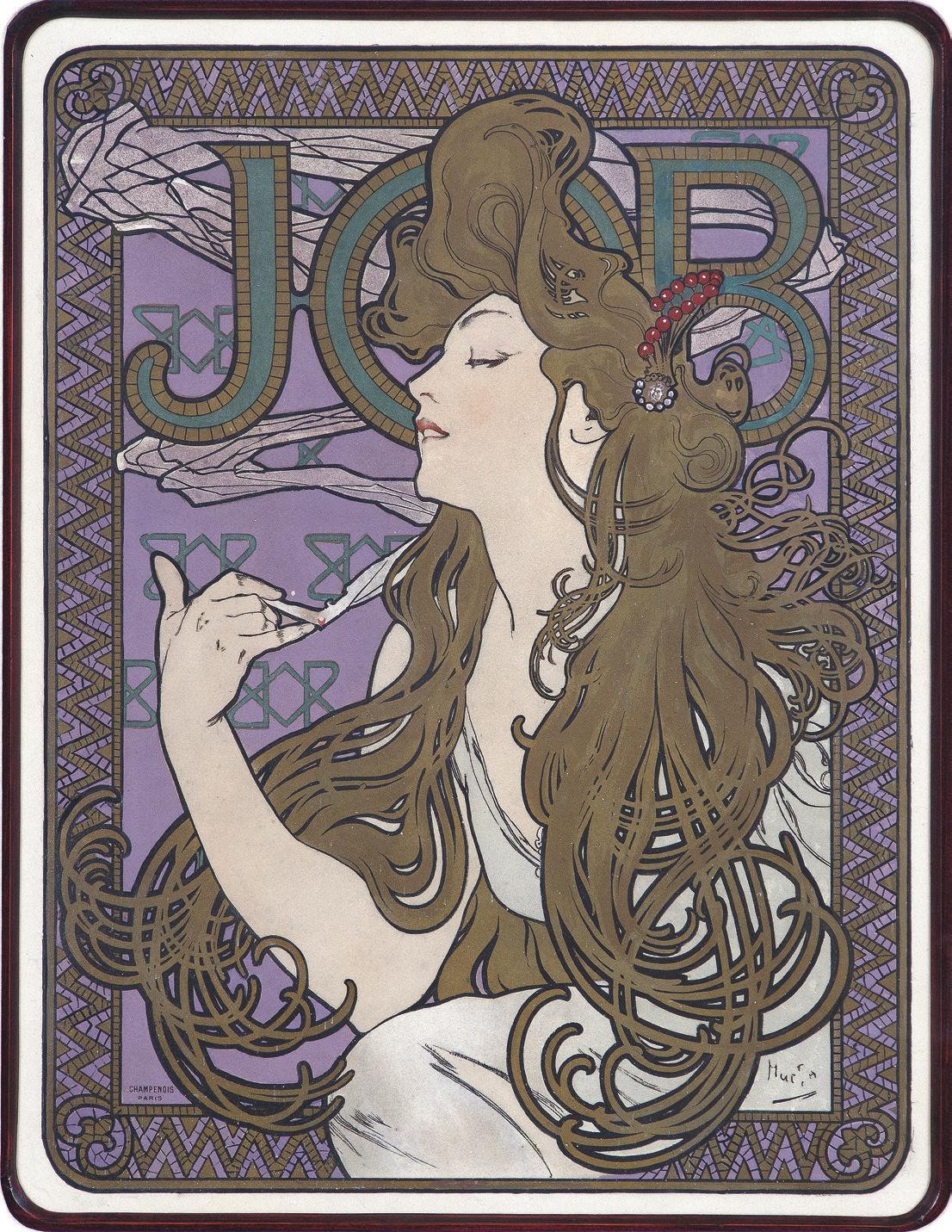
What or who is Mucha, you say? Although his name might not ring a bell, you’ll certainly recognize his art and his distinctive graphic style. A Czech artist who exploded to fame nearly overnight through his work in the evocative belle époque world of 1890s Paris, Mucha practically invented the approach to art now more generally called Art Nouveau. In late 1890s Paris, however, they called it le style Mucha.
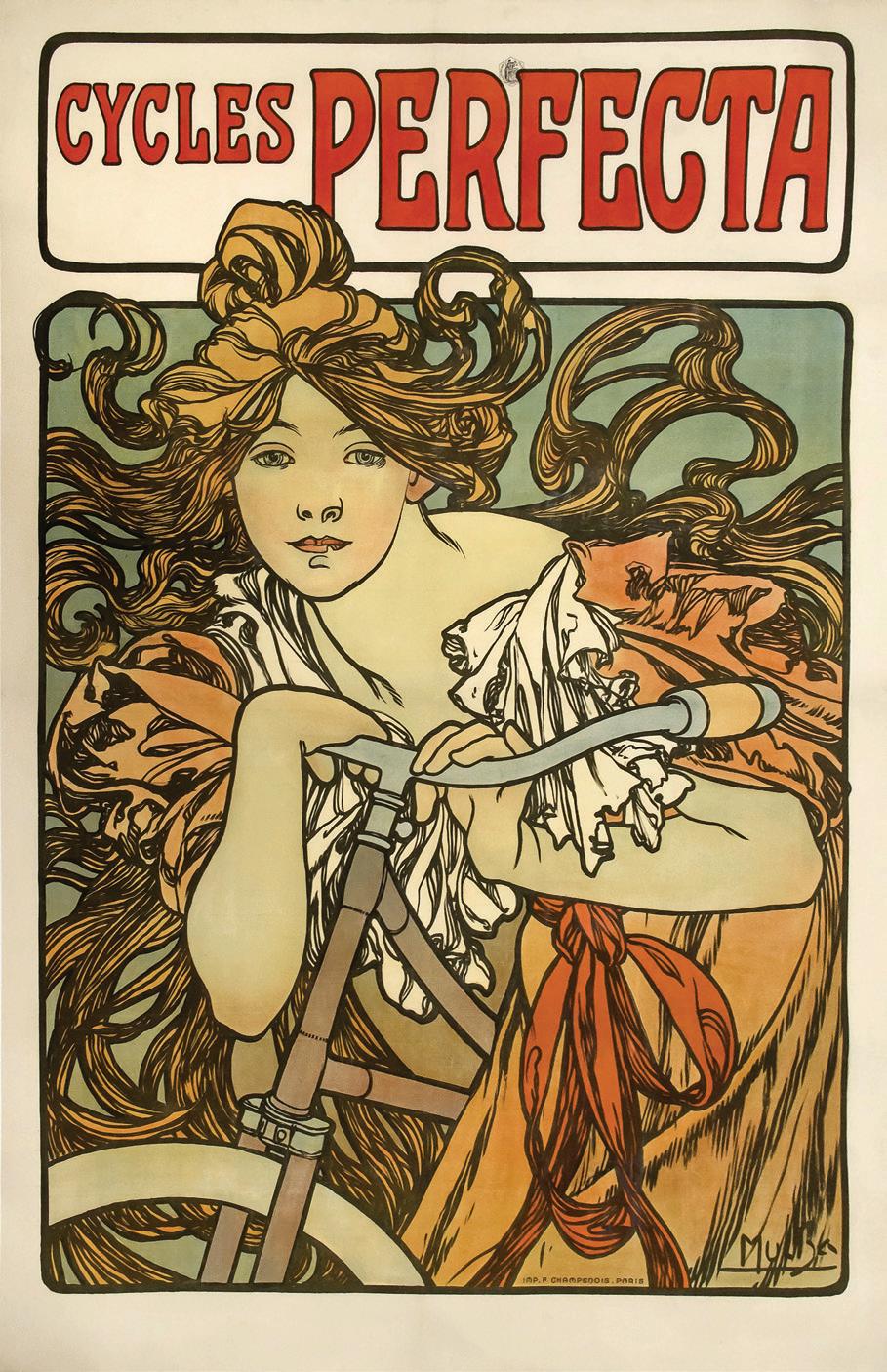
What characterizes le style Mucha? Take a look at the images that go along with this article and see if you can come up with some thoughts yourself.
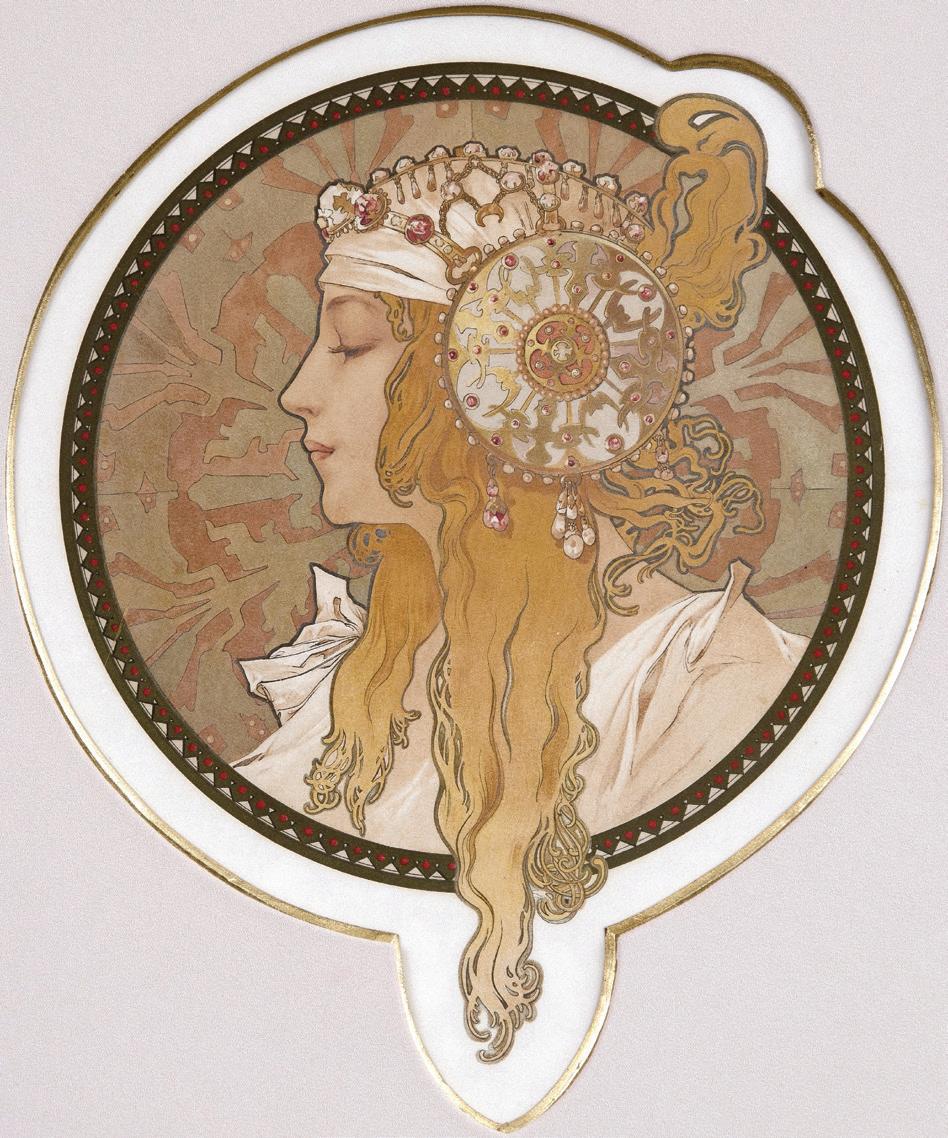
What do you see? Beautiful women, of course. Mucha created an art that celebrated female allure, while also combining an interest in nature and organic forms, and often making use of compositional devices (halos, arches, and mosaic effects) borrowed from the art he saw in his local childhood church. Together these elements created work that felt bold and new at the cusp of the twentieth century.
What else do you see? Flowers. Flowing lines. Complex and intricate combinations of patterns, and, a subtle and harmonious use of color. Together these elements create highly decorative works that have come to define what we think of as Art Nouveau, and, indeed, the way we picture Paris, and to a large extent popular culture, circa 1900.
In a decade (1894-1904), Mucha made an indelible impact
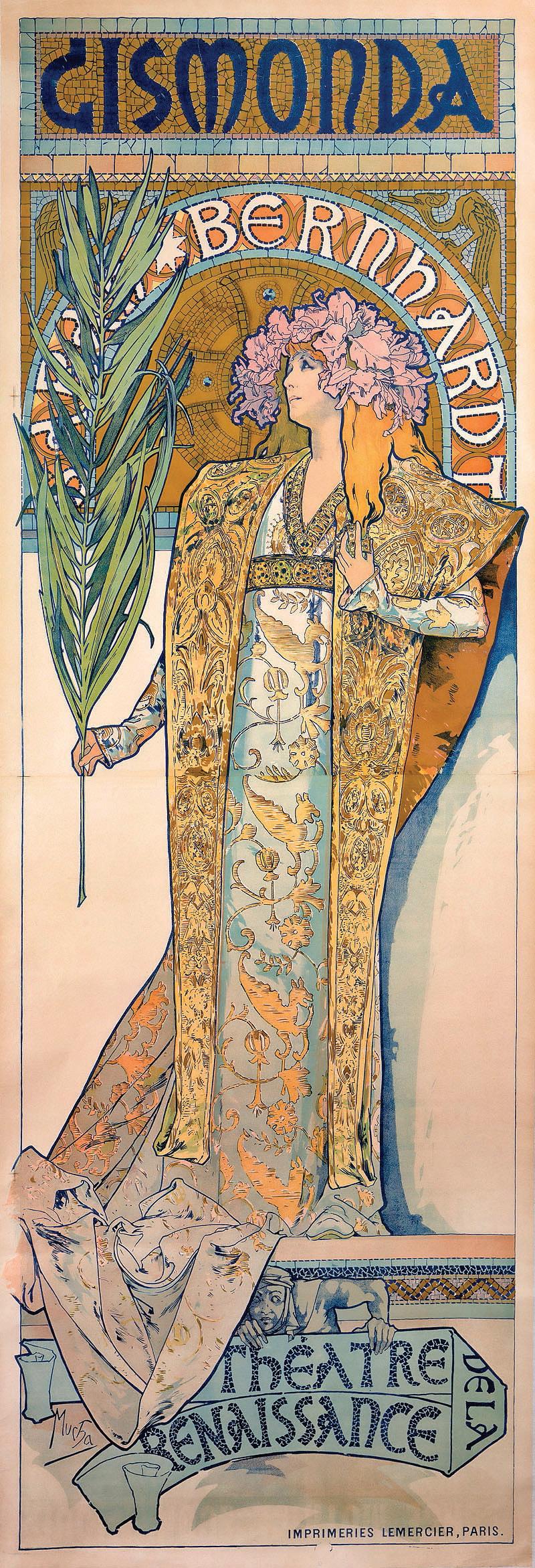
on commercial art, and the story of his fame begins with la Divine—the global superstar and pride of France, Sarah Bernhardt. Apparently, Christmas Day of 1894 Mucha was on a press check for a commercial printing job when the actress requested a rush job. She needed a poster for her play Gismonda and her usual illustrators were unavailable, because Mucha happened to be there, his employer assigned the job to Mucha. The resulting design was a sensation. Mucha’s poster was nearly 7’ tall (printed on 2 sheets), presenting a regal, basically life-sized Sarah Bernhardt crowned by flowers, elaborately costumed, and standing in profile—the play’s name curving above her head and creating the sense of an architectural niche, at her feet, her costume pools, and we see that she is standing on a stagelike platform and a witty “stage hand” holds a pennant proclaiming the name of the theater.
The poster was so popular that overnight people were stealing it off of city streets to adorn their homes. This initial commission began a relationship with Bernhardt that expanded to include Mucha’s involvement in all the visual aspects of her career—from costume and jewelry
An example of one of Mucha’s Art Deco style Byzantine Heads.
Alphonse Mucha’s 1894 theater poster illustration for the Sarah Bernhardt production of “Gismonda.”
design to set design. And it launched Mucha into the most commercially successful decade of his life.
Mucha’s iconic style was soon everywhere. He continued making posters but also did package design and magazine illustration. His images were licensed to be reproduced on myriad products and repurposed for decorative panels for homes, calendars, all sorts of commercial applications.
In Hagerstown this summer, you’ll see many of his most famous images—including Gismonda, and his famous ad for JOB cigarette papers— combining female sensuality with the controversial image of a woman smoking—pushing the boundaries of acceptable female behavior. From today’s perspective, Mucha presents us with an interesting question—is he celebrating women or objectifying them? In the context of the Belle Epoque (approximately between 1870-1914), a period that saw increasing female
independence, coupled with greater sexual freedom, these images sold products (sex sells) while also exploring turn-of-the-century shifts in social expectations. Look at the woman who is rapturous with her Perfecta Bicycle. You might be just as swept away if you were experiencing the freedom of a bicycle ride for the first time.
Don’t miss seeing these beauties in person and learning more about Mucha—the artist whose style you instantly know, but whose name you don’t.
We’re welcoming him to the museum in Belle Epoque style. Join us on Friday, July 10, from 5:00-8:00 p.m. for a very special French-themed Garden Night at the Museum. Les Zazous will be providing French bistro jazz and we’ll have gallery talks throughout the evening. Stone House Urban Winery will be selling wine, and while you are welcome to pack and bring your own Parisian pique-nique, picnic boxes may be pre-ordered from the museum through Gordon’s
Grocery.
Our other Garden Nights this summer are August 21 and September 25, the galleries remain open until 8:00 p.m. with live music and relaxing vibes in our garden.
A bientôt! See you in the galleries this summer.
Hall is Executive Director of the Washington County Museum of Fine Arts. To learn more about the museum, visit wcmfa.org. Washington County Museum of Fine Arts is open Tuesday through Friday, 10 a.m. to 5 p.m.; Saturday. 10 a.m. to 4 p.m.; and Sunday, 1 to 5 p.m. It is closed Mondays and on major holidays.
Sarah
An illustration for the Joseph Bardou Company’s Job Cigarettes.
A poster for the British company Cycles Perfecta.
Financial Planning Across Generations A Vision for America’s 250th Anniversary
Written by Jacob W. Barr
As the United States approaches its 250th anniversary in 2026, it’s impossi ble not to reflect on the extraordinary arc of the nation’s story; one shaped by resilience, reinvention, and the steady work of building a better future. That same long‑view mindset is at the heart of effective financial planning. Just as the country has evolved across generations, families today are thinking more intentionally about how to support children, grandchildren, and even great‑grandchildren while maintaining stability in the present.
The semiquincentennial is more than a mile stone. It’s an invitation to think generationally, to honor the past, strengthen the present, and invest in the future. Financial planning across multiple generations is one of the most powerful ways to do exactly that.
The economic landscape facing American families has changed dramatically over the last several decades. Longer life expectancies, rising education costs, shifting housing markets, and evolving career paths mean that wealth must stretch further and be managed more strategi cally. At the same time, families are increasingly interconnected: grandparents help with childcare, adult children support aging parents, and wealth often flows in multiple directions.
Multigenerational planning recognizes these realities. It’s not simply about passing down assets, it’s about creating a coordinated strategy that supports each generation’s needs while preserving long‑term financial health.
Three themes drive this approach:
Continuity: Ensuring that wealth, values, and opportunities endure.
Communication: Reducing confusion, con flict, and uncertainty.
Collaboration: Aligning financial decisions with shared family goals.
In many ways, it mirrors the American story itself: a collective effort to build something that lasts.
For many families, the first generation to accu mulate significant savings or assets sets the tone
for everything that follows. Their priorities often include:
Retirement security: Ensuring they won’t outlive their savings.
Estate planning: Creating wills, trusts, and directives that clarify their wishes.
Tax efficiency: Minimizing the tax burden on heirs.
Philanthropy: Supporting causes that reflect their values.
This generation often becomes the “architects” of the family’s financial legacy. By establishing clear structures such as revocable trusts, life insur ance strategies, or charitable foundations they create stability for those who come after.
The middle generation often carries the heavi est load. They may be raising children, supporting aging parents, and managing their own careers and retirement planning simultaneously. Their financial strategy typically focuses on:
Education planning: Using 529 plans or cus todial accounts to prepare for future tuition costs.
Homeownership and mobility: Balancing housing needs with long‑term affordability.
Career transitions: Navigating job changes, entrepreneurship, or remote work.
Risk management: Ensuring adequate insur ance coverage for health, disability, and income protection.
This generation is the connective tissue of the family’s financial ecosystem. Their decisions influ ence both the generations above and below them, making clarity and planning essential.
For children and young adults, financial plan ning is less about wealth transfer and more about education and empowerment. Families can help younger generations by:
Teaching financial literacy: Budgeting, sav ing, investing, and understanding credit.
Starting early investment accounts: Roth IRAs for teens with earned income, custodial brokerage accounts, or early contributions to long‑term savings.
Encouraging responsible independence: Helping them build credit, manage student loans, and make informed career choices.
The goal is not to control their financial future
but to equip them with the tools to shape it confidently.
A strong multigenerational plan includes sev eral key components:
Open family conversations: Regular discus sions about goals, expectations, and responsibil ities reduce misunderstandings and strengthen trust.
Professional guidance: Financial advisors, estate attorneys, and tax professionals can help families navigate complex decisions.
Flexible structures: Trusts, insurance poli cies, and investment portfolios should be adapt able as family needs evolve.
Shared values: Families that articulate their mission, whether it’s education, entrepreneurship, philanthropy, or stability tend to make more aligned decisions.
This is where the spirit of America’s 250th anniversary comes into play. The nation’s founders didn’t just plan for their own lifetimes; they envi sioned a future that would outlast them. Families can adopt that same mindset.
The semiquincentennial is a rare opportunity to pause and consider the legacy each family wants to build. What values do you want to pass on? What opportunities do you hope future generations will have? How can your financial decisions today support those aspirations?
Multigenerational planning isn’t about wealth alone. It’s about stewardship, connection, and the belief that the future can be brighter than the past. As the country celebrates 250 years of progress, families across the nation can honor that milestone by strengthening their own foundations for the next 250.
Jacob W. Barr, AAMS, is a financial advisor at Raymond James Financial Services, 140 Paul Smith Blvd. in Hagerstown.