What is hepatitis C?
Hepatitis C (also called hep C) is inflammation of the liver caused by infection with the hepatitis C virus.
The hepatitis C virus was identified and named in 1989. Before then, it was called “non-A, non-B hepatitis”, or “transfusion hepatitis”.
Many thousands of Australians have hep C.
Hepatitis C is a liver infection that can be treated and cured easily.
Tests for hep C
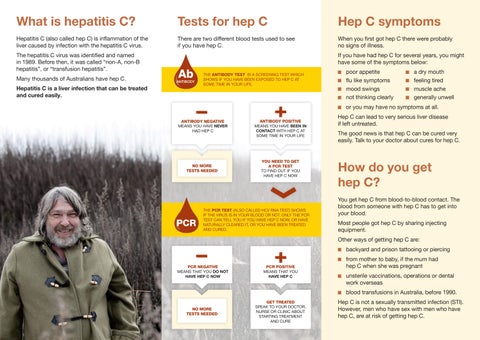
There are two different blood tests used to see if you have hep C.
Hep C symptoms
When you first got hep C there were probably no signs of illness.
If you have had hep C for several years, you might have some of the symptoms below:
THE ANTIBODY TEST IS A SCREENING TEST WHICH SHOWS IF YOU HAVE BEEN EXPOSED TO HEP C AT SOME TIME IN YOUR LIFE.
poor appetite a dry mouth flu like symptoms feeling tired mood swings muscle ache not thinking clearly generally unwell or you may have no symptoms at all.
ANTIBODY NEGATIVE MEANS YOU HAVE NEVER HAD HEP C
NO MORE TESTS NEEDED
ANTIBODY POSITIVE MEANS YOU HAVE BEEN IN CONTACT WITH HEP C AT SOME TIME IN YOUR LIFE
YOU NEED TO GET A PCR TEST TO FIND OUT IF YOU HAVE HEP C NOW
THE PCR TEST (ALSO CALLED HCV RNA TEST) SHOWS IF THE VIRUS IS IN YOUR BLOOD OR NOT. ONLY THE PCR TEST CAN TELL YOU IF YOU HAVE HEP C NOW, OR HAVE NATURALLY CLEARED IT, OR YOU HAVE BEEN TREATED AND CURED.
PCR NEGATIVE MEANS THAT YOU DO NOT HAVE HEP C NOW
PCR POSITIVE MEANS THAT YOU HAVE HEP C
NO MORE TESTS NEEDED
GET TREATED SPEAK TO YOUR DOCTOR, NURSE OR CLINIC ABOUT STARTING TREATMENT AND CURE
Hep C can lead to very serious liver disease if left untreated.
The good news is that hep C can be cured very easily. Talk to your doctor about cures for hep C.
How do you get
hep C?
You get hep C from blood-to-blood contact. The blood from someone with hep C has to get into your blood.
Most people got hep C by sharing injecting equipment.
Other ways of getting hep C are:
backyard and prison tattooing or piercing
from mother to baby, if the mum had hep C when she was pregnant unsterile vaccinations, operations or dental work overseas
blood transfusions in Australia, before 1990. Hep C is not a sexually transmitted infection (STI). However, men who have sex with men who have hep C, are at risk of getting hep C.
Hep C cure is easy
New cures have been available since March 2016. The treatments...
give you a 95% or higher chance of cure (even if you have cirrhosis) have minimal side-effects last for just 8 or 12 weeks (in most cases) just pills taken each day (no injections) are very low cost with a Medicare number. Clearing hep C reduces liver inflammation and can help reverse fibrosis and even cirrhosis.
Once you are cured, the virus is cleared from your body, and it means you can’t pass the virus on to someone else. You can get hep C again, so if you are at risk make sure you get tested and treated again.
Eliminating hep C
Lots of people have now been cured but many others are still living with hep C: you might have previously shared injecting equipment and know you have hep C but don’t know about the new cures or you haven’t had the test and don’t know you have hep C.
There are lots of reasons you should ask about the new cures: staying active and healthy feeling better having the energy to do more living longer after being cured, you cannot pass hep C on to others.
For more information
Speak to a doctor about treatment. Our website has a listing of doctors who provide treatmentsearch our ‘NSW Local Services Directory’ for doctors near you.
hep C
For a chance to win, go to our survey link and tell us what you think about this brochure: https://forms.office.com/r/hS4zKEDqmd