DESSERTS TO BEAT THE HEAT THIS SUMMER

DESSERTS TO BEAT THE HEAT THIS SUMMER

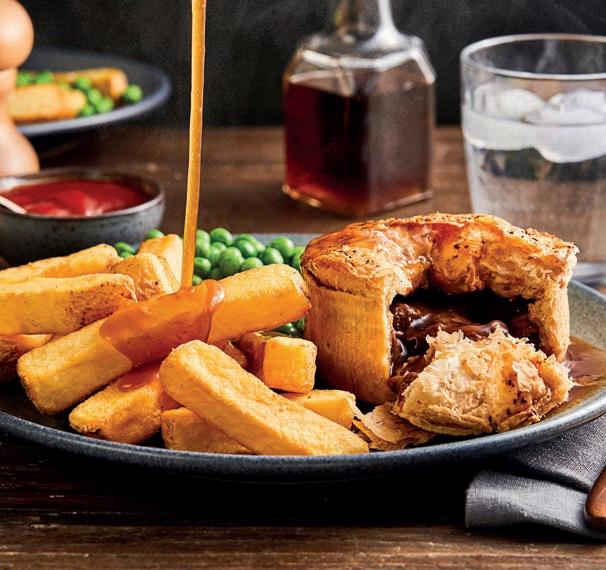

Our summer double-edition is packed with inspiration to help you refresh menus and embrace the opportunities of the season ahead.
Inside, we explore the rise of midnight menus alongside a deep dive into cooling desserts and the flavours set to dominate summer menus.
We also take a more practical look at the industry with features on water sustainability, nursery catering and mobile food operators, giving you plenty of ideas to adapt and stay ahead.
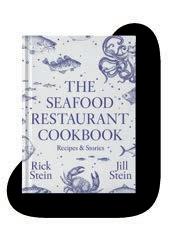
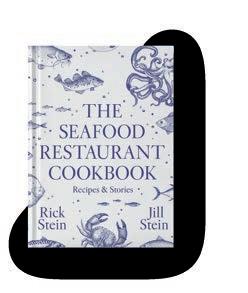
Don’t miss our interview with Jack Stein on pages 51–53, and be sure to enter this issue’s Country Club competition for your chance to win a copy of the Stein family’s The Seafood Restaurant Cookbook.






Mango Mousse, Roasted Peach & Almonds
You may have heard of swicy, swour and even swavoury, well now you can add fricy to the list of flavour fusions. With roots deep in Latin American and Asian cuisines, the pairing of spice and fruit isn’t new, but it’s now getting a new name and lease of life, mainly thanks to Millennial and Gen Z foodies who love culinary exploration and fun taste terminology. Let’s break this down to see how your menu can stay on trend.
TROPICAL FRUIT – Where spice and fruit pairings originally began. Mango, pineapple and watermelon take centre stage, pairing perfectly with spice, but don’t rule out passionfruit and guava.
35
37 Prawn & Chilli Croquettes
43 46 Lentil & Herb Stuffing Balls Loaded Biscoff® Cookies
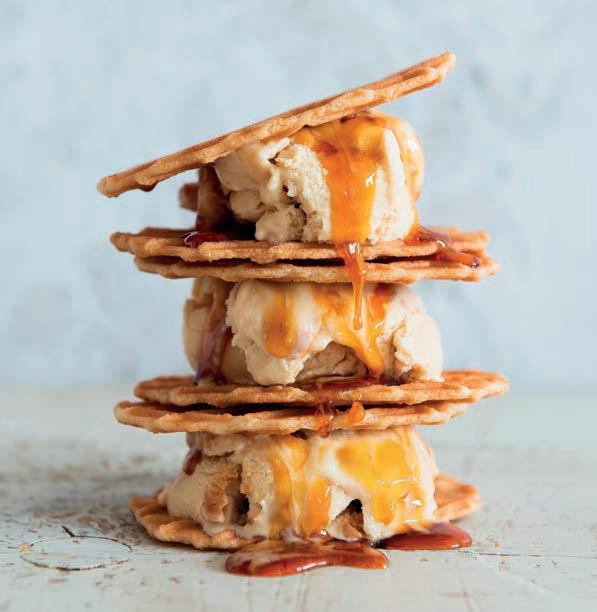
Dashi Beurre Blanc 55 Caramel Pineapple Ice Cream Sundaes


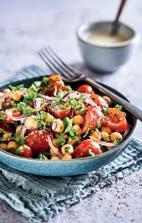
CITRUS FRUIT – A natural pairing with spice, citrus fruits are already well established in dishes such as raw and cured fish preparations. We’re now seeing more experimentation, such as kumquat kosho, yuzu and chilli crisp or blood orange and habanero.
STONE FRUIT – From chilli-infused jams to swavoury salads and fruity hot honey, there is plenty of scope to get creative in this area.
TAJIN – This is the epitome of fricy – the traditional spice mix that originated in Mexico to keep fruit fresh in the heat of the sun. Perfect for street food and other food-to-go in the form of fricy fruit cups or incorporated into desserts.
YUZO KOSHO – A fiery Japanese condiment which pairs well with tropical or citrus fruits and is very much in vogue at the moment.
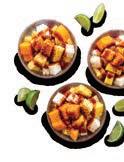
CHAAT MASALA – A Ramadan favourite, this desi-style spice mix is gaining traction, from the viral frozen masala orange and grape trends, to fruit salads and sweet treats.
FRUITY HOT SAUCE – The ultimate in fricy combos, flavours are getting bolder, with nothing off limits, from berries, apples and citrus, to mango and pineapple, all paired with habanero.


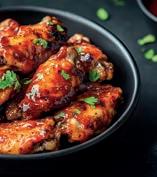
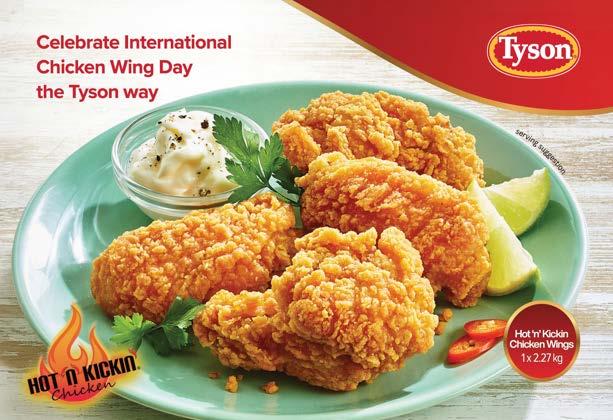
1ST JULY – INTERNATIONAL CHICKEN WING DAY
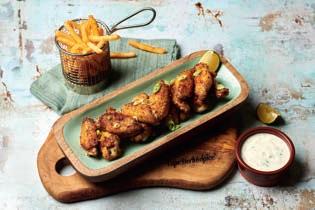
Elevate International Chicken Wing Day with MAGGI® Authentic Indian Sauces. From MAGGI® Authentic Indian Tamarind Sauce to MAGGI® Authentic Indian Hot and Sweet Sauce, each delivers a distinctive balance of spice, sweetness and depth, making them ideal for glazing wings straight from the fryer or grill.
16TH JULY – NATIONAL CHERRY DAY
Try something different this National Cherry Day with this Black Forest Mousse Cake recipe from Opies. These cakes are beautifully balanced between richness and lightness, sweetness and sharpness, making them perfect for special occasions when you want something impressive but still comforting.


1ST – 30TH SEPTEMBER – NATIONAL MUSHROOM MONTH
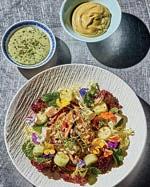
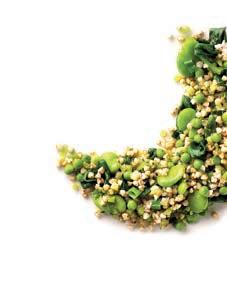
Celebrate National Mushroom Month with this vibrant barley greens bowl recipe from Hellmann’s, where earthy shiitake mushrooms shine alongside fresh greens, grains, and a matcha yuzu dressing. A nourishing, umami-rich dish that’s light and full of plant-based flavour.
1ST – 30TH SEPTEMBER – SOURDOUGH SEPTEMBER
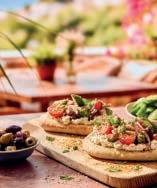
This Sourdough September, elevate your menu with this Mediterranean Flatbread recipe from Signature by Country Range. Made using Signature by Country Range Sourdough Doughballs, this recipe extends the vibrant summer flavours into the Autumn season.
Thanks to Opies, MAGGI®, Hellmann’s and Country Range.



4TH AUGUST – NATIONAL CHOCOLATE CHIP COOKIE DAY
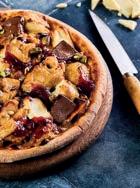
This National Chocolate Chip Cookie Day offer customers a dessert they will never forget! Made using Country Range Cookie Pucks, this Cookie Dough Dessert Pizza recipe is the perfect sweet treat addition to your menu.
17TH AUGUST – NATIONAL CUPCAKE DAY
This Cherry Angel Cupcake recipe from Opies offers a nostalgic taste inspired by classic British Angel Cake flavours. Light, sweet, and delicately fruity, these cupcakes are perfect for parties or afternoon tea celebrations.
NAME: Zbigniew (Zibi) Klapsia
BORN AND RAISED: Poland, in a little town in the south of the country
JOB TITLE: Executive Head Chef
PLACE OF WORK: Currently at Mercure Hotel, soon transitioning to Courtyard by Marriott in Exeter.
HOW LONG HAVE YOU WORKED IN THE CATERING INDUSTRY? Since 2005, when I moved to England. Prior to that, I worked as a butcher in Poland, which gave me a strong foundation in food preparation and respect for ingredients.
PASSIONS OUTSIDE OF THE KITCHEN? Football. I am the head coach for a local under-11s team, which I find incredibly rewarding.
CLAIM TO FAME? I have won several local chef competitions over the years.
WHAT IS YOUR FAVOURITE CUISINE TO EAT? It depends on my mood. I enjoy exploring new flavours and learning about different cuisines.
WHAT IS THE MOST ENJOYABLE PART OF YOUR JOB? Mentoring and educating young people - they are the future of our industry.
WHICH CHEF DO YOU RESPECT THE MOST AND WHY? Massimo Bottura. He wasn’t widely believed in at the beginning of his career, yet he became one of the best chefs in the world. It


shows the importance of perseverance, timing, and belief in your vision.
WHAT IS YOUR MUST-HAVE KITCHEN GADGET? My knife, it’s like a third arm to me.
WHAT’S YOUR TIP TO CUT WASTAGE IN THE KITCHEN? Maximise everything and use every part of the product wherever possible.
WHAT IS YOUR FAVOURITE COUNTRY RANGE PRODUCT AND WHY? The spices and seasonings are exceptional.
WHAT’S YOUR DREAM JOB? To own my own small restaurant.
WHAT IS THE LAST RESTAURANT YOU ATE IN? The Elephant in Torquay.
WHEN DID YOU KNOW YOU WERE GOING TO BE A COOK/CHEF? I started as a pot wash and gradually transitioned into the kitchen, where I fell in love with the profession.
WHAT INGREDIENTS DO YOU MOST LOOK FORWARD TO WORKING WITH IN THE SUMMER? Fresh fruits, there’s so much versatility and flavour to explore.
Credit: Zbigniew (Zibi) Klapsia COOKING TIME: 9HRS
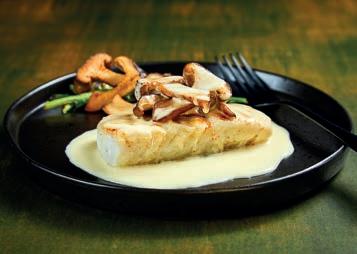
The Dashi Broth:
• The cod bones and head
• 4ltr water
• 100g kombu
• 1kg chicken necks
• 100g dried shiitake mushroom
• 300g spring onion
• 300g onion
The Dashi Beurre Blanc:
• 400g dashi broth
• 20g cream
• 200g cold cubes of butter
• Rice vinegar & salt
For the Dashi Broth:
1. Add all ingredients to a pan, bring to a boil and then simmer for 8 hours.
For the Dashi Beurre Blanc:
1. Pour the dashi into a saucepan and reduce it until you’re left with 100g.
2. Add the cream and bring it to a boil.
3. Once it’s boiling, turn down the heat and while stirring add the cold cubes of butter.
4. Give it a little taste for seasoning and when necessary, add some rice vinegar or salt.

“Maximise everything and use every part of the


After over 46 years nourishing, fuelling and feeding young people, a legend of school catering - Adrienne Williams - is taking a step back later this year as she embarks on her well-deserved semiretirement. Currently Head of Catering at the biggest school in England, Adrienne first started out in hospitality as an 18-year-old where she fell in love with cookery.

“I was blessed to be a young mother so I began working in cafés and pubs out of necessity to ensure there were nappies in the house and food on the table”, Adrienne reminisces. “It was very much learn-on-thejob, but gave me a great foundation in the kitchen.”
Adrienne pivoted into education in 2000, initially becoming a foodservice assistant at a local primary school before becoming an assistant cook at a school where Turkey Twizzlers were the order of the day.
“The school I moved to was in a dire state and when the head cook left within two weeks of me arriving, I was thrown in at the deep end. It was a huge challenge, but I turned it around completely. This is where my passion for providing the best quality, homecooked school food really exploded. It was around about the same time that Jamie Oliver kicked off his own school food crusade. He was a massive inspiration and I really believe he was instrumental in the improvements we now see and take for granted.”
After this impressive turnaround, Adrienne went on to become catering manager for a small group of schools before joining Robert
“We try to tempt the students with new dishes and they’re definitely not scared of global flavours. ”
Clack in 2020, where she formed a mercurial working partnership with former colleague and close friend Wendy Honey. Situated in Dagenham, Robert Clack is the biggest school in the UK. Adrienne, Wendy and her team are responsible for feeding 3,300 pupils aged from four to 18 across three different sites.

“We serve around 2,500 meals a day including breakfasts, snacks at first break, lunch and after school clubs. We have three catering managers and around 35 team members. We try to tempt the students with new dishes and they’re definitely not scared of global flavours. We ran bao buns on the menu recently and they went down a storm.”
“We cook as much from scratch as possible and my key role is the development of the menus, which is something I will continue to do in a part-time capacity. We have a lot of the classics and healthy options, but we do mix things up. We have a roast dinner every Thursday, which is a special treat for the kids.”
“We use a wide range of products from the Country Range portfolio including Sweet Chilli Sauce, Cocoa, Chopped Tomatoes, Long Grain Rice, Mild Cheddar, PartBaked Baguettes and Cooking and Baking margarine, which is simply the best. The quality is top notch and the whole range provides great value, especially considering the budget constraints we have to work to.”
Simply squeeze and enjoy!
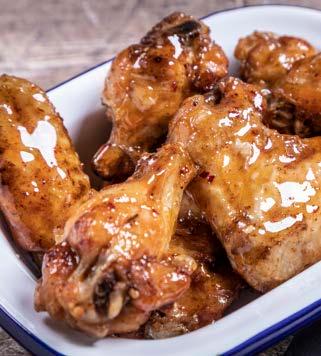
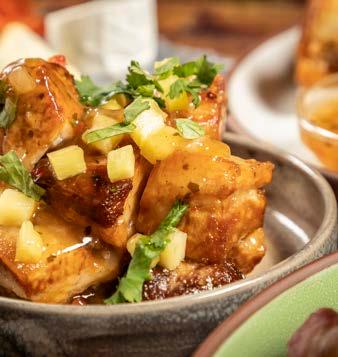
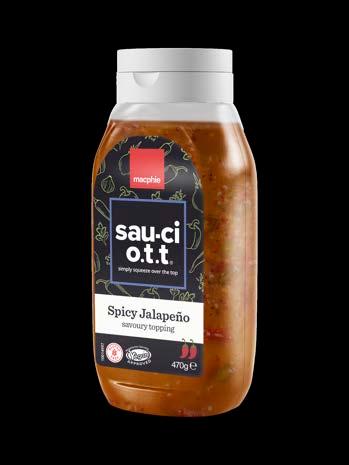
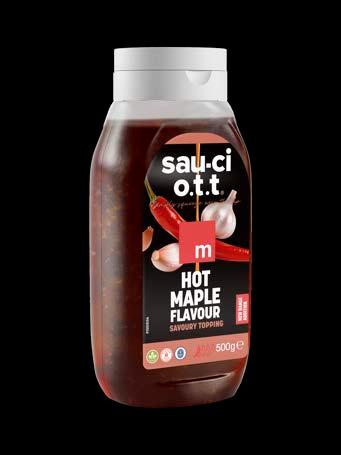
Bring more to your menu with sau-ci o.t.t® savoury toppings! sau-ci o.t.t® Spicy Jalapeño savoury topping delivers a sweet, tangy flavour with a warming jalapeño kick, while sau-ci o.t.t® Hot Maple Flavour savoury topping blends sweetness with chilli and garlic for a rich, indulgent finish.
Both are ready to use and perfect for elevating everything from wings and burgers to loaded fries, tacos and pizzas.

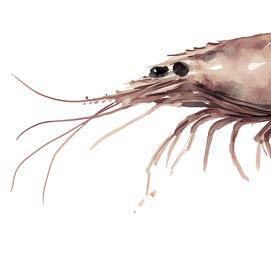
While shrimping on our shores dates back over 500 years, the popularity only took off when the innovation of potted shrimps helped extend the shelf life and the coming of the railway in the 19th century took the delicacy from the coast to cities nationwide.


Furness Fish, Poultry and Game Supplies is a family business, which was launched in the 1970s by Les Salisbury, who used to go shrimping on a horse and cart as a young boy. Building a reputation for the finest produce and customer service, the business went from strength to strength, supplying shrimps and its famous ‘Morecambe Bay Potted Shrimps’ to hotels and restaurants throughout Cumbria and Lancashire. With brown shrimps in season from June through to October, we caught up with Director Claire Worrall for some creative ways to incorporate shrimp in menus.
We don’t sell shrimp in shells but if you are buying them fresh, never throw away the shells. They make the most wonderful stocks that can be used for soups, stews, risottos and sauces.
1 /
A legendary seaside treat, potted brown shrimps were first created to extend shelf life. Our locally caught shrimps are boiled in butter with a secret combination of spices until they are tender before being sealed in butter and packed into pots. They can be used as toppings but serving them simply with some crusty bread is heaven.
2 /
Potted shrimp makes a fantastic addition to a punchy seafood paella or pasta.
3 /
Perfect for picnics, one of my favourite ways with brown shrimps is simply cooked in butter and loaded onto a muffin with more butter.
4 /
I love fish on the barbecue or grill and for a little touch of class and an extra hit of the sea, I love to stuff my fish, especially trout, with brown shrimp.
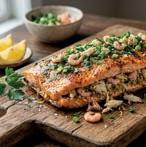
5 /
Whether they’re blitzed up with a hit of garlic, the zest of lemon or a kick of chilli, brown shrimps are great for quick and easy silky sauces to accompany seafood.
Visit: https://www.morecambebayshrimps.com/
















As the heat of summer hits and the new school year approaches, we’ve been busy putting together a new selection of products for menu development in the coming months. Super snacks and sides, bountiful breakfasts or dazzling desserts, we have the ideas, inspiration and solutions for success. It’s a bumper double issue so turn the page for more!
We’re delighted to roll-out a special selection of killer breakfast cereals.
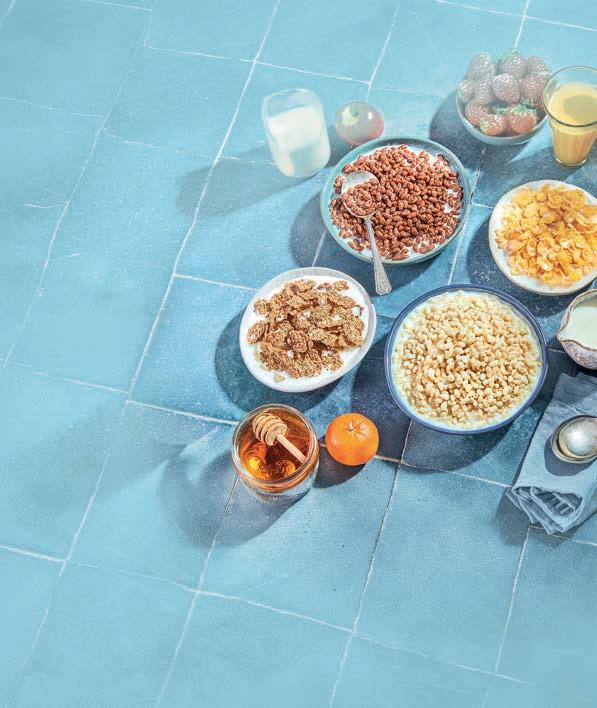
The new range offers fantastic value for caterers working to tight budgets and includes firm favourites such as Country Range Cornflakes, Crispy Rice, Cocoa Rice and Bran Flakes. The cereals come in convenient pack sizes for different catering environments and the Crispy Rice, Bran Flakes and Corn Flakes all have added vitamins, making them perfect for school breakfast clubs. Ask your Country Range wholesaler for more information.
COUNTRY RANGE BRAN FLAKES
PACK SIZE: 4 X 500G
COUNTRY RANGE CRISPY RICE
PACK SIZE: 1 X 7KG AND 4 X 500G
COUNTRY RANGE COCOA RICE
PACK SIZE: 4 X 500G
COUNTRY RANGE CORNFLAKES
PACK SIZE: 1 X 7KG AND 4 X 500G

For ultimate all-rounders that can be utilised right across the menu, our new tasty trio of Country Range Fruit Fillings are ideal. These store cupboard saviours are available in apple, cherry and strawberry and can be a hero ingredient in ice cream, breakfast pastries, pies, crumbles or sauces.
COUNTRY RANGE BRAMLEY APPLE FRUIT FILLING
PACK SIZE: 2.5KG
COUNTRY RANGE STRAWBERRY FRUIT FILLING
PACK SIZE: 2.5KG
COUNTRY RANGE RED
CHERRY FRUIT FILLING
PACK SIZE: 2.5KG


Snack and side menus have been spruced up this past year with savvy operators and chefs using them to tempt customers and to upgrade their orders, even if people are eating out less.
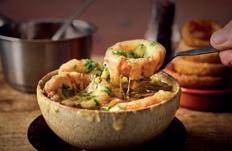
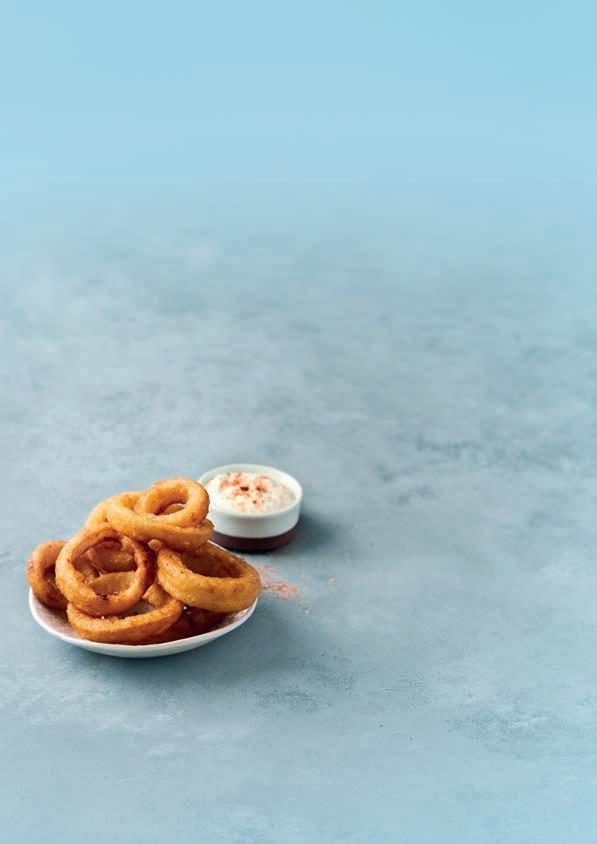
Our new Country Range Beer Battered Onion Rings are serious crowd-pullers that are made with whole onions inside a crisp beer batter that will keep its crunch for at least 30 minutes under a heat lamp. Our entire team has tested the product extensively, just to make sure of course!
The perfect side for steak and burgers, or why not pimp up your soup special with the ultimate crispy onion ring topped French onion soup?
NEW COUNTRY RANGE BEER BATTERED ONION RINGS
PACK SIZE: 10 X 1 KG
SCAN HERE to see all of the recipes featured in this article.
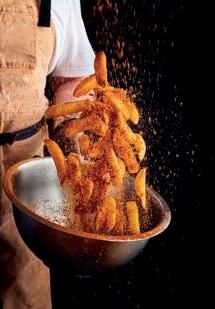
Chefs are continuing to push global boundaries as they look to create unique dishes that can set their menus apart. Whether it’s a creative starter, street food, dirty fries, flame-grilled meat or vibrant veg, the right seasoning can make a huge difference. We’ve launched a new selection of Country Range seasonings to inspire menus this season and beyond. The new range includes:
COUNTRY RANGE CHIP SEASONING
PACK SIZE: 4 X 580G
COUNTRY RANGE STEAKHOUSE SEASONING
PACK SIZE: 4 X 650G
COUNTRY RANGE CHIPOTLE CHILI SEASONING
PACK SIZE: 4 X 480G
COUNTRY RANGE SRIRACHA SEASONING
PACK SIZE: 4 X 700G
“I think pretty much every one of our dried herbs and spices is Country Range and we’re always impressed with them from a price and quality perspective – Restaurant Owner
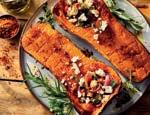
Corn on the cob with
chipotle seasoning
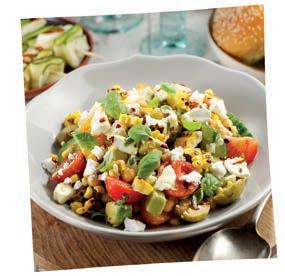
Butternut squash with feta salad with sriracha spice

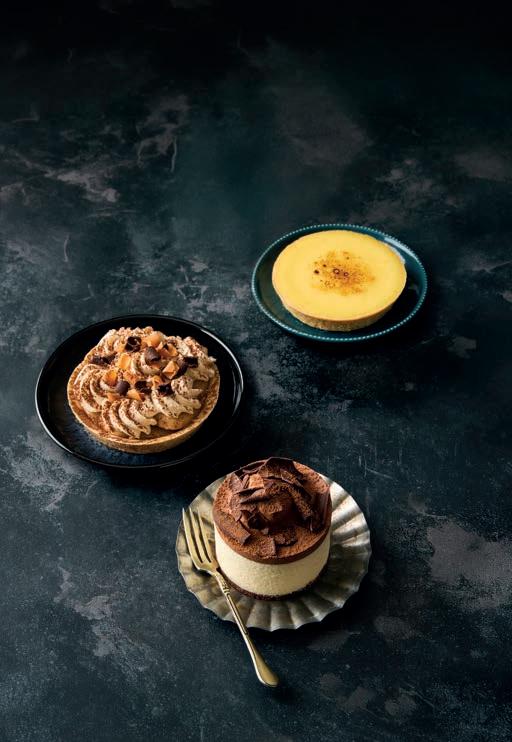
All-day dessert menus are a bona fide business booster across hospitality and with Afternoon Tea Week taking place from the 10th-16th August, we’ve created a tempting trio of Signature by Country Range single serve sweet treats. All made with the finest ingredients and taking into account the top trends, the new range is also ready to be added to Christmas menus and includes:

Signature by Country Range Banoffee Tart
Pack Size: 20 individual portions
A perfect take on a classic. A crisp butter pastry case layered with toffee sauce, banana slices and chocolate ganache, piped with banana flavoured mousse and decorated with chocolate and caramel curls and cocoa.
Tart
A RANGE BUILT FOR THE FESTIVE RUSH.
Salted Caramel, Chocolate and Profiterole Dessert
Signature by Country Range Salted Caramel, Chocolate & Profiterole Dessert
Pack Size: 20 individual portions
These decadent individual desserts include a chocolate sponge layered with salted caramel, Belgian white chocolate truffle, a profiterole covered in rich Belgian dark chocolate and decorated with chocolate shavings and cocoa powder.
10 th - 16th August
Signature by Country Range Deep Fill Passionfruit Tart
Pack Size: 16 individual portions
A deep filled tangy passionfruit tart, slow baked with eggs and cream in a sweet pastry case. Simplicity at its best and a refreshing zing to finish a meal.



In the past, mobile food truck operators used to focus on the season from April to September. These days mobile caterers and street food vans can find trading opportunities all year round. Operators are adjusting their offering to accommodate colder months and capitalise on events such as Halloween and Bonfire Night before the run up to Christmas.
Alan Fox CEO of The Nationwide Caterers Association says “Traders can lean into the seasons by adapting menus to take advantage of seasonal ingredients. Be conscious of presentation and portability like warming bowls to warm hands on cold winter nights and embrace seasonal ingredients like pumpkin, potatoes and spices that can create warm, hearty comfort foods that can be helpful on margins too.”
“Before you set up, start building the brand on social media and your website.”
Huggy from Saffa Soul, champion of last year’s British Street Food Awards, specialises in South African food. His advice is to serve food you are passionate about. “Without the love of the food you’ll blend in with everyone else. I saw there were no real South African offerings in Manchester and decided I could fill this gap with amazing authentic food that most people have never tried.”
For beginners, he says the first winter is tough as you need to find the bigger events that will help carry you through the rest of the year. “We found that operating as pop-ups in bars and breweries really helped as you have a captive audience inside, so the elements never really affected the footfall.”

This is what George Biffen (known as Biff) from Biffen’s Kitchen is doing. He operates a surf-inspired street food
truck from April to September at Ocean Pitch Campsite in Croyde Bay, Devon, with scenic views of the beach, but later this year the truck will provide food at a new local brewery. “I’ll be adapting the menu to include more hearty dishes and importantly, introducing food which will pair well with beer. We’ll keep our breakfast barrels as they are popular and different, and in the evenings, serve dishes such as chicken katsu curry.”
If you’re starting out, Biff’s advice is to find your location first. “Location is everything. I love surfing and cooking, so this was perfect. The food truck was already there so I took it over. Before you set up, start building the brand on social media and your website.”
Barz8 Events, a mobile cocktail bar hire company, transforms their menu from ‘refreshment’ to ‘comfort’. “For winter and Christmas, we pivot towards richer textures – think spicy pears and festive spices often incorporating ‘warmers’ like mulled wine or spiced ciders. Unlike a bricks and mortar bar, we aren’t tied to one location. We bring the party to the client,” says Giuseppe Villemari, owner.
Vanessa Anderson, founder of the Indi Local app, which enables street food businesses to share their pop-up locations with their local communities, says vendors must work harder to maintain visibility during the colder months. “Appetites don’t change but the reason to head out for food does. People actively look for cosy dining experiences. For extra glow, turn your truck into a beacon by investing in your own warm lighting. Traditional plates and cutlery are difficult to hold with chilly hands, so try cone shapes or wraps that can be held in one hand.”
Easy - grip, one - handed bites.






The dining experience for residents in care homes is as important as the quality of the food served. This includes the environment, the atmosphere, food presentation, table settings, cutlery and even the background music.
For many, mealtimes are the highlight of the day, a time to chat to people and enjoy nutritious food. Supporting that experience starts before the food arrives. How residents are guided to their seats in the dining room sets the tone for the entire experience. Dan Amis from Athena Care Homes says “Greeting individuals by name, walking at their pace and offering reassurance - rather than instruction - helps create a sense of ease and belonging. Residents who require extra support to find their seat must not feel rushed, but positively supported as they join fellow residents.”
Gentle background music may help to set the scene and table settings need to be clear, accessible and fully laid with clean tablecloths, appropriate cutlery, condiments and drinks ready. Leni Wood, Head of Nutrition and Wellness at Nellsar Care Homes stresses that contrast is important, “Avoiding white plates on white tablecloths can help residents, particularly those with visual or cognitive impairments see their food better. Adaptive cutlery and crockery should be available where needed but used discreetly to maintain dignity.”
“Avoiding white plates on white tablecloths can help residents, particularly those with visual or cognitive impairments see their food better.”
At Porthaven Care Homes, Ilona Tomza, Development Chef and NACC Care Chef of the Year, researched alternatives to white plates. “Some organisations follow the NHS blue plate idea, but it wasn’t harmonious with our environment. We use rose pink and pale green plates – calming

colours that increase appetite and blend with the surroundings. All we do is choose the right plate for the right dish.”
The style of the dining environment is another consideration. For some, a formal dining room may feel unfamiliar or overwhelming, so something more relaxed such as eating on a sofa may be preferred.
“It’s important to know details about a resident – do they like to sit by the window, who are their friends, how do they want to be seated and their favourite meals,” Ilona Tomza says.
When caterers work closely with care staff they can ensure that residents are seated exactly where they want to be. Dan Amis says “New residents are always supported to sit with others to enable connections to be established.
It’s important to be mindful of cognitive and communication needs. We encourage staff to sit and engage with residents, helping to create a relaxed, family-style atmosphere.”
For some residents, visual menu cards are highly effective as they can help individuals make informed choices and feel more involved in their dining experience. This can be supplemented with verbal explanation for reassurance and clarity.
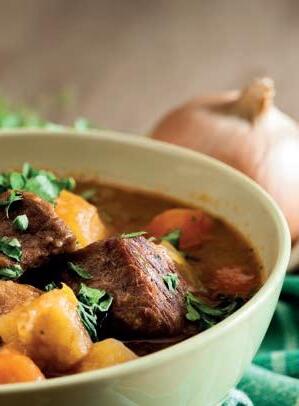
STEW GARNISHED WITH INGREDIENTS FROM THE DISH ITSELF.
“Staff taking a few moments to sit, chat and engage during the meal delivery can transform the experience.”
Residents are shown plated up dishes at Porthaven Care Homes. Ilona Tomza says “Pictures of food are not as effective as the food itself. Garnishing is important and helps residents choose what they would like to eat. Stews and casseroles are garnished with ingredients that are contained in the dish. For example, Coq au Vin will have bacon, caramelised baby onions and sautéed mushrooms as a garnish on every single plate.” Familiar, recognisable dishes often encourage better uptake. “Portions should be small – too much on a plate can be off-putting. Seasoning is important –each flavour must be enhanced,” recommends Ilona.
At Athena Homes, residents’ favourite meals are incorporated into menus. Dan Amis says “These preferences are captured during pre-admission assessments. Residents are

also involved in seasonal menu planning ensuring they are at the forefront of everything we do.”
Residents who are unable to join communal dining still need to experience mealtimes as something enjoyable and meaningful. Hilary Woodhead from the National Activity Providers Association (NAPA) advises “Trays should be attractively laid out with attention to colour, warmth and layout. Wherever possible family crockery and adapted equipment should be used. Where themed experiences are taking place in communal areas, these can be reflected on trays as well, helping individuals feel part of the wider experience. Staff taking a few moments to sit, chat and engage during the meal delivery can transform the experience.”
Left: Food activities giving a sense of purpose and involvement (NAPA).
Activities that actively involve residents such as baking, preparing simple dishes, setting tables or choosing menus give residents social engagement and a sense of purpose.
“Reminiscence is especially powerfulconversations about favourite meals, cultural dishes or family traditions can spark memories,” says Hilary Woodhead. “During a food-based activity, the smell of cooking, the colours of ingredients, the act of tasting, can also encourage appetite and participation.”
Afternoon tea is the perfect opportunity to bring all this together as residents can be involved in baking, setting tables or making decorations. Leni Wood from Nellsar says “Presentation is key - tiered stands, china cups and neatly prepared finger foods can elevate the experience. Offer a mix of sweet and savoury options, with attention to dietary needs including texture-modified versions. This might include mini sandwiches, scones with cream and jam, small cakes and a selection of teas. Adding elements such as themed décor or gentle background music can enhance the experience further.”

The phrase “water bankruptcy” has moved quickly from academic circles into mainstream policy and business conversations. For hospitality operators, it signals more than another sustainability buzzword. It points to a structural shift in how water is valued, priced and increasingly, restricted.
At its core, water bankruptcy describes a system that has moved beyond short-term stress into long-term failure. It happens when water use consistently exceeds natural replenishment and the damage becomes difficult or impossible to reverse.
Unlike a drought or a “water crisis”, this is not a temporary dip. Rivers, aquifers and wetlands lose their ability to recover, creating a permanent deficit.
WHY
The term gained traction following a 2026 United Nations-backed report declaring that the world has entered a “global water bankruptcy” era.
That shift reflects what many operators are already seeing in supply chains. Water shortages are no longer isolated events. They are becoming chronic, driven by climate change, population growth and decades of over-extraction.
Agriculture, which accounts for roughly 70% of freshwater use, is under particular strain. That has a direct knock-on effect for foodservice, from volatile ingredient pricing to disrupted availability.
Recent real-world examples underline the point. In parts of Turkey’s agricultural heartland, groundwater depletion has caused land subsidence and forced emergency water measures. Meanwhile, cities from Tehran to São Paulo have faced recurring “day zero” scenarios where supply nearly runs out.
For caterers, this is no longer a distant environmental issue. It is an operational risk.
Water has traditionally been treated as a low-cost utility. That assumption is changing. As scarcity intensifies, hospitality operators can expect tighter regulation, rising costs and greater scrutiny from clients, particularly in public sector catering and events.
Forward-thinking operators are already adapting and you can do the same by making the following changes to your processes:
1. Rethink food prep flows
Batch washing vegetables in sinks rather than under running taps can cut water use significantly. Some kitchens now reuse final rinse water for pre-wash stages where food safety allows.
2. Upgrade warewashing
Modern dishwashers with heat recovery and low-litre cycles can reduce consumption dramatically compared to older models. Running full loads only is still one of the simplest wins.
3. Menu engineering
Water footprint is becoming a consideration alongside carbon. Dishes reliant on water-intensive ingredients may face supply volatility.
4. Staff behaviour
Training remains critical. Small habits such as turning taps off between tasks or using trigger sprays, add up across a busy service.
5. Supplier conversations
Water risk sits upstream. Engaging with producers on irrigation practices and sourcing from less water-stressed regions can build resilience into the menu.
The key message behind water bankruptcy is blunt. We are living beyond our “hydrological means”.
For hospitality, that means treating water less like an unlimited utility and more like a constrained ingredient. Kitchens that adapt early will be better placed to manage costs, meet client expectations and future-proof their operations as resources come under pressure.
Join our mission to future-proof the industry by adapting your processes today!





Designing a nursery menu can be challenging as dishes not only need to be nutritious and appealing but also stay within a tight budget. Creating a two-to-four-week rotating menu may be the answer. This means that dishes can be varied, nurseries can plan ahead and budgets can be managed.
At Tops Day Nurseries in Southbourne, Dorset, having a set menu allows the company to purchase in bulk and negotiate better prices with suppliers. Dee Liberty-Spark, catering manager, says “When planning the menu, we offer seasonal products which will be cheaper, but have high nutritional value. The food we provide doesn’t contain any added sugar – all sugars are naturally occurring in food.” Food is prepared from kitchen hubs, which reduces staffing costs and enables larger quantities of products to be purchased. “The menus have a variety of meals including meat free days with protein alternatives such as beans and pulses,” continues Dee. “They are checked by a nutritionist to ensure the dishes are well balanced. We encourage feedback from each nursery to see what meals are popular so we can adapt our menus each season to reduce wastage.”
Keeping abreast of costs is critical, and Dee monitors spending by visiting the kitchen hubs to find ways of decreasing costs without reducing the quality of food. “I will review costs with current suppliers and do comparisons with others to make sure we’re getting the best price. When menu planning, negotiations will be completed to guarantee fixed prices with our suppliers.”
Simple and seasonal is the advice from Luke NelsonNeil, senior chef and chef trainer at London Early Years Foundation (LEYF). “Cook from scratch as much as possible, use affordable staples such as beans, lentils, eggs, pasta and rice and build menus around balanced meals rather than expensive convenience foods. If a dish is unpopular or creates waste, change it.” His team uses knowledge gained from the Early Years Chef Academy training to make menus appealing to children and recommends meat-free meals to help budgets stretch further.
“A lentil and vegetable bolognese or a mild chickpea and sweet potato curry are good examples as they are nutritious and affordable,” he says.


Managing food allergies and intolerances in nurseries is vitally important. Allergy School (www.allergyschool. org.uk), introduced a year ago by the food allergy charity The Natasha Allergy Research Foundation, provides a wide range of resources for nurseries and schools. The resources can be tailored according to requirements, whether it’s helping children to understand food allergies or supporting staff in deepening their knowledge and inclusive practice. They are endorsed by the Department for Education and compatible with the national curriculum to encourage greater awareness and understanding.
Resources include an online self-assessment tool to find out how food allergy-friendly the organisation is and how the safety and wellbeing of students with food allergies can be improved. The “Welcome To Allergy School” film gives invaluable advice for teachers, schools and clubs. This includes information for staff training, off-site trips and how to respond to a food allergy emergency. For children aged three to five, there is a series of films introducing Arlo, a puppet created and brought to life by Sesame Street puppeteer Warrick BrownlowPike, who is a friendly armadillo with food allergies.
Jan Parnell, Director of Education, at The Natasha Allergy Research Foundation says “Staff working in early years settingsnurseries and pre-schools - are increasingly aware of the different issues and levels of support needed to ensure children with food allergies are safe. They include clear communication with parents and carers, supervision at mealtimes and training to avoid cross-contamination and how to respond to an allergic reaction. Through Allergy School, Natasha’s Foundation will be supplying early years providers with new resources by the end of the year, which will sit alongside our existing allergy self-assessment reflecting the early years statutory guidance on food and allergies.”
It’s important that children are served small portions, so the meal is not overwhelming. At Tops Day Nurseries staff sit down with children at mealtimes to support and encourage them, allowing them to selfserve and having conversations about the food they are eating, making mealtimes a positive experience.
“Food activities or simply talking to children about what they are having for lunch can have an impact on how children view food,” says Luke Neilson-Neil from LEYF. “Make food colourful, familiar and easy to eat. Children respond well to variety in texture, taste and presentation, and they often need repeated exposure to new foods before accepting them.”
At Tops Day Nurseries, kitchen hubs are planning to grow their own herbs on site “so we have fresh herbs to offer in meals as this is a high expenditure from suppliers,” says Dee Liberty-Spark. “Some nurseries grow fruit and vegetables which teaches children about the full cycle of planting, nurturing the plant and then being able to eat the produce.”
“When planning the menu, we offer seasonal products which will be cheaper, but have the nutritional value. The food we provide doesn’t contain any added sugar – all sugars are naturally occurring in food.”





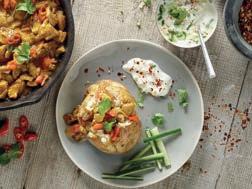
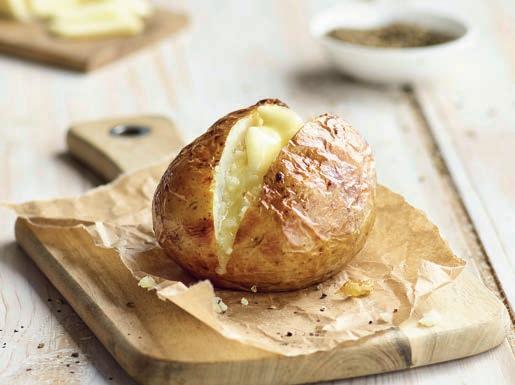
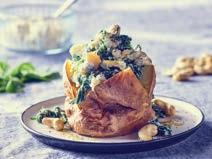
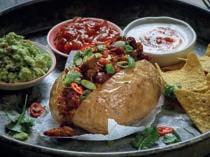
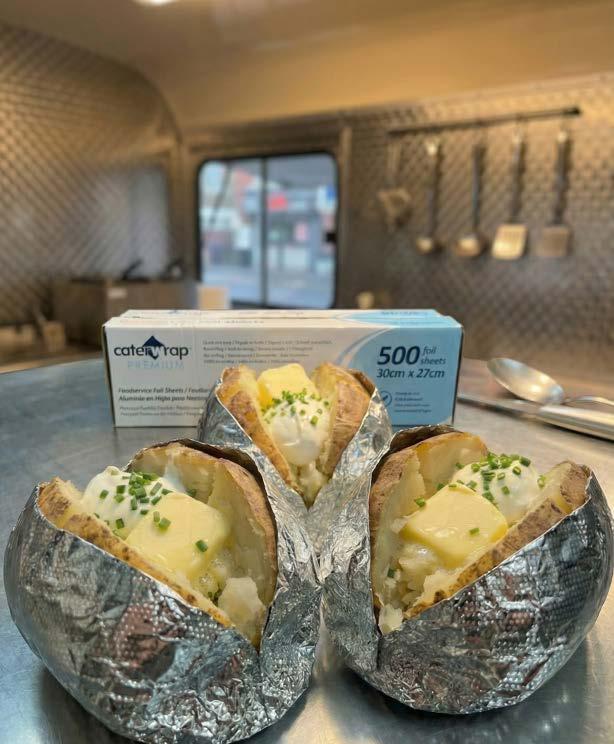
Our jackets in a ji y are a true staple for busy caterers. Always on hand in the freezer and ready in a flash, just add a fab filling and a salad garnish to keep your customers coming back for more...
Why not try one of our truly tempting serving ideas: www.bannistersfarm.co.uk/recipes

Ideal for Kiosk cafés
Fast food outlets
Cafés with outside seating
Pubs and restaurants
Available in
Extra Large - 3 x 10
Large - 5 x 7
Standard - 4 x 10
Medium - 5 x 9







Chick peas tick all of the boxes when it comes to protein and fibre, and when paired with fresh, vibrant ingredients, they turn into a bowl of sunshine that will equally pair with fish, meat or as part of a vegetable mezze. You could offer this as a side dish or with optional protein add-ons to make it a main meal.
Mediterranean Chick Pea Salad

With eating habits changing and wallets tightening, small plates are increasingly common on menus. This month, Paul Dickson explores ways to offer more choice when it comes to side dishes.
Splitting a main dish into smaller components can look a lot more affordable on the menu whilst giving customers more choice and enabling diners to feel more in control of their meal. This also provides you with the perfect upsell opportunity. The key is ensuring there is a good balance between indulgent sides, such as loaded fries, and catering for the more health-conscious consumers looking for the perfect balance of protein, fibre and healthy carbohydrates. Here are some ideas to add more of the latter to your offering.
Paul is a Home Economist and food stylist working in London and the North West, creating exceptional visual stories in film & tv, on social media and in print. All of the recipes and videos featured in the article can be accessed online at www.countryrange.co.uk/recipes or by scanning the QR Code.
Wholegrain rice is a great choice for added fibre and its nuttiness stands up well to bold flavours. Here I’ve tossed it with cumin, paprika, and roasted seasonal vegetables. Finish with a drizzle of tahini or yogurt dressing or even keep your dressings as an add-on so that diners have the option to go with or without.
“The key is ensuring there is a good balance between indulgent and healthy sides. ”
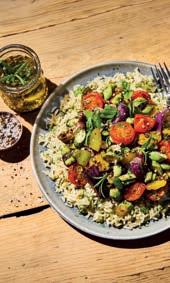
Wholegrain Rice and Roasted Veggie Bowl

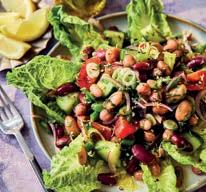
We’re currently in the best time of year for seasonal salad ingredients, but this dish works well because you can keep the core ingredient the same but change up the fresh elements depending on what is available. I use Country Range Five Bean Salad which is a powerhouse of protein, fibre and nutrients, then layer up with seasonal ingredients, making it a versatile accompaniment for all seasons.

• Premium biscuits crafted for hospitality excellence
• Trusted quality your guests will notice
• Mixed cases for maximum variety with minimal storage

30g x 100 5 FLAVOURS
The innovation in the frozen food sector has come on leaps and bounds in the last five years, with Darta, a Belgian frozen food company, leading from the front with their game changing range of frozen thaw and serve salads. We spoke to Chris Saddington, the Food and Beverage Manager at the Iconic Yorkshire attraction The Deep Aquarium in Hull, to find out how he has embraced this innovative range and utilised the products to elevate his menu.
When did you first discover Darta’s Cuisin’easy Frozen Salads?
I first saw the product at a wholesaler trade show. We were looking to upscale our salad offering; however, we struggled to find a product that would match our budget without compromising on quality, as well as suit our serving method. I saw some very bright salad mixes and, assuming they were ready to serve, was surprised when I found out they came frozen! I was blown away by the taste and variety, and believe I’ve found my “unicorn” product.
How do you utilise the range within The Deep’s menu and what are the key benefits of the products?
We currently use them as an addition to our pre-made and boxed salads. The freshness and variety of ingredients easily allow us to upscale any ingredient or salad, as well as assisting in our skills mix. As an environmental charity, another key benefit is that this product helps us to reduce waste by allowing us to only take out what we need and keep the rest frozen. In addition, as the product is portion controlled, this allows us to monitor costs; with other ingredient hikes arising, particularly in salads, this is a huge helping factor in keeping costs low.
How many of the products within the range do you use?
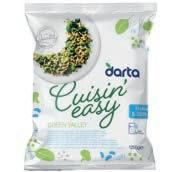
We currently use five mixes: Spartacus, Mambonito (which we pair with a fishcake for a different slant), Green Valley (which goes great with chicken), Sunny Vibes (which really complements our falafel mixes) and Sultan of Swing. We also use diced peppers and onions, which helps to save The Deep’s chefs a lot of time.
These ranges allow us to tweak or add special ingredients and not be faced with huge costs. The Deep’s café is showcasing far more seasonal products, and the different ranges create additional flexibility. The Deep welcomes a diverse audience and this range helps make us more accessible and inclusive to visitors.
What would you say to someone who is considering using the Cuisin’easy Salads but maybe has reservations about such a frozen product?
Don’t think - just try it! They are intuitive to use, cost-saving, flavourful and will uplift any dish they are added to. Also, these salads provide easy portion control and help minimise waste, creating a more sustainable option for your café - win-win!
Which salad is your favourite and why?
I love the Spartacus because Greek salads are a favourite, however the Green Valley with a chicken breast has become my go-to meal for a healthy lunch when training. It is enough to feel substantial without weighing me down for the afternoon!


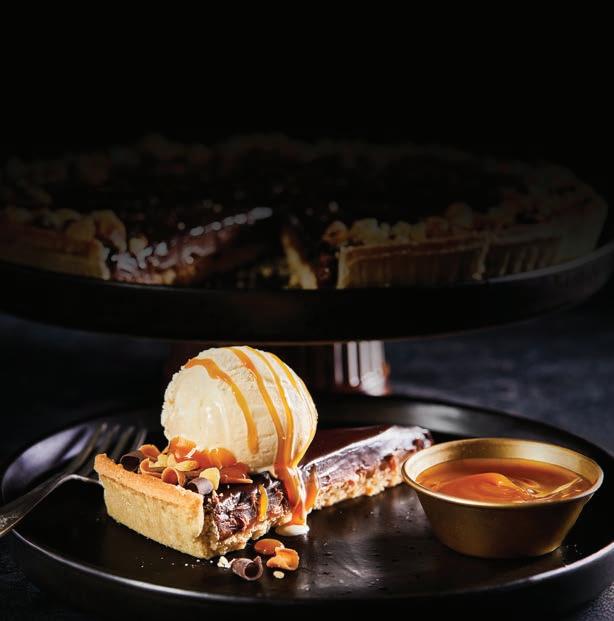



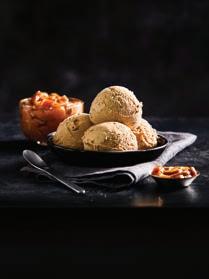
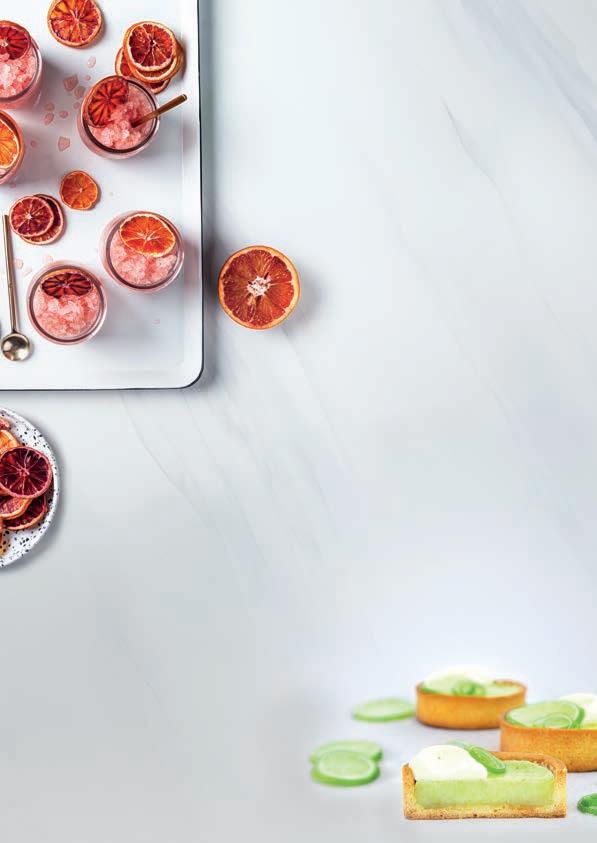
As temperatures rise, menus shed the hearty, heavier sweet treats of winter and transition towards fruit-led classics, ice creams and mousse-based desserts. Even though summer has finally arrived, there is still time to refresh your dessert offer while still delivering on indulgence, and we’re here to help with those last-minute preparations.
At the heart of any successful summer dessert is ingredient choice. Berries, stone fruits and citrus not only offer natural sweetness but also bring acidity and colour to the plate. Classic dishes such as a summer pudding layered with raspberries and redcurrants or a peach and thyme compote with yoghurt mousse continue to resonate because they feel seasonal and uncomplicated.

FOR SOME STAND-OUT INSPIRATION, CONSIDER THE FOLLOWING FLAVOUR COMBINATIONS:
• Watermelon and mint granita
• Coconut and lime semifreddo
• Mango, chilli and lime panna cotta
• Pineapple carpaccio with coconut cream and toasted sesame
• Strawberry and balsamic Eton mess
• Lemon and thyme posset with berry compote
• Matcha and white chocolate mousse with sesame crumble
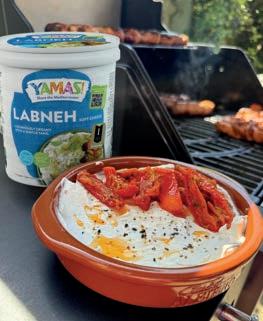
Swap heavy creams for yoghurt, crème fraîche or plant-based alternatives to lighten textures while retaining richness. A lemon posset with shortbread crumb or a labneh parfait with honeyed apricots delivers indulgence without heaviness. There is also growing interest in less processed ingredients and gut-friendly options, with diners paying closer attention to how food makes them feel. This has prompted a shift towards natural sweeteners, fermented elements and lighter bases.
Frozen elements also play a key role during the summer. “Ice cream, gelato and sorbets are the perfect cooling treat in the warm summer months and offer versatility in that they can be served on their own or to accompany other dessert items,” enthuses
Steve Carrigan, Master Technician in Gelato & Ice Cream for Henley Bridge. “Brioche doughnuts, cookie sandwiches, cannoli, chimney cakes (hollow sweet pastry made from yeast dough) and bubble waffles are all attractive, Insta-worthy carriers, which can be adorned with edible decorations and inclusions to satisfy the most sweettoothed among us.”
SIZZLING SUMMER FLAVOURS
While classics remain strong, operators are seeing demand for bolder, globally inspired combinations. Tropical, sour and spiced notes are still on trend, with flavours such as mango, passion fruit and citrus continuing to dominate. “Bright citrus fruit pairings for example, lemon with berries or yuzu and ginger or fresh tropical notes like mango, pineapple or watermelon with light creams resonate strongly for their cooling, vibrant profiles. Citrus-forward bakes like a Yuzu Olive Oil Cake bring a naturally cooling effect,” say the team at Unilever Food Solutions. Flavours such as pistachio and limoncello, are also gaining traction in summer desserts across the retail and foodservice environments.
At the same time, nostalgia still matters. The opportunity lies in updating familiar desserts with seasonal twists. “Retro dessert flavours are proving particularly popular in the ice cream category this year. Great retro flavours which work brilliantly in ice cream form are treacle sponge, jam roly poly, tiramisu, sticky toffee pudding, Black Forest gateau and cherry mascarpone. A personal favourite of mine is rhubarb crumble and custard,” says Steve. “For this summer, Italian gelato experts Rubicone have launched an industry-first custard ripple,
along with a selection of crumbles in several flavours including caramel, yoghurt, matcha and pistachio, as well as white crumble, all of which are gluten free.”
The key to summer desserts is contrast, and texture is one of the most effective tools to achieve this. Combining smooth, crunchy and icy elements can elevate even simple dishes. For example, a vanilla panna cotta with almond praline and berry sorbet offers richness, crunch and freshness in one plate.
As smaller portions and sharing plates become more popular, consider producing a trio of mini citrus tarts, chocolate mousse cups or fruit jellies to work across casual dining, events and even care settings where appetites may vary. There is also a noticeable shift towards reduced sweetness and more natural flavour profiles, so consider desserts such as grilled peaches with honey and ricotta or a berry salad with basil syrup to deliver sweet-satisfaction without too much sugar.
Seasonality remains a powerful driver of menu development for many chefs. Consumers increasingly expect desserts to reflect the time of year, with fresh, local produce taking centre stage. For independent operators, this offers both a storytelling opportunity and a way to manage costs. Combining seasonality with food trends such as hybrid desserts can lead to some fun, Insta-worthy results. From Cheesecake-filled profiteroles to grilled pineapple with chilli syrup and coconut sorbet, these playful formats appeal to younger diners and can be adapted for grab-and-go or event catering environments.
Japanese-inspired desserts such as matcha cheesecakes or mochi ice cream continue to grow in popularity, partly due to their lighter sweetness and distinctive textures. A matcha tiramisu or yuzu tart with meringue can bring a point of difference without overcomplicating execution.
Creating compelling summer desserts comes down to a few clear principles. Done well, it doesn’t just complete the meal, it becomes a reason to visit in its own right.



CREDIT: UNILEVER FOOD SOLUTIONS
COOKING TIME: 2HRS 15MINS SERVES: 10
INGREDIENTS
• 190g Carte D’Or Mango Mousse
• 500ml whole milk
• 400g peaches canned in juice
• 50g caster sugar
• 100g almonds, toasted
METHOD
FOR THE MOUSSE
1. Pour the cold milk into a mixing bowl and add the Carte D’or Mango Mousse mix.
2. Whisk the mousse on a slow speed for 2 minutes then increase the speed to high and whisk for a further 5 minutes.
3. Spoon into piping bags.
TO ASSEMBLE AND DECORATE
1. Take the tinned peach halves and cut into small pieces and place on a roasting tray. Sprinkle a little caster sugar over







and place under a hot grill or use a blowtorch to caramelise the tops.
2. Once cooled, place half into the bottom of a dessert glasses.
3. Pipe the prepared Carte D’or Mango Mousse on top then place into the fridge and chill for 2 hours.
4. Take the remaining peaches and chop into a fine dice.
5. Before serving, garnish with the remaining peaches and almonds.




























CREDIT: MAX MIGLIORATO
COOKING TIME: 1HR
While he was born in Rome, Max Migliorato was raised across Italy, the US and the UK, providing him with a fantastic and far-reaching foundation in food. Settling in Fuerteventura with his wife Vickie, the commercial couple first moved into the world of hospitality in 2022, when deciding to launch Fiesta Mexicana on the second largest of Spain’s Canary Islands.
Based in a seasonal tourist town, the couple knew they needed something unique and distinctive that could attract customers all year round. With a passion for fresh, vibrant, authentic Mexican cuisine, they saw a gap in the market. After a year of searching, they found their perfect location and Fiesta Mexicana opened its doors.
Situated a short walk from the beach in the busy hub of Caleta de Fuste, Fiesta Mexicana has quickly become one of the most talked about and loved restaurants on the island.
“We take a lot of pride in serving authentic Mexican cuisine that we believe really captures the true essence of Mexico’s culinary heritage,” says Max. “Whether diners are craving a big breakfast, lazy lunch, quick snacks or a delightful dinner, our menu caters for all and is made using the finest, fresh ingredients and time-honoured recipes. Our aim for 2026 is to attract a more trendy and younger demographic. The more we can increase our capacity, the more we can innovate in the kitchen.”
SERVES: 4
INGREDIENTS
• 4tbsp Country Range Cornflour
• 1 large potato (for mashing e.g. Yukon Gold)
• 1 green chilli, sliced
• 2 spring onions, chopped finely
• 2tbsp freshly chopped coriander
• 24 fresh, deshelled and deveined small prawns, squeezed of excess water
• Vegetable oil for frying
• Salt and pepper for seasoning
For garnish: guacamole, sour cream, red salsa, side salad
METHOD
1. Boil the potato with the skin on until soft. Remove the skin and mash. Season and let it cool down.

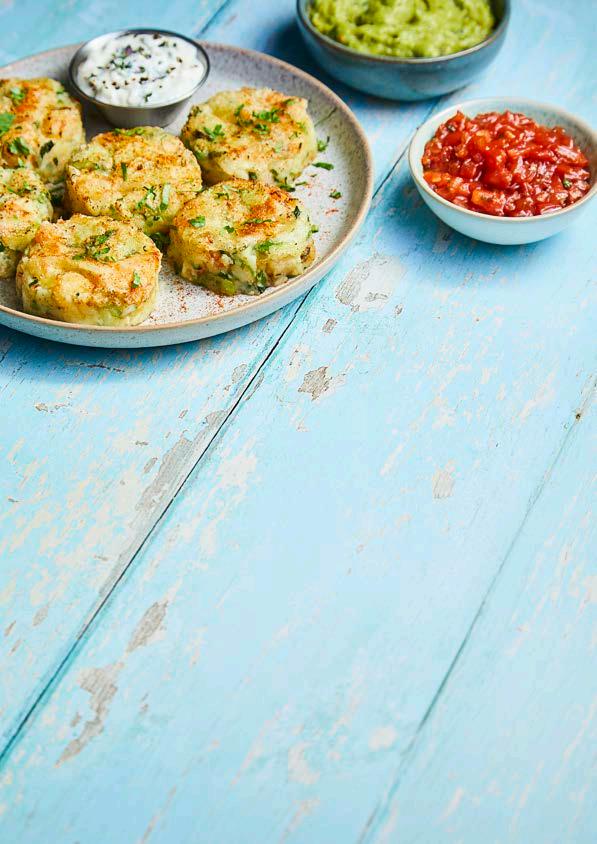
“I use so many Country Range products that it is impossible to pick a favourite. The quality is excellent. My Prawn and Chilli Croquette recipe is a brilliant dish for summer.”

2. Add the chopped spring onions, coriander and sliced chillies. Add three tablespoons of cornflour until the dough is no longer sticky and chill in the fridge for 30 minutes.
3. Add the prawns and form into eight small balls. Dust with the remaining tablespoon of cornflour.
4. Deep fry at a high temperature for around 5 minutes, drain with kitchen paper and serve with guacamole, sour cream, red salsa and a fresh side salad.
Lamb Weston has launched its 19mm Stealth Triple Cooked Chunky Chips into the wider foodservice market, following recognition as an ‘Approved Product’ by the Craft Guild of Chefs.

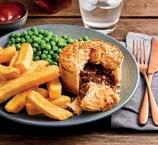
Praised for their homemade appearance, crispy exterior and fluffy interior, the chips impressed judges with both flavour and visual appeal.
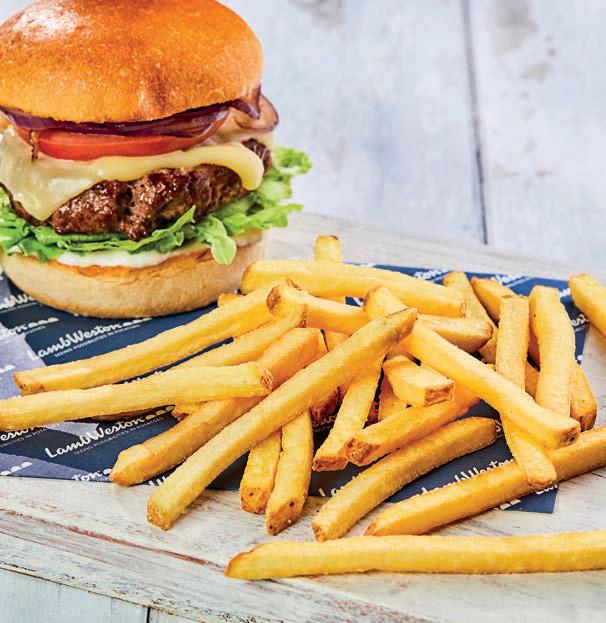
Made from British potatoes and gluten free, the chips cater to growing demand for premium, locally sourced ingredients. Their larger size and distinctive look also allow operators to enhance plate value and potentially command higher pricing.
Already proven on a leading UK steakhouse menu, the triple-cooked format ensures faster cooking times, helping kitchens save time without compromising quality. Combining convenience with a premium finish, these chips offer chefs a practical way to deliver “handmade without the hassle” while meeting customer expectations for elevated dining experiences.
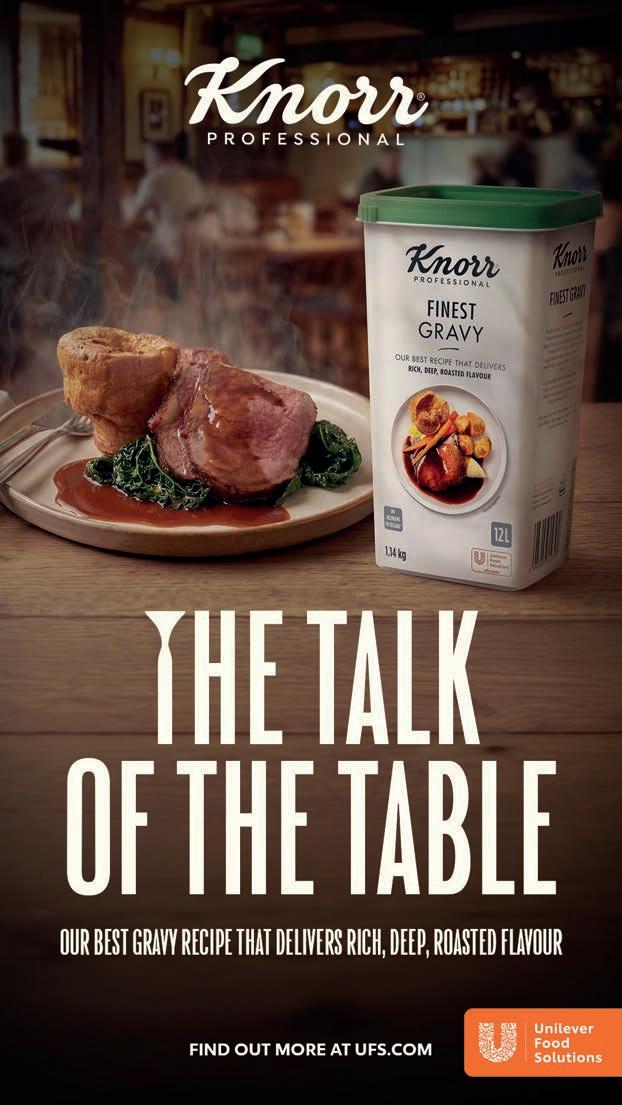
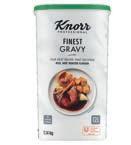
Knorr Professional Finest Gravy is the UK’s number one back-of-house branded gravy* and it’s easy to see why. This is a gravy built for real kitchens, thick, silky and packed with rich, roasted depth that works hard across your entire menu.
Whether you’re plating a classic Sunday roast or building a contemporary dipping sauce, it holds its own without needing anything added. The granules dissolve instantly in boiling water, keeping service smooth even at the busiest times. With no declared allergens, gluten free and fully vegan, it genuinely takes the stress out of catering to diverse dietary needs, all without compromising on bold, satisfying flavour.
*Aggregated UK Wholesalers Value Sales 52 W/E 22nd February 2026.




Kerrymaid has introduced its new XL Cheddar Cheese Slice, designed to help operators capitalise on the growing popularity of smash burgers. With burgers seeing a £52.6m rise in spend in 2025, the category continues to offer strong profit potential, particularly with smash formats delivering up to 50% higher returns.
The 9cm x 9cm slice provides full patty coverage, ensuring a smooth, even melt with no exposed edges. Made with 60% Cheddar, it delivers a richer flavour and glossy finish while maintaining the speed and consistency required in busy kitchens.
The larger format removes the need to stack slices, simplifying prep and supporting cost control. Supplied in 72-slice packs, the product also aids portion management and reduces waste. Halal certified and palm oil free, the XL slice is a practical, premium solution for operators looking to elevate their burger offer.
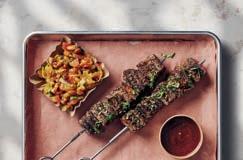
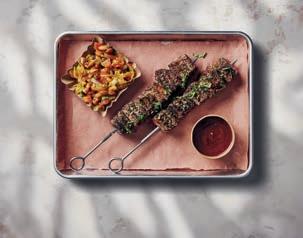
The team behind the Santa Maria brand has launched The World of BBQ, a new range of globally inspired barbecue sauces designed to help foodservice operators meet growing demand for bold, smoky flavours.
With BBQ continuing to drive menu choices, the range offers eight versatile sauces inspired by regions including Kansas City, Korea, South Africa and Alabama, enabling chefs to deliver authentic taste without added complexity.
Created for busy kitchens across QSR, pubs, casual dining and contract catering, the sauces are easy to use as glazes, dips or toppings, helping operators refresh menus and add global appeal with minimal prep. Most are vegan-friendly, supporting diverse dietary needs.
The range allows chefs to elevate everything from ribs and wings to wraps, bowls and loaded sides, offering a simple way to create craveable, flavourled dishes while improving efficiency and consistency.

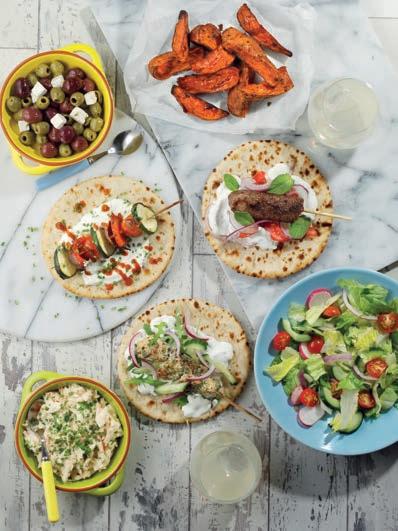

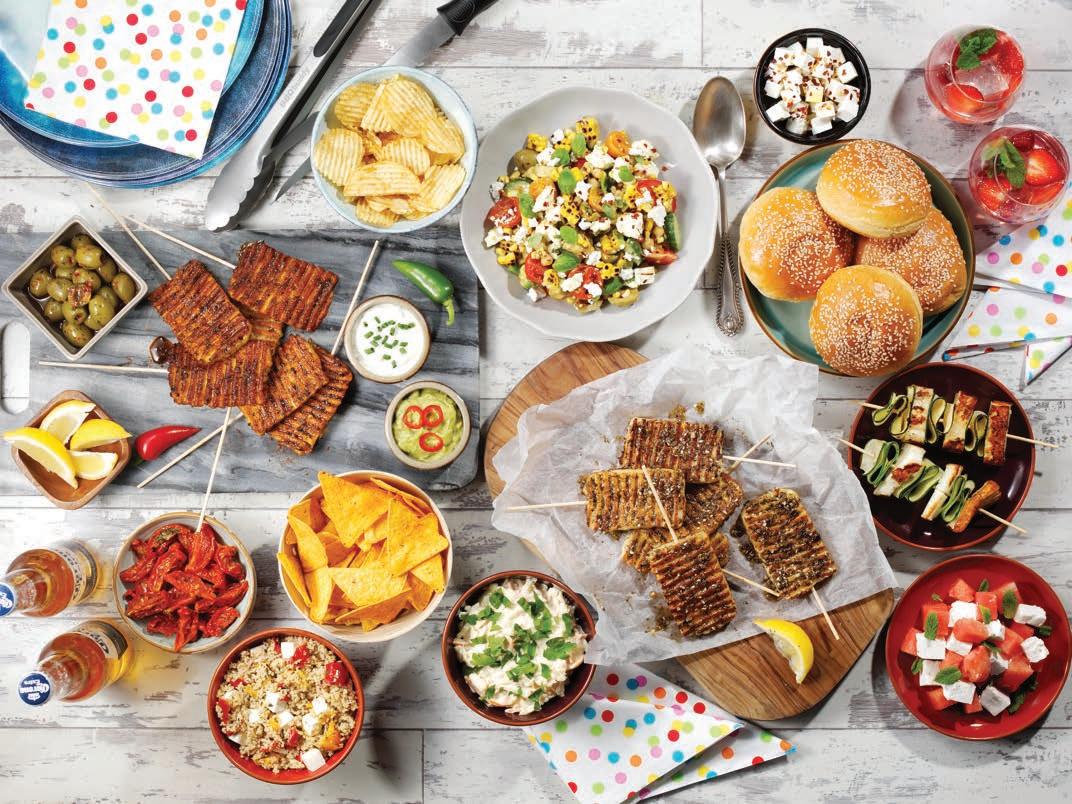





At just 13 years old, Maisie Crank from Sedgefield Community College is an exciting young chef from the North East to keep an eye on. Maisie wowed judges to become the Springboard FutureChef North East Final champion and one of just 12 finalists selected from 16,000 entrants nationwide.
Here are Maisie’s five flavoursome dishes featuring sunflower seeds.
CREDIT: MAISIE CRANK COOKING TIME: 45MINS
INGREDIENTS:
Sunflower seeds are great in veggie burgers alongside ingredients like lentils, black beans or root vegetables. They add texture, essential fats, a lovely nutty taste and they’re also functional as they help to bind.
These versatile seeds can be roasted with spices and added to curry dishes. My favourite pairings include sunflower seeds with turmeric, cumin and cayenne pepper.
Sunflower seeds can be used as a great alternative for pesto, especially if you are catering for people with nut allergies.
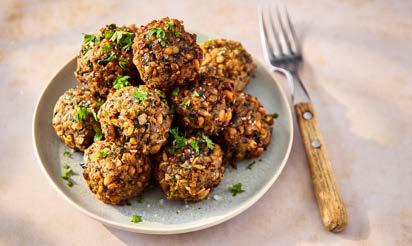
At Christmas, we cater for meat eaters and vegetarian guests, so these are a regular in our house. After creating a base of lentils and herbs, I add toasted sunflower seeds and pine nuts for a nutty, protein crunch.
Trust me - combining cheese, apple, and sunflower seeds in a nutritious muffin provides a super savoury-sweet breakfast or late morning snack.
Country Range Sunflower Seeds
Pack Size: 4 x 510g
• 70g Country Range Sunflower Seeds
• 70g Country Range Natural Breadcrumbs (for binding)
• 1tsp Country Range Dried Garlic Granules
• 1 can brown or green lentils, drained and rinsed
• 70g pine nuts
• 1 onion, finely chopped
• 80g mushrooms, finely chopped
• 30g baby spinach, roughly chopped (optional)
METHOD

• 1tbsp fresh parsley, chopped
• 1tbsp fresh thyme, chopped
• 1tbsp fresh rosemary, chopped
• 1tbsp fresh sage, chopped
• 1 egg
• 2tbsp coconut oil or olive oil
• Salt and black pepper to taste
1. Preheat the oven to 180°C. Toast the pine nuts for 5–10 minutes.
2. Heat the oil in a pan over medium heat. Add the onion and mushrooms to a pan and fry until browned.
3 Blitz the drained lentils, sautéed veggies, toasted pine nuts, sunflower seeds, herbs, spinach, garlic granules, breadcrumbs and egg.
4. Season and then roll into bite-sized balls.
5. Bake for 20–25 minutes until golden.
As late-night dining continues to evolve, operators are rethinking what works after dark. From bold, quick-to-serve dishes to formats that encourage sharing and repeat orders, creative chefs are balancing flavour with efficiency. This month, our experts share their insights for adapting to the pace, mood, and appetite of a night-time crowd.

JACK GODICK Chef, Sucre Restaurant
Late night dining is an interesting challenge because, as we’ve all experienced, late-night cravings tend to call for something delicious and satisfying. But we also want to keep it light so that we can still have a good night’s sleep. So, with that in mind, I try and stick to simplicity and avoid heavy amounts of butter or anything with heavy ingredients.
Our empanadas are a perfect late-night snack. Salty, savoury, encased in crisp pastry and perfect with a nightcap. We have the options of either cheddar and caramelised onion or, for a little more richness, braised pork collar and pineapple empanadas.
Amazing ingredients cooked over open fire is the simplest and most perfect combination for late night eating.

by Sucre Restaurant

COOKING TIME: 25MIN SERVES: 12
• 280g all-purpose flour
• ½tsp baking soda
• 1tsp baking powder
• ½tsp kosher salt
• 110g unsalted butter, room temperature
• 180g Biscoff® spread (plus extra for decorating)
METHOD
1. Preheat the oven to 175°C (350°F).
2. Mix all the dry ingredients.
by Lotus Bakeries
• 200g brown sugar
• 105g sugar
• 1 egg and 1 egg yolk
• 12 Biscoff® biscuits
• Biscoff® biscuit crumbs

3. Mix the butter and Biscoff spread until the mixture has a homogenous colour.
4. Then add brown and white sugar and continue to mix for another 3 minutes.
5. Add the eggs and mix until fully combined.
6. Fold the dry ingredients carefully into the wet ingredients.
7. Use an ice cream scoop to make the cookies, one big scoop per cookie. Roll into balls and place on the prepared baking sheet.
8. Bake for 12-14 minutes, until crispy edges begin to form.
9. Take out of the oven and let cool.
10. Spoon about 1tbsp of Biscoff spread on top of the baked biscuits. Add Biscoff biscuit crumbs and a biscuit on top.

FRANCES BOOTH
Head of Marketing, Lotus Bakeries UK
Comforting choices are always most popular and late at night, nothing can beat a warm cookie or gooey brownie. To elevate the impact of these, we always recommend bakes that have an added layer of decadence and here Biscoff® ticks all the boxes! Delivering its original caramelised flavour and a distinct crunch. Our foodservice specific products, including 3kg tubs of Biscoff® spread, Biscoff® topping sauce and Biscoff® biscuit crumbs, makes it simple to enhance menus.

JAMES BROWN
Executive Chef, Unilever Food Solutions UK&I
Late-night diners respond strongly to elevated street food experiences such as Asian inspired sauces and international topping combinations. This mirrors 2026’s broader shift toward adventurous, globally influenced menus rooted in authenticity.
Blue Dragon Chow Mein Sauce can be used for Chicken or Vegetable Chow Mein Noodles that hold up during travel; this aligns with 2026 trends where familiar formats get bold global flavour twists.

SAMANTHA WINSOR Marketing Manager, Lantmännen Unibake
Chicken burgers continue to be a key player on menus, opening endless possibilities including Mexican Chipotle, Florida Cajun and Tennessee Hot flavours. Toppings, sauces, and premium buns can transform a classic burger into a destination dish.
A seasonal or signature sauce can become a powerful point of difference — a smoky chipotle glaze for summer, a spicy maple drizzle in autumn, or a limited-edition chilli cheese can all help to give operators a point of difference. These additions require minimal operational change but can refresh core menu items, create buzz and drive repeat visits.
When it comes to burgers - a gourmet bun is the secret to satisfaction. The bun isn’t just a vessel for the fillings, it’s a structurally critical component that can make or break the entire burger experience, including whether it can withstand a delivery journey.
A seasonal or signature sauce can become a powerful point of difference



REBEKHA WHITE
Brand Manager, Aimia Foods for Professionals
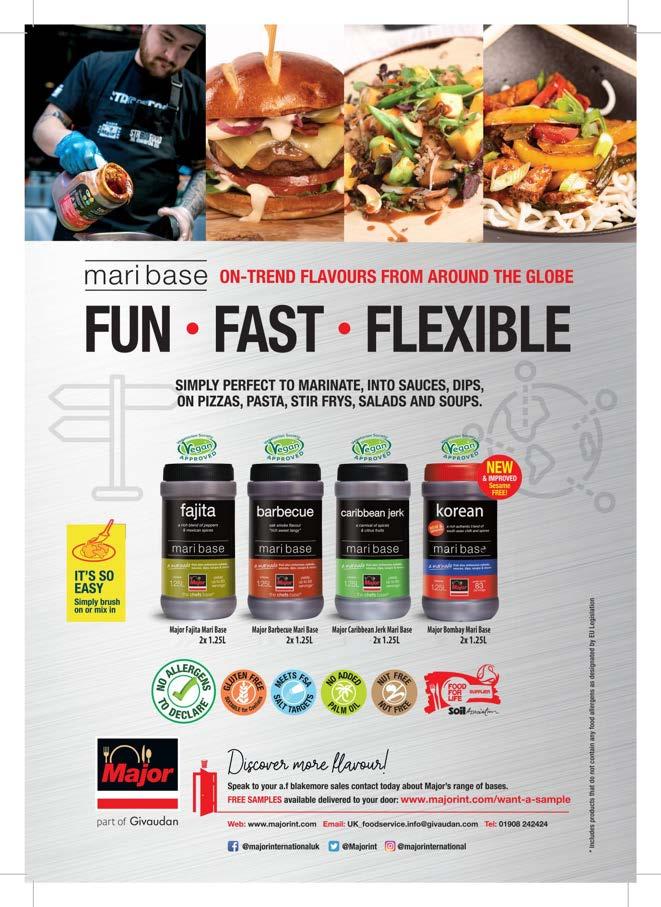
When it comes to evening drinks, customers are looking for items that amaze and are often willing to spend more on options that stand out. Creative cocktails can provide an ideal way of tapping into this market, appealing to more adventurous customers by offering something a little different. Capitalising on the growing popularity of chai, operators can spice up their evening drinks menu by providing a flavoursome, low caffeine alternative to espresso martinis. Making it quick and easy to create tempting chai-tinis, Aimia Foods for Professionals have created the perfect solution with its new Drink me Chai RTD can. Blending Drink me Chai’s popular Spiced Chai Latte with semi-skimmed milk, this pre-prepared, chilled chai latte can easily be elevated by mixing with vodka, coffee liqueur and sugar syrup.

FLEUR & PAUL
Owners, The Retreat
We focus on dishes that satisfy without slowing people down. Grilled cheese with sharp cheddar and sourdough stays popular because it’s quick, comforting, and easy to eat on the go. Bowls of ramen or noodle soup work well since they’re warm and filling but still light. Small plates like loaded fries or spiced chicken bites encourage sharing, but for sweeter cravings, brownies or pastries pair naturally with coffee and help extend the night. We avoid heavy meals that feel sluggish and instead keep flavours bold, salty, and slightly indulgent for late hours.
by Aimia Foods for Professionals







A chef’s perspective on building your own business
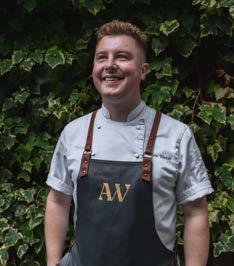
Alex Webb is an award-winning chef known for precision, creativity and experience at the top of modern gastronomy. Having trained at The Savoy and worked with leading chefs including Hélène Darroze and Heston Blumenthal, Alex won MasterChef: The Professionals in 2020 and has built a reputation for refined, contemporary dining. Now Chef Patron at Orion, which launched at the end of 2025, Alex has a wealth of experience and advice to offer chefs looking to start their own business.
WHAT MOTIVATED YOU TO OPEN YOUR OWN BUSINESS?
I’ve always wanted to have my own restaurant and it’s been a dream of mine since I was young. There’s something incredibly rewarding about creating a place that reflects your own vision and standards. When the opportunity finally came, it was both exciting and quite daunting, but that mix of emotions made it feel like the right step.
WHAT HAS SURPRISED YOU THE MOST?
The sheer scale of it really surprised me. From the moment you get the keys to the day you open the doors, there’s an overwhelming number of decisions to make. Every detail matters, you’re shaping everything from the overall concept down to the smallest touches, like interior colours or even where the kitchen sink is positioned. It’s a much bigger undertaking than you initially imagine.
“Every detail matters, you’re shaping everything...”
HOW DID YOU APPROACH SITE SELECTION AND FUNDING?
Funding came first, which naturally influenced where I could look. I had my heart set on opening in Wimbledon, so I focused my search there. Luckily, a family friend came across a site that became available, and everything aligned at the right time. It was a combination of planning and a bit of good fortune.
WHAT WERE THE BIGGEST OPERATIONAL CHALLENGES?
At the start, there’s always that concern about
getting customers through the door, although thankfully we managed that well. Beyond that, the biggest challenge has been maintaining consistency - ensuring high standards in food, cleanliness and overall presentation every single day. On top of that, bringing together a brand-new team and getting everyone working in sync takes time and effort.
WERE THERE GAPS YOU HAD TO QUICKLY FILL?
Being a chef gave me a strong foundation, especially in terms of food and kitchen operations, but it doesn’t fully prepare you for running a business. There are many other aspects like front of house, finances and management, that’s something you have to learn quickly. It’s been a continuous learning process, and I’m still developing those skills every day.
WHAT HAVE BEEN YOUR BIGGEST STAFFING CHALLENGES?
The biggest challenge has definitely been finding the right chefs. It’s taken about four months to build the team to where it needs to be.
WHAT WOULD YOU DO DIFFERENTLY?
It’s tempting to say I’d give myself more time, but honestly, I think everything happens for a reason. I wouldn’t change much. One of the best decisions I made was setting a firm opening date and sticking to it, it gave the whole process structure and momentum, and ultimately helped bring everything together.
Above (Top to bottom): Alex Webb.
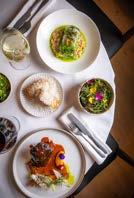
Grilled Cornish monkfish fillet, celeriac purée with sea herbs and Alex’s signature slowcooked butter thyme potatoes with parmesan.
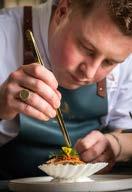
Alex Webb delicately plating up one of his dishes.
Introducing Alpen’s great new pack design and even tastier recipe! Together with its delicious crunchy roasted nuts and creamy rolled oats, Alpen now has a whopping 30% more juicy raisins! And with a big nationwide marketing campaign demand for the nation’s favourite muesli will be greater than ever, so stock up today!
Two delicious variants – Original and No Added Sugar
Tasty & nutritious**
Available in a variety of pack sizes offering convenience and value 100% recyclable packaging



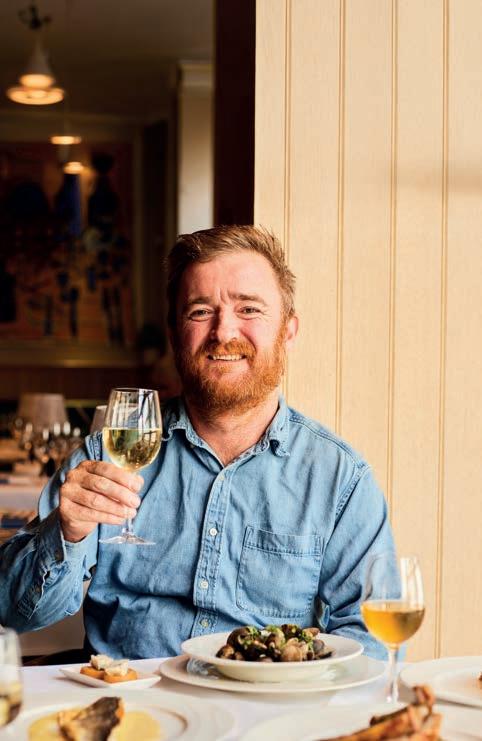

After celebrating 50 years in their famous Padstow restaurant last year, we caught up with Jack Stein to discuss the family’s new Seafood Cookbook, his route into the kitchen, chefs to watch and his future plans.



“While ingredients constrict you in some ways, it also makes you be more creative with the produce you have.”

What were your first memories of food?
My earliest food memories would be trips to France with mum and dad as they were preparing to open the restaurant. We would mainly go to Brittany for inspiration. We were probably 3 or 4 and this was before the big international travel. I remember collecting and eating winkles and oysters.
What are your first memories of the restaurant?
We were around the restaurant the whole time – very much like many other family restaurant businesses. I completed a work placement at a three-star family restaurant in France, and it was exactly the same. The whole family lived and worked there, and the kids were part of the furniture.
What was your first job in hospitality?
We used to get paid to forage various ingredients. So, for winkles we would get paid £1 a kilo and then £2.50 a kilo of velvet crab. However, being a kitchen porter was my first proper job at 13. That was washing pots in the restaurant with dad.

Was foraging and growing your own always something you enjoyed?

Dad had a big garden and grew a lot of produce because back then we couldn’t really get all the produce we needed. We’d only get two drops from London a week so things like fresh herbs were tough to get hold off.
So, Rick was a chef growing his own well before the rest but out of necessity?
The restaurant was only open from Easter to October half term so we had to rely on local producers. That inspired dad to forage and grow his own. While ingredients constrict you in some ways, it also makes you be more creative with the produce you have.
When did you decide to be a chef?
I did lots of other things first. I went to university, I worked in the city and was offered a job there but there was something inside of me that said I needed to give cooking a go. I knew I didn’t want to just dip in. I wanted to give it my all for a period of time to really see if it was for me. I decided to do a year and that was 2004. The rest is history.
What do you love about the job?
I quickly realised I love being around people and that is what hospitality is all about. The kitchen is an outlet for my creativity and keeps me active, but it is also about discipline, which I need.
Which chefs have inspired you?
Fergus Henderson, Jeremy Lee, Mark Hix, Mitch Tonks and Nathan Outlaw. Often, it’s chefs who celebrate simplicity, British seasonality and seafood.
Do you have a favourite part of your job?
I love the variety. I could be filming one day, creating and testing menus for the restaurant another, visiting suppliers and then feeding 200 people at Cheltenham the week after.
How would you describe your cooking style?
I think your cooking style evolves. You start off wanting to be one thing but as you get older you appreciate the simplicity more. Mine is very much like my parents – British seasonal ingredient driven with the odd global twist from our travels.

Where did you eat out last?
At The Wolseley in London. I was filming a podcast with Theo Randall, so we grabbed supper there. It is always excellent.
Do you have a favourite restaurant to eat at?
Som Saa on Commercial Road. Thai with great British ingredients. Riva in Barnes is another beauty that isn’t well known but is a class act.
Do you have a favourite country or cuisine?
Spain is probably my favourite place. It’s close and you have a broad spectrum of great Michelin restaurants and tapas bars, and it has great seafood and is so varied.
Any countries you haven’t travelled to that are on your list?
Mainland China.

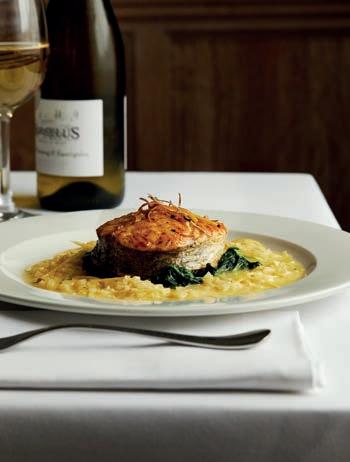
Tell us about the The Seafood Restaurant Cookbook? It came about because of our 50-year anniversary last year. It’s about where we’ve been and where we’re going. In there are all of our signature dishes so hot shellfish, fish and shellfish soups, turbot hollandaise but also dishes from the more modern eras. It’s a brilliant book and a real labour of love. There are wine pairings, pictures of our amazing suppliers and tips on how to tweak recipes


Is there a great recipe you could recommend for summer from the book?
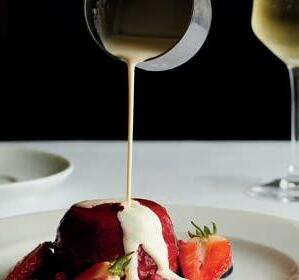
There is a great Fish Pie recipe and a wonderful Summer Pudding dish. Both are great for summer.
Extract taken from The Seafood Restaurant Cookbook by Rick and Jill Stein (Jon Croft Editions, Hardback, £35). Photographs © Rick Stein/Sam A Harris.

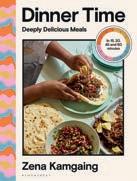
Cook and viral social media star launches first recipe book.
What are your first memories of food?
All of my early food memories are tied around my family. My mum’s Nigerian and she always made what we call stew, which is chicken cooked in a rich tomato sauce.
Tell us your route into the kitchen
It was definitely not the plan. I was actually an investment banker but I didn’t like the culture and did a big 180 and went into the NGO space. I was working on anti-human trafficking initiatives and was able to travel and deliver workshops that focused on prevention.
Did you cook on your travels?
No as we were often in quite rural places but in Brazil, Kenya and India, I watched and learnt to cook from the matriarchs I met and stayed with.
How did your social media become a career?
Back when I started on social media, paid influencing didn’t really exist. I just did it because
I loved food but I very much hid behind my food. It changed in 2021 when I was a contestant on a TV show called The Great Cookbook Challenge with Jamie Oliver. That experience really changed everything.

Tell us about Dinner Time?
My cookery is about big, bold flavour-driven food. There’s this idea that when something’s really delicious, it has to be complicated. On the opposite end of that spectrum, food that is generally quite quick can sometimes feel or be seen as quite boring. I wanted to create a cookbook that would let anyone make the most delicious dinner of their life, no matter how much time they have, whether it’s 15 minutes, 30 minutes, 45 minutes, or an hour. It’s the idea that no matter how long you have, no matter how long your day’s been, you deserve a great meal and it’s possible to do that.
What would you love to have achieved in 10 years?
There’s a lot that I would love to do so I’m keeping my options very much open but I‘ve just written my first book and loved the experience. I hope to be able to write many, many more. I love the idea of hosting and presenting and maybe something that’s a little bit more conversational because for me, as much as I love cooking, I also love food as a vehicle for cultural connection.
What is your favourite dish to cook at the moment?
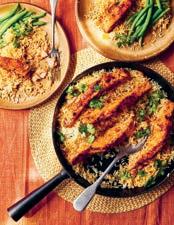
I feel like I go through different phases with food but I’m in my fried chicken moment. I’m obsessed with fried chicken from all over the world and there’s a fried chicken recipe in the book called NFC, which is Nigerian Fried Chicken. If jollof rice and fried chicken have a baby – this is the result.
Favourite restaurant to eat at?
Dim Sum Duck is delicious and feels really authentic. Is there a great Nigerian or West African restaurant you could recommend?
I feel like West African food is having a bit of a moment in London and it’s a cuisine to watch. Enish or Tasty are great and then for fine dining there is Ikoyi, which has two Michelin stars.
Extract taken from Dinner Time by Zena Kamgaing (Bloomsbury Publishing, Hardback, £22). Photography © Yuki Sugiura

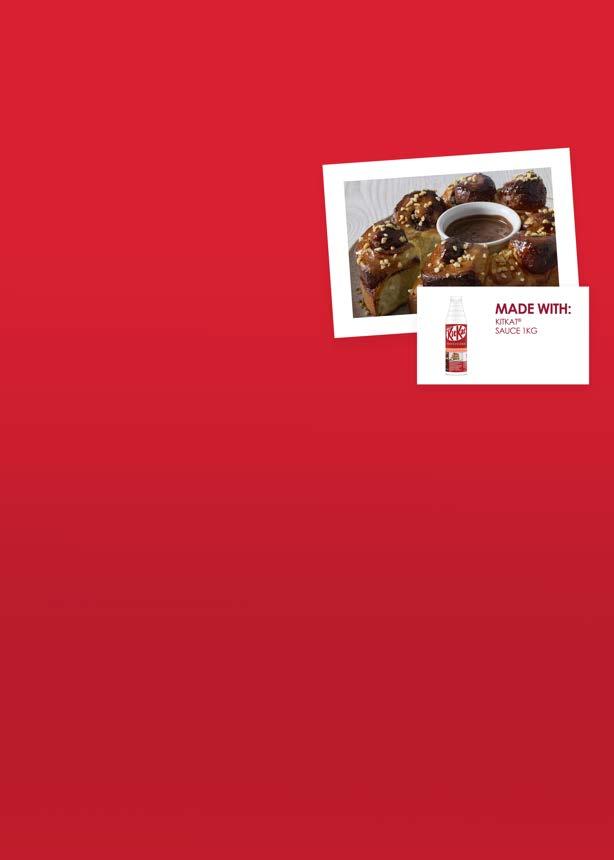
SERVING SUGGESTION 1 PORTION = 343 KCAL
• 400g Strong flour
• 50g Caster sugar
• 3g Salt
• 120ml Skimmed milk
• 10g Dried Yeast
• 45g Butter, softened
• 100g eggs (2)
• 40g KitKat® Sauce FOR THE TEAR AND SHARE
• 40g KitKat® Sauce
• 20g Chopped Hazelnuts TO SERVE
Preheat the oven to 175°C (350°F).
70 min 10
In a saucepan, gently heat the skimmed milk until it simmers. Remove from heat and add the dried yeast. Allow it to bubble slightly.
In a mixing bowl, combine 3/4 of the strong flour, caster sugar, and salt. Pour the milk and yeast mixture into the bowl, then add the softened butter and eggs. Mix well until a sticky dough forms.
Gradually add the remaining flour, bit by bit, and continue mixing until the dough becomes smooth and elastic. Cover the bowl with cling film and let the dough prove for 1 hour, or until it doubles in size.
On a floured surface, roll out the dough into a rectangle shape. Spread the KITKAT® Sauce evenly over the dough, leaving a small border around the edges.
Starting from one of the longer sides, tightly roll up the dough into a log. Using a sharp knife, slice the log into individual rolls, about 2-3 cm thick.
Arrange the slices in a lined baking tray, leaving some space between them for expansion.
Bake in the preheated oven for approximately 30 minutes, or until the brioche turns golden brown on top. Once baked, remove from the oven and let it cool slightly.
Drizzle additional KITKAT® Sauce over the top of the brioche, and sprinkle with chopped hazelnuts for added flavour and texture.
Inspired by this month’s feature on cooling desserts in the summer months, we’re giving you the chance to bring the joy of artisan treats into your kitchen with the powerful Cuisinart Ice Cream & Gelato Professional.
With its built-in compressor, there’s no need to pre-freeze, simply add your ingredients and create silky ice cream, rich gelato or refreshing sorbet in just 30-40 minutes. Two specialist paddles ensure perfect texture
every time, whether light and airy or rich and creamy.
Producing up to 1.5 litres per batch, it’s ideal for busy kitchens. It’s the perfect appliance for preparing ahead of service and keeping your dessert offering cool, creative and consistent all summer long.
For your chance to win, enter online or send an email titled ‘Ice Cream Maker’ along with your name, contact details and name of your Country Range Group wholesaler to competitions@stiritupmagazine.co.uk


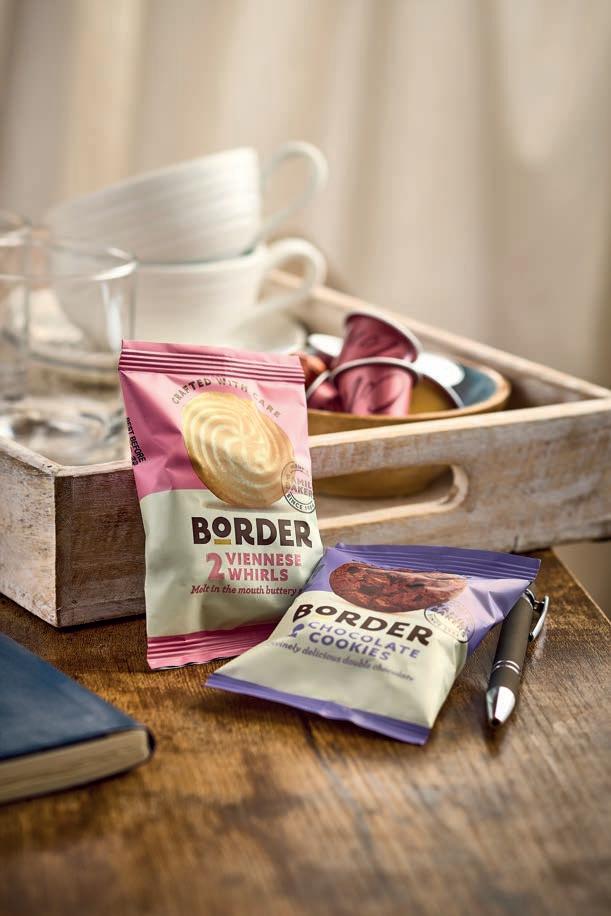





Our Mini Pack range features five biscuit varieties, individually foil wrapped for freshness. Treat your customers to our delicious award winning biscuits made by our family bakers in Scotland since 1984.
Dive into a true culinary classic with The Seafood Restaurant Cookbook, a standout title from this month’s Leading Lights feature.



Over 100 years of coffee expertise