
Cutting-Edge Trends in HVAC Systems
Welcome



Brent Felten, PE Director of Business Development
Cutting-Edge Trends in HVAC Systems Agenda
• Advancements in Retail HVAC Controls Solutions
• Smart Thermostat Solutions
• Cloud-Native – IoT Based BMS
• BMS
• Asset Management and Data Governance Advancements
• Layered System Solution Options
• Other HVAC Trends and Advancements
Building System Controls Considerations
• No Status Quo – Solution Spectrum
• Fleet Size
• Sustainability Initiatives
• Operational Efficiency Goal
• First Cost Restrictions
• Operational Maturity
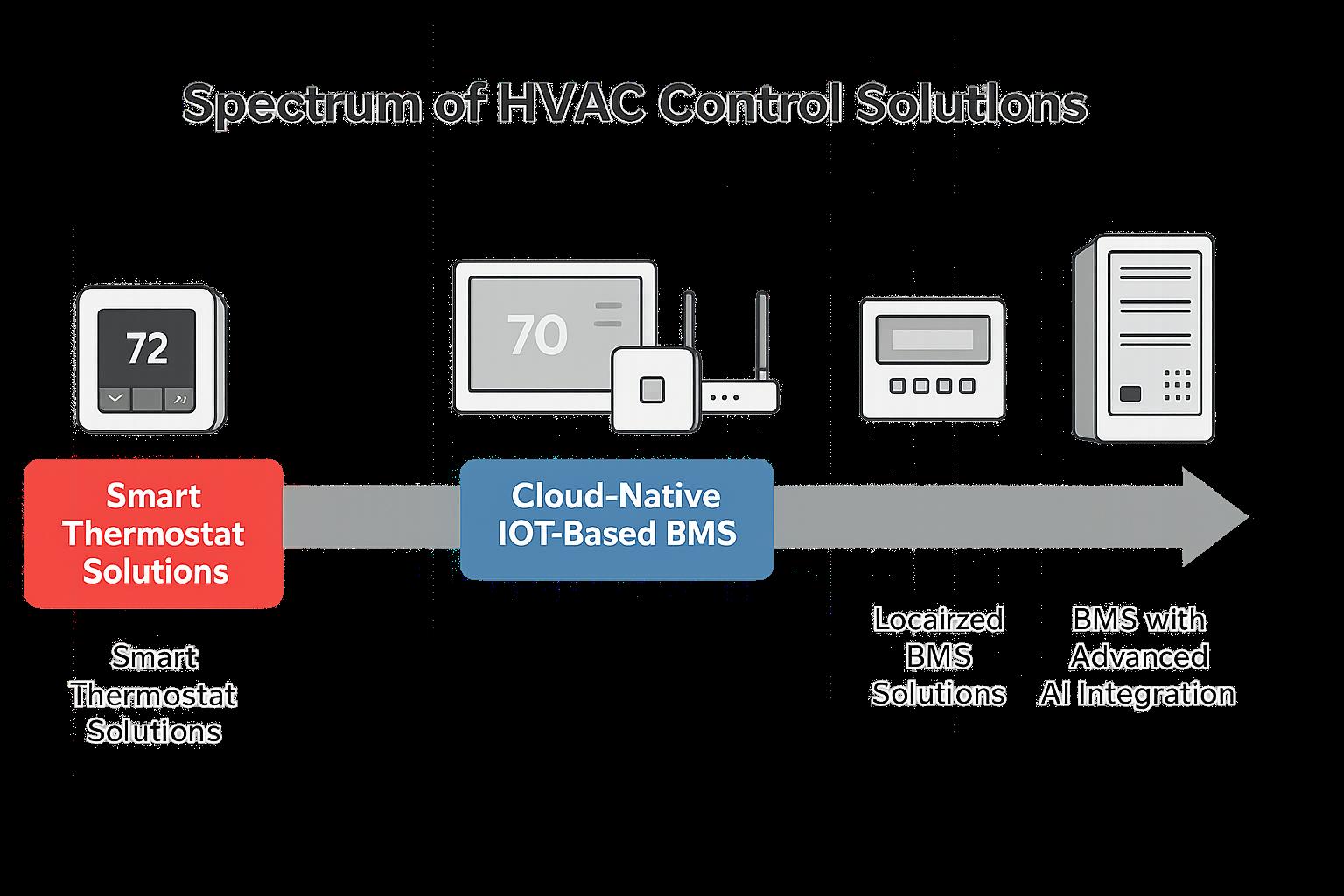
Smart Thermostats
Pros
• Low First Cost Solution
• Operational Familiarity
• Simplistic Onsite Repair
• Limited Product Offerings
• Limited Integration Capabilities outside of BMS
• Limited Advanced Diagnostics
• Limited Remote Access and Setpoint Control Adjustment
• Not configured with Learning Capabilities
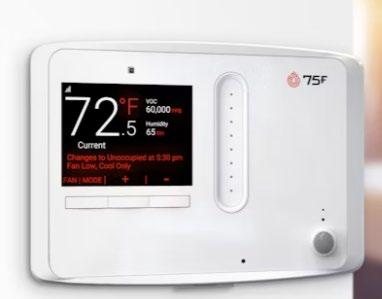
Smart Thermostats Example Products
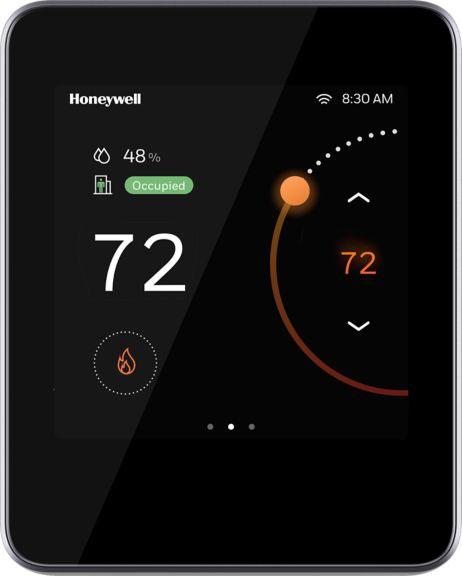
Emerging Features
• Multi-protocol connectivity: Wi-Fi, Bluetooth, BACnet IP, BACnet MS/TP, and Sylk — integrates directly with BAS/BMS systems.
• Built-in economizer & differential temperature monitoring for energy efficiency and performance insight.
• Flexible scheduling & demand response support (open ADR) for energy optimization in commercial demand-charge environments.
• Configurable multi-input/output and advanced user access layers (lockouts, setpoint limits) for facility control policies.
Smart Thermostats Example Products
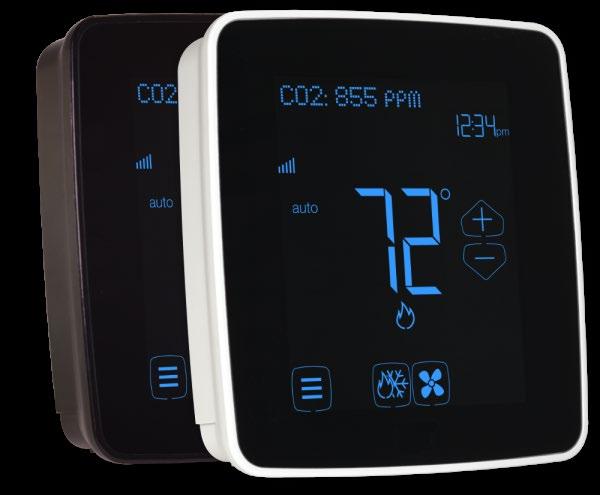
Emerging Features
• CO2 Sensing and Demand Control Ventilation Capable
• 14 Remote Sensors such as supply air, return air, etc.
• On-board Data Logging with SubMetering Support
• 19 standard Alerts configurable for up to 4 recipients.
Cloud-Native – IoT Based BMS
Pros
• Solid Middle Cost Solution
• Some Benefits of BMS System
• Expanded feature beyond programmable thermostats
Cons
• Programming options somewhat limited
• Limited number of manufacturers with self-contained solutions
• Less “open” solutions compared to BMS.
Cloud-Native – IoT Based BMS
Emerging Features
• Additional Learning features
• Plug in Play components including Sensors and Controllers
• Improved User Interfaces for
• Portfolio Management
• Analytics
• Optimization
• Energy Management
BMS
Pros
• Fully Configurable
• Open Solutions Available
• Integration into Asset Management Programs
• Remote Access, Diagnostics, Configuration, Troubleshooting
Cons
• Highest First Cost End of Spectrum
• Requires Sophisticated Operational Staff
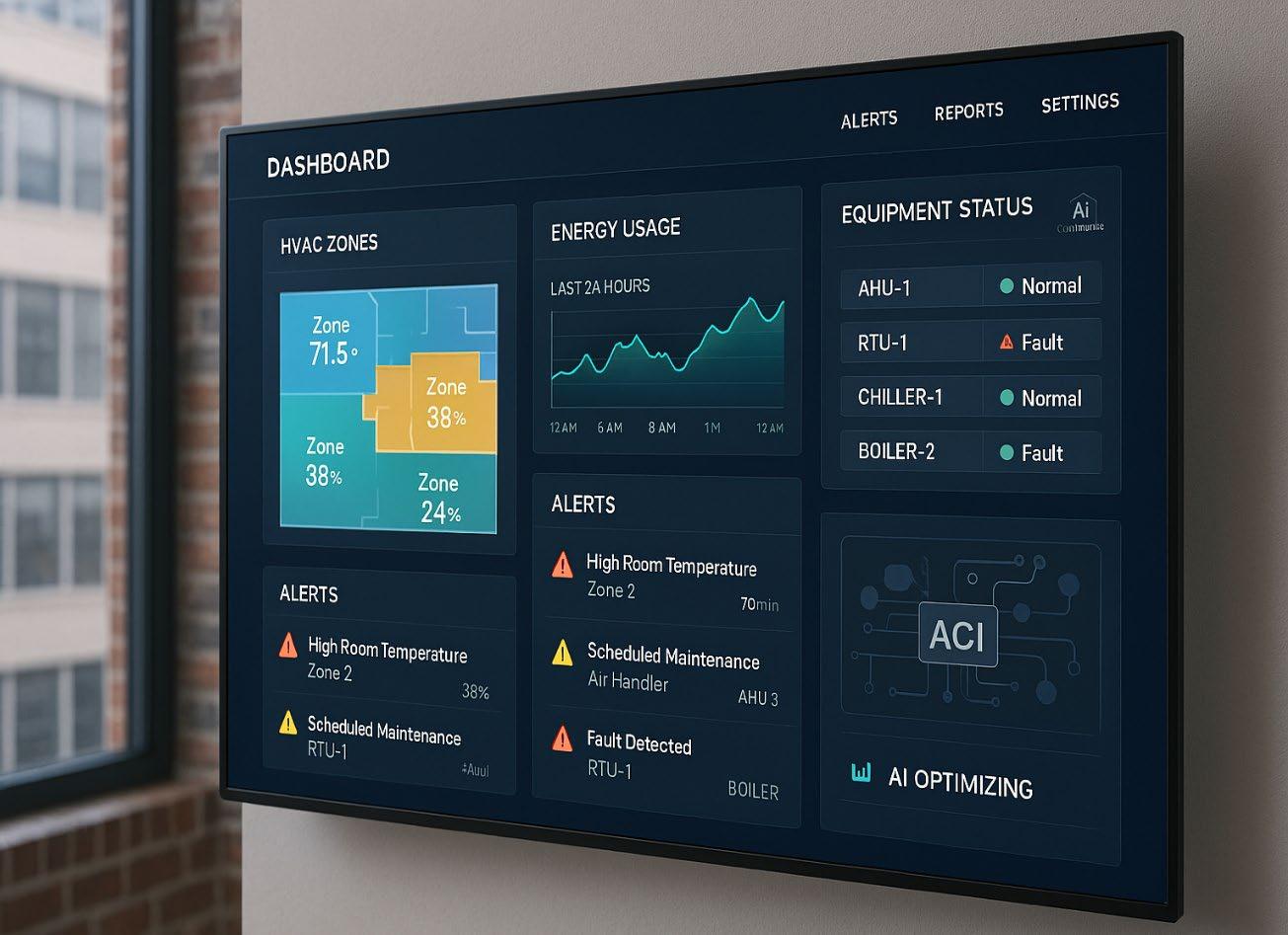
BMS
Emerging Features
• AI-enabled Optimization
• Digital Twin Framework
• Decarb Planning and Analytics
• Grid Interactive Capabilities
• Sustainability Reporting
• Custom Dashboards
• Edge to Edge Comms
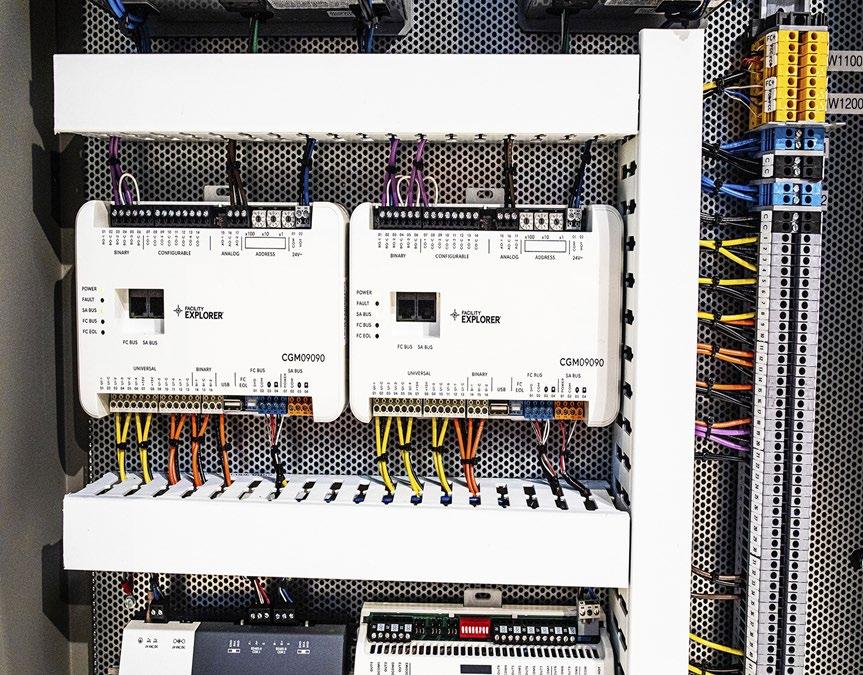
BMS
Specific AI Driven Trends
• Predictive Maintence & Failure Forecasting
• AFDD – Advanced Automated Fault Detection & diagnostics
• AI-Driven Energy & Efficiency Optimization
BMS
Predictive Maintence & Failure Forecasting
• Failure probability scoring: AI assigns risk levels to components (e.g., chillers, pumps, compressors) based on patterns in sensor data.
• Remaining Useful Life (RUL) estimation: Machine learning predicts how much life is left in a component, supporting better maintenance scheduling.
• Automated work order generation: When a future fault is forecasted, the system can automatically create prioritized maintenance tasks with parts and scheduling recommendations.
BMS
Advanced Automated Fault Detection and Diagnostics (AAFDD)
• Anomaly detection models: Identify deviations in vibration, temperature, pressure, or energy use that traditional alarms would miss.
• Root cause hints: Using pattern profiles, the system can not only detect a fault but suggest likely causes (e.g., filter clog, refrigerant leak, airflow imbalance).
• Real-time alerts: Push notifications to operations teams when a fault emerges before full failure.
BMS
AI Energy:
• Predictive load forecasting: Forecasts future HVAC loads using weather forecasts, schedules, and historical usage.
• Dynamic setpoint adjustments: Real-time optimization of temperature, humidity, and airflow to balance comfort with energy efficiency.
• Demand response integration: Adjusts HVAC operation during utility peak pricing or demand-response events.
BMS
• Key Considerations
• IOT integration
• Advanced metering
• How Open is Your BMS?
• Operational Freedom.
• Monitoring Tiers
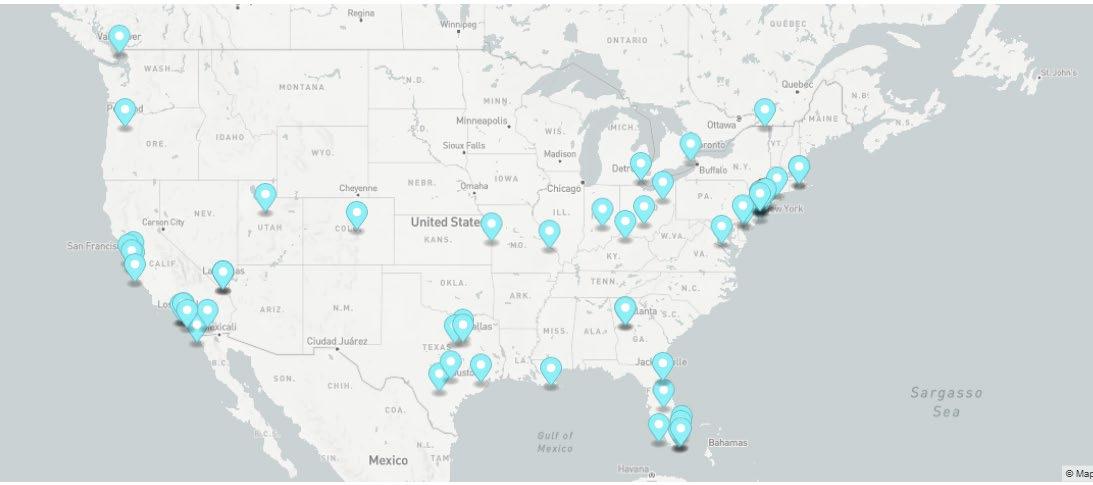
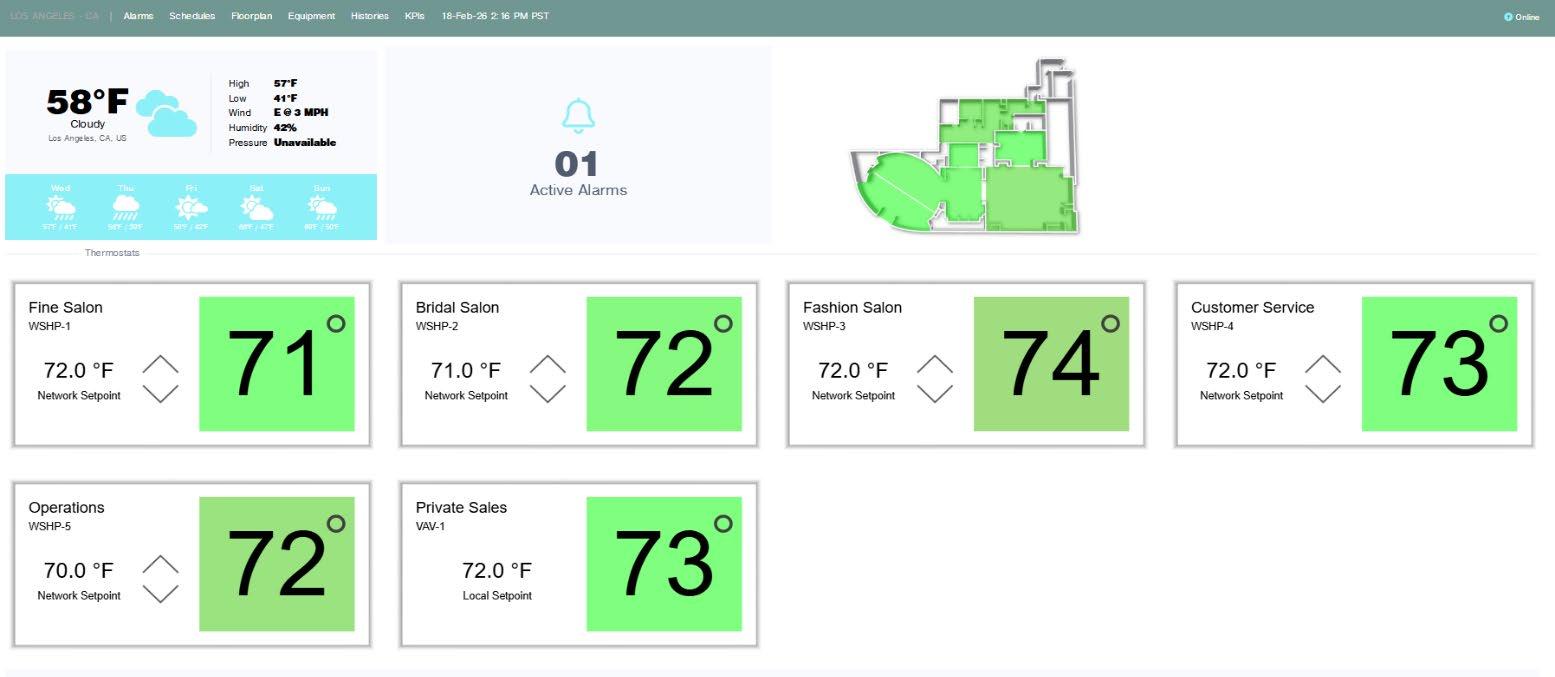
Asset Management and Data Governance
• Software solutions
• AI/BIM/Operations Integration
• Using analytics for unit replacement
• Predictive maintenance
• End of life
• Cap or Op Expenditures
Layer System Solution Options
CHALLENGE 1: High Energy Costs & Inconsistent HVAC Performance
Consider: Autonomous Optimization Software
• Uses AI to continuously tune HVAC in real time
• Typical 15–30% energy reduction (commonly marketed range)
• Works with existing controls → no new hardware required
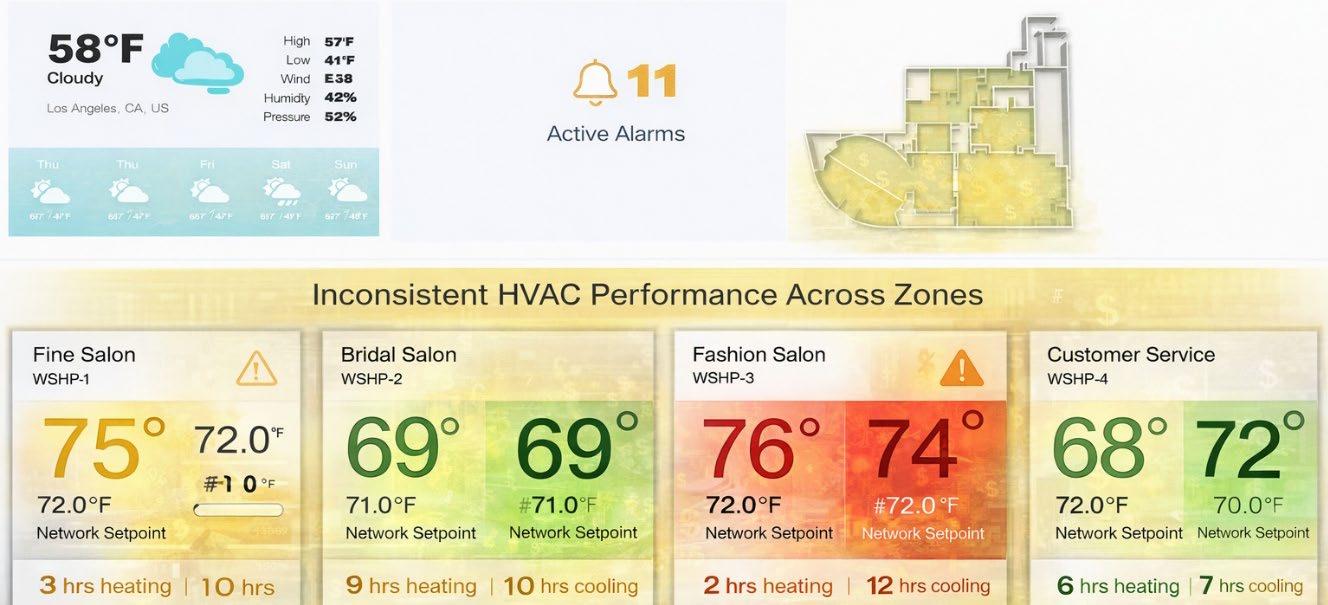
Good for: Large portfolios, high utility spend or limited local HVAC oversight.
Layer System Solution Options
CHALLENGE 2: Lack of Visibility
Across Stores
Consider: System-Agnostic Analytics & ESG Reporting Tools
• Central dashboard for performance, setpoints, alarms, and trends
• Works using existing sensors and control data
• Helps validate comfort, ventilation, runtimes, and ESG metrics
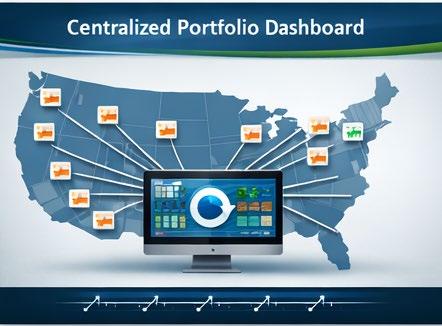
Good for: Multi-site portfolios that need better central management.
Layer System Solution Options
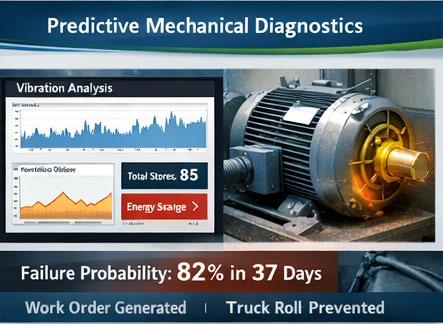
CHALLENGE 3: Unexpected HVAC
Failures & High Repair Costs
Consider: Predictive Mechanical Diagnostics
• Uses vibration, acoustic, or thermal sensing
• Detects mechanical issues months before failures
• Helps shift from reactive → predictive maintenance
Good for: Multi-site portfolios that need better central management.
Layer System Solution Options
CHALLENGE 4: Complex Buildings or New Construction
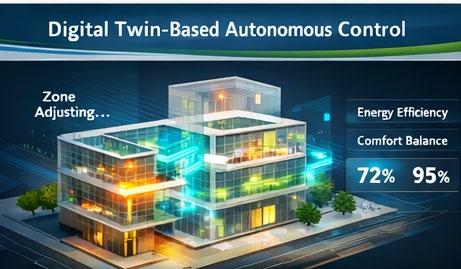
Consider: Digital Twin–Based Autonomous Control Platforms
• Creates a physics-based model of the building
• Provides highly precise “self-driving”
HVAC operation
• Best for major remodels or new builds
Good for: Large format stores, distribution centers, or campuses.
Layer System Solution Options
CHALLENGE 5: Need for Root-Cause Diagnostics Across
Hundreds of Units
Consider: Advanced FDD Engines / Rules-Based Analytics
• Highlights improper sequences, stuck dampers, economizer faults
• Helps techs know the issue before they roll a truck
• Standardizes performance across sites
Good for: Retail chains that struggle with inconsistent service contractor performance.
Layer System Solution Options
Key Metrics
• 15–30% HVAC energy savings for AI-driven optimization layers
• 10–25% reduction in maintenance costs using predictive diagnostics
• Up to 40% reduction in truck rolls with strong FDD analytics
• 20–30% HVAC runtime reduction from improved scheduling/optimization
• 20–50% faster issue identification through centralized analytics
What’s Next?
• Expanded heat pump operating temperature ranges
• More Rooftop Unit (RTU) sizes available as heat pumps or with dual fuel capabilities.
• Low-GWP refrigerants & refrigerant transition Technologies
• VRF/VRV Systems (Variable Refrigerant Flow) adoption and tech
• Smart thermostats for commercial applications
Thank You

Brent Felten, PE Director of Business Development