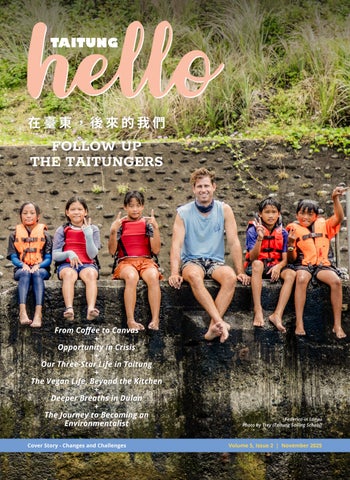
Welcome to this landmark edition of Hello Taitung!
No Thought of Leaving: Revisiting Old Friends in Taitung
By Steven Crook
This is our tenth issue, and it signifies five years of sharing stories about fascinating people who’ve come from afar and made Taitung their home. This is also a commemorative edition of sorts. Instead of doing what we usually do, which is shine the spotlight on people we’ve not previously featured, we’re catching up with four men and three women who put pen to paper for us in 2021, 2022, and 2023.
If you’ve been a regular reader, you may recognize some of the names. (And we thank you for your long-term interest and support!) But if this is the first time you’ve picked up a copy of Hello Taitung, you might want to browse our earlier issues, which can be read free of charge at https://issuu.com/ hellotaitung. From those, you’ll get an idea of what Federico, Simon, Johannes, Tamara, Jennie, Josh, and Joanna were up to, and how they felt about their lives in Taitung, when their paths first crossed ours.
As you might expect of people who are young and adventurous, all of our contributors have experienced some kind of transition in the past few years. In certain cases, it’s something they neither planned nor foresaw. In others, it’s the result of years of dedication.
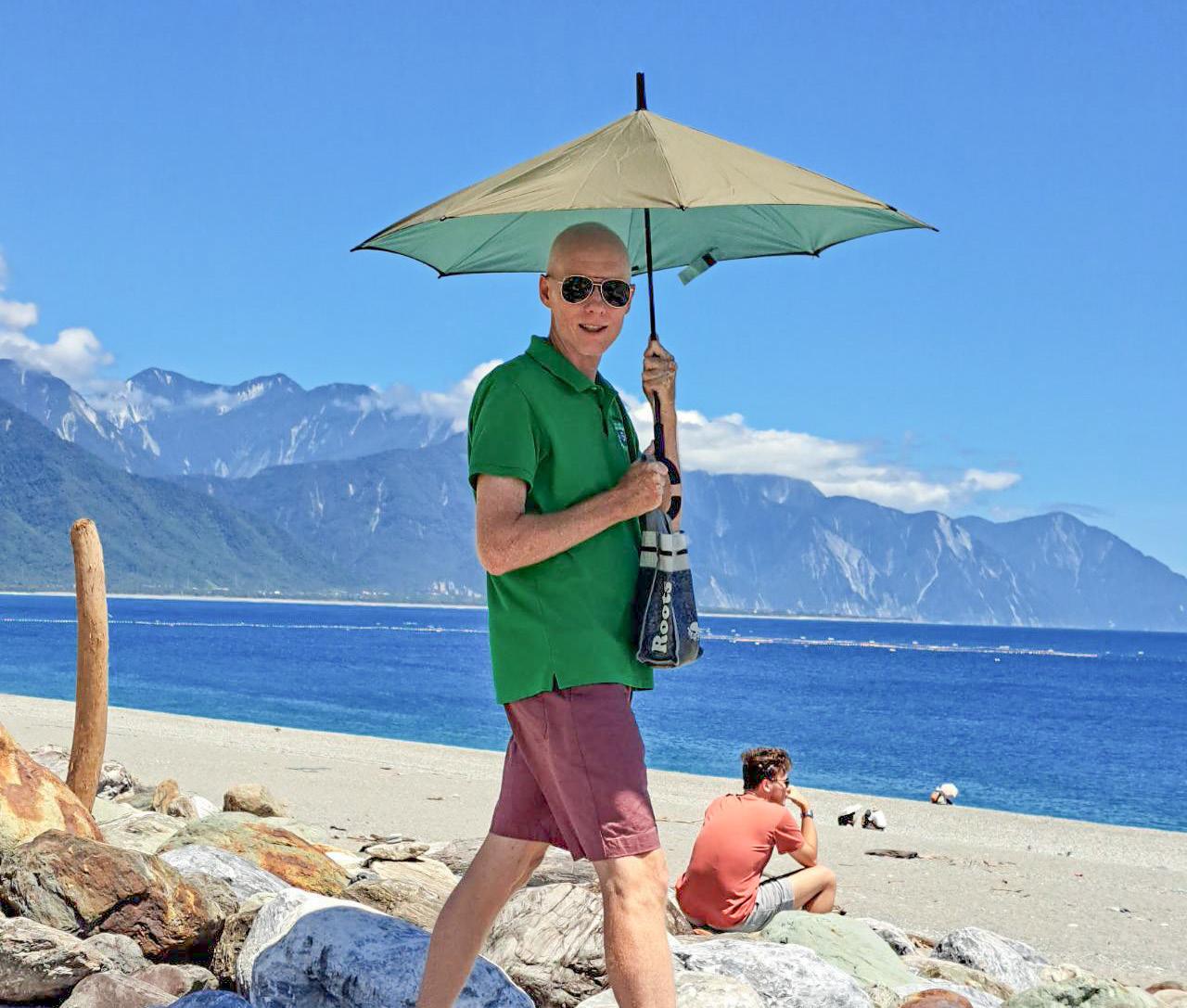
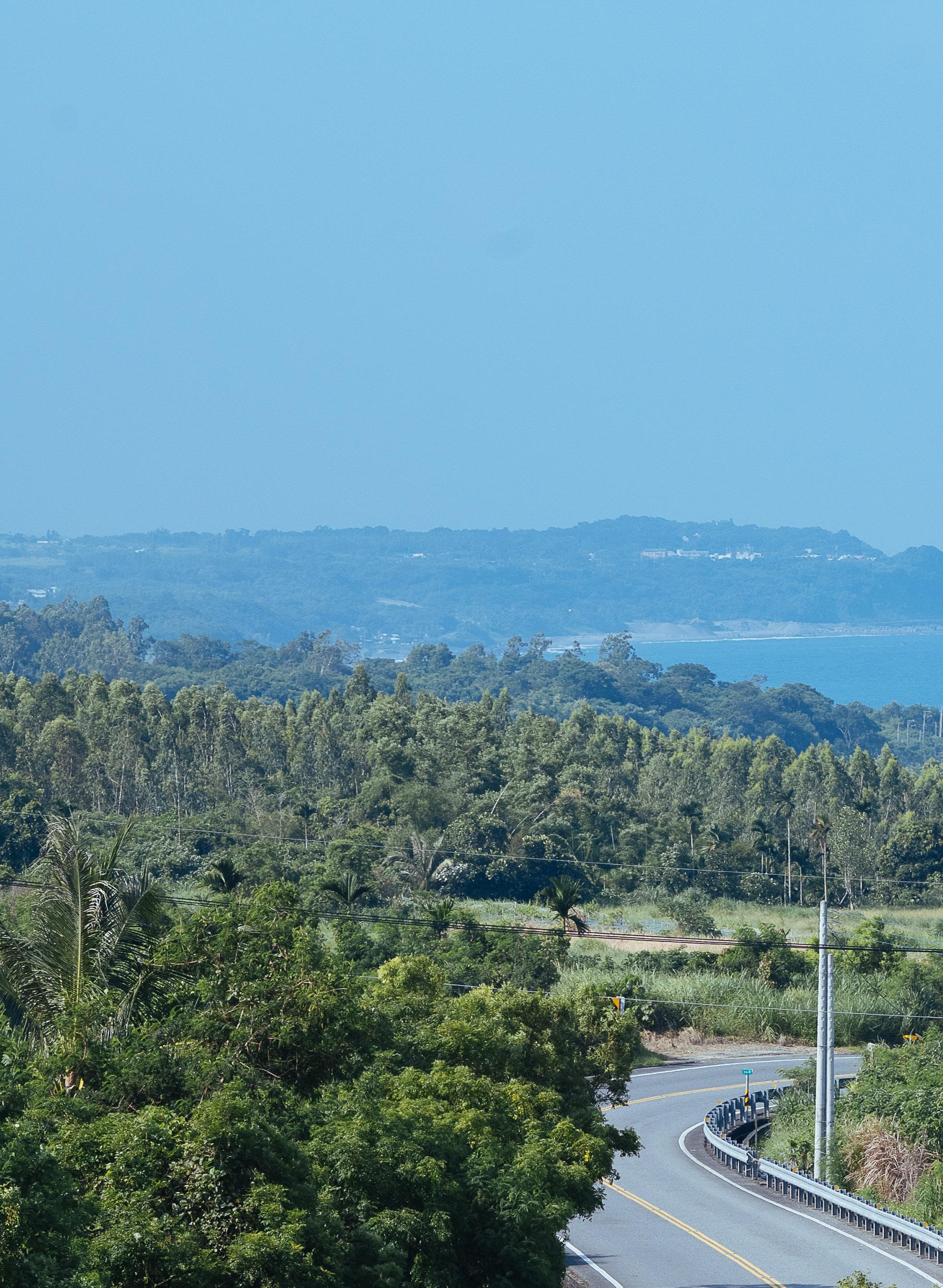
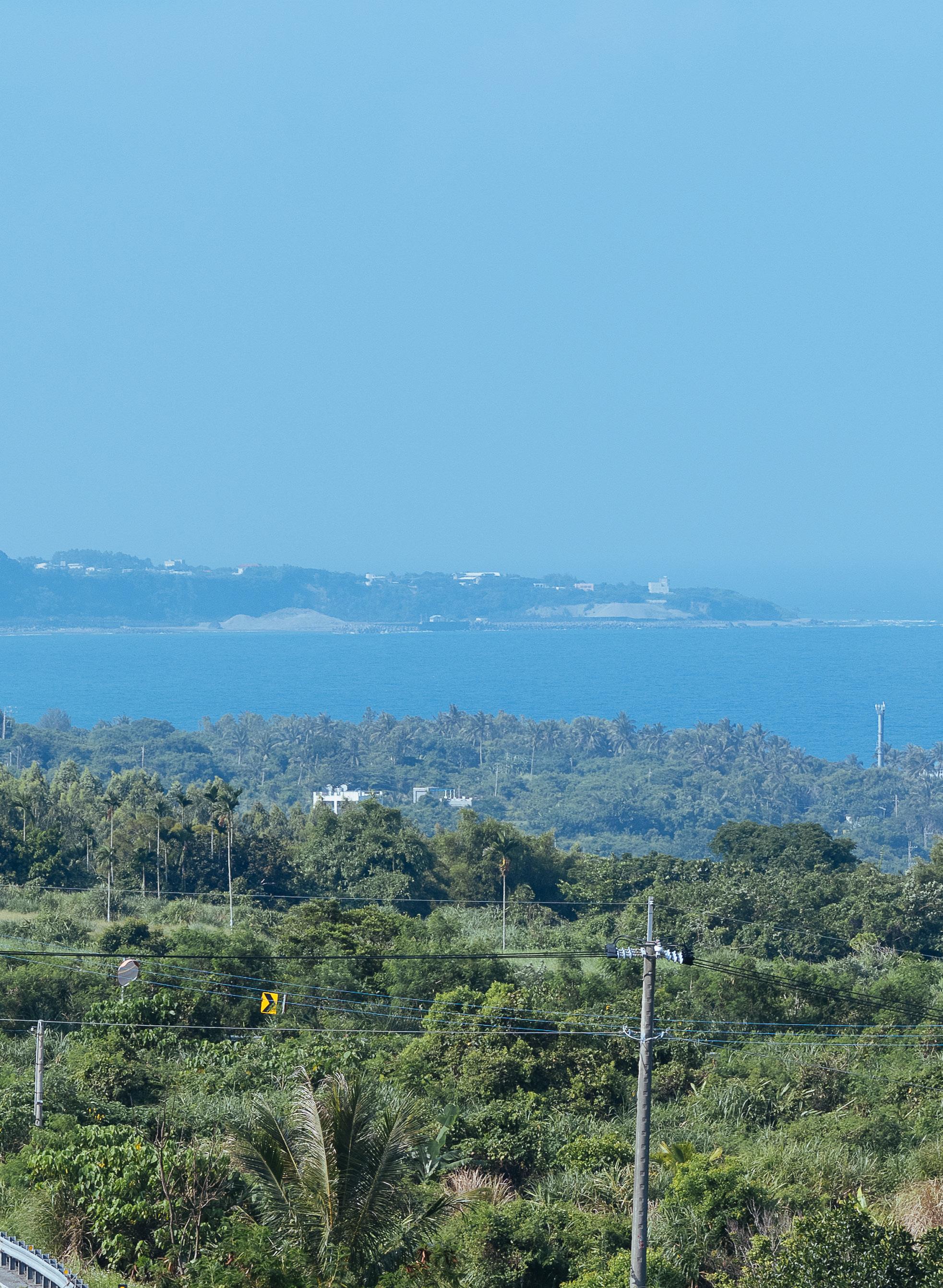
A dazzling blue sky on the east coast
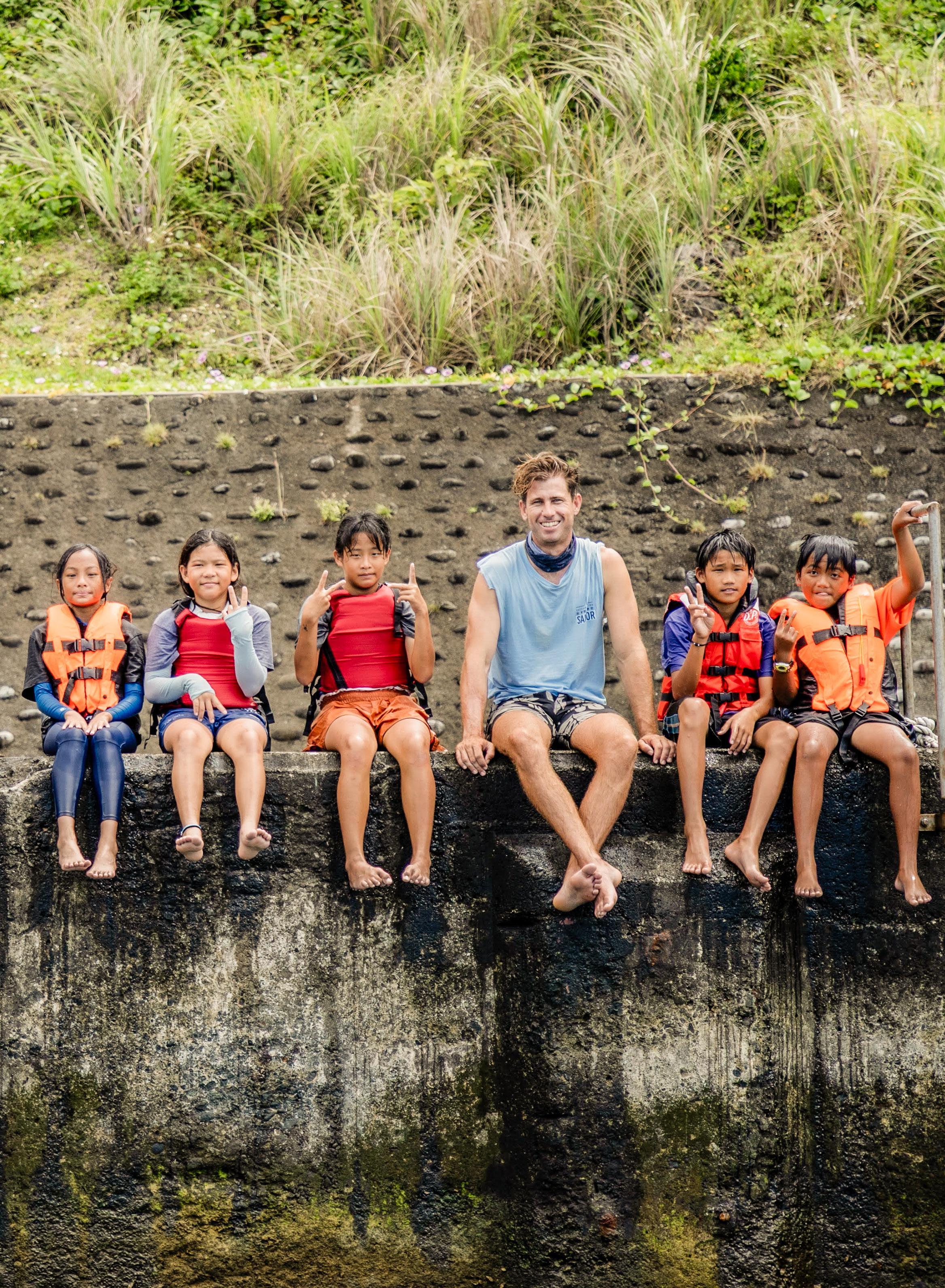
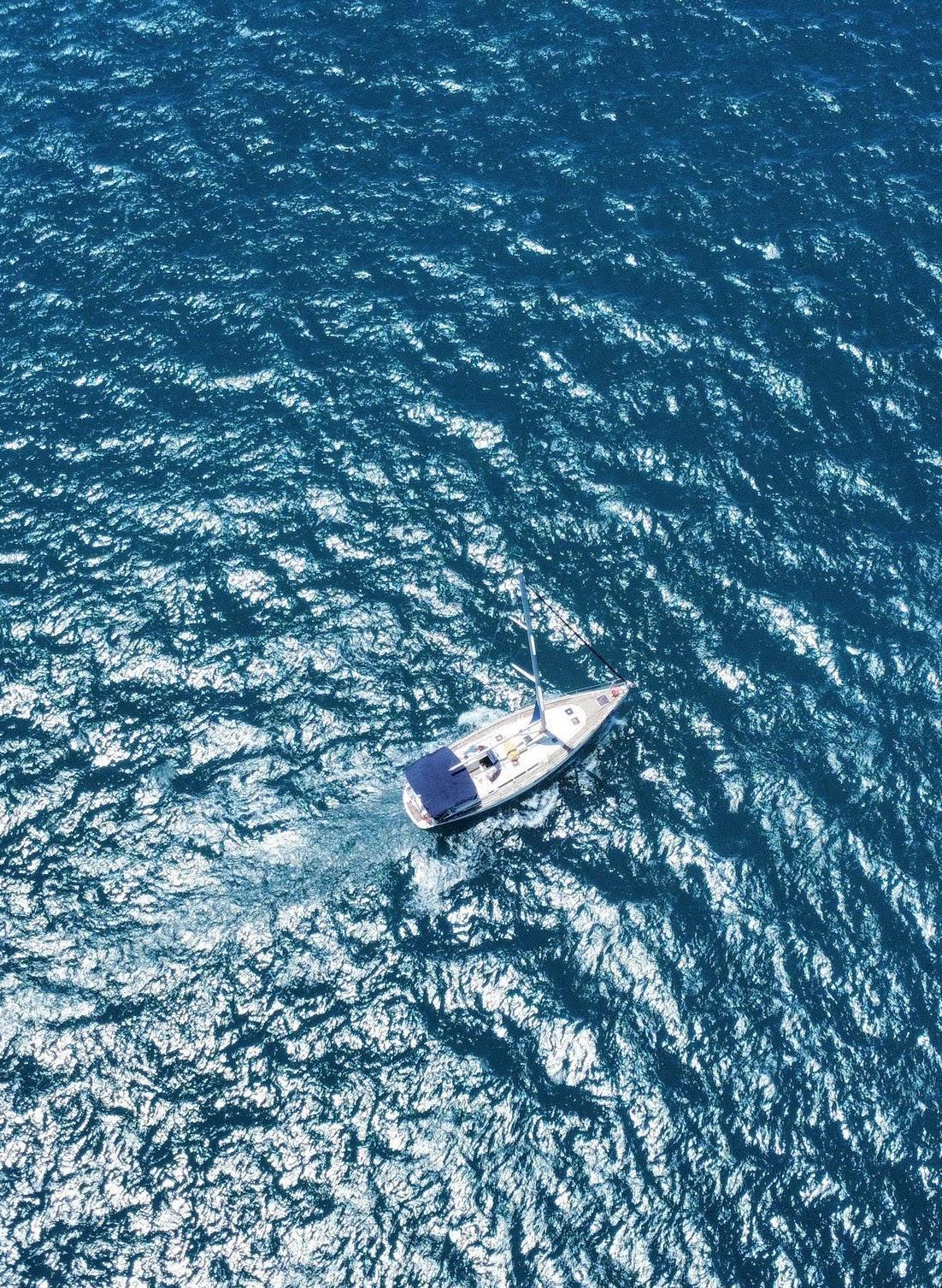
Federico Davicino is no longer involved with the coffee shop he describes as “my first big project as an adult” — but the sailing school he’s established has gone from strength to strength. That’s no mean feat given the amount of investment and organization involved. Successfully dealing with issues like permits and insurance, he’s not only introduced a cohort of youngsters to the joys of sailing, but also forged a special connection with Orchid Island (Lanyu).
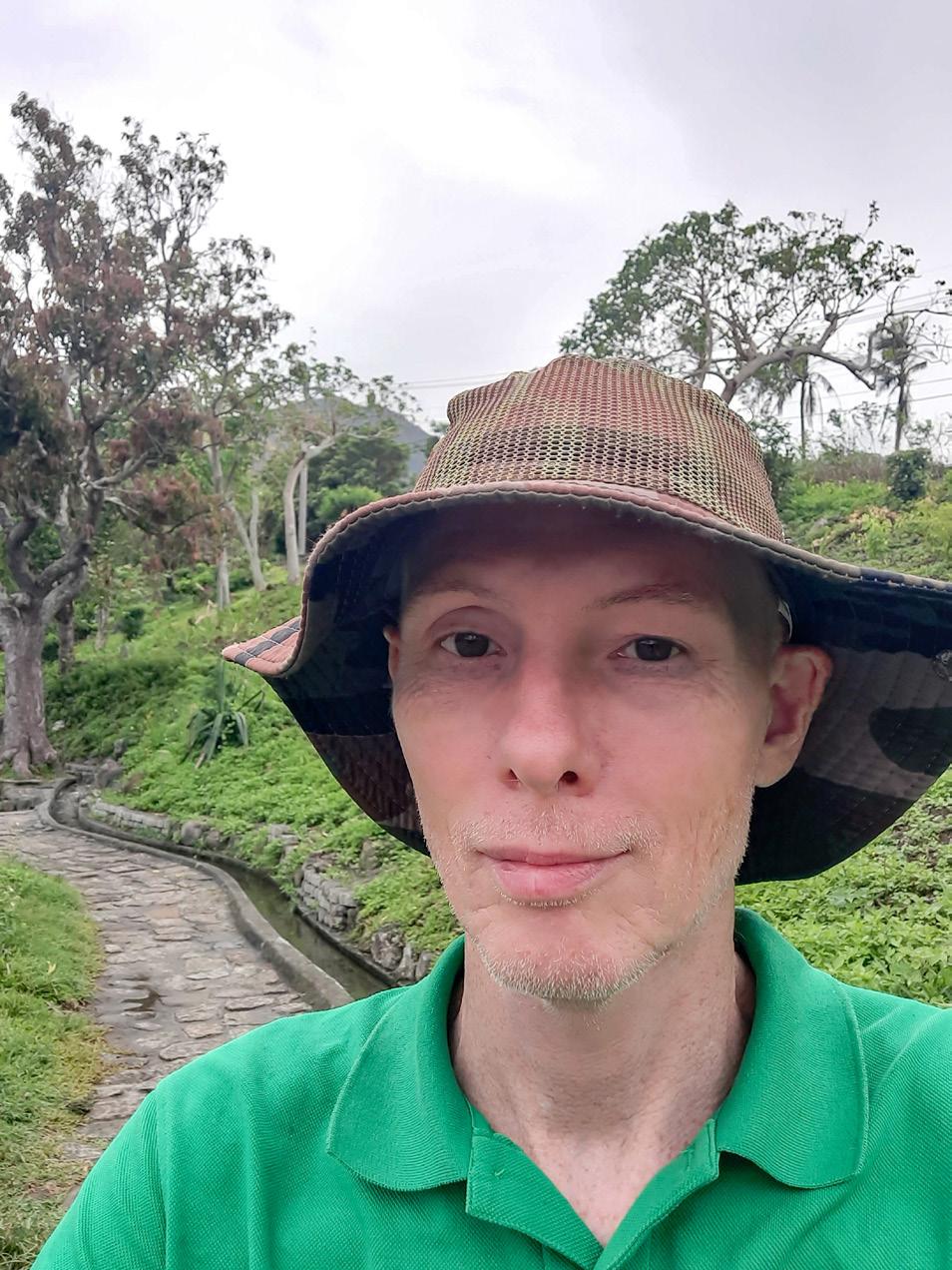
For Simon Foster, my predecessor as managing editor of Hello Taitung, life has returned to its pre-pandemic rhythm. He’s once again enjoying his guiding work, planning itineraries and leading foreign cyclists on tours around Taiwan. At the same time, he relishes time at home in Chenggong, grateful to have a base for his family “between the mountains and the ocean.”
Despite claiming not to have any “specific personal goals,” Johannes Faeth has notched up some notable achievements in the past couple of years. The restaurant he operates with his wife, Sho, has risen in the slow-food rankings, and last year they were among those invited to represent the county at a major international gastronomy and food exhibition in Italy. He also maintains an enviable work-life balance.
Since Hello Taitung last checked in with her, Tamara Flussfisch has run into some of the restrictions which face non-citizens who aren’t married to a local and don’t hold the kind of job that makes it easy to resolve visa and residency issues. Yet she remains convinced that Taitung is where she wants to be, even if she now finds the summers too hot for her liking.
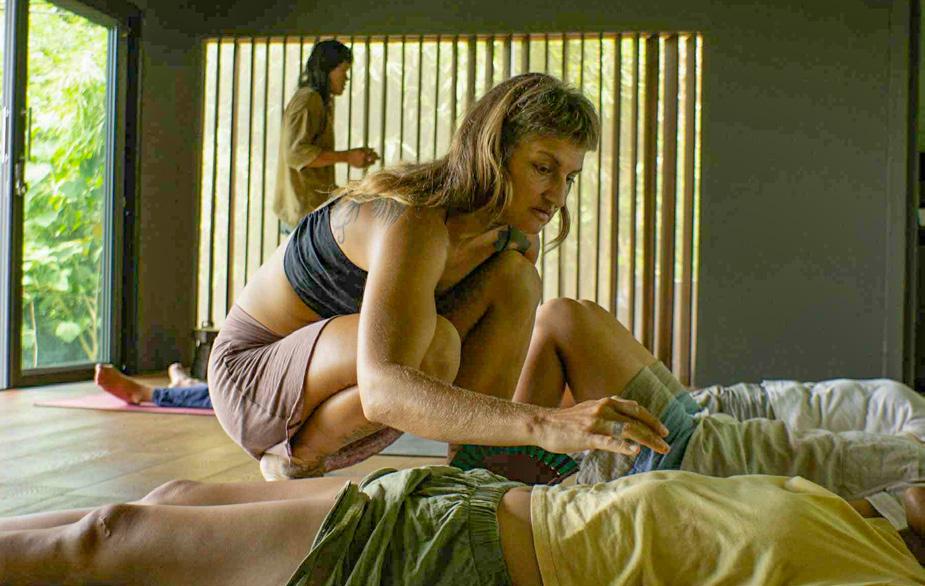
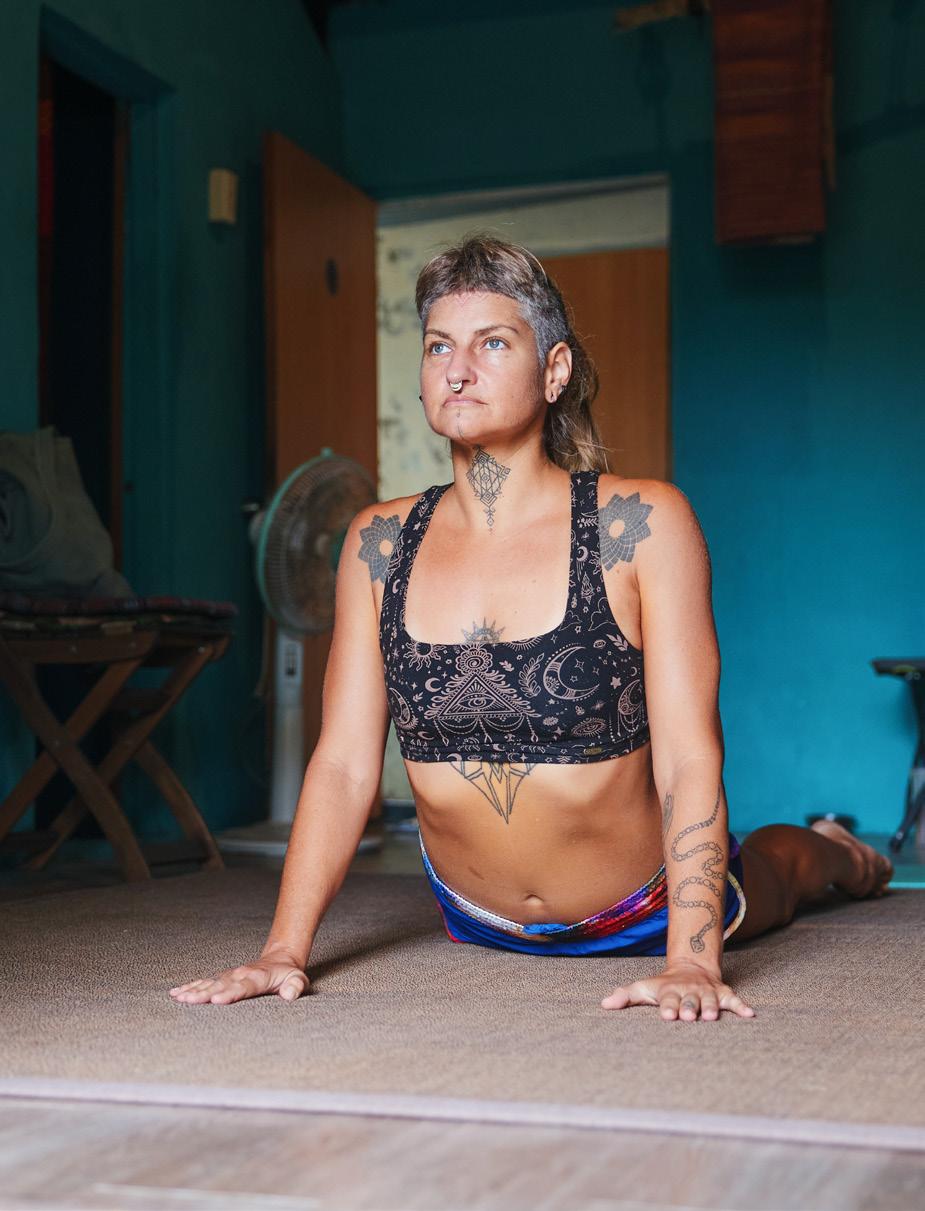
Jennie Miller’s focus has shifted from watersports to breathwork, an umbrella term for various techniques (some ancient, some modern) rooted in different traditions and fields. Her personal breakthrough was so meaningful to her that she’s now eager to share what she’s learned with residents and tourists.
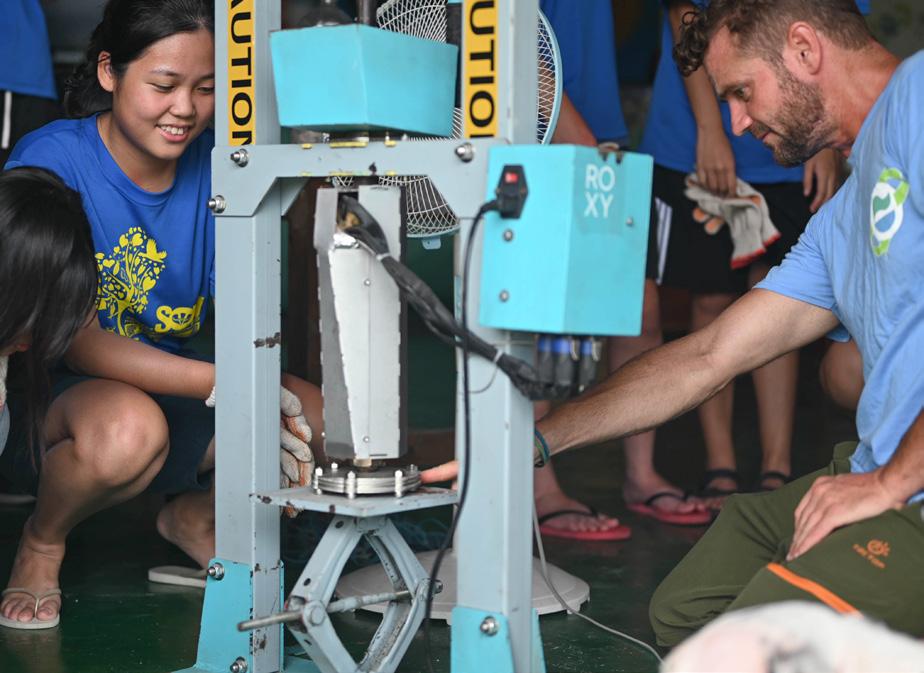
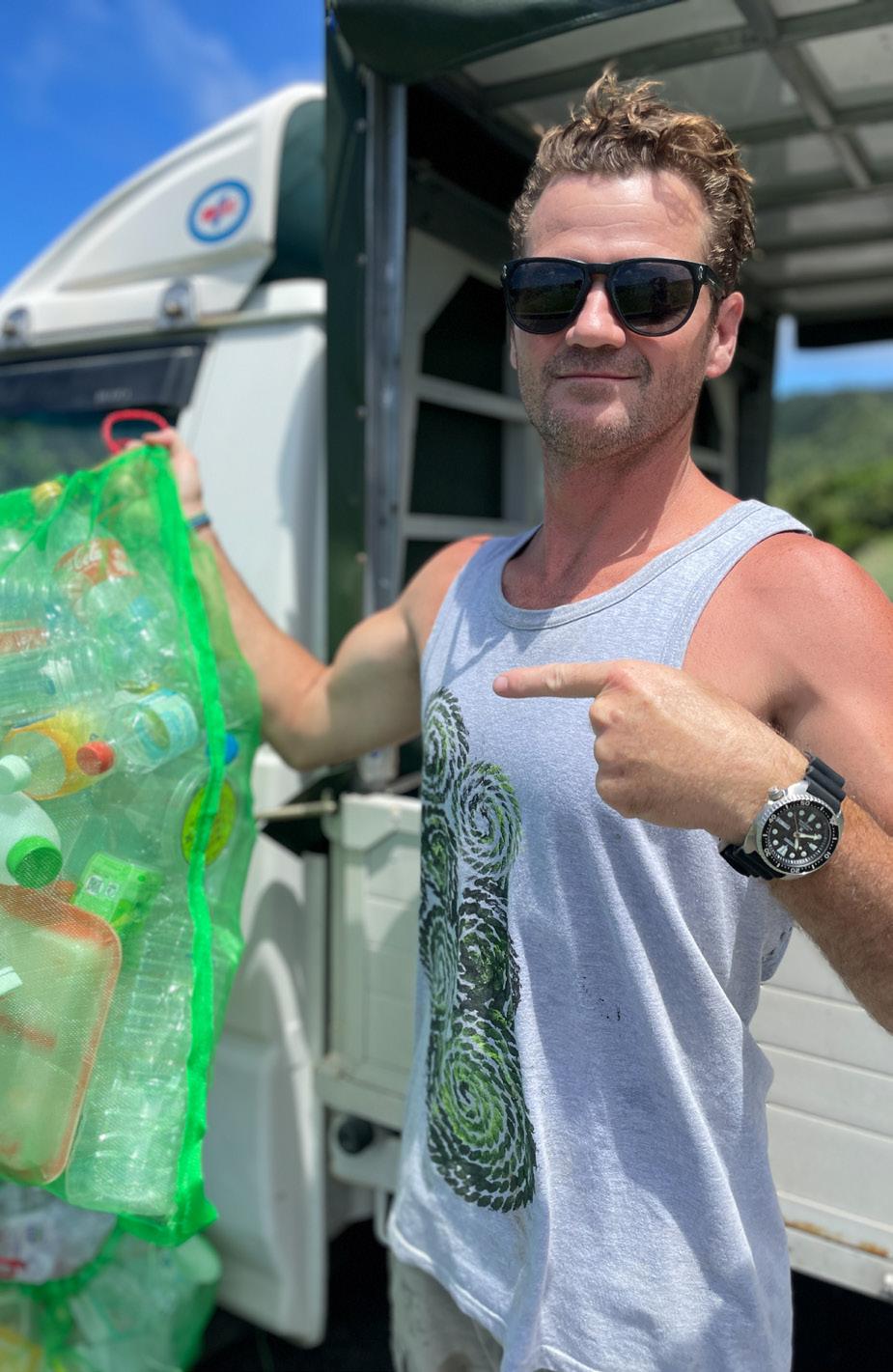
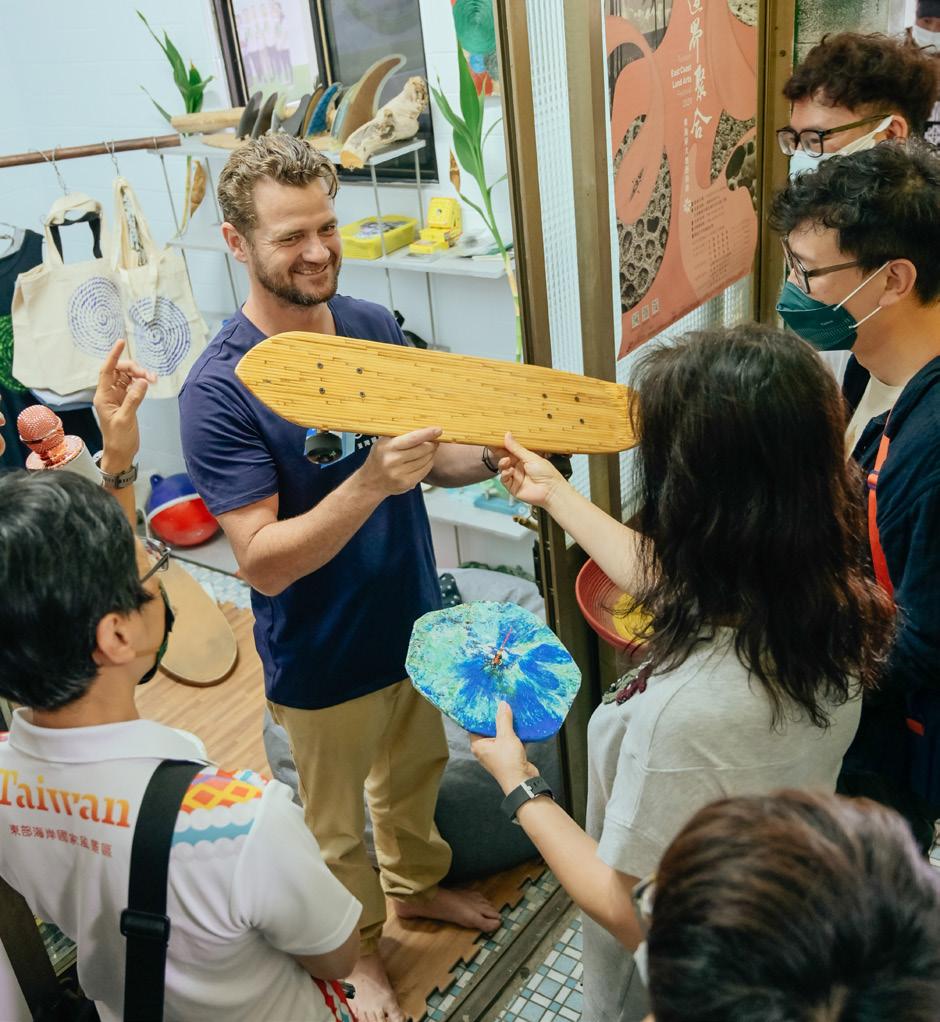
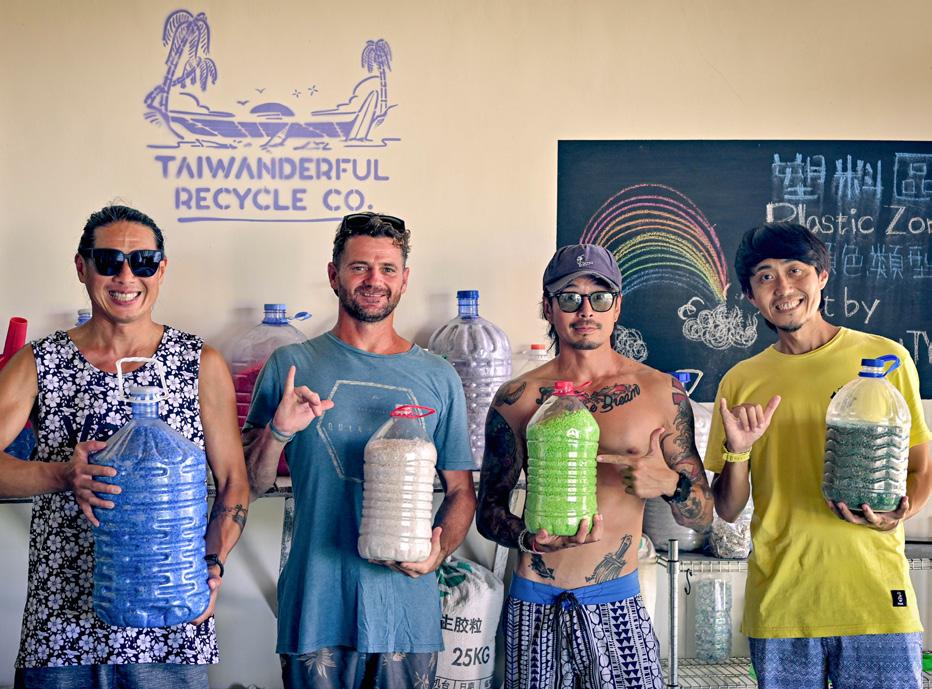
Rather than soothe human souls, Josh Campbell aims to mitigate the damage humanity’s industrialized economy is doing to the planet. By educating Taitung residents about the perils of plastics pollution and devising ways in which plastic waste can be recycled into useful items, he’s not just “talking the talk” when it comes to environmental protection.
Joanna Eva is another Taitung resident whose plans were derailed somewhat by COVID-19. At the same time, she explains in the round-table discussion on pages 6 to 11, she’s immensely grateful to be enjoying a “dream life by the sea,” saving up money while learning Chinese. In that section of the magazine, she and our other contributors comment on the changes they’ve seen in Taitung, the changes they’d like to see, and how living here has changed them.
Whether you’re just passing through, thinking about relocating here, or already a Taitung resident, do take a look at the 2026 Taitung Expo website (taitungexpo2026.com.tw). Encompassing multiple events in different seasons, the expo is a celebration of sustainable development, Taitung’s slow-life advantages, the county’s close relationship with the Pacific, and the rich Austronesian cultures that give this corner of Taiwan its unique character. There’s never been a shortage of reasons to spend time in Taitung, and now there’s one more.
FOLLOW UP THE TAITUNGERS
If there’s one thing we can all agree on, it’s that life doesn't always go in the direction we expect — and that seems to be true for the seven individuals we revisit in this issue of Hello Taitung. Federico didn’t think his efforts to popularize sailing would be quite so successful. Simon is pleased to report that, after the arid pandemic years, foreign tourists are again visiting Taitung. People might guess that, for Johannes in Luye, the “honeymoon period” would eventually end; not yet, it seems. Tamara has had to suspend her vegan food business, but she’s not given up on Taitung. Jennie has embraced a practice that she finds deeply healing. Recycling and environmental protection has become a full-time job for Josh. Her personal-care product brand is no longer active, yet Joanna is focused on securing her Taiwan permanent residency. They may not be exactly where they thought they’d be in the second half of 2025, but they’re all still loving life in Taitung!
Changes and Challenges: Foreign Residents Reflect on Their Lives in Taitung
改變與挑戰 : 回看在台東的生活
By Steven Crook
The appeal of Taitung may be timeless ― but time never stands still for the people who choose to live here, however satisfied they might be with their circumstances.
Checking in on seven foreign residents of the county, all of whom shared their stories in the first few issues of Hello Taitung, has been engrossing. They’re not just a bit older and undoubtedly wiser. In the pages of this magazine, they recount personal moments of deep contentment, astonishing discovery, meaningful progress, and bitter frustration. In other words, slices of experience that aren’t too different to yours or mine, yet fascinating like all human lives.
In addition to getting our seven contributors to update us on their Taitung adventures, we asked them a few questions which we hoped would lead to some interesting and surprising insights. We weren’t disappointed.
How Has Taitung Changed in Recent Years?
“Since we moved here, there have been several positive changes, many of which relate to ease of life and convenience,” says Simon Foster. “Internet and mobile connections are better. Taitung City now has branches of Test Rite Retail, Decathlon and Muji, plus there are some great new accommodation, dining, and outdoor-activity options throughout the county.”
But Hello Taitung’s former managing editor points out that these improvements come at a cost. “The easier it becomes to live in this beautiful environment, the more people will come here, either to travel or to live. This will perpetuate the cycle of further development. Overdevelopment and illegal building on farmland remain substantial threats, and whilst this is an islandwide problem, the more pristine the environment, the more there is to be lost. Of course, development can also bring benefits to local communities, and it’s unrealistic to think that it will ever stop — so my hope is that future development is sustainable and well-planned from a long term perspective.”
In Tamara Flussfisch’s opinion, the increasing number of high-rise buildings is certainly a change for the worse. She’s noticed them not only in Taitung City but also in smaller settlements like Dulan, saying: “People come to Taitung to avoid the feeling they’re in a big city, to breathe fresh air, and to see the stars at night, but in Taitung the changes are too fast.”
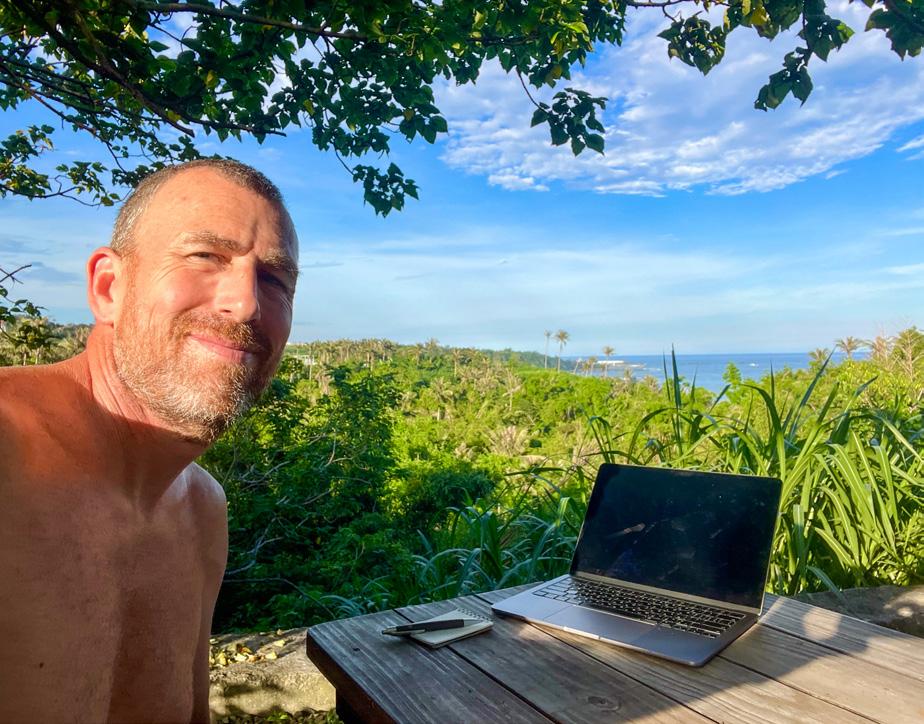
Taitung has good 4G/5G network coverage, allowing Simon to work freely amidst beautiful outdoor scenery
The pace of redevelopment will soon have a direct impact on her. “My lovely house in a small alley in Taitung City will be torn down in spring 2027 and replaced by a tall new building. That’s made me understand again that nothing is permanent and that life is always changing. Even though Taitung is still called 「台灣的最後一片淨土」 (“Taiwan’s last unspoiled land”), we’re confronted with modernity and development,” she says.
“It’s hard for me to know what has changed in Taitung itself, and what changes are just a result of me slowly starting to understand what the heck is going on,” says Joanna Eva, who’s worn very different hats during her time in Taitung. She’s been an entrepreneur ― her contribution to the very first issue of Hello Taitung describes how she established her own personal-care product brand ― an English teacher, and a researcher specializing in East Asia’s politics.
Admitting that, when she arrived seven years ago, she had “close to zero understanding” of the Chinese language, the Australian recalls that “for years, most days were pretty overwhelming and confusing… Now, my experience of Taitung is much more stable, and I have a greater appreciation of how things work here. There’ll always be things I don’t like, like heavier traffic on the weekends, but on the whole, the longer I live here, and the more I learn about things happening here, the better my experience is.”
Joanna says she’s noticed the growing popularity of ocean sports in Taitung. “I’m so encouraged to see development in this area, especially when kids get to enjoy sailing, surfing, swimming, and snorkelling. Taitung is gorgeous, and a greater appreciation for nature can only be a good thing for all of us,” she waxes.
According to Federico Davicino, founder of Taitung Sailing School, while Taiwan is still lagging behind other countries when it comes to sailing culture and regulations, it has made some big leaps regarding ocean education. “Taitung’s
government is now much more committed to making things happen, in contrast to their attitude a few years ago that ― intentionally or unintentionally ― hindered the development of water sports,” he says.
This trend is also a source of great satisfaction for Josh Campbell. “I’m delighted to see more people going into the ocean for fun. They’re moving away from a mindset dominated by fear,” the Californian remarks.
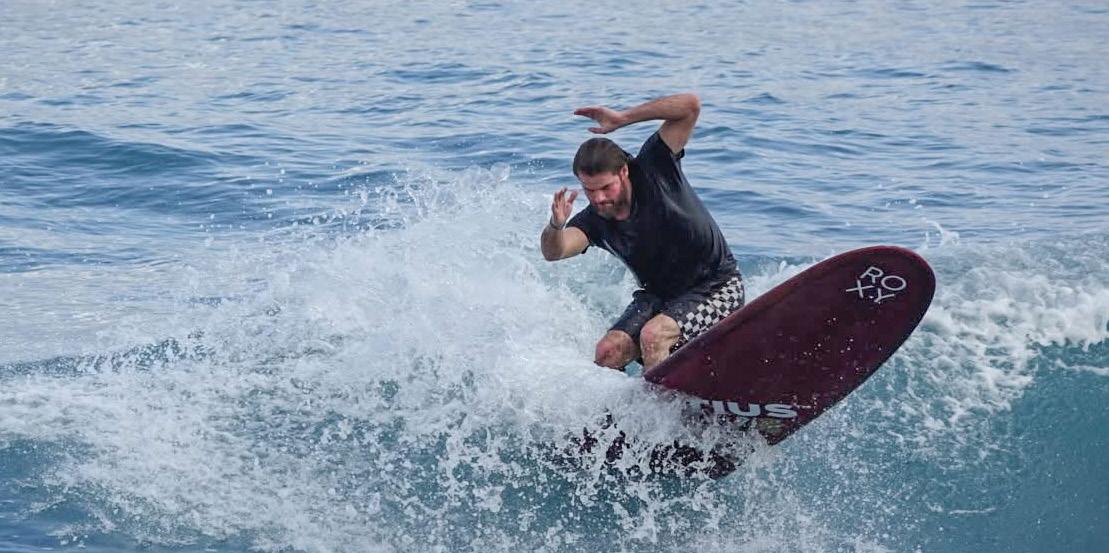
“We surfers are rebellious by nature, and the coastguards are beginning to accept this. They’re not tolerant so much as resigned. They’re beginning to realize that surfers are the best people to judge their own safety. We should be trusted to make our own decisions. It’s great to see people recovering their ocean heritage, the ocean knowledge that was lost during two generations of martial law. The ocean isn’t to be feared, it’s to be respected and enjoyed,” says the recycling entrepreneur-activist.
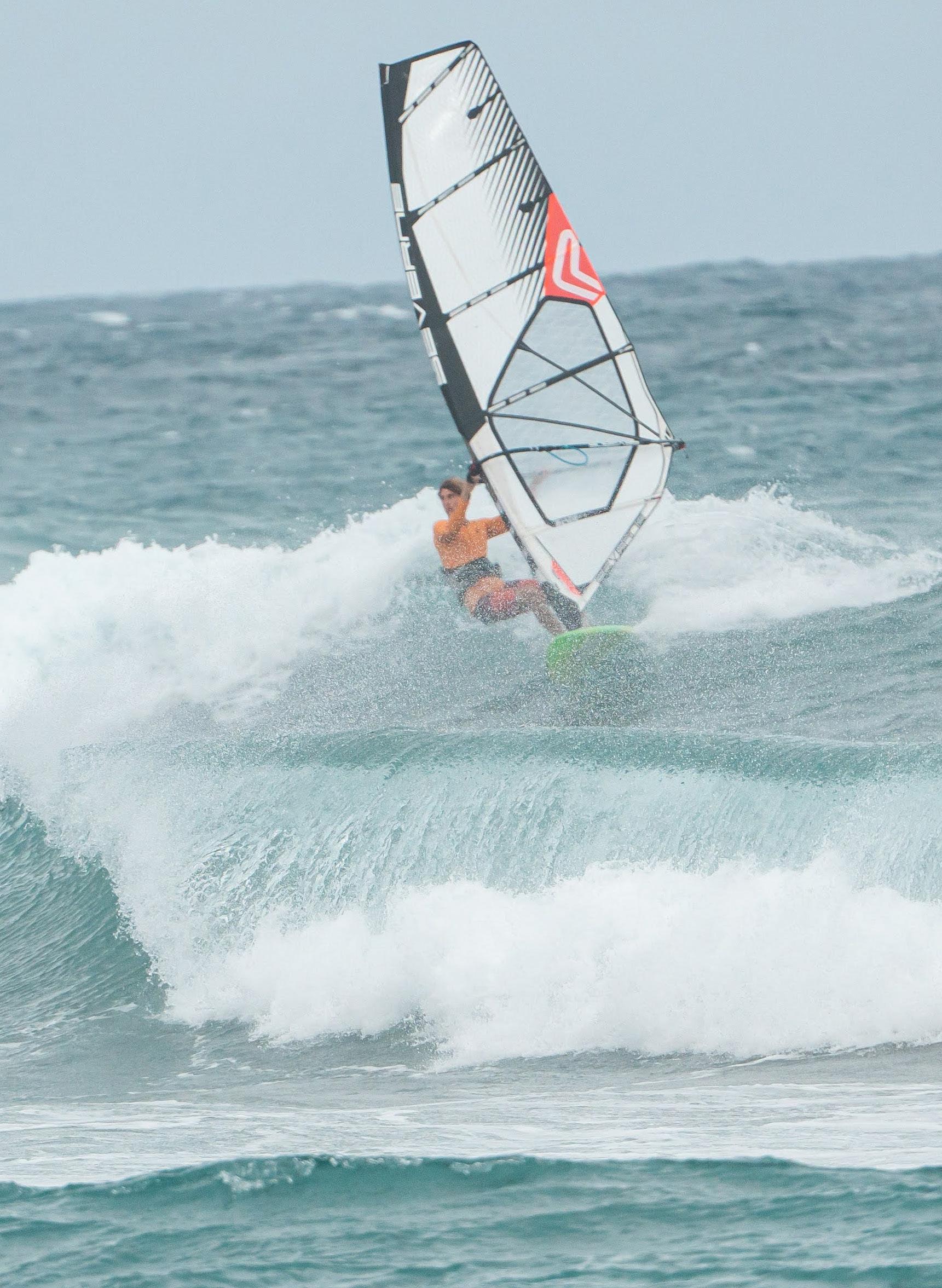
Josh makes the most of Taitung’s surfing spots
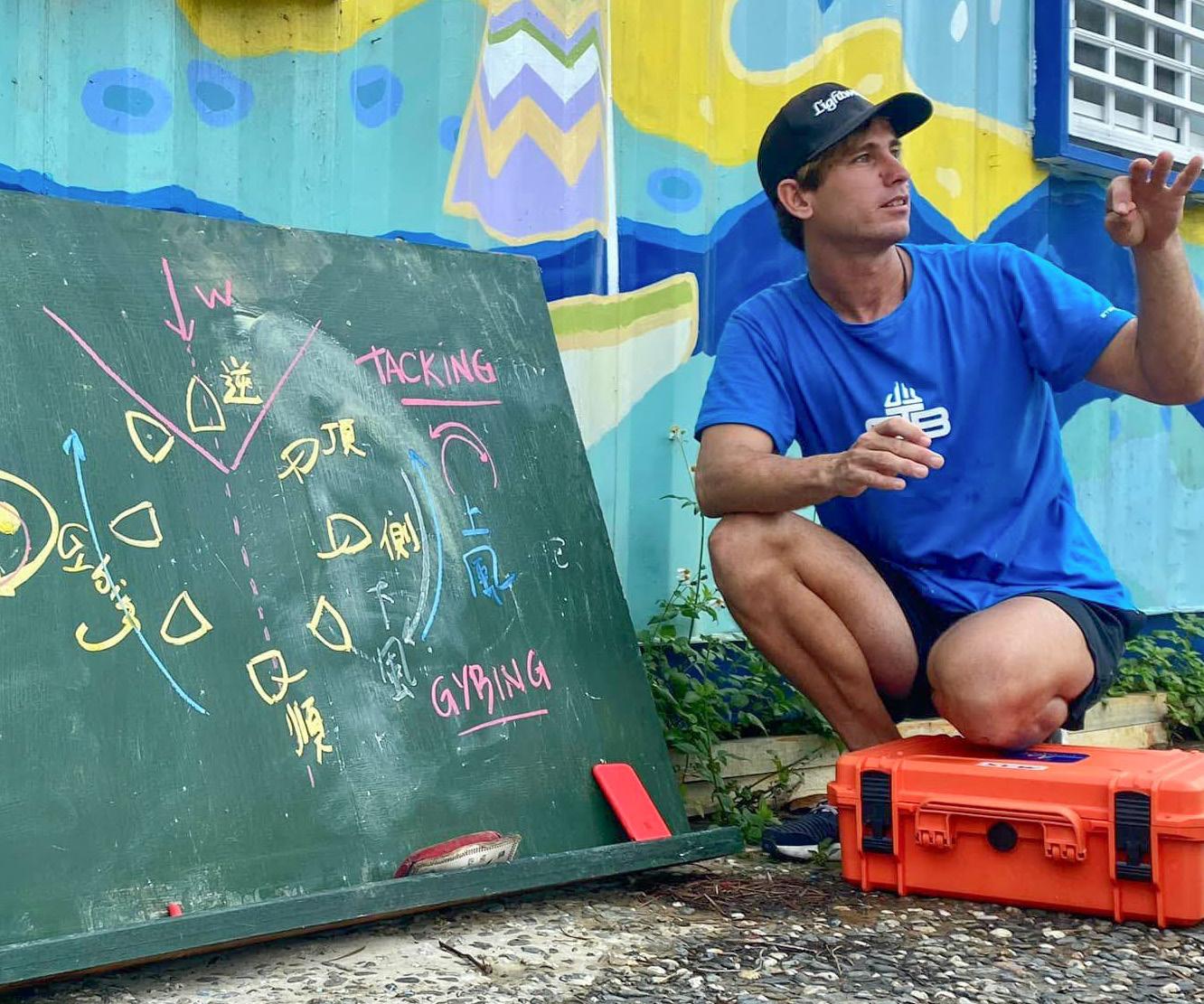
Federico focuses on promoting sailing
What Changes Do You Hope to See in the Future?
“People here tend to stay in tight-knit groups, and I’d like to see locals and foreign residents mix with each other a bit more,” says Josh. He feels the decline in tourist numbers since 2024’s natural disasters “has slowed down the overall energy in the county.” Yet he remains upbeat, saying: “Taitung is still an amazing place in terms of natural beauty, and my bond with this place is certainly stronger than it was a few years ago.”
Jennie Miller thinks there are ways in which outsiders can build a more meaningful relationship with Taitung, even if they’re here for a very short time. “For tourists in particular, I believe creating more interactive festivals and workshops could help them truly connect with and appreciate the area on a deeper level,” says the Dulan resident.
When asked what changes she’d like to see in Taitung, Joanna gives a thoughtful answer: “I have a pretty specific dream for my little part of Taitung. I live in a village that is mostly farmland, and my neighbours are all farmers. Life is hard for them, especially as they age with no one to take on the fields in their stead. I would love to see change in this area: farming practices that rejuvenate the land, the planting of crops that are both sustainable and profitable, and expanded government assistance to facilitate these shifts. It is a hard life as a farmer in any country, and this is no less true for our farmers here in Taitung.”
She’s adamant that one seldom-discussed facet of life in Taitung shouldn’t change. Praising the efficiency of government services, she says the residency and permanent residency processes are very expat-friendly: “The requirements are clear, the timeline is transparent, and it’s relatively inexpensive to apply. So long as you stay on top of the paperwork, in exchange you get permanent residency in a beautiful, safe country with accessible healthcare and excellent infrastructure. My cousin’s wife is undergoing the equivalent
process in Australia and it’s a years-long nightmare for her with no clear timeline for when she’ll have a secure legal status. We’re so lucky in Taiwan! Those aren't the reasons I moved here at 25, but in my 30s they are absolutely the reasons I feel very determined to stay.”
How Has Living in Taitung Changed You?
Joanna responds to this question with a laugh and explains that, while she was a “low-maintenance person” before moving to Taitung, she’s now on a whole different level: “I live in what could generously be described as a beach shack on a piece of farmland. I love my house, but it wouldn’t work for a lot of people. I didn’t get air conditioning until last year, after four years of toughing it out for no good reason.”
“Last July, I went a month without running water,” she reminisces. “In fact, I regularly go without running water for a day or two. I’m in the process of having big tanks installed so I can live off rainwater, but that’s taking much longer than I hoped. For now, when I need to top up my water tank, I have to run up the road and through a field to turn on a switch in an isolated power box, and return 25 minutes later to turn it off. On top of that, we’ve had typhoons, flooding, earthquakes and week-long power cuts in the last couple of years, so much so that I don’t even really bat an eyelid anymore. It’s insane, but it’s my home. In Australia, there’s no way I could afford to live in
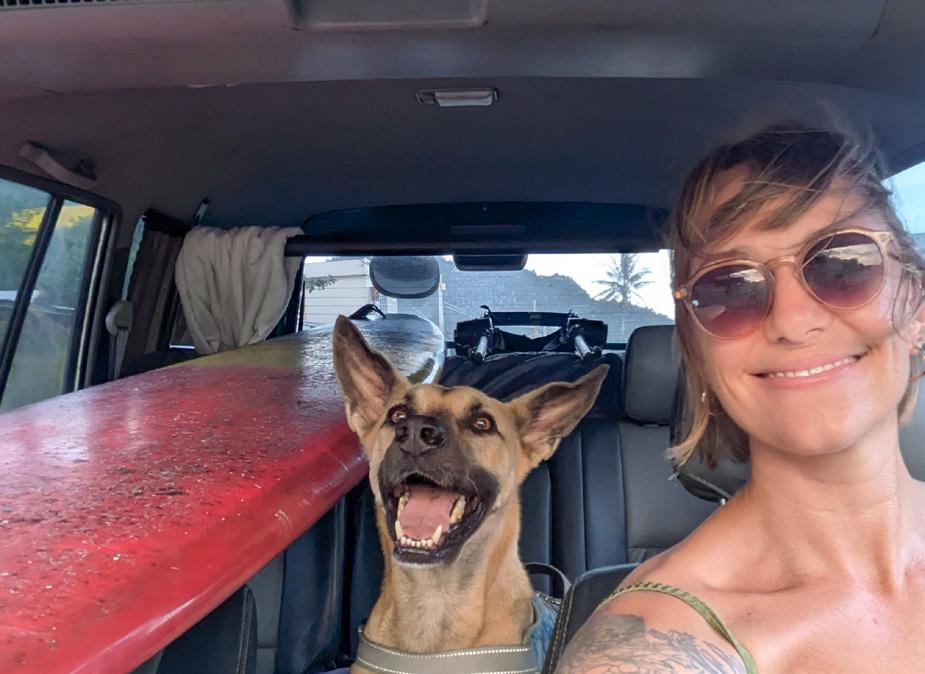
Joanna and her dog just finished a delightful surfing session.
a place near the ocean and do work I like. Taitung has provided me with the chance to live my dream life by the sea, surrounded by people with similar values, while achieving my goal of learning Chinese. The lower cost of living has provided me with an opportunity to save hard for someone my age. All in all, this is a wonderful place to be.”
Certain self-sufficiency skills are absolutely necessary where Jennie Miller and her partner, Aguang, live. It’s not just a matter of comfort, explains the American. However, Aguang is the one with most of the relevant skills. “I can help a little bit with building things, digging, working in the yard with large plants, using large tools like the chainsaw and the string trimmer, and being his assistant when he does electrical and plumbing stuff. I wouldn’t say I’m consciously trying to improve, but when it’s necessary, then I learn,” adds Jennie.
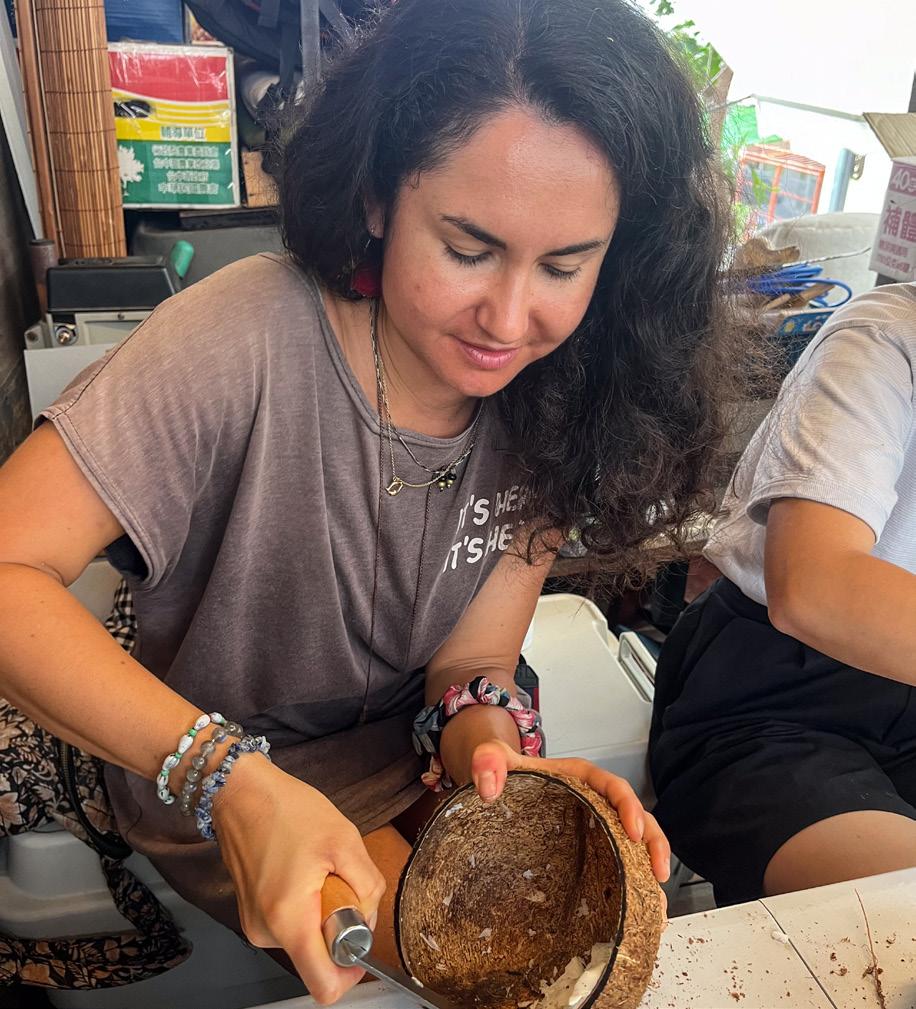
Tamara recently added to her toolbox of skills at Luan Tiok, a family-run crafts studio in Dulan. This spring, she learned how to make her own coconut bowl from Taitung coconuts. “I also learned how to make fresh coconut milk and coconut chips. It was a great experience, and made me feel more deeply connected to the land and ecosystem of Taitung,” she says, going on to point out that “the coconut is one of the strongest and most nutritious plants in the world and it’s a symbol for Taitung. I hope I can integrate parts of
coconut more in my vegan meals in the future and design my own coconut tableware.”
According to Simon, living long-term as a 100%-foreign couple in Taiwan means you need to be quite self-sufficient from the get-go, doubly so if you’re in a place where few locals speak good English and there are fewer amenities. “At the most basic level, this means being able to conduct our lives and businesses in a different language and culture, knowing where to buy things, how to get them repaired, and how life changes with the seasons,” he says.
Like many households in Taitung, the Fosters grow some of their own food and trade produce with friends. Simon has gotten a little better at horticulture, but he says that “on a personal level, my biggest skill gains have been related to fixing up our house and opening the bakery. During the ten years we’ve lived here we’ve continually improved the house, starting with putting in banisters, then new walls and painting, and most recently a new kitchen. All of these are things I’d never done before, but with help from trusted friends, I’ve learned skills that’ll be useful moving forward.”
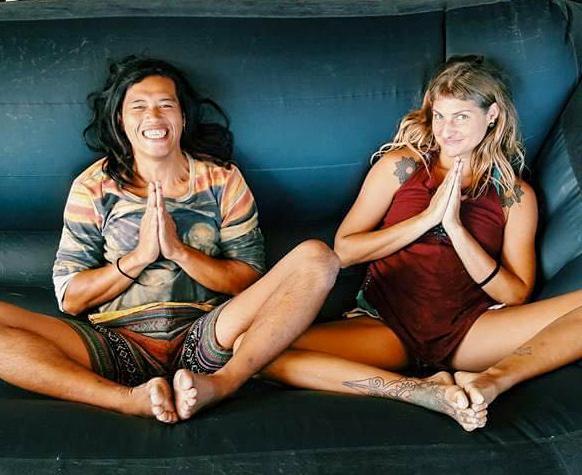
Jennie and her partner Aguang
Tamara makes a bowl from a local coconut
While expressing great satisfaction with his lifestyle as a whole, Luye-based restaurateur Johannes Faeth pinpoints one area where his lack of progress has left him disappointed: “My Mandarin is still lousy. Sadly, my language skills haven’t improved much.”
If Johannes is at one end of the spectrum, and Joanna ― who aims to pass Level 5 of the Test of Chinese as a Foreign Language (TOCFL) before the end of this year ― is at the other, Josh is somewhere in the middle.
“Starting a business has shown me that proficiency in Mandarin is important, but I haven’t studied it formally,” he says. His approach to all foreign languages has been to begin by learning greetings and numbers, then figuring out various verbs and sentence structures. “Then I throw all that together and wait for native speakers to correct me. I only focus on verbal communication. Reading and writing are totally different animals and I think I’d require a classroom setting to learn those,” says Josh.
“At meetings where technical vocabulary is involved, I use translation software on my iPad and both parties can get a decent idea of what’s being conveyed. AI models are getting so advanced that maybe soon we won’t even need to learn other languages, because they’ll be able to translate everything accurately in real time,” he observes. Indeed, it looks like this kind of technological advance will very soon remove one of the obstacles that makes some people hesitant to relocate to a place they know is safe, beautiful, and affordable ― a place like Taitung!
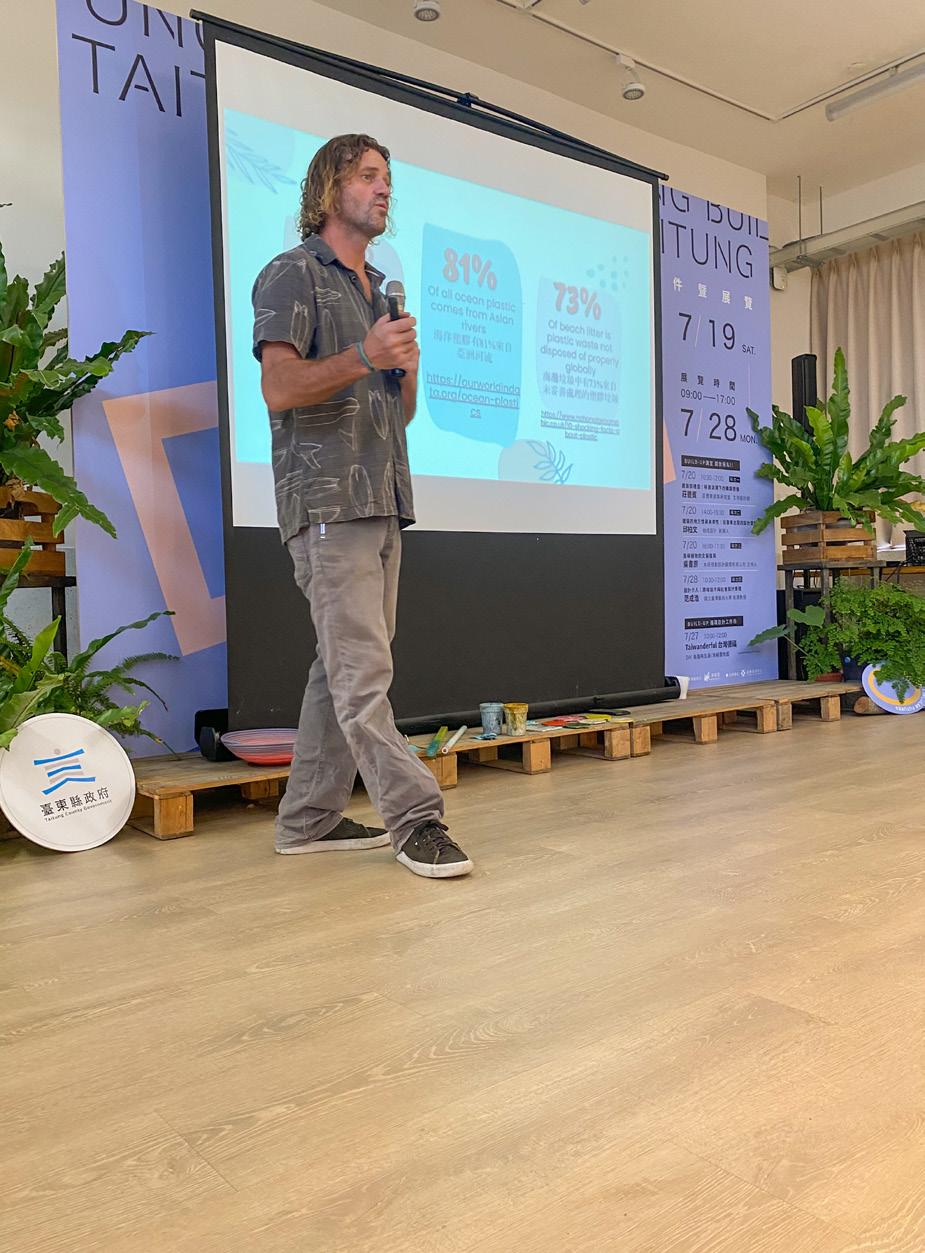
Josh talks about plastics recycling
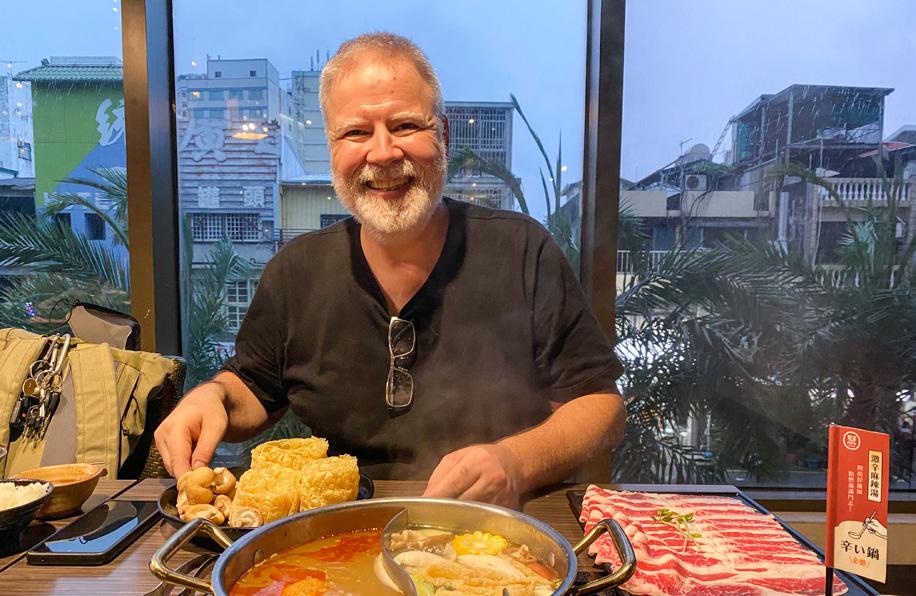
Johannes enjoys Taiwanese hot pot
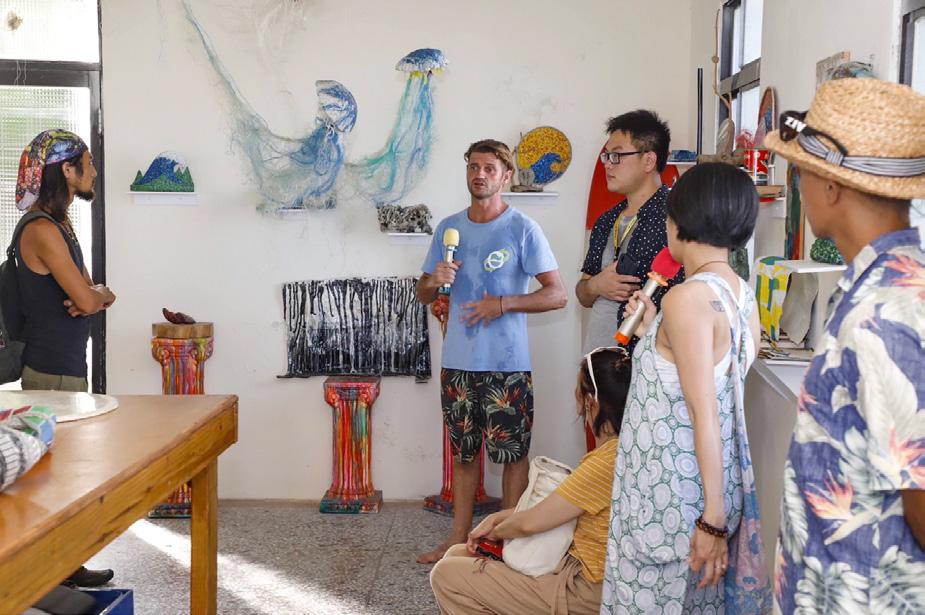
Josh often provides explanations in Chinese
From Coffee to Canvas
By Federico Davicino
When I wrote my article for the very first issue of Hello Taitung, I was fully immersed in running my coffee shop and starting the sailing school. I thought the latter would be a fun nonprofit side project; I didn’t expect it’d become so busy and successful. After the pandemic, I realized that my time in the coffee shop was coming to an end, so I sold my share to my business partner and made a full-time commitment to the sailing school.
Leaving Dulan Cape Cafe almost two years ago was a big emotional change. The coffee shop was my baby, my first big project as an adult. It also made it possible for me to build a life in Taiwan. Throughout the seven-and-a-half years that I ran Dulan Cape Cafe, I put a lot of passion into it, but eventually I became jaded.
The school has grown into something I couldn’t imagine. We now partner with five local schools around Taitung, offering a year-round sailing program, and there are other schools that are curious about sailing. We also work with foundations for disadvantaged kids who have few opportunities to join activities like these, and we offer free classes to those interested in learning how to be an instructor. Word has spread
throughout Taiwan and beyond; every year we run summer programs for international schools and our camps now welcome kids from Japan, China, Hong Kong, Thailand, the US, and Canada.
However, the biggest satisfaction is not from the number of students, but that the students who come back again and again slowly become passionate sailors or even talented instructors. We’re now in our sixth year, and some of the students who started to learn sailing when they were kids are now teenagers or young adults who come back each summer to teach little kids.
When I set up the sailing school, I didn’t aim for it to become a big company. Instead, I hoped to see sailing culture catch on in Taitung. My secret goal was always this: If I could see other groups or schools starting their own sailing programs, it would mean that people were getting interested in sailing. Over the past year, different organizations have set up programs similar to ours. Some of them have done it with my guidance, while others are completely independent from my sailing school. There’s a group of traditional sailors in Changbin called Wind Voyagers; they’ve built wooden Austronesian canoes and started sailing around the east coast. National Taitung University has
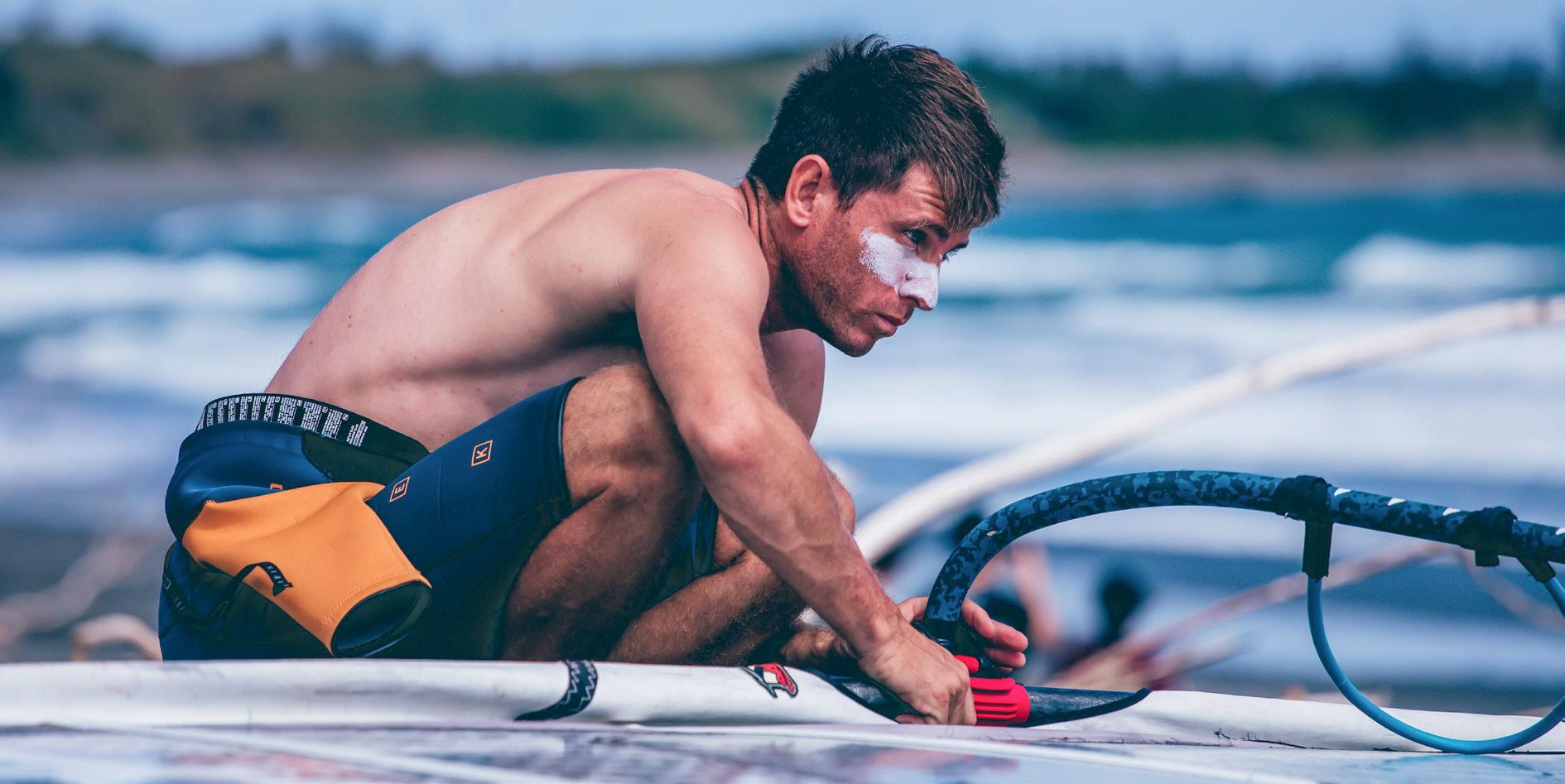
Federico adjusts sailing equipment
also bought some boats and they’re running sailing summer camps. I see these organizations that have sprung to life not as competition but as a sign of success. It means more sailors, more people on the water, and a bigger community.
As the sailing school grows, I’m also growing, and my personal goals have changed. At first, I really wanted the sailing school to train sailors who can compete at a national level, but I’ve come to realize that Taitung parents aren’t so interested in competition. I think many of them fled Taipei and the north of Taiwan precisely to separate themselves from the fast-paced and highly competitive environment. They don’t want their kids to be placed in a competitive and stressful environment. On the contrary, they’re much more interested in the adventure and cultural aspects, and that’s something I greatly enjoy.
In the past few years, we’ve established an exchange project with Lanyu (Orchid Island). Each year, we sail to Lanyu in a big boat full of students from different schools around Taitung, and then we stay on the island teaching the local tribes. It’s a great opportunity for the kids that learn sailing all year round in Taitung to show their skills and make new friends.
Each time we stay on the island for about a week, and for both the kids and the parents who accompany them it’s a highlight we all look forward to. Recently, we’ve also started inviting kids from Lanyu to come to Taitung with us and continue this exchange. It’s very rewarding to see these kids year after year becoming both good friends and good sailors.
We’ve begun similar activities in the northern part of Taitung County and in Hualien County, teaching kids from Changbin and Fengbin. We’re currently crowdfunding to get some equipment ready and we’ve started teaching at two schools there. There’s a possibility that next year two more will join the program. We also hope we can begin occasional exchanges, involving kids from Taitung City to Changbin and also Lanyu , slowly building a sizable sailing community across Taitung County.
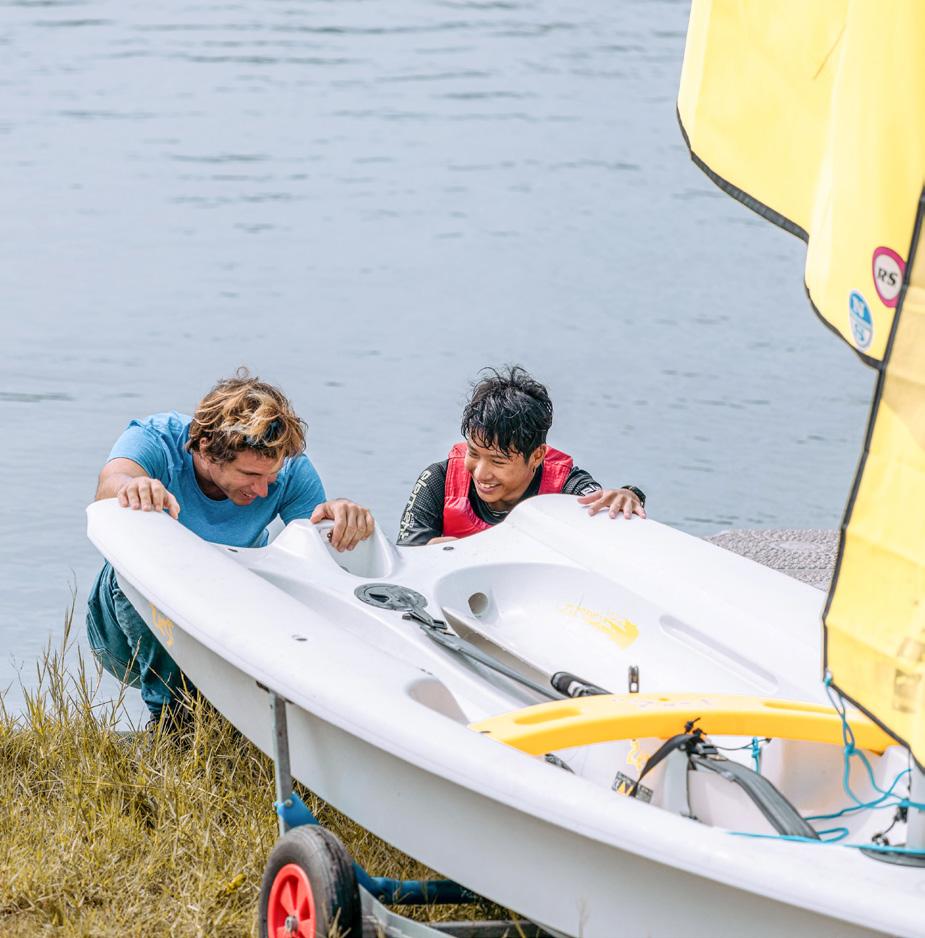
Federico and one of his students
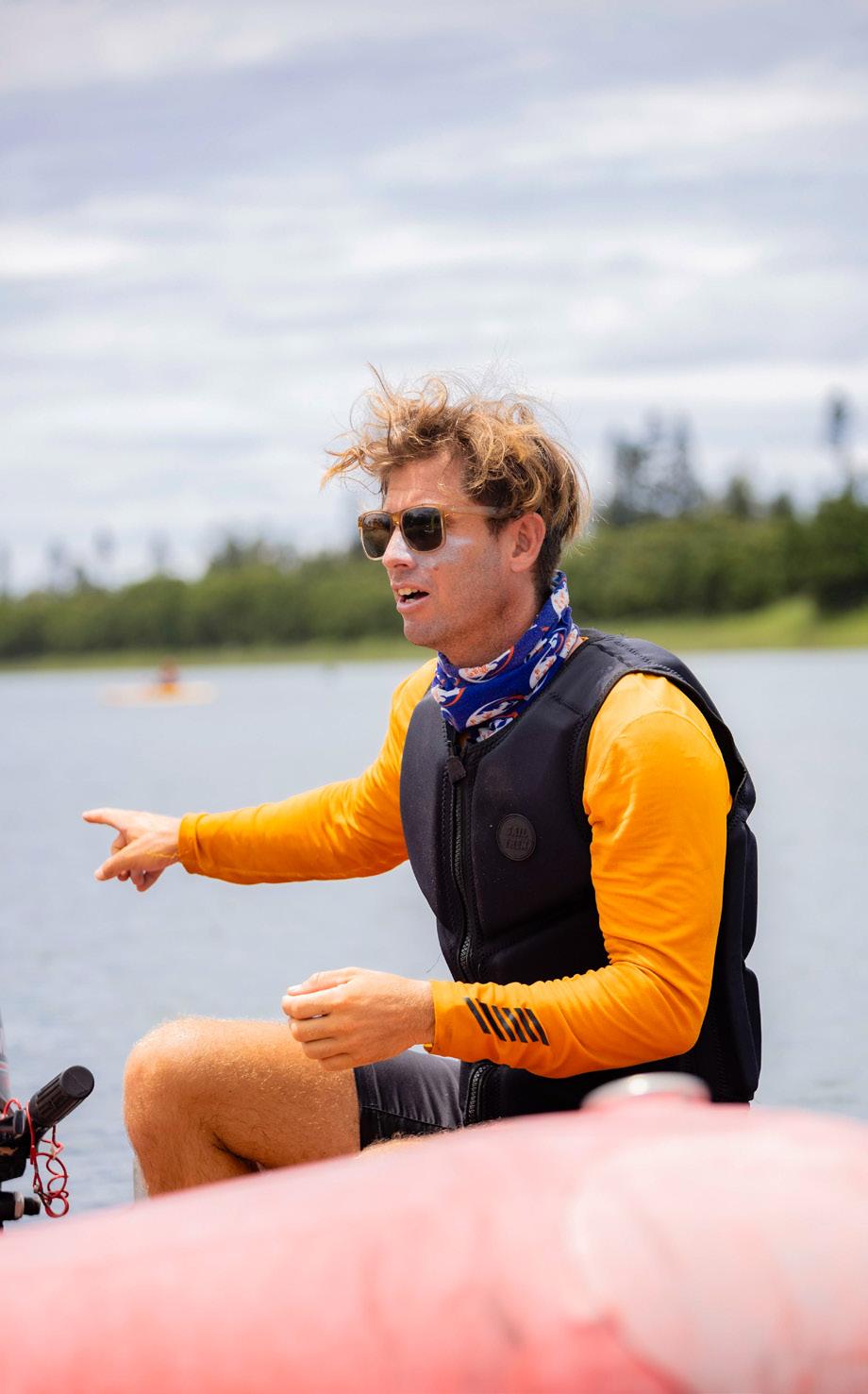
Federico gives instructions before setting sail
The school has achieved some remarkable milestones, for sure. If I had to sum up the three greatest achievements, the ones of which I’m most proud, I’d say: (1) The sailing exchanges with Lanyu that I’ve already mentioned; (2) Joining national competitions and seeing one of our kids placing first in some of the races; and (3) Some of the older kids have joined myself and other crew members to sail to Japan, the Philippines, and Hong Kong. We even had one of our students crossing the Atlantic when he was 17!
Like all foreigners in Taiwan, I’m often asked how long I plan to stay, or if I expect to retire here. Well, I haven’t reached that part of my life yet. Europe doesn’t seem to be as prosperous as before, and the political situation there is more fragile than before. Of course, Taiwan isn’t the best place in the world in terms of geopolitical stability.
I’ve lived here for ten years and I consider Taitung to be my current home. My friends and my work are here, but I’ll always be a bit torn between these two places because my family still lives in Spain. We visit each other quite often. When my brother graduated from university, he came to live with me for a year. My parents have retired, so they often come for a long stay in Taitung.
As I dive deeper into Taiwan’s Chinese and indigenous cultures, I’ve noticed that they’re very different from each other, and I’ve got to understand which facets I like and which I dislike. As with any love relationship, the first phase of falling in love with this place has passed. Now that I see the advantages and disadvantages of living in Taitung, I still choose to live here.
I remain very passionate about sailing, but everything runs its course and there might come a time when I want to dedicate myself to other projects which may or may not be in Taitung. I’m still very much in love with what I’m doing, and despite having some big lows related to all the complications of setting up and running a sailing school in Taiwan, those problems weren’t enough to make me give up. I see myself running the sailing school for at least a few years, and currently the only way that I see myself leaving it is if I’m able to pass the baton to a new generation of sailors who are as excited as me about running sailing programs here in Taitung.
Opportunity in Crisis
危機中的轉機
By Simon Foster
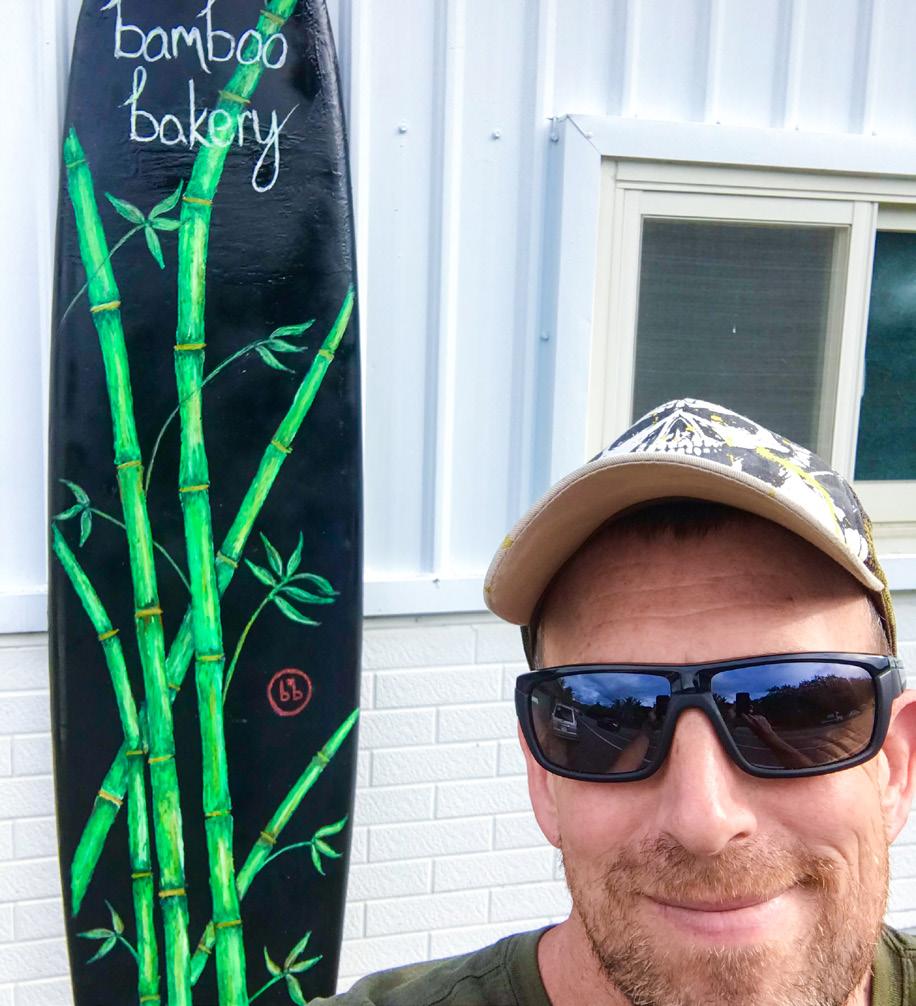
The first article I wrote for Hello Taitung was completed during a quarantine stay in Wanli, New Taipei, back in 2021. It was great to have a project to occupy my time in quarantine, but the pandemic itself was a crisis as well as an opportunity. We used this time to reinvent ourselves and our lives on many levels. We opened another successful business (Bamboo Bakery) and I worked in a new field (as managing editor of this magazine) which both reinvigorated me and gave me confidence in our resilience for the future.
Editing Hello Taitung for two years was a fantastic experience which allowed me to deepen my knowledge and understanding of the county, its people and their culture, as well as to meet people from all over the globe who’ve chosen to call this remote slice of paradise home. Since then, nature has continued to throw its assorted bag of tricks at the East Coast, from earthquakes to typhoons, but little has changed in terms of my feelings for the region: I still love it and my passion has only grown.
As a family I don’t think we’ll ever tire of living between the mountains and the ocean and the freedom this life presents. On any given day we can walk our dog on the beach, swim and SUP in the sea, catch crayfish in the rivers, bike and hike through the mountains, or on cold days head for hot springs.
That’s not to say that being the only 100%-English family in the county is always straightforward.
CHENGGONG
There are certainly challenges living here, and they range from language to trying to ensure our kids get the best education possible. We chose this life and can handle it when we have a bad day and maybe get misunderstood or treated differently from Taiwanese people. However, our kids didn’t make this choice for themselves, and so when they experience difficulties it can be harder for them to accept the situation.
We respect the Taiwanese school system as one of the best in Asia, but sometimes it feels too rigid and results driven, applying too much pressure at a young age. This is tempered on the East Coast where a more laid-back lifestyle prevails, yet exam pressure still became a concern by the time the kids reached Grade 5. Accordingly, we were delighted to discover Junyi School of Innovation in Taitung. From Middle School onward, Junyi
follows the national curriculum, but has a stronger focus on creativity, the arts, and outdoors learning. The kids hike mountains, go camping, and even cycle 180km in just two days at the age of 13!
Of course, being the only blond-haired blueeyed kids at the school means there’s still some adjustment, and like all teenagers, they have bad days. We take their concerns seriously and try to support them, but also deep down we know that for every challenge they face and overcome, there will be a payoff in adult life, and that the skills they have acquired linguistically, culturally, and socially will serve them well in the future.
The older they get, the more they can stand on their own two feet (and support each other). They’re now at the stage where they’re a big help to us both in terms of practical daily life and even work. We’re proud of the way they’ve grown up here, speaking Chinese and Taiwanese from kindergarten through to now being in Grade 7 and Grade 9. They are truly international and as comfortable in England, France, or Spain as they are in Taiwan, so hopefully the world will be their oyster!
The pandemic afforded us the opportunity to spend more time together as a family. There were limited school closures, but compared to the rest of the world, education in Taitung progressed smoothly. Taiwan — and particularly Taitung — existed in a bubble of safety for most of the pandemic, and apart from the lack of a travel business, the biggest hardship was not being able to see our families in Europe. This said, when Taiwan’s doors reopened after the pandemic, for me it was pure pleasure to lead foreign cyclists around the island once more. At the beginning I was worried that after nearly three years away from the business I’d be rusty, but as some of our staff commented, I seemed to have a newfound energy and enthusiasm. As they say, a change is as good as a holiday…
Compared to other destinations, Taiwan was quite slow to open after the pandemic. By the end of 2022, however, bookings were coming in, and 2023 turned out to be one of our best years. This was due to a combination of postponed prepandemic bookings, and a surge in new bookings reflecting a pent-up desire to travel and Taiwan’s heightened international profile. Last year started well, but since then business has been slower. The April 2024 earthquake and subsequent typhoons
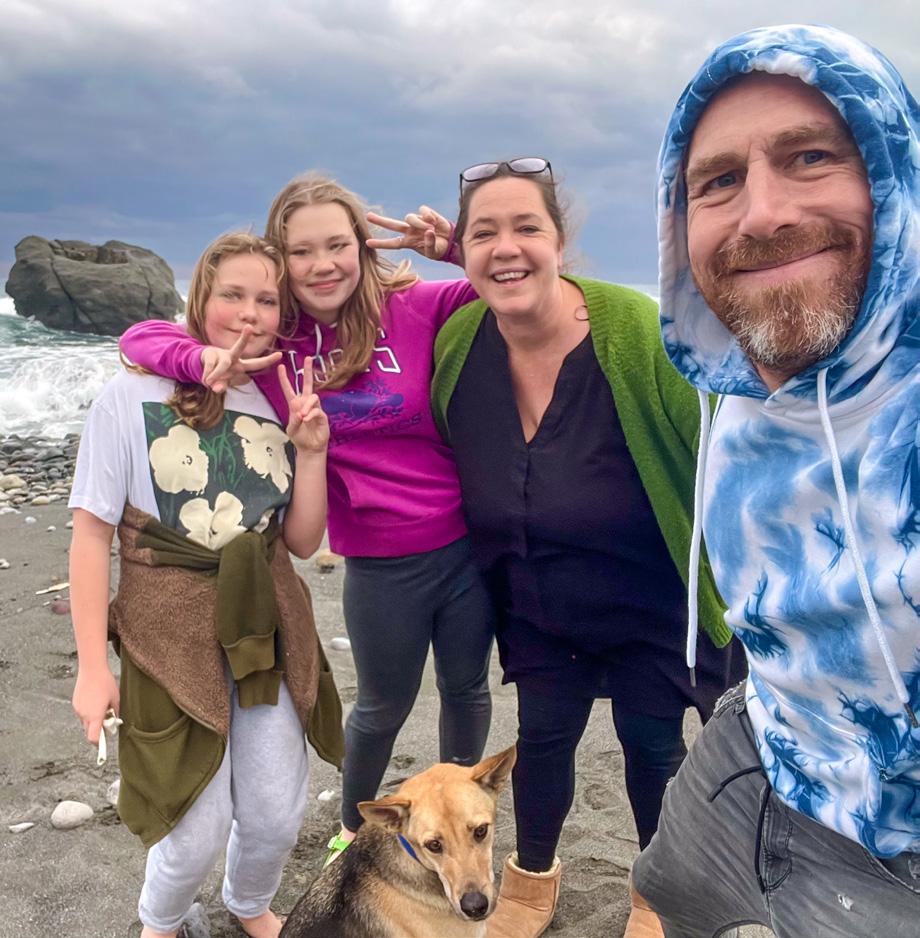
Simon's family
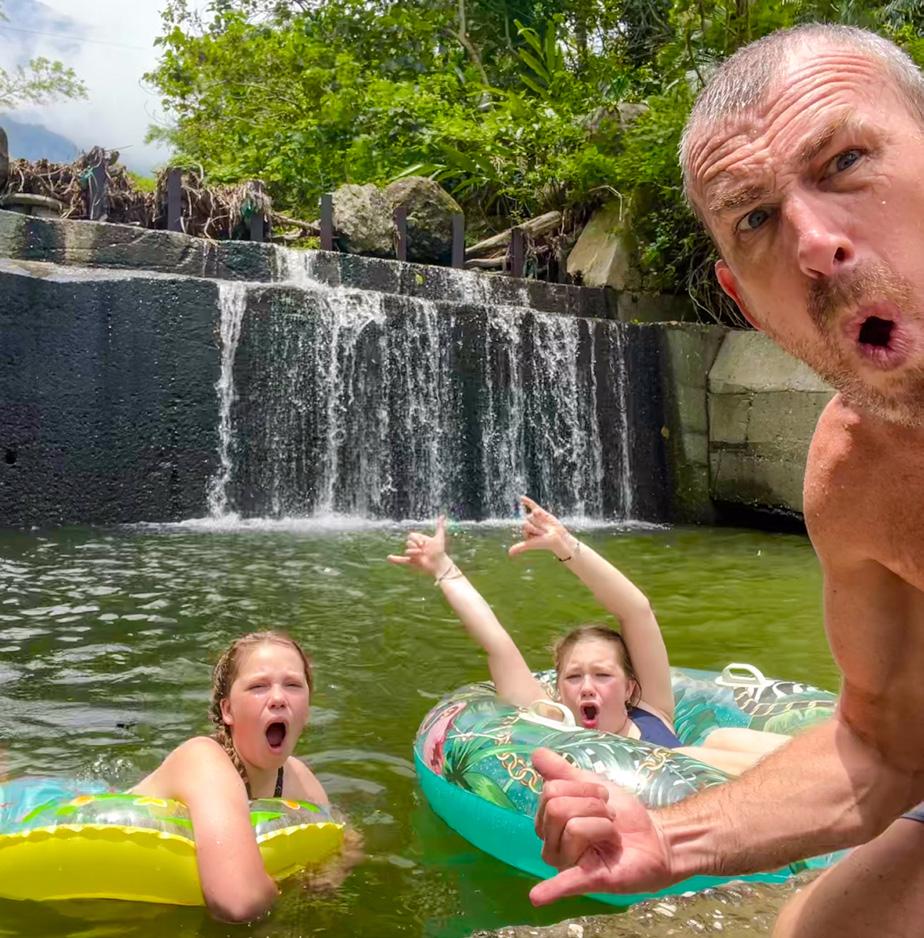
Cooling off in one of Taitung’s pristine streams
kept people away, and the fact that many of Taroko National Park’s attractions remain closed has removed a premier natural drawcard.
Perhaps more significant, changes in the international situation have impacted tourism, and the way this is reported in overseas media has led a percentage of British, European, American and Australasian groups to choose to go elsewhere. In terms of domestic tourism, Taitung remains a preferred holiday destination for those in the know, but having opened up later, among Taiwanese the post-pandemic urge to travel overseas remains high, bolstered by a strong Taiwan dollar. As a result, many of the local businesses that thrived during the pandemic are now struggling.
We would love to live in Chenggong for the rest of our lives and think it’d be a great place to retire, but given the nature of our business, if international travelers don’t come to Taiwan, our travel business here will become difficult to sustain. We would initially try to find other sources of income. However, if the geopolitical situation becomes unstable, as a family we might feel we have no choice but to relocate.
We moved away from the UK over 25 years ago for numerous reasons (mainly that we wanted to explore the world), and the current economic and political climate there only serves to reinforce our view that it was a good decision, so it’s unlikely we’d ever choose to move back. We have a house in France which might be our first port of call in case of a hasty retreat, but our business is international, and we also operate in several other Asian countries — so we’d most likely ultimately relocate to one of these destinations. But fingers crossed the status quo remains (or improves), the kids can complete their education in Taiwan, and we’re still relishing our view over the Pacific twenty years from now!
中文摘要 Abstract
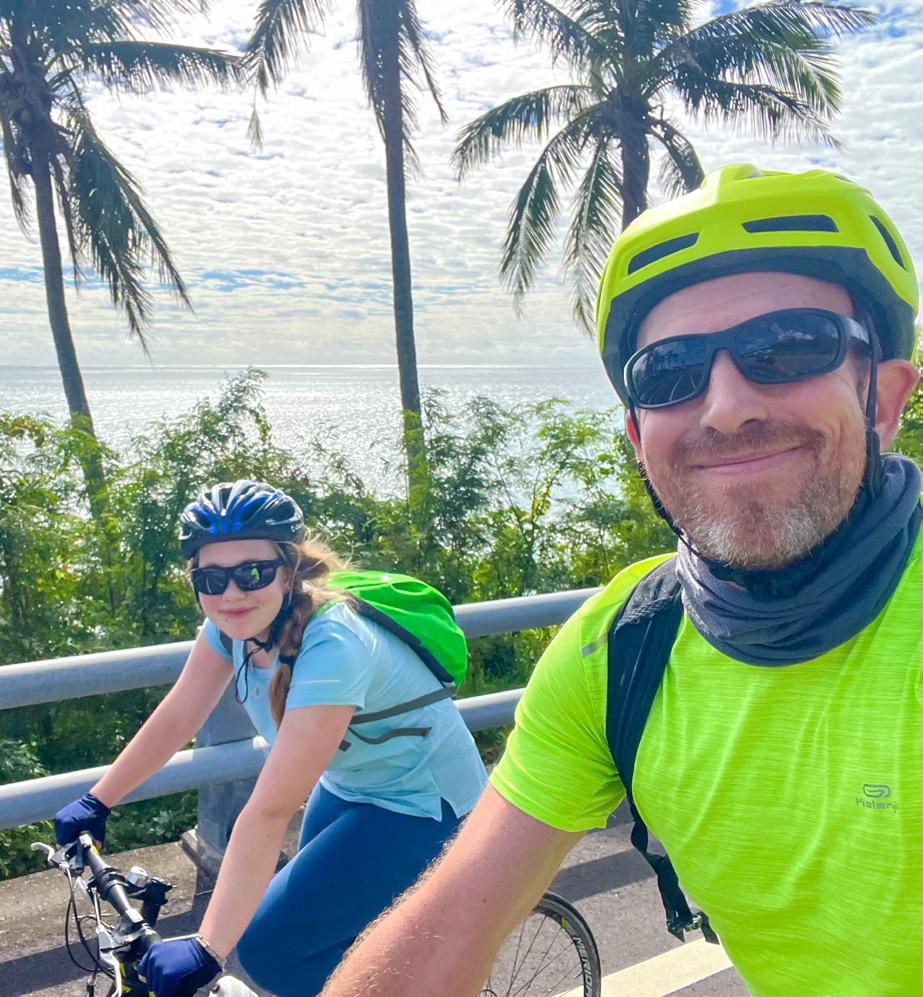
Simon and his daughter enjoy a seaside road bike ride
During the pandemic, Simon’s family ran a bakery
Our Three-Star Life in Taitung
我們在台東的三星人生
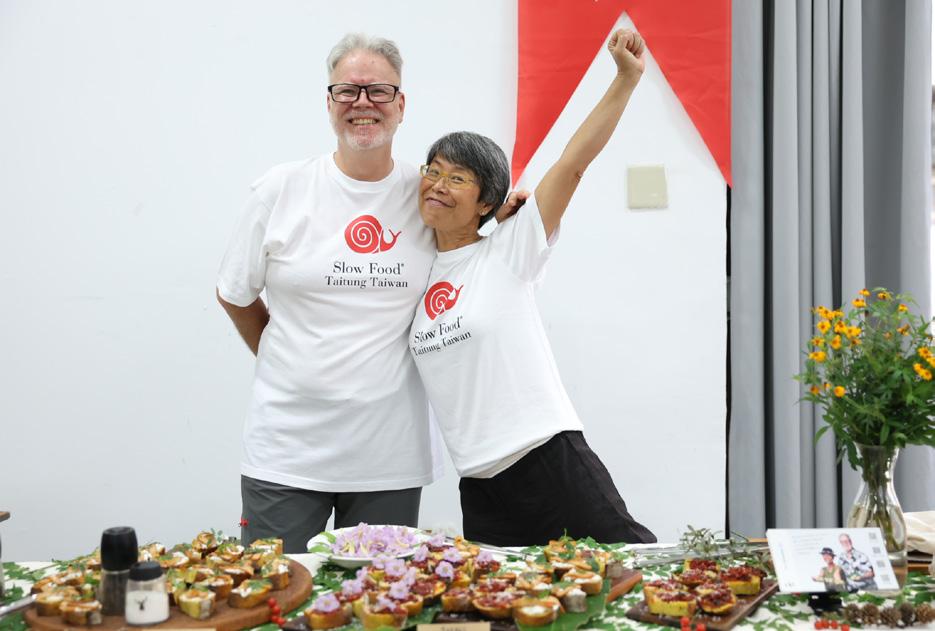
I’m very glad we came here to Taitung. After 11 years, Luye continues to be a very special place to me. I still love its nature, warmth, quietness, and — compared to big cities — the slow pace of life. I feel welcomed by the place and its people.
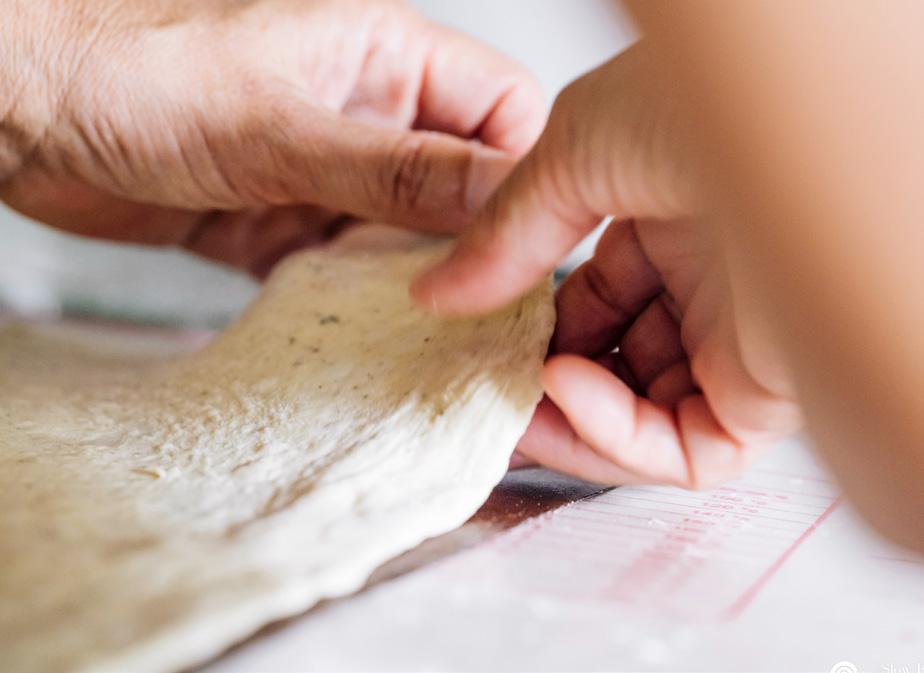
My biggest source of satisfaction is simply living here and everything related to our restaurant, “Chubby Rabbit.” Besides being how we earn a living, “Chubby Rabbit” is also a way of life. It’s a small place, which allows us to focus on things we couldn’t pay attention to if we were running a big restaurant with lots of staff.
When I say small, that doesn’t mean “Chubby Rabbit” hasn’t grown. It just grows in different ways, because we have new ideas, create new recipes, learn new techniques, and use new tools and gadgets. And then we can see how far we’ve actually come: Sho, my wife, and I started “Chubby Rabbit” from scratch — and in 2024 we received three stars (the highest possible rating) in the Slow Food Taitung biennial restaurant evaluation, following two-star ratings in 2020 and 2022.
Guests come here for something special. They bring their parents and their friends. To see them happy, enjoying the food and the place and the contentment we offer, is a thing of beauty. Apart from that, I don’t have any specific personal goals. Enjoying our home, having time, being lucky enough to love what we do — that’s both happiness and true luxury. It’s more related to a certain way of life and a state of mind, rather than achieving certain goals.
By Johannes Faeth
Since my previous article for Hello Taitung, I’ve travelled with Taitung’s Slow Food team to attend the Terra Madre Salone del Gusto in Turin, Italy (September 26 to 30, 2024). I thought that the Terra Madre would be the mother of all Slow Food events — and make no mistake, it was indeed impressive! In fact, it was one of the biggest and most international food events I’ve ever seen.
LUYE
Johannes and his wife, Sho
Being one of the people selected to represent Slow Food Taitung in Italy was truly a great honor. Yet, while the event was undoubtedly remarkable, for my taste it was also a bit too commercial and too business-driven, more so than I expected. Compared to the Terra Madre, the Taitung Slow Food Festival feels far cozier and more intimate. It still feels like a warmhearted family event. This is something truly precious which I couldn’t really feel at the Terra Madre. Attending the Terra Madre 2024 showed me once more how beautiful, professional, and enjoyable Taitung’s Slow Food festivals actually are. They’re really tremendous events which I’m thankful for and honored to be part of.
People ask if we plan to retire here. My answer is always: Luye is my home, I love this place, and I’d be more than happy to retire here. Living in Taiwan, we enjoy peace and freedom. As long as there’s no drastic change in circumstances which forces us to think otherwise, that’s always been the plan and it still is the plan.
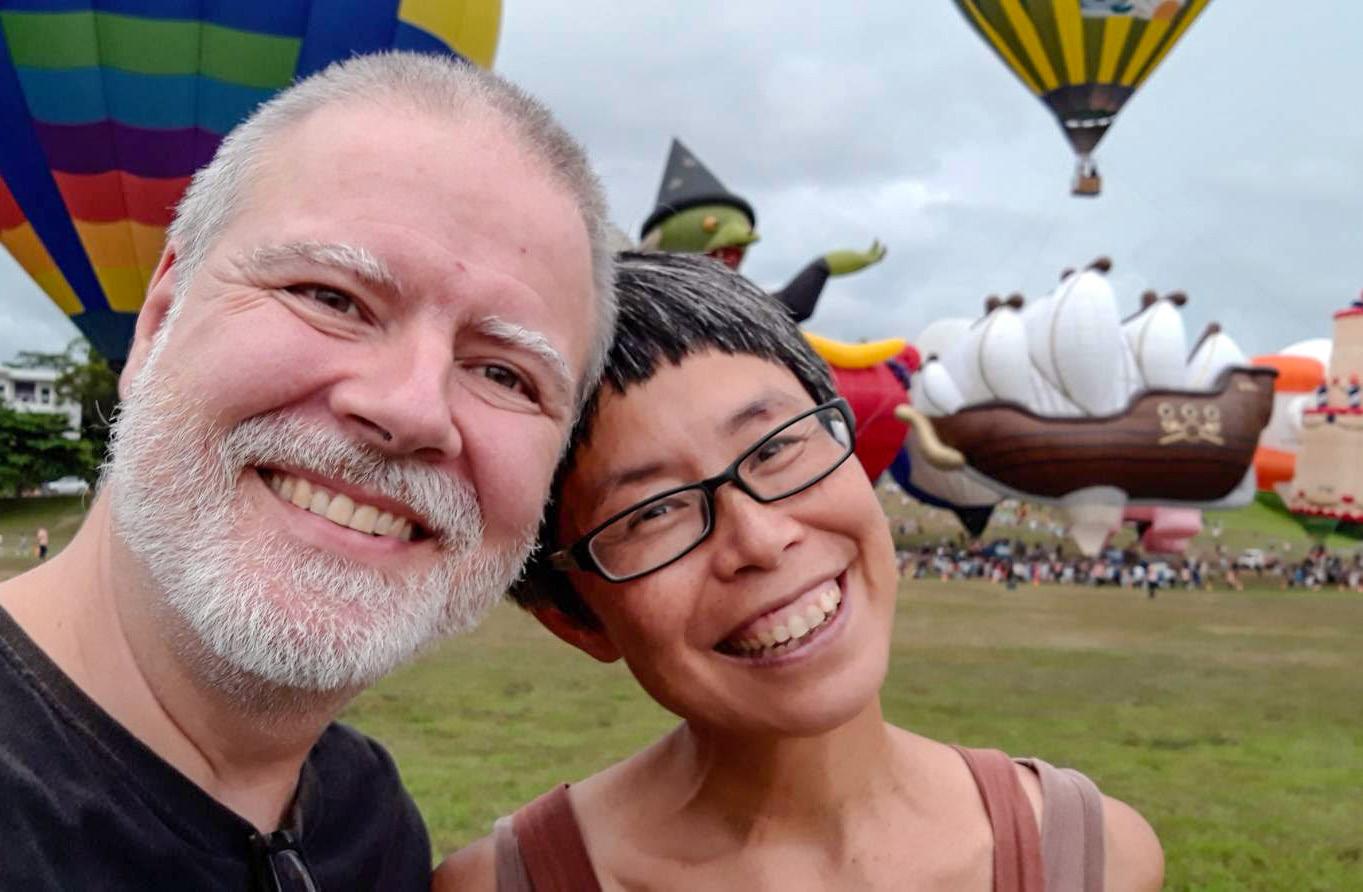
Johannes and Sho at the Taitung International Balloon Festival
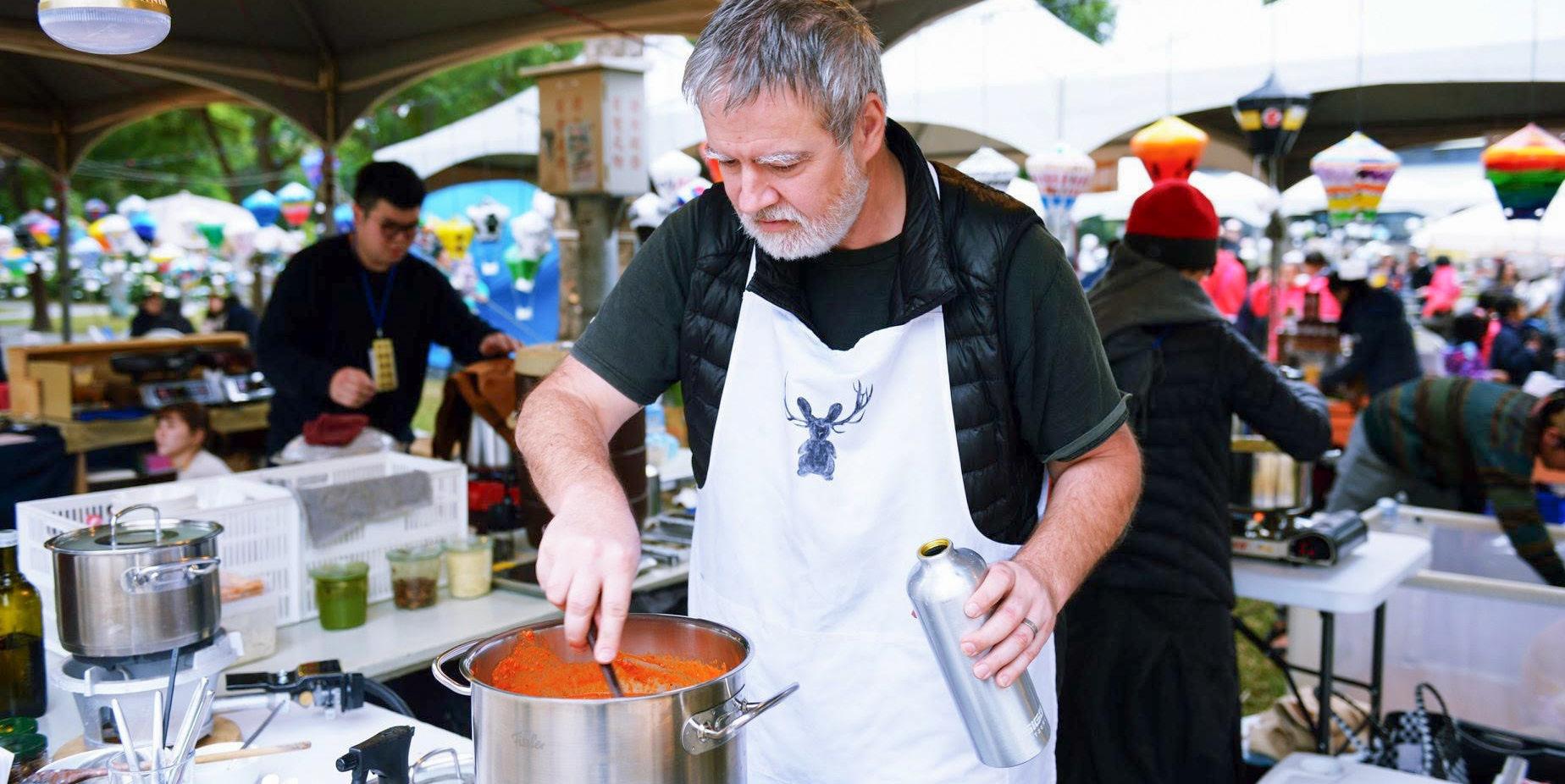
Running a stall at the Taitung Slow Food Festival
Chubby Rabbit joined the 2024 Terra Madre in Italy
The Vegan Life, Beyond the Kitchen
純素生活,廚房之外
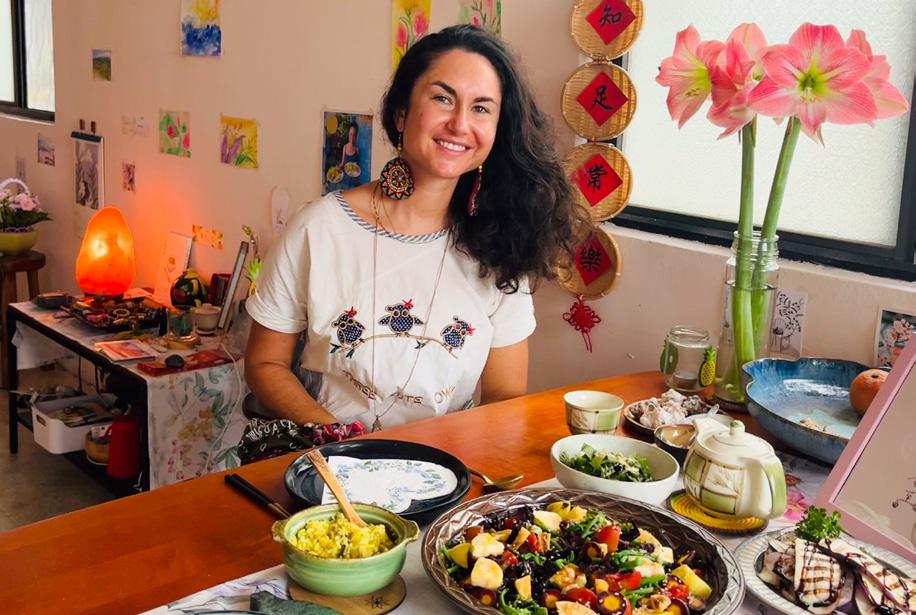
When I look back at what I wrote a few years ago, and analyze my current ideas and feelings toward Taitung, I realize that my thinking hasn’t changed: I still love the land, the ocean, and my friends from the tribes. I think Taitung will always be the best place in Taiwan for me to stay.
Through Hello Taitung, a lot of local people become aware of my vegan kitchen and what I’m doing. That gave me the chance to share my ideals about environmentally friendly and healthy eating. I’ve also made great friends thanks to Hello Taitung, for example the German-Taiwanese couple Enan and Shao-Yun from Satotea (featured in the November 2024 issue of this magazine). What’s more, my friends and family in Europe loved the magazine and through my article they gained a better understanding of what I do here in Taitung.
My goals haven’t changed. I want to live in Taitung in the future and have my vegan kitchen here. But at the moment I have to face reality. Because of visa issues, I’m not allowed to continue with Manran Vegan Kitchen as an individual restaurateur and freelancer. Since finishing my master’s studies, I’ve become aware that it’s difficult for foreigners to base themselves in Taiwan. I’m a free spirit and have my own ideas about life and employment, so it’s difficult for me to be forced into a rigid system.
Taitung’s vegan food scene is very small. There are some workshops and restaurants, but I hope to see more activism, for example vegan gatherings or
By Tamara Flussfisch
more vegan options or lectures during the Taitung Slow Food Festival. We have a great variety of fruits and vegetables here, and ingredients are affordable, so the region is a paradise for vegans and those who create vegan food.
I love to visit both farmers’ markets and traditional markets, to seek out new ingredients and exchange ideas with local farmers. Although
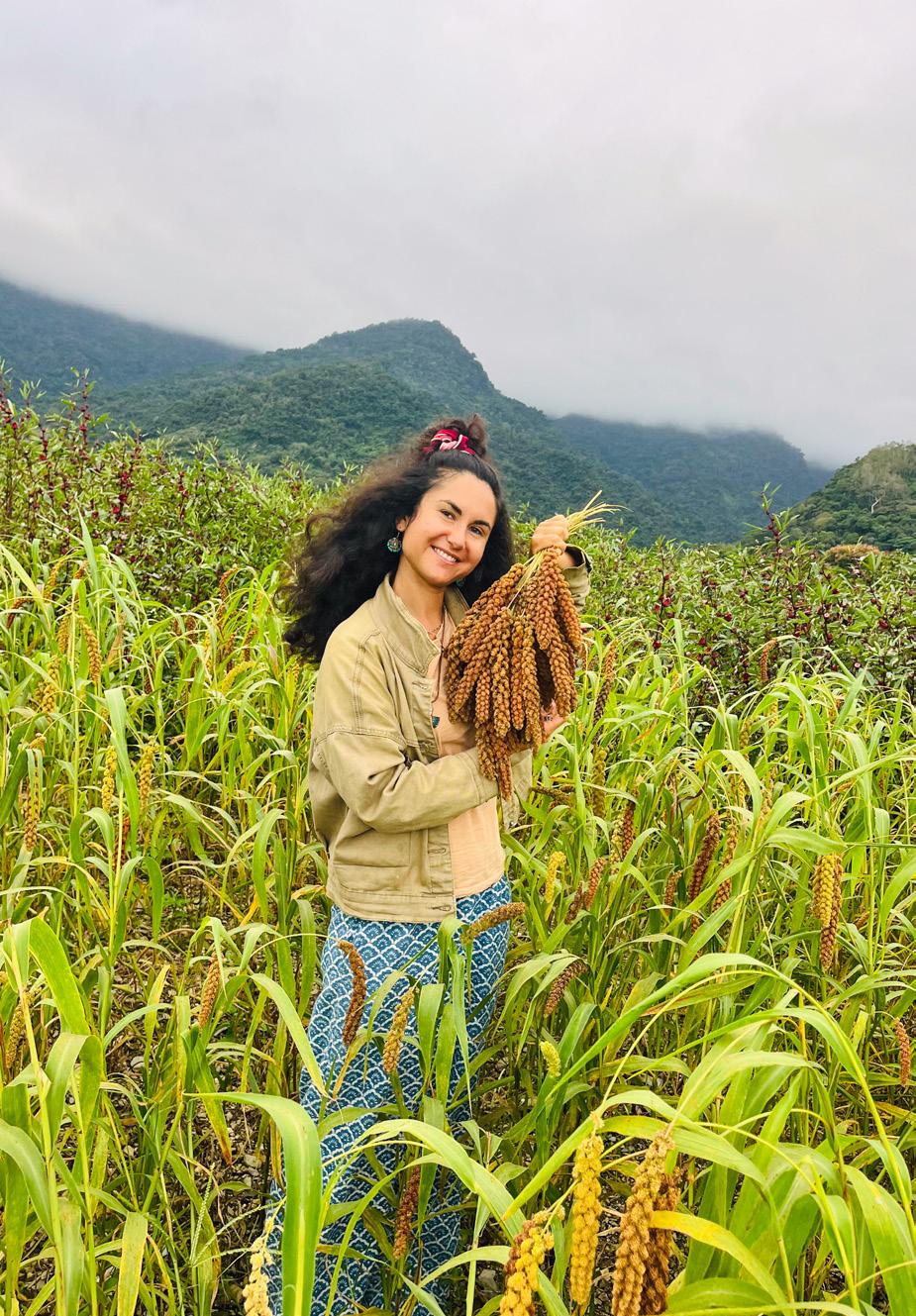
Tamara in a millet field
I’ve been in Taiwan for many years, I can always find something I’ve never eaten before. Every day there are surprises, and that’s why I love my life in Taitung. Unfortunately, Taitung has suffered typhoons and torrential rains in the last two years. Many small farmers lost their crops and their lives have become harder.
I feel the weather in Taitung is becoming more extreme, mirroring climate change across the world. The summers are becoming hotter and hotter, so hot that even my friends in indigenous villages have had to install air conditioners.
As I can’t bear the weather here during the summer, and I still have family and duties in Europe, I’ll turn to Germany and Italy during July, August and September. But I can totally imagine spending the rest of each year in Taitung for the remainder of my life, enjoying warm winters and the fruit and vegetable harvests.
Even though I need to move house and I’ve yet to find a way I can continue Manran Vegan Kitchen as my own restaurant, I still love my life here and will do anything to keep going and realize my dreams of a vegan life in Taitung. Every day is a chance to learn and to improve, from the people and their wisdom, and from nature and the ingredients we can find. Cooking is my art of living, and even if I can’t do it as a job anymore, it’s part of my daily life. So I hope Taitung will keep me here with new opportunities and good luck, like the beautiful roses I find waiting for me at the market!
Visiting a food producer with Enan and Shao-Yun
As an artist, Tamara treats her vegan cuisine as a form of expression
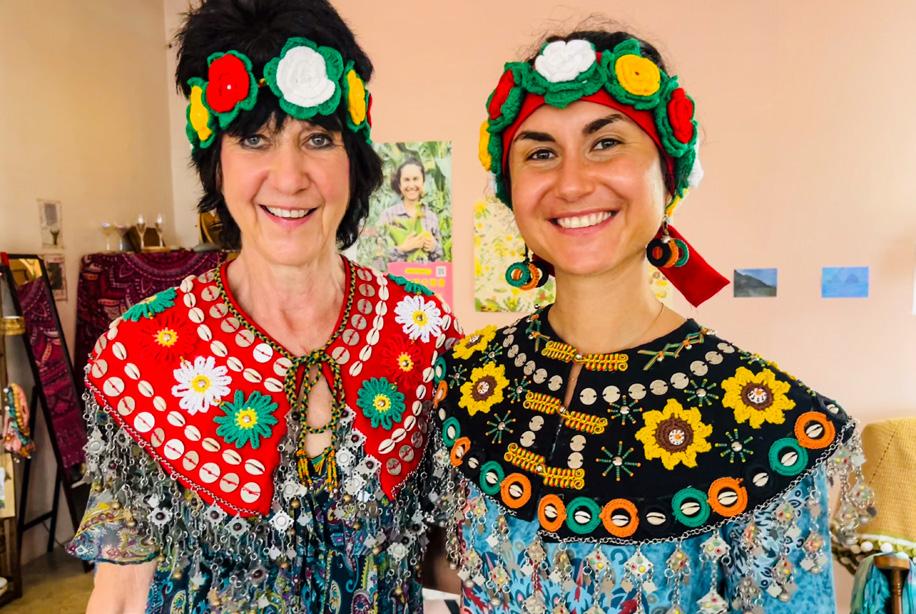
Tamara and her mother in Taitung
Deeper Breaths in Dulan
在都蘭深呼吸
By Jennie Miller DULAN
Since I first wrote for this magazine, I’ve come to feel even more connected to Taitung. We’ve moved a few times but I feel the house we live in now is amazing. We don’t have any close neighbors, we’re more “in nature” than before, and I have more space to focus on learning and introspection.
On the downside, there are certainly more tourists than before. Some of them treat Taitung as a vacation resort, and forget that the place they’re benefitting from also needs their care and respect.
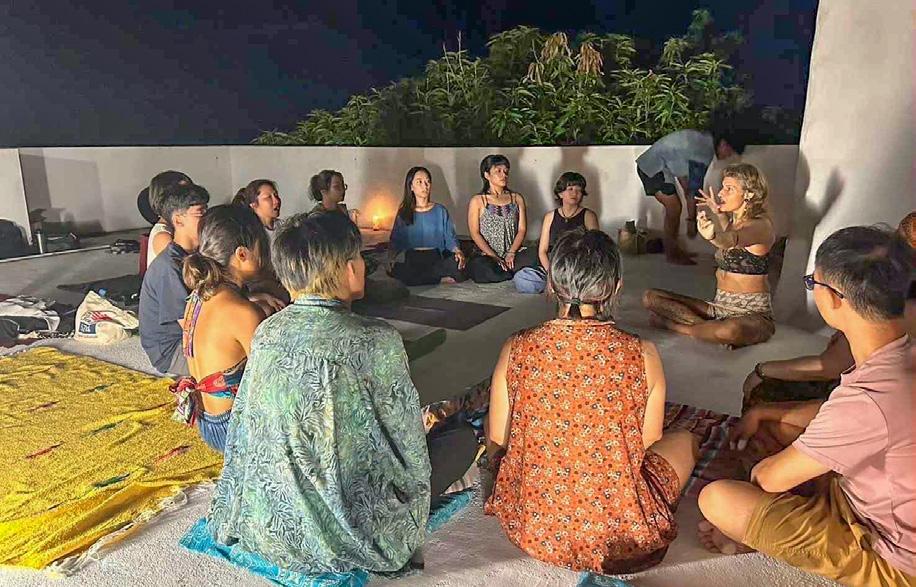
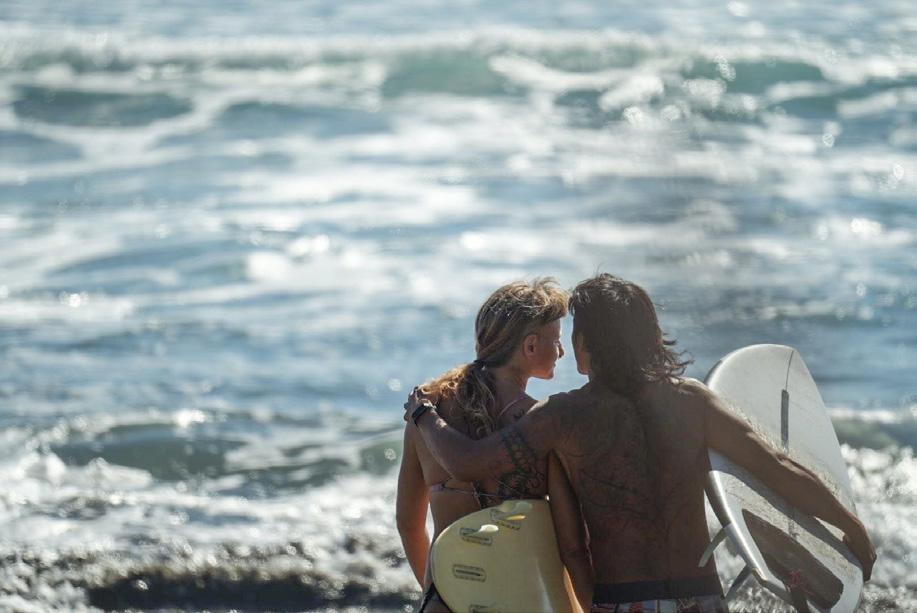
Back in 2023, the cover of Hello Taitung featured me on a local beach holding my surfboard. I still enjoy watersports, but my attitude to them has become more chilled out. Now I focus more on breathwork and related concepts. I’m super-happy that I’ve been able to share and spread these ideas, because it’s a very healing and therapeutic practice that doesn’t involve outward objects. It comes from our own magical bodies.
My very first breathwork session was deeply cathartic and profoundly relaxing. It wasn’t frightening at all. By the sixth day, I had experienced an incredible emotional release. In a single session, I was able to let go of the animosity and resentment I’d been carrying toward five different people. In that release, I forgave them and, more importantly, forgave myself. I walked away feeling at least 15 kilos lighter.
Today, I work with both locals and tourists, offering sessions that focus on relaxation and
inner contentment. It often depends on who’s coming through and what they most need at that particular moment.
It’s certainly true that many people come to Dulan — where I’ve been living for about 14 years — after experiencing unemployment, heartbreak, or a loss of direction in life. I think any place in nature can offer healing for people in difficult situations, and Taiwan has a lot of nature — but most of it is hard to get to. Dulan, by contrast, is easy to reach and Taitung as a whole is also very convenient. There
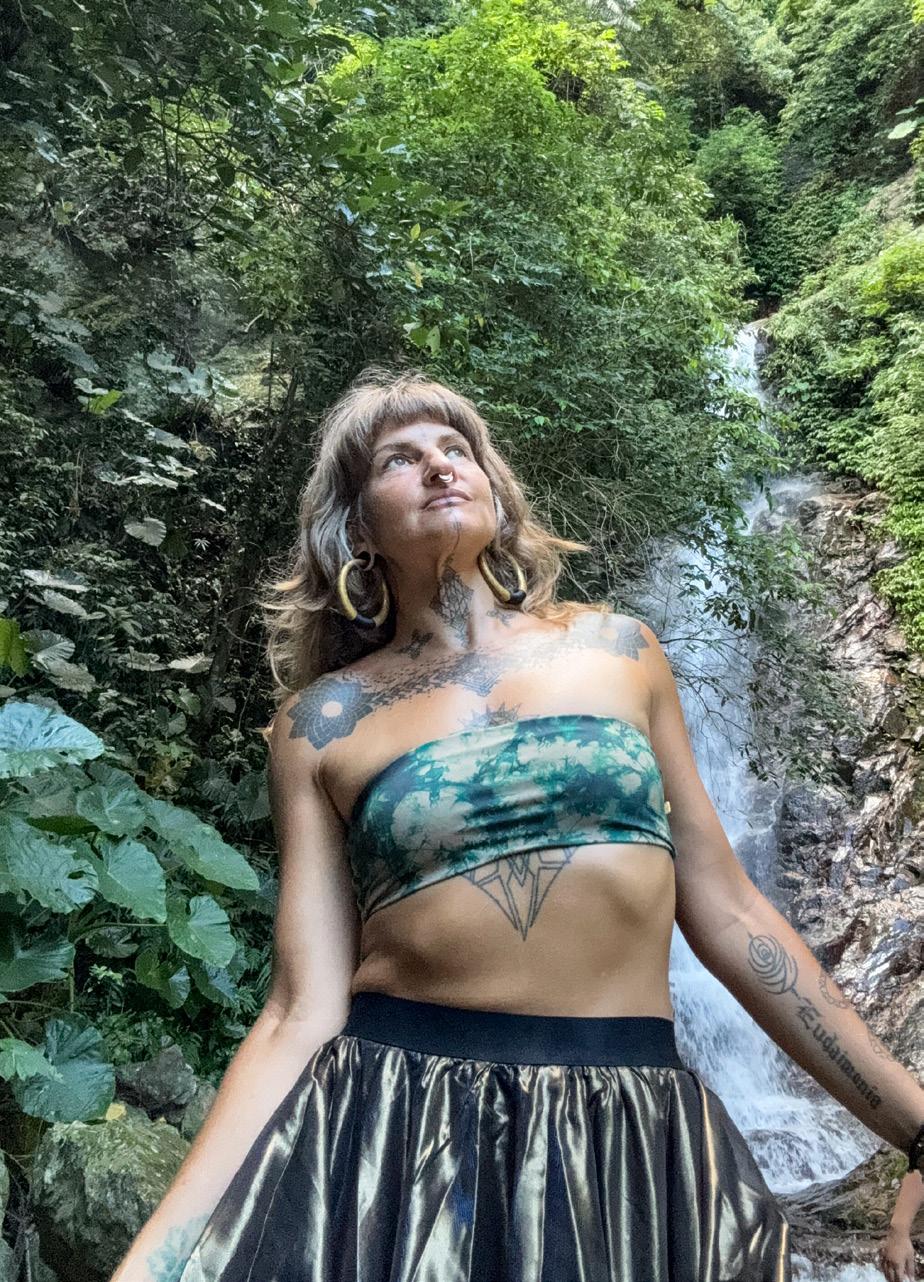
Jennie in front of a waterfall
are festivals and other attractions, but I think part of the reason why people are drawn to this corner of Taiwan is the very special energy here. Over the next few years, I hope to see even more artistic, cultural, and indigenous projects emerge and collaborate to strengthen our community.
It seems that a large number of people want to move here, but when they do, they have a lot of issues and then move away. Living here isn’t all peaches and cream. For a start, you have to deal with the intense weather. Some people get bored here because there aren’t as many resources as in the big cities. But that’s another reason why some people like to come here. Turning your back on the city can be simplifying.
I’ve thought about retirement here, but I’m not attached to any particular outcome. I’ve felt that way since the beginning of my time here. What happens in my home country, the US, doesn’t really affect my plans here. I don’t plan to live there anyway because the world is too big!
Jennie and Aguang often go surfing
Practicing yoga
Guiding a student
Leading a breathing workshop
The Journey to Becoming an Environmentalist
成為環保企業家之路
By Josh Campbell DONGHE
Since late 2021, when I shared the story of how I came to live in Taitung in this magazine, the ocean recreation/environmental education business I talked about near the end of that article has become my full-time job. Instead of supporting my family by teaching English, I’m able to dedicate myself to building systems that reduce the amount of plastic polluting our planet.
Alongside Taiwanderful Recycle Co., through which we do consulting work and give presentations to schools and companies, we now operate a nonprofit organization, also called Taiwanderful. Working with educators, entrepreneurs, community organizers, and government employees, we use the latter to organize our community programs.
There wasn’t any tipping point after which things got a lot easier. It’s been a slow and gradual process, and doing it on our own has been quite difficult. We’ve worked with various parts of the government. They’ve all had good intentions — and they always express supportive words — but I’ve been a bit disappointed. They’re great to work with if you have a project that fits that way of doing things, but we’re trying to create openended programs that more or less run themselves.
It’s hard to get the kind of five- or ten-year commitment we need from government units, so we’ve given up on chasing government funding. We’re not closing any doors, of course, but at the end of the day, we’re not going to waste time spinning our wheels. We’d rather focus on
what we’re doing. We’ve got some support from philanthropic businesspeople who are fun to work with.
Taiwan is still overwhelmed by a huge amount of plastic waste. Much of it isn’t clean enough for easy recycling, so it gets incinerated. Our program
Josh's life is dedicated to
is designed for rural communities that lack access to proper recycling. It enables them to handle their plastic waste locally, converting it into whatever the community needs, whether that’s construction materials, planter boxes, or beads for making handicrafts.
We try to focus on seeking localized solutions. I’ve noticed there’s sometimes a “snowball” effect. If we can get one or two people in a community to change their behavior, it soon becomes five or six.
In most places, it seems, the authorities have a macro approach to the plastics problem. Often they miss local nuances, and ignore plastic waste which isn’t as valuable as PET.
What we’re doing isn’t exactly unique, but I believe that some of our methods and models are completely original. We’re not the first in the world to focus on individual communities — but in Taiwan it’s a novel approach to recycling. Education is the tip of the spear. We’ve found that artwork helps to start the conversation, which can then be directed to recycling.
We’ve joined several expos and conferences in Taiwan and overseas to share and learn. We’ve been to South Korea twice in recent years, and not long ago I was in California.
My vision, my intention, has become much sharper. It’s sharper both in terms of logistics and business goals. There’s been a lot of trial and error, and our model is now very refined. I’m much more confident now when presenting our ideas to officials or entrepreneurs, explaining what we can deliver.
We’re all here in Taitung because we want a mellow existence. Since plastics became my focus, I’ve become busier, and I’m more ambitious now than I ever have been. The people around me aren’t like that, however. They’re slowgoing and content. I try to remind myself why I’m in Taitung. I remember to take a breath, and not hold anyone’s feet to the fire!
Josh explains the recycling process to the public
Recycled plastic pellets sorted by color
Objects That Enrich Our Taitung Lives
這些豐盈了我們的台東生活!
Almost everyone of us, at some point in our lives, has developed a deep connection to an object that goes way beyond the value others might attach to it. As a child, you probably had a favorite blanket or stuffed toy. Such attachments are often purely sentimental; they’re not about the item’s economic value or its “usefulness,” but rather the memories and people it represents.
As adults, we’re more calculating. We care whether something can help us in our day-to-day life. But, as the choices made by our seven contributors show, everyone has a place in his or her heart for an object which represents their personal history, achievements, or relationships, and that at the same time enriches their life in Taitung.
Federico Davicino:
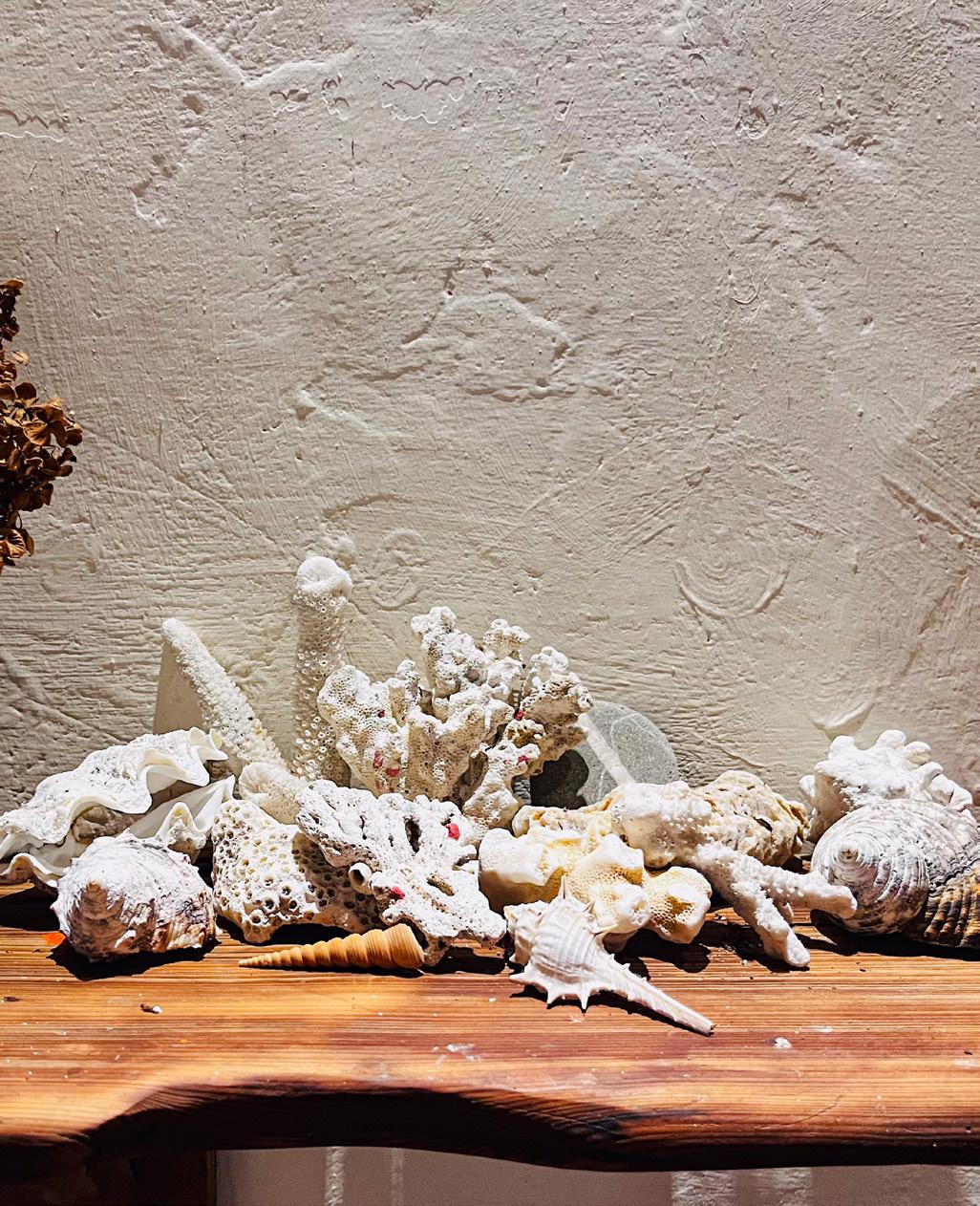
I thought about choosing the photo collection I’ve built up over the past ten years, showing my students competing or doing distance sailing. Most of the pictures are in a drawer in my house which I open every now and then. My other treasure is a collection of sea shells and corals from all the sailing trips I’ve taken around Taiwan. Some of them I found washed up on beaches, but there are also big conch shells a group of moms on Orchid Island gave me as a present after teaching their kids. I have them all on a shelf in my living room. It’s like an altar to the ocean.
Simon Foster:
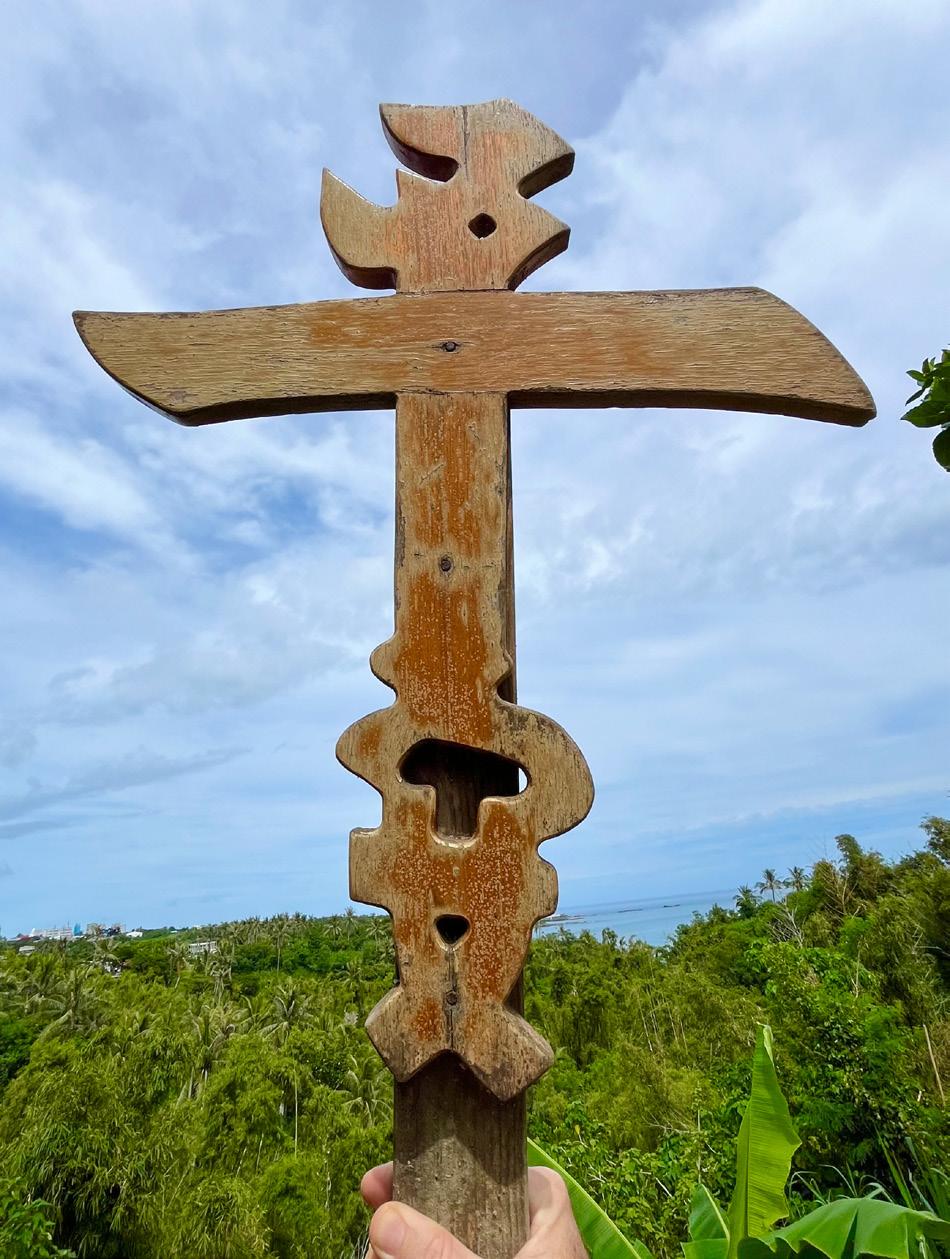
In life, little things often end up having a special meaning or relevance — and one of these I found near where we live. One of the best aspects of being next to the ocean at Chenggong is walking our dogs on the beach. All kinds of things wash up here, including an intricately carved wooden cross, possibly a decorative piece from a boat’s prow. A few years later, when our beloved labrador, Ribena, died at the ripe old age of 16, the cross felt like a fitting tribute. It now marks her grave, looking out over her favorite walking spot – our beach. Everything about this object speaks to me, from how I found it, to the way it looks, the mystery of its origins, and it becoming a memorial to our beloved dog!
Tamara Flussfisch:
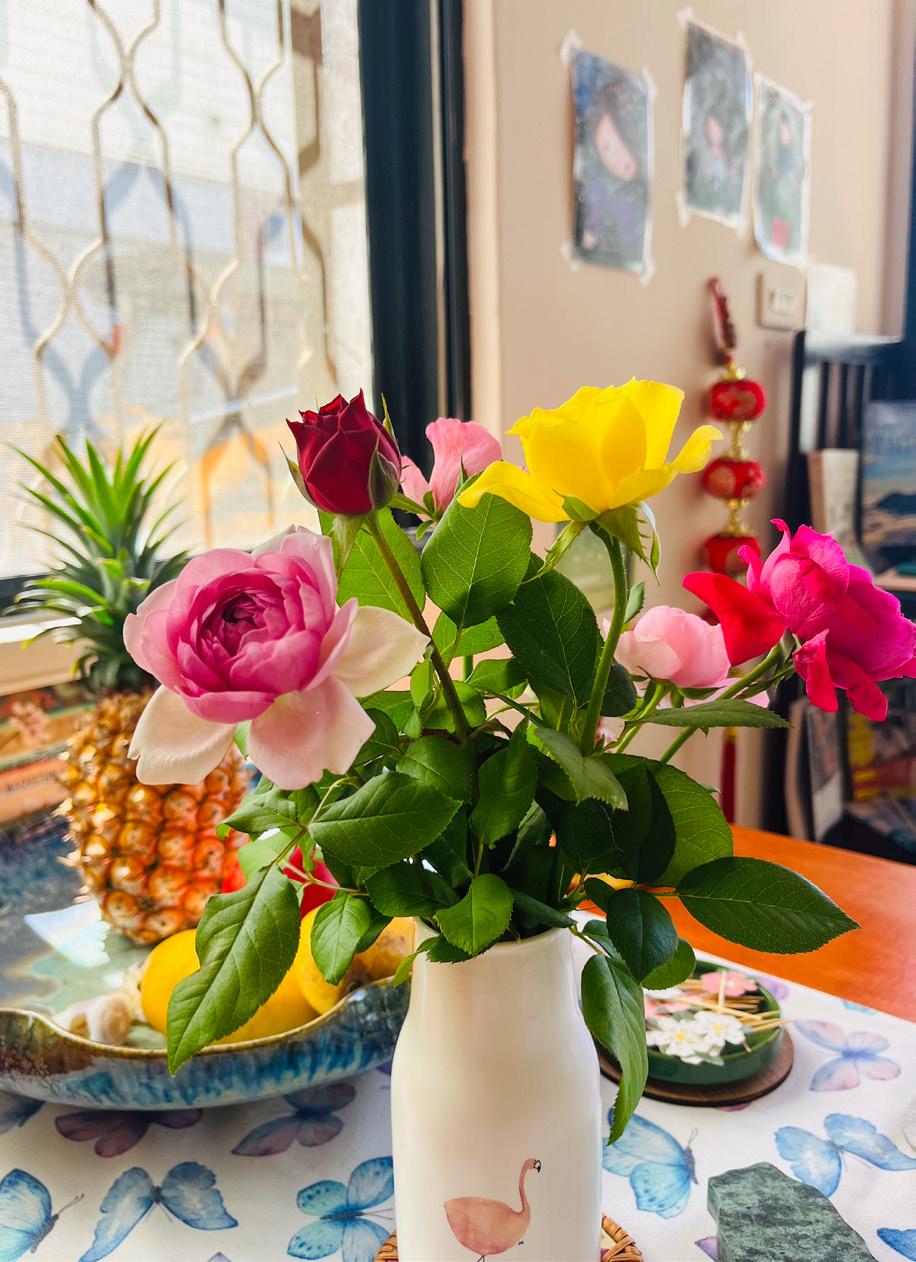
Twice a week I go to a small stall in Taitung’s Central Market to buy fresh roses. They’re different from the ones you find at a normal flower shop. The auntie who grows them loves roses, and if she has enough she sells some at her vegetable stand. But the flowers aren’t there every day, so you need a little bit of luck to get them. The Chinese saying 「好的東西可遇不可求」, meaning “Some things can’t be forced; they happen naturally,” sums it up beautifully. When I get home, I arrange my flowers and prepare my Italian espresso on the gas stove — and feel totally at home in my own Taitung paradise.
Jennie Miller:
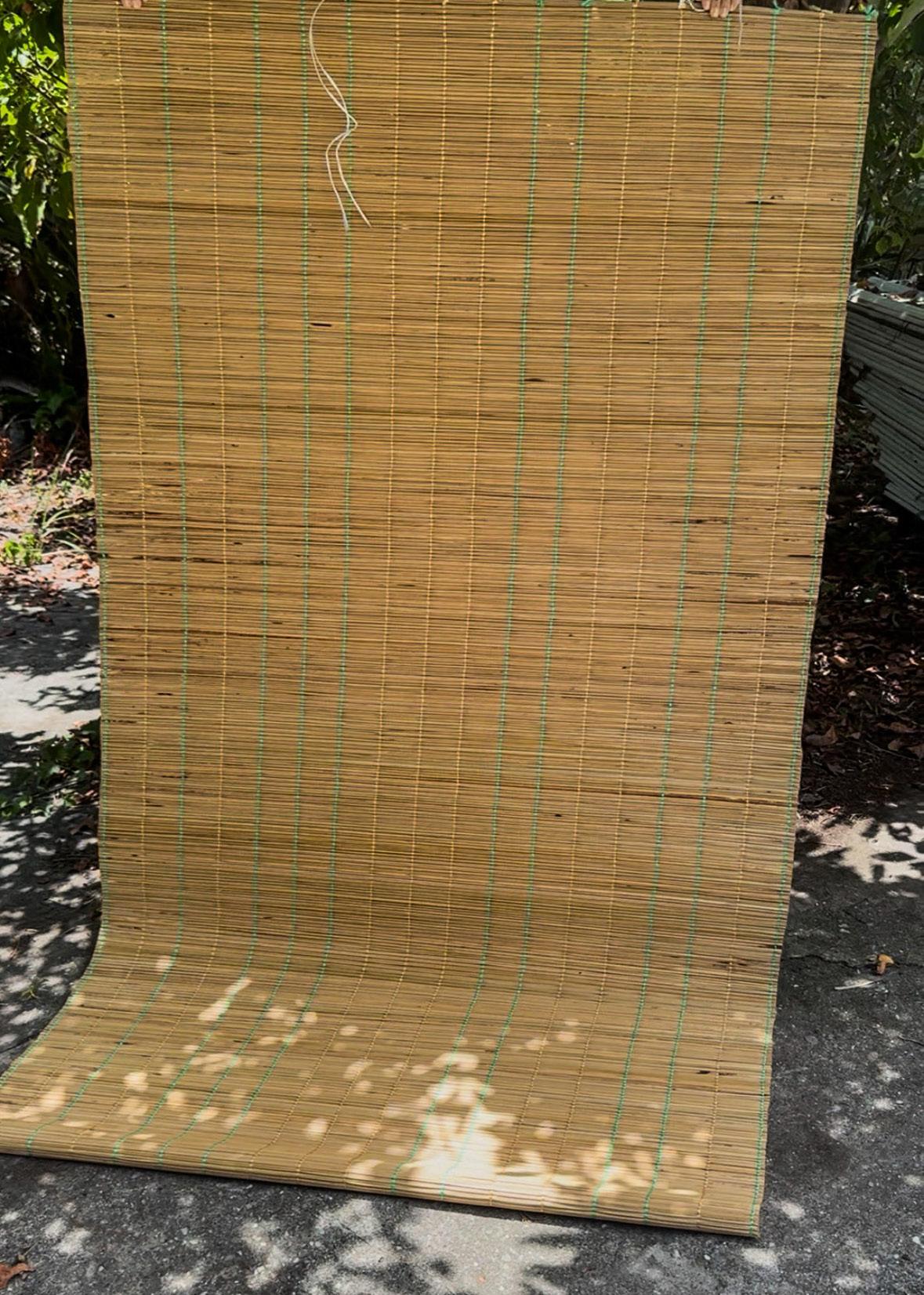
My partner Aguang and I cherish three woven grass mats that were made by his grandmother, who’s from an Amis community near Maogong in Hualien County’s Fengbin Township. She’s considered a national treasure thanks to her knowledge and skill of weaving grass and weaving string into clothing. The mats, which we use when we sleep on the floor, vary in size from roughly a single bed to about a queen bed. They’re not especially old, something like 15 or 20 years, but they’re truly traditional in terms of style and material, being made from the leaves of the umbrella plant.
Johannes Faeth:
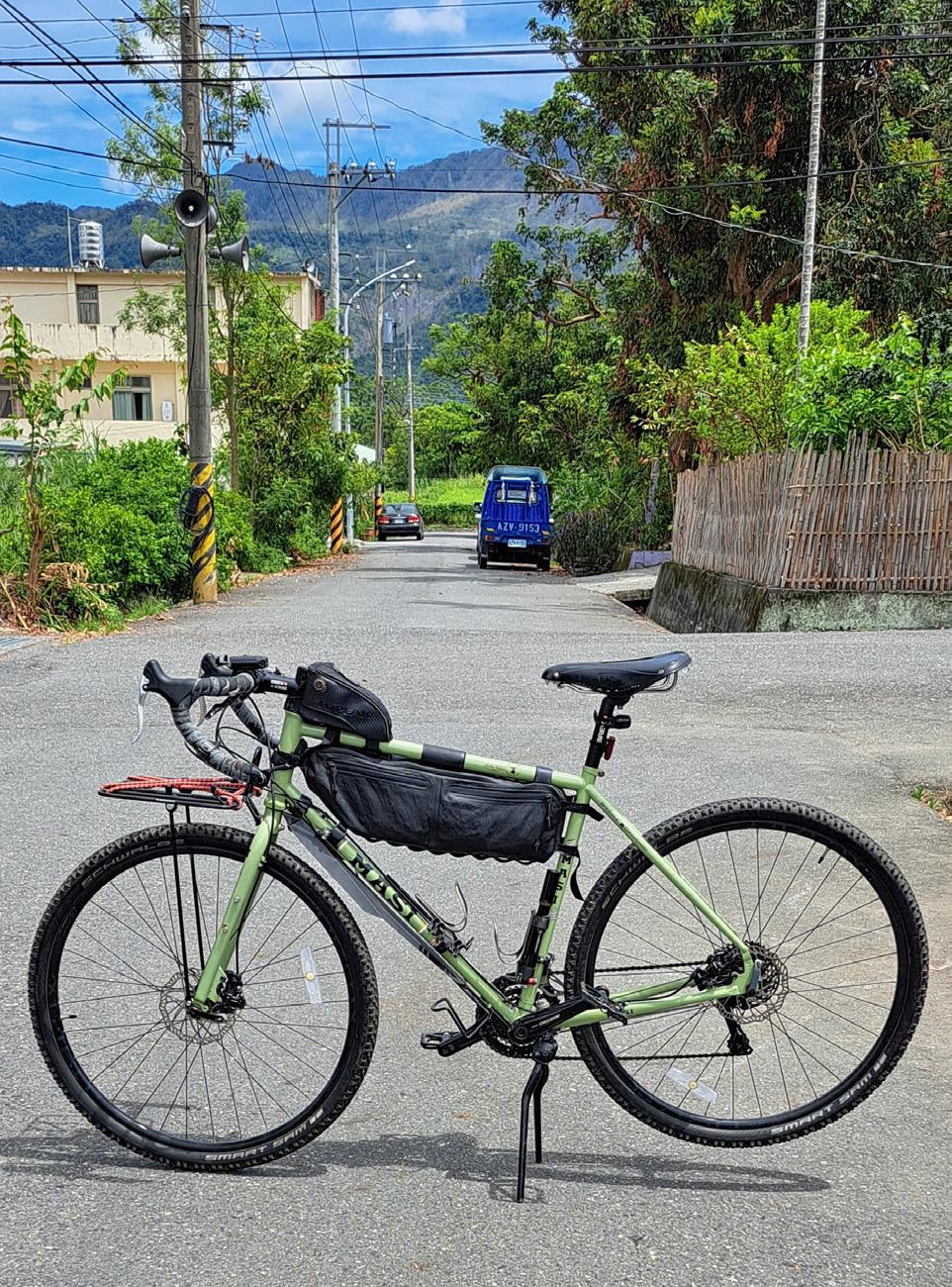
Ideally I’d ride my bike every day. In reality, at least three times a week I do a one-hour exercise ride that includes Luye Highland (Gaotai). Sometimes I take longer and more interesting routes, exploring the nearby mountains as well as the East Rift Valley. My longest multi-day solo ride was going north along the coast from Luye to Hsinchu. When I moved to Luye, I already had a very nice Taiwan-made bike, but pretty soon I realized it’s not suitable for longer rides and demanding climbs, so I ordered an Italian bike that’s right for my size through a store in Taichung. Riding around Taiwan is still on my todo list!
Josh Campbell:
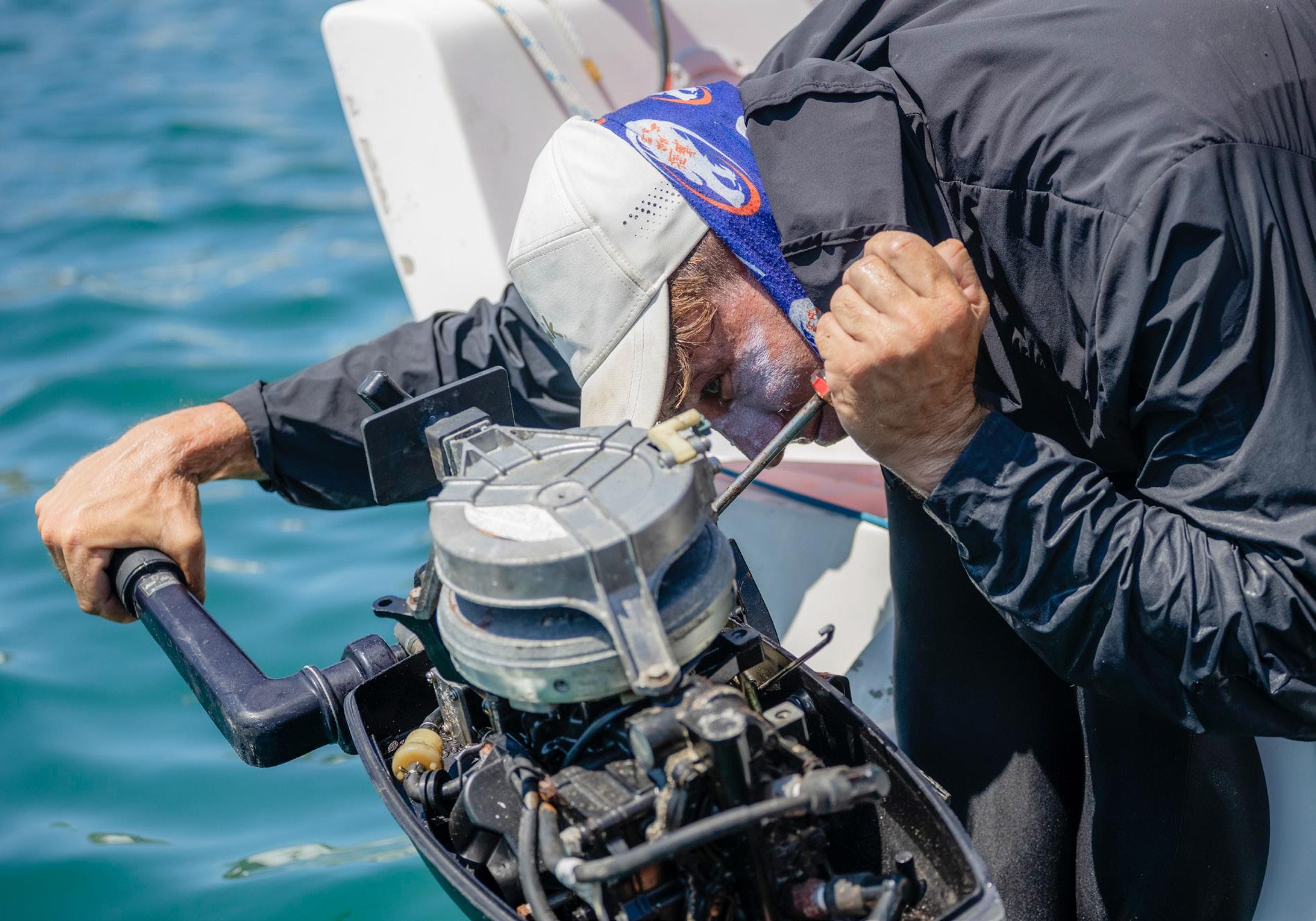
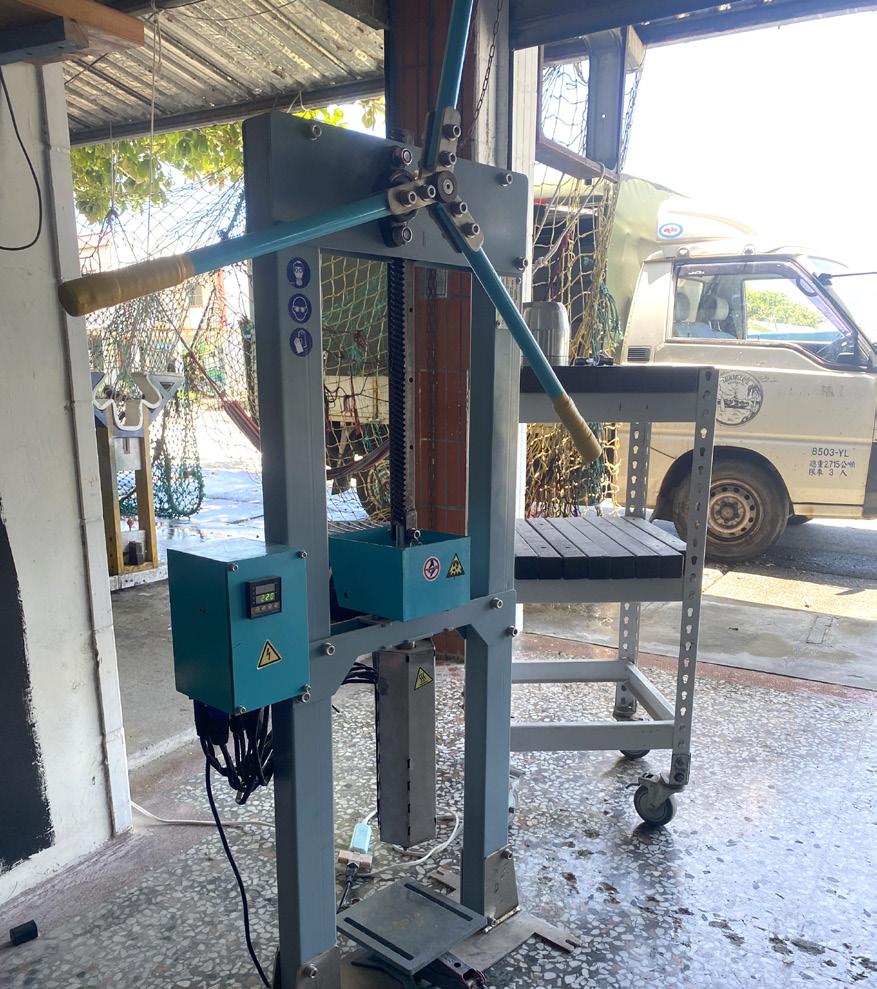
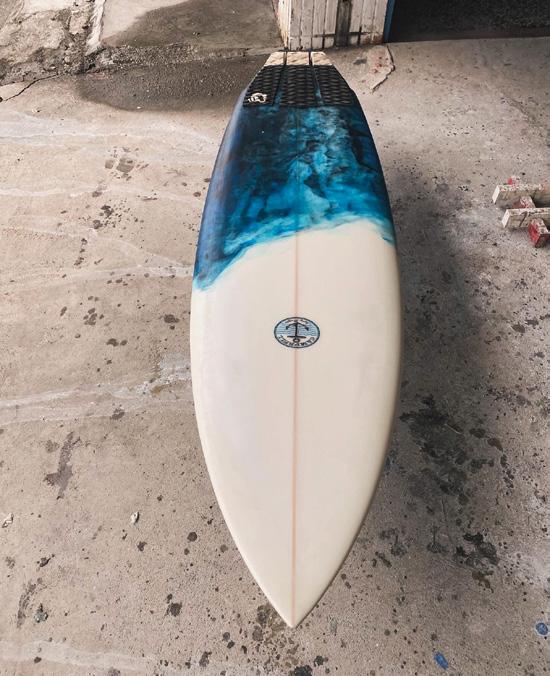
If I’m thinking about leisure activities, for sure I’d choose my handcrafted epoxy-fiberglass/foam surfboard. We’ve made surfboards using recycled foam; I own one but it’s not actually my favorite board. If I’m thinking about Taiwanderful, then the most meaningful objects are the machines we’ve designed to shred and process plastic. There’s also a sheet press and an injection molding machine. We had the first ones manufactured overseas to our specs, but we’re now working with a Taiwanese company that successfully reverseengineered them in order to produce them cheaply and, we hope, spread them far and wide.
Joanna Eva:
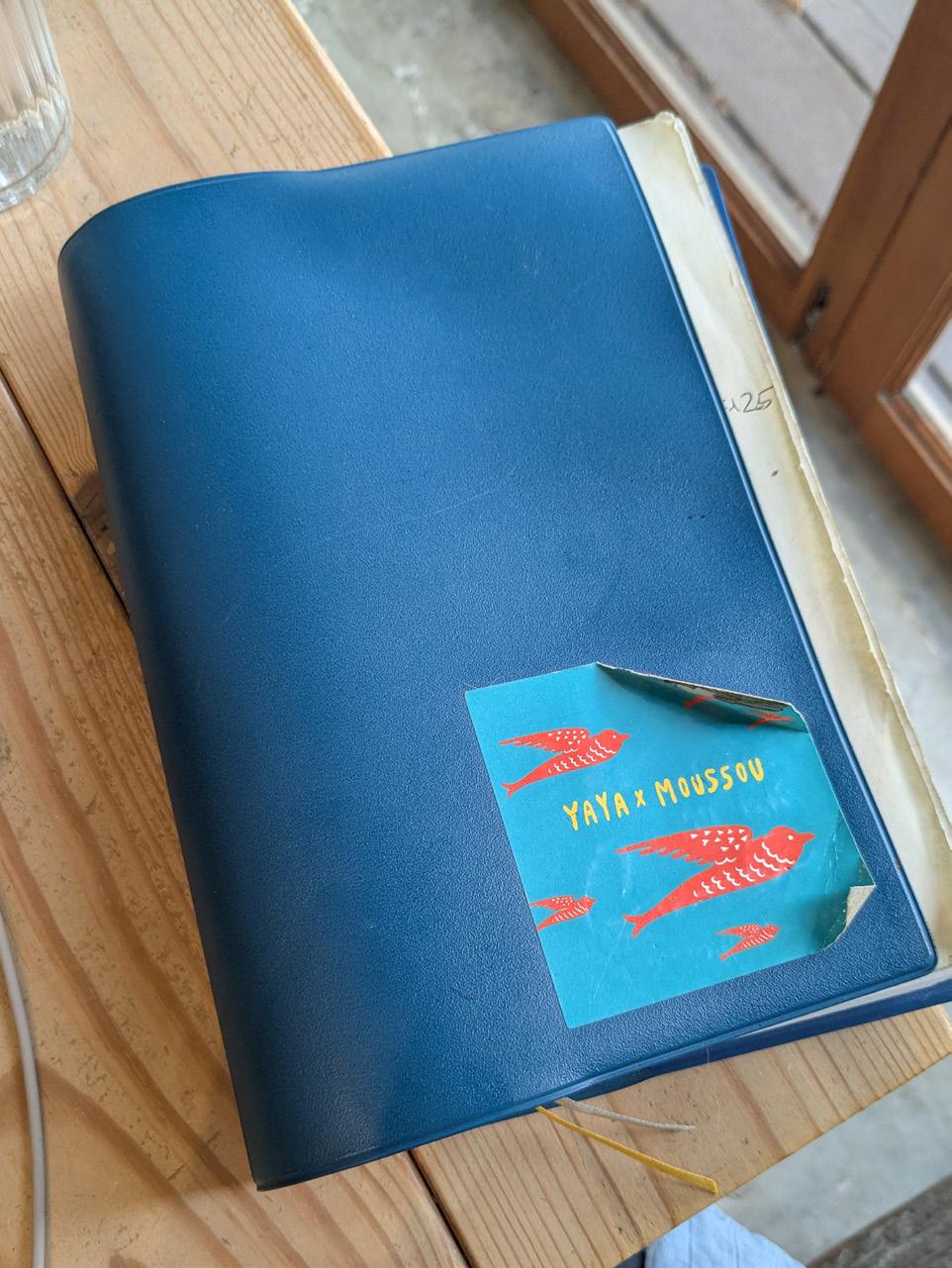
I nominate my notebook! I bought it last year in a bid (the millionth?) to organize myself. Life is busy for everyone, everywhere — but I think it's especially easy to get lost down rabbit holes while living in Taitung. There always seems to be more to learn, to do, and to fix. The notebook is packed with weeks and weeks of to-do lists, notes from Chinese class, and “mad scientist” sketches of things I’d like to build in my house, among other things. It’s falling apart, in a way I choose to think of as “romantic,” rather than symbolizing how my life often feels. If I stick with this habit, I hope to end up with a nice collection of notebooks to one day remember my life in Taitung by.
Start Your Taitung Journey
Bilingual Website
Discover Taitung
Taitung Travel Website
Official website and Instagram account managed by the Taitung County Government.
Attractions, things to do, food, accommodation, and transportation.
Official website managed by the Tourism Department of the Taitung County Government.
Attractions, things to do, food, accommodation, and transportation.
Taitung Taidong 台東 , Taiwan Group
Travel & Transport Apps
Taitung Travel App
Official app managed by the Tourism Department of the Taitung County Government.
Attractions, things to do, food, accommodation, and transportation.
A Facebook group for people who live or have lived in Taitung, Taiwan.
News, upcoming events, and other information
Taiwan Waiting Bus 臺灣等公車
Android
Android iOS iOS
Taitung Times
In-depth features, local issues, international perspective.
Emergency
Telephone Numbers
On Shared-Use Pathways Cyclists Must Give Way to Pedestrians!
The Taitung County Government is collaborating with the Taiwan Digital Nomad Association to operate TTNomads - a platform to attract digital nomads and travelers, connect them to local businesses, and boost economic development in Taitung County.
Local stakeholders wanting to connect with new customers, or anybody wishing to meet new friends in Taitung of all nationalities and walks of life are welcome to join TTNomads. Click on the URL or scan the QR codes below to visit the platform and register a free account.