EPD CEM I 42,5 R Heidelberg Materials Romania - Tașca
General information
Programme information
Programme: The International EPD® System
Address EPD International AB Box 210 60, SE-100 31 Stockholm, Sweden
Website: www.environdec.com
E-mail: info@environdec.com
Accountabilities for PCR, LCA and independent, third-party verification
Product Category Rules (PCR)
CEN standard EN 15804 serves as the Core Product Category Rules (PCR)
Product Category Rules (PCR):
■ PCR 2019:14 Construction products; Version 1.3.4; 2024-04-30
■ c-PCR-001 Cement and Building Lime (EN 16908:2017+A1:2022); Version 1.0.0; 2025-04-08
■ UN CPC 3744
PCR review was conducted by:
The Technical Committee of the International EPD System. A full list of members available on www.environdec.com. The review panel may be contacted via info@environdec.com
Life Cycle Assessment (LCA)
LCA accountability:
Heidelberg Materials România S.A.
Third-party verification
Independent third-party verification of the declaration and data, according to ISO 14025:2006, via:
EPD verification by accredited certification body
Third party verifier: Eurocert S.A.
Accredited by: Hellenic Accreditation System SA (E.S.Y.D), Accreditation No. 21
Procedure for follow-up of data during EPD validity involves third party verifier:
Yes No
x x
The EPD owner has the sole ownership, liability, and responsibility for the EPD.
EPDs within the same product category but registered in different EPD programmes, or not compliant with EN 15804, may not be comparable. For two EPDs to be comparable, they must be based on the same PCR (including the same version number) or be based on fully-aligned PCRs or versions of PCRs; cover products with identical functions, technical performances and use (e.g. identical declared/functional units); have equivalent system boundaries and descriptions of data; apply equivalent data quality requirements, methods of data collection, and allocation methods; apply identical cut-off rules and impact assessment methods (including the same version of characterisation factors); have equivalent content declarations; and be valid at the time of comparison. For further information about comparability, see EN 15804 and ISO 14025.
Company information
Owner of the EPD: Heidelberg Materials România S.A.
1 A, Șos. Bucureşti-Ploieşti, Bucharest Business Park, Building C2, 1st Floor, 1st District, 013681, Bucharest, România
For over 150 years, Heidelberg Materials has been a global leader in providing a diverse range of building materials and services. The Group’s core activities include the production and distribution of cement, aggregates, concrete, and asphalt. Leveraging its shipping capabilities, Heidelberg Materials markets its products worldwide, with a focus on cement, clinker, secondary materials, and both solid and alternative fuels.
As one of the largest integrated building materials manufacturers globally by revenue, Heidelberg Materials operates across five continents. Its fully integrated business model spans the entire value chain—from raw material extraction and processing into cement, to ready-mix concrete production, recycling, and final distribution to customers. These operations are further supported by dedicated technology and service competence centers at regional and national levels, ensuring efficiency and innovation throughout the value chain.
From HeidelbergCement România to Heidelberg Materials
In 2023, we celebrated 25 years of HeidelbergCement’s presence in România, a milestone that coincided with a significant rebranding initiative. As a result, HeidelbergCement România proudly became Heidelberg Materials România.
The rebranding process was a necessary evolution, as the “HeidelbergCement” brand no longer fully represented who we are, the values we uphold, and the future we envision. For years, we have been more than just a cement supplier, offering a diverse range of building materials, solutions, and services.
We remain true to the “Heidelberg” in our name: a trusted world leader in our industry, with 150 years of group-wide experience and 25 years of presence in România. Our new name marks continuity, but at the same time represents change.
Heidelberg Materials România
With investments of more than Euro 600 million, Heidelberg Materials România is one of the most important German investors in România and operates an extensive network comprising three cement plants, 18 RMC plants, 8 aggregate quarries, and 3 ballast pits. Active on the local market since 1998, the company has invested over €83 million in modernizing its cement, RMC, and aggregates divisions. These investments have been directed primarily toward reducing environmental impact and advancing sustainability across its operations.
Entities in România:
1. Cement
- Tașca Cement plant
- Chișcădaga Cement plant
- Fieni Cement plant
- Alternative fuels facility
2. Aggregates - 8 quarries and 3 ballast pits
3. Concrete - 18 RMC stations
Products:
The company produces and sells various classes of cement and concrete, including high-strength, road paving, hydraulic works, and general use, as well as quarry and gravel pit aggregates. This EPD covers information about cement type CEM I 42,5 R, produced in Tașca cement plant.
Product-related or management system-related certifications:
The company has implemented, certified, maintains and continuously improves an integrated management system, according to EN ISO 9001:2015 (certificate no. 1040), EN ISO 14001:2015 (certificate no. 070M), EN ISO 45001:2023 (certificate no. 015S) and a social accountability management system according to SA 8000:2014 (certificate no. 044R).
Name and location of production site(s):
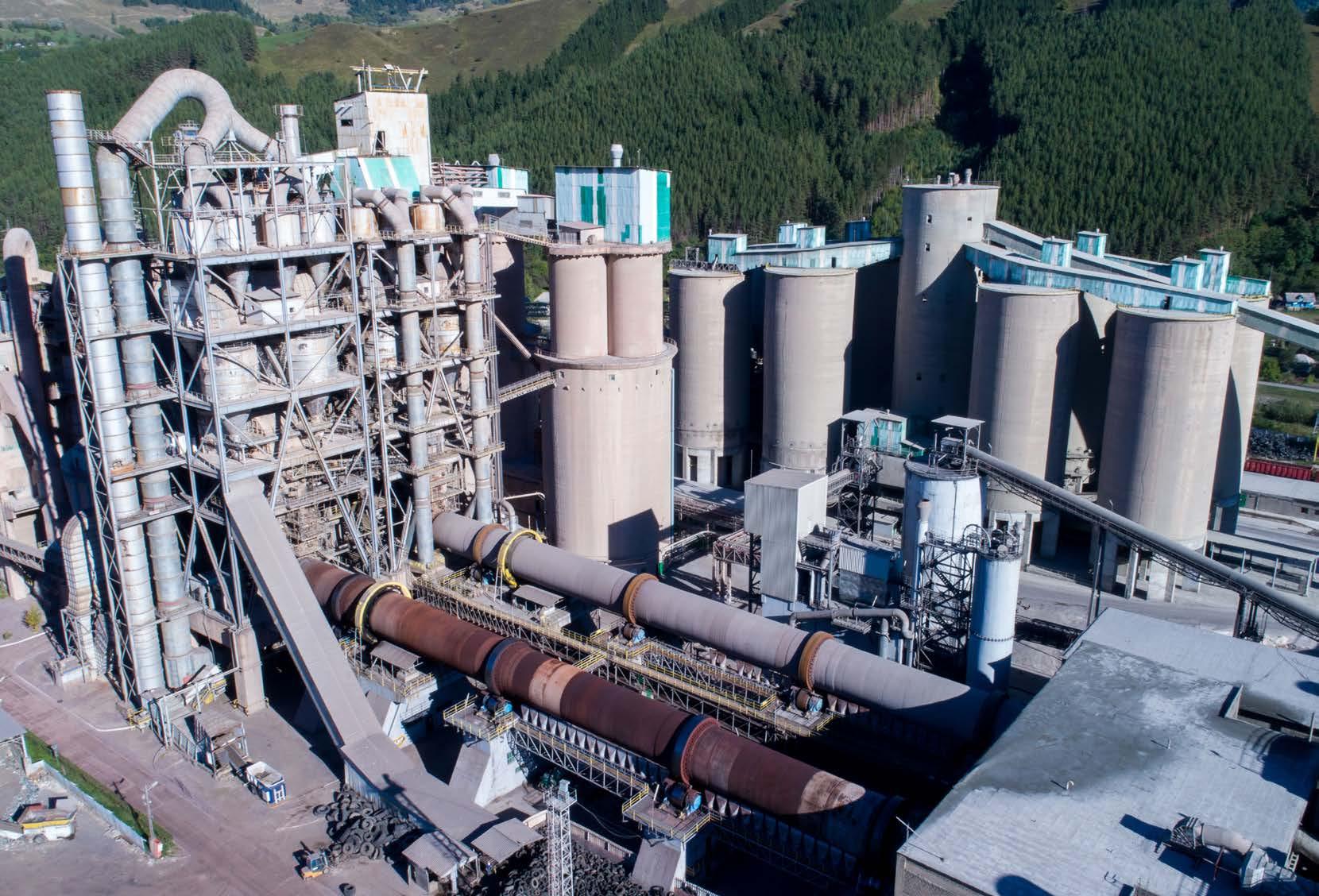
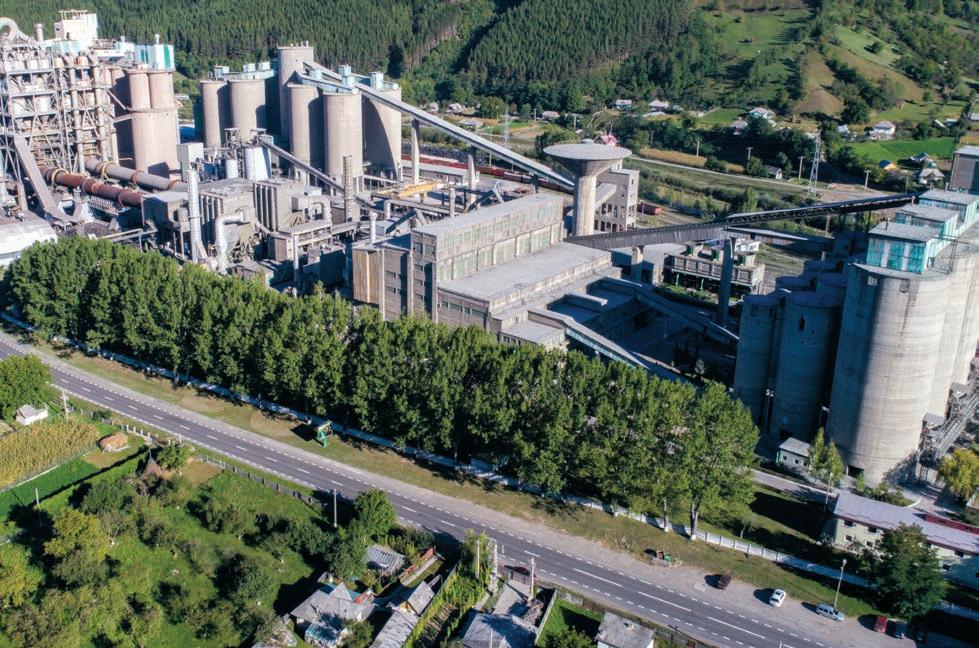
Tașca Cement Plant
Taşca Village, Taşca Commune, 617455, Neamț county, România
Cement RMC Aggregates
Sustainability strategy
As a member of the Heidelberg Materials Group, we are dedicated to tackling global challenges that go beyond the climate crisis and demographic shifts. Our strategy not only addresses environmental issues but also prioritizes objectives such as occupational health and safety, diversity and inclusion, and a strong commitment to the well-being of the communities surrounding our factories and workplaces.
Product information
Cement and concrete will play an important role in the infrastructure of the future.
Cement is a hydraulic binder, i.e. a finely ground inorganic material which, when mixed with water, forms a paste which sets and hardens by means of hydration reactions and processes and which, after hardening, retains its strength and stability even under water.
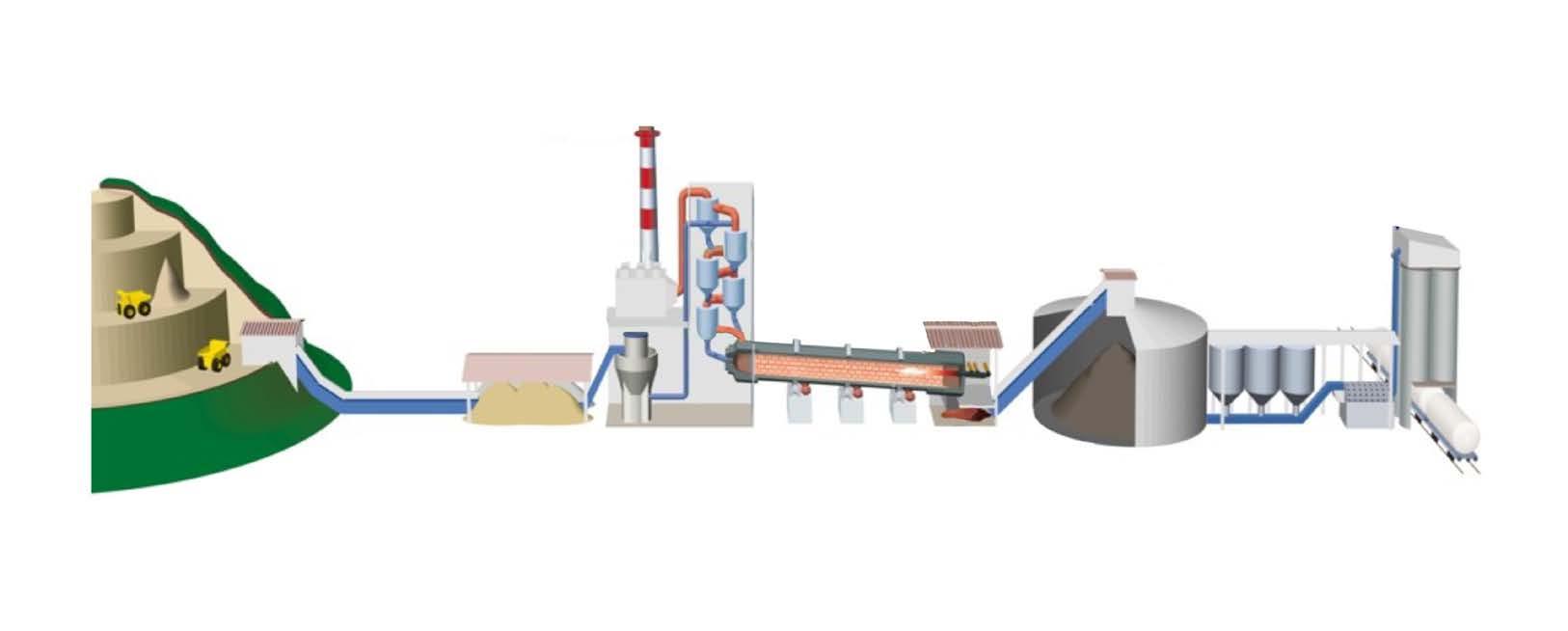
The most important component of cement according to EN 197-1 is clinker. It is produced from raw materials such as limestone and clay which are crushed, homogenized and fed into a rotary kiln. The raw materials are sintered at a temperature of 1450°C to form new compounds. Clinker consists mainly of calcium, silicium, aluminium and iron oxides. In a second phase calcium sulphates and possibly additional cementitious or inert materials are added to the clinker. All constituents are ground leading to a fine and homogenous powder.
The following figure is a schematic representation of the cement manufacturing process from quarry to dispatch (production stage, information modules A1 to A3).
Product name:
Product identification:
Product description:
Possible applications:
CEM I 42,5 R
Portland cement EN 197-1 - CEM I 42,5 R
Compressive Standard Strength (28 days): 42,5 - 62,5 MPa
The Certificate of Constancy of Performance and the Declaration of Performance for this product can be downloaded from www.heidelbergmaterials.ro on the products page.
CEM I 42,5 R is a usual cement with a clinker content of 95-100%, produced according to EN 197-1 standard.
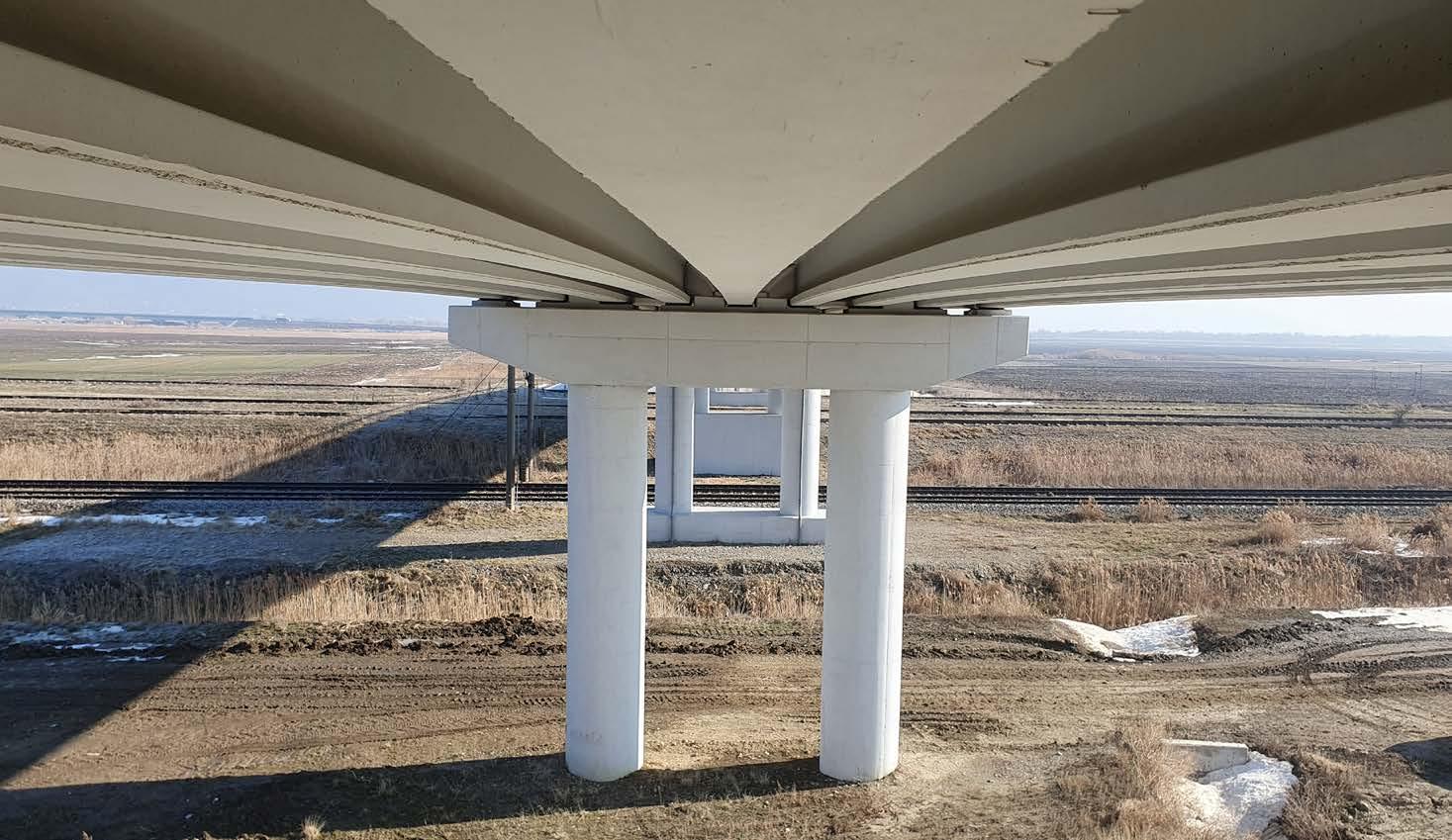
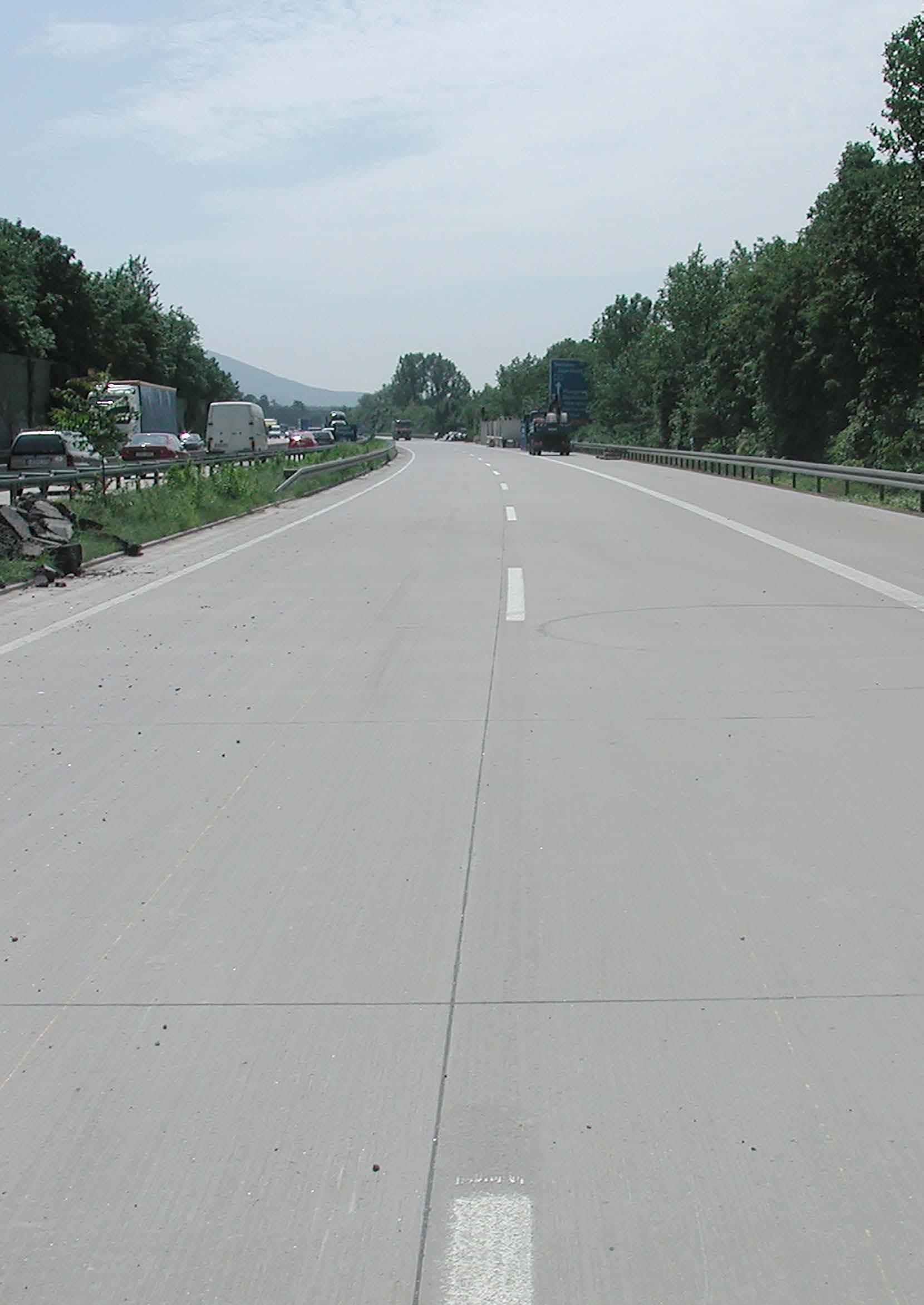
CEM I 42,5 R is suitable for preparation of plain and reinforced concrete, mortar, grout and other mixes for construction and for the manufacture of construction products, according to national application rules.
- high compressive concrete strength for civil and industrial constructions; - works of art (bridges and tunnels) usual and precast elements and structures; - special mortars, grouts and other mixes for construction and for the manufacture of construction products; - prestressed concrete elements.
Technical applications for this product can be downloaded from www.heidelbergmaterials.ro.
Composition
Product raw materials
CEM I 42,5 R has the following composition:
1) according to EN 197-1 (Cement – Part 1: Composition, specifications and conformity criteria for common cements)
Packaging material
This type of cement is delivered in bulk.
Technical characteristics according to EN 197-1
Dangerous substances from the candidate list of SVHC for Authorisation
Declared products contain less than 0,1% or no hazardous substance, from the “Candidate list of Substances of Very High Concern”.
The cement does not meet the criteria for PBT (persistent, bioaccumulative and toxic substances) or vPvB (very persistent and very bioaccumulative substances) according to Annex XIII of REACH (Regulation (EC) No. 1907/2006).
According to REACH, cement is a mixture and is not subject to the obligation of registration. Cement clinker is exempted from the obligation of registration (Art. 2.7 (b) and Annex V.10. of REACH).
Safety Data Sheet for cement, issued according to Regulation (EC) No. 1907/2006 (REACH) and Regulation (EC) No. 1272/2008, as further amended and supplemented, is available on www.heidelbergmaterials.ro
UN CPC code:
3744 - Plaster, lime and cement
Geographical scope
CEM I 42,5 R is produced in România.
LCA information
Declared unit
The declared unit is 1 tone of CEM I 42,5 R, produced and delivered bulk from Tașca cement plant.
Reference service life:
Not relevant due to the „cradle to gate” boundary conditions.
Time representativeness:
The production data correspond to the period from January 1st, 2023 to December 31st, 2023.
Database(s) and LCA software used:
GCCA Industry EPD Tool for Cement and Concrete (V5.1), International version and LCA Database (v.5.1).
Description of system boundaries:
The LCA for CEM I 42,5 R has a “cradle-to-gate” scope, with the end of life cycle being the outbound weigh bridges of the cement plant, including modules A1 to A3. This declaration includes all product stages “from cradle-to-gate” (modules A1-A3), and the product complies with the conditions required in EN 15804:2012+A2:2019/AC:2021 relating to the exclusion of modules B1 to D (the product is physically integrated into another product during installation in a way that it cannot be physically separated at end of life, the product is no longer identifiable at end of life as a result of a physical or chemical transformation process and it does not contain biogenic carbon).
Scenarios for these modules will be developed on the final product (for example: concrete and mortar).
The selected system boundaries comprise the production of cement including raw material extraction up to the finished product at the plant gate.
Module A1 - Raw materials supply: This module takes into account extraction and processing raw materials and primary fuels used in production process.
Module A2 - Transport: This module includes transportation of raw materials and fuels from supplier to plant gate and internal transports. Transportation types are considered as railway and roadway. The transport routes and the distances are supplier-specific.
Module A3 - Manufacturing: This module includes energy and water consumption during the manufacturing process, as well as the processing of any waste arising from this stage. The main production processes are:
- Quarry Operations
- Crusher
- Raw Mill & Coal Mill
- Rotary Kiln
- Cement Mill/ Slag Dryer
- Bulk loading
Power mix - Heidelberg Materials România purchased electrical energy for the cement production needs at the Tașca cement plant from the market.
The source of electrical energy provided by the supplier comes from a mix of renewable and non-renewable primary energy and is confirmed by Românian Energy Regulatory Authority.
The GHG-GWP of electricity is 0.441 kg CO2 eq./kWh of electricity mix.
System diagram:
Modules declared, geographical scope, share of specific data (in GWP-GHG results) and data variation (in GWP-GHG results):
–products
–sites
(X=included; ND=module not declared; EU= Europe; RO=România).
Data collection and quality
For the calculation of the LCA, the software GCCA’s Industry EPD Tool for Cement and Concrete (V5.1), International version, was used. The Ecoinvent v3.10 database was used for general data.
All material flows of the processes are based on company and site-specific data gathered for one year of operation, from 1st January 2023 to 31st December 2023.
The technical staff provided all the necessary raw data and no data was missing.
The specific data production and background data has been collected on plant level. The reliability of the data is additionally confirmed by validation and verification process.
CO2 emission factors for fuels and raw materials are measured throughout the year by accredited laboratories.
The emissions data used in the life cycle assessment are based on emissions measurements required by the environment legislation and come from continuous measurements collected at the on-site for the year 2023.
WBCSD Cement Sustainability Initiative Cement CO2 and Energy Protocol, Version 3.1, CO2 Emissions and Energy Inventory is used in case of lack of basic data.
The data quality can be assessed as very good.
Cut-off rules
According to EN 15804, the cut-off criteria are 1% of renewable and non-renewable primary energy consumption and 1% of the total mass of materials input to these elementary processes.
The total neglected input flows per module, for modules A1-A3 must be a maximum of 5% of the consumption of energy and mass.
More than 99% of the materials and energy consumption have been included, as well as available emission measurements transportation where necessary.
The following processes have been excluded from the LCA study: - the use of grinding balls; - capital equipment production; - equipment maintenance; - human labor and employee transport.
Allocation
Wherever possible, allocation has been avoided. The production process was divided into two sub-processes: clinker production and cement production.
Input and output data associated with each sub-process were meticulously recorded. When data couldn’t be directly attributed to a specific product, they were assigned based on physical properties (such as mass).
Fortunately, no by-products arise during clinker and cement production, eliminating the need for allocations related to byproducts.
The volumes of water (both consumed and recycled) and waste were allocated to each product based on the mass ratio of clinker to cement.
This ratio allowed the volumes to be allocated appropriately between clinker and cement.
Assumptions:
Regarding imported materials by sea transportation, only the transportation distances from the entrance to the country up to plant were considered.
Secondary materials, co-product allocations
No co-products occur during the production of clinker and cement, thus eliminating the need for allocations related to byproducts.
Results of the environmental performance indicators
Mandatory impact category indicators according to EN 15804
* Disclaimer: The results of this environmental impact indicator shall be used with care as the uncertainties of these results are high or as there is limited experience with the indicator.
** The indicated values (gross values) include the greenhouse gas emissions from the incineration of secondary fuels at clinker production. The net GWP-tot (excluding the emissions from the incineration of secondary fuels at clinker production) is 7.59E2 kg CO2–eq. The net GWP-fos is 7.59E2 kg CO2-eq. The net GWP-bio is 6.08E-2 kg CO2-eq.
Additional mandatory and voluntary impact category indicators
Results per functional or declared unit of 1 tone of CEM I 42,5 R
* The indicated values (gross values) include the greenhouse gas emissions from the incineration of secondary fuels at clinker production. The net GWP-GHG (excluding the emissions from the incineration of secondary fuels at clinker production) is 7.59E2 kg CO2–eq.
It should be noted that the net/gross differentiation applies to GWP indicators only and is ignored for other indicators where gross is applied by default.
1 This indicator accounts for all greenhouse gases except biogenic carbon dioxide uptake and emissions and biogenic carbon stored in the product. As such, the indicator is identical to GWP-total except that the CF for biogenic CO2 is set to zero.
Resource use indicators
Use
(PERM)
Waste indicators
Not Declared
Output flow indicators
Other non mandatory extra indicators
Results per functional or declared unit of 1 tone of CEM I 42,5 R
from calcination and removals from carbonation (CC)
from combustion of secondary fuels from renewable sources used in production processes (CWRS)
from
of secondary fuels from non-renewable sources used in production processes (CWNRS)
Removals and emissions associated with biogenic carbon content of the bio-based product (GWP-prod)
Removals and emissions associated with biogenic carbon content of the bio-based packaging (GWP-pack)
Other non mandatory environmental performance indicators
Results per functional or declared unit of 1 tone of CEM I 42,5 R
Differences versus previous versions
References
1. General Programme Instructions of the International EPD® System. Version 4.0 and 5.0.
2. PCR 2019:14 v.1.3.4 Product Category rules | Construction products | The International EPD® System
3. c-PCR-001 Cement and building lime (EN 16908:2017+A1:2022) | The International EPD® System
4. EN 15804:2012+A2:2019 and EN 15804:2012+A2:2019/AC:2021 „Sustainability of construction works - Environmental product declarations - Core rules for the product category of construction products”
5. EN 16908:2017+A1:2022 „Cement and building lime - Environmental product declarations - Product category rules complementary to EN 15804”
6. EN 197-1:2011 „Cement. Part 1: Composition, specifications and conformity criteria for common cements”
7. ISO 14020:2000 Environmental labels and declarations - General principles
8. ISO 14025:2010 „Environmental labels and declarations. Type III environmental declarations. Principles and procedures”
9. ISO 14040:2006 Environmental management - Life Cycle Assessment - Principles and framework
10. ISO 14044:2006 Environmental management – Life Cycle Assessment – Requirements and guidelines
11. Industry EPD Tool for Cement and Concrete (https://concrete-epd-tool.org/)
12. GCCA Industry EPD Tool for Cement and Concrete (V5.1), International version