Point Counterpoint: World Literature Takes a Position
World Literature students did a great job researching and delving into a broad array of current events to develop their argument essays. The topics students selected reflect their interests in the world around them, and while not everyone in the class agrees with each other’s perspective, we have taken steps towards really listening and trying to understand where someone is coming from.
After selecting their topic, students used Google Scholar to find sources to research their subject more thoroughly. They incorporated this research in their essays, citing their sources, and completing a Works Cited page. They learned to employ counterargument and refutation or rebuttal as rhetorical devices to advance their position. World Literature students showed real perseverance and determination to finish this big project. They learned to work in in Google Drawing as well as developed greater flexibility in converting files to PDF so they can be shared more easily. We are grateful to Mr. Crofton, our Director of IT, for his help in working with students to create the magazine and in helping us to publish it for parents. I’m proud of their hard work and final products. I hope you enjoy their essays!
Ms. Waterman
In conclusion we can see how soccer is a sport that has revolutionized the world, makin many people take advanta e o it and wantin to enerate a lot o money by privatizin the sport or many people. However soccer should be ree because there needs to be accessibility or everyone, the sport can row worldwide and there are other ways to enerate money rom it. Many people enjoy watchin soccer and they have built a passion rom the sport because they have rown with it their whole li e. It is not air or many people to lose the opportunity to watch the sport they like only because others want to et even wealthier. Soccer should be a sport that unites the world and by makin it ree it is the first step to it.
Mazowski, Tomas. “Will the Future o Soccer Be Exclusive? The Rise o Subscription-Only Broadcasts.” TV 24, 26 July 2025,
https://tv24.co.uk/news/will-the- uture-o -soccer-be-exclusive-the-rise-o -subscription-only-broadca sts? Accessed 18 February 2026.
Moore, Chris. “De Laurentiis says live soccer matches should be ree on TV.” World Soccer Talk, 17 April 2024, https://worldsoccertalk.com/news/de-laurentiis-says-live-soccer-matches-should-be- ree-on-tv-2024 0302-WST-492667.html. Accessed 18 Frebuary 2026.
Roy, Sydney. “8 Methods or Sports Streamin Monetization.” Wowza, 18 October 2024, https://www.wowza.com/blo /8-methods- or-sports-streamin -monetization. Accessed 18 February 2026. Statista.
“https://www.statista.com/outlook/amo/sports/soccer/worldwide?srsltid=A mBOoo tdp83U6jrLcQmp j_d8RNt1lqD0lKYC_ zMU3t7qm nTu7_cv#revenue.” Statista, September 2025, https://www.statista.com/outlook/amo/sports/soccer/worldwide?srsltid=A mBOoo tdp83U6jrLcQmpj _d8RNt1lqD0lKYC_ zMU3t7qm nTu7_cv#revenue. Accessed 18 February 2026.
Sweney, Mark. “Football on TV: ans 'payin almost 60% more to watch all bi ames than in 2020.'” The Guardian, 12 January 2025, https://www.the uardian.com/ ootball/2025/jan/12/ ootball-on-tv- ans-payin -almost-60-more-to-wa tch-all-bi - ames-than-in-2020. Accessed 6 February 2026.
Works Cited
The Hidden Cost of Likes: Social Media and Teen Anxiety
By Isaac Gagne
Have you realized that in today’s generation, social media is a huge part of teenage life? A lot of teens spend hours every day scrolling through apps, posting pictures, watching videos, and messaging friends. Every social media platform makes it easy to stay connected with their friends and share some experiences. Some people think that social media is helpful because it lets teens communicate, build friendships and express themselves. They say that social media gives young people a place to feel supported and understood. However, others believe social media doesn’t have a good impact on teens. They point out that social media raises the anxiety patterns, causes more depression, weakens real-life communication skills, and lowers self-esteem. Although social media has some benefits, it does more harm than good.

One of the major reasons why social media is harmful is because it increases the anxiety and depression rate of the teens. Many teens admit to themselves that social media has a negative impact on their lives. According to the Mayo Clinic, a lot of the depression and anxiety are created from cyberbullying caused by what teens post or do on social media (‘‘Teens and Social Media Use’’). In their article they said that “ Expose some teens to cyberbullying, which can raise the risk of mental health conditions such as anxiety and depression’’ (‘‘Teens and Social Media Use’’).
This quote shows how social media can lead to serious mental health problems like anxiety and depression. When teenagers are bullied online, they might start worrying about what others will think about them, which can cause anxiety. They might also feel more sad, hopeless, or alone, which is a common sign of depression. Because social media is always accessible, the bullying can feel nonstop, making these feelings even stronger. Another reason why social media increases anxiety and depression is because of the amount of time teens spend on it everyday. Many teenagers spend hours scrolling on social media every single day. They don’t even realize how much time they spend on it.
According to the Mayo Clinic, “Spending three hours a day using social media was linked to a higher risk of mental health concerns” (“Teens and Social Media Use”). This shows that the more time teens spend online, the more times they are struggling with their mental health. When teens constantly check their phones, they may feel the pressure to respond quickly and compare themselves to others. This pressure can create stress and it will build up over time. Instead of relaxing people, social media can actually make teens more overwhelmed and exhausted emotionally. Not only does social media increase anxiety and depression, but it can also strongly affect how teenagers feel about themselves and their self-esteem.
Many platforms recommend people to post only the best moments of their lives, which leads to most pictures being filtered, edited, and carefully chosen. Because of this, teens start comparing themselves to someone else’s highlight reel.
The Mayo Clinic explains that Social media can “lead some teens to form views about other people's lives or bodies that aren't realistic” (“Teens and Social Media Use”). This means that teens may begin to believe that everyone else is happier, more successful, or better looking than they are. When they compare themselves to some highlights or unrealistic pictures that someone will post, they can feel insecure and not good enough. Over time, this damages their confidence and self-worth. The Child Mind Institute also supports this idea. In the article “How Using Social Media Affects Teenagers,” it explains that “Snapchat, Facebook, Twitter, and Instagram all led to increased feelings of depression, anxiety, poor body image, and loneliness” (Ehmke). This shows how the negative impact on teens isn’t about only one platform but more about many popular ones like Instagram, Snapchat, Tiktok, and etc...
Poor body image and loneliness are serious problems for teenagers because it is the time when they start to know who they really are and what they want to do in life.
If they constantly feel judged or compared to others, it can affect how they see themselves. Instead of building confidence, social media often creates doubt and insecurity. Even though comparison on social media can hurt teens’ self-esteem, another serious problem is cyberbullying, which can have an even stronger impact on teenagers’ mental health.
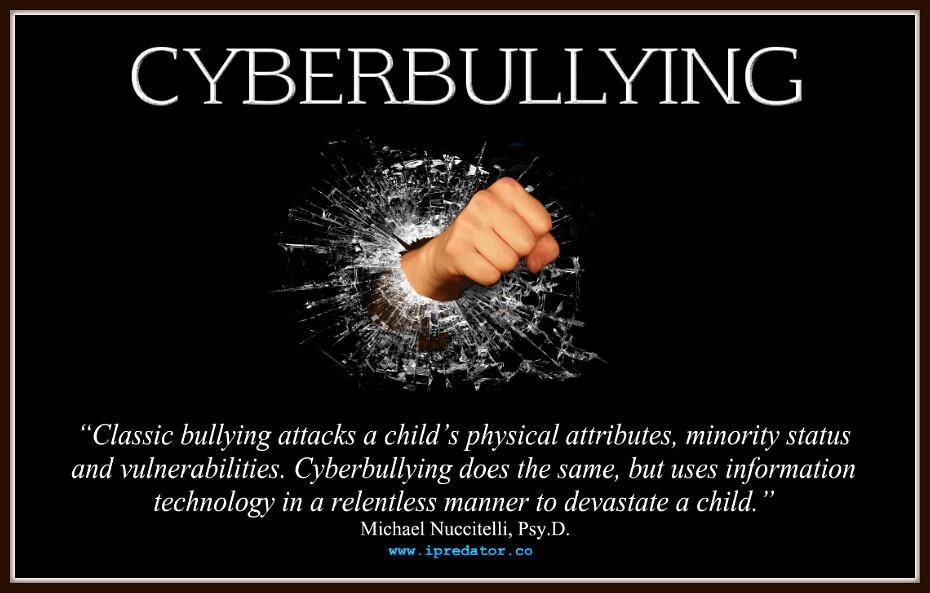
Another important factor connected to social media is cyberbullying. Compared to normal bullying, cyberbullying can happen at any time and can follow them everywhere they go because their phone is constantly with them. Hurtful comments, rumors, or embarrassing posts can spread quickly online and be seen by many people. People can also get bullied verbally when going to school because of something they posted. One reason why cyberbullying is more harmful is because it increases anxiety and sadness in teens. As one study explains,
“It was discovered that cyberbullying victimization is connected with poorer mental health outcomes in teenagers, including an increased risk of sadness and anxiety” (Khalaf, Alubied, Rifaey).
This shows how teens who are victims of bullying online are going to have more problems emotionally. Being attacked or embarrassed on social media can make teenagers feel helpless, stressed, and deeply hurt, which can lead to long-term mental health problems. Another reason why cyberbullying is dangerous is that it is easier to be cruel online than in person. The Child Mind Institute explains that “It has gotten easier to be cruel” (Ehmke). This proves that social media gives people the chance to say hurtful things to people without seeing the immediate consequences on the person. Because negative comments and posts can spread way more quickly and stay online, the emotional damage can last for a longer time and hurt more people. It can also hurt someone to the point that the person is traumatized. For these reasons, cyberbullying makes social media a harmful space for many teens.
Some people argue that social media is not completely harmful. They think it helps teens stay connected with their friends and even find communities that will support them. The Mayo Clinic states that “Social media lets teens create online identities, chat with others and build social networks” (“Teens and Social Media Use”). This statement is true because for people who are more shy or have difficulties making friends in person, social media makes it easier to talk to someone. It can also help teens stay in contact with family members or friends who live far away.

Sometimes, social media gives teens a space where they feel understood and accepted. However, even though these benefits exist, they do not outweigh the negative impacts on teenagers. The emotional harm caused by cyberbullying, comparison, and excessive screen time can be a lot worse than the benefits. While it can help them communicate, it can also weaken their real-life communication skills. The Mayo Clinic explains that “Spending too much time on social media can interfere with face-to-face interactions” (“Teens and Social Media Use”). Spending too much time online means less time to practice social skills face-to-face. These skills are very important for future success in school, work, and relationships. That's why the positive impacts of social media do not outweigh the negative parts of it on the mental health of teens.

To conclude this, social media has become a normal part of teenage life, but its hidden costs are very concerning. Even though it allows teens to stay connected and express themselves, it is also increasing anxiety and depression, lowers self-esteem, and exposes teens to cyberbullying. These effects can seriously damage a teenager's mental health and emotional well-being. Teenagers, parents, and school need to be more aware of the impact social media can have on them. Limiting screen time and focusing more on real-life interactions can help protect teenagers’ mental health. Social media may seem harmless, but its impact on teens should not be ignored.
Work cited
Park, Eugenie. “Teens and Social Media Fact Sheet.” Pew Research Center. Pew Research Center. 10 Jul. 2025. 06 Feb. 2026.
www.pewresearch.org/internet/fact-sheet/teens-and-social-media-fact-sheet/ .
“Teens and Social Media Use: What’s the Impact?” Mayo Clinic Mayo Foundation for Medical Education and Research, 24 Dec. 2025. 06 Feb. 2026. www.mayoclinic.org/healthy-lifestyle/tween-and-teen-health/in-depth/teens-and-so cial-media-use/art-20474437
Ehmke, Rachel. “How Using Social Media Affects Teenagers.” Child Mind Institute. 16 Jan. 2026. 8 Feb. 2026.
https://childmind.org/article/how-using-social-media-affects-teenagers/
Khalaf, Alubied, Rifaey. “The Impact of Social Media on the Mental Health of Adolescents and Young Adults: A Systematic Review.” Cureus, U.S. National Library of Medicine, 5 Aug. 2023, pmc.ncbi.nlm.nih.gov/articles/PMC10476631/
Argument Essay
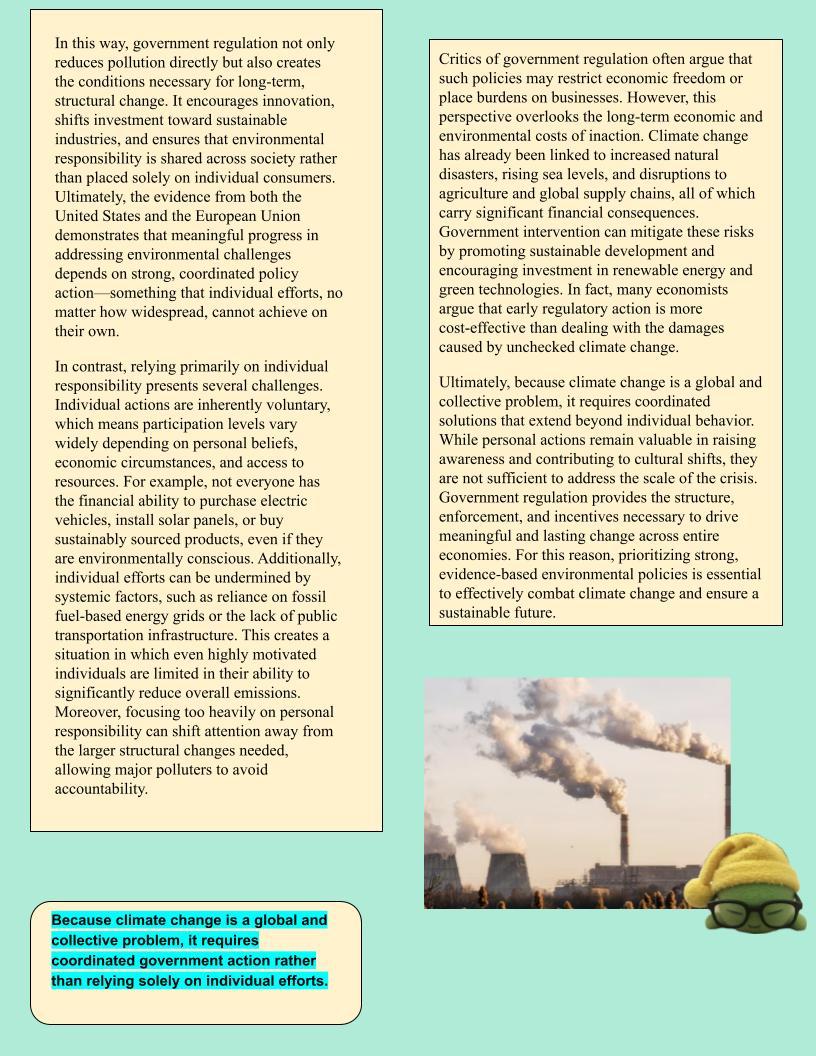
Every year, headlines across the United States report mass shootings that leave families extremely sad and communities scared. Gun violence has become a massive public safety concern, affecting people in cities and others. As a result, Americans continue to debate whether gun laws should be stronger. Some argue that stricter gun laws are necessary to protect lives and reduce crime, while others claim that more laws would threaten freedom and limit the right to self defense. The Bureau of Justice Statistics reports that firearms are involved in a big portion of violent crimes in the country. Although both sides present good arguments, stricter gun laws should be passed in the United States.
Simon Duquette
One important reason to support stronger gun laws is that many firearms used in crimes are not obtained through traditional retail purchases. The Bureau of Justice Statistics report Source and Use of Firearms Involved in Crime (2016)states that “most prisoners who possessed a firearm during their offense did not obtain it from a retail source,” and many acquired them from friends or family members. These findings reveal weaknesses in the current system, especially in private sales where background checks might not always be required. Expanding background check requirements could help close these gaps and make it harder for dangerous individuals to gain access to weapons. It is also important to examine how different state laws impact safety.
State-level comparisons suggest that stronger gun laws are associated with improved safety outcomes. The Everytown for Gun Safety 2026 Gun Law Rankings report states that “states with stronger gun laws have lower rates of gun deaths.” While correlation does not always prove direct cause, the consistent pattern across multiple states suggests that policy differences may influence violence rates. Laws such as universal background checks and waiting periods may reduce impulsive acts and limit access to high-risk individuals. In addition to state comparisons, scientific research further supports this connection.
Scientific research also supports the link between background checks and reduced firearm deaths. A study published in the Annals of Epidemiology found that “comprehensive background check policies were associated with reductions in firearm mortality.” This suggests that stronger screening systems can lower death rates over time.
Background checks are designed to prevent people with violent criminal histories from legally purchasing firearms. Even if they do not prevent every illegal sale, they can reduce a lot of risk. Another important factor to consider is the increasing number of guns produced each year.
Millions of firearms are manufactured and sold every year in the United States. According to the Bureau of Alcohol, Tobacco, Firearms and Explosives, gun production has increased significantly in recent decades. With more firearms entering circulation, it becomes harder to monitor and control access. A larger supply increases the chances that guns may be lost, stolen, or illegally resold. Stronger tracking systems and safe storage requirements could reduce these chances. However, despite this evidence, many people still oppose stricter gun laws.

Opponents argue that additional regulations may not reduce crime. The National Rifle Association claims that “criminals do not follow gun laws,” meaning stricter rules would mostly affect law-abiding citizens. Some also argue that higher levels of gun ownership may discourage crime because criminals may fear armed citizens. These arguments focus on rights and personal protection. Even so, these concerns do not fully address the broader public safety impact of guns.
These opposing arguments do not fully consider issues such as accidental shootings, domestic violence incidents, or stolen guns entering illegal markets.
Research referenced in the Annals of Epidemiology shows that “stronger policies are associated with lower firearm mortality rates.”
Public safety laws in other areas, such as traffic regulations, do not eliminate all harm but still reduce risks significantly. Gun safety laws can function in a similar way by lowering the overall level of violence. For these reasons, the evidence strongly supports stricter legislation
In conclusion, gun violence remains a serious danger in the United States. Evidence from the Bureau of Justice Statistics shows that many offenders do not obtain firearms through retail sources. Reports from Everytown for Gun Safety indicate that “stronger state laws are linked to lower gun death rates,” and research in the Annals of Epidemiology connects comprehensive background checks to reduced firearm mortality. Taken together, this evidence shows that stricter and more comprehensive gun laws could help reduce violence and create safer communities across the country.