

By Addie Lydon '26
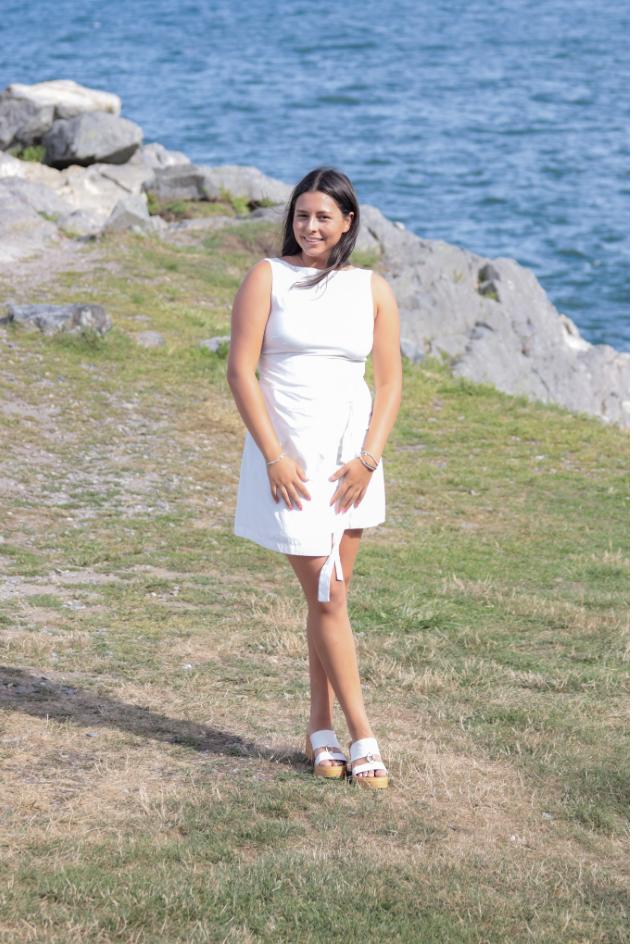
Hebron gave me more than just memories; it gave me people who changed me. The friendships, the lessons, and even the hard moments are something I’ll carry long after graduation.

By Evie Willer '26
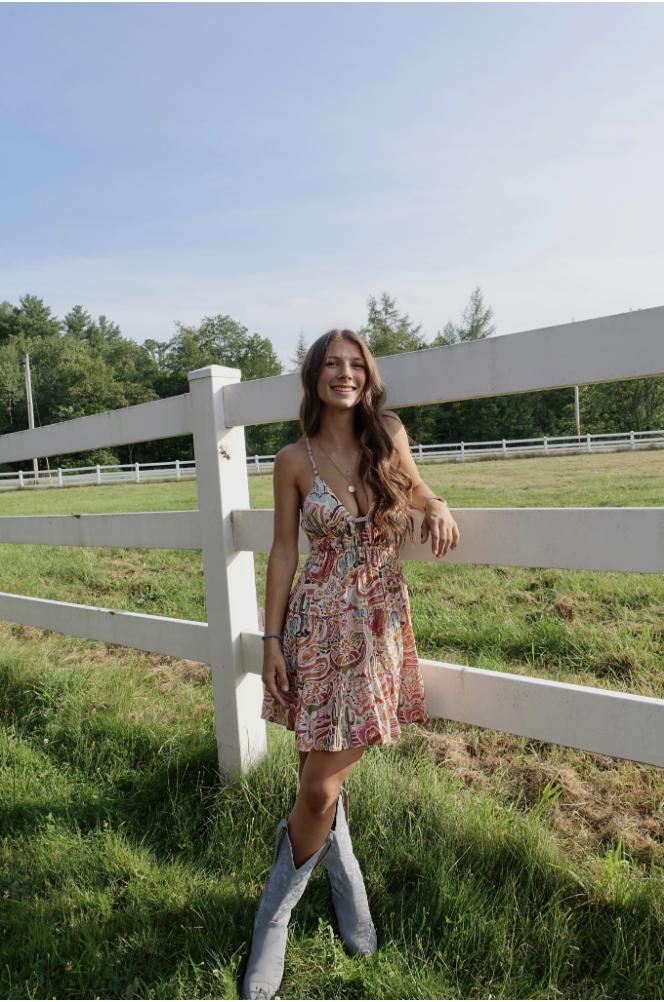
I have spent seven years at Hebron Academy, where I’ve had the chance to meet people from many different backgrounds and build lasting friendships. These experiences have helped shape who I am and will stay with me long after I leave. Hebron will always be an important part of my life as I move forward.
By Trey O'Keefe '28
Away games always seem to mean more to us. There’s something about stepping into another team's rink, hearing their fans, seeing their banners, feeling their confidence, that makes you want to prove something. On January 24, 2026, the Hebron boys Varsity A hockey team faced off against Brewster. We knew that this game was a statement game. We had prepared all week, studied film, tightened up systems in practice, and talked about setting the tone early. The bus ride felt like any other, music blasting in our ears, laughs echoing in the bus, and the nervous energy that always precedes puck drop. This game was planned to be a battle, fast, physical, loud. None of us could have expected that the biggest fight of the night wouldn’t be against the other team, but against the air we were breathing.
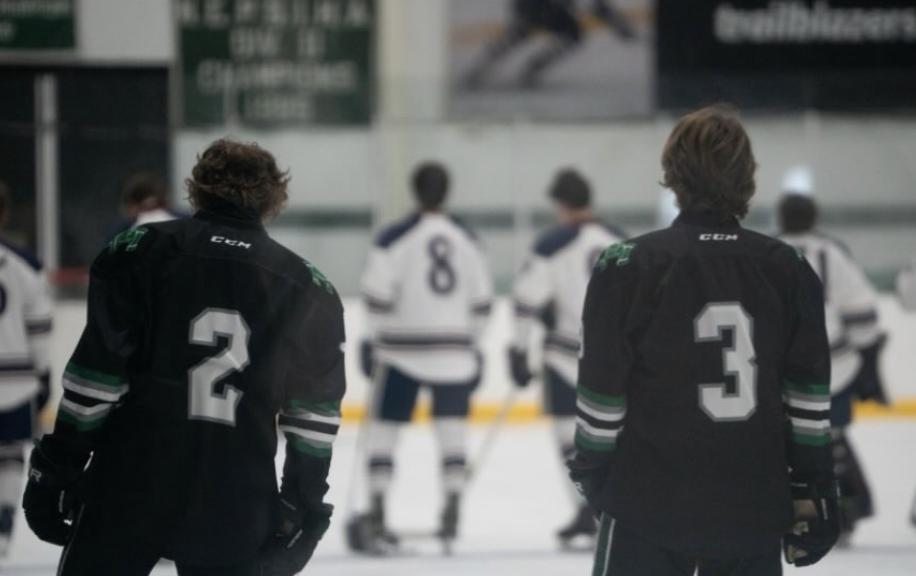
It started like any other away game. We stepped off the bus into the cold, sharp air of Maine and got right into our off-ice warmups. We needed to play soccer outside because the rink didn't have enough room. The air was freezing, the kind that hits your lungs sharply but feels clean and strong at the same time. We ran through our usual warmups after, trying to get our bodies activated before puck drop. There was a mixture of quiet
concentration and jokes between reps. Music blasting in people's ears, the sound of our sneakers squeaking on the floor. Everything felt routine. Our bodies loose, our legs ready, and nothing abnormal stood out.
On the ice was when something shifted. During the first few laps of warmups, I noticed I was slightly short of breath. It wasn’t dramatic, just enough to catch my attention. I tried to take a deep breath, but it didn't feel as full as it had outside. I told myself maybe I was just out of breath, or that the cold air was thinner. I kept warming up, but no matter what I did, the slight tightness never went away. It lingered in a way that felt unfamiliar. This was not just me out of breath. As the game started and shifts rolled by, that shortness of breath grew into discomfort. Everyone on the bench felt it; something wasn’t right. The locker room between periods was similar, talking about what was good and bad and what we needed to expect; however, coughing echoed off the walls. Everyone hacking, and some are throwing up. We all looked around, confused, but brushed it off almost immediately. “We are probably just sick,” someone said. Maybe something had been going around campus. We convinced ourselves it was a coincidence. Hockey players are taught to push through adversity, so that’s exactly what we did for the remainder of the game. As we loaded back onto the buses after the game, we noticed two fire trucks and an ambulance arrive to evacuate everyone. We figured there was an injury, and they needed space to attend to it; we didn’t pay much attention and left for the journey back to campus. Little did we know they were there for the same reason we couldn't breathe right.
After the game, when we got back to campus, everything became harder to ignore. Sitting in my room, I felt a sharp pain in my chest when I tried to take a deep breath. I asked my roommate if he had felt the same, and he

said yes. Our phones started buzzing, and everyone was asking the same questions about symptoms. Soon, we knew we had all been feeling this pain together; it felt as if someone was taking a knife to our lungs at the top of every breath. This wasn’t just the cold air or nerves. It was much bigger.
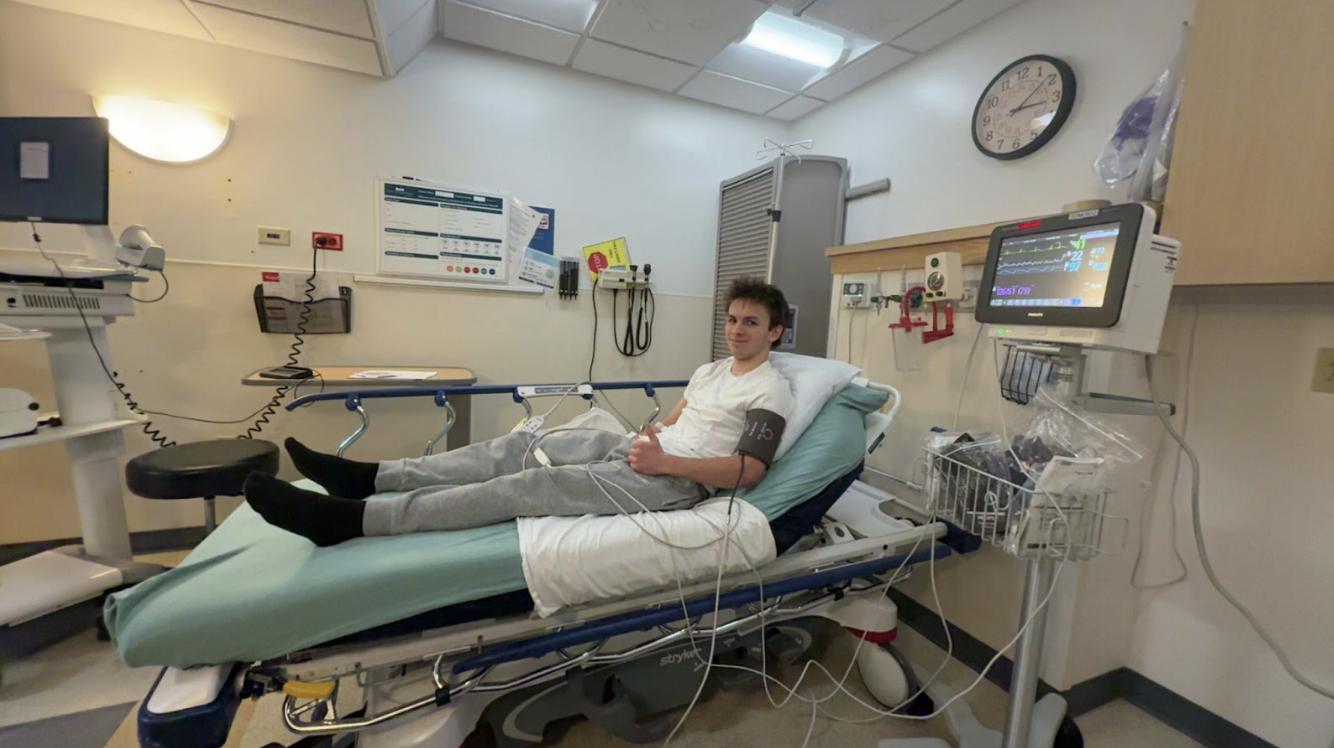
The next day, we received an email explaining that there had been a nitrogen dioxide exposure from the Zamboni at the rink. Reading those words made my stomach drop. Some guys immediately panicked, thinking about long-term damage. Others stayed calm, especially if their symptoms were milder. The range of reactions matched the range of symptoms. Nurses began checking on us, monitoring our oxygen levels, and asking detailed questions about how we were feeling. It felt surreal to feel this way. The uncertainty was scary to say the least. By the following days, seven of us – including myself– had worse symptoms than the days before. For our safety, we were admitted to the hospital. Alex Vogel, our team captain, was the first to go at around four A.M., while others followed later in the morning. We had chest X-rays done to check for inflammation in our lungs. Blood was drawn to make sure nothing seriously dangerous had gotten into our systems, and we walked around the building to compare resting oxygen levels and heart rate while we were moving. Although making jokes with my teammates in a small, creepy hospital room was fun, there was still tension in the air. Hockey suddenly felt very far away.
After that, we were placed on daily checks to make sure nothing worsened. Each day, we reported symptoms, monitored breathing, and paid close attention to any changes. Games were canceled, practices postponed, and recovery became the only focus. What started as a completely normal away game turned into an experience none of us expected. It reminded us how quickly things can change, and something as simple as air, something we never think about during a game, can suddenly become the most important thing in the world.
Ultimately, games are about winning and losing, but this year I learned they are much more than that. That night changed the way I see everything, not just hockey. In a matter of hours, the focus shifted from scoring goals to simply being able to breathe without pain. It made me realize how quickly things can change and how much we take for granted. Ever since that game, every time I step on the ice, I don’t just think about the result,
By Eila McCarthy '29
The fire alarm went off at around 4 am. Everything quickly turned to chaos as students woke up their friends, all of us heading to Williams without knowing what was happening. We sat around for over an hour, waiting to be told what was happening and what the day would look like. Eventually, we were told that a pipe had burst on the third floor.

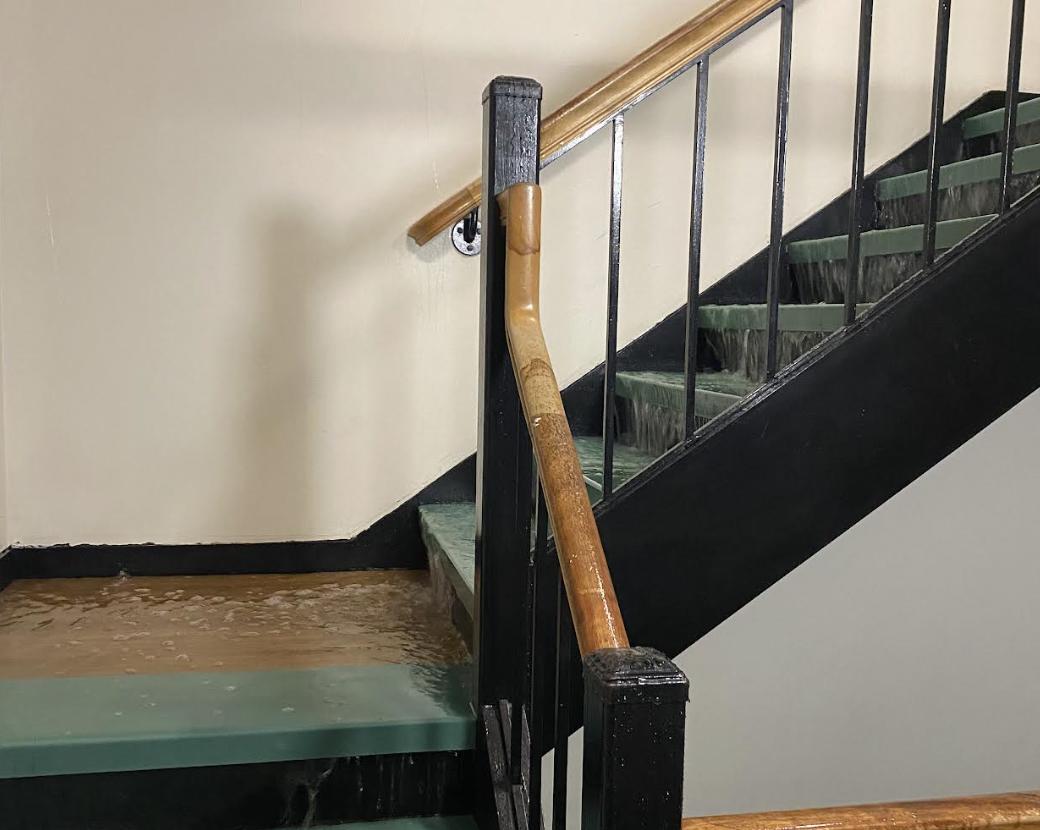
Everyone in the impacted rooms needed to move out, and fewer than ten were unaffected. The halls and dorms were completely flooded. So much was destroyed. Everyone was panicking over their belongings, frantically trying to pack anything and everything they could. Most of us skipped Mountain Day. Everyone wanted to pack their belongings and get settled in Sturt. We came back that afternoon and were told that anyone left in Halford needed to pack up and leave, too. Some rooms had ceilings that collapsed, and others looked like they could at any moment. We were told that night that everyone needed to be completely moved out of the dorms by the next
night. No one knew how long it would take to get us back into Halford, but we were told it would be two months at the very earliest. We found out a month later that we wouldn’t be back until next year.
The next day was filled with toasters constantly going back and forth from the dorms, students loading their things in and out, and an elongated line piling up in the hallways. The rest of the week consisted of everyone trying to unpack and get settled into Sturt. The amount of stuff in the hallways didn’t seem to change.
While the damage to Halford will take months to repair, the disruption has already left a lasting impact on students. What started as a 4 a.m. alarm quickly turned into a major relocation affecting nearly the entire dorm. As students continue adjusting to life in new spaces, the experience serves as a reminder of how quickly normal routines can change, and how important community becomes in moments of uncertainty.

By Paula Menning '28
What did I believe I would never forget after my year in Hebron? Well, the truth is that I do not really remember what I thought about this question, nor do I remember if I even thought about it before. I came here thanks to an organization named ASSIST, which gives international students scholarships to attend an American private school. They promoted the incredible experience scholars would have: the differences between America and Europe, the sports we would play, the courses we would take, the travels we would do, and all the new discoveries we would make. But what I think they forgot to talk about was the relationships we would create with the people here.
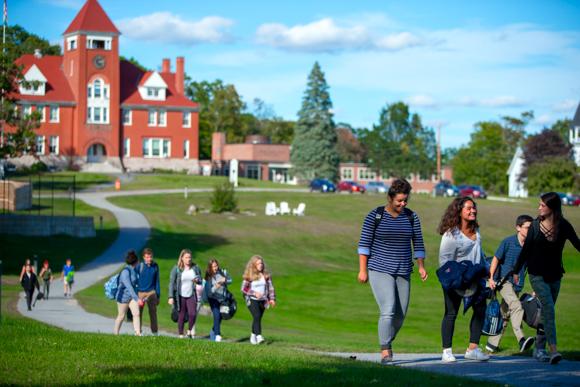
Hebron Academy is a small school in the middle of Maine. There are around two hundred fifty students, plus faculty members, and the only big city nearby is Portland, about forty-five minutes away by car, with 550,000 inhabitants. Hebron is probably not the first school you would think of as a dream school, but this year became my dream thanks to all the people I met and had the chance to talk to. It is important to say that the relationships you have in Hebron are very different from those you would have if you lived in a big city or attended another school as a day student. This is because Hebron is a small school with a limited number of people, and everybody knows each other. The Hebron community is like a huge family, and everyone cares for one another regardless of age or gender. For example, on the first day, I arrived at 1 a.m., and some older
one another regardless of age or gender. For example, on the first day, I arrived at 1 a.m., and some older students stayed up late to help us carry all our luggage up three floors. During the following week, many returning students came to talk to us, asked our names and where we came from, and simply made sure we were okay and knew where we had to go.
When I first arrived, I had to find my bearings, but I was never scared of not making friends or feeling lonely on this unfamiliar continent and in this new school. Everyone was open and ready to guide the new students. For example, on the first day, I arrived at 1 a.m., and some older students stayed up late to help us carry all our luggage up three floors. During the following week, many returning students came to talk to us, asked our names and where we came from, and simply made sure we were okay and knew where we had to go.
Something else I noticed, coming from being a day student in a big city, is that the relationship between faculty members and students is very different here. At Hebron, faculty members truly care about the students, who often rely on adults for support since we do not have our parents on campus, and many students do not see them during the school year. Because of this, a kind of parental and trusting relationship develops between students and adults. Another reason is that many faculty members live on campus, so a large part of their lives revolves around the students.
This was especially clear during the Halford flood. Most of the teachers helped us in every way possible—staying up late to make sure every student was safe and had a place to sleep, buying food and other supplies to boost our morale, and always being ready to listen to any concerns. They made students their priority, no matter what challenges they might have had in their personal lives. Although it was a difficult time, thanks to our teachers, it is not a memory we associate only with negativity. More generally, teachers are always open for discussion if we need help or have personal problems. They organize weekend trips so we are not bored, and they give their time generously to make sure we feel supported and comfortable.
Lastly, the strongest bonds you create in a school are the friendships you build. You spend all your days and nights with these people. They see you laugh, cry, feel angry, and experience stress. More than just friends, they become a family. You do not feel uncomfortable or awkward with them—you can simply be yourself. You share both good and bad moments, but all of them become memorable. Whether it is sleeping in the same small bed, getting ready together when you are late for school, crying side by side, staying up late talking, singing in the shower, or gossiping about relationships, there is never a moment that feels insignificant or truly spent alone. These everyday experiences are what create the deepest connections, and they are the moments that stay with you long after the year is over.
In the end, what I will never forget about my year in Hebron is not the classes, the sports, or even the travels, but the people. The relationships I built here—with friends, teachers, and the entire community—are what made this experience so meaningful. Hebron may not have been the dream I imagined before coming, but it became something even more important: a place where I found a second family.
By Alexandra Hounsell '27
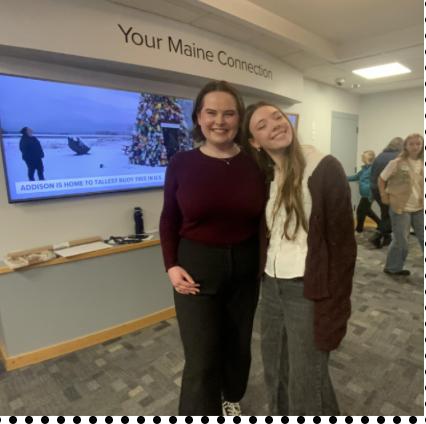
There are a few chances one gets in life that make you say, “Now that I just have to try!” For me, this window of opportunity was made possible by the Girl Scouts of Maine media team, of which I am a part. The email popped up on my screen spontaneously to go visit the News Center Maine headquarters an hour or so away in Portland and get a behind-the-scenes tour with reporter Katie Delaney of how everything worked in order to make the news happen. Now, while I am all for making sure I get my education, and no offense to my teachers, some opportunities you just have to miss school for. So, on a whim, I took the offer and called out of school that day.
Going into this, I really did not know what to expect, but I knew it felt important to me. I had grown up hearing the familiar television intro of this news network growing louder as I walked down the stairs each morning before school, as my mom watched it getting ready for work. As I grow up, my mornings have progressed from gathering around the TV each morning to hear Todd Gutner tell me if the weather was still cold enough for a jacket to recess, to current day waiting for the familiar voices of the news station to tell me how many layers I should wear to my next soccer game or track meet. Many things have changed in life, but mornings with my mom and News Center Maine have always remained an unchanged force. So, I walked in with an air of curiosity up to that building.
To recap my time there, to start, everyone seemed super sweet, especially the reporter Katie Delaney, who took the team on a tour of everything. Even though it was a very professional building and you needed a special code to enter it, the atmosphere felt extremely welcoming. The news station contained many long pathways, leading to many cool rooms. Each hallway they decorate with awards and media references that make it seem very fresh and fun for anyone working there. One room that caught my immediate attention was literally full of buttons and screens everywhere that you looked. Everyone there had headsets on, each button was lit up and had an important job, and they monitored everything. We visited when they were almost on shift, so every aspect was fully prepared for a broadcast. There was a large monitor that showed the room being broadcast on television, as well as individual smaller monitors of events in the nearby cities near Portland. This includes a wildlife cam, one of the roads where they were going to film next, and the previous news stories were displayed on the cams as well. The scripts on the desks told those working in this room what to put onto the teleprompter next, and what the people spoke into the headsets went directly to the reporters in the next room. My immediate impression was extreme awe at the work that went into giving just one news report; every morning, while I watched the news, I saw an entire room full of planning and button-pushing just to tell one news story. It amazed me that just one or two people could have such a careful eye on so much of Maine and the stories of so many communities and could maneuver all of these different buttons to tell such a multitude of stories every single day. Even just this singular room felt so powerful and gave a sense of calculation and precision that I had not
witnessed before. I inquired about how the woman sitting in the booth could remember all of the systems as well as buttons, and I remember her telling me that, “after a while it is fun, it’s just like playing a video game every morning.” This made me realize that while I saw it as so complex, the people in the stations had a real hold and love for the chaos that comes with telling stories.
It did not feel real walking into the main room that was actually televised; it did not feel like a place one can actually enter, it felt like it was purely something that can only be seen through the glow of the television, not a place where your feet can step. Yet, it appeared very real. The glass desk where the reporters stood was much bigger than I thought it would be, and the teleprompter was placed just behind the camera and the desk. In actuality, there are three different teleprompters for each person reporting, so that if there is a larger group of people, they can read and still look natural with where their eyes glance. The weather room where Todd Gutner stands is actually just a few steps away from the big desk (I imagined it being in a whole other area). I had the chance to stand there and found it extremely difficult to find the right place to stand to read the weather. If you move backward, you move forward, and if you move forward, the camera picks up the opposite, so it takes a long time to get used to. It turns out that the people who read the weather can have tape markings so that they stand in the correct spot. Once you stand correctly, you look up to see a huge screen that shows yourself looking back at you with the weather screen behind your back, and smaller screens with more current information. Most of the time, the reporters can look at themselves as they report, which is a lot more handy.
Lastly, we went up many flights of stairs to reach desk space, many individual desks for people to purely work on researching topics and information to tell, as well as logistics. Behind these rows and rows of researchers was another space that was actually currently broadcasting. More reporters in suits told something serious to the camera, microphones in hand. This space was extremely fascinating, and felt like watching the gears behind a clock turn. All of the parts worked harmoniously to make the clock go, and many people can go about their lives well-informed. Although the rooms are separate, each section coexists to achieve one grand goal; a very inspiring concept.
I had the golden opportunity to ask Katie Delaney questions after this tour was over. She was ready and excited to tell what they do and how she lives her life. The reporters have extreme dedication to the job; Katie Delaney told me that many wake up around 3 A.M and fall asleep at 6 P.M, before most even eat dinner! They are up as soon as the next day strikes in order to help us move through our day. This is an extreme dedication that felt very empowering. She told me that becoming a reporter meant stepping out of your comfort zone and using the skills that you can learn as you grow. Communication is a natural progression of social interaction, parts of which she learned how to do as a Girl Scout growing up. Delaney speaks, “It went from saying ‘I’m Katie, want to buy my cookies?’ to ‘Hello everyone, it’s Katie Delaney with another story.” She taught me that these skills bloom as you grow up, and the news is a strong outlet for expression, and although it means hard work and dedication, it seems like it would feel like a chance to truly put yourself into the real world, be social, and step into curiosity.
This experience truly was eye-opening. It showed me that there is extreme passion in many corners and aspects of working that I didn’t even know existed. The job of working in news was one I knew little about, but after visiting, it seems like it would be an amazing opportunity for many people. If anyone is looking for a social job in media and has a passion for stories, then working to broadcast news is an extremely good option. Even for just a short while, it can teach social skills and an extreme work ethic. Even if you aren’t interested in news or media, this is your sign to go explore different opportunities outside of your knowledge and comfort zone, for the world has much to offer that we may not even know yet, so let's go find it.

By Nina Jawale '27
It was the start of the school year. Everybody is practically unknown, and “traditions” aren’t yet understood. I didn’t even entirely know who some of the teachers were, but at Morning Meeting one Tuesday morning, a man got on stage with a guitar and started singing “We’re on the Road to Nowhere”. That’s when I realized, wait, that's my music teacher. Now I just remember him as a very calm, down to earth person who enjoys music and gardening from time to time.
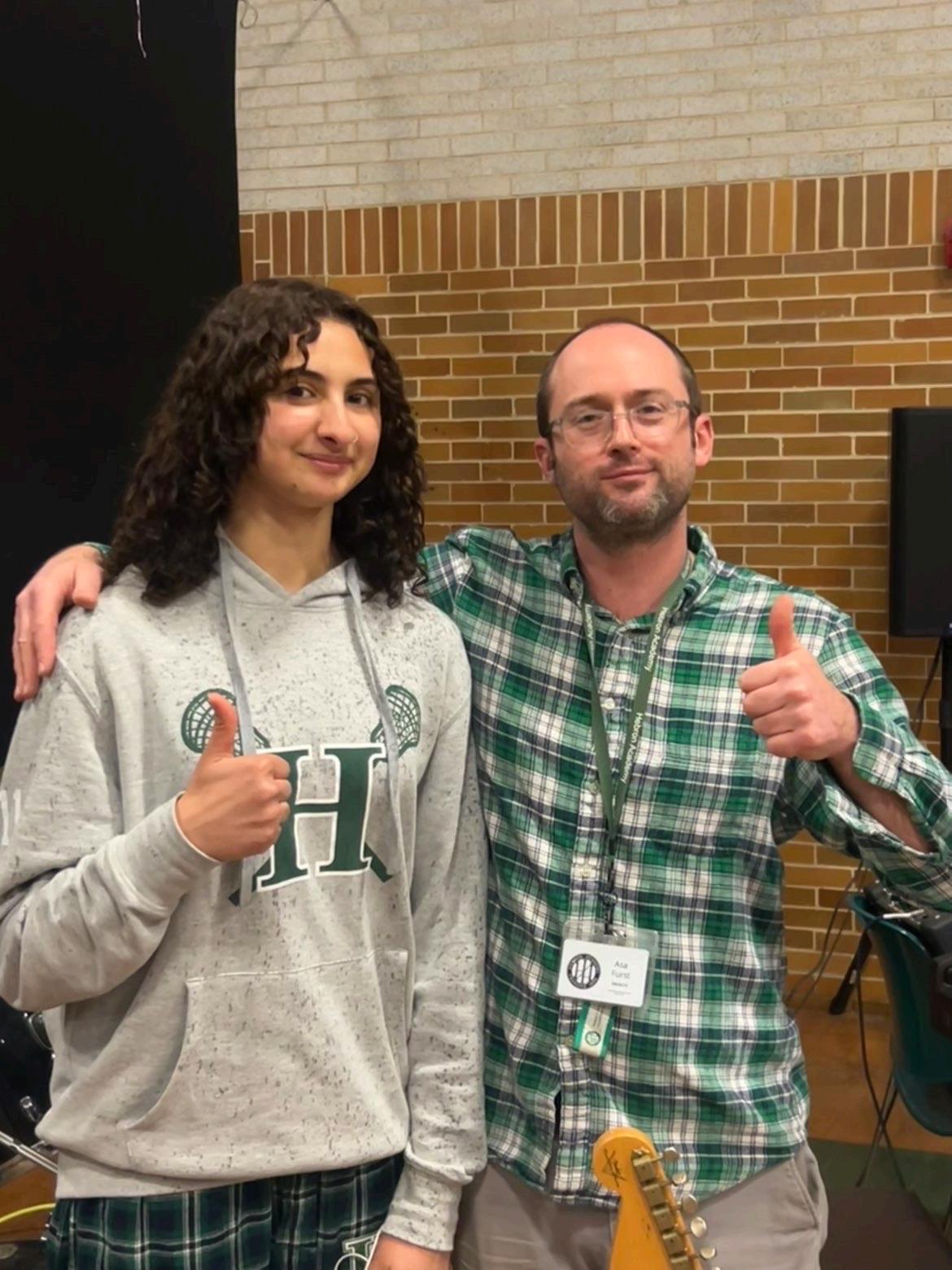
Music and performing had influenced much of his earlier life. Growing up mostly in the New York suburbs, he remembers dancing around to the Jane Fonda tapes his mother had done in their living room. At age 5, Mr. Furst decided to try piano lessons but quit shortly after due to finding his instructor too corny and childish. Inspired by the movie Taps, he sought to divert to tap dancing, but that tangent was never confirmed because his parents refused to buy him the shoes since they thought he’d quit. Failed routes still didn’t mean music was completely gone from his life. At age 9, at his father’s summer camp, he remembers dancing in a cocktail dress to My Lovin’ by En Vogue (a song my choir gets to perform this spring). But since he was the only boy, he just fit in with everyone else, and it wasn’t seen as a great big deal at the time.
Following his early years, when he reached 10, he began to try to pursue guitar. Starting lessons, he began to learn the instrument at his best. Despite his efforts, the group guitar teacher explained that if there were grades given, everyone would get an A or a B, but he was a C+ at best. This comment hurt, but it motivated him to work harder. He began to practice in his math teacher’s classroom. She would start laughing about how bad his playing was and kicked him out because the laughing hurt her broken nose. This embarrassed him and forced him to push harder.
By the time Mr. Furst reached 6th grade, he had improved tremendously to the point where his peers would pay him for guitar lessons using their lunch money. He began performing for the school and also decided to go back to piano lessons. His teacher, Ray DeMarco, was more laid back and made piano more interesting. One of the lessons he still had pasta sauce in his beard. The relaxed teaching style made him enjoy piano more than he had in the past.
Expanding his involvement with music also expanded business opportunities. He started a DJ business in the 7th grade, creating mixtapes and worked in local towns as well as a multitude of school dances. When he got lucky, he was hired for gigs in Portland, Maine, as well. Teachers asked him to DJ for their weddings. Originally, he opposed digital media, but he had to adapt eventually. Sometimes he still goes out and DJs in his free time. Besides business opportunities, he had continued his choir expenditures, which started when he was much younger, in the 5th grade. When his voice changed around ten years old, he was always forced to sing bass, although his voice wasn’t low enough. He was finally switched to tenor when he reached junior year of high school.
Once college rolled around, Mr. Furst attended Hampshire College, which had no true majors, tests, or grades. Studying ethnomusicology, he focused more on reading and writing about music rather than performing, a direction he didn’t enjoy. Between the classes, he worked as a Domino’s pizza deliveryman. In one instance, he had to deliver a pizza at 4 am, and the store recalled that the home usually tipped well, giving motivation to deliver the pizza. When he arrived at the house, no one answered the knock or bell. Glancing through the window, he had seen a man sleeping on the couch with the TV still on. He still needed to give this man his pizza, so he entered his house, walked to the man, and nudged him. The man awoke and, weary-eyed, took his finger and moved it down in the air, saying, “Shhhhh, be quiet.” The man fell back asleep, but his friend upstairs went down and asked, “Domino, what are you doing here?” Mr. Furst got paid, but at what cost? When he had time off at Hampshire, he also worked at Kittery Trading Post as a bow-hunting salesman. Growing up and helping at his father’s summer camp, he had become a certified archery instructor. He was hired for his flannel fashion, and they believed that he’d be a good associate to deal with women who had to buy bows for their sons. He spent his time selling knives, but his clumsy nature landed him in the hospital a couple of times. The first instance was a Bowie knife to the hand, and the second was an entire Swiss Army knife opening in his palm.
Not favoring the Hampshire curriculum, Mr. Furst transferred over to Wheaton, where he then auditioned to be in an all-male a cappella group. He was told that the group would knock at his door at midnight if he had gotten in. Midnight had arrived, and the men had not. He started to get ready for bed, took some melatonin, and lost hope, but the group finally arrived with champagne to celebrate with him. Following his admission into the group, he had many performances. A performance well remembered was the Sell Out Jam, where every member was advertising different companies. He had to advertise Curves, a workout establishment for middle-aged women. He wore hot pink yoga pants, a wig, and water balloons.
After joining the group, he continued to perform regularly and even took solos, growing his confidence as a performer. College, however, wasn't entirely as smooth. Although he was strong academically most of the time, he went through a difficult period and had one bad semester that led to him being asked to leave. He took time off, and when he returned, he took his approach to things a lot differently. He focused more on academics and spent his free time playing piano, working out, and continuing music in a more balanced way. Instead of having too much fun, he found a middle ground.
After college, he did not go straight into teaching. He worked as a waiter at a 1950s-style diner, where music constantly filled the space, and spent much of his free time playing pickup basketball in Boston. Eventually, he realized he wanted to turn his passion for music into a career, so at age 30 he enrolled in the Boston Conservatory to earn his master’s degree in music education. The program was intense, with long days of classes and practice, but it prepared him to teach music from kindergarten through twelfth grade. He began as a substitute teacher in Arlington, Massachusetts, where students liked his fun and energetic style, though he quickly learned the importance of structure. Soon after, he was hired for a full-time position in Hamilton, where he had only a month to prepare a winter concert and successfully brought it together. He later spent ten years teaching in Bridgton and Casco, where his creativity stood out, from making monthly dance videos to learning multiple instruments in one summer so he could teach band. His classes focused on making music engaging and fun, using a wide range of songs and encouraging students to actively participate.
By Louisa Strong '26
On a campus that preaches inclusivity and acceptance, silence is expected. I have learned to be silent, that it’s appreciated; it’s easier. Silence makes the school better; it gives people a leg up. When we hear model students slut-shaming and dropping slurs, when we see them celebrated every day, our silence lets the teachers continue to rave about them. Everyone’s happier that way: when it’s being said but no one has to hear about it.
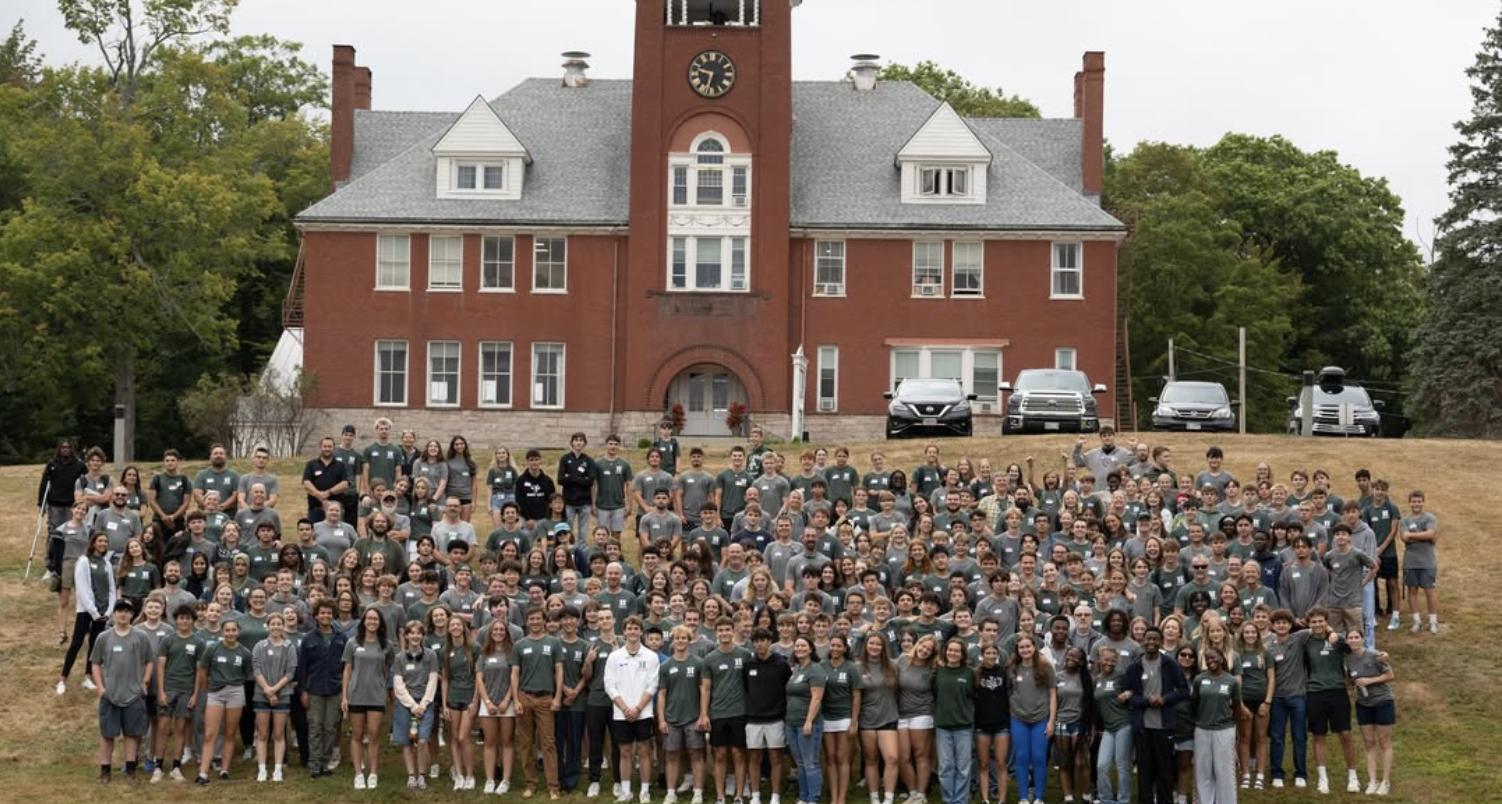
Publicly, as a school, we don’t associate with racism or sexism or homophobia. They’re not in our values. But as a student body, they’re predominant. It’s a joke, it doesn’t really reflect people’s opinions, it doesn’t matter. But it does. Despite what many protest, words are indicative of opinion. The words you choose to use demonstrate your empathy, education, and awareness. But this isn’t about the presence of words; it’s about the absence. My silence is also indicative of my empathy, education, and awareness. It’s a conscious choice. This school has educated me on who sees it through social scandals and ethical dilemmas in life; time after time, I see the same people emerge from their mistakes unscathed. It might sound cliche and repetitively feminist to say, but it is the charming (often rich) boys who have never faced real consequence at Hebron Academy. When I see the school turn another half-closed eye to these violations of our supposed values, I know what is expected of me.
By Perrin Gill '28

hebronacademy.org
When Hebron’s new Head of School, Ms. Craig talks about education, she does not begin with rankings or metrics. She begins with belonging. When I asked what makes a faculty member truly successful beyond performance metrics, she paused and reflected on a question she once received herself: “What is your philosophy of education?” Her answer was simple but impactful. “If students are coming into a classroom and they feel loved and cared for and like they belong and like they want to be there, then you’re two-thirds of the way there.” For her, content matters, but connection matters first. That belief frames her entire vision for Hebron, not just as a place of academic excellence, but as a community where students feel known.
That idea of belonging naturally extends into what she hopes students will remember years after they graduate. When asked what she hopes alumni say about Hebron ten years from now, she did not mention awards or achievements. Instead, she said she hopes it feels like “welcome home.” She understands that “teenagerhood is tough,” but she believes that small boarding schools have the rare ability to create a “home away from home.” Living and learning alongside people from different countries, backgrounds, and experiences expands students’ understanding of the world. She spoke about how these environments allow students to learn “across genders or across interests or religions or wealth,” and how that exposure can be transformative. High school, in her words, should show students that “the world is… a really big place,” and that their future is not limited by where they
started.
At the same time, she is candid about the practical responsibilities of leadership. Some of her goals, she admitted, are “really concrete and kind of boring," but necessary. Ensuring long-term stability and strengthening the school’s standing are part of protecting everything that happens inside the classroom. Her competitive spirit surfaced when discussing how Hebron is perceived. “Hebron is too great a school and has been around too long… to be ‘low in the rankings’” she said firmly. That pride is not about ego. It is about honoring a school founded in 1804 and ensuring that its reputation reflects its depth and history. She believes Hebron’s legacy deserves to be matched by its momentum.
Yet what makes her leadership distinct is that she pairs ambition with joy. She spoke passionately about the power of shared traditions, especially music. “One of the most freeing things that you can do as a community is to sing together,” she explained. She envisions a campus where music, chants, and collective moments create unity, because “education is a joyful prospect.” Singing, dancing, and gathering do not cost anything except “energy” and “joy,” but they give back far more. As a neuroscience major, Ms. Craig emphasized that “those are not only just my anecdotal ‘feelings’ but there’s a lot of neuroscience evidence to support the incorporation of music when it comes to learning!”Even small traditions can shift a culture and education. As she put it, these shared experiences “make you feel a part of something.” For her, community is not accidental. It is built intentionally, sometimes through something as simple as raising your voice with the people around you. She also emphasized the importance of student voice in shaping that culture. Conversations with students, she said, “build my faith in the school.” She believes spaces like the Hebron Review and Hebron Blog matter because they allow the community to share their thoughts and ideas. Disagreement is not something to avoid, but something to navigate thoughtfully. Students should not be told “You’re wrong. You don’t get to think like that.” Instead, they should learn how to engage with perspectives different from their own. In her view, preparing students for a global world means helping them grapple with real issues while remaining grounded in empathy and curiosity.
Ultimately, her return to Hebron feels less like an arrival and more like a homecoming. After years away, stepping back onto campus feels, in her words, like “coming full circle.” She spoke about Maine as home and about Hebron as a place deeply aligned with what she believes education should be. Her vision is clear: a stable and ambitious school rooted in care, strengthened by tradition, energized by joy, and shaped by student voices. If her philosophy holds true, Hebron will not only continue its long legacy. It will grow louder, warmer, and more united in the process.
By Kellen Anthoine '26
In October of 2024, I was sad. Really sad. My life was objectively going well, but something wasn’t right. Nothing seemed engaging anymore, and despair stuck with me like glue. I had no motivation, no appetite, and no energy. Everything that used to be fun seemed boring, and the sky was always gray. Whatever I did, I couldn’t seem to feel any better. One night after dinner, I walked to my room, plugged in my AirPods, lay on my bed, and stared at the ceiling, thinking the same dull, miserable thoughts that would eventually lead me to consider ending my life.
Stop there. None of that was true. Yes, at that period of time, I was indeed struggling with severe depression, and yes, some days were sorrowful, but that’s not how it truly played out. Not at all. Let’s take it back from the beginning. This time, the truth.

In October of 2024, I unexpectedly found myself on a roller coaster with a jet engine—two months of violent peaks and valleys, spinning, plunging, and accelerating beyond anything I understood. The ride was full of passion, terror, emptiness, mania, confusion, despair, hatred, ecstasy, and so much more. I was somewhere far away from anything I knew, where I faced the darkest parts of myself. For a period, the ride became so dark that I began hurting myself and making early plans to end my life. This unbelievable ride is called depression, and it’s something that most people completely misunderstand.
When I was in the thick of it, I was desperate for someone to hear me. That’s when I found Mac Miller’s Faces. When I first listened to it, I felt an uncanny familiarity. The out-of-control trip that he painted throughout the tracks was exactly what I was going through, and I knew precisely what he meant when he said, “I wasn’t on planet Earth when I made Faces. Nowhere close.” The music captured depression more completely than anything I’d heard before. I returned to it frequently, letting myself be moved by the music. As a result, I not only sank deeper into depression but also felt like I had a demystifying reflection to look into. When confusion marked every moment of my day, and negativity stirred chaotically in my mind, I had an image to guide me through a journey no one else could see. I saw where the trip would take me, and I decided that if I did end my life, I would do it while listening to the mixtape. All the while, I only wished others would listen to and feel them as much as I did, so they knew what I was going through.
Although they never got that guide, I fortunately got help and climbed my way out of it. Now, well over a year after recovering, my life is stable and fulfilling. For many, though, the struggle continues. Depression is a terrifying “amusement park ride” of dizzying “ups and downs” that leaves many victims feeling unseen in ways that only deepen their pain. It doesn’t have to be that way, though. This article aims to serve as the outsider’s guide I never had, using Faces as the illustration. This 90-minute dark, experimental jazz-rap mixtape captures the true nature of depression. It explores emotional swings, lethal coping strategies, nihilism, hopelessness, willfully spiraling, isolation, suicidal ideation, and tragically, suicide. Through this writing, it can serve as a bridge between the complex nature of depression and the layman wishing to comprehend it. Acknowledging that, let’s explore the mixtape I almost ended my life to.
The opening of Faces plunges the listener directly into Mac Miller’s depressive state. Depression is often imagined as constant sadness, but in reality it is emotionally volatile, swinging violently between extremes. The first three tracks establish this instability immediately. “Inside Outside” pairs a weary jazz beat with selfdestructive lyrics. Mac opens the mixtape with “Shoulda died already,” admitting he is already high and exhausted by both himself and the world around him. His isolation becomes clear in the lines “On the inside, I’m outside / All the time,” revealing someone who feels detached from reality and disconnected from meaningful human connection. “Here We Go” abruptly shifts into confidence and celebration. Over triumphant brass, Mac boasts about his success, wealth, and status as a rapper. The dramatic contrast from the previous track illustrates one of depression’s most misunderstood traits: emotional inconsistency. The sudden movement from hopelessness to exhilaration is not unusual in depression; the instability itself is part of the disorder. “Friends”

quickly falls back into darkness. Through paranoid lyrics and bitter humor, Mac describes a life filled with empty relationships and resentment toward nearly everyone around him. He even hopes for destruction, rapping that the world is “’bout to explode.” Meanwhile, ScHoolboy Q’s playful interjections unintentionally highlight how invisible Mac’s suffering is to those around him. These opening tracks reveal a cycle of emotional peaks and valleys. Mac swings between self-hatred, pride, bitterness, and despair, while the shallow lifestyle surrounding him only deepens the instability. Like many people struggling with depression, he begins searching for escape.
To manage emotional pain, many people develop unhealthy coping mechanisms that create temporary highs while worsening the lows beneath them. In this section, Mac embraces drug use as a form of escape. “Angel Dust” depicts a PCP binge used to avoid emotional turmoil. Although he admits the drugs are destroying him, he rationalizes them by insisting they make him feel “free.” This reflects a common depressive pattern: justifying harmful behavior because temporary relief feels preferable to confronting pain. The aftermath appears in “Malibu,” one of the mixtape’s darkest tracks. Referencing a failed detox attempt, Mac openly fears becoming a “junkie” and dying before he can recover. Even while making suicidal comments, he still hides his pain behind humor, calling himself “the only suicidal motherfucker with a smile on.” Despite recognizing the danger, he continues the cycle in “What Do You Do.” He admits he is still “sliding down the slope,” fantasizing about escaping consequences while keeping the highs intact. His repeated plea to be “let… off at the top” captures the impossible fantasy behind maladaptive coping: wanting relief without the inevitable crash. These tracks show how artificial highs deepen depression rather than solve it. The resulting lows intensify self-hatred and make meaningful change feel impossible, pushing the individual further toward escapism and emptiness.
After repeated cycles of emotional instability and failed escape, Mac begins questioning whether anything matters at all. His depression evolves into nihilism. “It Just Doesn’t Matter” establishes this worldview directly. By transforming a motivational speech into the refrain “It just doesn’t matter,” Mac turns hopelessness into philosophy. The song’s aggression reflects how nihilism is not emotionally empty but emotionally hostile. In “Therapy,” he tries to escape those thoughts through pleasure, fame, and drug use. The celebratory production sounds out of place on a depressive mixtape, but it accurately reflects escapist happiness: temporary excitement masking deeper emptiness. Mac openly admits he throws his problems “in the blunt” and watches them “float away.” “Polo Jeans” dismantles the illusion. Despite wealth and recognition, he still feels “broke and crazy,” realizing fame and luxury cannot provide fulfillment. The repeated transition from “polo” to “low” reveals that beneath the glamorous image is emotional collapse. “Happy Birthday” continues this isolation. During his own birthday party, Mac retreats from the crowd into his basement studio because the celebration feels shallow and meaningless. Depression often distorts the way someone sees others, making them feel disconnected from seemingly carefree people around them. That desperation for connection appears in “Wedding.” Beneath fantasies of domestic stability, the relationship he describes is toxic and codependent. Both partners hurt one another yet cling together out of fear and loneliness. Love becomes another failed attempt to escape emotional
emptiness. Across these tracks, Mac concludes that drugs, fame, wealth, and relationships all fail to create meaning. His brief moments of happiness are not proof that the depression is gone, but temporary pauses
“Funeral” marks the emotional midpoint of Faces and the moment when Mac’s desire to recover begins collapsing completely. Surveying his life, he sees only emptiness, addiction, and boredom. Even music—his healthiest outlet—becomes tragic when he calls his “tragedy” his “masterpiece.” The song repeatedly emphasizes overthinking and emotional exhaustion, reflecting the hollow numbness many describe when they say they feel “mentally dead.” Most importantly, Mac begins accepting depression rather than resisting it. Earlier in the mixtape, he still searched for some form of “therapy” or escape. Here, he chooses to remain in what he calls “this lonely hell,” because changing feels harder than surrendering. This is the turning point of the project. From this moment forward, he no longer seems interested in recovery and instead intentionally descends deeper into the pain.
In this section, Mac stops merely suffering through depression and begins embracing it. Pain becomes familiar, controllable, and strangely comforting. “Diablo” presents him bragging not about success, but about his misery. He adopts the persona of the “Rap diablo,” proudly embracing drugs, self-destruction, and emotional chaos. His suffering becomes part of his identity. “Ave Maria” pushes further into indulgence. What once served as distraction now resembles worship, as drugs become central to his worldview. Yet beneath the hallucinations and bravado, a quieter voice briefly emerges when he asks, “Have you found a way out?” revealing that part of him still wants escape. That moment of reflection appears in “55,” a short instrumental representing a brief pause of clarity. The calm atmosphere suggests a fleeting realization that his downward spiral is meaningless. However, the insight fades quickly. “San Francisco” returns to self-destruction. Mac describes himself as trapped inside his own mind while continuing reckless behavior with numb indifference. Earlier tracks showed him shaken by self-hatred; now he barely reacts to it at all. Together, these tracks depict someone who finds comfort in suffering because it feels easier and more controllable than change.
(Ft. Rick Ross) — Uber (Ft. Mike Jones)
When depression goes misunderstood, isolation deepens. These songs portray the emotional consequences of feeling disconnected from everyone else. “Colors and Shapes” is one of the mixtape’s saddest moments. Mac struggles to explain his emotional state, describing depression as abstract and impossible to translate into language others can understand. The recurring imagery of water reflects how submerged he feels in his own mind. Ultimately, he gives up trying to communicate, surrendering to the feeling of “falling.” “Insomniak” transforms that sorrow into rage. Feeling unseen, Mac lashes out aggressively while bragging about becoming a “maniac” and “psycho.” The anger functions both as armor and as a cry for attention. By “Uber,” the sadness and rage have hardened into indifference. Mac claims he has “nothing to lose” and refuses to come up for air despite
keeping his “head underwater.” Negligence becomes another defense mechanism against emotional pain. These tracks reveal how misunderstanding can push someone through sorrow, anger, and apathy until they stop believing connection is possible at all.
The Stages of Suicidal Ideation: Rain (Ft. Vince Staples) — Apparition — Thumbalina — New Faces v2 (Ft. Da$H & Earl Sweatshirt)
Without meaningful connection or hope, Mac’s thoughts become increasingly suicidal. This section traces the progression from vague despair to active planning. “Rain” introduces death as a serious possibility rather than symbolic language. Mac imagines violent suicide directly, believing death may be the only way to “ease the pain.”
The depression now feels permanent and all-encompassing. In “Apparition,” he reflects on his past with growing hopelessness, believing he should already be dead. The track also introduces self-harm imagery, symbolizing how destructive behavior gradually becomes normalized. “Thumbalina” disguises desperation beneath chaotic partying. Beneath the intoxication and humor is a final search for affection and understanding. Mac repeatedly asks if anyone is looking for him emotionally, but finds no answer. “New Faces v2” represents the final stage. Mac openly admits he wants to die and suggests that the decision may happen soon. Despite the song’s bright sound, his lyrics reveal emotional emptiness and a frightening sense of calm. Many suicidal individuals appear unusually peaceful after deciding to end their lives because the internal struggle feels “resolved.” Across these tracks, suicidal thinking becomes increasingly specific and deliberate. What began as emotional suffering gradually transforms into planning and acceptance.
The End: Grand Finale
“Grand Finale” concludes Faces with Mac fully convinced that death is his only remaining escape. From the opening lines, he speaks directly about dying and being buried in Allegheny County, Pennsylvania. He sees himself as consumed entirely by addiction, isolation, and self-hatred, while his nihilism expands outward into a belief that the entire world is fundamentally empty. The chorus captures the core tragedy of suicidal depression: “The world will be just fine without me.” Mac believes his death would not hurt others and might even improve things. Even in this final moment, however, he hides behind performance and humor, imagining his death as a twisted celebration filled with “fireworks.” The track ends with the sounds of symbolic pyrotechnics and a mournful guitar solo, representing the death he believes is inevitable.
When the mixtape ends, Mac Miller stands alone with the decision he has been building toward for twenty-four tracks. The chaos, the drugs, the searching, the nihilism—all of it collapses into a single moment. Faces ends there. Although he did not commit suicide immediately after its publication, his unstable mental health and drug addiction led to his accidental overdose four years later. He “[died] alone from an overdose of some sort” after “Mixin’ uppers and downers” and was “[buried] in Allegheny County,” just as he ominously predicted in 2014. Because of his depression, his story ended.
But when I first listened to the mixtape in October of 2024, mine didn’t. Faces gave me a mirror to look into. In the reflection, I saw a dark mental roller coaster that felt like it existed in another world. I also saw where that roller coaster ended, and I saw that I had a choice. Thankfully, I chose right. I reached out to trustworthy loved ones and got the affection and support that Mac never did. If I didn’t, Faces wouldn’t have been the mixtape I almost ended my life to.
Many people aren’t as fortunate, and Mac’s ending often becomes reality. Approximately 330 million people suffer from depression worldwide, and over 720,000 die by suicide annually. This issue is only getting worse, and for most people, the nature of this condition is still foreign and unclear. Hopefully, after reading this article, you have a better understanding of it. Faces is a vivid, raw, uncensored illustration of the truth of depression: a confusing amusement park ride that exists outside of the realm of the ordinary, where the future is out of sight and pain can become comfort. Every individual’s journey is unique, but many have common themes and patterns. Mac’s story takes us through many of them. His emotional volatility triggers self-medication and, consequently, self-hatred. The turmoil’s aftermath then sparks a nihilistic analysis of his life, which kills his hope and leads him to embrace the pain. In his embrace, though, he is misunderstood and suffers isolation. Without the necessary connection, he progresses through stages of suicidal thinking, eventually ending his life. Comprehending all of these moving parts and how they relate to each other can make a huge difference when it comes to understanding depression, even though they will not all be present in the same way for everyone.
Listening is the most important part, though. Through my own mental health journey and the one we just explored, being unheard was the most significant catalyst for pain. When your outlook and emotional state change by the day and you feel like you’re spiraling out of control, it’s incredibly difficult to communicate your experience. It’s even more difficult for someone else to comprehend it. The desire, proper understanding, and attempt to listen can ease so much of the pain, potentially sparking a new journey of recovery—or even saving a life. Ultimately, being heard and understood makes a world of difference. Listen, and try to understand.
By Oscar Gronros '26
Bojack Horseman is an awful person. He lies constantly, he has a raging addiction to a number of drugs and substances, and he finds a way to hurt everyone around him. From going to New Mexico and traumatizing a family to bringing a newly sober actress on a multi-month bender leading to her death, Bojack and his addictions hurt people. He feels remorse for his actions but never takes action. Whenever consequences come for his actions he speaks as if they are not his own. It wasn’t his fault because “drunk Bojack” did it or “high Bojack” did it, as if that excuses sober him from his drugged actions. He spends his time trying to escape from his actions rather than changing them. In rehab, Bojack is forced to stop running and truly face his own flaws. After rehab, Bojack finally finds a sense of purpose as an acting professor; for the first time, he feels fulfilled and accepts that his toxic relationships are over. For once Bojack’s life feels vibrant with color all because he stopped running.
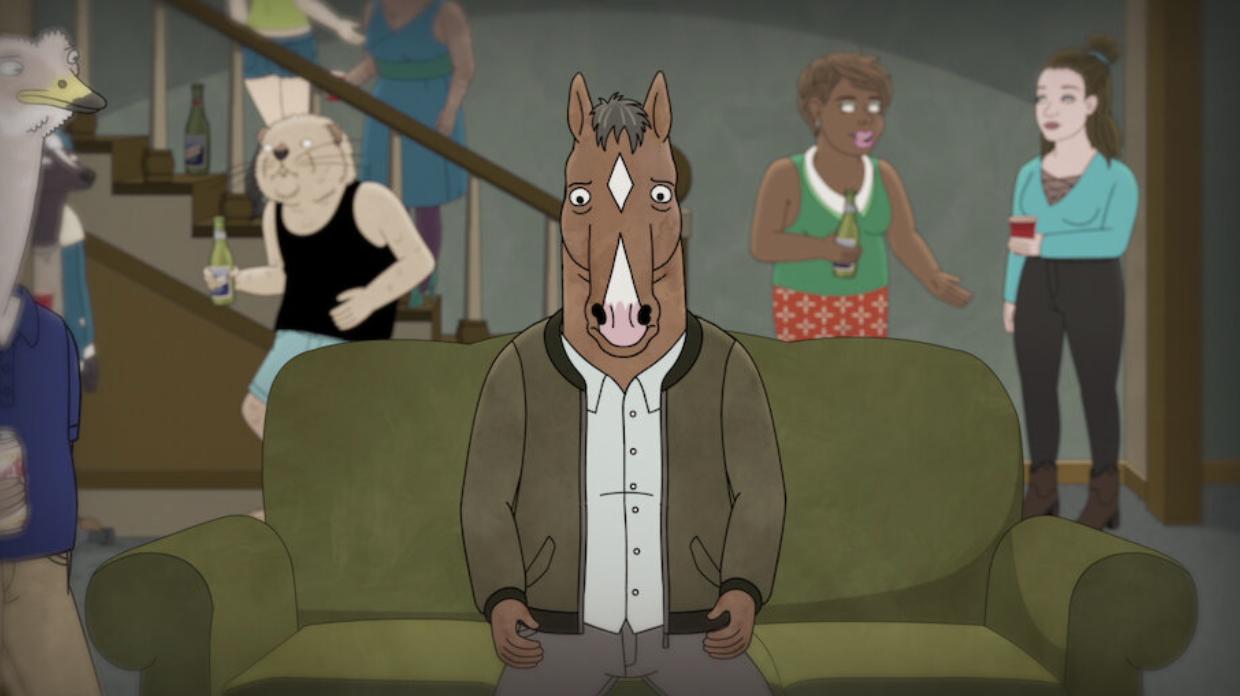
Another show takes a similar approach to this same message: Neon Genesis Evangelion uses giant robots and large monsters to explore the meaning of humanity by centering on a weak self-hating boy named Shinji, working for an organization with an ulterior motive. While fighting monsters, the organization’s secret mission is to combine consciousness to “fill in” each other's flaws and transcend humanity. However their reasoning is flawed as they are attempting to out-engineer and escape their own flaws and even when combined, the
organization is unable to escape the flaws that come with being human. Shinji’s arc through the show contrasts the machine. Beginning with many flaws each episode, Shinji finds himself forced to grow without complying with the combined consciousness. Through this journey, he starts seeing the beauty in life. His self-hating nature begins to minimize as he finds his purpose and his strengths. If Shinji had not gone through all of the natural, human struggles, he would not have found the beauty he did. By “growing past” flaws, the combined consciousness isn’t able to transcend humanity, instead falling short of humanity time and time again, because it is ultimately just a machine.
These shows argue that the beauty of humanity is the ability to grow. They emphasize that you are not your flaws but what you choose to do about them. Bojack is only a bad person until he begins taking steps to become better. When he ran from his flaws, he hurt people and left them with their own struggles to work through; it is only when he stops running that Bojack stops hurting the ones he cares about. In a similar but more serious note, in the finale of Evangelion, Shinji is presented with a choice. He must choose between combining everyone to escape from flaws or to return Earth back to its flawed state. As he searches for an answer, he begins to understand how far he has come by accepting the reality of being human. He remembers his start as a weak boy and sees how strong he is now. He realizes the power he has to change them and become a better person. In this state of personal reflection, Shinji sees that the engineers of the combined consciousness do not see the beauty in the world that he does. Instead they are just like he and Bojack were, still stuck running from and rejecting their flaws instead of growing from them. Through this, he realizes that the purpose of humanity is not to transcend flaws but to learn from them.
Shinji and Bojack understand that one’s greater purpose is to better themselves. When Bojack betters himself he finds himself happier, he feels better and he has healthy relationships with those around him. Even with money and fame, his habits of running from his flaws through substances kept him from feeling fulfilled. Even being at the top, he found himself empty and unhappy because he had not worked to become a better person. Only when truly knowing that he was caring for himself and those around him did he find everything he was searching for. For Shinji, accepting his flaws and understanding the power he has to improve allowed him to finally see the beauty in the world. It is only by confronting their flaws that both characters discover the meaning and beauty of being human.
By Sage Joyce '27
“Pressure is a privilege” (Virgil Van Dijk). Student athletes are often expected to be strong, both physically and mentally. While time management, working well under pressure, and teamwork are all great qualities that student-athletes build over time, what is not talked about is the overwhelming struggle to balance their school, sports, and home life. The stigma surrounding mental health in athletes is caused by the idea that all athletes must have a type of “mental toughness”, where they are seen as “weak” and “powerless” if they seek help for their problems. While this is not true at all, people still perceive that this is the case when it comes to mental health surrounding your sport. The unique challenges that athletes face can lead to poor mental health when not taken care of right away; whether it's burnout, injuries, or needing to be the best, every game and every practice.
Injuries can have a major impact on an athlete not only physically, but also mentally. Many athletes define themselves through their sports, so getting that taken away from you can lead to frustration, anxiety, and eventually lead to depression. Depending on the injury, the recovery process can be uncertain and take a very long time, causing many athletes to have to quit the very thing that has brought them the most joy since they were kids. Without support, injuries can make athletes feel isolated and disconnected from the world around them, and in Morgan Rodgers's case, it led to death by suicide.
Morgan played lacrosse at Duke University. During her freshman year, she suffered a knee injury that required surgery and a long recovery. While she worked to return to her sport, she began dealing with intense emotional struggles, including feeling of being isolated from her team and losing part of her identity as an athlete. Even though she appeared strong on the outside, Morgan was battling internally. In 2019, she died by suicide, which deeply impacted her family, teammates, and the lacrosse community.
After her death, her family started Morgan’s Message to raise awareness about mental health in student athletes and to break the stigma that prevents many from asking for help. Morgan’s Message is a charitable organization that strives to eliminate the stigma surrounding mental health within the student-athlete community and equalize the treatment of physical and mental
health in athletics. In the Morgan's Message community, we aim to expand the dialogue on mental health by normalizing conversations, empowering those who suffer in silence, and supporting those who feel alone.
Going into the 2025/2026 school year, I was dedicated to bringing Morgan’s Message to the Hebron Academy campus. I had been in Morgan’s Message clubs in my previous schools, and, since our school is made up of student athletes, I thought it would be a great opportunity. In Morgan’s Message, we learn how to recognize signs of mental health struggles in ourselves and others, and how to respond in a supportive, respectful way. It also focuses a lot on open conversation, so club members can gain confidence in talking about topics that people usually avoid. This helps show the importance of support systems and how teammates, friends, and coaches can make a big difference on one's mental health. Lastly, we develop leadership and advocacy skills by organizing events (hopefully dedication games in the future), spreading awareness, and creating a more positive Lumberjack culture. Overall, it teaches athletes that they are more than just athletes.
By Mathilde Boisvert '27
Milano Cortina’s Olympics were thoroughly different from other Olympic games in the past decades, mostly because they were recognized as the first dual-city Olympic games, but also because of the return of National Hockey League (NHL) players for the first time since 2014. NHL players had not participated in Olympic hockey discipline since then due to the disruption regarding injuries and regular season, the many conflicts with the International Olympic Committee (IOC), and the schedule gap. In 2026, the agreements between the IOC and the Players Committee permitted the hockey players to represent their country in their sport at the Olympics. Following this decision, hockey fans from around the world were thrilled to see the best players compete internationally again. This decision was really beneficial overall, with hockey’s increase in popularity, the opportunity for players to play with their flag on the front of their jersey, and the chance to see the best talents of the world play against each other. While it gained so much positive publicity, this decision also had mental and physical impacts on NHL players, even threatening the careers of some.

Gregory Shamus/Getty Images
As every athlete who has experienced competing at the Olympic level would say, representing your country in your sport and being part of the world’s largest sporting event is an unforgettable experience. You have the opportunity to promote your sport and see a different part of the world, or even more than one. The players meet athletes that come from all over the globe, and play with guys they’ve never played with before, but have probably heard of. They are
fueled by this childhood dream of every athlete and the adrenaline rush of just hearing the words “Olympic Games”. Most of them described it as an honor, especially the honor of wearing your country’s colors. Others couldn’t believe they were actually part of it (Cotsonika, 2026). It was also a great opportunity for fans to see the best players in their nation, who usually play against each other, now be part of the same line-up. It promoted hockey, boosted ticket sales, strengthened the financial performance of the Olympic organization, and really increased hockey’s popularity outside of Europe and North America. The guys were so excited to be part of this journey that some of them forgot it could have negative impacts on their health and their careers.
Competing in the Olympics can have significant mental effects on athletes. While we could think NHL players are used to the pressure and intensity at the pro level, competing internationally is different. You are representing your hometown, your country, and all this with your last name on the back of your jersey. It is not the same thing as playing a full 82-game season, where you have many games to recover from your mistakes. It is emotionally stressful, and can be hard with mental fatigue, as they have to return to their regular season afterward. They have six games to give their all and play a completely different role from the one they’ve been playing all season. While the Olympics are exciting and an amazing experience, they also mentally drain players and can affect their focus when they return to league play. They also have to be careful with their bodies because playing at the national level makes it their full-time job, and for most of them, getting injured simply cannot happen.
The Olympics can also have a major physical effect on NHL players. While they are already on an intense schedule and demanding physical activity, the Olympics are intense competition and extra games in a short period, which makes it hard for athletes to stay as healthy as usual and increases the risk of injuries. They can experience fatigue from traveling, time zone changes, and condensed schedules. They return quickly to their regular NHL season, and often with minor injuries or exhaustion. Others like Sidney Crosby, Josh Morrissey, and Mikko Rantanen have missed several weeks of the regular season and are day-to-day, meaning they are evaluated and actively recovering regularly from major injuries (Turits et al., 2026). Crosby had to miss Canada’s last two games in the tournament, including the gold medal game against the USA. Morrissey’s absence could have hindered the Winnipeg Jets' playoff hopes. Finally, Rantanen still has not come back to play with the Dallas Stars as of March 22, 2026. The physical demands can negatively affect both players’ health and team performance.
NHL players returning in the 2026 Olympics brought both major benefits and serious challenges. It undeniably benefited the sport and global audience, as well as helping the Olympic committee financially, but also created lots of mental stress and pressure for the athletes. It caused short-term and long-term physical strain and injuries. Despite the challenges, the return of NHL players to the Olympics is an important and exciting moment for hockey that highlights both the rewards and sacrifices of elite athletes. It has risks to play at this level, but I don’t think any of them would regret representing their country in front of the world.
By Athina Nikas '28
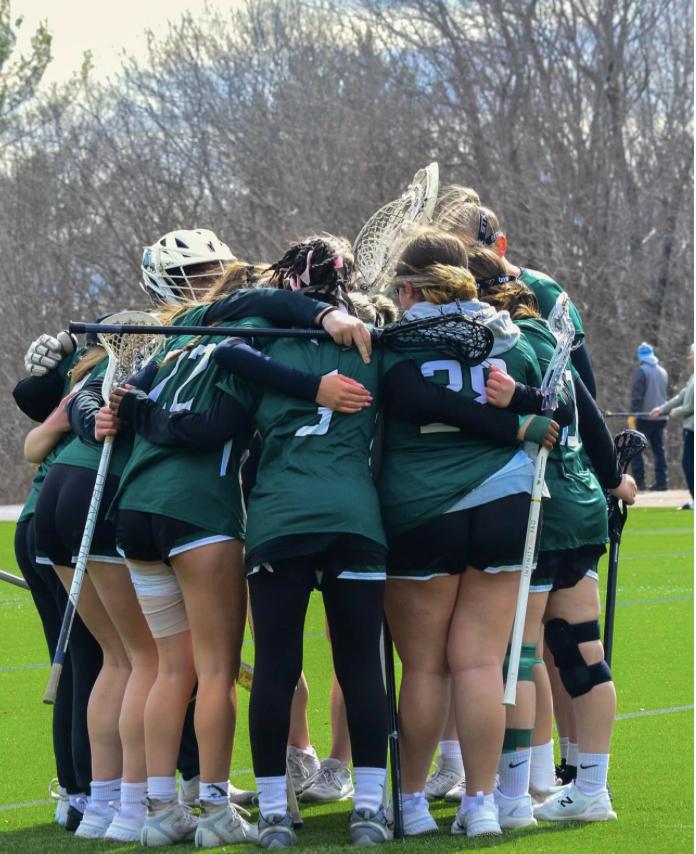
It’s the week before spring break, and everyone is excited for lacrosse season to start. I have been on the Hebron lacrosse team for five years now, and it is my favorite time of the school year. Meeting new people, reconnecting with friends, and playing a sport with the same people as your fall or winter sport. Pre-season has just started, and some people are nervous, while others are so excited for the end of winter and the start of spring. I am very excited to play because lacrosse brings me comfort. Playing the game with friends and having a coach who supports us every moment is what makes our team so special. Unfortunately, at the end of the season, seniors will leave, some of whom you have known for a while. But every minute on that field, on the track, in the gym, on the bus, on the opposing team’s field, is worth it. Although it’s sad when the season is over, I enjoy the comfort of the short but sweet season every year.
By David Lee '28
Despite having the top ranked offense with the best quarterback in the NFL, along with a highly ranked defense, and beating the best defenses in the play-off; the New England Patriots had a difficult loss against the Seattle Seahawks. In which, Seattle had an inferior offense and did not have their primary receiver, Jaxson-Smith Njigba, for most of the game. So, how did Seattle beat the New England Patriots? Seattle was heavily favored to win due to having superior special teams and a superior defense that had allowed the lowest total number of points during the regular season. They had a consistent offense that led to a finish as the No.1 seed in NFC. The Patriots had a poor offensive line, as well. They also had Drake Maye who had the highest completion rate, highest passer rating, the best ability to make deep plays and run down field, and yards per attempt.

When the game day came, wins and losses came down to Seattle’s defense. Seattle’s dark side defense disguised zone defense, confusing young quarterbacks and limiting open receivers, leading to more low accuracy passes. They used an efficient four-man rush to contain offense and created constant sacks and pressure, capitalizing on the Patriots’ poor offensive line. This limited Drake Maye’s ability to run downfield and caused multiple fumbles and interceptions. Ultimately, the defense putting constant pressure on Drake Maye was what made that night historical for having one of the fewest points allowed in history: only 13 points in total. Nevertheless, until the 3rd quarter, the Patriots had a standout defense. They allowed only a field goal. But, it was a field goal that made the difference. Donald’s ability to escape the pocket to pick up a first down and the inability of the Patriots’ defense to stop Kenneth Walker III, who had 135 total yards during the game, was what allowed them to get into field goal range. While, as for the Patriots, they had 78 total yards during the first three quarters.
In short, the victory came down to three things. First, they had a superior defense and used the Patriots’ poor offensive line to their advantage, by forcing turnovers and limiting plays. Second, they had a superior run game and greater ability to pick up first down. Thirdly, the Patriots’ had poor offensive performance, being scoreless against Seattle's defense. Although they lost the superbowl this year, the Patriots are now the dominant AFC team,and it is clear that they will come back to play next year.
By Micheal Boardman '27
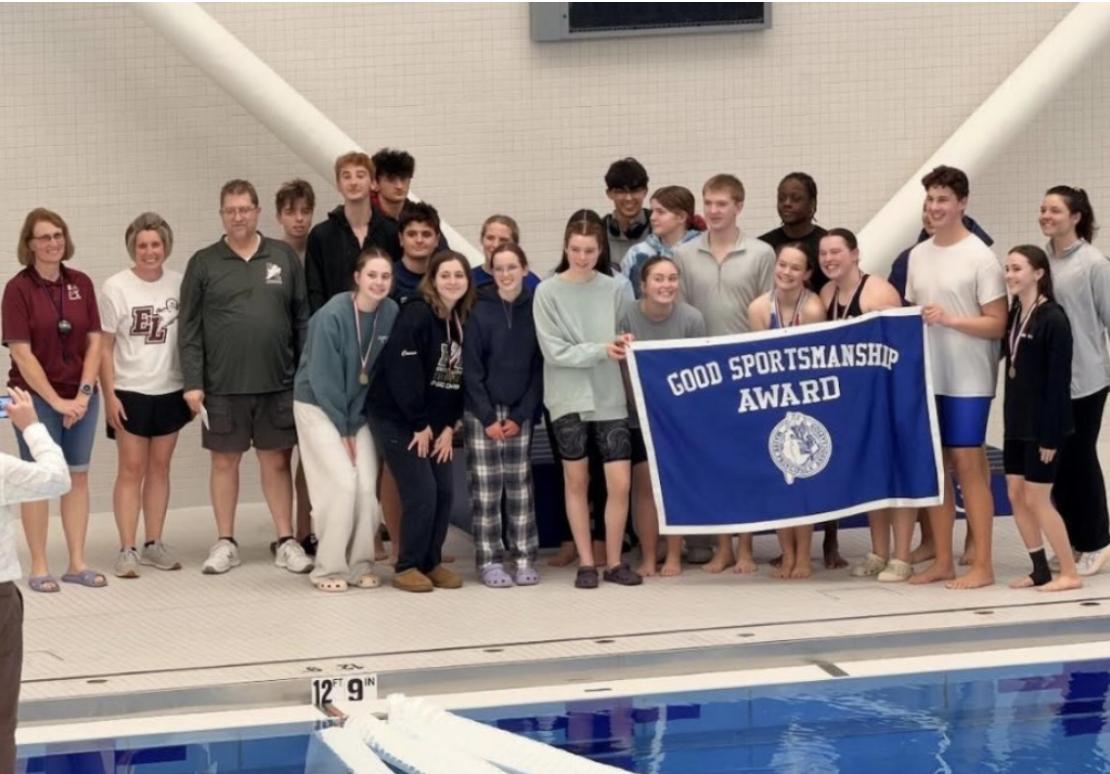
I first learned how to swim strokes (besides the doggy paddle) in 2018. My swim instructor at the time was, coincidentally, the head coach of the Twin Cities Swim Team (TCST), and she thought that I might be interested in swimming for the team. The following year marked my entrance into the world of competitive swimming, and through swimming, I’ve met many people who’ve made me feel welcome and made the sport more enjoyable. During my time swimming for TCST and the Edward Little/ Poland/ Leavitt/ Lewiston coalition, there was one person who went out of his way to make the team environment as welcoming as possible: Chase Leonardo. Throughout the years, he was always there to congratulate me after a good swim and to help me feel better after a bad one. Chase was always the best swimmer on the team, at least since I joined; however, that didn’t change the way he treated me, and he’s been my biggest role model since I started swimming competitively.
This past swim season, my swim team and I participated in many meets including the Kennebec Valley Athletic Conference’s Swimming Championships and the Maine Class A State Swimming Championships. This year was mostly a year of discovery for me in swimming as I started to work on a stroke, backstroke, I hadn’t focused on in several years. The season may not have been as successful as my sophomore season, but it gave me opportunities to develop as a more complete swimmer. At the Class A Championships I swam the 100 yard backstroke and didn’t do particularly well, but it was still fun to swim at the big meet. Next season, I’m hoping to continue to work on developing my strokes and to have more success in my swims, especially at the bigger meets.
By Alice Choe '27
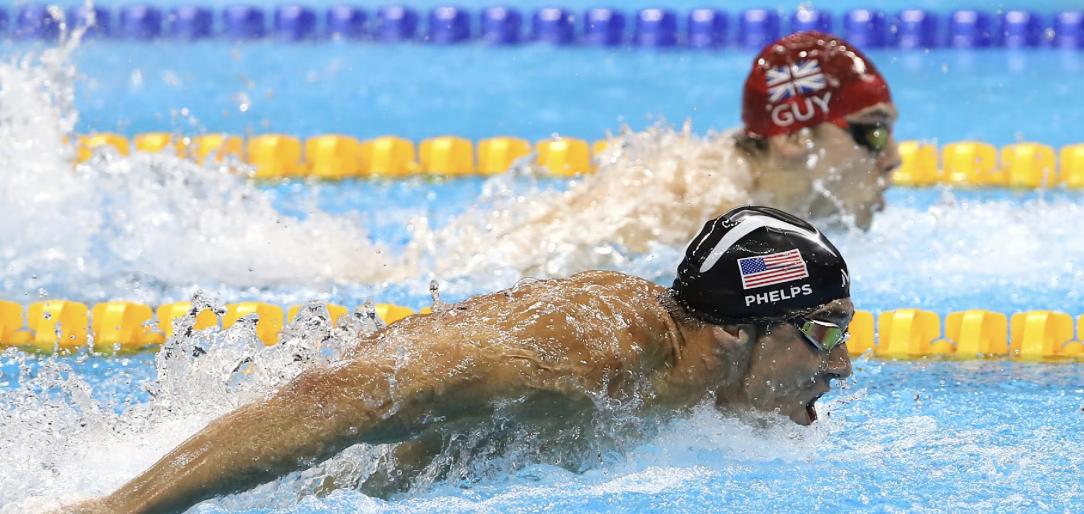
International swimming competitions are big events where swimmers from different countries come together to compete. They race in events like freestyle, backstroke, breaststroke, and butterfly, from short distances to long distances. These competitions are not only about winning, but also about doing your best, improving your times, and representing your country. They also let athletes meet people from different places and learn from each other through sports.
To compete at this level, swimmers have to train a lot. They spend many hours in the pool practicing their technique and also do dryland workouts to build strength and stamina. Small details like starts, turns, breathing, and body position can change the result of a race, so everything has to be practiced carefully. Because of that, international competitions really show years of hard work, discipline, and patience.
Swimming was a very important part of my life for a long time. I was a competitive swimmer from when I was 6 years old until 8th grade. At first, I just enjoyed being in the water, but over time I became more serious and started competing in meets. When I competed in Korea, I often got first place because I trained a lot and took it seriously. Even though practice was sometimes tiring, especially early mornings or late nights, I felt proud when I saw my times getting faster.
What I remember most about swimming is how much I improved step by step. In the beginning, even simple things like breathing and form were hard for me. But as I kept practicing every day, I slowly got better and more confident. My coach always corrected small mistakes, and even though it was frustrating sometimes, it helped me improve a lot. Racing in competitions was always nerve-wracking, but it also felt exciting and gave me confidence when I did well.
Then COVID-19 happened, and everything changed. Pools were closed or had limited access, and it became really hard to train regularly. Most competitions were canceled, and I couldn’t practice with my team like before. Because of that, I eventually had to stop swimming as a competitive athlete. It was disappointing because swimming had been such a big part of my life, but it also made me realize how much I actually loved it.
Looking back, swimming wasn’t just a sport for me. It taught me discipline, patience, and how to keep going even when things are hard. I never competed in real international competitions, but I still understand what they represent because I experienced that same kind of hard work and dedication in my own training. That experience still means a lot to me.
Even now, I try to use what I learned from swimming in my daily life. I learned that if you keep working hard and don’t give up, you will eventually improve, even if it takes time. Swimming helped shape who I am, and the lessons I learned from it will stay with me for a long time.
olympics.com
By Hebron students





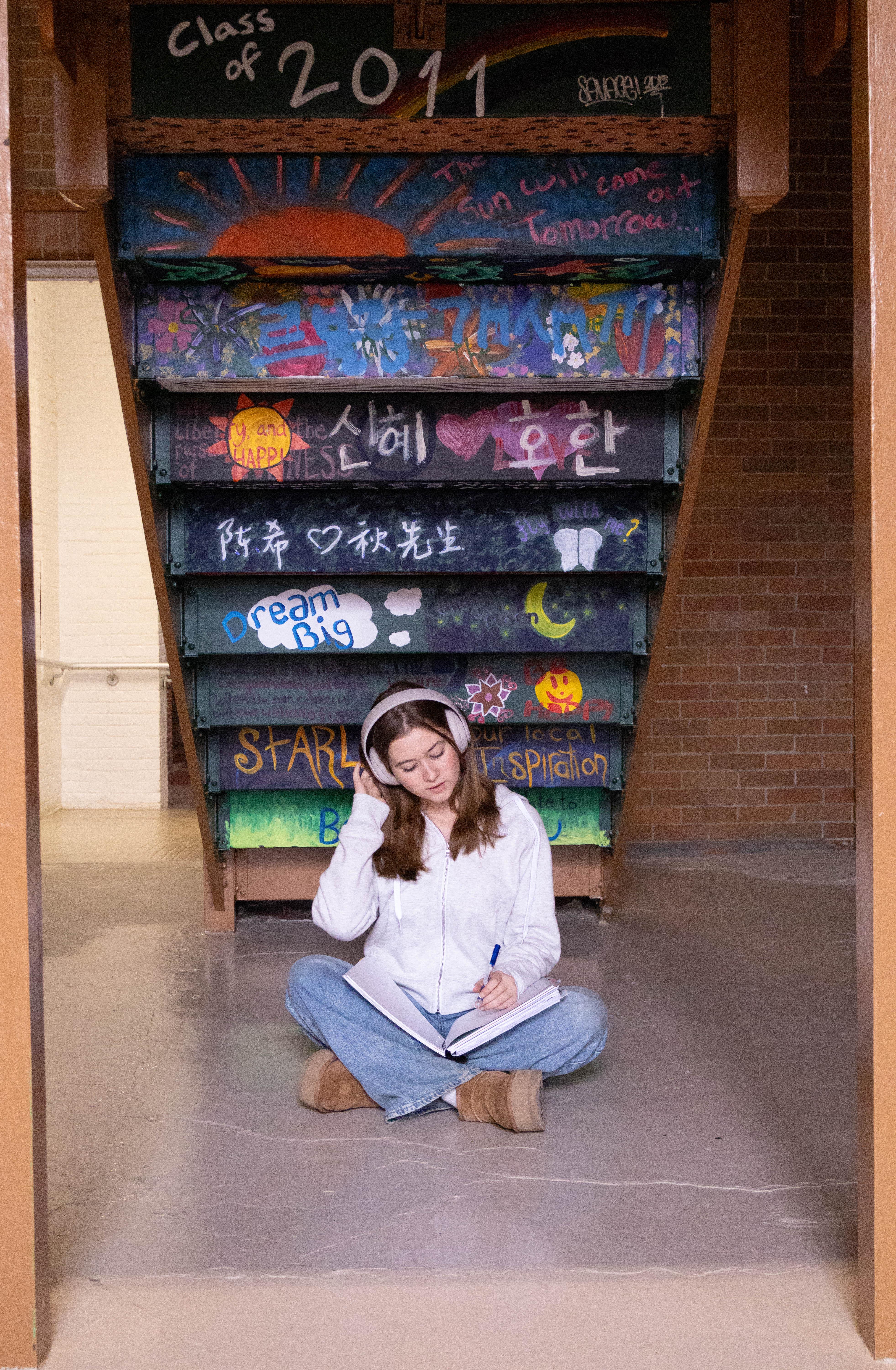

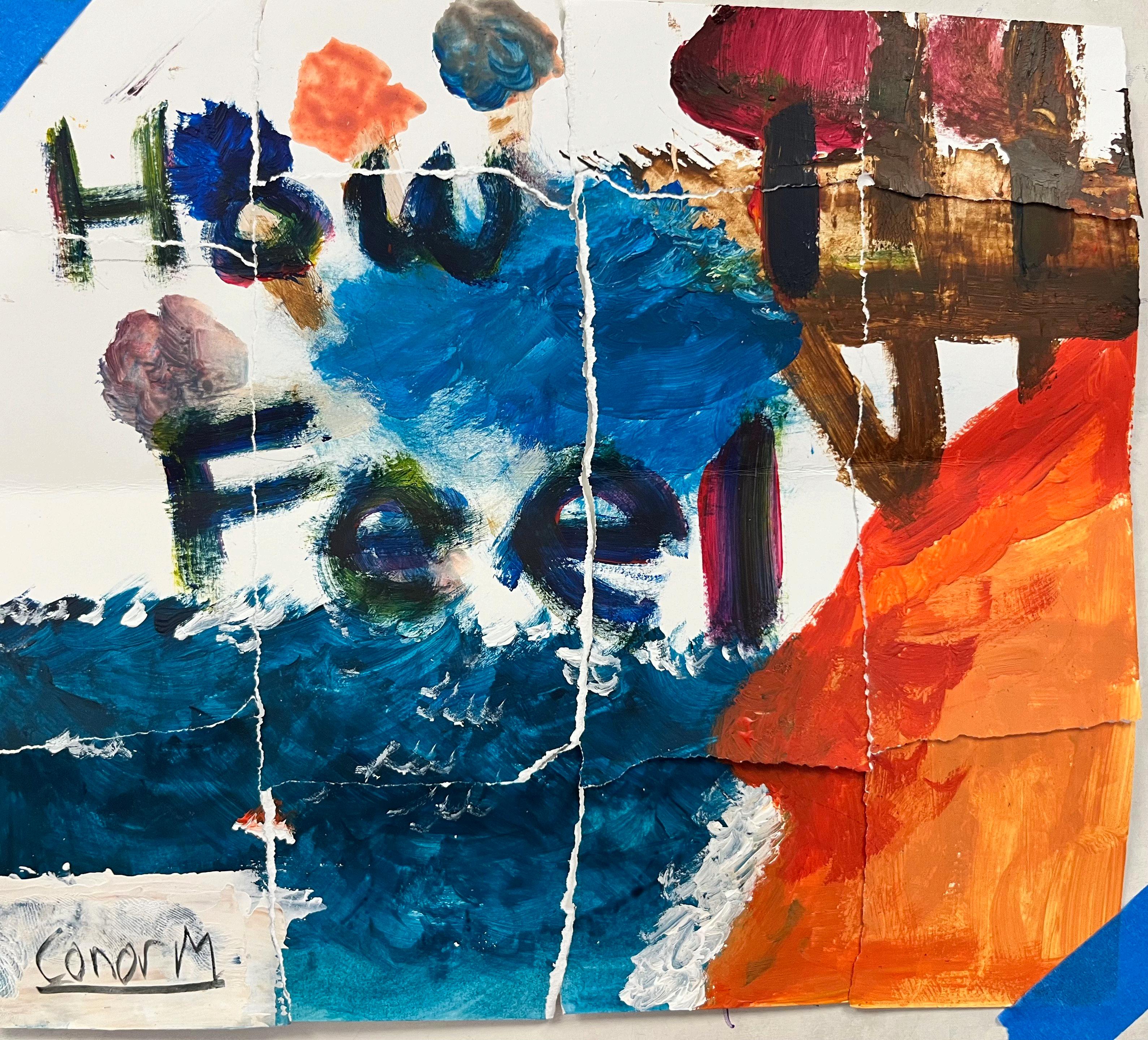

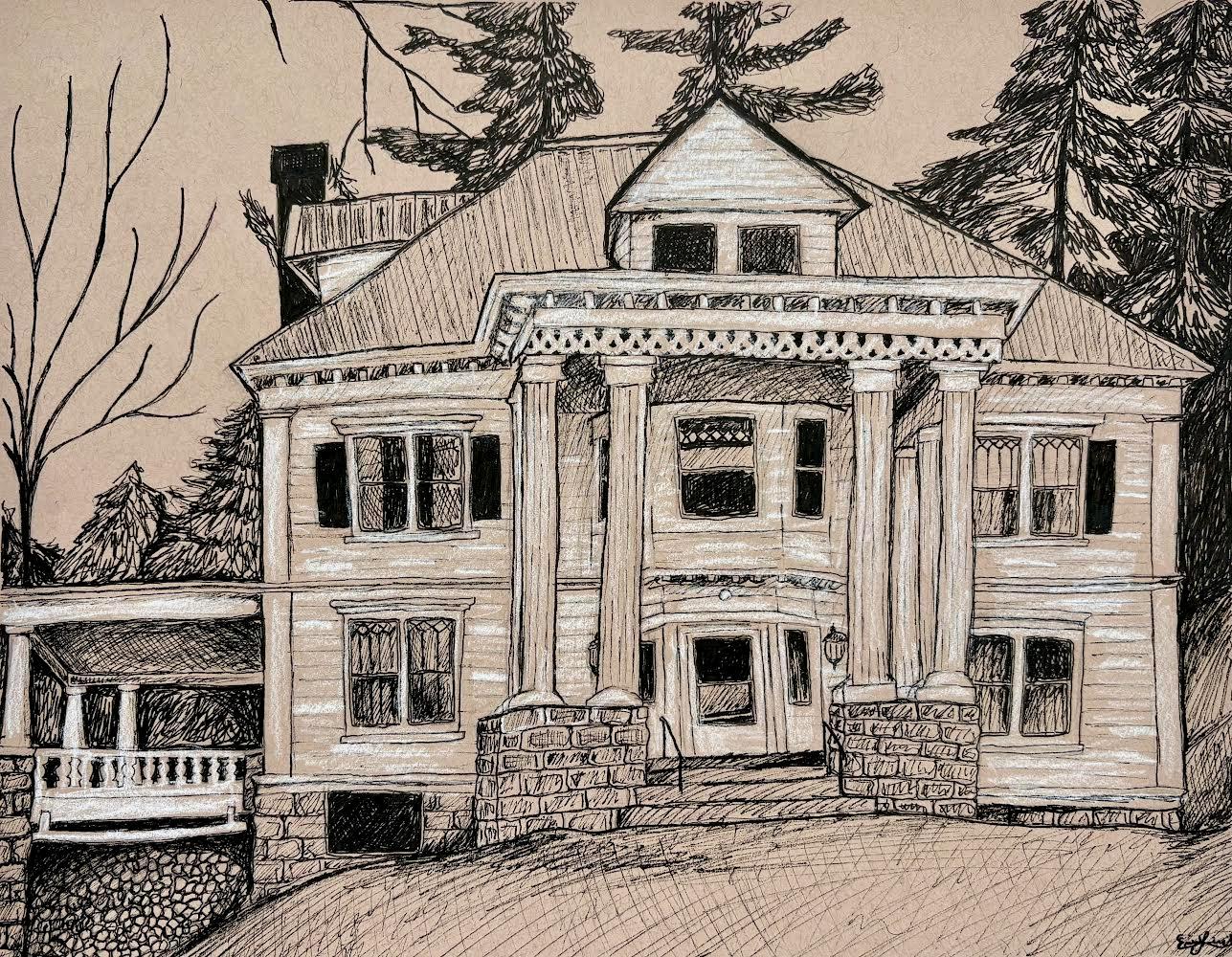

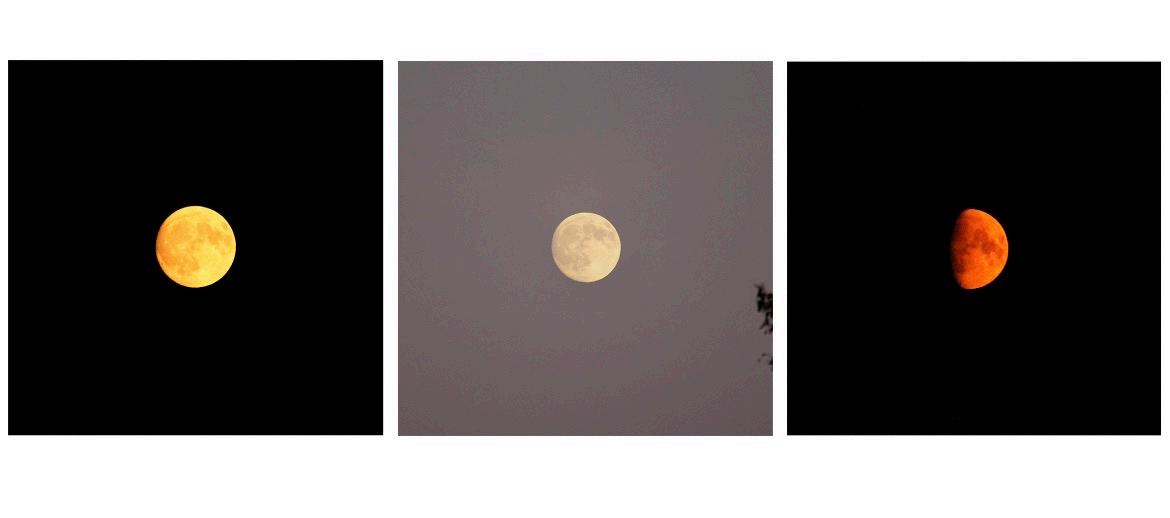




By Adeline Hancock '27
This past winter, in the midst of the severe miscarriage of American justice perpetrated by ICE agents, I stood in Monument Square in Portland, Maine, among thousands of others. As a student at Hebron Academy, I am from this small, private boarding school. We are isolated, sheltered, and, by most measures, far removed from the issues being addressed that day. I cannot vote, I have no true political power, but I was there.
The most common point brought up to me was that I am not affected by the thing I was protesting. On the surface, this is difficult to argue with. My parents were not taken from me, my friends didn’t disappear one by one, and my life was largely without change. But, for Hebron at least, we suspended weekend trips to cities like Portland and Lewiston. Our teachers underwent training on what to do if they encountered an ICE officer. Maybe this should tell a story within itself, that even in our insulated corner of Maine, the presence of aggressive, power-hungry federal immigration enforcement was felt. During “Operation Catch of the Day”, ICE arrested more than 100 people in Maine in a single week. Hundreds of children stopped going to school,l and people were afraid to go to work. The argument that this “doesn’t affect” us requires one to have an extremely narrow definition of affect. This definition would need to exclude neighbors, local economies, and the ripples of a community living in fear. pressherald.com

Another strong criticism is that protesting is performative, done for oneself and not for others. This criticism contains truths worth considering. Protesting is a chance to feel righteous, to fulfill a personal moral obligation (defined by a personal sense of right and wrong), and to go home without sparking any true change. That impulse drives more than a fair portion of the people participating in ICE Out events such as this. There is a danger in this dismissal, however, as it ignores the role a protest serves when it works. Portland’s mayor noted that protests such as these had gained attention from Washington. Senator Susan Collins, in order to preserve some semblance of polling approval, announced that ICE would be scaling down its operations. At the national level, the protests disrupted economies with high turnout, costing hundreds of millions of dollars. Protest at scale is not self-expression; it is pressure.
It is always a struggle to find a role as a non-voter. Voting is the basis of participation in democracy and political It is always a struggle to find a role as a non-voter. Voting is the basis of participation in democracy and political power. We all see the events occurring around us. We see the abuse, the rampant racism, and the injustice endorsed by our own President. We see the five-year-old detained outside his school, and we see the fatal shootings of non-violent protesters. And I think all Americans share a feeling of helplessness watching oppression carried out so openly that we no longer recognize our country. The difference is that we have one less power found in voting. We are not outside of these events. We are shaped by the policies made around us, and we can shape the culture that surrounds them. Protests are one of the few paths where a voter registration card is not a barrier to entry.
And yes, my school is isolated, a lack of weekend trips and some extra training for my teachers are purely small inconveniences. I know that, but they were also reminders of what was happening to my state. I went to Monument Square because I believe that the measure of a community is not how it treats the people with the most protection, such as myself, but how it treats those with the least. I went because I am sixteen years old and cannot vote, but I can stand somewhere and choose to call out a wrong. It wasn’t selfless by any stretch. I made no personal sacrifice, but I wanted to be someone who showed up. And honestly, that is the point. If we each made some small effort to show up, every single one of us, we would see real change.
By Juliet Son '28

In Gossip Girl, Blair Waldorf says, fashion is “the most powerful art there is. It's movement, design, and architecture all in one. It shows the world who we are and who we'd like to be.” Fashion defines who you want to be and how you want to be perceived by people. In 2026, the flow and trend of fashion changed rapidly with the development of social media, allowing people to share and connect.
As the 2016 era is going viral, messy, splendid, and the use of anything that goes with bold is becoming a part of the new 2026 trend. Oversized and big-framed sunglasses such as Chloè’s square frame sunglasses and Gucci’s special fit square sunglasses, big, long, and multiple-layered jewelry, and bold colors – hot pink, sky blue, and green – clothes especially tracksuits from IAMGIA and Juicy Couture are examples of this trend. Regarding the ‘messy’ trend, wearing silky slip dresses with long and very sparkly accessories, skinny scarves, splendid purses, and bold makeup, which is called lingerie fashion, is also a part of the trend. Women’s Fall/Winter 2026 Runway Show from ‘7 for all mankind’ showed this trend amazingly, evoking early 2000s nostalgia.
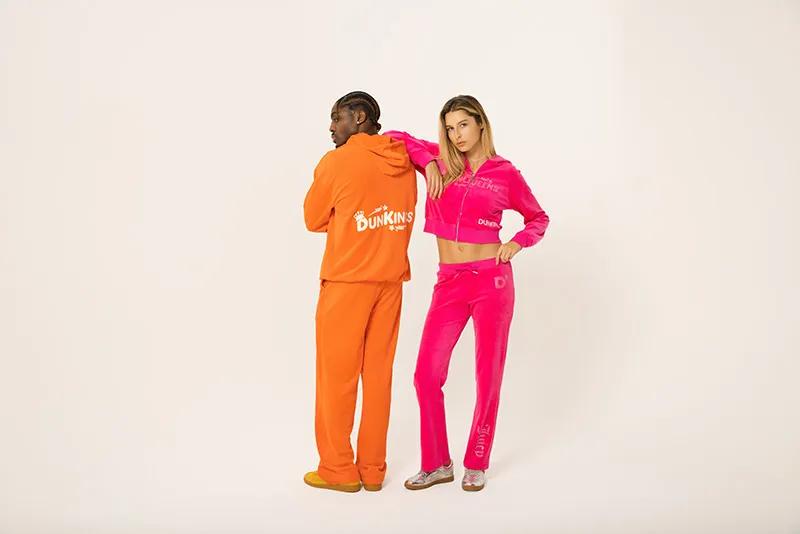
Women's Wear Daily
One trend that blew up the millennial generation has come back in 2026, which is military-style jackets. Military-style jackets are often referred to as Napoleon jackets, a military coat style worn by Napoleon during the early 1800s. Its genderless style and traits make people more fascinated and want to wear it. Double-
breasted, high collar, and gold buttons are conspicuous. People often match denim, skinny jeans, and sunglasses with it to add more chic and classy vibes. Cropped style, long style, and fur style, so many types of Napoleon jackets are coming out, and lots of brands are recreating it with their own styles. Alexander McQueen’s S/S 2026, Balmain F/W 2025, Ann Demeulemeester’s S/S 2026, and Dior S/S 2025 are examples.

The footwear trend highlights the balance between comfort and style. Slim sneakers are leading this trend with a wide range of styles within low profile, flat or minimal sole, lightweight, and simple design. This trend significantly emphasizes the change in footwear characteristics because it shifts from big, bulky designs to cleaner, refined, and understated designs. Also, slim sneakers give off quiet luxury and are stylish, but not flashy, which shows that the minimalism trend is back. Moreover, Sneakerina shoes are the evolution of this trend combining ballet flats and 1970s sport shoes to evoke a more classy and elegant style. Speedcat ballet venus from Puma, Tokyo MJ from Adidas, and LV Sneakerina from Louis Vuitton show several different styles within Sneakerina styles.
By Freeman Campbell '29
Social media, initially thought to be the ultimate connector, has become a direct cause of human distance and fragmentation. While platforms like Facebook, Instagram, and TikTok offer unprecedented global reach and connection, they often undermine genuine, sustained human connection, leaving users feeling more isolated than ever. One of the most significant causes of emotional distance is the relentless nature of online life. Social media is often considered one of the most dangerous addictions, making its users feel as if they need to be online or else they might miss out on the newest trend. We are all incentivized to share "highlight reels” like the perfect tropical vacation, the latest professional success, the picture-perfect holiday gathering, and the aesthetically pleasing meal; all while quietly editing out the imperfect struggles that make viewers feel as if they aren't good enough. Without these emotional difficulties, self-doubt, and complex, messy realities that define human existence, we wouldn’t be human.
I have noticed this in my life while looking at my friends' Instagram accounts and seeing their perfect presentations of vacations and food photos, as well as the relentless curation that has created a deep gap between their highly managed online persona and the vulnerable, flawed, and real self. When friends and acquaintances primarily interact with a cleansed and perfected version of you, they never truly know, understand, or connect with the real you. Furthermore, the subconscious knowledge that everyone else is also performing reinforces this barrier, leading to a pervasive, low-level sense of inauthenticity, profound loneliness, and a societal distrust in the very connections being forged. Social media masterfully provides users with a powerful, yet ultimately hollow, illusion of proximity without demanding the energy, effort, or time required for actual, meaningful engagement, creating this feeling of distance.
I often see ads from TikTok, Instagram, or Facebook that say “connect with your friends.”
However, nine times out of ten, I see it taking away from the time when people could be spending time together in real life and replacing it with sharing videos or texting. Social media demands constant attention, fragmenting our focus and drawing us away from the present moment and the people physically around us.
Whether it's scrolling through endless feeds during a family dinner or compulsively checking notifications while out with friends, the device acts as a persistent, invisible wall. The very mechanism designed to keep us informed and connected globally ends up distracting us from authentic, in-person engagement. What was once created as a tool for enriching existing relationships and facilitating genuine, deep connections, social media has become a primary vehicle for performative living and fleeting interaction, ultimately succeeding in what it was intended to prevent: fostering profound societal distance and individual loneliness.

youthranch.org
By Vivian Hamlin '27
The Super Bowl halftime show has been an exciting source of entertainment for American households for decades; however, beneath the surface, it's always been deeper than just entertainment. It reflects the cultural and social climate of the nation, and even more so in recent years. In 2026, this deeper meaning behind the show rose to the surface through the contrast between the official halftime performance by Bad Bunny and the alternate “All-American Halftime Show” organized by Turning Point USA. Together, these two events revealed deep cultural divisions, competing ideas of national identity, and the growing politicization of entertainment in a tense climate.
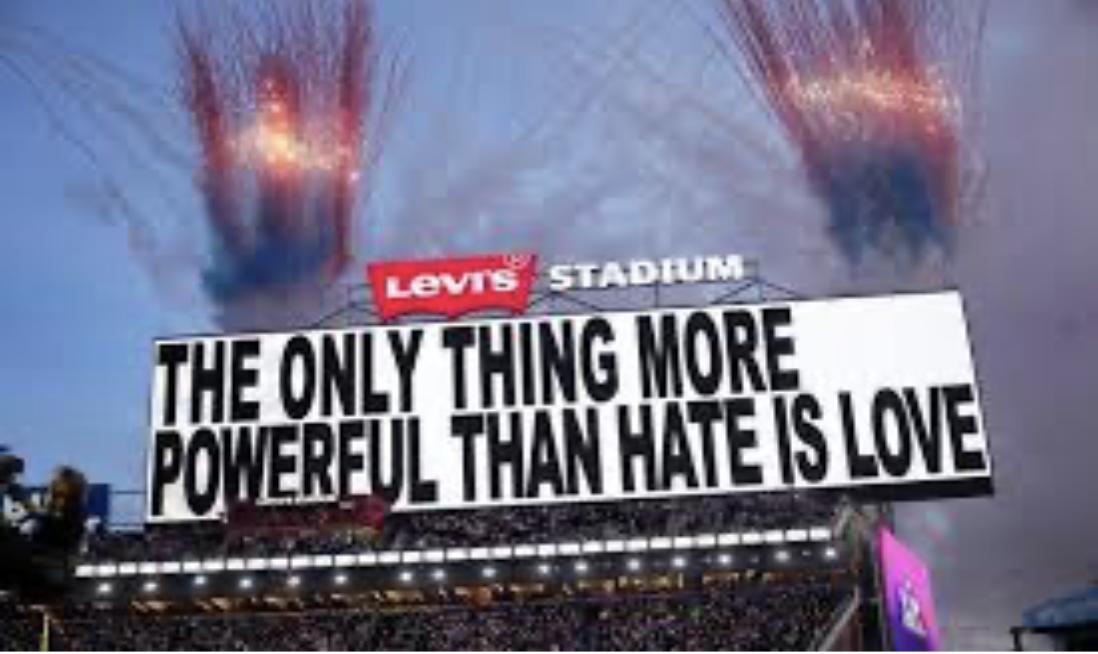
The official halftime show represented a shift towards inclusivity and globalization. Bad Bunny’s performance included viewers in Latino culture and focused on themes of unity, ending the show with a message, "Together we are America,” written on a football and signs that read “the only thing more powerful than hate is love.”This reflects broader demographic and cultural changes in the United States, where diversity is increasingly visible and celebrated in mainstream media. The NFL’s decision to feature a global artist aligns with its goals of expanding to an international audience and appealing to younger, more diverse viewers. From this lens, the halftime show represents a broader shift in entertainment in the modern climate, where it serves as a statement of a changing American identity that includes appreciation of multicultural and multilingual diversity.
However, this same performance sparked a whirlwind of backlash, particularly from conservative audiences. Critics argued that the use of Spanish and themes related to immigration made the halftime show feel exclusionary to English-speaking viewers and politically charged. Some political figures, including the United States president Donald Trump, publicly condemned the performance, calling it unrepresentative of American values. This reaction highlights the ongoing cultural tension: whether the American identity should be defined by traditions or adapted to reflect the reality of a more diverse population.
The alternative halftime show by Turning Point U.S.A. emerged from a sense of tension. It was created as a ‘counterprogramming’, meaning it intentionally provided a different option for viewers who disagreed with the official show. This alternative halftime show included performers such as Kid Rock, Brantley Gilbert, Lee Brice, and Gabby Barrett; all artists who position themselves within right-wing, conservative media. This overall performance was an attempt to emphasize themes of patriotism and was directed at more traditional, conservative viewership. The fact that such a large-scale alternative was organized demonstrates how deeply political entertainment spaces have become in the current political climate. Rather than simply criticizing the official Halftime Show, organizers created a truly new, separate space to represent their values.
The outrage from both sides can be understood as a difference in values and identities rather than simply a difference in music taste. For supporters of Bad Bunny, this criticism seems rooted in xenophobia or resistance to cultural change, especially given that Puerto Ricans are U.S. Citizens, and Spanish is spoken widely in both the U.S. and Putro Rico. They argued that Latino culture is a major percentage of the United States and deserves to be represented on the national stage. On the other hand, critics felt like their own identity and values were being overshadowed by the performance. Both sides felt unheard, leading to stronger, more emotional reactions.
Social media also played a role in the controversy, as people could share their opinions and interact with those who agreed, further fueling the fire. These interactions created an echo chamber in which ideas were reinforced more than challenged. The Turning Point USA show was promoted in conservative communities, while the official halftime show dominated the mainstream spotlight. This separation showed how media consumption today often reflects personal beliefs, creating a more difficult barrier to cross into a common ground.
This situation is more relevant in today's society, as it shows how even major entertainment events are becoming politicized more than ever. The Super Bowl used to bring people together, but now it highlights differences. This reflects a broader trend in the United States, in which politics and identity shape how people interpret entertainment, news, and culture. In the end, the two halftime shows represent the different versions of the American Identity. One focuses on diversity and change, while the other emphasizes tradition and stability. The fact that no interpretations exist simultaneously shows how complex and divided the nation is currently. This controversy surrounding these events was not really about the performances themselves, but what they represent.
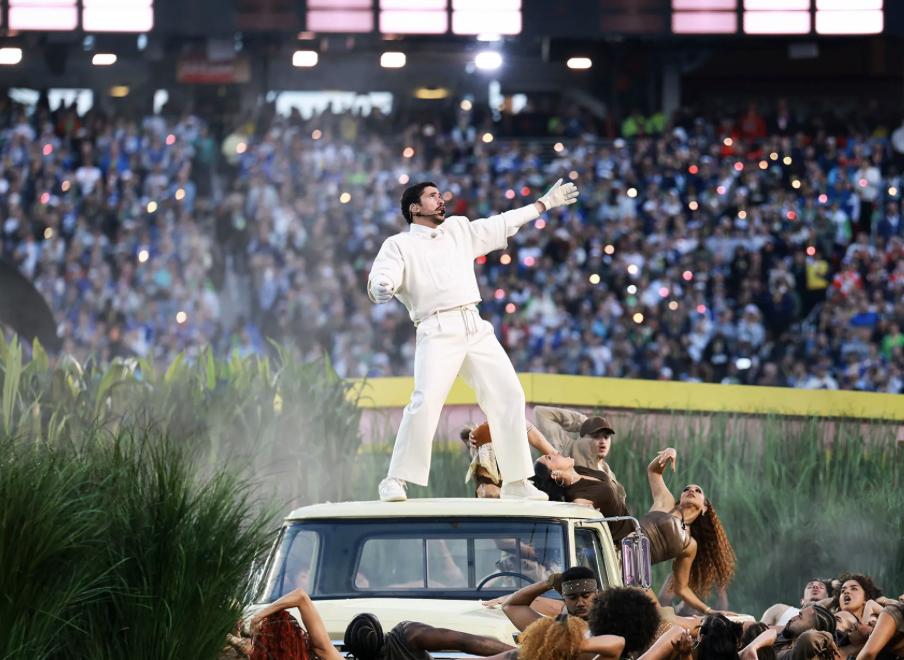
newyorker.com
By Conor McCarthy '27
Every Thursday morning, the AP English Language & Composition class at Hebron Academy continues the “Year Long News Thread,” a weekly review of a current events article and class discussion. Topics have ranged from the Epstein Files and the war in Iran to Mexican Cartel battles and New York politics. The unfortunate ending to most discussions is an agreement that whatever we do will likely have little effect and that the system is too corrupt. This leads to a feeling that there is no substantial result that can occur from protest and that the major problems that face the world are too far from our reach.
The reality is that the people of the United States, especially younger generations, are becoming numb to the issues that face us. The reason for this occurrence is mass desensitization. There is so much constant news and information, often through social media, that there is a constant sense that everything is falling apart and it leaves doubt in where to begin when trying to better the world. The truth is that the American population is being desensitized to violence due to media saturation and technology usage, and this will have long-term effects on our lives and our rights as human beings.
The human mind is only meant to consume so much news at once. Due to the dramatic increase in social media usage, it has become a constant information outlet imposing itself onto the everyday American. The “doomscrolling” epidemic has led to a continuous inflow of negativity and bad news. “We’re not getting any messages about hope - it’s all negativity” (Salamon). The dangers from this reality are worrying as it could lead to hopelessness for the general public and a lack of collective action.
The difference in how news is represented today is drastic compared to fifty years ago. During the Vietnam War, Americans were able to see visuals of atrocities, which led to significant domestic opposition and eventually the United States pulling troops out. These horrors were triggering and led people to want to make a change. Nowadays, Americans have such an alarming amount of news that it seems difficult to help. There are so many statistics that are just numbers on a screen that do not ignite progress. This phenomenon is called “psychic numbing.” It is more effective to show imagery depicting one person struggling rather than statistics showing hundreds dying (Slovic). Donations given to a cause are proportional to the feelings related to the depiction of it.

see real-life violence on social media). Through social media exposure and constant news, young people are becoming more desensitized to violent acts.
Another catalyst is the speed at which news switches topics. The twenty-four hour cycle is damaging to mental health. “Brutal news cycles can wreck the body’s stress response and lead to psychological issues” (Wexler). This makes it difficult to focus on a single topic and create meaningful change when there are constantly new stories. Media saturation conditions the public to not care or focus on issues.
The primary reason the media is so saturated is due to modern technology creating passive consumption of news. Social media apps present tragic imagery between humorous content, decreasing significance as it can be forgotten in one scroll. “It has been one onslaught after the other… Doomscrolling is our response” (Salamon). Scrolling triggers stress repeatedly, fatigues the stress-relief system, and creates distance between real-life stories and the viewer. Instead of being outraged, one can move on with a click. This creates a lack of trust and adds to the distance a reader feels.
Younger generations believe social media to be an equally reliable source of information as national news organizations. This is concerning because future leaders are putting faith in an unreliable source. This furthers desensitization because social media is full of violence and misinformation, creating a feeling where nobody knows what to believe.
Desensitization is also evident in responses to the Mexican Drug War. Findings showed a decline in negative emotional expression and a rise in emotional arousal on social media, markers of desensitization (Choudhury et al.). Emotional detachment and fatigue of compassion are related to modern news consumption and overuse of technology.
The primary issue with desensitization is that it leads to a decrease in mass outrage and collective action. Donations and effort are directly related to emotional impact. If people are more numb, suffering will increase. “If I look at the mass, I’ll never act” (Slovic). The issue-attention cycle shows how interest in problems rises and then declines, ending with replacement by a new issue (Downs). Social media often leads to many people willing to do a little rather than fewer willing to do anything, making long-term change difficult.The biggest problem lies in domestic issues. When atrocities occur without enough response, there will be little punishment. “A numb society is a society that can be led anywhere… when we stop reacting… the unthinkable becomes normal” (The Numbing of America). Without outrage, there will be no change, and those in power will not be held accountable.
Some argue desensitization is a natural response to tragedy or that social media increases awareness. While awareness is increased, those who consume large amounts of news are often overwhelmed. “Doomscrollers” are absorbed in news, lose control over consumption, and have it interfere with daily life (Brooks). This leads to burnout, helplessness, and lack of real change.
What has become clear is that America is becoming desensitized to violence due to media saturation, exposure to violent content, the speed of news, and technology. Violent media lessens reactions to real-life violence. Scrolling creates passive consumption that overwhelms the brain, and younger generations trust these sources. When there is less emotional response, policy change will never happen. If offenses go unrecognized and unopposed, society will end up in a world it does not wish to be in.
It is critical to recognize how we are being desensitized. It is important to form your own opinions and not let decisions go unchallenged. What you allow to happen is what the world will become. Do not become numb or roll over when decisions are being made. You deserve to have a say in what the world becomes.
Brooks, M. (2022, August 25). “‘Doomscrolling’ Takes a Toll on both Mental and Physical Health”. Medscape. https://www.medscape.com/viewarticle/979737?form=fpf
Choudhury, M., Monroy-Hernández, A., & Mark, G. (2015, July 5). “‘Narco’ Emotions: Affect and Desensitization in Social Media during the Mexican Drug War”. Cornell University. https://arxiv.org/abs/ 1507.01287
Downs, Anthony. (1972:Summer) “Up and Down with Ecology-the Issue-Attention Cycle” , Public Interest.
Gdrive, J. (2026, January 29). The numbing of America: Why we’ve stopped reacting to the unthinkable. JCI WorldWide. https://www.jcipr.com/post/the-numbing-of-america-why-we-39-ve-stopped-reacting-to-theunthinkable
Krahé, B., Möller, I., Huesmann, L. R., Kirwil, L., Felber, J., & Berger, A. (2011, April). “Desensitization to media violence: Links with habitual media violence exposure, aggressive cognitions, and aggressive behavior”. Journal of Personality and Social Psychology. https://pmc.ncbi.nlm.nih.gov/articles/PMC4522002/
Salamon, M. (2024, September 1). “Doomscrolling Dangers”. Harvard Health Publishing. https:// www.health.harvard.edu/mind-and-mood/doomscrolling-dangers
Slovic, P. (2023, January 1). “‘If I look at the mass I will never act’: Psychic Numbing and genocide: Judgment and decision making”. Cambridge Core. https://www.cambridge.org/core/journals/judgment-and-decisionmaking/article/if-i-look-at-the-mass-i-will-never-act-psychic-numbing-and-genocide/ 0E55D099E133068F9ACD5A0DBBE1E4E2
Wexler, J. “The Surprising Way Doomscrolling Rewires Your Brain". (2025, September 11). National Geographic. https://www.nationalgeographic.com/health/article/how-news-affects-your-brain-and-body “70% of teens see real-life violence on social media”. Youth Endowment Fund. (2026, February 17). https:// youthendowmentfund.org.uk/news/70-of-teens-see-real-life-violence-on-social-media-reveals-new-research/
. Accessed 1 December 2025.
Smith, Gregory A., et al. “How Americans view religion & science.” Pew Research Center, 26 February 2025, https://www.pewresearch.org/religion/2025/02/26/religion-and-views-of-science/. Accessed 1 December 2025.
Yilmaz, Onurcan. “When Science Replaces Religion: Science as a Secular Authority Bolsters Moral Sensitivity.” PubMed, National Library of Medicine, 11 September 2015, https://pubmed.ncbi.nlm.nih.gov/26360826/. Accessed 1 December 2025.
By Liam Snodgress '26
The trees stand thick around the trodden path. They lean their branches, stretching over the bare dirt as if to gaze upon something unknown. People, beings, monsters all travel this tiny road, though not often and rarely at the same time.
The hut sits squat in the side brush. Its porch sprawls wide across a low hill, its yard lies undisturbed, and its fields wait patiently out in the shaded sunlight for a willing hand to seed them. A crooked oak slab blocks the doorway, none of its infrequent passersby register it as a door. A thatch roof sits, reinforced by ancient rafters resting on even older struts. A small window used primarily for peering sits facing longways down the passing road.
Footsteps and the rustle of saplings have no particular ears to fall upon, though they make noise all the same. Clods break under worn leather soles and a silent echo accompanies each lifted foot. Walking around the house comes a man, his face stained with dirt. His brow perches, furrowed, and a bead of sweat falls to the porch railing he leans upon. The man takes a swift breath, wiping his face with the back of his forearm and moves toward the wooden slab guarding the house's interior.
The man lifts a bolt driven into the porch and the ground beneath it placed just before the crooked guard. The guard swings forward, passing the man’s head by a few inches and welcomes him into the humble residence. The man steps through the entrance, bolt in hand, and lays it on a small wooden shelf resting at hip height on the right of the door. He takes up a length of rope attached to the inside of the crooked door and tugs, swinging the door back to its rightful place. He then wraps the rope around a low lying strut and ties a knot. He whistles and his eyes wander through the familiar space slowly, assured that all will be well.
Below the shelf on the right of the door one other pair of leather shoes lines the wall. On the shelf next to the bolt his pack sits, stuffed to the brim with hunting tools and temporary provisions. Above the shelf a sole hook stands at the ready to receive a good, heavy coat, though no coat yet exists or is in the man’s possession. Across the room beckons the fireplace, a space of warmth. A space of memories, memories shrouded in long nights spent staring into dying embers. The cooking area lays bare, just as he had left it, the wildberries and edible growth he had foraged is running low, best not to leave anything out for the mice.
A small cot rests in the corner, its weightless blanket drawn tight to the frame. A lone pillow seems to sink into the cot, finding refuge in the uneven nooks and crannies of the poorly cut platform. Stubby legs adorn the four corners of the cot and a small headboard sits ornately, crowning the frame. That was the man’s finest work. Pride swells in the man’s chest, pride at his ability to create something so beautiful with his own two hands. The cot is sturdy, it is cot shaped, and it serves a purpose. The man’s eyes gleam with an inner joy and he moves to
The man rests his legs, setting down on the cot and begins to remove his shoes. They slip off his bare feet, and he places them at the foot of the cot. Removing his sweat stained and dirt marred tunic the man mops his lightly haggard face and replaces it with a fresh linen top. He feels along his stitching, searching for weaknesses in the shirt's structure. He finds a few but reminds himself he will improve. The man lifts his legs onto the cot, lies on top of the blanket, and shuts his eyes for a short, replenishing nap.
A wind shuffles through the tree tops overhead, green shadows cast from leaves far above cover the land, and the sun dances gleefully in an open glade. Along the path the sound of fading wheels and final hints of raucous chatter clear from the air allowing room for the quiet noise of woodland to creep back, reclaiming the space occupied by the path.
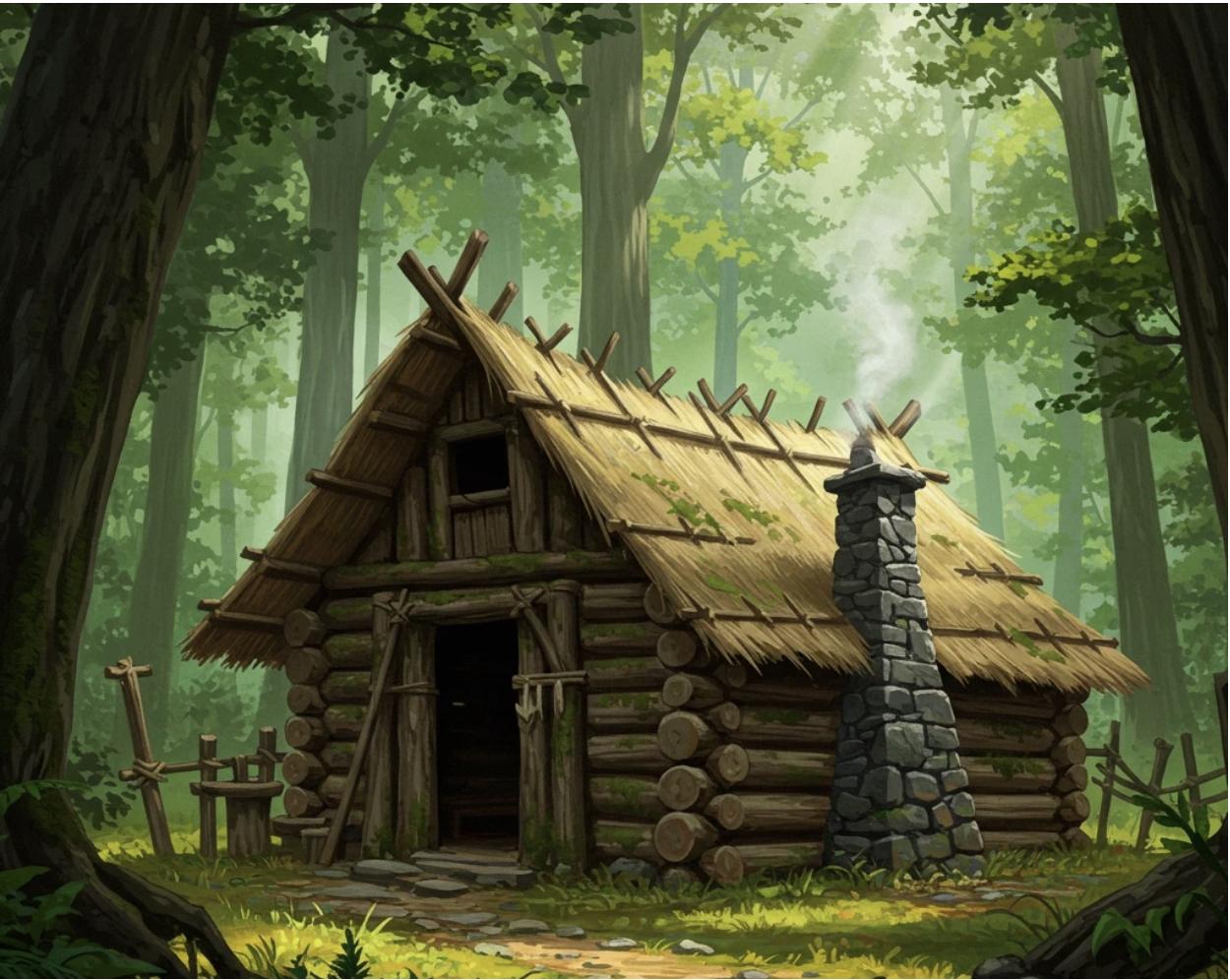
By Vivian Hamlin '27, and Conor McCarthy '27
As part of this issue, we are proud to present the winners of Hebron Academy’s Love Letter Competition. The pieces featured in the following pages reflect the remarkable creativity, thoughtfulness, and talent present throughout the Hebron community. Each winning submission demonstrates a distinct voice and an impressive craftsmanship of language, showcasing the power of writing to connect, inspire, and leave a lasting impression on readers. We are excited to feature these exceptional pieces and to recognize the dedication, originality, and artistry displayed by the writers included in this year’s competition.
By Emily Finch '27
Dear Taylor,
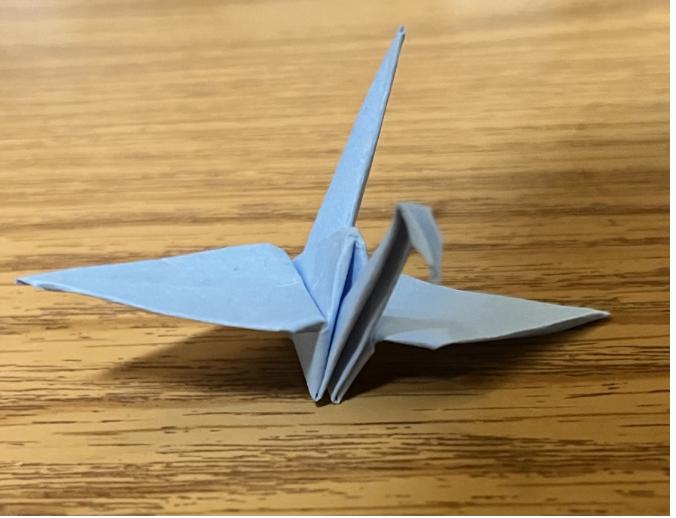
You are ineffable, but by God, I will try. When I think of how you made me feel, you’re a delicate sun shining pink through my eyelids and the soft tonal whispers of an antique windchime. You’re a warm, smooth hand interlaced between my icy, cracking fingers, rippling orange comfort from every point of contact out into my blue solitude. You’re the saccharine ache in my face from incessant laughter, and the consoling voice that I could listen to reading aloud for hours. You’re the sugarcoated sorrow spanning the distance between us when we’re apart, the muse I wish to paint, the hope that fuels my brutal days, and the kind soul that cradles my rapidly beating, panic-stricken heart. You’re the first person who’s ever broken that heart. You’re not quite gone yet, but you haven’t stayed either. I’d rip up every piece of me to give it all to you. I could never condone such irrational behavior from me for anyone but you. You make me stupid, utterly stupid. Every crane is my folded flesh. Every day my substance shrinks as I pour it out for you. I will wane, and I will wane, and I will splatter and scatter and paint myself across everything that is you until you’re smothered. That’s when there will be nothing left of me for you to love. I am impulsive and impatient and insensitive, so I damn this irrationality that born from love will destroy it. I will beg and beg with disregard for all of my dignity, trading it for pitifulness. I swore to never touch substances, and here I am having withdrawals from the most common of them all. Yet I could never satisfy them with any type other than yours. So I guess all that I can ask is, “When you go, would you have the guts to say: I don’t love you like I loved you yesterday?” (I don’t love you, My Chemical Romance).
With pathetic adoration, Emily Finch
By Emily Finch '27
Dear Taylor months later,
There’s something profound about how much a person can change in a few months. I used to fear our separation like death, and now I’m glad I left you. It’s now April and the image of your face eludes me. The silence of my phone no longer haunts me, and your contact is buried deep beneath the long list of others within it. I feel lighter and neutral for the first time since New Year’s Eve. There were times where I felt happy encased in the steel-plated distractions of friends, but when I was not you were always there. A consistent pain, not in level, but in presence. I can finally feel normal, in the middle, no longer solely drastic highs and lows. Someday I’ll walk past you thinking nothing of it, and if you say hi maybe I’ll say hello. I don’t wish I could go back and change what happened. Every crane is still my folded flesh, but flesh regrows folding around me anew. No love of mine put out into the world past or present is ever wasted, and everyone is deserving of love including you. But I’ve found that pouring the ever loving capacity of my soul won’t give me a plant if he doesn’t want to grow. An abundance of heart should not be spent on sanity’s foe. The end of the world was merely a shadow, and when I step outside and inhale the wind, I can smell summer creeping in, and all I can think is damn is it good to be free, and damn is it good to be me.
Mine, Emily Finch
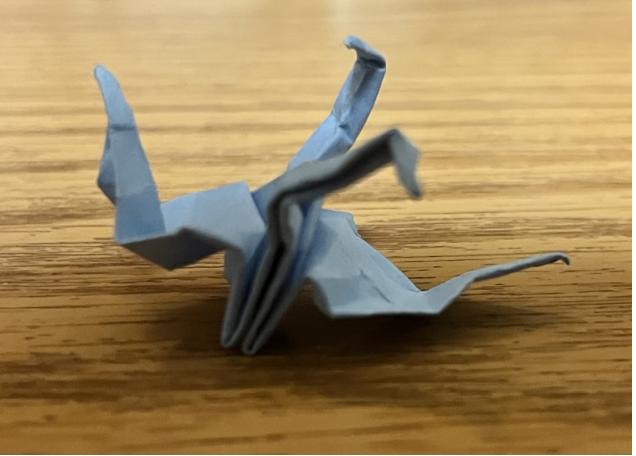
By Kylah Field '31
To my dear Dinosauria:
I may have never witnessed the beauty and grace you presented, but I still yearn to exist alongside you. The despair I feel without you in my world is indescribable, yet I’ll still try to put it into words. The warmth your scaly skin must have radiated makes my hands wish to feel it. There have been countless nights where I wondered how you lived, what you felt or if you loved. When I’d gaze up at the countless twinkling stars and beaming moon on those nights, it dawned on me that you looked up there too. That final night you must’ve looked up, seeing the glow of the meteor that would soon be your demise. I can’t help but wonder if instead of fear you felt admiration because everything must’ve felt brighter in those last moments.
From the fondest parts of my heart, Kylah
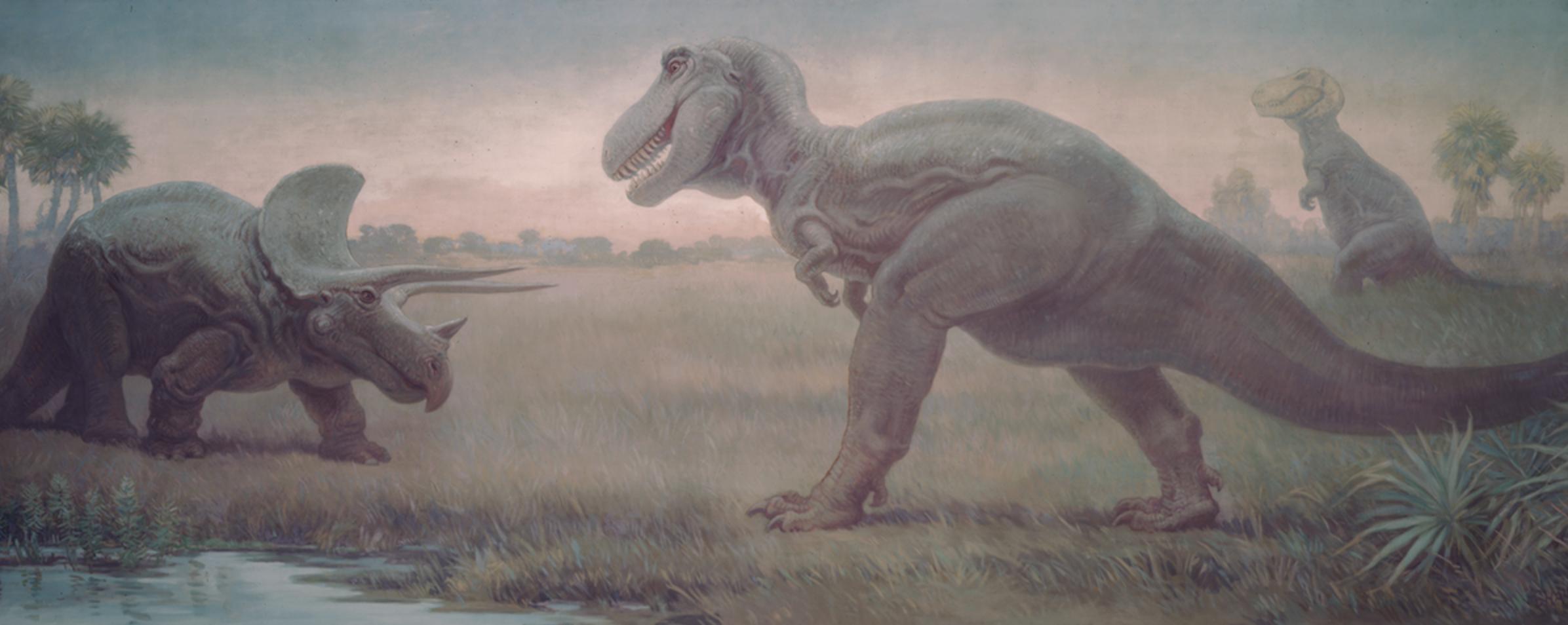
By Neely Bello
Dear Life,

I love you not because you are easy, but because you are real. You arrive in waves, sometimes gentle, sometimes knocking the wind out of me, and you never ask if I’m ready. You teach me anyway. Through scraped knees and quiet victories, through seasons of abundance and moments of ache, you insist that I grow. I love your rises and falls, the way joy feels brighter because sorrow has already passed through the room. I love how you remind me that nothing stays the same. That pain softens, love deepens, and fear loosens its grip. You are a constant within impermanence, and in that, a constant invitation to be present.
You stretch me.
You humble me.
You ask me to release who I thought I was supposed to be so I can meet who I’m becoming. Sometimes I resist.
Sometimes I break.
And still, you hold space for me to begin again.
I love how you hide magic in ordinary moments: morning light on the kitchen counter, laughter that catches me off guard, the quiet relief of making it through a hard day. You remind me that meaning isn’t always loud; more often, it lives in showing up, again and again.
Thank you for reaching me through contrast.
For the lessons I didn’t ask for but needed.
For the people who stayed, and even the ones who didn’t. Each leaves behind a truth I carry forward. I am learning to trust you.
To meet you as you are, not as I wish you’d be.
To love you not conditionally, but fully.
Always,
Neely Bello
By Scotia O’Handley '29
Dear Hockey, the sport that breaks me and also builds me back up
10/26/25. The scoreboard says 15 minutes, but I know you better. I know the soul of this game is lived in the ninety-second increments where the world stops turning. It starts with the slam of the door, a loud metallic thud that shuts out the noise of you.
90 seconds left.
The door slams, I collapse onto the bench, I throw off my gloves; steam rises from my palms as I gasp for air. The noise of the crowd is a dull roar behind the pounding in my ears.
80 seconds left.
My lungs are on fire, and my knees are in pain. I grab my knee in an attempt to soothe it as my coach asks me, “Scotia, are you okay? We can't send you out if you are hurt.”
70 seconds left.
Hockey, why do you do this to me? I think. I want to tell the truth, but I can't. I just told a big lie. I know I shouldn't, but the voice of my best friend saying, “I have lost to this team in states for seven years,” comes into my head. I ignore my feelings and my pain, let go of my knee, and smile at the coach and say, “Never been better.”
60 seconds left.
I close my eyes and remember how the team we are playing unfairly cut me from their team a year ago. I feel a rush of rage and adrenaline spike through my body.
50 seconds left.
My breathing starts to level out, but the air is thick. I watch the play from the bench while gripping onto my teammate's water bottle like it's life or death.
40 seconds left.
I grab the lucky friendship bracelet I made with the same teammate. I grab it and pray, hope, and imagine the look on the other team's face when the girl they cut from their team beats them.
30 seconds left.
I see my best friend in net playing her soul out, taking every puck like it's personal. She plays with a heart that anyone in the rink could feel.
20 seconds left.
Hockey, don’t fail me now. I need you more than ever. For my teammates, for my Dad, and most importantly, my 7th-grade self, who thought she wasn't good enough because it was her first time getting cut from a team.
my 7th-grade self, who thought she wasn't good enough because it was her first time getting cut from a team. 10 seconds left.
I see my teammate looking at me from the ice. She is gonna change. I put my hand on the cold metal latch of the door; my palms are sweaty, but my grip is steady. I look at the scoreboard. This last shift is the moment “love” becomes a “legacy.”
0 seconds left.
The door swings open, and I jump onto the ice as pain shivers down my left leg. I ignore it. I don't listen to the crowd yelling nor the pain telling me to give up, I just feel the ice catch my blades, and I know the seven years of loss ends this shift.
The last shift is a blur of white ice and pure defiance. Every stride I take is for the girl who was told she “wasn't ready yet,” every hit is for the seven years my friend spent in the shadows. When the puck finds the net and the buzzer blares. It's the loudest I've ever heard the rink, but the quietest I have ever heard my mind. I find my goalie in the crease, and as we collide in the sea of jerseys and sweat, I realize for that one night, hockey, you were perfect to me. I love you.
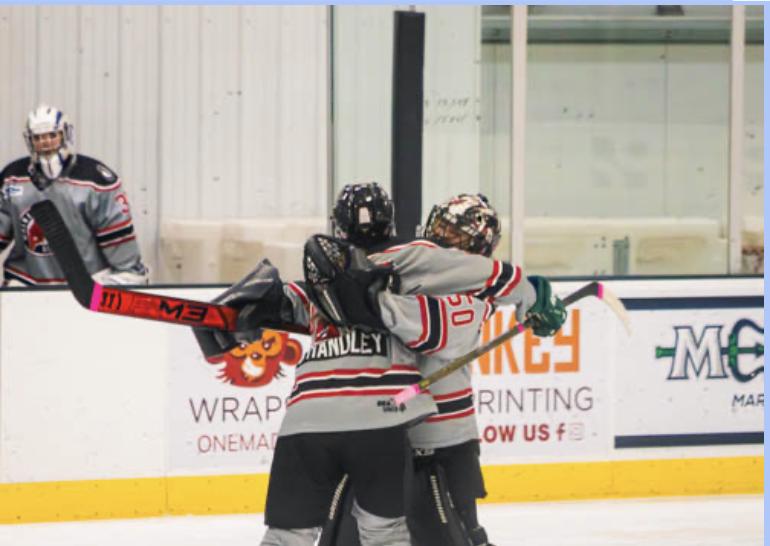
11/9/25. I hate you.
I hate you for the ninety seconds at regionals where the world didn't just stop, it crumbled. The scoreboard was a quiet death sentence: 4-0, with a minute and a half left to go. This time, there was no door slam. Just the quiet we sat in suffocating silence, knowing we all are about to lose our dream, to qualify for nationals. We all silently accept defeat; we cannot come back with only 90 seconds left. The door doesn't slam; it clicks shut like a casket bringing us to our end. I collapse onto the wooden bench, but I don’t feel the steam or the fire in my lungs. I just feel cold. I look at my hands, and they’re shaking, not from excitement, but from the realization that the miracle isn't coming. My legs, which burned with fire in the state final, now feel like lead pipes. I can’t keep going anymore. The team is silent. The air on the bench tastes like stale sweat and the beginning of the end. The engine inside us has seized. We are a machine that has fallen apart, stride by stride.
80 seconds left. My coach doesn't ask if we are okay. He doesn't need to. He’s looking past us, his eyes fixed on a clock that is moving too fast and a season that is slipping through his fingers. I try to find that “big lie” again, the one where I say "I've never been better!” but the words won't come out. My throat is too tight to speak
70 seconds left. Hockey, why are you so cruel? 2 weeks ago, I was playing for revenge. Today I'm playing for survival, and I'm losing. I look at all my once strangers now sisters beside me. Helmets are off. Shoulders are slumped. We aren’t a team anymore; we’re just a team of individuals waiting for the lights to go out
60 seconds left. I remember the girl who was cut in 7th grade. I want you to tell her you're sorry. I even want to tell her that sometimes, even when you work until your legs give out and your heart screams, it still isn't enough. The rage is gone. All that's left is a hollow, heavy ache in my chest.
50 seconds left. I pick up my same teammate's water bottle from the states, but I don’t drink. I just stare at the ice. It looks different when you are losing the most important game of your life. It looks colder, harder, less like a stage and more like a graveyard. The play is happening on the other end of the rink, far away from me, like a movie I'm not invited to watch.
40 seconds left. I touch the friendship bracelet on my wrist. It feels like a lead weight. I thought love was a legacy, but right now, legacy feels like a burden I can’t carry anymore. I look at the other team’s bench. They’re already hugging. They’re already celebrating the death of my dream.
30 seconds left. Then I see her. My best friend. My goalie. She is still moving, still battling, even when the rest of her soldiers are defeated. She is diving,sliding, and throwing her soul into the path of pucks that don’t even matter anymore. The game is over, but she hasn’t heard the news. She’s playing with a big heart so big it makes the rest of us look like cowards. I played for her, but now I can’t even look at her. It hurts too much to see her fight for something that cannot be saved.
20 seconds left. Hockey, you failed us. Or maybe I failed you
10 seconds left. I want to jump over the boards and help her, but my legs just won't move. The “legacy” is breaking. The seven years of loss aren’t ending; they’re resetting. 5 seconds left. I stand up, gripping the cold metal latch one last time, but there is no rush. There is no defiance. I watch the clock bleed out. 3… 2… 1…
0 seconds left. The buzzer sounds, and it's the worst sound I have ever heard in my 14 years of living. That buzzer indicated there was nothing I could do. My dream was already 6 feet under.
I watch my teammates swarm the crease, a sea of jerseys,sweat, and tears. We bury our goalie in a hug that looks more like a funeral than a huddle. I can’t join them. I drift off to the side, my blades scraping the ice in a slow, jagged rhythm, dreading the walk to the locker room. I don’t want to go inside. I don’t want to see the place where our season goes to die.
I feel a glove on my shoulder. It’s my center. She pulls me into a hug, her jersey rough against my cheek, and whispers, “It was a good season.” That's when it happened. A single, hot tear escapes and tracks a path through the dried sweat on my face. I swallow hard, jaw aching as I try to pull the rest of the salt back in, trying to stay “strong” for a game that just broke me.
The locker room wasn’t a room anymore: it was a museum of what could have been. It's hard to believe that 2 hours ago, this locker room was filled with dreams, music, dancing, and most importantly, laughter. But now the air is heavy with a scent of wet gear and silent apologies, every empty stall a reminder of the finish line we never got to cross. Hockey. I hope you understand now. I used to think I couldn't live without you. But as time goes on, you become more and more complicated. Now, as I sit in the silence, I'm not sure if I love you anymore.
-End of shift, Scotia.
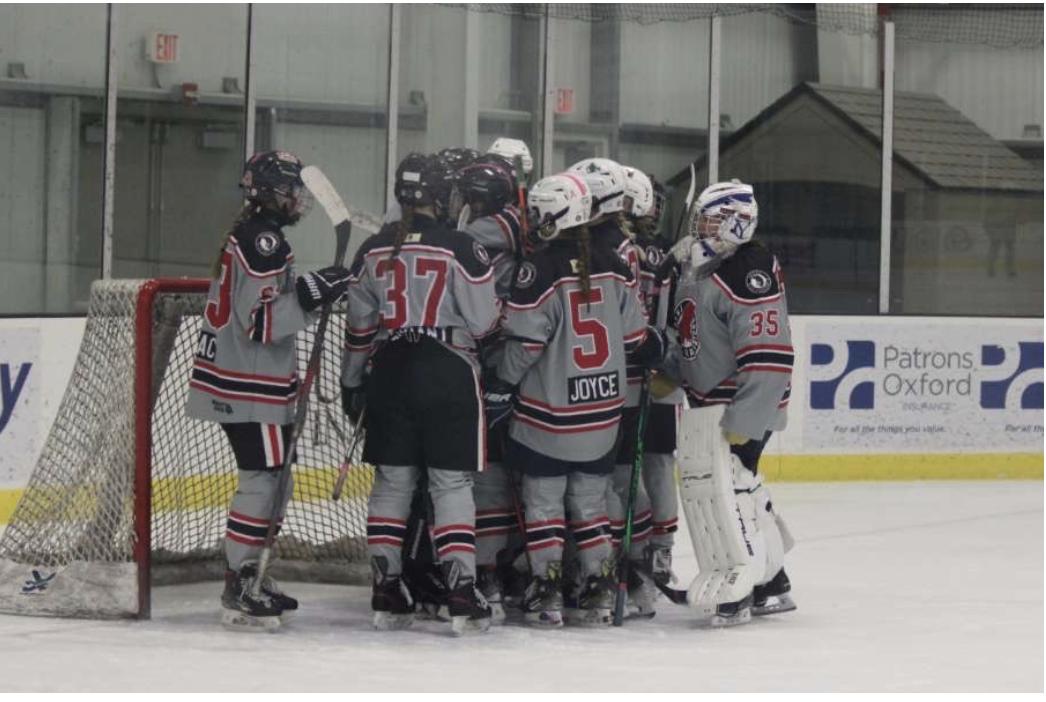
By Rita Franco '28
Dear Ms. S,

This letter may take you by surprise, since I haven’t seen you for almost a year, but I hope you find the time to read it and reply. I write to let you know that the kilometers of water, land, and emptiness that separate us are not enough to make me forget you.
You are impossible to forget because of your beauty and your strength. People from all over the world travel to see you shine, yet your identity is impossible to replicate. Remember that all these passers-by might come, but they do not stay. Only your family, the people you have grown up with, see you as a treasure, not just as a fleeting pleasure. How else could I describe you but with your fine lace sculpted by the Nasrid sultans? How else could you be depicted but through the beautiful curves and natural shapes that your son, Antoni Gaudí, left etched on you? How else could someone love you but through the tattoos that your children, Picasso and Goya, drew upon you?
It is fascinating how you move and change as you take steps forward. It is breathtaking how you can fluidly switch from Gallego to Catalán, and how your voice, colors, and textures shift as you move. I am so glad I met you; I am so grateful I was able to see you dazzle bystanders in your red-spotted dress, hypnotically moving to the rhythm of music.
Your love is not always the safest, but running from bulls in Pamplona leaves me speechless. Parading as a Nazareno, holding your hand, is always a moment to savor with my loved ones. Without your presence, I feel lost, numb, and confused. I hope you never stop cooking for me on both good and bad days. I hope a day without tortilla de patatas on my table never arrives. Never stop cooking, because I can assure you that the socarrat of your paella will never get old. I hope you never leave, because I cannot imagine a summer day without a refreshing gazpacho, or a freezing day without a warm cocido.
Many people come to you for your warm, golden eyes that shine like our star, or for your soft, sun-kissed skin that feels like sand on the beach, but they ignore your beautiful curly hair that moves like vivid wind, or your amazing curves, shaped like high mountains. Do not let me start talking about your blue veins, alive as the Ebro River, because I would never stop.
It is not only your beauty that leaves a breathtaking memory but also your enthusiastic people, your brave family, your chatty children, and that contagious smile that cannot be erased from those who meet you.
I hope you never forget that even though your inner struggles may sometimes blur you, your perfect imperfections will always be a crucial piece of you, me, and everyone lucky enough to share a cóctel with thee, Spain.
See you soon,
Rita
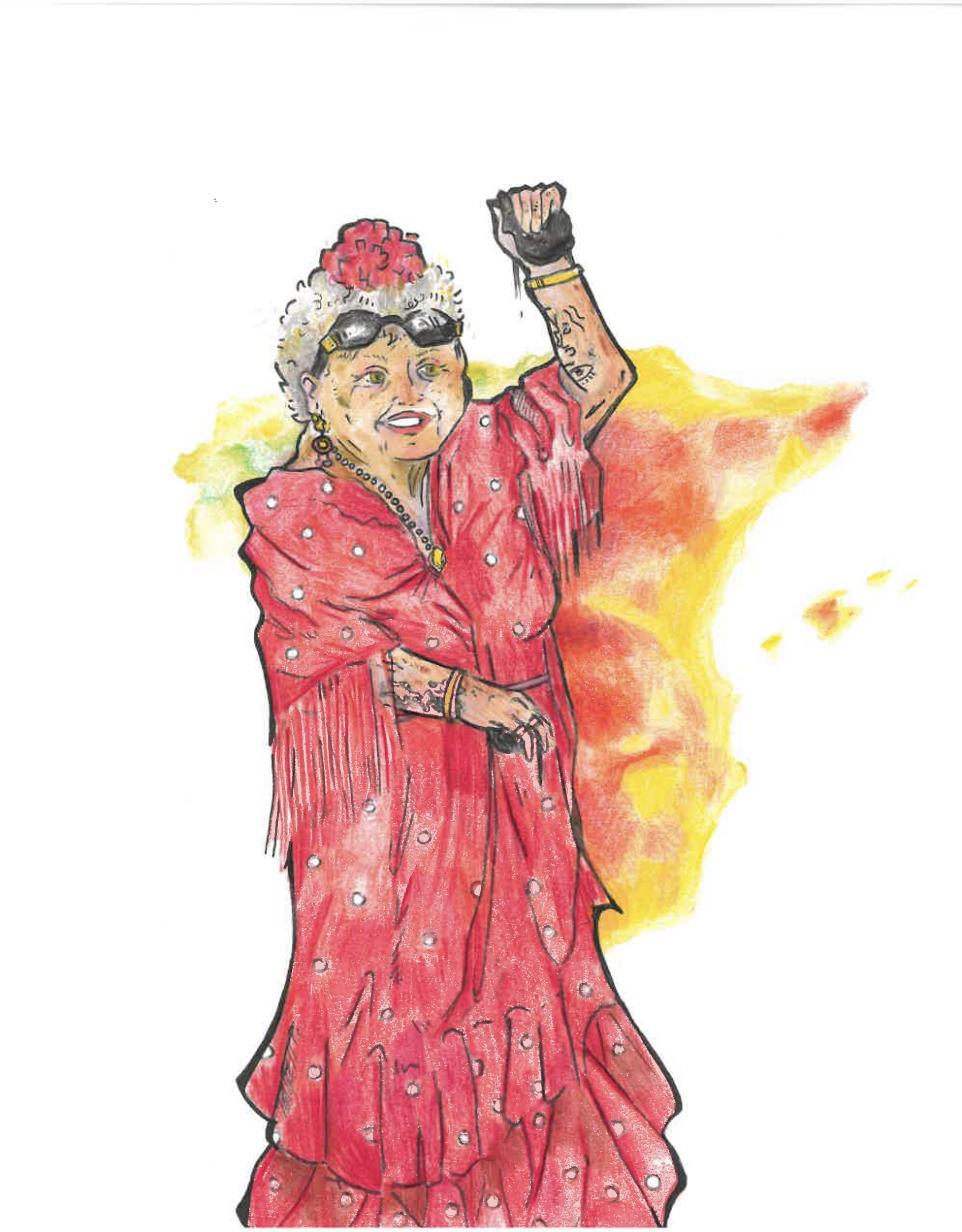
By Chase Longsworth '28
This is the final stretch
Right before the halfway mark, I've survived freshman year, Holding tight to my spark.
I spent months in a slump, Barely turning in my work, Somehow passed with high honors, Guess it wasn't all that bad.
This new year brings new light, To the challenges I'll face, But I know that I'll survive Won't stay stagnant in this space.
Good times always came with bad, But the best ones persevere, I reminisce on time well spent, And past friends who left last year.
Though this year won't be my last, It will be the one of change, I will make it a year to remember As I grow with time and age.
As I'm writing this verse now, I am racing with the clock, I hope to learn to be efficient, When the workload piles up.
The message I will leave with you As you read along this page, Is that you will make it through hardships, High school won't be the endgame.
For your life has just begun.
Do not let your dreams falter, Even if the climb is high, Do not let bad moments keep you, Do not let emotions hide.
Be yourself and yours alone, Authenticity is the key, Never allow your spark to go, For your purpose is paramount.
High school is indeed a maze, A labyrinth with no real end, Once you make it through 4 years, You have the next few decades ahead.
By Louisa Strong '26, and Sylvie Gill '26
Below is a collection of poems written by seniors for Dr. Oakes’s AP Literature class. Whether they be sonnets, pastorals, villanelles, or open form, these poems put the reader through a broad variety of emotions and rhyme schemes. We hope you enjoy!
By Louisa Strong '26
Circle, circle, circle the sand, flinging
Winks of color caught in strawberry sun
Calling calling calling for her singing
Winging out until the dancing’s done
Look how he dances, his gold, his rubies
How he swoons, how he flaps with his fan
The dancer turns and he twinkles, to be
Sung to is to be swung into the dance
But high in the trees, the wind sways, it hums
Strawberry sun turned to cool gentle night
Soft, between branches, a second song thrums
Over the leaves, glowing up to starlight
The dancer below, still fanning for love
Will never know songs from treetops above
By Alex Vogel '26
The feed unrolls before we even think,
A curated world that learns us as we stare; It knows what makes the restless spirit blink, What keeps us hooked, rotted, and unaware. We do not choose the things we come to want— They bloom where metrics say our eyes will stay; Our thoughts are coded, measured, trimmed, and taught By hands we’ll never see nor disobey. What truth survives when lies do thrive the most, Where pain performs for hearts and fleeting fame?
The self becomes a product, post by post, Its worth reduced to numbers next to names. Thus meaning drowns in content, fast and thin, And all technocrats just call it a win!
By Ronan Newell '26
Before there were two, now only one.
Dancing like orange fire alongside gray moonlight.
But the snow fell, and with it the embers, extinguished, gone. Now sits the one, in a sea of blue, as their dance is done, She listens for warmth in the long cold night.
Before there were two, now only one.
The window holds frost where the fire once shone, No flame to chase her pale gray flight.
But the snow fell, and with it the embers, extinguished, gone.
She curls where the heat of another had spun,
A small space shaped just right.
Before there were two, now only one.
We both remember what time has undone, Soft paws displaying memory’s flame.
But the snow fell, and with it the embers, extinguished, gone. Now love stays bright though the inferno is done,
A gray moon waits through endless night.
Before there were two, now only one.
But the snow fell, and with it the embers, extinguished, gone.
By Sylvie Gill '26
I know a place where
The grass lays down on the hill, Warming in the heat of midday rays, Becoming a place of rest
Where
The water climbs up the rocky shore Before tumbling back in, Shining, bubbling, laughing up at the sky
Where
The rabbits and deer cross without hesitating Into a forest which stretches and thrives, Lupins mingling with the cedars and alders
Where
Brilliance paints the horizon at dusk, Coaxing the stars out of hiding As the peepers and crickets begin their serenade
I know a place Where in late August I live My last moments of summer, Soaking up sun, sounds, sights, and Joy which I can only hope Will stay With me Until I’m back Up to camp.
By Isa Fischer '26
We exist as infinite entities, A different version to all other; Inside us a mix of Identities, We are all both a stranger and brother.
One version of us might be so tired Someone could see this as our only self; Yet another version could seem wired, Exhaust a faint whisper up on a shelf.
We are each but one person, just one soul And in a brief instant others decide What to them we are, glimpsed through a keyhole; Will the glimpse they then gain fill you with pride?
A thousand reflections in mirrors bright, Distorted by angles we cannot choose; We shift like dark shadows in waning light, Our lives an elusive truth they could lose.
A mask can be worn like a second skin, To shadow the depths of a restless heart; The spirit is found where the truths begin, A masterpiece built of a living art.
The world only knows what the eyes can see, A flicker of light in a vaster space; But you are the lock and you are the key, Beyond careful facade, beyond the face.
By Quin Doyle '26
I want to know when it was all decided that this should be the way things are to be.
So much life spent wondering, “How my worth should be invested into what causes?”
I know it was before my time, before my mother’s time.
Was it when the market was made, when Eridu chose her king, or when ape came from tree?
Memories and time that were sold to pay in advance on a future that would not come.
It was always going to be this way, no force could stop it.
I hope I am a force, then, I am inevitable.
Vivian Hamlin '27, Conor McCarthy '27, Louisa Strong '26, and Sylvie Gill '26
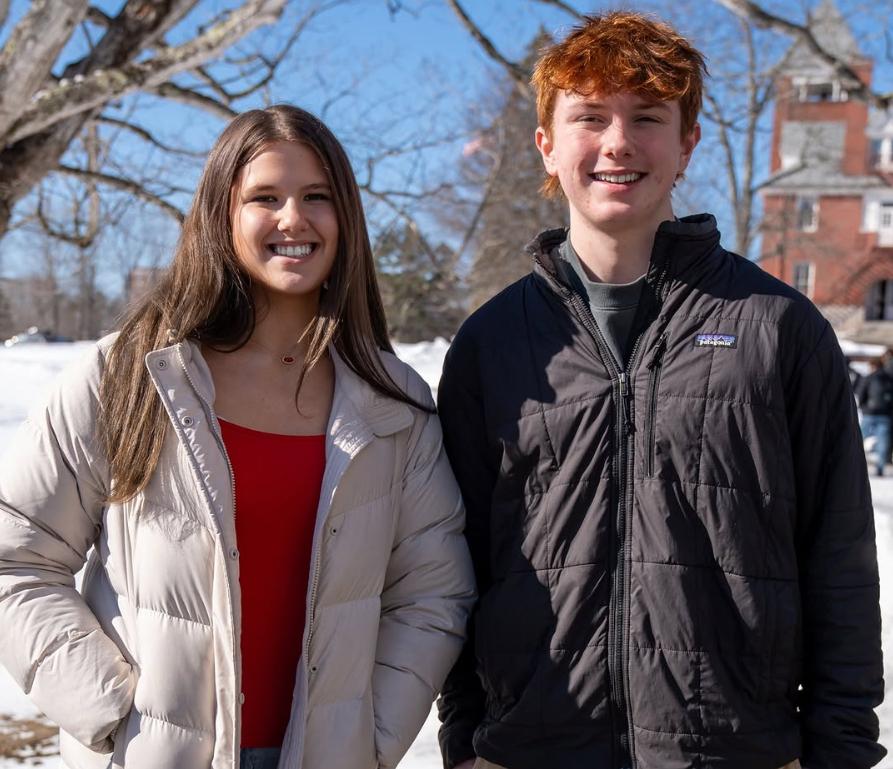
Thank you so much for reading the Spring 2026 edition of the Hebron Review Magazine. This is our very first edition together as a group and the first to be worked on by Vivian and Conor. Thank you to everyone that contributed and worked so hard to make this magazine as amazing as it is; we really appreciate all of you, our staff writers and artists!
We are so excited to see everyone's future ideas and pieces that are written over the summer and will be in our next edition. See you in the Fall!
Editors
Vivian Hamlin '27
Conor McCarthy '27
Louisa Strong '26
Sylvie Gill '26
Graphic Design
Emily Finch ’27
Cover Photo
Rita Franco Roman
Advisor
Barbara Waterman
Special Thanks To:
Hillory Oakes