




Product: MARINE ENGINE
Model: 3208 MARINE ENGINE 75V
Configuration: 3208 MARINE ENGINE 75V00001-UP
Operation and Maintenance Manual
3208 Marine Engine
Foreword
Literature Information
This manual contains safety, operation instructions, lubrication and maintenance information. This manual should be stored in or near the engine area in a literature holder or literature storage area. Read, study and keep it with the literature and engine information.
English is the primary language for all Cat publications. The English used facilitates translation and consistency in electronic media delivery.
Some photographs or illustrations in this manual show details or attachments that may be different from your engine. Guards and covers may have been removed for illustrative purposes. Continuing improvement and advancement of product design may have caused changes to your engine which are not included in this manual. Whenever a question arises regarding your engine, or this manual, please consult with your Cat dealer for the latest available information.
Safety
This safety section lists basic safety precautions. In addition, this section identifies hazardous, warning situations. Read and understand the basic precautions listed in the safety section before operating or performing lubrication, maintenance and repair on this product.
Operation
Operating techniques outlined in this manual are basic. They assist with developing the skills and techniques required to operate the engine more efficiently and economically. Skill and techniques develop as the operator gains knowledge of the engine and its capabilities.
The operation section is a reference for operators. Photographs and illustrations guide the operator through procedures of inspecting, starting, operating and stopping the engine. This section also includes a discussion of electronic diagnostic information.
Maintenance
The maintenance section is a guide to engine care. The illustrated, step-by-step instructions are grouped by fuel consumption, service hours and/or calendar time maintenance intervals. Items in the maintenance schedule are referenced to detailed instructions that follow.
Use fuel consumption or service hours to determine intervals. Calendar intervals shown (daily, annually, etc.) may be used instead of service meter intervals if they provide more convenient schedules and approximate the indicated service meter reading.
Recommended service should be performed at the appropriate intervals as indicated in the Maintenance Interval Schedule. The actual operating environment of the engine also governs the Maintenance Interval Schedule. Therefore, under extremely severe, dusty, wet or freezing cold operating conditions, more frequent lubrication and maintenance than is specified in the Maintenance Interval Schedule may be necessary.
The maintenance schedule items are organized for a preventive maintenance management program. If the preventive maintenance program is followed, a periodic tune-up is not required. The implementation of a preventive maintenance management program should minimize operating costs through cost avoidances resulting from reductions in unscheduled downtime and failures.
Maintenance Intervals
Perform maintenance on items at multiples of the original requirement. Each level and/or individual items in each level should be shifted ahead or back depending upon your specific maintenance practices, operation and application. We recommend that the maintenance schedules be reproduced and displayed near the engine as a convenient reminder. We also recommend that a maintenance record be maintained as part of the engine's permanent record.
See the section in the Operation and Maintenance Manual, "Maintenance Records" for information regarding documents that are generally accepted as proof of maintenance or repair. Your authorized Cat dealer can assist you in adjusting your maintenance schedule to meet the needs of your operating environment.
Overhaul
Major engine overhaul details are not covered in the Operation and Maintenance Manual except for the interval and the maintenance items in that interval. Major repairs are best left to trained personnel or an authorized Cat dealer. Your Cat dealer offers a variety of options regarding overhaul programs If you experience a major engine failure, there are also numerous after failure overhaul options available from your Cat dealer. Consult with your dealer for information regarding these options.
Diesel engine exhaust and some of its constituents are known to the State of California to cause cancer, birth defects, and other reproductive harm.
Battery posts, terminals and related accessories contain lead and lead compounds. Wash hands after handling.
Copyright 1993 - 2024 Caterpillar Inc. All Rights Reserved. Private Network For SIS Licensees.
Sun Mar 10 02:27:21 UTC+0530 2024
This is the sample of the manual click on the download link for complete manual
DOWNLOAD LINK
For some reason if link does not work download this pdf and then click
Product: MARINE ENGINE
Model: 3208 MARINE ENGINE 75V
Configuration: 3208 MARINE ENGINE 75V00001-UP
Operation and Maintenance Manual
3208 Marine Engine
i02456933
Electrical System
SMCS - 1000; 1400
Never disconnect any charging unit circuit or battery circuit cable from the battery when the charging unit is operating. A spark can cause the combustible gases that are produced by some batteries to ignite.
To help prevent sparks from igniting combustible gases that are produced by some batteries, the negative "-" jump start cable should be connected last from the external power source to the negative "-" terminal of the starting motor. If the starting motor is not equipped with a negative "-" terminal, connect the jump start cable to the engine block.
Check the electrical wires daily for wires that are loose or frayed. Tighten all loose electrical wires before the engine is operated. Repair all frayed electrical wires before the engine is started. See the Operation and Maintenance Manual, "Engine Starting" for specific starting instructions.
Grounding Practices
The electrical system for the vessel and the engine must be properly grounded. Proper grounding is necessary for optimum engine performance and reliability. Improper grounding will result in uncontrolled electrical circuit paths and in unreliable electrical circuit paths.
Uncontrolled electrical circuit paths can result in damage to main bearings, to crankshaft bearing journal surfaces, and to aluminum components. Uncontrolled electrical circuit paths can also cause electrical noise. Electrical noise may degrade the performance of the vessel and of the radio.
The alternator, the starting motor, and all of the electrical systems MUST be grounded to the negative battery terminal. The alternator must meet marine isolation requirements. The starting motor must also meet marine isolation requirements.
For engines which have an alternator that is grounded to an engine component, a ground strap MUST connect that component to the negative battery terminal and the component MUST be electrically isolated from the engine.
A bus bar with a direct path to the negative "-" battery terminal is permissible and recommended for use for all components that require a negative "-" battery connection. The bus bar should be directly connected to the negative "-" battery terminal. A bonding cable should also be connected from the cylinder block to the bus bar on the negative "-" battery connection.
Use of a bus bar ensures that the Electronic Control Module (ECM) and all of the components that are connected to the ECM have a common reference point.
Refer to Special Instruction, REHS1187, "Marine Engine Electronic Installation Guide" for additional information on grounding procedures.
Copyright 1993 - 2024 Caterpillar Inc.
All Rights Reserved.
Private Network For SIS Licensees.
Product: MARINE ENGINE
Model: 3208 MARINE ENGINE 75V
Configuration: 3208 MARINE ENGINE 75V00001-UP
Operation and Maintenance Manual
3208 Marine Engine
Engine Stopping
SMCS - 1000
To avoid overheating of the engine and accelerated wear of the engine components, stop the engine according to this Operation and Maintenance Manual, "Engine Stopping" topic (Operation Section).
Use the Emergency Stop Button (if equipped) ONLY in an emergency situation. DO NOT use the Emergency Stop Button for normal engine stopping. After an emergency stop, DO NOT start the engine until the problem that caused the emergency stop has been corrected.
On the initial start-up of a new engine or an engine that has been serviced, make provisions to stop the engine if an overspeed condition occurs. Engine stopping may be accomplished by shutting off the fuel supply and/or the air supply to the engine.
Copyright 1993 - 2024 Caterpillar Inc. All Rights Reserved. Private Network For SIS Licensees. Sun Mar 10 02:29:52 UTC+0530 2024
Product: MARINE ENGINE
Model: 3208 MARINE ENGINE 75V
Configuration: 3208 MARINE ENGINE 75V00001-UP
Operation and Maintenance Manual
3208 Marine Engine
i08193936
Engine Starting
SMCS - 1000
If a warning tag is attached to the engine start switch, DO NOT start the engine. If a warning tag is attached to the controls, DO NOT move the controls. Consult with the person that attached the warning tag before the engine is started.
All protective guards and all protective covers must be installed if the engine must be started to perform service procedures. To help prevent an accident that is caused by parts in rotation, work around the parts carefully.
Start the engine from the operator compartment or from the engine start switch.
Always start the engine according to the procedure that is described in this Operation and Maintenance Manual, "Engine Starting" topic (Operation Section). Knowing the correct procedure will help to prevent major damage to the engine components. Knowing the procedure will also help to prevent personal injury.
To ensure that the jacket water heater (if equipped) and/or the lube oil heater (if equipped) is working properly, check the water temperature gauge and the oil temperature gauge during the heater operation.
Engine exhaust contains products of combustion that can be harmful to your health. Always start the engine and operate the engine in a well-ventilated area. If the engine is started in an enclosed area, vent the engine exhaust to the outside.
Ether
Ether is poisonous and flammable.
Do not inhale ether, and do not allow ether to contact the skin. Personal injury could result.
Do not smoke while ether cylinders are changed.
Use ether in well-ventilated areas.
Use ether with care to avoid fires.
Keep ether cylinders out of the reach of unauthorized persons.
Store ether cylinders in authorized storage areas only.
Do not store ether cylinders in direct sunlight or at temperatures above 49 °C (120 °F).
Discard the ether cylinders in a safe place. Do not puncture the ether cylinders. Do not burn the ether cylinders.
Product: MARINE ENGINE
Model: 3208 MARINE ENGINE 75V
Configuration: 3208 MARINE ENGINE 75V00001-UP
Operation and Maintenance Manual
3208 Marine Engine
i08258438
Before Starting Engine
SMCS - 1000
NOTICE
For initial start-up of a new or rebuilt engine, and for start-up of an engine that has been serviced, make provision to shut the engine off should an overspeed occur. This may be accomplished by shutting off the air and/or fuel supply to the engine.
Engine exhaust contains products of combustion which may be harmful to your health. Always start and operate the engine in a well ventilated area and, if in an enclosed area, vent the exhaust to the outside.
Inspect the engine for potential hazards.
Do not start the engine if there is a "DO NOT OPERATE" warning tag or similar warning tag attached to the start switch. Do not move any of the controls if there is a "DO NOT OPERATE" warning tag or similar warning tag attached to the controls.
Before starting the engine, ensure that no one is on, underneath, or close to the engine. Ensure that the area is free of personnel.
If equipped, ensure that the lighting system for the engine is suitable for the conditions. Ensure that all lights work properly, if equipped.
All protective guards and all protective covers must be installed if the engine must be started to perform service procedures. To help prevent an accident that is caused by parts in rotation, work around the parts carefully.
Do not bypass the automatic shutoff circuits. Do not disable the automatic shutoff circuits. The circuits are provided to help prevent personal injury. The circuits are also provided to help prevent engine damage.
See the Service Manual for repairs and for adjustments.
Product: MARINE ENGINE
Model: 3208 MARINE ENGINE 75V
Configuration: 3208 MARINE ENGINE 75V00001-UP
Operation and Maintenance Manual
3208 Marine Engine
Mounting and Dismounting
SMCS - 1000; 7405
Inspect the steps, the handholds, and the work area before mounting the engine. Keep these items clean and keep these items in good repair.
Mount the engine and dismount the engine only at locations that have steps and/or handholds. Do not climb on the engine, and do not jump off the engine.
Face the engine to mount the engine or dismount the engine. With your feet and hands, always maintain a three-point contact with the steps and designated handholds. Do not use any controls as handholds.
Do not stand on components which cannot support your weight. Use an adequate ladder or use a work platform. Secure the climbing equipment so that the equipment will not move.
Do not carry tools or supplies when you mount the engine or when you dismount the engine. Use a hand line to raise and lower tools or supplies.
Copyright 1993 - 2024 Caterpillar Inc.
All Rights Reserved.
Private Network For SIS Licensees. Sun Mar 10 02:29:13 UTC+0530 2024
Product: MARINE ENGINE
Model: 3208 MARINE ENGINE 75V
Configuration: 3208 MARINE ENGINE 75V00001-UP
Operation and Maintenance Manual
3208 Marine Engine
Crushing Prevention and Cutting Prevention
SMCS - 1000; 7405
Support the component properly when work beneath the component is performed.
Unless other maintenance instructions are provided, never attempt adjustments while the engine is running.
Stay clear of all rotating parts and of all moving parts. Leave the guards in place until maintenance is performed. After the maintenance is performed, reinstall the guards.
Keep objects away from moving fan blades. The fan blades will throw objects or cut objects.
When objects are struck, wear protective glasses to avoid injury to the eyes.
Chips or other debris may fly off objects when objects are struck. Before objects are struck, ensure that no one will be injured by flying debris.
Copyright 1993 - 2024 Caterpillar Inc. All Rights Reserved. Private Network For SIS Licensees. Sun Mar 10 02:29:02 UTC+0530 2024
Product: MARINE ENGINE
Model: 3208 MARINE ENGINE 75V
Configuration: 3208 MARINE ENGINE 75V00001-UP
Operation and Maintenance Manual
3208 Marine Engine
Fire Prevention and Explosion Prevention
SMCS - 1000; 7405
Fire may result from lubricating oil or from fuel that is sprayed on hot surfaces. Fire may cause personal injury and property damage. Inspect all lines and tubes for wear or for deterioration. The lines must be properly routed. The lines must have adequate support and secure clamps. Tighten all connections to the recommended torque. Leaks can cause fires.
Determine whether the engine will be operated in an environment that allows combustible gases to be drawn in through the air inlet system. These gases could cause the engine to overspeed. This could result in bodily injury, property damage, or damage to the engine.
If the application involves the presence of combustible gases, consult your Caterpillar dealer in order to obtain additional information concerning suitable protection devices.
Leaking fuel or fuel that is spilled onto hot surfaces or onto electrical components can cause a fire.
All fuels, most lubricants, and some coolant mixtures are flammable. Diesel fuel is flammable. Gasoline is flammable. The mixture of diesel fumes and gasoline fumes is extremely explosive.
Do not smoke while the engine is refueled. Do not smoke in the refueling area.
Store all fuels and all lubricants in properly marked containers. Store the protective containers in a safe place.
Do not smoke in battery charging areas. Batteries give off flammable fumes which can explode.
Do not smoke in areas that contain flammable material.
Store oily rags and other flammable material in protective containers.
Do not weld on pipes or tubes that contain flammable fluids. Do not flame cut pipes or tubes that contain flammable fluids. Before pipes or tubes are welded or flame cut, clean the inside and clean the outside of the pipes or tubes thoroughly with nonflammable solvent.
Do not allow flammable materials to accumulate on the engine.
Do not expose the engine to flames.
Exhaust shields (if equipped) protect hot exhaust components from oil or fuel spray in case of a line, a tube, or a seal failure. Exhaust shields must be installed correctly.
Dispose of oil according to local regulations. Oil filters and fuel filters must be properly installed. The housing covers must be tightened to the proper torque when the housing covers are reinstalled.
Batteries must be kept clean. The covers (if equipped) must be kept on the cells. Use the recommended cables, connections, and battery box covers when the engine is operated.
When the engine is started from an external source, always connect the positive "+" jump start cable to the positive "+" terminal of the battery of the engine that is being started. Make this connection
To help prevent sparks from igniting combustible gases that are produced by some batteries, the connect the jump start cable to the engine block.
Check the electrical wires daily for wires that are loose or frayed. Before the engine is operated, tighten all loose electrical wires. Repair all frayed electrical wires.

Wiring must be kept in good condition. Wires must be properly routed and securely attached. Routinely inspect the wiring for wear or for deterioration. Loose wiring, unattached wiring, or unnecessary wiring must be eliminated. All wires and all cables must be of the recommended gauge. The wires and cables must be connected to a fuse or to a circuit breaker, as required. Do not bypass fuses and/or circuit breakers. Do not use a wire of a smaller gauge. Arcing or sparking could cause a fire. Secure connections, recommended wiring, and properly maintained battery cables will help to prevent arcing or sparking.
Fire Extinguisher
Ensure that a fire extinguisher is available. Be familiar with the operation of the fire extinguisher. Inspect the fire extinguisher and service the fire extinguisher regularly. Service the fire extinguisher according to the recommendations on the instruction plate. Copyright 1993 - 2024 Caterpillar Inc.
Product: MARINE ENGINE
Model: 3208 MARINE ENGINE 75V
Configuration: 3208 MARINE ENGINE 75V00001-UP
Operation and Maintenance Manual
3208 Marine Engine
Burn Prevention
SMCS - 1000; 7405
Do not touch any part of an operating engine. Allow the engine to cool before any maintenance is performed on the engine. Relieve all pressure in the lubrication system, in the fuel system, or in the cooling system before any lines, fittings or related items are disconnected.
Coolant
When the engine is at operating temperature, the engine coolant is hot. The coolant is also under pressure. The radiator and all lines to the heaters or to the engine contain hot coolant. When pressure is relieved rapidly, the hot coolant can turn into steam.
Any contact with hot coolant or with steam can cause severe burns. Allow cooling system components to cool before the cooling system is drained.
Check the coolant level only after the engine has been stopped.
Do not step on the engine in order to remove the filler cap. Use a ladder, if necessary. Ensure that the filler cap is cool before removing the filler cap. Remove the filler cap slowly in order to relieve pressure.
Cooling system conditioner contains alkali. Alkali can cause personal injury. Do not allow alkali to contact the skin, the eyes, or the mouth.
Oils
Hot oil and hot components can cause personal injury. Do not allow hot oil or hot components to contact the skin.
Keep all of the exhaust manifold and turbocharger shields in place in order to protect components from oil spray if there is a failure of a line, a tube, or a seal.
Batteries
Electrolyte is an acid. Electrolyte can cause personal injury. Do not allow electrolyte to contact the skin or the eyes. Always wear protective glasses for servicing batteries. Wash hands after touching the batteries and connectors. Use of gloves is recommended.
Batteries give off combustible gases which can explode. Ensure proper ventilation for batteries that are in an enclosure. Never disconnect any charging unit circuit or battery circuit cable from the battery when the charging unit is operating. A spark can cause the combustible gases to ignite. Do not smoke when batteries are serviced.
Always thaw a frozen battery before jump starting the battery. Frozen batteries can explode.
Copyright 1993 - 2024 Caterpillar Inc.
All Rights Reserved.
Private Network For SIS Licensees.
Product: MARINE ENGINE
Model: 3208 MARINE ENGINE 75V
Configuration: 3208 MARINE ENGINE 75V00001-UP
Operation and Maintenance Manual
3208 Marine Engine
General Hazard Information
SMCS - 1000; 7405
Attach a "Do Not Operate" warning tag or a similar warning tag to the start switch or to the controls before the engine is serviced or before the engine is repaired. These warning tags (Special Instruction, SEHS7332) are available from your Caterpillar dealer. Attach the warning tags to the engine and to each operator control station. When it is appropriate, disconnect the starting controls.
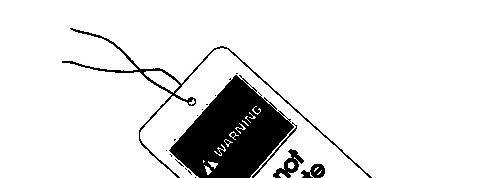
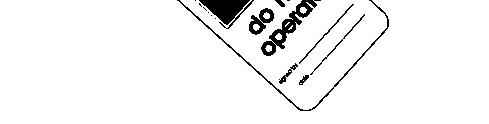
Illustration 1 g00104545
Do not allow unauthorized personnel on the engine or around the engine when the engine is serviced.
Engine exhaust contains products of combustion which may be harmful to your health. Always start the engine and operate the engine in a well ventilated area. If the engine is in an enclosed area, vent the engine exhaust to the outside.
Cautiously remove the following parts:
Note: To help prevent spraying or splashing of pressurized fluids, hold a rag over the part that is being removed.
• Filler caps
• Grease fittings
• Pressure taps
• Breathers
• Drain plugs
Use caution when cover plates are removed. Gradually loosen but do not remove the last two bolts or nuts that are located at opposite ends of the cover plate or the device. Before removing the last two bolts or nuts, pry the cover loose in order to relieve any spring pressure or other pressure.
• Wear a hard hat, protective glasses, and other protective equipment, as required.
• Do not attempt any repairs that are not understood. Use the proper tools. Replace any equipment that is damaged or repair the equipment.
• When work is performed around an engine that is operating, wear protective devices for ears in order to help prevent damage to hearing.
• Do not wear loose clothing or jewelry that can snag on controls or on other parts of the engine.
• Ensure that all protective guards and all covers are secured in place on the engine.
• Never put maintenance fluids into glass containers. Glass containers can break.
• Use all cleaning solutions with care.
• Report all necessary repairs.
Unless other instructions are provided, perform the maintenance under the following conditions:
• The engine is stopped. Ensure that the engine cannot be started.
• The protective locks or the controls are in the applied position.
• Disconnect the batteries when maintenance is performed or when the electrical system is serviced. Disconnect the battery ground leads. Tape the leads in order to help prevent sparks.
• For initial start-up of a new engine or for starting an engine that has been serviced, make provisions to stop the engine if an overspeed occurs. This may be accomplished by shutting off the fuel supply and/or the air supply to the engine.
• Start the engine with the operator controls. Never short across the starting motor terminals or the batteries. This could bypass the engine neutral start system and/or the electrical system could be damaged.
Pressurized Air and Water
Pressurized air and/or water can cause debris and/or hot water to be blown out. This could result in personal injury.
When pressurized air and/or pressurized water is used for cleaning, wear protective clothing, protective shoes, and eye protection. Eye protection includes goggles or a protective face shield.
The maximum air pressure for cleaning purposes must be reduced to 205 kPa (30 psi) when the air nozzle is deadheaded and used with effective chip guarding (if applicable) and personal protective equipment. The maximum water pressure for cleaning purposes must be below 275 kPa (40 psi). Always wear eye protection for cleaning the cooling system.
Fluid Penetration
Always use a board or cardboard when the engine components are checked for leaks. Leaking fluid that is under pressure can cause serious injury or possible death. This includes leaks that are the size of a pin hole.
If fluid is injected into the skin, seek treatment immediately. Seek treatment from a doctor that is familiar with this type of injury.
Containing Fluid Spillage
Care must be used in order to ensure that the fluids are contained during the inspection, the maintenance, the testing, the adjusting, and the repair of the engine. Prepare to collect the fluid with suitable containers before any compartment is opened or before any component is disassembled.
Refer to Catalog, NENG2500, "Caterpillar Dealer Service Tool Catalog" for the following items:
• Tools that are suitable for collecting fluids and equipment that is suitable for collecting fluids
Obey all local regulations for the disposal of liquids.
Asbestos Information

2 g00702022
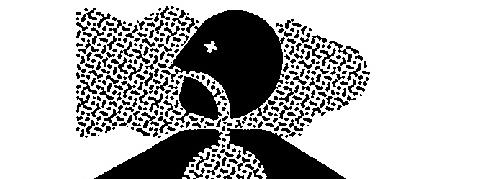
Caterpillar equipment and replacement parts that are shipped from Caterpillar are asbestos free. Caterpillar recommends the use of only genuine Caterpillar replacement parts. Use the following guidelines when you handle any replacement parts that contain asbestos or when you handle asbestos debris.
Use caution. Avoid inhaling dust that might be generated when you handle components that contain asbestos fibers. Inhaling this dust can be hazardous to your health. The components that may contain asbestos fibers are brake pads, brake bands, lining material, clutch plates, and some gaskets. The asbestos that is used in these components is usually bound in a resin or sealed in some way. Normal handling is not hazardous unless airborne dust that contains asbestos is generated.
If dust that may contain asbestos is present, there are several guidelines that should be followed:
• Never use compressed air for cleaning.
• Avoid brushing materials that contain asbestos.
• Avoid grinding materials that contain asbestos.
• Use a wet method in order to clean up asbestos materials.
• A vacuum cleaner that is equipped with a high efficiency particulate air filter (HEPA) can also be used.
• Use exhaust ventilation on permanent machining jobs.
• Wear an approved respirator if there is no other way to control the dust.
• Comply with applicable rules and regulations for the work place. In the United States, use Occupational Safety and Health Administration (OSHA) requirements. These OSHA requirements can be found in "29 CFR 1910.1001".
• Obey environmental regulations for the disposal of asbestos.
• Stay away from areas that might have asbestos particles in the air.
Lines, Tubes, and Hoses
Do not bend or strike high pressure lines. Do not install lines, tubes, or hoses that are damaged.
Repair any fuel lines, oil lines, tubes, or hoses that are loose or damaged. Leaks can cause fires.
Inspect all lines, tubes and hoses carefully. Do not use bare hands to check for leaks. Always use a board or cardboard for checking engine components for leaks. Tighten all connections to the recommended torque.
Check for the following conditions:
• End fittings that are damaged or leaking
• Outer covering that is chafed or cut
• Wire that is exposed in reinforced hose
• Outer covering that is ballooning locally
• Flexible part of the hose that is kinked or crushed
• Armoring that is embedded in the outer covering
Ensure that all of the clamps, the guards, and the heat shields are installed correctly. This will help to prevent these effects: vibration, rubbing against other parts and excessive heat during operation.
Dispose of Waste Properly
Improperly disposing of waste can threaten the environment. Potentially harmful fluids should be disposed of according to local regulations.
Always use leakproof containers when you drain fluids. Do not pour waste onto the ground, down a drain, or into any source of water.
Copyright 1993 - 2024 Caterpillar Inc. All Rights Reserved.
Private Network For SIS Licensees.
Product: MARINE ENGINE
Model: 3208 MARINE ENGINE 75V
Configuration: 3208 MARINE ENGINE 75V00001-UP
Operation and Maintenance Manual
3208 Marine Engine
Warning Signs and Labels
SMCS - 1000; 7405
There may be several specific warning signs on an engine. The exact location of the hazards and the description of the hazards are reviewed in this section. Please become familiar with all warning signs.
Ensure that all of the warning signs are legible. Clean the warning signs or replace the warning signs if the words cannot be read or if the pictures are not visible. When the warning signs are cleaned, use a cloth, water, and soap. Do not use solvent, gasoline, or other harsh chemicals to clean the warning signs. Solvents, gasoline, or harsh chemicals could loosen the adhesive that secures the warning signs. The warning signs that are loosened could drop off of the engine.
Replace any damaged warning signs or missing warning signs. If a warning sign is attached to a part of the engine that is replaced, install a new warning sign on the replacement part. Any Caterpillar dealer can provide new warning signs.
Do not operate or work on this engine unless you have read and understand the instructions and warnings in the Operation and Maintenance Manual. Failure to follow the instructions or heed the warnings could result in injury or death. Contact any Caterpillar dealer for replacement manuals. Proper care is your responsibility.
The warning labels that may be found on the engine are illustrated and described below.
Battery
1
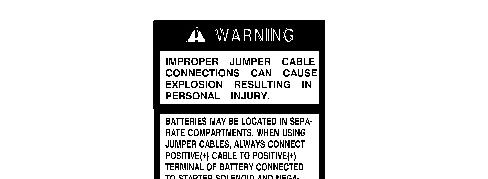

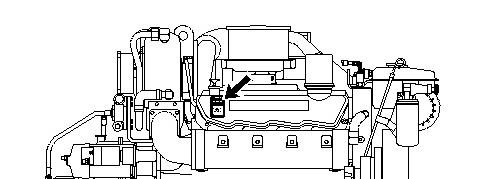
The warning label for the battery should be installed on the side of the engine or in a visible location near the batteries. If the batteries are located on both sides of the package, the warning label should be located on both sides of the engine. g00455028
Improper jumper cable connections can cause an explosion resulting in personal injury.
Batteries may be located in separate compartments. When you are using jump start cables, always connect the positive "+" cable to the positive "+" terminal of the battery that is connected to the starter solenoid. Connect the negative "-" cable from the external source to the negative "-" terminal of the starter. If the engine is not equipped with a negative "-" terminal on the starter, connect the negative "" cable from the external source to the engine block. Follow the procedure in this Operation and Maintenance Manual. Copyright 1993 - 2024 Caterpillar Inc.
Product: MARINE ENGINE
Model: 3208 MARINE ENGINE 75V
Configuration: 3208 MARINE ENGINE 75V00001-UP
Operation and Maintenance Manual
3208 Marine Engine
Engine Description
SMCS - 1000
The Caterpillar 3208 Marine Engine is available for applications in pleasure craft with planing hulls, patrol boats, pilot boats, harbor master vessels, customs, police boats, fire boats, yachts with displacement hulls, ferries, and fishing boats. The engines can be mounted with various marine gears (transmissions) for vessel propulsion.
The 3208 Marine Engine provides the following features:
• Mechanical fuel system
• Eight cylinders
• Two valves per cylinder
• Four stroke cycle
• Direct Injection
The 3208 Marine Engine is available in the following configurations:
• Direct Injection Naturally Aspirated (DINA)
• Direct Injection Turbocharged (DIT)
• Direct Injection Turbocharged Aftercooled (DITA) with Separate Circuit Aftercooler (SCAC)
Engine Specifications
Note: The front end of the engine is opposite the flywheel end of the engine. The left and the right sides of the engine are determined from the flywheel end. The number 1 cylinder is the left front cylinder.
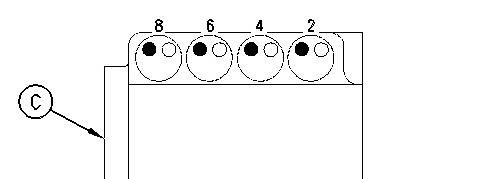
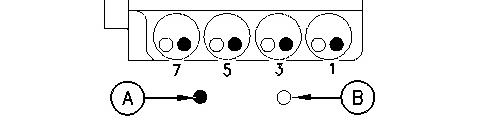
Illustration 1 g00452216
Cylinder and valve locations
(A) Inlet valve
(B) Exhaust valve
(C) Flywheel
Table 1
3208 Marine Engine Specifications
Cylinders and Arrangement 8 cylinder vee block
Bore 114.3 mm (4.5 inch)
Stroke 127 mm (5.0 inch)
Compression Ratio
or 15.5:1 (1)
Displacement 10.4 L (636 in3)
Firing Order 1-2-7-3-4-5-6-8
Rotation (flywheel end) Counterclockwise
Valve Lash Setting (Inlet)
This is the sample of the manual click on the download link for complete manual
DOWNLOAD LINK
For some reason if link does not work download this pdf and then click