MODERN FARMER
Donated farms generate hospital income
A supplement to the Jacksonville Journal-Courier | Saturday, April 25, 2026
Donated farms generate hospital income
A supplement to the Jacksonville Journal-Courier | Saturday, April 25, 2026
2. Donated farms generate hospital income
4. How an Illinois farmer uses drones
4. Reducing fertilizer use for health and safety
6. Costs steep for young farmers
8. Considering expanded cut flower operations
9. Farmland values simmer, for now
10. Planting intentions: Less corn, more soybeans
12. Infrastructure upgrades needed for competitive edge
13. Illinois sees 10% increase in H-2A workers
14. Illinois tops record wheat yield in 2025
15. State weighs tougher rules on high-pollution farms
16. Popular beginning farmers program is axed
17. Report notes emissions from overuse of nitrogen
18. Cream of the Crop photography contest opens

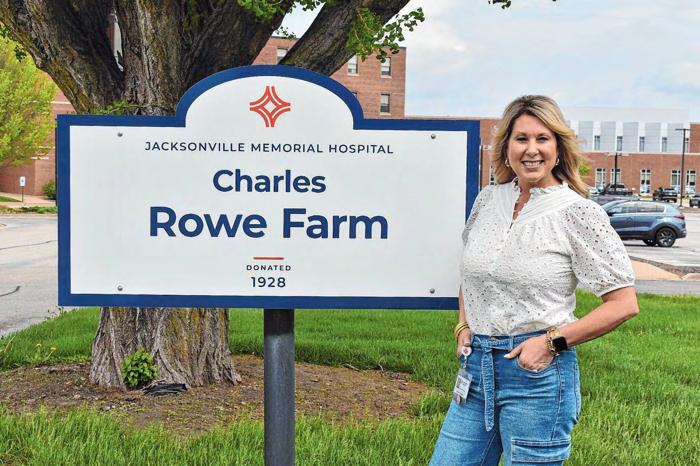
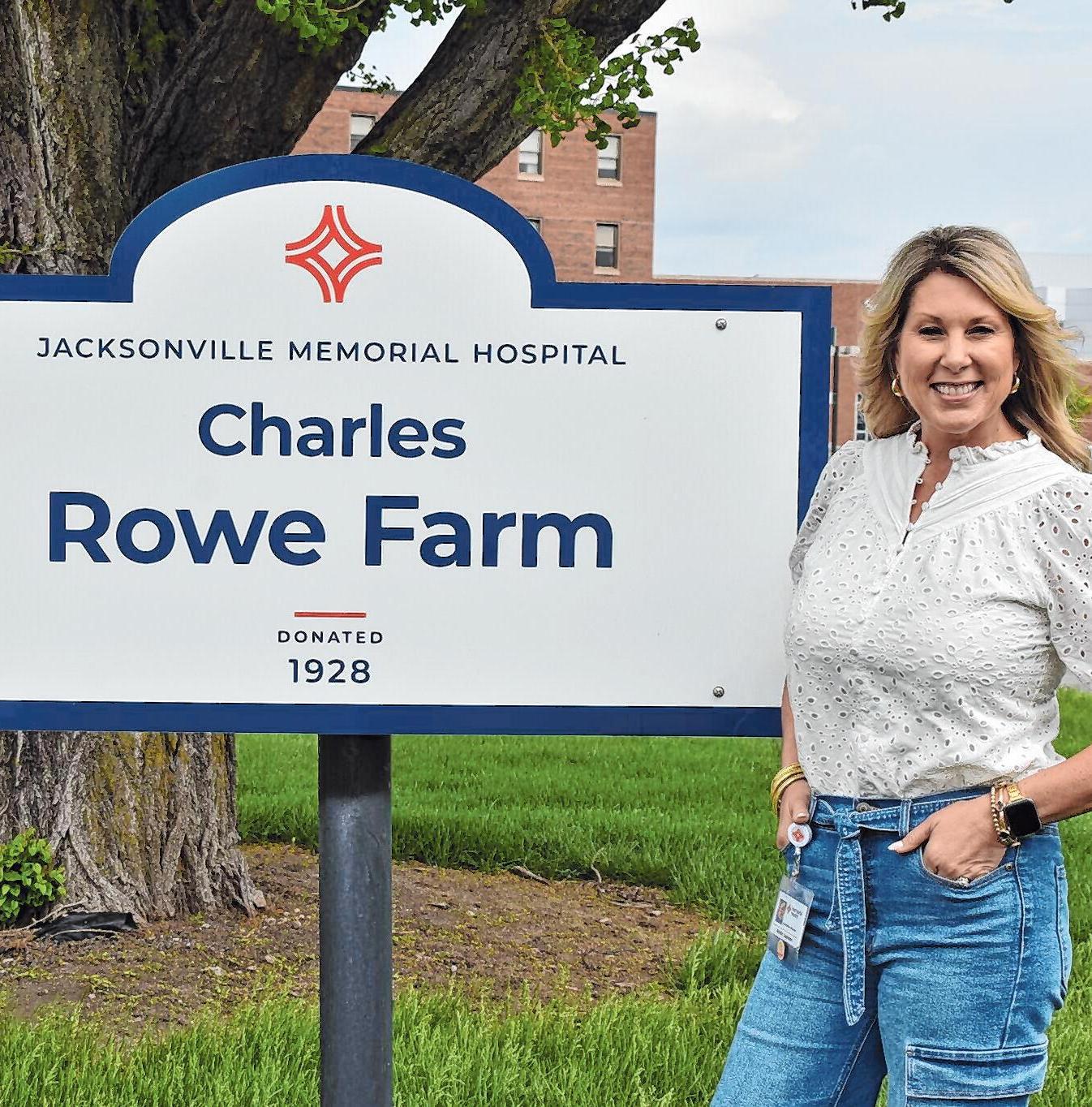
Kristin Jamison, the executive director of the Jacksonville Memorial Hospital Foundation, stands with the sign that honors Charles Rowe, who donated farmland to the hospital. The land includes the area the hospital is built on.
By Samantha McDaniel-Ogletree STAFF WRITER
The first farm donated to Jacksonville Memorial Hospital, formerly Passavant Area Hospital, was given in 192 by Charles A. Rowe and is now where the current hospital campus sits.
But that’s not the only landdonatedtothehospital.
Since the first donation in 1928, there have been morethan4,000acresdonated, allowing the hospital to profit from crops grown across three counties.
Kristin Jamison, the executive director for the Jacksonville Memorial Hospital Foundation, said theprogramisuniqueand provides an income to the hospital that can be used to help with various programsandprojectswithin the hospital each year.
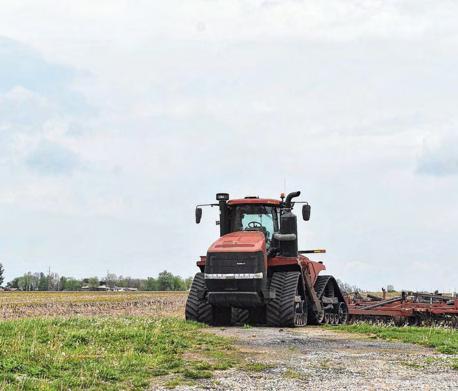
Farmland donated by Charles Rowe in 1928 is being prepared for the spring planting season.
“To me, this is a unique way to honor a family member,” Jamison said.
“Our general feeling is that any of the gifts given to the hospital or foundationarebecausetheywant tosupporttheworkwedo.
They understand why the hospital is important.”
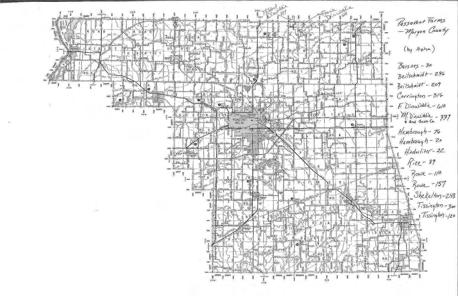
Currently, the Jacksonville Memorial Hospital Foundation oversees the productionofcropsonapproximately 4,000 acres across Morgan, Scott and Cass counties. The total estimated land value under the foundation was
From page H2
roughly $50 million in September 2025.
Since the 1920s, 13 estateshaveleftfarmlandto Passavant Area Hospital, nowJacksonvilleMemorial Hospital.
All income from the farms goes to the foundation to benefit the hospital.
“The$1milliongeneratedfromthefarmhelpsthe hospital improve patient services,” Jamison said. “These gifts help improve the lives of Morgan County and area residents.”
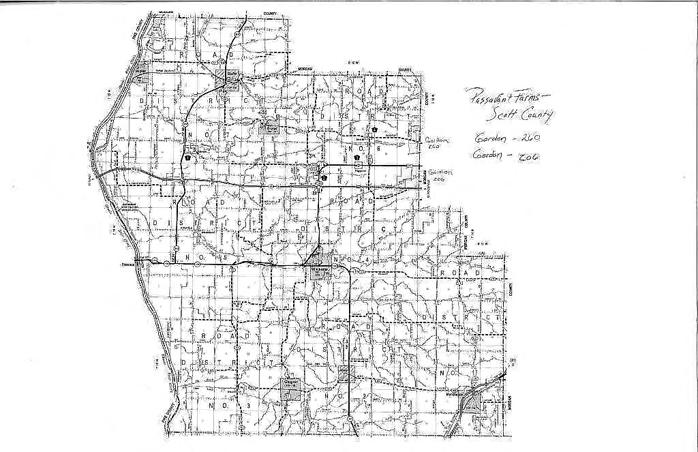
Jamison said there is a Jacksonville Memorial Farm Advisory committee made up of agricultural officials who help her workwiththefarmoperators or management companies that oversee the farms to ensure they are operating to their fullest capabilities.
Jamison said the work done on each farm varies depending on the wishes of those that donated the land.
“Each is unique in how they are managed,” Jamisonsaid.“Somehavefarm operators and some are managed by a farm manager group. Each has different contracts and all areoperatingbasedonthe wishes of the donor. They want them to be working farmsandit’sourmission to uphold those wishes.”
Even a portion of the Rowe farm is still operated as a working farm to grow crops just north of the hospital’s campus.
The donation of land isn’t the only way farmers are supporting the hospital.
Thefoundationalsohas a program where farmers can donate bushels of their crops to support the hospital’s emergency de-
partment. The profits from those bushels benefit the hospital and its emergency department. Eachfarmisdesignated by a sign that identifies who donated it.
“We understand how valuable gifts of farmland are to Jacksonville Memorial Hospital and we want to see that tradition go wellintothefuture,”Jamison said.
By Bridgette Fox STAFF WRITER
Evan Marr said he bought his drone in 2017 for about $1,000.
“That’s made it pretty nice where I can get up in the air and go scout, see if we’remaybehavingaweed problem in an area or possiblyevensomethingelse,” Marr said. “You might see how to field the disease pressure-wise or insect pressure-wise and be able tokindofmakeajudgment call from there.”
Outside his farm, sometimes Marr brings in outside groups to study the growing pattern of his crops.
“Nowadays the technology is just crazy where we’re actually able to use
some NDVI (normalized difference vegetation index) imagery and things like that to kind of study and view the crop belt throughout the growing season,” he said.
According to a 2023 researchstudyfromtheUniversity of Illinois and Mississippi State University, there’sevidencethatartificial intelligence can be usedasapredictorforcrop yield.
“The increase in machine learning and deep learning research for remote sensing presents a promisingpathforwardin incorporating artificial intelligence into agriculture and remote sensing,” according to the study.
Whileitisn’toddtofind drones on a farm, Marr

Grant Baldwin/AFP
Co-owner of Soil Regen and first generation farmer, Russell Hedrick, designs and markets drones for agricultural use, in Hickory, North Carolina, on April 10.
saidhe’snotlookingtobuy another one anytime soon (although the technology upgrades are always happening).Theequipmenthe has right now if fine enough.
“I’ve owned one for a longtimetheresincetheyI started first came out, it started becoming popular,” Marr said. “I’d like to update mine, get a newer style.”
He uses his drone for imagery, but there are farmers using the technology for pesticide application. One model by DJI Drones is the XAG P150 SprayAllDayKit.Ithasan 18.5 sprayer tank, field mapping capabilities, photo and 3D model capabilities — but it can cost around $30,000.
By Angela Bauer STAFF WRITER
Farming is a way of life intheAmericanMidwest, early mornings and late nights spent truly working the land, feet and hearts planted in the fertile soil alongside row after row of corn, soybeans and other crops.
Few things present a
more recognizable image of the American heartland lifestyle.
Butthesamelifestyle— synonymous with “good, clean, country living” — also comes with some of the nation’s highest cancer rates.
“We have enough evidence now to know we should do something aboutit,andit’ssimplyir-
responsible not to,” said Dr.StacyWoods,research director for the Union of Concerned Scientists’ food and environment program.
The nonprofit organization, according to its website, “puts rigorous, independent science into action, developing solutions and advocating for a

From page H4
healthy, safe and just future.”
The latest round of evidence of a link between agriculture and high cancerratescomesinareport by the Iowa Environmental Council and the nonpartisan Harkin Institute forPublicPolicyandCitizen Engagement. Iowa has the second highest cancer rates in the nation whenadjustedforage,according to the study.
“Thegenesisofthecancer study in Iowa was hearingaboutitfrompeople,” Woods said, noting researchers “talked to people across Iowa and heard personal stories from farmers and people who lived in rural Iowa.” Whatdocancerratesin Iowa have to do with Illinois?
The Harkin report creditsnitratecontamination in water as a likely driverofthecancerratein Iowa, where some areas saw 80% of that contamination stem from agriculturalsourcessuchassynthetic fertilizers and manure.
Some 84% of Iowa land was farmland in 2025, compared to 74% in Illinois, according to visualcapitalist.com.
While Illinois’ overall cancer rate is lower than Iowa’s, it is higher than the national average, according to the American Cancer Society and the North American Association of Central Cancer Registries.
Illinois’ rate for all cancers during the 2018-2022 period, the most recent for which statistics are available, was 474.8 incidents per 100,000 people. That is lower than Iowa’s rateof506.7butabovethe U.S. rate of 460.0.
When broken down by individualtypesofcancer,
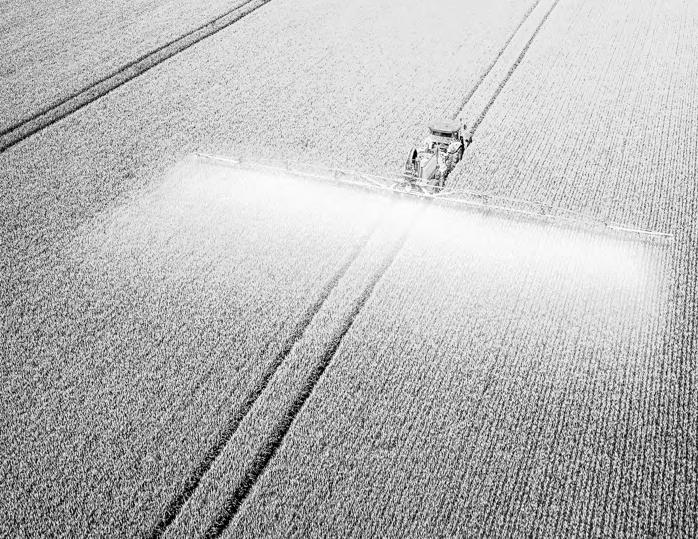
A tractor applies fertilizer to a field. A new study linking higher cancer rates in agricultural communities and excess pesticide use has led to calls for reducing the amounts of pesticides used on farm fields.
Illinois’ rate was lower than the U.S. rate in only five of 23 cancer varieties leukemia, brain and nervous system, cervix, liver and myeloma.
Of the same 23 varieties,Illinois’ratewashigher than Iowa’s for six types — Hodgkin lymphoma, larynx, liver, ovarian, pancreas and stomach.
Nitrates that enter Illinois’ water supply stem from fertilizer runoff fromagriculturaluse,golf courses and lawns; leaching from septic systems, wastewater treatment discharge and industrial pollution, according to University of Illinois Extension.
Thosemostatriskfrom nitrate contamination are infants under the age of 6 months, pregnant individuals, those with weakened immune systems, and those with anemia, blood disorders or reducedstomachacidity,according to Extension.
Because of the risk posed by nitrates, the Illinois Environmental Protection Agency requires routine nitrate testing of public water supplies. If
testing shows nitrate levels higher than the state and federal standard of10 mg/L, drinking water is provided until the levels drop.
Jacksonville Municipal Utilities’ 2023 water quality report showed its water supply with a nitrate level of1mg/L.
The takeaway from the studies is not a call to ban fertilizers, which provide nutrients and increase cropyields,buttobemore judicious in their use, Woods said.
Around880,000metric tons of synthetic fertilizer is applied annually to crops in Illinois, she said.
“How much of that is overuse? Hundreds of thousands of metric tons,” she said. “That translates to a lot of wasted fertilizer that farmers are spending their money on.”
Previous studies have estimated crops in the Midwest typically use onlybetween50%and75%of the fertilizer applied, Woods said.
Forcorn,itcanbeaslittle as 40%, she said.
The excess 25% to 60% simply “costs farmers
those behind the Harkin report instead suggest that people call their elected representatives and ask them to develop state and federal policies addressing fertilizer abuse.
Supporting the United States Department of Agriculture’s Natural Resources Conservation Service programs — both as farmers and as taxpayers — also is key, Woods said.
money,” she said.
The study results also arenotacalltovilifyagriculture.
The Union of Concerned Scientists and
“OneofthethingsIlike to point to is that these conservation programs have a real economic benefit,” Woods said. “Every dollar invested in a conservation program generated nearly $4 worth of benefits. Farmers see them as a way to protect the environment they work in and reduce their use of expensive fertilizers.”
Extensionofferstipson reducing nutrient loss via agricultural practices and tips for lawn care that minimize damage to water resources.
“Theoveruseoffertilizer — (not use but) overuse, which has an economicimpactforfarmers, a health impact for communities,andanenvironmentalimpactforallofus is not something we need to live with,” Woods said. “We can reduce the risk just by reducing fertilizer use, and communities will get cleaner, safer water.
“Water helps sustain us.”
Meanwhile, those in Illinois who get their water from private wells, which aren’t regulated by the state EPA and aren’t requiredtoundergotesting, should have their wells tested annually, when they’re first built, and after any flooding or repairs,accordingtoExtension.

By Rebecka Pieder CAPITOL NEWS ILLINOIS
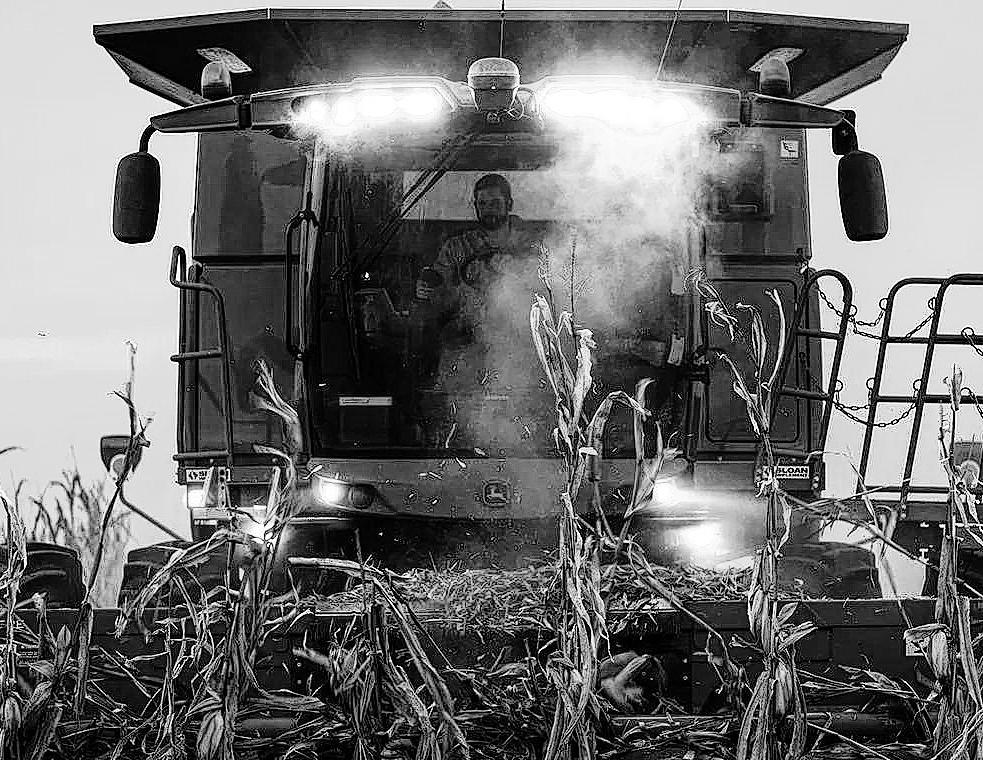
Brock Seymour was 5 the first time he drove a combine. It was pouring rain, and his grandfather had jumped out to fetch the grain cart, leaving him to drive across the field.
“I’ll never forget that,” Seymour said. “When he got down out of the combine, he said, ‘Just drive straight, buddy.’”
From that point on, Seymour knew he wanted to be a farmer. Growing up on the family farm in Shipman, Illinois, Seymour took on responsibility early, helping with operationsat13andbyhis early 20s, learning the business side of running a farm.
Now 26, he represents thefifthgenerationonhis family’s land. With his grandparents entering their late 70s, those responsibilities are shifting into conversations about succession.
Soybean Association. Now, conflict in the Middle East is adding new pressures, with fertilizer prices at risk of climbing toward levels not seen since Russia’s 2022 invasionofUkraine,whichalso upended global supply chains.
“People just don’t realize how much money it takes to start from scratch,” said Lance Muirheid, a seventh-generation corn and soybean farmerinCerroGordo,Illinois. “If you don’t have some kind of financial backing,it’sextremelyexpensive to be a farmer.”
Even if you are fortunate enough as a young farmer to inherit farmlandfromyourparentsor grandparents, the financial burdens remain through taxation, said Muirheid, 29.
His path is a familiar one for young farmers in Illinois, many of them fifth- or sixth-generation stewards of Midwestern farms.Yet,lessthan9%of Illinoisfarmersarebelow theageof35,andtheaverage age of a farmer in Illinois is over 58, according to the U.S. Department of Agriculture’s 2022 agriculture census.
If you ask farmers why thatis,thereasonsforthe stats are varied. For any
young farmer, not least those without access to inherited land, there are the high costs of getting started. This includes land, equipment and fer-

tilizer, none of which are cheap
For those looking to continue their family legacy, there is a hefty estate tax associated with taking over the business and theland.Butthere’salsoa senseofsomeintheolder generationnotwantingto pass the torch, and because of improved equipment quality, they don’t have to just yet.
While the U.S. Department of Agriculture has programs in place to support young farmers, including low-interest loans;thethresholdtoentry remains high, said Garrett Williams, 26, chair of the Illinois Farm
Bureau’s young leader committee.
“I do think that the risingcostsofinputsandthe buy-in on assets and groundisprobablyarelatively high barrier,” Williams said. “For young farmers, especially those with families, it can be a challenge.”
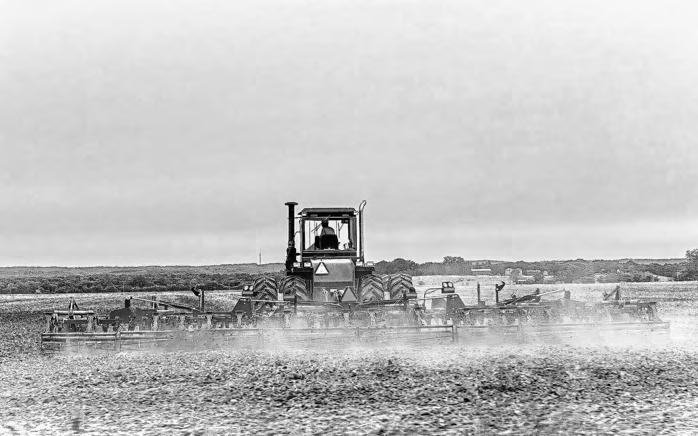
Farming is capital-intensive; there are equipment costs, fertilizer costs, and the price of land and labor. A combine alone can cost more than $1 million. Tariffs and geopolitical disruptions have already increased costs for Illinois farmers in recent years, according to the Illinois
‘Land rich and cash poor’ Illinois is one of a dozen states that imposes a so-called “death tax” — a state-level estate tax on inherited assets, separate from federal taxes. While Congress raised the federal estate-tax exemption to $15 million through the One Big Beautiful Bill Act, farmers in Illinois still face state-level taxes if they reach the $4 million threshold. That means that once an estate exceeds $4 million, the entire value is subject to taxation.
With land and equipment becoming more valuable,it’seasytoreach that $4 million limit, Williams said.
The Family Farm Preservation Act, which would have raised the estate tax threshold to $6 million, included key priorities for the Illinois
From page H6
Farm Bureau. The measure would allow for the 96% of farms that are family owned to stay intact when passed down between generations, without having to sell off land or assets, according to the farm bureau.
“Farmers, we have a tendency to be land rich and cash poor,” Williams said. “I think that’s the general sentiment. Any taxesincurredoninheritedassetscanbeverydifficult. It can be cumbersome on the young farmer to come up with that cash to keep those acres and keep that equipment for the operation.”
The prices of both land andequipmenthaverisen for farmers over the past decade, increasing the value of estates.
“You know, the price of land has skyrocketed,” Muirheid said. “I see a lot offamilyfarmsthatcould be passed down to the next generation. But once they’re inherited, they have to go pay all this tax and sell two-thirds of the farm to be able to keep one-third in the family. And that’s just not right.”
The Family Farm Preservation Act (contained in Senate Bill 2921 and House Bill 4600) did not pass the previous legislative session due to fiscal concerns over reducing state revenue while trying to resolve a budget deficit. Now, a new bill, Senate Bill 1688, is currently awaiting assignment to a Senate committee. Sponsored by Sen. Doris Turner, D-Springfield, who chairs the Senate Agriculture Committee, the bill seeks to raise the tax exemption to $6 million.
Turner echoed fiscal concerns about lost revenue for the state, saying
“It’sthemoney.That’sthe big piece.”
However, she hopes this time there is enough momentum for the bill to pass. It’s been awaiting a committee assignment since February 2025.
“We’re working really hard with all of the stakeholders,” Turner said. “Hopefully we get it over the finish line.”
Sen. Terri Bryant, RMurphysboro, is among 29 cosponsors on the bill, which has bipartisan support in both the House and Senate.
“You can get to $4 million really fast when a combinecosts$1million,” Bryant said. “So we need togetridofthatandbring it in line with the federal government. We’re pushing for it really hard.”
“I don’t know anyone who is against it,” added Sen. Sally Turner, R-Beason.
Estate tax revenues have “increased significantly in recent years,” according to a January Commission on GovernmentForecastingandAccountability report. Betweenfiscalyear2012and fiscal year 2020, receipts averaged more than $300 million annually. And in recentyears,they’vegone north of $600 million. Some growth can be attributed to a sharp rise in asset valuations.
Gov. JB Pritzker said in Marchthatchangestothe estate tax have not been a priority, though he added: “I do think it’s somethingthatIcouldsupport as long as it includes the kind of tax break that I think is appropriate to preserving small farms and small businesses.”
“I think there are people who look at me and think(an)estatetaxcutis not something that Pritzkershouldbetheadvocate for,” Pritzker said, acknowledging his billionaire status. “But I un-

derstand, very much so, how impactful it is in a negative way on farmers and on small businesspeople.”
The combined impact of high costs and estate taxes can lead young farmers to delay formally buying into the family farm until they have gainedenoughcapital.As a result, these transitions often happen later in life, accordingtotheUniversityofIllinois’farmdocdaily,awebsitethatoffersresearch-based analysis for farmers,marketanalysts, policymakers and more.
Financial barriers are only part of the challenge facing new farmers. While agriculture has long required significant capital, some experts say olderfarmersareholding ontotheiroperationslonger, leaving fewer oppor-
By Hannah Spangler FARMWEEK
Whenwarmerweather returns, people will start heading back to outdoor farmersmarkets.Inaddition to fresh meat and produce, bright, colorful cut flowers bundled in uniquebouquetsoravailable for custom arrangements are becoming an eye-catching addition to the market experience.
As interest in cut flowers grows, farmers and wholesalers are looking toaddbloomstotheiroperations or improve the existing systems. During the From Food to Flowers: Everything Local Conference in Springfield, experts shared how taking sustainable steps over time has helped them better approach
farmers markets or other cut flower expansion opportunities.
Karen Peditto of Historic Wagner Farms in Cook County said it’s important to start small when adding cut flowers toafarm,ratherthantryingtoaddanentireenterprise overnight.
“You need to start where you are.
“You need to grow for your market, and you need to build intentionally,” she said.
Most farmers need to startwithselectinghardy, dependable blooms like zinnias, sunflowers and marigolds. Peditto said adding a mix of flowers matters too, since growers also need fillers and foliage to build market-
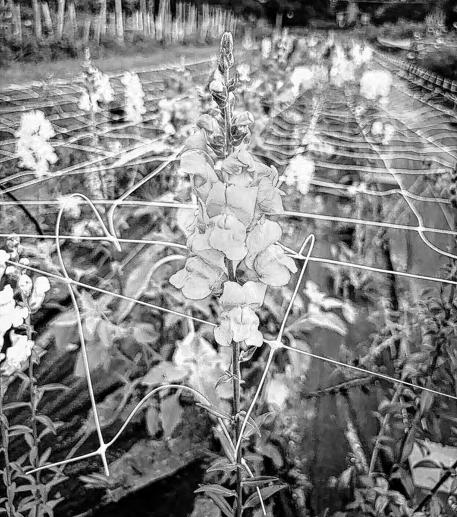

able bouquets.
But choosing varieties is only the first step. Peditto told potential growers to look closely at how flowers fit into the systemstheyalreadyuse.Ifa farm already starts seeds indoors, flowers can slide naturally into that workflow. If not, buying a small number of starter plants might make more sense.
Peditto also encourages growers to think strategically about how they plan to sell cut flowers. Some markets demand far more time and labor thanothers,whichiswhy she shifted toward Upick, her least labor-intensive option, while still offeringjararrangements or bouquets at farmers markets when time allowed.
Consider perennials “I think perennials, for a cut flower grower, are a way to extend the season,” said Cynthia Haynes, consumer horticultureextensionspecialist at Iowa State University.
Perennials return for multiple years, and certain species, such as daffodils, bloom in the spring before annual flowers, she told FarmWeek. Other perennials, like callicarpa or goldenrod, bloom in early to mid-fall.
However, Haynes noted perennials need “fertile, well-drained soil,” so it is important for growers to understand their soil type before planting. Perennials are also more expensive than annuals,

By Rhiannon Branch FARMWEEK
The 2026 Land Values and Lease Trends Report saw a shift in narrative from recent years, with 61%ofsurveyrespondents expecting a decline in farmland prices this year, signaling a potential plateau in the market.
However, the report, conductedannuallybythe Illinois Society of Professional Farm Managers and Rural Appraisers (ISPFMRA), indicates the downturn could be short lived with most respondents expecting farmland prices to increase in the nextfiveyears.Andprices are still substantially higher than historical averages.
ClassAfarmlandinIllinois was down 3% for calendar year 2025, Class B was unchanged and Class C,ClassDandrecreationallandwerealluponaverage.
“I think at this time last year we would have probably predicted a steeper decline than 3%,” Luke
From page H8
so balancing investments is needed to keep costs down.
According to Sarah Kott of the Chicago Flower Market, expanding local wholesale cut flower options is key to improving accessibility in the U.S. without relying as heavily on imports.
“It’s hard work, but it’s doable,” she said.
The Chicago Flower Market is preparing to workwith25growersthis year.Itoperatesseasonal-
Catrina Rawson/FarmWeek
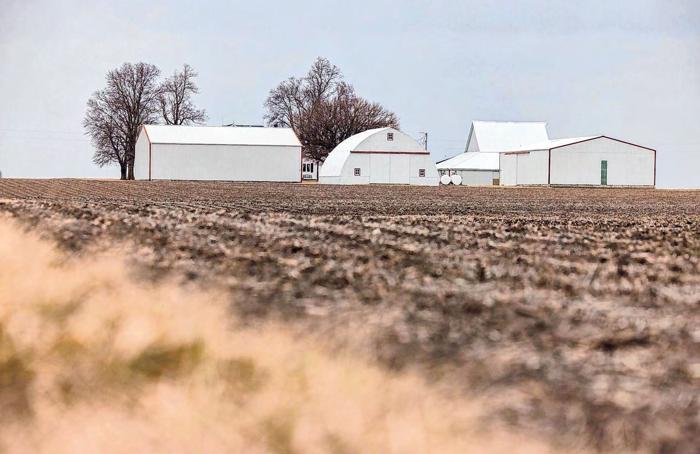
Average prime farmland values slipped last year while prices for Classes C, D and recreational ground increased statewide, according to a recent report.
Worrell with Worrell Land Services in Jacksonville told DeLoss Jahnke with the RFD Radio Network.
“Even with declines in Class A and unchanged values in Class B over two years, we’re still up approximately 50% from where we were prepan-
ly, Kott said, beginning theweekofMother’sDay.
Transportation routes run from Grand Rapids, Michigan, to Chicago, central Illinois to Chicago, and Chicago to Milwaukee.
Kott, who oversees the market’s logistics, said wholesale works best when farms stay organized and can supply flowers consistently. Florists rely on their wholesaler to provide unique, high-quality blooms they can’t always get from large importers.
demic, which is a huge number.”
Worrell reported several reasons for the moderate decline in Class A values.
“IthinkClassAwentso high up that there was more room to wiggle your way back down,” he said. “IalsothinkasthoseClass
To make that possible, growers need to communicate what will be in bloom weeks ahead of time.
For farms interested in entering wholesale, Kott explained the first step is simply reaching out. Althoughsomelargeimport wholesalersbuyfromonly high-volume farms at low prices, smaller regional wholesalers and local florists might be open to purchasing from beginning or mid-scale growers.
“Ask florists in your area who they source from and then see if they’ll also want to buy your flowers,“ Kott said. “As long as you start a conversation, you find someone open to buying, I would say go for it.”
afford those costs per acre.”
Worell said with technological advancements, farmers can grow crops on Class B and Class C land more efficiently than decades past.
“Depending on the weather, in some instances on the farms I manage, my Class B farms do just as good, if not better, than a Class A farm,” he said. “Whetherwe’relookingat furniture, sports cards, or farmland, we’re looking for value.”
Other highlights from the report include:
A prices got higher and higher fewer people could
• Incomes were about the same for rented farmland in 2025 as in 2026. Cash rents increased slightly going into 2026 and are not expected to decline into 2027.
• 69% of respondents expect input costs to increase in 2026.
• Survey respondents estimatedthat62%ofland purchases required some form of debt financing. Of thosefinancingwithdebt, theamountofdebtfinancing averaged 54% of the purchase price.
• Farmers accounted for 58% of the buyers, followedbyindividualinvestors(34%)andinstitutions (8%).
For 2026, 35% of cash rentarrangementsaretraditional cash rent, followed by traditional crop share and variable cash rent tied at 27% each.
• 60% of the survey respondents expect interest rates to decrease in 2026. Declining interest rates wouldbeexpectedtopositively impact farmland prices.

By Rhiannon Branch FARMWEEK
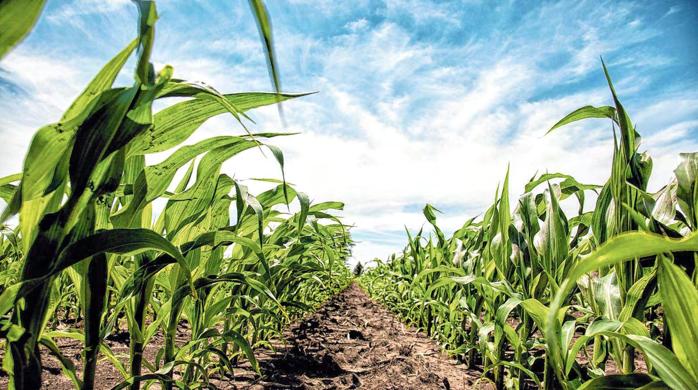
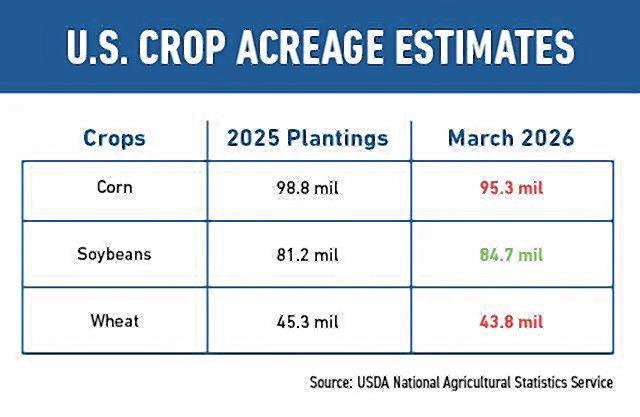
U.S. farmers intend to plant 95.3 million acres of corn in 2026, down 3% from last year, and 84.7 million acres of soybeans, up 4% from last year, according to USDA’s prospective plantings report.
“The survey suggested corn acres would be switching to soybeans in the season ahead, as expected, but not to as deep ofadegreeashadbeenanticipated coming in,” Joe Camp with CommStock Investments told FarmWeek. The average trade guesses were for 94.3 million corn acres and 85.5 million soybean acres.
All wheat planted area for 2026 is estimated at 43.8 million acres, down 3%from2025.Ifrealized,it
port.
Cornstockstotaled9.02 billion bushels, up 11% from the same time last year, and slightly below trade expectations.
would be the lowest total wheat acreage since 1919.
Winter wheat planted area, at 32.4 million acres, is down 2% from both the
previous estimate and from last year.
Theestimatesarebased on surveys completed by nearly 74,000 farm operatorsacrossthenationduring the first two weeks of March. USDA’s National Agricultural Statistics Service reported a survey responserateofjust37.6%, downfrom44.3%lastyear.
Camp said the natural swingofcroprotationand commodity prices favoring soybeans are big driversoftheacreageshift,but those who do not have inputs locked in could still be swayed as fields are planted.
“Coming into the report, we were considering the caveats of this season being different because of what’s transpired over the last month,” Camp said. “The changes since (the survey period) are most particularly tied to what’s going on in the Middle East and its ramifications for the energy market, whichlinkbacktofertilizer costs and how those go intothedecision-making.”
Illinois farmers intend to plant 10.9 million acres of corn this season, down 3% from last year, and10.5 million acres of soybeans, up 2%.
USDA also released its quarterly grain stocks re-
Camp said it is interesting to think about how much stocks are up relative to usage in the previous quarter.
“Corn stocks are up 11% from a year ago. That is taken into context with last year being a record17plus billion-bushel crop that was 14% bigger than the previous season, so youcanhavesomesuggestion about the relative strength of usage here for this last corn crop,” Camp said.
On-farm corn stocks were up 21% from a year ago, while off-farm stocks were down 2%.
“The ratios of off-farm to on-farm stand out,” he said. “If (corn) is largely held on-farm, it’s possible that it’s largely still owned by the farmer. That’s a lot of crop, relatively speaking, that is still left to take to the market, so we think about how that can come into play going forward.”
Soybeans stored as of March1totaled2.10billion bushels, up 10% from the same time last year. Onfarm soybean stocks were up 3% from a year ago, whileoff-farmstockswere up16%.
Wheatstoredinallpositions totaled 1.30 billion bushels,up5%fromayear ago. On-farm all wheat stocksweredown3%from last year, while off-farm stocks were up 8%.
Initial market reaction tothereportswaspositive for soybeans and slightly negative for corn, but Camp said there weren’t anystandoutbullishnumbers.
“I think it leaves the market possibly vulnerable going forward to then getting right back to what’s going on in outside markets and the volatility that we have in the financial spaces and across the broader commodity because of the geopolitical uncertainties and everythingelsethat’sgoingon,” he said.
Implications from the war remain a sticking point in his long-term market outlook.
“We’re set up for this springbeingmoreofawar market potentially than it is so often a weather market,” he said.
“This big report is now in the rear view and it’s back to trading some very big-ticketitemsintermsof broader market impacts that we could continue to see with the latest volatility in equities, interest rates, currencies, the metals and oil,” Camp said.

By Tammie Sloup FARMWEEK
The U.S. grain transportation system, particularly the inland waterways, is considered a competitive edge for America’s farmers. But a century-oldlockanddam system along the MississippiRiverandapending rail merger could present challenges in the future.
“Part of the success we’ve had in exports is becausewehavethisreally efficient intermodal system of river and rail and roads that all work together, and it’s important to keep those systems up, because when we’re talking about moving such the large volume that we produce here, being able to get that to an export destination effi-

ciently is really important,” National Corn Growers Association Chief Economist Krista Swanson told FarmWeek.
Illinoisisabitdifferent from other states with its vicinity to the Mississippi, Illinois and Ohio rivers, which allows for more “exposure to the international market than some other places,” said Collin Watters, Illinois Corn’s director of exports and logistics.
The Mississippi River system is one of the most criticallogisticscorridors for the U.S. corn export system, which makes advocating for federal investments to modernize the waterways a priority for Illinois Corn and Illinois Farm Bureau.
During a recent Leaders to Washington trip, members advocated for legislator support to improve infrastructure along the Mississippi, particularly the aging
and they’re starting to show signs of decay.”
According to USDA, close to 60% of U.S. grain exports are shipped by bargeandroughly32million tons of corn per year are barged down the Mississippi River system to Louisiana export terminals.
Barges dominate because Midwestern corn can be loaded on rivers and moved cheaply to Gulf export ports. Most corn used within the U.S. moves by truck or rail (to ethanol plants, feedlots or processors).
lock and dam system.
Tom Heinold, chief of the operations division of the U.S. Army Corps of Engineers Rock Island District, said routine maintenance has pretty much stayed on schedule, but non-routine repairs have not been well funded the past couple years.
“I think 2022 was the lasttimewegotalargeinfusion of infrastructure money for our locks and dams and so things are breaking faster than we can repair them right now,” Heinold told FarmWeek.“ButIhavetocaveat that and say that during the 2000s, 2010s, and thefirstcoupleofyearsof the 2020s, we took very good care of the locks. ...
My next big concern is the dams. Those dam gates out there, there are a few hundred of them across all of our dams between the St. Louis, Rock Island and St. Paul districts, and they have gone largely unmaintained ...
“Right now, we do have a competitive edge because we’ve invested in this (river) system, and it’s reliable and very, very efficient. If we fail to invest in this system (in the future), that price point could go the other way, and Brazil and other ag producing nations in South America, for instance,couldeatusalive,” Heinold warned.
Drought and consistent low water levels in thelowerMississippialso continue to be a concern, while the upper river is “looking pretty good,” Heinold said.
“On the lower river, they have gone for about four years in a drought condition, and unfortunately, that condition, more or less, is persisting. We’ve got some recent rain, but it hasn’t beenenoughtocancelout the drought and put a great deal of water back into the river system down south. The system is all connected, so it might be worth watching the potential drought on the lower river.”
This could mean lightloading barges, which in turn affects prices.
By Tammie Sloup FARMWEEK
Demand for agricultural labor through the H-2A temporary visa program in Illinois and the nation continues to rise.
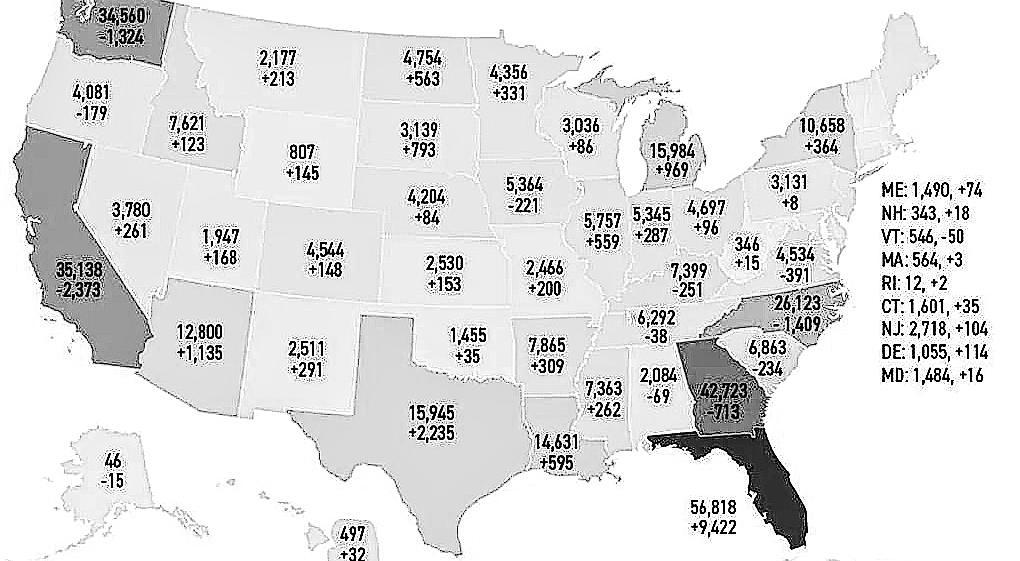
Duringfiscalyear2025, 559 more positions were certified in Illinois over fiscal 2024, bringing the total to 5,757, according to an American Farm Bureau Federation Market Intel report.
Nationwide, 398,258 positions were certified in fiscal year 2025 — 13,358 more positions than in 2024. The H-2A program has grown 185% in the past 10 years.
Data also shows it was the first year in program history during which more than 400,000 work-
ers were requested, highlighting the continued domestic labor shortages American farmers face.
Nearly50%ofthecertifications in 2025 work in just five states: Florida, Georgia, California, Washington and North Carolina. Florida far outpaces all other states, accounting for more than 14% of 2025 certifications alone and adding more than 9,000 additional workers from 2024.
On the flipside, four H-2A leader states decreased in certifications, with California certifying more than 2,000 fewer workers in 2025 than in 2024, the third straight year of decline in H-2A use there.
Thirty-eight states increased the demand for
H-2A continues on H18


By Rhiannon Branch FARMWEEK
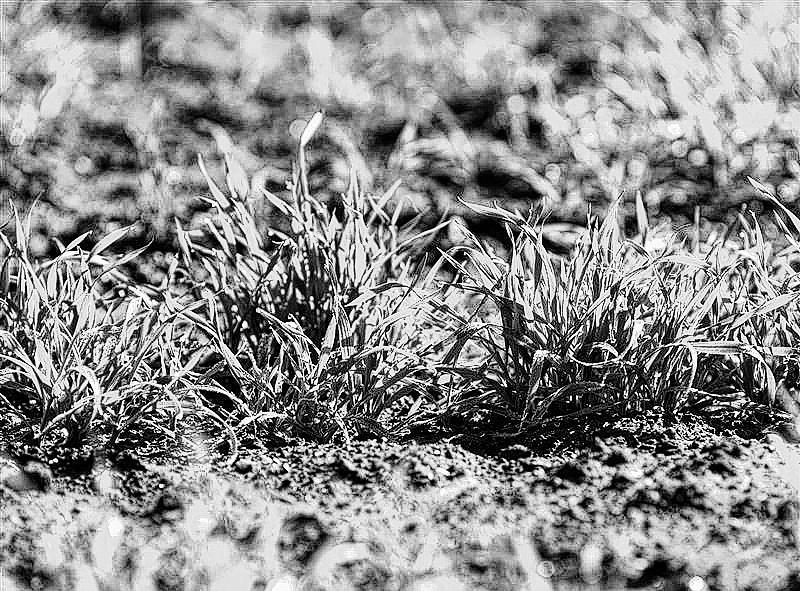
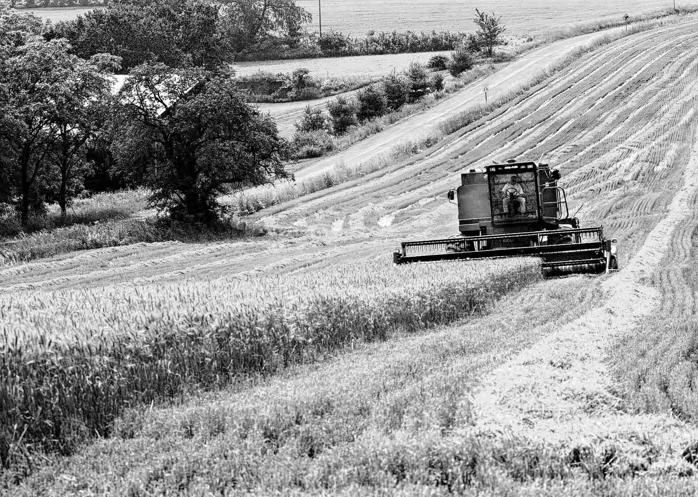
The statewide average winter wheat yield in Illinois for the 2025 crop was 88 bushels per acre, accordingtoUSDA,surpassing the record 87 bushels setin2023.
“A lot of it boils down to thefactthatwheattendsto respond to management very well and it seems like the more that you do to promote high yielding wheat, the more that crop responds and gives you thathighyieldingwheatin return,”IllinoisWheatAssociation President Tracy Heuerman told FarmWeek. “I think farmers that grow wheat see that and they’re willing to invest in the crop to make suretheygetthemaximum yields.”
The top five highest yieldingcountiesinIllinois were Macon (112.3), Carroll (111.6), Edgar (110.2), Ogle (106.9)andSchuyler(104.6). Countywideaverageyields also reached or exceeded
100bushelsperacreinBureau, Champaign, Clark, Gallatin, Greene, Henry andMcLeancounties.
Illinois farmers producedatotalof61.6million bushels of wheat in 2025, up from 60.2 million in 2024.
The leading counties in winter wheat production last season were Washington(5.6million),Randolph (3.3million),Perry(2.6million),St.Clair(2.16million) andWayne(2.11million).
Heuerman, who farms in Effingham and Clay counties and covers 11 counties across the Interstate 70 corridor as a field sales agronomist for GROWMARK, said the 2025 crop saw timely planting and good emergence.
“In general, from my recollection, the wheat crop from the 2025 season was one of the better looking ones that we’ve had coming out of dormancy,” shesaid.
Challengescamelaterin thegrowingseasoninclud-
ingsixweeksofwetweatherinAprilandMay.
“I do think with the commodity prices and the outlook, farmers pulled back on applications of products like fungicides and palisade,” Heuerman said.“So,wedidfacemore lodging challenges than what we had in previous years.”
Looking at the 2026 crop, she said fields plantedinthesecondhalfofOctober were slow to emerge given the dry weather and are a little behind, “But in general the stands are there, the population is there and I think we’re set up to have another really goodwheatcropthisyear.”
Illinois farmers have had success with wheat yields for several consecutive years, jumping from a 66 bushel-per-acre statewide average a decade ago. Aftertwoyearsof79-bushel yields (2021 and 2022), the average jumped to 87 bushels in 2023 and remained steady at 86 in 2024.
By Judith Ruiz-Branch PUBLIC NEWS SERVICE
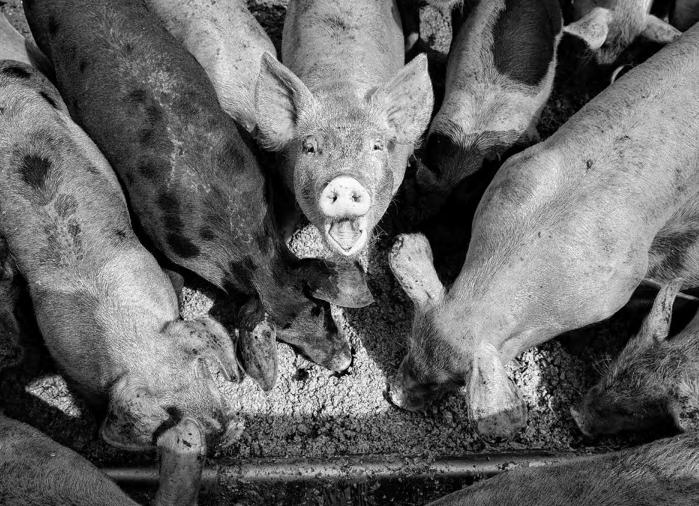
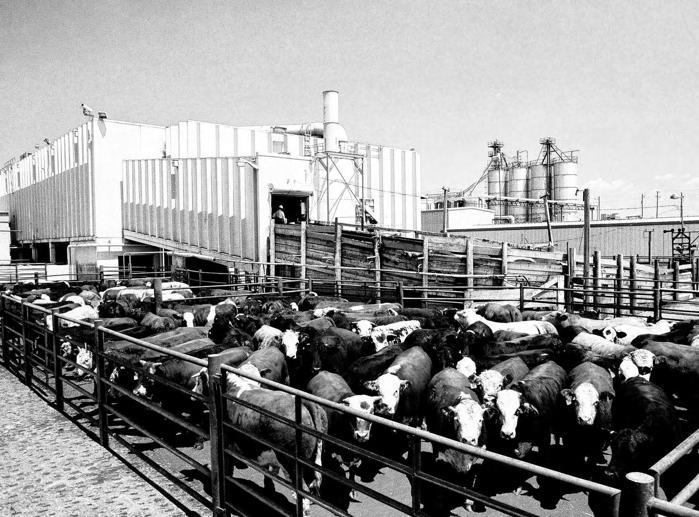
As Illinois considers measurestotightenregulations on concentrated animal feeding operations,arecentstudyhighlighted the disproportionate health and environmental impacts of meat production on vulnerable populations.
Several bills propose stricter rules on largeandmedium-sizedoperations by increasing local control, expanding setback distances from residential areas, and requiring water supply reports for expansions.
Data from the University of Michigan shows these facilities contribute to significantly worse air quality for surrounding communities.
Dimitris Gounaridis, assistant research scientist and lecturer at the University of Michigan, said people of color, rural residents and uninsured
populations make up the majorityofthoseresiding in neighboring areas.
“The meat we are eating and consuming has some costs,” Gounaridis explained. “We prove onceandforallthatproximity to those facilities means lower air quality and health issues.”
Itisestimatedthereare more than 21,000 concentrated animal feeding operations in Illinois. Gounaridis pointed out the research team has made their dataset publicly availableforthefirsttime inhopesofprovidingsystematic evidence for targeted government or organizational interventions.
Meat production facilities produce various harmful chemicals, including ammonia, hydrogen sulfide, methane and particulate matter. Gounaridis noted fine particulate matter are extremely small particles, which linger in the air for ex-
tended periods of time, and no amount is safe to inhale.
“It’s directly associated with (a) 4% increase in overall mortality and (a) 6% increase in cardiovascular mortality and (an) 8% increase in lung cancer,” Gounaridis outlined. “That’s very, very high.”
Gounaridis added health effects have been observed in communities up to 10 miles away. He stressed the concentration of large operations and other meat processing farms in specific locationsliketheMidwestenablesmoretargetedinterventions.
Hesuggestedincreased regulations and infrastructure to prevent pollution spread adding publichealthinformation campaigns are also needed to provide education and resources for the high population of nearby uninsured residents.

By Roz Brown PUBLIC NEWS SERVICE
TheU.S.Departmentof Agriculture has sent termination notices for 49 of 50 projects that aimed to improveopportunitiesfor those just starting out.
The program called Increasing Land, Capital, and Market Access was meant to assist underserved farmers, ranchers and forest landowners.
Amanda Koehler, manager of the Land, Capital and Market Access Network, started the group when the program launched in 2023 and said the cancellation hurts the next generation of farmers and ranchers.
“Iknowsomanypeople who have farm dreams and are basically begging to be able to farm, and
we’re not doing nearly enough to address it,”
Koehler explained.
Some projects would have helped Black, immigrant and Indigenous farmers, and the USDA cited Diversity, Equity, andInclusiondiscrimination for the cancellation, along with “wasteful spending.” Advocates, however, pointed out current USDA leadership spentthepastyearundermining the program by freezing funding, cutting off communication with awardees and withholding the approvals grantees needed to move forward.
TheU.S.farmingpopulation is aging rapidly but without federal assistance,mostyoungerfarmers cannot afford the high startup costs.
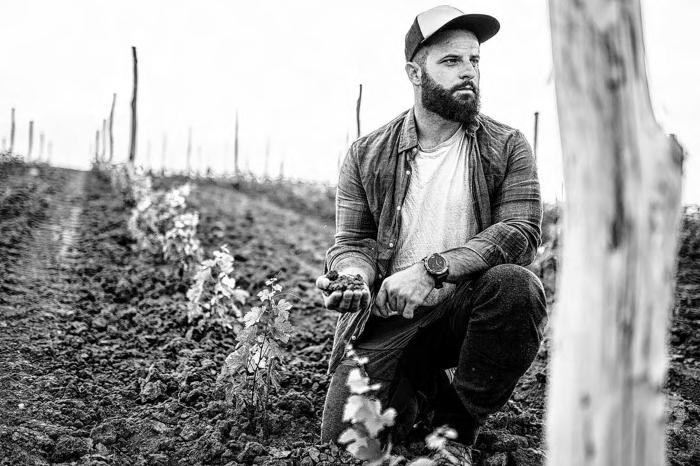
Nikola Stojadinovic/Getty Images
The U.S. Department of Agriculture has sent termination notices for 49 of 50 projects that aimed to improve opportunities for those just starting out.
Koehler noted large- scale, productive farms can easily require an in-
From page H12
“When you have to make more trips with a tow boat to get the same product to market, that gets passed on,” he said.
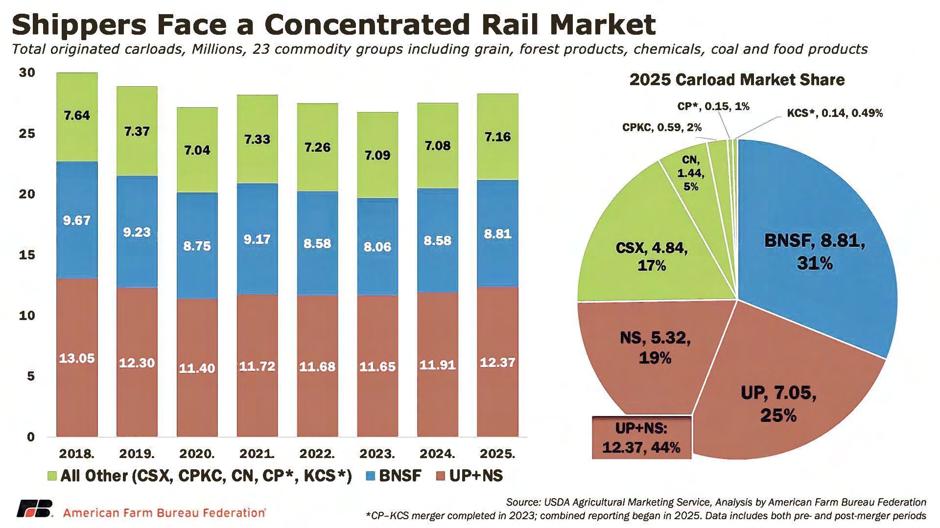
Farmers and ag groups alsoarewatchingtheproposed $85 billion merger between Union Pacific and Norfolk Southern, which could significantly alter rail competition, shipping costs and service reliability for agricultural shippers if approved by federal regulators.
The railroads have informed the Surface Transportation Board (STB) they intend to file a revised merger applicationonApril30following the STB’s rejection of the railroads’ initial merger application for being incomplete.
vestmentof$2million,not including a home or necessaryequipment.Shebelieves the U.S. is running out of time to address the issues in a meaningful way.
“The number one reason young farmers are leaving agriculture is because of land access issues,” Koehler stressed.
“The termination of this program is incredibly shortsighted, especially because there has not been an alternative proposed.”
Koehleraddedthe$300 million program was small,consideringallproposed projects topped $2.5 billion. In addition to heradvocacywork,Koehler is an urban farmer who raises eggs, fruits, vegetables and herbs for her family and neighbors.
The deal would create the nation’s first coast-tocoastfreightrailroad.The board could make a decision by 2027.
In 2023 alone, U.S. railroads carried more than 80 million tons of corn, much of it originating in the Midwest and NorthernPlainsandmovingtowardcoastalportsormajor processing hubs.
Mexico is the top exportmarketforU.S.corn. About two-thirds of the grain the U.S. ships to Mexico moves by rail. Disruptions in rail transport to Mexico could erodetheU.S.’sproximity advantage, cause storage backups and weaken basis.
“For agriculture and rural America, the central question is not whether railroads could operate a larger network, but how further concentration would affect pric-
ing power, service reliability and accountability in markets where shippers already have limited alternatives,” American Farm Bureau Federation EconomistDanielMunch wrote in a recent Market Intel.
When rail rates rise, farmershavelimitedability to offset the increase, Munch wrote.
Commodity prices are set in global markets; input costs are largely fixed in the short run and production decisions cannot be easily adjusted after harvest.Asaresult,higher rail rates will be absorbed directly into farm margins.
“The risk of the UP-NS merger is clear. It would leave farmers more dependent on fewer railroadsatatimewhenthey already have almost no ability to walk away from higher costs or poor service,” Munch said.
By Journal-Courier
The dominant corn–soybean farming system in the United States uses farmorenitrogenfertilizer than crops can absorb with the surplus wasting farmers’ money, polluting drinking water, and producing climate emissions comparable to as many as 14 million gasoline-powered cars each year, accordingtoanewreportby the Union of Concerned Scientists.
The report estimates that U.S. corn–soybean producers over-applied from 3.5 million to 5.8 millionmetrictonsofsynthetic nitrogen fertilizer in 2023, producing avoidable heat-trapping emissions equivalent to between 8.4 million and14 million gaspowered cars driven for a year.
Nitrogen fertilizer is currently used in quantities far greater than what crops need or can absorb, with research showing that as much as half applied by farmers to their corn-soyrotationisunnecessary.Theexcessrunsoff to waterways, leaches into groundwater,orturnsinto climate-heatinggasessuch as nitrous oxide and carbon dioxide that are released into the atmosphere.
“Giant fertilizer corporations have used aggressivemarketingtoconvince farmers that spraying more of their product will bring them greater crop yields,” said Omanjana Goswami,co-authorofthe report and an interdisciplinary scientist with the UnionofConcernedScientists Food and Environment Program. “As fertilizerpricescontinuetorise, this overdependence is lowering profit margins forfarmerswhileboosting
the revenue of the multibillion-dollar fertilizer industry.”
U.S. farmers spend about $36 billion a year on fertilizer, and for many corn producers that cost represents one of the single largest line items in their budgets — often more than a third of their production costs.
Nitrousoxide,oneofthe gases emitted from commercial fertilizers, is 273 times more potent as a climate pollutant than carbondioxide.Agricultureis the largest human-caused source of the long-lasting gas in the United States — with synthetic nitrogen fertilizer accounting for most of those emissions.
The Union of Concerned Scientists analysis foundthatexcessiveuseof nitrogenfertilizerbycornsoyfarmersnationallycreates as much as 60 million metric tons of heat-trapping emissions a year.
“The rising rates of nitrogen fertilizer use have costly consequences for the health of people, our economy,andourenvironment,”saidPreciousTshabalala,co-authorofthereport and a scientist with the Union of Concerned Scientists Food and EnvironmentProgram.“Applyingtwiceasmuchsynthetic fertilizer than necessary spewspollutingemissions that further heat the climate and endanger public health in rural communities.”
The analysis recommends increased funding forU.S.DepartmentofAgriculture conservation programs that help farmersadoptpracticesthatreduce fertilizer overuse, which Congress can do nowintheupcomingfarm bill negotiations. The UnionofConcernedScientistsresearchsuggeststhat
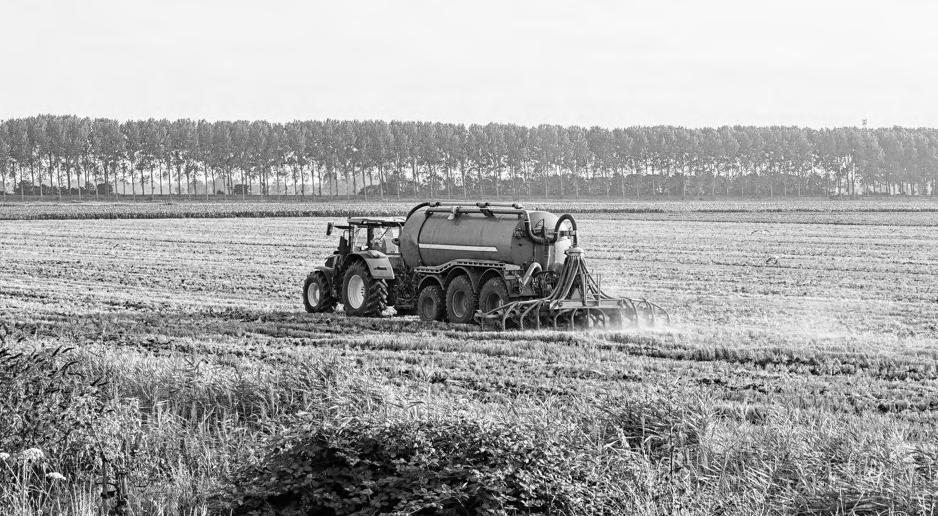
U.S. farmers spend about $36 billion a year
one of the largest line items in their budget.
greater investment in these programs can benefit farmers, strengthen rural economies, and reduce climate-damaging emissions.
Tshabalala said implementing conservation practices such as nutrient management can significantly reduce climate emissions while also lowering operating costs, saving farmers an average of $30 per acre in fertilizer costs.
“Rampant overuse of synthetic nitrogen fertilizer is creating a multiprongedpollutioncrisisby damaging aquatic ecosystems, contaminating drinking water and accelerating the climate crisis,” Goswami said. “If more farmers can gain access to federal conservation resources and reduce their relianceonsyntheticfertilizers,itwillhelptobuilda more sustainable, healthy and resilient agriculture system.”

By Journal-Courier
Illinois State Treasurer Michael Frerichs is callingonyoungIllinoisphotographers to submit their agriculture-related photos for the 2026 Cream of the Crop Photography Contest. Winnersinthreedifferentage categories will be awarded Bright Start college savings account scholarships ranging from $250 to $1,000.
ThecontestentrydeadlineisJune12.Thecompetition,nowinits14thyear, provides students ages 8 to 18 with a creative opportunity to share their vision of agriculture in our state.
“I enjoy hosting this contest each year because it inspires students to go out and explore the beau-
ty of Illinois agriculture while also displaying their creative talents,” Frerichs said.
“Illinois is home to skilled and dedicated farmers, millions of acres of fertile farmland, and a diverserangeofproducts, all of which make us a leader in the agricultural industry.”
The Treasurer’s Office is now accepting electronic submissions for the Cream of the Crop PhotoContestatthislink.
Each participating student may submit up to two photos by June12.
A panel of outside judgeswillchoosethetop photographsinthreeagebased categories: ages 810, 11-14 and 15-18. Bright Start scholarships of $1,000,$500and$250will be awarded to students
who place first, second or third in each of the three categories.
To read the rules, terms, and legal conditions associated with this contest, go to this link at theIllinoisStateTreasurer’sOfficewebsiteorcontact Teri Whitfield at 217900-0075.
Nowinits14thyear,the photo contest offers Illinoisstudentsanopportunity to showcase their most innovative or scenic pictures that depict their vision of agriculture in our state. Nearly 900 studentshaveparticipatedin the contest since it debuted in 2013, and they have submitted almost 1,600 photos.
The Cream of the Crop Photo Contest is part of theIllinoisStateTreasurer’s Ag Invest program.

Winning photos will be featured in Ag Invest marketing material and next year’s Cream of the Crop calendar, as well as at the 2026 Illinois State Fair.
Ag Invest is one of the nation’s largest agricultural linked deposit programs, celebrating 43 years in 2026. It helps hundreds of Illinois farmers and agriculture professionals.
The Treasurer’s Office, through Ag Invest, partners with eligible financial institutions to offer farmers and ag businessesoperatinglinesofcredit and long-term, low-interest loans which can be used for operating costs, equipment purchases, construction-related expenses and livestock purchases.
From page H13
H-2A workers, including the remaining five states that round out top10 use. Declines in H-2A use were concentrated in the Southeast and on the West Coast.
The primary requirement of any H-2A certification reaffirms that no domestic workers desire the position. Low unemployment, falling labor participation rates and general disinterest in agricultural work all continue to strain domestic labor shortages, according to the Market Intel. Only 182 positions out of more than 415,000 advertised(lessthan0.04%)received a domestic applicant in fiscal year 2025.
“TheH-2Aprogramremains the pinnacle program for meeting seasonalagriculturalworkerde-
mand. However, it is far frommeetingtheneedsof all of U.S. agriculture,”
AFBF economist Samantha Ayoub wrote in the Market Intel. “Nonseasonal industries like dairy, mushrooms or greenhouses are largely unable to use the H-2A program due to regulatory contract limits. Additionally,only80%ofpositions certified receive visas to work in the United States. So, even farmers with proven labor shortages may not be able to meet their peak employee needs via the H-2A program.”
The costs of using this program, from unpredictablewageincreasesto application costs and nonwage benefits, have also long been a barrier for many farmers. Recent changestotheadverseeffectwageratemethodologyseektocorrectyearsof uncontrolled wage infla-
tion and recognize the large nonwage costs of utilizing the H-2A program.
“These changes, along with additional flexibility in work contract timelines and job duties, will hopefully make the H-2A program more accessible to other farmers, leading to continued growth of the program,” Ayoub wrote.
The need for a reliable agworkforcewasatheme throughout AFBF’s annual convention in January, with delegates adding and amending policy related to the H-2A temporary visa program.
Two H-2A proposals submitted by Illinois Farm Bureau also were approved, including streamlining the H-2A application process by using electronic application filing and lengthening the term of stay for H-2A workers.
From page H7
tunities for the next generation.
Kevin Brooks, a farm management commercial agricultureeducatorwith University of Illinois Extension, said transitions within family farms can be difficult to navigate, leading some to delay succession planning altogether.
“Alotoffathersthatare running on farms don’t
want to give up that control,” Brooks said. “Peopledon’tliketotalkabout their impending demise. They don’t want to talk about slowing down and retiring. There’s that work ethic of wanting to stay at it.”
This puts younger farmers in a bind, having to play the waiting game until the older generation is ready to pass the torch, said Seymour, the Shipman farmer.
“Maybe when I get that age,I’llbethesameway.I
don’t know,” Seymour said.“Ican’tspeakforthe older generation, but they’ve put blood, sweat andtearsintotheground. AndIthinktheyjusthave a hard time being able to hang them up and, you know, smoothly pass it on.”
In recent decades, farming equipment has gotten considerably more advanced,makingitmore comfortable to farm and less demanding physically. This has allowed people to stick with it longer,
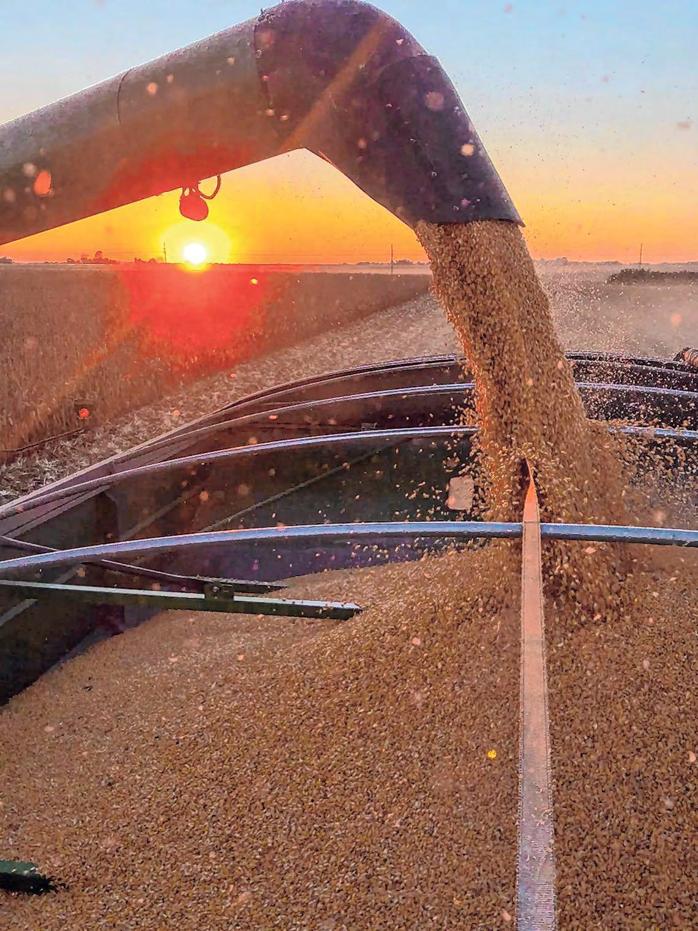
Brooks said.
“To an extent, the boomer generation hung on for a long time. And I don’t blame them. They get a bad rap,” said Muirheid, the Cerro Gordo farmer.“Theywentoutin open-air cab tractors and farmed with four-row planters. Then they got better equipment, air conditioning,airridesuspension, and auto steer. Theyputinthework,and they get to reap the benefits of that. I don’t blame them.”
Last year, the Farmland Transition Commission Act, Senate Bill 2372, was signed into law, creating a new body within theIllinoisDepartmentof Agriculture tasked with reviewing the barriers to acquiring farmland for people aged 25 to 40. It was championed by Sen. Sally Turner. As part of the act, she is working with the state agriculture
department to create a webpage where younger people can get useful information on entering farming.
“Young farmers see all the roadblocks,” Turner said. “From problems with tariffs, the low prices of corn and beans, and everything on top of it. But there’s different avenues that can help you as afarmer,likelow-interest loans if you wanted to try and buy a piece of ground. All those things are out there.”
For young farmers in Illinois, the challenges arehardtoignore,including longer term concerns about South American competition impacting soybean farmers in the state. But knowing that previous generations have overcome similar obstacles instills confidence.
“To see anybody struggle, it’s not encouraging,
but to see them get through it has the opposite effect,” Muirheid said. “If you work hard enough or smart enough, you’llgetthroughthebad times.”
Brock Seymour has been working full time at his family farm for the past few years.
Theestatetaxconcerns him, and lifting the thresholdwouldgivehim and his family more breathing room, he said. As with any family business, navigating succession planning and generational divides can be challenging,butSeymour isoptimisticaboutthefuture.
“Now there’s hard times. I’m not going to lie,” Seymour said. “As a farmer, you know, you’re gambling. But to see how Grandpa has built the foundation gives me confidence that I can do the same.”