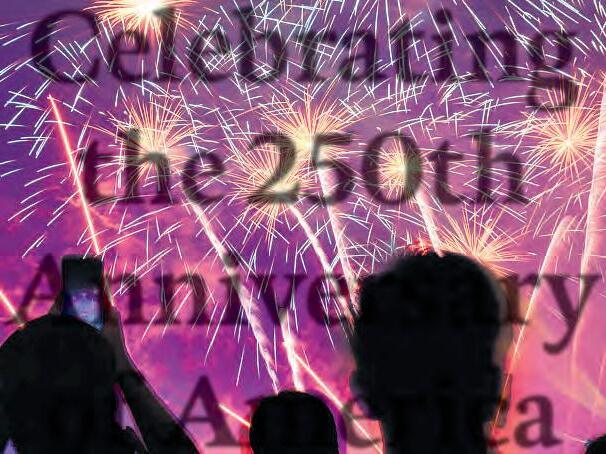
As America celebrates its 250th anniversary of independence, locals shared their thoughts about the United States of America.
Some answers reflected on the state of the country, including some of the division in the social aspects of the nation. Some reflected simplicity, and the lyrics of the national anthem.
Dave Montague of Big Rapids said when he thinks of America, he thinks, "Home of the free."
Darwin Anderson of Big Rapids said one word when it came to what America means to him: "Freedom."
Anderson, an Army veteran and a member of the Eagles Club, said there aren't any additional feelings or anything specifically "extra" about America's 250th birthday.
"Not emotionally," Anderson said. "We're pretty simple people."
Jim Crank, the owner of Crankers Brewery said America is a breeding ground for opportunity and that's one of the things he loves about it.
"America, what it means to me is to
have a free nation and represent the world as a class country and be a leader in showing diversity and a lifestyle that can be very good for all," Crank said.
Crank has owned several businesses and restaurants across the state and hopes that the future continues to have space for the small business owners that make America what it is.
"Hopefully, we can keep those, those pathways open, that the giants of the world won't come squeeze the small guys out, which is what's happening right now," Crank said. "The money that is coming in is overtaking pretty much everything, very difficult for the small business people to survive and employ people. You always hope as an employer that you can pay your people well, and they can make a good enough income to live the American dream, as they call it."
Carlleen Rose of the Old Pioneer Store and Emporium said she's going to reflect this year about what it takes to get the country to where it is.
"For this celebration, I'm going to actually just walk around the different cemeteries
where, where we honor our soldiers that fought and died for us, for freedoms," Rose said. "I'm just going to basically concentrate on that and going to hang around with my family and maybe take out my dad's Marine uniform and just hold it for a bit and just be honoring the leaders that brought our country to greatness, and I'm going to do a lot of praying that we will once again see that greatness someday."
Sheila Donders of Remus said times are tough for the country
but there is plenty of hope for the future.
"America is a bit convoluted for me," Donders said. "I love our country but I don't always love our administration. I truly value those that fight for our right to have those opinions and the ability to express them freely. I think America is still very much in the self improvement stage of adolescents but I can see the absolute rockstar it will become!"
Read more about America 250 on bigrapidsnews.com.
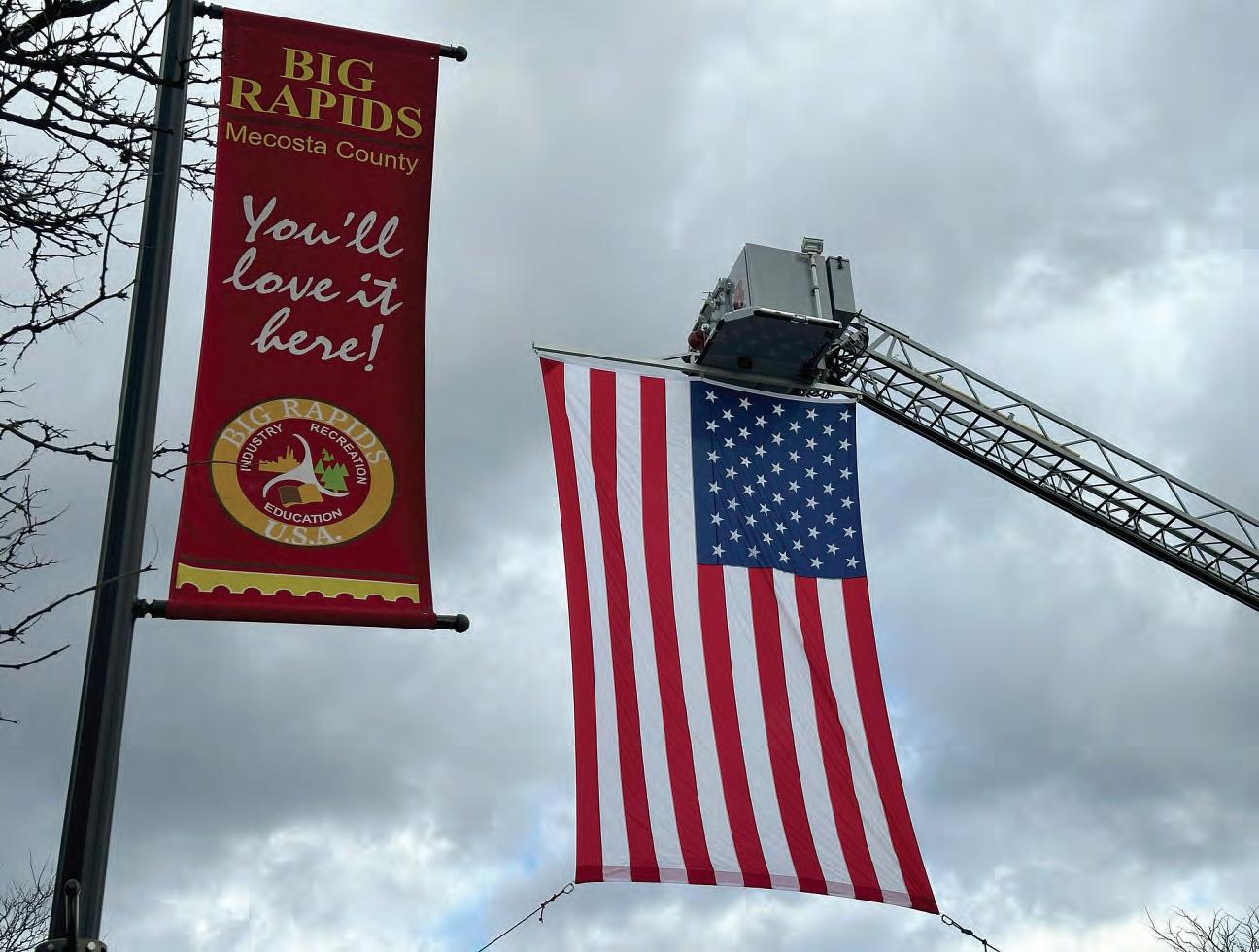
An American flag is hoisted above Michigan Ave. during the annual Veterans Day parade in downtown Big Rapids Monday, Nov. 11., 2024. (Pioneer Photo/ Remington Hernandez)
Austin ChAstAin Staff Writer
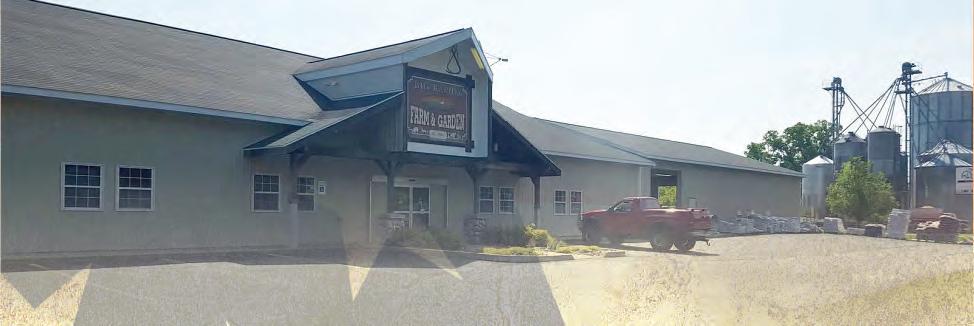
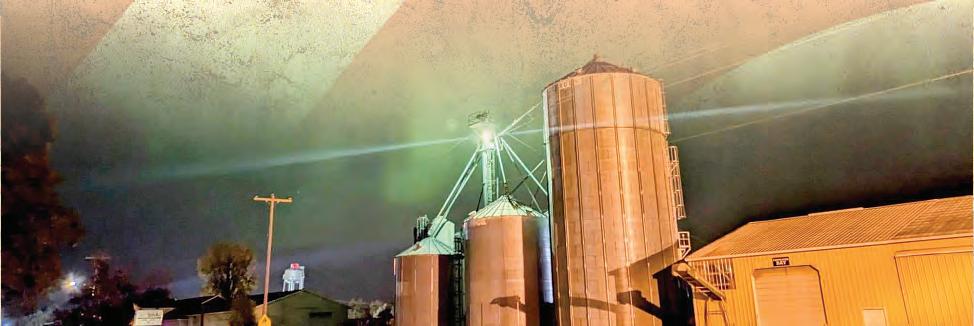
250 Years of American Farming 250YearsofAmericanFarming 250 Y s of American
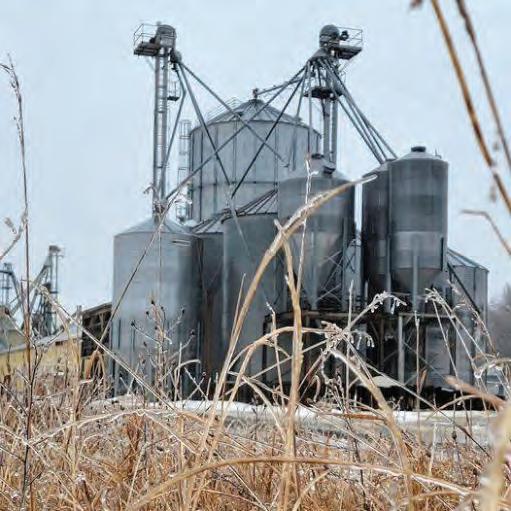
From the hardworking roots of our nation’s farmers to the farms of Fromthehardworkingrootsofournation’sfarmerstothefarmsof today - Big Rapids Farm & Garden is proud to support agriculture, today-BigRapidsFarm&Gardenisproudtosupportagriculture, our community and the future of America. ourcommunityandthefutureofAmerica.
CATTLE, HOG CATTLE,HOG & HORSE FEEDS HORSEFEEDS
Quality nutrition for ev Qualitynutritionforev stage.
POULTRY & SPECIALT POULTRY&SPECIALT FEEDS
For chicken, goats, Forchicken,goats, sheep, rabbits & mor sheep,rabbits&mor
DOG & CAT FOOD DOG&CATFOOD
Trusted brands for every Trustedbrandsforevery life stage and need. lifestageandneed.
Everything you need in Everythingyouneedin one place. oneplace.
CUSTOM FEED MIXING CUSTOMFEEDMIXING & GRINDING
Formulated to meet your Formulatedtomeetyour animals’ needs. animals’needs.
BULK OR BAG DELIVERY BULKORBAGDELIVERY
We’ll bring it to you. Call We’llbringittoyou.Call in advance. inadvance.
The Power of Power of Community y
How Local Institutions How Institutions Supported American Life American Life
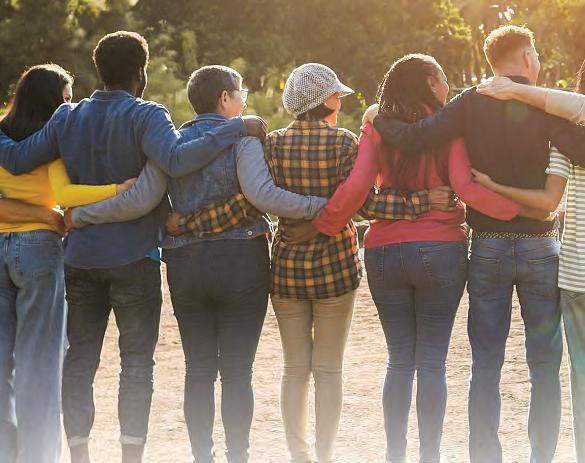
Community in America has long depended on shared institutions rather than individual effort alone.
From early settlements to modern towns, Americans built structures that supported cooperation, decision-making and continuity.
These institutions helped communities endure change while maintaining shared responsibility and local identity.
In colonial America,
town meetings, churches and local governments formed the backbone of community life.
Residents gathered to address shared needs, settle disputes and make decisions affecting daily routines. These early institutions created stability beyond individual households and encouraged participation in local affairs at a time when national structures were still developing.
As populations
grew, community systems became more formal. Counties, municipalities and school districts developed clear roles, reflecting the increasing complexity of American life and the need for consistent local governance across expanding regions.
Institutions That Connect Schools served both educational and civic purposes.
One-room schoolhouses often doubled as meeting spaces, hosting elections, public discussions and social events. Over time, public schools expanded access to education while continuing to serve as central community hubs that connected families and neighborhoods. Libraries played a growing role in the 19th and early 20th centuries. Public libraries provided free access to books and information, supporting literacy and lifelong learning. They became trusted spaces for research, quiet study and civic engagement, reinforcing the idea that knowledge should be widely accessible regardless of income or background.
Volunteer organizations strengthened local response. Fire departments, service clubs and aid societies coordinated resources and support during emergencies and everyday needs alike. Their effectiveness depended on organization, training and continuity rather than individual recognition, helping communities respond collectively to challenges.
Local newspapers also served as essential community institutions. By reporting on events, achievements and concerns, newspapers connected residents through shared information. They recorded ContinuedfromPage4
milestones, announced gatherings and preserved local history, shaping a shared sense of place well into the 20th century.
Adapting Over Time
Community institutions adjusted as society changed. Industrial growth and urbanization required expanded services, including public transportation, utilities and public health systems. Local governments adapted policies and infrastructure to support growing populations and shifting economic conditions.
After World War II, suburban expansion reshaped community organization. New schools, civic centers and local governments emerged to serve rapidly growing neighborhoods.
Parent organizations, youth programs and neighborhood associations became part of everyday suburban life, reinforcing connection despite increased mobility and commuting.
In recent decades, communities adapted again as communication methods changed. While digital tools altered how people
share information, physical spaces such as schools, libraries and civic centers remained important gathering points that supported in-person interaction and shared experience.
As the nation approaches its 250th anniversary, the strength of American communities can be traced to these enduring frameworks. Institutions built and maintained locally continue supporting cooperation, stability and shared responsibility across generations, providing continuity in a changing world.
Students re ect on America
DYLAN SCHWARTZ
STAFF WRITER
As the United States approaches its 250th anniversary, several Big Rapids High School students said they see a country that has drifted from some of its founding ideals but still holds the potential to return to them.
The students, interviewed about what America means to them ahead of the nation’s semiquincentennial, repeatedly pointed to freedom, opportunity and unity as core values while also describing political division, declining communication and concerns about inclusion.
Senior Alex Mumah said the anniversary arrives during a period when the country feels divided and disconnected from some of its original principles.
“I feel like it’s kind of ironic right now considering the condition that the country is in,” Mumah said. “I feel like we’re kind of going backwards just a little bit.”
Mumah said the country’s values have changed over time.
Freshman Audrey Montague said the country has moved away from some of those ideas, particularly around inclusion and immigration.
“I think things have kind of drifted,” she said.
Montague said she believes the country can still improve by becoming more inclusive.
“Changing our ways to include more people,” Montague said when asked what getting back on track could look like.
Senior Benjamin Wayne, who specializes in political science, described America as a place built on opportunity and freedom, particularly through the idea that immigrants can become Americans regardless of where they were born.
“I think a lot of our founding principles have been lost and had different interpretations,” Wayne said.
Wayne pointed to equality as one of the country’s
ContinuedonPage12
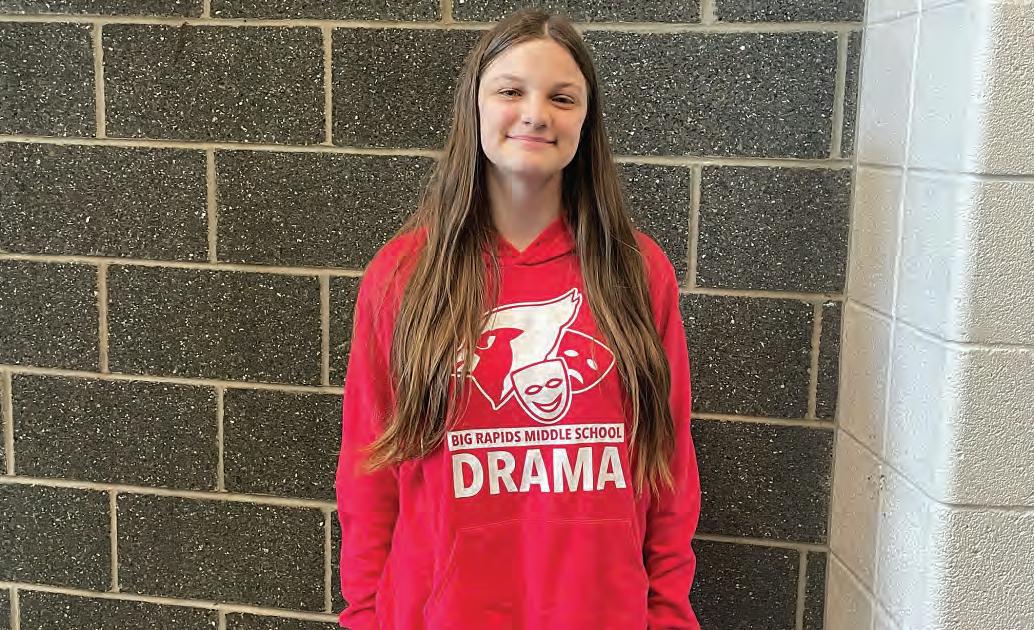
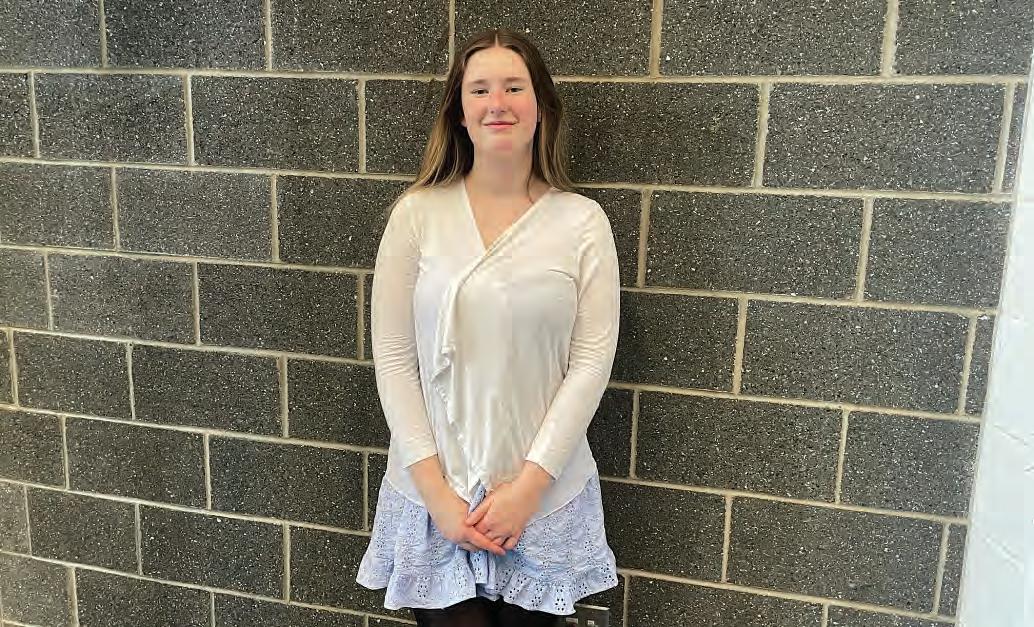
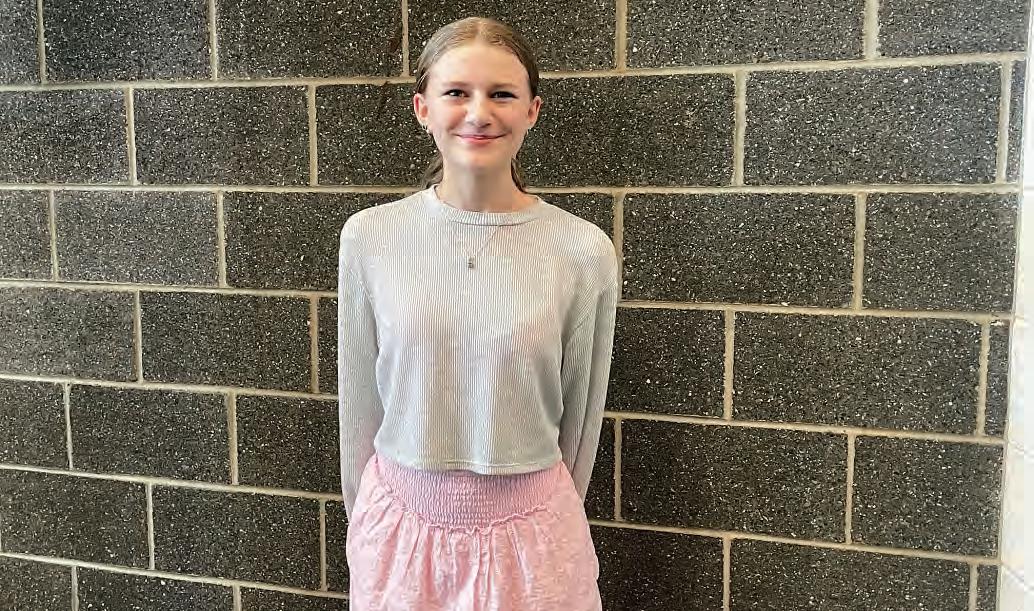
Big Rapids High School sophomore Noelle Isler said empathy and better communication could help bridge political divisions in the country.
(Pioneer photo/Dylan Schwartz)
Big Rapids High School freshman Audrey Montague said the country can improve by becoming more inclusive and welcoming to more people.
(Pioneer photo/Dylan Schwartz)
Big Rapids High School freshman Gwendolyn Rumsey said Americans should focus less on political di erences and more on shared humanity. (Pioneer photo/Dylan Schwartz)
defining ideals and said it should apply broadly across society.
“It isn't just every whiteman,” Wayne said. “It's everyone. And everyone should have that opportunity and freedom within our country.”
Wayne said the 250th anniversary could serve as a moment for reflection.
“I think it's just a great time of reflection for everyone in our country to think of what we want our country to be and how we can have it last another 250 years,” Wayne said.
Freshman Gwendolyn Rumsey said political division has become one of the country’s biggest problems.
“We've definitely drifted away from them significantly,” Rumsey said. “We're very, very divided.”
Rumsey said Americans should focus less on political differences and more on shared humanity.
“We're all humans,” Rumsey said. “We're all the same and made up of the same things.”
Junior Amund Williams said his appreciation for America comes more from its ideals and aspirations than its current political moment.
“When I think of what I appreciate about
America, it's about the ideals of it and kind of the hopes and dreams for it,” Williams said.
Williams, who spent part of his childhood living in Australia, said the United States still stands apart because of its focus on liberty and freedom.
“We're not all the way there, and I'm not sure we've always been all the way there,” Williams said. “But throughout our entire nation's history, we've had great, respectable people try and get us there.”
“I think that maybe if people just learn to be a little bit more empathetic, that we definitely are able to get back to what America was for in the first place,” Isler said. ContinuedfromPage10
He said preserving those ideals depends on how people respond during periods of political tension.
“I don't think somebody should come in power, and then we lose hope because of it,” Williams said.
Sophomore Noelle Isler said communication between people with differing views has broken down.
“Things are very black and white, and people won't listen to each other,” Isler said.
She said empathy could help bridge divisions.
Big Rapids High School senior Benjamin Wayne said America’s founding ideals of equality and opportunity should apply to everyone.
(Pioneer photo/Dylan Schwartz)
Big Rapids High School junior Amund Williams said he appreciates America for its ideals of liberty and freedom despite political tensions.
(Pioneer photo/Dylan Schwartz)
Big Rapids High School senior Alex Mumah said America has drifted from some of its founding ideals and faces growing division ahead of the nation’s 250th anniversary. (Pioneer photo/Dylan Schwartz)
Sunshine radiated over campus at Ferris State University around 6 p.m. on May 20, the bell in the Carillon Clock Tower ringing its standard Westminster Quimes.
Other than the bells, it's quiet on campus, but that's part of the way the relationship with the school and the city works.
Whenever Ferris State President Bill Pink speaks about Big Rapids, it’s usually praising the relationship the school has with the city whether it's the people or their support in the athletic teams. It’s everything, he believes.
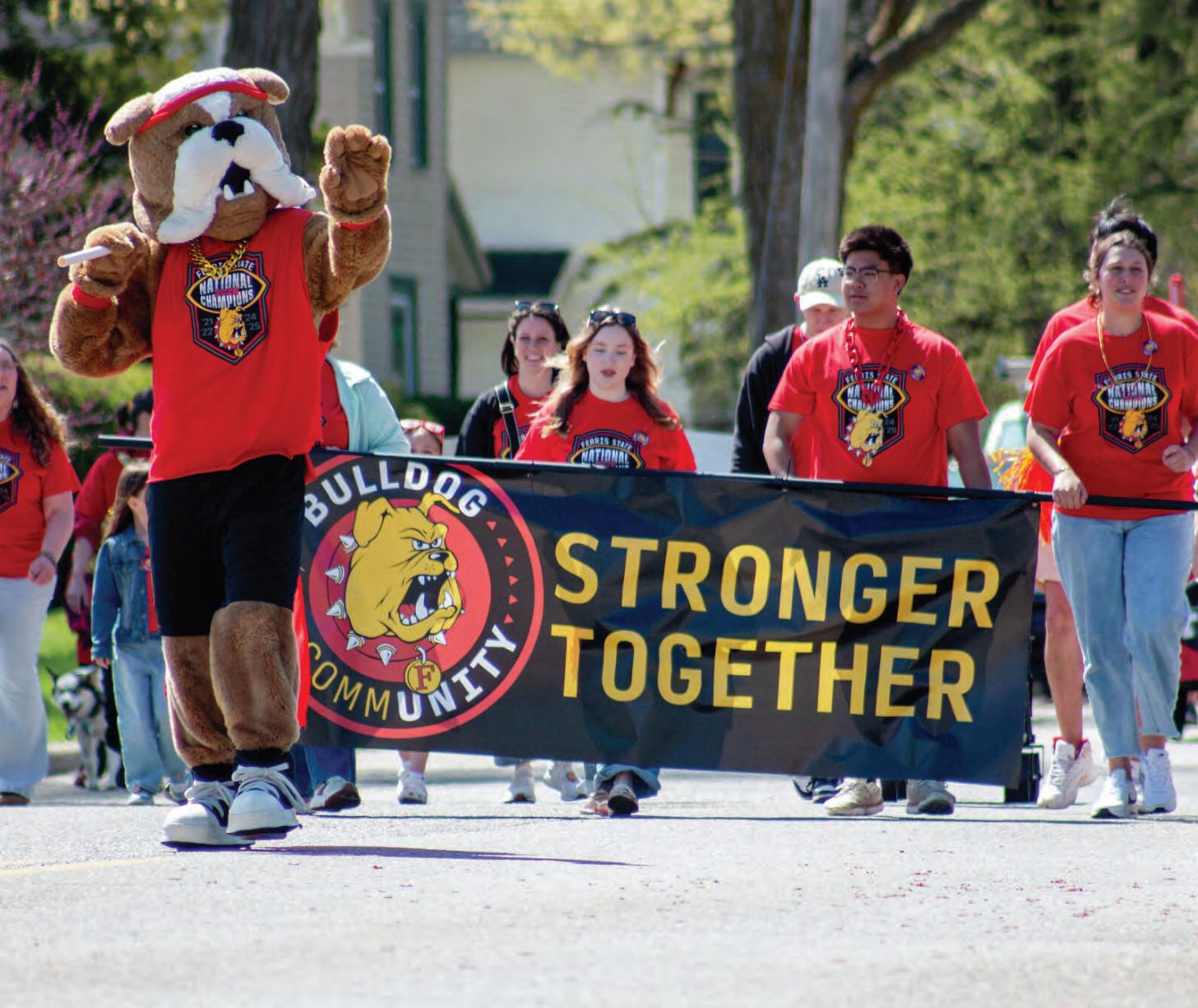
During the recent football championship parade, celebrating four NCAA Division II national championships in five seasons, fans
and residents likely saw a banner that said "Bulldog Comm-unity," representing the community within campus, but also the connection to the city.
Same goes with head football coach Tony Annese. He often says that Ferris State doesn’t exist without Big Rapids, Big Rapids doesn’t exist without Ferris State.
While that kind of saying is heard by Bulldog fans, there is a sense of truth to it.
Just look at the population of Big Rapids in comparison from August through the first week of May to the rest of the month of May and through the summer months. The 2020 Census listed Big Rapids having 7,727 residents with an estimated 8,500 residents now living in the city.
When school is in session, approximately 9,900 students boost the number of people in town by around 116.5% annually.
"For more than 140 years, Ferris State University and the city of Big Rapids have shared a partnership built on history, opportunity and community," Ferris State Associate Vice President for Marketing and Communications, Dave Murray, said. "Ferris State is proud to call Big Rapids home, and that relationship is woven into the identity of both the university and the city."
As the United States celebrates its 250th anniversary of independence, colleges and college towns are the cornerstone of what makes the country what it is.
Tyler Schuberg, the owner and operator of the Schuberg Agency
with Auto Owners Insurance, said the intent of the university and what it stands for goes back to its founding.
"Woodbridge Ferris, his vision of what we know of Ferris State University today was education," Schuberg said. "He wanted to get everyone educated, men, women, everyone. He set out to get the great state of Michigan educated."
Schuberg added the foundation of the Schuberg Agency is helping everyone, like Ferris did. Schuberg's greatgrandmother, Alice Schuberg, was taught by Ferris and was in a graduating class of 12 people. At the end of the 2026 spring semester, the university graduated around 1,500 people.
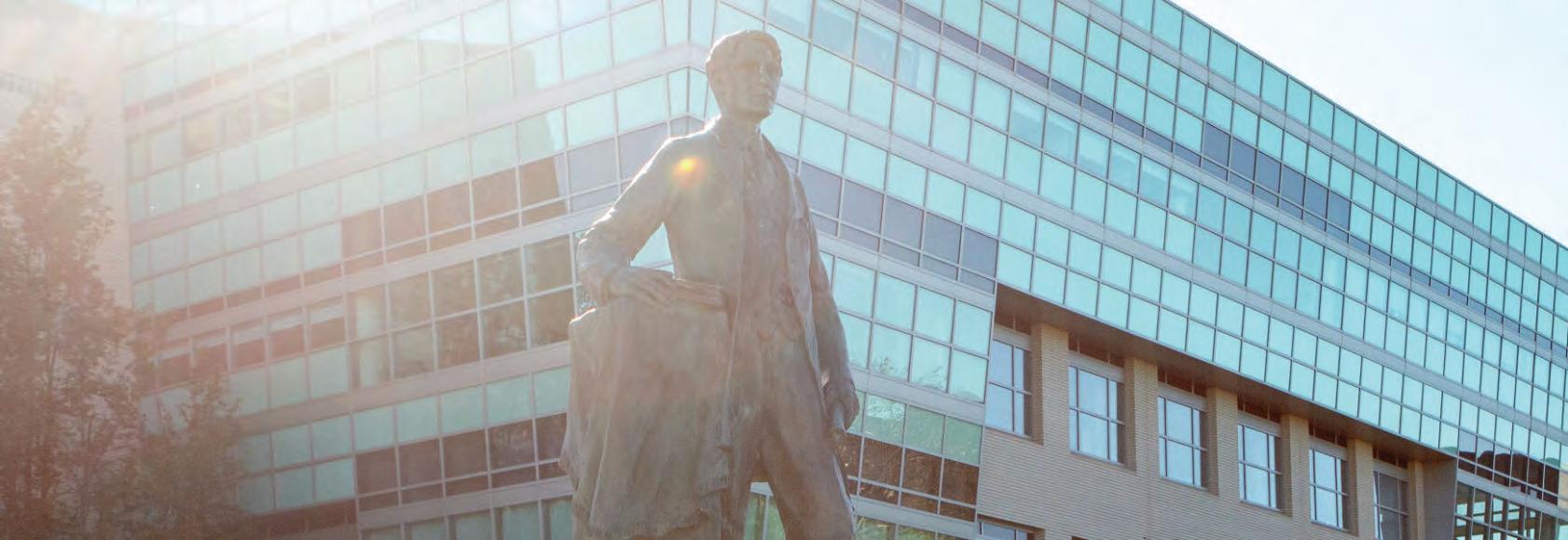
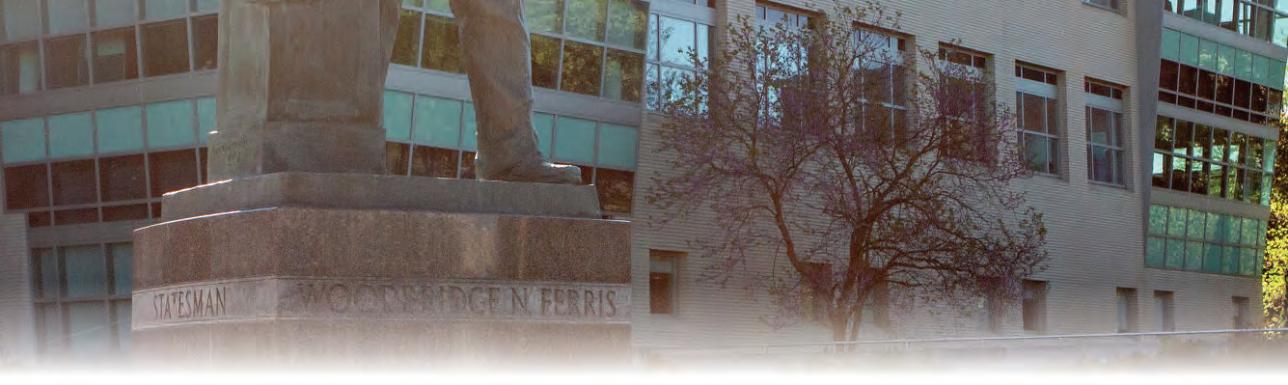
Wooldridge Ferris' statue overlooks Robinson Quad on May 20 in Big Rapids.
(Pioneer Photo/Austin Chastain)
Driving traffic to Big Rapids was more-or-less what the university was founded on when it was established in 1884 by Ferris, who had a long history in education, finance and politics including serving as Michigan’s governor (elected twice, 1912-14) and a United States senator from 1922 until his death in 1928.
At first, it was an industrial school, then it grew and developed over time to what it is today. It still brings new people to Big Rapids each year and helps drive that connection to the city.
Schuberg, a football standout at Big Rapids High School, also played football for the Bulldogs and graduated with a degree in business administration in 2004. He has a deep affinity for his alma mater and thinks of several aspects when it comes to Ferris State.
"It's a pillar of education," Schuberg said. "(It's) for our citizens, for our community, for our businesses to aspire to get educated, that's first and foremost. The second thing Ferris State represents is the heart of Big Rapids, it pumps blood and commerce and all the wonderful things that it represents for our business community, and for our people to provide jobs and to provide all these different opportunities that can co-mingle with our commerce in our community."
There are tensions between the city and the local college, there always is. There has to be tension for any relationship to grow and last.
"Wherever you have leadership in place, whenever you have dynamics in place that create change," Schuberg said. "You're always going to have opinions on both sides, and that's instantly going to create certain tensions, but ultimately we share the same house, and I think, for better or for worse, the people of our community and people of Ferris, we're always trying to make it better. ... So at the end of the day, we're in
this together, and I think that's the most important thing, is that we keep that in sight."
Keeping the perspective of what the social aspect of Ferris State's impact on Big Rapids along with the business end of it is paramount for the relationship between the university and the city.
The bar scene is a common thought when the college students are in town. A night out at the various establishments around the downtown area helps make the college experience the social melting pot that it can be.
Cranker’s Brewery, located at 213 S. State St., has formulated its business around the university.
Owner Jim Crank says, "(Ferris State) means a lot, we like the students here."
"We believe in the community," Crank said. "We believe in the university, and that's why we added the brewery in 2012. ... We decided to invest our money and basically where we wanted to headquarter our business in Big Rapids to provide, the main reason was for the university, hospitality, which we thought Big Rapids needed, big time."
Carlleen Rose, the owner and operator of the Old Pioneer Store and Emporium, located at 118 N. Michigan Ave., said she grew up loving Ferris State and the Bulldogs
with several family members attending the university.
While she did not attend the school itself, she appreciates what Ferris State does for the city and some of the honors she's had from the school, as well, adding that she would have absolutely attended Ferris State if she did go to college.
"I had never gone to the university, I wanted to be a Bulldog," Rose said. "Dr. Eisler got word of it, during a homecoming, I was honored by being picked as an honorary Bulldog and that just really meant a lot to me. ... Then (my husband) Brian and I, several years ago, were
ContinuedonPage18
Students march behind Brutus the Bulldog during the Ferris State football championship parade on April 25 in downtown Big Rapids. (Pioneer Photo/Austin Chastain)
grand marshals of the homecoming parade. That was a real honor, it just meant a lot to Brian and me."
Rose added she enjoys hiring Ferris State students and watching several friendships and relationships build, sometimes even decades long, and staying connected over the years.
"I don't even know the count of university students that we have had working for us," Rose said. "Many of those students have remained to be friends for decades as well, and the one thing that I can so proudly say is I know of no university student that worked for us that wasn't and didn't
become very successful."
Helping the town grow while simultaneously making the school grow. It’s all about creating opportunities for students and for local businesses expanding to add to the college experience.
"Generations of students, alumni, faculty, staff and residents have helped shape a strong connection that continues to benefit the entire region," Murray said. "Together, Ferris State and Big Rapids have grown, evolved and created a community that values education, service and opportunity."
That’s what Ferris State means to Big Rapids, and what Big Rapids means to Ferris State. ContinuedfromPage16
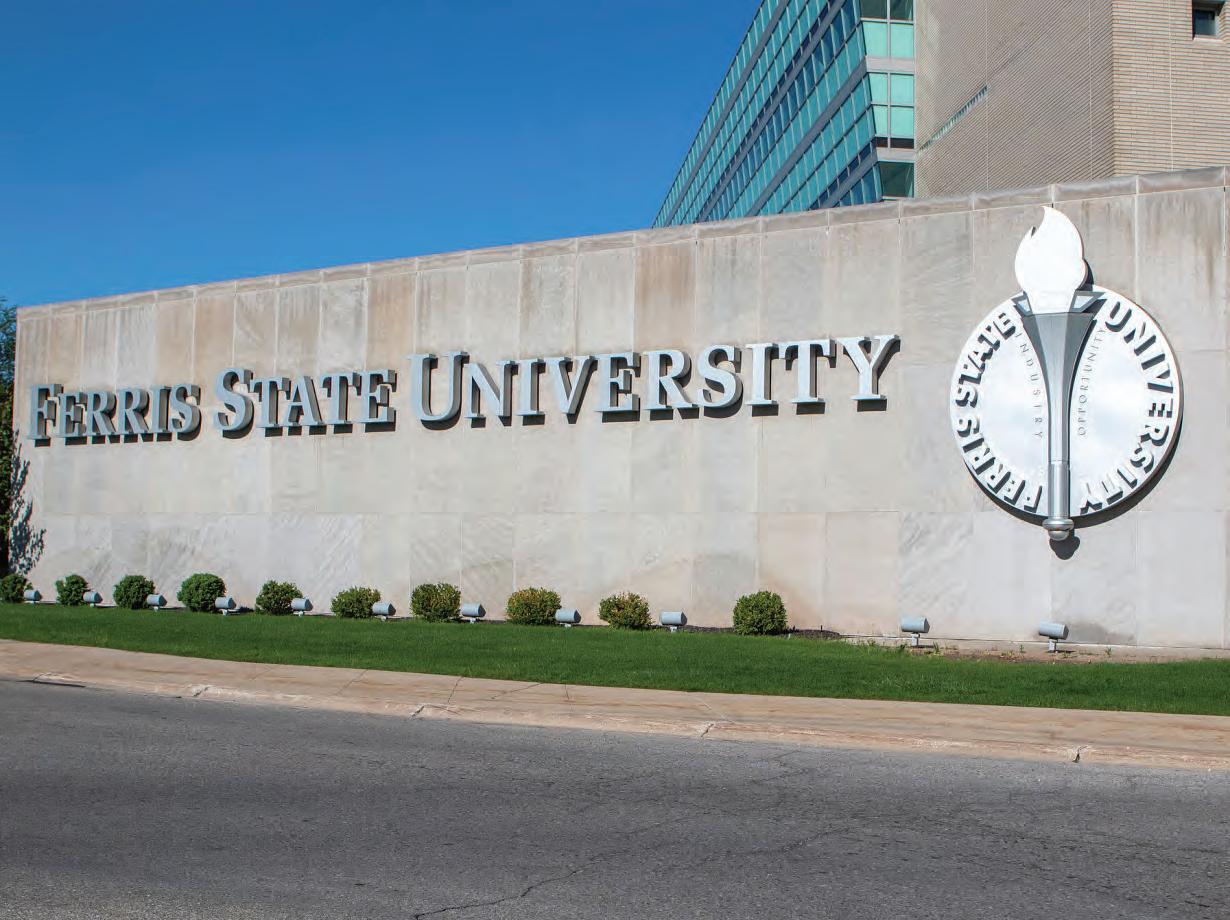
A concrete sign displays the Ferris State University word mark and seal on May 20 in Big Rapids.
(Pioneer Photo/Austin Chastain)
AMERI CA 250
250YEARS OF FREEDOM
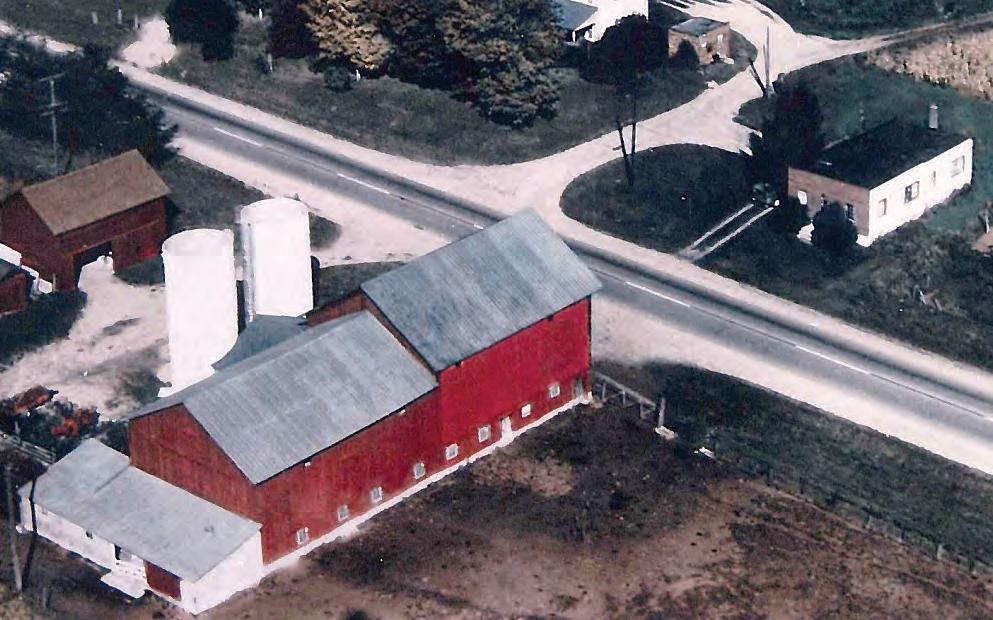
7GENERATIONS OF MEMORIES OurAmerican
Dream.
ROOTEDINT DITION.COMMI EDTOCOMMUNITY.
1776-1900s THE BEGINNING THEBEGINNING
Like our nation, our story starts with hard work, faith, and a dream of a Likeournation,ourstorystartswithhardwork,faith,andadreamofa better life. Our ancestors built the foundation on which future generations betterlife.Ourancestorsbuiltthefoundationonwhichfuturegenerations would grow. wouldgrow.
1900s-1950s BUILDING MEMORIES BUILDINGMEMORIES
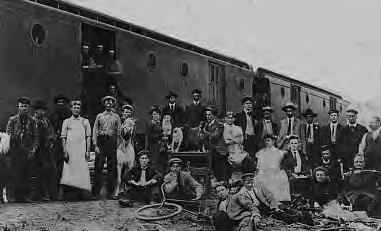
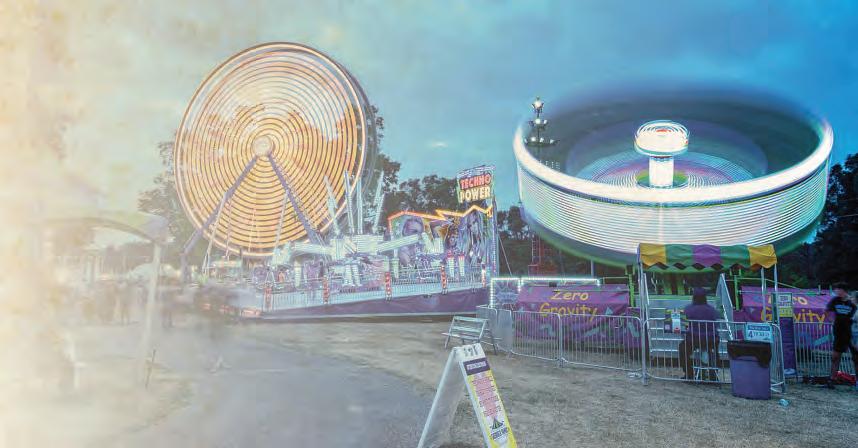
From small-town fairs to county celebrations, we brought joy to communities Fromsmall-townfairstocountycelebrations,webroughtjoytocommunities across Michigan, creating memories that have stood the test of time. acrossMichigan,creatingmemoriesthathavestoodthetestoftime.
1950s-TODAY A FAMILY TRADITION AFAMILYTRADITION
Through changing times, our commitment remains the same: safe, clean, Throughchangingtimes,ourcommitmentremainsthesame:safe,clean, family fun - delivered with integiry, pride, and a personal touch. familyfun-deliveredwithintegiry,pride,andapersonaltouch.
TODAY & BEYOND TODAY&BEYOND THE NEXT GENERATION THENEXTGENERATION
Now in our seventh generation, we’re honored to carry forward our family’s Nowinourseventhgeneration,we’rehonoredtocarryforwardourfamily’s legacy - while looking ahead to many more years of making people smile. legacy-whilelookingaheadtomanymoreyearsofmakingpeoplesmile.
UE D Y: 1p -11p ega a ds: $100 1st sessio ri e a d 1p -5 : $20 2 d sessio ride ba d 6p -11 : $25 EDNE D Y: 12p -11p $25 u li ited dail ride ba HURSD Y: 1p -11p 1st sessio ri e a d 1p -5 : $20 2 d sessio ride ba d 5p -11p : $25 FRID Y: 1pm-11pm $30 unlimite daily ride and S URD : 1p -11p 0 u li ite daily ride a TUESDAY: 1pm-11pm MegaBands:$100 1stsessionrideband1pm-5pm:$20 2ndsessionrideband6pm-11pm:$25 WEDNESDAY: 12pm-11pm $25unlimiteddailyrideband THURSDAY: 1pm-11pm 1stsessionrideband1pm-5pm:$20 2ndsessionrideband5pm-11pm:$25 FRIDAY: $30unlimiteddailyrideband SATURDAY: 1pm-11pm 0unlimiteddailyridebannd
Famous Words on America Famous Words on America
Few things travel as well as a good line. In the United States, memorable quotes have helped describe the country’s ambitions, its civic habits and its everyday hopes.
AsAmerica reaches its 250th birthday in 2026, these words offer a readable timeline, from the founding era to modern speeches, that many readers still recognize.
Some quotes are formal and public, delivered to Congress or to crowds. Others are shorter, meant to be repeated at kitchen tables, in classrooms and in ceremonies. Together they show how Americans have explained the idea of the nation in moments of uncertainty and in times of shared pride.
Founding Era Voices
In 1776, the Declaration of
Independence set a tone that still anchors American public life, asserting that “all men are created equal” and are “endowed by their Creator with certain unalienable Rights.” The document, adopted by the Second Continental Congress on July 4, 1776, also names those rights: “Life, Liberty and the pursuit of Happiness.”
Alittle more than a decade later, the Constitution opened with a statement that is both simple and durable: “We the People of the United States.” The Preamble’s opening words, drafted in 1787 and ratified in 1788, continue to appear in courthouses, textbooks and civic programs as a reminder that selfgovernment rests on citizens.
Liberty and Leadership
Abraham Lincoln, speaking at Gettysburg on Nov. 19, 1863, offered one
of the country’s best-known summaries of democratic purpose. He described “government of the people, by the people, for the people” as something that “shall not perish from the earth.” The address, delivered during the Civil War, linked national sacrifice to a practical idea: keeping representative government alive.
In 1941, Franklin D. Roosevelt used his State of the Union address to outline “Four Freedoms,” including “freedom of speech and expression” and “freedom of worship.” The speech came as war spread across Europe andAsia. The phrasing helped manyAmericans talk about civic values in clear terms that could be taught and remembered.
Everyday Aspirations
Not all well-knownAmerican lines come from presidents. In 1963, the Rev.
Martin Luther King Jr. told the March on Washington crowd, “I have a dream,” a refrain that has remained familiar because it points to achievable civic work, including fairness in daily life.
In 1989, novelist and essayist James Baldwin captured another lasting thought in “The Price of the Ticket”: “This is your home. Do not be driven from it.” The sentence is often quoted for its plainspoken encouragement to claim a place in the national story.
Quotes do not replace history, but they can help people enter it. Read closely, these lines showAmericans describing ideals, responsibilities and belonging in words meant to carry beyond a single day.
In an anniversary year, they offer a reminder that the country’s story is also told one sentence at a time.
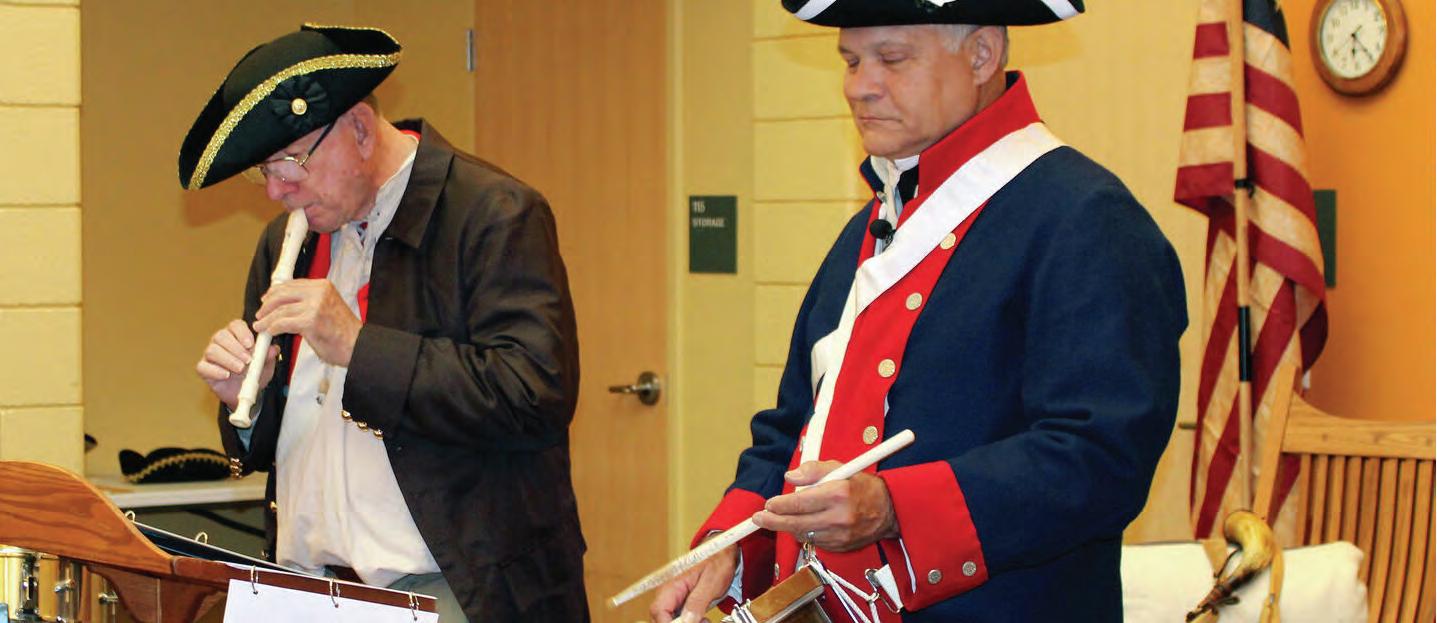
Local musician George Arndt, left, plays a recorder en lieu of a fe, with historical reenactor Wally Ewing on drums, during a family Revolutionary War event Friday, April 24, at the Morton Township Library. (Pioneer Photo/Julie Norwood)
America 250 events 250 events to bring history to life
Here are some semiquincentennial events happening across westcentral Michigan.
More events may be added. Check with your local historical museum, library, veterans’ organization or municipality for the latest.
Mecosta County Historical Museum: The museum will have an Americana puzzle available to work on throughout the summer. Once finished, volunteers will decoupage and frame it, and it will be hung up as a community project.
Lake County Historical Museum: The museum reopened May 20, with special tours beginning at 6 p.m. Exhibits include "Signing for Freedom," and the Declaration of Independence and its 56 signatories.
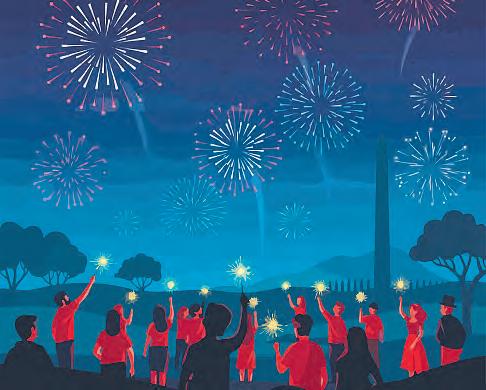
Big Rapids America 250 Celebration: July 3 in downtown Big Rapids. A parade is scheduled for the afternoon. Then, at dusk, fireworks will light up the sky over the Mecosta County Fairgrounds, 540 West Ave., Big Rapids.
Fourth of July Celebration: July 3-4, downtown Mecosta. Events include a Patriotic Children’s Scavenger Hunt (2 p.m. July 3), a Patriotic Elvis Concert (6 p.m. July 3, Bromley Park), parade (11 a.m. July 4), children's Colonial games and music with the Optimists (noon July 4), book walk for kids (all day July 4, Bromley Park), Car, Bike and Tractor Show (noon to 6 p.m. July 4) and fireworks (dusk July 4)
Celebrate Our Nation's 250th Birthday: 11 a.m. July 4 at Morley Community Center. Features live music, a birthday message, complementary lunch,
children’s parade, family fun and fireworks. Sponsored by the Morley Community Center, Morley American Legion and Stanwood Lions Club.
Declaration of Independence Celebration: 5-6 p.m. Wednesday, July 8, Wheatland Township Library, 207 Michigan Ave., Remus. The celebration includes a reception and a reading of the Declaration of Independence.
Evening with Abigail Adams: 6 p.m. Wednesday, July 8, Boat House at the Lake County Historical Museum, 915 N. Michigan Ave., Baldwin. Chris Costhwaite will present an outdoor program in celebration of America’s 250th anniversary. Bring lawn chairs. History of Mecosta County: 1 p.m. Saturday, July 18, at the Remus Area Historical Museum,
324 S. Sheridan. Author and presenter Dana Kenneth Johnson will present during the Remus Heritage Days open house at the museum.
Voyageurs & the American Fur Trade Company: 11 a.m. Saturday, Sept. 5, Little Bear Artisan & Maker’s Fair, downtown Mecosta.
Open House Celebrating Little River Schoolhouse Renovation: Noon Saturday, Sept. 19, Little River Schoolhouse at School Section Lake Veteran’s Park, 9003 90th Ave., Mecosta. The open house will celebrate the renovation of the Little River Schoolhouse.
Hear Ye, Hear Ye!: On Nov. 11, the Lake County Historical Museum, 915 N. Michigan Ave., Baldwin. will raffle its America 250 celebration lap quilts the community made throughout the year.
JULIE NORWOOD STAFF WRITER
As
Local leaders re ect re on America's 250th America's
CATHIE CREW STAFF WRITER
As the United States prepares to celebrate the nation’s 250th anniversary, local officials shared their thoughts about what it means to be an American, it’s historical importance and what the future of the country could be.
Fred Guenther, Big Rapids Mayor
“To be a member of what I consider the greatest nation in the world is an honor,” Mayor Guenther said. “I think we all should have that same sort of attitude because the world does look to America for leadership, for help, for other things. I’m very proud to be an American. The way I see it is we are the leaders of
the world.”
He said that he believes that the whole idea of what it means to be an American is being challenged right now — half the population isn’t happy — the other half is, and there is a lot of controversy worldwide about what to do with the U.S. because some countries feel that the U.S. is trying to bully them a bit and aren’t happy with us — but he doesn’t dwell on that.
“Presidents change frequently and philosophies change. I think one of the biggest things we have to do is unite as Americans regardless of who the leadership is because we are much better together than apart,” he said.
Guenther said part of that uniting
is understanding the history of the country and the more consequential moments of that history.
“If you don’t know the history, you can’t possibly know the present or the future,” Guenther said. “You have to know what made America great and the things we did to make it great.”
He said that the Civil War and the Emancipation Proclamation was consequential, along with the World Wars and the innovation and creativeness of our country.
“The Civil War was consequential because we lost hundreds of thousands of our people to help emancipate the slaves. I think that was a huge part of showing the
world what we are really made of, and that is something we all need to know and remember,” Guenther said. “The World Wars helped us save the world from dictators. We have innovated and invented and created more than any other society has. The Industrial Revolution was hugely American where we learned to create (everything) from automobiles and trains to roadways and bridges. For those reasons it is important to know your history and know what it took to make America great.”
He cautioned, however, that while knowing our history is important, we should not try to
inTuence others just because of our history — but that we should be open to hearing and understanding what others think and what they have to say.
Guenther said that he Xnds it interesting that there is so much emphasis on this 250th anniversary of the nation, because when you look at other major developed countries in Europe, 250 years is not much compared to their history.
“They have been around a lot longer than we have,” he said. “In a way it is signiXcant that we have lasted this long with a good democracy and a free country, so we should celebrate it. It’s a wonderful thing to have lasted this long. I hope we get 250 more years.”
He said he is a traditionalist and likes to celebrate with music and Xreworks and with introspection, while watching shows about the history of America.
“Big Rapids is going to have a traditional kind of celebration with Xreworks,” he said. “It would be great if everybody in America celebrates the 250th, but let’s make it a unity thing. Quit the bickering for at least a week when we celebrate and we can get through this eventually. It is rough right now, but it will happen, and maybe this celebration will help us get through a little of that rough spot. I always have hope.”
Roger Meinert, Reed City Mayor
“As Mayor of Reed City, I appreciate the opportunity to reTect on the signiXcance of America’s 250th anniversary,”
Mayor Meinert said. “This milestone gives us all a chance to pause, look back with gratitude, and look forward with hope.”
He said that being an American means living in a nation founded on freedom, faith, opportunity and responsibility.
“It means understanding that while our country is not perfect, it is built upon ideals that continue to inspire people around the world — liberty, equality, self-governance, and the belief that every person has value and purpose,” he said. “Throughout my life, I have been taught the importance of service, leadership, integrity, and helping others before helping yourself. Those values mirror what I believe America is at its best — neighbors helping neighbors, communities coming together, and citizens working to leave things better than they found them.”
He said that America has provided generations of families with the opportunity to build a life through hard work, faith, and perseverance.
“As a Christian, I believe we are called to love one another, seek justice, show compassion, and remain thankful for the blessings we have been given,” he said.
Meinert said that it is impossible to truly understand where we are in America without understanding how we got here, and that is why it is important to know our history.
“America’s history tells the story of sacriXce, courage, innovation, struggle, and resilience. Our history includes tremendous accomplishments, difXcult lessons, and moments that shaped the course of the
world,” Meinert said. “History teaches us that freedom is never guaranteed. It was earned through sacriXce and must be protected by every generation. When we study history honestly, we gain wisdom, perspective, and appreciation for those who came before us.”
He said history also serves to unite us as one people, because even with different backgrounds or viewpoints we share a common American story and understanding that story strengthens our communities and reminds us that we are all part of something larger than ourselves.
He said that some consequential moments in that history that citizens need to be aware of include the signing of the Declaration of Independence, establishing the Constitution and the Bill of Rights.
“The signing of the Declaration of Independence and the birth of our nation in 1776 stands at the center of American history,” Meinert said. “The Constitution and the Bill of Rights established the freedoms and principles that continue to guide our nation today.”
He added that other deXning moments include the Civil War, the abolition of slavery, the sacriXces made during war and military conTicts and the Civil Rights movement, as well as the extraordinary determination shown by Americans during times of crisis and hardship.
“Some of the most consequential moments happen quietly every day — citizens volunteering in their communities, Xrst responders
answering call for help, teachers investing in students, military members serving overseas, and families working hard to build better lives for their children,” he said. “America’s strength has always come from ordinary people doing extraordinary things together.”
Meinert said that he sees America’s 250th anniversary celebration as more than just a celebration of age, but a celebration of endurance, freedom and the enduring promise of the nation.
“Very few countries in the world have maintained democratic selfgovernment for this length of time while continuing to evolve and grow,” he said. “This anniversary should inspire gratitude and reflection.”
He added that it is an opportunity to honor the sacrifices of those who defended our freedoms, recognize the progress our nation has made, and recommit ourselves to building strong communities and a brighter future.
“People should celebrate by coming together,” he said. “Attend local events, support community organizations, learn about our nation’s history, visit historic places, fly the American flag, but most importantly spend time with family and neighbors. Patriotism is not only found in grand gestures; it is found in serving others, participating in our communities, and taking pride in our country.”
He said that in small towns like Reed City, people understand the importance of community, tradition, faith and hard work — all deeply American values.
“As we celebrate 250 years of our nation’s history, my hope is that we remember not only where we have been, but also the responsibility we all share in shaping the next chapter of America’s story,” he said.
Rich Saladin, City Manager for Reed City
Saladin said that the United States is truly the “Land of the Free” and too often we tend to take that for granted.
“The freedom and liberties we have in the United States are the basis for everything the U.S. stands for and would wish for all the peoples of the world,” he said. “Independence Day is a day to celebrate our freedoms and liberties. It doesn’t matter if it is the 250th, 249th or 251st — we live in the greatest country of the world.”
He added that understanding the history of the country is an important part of being an American.
“As a rural leader I am an advocate for local control, and it is important for citizens to understand that that is what the signers of the Constitution and the Declaration of Independence were asking for,” Saladin said. “They formed a government free from tyranny and control. The Constitution created a foundation of government not seen anywhere in the
world and that has been replicated many times over since. It has evolved and will continue to evolve with amendments to ensure our citizens’ rights will be preserved and supported.”
He added that the three legislative branches and the checks and balances contained in them continue to show the exceptionalism of the framework of the constitution even through 250 years and that through those 250 years, there have been some consequential historical moments, including wars, land acquisition and the establishment of parks and universities.
“Every war has had significant outcomes including the Revolutionary War, in which the U.S. gained its independence, the Civil War, which preserved the Union and eliminated slavery and both World Wars, in which the U.S. became a world power and fought to preserve freedom across the world and continues to do so. Land acquisition and growth (came) through the Louisiana Purchase and Seward’s Folly (Alaska). The creation and designation of national parks for citizens to enjoy. Land Grant Universities, of which Michigan State is the first, created educational opportunities previously unattainable for the rural areas.”
Saladin said that there will be many activities in Reed City and across the nation in celebration of Independence Day and he hopes people celebrate respectfully with family and friends.
American Firsts Milestones That Changed Life at Life at Home and Beyond Home and
Throughout its history, the United States marked progress through a series of notable firsts.
These moments reflected curiosity, persistence and a willingness to try what had not been done before. Over 250 years, American firsts often began as practical efforts to solve problems, then grew into developments that influenced daily life far beyond their origins.
One early example came in transportation. In 1807, Robert Fulton’s successful steamboat demonstrated that powered vessels could travel upstream reliably. This advance transformed river travel, supporting trade and settlement along major waterways and helping connect inland communities to coastal markets.
Other early firsts followed
a similar pattern. New tools and methods were tested locally, then adopted more widely as their usefulness became clear.
Breaking New Ground
In 1869, the completion of the first transcontinental railroad linked the eastern and western United States by rail. This connection reduced travel time dramatically and strengthened the national economy. Goods, people and ideas moved more freely across the continent, reshaping commerce and migration.
Innovation continued into the skies. In 1903, Wilbur and Orville Wright achieved the first successful powered airplane flight at Kitty Hawk, North Carolina. Though brief, the flight demonstrated controlled, sustained air travel. Within
decades, aviation became essential to transportation, commerce and national defense.
American firsts also appeared in communication. Alexander Graham Bell’s telephone, patented in 1876, allowed voices to travel across distance. This changed business, personal relationships and emergency response, bringing immediacy to everyday interaction.
Science and Service
The 20th century introduced firsts that reshaped health and science. The widespread use of antibiotics beginning in the 1940s improved survival rates and transformed medical treatment. These advances extended life expectancy and changed how communities approached
public health.
In 1969, the Apollo 11 mission placed the first humans on the moon. This achievement required coordination across government, industry and education. While its setting was distant, the effort produced technologies and skills that later found practical uses on Earth.
American firsts were not limited to exploration. They also included organizational achievements, such as large-scale manufacturing systems and coordinated emergency response, which improved safety and efficiency.
Everyday Impact
What unites these milestones is their effect on ordinary life. Firsts often moved from experiment to expectation, becoming
part of daily routines. Steamboats, railroads, telephones and air travel all followed this path.
Many American firsts emerged through collaboration rather than individual effort alone. Engineers, workers, educators and communities contributed to their success, sharing knowledge and adapting ideas over time.
As the nation approaches its 250th anniversary, American firsts offer more than a list of accomplishments. They illustrate a pattern of testing ideas, learning from results and building on what works. That approach continues to shape innovation, reminding Americans that progress often begins with a willingness to try something new.
The American Dream American Dream
How Aspirations Shi ed Across Generations How Aspirations Shi Across Generations
The idea often described as the American Dream has never held a single meaning. Instead, it evolved over time, shaped by economic conditions, social norms and personal expectations.
Across 250 years, the dream reflected how Americans imagined opportunity and progress in different eras.
In the nation’s earliest years, aspiration centered on independence. Land ownership and self-sufficiency represented security for many families. Owning property, sustaining a household and participating in local affairs defined success in a largely rural society. The dream focused less on advancement and more on stability within a new nation still forming its identity.
As the country expanded, those expectations began to change.
Shifting Definitions
During the 19th century, the American Dream increasingly included mobility and improvement. For some, this meant owning a business or mastering a skilled trade. For others, it meant providing education or opportunity for the next generation. Westward expansion and industrial growth reshaped how Americans viewed progress, tying aspiration to movement and economic change.
The early 20th century brought further adjustment. Urbanization and factory work altered daily life, while public education expanded access to learning. Aspirations broadened beyond land ownership to include professional advancement and steady income in growing cities. The dream adapted to new forms of work and living.
After World War II, the American Dream shifted again. The GI Bill expanded access to higher education and homeownership,
helping millions of veterans enter new careers. Suburban growth reshaped housing and family life, while long-term employment became closely linked to stability and planning for the future.
Changing Expectations
In the latter half of the 20th century, the dream continued to evolve. Higher education became more common, and career paths diversified. Success was increasingly defined by personal goals as well as material security. Creative fulfillment, service and work-life balance gained importance alongside traditional measures of progress.
Economic shifts also influenced expectations. As service industries expanded and manufacturing declined in some regions, Americans adjusted their definitions of opportunity. Technology and mobility opened new options, allowing individuals to pursue paths less tied to location or a single
profession.
Rather than offering a fixed outcome, the American Dream provided a framework for imagining progress shaped by circumstance and choice.
An Enduring Idea
The American Dream has endured because it remains flexible. Each generation revised it in response to changing conditions rather than rigid standards. Its meaning expanded to accommodate new realities without losing its core focus on opportunity.
As the nation approaches its 250th anniversary, the American Dream continues as an evolving idea. It reflects the freedom to define success in personal terms while responding to broader social and economic change. Across generations, that adaptability has allowed the dream to remain part of the American story.
From Colonial Cra to Modern From Cra to Museums and Public Murals
Art in America has grown alongside the nation, reflecting daily work, faith, community life and changing ideas about who gets to be seen.
From early portrait painters to today’s public art programs, artists have recorded people and places with materials at hand and an eye on the future.
Long before the United States was founded, Indigenous artists across North America made pottery, basketry, textiles and carvings tied to ceremony and community. Works such as Pueblo pottery traditions and Haudenosaunee wampum belts show skilled design and deep cultural knowledge that continues today through living artists and tribal nations.
In the 1700s, art in the British colonies often took the form of portraits, furniture and decorative arts made for homes and meetinghouses. John Singleton Copley, born in Boston in 1738, became known for portraits that captured merchants and civic leaders with careful attention to fabric, light and expression. In Philadelphia, Charles Willson Peale painted portraits and also founded a museum that helped make art and natural history part of public life. Early Republic Visions
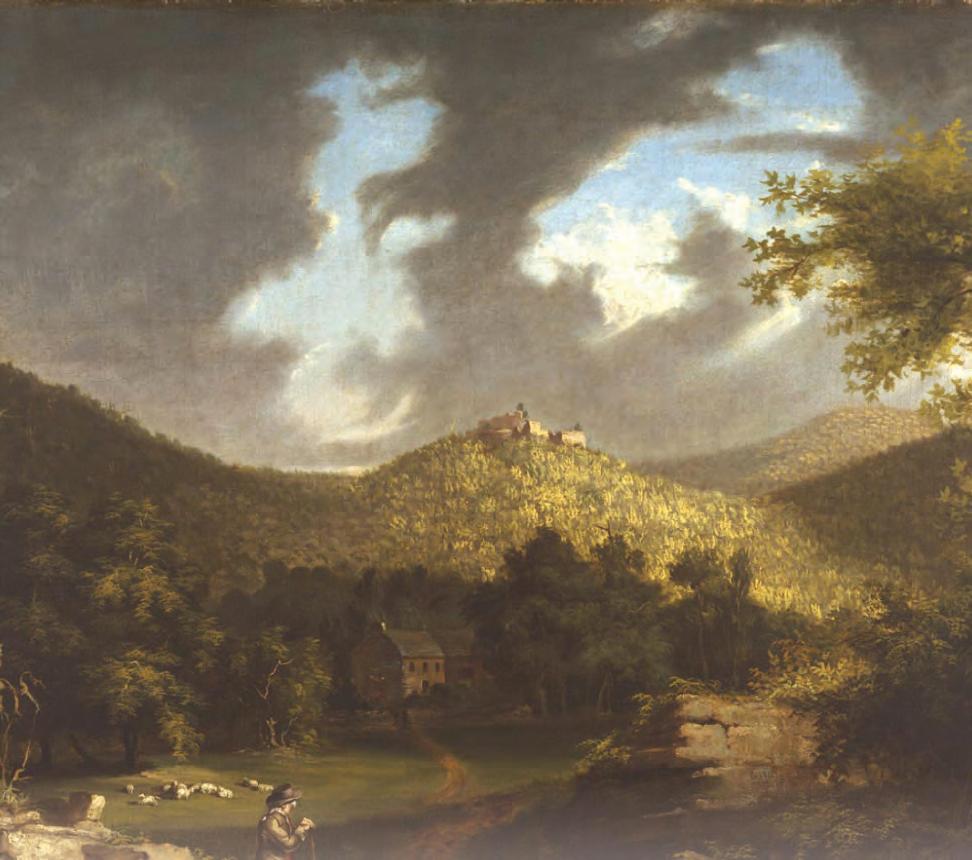
After independence, American artists looked for subjects that felt distinct to the new country. Landscape painting gained
importance as people traveled and settled across wide regions. In the mid-1800s, the Hudson River School, linked to painters such as Thomas Cole and Frederic Edwin Church, presented expansive scenes that encouraged viewers to value natural beauty and consider the nation’s geography as part of its identity.
The late 1800s also brought major public works and new institutions. The Metropolitan Museum of Art was founded in 1870, followed by the Museum of Fine Arts, Boston in 1870 and the Art Institute of Chicago in 1879. These museums helped families see art in person and helped local schools, libraries and civic groups build stronger cultural ties.
Modern Voices
In the early 1900s, American art
absorbed new styles from abroad while staying grounded in local scenes. The 1913 Armory Show in New York introduced many Americans to modern European art, and it also encouraged debate and experimentation among U.S. artists. In the 1930s, federal art programs during the New Deal, including the Works Progress Administration’s Federal Art Project, employed artists to paint murals, make posters and teach art, leaving lasting work in post offices, schools and public buildings.
After World War II, New York became a center of Abstract Expressionism, associated with artists such as Jackson Pollock and Willem de Kooning. In the 1960s, Pop Art, including Andy Warhol and Roy Lichtenstein, drew from advertising, newspapers and consumer products, showing how everyday
images could become fine art.
Community and Museums
In recent decades, museums and artists have broadened whose stories are collected and displayed. The Smithsonian American Art Museum in Washington, founded in 1829 as part of the Smithsonian Institution, holds major collections of painting, photography and contemporary work. The National Museum of African American History and Culture opened in 2016 on the National Mall, adding new context for artists and audiences alike.
As America approaches 250 years, the country’s art remains a shared record of creativity and civic life. From galleries downtown to murals on neighborhood walls, it offers residents and visitors a way to see history, place and possibility in the same frame.