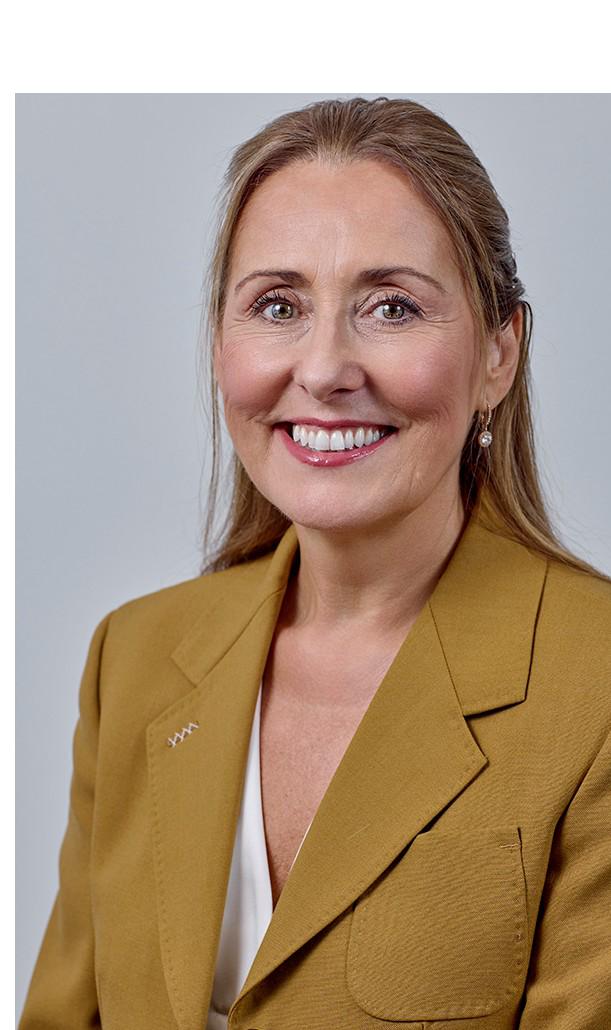
Kirsten Detrick argues that US biotech firms embrace cross-functional collaboration
HOW TO TAKE THE HOSPITAL TO THE PATIENT
Mass General Brigham’s Shiv Sutaria on scaling up virtual wards
FROM LITIGATION AUTHORITY TO SYSYEM LEADER
Ian Adams reflects on how NHS Resolution became a more influential voice in patient safety
For Kirsten Detrick - adjunct professor of business administration at Tuck and Basel Area Life Sciences Supercluster representative in the US - successfully launching a breakthrough therapy in Europe is no longer a simple matter of clearing regulatory hurdles. It demands a fundamental strategic evolution, moving away from isolated functional silos and towards an integrated geographic ecosystem.
In this issue, Kirsten talks about the strategic importance of building a centralised European presence.
Also this month, Mass General Brigham Healthcare at Home’s Shiv Sutaria discusses the “win-win-win” of the post-pandemic virtual ward boom; Ian Adams, the current director of corporate affairs at NHS Resolution, reflects on how NHS Resolution became a more influential voice in patient safety; and much more...
We hope you enjoy!
HALF OF HEALTH VISITORS STRUGGLING TO DELIVER ESSENTIAL SERVICES
MORE than half of health visitors in England say they are struggling to provide essential health checks and support to families because of staffing shortages and a lack of funding.
A survey by the Royal College of Nursing (RCN) raises concerns that infants and children are missing out on vital early intervention, with crucial mandated checks not always being carried out as services are stretched too thin.
As well as reviewing the child’s health during these checks and discussing milestones, advice is given to new parents on feeding, safe sleeping, and nutrition.
However, 51% of health visitors report that understaffing makes it difficult to complete all these crucial appointments.
The survey also highlights growing pressures on school nursing services. Nearly three-quarters of school nurses surveyed say workforce shortages have a major negative impact on the support available to pupils.
Health visitors and school nurses play a key role in supporting children’s physical and mental health, identifying problems early and helping to prevent ill health later in life. However, NHS data shows the number of health visitors has fallen by 46% since 2015, while the number of school nurses has dropped by 29%.
Earlier this year, the Institute of Health Visiting said that some health visitors are responsible for more than 1,000 families each, calling for limits to be placed on caseloads.
The RCN says that continued underinvestment risks creating long-term public health problems and is calling on ministers to rapidly expand the workforce.
Nicola Ranger, the RCN’s general secretary and chief executive, says by not prioritising investment in such preventative services the government is “storing up costly problems for the future”.
“There are no clinical professionals better placed to help improve health outcomes, but they need the support of the government,” Ranger adds.
The RCN is calling on the Westminster to ringfence funding for children’s services and support universities to increase training places for both professions.
UK BIOTECH VENTURE INVESTMENT HITS FIVEYEAR HIGH
UK BIOTECH financing hit a fiveyear high in the second quarter of the year, with total equity financing reaching £2.1 billion, including a record £2.05 billion in venture capital, according to the latest data from the BioIndustry Association (BIA).
The quarter was dominated by Isomorphic Labs’ landmark £1.6 billion Series B round, a major validation of the UK’s global leadership in AI-driven drug discovery.
“This funding round is a massive vote of confidence from a diverse group of top-tier international investors in our AI-first approach to drug design and development,” said Isomorphic Labs founder and chief executive Demis Hassabis. Even excluding this funding, UK biotech companies secured £498 million in venture capital during the second quarter, which is almost double the £279 million raised in Q2 last year.
Building on the positive momentum seen in Q1, the quarter has delivered the strongest quarter for UK biotech venture investment in the past five years.
The UK also strengthened its position as Europe’s leading biotech investment
by
destination, accounting billion venture
Beyond the headline landscape became Seed investment seed deals completed rounds averaging bypassed smaller substantial first Series A- and B+-stage £190 million and and the critical bracket has seen many companies in the first half of recorded during
“This quarter shows funding confidence the UK biotech strongest single venture funding
£2 billion in venture fundraising rounds world-class valuations,” executive of BIA.
BIOTECH INVESTMENT
by Adrian Murdoch, Editor-in-Chief
accounting for 61% of Europe’s £3.3 capital total during the quarter.
headline megadeal, the funding became increasingly balanced. investment remained resilient, with eight completed during the quarter and averaging £6.4 million as companies smaller historic structures to raise financings.
B+-stage companies each raised and £225 million respectively, £10 million-£25 million funding seen a welcome uptick. Twice as companies in the latter tier raised rounds of 2026 compared to the total during the whole of 2025.
shows continued improvement in confidence and deal flow right across sector. Its major headline is the single quarter for UK life sciences funding in the last five years with over venture capital placed. It has seen rounds from Seed to Series D at valuations,” said Chris Molloy, chief BIA.
While UK public markets showed modest signs of improvement, they continued to trail the strength of private financing. Follow-on financing reached £58 million in the second quarter, a 61% increase from £36 million in the first quarter and significantly above the £15 million raised in Q2 last year.
However, no UK biotech IPOs have occurred so far this year, and there was no follow-on activity by UK biotech companies listed on NASDAQ.
The report does, however, point to growing institutional support for the sector. Nest’s landmark £1 billion venture capital push for UK pension savers via the Schroders Capital UK Innovation LTAF will channel domestic capital into high-growth scale-ups.
The British Business Bank has also deployed capital at an increased pace to venture funds. Its £25 million investment into Alchemab – its largest direct life sciences investment to date –is a similarly positive indicator for the sector.
That brought Alchemab’s total Series A funding to £109 million. Funds raised will accelerate the development of the company’s clinical pipeline and expand its antibody database from 500 million to more than one billion sequences.
“This investment provides further validation of the sustainable, long-term potential of our drug discovery platform and will enable us to further accelerate our pipeline of first-inclass antibody therapeutics for conditions with significant unmet need,” said Alchemab Therapeutics chief executive officer and cofounder Jane Osbourn.
Alongside Novartis’ $1.5 billion acquisition of Myricx Bio, these developments show a recovery in UK biotech financing supported by private investment and world-class valuations for UK science with important recyclable returns that can be reinvested into the next generation of companies.
“Our collective focus must be to ensure that this momentum is maintained and that the proven returns our investors are making attract more institutional investors to back this sector with growth capital. UK public markets need to recognise, cover and return to backing our sector and private momentum must be joined by robust, public sectormanaged, investor-advised translational funding. This combination will de-risk the early-to-mid stage companies and sustain growth across every tier of the sector, making the whole of the UK fit to fund,” Molloy added.
Trusted by Clinicians, Chosen by Patients
Located in the Harley Street Health District, Pharmacierge supports over 4,500 GPs and Consultants with seamless, secure e-Prescribing apps tailored for private practitioners.
With our state-of-the-art robotically enabled dispensary and nationwide delivery, we ensure your patients receive their medications promptly, while you prescribe with confidence - anytime, anywhere.
mPrescribe®
Revolutionises private prescribing by allowing you to prescribe flexibly without a laptop, for delivery to your patients nationwide.
Medication range
Due to the range of specialists we support, we stock and source medication not typically found outside of a hospital setting, including refrigerated, controlled, injectable and biologic medication.
Courier delivery
We include same weekday delivery to London postcodes, or next weekday nationally as standard. International deliveries are also available.
"Your mobile app changed my life!"
— Dr Dominic Paviour, Consultant Neurologist "Intuitive and secure."
— Dr Tim Wigmore, Consultant Intensivist & Anaesthetist
Join thousands of clinicians today. Download the app and register online www.pharmacierge.com/register
PARKINSON’S DRUG CLINICAL TRIALS FOCUS ON SLOWING THE CONDITION
THE most in-depth analysis ever undertaken of Parkinson’s drug clinical trials has shown how, for the first time, research largely aimed at slowing or stopping the condition has overtaken that of symptom management. The decade-long project brings promise for the approximately 166,000 people living with Parkinson’s in the UK.
The research found that between 2022 and 2024, disease-modifying trials accounted for more than half of all new trial registrations for the first time. These are designed to slow, stop or reverse how Parkinson’s progresses.
A total of 444 Parkinson’s drug trials were registered in the decade between 2015 and 2024, involving more than 39,000 participants worldwide. Across them, 281 distinct drug interventions were tested. 133 diseasemodifying trials were still active when the analysis period ended, and of them, more than 31% were associated with drugs previously evaluated by their committee, at the International Linked Clinical Trials.
However, only nine of the trials had progressed to Phase 3, the crucial final stage before regulatory approval. Most remained in early-stage testing. As well as stressing this, the analysis identified some additional areas of need, with non-motor symptoms, including depression, anxiety, sleep disturbances and cognitive difficulties, still vastly under-represented in the trial pipeline. The research was published in the Journal of Parkinson’s Disease in May and worked on by the charity Cure Parkinson’s.
For most of the decade looked at, most trials focused on therapies that manage Parkinson’s symptoms. These are usually tremor, stiffness and slowness of movement and have underpinned Parkinson’s care since the 1970s. However, the new analysis shows that this has changed. The research pipeline now spans a broad range of biological targets, including genetic pathways and cell therapies. It follows decades of research and investment to better understand the biology behind Parkinson’s, and therefore its treatments.
“The field has undergone a transformation over the past decade, and for the first time, the emphasis of new research is on changing the course of the disease, not just managing its symptoms,” commented Simon Stott, director of research at Cure Parkinson’s, acknowledging that there are still some challenges ahead.
Last month, medical device provider Kneu Health claimed its new app can phenotype Parkinson’s
MATERNITY CLAIMS CONTINUE TO RISE
NHS Resolution’s Annual Report and Accounts for last year show that 84% of clinical negligence claims were resolved without the need for formal legal proceedings. This is up from 83% last year
Nonetheless, the report also highlights that NHS Resolution received 15,236 new clinical negligence claims and reported incidents last year, an increase of 5.6% on the previous year. This reflects, it says, a combination of increased NHS activity and the time lag between incidents occurring and claims being brought.
At the start of the year, a report from the Public Accounts Committee (PAC) found that not only has the government’s liability for clinical negligence quadrupled over the past two decades to £60 billion last year, the Department of Health and Social Care (DHSC) is unable to show any meaningful action taken to address this, and the NHS has not done enough to tackle the underlying causes of patient harm.
This built on the broader report published by the committee at the end
by Adrian Murdoch, Editor-in-Chief
of November that found that, despite spending £3.24 billion on transforming diagnostic and surgical services, NHS England has missed its recovery targets.
“We recognise the ongoing challenges across the system, and we will continue to work closely with government and partners to address these issues, while remaining focused on resolving claims fairly, sharing learning, and supporting safer care across the NHS. Helen Vernon,” chief executive of NHS Resolution.
With maternity care front and centre, thanks to both the Ockenden Review and Amos Report, drilling into the figures, it is hard not to see that maternity care remains an issue.
While clinical negligence claims for trauma and orthopaedic surgery dropped last year from 1,324 claims to 1,129, they rose 10.3% in obstetrics from 1,286 to 1,418.
Obstetric claims accounted for 10.8% of clinical claims reported by volume but made up 55% of all clinical claims
by value received last year – the only field higher is emergency medicine.
Of the total clinical negligence payments, 40% (£1.3 billion of the £3.2 billion) last year related to maternity. This is a very minor reduction from 42% the previous year.
The report acknowledges the problem. “We recognise that avoidable errors in maternity and neonatal services still occur and that incidents have devastating consequences for the child, mother, and wider family, as well as the NHS staff involved,” it says.
NHS Resolution emphasised that 90% of trusts which provide the Maternity (Perinatal) Incentive Scheme (MIS), a financial incentive programme designed to enhance maternity and neonatal safety within NHS trusts, were fully compliant with the highest levels of MIS standards to date.
It also highlighted the Early Notification (EN) scheme, which supports families affected by specific brain injury at birth, enabling earlier investigation and reducing legal costs. NHS Resolution said that the scheme would be evaluated over the next year.
HOSPICES IN WALES CALL FOR SUSTAINABLE FUNDING
HOSPICES across Wales are warning of growing pressure on their staff as new survey findings show they are caring for patients with increasingly urgent and complex needs, at a time when increasing demand and rising costs are putting this care at risk.
A survey of adult hospices in Wales conducted by Hospice UK shows that all hospices are caring for patients with increasingly urgent and complex needs.
Half report staff distress caused by turning patients and families away, or not having enough time with those they do reach, and 40% say staff sickness rates have increased over the past year.
Hospices say these pressures are becoming unsustainable and are directly affecting the well-being of staff who provide vital care at the most vulnerable moments in people’s lives.
These challenges come at a time when palliative care needs in Wales are forecast to rise by 25% over the next 25 years, while hospices continue to face
rising workforce costs and wider costof-living pressures.
“Our teams are increasingly supporting people who require intensive symptom management, advance care planning and coordinated support across multiple services. We are also seeing growing demand from patients with neurological conditions and younger adults with complex needs, adding further pressure to already stretched services,” said Tracy Thomas, director of clinical and patient services at Nightingale House Hospice in Wrexham.
“Without sustainable investment in hospice care, it will become increasingly challenging for hospices across Wales to continue meeting the rising needs of their communities,” she added.
Each year, Welsh hospices support more than 20,000 children and adults living with terminal illness. Hospices Cymru and Hospice UK said that the new survey findings show clearly how demand and needs are increasing,
and emphasised the vital role hospices provide in reducing pressures on NHS and social care services.
Most hospice care is delivered in the community, preventing unnecessary hospital admissions, supporting timely discharges, and reducing demand on GPs, district nursing and social care teams.
They have called on the new Welsh Government to prioritise a fully implemented, sustainable funding model.
“These findings paint a stark picture of the pressure facing hospice staff across Wales. Teams are caring for people with increasingly urgent and complex needs, at a time when many hospices are struggling with the spiralling cost of living pressures,” said Matthew Brindley, policy and advocacy manager for Wales at Hospice UK. “Hospice care is essential, and the people who deliver it deserve the support, stability and resources required to meet rising demand. A long-term, sustainable funding model is now urgent.”
NEW GUIDELINE FOR ANNUAL REVIEW COULD MEAN PMOS IS DIAGNOSED QUICKER
NEW draft guidance from the National Institute for Health and Care Excellence (NICE) has suggested that patients with Polyendocrine Metabolic Ovarian Syndrome (PMOS) should be diagnosed sooner and offered an annual review.
This will monitor symptoms, treatment and long-term health risks of the condition, which was until last month known as Polycystic Ovary Syndrome (PCOS).
NICE has released its draft guideline as the first on this syndrome tailored towards the UK population, ahead of a public consultation.
PMOS’ recent renaming reflects the wide-ranging hormonal, metabolic and reproductive effects it brings to around one in eight women.
Despite this prevalence, patients often suffer with irregular periods, high testosterone levels and ovaries with
by Eleanor Philpotts, Senior Writer
multiple small follicles for too long without formal diagnoses or correct management techniques.
They are also more likely to experience other health issues such as Type 2 diabetes, cardiovascular disease, sleep apnoea, fatty liver disease, mental health problems and complications in pregnancy. Yet awareness remains low, both in medical circles and the public.
The draft guideline aims to tackle this by recommending annual reviews to explore issues including excess hair growth, medicine use, and how lifestyle changes could help to prevent more serious illnesses.
It also suggests that doctors investigate everyone with irregular or absent periods and symptoms of excessive levels of male hormones for PMOS, and shouldn’t rule out PMOS in women who have been through menopause.
NICE reminds medics that PMOS may be more common in Black, Asian and mixed ethnicity women.
Healthcare professionals should also consider mental health, including how eating disorders disproportionately affect those with PMOS, and quality of life, as well as issuing advice on pregnancy, weight, diet, nutrition, exercise and sleep.
“PMOS is a common but often overlooked condition that can have a major impact on health and wellbeing… Recommending a simple annual review is an important step towards ensuring people get the ongoing care and monitoring they need,” commented Marie Anne Ledingham, consultant clinical advisor for women’s and reproductive health at NICE.
Healthcare professionals, alongside patients and the public, can respond to the draft consultation until early August 2026. The final guideline will be published in December.
SPEEDING GYNAECOLOGICAL DIAGNOSES
THREE new simple technologies are poised to make the diagnosis process easier for thousands of UK women with gynaecological symptoms.
Firstly, the National Institute for Health and Care Excellence (NICE) has, through its draft early use health-tech guidance, recommended EndoSure and Endotest. These technologies can be used in the NHS for three years while additional evidence is co llected on their functioning.
The news is promising as the tests can be used to diagnose endometriosis in primary care. Usually, diagnosing endometriosis, a common condition in women of reproductive age, requires the invasive and costly surgical procedure of laparoscopy and takes more than nine years to confirm.
Endotest analyses a saliva sample for tiny biological markers called microRNAs, which can indicate
by Eleanor Philpotts, Senior Writer
whether endometriosis is likely present and sends results to
EndoSure detects endometriosis measuring electrical signals using sensor pads on the abdomen, after the patient fasts and drinks during a simple 45-minute test.
“A diagnosis of endometriosis some women, take the best part decade, with the UK average at nine years and four months, rising to 11 years for those from ethnically diverse communities. delay means living with chronic pain that affects daily life, relationships and work,” said Anastasia Chalkidou, healthtech programme director NICE.
Charities and campaigners in community have welcomed development, after previous growth for developments in speciality.
SPEEDING UP GYNAECOLOGICAL DIAGNOSES
likely a doctor.
endometriosis by in the gut abdomen, drinks water test.
endometriosis can, for part of a average standing months, and from communities. That chronic pelvic relationships Chalkidou, director at in the the slow the
The public and stakeholders can comment on NICE’s draft guidance until the end of July. Meanwhile, a large NHS evaluation has found that a blood test can identify more than 99% of gynaecological cancers. Known as PinPoint, it uses machine-learning to analyse 30 routinely collected blood markers, as well as age and sex.
Its study is among the largest realworld assessments of AI-enabled cancer triage in the NHS. If embedded into gynaecology services, PinPoint could spare thousands of women from often painful and more invasive transvaginal procedures. It is also simple and affordable, totalling under £30 each time.
The study looked into 16,481 urgent suspected cancer referrals, including 3,313 women on the gynaecological pathway. In this pathway, which sees most referrals for post-menopausal bleeding, PinPoint correctly identified 99.1% of cancers as elevated or high risk and delivered a negative
predictive value of 99.8% for women in the lowest-risk group.
Now, the study leads feel this could allow one in five symptomatic women to be safely ruled out in primary care, which should help alleviate the pressure on alreadyoverstretched hospital services. This is also encouraging news as endometrial cancer is the most common gynaecological cancer among women in the UK, in addition to being the fourth most common cancer overall. Cases have risen 58% since the 1990s, with around 10,000 diagnoses and 2,700 deaths annually. Crucially, approximately 90,000 women are referred annually with post-menopausal bleeding, yet only an average of 10% will have cancer, meaning most withstand the procedures despite being low risk.
“PinPoint’s strong, clinically meaningful evidence shows that a single, affordable blood test can support clinicians’ decision-making -
helping clinicians prioritise patients by biological urgency rather than the typical first-come, first-served appointment systems,” commented Sean Duffy, the firm’s chief medical officer.
Previously national clinical director for cancer at NHS England, he noted that this is particularly compelling within gynaecology.However, the test, developed in Leeds, also looks likely to detect other cancers where initial ultrasound findings were normal, such as peritoneal cancer. This is a rare type near the womb that doesn’t yet have a screening method.
The findings sit in line with the National Cancer Plan, which called for AI-driven triage tools to help prioritise patients by biological urgency rather than first-come, firstserved appointments.
The government renewed the Women’s Health Strategy earlier this year.
Philpotts,
TRANSPARENCY IN UK PRIVATE HEALTHCARE AT HIGHEST LEVEL
THE UK private healthcare sector is experiencing its highest levels of transparency, thanks to increasingly available data on its safety, quality and costs.
So much so, the sector has achieved what it calls a “gold milestone” level of compliance with the Competition and Markets Authority’s Private Healthcare Market Investigation Order 2014. These are transparency provisions designed to enable patients to choose the hospital consultant that best meets their needs.
The Competition and Markets Authority has welcomed the recognition.
The Private Healthcare Information Network (PHIN) led the implementation process and notes how its website now has the information on the 690 hospitals and 12,600 surgical consultants offering private healthcare services in the UK. It also shares guides on elements such as how patients should pay for private healthcare.
PHIN hopes this will help its already 50,000+ patient visitors and 80,000+ people admitted to a private hospital each month to make more informed choices.
“This milestone represents an important step forward for patient safety... Improved flow of information, especially for those with implantable devices, will help ensure issues can be identified and acted on more quickly, strengthening protection for patients,” suggested Henrietta Hughes, patient safety commissioner for England.
Last month, PHIN also launched benchmarking services to provide greater transparency around activities.
NEW FRAMEWORK FOR PALLIATIVE AND END-OF-LIFE CARE
THE Department of Health and Social Care (DHSC) has published its new interim Modern Service Framework (MSF) for palliative and end-of-life care in England.
The framework sets out the government’s vision for improving palliative and end-of-life care. It follows claims that for too long, it hasn’t been equitable, with people’s experiences often depending on where they live, who they are and their illness type. It will help address rising demand, late identification of need, inequitable variation in access, experience and outcomes and the wider pressures facing the health and care system. The full framework will follow this autumn.
The MSF is a clinically led, evidence-based framework to support sustained improvement in outcomes for patients and carers, with a further focus on health inequalities.
One of just six MSFs announced by the government, it was outlined by care minister Stephen Kinnock in the House of Commons earlier this month. The DHSC is also engaging with more than 70 organisations across health and care, including doctors, patients, carers and representatives of children.
In addition, it has identified five priorities for those commissioning and delivering services, including supporting staff and the public to understand palliative care better, managing needs closer to home and providing a person-centred approach.
The charity Hospice UK welcomed the news with caution, with chief executive Toby Porter commenting: “Today’s update is a critical first step towards making palliative and end-of-life care fit for the future, but proper accountability and sustainable funding will be critical to making this a reality.”
Having warned that three-quarters of English hospices are already running a deficit this year, Hospice UK has issued a four-point plan for fair hospice funding. These are full funding of specialist palliative care provided by hospices, proper NHS contracts for hospices, funding to cover the cost of NHS pay rises for hospice staff and national accountability for equitable provision of palliative care, wherever you live. It’s calling on the government to take urgent action by following this plan.
At its Annual Representative Meeting at the end of June, the British Medical Association (BMA) affirmed its policy on assisted dying, calling for no doctor to be disadvantaged for choosing not to participate should the law change.
“The BMA remains neutral to the central question around assisted dying – that is, whether the law should change or not. However, as the voice of doctors, who in turn are advocates for patients, where there are moves to change the law, we will not stay silent on an issue that will significantly impact the profession and those we care for,” said BMA medical ethics committee chair Andrew Green emphasising that the BMA would continue to represent doctors to ensure they are supported and protected alongside their patients the issue.
THREE-QUARTERS OF GPS NOW HAVE PORTFOLIO CAREERS
THREE-QUARTERS of GPs now have portfolio careers, combining NHS practice with roles such as teaching, research, consultancy and private practice. The findings, from financial services provider Wesleyan, highlight a growing shift towards more varied and flexible ways of working in general practice.
A survey of 500 doctors found that varied career paths are also becoming more common across the wider medical workforce, with 67% of doctors now holding multiple roles, up from 55% in 2024.
Alec Collie, head of medical at Wesleyan, says many are using portfolio careers as an “escape” and a way to manage the pressures of full-time NHS work. “And for the NHS, it’s become a retention strategy,” he added, with doctors staying for
by Katie Heslop, Senior Writer
longer in frontline roles. The doctors surveyed said greater flexibility, opportunities for professional development and increased earning potential were among the reasons for pursuing additional roles. Among those without a portfolio career, most said they would like to pursue one in the future.
However, the report found that balancing different roles is, unsurprisingly, not without complications. Nearly six in ten doctors with a portfolio career said they had considered returning to just one job over the past year, citing workload pressures, administrative burdens and financial complexities among the reasons.
Those surveyed by Wesleyan said improved well-being support and
greater access to financial advice would help make portfolio careers easier to manage.
The findings reflect a trend over recent years of GPs cutting down their hours. Last year, it was reported that just one in 13 early career GPs work full time, with unsustainable hours, overwhelming administrative tasks and the unrelenting stress of the job given as reasons.
In April, the new GP contract came into effect, aiming to improve patient access through same-day urgent appointments. The government has also pledged almost £500 million to improve capacity, as part of ongoing action to recruit GPs.
The new contract has not been welcomed by many; 99% of British Medical Association GP members voted to reject the changes, and the union is calling for collective action.
NHS LAUNCHES LEADERSHIP AND MANAGEMENT FRAMEWORK
NHS ENGLAND has launched the NHS Leadership and Management Framework, an initiative that establishes, for the first time, a clear and consistent approach to leadership and management across every level of the NHS.
The framework introduces a code of practice, leadership and management standards, and defined competencies for all NHS leaders and managers.
It has been tested with more than 150 NHS organisations including trusts across all seven NHS regions, ambulance services, integrated care boards and NHS England teams.
Over the next year, a range of development opportunities and support will be introduced including online learning aligned to the new framework, a new 360° feedback tool, a national development curriculum, strengthened talent management arrangements, and refreshed leadership and management programmes.
The new framework is a shift in the NHS approach to leadership and management: from variable expectations and development opportunities to a clear, shared national standard.
“Excellent leadership cannot be left to chance. The quality of leadership and management has a direct impact on staff experience, organisational culture and, ultimately, the care we provide to patients,” said Rich Withnall, chief executive of the Faculty of Medical Leadership and Management (FMLM), which shaped the framework, alongside NHS England, the Chartered Management Institute and the Florence Nightingale Foundation.
“For the first time, leaders and managers across the NHS have a clear and consistent articulation of what good leadership looks like – and what should be expected of them at every stage of their career,” Withnall added.
FMLM is a UK-based professional membership body that supports doctors and other healthcare professionals to develop leadership and management skills within health and care systems.
OVERALL INCREASE
THE latest NHS consultant-led Referral to Treatment (RTT) waiting times data, for May, show that just 65.6% of patients started treatment within 18 weeks.
The NHS aims for 92% of patients to receive treatment within 18 weeks by 2029.
Meanwhile, the overall waiting list has increased, now totalling 7.3 million. It was reported that in 104,734 cases, patients had waited more than 52 weeks for treatment.
The NHS maintenance backlog alone has reached £15.9 billion, drawing attention to how much investment is needed to modernise buildings and tackle overdue repairs within the healthcare system.
The new RTT data also comes shortly after the government published its 10 Year Capital Plan, setting out how funding announced in 2025’s Spending Review will be used. It had announced a £2.3 billion real-terms increase (£4 billion cash increase) in the department of
by
health and social between 2023/24 investment.
This included new primary care, to capital budget”.
“While there has the longest waits are still waiting standard for the Frank Smith, vice of Surgeons of England.
He added how infrastructure is waiting times, with wait much longer equipment and patients need.
OVERALL WAITING LISTS
INCREASE IN THE UK
by Eleanor Philpotts, Senior Writer
social care’s annual capital budget 2023/24 and 2029/30 to support NHS
new technology, hospitals and to deliver “the largest ever health budget”.
has been progress in reducing waits overall, too many patients longer than the NHS’s 18-week the surgery they need,” stressed vice president of the Royal College England.
this modernising of NHS is essential to bring down with hospitals unable to longer for the modern theatres, technology surgeons and
Healix Health, a healthcare solution provider, recently published its Hidden Workplace Healthcare Gap report. This found that nearly a third (30%) of 18 to 24-year-old workers said their health worsened while waiting for care in the past year, and more than a third (36%) had taken additional time off as a result.
Its director of corporate proposition, Sarah Taylor, warned that NHS waiting times are a “workforce issue”, not solely a healthcare one. When people are left waiting for care, symptoms can worsen, day-to-day life becomes harder, and work is often affected too.”
Similarly, health insurance provider The Exeter’s latest Health and Finance Tracker shows how a third of UK adults are still unsure whether the NHS could fully meet their needs if they became ill.
The company noted that this naturally feeds into more private healthcare usage, but head of healthcare proposition Dawn Prescott noted that “private and public are increasingly
working side-by-side to give people more choice and quicker access to the care they need.”
The Independent Healthcare Providers Network also issued a recent report showing that only a third of GPs discuss with patients the different options of where they can be treated. However, this is often down to practical barriers rather than choice.
“While there’s no one silver bullet to clearing the backlog of NHS care, making use of all available capacity and giving patients real choice over where they receive their care will be key, with research showing that NHS patients are often able to cut more than two and a half months off their waiting time by choosing an alternative provider,” added its chief executive David Hare.
Various commentators have shared NHS waiting list fix ideas with Healthcare Today, including on why referral triage should move centre stage
THE long-running saga about the use of physician associates (PAs), anaesthesia associates (AAs) and surgical care practitioners (SCPs) appears to have come to an end with the High Court dismissing a challenge to the implementation of the Leng Review by United Medical Associate Professionals (UMAPs).
Launched in November 2024, a review chaired by Gillian Leng looked into the safety of the roles of PAs and AAs and how they support wider health teams. In August last year, she made 18 recommendations, aimed at providing clarity to patients and improving patient safety, all of which were accepted by then health and social care secretary Wes Streeting.
The UMAP has refused to take the recommendations lying down. In May this year, it wrote a letter to James Murray, the new health and social care secretary. In it, UMAP general
CHALLENGE TO LENG REVIEW DISMISSED BY HIGH COURT
by Adrian Murdoch, Editor-in-Chief
secretary Stephen Nash took issue with the recommendations limiting the use of PAs and AAs. He said that decisions were taken without proper consultation and following a review process that had “failed to engage fairly and meaningfully” with the associate profession and the evidence submitted on its behalf.
He went on to express concern that “the views of certain external stakeholders, including the BMA and royal medical colleges, appear to have carried disproportionate influence within a process that should ultimately have been guided by robust and transparent evidence”.
The letter concluded by saying that there were “serious questions about whether the Leng Review process was conducted with the degree of independence and even-handedness that the profession was entitled to expect”.
The High Court refused permission to apply for judicial review, finding all grounds unarguable. The judge, Alistair MacDonald, found that the review was lawfully produced and that the allegation of bad faith on the part of Gillian Leng in appeasing the BMA was baseless.
“Every ground UMAPs brought was found to be unarguable. Importantly, the allegation that the Leng Review was somehow designed to appease the BMA and its resident doctor members was rightly found to be baseless,” said BMA deputy chair of council Emma Runswick.
“The recommendations, while limited, were an attempt to protect patient safety. Trying to stop the implementation of safety measures on unevidenced accusations was always going to fail,” she continued.
Nash responded to the decision by saying that UMAP was “exploring the options available to apply for reconsideration of the decision”.
£85 MILLION TO TACKLE OBESITY
THROUGH the Obesity Pathway Innovation Programme (OPIP), 12 obesity care projects across the country will receive grant funding of up to £50 million from the government and up to £35 million from pharmaceutical company Eli Lilly.
“These innovative projects will bring together the NHS, local partners and industry to test new ways of delivering obesity care that uses the latest technology and is closer to people’s homes,” said secretary of state for health and social care James Murray.
Obesity remains one of the UK’s most pressing health challenges, with almost one third of adults in England, Scotland, and Northern Ireland, and one in four in Wales, living with the condition. The government estimates that it costs UK society up to £107 billion a year, including a bill of more than £9 billion per year for the NHS.
The OPIP hopes to transform outcomes for a wide range of patients, including those in deprived rural and coastal communities who often have to travel long distances for in-person care, minority ethnic communities, and people with disabilities and early years families.
“It is very encouraging to see investment in these projects, given the urgent need for the NHS to develop better ways of supporting
the many people affected by obesity and its complications,” said Naveed Sattar, chair of the Obesity Healthcare Goals.
A third of all successful projects nationally are in the Midlands.
“The Obesity Pathway Innovation Programme represents an important step forward in delivering more proactive, personalised and accessible obesity care,” said Amanda Risino, chief executive officer of Health Innovation West Midlands, of the project, which will use a smart digital system to connect patients to tailored clinical support and weight management medications through multiple routes. “This investment will accelerate the shift towards prevention, early intervention and more integrated care – helping people access the right support, at the right time, closer to home,” she added.
Among other projects, patients in Norfolk, Suffolk, and north east Essex will benefit from AI-assisted triage. People worried about their weight will be able to fill in a short online health check from home and will be matched to the right NHS support, whether that’s advice from a dietitian or specialist clinical care.
In Kent, up to 3,300 families – from pregnancy through to a child’s early years – will get round-theclock AI-powered advice on healthy eating, activity, sleep and stress, via
WhatsApp. That means a parent worried about feeding their toddler in the middle of the night, or unsure where to turn for help, can get the right answer instantly without a GP or clinic appointment.
In Leicester and Northamptonshire, patients will receive weight management support through an initial six new neighbourhood hubs, set up in local facilities like community pharmacies or gyms. Children and adults can be referred online, or through their GP, school, or council and receive, where clinically appropriate, weight loss medication. The government has said that there will be extra focus on deprived, Black, South Asian and rural communities.
People in Northern Ireland will be able to refer themselves and work with an NHS clinician to set personal goals, while people in Wales will, for the first time, have one clear route into NHS weight management support in English or Welsh. In Scotland, the LIMITLESS STRIDE programme will provide access to weight management support for up to 10,000 people via a digitally powered care pathway.
The projects are being led by an NHS Integrated Care Board or a Devolved Nation NHS Board, and many are working with partners such as the British Heart Foundation or Obesity UK.
DEBT USED TO FINANCE PRIVATE HEALTHCARE
by Adrian Murdoch, Editor-in-Chief
ATHIRD of UK adults are unsure if the NHS could fully meet their medical needs, with a growing number turning to debt to fund their care.
The Exeter consumer health and finance tracker found that a third of UK adults are unsure if the NHS could fully meet their needs if they became ill. Adults aged 45 to 54 are the least confident, with 44% expressing uncertainty about whether they would be able to access sufficient care.
The insurer’s data also reveals that 43% of UK adults accessed at least one private healthcare service in the past six months, with nearly half (49%) expecting waiting times to increase over the next six months.
Dental services accounted for the largest share of private healthcare use at 20%, followed by mental health support (10%) and private GP consultations (10%).
While a quarter of private healthcare users (24%) were able to use an insurance product to fund their treatment, almost one in five (19%) turned to credit cards or personal loans – highlighting that many are relying on borrowing to access private healthcare. Men are also more likely than women to have used a credit card or personal loan to cover the cost of private healthcare (23% vs 15%).
“These findings highlight that many people are thinking carefully about how they would access care if needed, particularly within a system managing high levels of demand,” said Dawn Prescott, head of healthcare proposition at The Exeter.
“With a third of UK adults uncertain about how quickly or easily they would be able to access care, this suggests that many people are considering their options,” she added.
The Tracker found that men have used private healthcare more in the past six months (46% of males vs 40% of females), despite feeling more assured than women that the NHS would meet their needs if they fell ill (72% vs 62%).
When it comes to age groups, younger adults are far more likely to have used private healthcare in the past six months, with 60% of 18 to 34-year-olds using private healthcare compared to just 25% of those aged 55 and over. Mental health services in particular show a clear generational divide, with 17% of 25 to 34-year-olds accessing support compared to just 3% of those aged 55 and over.
Exeter’s data is backed up by wider trends within the sector.
As Healthcare Today reported at the beginning of June, for the fourth year in a row, reported admissions at the UK’s private hospitals have risen thanks to insurance-funded patients.
After an increase in the third quarter driven by patients in the 50-to-59 age group, the full-year figures from the Private Healthcare Information Network (PHIN) for 2025 show an increase of 1%.
“The continued growth in admissions for admitted care shows the importance of the private sector in maintaining and improving health in the UK,” said Richard Wells, PHIN’s director of technology and insights. “Both private medical insurance and self-pay admissions (where people use their savings or loans to pay for their procedure) were at very high levels. Our data shows, though, that there are distinct differences between the types of procedures people have, depending on how they are being funded.”
MEDICAL TRAINING PRIORITISATION ACT IMPACTS SPECIALITY TRAINING RECRUITMENT
THE latest NHS England management data has shown the real-life and immediate impact of the Medical Training Prioritisation Act, which came into force in March, responding to concerns about increasing competition faced by UK-trained doctors for postgraduate medical training posts.
Competition ratios have halved, prioritised doctors have filled 98% of roles, and in some specialities, like general practice, all posts have been filled by prioritised doctors.
In summary, 37,689 applications successfully met the required appointable level for one of 9,520 speciality training posts.
This is a competition ratio of four to one. 19,706 applications were from prioritised candidates, reducing the competition ratio to two to one.
This means 98% of posts were filled by priority candidates compared to 72% last year.
In Round 1, only 1.75% of offers accepted to date are from nonprioritised applicants compared to 27.95% last year, a reduction from 2,168 to 163 in one annual cycle.
The non-prioritised applicants accepted roles only in specialities or geographies that the prioritised applicants did not want.
Also, for the first time ever, all GP training places were accepted by UK graduates or applicants already working in the NHS. This compares to 62% last year.
NEW TOOLKIT TO IMPROVE MENOPAUSE CARE FOR ETHNIC MINORITY WOMEN
by Katie Heslop, Senior Writer
ANEW toolkit, The Cultural Competency Toolkit for Menopause, has been released to help healthcare professionals in how they deliver menopause care across communities. Researchers, predominantly from the University of Liverpool, used community-based creative methods to support 60 women of Black origins or Chinese heritage in North West England. They shared their experiences of menopause in ways that reflected their own perspectives, including how cultural beliefs and life experiences can shape how symptoms are understood and described in health settings.
The findings informed the development of the toolkit, which guides healthcare staff on cultural influences on menopause, clears up myths and assumptions, explains taboos and promotes the importance of having trustbased conversations with patients.
Much of the existing evidence on menopause comes from studies of white, middle-class women, with the experiences of other groups remaining less understood in both research and clinical practice.
“We hope it will help healthcare professionals have more open and effective conversations with women from minority ethnic communities, particularly where experiences of menopause may differ from what is commonly assumed in clinical settings,” reflected Susan Pickard of the University of Liverpool, who served as principal investigator.
The team acknowledged that their study is based on a relatively small sample of women from just two minority ethnic groups. However, they aim to further expand with more research and community engagement, and their project sits in the wider context of certain groups of women facing barriers to menopause care. Earlier this year, for example, University College London research found that Black women in the UK are entering menopause severely under-informed, under-supported and often dismissed by healthcare professionals.
STAFF SHORTAGES DELAYING DIAGNOSIS AND CANCER CARE
THE Royal College of Radiologists (RCR) is warning that without urgent action to bolster its ailing workforce, more patients across the UK will continue to suffer with delays to their diagnosis and care.
Its 2025 workforce data paints a worrying picture of ongoing staff shortages across the radiology and oncology workforce. These include the fact that 80% of radiology leaders and 50% of cancer leaders say staff shortages are causing patients’ conditions to worsen. This is the first time so many have felt this way.
Severe shortages of doctors in these sectors are driving delays to diagnosis and treatment of both cancer and other serious conditions, with workforce shortages particularly stark in deprived and rural areas.
Recruitment freezes affecting radiology departments and cancer
by Eleanor Philpotts, Senior Writer
centres have also doubled in a year, leading the College to urge the government to expand training and end the freezes to stop a worsening of the situation.
Nine out of ten cancer leaders have seen delays to patients starting radiotherapy or drug-based treatments, including chemotherapy, as a result of staff shortages. It was also revealed that last year, only 69% of patients started cancer treatment within 62 days of a referral, despite the target being 85%. Radiotherapy fared even worse, with just 40% starting within the same timeframe. In people with cancer, every month’s delay in starting treatment can increase the risk of death by around 10%.
The issue isn’t particularly new, with the UK having 32% (more than 2,300) fewer radiologists and 17%
(more than 230) fewer clinical oncologists than it needs to meet current demand, but it is continuing to worsen.
And for the first time, the RCR has shone a light on the geographical divide, with the shortage of radiologists significantly worse in small acute hospitals (43% shortfall) than in large teaching hospitals (30% shortfall). The North of Scotland, North and West Wales, and the North East and East Midlands in England are the worst-scoring areas.
“Alarm bells should be ringing for governments across the UK. Without urgent action to train, recruit and retain more doctors, more patients will suffer,” stressed RCR president Stephen Harden.
The RCR’s report was published in June and follows its recent warnings that the NHS has spent record highs trying to bridge the radiologist shortage with private providers.
FIRST DISEASE-MODIFYING THERAPY TO DELAY TYPE 1 DIABETES RECOMMENDED IN NHS
FINAL draft guidance from the National Institute for Health and Care Excellence (NICE) has recommended teplizumab as the UK’s first immunotherapy for delaying the onset of Type 1 diabetes.
The drug can delay the onset of Stage 3 Type 1 diabetes in people aged eight and over, and Stage 2 Type 1 diabetes in adults.
It still has to undergo final NICE guidance, but is expected to become available to eligible patients within 90 days in England. Those in Wales should be able to access teplizumab within 60 days from the end of June.
Type 1 diabetes has three stages, and often begins with a silent presymptomatic stage.
It’s becoming more common in the UK and can result in long-term complications, including with the kidneys, nerves, eyes and heart, as well as diabetic ketoacidosis, which can be life-threatening.
Teplizumab is a humanised anti-CD3 monoclonal antibody. It’s the first in an emerging class of diseasemodifying treatments.
Until now, available treatment options for Type 1 diabetes
have focused on managing the symptomatic disease, rather than delaying its onset.
NICE estimates that around 1,100 people could be eligible for teplizumab in the first year, decreasing to a steady state of approximately 820 eligible patients annually from the third year onwards.
The news comes as part of the UK government’s decision to uplift the NICE QALY cost-effectiveness threshold in April, in efforts to bring innovative treatments to more NHS patients.
NATIONAL HERNIA REGISTRY RESULTS PUBLISHED FOR FIRST TIME
THE British Hernia Society (BHS) has published the first national hernia registry, as a nationwide system to measure how more than 100,000 hernia patients each year get on after surgery.
Its registry follows increasing calls for more transparency and monitoring of these surgical outcomes, particularly because of concerns around how mesh is used during the procedures.
Already in its first year, spanning November 2024 until December 2025, the registry has captured an excess of 2,200 hernia repairs from more than 230 surgeons across over 60 hospitals. These are joined by patient-reported outcomes, with early data encouragingly suggesting high patient satisfaction and good quality of life after surgery. It intends to further provide robust, prospective data that works towards safer practice and improved patient confidence.
by Eleanor Philpotts, Senior Writer
The registry’s captured details on operative techniques should allow meaningful analysis of outcomes over time.
It will now allow surgeons to compare approaches on a national scale and identify which techniques lead to fewer complications and quicker recovery. This will help to expose unwarranted variation and word on best practice, hopefully so that patients receive consistent care wherever their treatment takes place.
Healthcare professionals might remember the 2020 report from Julia Cumberlege, Baroness Cumberlege, First Do No Harm, which called for national registries to support the long-term monitoring of implantable medical devices. The Royal College of Surgeons of England also recommended a central database
for implanted devices, patients and surgeons in its evidence to the report.
In support, its president Tim Mitchell commented: “We encourage providers and surgeons to participate so this registry can become a valuable national resource, supporting research and improvements in clinical practice leading to better care for patients.”
“For the first time, we now have early data to help us understand national hernia outcomes, which will ultimately improve the quality of patient care… Surgeons will also be able to learn from each other to deliver better results for patients,” added Liam Horgan, chair of the BHS Registry Subcommittee.
Now, the BHS hopes that surgeons and healthcare organisations where hernia surgery takes place will contribute and continue to grow the dataset.
STRAIN ON STAFF THREE YEARS ON FROM HOSPITAL SUSPENDING EMERGENCY SURGERY
STAFF at South West Acute Hospital (SWAH) feel “constantly in conflict” with each other as they continue to grapple with the suspension of emergency general surgery, which sees some patients transferred to a different site up to an hour and a half away.
Under-pressure workers also describe being verbally abused by patients and relatives frustrated at waiting times in A&E and being moved to Altnagelvin Hospital, in Londonderry, a report by the Regulation and Quality Improvement Authority (RQIA) outlines.
RQIA investigators examined how well the system is working after emergency general surgery was suspended at SWAH in December 2022, because there weren’t enough surgical staff.
While the report paints a bleak picture of hospital and ambulance staff morale, progress has been made in other areas. Fewer patients need to travel to Altnagelvin thanks to more robust assessments and 97% of those who are transferred now go straight to
by Katie Heslop, Senior Writer
a surgical bed, rather than waiting in the emergency department. Western Trust has also increased the number of surgeons and improved consultant cover.
Between November and February, inspectors spoke to doctors, nurses, managers, ambulance personnel, patients and relatives to build a picture of how the service operates more than three years after the changes were introduced. Among the concerns raised were the delays waiting for ambulances, disagreements over the urgency of transfers, poor communication and uncertainty over who was responsible for patients while they waited to be moved.
Emergency department teams at SWAH said they often found themselves caught between anxious relatives demanding answers and ambulance crews dealing with competing pressures across Northern Ireland. Things have got so bad that the “professional relationship” with
ambulance staff has “broken down”, the report says.
Meanwhile, crews expressed concern about the impact repeated transfers had on emergency cover elsewhere and some were experiencing burn out due to the on-going issues.
The watchdog said Western Trust has evidence of good clinical outcomes for patients who spend time in the inpatient surgical wards at Altnagelvin Hospital and has made “significant improvement” in the direct-to-bed admissions for transferred patients from SWAH.
However, it is clear that further improvements are needed, with the RQIA issuing four formal recommendations covering communication, working relationships, continued monitoring and the handling of incidents.
Western Trust said the findings demonstrate “continued improvement in patient outcomes” while also identifying further opportunities to strengthen the system, which are being implemented.
WORLD-FIRST GENE THERAPY TO TARGET RARE IMMUNE DISORDER
PATIENTS with CTLA-4 insufficiency, a rare and life-limiting inherited immune disorder, have new hope as a first-of-itskind gene therapy is advancing in the UK.
The new therapy is a collaboration between LifeArc, a self-funded medical research organisation, University College London (UCL), NHS Blood and Transplant and Great Ormond Street Hospital.
It will take a novel approach by removing a patient’s faulty gene via a tool in the lab before replacing it within the patient’s own immune cells.
CTLA-4 insufficiency disrupts how the immune system is controlled. CTLA4 normally acts as an “off switch”, helping to prevent overactivation of white blood cell T-cells. But when this fails, patients can experience
by Eleanor Philpotts, Senior Writer
debilitating symptoms, usually in childhood. These include bowel inflammation, changes in the numbers of different types of blood cells leading to recurrent infections, and, crucially, significantly reduced life expectancy.
Currently, treatment focuses on managing symptoms, such as suppressing the immune system. In some cases, this is via bone marrow transplant, which comes with major risks.
However, the new research in the UK has yielded encouraging results at early pre-clinical stages. The programme is now set to progress through further development and manufacturing before the first-inhuman Phase I clinical trial in up to eight patients, aged between one and 65, is scheduled for 2028.
If successful, this could offer a long-
lasting treatment option, reducing the need for lifelong treatment or such invasive transplants. It may also inspire similar paths for treating other rare immune disorders.
“This is a highly collaborative effort to bring a new therapeutic approach to patients with CTLA-4 insufficiency… and represents an important step forward for patients who currently have very limited options,” commented Thomas Fox, principal investigator for the research trial at UCL and consultant haematologist.
It’s not the first time UCL and Great Ormond Street Hospital have collaborated on new gene therapies for life-limiting childhood diseases.
The two recently came together to research the liver syndrome arthrogryposis, renal dysfunction and cholestasis, known as ARC, using a model in mice that has proved successful so far.
KIRSTEN DETRICK: A CONNECTIVE TISSUE ACROSS
FOR Kirsten Detrick, adjunct professor of business administration at Tuck and Basel Area Life Sciences
Supercluster representative in the US, successfully launching a breakthrough therapy in Europe is no longer a simple matter of clearing regulatory hurdles. It demands a fundamental strategic evolution, moving away from isolated functional silos and towards an integrated geographic ecosystem where commercial, pricing and manufacturing teams collaborate from day one.
Drawing on her extensive experience as a senior biotech executive and leading programmes across multiple therapeutic areas, she talks to Healthcare Today about the strategic importance of building a centralised European presence, why density of human capital makes Basel a unique scientific powerhouse, and why the transatlantic flow of ideas remains an essential connective tissue for global innovation...
When a US biotech decides to expand into Europe, what are the biggest misconceptions they bring with them?
There are a few misconceptions that come up time and again. The first is that expanding into Europe is either impossibly complex or simply not worth the effort.
That often comes down to practical concerns – language, for instance. In reality, the language of business is English, so that is rarely the barrier they imagine it to be.
What is more relevant at the moment is the uncertainty created by recent decisions from the US federal government, particularly around so-
Representing the Basel Area Life Sciences Supercluster, Kirsten Detrick argues that US biotech firms must abandon commercial misconceptions and embrace cross-functional collaboration.
Written by Adrian Murdoch.
called “most favoured nation” pricing. That has introduced a level of hesitation that simply wasn’t there four years ago. Companies are now asking whether entering European markets could have unintended consequences for their pricing strategies in the US.
As a result, I’m seeing two broad reactions. Some companies are pulling back entirely and deciding not to enter Europe at all.
Others are proceeding cautiously, taking tentative, incremental steps. The companies that tend to be most successful are those that recognise this isn’t something to approach halfheartedly. It requires a clear strategy.
One of the biggest shifts is around commercial strategy. What used to be a relatively straightforward decision for a younger biotech – to partner out an asset – has become more complicated. Increasingly, these companies are realising they want to retain global pricing power.
But that means launching products themselves, and that in turn requires a presence in Europe.
For many, that’s a fundamental change in mindset – and one they hadn’t fully anticipated before.
At what stage should a biotech realistically start planning its European strategy: pre-clinical, Phase II or only post-approval?
The optimal time to start making these considerations hasn’t really changed: it’s still late Phase II, moving into early Phase III. The reason is that, while we often think of Europe as a single market, in reality it comprises many different reimbursement systems.
There may be a central regulatory pathway – through the European Medicines Agency, alongside separate frameworks in the UK and Switzerland – but reimbursement is far more fragmented. Each country has its own requirements, and that has important implications for how you design your clinical strategy.
Ideally, you need to start building those requirements into your clinical trials from the outset. It used to be enough to focus on securing regulatory approval and then assume everything else would follow.
That is no longer the case. Approval is only one part of the equation; demonstrating value to multiple national payers is now just as critical.
European pricing and reimbursement systems are a hot topic. How much
DETRICK: BIOTECH
does that require US companies to rethink their strategies?
European it’s Phase think it reimbursement from focus then national
There’s a lid for every pot. That means we should be working, as an industry, to make every therapy available to patients wherever possible. That said, it doesn’t mean every therapy can be made available to everyone immediately.
What this translates into in practice is a shift in how organisations are thinking about expansion. Increasingly, they recognise the need to build out their executive teams and operational presence in Europe, to establish a central base from which they can engage across multiple markets. That also requires careful prioritisation –deciding where to launch first, how to sequence markets, and how best to allocate limited resources.
We’re seeing far less of the old model, where companies would partner out an asset, observe how that partner executed the launch, and only then attempt to commercialise subsequent assets themselves. More companies are recognising that, if they want to retain control and maximise value, they need to take that step from the outset – launching their first asset themselves rather than waiting for a second or third opportunity.
Europe and the US are part of a connected tissue, especially when it comes to science.
Do you see a growing divergence between what gets funded in the US versus Europe? Are we seeing a widening gap between scientifically exciting assets and commercially viable ones?
Since around 2023, capital markets have been undeniably tough. This year, however, there are early signs of renewed momentum. There’s a bit more energy in the market – perhaps not a return to the exuberance of the late 2010s and early 2020s, but a noticeable shift nonetheless.
What has changed is the level of discipline. A few years ago, there was greater willingness to back long-shot investments. That appetite has largely disappeared. Today, commercial viability is front and centre.
At the same time, there are still compelling success stories emerging. Companies like Parabola and Revolution Medicines – both of which have generated significant interest –highlight the continued potential for breakthrough therapies, particularly in areas such as oncology.
Overall, the market feels healthier. There is renewed enthusiasm, but it is more measured and rational than in previous cycles. That balance –between optimism and discipline – suggests the sector is moving back onto a more sustainable footing.
Can smaller biotech firms compete when large pharma dominates global market access capabilities?
I have the privilege of working with many of these smaller companies, and that is where you see real excitement.
Of course, that doesn’t necessarily mean they remain independent. Many of these organisations are focused on demonstrating proof of concept and then exiting in a way that allows a larger company –perhaps not big pharma, but a more established player – to take the asset forward and fully realise its potential.
There is significant space for these smaller players. Basel, for example, is often associated with Novartis and Roche, and rightly so – they provide the depth of expertise that anchors the ecosystem. But alongside them
are hundreds of smaller biotech companies, nurtured within that environment.
These organisations are driven by people who are deeply committed to advancing science and improving human health.
In Silicon Valley you’ve got lots of small companies all feeding off each other. Is that dynamic what makes Basel successful?
There is something else that really acts as the secret sauce for a successful commercial launch. I’ve launched or led programmes across multiple therapeutic areas, and in my experience the key determinant of success is cross-functional collaboration.
Where things go wrong is when drug development happens in silos. If a molecule is simply developed to secure regulatory approval and then handed over to commercial, market access, or pricing teams without proper coordination – or if manufacturing hasn’t been fully integrated into the process – then it rarely works as well as it should.
What makes Basel distinctive is that it brings all of those functions together in the same geographic area.
It’s not just that marketing professionals are talking to other marketing professionals; they are also in regular contact with pricing and market access specialists, with the scientists who originally discovered or developed the drug, and with manufacturing teams who understand the practical challenges of producing it at scale.
That level of interaction creates a genuinely rich ecosystem where decisions are made collaboratively, rather than sequentially.
What can a US biotech get by establishing a presence in Basel that it wouldn’t get elsewhere in Europe?
There are a few factors that make Basel stand out. First is the sheer scale and concentration of talent. The human capital there is exceptional.
You have around 33,000 people working across relevant life sciences functions in what is not a huge city. What matters is the density
of expertise – people across the scientific and commercial spectrum all focused on the same industry.
That level of concentration is unusual. Basel is not a tourism hub like some other European locations with biotech activity, nor is it a financial centre in the sense that you would see large numbers of bankers based there. Instead, it is a true scientific powerhouse.
The second factor is quality of life. It is simply a very good place to live. And while people often assume Switzerland is prohibitively expensive, I don’t see it that way.
There is strong value in what you get, both personally and professionally. From a corporate perspective, the tax environment in Basel is also highly competitive.
Finally, it is an extremely wellconnected location. You can get anywhere in Europe easily by plane, train or car. And if people don’t want to live in Basel itself, they can live just across the border in France or Germany and still commute in daily. It offers a rare combination: a high-
quality place to live and a highly effective place to do science and business.
There has been some tension recently, but how do you see the relationship between the US and Europe evolving over the next five years?
Europe and the US are part of a connected tissue, especially when it comes to science. In biotech in particular, intellectual progress depends on the flow of ideas and on people connecting across borders. It doesn’t thrive in an environment where exchange is restricted or where only a narrow set of voices are considered relevant.
Of course, things ebb and flow, and politics can have an impact on specific areas, but at the level of science, progress moves at the speed of talent and human collaboration. That doesn’t fundamentally change with political cycles.
While the context may shift, the core drivers of innovation – collaboration, conversation, and the free exchange of ideas – continue to hold.
ON THE condition of anonymity, a consultant obstetrician has shared with Healthcare Today the day-today reality of their job, in the wake of Donna Ockenden and Baroness Amos’ unflinching reports into maternity services in the UK.
Working for two decades in obstetrics and gynaecology and many years as a consultant, they look after women with high-risk and complex pregnancies, and those with pre-existing medical conditions. However, they also perform caesarean sections, and work in maternity triage (the obstetric equivalent of A&E) and work with the wider team on the frontline of the labour ward.
The maternity services at their hospital trust are rated good by the Care Quality Commission.
WHETHER it’s the Ockenden Report, the Kirkup Report, or even going back as far as the Northwick Park Hospital investigation in 2006, the themes are exactly the same: poor escalation, poor governance and teamworking. It’s frustrating because these reports come out, but we don’t appear to be moving forward.
In line with the latest Ockenden Report, we see daily that there are not enough midwives on labour wards and an overreliance on bank and agency staff. We see the training doesn’t go far enough to prepare our newest colleagues for the realities of challenging, busy labour wards. As a result, we frequently see amazing, talented colleagues exhausted, sick or off with burnout or stress.
A consultant obstetrician doctors feel demoralised maternity scandals, staffing underfunding.
The frustration builds when the government make grand statements, such as those in the NHS 10 Year Health Plan about investing in maternity and reducing maternal deaths, without any visible impact or evidence of investment on the frontline.
All we’ve seen are expectations of services to provide so much more with, at best, the same resources, or in some cases, fewer. It feels like they’re just beating us with the same stick again. For most on the frontline,
THE FRONT LINE OF THE MATERNITY WARD
obstetrician says midwives and demoralised and exhausted amid staffing shortages and underfunding.
it’s demoralising knowing we are going to have to meet a new set of recommendations with no additional investment.
If we provided more frontline staff so the acuity is not always at 100% (or more), then the team would have the time to deliver the care expected and the outcomes would naturally get better.
If we staffed our labour ward with even one or two midwives a shift, everything else would work much
better. When a member of the team phones in sick, it would be more easily absorbed and we would be less reliant on the on-call team members.
If there was a “quiet shift” (they almost never happen, and using the ‘Q’ word is forbidden), some of the team could use the time to catch up on their mandatory training, or we could run in situ simulation of emergencies. All of which falls by the wayside when running a rota with no slack. People can engage with the Patient Safety Incident Response Framework and easily attend the after-action reviews and help with projects to stop these adverse incidents from recurring.
At the moment, it feels as if you’re just going from one shift to another, with your feet barely touching the ground.
Decline in continuity of care
I feel privileged as my role gives me relative continuity with the women I provide care for. They will often be seen from early in pregnancy and regularly reviewed in my clinic throughout their pregnancy, so I have the opportunity to build a care provider relationship with them. But continuity is one thing that has deteriorated over time in the antenatal clinics.
It’s a real problem because if you see someone different every time, they will have different communication styles and variations in their management recommendations. With changes to plans or advice, the pregnant people ultimately don’t know who to trust and lose faith in the service. Whereas if you build
that relationship with someone over a course of six months, then the individuals are much more likely to listen to the pros and cons of their choices. If there is a collaborative approach to care, this will improve outcomes.
It’s not the clinical work that worries me anymore; with years of experience and exposure to many obstetric emergencies, it becomes part of your routine. You know the team will have your back, and we will all work together in the acute emergency. The non-clinical work is the hardest. When I’m next on call, I know that I’ll get to the labour ward, and there will be a queue of people that are waiting to continue their inductions, some of them will have been sat there for a couple of days. You know in your heart we are just not doing these people any service.
Then there will be multiple conversations about how we’re going to get these people across.
Mostly met with the reasons why we cannot continue with the inductions because we don’t have any free midwives to provide one-to-one care. Eventually, one or two will come over because they have gone into labour or a midwife has become available. All the time they are waiting, the woman’s frustration, stress and exhaustion are building, which does not put them in a great position for labour. Then something else will happen, such as the neonatal unit will become full, which means that they can’t take any more babies, so then everything has to be rediscussed. This then impacts our elective caesarean section service, which may mean operations are cancelled and squeezed into other lists again, causing disappointment and frustration for the women, leading to often lengthy apologetic conversations that could be avoided if staffing were better.
There is a core group of staff who will do anything for the hospital and will
work themselves into the ground until they’re poorly or burnt out, and then they’ll go off sick for a long time. It’s a spiral. The greater the stress, the sicker people get, the more pressure it puts on everybody else.
As Ara Darzi, Baron Darzi of Denham, said in the Darzi Report in 2024, the NHS is full of great people, but they’re all exhausted.
Explosion in governance and reporting
Many hospitals are being asked to make huge savings. As a result, staffing is being kept to a minimum with recruitment freezes and changes to extracontractual work pay.
Many staff are saying they’re not going to do any extracontractual or bank work because it’s no longer worth their time. That’s only going to make the staffing problem worse because we rely on people picking up extra shifts to keep the rotas
covered. The government says it wants to improve maternity services, but the measures being introduced are making it even harder on the frontline. They say one thing, but it translates into the complete opposite in practice.
We’ve been promised investment, and some of that has happened. Our risk and governance team is bigger than it has ever been, and that has improved how incidents are reviewed. But at the same time, the amount of governance and reporting expected has exploded over the past decade. Plus, there are external investigations and reports to respond to, and a growing number of performance measures to report on.
The problem is that we’ve invested in reviewing incidents, but not in giving people the time to implement the learning. We have endless meetings about these issues, but people don’t have time to do anything to address them.
Families felt they didn’t have a voice
As part of my role, I will regularly see families who have been affected by stillbirths or neonatal losses. As well as those who have experienced obstetric complications or traumatic emergencies. This is a challenging part of the job, but so rewarding when done well, as it allows the woman to make informed choices about if they want to proceed with a further pregnancy and, if they do, go into it with more confidence.
For example, they may have had severe preeclampsia or had a seizure and gone to the intensive care unit. I will talk them through what happened and what we can do in subsequent pregnancies to try and make sure the risk of this happening again is reduced, and how their next baby can arrive safely in the world. Then they will often come back to my clinic in a future pregnancy to ensure continuity of care.
The families in the Ockenden Report weren’t heard, they didn’t feel they had a voice and had to fight for reviews. We can avoid these cases like those by actually being human beings and listening to the people facing us in our clinics.
Martha’s Rule, being implemented on maternity wards, is a positive thing overall if people feel that they’re not being heard by the clinician, which will happen on occasion. They could be a perfectly good clinician, and just be having a bad day. They may have quickly gone to see someone, and then there were six emergencies all of a sudden on the labour ward, so they didn’t have the time to communicate with the patients properly. If I were ever in need of a second opinion as a patient and I felt that I wasn’t being heard, then having Martha’s Rule as a mechanism of being able to get a second opinion is important.
Told to Katie Heslop.
THE government’s proposed Single Patient Record, currently being debated in Parliament, has the potential to become one of the most significant NHS digital transformation initiatives in recent years.
With the NHS waiting list in England still standing at around 7.1 million in March, the need for reforms that improve productivity, reduce avoidable delays and support faster access to treatment remains clear.
At a time of unprecedented demand, workforce pressures and rising expectations around patient care, securely connecting information across the healthcare system could help address some of the NHS’s most persistent operational challenges.
While much of the debate has focused on technology, the real opportunity lies in what a Single Patient Record could mean for healthcare professionals and patients. Done well, it could reduce administrative burden and support more seamless care across the NHS.
The challenge of fragmented information
Despite significant progress in NHS digitisation over the past decade, patient information is often still held across multiple systems and organisations. A patient’s medical history may be spread between GP practices, hospitals, community services, mental health providers and social care organisations, with varying degrees of connectivity between them.
For healthcare professionals, this fragmentation creates inefficiencies that affect both productivity and patient care. Patients can also find themselves repeating information at multiple points throughout their care journey.
The consequences extend beyond inconvenience. When healthcare
SINGLE PATIENT THOUGHTFUL IMPLEMENTATION
professionals do not have access to a complete picture of a patient’s medical history, there is a greater risk of delays, duplicated activity and missed opportunities to deliver the most appropriate care.
Addressing these inefficiencies is becoming increasingly important. NHS England has asked organisations to achieve a 4% productivity improvement in 2025/26 while managing rising demand and tighter financial constraints.
Better access to patient information should be viewed as a practical enabler of those objectives, helping staff spend less time searching for data and more time delivering care.
We have seen the benefits of this approach internationally. In Canada, our work supporting Alberta Health Services formed part of a province-wide digital transformation
Dan Prescott, vice transformation at Nordic single patient record could most transformative
programme designed to make records accessible across more than 800 facilities.
The lesson was clear: successful digital transformation depends as much on people and processes as it does on technology.
A single source of truth
The ambition behind a Single Patient Record is straightforward: to provide authorised healthcare professionals with secure access to the information they need, when they need it, regardless of where it was originally recorded.
RECORDS NEED IMPLEMENTATION
vice president of EPR
Nordic Global, explains why a could be
one
of
the NHS’s
transformative digital reforms.
Better information sharing has the potential to reduce duplication, streamline workflows and improve coordination between services.
Clinicians can spend less time searching for information and more time focusing on patient care, while healthcare organisations gain greater visibility across patient pathways and resource utilisation.
Importantly, a Single Patient Record is not about creating a single central database. Rather, it is about ensuring information can be accessed appropriately across organisational boundaries.
While efficiency gains are important, the greatest benefits may be realised in patient care and safety.
Access to a more complete picture of a patient’s history, including medications, allergies, diagnoses and treatment plans, can support betterinformed clinical decisions and help reduce avoidable errors.
Whether treating a patient in an emergency department, managing a long-term condition or coordinating care across multiple services, clinicians are better placed to make decisions when they have timely access to accurate information.
The NHS is already seeing how digital tools can support safer care. Advanced clinical decision support systems, for example, have been shown to reduce prescribing-related medication errors by around 50%. A
more comprehensive patient record could further strengthen these capabilities by ensuring clinicians have access to the most relevant and up-to-date information when making treatment decisions.
Patients also stand to benefit from a more seamless healthcare experience.
Better communication between providers can reduce unnecessary repetition, minimise delays and improve the overall experience of navigating the health system. For people with complex or long-term conditions, the impact could be particularly significant.
Turning ambition into reality
The parliamentary debate reflects growing recognition that data and digital technologies must play a central role in the future of healthcare delivery.
However, the introduction of a Single Patient Record will only achieve its potential if implementation is approached thoughtfully.
Technology alone will not solve the challenges of fragmented care. Success will require clear governance, strong interoperability standards, sustained investment and close collaboration across the NHS.
Healthcare organisations must also ensure that information is available within existing clinical workflows and that patients remain confident their data is being used securely and appropriately.
If those challenges can be addressed, the Single Patient Record could provide a foundation for a more efficient, connected and patientcentred NHS.
At a time when the health service is under increasing pressure to do more with limited resources, that is an opportunity worth pursuing.
SHIV SUTARIA HOW TO TAKE THE HOSPITAL TO THE
SHIV SUTARIA, assistant chief information officer for Mass General Brigham (MGB) Healthcare at Home, believes that the future of acute medical care isn’t confined to a traditional hospital ward. It is unfolding in the patient’s living room. What began a decade ago as a modest research pilot in Boston has transformed into a structural shift in how healthcare systems handle bed shortages and patient recovery. With more than 360 hospitals across 37 US states now delivering acute care outside their physical walls, he believes that the true barrier to scaling this model is no longer the technology itself, rather it is the human change management and data discipline required to sustain it.
Speaking to Healthcare Today, Sutaria reflects on the “win-win-win” of the postpandemic virtual ward boom, details the hidden danger of drowning clinical staff in continuous medical data, and argues that a successful home hospital programme must protect families by treating medical teams as guests, rather than expecting relatives to become full-time clinicians.
What is fundamentally different about the Home Hospital model compared with traditional care delivery?
It began as a research pilot back in 2016 at Mass General Brigham (MGB). The core objective was straightforward: to determine whether the quality of care was equivalent to a traditional hospital setting, and how patient outcomes compared to their counterparts in brick-and-mortar facilities.
While it started as a small-scale pilot, the initiative gained momentum in 2020 during the COVID-19 pandemic. This acceleration occurred when the Centers
As the US extends its hospital-at-home regulatory waiver, Mass General Brigham’s Shiv Sutaria argues that scaling up virtual wards requires a shift in clinical data management and staff culture.
Written by Adrian Murdoch.
for Medicare & Medicaid Services (CMS) in the US launched the Acute Hospital Care at Home waiver. This waiver was crucial. It provided the necessary regulatory and financial frameworks, as well as the formal authorisation required for programmes to combat the pandemic.
As the model expanded, we conducted further research and confirmed that the clinical outcomes are superior. There is lower mortality, a reduced need for patients to be discharged to rehabilitation facilities, and a lower rate of readmission. Ultimately, we found this to be one of those rare initiatives that represents a genuine win-win-win for everyone involved. Today, the model has achieved significant scale in the US, with approximately 365 hospitals across 37 states now delivering this form of care.
What have you had to redesign clinically because the care is happening at home rather than in a hospital building?
If you were to establish a programme like this from scratch, the very first thing I would emphasise is that you cannot underestimate the sheer scale of change management required. It demands a complete cultural shift for your entire staff – the nurses, paramedics and doctors within the hospital – as well as for the patients and their families.
It is an entirely new concept for the modern era, even though, if you look back hundreds of years, receiving treatment and recovering at home was the norm.
Over time, our culture and mindset shifted toward the belief that you must go to a hospital to get better. I cannot overstate the importance of addressing that mindset, because no single person quick fix can solve it. It is a challenge that requires a systematic solution.
You have to ask: how do we approach this change management? How do we effectively demonstrate to people that this is a programme worth pursuing, that it delivers excellent clinical outcomes, and that it is truly the right choice for our patients?
How do families factor into the care model? Are they just now informal caregivers by default?
You need to design the programme in such a way that you are providing ancillary services alongside the purely medical ones.
SUTARIA THE PATIENT
In our case, for instance, our home hospital programme can provide a home health aide. If a patient needs assistance with eating, getting up, or showering, we can provide an aide to be in the home up to 24/7 if necessary. We also provide food services.
back treatment norm. must addressing person or that
We simply have to be entirely mindful during the design phase to ensure that the caregiver is fully considered and that we are minimising the impact on them. Of course, there is no way to eliminate the impact absolutely – you are in their house, so you are going to affect their routine in some way. However, you can at least put services in place to support the patient, so they do not feel like a burden to their family.
Remote patient monitoring promises continuous insight, but often just creates data overload. How have you managed that tension?
There are two distinct sides to this issue: the technological aspect and the clinical aspect.
From a technological perspective, you absolutely have to carry out a great deal of due diligence regarding with whom you partner.
You must evaluate which remote patient monitoring company is the best fit for your team and, crucially, for your patients. That is the first part of the homework.
The second part requires looking inward to determine what data is actually important for your specific patients. Figuring out which individuals require remote monitoring and which do not is an equally vital question. If you are inundated with too much data, you simply cannot make decisions that are helpful to anyone.
However, over the last two or three years, as programmes have grown larger and more confident, operational experience has led teams to pull back on these constant data feeds. Instead, they are moving toward spot checks – perhaps once or twice a shift, or every four to eight hours.
Ultimately, you have to ask yourself what the patient would actually require if they were in a traditional hospital.
How do you make sure safety isn’t compromised in less controlled environments?
This is where the home hospital model truly shines. In a traditional hospital, you enter a system governed by fixed protocols. In a home hospital setup, however, you are evaluating every single patient individually: what do they specifically require, and how can we create the
best possible experience for them? Safety remains everyone’s absolute priority. If you think a patient even remotely needs a certain level of oversight, you ensure they have it. You can then scale it back later.
After all, that is how recovery actually works. Realistically, we recover slowly, day by day, as patients. Our care models need to reflect that reality, rather than treating health as a binary where you are acutely ill right up until the moment you are suddenly perfect and ready to leave.
Is Home Hospital genuinely reducing costs or just redistributing them across the system?
The financial side of things is a complex question to answer. To demonstrate a meaningful cost
I foresee this model picking up speed the world, and throughout
reduction for a health system, a programme like this needs to be operating at a significant scale. The cost to the patient is even more complicated because it varies heavily depending on their insurance coverage.
setups, any specific figure I could give you would be wildly inaccurate.
Even within the US, there are stateby-state regulations to navigate.
To help navigate this, there is actually an academic body in this space called the World Hospital at Home Congress. It comprises academic organisations and leaders, who are actively involved in helping to shape the future direction of this care model.
What are your expectations over the next five or six years? Do you see home hospital being picked up more broadly?
To give a concrete example, since January 2022, the home hospital programme at Mass General Brigham has served over 10,000 patients. Those 10,000 individuals would otherwise have spent 48,000 days in a traditional hospital setting, meaning we have saved nearly 50,000 bed days.
There is an immense amount of momentum right now, particularly in the US, from a regulatory standpoint.
model rapidly speed right across most definitely throughout Europe.
Most studies have shown that this model definitely reduces the overall financial burden on the participating health system. However, because health systems differ so widely in the size of their home hospital programmes and their operational
That said, in the vast majority of cases, the cost is entirely comparable to a traditional stay. It certainly does not cost more than a brick-andmortar hospital.
Can this model work outside the US system? Within state systems like the NHS?
I am aware of initiatives in Canada, Italy, the UK, Australia and Saudi Arabia.
When you look internationally, you encounter completely different payer environments, varying local and national regulations that must be adhered to, and distinct local standards that you are required to follow.
The CMS waiver I mentioned earlier was initially being extended by only six months or a year at a time. Consequently, many health systems were understandably cautious; they were wary of launching a full programme only to have the regulatory framework vanish. However, earlier this year, we were granted a five-year runway through 2030.
This long-term extension is going to supercharge the momentum of these programmes in the US. A great many providers which were waiting on the sidelines during the short-term extensions will now take the plunge and build out their own operations.
Based on that, alongside the sheer volume of interest and the exceptionally sharp questions I received after my talk, I foresee this model rapidly picking up speed right across the world, and most definitely throughout Europe.
BEYOND THE BUZZWORD
ARTIFICIAL intelligence has quickly moved from future ambition to present-day reality across healthcare. From supporting patient access and reducing administrative burden to improving operational efficiency and clinical productivity, AI is already beginning to reshape how health and care services are delivered.
The conversation is no longer about whether the NHS should adopt AI.
The question now is how it can do so safely, responsibly and at scale.
The answer lies in trust. Data sovereignty can be a broad and sometimes abstract concept. For NHS organisations, what matters most is practical and specific: that patient data remains resident in the UK, under UK law, and that the AI used to support care is sovereign by design – selected and deployed so that NHS data stays within UKgoverned environments.
These are the foundations on which trusted AI in the NHS can be built.
Ric Thompson, senior vice-president of health and care at OneAdvanced, examines what data sovereignty really means for NHS AI.
For years, healthcare leaders have focused on digitising services, improving interoperability and creating more connected patient journeys. AI has the potential to accelerate these ambitions significantly. Yet its success will depend on more than the sophistication of the models being deployed. It will depend on whether healthcare organisations have confidence in how their data is managed, governed and protected.
NHS data is one of the country’s most valuable strategic assets, powering patient care, informing clinical decisions and enabling organisations to plan services more effectively. As AI adoption grows, organisations rightly want to understand where that data is processed, who can access it, how it is being governed and whether it remains under their control. These are not simply
technical questions. They are strategic questions that sit at the heart of patient trust, regulatory compliance and public confidence.
Healthcare organisations operate within one of the most highly regulated environments in the UK. Patients and clinicians alike need confidence that the systems supporting them meet the highest standards of governance and safety, while enabling innovation to progress responsibly.
This challenge becomes even more significant as AI moves from isolated pilots into everyday clinical and operational workflows.
Across the NHS, AI is already helping to address some of the most pressing challenges facing the health service. In primary care, it is helping practices manage growing
demand and improve patient access. In administrative workflows, it is reducing the burden of repetitive tasks such as summarisation, coding and document processing. Across urgent and emergency care, AI has the potential to support more efficient patient navigation and operational decision-making.
The benefits are clear. Yet none of these opportunities can be realised at scale unless organisations trust the infrastructure and governance that underpin them.
This is why data sovereignty and AI adoption should not be viewed as separate conversations. They are fundamentally linked.
Recent developments in healthcare AI, including a partnership between OneAdvanced and NVIDIA to launch the UK’s first private sovereign healthcare LLM trained on NHS Primary Care data, demonstrate how this can work in practice. As organisations explore new ways to apply AI in clinical and operational settings, these initiatives show that innovation can be advanced
alongside robust governance, transparency and accountability.
For the NHS to realise the full potential of AI, organisations must be able to innovate without compromising control. Confidence that data is being used securely and responsibly will be essential to adoption at scale. Equally important is the role data sovereignty can play in enabling greater interoperability across the health and care system. The next generation of AI will only be as effective as the data available to it, making trusted frameworks for sharing, accessing and using information securely increasingly important. Data sovereignty helps establish the governance and confidence required to make this possible.
The opportunity is not simply to build more powerful AI models. It is to create trusted environments where healthcare organisations can harness advanced AI capabilities while maintaining control of their data and meeting the standards expected by patients, clinicians and regulators.
Innovation and sovereignty should not be viewed as competing priorities. In reality, they are mutually dependent. The organisations that successfully scale AI will be those that establish strong foundations of governance, transparency and trust from the outset.
The NHS has a once-in-a-generation opportunity to use AI to improve access, reduce administrative burden and support more connected care. But the pace of innovation must be matched by confidence in the way data is managed and protected.
Ultimately, the future of AI in healthcare will not be defined by technology alone, but by trust. Data sovereignty provides the foundation for that trust, creating the conditions for AI to deliver meaningful benefits for patients, clinicians and the wider health and care system.
As the NHS enters the next phase of its digital transformation journey, data sovereignty will not simply support AI adoption. It will help determine its success.
NHS RESOLUTION FROM LITIGATION AUTHORITY TO SYSTEM LEADER
WHEN I joined NHS Resolution a decade ago, the organisation was still known as the NHS Litigation Authority. It was a respected and wellrun organisation, but one that was often viewed primarily through the lens of legal claims management. Today, as I prepare to leave for a new senior NHS role in September 2026, the organisation occupies a very different position within the health and care landscape, building on our core expertise in providing indemnity services.
NHS Resolution remains responsible for resolving compensation claims fairly and efficiently, but it has become much more than that.
It is now a recognised contributor to patient safety improvement, a trusted partner across the NHS and wider health system, and an increasingly influential voice in policy discussions relating to learning from harm, dispute resolution, maternity safety and organisational culture.
That transformation has been shaped by many talented colleagues, supportive board colleagues and visionary leadership under chief executive Helen Vernon. I am proud that my own roles as director of membership and stakeholder engagement, director of policy, strategy and communications, and most recently director of corporate affairs, have enabled me to help contribute to that journey.
Ian Adams, the current director of corporate affairs at NHS Resolution, reflects on how NHS Resolution has become a more influential voice in patient safety and health policy.
Growing recognition
Perhaps the most visible symbol of this change was the rebranding of the NHS Litigation Authority as NHS Resolution in 2017. At the time, there was a growing recognition that the organisation’s name no longer reflected either what it did or what it aspired to become. Internal strategy work identified a need to move beyond a narrow association with litigation towards a broader focus on advice, early intervention, learning and resolution. The development of the new name followed extensive engagement with ministers, officials, staff and stakeholders. The aim was simple: to create a brand that reflected the organisation’s evolving purpose while helping reposition it as a partner in improvement, not simply an organisation involved after things had gone wrong.
The new identity was underpinned by the organisation’s first-ever five-year strategy, “Delivering Fair Resolution and Learning from Harm”. That strategy marked a significant shift in direction. It established a vision in which NHS Resolution would use its unique position, insight and data to support safety
improvement, reduce unnecessary litigation and preserve resources for patient care. The concepts of “advise, resolve and learn” became central to both the brand and the organisation’s culture.
Alongside the rebranding, one of my key contributions was helping to shape and communicate successive medium-term strategies and business plans. These strategies provided the framework through which NHS Resolution expanded its influence beyond our expertise in claims management.
The organisation increasingly recognised that it held one of the richest sources of information about harm occurring in the NHS. The challenge was to convert that information into actionable insights capable of improving care and preventing future incidents.
As a result, NHS Resolution became more outward-facing, working in partnership with NHS England, the Department of Health and Social Care, trusts, professional bodies, legal partners and patient safety organisations. Annual reports over successive years demonstrate how the
RESOLUTION AUTHORITY LEADER
organisation increased its focus on learning, analytics and safety initiatives, particularly in areas such as maternity care where harm carries significant human and financial costs. Programmes including the Early Notification Scheme and the Maternity Incentive Scheme helped to position NHS Resolution as an active contributor to safety improvement rather than solely an administrator of risk.
Proactive engagement
The organisation’s growing reputation has also been built through stronger stakeholder engagement. When I first assumed responsibility for membership and stakeholder engagement in 2016, our communications activity was relatively modest.
Stakeholders valued our expertise but often wanted more proactive engagement and greater visibility of the learning emerging from our work.
In response, we developed more structured stakeholder relationships, strengthened senior leader engagement and introduced a more strategic
approach to communications, working closely with colleagues in our Safety & Learning team.
This included significant investment in media relations, digital communications and social media. A media strategy developed in 2018 recognised the need to move from a largely reactive approach towards one that promoted NHS Resolution’s expertise, insight and learning more effectively. Over time, media engagement, thought leadership, webinars, conferences and channels such as LinkedIn and YouTube became part of a more structured, multi-channel approach to external communications. By 2025, this broader engagement model had supported more than 1,000 engagement sessions, reaching over 25,000 people, helping NHS Resolution become more visible, accessible and confident in sharing its expertise with professional audiences across the NHS, government, legal and patient safety communities.
The results of this approach became increasingly apparent. Successive annual reports and accompanying communications highlighted record levels of claims being resolved without formal court proceedings. In 2021, 77% of claims were resolved without litigation; by 2022, this had risen to 80%; and by 2025, NHS Resolution reported that 84% of clinical claims were settled without the need for legal proceedings. These results reflected collaborative working across the healthcare and legal sectors, including with our legal panel, and reinforced the organisation’s reputation as a leader in modern dispute resolution.
Equally important was the development of NHS Resolution as a strategic policy partner. Through closer engagement with government, NHS England and national improvement bodies, the organisation increasingly contributed evidence and expertise to debates on patient safety, litigation reform,
organisational culture and workforce concerns. Its insights on candour, fairness, learning culture and maternity safety became valued contributions to wider policy discussions.
Growing confidence
A further marker of that growing confidence came in 2019, when NHS Resolution was asked to operate the new state indemnity scheme for general practice in England. The Clinical Negligence Scheme for General Practice came into effect in April 2019, providing automatic cover for clinical negligence liabilities arising from NHS primary medical services from that date. Being entrusted by the government to take on indemnity for all GP practices and their teams was a significant extension of NHS Resolution’s remit. It reflected the organisation’s reputation for technical expertise, operational grip and fairness, while also increasing its impact across
primary care by bringing learning from general practice and secondary care claims under one national framework.
The COVID-19 pandemic was one of the most difficult periods in the organisation’s recent history, and it tested every part of how we worked. Like colleagues across the NHS, we had to adapt at speed while maintaining essential services, supporting staff wellbeing and continuing to engage with members, partners and government in a rapidly changing environment. The rapid shift to remote working was particularly significant: it required not just new technology and processes, but a different style of leadership, communication and trust, since we have transitioned to become a truly national employer. Looking back, I am struck by how quickly colleagues responded, how strongly teams supported one another, and how the organisation continued to provide calm,
professional and reliable support at a time of national uncertainty. For me, that period reinforced the depth of resilience within NHS Resolution and the importance of the culture we had built: collaborative, pragmatic and focused on doing the right thing for patients, members and staff, underpinned by our PEER values.
The organisation’s strategy to 2025 formalised this evolution through priorities focused on delivering fair resolution, sharing data and insights as a catalyst for improvement, collaborating to improve maternity outcomes and investing in people and systems. More recently, the 2025–28 strategy, “Resolution Through Collaboration”, has taken this further by explicitly placing collaboration at the heart of NHS Resolution’s mission.
Last year’s scrutiny of clinical negligence costs by the National Audit Office and the Public Accounts Committee also underlined
NHS Resolution’s standing in a demanding policy environment. Although the scrutiny highlighted the scale of the financial challenge for government and the NHS, it also recognised the practical work NHS Resolution has un dertaken to reduce the financial and emotional cost of claims: resolving more cases without litigation, expanding mediation and alternative dispute resolution, using specialist legal expertise to control defence costs, and developing approaches such as the Early Notification Scheme to support earlier learning from harm.
National policy debate
The subsequent Public Accounts Committee hearing and report placed NHS Resolution alongside the Department of Health and Social Care and NHS England at the centre of a major national policy debate. Importantly, while the wider system was challenged on the absence of a sufficiently developed
plan to manage rising costs, NHS Resolution was acknowledged for demonstrating tangible action already taken and for the further contribution it could make through its data, operational experience and insight into the drivers of claims. That positioned the organisation not as a passive administrator of liabilities, but as a credible, evidence-led partner able to inform reform, support patient safety improvement and help government navigate one of the most complex financial and ethical issues facing the NHS.
Looking back, I believe one of the most significant achievements during my decade with the organisation has been helping NHS Resolution find its voice. The organisation has always possessed exceptional technical expertise. The challenge was ensuring that expertise informed wider conversations across health and care. Through brand transformation, strategic planning, stakeholder engagement, media development and partnership working, NHS Resolution has become more visible, more influential and more impactful.
As I leave after ten years, I do so with enormous pride in what the organisation has achieved. The journey from NHS Litigation Authority to NHS Resolution was never simply about a name change. It was about redefining the organisation’s place in the system. Today, NHS Resolution is recognised not only for resolving disputes fairly, but also for helping shape safer care, stronger partnerships and better outcomes for patients. That transformation will remain one of the most rewarding chapters of my professional career and is testament to many talented and dedicated colleagues, past and present, across the organisation.
Ian Adams is currently director of corporate affairs at NHS Resolution. He joins Community Health Partnerships as director of corporate services in September.
FOR decades, dementia research has trained its focus almost exclusively on the neuron, the brain’s primary information processor, and its progressive deterioration. It is an entirely logical starting point. The cognitive hallmarks of Alzheimer’s disease, from the erosion of memory to the collapse of language and reasoning, map visibly onto neuronal death.
Yet despite this near-singular focus, drug trial after drug trial continues to fail. Something fundamental is missing from our models, and it is not a failure of scientific ingenuity.
The issue is that for most of the modern history of neurology, we have been so focused on what goes wrong inside the neuron that we have largely overlooked the vast cellular infrastructure that keeps it alive.
The missing piece is not inside the neuron itself. It is in the energy system that sustains it.
How the brain powers itself
The brain is the most metabolically demanding organ in the human body, consuming roughly 20% of the body’s total energy supply despite accounting for only 2% of its mass.
To recall a memory, process sensory information, or execute a decision, neurons must fire electrical impulses and release neurotransmitters across synapses in rapid, precisely coordinated bursts.
This requires a continuous, finely calibrated fuel supply. When that supply falters, even fractionally, synaptic transmission degrades. When it fails entirely, neurons die.
Think of it as an electrical power grid. Each synapse is a node on the network. For the grid to function, every node must receive a reliable current. If the power supply drops,
WHY THE BRAIN’S ENERGY
MISSING PIECE IN
the signal weakens. If the power line is severed, the node goes dark. This is dementia at the cellular level.
For most of the last century, neuroscience focused almost entirely on the neurons themselves, the grid’s lightbulbs.
The brain’s other major cellular population, the glial cells, were largely dismissed as structural scaffolding. We now know this was a profound scientific oversight.
My research, conducted over several decades and most recently published in The Journal of Physiology, has helped establish that astrocytes – the dominant subtype of glial cells,
ALZHEIMER’S
Pierre Magistretti, distinguished of biosciences and research at King Abdullah Science and Technology dementia
present in the brain in comparable numbers to neurons – are not passive bystanders. They are the brain’s master energy operators, and their metabolic relationship with neurons is not a supporting role. It is the foundation on which all cognitive functions rest.
Astrocytes extract glucose from cerebral blood vessels, convert it
ENERGY SYSTEM IS THE ALZHEIMER’S RESEARCH
distinguished professor vice-president for Abdullah University of Technology (KAUST), looks at research.
into lactate, and shuttle it directly into active neurons during periods of heightened cognitive demand. For years, lactate was understood purely as metabolic fuel, the energy substrate that keeps neurons firing. Our most recent findings reveal something far more significant.
Lactate is not merely fuel. It is a signalling molecule.
When lactate enters a neuron and is metabolised, it shifts the cell’s internal redox state – specifically, it increases the NADH/NAD⁺ ratio. This biochemical shift triggers a cascade that directly enhances the activity of NMDA receptors, the membrane proteins central to synaptic transmission, learning and memory.
Critically, this promotes the interaction between NMDA receptors and CaMKII, the enzyme responsible for translating synaptic activity into the lasting structural changes that form the physical basis of memory. As well as powering the grid, astrocyte-derived lactate determines how robustly its connections are forged.
When the grid goes dark
Dementia disrupts this partnership at its foundation. When astrocytes are damaged or diseased, as occurs in Alzheimer’s and other neurodegenerative conditions, they lose their capacity to produce and transport lactate efficiently. The metabolic dialogue is severed.
Without this energetic and molecular support, neurons starve and die. The synaptic connections that encode a person’s memories, language and sense of self are progressively and irreversibly extinguished.
This reframing has direct implications for therapeutic strategy. If clinical treatments continue to focus exclusively on protecting neurons from downstream damage, we are essentially trying to replace a broken lightbulb while the power line that feeds it remains severed.
The grid will not recover. This is precisely why so many promising drug trials have ultimately failed to change the disease trajectory for patients. We have been targeting the wrong part of the system.
The path forward demands a fundamental reorientation, one already underway in research, but one that must now translate urgently into clinical and investment strategy.
Preserving the functional integrity of the neuron-astrocyte unit, rather than treating each cell type in isolation, must become a central objective of dementia therapeutics.
We must develop targeted interventions that support astrocyte metabolism, maintain lactate transfer, and protect the brain’s energy infrastructure before irreversible neuronal loss occurs.
This is the most logical next step in the fight against dementia.
CRAIG PRIMACK: THE STRUCTURAL FAILURE OF OBESITY
ACCESS over the past few years to GLP-1 injections like Ozempic and Mounjaro has changed the conversation around weight loss and obesity. This is only going to accelerate following the recent approval of weight-loss drug Wegovy for oral use in the UK.
A sign of how seriously this is being taken was seen in June with the acquisition of Eucalyptus, the parent company of Juniper, by US digital health provider Hims & Hers Health. One of the drivers of the deal was Juniper’s highly rated multidisciplinary weight management services for early use within the NHS.
For Craig Primack, head of weight loss at Hims & Hers, the future of obesity management isn’t just a matter of clinical breakthroughs or the rise of highly effective new medications. It is a matter of dismantling a societal stigma and fundamentally restructuring how we deliver healthcare.
With more than 45% of the population in England living with obesity, the current model of relying solely on a strained National Health Service is no longer tenable.
Here, he talks to Healthcare Today about why the traditional advice to “eat less and move more” has fundamentally failed, the adoption of oral weight-loss formulations, and why a modern medical crisis cannot be successfully treated using a delivery model from the 1990s.
There seems to have been a change in the way obesity is looked at globally over the past few years. How much stigma remains?
Despite the growing consensus that obesity is a medical disease, a deep-rooted stigma persists. It hits patients from 360 degrees:
Hims & Hers’ head of weight loss argues that it is only within the last couple of years, that widespread treatment for obesity has become a realistic possibility.
Written by Adrian Murdoch.
from friends, family and colleagues, sometimes from within themselves, and, unfortunately, from the medical community itself. In our recent study, 32% of respondents stated they simply did not want to be told to “eat less and move more”.
The reason people reject that advice is straightforward: it does not work. If it did, we would not be facing the global obesity crisis we see today.
For more than two decades, specialists have defined obesity as a serious, chronic and relapsing medical condition. However, the crucial piece we now possess is treatability.
It is only within the past couple of years, with the arrival of new treatments and now oral formulations that improve accessibility, that widespread treatment has become a realistic possibility.
Historically, doctors were not taught how to treat obesity in medical school. Students going through training today are likely taught much more because we finally have highly effective options.
While treatments have existed for years, they were historically difficult to manage and far less successful. The defining difference today is that our tools are both easier to use and more effective than they have ever been.
There’s a lot of noise around GLP-1s from miracle cure narratives to safety fears. What are the most damaging misconceptions you’re seeing?
The first key point is that this is not about a drug; treating obesity requires comprehensive, wraparound system care. This involves nutritional changes, activity and movement, medication the lifestyle adjustments that accompany them.
As a society, we are not taught how navigate eating in social situations. instance, when you go to family holiday gatherings and your mother makes favourite dish, the goal shouldn’t necessarily be to avoid it entirely; rather, with of medication, you can enjoy a smaller portion of it.
We also know that movement is vital sleep and stress relief, and that people simply live longer when they stay active. With the advent of GLP-1 medications, maintaining movement and strength training becomes an even more critical piece of the puzzle to counteract muscle loss. As we decrease our overall calorie intake, the nutritional quality of the we do eat becomes paramount. Ensuring we get a sufficient amount of protein, vitamins and minerals throughout becomes significantly more important calories go down.
PRIMACK: OBESITY CARE
What is your perception of the new Wegovy pill?
We have had the once-a-week injections for several years now, and they are very simple to take. However, you do still have to use a needle and put it into your skin yourself. When the oral version came out in January, it went absolutely gangbusters.
GLP-1s safety damaging just requires a system of changes, medication and accompany how to situations. For holiday makes her necessarily the help smaller vital for people active. medications, strength critical muscle calorie the food Ensuring protein, the day important as
By May, just a few months later, there had already been 3 million prescriptions written in the US. I recently saw an article stating that this equates to one prescription being written every six seconds. What we are finding is that these patients are not simply switching from the jab over to the pill; it is an entirely new cohort of people who previously did not want to pursue treatment.
The second surprising element involves the strict routine required. I initially thought people would find it quite difficult to take a pill first thing in the morning on an empty stomach, with just a few sips of water, and then have to wait 30 minutes before eating.
If you wait less time – say 15 or 20 minutes – it simply does not work as well. I expected patients to feel that doing this seven days a week was too demanding compared to a onceweekly jab, but that has not been the case.
This is because we all understand that medicines for chronic conditions – whether for cholesterol or blood pressure – are very often pills that you take for long periods of time. When you transition to a pill for weight management, it fits into that familiar routine. It becomes a little more normalised in our society.
GLP-1 drugs have exploded in popularity, but so have concerns about overprescribing. Are these real concerns, or is this a storm that people are trying to blow up?
On a practical level, we are still not successfully getting obesity medications to the individuals who truly qualify and need them most. When pharmaceutical companies like Eli Lilly, with their injection, and Novo Nordisk first launched their initial guidelines outlining who should receive these treatments on-label, they understandably targeted the sicker patient cohorts.
This meant prioritising individuals with a BMI greater than 30, or a BMI of 27 alongside a metabolic risk factor – conditions that we know significantly shorten life expectancy. While we now have over 20 years of collective clinical experience with
GLP-1 drugs overall, our experience with these newer, highly effective formulations spans about a decade. What we are finding is that they are remarkably safe medications.
Furthermore, because they are proving beneficial for so many other health aspects, clinical focus is naturally expanding from the sickest individuals to the next tier down.
Conditions like knee pain, sleep apnoea, high blood pressure, high cholesterol, heart disease and kidney disease are all being managed better through these medications than by the traditional primary treatments we have relied on for decades.
In fact, obesity medicines are frequently proving to be better cholesterol and blood pressure therapies than standard cholesterol or blood pressure drugs, and they
are helping with so many other facets of systemic health.
Over time, as these treatments become more affordable and as we learn more about the intricacies of taking oral formulations – such as managing side effects and verifying if their efficacy mirrors the injectable options – eligibility will likely broaden even further. For instance, just in the last couple of weeks, new data has demonstrated a notable reduction in cancer incidence. There are roughly 230 medical conditions that are exacerbated by obesity.
You have argued that obesity should be treated as a chronic disease. Britain still treats it as a behavioural issue. Where should the adaptation lie?
We now have robust studies demonstrating that individuals with
obesity do not experience hunger and fullness in the same way as someone who has maintained a healthy weight their entire life. If you tell a patient simply to stop eating when they have had enough, that biological threshold is entirely different for a person with obesity compared to someone without. Consequently, the same traditional advice simply does not work.
We would never tell someone struggling with depression to just cheer up and be happier. Nor do we tell someone diagnosed with cancer to rely on willpower to cure their illness. In the same vein, obesity is not a disease of willpower.
It requires what I call “skill power”, which means deploying medical science in a comprehensive, structured fashion to treat the disease effectively.
Obesity is not a disease of willpower. It requires what I call ‘skill power’.
The US market is further ahead on medicated weight loss, but also more commercialised, and Britain remains more conservative. What lessons should the UK adopt?
When we think of traditional healthcare, we immediately picture in-person medical care. I have to leave my office where I am working, drive or take the Tube to see my GP, wait in the waiting room, see them for a brief 15-minute consultation, and then travel all the way back.
We live in 2026. All of us rely on electronic communication every single day, whether through text messages, emails or other digital platforms. Why has medicine stayed so far behind? We have effectively been left in the 1990s or early 2000s, and we need to push the industry forward to give people medical care where they want it. Telemedicine
ensures someone is reachable practically 24 hours a day, whereas a traditional GP works standard business hours; accessing care during evenings and weekends is technically possible, but it is rarely straightforward.
Ultimately, it comes down to delivering care where you want it, when you want it, and how you want it. The “how you want it” aspect matters because there are many different drugs on the market today. Patients are highly informed; they look at the internet constantly to see what their friends or family members are taking and ask if it is right for them.
A proper clinical consultation ensures that “how you want it” aligns with what is medically appropriate for your body and explains the clinical reasoning if it is not.
THE OPERATIONAL NHS CANNOT AFFORD
AT THE start of a shift, a clinician logs into multiple systems before seeing their first patient. Information is entered, checked and chased across platforms that barely connect. It is slow, repetitive and, far too often, accepted as part of the job. By midday, valuable clinical time has already been lost, not to care, but to navigating processes never designed to work together. This is the lived experience in today’s NHS.
We tend to group finance, procurement, payroll and workforce administration under the label “back office” and, by implication, treat them as peripheral. They are anything but.
Their effects are felt every day in delayed discharges, duplicated effort and clinicians pulled into tasks that add little value for patients. What appears administrative on paper translates directly into clinical impact on the ground.
The Ten Year Health Plan is clear in its ambition: care closer to home, sustained gains in productivity, and far better use of data. These are not goals that clinical effort alone can realise.
They depend just as much on whether the NHS’s operational core is coherent, consistent and built around the realities of how people work. Without that foundation, ambition fragments into local workarounds and marginal gains.
The cost of neglecting this layer is increasingly visible. Corporate costs across the NHS have risen by £1.85 billion, a 40% increase since 2018/19, while productivity remains below pre-pandemic levels.
By mid-2024, the service employed significantly more staff than in 2019, yet was treating only marginally more patients. That
Erika Bannerman, managing director of Shared Business Services, writes that fixing the foundations is one of the most direct practical ways to improve care.
gap tells a simple story: when investment flows into fragmented systems, complexity grows, effort is duplicated, and the return on every pound diminishes.
Recent analysis suggests NHS staff spend around five additional hours each week on work created by inefficient processes, equivalent to 7.5 million hours of avoidable effort every single week. That is time that could be redirected to patient care, service improvement or supporting front-line teams.
The consequences are visible in patient flow. In February 2025, on any given day, around 13,740 patients were medically fit for discharge but still in hospital, tying up the equivalent capacity of 23 hospitals. Clinical readiness is only part of the equation; the rest is operational friction.
When that friction is removed, the impact is immediate and measurable. At Central and North West London NHS Foundation Trust, automating a single consent process released the equivalent of 56 clinical hours a day. In Sussex, the introduction of an “anytime” payroll model improved both accuracy and staff satisfaction.
These are not abstract efficiencies; they are hours returned to care and confidence restored across the workforce.
A useful test is to ask which work truly needs local judgement and which doesn’t. Across the NHS, the answer is strikingly consistent. Around 20% of activity depends on local nuance, clinical judgement, community relationships and service design.
The remaining 80% is standard: suppliers, processing invoices, payroll and ordering common too often this standard work is repeatedly across organisations.
The result is variation where there consistency. Where common processes standardised and shared, capacity and redirected back into care.
Technology has a central role, shortcut. Digitising a flawed process accelerates the flaws. It is the equivalent one wheel on a car spinning faster others: motion without direction. effective approach starts with itself.
Understand it, redesign it with who use it every day, and only technology to reduce friction. The can be transformative. At Lewisham Greenwich, automating a targeted pharmacy invoice process reduced that once took around an hour without introducing additional elsewhere.
Operational data is another underused strength. Workforce, finance and information often signals pressure before it appears in clinical metrics. organisation, workforce analytics with 95 per cent accuracy which risk of leaving, early enough to affected waiting lists.
The NHS already collects this data The challenge is to make it consistent,
there should be processes are capacity is released
but it is not a process simply equivalent of faster than the direction. The more the workflow
the people then apply The results Lewisham and targeted reduced a task hour to just minutes, complexity underused and procurement pressure months metrics. In one analytics predicted which staff were at to act before it
data at scale. consistent,
timely and genuinely useful, treating it not as retrospective reporting but as a live management tool.
None of this is straightforward. The costs of change are immediate and borne locally, while the benefits accrue across the system over time. Without governance that recognises that imbalance, even well-intentioned collaboration can stall. What works is shared purpose, clear accountability and genuine partnership, with local leaders shaping solutions rather than having them imposed upon them. Where that balance is struck, change becomes both possible and durable.
The Ten Year Health Plan calls for coordination across organisational boundaries at a scale the NHS has not previously achieved. That coordination depends on an operational layer that works consistently across the system. Where that foundation has been built, the gains are already clear. The task now is not to reinvent, but to extend what works, collectively, consistently and at pace, rather than continuing to solve the same problems in isolation at considerable cumulative cost.
When the back office works well, it is invisible, and that is precisely the point. Clinicians keep more of their time. Patients receive more of their attention. The system functions as it was always intended to. Fixing the foundations is not an administrative exercise; it is one of the most direct and practical ways to improve care.
CLAIR HOLDSWORTH: THE SYSTEMIC DENIAL OF CHILD MORTALITY
FOR Clair Holdsworth, chief executive of Martin House Children’s Hospice, the crisis facing paediatric palliative care is as much a cultural failure as it is a financial one.
Although the government has recently pledged more money, while the adult hospice sector commands widespread public advocacy and established statutory backing, providers caring for the UK’s most complex, life-limited children are fighting a quiet, desperate battle against a system built on avoidance.
After a career spanning more than 15 years in the sector, Holdsworth is issuing a stark warning: skyrocketing inflationary costs, fragmented NHS structures and a deep-seated societal denial of child mortality are forcing providers to risk cutting frontline clinical teams.
Here, she talks to Healthcare Today about why the current voluntary funding model is fundamentally unsustainable, the needs of the wider family and the importance of pushing into the community.
Martin House Children’s Hospice chief executive warns that a cultural refusal to talk about dying children is starving the sector of vital statutory funding.
Written by Adrian Murdoch.
Children’s palliative care rarely gets the same policy attention as adult services. What are policymakers missing?
The fundamental challenge facing children’s palliative care stems from a societal reluctance to confront the reality of younger mortality, which directly impacts everything from public conversation to statutory funding.
The prevalence of children who die is, thankfully, significantly lower than that of adults. Consequently, when society does discuss death –something we are notoriously poor at doing in general – the focus is almost exclusively on older adults. This difference in prevalence creates a
significant disparity in advocacy. We see this reflected in recent legislative debates as well; for instance, the assisted dying bill was strictly focused on individuals over the age of 18.
This adult-centric focus is likely the reason why statutory funding has historically favoured adult services over children’s care. Recent data from Hospice UK indicates that nearly 30% of adult hospice funding comes from statutory sources, compared to just 20% for children’s services. While that gap has narrowed over the last ten to 15 years, the disparity remains. While there is a growing acceptance of the vital need for children’s palliative care, we are still fighting a cultural aversion to the subject.
HOLDSWORTH: DENIAL MORTALITY
For providers like us, this presents a direct operational challenge. It remains an incredibly difficult conversation to initiate – not just for families, but for medical and care professionals as well.
We have written a great deal about declining government funding for hospices. How much of a problem is this?
The financial pressures on the hospice sector have reached a tipping point, where severe inflationary demands and unsubsidised operational hikes are forcing charities to make agonising decisions regarding frontline clinical staff. At Martin House, we have been incredibly fortunate in many respects. Our running costs are heavily underpinned by the remarkable generosity of the people of Yorkshire. Yet despite that local support, the cracks are undeniably beginning to show. Across the sector, 60% of adult hospices and a third of children’s hospices are currently cutting frontline staff.
We are running a deficit budget this year, a situation largely dictated by inflation. To secure a viable
workforce, we must effectively compete with the NHS.
We have to try to align our pay structures with NHS bands, otherwise recruiting and retaining skilled staff becomes an impossible task. Compounding this, skyrocketing energy bills have offered no relief.
Furthermore, when the recent National Insurance hikes were implemented, the NHS received statutory financial support to offset the extra costs, but hospices were completely excluded.
For Martin House alone, that policy gap landed us with an additional burden of just under £200,000 in a single year.
To put that in perspective, our annual running costs have now risen to over £12 million.
Ultimately, if we are forced to find savings, the only way to do so is by reducing our clinical provision. Several hospices within Yorkshire have had to take that drastic step recently, and it directly and undeniably impacts frontline service provision.
How has family need changed? What do families need now that they didn’t need 10 or 15 years ago?
The modern landscape of paediatric palliative care has been radically transformed by medical advancements; children with profound clinical complexities are living significantly longer, placing an unprecedented, high-dependency care burden on families navigating an increasingly stressful economic and social environment.
There is a fundamental misconception within society that palliative care is strictly synonymous with end-of-life care.
End-of-life care is simply one component of a much broader palliative framework that establishes a supportive treatment intent from the very beginning. Because modern medicine is so fabulous, children are living much longer with far more complex conditions. This medical shift has altered our scope entirely; we actually have to decline some conditions now because those specific children are now expected to survive well into adulthood.
Culturally, some communities carry an expectation that families must cope entirely on their own... We are working hard to shift that narrative.
The pressure on modern families today is immense, compounded by contemporary economic and social demands. In an era where flexible working is common, parents are already struggling to balance a career with standard childcare.
–When you throw the care of a highly complex child into that mix, the reality is staggering. Wider systemic factors add further weight to this burden. Suitable housing is increasingly difficult for families to secure, and multi-generational living has become much more common.
How do you balance clinical care with emotional and social support, not just for the child, but for parents and siblings?
Children’s hospice provision is never strictly about an illness, a diagnosis,
or a medical condition, nor is it ever just about the child in isolation.
We do an immense amount of work with siblings. When a child has profound, complex medical needs, their siblings can naturally feel a bit pushed out as parental attention is dominated by clinical demands.
For many of these brothers and sisters, their home life feels completely normal until they transition to secondary school and suddenly realise just how different their family dynamic is compared to their peers. We support these children actively while their brother or sister is on our caseload, and we continue that vital work through bereavement support if they lose them. The same dedicated care extends to parents and grandparents through tailored support groups.
The weight of responsibility placed on these parents is extraordinary. We are asking everyday families to manage clinical interventions that general practitioners and community pharmacists would normally approach with extreme caution.
This is a world away from adult hospice provision in many ways, specifically designed to wrap around the entire family and support them through a much more intense, protracted clinical journey.
Do you worry about inequity of access?
Expanding our reach has been a vital strategic priority for us.
When you look at the demographics of Yorkshire, it is incredibly broad. We cover vast rural areas alongside
major built-up cities like Leeds and Bradford, each presenting entirely different educational and cultural barriers.
Statistically, there is robust evidence linking lower socioeconomic status with a higher prevalence of lifeshortening conditions in children.
To address this directly, we have just secured our first National Lottery funding to launch a community liaison officer initiative. These officers will go directly into underserved areas to break down barriers.
Culturally, some communities carry an expectation that families must cope entirely on their own. We are working hard to shift that narrative, emphasising the true definition of palliative care and showing families
what hospice support can actually offer them.
To make our care accessible, we are moving more of our services directly out into the community.
For example, we have set up “Chai and Chat” sessions, which have been a brilliant way of connecting with South Asian mothers in specific urban areas where the prevalence of these conditions is statistically higher, but who might otherwise be reluctant to come forward.
We must continually adapt. Today, approximately 40% of our caseload at Martin House is from South Asian backgrounds. This is a stark contrast to adult hospice provision, which still frequently battles with an overwhelmingly white, middle-class demographic.
If you had one policy lever to pull tomorrow, what would it be?
The future of sustainable paediatric palliative care depends on central government ensuring that funding strictly follows policy, coupled with a systemic commitment to workforce education, because the clinical and emotional window to get a child’s end-of-life care right opens only once.
Ultimately, the necessary policies are almost where they need to be. What we need now is to ensure that funding is explicitly attached to these mandates, followed through, and properly monitored by central government.
That accountability would make the single biggest difference to palliative care provision nationwide.
AI WON’T FIX BROKEN FOUNDATIONS
EVERY national health system in the world is talking about artificial intelligence. The potential is genuinely transformative as it could mean earlier diagnosis, reduced administrative burden, smarter resource allocation and more personalised care. Yet for every headline about an AI model outperforming a radiologist, there is a quieter, less glamorous reality playing out inside health organisations. One that is defined by incompatible systems, inconsistent data and a patchwork of local workarounds that have accumulated over decades.
This is the gap that rarely gets discussed at conferences or in ministerial announcements. AI models are only as good as the data they consume. Feed them fragmented, duplicated, or poorly governed information, and the outputs will be unreliable at best and dangerous at worst. In a clinical setting, that is not merely an inconvenience – it is a patient safety risk. Before any health system can meaningfully adopt AI, it needs to confront a more fundamental question: is our digital architecture actually fit for purpose?
What we found in Wales
When the Welsh government and Digital Health and Care Wales (DHCW) commissioned the design
of a national target architecture, the brief was ambitious. It wanted to unify the country’s digital health estate and create a foundation capable of supporting future technologies, including AI. The engagement spanned every NHS Wales organisation, and what emerged was a picture that will be familiar to anyone working in health IT across the UK and beyond.
Patient information was scattered across hundreds of applications – more than 850 in total, with more than 300 holding patient data, and many of them bespoke, undocumented or disconnected. There was no single source of truth. Coding schemes and data standards varied between organisations, interoperability and HL7 FHIR implementation were inconsistent, and data lineage was not always traceable. Although the main care record has been national across NHS Wales for over a decade, important elements do not flow between care settings, forcing clinicians into manual workarounds and re-keying of information. Crucially, there was no national framework for AI governance, which meant no shared guardrails for ethics, testing or deployment.
None of this is unique to Wales. Fragmentation is the defining characteristic of health IT estates everywhere. The difference is that Wales chose to address it
Vicky Rothwell, consultant at Aire Logic, says that in healthcare can risk problems it’s meant
systematically rather than bolt AI onto a broken foundation.
The approach taken in Wales offers a model that other systems would do well to study. Rather than starting with AI use cases and working backwards, the programme embedded AI readiness into the architecture itself. That meant tackling the prerequisites such as data quality, interoperability, standards, security and governance.
At the heart of the design is the Welsh Health Data Space – a unified, domain-specific data layer aligned to FHIR and European Health Data Space standards, with builtin pseudonymisation, metadata services and quality controls.
Alongside it, the Welsh Health Information Space replaces hundreds of bespoke point-to-point interfaces with reusable national services and standardised APIs.
An open architecture standards framework ensures every system communicates in a consistent way, with shared data dictionaries, terminology mappings, and a national API catalogue.
consultant enterprise architect that rushing to adopt AI risk amplifying the very meant to solve.
For AI specifically, the architecture includes secure, nationally governed research environments where pseudonymised datasets can be explored in isolated compute environments with full audit trails. This allows clinicians, researchers and analysts to develop and validate AI models responsibly – without exposing identifiable data.
Governance is not a barrier – it’s an enabler
One of the most important design decisions was to build a structured AI readiness model directly into the architecture, delivered across two phases. The first establishes a national AI delivery framework covering ethical guardrails, assurance standards, evaluation criteria, and clear processes for testing and approval. The second enables deployment at scale, with standardised rollout patterns, continuous monitoring, operational oversight, and consistent risk controls.
Too often, governance is treated as something that slows innovation down. The Wales programme demonstrates the opposite: by
creating a transparent, repeatable national process for evaluating and deploying AI, organisations can move faster and with greater confidence. It removes the need for each Health Board to reinvent the wheel, and it gives clinicians and citizens assurance that AI tools have been properly tested before they touch patient care.
Perhaps the most underrated achievement of the programme is a cultural one. Wales established its first-ever architecture community of practice, bringing together 20 to 30 architects from every Health Board and Trust to co-design the future state. This wasn’t a topdown imposition – it was genuine, sustained collaboration that ensured the architecture reflected real operational needs.
This matters enormously for AI adoption. Successful deployment of AI in healthcare isn’t just a technical challenge; it requires buy-in from frontline staff, shared standards across organisational boundaries, and a collective commitment to data quality. You cannot achieve that through procurement alone. You achieve it by building communities, sharing knowledge, and designing together. The Wales experience suggests that investing in collaborative governance structures may ultimately accelerate AI adoption far more than any technology investment.
What this means for the rest of the sector
Wales is now positioned as one of the first UK nations to have embedded AI readiness into its national health architecture from the ground up, rather than retrofitting it. The tenyear roadmap is realistic about the scale of transformation required, but the foundations are in place: a unified data blueprint, consistent standards, secure research environments, and a structured governance model.
For health systems elsewhere, the message is clear. AI in healthcare is not primarily a technology problem, it is an architecture, data and governance problem. The organisations that will get the most from AI are not those that rush to pilot the latest model. They are the ones doing the unglamorous, essential work of unifying their data, standardising their interfaces, and building the governance structures that make safe adoption possible. That work takes time, political will, and sustained investment – none of which make for exciting headlines. But it is the only path to AI that is safe, equitable, and scalable.
The future of AI-powered healthcare is enormously exciting. But it starts with foundations, not algorithms, and the sooner the sector accepts that, the sooner patients will benefit.
COURTING MEDICO-LEGAL TO GROW YOUR
THE composition of independent healthcare revenue streams can be varied and may change over time. Typically, consultants opt for clinical based activity treating a mixture of selfpay and insured patients alongside embassy funded or NHS patients depending on where the practice is located. Diversification of revenue is beneficial to any business as it helps mitigate any fluctuation in demand from one source just as a mixed portfolio of investments can help manage risk.
Medico-legal work
One such option is Medico-legal activity, but consultants are often dissuaded as they find the medical billing and credit control challenging.
The medico-legal sector is extremely fragmented with 1000’s of solicitor’s working in this field either independently or as part of a group, and there is also the work that is available from the medico-legal agencies.
Such a wide range of potential clients means that you often need to manage a multitude of commercial relationships. At Civica Medical Billing and Collection, we partner with a wide range of practices ranging from those who carry out a few reports a year to those generating multi-million-pound revenues.
The Importance of terms & conditions
The most effective way of conducting this activity is to have detailed terms & conditions (T&Cs)
Medico-legal reports can be a valuable revenue stream to private practice if you manage the billing effectively. Simon Brignall, from Civica Medical Billing and Collection, discusses some of the problems you may face in this area including the importance of terms and conditions.
in place before any work is carried out. Your T&Cs should include your fee structure and payment terms. Practices that do not have these in place can find that disputes around payments arise.
The case they have been working could be on a ‘no win no fee’ basis which can mean that they end up waiting years for their money.
Problems around delayed payments will negatively impact the cash flow of the practice and will only become more of an issue if they are not addressed correctly.
It is important to note that when you raise an invoice, you create a tax liability, which means that until you collect the monies owed, you are effectively paying to carry out this activity.
For larger medico-legal practices, which are required to charge VAT, the situation is even worse, as you would have had to pay the VAT to His Majesties Revenue & Customs (HMRC) every quarter only exasperating the problem.
Best practice is to ensure that you have clear T&Cs that are agreed by your client when they engage you covering the following specific areas. At Civica Medical Billing and Collection, we routinely review clients T&Cs as part of the onboarding process.
Fees
One of the major benefits of medico-legal activity is that your fee structure can reflect both the demand for your services and your experience.
It is important to consider the length of time taken to review medical records, include any interview or examination of the client, dictation and preparation of documents. You may prefer to quote using an hourly
MEDICO-LEGAL ACTIVITY YOUR PRACTICE
rate to provide some flexibility for cases that take longer to review, particularly where there is many medical records or where the case is complex.
For court cases where you are required to attend, you should have a fee schedule per day. Please note that your fee should be for a minimum charge and not related to the amount of time you have to appear.
This is due to the impact on your schedule and your availability to undertake other work. You should also outline your fees for travelling expenses as well as any other costs you may incur.
Supplementary work should also be quoted using an hourly rate -
this is to cover any further reviews and additional work relating to the case. This work can then be invoiced using your hourly rate and typically can be broken down into 15-minute increments. You need to outline your ‘did not attend’ (DNA) rules. These cover cases where the patient does not attend without prior cancellation within a set time frame or where your court appearance is cancelled within a given notice period.
Decide what your charges will be in these instances and make sure that they are clear and transparent.
Some legal practices have different time stipulations that may result in your fee being invoiced either in full or as a percentage there of depending on what notice was provided.
Payments rules
You will need to decide what your standard payment terms are going to be for your medico-legal reports. These will need to be tailored to the sector that you are operating in and reflect what you are prepared to enforce which may include penalty clauses for late payment.
You should have different payment terms for any court appearance, and these should also be applicable to any charges you enforce under your DNA policy.
Credit control
One of the major challenges of medico legal activity is cashflow. It is not uncommon for many of the medico legal practices we partner with to have considerable aged debt. At Civica Medical Billing and
Collection, our UK-based dedicated account managers employ a robust system to reconcile and chase outstanding invoices in a timely manner
Access to up-to-date and accurate information about your aged debt is key as this will allow you to police your problem payers.
Where there are issues with collecting payment from a particular solicitor/agency, then you can decide whether to take on other cases from the same company or you could end up making the problem worse. At Civica Medical Billing and Collection, our comprehensive reporting dashboard provides you with access to an array of reporting tools to analyse your data and tailor your approach accordingly.
Chasing outstanding monies owed is time consuming and many practices do not have adequate processes or infrastructure to do this effectively especially when this activity is combined with a clinical practice. At Civica Medical Billing and Collection, our tried-and-tested processes deliver a bad debt rate of less than 0.5% which is a 90% improvement on most private practices
Often the best option is to partner with professional billing company who have years of experience in this field. At Civica Medical Billing and Collection, we have over 35+ years’ experience of partnering with consultants in this field so we can both optimise your revenue and cashflow as well as provide valuable advice and guidance.
Simon Brignall is Director of Business Development at Civica Medical Billing and Collection.
WHAT THE HILLSBOROUGH PUBLIC BODIES AND
The Hillsborough Law is about to clear its final Commons stages, and it is not just an NHS story. Private providers delivering NHS-commissioned care are caught too. Neil Rowe and Nina Vegad explains what it means for healthcare providers, NHS and independent sectors alike and what to do about it now.
MPS ARE set to give the Public Office (Accountability) Bill its final Commons approval this week and once it clears the Lords, public bodies and private providers across England and Wales will be operating under a fundamentally different accountability regime than the one they have known for decades.
This is not a tidying-up exercise. It replaces a centuries-old common law offence with two new statutory offences, imposes a duty of candour with teeth, and reshapes how public bodies and private providers engage lawyers in the highest-stakes moments of their institutional life: inquiries and inquests.
This is not a regime that touches only the NHS and other public bodies.
Private providers are caught directly wherever they deliver services on behalf of, or under contract with, a public authority, independent hospitals, care homes
and outsourced clinical or custodial providers among them. They are brought within the scope of the duty of candour, the new offences and the inquiry and inquest provisions in the same way as NHS trusts and other public bodies.
Independent sector organisations should not assume that their private or contractual status places them outside the new regime.
Here is what matters most, and what public bodies and private providers should be doing now, rather than waiting for Royal Assent.
The duty of candour is not a soft obligation, it is a live legal risk
The headline change is a statutory duty of candour and assistance will be owed by public authorities and officials in their dealings with inquiries and investigations. For these purposes, “inquiries” and “investigations” are not confined to statutory public inquiries under the Inquiries Act 2005 or to inquests heard before a jury; the duty extends to any formal inquiry, investigation or inquest into a death or serious harm, whatever its scale, and there is no
HILLSBOROUGH LAW CHANGES FOR PRIVATE PROVIDERS
minimum threshold in the Bill below which it stops applying. It is tempting to read this as an extension of existing transparency expectations, but it is far from it. This is a freestanding statutory duty, backed by criminal sanction, that applies across the public sector generally, and also private providers.
The practical effect: the instinct to manage litigation risk by controlling disclosure (delaying, narrowing, or filtering what an inquiry sees) becomes a much higher-risk strategy than it already was. Legal teams advising will need to shift from “what
are we obliged to disclose” thinking to “what does candour require us to volunteer,” which is a different and more demanding test.
Two new offences change the personal risk calculus for individuals
The bill abolishes the common law offence of misconduct in public office and replaces it with two statutory offences: a duty-to-prevent-deathor-serious-injury offence carrying up to 14 years, and a seriously improper conduct offence carrying up to 10 years. Both apply only in England
and Wales, and both are aimed at senior decision-makers rather than junior staff.
In practice, this sharpens personal exposure for individuals in leadership positions in a way the old common law offence never quite managed. Behaviour at board and executive level is likely to shift well before a single prosecution is brought under the new provisions. Directors’ and officers’ liability considerations, indemnity arrangements, and personal legal advice budgets for senior public officials should all be reviewed against this now, not after the Act commences.
Codes of conduct will need to do more than exist, they’ll need to be defensible
The bill requires the adoption of codes of conduct built around the Nolan Principles, with disciplinary consequences for breaches and clear internal whistleblowing routes. Most public authorities and private providers already have something that could loosely be called a code of conduct. Very few would survive serious scrutiny in the aftermath of a major incident.
The organisations that get this right will treat their code of conduct as a piece of evidence-in-waiting, something that will be read line by line by an inquiry panel or a court at the worst possible moment. That means whistleblowing routes that are genuinely used and trusted, not just documented; disciplinary consequences that are specific rather than vague; and a clear paper trail showing the code is operative.
The
“necessary and
proportionate”
legal spend duty will change how lawyers are instructed
Less discussed than the criminal offences, but arguably just as significant for legal budgets, the bill introduces a duty to engage legal representation only where necessary and proportionate, alongside expanded non-means-tested legal aid for bereaved families at inquests. This is a direct legislative response to the “inequality of arms” criticism where it was highlighted public bodies presented at inquests with significant legal firepower against unrepresented or under-represented families.
For general counsel and legal teams, this changes the default. The old instinct where leading counsel would be instructed as standard practice for any inquest where reputational risk exists, will need to be justified against a statutory proportionality test. This is likely to generate its own satellite disputes: what counts as proportionate will be tested, and early case law on this point will matter a great deal to how organisations budget for, and staff, inquest representation going forward. Our own view is that leading counsel will remain justified for the small number of the most significant, high-profile inquiries and inquests, but for the great majority of matters a single instructed solicitor, or a solicitor supported by junior counsel, is likely to satisfy the new proportionality standard. Organisations should move away from instructing leading counsel as a default and instead build a documented, case-by-case assessment of what representation the issues genuinely require. For instance, a single instructed solicitor may be appropriate for an inquest into a routine clinical death with no Article 2 engagement and no criticism of the organisation on the evidence.
The intelligence services carve-out shows how contested this still is
It is worth noting, this bill nearly collapsed more than once over whether the intelligence services would be brought within scope of the duty of candour. The compromise that emerged, surrounding additional safeguards rather than a clean exemption, was contentious among the bill’s own backers and was only resolved in the days immediately before the final vote.
Where legislation is the product of a hard-fought late compromise rather than a clean policy position, it tends to produce interpretive disputes down the line. Any organisation whose work intersects with national security functions, even at arm’s length, should assume this is an area where the boundaries of the duty will be tested in litigation before they are settled in practice.
Advice to clients
• Audit codes of conduct against the Nolan Principles now, rather than waiting for statutory guidance. The gap between “have a code” and “have a defensible code” is where the risk sits.
• Review indemnity and D&O arrangements for senior officials in light of the new personal-liability offences.
• Reassess default legal instruction practices for inquiries and inquests against a proportionality standard and start building the internal record that shows that reasoning.
• Stress-test disclosure practices against a candour standard rather than a strictdisclosure-obligation standard. The two are not the same test, and the gap between them is exactly where the criminal offences bite.
What we are advising healthcare clients to do now
• Map the new statutory duty against your existing Regulation 20 compliance - The CQC’s duty of candour has applied to health and care providers since 2014, but the new Act’s duty of candour and assistance is broader in scope and carries new criminal offences, rather than regulatory sanctions alone. A trust or private provider that is “Regulation 20 compliant” is not automatically compliant with the new Act and the two regimes need to be checked against each other, not assumed to overlap.
• Review how Prevention of Future Deaths reports and inquest disclosure are handled internally - This is where clinical negligence and inquest practice will feel the new duty most directly. Trusts and private providers should revisit how
internal incident investigations are prepared and disclosed to coroners, given the shift from a disclosure-obligation mindset to a candour mindset.
• Reassess legal instruction practices at inquests involving bereaved families - With expanded non-means-tested legal aid for families at inquests where a public authority is an interested person, NHS trusts and private providers should expect better-represented families as standard, not the exception. Instructing counsel “as usual” for every inquest will need to be justified against the new proportionality duty, and decisions on this should be documented contemporaneously.
• Revisit indemnity cover for individual clinicians and senior managers - The new personalliability offences sit alongside existing GMC/NMC fitness-topractise exposure, and trusts,
MDU/MPS-covered clinicians, and private providers should check indemnity arrangements now rather than after a serious incident, when it is too late to adjust cover.
• Train clinical and clinical governance teams on the distinction between the two candour duties - Professional duty of candour (GMC/NMC), the existing statutory duty (Regulation 20), and the new Act’s duty of candour and assistance are related but legally distinct obligations. Confusing them in how staff are trained is a real risk once the new criminal offences are in force.
The detail that will matter most, how the new statutory duty is interpreted against existing Regulation 20 obligations, will not be settled by the text of the Act itself but by how the first cases involving it are handled. Trusts and private providers who get their internal processes right now will be far better placed than those waiting to see how the courts read it.
Conclusion
On balance, this is a welcome development. Too many past failures, Hillsborough foremost among them, were compounded by institutional defensiveness and delayed disclosure, and a statutory duty of candour backed by criminal sanction is a proportionate response to that history. The challenge now shifts to public bodies and private providers themselves: given the severity of the sanctions attached to getting it wrong, the organisations that start preparing their codes of conduct, disclosure practices and legal instruction policies now, well ahead of commencement, will be far better placed than those that wait.
Neil Rowe is Director of Healthcare Legal Services and Nina Vegad is Director of Partnerships and Investigation Services at Maulin Group.
THE NOTTINGHAM
WHAT PRIVATE OBSTETRICIANS
What the report found
Donna Ockenden’s review of Nottingham University Hospitals (NUH) identified systemic failures in intrapartum fetal monitoring, latent phase assessment, PPH management, and post-partum communication spanning more than a decade. Maternal deaths were reviewed in 27 cases; care failures were identified as contributory in six. Women consistently described being unheard, uninformed, and excluded from decision-making.
A toxic bullying culture - particularly among labour ward coordinators - was found to have directly compromised clinical safety. NUH pleaded guilty to six CQC charges in 2025 and received a combined financial penalty of £1.67m. A police investigation, Operation Perth, remains live and includes consideration of corporate manslaughter.
The headline financial figure is stark: maternity now accounts for 51% of total NHS negligence expenditure - £2.5bn in 2024/25 - approaching the entire cost of delivering NHS maternity care itself.
The 18 immediate and essential actions
The report sets out 18 Englandwide IEAs. The most significant for obstetricians in private practice:
• Martha’s Rule to be universally available: Patients and staff must be able to request urgent additional clinical review at any time.
Published on 24 June 2026, the Nottingham largest maternity inquiry in NHS history 13 years of care, and systemic failures extend directly into private obstetric THEMIS’ director of insurance services.
• A mandatory ‘Listen to the Woman’ field in all triage documentation, recording the patient’s account and confirming it has informed clinical decision-making.
• Standardised risk assessment throughout pregnancy, with lower thresholds for admission where additional risk factors are present.
• A structured national framework for latent phase assessment, incorporating the patient’s preferences, social circumstances, and distance from unit.
OCKENDEN REPORT: OBSTETRICIANS NEED TO KNOW
Nottingham Ockenden Report is the history - covering 2,500 families, failures at every level. Its implications practice, says George Maughan, services.
• Standardised obstetric anaesthetic documentation, including contemporaneous intra-operative pain scores.
• A maternity subject-matter specialist with a role description on every Trust board.
What this means for independent practitioners
The IEAs are addressed to NHS Trusts, but the clinical standards they articulate will increasingly define the baseline against which negligence claims are assessed - wherever the care was delivered. Three areas warrant immediate attention for obstetricians in private practice:
• Documentation: The report’s emphasis on recording patient concerns, consent discussions, and clinical rationale is not new - but the standard is now more clearly defined and litigants will use it.
• Escalation infrastructure: Private practitioners working without robust on-call cover, accessible anaesthetic support, or clear escalation protocols are operating in a materially higherrisk environment than the IEAs envisage.
• Indemnity adequacy: Obstetric claims routinely reach seven figures. Practitioners with limits that have not been reviewed recently, or who hold discretionary MDO membership rather than contractual insurance-backed cover, should treat this report as a prompt to revisit both.
THEMIS’ view
The distinction between contractual insurance and discretionary MDO cover is not a technical footnote - it is the central question of financial security for any obstetrician whose single adverse outcome could exceed a career’s worth of premium income.
If you have not reviewed your indemnity position since the last major maternity report, now is the time.
THEMIS Clinical Defence provides contractual, insurance-backed medical malpractice indemnity for clinicians in the UK independent sector. Our Assured tier offers £20m per claim / £30m aggregate, underwritten by QBE.
To discuss your indemnity position, contact our team.
Published by Healthcare Today Media Ltd. Healthcare Today is editorially independent. Material is governed by copyright.
No part of this publication may be reproduced, stored in a retrieval system or transmitted in any form without permission, unless for the purposes of reference and comment.