How to Become a Remote Medical Scribe_ Requirements & Career Path
How to Become a Remote Medical Scribe: Requirements & Career Path
The healthcare documentation industry is shifting fast, and one of the most in-demand virtual roles today is the remote medical scribe. If you’ve ever searched for medical scribe openings or medical scribe near me and wondered whether you could do this job from home, the answer is yes. Companies like Health&virtuals are actively building remote teams of trained scribes who support physicians by managing real-time documentation during patient visits, without ever stepping
into a clinic. This guide walks you through exactly what a remote medical scribe does, the requirements you need to meet, and the career path you can expect once you land your first role.
What Does a Remote Medical Scribe Do?
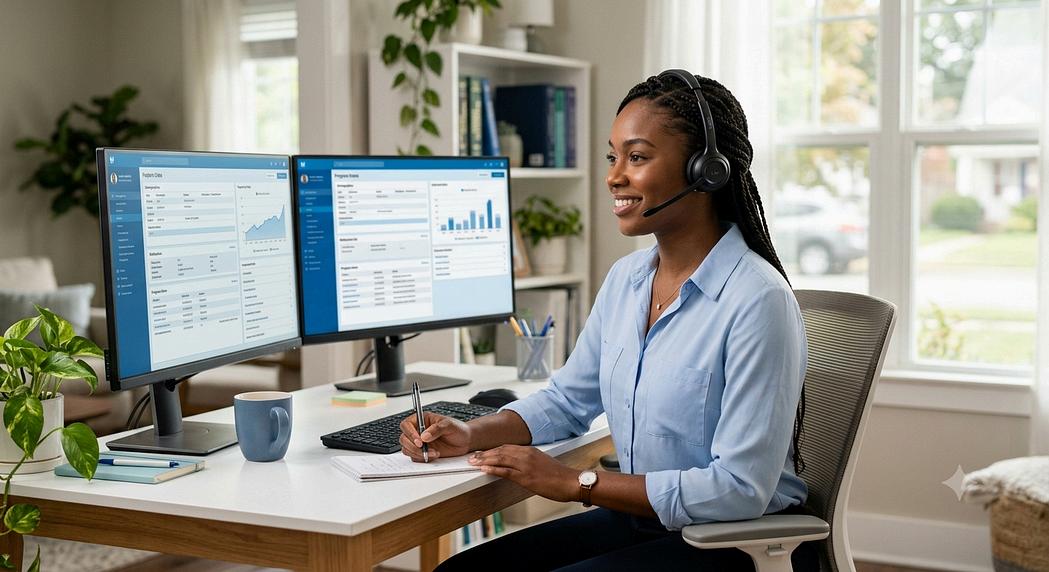
A remote medical scribe listens in on patient encounters, usually through a secure video or audio connection, and documents the visit directly into the provider’s electronic health record (EHR) system in real time. Unlike an in-office scribe, a remote medical scribe works entirely online, often supporting multiple physicians or clinics from a single virtual workstation. Daily responsibilities typically include:
• Transcribing physician-patient conversations into structured clinical notes
• Entering diagnoses, medications, and treatment plans accurately
• Flagging incomplete documentation for physician review before it’s finalized
• Formatting referral letters, discharge summaries, and after-visit instructions
• Maintaining strict HIPAA-compliant data handling throughout every shift
Because the role is fully remote, scribes need more than fast typing skills. They need discipline, strong tech literacy, and a working understanding of clinical terminology that matches what a doctor would dictate across specialties, from cardiology to family medicine.
Requirements to Become a Remote Medical Scribe
1. Educational Background
Most remote medical scribe positions require at minimum a high school diploma, though employers increasingly prefer candidates pursuing or holding a degree in pre-med, nursing, biology, or health sciences. A background in medical terminology and anatomy gives you a real edge over other applicants.
2. Medical Scribe Certification
While not always mandatory, certification from a recognized body such as the American College of Medical Scribe Specialists signals to employers that you understand clinical workflows, EHR systems, and
documentation standards. Certification can also push your application ahead of others when companies like Health&virtuals are reviewing medical scribe openings.
3. Typing Speed and Accuracy
Because documentation happens live, most employers expect a typing speed of at least 60 to 70 words per minute with high accuracy. Practicing with medical transcription samples can help you build speed alongside medical vocabulary at the same time.
4. EHR System Familiarity
Knowledge of common platforms such as Epic, Cerner, Athenahealth, or eClinicalWorks is a major plus on any application. Many remote scribe training programs, including onboarding at Health&virtuals, include hands-on EHR practice before scribes start live shifts with providers.
5. A Reliable Home Setup
A quiet workspace, high-speed internet, a dual-monitor setup, and a HIPAA-secure computer environment are non-negotiable. Remote medical scribe roles depend entirely on uninterrupted, confidential
connections during live patient visits, so equipment matters as much as skill.
6. Soft Skills
Strong listening skills, attention to detail, the ability to multitask under pressure, and comfort working independently without direct in-person supervision all matter just as much as technical ability when employers evaluate candidates.
How to Find Remote Medical Scribe Openings
Searching medical scribe near me used to be the standard approach, but remote work has changed that completely. Today, the best opportunities surface through specialized healthcare staffing platforms, scribe-focused agencies, and direct applications with virtual care providers. Health&virtuals, for example, regularly posts medical scribe openings for candidates across different time zones, since remote scribes can support providers regardless of physical location. When job hunting, look for:
• Job boards that specialize in healthcare and remote work
• LinkedIn searches combining “remote medical scribe” with healthcare staffing agency pages
• Direct applications with telehealth and virtual scribing companies
• Referrals from clinical staff or current scribes already in your network
Tailor your resume to highlight typing speed, any EHR exposure, and relevant clinical coursework, even if it’s only introductory level.
Career Path: From Entry-Level Scribe to Healthcare Specialist
Most people enter this field as an entry-level remote medical scribe, supporting a single physician or department while learning the documentation workflow. With six months to a year of consistent experience, scribes often move into specialty-focused roles, supporting cardiologists, orthopedic surgeons, or psychiatrists, which usually come with higher pay due to the complexity of documentation involved in those fields.
From there, several career paths typically open up:
• Senior or Lead Scribe overseeing training and quality checks for newer team members
• Clinical Documentation Specialist — working closely with compliance and coding teams
• Medical Coding or Billing transitioning into coding certifications using clinical knowledge already built on the job
• Pre-Med or PA Track — using scribing as a direct clinical-exposure stepping stone before applying to school
• Healthcare Operations managing virtual scribe teams and workflow at companies like Health&virtuals
The flexibility of remote work means scribes can build this entire career path without relocating, making it an attractive entry point into healthcare for people who want real clinical exposure without becoming a provider themselves right away.
Salary Expectations
Remote medical scribe pay typically varies depending on experience, specialty focus, and employer. Entry-level remote scribes generally start in an hourly range similar to in-office roles, while specialty scribes and senior scribes earn noticeably more over time. Companies that offer structured training, like Health&virtuals, also tend to offer clearer pay progression tied to performance and tenure rather than time served alone, which gives new scribes a faster path to better pay.
Conclusion
Becoming a remote medical scribe is one of the most accessible ways to enter the healthcare field without years of schooling first. If you’re detail-oriented, comfortable with technology, and genuinely curious about clinical medicine, this role can be both a stable career on its own and a launchpad toward something bigger, whether that’s coding, nursing, or medical school down the road. Keep an eye on medical scribe openings posted by companies like Health&virtuals, build your typing speed and EHR familiarity starting now, and you’ll be ready to apply the moment the right remote medical scribe opportunity appears in your inbox.