







BELLVILLE
Dr N Mtimkulu
Dr MS Jacobs
021 950 8930
021 945 2970
Dr M Magopa 021 945 3483
Dr Z Dunn 021 110 5059
Dr H Nashandi 021 110 5246
TOKAI
Dr A Hendricks
Dr T Motsema
Dr M Tisane
Dr K Japtha
GATESVILLE
Dr N Allie
Dr R Kader
021 110 5824
021 110 5940 021 023 2046
021 110 5686
021 637 4323 021 638 2647
Dr S Camroodien 021 110 5930
Dr G Khobane
Dr T Masina
Dr O Orji
021 110 5064
Dr N Maseko 021 110 5157
RICHARDS BAY
Dr J Moodley
Dr MN Nkanyane
021 391 4132/3 021 110 5945 035 772 1581 035 791 5506
Dr S Bodasing 035 791 5438
Dr K Mulomb 035 791 5446
GATESVILLE & MITCHELLS PLAIN
Dr MA Jeeva & Dr H Khamissa
GATESVILLE: 021 637 1343/4
MITCHELLS PLAIN: 021 392 8141/0516
For more information contact us at info@melomed.co.za
Swap smart - Pregnancy edition
Breastfeeding tips for new moms
Water births Q&A
Fertility and pregnancy FAQ
Patient story: The tiniest fighter - A 350 grams to 3.0 Kilogram NICU success story


PUBLISHER: Health Bytes CC | CONTACT: christa@health-bytes.co.za | GRAPHIC DESIGNER: Marius Laubser | TEL: 021 913 0504 | PRINTING: Paperjet
Published in the interest of your health by MELOMED
CONVENTIONAL FRUITS & VEGGIES
BOWL OF FROSTIES
Tea has less caffeine than coffee, and rooibos is caffeine-free, safe in pregnancy, and rich in antioxidants.
Organic foods can be more nutrient-dense and help reduce exposure to pesticide residues during pregnancy.
Quinoa is higher in protein, contains all essential amino acids, and helps support stable blood sugar levels.
Frosties are high in added sugar and can spike blood sugar, while oats with nut butter provide steady energy.
Orange-flesh sweet potatoes are rich in vitamin A, supporting foetal development, and can be used in meals or baking.
01
• Baby's mouth wide open
• Lips flanged outwards
• Chin touches breast
• More areola visible above than below
• No sharp pain after the first few seconds
A good latch = comfortable feeding & better milk transfer.
Every mom and baby are unique. It's normal to take time learning what works best for you both. You are doing amazing!
• Look for hunger cues: rooting, hand sucking, mouth opening, restlessness
• Feed 8-12 times in 24 hours
• Frequent feeding builds your milk supply
Every feed is important, especially in early days.
TRY DIFFERENT POSITIONS 03


Cradle Hold Side-Lying Laid-Back Hold
Find the position that is most comfortable for you and baby.
TAKE CARE OF YOUR NIPPLES
• Ensure a good latch
• Express a few drops of milk and air dry
• Use nipple cream if needed
• Change breast pads regularly
• Pain should improve, not worsen
Sore nipples? Check latch and seek help if needed.
• Baby feeds more often, usually in the evening
• It helps increase milk supply
• Comforts your baby
• It is normal and temporary
This phase will pass, you are doing great!
REMEMBER
• Be patient with yourself and your baby
• Ask for help when you need it
• Rest, eat well and stay hydrated
• Fed is best.
• Your wellbeing matters too.
6 or more wet nappies
daily after day 5
Steady weight gain
Swallows during feeding
Content and relaxed after feeds
Breasts feel softer after feeding
Stay hydrated
Ask for help & accept support
ESSENTIALS THAT CAN HELP
Nursing pillow
Water bottle
Breast pads
Engorgement: Feed often, warm compress before, cold compress after
Blocked Ducts: Massage gently, warm shower, different positions
Low Supply Concerns: Feed more often, skin-to-skin, stay hydrated, rest
Eat nutritious meals
Talk to other moms
Nipple cream
Burp cloths
Comfortable clothes
Rest when possible
Take care of your mental health
• Severe nipple pain or damage
• Baby not gaining weight
• Very few wet nappies
• You feel overwhelmed or anxious
WATER BIRTHS MIGHT BE BECOMING A BIGGER TREND BUT WHAT SHOULD YOU TAKE INTO CONSIDERATION BEFORE DECIDING IF YOU SHOULD HAVE ONE OR NOT?
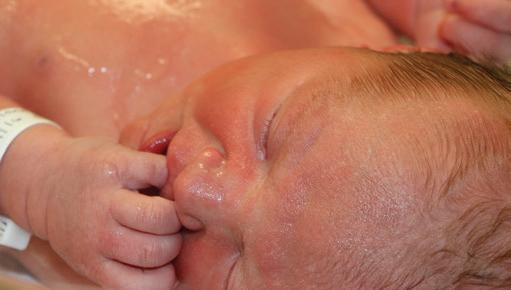
Water birth is essentially as simple as it sounds. A woman labours and gives birth while in a pool filled with warm water.
WHAT ARE THE BENEFITS OF LABOURING IN WATER?
• Floating in water means that a mom can change her position easily during labour, with very little effort.
• Warm water provides a very good method of pain relief, research shows that mom use less pain relief when labouring in water.
• Warm water is very relaxing and creates a calm environment for moms to labour in.
• Moms can try and remain as upright as possible to promote gravity without their legs getting exhausted.
• A study has shown that there is less perineal trauma for moms who deliver in water due to warm water relaxing and softening their perineum and pelvic muscles.
• Partners can still be included by assisting mom with back massages, support and encouragement, rehydration and meeting her nutritional needs. Some partners even prefer to join the mom in the pool to be more hands on and part of the experience.
• Birthing outcomes - Moms who labour and give birth in water, have an increased chance of a normal delivery with less medical or drug interventions. Labouring in water reduces anxiety, and increased relaxation means more effective labour and better progress in labour.
• Moms cope better when labouring in water, they feel more in control of their labour and pain.
• To avoid bacteria in pools it is safest to hire a lining for the pool or a pool that comes with a disposable lining for each client. Some rental companies will also rent a hose for each pool. This avoids the growth of bacteria in previously used hoses. Another tip is to run the water for a couple of minutes on hottest temperature
• Midwives can still monitor any vaginal discharges for signs of meconium stained amniotic fluid or heavy bleeding while you are labouring in water.
• Midwives can ask you to get out of the pool if anything abnormal is noted and then monitor you more carefully or implement emergency interventions out of the pool, if required.
The baby gets its oxygen from the cord which is attached to the placenta and takes their first breath as soon as their head gets above the water. Once the head is above the water, then baby is held by mom on her chest with careful attention to keep the baby’s head above the water, while the rest of the body is under the water to maintain the body temperature.
The cord would need to be clamped and cut to separate the baby so that emergency resuscitation procedures can happen out of the pool. >>
• If you are giving birth in a hospital and there is an emergency, a mom could still have an instrumental delivery out of the pool if required, or if severe foetal distress or failure to progress may still need to have a C-section, if required. Labouring in water should not compromise your safety, monitoring or care in labour.
• You would need a qualified, experienced midwife to continuously monitor both your vital signs and baby’s heart rate. Often midwives will use an underwater sonic aid to listen to your baby’s heartbeat while you are under water. If an underwater sonic aid is not available, they may ask you to lift out of the water enough to dry your belly off and monitor with a normal foetal monitoring device.
Some moms prefer to deliver the placenta naturally, in the pool with no drugs, so as long as both mom and baby are stable, the mom can wait for 15 to 30 minutes for the hormones to assist with contracting and placenta to separate naturally. This would also allow for delayed cord clamping once the cord has stopped pulsating. Other moms may need to get out of the pool and need help with an injection of Syntocinon to help separate the placenta, and then this may be delivered out of the pool.
You need to plan in advance so that you can book at a hospital that has a birthing pool or you need to be sure your hospital will allow you to rent your own birthing pool.
You need to find a practitioner that is experienced in offering water births or happy for you to labour in a birthing pool.
Find out the cost of renting a pool and/or the disposable lining only.
If you are planning a water birth at home, the room needs to be large enough to comfortably accommodate a pool and space for birth partners, midwife and birth equipment.
The room needs to maintain a comfortable warm temperature for the mom to labour in.
The floor needs to be suitable to get wet with mom climbing in and out of pool, so preferably tiled or wooden floor. Carpets are not ideal, so perhaps a plastic sheeting to protect them, if needed. Have a pile of dry towels handy if mom needs to step out of the pool, she can stand on a dry non-slip surface.
Access to a tap, so a bathroom or tap close by or a hose long enough to reach the nearest tap.
Maintaining a warm temperature in the pool throughout labour (36.5 - 37°C). This requires a floating temperature gauge, and when the water temperature drops, the birthing partners will need to remove some water with buckets or a hose, and then refill with hotter water.
A pool can take time to set up, so best to set up early, as the filling up with water can also take some time.
It may take time to drain all the water out of the pool, collapse and pack it up, as well as dry off the floor. This is up to the birthing partners to sort out, not the staff attending to the birth.
Use a sieve to capture any debris that may be floating in the water (vomit, blood clots, faeces) and have a lined bin close by.

Only get into the pool when mom is in established labour so that the contractions don’t taper off.
If the contractions should weaken, then a mom can get back out the pool and walk around so that gravity will assist the contractions to strengthen, before climbing back in the pool.
Moms can still eat and drink while in the pool to maintain their hydration and energy levels.
What if mom needs to go to the toilet? Moms can get out of the pool and use the bathroom.
What if there is foetal distress? This should be picked up during routine foetal monitoring, and the appropriate action taken as per any mom in labour with foetal distress. Mom would need to get out of the pool for more careful monitoring, and if in hospital then attached to a foetal monitoring CTG machine.
Cost can be a factor, as you may need to hire a pool and lining, and you will need an experience midwife for delivering in a pool.



Do both partners need to change diet and/or take supplements?
Yes, both partners should consider improving their diet and taking fertility-supporting supplements. Fertility depends on the health of both egg and sperm, so nutrients like folic acid, zinc, CoQ10, and omega-3s can benefit men and women alike. A shared commitment also boosts emotional support and overall reproductive health.
By Dr Kashiefa Japtha
What foods or habits should we avoid or limit when trying to conceive?
When trying to conceive, limit processed foods, sugary snacks, trans fats, and excessive caffeine or alcohol. Avoid smoking and exposure to environmental toxins. High-mercury fish (like swordfish and king mackerel) should also be avoided. Prioritise whole nutrient-rich foods and healthy lifestyle habits to support fertility. >>
For how long should I use the supplements? How can I know if they're working – any body changes I should notice?
Use fertility supplements consistently for 2-3 months, as that's the typical cycle for egg and sperm development. Signs they may be working include more regular periods, better cervical mucus, increased energy, and improved mood. Tracking your cycle and symptoms can help you notice changes. Blood tests can also confirm nutrient levels and hormonal profile if needed.
How soon should I start supplements (or change my diet) before trying to conceive?
It's best to start fertility supplements and make dietary changes at least 3 months before trying to conceive. This gives your body time to build up essential nutrients and support healthy egg and sperm development, which both follow a roughly 90-day maturation cycle. Early changes also help regulate hormones and improve overall reproductive health.
Which dietary patterns are shown to help with fertility?
• Fruits and vegetables - rich in antioxidants and fibre
• Whole grains - help regulate blood sugar and hormone levels
• Healthy fats - especially omega-3s from fish, nuts, and olive oil
• Plant-based proteins - like legumes and tofu, which support ovulation
• Low intake of processed foods and sugars - reduces inflammation and insulin resistance

Which supplements are the most important for fertility?
• Folic acid - supports healthy egg
• Vitamin D - helps regulate reproductive hormones
• CoQ10 - improves egg and sperm quality, especially with age
• Omega-3 fatty acids - support hormone balance and reduce inflammation
• Zinc-essential for sperm production and ovulation
• Iron-prevents anemia and supports ovulation
• Vitamin B12 and B6 - aid in hormone regulation and energy metabolism
• Myo-inositol - especially helpful for women with PCOS to improve ovulation.

Can stress or mental health issues cause infertility?
Yes, stress and mental health issues can contribute to infertility by disrupting hormone levels, which may interfere with ovulation in women and reduce sperm quality in men. Conditions like anxiety and depression are linked to longer times to conceive and lower success rates with fertility treatments. Management can include therapy, relaxation techniques, lifestyle changes, and the use of fertility-supporting supplements to help restore hormonal balance and improve reproductive health.
How long should we try to conceive before getting help?
If you're under 35, try for 12 months before seeking help. If you're over 35, consult a specialist after 6 months. If you're over 40 or have known reproductive issues, it's best to get help sooner.

DR. KASHIEFA JAPTHA MMED(STELL), FCOG (SA), DIPOBS(SA), MBCHB (STELL)

Dr. Kashiefa Japtha is an Obstetrician/Gynaecologist and currently practices at Melomed Tokai.
Tel: 021 110 5856 admin@obgynaecapetown.co.za
By Dr Strini Chetty
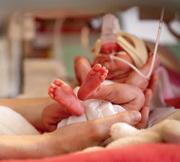
When a baby is born weighing just 350 grams, survival is far from guaranteed. At that weight, similar to that of a can of cooldrink, every organ system is profoundly immature.
The lungs are not fully developed, the brain is fragile, the immune system is vulnerable, and maintaining body temperature and blood pressure becomes a constant challenge.
In South Africa, babies born under 1,000 grams are classified as extremely low birth weight. While survival rates improve significantly above 800-900 grams, survival at 350 grams is exceptionally rare, particularly outside of highly specialised centres.
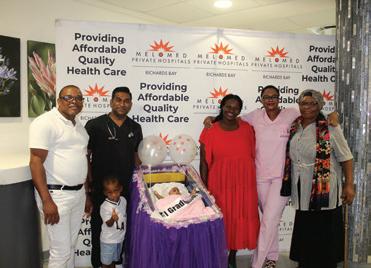
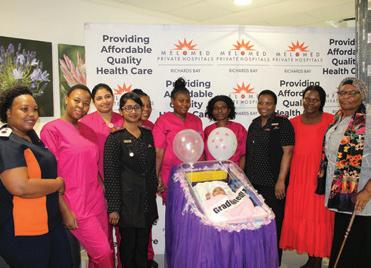
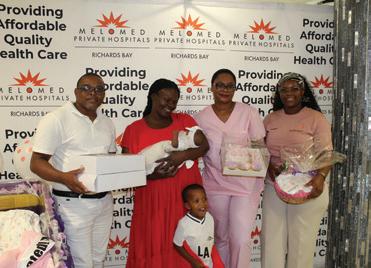
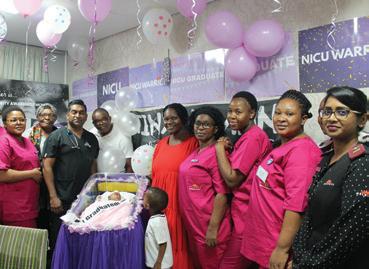
This recent case at Melomed Richards Bay Private Hospital represents not only medical excellence, but also resilience, teamwork, and extraordinary parental courage. The first 2-3 weeks after birth are the most critical. During this time, advanced respiratory support, intravenous nutrition, infection prevention, and meticulous
monitoring are essential. Every hour requires precision. Every gram gained becomes a milestone.
Extreme prematurity demands specialised neonatal intensive care. Continuous monitoring, ventilatory support, experienced neonatal nursing staff, and specialist oversight are crucial in improving outcomes. Access to this level of care can significantly influence survival.
Beyond the medical complexities lies the emotional journey of the parents. Having a baby in a neonatal intensive care unit is overwhelming. Families experience fear,
uncertainty, and hopeoften within the same day.
Supporting parents through transparent communication and encouraging bonding, including skin-to-skin contact when medically appropriate, plays an important role in recovery. Bonding is not only emotional - it contributes to improved temperature regulation, feeding success, and weight gain. After months of dedicated care, this baby was discharged home at 3.0 kilograms. The journey from 350 grams to 3.0 kilograms reflects the remarkable advances in neonatal medicine and the power of perseverance from both family and healthcare teams.
PREMATURE BIRTH REMAINS A SIGNIFICANT CHALLENGE IN SOUTH AFRICA.
Common causes include infection, hypertensive disorders of pregnancy, multiple gestations, cervical insufficiency, and placental complications. While not all premature births can be prevented, early antenatal care, managing chronic conditions, and seeking urgent medical attention for warning signs such as abdominal pain, bleeding, fluid leakage, or reduced foetal movements can improve outcomes.
March also marks Birth Defects Awareness Month - an important reminder of the need for education, prevention, and support. Birth defects are structural or functional conditions present at birth. Globally, approximately one in 33 babies is affected. Most develop during the first trimester, often before a mother knows she is pregnant.
Risk factors may include genetic conditions, maternal diabetes, infections, alcohol exposure, and folate deficiency. Preventative steps such as taking folic acid before conception, attending early antenatal care, managing chronic illness, and avoiding alcohol and smoking can reduce certain risks.
Modern medicine has dramatically improved detection and outcomes.
MEET THE DOCTOR

MBBCh(WITS)DCH(SA)FCPaed(SA)
Many congenital conditions can be identified during pregnancy through ultrasound and screening tests. Advances in surgery, neonatal care, and early intervention therapies have significantly improved survival and long-term quality of life.
For families facing either prematurity or congenital diagnoses, early medical engagement is essential. If parents have concerns about a baby's development, early assessment and intervention can meaningfully alter outcomes.
The message to our community is clear: early care saves lives. Awareness empowers families. And every child - regardless of their start in life- deserves dignity, opportunity, and hope.
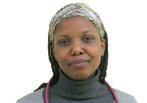
Dr. Chetty is a(n) Paediatrician and currently practices at Melomed Richards Bay.
Tel: 035 791 5535
Email: strini_chetty@yahoo.com
Melomed Hospitals have specialist doctors to treat all your baby’s sickness and ailments.
From our specialised Paediatricians, Neonatologist, Ear, Nose & Throat (ENT) specialists to Baby Clinics.


Melomed Gatesville & Tokai
Dr S Raban 021 023 0604 021 637 2358


Melomed Richards Bay
Dr KP Seake 035 791 5428


Melomed
Mitchells Plain
Dr O Adam 021 391 4967/8


Melomed Tokai
Dr R Moore 021 110 5941


Melomed Gatesville
Dr R Khan 021 637 3811/3817


Melomed Bellville
Dr M Bassier 021 950 8980

Melomed Mitchells Plain
Dr V Singata 021 392 8255/8


Melomed Tokai
Dr M Meyer 021 712 1643


Melomed Gatesville
Dr M Ismail 021 633 0332


Melomed Bellville Dr Rhode 021 945 1898


Melomed Mitchells Plain
Dr MW Mathure 021 110 5145


Melomed Richards Bay
Dr S Chetty 035 791 5535


Melomed Bellville
Dr M Ledger 021 946 1347


Melomed Gatesville & Tokai
Dr B Nondela
Paediatric Surgeon 021 637 8100


Melomed
Gatesville & Tokai
Dr. J Stulinski 021 764 7208


Melomed Gatesville & Tokai
Dr. S Ebrahim 021 637 20263


Melomed Mitchells Plain
Dr. W Makhaye 021 110 5950


Melomed
Richards Bay
Dr. L Setoaba 035 791 5440


Melomed
Bellville
Dr. A Behr 021 945 1502


Melomed Bellville
Dr. Z Doolarkhan 021 946 2191
RHO Clinic
Melomed Bellville Hospital 021 950 8960
The following services are rendered:
•Follow up on newborn babies from the age of 2 weeks.
•Immunisations of babies
•Family planning
•Asthma education
•Responsible for doing lung functions for the pulmonologist.
•Breastfeeding Education
Clinic Hours:
Mondays to Thursdays: 9:00 - 16:00, Open some Saturdays as per request and by appointment only.


Melomed Bellville
Dr. Raphael Mlauzi 021 110 5217
Dr Raban
Melomed Tokai 021 023 0604
The following services are rendered:
•Vaccinations
•Breastfeeding consultation
•Circumcision
•Family Planning
•Paediatric Consultation
“Pathologythat


From the moment pregnancy is con rmed through to a child's early years, pathology testing plays an important role in helping healthcare providers monitor health, detect potential complications early, and guide treatment decisions.

Con rming Pregnancy




Biomarkers such as the sFlt-1/PlGF ratio can assist healthcare professionals in assessing and managing suspected pre-eclampsia.


One of the rst laboratory tests many women encounter is the measurement of human chorionic gonadotropin (hCG), the hormone that con rms pregnancy.
Routine blood and urine tests help healthcare providers assess the mother's overall health and identify conditions that may a ect pregnancy, including:
• Anaemia (iron de ciency)
• Blood group and Rh factor status
• Urinary tract infections
• Thyroid disorders
• Gestational diabetes
• Nutritional de ciencies
Screening for Infections
Certain infections can a ect both mother and baby if left undetected. Laboratory testing can help identify infections such as:
• HIV
• Hepatitis B
• Syphilis
• Rubella immunity status
• Group B Streptococcus (where indicated)
Early detection allows appropriate management to reduce risks to both mother and baby.
• Pre-eclampsia
• Gestational diabetes
• Cholestasis of pregnancy




Laboratory testing is particularly important in monitoring conditions such as:






Assessing

















• Infections

• Jaundice (bilirubin levels)

• Blood sugar levels










Laboratory tests may be used to investigate:
• Blood group compatibility issues
These tests help ensure newborns receive timely care when needed.














When health concerns are identi ed early, treatment can often begin sooner, helping to improve outcomes and reduce complications.



Pathology testing provides critical information that often cannot be detected through symptoms alone. By supporting early detection, accurate diagnosis, and ongoing monitoring, laboratory medicine helps healthcare providers make informed decisions for both mothers and children at every stage of their healthcare