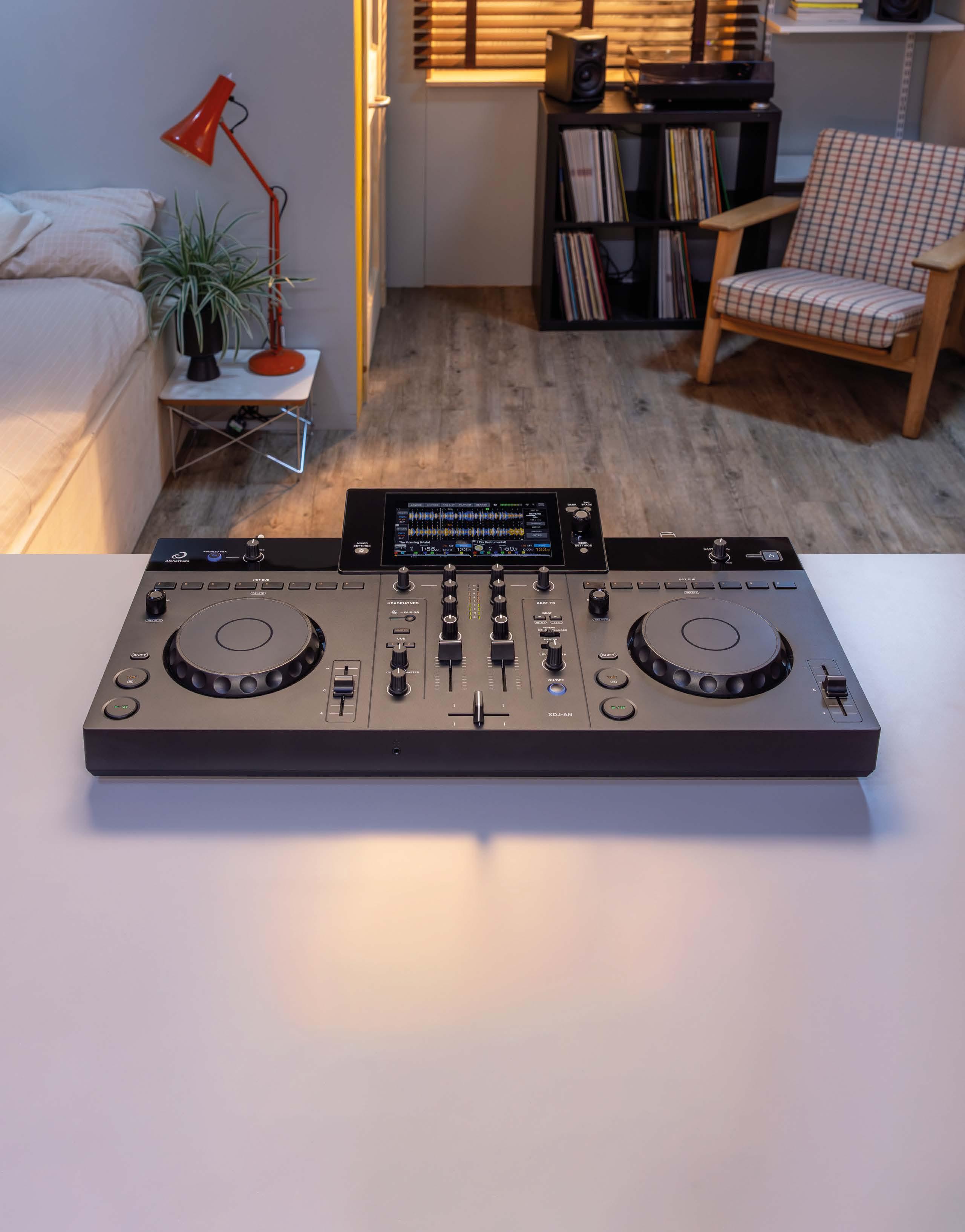
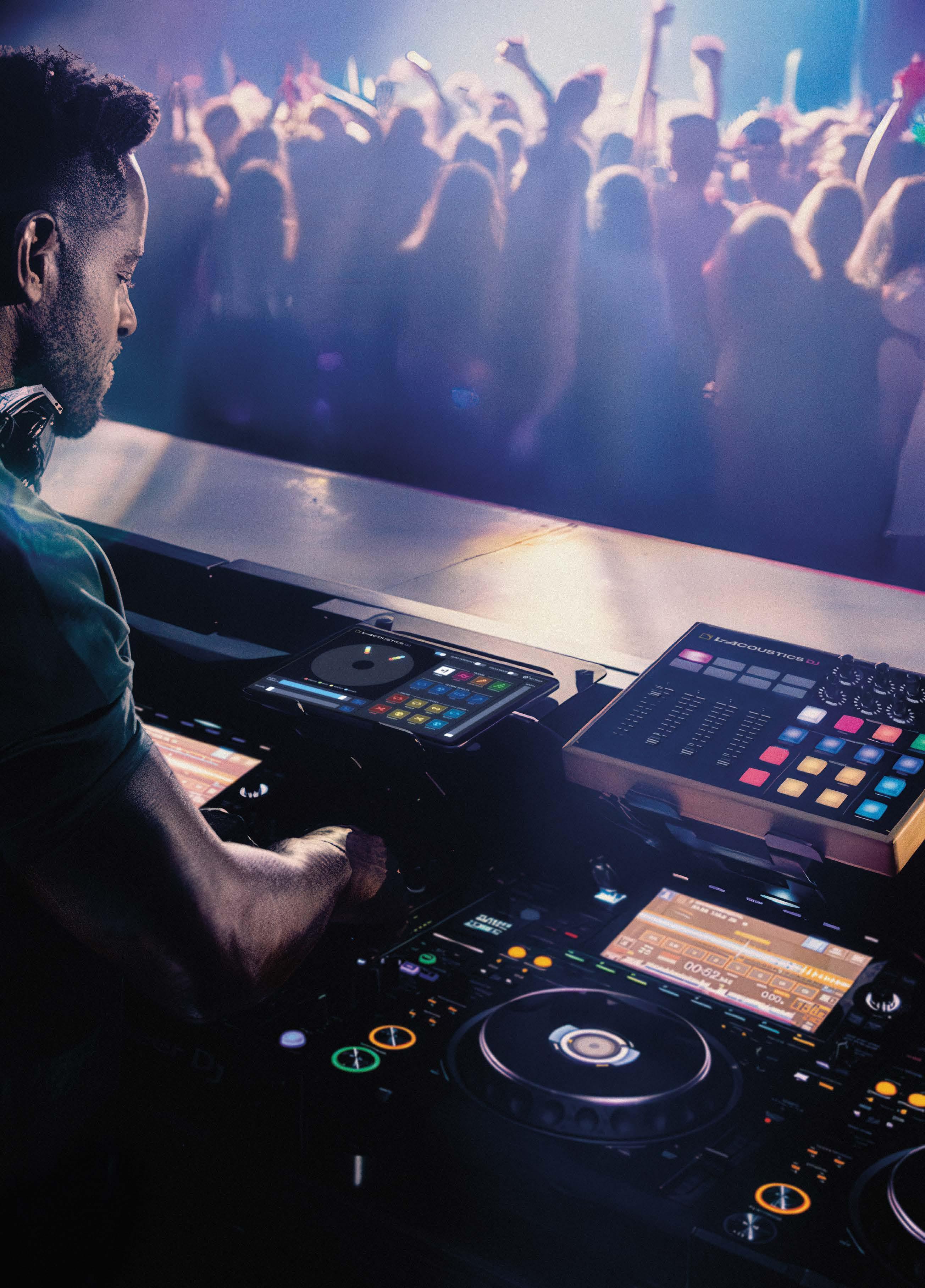
Mix tracks from Apple Music, Beatport, Tidal and more with music from other sources
Cloud-based playlist editing
Directly manage your cloud-based music via a compatible rekordbox subscription
Works with mobile apps
Play with rekordbox for iOS or djay for iOS, and use DJM-REC for live streaming / recording
Club-standard layout & media compatibility
Connect a laptop to use DJ software, or play music from USB drives
Built-in SonicLink transmitter
Pair your SonicLink headphones for ultra-low-latency wireless monitoring
High-quality sound & flexible connectivity XLR and RCA outputs, plus Bluetooth input/output
Paul Watson CEO
Alice Gustafson Editor-in-Chief
Keith Watson Chairman Contributing Editor Zara Dosanjh
Rian Zoll-Kahn COO
Rick Dickerson Reviews Editor
Rae Gray Head of Design
Marc Henshall Head of Digital
Grace Mcguigan Artist Relations Manager
So it wasn’t coming home after all. Next time, lads.
However many years of hurt it is later now, as ever, it wasn’t just football fans that came down with a case of World Cup fever – it affected the charts too.
Shakira and Burna Boy’s infectious World Cup anthem Dai Dai topped charts worldwide and generated more than 138 million Spotify streams, breaking the record for the most-streamed official World Cup song ever. In the UK, streams of The Beatles’ Hey Jude surged by 282%; fan favourite Wonderwall by Oasis reached number two on the Spotify Global Chart; ROSALÍA’s DESPECHÁ soared in popularity; and streams of LA TY LA M’s Pa’ la Selección rose by 270%.
Meanwhile, anyone whose Instagram algorithm was inundated with memes of a spring onion charging around to the relentless chant of “Haaland, Haaland” was probably unsurprised to see Kygo’s remix of a 10-year-old rap song by Norwegian striker Erling Haaland resurface and top Spotify’s Norway Top 50 chart. It just goes to show how a chronically online footballer who doesn’t take himself too seriously can inspire a thousand memes – and influence the charts. Nice.
In fact, throughout the tournament, a record-breaking 219,000 World
Cup-themed playlists were created – nearly three times the total in 2022 – generating more than 172 million streams worldwide, compared with 46 million four years earlier.
And it wasn’t just football, fouls and hydration breaks taking place on the pitch. Alongside Madonna, Justin Bieber and BTS, Shakira co-headlined the first-ever World Cup Final Halftime Show, curated by Coldplay’s Chris Martin. FIFA’s attempt to create a Super Bowlstyle spectacle had many echoing Wayne Rooney’s succinct verdict on the tournament’s bizarre first-ever musical interlude. Whatever your view of the controversial segment, though, one thing is undeniable: the World Cup creates colossal opportunities for music.
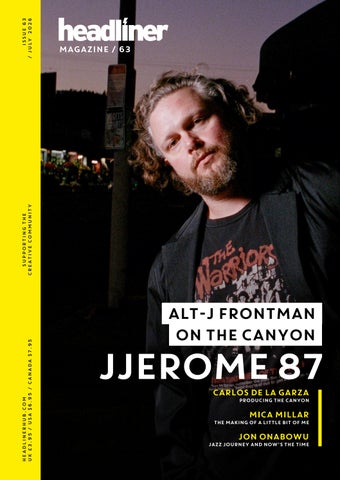
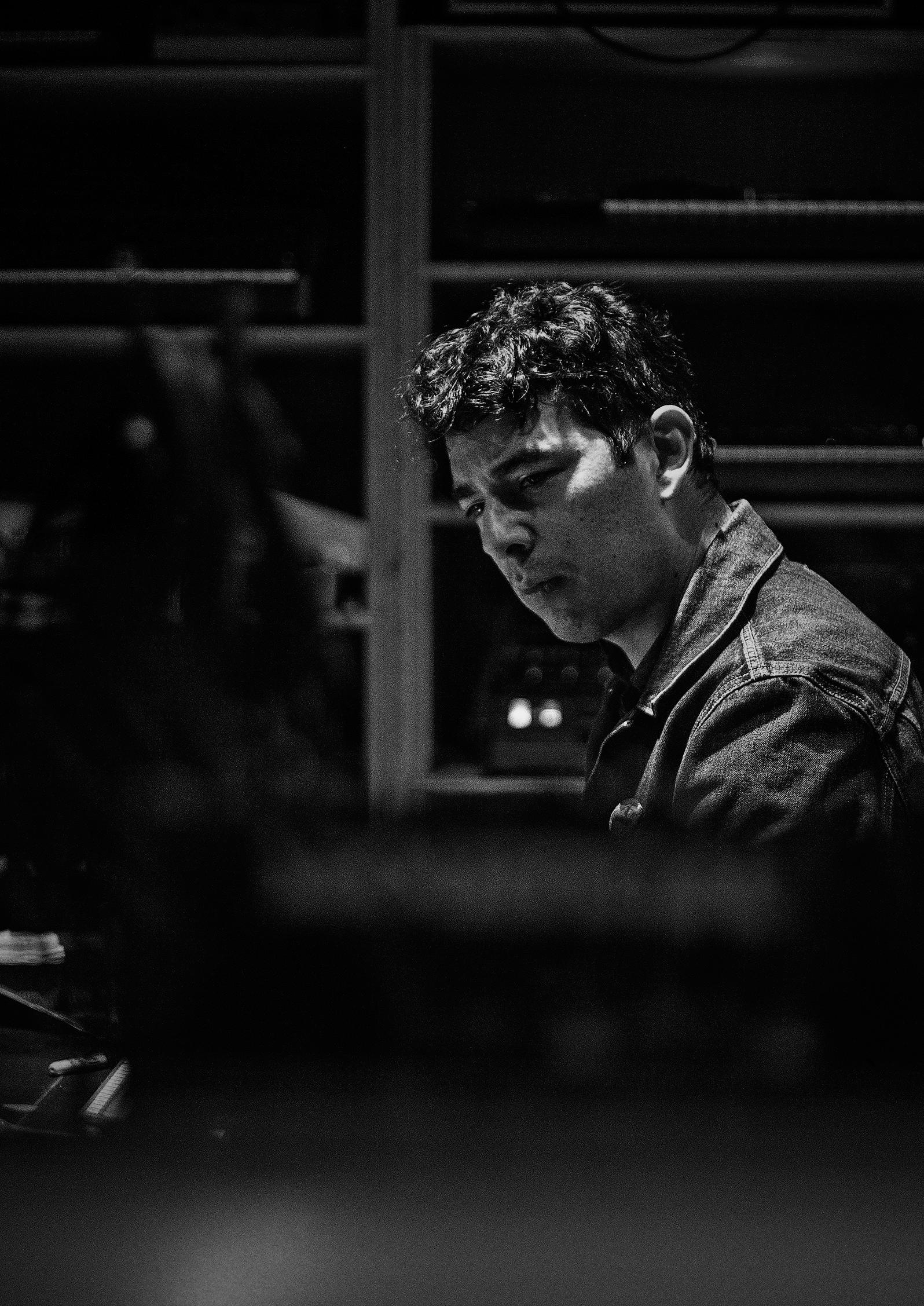
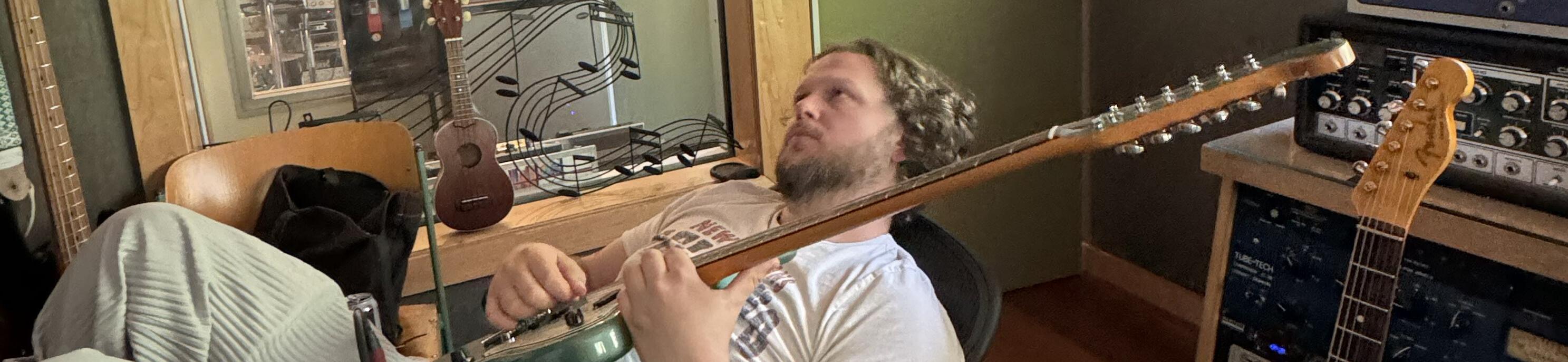
That crossover between music, culture and the stories behind the songs runs right through this issue. On the cover, alt-J frontman Joe Newman steps away from the band under his new moniker, Jjerome87, to discuss the making of his deeply personal solo debut, The Canyon, while the album’s Grammywinning engineer and mixer Carlos de la Garza explains how the collaboration came together. We also meet Manchester soul artist Mica Millar as she talks about crafting an album with “no fillers”, and British-Nigerian drummer Jon Onabowu, whose debut record marks the arrival of one of London’s most exciting jazz voices.
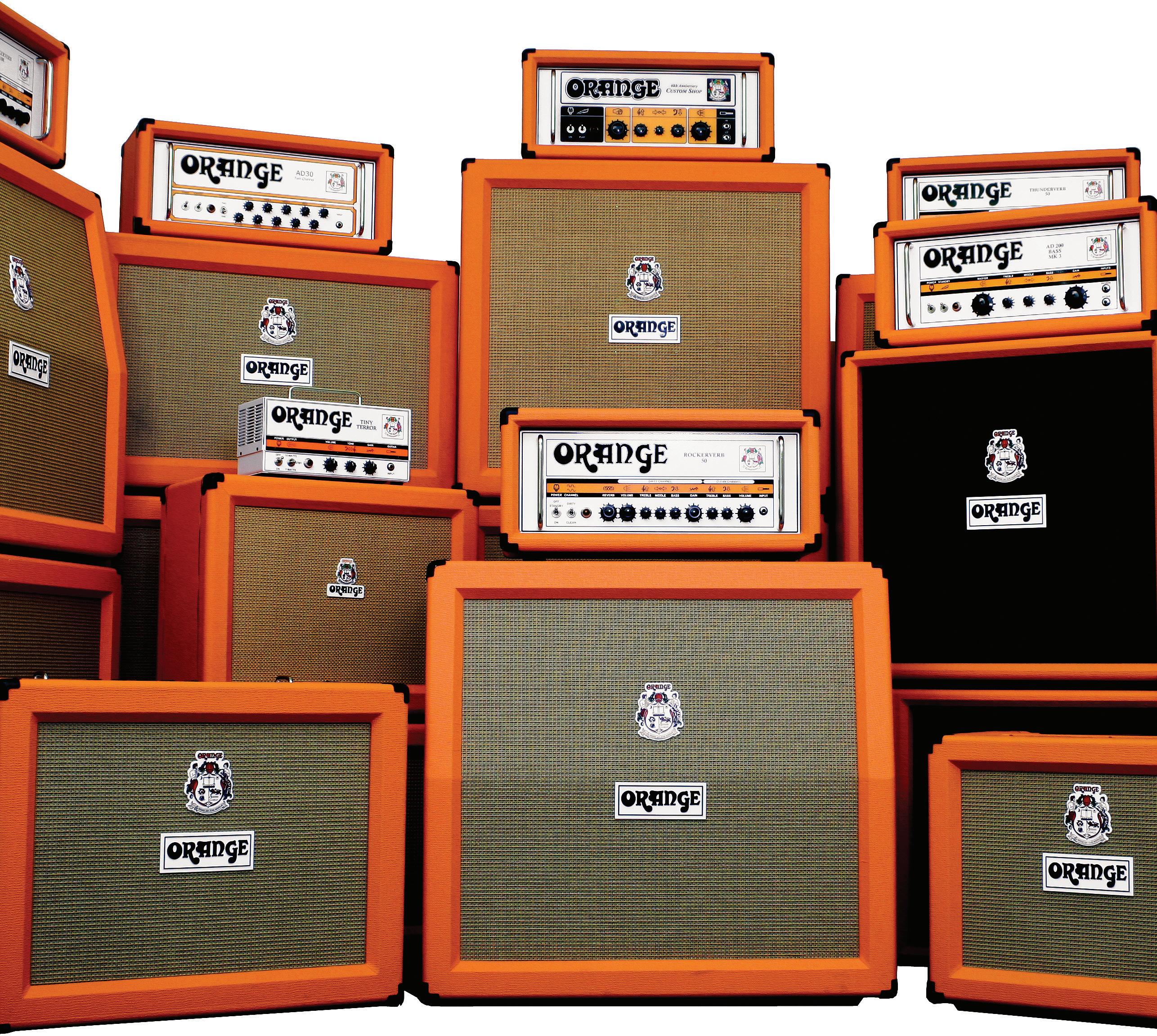
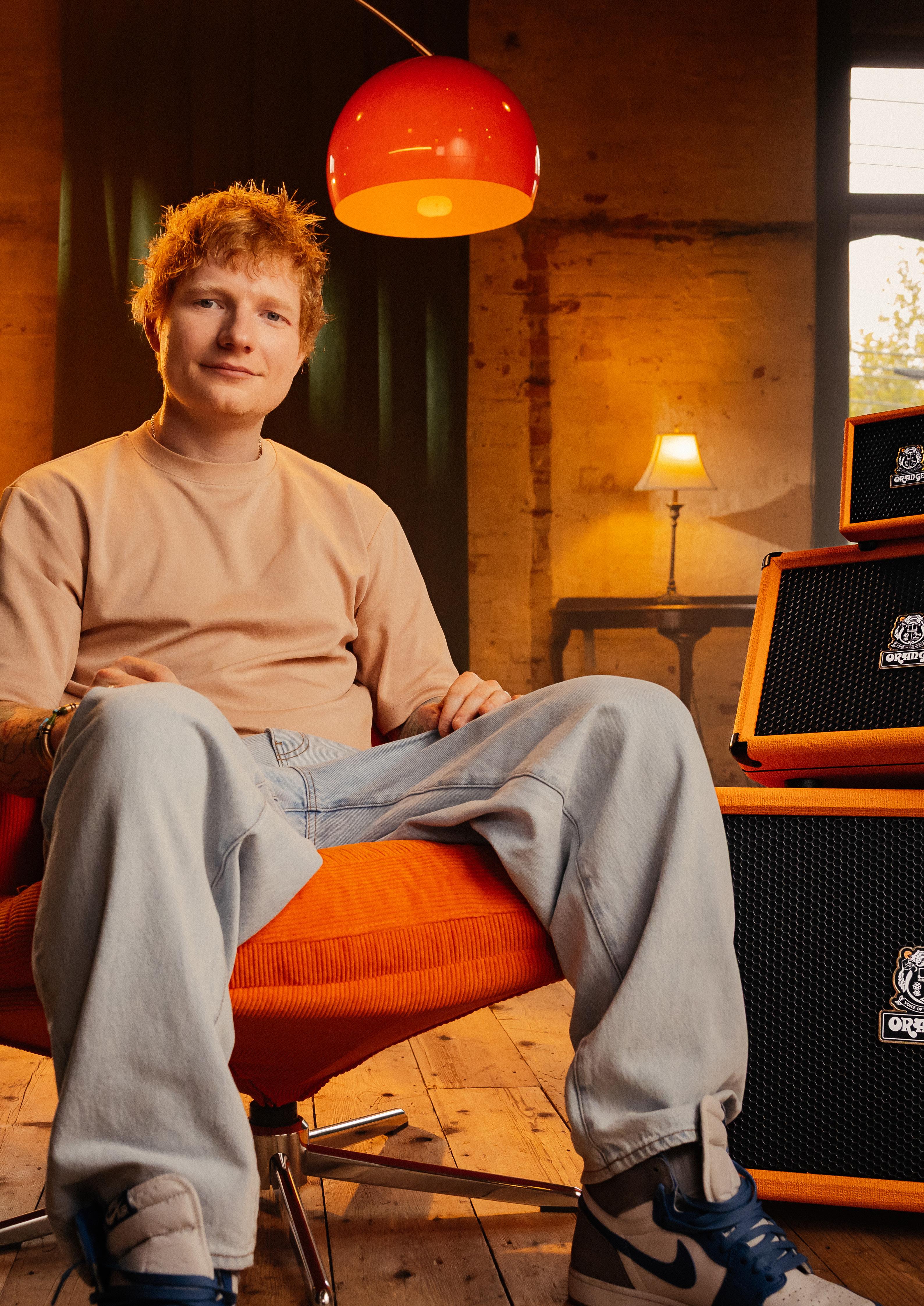
Elsewhere, Royer Labs and Undertone Audio president Dave Hetrick shares the hard-earned business lessons behind some of pro audio’s most respected brands and reveals his future acquisition ambitions, while Orange Amplifiers founder Cliff Cooper reflects on nearly six decades of iconic British guitar tone, embracing AI and why staying true to the company’s principles has always mattered more than chasing profit.
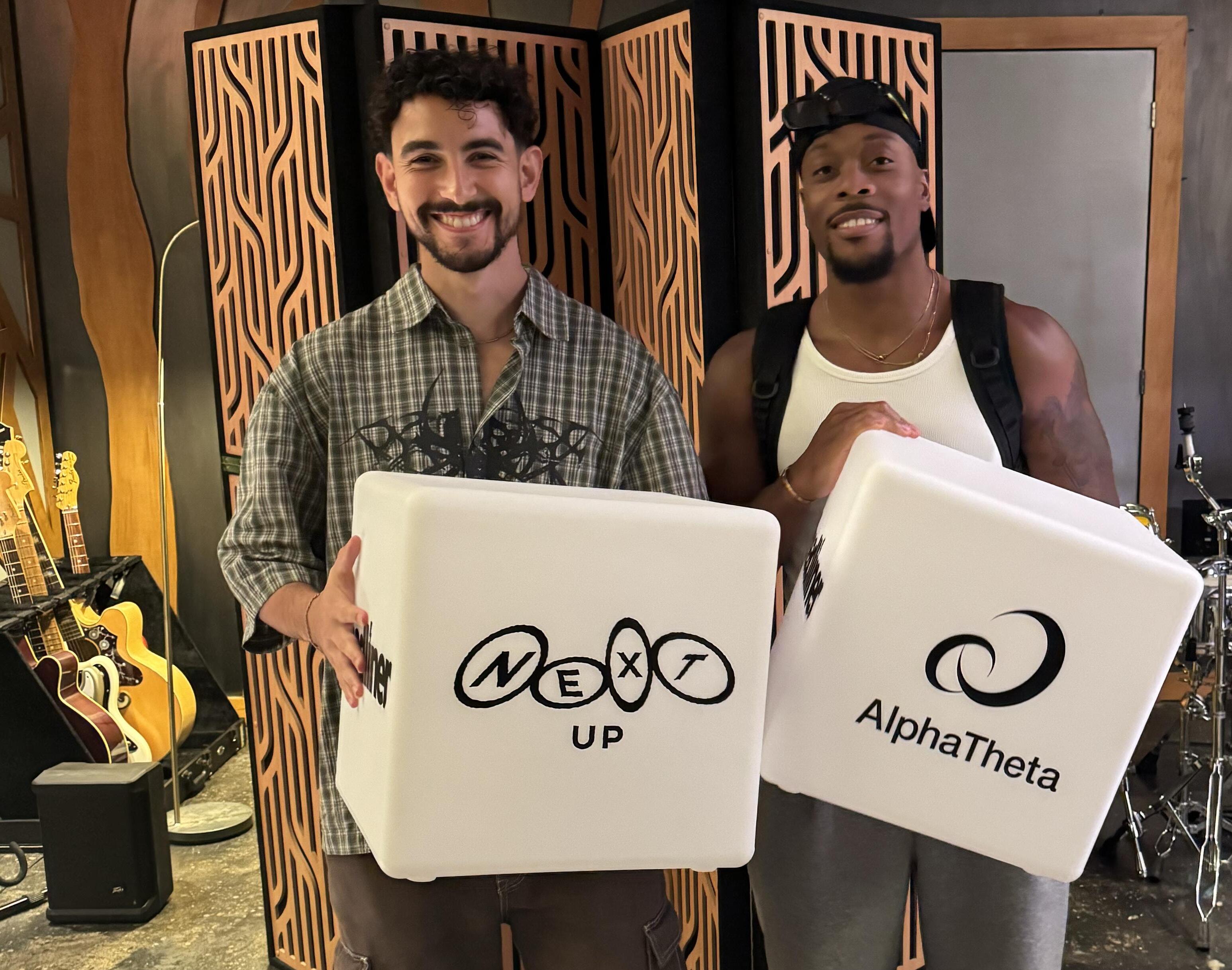
There’s plenty more, too. Our new AlphaTheta DJ series launches with Wingy Wingson and Sonata Collective, who discuss everything from reading a crowd to what “making it” as a DJ really means in 2026. We also explore how L.A trio Temper City transformed a viral TikTok moment into one of alternative rock’s biggest breakout stories with the help of SoundOn, proving that whether it’s a World Cup anthem, a meme, or a perfectly timed social clip, music continues to find new ways to capture the world’s attention.
Enjoy the issue!
Alice Gustafson Editor-in-Chief
By Alice Gustafson
By Adam Protz
By Alice Gustafson
S by ALICE GUSTAFSON
SOMEWHERE
BETWEEN SAYING IT
ALANI
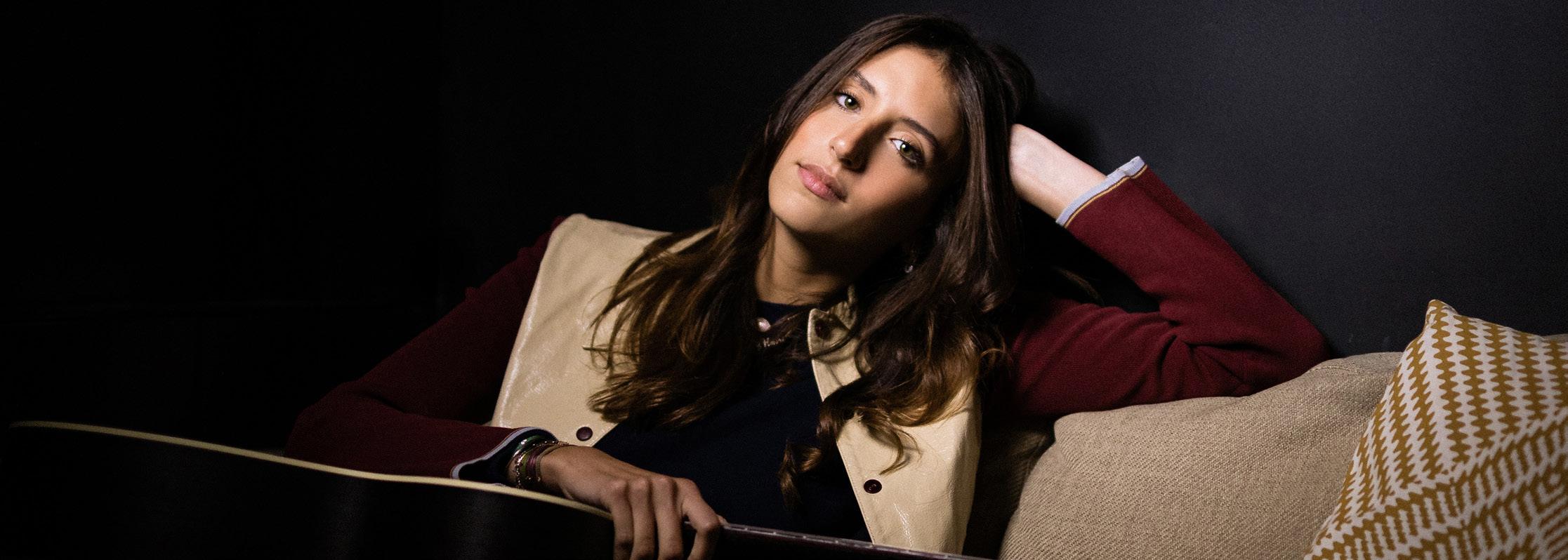
For London-born singer-songwriter ALANI, songwriting has always been more than making music; it has been a way of expressing the things she couldn’t say out loud. Having started writing songs at just seven years old, the singer, whose French, Lebanese and Brazilian heritage shapes her creative perspective, first came to wider attention as a finalist on The Voice Kids UK before forging her own path, moving to New York to study at NYU and develop her artistry.
Now, she is preparing to release her debut EP, Somewhere Between Saying It. Designed to be experienced from start to finish like the chapters of a diary, the five-track collection blends intimate indie-pop with stripped-back instrumentation and features an impressive lineup of acclaimed musicians, including Sean Hurley, Isamu McGregor, Sean Hutchinson and mixing engineer Darrell Thorp.
Released alongside the poignant new single More Than Friends, the
EP explores nostalgia, unspoken emotions and the spaces between friendship, love and self-discovery.
Headliner caught up with ALANI to discuss the inspiration behind Somewhere Between Saying It, her songwriting journey, overcoming writer’s block and why she’s learning to trust her gut when it comes to being vulnerable in her music.
What did you learn from competing in The Voice Kids UK at 13?
It was a really good experience overall because it taught me a lot. It was definitely nerve-racking for someone who was only 13. At any age, you’d be scared to go on stage and perform in front of that many people, especially right at the start of your career. What made it such a positive experience was that I got through to the blind auditions, which is a huge achievement. It’s not something that happens very often when you apply for these kinds of competitions. Getting that far gave me a lot of hope that I could win.
Obviously, I didn’t get through after the blind auditions, and although it hurt at the time, and I still have vivid memories of the moment when they didn’t turn around, it ended up being a really important part of my career. When I faced that rejection, I had a choice: was I going to keep doing this, or was I going to stop? When you’re 13, it’s easy to tell yourself, “They didn’t like what I did. Maybe I’m not good enough. Maybe this isn’t for me.” But I did the opposite. I thought, “Just because three people in chairs didn’t turn around for my performance doesn’t mean I’m going to stop.” More than anything, the experience taught me how important it is to keep going, even when you hit little bumps along the way. As an artist, that’s such an important lesson because it’s a long road, and you have to learn how to navigate it well.
Moving from London to New York seems to play a big role in this EP. How did the city shape your writing?
It shaped me on so many different levels. I don’t really like talking about academics and education. I’m a very emotional person, and I think everything comes from the heart. What I will say is that I took songwriting classes that improved the way I write in ways I never thought were possible. I genuinely learned from some of the best people in the industry, including people who worked with Whitney Houston. More importantly, collaborating with so many of my peers was incredibly valuable. There’s nothing more important than collaboration. I worked with lots of different people, and having so many different perspectives helped shape my music, whether that was through storytelling or even chord progressions. Those collaborations helped finish this EP.
I think where I’ve grown the most as a songwriter, though, is through the experiences I had during my four years in the US. I went through so many different chapters in my life. I moved there when I was 17 and came back when I was 21, so I was really young when I left. I grew into early adulthood there and explored so many different sides of my personality. I also met so many interesting people who inspired me and helped me write these songs.
Somewhere Between Saying It unfolds like a diary in chapters. How do you get your head around collaborating with people on songs that are quite personal to you?
I’m actually a very open book when it comes to expressing my emotions to people who have nothing to do with the stories I’m writing about. I don’t know why that is, but there’s something comforting about talking about my life to people who have no connection to it. A really important part of songwriting is that I don’t necessarily have to tell collaborators all of my business. One of the biggest things I’ve learned over the years is that the most important skill when writing a song is being able to relate to the story you’re trying to tell.
For example, if I have a few lines that I’m stuck on and I need someone’s help to finish the song, I’ll show them those lyrics. They’ll read them and naturally connect them to something that’s happening, or has happened, in their own life. That’s what allows them to help finish the song.
So although you’d expect songs that are based on emotions that are very close to my heart to be something I’d write completely on my own, I actually think they’ve become better through collaboration. When I didn’t know how to express something, someone else had lived through a similar moment in their own life and was able to bring that perspective to the song.
More Than Friends explores the blurred space between friendship and romance. You have admitted that you once wondered if you should record this song, but that you’re glad you did, as now it is one of your favourites. Why did you have doubts about making this song at first?
Initially, I wrote this song for a class, but the subject matter came from a really difficult period in my life. It was one of many songs I wrote about developing feelings for my best friend, which wasn’t a fun experience. Anyone who’s been through that can probably relate.
At the time, it just felt like another song among the hundred or so I’d written about that situation. I didn’t think it had that much potential, and I was actually quite scared to show it to anyone because I was still dealing with the aftermath of losing my best friend because of those feelings. I never imagined it would be something I’d release. But I had a deadline, so I thought, “I’ll just submit it and see what happens.” To my surprise, my professor said, “I think this is one of the best songs you’ve written in this class.” I was like, “Are you joking?” I honestly thought it was pretty mid!
I’ve heard a lot of songwriters say that sometimes the songs they’re least attached to end up being the ones other people fall in love with, and I think this was one of those moments. A big part of it was that I had no idea where to take the production. I could only hear it as a song on guitar. I couldn’t picture what it should sound like beyond that. So I sent the demo to the people I work with in London and said, “My professor really liked this, and I’m thinking of recording it, but I have no idea what to do with the production.” They said, “Leave it to us.”
I genuinely was stuck, so I handed it over. Once I heard what they’d done, I started giving my input because
“I’VE HEARD SONGWRITERS SAY THAT SOMETIMES THE SONGS THEY’RE LEAST ATTACHED TO END UP BEING THE ONES OTHER PEOPLE FALL IN LOVE WITH, AND ‘MORE THAN FRIENDS’ WAS ONE OF THOSE MOMENTS.”
I love being part of the production process. I like knowing how my songs are eventually going to sound. As we developed it together, I completely fell in love with it. I was like, “Wow, I had no idea it was going to sound like this.” There were so many production ideas that I never would have thought of, even something as simple as ending it with a little hum. Production-wise, I genuinely think it’s one of the strongest songs I’ve ever made. It has this nostalgic feeling that most of my other songs don’t. It makes you want to dream. It’s a bedroom pop song, and that’s very much my vibe. It ended up becoming one of my favourites.
You started writing April Showers in 2021, but suffered from writer’s block. How did you get past that?
I had massive writer’s block with that song. I wrote the first verse back in 2021 and never finished it. I just put it aside. I’d been teasing that one part of the song online, and people kept saying, “You’re so annoying, you need to finish that song. It’s so good. We want to hear it.” But I was like, “I don’t have anything else to say.”
Originally, I wanted it to be a love song, and it was actually supposed to be called April Fools, but that never ended up happening. Then, four years later, I had a studio session booked. I usually go into those sessions with my manager, and he always likes us to have two songs ready so we don’t waste any studio time. At that point, I only had one song ready, which is on the EP that everyone’s going to hear. He said,
“You can’t go in with just one song. Can’t you have another one ready by tomorrow?” I said, “No.” Then he said, “What about that song, April Showers, that everyone loves?” I said, “Yeah, but it’s not finished. There’s nothing else to it.” And he said, “We’ll figure it out. We’ll write it.”
I ended up taking what was originally a love song and transforming it into a song about love instead. I wrote about the ups and downs of a relationship and how you can go into one feeling a certain way, only for everything to change because of life. I decided to be really vulnerable and honest, and I genuinely needed that. It was a very therapeutic experience for me. Finishing that song and taking it into the studio was probably one of the highlights of 2025. April Showers is a really interesting song because you can hear the whole story of that relationship and breakup, from the very beginning of the song right through to the end.
It sounds like April Showers is the song you’re most proud of writing?
Yes. I’m really proud of myself for being so honest with people through this song. It’s the purest, most genuine, raw and honest song I’ve written so far. I hope and pray that I’ll continue writing even more honestly as I move forward.
The EP, Somewhere Between Saying It, is due out August 14.
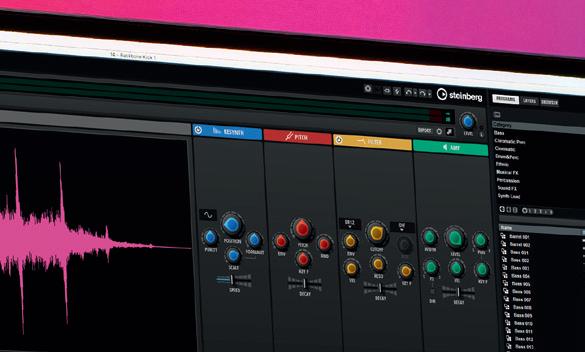
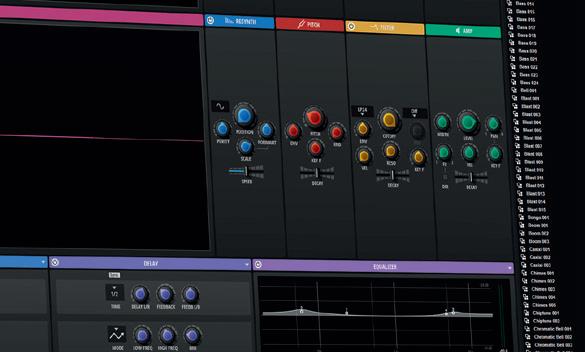
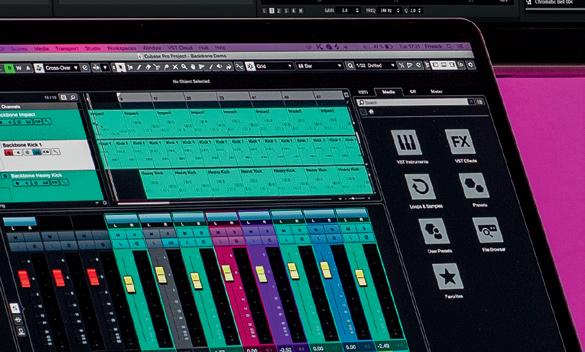
DRUM RE-SYNTHESIZER
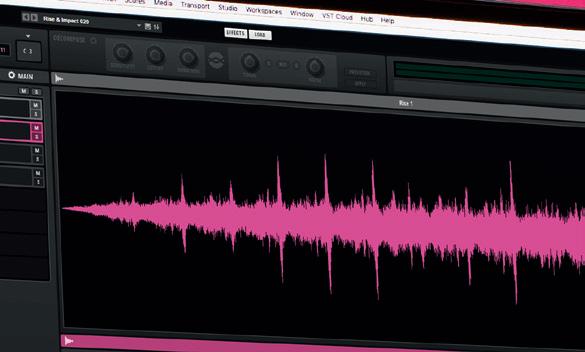
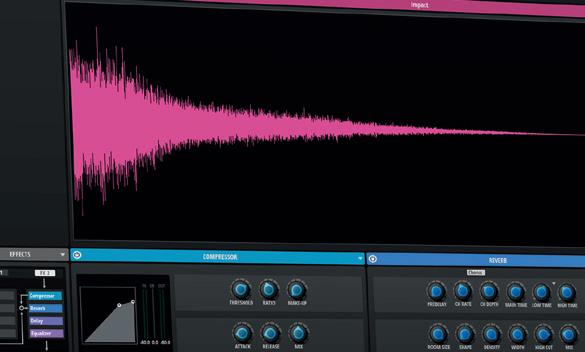
A revolutionary way to design your own drums – Backbone is your new, innovative drum designer for single kicks, snares, hi-hats, percussion, rises, hits and more. Layer up to eight samples and shape them with classic subtractive synthesis, decompose samples into tonal and noise elements and re-synthesize samples to manipulate them in unheard ways.
steinberg.net/backbone
JJEROME
Credit: Zachary Gray
Protz ALT-J FRONTMAN RELEASES THE CANYON
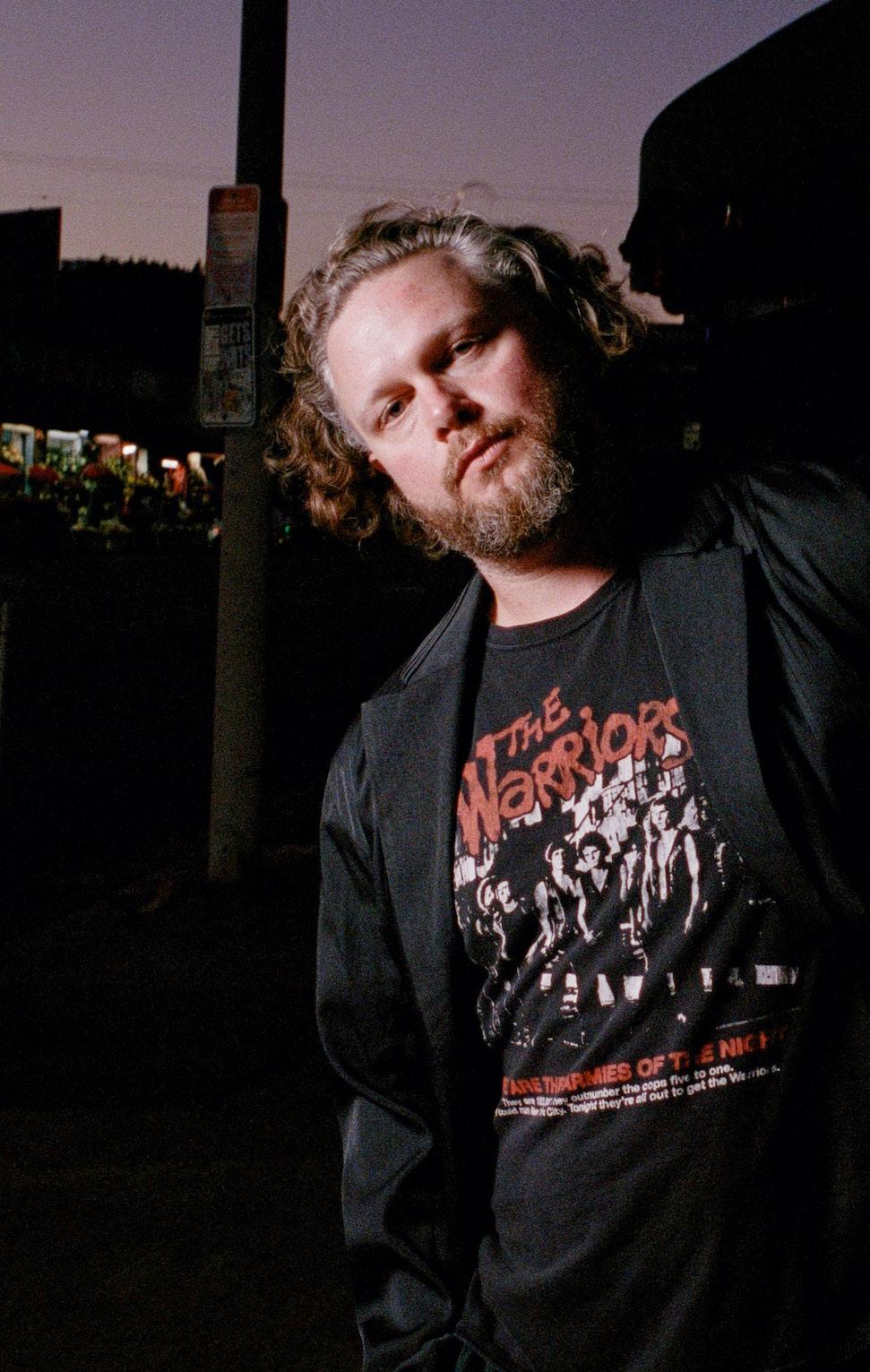
Where does one go after your quirky art rock band achieves a level of unprecedented success no one could have possibly predicted? In the case of alt-J frontman Joe Newman, it’s releasing a solo album dripping in the Californian and Transatlantic sounds of the ‘70s. Under the moniker Jjerome87, Newman steps out with The Canyon, fittingly recorded in Los Angeles. He discusses his decision to make a record away from the band, why Wild West main character energy was important to the process, and how he sampled a chanting jump rope team.
Formed at Leeds University when Newman met Thom Sonny Green, Gus Unger-Hamilton, and previous member Gwil Sainsbury, alt-J went about creating a distinct sound that would usually be allergic to commercial success: their songs are instantly recognisable thanks to fairly minimal arrangements that combine folk, indie, and electronic sounds — delicate acoustic guitars often play against a room-shaking synth bass, and said arrangements can suddenly change dramatically mid-song. To the uninitiated, Green’s drum kit may
sound like it was hastily assembled from random percussion instruments he found at a car boot sale. Yet he has created his own drum sound, and it’s among the lush, unique elements of the band’s sound. Another key to the group’s signature minimalism was that it was created in student halls in Leeds, where they had limited space and access to instruments, and volume had to be capped.
And then there are Newman’s vocals: somewhat nasal and often sounding like he is singing notes that are slightly
beyond his comfortable range — these words on the page might sound like he’d be unpleasant to listen to, yet it works brilliantly and has inspired countless imitators. alt-J released their debut, An Awesome Wave, in the summer of 2012, which would take them from four students playing on saucepans and cheap keyboards to the UK’s biggest festivals and touring in the US and Australia. The album went on to win the Mercury Prize, causing it to jump up to no.13 in the UK album chart.
While that award exists for bands like alt-J, who prioritise sonic exploration over radio plays, the trio went on to become exponentially bigger and bigger, with sophomore album This Is All Yours storming to the top of the UK charts upon release, as well as performances on the Glastonbury Pyramid Stage and the O2 Arena. One of that record’s singles, Left Hand Free, features in Captain America: Civil War, a song that they wrote almost as a joke when their label asked them to write something more radio-friendly.
We find Newman at Universal Music’s Kings Cross London office for a heavy day of press. When Headliner asks about his earliest musical memories, he recalls, “I was about 13 when I finally took one of my dad’s guitars off the wall and played it for myself. He was always keen for me to
get into music, because he was a guitarist and a songwriter, and he would basically subsidise his income through going to the pubs and playing to drunk middle-aged men and women. I realised that I enjoyed the exploration of finding things that sounded fun that weren’t written by other people, so I lost interest in learning other people’s music. That was around 14, and at the same time, I grew up listening to my dad’s music collection: Laurel Canyon, The Beatles, Led Zeppelin, Rolling Stones, Tracy Chapman and Jimi Hendrix, and then a lot of soul music as well.
“I went to university to do a fine art degree, but my main focus was to meet like-minded musicians, and I knew that art school was a counterintuitive way to do that. I met the band around the same time I had a mental health breakdown after I overdosed on mushrooms. It was the first year of university, and I was writing music; I wasn’t really happy with it, and it didn’t sound good. And then I had a night on mushrooms, and had what they now call ego death. The aftermath of that was having flashbacks, and I couldn’t control the levels of anxiety and depression I was slipping into. The only times when I was calm were when I was either asleep or distracted by something, and I found that my guitar was distracting me the most when I was awake, so I
just started putting things together and connecting dots in a way that I couldn’t before. Although I was really struggling with my mental health, and I had to take an absence of leave from university, my writing was actually affected positively, and then I came back to university, I set the band up, I connected people, and that’s where it started.”
When asked for his perspective on how his psychedelic art rock band became as successful as it has, Newman explains it in a way that reveals a masterclass in how gradually and consistently putting the work in and not trying to force things can lead to wonderful things.
“We started at open mic nights in Leeds, and then those open mic nights started being local shows, and then local shows turned into local festivals, and there was this trajectory that we felt like we were going on. Things were improving, and then there were points where we were getting paid for certain gigs enough that we didn’t have to cover the taxi fare, so there were these little examples where things were getting better and better, and then there was interest from London.
“We then started believing that we could create an album that we would be very proud of, and we were just dreaming big.
Credit: Zachary Gray
“My goal was to write an album that would be nominated for the Mercury Prize,” he continues. “That was my dream, and I felt like we’d already achieved the impossible, which was for me to go to university to form a band and meet like-minded musicians through doing an art course – the odds of that happening are actually astronomical in terms of actually finding the right people, finding the right chemistry, and then discovering that you could synergise and write better songs together, and that happened, and I felt like we’d already beaten the odds there, so then why couldn’t a dream become reality in terms of writing an album that could be nominated for the Mercury Prize? But I didn’t think when I went to university that I would be in a band in 2026 because I didn’t even know what I would be doing in 2026.”
The at-J band name is named after the Mac ‘∆’ symbol that appears when you press ‘Alt’ (now ‘option’) and ‘J’ keys together. In keeping with this lore, Newman has named his solo project Jjerome87. He explains, “It’s my Instagram handle, and I think I just like it because my middle name is Jerome. My dad called me Joe Jerome because he’s a big JJ Cale fan, and he wanted people to call me JJ, which never happened. And then at university, I wanted people to call me Joe Jerome, and that happened for a term, and then people just shortened it back to Joe. So I thought for this solo project I’d force everyone’s hand. I added the number in it, because I think all artists’ names sound better with a number at the end.”
Headliner asks why he felt this particular set of songs needed to be kept to himself and in a context away from alt-J.
“We finished The Dream in 2021, and normally when you finish an album, you’re creatively depleted. But I became a father around that time, and I had offcuts from this album that either didn’t get used, or I didn’t
approach the band with. So I had this pool of ideas that I started injecting with my experience of being a father, and over time, I was really enjoying writing. It was so personal that it wouldn’t be fair to the band to write music that was then decided on by a committee of people. So I slowly started thinking, we’ve released four albums together, and this is actually a good time for me to pursue something for myself.
“After that, the writing took on a new level of discipline and excitement, and I started to understand what the lay
Another thing that crystallised for Newman was the decision to go in a completely new direction than he had previously. For him, this meant not working with Charlie Andrew for the first time in his career, the producer behind all four alt-J albums.
He also had a big realisation that his new music had a distinct Transatlantic flavour, and that travelling to California to record these songs would be very meaningful.
of the land looked like for this album.”
Credit: Zachary Gray
“If I was going to separate myself from the band, to honour that in its truest sense, I would need to separate myself from our producer, Charlie Andrew, to create something that was completely autonomous from what I’d done before with the band,” he shares. “When we made The Dream, we had said that it was a love letter to America in a way, with a lot of American references, and I realised that actually a lot of my creative passion is in American cinema, music, landscapes, and the weird world of appropriated indigenous American places. I decided I needed to find the right ingredients in America itself.
“I wanted to work with an American producer, and Carlos de la Garza was the producer I ended up working with. He lives in L.A., and he’s a Los Angeleno – he completely understood the music. He set up all of the right session musicians, because I wanted to get a Wrecking Crew kind of vibe. I wanted to have relationships with the same session musicians and the same singers
across the whole album, to have a flavour that was woven throughout all of the songs. It’s his American sound as much as it’s my songwriting – a merger, essentially.”
One of the singles that announced The Canyon is the song Mr Alligator, a very striking track that opens with a Double Dutch jump rope team who came to the studio so that Newman and de la Garza could sample them skipping and chanting in time to the track.
“We got a professional double Dutch team to come into the studio to jump to the tempo of that song,” he says. “We wanted to create the backbone of the song and the rhythm being this field recording-esque world of these women skipping in the street. That was really important throughout the album process, getting these field recordings. It’s all about Easter Eggs and layering things and anchoring stories with these undercurrents of things that seemingly sound like they’re real events occurring at the same time.”
Another standout track is Quaaludes, and not just because of that attention-drawing title. The name references the anxiety and insomnia drug which became very popular for recreational use during the height of Disco in the ‘70s, and became notorious again thanks to The Wolf of Wall Street, in which Leonardo DiCaprio overindulges in the drug. However, Newman is actually singing about something much more relatable in 2026: doomscrolling.
“The song is about chronic phone use,” he explains. “You’re getting that huge release of whatever chemical that’s dumped into your brain when you pick your phone up and you go on the apps that you like to go on. It’s about using your phone so much that you don’t even realise you’re using it. Also, the exploration of your phone offering you worlds that you can go down privately. The first line is ‘CCTV images of industrial accidents on YouTube for way too long now.’ It’s about finding yourself looking at these really dark parts of the world, like a montage of
Credit: Zachary Gray
industrial accidents caught on CCTV on YouTube. Then asking yourself, ‘Why the fuck am I looking at this? Oh, I think it’s because I’m depressed. Am I depressed because I’m looking at this, or am I depressed outside of this?’ Then you realise that it’s actually interrupting your relationship with your family. It culminates in trying to not use your phone, but then you catch yourself in bed, and it’s 2 a.m., and you’re looking at archival footage from the BBC of Princess Diana’s car crash.”
When asked about how he links quaaludes to something as seemingly innocent as a smartphone, Newman says the drugs “were originally manufactured to treat hysteria amongst housewives in Middle America. The question I ask about phones is, is the phone making people more hysterical, or is it lobotomizing the rationality of people understanding other people and echo chambers of political rhetoric? I leave it to the audience to decipher, but they’re the broad strokes of what I was thinking about when I was writing that song.”
The Canyon’s Americana vibe really peaks halfway into the record, especially on Juicy and Walkaway Music. Particularly on the latter, one of the album’s most wonderfully fun moments, sounding like a brilliant pastiche of Ennio Morricone Spaghetti Western music. You can almost imagine Clint Eastwood turning up to deliver a spoken word part in full cowboy getup.
“That’s very ‘80s cinema,” Newman nods. “It’s almost like Breakfast Club vibes. There’s this Sergio Leone field recording atmosphere to it, of someone leaving a saloon and firing at someone and escaping on a horse. It’s all about the ending of a story in a film, watching the protagonist leave, the camera zooms out, and you watch the person walk off into the distance. It’s kind of honouring those tropes of ending a story by
suggesting that you have witnessed one chapter in the character’s life, and they’re off to do something else. I decided that if no one was going to write my walkaway music, I might as well do it myself! Because when these characters went off into the sunset, there would be this grandiose score, which would accompany them as they went and began something new.
“The reason why I use that imagery is that it’s about the first time this character falls in love with someone. It’s semi-autobiographical. It’s referencing when my friends and I would go off to Salcombe in Devon as 14-year-olds. It was the first time we went on holiday without our parents, smoking weed on a spit in the middle of the country on a huge lake, and we camped. I remember once this friend of mine, who I fancied at the time, reached her hand over her sleeping bag and just held my hand. It was one of the most exhilarating experiences, because I had a huge crush on her. A lot of these songs take a small sample of my life, and it’s placed in a larger world of fiction. It’s essentially just main character energy, which is essentially being a teenager.”
The field recordings didn’t end there, as there are many used creatively throughout the LP. Newman then reveals that he and de la Garza left the latter’s studio to visit an iconic film studio, the Fox Lot, which is used for recording Foley sounds used in Hollywood movies. It’s also the place where the legendary 20th Century Fox fanfare theme was recorded, speaking of epic, grandiose scores.
“In the case of The Canyon, we recorded all of those field recordings in America. Some came to the studio, like the Double Dutch team. Other times, like with Walkaway Music, we would go to the sound studio at the Fox Lot. We worked with someone who basically does all of the sounds for films. It almost looks like a landfill, but he has a whole studio of random
objects that all serve a purpose to make the sound of something else. We started crafting the sounds of the man leaving a saloon, or someone running a race in Track And Field, or in Pennine, we have a ticket master going through the carriage of a train. It was really fun and rewarding. I don’t think I did it as much as I wanted to on this album, and I haven’t quite satiated the appetite for getting it into my music a lot more.”
The Canyon is out now, for anyone needing musical moments of feeling like you’re starring in a Sergio Leone Western, making the connection between the phone in your pocket and mind-altering drugs, and alt-J meets Americana. I
t’s an album that somehow holds all these things, and works brilliantly. Newman concludes by letting the fans know that, if they want it, he will tour this new music: “I would like to tour it. Touring is expensive, and it would really depend on the demand. If enough people want to come watch me play, then it means that I can,” he smiles.
JJEROME87.COM
Words bY ADAM PR O ZT
CARLOS DE LA GARZA PRODUCING THE CANYON
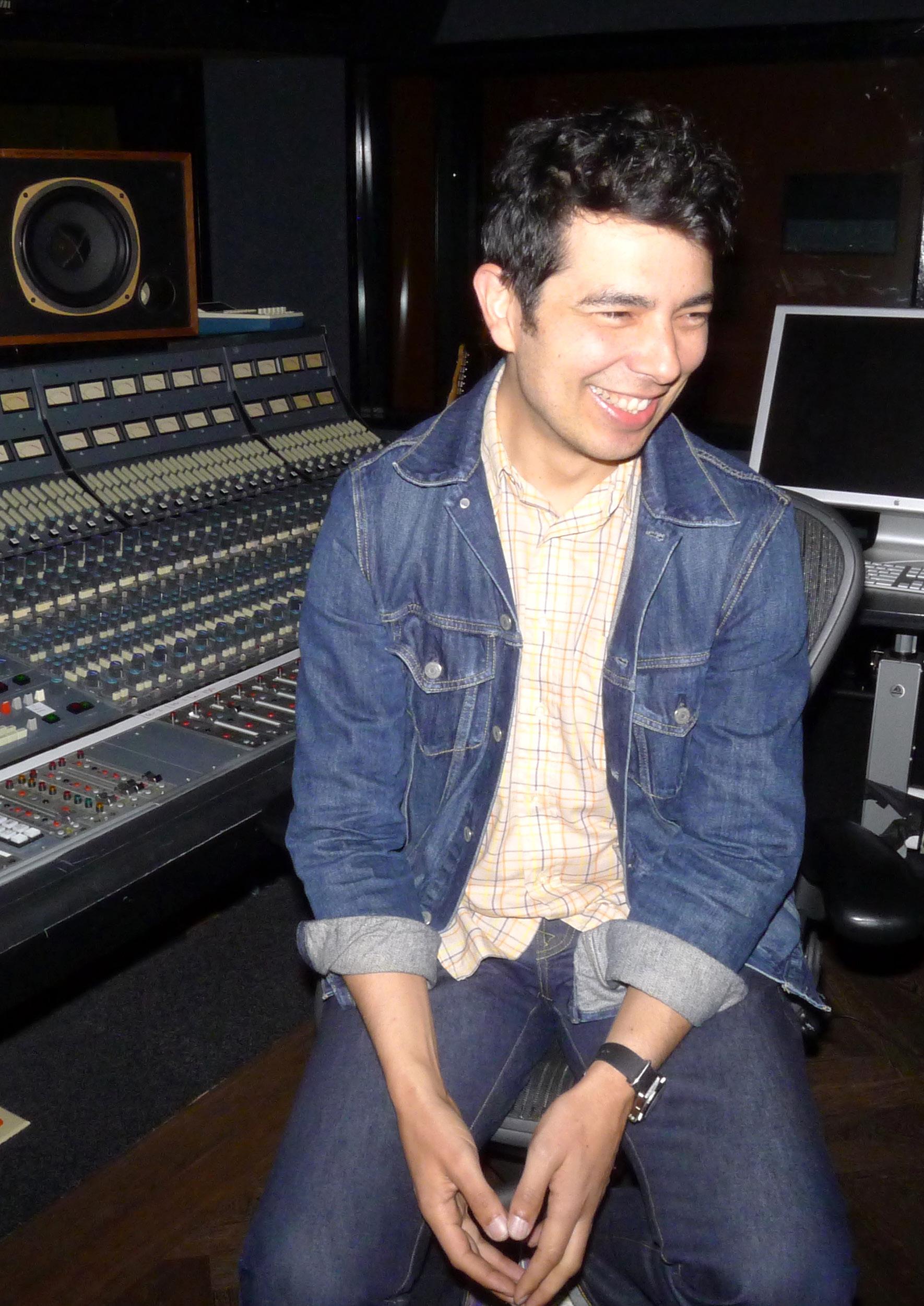
Once a member of the ska band Reel Big Fish, two-time Grammy winner Carlos de la Garza pivoted into his true calling of engineering and mixing albums, racking up incredible credits with the likes of Death Cab for Cutie, Jimmy Eat World, Wolf Alice, as well as his multiple awardwinning collaborations with Paramore and Hayley Williams. He chats to Headliner about working with alt-J frontman Joe Newman and his new solo venture Jjerome87, on the debut album The Canyon.
Growing up in Cerritos, California, it was drums that started de la Garza’s musical journey in high school, which would pivotally lead him to American ska and pop-punk music, as he joined bands Suburban Rhythm and F.Y.P. His time in the former saw him being recruited by Reel Big Fish for the band’s major label years, who had already found success with singles Sell Out and the A-Ha cover, Take on Me . He filled drums and percussion duties between 1999 and 2003, until his increasing interest in recording and production redirected him into the studio world. It’s a decision that paid off stunningly, seeing him work with the likes of All-American Rejects, The Wonder Years, M83, Tegan and Sara, and more recently,
with his two daughters, who form one half of The Linda Lindas.
His sparkling career has earned him two Grammy wins alongside Paramore, a Best Reggae Album Grammy win while collaborating with Ziggy Marley, and he was part of the Wolf Alice Mercury Prize win for Visions of a Life
“There wasn’t much of a music scene where I was growing up in Cerritos [a city in L.A. County],” de la Garza says. “So I was lucky to have a few close friends I played music with, who introduced me to the world of bands. We had a little band together, bouncing around and playing gigs with the likes of No Doubt and Reel Big Fish, who
I would end up joining later. After I graduated from UCLA in the late ‘90s, I remember sitting at home waiting for the phone to ring for my first job interview. Instead, I picked up the phone, and it was the manager of Reel Big Fish asking me if I wanted to join them for their next six-week tour. Going from thinking I was going to be a regular nine-to-fiver who punches the clock every day to playing in front of festival crowds of upwards of 50,000 people was quite a swing of realities.”
Going from a tongue-in-cheek ska band to the studio world wasn’t as dramatic a shift as it might sound. De la Garza explains that a growing interest had been bubbling away in
the background for a long time.
“There was always a little bit of a bug with my interest in recording. I had a Tascam Portastudio 424, as many musicians did. It’s funny to look back and remember how overwhelmed I was when I got it because I didn’t understand what all the knobs were for. Now you have the equivalent of one of those things on a guitar pedal; the technology has advanced so much. Eventually meeting a Grammy Award-winning producer, Val Garay, really changed my trajectory.
“Seeing how professional studios in Hollywood worked and how they were able to produce the highest level of results was really inspiring. Most bands are a young man’s game; whether it’s family obligations or burnout, a lot of musicians just can’t tour like they used to. I remember being in the back of the tour bus with piles of recording books, devouring everything I could regarding recording. I eventually had an opportunity to work at Capitol Recording Studios, the big tower in Hollywood. I quit the band within a week or two, and the rest is history.”
After just a handful of projects, de la Garza found himself working on Paramore’s third, self-titled album. As if getting to work with the Hayley Williams-fronted band wasn’t impressive enough in itself, he would be part of the band’s first Grammy win for Ain’t It Fun, while starting a long and wonderful partnership with the Tennessee act. He worked with them on their following two albums,
as the now-three-piece won another Grammy for their most recent record This Is Why. Williams also recruited de la Garza for her first two solo albums.
“I’ve had a really great run with Paramore,” he beams. “They treat the people they work with like family, and with trust. It’s been one of the highlights of my career. We’re talking about 15 years of working together — from the self-titled album up to This Is Why and beyond. It’s a rare thing these days to have that kind of longlasting relationship.”
Another award de la Garza can absolutely take some credit for is the Mercury Prize win for North Londoners Wolf Alice and Visions Of a Life. He was brought in by Justin Meldal-Johnsen to assist with producing the album, and he ended up recording singer Ellie Rowsell’s vocals for Don’t Delete the Kisses, the career-defining song that took the band from indie upstarts to headlining many of the world’s biggest festivals.
Looking back, he says, “I was lucky to be a part of that record. We tracked all the basic tracks at East West, Studio Two. Next door, Foo Fighters were tracking in the other room, and down the street, Queens of the Stone Age were recording. One day, we get a knock at the door, and a runner says Dave Grohl is cooking barbecue for everyone and is inviting us to dinner in the lounge. We walk out, and it’s the Foo Fighters, the Queens of the Stone Age, and us hanging out, eating barbecue. It was a really funny moment of being amongst really tall
rock stars who were so nice and cool to extend that courtesy. Most of the record was completed at my studio, aside from the drum loops.”
In terms of how it all relates to his work with Headliner’s cover star Jjerome87, aka Joe Newman of alt-J fame – Paramore put him on the map, and, as it transpires, his rapport with Wolf Alice was vital in landing him as lead engineer on The Canyon.
“The connecting tissue was actually Wolf Alice,” he says. “Joe’s manager is also their manager. Joe was out in L.A. taking meetings with several highprofile producers, and we just hit it off. He had some fleshed-out demos and some that were in early stages, but what he was doing was unique and interesting. My enthusiasm was genuine, and I think he perceived that. We broke the creative process into chunks. Joe has a toddler at home, and being away for an extended period wasn’t something he wanted to do. The first round was a three-week litmus test to make sure it was feeling good. It worked out great, and he came back two more times. Joe has been one of the brightest lights in my recent career.”
In terms of his highlights of their collaboration, de la Garza says, “Mr Alligator was really fun. Joe had this idea to have women skipping rope, with the ropes matching the rhythm of the song. I was tasked with finding them, and we recorded at Sunset Sound. Even the people there had never seen rope skippers in the studio before! We had mics on the ground to capture the foot sounds
and some above to capture the whirring of the ropes. It was a challenge because they don’t necessarily skip to music; they sing their own song to match the tempo of the skipping. We even got to try Double Dutch at the end. It sounds so sinister and cool. Brush Me Like a Horse is another favourite of mine. Joe is game for trying anything. At one point, he asked if my daughters [punk band, The Linda Lindas] would want to sing on the bridge. I’ll always have a fond connection to that one. The music video is also breathtaking: it’s like an absurdist horror movie, shot so well.”
Newman was adamant that the first Jjerome87 album would wear its Californian and Transatlantic, ‘70s sounds proudly on its sleeve, and that it needed a classic feel. De la Garza wisely leaned into his collection of vintage, analogue gear to help achieve this.
“I have most of the highly revered recording gear,” he shares. “The stuff I like is vintage. I have some newer pieces, but almost all my synths are vintage, and all my mics are either vintage or vintage emulations. Sunset Sound was built in the ‘50s, and everything there is vintage to the time it was built. The console is really old, and the mics are really old. Even the room itself has a particular tone; it’s not a giant room sound, but it has character. We took all of that into consideration. We stopped short of recording to tape because we wanted the flexibility of editing, but aside from that, we kept everything as close as possible to vintage instruments and recording gear.”
In terms of specific gear, it doesn’t take much to get de la Garza to open up on which bits of gear proved most key to the album’s recording. “For Joe’s vocals, it was pretty much across the board a Neumann U47 or Telefunken U47, which sounded amazing on his voice. On some of the background singers, we used vintage Telefunken 250s. The console we used in Studio A at Sunset Sound is a vintage DeMedio, which is a variant of an API; it sounds spectacular. At my studio, I have a lot of vintage 1073 preamps that everything runs through. Amp-wise, I have a vintage 1957 Bassman that we used a lot, and a vintage Silvertone Twin 12, which is a classic. Guitar-wise, Joe really likes Telecasters, so we used my vintage ‘67 Tele and a ‘73 Tele Deluxe. Synth-wise, my Oberheim OB-X, Prophet-5, Juno-60, and Minimoog probably got the most use of any instruments on the record.
“Joe really loves synths. That was something I was surprised about because our initial discussions were about it having an Americana or Motown feel. When I laid down one of the first few synth ideas, he perked up. We’d move on, and he’d ask, ‘What about more synths?’ I didn’t realise his passion for synths was so strong, but I’m all about it. It adds a darkness and a sinister quality to a
“JOE HAD THIS IDEA TO HAVE WOMEN SKIPPING ROPE, WITH THE ROPES MATCHING THE RHYTHM OF THE SONG. PEOPLE THERE HAD NEVER SEEN
ROPE SKIPPERS IN THE STUDIO BEFORE!”
lot of the tracks that he was looking to convey. We weren’t trying to make vintage library music, but when you stack so many of these things, it can easily go that way. We tried to temper that with his voice, which is so unique, and the vantage the band brought to it. We used those vintage synth elements in a slightly modern context to tip things on their head a bit.”
With all that said, de la Garza was keen to ensure room was left for the flexibility of digital editing and plugins and to not be solely dogmatic with the vintage units. On the digital side, he is a heavy user of Universal Audio.
“That’s my go-to for plugins and effects,” he enthuses. “I love the AMS RMX16, particularly the NonLin reverb and the H910 Harmonizer for spatial things. They have a Hitsville Reverb, which is an emulation of the Motown reverb chambers; I really love that and used it quite a bit. Their tape delays are also pretty special: the RE-201 emulation is great. I have hardware versions of the RE201 and RE-501 in my studio that I use often. Lastly, one of my favourite new pieces is the Soundgas Screen Reverb. I have two of those units now because I use them so much. They are absolutely incredible.”
The Canyon is out now, and de la Garza concludes with the tantalising news that his work with Jjerome87 doesn’t end there. “Joe is coming back soon, and we’re going to be working on more material. I’m also really proud and excited for the record I did with my daughters, The Linda Lindas; their record comes out in September, and they’ve just signed with Warner. I’m currently working with a band called Dogma Society, so look out for that in the near future as well.”
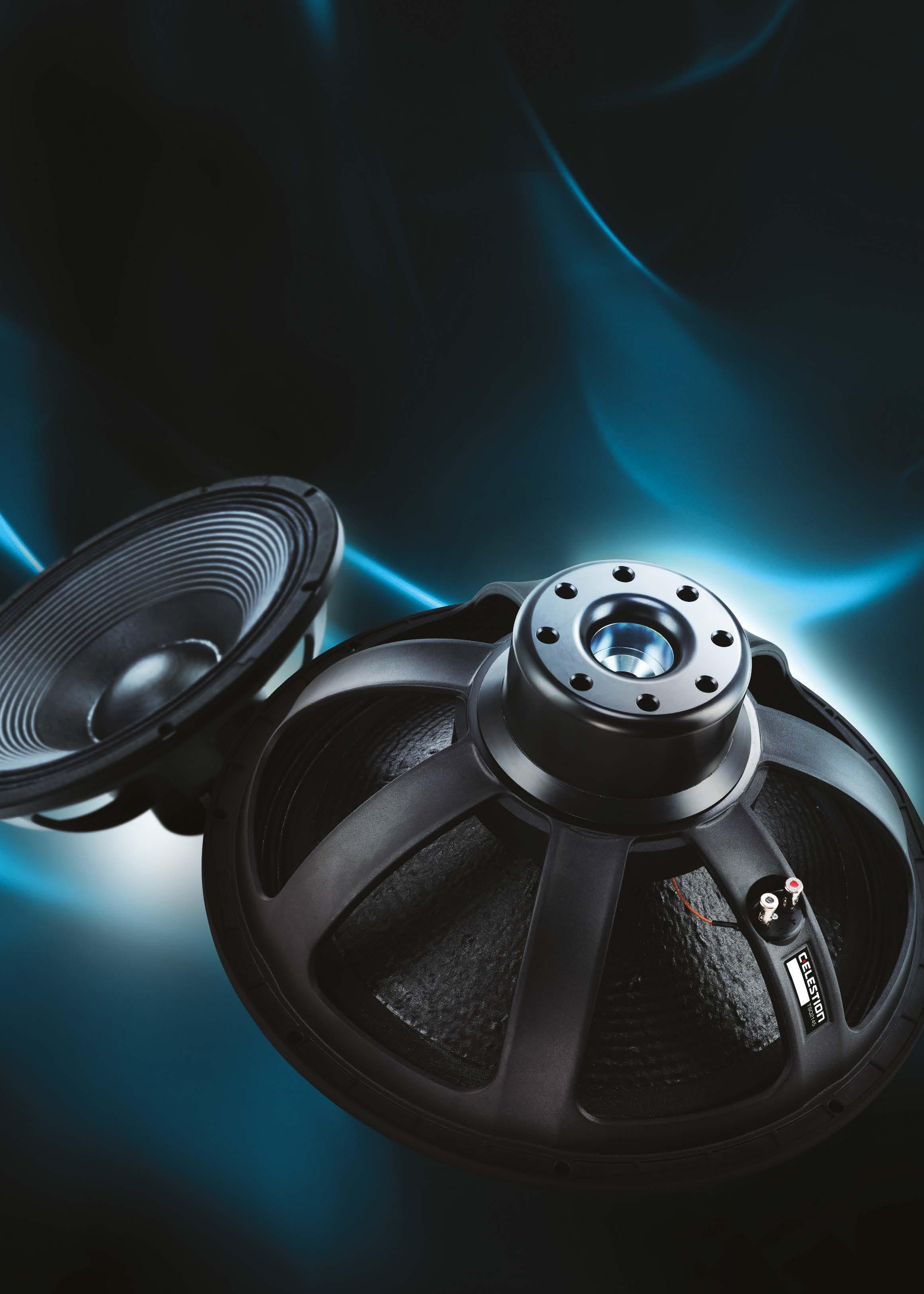
A NEW HIGH IN THE LOW END
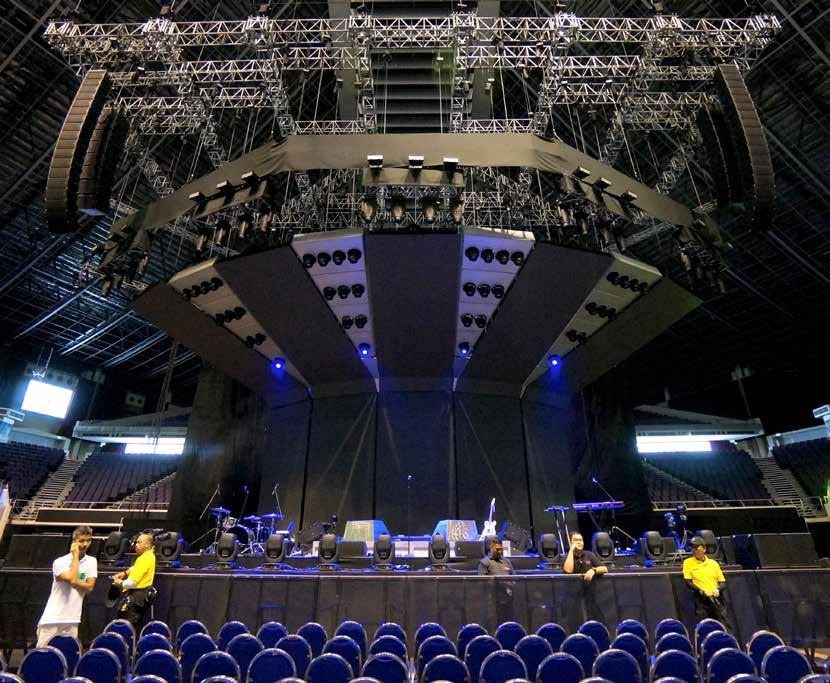
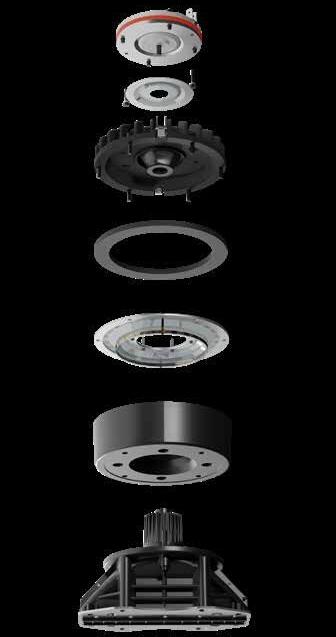
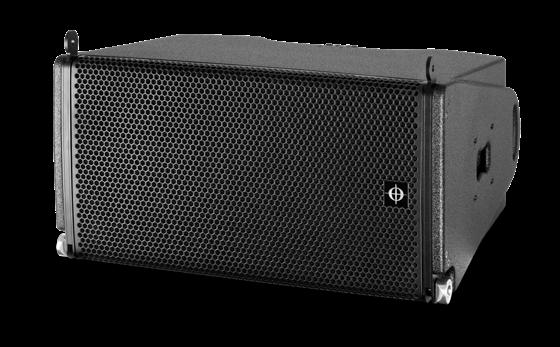
Designed and built in the UK, Ten Squared (Ten2) is a range of premium, low frequency loudspeakers. Engineered without compromise, they deliver consistently superior levels of performance in the most demanding professional sound reinforcement applications. All the time. Every time. 18, 21 and 24-inch models available. Discover Ten
celestion.com
roW d s byALICE GUSTAFSON
MICA MILLAR A LITTLE BIT OF ME
Mica Millar set herself an aim: to create an album with no fillers. Raised in Manchester in a home filled with records, musicians and creativity, today, she’s one of the UK’s most compelling independent soul artists, and her second album, A Little Bit of Me, represents her most ambitious and assured work to date.
Rooted in ‘60s soul and ‘90s R&B, but reframed through a modern lens, her music carries both the warmth of a bygone era and the perspective of a Northern artist writing from her own experience. A Little Bit of Me is a self-written, self-produced statement recorded at Miraval Studios in the South of France, the iconic residential studio owned by Brad Pitt. Created with world-class musicians from Nashville and New York, the record draws on Motown, gospel, classic girl groups and contemporary soul. But the journey behind the record has been far from straightforward. After a serious back injury during the making of her debut album left her facing the possibility of paralysis, followed by the disruption of COVID, Millar approached her second record determined to rediscover the joy in the creative process.
As she prepares for her next chapter, including a major UK and European touring schedule, Millar discusses finding her voice, making a record at Brad Pitt’s studio, the art of producing her own vocals, and tackling the difficult second album.
Your new single, A Little More Time for Love , draws on the energy of ‘60s soul girl groups. Did you set out to emulate this sound, or was it a natural progression of the writing and studio sessions?
When I was creating this record, I just wanted to write some songs that made me feel happy and joyful. I was thinking, “What does that for me?” Certain songs give you a certain feeling. I remember feeling like that about Natural Woman by Aretha Franklin. So I was thinking, I’d love to write something like This Will Be (An Everlasting Love) by Natalie Cole, or just those amazing songs from that era where, no matter how many times I listen to them, I still love them, and they give me this real sense of joy. We need more of them in the world. So the B-side of the album has A Little More Time for Love on it, with another song called It’s You and a song called The Broadway
Those songs are leaning into nostalgia, hopefully in a way that doesn’t feel pastiche. I don’t like to write songs that are just trying to recreate the past, and I don’t put vinyl
crackle on my productions, but I like bringing those kinds of ideas into the present. They made me feel joyful when I was writing them, and they still feel that way when I listen back to them.
Your second album, A Little Bit of Me, is out now. Was it a relief to have it out in the world after working so closely on it?
Absolutely. It’s always really triumphant when you’re finishing a record. It’s such a long process, and there’s so much work that goes into it. There’s also the preparation for releasing an album – you’ve got to do the product development, get the vinyl pressed, and that all takes a long time. There’s a huge amount of admin and planning that goes into it, and everything is building towards this final moment of the release date. When that day arrives, you can breathe a sigh of relief.
Many artists have suffered from the ‘second album curse’, especially after a big success with their debut. What were your experiences of that when making this album?
The thing for me is that the first album was so difficult. Obviously, I found a lot of joy in the process, and it was amazing, but it was really hard, like anything is when you do something for the first time. On top of that, I had a serious back injury. I broke my back and was nearly paralysed in the middle of making that record, and then we had COVID.
When I thought about embarking on the journey of creating a new record, which is what the song Times Like These is really about, I was just thinking, “Oh my God, I don’t know if I can take this on.” Because of that feeling, I really wanted this album not to feel that way. I wanted to make sure the process was joyful. It’s never going to be painless, because anything great that you do is going to involve hard work as well as joy. I kept trying to remind myself that this is the bit you do all the other stuff for.
The writing and the creating – that’s the joyful bit, and you’ve got to make sure you get something out of that, because the rest of it is just admin, apart from the live shows, of course. I really found a lot of pleasure in creating this record, and it took a lot less time as well.
The album was recorded at Miraval Studios in the South of France. How did recording in such a stunning location affect the vibe of the album?
Oh, what a place! Honestly, it’s one of the best things I’ve ever done in
my life. When you think about what dreams are made of, if I could have imagined years ago when I was writing songs, that I would end up in a studio like that, recording in that environment, I just could never have imagined it. I was invited to go out there and see the studio, and as
soon as I got there, I thought, “This is unbelievable.” It’s in an indescribable location. You can say it’s an iconic studio, but it’s also the light in there, which is just amazing. The staff are incredible, the scenery around you is amazing – everything about it is stunning.
I brought some really incredible musicians out from Nashville and New York to record on the album, and it was an amazing week. It was hard work – we were working 12-hour days – but when you’re so invigorated by the people you’re working with, the energy and the environment you’re in, it feels like you’re functioning at such a high level. There were moments where I thought, “How have I managed to get myself here independently?” I had these amazing moments where I just took a deep breath and thought, “Wow”.
You write, produce, release and shape your work through your own label. How involved were you with the production on this album, and how have your skills developed compared to the first album?
I produced both of my albums, and I produced my own vocals as well. That’s always the trickiest bit. I’m in my element when I’m producing other musicians. Obviously, I’m experienced only in the sense that I’ve done these two records. The first record was really hard because it was the first time I’d ever done that, and I didn’t really get it right.
So there was a bit of pressure on myself for this record to take all of those learnings and apply them. I had such a great time this time because I knew what it was that I’d done wrong, and I was able to implement those things. There was so much missing from the first record that I had to do so many overdubs afterwards. With this one, there was only one overdub, which was a guitar line in a song called Hard Times. But that wasn’t because something was wrong or I hadn’t got what I wanted – it was just that I changed my mind
a little later and thought, “You know what, I feel like I need something like this.”
You’re doing a headline European run from September through November 2026, including a London show at Shepherd’s Bush Empire. Post-Brexit, touring has become incredibly expensive, which poses challenges for all artists, but particularly independent ones. What is it like navigating touring and making a profit as an independent artist?
It all comes down to margins. Not a lot of people know this about me, but I did a business degree, and before I was running my record label and releasing music independently, I had a consultancy company. That’s really stayed with me in the music business. Even with things like when my agent sends me flight costs, I’m asking, “Is there any way to make this cheaper?”
I’m constantly trying to bring the costs down to make sure that if you do 40 shows a year, you don’t lose a grand every show, or £500 every show –that’s a lot of loss. You have to be really careful to at least break even, and obviously think about it over the scale of a tour.
Some shows you will lose money, and some shows you’ll make money, so it all balances out. You’re relying a lot on people buying the merch as well, and I’m very lucky that lots of people buy my records at shows. That’s really sustained me through periods where I’ve been building my live audience.
It is really tough. What’s great about the jazz space is that there are a lot of venues where there are already pre-established audiences. There haven’t been many shows I’ve done over the last four years that haven’t sold out as a result of that – both my audience coming in, but also these pre-established audiences. You’re hoping that’s going to happen, because with a lot of shows you might have a guarantee, but if your show sells out, then you take some of that show margin. So as long as you sell out, you’ll be alright, basically.
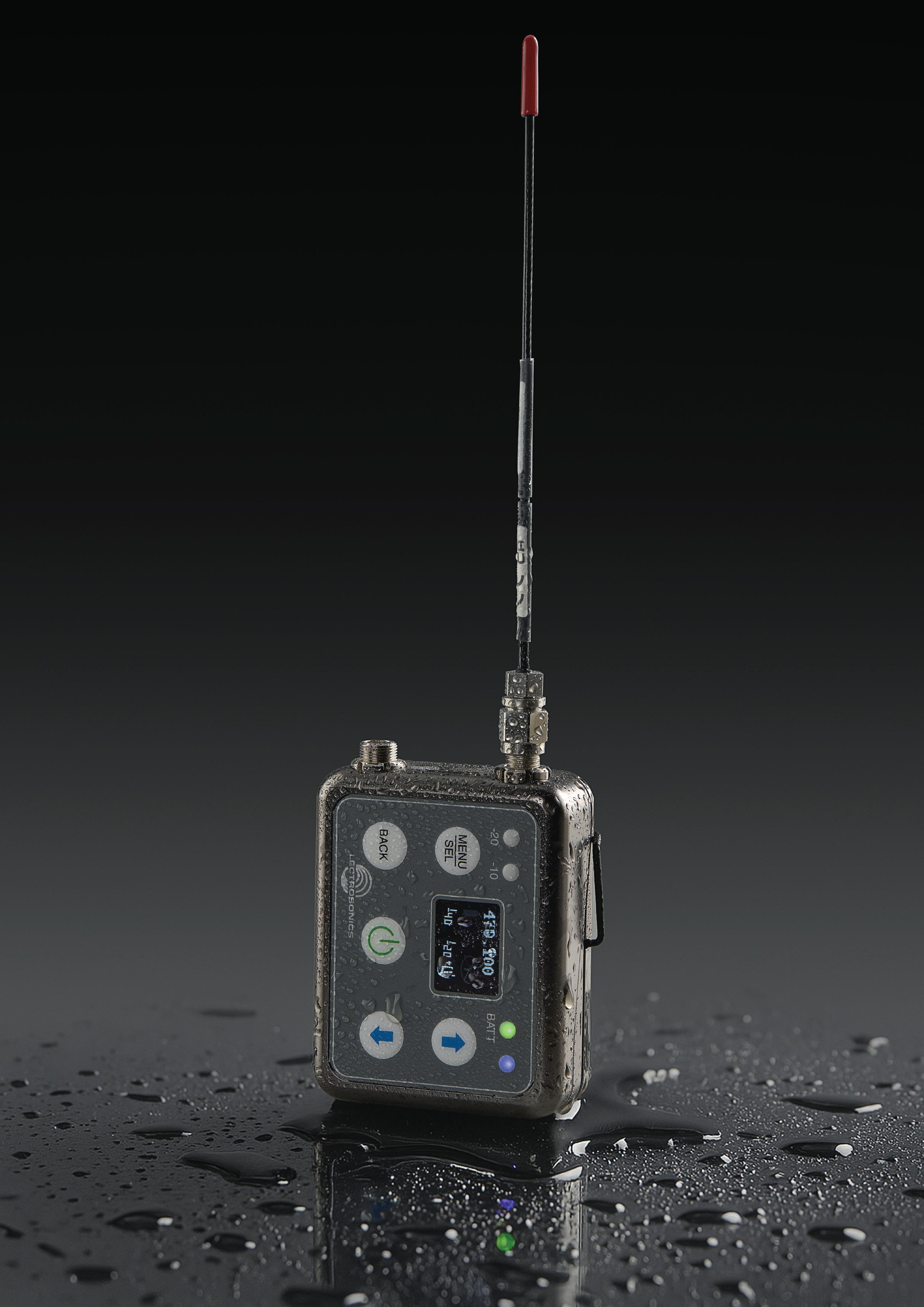
Does your micro transmitter have these features?
• IP57-rated watertight, all-metal enclosure
• Removeable LiOn rechargeable pack
• Drop-in charging with optional dock
• High-Density RF mode for 24+ ch. in 6 MHz
• Fixed audio latency of 1.4 ms
• Lav mic presets for optimum audio quality
• Full menu & control on the unit
• Selectable RF Power up to 50mW
The DSSM micro digital body pack has ALL these features and more, in one tiny package.
Credit: Eliza Adedeji
ROW D S BYZARA DOSANJH
NOW’S THE TIME
JON ONABOWU
Now’s The Time is a fitting title for British-Nigerian drummer and composer Jon Onabowu’s debut album. He’s finally stepping into the conversation he’s been steering in London’s underground jazz scene for the better part of a decade, bringing his original take on jazz fusion to the streets he’s dedicated his playing to for years.
“This album has come at the most difficult period of my life,” Onabowu begins, reflecting on The Emergence, the closing track of Now’s The Time. It’s a meditative end for a project forged from hope, faith and a lifetime of inspiration.
The Essex-born, London-based musician speaks with a gentle, steady rhythm, in stark contrast to the groovy buoyancy of his jazz-inflected record.
“Everything happens here,” he smiles. “It’s good to be around. I’m definitely loving living in the heart of London.”
Growing up in church, Onabowu was raised on a steady diet of music and faith. “My dad was a drummer at church, so my exposure came through him. Most children copy their parents, so that’s how I wanted to start playing,” he laughs.
The path forward wasn’t linear, however. “It’s quite customary in black churches if someone’s better than you, you slowly get sidelined,” he adds. “And Uncle Victor was a better drummer than me!”
Music had still earned its place in Onabowu’s life, and a school competition gave it room beyond church. Surely enough, he was asked to play drums. “It wasn’t really jazz, but it was jazz then,” he quips.
One person’s selflessness rekindled his talent. “When Uncle Victor saw that I was improving, he actually took up the bass so that I could start playing drums again in church,” he says. “That was a big part of my journey.”
Onabowu’s career grew legs after a chance conversation with a friend. He went on to study at The Academy of Contemporary Music in Guildford for two years, where he first encountered the concept of jazz fusion. “I’m not necessarily a straight-ahead player, but everything I play is very much jazz-influenced. A lot of the language of my playing is jazz – from the jazz tree, as it were. I didn’t graduate from any of the normal jazz schools like Guildhall and Trinity; I came through the street,” he adds.
Onabowu’s jazz tree established its roots when he moved to London, and, in his own words, he managed to “sneak into the jazz scene.”
He quickly became a regular at Troy Bar on Friday nights and The Jago on Sundays. Meeting other musicians at gigs and around town organically drew him into the wider playing community. “That’s how everything came together,” he reflects. “It’s interesting when we play together – [other musicians] talk about how different I sound.”
Focusing on playing is his hidden strength; Onabowu paved his own path, and the world he’s built as a jazz musician is supported by the architecture of his sound. “My approach is a bit different, but it has its benefits. You have to learn to react in the moment, be more spontaneous, work on your listening rather than reading things on the page.”
Onabowu’s first headline gig was at the famous Soho jazz club Ronnie Scott’s in November 2019 – a soldout show. “From then on, I became familiar with the team. A year or so later, they said: ‘We’ve got room upstairs, we’re ready for you if you want to start.’”
Soon after, Onabowu founded the Cosmic Fusion residency at Ronnie Scott’s, a collective of musicians showcasing their take on jazz, with influences dating back to the ‘70s. “A lot of my heroes have passed through [Ronnie Scott’s] and either watched or played with us,” he says. “Michael League, the founder of Snarky Puppy, came and watched us with some of the Snarky Puppy members, and Marcus Miller’s band came upstairs to watch us after they finished their set. We’ve had some amazing moments.”
He continues: “In November 2024 for the London Jazz Festival, I remember going to see Keyon Harrold, a trumpet player at the Jazz Cafe. Robert Glasper came up and sat in on the gig, and when it was done, we went to Ronnie
Scott’s. There ended up being this jam between Robert Glasper and Keyon Harrold. All this was just happening right in front of me at Ronnie’s. Everybody was taking solos, and I thought to myself, this must be what New York feels like. It’s only somewhere like Ronnie Scott’s that this can happen at 2am.”
Today, Onabowu is ready for his original jazz music to be heard all over the world, an ethos that has fed directly into the making and release of his first record. “The reason the album’s called Now’s The Time is because the two biggest jazz acts in the UK – maybe even in the world –are Ezra Collective and Yussef Dayes,” he says. “Both bands are drummerled, so it’s not just UK jazz that’s at an all-time high, but also drum-led UK jazz. The world is listening to what’s coming out of London. I don’t know how much longer that’s going to go on for. I don’t want to miss the wave,” he adds firmly.
The album release date, 22nd May, is an important marker. “I did my
Credit: Eliza Adedeji
Credit: Eliza Adedeji
“THE WORLD IS LISTENING TO WHAT’S COMING OUT OF LONDON. I DON’T KNOW HOW MUCH LONGER THAT’S GOING TO GO ON FOR. I DON’T WANT TO MISS THE WAVE.”
first drum masterclass with a friend of mine, Morgan Simpson, who drums for Black Midi and Little Simz. I realised that 10 years to the exact day would be when the album could come out, and I knew that this was always meant to happen. Now’s The Time felt like the right title for the album on many different levels.”
Now’s The Time presents a cacophony of sounds that slot together like pieces of a puzzle, and it’s all down to the streamlined production. “We had been listening to some Pat Metheny and Lyle Mays, who influenced the melodies and the synth used,” Onabowu recalls. “He was a big inspiration for how we recorded the album, because a lot of his music isn’t recorded in a studio. It’s all recorded remotely. People send what they’ve recorded as stems, and then he would put the track together.”
He adds: “Obviously, it’s cheaper to do that, but it’s also more efficient. In theory, if you could get everybody in the studio for one day and knock all the tracks out, that’d be great. But this was a 10-track album, and that would have been a lot of money to spend getting everything recorded in one day. When I realised the production quality was the same, I thought, ‘I’m
going to adopt that approach,’ and that was how we recorded the album.”
To Onabowu, the most important thing was embodying the right sound:
“Now’s The Time is really, ‘What does jazz sound like in London in 2026?’ That’s what my album is – I’m taking what’s around me.”
“Phoenix is a really good example of that,” he continues. “We produced it like it was a drill track. We used software that a lot of drill producers use, and I played the drums on top. We merged the two to get that jazz drill sound. I think we’ve got that balance perfect, and from a production standpoint, it was fun to explore how we could modernise [jazz]. It was like the perfect combination of producing how an actual drill producer would, and adding in the jazz element with the live instrumentation. Having the solos and telling the story, and harmony in the chords,” he effuses.
Onabowu never let go of his church roots. His jazz is intrinsically tied to his faith, and one of the album’s standouts, When the Life Fights, is a story of spirituality. “The song is very hope-filled, and one of my friends suggested the name of When the Life Fights, and I knew immediately
that’s the name. The emotional feeling the song gives you, the title of the song, and even the artwork that we did with the light shining on me – it relates to the faith I come from, where we’re described as light.”
The Bounce is another strong contender on Now’s The Time – it sounds bright, invigorating, and serves as the perfect opener. “The album is quite eclectic, so I thought The Bounce would be a good introduction, especially because it’s so groovy,” Onabowu says. “The core foundation of the album is jazz, but it’s jazz that grooves and jazz that makes you move and jazz that makes you want to dance. The Bounce was just a perfect example, and so it made sense to put it first and release it first.”
With his album out in the world, Onabowu can finally broadcast his blend of hypnotic jazz, drill and neosoul for audiences everywhere. “I’m lining up some European dates,” he says warmly. “I’m playing at Le Duc des Lombards in Paris in September, and I’m in talks to try and get a couple of shows in Slovenia. Now the album’s out, I can play all my music, rather than a couple of tracks, and the rest being covers.”
The jazz musician is already a legend in the making, rooted in Soho, grounded by faith, and ready to propel London’s jazz to the forefront of the world.
MYTH OR TRUTH?
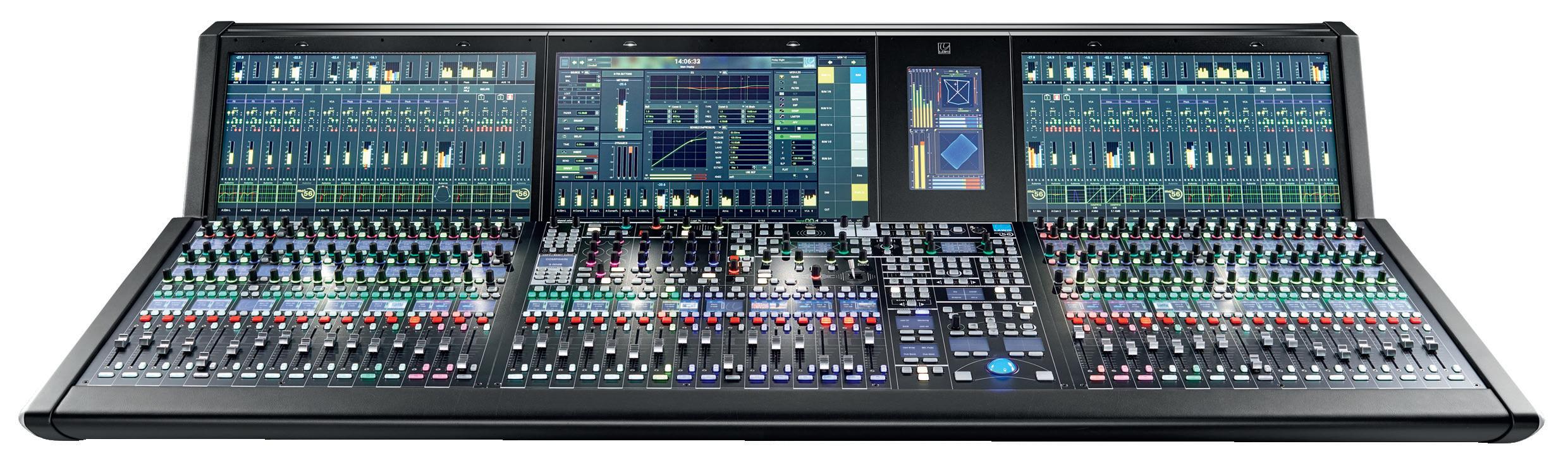
The best sounding live console was originally designed for broadcast.
Hearing is believing – sign up and find out for yourself.
Credit: Basilio Silva
UN-PIGEONHOLING ROYER LABS, UPMARKET PRODUCT PLANS AND FUTURE PREMIUM ACQUISITIONS
DAVE HETRICK
Dave Hetrick has spent nearly three decades learning one of pro audio’s hardest lessons: great products don’t always become great businesses. The former drummer, songwriter, studio owner and self-described “cynical recording engineer” has built his career trying to bridge the gap between engineering obsession and commercial reality, along the way helping brands such as Event Electronics, KRK and ADAM Audio grow, evolve and ultimately reach successful exits. Now, as president and chief revenue officer of Royer Labs and Undertone Audio, he is applying those lessons to two of the most respected names in high-end recording.
In this candid conversation with Headliner, Hetrick reflects on the hard lessons learned from his time at KRK, why some boutique companies succeed while others fail, how to earn trust from sceptical engineers, his upmarket product plans for Royer Labs and Undertone Audio, his goal to “unpigeonhole” Royer Labs, and he reveals his next brand acquisition plans.
You’ve spent nearly three decades building pro audio brands, from Event Electronics and KRK to ADAM Audio, Royer Labs and Undertone Audio. What have you learned about why some boutique gear companies succeed while others fail?
There’s never one reason. There are so many different reasons, but they generally live in the same neighbourhood. Undercapitalisation is number one. It’s not having the money to do the things you need to grow a brand and protect the IP. I don’t want to say it’s just about money, though. So many of these brands grew out of a musician or an engineer needing a tool. Eric Valentine [co-founder of Undertone
Audio] is probably the purest example of that. All of these different creators wanted something they didn’t have at their disposal, so they made it. Quite often it’s in the garage or the basement, and then it starts catching on. Making that leap from the garage or basement to a commercial facility means you suddenly have a lease, insurance, and the guy who created the product is also having to do Instagram and hire people. It’s not exclusive to our industry, but I’ve lived it so many times.
What really set me on this path was that, back in the late ‘90s or early 2000s, I was reading a white paper on this new technology called the Universal Serial Bus. We know it now as USB. I remember exactly where I was driving in Southern California and doing the math in my head of what the throughput would be. I thought, “Oh my God, that can pass 20-bit, 48k audio in both directions. Are you kidding me?” Long story short, this turned into a product called the EzBus. It was something I was super passionate about, and it was
“THE THING I THINK OF WHEN I GET UP IN THE MORNING IS: ‘DON’T F**K THIS UP.’ THERE ARE A LOT OF EYES ON ME AND US BECAUSE THESE ARE ABSOLUTELY BELOVED BRANDS.”
the first product that was entirely my idea. It got a lot of people excited, but then it took two years to come out because of all the reasons I just mentioned: undercapitalisation, not having the resources, not having the expertise. I knew what I wanted in a product, and I knew it would bear fruit, but getting it to the finish line was a very important learning experience. It was also extremely painful. That sent me on a path where I’d seen so many great products either never reach their potential or hit their ceiling too soon. I started obsessing over all the things that kept products from reaching their potential, and somehow that became a career.
Many founders build companies from a place of passion and obsession with sound. At what point does that passion need to evolve into a sustainable business strategy?
That is exactly what I’ve spent my career trying to solve. Where I bring a lot of value is seeing what the problem actually is in that month, in that year. So many people fail because they try to solve problems with the same set of tools for 20-plus years. I look back at the KRK days, when there were 300 different pro audio dealers of all shapes and sizes across the US, and internationally as well. You had to have boots on the ground in every territory. You had to train those people, compensate them, and that was a particular skill set. It worked at the time.
But when I took over Adam Audio in 2015, the consolidation of all those different shops, the rise of Sweetwater, the consolidation of Guitar Center, Thomann’s rise – it was all about reaching people online, creating demand there, and speaking their language. If I’d approached it the same way I did at KRK in 2005, we wouldn’t have got anywhere. It’s about identifying the landscape, adjusting accordingly, and protecting that passion and protecting that product, no matter what.
What would you say to those who might say that brand awareness without commercial sustainability is ultimately a vanity project? How do companies make sure that admiration for a product translates into a healthy business?
That’s a tricky one. There are certainly examples of vanity projects and vanity products. I won’t name names, but honestly, they’re not all bad. If the product still functions and still finds a use case, I don’t care what its origin is. Translating that into financial viability and sustained, predictable growth really comes down to relationships. It’s about relationships with the channel and with the retailers. Sitting between the creator and the origin story, I can manage those relationships and convey the product’s value proposition and its use cases. It’s threading a needle, but it’s something I think I do pretty well, always trying to protect that passion and the product itself in the process.
You’ve recently taken leadership roles at Royer Labs and Undertone Audio following their acquisitions. When you acquire a company where the founder’s identity is deeply connected to the brand, what does responsible stewardship look like?
Number one, the thing I think of when I get up in the morning is: “Don’t fuck this up.” There are a lot of eyes on me and us because these are absolutely beloved brands. There are so many cautionary tales in our industry of a big company acquiring a brand with high brand equity, a premium brand, and then just taking it to China, firing everybody, and turning a product that was five grand into something that is now $150.
Honestly, I kind of did that with KRK. I brought the Rokit Series to market, and I’m not ashamed of it, because it was a best-in-class product that allowed a lot of people who were moving on from a set of headphones
they bought on Amazon to have an honest-to-goodness studio monitor. That was the next step. But having said that, I won’t do it again. I only want to play in the premium space. I only want to take beloved products and help them really find their position in the market.
After Adam Audio sold to Focusrite, I had a small equity stake, but my investors made millions. I did pretty much all the work. So I went to school during Covid to learn private equity. The core of my thesis was taking several really premium brands and putting them under a group umbrella. You don’t want Eric Valentine or David Royer posting to Instagram, tracking stats, obsessing over supply chain management, and working through different go-to-market strategies. It’s about taking these people who make brilliant products and taking as much off their plate as possible.
Audio engineers are some of the most sceptical customers in any industry. How do you build trust with an audience that has an exceptionally good filter for authenticity?
Well, to be clear, I’m one of those guys! I’m not a troll on Gearspace or anything like that, but I’m sceptical. Social media can be evil, and it can also be such an effective tool because we can speak to customers directly, or potential customers, just the market in general, in their own language, through their own channels. With Undertone, Eric is still the brand, and having him not have to focus on payroll and all of those things, while still being able to post videos and interact with people, is huge. He still gets on Gearspace and answers questions. Just nurturing that is the core of all of it.
Then, of course, not coming out with a $300 R-121 plastic model. With both brands, we’re not just maintaining the market pricing and the level of quality. The next products to come out will be considerably more upmarket for both brands. I think the proof is in the pudding; time will tell. Whatever cliché or idiom I want to throw at it, we’re going to prove it over time.
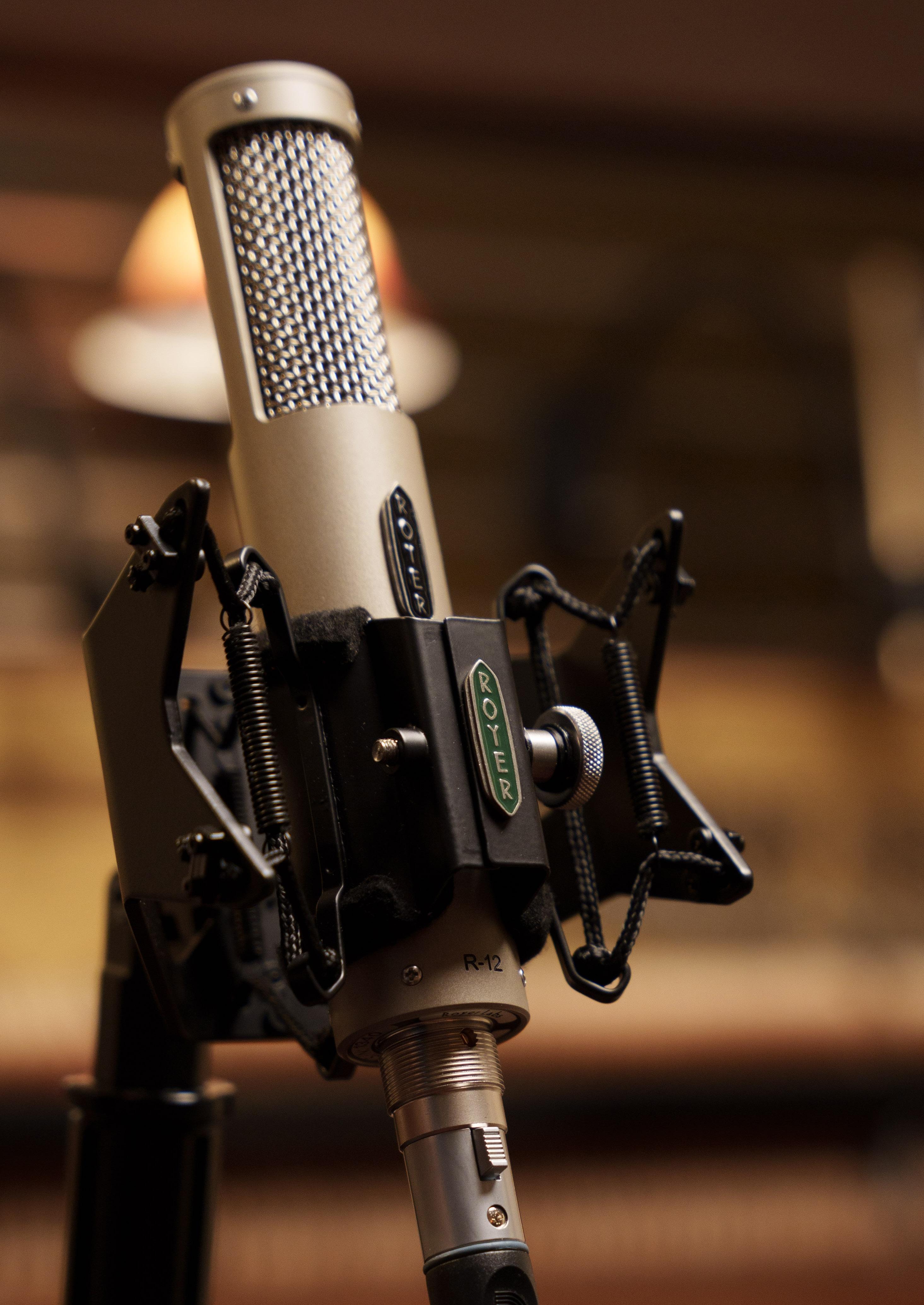
With a product like the Royer R-121 being a studio standard, how do you market an iconic tool like the new Royer R-12 while still showing engineers something new?
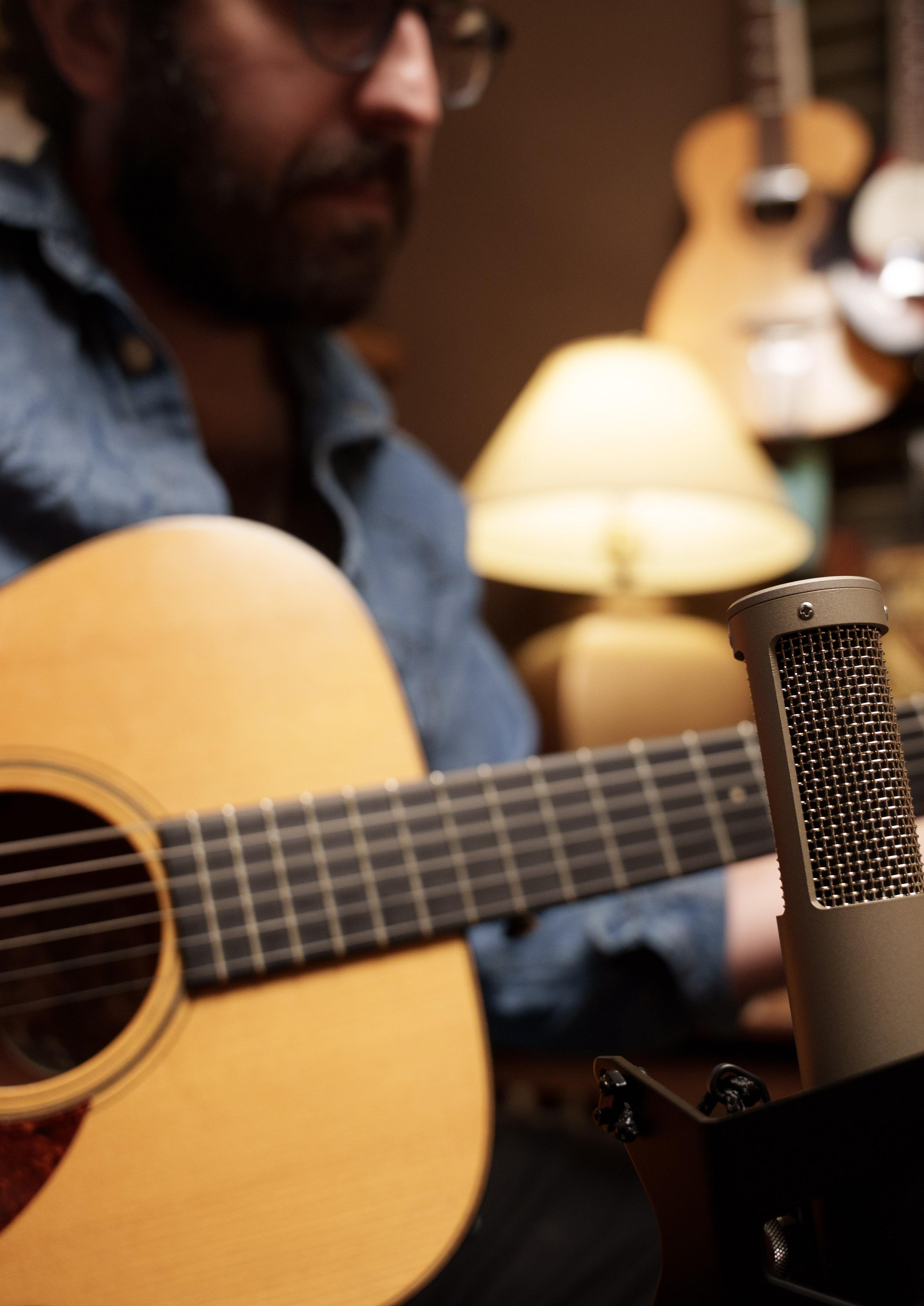
I was talking to Joe [Covey, CEO of Royer Labs] the other day, and we landed on this place where we’re tired of people identifying Royer with the 121 on an electric guitar cab. If I have one initial goal, it’s to un-pigeonhole Royer. The R-121 on a distorted electric guitar cab is brilliant. It’s the best out there; everybody knows that. But the new R-12, I had the same experience with it on a steel-string acoustic guitar. For this use case, this mic, regardless of price, is as valid as the 121. It’s just a different use case. That’s what I really
want to do with all of these products: this product for this application, this brand for this audience, but what about our SF-24V on a choir or a grand piano? It’s just as relevant. I don’t want to get all name-droppy, but with Dave Grohl, who you know always has great tone, and whose reputation is that he’s very exacting about tone and performance, he uses the R-10. It’s our least expensive mic, but he put it on his guitar cab alongside a 121 and said, “I like that one.” So it’s not good, better, best. It’s about what works for the application, and that’s what I want to do. It’s about widening the net for Royer.
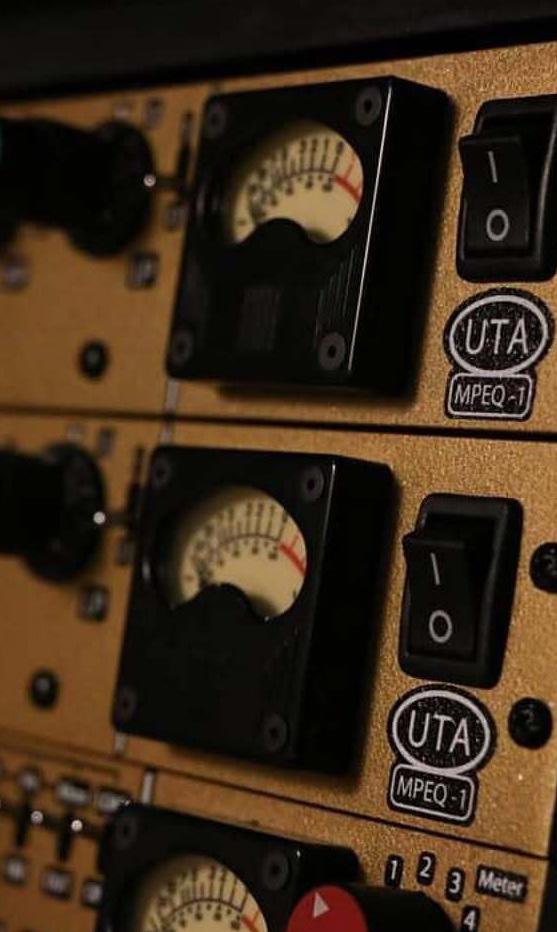
The new Undertone Audio MPEQ1 plugin brings the company’s hardware EQ concept into software with independent saturation control on every band. How do you approach translating the character of premium analogue hardware into the digital world?
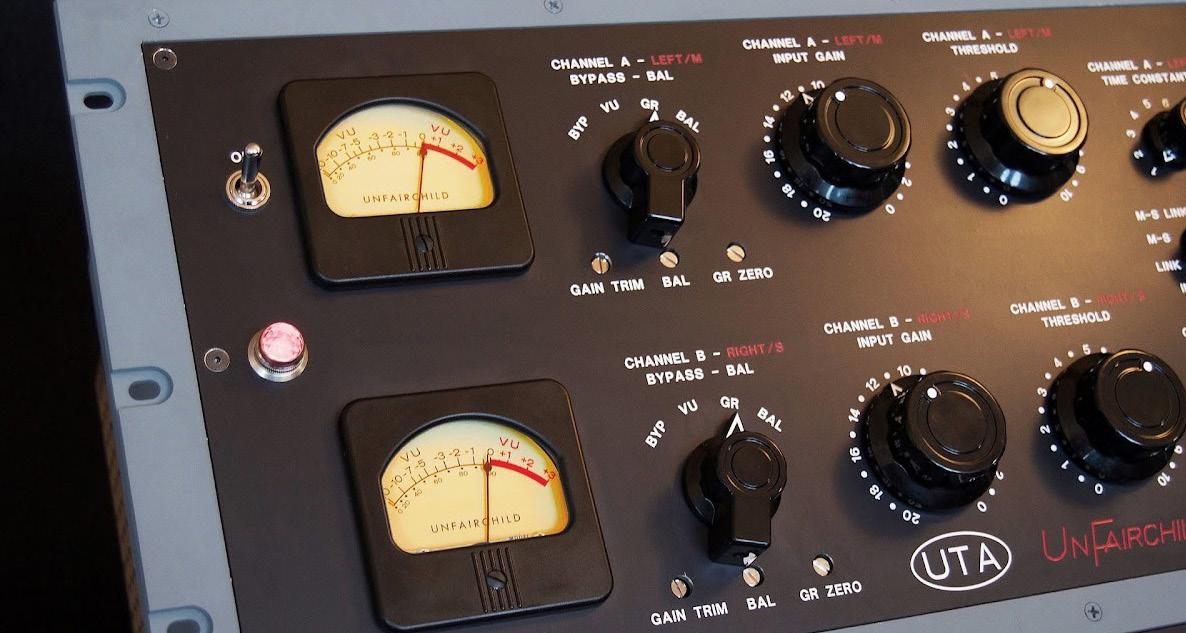
Well, I’d be a lot more nervous if Eric hadn’t already done it with the Unfairchild 670 Mark II plugin. I’ve never met somebody so exacting and so hyper-focused on getting the results that he wants. It’s freaking inspiring, if not intimidating. Getting to know him personally inspires me even more to protect that. He already came out with that Unfairchild plugin, which is the absolute best out there. I started consulting with Undertone about a year ago, eight months before we acquired them, and there
was a version of the MPEQ plugin ready to come out basically a year ago. But he was like, “No, I have this per-band saturation idea that I’ve always wanted, and you basically can’t do that in hardware.” He spent almost another year just getting it right. I’ve seen the different iterations, and my jaw dropped when I saw the early beta versions. Seeing it evolve to the point it’s at now… we’re going to be able to reach so many more customers who could never afford a $3,500 MPEQ-1.
But this is going to train them on what it can do. A kind of crass cliché in our industry is that plugins work as gateway drugs. It’s kind of an ugly way to look at it, but it’s true. In the early days, it was, “You’re knocking off my hardware, now I’m not going to sell hardware.” It turned out to be the opposite of that. That’s something I love about this plugin. It’s going to educate people and offer something that no other plugin does, and then it’ll just build a path to the hardware. So it’s exciting, and it’s daunting because a $150 plugin versus $12,000 for an Unfairchild, or $4,500 for an MPEQ-1, means there are a lot fewer people who can afford those, or justify the spend on those. But $149? There are literally hundreds of millions of people out there, and it’s my job to reach them.
When you look at Royer Labs and Undertone Audio today, what does success look like over the next few years?
One of the most exciting things that has happened organically is getting these different engineers in the same room. Getting David Royer of Royer and Larry Jasper, the main engineer
at Undertone, in the same room and watching them exchange ideas. It was like, “Oh my God.” Literally, goosebumps. I would understand maybe 35% of what they’re talking about, but the possibilities of these engineers filling in each other’s gaps... that’s kind of the great unknown that I’m so excited about.
Frankly, I can’t wait to see what it turns into in five years.
I don’t want to give too much away here, but both brands have multiyear new product roadmaps that we just have to bring to life. There are similarities with these brands. Royer, for instance, when they founded
the company, said, “We will never go into debt. We’re not going to do a line of credit, even if it stunts our growth.” And it absolutely has stunted their growth. There are many microphones, not all ribbons, that have been almost fully developed, and that would take high six figures to bring to market and still just barely get there. We don’t have unlimited
funds, but we have more funds, and we can bring these products to life.
It’s the same thing with Eric. He would develop a product and say, “That’s going to cost $850,000 and six months of my time.” But he’s got the next Grace Potter record to record, and all these other things. So let’s just put it on the shelf. He loves it, and
he’s built one. Eric’s like, “I built one, and I use it every day.” But getting it to store shelves is another story. So we inherited that. I’m not saying it’s not going to be hard work, but the products are already developed. Bringing those to market, staging them out, and really sticking the landing on pricing and go-to-market strategies is going to bring two- to three-times growth over the next 18 to 24 months.
After that, we’ll have acquired some more brands and grown through acquisition and through bringing those products to market.
Are people going to be surprised by these acquisitions?
I think so, yeah. They’re all going to be in the premium space. We’ve got two more that we’ll do this year. It’s happening and starting to bear fruit with new products; I think we’ll see the acquisitions happen faster and faster, and for well-qualified reasons.
You mentioned you’re going to focus on more upmarket new products. Will that be from the new brands, or will that be from Royer Labs and Undertone Audio?
Both. We’ll be bringing products to market from both Royer and Undertone. I don’t think any of them are going to come out this year, but in Q1 of 2027 you’re going to see some significant releases in the premium space from our brands, and then some from our acquisition pipeline. We know what their R&D schedules look like, and they would just play really nicely alongside the others.
S BY ALICE GUSTAFSON
DROW
SMASHINGGRIME’S GLASS CEILING
WINGY WINGSON
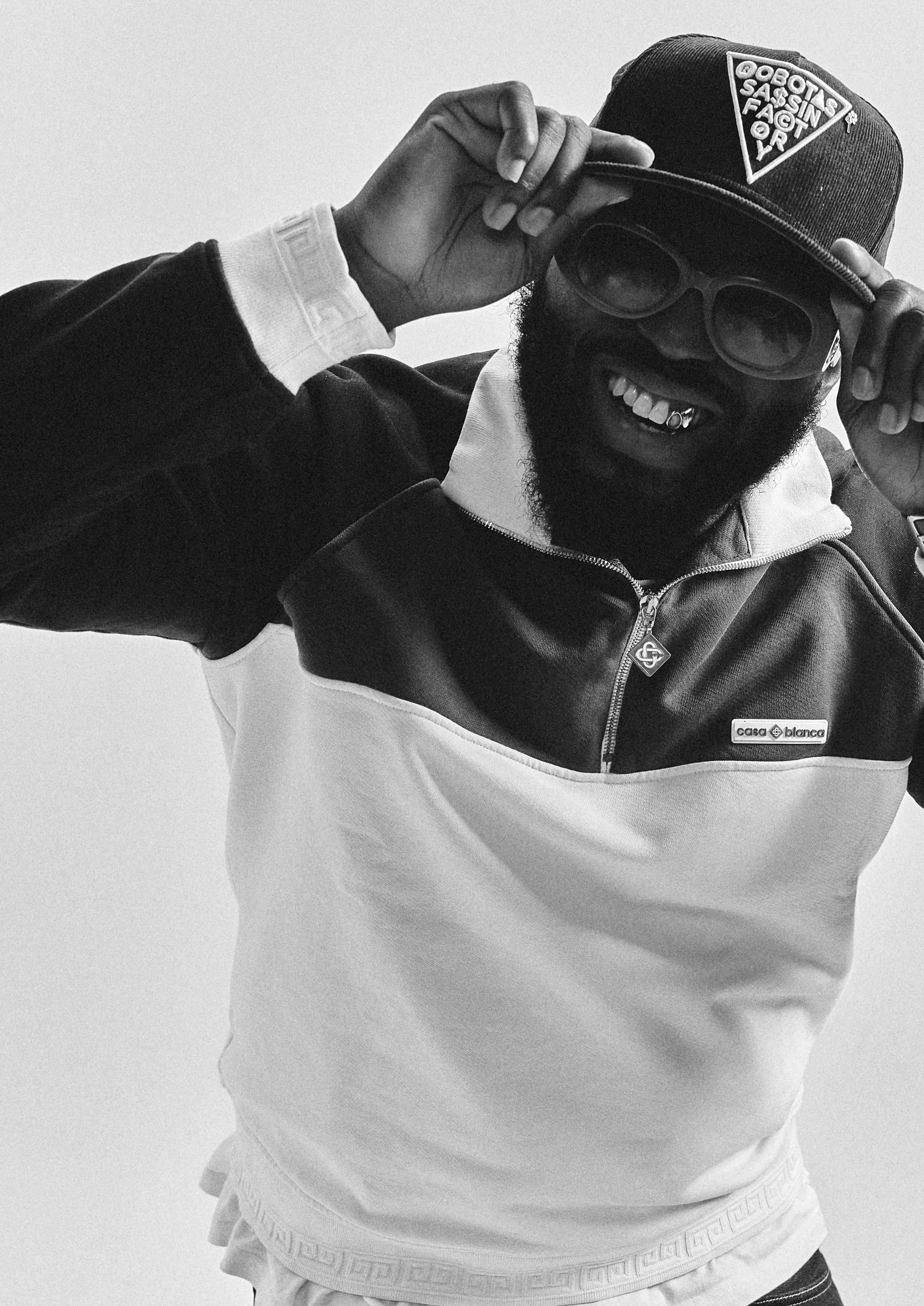
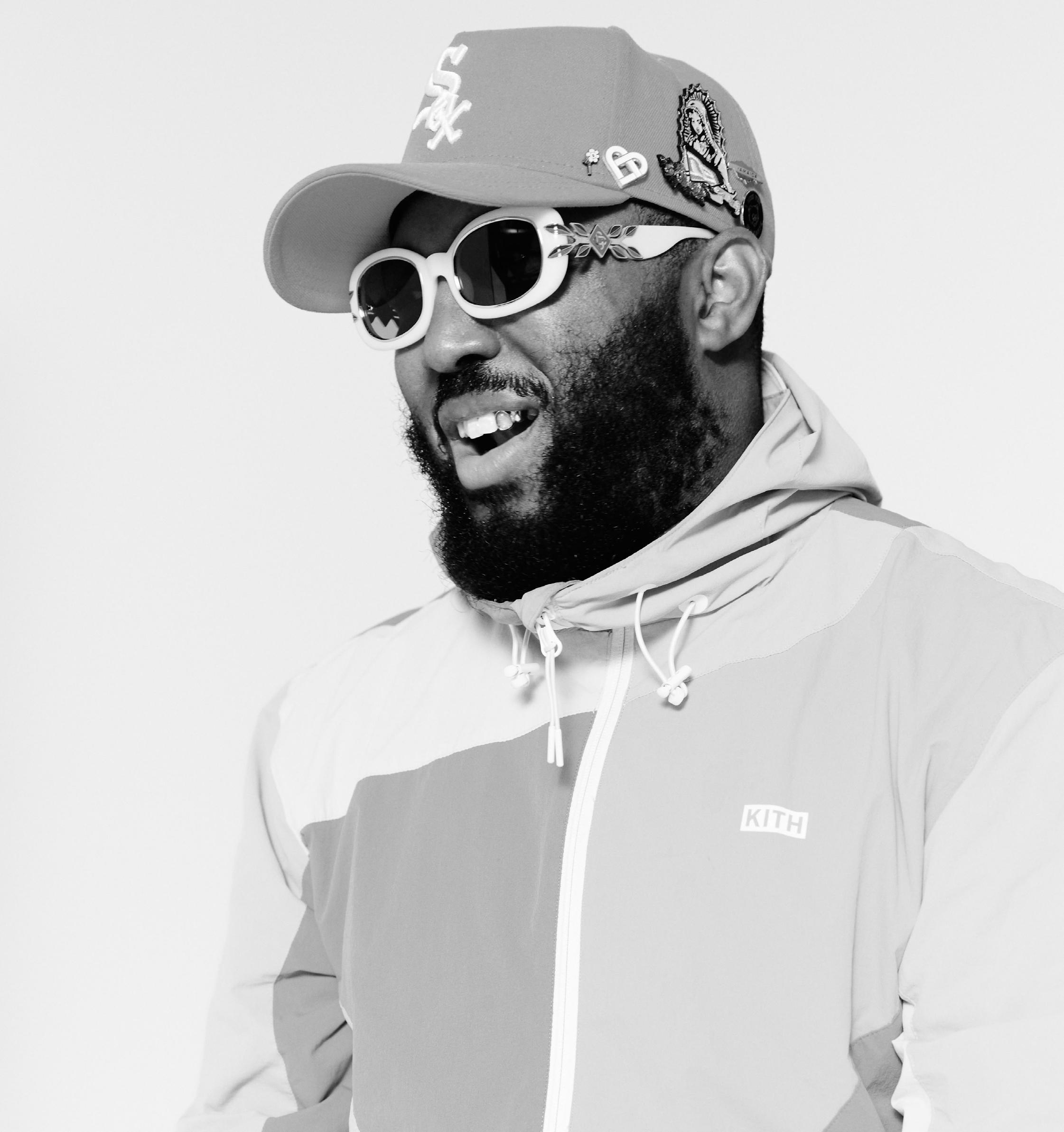
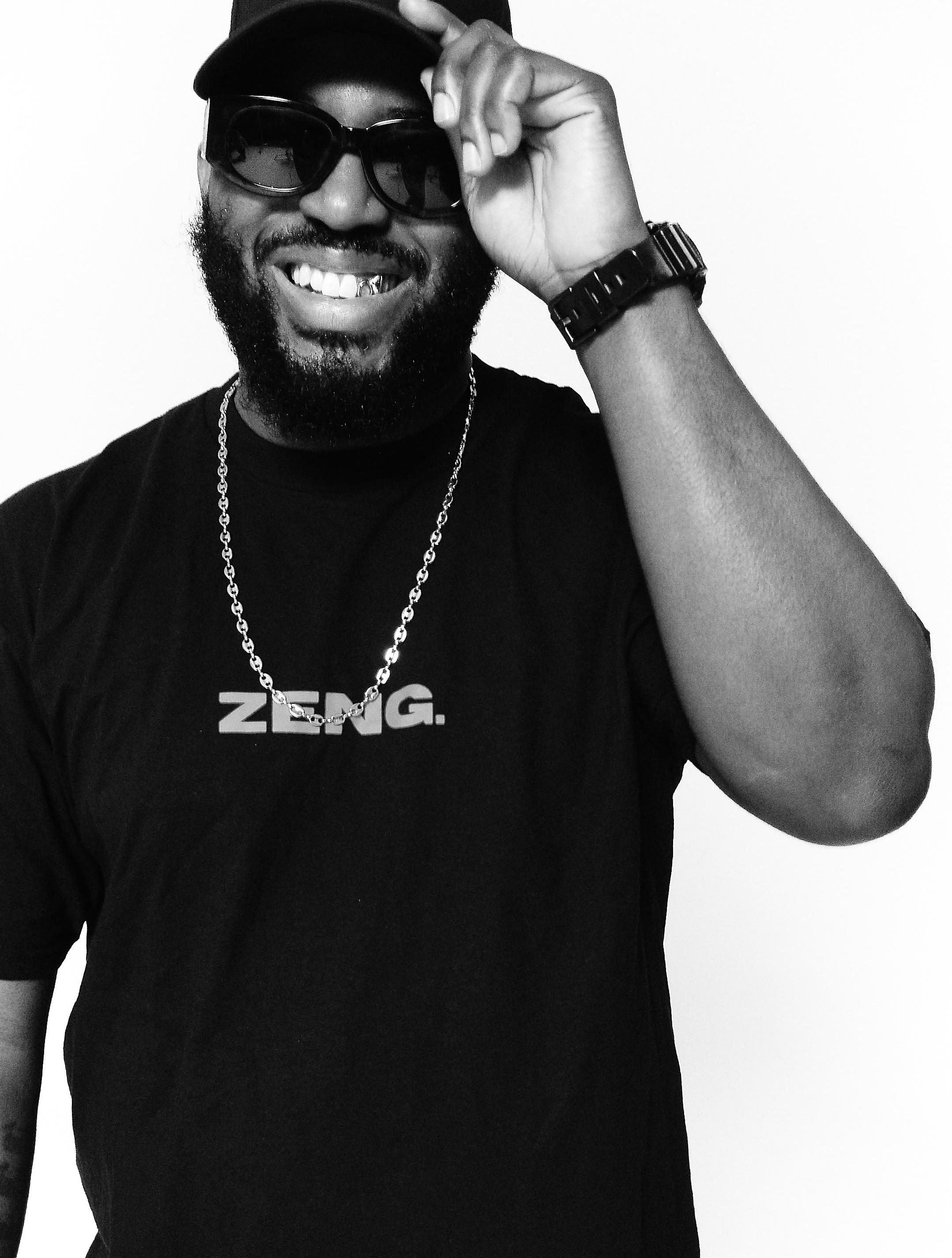
From grime raves to festival stages, radio shows to TikTok streams, Wingy Wingson has built a reputation as a DJ who refuses to stand still. Known primarily for his grime roots, the London-based open-format DJ has always looked beyond genre boundaries, blending underground sounds, club energy and unexpected influences into his sets.
But for Wingy, the future of DJing isn’t about replaying the past. While he understands the power of nostalgia, he believes too many DJs are relying on the safety of familiar classics rather than taking risks and championing new music. For a genre like grime, which Wingy says once carried a “glass ceiling” that saw artists distance themselves from the label as they found success, he believes the scene is now entering a healthier era, with artists proudly embracing the culture and pushing it further than ever.
In this First Set interview powered by AlphaTheta, the DJ reflects on putting the brand’s DDJ-GRV6 four-channel DJ controller and HDJ-CUE1 headphones through their paces, while sharing his thoughts on the importance of learning on club-ready equipment, reading the room, and balancing crowd favourites with tracks audiences have never heard before.
You have said that you don’t like when DJs just play old stuff. Do you think too many DJs play it safe, and what impact does that have on the scene?
I think it just needs balance. Realistically, it’s lazy because there are a lot of people working on a lot of new stuff, and there are a lot of good vibes and loads of creativity coming out. But because people know the old stuff, everyone relies on that for nostalgia or because it’s the safe bet. Soon enough, all this new stuff is going to be the old stuff. So what’s the point in not playing it now? You’re going to play it later if you’re still around.
I think the nostalgia aspect of DJing at the moment needs to get in the bin. Otherwise, no one will ever progress. You’ll never get the next new thing. Playing it safe is all well and good, but everyone can play it safe. No one’s unique, no one’s going to stand out, and no one can move things forward. Everyone who does that dies out pretty quickly, or they get washed away. You have to evolve, or you’ll be extinct. The new music is part of that evolution; new stuff is sampling the old stuff anyway. That’s always been happening.
How do you strike the balance between giving a crowd what they know and introducing music they likely have never heard before?
It is very risky, and I have cleared a couple of dance floors in my time [laughs]. Obviously, that’s a big ego drainer! You look down, you play a new song, you look up, and there’s 30 fewer people. You look down, you play another one, you look up, and it’s 40. You’re thinking, “Oh, it’s getting techy. Time to get back to the funky house.” I just think that you have to be courageous sometimes and understand the energy of where you are.
If I get a booking and I know it’s full of music lovers, I know what will cater to them. You can put three or four new songs in, one old banger, another two new songs, and so on. As long as they get the right energy from it, then they’ll be there. Or if I’m playing at a festival, I know full well that this festival crowd isn’t there to hear new stuff. They’re definitely not there for me; they’re there for the festival. So I’m going to play everything that they know – all the commercial stuff. You just have to know the tribe that’s in front of you.
Grime really came to the mainstream when it emerged in the early 2000s. How would you describe the current state of the scene, and what excites you most about where it’s heading?
Currently, it’s in a very healthy position. It might not look like it from the outside, but from the inside, it’s in a very healthy situation because there are a lot of new artists who are no longer shying away from the title of grime. Beforehand, a lot of artists who emerged in grime and found success in it, as soon as they reached a certain plateau, it was, “I’m not grime. I’m an artist,” or, “I’m a rapper.” They would cross over a little bit or try to move away from the grime label because there was a bit of a glass ceiling attached to it.
But now, I don’t know if the scene is necessarily bigger, but these artists
are repping the genre and taking it to all types of heights. Since Stormzy has had top 10 hits with actual grime music, Dave has had top 10 hits with grime music, Jamie, Skepta – everyone’s had these top 10 hits with grime music. I think that reassurance from 2016 to 2020 has given birth to the new wave of artists that are out now.
There are a lot of MCs – male, female, older ones coming back, younger ones coming up, and people who are just starting. I think grime is in a very healthy position. I also think people are starting to really understand it as a genre. Grime is the energy, so you have to feel it and experience it. If you’re just listening to it on Spotify or in your car day-to-day, it’s nothing like going to a grime rave and getting the experience, the energy, and everything that comes with it. I think a lot more people are going out to enjoy it, which is creating a much healthier scene.
Looking back to when you first started, what do you know now that you wish you’d understood as a beginner?
I always understood, but I wish I cared more about the crowd and less about myself. Personally, I don’t like being in the limelight to a degree. If I’m DJing and people are looking at me, recording me and so on, in my mind I’m thinking, “Why are you not enjoying the thing? Are you looking at each other? You should all be facing different directions.” I’m not to be looked at. I’m to be heard. When I first started, I wish I had focused on that more because I realise now that the crowd are looking at me to entertain them as a whole package. Beforehand, I was just in my own shell, in my own zone, and I wasn’t really reading the crowd. I was just playing the songs that I liked. It was making me uncomfortable that people were looking at me instead of listening to me. If I were to go back and do anything differently, or something that I do differently now, it’s that I strip away my ego. I stop trying to force music onto people and instead create a space and a sound
that people enjoy, even if it’s not solely what I enjoy. It’s about understanding what the tribe of people in front of me would enjoy.
You recently performed a set as part of Headliner’s First Set series using the AlphaTheta DDJ-GRV6 fourchannel club-inspired DJ controller. What were your first impressions when you got behind the controller?
It was my first time using the controller, and it was my first time using my laptop to mix for a very long time. Normally, I have the equipment, I’ve got the screen, or I just use my USB. It was surprisingly sturdy. It felt real – it was a really nice
tool. The jog wheels were nice, and the faders were a good size. Obviously, I’ve used other ones when I first started, and everything was miniaturised, but I think with this equipment, the size and the smoothness of it were very good. Having the stem separation buttons on top of the jog wheels was a game changer for me. As I said, I normally just use my USB, so I don’t have stems, and I don’t have the opportunity to use that very often. While I was doing my set, I was obviously messing around and using all the buttons, and it was very enjoyable. It’s a very good piece of kit.
The DDJ-GRV6 DJ controller borrows its layout from club-standard CDJ and DJM setups. How valuable is it for new DJs to learn on equipment that mirrors what they’ll eventually encounter in clubs?
It is essential. Even on the DDJ-GRV6, the main thing that stood out to me was the size of the jog wheels – I’m guessing it’s because it’s mimicking the size of the normal 3000s or the CDJs. People who are just starting often find that when they go and perform, the jump from home equipment to studio equipment is very vast, and it can be very overwhelming. But I would say that this piece of equipment is a good
happy medium because it can fit in your bedroom, it’s not going to break the bank, and the transferable skills are there as well. In terms of the size of the club-standard mixer and the jog wheels, it’s pretty much the same. That’s a good situation because if it’s a lot smaller and you’ve just been practising on something smaller, it can become very overwhelming.
You also used the AlphaTheta HDJ-CUE1 headphones during your set. What do you look for in DJ headphones, and why is accurate monitoring so important when you’re mixing live?
The quality of these was incredible. You can properly hear the music. It makes a big difference when you’re mixing, and you’re not looking at the screen – you’re just using your ears. You need to hear the drum pattern, and in these headphones, the drum pattern was very clear and very precise. It was good because the speakers were booming, and even when I had the headphones on, I could still get into my zone and zone out, and hear what I needed to hear to make sure the transitions were smooth. So, shout out to the headphones.
“TIKTOK IS SPRINGBOARDING A LOT OF PEOPLE BEFORE THEY’RE READY TO BE THERE. THEY HAVEN’T DONE THE 10,000 HOURS YET.”
Your performance was streamed live on TikTok. Do you think social platforms are helping emerging DJs build careers more quickly than previous generations, or do they come with their own challenges?
I think, especially with TikTok and the way DJing has become so accessible, it is springboarding a lot of people before they’re ready to be there. They haven’t done the 10,000 hours yet, and then they get thrown onto the big stage, and they drown. But at the same time, when they’re on the big stage, if they capture it from a certain angle, they can thrive even more. It’s a doubleedged sword because people can create livelihoods, have a good life, travel the world, and all this good stuff is coming from things like social media, streaming, putting on TikTok Lives and so on. I do think the social media thing is propelling people before they’re ready to get there, but at the same time, I’m happy that it’s
able to do that. When I was growing up, from what I saw, especially in the grime scene or music in general, it was always one in, one out. There was always only one top person in each scene at a time. Now, you can have 15 people who are at the top, doing well. There are enough slices of the pie for everyone to eat.
As someone who’s always focused on pushing music forward, what are your goals over the next few years?
I’m starting up my own thing. I want to do more events; I need to find my tribe of people who are into my vibe. My goal is just to have a solid event every couple of months where I can bring my community of people together, socialise and have a good time. I’m starting it from August 1st, which should springboard everything. I’m just going to focus on that and tune into it, and hopefully that will take me where I need to be.
Away from grime, are you into any music that might surprise people?
I’m known for grime. But that’s mainly because of growing up in the inner city, who I’m affiliated with, and all the other stuff that comes with it, so I’ve fallen into that grime category. If you put me in a place where I need to play dancehall, you’re going to see a smile on my face like no other. If it gets to two or three o’clock in the morning and I’m looking up and the crowd is starting to thin out, you’re going to hear some of the most lovely, soothing R&B stuff, regardless of the situation. I just love music. Whatever is creative, I’m into it. One of my favourite artists is James Blake because his sound is super futuristic. Then you might see me vibing to the Chase & Status album and just going berserk doing mosh pits, but then you might see me singing my heart out to Best Thing I Never Had by Beyoncé.
INSIDE THEIR DEEP HOUSE JOURNEY
SONATA COLLECTIVE
Four years after joining forces, Kristian Smith (ShelliOak) and Curt Lopez (Curt Lopes Faulkner Jr.) have quietly positioned Sonata Collective as one of the UK’s most exciting names in deep house. Rather than chasing trends, the duo has built its reputation release by release, earning support from labels including Glasgow Underground, Armada Music, Mood Child, Tileyard and Sola Records, while seeing their productions championed by the likes of Solomun, Jamie Jones and Lee Foss.
With appearances everywhere from Mint Festival and E1 to UNVRS Ibiza, and another EP, Hard 4 U, on the horizon, Sonata Collective’s trajectory continues to gather pace. As part of Headliner’s Next Up series, powered by AlphaTheta, Smith and Lopez put the XDJ-AZ all-in-one DJ system and HDJ-F10-TX wireless headphones through their paces while reflecting on the momentum behind Sonata Collective, why consistency matters just as much as talent, what “making it” as a DJ really means in 2026, and why their biggest chapter is still to come.
Sonata Collective has built serious momentum over the last few years, but it still feels like you’re in that exciting stage just before a breakthrough. Does it feel that way from your perspective?
CL: We’ve had some nice momentum and a lot of music released over the past couple of years, with some really good labels that we’ve had in our crosshairs. I think we’re just on the cusp of getting to that next level.
Every DJ and producer has a ‘before’ story. What was your first ever DJ set like?
CL: Our first set was at The Warehouse in Leeds, supporting another DJ. It was a really, really good gig. It’s a sick, sick club – sick lighting, sick sound system, and it’s usually always a good crowd as well. Being in Leeds, it was a nice, strong start and a taste of what is to come.
You’ve released music on labels including Glasgow Underground, Armada Music, Sola Records and Mood Child, while your productions are being played by some of the biggest names in house music. At what point did you realise people in the industry were starting to pay attention?
CL: When you start getting your music played, and even little things like gaining followers when people start following your Instagram page and actually responding to your DMs, that’s always a nice feeling. I think playing more events and supporting some of these bigger DJs, just being allowed to have a quick word with them before or after their set – those little interactions go a long way, and they help build relationships. I feel proud that our music has reached these DJs that we look up to, and long may it continue.
Deep house and tech house continue to evolve. Where do you think Sonata Collective fits within the current scene?
CL: We’ve been DJs for well over two decades, and we just love playing different styles. But with that said, we’ve made a very conscious effort to also create and mould our sound within our productions and our DJ sets. We’ve been chatting recently and really refining that, building playlists around our sound, and then finding different sub-genres within that sound and branching out a bit,
rather than it just being one genre, then the next genre, then the one after that. It’s going to be what you’d expect Sonata to play in their sound, and then we branch off into other things, so it has a nice cohesion. We see ourselves as quite eclectic and versatile DJs.
KS: We’re always trying to play an array of different sounds, and if people notice the little sounds and elements that you hear in those tunes we’re playing, it leads into the kind of music that we’re going to make ourselves. We are versatile. We can play in most places. Just let us know who we’re playing to, and we’ll make sure we’re setting up the right vibe for them.
Your latest EP, I Need , has received strong support, and another EP, Hard 4 U, is on the way. What can you tell us about your new music at this stage?
CL: It’s a nice melting pot of different sounds, sonics and vibes. As DJs and producers, we’re very versatile, and I think this EP encompasses our style. It’s an EP where I keep changing my favourite song. We’ve had some really interesting moments and technicalities during the process, like sample clearances, which have proven to be a bit long and draining. But it’s nothing new. I’d just say to digest it and enjoy it, because I think we both agree that this is some of our strongest work.
KS: When you’re listening to these songs, you’re going to get that nostalgic deep house sound from around 2010 to 2015, where it’s heavy bass, lyrics and vocals that really resonate. At the same time, it’s a vibe that’s different from what everyone is releasing at the moment. Hopefully, listeners can hear that and just have fun with it regardless.
You recently performed a set as part of Headliner’s Next Up DJ performance series, where you used the AlphaTheta XDJ-AZ fourchannel professional all-in-one DJ system. What were your first impressions when you stepped behind it?
KS: As soon as you turned it on, it showed you where everything needed to be. The interface itself is beautiful. It has the same, or maybe nearly the same, functions as the DJM-A9, where you can isolate the bass and the lows, which was beautiful by the way. Everything about it was just smooth.
CL: Agreed. AlphaTheta somehow manages to increase the finesse of the products every single time. It’s almost like you’re gliding. We’ve been using their products for years, so we’re very familiar with how they feel, but we can also really notice when there’s an upgrade. Some of the technical aspects, such as isolating the lows and the touchscreen, were really impressive. That finesse is just that much cleaner.
One of the biggest strengths of the XDJ-AZ is that it mirrors the layout and feel of club-standard CDJ-3000s and the DJM-A9. How valuable is it for DJs to be able
to practise on equipment that prepares them for professional booths?
CL: It’s super important. That’s one thing I would praise AlphaTheta on over the years: they’ve managed to make products that all feel consistent. I use an old XDJ and a small DDJ from a few years ago. One of them is essentially a small beginner controller, and one is an intermediate controller. I also frequently play on CDJs and mixers, and they all feel the same. I can translate everything I know from the controllers onto the CDJs and vice versa, and that’s so important as a DJ. Especially if you have one at home
as your home setup, you can practise on one of these controllers and, take it from me, you’ll be able to translate that into a club setting. It’s so easy to go in and play on their equipment.
KS: You go into these clubs, and you see DJs using CDJ-3000s, DJM-A9s and things like that. You really want to have a setup at home that isn’t expensive, doesn’t take up a lot of room, but also has that quality of sound. AlphaTheta has been doing that for a long time. I’ve got the RMXIGNITE, and practising at home and then going into the club, I feel like I’m doing what I do at home in the club. I can feel confident using it. I knew as soon as I turned the XDJ-AZ on that it would be the same setup, especially in a club setting.
You’ve both developed as DJs and producers over the years. Looking back, what equipment did you first learn on, and how does something like the XDJ-AZ represent the next step in that journey?
KS: I started DJing when I was 15. I’ll never forget it. I bought a setup and put it in my mum’s back room, and I was there straight after finishing school until about 12 or 1 a.m., practising on Gemini 210s and a Numark M1. You had to press a button, and the old CDs came out with the ejector thing. You’d put your CD in, slowly push it, and watch it go back in again. I’m talking that old school [laughs]. Compared to the mixers then and what they are now, the amount of practice I had to put in
just to get to where I am today, and to be able to use different equipment, was huge. AlphaTheta just took me into a whole new world after that.
CL: The very first thing I downloaded was VirtualDJ, so it wasn’t even hardware – it was just the software on my laptop. I remember pressing keys E and D to play. Obviously, I had to be syncing it at the time, but that was my first foot in the door with DJing. Then I got a Native Instruments Traktor S2, which was a great starter. I always knew that Pioneer DJ – now AlphaTheta – were the staple, the industry standard, and I always wanted to get onto their equipment. It wasn’t long after that I did, and since then, I’ve never strayed away from their products. You can just translate
everything you know from one of the smaller controllers onto the full CDJ setup, and it’s like night and day.
You also tried out AlphaTheta’s HDJ-F10-TX wireless headphones during the set. How important is reliable monitoring during a live performance, and how did these headphones give you confidence during your set?
KS: Oh my days! The wireless headphones were the best headphones I’ve ever used in my life. There was no lag or anything. You just plug them in, and I was walking around the place. The quality of sound when you’re mixing was just something else, especially with them being wireless. You get scared when you’ve got wireless headphones,
especially Bluetooth, because when you’re mixing and you’re just out of time, the lag can make you come out of time by 0.2 or 0.5 seconds, and that can really make a difference to your mix. But with these headphones and the clarity of the sound, I was mixing, and it felt like I was just wearing my normal headphones. I had the freedom to look up a bit more, without worrying that my cord was going to get caught anywhere or anything like that. Everything about them, even how comfortable they were on the ears – it was just like butter melting on toast [laughs]. It was amazing.
CL: I have to say, the wireless headphones were insane. They felt like your normal headphones that you could wear on the bus because the noise cancellation was crazy as well. It’s so common with certain headphones that there’s bleed, and that really affects the way I mix. Even when you’re using one ear, especially with a closed cup, you aren’t getting any external noise coming through the ear you’re using, which is super important.
Your Next Up set was streamed live across TikTok. How important are live platforms like TikTok for DJs in 2026?
KS: When you look at social media, you need to be active. To be honest, we were never that active until our manager came into our lives and helped us, telling us what we needed to be doing to create that traction and get people wanting to book us. The old-school days are gone where people used to go into offices with a CD or turn up to clubs saying, “Look, I’m a DJ. Let me show you what I’ve got.” Now, especially with labels and events, people want to see what you can bring to the table.
If we sat down again in five years, where would you hope Sonata Collective has reached?
CL: I’ve never thought about this, but in my head, I was thinking UK number one. We’ve never even discussed that ever. We’ve got some work to do! The goal has always genuinely been to be able to tour the world with each other and our closest ones, experience life, and go out and have a good time DJing. We’ve been DJs for so long, and this is a passion. This isn’t something we wanted to do because it’s cool, or because we wanted to get something out of it, earn money or anything like that. We’ve just genuinely loved doing it, and we love the journey. We’ve taken the ups and downs in our stride, and we just want to tour, share our music, and hopefully it resonates with people around the world.
ALPHATHETA.COM
THE STRATEGY BEHIND THE VIRAL HIT
TEMPERCITY’S SELFAWARE
Photo by Amit Shauli
In just a few months, Los Angeles trio Temper City have gone from complete unknowns to one of alternative rock’s biggest breakout acts. Formed by musicians Chen Kordova, Aviv Barenholtz and Eytan Peled, the Israeli-American alternative rock trio turned their debut single, Self Aware, into one of 2026’s most notable breakout releases after teasing the track on TikTok.
The trio’s debut single, which, judging by its trajectory so far, seems destined to end up on Radio 1’s A list, is winning audiences over with its nostalgic indie rock sound and emotionally charged lyrics. And it quickly connected with audiences, sparking more than 10.5 million TikTok creations, topping Spotify’s Global Viral Chart, charting on Spotify’s Viral 50 in 46 countries, and inspiring an avalanche of user-generated videos, remixes and covers.
Since its release in February 2026, Self Aware has racked up more than 314 million streams, reached No.1 on Billboard’s Alternative Airplay chart, entered the Billboard Hot 100, peaked at No.5 on Spotify’s Global Top Songs chart (with a current daily Spotify streaming peak of 3.71 million), reached No.5 on the Shazam Global Chart with three million Shazams, and helped Temper City attract more than 27 million monthly
Spotify listeners. In this interview, James Cattermole, head of A&R and label services EMEA at TikTok, explains how SoundOn (TikTok’s music marketing and distribution platform) helped transform an organic viral moment into sustained global success, revealing the datadriven strategies, creator ecosystem and worldwide distribution approach that kept Self Aware accelerating long after its initial breakthrough, and what Temper City’s rise says about the future of artist development in the TikTok era.
Self Aware has made a strong impact on the charts already and is still accelerating. From SoundOn’s perspective, what does it take to sustain momentum at that level once a track has already gone viral, and how do you help artists convert short-term attention into long-term audience growth?
Sustaining Self Aware has been about constant pressure, every single day, wherever the data says the fans are, and the next opportunity sits. The internet moves fast, the FYP [TikTok’s For You page] even faster. A few days of complacency becomes a dip, and those dips compound fast.
What does that mean in practice? Pushing into new territories the moment we see green shoots
emerge, opening up new trends and creator angles so the record keeps finding fresh contexts instead of exhausting the original trend, and using remixes to give the track new lives; LUM!X and Ian Asher’s versions have been brilliant for that. And none of it works without everyone pushing in the same direction: our in-house teams, the label, management and the band themselves.
Self Aware is Temper City’s debut single, yet it quickly achieved global chart success and viral traction; how rare is that level of impact for a first release, and how does SoundOn help emerging artists maximise those breakthrough moments?
It’s rare, and it’s special when it happens, but it’s not unprecedented. Across the industry, we’ve seen debut releases like Old Town Road, Lewis Capaldi’s Bruises and Good Neighbours’ Home become careerdefining moments. What they all had in common was a standout record, and a team that recognised the momentum and moved quickly.
I saw that up close with Good Neighbours. Scott Verrill (one half of Good Neighbours) is actually my brother-in-law, and we were on holiday together when Home started going viral off a demo of just the chorus hook. He and Oli (the other half of Good Neighbours) finished the track in under a day, working between a hotel in France and a studio in the UK, and within about 48 hours they had a Zane Lowe first play, global DSP support and hit half a million Spotify streams day of release. That’s the speed this era demands: it’s the difference between a potential hit and an actual one. Our job at SoundOn is giving artists and labels best-in-class promotion at lightning speed, so when the spark comes, everything they need to capture the moment and scale is already in place.
What were the key factors that helped drive this breakout success?
Two things. First, people: a fantastic in-house team and a seriously dialled-in label partner in Thirty Knots. Peter Rugo and I have been in the trenches on this record daily since February, and we still are! That passion for records and relentless grit is what keeps a track alive long after the initial moment.
Second, reading the platform properly. Self Aware spawned everything: lipsyncs, covers, dance trends, organic bootlegs. The scale didn’t come from chasing every trend; it came from seeing which ones were actually converting into listeners, and letting that data drive the strategy.
With over 10.5m TikTok creations using the track (so far), how did SoundOn help position Self Aware within TikTok’screator ecosystem to encourage that level of usergenerated content?
The band lit the fuse themselves, teasing the track on the platform and picking up early organic creator adoption pre-release. The best creator strategies start with what fans are already doing. We let the audience do the talking first. From there, our job was amplification: we moved quickly into the territories where early
data signals were most promising, watched which organic formats and verticals were engaging hardest, and built the creator campaign around what audiences had already shown us they loved, rather than trying to invent a trend from scratch.
Outside of creator adoption, we recognised how brand-friendly the record was, and swiftly serviced it to the brand community through our various cross-functional partnerships, as well as increasing visibility on TikTok’s Commercial Music Library, which opens up a whole layer of usage most people never see.
SoundOn emphasises direct access to creators. How important was that network in helping Self Aware evolve into a viral and remixfriendly track across TikTok and SoundCloud?
Crucial. Direct creator access meant we could put fuel on the fire while it was still catching, getting Self Aware to creator communities worldwide within hours of seeing momentum. That’s what creates the compounding effect. It’s also what made the remix ecosystem move so fast: producers found the track, flipped it, and every new version opened another audience across TikTok, SoundCloud and beyond.
The track quickly appeared on Spotify’s Viral 50 in 46 countries, and made its mark in all viral charts. How does SoundOn’s global distribution network contribute to turning a viral TikTok moment into sustained streaming success across platforms?
It moved fast, topping Spotify’s global viral chart early on and hitting #1 in most territories. (Spotify, please bring back the viral charts!). That’s where SoundOn is different. Because we’re built alongside TikTok, we can spot momentum as it’s happening and connect discovery with global distribution, rather than treating them as two separate stages of a campaign.
TikTok virality is borderless: a trend that starts in Germany can be in Ghana by the weekend, if worked correctly. Hitting the Viral 50 in 46 countries wasn’t 46 separate campaigns; it was one global approach, every region reacting to the same signals at once. Worldwide visibility across sounds pages, targeted creator activity in focus territories, and traditional DSP partnership work in every region, all feeding continuous growth, and as of now (21st July 2026), we are yet to hit decay, and the track was released five months ago!
How important is the role of pre-release for debut artists to build traction before an official release?
Massively important, for two reasons. Firstly, pre-release is where an artist can build the world around a record, so when release day comes around, people have already bought in. You want to come out of the gate at full speed, and that demand gets built before the record exists on DSPs. Secondly, it’s such a powerful way to split-test. Dance music worked this out decades ago: DJs pressed a limited run of white labels, played them in the clubs, and let the feedback from the dancefloor decide which record got the full pressing. Pre-release on TikTok is exactly that instinct at a million times the scale. Let the fans’ reaction guide that decision.
SoundOn offers track optimisation and editorial support; were there specific strategies or tools that helped maximise the visibility and performance of Self Aware ?
It was a real blend. On the platform side: creator marketing informed by live data, sounds-page programming globally, and Commercial Music Library placements so the track was being discovered by the brand community as well as fans. On the traditional side, global DSP pitching was crucial. Editorial support gave the record a stamp of validation, and it scaled quickly from regional viral playlists all the way to Today’s Top Hits on Spotify. That’s really the SoundOn model in a single campaign: do the traditional things brilliantly, then add the platform layer nobody else can offer.
“A BAND GOING FROM DEBUT SINGLE TO THE GLOBAL CHARTS AND 27 MILLION MONTHLY LISTENERS IN A MATTER OF MONTHS IS PROOF THAT THE OLD SYSTEM IS NO LONGER A PREREQUISITE FOR A GLOBAL CAREER.”
Data analytics is a key part of the platform. What insights from TikTok or streaming data helped sustain the growth of Self Aware after its initial viral moment?
The earliest signal mattered most. Before release, the band’s teaser content was showing unusually high intent: we weren’t just seeing great reach; the clickthroughs to the sounds page were through the roof, and the comments were full of people begging the band to get it on DSPs. That told us we had something potentially special on our hands, and we needed to be ready for it.
Early creator pick-up then showed us which territories and trends to explore. And post-release, the question was never, “What’s getting views?” It was, “What’s actually driving people to DSPs? Which creators are inspiring people to use the sound in their own videos?” We doubled down on the creators and formats that converted, and kept split-testing from there.
Temper City went from debut release to global charts and 27 million monthly listeners in a short time. What does this say about the opportunities for emerging artists using SoundOn today?
It says the doors are open. A band going from debut single to the global charts and 27 million monthly listeners in a matter of months is proof that the old system is no longer a prerequisite for a global career. But two things
haven’t changed and never will: you need an amazing song, and you need the right team and vehicle behind it to make sure it gets everything it deserves.
With Self Aware continuing to climb charts like Billboard and the Spotify Global Top 200, how does SoundOn help artists maintain momentum beyond the initial viral spike?
For me – and everyone at SoundOn – it comes back to one thing: the viral spike is the start line, not the finish. Everything after that moment is about turning attention into an audience: new territories, new trends, remixes, widening editorial, the daily graft. Self Aware is still accelerating months in, and that is not down to luck –though you always need it. It’s down to turning over every stone in a campaign and never settling for just good.
SOUNDON.GLOBAL
INSTA: @TEMPER.CITY
FINDING THE ACOUSTICS BLIND SPOT
ELECTRONIC MUSIC PRODUCTION
David Shevyn, head of GIK Acoustics Europe, explores why studio acoustics are the often-overlooked factor in electronic music production, explains how untreated rooms can undermine bass accuracy and mix translation, and outlines practical ways to build a more reliable listening environment.
For electronic music producers and DJs, there’s nothing quite like
watching a dance floor fill as the crowd responds to your latest mix. What started in a studio, with just you, your monitors, or maybe a handful of collaborators, has become something bigger: a shared experience that brings hundreds, even thousands of people together.
But sometimes that moment never quite happens. The track that sounded huge in the studio feels flat on a club
system. The bass lacks impact, the balance seems off, and the mix you spent countless hours refining simply doesn’t translate. It’s easy to blame the speakers, the venue, or even your own production skills. In reality, the culprit is often much closer to home: the room where you made the music in the first place.
Producers will spend thousands on synths, plugins, and monitors, but
if the space they’re working in isn’t under control, the music doesn’t sound the way they think it does. This issue is common across all genres of music production but is more acute in electronic music’s bass-heavy structures.
Low frequencies remain the most critical and difficult area to control; most rooms will either exaggerate
or cancel bass, leading to mixes sounding unbalanced and empty in a live set. With this in mind, it is important in a studio environment to work on reducing the decay time (the time that each frequency remains in the room: the longer it stays, the more opportunity it has to meet itself and create constructive or deconstructive interference) of the lower frequencies as the priority. Get this part right, and you are well on the way to having a well-balanced room.
Producers today have more flexibility than ever. With a laptop, professional headphones and a compact set of monitors, music can be made anywhere. But while this equipment makes production more portable,
accurate monitoring still needs to be factored in. Headphones remove the room from the equation, but introduce their own compromises, particularly when judging stereo imaging and low-end balance.
Monitors are a more natural reference, but their performance is only as good as the space they’re placed in. Without effective acoustic treatment, even the best speakers can mislead and make it difficult to translate your mix consistently beyond the studio.
Fortunately, some simple, practical fixes can make tangible differences. Speaker and monitor placement in relation to room boundaries will have a major impact on the low end. In smaller rooms, pushing speakers against the front wall can be more effective than pulling them out without sufficient space.
“PRODUCERS WILL SPEND THOUSANDS ON SYNTHS, PLUGINS, AND MONITORS, BUT IF THE SPACE THEY’RE WORKING IN ISN’T UNDER CONTROL, THE MUSIC DOESN’T SOUND THE WAY THEY THINK IT DOES.”
Although each speaker is different, it is well worth taking the time to experiment with speaker placement, as even a few centimetres of difference in the position can change the frequency that is affected by these boundaries.
It’s also important to reference multiple playback systems, from phones through to festival PAs, to ensure mixes translate effectively. Digital room correction is also a step that can be taken to refine a treated space, but it’s important to remember that it cannot solve time-domain issues like decay and reflections. The best practice would be to treat the room with practical solutions first, then apply correction carefully and sparingly, to retain the authenticity of your production.
When considering low-end treatment,
deep broadband bass trapping is essential for balanced delay times and accurate monitoring, particularly in the corners of a room and on the back walls. Low frequencies are omnidirectional, and it is the size and shape of your room itself that dictates at what frequency this occurs.
Once bass is released into the room, it will follow the room modes, which ultimately end in corners, making these the perfect place to tackle those low-frequency issues. Foam is commonly used, but can be less effective, so consider superior absorptive materials like fibreglass or rockwool.
Even a modest investment in acoustic treatment will bring significant improvements. Modular systems will allow incremental upgrades to your production space. Remember, we are not just trying to stop those nulls and
peaks, but make that bass punchier so that when you’re producing the track, you can hear clearly where each bass note starts and ends.
Finally, don’t underestimate the importance of creativity. A welltreated space can be customised with diffusers and panels to your choosing, helping you feel comfortable and confident in every production decision. Instead of second-guessing your low-end or wondering if the mix will hold together on a club system, you can focus on making music, in the knowledge that every bassline and transition will have the same impact and keep the crowd firmly on the dancefloor.
LORDE ON TOUR BRINGING THE ULTRASOUND
In 2018, Lorde made history by becoming the first artist to take out a full arena deployment of L-Acoustics L-ISA, utilising K2 arrays, on her acclaimed Melodrama tour. The New Zealand-based artist has recently returned to arenas with the Ultrasound World Tour –supporting her fourth studio album, Virgin. FOH engineer Philip J Harvey reveals why an L-Acoustics L-ISA Hyperreal Sound system was the perfect pick for the singer’s North American tour dates.
Harvey has worked with Lorde on all of her tours since the beginning in 2014. “With Virgin, the sonics are more of a hard-driving electronic vision; very dynamic, but still retain an intimacy and vulnerability,” he begins. “This approach was incorporated into Ultrasound. Much of the material from her past albums was reimagined and revamped to fit this tour’s aesthetic. With L-ISA, we wanted this driving force to wash over the audience like a spacious tidal wave at high points and then collapse down into soft, more mono, raw vocal moments. This dynamic contrast really makes a powerful impact on the audience.”
That dynamic interplay between scale and intimacy is made possible in part by the compact form factor of L Series itself. The shorter hangs of L Series, with each L2 or L2D element covering the same contour as four conventional K2 elements in a form factor 46% smaller and
40% lighter, meant the rigging above the stage stayed visually clean, leaving the full impact of that striking set design unmarred, and giving every audience member an unobstructed view of the artist and the performance.
The Ultrasound World Tour has taken Lorde to soldout arenas across North America, Europe, the UK, New Zealand, Australia, and Mexico. Crucially, the L-ISA Hyperreal Sound deployment on the North American leg proved that scale and intimacy need not conflict; even in the biggest rooms, every audience member could feel Lorde’s presence as though she were performing for them alone. She returns to close out her final festival dates in August and September, and into October.
For the world tour’s North American leg, Clair Global’s standard arena deployment featured an L-Acoustics Scene system comprising five arrays of three L2 over one L2D, paired with two identical L Series out-fill arrays, plus left and right hangs of 12 Kara II for 220°-fill. Sixteen KS28 subs flown in two central hangs of eight delivered the show’s low-end reinforcement, complemented by four KS21 mounted into the stage face as front-fill subs.
A dozen L-Acoustics A10 Wide enclosures spread out across the front of the stage lip supplied spatial front-fill. Two more A10 were placed in front of the stage thrust, while one A10 Focus and one A10 Wide atop two KS21 to the far left and right of the stage provided ground out-fill coverage. At NYC’s Madison Square Garden show, the main system was supplemented by three L2 flown in an LCR arrangement over the rear section of the main floor to compensate for the venue’s large central video display.
For power, 24 L-Acoustics LA7.16 amplified controllers drove the L Series enclosures, while 18 LA12X handled everything else. Two L-ISA Processor II units, one used as a redundant backup, facilitated the tour’s object-based mix, with processing and control achieved via two P1 processors, feeding the system over Milan-AVB and LA Network Manager.
According to Chris Demonbreun, who served as the North American leg’s systems engineer, the initial Soundvision model was based on a general design by Josh Lloyd at Britannia Row Productions, a Clair Global brand. “I made a few modifications to make the system fit within the other elements of the show and relied heavily on Soundvision’s Autosolvers,” Demonbreun shares.
“They’re really handy tools when deploying L Series, and L-Acoustics has done a strong job with the algorithms they use, especially with the Autofilters. Every venue requires minor tweaks to the system, but we were able to deploy a consistentsounding system every night, and the Soundvision predictions did a great job of matching the real-world results. Philip is, of course, a skilled mix engineer and it was great being able to deliver his mix to every single person that bought a ticket for the show, no matter where their seat was.”
For those audience members up front, the tour’s use of spatialised front-fills ensured that they also enjoyed a panoramic audio
experience. “The coverage on the floor in the spatialised zone that L-ISA provides was exceptional,” says Harvey. “Chris made the daily critical listening arena trek to make sure everywhere sounded consistent, and the spatialised front-fills really drew the audience in the front rows into the immersive experience.”
Demonbreun agrees: “With all of the great tools L-Acoustics provides, L-ISA performs very well in arena settings, and I could make sure that Ella’s performance got delivered to everyone in the audience: 75 per cent were in the L-ISA immersive zone, while the rest were hearing fill systems,” he says. “The spatialisation from the front-fills is a really cool thing. The L-ISA Processor took
“IT WAS GREAT BEING ABLE TO DELIVER THE MIX TO EVERY SINGLE PERSON WHO BOUGHT A TICKET FOR THE SHOW, NO MATTER WHERE THEIR SEAT WAS.”
all the information from the main Scene and, using L-ISA’s Sound Spaces feature, rendered a tailored immersive environment specifically for the front-fill zone, delivering a well-defined, spatially-coherent experience to those closest to the stage, and it worked really well. One other advantage we had was no stage volume to interfere with the front-fills.”
Although Harvey was intimately familiar with L-ISA, Lorde’s Ultrasound World Tour marks his first opportunity to tour with L-Acoustics L Series loudspeakers. “I am so impressed
with the clarity and detail of L2 and L2D,” he enthuses. “To me, they sound like giant studio monitors, and their directionality really cleans up much of the sound that used to roll around behind the speakers in the low to low-mid frequencies in previous systems. L-ISA is incredibly powerful for the ability to take advantage of hyper-dynamics between a mono, soft, intimate setting in one moment, then crescendoing into a massive wide-panned, loud explosion in the next – and L Series delivered this perfectly with precision and clarity.”
From a systems engineering and deployment perspective, L2 and L2D are equally popular with Demonbreun. “I previously used an L Series system for delay hangs on Lana Del Rey’s 2025 UK stadium tour, and they’re such impressive boxes,” he reflects. “They travel really well and are very quick to deploy and then strike at the end of the night. We utilised the L-Acoustics Clamp 1000 for deploying the main Scene system from truss. The Clamp 1000 is a game-changer – it’s a panning rigging system rated to 1,000 kg that allows you to rotate the entire flown array from the ground, which
dramatically reduces the number of motors needed and cuts load-in time. It also means you can fine-tune the azimuth angle of each hang at ground level rather than working at height, which is critical for L-ISA, where consistent array orientation from venue to venue is essential to the immersive image.”
“We employed the Follow-Me tracking system with Ella’s vocal to really take advantage of L-ISA’s immersive panorama,” Harvey adds. “As she walked around the stage, her voice in the speakers followed her physical presence.”
Harvey notes that he particularly appreciates the inherent nature of the L-ISA system being able to translate the mix as intended across the entire
floor and into the arena seats, “versus a left-right system, which only offers the full mix to audience members situated directly down the middle ribbon of the arena floor,” he explains.
“My other standout aspect of L-ISA is the centre-hung, end-fire KS28 sub configuration, which was flown above the centre L2 array. The low end was clear, clean, and pronounced in a way that’s rare in a large system. The fact that all the sub frequencies were emanating from the same single vertical point means there was no comb filtering from multiple low-end sources in different positions in the room where their interactions end up not aligning in phase.”
From initially setting the bar high on Lorde’s Melodrama tour by
incorporating L-ISA, the addition of L2 on the Ultrasound tour has further refined the audience’s experience, and there has been no shortage of compliments on the mix and sound quality from everyone in Lorde’s camp from the top down.
“On social media, the reviews from audience members have all been very positive,” Harvey smiles. “By and large, it seems they know something is different in the sound design of our show. It definitely reinforces the choices we’ve all made to go with L-Acoustics L Series and L-ISA.”
AVERYLYNCH.COM
For over two decades, production sound mixer Greg Murphy has been the man in the background capturing pristine audio for high-profile network shows, documentaries, and news. Working with a client list that spans major networks such as ESPN, HBO, Fox News, and MLB Network, Murphy’s fast-paced Electronic News Gathering (ENG) workflow demands unfailingly reliable equipment. To navigate everything from presidential interviews to theme park roller coasters, Murphy relies on a core kit of Lectrosonics gear, anchored by DCR822 Compact Dual-Channel Digital Receivers and SMDWB Dual-Battery Miniature Wideband Transmitters.
Born and raised in Brooklyn, Murphy’s journey into production sound began in 1996. After working as a DJ, he started in television as a production assistant and grip, eventually helping camera operators run small audio mixers during two-man field shoots. “Since I had a knowledge of audio, I grew into it quickly,” Murphy recalls. Over his career, he has wired up
CEOs, national dignitaries, and every U.S. President since Bill Clinton.
One of his most memorable assignments involved miking President George W. Bush at Camp David. After wiring the President, Murphy realised he had forgotten to introduce himself. “I said, ‘Mr. President, I totally messed up and forgot to tell you my name. It’s Greg Murphy.’ He sized me up and said, ‘You look like a Murphy, I’m going to call you Murph!’”
In the following days, “Murph” captured pristine, hit-free audio using his Lectrosonics equipment, even while roaming the RF-heavy Oval Office. Seeking a lifestyle change and less travel, Murphy relocated with his family from New York City to Florida in 2016.
Today, his primary go-to audio bag features a Sound Devices 633 paired with two Lectrosonics DCR822 receivers, giving him four immediate channels of high-quality wireless. “I love the 822 receivers; the technology gives me the flexibility to scan and
navigate the dense RF ‘schmutz’ when doing major sporting events like MLB Spring Training,” he says, adding that he also loves the 822 receivers.
“The technology gives me the flexibility to scan and navigate the dense RF ‘schmutz’ when doing major sporting events like an MLB All-Star Game or World Series.”
For unpredictable Florida locations, such as theme parks, the internal recording capability of his Lectrosonics SMDWB dual-battery transmitters is a critical failsafe. “If I’m doing a feature at Disney and the talent is on a roller coaster, obviously I can’t ride along with my audio bag,” he notes. “Its internal recording capability is a lifesaver and gives me that extra assurance that I can get the job done.”
Other essentials in Murphy’s wireless arsenal include Lectrosonics UCR411a Digital Hybrid Wireless Compact Receivers, SMQV Dual Battery Digital Hybrid Wireless UHF Belt-Pack Transmitters, and HMa Digital Hybrid Wireless UHF Plug-On Transmitters.
“I’VE WORKED IN OVER 100-DEGREE HEAT AND FREEZING WEATHER. LECTROSONICS ALWAYS TURNS ON, ALWAYS WORKS, AND ALWAYS GIVES ME WHAT I NEED.”
Murphy’s audio philosophy centres on uncompromising quality and extreme preparedness. “Chance favours the prepared mind, so I prepare endlessly,” he says, admitting that he used to mic his own children when they were crawling babies just to practice getting clean audio in unpredictable situations.
This intense preparation requires durable gear. Murphy recalls a hog-hunting reality show where a Lectrosonics UM400 transmitter was submerged in floodwater. “The transmitter went through thick wastewater. I thought it was dead, but after it dried out, it went right back to work,” he grins.
“Reasons like that reinforce why Lectrosonics has always been my go-to for wireless; I just know that they are not going to let me down,” Murphy concludes. “I’ve worked in over 100-degree heat and freezing weather. Lectrosonics always turns on, always works, and always gives me what I need.”
LECTROSONICS.COM
GRASS VALLEY AND LAWO UNITE
OPEN HOUSE
Grass Valley and Lawo recently announced a technology collaboration focused on validating orchestration, control, and media exchange integration between Grass Valley AMPP and Lawo HOME. Headliner discovers how both companies are reinforcing their commitment to open and operationally flexible media infrastructures across software and hardware by connecting Grass Valley’s AMPP and Lawo’s HOME platforms.
As media organisations move toward hybrid production environments spanning on-premises systems and public cloud, customers increasingly require best-of-breed platforms to work together predictably and without bespoke integration burden. The collaboration is aligned with Grass Valley and Lawo’s open
system approaches and supports the industry direction established by the EBU Dynamic Media Facility (DMF) initiative and the co-supported Media eXchange Layer (MXL) project.
It will initially focus on validating practical interoperability between AMPP and HOME across control,
orchestration, media transport and exchange, and operational monitoring with security-first deployment principles at the heart. This includes exploring use cases such as multi-platform routing, crossenvironment resource visibility, and MXL-aligned exchange between software-based media functions.
“At Grass Valley, Open by Design is a foundational commitment to helping customers build the future of media infrastructure on their terms,” explains Jon Wilson, chief executive officer at Grass Valley. “The industry is moving toward dynamic, software-based media facilities where customers need confidence that leading platforms can interoperate across control, orchestration and media exchange. By collaborating with Lawo, we are together helping to show how DMF principles can be applied in real-world, multi-vendor deployments.”
The collaboration supports Grass Valley’s and Lawo’s broader strategy to enable customers to modernise their operations while protecting choice and flexibility. Both AMPP and HOME provide a software-based foundation for live production and media workflows, enabling customers to deploy across cloud, edge and hybrid environments.
Meanwhile, for customers, the collaboration is intended to bring increased value by reducing integration friction, improving deployment confidence and accelerating the practical adoption of open, dynamic media facilities. Rather than creating another closed ecosystem, the focus is on validating the orchestration and interoperability patterns required for multi-vendor media operations to work at scale.
“Lawo shares Grass Valley’s commitment to open, interoperable media infrastructure,” adds Jamie Dunn, CEO at Lawo.
“Lawo HOME is designed to support the management and orchestration of modern IP-based media environments, and this collaboration with Grass Valley reflects the importance of practical interoperability between the marketleading software infrastructure platforms. Together, we are enabling customers to implement dynamic
media facilities today without concerns about vendor lock-in or restrictions.”
“This is an important step in showcasing open orchestration, media exchange and softwarebased operations in practice,” agrees Adam Marshall, chief product officer at Grass Valley. “Customers are not looking for theory; they want evidence that open, multi-vendor architectures can be deployed with confidence and that is exactly what this collaboration is designed to support.”
“This collaboration reflects how closely we work with customers to address real-world needs,” concludes Andreas Hilmer, chief marketing officer at Lawo. “From compact use cases to the scale of the largest global live productions, we support solutions that customers can adopt with confidence today.”
WORDS BY ALICEGUS T A NOSF
UPGRADING RACE-DAY BROADCAST
HONG KONG JOCKEY CLUB
The Hong Kong Jockey Club (HKJC), one of Asia’s most prestigious horse racing organisations, has significantly upgraded its communications backbone with a future-ready Riedel Communications intercom system serving Sha Tin and Happy Valley racecourses and the Sha Tin Communications & Technology Centre (SCTC) studio. Headliner finds out how Riedel jockeyed into position.
Delivered in close collaboration with systems integrator New Digital Technology Holdings Ltd., the project builds on HKJC’s use of Riedel’s Bolero wireless intercom since 2018 and establishes a unified platform for both wired and wireless communications.
This milestone also marks the first deployment of a SMPTE ST 2022-7 redundant Artist structure in Hong Kong, integrating Artist-1024 with HKJC’s existing Artist G2 infrastructure under tight timelines.
“Reliable, flexible communication is
essential for our operations,” explains Mazy Li, manager- broadcasting operations at HKJC. “With Artist-1024 and 1200 Series SmartPanels, we can configure key functions quickly, mute or alarm panels individually, and maintain seamless connectivity across all venues. Riedel’s support throughout this process was exceptional — from responsive customer service to software development assistance that helped us resolve configuration challenges and go live smoothly. This upgrade gives us the stability and scalability we need for future expansion.”
The deployment includes two Artist-1024 frames and over 30 1200 Series SmartPanels, forming the backbone of HKJC’s expanded intercom network. This system spans nine critical rooms, including audio server rooms, audio control rooms, and DV rooms at both racecourses, as well as three production control rooms at SCTC.
Designed to support HKJC’s demanding live productions –which can run for eight hours nonstop on race days – the network delivers high-capacity, redundant connectivity using SMPTE ST 2022-7
and AES67 audio-over-IP. Integration with Dante ensures seamless routing of program audio, IFB, and commentary signals between the intercom system, audio mixers, and third-party devices.
The upgrade also migrates HKJC’s Bolero wireless intercom to the new Artist-1024 backbone, creating a unified platform for wired and wireless communications. The 1200 Series SmartPanels provide advanced functionality such as individual key muting and alarm features, while Riedel’s Director software enables fast, intuitive configuration through a dragand-drop interface, reducing
downtime and simplifying workflows for directors and operators who frequently adjust key assignments.
Before this upgrade, HKJC relied on an Artist G2 system and older intercom panels. The transition required careful integration to maintain compatibility with legacy panels, VoIP trunks, and call/conference functions, while eliminating single points of failure.
The project also addressed technical challenges such as AES67 audio loss during stress tests and Dante clock synchronisation issues, ensuring a stable and resilient system for raceday operations.
“This deployment demonstrates how Riedel technology can meet the most demanding requirements of live production environments,” adds Ryan Lau, regional sales manager, SouthEast Asia, Riedel Communications.
“Integrating Artist-1024 with legacy systems under tight timelines required precision engineering and close collaboration. Beyond delivering redundancy and IP flexibility, this solution provides HKJC with a platform that is ready for future growth and evolving workflows.”
RIEDEL.COM
Words by ALICEGUST A F NOS
THE CHALLENGE
GOTHAMSOUNDS CODA AUDIO RISES TO
“GOTHAM HALL IS AN EXTREMELY REVERBERANT SPACE, SO THE HIGHEST QUALITY LOUDSPEAKER SYSTEM IS IMPERATIVE.”
Produced by the Foundation for Independent Music, with support from the American Association of Independent Music (A2IM), the annual Libera Awards honour independent musicians as well as the teams that support them. The Awards recognise the powerful, unique voice of the independent sector and have now been in existence for 15 years. Headliner finds out why CODA Audio’s system was chosen for its high intelligibility, controlled coverage and ability to deliver consistent sound in Gotham Hall’s challenging acoustic environment.
The 2026 edition of the Awards took place recently at the Gotham Hall in New York City and featured performances from Mdou Moctar, Valerie June, Dawn Richard, and Aaron Maine of Porches.
With a combination of live performances, screened contributions, speeches and presentations, a premium audio system was essential to provide consistent, clear sound across different media in what is a notoriously reverberant space.
Experienced production specialist Eastern Stage Productions (ESP) of New York is the exclusive audio provider
for Gotham Hall and chose a CODA Audio system for the event, based around the German manufacturer’s ViRAY line array.
CODA Audio ViRAY is a compact three-way symmetrical line array designed for small to medium-sized venues where high fidelity sound and outstanding intelligibility are required, making it the ideal system to tackle the challenges presented by the Awards event and its spectacular location.
ESP provided a ground-stacked system comprising five ViRAY units per side with four CODA Audio SCV-F compact 18” sensor-controlled subwoofers in cardioid per side. Two CODA Audio CoRAY column line source units were added as side-fills, with four CODA Audio HOPS8 8” high output point source units as front-fills. The system was powered by two CODA Audio LINUS14 and one LINUS12C DSP amplifiers with loudspeaker management.
“Gotham Hall is an extremely reverberant space, so the highest quality loudspeaker system is imperative,” stresses ESP owner Bill Danilczyk, who was unequivocal in his praise for the CODA system.
“The CODA Audio system was the best choice because it has no distortion, is extremely clear with extended response, and is very phase coherent. The accuracy in frequency response on and off-axis is a major advantage, allowing us to focus the audio on the audience and keep it away from reflective surfaces. It’s quite clearly better than any other system we’ve tried in the room over the last 25 years!”
CODAAUDIO.COM
FROM LONDON SHOP TO GLOBAL BRAND ORANGE AMPLIFIERS
Since 1968, Orange Amplifiers has been a cornerstone of British guitar tone, instantly recognisable for its vivid colour, bold design and unmistakable sound. Founded by Cliff Cooper in a small shop in London’s West End, the company grew from humble beginnings selling second-hand gear into one of the world’s most respected amplifier brands, with early backing from Peter Green’s Fleetwood Mac and later Stevie Wonder helping cement its reputation. In this exclusive interview for the Celestion Legends series, Cooper reflects on the unlikely origins of Orange, why staying true to the company’s principles has always mattered more than chasing profit, and how the iconic brand is embracing AI and developing new digital products while staying true to its roots.
What is your favourite album of all time, and why?
I have been listening to music for almost 70 years, and there are so many different genres that I enjoy, so choosing just one is very difficult. However, if I had to pick, it would be The Beatles’ Sgt. Pepper’s Lonely Hearts Club Band. The audio, the acoustics, and the actual production on that album are incredibly clever and simply beautiful.
What was the moment you knew you wanted to work with audio?
My first job was as a television engineer, which gave me a strong
background in electronics. Around that time, I built a small recording studio at home and played in a band called The Millionaires. We actually had a number 12 hit record produced by the legendary Joe Meek. Unfortunately, he passed away shortly after our first record, which effectively ended our recording career. From there, I concentrated entirely on my love of music, recording, and electronics, which ultimately set me on the path to creating Orange.
“BANK MANAGERS IN THOSE DAYS WERE VERY TRADITIONAL. THEY TOOK ONE LOOK AT OUR LONG HAIR AND HIPPIE-ISH APPEARANCE AND REFUSED TO LEND US THE MONEY.”
How did you get Orange off the ground?
I was looking to build a professional recording studio and found a derelict shop with inexpensive rent in London’s West End. We set up the studio in the basement, but it took a while to take off. To draw attention and pay the bills, we painted the shop bright orange – which the neighbours weren’t very happy about! In those days, most cars and amplifiers were black or grey, but it was the hippie era, and our shop was in tune with what was happening.
We were perfectly located right in the heart of “the music walk” between Denmark Street and Shaftesbury Avenue, where all the music shops were. We started selling second-hand equipment because major brands wouldn’t supply a new shop like ours, and bands preferred beaten-up gear over new, shiny instruments anyway. Eventually, I needed an amplifier of my own to sell, so I designed one. We were incredibly lucky; the first band to use our amplifiers was Peter Green’s Fleetwood Mac. They recorded their number-one hit single Albatross with our gear, and their US tour really gave Orange lift-off. Soon after, Stevie Wonder tracked his clavinet parts for Superstition using our amplifiers. Suddenly, we couldn’t build the equipment fast enough.
During those years, I also ran a booking agency and management company. I managed John Miles, the band Smokie, and even a famous motorcycle jumper named Eddie
Kidd, who jumped cars and buses and rivalled Evel Knievel. It has been quite a journey, and today we are a global company with manufacturing operations in the UK, the US, and China.
You had a musical instrument shop, a booking agency, and a recording studio. How did that wide background influence Orange?
Having that wide experience helped us truly understand what people in the music business wanted from their equipment. Through the management agency and the studio, we met countless musicians and received direct feedback. When we were designing different models of amplifiers, we understood exactly what the bands needed, which helped establish us as makers of amplifiers that simply sounded right.
Orange is renowned in the industry. From your viewpoint, why is there such a love for the brand?
I think it is because our customer service is second to none, and our amplifiers are built to last. Furthermore, we champion analogue sound, which, in my opinion, remains superior to digital. Most importantly, we genuinely care about our customers. I have to say, this is a characteristic we share with Celestion – they have always made incredible speakers and are a lovely, caring company to work with.
Which product, past or present, do you consider your company’s most innovative?
In 1975, we invented the world’s first digitally programmable amplifier,
which we called the OMEC Digital (Orange Musical and Electrical Company). It allowed musicians to key in and instantly recall different sounds. Because it required about 50 transistors, we desperately needed a microchip. Unfortunately, the bank managers in those days were very traditional. They took one look at our long hair and hippie-ish appearance and refused to lend us the money to make it commercially viable. We produced about a dozen of them and had interest from all over the world, but we were losing money on them and had to drop the project. However, it paved the way for the digital amplifiers that are so universal today.
Can you talk a bit about your recent collaboration with Ed Sheeran?
We had been speaking with Ed Sheeran’s team for quite a while, and we collaborated on a range of high-quality acoustic busker amplifiers. The flagship 100-watt model sounds absolutely amazing and uses the latest Celestion Neodymium speakers and tweeters. There is also a medium busker amp and a small acoustic amplifier with Bluetooth and reverb that is perfect for practising at home. Ed is incredibly passionate about encouraging people to learn instruments and get into music, and these amplifiers are perfect for that. His music is universal and crosses all sorts of boundaries, much like The Beatles did in the early days. He is a really nice guy and is fantastic to work with.
What is the accomplishment you are most proud of from your career?
Can you talk about your company culture and your philosophy as a leader?
I am most proud that Orange has stuck to what we believe in, rather than simply taking the most profitable path. We only produce things that we like ourselves. When you play through an amplifier, it is like driving a car; you become one with it. You just know when the sound and the feel are right. Sticking to that standard is one of the main reasons we have been so successful. We are a global company, so we have to communicate effectively and
work seamlessly as a team. If you ask me the one defining trait of our company, it is that we care. Caring is the most important thing, not just in business, but in life. Everyone within the company shares that team spirit, and it creates a lovely, warm feeling when dealing with our people all over the world.
How is Orange poised for the future?
The future is moving incredibly quickly, largely due to Artificial Intelligence. AI is changing everything, from how music is written to how we isolate instruments on a track to help musicians learn. We are actively embracing AI; in fact, we currently have digital products in
development that utilise it. The whole industry is undergoing a massive shift, and Orange is adapting to stay at the forefront while remaining true to our roots.
Finally, what music are you enjoying listening to these days?
When I get the time, I love listening to vinyl records. I really love rock and metal bands like Rush and Slipknot, but I also enjoy Marcus King; I think he is a great guitarist. I will flip through my record collection and play everything from country to classical. I truly enjoy music right across the board.
REPLAY FOR EVERYBODY, EVERYWHERE.
RiMotion is an easy-to-install replay solution that can be implemented almost instantly in broadcast environments of any scale. It streamlines traditional and modern workflows and provides real-time performance, even when working remotely.