1
CRVENILO POD KOŽOM
2
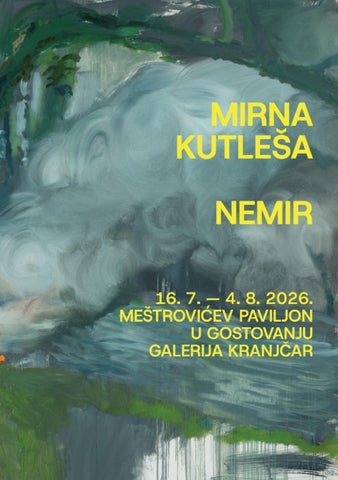
Bilo jednom šest muškaraca iz Indije, vrlo sklonih učenju, koji su pošli vidjeti slona (iako su svi bili slijepi) kako bi svaki barem dodirom mogao zadovoljiti svoju znatiželju. Prvi je prišao slonu i slučajno pao na njegov širok i snažan bok te odmah počeo uzvikivati: „Slon je kao zid!“ Drugi je, opipavajući kljovu, uzviknuo: „Tako oblo, glatko i oštro? Slon je kao koplje!“ Treći je zgrabio surlu i hrabro uzviknuo: „Osjećam da je slon poput zmije!“ Četvrti je posegnuo i dotaknuo koljeno te uzviknuo: „Pa jasno, slon je poput drveta!“ Peti je dotaknuo uho i rekao: „I najsljepiji mogu uvidjeti da je slon kao lepeza!“ Šesti je uhvatio slona za rep i uskliknuo: „Slon je vrlo sličan užetu!“ Hibridno biće nastalo iz parabole Slijepci i slon, koje se oblikuje kroz dodir, jedna je od vodilja izložbe. Figura je to nemirnog uma koji od fragmenata iskustva neprestano pokušava sastaviti cjelinu, improvizirajući između racionalizacije i imaginacije. Nemir se nastavlja na cikluse nastale od 2022. do 2026. godine. Proširuje ih novim radovima, preoblikuje njihova značenja i međusobne odnose. Za razliku od mitoloških motiva u Prije početka i šumskih prizora u Gledanju između slika, ikonografsku os Nemira nije lako razaznati. Iako se pojavljuju već poznate slike, poput Svete krave i Pokriveno šumom, emocionalni je intenzitet stavljen u prvi plan, umjesto da bude zastrt mitskim ili prirodnim fenomenima. Kako kaže umjetnica: „Prethodni fokus na vegetaciju, zračna neba i vodu u raznolikim pojavnostima sada uključuje prisutnost vatre, dima i struje. Za razliku od udaljenih arhetipa i kontemplativne zagledanosti, posljednji ciklus orijentira se prema unutra, na ono što dolazi iz utrobe, mraka, što se spušta niz kičmu...“ Nemir nije prikazivačka tema, nego učinak samoga slikarskog rada koji se protivi ukalupljenosti. Širi se
3
kao tjelesna činjenica i manifestira se na koži, koja je istodobno slikarska površina i mjesto susreta, najvidljiviji organ tijela neprestano izložen djelovanju drugih. Slike nastaju kroz povezane petlje u kojima se motivi i slikarski postupci vraćaju i preoblikuju, bez preciznog početka i kraja. Pozornost usmjeravaju na napetosti između reda i njegovih odbačenih ostataka, između onoga što ostaje vidljivo i onoga što se ne može zaboraviti, ali ni sasvim dohvatiti.1 U preradi vlastitih i preuzetih fotografskih predložaka kao slikarskih uporišta, slijeđenje jedinstvenog koncepta otpada. Slično je i sa samim načinom slikanja, koji je iznenađujuće promjenjiv. Kao i ranije, prisutne su neočekivane kombinacije boja, nepredvidivi potezi i nedovršena mjesta koja se ne skrivaju. Za razliku od ostalih radova, Sanjač (od milja nazvan Peta noga) ne proizlazi iz fotografskog predloška, nego iz memorije prethodnih slika. Riječ je o slikarskom kolažu prijašnjih likova te spoju životinje i čovjeka. Tamnom koloritu suprotstavlja se crveni bljesak smješten izvan središta kadra, koji prepoznajemo kao ljudsko biće. U položaju fetusa ono se nastanjuje u utrobi goveda – možda progutano, možda zaštićeno i živo. Opiranje racionalnom tumačenju i kronološkom vremenu podudara se s nepouzdanom naratoricom koja ne teži zaokruženosti, nego zadržava napetost radova. Odnosi prostora i figura dvojaki su, kao i njihove uloge. Nejasno je nailazimo li na protagoniste ili statiste, aktere svjesne svojega okruženja ili bačene u radnju bez izravne moći djelovanja. Slika Potraga traje donosi ohlađene ljudske siluete koje djeluju zalutalo. Nosi ih zelena struja ambijenta koji također nije logički odrediv. Potraga istodobno asocira na bijeg i potjeru, a identiteti bjegunca i progonitelja mogu se i preokrenuti. Nemir sugerira podrhtavanje uslijed latentne opasnosti, trenutak u kojem nam se ono poznato, a potisnuto, ponovno približava i izaziva jezu. Taj je princip posebno izražen u radovima nastalima od prošle godine, koji se osvrću na destruktivne ljudske porive. U slici Ono što ne znaš nelagoda proizlazi iz same vizualne strukture – sjenilo lampe koje žari u središtu kompozicije ne uspijeva razgrnuti gustoću mraka iz kojeg se pojavljuje. Odnos svjetla i tame ne nudi razjašnjenje, nego odražava napetost zatvorenoga prostora. Povezan je s poviješću nacističkog logora Buchenwald, gdje su ljudska tijela i koža reducirani na uporabni materijal. Povijest nasilja ovdje ne funkcionira kao ilustrativni sadržaj slike, nego podsjeća na neizrecivo koje ne nestaje niti se može potpuno potisnuti. Zvučni ambijent elektroakustičkog dua JMZM (Josip Maršić i Zoran Medved) prevodi vizualno iskustvo u slušne halucinacije. Zvuk je
1 Georges Didi-Huberman, The Surviving Image: Phantoms of Time and Time of Phantoms. Aby Warburg’s History of Art, Penn State University Press, 2017., https://www.psupress.org/books/titles/978-0-271-07208-1.html?srsltid=AfmBOoroNl2VAaRfiXy2bjFCI1OzWK7IQldhrAGeZyJ0VbkMk7IolKeJ
4
koncipiran kao neuhvatljiv, gotovo nikad ponavljajući loop sastavljen od osam motiva oblikovanih prema samim slikama, koji u akustici galerijskog prostora ima gotovo slikarsku funkciju – ne gradi linearne kompozicije, nego teksture, atmosfere i stanja. Pred nama su snoviti prostori koji nisu nužno ugodni ni emocionalno ujednačeni. Doimaju se poput uranjanja u predjezično područje s poroznim granicama unutarnjeg i vanjskog. Poput membrane obavijaju sadržaj nesvjesnog, a da nas on pritom ne proguta.2 Iako su česti slikarski motivi fluidne figure uz šumska staništa i rijeke, njihovo eksplicitno karakterno ili topografsko određenje izostaje. Umjesto toga, radovi se začudnim atmosferama osvrću na iskorak u nepoznato koji ne zadovoljava našu potrebu da stvari smjestimo u uredan slijed uzroka i posljedica. Prisutna je ironija prema kulturi koja teži kontroli i sigurnosti, a pritom nas tjera u još veću bojažljivost. Prisutna je i nježnost prema suputnicima granice. Slika Niz kičmu izgleda kao isječak nepredvidive situacije. Igra li se dječak vatrom ili se od nje skriva? Kolebljivost je podcrtana nemogućnošću točnog određivanja planova i kretanja središnje figure. Zagonetna kompozicija asocira na oklijevanje kao temeljno ljudsko stanje, onkraj samouvjerenih poza i jednostavnih odluka. Ipak, pred povlačenjem u sebe slike nas brane osjećajem bliskosti i opreznog povjerenja. I same su naslikane dvojako, između mekših i bezobraznih prijelaza, prozirnog i neprobojnog platna. Svojim oblikovanjem asociraju na teksturu kože, osnovni štit tijela koji je lako uništiti. Njezina površina pamti slojeve koje jedva pretvaramo u riječi: strah, uzbuđenje, bol, žudnju i potrebu za zaštitom. Kako sugerira jedna druga priča, kao ljudska bića zapanjujuće smo snalažljivi arhitekti vlastitih kaveza, no domišljatost kojom sami sebe zarobljavamo upućuje na slobodu koja ostaje neukroćena.3
2
Didier Anzieu, The Skin Ego, Karnac Books Ltd, London, 2016., str. 260. - 261.
3 Aaron Schuster, “Kafka’s Misdiagnosis”, The Paris Review, 20.03.2026., https://www.theparisreview.org/blog/2026/03/20/kafkas-misdiagnosis/
6
7
THE REDNESS BENEATH THE SKIN
Once there were six men from India, all eager to learn, who set out to see an elephant. Though each of them was blind, they hoped that by touching it they might satisfy their curiosity. The first approached the elephant and stumbled against its broad, sturdy side. At once he exclaimed, “The elephant is like a wall!” The second, feeling its tusk, cried out, “So round, smooth, and sharp? The elephant is like a spear!” The third seized its trunk and declared, “I can feel that the elephant is like a snake!” The fourth reached out and touched its knee, saying, “Of course—the elephant is like a tree!” The fifth felt its ear and remarked, “Even the blindest can tell that the elephant is like a fan!” The sixth grasped its tail and exclaimed, “The elephant is very much like a rope!” The hybrid being that emerges from the parable The Blind Men and the Elephant, taking shape through touch, is one of the exhibition’s guiding figures. It embodies a restless mind that continually attempts to assemble a whole from fragments of experience, improvising between rationalization and imagination. Unrest continues the cycles developed between 2022 and 2026. It expands them through new works, reshaping their meanings and the relationships between them. Unlike the mythological motifs of Before the Beginning and the woodland scenes of Looking Between the Paintings, the iconographic axis of Unrest is not easily discernible. Although familiar images reappear, such as Holy Cow and Covered by Forest, emotional intensity now comes to the fore instead of being veiled by mythic or natural phenomena. As the artist explains: “The previous focus on vegetation, airy skies, and water in its many manifestations now expands to include the presence of fire, smoke, and electricity. Rather than engaging with distant archetypes and contemplative observation, the latest cycle turns inward, toward what emerges from the womb, from darkness, what travels down the spine...” Unrest is not a representational subject but an effect of the very act of painting, resisting fixed forms and categorization. It unfolds as a bodily condition, manifesting itself on the skin, which is at once the surface of painting and a site of encounter, the body’s most visible organ, perpetually exposed to the touch and influence of others. Paintings emerge through interconnected loops in which motifs and painterly procedures return and are reconfigured, without a precise beginning or end. They direct attention to tensions between order and its discarded remnants, between what remains visible and what cannot
8
9
be forgotten, yet cannot be fully grasped.1 In reworking both personal and found photographic material as painterly points of departure, a single unified concept falls away. The same applies to the act of painting itself, which is strikingly variable. As before, there are unexpected colour combinations, unpredictable brushstrokes, and unfinished areas that are not concealed. Unlike other works, Dreamer (affectionately titled Fifth Leg) does not originate from a photographic source, but from the memory of previous paintings. It is a painterly collage of earlier figures and a fusion of an animal and a human. A red flash, positioned off-centre, contrasts with the dark palette and is read as a human figure. In a fetal position, it inhabits the womb of a bovine—perhaps swallowed, perhaps protected and alive. Resistance to rational interpretation and chronological time aligns with an unreliable narrator who does not strive for closure, but sustains the tension of the works. Spatial and figural relations are dual, as are their roles. It is unclear whether we encounter protagonists or extras, characters aware of their surroundings, or figures thrown into action without direct agency. The painting The Search Continues presents cooled human silhouettes that appear lost. They are carried by a green current of an indeterminate environment. The Search simultaneously suggests both escape and pursuit, and the identities of the fugitive and the pursuer may be reversed. Unrest suggests a tremor induced by latent danger, a moment in which the familiar, yet repressed, draws near again and provokes unease. This principle is particularly evident in works produced since last year, which reflect on destructive human impulses. In the painting What You Do Not Know, unease arises from the very visual structure—the lampshade glowing at the centre of the composition fails to disperse the density of darkness from which it emerges. The relation between light and dark offers no clarification, but instead reflects the tension of a confined space. It is linked to the history of the Nazi concentration camp Buchenwald, where human bodies and skin were reduced to utilitarian material. The history of violence here does not function as illustrative content within the image, but rather evokes the unsayable that neither disappears nor can be fully repressed. The sound environment of the electroacoustic duo JMZM (Josip Maršić and Zoran Medved) translates visual experience into auditory hallucinations. The sound is conceived as an elusive, almost never-repeating loop composed of eight motifs shaped in response to the paintings themselves, which assumes an almost painterly function within the aco1 Georges Didi-Huberman, The Surviving Image: Phantoms of Time and Time of Phantoms. Aby Warburg’s History of Art, Penn State University Press, 2017, https://www.psupress.org/books/titles/978-0-271-07208-1.html
ustics of the gallery space—it does not construct linear compositions, but rather textures, atmospheres, and states. Before us unfold dreamlike spaces that are not necessarily pleasant or emotionally uniform. They feel like an immersion in a pre-linguistic realm with porous boundaries between the internal and the external. Like a membrane, they envelop the contents of the unconscious, without allowing it to consume us.2 Although fluid figures among forested habitats and rivers are frequent painterly motifs, their explicit characterisation or topographical definition is absent. Instead, the works, through uncanny atmospheres, reflect on a step into the unknown that does not satisfy our need to situate things within an orderly sequence of causes and consequences. There is irony directed at a culture that strives for control and security, yet only deepens our sense of unease. There is also a tenderness towards companions of the threshold. The painting Down the Spine appears as a fragment of an unpredictable situation. Is the boy playing with fire, or is he hiding from it? Indecisiveness is underscored by the inability to precisely determine the spatial planes and movements of the central figure. The enigmatic composition evokes hesitation as a fundamental human condition, beyond self-assured poses and simple decisions. Yet, before withdrawing into themselves, the paintings defend us through a sense of closeness and cautious trust. They are themselves painted in a dual manner, between softer and more abrasive transitions, between transparency and impermeability of the canvas. Through their articulation, they evoke the texture of skin—the body’s primary shield, so easily breached. Its surface holds layers that can barely be translated into words: fear, excitement, pain, desire, and the need for protection. As another story suggests, human beings are remarkably resourceful architects of our own cages, yet the ingenuity with which we imprison ourselves points toward a freedom that remains ungoverned.3
2
10
Didier Anzieu, The Skin Ego, Karnac Books, London, 2016, pp. 260–261.
3 Aaron Schuster, “Kafka’s Misdiagnosis,” The Paris Review, March 20, 2026, https://www.theparisreview.org/blog/2026/03/20/kafkas-misdiagnosis/
11
12
13
MIRNA KUTLEŠA (1980., Rijeka) diplomirala je Slikarstvo na Akademiji likovnih umjetnosti u Zagrebu 2004. godine. Od tada kontinuirano stvara te izlaže na brojnim samostalnim i skupnim izložbama u relevantnim galerijskim prostorima u Hrvatskoj, a njezini radovi predstavljeni su i na skupnim izložbama u inozemstvu. Njezina umjetnička praksa zasniva se na slikarstvu, odnosno slici čije uporište pronalazi u različitim izvorima, ispreplićući osobno i kolektivno iskustvo. Bilo da je riječ o klasičnoj slici, crtežu ili prostornim instalacijama i intervencijama, radovi su uvijek utemeljeni u atmosferi te značenjskoj i izvedbenoj slojevitosti. Propituju vizualni okoliš, njegove hijerarhije, uspostavljene narative i kanone reprezentacije, tragajući za onim neočekivanim i potisnutim. Radovi joj se nalaze u zbirci Muzeja moderne i suvremene umjetnosti u Rijeci, u Erste Fragmenti zbirci te u mnogim privatnim zbirkama. Osim umjetničkim radom bavi se i pedagoškim radom. Osmislila je i provela niz radionica za djecu i odrasle u suradnji s lokalnim muzejima (MGR, MMSU itd.) te Sveučilištem u Rijeci. S Muzejom grada Rijeke surađivala je i na nekoliko postava izložbi, kao suradnica i autorica. Bila je članica Hrvatske zajednice samostalnih umjetnika, a od 2019. godine radi na Akademiji primijenjenih umjetnosti u Rijeci, gdje predaje slikarstvo. Kontakt: kutlesamirna@gmail.com MIRNA KUTLEŠA (born 1980, Rijeka) graduated in Painting from the Academy of Fine Arts in Zagreb in 2004. Since then, she has maintained an active artistic practice, exhibiting extensively in solo and group exhibitions at leading galleries and exhibition venues across Croatia. Her work has also been presented in group exhibitions internationally. Her artistic practice is rooted in painting, that is the image, drawing on a wide range of sources that interweave personal and collective experience. Whether expressed through painting, drawing, spatial installations, or site-specific interventions, her works are consistently grounded in atmosphere and characterised by conceptual and formal complexity. They examine the visual environment, its hierarchies, established narratives, and representational conventions, seeking out what is unexpected, overlooked, or repressed. Her works are held in the collection of the Museum of Modern and Contemporary Art in Rijeka, the Erste Fragmenti Collection, as well as in numerous private collections. Alongside her artistic practice, she is actively engaged in art education. She has conceived and led a number of workshops for children and adults in collaboration with local museums (MGR, MMSU, etc.) and the University of Rijeka. She has also collaborated with the City Museum of Rijeka on several exhibition installations, both as a collaborator and as an artist. She was a member of the Croatian Freelance Artists’ Association, and since 2019 she has been teaching Painting at the Academy of Applied Arts, University of Rijeka. Contact: kutlesamirna@gmail.com 14
15
16