This document contains both information and form fields. To read information, use the Down Arrow from a form field.
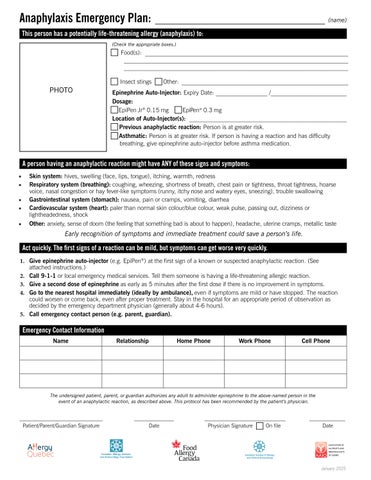
Anaphylaxis Emergency Plan: ________________________________________ (name) This person has a potentially life-threatening allergy (anaphylaxis) to: (Check the appropriate boxes.)
Food(s): ___________________________________________________________________
__________________________________________________________________________ __________________________________________________________________________ Insect stings Other: _______________________________________________________
PHOTO
Epinephrine Auto-Injector: Expiry Date: _________________ /_________________________ Dosage: EpiPen Jr® 0.15 mg EpiPen® 0.3 mg Location of Auto-Injector(s): ____________________________________________________ Previous anaphylactic reaction: Person is at greater risk. Asthmatic: Person is at greater risk. If person is having a reaction and has difficulty breathing, give epinephrine auto-injector before asthma medication.
A person having an anaphylactic reaction might have ANY of these signs and symptoms: Skin system: hives, swelling (face, lips, tongue), itching, warmth, redness Respiratory system (breathing): coughing, wheezing, shortness of breath, chest pain or tightness, throat tightness, hoarse voice, nasal congestion or hay fever-like symptoms (runny, itchy nose and watery eyes, sneezing), trouble swallowing Gastrointestinal system (stomach): nausea, pain or cramps, vomiting, diarrhea Cardiovascular system (heart): paler than normal skin colour/blue colour, weak pulse, passing out, dizziness or lightheadedness, shock Other: anxiety, sense of doom (the feeling that something bad is about to happen), headache, uterine cramps, metallic taste
Early recognition of symptoms and immediate treatment could save a person’s life.
Act quickly. The first signs of a reaction can be mild, but symptoms can get worse very quickly. 1. Give epinephrine auto-injector (e.g. EpiPen®) at the first sign of a known or suspected anaphylactic reaction. (See attached instructions.) 2. Call 9-1-1 or local emergency medical services. Tell them someone is having a life-threatening allergic reaction. 3. Give a second dose of epinephrine as early as 5 minutes after the first dose if there is no improvement in symptoms. 4. Go to the nearest hospital immediately (ideally by ambulance), even if symptoms are mild or have stopped. The reaction could worsen or come back, even after proper treatment. Stay in the hospital for an appropriate period of observation as decided by the emergency department physician (generally about 4-6 hours). 5. Call emergency contact person (e.g. parent, guardian).
Emergency Contact Information Name
Relationship
Home Phone
Work Phone
Cell Phone
The undersigned patient, parent, or guardian authorizes any adult to administer epinephrine to the above-named person in the event of an anaphylactic reaction, as described above. This protocol has been recommended by the patient’s physician.
Patient/Parent/Guardian Signature
Date
Physician Signature On file
Date
ASSOCIATION OF ALLERGISTS AND IMMUNOLOGISTS OF QUEBEC
January 2025
Blue to the sky. Orange to the thigh. How to use EpiPen® and EpiPen Jr® (epinephrine) Remove the EpiPen® from the carrier tube and follow these 2 simple steps:
1
2
Blue to the sky
Orange to the thigh
Grasp with orange tip pointing downward Remove blue safety cap by pulling straight up – do not bend or twist
Place the orange tip against the middle of the outer thigh Push hard against the leg until you hear a pop, which signals that the injection has started Hold in place for 3 full seconds
Built-in needle protection After injection, the orange cover automatically extends to ensure the needle is never exposed.
After using EpiPen®, you must seek immediate medical attention or go to the emergency room. For the next 48 hours, you must stay close to a healthcare facility or be able to call 911. Visit EpiPen.ca EpiPen® and EpiPen Jr® (epinephrine) are indicated for the emergency treatment of anaphylactic reactions in patients who are determined to be at increased risk for anaphylaxis, including individuals with a history of anaphylactic reactions. Selection of the appropriate dosage strength is determined according to patient body weight. EpiPen® and EpiPen Jr® are designed as emergency supportive therapy only. They are not a replacement for subsequent medical or hospital care. After administration, patients should seek medical attention immediately or go to the emergency room. For the next 48 hours, patients must stay within close proximity to a healthcare facility or where they can call 911. To ensure this product is right for you, always read and follow the label. Please consult the Consumer Information leaflet in your product package for warnings and precautions, side effects, and complete dosing and administration instructions. Toll free: 1-877-EPIPEN1 (1-877-374-7361) EpiPen® and EpiPen Jr® are registered trademarks of Mylan Inc., used under permission by BGP Pharma ULC, a Viatris company. VIATRIS and VIATRIS & Design are registered trademarks of Mylan Inc., used under permission by BGP Pharma ULC, a Viatris company. ©2025 Viatris Inc. All rights reserved. CA-EPI-2024-00045E – OC2024
www.EpiPen.ca Scan here to access how to use EpiPen® video