A primary role of the ADAA is to bring together producers and marketers of coal combustion products (CCPs).
Our activities cover research and development into CCP usage, advocacy and technical assistance to CCP producers and users, as well as a forum for the exchange and publication of CCP information.
For more information visit us at www.adaa.asn.au
CURRENT MEMBERS
• Adbri Limited
www.adbri.com.au
• BG&E Materials Technology
www.bgeeng.com
• Bilmar Solutions www.bilmarsolutions.com.au
• Boral Quarries & Recycling www.boral.com.au
• Cement Australia www.cementaustralia.com.au
• CS Energy www.csenergy.com.au
• Daracon Constructions www.daracon.com.au
• Delta Electricity www.de.com.au
• Dr. Jane T Aiken Consulting & Environmental Services www.cessoils.com.au
• Origin Energy Eraring Power Station www.eraring-energy.com.au
• SA Premium Cement sapremium.com.au
• ST Equipment & Technology www.steqtech.com
• Stanwell Corporation www.stanwell.com
• Vecor Australia www.vecor.com.au
RECIPROCAL MEMBERSHIPS
• CSIRO www.cmit.csiro.au
• European Coal Combustion Products Association (ECOBA) www.ecoba.org
• UK Quality Ash Association www.ukqaa.org.uk
• American Coal Ash Association www.acaa-usa.org
• World Wide Coal Combustion Products Network (WWCCPN) www.wwccpn.org
EDITORIAL
Welcome to the first Issue of Coal Ash Matters for 2026!
This issue reflects a period of significant transition across Australia’s energy, construction, and materials sectors. As the pace of change accelerates, coal combustion products—particularly fly ash—are increasingly being recognised not as by-products, but as essential resources supporting both current infrastructure and future sustainability.
A central theme throughout this edition is balance. The extension of Origin Energy’s Eraring Power Station highlights the complexity of managing Australia’s energy transition—ensuring reliable supply while renewable generation, storage, and transmission infrastructure continue to scale. It reinforces the need for coordinated, practical solutions that support both stability and long-term decarbonisation.
We are pleased to welcome ST Equipment & Technology (STET) as a new ADAA member. Bringing over three decades of global experience in fly ash beneficiation, STET reflects the growing importance of advanced processing technologies as the industry shifts toward the recovery and reuse of legacy ash. Their dry electrostatic separation process highlights how innovation can deliver high-quality, low-carbon products while minimising water use and environmental impact. As the sector continues to evolve, partnerships like these will play an important role in unlocking the full value of Australia’s ash resources.
At the same time, the industry continues to evolve through innovation and large-scale project delivery. Developments such as the Hallett Group’s Green Cement Transformation Project at Port Augusta demonstrate how legacy materials from coal-fired generation can be repurposed into low-carbon cementitious products. By converting fly ash and industrial by-products into valuable construction inputs, projects like this are reducing emissions while strengthening Australia’s manufacturing capability and supply chain resilience.
Across the sector, circular economy principles are gaining momentum. Fly ash is expanding well beyond its traditional role in concrete, supporting advanced material solutions, waste stabilisation, and performance-driven design. The integration of emerging technologies, including artificial intelligence, is further accelerating this shift—enabling faster optimisation, improved material performance, and more efficient use of resources.
Origin Energy Supports Reliable Energy Future with Eraring Extension
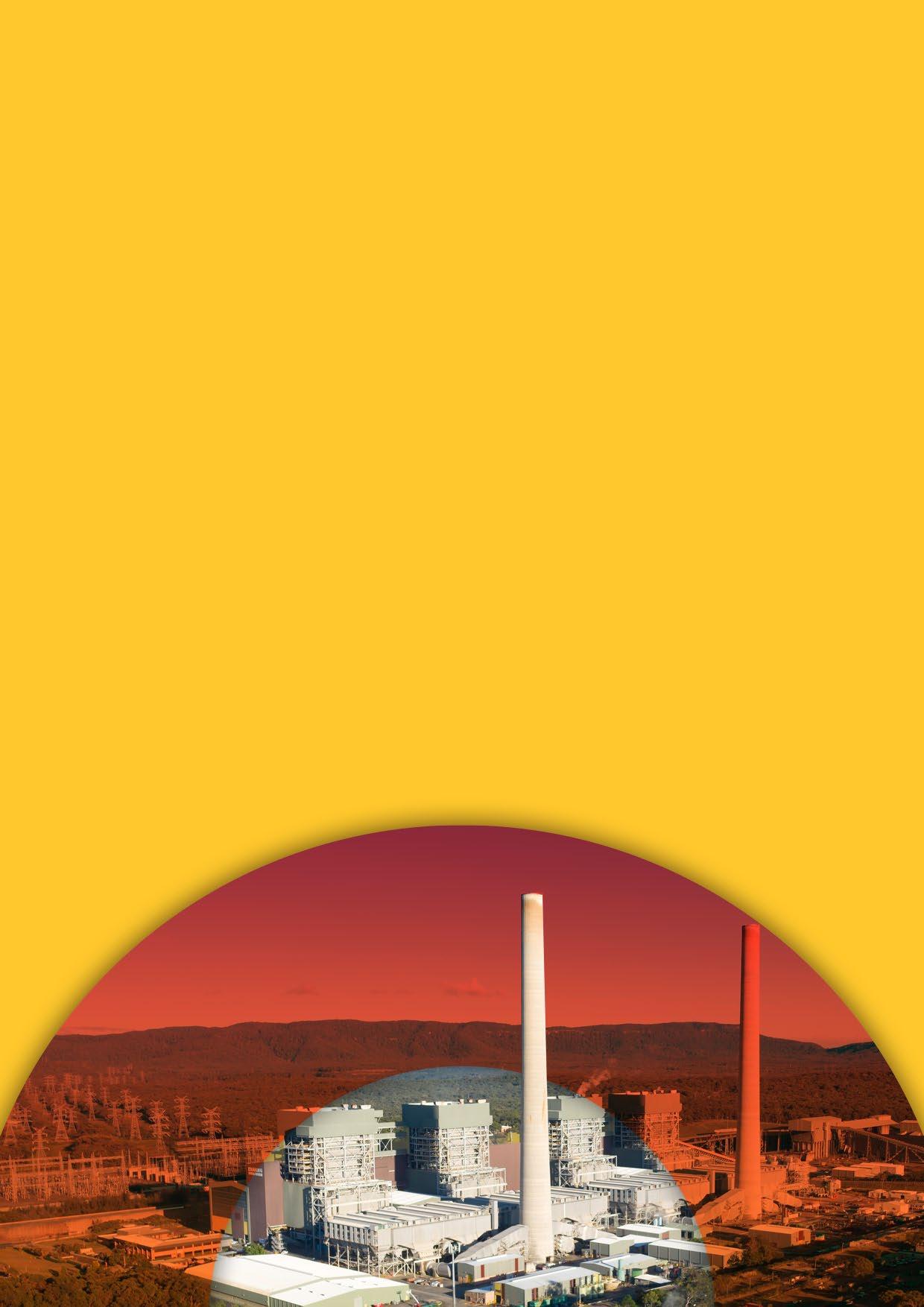
Australia’s largest coal-fired power station will remain in operation longer than planned, with Origin Energy confirming that the Eraring facility in New South Wales will now close in April 2029. The revised timeline extends the plant’s life by two years beyond its previously scheduled shutdown in August 2027, reflecting the ongoing demands of the state’s energy transition.
Located on Lake Macquarie, the Eraring Power Station is the country’s biggest generator, supplying upwards of 25% of New South Wales’ electricity. Its continued operation is considered critical to maintaining energy stability as older coal assets are gradually replaced with renewable sources and storage solutions. The plant plays a key role in supporting peak demand periods and ensuring consistent supply across the state’s grid.
The decision follows advice from the Australian Energy Market Operator that the grid was not yet ready for the plant’s earlier closure, with concerns raised about potential supply shortfalls. In response, Origin Energy confirmed it would extend operations until April 30, 2029, to support reliable electricity supply during the transition period.
According to Origin, the extension allows additional time for major renewable energy, transmission, and storage projects to be completed. Chief executive Frank Calabria has also stated that the move reflects the importance of ensuring a secure and stable energy system while new infrastructure is delivered. This includes developments such as large-scale batteries and grid upgrades designed to integrate increasing levels of renewable generation, as well as support for emerging energy technologies.
Reporting from the Australian Financial Review similarly highlights that the extension is largely driven by delays in the rollout of renewable energy projects, which have taken longer than initially anticipated. As a result, maintaining existing generation capacity has become necessary to support electricity demand and system reliability, particularly as energy consumption continues to evolve.
Following this, the New South Wales government has also indicated that the updated closure date provides certainty for the energy market, while aligning with broader plans to expand renewable generation and storage capacity across the state. Current projections suggest that by 2029, sufficient new infrastructure will be in place to replace the output of the plant and support continued energy security.
The extension of Eraring underscores the complexity of Australia’s energy transition. While renewable energy continues to expand, ensuring consistent and reliable supply remains a priority, requiring a carefully managed balance between existing generation and future infrastructure. The additional timeframe is expected to support a smoother transition, enabling industry, government, and energy providers to coordinate investment and deliver long-term energy solutions with greater confidence.
New frontiers are also emerging in resource recovery. Research into extracting rare earth elements from coal ash highlights the potential to transform existing stockpiles into strategic assets, supporting Australia’s role in critical minerals supply chains. Complementing this, developments such as Latrobe Magnesium’s demonstration plant show how fly ash can be used to produce high-value materials, including magnesium, while generating additional outputs for construction applications.
These advancements sit within a broader global context. Engagement through international forums such as the World of Coal Ash (WOCA) 2026 ensures Australian industry remains connected to global developments, strengthening collaboration and knowledge exchange across markets.
Collectively, the stories in this edition reflect an industry actively evolving—driven by innovation, strengthened partnerships, and a clear commitment to sustainability. As we look ahead, the opportunity lies in continuing to translate these advancements into practical outcomes, positioning CCPs at the centre of resilient, low-carbon infrastructure and future-focused industry.
Editor Sam Patane
Introducing ST Equipment and Technology (STET):
Introducing ST Equipment and Technology (STET): Engineering a Sustainable Future for the Australian Ash Market
ST Equipment & Technology (STET) is very pleased to be granted membership in ADAA. As a global leader in the beneficiation of fly ash, STET brings over three decades of innovation to the Australian resources and energy sector. Our commitment to the circular economy and sustainable industrial practices aligns perfectly with the ADAA’s mission to maximize the beneficial reuse of coal combustion products.
TURNING GREY FLY ASH INTO GREEN
As the energy industry undergoes a significant transition, the focus is shifting from freshly generated ash to the harvesting and remediation of “ponded” or “legacy” ash dams. STET is at the forefront of this evolution. Our proprietary, completely dry electrostatic separation process has been used commercially since 1995, processing over 25 million tons of fly ash globally.
The primary challenge for many ash producers is high and inconsistent Loss on Ignition (LOI) or carbon content, which renders the ash unsuitable for high-value concrete applications. STET’s technology offers a reliable solution, consistently producing controlled, lowLOI products that meet stringent international standards. These high-quality ashes are essential for creating durable, high-strength concrete with reduced heat of hydration—critical for major Australian infrastructure projects.
A WATER-FREE, SUSTAINABLE SOLUTION
In a landscape where water scarcity is a constant concern, STET’s process offers a decisive advantage. Unlike traditional froth flotation, which requires significant water usage and chemical additives, STET’s triboelectrostatic separation is entirely dry.
• Zero Water Consumption: Our technology eliminates the need for water, wastewater treatment, and the handling of wet tailings.
• Fine Particle Capture: The separator captures particles down to sub-micron levels, ensuring maximum recovery of valuable material.
• Low Operational Costs: With high throughput (up to 45 tons per hour) and energy-efficient operation, STET provides an economically superior alternative to traditional wet processing.
• Environmental Impact: To date, our technology has enabled the avoidance of over 20 million tons of CO2 emissions—the equivalent of removing 4.3 million cars from the road.
ENHANCED LOCAL PRESENCE IN AUSTRALIA
STET is committed to providing hands-on support to the Australian market. We are pleased to introduce Anil Rodricks, based in Sydney, as our Consultant for Business Development. Anil has collaborated with STET on sustainable Cement from desert sand and will serve as the local point of contact for ADAA members looking to optimize their ash recovery projects, evaluate legacy dam remediation, or explore technical trials.
Anil will present STET solutions at the 1 July ADAA membership meeting and will be happy to conduct individual sessions on your specific applications.
Anil an be contracted on 0409 972 869 or arodricks.ext@steqtech.com
END-TO-END PARTNERSHIP
STET offers more than just equipment; we provide a comprehensive service model. From initial sample testing at our bench-scale facility in Needham, MA, to pilot plant trials and full-scale plant design, we partner with our clients at every stage. We also assist in developing the market for the beneficiated products, turning what was once a liability into a sustainable revenue stream.
Fly Ash solutions by STET wil be on dsiplay at WOCA 2026 in Lexington 3-7 May. Visit https://steqtech.com/applications/flyash
We look forward to connecting with ADAA members at WOCA, where STET will be participating. We’re also pleased to welcome selected members for a plant visit to Brunner Island, PA. We value the opportunity to collaborate with ADAA members in advancing innovation and sustainability across Australia’s coal ash sector.
Hallett Group Driving Low Carbon Cement Innovation at Port Augusta
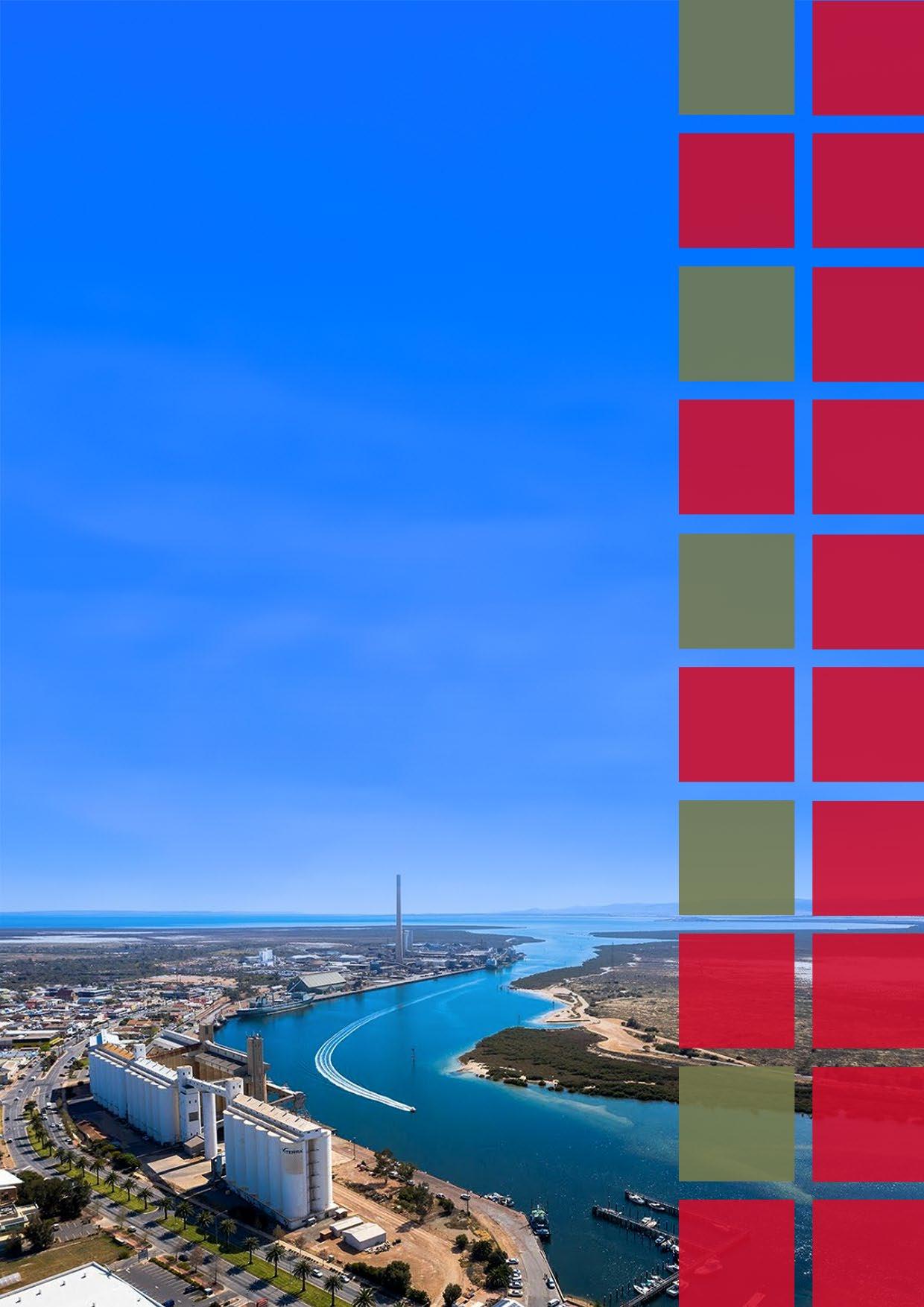
South Australia is advancing a major step in its industrial and energy transition, with strong government backing for a new green cement project at Port Augusta led by ADAA member, Hallett Group. The initiative will transform legacy materials from former coal-fired power generation into a valuable resource for low-carbon construction.
The $200 million Green Cement Transformation Project will repurpose the site of the former Northern Power Station, turning it into a modern manufacturing hub that produces environmentally friendly cement. Central to the project is the use of fly ash - an industrial by-product from coal-fired power stations - alongside slag from the Nyrstar Port Pirie smelter. These materials will be processed into supplementary cementitious materials (SCMs), which can significantly reduce the carbon intensity of traditional cement production.
The South Australian government has committed $12 million in funding to support the project, complementing a $20 million contribution from the Australian Government through the Modern Manufacturing Initiative. This combined investment is aimed at accelerating construction and ensuring the project can meet growing demand for sustainable building materials.
Once operational, the facility is expected to reduce carbon emissions from cement production by up to 30% while also contributing to broader emissions reductions of up to one million tonnes annually over time. The project will also help replace imported cement materials, strengthening Australia’s domestic manufacturing capability and supply chain resilience.
In addition to its environmental benefits, the development is expected to deliver significant economic outcomes for the region. Around 150 jobs will be created during construction, with approximately 50 ongoing roles once the facility is operational. The project is also anticipated to stimulate further industrial activity across the Upper Spencer Gulf, supporting emerging industries such as carbon reuse, synthetic fuels, and green materials manufacturing.
The initiative forms part of a broader transformation of Port Augusta into a renewable energy and industrial hub. Over recent years, the region has attracted billions of dollars in investment across renewable energy generation, storage, and associated infrastructure, positioning it as a key centre in South Australia’s lowcarbon economy.
By converting legacy waste into a valuable construction input, the Hallett project highlights the growing role of innovation in Australia’s transition to more sustainable industry. It demonstrates how former energy assets can be repurposed to support future-focused manufacturing, while delivering both economic growth and environmental benefits.
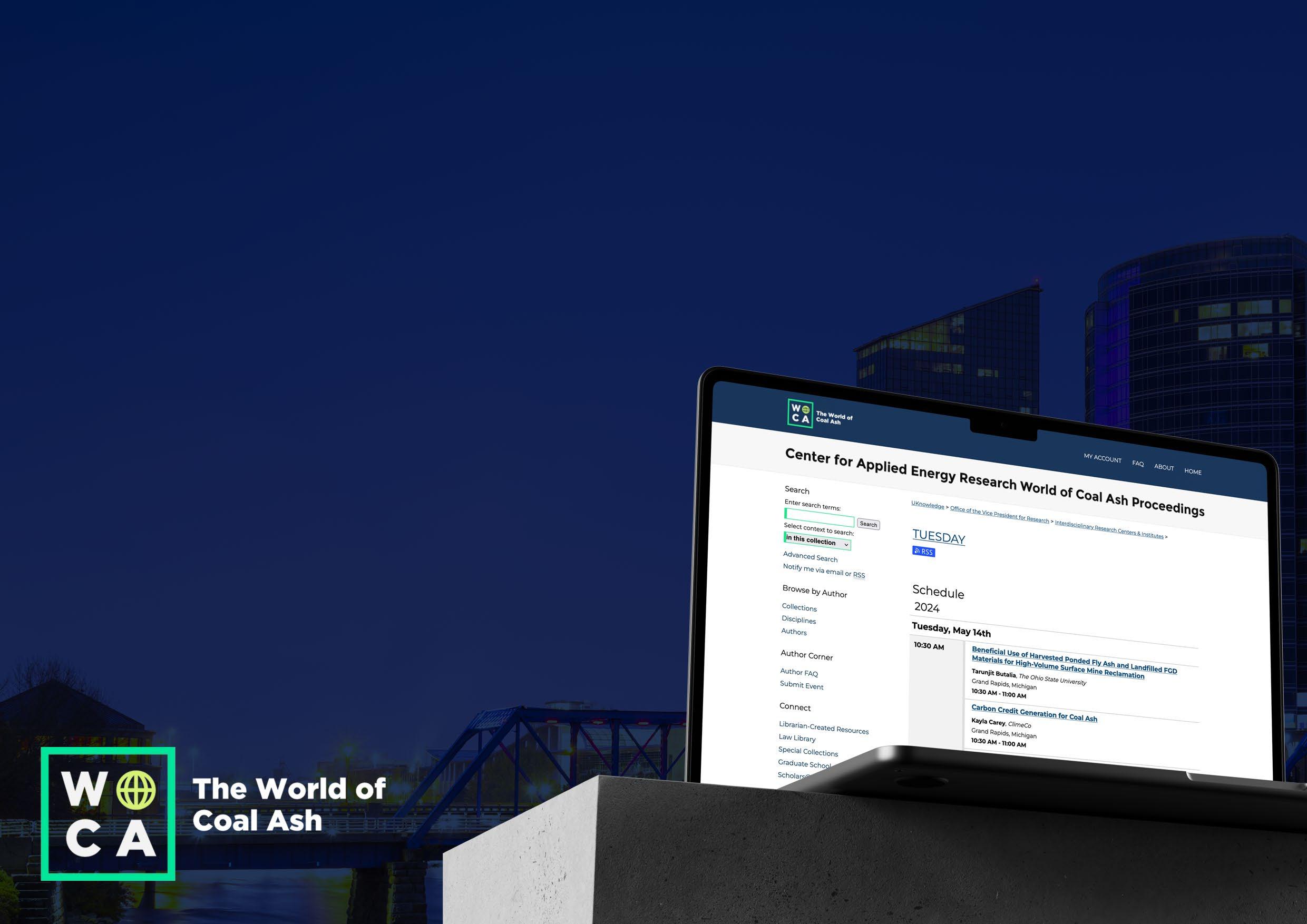
Nearly Two Decades of World of Coal Ash Presentations: A LOOK INSIDE THE ASH LIBRARY
With over 1,500 papers downloaded by users worldwide, this upgraded platform is designed to enhance accessibility and engagement
All World of Coal Ash presentations from 2005 to PRESENT are catalogued and available in a user-friendly, searchable directory online.
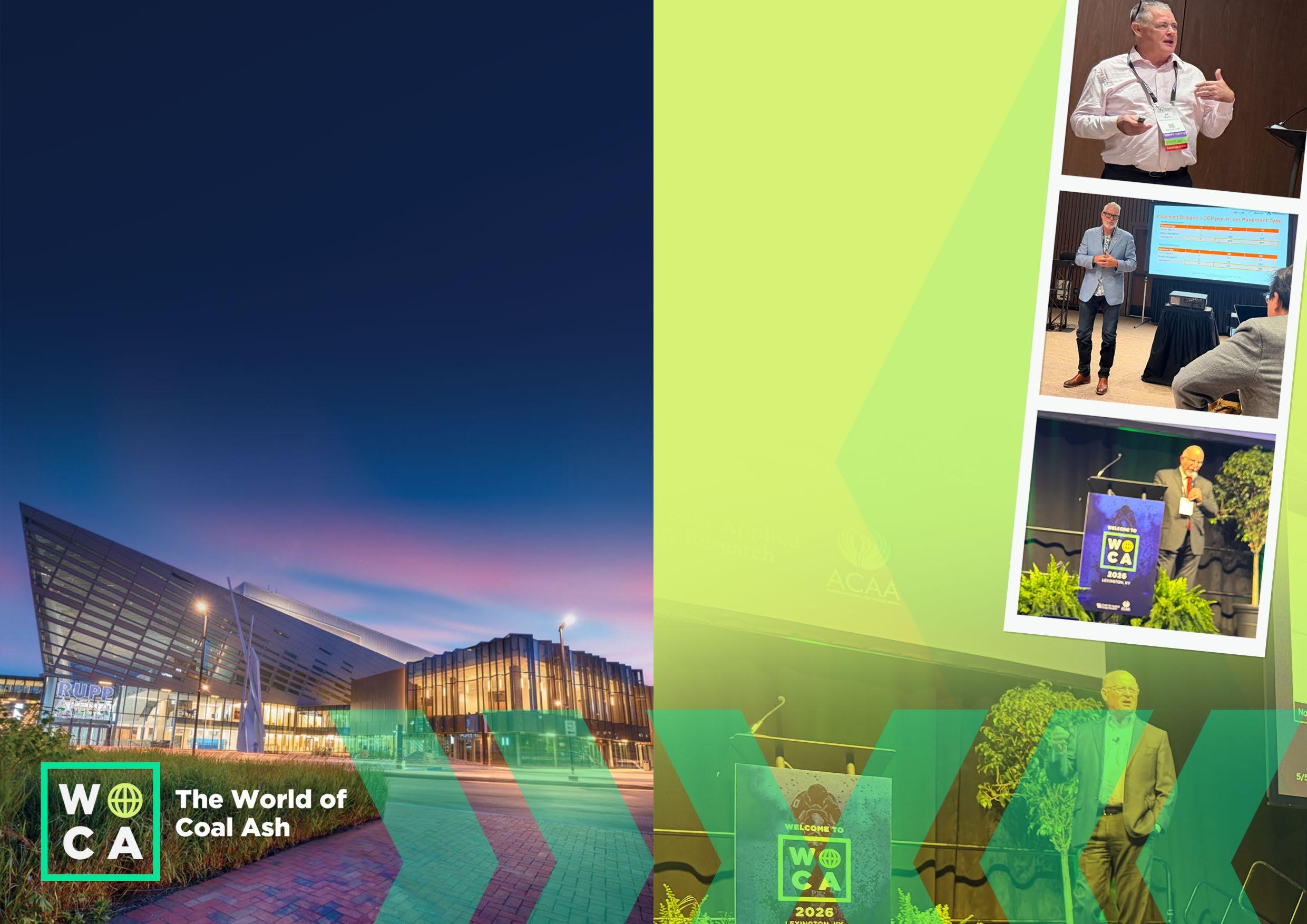
World of Coal Ash 2026 Conference
4-7 May 2026 Lexington, Kentucky
The Ash Development Association of Australia (ADAA) coordinated an Australian delegation to the World of Coal Ash (WOCA) 2026, being the premier international conference on the science, application, and sustainability of coal combustion products (CCPs).
Other than attending the conference, our delegation was invited on a guided tour of UK CAER research facilities (cementitious/low-carbon materials; applied petrology & ash characterisation) + roundtable conversations with ACAA/UK CAER experts on standards, market development, and ponded-ash harvesting.
The eleventh iteration of the largest international event for coal combustion products (coal ash) industry set a new record for attendance. A total of 1,291 attendees from 45 U.S. states and 13 foreign countries participated in Lexington, Kentucky representing 600 organizations. There was broad cross-sector representation from utilities, engineering and environmental consultants, construction and remediation contractors, technology providers, academics, and regulators.
Monday, May 4, kicked off with both Short Course sections, Coal Ash 101 and Coal Ash 301, where our own Bill Martin was a presenter. The Plenary Session on Tuesday featured keynote presentations by Scott Dickson, President of Heidelberg Materials Southeast Region, spoke of Reimagining Fly Ash Beneficial Use. Dr. Tom Robl, Senior Advisor at the University of Kentucky Center for Applied Energy Research, spoke of the use coal ash in enhanced oil recovery. John Ward, Chair of the ACAA Government Relations Committee, and Thomas Adams, ACAA Executive Director, made a joint presentation on messaging the realities of the beneficial use of coal combustion products. By the end of WOCA XI, over 225 oral presentations had been made. Craig Heidrich (ADAA), Bill Martin (Cemalt), Mars Capasso (Hallet) made presentations on the Australian market.
Main strategic talking points; WOCA 2026 program focus was positioned around a clear industry transition: CCR compliance and closure obligations are driving large-scale ash management decisions, while cement and concrete markets primary themes revolved around the need for continued reliable SCM supply.
The strongest recurring message is that coal combustion products (in particular fly ash) remains highly valued in concrete, but the supply chain is changing as coal-fired generation is forecast to decline in the medium term. Presentations on harvesting, beneficiation, quality control, logistics and characterisation continue to be strategically important. In the US there are 26 active harvesting operations.
Take away message for Australian operations; For an Australian industry audience, the most relevant message is: stored CCPs is no longer just a closure liability; it is a potential SCM reserve, provided it can be recovered, processed, certified and supplied consistently.
WOCA XII will be held in Tampa, Florida May 15 to 18, 2028! Mark your calendar and save the dates.
FLY ASH IS QUIETLY POWERING THE NEXT SHIFT IN SUSTAINABLE CONSTRUCTION WITH THE HELP OF ARTIFICIAL INTELLIGENCE
As the construction industry accelerates its shift toward sustainability, materials once dismissed as waste are being redefined as valuable resources.
Among the most significant is fly ash - a by product of coal combustion that has long played a supporting role in concrete but is now emerging as a key solution to some of the industry’s most pressing environmental challenges.
Traditionally, fly ash has been valued for its ability to enhance concrete performance. Its fine particles and pozzolanic properties enable it to react with calcium hydroxide, forming compounds that improve strength, durability, and long-term resilience. Just as importantly, it reduces reliance on cement - one of the largest contributors to carbon emissions in construction. While its benefits in conventional concrete are well established, recent innovations are pushing its potential far beyond traditional applications.
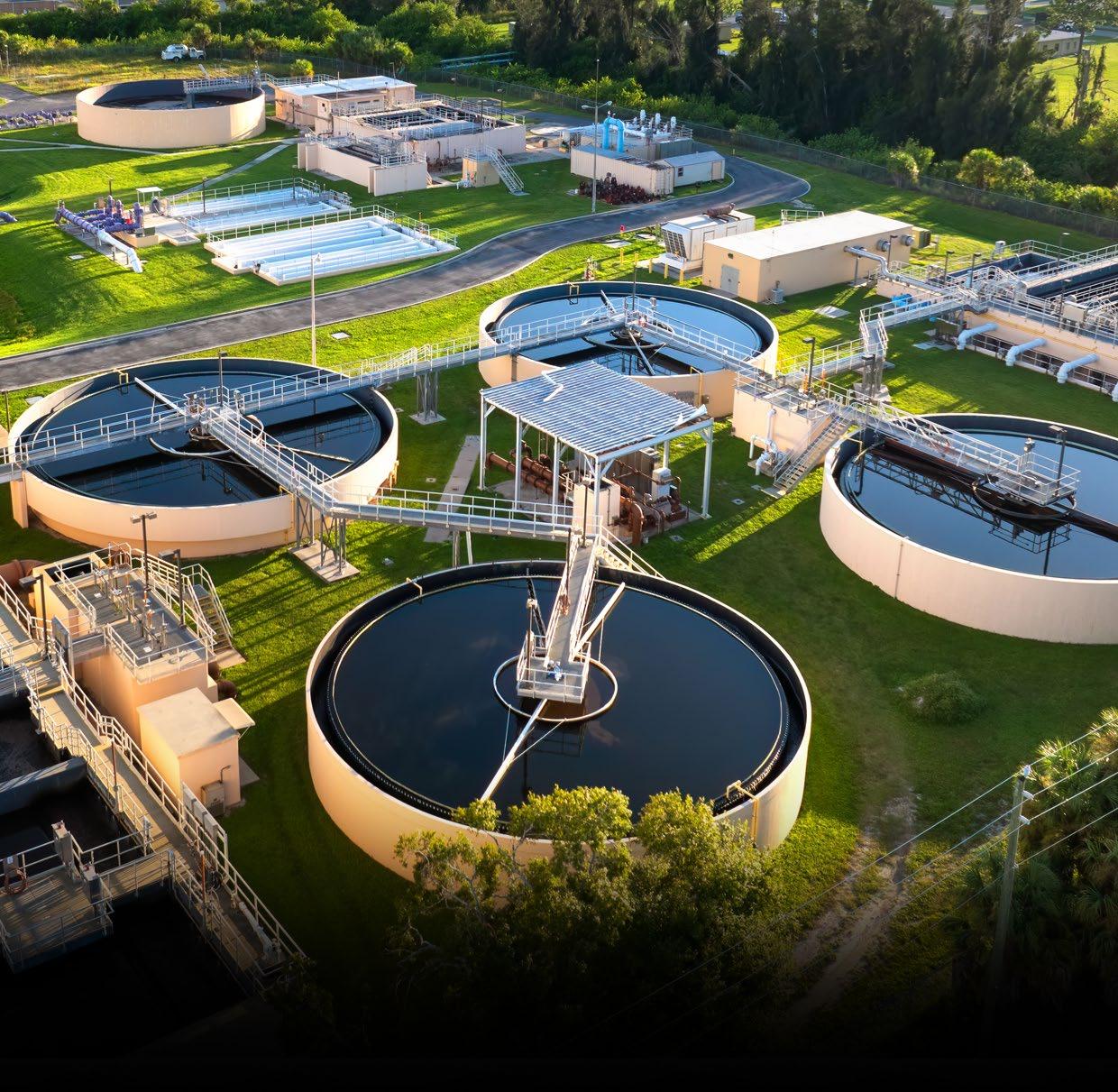
One of the most complex waste challenges facing modern infrastructure is municipal sludge. Generated in vast quantities by wastewater treatment plants, sludge is notoriously difficult to manage due to its high moisture content and poor structural integrity. Conventional disposal methods, such as landfill and incineration, are both costly and environmentally damaging, highlighting the urgent need for more sustainable solutions.
This is where fly ash is proving transformative. When combined with sludge alongside materials such as slag and gypsum, it enables the stabilisation and solidification of waste into a viable construction material. Fly ash plays a critical role in this process, acting as a binding agent that improves strength, reduces permeability, and converts unstable sludge into a material capable of meeting structural demands.
What elevates this advancement further is the integration of artificial intelligence. Rather than relying on time-consuming trial-and-error methods, researchers are now using machine learning to evaluate and optimise thousands of material combinations. These systems can rapidly identify the most effective ratios of sludge, fly ash, and additives to maximise compressive strength and performance. The result is a faster, more precise, and highly scalable approach to material design - positioning fly ash as a central component rather than a supplementary one.
The implications for the construction industry are substantial. This approach not only diverts significant volumes of waste from landfill but also reduces dependence on virgin materials and lowers the carbon footprint associated with cement production. It represents a clear move toward a circular economy, where materials are repurposed, optimised, and engineered for performance rather than discarded.
For contractors, suppliers, and developers, this signals a fundamental shift. Materials like fly ash are no longer just cost-effective additives - they are becoming strategic assets in delivering more sustainable, efficient, and competitive projects.
The future of construction will be defined by how effectively the industry embraces innovations like these. In that future, fly ash is no longer a byproduct - it is a critical part of the solution.
MONASH - FROM WASTE TO WEALTH: Australia Advances Rare Earth Recovery from Coal Ash LATROBE MAGNESIUM’ S NEW DEMONSTRATION
Australia is positioning itself at the forefront of a new wave of resource innovation, with emerging technologies set to transform coal ash into a valuable source of rare earth elements - critical materials used in clean energy, advanced manufacturing and modern technology.
New research and industry initiatives highlight how coal-fired power station waste, long considered an environmental by-product, could play a key role in strengthening the nation’s critical minerals supply. By extracting rare earth elements from fly ash, Australia has the potential to significantly boost domestic production without the need to develop new mines.
This approach - often described as “urban mining” - focuses on recovering valuable materials from existing industrial waste streams. Coal ash, which has accumulated in large quantities over decades, contains all 17 rare earth elements, many of which are essential for technologies such as electric vehicles, wind turbines, and highperformance electronics.
Researchers, including teams from Monash University, have developed processes capable of extracting more than 90% of these elements from fly ash. The potential scale is significant, with estimates suggesting that up to 45,000 tonnes of rare earth materials could be recovered annually - more than double Australia’s previous production levels and a substantial share of global supply.
Importantly, this method offers a faster and more efficient pathway to market compared to traditional mining, which can take years or even decades to develop. By leveraging existing waste materials and infrastructure, the process reduces the need for exploration, lowers capital costs, and accelerates the delivery of critical minerals to market.
The opportunity also aligns with Australia’s broader strategy to expand its role in global critical minerals supply chains. Rare earth elements are increasingly vital to the transition to renewable energy and electrification, and global demand continues to grow rapidly. By unlocking new sources through innovation, Australia can enhance supply security while supporting domestic manufacturing and technology industries.
In addition to its economic potential, the approach represents a shift in how industrial materials are viewed - turning legacy waste into a strategic asset. Existing ash stockpiles, particularly in regions with a long history of coal-fired power generation, could become valuable resource hubs supporting future industries.
As development progresses from laboratory research to pilot and commercial-scale projects, the concept of extracting rare earths from coal ash is gaining momentum. It demonstrates how innovation and resource efficiency can work together to support both industrial growth and the global transition to cleaner energy systems.
This emerging capability underscores a broader transformation within Australia’s resources sector - one that combines traditional strengths in mining with new technologies to deliver sustainable, forward-looking solutions.
PLANT SETS THE STAGE FOR SCALE-UP OF SUSTAINABLE MAGNESIUM SUPPLY
Fly ash has long been positioned as a valuable input in construction, particularly in concrete and cement systems. But its potential is now extending far beyond traditional applications, with new developments showing how it can play a central role in advanced manufacturing and critical mineral supply.
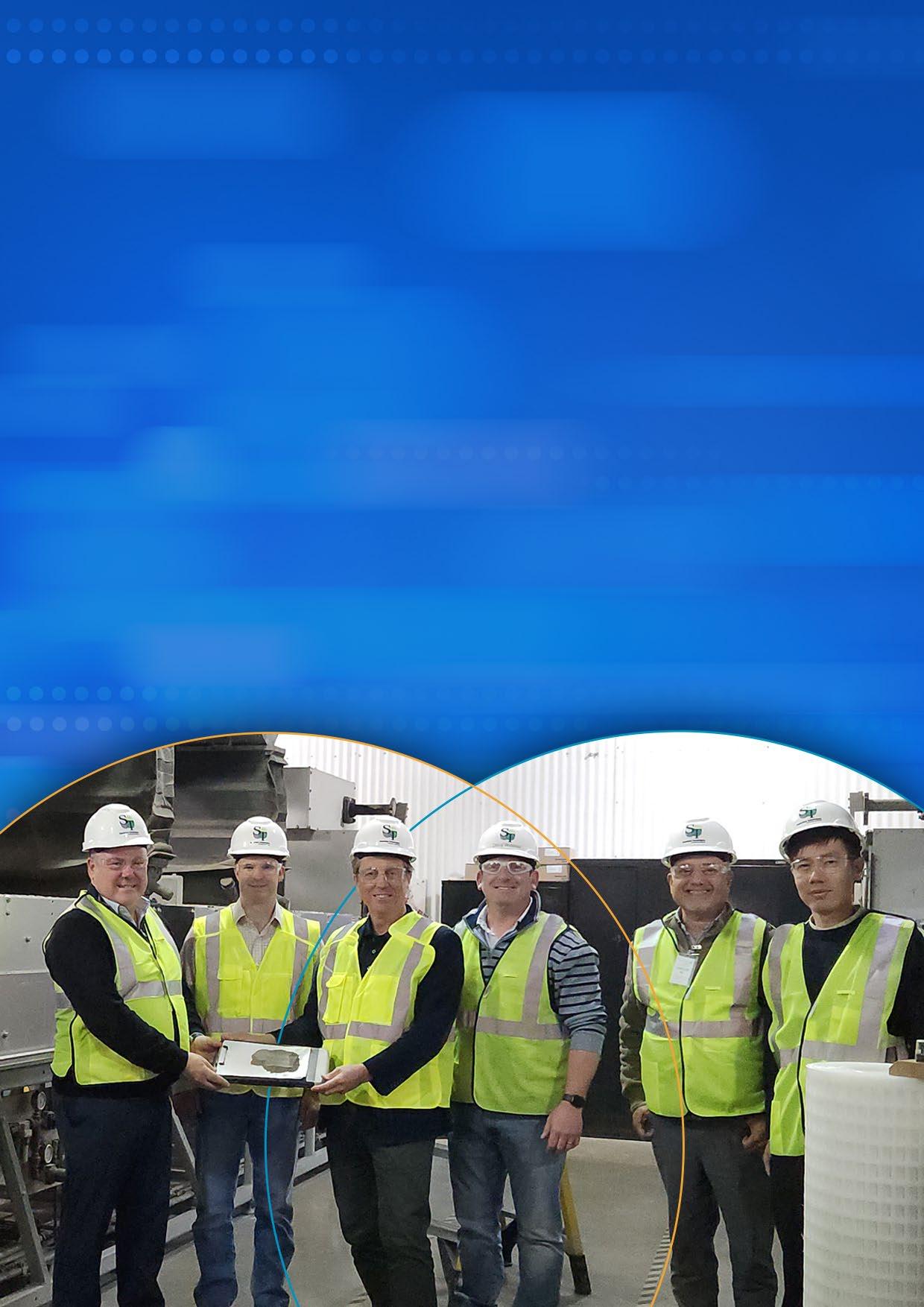
Latrobe Magnesium’s demonstration plant in Victoria is a clear example of this shift. Instead of treating fly ash as a by-product to be managed, the company is using it as the primary feedstock to produce magnesium - one of the world’s most important industrial metals. Sourced from brown coal power generation, fly ash has historically been stockpiled in large volumes, presenting both an environmental challenge and an underutilised resource. Latrobe’s approach flips that narrative, extracting value from this material through a process that produces not only magnesium, but also supplementary cementitious materials and other usable by-products.
At its core, the project is about rethinking waste. Fly ash contains a range of minerals, including magnesium compounds, that can be separated and refined through controlled processing. By unlocking these components, the plant effectively turns a legacy waste stream into a multi-output resource, supporting both manufacturing and construction industries.
The demonstration facility, with an initial capacity of around 1,000 tonnes per year, has already successfully produced magnesium oxide - an important milestone in proving the viability of the technology. More importantly, it provides a real-world testing ground to refine the process and support the transition toward larger-scale production.
What makes this particularly significant is the environmental impact.
Traditional magnesium production is highly carbon-intensive, often relying on energy-heavy processes. By using fly ash as the base material, Latrobe’s method reduces reliance on virgin resources while lowering emissions, aligning with broader industry efforts to decarbonise.
There’s also a supply chain dimension. Magnesium is a critical material used across automotive, aerospace, and energy sectors, yet global production is heavily concentrated. Developing alternative production methods using locally available fly ash not only improves sustainability but also strengthens domestic manufacturing capability.
Beyond magnesium itself, the process creates additional outputs that can be fed back into construction. The generation of supplementary cementitious materials reinforces the circular potential of fly ash allowing it to move across industries rather than being confined to a single use.
both environmental and economic outcomes.
Ultimately, this isn’t just a story about magnesium it’s a story about fly ash. As industries look for practical ways to reduce emissions and improve resource efficiency, materials that already exist in abundance are becoming increasingly important.
Fly ash is no longer just a supporting material in construction. It’s becoming a foundation for new manufacturing pathways, proving that the future of low-carbon industry may depend less on what we create - and more on how we reuse what we already have.
The Latrobe Valley, once defined by coal-fired energy, is now becoming a testing ground for this kind of transition. Projects like this demonstrate how existing industrial by-products can be repurposed into high-value materials, supporting
ADAA Delegates Visit STET’s Brunner Island Fly Ash Separation Plant
Following a great WOCA in Lexington, Mars Capasso and Weiwei Duan of Hallett Group visited the Separation Technologies LLC Triboelectrostatic plant alongside Anil Rodricks, STET’s Australian representative, and Herve Guicherd, STET’s VP of International Sales.
The visit included wide-ranging discussions with STET’s plant management on plant design and the beneficiation of ponded ash, drawing on STET’s decades of experience in fly ash beneficiation. Mars and Weiwei also witnessed the plant in action, seeing firsthand the difference between the feed and product material from STET’s 40TPH separator. The group then visited the ponded ash basins to gain a better understanding of the fly ash that will continue to be managed at Brunner Island for years to come.
Anil will present STET’s technology at the ADAA meeting on 1st July and will be happy to discuss any questions.
Many thanks to ADAA for facilitating our engagement and making the site visit possible. See you soon!
Coal Ash Matters is the ADAA’s main educational publication that is produced twice a year for the benefit of ADAA members and readers. Before each publication is drafted, an email is sent out to all members, urging them to contribute stories that they think are of interest. The types of content we are looking for include:
• NEW DEVELOPMENTS
• TECHNOLOGICAL INNOVATIONS
• NEW PROJECTS
• NEW EMPLOYEES
• INDUSTRY RESEARCH
If you have an idea or some content that you think should be shared with the CCP community, get in contact with the editor, Sam Patane at publications@adaa.asn.au