here are wrapped presents from Santa under the tree and a steaming mug of hot chocolate waiting for me on the table. Six-year-old me is rushing to get out of bed to see what magic has been conjured up on Christmas morning. A decade later, my parents have to pry me out of bed as I try to catch up on sleep in the aftermath of a chaotic end of the semester.
When I was little, Christmas was easily “the most wonderful time of the year.” When it came time to bring out the tree and decorations, the only thing I needed to worry about was making sure my family kept up with the Advent calendar. The warm feeling of being home at the end of the school day and cozying up in fleece pajamas to watch a Christmas movie is an experience that seems to fade as we get older. With schoolwork and more responsibilities, it feels as though we have no time, no space, and no motivation to keep this spirit up. As I left childhood behind, my fond memories of Christmas became tinged with bittersweet nostalgia and the dread of semester finals. This realization was disheartening, and I resigned myself to having an indifferent attitude toward the Christmas season.
This year, as I began my senior year, I set out to experience the Christmas season with a renewed sense of wonder, especially since I am most likely going to be moving away for college. I wanted to make the most of the time I have left with my family. I realized that my family’s Christmastime traditions are what kept the Christmas “magic” alive for me as a kid. These traditions carved out a space for us to spend time doing something together. Our family’s Christmas traditions center on a homemade Advent calendar, with each day featuring a different activity, like watching a Christmas movie, making hot cocoa, or driving around to see the neighborhood Christmas lights. In the past two years, it has been difficult for us to keep up with this calendar due to everyone’s busy schedules. However, this year, we decided to make it a point to make time for it, and I find myself enjoying the season in refreshing ways.
This Christmas, if you are missing the warm feelings of the season, I encourage you to make time to participate in a tradition that you may have given up. Or, start a new one with your family or friends. Do something that brings you closer to someone—call a loved one or a friend you haven’t connected with in a while, bake your favorite Christmas cookies to share, take a stroll with your family to see your neighborhood Christmas lights, and watch the magic return to the season.
EAGLE EYE
Hawaii Baptist Academy 2429 Pali Highway
Honolulu, Hawaii 96817
Hawaii Baptist Academy’s Eagle Eye is a student-run and student-centered publication.
EDITOR-IN-CHIEF
Olivia Kim (‘26)
STAFF
Sarah Byrer (‘28)
Lauren Espiritu (‘26)
Colton Gallano (‘26)
Hannah Garces (‘27)
Janel Lee (‘27)
Kaitlyn Legawa (‘28)
Maya Wong (‘28)
GUEST CONTRIBUTOR
Summer Malinger (‘27)
ADVISOR
Eunice Sim
Follow us
@hbaeagleeye on Instagram www.hbaeagleeye.com
Photo By Lauren Espiritu (‘26)
New Phone Restrictions Take Effect
→ By Maya Wong (‘28) and Summer Malinger (‘27) NEWS
This year, across the United States, many schools adopted phone bans during school hours. According to EdWeek.org, as of November 2025, 32 states and the District of Columbia “require school districts to ban or restrict students’ use of cellphones in schools.” This response to phone use comes in the wake of many studies pointing to the negative effects of phone usage—and, in particular, social media usage—on youth. In 2024, The Anxious Generation by Jonathan Haidt became a bestselling book for sounding the alarm on “smartphone use, social media, and overprotective parenting,” linking these factors to the rise in mental health issues among young people. For schools, the rationale behind banning phone use is also due to how much they have become a distraction during the school day.
Beginning November 24, 2025, all HBA high school students also had to put their phones away during the school day, including during breaks and lunches, with some exceptions for upperclassmen. (This policy had already been in effect for freshmen since the start of the school year.) Juniors can use their phones only during their independent study periods, while seniors can use theirs anytime they are in the senior area.
Ryan Frontiera, high school vice principal, emphasized that the policy is not an entirely new expectation; students have always been required to put their phones away during class time. The consequences for violating the new policy are also not new, he explained. “Students will get demerits or referrals, and if they are using it during an inappropriate time, it can be confiscated by the teachers,” he said.
Sydney Moore, a junior who transferred from Christian Academy to HBA, said that her former school had a no-phone policy that was even stricter. However, she noted that HBA students seemed more compliant and willing to do what is expected of them. On the other hand, Cassidy Mark, also a junior, comes from a school where phone policies were determined by the classroom teacher. “I was always allowed to be on my phone since the teacher trusted me to do my work first or on my own time,” she said. Like Moore, Mark has noticed that HBA students have done well staying away from their phones
Beginning November 24, 2025, HBA high school students must put their phones away during the school day, with some exceptions for upperclassmen. PHOTOGRAPH BY MAYA WONG (‘28)
Poetry Meets Karaoke in AP English
→ By Lauren Espiritu (‘26) NEWS
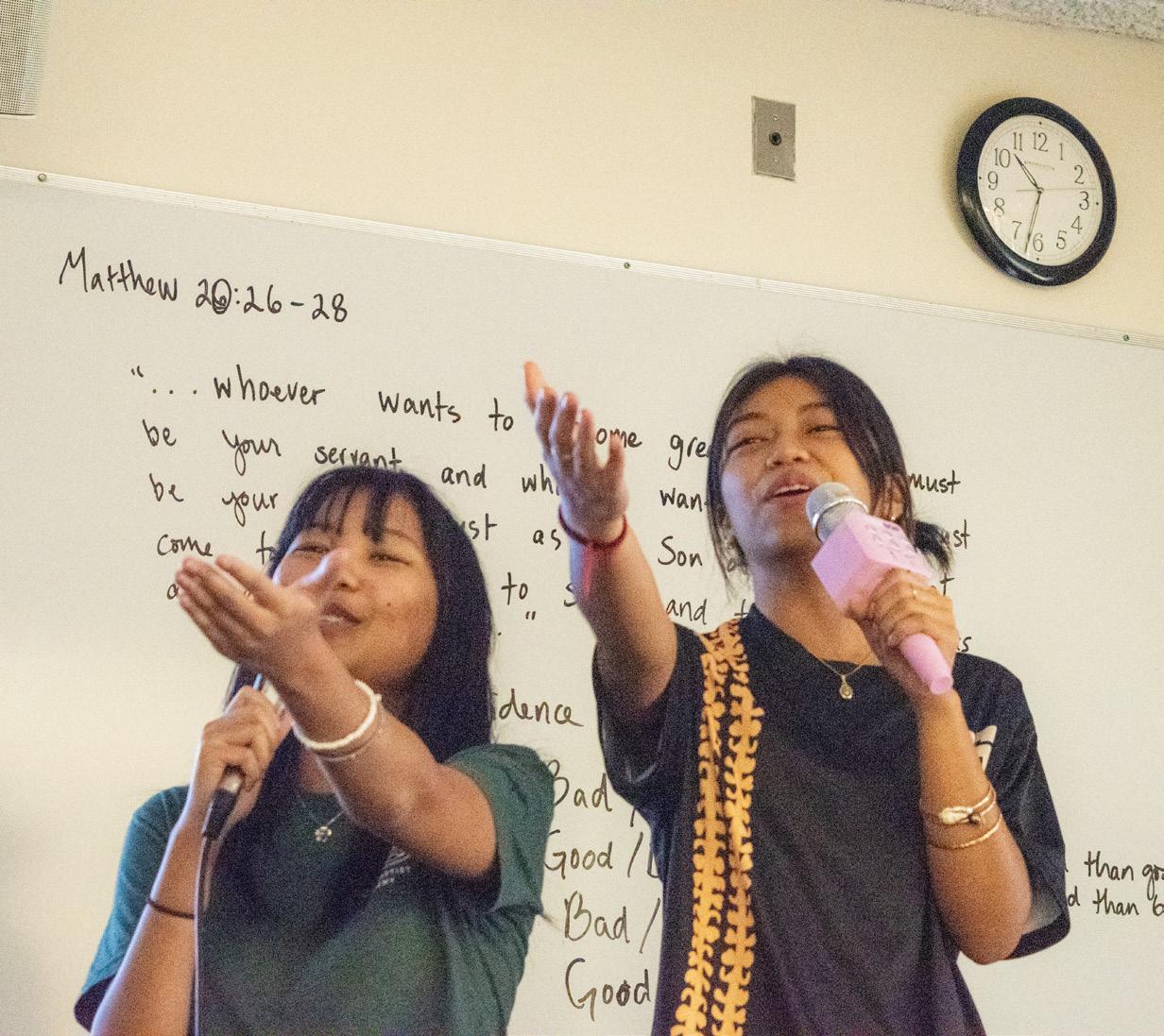
With mics in hand, seniors Vanessa He and Trinity Vong took the stage as the first pair to perform their karaoke number, “Sunday Morning” by Maroon 5. And as soon as the chorus hit, everyone started singing along.
Poetry Karaoke Day in AP English 12 had come. It was a day for everyone to show off their singing and poetry skills to Alexandra Taylor, the teacher who decided to make assignments a little bit more fun. Along with other novel assignments this year such as “Claim a Poem” and “Claim a Painting,” Taylor decided to assign Poetry Karaoke to her class of seniors.
In early November, as Taylor prepared for the AP English 12 poetry unit, she wondered how she could combat many students’ perceptions that studying poetic devices is boring or inaccessible. She eventually decided on Poetry Karaoke. After hearing about the assignment, most students were excited because they got to choose a song that spoke to them. Vivien Wong said, “I thought it was a great way to not only expand on our poetry skills but also a way to learn and have fun.”
Students could choose to work individually or in groups of up to three people. The assignment consisted of analyzing three sections of a song—a verse, a pre-chorus, and a chorus—by identifying poetic devices and then writing a thesis statement for the song. Students had to annotate the song lyrics, connecting devices such as symbolism, interrogative questioning, similes, or tone, to what the songwriter is trying to say. The final part of the assignment was to perform the song in class.
On the day of Poetry Karaoke, students brought sweet and savory dishes to share, adding to the celebratory feel of the class. Taylor recalled, “It was the best day ever. And it made me believe in the educational value of it, because I felt that it was more accessible to students to do songs that they knew really well rather than just a lot of really hard poetry.”
(Top) Cáylee Lucas and Lauren Espiritu, who sang with Lucas for moral support, serenaded their class with a passionate rendition of “Careless Whisper” by George Michael.
PHOTOGRAPH BY JACEY KAGE (‘26).
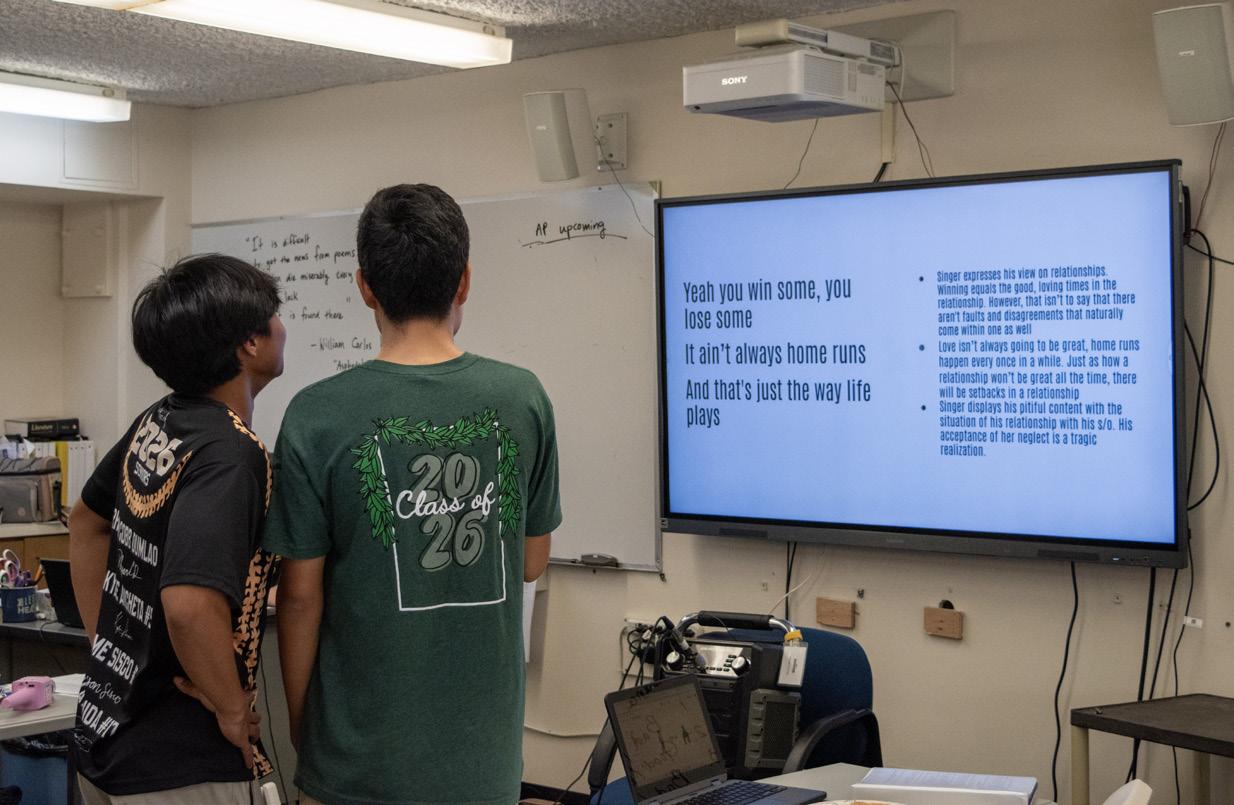
(Bottom) Colton Gallano and Braeden Takeuchi present their analysis of “98 Braves” by Morgan Wallen.
PHOTOGRAPH BY LAUREN ESPIRITU (‘26).
Wong and Lauren Espiritu chose a karaoke classic, “You Belong With Me” by Taylor Swift. Little did they know that Taylor had always wanted to teach a compare and contrast lesson for Swift’s
Continued on page 14
How Not To Be An Unc
→ By Kaitlyn Legawa (‘28) FEATURE
Slang words are one of the things that define a generation. Today’s young people, those that fall in the Gen Z and Gen Alpha group, have chalked up a long list of slang words, mostly popularized through social media. In recent years, some of these words have been selected as Words of the Year by the Oxford University Press: “rizz” (2023), “brain rot” (2024), and “ragebait” (2025). In case you need to brush up on your slang vocab, here’s a glossary of some trendy terms.
HEARD AROUND CAMPUS
“I need to lock in for this test or else my grade will drop.”
JAPANESE 1 GRADING RUBRIC: SIGMA (4 pts)
Completed all requirements.
Very demure & mindful.Huge aura.
SKIBBIDI RIZZ (3 pts)
Complete most requirements - you’re cooking.
MID (2 PTS)
Completed a few requirements. This was not a slay. It’s giving low effort.
BETA OHIO (1 PT)
You high key sold.
“ I’m crashing out right now!”
“We just ate that up.”
“Is my outfit tuff?”
“This sandwich is kind of mid.”
“His new haircut is too short. He looks chopped.”
“I’m so cooked for this test. I forgot to study.”
Slang Glossary
Cook: excel in something, to do well
Cooked: doomed, done for
Ate and left no crumbs: when someone did something so well that nobody could do it better
Chopped: unattractive, ugly
Glaze/glazing: praise excessively
Rage bait: anything meant to intentionally provoke anger
6 7: originated from the song “Doot Doot (6 7)” by Skrilla, any reference to these numbers will typically get a response where everyone says “6 7” in a specific way that mimics the original video
Crash out: to get mad or upset despite your better judgment
Lock in: to focus
Rizz: ‘charisma’, ability to attract someone romantically
Mid: mediocre, disappointing, average
Chat: used to address a group of people
Brain rot: negative effects of consuming trivial online content
Face card: a person’s face or appearance very attractive
Huzz (and other prefixes of -uzz): an attractive person
Goated: considered to be the Greatest Of All Time
Aura farming: doing something to become cool repeatedly
Tuff: awesome, cool, impressive
Big back: someone who’s overweight or eats a lot
Unc: refers to someone who is older than you or someone who is acting old/out of touch with current trends
CEW Challenges Students To Step Out In Faith
→ By Hannah Garces (‘27) NEWS
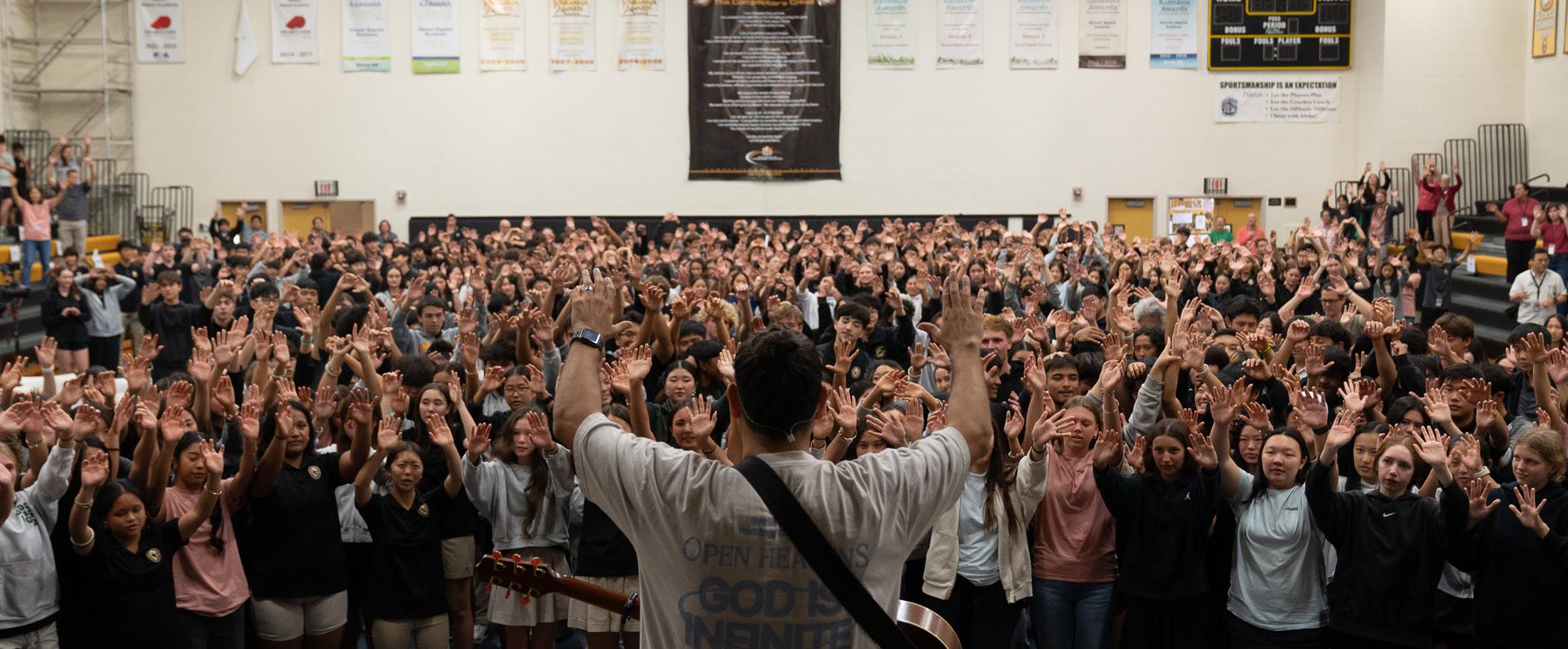
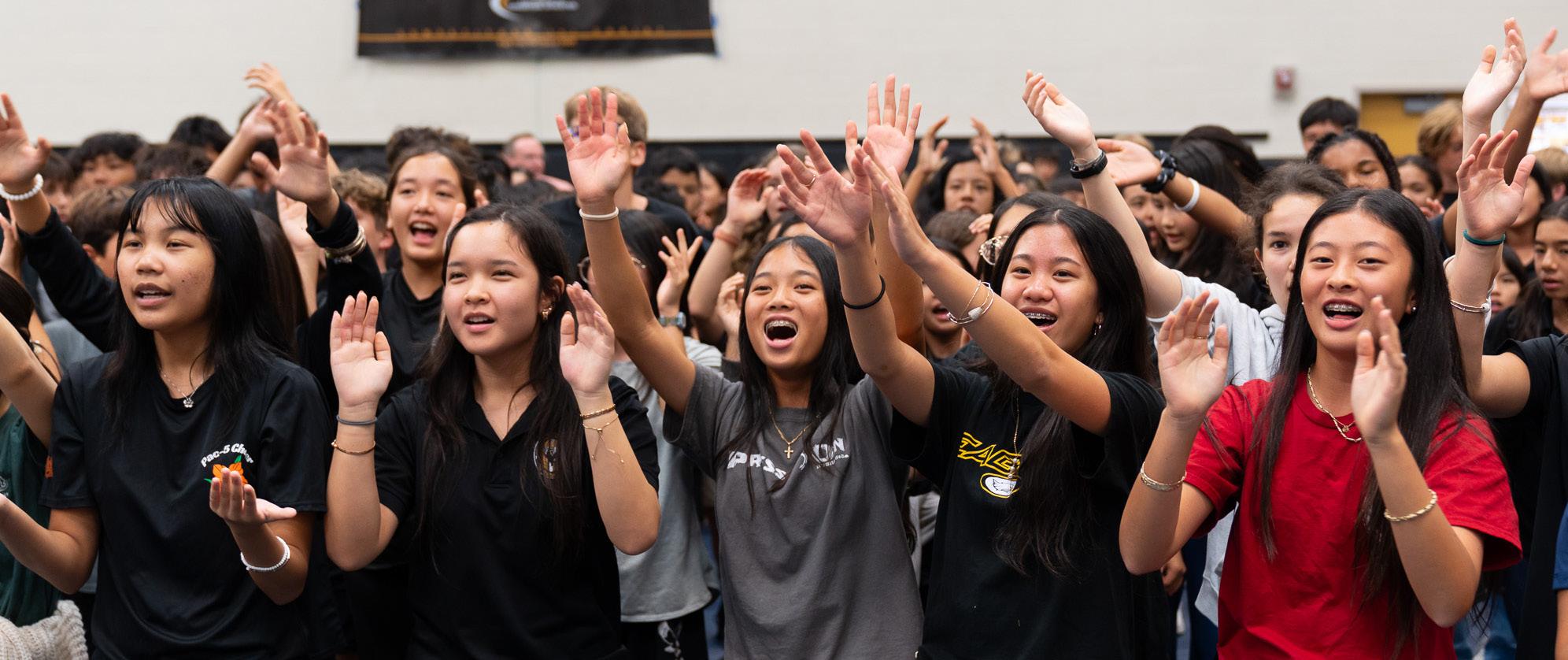
Students filled the gym floor, hands raised, their voices filling the room with songs of praise. Their singing echoed throughout the gym as 600 students and faculty gathered to worship the Lord in boldness. Moments like this are what many students will remember about Christian Emphasis Week (CEW) this year.
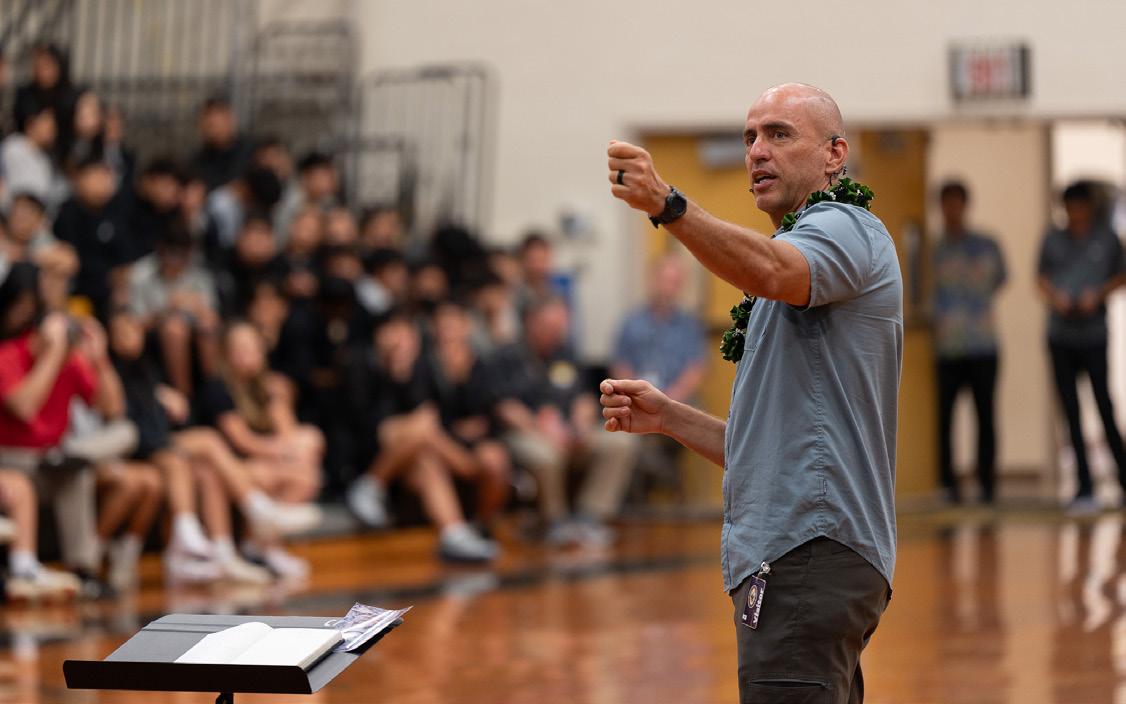
An annual tradition at HBA. Christian Ministries Coordinator Charles Poore describes it as “a time that we specifically take each school year to help focus our community, students, teachers, faculty, and staff on what the Lord is doing and how He wants to work in their lives.” During this week, students attend faith-based seminars led by teachers and pastors, as well as daily chapels. The guest speaker this year was Victor Magallon, co-founder of Cumbre Adventure Ministry in Mexico. Magallon preached the message of this year’s CEW, which centered around four words: remember, know, dare, and move. Throughout his sermons, Magallon encouraged students to be bold in their faith, adding to the previous chapel theme of “everyday faith every day.”
Charlee Buitrago returned to lead the musical worship at chapels this year, and students were excited to join in with his exuberant and direct style of leadership. Buitrago is a worship leader at New Spring Church in South Carolina.
Charlee Buitrago, from NewSpring Church in South Carolina, returned to lead music in CEW chapels this year. photograph by craig chang.
Dr. Charles Poore, high school Christian Minisries Coordinator, challenges students to live out an everyday faith every day.” photograph by craig chang.
Victor Magallon, CEW guest speaker, explains the themes of his message.
During CEW, he invited the students to be bold in their worship by walking down from the bleachers onto the gym floor. Many students responded to this invitation and gathered together to worship. Aaron Woolpert, a junior, was encouraged to see the student response to Buitrago’s invitation. “I think that this was one of the best studentdriven acts of faith I have ever seen in all my time at HBA,” he said. Similarly, Pat Ota, math and art teacher, found this moment particularly memorable because she felt like she was seeing a glimpse of “the kingdom of heaven on earth.”
Buitrago began the tradition of gathering together on the gym floor for worship last year, but something about this year’s worship still felt different for many students. Recognizing this difference, senior Vanessa He said, “This CEW felt more familiar, and the crowd was quicker to respond to worship compared to last year. I really liked how Charlee framed this year’s CEW as a continuation of last year, and we just picked up where we left off.”
In a follow-up family group chapel, Poore described Christian Emphasis Week as a spiritual high point or “mountain-top” experience. However, he wants students to know that this kind of experience cannot last forever. Christian Ministries Assistant Noah Pourciau explained this Christian archetype, saying, “As you go through life, you’ll experience some high highs and some low lows. But most of life will be sort of in between those experiences.” Offering encouragement as students came down from the high point of CEW, Pourciau said, “As you go back into ordinary life, don’t be surprised if you feel almost disappointed. I think we often think that because we don’t feel God, that maybe he’s far off from us. He’s not. He may be teaching you to trust in Him, even when you don’t see him or feel the same way as you did during those high points.”
Poore offered some next steps for students who are curious about God and their relationship with him. For students who are considering accepting Jesus as their Savior, Poore quoted John 1:46, in which Philip invites a non-believer to “come and see” Jesus, who He is,
and how He is working. For students who accepted Jesus as their Savior during CEW, Poore suggested they join Core Groups, which are teacher-led small groups for discipleship that meet during lunch periods. Students could also reach out to a teacher with any questions they have. Poore also suggested that students should find a church or begin reading the Bible. For students who want to continue growing in their faith, Poore suggested that they pray about where God is working around them and join wherever that is. Some examples of this would be serving at church or going on mission trips. Another suggestion is that the students should be ready to share their faith with others through their testimonies if given the opportunity. Referring to the chapel speaker’s message, Poore encouraged students to dare to step outside of their comfort zones.
Adams Ha, a sophomore, has already taken up the chapel speaker’s challenge. Ha shared, “I’ve already tried to be bolder in my faith by talking to one of my teachers and asking him questions I’ve always had about Christianity and how to live out my faith using the Bible.”
Vanessa He also shared, “Recently, I’ve tried to be more intentional with my time spent at school. I don’t want to get so stuck in the cycle of work, work, work. I also want to take time to pray for other people and spread the love of God.”
Sophie Chong, a senior, is one of the leaders of the Jesus Club at the high school. She offered this advice to students who want to share their faith with others. “I would say to just be a good friend. When you minister to others, you don’t have to go at them with the intent of converting them. You can show them Jesus’ love through your kind actions. Bringing your friends to a youth group is also a good way to introduce them to God.”
In the family group chapel after CEW, Poore led students through a study of the Parable of the Sower and challenged students to think about what kind of soil they are and how they can keep growing from the lessons learnt at CEW.
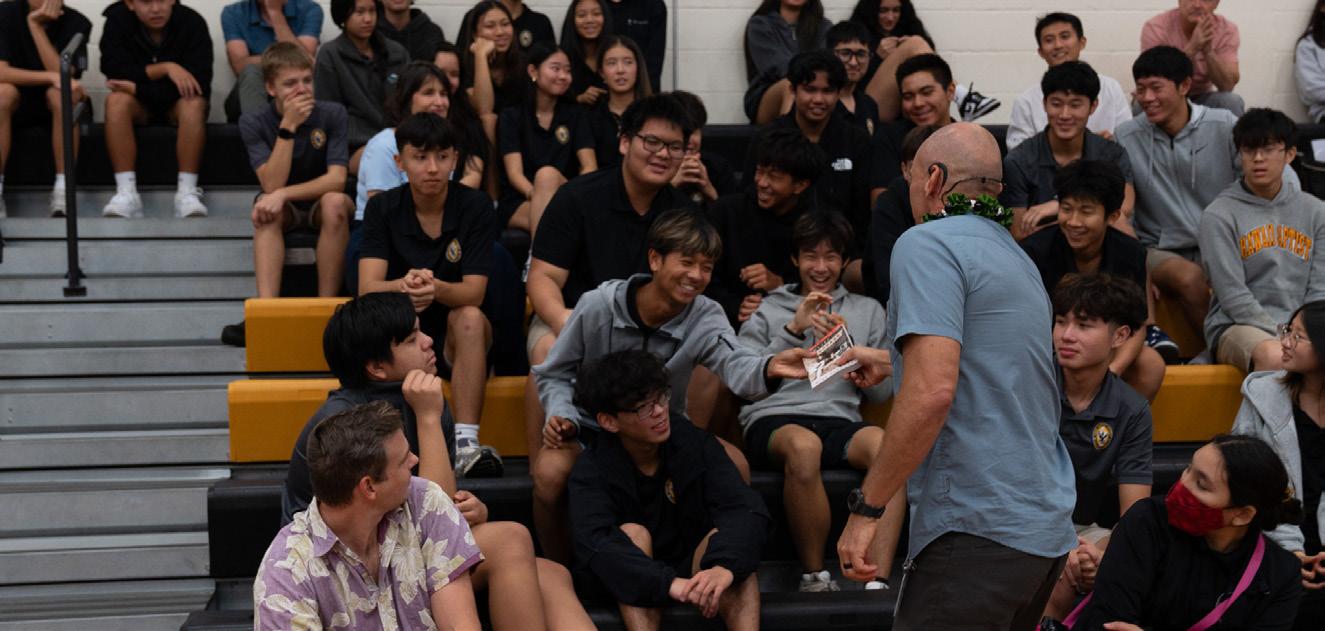
Left: Adams Ha, sophomore, receives a book from Victor Magallon, chapel speaker;
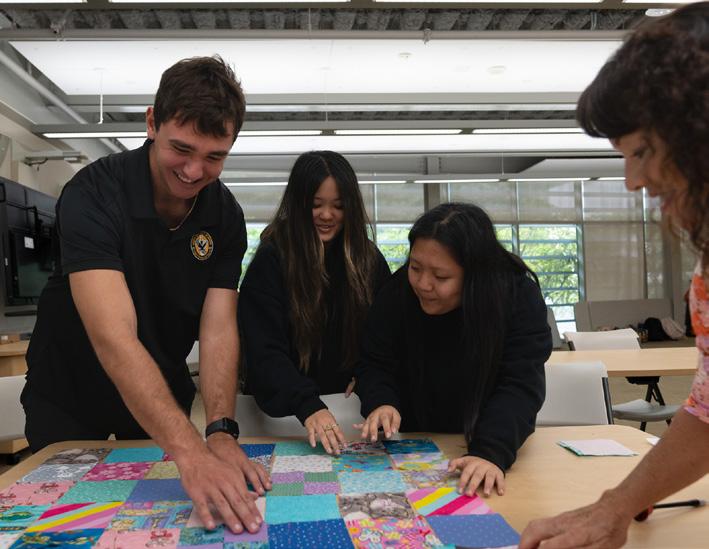
Below left: Seniors Drew Lohr, Kylee Fujihana, and Lydia Zhong arrange fabric squares for a quilt in a CEW seminar.
Below right: Students raise their hands during a song in chapel.
all you need to know about Spirit week board games
→ By Sarah Byrer (‘28) FEATURE
For Spirit Week next month, each class has been assigned a board game as their Spirit Week theme. The middle schoolers have “Sorry,” the freshman “Candyland,” the sophomores “Monopoly,” the juniors “Chess,” and the seniors “Clue.” Each grade will need to prepare for their Pepper Squad skit and mascots, as well as their banner design and class cheers. Here are the brief descriptions of how each board game is played to help you get ready for Spirit Week.
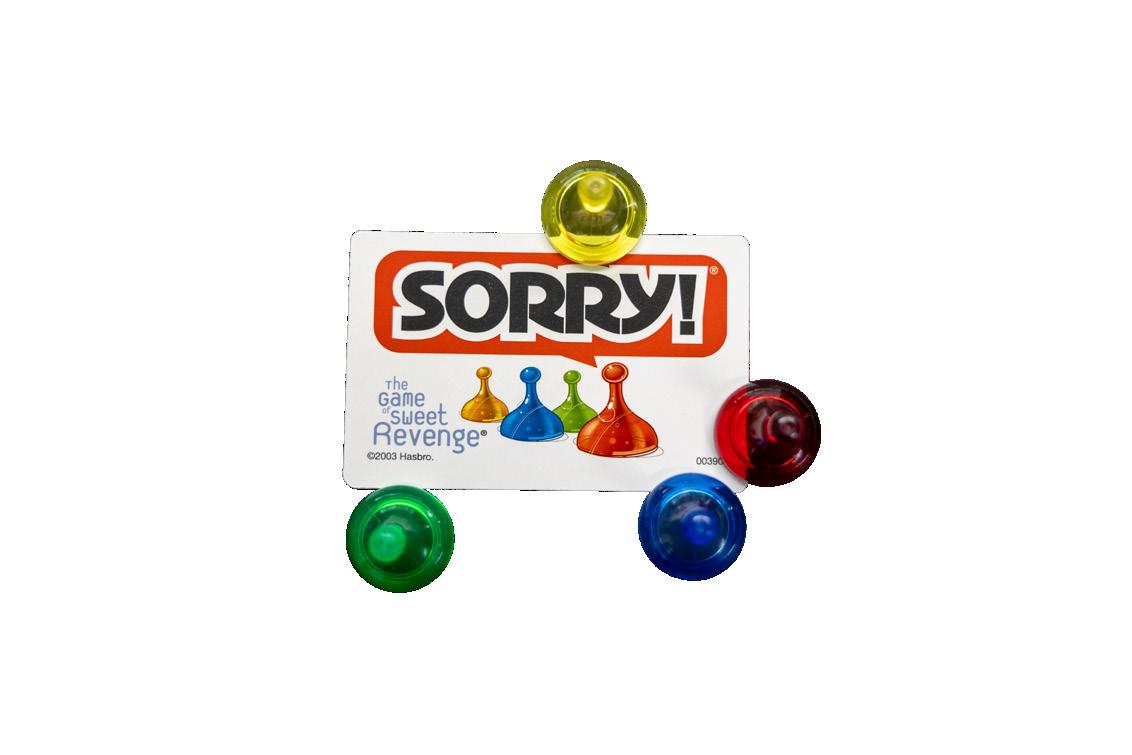
SORRY: Each player starts at their “home.” In order to win, each player must move all four of their pawns from their home to their safe zone by traveling around the board. Players will pick up a card on each of their turns, instructing them to either move backward or forward a certain number of spaces, or to take a pawn out of home. If a player lands on a slide of an opposing color, they may slide through the indicated number of spaces as if it were one space. If they land on the same space as one of their opponents, or if an opponent occupies one of the spaces on the slide, they may bump the opponent’s pawn so that it returns all the way back to home. If the request of the card cannot be fulfilled, the player’s turn shall be forfeited. Mascots could include the pawns.
“Sorry” was invented in 1929 by William Henry Storey in England. “Sorry” received its punny name because of how often a player is able to negate the progress of their opponents, shouting a sarcastic “Sorry!”
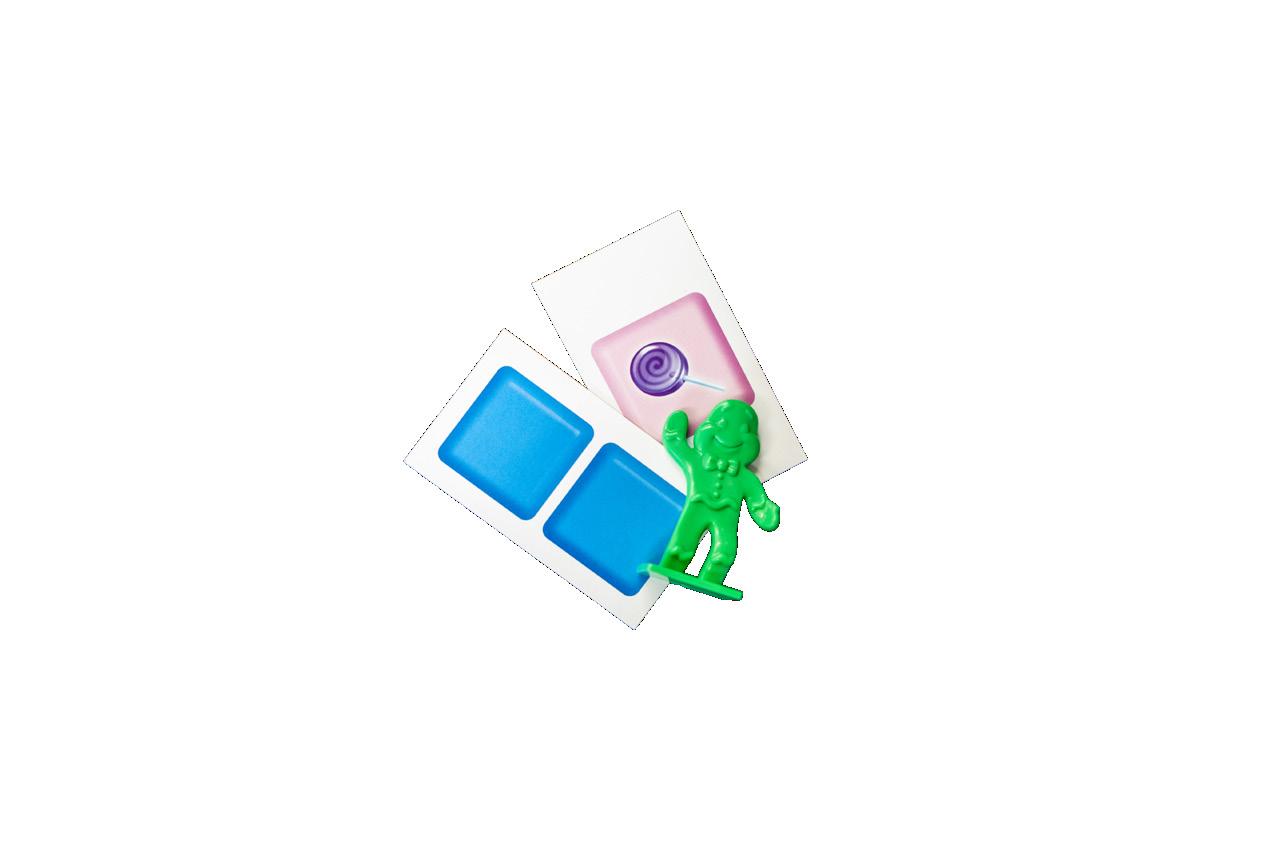
CANDYLAND: The objective of this game is to be the first player to reach King Candy’s Castle at the end of the map. Each player will begin at the start line on the bottom of the board and take turns drawing cards, gradually making their way to the finish. Each card will show a double or single blocked color, where the player will progress to either the first or second space on the board with that corresponding color. There are also symbols around the map that, if drawn, may allow players to progress either forward or backward, which could completely alter the fate of the game. Along with these symbols, players may also draw a card that, when landed upon, takes the player through a shortcut that will allow them to advance through the game. Mascots could include gingerbread men or
“Candyland” was invented in 1948 by Eleanor Abbott. The original board showed Abbott as a little boy in a leg brace, reflecting on his experiences. Now there are dozens of variations, editions, and spin-offs of this game, making it a worldwide hit for young children.
The objective of this game is to be the last person to go bankrupt; however, the game can last for a while if it takes a long time for someone to go bankrupt. The game works by having each player buy properties around the board and pay rent when landing on an opponent’s property. This is how money is accumulated. Each player begins with $1,500and takes turns rolling two dice and moving the respective number of spaces forward. Upon landing on a property space, players have the option to either buy the property for the amount listed on the space or auction the property starting at ten money. If no one bids, the property will go to the bank, and no one will have ownership of it. As players move around the board, they must collect $200 every time they pass or land on the “GO” space. They must also pay rent to the owner of the space they land on. There are also multiple action spaces around the board where players may pick up a Chance card, which they must follow, as well as a “Go to Jail” space where players will be stuck in jail if they do not pay 50 money or roll a double on the dice. If a player is unable to pay any fee that is imposed upon them, they go bankrupt and therefore lose the game. Mascots may include the Scottie dog, the top hat, the race car, or the Monopoly Man.
The original game “Monopoly” was created by Parker Brothers in 1935. There are now nearly 4,000 variations of the game, including Jurassic Park, Back to the Future, and The Lord of the Rings.
the second row closest to you. In the row closest to you, you will place the rook, knight, bishop, queen (on her color), king, bishop, knight, and the second rook. Each piece can only move in a certain formation of spaces. For example, the knight must move in the shape of an “L.” Pawns can only move one space forward, except if it is their first time moving, then they may move two spaces. The rook may move in any direction except diagonally, and it can move any number of spaces as long as it doesn’t collide with another piece. Contrastingly, the bishop can only move diagonally in any direction. The queen can move straight or diagonally for however many spaces she wants. Lastly, the king can move one space in any direction. Players can capture their opponent’s pieces if they land on a space that is within their range of motion in order to gain an advantage over their opponent. However, the pawn can only capture pieces if it moves one space diagonally. The game concludes when the king has nowhere else to go, meaning that no matter where they go, they will be captured. This is called a checkmate. Mascots may include any of the pieces in the game. “Chess” was invented around the 6th century CE in India. The name of the creator is unknown; however, it was originally called “Chaturanga,” as it represented India’s four-division army. There are now thousands of chess variations, and the youngest chess master was only nine years old when he achieved the title, breaking a long-standing record.
The objective of this game is to determine who committed the crime, in what location, and with what weapon. Each player will begin by choosing a character they wish to be. Then, one person will, without peeking, randomly select three cards to be put in the confidential envelope, one being the accused, another being the location in which the crime was committed, and the last being the weapon that was used during the crime. Each player will roll two dice and move that respective number of squares around the board. They can also go into rooms and make suggestions on who did it, with what weapon, and in which room they are in. When doing so, the player to their left must reveal, if they have it, a card from one of the three suggested categories ONLY to the person who made the suggestion. If that player does not have any of the cards, then the next person will reveal one, and so on. In order to make an accusation, the player must be in the room that they think the crime was committed in. Upon accusing, the player may look inside the confidential envelope to see if their accusation was correct. If it is, they will reveal the answer to everyone else. If not, they must put the cards back in the envelope, and they will be considered eliminated from the game. Mascots may include any of the six characters listed in the game.
The game “Clue” was invented in 1943 by Anthony E. Pratt during World War II. Pratt designed this game as a way to pass the time during the air-raid blackouts. There are now well over 100 variations of Clue, including themes such as The Simpsons and Harry Potter.
Seniors Sign NLIs
→
By Olivia Kim (‘26) FEATURE
This year, a handful of HBA seniors have signed National Letters of Intents (NLI), officially committing to attend certain colleges to play their sport while pursuing their undergraduate studies. NLIs are used by National Collegiate Athletic Association (NCAA) Division II colleges and universities in the United States and they often include scholarship offers to committed athletes.
KATE IIDA
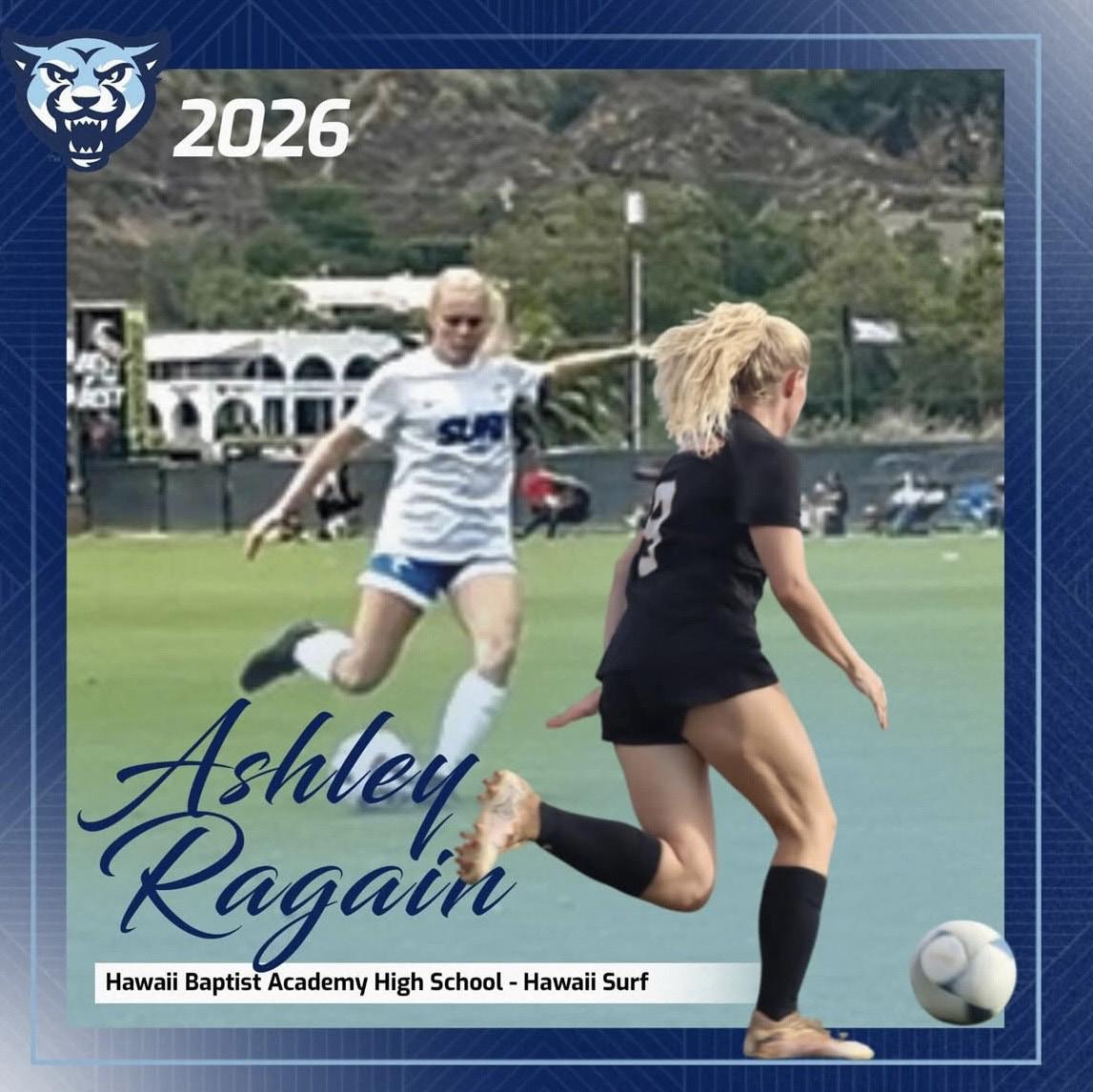
SOCCER | MT. VERNON NAZARENE UNIVERSITY
Soccer player Ashley Ragain committed to Mount Vernon Nazarene University in Ohio earlier this year. While it was difficult and rather expensive for her to get noticed by an East Coast Christian school, she was able to do so with the help of videos. She is very thankful to her parents for helping her get recruited through that process. Throughout the process, she felt as though God was calling her to attend MVNU, leading her to the decision to commit to soccer there. Ragain is dedicated to ending her senior year strong and is excited to play soccer with other Christian athletes, make new friendships, and take advantage of future travel opportunities.
BETH RAGAIN
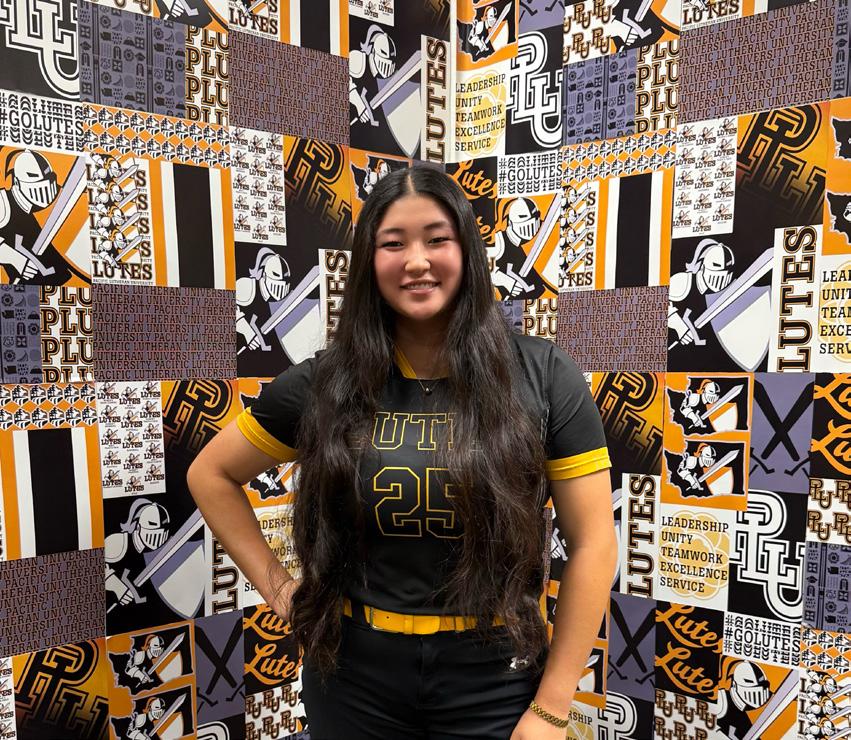
SOFTBALL | PACIFIC LUTHERAN UNIVERSITY
Kate Iida, a softball player for PAC-5, recently committed to Pacific Lutheran University. As a student who hopes to pursue both nursing and collegiate softball, Iida is confident that PLU is the perfect fit for her. Between attending softball camps and touring more than 20 colleges, Iida is very grateful for the opportunities she’s been given and excited to play softball at the collegiate level while also pursuing her dream of becoming a nurse. She is looking forward to “embracing a new lifestyle and environment, living in a new place with a different culture. I also hope to make my family proud.”
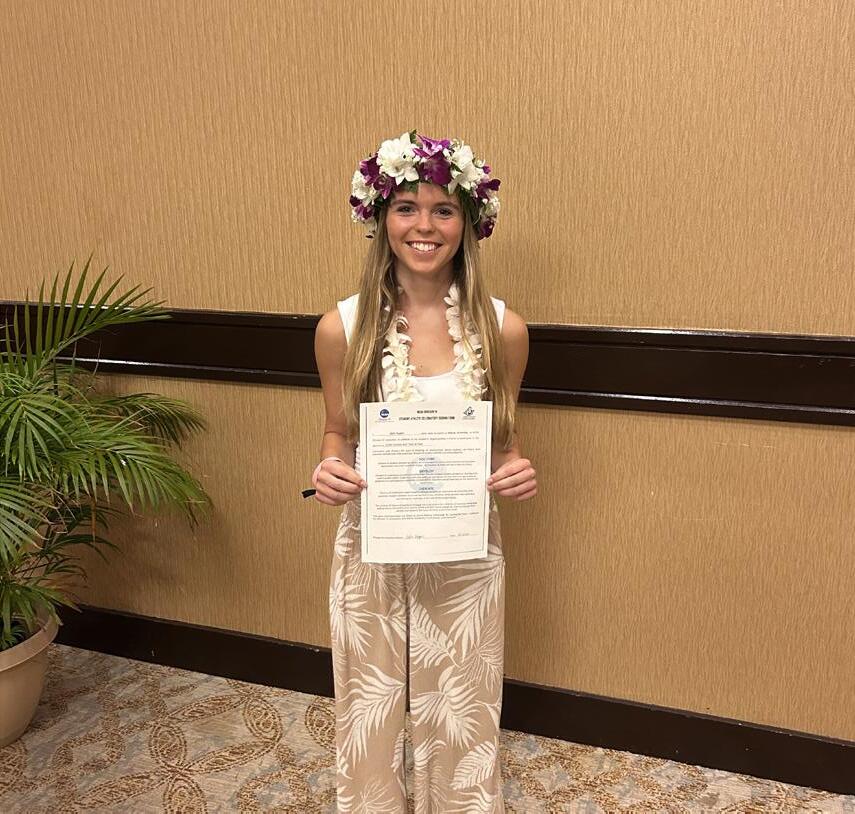
CROSS COUNTRY & TRACK | ASHBURY UNIVERSITY
Beth Ragain is fully committed to Asbury University in Kentucky for cross country and track. Through visits to Christian colleges and many conversations with coaches, she decided to attend Asbury University for its amazing community. She loved the welcoming environment and the integration of Christianity into their team bonding. Between team devotionals, mission trips, and hikes, Asbury was the ideal university for Ragain. As she looks toward starting her new chapter in life, she is excited to graduate and make many new, lasting friendships throughout her college experience, both on and off the track.
ASHLEY RAGAIN
GOLF | COLORADO STATE
Jacey Kage has been playing golf ever since she can remember. She is committed to Colorado State University after a long and difficult process. Through many sacrifices, Kage’s determination and consistency paid off in the form of her commitment to CSU and her excitement for its comfortable community, strong sports teams, and stellar academics. As she enjoys the rest of her senior year, she is grateful to have some pressure off her back but is still persistent in keeping a focused mindset and finishing her senior year strong. Kage is eagerly anticipating independence, embarking on new adventures, and experiencing life in Colorado.
underclassmen advice to
My advice would be that attitude comes before any talent or skills. Beyond that, set yourself apart by putting in the extra hours even if it doesn’t immediately show or you don’t receive recognition. Consistency is key. And most importantly, at the end of the day, thank God for the opportunities and abilities He’s given you and give Him all the glory. KATE
Keep emailing coaches and get as much footage as you can.
Consider what matters most to you in a college. Don’t base your decision on what others say.
Stay committed and never give up. I needed to push through and work even harder by pushing myself to the max every day. When I look back I am happy that I never gave up because there are so many opportunities now. Overall, never give up for yourself, because you can do anything if you put your mind to it.
BETH RAGAIN
ASHLEY RAGAIN SOCCER
Surfing Becomes ILH Sport
→ By Colton Gallano (‘26) SPORTS NEWS
Surfing, a staple in Hawaiian culture, has officially become a sanctioned HHSAA sport for all Hawai’i high school students. Starting in the spring of 2025, Hawai’i Baptist Academy will be offering students the opportunity to join both the surf and bodyboarding teams.
The MIL (Maui Interscholastic League) was the first high school athletic association in the state to allow students to participate in surf clubs. While surfers don’t typically compete in teams (except for country-based competitions like the Olympics), the HHSAA and ILH have decided to hold competitions in a team format. This means that judges will score based on team performances rather than on the best overall performer on a team. This allows for more participation and involvement for all members of the surf team, rather than focusing on just one member, according to HBA Athletic Director Deren Oshiro.
The divisions will include shortboard, longboard and bodyboard for both boys and girls, and HBA will field its own surf team instead of being part of a Pac-5 group. The season, held in the spring, will feature three to five competitions. For the HHSAA state championship, there will be one to two contests held on the island of Maui from May 1 to 2 at Ho‘okipa Beach Park. According to Honolulu Civil Beat and the official HHSAA website, the competition will be held in surf heats. Two to four surfers will compete in each heat, with the top two advancing to the next round. In each heat, surfers will receive a final score based on their two highest-scoring waves, which factor in style, maneuvers, flow, and speed. According to Oshiro, “Heat draws will be random, and athletes from the same team will not be in the same opening-round heat unless absolutely necessary.”
At the time of writing, the HBA surf and bodyboarding team has not yet established its core members, as the season officially starts in the spring. However, students have already expressed interest in joining the bodyboarding division of the surf league. Talon Ganiko and Kameron
Fujioka, both seniors, have already been preparing for the upcoming season. Both were excited to participate in a sport that is also their hobby and passion. Ganiko added, “It was pretty surprising to see that surfing was going to be a new sport. We didn’t know it yet, but basically this whole summer we’d been preparing for it. Almost every week we’d be at the beach until the sun went down.” After hearing the news of a potential bodyboarding season, both were determined to begin learning tricks, which can help boost their scores in the water and separate them from their competition. “Yeah, like we go out to Ala Moana Bowls or Rockpiles to learn tricks since the waves don’t break as fast. We are still learning, and hopefully by the time the season comes, we’ll be able to do at least two or three tricks in the water,” said Fujioka. Overall, both Ganiko and Fujioka are excited to compete in the water alongside their friends.
The HBA team does not yet have a coach, but Noah Pourciau, the new Christian Ministries assistant, expressed his desire to become HBA’s first surf and bodyboarding coach. Five years ago, Pourciau moved to Hawai‘i to pursue his Master of Divinity at O‘ahu Theological Seminary. In the midst of that, he gradually fell in love with surfing. “Funny enough, I started out with a shortboard. One of the first places I went was in town at Bowls, which probably wasn’t the best idea considering that I was a beginner, but it was still very fun,” said Pourciau. In the five years he has been in Hawai‘i, his surf skills have definitely improved since
his first outing. Prior to joining the staff at HBA, Pourciau worked as the dean of culture and humanities at Trinity Christian, a small private school in Kailua. While there, he helped run the school’s surf club. “Yeah, it was great to interact with the students there and really watch them progress in their surfing,” said Pourciau. When asked what he is most excited about regarding the new surf league, he said, “I think I’m most excited to help everyone progress and compete against the other schools. Especially since this is so new for high schools, it’ll be really exciting to see how it’s run this year.”
In the meantime, Ganiko and Fujioka, along with their friends, will continue to bodyboard the shores on the east side of O‘ahu. Most recently, they have gone to Makapu‘u Beach Park to continue learning new tricks for the upcoming season. With each outing, the boys have been inviting more and more people, convincing them to join the HBA surf team. For the past few weeks, the boys have had one person in particular they have wanted to invite—Pourciau himself. “Oh yeah, we’ve been trying to get him out to surf with us for like months now. Our schedules are always different, though, so it’s been pretty hard to find a time that works for both of us. It would be great if we could all go out together and just surf,” said Ganiko. Until then, Ganiko, Fujioka, and Pourciau will continue to chase after big sets and ride the rolling waves along O‘ahu’s east and north shores, respectively.
(Facing page) Noah Pourciau carves a nice left at an overhead Velzyland on Oahu’s North
Kameron Fujioka looks out into the waves at Makapu’u Beach Park. photograph courtesy of landon fukumoto (‘26)
Senior Talon Ganiko rides a nice wave into the barrel at Makapu’u Beach Park. photograph courtesy of landon fukumoto (‘26)
Shore. photograph courtesy of noah pourciau.
from page 2
during the school day, and she has found herself reaching for her phone less as a result.
For some students who have been at HBA for a while, the new policy has felt disappointing, as they had been looking forward to more relaxed phone rules in high school. (At HBA, elementary students are not allowed to use phones at school at all. At the middle school, phones must be turned off and put away during the school day. At 2:45 p.m., after the dismissal bell, students may use their phones for a 15-minute period. At 3:00 p.m., phones must be put away again until 4:00 p.m.) Ian Longpre, who has attended HBA since kindergarten and got his phone in sixth grade, feels ambivalent about the new rules. While he was disappointed that he would not be able to use his phone as much as he would like, he said, “I also spend too much time on it. This is a good start to limit my phone usage.”
Longpre does not like that parents cannot directly reach their children, and vice versa. He also does not like that the policy prevents students from connecting over video games or social media during their free time.
Longpre, however, is one of the handful of juniors who have independent study periods, which means he can use his phone during those times. He is supportive of the differentiated approach for the upper grades, “as each grade has different maturities and responsibilities.”
Ronin Viloria, a sophomore, is not excited about the new policy because he uses his phone to communicate with his girlfriend and parents, watch reels his friends send him, and study last-minute for classes. Viloria believes that the policy may have negative long-term consequences. “It gives students less preparation for the real world, and when we get out of high school, we might be driven even more to use our phones,” he said. Viloria also added that having access to his phone gives him peace of mind, knowing that he is able to call for help in an emergency. Phones also provide stress relief, he said, giving him an avenue to take a break from thinking about school.
Like Viloria, Alex Fujimoto, also a sophomore, does not support the new policy. He said, “It has been hard to follow the policy. My parents often text me during the school day, and I use my phone often for reminders to go to meetings or finish homework. I feel like even though the phone ban had good intentions, it doesn’t make a huge impact and is more of an inconvenience and more cumbersome than helpful.”
Eleanor Short, a math teacher, is supportive of the restrictions but recognizes that there are some costs. “Phones can be a major source of distraction, not just for the student using them but for those around them as well. By setting clearer boundaries, I feel students may be more present in discussions, more attentive to lessons, and more likely to develop habits of mindful technology use. [However,] in my chemistry and physics classes, certain phone-based apps are extremely useful for lab work—whether for graphical analysis, timing experiments, or recording videos of trials for later review. When used in these structured, purposeful ways, phones can definitely enhance learning and help students engage more deeply with the material.”
It has been a few weeks since the new policy has taken effect, and Frontiera feels positive about how students are responding. “Overall, I feel like the students have made a really good effort to follow it. While I have no doubt that people sneak or check their phone when they shouldn’t, it seems like people are making a good effort to at least try to comply. And I really appreciate that about our students. Even though there are a lot of people who probably don’t like it, I get the sense that deep down, we all kind of know that we’d all be better off—students and adults—by being on our devices less.”
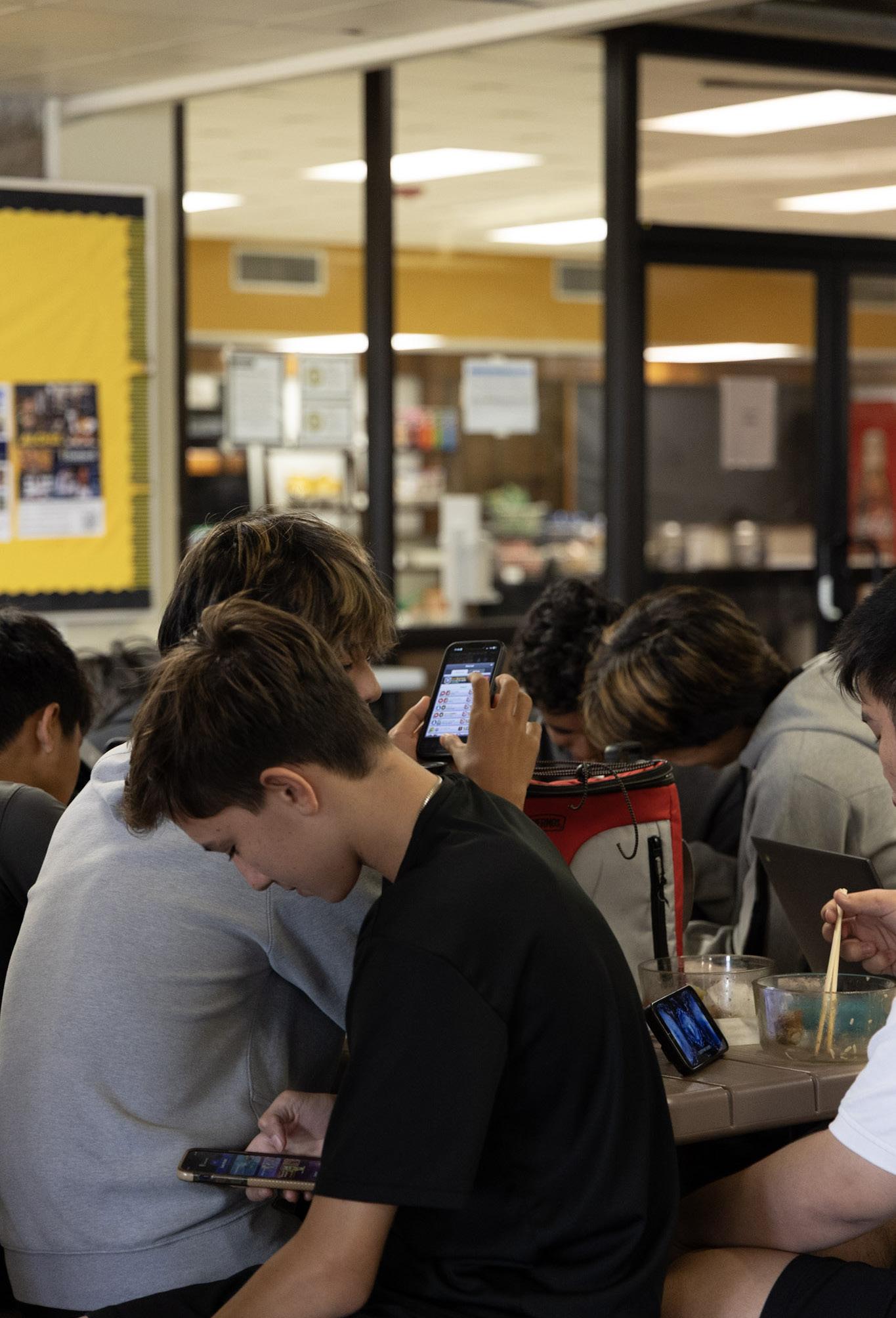
Top: Prior to the new phone policy, many students could be seen watching videos or playing games on their phones during lunch time.
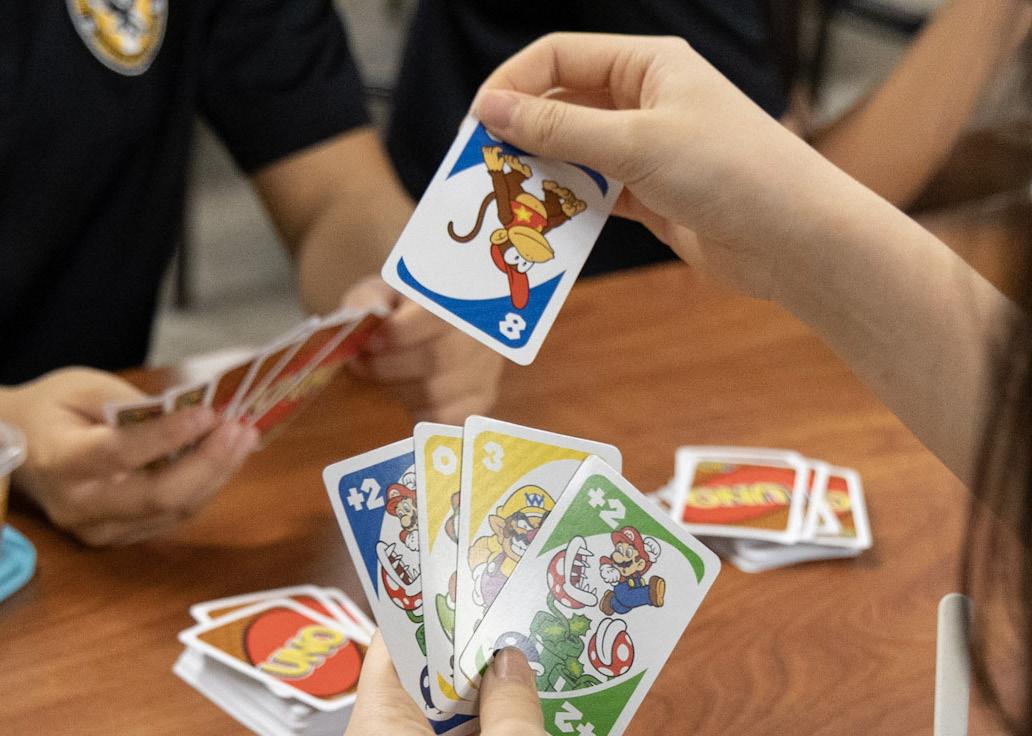
Above: Before the phone policy change, some sophomores decided to wean themselves from their lunch time phone use by electing to play card games instead.
photographs by kaitlyn legawa (‘28)
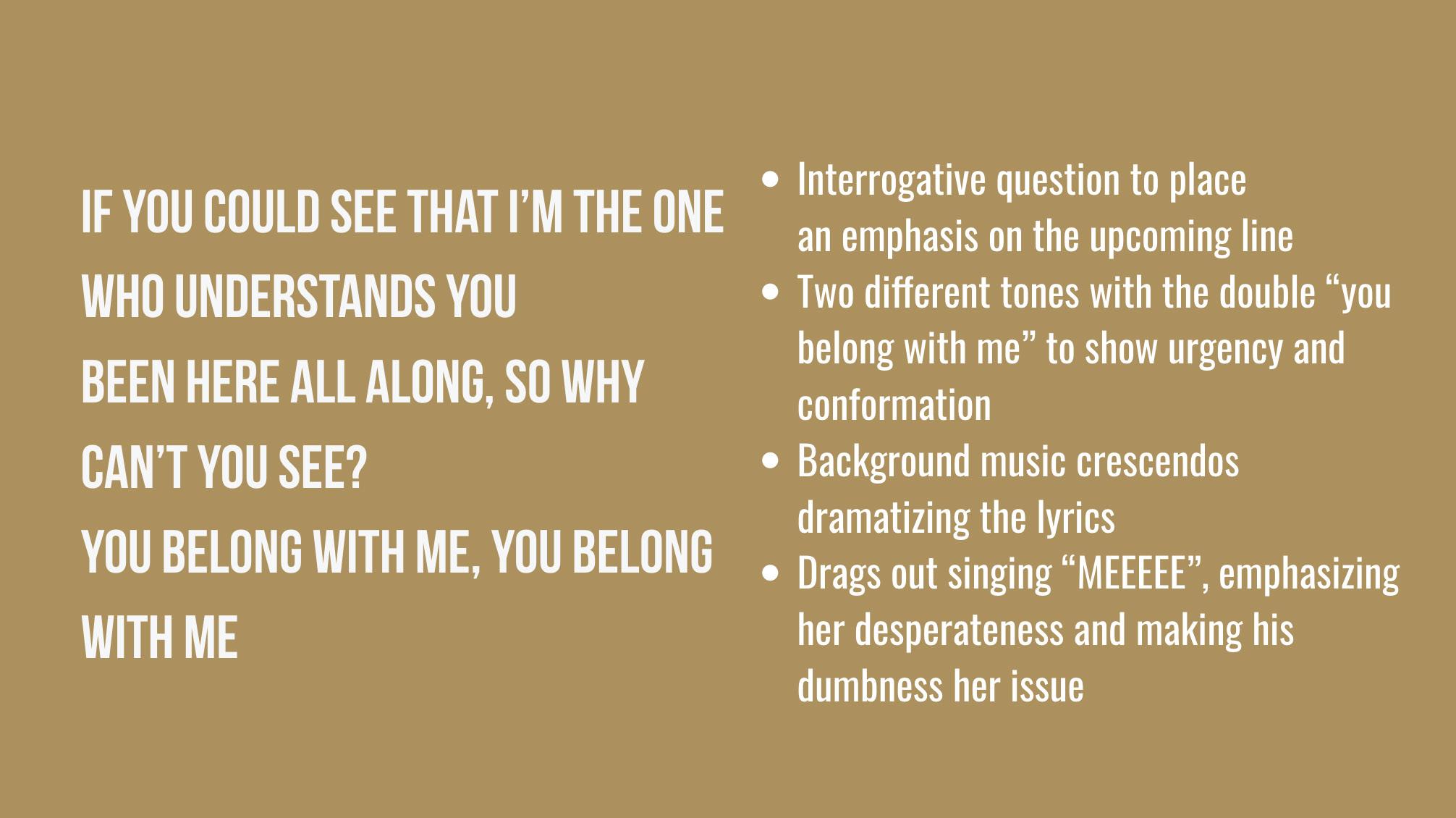
An example of what AP English 12 Poetry Karaoke slides were supposed to look like: lyrics on the left and analysis on the right. This slide shows the chorus of one of Vivien Wong’s and Lauren Espiritu’s chosen songs: “You Belong With Me” by Taylor Swift.
Continued from page 3
song and “There’s Your Trouble” by The Chicks (formerly known as The Dixie Chicks.) When Taylor asked them to do a comparison, they were initially hesitant but were convinced after hearing “There’s Your Trouble” and realizing that the two songs had much in common.
As a last-minute incentive, Taylor, who is also a senior class advisor, told her students that if they choose a song that could be used as a commencement song, that student would get extra credit. Tia Takekawa was initially feeling ambivalent about performing her song, “Firework” by Katy Perry. But when Taylor said that the song had commencement potential, Takekawa’s reluctance went away. “Firework,” which references the Fourth of July, is about empowerment and self-worth. “I chose that song because I really liked all the similes and metaphors in it that helped display a sense of self-confidence. And I thought that was a really powerful message that she portrayed with it.”
A couple of other song choices that stood out to Taylor were Callie Kawaguchi’s song, “I Bet on Losing Dogs” by Mitski, and Anika Chang’s song, “Folding Chairs on the Moon” by Grent Perez. Taylor said, “They both chose songs I had never heard that had really interesting, poetic lyrics.” Kawaguchi was excited to apply her poetry analysis to a favorite song and began her work during the fall break. “I procrastinated on my other homework to do that assignment because I loved it so much,” Kawaguchi said. Kawaguchi also added that her favorite part was presentation day when they all sang karaoke together.
Colton Gallono and Braeden Takeuchi’s country selection was another standout for Taylor. The pair chose a country song, “‘98 Braves” by Morgan Wallen, which references the Atlanta Braves’ failed attempt to win a championship baseball series in 1998. For Takeuchi, it was difficult to come up with an analysis on par with Taylor’s example for students. Takeuchi said, “I didn’t have the same kind of depth in my analysis. I was trying to find a good way to explain. It was pretty challenging.”
By adding a fun element to the poetry assignment, Taylor hopes to motivate students to steer away from using AI to do their work. “I feel like I need to make assignments to make you feel like you at least want to do them, so you don’t really force a robot to do it.” Taylor stated.
With the assignment behind them, most of the AP English 12 students that the Eagle Eye spoke to are in favor of Taylor continuing the assignment for future classes. Students were also happy to discover more songs for their personal playlists. Taylor is pleased with her karaoke experiment and hopes that her students will now listen to their favorite songs with poetry in mind.
“Poetry Meets Karaoke”
CHRISTMAS GIFT IDEAS
→ By Janel Lee (‘27) FEATURE
What says “I love you” more than a thoughtful and special gift? Whether it’s handcrafted, carefully chosen, or part of an inside joke, your loved ones will appreciate all the time spent picking the gift and going out of your way to get it. No matter what it is, these thoughtful gifts show that you’ve been paying attention to people’s interests, character, and the little things that brighten their day. However, the holiday season is one of the most stressful times of the year. Many of us are buying gifts for family, friends, and teachers, which can make finding everyone the “perfect gift” feel overwhelming. This makes gift cards or cash the go-to choice for many teenagers and young adults. I think these are often some of the least personal gifts. If you want to go the extra mile to show how much you care or know about a person, here are some ideas.
Fun Drinks
Does your friend go crazy for chai or can’t stop obsessing over matcha? Trips to cafés add up quickly, so giving them good-quality flavorings, such as tea powders or syrups, or tools like frothers or whisks to make drinks at home makes the experience more accessible and customizable.
Handmade Crafts
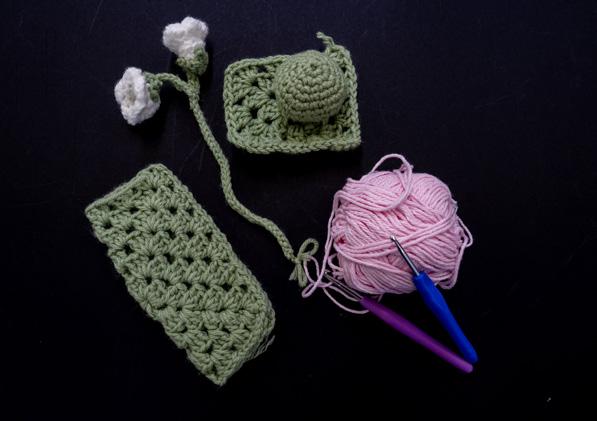
Hannah Garces (‘27) is one of my craftiest friends, and most notable are her crochet items. She makes plushies and sweaters to give to her friends and family. Crocheting is the only type of needlework that has to be handmade because it can’t be produced by a machine, which makes a crocheted gift extra special. It’s also really budget-friendly, requiring only yarn, a hook, and some time. For those who don’t know
how to crochet, I recommend tutorials from the YouTube channel Viv Crochets or buying crochet kits from the company Woobles, which I personally find easy to follow.
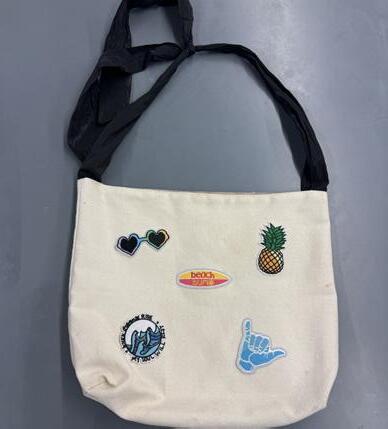
Create cute, unique, and personalized matching totes for your friend group through embroidered iron-on patches. All you need to do is press the patches onto the canvas, use an iron to seal them, and turn a plain bag into a custom gift. This is especially great for people who don’t know how to sew; you just need to know how to use an iron. It’s also easy to arrange because you can change the placement of the patches before you iron them down. You can usually buy all supplies at a craft store or big chains like Target and Walmart for relatively low prices.
Self-Care Baskets
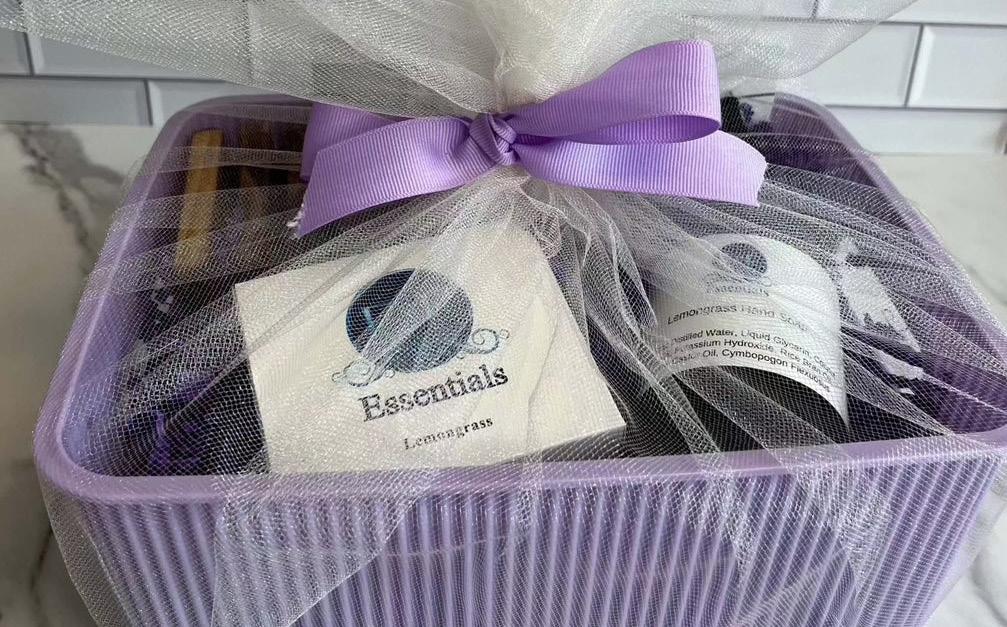
Everyone needs a break from the stresses of school and work, which is why self-care baskets make the perfect gift. They’re super easy to assemble because you can simply arrange some of your friend’s favorite de-stress items into a basket. I recommend filling these baskets with face masks, candles, tea, desserts, and other comforting items to help your friend wind down and relax. If they like a specific scent, color, or aesthetic, you can tailor your basket to match that theme, making the gift feel even more personal.