
THE SHAPE OF THINGS TO COME
AUTUMN 2026
HAY’s collection grows through new introductions and evolving typologies – designs that build on what came before, and others that mark new beginnings. Each rewards a closer look, along with the stories of how they came to be: an ongoing dialogue between HAY and the designers, both established and emerging, who shape its universe of contemporary design.
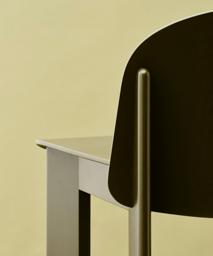
Our furniture launches bring together several notable firsts, with innovation often hidden in plain sight. Jasper Morrison’s Pack Chair, his first chair for HAY, revisits the trattoria archetype – one of the most enduring and anonymous forms in the history of seating – translating it into an industrial context through an intuitive flatpacked construction. Gudmundur Ludvik’s Backflip Chair rethinks the folding chair through a concealed mechanism integrated into the backrest, where engineered movement defines the act of folding and unfolding. Philippe Malouin makes his HAY debut with the Mimi Sofa: a generously cushioned everyday sofa with tailored, removable upholstery. In the pages that
follow, we visit each designer in their studio – from the UK to Denmark – tracing the thinking behind each design.
The same thinking extends across the existing collection, where the familiar is revisited and developed further. The Chisel Lounge Chair extends into a full family by Andreas Bergsaker, with dining chairs, stools, bar stools, and tables across four typologies. The Mags Soft Low Sofa now offers a removable cover, extending the life of a contemporary HAY classic. The Tray Table, too, is refreshed – keeping enduring designs in step with how we live today.
This logic also shapes our accessories and lighting, at a smaller though no less considered scale. Among the new accessories, the Dori collection by Doshi Levien introduces bedspreads and cushions, weaving Indian textile tradition into HAY’s contemporary universe. The Essential Steel collection presents a curated assortment of stainless-steel serveware, drawing
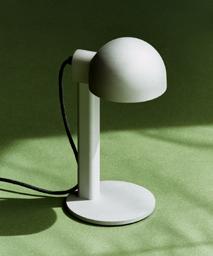
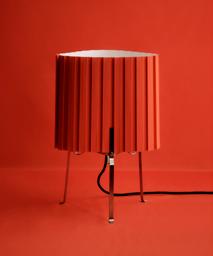
inspiration from hospitality traditions and bringing a touch of nostalgia to the contemporary table. Artist Emma Kohlmann’s painterly world also continues to unfold across new additions to the La Pittura tableware collection, reflecting HAY’s belief that art has a place in everyday life. In lighting, two debut designs share a common origin: both began life as gallery objects before finding their way into the HAY collection. Claire Lavabre’s Posto Table Lamp reduces the idea of a lamp to three raw aluminium parts assembled with two screws, while Leclercq Viallet’s Canelé Table Lamp balances a pleated textile shade on a slender threelegged steel frame.
Across the collection, what looks simple is rarely only that. Read on, and step into the studios, conversations, and decisions behind each design.
FURNITURE NEWS
HAY welcomes three designers to the collection with their first furniture designs for the brand: Jasper Morrison reinterprets the trattoria chair with Pack Chair, Philippe Malouin presents the softly tailored Mimi Sofa, and Gudmundur Ludvik introduces the Backflip Chair, a folding chair with a twist. Andreas Bergsaker expands the Chisel Collection into a full family of seating and tables, the Mags Soft Low Sofa gains a removable cover, and the Tray Table is refreshed.
PACK CHAIR
BY JASPER MORRISON
THE FAMILIAR, RECONSIDERED
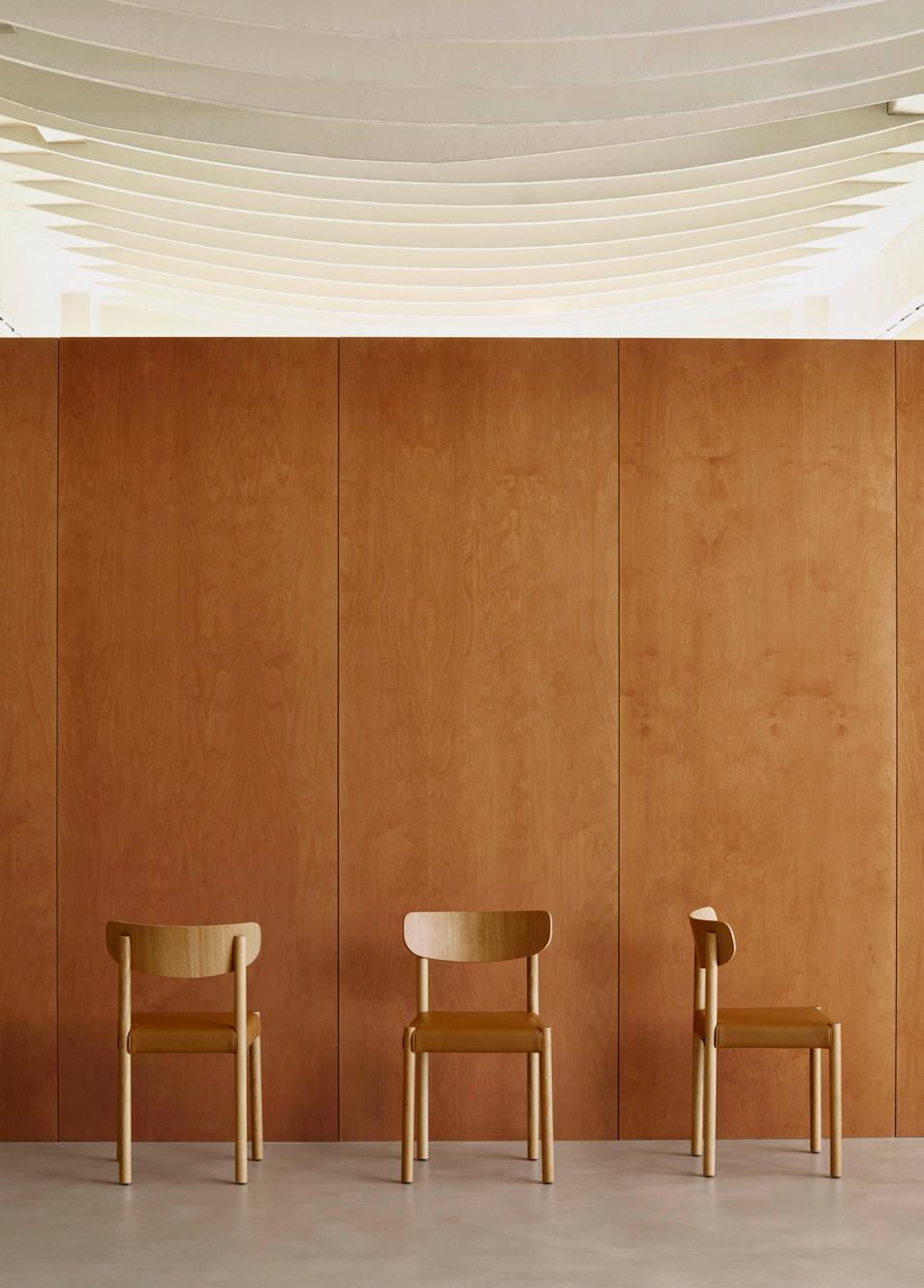
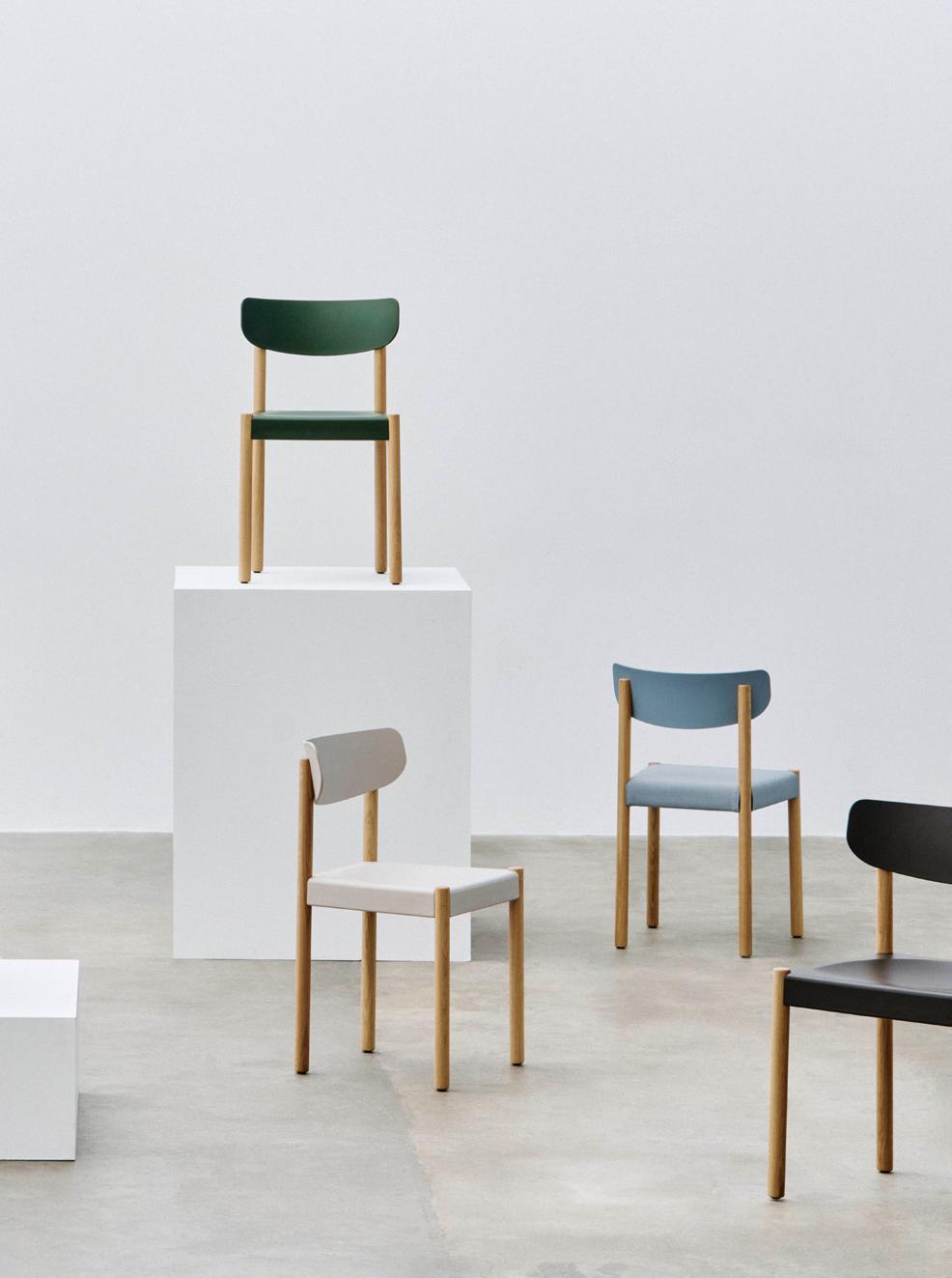
Pack Chair is renowned British designer Jasper Morrison’s first chair for HAY – a contemporary reinterpretation of the trattoria chair, one of the most enduring and anonymous forms in the history of seating.
The project began with a small model on a shelf in Morrison’s London studio – the same space where Pack would gradually take shape. During a visit, Rolf Hay, HAY Co-founder and Creative Director of Furniture & Lighting, noticed it – archetypal in form, immediately compelling. That object became the starting point for a chair that translates the values of a traditional wooden chair into an industrial context. ‘Everything we do needs to be relevant and original,’ says Hay. ‘We were talking about
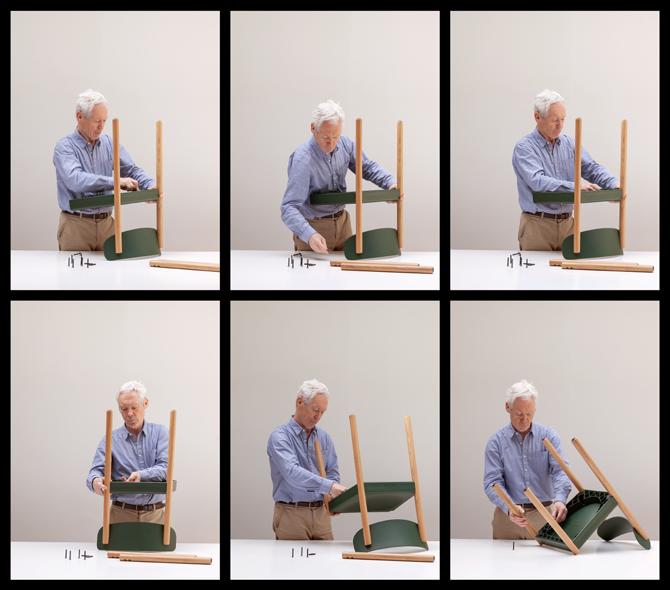
being a bit more radical with this typology. What if we could make it flat-packed?’ The ambition was clear: to create one of the most accessible chairs in Jasper Morrison’s body of work, without compromising on quality or intention.
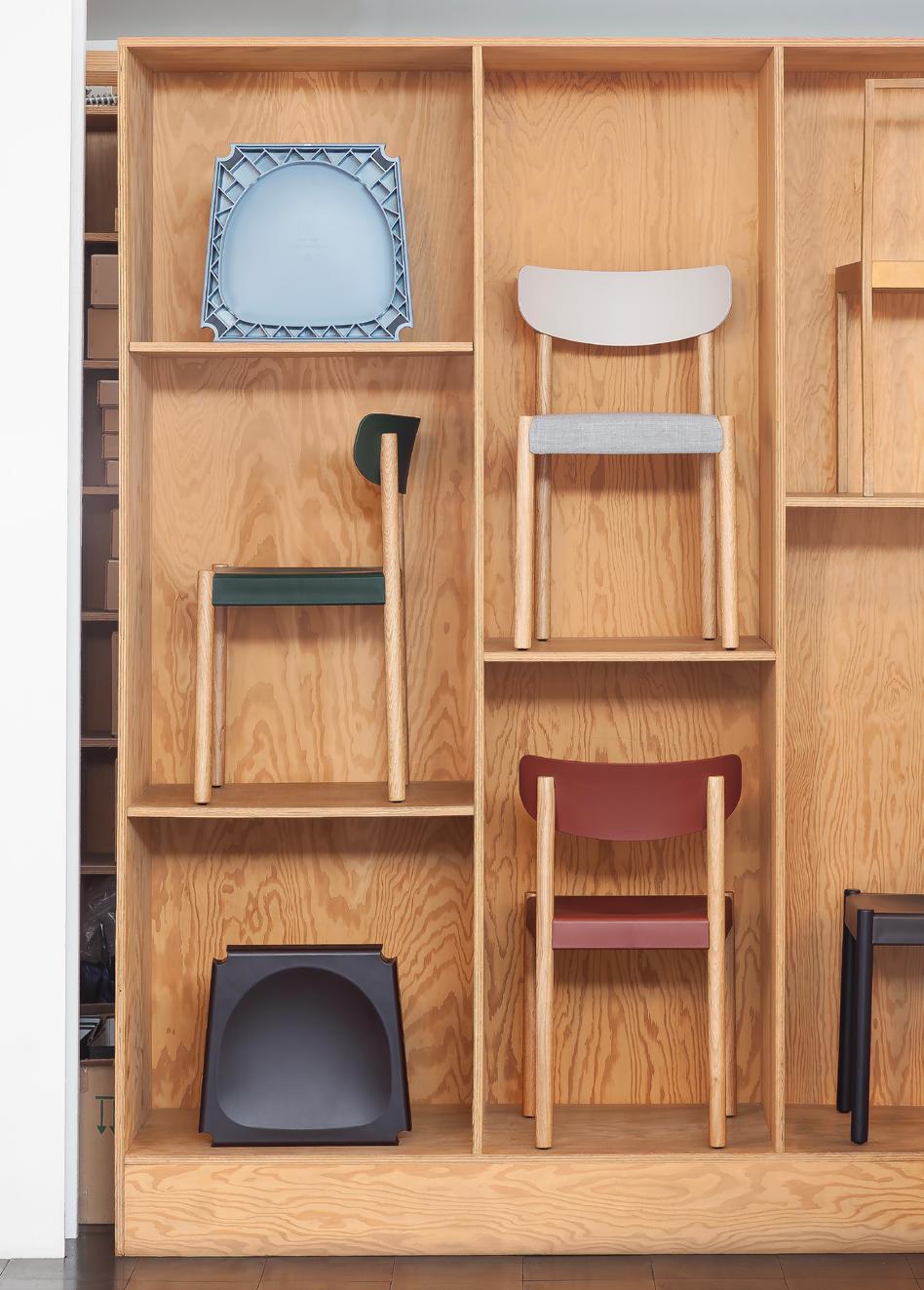
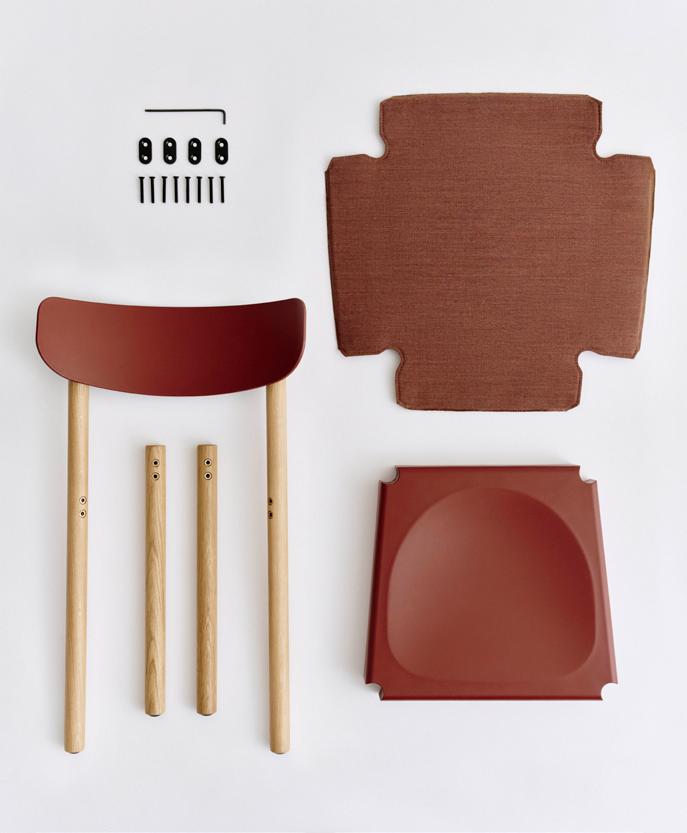
Like all of Morrison’s designs, Pack appears simple at first glance – indicative of the ‘super normal’ philosophy the designer is celebrated for – but conceals a high level of technical consideration. Its seat and backrest are made from 80% postconsumer recycled polypropylene blended with wood fibres, which reinforce the material and lend the surface a subtle, natural tactility. Solid oak legs and an optional plywood backrest introduce a natural counterpoint to the plastic form. Delivered
flat-packed, the chair follows a considered assembly logic: the legs are fixed in place, and the optional fabric cover clicks neatly into integrated grooves along the seat edge – inviting the user to take on the role of upholsterer, with a tailored result. Designed with disassembly, renewal, and repair in mind, Pack is made for a long life.
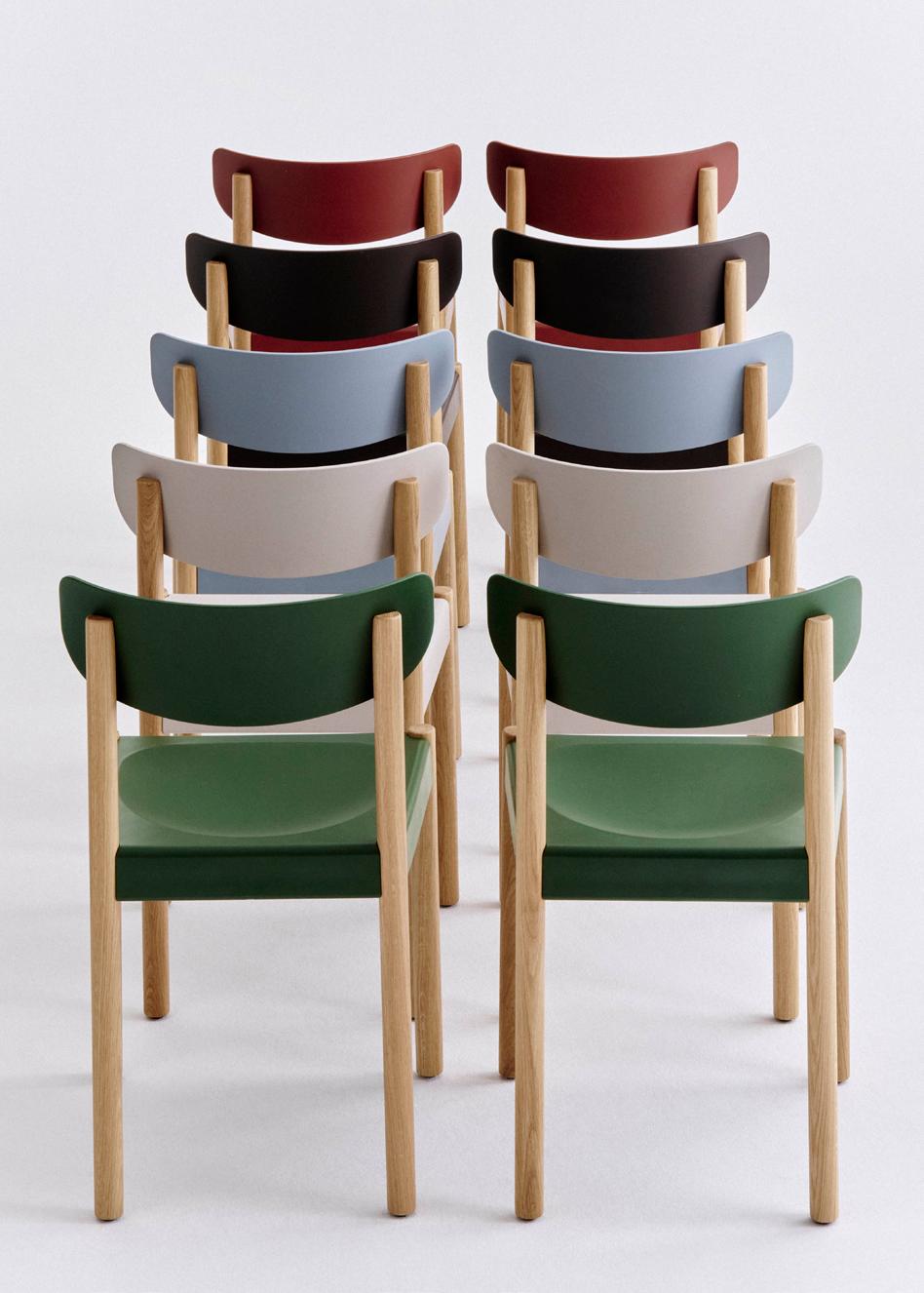
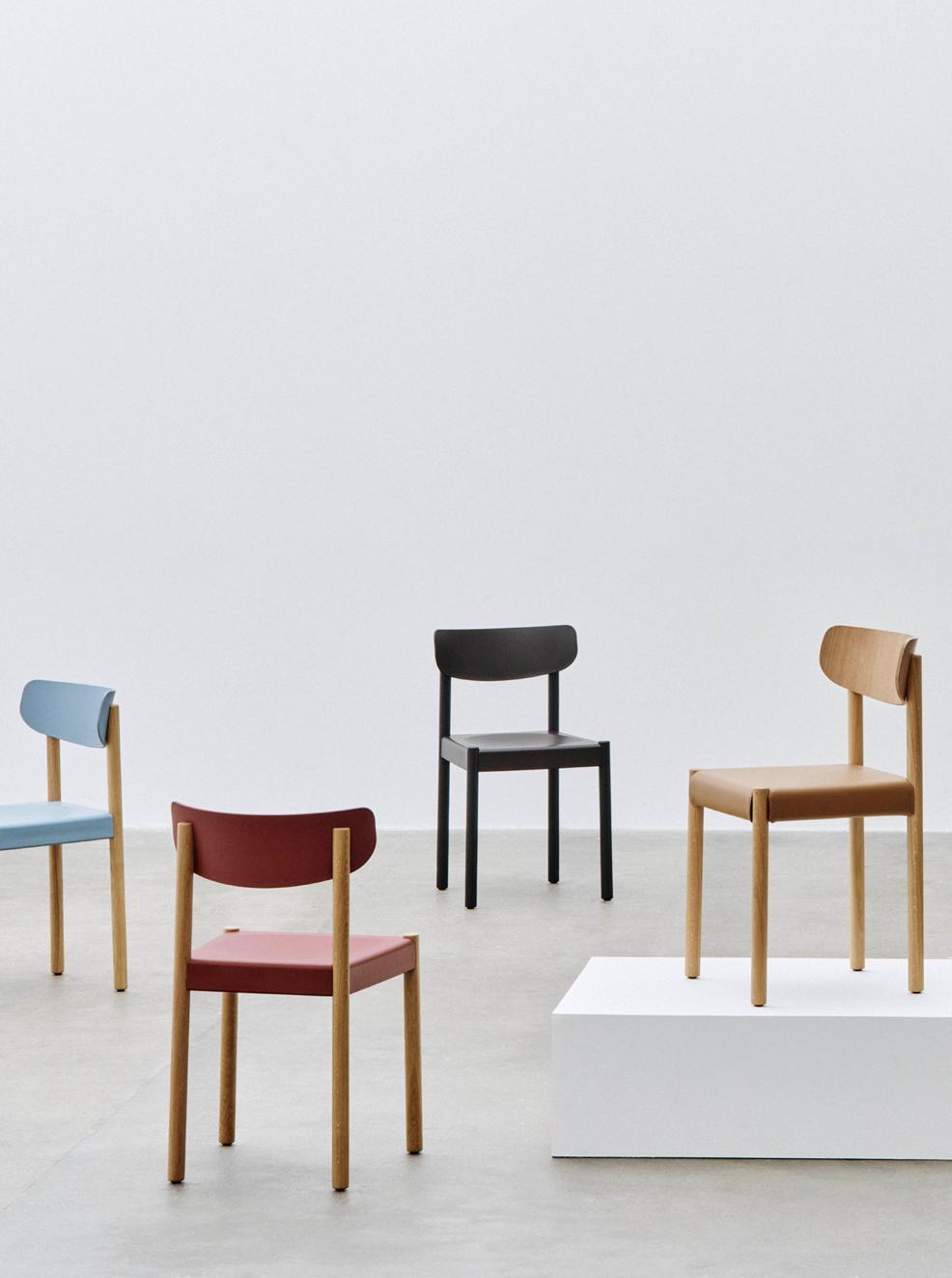
Named after its flat-pack construction, Pack is available in two variants – with a plastic or upholstered seat – and in a wide range of colours, making it equally at home in residential, retail, and contract settings. Familiar in form and considered in every detail, it is a chair that reveals more the closer you look – and the more you engage with it.
PORTRAIT OF JASPER MORRISON IN HIS STUDIO IN EAST LONDON.
MIMI SOFA
BY PHILIPPE MALOUIN
A SIMPLE SOFA
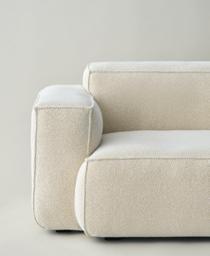
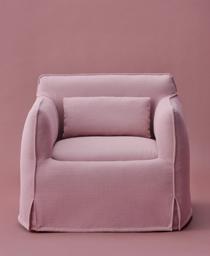
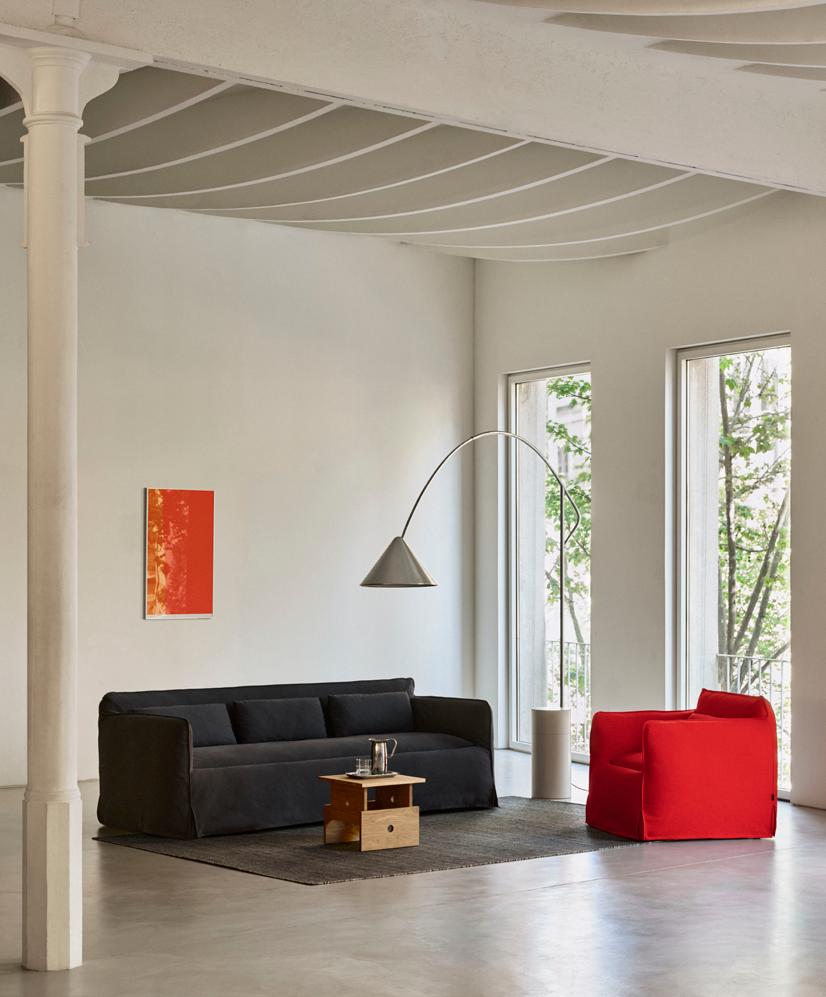
Fresh to the HAY universe, the British-Canadian designer Philippe Malouin presents Mimi Sofa, a comfortable everyday sofa with a generous central cushion that evokes the quiet pleasure of settling into a familiar, welcoming space. Gently raised edges enclose the seat, drawing a subtle line between structure and softness.
Tailored removable upholstery falls over the frame like a softly draped blanket. Precise stitching emphasises Mimi’s defined outline along the upper edges before loosening into a skirted base, where the fabric flows more freely – a quiet shift from tailored to relaxed within a single silhouette. Designed with longevity in mind, the replaceable cover allows Mimi to adapt over time: openly inviting, and easy to live with, year after year.
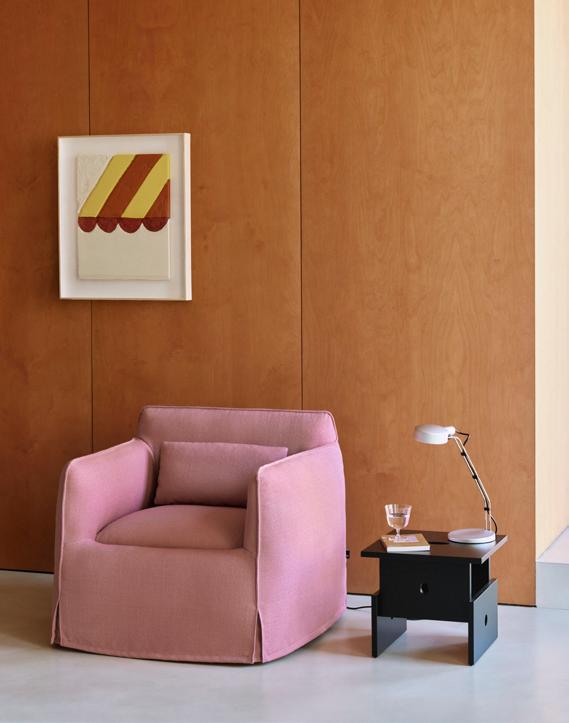
AVAILABLE IN MULTIPLE SIZES AND AS AN OTTOMAN, MIMI COMES IN A CURATED SELECTION OF HIGHQUALITY FABRICS AND CAN BE COMPLEMENTED WITH MATCHING SQUARE OR RECTANGULAR CUSHIONS.
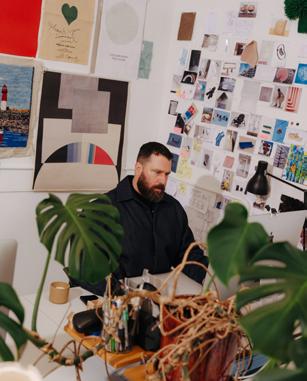
PORTRAIT OF THE DESIGNER IN HIS STUDIO IN HACKNEY, LONDON.
CHISEL COLLECTION
BY ANDREAS BERGSAKER
THE
A
OF
A FAMILY TAKES SHAPE
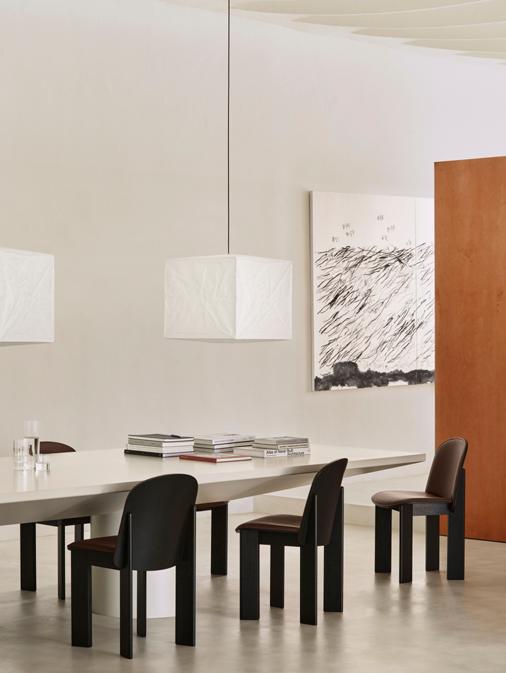
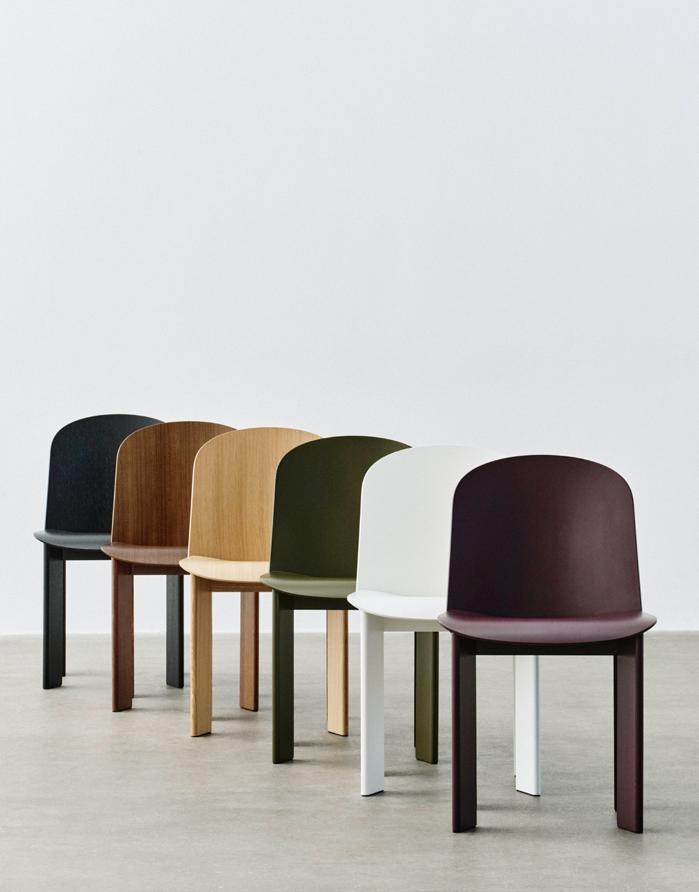
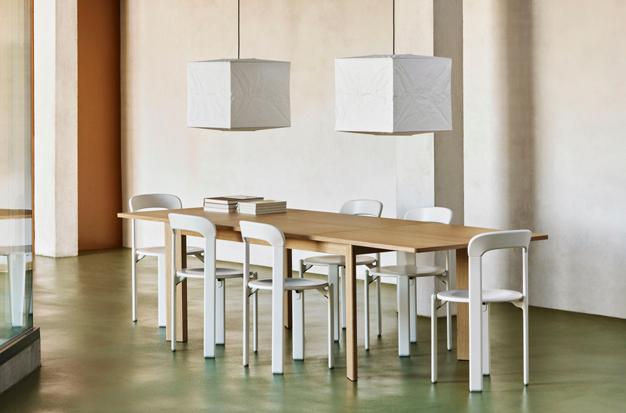
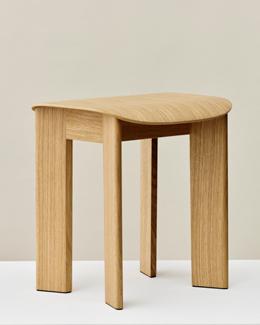
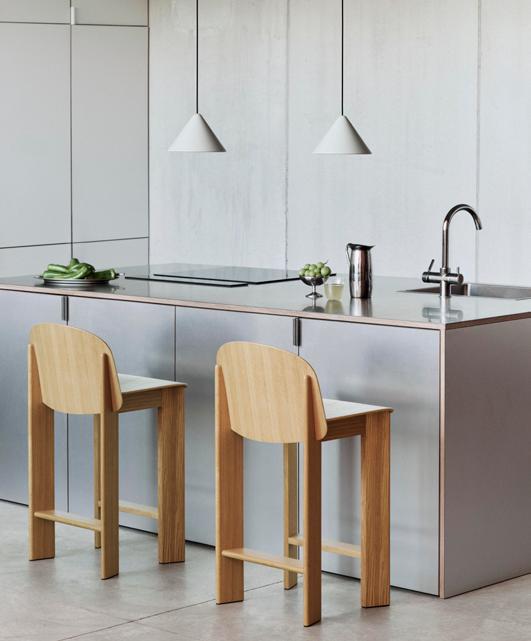
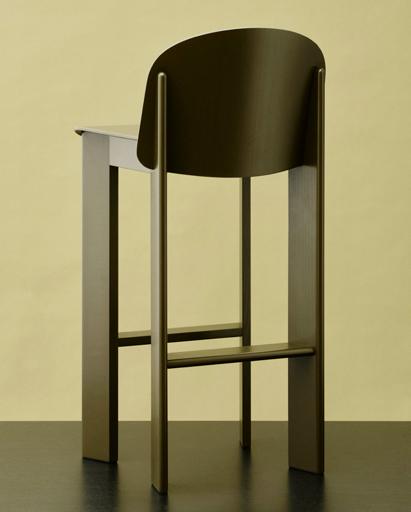
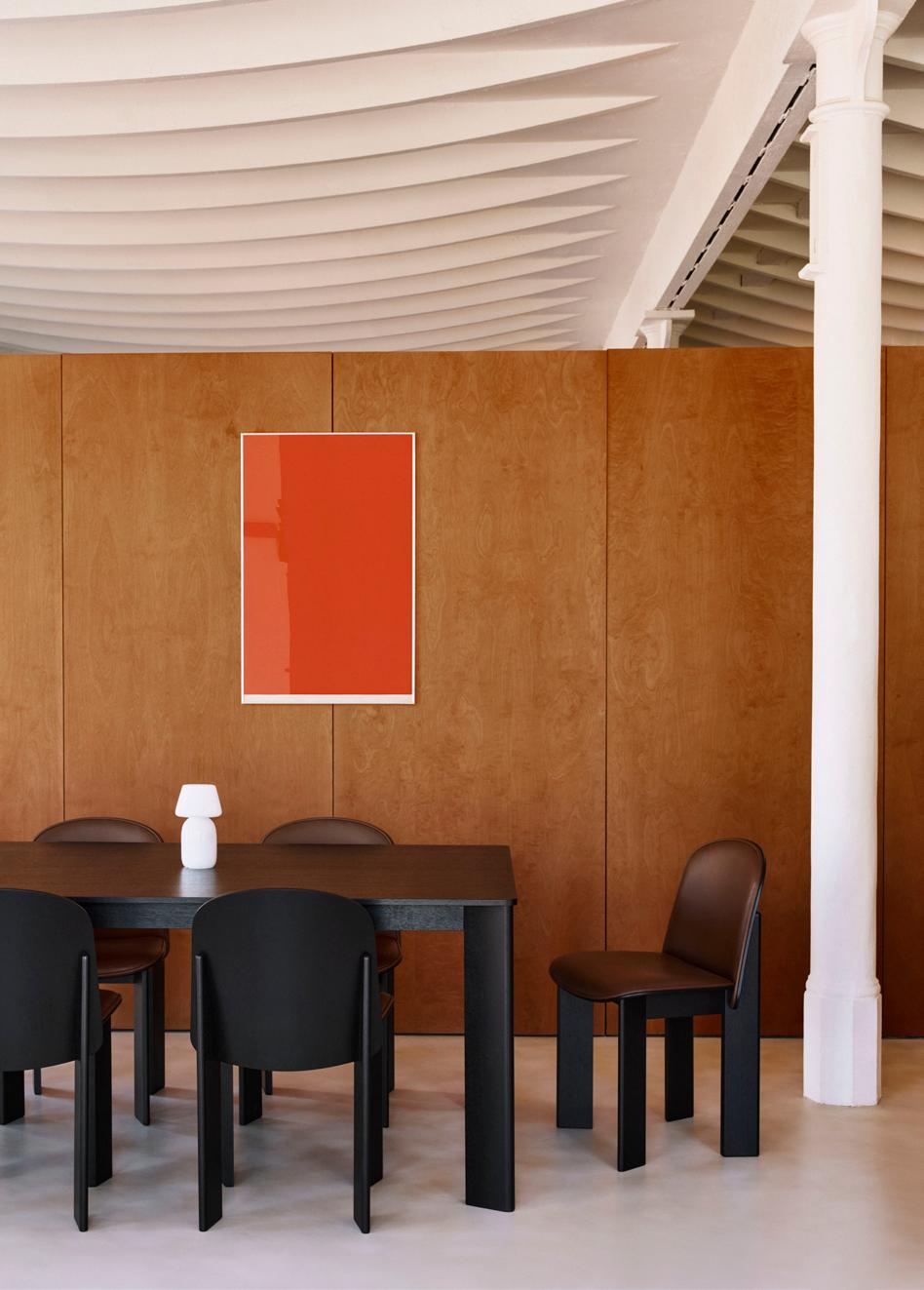
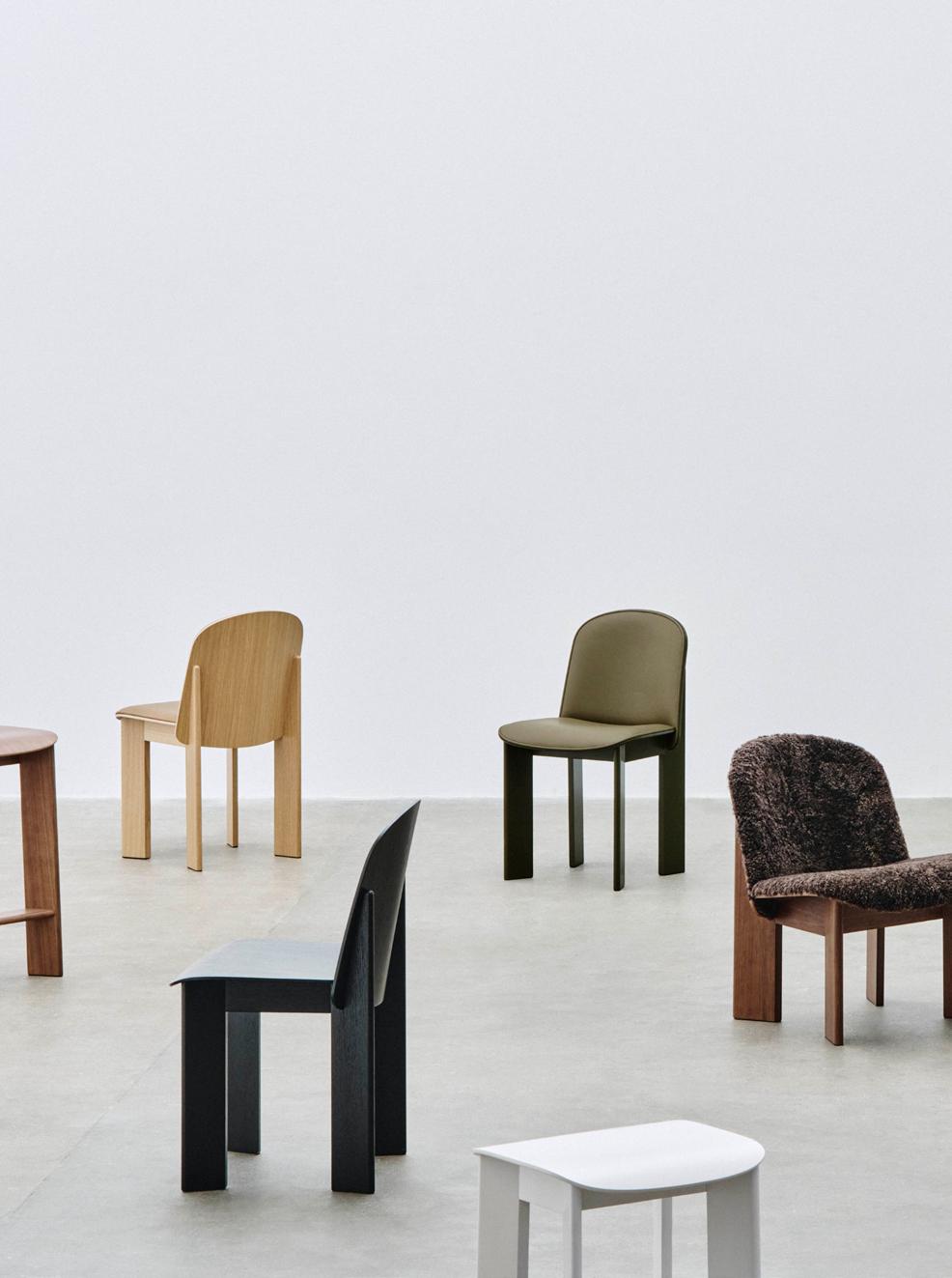
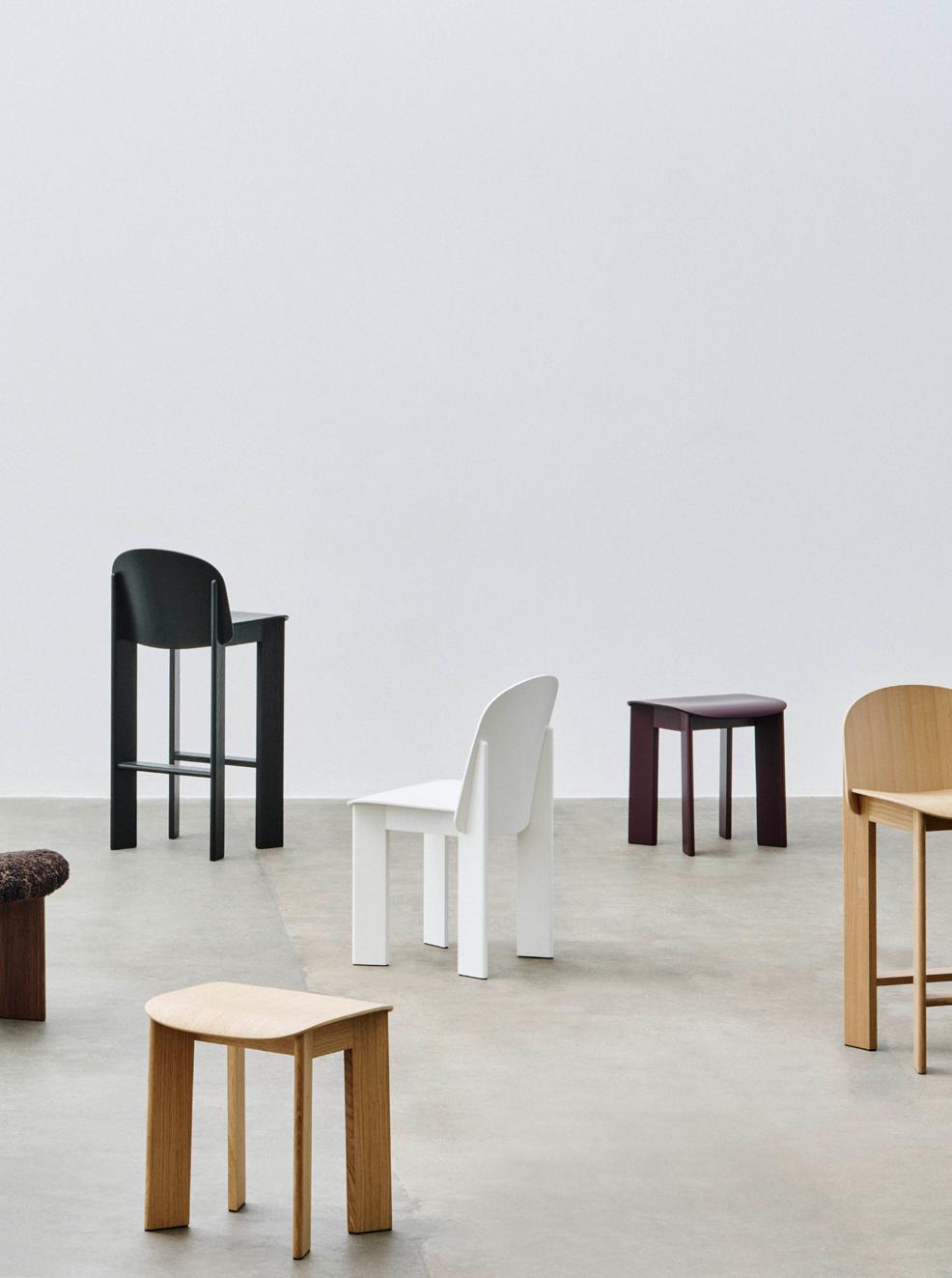
Following the introduction of the Chisel Lounge Chair, HAY presents the full collection by Norwegian designer Andreas Bergsaker – a contemporary yet timeless assortment for any indoor environment. What began as a single moulded plywood design has gradually evolved into a family of considered pieces: a dining chair, a stool, two bar stools, and tables in 10 sizes across four typologies.
'When we had the first sample review of the Chisel Lounge Chair, Rolf asked me if I had thought about a
dining version,' Bergsaker recalls. 'I had, so I picked up my phone and showed him a visualisation. From there, I just kept going. Having worked with HAY for six years at that time, I wasn't new to the exercise of extending a single product into a full range.'
Named after the traditional carpentry tool, subtle chisel-inspired details echo throughout – angled, bevelled legs give each piece a sculptural silhouette and a consistent structural identity across typologies. ‘The back and seat are rounded and organic,’ says
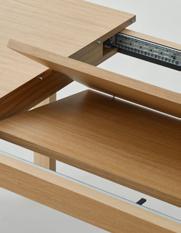
Rolf Hay, HAY Co-founder and Creative Director of Furniture & Lighting, ‘but the legs are razor sharp.’ The same framework carries into the tables, where legs are brought all the way to the corners to pair with a thin tabletop.
ACROSS
SEATING,
WIDE RANGE
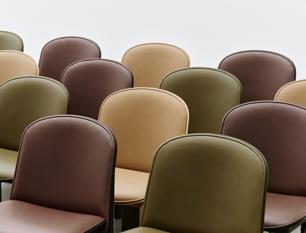
UPHOLSTERY OPTIONS ALLOWS CHISEL TO BE TAILORED TO ITS SETTING.
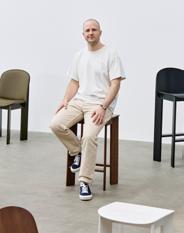
DESIGNER ANDREAS BERGSAKER.
BACKFLIP CHAIR
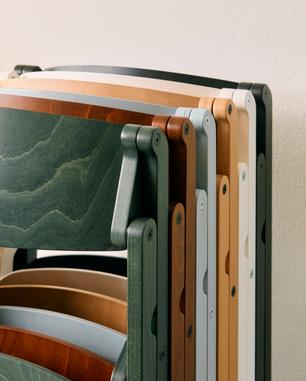
A FOLDING CHAIR WITHOUT COMPROMISE
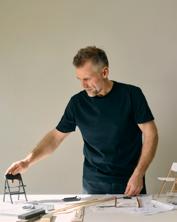
Gudmundur Ludvik has long been fascinated by transformation – by how an object moves from one state to another. In his studio, the Iceland-born, Denmark-based designer reflects on a particular tension that has preoccupied him for years: the folding chair, and its inherent conflict where functionality so often comes at the expense of aesthetics, comfort, or both. Backflip Chair, his first design for HAY, is his answer.
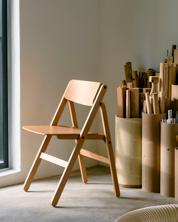
At first glance, it looks like a straightforward wooden chair. Clean lines, honest materials, and a quietly Scandinavian character. Nothing announces itself.
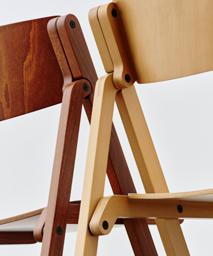
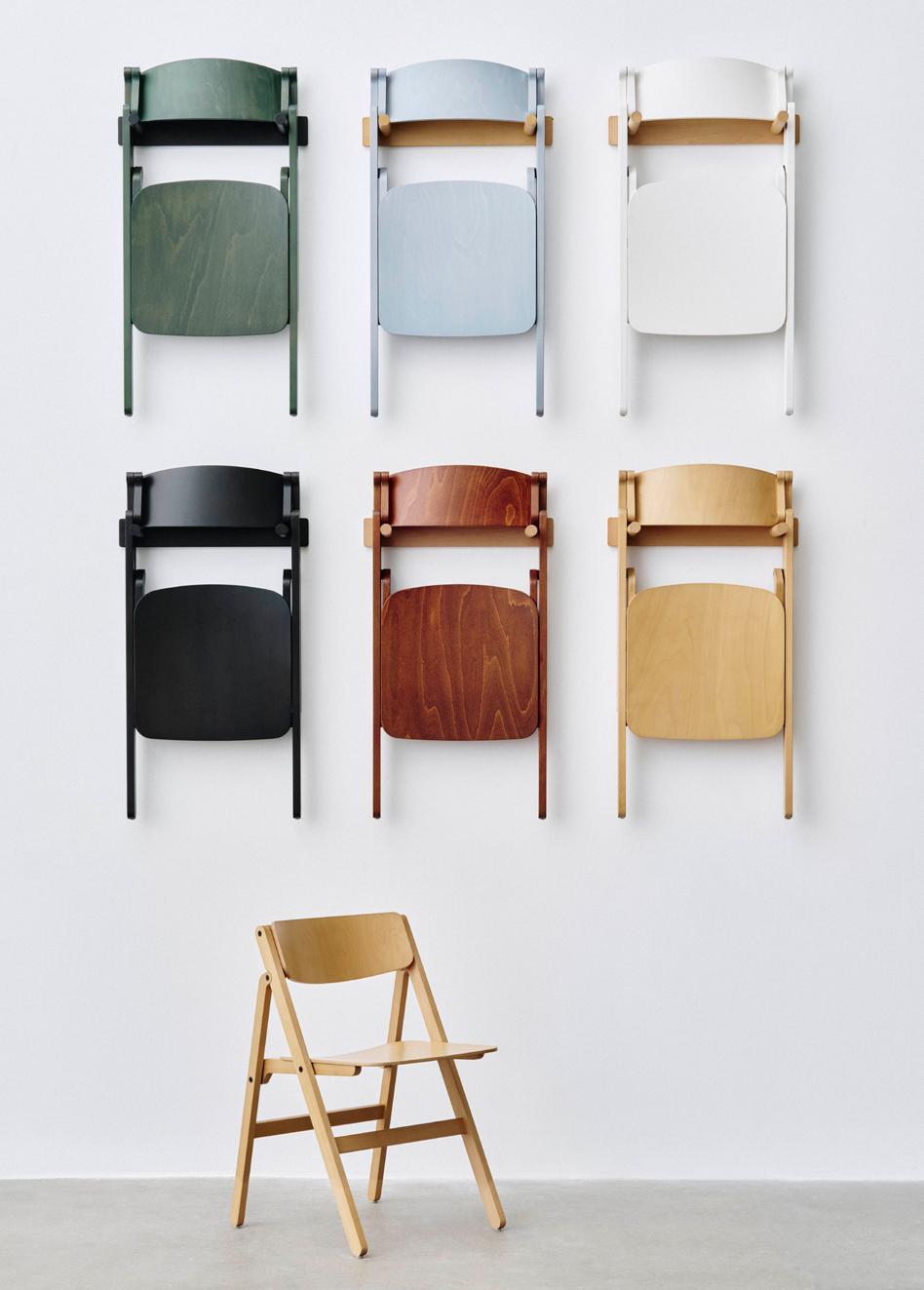
But rotate the backrest and something unexpected happens – the chair folds in a single, fluid motion. Unlike traditional folding chairs, where the mechanism is built into the seat, here it is ingeniously integrated into the backrest itself – an original solution, invisible from the outside. ‘If you can combine simplicity with originality, that’s when you really get something powerful,’ says Rolf Hay, HAY Co-founder and Creative Director of Furniture & Lighting.
‘It was essential to me that it should not feel like secondary seating or something of lesser value,’ says Ludvik. Form is not a starting point here but
a result: beauty emerging from the resolution of a technical problem, functional elements becoming aesthetic expression. Crafted in beech, its natural grain visible across the surface, and finished in a range of water-lacquered colours, Backflip is a practical, adaptable chair that can be brought into use whenever needed, then folded away or hung neatly on the wall with a dedicated wall bracket –equally at home in a dining room or conference hall without ever feeling like a temporary measure.
BY GUDMUNDUR LUDVIK
DESIGNER GUDMUNDUR LUDVIK.
MAGS SOFT LOW REMOVABLE COVER
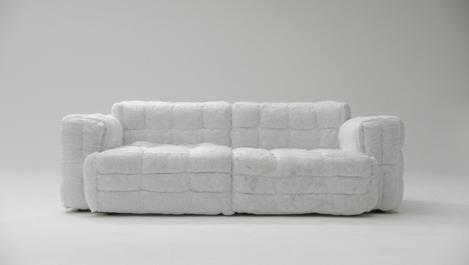
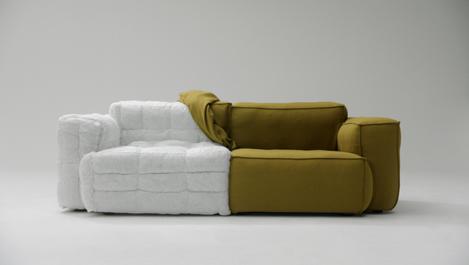
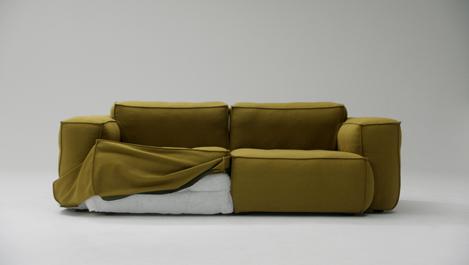
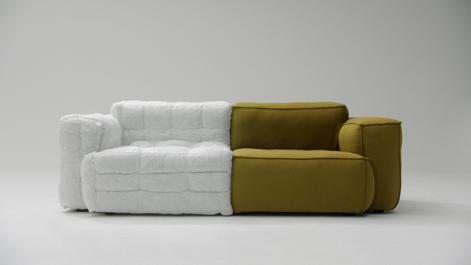
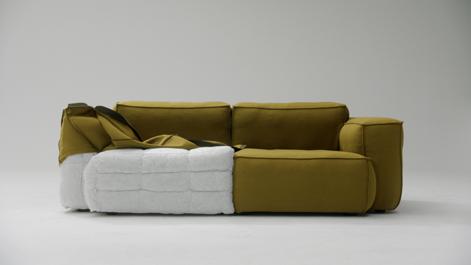
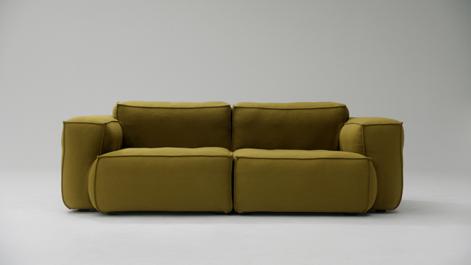
ENDURING DESIGNS ARE WORTH REVISITING
A contemporary HAY sofa with low armrests gains new adaptability through a removable cover. Velcro attachments allow for easy removal without tools, so that it can be refreshed to suit evolving interiors – without compromising its signature comfort or clean lines.
TRAY TABLE
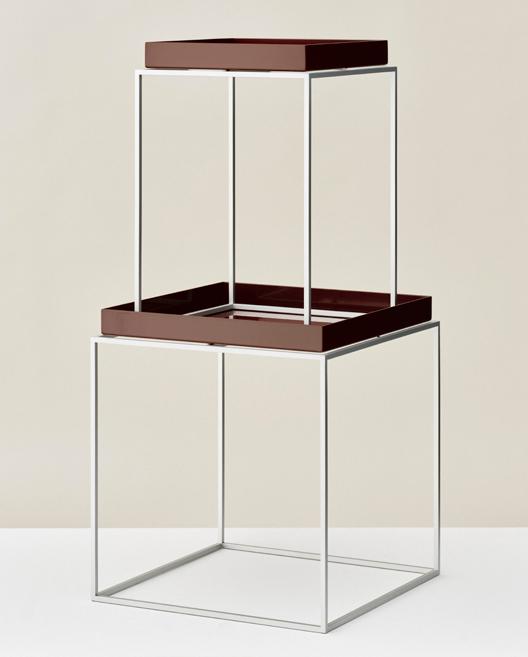
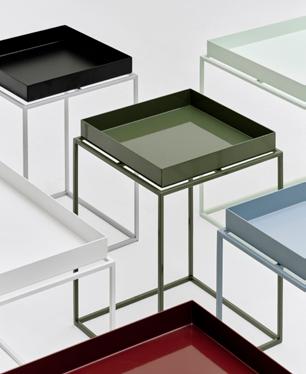
A HAY CLASSIC, REFRESHED
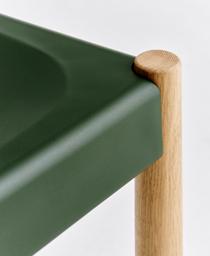
Expanding into new sizes and colours – including selected two-tone variants – this design extends a range built for everyday versatility. Made from steel with a removable top that doubles as a practical tray, it easily transitions between roles as a coffee, bedside, or side table.
ACCESSORIES NEWS
HAY's accessories rethink the items we use every day, at home and on the go. The Dori collection by Doshi Levien brings textile tradition to bedspreads and cushions, while the curated Essential Steel collection draws a touch of nostalgia onto the contemporary table. American artist Emma Kohlmann's painterly universe continues to unfold across new La Pittura tableware - joined by further designs spanning kitchen and dining, bed and bath, and beyond.
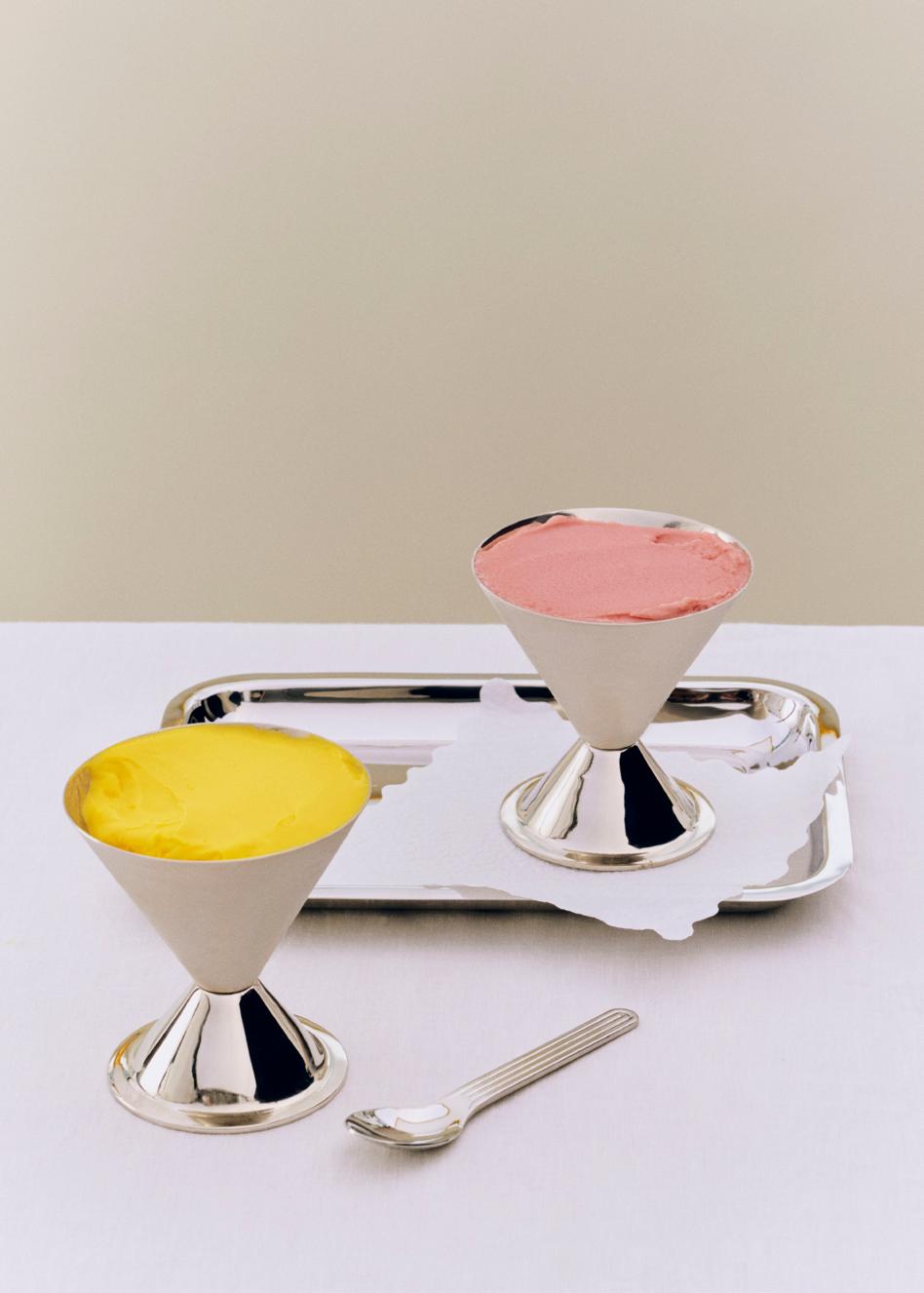
ESSENTIAL STEEL COLLECTION
A TOUCH OF NOSTALGIA FOR THE MODERN TABLE
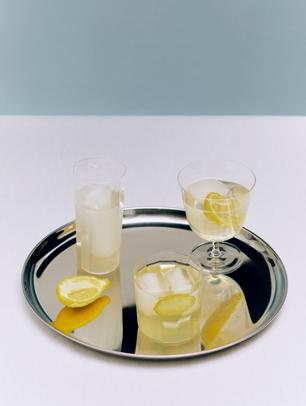
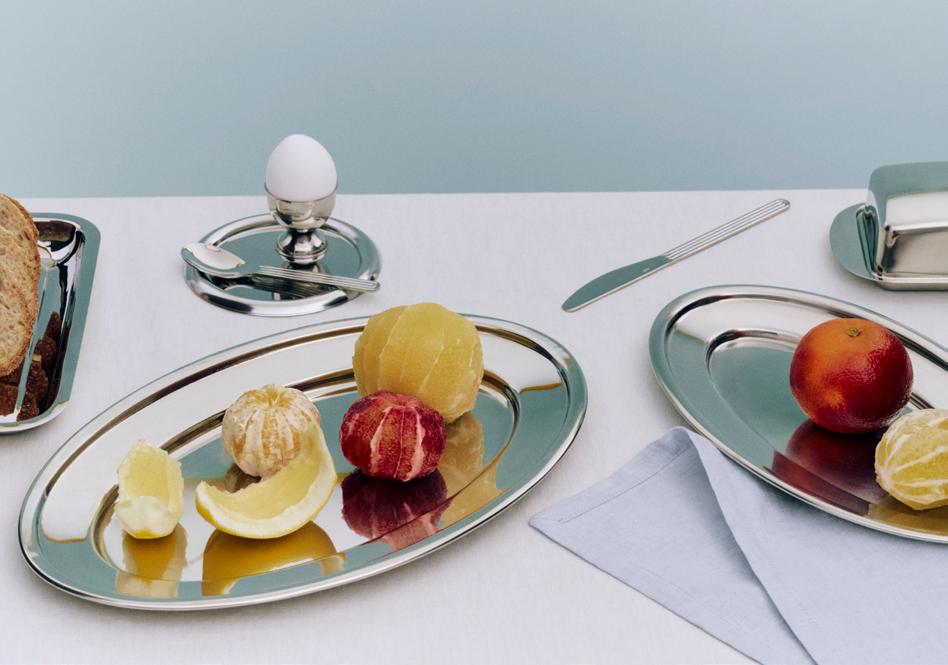
There is something unmistakable about stainless steel on a table. It carries the confidence and sophistication of a café, brasserie, or ice cream bar –places where service is swift, but details still matter. Long favoured for its durable and easy-to-clean qualities, the material also has strong visual appeal: shimmering surfaces catch the light, reflect their surroundings, and lend even the simplest object a sense of occasion.
That duality sits at the heart of HAY’s Essential Steel collection. Building on HAY’s appreciation
of functional, everyday serveware, the curated collection draws inspiration from objects across different hospitality traditions, bringing them into HAY’s contemporary design universe with a renewed presence at today’s table. With carefully contoured silhouettes and a polished finish, each item looks and feels sophisticated without ever becoming too precious.
Flavoured with nostalgia but far from old-fashioned – they invite use, daily.
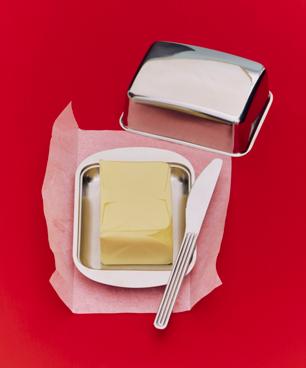
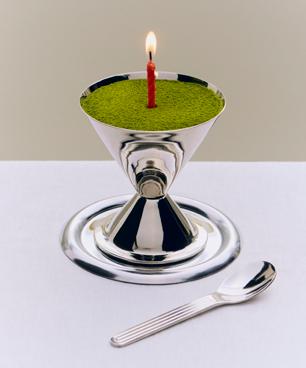
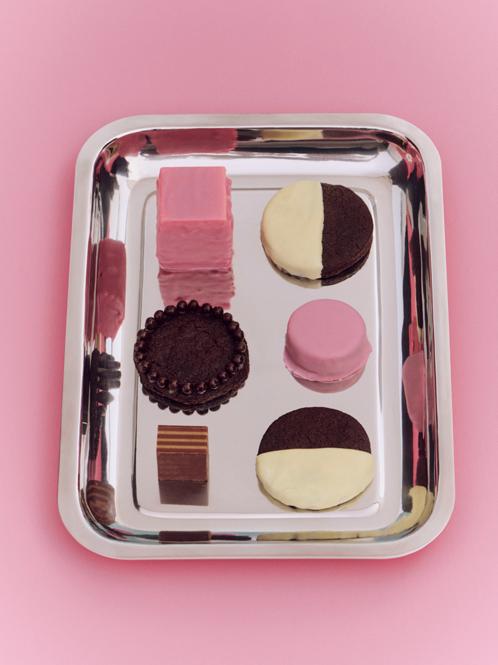
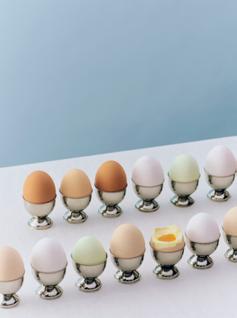
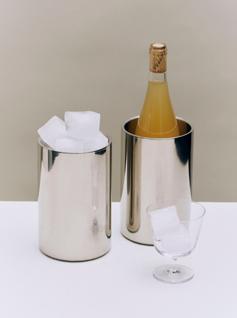
AVAILABLE IN ROUND, OVAL, AND RECTANGULAR DISHES, AS WELL AS A WINE COOLER, BUTTER BOX, EGG CUP, AND CONE ICE CUP – ALL CRAFTED IN DURABLE STAINLESS STEEL WITH A POLISHED FINISH.

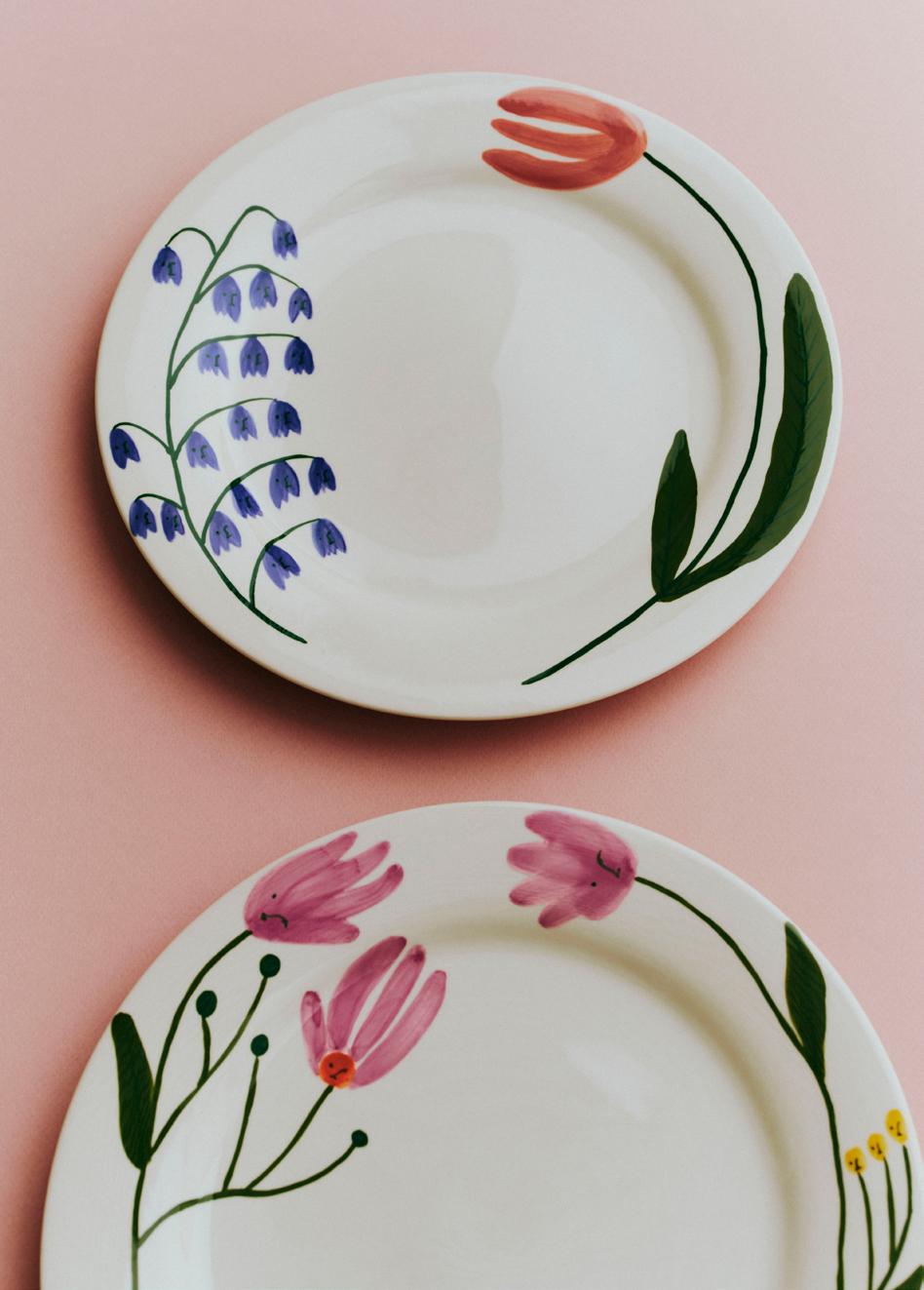
LA PITTURA
NEW MOTIFS, FAMILIAR FORMS
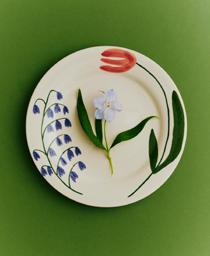
American artist Emma Kohlmann expands her La Pittura tableware collection – Italian for ‘the painting’ – with new artworks. Her motifs continue to unfold across hand-painted ceramics, each object brought to life by Kohlmann’s expressive language. At HAY, our appreciation for art has always existed in tandem with our passion for good, democratic design – and the belief that beauty has a place in people’s lives and homes. La Pittura is where that belief takes shape on the table.
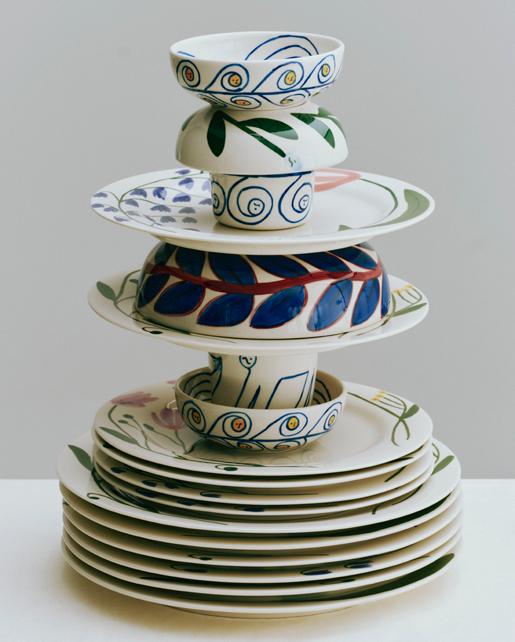
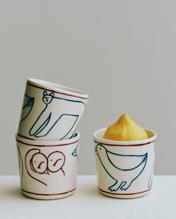
BY EMMA KOHLMANN
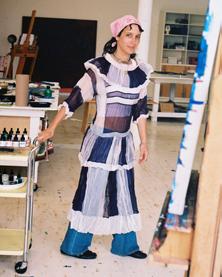
ARTIST EMMA KOHLMANN IN HER STUDIO IN MASSACHUSETTS, NEW ENGLAND.
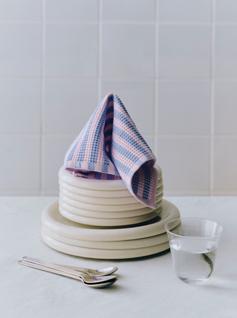
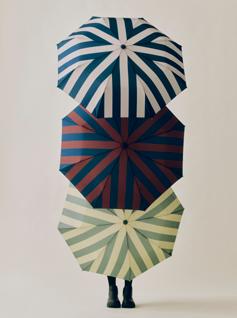

CANTEEN DISH CLOTH
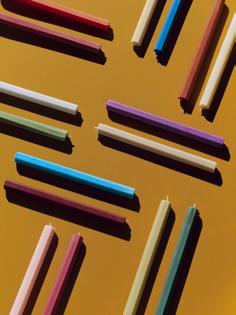
HEXAGON CANDLE
ESSENTIAL STEEL WINE COOLER
ESSENTIAL STEEL EGG CUP
MEGA DOT
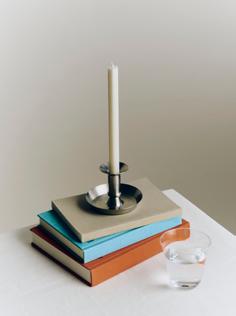
FLARE STEEL CANDLEHOLDER
REGN UMBRELLA
MIZ WATER BOTTLE
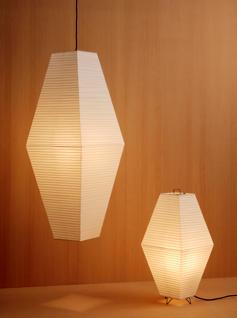
PAPER SHADE
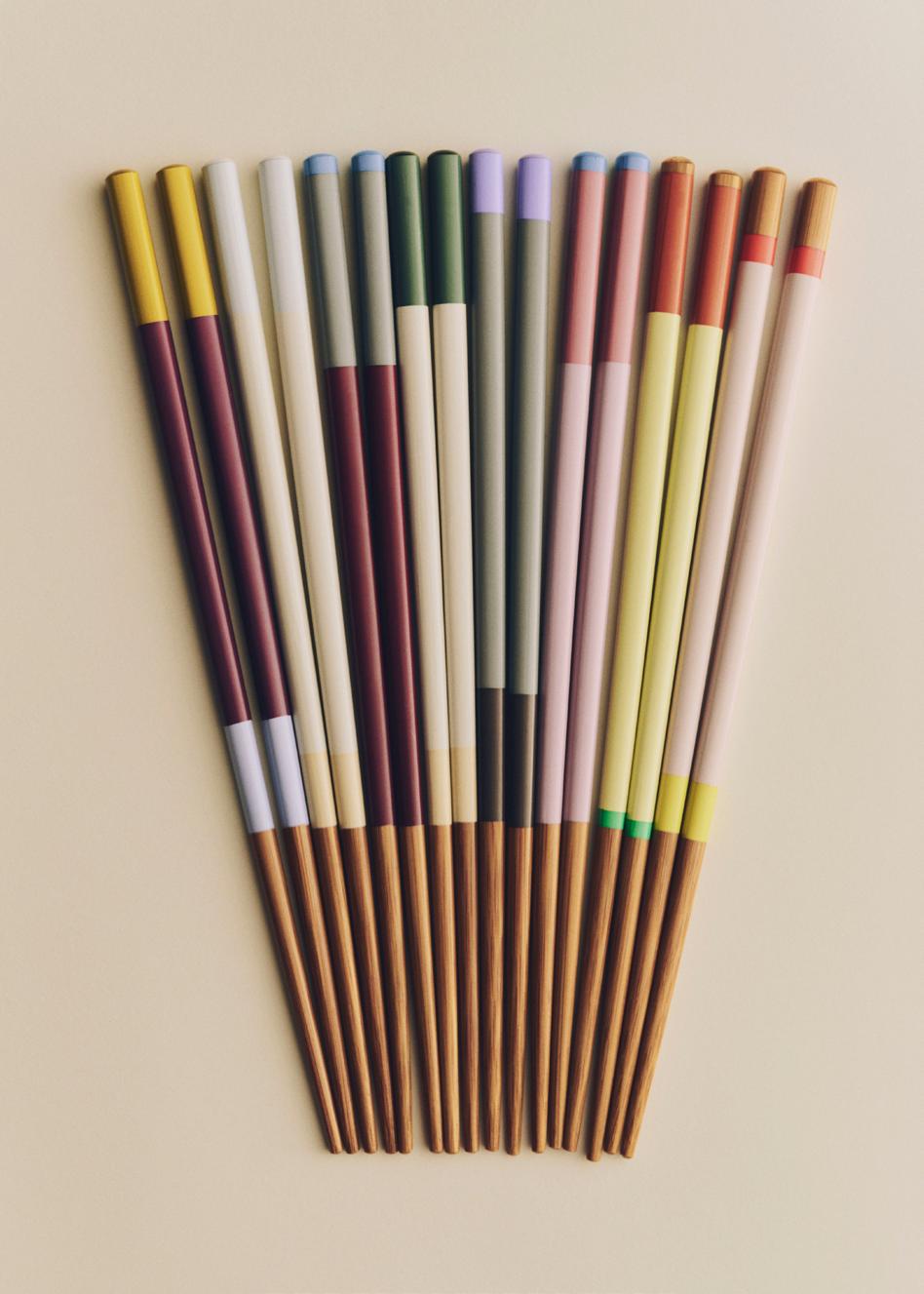
DORI COLLECTION
BY DOSHI
LEVIEN
WHERE TEXTILE TRADITION MEETS CONTEMPORARY DESIGN
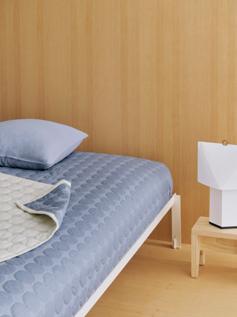
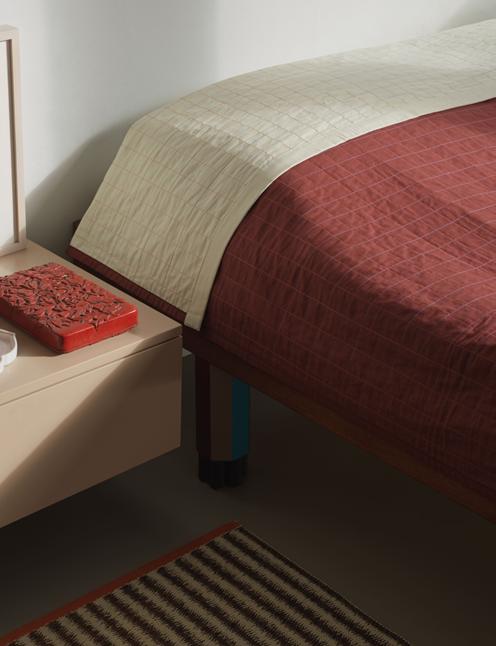
With the Dori collection, Doshi Levien approach the bedspread and cushions as more than soft furnishings. Designed for HAY, they bring a furniturelike presence to the room, shaping the space as much as softening it.
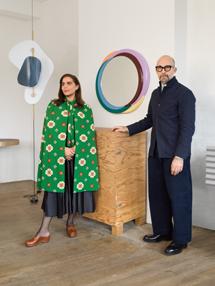
The collection began with a detail, and with the meeting of two visual sensibilities. During a visit to the London studio of Nipa Doshi and Jonathan Levien, Mette Hay, HAY Co-founder and Creative Director of Accessories, noticed one of Nipa Doshi’s textile samples and was drawn to its reverse. Its stitch detailing suggested a larger possibility. As Doshi recalls, ‘Here, we have a bedspread,’ a recognition that set the project in motion.
Named after the Hindi word for ‘thread’, the collection carries a personal resonance for Nipa Doshi, whose upbringing in Bombay informs Dori’s
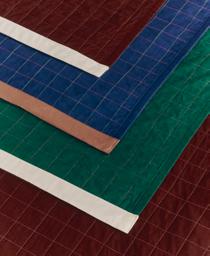
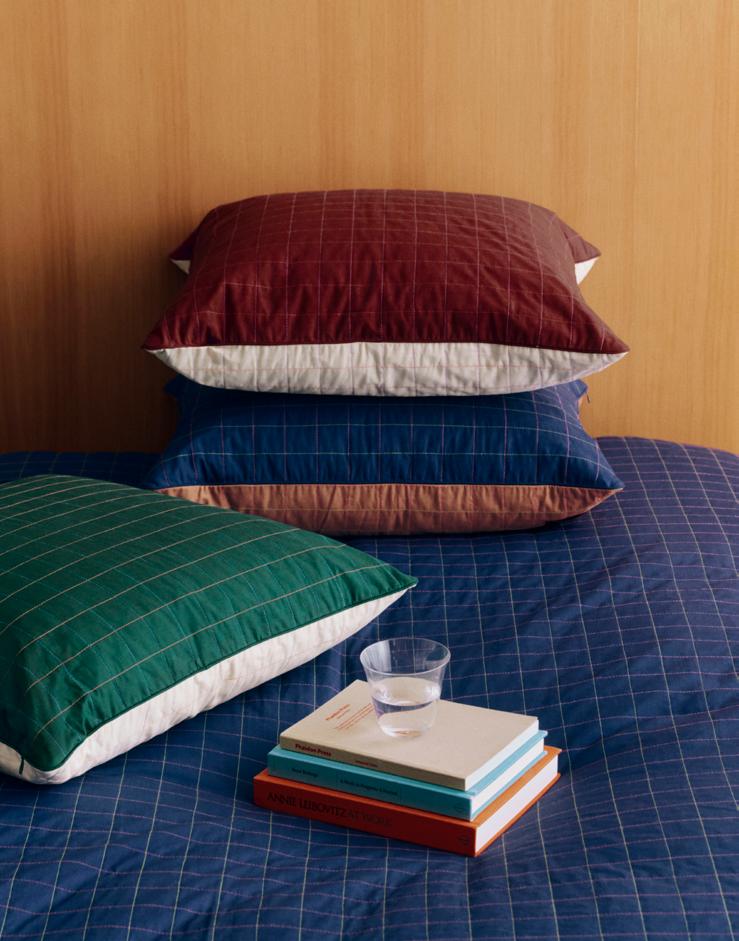
design language. She describes it as ‘bringing a different textile culture into the HAY universe’, rooted in Indian traditions of cotton, embroidery, and everyday use. This heritage is expressed through grids, borders, contrast stitching, and reversible colour fields, translating textile tradition into a contemporary design language.
Dori moves between atmosphere and function. Its two-tone construction offers two expressions in one, allowing the identity of the piece to shift with a turn or a fold, ‘a simple, democratic idea’ in Doshi’s words, aligning with HAY’s design philosophy. She describes making the bed as ‘a very important ritual’, and Dori as ‘about making a beautiful bed, and enjoying the process of doing something simple, well.’ The embroidered grid brings a fine, coloured structure to the surface, while also guiding how the piece is placed.
Realised through industrial production, Dori reflects HAY’s approach to making well-considered design accessible, while retaining a strong sense of touch. Doshi speaks of ‘care, intelligence, and time’, qualities present in the work. The palette, developed intuitively in the studio, balances boldness with restraint. From a distance, the surface reads as graphic; up close, it reveals texture and the presence of the hand. Levien also points to the small label, carrying an embroidered, hand-painted signature by Doshi, adding a personal and recognisable detail to the piece. In Dori, textile tradition and contemporary design are closely interwoven, resulting in pieces that bring warmth, colour, and presence to the room.
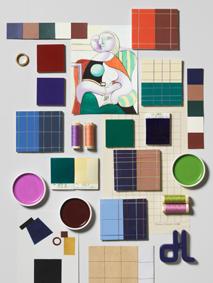
COLOUR SAMPLES, MATERIAL SWATCHES, AND REFERENCE ARTWORK FROM THE DOSHI LEVIEN STUDIO.
AVAILABLE IN THREE RICH, REVERSIBLE TWO-TONE COLOURWAYS, INCLUDING A REMOVABLE CUSHION COVER.
NIPA DOSHI (LEFT) AND JONATHAN LEVIEN (RIGHT) IN THEIR STUDIO IN ISLINGTON, LONDON.
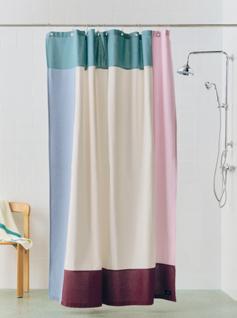
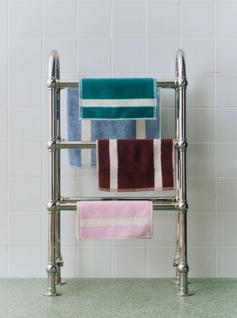
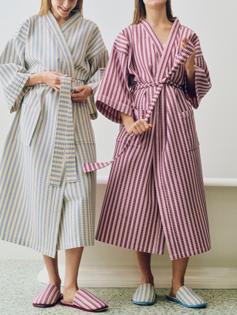
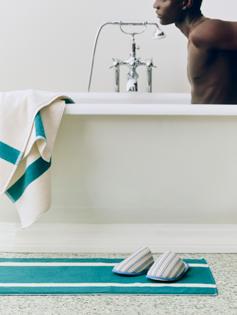
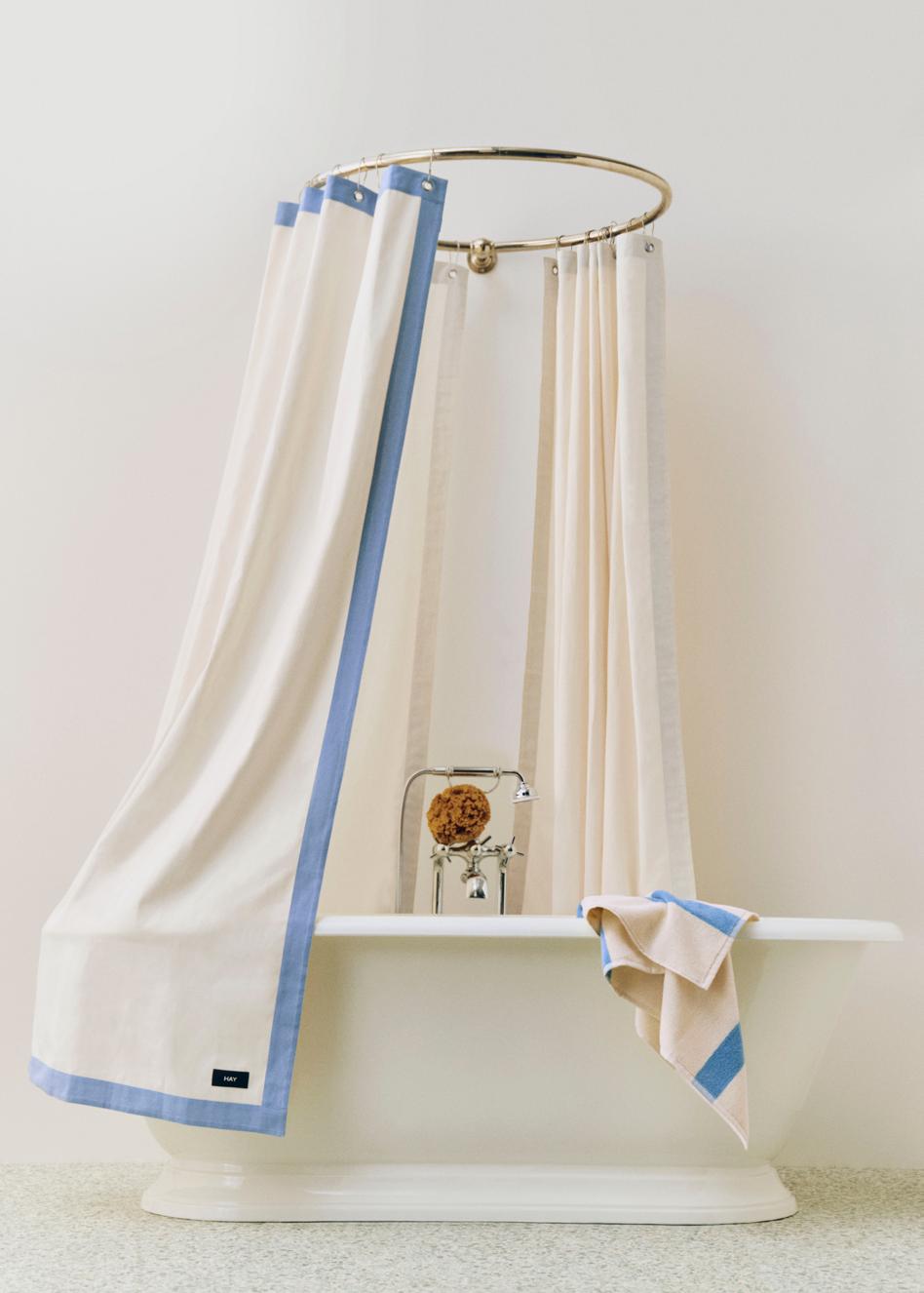
PIVOT SHOWER CURTAIN
STRIPE WASH CLOTH
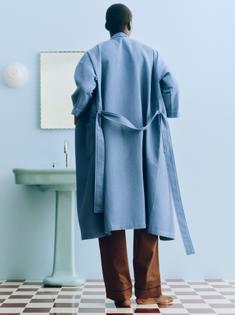
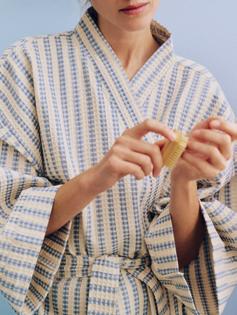
WAFFLE BATHROBE
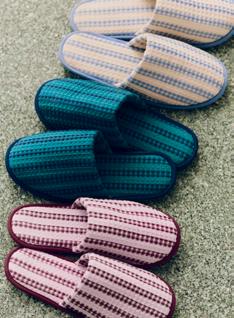
WAFFLE SLIPPERS
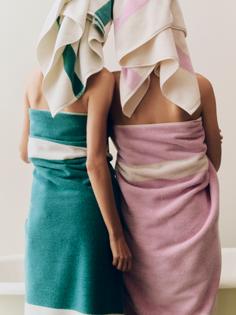
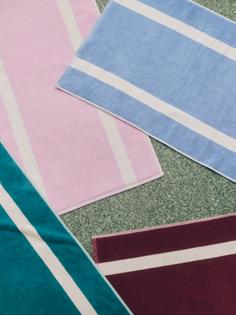
STRIPE BATH MAT & STRIPE BATH TOWEL
WAFFLE BATHROBE
STRIPE BATH SHEET & STRIPE BATH TOWEL
WAFFLE BATHROBE & WAFFLE SLIPPERS
STRIPE BATH MAT
LIGHTING NEWS
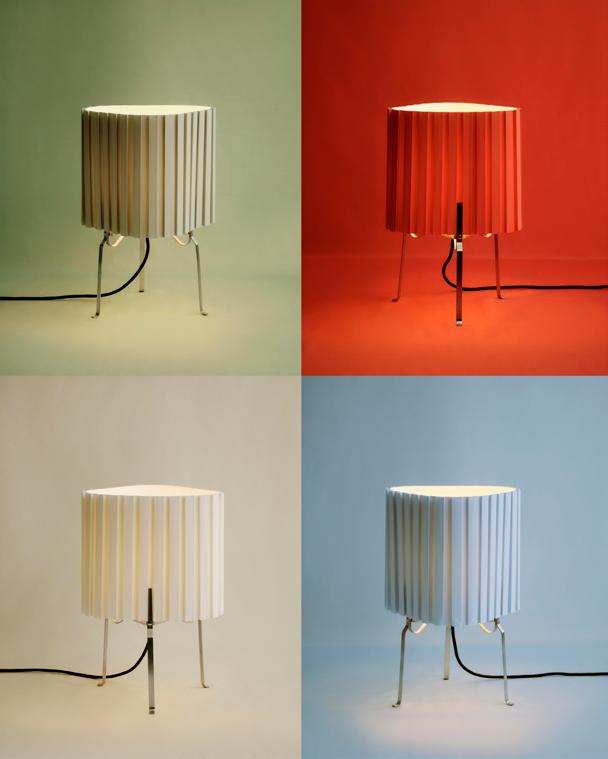
Two new voices enter our collection through light. Claire Lavabre's Posto Table Lamp strips the lamp back to its essentials – three raw aluminium parts, two screws, almost nothing more. Paris-based duo Leclercq Viallet take a different approach with Canelé, pinching a pleated textile shade into a slender threelegged steel frame. Both began as gallery objects; both found their way to HAY. Meanwhile, Julien Renault adds a new, versatile floor lamp to Compass –a few of the new lighting designs from HAY.
CANELÉ TABLE LAMP
FOLDED, PINCHED, ILLUMINATED
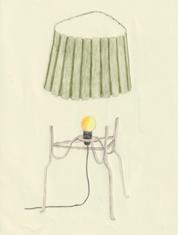
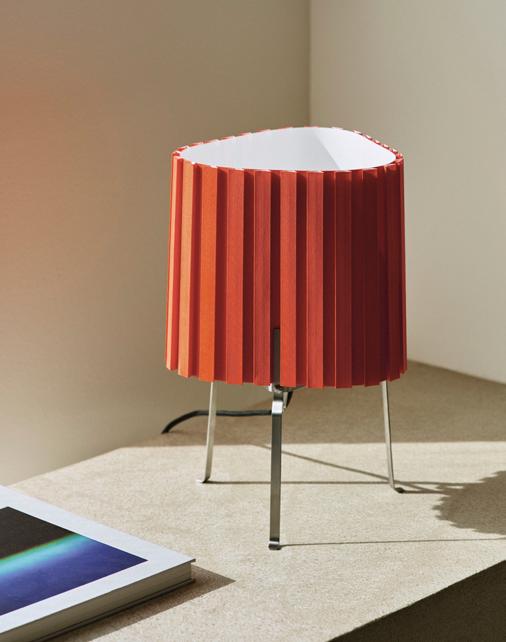
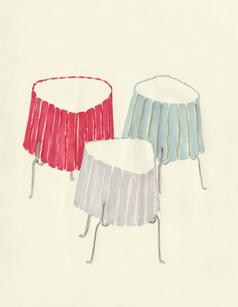
Paris-based duo Leclercq Viallet’s Canelé Table Lamp took shape not on paper but in their workshop – folding, assembling flat metal elements, working through the problem in three dimensions – marking their first design for HAY. Canelé initially came to life as a collection of handcrafted gallery objects, before finding its way into everyday life. It takes its name from the fluted French pastry from Bordeaux, sharing its distinctive vertical fluted aesthetic – modest in scale and pleasing in form.
The lamp works through an elegant tension between opposites. A slender three-legged steel frame –
graphic and architectural – holds a pleated textile shade in place simply by pinching it. The shade is a single colour, but the folds create a subtle striped effect, adding depth and giving the silhouette a soft, organic quality. It appears almost to float.
Translated from those original handcrafted pieces into industrial production for HAY, the design retains the quiet energy of something made with curiosity and care. Lit, it becomes a glowing sculpture –casting a warm, coloured hue and finding its place equally well on a table, a shelf, or a windowsill.
BY LECLERCQ VIALLET
POSTO TABLE LAMP
THE ART OF REDUCTION
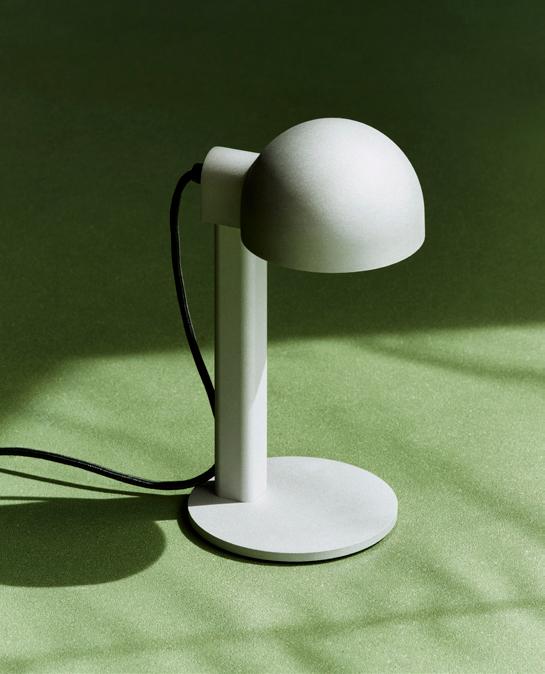
For her first design with HAY, French designer Claire Lavabre asked a simple question: what is a lamp, stripped back to nothing but itself? The result is Posto – a table lamp born from an exhibition brief centred entirely on aluminium, with a calm, graphic presence and a deliberately industrial expression.
Made from three raw aluminium parts, assembled with two screws and a bulb fitting, it reduces the idea of a lamp to its essential parts. The head sits
lightly on the upright, the stem gives the lamp a quietly architectural presence, and the cable is held in a subtle groove that keeps the silhouette elegantly composed. Posto does not compete for attention, but rewards it. Its cast aluminium has a tactile, grainy quality; the shot-blasted finish carries faint traces of its making – small marks that give the object a rare honesty. On a desk, shelf, or bedside table, it provides focused, comfortable light without imposing itself on the room.
BY CLAIRE LAVABRE
COMPASS FLOOR LAMP
A NEW POSTURE
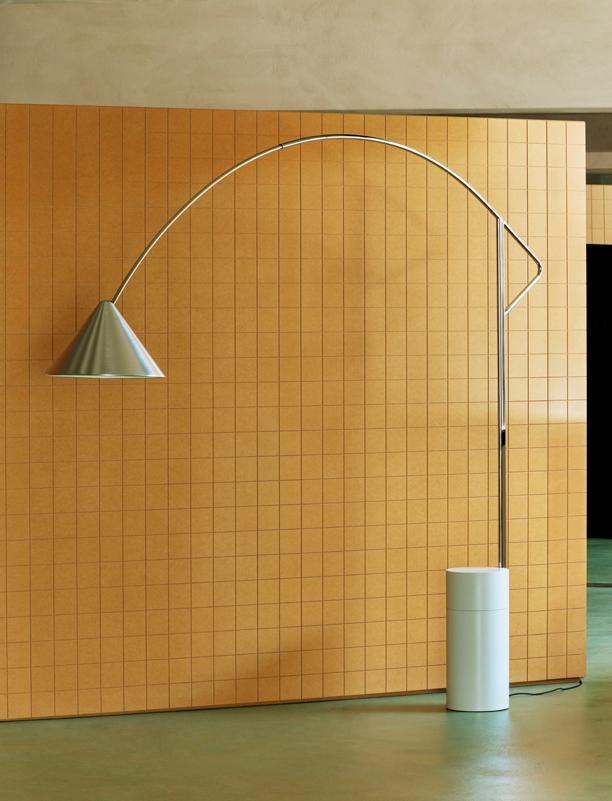
Extending the series’ distinctive conical silhouette from pendant to freestanding format, the Compass Floor Lamp delivers pendant-like illumination without the need for a ceiling fixture. A curved, expandable arm suspends the shade overhead in an elegant arched silhouette, while a 360-degree rotating base and tiltable shade direct light precisely where needed – at home or at work.
BY JULIEN RENAULT