Journal of Nutrient Management (ISSN# 2690-2516) is published four times annually in February, May, August, and November by W.D. Hoard & Sons Company, 28 Milwaukee Ave. West, Fort Atkinson, Wisconsin 53538 Tel: 920-563-5551. Email: info@jofnm.com Website: www.jofnm.com. Postmaster: Send address corrections to: Journal of Nutrient Management, PO Box 801, Fort Atkinson, Wisconsin 53538-0801. Tel: 920-563-5551. Email: info@jofnm.com. Subscription Rates: Free and controlled circulation to qualified subscribers. For Subscriber Services contact: Journal of Nutrient Management, PO Box 801, Fort Atkinson, Wisconsin 53538, call 920-5635551, Email: info@jofnm.com.
From loosening tight bolts to removing tough stains or repelling pests, most are familiar with the product WD-40 in its iconic blue, yellow, and red can. The ingredients that make this lubricant so effective are unknown to the public, and apparently, to most people who work for the company, too.
I was intrigued by a story in The Wall Street Journal that explained how the formula for WD-40 is literally kept under lock and key. The piece of paper containing the handwritten formula is housed in a locked box in a bank vault somewhere in San Diego, Calif. It has only left the vault three times in the past three decades and has remained a secret to most employees during WD-40’s 70-year history. The company’s current chief executive finally got to see what makes WD-40 so special after working with the company for more than 30 years.
It makes sense that the WD-40 Company wants to keep a tight grip on their unique formula. We all have information in our personal and business lives that must remain confidential. However, there is also great value in sharing certain “secrets” when the situation is right.
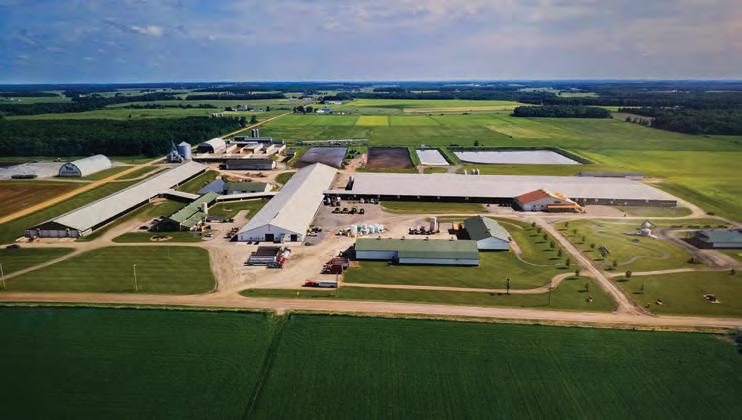
David Trimner of Miltrim Farms, the farm featured on page 14, talks about the tremendous value he finds in sharing ideas with other farmers. He eagerly participates in their local watershed group to learn from others and jumps at opportunities to attend conferences and contribute to panel discussions to share what has worked on their farm.
Many farmers tend to be independent thinkers and workers by nature. That’s one of the perks of the job. So, sharing what is done on your farm may not be comfortable for everyone. Maybe you feel that what works on your farm would not work for others. But one thought can spur another, and there is great value in bringing ideas to the table for others to learn from. That’s why I love sharing farm stories in this magazine. I learn a lot from listening to farmers from around the country, and I know our readers do as well.
There are some secrets we keep unintentionally. When I think about my own life, there are tasks I do, bills I pay, and certain things I just “know” that no one else in my household does. For those of you who own a farm or other business, that list of jobs you do or things you know is exponentially longer. There’s certainly value in dividing and conquering on tasks, but when our dayto-day responsibilities are basically a secret from the rest of our family or team, there is a high risk of disorder if something disrupts the normal routine. Consider some cross-training, establish a back-up plan, or at least prepare some instructions so someone can step up in your absence.
Looking at the bigger picture, business succession plans can also feel like a black hole filled with secrets. Our Lagoonside Reflections column has focused on business and transition planning the past few issues. These topics can be difficult to think about and even harder to discuss with others, but they are critical if you want to leave your family and business in a good place. I have relatives working through farm ownership and dividing up their parents’ estate right now. With both parents no longer here on Earth, their children are trying to make decisions that support the farm and the family. But without their parents’ vision in writing, there is a lot of gray area to work through, and it is not easy.
Don’t get me wrong. There are some things in life that are best kept a secret. But don’t keep the information that makes your operation tick sealed away as securely as the formula for WD-40. And if there are some secrets you want to keep locked up tight, just be sure someone has a spare key.
Until next time, Abby
Let us know your thoughts. Write Managing Editor Abby Bauer, 28 Milwaukee Ave. West, P.O. Box 801, Fort Atkinson, WI 53538; call: 920-563-5551; or email: info@jofnm.com.
POLICY WATCH
UNITED STATES
USDA extended its moratorium on Rural Business-Cooperative Service loans for new anaerobic digesters and controlled environment agriculture projects through the end of 2026. The pause was first announced in January and was set to expire mid-April. In addition to digesters, the loan program supports projects such as vertical farming and hydroponics. According to USDA, the extended pause supports sector-specific underwriting guidance development, lender eligibility and oversight requirements assessment, stronger collateral evaluation, and ensuring future approvals match the program’s goals.
MARYLAND
After a 10-month delay, the Maryland Department of the Environment released a new statewide general discharge permit for concentrated animal feeding operations (CAFOs). This replaced the previous permit that expired last July. Existing farms had been running under the terms of the expired permit, but farms have not been able to apply for new permits to build or expand during this time.
The renewed permit includes input gathered through public meetings, stakeholder listening sessions, and a public comment period. An emergency bill passed by Maryland lawmakers would have allowed CAFO building projects to begin under certain circumstances despite the expired permit, though a new permit would still be required before an operation becomes active or animals are housed there. However, the updated permit was released before the state’s governor signed the bill.
The new permit will expire in 2031.
WISCONSIN
Wisconsin Governor Tony Evers signed Senate Bill 78 into law, modifying distribution and labeling requirements for manure-based compost soil and plant additives. With limited exceptions, state law prohibits packaged fertilizer distribution without a label showing guaranteed analysis. Bulk fertilizer is subject to similar regulation. The new law reduces testing and labeling requirements for fertilizer produced from converting manure into compost. It removes the need for guaranteed analysis and permits distribution even if the nitrogen, phosphorus, and potassium total less than 24% of the product’s weight.
UNITED KINGDOM
One of the United Kingdom’s largest chicken producers and a water company were taken to court over pollution concerns in the Wye, Lugg, and Usk rivers. Lawmakers say it’s the biggest case over environmental concerns brought to UK lawmakers because of the number of claimants and the geographical spread. More than 4,500 people who live or work near the river signed up to take part in the case. The group claims that runoff from chicken litter application and sewage spills are causing water quality issues in the river.
IN THE FIELD
WIDER WINDOWS FOR MANURE APPLICATION
By utilizing high-clearance robotic irrigation, these three farms opened up more spreading opportunities and saved money.
by Laura Paletta
Anew nutrient management strategy incorporating high-clearance robotic irrigation (HCRI) on row crops was highlighted in the last issue of this magazine. The technology has gained traction in the Midwest, especially in eastern Wisconsin. Dairy operations are utilizing this technology to apply nutrients in the summer when crops are growing — a spreading window that has been tough to hit. With the trade name 360 RAIN, HCRI allows farms to spoonfeed leachate or manure applications all summer long, providing nutrients and moisture to the root zone when crops need it most.
Spreading in the summer takes pressure off a farm to apply manure in the fall when conditions are typically more wet, cold, and unpredictable. As a bonus, these systems are great for irregularly shaped fields where center pivots cannot reach into corners and wedges.
Keep nutrients in the field
From a water quality standpoint, using 360 RAIN in the summer allows crops to uptake the added nutrients, compared to spreading manure in the fall when nutrients are more vulnerable to losses in frozen conditions. A dairy farmer in Calumet County, Wis., bought an HCRI with the goal to spoon-feed nutrients to his corn last summer. From the end of July into August, he spread 22,000 gallons per acre with three passes. Using leachate water and a little manure, this added a total of 5.42 pounds of phosphorus (12.32 pounds of P2O5 per acre) and 40.7 pounds of nitrogen per acre. Applying manure during the season
when the crop can utilize the water and nutrients provides higher efficiency than applications in fall or spring when a crop is not readily using nutrients or extra water. Next year, he hopes to start using 360 RAIN sooner in the season, which will add necessary nutrients to the growing corn at an earlier growth stage.
Finding real savings
This technology also shows promising cost-reduction potential. A dairy farmer in Kewaunee County, Wis., recorded his costs to compare his typical dragline setup versus the HCRI technology. The cost of applying manure using a traditional dragline, including his own equipment, diesel fuel, pumps, and
so forth, came to $0.012 per gallon of manure pumped. A local manure hauler priced their cost around 2 cents per gallon of manure pumped. His 360 RAIN costs, including the price of the initial purchase of the machine spread over 10 years, electricity, and fuel, came to $0.006 per gallon. In both cases, using 360 RAIN costs less than half the price of spreading manure using a dragline. This farmer also saved on fertilizer costs using this approach. One of his fields where he ran the 360 RAIN received 16,000 gallons per acre in the 2025 growing season, adding 89.6 pounds of nitrogen. He chose not to add any supplemental nitrogen on this 65-acre field, saving about $1,850 (at 50 cents per pound of nitrogen and 30 pounds of nitrogen per acre). His corn yield on this field was average for the farm.
One of the biggest benefits for this farmer was the pressure it took off his system to spread large amounts of manure in the fall. In the 2025 growing season, he was able to spread 3.5 million gallons of manure and 3.7 million gallons of leachate using the new technology.
Going the distance
One limitation about the 360 RAIN is that it needs to be used on fields close to the manure pit, where hoses can reach. However, a dairy farmer from Manitowoc County, Wis., also runs a manure hauling business and found a way to combat this issue. He put his 360 RAIN on his furthest field, 7.8 miles away (a 13-minute drive) and ran it there for three weeks. He had one tanker traveling every 30 minutes from manure pit to field, allowing
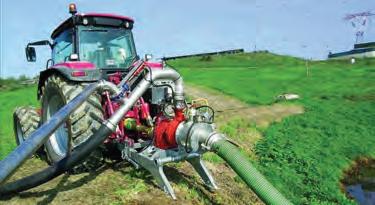
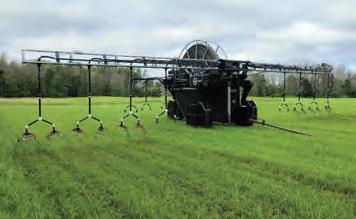
This high-clearance robotic irrigation system, 360 RAIN, is being used on Italian ryegrass.
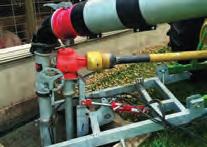
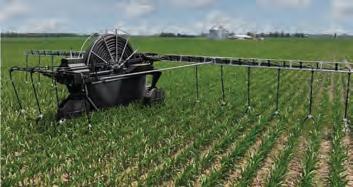
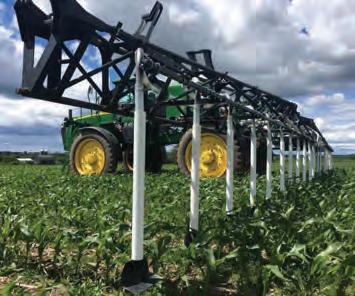
The 360 RAIN system is being used to apply nutrients on growing corn.
the device to run for about 10 hours every day. This approach allowed the spread of 10,000 gallons per acre of manure, or 2 million total gallons.
A quick calculation of costs showed this use of the 360 RAIN was about the
same price as traditional spreading, but the farmer stated, “A big benefit, which is hard to put a price tag on, is not having to haul those 2 million gallons in fall. Anything we can do in the summer on a growing crop helps reduce fall or spring hauling when the opportunity for loss is highest and when we have to fight the most unpredictable weather.”
The 2025 growing season was each of these farmers’ first year incorporating a 360 RAIN into their systems. They all gave positive feedback. These farmers plan to use the tool even more, like to water cover crops in the fall to get a boost on growth before winter. Or, they may purchase another unit so more manure can be spread during the growing season.
One lesson learned was to not spread straight manure using the tool, but to cut in leachate water. This helped minimize the odor on hot days. Another important note is to plan ahead in your nutrient management planning. Be sure you
do not overapply nutrients by spreading manure the previous fall on a field where you plan to use the HCRI technology.
When it comes to manure, application timing is crucial for nutrients to be optimized. Spring and fall tend to have more unpredictable weather and can cause manure to be spread in conditions when nutrients can be lost through runoff.
The 360 RAIN system allows for leachate and manure spreading while a crop is growing to uptake the nutrients during warmer, drier months. Opening up the summer spreading window has the potential to improve water quality risks as well as take the pressure off spreading large amounts of manure in the nongrowing season. ■
The author is an agriculture water quality specialist with the University of Wisconsin-Madison Division of Extension.
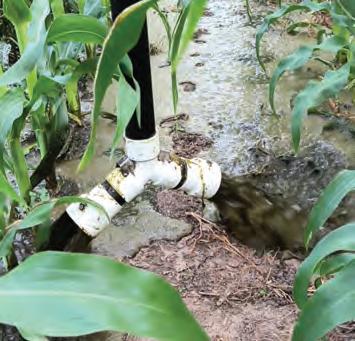
Manure mixed with leachate water is being spread on corn using the 360 RAIN system.
ON THE MOVE
WHEN CRISIS STRIKES
Recognize the dangers of manure handling and be prepared to act quickly in an emergency. Sometimes, this means calling in help with the right equipment and training.
by Abby Bauer, Managing Editor
As a volunteer firefighter, Dan Neenan has seen his share of emergency situations. He also focuses on emergencies and crisis preparedness during his day job as the director of the National Education Center for Agricultural Safety.
The National Education Center for Agricultural Safety (NECAS) began in 1997 as a partnership between Northeast Iowa Community College and the National Safety Council’s agricultural division. It was meant to be the first hands-on safety training center in America to prevent agricultural injuries and fatalities.
The facility was initially designed to host trainings on site, but Neenan said the group soon realized that the trainings needed to meet people where they were. Now all NECAS programs are mobile with props that can be taken wherever farmers and emergency personnel gather for training.
The biggest threat
Manure pit rescue is one of the offered trainings. According to Neenan, this is done using a manure pit simulator, which is a tank filled with water. Two mannequins, representing a father and son who have gone into the pit and become unresponsive, are lowered into the tank. The training goes though the rescue procedure using a tripod and winch to mechanically pull a human from a manure pit. This type of hands-on training helps prepare individuals who may find themselves
responding to a similar call in a reallife emergency.
Neenan said that when it comes to manure storages, gases are the killer, and specifically, hydrogen sulfide.
“It’s the one that people always forget about,” said Neenan, “but it’s one of the most important gases to remember when working around manure pits.” He said gas monitors will go off at 35 parts per million, but there have been situations involving manure pits where hydrogen sulfide levels reach 600 parts per mil-
lion. At that level, Neenan said a human will stop breathing in four breaths.
“How long does it take you to take four breaths?” Neenan asked. “Not long at all.”
He explained that as humans, we can smell hydrogen sulfide, but we cannot distinguish the difference between 20 parts per million and 400 parts per million. He also shared that there is no known treatment for hydrogen sulfide poisoning. Nothing can be done to reverse the effects that cause the
The National Education Center for Agricultural Safety uses a manure pit simulator to train first responders how to rescue unconscious individuals from an enclosed space.
human body to shut down.
Carbon dioxide is one of the other gases of concern because it’s heavier than oxygen. In an underground pit, both hydrogen sulfide and carbon dioxide sink to the bottom and push oxygen out.
Be ready to test
Neenan said the ultimate line of protection is a four-gas monitor that tests for oxygen, carbon dioxide, hydrogen sulfide, and the explosion limit. This tool comes with a cost around $500. “But is your life worth $500?” Neenan asked. “The answer, of course, is yes.”
Neenan noted that these four-gas monitors do require upkeep and calibration, which involve additional costs. However, there may be opportunities to partner with other farms or local organizations to share a monitor, taking turns using it when it comes time to empty a manure storage.
Farms with more than 10 employees fall under OSHA guidance, and those farms are required to have four-gas monitors on site. But these monitors are vitally important for smaller farms as well.
Neenan pointed out another deadly gas risk that stems from manure is foam production in hog barns. Swine manure foaming is caused by a combination of diet, microbial activity, and environmental conditions. The foam traps methane, allowing it to accumulate to dangerous levels. This creates a risk for fires and explosions, and when that foam is broken up, those gases are released into the barn.
Neenan reminded that dangerous gas doesn’t just occur in underground manure pits. There have been fatalities of people who were standing by a manure storage structure as it was agitating. If the wind is calm, those gases can just hang in the air and displace the oxygen, creating a dangerous — and sometimes deadly — situation.
Devastating risks
Neenan said another danger around manure storages is drowning. Peo -
ple may slip into liquid manure when working around a storage structure, or someone could unknowingly fall into an abandoned manure pit that was grown over with grass. Any in-ground manure storage should be fenced in with signage warning people to stay out, Neenan advised. A flotation device attached to a rope could be kept near the pit as a rescue tool should someone fall into the manure.
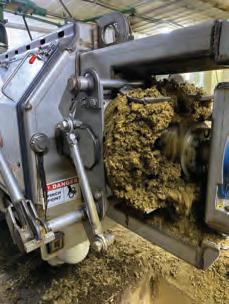
The NECAS trainings also cover hauling equipment. Neenan noted that people can be overcome by gases when doing repairs inside a manure tanker. Manure drag lines also pose a threat because of the pressure created by manure moving at high speeds. Neenan encouraged operators to stay on the other side of the tractor and as far back as possible from the dragline when manure is pumping.
When it comes to alley scrapers, Neenan said to always watch your step. While alley scrapers may not be as likely to cause death, people have certainly been injured.
Waiting for help
If someone you are working with is overcome by manure gases, your first instinct is to rush to them — but that is the last thing you want to do.
“Stay out,” Neenan stated, even though you want to help. He shared several stories of people who went into a manure pit or enclosed area after others, and they all became victims of gas poisoning. “You simply cannot hold your breath long enough to be able to go in and help them and get out,” he emphasized.
“The best thing to do is to call 9-1-1 and get your first responders there,” Neenan said.
When calling for help, know the farm’s address and exact location of the accident. Keep a list of emergency contact information in every vehicle and tractor that travels around the farmstead.
If there are multiple people available at the farm when an accident occurs, have several individuals wait by the end of the driveway to help guide the
emergency personnel directly to the scene of the accident. Every minute matters in these situations.
First responders can safely enter a manure pit by wearing a self-contained breathing apparatus (SCBA), the same gear worn when fighting fires. Neenan advised first responders to stay up-to-date with SCBA annual fit tests and to remember that a beard can prevent the apparatus from getting a tight seal about the nose and mouth. Weight gain or loss and dental work can change the shape of the face and the way this safety equipment fits, impacting its effectiveness.
Dangers are present
Neenan called manure pit emergencies a low frequency, high-risk type rescue that many responders may only see a few times in their lifetime. Neenan added that many people serving as emergency response personnel do not have an agriculture background, underscoring the value of these trainings.
As the program’s director for more than a quarter century, Neenan has developed and delivered safety programs for people around the country. Today the organization has two fulltime trainers and six or seven adjuncts. Last year, they did trainings from the East Coast to Washington and from the northern U.S. down to Georgia.
“Farming is a great lifestyle, but it’s also dangerous,” Neenan stated. “If you have animals, chances are you’ve got manure in one way, shape, form, or another. The more times you work with it annually, the more chances we have that there can be an incident.”
Be sure the people on your farm know how to work around manure safely and what to do in an emergency. Provide safety equipment, including fourgas monitors. And when dealing with manure gases, the best action is to call for help. Consider working with your local emergency services department to ensure they have the training and equipment needed to assist in those rare, but high-risk farming accidents. ■
Extra credit up for grabs
Farms producing renewable energy may be able to boost profitability with some new and updated incentive programs.
by Rich Schell
Some stars may be aligning to improve future earnings for farms operating anaerobic digesters. Updates to the Environmental Protection Agency’s (EPA) Renewable Fuel Standard, California’s Low Carbon Fuel Standard, and the new federal 45Z clean fuel tax credit create opportunities for some anaerobic digester operators.
A push for renewable fuel
The Renewable Fuel Standard (RFS) is a federal program administered by the EPA. It requires that transportation fuel sold in the U.S. contains a minimum volume of renewable fuels. This spring, EPA finalized its new standards with the highest biofuel requirements in the program’s history. These updated standards take effect on June 15.
This bump in biofuel requirements generally benefits corn and soybean farmers by raising demand for their crops. A downside is that greater demand could raise feed costs for livestock farmers. For farms operating anaerobic digesters, though, there are income opportunities. Some farms creating biogas take it a step further and produce renewable natural gas, which then can be injected into the pipeline and used in fuel. Farms producing renewable natural gas can earn credits called Renewable Identification Numbers, which can be sold to companies looking to meet their EPA fuel mandates. Farms in California can get additional benefits from producing renewable natural gas. The Low Carbon Fuel Standard (LCFS) is designed to reduce the carbon intensity of the state’s transportation fuel and provide more low-carbon and renewable alternatives.
California amended its LCFS last summer, intensifying carbon reduction targets of 30% by 2030 and 90% by
Renewable natural gas production is one way some farms can improve their carbon footprint and add income.
2045. This makes manure-based renewable natural gas more attractive as it has one of the lowest carbon intensity (CI) scores of any fuel since it prevents methane emissions.
Credits for less carbon
Another opportunity for digester operators producing renewable natural gas is the Clean Fuel Production Credit, commonly referred to as the 45Z tax credit. As part of the Inflation Reduction Act, this tax credit incentivizes domestic production of low-emission transportation fuels. The credit amount is tied to the fuel’s carbon intensity score and applies to fuel produced and sold between Jan. 1, 2025, and Dec. 31, 2029.
To participate, there are a few “hoops” to jump through. First, fuel producers must register with the IRS. Second, the facilities used to make the fuel must be located in the U.S. or its territories and meet certain carbon dioxide (CO2) requirements. The fuel produced must be a transportation fuel, and the fuel must be purchased by an unrelated person through a qualified sale.
Farmers not producing renewable natural gas may still benefit from this tax credit indirectly. Fuel producers may be willing to pay more for feedstocks like corn and soybeans that come from farms with reduced carbon emissions. Practices such as planting cover crops or no-till farming may make crops more desirable to fuel producers seeking credits.
Anaerobic digesters are still an expensive way to manage manure. However, these new and updated incentives have the potential to make each unit of methane produced by livestock more valuable. Time will tell how well federal policy, tax credits, and state law can mesh together to benefit agricultural businesses. This push for natural renewable gas may become even more important, though, as conflict in Iran has crude oil and natural gas prices skyrocketing. ■
The author is an attorney based in Des Plaines, Ill.
MANURE MINUTE
WATCH THE METAL IN SWINE MANURE
Manure contains valuable nutrients and organic matter, but it also has small amounts of heavy metals that don’t break down in soil. In a South Dakota State University Extension fact sheet, the authors explained that problems associated with heavy metals are gradual. Heavy metals disrupt soil microbial communities, slow nutrient cycling, inhibit root growth, and reduce crop vigor and yields.
Heavy metals enter soil though natural pathways, but they also build up because of feed additives, fertilizers, industrial emissions, and manure application. Some metals, like copper, zinc, iron, manganese, and selenium are required in small amounts and aid in animal and soil health. However, at high levels, they become toxic.
“Repeated manure applications can push essential metals past the point where they help and into the range where they harm soil microbes and crops,” the authors wrote.
Other metals, such as cadmium, lead, and mercury, have no biological bene fits and are toxic even at low levels.
Copper and zinc are commonly added to swine feed to promote growth and animal health. Unfortunately, hogs excrete most of the metals they consume, the authors explained. This makes swine manure, both in liquid and solid forms, especially problem atic. Further processing, such as composting or anaerobic digestion, does not break down heavy metals.
The authors provided a few suggestions to reduce heavy metals in swine manure. First, reduced application rates slow buildup in the soil. Regular soil testing and tracking trends helps monitor accumulation. Maintaining near neutral soil pH lowers metal solubility and toxicity. Deep tillage can dilute surface metal concentrations although it does not remove it from the system.
Reducing copper and zinc levels
Treat manure as a nitrogen asset
Recent field trials underscore dairy manure’s value as a nitrogen source, reducing reliance on commercial fertilizers.
by Alvaro Garcia
Manure is one of the largest nutrient resources available on many farms, yet its fertilizer value is often underestimated in nutrient management plans. When properly credited, manure can supply substantial nitrogen to crops while reducing reliance on commercial fertilizer.
Recent on-farm research conducted through the Cornell Nutrient Management Spear Program highlights the value of manure in corn production systems. Through the Value of Manure Project, scientists have been evaluating how manure contributes to crop nutrition under real farm conditions. Results from these trials show that dairy manure can significantly reduce fertilizer nitrogen requirements while maintaining or improving corn yields. To evaluate manure performance
under realistic conditions, researchers partnered with dairy farms across New York. Rather than using small research plots, the team established replicated strip trials within commercial corn fields.
These strips allowed researchers to compare areas receiving dairy manure with areas managed primarily with commercial fertilizer. In several fields, additional sidedress nitrogen fertilizer was applied to determine whether extra nitrogen improved crop performance
following manure application. This approach allowed the research team to evaluate manure performance across a wide range of soil types, weather patterns, and management practices typical of dairy farms.
Less nitrogen from fertilizer
Across multiple sites and growing seasons, manure consistently supplied nitrogen that supported crop growth. On average, corn fields receiving manure required approximately 20 to 25 pounds less fertilizer nitrogen per acre to achieve yields comparable to fields without manure. In several trials, applying additional fertilizer nitrogen after manure application did not significantly raise yields (see Table 1).
Figure 1. Corn yield response
Figure 2. Estimated fertilizer value of dairy manure nutrients
Table
1. Relative corn yield under manure and fertilizer treatments (e.g., bu/acre)
Treatment
Relative corn yield (%)
No manure and full fertilizer N 100
Manure and reduced fertilizer N 103 to 105
Manure and additional fertilizer N 101
Corn yield response to manure and fertilizer nitrogen rates in on-farm strip trials conducted by the Cornell Nutrient Management Spear Program.
These findings suggest that manure nitrogen contributions are sometimes greater than what is credited in nutrient management plans. Accurately accounting for manure nutrients can help farms avoid unnecessary fertilizer applications while improving nitrogen use efficiency.
In addition to reducing fertilizer needs, manure frequently supported strong crop yields. Some on-farm trials reported corn grain yield jumps of up to 30 bushels per acre compared with fields fertilized only with commercial nitrogen (see Figure 1). These responses likely reflect the broader nutrient profile of manure. In addition to nitrogen, dairy manure supplies phosphorus, potassium, sulfur, and micronutrients. Manure also contributes organic matter to soil, which can improve soil structure, microbial activity, and water retention. These improvements can help crops perform better under variable weather conditions.
Beyond one season
Another important finding from the Value of Manure Project is that manure benefits often extend beyond the year of application.
Table
Estimated fertilizer value of dairy manure nutrients
Component
Nitrogen fertilizer replacement
Yield improvement benefit
Total estimated manure value
Value ($/acre)
$90 to $110
$40 to $60
$150+
Estimated economic value of dairy manure nutrients based on fertilizer savings and yield responses observed in on-farm corn trials.
Researchers observed that residual nitrogen and improved soil conditions sometimes supported crop growth during the following growing season. This carryover effect suggests that evaluating manure benefits over multiple years may provide a more accurate estimate of its overall nutrient contribution. Recognizing these longer-term benefits can help nutrient planners make more effective fertilizer recommendations.
Crunching the numbers
When fertilizer savings and yield responses were considered together, manure delivered measurable economic benefits (see Table 2). Across the Cornell trials, manure nutrients were estimated to provide more than $150 per acre in value, not including manure handling or application costs (see Figure 2). The largest portion of this value came from reduced fertilizer purchases, while additional economic gains were associated with improved yields and better crop performance. As fertilizer prices fluctuate, maximizing manure nutrient use may help dairy farms reduce production costs while improving nutrient efficiency.
These results reinforce the importance of treating manure as a valuable
fertilizer resource. Properly crediting manure nitrogen in nutrient management plans can help avoid unnecessary fertilizer applications while improving nitrogen use efficiency.
On-farm strip trials can also help farms evaluate fertilizer needs under their own soil and management conditions. Recognizing residual manure benefits and integrating manure into long-term fertility programs can further improve nutrient use.
Results from on-farm strip trials conducted through the Cornell Nutrient Management Spear Program show that manure often supplies sufficient nitrogen to reduce fertilizer rates without sacrificing corn yield. When fertilizer savings are combined with yield responses, manure nutrients provide meaningful economic value. Treating manure as a fertilizer asset and accurately crediting its nutrients in management plans can improve nitrogen efficiency while lowering crop production costs. ■
author is a retired South Dakota State University professor. He is now a consultant with Dellait Animal Nutrition and Health.
The
2.
Going green in more ways than one
An array of conservation practices help this dairy farm improve soil health, cow health, and future prosperity.
by Abby Bauer, Managing Editor
Sustainability is a buzzword in agriculture and beyond, but many practices that help farms to be more sustainable are nothing new. Some have been a part of farm operations for decades, and for many farms, they are a guiding light into a future that blends conservation with profitability
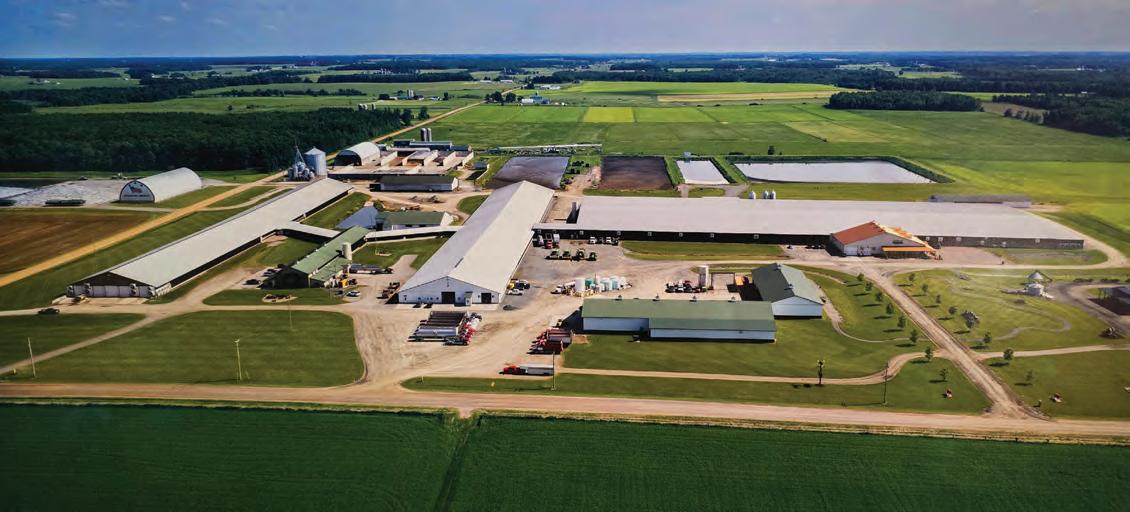
This is certainly the case for dairy producer David Trimner and Miltrim Farms in Athens, Wis. It’s in their farm’s vision statement: “To sustainably raise the bar in producing nature’s most powerful nutrition.” And it’s part of their mission to build upon a legacy of sustainability to better their land, water, cattle, and community.
Trimner and co-owner Andy Miller purchased the dairy a few years ago from the previous generation, where
Trimner’s parents and grandparents had been dairy farming for decades in northern Wisconsin. Today the farm consists of 5,200 acres and a 3,000-cow dairy herd. They milk 1,800 of those cows with 30 automated milking systems, which makes them the largest robotic dairy in the state.
Trimner talked about some of the conservation practices they’ve tried on their farm, what’s worked – and what has not – and future plans at the
most recent Wisconsin Water and Soil Health Conference.
Sustainability in stages
Trimner said conservation has always been part of their legacy. His grandfather incorporated practices like striptill into his field management years ago. He was also one of the first farmers in Wisconsin to put in a manure storage pit to collect manure over winter so nutrients could be applied when they would be best utilized.
Over the years, the family embraced different practices, but they fully embarked on the next leg of their sustainability journey about 15 years ago. “For our family, we knew that, partic-
ularly in our area, surface waters are continuing to be impaired,” Trimner explained. “We wanted to be part of that solution rather than the problem.”
They made some adjustments, starting with less fall tillage. Previously, they plowed everything they could in the fall to save time in the spring. Trimner said they always felt it was necessary in their heavy clay soils, but they shifted gears and experimented with reduced tillage. They also tried some cover crops, planting some rye and oats post-corn silage harvest.
After a few years of trying some new practices here and there, Trimner said they got to what he called a “building up confidence and thinking outside the box” stage. They purchased a no-till corn planter and started small, only using it in conditions where they thought it would really fit. They also started interseeding a variety of species between corn rows to bring variety and better health to the soil.
Next, they entered what Trimner called the “conservation at all costs” stage.
“We learned a lot through this timeline,” Trimner shared. They expanded
their no-till efforts and planted into some very wet and rough conditions.
“We made it happen, even if it didn’t always work,” he said. “But again, the focus was conservation at all costs.”
They also began interseeding between corn rows on every acre they could.
They put in some buffer strips and worked with Pheasants Forever to plant some pollinator plots. This took some cropable land out of action, but Trimner said the land was very poor. They planted a 10-acre single pollinator and managed it for seven years. Now it is fairly self-sufficient and is a beautiful site throughout the year.
Trimner said the pollinator plots are something they would do again if there were opportunities in other fields. If placed in an area that loses money more years than not, converting it to something different brings value. Their neighbor near the pollinator plot has beehives, so it’s providing value to the bees and the dairy.
Manure as an asset
The Trimners do about 80% of their own manure hauling, and during this sustainability journey, they switched
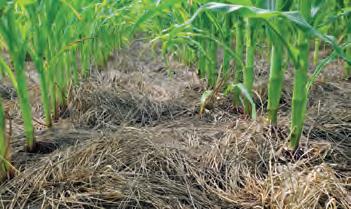
Miltrim Farms experimented with interseeding between corn rows to improve soil health.
to minimal disturbance manure application. They also introduced a dribble bar system to apply manure on the soil’s surface between hay crops.
“The way we handle our manure is critical. We have a lot of it, and we see it as an asset,” he noted. “Because we see it as an asset, we want to make sure we utilize it as such.”
They focus on applying at the right place at the right time at the right rate. “That’s going to bring us success, both on the conservation side, but also the soil fertility side,” Trimner noted.
Another valuable investment for the dairy was building almost a year’s worth of manure storage.
“That allows us to apply the manure when we want to, not when we have to,” Trimner explained. He feels it was the right move for them, even if it was a hard investment to make.
“Digging a hole in the ground never makes you money,” he recognized. “But it’s just something we had to do to reach the goals we want to reach.”
Trial and error
Trimner was quick to acknowledge that not everything they did worked well. While they tried to no-till as many fields as possible, they came to realize that they have to be more strategic with their heavy clay soils. Attempting to no-till as much as possible became a hindrance at times, diminishing yield.
They also stepped back on interseeding between corn rows. In 2023, it was too dry to seed the covers, and then 2024 and 2025 were extremely wet. “We haven’t given up on that,” Trimner emphasized. “But it’s not going to be a whole farm tool. It’s going to be a strategic tool.”
After experiencing severe winter kill in their alfalfa a few years earlier, they didn’t want to put themselves in that situation ever again. So, they diversified their hay mix with seven species, including chicory and plantain. Although the mix grew fine in the fields, they found that chicory and plantain didn’t dry down like other plants because of their thick stalks.
The mix also didn’t work as well for feeding the dairy herd. “We want our cows to be healthy but also very productive, Trimner noted. “That species of mix didn’t quite fit with the goals that we had in mind.”
They’ve come back to middle ground with their forage mix, which now includes alfalfa, one or two types of grass, and some clover. “Those three to four plants are going to provide some diversity in the soil. They’re going to take up manure, and they’re going to thrive if it’s dry or wet,“ Trimner explained. “Also very importantly, it’s going to provide high-quality protein and good feed digestibility for our cows.”
They tried using rye as a cover crop to help remove compaction because of its deep root system. They were hopeful that would be successful but found there were areas where they needed to use a chisel plow or even a deep ripper to break up the subsoil before they could plant in the spring.
A few other changes along the way yielded positive results. The edges of certain fields or areas that did not perform well for corn have been planted to permanent grass and are harvested for heifers. “It’s good forage for them,” he noted.
They more recently transitioned to shorter-day corn as it allows for a wider window of opportunity for fall field activities. “One of the main goals of the dairy is that we have a living cover all year long, Trimner explained, “so we knew we needed to change our strategy a bit.”
With shorter-day corn, they can harvest sooner and get more growing days for their cover crops. It also gives more
time to apply manure. “Those are two critical things we want,” Trimner emphasized. They want the cover crop out there so it can start taking up the manure nutrients that can be utilized and held there through the winter.
Finding extra value
Miltrim Farms sustainability journey led them to some opportunities and projects. The option to sell carbon credits has been a worthy income source. “It’s been a very good place of opportunity,” Trimner said. “For one, it helps pay for some of the mistakes we’ve made, of course, but also helps just to be a profitable dairy, be a profitable farm, which is awesome.”
Phosphorus credits are another one. They’ve worked with a local municipality to help manage their sewer costs for the residents. Credits are generated when they stay under a certain GMBO load, and those credits can be sold to municipalities when they need them. It costs a municipality $10,000 to reduce one pound of carbon, and for a farm, it costs about $100.
“There’s really a great opportunity there for both sides,” he noted.
They are proud members of their local watershed group, and they find great value in talking and sharing ideas with other farmers. They also participate in University of Wisconsin’s Discovery Farms program and have been doing edge-of-field water monitoring for a few years now.
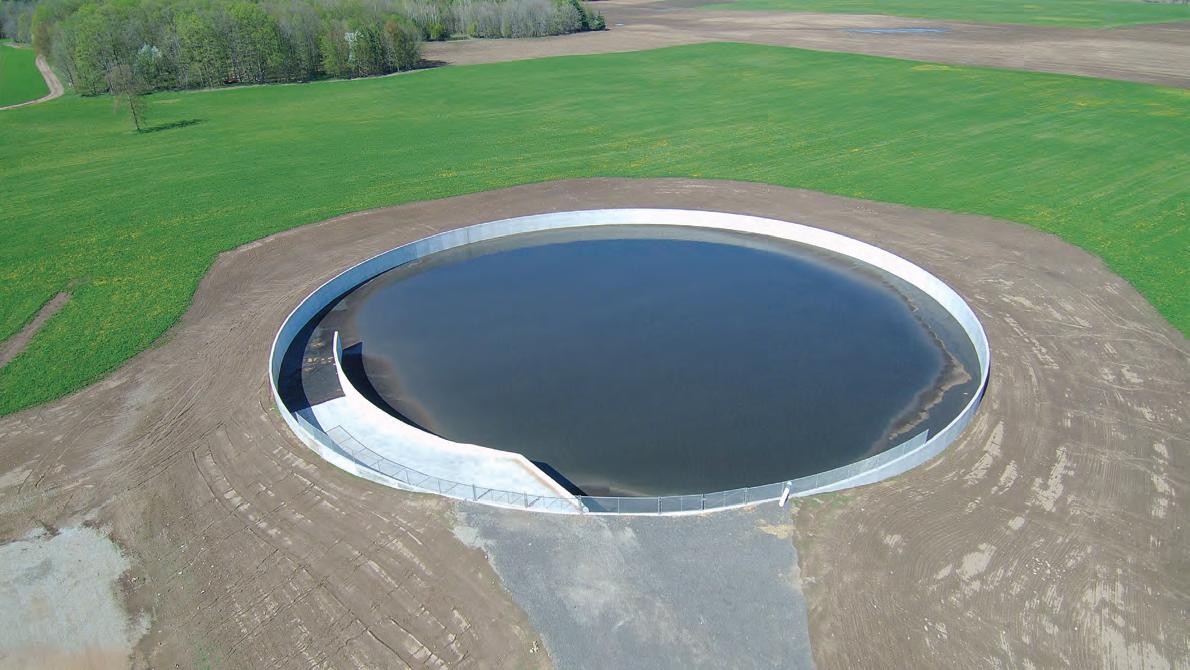
They are also finding value in water collection. As a concentrated animal feeding operation (CAFO), they must capture all the rainwater from their main feed area. They collect that rainwater, mix it with other collected rainwater, and put it in a storage pond. That water is used to wash sand on the dairy as part of their recycled bedding system. Through this process, they can save millions of gallons of water a year. Eventually, Trimner would like to enhance their water collection so that they can save one million gallons of well water a month, preserving that precious resource.
They participate in “Your Farm, Your Footprint” through the Professional Dairy Producers (PDP). It takes all sorts of data from the farm, runs it through different models, and gives a
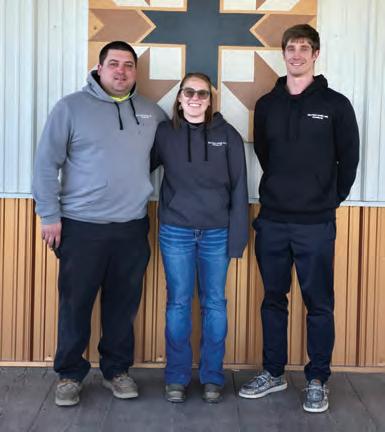
Andy and Jenny Miller and David Trimner are part of the ownership team at Miltrim Farms in Athens, Wis.
carbon score of the dairy.
“We wanted to know, as a farm, how are we doing on the carbon front,” Trimner said. “Right now, we don’t need that information, but if the time ever comes when we do, we have that opportunity. We have that data.” Participation also helped them understand where they were doing well and what could be done to improve the farm’s carbon footprint. It fits well with their conservation-minded philosophy.
Looking ahead
Future goals for Miltrim Farms include improved soil health with more focus on micronutrients and better nutrient utilization by crops.
“If you just keep putting more and more nitrogen, or more and more of this or that on the field and getting fewer and fewer results, that’s not the right way to go,” he noted. “We want to continue to get more from our fields and utilize inputs less.” Rather than
investing so much money in those three primary nutrients, they now focus on the microbes to improve soil balance and achieve their goals of great soil health and great feed that supports healthy cows.
The family also wants to continue having conversations with other farmers to learn from their successes, and Trimner encourages others to do the same. “Keep your mind open to other ideas. It’s such a great way to keep everyone honest and keep everyone improving. Remember,
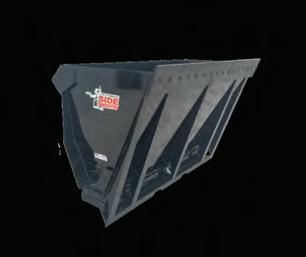
SIDE-SHOOTER BUCKET
Spreads sand or sawdust into freestalls.
FEED ALLEY SCRAPER
Keeps feed close to the cows. Rubber blade outlasts steel blades. Less vibration.
every farm is different.”
They plan to keep taking managed risks. “Sometimes you’re going to fail, and that’s okay if you manage risk,” he said. “If you want to try something, it doesn’t have to be the whole farm. It can be 5 acres, or 10 acres, or 40, depending on your scale and what risk you can tolerate.”
And then, there’s the long-term resilience of the dairy.
“I am very honored to be able to continue my family’s legacy,” Trimner said, and he shared his hope that their farming practices today will create long-term resilience so that one day, the next generation can take over the farm like he did.
Trimner believes that “Conservation is green in both ways that matter. What I mean by that is it can help water quality, soil health, and so forth. But it can also improve your bottom line.” He believes these many benefits of conservation will help propel Miltrim Farms into the future. ■
FLUFFER
Aerates and levels bedding for maximum cow comfort and safety.
EXPANDABLE SCRAPER
Adjusts to the full alley width, reducing the number of passes needed to clean the alley.
TIRE SCRAPER
Cleans like a squeegee in just one pass. These rubber tire scrapers are built to last!
Miltrim Farms utilizes no-till practices as much as possible on their heavy clay soil.
Cutting emissions at the feedbunk
Ruminants are a relatively small contributor to the nation’s greenhouse gas problem, but every step we take to reduce emissions is a step in the right direction.
by Kirby Krogstad
We can see the world as it is or as we wish it were.
The truth is ruminants are greenhouse gas emitters. They emit greenhouse gases via belching methane and carbon dioxide and through manure excretion of methane and nitrous oxide. When added together, the U.S. dairy industry releases 99.7 million metric tons of carbon dioxide equivalents (CO2eq), which is about 1.6% of total U.S. emissions.
Dairy’s footprint is small on a relative scale, but it’s important to remember the sheer volume of U.S. greenhouse gas emissions. Globally, the U.S. ranks second in total emissions, with approximately 6 billion metric tons emitted on an annual basis. China emits 16 billion tons of CO2eq annually and is by far the world leader in emissions.
The U.S. dairy greenhouse gas footprint is larger than whole countries such as Peru, New Zealand, Norway, and Ireland, just to name a few. So, although U.S. dairy is a small share of the total U.S. emissions footprint, it still has a substantial carbon footprint that warrants our attention. Being a small share of emissions doesn’t remove the responsibility to manage it. Proactive management, as U.S. dairy is doing, makes us a responsible and reliable supply chain partner.
Redirecting energy
Reducing our carbon footprint can mean improved efficiency and profitability over the long term. The science is still developing, but there is some evi-
dence that reducing methane emissions may reroute some energy toward milkfat in some cases. Much more needs to be done to capture the energy from methane reductions for productive purposes to enhance farmer profitability. Additionally, there is still ongoing investment in reducing emissions from dairy farms. A report from climate auditing group PwC noted that 84% of companies with emissions reduction commitments maintained or augmented their commitments while 83% invested in low-carbon research and development investments. An Economist analysis also demonstrated these commitments matter, as companies with emissions reduction commitments had double the emissions reductions of
their peers. Even though discourse and sentiment may have shifted, the money still shows that reducing the footprint of emissions remains a consumer and business priority.
Updates in the feed additives
The amount, rigor, and pace of new data on the various nutritional tools that can mitigate enteric methane emission from ruminants has been impressive. As new data comes out, it’s critical to refresh our understanding of what tools work, how well they work, and any nuance related to the latter. We’ll briefly discuss updates from the scientific community over the past couple years regarding feed additive opportunities.
Ration additions have the potential to reduce enteric methane emissions released by ruminants.
3-nitrooxypropanol (3NOP): 3NOP is probably the most rigorously analyzed methane-mitigating feed additive. Multiple meta-analyses have been published on its efficacy in reducing methane – supplementing 3NOP in the ration reduces methane emissions from dairy cattle by about 30%.
What other effects does it have? So far, recent meta-analyses have indicated that 3NOP reduces dry matter intake by about 3.5%, while energy-corrected milk yield was not significantly affected, although the mean response was -1.5%. Interestingly, providing 3NOP increases milkfat and protein concentration. There is additional ongoing research across a variety of institutions investigating the effects of 3NOP, so there is more data to come. This means the story may still change on how to best implement this tool on farms.
Seaweed and bromoform: One of the other giants in the methane space, at least relative to its potential for methane mitigation, is seaweed and its active compound, bromoform. A University of California-Davis group conducted a meta-analysis on bromoform-containing feed ingredients to evaluate its effects on methane emissions and animal performance. They observed that providing bromoform at an average dose of 25 milligrams per kilogram (mg/kg) of dry matter reduced enteric methane by 47%. The effect was enhanced with higher doses of bromoform. Unfortunately, they also observed reductions in feed intake and milk yield of 6% and 5%, respectively.
The use of bromoform-containing feed ingredients includes risks for both human and animal health. Mitigation of the risks is necessary prior to widespread adoption of bromoform-containing feed ingredients.
Essential oils: One additional category of methane-mitigating feed additives is essential oils, or more simply, plant-derived compounds that modulate rumen metabolism. One of the more researched blends contains geranyl acetate and eugenol. A 2020 analysis suggested it can reduce methane by approximately 10%.
Recent research conducted in North America under different dietary scenarios reveals a more nuanced picture. One study from Pennsylvania State University did not observe methane reductions when providing the essential oil blend, but milkfat production improved by
8%. Another experiment demonstrated that providing the essential oils did not affect milk production or methane emissions. The authors acknowledged that we need to understand how some compounds and additives work in different types of rations.
There is also research on other compounds like capsicum oleoresin, cinnamaldehyde, and oregano, which yielded varying results. Certainly, more needs to be done to understand when these plant-derived compounds are helpful and when they are not.
The right tools
The bottom line is that the U.S. dairyindustry contributes greenhouse gases to the atmosphere. We have tools that substantially reduce part of that footprint — the enteric methane that cows belch out from their rumen. 3NOP reduces methane with minimal effects on animal performance while bromoform-containing compounds reduce
methane but also reduce feed intake and milk yield. The use of essential oils has some promise, but the variety of compounds and inconsistent responses make effective implementation on farms a challenge.
When implementing any of these solutions, economics obviously need to be considered. Fortunately, there are two calculators for producers and nutritionists to use. Use these tools to objectively evaluate what makes sense for your farm. ■
University.
Tools to calculate emissions reductions:
• AgNext Feed Additive Calculator Tool (FACT) for Dairy (Colorado State University) at bit.ly/AgNextFACT.
• Dairy Carbon Return Calculator 2.0 (The Ohio State University) at bit.ly/DairyCarbonReturn.
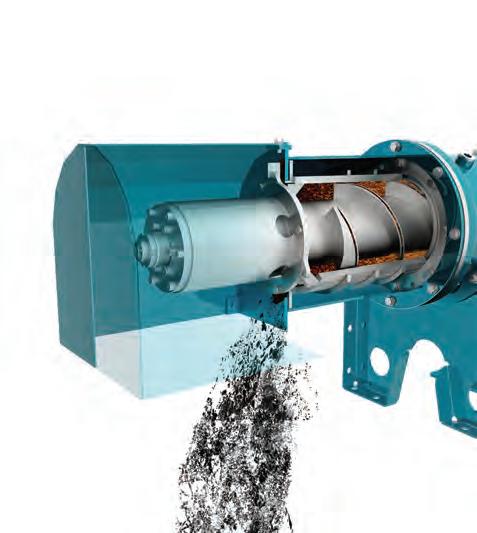
THE INNOVATIVE BIOSELECT FOR EFFICIENT MANURE SEPARATION.
FEATURES:
+ Low Life-Cycle Costs
+ Turnkey from a Single Source: Separator
Pump(s)
Control Unit
Stationary or Mobile Skids
+ Large Capacities
+ Patented Profile Auger with Counter Bearing for No Auger Screen Contact
+ Continuously Variable Dry Matter Content
844-647-7867 | www.boerger.com
The author is an assistant professor of dairy nutrition at The Ohio State
Protect others by planning your future
by Megan Dresbach
Everything I have written about in these last few issues is important, but potentially the most important piece is how the business is structured. The business structure can either prevent or cause headaches. This is agriculture, and we have enough issues to deal with. There are great benefits for putting some pieces in place now to reduce future stress levels.
First of all, is your business set up as a business? Specifically, does it have its own federal identification number? Limited liability companies (LLC) are extremely popular for numerous reasons, and this is the business structure my family utilizes. If you do not have a business entity set up, please contact a lawyer and your accountant to get this done as soon as possible.
No one wants to think about their death, but life insurance is critical for providing financial security to the family or business you leave behind. During some stages of life, a life insurance policy should help cover costs like childcare and lost income for the surviving spouse. For others, a life insurance policy may help relieve business debts. A life insurance policy can also be a way to include any children not involved in the family business in future asset distribution. This is a strategy that works for our family, but it may not work for every situation. Remember that, when doing succession planning, fair is not always equal.
If you or someone in the family business were to become disabled or incapacitated, they may need to live at a long-term care facility. A catastrophic event can change everything, from disrupting work flow to creating financial
The mindset of ‘it won’t happen to me’ is detrimental to any operation.
burdens. This is another difficult conversation, but talk about what would happen if you or someone else in the family needed long-term care, and create a plan before there is a need. As the saying goes, an ounce of prevention is worth a pound of cure.
Fill in the gaps
The mindset of “it won’t happen to me” is detrimental to any operation. An injury can sideline a person for days, months, or even years. On many agricultural operations, there is a main person or just a few key leaders running the show. What happens if they are hurt? Who will do the work? How will debt obligations be fulfilled? This is where disability insurance comes in.
I have a good friend who got tangled up in a combine. Fortunately, doctors were able to save her leg, and she will recover. She is lucky, because the situ-
ation could have been much worse. We all know those horror stories. She is an integral part of her family’s grain farming operation, and she always wondered why they had been paying this disability insurance premium all these years. Unfortunately, this situation caused her to collect. She has a long recovery ahead of her, but the financial burden has been reduced.
Ease the burden
I enjoyed the opportunity to write about succession planning for family businesses. I have shared what my family has done and where we are today, but this information is simply from our own experience and knowledge. I am not a lawyer, an accountant, or an insurance agent. Our family relies heavily on all of these professionals. It is also important that the professionals on your team have the ability to speak to each other on your business matters. If you do not have a relationship with an accountant, a lawyer, and an insurance agent, start one now. Build the relationships so when you need them, they know your intentions.
These are not easy topics to discuss and they are not supposed to be. But there are critical decisions that must be made. Losing a loved one is hard enough for family and friends to work through. Do not give them another burden to shoulder by not having these business details in place. ■
The author is the vice president of W.D. Farms LLC in Circleville, Ohio, and blogs as the Ohio Manure Gal.
AGRICULTURAL CONCRETE
JP Tank
317 Kohlman Rd. Fond du Lac, WI 54937 920-948-2286
jptankconcrete@gmail.com jptank.com
Pipping Concrete N6106 County Rd. C Rosendale, WI 54974 920-948-9661
If you would like your event included on our list, please send details to info@jofnm.com.
JUNE 3-4
TAKE CONTROL OF SAND
KEEP SAND WHERE YOU NEED IT, NOT WHERE YOU DON’T
Sand bedding provides a healthy, comfortable environment for dairy cows. But sand is abrasive, and when mixed with manure, it can become difficult to agitate and pump, expensive to land apply and it is not always the optimal addition to fields.
Choose a manure partner who can help you overcome these challenges and help your herd prosper. Plus, you can REDUCE BEDDING COSTS BY UP TO 95% with efficient sand separation and recovery.
ANAEROBIC DIGESTERS
Without separation beforehand, sand-laden manure is incompatible with anaerobic digester systems.
With sand separation, you can:
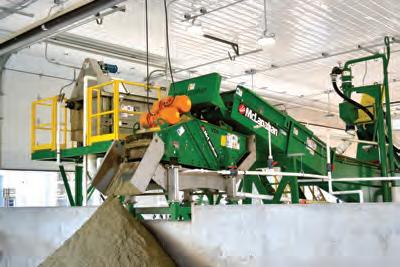
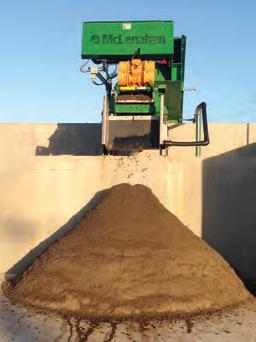
Achieve greater than 90% sand recovery
Capture an additional 5% of fines
Success begins with capitalizing on physics, gravity and engineering know-how.
MOVING AND SEPARATING
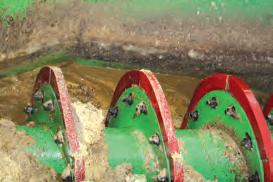
Sand is tough on equipment, but McLanahan equipment is tougher.
Engineered to outperform standard-duty equipment
Simplifies manure transport and handling
Produces clean, recycled sand suitable for reuse within days
Reduces costly storage cleanouts
Heavy-duty engineered equipment for on-farm conditions for extended life and fewer parts runs.
COW COMFORT
Sand bedding is the gold standard for dairy cows because it’s a forgiving, drier, comfortable deep bed.
Sand bedding:
Increases cow lying time
Decreases lameness
Boosts milk production
Researchers suggest bedding with sand containing less than 3% organic matter and more than 95% dry matter.1
FIELD EFFECTS
Over time, applying sand-laden manure can change the nutrient composition of soils.2
As sand is added to manure, the percentage of N, P, K and sulfur is diminished3
Without sand separation, dairies may add up to 2/3 of a truckload of sand per acre per year
The effects are slow, but cumulative. Research shows adding large amounts of sand to soil can change its texture to include 20% more sand over two decades.3