
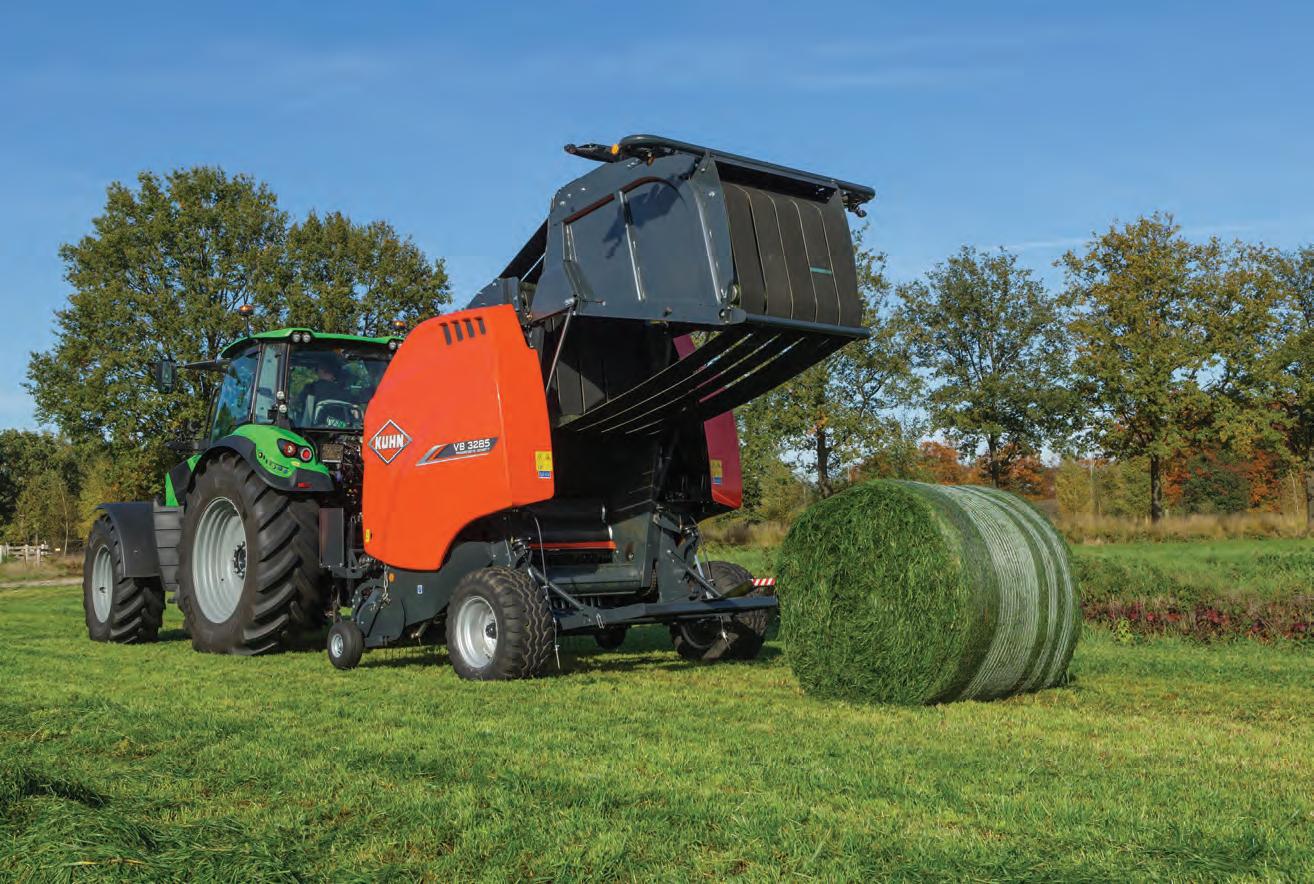
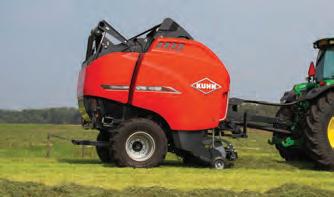
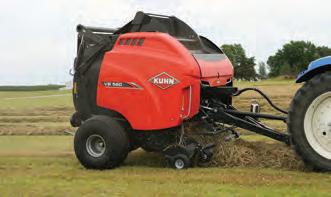
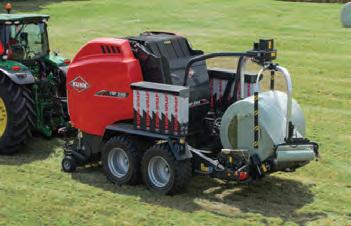
Over 40 years of experience has given us valuable know-how and expertise in producing baling equipment. No matter if you’re baling dry hay, high-density baleage or anything in between, there is a KUHN round baler for you. Extreme durability of components means minimum downtime for maximum baling time. Thanks to its heavy-duty design, the balers provide you the robustness and reliability you need.
KUHN offers the most efficient and versatile range of fixed and variable chamber round balers available on the market. KUHN round balers ensure perfectly shaped, consistent round bales and produce exceptionally high bale densities even in the most demanding conditions.

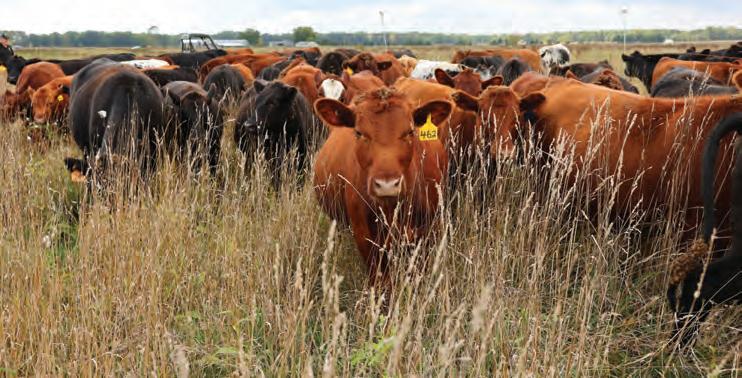
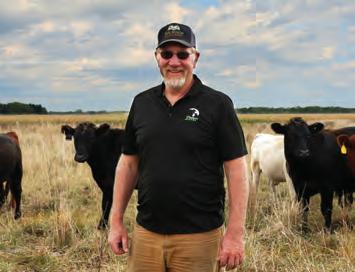
Jon Nelson’s farming principles are simple, his forage management is flexible, and his crop inputs are little to none. He hopes his humble approach to grass-fed beef production sets an example for other farmers across the Mitten State.
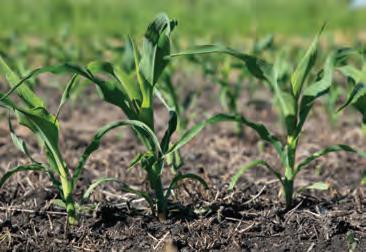
The rise of short corn for silage
As brown midrib (BMR) corn hybrids exit the market, short corn may be a viable silage alternative.
The
to
it
Published by W.D. Hoard & Sons Co.
MANAGING EDITOR Amber M. Friedrichsen
SENIOR EDITOR Michael C. Rankin
ART DIRECTOR Todd Garrett
EDITORIAL COORDINATOR Jennifer L. Yurs
DIRECTOR OF MARKETING John R. Mansavage
DIGITAL MARKETING
Sam Rasmussen
Sidney Hebbe
ADVERTISING SALES
Kim E. Zilverberg kzilverberg@hayandforage.com
Jenna Zilverberg jzilverberg@hayandforage.com
ADVERTISING COORDINATOR
Patti J. Kressin pkressin@hayandforage.com
W.D. HOARD & SONS
PRESIDENT Brian V. Knox
EDITORIAL OFFICE
28 Milwaukee Ave., West, Fort Atkinson, WI, 53538
WEBSITE www.hayandforage.com
EMAIL info@hayandforage.com
PHONE 920-563-5551
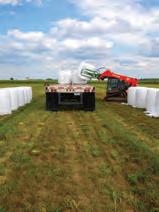
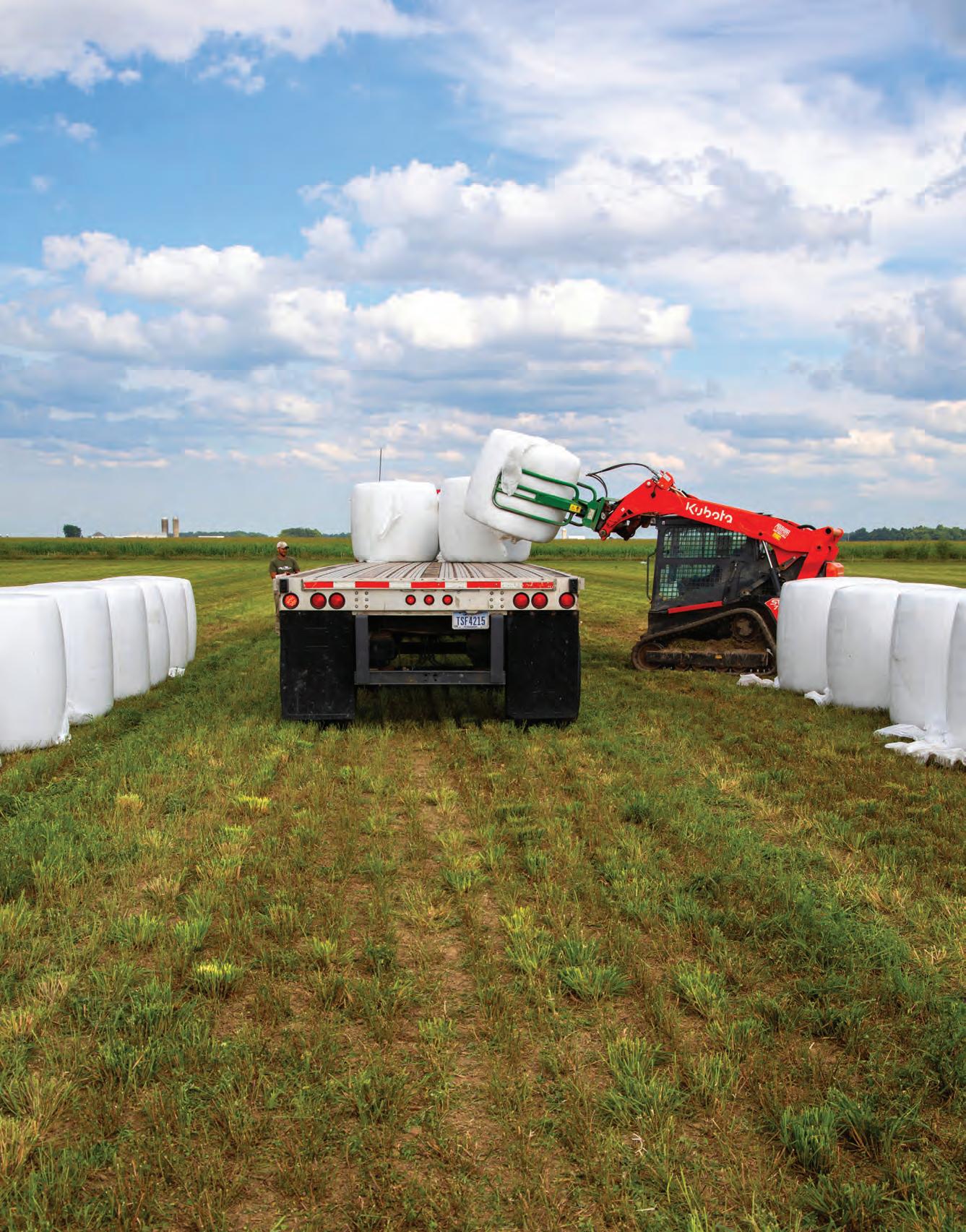
Baleage is loaded onto a flatbed trailer last August at Settlage & Settlage Farm in St. Marys, Ohio. Jordan Settlage operates the 320-cow grass-fed, organic dairy. With help from his father, Settlage makes about 3,000 bales of high-quality baleage each year to keep his cows producing through the winter. Read more about the operation beginning on page 20. Photo by Mike Rankin

LIVING vicariously through someone or something is usually associated with reliving the glory days, albeit indirectly. I often find myself living vicariously through stories and photos of my parents and grandparents in the 1980s when my mom drove a Ford Thunderbird; everybody wore round, wire frame glasses; and perm hairstyles somehow defied gravity.
Of course, there are other accounts from that era that aren’t remembered so fondly. The 1980s farm crisis twisted the plot and rewrote the narrative for many farmers across the country. No one lives vicariously through those hardships, but they are still stamped on family histories.
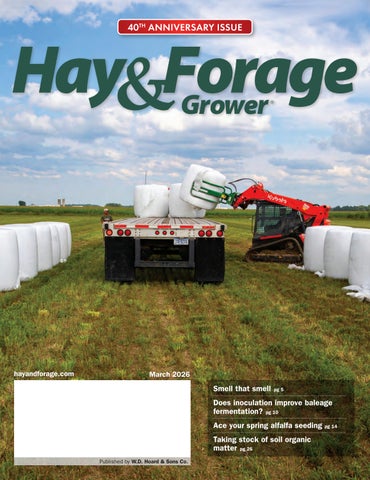
Hay & Forage Grower is also a product of that decade, with our first issue published in March 1986 — see the photo of our first magazine cover. In the spirit of celebrating our 40th anniversary, I spent some time living vicariously through the articles of the original publication. Those articles are living proof of how forage research, technology, and machinery have changed over the past 40 years, and yet, the heart of many production practices, challenges, and successes has stayed the same.
For example, one article in the March 1986 issue titled “Traffic lanes keep alfalfa moving” provides recommendations to reduce widespread injury to alfalfa hayfields and preserve forage yields long term — a call to action that is still shouted from the rooftops today. Other big-picture production trends were noted in the inaugural installment of the Hay Market Update, which continues to be a regular column in every magazine, offering a bird’s eye view of national market dynamics and state hay prices.
Even as new topics have surfaced and the market tides have turned time and time again, our articles are still backed by research like they were in the first issue — oftentimes through the lenses of scientists, professors, and extension specialists themselves. But farmers resonate with other farmers, which is why their stories have a reserved seat at the table of every magazine. Our hope is that readers take something away from those features, whether that takeaway is a shared experience, a new idea, or simply a feeling of validity.
I would be remiss if I didn’t mention the one problem that has been addressed in some way, shape, or form in every issue since our beginning: the weather. In March 1986, both excess rain and prolonged drought were to blame for different circumstances of harvest delays, yield variations, and forage supply and demand disruptions.
The weather continues to be cited as the biggest challenge for farmers of all kinds and in all places; it simultaneously informs decisions and ruins plans. Perhaps the only real difference in our weather-related reporting between 1986 and 2026 is the spelling change from “drouth” to “drought” — something the editor in me couldn’t help but notice.
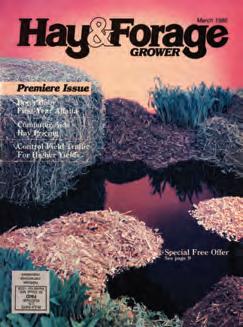
Each year presents its own set of conditions that uniquely affect fieldwork and forage quality, but luckily, we can live vicariously through these experiences that are forever preserved on paper. That’s the beauty of a print publication. Those firsthand accounts and tangible memories carry immeasurably more value than any fleeting moment that is posted, shared, or swiped past online. It’s the same reason why old photos and stories have a way of taking up permanent residence in the storage closets of our homes and in our minds.
It’s inspiring to see how far our industry has come in an effort to become more precise, efficient, and sustainable over time, but it’s just as reassuring to know that many of the same principles of hay and forage production from 40 years ago remain the supportive taproots for crop and livestock operations today. Here’s to appreciating the past four decades and looking forward to many more. •

S IS often the case when I sit in the office on a windy, cold winter day, I work on my to-do list. I have several such lists that I’ve crafted over the winter, and I don’t think I have ever fully completed one. I simply add the remaining tasks to the next list.
One of the first things that makes the list after this winter weather breaks is cutting our winter forage and first-cut hay. When I think about cutting hay, nothing comes to my mind quicker than the Lynyrd Skynyrd song “That Smell.” Anyone in the hay business knows the smell of fresh-cut hay. Of course, there are sometimes problem smells in the field as well — those coming from a bearing failure or some other mechanical problem.
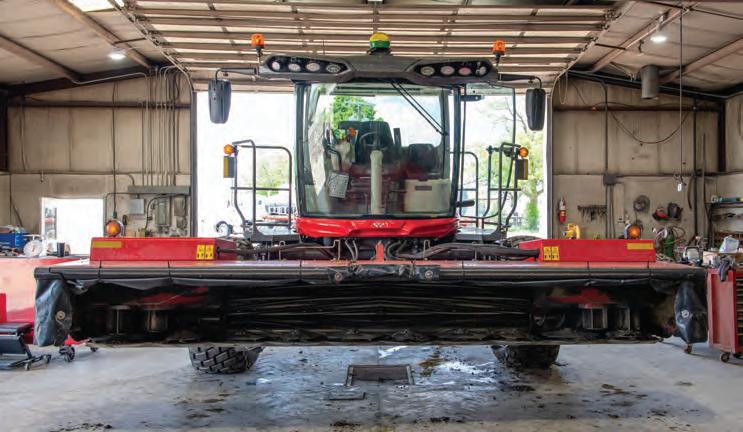
One thing that often gets overlooked before we can smell that smell of curing forage is winter or preseason maintenance on the hay mower. The mower, for some reason, often gets overlooked in the hay equipment tools lineup even though it gets pulled and abused over more acres than anything else in the haymaking equipment portfolio. For this reason, the mower needs to be put on your to-do list and addressed before equipment hits the field.
Most equipment dealers, along with their respective manufacturers, will run some kind of winter service/maintenance specials on all types of hay equipment, and if you go through your local dealer for this service, they usually run some kind of bonus for the customer such as free pickup and delivery, discounted parts, or some other perk. If you choose not to use that service from your local dealer, I will list my top 10 points — in no particular order — that I like to look over before hitting the field to smell that smell.
1. Driveline power take-off (PTO): Inspect and grease all U-joints and carrier bearings, depending on what type of mower you have. Inspect the U-joint yokes where they might have hit and caused a crack or other damage. A broken driveshaft is frustrating to replace in the field when it’s time to make hay.
2. Hydraulic hoses: Scan and observe
all hoses for wear or places where they might have been rubbing on a hood or shield, creating a thin spot that could cause a blowout when under pressure.
3. Gearboxes: Check all gearboxes for oil/fluid levels and observe the color. An abnormal color could indicate something is wrong that you can’t see with the naked eye.
4. Bearing modules: Rotate the cutterbar by hand and look and listen for any excess play. Feel for rough spots. Also, a light pry-up motion from the bottom side of the disc with a little pressure will reveal some up-and-down play in the module. This could lead to potential bearing failure.
5. Blades: In my opinion, don’t even inspect them. Just start the season with a new set. Remember, when buying blades, you get what you pay for, and in today’s world with many blade manufacturers, some will wear quicker than others.
6. Cutterbar: Inspect the top, bottom, and sides of the cutterbar for any excess wear that could cause oil to leak out or some other problem during the season.
7. Conditioner: If your mower is equipped with an impeller conditioner, look it over for broken tines. Rubber roll conditioners are subject to wear, which will cause a vibration from being out of balance. This situation will make for challenging times in the future if not repaired properly.
8. Skid shoes: These are the most abused pieces on the mower. Check that both sides are in the same position and neither is broken or wore past repair. This will cause drag and friction that will result in an uneven cut height or leave bare spots that will allow for an undesirable summer annual weed to establish.
9. Tires: If you have a pull-type mower, inspect for any wear or missing tread. Even a bump on a rim where a culvert was in the wrong place at the field edge could cause a slow leak and lead to downtime.
10. Electrical wiring: Check that all electrical wires and plugs are fault-free and working so that safety lights function properly. Pulling a hay mower down the road is a high-risk situation, and on the road, safety is the top concern.
There will arguably be more points that you will notice once you start to do your preseason mower inspection, but these are my top 10 to get you started and head to the field to smell that smell. Here’s to hoping you are blessed with plenty of moisture for the upcoming spring season — and be safe. •
GREGG ZURLIENE
The author is a forage and livestock products specialist for Sydenstricker Nobbe partners dealership group in central and northeast Missouri.

by Amber Friedrichsen, Managing Editor
FARMERS must have hope that the tiny seeds they sow will develop into productive plants; hope that new practices will have positive impacts on their land, livestock, and bottom lines; and hope for future growing seasons despite uncertainty in what lies ahead. Hope is the driving force for many agricultural endeavors, including Jon Nelson’s transition from row-crop farming to a grass-fed, grass-finished beef operation. In more ways than one, it is the foundation of JNelson Farms in Hope, Mich.
Nelson was getting tired of fixing equipment after riding in tractors for much of his life. He was equally agitated by the amount of herbicide and fertilizer required to control pests and maintain yields in his corn and soybean fields. Aside from row cropping, he worked an off-farm job and raised a few head of cattle.
At the time, Nelson and his wife, Tammy, had taken up CrossFit — an exercise routine including box jumps and burpees that is not intended for the weak of mind or heart. It was at
the gym where Nelson heard about the benefits of grass-fed beef from the health-conscious members of the CrossFit community. Considering his waning passion for row-crop farming and a growing interest in expanding his herd, he was intrigued. After doing some research on pasture-based livestock production, he decided to go all in.
Nelson contacted Michigan State University Extension and asked if it would be possible to cash flow his farm by fencing in the fields, establishing forage, and grazing cattle. The answer was yes,
if done properly, and that phone call was the first of many interactions with extension specialists, like-minded farmers, and regenerative graziers. Nelson spent the next year attending every pasture walk, field day, and grazing workshop within a reasonable driving distance. Then, he started building fence. In 2011, he had converted about 20 acres of the home farm from row crops to pasture. By the end of the following year, the entire 220acre operation was seeded to grass and rotationally grazed.
Today, Nelson’s grazing system encompasses 250 animals on about 450 acres of owned and rented land. In addition to his cow-calf herd, he finishes
steers and markets beef directly to consumers through online sales and at his self-serve farm store. Nelson also recruits beginning farmers across the Mitten State who have similar interests in soil, forage, and animal health to contract graze about 130 cattle. His hard-and-fast rules for himself and contract graziers are no fertilizers, herbicides, vaccines, wormers, or tillage. Beyond that, different grazing strategies and regenerative management styles are subject to be explored.
“We work toward healthy soil to grow healthy plants to feed healthy animals,” said Nelson, who is currently the president of the Michigan Forage Council. “Since 2012, we haven’t put any fertilizer on our pastures, and we are raising a lot more forage than we ever did before.”
When Nelson began converting corn and soybean acres to grass, he started by planting a mix of cool-season perennials including timothy, orchardgrass, red clover, and perennial ryegrass. He’s since changed his pasture seeding philosophy.
Now, Nelson initiates stand establishment with a round of annual forages to kickstart the soil biology. Depending on when pasture renovations begin, he typically seeds cereal rye in the fall, oats and wheat in the spring, and sorghum-sudangrass in the summer.
“A lot of times, it’s whatever I can find cheap,” Nelson shrugged. “I’ll go to the seed companies and ask them if they have an overrun or a batch that they mixed up incorrectly. I’ve bought a lot of
seed that way.”
After cutting and baling annual forages, or rotating cattle through the stand for a quick graze, Nelson sits back and lets the soil seedbank do the work. The perennial species he used to sow himself germinate and take root on their own, and he has noticed other forages like alfalfa, Italian ryegrass, and chicory have added themselves to the list. Nelson even counts burdock and thistle among his forage inventory because “weed” isn’t in his vocabulary.
“I used to try to get rid of burdock and thistle, but nature will promote those plants to get the soil covered,” Nelson said. Those otherwise weedy species serve the purpose of shading bare ground with their broad leaves during the early stages of pasture renovation. They also have extensive taproots that scavenge for soil nutrients and deliver those minerals closer to the surface, creating a more suitable environment for desirable forages. When perennial grasses settle in, Nelson says burdock and thistle phase themselves out. He enjoys watching forage composition change over time.
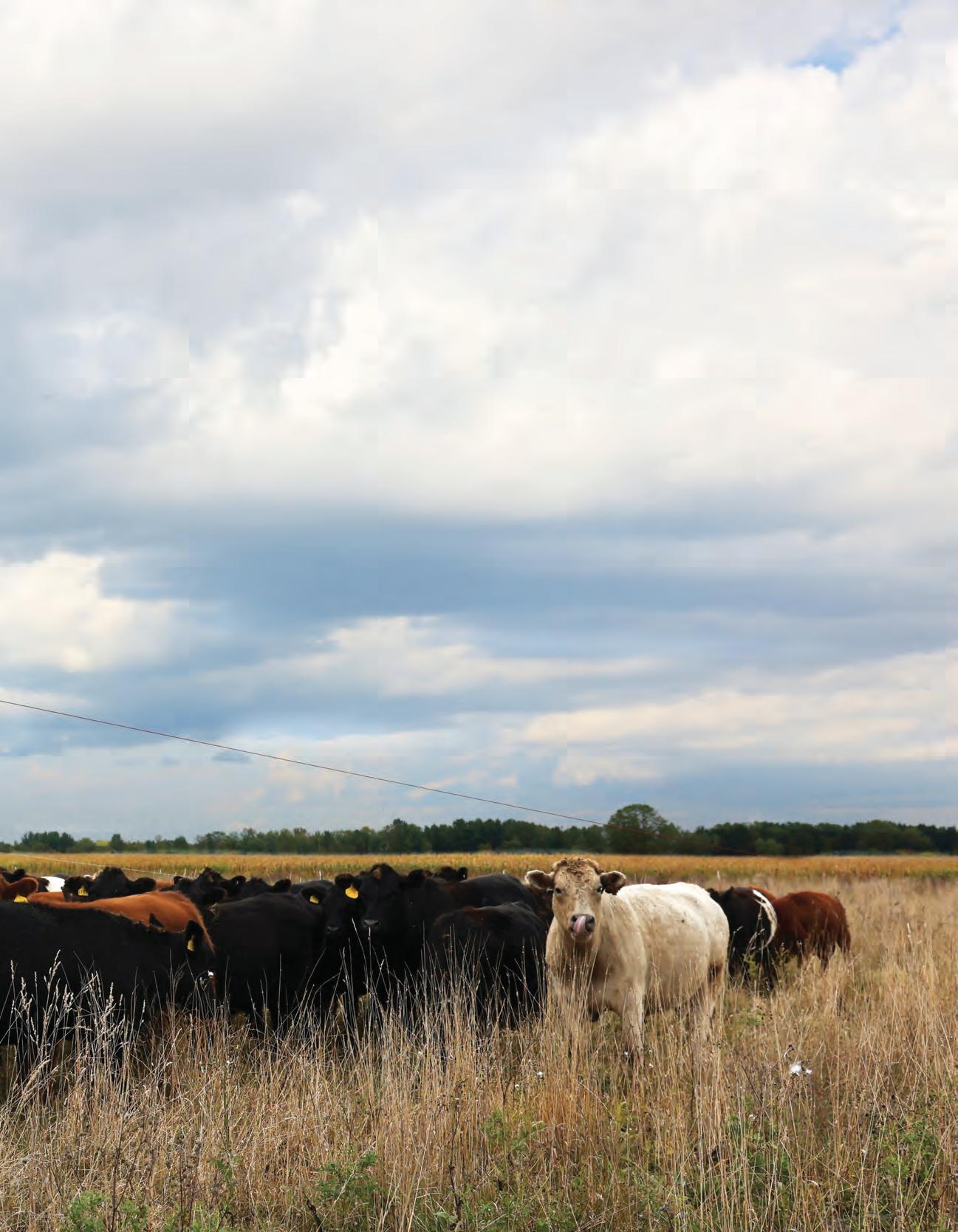
Nelson’s ideal cow has a low profile, wide frame, and is roughly 1,200 pounds. His primary breeds are red and black Angus in addition to some Red Devons and Speckle Parks. He rotates cows every one to three days, depending on the time of year. Cows calve in the spring, and after weaning, Nelson sends calves to a separate fin-
ishing herd at the home farm.
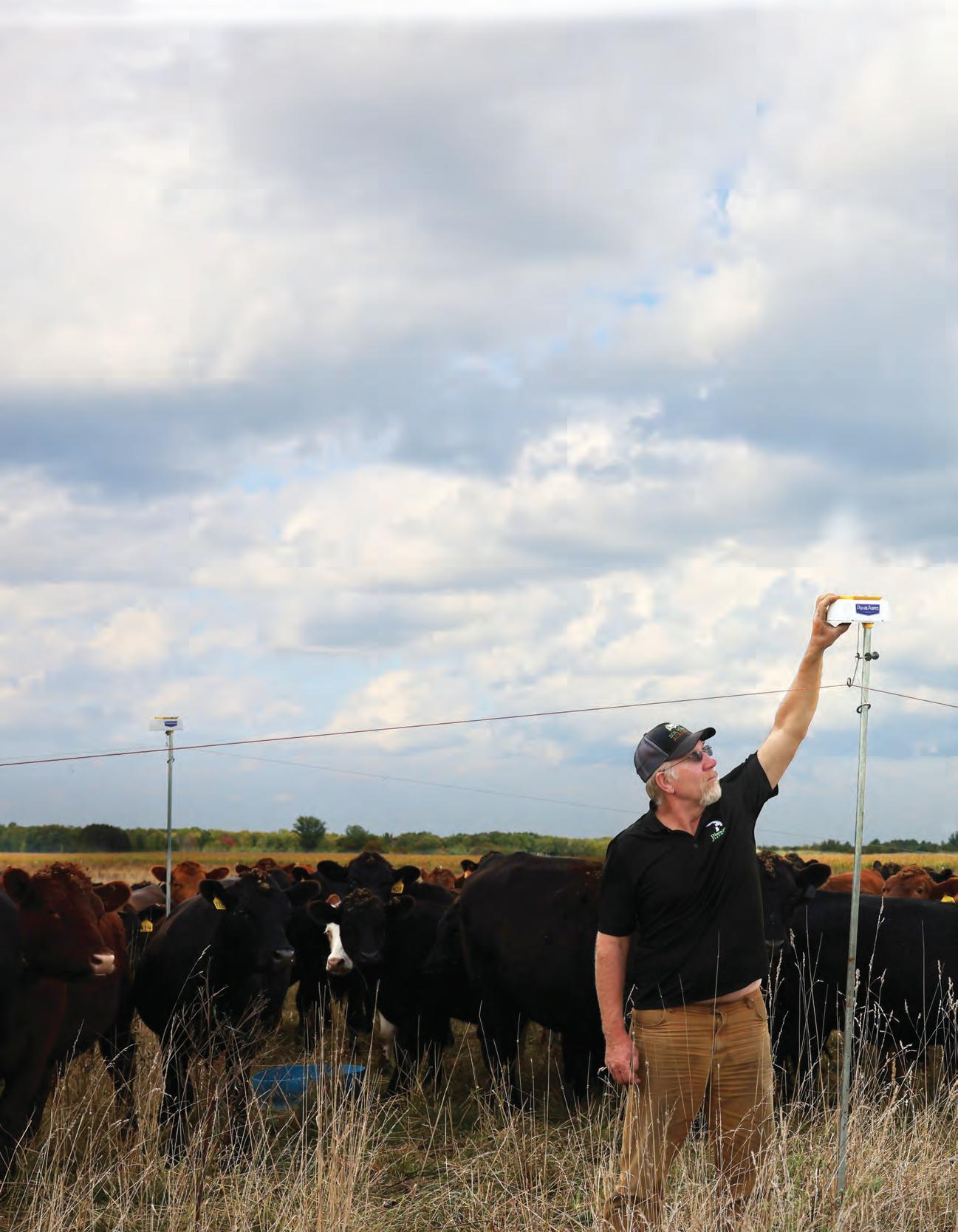
The finishing herd moves three times a day. Nelson starts cattle in a fresh paddock early in the morning and then programs solar-powered fence lifters to automatically raise the next two lines of polywire at specific times, giving animals access to new strips of forage at noon and 4 p.m. The size of the strips varies throughout the growing season to match forage yield with animal demand.
“We watch the cattle. How fast do they run into the next section? Are they hungry and rush in? Or are they full enough that they just wander in? We also watch the ground. We want the ground covered all the time. As we look at those two things, we adjust the paddock size as needed,” he said.
Nelson targets an 80- to 100-day forage rest period after grazing events. He previously managed pastures to maintain a vegetative state all season but has since changed his approach in letting plants go to seed in order to replenish the soil seedbank.
“We used to get three-plus rotations in a year, but then we started losing diversity in the pasture,” Nelson said. “Now, with a longer rest period, we’ve seen that diversity come back.” In some cases, he will set aside thinning stands for an entire year to reduce disturbance and encourage new seedlings to fill the gaps.
In addition to frequent moves and longer rest periods, Nelson aims to leave ample residual forage in grazed paddocks. “Of course, there’s some brown, dead grass left over, but there is also lot of green grass underneath,” he
day.
said about pasture condition during the following rotation. “I’ve found we have fewer disease issues, less pinkeye, and the cows’ manure is more consistent. The cattle look healthier, and they are growing just as fast.”
Nelson usually bale grazes his herds during the winter, but after selling all of his hay equipment last year, he's considering eliminating stored forages from his feeding program altogether.
“My next hypothesis is whether I can graze year-round,” Nelson said in spite of winter conditions in central Michigan. He believes regenerative management has extended pasture potential on both sides of his grazing season — grass greens up earlier in the spring and stays green longer in the fall — creating a wider window of opportunity for his animals to be on pasture 100% of the time. Nelson says more active root systems and greater biological activity below the surface produce heat in the soil when cooler temperatures would otherwise discourage forage production.
As he plots his approach to year-round
grazing, Nelson plans on utilizing stockpiled forage to get animals through the coldest months; however, he may continue bale grazing the finishing herd to meet their nutrient needs.
With some wholesale contracts and a steady stream of local business at his self-serve farm store, Nelson is content with the scale of his beef distribution.
Instead of generating more of his own product, he wants to help others regenerate more of their own land.
“Rather than necessarily grow our farm, my goal is to increase the number of acres in Michigan that are regeneratively farmed,” Nelson said. “Our expansion in the future won’t come from buying land. It will be from more contract graziers and teaching them how to do what we do.”
He still enjoys monitoring pastures and making daily herd moves, but his priorities are shifting toward spending more time with family. With five sons living, working, and raising their own families between Michigan and Tennessee, Nelson said having a network of contract graziers and nearby farmers he trusts to take care of his cattle gives him more flexibility in traveling to see his grandkids. Although pasture rotations, farming philosophies, and animal management may change, the 59-year-old regenerative grazier hopes to continue raising grass-fed, grass-finished beef for many years to come. •

FOR readers like me with kids in school, spring break season is here. Plans for the week off may have been months in the making, which could include picking out a vacation destination, arranging travel and lodging, purchasing tickets for a trip to the zoo or a spring training baseball game, or seeking out places to hike and spend time outside. Without some planning, though, spring break can come and go and just be another week. Forage management warrants planning akin to a spring break trip, setting goals, and agreeing upon strategies with your team to rise above just another average season.
Setting goals is easier said than done, especially with many teammates involved. The agronomist and crop consultant help set the stage for success by designing a fertility and crop protection plan. The field and cropping teams initiate soil preparation and planting and then help manage the crop through the season. The herd manager, feeding team, and nutritionists like me are responsible for successfully feeding out the crop over the next year. And farm owners or directors are key decision-makers at the table who bring everyone together in agreement. Only with everyone in alignment can we then begin laying out strategies for executing shared goals.
Goals can vary whether forage is intended for beef or dairy. For example, with dairy, a goal may be improving alfalfa protein levels without hurting stand life with aggressive cutting schedules. Considering this, we can begin to discuss strategies to work toward the goal. Since protein in alfalfa is largely dependent upon the leaf-to-stem ratio, understanding plant physiology puts us in a better position to develop strategies to improve that ratio.
Besides cutting earlier to capture shorter stems and more leaves, we can elevate the leaf-to-stem ratio by improving soil fertility or trace mineral feeding and promoting plant health to retain more leaves. We can also manage
raking, merging, and chopping to avoid leaf loss. These strategies need to be discussed and implemented throughout the season.
Seed orders are likely completed at this point in the year; however, seed genetics remain a key influence of forage yield and quality. Genetics also influence disease resistance and winterhardiness. Simply asking your seed consultant for silage-type corn hybrids or good forage genetics leaves room for improvement — think about capturing
more information on seed and genetic potential this year, perhaps by collecting samples at harvest for comparison. This strategy can be part of a longterm goal to evaluate crop genetics by building a performance database year after year.
Field preparation efforts are likely getting underway as well. Preventative planter and equipment maintenance, seedbed and soil preparation, and fertility management are imperative for a successful season. Cover cropping or alternative soil health practices may also be part of your seasonal plan. Make sure your team is on the same page about planting, fieldwork, and fertility, and don’t assume everyone understands the objectives. I’ve experienced disconnects among cropping teams in this area. Ensure you’re talking through your agronomic goals, along with your vision for crop quality and yield.
This is also a good time to establish
crop protection plans. More growers are opting for predetermined fungicide applications to promote plant health and limit the risk associated with plant disease later in the season. There are many options and chemistries available for intended purposes; do not assume all fungicides are equivalent. Consult with your agronomist as to what diseases your farm is targeting.
There are readily available fungicide impact reports provided by independent university researchers, and the Crop Protection Network is a great hub to find resources in this space. On the website, there are several tools available to help your farm run different “what-if” projections and determine your return on investment.
There is no shortage of what-if scenarios, including managing through untimely rain events, wind or storm damage, or even cropping around holidays. We can’t plan for the unexpected; however, there are likely several examples your farm has experienced in years past that you can refer to.
For instance, discuss how you will manage forage harvest if there is unexpected rain in the forecast relative to the rainfall amount and timing. Of course, this topic could be the subject of a column on its own.
Preseason meetings are a great time to seek out input from key teammates. Your farm can uncover new ideas and generate added buy-in from employees when their voices are heard. Don’t underestimate the value associated with these conversations as your cropping team sets the stage for a successful forage season. Dairy and beef farming economics continue to change, and our forage objectives can be responsive to the current farming economy. Make this a great season ahead. •
JOHN GOESER
The author is a dairy nutrition and management consultant with Progressive Dairy Solutions Inc., and an adjunct professor at the University of Wisconsin-Madison.

by Matt Akins
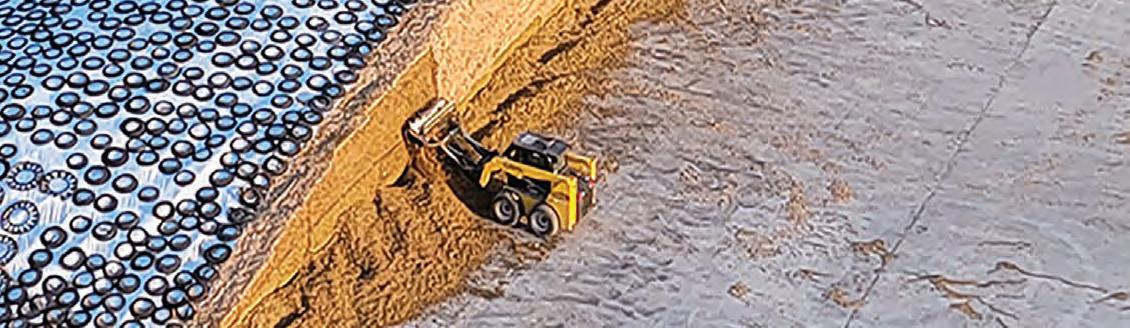
BALED grass or alfalfa silage requires similar management to chopped silage for optimal fermentation and stability during feedout. Both need proper moisture at harvest for bacterial fermentation, good packing density to remove air, and a well-sealed silo or wrapped bale to effectively inhibit air entry.
The use of inoculants is also common for chopped silage to improve fermentation efficiency with homolactic bacteria, and to reduce heating at feedout using heterolactic bacteria such as Lactobacillus buchneri. However, inoculant use in baled silage is fairly limited for several reasons, including cost, application equipment needs, and the slower, more limited fermentation of baled silage that may hinder the usefulness of inoculants to improve fermentation.
Little research
There are limited data that show inoculant effects on baled silage fermentation. On one hand, data from Florida show benefits of applying bacterial inoculants and fibrolytic enzymes to bermudagrass with improved fermentation, longer stability after opening, and reduced neutral detergent fiber (NDF) concentration.
On the other hand, data from Georgia was not as conclusive, with a homolactic and heterolactic inoculant applied to alfalfa and bermudagrass baled silage not showing an effect on fermentation. Therefore, there are still unknowns of the utility of bacterial inoculants in baled silage.
To address the limited work with inoculants on baled silage, and to demonstrate the potential use of inoculants to improve fermentation in forages at risk of clostridial fermentation, we conducted a study using a combination inoculant, for which the homolactic bacteria was Lactococcus lactis and the heterolactic bacteria was Lactobacillus buchneri. We applied this
Source: Journal of Animal Science (2022) 100: 1-14.
on a baled grass-legume forage, which was comprised of approximately 52% cool-season grass and 44% legume, mainly alfalfa.
Researchers applied roughly 6,450 gallons of liquid dairy manure per acre to field plots at different times after harvest to encourage clostridial bacteria on forage and create difficult fermentation conditions. The treatments were no application, application immediately after harvest on forage stubble, and application after one week of regrowth.
We also evaluated how forage moisture levels at baling — ideal moisture at 48% or high moisture at 64% — may interact with the way inoculant impacts fermentation, especially for the high-moisture treatment, which may favor a potential secondary clostridial fermentation.
Forage was cut in late July 2021 during the afternoon and then allowed to wilt overnight. Baling of the high-moisture bales started in late morning the next day after dew evaporated, and then the ideal-moisture bales were baled the following morning. All bales were sampled shortly after
baling and then wrapped with seven layers of plastic and stored for 100 days before opening in late October. After opening, bales were sampled for fermentation measures and then left open to measure temperature change over 34 days.
Although manure application was intentionally managed to encourage clostridia on the forage, there were low or undetectable clostridia counts. This was likely due to several rain events that occurred after application, which removed manure from growing forage. As a result, researchers found no indications of clostridial fermentation from manure application. An interesting observation for plots with manure applied was that forage moisture at harvest went up due to greater forage mass in the windrow, which slowed drying time compared to the control plots. The higher moisture of forage from manure-treated plots then allowed for fermentation with greater lactic acid concentrations and lower pH.
The inoculant treatment had limited but positive effects on fermentation (Table 1), with slightly lower pH and
higher acetic acid and 1,2 propanediol concentrations compared to the control, which are common results observed when using the heterolactic bacteria Lactobacillus buchneri. As expected, the high-moisture bales had significantly more fermentation than the ideal-moisture bales with lower pH and higher lactic acid, acetic acid, and alcohol concentrations. Butyric acid was also greater for the high-moisture bales at 0.11% compared to none detected in the ideal-moisture bales, but this was still below the threshold of 0.5% that can affect livestock feed intake.
As a result of the increased fermentation, the dry matter (DM) recovery of the high-moisture bales was down 2.3 percentage units, and there was also a 3 percentage-unit reduction in water-soluble carbohydrates.
In an effort to test stability during hay feeding periods in the Midwest, bales were opened in late October and tracked through early December. The ambient temperatures were cool, with an average low of 26.2°F and an average high of 43.3°F, which minimized potential microbial activity and heating during the 34-day period.
However, after the aerobic stability test, we did observe the number of high-moisture bales with detectable yeasts in the outer 6-inch surface layer was lower when bales were inoculated (zero bales) compared to the control treatment (five bales).
For the ideal-moisture bales, inoculation didn’t appear to affect the number of bales with detectable yeasts, but it did reduce the level of yeast in the surface layer, which was equivalent to about 25,000 colony forming units (cfu) of yeast per gram for the inoculated bales and 1.25 million cfu of yeast per gram for the control bales.
The suppression of yeast — which often initiates deterioration of stored forage — suggests a potential positive effect that the combination inoculant may have on stability.
Overall, our research demonstrated that the use of the combination bacterial inoculant in baled silage showed positive results on fermentation and the
control of yeast formation after aerobic exposure with potential to improve stability after opening.
However, the manure applications during forage growth did not result in the intentionally planned negative effects on fermentation, so the efficacy of using the combination inoculant to mitigate clostridial activity in baled
silage is inconclusive and further evaluation is needed. •

*Jerry
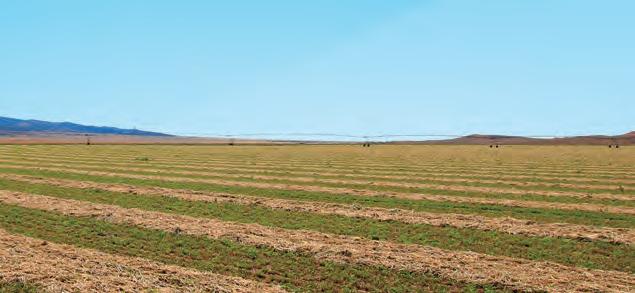
We run out of creek water about June 1, and Macbeth still kicked out the tons. We had to raise the swather to get through it! Of the five meadow bromes on the market, Macbeth is the only one that excels on dryland or low water. A meadow brome will always be your highest yielding grass! Macbeth will have leaves about as wide as barley.
Of the five meadow bromes on the market, Macbeth is the only one that excels on dryland or low water. A meadow brome will always be your highest yielding grass! Macbeth will have leaves about as wide as barley.
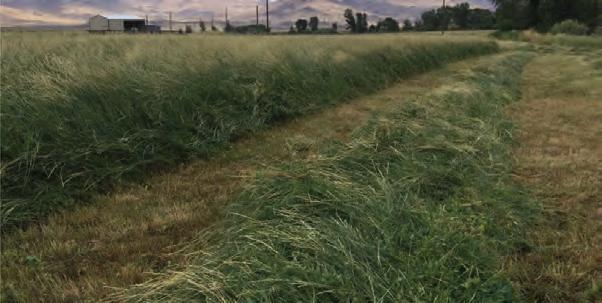

We normally put 2 windrows together for bailing, but could only bale one windrow on the Macbeth.
James Willis: Willis Ranch
by Paul Dyk
IN 1996, Dolly the sheep was cloned, Google was launched, and Cargill Seeds introduced its first brown midrib (BMR) corn hybrids for silage. At that time, BMR corn for silage was an outlier, a genetic mutant that dramatically enhanced fiber digestibility.
The high price of seed and the compromised agronomic traits (yield, standability, and susceptibility to disease) slowed the early adoption of BMR corn and has remained an Achilles heel since then. But many nutritionists —including me — and dairy producers find immense value in feeding BMR corn silage to high-producing cows. The improved fiber digestibility leads to higher intakes and subsequently greater milk production — often as much as 4 to 7 pounds per cow per day. It has been a staple in many dairy herds for more than two decades.
The recent slow “death” of BMR was dramatic but not entirely unexpected. In 2025, the primary supplier of BMR hybrids announced it would end its availability by 2030. Declining sales and a lack of appetite for marketing BMR corn led to this demise; however, it did outlive Dolly the sheep by 25 years.
Three decades from BMR’s inception, we now find ourselves in an age of artificial intelligence (AI), quantum computing, and short-statured corn. Wait, short corn?
Many BMR enthusiasts have been forced into “gut check” mode. What will replace BMR? My general recommendation for producers has been to experiment with other hybrids on their farms. Continue growing BMR until the seed is no longer available but use the next four years as a period of exploration to evaluate other options. While continuing to grow BMR, I tell them to plant 10% to 25% of their acres to other hybrids, then evenly spread that silage in the BMR pile.
There are many questions that need to be asked to avoid reaching a flawed conclusion. These include:
1. Will the hybrid perform in drought and wet conditions?
2. How does the hybrid perform on
various soil types?
3. Was this an outlier year? Are the results repeatable?
4. How does fertilization and disease pressure affect the hybrid?
An overriding challenge is the criteria to evaluate hybrids. Some seed companies want to use a single blanket criteria. A common metric that some
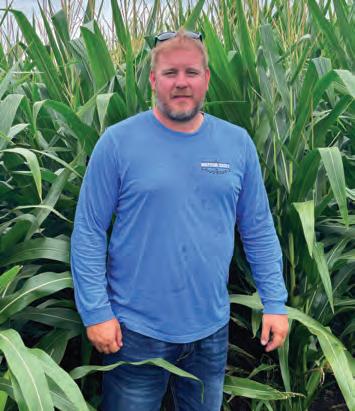
like to use is milk per ton. I am not a fan of this metric. Using milk per ton, you usually end up with a hybrid that is really high in starch. Even if fiber digestibility is close to bamboo, a hybrid may still rank high.
So, how do we choose?
I still value fiber digestibility and like to use neutral detergent fiber digestibility at 30 hours (NDFD30) and undigested NDF at 240 hours (uNDF240). Better fiber digestibility leads to more milk — but I don’t want to ignore starch or yield per acre. The low starch values in BMR really hurt during periods of high corn prices, and that situation a few years ago might have been the proverbial nail in its coffin.
So, what do I want? Balance — a hybrid that is in the top 25% for NDFD30 is my starting point. Next, it needs to be above 34% starch and yield in the top 30% of hybrids.
Short corn is another genetic mutant, a brachytic gene that results in a plant with shorter internodes. Essentially, you get the same number of leaves and — hopefully — the same grain ear in a more compact plant. This development was pushed along dramatically in the past couple of years in response to derechos that caused severe corn lodging across Iowa. Grain producers hope to maintain yield with better standability, especially after a wind storm.
The data on short corn for corn silage is limited. One recent trial from Michigan State University offered some promise for short corn as a forage resource. The whisper is that it might be better than conventional corn silage but not quite as good as BMR. A shorter, thicker stalk is expected to result in less lignin and better digestibility than conventional corn.
Nutritionists do listen to whispers — and we whisper to producers, “Hey, maybe try a bit of this short corn; let’s see what it does.”
One of those listening was Wayside Dairy in Greenleaf, Wis., which is co-owned by Jesse Dvorachek. The last couple years he has been putting in a corn plot with several hybrids. Each 0.8 acre-variety plot was harvested individually, weighed on a truck scale, and sampled in triplicate. The triplicate sample was critical to avoid an outlier and an unrealistic result for any one hybrid.
In the table are the results from Wayside’s 2025 trial, ranked by fiber digestibility. Brown midrib hybrids topped the list, which was not unexpected. But I was surprised by the short corn. Those hybrids finished in the top 50% for fiber digestibility, starch, and yield, which is encouraging. The short corn was planted at 38,000 seeds per acre on the recommendation of the seed company. It was a fantastic year for corn silage. Yields across northeast Wis-
consin were up 20% due to exceptional growing conditions.
How do we interpret this type of data and what conclusions do we make?
First . . . don’t convert 100% of your acres to short corn based on one plot year. What happens when the weather is dry? Will even “shorter” droughtstressed corn go through a chopper?
These were mostly experimental short-corn hybrids that may not be commercially available. I suspect the specific commercial hybrids will be quite different and not all perform similarly (as is the case for BMR corn hybrids). Other companies will come out with slightly different short-corn hybrids with higher-placed ears. Maybe these will be preferred for corn silage. Would the quality be better if they were
planted at a lower population? How would this effect yield? Answers are still to come.
Declining sales and a lack of appetite for marketing BMR corn led to this demise; however, it did outlive Dolly the sheep by 25 years.
Farm plot data is not research. It usually doesn’t have enough replication to pass the scientific standards of academia, but it is farm specific. Most seed trial data is done across a broad region and doesn’t always apply to a specific geography. On-farm testing can give you insights that are not achievable in
any other way. There are conventional hybrids that also perform well. I am hopeful that there is a renewed focus on corn silage quality and hybrid selection by many seed companies.
For Wayside Dairy, next year might include another plot and likely 10 to 20 acres of short corn planted at variable densities. Most innovation is a stepby-step process. In 30 years, when we look back at 2026, will short corn be the next BMR, or will it disappear like Dolly? I don’t think even Google or AI currently knows the answer. •

*Plot was 0.8 acres, yield standardized to 1 acre
by Kim Cassida
LTHOUGH I write this looking out the window at a white, frozen landscape, it will soon be spring and time to plant crops, including alfalfa. Alfalfa can be challenging to establish due to its small seeds and sensitivity to soil conditions. However, good establishment sets the foundation for years of profitable perennial forage production, and it requires a plan long before the planter heads to the field.
Select a suitable site. Alfalfa is particular about its growing conditions, so the first critical step in successful establishment is choosing an appropriate site. Alfalfa can grow successfully in a variety of soil types, but good drainage is absolutely essential. Waterlogged soils promote root and crown diseases, which can impair seedling establishment and reduce stand life. Alfalfa will not maintain roots in permanently saturated soil. Branched root varieties have slightly better tolerance of marginal drainage than tap-rooted varieties because they maintain more root mass near the surface, but even the best branched root variety can’t overcome a wet, heavy soil. The long taproot of alfalfa is one of its agronomic strengths, but it needs deep, fertile soil to take full advantage of this trait. Site factors that can limit effective rooting depth include saturated soil, but also bedrock, compacted soil layers, and acidic subsoils. Alfalfa performs best when soil pH is near or above 6.8. Below that, rhizobial bacteria struggle to survive and nutrient availability declines. Acidic subsoil also elevates the solubility of aluminum and manganese to toxic levels that prune alfalfa roots. Soil acidity can be corrected by lime application, but it takes time for lime to effectively change soil pH. Test soil the year before planting a new alfalfa field so that lime can be applied at least six months before anticipated seeding. A soil test also allows time for soil phosphorus (P) and potassium (K) levels to be adjusted if needed. Avoid planting new alfalfa into fields that recently grew alfalfa. Alfalfa plants release natural compounds that can kill or weaken new alfalfa seedlings, also known as alfalfa autotoxicity. These compounds remain in the soil after termination of an old stand. If alfalfa is replanted too soon, the new crop may fail to establish or exhibit reduced
lifetime yields. The breakdown of toxins is dependent on the amount of toxins present, rainfall, soil type, and tillage, and it may take up to two years on dry, moderate to heavy soils under no-till. Consider herbicide history for any new alfalfa site that previously grew row crops. Many herbicides used in corn and soybeans have labeled residual soil activity for 18 months or longer after application. The risk of herbicide carryover may persist past the label limit
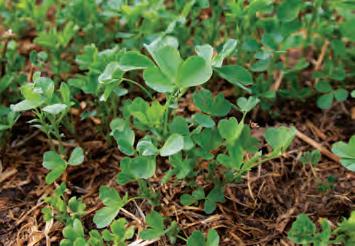
if growing conditions inhibit chemical breakdown. Damage for long-acting herbicides may look like emergence failure or weak seedlings that die after emergence. Review herbicide labels and field records from the past two to three years to prevent unpleasant surprises. Choose the right variety, seed coating, and seeding rate. Select alfalfa varieties with appropriate disease and pest resistance traits for your region and farm history. For long-term stand persistence, yield, and forage quality, consider fall dormancy, winter survival, plant morphology traits like crown depth and root structure, and quality traits like improved digestibility, reduced lignin, or multifoliolate leaves. The Roundup Ready trait can simplify post-planting weed control. Most commercially available alfalfa
seed is coated. Coatings are materials like clay, lime, and binders that help seed flow through planters and attract water to start the germination process. These are often combined with seed treatments such rhizobial bacteria to jump start nitrogen fixation, fungicides to prevent seedling disease, and tiny amounts of nutrients to aid seedlings.
Coated seeds weigh more than uncoated seeds, which raises the perpetual question of whether bulk seeding rates should be increased to ensure the recommended rate of 12 to 20 pounds per acre of pure live seed gets planted. Because coatings and treatments are designed to boost establishment rate per unit of seed, adjustment is usually not needed if the seed is fresh and handled correctly. Likewise, fresh coated seed does not usually require additional inoculation with rhizobial bacteria. Regardless of coating, seed alfalfa at the higher end of that range if seed quality is compromised, planting conditions are less than ideal, or when broadcast seeding. However, many research studies confirm that planting more than 20 pounds per acre of pure live seed does not improve lifetime stand yield because overcrowded seedlings simply thin themselves out.
Set the planting date. Alfalfa planting dates are largely dictated by geographical location and local growing seasons. Growing seasons have been shifting, and in some places, dates for traditional planting windows may have changed by as much as two weeks.
In most regions, alfalfa has two potential planting windows: spring and late summer to fall. Spring plantings can usually commence as soon as the soil can be worked, with attention to the expected last freeze date. Alfalfa seedlings are tolerant to up to four hours of temperatures as low as 24ºF to 26ºF until they reach the second trifoliate stage, which is when they become much more susceptible to frost damage. Advantages to spring seeding are the potential for harvest in the seeding year and presence of adequate soil moisture to get seedlings established. Disadvantages are greater pressure from weeds, insects, and diseases at the critical early
stages of seedling development. Prepare the field. Proper seedbed preparation is essential for good emergence. Alfalfa seeds must absorb more than their own weight in water before germination. Good seed-to-soil contact ensures the seed can take up enough moisture to sprout. In tilled systems, a firm and level seedbed is essential, and this is achieved by cultipacking. If the heel of your boot sinks more than a half-inch into the soil before planting, the seedbed is too soft.
In no-till or reduced-tillage systems, residue management is critical. Too much residue can make it difficult to get correct seed depth placement with a drill. Existing vegetation should be killed at least two weeks before seeding alfalfa to reduce competition. Ideally, vegetation is killed the season before planting to allow some residue decomposition.
Starter fertilizers with P and K support early root growth. Up to 40 pounds per acre of nitrogen (N) may be helpful at planting in soils with less than 2% organic matter, but any more N is

undesirable because it reduces rhizobial colonization. If fields have problematic weeds, control them before alfalfa is seeded; herbicide options become more limited once alfalfa is in the field.
Plant and protect. Calibrate seeding equipment to account for variations in size and weight of coated alfalfa seed, which affect seed flow rates through drills. If the seeder is not properly calibrated, the seeding rate may be much higher or lower than intended.
Alfalfa seeds are tiny. If planted too deep, seedlings may not have enough energy to reach the soil surface. Place seeds one-quarter to one-half inch deep in most soils, and up to 1 and 1/2 inches deep in light, sandy soils. A good rule of thumb is that about 10% of the seed should be visible on the surface. If not, it is likely the seed was placed too deep. Always check the planting depth after a short test pass with the planter.
The critical period for weed control in new alfalfa begins after the unifoliate leaf emerges and continues through the seventh trifoliolate leaf stage. Herbi-
cide options for conventional alfalfa are limited and should be targeted to the specific weed species present. Roundup-Ready technology provides a simple solution to post-planting weed control when glyphosate-resistant weeds are not present. Even if weed pressure is low, apply glyphosate no later than the third to fourth trifoliate leaf to remove nonresistant alfalfa seedlings from the stand. By selecting an appropriate site, preparing the field carefully, choosing the right seed and planting depth, and controlling weeds early, farmers can set the stage for years of high-quality forage production. Careful attention to establishment is one of the most effective ways to ensure a productive and profitable alfalfa stand. •















































by Sarah Flack
IHAVE been involved in grass-fed farming systems for much of my life — from early childhood years in New Zealand to helping on the family farm in northern Vermont from the late 1970s to present. I’ve also been involved in university research and consulting for the past 25 years.
When I first began consulting with farmers in the early 1990s, my primary focus was on improving pasture yield and quality to enhance livestock productivity, lowering feed costs, and strengthening farm income. At that time, a small number of dairy farmers I worked with were interested in not only reducing the grain in their rations but also exploring the possibility of managing their feeding programs entirely without grain.
I was familiar with grass-fed dairy
systems from New Zealand, but I knew that the harsher climate and shorter New England grazing season, combined with U.S. milk pricing structures, would make transitioning to 100% grass-fed production a unique challenge.
Some of the farms I worked with gradually tapered off grain and tried operating without it for several years. A few with alternative milk markets found that the system worked for them, and they continued with it. I recall several telling me that despite producing less milk, they appreciated not having a grain bill. However, most found that the lower milk production per cow, combined with the way commercial milk was priced, made the system financially difficult.
Even though many of those early experiments were short-lived, the les-
sons learned about managing high-forage diets and improved grazing systems proved valuable. Farmers who returned to feeding some grain still benefited from the stronger pasture management skills they had developed. Over the following decade, many of these innovators became highly skilled graziers and were among the first to transition to certified organic once that market offered a higher and more stable pay price. Since then, both consumer and farmer interest in grass-fed farming systems and food products has grown significantly. These days, multiple milk buyers in the Northeast seek certified grass-fed milk and pay a premium for the product. As a result, the number of grassfed dairy farms has expanded rapidly — from just a handful in the 1990s to hundreds across the region today. Transitioning to a grass-fed production
system is complex. It requires significant changes across many aspects of farm management. In 2018, the Northeast Grass-Fed Dairy Project was launched to support the growing number of farms exploring or operating within this system. This farmer-directed initiative worked closely with an advisory board of farmers to identify the most pressing information needed and to provide research-based education and practical tools for success.
Current research topics include: high-energy forages to support milk production; soil fertility and nutrient cycling on grass-fed farms; the sensory (flavor and aroma) and nutritional quality of grass-fed milk; young stock rearing and development; farm economics and cost of production; and several national surveys on production practices and farmer perceptions.
In general, the farms that have succeeded with grass-fed dairy production made a number of key management adjustments as they eliminated grain. They reportedly:
• R eplaced grain with larger amounts of high-quality forages with special attention to energy and fiber digestibility
• Unless the herd was downsized, added acres of cropland and pasture to meet the higher forage intake needs
• P urchased additional forages beyond their added acres of pasture and crops
• I mplemented a new mineral supplementation program, since cows no longer receive minerals in grain
• Monitored herd health with attention to body condition, reproduction, and general well-being
• S elected herd genetics that are well suited for high-forage rations
• Monitored soil health and soil fertility to support high-quality forages
• Adjusted farm financial plans to ensure economic viability with less milk production
Unlike organic certification, which is defined by the USDA National Organic Program’s Organic Standards, “grassfed” does not have a USDA standardized label. However, there are third-party grass-fed standards, and many certifiers now offer grass-fed certification administered by either Organic Plus Trust Inc. or the American Grass-fed Association.
The grass-fed standard, among other requirements, prohibits grain or grain by-product to be fed to cows or young stock. During the grazing season, which needs to be at least 150 days, an average of at least 60% of feed intake must come from pasture for all cows and young stock over the age of 6 months. This differs from organic standards, which require that only 30% of the feed come from pasture during a 120-day grazing season. The grassfed standard also sets limits on the quantity of allowed supplements such as molasses or pelleted alfalfa.
Although the grain bill goes away, the cost of production generally rises under grass-fed management. A big part of these higher costs is that grass-fed dairy cows produce less milk compared to those consuming grain. Grass-fed operations also feed more milk to calves to compensate for not using grain. This diversion of milk to calves further reduces the amount of milk sold per cow. Less milk sold simply means there are fewer hundredweights over which you can average farm expenses.
In addition, some expenses will rise, including purchased minerals, purchased forages, and costs associated with a larger land base for grazing and crop production. When considering a transition to grass-fed, each farm needs to look at their own unique resources and challenges to make a well-informed decision to see if the grass-fed premium covers the greater cost of production. What works on one farm may have different financial outcomes on another.
As part of the Northeast grass-fed dairy project, dairy farms located in New York, New Hampshire, and Vermont that ship certified grass-fed milk have been participating in a project to look at farm management information in conjunction with the farm’s financial information to explore how their cost of production correlates with management systems. Each year, participants receive a report on their own farm’s cost of production along with a grass-fed dairy benchmark. Within this group of participating farms, there was a wide range in the cost of production. For this reason, the project took a closer look at the 2023 and 2024 cost of production and management data. The data showed that:
• Farms that sold more milk per cow had a lower cost of production.
• Farms with a longer grazing season had a lower cost of production.
• Farms managing more cows per full-time equivalent worker had a lower cost of production.
Because selling more milk per cow was highly correlated with a lower cost of production, we looked more closely at which farms had higher production. The data shows:
• Farmers who rated their forages as “excellent” produced significantly more milk than farmers who rated forages as lower quality.
• Farms spending more per acre on fertilizer and seed produced more milk per cow.
While averages provide useful benchmarks, they do not tell the whole story. During farm visits across the Northeast, I have observed innovation and diversity in how farmers make grass-fed work. There is a huge range in the amount of milk sold per cow (from under 5,000 pounds to over 12,000 pounds per cow) on grass-fed farms. Breed choices also vary. Many farms milk crossbred cows, but others have purebred Holsteins, Jerseys, or less common breeds such as Fleckvieh, Ayrshire, and Normande.
Land use strategies also differ, depending on where the farm is located; availability of high-quality, affordable forages to purchase nearby; and the cost to own or rent land. Some operate with 12 or more acres per mature cow, produce all their own forages, and sell surplus feed, while others manage under two acres per cow and buy all their forages.
The diversity of successful approaches underscores that there is no single model for grass-fed dairying. Grass-fed dairy farms vary widely in scale, and operations come in many forms — each adapting to its own resources, land base, local climate, and markets. •
SARAH FLACK
The author is a writer, consultant, and speaker who specializes in grass-based livestock farming systems.

F or more information on grass-fed dairy farming, visit the University of Vermont Northwest Crops and Soils website: www.uvm.edu/ extension/nwcrops/grass-fed-dairy.
HERE’S WHAT GROWERS ARE SAYING: (More testimonials available on our website)
“I’m phasing out all my varieties, including 2 Nexgro, 2 croplan, and R.R. varieties in favor of 360-V. The regrowth speed is just right. Two years in a row we have cut 6.25 ton with four cuts. 1st cut is always 2.5 ton! The variety is somewhat shorter but stacked with leaves. Always makes dairy quality.”
Levi Umbel - Torrington, WY
“360-V is my favorite variety! Quick recovery, heavy producer and a heavy 3rd cut!”
Andy Dobson, past president - Natl. Hay Growers - Mud Lake, ID
“360-V has leaves at every inch of the stem and the stem is very ne. Best alfalfa we have ever planted!”
“360-V will take heavy tra c.”

John Fierera - Stockton, CA
Greg Ball, Rexburg, ID

are
a
Greenway Alfalfa

This Alfalfa has been called a tetraploid anomaly by alfalfa breeders. On the market since 1979, and being improved twice, It remains the highest yielding, low water alfalfa on the market!
HERE’S WHAT GROWERS ARE SAYING: (More testimonials available on our website)
“Ten years ago we planted 5lbs/per acre of 360-D mixed with some grasses. The pivot was so short on water, we had to plug some nozzles in order to water parts of the pivot. Over the years the grasses died out due to lack of water, but the 360-D kept increasing. Today, 10 years later, the pivot is solid 360-D and producing well, and still very short on water.”
Cade Davis Spring Valley Ranch - 30 miles east of Ely, NV
“We have 10 pivots of alfalfa in the Railroad Valley of Nevada. Tough ground with a high PH. 10 years ago we planted 30lbs/acre of 360-D. Today that pivot is the No. 1 pivot on our hay ranch, and testing well for dairy.”
Kennon Forester - 106 miles Southwest of Ely, NV
“First year, after seeding year, we harvested 3.4 ton on 1st cut and 1.7 ton on second with very little rain in the growing season. Over 5 ton on 2 cuts so far!” (Dryland)
Mosekian Farms - Cambridge, ID
“Our area has been in drought for several years. Everyone in the panhandle is short on water. We only pump 400 gallons on 120 acres. That's why we plant 360-D. Under that short water we still yield near normal and the quality is excellent because we plant 35 lbs/per acre. We planted 8500 pounds this year!” Dan Sawyer - Clarendon, TX
Alan Greenway Seedsman

Over 50 Years Experience
Greenway Seeds
Caldwell, ID
208-250-0159 (cell)
208-454-8342 (message)
Alan Greenway
GREENWAY SEEDS www.greenwayseed.com
Warehouses in Caldwell, ID and Deer eld, WI
“Modern Forages Sold Nationwide and Canada”
√ Will produce AT LEAST 80% of crop with 50% of water
√ Will produce a subsequent cutting after water is gone
√ Plant on dryland/ guaranteed to out yield Ranger or Ladak
√ Plant under pivots that only pump 400 gal/
√ Plant on elds that have only early season creek water
√ Plant under end guns on pivots
√ Plant in the late fall with your dormant
by Mike Rankin, Senior Editor
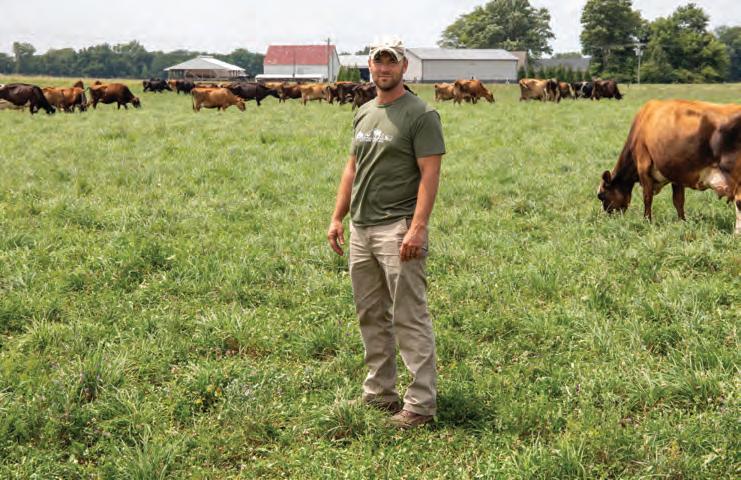
DECADE is not a long duration in the scope of a lifetime, but a lot can happen in a span of 10 years. That’s certainly been the case for St. Marys, Ohio, farmer Jordan Settlage, who started his foray into the dairy business in 2014. He’s had to scale some mountains, but today’s version of Settlage & Settlage Farms appears set for success.
Although Settlage is a sixth-generation farmer, not all his previous ancestors shared his love for milking cows. His father, John, is one of them, but he also didn’t discourage his son and has provided valuable insight and help along the journey. “This would have been a lot harder road to travel without my dad’s support,” Settlage said.
“In the fifth grade, I told my dad that I wanted to milk cows,” Settlage recalled during a Hay & Forage Grower visit to the farm last August. “In fact, I wrote a report for school that year outlining my desire, and I still have the paper.” He repeated his dairy aspira-
tion request to his father in the eighth grade, but John told him to go get a job working at a nearby dairy farm, then he could decide if that was what he truly wanted to do. Settlage did just that and worked for a neighbor through high school and, at times, was left to run the farm by himself when the owner and his family were gone. It was a trial-by-fire experience, but Settlage
never got discouraged or lost his desire to begin dairy farming at home.
Settlage had another desire beyond milking cows; he wanted to serve his country. After high school, Settlage enlisted in the Army and served for over three years as a combat soldier, including a deployment to Iraq. He doesn’t regret his time in the military, but said he was ready to come back to the farm when his service time was over, and like a lot of veterans, there was period of adjustment and healing.
Settlage came home from the Army and returned to working for his previous dairy farm employer while
also attending college. In 2014, at the age of 26, Settlage told his dad that it was time to milk cows on the home farm. He bought the components of an existing milking parlor, disassembling it himself. “I pulled into the yard with a trailer of what looked like a $10,000 pile of scrap iron,” he chuckled. “We reassembled the components into a swing parlor with the help of a local dairy service provider, and we still milk in it today.”
Settlage started with seven cows he had raised from calves. “It took about three hours to milk those cows the first run through the parlor,” Settlage recalled with not-too-fond memories. “Soon after we started milking, we signed on with Organic Valley Milk Cooperative and began our transition to an organic, pasture-based farm in the fall of 2015. It was a challenging time during those years. My timing was terrible as milk and crop prices had crashed and our crop yields suffered during the transition. It seemed like every move we made came at the wrong time, but we made it through.”
During the past 10 years, Settlage has grown the herd to 320 cows. About half of the mostly Holstein and Jersey-crossed herd calves in the fall and the other half in the spring. Settlage uses both artificial insemination with sexed semen and bulls to get the cows bred. In 2025, the conversion was made to an all-grass farm with cows never receiving any grain.
In addition to building a dairy herd,
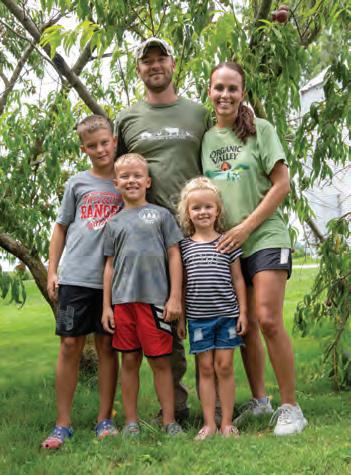
he has also grown his family. Settlage and his wife, Dana, have three children they want to raise with an appreciation of farm life. Their oldest son is already raking hay.
current labor crew consists of Settlage and two full-time employees. John continues to be a great help to his son, taking care of many day-to-day tasks and hauling bales on those busy haymaking days. Settlage recently served as a mentor and employer for a young woman who was in the Dairy Grazing Apprenticeship Program and graduated last summer.
The backbone of any successful grassfed dairy operation is to provide cows with high-quality forage year-round. During the growing season, cows are on pasture and fed a small amount of total mixed ration (TMR) consisting of baleage and mineral (6 pounds of dry matter per day). That amount jumps dramatically in the winter when the herd consumes 14 to 20 baleage bales per day and mineral in their TMR. Settlage houses his cows in a compost-bedded pack barn. The manure pack is routinely mixed with a carbon source and stirred. In spring, the bedded pack is placed into a windrow and turned several times before being applied to the land.
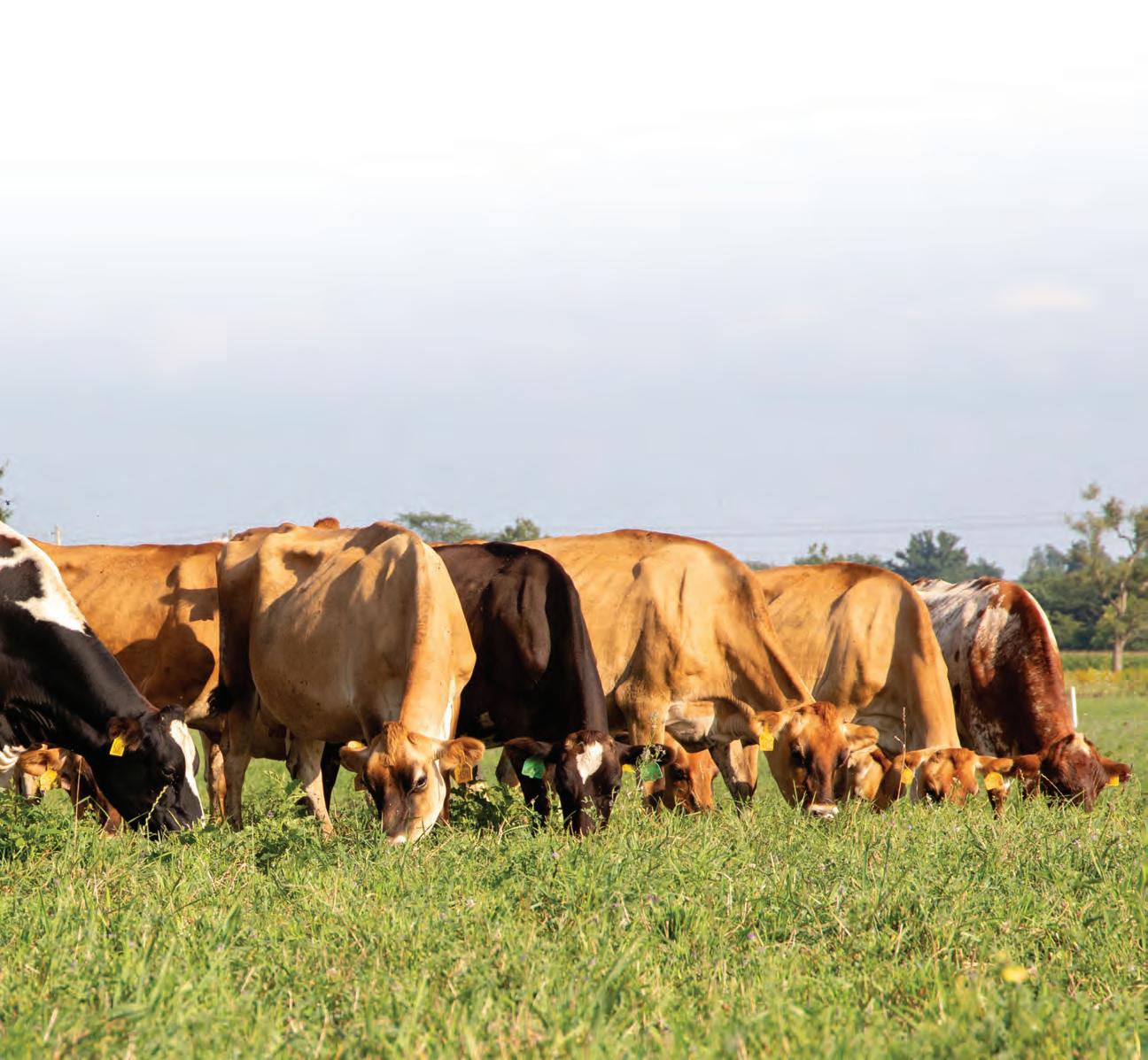
A unique aspect of the operation is that cows are milked 10 times per week on 16- to 19-hour intervals, so milking times vary each day of the week. Settlage landed on this system after experimenting with several schedules that either demanded too much labor or resulted in an unacceptable drop in milk production. The
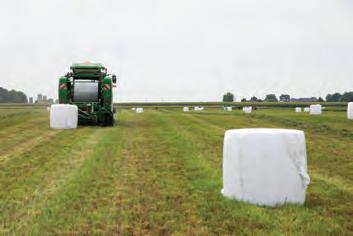
Hay is made from 240 owned or rented acres of alfalfa or alfalfa-grass mixtures. Cows have access to about 400 acres of pasture, and hay is made on some of that ground as forage availability dictates. Most of the hay acres are cut and harvested as baleage. Settlage has a custom harvester bale for him, using a new McHale Fusion 4
baler that wraps on the go. The baler is equipped with a precutter, which makes it easier to mix in a TMR. He also puts up a small amount of haylage in silage bags or on a pile. All the mowing, raking, and bale hauling is done by Settlage. The 3,000 wrapped bales that are made each year are meticulously labeled with the cutting and field that they came from. All the forage is quality tested.
“We get four or five cuttings per year and have a goal of 200 relative forage quality for every harvest,” Settlage explained. “We don’t always hit it, but that’s the target. We like to cut, rake, and wrap on the same day if we can. When you can get it off the field in a day, within 48 hours the field is greening back up. Sometimes it takes two days to get it off for first cutting. Usually, the moisture is around 50%, but we’ve wrapped both drier and wetter than that,” he added.
Settlage cuts hay with a 21-foot Vermeer pull-type mower with no conditioners. Hay is cut leaving a 4-inch stubble and laid flat to enhance dry down time and encourage a fast regrowth. The soil fertility of his hayfields is maintained with manure and compost. Settlage has experimented with some foliar nutrient applications but hasn’t seen any advantages to date.
When Settlage first seeded row-crop ground with pasture mixes, he started with a diverse mix of alfalfa, red clover, white clover, ryegrass, orchardgrass,
meadow fescue, Kentucky bluegrass, chicory, and plantain. Ten years later, his pastures have changed in composition, but not all paddocks matured with the same species mix. Some are now still heavy with alfalfa while others are nearly all grass.
Settlage grazes his cows from April to sometime between Thanksgiving and Christmas. Cows get a new paddock, which are subdivided with polywire, after every milking. He plants winter triticale to help supplement his fall grazing and then will cut it for baleage in the spring. Summer annuals are also planted from time to time, but the more common approach to beat the summer slump is with irrigation.
Settlage has both K-line irrigation pods and a traveling gun. Barnyard runoff water from a holding lagoon and well water are applied through the traveling gun, while only well water is used with the K-line system that he bought secondhand in 2023. “The key to using the pods is to be irrigating before the grass is water stressed,” Settlage asserted. “It’s hard to play catch up with them. We’ve seen huge regrowth advantages by getting the water on early.”
Hay, pasture, and dairy cows — three components that are the legs of the stool on any grass-fed dairy operation. Perhaps no farm business has such a heavy reliance on an abundance of high-quality forage; it’s grown on every available acre. Insert an organic farming model and the management needle jumps another notch or two. Settlage seems to have met the chal-
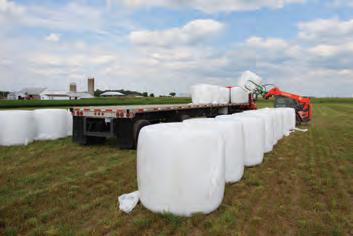
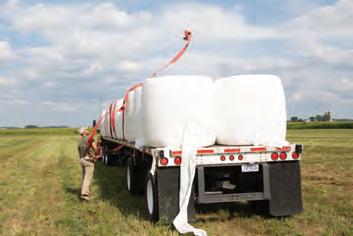
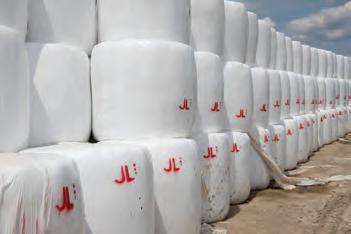
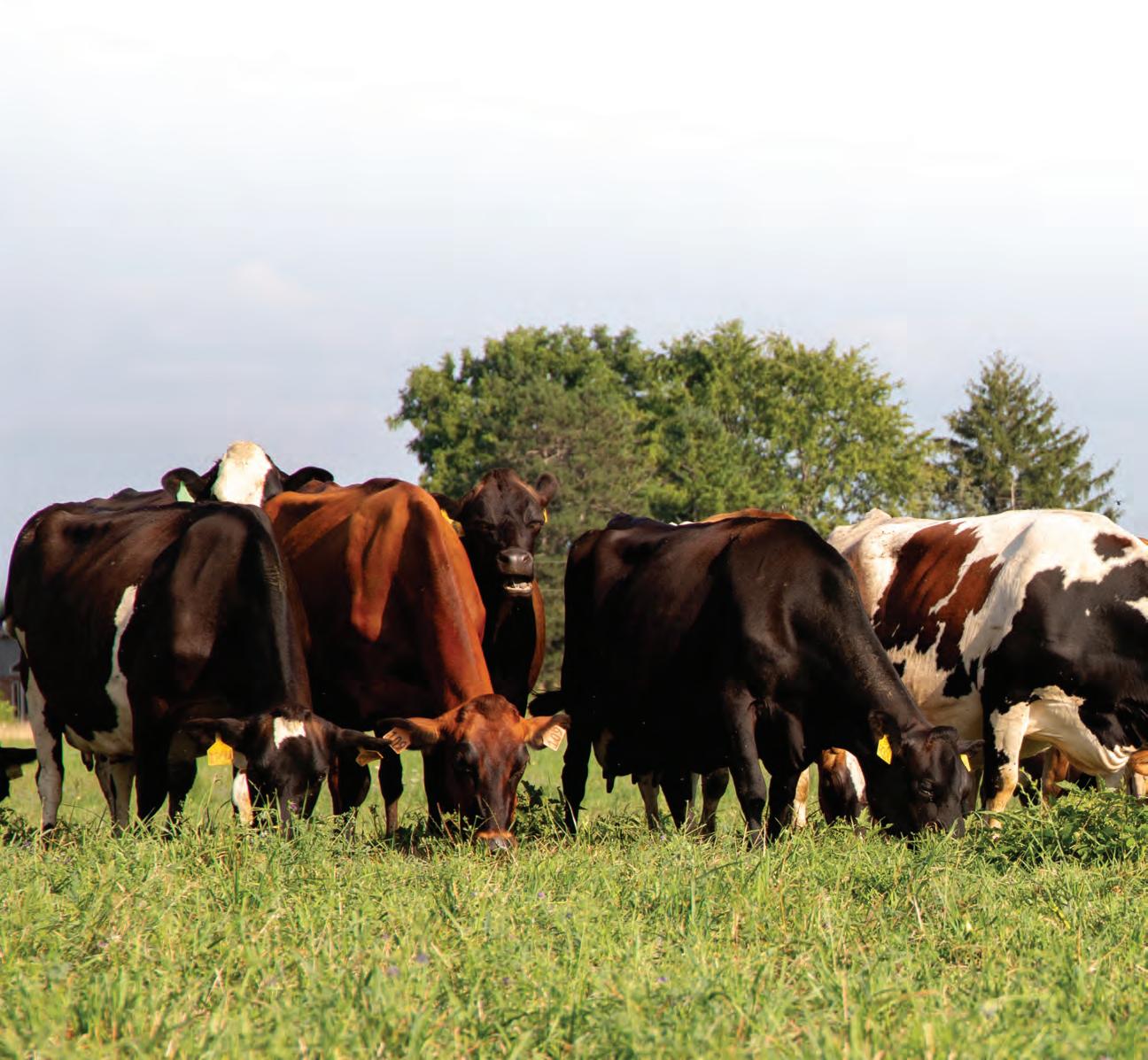
Along with pasture, high-quality baleage is a fundamental feed source for Settlage’s dairy herd. Three thousand bales of alfalfa or alfalfa-grass mixtures are custom baled and wrapped each year. The wrapped bales are then staged and loaded onto a flatbed trailer. After being secured, bales are hauled back to the home farm where they are clearly marked with their field of origin and cutting number. All the forage is quality tested. During the winter, Settlage feeds 14 to 20 bales per day.
lenge. A dairy aspiration that was documented and launched in a fifthgrade homework assignment has now become reality. Settlage readily admits that the road hasn’t always been easy, but worthwhile dreams and endeavors seldom are. •
by Kacie and
WE’VE had a lot of conversations with other producers about selling beef directly to consumers. Some are already doing it; a lot more are thinking about it. Almost every one of those conversations starts the same way: “I’m pretty sure I can make more money selling beef than just selling cattle at the sale barn.”
On the surface, it’s logical. We see the retail price of a rib eye, compare it to what we receive at the sale barn, and the middleman’s profit looks like an interesting opportunity. While the potential for better revenue is real, what often gets lost is how dramatically the economics, risk, and cash flow change the moment you stop selling live animals and start selling food.
To pull back the curtain, let’s look at a 1,000-pound steer on our ranch. In today’s strong market, this 28-month-old animal is worth about $3,200 at the sale barn. If we hauled him to town today, that value would be realized immediately. A check would be cut, risk would transfer, and our responsibility would end at the gate. That is the clean exit of the traditional cattle business. Instead, we’re going to keep him and sell him as beef. It’s worth knowing what it cost to get here. Using recent Oklahoma State University estimates, the cost to run a cow is about $1,100 per year, or roughly $90 per month. If we account for cow costs through gestation and weaning, assuming this steer was weaned at 500 pounds and 8 months of age, the cost to get him to that point is about $1,530 (roughly 17 months at $90 per month). From weaning to harvest then takes another 20 months. In an efficient, low-input pasture system, we might be able to put that gain on an animal for about $1 per day. Over roughly 600 days, that’s $600 total, or about $1.20 per pound of gain. So, our cost to raise this animal to 1,000 pounds in our grazing system has climbed to $2,130 ($1,530 with mom plus $600 without mom). But that $2,130 is already spent whether we sell him live or as beef. It’s a sunk cost. The $3,200 sale barn price already reflects the value that investment created. The real question is what happens next.
We have a $3,200 asset. Sell him live, subtract $2,130 in raising costs, and we net about $1,070. That $1,070 represents nearly three years of investment in the cow and calf. Now, what does it take to beat that through retail?
Processing is the first additional cost. Between slaughter, cut-and-wrap, inspection, and disposal fees, we’re looking at roughly $1,000 per head just to turn a live animal into a sellable product. After that check is written, we’re left with about 450 pounds of packaged beef. But nothing has been sold yet — it’s just sitting in a freezer! This is where ranching ends and retail begins. From this point, you’re paying for freezer space and electricity, marketing fees, and farmers market booth fees. You’re managing inventory, handling customer communication, processing payments, coordinating deliveries, and absorbing shrink and unsold cuts. Unlike the sale barn, where inventory clears in an afternoon, retail beef often moves over weeks or months.
Here’s the math: We gave up a known $3,200 sale and spent an additional $1,000 in processing. That means our 450 pounds of beef must generate at least $4,200 in revenue — about $9.30 per pound — just to match what the sale barn
would have paid. And that’s before generating a single dollar of retail overhead. Once we account for freezer costs, marketing, delivery, waste of unsold product, and the time value of money sitting in a freezer instead of a bank account, a realistic breakeven is closer to $12 to $14 per pound. It’s achievable, but the margin of error is thinner than most people expect. This doesn’t mean selling beef is a bad decision. The takeaway is simple, though not always easy: Do the math, and do it without emotion. Understand that you are choosing to operate two businesses at once, a ranch and a retail enterprise. Both can be profitable, but both demand discipline, capital, and a sharp pencil. If you can price your beef to stay in business for the long haul, fantastic. If not, don’t go broke trying to skip the middleman. •
KACIE AND ZACH SCHERLER-ABNEY
The authors are cow-calf ranchers from southwest Oklahoma.


Hay & Forage Grower features results of farmer-funded research projects through the Alfalfa Checkoff, officially named the U.S. Alfalfa Farmer Initiative, and administered by National Alfalfa & Forage Alliance (NAFA).
LFALFA is an important source of high-protein forage for cattle producers. James Coover, a soil scientist with K-State Research and Extension, wanted to better understand whether secondary and micronutrients such as sulfur and boron are limiting alfalfa production in Kansas soils.
“There are relatively few fertility studies focused on alfalfa in eastern Kansas,” Coover said. “We know boron is naturally deficient in many of our soils, and sulfur can be tricky in heavy clay soils. The question was whether what we were seeing in the field were true deficiencies and, if so, what we could realistically do about them.”

JAMES COOVER
Funding: $48,651
Interest in the project grew after Coover wrote a local agricultural column addressing suspected nutrient deficiencies in alfalfa. That sparked broader discussion among producers and researchers, ultimately leading to a more formal study to evaluate alfalfa response to boron and sulfur fertilization.
The research focused on alfalfa yield and forage quality response to boron and sulfur fertilizer. An established alfalfa field near Columbus, Kan., was selected, which had no recent history of boron or sulfur application. Because nutrient responses can be subtle, the study was designed to capture as much detail as possible. Five rates of boron and five rates of sulfur were applied in a replicated trial, resulting in 75 total plots. Over two years, researchers collected data from six harvests.
In addition to yield measurements, the team analyzed soil nutrient balance, monitored tissue nutrient concentrations, and conducted full forage quality analyses on every harvest. This comprehensive approach allowed researchers to evaluate not only yield response, but also how nutrients moved through the soil and plant system.
Across the two-year study, boron and
sulfur applications produced mixed results. Boron levels were consistently low in surveyed fields across eastern Kansas, confirming that background boron deficiency is common in the region. Tissue boron levels increased with fertilization, though yield responses were inconsistent.
“If I had to boil this down to one takeaway,” Coover said, “it’s that farmers should be testing for more than just
phosphorus and potassium. Secondary and micronutrients like boron matter.”
The study suggested that applying 1 to 2 pounds of boron every couple of years may be beneficial in some fields. While yield gains were modest, the low cost of boron fertilizer means even small responses could provide a positive return. Sulfur responses were more site-spe -
• Boron levels were low in many eastern Kansas alfalfa fields.
• A pplying 1 to 2 pounds of boron may offer a low-cost yield benefit in some situations.
• Sulfur response was limited and site-specific, with only slight gains in the first cutting.
cific. Researchers expected a clearer sulfur response due to alfalfa’s high sulfur demand but only observed a slight yield improvement in the first cutting. Soil samples taken later in the season showed adequate sulfur levels, likely due to organic matter mineralization in the heavy clay soils at the site. “In a typical Kansas field, sulfur response is certainly possible,” Coover explained. “But in this particular soil, organic matter turnover was providing most of the crop’s sulfur needs.”
SUPPORT THE ALFALFA CHECKOFF!
Buy your seed from these facilitating marketers:
One of the biggest challenges of the study was weather. Summer rainfall during 2023 and 2024 was well below average, leading to delayed harvests and variability in summer yields.
“In nonirrigated alfalfa, summer yield is completely dependent on rain,” Coover said. Spring harvests, when soil moisture was more adequate, showed more consistent yields across treatments, while summer yields were highly variable.
The research reinforces the impor-
Alforex Seeds by DLF America’s Alfalfa CROPLAN
Forage First by DLF Innvictis Seed Solutions
tance of comprehensive soil testing. While the results did not justify blanket recommendations for boron or sulfur application, they highlighted the potential for overlooked nutrient limitations. “Farmers are going to look at this and ask whether there’s some low-hanging fruit in their fertility program,” Coover said. “Running a full soil analysis, including micronutrients, is a good place to start.”
A full copy of the final report can be found at alfalfa.org. •
Latham Hi-Tech Seeds NEXGROW W-L Alfalfas Zinma Seeds
DON’T SEE YOUR FAVORITE BRAND ON THE LIST? Contact NAFA for information on becoming a participation brand

The alfalfa checkoff benefits you and the entire industry. Scan the QR code to learn more.

























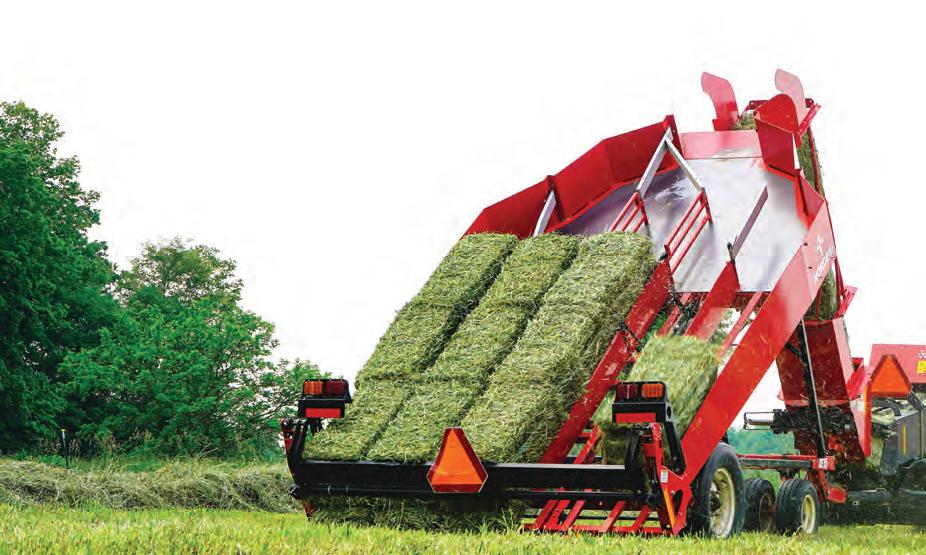




From berries to bees, livestock to hay, Dean and Jody Vasey run a truly diverse operation at WaterGirl Farm. As their farm grew, so did their need for efficiency. Starting with the Norden AF10 Accumulator and Grabber, they later upgraded to the AE15, scaling alongside their success. The Norden system has delivered real results, saving them both time and money.

SOIL organic matter is a vital component of many soil functions. Whether you have naturally low inherent organic matter such as in the southeastern United States or high inherent organic matter like prairie soils in the Upper Midwest, how you manage your farmland has implications for the power of that soil organic matter to enable soil to function effectively. Important soil functions include: producing abundant forage biomass; effectively cycling nutrients within an ecosystem; supplying water, nutrients, and plant-growth promoting compounds; storing carbon, nitrogen, and many other elements; providing physical stability to support animal and vehicle traffic; protecting water quality by retaining nutrients and absorbing precipitation; serving as a reservoir of biodiversity of countless bacterial and fungal species; enabling
animal habitat for belowground critters like earthworms and dung beetles and for ground-nesting birds and roaming mammals and insects; and buffering against toxic accumulation of heavy metals and synthetic chemicals. Most of these functions are greatly enhanced or sufficiently mediated by the content of organic matter in soil. However, what is less clear is whether relatively recent deposits of organic matter contribute the same as organic matter deposited over centuries and millennia.
A common approach to assess land management impacts on soil organic matter is to sample a parcel of land at about five-year intervals over a couple of decades. The long interval is needed since there are inherent spatial variations that could mask temporal changes in soil organic matter when
assessed at shorter time intervals. The long-term nature of significant changes in soil organic matter is one reason why there are relatively few estimates of how land management changes organic matter. The process takes resources and commitment, and repeating observations for the many unique soil types around the country has not been a priority. An additional hindrance to our understanding is the many different types of grassland management that need to be considered to make a full assessment. Therefore, the soil science community has much work to do regarding land management effects on soil organic matter.
A novel approach has recently been developed to get more rapid and potentially more reliable estimates of changes in soil organic matter with multi-decade management, such as what is practiced on many of your
farms. This approach relies on deeper soil sampling at multiple depths to quantify the natural depth stratification of soil organic matter. A key feature of this approach is that soil organic matter derived from contemporary management during the past several decades can be separated from organic matter derived solely from soil-formation factors (pedogenesis) over the past several thousand years. An important assumption in this calculation is that contemporary management does not appreciably influence soil organic matter properties below the surface foot of soil. Many plant root systems are concentrated in the upper foot of soil, and so there is an ecologically based foundation for this assumption.
The figure illustrates a typical nature of soil organic matter distribution and how soil type and land management play a role in changing this distribu-
tion. Soil carbon was measured and reported as organic matter; soil organic matter is composed of 58% carbon. When determining the carbon concentration at a 12-inch depth, a baseline condition attributable to historical pedogenic factors is ascertained. Subtracting this baseline condition from the total distribution of soil organic carbon leaves an estimate of root-zone enrichment of soil organic carbon, which is attributable to contemporary management that has influence in the zero-to-12-inch layer.
This comparison of two neighboring fields shows soil organic matter was similar near the soil surface; however, the baseline condition was vastly different between cropland and grassland. The bottomland field was endowed with more than twice as much soil organic carbon. It would be unfair to make the land-use comparison of recent management based on total organic matter stock alone since the bottomland field
had a clear advantage with inherently more soil organic matter deeper in the profile due to historical deposition. Soil organic matter accumulates near the soil surface, and this observation allows us to make distinctions between historical and contemporary changes in soil organic matter. Taking stock of soil organic matter will help you understand how much was inherent from pedogenic processes versus how much was enriched during the past several decades. In future columns, I will explore in more detail the results of soil type and management on root-zone enrichment from different investigations. •
ALAN FRANZLUEBBERS
The author is a soil scientist with the USDA Agricultural Research Service in Raleigh, N.C., and past president of the American Forage and Grassland Council.

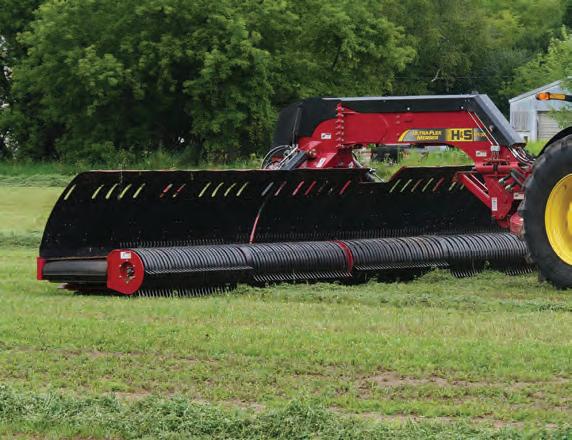


by Jon Paul Driver
ONCE you’ve done the groundwork of listing what you own in your asset inventory and what you owe in your liability list, you have the raw materials for one of the most powerful tools in farm management: the balance sheet.
For many farmers, the balance sheet has a reputation as accountant’s paperwork or banker’s homework. But the reality is that a balance sheet is for the farmer first and the banker second. It’s your snapshot in time — a clear picture of what your farm is worth today.
At its simplest, a balance sheet is two lists — assets and liabilities — and when you subtract the latter from the former, you have net worth. That’s it — no advanced math, no complicated formulas — just an honest tally of what you’ve built and what you’re responsible for. So, why does this matter?
Clarity for yourself. Instead of vague guesses, you see the truth on paper. Decision-making power. Should you trade in that baler? Lease more
hay ground? The balance sheet shows your strengths and provides answers to these questions.
Confidence with others. When you walk into a financial conversation — whether that’s with your family or your lender — you aren’t relying on memory or emotion. You’re working with facts. You can view the balance sheet as a communication tool.
In a family operation, financial conversations can be tense. Parents and children may have different priorities for the hay business. Siblings may not agree on expansion or succession. And when everyone is drawing from memory, the conversation can turn emotional fast. But a balance sheet changes that by giving
the whole family a shared reference point of what you own, what you owe, and what you’re worth. That shared understanding reduces conflict and opens the door to more constructive planning for future harvest seasons and marketing opportunities.
Bankers want to know your numbers, too, but more than that, they want to see that you know your numbers. Walking into a meeting with a balance sheet shifts the dynamic. Instead of pleading for a loan, you’re presenting your position. Instead of reacting to their questions, you’re leading with answers. That confidence can be the difference between banker approval and hesitation. In both cases — with family and lenders — the balance sheet is less about the paper itself and more about the clarity it brings to the conversation.
Most balance sheets are divided into three asset groups and three liability
groups. The asset groups include: current assets, such as cash, bales, seed, and fertilizer; intermediate assets, such as equipment, vehicles, and breeding livestock; and long-term assets, such as land, buildings, and improvements.
The liability lists include: current liabilities, such as accounts payable, operating loans, and short-term notes; intermediate liabilities, such as machinery loans, vehicle notes, and livestock financing; and long-term liabilities, such as mortgages, land contracts, and irrigation loans. Write all of these items down in two columns, total each side, and then subtract liabilities from assets. That number is your net worth. But the real value of a balance sheet isn’t the number itself — it’s the story it tells over time.
When you compare last year’s balance sheet to this year’s, you can assess if your net worth is growing. Are your liabilities shrinking or climbing? Is your equity holding steady or slipping? Those changes will tell you more about your farm’s health than any single number. With that said, there are some common pitfalls that farmers encounter when building a balance sheet.
• Don’t overvalue or undervalue assets. Be realistic about the current market values of your assets. Inflating numbers won’t help you, and undervaluing numbers will leave you blind to your true strengths.
• Don’t mix personal and farm finances. Best practice is to prepare two balance sheets, one for the farm business and one for the household. For example, student loans or a home mortgage belong on a personal balance sheet. The value of bred cows or a hayfield pivot belong on the farm’s balance sheet. Keeping them separate avoids confusion and makes conversations with family and bankers cleaner.
• Don’t believe an annual review is enough. A year-to-year balance sheet comparison is powerful if it’s consistent. But in times of financial stress, waiting 12 months can leave you with questions. Updating your balance sheet quarterly — or even monthly — will help you respond faster, see trends earlier, and treat the farm like the business it is. This mindset shift will turn financial stress into a call for action instead of a weight that drags you down.
At a minimum, build your balance
sheet twice a year. If you’re facing big changes, consider making quarterly updates. As with your asset inventory and liability list, the more stressed you are about money, the more often you should refresh your balance sheet.
The balance sheet is your snapshot in time. It’s a reflection of your financial health that helps you make decisions, eases conversations within your family, and builds trust with your lender. So, build one, keep it current,
and compare where you stand from year to year. Each update you make is like tightening a bolt on your farm’s financial foundation, allowing your operation to be stronger, steadier, and more resilient. •
The author is a farm and ranch management specialist
Brand
$3.75/lb.
MIX 25%
MIX 25%
MIX 25%
MIX 25%

“Plowdown” alfalfa with your regular alfalfa seed. Expect a hearty yield increase your “new seeding” first year!
“Plowdown” alfalfa with your regular alfalfa seed. Expect a hearty yield increase your “new seeding” first year!
“Plowdown” alfalfa with your regular alfalfa seed. Expect a hearty yield increase your “new seeding” first year!
“Plowdown” alfalfa with your regular alfalfa seed. Expect a hearty yield increase your “new seeding” first year!
MIX 25%
MIX 25%
MIX 25%
MIX 25%
“Plowdown” alfalfa with your regular alfalfa seed. Expect a hearty yield increase your “new seeding” first year!
“Plowdown” alfalfa with your regular alfalfa seed. Expect a hearty yield increase your “new seeding” first year!
“Plowdown” alfalfa with your regular alfalfa seed. Expect a hearty yield increase your “new seeding” first year!
“Plowdown” alfalfa with your regular alfalfa seed. Expect a hearty yield increase your “new seeding” first year!
“We noted 5 extra inches of growth above our 360-V (five) canopy height. We had mixed in 25% Plowdown and, this year, we will mix in more!” – Harlan Horst, Stanley, WI
“Plowdown” is #9 fall dormancy. It is supposed to winterkill, but has often been known to overwinter for a second growing season!
“Plowdown” is #9 fall dormancy. It is supposed to winterkill, but has often been known to overwinter for a second growing season!
“Plowdown” is #9 fall dormancy. It is supposed to winterkill, but has often been known to overwinter for a second growing season!
“Plowdown” is #9 fall dormancy. It is supposed to winterkill, but has often been known to overwinter for a second growing season!
“Plowdown” is #9 fall dormancy. It is supposed to winterkill, but has often been known to overwinter for a second growing season!
“Plowdown” is #9 fall dormancy. It is supposed to winterkill, but has often been known to overwinter for a second growing season!
“Plowdown” is #9 fall dormancy. It is supposed to winterkill, but has often been known to overwinter for a second growing season!
“Plowdown” is #9 fall dormancy. It is supposed to winterkill, but has often been known to overwinter for a second growing season!
You could plant “Plowdown” as a one year only crop. Great for a bean crop, for example, next growing season.
You could plant “Plowdown” as a one year only crop. Great for a bean crop, for example, next growing season.
You could plant “Plowdown” as a one year only crop. Great for a bean crop, for example, next growing season.
“Modern
You could plant “Plowdown” as a one year only crop. Great for a bean crop, for example, next growing season.
Alan
Alan
“Modern Forages Sold Nationwide And Canada”
You could plant “Plowdown” as a one year only crop. Great for a bean crop, for example, next growing season.
You could plant “Plowdown” as a one year only crop. Great for a bean crop, for example, next growing season.

Alan Greenway Seedsman Over 50 Years Experience!
You could plant “Plowdown” as a one year only crop. Great for a bean crop, for example, next growing season.
You could plant “Plowdown” as a one year only crop. Great for a bean crop, for example, next growing season.
(message)
“Modern Forages Sold Nationwide and Canada”
G RE ENWA Y SEEDS
G RE ENWA Y SEEDS
w.g reenw a ysee d .co m
G RE ENWA Y SEEDS ww w.g reenw a ysee d .co m
208-250-0159 (cell) 208-454-8342 (message)
G RE ENWA Y SEEDS ww w.g reenw a ysee d .co m
“Modern Forages Sold Nationwide and Canada”
Alan Greenway Seedsman Over 50 Years Experience!
G RE ENWA Y SEEDS ww w.g reenw a ysee d .co m
208-250-0159 (cell) 208-454-8342 (message)
G RE ENWA Y SEEDS ww w.g reenw a ysee d .co m Greenway Seeds, Caldwell, ID • Warehouses in Caldwell, ID and Deerfield, WI
G RE ENWA Y SEEDS ww w.g reenw a ysee d .co m
Greenway Seeds, Caldwell, ID • Warehouses in Caldwell, ID and Deerfield, WI
by Jason Banta
DID your cows come through the winter as well as you expected? Did you have to supplement more than you were planning? Poor animal performance and elevated feed costs can be the result of a misleading forage test. This article will focus on hay specifically, but the concepts discussed apply to all types of forage, including hay, silage, and baleage.
Not all hay tests are the same, and unfortunately, some hay tests can be misleading. Hay tests that don’t accurately estimate the total digestible nutrients (TDN) can result in lower than expected animal performance and greater feed costs. The TDN value indicates the amount of energy a feed can provide animals. It is also used to calculate other measurements of energy, including net energy for gain and net energy for maintenance.
To better understand differences in hay tests, it is valuable to look at the major analytical fractions reported on one. Table 1 shows these analytical fractions, typical ranges for each fraction, and their expected ranges of digestibility.
Neutral detergent fiber (NDF) represents the largest analytical fraction found in most hay. Additionally, the variability in digestibility of NDF is greater than any other fraction. These two factors generally have more impact on the TDN value of a hay sample than anything else. Top forage testing labs offer packages that can provide a good estimate of NDF digestibility.
The ash fraction contains minerals found in hay, as well as any soil contamination. The ash fraction doesn’t supply any energy to the animal, but it is critical when determining energy values and evaluating hay sample results. The remaining dry matter (RDM) is not measured but calculated by difference. It represents any dry matter that is not accounted for in the other six measured fractions listed in Table 1. The RDM value is not shown on hay tests but is
Analytical fraction Typical range, % of DM Typical digestibility, %
Crude protein 5 to 2280 to 93
NDF 38 to 7335 to 65
Starch 1.5 to 5.090 to 100
Water-soluble carbohydrates 4 to 1199 to 100
Fatty acids0.9 to 2.370 to 78
Ash 5 to 10 N/A
Remaining DM (RDM) 2 to 1580 to 95
work off the premise that less ADF means TDN will be higher. One problem is that ADF-based equations do not account for ash content. Although the ash fraction does not contribute energy, it does affect the concentration of the other nutrients. High ash levels result in lower ADF, which then overestimates the TDN value of hay. Another problem with ADF-based equations is that they do not account for differences in NDF digestibility. Several factors influence NDF digestibility, including temperatures during the growing season, forage species, and genetic variation within the same species.
Don’t be fooled
*Calculated for comparison purposes by author using a common ADF-based equation
used when calculating energy values. Summative equations and those based on acid detergent fiber (ADF) are two methods that forage testing labs use to estimate TDN. These methods can result in drastically different TDN values for the same hay sample. Summative equations should be used instead of acid detergent fiber-based equations when estimating TDN. There are multiple reasons for this.
Acid detergent fiber-based equations
Table 2 shows a comparison of three samples of ryegrass hay tested at the same lab using a summative equation to calculate TDN. Notice the difference between the TDN calculated with a summative equation compared to the TDN calculated with an ADF-based equation. Sample C is the best of these three samples and feeding it would likely result in optimal animal performance. However, if these samples were sent to a lab that used an ADF-based equation to estimate TDN, the results would be misleading and suggest that sample B has the highest energy level when, in fact, it has the least amount of energy. Relative feed value (RFV) can also be misleading when comparing hay samples. In this example, it suggests that both samples A and B are good quality when they are actually extremely low quality. Before sending in a hay sample for a forage test, talk to a nutritionist to find out what labs utilize summative equations and which tests are the most appropriate for your sample. •
The author is a beef cattle specialist for Texas A&M AgriLife Extension based in Overton, Texas.

•
•
•
•
•
•
•
•

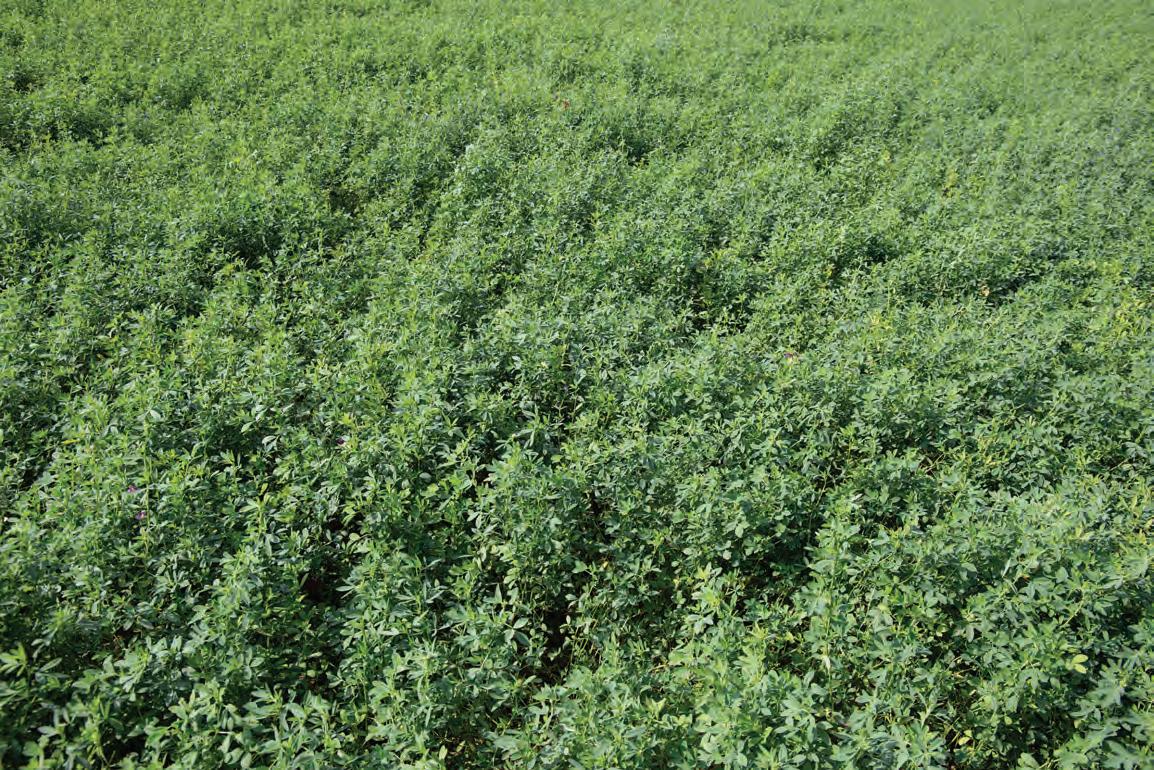

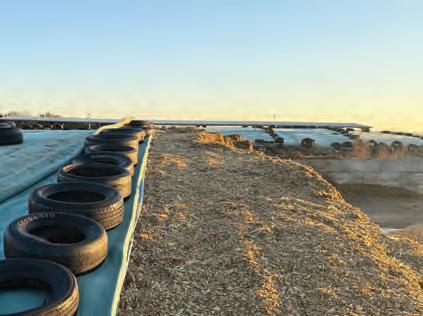
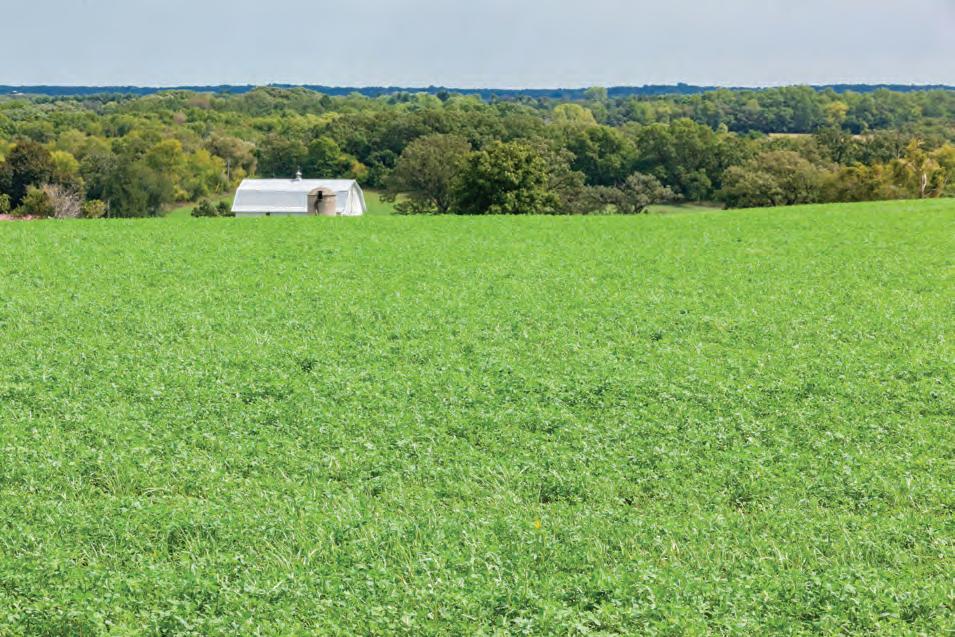

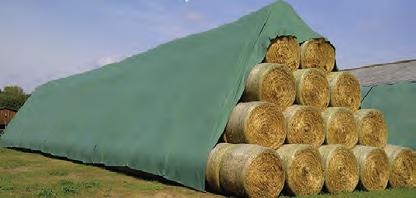

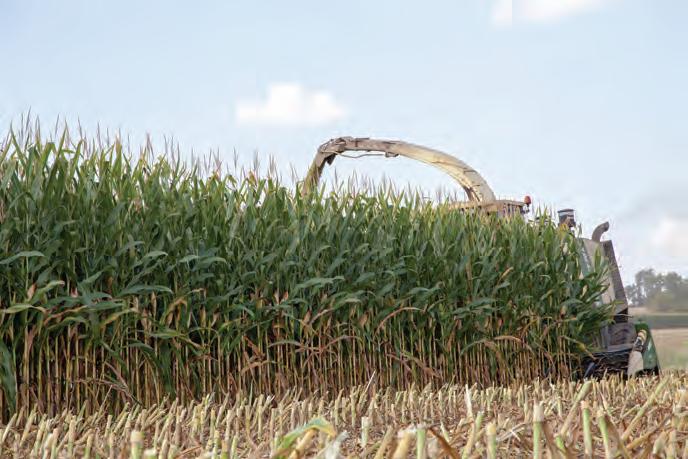
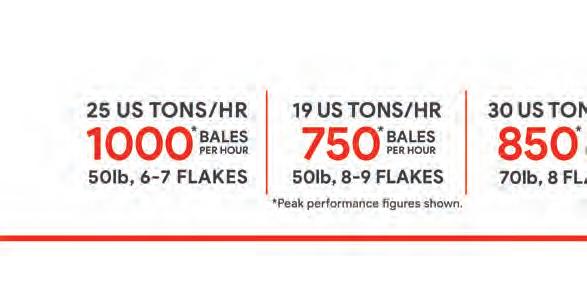





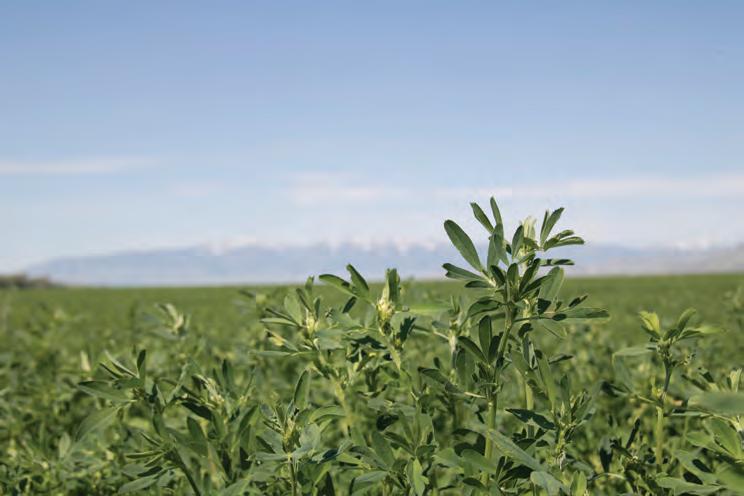
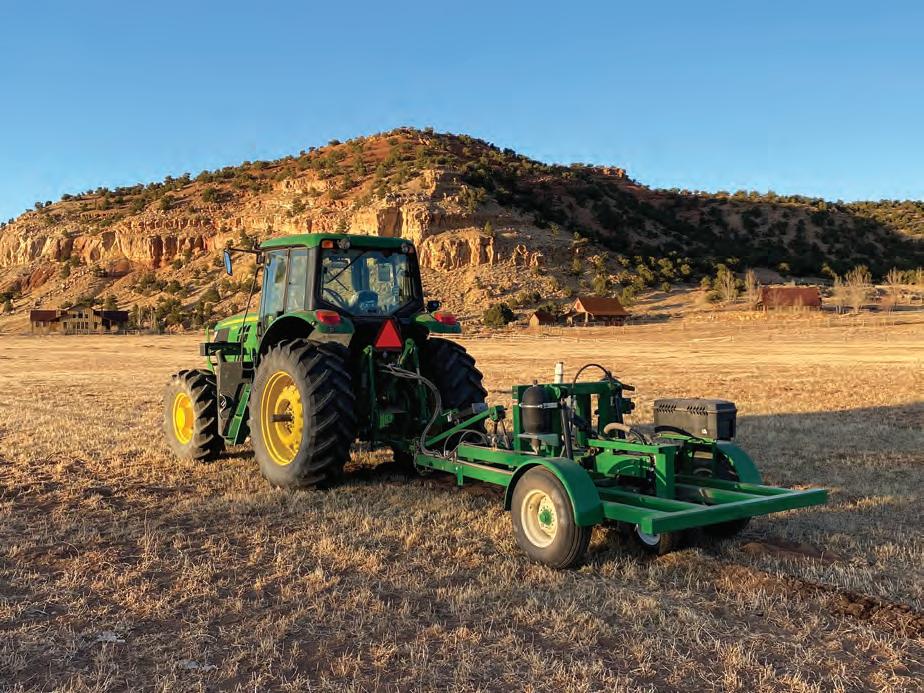

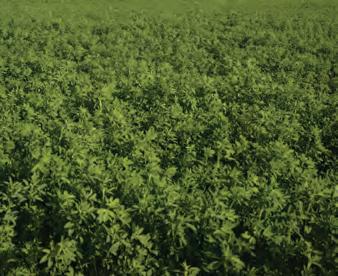
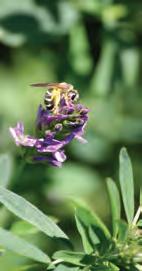



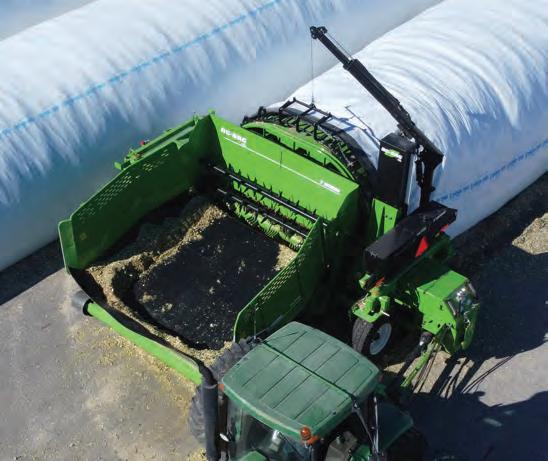
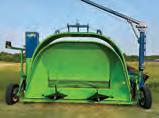
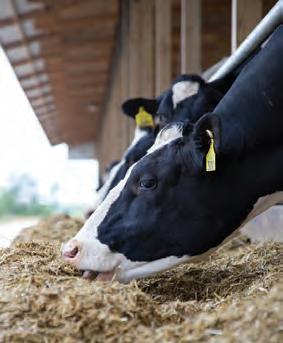

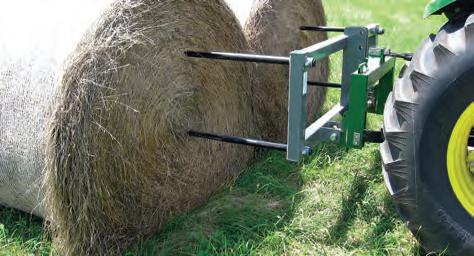
Central Plains Dairy Expo
March 17 to 19, Sioux Falls, S.D.
Details: centralplainsdairy.com
Southern Pastures and Forage Crop Improvement Conference
March 30 to April 1, Aiken, S.C.
Details: agrilife.org/spfcic
Tri-State Dairy Nutrition Conference
April 13 to 15, Fort Wayne, Ind.
Details: tristatedairy.org
Beginning Grazing School
April 21 and 22, Morehead, Ky.
Details: forages.ca.uky.edu/events
Kentucky Spring Fencing School
April 28, Maysville, Ky.
April 30, Elkton, Ky.
Details: forages.ca.uky.edu/events
2025 Basic Grazing School
May 12 and 13, Madison, Va.
Details: vaforages.org
Four-State Dairy Nutrition and Management Conference
June 3 and 4, La Crosse, Wis.
Details: fourstatedairy.org
Wisconsin Farm Technology Days
July 14 to 16, Stratford, Wis.
Details: wifarmtechdays.org
Farm Progress Show
Sept. 1 to 3, Boone, Iowa
Details: farmprogressshow.com
Husker Harvest Days
Sept. 15 to 17, Grand Island, Neb.
Details: huskerharvestdays.com
National Hay Association Annual Convention
Sept. 16 to 20, Pasco, Wash.
Details: nationalhay.org
World Dairy Expo
World Forage Analysis
Superbowl
Sept. 29 to Oct. 2, Madison, Wis.
Corn silage entries due July 9
Hay crop entries due August 20
Details: bit.ly/HFG-WFAS-26
With pockets of warm sea surface temperatures being recorded in the Pacific Ocean, there is speculation El Niño will settle in this year. This long-term weather pattern could bring warmer, wetter conditions to a large portion of the country.
That said, there are several factors that
can step on El Niño’s toes, so there’s no guarantee how it will impact the upcoming hay harvest season, or market prices. The prices below are primarily from USDA hay market reports as of early to mid-February. Prices are FOB barn/ stack unless otherwise noted. •
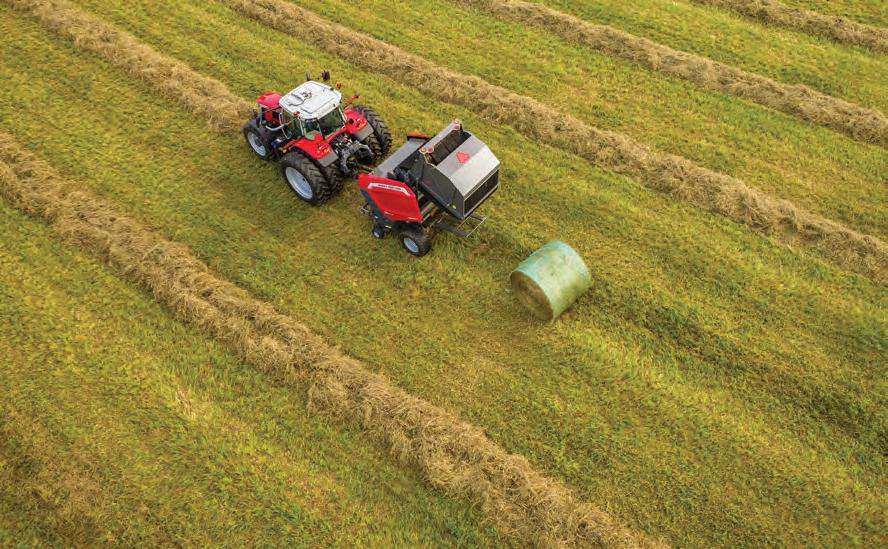
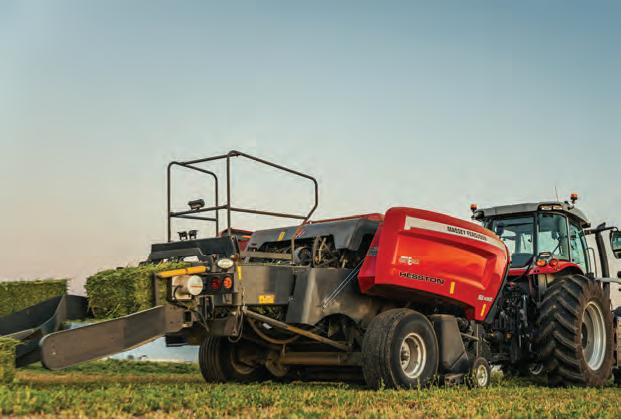
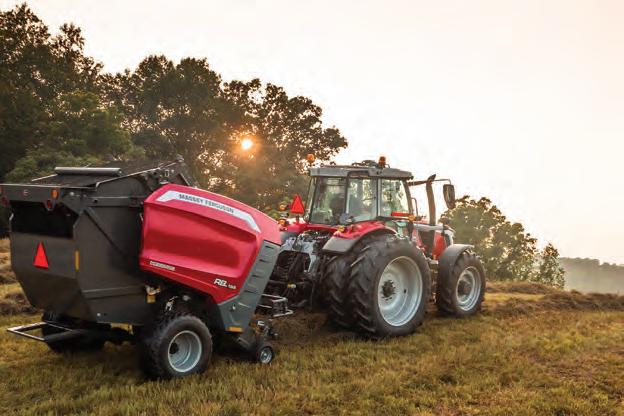
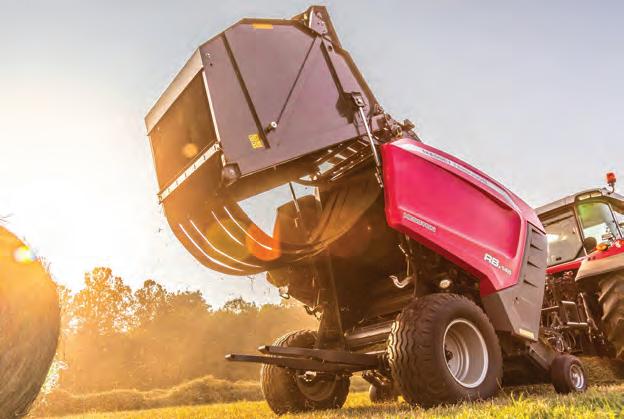
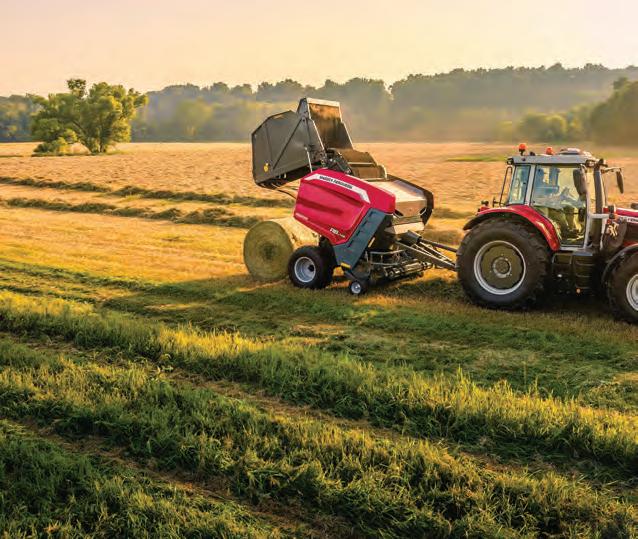
HESSTON BY MASSEY FERGUSON® 1 SERIES ROUND BALERS
When hay’s ready, you’ve got to move — and the Hesston® 1 Series round balers are built to keep up. Whether you’re baling alfalfa, grass or straw, these machines deliver dense, uniform bales with fewer stops and less hassle. With rugged reliability, straightforward operation and the heavy-duty build quality Hesston is known for, you’ll get hay off the field faster, even when the window is tight. Because with Hesston, the job gets done. No excuses. No downtime.